Category: Economics

A Lesson in Economic Fallacies – Austerity: Dangerous Idea?

Go Lean Commentary

Austerity - Photo 1The economic status in the Caribbean – all 30 member-states despite the colonial legacy – can be summed up with one word:

Crisis!

Alas, the book Go Lean…Caribbean declares that a crisis is a terrible thing to waste.

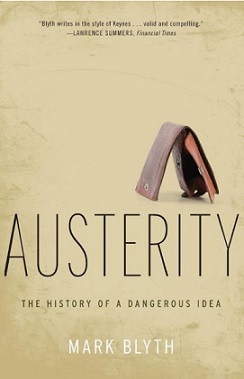
This commentary relates the below Book Review of the publication by Economist and Political Scientist Mark Blyth entitled: Austerity – The History of a Dangerous Idea. This commentary asserts that those who advocate to remediate Caribbean economics needs to avoid a series of Economic Fallacies.

This is commentary 2 of 6 from the Go Lean movement on the subject of Economic Fallacies. As related in the previous submissions on this series, the situation in the Caribbean region is likened to the imagery of an animal foraging for food, but then gets distracted and “chases a squirrel up a tree”. The squirrel in the tree will never be a meal; it is just a waste of time and energy for the animal. This analogy conveys the waste of time associated with a frivolous and fallacious pursuit. The other commentaries detailed in this series are as follows:

  1. Independence – Hype of Hope
  2. Austerity – Book Review: Mark Blyth’s “History of a Dangerous Idea”
  3. Education & Student Loans – Not a good Return on Investment
  4. Phillips Curve – Fallacy of Minimum Wage
  5. Self-regulation of the Centers of Economic Activity
  6. Casino Currency – US Dollars?

All of these commentaries are economic in nature. They refer to rules for managing the valuable resources of time, talents and treasuries. There are rules for winning and rules for losing. Normally these are discovered after the fact, not before hand. So examining the experience of other communities, the winners and losers, can be extremely helpful to our Caribbean cause. This is a mission of the Go Lean roadmap, to learn lessons from how other communities have handled economic crises.

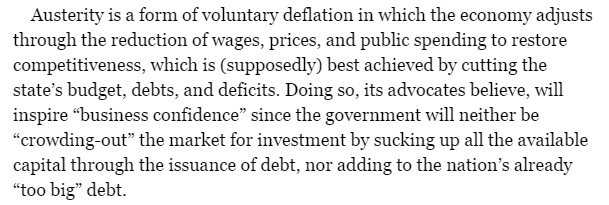
One common remediation for economic crisis has been Austerity. What is Austerity? And is this a good thing or bad thing? First, the dictionary definition is: “reduced availability of luxuries and consumer goods, as brought about by government policy”. Second, consider Mark Blyth’s own definition, here:
Austerity - Photo 2

The Book Review and VIDEO on Mark Blyth’s Austerity book is as follows:

Book Review: Austerity – The History of a Dangerous Idea
By: Mark Blyth

Selected as a Financial Times Best Book of 2013
Governments today in both Europe and the United States have succeeded in casting government spending as reckless wastefulness that has made the economy worse. In contrast, they have advanced a policy of draconian budget cuts–austerity–to solve the financial crisis. We are told that we have all lived beyond our means and now need to tighten our belts. This view conveniently forgets where all that debt came from. Not from an orgy of government spending, but as the direct result of bailing out, recapitalizing, and adding liquidity to the broken banking system. Through these actions private debt was rechristened as government debt while those responsible for generating it walked away scot free, placing the blame on the state, and the burden on the taxpayer.

That burden now takes the form of a global turn to austerity, the policy of reducing domestic wages and prices to restore competitiveness and balance the budget. The problem, according to political economist Mark Blyth, is that austerity is a very dangerous idea. First of all, it doesn’t work. As the past four years and countless historical examples from the last 100 years show, while it makes sense for any one state to try and cut its way to growth, it simply cannot work when all states try it simultaneously: all we do is shrink the economy. In the worst case, austerity policies worsened the Great Depression and created the conditions for seizures of power by the forces responsible for the Second World War: the Nazis and the Japanese military establishment. As Blyth amply demonstrates, the arguments for austerity are tenuous and the evidence thin. Rather than expanding growth and opportunity, the repeated revival of this dead economic idea has almost always led to low growth along with increases in wealth and income inequality. Austerity demolishes the conventional wisdom, marshaling an army of facts to demand that we austerity for what it is, and what it costs us.

About the Author

Mark Blyth is associate professor of political science at the JohnsHopkinsUniversity and the author of Great Transformations: Economic Ideas and Institutional Change in the Twentieth Century.

===================

Editorial Reviews

“Austerity is an economic policy strategy, but is also an ideology and an approach to economic management freighted with politics. In this book Mark Blyth uncovers these successive strata. In doing so he wields his spade in a way that shows no patience for fools and foolishness.”
— Barry Eichengreen, George C. Pardee and Helen N. Pardee Professor of Economics and Political Science University of California, Berkeley

——-
“Of all the zombie ideas that have been reanimated in the wake of the global financial crisis, austerity is the most dangerous. Mark Blyth shows how austerity created the disasters of the 1930s, and contributed to the descent of the world into global war. He shows how European austerity policies have prevented any recovery from the crisis of 2009, while rescuing and protecting the banks and financial institutions that created the crisis. An essential guide for anyone who wants to understand the current depression.”
— John Quiggin, author of author of Zombie Economics

——-
“Most fascinating is the author’s discussion of the historical underpinnings of austerity, first formulated by Enlightenment thinkers Locke, Hume and Adam Smith, around the (good) idea of parsimony and the (bad) idea of debt. Ultimately, writes Blyth, austerity is a ‘zombie economic idea because it has been disproven time and again, but it just keeps coming.’ A clear explanation of a complicated, and severely flawed, idea.” — KIRKUS REVIEW

——-

‘One of the especially good things in Mark Blyth’s Austerity: The History of a Dangerous Idea is the way he traces the rise and fall of the idea of “expansionary austerity,” the proposition that cutting spending would actually lead to higher output. EL As Blyth documents, this idea spread like wildfire.’ — Paul Krugman, The New York Review of Books

——-

“Among all the calamities spawned by the global financial crisis, none was as easily avoidable as the idea that austerity policies were the only way out. In this feisty book, noted political scientist Mark Blyth covers new territory by recounting the intellectual history of this failed idea and how it came to exert a hold on the imagination of economists and politicians. It is an indication of the sorry state of macroeconomics that it takes a political scientist to expose so thoroughly one of the economics profession’s most dangerous delusions.”
— Dani Rodrik, Rafiq Hariri Professor of International Political Economy, The John F. Kennedy School of Government, Harvard University

Product Details

  • ISBN-13: 978 019938 9445
  • Print Length: 304 pages
  • Publisher: OxfordUniversity Press
  • Publication Date: March 27, 2013

Source: Financial Times – Book Review – Retrieved July 6, 2016 from: https://www.amazon.com/dp/B00BJK4Y7U/ref=dp-kindle-redirect?_encoding=UTF8&btkr=1

VIDEO: Mark Blyth: Is Austerity a Dangerous Idea? – https://youtu.be/2v8m-J8sgik


Published on Mar 27, 2013 – Governments the world over are looking at austerity measures to help battle the financial crisis. Author and Ivy League professor Mark Blyth tells Steve Paikin why he thinks this is a bad idea.

The Go Lean book details the economic crisis stemming from the 2008 Great Recession. But the book prepares societal engines of the Caribbean so as to not waste this crisis; it calls for the establishment of a regional administration to monitor, mitigate and manage the economic dynamics of the region. The book serves as a roadmap for the introduction and implementation of the technocratic Caribbean Union Trade Federation (CU). The prime directives of this federal entity are described as:

  • Optimize the economic engines of the Caribbean to elevate the regional economy to grow to $800 Billion and create 2.2 million new jobs.
  • Establish a security apparatus to protect the resultant economic engines.
  • Improve Caribbean governance and industrial policies to support these engines.

So the Go Lean roadmap calls for the CU to serve as the regional administration to optimize banking and sovereign debt in the region. Part of the CU roadmap is the accompanying Caribbean Central Bank. (CCB). The premise of the book is simple: that the problems of the region are too big for any one member-state to resolve alone. This point was pronounced in the opening Declaration of Interdependence in the Go Lean book (Pages 12 – 13) with these statements:

xi. Whereas all men are entitled to the benefits of good governance in a free society, “new guards” must be enacted to dissuade the emergence of incompetence, corruption, nepotism and cronyism at the peril of the people’s best interest. The Federation must guarantee the executions of a social contract between government and the governed.

xii. Whereas the legacy in recent times in individual states may be that of ineffectual governance with no redress to higher authority, the accedence of this Federation will ensure accountability and escalation of the human and civil rights of the people for good governance, justice assurances, due process and the rule of law. As such, any threats of a “failed state” status for any member state must enact emergency measures on behalf of the Federation to protect the human, civil and property rights of the citizens, residents, allies, trading partners, and visitors of the affected member state and the Federation as a whole.

xxiv. Whereas a free market economy can be induced and spurred for continuous progress, the Federation must install the controls to better manage aspects of the economy: jobs, inflation, savings rate, investments and other economic principles. Thereby attracting direct foreign investment because of the stability and vibrancy of our economy.

xxv. Whereas the legacy of international democracies had been imperiled due to a global financial crisis, the structure of the Federation must allow for financial stability and assurance of the Federation’s institutions. To mandate the economic vibrancy of the region, monetary and fiscal controls and policies must be incorporated as proactive and reactive measures. These measures must address threats against the financial integrity of the Federation and of the member-states.

The Go Lean/CU/CCB roadmap is designed to deliver many empowerment activities to elevate Caribbean society. These activities will carefully balance the obligations of the past (debt) and the needs of the Caribbean future: we need growth and jobs … now. Debt is really just other people’s money; which always come with strings attached, as in repayment in a foreign currency … with interest.

What exactly is the Go Lean plan to counter the economic fallacy of austerity?

Economic growth …

… as in creating jobs through industrial and entrepreneurial endeavors – for a grand total of 2.2 million new jobs.

How is this different from previous administrations?

Technocratic administration for an economy of $800 Billion GDP; just consider these two strategies: Exclusive Economic Zones and Self Governing Entities.

  • Exclusive Economic Zones will facilitate both economic empowerment (like Fisheries management) and security assurances for the territories between the islands and the outer reaches of the Caribbean Sea. – Go Lean book (Page 104).
  • SGE’s are necessary features of the CU roadmap, allowing for industrial parks, technology labs, medical campuses, agricultural ventures, airport cities and even the Capital District. All aspects of their administration are managed by the CU, including monetary issues managed by the Caribbean Central Bank. – Go Lean book (Page 105).

The cautionary tales of austerity-like measures have been repeatedly addressed and further elaborated upon in these previous blog/commentaries:

https://goleancaribbean.com/blog/?p=8132 Venezuela Example: Watching a ‘Train Wreck in Slow Motion’
https://goleancaribbean.com/blog/?p=7963 Austerity for Puerto Rico
https://goleancaribbean.com/blog/?p=7601 Beware of Vulture Capitalists
https://goleancaribbean.com/blog/?p=7268 Austerity Downsides: Detroit Public Schools Failing Grades
https://goleancaribbean.com/blog/?p=7235 Austerity Downsides: The Cautionary Tale of Flint, Michigan
https://goleancaribbean.com/blog/?p=6563 Lessons from Iceland – Model of Recovery
https://goleancaribbean.com/blog/?p=6531 Economic Crisis: Learning from the Exigency of 2008
https://goleancaribbean.com/blog/?p=5818 Greece: From Bad to Worse
https://goleancaribbean.com/blog/?p=3743 Trinidad Austerity Budget Cuts as oil prices tumble
https://goleancaribbean.com/blog/?p=623 Reform at the brink of disaster, only at the precipice

The CU is designed to do the heavy-lifting of organizing Caribbean society to benefit from the lessons from austerity measures and the underlying sovereign and municipal personal debt crises of other communities. Since the purpose of austerity is to impact economic turn-around, it is important to fully dissect the anatomy of austerity programs. This was the goal and successful execution of the book in the foregoing Book Review; austerity is an economic fallacy. This goal is also a mission of the Go Lean book as it details the community ethos to adopt, plus the executions of the following strategies, tactics, implementations and advocacies to impact the economic turn-around of Caribbean communities:

Community Ethos – Economic Principles – Economic Systems Influence Individual Choices Page 21
Community Ethos – Economic Principles – Voluntary Trade Creates Wealth Page 21
Community Ethos – Economic Principles – Consequences of Choices Lie in the Future Page 21
Community Ethos – Economic Principles – Money Multiplier Page 23
Community Ethos – Governing Principles – Lean Operations Page 24
Community Ethos – Governing Principles – Return on Investments Page 24
Community Ethos – Ways to Impact the Future – Count on the Greedy to be Greedy Page 26
Community Ethos – Ways to Impact the Greater Good Page 37
Strategy – Mission – Fortify the Stability of the Securities Markets Page 45
Strategy – Provide Proper Oversight and Support for the Depository Institutions Page 46
Tactical – Growing the Economy – Minimizing Bubbles Page 69
Tactical – Separation-of-Powers – Depository Insurance & Regulatory Agency Page 73
Implementation – Assemble Caribbean Central Bank as a Cooperative Page 96
Implementation – Start-up Benefits from Exclusive Economic Zones Page 104
Implementation – Steps to Implement Self-Governing Entities Page 105
Implementation – Ways to Better Manage Debt – Not Relying on Other People’s Money Page 114
Implementation – Ways to Foster International Aid – Technical Assistance Page 115
Planning – 10 Big Ideas – Single Market / Currency Union Page 127
Planning – Lessons Learned from 2008 Page 136
Planning – Lessons Learned from New York City – Wall Street Page 137
Planning – Lessons Learned from Detroit – A Cautionary Tale Page 140
Planning – Ways to Measure Progress – Allow strategy of Plan, Do & Review Page 147
Anecdote – Caribbean Currencies Page 149
Advocacy – Ways to Grow the Economy Page 151
Advocacy – Ways to Create Jobs Page 152
Advocacy – Ways to Control Inflation Page 153
Advocacy – Ways to Better Manage Foreign Exchange (fx) – Strong regional currency Page 154
Advocacy – Reforms for Banking Regulations Page 199
Advocacy – Ways to Impact Wall Street Page 200
Advocacy – Ways to Impact Main Street Page 201
Appendix – Airport Cities – Models for Self Governing Entities Page 287
Appendix – Tool-kits for Capital Controls Page 315

The Go Lean roadmap posits that change is coming to the Caribbean; we do not want to be over-dependent on other people’s money – that means answering to other people’s demands. As the title of Mark Blyth’s book concludes: its a dangerous idea. This has been the campaign of the Go Lean movement, to pursue economic growth, not debt. The movement (book and blog-commentaries) have even trumpeted a solution for the current public debt – no austerity, rather robust capital markets using a single Caribbean currency. Change is afoot!

The summary of the book in the foregoing Book Review is that austerity as a turn-around strategy is a dangerous idea, an economic fallacy. It is not a best-practice. The best way to correct economic stagnation and recession is simply growth! Period!

Aggressive debt repayment should only be pursued during periods of growth.

With the Go Lean roadmap, change has come to our region. But there is the need for a permanent union to provide efficient stewardship for Caribbean economy, security and governing engines. There must be the constant balancing act between past debt obligations and future growth. The Go Lean…Caribbean book posits that this challenge is a direct result of agents of change facing the modern world, as in globalization. This challenge is too big for just any one member-state to tackle alone, so there must be a regional solution. This is the quest of the multi-state technocratic administration of the CU.

The people and institutions of the region are hereby urged to lean-in to this Go Lean roadmap, to embrace the economic turn-around and avoid austerity. Only then, can we make the Caribbean a better homeland to live, work and play. 🙂


Download the book Go Lean … Caribbean – now!

Share this post:
, ,

A Lesson in Economic Fallacies – Independence: Hype or Hope

Go Lean Commentary

Brexit Photo 4Now after the Fourth of July – American Independence Holiday – we focus on the many Caribbean member-states that are celebrating their independence in the next weeks and months. See list of Independence Dates in the Appendix below.

For a long time, independence was ‘all the rage’; but was it hope or just hype? With a world-wide emphasis on globalization, this commentary posits that the ‘rage’ needs to be interdependence. That African proverb rings so loudly:

If you want to go fast, go alone. If you want to go far, go together.

So, it is the assessment of this commentary that Independence is so overrated; rather than independence, the call is for interdependence. A model of this desired interdependence is the inter-state cooperation in the European Union (EU). But even that modeled structure is now in jeopardy

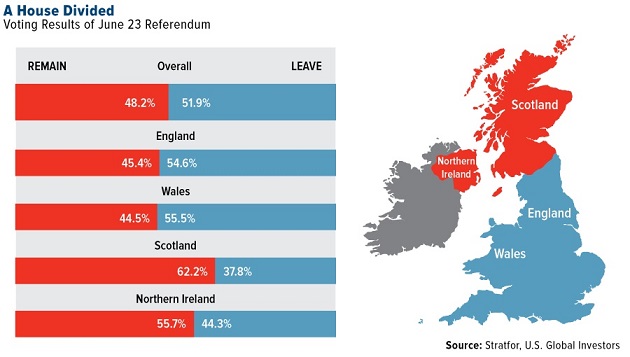
Brexit Photo 3 as a referendum in Britain (actually all of the United Kingdom) on exiting the EU passed the ballot test. A proponent for this Brexit or Leave campaign, UK Independence Party Leader Nigel Farage, declared that the balloting day – June 23 – would be Britain’s Independence Day. The assumption here is that the UK had lost its autonomy for too many governing matters and has therefore become occupied by the EU.

The detailed results of the balloting is explained in this article here:

Quick facts about the Brexit

• On June 23, 2016, the United Kingdom voted to exit the European Union by a 52 percent to 48 percent margin. There is no legal precedent for an EU member state to exit the Union, and a prolonged period of political and economic uncertainty is expected.

• Following the vote in the U.K., Prime Minister David Cameron announced he would resign, setting off a power struggle for his successor.

• Cameron said there would be no immediate change in the free movement of people, goods and services, both in and out of the U.K.

• The Bank of England stated it will enable British lenders to provide credit to businesses and households throughout the period of uncertainty. The BoE said it is also prepared to provide an additional £250 billion in liquidity to banks, in sterling and foreign currency, if required.

• Companies must continue to abide by regulations based on EU legislation until the exit is complete, which is expected to take up to two years.

What are some of the political implications?
Bernie McKay, Chief Public Policy Officer of publically-traded Silicon Valley-based company Intuit, Inc. said: “There are uncertain downstream implications about Britain’s future political leadership, which will take months to settle. But the governmental implications extend much further, including uncertainty about the future unity of the United Kingdom itself – watch for the revival of calls for Scottish independence, and for a referendum about the future of Northern Ireland. There is also the risk of exit ‘contagion’ in the EU – watch for movements in other member countries for EU exits.”

“There will be lots of speculation and rumors about Brexit implications for businesses, but it is again premature to reliably predict the real world outcomes, which will emerge gradually over the next several years as the dust settles. We will continue to engage and closely follow developments and implications.”

Source: Posted June 29, 2016; retrieved July 1, 2016 from: https://insight.intuit.com/IntuitNews/Lists/Posts/Post.aspx?List=874bdd47%2D5d8f%2D4fcd%2Dbd9c%2De4d70b533740&ID=4213&Web=d3d40795%2D7bb5%2D4e3d%2Db930%2Db6e2cf3191eb

There is a lot of uncertainty from this Brexit action – the subject of independence is turning out to be more hype than hope; see the VIDEO in the Appendix below.

This subject is presented in conjunction with the book Go Lean … Caribbean and its accompanying movement. The book serves as a roadmap for the introduction and implementation of the Caribbean Union Trade Federation (CU), a technocratic federal government – modeled after the EU – to administer and optimize the economic, security, and governing engines of the 30 member Caribbean states. The book and previous blogs are reflections of a regional interdependence movement. This is more hope, than hype!

A philosophical attack on the EU is therefore an attack on the Caribbean’s future. We must be aware … and on guard.

In truth, the EU has prospered; it has been a win-win for all of its members. It has endured hardships (consider for example, the sovereign debt crisis in Greece) that under previous European regime’s would have resulted in wars; on two occasions, World Wars. Now so much of the rest of the world – especially Africa and the MiddleEast – wants what the EU has. This is why one of the greatest challenges for the EU as a whole and for each individual member-state is immigration or refugee migration. A basic requirement of the economic integration of the EU is the free movement of labor. So anytime, a refugee finds his/her way inside EU borders, they can travel to any member-state. The only way to prevent this free movement is to exit the EU. This is the British decision!

The UK does not want economic stagnation; they way progress. But they have wrongly accepted the fallacy of economic independence.

Things in Britain will get worse before it gets worse.

Brexit Photo 1True, the EU is not perfect. They have some defects to fix. But the winning formula for fixing the governance is not shouting instructions from outside the trading group, but rather reforming and transforming it from the inside. But with Britain’s exit, they will have not further influence on the group, or the EU’s policies and procedures.

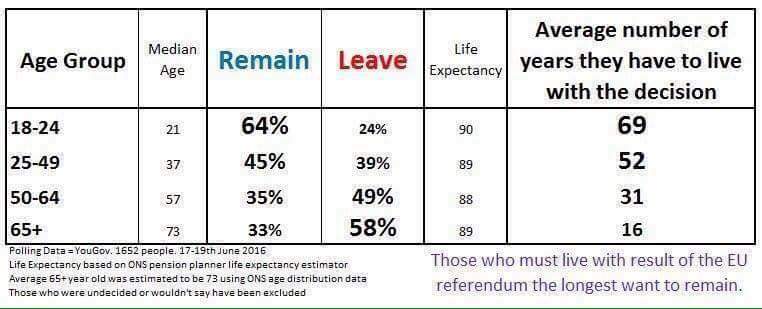
Make no mistake, EU member-states are Britain’s largest trading partners. Like any kind of collaborative relationship, there must be some “give-and-take”. The masses who voted to “Leave“, seem to want to take and not contribute as freely to the giving part. See the related chart in the photo here.

Considering the EU as a model for the CU, a big lesson for us from this drama is that without a “give-and-take” ethos, no economic integration would succeed. This has always been a problem for the UK since the start of the European “Integration Project”. Time and again, they opted-out out of so many regional regulations/proceedings. For example, the EU needed a constitution, but some countries, the UK most prominently, balked at the idea, so the rest of the trading pact opted for modified treaties as opposed to an enforceable constitution. Britain wanted their “cake and to eat it too”. So hopefully now, with a true Brexit, the constitution effort can re-emerge.

Brexit Photo 2Then there is the issue of unity; the Brexit vote shows that some elements in the United Kingdom are not so “united”. Just two years ago, a referendum in Scotland to secede from the United Kingdom – and join the EU as a full member including the Eurozone Monetary Union – was narrowly defeated. No doubt, this Brexit vote will renew the call for Scottish Independence, and maybe even spur a similar campaign for Northern Ireland.

But the complaints of the British masses who voted to “leave” must be acknowledged. They are angry, dissatisfied and protesting the status quo. The Go Lean roadmap posits that globalization is less than perfect; it creates a lot of winners, at the expense of a lot of losers. Those who cling to their nationalistic orthodoxy tend to be among the losing classes. Change is afoot; there is the need to move from the status quo and position a community at the corner of preparation and opportunity.

The recent 2008 global financial crisis taught the important lesson that without preparation and planning the people suffer. The events of that year proved to be a crisis, one that still lingers even to this day. But the Go Lean book trumpets that “a crisis is a terrible thing to waste”. In the Caribbean, we want our homeland to be a better place to live, work and play, so we must avail ourselves to the crisis in the UK, EU and the rest of the world and apply the lessons learned here at home.

For 16 of the 30 Caribbean member-states – see chart in the Appendix of 5 actual British Overseas Territories – the United Kingdom is their colonial legacy. The sins of the parents – much of the UK’s “Leave” supporters were motivated by hate – should not fall to the children. While ‘Mother England’ balks at the EU confederacy, we in the Caribbean should embrace the confederacy of the CU, even though it is a model of the EU. Only then can real solutions be forged for the Caribbean region, like creating 2.2 million jobs across the integrated market of 42 million people and growing the regional economy to $800 Billion of GDP.

There are a lot of lessons in this Brexit drama for the Caribbean. Many of these lessons were codified in the pages of the Go Lean book; though the book was written in 2013, it anticipated opposition to any confederation effort. The book presents “sharing” or give-and-take as a community ethos – the fundamental spirit of a culture that drives the practices of society – that needs to be adopted. The book also details other ethos to adopt, plus the executions of the following strategies, tactics, implementations and advocacies to forge collaborations in Caribbean communities:

Community Ethos – Ways to Impact the Future Page 26
Community Ethos – Ways to Help Entrepreneurship Page 28
Community Ethos – Promote Intellectual Property Page 29
Community Ethos – Ways to Bridge the Digital Divide Page 31
Community Ethos – Ways to Improve Sharing Page 35
Community Ethos – Ways to Impact the Greater Good Page 37
Strategy – Confederate 30 Caribbean Member-States into a Single Market Page 45
Strategy – Customers – Member-state Governments Page 47
Strategy – Agents of Change – Globalization Page 57
Tactical – Separation of Powers – Member-state Governments -vs- CU Federal Agencies Page 71
Implementation – Year 1 / Assemble Phase – Integrate Regional Organs Page 96
Implementation – Ways to Deliver Page 109
Implementation – Ways to Impact Elections – For Federal Offices and a Constitution Page 116
Implementation – Ways to Benefit from Globalization Page 119
Implementation – Ways to Promote Independence Page 120
Planning – Ways to Improve Trade Page 128
Planning – Ways to Model the EU Page 130
Planning – Lessons Learned from the West Indies Federation – Previous Integration Effort Page 135
Advocacy – Ways to Grow the Economy Page 151
Advocacy – Ways to Create Jobs Page 152
Advocacy – Ways to Improve Governance Page 168
Advocacy – Ways to Better Manage the Social Contract Page 170
Advocacy – Ways to Improve Homeland Security Page 180
Advocacy – Ways to Improve Communications Page 186
Advocacy – Ways to ImpactBritishTerritories Page 245

The underlying spirit behind this Brexit protest is a quest to “appoint new guards” to make the homeland a better place to live, work and play. The Caribbean’s quest for societal elevation is similar; but instead of a call for independence, it is a quest for interdependence; so pronounced in this Declaration of Interdependence at the outset of the Go Lean book (Page 12):

xi. Whereas all men are entitled to the benefits of good governance in a free society, “new guards” must be enacted to dissuade the emergence of incompetence, corruption, nepotism and cronyism at the peril of the people’s best interest. The Federation must guarantee the executions of a social contract between government and the governed.

The need for “new guards” have been frequently detailed in previous Go Lean blog-commentaries. Consider this sample:

https://goleancaribbean.com/blog/?p=8306 New Guards – Women Get Ready for New Lean-In Campaign
https://goleancaribbean.com/blog/?p=7896 New Guards for Disaster Relief
https://goleancaribbean.com/blog/?p=7789 New Guards for Global Trade
https://goleancaribbean.com/blog/?p=7749 New Guards for Regional Elections
https://goleancaribbean.com/blog/?p=7601 New Guards for Caribbean Sovereign Debt
https://goleancaribbean.com/blog/?p=7327 New Guards for Disease Control
https://goleancaribbean.com/blog/?p=6341 New Guards for Tourism Stewardship
https://goleancaribbean.com/blog/?p=6103 New Guards Against Deadly Threats
https://goleancaribbean.com/blog/?p=5183 A Lesson in History – Cinco De Mayo and Mexico’s Security Lapses
https://goleancaribbean.com/blog/?p=1531 A Lesson in European Dysfunction: 100 Years Ago – World War I
https://goleancaribbean.com/blog/?p=1193 EU willing to fund study on cost of not having CARICOM
https://goleancaribbean.com/blog/?p=833 European Model: One currency, divergent economies

The events in the UK and EU are important for us to consider … and learn. Truth be told, the Caribbean is in competition with this European world, and losing. We lose a lot of our citizens to these very same countries.

The quest to change the Caribbean will require convincing people to not act to their own detriment, as it appears the UK has done with this Brexit vote. Independence is not the answer; interdependence should be embraced more. This message must be trumpeted throughout Caribbean society – loud and clear. This is a mission of the Go Lean roadmap. This is a heavy-lifting task, but worth all the effort.

This is commentary 1 of 6 from the Go Lean movement on the subject of Economic Fallacies. This series presents the imagery of an animal – a dog perhaps – foraging for food, but then gets distracted and “chases a squirrel up a tree”. The squirrel in the tree will never be a meal; it is just a waste of time and energy for the animal. This analogy conveys the waste of time associated with frivolous and fallacious pursuits. The other commentaries are detailed as follows:

  1. Independence – Hype of Hope
  2. Austerity – Book Review: Mark Blyth’s “History of a Dangerous Idea”
  3. Education & Student Loans – Not a good Return on Investment
  4. Phillips Curve – Fallacy of Minimum Wage
  5. Self-regulation of the Centers of Economic Activity
  6. Casino Currency – US Dollars?

All of these commentaries are economic in nature. They refer to rules for managing the valuable resources of time, talents and treasuries. There are best-practices for winning and cautionary tales from losing. Normally these are discovered after the fact, not before hand. So examining the experiences of other communities, the winners and losers, can be extremely helpful to our Caribbean cause. This too, is a mission of the Go Lean roadmap.

Everyone in the Caribbean – citizens, institutions and member-state governments – are hereby urged to lean-in to this Go Lean roadmap. The end-result, once successful, is a better homeland to live, work and play. 🙂
Download the book Go Lean … Caribbean – now!

———–

Appendix – Caribbean Independence Dates

Member-State

Independence Day

Anguilla British Overseas Territory = BOT
Antigua and Barbuda November 1, 1981
Aruba Netherlands Constituent
Bahamas July 10, 1973
Barbados November 30, 1966
Belize September 21, 1981
Bermuda BOT
British Virgin Islands BOT
Cayman Islands BOT
Cuba May 20, 1902; Revolution July 26, 1953
Dominica November 3, 1978
Dominican Republic July 12, 192
Grenada February 7, 1974
Guadeloupe French Department
Guyana May 26, 1966
Haiti January 1, 1804
Jamaica August 6, 1962
Martinique French Department
Montserrat BOT
Netherlands Antilles Netherlands Constituent
Bonaire Netherlands Constituent
Curaçao Netherlands Constituent
Saba Netherlands Constituent
Sint Eustatius Netherlands Constituent
Sint Maarten Netherlands Constituent
Puerto Rico July 4th, 1776
Saint Barthélemy French Department
Saint Kitts and Nevis September 19, 1983
Saint Lucia February 22, 1979
Saint Martin French Department
Saint Vincent & the Grenadines October 27, 1979
Suriname November 25, 1975
Trinidad and Tobago August 31, 1962
Turks and Caicos Islands BOT
US Virgin Islands July 4th, 1776

Source: https://en.wikipedia.org/wiki/History_of_the_Caribbean#Independence

——————-

Appendix VIDEO – Brexit Update: Last Week Tonight With John Oliver (HBO)  – https://youtu.be/aGL5sDg7b8Y


Published on Jun 27, 2016
The United Kingdom voted to leave the European Union, and it looks like it may not be an especially smooth transition.
EXCUSE THE PROFANITY!

Share this post:
, ,
[Top]

YouTube Millionaire: ‘Tipsy Bartender’

Go Lean Commentary

“Out with the old; in with the new” …

… media that is.

The transformation to new media has taken hold. More and more people are consuming electronic media; so much so that it is becoming the mainstay for communications and entertainment.

This reference to electronic media conveys visual images; that means television, yes  …

CU Blog - YouTube Millionaires - TipsyBartender - Photo 2… but today, there is also the ubiquity of the internet, with its many video streaming services. The “new” in new media refers more to this medium than it does TV.

This is the change that has come to the world … and the Caribbean.

The book Go Lean … Caribbean advocates for the Caribbean region to better prepare to exploit the agents of change affecting the world. The book specifically identified technology and globalization among those agents (Page 57). It then declares that the region needs to move to the corner of preparation and opportunity.

Here – this commentary – is an example of the full manifestation of this “corner”. Identifying how – and why – networks can emerge without the need for investment into network infrastructure. The old adage is “where there’s a will, there’s a way”; but now there is only the need for the “will”, as the “way” is already in place, ubiquitous and fully accepted.

The Go Lean book relates how we are now able to have a network without the “network”. Many models abound on the world-wide-web. Previously, this commentary identified the World Wrestling Entertainment (WWE) and ESPN-W; now the focus is the platform of YouTube, and the millionaires that have emerged. The YouTube network is delivered via the internet-streaming only.

This platform allows for nimble individuals and enterprises, the “fast and the furious”, to exploit the tenets of Internet Communications Technologies (ICT). So this platform – or even a homegrown duplicate as in the www.myCaribbean.gov portal defined in the Go Lean book – demonstrates how we in the Caribbean can elevate our eco-systems of ICT, entertainment, television, and economics.

This commentary presents the profile of one member of the Caribbean Diaspora – Bahamas – who serves as a role model for his exploitation of YouTube videos: Skyy John.

CU Blog - YouTube Millionaires - TipsyBartender - Photo 1

DATE OF BIRTH: January 2, 1978

BIRTHPLACE: Nassau, Bahamas

AGE: 38 years old

ABOUT
Host and creator of the YouTube channel Tipsy Bartender, the number one bartending show in the world. On the show, he makes crazy, colorful drinks.

BEFORE FAME
Before moving to America, he was a bank teller by day, a Dominos pizza delivery guy by night, and a fisherman on weekends. He is also a former member of the Bahamian military (Defence Force).

TRIVIA
He has acted in co-starring roles on television series, including The New Adventures of Old Christine, Cold Case, The Shield, The Young & Restless. He has also appeared in movies: Dorm Daze 2 (2006), Street Eyes (2015) and Whitey Goes to Compton (2011).
Source: Retrieved June 29, 2016 from http://www.famousbirthdays.com/people/skyy-john.html

See a full interview from Tubefilter in the following article. Tubefilter is a curator of online videos from industry news, web series reviews, events, and an Awards Show. They published a web series on YouTube Millionaires. See the full article here:

Title: YouTube Millionaires: TipsyBartender Is “Here To Have Fun And Make Cocktails”
By: Sam Gutelle

Welcome to YouTube Millionaires, where we profile channels that have recently crossed the one million subscriber mark. There are channels crossing this threshold every week, and each has a story to tell about YouTube success. Read previous installments of YouTube Millionaires here.

Skyy John has successfully brought the party to YouTube. The 37-year-old Bahamian has found online success thanks to TipsyBartender, a channel on which he teaches viewers how to craft a variety of mixed drinks. John’s videos tend to have several elements in common: They feature colorful beverages, feature attractive women as John’s assistants, and convey a fun-loving atmosphere. This formula has proven to be a hit with the online audience. TipsyBartender, which is partnered with the Tastemade network, now has more than 1.4 million subscribers. Here’s what John had to say about that:

Tubefilter: How does it feel to have one million subscribers? What do you have to say to your fans?

Skyy John: It feels amazing, humbling and empowering when you think of that many people supporting what you do.

I would like to tell each one of them that I love you, and you’re all very special to me. To celebrate hitting one million subscribers, I set up a meet and greet at a local bar. I bought everyone drinks and shots all night because it’s the least I could do to show my appreciation.

TF: How did you get started on YouTube?

SJ: In the early days of YouTube I had an idea for a talk show – I shot a really low budget pilot of it and posted it online. The response was good, so I kept making videos where I’d go around and interview people. As a means of diversifying my content, since I was a bartender, I’d show people how to make one or two cocktails. A friend of mine, Monroe, said “Hey, why don’t you start a bartending channel?” I said, “That’s a good idea,” and TipsyBartender was born.

TF: What made you decide to include women in all your videos?

SJ: When you come to the TipsyBartender channel and you watch an episode, yes I always have an attractive female cohost, and to the new viewer who thinks they’re there for looks, it’s much deeper than that. Behind the scenes, the show has been primarily powered by women, in terms of working out the format, designing the style of thumbnails, choosing the drinks that we make – it’s all been women. Without that very important female touch, the TipsyBartender show that you see today would not exist. I’d like to give a special thanks to Marjane and Emma, the two that really helped me create what you see today. TipsyBartender will always be home to women from all over the world who don’t get a chance in any other medium.

TF: When you create your videos, how do you balance entertaining your audience with conveying your recipes?

SJ: We maintain a very delicate balance between entertainment and education. We keep our recipes simple, which allows us to focus on the entertainment more. Our goal is to learn and have fun while doing it. We are, after all, a party channel.

TF: What in your mind is the most important component of a good cocktail?

SJ: The most important component of a good cocktail is you – the person that I’m serving. You have to like what I’m giving you. The easiest way to accomplish that is to build a cocktail using some ingredients that you already enjoy. You like Kool Aid? I’ll build around that. If you like ice cream, I’ll build around ice cream. You like Gatorade? I’ll build around that. Whatever you like, I’ll use – and that mentality is what makes me a pariah in the world of mixology because most mixologists feel that they know better than you what you should be drinking. They’ll give you a cocktail with aged whiskey, organic basil, handcrafted bitters, ice from the Alps, and tell you that “Hey, this is the most perfect best greatest drink ever!” What if that person you’re serving it to doesn’t like any of that s**t? Only you know what you like. You’re drinking the drink, I’m just working with you – i’m not a mixologist. I’m here to have fun and make cocktails. Drinking is supposed to be enjoyable, not feel like a damn chemistry exam.

TF: There don’t seem to be a ton of drinks channels on YouTube. Why do you think it’s not a more common category?

SJ: Because it’s very difficult to do. Drink-making is not that exciting because it’s very difficult to present it in an interesting format. Luckily, we’ve been able to get it right and to keep people interested, and every day we strive to continue doing what we’re doing and make our audience grow.

TF: What is your favorite cocktail you’ve made on your channel?

SJ: There are too many to list. Some of the favorite drinks I made were the rainbow shots, because that was difficult to learn how to do. Definitely some of the jungle juices because they’re pretty crazy, and believe it or not it requires a lot of math and planning to make the appropriate amounts in large quantities. Some of the jello shots we’ve made for sure. My favorites would probably have to be ice cream drinks or drinks based around rum, especially coconut rum.

TF: When you’re out bartending, do you ever get recognized as “that guy from the Internet”?

SJ: All the time – but I don’t bartend in a bar anymore. I actually got fired because of TipsyBartender. I was spending so much time on the show, so much time editing that I needed to get my shifts covered. Working in L.A. you got people covering shifts all the time, so it wasn’t really a problem at first. I was called into work for a meeting and they said I hadn’t been there in a few months – I said “I’ll get back to work, don’t worry I got you,” –  but I didn’t realize that they were monitoring me. They discovered that in four months following our meeting, I only worked once. So I got the call saying “Go mix drinks man, we’ll handle the bar.”

TF: What’s next for your channel? Any fun plans?

SJ: TipsyBartender morphed into a truly global brand where we have tons of fans all over the world, primarily because we focused on Facebook, where videos are very easily shared. We’re now approaching 7 million fans that are highly engaged in what we do. Our Facebook engagement is higher than that of all the biggest liquor brands around the world combined! Our next step for us is to take our cocktails and products around the world. We’re also in the developing stages of creating a Kickstarter to fund our first bar in L.A.
Source: Tube Filter Online Magazine – Posted February 5, 2015; retrieved June 28, 2016 from: http://www.tubefilter.com/2015/02/05/tipsy-bartender-skyy-john-drinks-youtube-millionaires/

—————–

Alternative Interview: http://affairstoday.co.uk/interview-tipsy-bartender/

—————–

VIDEO – How to make Rainbow Shots! – Tipsy Bartender – http://youtu.be/MoVZoCmkdjY

Published on Nov 17, 2011 – Subscribe to Tipsy Bartender: http://bit.ly/1krKA4R
The prettiest shots ever…RAINBOW SHOTS! These are the best looking rainbow shots ever!
OUR VLOG CHANNEL: http://www.youtube.com/TipsyVlogs

Is YouTube a successful business model for Skyy John? Yes indeed. See here as to the estimate of how much money he was making in 2011, long before he crossed the million-subscriber threshold; (1.4 million as of February 2015):

“How much money does Tipsy Bartender make?”
Skyy John is the Bahamian guy who runs the YouTube channel called Tipsy Bartender. He has an estimated net worth of $500,000. …

See the full article here: https://naibuzz.com/much-money-tipsy-bartender-makes-youtube/

The actuality of YouTube and the role model of Skyy John is a lesson for the Caribbean; there is heavy-lifting required to transform society. The book Go Lean…Caribbean serves as a roadmap for the introduction and implementation of the Caribbean Union Trade Federation (CU), a technocratic federal government to administer and optimize the economic/security/governing engines of the region’s 30 member-states. In addition, there is the vision for the Caribbean Postal Union (CPU), the focus of which is to coordinate regional mail plus the www.myCaribbean.gov portal to offer email and social media functionality for all Caribbean stakeholders: 42 million residents, 10 million in the Diaspora and even the 80 million tourists-visitors.

The Go Lean roadmap accepts the precept that one person can make a difference in society. What’s more, that one person does not have to be a genius – in the way society measures genius – they only need to be committed and disciplined. That is the example of Skyy John, committed and disciplined in the occupation of bartending, not exactly a STEM field (Science, Technology, Engineering and Mathematics), but impactful nonetheless.

Bartending is more art than science.

This Go Lean economic empowerment roadmap strategizes to create a Single Media Market to leverage the population of the entire region, an audience of 42 million people across 30 member-states and 4 languages consuming cutting-edge ICT offerings. YouTube provides a great role model for the CU‘s executions; making the regional implementation of social media and internet streaming, www.myCaribbean.gov, economically viable. This means jobs and entrepreneurial opportunities.

At the outset, the roadmap recognizes the need for ICT development and job creation with these statements in the opening Declaration of Interdependence (Page 13 & 14):

xxi. Whereas the preparation of our labor force can foster opportunities and dictate economic progress for current and future generations, the Federation must ensure that educational and job training opportunities are fully optimized for all residents of all member-states, with no partiality towards any gender or ethnic group. The Federation must recognize and facilitate excellence in many different fields of endeavor, including sciences, languages, arts, music and sports. This responsibility should be executed without incurring the risks of further human flight, as has been the past history.

xxvi. Whereas the Caribbean region must have new jobs to empower the engines of the economy and create the income sources for prosperity, and encourage the next generation to forge their dreams right at home, the Federation must therefore foster the development of new industries… . In addition, the Federation must invigorate the enterprises related to existing industries like tourism, fisheries and lotteries – impacting the region with more jobs.

xxvii. Whereas the region has endured a spectator status during the Industrial Revolution, we cannot stand on the sidelines of this new economy, the Information Revolution. Rather, the Federation must embrace all the tenets of Internet Communications Technology (ICT) to serve as an equalizing element in competition with the rest of the world. The Federation must bridge the digital divide and promote the community ethos that research/development is valuable and must be promoted and incentivized for adoption.

xxviii. Whereas intellectual property can easily traverse national borders, the rights and privileges of intellectual property must be respected at home and abroad. The Federation must install protections to ensure that no abuse of these rights go with impunity, and to ensure that foreign authorities enforce the rights of the intellectual property registered in our region.

In the Go Lean book and previous blogs, the Go Lean movement asserted that the market organizations and community investments to garner economic benefits of ICT are within reach, with the proper technocracy. The eco-system for streaming videos is inclusive of the roadmap’s quest to make the Caribbean region a better place to live, work and play.

Now is the time for all of the Caribbean to lean-in to the following community ethos, strategies, tactics, implementations and advocacies detailed in the book Go Lean…Caribbean to deliver the solutions to elevate the Caribbean region through ICT:

Community Ethos – Deferred Gratification Page 21
Community Ethos – Economic Principles – All Choices Involve Costs Page 21
Community Ethos – Economic Principles – People Respond to Incentives Page 21
Community Ethos – Economic Principles – Economic Systems Influence Choices Page 21
Community Ethos – Economic Principles – Voluntary Trade Creates Wealth Page 21
Community Ethos – Economic Principles – The Consequence of Choice Lie in Future Page 21
Community Ethos – Job Multiplier Page 22
Community Ethos – Lean Operations Page 24
Community Ethos – Return on Investments – ROI Page 24
Community Ethos – Cooperatives Page 25
Community Ethos – Ways to Impact the Future Page 26
Community Ethos – Ways to Foster Genius Page 27
Community Ethos – Ways to Help Entrepreneurship Page 28
Community Ethos – Promote Intellectual Property Page 29
Community Ethos – Ways to Bridge the Digital Divide Page 31
Community Ethos – Ways to Impact the Greater Good Page 37
Strategy – Agents of Change – Technology Page 57
Strategy – Agents of Change – Globalization Page 57
Tactical – Fostering a Technocracy Page 64
Tactical – How to Grow the Economy to $800 Billion – Trade and Globalization Page 70
Tactical – Separation of Powers – Postal Services Page 78
Tactical – Separation of Powers – Interstate Commerce Administration Page 79
Implementation – Year 1 / Assemble Phase – Establish CPU Page 96
Implementation – Ways to Pay for Change – Group Purchase Organizations (GPO) Page 101
Implementation – Ways to Optimize Mail Service & the myCaribbean.gov Marketplace Page 108
Implementation – Ways to Deliver Page 109
Implementation – Ways to Impact Social Media Page 111
Implementation – Ways to Benefit from Globalization Page 119
Planning – 10 Big Ideas for the Caribbean – # 8 Cyber-Caribbean Page 127
Advocacy – Ways to Grow the Economy Page 151
Advocacy – Ways to Create Jobs Page 152
Advocacy – Ways to Foster Technology Page 197
Advocacy – Ways to Foster e-Commerce Page 198
Advocacy – Ways to Impact Main Street Page 201
Advocacy – Ways to Impact Hollywood Page 203
Advocacy – Ways to Preserve Caribbean Heritage Page 218

The Go Lean book asserts that the region can be a better place to live, work and play; that the economy can be grown methodically by embracing progressive strategies in ICT and video streaming. This point was further detailed in these previous blogs:

UberEverything in Africa – Model for ICT and Logistics
Zuckerberg’s Philanthropy Project Makes Investment for ICT Education
Transformations: Caribbean Postal Union – Delivering the Future
The Future of Money
How to address high consumer prices
Truth in Commerce – Learning from Yelp
Net Neutrality: It matters here … in the Caribbean
Role Model Jack Ma brings Alibaba Social Media Portal to America
Where the Jobs Are – Computers Reshaping Global Job Market
Amazon’s new FIRE Smartphone
Grenada PM Urges CARICOM on ICT

This Go Lean roadmap is committed to availing the economic opportunities of ICT but the roadmap is bigger than just videos; its a concerted effort to elevate all of Caribbean society. The CU is the vehicle for this goal, this is detailed by the following 3 prime directives:

  • Optimization of the economic engines in order to grow the regional economy to $800 Billion & create 2.2 million new jobs.
  • Establishment of a security apparatus to protect the resultant economic engines.
  • Improve Caribbean governance to support these engines.

This Go Lean roadmap looks for the opportunities to foster interest that may exists in specific endeavors, and then explore the business opportunities around servicing that demand. This is the example that the ‘Tipsy Bartender’ (Skyy John) provides for his Caribbean neighbors – though he now lives in Los Angeles, California. Oh, how much better to foster these passions right here at home in the Caribbean region.

This quest is conceivable, believable and achievable, but it is not easy; it is heavy-lifting. This is the quest of Go Lean/CU roadmap, to do the heavy-lifting to make the Caribbean a better place to live, work and play. 🙂

Download the book Go Lean … Caribbean – now!

Share this post:
, , ,
[Top]

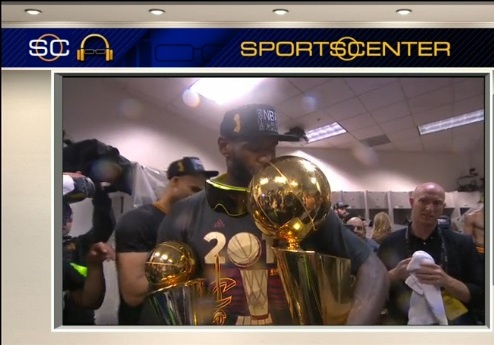
ENCORE: LeBron – ‘Cleveland, this is for you’

This blog from July 15, 2014 – Lebronomy – Economic Impact of the Return of the NBA Great – is hereby re-distributed in honor of … the Championship; Cleveland Cavaliers won over Golden State Warriors 93 to 89 in the decisive Game 7 of the 2016 NBA Finals. See here:

It took 52 years and enough heartbreak to fill an encyclopedia, and Finals MVP LeBron James has given his hometown a championship with the most improbable comeback in NBA Finals history. – ESPN’s SportsCenter – June 19, 2016
- Photo 1

Go Lean Commentary

The commentaries of the Go Lean…Caribbean blogs have often addressed sports issues. But mostly from the point-of-view as the business of sports, and its impact on the communities’ economic engines.

This commentary continues that pattern, plus it couples one more assignment: Mea Culpa.

CU Blog - Lebronomy - Economic Impact of the Return of the NBA GreatWe were wrong! The publishers of the Go Lean book (dated November 2013) included an anecdote on the Miami Heat (Page 42), stressing the “Not one, not two, not three, not four…” quotation from superstar free agent LeBron James when he joined the team in 2010. The Mea Culpa, (Latin verbiage for “My Bad”), obviously applies in that, there would only be 2 championships. Everything else of that anecdote applies, but a technocratic approach, different than previous Caribbean administrations, requires that we learn lessons from successes and failures. Already this commentary has congratulated the 2014 winner of the NBA Finals, San Antonio Spurs, who went on to beat the Miami Heat; as follows:

https://goleancaribbean.com/blog/?p=1508 St   Croix’s Tim Duncan to Return to Spurs For Another Season

What are the lessons that we learn from our failure to prognosticate the winning basketball team? Number one: Don’t bet!

The Bible words are correct: “Time and unforeseen occurrences befall us all” (Ecclesiastes 9:11). That’s what we got wrong, but what we got right is so much more impactful, the economic impact of sports on the local community:

By: ABC News

Title: Lebronomy: Economic Impact of the Return of NBA Great LeBron James

A ticket to the Cleveland Cavalier’s season opener used to go for $40, now goes for as much as $600.

Yahoo Video Sharing Site (Retrieved 07/14/2014) –
http://news.yahoo.com/video/lebronomy-economic-impact-return-nba-030818278.html

This discussion of sports and the basketball team in Cleveland is not just academic. Community pride, jobs, and the growth of the regional economy is involved; the foregoing VIDEO summarized that LeBron James’ absence was worth $50 million a season for this metropolitan area. This point aligns with the objections of the book Go Lean…Caribbean. This book serves as a roadmap for the introduction and implementation of the technocratic Caribbean Union Trade Federation (CU). This effort harnessed the individual abilities so as to elevate the athletes (micro) and also economic impact for their related communities (macros). Modern sports cannot be analyzed without considering the impact on “dollars and cents” for the community. In his essay to the people of Cleveland, announcing his return, after taking his talents to South Beach, this was the exact point LeBron James made:

“My relationship with Northeast Ohio is bigger than basketball. I didn’t realize that four years ago. I do now.”

“Before anyone ever cared where I would play basketball, I was a kid from Northeast Ohio. It’s where I walked,” James told SI (Sports Illustrated). “It’s where I ran. It’s where I cried. It’s where I bled. It holds a special place in my heart. People there have seen me grow up. I sometimes feel like I’m their son. Their passion can be overwhelming. But it drives me.

“I want to give them hope when I can. I want to inspire them when I can.”
(http://www.journalgazette.net/article/20140711/SPORTS20/140719891/-1/sports12)

These words in this eloquently written essay could have been concurred by so many of the Caribbean Diaspora that had taken their talents to “South Beach, South Toronto or South London”. The economic impact of their absence has been duly noted in research and analysis and the conclusion is bad:

https://goleancaribbean.com/blog/?p=1433 Caribbean loses over 70% of tertiary educated citizens to the   brain drain

The Go Lean roadmap attempts to impact change in the region, by elevating Caribbean society. The CU, using all the economic benefit that can be derived from sports in the region, will pursue a charter that is bigger than basketball, football, baseball or any other sport. Rather the CU will employ strategies, tactics and implementations to impact its prime directives; identified with the following 3 statements:

  • Optimization of the economic engines in order to grow the regional economy to $800 Billion & create 2.2 million new jobs.
  • Establishment of a security apparatus to protect the resultant economic engines.
  • Improve Caribbean governance to support these engines.

The Go Lean book identified this vision early in the book (Page 13 & 14) in the following pronouncements in the Declaration of Interdependence:

xix.   Whereas our legacy in recent times is one of societal abandonment, it is imperative that incentives and encouragement be put in place to first dissuade the human flight, and then entice and welcome the return of our Diaspora back to our shores…

xxi.   Whereas the preparation of our labor force can foster opportunities and dictate economic progress for current and future generations, the Federation must ensure that educational and job training opportunities are fully optimized for all residents of all member-states, with no partiality towards any gender or ethnic group. The Federation must recognize and facilitate excellence in many different fields of endeavor, including sciences, languages, arts, music and sports. This responsibility should be executed without incurring the risks of further human flight, as has been the past history.

xxxi.   Whereas sports have been a source of great pride for the Caribbean region, the economic returns from these ventures have not been evenly distributed as in other societies. The Federation must therefore facilitate the eco-systems and vertical industries of sports as a business, recreation, national pastime and even sports tourism – modeling the Olympics.

Now is the time for all of the Caribbean to lean-in to the following community ethos, strategies, tactics, implementations and advocacies detailed in the book Go Lean … Caribbean to foster the elevation and industrialization of sports in the Caribbean region:

Community   Ethos – People Respond to Incentives in Predictable Ways Page 21
Community   Ethos – Return on Investments Page 24
Community   Ethos – Ways to Foster Genius Page 27
Community   Ethos – Ways to Promote Happiness Page 36
Community   Ethos – Ways to Impact the Greater Good Page 37
Strategic   – Vision – Integrating Region in to a Single Market Page 45
Strategic   – Staffing – Sporting Events at Fairgrounds Page 55
Tactical   – Fostering a Technocracy Page 64
Tactical   – Separation of Powers – Sports & Culture Administration Page 81
Tactical   – Separation of Powers – Fairgrounds Administration Page 83
Implementation   – Steps to Implement Self-Governing Entities (Fairgrounds) Page 105
Implementation   – Ways to Deliver Page 109
Planning   – 10 Big Ideas for the Caribbean Region Page 127
Planning   – Ways to Make the Caribbean Better Page 131
Advocacy   – Ways to Grow the Economy Page 151
Advocacy   – Ways to Create Jobs Page 152
Advocacy   – Ways to Improve Local Government – Parks & Recreation Page 169
Advocacy   – Ways to Impact Events Page 191
Advocacy   – Ways to Promote Fairgrounds Page 192
Advocacy   – Ways to Foster Technology Expositions Page 197
Advocacy   – Ways to Improve Sports Page 229
Advocacy   – Ways to Impact Urban Living – Sports Leagues Page 234

Now is the time for all of the Caribbean, the people and governing institutions, to lean-in for the empowerments described in the book Go Lean…Caribbean. This is a big deal for regional sports. This book provides the turn-by-turn directions for how to get from Point A, where we can only hope and dream about foreign sports stars, to Point B, where we can finally celebrate our own sports stars.

Download the book Go Lean … Caribbean – now!

Share this post:
, , , ,
[Top]

UberEverything in Africa

Go Lean Commentary

UPDATED August 29, 2020 – Uber Technologies Inc. continues to change the Old World [economy] to a new world [economy]. This car-sharing service has already rankled taxi-limo companies and cabbies across the world, and now they are setting their sights on other industries.

They have dubbed this advance into diverse businesses as UberEverything. See the detailed news story / product announcement here of this launch in Africa, published by Quartz Africa – see Appendix:

Title: Uber Africa will diversify beyond car rides this year with its ‘Everything’ service
By: Yomi Kazeem

Having nearly perfected the business of moving people around on the continent, Uber is set to diversify the core of its business in sub Saharan Africa with the introduction of UberEverything, a division of the company with ambitious plans to plug its existing drivers network into the on-demand economy and provide services such as product and food delivery and courier services.

CU Blog - UberEverything in Africa - Photo 1

“The first market will probably be South Africa and we are pushing to make that happen before the end of the year,” said Alon Lits, Uber’s general manager for sub-Saharan Africa.

‘Everything’ is Uber’s strategy to build on its logistics infrastructure in the cities it operates. Once the company is at scale in a city with ride passengers it can develop other services such as UberRush, a personal courier service or food delivery with UberEats,(available in San Francisco, Los Angeles, Chicago and New York) . “Everything we’re building is on top of a platform that already exists,” Jason Droege, head of the UberEverything division, told the Los Angeles Times last month.

With the rising popularity and adoption of e-commerce shopping and on-demand services among a growing African middle-class who live on-the-go and increasingly value convenience, UberEverything could be a hit.

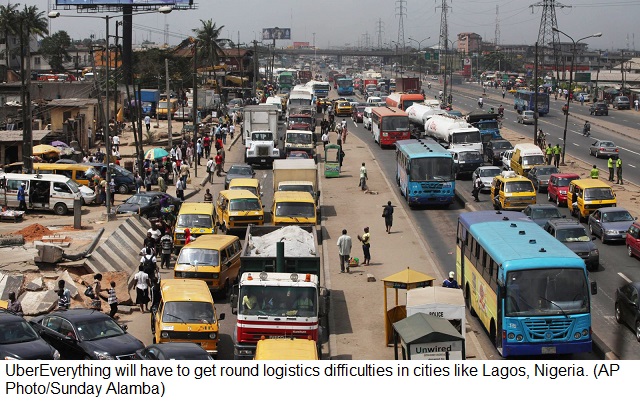
Logistics have been a big challenge for e-commerce companies in African larger cities, some of which have poor road networks and other infrastructure challenges. Major local players like Konga in Nigeria and African Internet Group’s Jumia and sister company Hellofood have had to invest heavily in developing their own logistics platform to get round the weak local infrastructure.

“If things go well in South Africa, there’s no reason why we won’t bring UberEverything to more markets.” One of such markets will likely be Lagos, which Lits says Uber remains “bullish” about despite Nigeria’s struggling economy. Home to 20 million people, Lagos’ infamous traffic jams and haphazard address system make it difficult—and expensive—for delivery services to operate but could represent a big opportunity for UberEverything’s goal of providing efficient logistics using its existing drivers network.

Aided by its recent $3.5 billion funding—its single biggest investment ever— from Saudi Arabia’s Public Investment Fund, Uber expanded to Kampala and Accra in the last week and Lits says a launch in Dar es Salaam is imminent. This follows plans to spend $250 million on growing its market across North Africa and the Middle East.

But Uber’s operations in Africa have not been without hitches. In Cairo and Nairobi, Uber drivers have been targets of protests and, in some cases, violent attacks. In South Africa, the company was forced to provide drivers with emergency numbers and also partner with a local private security firm.

Source: Quartz Africa Weekly Brief – Posted 06/13/2016; retrieved 06/18/2016 from: http://qz.com/703087/uber-africa-is-will-diversify-beyond-car-rides-this-year-with-its-everything-service/

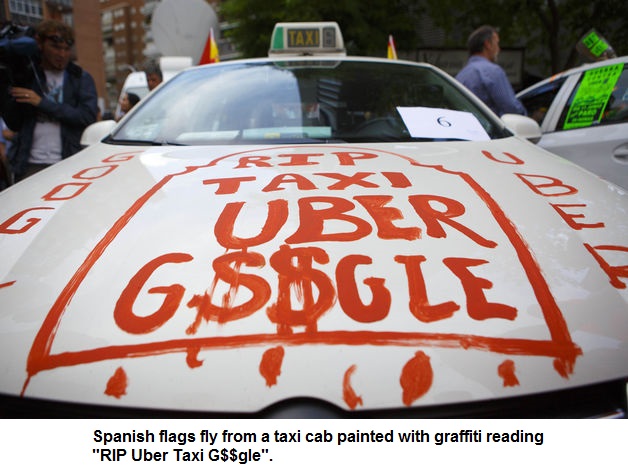
In a previous blog on Uber, the Go Lean commentary identified how evolutionary changes in technology and modernization affects Old World taxi businesses. Now we see how evolution is changing all businesses … everywhere.

The challenge with technology, for the taxi cab industry and many other areas of life, is one-step forward-two steps-backwards. This point aligns with the book Go Lean…Caribbean which anticipates the compelling issues associated with Internet & Communications Technologies (ICT) and their effect on traditional commerce. The book prepares the Caribbean region to move to the intersection of opportunity and preparation. The book serves as a roadmap for the introduction and implementation of the technocratic Caribbean Union Trade Federation (CU). This roadmap accepts the tenets of ICT, that it can serve as an equalizer between big countries and small countries, or big companies and small companies. So opportunities will come to the Caribbean region as a result of the advances in technology. How will the region prepare?

First, the book asserts that before the strategies, tactics and implementations of the Go Lean roadmap can be deployed, the affected communities must first embrace a progressive community ethos. The book defines this “community ethos” as the fundamental character or spirit of a culture; the underlying sentiment that informs the beliefs, customs, or practices of society; dominant assumptions of a people or period.

The Go Lean book stresses that the current community ethos must change and the best way to motivate people to adapt their values and priorities is in response to a crisis. The roadmap recognizes this fact with the pronouncement that the Caribbean is in crisis, and that “a crisis is a terrible thing to waste”. This ethos corresponds with the UberEverything motives. In a lot of urban communities around the world, Caribbean included, traffic is crisis-worthy. According to the foregoing article, this reality is creating business opportunities around the logistics of Uber.

Uber 2The Go Lean roadmap avails these opportunities, by strategizing logistics with a regional focus. The roadmap for Caribbean logistics is also our means for delivering the mail; this is the vision for the Caribbean Postal Union (CPU). The focus of the CPU is not just postal mail, but rather all the lean technocratic activities that make up logistics. Mail requires logistics, but logistics means so much more than just mail. So we would want to model successful enterprises in this industry space, like Uber. (The Go Lean book considers the postal operation of the US Postal Service – Page 99 – and rules it null-and-void for transforming e-Commerce). Other successful enterprises that provide good examples of lean technocratic efficiency include Amazon and Alibaba.

Modeling UberEverything, the Go Lean/CU roadmap will directly employ technologically innovative products and services to impact its own prime directives, identified with the following 3 statements:

  • Optimization of the economic engines in order to grow the regional economy to $800 Billion & create 2.2 million new jobs.
  • Establishment of a security apparatus to protect the resultant economic engines.
  • Improve Caribbean governance to support these engines.

The Uber model helps the CPU impact the economic, security and governing engines, like job creation. In the previous 2014 blog relating Uber, it was disclosed that Uber is responsible for 20,000 new jobs per month. The median income for drivers using the UberX platform, Uber’s low-cost service, is $90,000 per year in New York and more than $74,000 in San Francisco, the company said. How is this possible to make so much more money than traditional driving professionals? Uber is a sophisticated business model; one thing is Uber fully applies the laws of economics – supply and demand. Note the explanation in the VIDEO here:

VIDEOMake More $ During Times of High Demand – https://youtu.be/cHfWwnJwyOU

Professor Wolters
Published on Nov 20, 2019 – Ever wonder how Uber and other ride sharing firms calculate their prices? Or maybe how prices are made for airlines? Well to understand the pricing you need to understand what is called Dynamic Pricing, which is constantly moving prices.

Filmed in Watkinsville, GA. Copyright Mark Wolters 2019
#marketing #pricing #principlesofmarketing

Topic 4: Digital Marketing
Topic 13: Dynamic Pricing

Learn more at http://uber.com

This model is a good starting point for elevating the Caribbean. But this is heavy-lifting; notice in the foregoing article regarding the complex issues associated with Uber in terms of security and taxi-limo licensing (governance). The Go Lean roadmap conveys that heavy-lifting of logistical details are more of an investment. The community will enjoy the returns, with the optimized commerce deliveries.

The Go Lean roadmap seeks to change the entire eco-system of Caribbean logistics and resulting commerce – the interaction with postal operations. This vision is defined early in the book (Page 12 & 14) in the following pronouncements in the opening Declaration of Interdependence:

xv. Whereas the business of the Federation and the commercial interest in the region cannot prosper without an efficient facilitation of postal services, the Caribbean Union must allow for the integration of the existing mail operations of the governments of the member-states into a consolidated Caribbean Postal Union, allowing for the adoption of best practices and technical advances to deliver foreign/domestic mail in the region.

xxvii. Whereas the region has endured a spectator status during the Industrial Revolution, we cannot stand on the sidelines of this new economy, the Information Revolution. Rather, the Federation must embrace all the tenets of Internet Communications Technology (ICT) to serve as an equalizing element in competition with the rest of the world. The Federation must bridge the digital divide and promote the community ethos that research/development is valuable and must be promoted and incentivized for adoption.

The Go Lean book details a series of community ethos, strategies, tactics, implementations and advocacies to foster the best practices for the logistics of the CPU and trade marketplaces in the Caribbean region:

Community Ethos – Deferred Gratification Page 21
Community Ethos – Economic Principles – All Choices Involve Costs Page 21
Community Ethos – Economic Principles – People Respond to Incentives Page 21
Community Ethos – Economic Principles – Economic Systems Influence Choices Page 21
Community Ethos – Economic Principles – Voluntary Trade Creates Wealth Page 21
Community Ethos – Economic Principles – The Consequence of Choice Lie in Future Page 21
Community Ethos – Job Multiplier Page 22
Community Ethos – Lean Operations Page 24
Community Ethos – Return on Investments – ROI Page 24
Community Ethos – Cooperatives Page 25
Community Ethos – Ways to Impact the Future Page 26
Community Ethos – Ways to Help Entrepreneurship Page 28
Community Ethos – Promote Intellectual Property Page 29
Community Ethos – Ways to Bridge the Digital Divide Page 31
Strategy – Customers – Citizens and Member-states Governmental Page 47
Tactical – Fostering a Technocracy Page 64
Tactical – How to Grow the Economy to $800 Billion – Trade and Globalization Page 70
Tactical – Separation of Powers – Postal Services Page 78
Tactical – Separation of Powers – Interstate Commerce Administration Page 79
Implementation – Year 1 / Assemble Phase – Establish CPU Page 96
Implementation – Anecdote – Mail Services – USPS Dilemma Page 99
Implementation – Ways to Pay for Change – Group Purchase Organizations (GPO) Page 101
Implementation – Ways to Optimize Mail Service & myCaribbean.gov Marketplace Page 108
Implementation – Ways to Deliver Page 109
Implementation – Ways to Impact Social Media Page 111
Implementation – Ways to Benefit from Globalization Page 119
Planning – 10 Big Ideas for the Caribbean – # 8 Cyber-Caribbean Page 127
Planning – Ways to Improve Trade – GPO’s Page 128
Planning – Ways to Improve Interstate Commerce Page 129
Advocacy – Ways to Grow the Economy Page 151
Advocacy – Ways to Create Jobs Page 152
Advocacy – Ways to Mitigate Black Markets Page 165
Advocacy – Ways to Manage the Federal Civil Service Page 173
Advocacy – Ways to Foster Cooperatives Page 176
Advocacy – Ways to Foster Technology Page 197
Advocacy – Ways to Foster e-Commerce Page 198
Advocacy – Reforms for Banking Regulations Page 199
Advocacy – Ways to Impact Main Street Page 201
Advocacy – Ways to Improve Transportation – Union Atlantic Turnpike Page 205
Appendix – Network of Ferries – Model of Marine Highway System Page 280

Issues related to the CPU business model have previously been detailed in these Go Lean commentaries, listed here:

Transformations: Caribbean Postal Union – Delivering the Future
The Future of Money
How to address high consumer prices
Truth in Commerce – Learning from Yelp
Net Neutrality: It matters here … in the Caribbean
Robots help Amazon tackle Cyber Monday
Role Model Jack Ma brings Alibaba to America
Where the Jobs Are – Computers Reshaping Global Job Market
Amazon’s new FIRE Smartphone
Grenada PM Urges CARICOM on ICT

The foregoing article describes Uber’s activities in Africa. The Caribbean is now ready, willing and able …

The Go Lean roadmap posits that the CU will incubate the e-Commerce industry, forge entrepreneurial incentives and facilitate the regional logistics so that innovations can thrive. As related in the foregoing article about impact in other regions, these efforts can elevate the economy, security and governing engines of a community.

The world is continuing to change; and ‘change’ is bringing great new opportunities.

We need to be prepared. This is the intersection – change and opportunity – that we need to position ourselves at. Then, only then will success is within reach. We can make the Caribbean, a better place to live, work and play. 🙂

Download the book Go Lean … Caribbean – now!

—————-

Appendix – About Quartz

Quartz is a digitally native news outlet, born in 2012, for business people in the new global economy. We publish bracingly creative and intelligent journalism with a broad worldview

Quartz is owned by Atlantic Media Co., the publisher of The Atlantic, National Journal, and Government Executive.


Share this post:
, , , , , ,
[Top]

ENCORE: It’s College World Series Time … again

This is an ENCORE presentation of a previous blog-commentary from June 15, 2014, commemorating the College World Series in Omaha, Nebraska USA. This commentary is being re-distributed for the 2016 tournament (June 18 – 28/29). The following 8 teams were successful and rewarded for their achievement to this pinnacle of their sport:

University of Miami University of Florida
Arizona Coastal Carolina
California-Santa Barbara Texas Christian University
Oklahoma State University Texas Tech

VIDEO – Florida has the arms corps to make a deep College World Series run – http://espn.go.com/video/clip?id=espn:16265952

The original blog is re-presented here as follows:

============

Go Lean Commentary

The sports world is all abuzz this weekend: World Cup in Brazil, NBA Finals, US Open Golf tournament, and the NCAA College World Series (CWS) baseball championship tournament.

History happens here!

History happens here!

This last event, CWS, is the subject of this blog, a milestone, the 100th in the series promoting the book Go Lean…Caribbean. This book serves as a roadmap for the introduction and implementation of the technocratic Caribbean Union Trade Federation (CU). While the CU is NOT a sports promotion entity, it does present an important role for sports in the vision to make the Caribbean a better place to live, work and play. As an expression of this vision Page 81 states:

“a mission of the CU is to forge industries and economic drivers around the individual and group activities of sports and culture”.

The Go Lean vision is a confederation of the 30 member-states of the Caribbean forming a proxy organization to do the heavy-lighting of building, funding and maintaining sports venues. The strategy is for the CU to be the landlord, and super-regional regulatory agency, for sports leagues, federations and associations (amateur, collegiate, and professional). This strategy relates to the College World Series model. The CWS tournament opened this weekend (June 14/15) in Omaha, Nebraska USA; this is the 65th straight tournament in the same city. This is an anomaly for American sports, as every year most big sporting events (Super Bowl, US Open Golf, NCAA Final Four, BCS Football Championship) rotate/move to different cities. Consider 2014 thus far:

Sport 2014 Host 2013 Host 2012 Host
Super Bowl New York City New Orleans, Louisiana Indianapolis, Indiana
US Open Golf Pinehurst, North Carolina Ardmore (Philadelphia), Pennsylvania San Francisco, California
NCAA Basketball Final Four Dallas, Texas Atlanta, Georgia New Orleans, Louisiana
BCS College Football Pasadena, California Miami, Florida New Orleans, Louisiana

But since 1950, the 12-day College World Series, college baseball championship, has been held in the City of Omaha. It was held at Rosenblatt Stadium from 1950 through 2010; starting in 2011, it has been moved to the new ultra-modern TD Ameritrade Park downtown. The 2013 attendance of 341,483 belies the economic benefits.

CWS Photo 2

CWS Photo 3

These facts reinforce the marketing tag line of CWS Omaha, Inc., (a Nebraska technocracy):

History Happens Here.

The prime directives of the CU/Go Lean roadmap are described with these 3 statements:

  • Optimization of the economic engines in order to grow the regional economy to $800 Billion & create 2.2 million new jobs.
  • Establishment of a security apparatus to protect the resultant economic engines.
  • Improve Caribbean governance to support these engines.

This roadmap commences with the recognition that genius qualifiers can be found in many fields of endeavor, including sports. The roadmap pronounces the need for the region to confederate in order to invest in the facilitations for the Caribbean sports genius to soar. These pronouncements are made in the Declaration of Interdependence, (Pages 13 & 14) as follows:

xxi. Whereas the preparation of our labor force can foster opportunities and dictate economic progress for current and future generations, the Federation must ensure that educational and job training opportunities are fully optimized for all residents of all member-states, with no partiality towards any gender or ethnic group. The Federation must recognize and facilitate excellence in many different fields of endeavor, including … sports. This responsibility should be executed without incurring the risks of further human flight, as has been the past history.

xxii. Whereas sports have been a source of great pride for the Caribbean region, the economic returns from these ventures have not been evenly distributed as in other societies. The Federation must therefore facilitate the eco-systems and vertical industries of sports as a business, recreation, national pastime and even sports tourism – modeling the Olympics.

All in all, the Go Lean book and accompanying blogs declare that the Caribbean needs to learn lessons from CWS-Omaha and other sporting venues/administrations. And thus this subject of the “business of sports” is a familiar topic for Go Lean blogs. The previous blogs as follows, and this one, constitutes 8 of the first 100 entries:

a. https://goleancaribbean.com/blog/?p=1214 The Art & Science of Temporary Stadiums – No White Elephants
b. https://goleancaribbean.com/blog/?p=1148 Sports Bubble – Franchise values in basketball
c. https://goleancaribbean.com/blog/?p=1020 Sports Revolutionary: Advocate Jeffrey Webb
d. https://goleancaribbean.com/blog/?p=498 Book Review: ‘The Sports Gene’
e. https://goleancaribbean.com/blog/?p=334 Bahamians Make Presence Felt In Libyan League
f. https://goleancaribbean.com/blog/?p=318 Collegiate Sports in the Caribbean
g. https://goleancaribbean.com/blog/?p=60 Could the Caribbean Host the Olympic Games?

This Go Lean roadmap is committed to availing the economic opportunities of all the Caribbean athletic abilities. The book details these series of community ethos, strategies, tactics, implementations and advocacies designed to deliver regional solutions:

Community Ethos – Return on Investments Page 24
Community Ethos – Ways to Foster Genius Page 27
Community Ethos – Ways to Impact the Greater Good Page 37
Strategic – Staffing – Sporting Events at Fairgrounds Page 55
Tactical – Fostering a Technocracy Page 64
Tactical – Separation of Powers – Sports & Culture Administration Page 81
Tactical – Separation of Powers – Fairgrounds Administration Page 83
Implementation – Steps to Implement   Self-Governing Entities Page 105
Implementation – Ways to Deliver Page 109
Planning – Ways to Make the Caribbean   Better Page 131
Advocacy – Ways to Grow the Economy Page 151
Advocacy – Ways to Improve Local Government – Parks & Recreation Page 169
Advocacy – Ways to Impact Events Page 191
Advocacy – Ways to Promote Fairgrounds Page 192
Advocacy – Ways to Improve Sports Page 229
Advocacy – Ways to Impact Urban Living – Sports Leagues Page 234

The Go Lean roadmap encourages solid business plans to develop sports stadia and arenas at CU-owned fairgrounds. Where appropriate, there should be the deployment of temporary bleacher seats/grandstands and structures (think: golf tournaments and Beach Volleyball). There is an obvious economic impact from deployments of Sports Tourism in areas like jobs, ticket sales, hotel bookings and other community spin-off spending.

The following 8 teams in this year’s tournament are indicative of the need for hospitality as they are from cities all around the country:

UC Irvine Texas Tech
Texas TCU
Louisville Ole Miss
Vanderbilt Virginia

There are obvious community benefits from this business model. In fact, the Go Lean roadmap anticipates 21,000 direct jobs at fairgrounds and sports enterprises throughout the region. This is not bad for lessons learned from the College World Series in Omaha.

Now is the time for all of the Caribbean, the people and governing institutions, to lean-in for the empowerments of the Caribbean Union Trade Federation, as prescribed by the Go Lean…Caribbean roadmap.

Share this post:
, , ,
[Top]

Zuckerberg’s Philanthropy Project Makes First Major Investment

Go Lean Commentary

We hereby submit to be Number 2!

Facebook’s founder and CEO Mark Zuckerberg – see VIDEO below – has identified and invested in his FIRST philanthropic project … in the region of Africa … with a heavy focus on Information & Communications Technology (ICT). That is Number 1; “we”, the Caribbean region would like to request to be Number 2, or 3 or 4 … anywhere. We do not care about which nominal order we receive the investment, only that he invests, along with other philanthropists of his ilk, in our Caribbean youth to help us forge technology careers in our region. See the news article here:

Title: Zuckerberg’s philanthropy project makes first major investment
s philanthropy project makes first major investment - Photo 1

(Reuters) – Facebook Inc founder Mark Zuckerberg’s philanthropy venture has made its first major investment, leading a funding round in a startup that trains and recruits software developers in Africa.

The Chan Zuckerberg Initiative LLC, created by Zuckerberg and his wife Priscilla Chan, led a $24 million Series B funding in Andela, the startup said on Thursday.

Alphabet Inc’s GV, previously known as Google Ventures, was also part of the funding round.

Andela selects the top 1 percent of tech talent from Africa, trains them and places them in engineering organizations.

The startup, which has nearly 200 engineers currently employed by its Nigeria and Kenya offices, will use the funds to expand to a third African country by the end of 2016.

“We live in a world where talent is evenly distributed, but opportunity is not. Andela’s mission is to close that gap,” Zuckerberg said in a statement.

When the philanthropy initiative was launched in late 2015, Zuckerberg said he would put in 99 percent of his Facebook shares.

The initiative is structured as a limited liability company. This means, unlike a traditional charitable or philanthropic foundation, the venture can make political donations, lobby lawmakers, invest in businesses and recoup any profits from those investments.

Zuckerberg has also signed the Giving Pledge, which invites the world’s wealthiest individuals and families to commit to giving more than half of their wealth to philanthropy or charitable causes over their lifetime or in their will.

(Reporting by Anya George Tharakan in Bengaluru; Editing by Sriraj Kalluvila)

Source: Reuters News Source – Posted June 16, 2016; retrieved June 17, 2016 from: http://sports.yahoo.com/news/zuckerbergs-philanthropy-project-makes-first-major-investment-123251464–sector.html

———–

VIDEO – Mark Zuckerberg Biography Computer Programmer, Philanthropist (1984–) –  http://www.biography.com/people/mark-zuckerberg-507402/videos/mark-zuckerberg-mini-biography-36891527

Mark Zuckerberg is co-founder and CEO of the social-networking website Facebook, as well as one of the world’s youngest billionaires.

The Caribbean has a lot of expectations for technology in the region, so  as to aid and assist with our goal to elevate our regional society. This campaign is detailed in the book Go Lean…Caribbean, serving as a roadmap for the introduction and implementation of the technocratic Caribbean Union Trade Federation (CU) to elevate Caribbean society. This movement calls for investments of time, talent and treasury to effect change in this region. The book posits that all Caribbean stakeholders (governments, residents, institutions, students, Diaspora) would be willing to devote a measure of these three ingredients if they had them, but these resources are deficient here. So these stakeholders need to lean-in to the plans of others, like philanthropist Mark Zuckerberg.

The Go Lean book strategizes a roadmap for economic/security/governing empowerment; but it also clearly relates that many social aspects of Caribbean life will be un-addressed. This is a void that NGO’s (Non-Government Organizations) can fill. Many times, these organizations offer free money, that requires no repayment!

The Go Lean roadmap invites NGO’s to impact the Caribbean according to their charters. Though forging change in the region is the responsibility of the region, we must be open to ask for help, to accept the help, and respond to the help being offered. (And then to give an account of the helping resources extended).

This is why we hereby submit to be Number 2 for Mr. Zuckerberg!

The Go Lean/CU movement champions the cause of building and optimizing the Caribbean eco-system. According to the foregoing article, it is important to identify, qualify and foster those with genius potential in Internet & Communications Technology fields and to do so as soon as possible.  There is the expectation that fostering such skills and industries can contribute to the fulfillment of the Go Lean prime directives, defined as follows:

  • Optimization of the economic engines in order to grow the regional economy to $800 Billion & create 2.2 million new jobs.
  • Establishment of a security apparatus to protect the resultant economic engines.
  • Improve Caribbean governance to support these engines.

The Caribbean does not only want to be on the consuming end of technological developments, we want to create, produce and contribute to the world of technological innovations. So the CU/Go Lean roadmap explicitly asserts that the love and curiosity for technology must be ingrained in our youth as early as possible. So the plan is to foster genius qualifiers in our Caribbean youth for careers and occupations – at home – that involve Science, Technology, Engineering and Mathematics (STEM).

These points – of ICT and STEM – were pronounced at the outset of the Go Lean book with this opening Foreword (Page 3) and the subsequent Declaration of Interdependence (Page 12 & 14) with these statements:

Foreword:  Our youth, the next generation, may not be inspired to participate in the future workings of their country; they may measure success only by their exodus from their Caribbean homeland.

xiii.  Whereas the preparation of our labor force can foster opportunities and dictate economic progress for current and future generations, the Federation must ensure that educational and job training opportunities are fully optimized for all residents of all member-states, with no partiality towards any gender or ethnic group. The Federation must recognize and facilitate excellence in many different fields of endeavor, including sciences, languages, arts, music and sports. This responsibility should be executed without incurring the risks of further human flight, as has been the past history.

xxvi. Whereas the Caribbean region must have new jobs to empower the engines of the economy and create the income sources for prosperity, and encourage the next generation to forge their dreams right at home, the Federation must therefore foster the development of new industries, like that of ship-building, automobile manufacturing, prefabricated housing, frozen foods, pipelines, call centers, and the prison industrial complex. In addition, the Federation must invigorate the enterprises related to existing industries like tourism, fisheries and lotteries – impacting the region with more jobs.

xxvii. Whereas the region has endured a spectator status during the Industrial Revolution, we cannot stand on the sidelines of this new economy, the Information Revolution. Rather, the Federation must embrace all the tenets of Internet Communications Technology (ICT) to serve as an equalizing element in competition with the rest of the world. The Federation must bridge the digital divide and promote the community ethos that research/development is valuable and must be promoted and incentivized for adoption.

xxx.  Whereas the effects of globalization can be felt in every aspect of Caribbean life, from the acquisition of food and clothing, to the ubiquity of ICT, the region cannot only consume, it is imperative that our lands also produce and add to the international community, even if doing so requires some sacrifice and subsidy.

This is a mission of the CU, to create an eco-system for technology education, appreciation and manifestation of industrial initiatives. The goal is to create 64,000 new direct and indirect technology/software jobs in the Caribbean Single Market. So it will be a good start – even if we are Number 2 – to use the grants and support (time, talent and treasuries) of Facebook’s Mark Zuckerberg – and other philanthropists and NGO’s – to foster this campaign.

Under the Go Lean roadmap, the structure is put in place to include contributions of time-talent-treasuries of NGOs/foundations. One feature of the Go Lean roadmap involves Self-Governing Entities (SGE’s); these may be structured as NGO’s at times. This structure will provide the needed regulatory oversight and accountability. The following list details other community ethos, strategies, tactics, implementations and advocacies to optimize the region’s public/private cooperation and endeavors:

Community Ethos – Deferred Gratification Page 21
Community Ethos – People Respond to Incentives in Predictable Ways Page 21
Community Ethos – “Crap” Happens – So solicit NGO’s Aid Page 23
Community Ethos – Return on Investments Page 24
Community Ethos – Cooperatives Page 25
Community Ethos – Non-Government Organizations Page 25
Community Ethos – Ways to Bridge the Digital Divide Page 31
Community Ethos – Ways to Impact the Greater Good Page 37
Strategy – Vision – Confederate all 30 member-states into a Single Market Page 45
Strategy – Customers – Non-Government Organizations are Stakeholders Page 48
Strategy – Competition – Attention to Caribbean as Opposed to Other 3rd World Page 56
Separation of Powers – State Department – Regulator and Liaison for NGO’s Page 80
Implementation – Ways to Pay for Change Page 101
Implementation – Ways to Implement Self-Government Entities Page 105
Implementation – Ways to Deliver Page 109
Implementation – Ways to Impact Social Media Page 111
Implementation – Ways to Foster International Aid Page 115
Advocacy – Ways to Create Jobs Page 152
Advocacy – Ways to Improve Education Page 159
Advocacy – Ways to Better Manage the Social Contract Page 170
Advocacy – Ways to Foster Cooperatives Page 176
Advocacy – Ways to Improve Libraries – Portals for Technology Education Page 187
Advocacy – Ways to Foster Technology Page 197
Advocacy – Ways to Foster e-Commerce Page 198
Advocacy – Ways to Impact Foundations Page 219
Advocacy – Ways to Impact Youth Page 227
Appendix – Billionaires on the list of The Giving Pledge Page 292

The details of such philanthropic projects have been detailed in previous Go Lean blog-commentaries; see sample list here:

https://goleancaribbean.com/blog/?p=7989 Transformations: Getting over’ with ‘free money
https://goleancaribbean.com/blog/?p=7963 Being a ‘Good Neighbor’ – Like Puerto Rico needs right now
https://goleancaribbean.com/blog/?p=7896 The Logistics of Disaster Relief
https://goleancaribbean.com/blog/?p=7822 Doing more against Cancer – Facebook co-founder Sean Parker
https://goleancaribbean.com/blog/?p=6422 Microsoft Pledges $75 million in Philanthropy for Kids in ICT
https://goleancaribbean.com/blog/?p=5462 NGO Accountability – The Case of The Red Cross’ $500 Million Haiti Fund
https://goleancaribbean.com/blog/?p=3432 International Aid “drying up” for Caribbean countries
https://goleancaribbean.com/blog/?p=2126 Where the Jobs Are – Computers Reshaping Global Job Market
https://goleancaribbean.com/blog/?p=1698 STEM Jobs Are Filling Slowly
https://goleancaribbean.com/blog/?p=1193 EU willing to fund study on cost of not having CARICOM
https://goleancaribbean.com/blog/?p=1112 Zuckerberg’s $100 Million Investment in Newark’s Schools Declared a Waste
https://goleancaribbean.com/blog/?p=816 The Future of CariCom – Too dependent on Foreign Aid
https://goleancaribbean.com/blog/?p=476 CARICOM Urged on ICT
https://goleancaribbean.com/blog/?p=451 CARICOM deliver address on reparations – Looking for Free Money
https://goleancaribbean.com/blog/?p=308 CARCIP Urges Greater Innovation

There is the old adage: “Charity begins at home”.

This is true, and preferable, if the resources are available “at home” in the first place. For the Caribbean, our “cupboards are bare”.

The Go Lean book describes how to empower and elevate Caribbean societal engines. The book clearly depicts that Not-For-Profit charities, foundations and NGO’s are stakeholders for the effort to make the Caribbean better. We need their access to alternate capital. Many members of the “One Percent” – see list of billionaires on Page 292 – want to help “change the world”; they want to give of their time, talent and treasuries. (But in turn, want accountability). The CU will help facilitate their vision. This is win-win!

Welcome to the Caribbean Mr. Zuckerberg. And bring your friends along.

We must accept all genuine help to make the Caribbean a better place to live, work and play. 🙂

Download the book Go Lean … Caribbean – now!


Share this post:
, , , ,
[Top]

How Local Economies Benefit From Small Businesses

Go Lean Commentary

This sentence about small & medium-sized enterprises (SME’s) in Puerto Rico speaks true for the rest of the Caribbean:

According to government data, 95 percent of companies … are SME’s with 50 or fewer employees, and they employ around 25 percent of the jobs on the island.
Caribbean Journal Online News Source – Posted 06/12/2014; retrieved 06/13/2014 from: http://www.caribjournal.com/2014/06/12/puerto-rico-governor-signs-bill-on-small-medium-sized-enterprises/

Small and medium-sized firms constitute the economic landscape of Caribbean life. They must be cuddled; it is what it is!

CU Blog - How Local Economies Benefit From Small Businesses - Photo 4

The purpose of the book Go Lean … Caribbean is to elevate the economic engines in the region, to make the Caribbean a better place to live, work and play. The book serves as a 5 year roadmap to foster new empowerments and economic opportunities for the region, with the goal of creating 2.2 million new jobs. To be successful, we must focus on the landscape – and realities – of small businesses, considering that they may constitute 95 percent of the business community.

In previous blogs-commentaries, the reality of BIG businesses are fully explored: the good, the bad and the ugly:

CU Blog - How Local Economies Benefit From Small Businesses - Photo 2

This commentary stresses jobs and entrepreneurship, features of the prime directives described in the Go Lean book. The book serves as a roadmap for the introduction and implementation of the technocratic Caribbean Union Trade Federation (CU) with the charter to facilitate jobs. These prime directives are defined by these 3 statements:

  • Optimization of the economic engines in order to grow the regional economy to $800 Billion in GDP and create 2.2 million new jobs.
  • Establishment of a security apparatus to protect the resultant economic engines.
  • Improvement of Caribbean governance to support these engines.

How can small businesses fit in this mission? How can small enterprises succeed and compete against BIG multi-national corporations? Can they succeed? Yes, they can!

So says one of the largest banks in the US, Bank of America. They have provided a proven formula for small businesses to succeed … in competition with the rest of the world. Consider their details here:

Title: How Local Economies Benefit From Small Businesses
Posted  by: Touchpoint in General Business on  May 5, 2016

Studies show that when consumers spend money at a small business, their purchases have a ripple effect that spreads through the local economy. Big box or national chain stores might appear to make a bigger impact, but downtown merchants anchored in the community often provide more benefits overall. From keeping more money in the community to providing competitive deals, local economies thrive when neighborhood businesses are supported.

CU Blog - How Local Economies Benefit From Small Businesses - Photo 1A

CU Blog - How Local Economies Benefit From Small Businesses - Photo 1B

CU Blog - How Local Economies Benefit From Small Businesses - Photo 1C

Click on Images to Enlarge
Bank of America – Community Economic Education Campaign. Posted 05/5/2016; retrieved 05/13-/2016:
https://smallbusinessonlinecommunity.bankofamerica.com/community/running-your-business/general-business/blog/2016/04/22/how-local-economies-benefit-from-small-businesses

It is important to note that the quest to “cuddle” small businesses likely do not involve Crony-Capitalism, as small enterprises do not wield much power. (Collectively, as in the Chamber of Commerce, the influence peddling may be more impactful).

So how can small businesses fit in with the prime directives to elevate Caribbean society?

The Go Lean roadmap anticipates the job multiplier effect. It is necessary to confederate the 30 member-states of the Caribbean region to optimize the local economic engines. This means enhancing existing industries like tourism, offshore banking, specialty agriculture; plus also creating new industries for the region like Automotive manufacturing, Ship-building, “Pre-Fab” Housing and Frozen Foods. These activities are designed to create 461,900 new jobs. The remaining of the 2.2 million jobs – 1,732,125 – are created as a result the job multiplier effect; (in which every direct job can indirectly impact multiple jobs in the economy). This is where the reality of small businesses fit into the mission to elevate the Caribbean.

According to the opening quote, 95% of the new companies will be small or medium-sized firms – with 50 or fewer employees. This is the source for the majority of new jobs.

But with the reality of the BIG multi-national corporations, how can small enterprises compete and succeed against them?

CU Blog - How Local Economies Benefit From Small Businesses - Photo 3Efficiency and effectiveness is the key to “leveling the playing-field”. One leveling strategy is the use of technology. This does not mean that small businesses must buy-own the technology. No, not, in this year of 2016! It is only necessary to use the technology, other people’s technology. See this VIDEO from the same Bank of America for their offering of Account Management services, in conjunction with specialized software from Intuit’s QuickBooks®; (who partners with over 18,000 banks):

VIDEO – Account Management for Small Business from Bank of Americahttps://youtu.be/C3qX4oTOIcw

Published on Dec 15, 2015 – With Account Management from Bank of America you’ll get more control over your small business banking accounts plus seamless integration with QuickBooks®.

According to this VIDEO from Bank of America, there are obvious back-office enhancements for online banking systems; (other banks provide similar solutions). It is the full expectation that local Caribbean banks will launch similar products. This is a mission of the Go Lean roadmap; to provide greater stewardship (“new guards”) – setting the bar higher – for the regional banks and business communities. The roadmap commences with a Declaration of Interdependence, pronouncing the need for regional integration (Page 11 – 14) and a new technology eco-system to foster a better economic future. The declarative statements are as follows:

xi.  Whereas all men are entitled to the benefits of good governance in a free society, “new guards” must be enacted to dissuade the emergence of incompetence, corruption, nepotism and cronyism at the peril of the people’s best interest. The Federation must guarantee the executions of a social contract between government and the governed.

xxi. Whereas the preparation of our labor force can foster opportunities and dictate economic progress for current and future generations, the Federation must ensure that educational and job training opportunities are fully optimized for all residents of all member-states, with no partiality towards any gender or ethnic group. The Federation must recognize and facilitate excellence in many different fields of endeavor, including sciences, languages, arts, music and sports. This responsibility should be executed without incurring the risks of further human flight, as has been the past history.

xxiv.  Whereas a free market economy can be induced and spurred for continuous progress, the Federation must install the controls to better manage aspects of the economy: jobs, inflation, savings rate, investments and other economic principles. Thereby attracting direct foreign investment because of the stability and vibrancy of our economy.

xxv.   Whereas the legacy of international democracies had been imperiled due to a global financial crisis, the structure of the Federation must allow for financial stability and assurance of the Federation’s institutions.

xxvi.  Whereas the Caribbean region must have new jobs to empower the engines of the economy and create the income sources for prosperity, and encourage the next generation to forge their dreams right at home, the Federation must therefore foster the development of new industries… In addition, the Federation must invigorate the enterprises related to existing industries … – impacting the region with more jobs.

xxvii.  Whereas the region has endured a spectator status during the Industrial Revolution, we cannot stand on the sidelines of this new economy, the Information Revolution. Rather, the Federation must embrace all the tenets of Internet Communications Technology (ICT) to serve as an equalizing element in competition with the rest of the world. The Federation must bridge the digital divide and promote the community ethos that research/development is valuable and must be promoted and incentivized for adoption.

Change has now come to the Caribbean. In a previous blog-commentary it was explained that the driver of this change is technology and globalization. The Caribbean region cannot only consume the innovations being developed around the world to support small businesses; we must develop and innovate ourselves. The bottom-line for our development must be the “bottom-line” for the community, the Greater Good. The Go Lean roadmap identifies an example of the ICT advancement: the emergence of cloud computing, as similarly depicted in the foregoing VIDEO. This is the strategy of forging a Cyber Caribbean with many outsourcing/in-sourcing deployments for regional governments, institutions, businesses and consumers.

The Go Lean/CU roadmap is designed to foster ICT developments in the Caribbean region, with the motives of job-creation. This requires a full-vertical strategy: identifying the human resources / skill-set development, incentivizing high-tech start-ups and incubating viable companies. These points have been detailed in many previous Go Lean blog-commentaries; consider this sample:

https://goleancaribbean.com/blog/?p=7847 PC industry swoons, as cloud and mobile devices dominate
https://goleancaribbean.com/blog/?p=7806 Skipping School to become Tech Giants
https://goleancaribbean.com/blog/?p=7646 Going from ‘Good to Great’
https://goleancaribbean.com/blog/?p=6422 Microsoft Pledges $75 million for Kids in Computer Science
https://goleancaribbean.com/blog/?p=6341 The new Tourism Stewardship: e-Commerce
https://goleancaribbean.com/blog/?p=6151 3D Printing: Here Comes Change
https://goleancaribbean.com/blog/?p=5840 Security Concerns: Computer Glitches Disrupt Business As Usual
https://goleancaribbean.com/blog/?p=5435 China Internet Policing – Model for Caribbean
https://goleancaribbean.com/blog/?p=4793 Truth in Commerce – Learning from Yelp
https://goleancaribbean.com/blog/?p=4381 Net Neutrality: It Matters Here …in the Caribbean
https://goleancaribbean.com/blog/?p=3974 Google and Mobile Phones – Here comes Change
https://goleancaribbean.com/blog/?p=3881 Intelligence Agencies to Up Cyber Security Cooperation
https://goleancaribbean.com/blog/?p=3152 Making a Great Place to Work®
https://goleancaribbean.com/blog/?p=3187 Robots help Amazon tackle Cyber Monday
https://goleancaribbean.com/blog/?p=2126 Computers Reshaping Global Job Market
https://goleancaribbean.com/blog/?p=689 ‘eMerge’ Conference aims to jump-start Tech Hub
https://goleancaribbean.com/blog/?p=308 CARCIP – CariCom Initiative – Urges Greater Innovation

The primary ingredient for a Caribbean ICT strategy is Caribbean people. There is no need to create new computers, just new computer programs. There is no need to create banks, just deploy online banking. There is no need to create new accounting software, just configure existing software like Intuit’s QuickBooks with Caribbean “particulars”. This is the conceivable, believable and achievable goal for Caribbean stewards to help foster local small businesses, to include them in this regional elevation plan  – see VIDEO in the Appendix below. The Go Lean roadmap describes the need to reform and transform the community “will” as a community ethos – national spirit – to promote entrepreneurship.

The Go Lean book envisions the CU – a confederation of the 30 member-states of the Caribbean chartered to do the heavy-lifting of elevating the Caribbean economy – to empower (and cuddle) small and medium-sized businesses. The book details the economic principles and community ethos to adopt, plus the executions of strategies, tactics, implementations and advocacies to foster a dynamic business environment in the Caribbean. See sample list here:

Economic Principles – Deferred Gratification Page 21
Economic Principles – People Respond to Incentives in Predictable Ways Page 21
Economic Principles – Consequences of Choices Lie in the Future Page 21
Economic Principles – Money Multiplier Page 22
Economic Principles – Job Multiplier Page 22
Community Ethos – Lean Operations Page 24
Community Ethos – Return on Investments (ROI) Page 24
Community Ethos – Ways to Impact the Future Page 26
Community Ethos – Ways to Foster Genius Page 27
Community Ethos – Ways to Help Entrepreneurship Page 28
Community Ethos – Ways to Impact Research & Development Page 30
Community Ethos – Ways to Close the Digital Divide Page 31
Community Ethos – Ways to Impact the Greater Good Page 37
Strategy – Agents of Change – Technology Page 48
Strategic – Core Competence – Getting better at what we do best Page 58
Tactical – Fostering a Technocracy Page 64
Tactical – Growing Economy – New High Multiplier Industries Page 68
Tactical – Separation of Powers – Caribbean Postal Union (CPU) – Facilitating local business Page 78
Tactical – Separation of Powers – State Department – Shepherding NGO’s and Cooperatives Page 80
Tactical – Separation of Powers – Education Department – e-Learning Promoter Page 85
Tactical – Separation of Powers – Labor – Promoting excellence and On-Job-Training Page 89
Implementation – Assemble CPU and www.myCaribbean.gov Page 96
Implementation – Steps to Improve Mail Services – Logistics for local commerce Page 108
Implementation – Ways to Deliver – Embrace of Project Management Arts & Sciences Page 109
Planning – 10 Big Ideas – Cyber Caribbean Page 127
Advocacy – Ways to Grow the Economy Page 151
Advocacy – Ways to Create Jobs Page 152
Advocacy – Ways to Improve Governance Page 168
Advocacy – Ways to Impact Cooperatives Page 169
Advocacy – Ways to Promote Events – Example of multiple small businesses Page 191
Advocacy – Ways to Foster Technology Page 197
Advocacy – Ways to Impact Main Street Page 201
Advocacy – Ways to Impact Urban Living – Transportation to jobs Page 234

The Go Lean book and accompanying blogs declare that the Caribbean needs to learn lessons from organizations in other communities, especially banking entities that promote small businesses. The foregoing VIDEO provides a sample/example.

Now is the time for all of the Caribbean, the people, businesses, institutions (i.e. banking) and governmental entities, to lean-in for the empowerments described in the book Go Lean … Caribbean. This roadmap will result in economic opportunities throughout the region, for small, medium-sized and large businesses and trading partners – domestic and foreign direct investors.

Overall, with these executions, the Caribbean region can be a better place to live, work and play. As demonstrated by this discussion on banking systems supporting small businesses, there is a lot of economic activity – 95 percent of all new companies – in the small business arena. The practice of incentivizing, “cuddling” and incubating small businesses must be earnestly engaged by stakeholders in the Caribbean region, especially those taking the lead. This is not easy; this is heavy-lifting, part of the process to elevate Caribbean society. But the heavy-lifting is an investment, for immediate returns, to benefit the Greater Good. 🙂

Download the book Go Lean…Caribbean now!

—————-

Appendix VIDEO – The single biggest reason why startups succeedhttps://youtu.be/bNpx7gpSqbY

Published on Jun 1, 2015 – Bill Gross has founded a lot of startups, and incubated many others — and he got curious about why some succeeded and others failed. So he gathered data from hundreds of companies, his own and other people’s, and ranked each company on five key factors. He found one factor that stands out from the others — and surprised even him.

TEDTalks is a daily video podcast of the best talks and performances from the TED Conference, where the world’s leading thinkers and doers give the talk of their lives in 18 minutes (or less). Look for talks on Technology, Entertainment and Design — plus science, business, global issues, the arts and much more.
Find closed captions and translated subtitles in many languages at http://www.ted.com/talks/bill_gross_t…


Share this post:
, ,
[Top]

Transformations: Civil Disobedience … Still Effective

Go Lean Commentary

This commentary has previously identified African-American Abolitionist Frederick Douglass as a role model for the Caribbean, despite the fact that his advocacy was 150 years ago. His is quite the legacy:

“Those who profess to favor freedom, yet deprecate agitation, are men who want crops without plowing up the ground. They want rain without thunder and lightening. They want the ocean without the awful roar of its many waters. This struggle may be a moral one; or it may be a physical one; or it may be both moral and physical; but it must be a struggle. Power concedes nothing without a demand. It never did and it never will.” – Frederick Douglass

CU Blog - American Defects - Racism - Is It Over - Photo 1

The publishers of the book Go Lean…Caribbean recognize the contributions of role models who used civil disobedience to reform and transform their societies, Frederick Douglass included. The book specifically details (Page 122) these other advocates:

Mohandas Gandhi Indian Independence
Dr. Martin Luther King African-American Civil Rights Movement
Nelson Mandela South Africa’s Anti-Apartheid
Cesar Chavez Migrant Farm Workers in the US
Candice Lightner Mothers Against Drunk Driving (MADD)

The quest to transform society, as accomplished by these foregoing named advocates, is familiar to the movement behind the book Go Lean…Caribbean. This book asserts that the societal engines in the Caribbean (economy, security, and governance) are deficient and defective and need to be reformed and transformed to make our homeland a better place to live, work and play. This is commentary 4 of 4 from this movement on the subject of transformations: how to move our region from the deficient-defective status quo to the undisputed title of “greatest address on the planet”. All these commentaries detailed transformation issues, as follows:

  1. Perfecting our Core Competence
  2. Money Matters – “Getting over” with “free money”
  3. Caribbean Postal Union (CPU) – Delivering the Future
  4. Civil Disobedience … Still Effective

The Go Lean book details the quest to transform the Caribbean; it features a how-to guide, a roadmap for elevating the region’s societal engines using effective tactics like civil disobedience.

Civil disobedience has been effective in the past … see a related history here:

Title: History of Mass Nonviolent Action

Source: ACT UPAIDS Coalition To Unleash Power – Civil Disobedience Training – Retrieved 05-22-2016 from: http://www.actupny.org/documents/CDdocuments/HistoryNV.html

The use of nonviolence runs throughout history. There have been numerous instances of people courageously and nonviolently refusing cooperation with injustice. However, the fusion of organized mass struggle and nonviolence is relatively new. It originated largely with Mohandas Gandhi in 1906 at the onset of the South African campaign for Indian rights. Later, the Indian struggle for complete independence from the British Empire included a number of spectacular nonviolent campaigns. Perhaps the most notable was the year-long Salt campaign in which 100,000 Indians were jailed for deliberately violating the Salt Laws.

The refusal to counter the violence of the repressive social system with more violence is a tactic that has also been used by other movements. The militant campaign for women’s suffrage in Britain included a variety of nonviolent tactics such as boycotts, noncooperation, limited property destruction, civil disobedience, mass marches and demonstrations, filling the jails, and disruption of public ceremonies.

The Salvadoran people have used nonviolence as one powerful and necessary element of their struggle. Particularly during the 1960s and 70s, Christian based communities, labor unions, campesino organizations, and student groups held occupations and sit-ins at universities, government offices, and places of work such as factories and haciendas.

There is rich tradition of nonviolent protest in this country as well, including Harriet Tubman’s underground railroad during the civil war and Henry David Thoreau’s refusal to pay war taxes. Nonviolent civil disobedience was a critical factor in gaining women the right to vote in the United States, as well.

The U.S. labor movement has also used nonviolence with striking effectiveness in a number of instances, such as the Industrial Workers of the World (IWW) free speech confrontations, the Congress of Industrial Organizations (CIO) sitdown strikes from 1935-1937 in auto plants, and the UFW grape and lettuce boycotts.

Using mass nonviolent action, the civil rights movement changed the face of the South. The Congress of Racial Equality (CORE) initiated modern nonviolent action for civil rights with sit-ins and a freedom ride in the 1940s. The successful Montgomery bus boycott electrified the nation. Then, the early 1960s exploded with nonviolent actions: sit-ins at lunch counters and other facilities, organized by the Student Nonviolent Coordinating Committee (SNCC); Freedom Rides to the South organized by CORE; the nonviolent battles against segregation in Birmingham, Alabama, by the Southern Christian Leadership Conference (SCLC); and the 1963 March on Washington, which drew 250,000 participants.

Opponents of the Vietnam War employed the use of draft card burnings, draft file destruction, mass demonstrations (such as the 500,000 who turned out in 1969 in Washington, D.C.), sit-ins, blocking induction centers, draft and tax resistance, and the historic 1971 May Day traffic blocking in Washington, D.C. in which 13,000 people were arrested.

Since the mid-70s, we have seen increasing nonviolent activity against the nuclear arms race and nuclear power industry. Nonviolent civil disobedience actions have taken place at dozens of nuclear weapons research installations, storage areas, missile silos, test sites, military bases, corporate and government offices and nuclear power plants. In the late 1970s mass civil disobedience actions took place at nuclear power plants from Seabrook, New Hampshire to the DiabloCanyon reactor in California and most states in between in this country and in other countries around the world. In 1982, 1750 people were arrested at the U.N. missions of the five major nuclear powers. Mass actions took place at the Livermore Laboratories in California and SAC bases in the midwest. In the late 80s a series of actions took place at the Nevada test site. International disarmament actions changed world opinion about nuclear weapons.

In 1980 women who were concerned with the destruction of the Earth and who were interested in exploring the connections between feminism and nonviolence were coming together. In November of 1980 and 1981 the Women’s Pentagon Actions, where hundreds of women came together to challenge patriarchy and militarism, took place. A movement grew that found ways to use direct action to put pressure on the military establishment and to show positive examples of life-affirming ways to live together. This movement spawned women’s peace camps at military bases around the world from Greenham Common, England to Puget Sound Peace Camp in Washington state, with camps in Japan and Italy among others.

The anti-apartheid movement in the 80s has built upon the powerful and empowering use of civil disobedience by the civil rights movement in the 60s. In November of 1984, a campaign began that involved daily civil disobedience in front of the South African Embassy. People, including members of Congress, national labor and religious leaders, celebrities, students, community leaders, teachers, and others, risked arrest every weekday for over a year. In the end over 3,100 people were arrested protesting apartheid and U.S. corporate and government support. At the same time, support actions for this campaign were held in 26 major Cities, resulting in an additional 5,000 arrests.

We also saw civil disobedience being incorporated as a key tactic in the movement against intervention in Central America. Beginning in 1983, national actions at the White House and State Department as well as local actions began to spread. In November 1984, the Pledge of Resistance was formed. Since then, over 5,000 people have been arrested at military installations, congressional offices, federal buildings, and CIA offices. Many people have also broken the law by providing sanctuary for Central American refugees and through the Lenten Witness, major denomination representatives have participated in weekly nonviolent civil disobedience actions at the Capitol.

Student activists have incorporated civil disobedience in both their anti-apartheid and Central America work. Divestment became the campus slogan of the 80s. Students built shantytowns and staged sit-ins at Administrator’s offices. Hundreds have been arrested resulting in the divestment of over 130 campuses and the subsequent withdrawal of over $4 billion from the South African economy. Central America student activists have carried out campaigns to protest CIA recruitment on campuses. Again, hundreds of students across the country have been arrested in this effort.

Nonviolent direct action has been an integral part of the renewed activism in the lesbian and gay community since 1987, when ACT UP (AIDS Coalition to Unleash Power) was formed. ACT UP and other groups have organized hundreds of civil disobedience actions across the country, focusing not only on AIDS but on the increasing climate of homophobia and attacks on lesbians and gay men. On October 13, 1987, the Supreme Court was the site of the first national lesbian and gay civil disobedience action, where nearly 600 people were arrested protesting the decision in Hardwick vs. Bowers, which upheld sodomy laws. This was the largest mass arrest in D.C. since 1971.

Political Analysis
Power itself is not derived through violence, though in governmental form it is usually violent in nature. Governmental power is often maintained through oppression and the tacit compliance of the majority of the governed. Any significant withdrawal of that compliance will restrict or dissolve governmental control. Apathy in the face of injustice is a form of violence. Struggle and conflict are often necessary to correct injustice.

Our struggle is not easy, and we must not think of nonviolence as a “safe” way to fight oppression. The strength of nonviolence comes from our willingness to take personal risk without threatening other people.

It is essential that we separate the individual from the role she/he plays. The “enemy” is the system that casts people in oppressive roles.

Civil disobedience is still effective today!

The Go Lean book serves as a roadmap for the introduction and implementation of the Caribbean Union Trade Federation (CU) to empower societal elevation (economics, security and governing engines) for the Caribbean region. This roadmap focuses on the political transformations and the practical transformations to elevate the Caribbean region, individually and collectively. But as identified in the foregoing quotation from Frederick Douglass, power is never ceded … without demand. It takes agitation, plowing up the ground, “thunder & lightening” and struggle. Those in power in the status quo will do what all “men” in power try to do: keep it!

The required transformation for the Caribbean may very well take some acts of civil disobedience, challenging the dysfunctional economic status, perhaps even with economic boycotts, sit-ins, general strikes, picket lines, marches and messaging campaigns.

There are effective role models for this as well. Consider here the very recent experience of the University of Missouri Football team:

Amid escalating protests over complaints of racial bigotry at the University of Missouri, the school’s football team said it won’t play until the University President resigns or was replaced. These football players threatened to go on strike. At least 30 players with the support of their coach made the demand. They wanted University President Tim Wolfe to resign for allegedly failing to confront racial tensions at the school.
Commentary: Mizzou Football And The Power Of The Players

Posted November 18, 2015; retrieved May 22, 2016

CU Blog - Transformations - Civil Disobedience...Still Effective - Photo  1

Members of the University of Missouri Tigers football team – after threatening civil disobedience – returned to practice Nov. 10, 2015 at Memorial Stadium in Columbia, Mo. – Michael B. Thomas/Getty Images

AUDIO Podcast – Commentary heard on NPR’s Morning Edition – http://www.npr.org/2015/11/18/456360331/commentary-mizzou-football-and-the-power-of-the-players


It’s accepted that thePresident of the University of Missouri stepped down in a racial dispute only when the football team threatened not to play a game. The players showed us again — surprise, surprise — how powerful is football, and let’s throw in basketball, too, throughout our bastions of higher education.

It would have cost old Mizzou a million-dollar penalty had it forfeited. It would have cost the players next to nothing, because the NCAA rules they must be amateurs and risk serious injury for the love of the game. Ironically, for once, having nothing to gain actually strengthened the players’ hand.

The particular racially insensitive issues at Missouri and those that’ve produced protests at other colleges have nothing to do with sport, but, on the other hand, it’s worth noting well over half of the football players who bring in the big money in the big-time conferences are African-American. The percentage of minority basketball players is even higher.

The Go Lean book relates that the experience of Frederick Douglass and other advocates assert that one man or one woman can make a difference and impact his/her community, country and the whole world. Now we must add the student-athletes of the University of Missouri to that podium of role models for us to emulate.

The Go Lean/CU roadmap is designed to motivate the people, institutions and governmental leaders of the Caribbean, regional stakeholders, to make an impact – by the use of civil disobedience if necessary – on the region’s societal engines corresponding with these prime directives:

  • Optimization of the economic engines in order to grow the regional economy to $800 Billion & create 2.2 million new jobs.
  • Establishment of a security apparatus to protect the resultant economic engines.
  • Improve Caribbean governance to support these engines.

The focus of the previous commentary, Frederick Douglass’ legacy, is relevant for our life and times and the Go Lean prime directives. Notice the parallels: The institution of slavery was initiated for economic purposes; it took civil disobedience in the form of a civil war to assuage. In addition, there was no consideration to security principles for the enslaved population. But for the consideration of the Go Lean book, the subject of consideration is one of governance, the need for technocratic stewardship of the regional Caribbean society; how to reform and transform it. This point of governance against the backdrop of civil disobedience was pronounced early in the book, in the opening Declaration of Interdependence (Pages 10 – 14) with these declarations:

Preamble:  As the history of our region and the oppression, suppression and repression of its indigenous people is duly documented, there is no one alive who can be held accountable for the prior actions, and so we must put aside the shackles of systems of repression to instead formulate efficient and effective systems to steer our own destiny. … whenever any form of government becomes destructive to these ends, it is the right of the people to alter or to abolish it, and to institute new government, laying its foundation on such principles and organizing its powers in such form, as to them shall seem most likely to effect their safety and happiness.

xi. Whereas all men are entitled to the benefits of good governance in a free society, “new guards” must be enacted to dissuade the emergence of incompetence, corruption, nepotism and cronyism at the peril of the people’s best interest. The Federation must guarantee the executions of a social contract between government and the governed.

xii. Whereas the legacy in recent times in individual states may be that of ineffectual governance with no redress to higher authority, the accedence of this Federation will ensure accountability and escalation of the human and civil rights of the people for good governance, justice assurances, due process and the rule of law. As such, any threats of a “failed state” status for any member state must enact emergency measures on behalf of the Federation to protect the human, civil and property rights of the citizens, residents, allies, trading partners, and visitors of the affected member state and the Federation as a whole.

xxxiii. Whereas lessons can be learned and applied from the study of the recent history of other societies, the Federation must formalize statutes and organizational dimensions to avoid the pitfalls of [other] communities.

The Go Lean book stresses key community ethos, strategies, tactics, implementations and advocacies necessary to reform and transform the eco-systems of Caribbean society and apply the lessons learned from other advocates. The book details the following:

Community Ethos – Economic Principles – Economic Systems Influence Individual Choices Page 21
Community Ethos – Economic Principles – Consequences of Choices Lie in the Future Page 21
Community Ethos – Ways to Impact the Future Page 26
Community Ethos – Ways to Foster Genius – Developing genius in many endeavors, i.e. Sports Page 27
Community Ethos – Ways to Impact Turn-Arounds Page 33
Community Ethos – Ways to Manage Reconciliations Page 34
Community Ethos – Ways to Impact the Greater Good Page 37
Strategy – Vision – Confederate all 30 member-states / 4 languages into a Single Market Page 45
Strategy – Mission – Build and foster local economic engines Page 45
Tactical – Ways to Foster a Technocracy Page 64
Tactical – Separation-of-Powers – CU Federal Government versus Member-State Governance Page 71
Planning – 10 Big Ideas – Failed States Marshall Plan Page 127
Planning – Ways to Make the Caribbean Better Page 131
Planning – Ways to Improve Failed-State Indices – Advocate for Human Rights Page 134
Advocacy – Ways to Grow the Economy Page 151
Advocacy – Ways to Improve Governance Page 168
Advocacy – Ways to Better Manage the Social Contract Page 170
Advocacy – Ways to Impact Wall Street – Lessons Learned from Occupy Wall Street Protests Page 200
Advocacy – Ways to Preserve Caribbean Heritage Page 218
Advocacy – Ways to Protect Human Rights Page 220

Civil disobedience lead to political transformation and practical transformation. Protest movements, with civil disobedience activities, have effectively reformed and transformed societies in the past, present and no doubt, the future. Scattered through the pages of history, many times protest leaders have become political leaders. Consider Nelson Mandela of South Africa and Lech Walesa of Poland.

Previous Go Lean blogs presented other lessons for the Caribbean to learn from considering protest movements from history; the following previous blog/commentaries apply:

https://goleancaribbean.com/blog/?p=7682 Frederick Douglass: Role Model for a Single Cause
https://goleancaribbean.com/blog/?p=7221 ‘Street naming for Martin Luther King’ protests unveils the real America
https://goleancaribbean.com/blog/?p=7204 ‘The Covenant with Black America’ – Ten Years Later
https://goleancaribbean.com/blog/?p=7103 COP21 Protest – ‘Climate Change’ Acknowledged
https://goleancaribbean.com/blog/?p=6720 A Lesson in Protest History – Principle over Principal During War
https://goleancaribbean.com/blog/?p=2907 Local Miami Haitian leaders protest Bahamian immigration policy
https://goleancaribbean.com/blog/?p=2633 Book Review: ‘The Protest Psychosis’
https://goleancaribbean.com/blog/?p=1918 Philadelphia Freedom – Successful Protest and Fight for Change
https://goleancaribbean.com/blog/?p=1683 British public sector workers strike over ‘poverty pay’

The words of Frederick Douglass echo loudly through the ages (19th, 20th and 21st centuries). Reform and transformation only comes with a struggle. This is because “power concedes nothing without a demand. It never did and it never will.”

This reality applies doubly for the Caribbean!

The Caribbean region is in crisis – all 30 member-states! But this crisis would be a terrible thing to waste. We must use this crisis as a motivation to transform the region. Motivation alone will not bring change – the powerful ones in the status quo will not give up power willingly; they will not accept change willingly. There must be struggle, employing tactics like civil disobedience! As conveyed by Frederick Douglass, we “cannot get the rain without thunder and lightening”. The Go Lean movement – books and blogs – call for rain, and calls for “thunder and lightening”. The movement calls for forging change – transformations – through approaches like the Fun Theory, Sales Process, Power of Music, Food Therapy, and Risking Too Much to Lose.

Once we succeed in transforming the Caribbean societal engines, we must then ensure the changes are permanent! The Go Lean book declares that for permanent change to take place, there must first be an adoption of new community ethos, the national spirit that drives the character and identity of its people. The roadmap was constructed with the primary community ethos of the Greater Good, not a political nor profit motive; but rather a commitment for the “greatest good for the greatest number of people”.

Now is the time for all Caribbean stakeholders to lean-in to this Go Lean regional solution. With this roadmap, the Caribbean can transform to a better society; a better place to live, work and play. 🙂
Download the book Go Lean … Caribbean – now!


Share this post:
, , ,
[Top]

Transformations: Money Matters – ‘Getting over’ with ‘free money’

Go Lean Commentary

Here is a fact we have learned about transformations: there must be political transformations and practical transformations.

The Go Lean quest is to transform the 30 member-states in the Caribbean region. We are not the first …

    … and we guarantee that we will not be the last.

CU Blog - Transformations - Getting Over with Free Money - Photo 2So there are good, bad and ugly lessons for us to consider from other societies at other times. Take the recent example of Iraq. This is one of the lessons we have learned from that society: the practical transformation is easier than the political transformation. After the regime change by the United States in 2003 – a practical transformation – the country had a very tough time forging a stable society … because they could not succeed with the required political transformations. This is heavy-lifting, requiring collaboration, compromise and consensus-building. Iraq is not so homogeneous; they have sectarian discord, multiple ethnic groups that compose the country: Shiite, Sunni, Kurds, Yazidis  and others; different religions, races, ethnicities, languages, values and goals.

The dysfunctions created voids in leadership, administration and security. Enter ISIS!

This experience relates that one benefit of getting the political transformation right is some assurance of peace and security.

Another benefit: Money!

Once political transformations transpire, the opportunity emerges to acquire free money. Again, consider Iraq:

On November 20, 2004, the Paris Club of creditor nations agreed to write off 80% ($33 billion) of Iraq’s $42 billion debt to Club members. Iraq’s total external debt was around $120 billion at the time of the 2003 invasion, and had grown another $5 billion by 2004. The debt relief will be implemented in three stages: two of 30% each and one of 20%.[133]
Source: Retrieved May 11, 2016 from: https://en.wikipedia.org/wiki/Iraq#Economy

This point aligns with the book Go Lean…Caribbean, which asserts that the societal engines in the Caribbean (economy, security, and governance) are deficient and defective; in some cases we even feature Failed-States (think: Haiti, Cuba, Puerto Rico and others). The book posits that the region can improve and make our homelands a better place to live, work and play.

How? One way we can “get over the hump” of transformation is to acquire Free Money… as much as possible.

This is commentary 2 of 4, from the movement behind the Go Lean book, on the subject of transformations: how to move our region from the deficient-defective status quo to the undisputed title of “greatest address on the planet”. All these commentaries detail these issues, considering:

  1. Perfecting our Core Competence
  2. Money Matters – “Getting over” with “free money”
  3. Caribbean Postal Union (CPU) – Delivering the Future
  4. Civil Disobedience – Still Effective

The Go Lean book details the quest to transform the Caribbean; it features a how-to guide, a roadmap for elevating the region’s societal engines of economics, security and governance. It leads with economic issues, not political ones!

It recognizes that while political transformation is heavy-lifting – requiring collaboration, compromise and consensus-building – economic ones are a little easier. Show up in any community with a boatload of jobs and people will line-up around the corner to transform and accept the jobs … and any dependent conditions. (Free Money always comes with conditions!)

This is the Go Lean quest … but first, we acquire all the “free money” possible. (There should be no entitlement attitude to Foreign Aid).

A previous blog related how the community of Haiti was granted $500 million in grants-aid for the 2010 Earthquake; the money was collected and administered by the American Red Cross … but very little of it reached it’s target destination in Haiti. The assertion is that we must take the lead for our own administration and stewardship.

Build it, and they will come. – Movie Quotation

The Go Lean position is that if we put the technocratic processes in place, we will benefit from a lot of available grant-aid monies. These “free” monies can help us to “get over the hump”, to succeed with the needed transformations in our society; see VIDEO here:

VIDEO: Foreign Aid 101https://youtu.be/s0Ps0UIY2Xc


Published on Mar 4, 2014 – Everything you need to know about U.S. foreign aid in 3 minutes, i.e. foreign aid is only less than 1 percent of the US federal government’s budget.

The book Go Lean … Caribbean serves as a roadmap for the introduction and implementation for the technocratic Caribbean Union Trade Federation (CU). As a federation or federal government representing all 30 member-states, the prime directives of this roadmap is the cause of elevating society by addressing these 3 focus areas:

  • Optimization of the economic engines in order to grow the regional economy to $800 Billion & create 2.2 million new jobs.
  • Establishment of a security apparatus to protect the resultant economic engines.
  • Improve Caribbean governance, including efforts with non-governmental agencies, to support these engines.

The samples and examples of so many other societies provide us with role models for how to procure grant/aid for our cause; see photo here.

CU Blog - Transformations - Getting Over with Free Money - Photo 1

Source: “Foreign Aid Explorer website”Foreign Aid Explorer. USAID. Posted July 27, 2015.

Continuing with Iraq, that country was able to procure a lot of grant/aid/loans from different international sources; see here:

Foreign aid to Iraq has increased to handle reconstruction efforts.
In 2004 the U.S. Agency for International Development was responsible for awarding contracts totaling US$900 million for capital construction, seaport renovation, personnel support, public educationpublic health, government administration, and airport management. The World Bank committed US$3 billion to US$5 billion for reconstruction over a five-year period, and smaller commitments came from Japan, the European UnionBritain, and SpainRussia canceled 65 percent of Iraq’s debt of US$8 billion, and Saudi Arabia offered an aid package totaling US$1 billion. Also, Iran has been accused of giving some monetary support to individual political parties. Some US$20 billion of US 2004 appropriations for Iraq were earmarked for reconstruction. Effective application of such funds, however, depends on substantial improvement in infrastructural and institutional resources. Because Iraq’s international debt situation had not been elaborated in 2005, for the foreseeable future US funds are expected to pay for capital investments in rebuilding.
Source: Retrieved May 11, 2016 from: https://en.wikipedia.org/wiki/Foreign_aid_to_Iraq

We can, and must, do better in the Caribbean, compared to Iraq, a country still in disarray. We are able to be more accountable, transparent and productive with grants/aid that we receive. The Go Lean book fully anticipated this strategy, as Page 115 cited:

The Go Lean/CU roadmap provides the scale and the means by which to plan and act for our Caribbean emergencies and natural disasters… But … the Caribbean must not be perennial beggars; we do need capital/money, especially to get started.

CariCom -vs- the Caribbean Union
The conclusion of consultants hired to advise the CariCom [(Caribbean Community Secretariat)] confessed that the Pact’s tacit strategy is to exploit the international donor community. The CU represents a break from this “Rich Man-Poor Man-Beggar Man-Thief” stance, and leans in to the alternate ethos of “Butcher-Baker-Candlestick Maker”. The CU vision is a Trade Federation that earns its keep thru trade and industriousness. In the Federation roadmap, the CariCom is re-constituted to the CU in Year 3.

In the Caribbean, we need grants/aid … to get started, to “get over the hump”; then we want to be able to stand-alone as a mature democracy – a regional Single Market. We need the initial help to optimize all 3 societal engines: economics, security and governance:

  • The economic help we seek should be viewed as seed money, so that we can sow in the fields of our marketplace, and later reap bountiful harvests. See Appendix VIDEO below.
  • The security help will allow us to foster a regional homeland security apparatus of our own; there is the specific need for military “hardware”; (think watercrafts, helicopters, and unmanned aerial drones).
  • For governance, we need technical assistance; the focus here is more on “software” or intellectual property, to provide better shepherding to the federal government, member-state governments and non-governmental organization (NGO) so as to execute the roadmap.

The following list from the Go Lean book is a sample of the strategies, tactics, implementation and advocacies of the Go Lean/CU roadmap related to the quest to foster more international aid:

Community Ethos – Lean Operations Page 24
Community Ethos – Ways to Improve Sharing Page 35
Community Ethos – Ways to Impact the Greater Good Page 37
Strategy – Customers – Member-State Governments Page 51
Strategy – Agents of Change – Globalization Page 57
Tactical – Confederating a Permanent Union Page 63
Tactical – Fostering a Technocracy Page 64
Tactical – Separation of Powers Page 71
Anecdote – Turning Around the CARICOM construct Page 92
Anecdote – “Lean” in Government Page 93
Implementation – Ways to Pay for Change Page 101
Implementation – Foreign Policy Initiatives at Start-up Page 102
Implementation – Ways to Deliver Page 109
Implementation – Ways to Better Manage Debt Page 114
Implementation – Ways to Foster International Aid Page 115
Planning – Ways to Make the Caribbean Better Page 131
Planning – Reasons Why the CU Will Succeed Page 132
Planning – Lessons Learned from the West Indies Federation Page 134
Advocacy – Ways to Grow the Economy Page 151
Advocacy – Ways to Create Jobs Page 152
Advocacy – Ways to Improve Credit Reporting – Improve Debt Management Page 155
Advocacy – Ways to Improve Governance Page 168
Advocacy – Better Manage the Social Contract Page 170
Advocacy – Revenue Sources … for Administration Page 172
Advocacy – Ways to Foster Cooperatives Page 176

The Caribbean can truly be a great place to live, work and play. With the proper structures, we can qualify for a lot of ‘free money’, but free always comes with conditions and strings. That makes us dependent, not independent; we maintain a status of a parasite, not a protégé. This is why the strategy in the roadmap is not to depend on Foreign Aid for the long term, but rather to tease and tempt the people and institutions in the region to conform and acquiesce to behavioral changes needed in the community. Consider this as a “carrot and stick” motivation:

  • Comply and get the money
  • Non-compliance and future money is taken away

Remember, political transformations versus practical transformations…

… many politicians are arrogant, dogmatic and defiant; but when the budgets do not add up, they begrudgingly become willing to be practical and pragmatic. Math rules … over mania. Consider this:

There is a current issue in some Caribbean member-states where there is the need to correct constitutional deficiencies for gender equality; (the Bahamas in particular has a public referendum slated for June 7, 2016). One strong motivation is the compliance with the United Nation’s Convention on the Elimination of All Forms of Discrimination Against Women. Future foreign aid and grants are tied to the successful execution of these constitutional reforms.

Previously, Go Lean blogs commented on transformations, identifying the status in Caribbean member-states; as sampled here:

https://goleancaribbean.com/blog/?p=7963 Being a ‘Good Neighbor’ – Like Puerto Rico needs right now
https://goleancaribbean.com/blog/?p=7198 State of the Caribbean Union
https://goleancaribbean.com/blog/?p=6231 China’s Caribbean Playbook: Helping Transform the region
https://goleancaribbean.com/blog/?p=4360 Dreading the ‘Caribbean Basin Security Initiative’ and planning for better
https://goleancaribbean.com/blog/?p=2953 Funding Caribbean Entrepreneurs – The ‘Crowdfunding’ Way
https://goleancaribbean.com/blog/?p=2887 Caribbean must work together to address rum subsidies
https://goleancaribbean.com/blog/?p=2435 Latin America’s Korean dream – A Model of a Rebuilt Economy
https://goleancaribbean.com/blog/?p=2359 CARICOM calls for innovative ideas to finance SmallIsland development
https://goleancaribbean.com/blog/?p=1965 America’s Naval Security – Model for Caribbean Security
https://goleancaribbean.com/blog/?p=1554 Status of Forces Agreement = Security Pact
https://goleancaribbean.com/blog/?p=1193 EU willing to fund study on cost of not having CARICOM
https://goleancaribbean.com/blog/?p=1014 Canada’s assessment: All is not well in the Caribbean – willing to help
https://goleancaribbean.com/blog/?p=816 The Future of CariCom
https://goleancaribbean.com/blog/?p=451 CARICOM deliver address on reparations – Looking for Free Money

There is a community ethos that fosters the building of effective economic engines, deploying an efficient security apparatus and organizing governing stewardship. It is called the Greater Good! The Go Lean roadmap describes any continuation of a dependent attitude, or expectation of entitlement to foreign aid, as “parasite” but the mature, independent attitude as “protégé”. So this roadmap calls on the Caribbean region to be collectively self-reliant – interdependent – both proactively and reactively.

Transformations …

… any transformation to the Caribbean societal engines must be permanent! The Go Lean book declares that for permanent change to take place, there must first be an adoption of new community ethos, the national spirit that drives the character and identity of its people. The roadmap was constructed with the primary community ethos of the Greater Good, not a profit motive, not a perennial-beggar motive nor a nationalistic motive; but rather a commitment for the “greatest good for the greatest number of people”.

Now is the time for all Caribbean stakeholders to lean-in to this Go Lean regional solution. With this roadmap, the Caribbean can transform to a better society; a better place to live, work and play. 🙂
Download the book Go Lean … Caribbean – now!

——————–

Appendix VIDEO – What’s Wrong With International Aid? – https://youtu.be/xNfOnqf5g6Y

Published on Oct 15, 2012 – Bran Dougherty-Johnson and Jennifer Holt designed the animated clip for Building Markets. Hatfarm produced the sound design.
Category: Nonprofits & Activism


Share this post:
, , ,
[Top]