Category: Economics

RBC EZPay – Ready for Change

Go Lean Commentary

It’s time to introduce the Caribbean Dollar (C$) as a regional currency. Though there will be coins and notes, the primary focus will be on electronic transactions. This is the future!

Electronic Payments schemes (card-based & internet) are very important in the strategy to elevate the Caribbean economy, bring change and empower people, process and profits.

According to the subsequent news article, the regional banks – in this case the Royal Bank of Canada (RBC) – are ready for this change.

CU Blog - RBC EZPay - Ready for Change - Photo 3Roseau, Dominica – RBC Royal Bank today unveiled its new RBC EZ Pay Wireless Terminals, a wireless device that can be used to complete credit card transactions anywhere where a cellular phone can be used.

“This product is ideal for car rental companies, as well as for use at restaurants, tour and taxi operators, local outdoor markets, trade shows and even community and festive events,” said Mr. Yuri Lazare, Country Head, Dominica. “We are proud to be the pioneers of this technology in Dominica, providing a payment solution that is limitless in terms of where it can be used; effortless in that it is so easy to set up and use; and completely wireless, allowing merchants to accept payments wherever their customers are.”

RBC is the first financial services company in Dominica to offer this innovative product, which has many features. RBC EZ Pay is a high-speed, cordless point-of-sale terminal with an integrated antenna and printer. It has the ability to process Visa, MasterCard, Diners Club and Discover credit cards. It also has a backlit display, a secure network and a rechargeable/removable battery.

CU Blog - RBC EZPay - Ready for Change - Photo 1“Retailers who have previewed the RBC EZ Pay Wireless Terminal like it because it provides flexibility to set up temporary payment locations, such as at sidewalk sales and special events. The device also gives restaurant owners the flexibility to take payment from their customers wherever they are seated, even on outdoor patios or bars,” said Dave Legge, Manager for Commercial Financial Services, Eastern Caribbean. “With this system, car rental companies and other on-the-go vendors can now accept credit payments, which can help expand their business.”

This new product launch continues the long tradition of leadership that RBC has displayed in Dominica.  “In March this year, RBC celebrated 95 continuous years of doing business in Dominica and we look forward to continuing this partnership for many years to come” said Mr. Yuri Lazare, Country Head Dominica. “We appreciate the many opportunities we have had to play a role in the national development of the country.  Today’s launch is historic and evidence of our dedication to delivering innovative product solutions that create an environment in which Dominicans can maximize their entrepreneurial potential.”

Business persons interested in learning more about this new product and obtaining pricing can visit our Roseau branch or call Ermine Darroux at 255 – 1803.
Dominica News Online – Website for Daily Newspaper- (Posted 06/11/2010; Retrieved 01/23/2015) –
http://dominicanewsonline.com/news/homepage/news/business/rbc-unveils-rbc-ez-pay-wireless-terminals/

This point is detailed in the book Go Lean…Caribbean, a roadmap for the introduction of the Caribbean Union Trade Federation (CU) and the Caribbean Central Bank (CCB). This Go Lean roadmap has 3 prime directives:

  • Optimization of the economic engines in order to grow the regional economy to $800 Billion & create 2.2 million new jobs.
  • Establishment of a security apparatus to protect the resultant economic engines.
  • Improve Caribbean governance to support these engines.

This Go Lean/CU/CCB roadmap looks to employ electronic payments schemes to impact the growth of the regional economy. There are two CU schemes that relate to this foregoing news story, as they require the demonstrated POS terminals:

  • Cruise Passenger Smartcards – The Go Lean roadmap posits that the cruise industry needs the Caribbean more than the Caribbean needs the industry. But the cruise lines have embedded rules/regulations designed to maximize their revenues at the expense of the port-side establishments. The CU solution is to deploy a scheme for smartcards that function on the ships and at the port cities.
  • e-Commerce Facilitation – The Go Lean roadmap defines that the Caribbean Dollar (C$) will be mostly cashless, an accounting currency. So the Caribbean Central Bank (CCB) will settle all C$ electronic transactions (MasterCard-Visa style or ACH style) and charge interchange/clearance fees. This scheme allows for the emergence of full-throttle e-Commerce activities.

The focus of these schemes is not technology, its economics.  These electronic payments provide the impetus for M1, the economic measurement of currency/money in circulation (M0) plus overnight bank deposits. As M1 values increase, there is a dynamic to create money “from thin-air”, called the money multiplier. The more money in the system, the more liquidity for investment and industrial expansion opportunities.

An additional economic benefit is the mitigation of Black Market “under-the-table” transactions that proliferate in a cash-only environment. These neutralize government revenue schemes: sales tax, VAT, etc.

CU Blog - RBC EZPay - Ready for Change - Photo 2Though the foregoing article refers to the Royal Bank of Canada, the currency in focus here is not the Canadian dollar, but rather the new Caribbean dollar. This Canadian bank, along with others – Bank of Nova Scotia, Canadian Imperial Bank of Commerce (CIBC) / FirstCaribbean – support local currencies, like the Bahamian dollars, Jamaican dollars, T&T dollars, etc. In fact, in whichever country RBC operates, they transact in local currency. The Go Lean roadmap calls for that same participation with the new C$ regional currency.

If the Caribbean member-states already have currencies, why is there the need to transform to a new currency regime?

The Go Lean book posits that the Caribbean is in crisis, and that this “crisis is a terrible thing to waste”. The region has been devastated by currency mis-management over the decades; (for example, the Jamaica dollar was trading 87-to-1 at the end of 2009 and conditions have only worsened since then). In most cases, local Caribbean currencies have been pegged to the US Dollar, but even American stewardship have hurt Caribbean fortunes, the dollar has lost value compared to other bread-basket currencies (Euros, British Pound Sterling, Swiss Franc, Japanese Yen, Chinese Yuan, etc.), meaning that the global buying power has dwindled more and more for the average Caribbean resident due to no fault of his own. These internal and external currency factors have contributed to the Caribbean economic crisis, and the urgent need for reform, re-boot and remediation.

The book posits that to adapt and thrive in the new global marketplace there must be more strenuous management, technocratic optimizations, of the region’s currencies. This is the charge of Go Lean roadmap, opening with the Declaration of Interdependence (Page 13) and these pronouncements:

xxiv.    Whereas a free market economy can be induced and spurred for continuous progress, the Federation must install the controls to better manage aspects of the economy: jobs, inflation, savings rate, investments and other economic principles. Thereby attracting direct foreign investment because of the stability and vibrancy of our economy.

xxv.    Whereas the legacy of international democracies had been imperiled due to a global financial crisis, the structure of the Federation must allow for financial stability and assurance of the Federation’s institutions. To mandate the economic vibrancy of the region, monetary and fiscal controls and policies must be incorporated as proactive and reactive measures. These measures must address threats against the financial integrity of the Federation and of the member-states.

Creating the CU/CCB governance is “Step One, Day One” in the Go Lean roadmap. The strategy is to implement the bank and C$ currency with the appropriate regulatory framework, tools and infrastructure, to facilitate the electronic schemes identified above.

The foregoing article, demonstrates that this regional bank (RBC) is ready for this change, but evidence abounds that the other banks are equally competitive. See VIDEO sample below for the bank-neutral “The Square Credit Card Reader”.

The Go Lean book details a series of community ethos, strategies, tactics, implementations and advocacies to foster the proper controls for electronic payments/virtual money in the Caribbean region:

Community Ethos – Economic Principles Page 21
Community Ethos – Money Multiplier Principle Page 22
Community Ethos – “Light Up the Dark Places” Page 23
Community Ethos – Lean Operations Page 24
Community Ethos – Cooperatives Page 25
Community Ethos – Ways to Impact the Future Page 26
Community Ethos – Promote Intellectual Property Page 29
Community Ethos – Ways to Bridge the Digital Divide Page 31
Tactical – Separation of Powers – Central Banking Page 73
Implementation – Assemble Central Bank Cooperative Page 96
Implementation – Ways to Deliver Page 109
Implementation – Ways to Impact Social Media Page 111
Planning – Ways to Better Manage Image Page 129
Anecdote – Caribbean Currencies Page 149
Advocacy – Ways to Mitigate Black Markets Page 165
Advocacy – Ways to Foster Cooperatives Page 176
Advocacy – Ways to Impact Cruise Tourism – Smartcard scheme Page 193
Advocacy – Ways to Foster Technology Page 197
Advocacy – Ways to Foster e-Commerce Page 198
Advocacy – Reforms for Banking Regulations Page 199
Appendix – Alternative Remittance Modes Page 270

The points of effective, technocratic banking/currency stewardship, were further elaborated upon in these previous blog/commentaries:

https://goleancaribbean.com/blog/?p=3814 Lessons from the Swiss unpegging the franc
https://goleancaribbean.com/blog/?p=3582 For Canadian Banks: Caribbean is a ‘Bad Bet’
https://goleancaribbean.com/blog/?p=3090 Lessons Learned – Europe Sovereign Debt Crisis of 2009
https://goleancaribbean.com/blog/?p=2930 ‘Too Big To Fail’ – Caribbean Version
https://goleancaribbean.com/blog/?p=2074 MetroCard – Model for the Caribbean Dollar
https://goleancaribbean.com/blog/?p=1350 PayPal expands payment services to 10 markets
https://goleancaribbean.com/blog/?p=906 Bitcoin virtual currency needs regulatory framework to change image
https://goleancaribbean.com/blog/?p=833 One currency, divergent economies

There are so many benefits to deploying the e-Payment functionality of the C$:

  • More Cruise Tourism Spending
  • Fostering e-Commerce
  • Increase of M1
  • Mitigation of Black Markets

Now is the time for all of the Caribbean, the people, the banking establishments and governing institutions, to lean-in for these empowerments described in the Go Lean/CU/CCB roadmap. The benefits are too alluring, and far overdue, a better place to live, work and play. 🙂

Download Go Lean … Caribbean – now!

——-

VIDEO – How To Use The Square Credit Card Reader With Your Phone. Get It For Free. http://youtu.be/-RtmHsLxcrA

Published on Jun 28, 2014 – Using The Reader. Take Credit Card Payments With Your Phone. Signing up, getting and how to use the Square credit card reader by Square Up with a Samsung Galaxy Note III. Tutorial. Great for small businesses.

Share this post:
, , , , ,

ECB unveils 1 trillion Euro stimulus program

Go Lean Commentary

Inflation is not always bad…

Rise in prices equal to a rise in the economic growth. In parallel, a drop in prices could translate to a drop in the economy. From a macro perspective, this scenario – deflation – is bad. Thus there is the need for a stimulus.

The following news article aligns with the book Go Lean…Caribbean; it serves as a roadmap for the introduction and implementation of the technocratic Caribbean Union Trade Federation (CU) and Caribbean Central Bank (CCB) to provide better stewardship, to ensure that the economic failures of the past, in the Caribbean and other regions, do not re-occur here in the homeland. The purpose of the Go Lean book/roadmap is economics, and important methods to elevate and empower Caribbean society. In total, the societal elevation roadmap has these 3 prime directives:

  • Optimization of the economic engines in order to grow the regional economy to $800 Billion & create 2.2 million new jobs.
  • Establishment of a security apparatus to protect the resultant economic engines.
  • Improve Caribbean governance and industrial policies to support these engines.

This AFP article here reports on the move by the European Central Bank (ECB) to mitigate negative movements in the regional economy. Economic news from Europe is germane for Caribbean consideration as that region is our largest trading partner after North America; plus the Dutch and French Caribbean member-states are directly impacted. Lastly, the Go Lean roadmap is modeled after the structures of the EU and the ECB. See the full story here and VIDEO below:

Title: ECB unveils 1 trln euro stimulus programme
By: AFP – Agence France-Presse – Paris-based Global News Agency – (Posted 01/22/2015) –
http://www.economist.com/blogs/economist-explains/2015/01/economist-explains-13

GERMANY-REAL ESTATE-SCULPTURE-EURO-ECBFrankfurt (AFP) – The European Central Bank on Thursday unveiled plans for a massive programme of bond purchases to avert the threat of deflation in the euro area.

After the ECB held its key interest rates at their current all-time lows at its first policy meeting of 2015, central bank chief Mario Draghi said a programme would be launched to buy 60 billion euros of private and public bonds per month starting in March.

“The combined monthly purchases of public and private sector securities will amount to 60 billion euros ($70 billion). They are intended to be carried out until end-September 2016 and will in any case be conducted until we see a sustained adjustment in the path of inflation,” Draghi told a news conference.

Critics had expressed concern that European taxpayers would have to foot the bill of such a programme, known as quantitative easing (QE), if any one country defaulted on its debt.

But the plan had been designed so that only 20 percent of those risks would be shared, with the other 80 percent to be shouldered by the national central banks of the countries concerned, Draghi said.

QE is regarded as the central bank’s most powerful tool yet to ward off deflation in the single currency area, where consumer prices actually started to fall in December.

These issues are huge in world economics.

The Switzerland Nation Bank made a controversial move last week of unpegging their currency (franc) from the Euro in anticipation of this move. Even oil prices are affected, as the wholesale price of oil rebounded in internal exchanges also in anticipation of this ECB move.

A previous blog/commentary delved into the topic of inflation, but this time, the issue is deflation. In economics*, deflation is a decrease in the general price level of goods and services.[1] Deflation occurs when the inflation rate falls below 0% (a negative inflation rate). Inflation reduces the real value of money over time; conversely, deflation increases the real value of money –- the currency of a national or regional economy. While on the micro basis, deflation allows one to buy more goods with the same amount of money over time, on the macro, Economists generally believe that deflation is a problem in a modern economy because it increases the real value of debt, and may aggravate recessions and lead to a deflationary spiral.[3]

Deflation is caused by a shift in the supply and demand curve for goods and services, particularly a fall in the aggregate level of demand. That is, there is a fall in how much the whole economy is willing to buy and the going price for goods. Because the price of goods is falling, consumers have an incentive to delay purchases and consumption until prices fall further, which in turn reduces overall economic activity. Since this disposition idles the productive capacity of a society, investment activity also falls, leading to further reductions in aggregate demand. This is the deflationary spiral.

Deflation was present during most economic depressions in US history. [23] A decline in production and investments always signals fewer jobs.

An answer to falling aggregate demand is a stimulus from a central bank authority, as being facilitated now by the ECB, by expanding the money supply.

Whether you realize it or not, the issues in this commentary have a bearing on the disposition of the Caribbean economy. The region is mostly a service economy with little manufacturing/production businesses, so the dynamics of supply-and-demand bare heavy on the dynamics of our society. Our trading markets consume our products and services when their economy is growing, but defer spending when the economy is unsteady – the Caribbean and much of the western world are still reeling from the Great Recession (2007 – 2009). Early in the Go Lean book, the need for careful technocratic stewardship of the regional Caribbean economy was pronounced (Declaration of Interdependence – Page 13) with these statements:

xxiv.    Whereas a free market economy can be induced and spurred for continuous progress, the Federation must install the controls to better manage aspects of the economy: jobs, inflation, savings rate, investments and other economic principles. Thereby attracting direct foreign investment because of the stability and vibrancy of our economy.

xxv.    Whereas the legacy of international democracies had been imperiled due to a global financial crisis, the structure of the Federation must allow for financial stability and assurance of the Federation’s institutions. To mandate the economic vibrancy of the region, monetary and fiscal controls and policies must be incorporated as proactive and reactive measures. These measures must address threats against the financial integrity of the Federation and of the member-states.

The Go Lean book, and previous blog/commentaries, stressed the key community ethos, strategies, tactics, implementations and advocacies necessary to regulate and manage the regional financial eco-systems for the Caribbean. These points are detailed in the book as follows:

Community Ethos – Economic Principles – Economic Systems Influence Individual Choices Page 21
Community Ethos – Economic Principles – Consequences of Choices Lie in the Future Page 21
Community Ethos – Economic Principles – Money Multiplier Page 23
Community Ethos – Governing Principles – Lean Operations Page 24
Community Ethos – Governing Principles – Cooperatives Page 25
Community Ethos – Ways to Impact the Future Page 26
Community Ethos – Ways to Impact the Greater Good Page 37
Strategy – Mission – Fortify the Stability of the Banking Institutions Page 45
Strategy – Provide Proper Oversight and Support for the Depository Institutions Page 46
Tactical – Ways to Foster a Technocracy Page 64
Tactical – Growing the Economy – Minimizing Bubbles Page 69
Tactical – Separation-of-Powers – Caribbean Central Bank Page 73
Tactical – Separation-of-Powers – Depository Institutions Regulatory Agency Page 73
Anecdote – Turning Around CARICOM – Effects of 2008 Financial Crisis Page 92
Implementation – Assemble Caribbean Central Bank as a Cooperative Page 96
Implementation – Ways to Better Manage Debt Page 114
Planning – 10 Big Ideas – Single Market / Currency Union Page 127
Planning – Ways to Model the EU Page 130
Planning – Ways to Improve Failed-State Indices Page 134
Planning – Lessons Learned from 2008 Page 136
Planning – Lessons Learned from the Bible Page 144
Planning – Ways to Measure Progress & Adapt for Forward Movement Page 147
Anecdote – Caribbean Currencies – Intergration Opportunities Page 150
Advocacy – Ways to Grow the Economy Page 151
Advocacy – Ways to Control Inflation Page 153
Advocacy – Ways to Improve Governance Page 168
Advocacy – Ways to Foster Cooperatives Page 176
Advocacy – Reforms for Banking Regulations Page 199
Advocacy – Ways to Impact Wall Street Page 200
Advocacy – Ways to Impact Main Street Page 201
Appendix – Controlling Inflation – Technical Details Page 318

The points of effective, technocratic banking/economic stewardship, were further elaborated upon in these previous blog/commentaries:

https://goleancaribbean.com/blog/?p=3814 Lessons from the Swiss unpegging the franc
https://goleancaribbean.com/blog/?p=3743 Trinidad cuts 2015 budget as oil prices tumble
https://goleancaribbean.com/blog/?p=3582 For Canadian Banks: Caribbean is a ‘Bad Bet’
https://goleancaribbean.com/blog/?p=3090 Lessons Learned – Europe Sovereign Debt Crisis of 2009
https://goleancaribbean.com/blog/?p=2930 ‘Too Big To Fail’ – Caribbean Version
https://goleancaribbean.com/blog/?p=949 Inflation Matters
https://goleancaribbean.com/blog/?p=833 One currency, divergent economies
https://goleancaribbean.com/blog/?p=518 Analyzing the Data – What Banks learn about financial risks
https://goleancaribbean.com/blog/?p=378 US Federal Reserve Releases Transcripts from 2008 Meetings/Stimulus
https://goleancaribbean.com/blog/?p=273 10 Things We Don’t Want from the US – #3: Quantitative Easing

Also, there is the assertion (blogged on previously), that there are 3 kinds of people in the world:

  1. Those who make things happen
  2. Those who watch things happen
  3. Those who wonder “What happened?”

Where does the Caribbean lie in these classifications? How did the region perform in the more recent crises? The Go Lean book reports that “we” failed miserably. The book opens with the declaration that the Caribbean is very much in crisis, many member-states suffered societal abandonment: the brain-drain rate is estimated at 70% with some countries reporting up to 81%; Puerto Rico and their fellow US territory, Virgin Islands, watched as more that 50% of the general population have fled those islands, and now all aspects of their society are in a “pickle”. This disposition is symptomatic of a Failed-State status. But alas, the book relates on Page 8: “a crisis is a terrible thing to waste”.

The concept of “lean” in the title Go Lean…Caribbean brings to the fore the agility and efficiency needed to shepherd the regional economy. The namesake draws reference to a popular 1970’s song entitled Lean On Me (artist: Bill Withers) and these key lyrics; quoted in the book on Page 5:

If there is a load you have to bear, that you can’t carry, I’m right up the road; I’ll share your load, if you just call me.

Needless to say, the issues derived from the foregoing news article about deflation/stimulus in Europe require strenuous monitoring of the world’s economic landscape by Caribbean stakeholders so as to mitigate the risks and threats to the regional Caribbean economy. There was no one performing this heavy-lifting for the run-up of the 2007 – 2009 Great Recession / Financial Crisis. Perhaps they were only watching things happen, or worse, caught off-guard and just “wondering” what happened.

No more! Change has come to the Caribbean. The quest of this Go Lean roadmap is to structure the unified Command-and-Control toolkits to better manage the economic affairs for the people of this region. This God-given responsibility for the leaders of these countries was stated in the Preamble of the aforementioned Declaration of Interdependence (Page 10):

While the laws of nature and of nature’s God entitle us to form a society and a brotherhood to foster manifestations of our hopes and aspirations and to forge solutions to the challenges that imperil us…

Continuing that devotional theme, the duties of Caribbean leaders can be likened to the role of a “Watchman Class”, described in scripture:

Ezekiel 3:17 – “Son of man, I have appointed you a watchman for the house … Whenever you hear a word from my mouth, you must give them a warning from me. (New English Translation).

The CU/Go Lean planners hereby report for duty in facilitating this heavy burden, the oversight of Caribbean economic concerns to facilitate proactive and reactive protections of regional fortunes. The roadmap calls for “watching” and doing – making things happen. The responsible party is the CCB or Caribbean Central Bank. This cooperative will combine the foreign reserves of all 30 member-states and issue Caribbean Dollars (C$) in their place. By technocratically controlling the C$ money supply, the CCB will be able to stimulate and/or curtail growth, inflation and deflation. This type of unified Command-and-Control was needed but missing during previous Caribbean crises.

The Caribbean’s 30 member-states, the people and institutions, are urged to lean-in to this Go Lean confederation roadmap.

Hebrews 13:17 – Have confidence in your leaders and submit to their authority, because they keep watch over you as those who must give an account. Do this so that their work will be a joy, not a burden, for that would be of no benefit to you.

The Go Lean roadmap does not claim any divine inspiration, but it is derived from wise principles codified in the Bible (Page 144); the roadmap serves as turn-by-turn directions, the heavy-lifting, to apply those principles, to move the region to a new destination: a better place to live, work and play. 🙂

Download the book Go Lean … Caribbean – now!

———

* Source Reference: Some information retrieved from http://en.wikipedia.org/wiki/Deflation.

———

VIDEO: ECB launches 60 billion Euro stimulus program (Preceding Advertisement) – http://www.nbcnews.com/video/cnbc/56842268/#56842256

The ECB’s Mario Draghi, reveals the central bank’s asset-buying program, and interest rate decision.

Share this post:
, ,
[Top]

Lessons from the Swiss unpegging the franc

 Go Lean Commentary

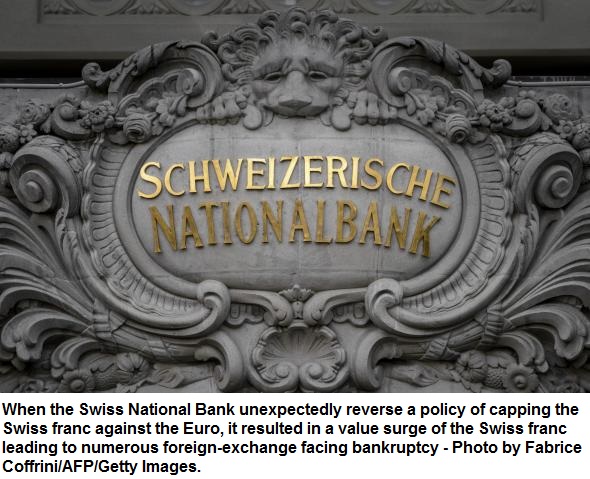
The financial world is all abuzz regarding the move by the Switzerland National Bank to unpeg their currency from their default value tied to the Euro.

Change is afoot:

o CNBC – VIDEO: Swiss franc soars, stocks tank as euro peg scrapped

o Business Insider-UK: The Swiss Franc Is Out of Control

o Bloomberg: Swiss Franc Stages Historic Rally as SNB Move Shocks Market

o Wall Street Journal: Swiss Franc Remains at Sky-High Levels; Swiss Stocks Regain Some Stability

o Financial Times (London): Swiss franc fallout claims more casualties

o Business Insider Editorial: The Decision To Let The Swiss Franc Cause Market Chaos

There are winners and losers from this new move.

How does it relate to the Caribbean?

The Swiss franc is not one of our focused currencies; we get little tourism from that country in particular and we do little trade. Yet this move is HUGE for Caribbean consideration.

This article is in consideration of the book Go Lean…Caribbean; it serves as a roadmap for the introduction and implementation of the technocratic Caribbean Union Trade Federation (CU) and Caribbean Central Bank (CCB) to provide better stewardship, to ensure that the economic/currency failures of the past, in the Caribbean and other regions, do not re-occur here in the homeland.

This Economist article here explains more fundamental dynamics from this global-currency strategy-play:

Title: The Economist explains: Why the Swiss unpegged the franc
By: C.W.
CU Blog - Lessons from the Swiss unpegging the franc - Photo 1IN THE world of central banking, slow and predictable decisions are the aim. So on January 15th, when the Swiss National Bank (SNB) suddenly announced that it would no longer hold the Swiss franc at a fixed exchange rate with the Euro, there was panic. The franc soared. On Wednesday one Euro was worth 1.2 Swiss francs; at one point on Thursday its value had fallen to just 0.85 francs. A number of hedge funds across the world made big losses. The Swiss stock market collapsed. Why did the SNB provoke such chaos?

The SNB introduced the exchange-rate peg in 2011, while financial markets around the world were in turmoil. Investors consider the Swiss franc as a “safe haven” asset, along with American government bonds: buy them and you know your money will not be at risk. Investors like the franc because they think the Swiss government is a safe pair of hands: it runs a balanced budget, for instance. But as investors flocked to the franc, they dramatically pushed up its value. An expensive franc hurts Switzerland because the economy is heavily reliant on selling things abroad: exports of goods and services are worth over 70% of GDP. To bring down the franc’s value, the SNB created new francs and used them to buy Euros. Increasing the supply of francs relative to Euros on foreign-exchange markets caused the franc’s value to fall (thereby ensuring a Euro was worth 1.2 francs). Thanks to this policy, by 2014 the SNB had amassed about $480 billion-worth of foreign currency, a sum equal to about 70% of Swiss GDP.

The SNB suddenly dropped the cap last week for several reasons. First, many Swiss are angry that the SNB has built up such large foreign-exchange reserves. Printing all those francs, they say, will eventually lead to hyperinflation. Those fears are probably unfounded: Swiss inflation is too low, not too high. But it is a hot political issue. In November there was a referendum which, had it passed, would have made it difficult for the SNB to increase its reserves. Second, the SNB risked irritating its critics even more, thanks to something that is happening this Thursday: many expect the European Central Bank to introduce “quantitative easing”. This entails the creation of money to buy the government debt of Euro-Zone countries. That will push down the value of the Euro, which might have required the SNB to print lots more francs to maintain the cap. But there is also a third reason behind the SNB’s decision. During 2014 the Euro depreciated against other major currencies. As a result, the franc (being pegged to the Euro) has depreciated too: in 2014 it lost about 12% of its value against the dollar and 10% against the Rupee (though it appreciated against both currencies following the SNB’s decision). A cheaper franc boosts exports to America and India, which together make up about 20% of Swiss exports. If the Swiss franc is not so overvalued, the SNB argues, then it has no reason to continue trying to weaken it.

The big question now is how much the removal of the cap will hurt the Swiss economy. The stock market fell because Swiss companies will now find it more difficult to sell their wares to European customers (high-rolling Europeans are already complaining about the price of this year’s skiing holidays). UBS, a bank, downgraded its forecast for Swiss growth in 2015 from 1.8% to 0.5%. Switzerland will probably remain in deflation. But the SNB should not be lambasted for removing the cap. Rather, it should be criticized for adopting it in the first place. When central banks try to manipulate exchange rates, it almost always ends in tears.

Source: The Economist Magazine – Financial Weekly (Posted 01/18/2015) –
 http://www.economist.com/blogs/economist-explains/2015/01/economist-explains-13

CU Blog - Lessons from the Swiss unpegging the franc - Photo 2The Swiss National Bank is unlike other central banks because it is not owned by the Swiss government but is a listed company with shareholders that include Swiss administrative regions, known as cantons, as well other public bodies and private individuals. This arrangement provides a cool 1 billion francs ($1.15 billion) annually split between Switzerland’s 26 cantons in proportion to their populations and, most importantly, was considered a safe and reliable stream of income. In fact, according to the Swiss Central Bank, the dividend had been paid every year for over 100 years until a 2013 collapse in the price of gold hurt the bank’s gold asset holdings.

Here is where the lessons for the Caribbean magnify. The Swiss National Bank is a confederation, much like the Go Lean roadmap for the Caribbean Union, Caribbean Central Bank (CCB) and the Caribbean Dollar (C$). The roadmap calls for a cooperative entity of the existing Central Banks in the region; fostering interdependence for the regional Greater Good. There is now interconnectivity of the financial systems, bank/currency troubles in foreign countries easily become trouble for the Caribbean region. Though there is elasticity from these foreign financial centers, the Caribbean is big enough (42 million people in 30 member-states) to streamline its own viable currency/financial/securities market – just like the Swiss (a country of 8 million people but with a $680 Billion economy).

The Caribbean has had to learn hard lessons on currency, as many of the CU member-states have had to endure painful devaluations over the past decades – on more than one occasions. Any attempt to reboot Caribbean economic landscape must first start with a strenuous oversight of the C$ currency. Oversight would imply actions in offense and defense of our own currency. This is what the Swiss (SNB) has done in the foregoing articles. They were at the mercy of the Euro Zone, being pegged to the Euro, as the Euro moved up, the franc would move up; as the Euro moved down, the franc moved down. This parasitical elasticity undermined their independence and any discipline on their part was neutralized by the Euro Zone.

This is the exact position of the Caribbean today. Most Caribbean currencies are pegged to the US dollar. As the dollar rises and falls, so do Caribbean currencies. The US Dollar planners (Federal Reserve) do not have the Caribbean best-interest in mind; they have American self-interest in mind. Good for them; bad for us! Change has now come. A strong currency is a good thing! The Go Lean book strongly urges the region to overcome any “fear of math” because the C$ may become stronger in comparison to the US$. This is why e-Commerce and e-Payments schemes are strongly urged within the CU/Go Lean roadmap.

Early in the book, this need for regional stewardship of Caribbean currencies was pronounced (Declaration of Interdependence – Page 13) with these statements:

xxiv.    Whereas a free market economy can be induced and spurred for continuous progress, the Federation must install the controls to better manage aspects of the economy: jobs, inflation, savings rate, investments and other economic principles. Thereby attracting direct foreign investment because of the stability and vibrancy of our economy.

xxv.    Whereas the legacy of international democracies had been imperiled due to a global financial crisis, the structure of the Federation must allow for financial stability and assurance of the Federation’s institutions. To mandate the economic vibrancy of the region, monetary and fiscal controls and policies must be incorporated as proactive and reactive measures. These measures must address threats against the financial integrity of the Federation and of the member-states.

The Go Lean book, and previous blog/commentaries, stressed the key community ethos, strategies, tactics, implementations and advocacies necessary to establish the regional financial eco-systems for Caribbean self-determination. These points are detailed in the book as follows:

Community Ethos – Economic Principles – Economic Systems Influence   Individual Choices Page 21
Community Ethos – Economic Principles – Voluntary Trade Creates Wealth Page 21
Community Ethos – Economic Principles – Consequences of Choices Lie in   the Future Page 21
Community Ethos – Economic Principles – Money Multiplier Page 23
Community Ethos – Governing Principles – Lean Operations Page 24
Community Ethos – Governing Principles – Return on Investments Page 24
Community Ethos – Governing Principles – Cooperatives Page 25
Community Ethos – Ways to Impact the Future – Count on the Greedy to   be Greedy Page 26
Community Ethos – Ways to Impact the Greater Good Page 37
Strategy – Mission – Fortify the Stability of   the Securities Markets Page 45
Strategy – Provide Proper Oversight and Support for the Depository   Institutions Page 46
Strategy – e-Payments and Card-based Transactions Page 49
Tactical – Summary of Swiss Confederation and Other Models Page 63
Tactical – Growing the Economy – Minimizing Bubbles Page 69
Tactical – Separation-of-Powers – Depository Insurance &   Regulatory Agency Page 73
Anecdote – Turning Around CARICOM – Effects of 2008 Financial Crisis Page 92
Implementation – Assemble Caribbean Central Bank as a Cooperative Page 96
Implementation – Ways to Better Manage Debt – Optimizing Wall Street   Role Page 114
Planning – 10 Big Ideas – Single Market / Currency Union Page 127
Planning – Ways to Model the European Union Page 130
Planning – Lessons Learned from 2008 Page 136
Planning – Lessons Learned from New York City – Wall Street Page 137
Planning – Ways to Measure Progress Page 147
Anecdote – Caribbean Currencies Page 149
Advocacy – Ways to Grow the Economy Page 151
Advocacy – Ways to Control Inflation Page 153
Advocacy – Ways to Better Manage Foreign Exchange Page 154
Advocacy – Ways to Foster Cooperatives – Caribbean Central Bank Page 176
Advocacy – Ways to Foster Electronic Commerce Page 198
Advocacy – Reforms for Banking Regulations Page 199
Advocacy – Ways to Impact Wall Street Page 200
Appendix – Tool-kits for Capital Controls Page 315
Appendix – Lessons Learned from Floating the Trinidad & Tobago   Dollar Page 316
Appendix – Controlling Inflation – Technical Details Page 318
Appendix – e-Government and e-Payments Example: EBT Page 353

The points of effective, technocratic banking/economic stewardship, were further elaborated upon in these previous blog/commentaries:

https://goleancaribbean.com/blog/?p=3582 For Canadian Banks: Caribbean is a ‘Bad Bet’
https://goleancaribbean.com/blog/?p=3397 A Christmas Present for the Banks from the Omnibus Bill
https://goleancaribbean.com/blog/?p=3090 Lessons Learned – Europe Sovereign Debt Crisis of 2009
https://goleancaribbean.com/blog/?p=3028 Why India is doing better than most emerging markets
https://goleancaribbean.com/blog/?p=2930 ‘Too Big To Fail’ – Caribbean Version
https://goleancaribbean.com/blog/?p=2090 The Depth & Breadth of Remediating 2008 – Need for Command-and-Control
https://goleancaribbean.com/blog/?p=1014 Canadian View: All is not well in the sunny Caribbean
https://goleancaribbean.com/blog/?p=833 One currency, divergent economies
https://goleancaribbean.com/blog/?p=518 Analyzing the Data – What Banks learn about financial risks
https://goleancaribbean.com/blog/?p=378 US Federal Reserve Releases Transcripts from 2008 Meetings

The Caribbean dream is the coveted role of protégé to our North American and European trading partners, not the parasite role we have thus far assumed. But this is easier said than done, as the doing part requires heavy-lifting. But this plan is conceivable, believable and achievable. The Swiss, while not a member of the EU nor Euro Zone, provides such a great role model for the Caribbean:

Switzerland comprises four main linguistic and cultural regions: German, French, Italian and the Romansh unique dialect. Therefore the Swiss, although predominantly German-speaking, do not form a nation in the sense of a common ethnicity or language; rather, Switzerland’s strong sense of identity and community is founded on a common historical background, shared values such as federalism and direct democracy,[10] and Alpine symbolism.[11] 

Switzerland ranks high in several metrics of national performance, including government transparency, civil liberties, economic competitiveness, and human development. It has the highest nominal wealth per adult (financial and non-financial assets) in the world according to Credit Suisse and the eighth-highest per capita gross domestic product (GDP)  on the IMF list.[12][13] Swiss citizens have the second-highest life expectancy in the world. Zürich and Geneva each have been ranked among the top cities with the highest quality of life in the world; (Source: http://en.wikipedia.org/wiki/Switzerland).

All in all, the country is a great place to live, work and play.

On the other hand, the Go Lean book declares to “count on greedy people to be greedy” (Page 26). This situation is manifested here in the foregoing articles; investors will always exploit opportunities to maximize profits. Globalization affords options to move money from one financial “bucket” in one country to another “bucket” in another country. This exercise has affected many middle-wage jobs in developed lands. The end result, increased profits for the decision-makers, less jobs for the workers; thus a growing income inequality: so the “Rich” get richer, but the “Middle Class” get shrunk.

CU Blog - Lessons from the Swiss unpegging the franc - Photo 3We have so many lessons to learn from the Swiss in this mission to elevate Caribbean economic-security-governing engines. The Swiss Confederacy (circa 1300 – 1798) facilitated management of common interests and ensured peace on their important trade routes. The Swiss has demonstrated that a Permanent Union can facilitate the Greater Good for multiple states (26) in a geographical region. That’s the Old Lesson; based on the foregoing articles, there are now many new lessons; some good, some bad. Foreign currency (Fx) brokerage houses are suffering financial setbacks because of these sudden changes with the Swiss franc; with leverage and derivatives, the Fx industry has become one big gamble. This point impresses the lesson of how Fx speculators can manipulate a country’s currency – this plight previously afflicted individual Caribbean currencies (Page 149). But now we see the Swiss using their unified command-and-control to set their currency standards for their own best interest, not the profit motives of some external stakeholders. The Swiss are no parasites! They are protégés!

Switzerland has hereby demonstrated that having command-and-control is required for economic success. Lesson learned!

The Caribbean’s 30 member-states are urged to lean-in to this Go Lean confederation roadmap. This is the turn-by-turn directions, the heavy-lifting, to move the region to its new destination: a better homeland to live, work and play.  🙂

Download the book Go Lean … Caribbean – now!

Share this post:
, , , ,
[Top]

Trinidad cuts 2015 budget as oil prices tumble

Go Lean Commentary

One man’s trash is another man’s treasure; on the other hand, one man’s windfall is another man’s shortfall. This parallel poetry is indicative of what is transpiring in the world market for producers and consumers of oil. Consumers are enjoying a windfall with sub-$2.00 pricing (per gallon) while petroleum producing nations are having to suffer and adapt to a shortfall of revenues.

For one oil-exporting country in the Caribbean, Trinidad and Tobago, this constitutes a crisis. The book Go Lean … Caribbean was written to address crises, declaring in the foreword that a “crisis is a terrible thing to waste”.

See news article here:

Title: Trinidad and Tobago cuts 2015 budget as oil prices tumble
By: Ria Taitt, Political Editor
CU Blog - Trinidad cuts 2015 budget as oil prices tumble - Photo 1PORT OF SPAIN, Trinidad — A $7.4 billion (US$1.16 billion) budget shortfall as a result of falling oil prices is what Trinidad and Tobago Prime Minister Kamla Persad-Bissessar identified on Thursday night.

The PM reaffirmed that the support grants, senior citizens’ pension, new minimum wage and baby grants will be untouched. But she provided no precise cost-cutting details or any sacrifices that the population might be called upon to make.

What the Prime Minister did announce was the government’s 2015 budget would now be pegged on a revised oil price of US$45 a barrel, a 44 percent reduction from the original benchmark of US$80 a barrel.

The natural gas price on which the budget is premised was also revised, from US$2.75 per mmbtu to $2.25 per mmbtu, she stated.

This points to a major realignment in Government revenue and therefore adjustments in spending.

However, delivering her address to the nation on the economic situation, in light of the new budgetary and fiscal situation, Persad-Bissessar identified savings in government expenditure from one source — $1.4 billion from a lower fuel subsidy outlay.

“What (areas) are we adjusting? In moving forward there’ll be areas where we must moderate or redirect our spending in order to manage the present situation, always making sure that we keep people and country first — reviews of our PSIP and current expenditure are ongoing, with the aim of identifying savings of approximately $4.5 billion,” the Prime Minister stated.

“Amongst the areas identified for re-directional spending and indeed in helping us to make up the shortfall of the $7.5 billion… these are the areas that we would consider — infrastructural projects for which funding has not yet been confirmed; lower expenditure on non-critical goods and services; and cuts in allocation in selective ministries by about 15 percent.

“Any additional shortfall will be met from revenues generated as a result of our continued public offering programme,” she added, referring to the IPO to be held for the public sale of shares in Phoenix Park Gas Processors Limited.
“This would be the first-ever listing of an energy stock on the local stock market, thereby giving the citizens a direct stake in our very important energy sector.”

The Prime Minister said the international credit rating agencies, Standard and Poor’s and Moody’s, have projected that oil will rebound to between US$62.7 and US$70 a barrel in the near to medium term.

However, she said, government decided to use the “more conservative assumptions” (of US$45 a barrel) for oil and gas.
“What this means is that the shortfall we may experience in Trinidad and Tobago would be in the region of TT$7.4 billion,” she said.

The price of oil has moved from a high of US$107 per barrel in June 2014 to US$48.65 at the close of business on Thursday, representing a 55 percent decline, Persad-Bissessar pointed out.

But in noting that the country had to adjust its spending, she committed her government to continue expenditure on “the things that matter most to you (the population)”.

Persad-Bissessar singled out the energy corridor — San Fernando to Mayaro highway, describing it as a “key investment”.
She also cited her government’s commitment to the “provision of protection to the vulnerable and disadvantaged; to ensuring the pace of business activity continues; to preserving jobs and personal incomes; to intensifying its efforts in making our nation safer; to maintaining successful investments in education; to making improvements in the quality of health care so urgently required; and to keeping our commitment to critical infrastructure projects, including schools, hospitals and the housing programme”.

The Prime Minister gave the assurance that her government will navigate safety through these turbulent times.
She pointed to the achievements of her government, stating that the economic fundamentals were stronger today than ever and that her government’s economic policies had halted the decline that it inherited.

Persad-Bissessar recalled that, when she was a member of the government in the 1990s the oil price fell to as low as US$9 a barrel, yet the economy was kept strong and investor confidence high and stability was maintained.

“I make this reference to reinforce the reference that Trinidad and   Tobago has been here before and was able to overcome the challenges faced. The population can feel confident that once again the nation is fortunate to have a government in place that has demonstrated responsible fiscal policies, that has balanced investment in social programmes and people-centred development whilst simultaneously turning the fragile economy we inherited in 2010 into the stable and strong one that it is today,” she said.

“The same prudence with which we managed the economy since 2010, to bring us to a position of resilience and stability, will be used in shifting our priorities and maintaining stability,” the Prime Minister stated.

“History will record this period as one of our finest when we stood strong, made the right choices, exercised the right amount of restraint, held the right course and indeed saw the right results,” Persad-Bissessar said.

Before delivering her address, the Prime Minister met with senior executives of the energy companies in the state sector and the Ministry of Energy and held another meeting of a sub-committee of the Cabinet.

Republished with permission of the Trinidad Express
Caribbean
News Now – Regional Online News Site (Posted 01-10-2015; retrieved 01-12-2015
http://www.caribbeannewsnow.com/headline-Trinidad-and-Tobago-cuts-2015-budget-as-oil-prices-tumble-24325.html

In 2008, a pivotal year in Go Lean consideration, prices for a gallon of gas reached $5.00 in some locations, (California for example). Now most locales in the US are enjoying sub $2.00/gallon prices. See this reporting in a previous blog.

There is no evil, no malice at work here; the fluctuations in oil prices is simply a product of economics, of supply-and-demand. Higher demand, lower supply equals to higher prices. While on the other hand, higher supply and lower demand equals lower prices. The forces pushing for higher prices (OPEC) are simply pursuing their stakeholders’ self-interest.

Trinidad, a non-OPEC country, is simply squeezed in the middle. The Go Lean book serves as a roadmap for the introduction and implementation of the Caribbean Union Trade Federation (CU). This federation is built on economic principles, designed to exploit the best practices of the social science of global economics. Instead of looking for ways to increase supply-demand of petroleum, the CU seeks to diversify: energy mix of the 30 Caribbean member-states and the revenue generators of the overall Caribbean economy. In fact, the CU/Go Lean roadmap has these 3 prime directives:

  • Optimization of the economic engines in order to grow the regional economy to $800 Billion & create 2.2 million new jobs.
  • Establishment of a security apparatus, including energy security, to protect the resultant economic engines.
  • Improve Caribbean governance to support these engines.

The goal of the CU is to optimize Caribbean society, allowing us to better compete globally and hopefully present more favorable options for our youth to prosper here at homeland, instead of fleeing the region as practiced by previous generations.

Considering the foregoing article, it is obvious that Trinidad’s economy is overly dependent on the oil market. An unsavory dip in oil prices is affecting all aspects of this country’s societal engines (economy, security and governance). This is not a formula for success. This describes a mono-industrial society; they ebb-and-flow with the fortunes of the one economic driver. This is also the case in many other Caribbean member-states with their mono-industrial expressions of tourism. The region needs to do better with the diversification quest. The Go Lean roadmap asserts many unrelated, disconnected, industries for job creation – a decades-old pursuit.

CU Blog - Trinidad cuts 2015 budget as oil prices tumble - Photo 2Despite an oil-producing country in the region, this Go Lean/CU roadmap pursues a viable mix of energy sources for Caribbean deployment. The book proposes solutions for the region to optimize energy generation, distribution and consumption. Some features include solar/wind/tidal power generation, a regional power grid, electric mass transit street cars, natural gas vehicles, electric-hybrid passenger cars, and the separation of power generating and power distribution utilities. The Go Lean posits that the average costs of energy can be lowered from an average of US$0.35/kWh to US$0.088/kWh with this roadmap. (Page 100).

Just how does energy affect our modern world? See VIDEO here depicting Exxon’s (known in the Caribbean as ESSO) strategic expressions in the world:

VIDEO: Energy lives here™ anthem – http://youtu.be/FZ3S2EOBbwE

Published on Nov 27, 2013 – If you could see energy, what would you see? It powers our lives. And no one applies more technology to produce American energy and refine it more efficiently than ExxonMobil.

The Go Lean roadmap details a series of community ethos, strategies, tactics, implementations and advocacies to foster the progress in the wide fields of the energy business: generation, distribution and consumption. The following list applies:

Community Ethos – Economic Principles – People Choose Page 21
Community Ethos – Economic Principles – All Choices Involve Costs Page 21
Community Ethos – Economic Principles – Economic Systems Influence Individual Choices Page 21
Community Ethos – Economic Principles – Voluntary Trade Creates Wealth Page 21
Community Ethos – Economic Principles – Consequences of Choices Lie in the Future Page 21
Community Ethos – Economic Principles – Job Multiplier Page 22
Community Ethos – Lean Operations Page 24
Community Ethos – Return on Investments Page 24
Community Ethos – Cooperatives Page 25
Community Ethos – Regional Taxi Commissions – for Regional Energy Compliance Shift Page 25
Community Ethos – Ways to Impact the Future Page 26
Community Ethos – Ways to Impact Research & Development Page 30
Anecdote – Pipeline Transport – Strategies, Tactics & Implementations Page 43
Strategy – Alternative Energy: Harness the   power of the sun, winds and tides Page 46
Strategy – Agents of Change – Technology Page 57
Strategy – Agents of Change – Globalization Page 57
Strategy – Agents of Change – Climate Change Page 57
Tactical – Fostering a Technocracy Page 82
Tactical – Separation of Powers – Energy Commission Page 82
Anecdote – “Lean” in Government – Energy Permits Page 93
Anecdote – Caribbean Energy Grid Implementation Page 100
Implementation – Ways to Develop Pipeline Industry Page 107
Implementation – Ways to Improve Energy Usage Page 113
Planning – Lessons Learned from 2008 Page 136
Advocacy – Ways to Impact Public Works Page 175
Advocacy – Ways to Foster Cooperatives Page 176
Advocacy – Ways to Impact Extractions – Oil Exploration & Mitigations Page 195
Advocacy – Ways to Improve Emergency Management Page 196
Advocacy – Ways to Impact Monopolies – Ratings and Rankings Page 202
Advocacy – Ways to Improve Transportation – More Fuel Efficiency Page 205
Advocacy – Ways to Develop a Local Auto Industry – Lead with Fuel Efficiency Page 206
Advocacy – Ways Impact Trinidad & Tobago – Oil Boom to Expire in 2018 Page 240
Appendix – North Dakota Oil Boom Economic-Societal Effects Page 334
Appendix – Off-Shore Wind Farm Sample/Model Page 335

This commentary asserts that the Caribbean energy needs are undeniable and that the oil-depended economy of Trinidad & Tobago needs to diversify. The CU/Go Lean roadmap is here to help Trinidad, and all of the Caribbean. On a “per capita” basis Trinidad is among the most affluent of the Caribbean independent member-states (Page 66), even higher than the US Territory of Puerto Rico. But Trinidad sorely needs the mitigations and empowerments in this roadmap; their status quo is unsustainable; too many of their human capital flee their homeland, just like many other Caribbean locations.

More changes are imminent for Trinidad. After the $5.00/gallon prices of 2008 the world has a new resolve, to be less-dependent on oil. That imminence has now materialized with the manifestation of more energy options and less demand for oil. Thusly, oil prices have declined. It is the expectation that more efficiency and diversity will emerge and assimilate the world economy. The CU/Go Lean roadmap is designed to bring that efficiency and diversity to the Caribbean region as well.

The Go Lean roadmap will prepare and mitigate Trinidad & Tobago, and the rest of the Caribbean for global changes.

Trinidad’s oil reserves are also depleting … fast (Page 240). The stakeholders of Trinidad’s economic, security and governing engines cannot “stick their heads in the sand” while these change dynamics emerge. There is the need for heavy-lifting.

Now is the time for all of the Caribbean, the people, business, institutions and governments, to lean-in for the efficiencies and diversities described in the book Go Lean … Caribbean.  🙂

Download the Book Go Lean … Caribbean – Now!

Share this post:
, , , , ,
[Top]

Jamaica-Canada employment programme pumps millions into local economy

Go Lean Commentary

“Where there is no vision the people perish” – Bible Quotation (Proverbs 29:18) posted in the book Go Lean … Caribbean (Page 125).

It is the assessment of this commentary that Jamaica’s Minister of Agriculture, Labour and Social Security, Derrick Kellier in the subsequent news article, is probably a man of goodwill. He only hopes to help his country and his people; he simply wants to fight for any opportunity. But this man is bringing “a knife to a gun fight”. As a result, his constituents suffer.

This is the assertion of the book Go Lean…Caribbean, and many aligned blog submissions, that the problems facing the Caribbean are too big for one member-state alone to address; there needs to be a regional solution. This book Go Lean…Caribbean serves as a roadmap for the introduction and implementation of the technocratic Caribbean Union Trade Federation (CU).

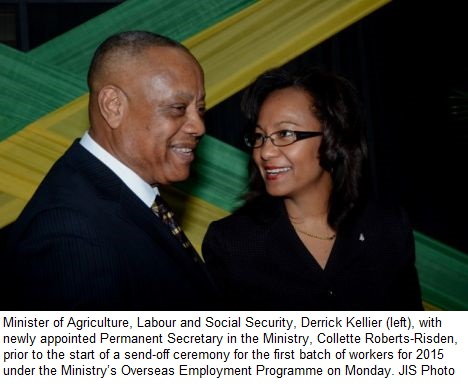
The Good Minister, in the following news article, is not advocating for a regional solution, only trying to facilitate another 7,952 low-skill, low-wage jobs for Jamaicans in 2015. The Go Lean roadmap on the other hand, strives to create 2.2 million new jobs, many in the highly paid, highly coveted STEM (Science, Technology, Engineering, Mathematics) category. The news article is listed here:

By: Alecia Smith-Edwards

CU Blog - Jamaica-Canada employment programme pumps millions into local economy - Photo 1KINGSTON, Jamaica (JIS) — Remittance inflows from the Jamaica-Canada employment programme contributed Cdn$15.5 million (approximately JA$1.7 billion) to the Jamaican economy during 2014.

This was disclosed by Minister of Agriculture, Labour and Social Security, Derrick Kellier, who noted that the programme, which is a vital source of foreign exchange remittances, “continues to be a beacon of hope and opportunity for thousands of Jamaicans.”

The minister was speaking at a send-off ceremony for the first batch of farm workers for 2015 under the ministry’s overseas employment programme in Kingston on Monday.

Kellier further noted that, during 2014, approximately 7,952 Jamaicans benefitted from employment opportunities in Canada.

“The farm work component accounted for 90 percent (7,156) of this number, while the others travelled under the low skill and skilled worker programmes,” he said.
A total of 340 workers, selected under the Canadian seasonal agricultural workers programme, were due to depart the island on Monday to take up employment opportunities on various farms in Ontario, Canada.
This batch of all males, most of whom will do eight-month stints, will be employed in greenhouse crop production, food processing, tobacco plants as well as nurseries which are involved in the cultivation of various vegetables. They will also be engaged in packaging tobacco and fruits for shipment.

The minister noted that 20 percent of the workers are new employees, while the remaining 80 percent are ‘returnees’ or requested workers, noting that “this is a testament to the hard and dedicated work provided by Jamaican workers abroad.”

He implored the new cohort to continue being professional while on the job, so that the programme can be expanded to provide opportunities for more unemployed Jamaicans.

“I am urging you too, to observe regulations as much as possible for your safety and health. I advise you all not to breach rules (such as absence without leave), which will disqualify you and other Jamaicans in the future,” he said.

The minister reminded the workers that the Overseas Employment Family Services Unit will continue to focus on the welfare of their families through a range of social interventions, including household visits, referrals for assistance, care for the sick and injured, care of children and self-empowerment programmes.
Caribbean News Now – Regional News Source (Retrieved 01/08/2015) –
http://www.caribbeannewsnow.com/topstory-Jamaica-Canada-employment-programme-pumps-millions-into-local-economy-24290.html

Jamaica has one of the highest rates of societal abandonment in the Caribbean. In a previous blog commentary, it was revealed that the Caribbean loses more than 70 percent of the tertiary educated to brain drain, but Jamaica’s rate is at 85%; (plus 35% of the secondary educated population leaves). This Foreign Guest Worker program, in the foregoing article, seems to be a “double down” on the itinerant Jamaican strategy. Imagine the analogy of a teenage runaway leaving his family behind; then when the parents finally discover that prodigal’s son’s whereabouts, they send another child to join them, rather than encourage a return home and a plea to prosper and be planted at home. The people of Jamaica deserves better.

As revealed in the foregoing article, the Government of Jamaica is counting on the short-term benefits, the remittances of these guest workers back to the homeland; they seem unaware and unconcerned for the mid-term and long-term well-being of Jamaica and Jamaicans. The fears and threats is that Guest Workers will mix-and-mingle with people in the host countries, establish new personal-family ties and relocate permanently, as legal migrants. In addition, there should be the concern that pregnant spouses left behind would travel to visit their husbands, just in time to give birthin Canada, availing the birth-right privileges of that country. Just that easily, one family’s next generation would not be Jamaica-based, but pursue a life in the Diaspora community instead, “fattening frogs for snake”.

The Caribbean Diaspora amounts to 10 million people, compared to 42 million residents in the region; Jamaica population is listed at 2,825,928 people (2010), but their Diaspora is estimated at follows (http://en.wikipedia.org/wiki/Jamaican_diaspora):

US:          740,000
Canada: 257,000
UK:         800,000
Total:    1,797,000

In addition, there is a report that there are 100,000 illegal Jamaicans in the US alone.

Legal or not legal, a great measurement of the economic activity of this diasporic population is their remittance activity. A previous blog reported that Jamaica has been experiencing 5.3% annual growth rate in the amount of remittances transferred to the island.

Change has come to the region! The forgoing article describes a negative ethos that the new Caribbean planners want to break from.

The Go Lean book describes that the CU will assume the role and responsibility to empower the regional economy and facilitate trade, not just “count the money” in remittance activity. The following 3 prime directives are explored in full details in the roadmap:

  • Optimization of the economic engines in order to grow the regional economy to $800 Billion & create 2.2 million new jobs.
  • Establishment of a security apparatus to protect the resultant economic engines.
  • Improve Caribbean governance to support these engines.

A mission of the CU is to minimize the need for the Caribbean labor force to migrate to foreign lands for work; and also to invite those that have left, the Diaspora, to repatriate. The Go Lean roadmap features a methodical implementation over a 5 year period, to create more and more local jobs.

Consider the employers described in the foregoing article. They need Guest Workers to facilitate their winter agricultural expressions: greenhouses and incubators. The Go Lean roadmap calls for expanding agricultural production in the Caribbean region – winter crops are opportunistic in their marketability – then exporting the produce to markets like Canada, utilizing strategic concepts for frozen food industries like refrigerated warehouses and refrigerated containers (reefers). Those Canadian stakeholders can be Direct Foreign Investors in the region rather than employers. This approach is better! We still profit more from trade, but keep our human capital at home. This is a win-win.

This sample business model reflects the technocratic approaches being advocated in the roadmap, from top to bottom. This commences with the recognition that all the Caribbean has defective business models, underemployment, and suffering on the wrong side of the globalization divide (producers versus consumers). These acknowledgements are pronounced in the Declaration of Interdependence, (Page 13 & 14). The statements are included as follows:

xix.  Whereas our legacy in recent times is one of societal abandonment, it is imperative that incentives and encouragement be put in place to first dissuade the human flight, and then entice and welcome the return of our Diaspora back to our shores. This repatriation should be effected with the appropriate guards so as not to imperil the lives and securities of the repatriated citizens or the communities they inhabit. The right of repatriation is to be extended to any natural born citizens despite any previous naturalization to foreign sovereignties.

xx.  Whereas the results of our decades of migration created a vibrant Diaspora in foreign lands, the Federation must organize interactions with this population into structured markets. Thus allowing foreign consumption of domestic products, services and media, which is a positive trade impact. These economic activities must not be exploited by others’ profiteering but rather harnessed by Federation resources for efficient repatriations.

xxi.  Whereas the preparation of our labor force can foster opportunities and dictate economic progress for current and future generations, the Federation must ensure that educational and job training opportunities are fully optimized for all residents of all member-states, with no partiality towards any gender or ethnic group. The Federation must recognize and facilitate excellence in many different fields of endeavor, including sciences, languages, arts, music and sports. This responsibility should be executed without incurring the risks of further human flight, as has been the past history.

xxiv.  Whereas a free market economy can be induced and spurred for continuous progress, the Federation must install the controls to better manage aspects of the economy: jobs, inflation, savings rate, investments and other economic principles. Thereby attracting direct foreign investment because of the stability and vibrancy of our economy.

xxv.  Whereas the Caribbean region must have new jobs to empower the engines of the economy and create the income sources for prosperity, and encourage the next generation to forge their dreams right at home, the Federation must therefore foster the development of new industries, like … frozen foods…  In addition, the Federation must invigorate the enterprises related to existing … – impacting the region with more jobs.

xxx.  Whereas the effects of globalization can be felt in every aspect of Caribbean life, from the acquisition of food and clothing, to the ubiquity of ICT, the region cannot only consume, it is imperative that our lands also produce and add to the international community, even if doing so requires some sacrifice and subsidy.

The message now being trumpeted to the Cabinet Member in the foregoing article: No more migrant culture! Already, a new Jamaican – American sub-culture has emerged and is now thriving; see Appendix for a sample of “Jamerican” music. (Once the “genie leaves the bottle”, there is no returning; the “Jamerican” legacies, though appreciative of their Jamaican influences, will perhaps never take up residence in Jamaica).

We want solutions built around staying home, not “renting” our young men to foreign shores. This is a vision for all the Caribbean to embrace, not just Jamaica; it entails confederating the 30 member-states into an integrated “single market”, thereby fostering economic growth to grow the regional economy to $800 Billion (from the 2010 base of $378 Billion). This growth would be the cause-and-effect of 2.2 million new jobs. The following list details the series of community ethos, strategies, tactics, implementations and advocacies necessary to effectuate these empowerments for the region to graduate from this migrant culture, described in the foregoing article:

Community Ethos – Economic Systems Influence Individual Choices Page 21
Community Ethos – Voluntary Trade Creates Local Wealth Page 21
Community Ethos – Consequences of Choices Lie in the Future Page 21
Community Ethos – Job Multiplier Page 22
Community Ethos – Lean Operations Page 24
Community Ethos – Return on Investments Page 24
Community Ethos – Ways to Impact the Future Page 26
Community Ethos – Ways to Help Entrepreneurship Page 28
Strategic – Vision – Integrated Region in a   Single Market Page 45
Strategic – Vision – Encourage Repatriation of   the Diaspora Page 46
Strategic – Vision – Agents of Change Page 57
Tactical – Fostering a Technocracy Page 64
Tactical – Growing to $800 Billion Regional Economy Page 67
Tactical – Separation of Powers Page 71
Tactical – Interstate Commerce Admin – Econometrics Data Analysis Page 79
Implementation – Ways to Pay for Change Page 101
Implementation – Ways to Deliver Page 109
Planning – Big Ideas for the Caribbean Region Page 127
Planning – Lessons Learned from 2008 Page 136
Planning – Ways to Measure Progress Page 147
Advocacy – Ways to Grow the Economy Page 151
Advocacy – Ways to Create Jobs – Feed Ourselves Page 152
Advocacy – Ways to Better Manage Foreign Exchange Page 154
Advocacy – Ways to Better Manage Food Consumption – Agri-Business Page 162
Advocacy – Ways to Improve Governance Page 168
Advocacy – Ways to Improve Leadership Page 171
Advocacy – Ways to Develop a Frozen Food Industry Page 208
Advocacy – Ways to Impact the Diaspora Page 217
Appendix – Job Multipliers Page 259
Appendix – Trade SHIELD – “Strategic“ planning & “Logistical” solutions Page 264

The people of the Caribbean deserve every opportunity to prosper where they are planted. If this is to be the quest, then the region’s leadership should lean-in to this roadmap. One person can make a difference; this fact has been demonstrated time and again. The Go Lean book provides the step-by-step instructions on how to move Caribbean society from the status quo to the desired destination: a better place to live, work and play.

The Go Lean roadmap calls for both “Top-Down” (leadership) and “Bottoms-Up” (popular) movements to effectuate this change. We need better leadership, yes. We also want the people, the common men and women on the streets to demand this change. They do not have to sit and watch their loved one leave their beloved homeland to make a living abroad. We can all prosper right here at home.

No more! Let’s change this culture. This means you Jamaica, and the rest of the Caribbean region.

Now is the time for all of the region, the people and governing institutions, to lean-in for the empowerments of the Caribbean Union Trade Federation. Now is the time for this viable plan to make our homeland the best address in the world.  🙂

Download the book Go Lean … Caribbean – now!

———–

Appendix: Reflection of the New Jamaican Diaspora Culture –  http://youtu.be/t4iRnETnmtw – Born Jamericans – Wherever We Go


Share this post:
, , ,
[Top]

For Canadian Banks: Caribbean is a ‘Bad Bet’

Go Lean Commentary

There is no one entity designated to regulate the Caribbean banking sector in its full entirety. There are however some financial institutions doing business in much of the region who thusly have to make regionalized assessments. This includes NGOs like the World Bank and the Inter-American Development Bank, plus for-profit institutions like the Royal Bank of Canada (RBC) and the Bank of Nova Scotia (Scotiabank).

The subsequent news articles reflect the assessment of Caribbean economics from the point-of-view of Canadian Bankers: RBC and Scotiabank. Their conclusion:

All is not well in the Caribbean.

These articles highlighting the need for regional stewardship and oversight of banking in the Caribbean. This is the siren call of the book Go Lean…Caribbean; it serves as a roadmap for the introduction and implementation of the technocratic Caribbean Union Trade Federation (CU) and Caribbean Central Bank (CCB) to provide better stewardship, to ensure that the economic failures of the past, in the Caribbean and other regions, do not re-occur here in the homeland.

According to these following articles, the need for this CU/CCB administration is past due:

Title # 1: RBC Wealth Management pulls out of Caribbean markets
Caribbean 360 – Regional News Site (Posted 11/21/2014; retrieved 12/30/2014) –
http://www.caribbean360.com/news/canadas-largest-bank-shutters-wealth-management-branches-in-the-bahamas-barbados-and-the-cayman-islands

BRIDGETOWN, Barbados – The Royal Bank of Canada (RBC) is now the latest Canadian bank to cut its losses in the Caribbean, following a decision to close its Caribbean wealth management divisions and several international advisory businesses in North America.

CU Blog - For Canadian Banks - Caribbean a Bad Bet - Photo 1The move follows RBC’s sale of its Jamaican operations earlier this year, and an announcement by The Bank of Nova Scotia earlier this month of its plans to close around 120 branches in Mexico and the Caribbean (35 in the Caribbean specifically).

Canadian bank CIBC also suffered a net-loss on its FirstCaribbean bank operations in April 2014, for which it incurred a CDN $420 million goodwill impairment charge primarily related to its under-performing operation in the Bahamas.

Speaking to media sources in Canada following the RBC developments, Craig Fehr – an analyst with Edward Jones – said:

What we’re seeing is the banks are doing a thorough evaluation of their business mix and figuring out what makes sense long term and what is probably best left in the hands of someone else.

Sources indicate that the closure of RBC’s regional wealth management divisions – domiciled in The Bahamas, Barbados and the Cayman Islands – as well as management teams in Toronto, Montreal and the United States, could affect over 300 employees.

While heads of RBC’s regional wealth management divisions in the Caribbean declined specific comment on the exit and its impacts, RBC spokesman Claire Holland has confirmed the closures, while declining to offer specifics on the bank’s exit strategy:

“As there are a number of strategic options being considered as part of the exit, it would be premature at this stage to estimate the number of employees that will be impacted”, she said, while adding that the focus of the bank’s international growth strategy will now be on operating in major financial centres where RBC has “competitive strengths.”

RBC’s Caribbean wealth management divisions manage a portion of over CDN$43.2 billion in assets under the affected US and international wealth management operations.

When contacted for comment, Director of the Barbados International Business Association (BIBA), Henderson Holmes, said that his organisation was still trying to ascertain the facts before making a full statement on the RBC exit.

Holmes however cautioned that an exit “would not be good for Barbados”, while stating that BIBA’s current considerations were in whether a purchaser has been identified for the Barbados business, and whether its assets would remain in the country.

According to the International Monetary Fund, RBC, CIBC and the Bank of Nova Scotia hold around 60% of total banking assets in the Caribbean – a fact which the Fund says places the region at an increased risk of exposure to foreign financial crises.

For its part, RBC indicates that the closures will allow the bank to place increased focus on high net-worth and ultra-high net worth clients in key expansion markets, including Canada, the United States, the British Isles and Asia.

————

Title # 2: Scotiabank loans to hospitality sector ‘impaired’
Nassau Guardian Daily Newspaper Website (Posted 11/07/2014; retrieved 12/30/2014) –
http://www.thenassauguardian.com/bahamas-business/40-bahamas-business/51574-scotiabank-loans-to-hospitality-sector-impaired
By:
K. Quincy Parker, Guardian Business Editor

Scotiabank loans to the Caribbean hospitality sector have apparently lost hundreds of millions of dollars in value; a portfolio worth $1.3 billion a year ago fell to a $1 billion before a restructuring which has led to write-downs in the region, and which may mean branch closures and job losses in The Bahamas.

It appears that Scotiabank’s Caribbean write-downs – or adjustment to the value of its business – largely stem from three “net impaired” loans to the hospitality sector in the region. In fact, Canadian financial publications note that “trouble in the Caribbean” is becoming a common refrain. Scotiabank’s write-down follows on the heels of an even bigger one by First Caribbean earlier this year.

After 125 years of operations in the region, Scotiabank’s Chief Executive Officer Brian Porter said during a call this week that the bank will close a significant number of branches in the Caribbean (35 branches was the estimate given) as part of the restructuring. The shift is expected to mean layoffs as well, but local representatives could not speak to the extent – if any – of closures or job cuts in The Bahamas.

Scotiabank’s spokespeople told Guardian Business on Thursday that the lender’s growth in the region has “created some overlap and duplication of services”.

“As a result, we undertook a review of our operating model and international distribution network and found opportunities to strengthen our retail presence by investing in areas that are going to improve the speed and quality of service for our customers,” the bank said in a statement released to this paper.

Porter has announced changes including branch closures, restructuring charges totaling more than $450 million, 1,500 layoffs – mostly in Canada – and loan losses of $109 million in the Caribbean. He also revealed that Scotiabank will either close or downsize 120 branches, largely in Mexico and the Caribbean, to focus on high-growth markets such as Chile and Colombia.

The Scotiabank Bahamas statement said: “The numbers announced relating to branch closures were across the Bank’s international network.

“The bank is still undergoing its review and while this process will take some time, it will be carefully planned with consideration given to all affected stakeholders including employees and our customers”.

The Caribbean has had to learn hard lessons on banking … abroad. Due to the interconnectivity of the financial systems, bank troubles in foreign countries easily become trouble for the region. This was definitely true for the 2008 Banking Crisis that spurred the Great Recession. (Eventually the middle classes were impacted and shrunk our tourism marketing prospects). The events of this period were the lynchpin for the Go Lean movement, (book and blogs). This Go Lean book, and the associated movement, posits that the effects of the 2008 Great Recession continue to linger in the Caribbean. Therefore the book advocates instituting the appropriate governance on the region’s banking sector so as to apply the learned lessons from 2008. We do not want to be vulnerable to any financial mis-management of our North American neighbors; or some “plutocratic” elements there-in.

2008 was all about Wall Street (New York City). Today’s headlines are all about Canada. Though there is elasticity from these foreign financial centers, the Caribbean is big enough (42 million people in 30 member-states) to streamline its own viable financial / securities market. We can exert some control over our own economic destiny. We must assume the coveted role of protégé to our North American partners, not parasites, as experienced … to date.

The CU’s prime directive is to elevate the Caribbean’s economic-security-governing engines. Early in the book, the need for a regional steward was pronounced (Declaration of Interdependence – Page 13) with these statements:

xxiv.    Whereas a free market economy can be induced and spurred for continuous progress, the Federation must install the controls to better manage aspects of the economy: jobs, inflation, savings rate, investments and other economic principles. Thereby attracting direct foreign investment because of the stability and vibrancy of our economy.

xxv.    Whereas the legacy of international democracies had been imperiled due to a global financial crisis, the structure of the Federation must allow for financial stability and assurance of the Federation’s institutions. To mandate the economic vibrancy of the region, monetary and fiscal controls and policies must be incorporated as proactive and reactive measures. These measures must address threats against the financial integrity of the Federation and of the member-states.

The Go Lean book, and previous blog/commentaries, stressed the key community ethos, strategies, tactics, implementations and advocacies necessary to establish the regional financial eco-systems for Caribbean self-determination. These pointed are detailed in the book as follows:

Community Ethos – Economic Principles – Economic Systems Influence   Individual Choices Page 21
Community Ethos – Economic Principles – Voluntary Trade Creates Wealth Page 21
Community Ethos – Economic Principles – Consequences of Choices Lie in   the Future Page 21
Community Ethos – Economic Principles – Money Multiplier Page 23
Community Ethos – Governing Principles – Lean Operations Page 24
Community Ethos – Governing Principles – Return on Investments Page 24
Community Ethos – Ways to Impact the Future Page 26
Community Ethos – Ways to Help Entrepreneurship Page 28
Community Ethos – Ways to Impact Turn-around – 2008 Crisis Page 33
Community Ethos – Ways to Impact the Greater Good Page 37
Strategy – Mission – Fortify the Stability of   the Securities Markets Page 47
Strategy – CU Stakeholders   to Protect – Banks & Depositors Page 47
Tactical – Growing the Economy – Minimizing Bubbles Page 69
Tactical – Separation-of-Powers – Depository Insurance &   Regulatory Agency Page 73
Anecdote – Turning Around CARICOM – Effects of 2008 Financial Crisis Page 92
Implementation – Assemble Caribbean Central Bank as Cooperative Page 96
Implementation – Ways to Better Manage Debt – Optimizing Wall Street   Role Page 114
Planning – 10 Big Ideas – Single Market / Currency Union Page 127
Planning – Lessons Learned from the old West Indies Federation – Canada’s   Help Page 135
Planning – Lessons Learned from 2008 Page 136
Planning – Lessons Learned from Canada’s History Page 146
Planning – Ways to Measure Progress Page 147
Advocacy – Ways to Grow the Economy Page 151
Advocacy – Ways to Improve Credit Ratings – 2008 Lessons Page 155
Advocacy – Ways to Improve Housing – 2008 Mortgage Crisis Lessons Page 161
Advocacy – Ways to Impact Labor Unions – 2008 Effects on Main Street   Jobs Page 164
Anecdote – Caribbean Industrialist – Growth and Success Page 189
Advocacy – Reforms for Banking Regulations Page 199
Advocacy – Ways to Impact Wall Street Page 200
Advocacy – Ways to Impact Main Street Page 201
Appendix – Offshore Financial Services Industry Developments Page 321
Appendix – Bahamas & Tax Info Exchange Agreements Page 322

The points of effective, technocratic regional stewardship, especially in response to the 2008 Great Recession / Financial Crisis, were further elaborated upon in these previous blog/commentaries:

https://goleancaribbean.com/blog/?p=3397 A Christmas Present for the Banks from the Omnibus Bill
https://goleancaribbean.com/blog/?p=3090 Lessons Learned – Europe Sovereign Debt Crisis of 2009
https://goleancaribbean.com/blog/?p=3028 Why India is doing better than most emerging markets since the crisis
https://goleancaribbean.com/blog/?p=2930 ‘Too Big To Fail’ – Caribbean Version
https://goleancaribbean.com/blog/?p=2090 The Depth & Breadth of Remediating 2008
https://goleancaribbean.com/blog/?p=1896 The Crisis in Black Homeownership since 2008
https://goleancaribbean.com/blog/?p=1014 Canadian View: All is not well in the sunny Caribbean
https://goleancaribbean.com/blog/?p=841 Post 2008 – Having Less Babies is Bad for the Economy?
https://goleancaribbean.com/blog/?p=782 Open/Review the Time Capsule: The Great Recession of 2008
https://goleancaribbean.com/blog/?p=709 Analyzing the Data – Student debt holds back home buyers
https://goleancaribbean.com/blog/?p=518 Analyzing the Data – What Banks learn about financial risks

Canada has been a dear friend to the Caribbean – see Appendices below. It is unfortunate that so many of their banks have experienced losses doing business in the Caribbean – we have been a ‘bad bet’. We want these Canadian banks and Canada in general to have good returns on their Caribbean investments and nothing but pleasurable experiences interacting with our culture and society. We want the Caribbean to be a better place to live, work and play for Canadians.

According to the foregoing news articles, our parasitic regional culture has not being gracious to our Canadian guest and direct investors. We need the proposed successes of the Go Lean roadmap for so many reasons; one strong motivation is to turn-around the results of the Canadian-Caribbean relationships. We must diversify our economy, fortify our security and improve our governance so that Canada would consider us in the role of a protégé, not a parasite again and again. This is the purpose of the Go Lean roadmap, to provide a turn-by-turn direction to move the region to that destination.

Don’t give up on us Canada!

🙂

Download the book Go Lean … Caribbean – now!

——————–

Appendix A – Scotiabank in the Caribbean and Central America
We have been part of the Caribbean and Central America region since 1889 when we opened our first office in Kingston, Jamaica to support the trade of rum sugar and fish. This was the first time a Canadian bank had opened a branch outside the U.K. or the U.S. Scotiabank had a branch in Kingston before opening a branch in Toronto, Canada, where the Executive Offices are now located.

Some 120 plus years later, Scotiabank is the leading bank in the Caribbean and Central America, with operations in 25 countries, including affiliates. We are the only Canadian bank with operations in four of the seven Central American countries, namely Costa Rica, Belize, Panama and El Salvador.

Scotiabank Facts:

  • Scotiabank employs 7,765 people in the region
  • Serves more than two million customers
  • About 99% of employees are hired locally
  • There are 294 branches and over 655 automated banking machines (ATMs) throughout the region

Our international strategy focuses on investing resources in high-potential markets where Scotiabank anticipates solid, long-term economic growth. We pride ourselves on leveraging the best Canadian sales and service practices to retain and attract high-value customers abroad. Our core purpose is to be the best at helping you become financially better off by providing relevant solutions to meet your unique needs.
(Source: http://www.scotiabank.com/jm/en/0,,37,00.html retrieved December 31, 2014)

VIDEOScotiabank Celebrates 125 Years in Jamaicahttp://youtu.be/17WPQTE4Lr8

————-

Appendix B – Scotiabank and the Diaspora

CU Blog - For Canadian Banks - Caribbean a Bad Bet - Photo 2The Scotiabank Caribbean Carnival Toronto is an exciting three-week cultural explosion of Caribbean music, cuisine, revelry as well as visual and performing arts. In its 45th year it has become a major international event and the largest cultural festival of its kind in North America.

As Carnival is an international cultural phenomenon, the great metropolis of Toronto and its environs will come alive as the city explodes with the pulsating rhythms and melodies of Calypso, Soca, Reggae, Hip Hop, Chutney, Steel Pan and Brass Bands. This colourful exhibition and display of genius is truly a musical panorama that is certain to bring a pleasing smile to the ancestral titans of Pan and Calypso music.

Share this post:
, , , , ,
[Top]

How One Entrepreneur Can Rally a Whole Community

Go Lean Commentary

We introduce the individual Brandi Temple… and declare that one person can make a difference.

This is a consistent theme in the book Go Lean…Caribbean in stressing the economic impact of artistic and entrepreneurial endeavors. The book pledges that Caribbean society can be elevated by improving the eco-system to live, work and play. The subsequent news article (Appendix) and VIDEOs address electronic commerce (e-Commerce) and the fashion/apparel industry; this covers “live” and “work”.

The book Go Lean…Caribbean stress an economic empowerment mandate for a community, that of supplying its own basic needs: food, clothing, shelter and energy. The book is a 370-page roadmap detailing how the Caribbean can elevate its community by leaning-in to these principles. The book therefore serves as a roadmap for the introduction and implementation of the Caribbean Union Trade Federation (CU). This technocratic agency will do the heavy-lifting of executing this roadmap; the prime directives are stated as follows:

  • Optimization of the economic engines in order to grow the regional economy to $800 Billion & create 2.2 million new jobs.
  • Establishment of a security apparatus to protect the resultant economic engines.
  • Improve Caribbean governance to support these engines.

Electronic Commerce is not the future. It is now … in North America and Europe; (even China, with Alibaba, has shown a lot of advances in this industry). Many innovators have exploited the opportunities associated with the expression “early bird gets the worm”. But now everyone has arrived to this marketplace. We now need our own version of “early bird” innovators to stand-up in the Caribbean.

The message that one person, a role model, can make a difference in transforming a community is echoed loud-and-clear in previous blogs/commentaries, the underlying Go Lean book and this news VIDEO here:

VIDEO 1: Published on Aug 31, 2014 – Stay-at-home mom Brandi Temple turns her sewing machine into a million dollar business, Lolly Wolly Doodle. – http://youtu.be/KSf8MvfQHw8

The Go Lean roadmap declares that the region needs “all hands on deck”, stressing the mission of creating jobs in the areas of Science, Technology, Engineering and Medicine (STEM), and also the less-“geeky” areas – like clothing/apparel – that are essential for life. The book relates that many people show genius qualifiers in areas unrelated to STEM, like fashion, music, arts, sports and media endeavors. This point is pronounced early in the following statements in the book’s Declaration of Interdependence (Pages 13 & 14):

xxi. Whereas the preparation of our labor force can foster opportunities and dictate economic progress for current and future generations, the Federation must ensure that educational and job training opportunities are fully optimized for all residents of all member-states, with no partiality towards any gender or ethnic group. The Federation must recognize and facilitate excellence in many different fields of endeavor, including sciences, languages, arts, music and sports. This responsibility should be executed without incurring the risks of further human flight, as has been the past history.

xxx. Whereas the effects of globalization can be felt in every aspect of Caribbean life, from the acquisition of food and clothing, to the ubiquity of ICT, the region cannot only consume, it is imperative that our lands also produce and add to the international community, even if doing so requires some sacrifice and subsidy.

xxxii. Whereas the cultural arts and music of the region are germane to the quality of Caribbean life, and the international appreciation of Caribbean life, the Federation must implement the support systems to teach, encourage, incentivize, monetize and promote the related industries for the arts [i.e. fashion] … in domestic and foreign markets. These endeavors will make the Caribbean a better place to live, work and play.

There are economic and change considerations with this subject and news article (Appendix). This is also a lesson in e-Commerce. How, what, why, when can a company market their wares via electronic and social media portals? This role model of Brandi Temple also provides detail guidance for fostering this market approach. See VIDEO here:

VIDEO 2: 7 Secrets to Growing Your Business on Social Media | Inc. Magazine – http://youtu.be/jOI1pyMHgMM

Published on May 30, 2014 Brandi Temple, founder of Lolly Wolly Doodle, explains exactly how she achieved massive success selling kids clothes on social media.

The Go Lean roadmap accepts that change has come to the marketplace. This is due mostly to the convergence of Internet & Communications Technology (ICT) and electronic payment options. The book posits that size no longer matters, that from any location, innovative design and creations can be promoted to an appreciative audience. The first requirement is the community ethos of valuing intellectual property. This ethos would be new for the Caribbean market; it is therefore a mission of the CU to forge.

The Go Lean/CU roadmap details the empowerments needed for progress in this industry. With these efforts and investments by the people and institutions of the region, the returns will be undeniable. The book posits that the technocratic facilitations may be too big for any one Caribbean member-state to invest alone, rather the collaboration efforts of the CU is necessary, as the strategy is to confederate all the 30 member-states of the Caribbean despite their language and legacy, into an integrated “single market”, allowing better leverage of supply and demand.

The CU is designed to do the heavy-lifting of organizing and optimizing Caribbean delivery systems; we need clothiers, like Lolly Wolly Doodle… to provide for all citizens: babies, toddlers, children, teenagers (school uniforms), and adults (work uniforms). The following list details the ethos, strategies, tactics, implementations and advocacies to foster this industry:

Community   Ethos – Forging Change Page 20
Community Ethos – Lean Operations Page 24
Community Ethos – Return on Investments Page 24
Community Ethos – Ways to Foster Genius Page 27
Community Ethos – Help Entrepreneurship Page 28
Community Ethos – Promote Intellectual Property Page 29
Anecdote – Valedictorian Experience Page 38
Strategy – Strategy – Caribbean Vision Page 45
Strategy – Agents of Change – Globalization Page 57
Tactical – Separation of Powers – Central Bank – e-Payment Deployments Page 73
Tactical – Separation of Powers – Patent, Standards, and Copyrights Page 78
Tactical – Separation of Powers – Interstate Trade Page 79
Implementation – Ways to Impact Social Media Page 111
Planning – Ways to Make the Caribbean Better Page 131
Planning – Lessons from New York City: Fashion Page 137
Advocacy – Ways to Measure Progress Page 147
Advocacy – Ways to Grow the Economy Page 151
Advocacy – Ways to Create Jobs Page 152
Advocacy – Education – Online Job Training Page 159
Advocacy – Ways to Better Provide Clothing Page 163
Advocacy – Better Manage the Social Contract Page 170
Anecdote – Caribbean Industrialist: Butch Stewart Page 187
Advocacy – Reforms for Banking: e-Payments Page 199
Advocacy – Impact Main Street: Big Box Stores Page 201
Advocacy – Ways to Foster Technology Page 203
Advocacy – Ways to Foster Electronic Commerce Page 204
Advocacy – Anti-Poverty – Entrepreneurial Values Page 222
Advocacy – Empower Women Seamstress Jobs Page 226
Advocacy – Ways to Impact the Arts and Fashion Page 230
Appendix – New York Model Fashion-related Jobs Page 277
Appendix – Job Multipliers Page 259

Considering the experience of Brandi Temple in the appending news article and foregoing VIDEOs, the Go Lean roadmap asserts that one man, or woman, can make a difference in the quest to elevate Caribbean society. We want to foster any genius qualifiers found within the region. This refers to the “apparel design” of Brandi Temple’s firm or their website design genius or their marketing prowess. There is a need for many contributors.

The point of one person, role models, making a difference in transforming a community has been frequently conveyed in previous blogs/commentaries. Consider this sample here:

Role Model Shaking Up the World of Cancer
Caribbean Fashion Role Model – Oscar De La Renta – RIP
e-Commerce Role Model Jack Ma brings Alibaba to America
The Lion King’s Julie Taymor – Role Model for the Arts
Role Model Berry Gordy – No Town Like Motown
Bob Marley: The Role Model’s legend lives on!

The Go Lean/CU roadmap represents the change that has come to the Caribbean. The people, institutions and governance of the region are all urged to “lean-in” to this roadmap for empowerment. We know there are “new Brandi Temples” in our region, throughout the Caribbean member-states. They are waiting to be fostered; we are waiting to nurture them – all for the Greater Good.  🙂

Download Go Lean … Caribbean – now!

Appendix: Inc Magazine Profile of Lolly Wolly Doodle

(Though not the norm, due to it’s length, this news article here reporting on Brandi Temple’s entrepreneurism is presented as an Appendix to this blog/commentary.)

Inc. Magazine – Small Business & Entrepreneur Monthly (Posted June 2014; retrieved 12-21-2014) –
http://www.inc.com/magazine/201406/tom-foster/lolly-wolly-doodle-explosive-growth-from-facebook-sales.html
By: Tom Foster, Editor-at-Large
Title: The Startup That Conquered Facebook Sales
Sub-title: How a small-town manufacturer became the hottest seller on social media.

CU Blog - How One Entrepreneur Can Rally a Whole Community - Photo 2In a squat little structure overlooking a highway access road in Lexington, North Carolina, smack in the hilly, pork-loving Piedmont region, a revolution is brewing. There’s no sign on the building but a piece of paper taped to the door: LOLLY WOLLY DOODLE, it says, as if in some Southern code. Lolly Wolly Doodle. That’s the name of an unassuming online children’s clothing company started by Brandi Temple, a likable local mom who had never held a corporate job when she started posting her homemade dresses on the Web five years ago–then managed to seize one of the Holy Grails of online sales.

Over the past year or so, Lolly Wolly Doodle has become the envy of the e-commerce establishment, and the story of this nice lady in Lexington has become something of a viral legend. At a time when big brands are trying (and mostly failing) to harness social media to goose business, the story goes, an unheard-of startup out in the sticks has cracked the code on social commerce. Behind that little piece of paper on the door, it turns out, is a company that says it does more sales on Facebook than any other brand in the world. And outsiders seem to agree.

“I have an e-commerce crush on Lolly Wolly Doodle,” says Will Young, the director of Zappos Labs. Young does a lot of public speaking, and he tells the Lolly story every chance he gets. He first heard it at a retail conference in Germany, from an analyst who herself heard it from a venture capitalist in New York. As a rough benchmark for Lolly Wolly Doodle’s social success, Young points out that the company has about 900,000 fans on Facebook, whereas Zappos has 1.5 million. “But their business is a tiny fraction of our size,” he adds. More important, Temple’s fans are delivering: “Lolly,” says Young, “has been able to do something that no big brand has been able to do, which is to convince people to actually buy on Facebook.”

Lolly Wolly Doodle brought in about $11 million in 2013, and it has roughly doubled its revenue every year since its inception in 2009. It expects revenue to double again this year. Last June, Revolution Growth, a fund started by AOL co-founder Steve Case, invested $20 million in the company, and (of course) aims to make it a multibillion-dollar brand. The size of Case’s investment–and a look at how Temple’s business will probably evolve–suggests that Lolly has done more than solve the social-commerce conundrum. Along the way, Temple has created an innovative U.S.-based manufacturing process and supply chain that feed off the brand’s social-media cues to maximize efficiency. That mechanism seems likely to be adaptable to any number of products and services. Unlikely as it may seem, Temple’s company may just represent the beginning of the next e-commerce revolution.

Temple didn’t plan on becoming a CEO. “Really, I wanted to be a trophy wife,” she says, laughing at her former self. “I wanted to support a great husband and look cute.” This strategy led her to marry and have a son in her 20’s (the marriage ended in divorce), then to move to Orlando, where she got engaged again and had a daughter with Fran Papasedero, the coach of the Orlando Predators arena football team.

One night, on his way home from a team dinner, Papasedero crashed his car and died, apparently as a result of driving drunk. Temple moved back to Lexington, where her family has lived for generations. Within a few months, she met Will Temple, her current husband, and they combined their two families, Brady Bunch-style (he had a son from a previous relationship). Brandi and Will had a daughter, and life settled into a nice groove, with her as a stay-at-home mom while he made a good living selling bulldozers and other heavy equipment for the construction business.

The company Will worked for thrived during the housing boom of the mid-2000s, but over the course of 2009, the construction business stalled, and the couple watched Will’s earnings drop by half. Brandi, meanwhile, had started sewing clothes for her two daughters, who were five years apart, much as her mom and grandmother had done for her. The clothes had a certain ruffled, matchy Southern charm: “I wanted something that was cute for church that didn’t cost an arm and a leg, and I wanted to be able to monogram it,” she says. “I wanted the kids to look wholesome and look their age.” Not the mini-sexpot styles offered by many major brands, in other words. She also refused to pay the $80 charged by specialty boutiques that did stock the right styles.

Temple’s parents had never had much money and raised her to be thrifty (“I was born with a silver-plated spoon,” as she puts it), so she quickly grew frustrated with the fabric left over after making her daughters’ dresses. She figured she could post her finished garments on eBay as samples and offer to make more, on demand, in a size range that would use up all her remnants. The idea worked, and within a few months she found that she couldn’t keep up with demand, so she enlisted her family members and friends from church to help with cutting and sewing. She started to show her garments at Junior League events and began to establish a small following for Lolly Wolly Doodle. (About that name: It’s a nickname Temple once gave her niece, a twist on the old children’s song.)

But Temple isn’t one to dabble. “Anything I’ve ever done, I go over the top,” she says. “I can’t just pick up a book and start reading it, because I’ll stay up all night and keep reading.” Despite her best efforts at being a full-time homemaker, she’s also a born entrepreneur who had been trying to make and sell things to people since she was a little girl–friendship bracelets, pages from her coloring books. Now, as Will’s business dwindled, she started taking Lolly Wolly Doodle seriously.

One day, looking to scale her fledgling business, Temple tried having a company in China that she had found through the website Alibaba make a few dresses based on one of her patterns. When they came in, the dresses weren’t perfect–the smocked zebras looked more like cows, and the sewing wasn’t up to her standards. Wary of getting bad feedback on eBay, she posted the pieces on Lolly’s Facebook page and asked people to comment and leave their email address if they wanted to buy them cheap; she would just send them a PayPal invoice. She had 153 Facebook fans, mostly Junior League contacts.

“I walked away from the computer and came back in like 30 seconds, and all the dresses were gone!” she remembers. That afternoon, she tested a few other designs on Facebook, offering to make them to order, just as she had been doing on eBay. She had never seen anyone sell anything this way (no one had), and didn’t really understand how Facebook worked. She never used the social network, personally. But she sold more that first day on the site than she had in the previous month on eBay.

Temple closed her eBay store a few weeks later, and over the next six months, she says, she slept two hours a night and made as many dresses as she could to keep up with the demand. She filled her garage with friends-and-family seamstresses. By day, they would sew dresses and boys’ rompers and post them on Facebook and take orders. At night, they would send out invoices and ship product. Everybody pitched in. Will learned to monogram. Brandi’s dad would cook a family meal, and everybody would sit around the kitchen working late into the night.

Late in 2010, JCPenney opened the world’s first Facebook store from a major retailer–a separate, shoppable tab on its Facebook page–and many other retailers followed suit. So-called F-commerce was hailed as a potential Amazon killer in the press, but nothing happened. Within a year, all those social stores started to quietly shut down. “It was like trying to sell stuff to people while they’re hanging out with their friends at the bar,” Forrester online retail analyst Sucharita Mulpuru said at the time.

Temple’s Facebook business, on the other hand, was thriving. The reason was simple. Because her sales appeared in people’s regular News Feeds, alongside posts from their friends, and because buying an item required nothing more than entering a quick comment (with an email address, size, quantity, and customization request) then paying an invoice later, people were able to make impulse purchases. (See, “How a Small-Town Manufacturer Predicts Hits With Facebook”.) It was actually the opposite of what Mulpuru said: JCPenney’s store wasn’t asking people to shop at the bar; it was asking people to leave the bar and go to another tab, whereas Temple was essentially setting up trunk shows in the bar. And thanks to Facebook’s network effect, she didn’t have to spend a dime on marketing; her customers’ comments on the Facebook News Feed showed up on their friends’ News Feeds, and the community grew organically.

It wasn’t just Facebook that made it a good business. Temple was making each dress to order, so she had virtually no inventory risk. She could also react quickly to customer preferences, tailoring her designs accordingly. And because she was selling her goods directly to consumers, she was able to cut out layers of markups and offer great prices. If a particular dress sold well one day, she would post a similar one the next. This kept the sewing process simple–she didn’t have to reinvent her patterns, just riff on them–and eliminated much of the guesswork of merchandising. “When something went crazy, I would go really deep into that style and those colors,” she says. “And if it didn’t, then forget it. I didn’t make it again. We would fill whatever orders we got and move on to something else.” Those same dynamics power the business today.

Around mid-2010, though, everything almost ended. Will came home from work one day and said he was about to be laid off. Brandi, meanwhile, says she “hit a wall. I couldn’t do another thing. I knew this was a great business, but it was way beyond what I could keep doing in my garage.” Her first instinct was to sell the company. She plucked a number out of thin air–a million dollars–because it sounded like a lot of money and would buy the family enough time to get them through Will’s unemployment. She called a friend of a friend who was a banker in Charlotte and asked him if he could help line up buyers, and he called back a few days later suggesting she call an investor named Shana Fisher.

Fisher, a New Yorker, had become known for her knack as a deal hunter when she ran mergers and acquisitions for Barry Diller’s IAC. She had recently started her own venture capital firm, High Line Venture Partners, and has since been among the earliest investors in MakerBot, Vine, and Pinterest, and other star startups.

“Don’t you dare sell this company,” Fisher said over the phone, as Temple sat on the floor in the bathroom, trying to shut out the noise of her kids from the next room. “Let me invest, and let’s grow this business. You don’t realize what you’ve done.”

Temple had never run a business, aside from running a short-lived day spa she had opened in Lexington a few years earlier. Despite having built Lolly from scratch, she had no idea how to place a value on the company. “I was like, ‘If you’re telling me this is not worth $1 million but maybe $5 million, that’s interesting,’ ” Temple said.

Fisher laughed. “We wouldn’t be having this conversation if I thought this company were worth $5 million.” If they could keep expanding Lolly’s community, it could become a $50 million or $100 million business, she explained (let alone the much larger number Revolution Growth would love to see). Fisher invested $100,000 in the young company, and a few months later helped Temple line up a $1.4 million seed round of financing. Temple moved the operation out of the garage into a 4,000-square-foot former tire warehouse in Lexington and started hiring.

A town of antique stores and decaying red-brick factories, Lexington is a former textile and manufacturing hub, and it had fallen on hard times. Over the previous 10 years, many of the area’s manufacturing jobs had moved to China, and the recession had made things all the worse. Local unemployment hit 14 percent in early 2010.

That fall, Temple answered a knock on the unmarked office door and found an elderly woman standing there. “I don’t know what you do in there, but are you hiring?” the woman asked. She was 72 years old, and her name was–almost inevitably–Miss Daisy. Through tears, she explained that her husband had a heart condition and they could no longer afford his medication. “We’ve lost everything, and I just need a job really bad,” she said.

Miss Daisy had never worked as a seamstress and had little or no experience cutting and sewing, but Temple agreed to hire and train her because she needed as many hands as she could get. Word got around Lexington that a new company had jobs, and one after another, people started showing up at the door asking for work. “Person after person, they’d tell the same story,” Temple remembers. “I’ve lost my house, I’ve lost my car; what can I do?” She hired them all.

CU Blog - How One Entrepreneur Can Rally a Whole Community - Photo 1Temple tells this story in her bright, pastel-green office in one of the four buildings that now house the company. A 20,000-square-foot former medical-equipment warehouse, the headquarters facility opened in early 2012 after the state of North Carolina agreed to pay for half of the cost of buying and renovating it, to help boost job creation in the region. Manufacturing and design happen here, and next door a smaller building houses the company’s photo studio. Across town sits an 80,000-square-foot warehouse and shipping hub. With about 250 employees, Lolly Wolly Doodle is now one of the largest employers in Lexington. At the rate it’s growing, it could soon be the largest.

Increasingly, however, Lolly is not a local operation: The fourth location is in New York City, and a cadre of experienced retail and technology hands have climbed aboard, many recruited with the help of Shana Fisher. The COO, Emily Hickey, was a co-founder of the business-networking service Hashable and, earlier, a VP at HotJobs. The former e-commerce chief at Quidsi, the parent company of Diapers.com, now heads up Lolly’s New York tech team. Recently, John Singleton, a former JCPenney and Abercrombie & Fitch executive, came on to build better supply chain and manufacturing processes. “Brandi is recruiting some of the very best people in the world,” says Donn Davis, the co-founder of Revolution Growth and a member of Lolly’s board since his firm’s $20 million investment last year. “Most of the time, those people’s first reactions are like mine when I heard about the company. It’s called what? It’s where? It sells what? Then they see what the company is doing, and they say, ‘Wait, everybody is talking about trying to figure this out, but you’re already doing it.’ ”

What Temple is really doing, says Davis, is “reinventing apparel much as Dell reinvented the PC industry. It’s affordable custom [manufacturing] in real time with little inventory risk.” Davis sees Lolly’s Facebook commerce as an important tactic that kick-started the company, but it’s just that: a tactic. The real innovation is using social media as the starting point for a new e-commerce model that’s powered by a social feedback loop.

The cycle works like this: First, the company makes a sample product and puts it up on Facebook or another social platform for sale (the company is expanding to Instagram and will leverage Pinterest and other platforms soon). Then it makes only the sizes that people order, so there’s no overstock. The company compares sales of that product with past styles and decides if it’s a winner. If it is, two things happen: One, Lolly can mass-produce it and keep some of it on hand for sale on its own site, LollyWollyDoodle.com (even those garments are customizable with monograms and other touches, so customers are always getting something unique). Two, a winning design can become the basis for a new product “pod,” an ever-expanding collection built on that template; new iterations might be tweaked with different fabrics or necklines or ruffles, but there’s a limited palette of tweaks for any given pod, keeping manufacturing complexity to a minimum.

As the company cycles through this feedback loop, it amasses ever more data about what works, so that it can make smart design decisions and configure its operations accordingly. Social commerce, in other words, is not just about virality but also about predictive analytics. The company introduces about 15 new product SKUs every day, and one of the biggest priorities this year is to finish building custom software that better structures the design and sales data and allows the supply chain, cutting and sewing operations, and warehouse to be reorganized so that each piece of fabric moves through production as efficiently as possible.

If traditional garment manufacturing is a pretty straightforward assembly-line affair, the seamstresses at Lolly work more like short-order cooks in a diner where the menu changes daily. In one room, a dozen people cut fabric according to order tickets that flow through in real time–15 size-2 aqua chevron Charlotte dresses here, a single size-6 salmon Ruffle dress there. On the sewing floor, efficiency comes from how the orders are bundled (not necessarily by garment or size but, because many items share attributes, by the type of sewing required) and minimizing how many people or machines have to touch a garment. That information then informs the design process for new garments. A made-to-order dress now takes two weeks to land on a customer’s doorstep; Temple hopes to shave that down to a week.

Hickey, the COO, calls Lolly Wolly Doodle a “fast-fashion” company, referring to the category of retailers, epitomized by the Spanish chain Zara, that constantly refresh their product lines according to trends and sell at low prices, with low margins. Fast fashion is largely immune to the slow seasonal cycles that drive traditional fashion companies–which inevitably have to rely on deep discounts to move unsold inventory–but it requires nimble manufacturing that can take on small product runs and constantly adapt to demand signals. When companies rely on remote mega-factories, they have much less control. “It’s no small coincidence that Zara is not made in China,” says Forrester’s Mulpuru. “It’s no coincidence that Lolly Wolly Doodle is made in the U.S.

Well, partly. Lolly Wolly Doodle these days outsources about 30 percent of its manufacturing to China and Latin America, but those garments are all the proven winners that emerge from the U.S.-made small runs that first appear on Facebook and the Lolly site. The Lexington warehouse has racks of premade blanks that were made overseas and await monogramming or other customization before being shipped.

“There’s still going to be a level of imprecision in that system,” Mulpuru cautions. “There are all kinds of early demand indicators that could be wrong. But your chances of picking a hit are going to be better, and you will have fewer markdowns.” She finds it “truly baffling” that more companies haven’t “got their heads out of their asses” and adopted a similar model to predict and make hits.

Larger companies may not have caught on yet, but there are certainly Lolly imitators. In early 2012, a San Francisco entrepreneur named Chris Bennett heard Temple’s story right around the time he was looking to start a new company. Called Soldsie, Bennett’s new technology platform helps other entrepreneurs start businesses based on the Lolly Wolly Doodle model by handling all the order processing for them. “Lolly was really the light bulb moment,” for him he admits. “I read an old news story [from a local paper in North Carolina] that said they had generated something like $2 million in revenue based on 30,000 fans, and it was just far more volume than I’d seen anyone do with Facebook.” Today, Soldsie has more than 1,000 mostly tiny client companies, but it processes over $1 million in transactions every month, and Bennett says he’ll announce partnerships with several “huge” brands this summer.

Lolly, meanwhile, hopes to become a huge brand using the model. Davis, of Revolution Growth, thinks the company has created a template that it can ultimately apply far beyond children’s clothes. “Kids’ apparel, age 0 to 8, is a $10 billion market,” he says. “So the first step is to become the leading company there. And the second step is…to add new brands on top of it that go into other segments.” That means men’s and women’s clothes, home goods, and beyond.

Temple still marvels at how she has arrived at this point. She has “been blessed,” she likes to say, and at one point I ask her how much her faith has been a part of Lolly’s success story. “It is the story,” she says. “That moment I had the idea to put something on Facebook….” She chokes up and has to collect herself. “That idea didn’t come from me. God had a purpose in reaching out to build this business. From our missions in Africa to our Moms in a Jam”–two of the company’s recent philanthropic efforts–“to the people we employ, it’s not about me creating a business. It was about what we could all do together, the pay-it-forward mentality.”

The moment hangs there for a second, and she makes a self-deprecating joke about God’s sense of humor: Why would He choose her? Then she sits up straight and starts talking about the virtues of a vertically integrated supply chain, how to create authentic interaction on social media, the importance of Hickey, her COO (“She can never leave. I will hunt her down; I’m Southern enough”), quality control in China, her insistence on approving every design before it posts…. “We don’t even think about competition,” she says. “We are our only competition.”

Share this post:
, ,
[Top]

Haiti to Receive $70 Million Grant to Expand Caracol Industrial Park

Go Lean Commentary

The book Go Lean … Caribbean introduces the terminology of Self-Governing Entities (SGE), but the concept already exists within the Caribbean. According to the following news article, these sites can be very impactful. In this case it is an industrial park in Haiti, but other versions exists:

Free Trade Zones
Technology Bases
Education and Research Campuses
Foreign Military Bases – i.e. Guantanamo Bay in Cuba; AUTEC in Andros, Bahamas
Aerotropolis
– Airport Cities – like the ones with US Pre-Clearance Facilities in Aruba, Bahamas and Bermuda

The book Go Lean…Caribbean serves as a roadmap for the introduction and implementation of the Caribbean Union Trade Federation (CU) to provide a structure for multiple versions of SGE’s throughout the region. The book describes how these bordered site-zone-park-base-campus locales can function as economic engines for their host communities by transcending local limitations and administration.

This approach (strategy, tactic and implementation) represents the basis for change in the region, similar to how the Caracol Industrial Park has impacted change in Cap Haitien (Northern Haiti). The story here speaks to expansions of the Caracol site:

By: The Caribbean Journal staff

CU Blog - Haiti to Expand Caracol Industrial Park - Photo 1Haiti will be receiving $70 million in grant funding to expand its business facilities at the Caracol Industrial Park in the north of the country.

The funding is coming in the amount of $55 million from the Inter-American Development Bank, co-financed by the US government to the tune of $15 million.

The aim of the funding is to expand facilities and “create above-board jobs” in northern Haiti.

The programme aims to create 6,800 jobs by 2018 in companies operating out of the industrial park, according to the IDB, with 65 percent held by women.

The focus of the financing will be on the construction of buildings and factories for industrial activities, the IDB said, along with the expansion of roads and public services.
Caribbean Journal Regional News Service  (Posted 12-12-2014; retrieved 12-18-2014) –
http://www.caribjournal.com/2014/12/12/haiti-to-receive-70-million-grant-to-expand-caracol-industrial-park/#

This Caracol project initiated with no help from the CU/Go Lean promoters, but the actuality of this project provided a lot of lessons learned … and a new commitment for best practices in these types of endeavors in the future; see “Highs and Lows of Caracol”  experiences in the Appendix below.

The economic impacts of SGE’s are undeniable. A previous Go Lean blog related how one SGE in Orlando Florida contributes $18.2 billion in annual economic activity to that State. The Go Lean roadmap seeks to now emulate the strategic, tacticals and implementation successes of SGE’s of other countries in the 30 Caribbean member-states. (The CU may have no jurisdictions of existing SGE-like facilities except for marshalling economic crimes for the region). The roadmap seeks to elevate the region with economic engines (direct and indirect spin-off activities), by assuming jurisdiction for new Self-Governing Entities in the region and the Exclusive Economic Zone (EEZ) of the 1,063,000 square miles of the Caribbean Sea. This approach allows for initiation, cooperation and coordination of SGE’s and the EEZ to effectuate change in the region, allowing these 3 prime directives:

  • Optimization of the economic engines in order to grow the regional economy to $800 Billion GDP and create 2.2 million new jobs.
  • Establishment of a security apparatus to protect the resultant economic engines, specifically in SGE’s and the EEZ.
  • Improve Caribbean governance to support these engines, with a separation-of-powers and SGE exclusivity.

Since the Go Lean book posits that one person can make a difference and positively impact society, the book advocates for a community ethos of investment in the “gifts” that individuals (domestic and foreign) “bring to the table”. The book identifies the quality of geniuses and relates worthwhile returns from their investments. This mode of study allows us to consider this example of contributions from many artists, scientists, industrialists and philanthropists around the world and their corporate/artistic creations. Re-consider this point from these previous Go Lean blog/commentaries:

https://goleancaribbean.com/blog/?p=3276 Role Model Shaking Up the World of Cancer; Perfect for SGE Application
https://goleancaribbean.com/blog/?p=2750 Disney World – Role Model for Self Governing Entities
https://goleancaribbean.com/blog/?p=2670 A Lesson in History: Rockefeller’s Pipeline – A Glimpse for SGEs
https://goleancaribbean.com/blog/?p=2338 Using SGE’s to Welcome the Dreaded ‘Plutocracy’
https://goleancaribbean.com/blog/?p=2003 Where the Jobs Are – Ship-breaking under SGE Structure
https://goleancaribbean.com/blog/?p=1214 Fairgrounds as SGEs and Landlords for Sports Leagues
https://goleancaribbean.com/blog/?p=286 Puerto Rico’s Comprehensive Cancer Center Project Breaks Ground – Model of Medical SGEs

The book Go Lean … Caribbean asserts that SGE’s and the EEZ can be strategic, tactical and operationally efficient for elevating Caribbean society. These points are pronounced early in the book with this Declaration of Interdependence (Pages 11 and 14), with these statements:

v.      Whereas the natural formation of our landmass and coastlines entail a large portion of waterscapes, the reality of management of our interior calls for extended oversight of the waterways between the islands. The internationally accepted 12-mile limits for national borders must be extended by International Tribunals to encompass the areas in between islands. The individual states must maintain their 12-mile borders while the sovereignty of this expanded area, the Exclusive Economic Zone, must be vested in the accedence of this Federation.

xxvi.    Whereas the Caribbean region must have new jobs to empower the engines of the economy and create the income sources for prosperity, and encourage the next generation to forge their dreams right at home, the Federation must therefore foster the development of new industries… In addition, the Federation must invigorate the enterprises related to existing industries like tourism … impacting the region with more jobs.

The Go Lean book itself details the economic principles and community ethos to adopt, plus the executions of strategies, tactics, implementations and advocacies to forge Self-Governing Entities and industrial growth in the Caribbean:

Economic Principles – People Choose because Resources are Limited Page 21
Economic Principles – All Choices Involve Costs Page 21
Economic Principles – People Respond to Incentives Page 21
Economic Principles – Economic Systems Influence Individual Choices Page 21
Economic Principles – Voluntary Trade Creates Wealth Page 21
Economic Principles – Consequences of Choices Lie in the Future Page 21
Community Ethos – Job Multiplier Page 22
Community Ethos – “Crap” Happens Page 23
Community Ethos – Lean Operations Page 24
Community Ethos – Return on Investments (ROI) Page 24
Community Ethos – Cooperatives Page 25
Community Ethos – Ways to Impact the Future Page 26
Community Ethos – Ways to Foster Genius Page 27
Community Ethos – Ways to Help Entrepreneurship Page 28
Community Ethos – Ways to Impact Research & Development Page 30
Community Ethos – Ways to Improve Negotiations Page 32
Community Ethos – Impact the Greater Good Page 37
Strategy – Vision – Confederating 30 Member-states in a Union Page 45
Strategy – Mission – Build and Foster Local Economic Engines Page 45
Tactical – Fostering a Technocracy Page 64
Tactical – Growing Economy – New High Multiplier Industries Page 68
Separation of Powers – Department of State – Self-Governing   Entities Page 80
Separation of Powers – Interior Department – Exclusive Economic Zone Page 82
Implementation – Ways to Pay for Change – SGE Licenses Page 101
Implementation – Steps to Implement Self-Governing Entities Page 103
Anecdote – French Guiana Space Agency – Example of a SGE Page 103
Implementation – Benefits from the Exclusive Economic Zone Page 104
Planning – 10 Big Ideas – Self-Governing Entities Page 127
Planning – Ways to Improve Trade Page 128
Advocacy – Ways to Grow the Economy Page 151
Advocacy – Ways to Create Jobs Page 152
Advocacy – Ways to Better Manage Natural Resources – EEZ and SGE’s Page 183
Anecdote – Caribbean Industrialist & Entrepreneur Role Model Page 189
Advocacy – Ways to Promote Fairgrounds Page 192
Advocacy – Ways to Develop Ship-Building as SGE’s Page 209
Advocacy – Ways to Impact the Prison Industrial Complex as SGE’s Page 211
Advocacy – Ways to Impact the One Percent – Job Creators Inducements Page 224
Advocacy – Ways to Impact Urban Living – Self-Governing Entities Page 234
Advocacy – Ways to Impact Rural Living – Self-Governing Entities Page 235
Advocacy – Ways to Promote World-Heritage-Sites as SGE’s Page 248
Appendix – Airport Cities – Models for Self Governing Entities Page 287

The Go Lean roadmap requires new SGE projects to be negotiated with local and national governments in the affected geographic areas. A project may, or may not, align with community values from one place to another. Does a community cling to egalitarian values or allow individual achiever to rise-and-shine? The Go Lean messaging is important in this regard. The quest of the roadmap is to elevate the entire Caribbean, but reality and history shows that some climb the social-economic ladder faster, and some slower, than others. One size does not fit all!

So the Go Lean ethos is clear: there is a role for the contributions of one impactful person, institution or company, in this vision for the elevation and empowerment of the Caribbean homeland. The Go Lean … Caribbean roadmap invites these contributions. See Appendix below of the historic details of the Caracol project; the “good, bad and ugly”; this experience shows how SGE’s can easily impact a community, economically – bring in a lot of jobs; but the experience also shows how there are security and governing issues associated with these projects as well. This is why the Go Lean roadmap posits that there is the need for technocratic oversight for SGE’s.

Will the CU approach eliminate all risks and problems with these type of SGE projects? Of course not; but the CU will facilitate the accountability factors to ensure best practices. Considering the experiences in the Appendix below, will the CU mitigate minimum wage job placements? Again, of course not; wages are a representation of market forces: supply and demand. Citizens in Caribbean communities will have a choice: step into SGE grounds and accept their employment conditions or decline. The demand may be for higher wages to attract a ready work force; or the SGE operator/facilitator may enable its own supply of direct workers; then the community is limited to only indirect/spin-off economic benefits. This is reality of shepherding the Caribbean in a globalized economy. This heavy-lifting is the role of the CU.

Change has come to the Caribbean. All Caribbean stakeholders are hereby urged to lean-in to this win-win roadmap to make the Caribbean a better place to live, work and play.  🙂

Download the book Go Lean…Caribbean now!

———-

Appendix – Caracol Industrial Park – Highs and Lows

Background: In 2012 the Caracol Industrial Park was built on a square mile, 600 acre, 246 hectare, site near Caracol. The $300 million project, which includes a 10-megawatt power plant, road, a water-treatment plant, worker housing in neighboring communities, and development of a port in nearby Fort-Liberté, was built with hurricane relief funds, a loan from the Inter-American Development Bank,[1] contributions by the United States government, and The Clinton Foundation. Bill Clinton and Hillary Clinton, United States Secretary of State, played central roles in supporting and promoting the project. The anchor tenant is SNH Global, S.A, a subsidiary of Sae-A Trading Co. Ltd, Sae-A, a global clothing manufacturer headquartered in South Korea.[2][3] It began operations in the fall of 2012 with an expected work force of 20,000[4]. The eventual workforce is projected to increase to near 65,000 and result in a expansion of population in the area. Social and environmental disruption is anticipated as the result of this hastily-planned project.[3][4]

Source References

  1. “Haiti and its partners lay the foundation stone for the Caracol Industrial Park” (Press release). Inter-American Development Bank. November 28, 2011. Retrieved July 6, 2012.
  2. “New industrial park in Haiti” (Slide 4 of slideshow). The Miami Herald. Retrieved July 6, 2012.
  3. Jacqueline Charles (June 4, 2012). “New industrial park in northern Haiti sparks controversy”. The Miami Herald. Retrieved July 6, 2012.
  4. Deborah Sontag (July 5, 2012). “Earthquake Relief Where Haiti Wasn’t Broken”. The New York Times. Retrieved July 6, 2012.

Highs: Secretary Clinton Delivers Remarks at the Caracol Industrial Park Opening Ceremony – http://youtu.be/lAeMKmo4NEs

Published on Oct 24, 2012 – U.S. Secretary of State Hillary Rodham Clinton delivers remarks at the Caracol Industrial Park Opening Ceremony in Cap Haitien, Haiti on October 22, 2012. [Go to http://video.state.gov for more video and text transcript.]

Lows: The Bill and Hillary Clinton Haiti Debacle: Growing anger over reconstruction efforts – http://youtu.be/_Y53HPzCCtE

Published on May 25, 2014 – The news website Tout Haiti reported last month that two prominent lawyers have petitioned Haiti’s Superior Court of Auditors and Administrative Disputes, demanding an audit of Bill Clinton’s management of the Interim Haiti Recovery Commission (IHRC). There are powerful interests that won’t want to see the petition succeed and it may go nowhere. But the sentiment it expresses is spreading fast. In the immortal words of Charlie Brown, Mr. Clinton has gone from hero to goat.

Four years after a magnitude 7.0 earthquake toppled the capital city of Port-au-Prince and heavily damaged other parts of the country, hundreds of millions of dollars from the State Department’s U.S. Agency for International Development (USAID), allocated to the IHRC, are gone. Hundreds of millions more to the IHRC from international donors have also been spent. Left behind is a mishmash of low quality, poorly thought-out development experiments and half-finished projects

A June 2013 Government Accountability Office report gave a barely passing grade to USAID’s Haiti reconstruction effort. It said $170 million was allocated to build a power plant and a port near the Caracol Industrial Park, not far from Cap-Haïtien. The two projects “are interdependent; each must be completed and remain viable for the other to succeed,” the GAO explained. The first phase of the power plant was completed on time and under budget. But the port construction was delayed by two years “due in part to a lack of USAID expertise in port planning in Haiti.” Projected costs, according to the report, say the estimated shortfall of $117 million to $189 million is larger than originally estimated. “It is unclear whether the Haitian government will be able to find a private sector company willing to finance the remainder of the project.”

(Consider the source: This video/commentary is from Fox News Channel, a notorious right-wing-leaning media source in the US; they have historically reported with an anti-Clinton slant).

Lows: Caracol: Haiti’s miracle of development turns into nightmare of exploitation – http://youtu.be/qg_DSVwmX6s

Published on Oct 22, 2012 – WORKERS AT NEW CARACOL INDUSTRIAL PARK NOT BEING PAID MINIMUM WAGE

Despite the inauguration for the Caracol industrial park happening today, October 22, 2012, the first factory at the new Caracol industrial park in northern Haiti, Sae-A, began operations months ago. The new workers are being paid only 150 gourdes, or $3.75 US (less than $.50 an hour) for nine hours of work.

For months now, several hundered people have been working in the industrial park before the official launch. The employees, the majority of whom are young women, come from all over the region to work. While Secretary of State Hillary Clinton, Haitian government officials and others come together to celebrate the opening of the industrial park, the women who have been working there are calling for just wages and better working conditions.

Share this post:
, , ,
[Top]

Forecast for higher unemployment in Caribbean in 2015

Go Lean Commentary

The quest for jobs is going to get harder. This is the point of the following news article; the regional forecast for the Latin American & Caribbean region is that economic conditions will be distressed even more in 2015.

All hands on deck!

The book Go Lean…Caribbean anticipates creating 2.2 million new jobs … despite those projected distressful conditions; see VIDEO below. The goal is to make the region “a better place to live, work and play”. So all the empowerments and remediation need to be applied now.

The quest to create these jobs will take 60% inspiration – new ideas – and 80% perspiration – hard-work and heavy-lifting. The math of this addition exceeds 100 percent. This is the key: winners give more than 100%. See story here:

Title: ILO report forecasts higher unemployment in Latin America, Caribbean in 2015
unemployment rate lose job loss of social security being joblessBRIDGETOWN, Barbados – A new report by the International Labour Organization (ILO) has found an “unusual pattern” in this year’s urban employment rate in Latin America and the Caribbean, which continued to fall despite warning signs of economic slowdown.

The ILO report titled “Labour Overview for Latin America and the Caribbean 2014,” noted that the region’s urban unemployment rate may reach 6.3 per cent in 2015, which means that there will be some 500,000 more without jobs.

“There are warning signs,” said Elizabeth Tinoco, the ILO’s regional director. “The concern is that we are creating fewer jobs despite unemployment remaining at a low level,” she added.

Although unemployment has not risen due to this slowdown in growth, there has been a sharp reduction of new jobs reflected in the employment rate, which fell by 0.4 percentage points to 55.7 per cent in the third quarter of 2014.

“This means that at least one million (fewer) jobs have been created,” Tinoco said.

The ILO said that this “scenario of uncertainty” comes after a decade in which the region enjoyed significant economic growth. The unemployment rate dipped to record lows and allowed for a higher quality of jobs.

The urban unemployment rate of young people dropped from 14.5 per cent to 14 per cent but still remains between 2 and 4 times higher than that for adults. What’s more, the unemployment rate for women is 30 per cent higher than that for men, and 47 per cent of urban workers work in the informal economy.

“Many people who temporarily left the workforce in 2014 will return to search for a job next year, together with young people entering the labour market. The region will have to create nearly 50 million jobs over the coming decade, just to offset demographic growth,” Tinoco said, adding “we are talking about almost 15 million people unemployed.

“So we have to face the huge challenge of rethinking strategies to push growth and a productive transformation of the economy to foster economic and social inclusion through the labour market,” Tinoco said.

The ILO is calling on countries in the region to prepare for the possibility of a labour market which has to take specific measures to stimulate employment and protect individual incomes.
Caribbean 360 – Online Regional News Source (Posted 12-15-2014; retrieved 12-16-2014) –
http://www.caribbean360.com/news/ilo-report-forecasts-higher-unemployment-latin-america-caribbean-2015

The book Go Lean…Caribbean serves as a roadmap for the introduction and implementation of the technocratic Caribbean Union Trade Federation (CU). The CU is set to optimize Caribbean society, starting with economic empowerment. In fact, the Go Lean roadmap has 3 prime directives:

  • Optimization of the economic engines in order to grow the regional economy to $800 Billion & create 2.2 million new jobs.
  • Establishment of a security apparatus to protect the resultant economic engines.
  • Improve Caribbean governance to support these engines.

The Go Lean roadmap calls for many empowerments, such as the infrastructure of Self-Governing Entities (SGE), to allow for industrial developments in a controlled (bordered) environment. This creates the right climate, entrepreneurial spirit, and access to capital for job-creators to soar. The book starts with a focus on the community ethos of job-creators: protecting property (in this case intellectual property), bridging the digital divide, fostering genius and better managing negotiations.

This strategy is valid for urban areas, as SGE’s can avail the close proximity of a willing work force, and quickly deploy transportation options like electrified streetcars, light-rail, natural gas buses and other transit options.

In response to the dire predictions in the foregoing news article, the fear is that despite the love the Caribbean populations may have for their homeland and culture, they will leave to find work, when none is available locally. This is factual from the past. This actuality has been the “siren call” for this Go Lean book. The foreword of the book thusly states (Page 3):

Many people love their homelands and yet still begrudgingly leave; this is due mainly to the lack of economic opportunities. The Caribbean has tried, strenuously, over the decades, to diversify their economy away from the mono-industrial trappings of tourism, and yet tourism is still the primary driver of the economy. Prudence dictates that the Caribbean nations expand and optimize their tourism products, but also look for other opportunities for economic expansion. The requisite investment of the resources (time, talent, treasuries) for this goal may be too big for any one Caribbean member-state. Rather, shifting the responsibility to a region-wide, professionally-managed, deputized technocracy will result in greater production and greater accountability. This deputized agency is the Caribbean Union Trade Federation (CU). This book advocates that all Caribbean member-states (independent & dependent) lean-in to this plan for confederacy, collaboration and convention.

Populations leaving the islands create a whole new set of problems, for those leaving and those left behind. “The grass is not greener on the other side”; see the VIDEO below of European dire forecast for 2015. The Go Lean roadmap posits that it takes less effort to remediate Caribbean life than to thrive as an alien in some foreign land. This point has been frequently addressed in blog/commentaries, as sampled here:

https://goleancaribbean.com/blog/?p=2547 Miami’s Successful Now after first discriminating against immigrants
https://goleancaribbean.com/blog/?p=2251 What’s In A Name? Discrimination of Hispanics in the US.
https://goleancaribbean.com/blog/?p=2222 Sports Role Model – Playing For Pride … And More
https://goleancaribbean.com/blog/?p=2025 Negative Attitudes & Images of the Caribbean Diaspora in US
https://goleancaribbean.com/blog/?p=1683 British public sector (Afro-Caribbean) workers strike over ‘poverty pay’
https://goleancaribbean.com/blog/?p=1596 Book Review: ‘Prosper Where You Are Planted’
https://goleancaribbean.com/blog/?p=1433 Caribbean loses more than 70 percent of tertiary educated to brain drain
https://goleancaribbean.com/blog/?p=1350 PayPal expands payment services to 10 markets – More Latin Transfers
https://goleancaribbean.com/blog/?p=1296 Remittances to Caribbean Increased By 3 Percent in 2013
https://goleancaribbean.com/blog/?p=857 Caribbean Image: Dreadlocks
https://goleancaribbean.com/blog/?p=273 10 Things We Don’t Want from the US – Job Discrimination of Immigrations

Also consider what happens after the societal abandonment. There are less of the educated classes remaining in the region to execute effective and efficient administration of the economic, security and governing engines. The disposition goes from bad to worst. (Even the flight of non-educated classes has a devastating effect: less people to support the marketplaces). Alas, classic Anthropology provides a key assessment. This science maintains that when a community comes under assault the responding options are “fight or flight”. For the past 50 years, “flight” has been the default reaction. The Go Lean roadmap now proposes the alternative: “fight”. But this is not a “call to arms” or for a revolt against the governments, agencies or institutions of the Caribbean region, but rather a petition for a peaceful transition and optimization of the economic, security and governing engines in the region.

The fighting spirit being advocated here is the community ethos to protest against the status quo:

“I’m mad as hell and I’m not going to take it anymore”.

We need jobs in the region and we need them now! The Go Lean roadmap provides job-creating solutions; so now that the forecast is for more economic distress in 2015, the urging is to double-down on this roadmap.

The points of the arts and sciences of job creations were foremost in the consideration of this book. Early, this intent was pronounced in the Declaration of Interdependence (Pages 12 – 14) with these statements of the need to remediate Caribbean communities:

xix.        Whereas our legacy in recent times is one of societal abandonment, it is imperative that incentives and encouragement be put in place to first dissuade the human flight, and then entice and welcome the return of our Diaspora back to our shores. This repatriation should be effected with the appropriate guards so as not to imperil the lives and securities of the repatriated citizens or the communities they inhabit. The right of repatriation is to be extended to any natural born citizens despite any previous naturalization to foreign sovereignties.

xx.        Whereas the preparation of our labor force can foster opportunities and dictate economic progress for current and future generations, the Federation must ensure that educational and job training opportunities are fully optimized for all residents of all member-states, with no partiality towards any gender or ethnic group. The Federation must recognize and facilitate excellence in many different fields of endeavor, including sciences, languages, arts, music and sports. This responsibility should be executed without incurring the risks of further human flight, as has been the past history.

xxiv.        Whereas a free market economy can be induced and spurred for continuous progress, the Federation must install the controls to better manage aspects of the economy: jobs, inflation, savings rate, investments and other economic principles. Thereby attracting direct foreign investment because of the stability and vibrancy of our economy.

xxv.        Whereas the legacy of international democracies had been imperiled due to a global financial crisis, the structure of the Federation must allow for financial stability and assurance of the Federation’s institutions. To mandate the economic vibrancy of the region, monetary and fiscal controls and policies must be incorporated as proactive and reactive measures. These measures must address threats against the financial integrity of the Federation and of the member-states.

xxvi.        Whereas the Caribbean region must have new jobs to empower the engines of the economy and create the income sources for prosperity, and encourage the next generation to forge their dreams right at home, the Federation must therefore foster the development of new industries, like that of ship-building, automobile manufacturing, pre-fabricated housing, frozen foods, pipelines, call centers, and the prison industrial complex. In addition, the Federation must invigorate the enterprises related to existing industries like tourism, fisheries and lotteries – impacting the region with more jobs.

The purpose of the Go Lean…Caribbean roadmap is to compose, communicate and compel economic, security and governing solutions for the Caribbean homeland. We want a better society than the past; and perhaps even better than the countries so many of our citizens flee to. (We also want our Diaspora to repatriate; to come back home).

How, what, when for the Go Lean roadmap to effect the region with the harvesting of new jobs? The book details a series of community ethos, strategies, tactics, implementations and advocacies to impact job empowerment in the region, member-states, cities and communities. Below is a sample:

Community Ethos – Deferred Gratification Page 21
Community Ethos – Economic Principle – Economic Systems Influence Choices & Incentives Page 21
Community Ethos – Economic Principle – Voluntary Trade Creates Wealth Page 21
Community Ethos – Economic Principle – Consequences of Choices Lie in the Future Page 21
Community Ethos – Job Multiplier Page 22
Community Ethos – Minority Equalization Page 24
Community Ethos – Lean Operations Page 24
Community Ethos – Ways to Impact the Future Page 26
Community Ethos – Ways to Foster Genius Page 27
Community Ethos – Ways to Help Entrepreneurship Page 28
Community Ethos – Ways to Promote Intellectual Property Page 29
Community Ethos – Ways to Close the Digital Divide Page 31
Community Ethos – Ways to Promote Happiness Page 36
Community Ethos – Ways to Impact the Greater Good Page 37
Strategy – Mission – Facilitate Job-Creating Industries Page 46
Tactical – Fostering a Technocracy Page 64
Tactical – Tactics to Forge an $800 Billion Economy – High Multiplier Industries Page 70
Tactical – Separation of Powers – Self-Governing Entities Page 80
Tactical – Separation of Powers – Transportation Enhancements Page 84
Implementation – Ways to Pay for Change Page 101
Implementation – Steps to Implement Self-Governing Entities Page 105
Implementation – Ways to Deliver Page 109
Implementation – Reasons to Repatriate to the Caribbean Page 118
Planning – 10 Big Ideas – Self Governing Entities as Job   Creating Engines Page 128
Planning – Ways to Make the Caribbean Better Page 131
Planning – Ways to Improve Failed-State Indices – OECD-style Big Data   Analysis Page 133
Advocacy – Ways to Grow the Economy Page 151
Advocacy – Ways to Create Jobs Page 152
Advocacy – Ways to Improve Transportation Page 205
Advocacy – Ways to Impact the Diaspora Page 217
Advocacy – Battles in the War on Poverty Page 222
Advocacy – Ways to Impact Urban Living Page 234
Appendix – Job Multipliers (new indirect jobs from created direct jobs) Page 259

Other subjects related to job empowerments have been blogged in other Go Lean…Caribbean commentaries, as sampled here:

https://goleancaribbean.com/blog/?p=3164 Michigan Unemployment – Then and Now – Lessons Learned
https://goleancaribbean.com/blog/?p=3152 Making a Great Place to Work®
https://goleancaribbean.com/blog/?p=3050 Obama’s Immigration Reforms to take more Caribbean STEM workers
https://goleancaribbean.com/blog/?p=2953 Funding Caribbean Entrepreneurs – The ‘Crowdfunding’ Way
https://goleancaribbean.com/blog/?p=2857 Where the Jobs Are – Entrepreneurism in Junk
https://goleancaribbean.com/blog/?p=2800 The Geography of Joblessness
https://goleancaribbean.com/blog/?p=2750 Disney World’s example of Self Governing Entities and Economic Impacts
https://goleancaribbean.com/blog/?p=2126 Where the Jobs Are – Computers Reshaping Global Job Market
https://goleancaribbean.com/blog/?p=2003 Where the Jobs Are – Ship-breaking under the SGE Structure
https://goleancaribbean.com/blog/?p=1698 Where the Jobs Are – STEM Jobs Are Filling Slowly
https://goleancaribbean.com/blog/?p=1214 Where the Jobs Are – Fairgrounds as SGE & Landlords for Sports Leagues
https://goleancaribbean.com/blog/?p=398 Self-employment on the rise in the Caribbean – World Bank

The purpose of this roadmap is to elevate Caribbean society, and create 2.2 million new jobs.

The Go Lean roadmap provides the turn-by-turn directions for accomplishing this goal for new jobs. Based on the foregoing article, we need to lean-in now, more than ever if we want to “prosper where we are planted” here in the Caribbean. While the future always has an amount of uncertainty, there are preparations that must always be made for seasonal change; a “winter” season is coming to the Caribbean; ignorance is no excuse.

A Bible proverb says to look to the “ants” (insect) for a lesson. They do not know exactly when the weather will change, so they forage in the summer to prepare food storehouses for the winter. These lowly creatures teach us so much:

Holman Christian Standard Bible – Proverbs 6:6
Go to the ant, you slacker! Observe its ways and become wise.

Now is not the time to be a slacker nor to flee. We must stand up and be counted, fight the good fight and elevate our community.  We too can make the Caribbean a better place to live, work and play. 🙂

Download Go Lean … Caribbean – now!

————

AppendixVIDEO: Commission revises down economic forecast  – http://youtu.be/JJimIOHy2C0

The European Commission has projected weak economic growth for the rest of this year in the Eurozone.

Unveiling its autumn economic forecast on Tuesday, the EU’s executive said that the 18-nation bloc will only grow 0.8%, a forecast below what was estimated earlier in the year. Growth is expected to rise slowly in 2015

“There is no single, and no simple answer. The economic recovery is clearly struggling to gather momentum in much of Europe. We believe that it is essential that all levels of government assume their responsibility and mobilise both demand- and supply-side policies to boost growth and employment,” EU Commissioner for Economic and Financial Affairs, Taxation and Customs Pierre Moscovici said.

“Country-specific factors are contributing to the weakness of economic activity in the EU, and the euro area in particular. Such factors include the deep-seated structural problems that were already well-known before the crisis, the public and private debt overhang; ongoing financial fragmentation related to the sovereign debt crisis and unfinished and uncertain reform agenda in some of our member states,” Commission Vice-President for Jobs, Growth, Investment and Competitiveness Jyrki Katainen stated.

According to the newly appointed commissioner, the EU sanctions imposed on Russia over the Ukrainian conflict, and a weaker global economy, are damaging business confidence.

Eurozone leaders are relying on a 300 billion euro investment fund to kick-start economic recovery, after newly elected Commission President Jean-Claude Juncker promised to unveil the plan in December.

“Our first priority now is to boost investment, to kick-start growth, and sustain it over time. We will be working at full speed, under the coordination by Vice-President Katainen, to put in place the 300bn investment plan announced by President Juncker,” Moscovici said.

The EU’s unemployment rate is likely to fall to 10%, the Commission said. But as for the eurozone, it will be significantly higher.

Share this post:
, ,
[Top]

Levi’s® Stadium: A Team Effort

Go Lean Commentary

Sports business is big business. But still, even small communities can play in this game.

This is the experience of small Santa Clara, California, the new landlord of the San Francisco Forty-Niners (49-ers) of the National Football League (NFL). The city itself is home to only 116,468 residents, located 45 miles southeast of San Francisco, and yet they are able to leverage the sports entertainment needs for a metropolitan area of 7.44 million people in the San Francisco Bay statistical area[1].

s Stadium - A Team Effort - Photo 2

Where does such a small community get the clout to build a $1.2 Billion stadium? Wall Street. Or better stated one of the biggest, most influential power-brokers on Wall Street: Goldman Sachs Investment Bank. See their promotion VIDEO here of the stadium project.

VIDEO – Levi’s® Stadium: A Team Effort – http://youtu.be/WT5aaKcDlf4

When the San Francisco 49ers wanted to build a new stadium in Santa Clara, California, Goldman Sachs helped structure an innovative financing plan to make it happen. Levi’s® Stadium, one of the country’s most technologically advanced stadiums, opened in August 2014 and is helping to bring further economic development to the local economy in Santa Clara.

Goldman Sachs, in many quarters, has been portrayed as an “evil empire”. They are reflective of the Big Banks and Wall Street plutocracy. They have even been credited for being one of the “bad actors” causing the 2008 Great Recession financial crisis. And yet, they persist! Good, bad or ugly, Goldman Sachs provides a necessary function in modern society; in the case of the foregoing VIDEO, they facilitate municipal financing. They can contribute to the Greater Good.

This commentary promotes the book Go Lean…Caribbean. This publication serves as a roadmap for the introduction and implementation of the technocratic Caribbean Union Trade Federation (CU). While the CU is NOT a sports promotion entity, it does promote the important role of sports in the vision to make the Caribbean a better place to live, work and play. As an expression of this vision, “a mission of the CU is to forge industries and economic drivers around the individual and group activities of sports and culture” (Page 81).

“Build it and they will come” – The Go Lean roadmap encourages solid business plans to develop permanent sports stadia and arenas at CU-owned fairgrounds. This aligns with the Levi’s Stadium in the foregoing VIDEO, where they are now due to host many other events, in addition to being the landlord of the NFL team. This was not automatic; this was a journey (a roadmap), one that started with a solid business plan and community buy-in. This “community ethos” from Santa Clara teaches us so much.

In 2011, Santa Clara voters approved a plan to build the 68,500 seat stadium for the nearby San Francisco 49ers. The groundbreaking for the stadium occurred on April 19, 2012.[2] The official ribbon cutting took place on Thursday July 17, 2014. The first professional sporting event hosted at the stadium was a Major League Soccer (MLS) match between the San Jose Earthquakes and the Seattle Sounders on August 2, 2014. The first professional football event hosted at the stadium was a pre-season game between the 49ers and the Denver Broncos, played on August 17, 2014.

s Stadium - A Team Effort - Photo 1

Now the stage is set. The following is a sample of other events (source: http://en.wikipedia.org/wiki/Levi_Stadium) that are scheduled to start the return on Santa Clara’s community investment:

Super Bowl 50
On October 16, 2012, it was announced that Levi’s Stadium was one of two finalists to host Super Bowl 50 on February 7, 2016 (the other stadium finalist being Sun Life Stadium in Miami Gardens, Florida). On May 21, 2013, it was announced that the San Francisco Bay Area had defeated South Florida in a vote of NFL owners in its bid to host Super Bowl L (50).

College Football Post Season Bowl Game
The stadium will host its first Foster Farms Bowl Game on December 30, 2014 featuring the nearby Stanford University Cardinals and the Maryland Terrapins from the Big Ten Conference.

WrestleMania XXXI
Levi’s Stadium will host WWE’s WrestleMania XXXI on March 29, 2015. This will mark the first time WrestleMania is hosted in Northern California. The area will also host activities throughout the region for the week-long celebration leading up to WrestleMania itself.

Hockey
Levi’s Stadium will host the 2015 NHL Stadium Series’ February 21 game between the Los Angeles Kings and San Jose Sharks.

Soccer
On July 31, 2014, the San Jose Earthquakes agreed to play one match per year for five years at Levi’s Stadium. On September 6, 2014, an international friendly between Mexico and Chile was held.

Concerts

  • On October 23, 2014, it was announced that international pop group “One Direction” would bring their 2015 “On The Road Again” tour to Levi’s Stadium on July 11, 2015.
  • On October 30, 2014 Kenny Chesney announced that he would bring his “The Big Revival Tour” to Levi’s Stadium on May 2, 2015 with Jason Aldean co-headlining with Chesney. Jake Owen and Cole Swindell will open for the duo. It’s the first concert announced at the new home of the 49ers.
  • Taylor Swift set to perform on her fourth upcoming tour, “The 1989 World Tour” in the Levi’s Stadium on 14 & 15 August 2015.

Not every market, especially in the Caribbean, can support these types of high profile events/bookings. So the Go Lean roadmap invites an alternative landlord approach for the occasional or one-time events, that of temporary stadiums; this point was detailed in a previous blog submission.

Whether permanent stadiums or temporary stadiums, the point is echoed that sports entertainment is big business and the Caribbean region must not miss out on the community-building opportunities. This is heavy-lifting; the communities need the technocratic support of a business-mined landlord and creative financing options. This is the role the CU will execute.

The Go Lean vision is a confederation of the 30 member-states of the Caribbean forming the CU as a proxy organization to do the heavy-lighting of building, funding and maintaining sports venues. The strategy is for the CU to be the landlord, and super-regional regulatory agency, for sports leagues, federations and associations (amateur, collegiate, and professional). The foregoing VIDEO depicts how this strategy relates to a community.

The prime directives of the CU/Go Lean roadmap are described with these 3 statements:

  • Optimization of the economic engines in order to grow the regional economy to $800 Billion & create 2.2 million new jobs.
  • Establishment of a security apparatus to protect the resultant economic engines.
  • Improve Caribbean governance to support these  engines.

This roadmap commences with the recognition that genius qualifiers can be found in many fields of endeavor, including sports. The roadmap pronounces the need for the region to confederate in order to invest in the facilitations for the Caribbean sports genius to soar. These pronouncements are made in the opening Declaration of Interdependence, (Pages 13 & 14) as follows:

xxi. Whereas the preparation of our labor force can foster opportunities and dictate economic progress for current and future generations, the Federation must ensure that educational and job training opportunities are fully optimized for all residents of all member-states, with no partiality towards any gender or ethnic group. The Federation must recognize and facilitate excellence in many different fields of endeavor, including … sports. This responsibility should be executed without incurring the risks of further human flight, as has been the past history.

xxii. Whereas sports have been a source of great pride for the Caribbean region, the economic returns from these ventures have not been evenly distributed as in other societies. The Federation must therefore facilitate the eco-systems and vertical industries of sports as a business, recreation, national pastime and even sports tourism…

The Go Lean book and accompanying blogs declare that the Caribbean needs to learn lessons from communities like Santa Clara and other sporting venues/administrations. So thusly this subject of the “business of sports” is a familiar topic for Go Lean blogs. The previous blogs were detailed:

https://goleancaribbean.com/blog/?p=3244 Sports Role Model – espnW.
https://goleancaribbean.com/blog/?p=2222 Sports Role Model – Playing For Pride … And More
https://goleancaribbean.com/blog/?p=2171 Sports Role Model – Turn On the SEC Network
https://goleancaribbean.com/blog/?p=2152 Sports Role Model – US versus the World
https://goleancaribbean.com/blog/?p=1715 Lebronomy – Economic Impact of the Return of the NBA Great
https://goleancaribbean.com/blog/?p=1446 Caribbean Players in the 2014 World Cup
https://goleancaribbean.com/blog/?p=1341 College World Series Time – Lessons from Omaha
https://goleancaribbean.com/blog/?p=1148 Sports Bubble – Franchise values in basketball
https://goleancaribbean.com/blog/?p=1020 Sports Revolutionary: Advocate Jeffrey Webb
https://goleancaribbean.com/blog/?p=498 Book Review: ‘The Sports Gene’
https://goleancaribbean.com/blog/?p=334 Bahamians Make Presence Felt In Libyan League
https://goleancaribbean.com/blog/?p=318 Collegiate Sports in the Caribbean
https://goleancaribbean.com/blog/?p=60 Could the Caribbean Host the Olympic Games?

This Go Lean roadmap is committed to availing the economic opportunities of all the Caribbean athletic abilities and the world’s thirst for this entertainment. The book details these series of community ethos, strategies, tactics, implementations and advocacies designed to deliver regional solutions:

Community Ethos – People Respond to Incentives in Predictable Ways Page 21
Community Ethos – Consequences of Choices Lie in the Future Page 21
Community Ethos – Lean Operations Page 24
Community Ethos – Return on Investments Page 25
Community Ethos – Ways to Foster Genius Page 27
Community Ethos – Ways to Impact the Greater Good Page 37
Strategic – Staffing – Sporting Events at Fairgrounds Page 55
Tactical – Fostering a Technocracy Page 64
Tactical – Separation of Powers – Sports & Culture Administration Page 81
Tactical – Separation of Powers – Fairgrounds Administration Page 83
Implementation – Steps to Implement Self-Governing   Entities Page 105
Implementation – Ways to Deliver Page 109
Planning – Ways to Make the Caribbean   Better Page 131
Advocacy – Ways to Grow the Economy Page 151
Advocacy – Ways to Improve Local Government – Parks & Recreation Page 169
Advocacy – Ways to Impact Public Works Page 175
Advocacy – Ways to Impact Events Page 191
Advocacy – Ways to Promote Fairgrounds Page 192
Advocacy – Ways to Improve Sports Page 229
Advocacy – Ways to Impact Urban Living – Sports Leagues Page 234

What is the end result for the Go Lean roadmap’s venture into the business of sports? For one … “jobs”; the Go Lean roadmap anticipates 21,000 direct jobs at fairgrounds and sports enterprises throughout the region. In addition there are leisure activities, event marketing, community pride, promotion of Caribbean athletes and cultural activities.

Overall, with these executions, the Caribbean region can be a better place to live, work and play. There is a lot of economic activity in the “play” element. Everyone, the athletes, promoters and spectators, are hereby urged to lean-in to this Go Lean roadmap.

Download the book Go Lean … Caribbean – now!

———-

Appendix – Source References:

s Stadium - A Team Effort - Photo 31. Home to approximately 7.44 million people, the nine-county Bay Area – Alameda, Contra Costa, Marin, Napa, San Francisco, San Mateo, Santa Clara, Solano, and Sonoma – contains many cities, towns, airports, and associated regional, state, and national parks, connected by a network of roads, highways, railroads, bridges, tunnels and commuter rail. Retrieved 12-16-2014 from: http://en.wikipedia.org/wiki/Portal:San_Francisco_Bay_Area

2. Video: 49ers’ groundbreaking ceremony for Santa Clara stadium – San Jose Mercury News. Mercurynews.com. Retrieved on 2013-07-29.

Share this post:
, , ,
[Top]