Category: Government

State of the Union: Deficient ‘Westminster System’

Go Lean Commentary

CU Blog - State of the Union - Westminster States - Photo 4

The issue of governance is very important to understanding the State of the Caribbean Union. In many countries, governance is just one of the factors that dictate success or failure for homeland’s societal engines. But in the Caribbean, it is “#1 … with a Bullet”. The government is normally the largest employer, largest educator, largest infrastructure builder and the only security option.

  • Good governance = Good societal progress
  • Poor governance = Failed-State

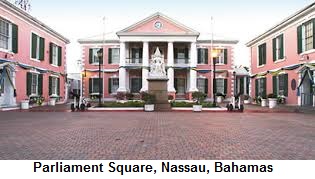
The most common form of governance in all of the Caribbean is the Westminster System. This is due to the many British legacies among the member-states (18 of 30 feature a British constitutional heritage, only Guyana has reformed). See details of Westminster here:

Title: Westminster System

The Westminster system is a parliamentary system of government modelled after that which developed in the United Kingdom. This term comes from the Palace of Westminster, the seat of the British parliament. The system is a series of procedures for operating a legislature. It is used, or was once used, in the national legislatures and subnational legislatures of most former British Empire colonies upon gaining responsible government,[1][2] beginning with the first of the Canadian provinces in 1848 and the six Australian colonies between 1855 and 1890.[3][4][5] However, some former colonies have since adopted either the presidential system (Nigeria for example) or a hybrid system (like South Africa) as their form of government.

CU Blog - State of the Union - Westminster States - Photo 1

CU Blog - State of the Union - Westminster States - Photo 2

CU Blog - State of the Union - Westminster States - Photo 3

Characteristics
A Westminster system of government may include some of the following features:

  • sovereign or head of state who functions as the nominal or legal and constitutional holder of executive power, and holds numerous reserve powers, but whose daily duties mainly consist of performing ceremonial functions. Examples include Queen Elizabeth II, the governors-general in Commonwealth realms, or the presidents of many countries, and state or provincial governors in federal systems. Exceptions to this are Ireland and Israel, whose presidents are de jure and de facto ceremonial, and the latter possesses no reserve powers whatsoever.
  • head of government (or head of the executive), known as the prime minister (PM), premier, or first minister. While the head of state appoints the head of government, constitutional convention suggests that a majority of elected Members of Parliament must support the person appointed.[6] If more than half of elected parliamentarians belong to the same political party, then the parliamentary leader of that party typically is appointed.[6] An exception to this was Israel, in which direct prime-ministerial elections were made in 19961999 and 2001.
  • An executive branch led by the head of government usually made up of members of the legislature with the senior members of the executive in a cabinet adhering to the principle of cabinet collective responsibility; such members execute executive authority on behalf of the nominal or theoretical executive authority.
  • An independent, non-partisan civil service which advises on, and implements, decisions of those ministers. Civil servants hold permanent appointments and can expect merit-based selection processes and continuity of employment when governments change.[7]
  • parliamentary opposition (in a multi-party system) with an official Leader of the Opposition.
  • A legislature, often bicameral, with at least one elected house – although unicameral systems also exist; legislative members are usually elected by district in first-past-the-post elections (as opposed to country-wide proportional representation). Exceptions to this include New Zealand, which changed in 1993 to use mixed-member proportional representationIsrael, which has always used country wide proportional representation; and Australia, which uses preferential voting.
  • lower house of parliament with an ability to dismiss a government by “withholding (or blocking) Supply” (rejecting a budget), passing a motion of no confidence, or defeating a confidence motion. The Westminster system enables a government to be defeated or forced into a general election independently.
  • A parliament which can be dissolved and snap elections called at any time.
  • Parliamentary privilege, which allows the legislature to discuss any issue it deems relevant, without fear of consequences stemming from defamatory statements or records thereof
  • Minutes of meetings, often known as Hansard, including an ability for the legislature to strike discussion from these minutes
  • The ability of courts to address silence or ambiguity in the parliament’s statutory law through the development of common law. Another parallel system of legal principles also exists known as equity. Exceptions to this include India, Quebec in Canada, and Scotland in the UK amongst others which mix common law with other legal systems.

Most of the procedures of the Westminster system originated with the conventions, practices, and precedents of the Parliament of the United Kingdom, which form a part of what is known as the Constitution of the United Kingdom. Unlike the uncodified British constitution, most countries that use the Westminster system have codified the system, at least in part, in a written constitution.

However, uncodified conventions, practices, and precedents continue to play a significant role in most countries, as many constitutions do not specify important elements of procedure: for example, some older constitutions using the Westminster system do not mention the existence of the cabinet or the prime minister, because these offices were taken for granted by the authors of these constitutions. Sometimes these conventions, reserve powers, and other influences collide in times of crisis and in such times the weaknesses of the unwritten aspects of the Westminster system, as well as the strengths of the Westminster system’s flexibility, are put to the test. As an illustrative example, in the Australian constitutional crises of 1975 the Governor-General of Australia, Sir John Kerr, dismissed Prime Minister Gough Whitlam on his own reserve-power authority and replaced him with opposition leader Malcolm Fraser.

Operation
The pattern of executive functions within a Westminster System is quite complex. In essence, the head of state, usually a monarch or president, is a ceremonial figurehead who is the theoretical, nominal or de jure source of executive power within the system. In practice, such a figure does not actively exercise executive powers, even though executive authority may be exercised in their name.

The head of government, usually called the Prime minister or Premier, will ideally have the support of a majority in the responsible house, and must in any case be able to ensure the existence of no absolute majority against the government. If the parliament passes a resolution of no confidence, or refuses to pass an important bill such as the budget, then the government must either resign so that a different government can be appointed or seek a parliamentary dissolution so that new general elections may be held in order to re-confirm or deny the government’s mandate.

Executive authority within a Westminster System is essentially exercised by the Cabinet, along with more junior ministers, although the head of government usually has the dominant role within the ministry. In the United Kingdom, the sovereign theoretically holds executive authority, even though the Prime Minister of the United Kingdom and the Cabinet effectively implement executive powers. In a parliamentary republic like India, the President is the de jure executive, even though executive powers are essentially instituted by the Prime Minister of India and the Council of Ministers. In Israel, however, executive power is vested de jure and de facto in the cabinet, and the President of Israel is de jure and de facto a ceremonial figurehead.

As an example, the Prime Minister and Cabinet (as the de facto executive body in the system) generally must seek the permission of the head of state when carrying out executive functions. If, for instance the British Prime Minister wished to dissolve parliament in order for a general election to take place, the Prime Minister is constitutionally bound to request permission from the sovereign in order to attain such a wish. This power (along with others such as appointing ministers in the government, appointing diplomats, declaring war, and signing treaties, for example) is known as the Royal Prerogative, which in modern times is exercised by the sovereign solely on the advice of the Prime Minister. Since the British sovereign is a constitutional monarch, he or she abides by the advice of his or her ministers, except when executing reserve powers in times of crisis.

This custom also occurs in other Westminster Systems in the world, in consequence from the influence of British colonial rule. In Commonwealth realms such as Canada, Australia and New Zealand, the Prime Minister is obligated to seek permission from the Governor-General when implementing executive decisions, in a manner similar to the British practice. An analogous scenario also exists in Commonwealth republics, such as India or Trinidad and Tobago, where there is a President, though not in Israel or Japan, where the respective prime ministers have the full legal power to implement executive decisions, and presidential (in Israel) or imperial (in Japan) approval is not required.

The head of state will often hold meetings with the head of government and cabinet, as a means of keeping abreast of governmental policy and as a means of advising, consulting and warning ministers in their actions. Such a practice takes place in the United Kingdom and India. In the UK, the sovereign holds confidential weekly meetings with the Prime Minister to discuss governmental policy and to offer her opinions and advice on issues of the day. In India, the Prime Minister is constitutionally bound to hold regular sessions with the President, in a similar manner to the aforementioned British practice. In essence, the head of state, as the theoretical executive authority, “reigns but does not rule”. This phrase means that the head of state’s role in government is generally ceremonial and as a result does not directly institute executive powers. The reserve powers of the head of state are sufficient to ensure compliance with some of their wishes. However, the extent of such powers varies from one country to another and is often a matter of controversy.

Such an executive arrangement first emerged in the United Kingdom. Historically, the British sovereign held and directly exercised all executive authority. George I of Great Britain (reigned 1714 to 1727) was the first British monarch to delegate some executive powers to a Prime Minister and a cabinet of the ministers, largely because he was also the monarch of Hanover in Germany and did not speak English fluently. Over time, arrangement continued to exercise executive authority on the sovereign’s behalf. Such a concept was reinforced in The English Constitution (1876) by Walter Bagehot, who emphasised the “dignified” and “efficient” aspects of government. In this sense Bagehot was stating that the sovereign should be a focal point for the nation, while the PM and cabinet actually undertook executive decisions.

There are important rules and responsibilities associated with the “Role of the head of state”

Source: Retrieved July 14, 2017 from Wikipedia Online Encyclopedia: https://en.wikipedia.org/wiki/Westminster_system  

Westminster is good … sometimes, but Westminster is mostly bad!

Westminster does not allow for the needed responsiveness; it does not feature a direct election of the Head of Government by the general population; but rather, it includes electing Members of Parliament (MP) from individual districts, and then the MP’s elect their leader. The party leader with the majority in Parliament is appointed Prime Minister, Premier, First or Chief Minister – First Among Equals; see Appendix A. This means less accountability and responsiveness to the citizens not in the constituency of the MP that is selected as Prime Minister.

Under this Westminster scheme, since this Head of Government is NOT elected by the majority of population, this one can be susceptible to a minority group – his/her constituents – over the Greater Good. Plus, this Head of Government can also reign in more than one branch of government. This one is the leader of the party with the majority of seats in Parliament, so this means that he/she leads the legislature; he/she forms the Cabinet, so he leads the Executive Branch. This leader holds sway on the candidates for the party and the selections of the elected ministers to the Cabinet. Lastly, this one appoints the Judges, so he/she wields power over the judiciary as well. The ideal separation-of-powers between government branches is deficient, defective and thus embeds failure on the countries societal engines.

Absolute power …

It is the assessment for the movement behind the book Go Lean…Caribbean that Westminster is dysfunctional … for the accountability and responsiveness for administering the Caribbean homeland. As a result of the deficiencies of Westminster, many countries have evolved and reformed their governance; they have abandoned Westminster; see list in Appendix B.

On the other hand, it is the assessment of this movement that since the Westminster System allows the concentration of power to only one person, the Prime Minister, it is easier to reform and transform a country. There is only the need to reach (influence, lobby and persuade) that one person. It is therefore easier for change and empowerment to take place, but still we recommend the member-states of the Caribbean region reform, transform and conform … to a new standard of governance.

This subject of governing systems is analyzed in the book Go Lean…Caribbean. This book provides an assessment of the Caribbean today, drawing reference to its historic past. From the origins of colonialism, the region traversed the historic curves of social revolution and evolution. The Go Lean book – available to download for free – serves as a roadmap for the introduction and implementation of the technocratic Caribbean Union Trade Federation (CU), for the elevation of Caribbean society – for all member-states. This CU/Go Lean roadmap endorses a system of better governance, with these 3 prime directives:

  • Optimization of the economic engines in order to grow the regional economy to $800 Billion and create 2.2 million new jobs.
  • Establishment of a security apparatus to ensure public safety and protect the resultant economic engines.
  • Improve Caribbean governance to support these engines, including a true separation-of-powers between the member-states and CU federal agencies.

The book stresses that reforming and transforming the Caribbean societal engines must be a regional pursuit. This was an early motivation for the roadmap, as pronounced in the opening Declaration of Interdependence (Pages 12 – 13):

xi. Whereas all men are entitled to the benefits of good governance in a free society, “new guards” must be enacted to dissuade the emergence of incompetence, corruption, nepotism and cronyism at the peril of the people’s best interest. The Federation must guarantee the executions of a social contract between government and the governed.

xvi. Whereas security of our homeland is inextricably linked to prosperity of the homeland, the economic and security interest of the region needs to be aligned under the same governance. Since economic crimes … can imperil the functioning of the wheels of commerce for all the citizenry, the accedence of this Federation must equip the security apparatus with the tools and techniques for predictive and proactive interdictions.

xxiv. Whereas a free market economy can be induced and spurred for continuous progress, the Federation must install the controls to better manage aspects of the economy: jobs, inflation, savings rate, investments and other economic principles. Thereby attracting direct foreign investment because of the stability and vibrancy of our economy.

This commentary is 3 of 5 in an occasional series on the State of the Caribbean Union. Surely, a malfunctioning state of governance throughout the entire region must have some common traits. These have been assessed in the Go Lean book and the technocratic solutions provided there-in. The full entries of all the blog-commentaries in this series are as follows:

  1. State of the Caribbean Union – Lacking Hope and Change
  2. State of the Caribbean Union – Dysfunctional Spanish Caribbean
  3. State of the Caribbean Union – Deficient Westminster System
  4. State of the Caribbean Union – Unstable Volcano States
  5. State of the Caribbean Union – Self-Interest of Americana

As related in the first submission in this series, the young people in the region need the vision of “something better” or Hope and Change in order to be inspired to participate in the future of this homeland. We cannot have a future without these young people, so these solutions – strategies, tactics and implementations – are not optional.

Hope for the future! This is a consistent theme from the Go Lean movement. Consider these previous blog-commentaries:

https://goleancaribbean.com/blog/?p=11759 Understand the Market, Plan the …
https://goleancaribbean.com/blog/?p=10629 Stay Home! A Series on Why and How to Keep Our Youth Home
https://goleancaribbean.com/blog/?p=10554 State of French Caribbean
https://goleancaribbean.com/blog/?p=7198 State of the Caribbean Union
https://goleancaribbean.com/blog/?p=4263 State of Aruba and Dutch Caribbean’s Economy
https://goleancaribbean.com/blog/?p=1634 Chasing Youth Culture and Getting It Right

The Go Lean book provides 370-pages of turn-by-turn instructions on “how” to adopt new community ethos, plus the strategies, tactics, implementations and advocacies to execute so as to reboot, reform and transform the societal engines of Caribbean society. For one, the recommendation is to reform and transform Caribbean governance, to evolve from the dysfunctions of Westminster and adapt a more enlightened Strong Executive (Presidential) structure (Page 72).

See the contrast portrayed here in this related VIDEO:

VIDEO – Parliamentary vs. Presidential Democracy Explained – https://youtu.be/4quK60FUvkY

Published on May 7, 2015 – The two main systems of democratic government, Presidential vs. Parliamentary, explained.
Free audiobook: http://www.audibletrial.com/TheDailyC…
Subscribe to The Daily Conversation: https://www.youtube.com/TheDailyConve…

At one point, the US used a version of Westminster – during the bad old days of the United States of America under the Articles of Confederation (1781–1789) – but this country evolved … and now feature one of the most responsive and accountable forms on government on the planet. In addition to the US, there are many other countries – consider Appendix B – that have evolved; some have rebooted and some have adapted a hybrid system of Westminster and the Presidential system.

In the Caribbean, we can do better! We do not have to be America; we can be better!

There is an aspect of the Westminster System that is embedded in the Go Lean roadmap, where the separation-of-powers provision parallels to the “Reserve Powers” of Westminster. These “Reserve Powers” ensure compliance with the tenants of state constitutions and treaties. These powers allow the CU to serve as a deputized entity for member-state governance; consider the justice scenarios requiring Commissions of Inquiries.

Yes, it is possible to reform and transform the Caribbean member-states that employ the deficient Westminster System. We can do better; we can make our homeland a better place to live, work and play. 🙂

Download the free e-Book of Go Lean … Caribbean – now!

Sign the petition to lean-in for this roadmap for the Caribbean Union Trade Federation.

———–

Appendix A – First Among Equals

The status of the Prime Minister has been described as primus inter pares: Latin for “first among equals.” This concept defines not only the prime minister’s relationship with Cabinet, but also, in a sense, his or her relationship with the public in our modern democratic society. Drawing on a wide variety of documents and artifacts, this site explores five main themes (see the menu at left) relating to Canada’s prime ministers. The site examines our leaders’ political careers as well as their private lives. It also sheds light on Canadians’ perceptions of our prime ministers.

From Macdonald to Harper, our political leaders are twenty-two individuals who have made a difference, shaping Canada’s identity, sometimes in profound ways.

Source: Retrieved July 15, 2017 from: https://www.collectionscanada.gc.ca/primeministers/index-e.html

———–

Appendix B – Countries That Abandoned Westminster

The Westminster system was adopted by a number of countries which subsequently evolved or reformed their system of government departing from the original model. In some cases, certain aspects of the Westminster system were retained or codified in their constitutions. For instance South Africa and Botswana, unlike Commonwealth realms or parliamentary republics such as India, have a combined head of state and head of government but the President remains responsible to the lower house of parliament; it elects the President at the beginning of a new Parliament, or when there is a vacancy in the office, or when the sitting President is defeated on a vote of confidence. If the Parliament cannot elect a new President within a short period of time (a week to a month) the lower house is dissolved and new elections are called.

  • The Union of South Africa between 1910 and 1961, and the Republic of South Africa between 1961 and 1984. The 1983 constitution abolished the Westminster system in South Africa.
  • Newfoundland gave up self-government in 1934 and reverted to direct rule from London. Use of the Westminster system resumed in 1949 when Newfoundlandbecame a province of Canada.
  • Rhodesia between 1965 and 1979, and Zimbabwe between 1980 and 1987. The 1987 constitution abolished the Westminster system.
  • Nigeria following the end of British colonial rule in 1960, which resulted in the appointment of a Governor-General and then a President, Nnamdi Azikiwe. The system ended with the military coup of 1966.
  • Ceylon between 1948 and 1972, and Sri Lanka from 1972 until 1978 when the constitution was remodelled into an Executive presidential system.
  • Burma following independence in 1948 until the 1962 military coup d’état.
  • Ghana between 1957 and 1960.
  • Tanganyika between 1961 and 1962.
  • Sierra Leone between 1961 and 1971.
  • Uganda between 1962 and 1963.
  • Kenya between 1963 and 1964.
  • Malawi between 1964 and 1966.
  • The Gambia between 1965 and 1970.
  • Guyana between 1966 and 1980.
  • Fiji between 1970 and 1987.
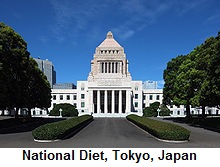
  • Japan between 1890 and 1947, under the Meiji Constitution the Diet of Japan was a bicameral legislature modelled after both the German Reichstag and the Westminster system.[11] Influence from the Westminster system remained in Japan’s Postwar Constitution.[12][13][14]

Source: Retrieved July 14, 2017 from: https://en.wikipedia.org/wiki/Westminster_system#Former_countries

Share this post:
, , , ,

Accede the Caribbean Arrest Treaty

Go Lean Commentary

CU Blog - Accede the Caribbean Arrest Treaty - Photo 1

The major problems in the Caribbean are not all due to external factors out of our control – i.e. global economy, international travel and tourism. No, we have some internal issues as well; for example, Crime.

Every Caribbean member-state has an atrocious crime problem that needs to be mitigated and remediated.

“We cannot control what other people do; but we can control how we react” – standard Common Sense wisdom.

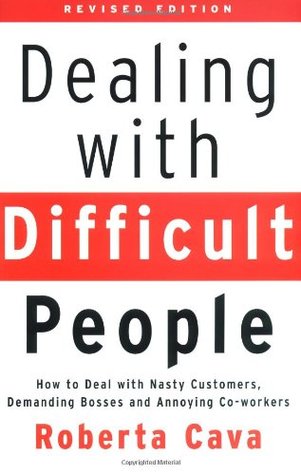
“You can’t control other people’s behaviour, but you can control your responses to it.” ― Roberta CavaDealing with Difficult People – How to deal with nasty customers, demanding bosses and uncooperative colleagues – See Photo in the Appendix.

This assessment was paramount in the motivation for the 2013 book Go Lean…Caribbean. There was/is a need to consider strategies, tactics and implementations to address the region’s crime problems. This goal is detailed in the book as it serves as a roadmap for the introduction of the technocratic Caribbean Union Trade Federation (CU). While the CU is set to optimize Caribbean society through economic empowerment, we must accept the established truth that the security dynamics of the region are inextricably linked to economic endeavors. Therefore the Go Lean roadmap has these 3 prime directives:

All in all, the book recognizes that the quest of these prime directives involves heavy-lifting; they are not easy.

The Go Lean roadmap details a goal to confederate a unified security apparatus for the region’s crime-fighting stakeholders; this will empower a regional Homeland Security technocracy. But Homeland Security for the Caribbean has a different meaning than for our North American or European counterparts. As disclosed in a recent blog-commentary, while the security apparatus must be on defense against military intrusions like terrorism & piracy, it must mostly contend with “bad actors” and threats that may imperil the region’s economic engines. This includes concerns like narco-terrorism and enterprise corruption, plus natural and man-made disasters like hurricanes, earthquakes, oil/chemical spills, etc..

So the Go Lean security goal is mostly for public safety!

If/when a “bad actor” is arrested, there needs to be the full force of the law in enforcing the tenants of the arrest across member-states; (many Caribbean islands are short distances apart, island hopping is a viable option for suspects to avoid justice institutions). This is the point of the Caribbean Arrest Treaty. See more information in this news article here:

News Title: Saint Lucia signs Caribbean arrest treaty
ST. GEORGE’S, Grenada, July 7 – Saint Lucia is among five Caribbean Community (CARICOM) countries to have signed the Caribbean Arrest Treaty, one of the regional security instruments that was formulated to enhance cooperation between member states in the fight against crime.
Guyana, Dominica, Grenada, Guyana, St. Kitts-Nevis, and St. Lucia signed the accord at the 38th Heads of Government summit that ended here on Thursday night.

The objective of the treaty is to establish within the Caribbean Community a system of arrest and surrender of requested persons for the purposes of conducting a criminal prosecution for an applicable offence; or executing a custodial sentence where the requested persons have fled from justice after being sentenced for an applicable offence.

It was first presented in draft form in Guyana earlier this year when that country hosted the CARICOM Inter-Sessional summit in February.

The treaty is one of the regional security instruments that was formulated to enhance cooperation between member states in the fight against crime and to reduce the complexity, cost and delays in the existing extradition arrangements inherent in the region.

Source: Retrieved July 7, 2017 from The St. Lucia Times Daily Newspaper: https://stluciatimes.com/2017/07/07/saint-lucia-signs-caribbean-arrest-treaty

——-

VIDEO – CARICOM TO SET UP ARREST TREATY – https://youtu.be/O32MYfCVy7Q

Published on Jul 8, 2016 – Member-states have agreed to work much closer in the area of security, as part of that effort by CARICOM to introduce a regional arrest treaty. Dominica’s Prime Minister, Roosevelt Skeritt, when asked how this treaty would work; explained the process.

Mr. Roosevelt Skeritt told a media briefing on Wednesday evening that the treaty would enhance cooperation between and among law enforcement authorities in the community. Suriname has serious problems constitutionally, where this arrest treaty is concerned. Dominica’s Prime Minister Roosevelt Skeritt explains.

Know that the arrest warrant treaty when it is set up would enhance law enforcement ability to address matters of cross – border crimes. The issue of security held much interest during the life of the Conference because of the important role it played in protecting the society from danger. Mr. Skeritt said…

This foregoing article and VIDEO describes a treaty that will take more than just words to accede regionally; there will also have to be action, heavy-lifting action that would require a full measure of devotion and commitment; it will require time, talent and treasuries of the member-states.

The book Go Lean…Caribbean – available to download for free – details this commitment. It stresses that reforming and transforming the Caribbean societal engines must be a regional pursuit. This was an early motivation for the roadmap, as pronounced in the opening Declaration of Interdependence (Pages 12 – 13):

x.   Whereas we are surrounded and allied to nations of larger proportions in land mass, populations, and treasuries, elements in their societies may have ill-intent in their pursuits, at the expense of the safety and security of our citizens. We must therefore appoint “new guards” to ensure our public safety and threats against our society, both domestic and foreign. The Federation must employ the latest advances and best practices … to assuage continuous threats against public safety.

xi. Whereas all men are entitled to the benefits of good governance in a free society, “new guards” must be enacted to dissuade the emergence of incompetence, corruption, nepotism and cronyism at the peril of the people’s best interest. The Federation must guarantee the executions of a social contract between government and the governed.

xvi. Whereas security of our homeland is inextricably linked to prosperity of the homeland, the economic and security interest of the region needs to be aligned under the same governance. Since economic crimes … can imperil the functioning of the wheels of commerce for all the citizenry, the accedence of this Federation must equip the security apparatus with the tools and techniques for predictive and proactive interdictions.

The Go Lean book provides 370-pages of turn-by-turn instructions on “how” to adopt new community ethos, plus the strategies, tactics, implementations and advocacies to execute so as to reboot, reform and transform the societal engines of Caribbean society.

In addition to this regional treaty in the foregoing, there are these other treaties that are urged for promotion and accedence:

The Go Lean movement has previously described (in a commentary) the motivations for crime: 1. Need, 2. Greed and 3. Justice. That commentary related, as follows:

So the CU/Go Lean roadmap addresses the issue of more jobs; this will lower the “need” factor for crime; (there is no expectation that these efforts would fully eliminate violent crime; but this start will mitigate the risks). The book relates that with the emergence of new economic drivers, that “bad actors” will also emerge thereafter to exploit the opportunities, with good, bad and evil intent. The second factor, “greed” is tied to opportunities. The executions of the Go Lean roadmap (Page 23) are specifically designed to minimize opportunities for crime with these security mandates:

  • Adapt the Ethos: Public Protection over Privacy
  • Embrace Electronic Payment Systems – Carry less cash
  • Whistleblower Protection – Consider all allegation, anonymous and overt
  • Witness Security & Protection – Ensure Justice Process
  • Youth Crime Awareness & Prevention; Anti-Bullying and Mitigation – “Nip it in the bud
  • Intelligence Gathering – Universal Video Surveillance
  • Light Up the Dark Places – Eliminate the figurative and literal “shadows”
  • Prison Industrial Complex – Engage to reduce recidivism

The third contributor, justice, is tied to street riots, civil unrest and other outbursts against perceived injustices. The marching call of many of these movements is “No Justice; No Peace”.

There is therefore the need to do heavy-lifting to mitigate and remediate the Caribbean’s high crime rate. This has been a consistent theme for the Go Lean movement; consider these previous blogs-commentaries:

Want Better Security? ’Must Love Dogs’
Boston Bombing Anniversary – Learning Lessons
Managing the ‘Strong versus the Weak’ Series – Model of Hammurabi
Funding the Caribbean Security Pact
Security Intelligence Series – On the Ground, Sea and Air
Interpersonal Violence Series – Domestic and Honor Issues
Interpersonal Violence Series – Street Crimes
Ten Puerto Rico Police Accused of Criminal Network
Violent Crime Warnings to Tourists in the Bahamas
Justice Strategy: Special Prosecutors … et al
Role Model for Law, Order and Justice – The Pinkertons
Economic Crime Enforcement – The Criminalization of American Business
Jamaica to receive World Bank funds to help in crime fight
10 Things We Don’t Want from the US: #5 – Organized Crime

A regional treaty to enforce and apprehend suspects – those who evade arrest – among a few Eastern Caribbean member-states is a good start …

… the next step must be expanding this to a comprehensive treaty for a regional security apparatus for all 30 member-states; (including the plan to pay for it). This has been identified as a:

Bingo! There it is! This is how it is done! This is the comprehensive plan for the Go Lean roadmap, integrating and consolidating the stewardship for economics, security and governance.

Yes, we can make our homeland a better, safer, place to live, work and play. 🙂

Download the free e-book of Go Lean … Caribbean – now!

Sign the petition to lean-in for this roadmap for the Caribbean Union Trade Federation. 

——–

Appendix – Book Cover: Dealing with Difficult People – How to deal with nasty customers, demanding bosses and uncooperative colleagues

CU Blog - Accede the Caribbean Arrest Treaty - Photo 2


Share this post:
,
[Top]

A Lesson in History – ‘4th of July’ and Slavery

Go Lean Commentary 

CU Blog - A Lesson in History - Slavery and the 4th of July - Photo 1Today is a special day in the United States, it is the 241st anniversary of their Declaration of Independence from Great Britain on July 4, 1776. This day will be celebrated all over the country with parades, picnics, music and fireworks.

The celebrations of this day is a BIG deal!

What is buried in this annual celebration is the stark and sharp contrast on the different sides in the conflict of July 4, 1776. There were the British loyalists on one hand and those seeking freedom from the British, the patriots, on the other hand; see the opposing sides here:

Title #1: What two sides emerged in response to the Declaration of Independence? What did each side favor?

Answer:
The Patriots and Loyalists; Patriots favored independence and Loyalists favored staying as a British colony.

Explanation:
Tensions were simmering prior to the start of the Revolution, and the Declaration of Independence, signed in 1776 formally broadcasted to all that the United States was a new and independent nation. This led to two factions being formed: Patriots and Loyalists.

Patriots believed that the United States should be an independent nation separate from Britain. They felt that they were being treated unfairly as a colony and that their basic rights were being trampled upon. It was their view that the time for compromises was over and that the colonies needed to leave the British Empire.

Loyalists thought that the colonies were better off staying with England. Some did this out of loyalty for the king, but others feared instability and anarchy in the event of a change in government. In addition, many feared that the economic fallout with the mother country would destabilize the American economy.

All in all, these were the two groups that were formed, and as you know, the Patriots emerged as successful and formed a new nation.

Source: Retrieved July 4, 2017 from: https://socratic.org/questions/what-two-sides-emerged-in-response-to-the-declaration-of-independence-what-did-e

The patriots get to celebrate the 4th of July every year. But as there were 2 sides of this conflict, we sometimes forget the loyalists side of the conflict. They did not simply go away; they remained vocal and loyal to the Britain’s Crown.

The category of loyalists have a big bearing on the history of the Caribbean. Of the 30 member-states that caucus as the Caribbean, 18 of them have British heritage. Many of these were impacted by the American Declaration of Independence; many loyalists fled America and relocated to these British West Indies. Consider these notes:

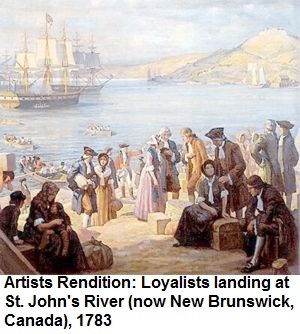
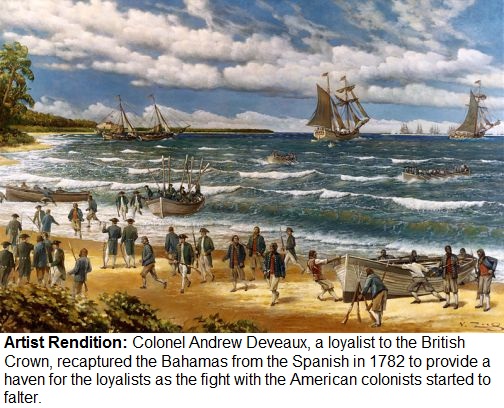
When their cause was defeated, about 15% of the Loyalists (65,000–70,000 people) fled to other parts of the British Empire, to Britain itself, or to British North America (now Canada). …

CU Blog - A Lesson in History - Slavery and the 4th of July - Photo 3a

CU Blog - A Lesson in History - Slavery and the 4th of July - Photo 2a

CU Blog - A Lesson in History - Slavery and the 4th of July - Photo 2b

The wealthiest and most prominent Loyalist exiles went to Great Britain to rebuild their careers; many received pensions. Many Southern Loyalists, taking along their slaves, went to the West Indies and the Bahamas, particularly to the Abaco Islands. – Source: Wikipedia

CU Blog - A Lesson in History - Slavery and the 4th of July - Photo 3b

Great Britain also responded … formally. See details of the response here:

Title #2: The British Reply

When Great Britain first received the Declaration of Independence, the country was silent. To them, this was another annoyance from the colonies. The colonists had sent previous letters to King George III that had been ignored, but this was the first time that they had declared themselves free from Great Britain. You know how you feel when a little child continues to ask you for the same thing over and over again, and eventually, you stop listening? This was how King George III viewed the colonies. They were a nuisance, but relatively harmless. Or so he thought.

The government hired John Lind, an English politician and pamphleteer, to write a rebuttal to the declaration. He wrote Answer to the Declaration of the American Congress, a reply that tried to pick apart the Declaration of Independence. Lind focused on the issue of slavery, saying that the colonists were actually angry that King George III had offered freedom to the slaves. Lind even mocked the writers for stating, ‘All men are created equal…’, yet they allowed slavery. Of course, all of this was just a distraction. The colonists really paid no attention to the pamphlet.

Following this, King George III officially declared the colonies to be in a state of rebellion. By August of 1776, the King ordered troops to the colonies.

Once the Revolutionary War began, the citizens of Great Britain became more concerned about the colonies and their fight for independence. In October, King George III addressed Parliament, hoping to ease some of the concerns. He opened the address wishing that he could inform them that the troubles were at an end and that the people had ‘recovered from their delusion’ and ‘returned to their duty.’ However, the colonists continued to fight and even ‘openly renounced all allegiance to the Crown.’ King George III accused the colonists of treason, but reassured the Parliament that England was still united.

The King ended his address singing his own praises saying, ‘No people ever enjoyed more Happiness, or lived under a milder Government, then those now revolted Provinces.’ Everything that the colonies have—their land, sea, wealth, and strength—was because of him. His desire was to return the colonies as a part of the British Empire and end the war.

As we know, King George III’s desire to end the war and keep the colonies did not go as planned. The Revolutionary War, the war for American Independence, continued until 1783, ending with more than 50,000 deaths, and the colonies freed as a new country, the United States of America.

Source: Retrieved July 4, 2017 from: http://study.com/academy/lesson/british-reply-to-the-declaration-summary-analysis.html

As related, slavery was not the cause of the US War of Independence … entirely. But the notion that “all men are created equal” was a laughable American hypocrisy. The continuation of slavery in the wake of a trend of liberalism in England became a boiling point of contention. In fact as reported here, many African Americans – 12,000 or so – fled to the side of the British for the promise of freedom:

Title #3: Slavery and Black Loyalists

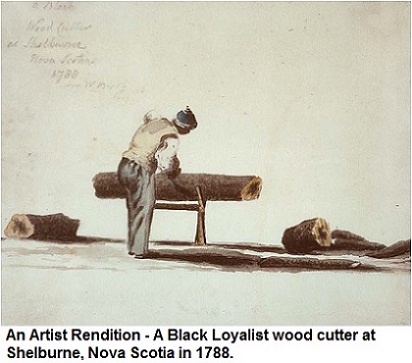
As a result of the looming crisis in 1775 the Royal Governor of Virginia, Lord Dunmoreissued a proclamation that promised freedom to servants and slaves who were able to bear arms and join his Loyalist Ethiopian Regiment. Many of the slaves in the South joined the Loyalists with intentions of gaining freedom and escaping the South. About 800 did so; some helped rout the Virginia militia at the Battle of Kemp’s Landing and fought in the Battle of Great Bridge on the Elizabeth River, wearing the motto “Liberty to Slaves”, but this time they were defeated. The remains of their regiment were then involved in the evacuation of Norfolk [(Virginia)], after which they served in the Chesapeake area. Eventually the camp that they had set up there suffered an outbreak of smallpox and other diseases. This took a heavy toll, putting many of them out of action for some time. There was a slave by the name of Boston King who joined the Loyalists and wound up catching smallpox. Boston King and other soldiers who were sick were relocated to a different part of the camp so that they did not contaminate the healthy soldiers. The survivors joined other British units and continued to serve throughout the war. Black colonials were often the first to come forward to volunteer and a total of 12,000 African Americans served with the British from 1775 to 1783. This factor had the effect of forcing the rebels to also offer freedom to those who would serve in the Continental Army; however, such promises were often reneged upon by both sides.[31]

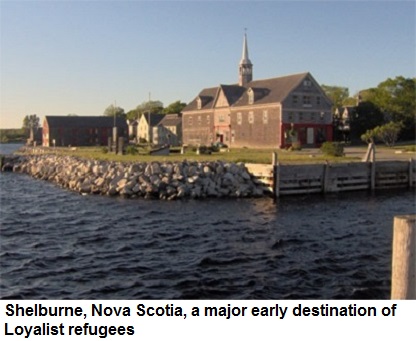
African Americans who gained their freedom by fighting for the British became known as Black Loyalists. The British honored the pledge of freedom in New York City through the efforts of General Guy Carleton who recorded the names of African Americans who had supported the British in a document called the Book of Negroes which granted freedom to slaves who had escaped and assisted the British. About 4,000 Black Loyalists went to the British colonies of Nova Scotia and New Brunswick, where the British promised them land. They founded communities across the two provinces, many of which still exist today. Over 2,500 settled in Birchtown, Nova Scotia, instantly making it the largest free black community in North America. However, the inferior grants of land they were given and the prejudices of white Loyalists in nearby Shelburne who regularly harassed the settlement in events such as the Shelburne Riots in 1784, made life very difficult for the community.[32] In 1791 Britain’s Sierra Leone Company offered to transport dissatisfied black Loyalists to the British colony of Sierra Leone in Africa, with the promise of better land and more equality. About 1,200 left Nova Scotia for Sierra Leone, where they named the capital Freetown.[32] After 1787 they became Sierra Leone’s ruling elite. About 400 to 1,000 free blacks who joined the British side in the Revolution went to London and joined the free black community of about 10,000 there.

Source: Retrieved July 4, 2017 from: https://en.wikipedia.org/wiki/Loyalist_(American_Revolution)#Slavery_and_Black_Loyalists

Wow, what a notion! An argument can be made that for the Black population – the majority ethnicity for 29 of the 30 Caribbean member-states – their celebration of the 4th of July should have been … for the other side!

Intriguing!

This is the lesson in history for the Caribbean; American historic accomplishments are NOT historic accomplishments for the majority of Caribbean people. Poor race relations tarnished so much of American history, that the country continues with this societal defect … even to this day.

This lesson from America’s initiation is presented by the movement behind the book Go Lean…Caribbean – available to download for free – which serves as a roadmap for the introduction and implementation of the technocratic Caribbean Union Trade Federation (CU), for the elevation of Caribbean society – for all member-states. This book features a declaration of its own, a Declaration of Interdependence (Pages 10 – 13):

Preamble: When, in the course of human events, it becomes necessary for one people to unite with others so as to connect them together to collaborate, confederate and champion the challenges that face them, we the people of Caribbean democracies find it necessary to accede and form a confederated Union, the Caribbean Union Trade Federation, with our geographic neighbors of common interest.

While the laws of nature and of nature’s God entitle us to form a society and a brotherhood to foster manifestations of our hopes and aspirations and to forge solutions to the challenges that imperil us, decent respect to the opinions of mankind requires that we declare the causes which imperil us and incite us to unite to assuage our common threats.

And while our rights to exercise good governance and promote a more perfect society are the natural assumptions among the powers of the earth, no one other than ourselves can be held accountable for our failure to succeed if we do not try to promote the opportunities that a democratic society fosters.

As the history of our region and the oppression, suppression and repression of its indigenous people is duly documented, there is no one alive who can be held accountable for the prior actions, and so we must put aside the shackles of systems of repression to instead formulate efficient and effective systems to steer our own destiny. …

xi. Whereas all men are entitled to the benefits of good governance in a free society, “new guards” must be enacted to dissuade the emergence of incompetence, corruption, nepotism and cronyism at the peril of the people’s best interest. The Federation must guarantee the executions of a social contract between government and the governed.

xvi. Whereas security of our homeland is inextricably linked to prosperity of the homeland, the economic and security interest of the region needs to be aligned under the same governance. Since economic crimes … can imperil the functioning of the wheels of commerce for all the citizenry, the accedence of this Federation must equip the security apparatus with the tools and techniques for predictive and proactive interdictions.

xxiv. Whereas a free market economy can be induced and spurred for continuous progress, the Federation must install the controls to better manage aspects of the economy: jobs, inflation, savings rate, investments and other economic principles. Thereby attracting direct foreign investment because of the stability and vibrancy of our economy.

The Go Lean book provides 370-pages of turn-by-turn instructions on this roadmap, on “how” to adopt new community ethos, plus the strategies, tactics, implementations and advocacies to execute so as to reboot, reform and transform the societal engines of Caribbean society. This CU/Go Lean roadmap has these 3 prime directives:

  • Optimization of the economic engines in order to grow the regional economy to $800 Billion and create 2.2 million new jobs.
  • Establishment of a security apparatus to ensure public safety and protect the resultant economic engines.
  • Improve Caribbean governance to support these engines, including a separation-of-powers between the member-states and CU federal agencies.

“Lessons in History” are a familiar theme for these Go Lean blog-commentaries; consider this sample of previous submissions:

https://goleancaribbean.com/blog/?p=12274 A Lesson in History – Spanish Caribbean
https://goleancaribbean.com/blog/?p=11870 A Lesson in History – Indian Termination Policy
https://goleancaribbean.com/blog/?p=10933 A Lesson in History – White is Right – Not!
https://goleancaribbean.com/blog/?p=10733 150 Years of Historically Black Colleges & Universities
https://goleancaribbean.com/blog/?p=9151 The New Smithsonian African – American Museum
https://goleancaribbean.com/blog/?p=8767 A Lesson in History – Haiti 1804
https://goleancaribbean.com/blog/?p=7769 History’s Effect of the Current Caribbean Disposition
https://goleancaribbean.com/blog/?p=7738 A Lesson in History – Legacy of the Buffalo Soldiers
https://goleancaribbean.com/blog/?p=5695 A Lesson in History – Repenting, Forgiving and Reconciling the Past
https://goleancaribbean.com/blog/?p=4971 A Lesson in History – Royal Charters: Truth & Consequence
https://goleancaribbean.com/blog/?p=451 CariCom position on Slavery/Colonization Reparations

There are so many lessons that we, in the Caribbean, can learn from this history of the initiation of the United States; the role of slavery was integral to the whole fabric of American society. Repercussions and consequences of this societal defect reverberated from those events in July 1776 right down to our day. In many ways, these repercussions and consequences are responsible for our region’s poor performance in our economic, security and governing engines. Our society was created as parasites of the American- European (British) eco-system, rather than protégés  of these advanced economies.

It is time for this disposition to end! It is not 1776 anymore; we must make the societal progress that 241 years of lessons should have taught us. America has reformed and transformed … some, but still needs more progress. But our goal is not to reform and transform America; our target is the Caribbean … only. We hereby urge everyone in the region – people, institutions and governments – to lean-in to this Go Lean roadmap.

We can do this, we can declare our interdependence and make our homeland a better place to live, work and play. 🙂

Download the free e-Book of Go Lean … Caribbean – now!

Sign the petition to lean-in for this roadmap for the Caribbean Union Trade Federation.

Share this post:
, ,
[Top]

Economy Doctor: ‘The Patient is Terminal’

Go Lean Commentary

If you need a new roof on your house – a traumatic event when it starts to rain – do you go to your doctor to do the work?

He might know something about roofing and he might be able to help; surely he can lift shingles up to the roof; spread hot tar; hammer in nails and tacks. As a homeowner, you may get some relief from the elements because of your new doctor-installed roof, but frankly, it is not best-practice. The service provided may not be the most efficient nor most effective.

A professional roofer may have better tools and techniques.

How about an economy?

Is there a professional for economic “roof jobs”? Yes, indeed! They are called Economists! Many times, they too are doctors; they may have a PhD in Economics.

A Doctor (Economist) in the Caribbean is looking at the regional economics as if a medical trauma and declaring:

The patient is “terminal” … dying, unless remediated in some way.

Welcome to the Caribbean 2017. This is the assessment: the Caribbean economy is moribund, due to defects in the region’s governing engines, with its mono-industrial service economy! See the full story of the Doctor’s assessment-diagnosis in the news article here:

Title: Saint Lucian Economist warns: “We are in trouble!”
CU Blog - Economy Doctor - 'The Patient is Terminal' - Photo 1
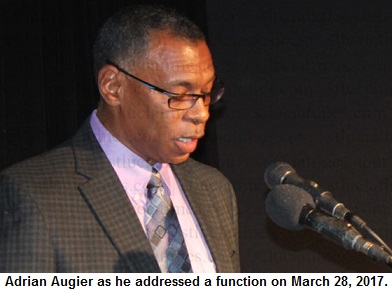
Saint Lucian Economist, Doctor Adrian Augier, has sounded a grim warning that this country is in trouble economically.

Delivering a lecture on Tuesday to the 39th annual general meeting of the Elks Credit Union, Augier compared the national economy to an old farm that is under-fertilised, over exploited, ruined by bad farming and yielding smaller harvests every year.

He was speaking on the theme: “Time to Call a Spade – Why the Caribbean is digging its own economic grave.”

“ I want to frighten you; I want to shock you; I want  to jolt you to the realization that we are in trouble – that you are in trouble along with your job, your family your savings your home and your sanity,”  the Saint Lucian Economist told his audience at the National Cultural Centre.

He said he wanted to cause  the kind of discomfort that prevents his listeners from sleeping at night and rise up,  not only to demand that better be done to prevent development disaster, but to be part of a revolution in thought and action which causes this country to dramatically change its course.

“When I say the country I am not speaking about Mr. Chastanet or Doctor Antony,  I am speaking of us – every one of us here who believes that the sun will rise tomorrow as it did today,” Augier said.

He disclosed that growth rates have been declining for the past three decades, with just a bit of growth in the past year or so.

“The world has changed and so must we,” Augier observed.

According to him, the return to normalcy will not be easy.

He said that many banks in the region have lent out money that was not theirs to people who cannot now pay.

Augier said they cannot pay not because they do not want to, but because jobs have disappeared, markets have shrunk and real property values have fallen.

He explained that in certain areas, crime and instability have diminished the value of properties.

Augier said the economic situation is not only true of Saint Lucia, but across the Caribbean as well.

“We have to look at these issues and not pretend that they are going to go away or suddenly improve because they are not,” the Economist said.

He noted that the social and economic structure of these Islands have changed.

“It is not only true of Saint Lucia but it is a problem across the Caribbean,” he told the Elks AGM.

Augier asserted that there are some things that can happen in the market such as a change of legislation so that banks and credit unions can dispose of assets.

By way of explanation, he spoke of a house with a mortgage that is not being serviced.

“You need to turn it over quickly, reduce the price, put it on the market and get it sold.  That’s not nice when you have to put families out of their homes, but it’s your savings in the credit union underwriting the mortgage and if you don’t return the asset to the market you are going to hold an asset that is deteriorating,” Augier explained.

“We have to take some of the hard knocks and do what we have to do,” he declared, adding that banks have been unable to dump their bad loans which have stayed and corroded the balance sheets.

He explained that people save money in banks and credit unions in the hope of getting their investment back with some interest.

Augier, who is a Director of the First National Bank, said he is worried that the ability to bail out is dwindling.

“We wait and we hope and what is actually happening is that foreign interests are coming into the country and buying up things that we should be able to buy, investing in areas that we should be able to invest in,” he said.

According to him, it is a source of worry that Saint Lucia has a government apparatus designed to ‘help people to buy us out.’

“Foreign investment does not come here because they love us, foreign investment comes here because they see an opportunity which we cannot access or we have not begun to access or we are not positioned to access,” Augier observed.

He said the investors are looking for a return.

“If they are coming here to develop some brand new thing that we are not able to do for ourselves and they want to come in and help us do it or start it up with a possibility of Saint Lucians participating in that venture at some point in time, then that’s another matter,” Augier told his audience.

But  the Saint Lucian Economist said when industries  that are ‘exploitative’ are coming in to use unsustainable cheap labour and exploiting high unemployment by providing menial jobs, it is not good for this country.

Augier said there was need to contemplate what kind of investment is being encouraged here.
Source: Posted March 30, 2017; retrieved June 28, 2017 from: https://stluciatimes.com/2017/03/30/saint-lucian-economist-warns-trouble#comment-114747

The foregoing news article quotes an Economist – Dr. Adrian Augier – in St. Lucia; speaking of the sad state of affairs for that country and all of the Caribbean. This is not a unique assessment-diagnosis; other countries and states are also suffering economic trauma, dire consequences from dysfunctional economic and governing stewardship. Nor is this assessment only to be found in the Third World (developing countries). No, even the First World or advanced economies have this disposition. Take for example the US State of Kansas. We have a fitting example of economic trauma and dysfunction, brewing there …

Kansas, Sam Brownback, and the Trickle-Down Implosion

The Kansas governor’s attempt to create Supply-side nirvana in Middle America not only failed to grow the economy — it created a crippling crisis of government that led to a statewide rejection of his politics.

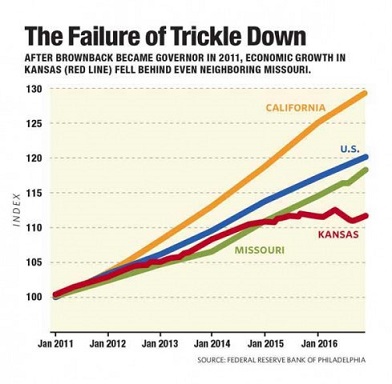
See the excerpt of the news article in the Appendix below or the full article here: http://prospect.org/article/kansas-sam-brownback-and-trickle-down-implosion-0. The summary of the article in the Appendix, is that the State of Kansas experimented with a Supply-side Economic Model and the end-result is traumatic. See these headlines here:

“Brownback’s Kansas has produced one of the worst-performing state economies in the country”.

“The severely imbalanced budget led Moody’s to downgrade Kansas’s bond rating; three months later, Standard & Poor’s followed suit.”

“The failure to restore pre-recession funding has disproportionately impacted urban school districts like Kansas City’s and Wichita’s.”

“Throughout all this, Brownback’s trickle-down obsessions have continued to play out.”

“Many moderate Republicans were fed up with Brownback’s intransigence and eager to get something done.”

Consider also the rendition of this Kansas trauma-drama in this AUDIO-PODCAST from NPR’s All Things Considered show:

AUDIO-Podcast – Kansas Lawmakers Reverse Governor’s Massive Tax Cuts – http://www.npr.org/2017/06/07/531945495/kansas-lawmakers-reverse-governors-massive-tax-cuts

Posted June 7, 2017 As Heard on All Things ConsideredKansas lawmakers charted a major change of course Tuesday night when it comes to tax policy. Both the House and Senate voted to override a veto from Gov. Sam Brownback and roll back many of the 2012 tax cuts that were a model for conservatives across the country.

So Economy Doctors have assessed-diagnosed these 2 dysfunctional communities – lessons abound.  The Caribbean economy (‘patient’) is terminal … and the ‘patient’ that is the State of Kansas is terminal.

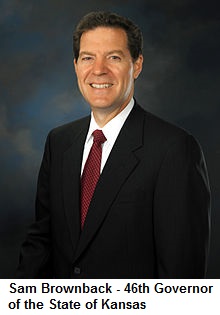
This Governor Sam Brownback is now a tarnished brand in American politics. At one time he was a “Star on the Rise” of the national stage, even running for President in 2008. But his now-failed experiment in Tickle-down economics has shifted his reputation from fiscal conservatism to fiscal irresponsibility. This trauma and drama in Kansas should be a cautionary tale for other government leaders in the US and in the Caribbean – economic engines must be optimized; continuation of failed economic policies should not be tolerated. When a patient is in trauma – dying – drastic measures must be taken or the patient dies. This is true for medical trauma and economic trauma. This is the lesson from Kansas and the caution from the Economist – Dr. Adrian Augier – in St. Lucia.

“The world has changed and so must we,” Augier observed.

There is the need for change! Drastic measures must be pursued to reform and transform Caribbean society. But these changes must be planned, implemented (based on best-practices), reviewed and measured against success metrics. This is the methodology of Plan, Do and Review urged in the book Go Lean…Caribbean (Page 147). The book – available to download for free – serves as a roadmap for the introduction and implementation of the technocratic Caribbean Union Trade Federation (CU), for the elevation of Caribbean economy – for all member-states. This CU/Go Lean roadmap has these 3 prime directives:

  • Optimization of the economic engines in order to grow the regional economy to $800 Billion and create 2.2 million new jobs.
  • Establishment of a security apparatus to ensure public safety and protect the resultant economic engines.
  • Improvement of Caribbean governance to support these engines, including a separation-of-powers between the member-states and CU federal agencies.

The mono-industrial service economy in the Caribbean and the failed Supply-side experiment in Kansas  are 2 bad examples. But our scope for reforming communities is the Caribbean only!

The book stresses that reforming and transforming the Caribbean societal engines must be a regional pursuit. This was an early motivation for the roadmap, as pronounced in the opening Declaration of Interdependence (Pages 12 – 13):

xi. Whereas all men are entitled to the benefits of good governance in a free society, “new guards” must be enacted to dissuade the emergence of incompetence, corruption, nepotism and cronyism at the peril of the people’s best interest. The Federation must guarantee the executions of a social contract between government and the governed.

xvi. Whereas security of our homeland is inextricably linked to prosperity of the homeland, the economic and security interest of the region needs to be aligned under the same governance. Since economic crimes … can imperil the functioning of the wheels of commerce for all the citizenry, the accedence of this Federation must equip the security apparatus with the tools and techniques for predictive and proactive interdictions.

xxiv. Whereas a free market economy can be induced and spurred for continuous progress, the Federation must install the controls to better manage aspects of the economy: jobs, inflation, savings rate, investments and other economic principles. Thereby attracting direct foreign investment because of the stability and vibrancy of our economy.

xxxiii. Whereas lessons can be learned and applied from the study of the recent history of other societies, the Federation must formalize statutes and organizational dimensions to avoid the pitfalls of communities …

The Go Lean book provides 370-pages of turn-by-turn instructions on “how” to adopt new community ethos, plus the strategies, tactics, implementations and advocacies to execute so as to reboot, reform and transform the societal engines of Caribbean society. Our reform approach is not some Supply-side / Trickle-down experiment, whereby we exploit the working-classes to benefit the rich.

We can do better! We can deploy industrial solutions with no plutocratic abuses.

In response, the Go Lean roadmap presents a strategy of Self-Governing Entities (SGE’s). This scheme was fully detailed in the Go Lean book; see  some headlines from this sample advocacy on Page 105:

10 Steps to Implement Self-Governing Entities

1 Lean-in for the Caribbean Single Market
The CU treaty unifies the Caribbean region into one single market of 42 million people across 30 member-states, there-by empowering the economic engines in and on behalf of the region. Many times, these engines will be independent, self-governing entities (SGE) that are only physically located in a member state, but not administered by the states. SGE’s are necessary features of the CU roadmap, allowing for industrial parks, technology labs, medical campuses, agricultural ventures, airport cities (see Appendix IJ) and even the Capital District. All aspects of their administration are managed by the CU, including monetary issues managed by the Caribbean Central Bank-CCB.
2 CU Constitution; SGE’s Bylaws
3 Negotiate With Local Municipalities for Resources
The need for local resources is what makes SGE’s such an economic engine. They may have to acquire their basic needs (food, clothing, shelter, energy) from trade with their neighbors. The spirit of negotiations should reflect a partnering relationship as opposed to adversarial, but SGE’s have rights to supply every need internally or from abroad. With free market conditions the norm, price and quality is the determination; the neighbors must compete.
4 Ease-ways
When the SGE physical plant is land-locked, there is a need for an ease-way to convey utilities and supplies in and out. When member-states accede to the CU treaty, they in effect declare that they are ready, willing and able to accommodate the needs of SGE’s. The rights-duty duality is at play, but financial-jobs benefits will be worth the effort. Ease-ways must be inclusive to the municipal negotiations, and may include above-ground and subterranean (pipeline) options.
5 Technology & Infrastructure
The nature of a SGE means monopolies outside the perimeter do not apply inside the perimeter. It is the choice of the SGE whether or not to avail some monopolistic utility or “go solo”. This applies to energy, telecoms, water-sewage, and logistical technologies (transportation, pipeline, pneumatic tubes, etc) as long as the good neighbor status remains.
6 Housing Options
7 Security and JusticeThe CU accedence grants authority for homeland security in the SGE’s to CU institutions. There are Rangers that have direct patrol duties; CariPol that has the investigation responsibility and District Attorneys for federal prosecutions.
8 EmergenciesThough the SGE tenant has near-sovereign rights, there are special provisions for CU intrusions, limited to declared  emergencies. This declaration can come from responsible parties internal to the SGE (as simple as dialing 911, or exigent circumstances) or external declarations from federal court orders or CU constitutional officers.
9 Jurisdictional Liaisons with CU State Department
10 Measuring Results

The business models of SGE’s have been further elaborated upon in previous blog-commentaries. Consider this sample:

https://goleancaribbean.com/blog/?p=12148 Perfect SGE Application: Ship-breaking Model
https://goleancaribbean.com/blog/?p=12146 Perfect SGE Application: Shipbuilding Model
https://goleancaribbean.com/blog/?p=8379 Stewardship for Centers of Economic Activity
https://goleancaribbean.com/blog/?p=5921 Socio-Economic Change: Impact Analysis of SGE’s
https://goleancaribbean.com/blog/?p=2750 Disney World – Role Model for Self-Governing Entities
https://goleancaribbean.com/blog/?p=2338 Using SGE’s to Welcome the Dreaded ‘Plutocracy’
https://goleancaribbean.com/blog/?p=2003 Ship-breaking under SGE Structure
https://goleancaribbean.com/blog/?p=1214 Fairgrounds as SGE and Landlords for Sports Leagues

SGE’s can bring new economic opportunities, and these opportunities must abound in the Caribbean … if we want to avert our terminal condition. The existing economic engines are not sustainable; the mono-industrial strategy – based on a service industry (i.e. tourism) – has led to a dying economy. Everyone is hereby urged to lean-in to this regional change.

The Go Lean roadmap advocates for a pluralistic democracy where all Caribbean stakeholders get a chance for life, liberty and the pursuit of happiness. This is an American ideal, but we can learn lessons from their failure – as in Kansas – to execute on these principles. In a previous blog-commentary, the role model of Hammurabi was disclosed as a missing functionality in the New World. This is where the “weak is protected from abuse from the strong in society” – this is truly missing in Kansas.

The purpose of this roadmap is not to fix the defects in Kansas nor the America political system, but rather to reform and transform the Caribbean, without engaging any unjust schemes, like the Supply-side economics depicted in this commentary.

Yes, we can make our homeland a better place to live, work and play. Let’s do this! 🙂

Download the free e-Book of Go Lean … Caribbean – now!

Sign the petition to lean-in for this roadmap for the Caribbean Union Trade Federation.

————

Appendix – Article Except: Kansas , Sam Brownback, and the Trickle-Down Implosion

Sub-title: The Kansas governor’s attempt to create supply-side nirvana in Middle America not only failed to grow the economy — it created a crippling crisis of government that led to a statewide rejection of his politics.
By: Justin Miller

CU Blog - Economy Doctor - 'The Patient is Terminal' - Photo 2Near midnight on Tuesday, June 6, a number of Republicans in the Kansas legislature did something that few other elected Republicans had done in years: They acted responsibly. Joining with Democrats, they voted to roll back the huge tax cuts that Republican Governor Sam Brownback had inflicted on the state, which had devastated schools and other essential services while also depressing the state’s economy. But after five years of this exercise in trickle-down, the damage had been done.

THE ROBERT B. DOCKING State Office Building looms large amid the sparse downtown Topeka landscape. …

The decaying, hollowed-out building stands as a grim testament to the blunt-force trauma that Brownback’s 2012 tax cuts visited on his state, and to the ensuing budgetary crises that led lawmakers to cut government services to the bone.

For years, Brownback has called for Docking to be demolished rather than renovated. It’s an apt metaphor for his approach to government.

The state’s health-care system teeters on the verge of catastrophe, as Brownback’s privatization of state Medicaid services and further refusal to expand Medicaid has squeezed low-income Kansans and health-care providers alike. Dozens of struggling hospitals across the state are on the verge of closing. “We have to make decisions every day, on which bills to pay. I mean that literally,” one small-town hospital CEO says. Brownback’s decision to cut taxes rather than restore K–12 public education funding has strained both urban and rural school districts, compelling two districts to end the school year early. Meanwhile, he’s ushered in drastic cuts to social services and placed strict work requirements and other limits on welfare programs.

By last year, even Republicans in this heavily Republican state (which Donald Trump carried last November by 21.5 percentage points) had had it with their governor’s insistence on turning the SunflowerState into a Petri dish for radical conservative economics. A number of Republican candidates ousted Brownback supporters in legislative primaries, and this year they teamed up with the minority Democrats in the legislature (whose numbers increased after last year’s elections) to begin rolling back the Brownback catastrophe. Overturning the governor’s vetoes, which required a two-thirds majority in each house, legislators this June voted to repeal the tax cuts enacted by Brownback and a Tea Party–dominated legislature in 2012.

But the devastation has been profound.

IN 2010, SAM BROWNBACK rode the Tea Party wave into the Kansas governorship, pledging to turn the state into a bulwark against President Barack Obama’s big-government liberalism. By 2012, through aggressive backroom politicking, he pressured hesitant moderate Republicans in the legislature to join conservatives in passing a radical tax plan that eliminated the state’s top income tax bracket, drastically slashed rates, and instituted an outright income tax exemption for limited liability companies—a huge tax break for a tiny segment of the population. Conversely, in a nod to “fiscal responsibility,” the plan did away with a number of tax credits that benefited low- and middle-income Kansans. Moderate Republicans in the Senate had thought they’d be able to engineer a less-extreme version of the cuts while in a conference committee with the House. They didn’t, and days later, Brownback signed into law perhaps the most radical version of trickle-down economics any state had ever embraced.

Brownback’s promise that the cuts—particularly the LLC exemption—would be “a shot of adrenaline” for the Kansas economy will be written on his political headstone.

The LLC exemption, the crown jewel of the governor’s tax policy, has allowed some 330,000 independent business owners—almost double the original estimates—to avoid state tax on most, if not all, their income, costing the state roughly $500 million in revenue in 2015 alone. A recent report from a team of researchers who scoured Kansans’ income tax returns concludes that the exemption has fueled more tax evasion than job creation.

Though Brownback argued that exempting owner-operated businesses from taxes would increase investment and jobs in the state, the report found no such results. “We can’t, to the best of our ability, find support for real responses in terms of economic activity because of the tax cuts,” report co-author and University of South Carolina economics professor Jason DeBacker says. Instead, the policy drove more people to simply reclassify their income as a pass-through to avoid taxation.

The small-business owners who were the intended beneficiaries suddenly had no tax liabilities each year. But with average savings of about $1,000 a month, according to one estimate, it was hardly enough to hire more workers or expand operations. One lawyer in suburban JohnsonCounty told a Kansas City Star columnist in 2014 that he was saving as much as $10,000 a year—as were the 15 other partners in his practice—while the paralegals and other staffers with no ownership stake were still stuck paying income tax. He told the columnist that he planned to use his tax savings for a family vacation to Cancún. “I’m making out like a bandit, and it’s completely unfair,” he said.

Perhaps the most enlightening example of how the exemption worked came when a public radio station discovered in May 2016 that Bill Self, the head coach of the storied University of Kansas Jayhawks men’s basketball team, was not paying taxes on about 90 percent of his annual $3 million compensation.

WHAT BROWNBACK’S TAX CUTS have accomplished is to have created a crisis of catastrophic proportions for state residents. The tax cuts blew an immediate hole in the $6 billion state budget, as revenue levels fell an astounding $713 million from fiscal years 2013 to 2014. Those revenue shortfalls have not abated in the years since. To help plug the hole, Brownback has run through all the state’s reserve funds and has increased borrowing, adding $1.3 billion to the state’s debt. “We are essentially the poorest state by now, with no rainy day fund—nothing in the bank,” says Duane Goossen, the former Kansas budget director for both Democratic and Republican governors.

The severely imbalanced budget led Moody’s to downgrade Kansas’s bond rating; three months later, Standard & Poor’s followed suit. The hit to the credit rating, though, was an inadequate measure of the damage to Kansans’ lives.

BY PRIORITIZING HIS trickle-down tax cuts over all else, Brownback has also allowed a long-standing public school funding shortage to metastasize into a full-blown constitutional crisis.

The failure to restore pre-recession funding has disproportionately impacted urban school districts like Kansas City’s and Wichita’s. The state funding formula includes an “equalization” provision that helps even out funding between wealthy school districts that can rely more on a large base of property tax revenue and poorer districts that can’t. When the school cuts took effect, however, the poorer districts couldn’t take up the slack with higher property taxes.

Throughout all this, Brownback’s trickle-down obsessions have continued to play out. He has called for regressive increases to the sales tax and higher taxes on alcohol and cigarettes. At the same time, he continued his war on progressivity, asking the legislature to institute a flat tax—a proposal that garnered just three votes in a clearly fed-up state Senate earlier this year.

That vote reflected a sea change in Kansas politics. Last August, Kansan Republican primary voters across the state supported a group of moderate challengers to more than a dozen ultra-conservative incumbents in legislative elections. Last November, even as Trump took the state with 57 percent of the vote, Democrats managed a pick-up of 12 seats in the state’s House and one in the Senate. Heading into the January session, there was a new legislature with a class of freshmen determined to undo Brownback’s damage.

The budgetary implications of that damage were very clear. When the new legislators took their seats at the start of this year, they confronted a proposed budget with close to a $1 billion shortfall over the next two years. Soon after the session began, the state Supreme Court announced its ruling that mandated adequate school funding, which required the appropriation of an additional $750 million over the next several years.

The legislatures of the preceding six years had been complicit in creating these shortfalls, but those legislatures were gone. “The [new] legislature looks a lot like it did before 2010,” when there was a stronger bloc of moderates, says Burdett Loomis, a political science professor at the University of Kansas. “People understand that in order to get things done, you have to run through this moderate [Republican]-Democratic coalition.”

Passing a budget that accomplished these goals was anything but easy, since overcoming a Brownback veto requires two-thirds support in each house, and the House speaker and Senate president were both staunchly opposed to tax hikes. The moderates’ and Democrats’ task was eased, however, by a collapse in Brownback’s popular support. In 2016, a Morning Consult poll found him to be the least-popular governor in the country, with only 26 percent of the surveyed Kansans approving of his job performance. This year, the only governor less popular with his constituents was New Jersey Governor Chris Christie, bogged down in Bridgegate and the anti-Trump backlash.

Legislators still needed to pass a budget, and they needed to pass a school-financing bill that would meet the state Supreme Court’s call for adequate funding. To fund both the budget shortfall and the public school system, they were faced with the necessity of passing a tax reform plan even more far-reaching than the one Brownback had already vetoed. Many wanted to undo Brownback’s rate cuts by reinstituting a third bracket, raising rates closer to pre-2012 levels, and most of all, eliminating the LLC loophole. The challenge they faced was how to align enough Democrats and Republicans to vote for a package that was substantial enough to satisfy the former and frugal enough not to dissuade the latter.

Still, the political gymnastics required to cobble a veto-proof majority were daunting. …

As the session spilled into June, the legislature was approaching the record for longest legislative session in the state’s history. In the very early hours of June 5, the legislature passed a tax plan that rolled back Brownback’s tax policy and would raise about $1.2 billion over the next two years by doing away with the LLC exemption, ending the March to Zero, and reinstituting a third tax bracket with higher rates across the board. One factor that brought Ward and the Democrats on board was that the bill reinstated a number of tax credits benefiting poor and middle-income Kansans (including a child tax credit), which Brownback had scrapped. The legislature also passed a school-financing plan that would direct nearly $300 million more to schools over the next two years while tethering future aid to the rate of inflation.

In a matter of hours, Brownback announced that he would veto the tax rollback.

Later that night, the Senate approved a veto override by a one-vote margin. …

The lessons of Sam Brownback’s disastrous experiment have become all the more important nationally as President Trump, whose economic doctrine is cut from the same cloth napkin on which Arthur Laffer first sketched his supply-side curve more than 40 years ago, tries to advance a similarly radical series of tax cuts in Washington. (Indeed, Brownback flew Laffer out to Kansas in 2012, where he was paid $75,000 to advise the legislature on the wisdom of slashing taxes, promising astounding dividends of economic growth in exchange.) Trump’s proposed budget echoes the Kansas experiment, slashing income tax rates for the wealthiest few and calling for a drastic rate cut for pass-through entities—a move that would inflict Brownback’s LLC debacle on the nation.

Brownback’s should be a cautionary tale, of course, for the Republicans in Congress and the White House. Should they slash the provision of affordable health coverage to cut taxes for the rich, should they decimate government services while eliminating taxes on the wealthiest Americans, all their invocations of trickle-down economics—that the rich will invest their tax savings in job-creating enterprises, a theory disproved again, again, and again—ultimately won’t win them popular support. The fate of Sam Brownback—scorned by his state, overridden by his legislature, rejected by his party—should make that crystal clear.

CU Blog - Economy Doctor - 'The Patient is Terminal' - Photo 3

Tax Cuts for the rich. Deregulation for the powerful. Wage suppression for everyone else. These are the tenets of trickle-down economics, the conservatives’ age-old strategy for advantaging the interests of the rich and powerful over those of the middle class and poor. The articles in Trickle-Downers are devoted, first, to exposing and refuting these lies, but equally, to reminding Americans that these claims aren’t made because they are true. Rather, they are made because they are the most effective way elites have found to bully, confuse and intimidate middle- and working-class voters. Trickle-down claims are not real economics. They are negotiating strategies. Here at the Prospect, we hope to help you win that negotiation.

Source: Posted in “The American Prospect” on June 28, 2017; retrieved June 28, 2017 from: http://prospect.org/article/kansas-sam-brownback-and-trickle-down-implosion-0


Share this post:
, , , ,
[Top]

Ferries 101: Economics, Security and Governance

Go Lean Commentary

The absolute best way to get from Point A to Point B is a straight line. If those two points are separated by water then the best way is a causeway or a bridge.

That is the ideal. Then there is island life, where we have to accept the Less Than ideal. Many times the best way to get from Point A to Point B across a body of water is a boat, or more specifically a Ferry.

CU Blog - Ferries - Economics, Security and Governance - Photo 0Welcome to a discussion of “Ferries 101”. Also, welcome to British Colombia, Canada. They provide the Caribbean such good role models and lessons of how to facilitate modern life with the realities of coastal and island living.

May we pay more than the usual attention to this Canadian model and these lessons.

The book Go Lean…Caribbean – available to download for free – proposed a plan to better unite the 30 Caribbean member-states – all islands and coastal territories – that incorporated a full deployment of a network of ferries. This would be so transformative for the Caribbean region that we had to study a successful deployment of such a scheme. The best role model was the Pacific North American coast – the Salish Sea; this is the intricate network of coastal waterways that includes the southwestern portion of the Canadian province of British Columbia (Vancouver) and the northwestern portion of the U.S. state of Washington (Seattle). Its major bodies of water are the Strait of Georgia, the Strait of Juan de Fuca, and Puget Sound. This inland waterway features international borders, constant trade and travel to facilitate year-round tourism and commerce. (See VIDEO in the Appendix below).

Copying such a model is a Big Deal for the Caribbean – too big for any one member-state alone. The Go Lean book thusly serves as a roadmap for the introduction and implementation of the technocratic Caribbean Union Trade Federation (CU), an inter-governmental entity for all 30 member-states. The purpose is to better facilitate the societal engines (economics, security & governance) of the region that would lead to the elevation of Caribbean society – for all member-states. The book states this vision emphatically with this quotation:

The CU envisions a similar – [to North America’s Salish Sea] – water-based highway system of ferries and docks to facilitate passenger, cargo and vehicle travel connecting the islands of the Caribbean region to the mainland ports. This ferry system will be a component of the Union Atlantic Turnpike. – Page 280.
CU Blog - Ferries - Economics, Security and Governance - Photo 1a

CU Blog - Ferries - Economics, Security and Governance - Photo 1e

CU Blog - Ferries - Economics, Security and Governance - Photo 1d

CU Blog - Ferries - Economics, Security and Governance - Photo 1c 

This CU/Go Lean roadmap has these 3 prime directives:

  • Optimization of the economic engines in order to grow the regional economy to $800 Billion and create 2.2 million new jobs.
  • Establishment of a security apparatus to ensure public safety and protect the homeland; and the seas.
  • Improve Caribbean governance to support these engines, including a separation-of-powers between the member-states and CU federal agencies.

The book stresses that reforming and transforming the Caribbean societal engines must be a regional pursuit. This was an early motivation for the roadmap, as pronounced in the opening Declaration of Interdependence (Pages 12 – 13):

xi. Whereas all men are entitled to the benefits of good governance in a free society, “new guards” must be enacted to dissuade the emergence of incompetence, corruption, nepotism and cronyism at the peril of the people’s best interest. The Federation must guarantee the executions of a social contract between government and the governed.

xvi. Whereas security of our homeland is inextricably linked to prosperity of the homeland, the economic and security interest of the region needs to be aligned under the same governance. Since economic crimes … can imperil the functioning of the wheels of commerce for all the citizenry, the accedence of this Federation must equip the security apparatus with the tools and techniques for predictive and proactive interdictions.

xxiv. Whereas a free market economy can be induced and spurred for continuous progress, the Federation must install the controls to better manage aspects of the economy: jobs, inflation, savings rate, investments and other economic principles. Thereby attracting direct foreign investment because of the stability and vibrancy of our economy.

The Go Lean book provides 370-pages of turn-by-turn instructions on “how” to adopt new community ethos, plus the strategies, tactics, implementations and advocacies to execute so as to reboot, reform and transform the societal engines of Caribbean society. The deployment of ferries is integral to the Go Lean roadmap for a “Union Atlantic Turnpike” – this is defined in the book as …

“a big initiative of the CU to logistically connect all CU member-states for easier transport of goods and passengers. The Turnpike is virtual … made up of many physical transportation modes envisioned for the region: Pipeline, Ferries, Highways, and Railroad”. – Page 205

Here is a sample of references to the ferry eco-system through-out the Go Lean book:

Community Ethos – Group Purchase organizations (GPO) – Big Ferry purchases Page 24
Strategy – Competitive Analysis – Buy foreign or buy local – Ferries could neutralize transportation challenges and high costs Page 51
Strategy – Stakeholders – Visitors – Snowbirds can bring RV’s on ferries Page 55
Strategy – Agents of Change – Technology – Industrial efficiencies for transportation options like “Fast Ferry” Page 57
Tactical – Separation of Powers – Department of Transportation – Turnpike Operations: Integrated Ferries Page 84
Tactical – Separation of Powers – Department of Transportation – Marine Administration to include Ferry Operations Page 84
Implementation – Ways to Develop a Pipeline Industry – “Pneumatic Capsule Pipeline” as an advanced ferry system for cargo Page 107
Implementation – Ways to Re-boot [Sample City] Freeport – Shipbuilding options to build/maintain ferries Page 112
Planning – 10 Big Ideas for the Caribbean – Ferries create Virtual “Turnpike” Operations Page 127
Planning – Ways to Improve Interstate Commerce – Ferries operate as transportation arteries Page 129
Planning – Ways to Improve Interstate Commerce – State License Plates Online Registration Access as Ferries allows cars to “island hop” Page 129
Planning – Lessons from New York City – Many transport options including ferries Page 137
Planning – Lessons from the American West – Railroads and Highways opened the West for better commerce, the same as ferries will do for the CU. Page 142
Planning – Lessons from Canada’s History – well-developed trade networks made for Advanced Economy. Page 146
Advocacy – Ways to Create Jobs – New Jobs for Infrastructural Build-out (Ferry docks) Page 152
Advocacy – Ways to Improve Housing – Pre-fab Industry/Jobs depend on Ferry deployment for logistics Page 161
Advocacy – Ways to Impact Public Works – Union Atlantic Turnpike requires Ferry Piers Page 175
Advocacy – Ways to Improve Homeland Security – Naval Authority: to ensure and protect the waterscapes and vessels of the region to mitigate against “bad actions and bad actors”. Page 180
Advocacy – Ways to Enhance Tourism – New Winter Season Product: Snowbirds can transport RV’s with Ferries Page 190
Advocacy – Ways to Enhance Tourism – Dynamic Sea-lifts: Consider Fast Ferries boats and Spring Break traffic Page 190
Advocacy – Ways to Impact Events – Sea lifts for Passengers and Freight Page 191
Advocacy – Ways to Promote Fairgrounds – Ferries can transport “real” fairs Page 192
Advocacy – Ways to Impact Extractions – Ferries Schedule for Transport to Offshore Rigs Page 195
Advocacy – Ways to Foster e-Commerce – Logistics & Delivery options improve Page 198
Advocacy – Ways to Improve Transportation – Islands and Coastal areas demand more seafaring options i.e. ferries Page 205
Advocacy – Ways to Develop Ship-Building – Ferry Operations – Fleet Demand & Supply Page 209
Advocacy – Ways to Impact Rural Living – Ferries can optimize rural transportation options Page 235
Advocacy – Ways to Impact US Territories – Puerto Rico could be Transportation Hub Page 244
Appendix – New Transportation Jobs: Building/maintaining/administering toll roads, electric lines, and ferries: 15,000 Page 257
Appendix – Model of Alaska Marine Highway – Facilitated by ferries Page 280
Appendix – Model of Eurotunnel – The Ferry Link Page 281

This Go Lean book projects the roll-out of this Union Atlantic Turnpike as Day One / Step One of the Go Lean/CU roadmap. Over the 5-year implementation more and more of the features of the Turnpike will be deployed and their effect on the region will be undeniable: they will help to make the Caribbean a better place to live, work and play.

This Go Lean roadmap seeks to foster best-practices in the administration of a “ferry eco-system”. We will have a lot of coordinate – “many balls in the air”: shipbuilding, border protection, customs, events facilitation, trade and tourism promotion. These topics are just a sample of subjects previously addressed in many Go Lean commentaries; see a relevant list here:

https://goleancaribbean.com/blog/?p=12304 Caribbean Festival of the Arts – Transport Options for Events
https://goleancaribbean.com/blog/?p=12146 Commerce of the Seas – Shipbuilding Model of Ingalls
https://goleancaribbean.com/blog/?p=12144 Commerce of the Seas – Book Review: ‘Sea Power’
https://goleancaribbean.com/blog/?p=12126 Commerce of the Seas – Stupidity of the Jones Act
https://goleancaribbean.com/blog/?p=9179 Snowbirds Tourism – First Day of Autumn – Time to Head South
https://goleancaribbean.com/blog/?p=9070 Securing the Homeland – From the Seas
https://goleancaribbean.com/blog/?p=6867 How to address high consumer prices: Welcoming ferries
https://goleancaribbean.com/blog/?p=3713 Lesson from Canada: NEXUS – Facilitating Detroit-Windsor Commerce
https://goleancaribbean.com/blog/?p=673 Future Tech – Autonomous cargo vessels without a crew

The subject of ferries could be strategic and tactical for the Caribbean. They can create new lines of business for our region and help to optimize existing economic activities. Traditionally, building roads and building bridges have always been good for society and good for a local economy. Building ferries should be even easier than building a road or building a bridge.

While national-building is heavy-lifting, the administration of ferries need not be. We have so many good examples and role models to consider. For example, this weekend (June 30 / July 1, 2007) is a Big Deal in North America; Canada is celebrating Canada Day on July 1 and the US is celebrating its 4th of July Holiday. We see an example of the best-practices of governance in the news article in the Appendix below. The experience shows how good governance works; due to mechanical problems the ferry operations in this one British Colombian island had to be suspended and a recovery plan executed: free reservations. That is sure to go a long way in forging goodwill among Western Canadian “ferry” stakeholders. This provides a good example for our Caribbean planners, who are observing-and-reporting on Canadian efficiencies. See photos here and the VIDEO in the Appendix below:

CU Blog - Ferries - Economics, Security and Governance - Photo 4

CU Blog - Ferries - Economics, Security and Governance - Photo 3

CU Blog - Ferries - Economics, Security and Governance - Photo 2

Yes, Ferries 101 could exacerbate nation-building 101. These activities can have a positive impact on a nation’s economy, security and governance. The industry of ferries is just one of the basic functionalities that must be embraced for an Industrial Reboot; in fact, this can be catalogued as an Industrial Reboot 101. This commentary is 1 of 4 in an occasional series considering Industrial Reboots. The full series is as follows:

  1. Industrial Reboot – Ferries 101
  2. Industrial RebootPrisons 101
  3. Industrial RebootPipeline 101
  4. Industrial RebootFrozen Foods 101

Yes, we can … reboot our industrial landscape, for our waterways. Past generations of Caribbean people lived off the sea; it is now past-time to do that again. This plan – the roadmap to deploy a regional network of ferries – is conceivable, believable and achievable. We urge all Caribbean stakeholders to lean-in to this roadmap for economic empowerment. We can make the Caribbean homeland – with better interconnectivity between the islands and the “mainlands” – better places to live, work and play. 🙂

Download the free e-Book of Go Lean … Caribbean – now!

Sign the petition to lean-in for this roadmap for the Caribbean Union Trade Federation.

————

Appendix – News Article: Free B.C. Ferries reservations to help Mayne Island travellers
By: Louise Dickson

CU Blog - Ferries - Economics, Security and Governance - Photo 1bB.C. Ferries is offering free reservations on the Tsawwassen-Swartz Bay route for people travelling to Mayne Island in the next few days after hundreds of weekend travellers were caught in a massive traffic jam as they tried to leave the island on Sunday.

All sailings of Queen of Nanaimo between the Lower Mainland and the Gulf Islands were cancelled on Friday due to propeller problems. The Queen of Nanaimo, which has room for 160 cars and 900 passengers, is still out of service and won’t be operating until at least Thursday.

The smaller Salish Eagle, which holds 140 cars and 600 passengers, is running between Tsawwassen and Vancouver Island. B.C. Ferries is adding 12 sailing for the smaller ferry. The sailings will be on Tuesday, Wednesday and Thursday.

B.C. Ferries is working on getting Queen of Nanaimo back into service on Friday, in time for the long weekend, said corporation spokesman Darin Guenette.

If Queen of Nanaimo does not return to service, B.C. Ferries will put another ship on the route, if possible, he said.

The corporation is encouraging Lower Mainland customers to travel through Swartz Bay to the southern Gulf Islands. People interested in travelling through Swartz Bay to the southern Gulf Islands can contact the customer care centre at 1-888-223-3779.

Source: The Times-Colonist – Western Canada’s Oldest Daily Newspaper – Posted & Retrieved June 26, 2017 from: http://www.timescolonist.com/news/local/free-b-c-ferries-reservations-to-help-mayne-island-travellers-1.20780665

————

Appendix VIDEO – Passage ferry QUEEN OF NANAIMO, Tsawwassen – Sturdies Bay (BC Ferries) – https://youtu.be/4c0U6qq2238

Published on Jul 6, 2016 – BC Ferries (06/2016)

Share this post:
, , ,
[Top]

Caribbean Festival of the Arts – Past, Present and Future

Go Lean Commentary

CU Blog - Caribbean Festival of Arts - Past, Present, Future - Photo 1Picture this: A Multi-disciplinary Arts Festival promoting the best of the best of Caribbean art and artists – musicians, authors, visual artists, dancers, actors, and craftsmen. This is the Caribbean Festival of the Arts or CARIFESTA, an ongoing concern since 1972 with its 13th rendition this summer – see Appendix A below.

With this being the 13th, considering the previous 12 renditions; surely CARIFESTA events are deemed successful.

Surely … but first, there is the need to define success …

  • Return on Investment? Then the answer is No.
  • Patron-Visitor-Tourist Traffic? No!
  • Continuation and growth of the event? No!
  • Acknowledgement that art is important for the promotion of Caribbean culture? Yes.

Why such a duplicitous gauge of success?

In the 45 years since the inaugural event in 1972, CARIFESTA has only been held sporadically and periodically. This year’s event (August 17 – 27, 2017 in Barbados) is only the 13th one in the 45 year history. See the full list of events here:

Carifesta

Date

Host

Carifesta I August 25 – September 15, 1972 Guyana
Carifesta II July 23 – August 2, 1976 Jamaica
Carifesta III 1979 Cuba
Carifesta IV July 19 – August 3, 1981 Barbados
Carifesta V August 22 – 28, 1992 Trinidad & Tobago
Carifesta VI August, 1995 Trinidad & Tobago
Carifesta VII August 17 – 26, 2000 Saint Kitts & Nevis
Carifesta VIII August 25 – 30, 2003 Suriname
Carifesta IX September, 2006 Trinidad & Tobago
Carifesta X Cancelled The Bahamas
Carifesta X August 22–31, 2008 Guyana
Carifesta XI Cancelled The Bahamas
Carifesta XI August 16–26, 2013 Suriname
Carifesta XII August 21–30, 2015 Haiti
Carifesta XIII August 17 – 27, 2017 Barbados

CARIFESTA is a microcosm of what is wrong in the Caribbean: greatest address on the planet in terms of terrain, culture and talent, but deficient in economics, security and governance.

Enough already! Here comes change!

The book Go Lean…Caribbean – available to download for free – asserts that the sponsors of the CARIFESTA event, CARICOM or Caribbean Community, is the problem. This regional body, though possessing good intentions, is a failure in its execution of any plan to elevate Caribbean society. The book declares that it is past time to retire CARICOM and replace it with a new, better expression for regional integration. CARICOM has been successful in only one area: getting the region to accept the merits of regional integration and collaboration.

The Go Lean book on the other hand, serves as a roadmap for the introduction and implementation of the technocratic Caribbean Union Trade Federation (CU), ; this is the alternative regional plan for the elevation of Caribbean society – this time for all 30 member-states and the 4 language groups (Dutch, English, French and Spanish).

Within the Go Lean roadmap, there is a mission to apply technocratic efficiencies to better promote and manage events.

Addressing all that is wrong with CARIFESTA, this CU/Go Lean roadmap has these 3 prime directives:

  • Optimization of the economic engines in order to grow the regional economy to $800 Billion and create 2.2 million new jobs.
  • Establishment of a security apparatus to ensure public safety and protect the resultant economic engines.
  • Improve Caribbean governance to support these engines, including a separation-of-powers between the member-states and CU federal agencies.

The book stresses that reforming and transforming the Caribbean societal engines must be a regional pursuit. This was an early motivation for the roadmap, as pronounced in the opening Declaration of Interdependence (Pages 12 – 14):

xi. Whereas all men are entitled to the benefits of good governance in a free society, “new guards” must be enacted to dissuade the emergence of incompetence, corruption, nepotism and cronyism at the peril of the people’s best interest. The Federation must guarantee the executions of a social contract between government and the governed.

xxi. Whereas the preparation of our labor force can foster opportunities and dictate economic progress for current and future generations, the Federation must ensure that educational and job training opportunities are fully optimized for all residents of all member-states, with no partiality towards any gender or ethnic group. The Federation must recognize and facilitate excellence in many different fields of endeavor, including sciences, languages, arts, music and sports. This responsibility should be executed without incurring the risks of further human flight, as has been the past history.

xxiv.  Whereas a free market economy can be induced and spurred for continuous progress, the Federation must install the controls to better manage aspects of the economy: jobs, inflation, savings rate, investments and other economic principles. Thereby attracting direct foreign investment because of the stability and vibrancy of our economy.

xxxii. Whereas the cultural arts and music of the region are germane to the quality of Caribbean life, and the international appreciation of Caribbean life, the Federation must implement the support systems to teach, encourage, incentivize, monetize and promote the related industries for arts and music in domestic and foreign markets. These endeavors will make the Caribbean a better place to live, work and play.

The Go Lean book provides 370-pages of turn-by-turn instructions on “how” to adopt new community ethos, plus the strategies, tactics, implementations and advocacies to execute so as to reboot, reform and transform the societal engines of Caribbean society. One mission of the Go Lean/CU roadmap is the plan to remediate the eco-system for the arts and artists in the Caribbean. The book considers best-practices from around the world in formulating an economic model for funding…

… there are many multi-disciplinary arts festivals around the world that have a consistent (annual) successful event. How do they fund their operations? Consider one example … in the White Paper highlighted in Appendix B below.

The Go Lean roadmap seeks to foster best-practices for the business eco-system for the arts. This quest has been addressed in many previous Go Lean commentaries; see sample here:

https://goleancaribbean.com/blog/?p=10910 Day of Happiness – Music-style
https://goleancaribbean.com/blog/?p=9897 Art Walk – It’s a ‘Real Thing’ in Wynwood
https://goleancaribbean.com/blog/?p=9883 Art Basel 2016 – A Testament to the Business of the Arts
https://goleancaribbean.com/blog/?p=9860 Forging Change: Arts & Artists
https://goleancaribbean.com/blog/?p=9151 The New Smithsonian African-American Museum
https://goleancaribbean.com/blog/?p=6310 Media Arts Case Study: Farewell to ‘Sábado Gigante’
https://goleancaribbean.com/blog/?p=5251 Post-Mortem of Inaugural Bahamas Junkanoo Carnival
https://goleancaribbean.com/blog/?p=4145 The African Renaissance Monument in Dakar, Senegal, Africa
https://goleancaribbean.com/blog/?p=2726 Caribbean Artist Role Model – Oscar De La Renta – RIP
https://goleancaribbean.com/blog/?p=2415 How ‘The Lion King’ roared into Show-Business history

While this commentary is a rebuke of previous governing oversight for the last 12 events over the 45 years, the movement behind this Go Lean roadmap wishes nothing but the greatest success for this 13th rendition of CARIFESTA later this summer. According to the Related Articles in Appendix C, good progress is being made in preparation for this year’s event.

CU Blog - Caribbean Festival of Arts - Past, Present, Future - Photo 2

CU Blog - Caribbean Festival of Arts - Past, Present, Future - Photo 3

Hopefully CARIFESTA organizers have learned lessons and applied best-practices for the execution of this year’s event. Caribbean artists deserve every opportunity to foster their talents. They deserve an optimized business eco-system both locally and regionally. Then there are the patrons (visitors, attendees and spectators), these ones too deserve every opportunity to fully explore the best of the best of Caribbean arts and artists.

The Go Lean roadmap demands a better future for regional artists and artistic events; here is a sample list – from the book – of the many community ethos, strategies, tactics, implementation and advocacies for better events:

Community Ethos – People Respond to Incentives Page 23
Community Ethos – Return on Investments Page 24
Community Ethos – Cooperatives Page 25
Community Ethos – Ways to Impact the Future Page 26
Community Ethos – Ways to Foster Genius – Performance Excellence Page 27
Community Ethos – Ways to Improve Sharing Page 35
Community Ethos – Ways to Promote Happiness Page 36
Community Ethos – Ways to Impact the Greater Good Page 37
Strategy – Customers – Business Community Page 47
Strategy – Customers – Visitors / Tourists Page 47
Strategy – Competitors – Event Patrons Page 55
Separation of Powers – Emergency Mgmt. Page 76
Separation of Powers – Tourism Promotion Page 78
Separation of Powers – Sports & Culture Administration Page 81
Separation of Powers – Fairgrounds Administration Page 83
Separation of Powers – Turnpike Operations Page 84
Steps to Implement Self-Governing Entities Page 105
Ways to Foster Cooperatives Page 176
Ways to Improve Intelligence Gathering Page 182
Ways to Improve [Service] Animal Husbandry Page 185
Ways to Enhance Tourism Page 190
Ways to Impact Events Page 191
Ways to Promote Fairgrounds Page 192
Ways to Impact Hollywood [& Media Industry] Page 203
Ways to Improve Transportation – Elaborate Ferry Network Page 205
Ways to Preserve Caribbean Heritage Page 218
Ways to Improve the Arts Page 230
Ways to Promote Music Page 231

Now is the time to lean-in for this roadmap to reform and transform the Caribbean; we can make our homeland a better place to live, work and play for all stakeholders, artists and art lovers alike. 🙂

Download the free e-Book of Go Lean … Caribbean – now!

Sign the petition to lean-in for this roadmap for the Caribbean Union Trade Federation.

———–

Appendix A – Caribbean Festival of Arts Wiki Page

Caribbean Festival of Arts, commonly known as CARIFESTA, is an international multicultural event organized on a periodic basis by the countries of the Caribbean. The main purpose is to gather artists, musicians, authors, and to exhibit the folkloric and artistic manifestations of the Caribbean and Latin American region.

History

The first Caribbean Festival of Arts took place in 1972. This event was organized by Guyana’s then President Forbes Burnham, based on a similar event that took place in Puerto Rico in 1952. He held a number of conferences with Caribbean artists and writers that eventually led to the first Carifesta.

CARIFESTA was conceived out of an appeal from a regional gathering of artists who were at the time participating in a Writers and Artists Convention in Georgetown, Guyana, in 1970 and which coincided with Guyana’s move to Republican status.

The three main considerations with regard to the

  • The Festival should be inspirational and should provide artists with the opportunity to discuss among themselves techniques and motivations
  • It should be educational in that the people of the Caribbean would be exposed to the values emerging from the various art forms and it should relate to people and be entertaining on a scale and in a fashion that would commend itself to the Caribbean people
  • The regional creative festival was first held in Georgetown, Guyana in 1972, attracting creative artistes from over 30 Caribbean and Latin American countries.

It is a celebration of the ethnic and racial diversity which separately and collectively created cultural expressions that are wonderfully unique to the Caribbean.

The cultural village life of CARIFESTA is intended to be a mixture of the States of the Caribbean Community (CARICOM); the wider Caribbean, Latin America; and a representation of Africa, Asia, Europe and North America It is a vision of the peoples with roots deep in Asia, Europe and Africa, coming together to perform their art forms and embracing literature inspired by the Caribbean’s own peculiar temperament; paintings drawn from the awe inspiring tropical ecology; and the visionary inheritance of our forefathers

Aims

According to the CARICOM Organisation, CARIFESTA aims[1] to:

  • depict the life of the people of the region – their heroes, morale, myth, traditions, beliefs, creativeness, ways of expression.
  • show the similarities and the differences of the people of the Caribbean and Latin America
  • create a climate in which art can flourish so that artists would be encouraged to return to their homeland.
  • awaken a regional identity in Literature.
  • stimulate and unite the cultural movement throughout the region.

Described as something of an artistic and cultural “Olympics” observed by both regional and international states, the festival includes both a cultural opening and closing ceremony with many diverse events in between, including:

  • Drama – ranging from elaborate musical productions to comedy, fantasy, ritual, history, folk plays and legend.
  • Music – concerts, recitals and musical shows provide tantalising folk rhythms, soul-searching jazz, as well as pop, classics and ballet. There are Indian tablas, African drums, Caribbean steel pan, piano, violin, flute and guitar – in other words, music for every taste.
  • Visual Art – exhibitions of sculpture, graphics, paintings, drawings, and photographs are a visual testimony of each country’s art forms.
  • Literature – an anthology of new writing from the Caribbean region is produced for CARIFESTA, and authors often launch their works at the festivals. There are also poetry recitals and lecture discussions at universities and Conference centres.
  • Folklore – groups from over a dozen countries reveal the colour and the mystery of Caribbean and Latin American folklore and legend, among them the Conjunto Folklorico Nacionale of Cuba, the Ol’Higue and Baccos of Guyana, Shango dancers from Trinidad, Shac Shac musicians from Dominica.
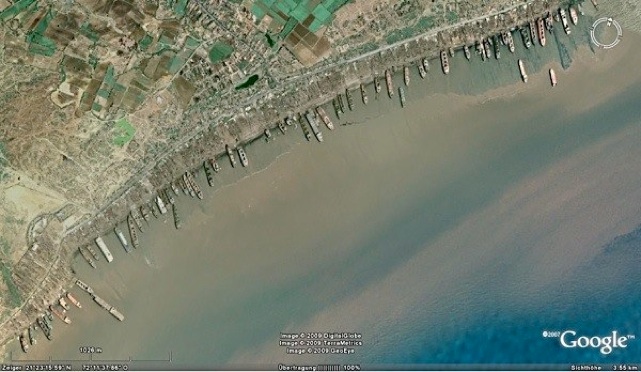
  • Crafts – among the unusual events at CARIFESTA will be live demonstrations of ceramics, wood carving, painting and drawing.
  • Dance – this part of the programme is all-embracing and covers courtly Javanese dancing, intricate ballet, earthy folk plays, dramatic modern choreography, classical Indian movements, spontaneous improvisations and pop.
  • Heritage Exhibitions – host countries such as Guyana and Suriname that boast diverse heritage showcase cultural exhibits and anthropological studies of the indigenous people.
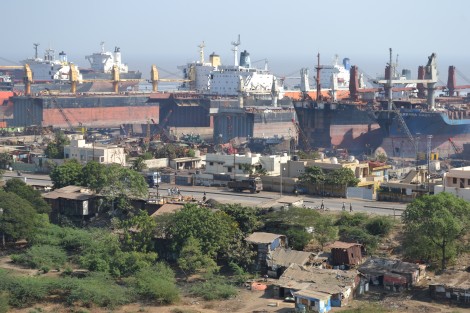
  • Family Life – CARIFESTA usually includes “Kid Zones” and family workshops to educate and entertain families.

Source: Wikipedia Online Encyclopedia – Retrieved June 26, 2017 from: https://en.wikipedia.org/wiki/Caribbean_Festival_of_Arts

———–

Appendix B – Report Snippets: Multidisciplinary Arts: Approaches to Funding

A. INTRODUCTION

This report summarizes the findings of the International Federation of Arts Councils and Culture Agencies’ (IFACCA) 38th D’Art question on approaches to funding multidisciplinary arts, which was developed and conducted jointly by the Canada Council for the Arts (CC) and the Australia Council for the Arts(AC).1

The survey was distributed via IFACCA to approximately 75 international arts councils and related bodies in early March 2009. Twelve funding bodies responded fully to the survey, including 10 national funding bodies and two municipal funders for a response rate of 16%. Therefore this survey should only be considered as a sample or snapshot of approaches to funding multidisciplinary arts.

B. APPROACH AND METHODOLOGY

The consultants have based their analysis on the complete sample of responses to D’Art question 38. A total of 13 responses were received from public funders in 10 countries. …

The countries included in the analysis of this report therefore include: Canada, Australia, New Zealand, Singapore, England, Finland, Sweden, Cuba, Colombia. (A list of survey respondents is included in Annex 1).

C. ANALYSIS OF SURVEY RESPONSES

Summary

Overall, definitions of multidisciplinary arts are broad and inclusive, with an emphasis on the presence of more than one discipline, which may extend beyond the arts, in a single artistic process, product or a larger event. Some funders make a distinction between multidisciplinary arts activity that combines multiple disciplines in one activity, and interdisciplinary arts, typically describing an emergent practice, exploratory or integrative process.

Some funders are interested in developing sustainable communities, and encourage indigenous and community arts practices, such as Maori or Malay arts or circus arts.

Some funders internationally provide support to new media through separate programs, though most acknowledge that interdisciplinary artists may also use new media. In some countries, support for multidisciplinary arts extends as well to new critical practices, and to Aboriginal or other culturally diverse art forms.

Most funders responding to the survey indicated that they use peers to assess funding applications. Assessment criteria can be either specially tailored to multidisciplinary arts, or be more general, and may include artistic merit, viability, impact, artistic development and strategic considerations.

Among responders who reported on their resource allocations, resources earmarked for multidisciplinary arts range from 3% of total granting budgets to 11%.

Source: Posted by the  International Federation of Arts Councils and Culture Agencies in November 2009; retrieved June 26, 2017 from: http://media.ifacca.org/files/D’Art38Multidisciplinary.pdf

———–

Appendix C – Related Articles
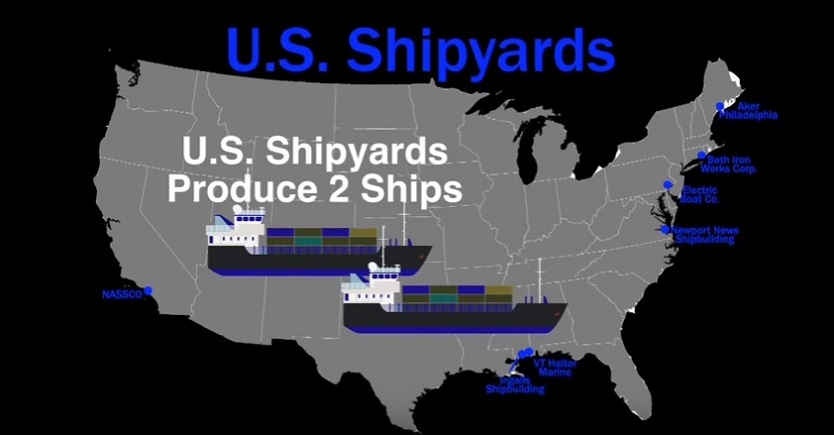
1. http://today.caricom.org/tag/carifesta-2017/

May 11, 2017 – Programme Manager for Culture and Community Development at the Caribbean Community (CARICOM) Secretariat, Dr. Hilary Brown, said that Barbados was “on a good track so far”, as it prepared to host the Region’s largest arts festival from August 17 to 27.
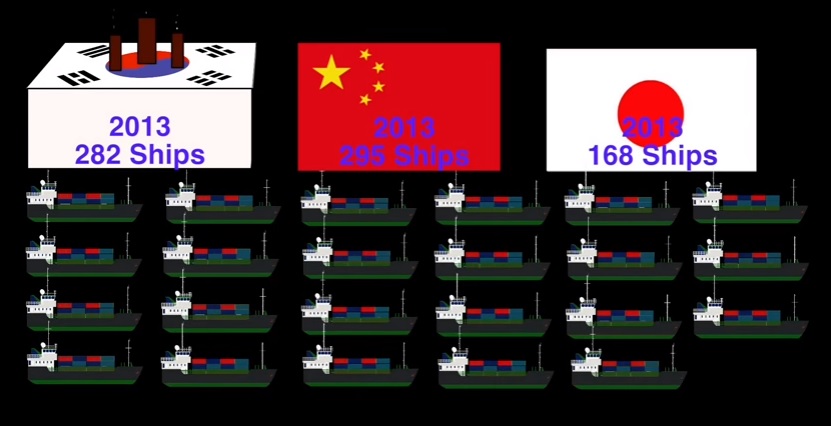
 

2. http://www.carifesta.net/

Bridgetown, Barbados, May 30, 2017 – Musicians from around the region will have the unique opportunity to display their talent for International buyers and promoters when the CARIFESTA XIII Music Showcase comes off at the Grand Market and Buyers Shopping Mall at the Lloyd Erskine Sandiford Centre (LESC) from August 19th to 26th 2017.

Another innovation for CARIFESTA XIII, this showcase offers the opportunity for Caribbean original works of music to be performed before a number of international music buyers who have been especially invited to the Festival to expose them to the vast array of talented musicians we have among us in this region.

3. https://www.facebook.com/carifestabarbados/photos/a.368801826824493.1073741828.367559130282096/438103509894324/?type=3&theater

June 13,2017 – 21 National Delegations are confirmed for Carifesta 2017; 17 Caricom, 1 Dutch Caribbean, 1 French Caribbean, 1 Central Latin American, 1 South American. We welcome Venezuela as the newest addition!

Anguilla
Antigua & Barbuda
Bahamas
Barbados
Belize
Bermuda
Cayman Islands
Curacao -Dutch Caribbean
Dominica
Grenada
Guadeloupe- French Caribbean
Guyana
Haiti
Jamaica
Montserrat
Nicaragua- Central American
St. Lucia
St. Vincent & the Grenadines
Trinidad & Tobago
Turks & Caicos
Venezuela

INDEPENDENT GROUPS from Antigua, St.Lucia, Trinidad & Tobago, USVI, and the Diaspora in Canada have also registered. See you from August 17-27! #CarifestaXIII #Barbados #summer2017 #thesummerofculture

See the promotional VIDEO here:

————-

VIDEO – CARIFESTA XIII Barbados Presentation & Welcome – https://youtu.be/xhiYLdsdM7g

Published on June 27, 2017 – CARIFESTA XIII Barbados Presentation and welcome from Caribbean Soca Queen Alison Hinds.

Share this post:
, , ,
[Top]

State of the Union – Spanish Caribbean

Go Lean Commentary 

CU Blog - State of the Caribbean Union - Spanish Caribbean - Photo 3

There was a time when all of the Spanish Caribbean – Cuba, Dominican Republic (DR), and Puerto Rico – was ruled under the same flag; that goes way back to the year 1865. There has been no Spanish Caribbean territorial unity ever since.

Too sad! They badly need to confederate, collaborate and convene to tackle so many societal challenges: economics, security and governance.

These 3 member-states constitute 59 percent of the Caribbean’s total population of 42+ million people, according to 2010 census numbers (Cuba – 11.24 million, DR – 9.52 million, PR – 3.99 million). They share the same Spanish language, the same colonial heritage, the same legacy of African Slavery, the same color flags (Red, White and Blue) and the same American tutelage; (some say tutelage while some say abandonment) see here:

  • Cuba – This country was ceded from the Spanish Empire in the 1898 Spanish-American War and allowed to pursue their Independence dreams. Their autonomous rule history was dysfunctional; punctuated with a Communist Revolution in 1959 led by Fidel Castro. See more here: America’s War on the Caribbean. After 55 years of economic and political alienation from the US, the Barack Obama administration worked to normalize relations with Cuba. But there is a new American federal governmental administration; they claim to adhere to a different foreign policy than Obama; but so far, the policies that have been introduced or modified have only tweaked trade rules a little – see Appendix A.
    CU Blog - State of the Caribbean Union - Spanish Caribbean - Photo 2
  • DR – This country benefited from the same movement that granted independence to Haiti; the Haitian Revolutionary forces overran the entire island of Hispaniola and self-extracted from the European powers of France and Spain. Later (1844) the DR sought independence from Haiti and had to contend with many other threats from foreign aggressors. A treaty was drafted and presented to the US Senate to annex the DR as a US Territory with the prospect and pathway to eventually become a US State; it was defeated in 1870 and never ratified. See more here: American Annexation of Santo Domingo. The country has had one troublesome political history since – 3 Presidential assassinations.
    CU Blog - State of the Caribbean Union - Spanish Caribbean - Photo 1
  • Puerto Rico – This island territory was ceded from the Spanish Empire to the US as a result of the same 1898 Spanish-American War. It never obtained independence, but instead experienced one dependent status after another until today. There have been many attempts to assuage the colonial status, in fact a fifth referendum was held just recently on June 11, 2017. 97% percent of those participating voted for statehood, though there was only 23% voter turnout[10]. See more here: Statehood movement in Puerto Rico.
    CU Blog - Puerto Rico Bondholders Coalition Launches Ad Campaign - Photo 1

The US is the richest and most powerful Single Market country that has ever reigned in earth’s history, but this fact has not borne fruit for these Spanish Caribbean neighbors.  They have never shared this disposition.

One thing more these former Spanish territories have shared: Failed-State status.

This has been a familiar theme for the movement behind the book Go Lean…Caribbean. We have consistently conveyed how the economic, security and governing eco-systems of these 3 countries are dysfunctional and defective – along with the other 27 Caribbean member-states. The solution for these countries is not a closer annexation with the United States – America is not the panacea of Caribbean ills – but rather the solutions lie in the adoption of a regional brotherhood among these geographic neighbors – the 3 Spanish Caribbean member-states integrated with the other 27 in the region.

This is the quest of the Go Lean movement!

The book Go Lean…Caribbean – available to download for free – serves as a roadmap for the introduction and implementation of the technocratic Caribbean Union Trade Federation (CU), for the elevation of Caribbean society – for all member-states. This CU/Go Lean roadmap has these 3 prime directives:

  • Optimization of the economic engines in order to grow the regional economy to $800 Billion and create 2.2 million new jobs.
  • Establishment of a security apparatus to ensure public safety and protect the resultant economic engines.
  • Improve Caribbean governance to support these engines, including a separation-of-powers between the member-states and CU federal agencies.

The book stresses that reforming and transforming the Caribbean societal engines must be a regional pursuit. This was an early motivation for the roadmap, as pronounced in the opening Declaration of Interdependence (Pages 12 – 13):

xi. Whereas all men are entitled to the benefits of good governance in a free society, “new guards” must be enacted to dissuade the emergence of incompetence, corruption, nepotism and cronyism at the peril of the people’s best interest. The Federation must guarantee the executions of a social contract between government and the governed.

xvi. Whereas security of our homeland is inextricably linked to prosperity of the homeland, the economic and security interest of the region needs to be aligned under the same governance. Since economic crimes … can imperil the functioning of the wheels of commerce for all the citizenry, the accedence of this Federation must equip the security apparatus with the tools and techniques for predictive and proactive interdictions.

xxiv. Whereas a free market economy can be induced and spurred for continuous progress, the Federation must install the controls to better manage aspects of the economy: jobs, inflation, savings rate, investments and other economic principles. Thereby attracting direct foreign investment because of the stability and vibrancy of our economy.

The Go Lean book provides 370-pages of turn-by-turn instructions on “how” to adopt new community ethos, plus the strategies, tactics, implementations and advocacies to execute so as to reboot, reform and transform the societal engines of Caribbean society.

This commentary is 2 of 5 in a non-sequential series on the State of the Caribbean Union. This series depicts the dysfunctional and defective state of affairs (economics, security and governance) throughout the entire region; there are some common traits. These have been assessed by the Go Lean movement. The full entries of all the blog-commentaries in this series are as follows:

  1. State of the Caribbean Union – Lacking Hope and Change
  2. State of the Caribbean Union – Dysfunctional Spanish Caribbean
  3. State of the Caribbean Union – Deficient  Westminster System
  4. State of the Caribbean Union – Unstable Volcano States
  5. State of the Caribbean Union – Self-Interest of Americana

The State of the Caribbean Union prominently includes these Spanish-speaking islands. These islands need all the remediation and mitigation they can get. Notice the dire state of affairs as portrayed in the Appendices below.

These references align with previous Go Lean commentaries related to …

Cuba – (see Appendix A):

https://goleancaribbean.com/blog/?p=10201 Farewell to Obama and to ‘Wet Foot/Dry Foot’
https://goleancaribbean.com/blog/?p=9813 Fidel Castro Is Dead; Now What for Cuba?
https://goleancaribbean.com/blog/?p=3662 Migrant flow [from Cuba] into US from Caribbean spikes
https://goleancaribbean.com/blog/?p=3455 Restoration of Diplomatic Relations with Cuba – Need for Re-boot Now
https://goleancaribbean.com/blog/?p=3354 CARICOM Chair calls for an end to US embargo on Cuba
https://goleancaribbean.com/blog/?p=2547 Miami’s Success versus Caribbean Failure
https://goleancaribbean.com/blog/?p=2330 ‘Raul Castro reforms not enough’, Cuba’s bishops say

Dominican Republic – (see Appendix B):

https://goleancaribbean.com/blog/?p=11033 US Warnings on Low-cost Dominican Surgeries
https://goleancaribbean.com/blog/?p=10820 Miami: Dominican’s ‘Home Away from Home’
https://goleancaribbean.com/blog/?p=2818 DR President Medina on the economy: ‘God will provide’

Puerto Rico – (see Appendix C):

https://goleancaribbean.com/blog/?p=12126 Commerce of the Seas – Stupidity of the Jones Act
https://goleancaribbean.com/blog/?p=11963 Oscar López Rivera: The ‘Nelson Mandela’ of the Caribbean? Not!
https://goleancaribbean.com/blog/?p=11647 Righting a Wrong: Puerto Rico’s Bankruptcy
https://goleancaribbean.com/blog/?p=6693 Ten Puerto Rico Police Accused of Criminal Network
https://goleancaribbean.com/blog/?p=4551 US Territories – Between a ‘rock and a hard place’
https://goleancaribbean.com/blog/?p=599 Ailing Puerto Rico open to radical economic fixes

The Caribbean Union needs the Spanish Caribbean; the Spanish Caribbean needs the Caribbean Union.

We can reboot the Spanish Caribbean; we can reboot the economic, security and governing engines. The end results:

1.   Spanish Caribbean unity;

2.   Total Caribbean unity;

3.   A better homeland to live, work and play. 🙂

Download the free e-Book of Go Lean … Caribbean – now!

Sign the petition to lean-in for this roadmap for the Caribbean Union Trade Federation.

————–

Appendix A – News Article: In Miami, Trump toughens Obama’s Cuba policy ‘like I promised’

Trump, spurring a standing ovation, billed his appearance as a campaign promise kept to Cuban-Americans to take a harder stance on Cuba. He told the crowd he was canceling Obama’s Cuba policies, though in actuality he’s not. Rather, he’s taking a different approach to pressure Cuba to open its economy and eventually its political system.

CU Blog - State of the Caribbean Union - Spanish Caribbean - Photo 4Trump signed a national security presidential memo — not a presidential policy directive, as originally envisioned by the White House — ordering federal agencies to start writing regulations within 30 days to promulgate his new policy. The State Department will have to compile a list of entities tied to Cuba’s sprawling military conglomerateGrupo de Administración Empresarial, S.A., or GAESA. Americans will be prohibited from transacting with those corporations, except for enumerated exemptions to, among other things, allow for commercial air and cruise travel and payments to private businesses, such as Airbnb rentals.

Travel to Cuba will also become more difficult. Cubans will still be able to visit family and send money. But Americans will have to travel as part of formal groups with set itineraries if they want to qualify under categories that allow educational and people-to-people cultural exchange trips. Another category, for support for the Cuban people, is more stringent but will still allow for individual travel. U.S. travelers will be prohibited from spending money at hotels and restaurants tied to the Cuban military. That includes many brand-name hotel chains. <<< Insert Photo 4 >>>

See the full article from the Miami Herald; posted June 16, 2017; retrieved June 20, 2017 from: http://www.miamiherald.com/news/politics-government/article156586134.html

————-

VIDEO – US Senator Marco Rubio: Cuba will be free ‘in 6 months or 6 years’  – http://www.miamiherald.com/news/politics-government/article156571009.html

————–
Appendix B – “Dominican Watchdog” – Relating the DR’s Dire Status

  • June 12 – MonkeyBiz.dr, Audit Detects Corruption in 68 Dominican City HallsMONKEY BUSINESS AS USUAL IN THE DOM REP – CORRUPTION AND FRAUD FROM A-Z. Forty percent of the monetary resources that should have been destined to infrastructure works, were NOT. Years of real estate fraud prompts purge of officials, foreign investors and buyers of holiday homes have lost hundreds of millions of dollars…….
  • June 12 – STAY HOME, Dominican Republic Chikungunya Cases Skyrocket to 53000 – TRAVEL WARNING – Taiwan recently raised its ALERT about Dom Rep to YELLOW !! Doctors in the DR is fighting 24/7, but he number of chikungunya cases in the Dominican Republic continues to rise at an alarming rate as the Ministry of Health’s Department of Epidemiology reports 52,976 cases, time to stay home, there is NO PROVEN CURE against this virus…..
  • June 12 – Another Agent Killed as Chilling Attacks Grip Dominican RepublicDominican Republic Becoming Most Dangerous Country in the Caribbean – Metropolitan Transit Authority (AMET) agent Carmen Torres Báez, 41, on Monday became the latest victim in a chilling wave of attacks on law enforcement officers gripping the entire Dominican Republic. Torres, mother of four, was gunned down on the Maximo Gomez bridge to Villa Mella around 7:15am as she was walking to work…..

Source: Retrieved June 20, 2017 from: http://www.dominicanwatchdog.org/dominican_news/p-1

————–

Appendix C AUDIO-PODCAST – INTERSECTION: STATEHOOD FOR PUERTO RICO? – https://www.wmfe.org/intersection-statehood-for-puerto-rico/74667

Published June 16, 2017 – Puerto Rico voted for statehood in a referendum last Sunday. At first glance the results seem pretty clear:  97% of voters said yes to statehood. But less than 25% of Puerto Ricans actually cast a vote in the referendum.

Meanwhile, there’s support from lawmakers here in Central Florida for statehood, where there’s a growing Puerto Rican population, but what kind of impetus is there in Washington to add another star to the US flag?

Florida International University’s Cuban Research Institute director Jorge Duany joins the program, along with orlandolatino.org founder Maria Padilla, tecnetico.com founder Wilton Vargas & Ronald Morales who moved to Florida from Puerto Rico in 2015.

Source: Posted June 12, 2017; retrieved June 20, 2017 from Central Florida’s WMFE Public Radio: https://www.wmfe.org/intersection-statehood-for-puerto-rico/74667

Share this post:
, , , ,
[Top]

Commerce of the Seas – Extraction Realities

Go Lean Commentary

According to the book Go Lean…Caribbean, ‘Luck is the destination where opportunity meets preparation’ – Page 252.

Well, opportunity is awaiting the Caribbean … for mineral extraction and oil exploration.

CU Blog - Commerce of the Seas - Extraction Realities - Photo 1The book also alerts the Caribbean region that Climate Change is raging forward, with a lot of repercussions in its wake. Global warming is resulting in higher sea levels, due to the melting of the polar ice craps/icebergs. A repercussion is:

Beach erosion.

Beaches are gravely important for the American East Coast. (They are important to Caribbean communities as well). So many communities depend on beach vacation and traffic during the spring/summer months (think Spring Break and the commercial summer season of Memorial Day to Labor Day). So when oil spills or predictable storms endanger beach sand, it becomes an urgent imperative for communities to assuage the crisis, even replace the sand; consider these recent News Articles/Summaries here:

Title: Beach Erosion on the US East Coast

Extraction - Photo 2

Extraction - Photo 5

Extraction - Photo 4

1.  http://www.sun-sentinel.com/news/florida/sfl-us-has-ok-to-study-bringing-bahamas-sand-to-florida-beaches-20170102-story.html

    January 2, 2017: A possible solution for replacing sand on South Florida beaches is buying it from the Bahamas. The US federal government has now loosened rules to make this possible.

2.  https://www.scientificamerican.com/article/what-causes-beach-erosion/

    The Art-and-Science of beach management is now being challenged – “Unfortunately for beach lovers and owners of high-priced beach-front homes, coastal erosion in any form is usually a one-way trip. Man-made techniques such as beach nourishment—whereby sand is dredged from off-shore sources and deposited along otherwise vanishing beaches—may slow the process, but nothing short of global cooling or some other major geomorphic change will stop it altogether.”

3.  http://abcnews.go.com/US/deepdive/disappearing-beaches-sea-level-rise-39427567

    DISAPPEARING BEACHES – A Line in the Sand – A tragic story of a family that buys a beach house in 1982, but today, they have to abandon it because of the eroding sands, and bedrock under the house.

4.  AUDIO: http://www.npr.org/2014/09/18/348985568/a-coastal-paradise-confronts-its-watery-future

    September 18, 2014 – There is ‘Trouble in Paradise’. Beachfront communities are finding the waters rising more and more due to global warming.


——–

Title: Oil Exploration and Drilling

http://www.npr.org/2015/03/12/392383373/plans-to-explore-for-oil-offshore-worry-east-coast-residents
March 12, 2015

    March 12, 2015 – As the [US federal government] administration opens the door to offshore drilling, the oil industry is promising more jobs and less reliance on foreign oil. … Coastal towns and cities in several states are formally opposing offshore drilling and oil exploration.

——–

Everyone has a price! So if the price goes up high enough, there may be interested parties among Caribbean member-states to take the money for allowing mineral/oil extraction in their offshore vicinity. There is a need to be alarmed at such proposals, as dredging sand or drilling for oil may endanger protected reefs or other underwater marine features.

With greater demand – imagine post hurricanes – the Laws of Supply-and-Demand will mandate that the prices for extracted minerals will only increase.

It will get more and more tempting!

The movement behind the book Go Lean…Caribbean wants to add other types of economic activities to the Caribbean landscape; we urgently want to use the sea as an industrial zone. This is because the Caribbean region is badly in need of jobs. The book urges communities to empower the economic engines of the Caribbean Sea, as in mineral & oil extraction.

The region’s economic driver is tourism. Tourism and “mineral extraction or oil exploration” are incompatible activities. Thus there is the need for the cautions in this commentary. The challenge is to embrace the commerce of mineral extraction for the positives, while avoiding the negatives.

Challenge accepted!

The book Go Lean…Caribbean serves as a roadmap for the introduction and implementation of the Caribbean Union Trade Federation (CU). This would be the governmental entity for a regional Single Market that covers the land territories of the 30 member-states, and their aligning seas; (including the 1,063,000 square miles of the Caribbean Sea). The Go Lean/CU roadmap features this prime directive, as defined by these 3 statements:

  • Optimization of the economic engines to grow the regional economy to $800 Billion & create 2.2 million new jobs.
  • Establishment of a security apparatus to protect public safety and ensure the economic engines of the region, including the seas.
  • Improvement of Caribbean governance to support these engines in local governments and in the Exclusive Economic Zone, including a separation-of-powers between the member-states and CU federal agencies.

This commentary posits that there are opportunities for the Caribbean to better explore the “Commerce of the Seas”, to deploy International Maritime Organisation-compliant offshore mineral/oil extraction and dredging operations. There are so many lessons that we can learn from the Economic History of other communities and their exploitation of extraction on the high seas. This commentary previously identified a series of 4 commentaries considering the Lessons in Economic History related to “Commerce of the Seas”; this entry is a 5th entry. The full series is as follows:

  1. Commerce of the Seas – Stupidity of the Jones Act
  2. Commerce of the Seas – Book Review: ‘Sea Power’
  3. Commerce of the Seas – Shipbuilding Model of Ingalls
  4. Commerce of the Seas – Lessons from Alang (India)
  5. Commerce of the Seas – Extraction Reality

The reference to “Commerce” refers to the economic interest of the 30 member-states in the Caribbean region. There is the need for more commercial opportunities that would impact the community with job and entrepreneurial empowerments.

Mineral extraction and oil exploration could be providential! Consider these foregoing source references.

In a previous blog, Guyana prioritized oil exploration and drilling as an economic activity in their Exclusive Economic Zone…

… the oil industry/eco-system could be a dizzying ride, up and down, complete with exhilaration and anxiety, especially for communities with mono-industrial economic engines. Trinidad is once such community. Now Guyana is entering that fray.

There are other countries seeking to join these ranks: Haiti, Jamaica, and the Bahamas.

A key consideration in this commentary is the concept of Exclusive Economic Zones (EEZ). Every Caribbean nation with no immediate neighbor within the 200 miles has this exclusive territory to exploit; the previously identified blog-commentary from May 25, 2015 detailed the encyclopedic details, shown here again in Appendix A.

The EEZ is factored in for mineral extraction and oil exploration. This is both a simple and a complicated issue. There is a lot of heavy-lifting involved to balance the needs of commerce and environmental protection.

This is the guidance from the book Go Lean … Caribbean. The CU federation is designed to employ best practices for economics, security and governance. The CU/Go Lean roadmap posits that “Extractions” (Oil and minerals like Rare Earths) must be a significant tactic for the Caribbean region to elevate its society.

The implementation of the CU allows for the designation of an enlarged Exclusive Economic Zones – requiring special approval from an United Nations Tribunal – consolidating existing EEZ’s and the technocratic cooperative-administration of Extractions within that space. This vision was embedded in the Go Lean’s book’s opening Declaration of Interdependence. See the need for regional coordination and integration pronounced these sample stanzas (Page 11 – 13):

i. Whereas the earth’s climate has undeniably changed resulting in more severe tropical weather storms, it is necessary to prepare to insure the safety and security of life, property and systems of commerce in our geographical region. As nature recognizes no borders in the target of its destruction, we also must set aside border considerations in the preparation and response to these weather challenges.

v. Whereas the natural formation of our landmass and coastlines entail a large portion of waterscapes, the reality of management of our interior calls for extended oversight of the waterways between the islands. The internationally accepted 12-mile limits for national borders must be extended by International Tribunals to encompass the areas in between islands. The individual states must maintain their 12-mile borders while the sovereignty of this expanded area, the Exclusive Economic Zone, must be vested in the accedence of this Federation.

xi. Whereas all men are entitled to the benefits of good governance in a free society, “new guards” must be enacted to dissuade the emergence of incompetence, corruption, nepotism and cronyism at the peril of the people’s best interest. The Federation must guarantee the executions of a social contract between government and the governed.

xxvi. Whereas the Caribbean region must have new jobs to empower the engines of the economy and create the income sources for prosperity, and encourage the next generation to forge their dreams right at home, the Federation must therefore foster the development of new industries, like that of ship-building…. In addition, the Federation must invigorate the enterprises related to existing industries like … fisheries … – impacting the region with more jobs.

The Go Lean book provides a 370-page guide on “how” to optimize the eco-system for mineral extraction and oil exploration in an integrated Caribbean region, for the geographic area of the Caribbean Sea. This is the “Commerce of the Seas”.

The Go Lean/CU roadmap asserts that as the confederation for the region’s 30 member-states, the CU, will be the administrator of this EEZ. Step One / Day One of the roadmap calls for awarding contracts for oil exploration and other extractions in the EEZ – this is one of  the methods for financing the CU; this is how to Pay For Change.

The Go Lean roadmap details a series of community ethos, strategies, tactics, implementations and advocacies to foster development, administration and protections in the Caribbean EEZ. Consider this sample except (headlines) from the book’s Page 195:

10 Ways to Impact Extractions

Case Study: The Bottom Line on the Deepwater Horizon Oil Spill
The disaster (also referred to as the BP Oil spill or the Macondo blowout) was an oil spill in the Gulf of Mexico on the BP operated Macondo Prospect, considered the largest accidental marine oil spill in the history of the petroleum industry. Following the explosion and sinking of the Deepwater Horizon oil rig, which claimed 11 lives, a sea-floor oil gusher flowed for 87 days, until it was finally capped on 15 July 2010. The total discharge is estimated at 4.9 million barrels (210 million gallons), resulting in a massive response ensued to protect beaches, wetlands and estuaries from the spreading oil utilizing skimmer ships, floating booms, controlled burns and 1.84 million gallons of Corexit (a chemical oil dispersant). After several failed efforts to contain the flow, the well was declared sealed on 19 September 2010. Due to the months-long spill, along with adverse effects from the response and cleanup activities, extensive damage to marine and wildlife habitats, fishing and tourism industries, and human health problems have continued through this day, 2013. Three years after the spill, tar balls could still be found on the Mississippi coast. …

[See Trailer of the resultant 2016 Movie-Storytelling in the Appendix B VIDEO below.]

1

Lean-in for Caribbean Integration
The CU treaty unifies the Caribbean region into one single market of 42 million people across 30 member-states, thereby empowering the economic engines in and on behalf of the region, including many public works projects and the emergence of many new industries. The new regional jurisdiction allows for mineral extraction (mines), oil/natural gas exploration in the Exclusive Economic Zone and some federal oversight for domestic mining/drilling/extraction operations, especially where systemic threats or cross-border administration are concerned. One CU mandate is to protect tourism. This is just one of the negative side-effects to be on guard for, see Appendix ZK (Page 334) for other concerns.

2

Oil – Mitigation Plan
The concept of oil exploration is very strategic for the CU, as there are member-states that are oil producers. With energy prices so high, this is a lucrative endeavor. But there is risk, tied to the reward equation; the CU cannot endure a Deepwater Horizon-style disaster. Risk management and disaster mitigation plan must therefore be embedded into every drilling permit. The CU will oversee this governance and provide transparent oversight, accountability & reporting.

3

“Rare Earth” Rush – Minerals Priced higher than Gold (Year 2010: $1,000 a pound; $2,200 per kilogram)
There is a “rush”/quest to harvest rare earth elements. These include lanthanide elements (fifteen metallic chemical elements with atomic numbers 57 through 71, from lanthanum through lutetium) for metals that are ferromagnetic, this means their magnetism only appear at low temperatures. Rare earth magnets are made from these compounds and are ideal in many high-tech products. The CU will foster the regional exploration and extraction of these pricey materials.

4

Pipeline Strategy/Tactical Alignment

5

Emergency Response / Trauma Center
The CU accedence grants authority for federal jurisdiction on oil exploration/drilling projects. This is due to the environmental concerns, systemic threats and the strategic implications for energy security. So CU Emergency (Risk, Disaster, and Medical Trauma) Managers will audit and test shutdown, mitigation and emergency procedures annually.

6

Exclusive Economic Zone Oversight / Research and Exploration

7

State Regulated Mining – Peer Review

8

Precious Metals – Exclusive to Caribbean Dollar

9

Treasure Hunting in EEZ – CU must grant Excavation “Permits”

10

Ferries Schedule for Transport to Offshore Rigs

The CU will foster “Extractions” as an industrial alternative to tourism. We have the natural resources (in the waterscapes), the skills and the passionate work-force. We only need the Commerce of the Seas. The Caribbean people are now ready for this industrial empowerment as mineral/oil extraction is both good … and bad!

The Go Lean roadmap asserts that economic needs are undeniable and tempting. While the region sorely needs the economic empowerments, this roadmap also details the mitigations and security measures to guarantee environmental protection.

There is much at stake when communities get the Art-and-Science of mineral extraction wrong!

This commentary ends this deep, long review of the Commerce of the Seas discussion. We have considered many different industries: Tourism, Cruise Lines, Shipping-Trade, Shipbuilding, Ship-breaking and now, Extractions. That is a lot of details to get right! The optimizations of these areas are the hallmarks of a technocracy. Yes, we can … get this right!

Now is the time for all of the Caribbean, the people, business, institutions and governments, to lean-in for the technocratic deliveries of the Go Lean/CU roadmap. 🙂

Download the free e-book of Go Lean … Caribbean – now!

Sign the petition to lean-in for this roadmap for the Caribbean Union Trade Federation.

———–

Appendix A – Exclusive Economic Zone

An Exclusive Economic Zone (EEZ) is a sea zone prescribed by the United Nations Convention on the Law of the Sea over which a state has special rights regarding the exploration and use of marine resources, including energy production from water and wind.[1] It stretches from the baseline out to 200 nautical miles (nmi) from its coast. In colloquial usage, the term may include the continental shelf. The term does not include either the territorial sea or the continental shelf beyond the 200 nmi limit. The difference between the territorial sea and the exclusive economic zone is that the first confers full sovereignty over the waters, whereas the second is merely a “sovereign right” which refers to the coastal state’s rights below the surface of the sea. The surface waters, as can be seen in the map, are international waters.[2]

Generally, a state’s EEZ extends to a distance of 200 nautical miles (370 km) out from its coastal baseline. The exception to this rule occurs when EEZs would overlap; that is, state coastal baselines are less than 400 nautical miles (740 km) apart. When an overlap occurs, it is up to the states to delineate the actual maritime boundary.[3] Generally, any point within an overlapping area defaults to the nearest state.[4]

A state’s Exclusive Economic Zone starts at the landward edge of its territorial sea and extends outward to a distance of 200 nautical miles (370.4 km) from the baseline. The Exclusive Economic Zone stretches much further into sea than the territorial waters, which end at 12 nmi (22 km) from the coastal baseline (if following the rules set out in the UN Convention on the Law of the Sea).[5] Thus, the EEZ includes the contiguous zone. States also have rights to the seabed of what is called the continental shelf up to 350 nautical miles (648 km) from the coastal baseline, beyond the EEZ, but such areas are not part of their EEZ. The legal definition of the continental shelf does not directly correspond to the geological meaning of the term, as it also includes the continental rise and slope, and the entire seabed within the EEZ.

The following is a list of the largest Exclusive Economic Zones; by country with a few noticeable deviations:

Country EEZ Kilometers2 Additional Details
United States 11,351,000 The American EEZ – the world’s largest – includes the Caribbean overseas territories of Puerto Rico and the US Virgin Islands.
France 11,035,000 The French EEZ includes the Caribbean overseas territories of Guadeloupe, Martinique, Saint Martin, Saint Barthélemy and French Guiana.
Australia 8,505,348 Australia has the third largest exclusive economic zone, behind the United States and France, with the total area actually exceeding that of its land territory. Per the UN convention, Australia’s EEZ generally extends 200 nautical miles (370 km) from the coastline of Australia and its external territories, except where a maritime delimitation agreement exists with another state.[15]The United Nations Commission on the Limits of the Continental Shelf confirmed, in April 2008, Australia’s rights over an additional 2.5 million square kilometres of seabed beyond the limits of Australia’s EEZ.[16][17] Australia also claimed, in its submission to the UN Commission on the Limits of the Continental Shelf, additional Continental Shelf past its EEZ from the Australian Antarctic Territory,[18] but these claims were deferred on Australia’s request. However, Australia’s EEZ from its Antarctic Territory is approximately 2 million square kilometres.[17]
Russia 7,566,673
United Kingdom 6,805,586 The UK includes the Caribbean territories of Anguilla, Bermuda, Cayman Islands, Montserrat, Turks & Caicos and the British Virgin Islands.
Indonesia 6,159,032
Canada 5,599,077 Canada is unusual in that its EEZ, covering 2,755,564 km2, is slightly smaller than its territorial waters.[20] The latter generally extend only 12 nautical miles from the shore, but also include inland marine waters such as Hudson Bay (about 300 nautical miles (560 km; 350 mi) across), the Gulf of Saint Lawrence and the internal waters of the Arctic archipelago.
Japan 4,479,388 In addition to Japan’s recognized EEZ, it also has a joint regime with Republic of (South) Korea and has disputes over other territories it claims but are in dispute with all its Asian neighbors (Russia, Republic of Korea and China).
New Zealand 4,083,744
Chile 3,681,989
Brazil 3,660,955 In 2004, the country submitted its claims to the United Nations Commission on the Limits of the Continental Shelf (CLCS) to extend its maritime continental margin.[19]
Mexico 3,269,386 Mexico’s EEZ comprises half of the Gulf of Mexico, with the other half claimed by the US.[32]
Micronesia 2,996,419 The Federated States of Micronesia comprise around 607 islands (a combined land area of approximately 702 km2 or 271 sq mi) that cover a longitudinal distance of almost 2,700 km (1,678 mi) just north of the equator. They lie northeast of New Guinea, south of Guam and the Marianas, west of Nauru and the Marshall Islands, east of Palau and the Philippines, about 2,900 km (1,802 mi) north of eastern Australia and some 4,000 km (2,485 mi) southwest of the main islands of Hawaii. While the FSM’s total land area is quite small, its EEZ occupies more than 2,900,000 km2 (1,000,000 sq mi) of the Pacific Ocean.
Denmark 2,551,238 The Kingdom of Denmark includes the autonomous province of Greenland and the self-governing province of the Faroe Islands. The EEZs of the latter two do not form part of the EEZ of the European Union. See Photo 4.
Papua New Guinea 2,402,288
China 2,287,969
Marshall Islands 1,990,530 The Republic of the Marshall Islands is an island country located near the equator in the Pacific Ocean, slightly west of the International Date Line. Geographically, the country is part of the larger island group of Micronesia. The country’s population of 68,480 people is spread out over 24 coral atolls, comprising 1,156 individual islands and islets. The land mass amounts to 181 km2 (70 sq mi) but the EEZ is 1,990,000 km2, one of the world’s largest.
Portugal 1,727,408 Portugal has the 10th largest EEZ in the world. Presently, it is divided in three non-contiguous sub-zones:

Portugal submitted a claim to extend its jurisdiction over additional 2.15 million square kilometers of the neighboring continental shelf in May 2009,[44] resulting in an area with a total of more than 3,877,408 km2. The submission, as well as a detailed map, can be found in the Task Group for the extension of the Continental Shelf website.

Spain disputes the EEZ’s southern border, maintaining that it should be drawn halfway between Madeira and the Canary Islands. But Portugal exercises sovereignty over the SavageIslands, a small archipelago north of the Canaries, claiming an EEZ border further south. Spain objects, arguing that the SavageIslands do not have a separate continental shelf,[45] citing article 121 of the United Nations Convention on the Law of the Sea.[46] <<< See Photo 6 >>>

Philippines 1,590,780 The Philippines’ EEZ covers 2,265,684 (135,783) km2[41]. See Photo 5.
Solomon Islands 1,589,477
South Africa 1,535,538
Fiji 1,282,978 Fiji is an archipelago of more than 332 islands, of which 110 are permanently inhabited, and more than 500 islets, amounting to a total land area of about 18,300 square kilometres (7,100 sq mi).
Argentina 1,159,063
Spain 1,039,233
Bahamas 654,715
Cuba 350,751
Jamaica 258,137
Dominican Republic 255,898
Barbados 186,898
Netherlands 154,011 The Kingdom of the Netherlands include the Antilles islands of Aruba. Bonaire, Curacao, Saba, Sint Maarten and Sint Eustatius
Guyana 137,765
Suriname 127,772
Haiti 126,760
Antigua and Barbuda 110,089
Trinidad and Tobago 74,199
St Vincent and the Grenadines 36,302
Belize 35,351
Dominica 28,985
Grenada 27,426
Saint Lucia 15,617
Saint Kitts and Nevis 9,974

(Source: Retrieved May 25, 2017 from: http://en.wikipedia.org/wiki/Exclusive_economic_zone)

———–

Appendix B VIDEO – Deepwater Horizon (2016) Official Movie Trailer – ‘Heroes’ – https://youtu.be/S-UPJyEHmM0

Published on May 26, 2016 – Deepwater Horizon – Now Playing.
#DeepwaterHorizonMovie

CU Blog - Commerce of the Seas - Extraction Realities - Photo 6

Share this post:
, ,
[Top]

Commerce of the Seas – Lessons from Alang (India)

Go Lean Commentary

Despite our beautiful vistas in the Caribbean – with our sun, sand and sea – not everywhere is paradisiac. Some locations are just plain ordinary, or even Less-Than. Tourism is the region’s Number 1 economic activity, but there are certain areas where tourists should not venture. This is true for agricultural areas and certain industrial zones.

The movement behind the book Go Lean…Caribbean wants to add another type of “not for tourists” industrial zone to the Caribbean landscape: Ship-breaking Yards.

Just that combination of words – “Ship” + “Breaking” – connotes some negative images. The lessons we learned from the Indian port city of Alang is that Ship-breaking is dirty; see the encyclopedic reference here:

Reference Title: Alang,  Indian State of Gujarat. 

CU Blog - Commerce of the Seas - Lessons from Alang - Photo 5Alang is a census town in Bhavnagar district in the Indian state of Gujarat. In the past three decades, its beaches have become a major worldwide centre for ship breaking. The longest ship ever built, Seawise Giant, was sailed to and beached here for demolition in December 2009. [1]

Marine salvage industry
The shipyards at Alang recycle approximately half of all ships salvaged around the world.[2] It is considered the world’s largest graveyard of ships.[3] The yards are located on the Gulf of Khambat, 50 km (31 mi) southeast of Bhavnagar. Large supertankerscar ferriescontainer ships, and a dwindling number of ocean liners are beached during high tide, and as the tide recedes, hundreds of manual laborers move onto the beach to dismantle each ship, salvaging what they can and reducing the rest to scrap.

The salvage yards at Alang have generated controversy about working conditions, workers’ living conditions, and the impact on the environment. One major problem is that despite many serious work-related injuries, the nearest full service hospital is 50 km (31 mi) away in Bhavnagar.

Alang - Photo 1

Alang - Photo 2

Alang - Photo 4

Future
Japan and the Gujarat government have joined hands to upgrade the existing Alang shipyard. The two parties have signed a Memorandum of Understanding, which focuses on technology transfer and financial assistance from Japan to assist in the upgrading of operations at Alang to meet international standards. This is a part of the Delhi Mumbai Industrial Corridor, a larger partnership between the Japanese and Gujarat government. Under this plan, Japan will address the environmental implications of ship breaking in Alang, and will develop a .marketing strategy. The project is to be carried out as a public-private partnership. The project’s aim is to make this shipyard the largest International Maritime Organisation-compliant ship recycling yard in the world.

Source: Retrieved June 8, 2017 from: https://en.wikipedia.org/wiki/Alang

The dirty nature of these industrial endeavors, as depicted in Alang, provides a negative lesson that we want to learn from to avoid all perilous consequences of doing this business in a “wrong” manner.

Another lesson we learn from Alang is that Ship-breaking work (jobs) is consistent and steady. There are many ships that have lived out their usefulness and now need to be dismantled for scrap; the more labor available, the more ships to break. This is such a positive lesson for us to learn right now, as the Caribbean region is badly in need of jobs. The economic engine involves salvaging the scrap metal (and other materials) for recycling.

The challenge is to embrace the commerce of Ship-breaking for the positives, while avoiding the negatives.

Challenge accepted! (The foregoing relates the welcoming support from Japan for clean ship-breaking).

The book Go Lean…Caribbean serves as a roadmap for the introduction and implementation of the Caribbean Union Trade Federation (CU). This would be the governmental entity for a regional Single Market that covers the land territories of the 30 member-states, and their aligning seas; (including the 1,063,000 square miles of the Caribbean Sea). The Go Lean/CU roadmap features this prime directive, as defined by these 3 statements:

  • Optimization of the economic engines to grow the regional economy to $800 Billion & create 2.2 million new jobs.
  • Establishment of a security apparatus to protect public safety and ensure the economic engines of the region, including the seas.
  • Improvement of Caribbean governance to support these engines in local governments and in Self-Governing Entities, including a separation-of-powers between the member-states and CU federal agencies.

This commentary posits that there are opportunities for the Caribbean to better explore the “Commerce of the Seas”, to deploy International Maritime Organisation-compliant shipyards. There are so many lessons that we can learn from the Economic History of other communities’ exploitation of the high seas. This commentary is 4 of 4 in a series considering the Lessons in Economic History related to “Commerce of the Seas”. The full series is as follows:

  1. Commerce of the Seas – Stupidity of the Jones Act
  2. Commerce of the Seas – Book Review: ‘Sea Power’
  3. Commerce of the Seas – Shipbuilding Model of Ingalls
  4. Commerce of the Seas – Lessons from Alang (India)

The reference to “Commerce” refers to the economic interest of the 30 member-states in the Caribbean region. There is the need for more commercial opportunities that would impact the community with job and entrepreneurial empowerments. Ship-breaking could be providential!

Ship-breaking can provide high tech, mid tech and low tech jobs; especially if the salvage operation is executed in a technocratic manner. The Art & Science of technocratic ship-breaking versus dirty-breaking (i.e. Alang) was previously detailed in a blog-commentary on August 14, 2014. See some highlights from that blog in the excerpt here:

… ship-breaking activities in Third World countries, like Bangladesh, pose harm to the environment, workers and remaining systems of commerce. But when executed correctly, as in Brownsville-Texas, ship-breaking can be all positive. There are benefits in applying the appropriate best practices in handling hazardous materials. The tons of toxic waste (asbestos) can be properly managed and disposed of, with the proper eco-system surrounding the industry. The CU will facilitate the eco-system, especially with the Self-Governing Entities (SGE) concept for shipyards. This is covered in the Go Lean book under the auspices of “turn-around” industries, a federally regulated/promoted activity.

So there is a way to perform ship-breaking – one expression of maritime commerce – in a lean, clean manner while guaranteeing safety for the workers and profit for the investors.

This is the win-win … of the Go Lean roadmap.

The Go Lean book/roadmap was published in November 2013 with a vision for a new industrialization for the region. The quest is for the region to cooperate, collaborate and convene so as to accomplish more as a unified Single Market than may be possible alone. Not one of the Caribbean member-states – all Third World – can do ship-breaking right. It would quickly denigrate to the Alang and Bangladesh models. But together, leveraging the interdependence – so much more can be accomplished. This was the vision of the opening Declaration of Interdependence in the book. Here, the need for regional coordination and integration was pronounced as the basis of reforming and transforming Caribbean society.

See a sample of relevant stanzas from the Declaration here (Page 11 – 13):

xi. Whereas all men are entitled to the benefits of good governance in a free society, “new guards” must be enacted to dissuade the emergence of incompetence, corruption, nepotism and cronyism at the peril of the people’s best interest. The Federation must guarantee the executions of a social contract between government and the governed.

xxvi. Whereas the Caribbean region must have new jobs to empower the engines of the economy and create the income sources for prosperity, and encourage the next generation to forge their dreams right at home, the Federation must therefore foster the development of new industries, like that of ship-building…. In addition, the Federation must invigorate the enterprises related to existing industries like … fisheries … – impacting the region with more jobs.

Reforming and transforming the Caribbean is the quest. The Go Lean book explains “how”, providing 370-pages of turn-by-turn instructions on “how” to adopt new community ethos for economic regionalism, and “how” to execute the right strategies, tactics, and implementations to reboot, reform and transform the maritime commerce to benefit Caribbean society.

The issue of fostering industrial developments in the Art-and-Science of the salvage industry has been a frequent subject for previous blog-commentaries; consider this list of sample entries:

https://goleancaribbean.com/blog/?p=10140 Lessons Learned: Detroit demolishes thousands of structures
https://goleancaribbean.com/blog/?p=6760 A Lesson in ‘Garbage’
https://goleancaribbean.com/blog/?p=2953 Funding Caribbean Entrepreneurs – The ‘Crowdfunding’ Way
https://goleancaribbean.com/blog/?p=2857 Where the Jobs Are – Entrepreneurism in Junk

All Caribbean member-states are islands or coastal territories – they can all be candidates for maritime salvaging (ship-breaking) operations – even all at the same time. While there is a large footprint of “cheap” ship-breakers in Asia, not as many proliferate in the Western Hemisphere. It is a perfect time to explore these opportunities.

This is not tourism! Ship-breaking activities are not paradisiac nor inviting so they should be limited to shipyards, not beaches.

Alang - Photo 3Imagine: towing an old ship from the Americas to the Caribbean, rather than across the Atlantic and Indian Oceans; see the experience of salvaging the “Love Boat” in the Appendix VIDEO below.

This is commerce!

There is a need to transform maritime commerce for the Caribbean region; we can get more economic activity from this sector; the Go Lean book projects 15,000 new direct jobs in the shipbuilding and/or ship-breaking activities. The possibility of these new jobs is hope-inspiring. At last we can arrest the societal abandonment where men and women leave the community looking for any kind of work.

This is Commerce of the Seas; we saw how previous generations of Caribbean people lived off the sea; we can again, with these creative expressions of maritime commerce.

This plan is conceivable, believable and achievable. We urge all Caribbean stakeholders – governments, business owners and workers – to lean-in to this roadmap for economic empowerment. We can make the Caribbean homeland and seas better places to live, work and play. 🙂

Download the free e-book of Go Lean … Caribbean – now!

Sign the petition to lean-in for this roadmap for the Caribbean Union Trade Federation.

————–

Appendix VIDEO – The End of The Love Boat – https://youtu.be/lauAeMtzMYM

Published on Nov 5, 2016English Captions Available!!!
MS Pacific Princess is a voyage send possessed by Princess Cruises and worked by Princess Cruises and P&O Cruises Australia. She was inherent 1999 by the Chantiers de l’Atlantique shipyard in Saint-Nazaire, France as MS R Three for Renaissance Cruises.

The vessel initially entered operation in 1999, with Renaissance Cruises. The ship was not claimed by the organization, ownership rather living with a gathering of French speculators, who rented the ship to the organization. In late 2001, the whole Renaissance armada was seized by lenders.

Pacific Princess in Yalta inlet.

In late 2002, Princess Cruises sanctioned the R Three, alongside sister transport R Four (now Ocean Princess). Both vessels entered operation before the end of 2002. The contract ended toward the end of 2004, at which time both vessels were acquired by Princess Cruises. Gabi Hollows renamed the ship Pacific Princess in Sydney on 8 December 2002.
This ship has been the subject of a state help choice by the European Commission: Decision 2006/219.

Princess Cruise Line Youtube channel: youtube.com/user/princesscruises
Cruise Ships Info Youtube channel: youtube.com/cruiseshipsinfo
Cruise Ships Info Facebook Page: facebook.com/cruiseshipsinfo
Cruise Ships Info Twitter Page: twitter.com/cruiseship_info
Cruise Ships Info Pinterest Page: pinterest.com/cruiseshipinfo

————–

Additional VIDEO – Jobs of Workers in Ship-breaking Industry –  https://www.youtube.com/watch?v=wOGjYfBltZc

Share this post:
, , , , ,
[Top]

Commerce of the Seas – Shipbuilding Model of Ingalls

Go Lean Commentary

The ‘Law of Supply-and-Demand’ is almost as natural as the ‘Law of Gravity’; leave it alone and it will pre-determine what will happen … in the marketplace. But just like the ‘Law of Gravity’ can bend and be defied (think airplanes and rockets), so too the ‘Law of Supply-and-Demand’ can bend and be defied. A great example of defying ‘Supply-and-Demand’ is the Crony-Capitalism (subsidies and protectionist schemes) in the highly-protected Ship-Building industry. (See the Appendix below regarding OECD Ship-Building Industry monitoring efforts).

CU Blog - Commerce of the Seas - Model of Ingalls - Photo 1

CU Blog - Commerce of the Seas - Model of Ingalls - Photo 2

Look at the numbers in the 2 photos above. It is apparent that the US distorts the Supply-and-Demand factors for Ship-Building in its market; their protectionist laws prevent the international market from supplying domestic shipping needs. This is bad! Though there is the need for some government-aid, to protect jobs and defense options,  the US model of Crony-Capitalism is a blatant distortion – Source: https://youtu.be/GpwzoDGDGAQ.

Ship-Building can be a strategic industry! The book Go Lean…Caribbean asserts that 15,000 new direct jobs can be created with strategic endeavors for the Ship-Building industry in the region. (Even more indirect jobs applies – multiplier rate of 3-to-1).  The Go Lean book calls for the elevation of Caribbean economics, positing that governmental entities must stimulate and incubate this industry. The book surveyed the world looking for industrial opportunities that could be fully explored in the Caribbean region where the natural resources of the region could be considered; the region is known for sun, sand and sea.

Tourism is a natural assumption for utilizing these “sun, sand and sea“ resources, but with the recent inadequacies of this industry, there needs to be more diversity in our commercial offerings; ship-building – which needs the sea – was identified as an ideal supplement and alternative for regional commerce. This reference to “regional commerce” refers to the economic interest that the 30 member-states in the Caribbean have to consider to provide job and entrepreneurial opportunities for its people. So this Ship-Building focus prioritizes the “Commerce of the Seas” concept. This commentary is 3 of 4 in a series considering the Lessons in Economic History related to “Commerce of the Seas”, the Crony-Capitalism in laws and practices around the maritime eco-system in the United States … and other countries. The full series is as follows:

  1. Commerce of the Seas – Stupidity of the Jones Act
  2. Commerce of the Seas – Book Review: ‘Sea Power’
  3. Commerce of the Seas – Shipbuilding Model of Ingalls
  4. Commerce of the Seas – Lessons from Alang (India)

There are many Lessons in Economic History for the Caribbean to glean by considering the actuality of this industry. Let’s consider the role model of just one American shipbuilding entity: Ingalls Shipbuilding Company in Pascagoula, Mississippi. See the reference source here, describing the business model for building ships to ‘Supply’ any open ‘Demand’ in the commercial market:

Title: Ingalls Shipbuilding 

Ingalls Shipbuilding is a shipyard located in Pascagoula, Mississippi, United States, originally established in 1938, and is now part of Huntington Ingalls Industries. It is a leading producer of ships for the United States Navy, and at 12,500 employees, the largest private employer in Mississippi.

CU Blog - Commerce of the Seas - Model of Ingalls - Photo 3

Pascagoula River and Ingalls Shipyard

CU Blog - Commerce of the Seas - Model of Ingalls - Photo 5

History

In 1938, Ingalls Shipbuilding Corporation was founded by Robert Ingersoll Ingalls, Sr. (1882–1951) of Birmingham, Alabama, on the East Bank of the PascagoulaRiver in Mississippi.[1] Ingalls was located where the Pascagoula River runs into the Gulf of Mexico. It started out building commercial ships including the USS George Clymer (APA-27), which took part in Liberty Fleet Day 27 September 1941. In the 1950s Ingalls started bidding on Navy work, winning a contract in 1957 to build 12 nuclear-powered attack submarines.

Litton Industries acquired Ingalls in 1961, and in 1968 expanded its facilities to the other side of the river. Ingalls reached a high point of employment in 1977, with 27,280 workers. In April 2001, Litton was acquired by the Northrop Grumman Corporation.[2]

On August 29, 2005, Ingalls facilities were damaged by Hurricane Katrina; most of the ships in dock and construction escaped serious harm. While shipbuilding was halted for a while due to the destruction of many buildings, most vehicles, and the large overhead cranes, the facility continues to operate today.

On March 31, 2011, Northrop Grumman spun off its shipbuilding sector (including Ingalls Shipbuilding) into a new corporation, Huntington Ingalls Industries.

In 2015, Ingalls Shipbuilding Company signed a contract with US Navy for new destroyers, littoral combat ships and new landing craft. USS John Finn (DDG-113) was one of the first destroyers was launched on March 28. Company also is building Ralph Johnson (DDG 114), Paul Ignatius (DDG 117) and Delbert D. Black (DDG 119).

On March 21, 2015, the new San Antonio LPD 17-class amphibious ship John P. Murtha (LPD 26) was ceremonially christened. The vessel having been launched on October 30 and scheduled to be delivered in 2016.

On March 27, 2015, the shipyard received construction contracts for their next destroyers. Ingalls Shipbuilding Company was awarded a $604.3 million contract modification to build the yet-to-be-named DDG 121.

On March 31, 2015, the shipyard also received another contract with a $500 million fixed price to build the eighth National Security Cutter (NSC) for the US Coast Guard. Most of them will be under construction until 2019. The cutters are the most advanced ships ever built for the Coast Guard. [3]

On June 30, 2016, Ingalls Shipbuilding signed a contract with US Navy to build the U.S. Navy’s next large-deck amphibious assault warship. The contract included planning, advanced engineering and procurement of long-lead material, is just over $272 million. If options are exercised, the cumulative value of the contract would be $3.1 billion.[4]

Ships built

Source: Retrieved 06-11-2017 from Wikipedia: https://en.wikipedia.org/wiki/Ingalls_Shipbuilding

———–

VIDEO – Ingalls Shipbuilding Promotional Video – https://youtu.be/EFl8Tl0ImJo

Published on Jan 10, 2017 – Ingalls Shipbuilding is located in Pascagoula, Mississippi on 800 acres of the most important real estate in America. With 11,000 employees, Ingalls is the largest manufacturing employer in Mississippi and a major contributor to the economic growth of both Mississippi and Alabama. Our 77-year legacy has continuously proven we have the talent, experience and facilities to simultaneously build more classes of ships than any other shipyard in America.

We are the builder-of-record for 35 Aegis DDG 51 class guided missile destroyers, LHA 6 class large deck amphibious ships, National Security Cutters for the U.S. Coast Guard and the sole builder of the Navy’s fleet of San Antonio (LPD 17) class amphibious assault ships. Ingalls Shipbuilding has what it takes to build the capital ships that keep America and our allies safe.

Additional VIDEO consideration: https://youtu.be/0pak_gKglqo – Ingalls shows ‘Shipyard of the Future’.

Considering that 90% of all trade transports by water, there is natural demand for shipbuilding. There is a lot of supply as well.

Ingalls Shipbuilding Company is a definite beneficiary of government-aided commerce in the US; most of their shipbuilding engagements are government contracts. They are a leading producer of ships for the US Navy or Coast Guard, and at 12,500 employees, the largest private employer in Mississippi. As related in the first commentary in this series, the Jones Act has protected maritime commerce and shipbuilding for American stakeholders like Ingalls.

It is ‘high tide’ for the Caribbean to engage some protectionism strategies. Considering that the Caribbean region is the #1 market for the Cruise Line industry, collective bargaining should be prioritized to direct some shipbuilding business to local entities in this industry. The book Go Lean… Caribbean posits that as a unified region – a Single Market – the power of collective bargaining is possible. The book serves as a roadmap for the introduction and implementation of the technocratic Caribbean Union Trade Federation (CU) with the charter to facilitate jobs in the region. We should explore the benefits of the shipbuilding (and ship-breaking) industry. This aligns with the CU charter; as defined by these 3 prime directives:

  • Optimization of economic engines in order to grow the regional economy to $800 Billion and create 2.2 million new jobs.
  • Establishment of a security apparatus to protect the resultant economic.
  • Improve Caribbean governance to support these engines.

Early in the Go Lean book, this responsibility to create jobs was identified as an important function for the CU with this pronouncement in the Declaration of Interdependence (Pages 14):

xxiv.  Whereas a free market economy can be induced and spurred for continuous progress, the Federation must install the controls to better manage aspects of the economy: jobs, inflation, savings rate, investments and other economic principles. Thereby attracting direct foreign investment because of the stability and vibrancy of our economy.

xxvi.  Whereas the Caribbean region must have new jobs to empower the engines of the economy and create the income sources for prosperity, and encourage the next generation to forge their dreams right at home, the Federation must therefore foster the development of new industries, like that of ship-building…. In addition, the Federation must invigorate the enterprises related to existing industries tourism, fisheries and lotteries – impacting the region with more jobs.

Accordingly, the CU will facilitate the eco-system for Self-Governing Entities (SGE), an ideal concept for shipyards, with its exclusive federal regulation/promotion activities.

The Go Lean movement (book and blogs) also details the principle of job multipliers, how certain industries are better than others for generating multiple indirect jobs down the line for each direct job on a company’s payroll. In a previous blog-commentary, it was related that the shipbuilding industry has a job-multiplier rate of 3.0. So once the job-multiplier rate is applied to the 15,000 direct shipbuilding jobs, generating 45,000 indirect jobs, the full economic impact is 60,000. This is transforming!

The Go Lean book provides 370-pages of turn-by-turn instructions on “how” to reform and transform the Caribbean, starting first with how to adopt new community ethos, plus the strategies, tactics, implementations and advocacies to execute so as to transform the maritime commerce to benefit Caribbean society. Consider the Chapter excerpts and headlines from this sample on Page 209 related to Ship-Building:

10 Ways to Develop Ship-Building

1

Lean-in for Caribbean Integration
The CU will allow for the unification of the region into one market, creating an economy of 30 member-states, 42 million people and 2010 GDP over $800 Billion. All of the member-states are either islands or coastal, therefore there are lots of coastline and harbors. Boats, yachts and ships are therefore plentiful in the region. Consistent with the CU’s mission for globalization, the region cannot just consume these vessels; we must create and build as well. There is a history of boat-building in the islands (slopes, schooners, clippers), but what had been missing to forge a formidable industry is the capital and the community “will”. The CU will now fill those gaps. The CU will tap the capital markets to secure long-term funding (stocks/bonds), prepare the labor force for advanced skill-sets, and negotiate treaties with “mature” EU states (i.e. Holland, Ireland) for master-apprentice labor-coaching. Boats, yachts and ships are considered durable goods, the opposite of planned obsolescence. …

2

Cooperatives Movement – “Many hands make heavy job light

3

Ferry Operations – Demand & Supply
The CU envisions a fleet of ferries, to service the individual islands, in a scheme dubbed “Union Atlantic Turnpike”. The proliferation of scheduled ferries, synchronized with trains and trucks will depict a continuous logistic network. This constitutes the demand for ferries. The CU will henceforth award the contracts for building and maintaining the ferries to local industry players – this constitutes the supply. The CU will therefore foster a ship-building “incubator”.

4

Spin-off Strategy – Low-risk Contracts
The CU vision is to deploy a “spin-off” strategy for ship-owning patrons. The CU region needs ships. Therefore, the CU will incentivize patrons to “go local” with their ship-building/maintenance needs. A domestic ship-building industry is a great source of skilled/high-wage jobs. So there are many ways to exploit the cost-benefit equation for a win-win.

5

Cruise Ship Dry-Dock – Let’s Make-A-Deal
The Caribbean region is the Number One market for the Cruise Line industry. Big expenses for Cruise Lines are port charges and landing fees. The CU will offer rebates and incentives for the Cruise Lines to use local dry-docks for retro-fittings and refurbishing.

6

Yacht Development – Catering to a Special Market

7

Sailboats – For Every Man
The history of Caribbean boat building is rich with sailing crafts; cruise ships evolved from local Banana-Boats. The CU will channel that history, passion and ethos for the region to design/develop best-inbred sailboats, big and small.

8

Boat Shows and Open Houses – Show and Tell

9

Regattas – More than Just Winning a Race
The history of the region has highlighted ships, boats and boat building. There is the tradition of Regattas, used to showcase the islands boat building prowess. [199] The CU now intends to feature Regattas in the same manner that automakers feature auto racing (NASCAR, IndyCar, Formula-One), as a demonstration platform for their art and science.

10

Maritime Emergencies – Professional Response
The CU will deploy the necessary equipment and training for the ship-building industry to respond to maritime emergencies in the region. Therefore a disabled cruise ship will have the rapid response of “support-barges”, tug boats, dredging equipment, portable generators. This effort will be marshaled by the CU Emergency Management Agency.

The CU will foster shipbuilding as an industrial supplement and alternative to tourism. We have the resources (waterscapes, ports and harbors), the skills and the passionate work-force. We only need the Commerce of the Seas. The Caribbean people are now ready for this industrial empowerment. But we need to be cautious as to which role model we emulate. The US does provide material support and subsidies to their shipbuilding industry, but their protection laws – i.e. the Jones Act – have nullifies the positive effects of a Free Market. While other countries build and launch hundreds of ships every year, the US model only produce 2. That’s a lot of missing jobs, and artificially induced high prices.

In the Caribbean, we must do better. Fortunately, we do not have the Crony-Capitalism of the Jones Act to deter us. We can follow other – better – models to progress our societal investments in this industry. This is the assertion of the Go Lean roadmap.

We hereby urge all Caribbean stakeholders – governments and citizens – to lean-in to this Go Lean roadmap to foster this industrial development, so that our region can be a better homeland and seas to live, work and play. 🙂

Download the free e-book of Go Lean … Caribbean – now!

Sign the petition to lean-in for this roadmap for the Caribbean Union Trade Federation.

———–
Appendix – The OECD Council Working Party on Shipbuilding

(OECD = Organization of Economic Cooperation and Development)

The OECD Council Working Party on Shipbuilding (WP6) seeks to progressively establish normal competitive conditions in the industry. It encourages transparency through data collection and analysis, and seeks to expand policy dialogue with non-OECD economies that have significant shipbuilding industries. WP6 is the only international body that can influence and guide government policies by identifying and, where possible, eliminating factors that distort the shipbuilding market.

The Working Party is chaired by Ambassador Elin Østebø Johansen, Permanent Representative of Norway to the OECD. Participating OECD members are: Denmark, Finland, Germany, Italy, Japan, Korea, Netherlands, Norway, Poland, Portugal, Sweden and Turkey. Croatia and Romania are full participants in the Working Party, and the Russian Federation participates as an observer. The European Commission, representing the European Union, also participates in WP6 meetings.

What does the Working Party on Shipbuilding do?
The WP6 has placed a high priority on encouraging policy dialogues, and on establishing close working relationships with non-OECD economies. In particular, these economies were invited to participate on an equal footing with OECD members in the negotiations on a shipbuilding agreement that ran from 2002 until 2005, and Brazil, China, Croatia, the Philippines, Romania, the Russian Federation, Chinese Taipei and Ukraine participated in those negotiations. Although the negotiations were eventually halted, a close working relationship has continued with all of these economies.

The WP6 organizes regular workshops aimed at facilitating the exchange of information on policy and industry developments, and as well as the economies already mentioned, other participants have come from India, and Indonesia, amongst others.

The WP6 has also worked closely with industry groups representing shipbuilders, ship owners, ship operators and trade union interests, so that a wide range of perspectives can be taken into account by WP6 members during their formulation of policy responses to address issues and challenges faced by the global shipbuilding sector.

What is the relevance of the Working Party to non-OECD economies and industry?

While the world’s shipbuilding industry has been through a period of record production, it was severely affected by the 2008 global financial crisis, and recent years have seen very low levels of new orders received by virtually all shipyards. The global industry now faces a number of challenges, most notably global excess capacity, which will place the economic viability of the industry under pressure in some parts of the world.

Persistent worldwide overcapacity may encourage governments to provide support through subsidies and other measures, as well as spur other market distorting practices, which can create major structural problems even in the most efficient shipbuilding industries. But potential market distortions can be addressed through close co-operation among economies with significant shipbuilding sectors and the active involvement of industry.

———-

INVENTORY OF GOVERNMENT SUPPORT MEASURES

The Inventory of Government Subsidies and Other Support Measures is a regular exercise for the WP6. The main aim of this exercise is to provide transparency and continuity of data on support measures for the shipbuilding industry. As well as WP6 participants, the Inventory provides some information on the support measures in Partner economies.


Share this post:
, , , ,
[Top]