Category: Industries

Good Governance: Getting ‘Out of the Way’ of Local Economic Empowerment

Go Lean Commentary

“I am from the Government and I am here to help” – Ronald Reagan tongue-in-cheek Campaign Attack against excessive government regulation; 1980.

When it comes to government regulations, there could be too much … and too little.

Good Government is the art-and-science of finding the “just right” balance – remember Goldilocks. In some countries this is a big challenge as there are so many different levels of government; think the US where there is the federal government (plus regulations), State, County (a subset of the State) and local city. In the Caribbean, on the other hand, for many member-states, there is only one level of administration, the National government.

All in all, finding the right mix of stewardship is a reflection of best-practices. This is because of one basic fact:

Smart people have a tendency to think that they are the only smart people. – Dunning-Kruger Effect – See Appendix A

If only we can weed-out this bad trend and assume that local people may bring some value to the governing equations for their communities. This conclusion is hard-wrought, a product of research and study by noted economists; who actually won a Nobel Prize for this effort. This is relayed in the book Go Lean…Caribbean within the advocacy of Better Managing Natural Resources. The book (Page 183) states:

The Bottom Line on Common Pool Resources
The 2009 Nobel Prize winning economist Elinor Ostrom (1933 – 2012), a Political Science Professor at Indiana University, received the award for her landmark work on the management of common pool resources. Her analysis of economic governance, especially the commons, showed how groups work together to manage common resources such as water supplies, fish and lobster stocks, and pastures through collective property rights. She showed that common pool resources can be effectively managed collectively, even without government or private control, as long as those using the resource are physically close to it and have a relationship with each other. Because outsiders and government agencies don’t understand local conditions or norms, and lack relationships with the community, they may manage common resources poorly. By contrast, insiders who are given a say in resource management will self-police to insure that all participants follow the community’s rules.

So outsiders and remote government agencies may not fully understand local conditions or norms so their oversight may be prone to error. This may not reflect Good Governance. We have seen this manifested many times. Remember overseas masters making decisions about local conditions – think tropical hurricane building standards in the Caribbean being decided by stakeholders in Northern Europe. That was the dreaded history of colonialism!
It is obvious and self-evident that Good Governance must reflect shepherding and oversight with an eye towards local needs. Imagine the imagery of a “Watchman in a high tower in an medieval walled city”, scanning and monitoring the threats that face his community. While such a concern may be security-minded, the other spheres of society – think economics – must also be addressed for local versus national deliberations:

  • Can economic empowerment efforts be spurred locally, or must they always originate in the Capitol?
  • Should Direct Foreign Investors all be vetted by the Foreign Affairs Office (State Department, etc.)?
  • Can a local farmer increase his yield by plowing addition plots of land?
  • Can a local fisherman add additional boats and “hands on deck”?
  • Can a local chicken farmer add additional coops?

These are important questions, as communities struggle with the challenge of growth. This brings to mind the strategy of whether growth must be Top-Down or can it be Bottoms-up.

  • Pull yourself up by the bootstrap…
  • Give me a job … or create my own job …
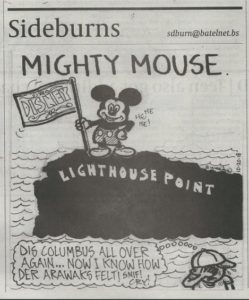
This is not just an academic discussion; there are real world implications. In one drama, in the Bahamas, friends and enemies are choosing sides right now, as a local project by the global media and hospitality conglomerate Walt Disney Company (Disney Cruise Lines) is being debated.

Actually, the debate is over, but the fall-out and “weeping-gnashing of teeth” continues. See the full news story and VIDEO in the Appendices B & C below.

This commentary continues this discussion on Good Governance. If Good Governance is to be the norm in Caribbean society, we must decide – in advance – how we want to grow our economies and what role local economic empowerment will have in the equation to transform society. In the foregoing Bahamian drama, the locals want the job multipliers from the Disney project while the opposition, remote people in metropolitan Nassau, do not want any projects that may impact the environment.

This is a familiar consideration for the book Go Lean…Caribbean – available to download for free. The book asserts that the problems of the Caribbean are too big for any one member-state to assuage alone; so there must be cooperation, collaboration and confederation. But does this mean that we must confer on everything, big and small? No! Just the opposite.

Surely, everyone can be expected “to take care of their own business” … first.

This is a mark of maturity, that we can provide for our own basic needs: food, clothing and shelter.

In fact, the Go Lean movement posits that for reform to succeed in the region, we must start by transforming neighborhoods, then elevate cities, then for whole member-states and lastly for the entire region. In fact, the book asserts the tactic of a Separation-of-Powers, in which certain duties-responsibilities are expected to be addressed locally while others will be within scope for a federal government.

The purpose of the Go Lean book is the introduction and implementation of that federal government, the Caribbean Union Trade Federation (CU). The book serves as a roadmap for a new technocratic regime for Good Governance. Notice these statements in the opening Declaration of Interdependence (Pages 10 – 12):

viii. Whereas the population size is too small to foster good negotiations for products and commodities from international vendors, the Federation must allow the unification of the region as one purchasing agent, thereby garnering better terms and discounts.

xi. Whereas all men are entitled to the benefits of good governance in a free society, “new guards” must be enacted to dissuade the emergence of incompetence, corruption, nepotism and cronyism at the peril of the people’s best interest. The Federation must guarantee the executions of a social contract between government and the governed.

xii. Whereas the legacy in recent times in individual states may be that of ineffectual governance with no redress to higher authority, the accedence of this Federation will ensure accountability and escalation of the human and civil rights of the people for good governance, justice assurances, due process and the rule of law. As such, any threats of a “failed state” status for any member state must enact emergency measures on behalf of the Federation to protect the human, civil and property rights of the citizens, residents, allies, trading partners, and visitors of the affected member state and the Federation as a whole.

xxiii. Whereas many countries in our region are dependent Overseas Territory of imperial powers, the systems of governance can be instituted on a regional and local basis, rather than requiring oversight or accountability from distant masters far removed from their subjects of administration. The Federation must facilitate success in autonomous rule by sharing tools, systems and teamwork within the geographical region.

This commentary is the fourth of this 5-part series – 4 of 5 – from the movement behind the Go Lean book in consideration of the Good Governance needs for a new Caribbean regime. The other commentaries in the series are cataloged as follows:

  1. Good Governance: … Versus Partisan Politics
  2. Good GovernanceStepping Up in an Emergency
  3. Good GovernanceThe Kind of Society We Want
  4. Good Governance: Getting ‘Out of the Way’ of Local Economic Empowerment
  5. Good GovernanceGood Corporate Compliance

No doubt there is the need for Good Governance for the Caribbean; we need better stewardship and shepherding of the 30 member-states to ensure that we do not repeat the mistakes of the past. We need to value independence, resiliency and vigilance, not stymie progress because it may not have originated in some Capitol. This is the lesson from the opening anecdote about Common Pool Resources.

The best chance for success is for those who work with a local resource to participate in managing the local resource. So at times, we may need national government – or even federal governments – to get ‘Out of the Way’ and allow local economic empowerments.

In fact, the Go Lean roadmap introduces the concept of Self-Government Entities (SGE), an ideal concept for a job-creation engine, with its exclusive federal regulation/promotion activities. Imagine bordered campuses – exclusive resorts, industrial labs, educational facilities, R&D parks – with separate (local) arrangements to provision basic needs. This local empowerment accelerates the job multiplier factor – how certain industries are better than others for generating multiple indirect jobs down the line (off-campus) for each direct job on the SGE’s payroll.

This is how the Go Lean roadmap seeks to reform or transform the societal engines for all the Caribbean. This is our quest, our prime directive, as related in the following statements:

  • Optimization of the economic engines in order to grow the regional economy to $800 Billion & create 2.2 million new jobs.
  • Establishment of a security apparatus to ensure public safety and protect the resultant economic engines.
  • Improvement of Caribbean governance to support these engines, including a separation-of-powers between the member-states and CU federal agencies.

Good Governance based on best-practices, especially as recognized by a Nobel Prize, is a good starting point to transform a society. This is why Common Pool Resources are so frequently highlighted in the Go Lean book. Within the 370-pages of the book are details of Common Pool Resource management, urged for adoption within the new Caribbean regime. Here is a sample of the references to Common Pool Resources and how it relates to Good Governance through-out the book:

Tactical – Separation of Powers

F – Interior Department
The CU initiates its charter with a petition to the United Nations for a designation of an Exclusive Economic Zone for the spaces (seas) between the islands. This Department manages the oversight of this “common” territory. In addition, this Agency will have to work with foreign entities in the management of common pool resources, like water rights, river ecosystems in Guyana, Suriname and Belize where they are bordered by other (bigger) countries.

Page 82
Tactical – Separation of Powers

J – Agriculture and Fisheries Department
This Department in the Executive Branch coordinates the region efforts in agriculture, agri-business and fisheries. … this office is to be managed like a Project Management Office, coordinating one region-wide project after another. This department will also oversee the common pool resources for the region. This will include fish stock and common grazing lands. This effort will have to be coordinated and collaborated with the Department of the Interior agencies and resources.

Page 88
Advocacy – 10 Lessons from the American West

# 5 – Common Pool Resources: Water / Public Works

There were many environmental deterrents to conquering the West. There is actually a continental divide in North America in which minimal rain falls west of that divide; the western states were not sustainable for large populations.

Over the years, the US Army Corps of Engineers created canals, dams, reservoirs, irrigation, water pipelines and other measures, in multi-state compacts. The CU must also engineer multi-state public works projects to improve economies.

Page 142
Advocacy – 10 Ways to Better Manage Natural Resources
# 2 – Lean in for the Caribbean Union Trade Federation (CU) treaty.
This treaty allows for the unification of the region into one market, thereby integrating to a single economy of 30 member-states, 42 million people and GDP of over $800 Billion in (2010). The region needs joint management of the common pool of natural resources, and this one of the foremost reasons for confederating the CU. First it garners international support for the UN petition for an Exclusive Economic Zone in and near the Caribbean Seas. The CU’s representation of a single market allows for effective negotiations with foreign parties – the islands will no longer be viewed as inconsequential. The CU’s separation of powers mandate is germane for managing the local needs of the region’s common resources; it allows for closer oversight of local regulators, but with CU principles.
Page 183
Advocacy – 10 Ways to Improve Fisheries
# 3 –
Common Pool Resources (Lobster, Conch, Grouper, Flying Fish)
Though the waters between the islands may be uninhabited, their resources can still be depleted. The CU will govern the common pool resources to promote the sustainability of fish stock. Fishing for lobster, conch, grouper, “flying fish” and other species must be controlled, with limited harvesting seasons, otherwise there will be none for future generations.
Page 210
Advocacy – 10 Ways to Impact Rural Living
# 3 – Common Pool Resources Oversight and Management
The CU will exercise eminent domain to buy a lot of “crown” land, and the Exclusive Economic Zone, to promote as common pool resources (farming, fishing, and mining). This ownership allows for the implementation of proper oversight rules, with local coordination, and best practices. This is the “golden rule” – the one with the “gold”, makes the rule!
Page 235
Advocacy – 10 Ways to Impact The Guianas
# 1 – Lean in for the Caribbean Single Market & Economy
The CU will allow for the unification of the region into one market, thereby creating a single economy of 30 member-states for 42 million, including the independent states of Guyana and Suriname. Other territories that made up The Guianas region include French Guiana, Spanish Guiana (today, the Guayana Region comprises three of the federal States of Venezuela: Amazonas, Bolívar, Delta Amacuro), and Portuguese Guiana (Brazil’s State of Amapa). On the CU roadmap, annexations will be explored in Year 5; French Guiana is ideal candidate, but not the Venezuelan and Brazilian regions. But there is the immediate need for foreign policy synchronizations with these other states for common pool resources and regional threats.
Page 241

Consider how this vision of a rebooted economic landscape – with the technocratic management of Common Pool Resources – have been portrayed in these previous blog-commentaries; see this sample:

https://goleancaribbean.com/blog/?p=15359 Industrial Reboot – Fisheries 101
https://goleancaribbean.com/blog/?p=15907 Industrial Reboot – Navy Pier 101
https://goleancaribbean.com/blog/?p=14911 Would Less People Mean More Resources For the Remnant? No!
https://goleancaribbean.com/blog/?p=12724 Lessons from Colorado: Water Management Arts & Sciences
https://goleancaribbean.com/blog/?p=1092 Managing the Airwaves as a Common Pool Resource

The Go Lean book was very clear in its conclusion, the problem with the Caribbean is not the land/sea – it is the greatest address on the planet – it is not the people – we have a unique mix of African, Amer-Indian, Asian and European cultures, it is the stewardship. We must abandon bad ineffectual governing practices and embrace best-practices anew. We need to employ good ideas, even if they do not come from the Capitol. So we must be willing to accept local economic empowerment initiatives.

Our past roads are littered with failure; let’s do better going forward. Let’s embrace Good Governance. Let’s start aright with the strategies, tactics, implementations and advocacies as prescribed in the book Go Lean…Caribbean. We urge everyone to lean-in to this roadmap. This is how we can make our homeland better places to live, work and play. 🙂

Download the free e-Book of Go Lean … Caribbean – now!

Sign the petition to lean-in for this roadmap for the Caribbean Union Trade Federation.

—————-

Appendix A – What Is the Dunning-Kruger Effect?

The Dunning-Kruger effect is a type of cognitive bias in which people believe that they are smarter and more capable than they really are. …

The term lends a scientific name and explanation to a problem that many people immediately recognize—that fools are blind to their own foolishness. …

An Overview of the Dunning-Kruger Effect

This phenomenon is something you have likely experienced in real life, perhaps around the dinner table at a holiday family gathering. Throughout the course of the meal, a member of your extended family begins spouting off on a topic at length, boldly proclaiming that he is correct and that everyone else’s opinion is stupid, uninformed, and just plain wrong. It may be plainly evident to everyone in the room that this person has no idea what he is talking about, yet he prattles on, blithely oblivious to his own ignorance.

The effect is named after researchers David Dunning and Justin Kruger, the two social psychologists who first described it. …

A Little Knowledge Can Lead to Overconfidence

Another contributing factor is that sometimes a tiny bit of knowledge on a subject can lead people to mistakenly believe that they know all there is to know about it. As the old saying goes, a little bit of knowledge can be a dangerous thing. A person might have the slimmest bit of awareness about a subject, yet thanks to the Dunning-Kruger effect, believe that he or she is an expert. …

See the remaining article here …

Source: Posted April 9, 2018; retrieved October 29, 2018 from: https://www.verywellmind.com/an-overview-of-the-dunning-kruger-effect-4160740

—————–

Appendix B – Title: Disney’s Lighthouse Point: Bahamian Government Approves Sale of Lighthouse Point to Disney Cruise Line
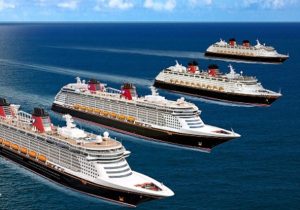
Disney is one step closer to calling Lighthouse Point, Disney’s Lighthouse Point after Bahamian Prime Minister announced the government is choosing The Walt Disney Company’s proposal. Today’s approval gives Disney Cruise Line a green light to move ahead plans to purchase the 700 to 800-acre Lighthouse Point property at the tip of South Eleuthera for a second private cruise destination. EyeWitness News reported the decision just before the 3 o’clock hour.

Below is a copy of the press statement issued by The Bahamas Cabinet:

Press Statement
Cabinet Office
19 October 2018

The Lighthouse Point Development has been the subject of considerable public discussion, particularly in recent months.

The National Economic Council considered the matter today, 19 October, and approved the proposal submitted by Disney Cruise Line Island Development Ltd.

Negotiations will now begin on a Heads of Agreement, which will detail the scope of the project, the obligations of the Disney Cruise Lines Island Development Ltd. and the obligations of the Government of The Bahamas.

The negotiation of the Heads of Agreement will commence immediately. When concluded, it will be presented to Parliament in keeping with the government’s commitment to transparency and accountability.

The Cabinet Office wishes to emphasize that the land which is the subject of the proposal is privately owned. It has been on the real estate market for a long period.

The land is not Crown Land and is not owned by the Government of The Bahamas.

The Disney Cruise Lines Development Ltd. has a sales agreement with the land owner to purchase the land.

The Cabinet Office notes that both the Disney Cruise Lines Island Development Ltd. and the One Eleuthera Foundation and its partners have been publicly noting their plans for the development of Lighthouse Point.

It is also noted that recent polling revealed that more than 60 percent of Bahamians “very much” or “somewhat” support Disney’s proposal for Lighthouse Point, Eleuthera.

The Cabinet Office is also aware of meetings held in the communities of Central and South Eleuthera by respective groups, and live radio broadcasts, which have allowed individuals to express their views.

During one of his regular town hall meetings, this one held at the Green Castle Primary School on 10 October 2018, the Prime Minister informed the people of Central and South Eleuthera of the Government’s plans for the nation and listened to their concerns.

During this meeting overwhelming support was expressed for the Disney Cruise Lines Development Ltd. proposal.

The Cabinet Office notes that prior to that town meeting, the One Eleuthera Foundation and its partners held several community meetings in Central and South Eleuthera to promote their proposal.

This included meetings at Wemyss Bight on 27 July, Deep Creek on 10 August, Tarpum Bay on 17 August, Rock Sound on 31 August and Bannerman Town on 7 September 2018.

Some of the core elements of the Disney Cruise Lines Island Development Ltd. proposal which are of fundamental importance and to which Disney is committed, include: low density development and sustainable design, public access, and the restoration of various historical and cultural sites.

The development will create approximately 150 new jobs and an array of entrepreneurial opportunities for residents of Eleuthera and Bahamians in general.

Disney will convey approximately 190 acres of the land purchased from the private seller to the Government of The Bahamas for conservation and a national park.

Other elements of the project include: the integration of Bahamian cultural and artistic expression into the design of the site and experiences offered, and partnership with the community to develop training and professional development programs.

The Disney Cruise Lines began its cruises to The Bahamas in 1998.

Since that time, the economic impact on the Bahamian economy has been significant. With the development of the Eleuthera project an increase in port calls to Nassau is also projected.

The Government notes Disney’s record of environmental stewardship and will ensure that the project is implemented in a manner which safeguards our environment and the interests of the people of The Bahamas.

The Government of The Bahamas having taken into consideration the views of the majority of the people of Central and South Eleuthera is satisfied that it has made the best decision in the interest of the Bahamian people, a sustainable future for the people of Central and South Eleuthera and the economic development of the country.

I think one of the key factors in the Cabinet’s decision aside from the revenue stream that will be generated by Disney Cruise Line is that the Lighthouse Point property is privately owned. The property has been on the market for a long period. The land is not Crown Land, therefore, is not owned by the Government of The Bahamas. Disney Cruise Line has a sales agreement with the land owner to purchase the land.

What’s next? Disney and The Bahamas will negotiate a Heads of Agreement that will then be presented to Parliament. One Eleuthera’s press release claims there will not be an economic impact until at least 2023.

“We are excited to reach this important milestone and look forward to working with Government and the people of The Bahamas to create new economic opportunities while preserving the natural beauty of Lighthouse Point. We are grateful for the warm welcome and support we have received from so many in Eleuthera and look forward to further developing relationships that will endure for many years to come. In the short term, we are focused on reaching an agreement that is mutually beneficial for The Bahamas and our company, as well as moving forward with an environmental impact assessment and environmental management plan. Our team also looks forward to working with local artists, historians and others as we ensure that the stories and culture of The Bahamas shine through when Disney guests and Bahamians alike visit this special place.” — Jeff Vahle

Disney Cruise Line’s Vice President of Public Affairs, Kim Prunty, told Tribune 242 an environmental impact study (EIA) could take months which Disney will work with the government on this effort. The Bahamas Planning and Subdivisions Act from 2010 requires complete EIA for proposed projects such as Disney’s Lighthouse Point development. The required EIA would be submitted to the Department of Physical Planning as part of the proposed development which is either likely to give rise to significant affects on the environment, of national importance, proposed for sensitive lands, significant in terms of size or complexity, of a nature that may have potentially adverse environmental effects or is considered a development of regional impact.

For more, here is a look at Disney Cruise Line’s proposal and plans for Disney’s Lighthouse Point.

Source: Posted on October 19, 2018; retrieved October 28, 2018 from:

https://disneycruiselineblog.com/2018/10/disneys-lighthouse-point-bahamian-government-approves-sale-of-lighthouse-point-to-disney-cruise-line/

——————

Appendix C VIDEO – DISNEYS PROPOSAL FOR LIGHTHOUSE POINT APPROVED – https://youtu.be/xHlA-AM9HGY

ZNSNetwork

Published on Oct 19, 2018 – Local Bahamas Nightly Newscast
Share this post:
, , ,

Retail Apocalypse and Sears – Another One Bites the Dust – ENCORE

Another one bites the dust …

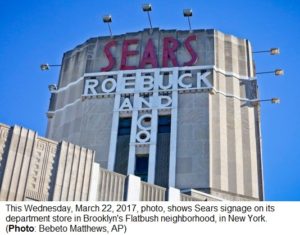
Sears has filed for Bankruptcy protection. This may be more than just reorganization; this might be complete dissolution.

See the VIDEO and excerpt of the news article here:

VIDEO – Sears files for Chapter 11 bankruptcy protection – https://www.usatoday.com/videos/news/nation/2018/10/15/sears-files-chapter-11-bankruptcy-protection/38160609/

—————–

Title: Sears files for Chapter 11 bankruptcy protection, to close 142 more stores
By: , USA TODAY

October 15, 2018 – Sears Holdings, whose presence permeated American life for generations, filed for Chapter 11 bankruptcy protection early Monday in a last-ditch attempt to avoid entombment in the graveyard of once-great retailers that failed to adapt to the digital age.
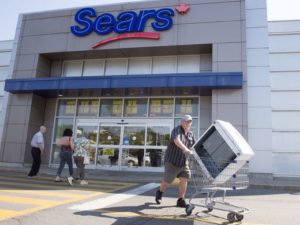
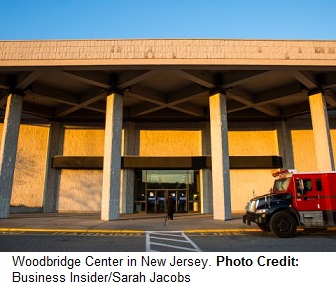
For Sears — which was the largest retailer in the nation before the rise of Walmart and, later, Amazon — bankruptcy marks the culmination of years of decline defined by store closures, sales declines, cost cuts and borrowing.

The company, which also owns discount retailer Kmart, has fallen into disrepair amid a perilous retail landscape in which customers increasingly shop online or seek out more-appealing alternatives.

For Kmart, known for its one-time “blue-light specials,” catchy jingles, and collections created by celebrities, the case marks a second brush with death. Kmart merged with Sears in 2005 after surviving bankruptcy once before.

Sears Holdings will close another 142 stores by about the end of the year, on top of a recently announced round of 46 store closures, as part of the bankruptcy. The company has 687 stores and about 68,000 employees.

See the remaining news story here (retrieved from this source on October 16, 2018):https://www.usatoday.com/story/money/2018/10/15/sears-bankruptcy/1595399002/?csp=chromepush

This was predicted. This is the dreaded, feared Retail Apocalypse. Truth be told, this is relevant for the Caribbean as well. This assertion was made in a prior commentary on April 18, 2017. See an Encore of that submission here-now:

=====================

Go Lean Commentary – Retail Apocalypse – Preparing for the Inevitable

Remember the dream … of 7 Fat Cows and 7 Skinny Cows?

The articulation of the dream was that the 7 Fat Cows represented 7 prosperous years while the 7 Skinny Cows represented 7 years of famine with poverty and distress. – The Bible; Genesis Chapter 41.
CU Blog - Retail Apocalypse - Preparing for the Inevitable - Photo 0

In that Bible drama of Joseph in ancient Egypt, those circumstances were more than just in a dream; it was a prophecy of prosperity and famine. It came true!

Joseph was able to use the foresight to prepare that kingdom for adversity, after first exploiting the opportunities.

Here it comes again.

There is feast and famine “in the cards” as related to the retail eco-system. On one end of the spectrum , there will be prosperity for electronic commerce stakeholders, but on the other end, for brick-and-mortar establishments, there will be a Retail Apocalypse.

Will be? Actually, the threat has already manifested!

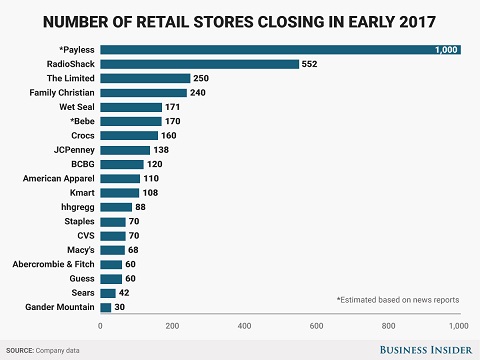
This is the assertion in this news article by the financial-economic magazine Business Insider:

CU Blog - Retail Apocalypse - Preparing for the Inevitable - Photo 1

Title: The retail apocalypse has officially descended on America
By: Hayley Peterson

Thousands of mall-based stores are shutting down in what’s fast becoming one of the biggest waves of retail closures in decades.

More than 3,500 stores are expected to close in the next couple of months.

Department stores like JCPenney, Macy’s, Sears, and Kmart are among the companies shutting down stores, along with middle-of-the-mall chains like Crocs, BCBG, Abercrombie & Fitch, and Guess.

CU Blog - Retail Apocalypse - Preparing for the Inevitable - Photo 2

Some retailers are exiting the brick-and-mortar business altogether and trying to shift to an all-online model.

For example, Bebe is closing all its stores — about 170 — to focus on increasing its online sales, according to a Bloomberg report.

Some are going out of business altogether, like The Limited which recently shut down all 250 of its stores.

Others, such as Sears and JCPenney, are aggressively paring down their store counts to unload unprofitable locations and try to stanch losses.

CU Blog - Retail Apocalypse - Preparing for the Inevitable - Photo 3Sears is shutting down about 10% of its Sears and Kmart locations, or 150 stores, and JCPenney is shutting down about 14% of its locations, or 138 stores.

According to many analysts, the retail apocalypse has been a long time coming in the US, where stores per capita far outnumber that of any other country.

The US has 23.5 square feet of retail space per person, compared with 16.4 square feet in Canada and 11.1 square feet in Australia, the next two countries with the most retail space per capita, according to a Morningstar Credit Ratings report from October.

Visits to shopping malls have been declining for years with the rise of e-commerce and titanic shifts in how shoppers spend their money. Visits declined by 50% between 2010 and 2013, according to the real-estate research firm Cushman & Wakefield.

And people are now devoting bigger shares of their wallets to restaurants, travel, and technology than ever before, while spending less on apparel and accessories.

As stores close, many shopping malls will be forced to shut down as well.

When an anchor store like Sears or Macy’s closes, it often triggers a downward spiral in performance for shopping malls.

Not only do the malls lose the income and shopper traffic from that store’s business, but the closure often triggers “co-tenancy clauses” that allow the other mall tenants to terminate their leases or renegotiate the terms, typically with a period of lower rents, until another retailer moves into the anchor space.

To reduce losses, malls must quickly find a replacement tenant for the massive retail space that the anchor store occupied, which is difficult — especially in malls that are already financially strapped — when major department stores are reducing their retail footprints.

That can have grave consequences for shopping malls, especially in markets where it’s harder to transform vacant mall space into non-retail space like apartments, according to analysts.

The nation’s worst-performing malls — those classified in the industry as C- and D-rated — will be hit the hardest by the store closures.

The real-estate research firm Green Street Advisors estimates that about 30% of all malls fall under those classifications. That means that nearly a third of shopping malls are at risk of dying off as a result of store closures.
Source: Business Insider e-Zine. Posted 03/21/2017; retrieved 04/17/2017 from: http://www.businessinsider.com/the-retail-apocalypse-has-officially-descended-on-america-2017-3

CU Blog - Retail Apocalypse - Preparing for the Inevitable - Photo 4

Related:

1. Monday Market Mayhem – The Retail Apocalypse – Look out Wall Street

2. Dollar General is defying the retail apocalypse and opening 1,000 stores

See the related AUDIO Podcast below here:

———–

AUDIO Podcast – Wal-Mart battles Amazon with discounts for online ordering and store pickup – https://www.marketplace.org/2017/04/14/business/its-battle-amazon-walmart-offers-discounts-ordering-online-and-picking-store

Published April 14, 2017 – Big Box giant Wal-Mart battling e-Commerce giant Amazon for New Economy fulfillment.

As noted in the foregoing, the Retail Apocalypse is affecting the news in the United States. It’s only the news today, tomorrow will be jobs, the next day the finance apparatus holding the debt (mortgages and security instruments on Wall Street) for the many shopping malls and then soon, the rest of the economy will be impacted.

This is so familiar. Remember the housing-real estate bubble in 2003 to 2010. This previous blog-commentary identified the following 5 steps of a bubble:

1.   Displacement

2.   Boom

3.   Euphoria

4.   Profit Taking

5.   Panic

Here we go again! Sounds like a crisis is imminent.

The book Go Lean…Caribbean serves as a roadmap for the introduction and implementation of the technocratic Caribbean Union Trade Federation (CU) and Caribbean Central Bank (CCB); it declares that a crisis is a terrible thing to waste – quoting famed American Economist Paul Romer. Though the impending crisis is slated for the US, the actuality of economic contagions mean that the Caribbean member-states will be affected as well.

Where do the tourists come from that drive the Caribbean region’s primary economic driver?

The question is rhetorical; the answer is obvious!

The Go Lean book seeks to prepare the Caribbean region for the change dynamics impacting the world. The “Agents of Change” at play in the foregoing news source are as follows:

  • Technology
  • Globalization

The underlying issue with the Retail Apocalypse is not the demand for retail products, it is the supply. Consumers are still demanding and consuming fashion and commodities, just not at shopping malls; e-Commerce is “all the rage”.

Consider the experience of this commentator:

I went to buy 3 pairs of slacks.

I was only able to find one – with the brand, make, size and color – at a Big Box retail store. So then I went home and matched the brand, model, size with the e-Commerce merchant Amazon.com and acquired the same pants in 2 divergent colors that the Big Box retailer did not have in inventory. 3 days later, the whole shopping expedition was over; I acquired 3 pairs of slacks, primarily from the online merchant and delivered by the shipping company United Parcel Service (UPS).

The quest of the Go Lean/CU roadmap is to elevate the Caribbean’s societal engines – not the US – starting first with economics (jobs, commercial developments and entrepreneurial opportunities). In fact, the following 3 statements are identified as the prime directives of the CU:

  • Optimization of the economic engines in order to grow the regional economy to $800 Billion & create 2.2 million new jobs.
  • Establishment of a security apparatus to protect the resultant economic engines.
  • Improve Caribbean governance – as e-Commerce alters sales & border taxes – to support these engines.

The changes taking place in the US with the Retail Apocalypse will eventually traverse the Caribbean member-states as well. This is the parallel with the opening Bible Drama. A crisis is coming and we have the opportunity to exploit the prosperous years and prepare for the famine. The Caribbean region – all 30 member-states – needs to better exploit e-Commerce. There are so missing ingredients, fully detailed in the Go Lean book; see  this sample advocacy on Page 198:

10 Ways to Foster e-Commerce

1 Leverage the full population – 42 million people in all 30 member-states to deploy the CU and the CCB.
2 Regional Currency (Caribbean Dollar or C$)
3 Card Culture
The CU will seek to foster the eco-system for e-payments beyond government activity. To assimilate this change, a card culture, on Main Street, will entail utilizing debit/credit cards, benefits pay cards, and even smart cards on cruise ships.
The CU will collectively bargain with the cruise lines to deploy C$ electronic “purses” to facilitate port-side and onboard retail commerce. All of these changes will garner a better monetary multiplier on the CU economy, by expanding M1.
4 CU Social Media
The CU web portal www.myCaribbean.gov will grant free access, email, IM, and profile pages for CU stakeholders, even normalizing communications thru social media sites. This will facilitate internet commerce activities in the region, as the CU will have hot data on profiles, habits and previous activities, thereby creating opportunities for measured marketing.
5 A Market for the Downloads of Intellectual Properties
6 Remittance Methods (Card & Email)
7 Mobile Apps – Hi-Density Wi-Fi
8 Regional Postal Services – CPU
The CU will assume the responsibility for mail services in the region; (all member-state postal employees will become federal civil servants). The embrace of the Caribbean Postal Union allows for parcel mail to be optimally shipped and delivered throughout the region, with Customs considerations in place. The CPU will therefore ensure the fulfillment side of e-commerce, even allowing for computer applications for printing electronic stamps/barcodes for value savings.
9 Turnpike Logistics
10 Customs and Import Optimizations

The missing ingredients for this new marketplace – electronic commerce – are not just banking-related, the full eco-system must be enabled: electronic (technology), commerce (trade) and fulfillment (logistics). The implementation of these provisions will constitute a New Day for the region. Overall, the Go Lean book stresses the community ethos, strategies, tactics, implementations and advocacies to reboot, reform and transform the economic engines of Caribbean society, so as to benefit from changes coming due to the Retail Apocalypse, this New Day.

Though not directly mentioned in the Go Lean book, this Retail Apocalypse is planned for in the roadmap. A comprehensive view of  the technocratic stewardship for the region’s economic engines, including the banking eco-system, is presented early in the book with these opening pronouncements in the Declaration of Interdependence (Page 13 and 14):

xxiv. Whereas a free market economy can be induced and spurred for continuous progress, the Federation must install the controls to better manage aspects of the economy: jobs, inflation, savings rate, investments and other economic principles. Thereby attracting direct foreign investment because of the stability and vibrancy of our economy.

xxvii. Whereas the region has endured a spectator status during the Industrial Revolution, we cannot stand on the sidelines of this new economy, the Information Revolution. Rather, the Federation must embrace all the tenets of Internet Communications Technology (ICT) to serve as an equalizing element in competition with the rest of the world. The Federation must bridge the digital divide and promote the community ethos that research/development is valuable and must be promoted and incentivized for adoption.

The points of effective, technocratic banking and retail stewardship were further elaborated upon in previous blog/commentaries. Consider this sample:

https://goleancaribbean.com/blog/?p=11184 Big Bank investing $Billion on ‘Fintech’ for e-Commerce positioning
https://goleancaribbean.com/blog/?p=8823 Lessons from China – WeChat: Model for Caribbean Social Media
https://goleancaribbean.com/blog/?p=8704 Lesson from MetroCard
https://goleancaribbean.com/blog/?p=7991 Transformations: Caribbean Postal Union – Delivering the Future
https://goleancaribbean.com/blog/?p=7034 The Future of Money
https://goleancaribbean.com/blog/?p=6635 New Security Chip in Credit Cards Unveiled
https://goleancaribbean.com/blog/?p=5668 Move over Mastercard/Visa – Time for Local Banking Cards
https://goleancaribbean.com/blog/?p=4425 Cash, Credit or iPhone …
https://goleancaribbean.com/blog/?p=3889 Royal Bank of Canada’s EZPay – Ready for Change
https://goleancaribbean.com/blog/?p=3881 The Need for Regional Cooperation for Cyber-Security & e-Security
https://goleancaribbean.com/blog/?p=3858 Model of Central Banking Technocracy: ECB 1 trillion Euro stimulus
https://goleancaribbean.com/blog/?p=2488 Model of an E-Commerce Fulfillment Company: Alibaba
https://goleancaribbean.com/blog/?p=1416 Model of an E-Commerce Fulfillment Company: Amazon
https://goleancaribbean.com/blog/?p=1350 PayPal’s model to pay for e-Commerce
https://goleancaribbean.com/blog/?p=906 Bitcoin model to pay for e-Commerce
https://goleancaribbean.com/blog/?p=528 Facebook to pay for e-Commerce

Warning to all retail stakeholders – buyers, sellers and governments: Change is coming!

This is a familiar stance – preparing for the inevitable – for the Go Lean movement; there have been previous warnings of disruptive changes; see this sample here:

https://goleancaribbean.com/blog/?p=7847 To the Personal Computer industry: Cloud Computing, Smartphones and Tablets are making actual laptop and desktop computers inconsequential.
https://goleancaribbean.com/blog/?p=6151 To the regional government’s Revenue Officials: 3-D Printing is coming and will change fabrication to local rather than import. This will disrupt border taxes revenue expectations.
https://goleancaribbean.com/blog/?p=6016 To the Infrastructure Planners: Climate Change is making Caribbean summers hot-hot-hot and northern winters milder; there must be cooperative refrigeration to provide relief, otherwise people will leave for northern destinations.
https://goleancaribbean.com/blog/?p=5784 To Jamaica’s Public Safety Officials: Human Rights protections must be extended to people who identify as LGBT. Whether you agree or not, the international community will force you to respect their rights for life, liberty and the pursuit of happiness.
https://goleancaribbean.com/blog/?p=5210 To the Cruise Line industry: The Caribbean region’s collective bargaining will extract greater benefits and protections for port city commerce.
https://goleancaribbean.com/blog/?p=5155 To the Caribbean Power Grip: Home-based batteries will allow for successful deployments of solar/wind power generation and require less power from the grid.
https://goleancaribbean.com/blog/?p=4767 To the regional government’s Revenue Officials: Under the WTO regime, customs duties must eventually be eliminated; same too with conditional property taxes. VAT or Sales Taxes are OK.

As for the Retail Apocalypse, now is the time for all stakeholders of Caribbean banking, retail and governments to lean-in for the empowerments for e-Commerce described here-in and in the book Go Lean … Caribbean. This is where the marketplace is going, not just tomorrow, but already here today. We can do this; we can elevate our communities and our retail eco-systems. We can be a better place to live, work and play. 🙂

Download the free e-book of Go Lean … Caribbean – now!

Sign the petition to lean-in for the roadmap for the Caribbean Union Trade Federation.


Share this post:
, , , ,
[Top]

Industrial Reboot – Navy Pier 101

Go Lean Commentary

From small investments (seedlings) come big harvests. Remember the “mustard seed” …

“… like a grain of mustard seed, which a man took, and sowed in his field; which indeed is smaller than all seeds. But when it is grown, it is greater than the herbs, and becomes a tree, so that the birds of the air come and lodge in its branches.” — Matthew 13:31–32, World English Bible

Imagine an industrial reboot that can take a small investment – seed money – but grow into huge returns for the community.
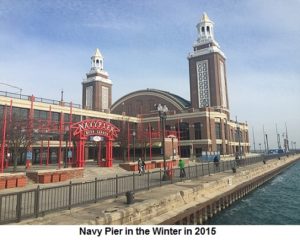

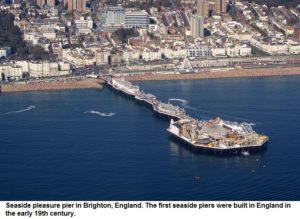
Yes, we can!

The book Go Lean…Caribbean related a community investment that should be made in each Caribbean member-state, that of Navy Piers, and described how BIG returns can be gathered from the resultant infrastructure. The book describes that such an implementation can impact many of the societal engines – think: economy, security and governance.

What is a Navy Pier?

In short, it’s a dock … and “then some”. The most famous one, and name sake is in Chicago, Illinois; see historic details here:

Navy Pier is a 3,300-foot-long (1,010 m) pier on the Chicago shoreline of Lake Michigan. It is located in the Streeterville neighborhood of the Near North Side community area. The Navy Pier currently encompasses more than fifty acres of parks, gardens, shops, restaurants, family attractions and exhibition facilities and is the top leisure destination in the Midwestern United States (“Midwest”), drawing nearly nine million visitors annually.[2] It is one of the most visited attractions in the entire Midwest and is Chicago’s number one tourist attraction.[3]

The Navy Pier opened to the public on July 15, 1916.[4] … Its original purpose was to serve as a dock for freights, passenger traffic, and indoor and outdoor recreation; events like expositions and pageants were held there.

In the summer of 1918 the pier was also used as a jail for draft dodgers. In 1927, the pier was renamed Navy Pier to honor the naval veterans who served in World War I.

In 1941, during World War II, the pier became a training center for the U.S. Navy; about 10,000 people worked, trained, and lived there. The pier contained a 2,500-seat theater, gym, 12-chair barber shop, tailor, cobbler shops, soda fountain and a vast kitchen and hospital.[6]

In 1989, the City of Chicago had the Urban Land Institute (ULI) reimagine uses for the pier. The Metropolitan Pier and Exposition Authority (MPEA) was created; its responsibility was to manage and operate Navy Pier as well as McCormick Place. The MPEA undertook the redevelopment, incorporating some of ULI’s recommendations.[8]

In 1995, Navy Pier was redesigned and introduced to the public as a mixed-use venue incorporating retail, dining, entertainment, and cultural spaces.

Starting in 2014, the redevelopment plan called The Centennial Vision was implemented. The purpose of this plan is to fulfill the mission to keep Navy Pier as a world-class public space and to renovate the pier so it will have more evening and year-round entertainment and more compelling landscape and design features.[9] The Centennial Vision was completed in summer 2016.
Source: Retrieved October 8, 2018 from: https://en.wikipedia.org/wiki/Navy_Pier


VIDEO – Navy Pier Ferris Wheel in Chicago – https://youtu.be/YVFx0FIb82g

Published on Nov 15, 2016 – Navy Pier’s ferris wheel, an iconic part of Chicago’s skyline, received a makeover this year for the pier’s 100th anniversary. Soaring nearly 200-feet high, the ferris wheel offers 360-degree views of the Windy City and is now taller and faster than ever.

The upgrades to the Navy Pier Ferris Wheel, AKA the Centennial Wheel, are part of a larger project to revitalize the pier, giving it a more modern, sophisticated feel. …

The new wheel is 50 feet taller than its predecessor. Each ride lasts about 13 minutes and rotates three times. A ride on the old ferris wheel was only seven minutes and rotated once. DAY/NIGHT; SUMMER/WINTER The new gondolas have air conditioning and heating systems. This improvement allows you to comfortably ride the Centennial Wheel in Chicago’s painfully cold winters and hot summers. The wheel operates during the day at after dark, offering two distinct experiences.

So where there is a coastline, there is an opportunity for a connecting pier. There are 3 types of piers that are common in the modern world: Working piers, Pleasure piers and Fishing piers. These do not need a lot of land; they are normally created as land-less structures into bodies of water. See this encyclopedic definition here:

pier is a raised structure in a body of water, typically supported by well-spaced piles or pillars. Bridges, buildings, and walkways may all be supported by piers. Their open structure allows tides and currents to flow relatively unhindered, whereas the more solid foundations of a quay or the closely spaced piles of a wharf can act as a breakwater, and are consequently more liable to silting. Piers can range in size and complexity from a simple lightweight wooden structure to major structures extended over 1600 metres.

Coastlines abound throughout the Caribbean, as each of the 30 member-states is either an island or a coastal state (Belize, Guyana or Suriname). So this concept of a Navy Pier will be both a strategic and tactical implementation for the roadmap presented by the Go Lean book for the introduction and implementation of the technocratic Caribbean Union Trade Federation (CU). Consider the prime directives of the roadmap and how a Navy Pier can impact those directives:

  • Economics – The CU seeks to optimize the economic engines in order to grow the regional economy to $800 Billion and to create 2.2 million new jobs. Piers can be structured as event-entertainment destinations, even amusement parks abound. So a pier strategy can greatly impact tourism and recreation spending. Imagine new cruise ports-of-call.
  • Security – Navy Piers were originally designed for the Navy, an entity for national defense. Within the Go Lean roadmap, there is the plan for a comprehensive Homeland Security and Emergency Management apparatus to ensure public safety and protect the resultant economic engines. Imagine the quick roll-out of a floating pier after a hurricane for relief, recovery and restoration.
  • Governance – The CU seeks to improve Caribbean governance to support the above engines. This include a separation-of-powers between the member-states and CU federal agencies. Since ships can also be tendered at Navy Piers, many deliveries of the Social Contract can be built on these structures – imagine ferry access ramps, “pop-up” medical clinics, agencies for special administrative processing and kiosks. The CU plan for Self-Governing Entities allows for the piers themselves and any aligning easements to be a separate federal territory.

The Caribbean’s industrial landscape is in crisis. It must reboot! A Navy Pier can help … in every member-state. In fact the CU/Go Lean roadmap calls for a CU federal agency to build and operate – serve as landlord – the piers. Accordingly, the CU will facilitate this eco-system as Self-Governing Entities (SGE), an ideal concept for ports and piers, with its exclusive federal regulation/promotion activities. Imagine the construction equipment – dam walls, earth-moving machinery, dredging barges, etc – being used again and again as new Navy Piers are deployed through the region. Imagine the jobs …

Within the 370-pages of the Go Lean book are details of the job multiplier principle; this is how certain industries and infrastructures are better than others for generating multiple indirect jobs down the line for each direct job on a company’s payroll.

Here is a sample of references to the eco-system of piers through-out the Go Lean book:

Implementation – 10 Ways to Re-boot [Sample City] Freeport

# 7 – Cruise Ship Pier in Lucaya or Smith Point
Currently, cruise ships have to dock at the Freeport Harbor and the passengers transported to more amiable destinations, quite often the destination was the International Bazaar in the middle of a pine forest. By establishing a docking pier in the Port Lucaya vicinity, the cruise ship tourist destination will be all-encompassing in one geographic area and more value can be offered to the visitors. Cultural festivities (Gombay, Junkanoo, rake-n-scrape bands, etc.) can be a daily highlight; This would be modeling Walt Disney World’s 4 Parks and their afternoon character parades.

Page 112
Advocacy – 10 Ways to Impact Public Works

# 2 – Union Atlantic Turnpike
The Union Atlantic Turnpike is a big initiative of the CU to logistically connect all member-states for easier transport of goods and passengers. There are many transportation arteries and facilities envisioned for the Turnpike: Toll Roads, Railroads, Ferry Piers, and Navy Piers. …

Page 175
Advocacy – 10 Ways to Improve Homeland Security
# 4 – Naval Authority
Since any defense of the island and coastal states must be naval first, the Homeland Security efforts must work in conjunction with Naval operations. … The CU will build separate Navy Piers in the appropriate markets, aside from Cruise Ship docks.
Page 180
Advocacy – 10 Ways to Promote Fairgrounds
# 9 – Transit Consideration – Turnpike – Navy Piers
The Union Atlantic Turnpike initiative fits ideally into the fairgrounds business plan, as passengers and cargo can move efficiently from island to island along rail lines, toll highways, tunnels & causeways and over-the-seas ferries. The CU facilitation of Navy Piers can accommodate naval vessel shore leaves and even cruise ship traffic. …
Page 192
Advocacy – 10 Ways to Improve Fisheries
# 2 – Cooperatives
Fishery cooperatives allow fishermen and industry players to pool their resources in certain (non-competitive) areas of activity. This strategy is vital for sharing the cost and expense of installing piers/docks, locating systems (Loran-C & GPS), canaries, refrigerated warehouses and transportation solutions.
Page 210

This is the vision of an industrial reboot! A transformation for how and where a new societal eco-system can be introduced and engineered.

This Go Lean book projects the roll-out of the Union Atlantic Turnpike and accompanying Navy Piers as Day One / Step One of the Go Lean/CU roadmap. Over the 5-year implementation for this roadmap, more and more of the features of piers will be deployed and their effect on the region will be undeniable: they will help to make the whole Caribbean a better place to live, work and play.

The Go Lean book stresses that reforming and transforming Caribbean engines must be a regional pursuit. These piers need to be  installed everywhere, every member-state, island and coastal state. But this effort is truly too big for any one member-state alone. This rationale, the need for interdependence, is the reason for the Caribbean Union. This interdependence was an early motivation for this roadmap; see these statements in the opening Declaration of Interdependence (Pages 12 – 13):

xvi. Whereas security of our homeland is inextricably linked to prosperity of the homeland, the economic and security interest of the region needs to be aligned under the same governance. Since economic crimes … can imperil the functioning of the wheels of commerce for all the citizenry, the accedence of this Federation must equip the security apparatus with the tools and techniques for predictive and proactive interdictions.

xxiv.  Whereas a free market economy can be induced and spurred for continuous progress, the Federation must install the controls to better manage aspects of the economy: jobs, inflation, savings rate, investments and other economic principles. Thereby attracting direct foreign investment because of the stability and vibrancy of our economy.

xxvi.  Whereas the Caribbean region must have new jobs to empower the engines of the economy and create the income sources for prosperity, and encourage the next generation to forge their dreams right at home, the Federation must therefore foster the development of new industries… . In addition, the Federation must invigorate the enterprises related to existing industries … – impacting the region with more jobs.

Installing Navy Piers will mean rebooting the industrial landscape of the Caribbean. This is not a new subject for this Go Lean roadmap; this commentary has previously identified a number of industrial initiatives to launch a reboot in the region. See the list of previous submissions on Industrial Reboots here:

  1. Industrial RebootsFerries 101 – Published June 27, 2017
  2. Industrial RebootsPrisons 101 – Published October 4, 2017
  3. Industrial RebootsPipeline 101 – Published October 5, 2017
  4. Industrial RebootsFrozen Foods 101 – Published October 6, 2017
  5. Industrial RebootsCall Centers 101 – Published July 2, 2018
  6. Industrial RebootsPrefab Housing 101 – Published July 14, 2018
  7. Industrial RebootsTrauma 101 – Published July 18, 2018
  8. Industrial RebootsAuto-making 101 – Published July 19, 2018
  9. Industrial RebootsShipbuilding 101 – Published July 20, 2018
  10. Industrial RebootsFisheries 101 – Published July 23, 2018
  11. Industrial RebootsLottery 101 – Published July 24, 2018
  12. Industrial RebootsCulture 101 – Published July 25, 2018
  13. Industrial RebootsTourism 2.0 – Published July 27, 2018
  14. Industrial RebootsCruise Tourism 2.0 – Published July 27, 2018
  15. Industrial RebootsReinsurance Sidecars 101 – Published October 2, 2018
  16. Industrial Reboots – Navy Piers 101 – Published Today – October 9, 2018

In summary, our Caribbean region needs a better industrial landscape to improve our economics, security and governance. We can make small investments – think mustard seeds – that can yield huge returns. This is too appealing to ignore.

Let’s get going!

We urge all Caribbean stakeholders to lean-in to this roadmap for industrial reboots, to make our region better islands and coastal states to live, work and play. 🙂

Download the free e-Book of Go Lean … Caribbean – now!

Sign the petition to lean-in for this roadmap for the Caribbean Union Trade Federation.

Share this post:
, , ,
[Top]

Industrial Reboot – Reinsurance 101

Go Lean Commentary

Continuity of Business (CoB)

It’s a simple concept; it asserts that if there are any extraordinary events – i.e. emergencies and natural disasters – that the tools and techniques are in place to pick-up and continue for business-as-usual. For some companies, this field is so formalized that they have stakeholders (team) with the responsibilities to ensure that “no stone is left un-turned”. These companies have a C-level executive with this responsibility, i.e. …

  • VP of Risk [Management]
  • Director of Disaster Recovery

One popular risk mitigation strategy is to buy “insurance“. Yet the Caribbean is in crisis! Due to Climate Change realities, there are fewer and fewer “Property & Casualty” insurance products available to Caribbean stakeholders.

This is Sad!

Yes, it is that simple: insurance is a protection to ensure the continuation of business operations, and is expected  for all modern business operations. This theme was addressed in a previous blog-commentary by the movement behind the book Go Lean…Caribbean, in relation to the need to ensure the continuation of a community in the wake of Caribbean natural disasters. That submission presents this quotation:

… an insurance strategy could be even smarter for rainy days or catastrophes; it allows the hedging of risks by leveraging across a wider pool; more people – savers – put-in and only a few … or just one withdraws. This is also the approach of the thoughtful Caribbean Catastrophe Risk Insurance Fund (CCRIF).

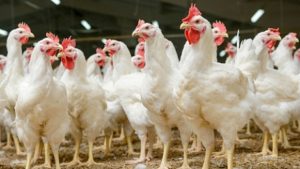
It is very sad when communities are not able to save or insure a “Rainy Day” fund for when it rains, especially in the tropical region where it doesn’t just rain, but pours and storms.

What is sadder is when the heavy-lifting of “savings” or insurance is done, but the dollar amount is not enough; because a “penny saved is only just a penny”.

The Caribbean’s industrial landscape is in crisis. It must reboot; we do not have adequate “Property & Casualty” offerings. The identified CCRIF Catastrophe Fund, though it’s too-little-too-late, is for member-states governments, by the member-states governments. Individuals and companies need not apply; yet still, there is the need. Individuals, institutions and enterprises need the protection of a viable CoB solution. This glaring need is so obvious, right now on the heels of Tropical Storm Kirk. Though not a major storm, it brought major destruction to one particular business. See the full story here:

Title: Poultry farmer loses 2000 chickens during storm

Poultry farmer Linus Bernadine suffered a major setback Thursday night, when high winds associated with Tropical Storm Kirk destroyed his chicken houses at Babonneau.

Bernadine told St Lucia Times it resulted in the loss of 2000 broiler chicks.

He explained that the loss has impacted significantly on his livelihood.

“This is what I am expecting to put bread on my table,”  Bernadine stated.

He estimated that his losses are in the region of some $90,000.

Bernadine said he does not know how he will recover from the calamity.

“Right now I am just on the farm demolishing things,” he said.

“What happened is that these birds, I just got them on Wednesday last week and the storm was Thursday night,” Bernadine disclosed.

The poultry farmer recalled having left his home for Vieux Fort to pick up the chicks.

“I got back home about ten past nine in the night, I put the birds down and that was it,” he stated.

“Friday morning I had no choice but to bury them,” he told St Lucia Times, adding that both of the chicken pens on his property had been destroyed by the storm and the chicks that were in them died.

“I am flat down – everything is just gone,” Bernadine lamented.

“I have a capacity of about 7000 birds and all of that is flat down,” he said.

Source: St Lucia Times Daily Newspaper – Posted September 30th, 2018; retrieved October 2, 2018 from: https://stluciatimes.com/2018/09/30/poultry-farmer-loses-2000-chickens-during-storm/

Needless to say, the underlying problem in the foregoing story is “money”, the lack of money in Caribbean communities for restoring business operations in the wake of disasters.

The lack of money is the root of all evil” – Pejorative Pun credited to “Rev. Ike”

There is not enough money in the St. Lucia pool. The Go Lean book simply declares that there needs to be a Bigger pool, one that individuals, institutions and enterprises can participate in. The Go Lean book proposed the solution of Reinsurance Sidecars, related in the book on Page 101 as follows:

Hurricane Insurance Fund
The risk pool for a 42-million population is so much lower than each member-state’s sole mitigation efforts. The CU will establish (contract with a service provider) reinsurance funds (& sidecars) from Day One, and glean the excess premiums-over-claims as profit.

So this is the solution that is proposed in the Go Lean book, to allow for Reinsurance Sidecars in the regional Capital Markets. This way more liquidity will be brought to the marketplace and investors can share in the risk … and profit. See a fuller definition of Sidecars here:

Reinsurance Sidecars, conventionally referred to as “sidecars”, are financial structures that are created to allow investors to take on the risk and return of a group of insurance policies (a “book of business”) written by an insurer or reinsurer (henceforth re/insurer) and earn the risk and return that arises from that business. A re/insurer will only pay (“cede”) the premiums associated with a book of business to such an entity if the investors place sufficient funds in the vehicle to ensure that it can meet claims if they arise. Typically, the liability of investors is limited to these funds. These structures have become quite prominent in the aftermath of Hurricane Katrina as a vehicle for re/insurers to add risk-bearing capacity, and for investors to participate in the potential profits resulting from sharp price increases in re/insurance over the four quarters following Katrina. An earlier and smaller generation of sidecars were created after 9/11 for the same purpose. 
Source:
Retrieved October 13, 2017 from: https://en.wikipedia.org/wiki/Reinsurance_sidecar

The introduction of Reinsurance Sidecars will reboot the entire industrial landscape in the Caribbean. With this product, businesses will have the Property & Casualty insurance products to provide some assurances; also banks will be able to compel their loan clients to maintain these coverages. This is the whole definition of “Escrows”, that of banks requiring Property & Casualty insurance for their loan customers:

In layman’s terms, this means an escrow service is basically a middleman between a buyer and a seller, or in the case of a mortgage, a middleman between a homeowner and the county (for property taxes), insurance companies, and anyone else who the homeowner designates to pay with funds from the escrow account.

1. Imagine the effect of sidecars on bank escrow processing departments.

2. Imagine the effect of sidecars on the insurance retail and wholesale markets.

3. Imagine the effect of business insurance on businesses.

4. Imagine the effect of business continuity on community continuity.

5. Imagine the effect of an industrial reboot on Caribbean life and our day-to-day reality.

So the goal here is to better explore the industrialization of Reinsurance Sidecar products and escrow processing. We must pursue this reboot of our industrial landscape; we need to foster the many new opportunities (jobs, entrepreneurism and industrial development). This is the declaration of the book Go Lean…Caribbean – available to download for free; it serves as a roadmap for the introduction and implementation of the technocratic Caribbean Union Trade Federation (CU); this is a confederation of all 30 member-states – the larger pool – to execute a reboot of the Caribbean economic eco-system. This CU/Go Lean roadmap has these 3 prime directives:

  • Optimization of the economic engines in order to grow the regional economy to $800 Billion & create 2.2 million new jobs.
  • Establishment of a Homeland Security and Emergency Management apparatus to ensure public safety and protect the resultant economic engines.
  • Improvement of Caribbean governance to support these engines, including a separation-of-powers between the member-states and CU federal agencies.

The Go Lean book stresses that reforming and transforming the Caribbean economic engines must be a regional pursuit – always remember the reality of a larger pool. This was an early motivation for the roadmap, as pronounced in the opening Declaration of Interdependence (Pages 11 – 13):

i. Whereas the earth’s climate has undeniably changed resulting in more severe tropical weather storms, it is necessary to prepare to insure the safety and security of life, property and systems of commerce in our geographical region. As nature recognizes no borders in the target of its destruction, we also must set aside border considerations in the preparation and response to these weather challenges.

xvi. Whereas security of our homeland is inextricably linked to prosperity of the homeland, the economic and security interest of the region needs to be aligned under the same governance. Since economic crimes … can imperil the functioning of the wheels of commerce for all the citizenry, the accedence of this Federation must equip the security apparatus with the tools and techniques for predictive and proactive interdictions.

xxiv. Whereas a free market economy can be induced and spurred for continuous progress, the Federation must install the controls to better manage aspects of the economy: jobs, inflation, savings rate, investments and other economic principles. Thereby attracting direct foreign investment because of the stability and vibrancy of our economy.

xxvi. Whereas the Caribbean region must have new jobs to empower the engines of the economy and create the income sources for prosperity, and encourage the next generation to forge their dreams right at home, the Federation must therefore foster the development of new industries… . In addition, the Federation must invigorate the enterprises related to existing industries … – impacting the region with more jobs.

This is the vision of an industrial reboot! This transformation is where and how the economic eco-system is reinforced, re-engaged and re-engineered. With this reboot in the Caribbean, new jobs can be created, companies started and industries optimized.

Despite the references to “industrial”, there are benefits to individuals as well.

Mortgages and houses will have protections, this means the Caribbean home will be more secure. This fits the quest of the Go Lean movement, to make the Caribbean a better homeland to live, work and play.

The foregoing news article related the agri-business of a Chicken Farm. Have you eaten chicken lately?
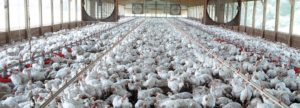
Probably! For some people it’s everyday!

So the out-workings of this industrial reboot will also have an effect on consumer goods. That’s food and shelter, part of the pantheon of basic needs: food, clothing and shelter.

The Go Lean book provides 370-pages of turn-by-turn instructions on “how” to adopt new community ethos, plus the strategies, tactics, implementations and advocacies to execute so as to reboot, reform and transform the societal engines of Caribbean society. One advocacy in rebooting the industrial landscape is to work to improve the delivery systems for our food supply. All Caribbean islands and coastal states should have chicken farms. It is unconscionable that ALL CHICKENS may be imported from abroad. Surely, we can provide the industrial landscape so that every community have their own chicken farms.

Surely …

This will mean that we will have to manage and mitigate the risks of storms and natural disasters; remember Climate Change.

Consider these specific excerpts and headlines from the book on Page 162 entitled:

10 Ways to Better Manage Food Consumption

1 Lean-in for the Caribbean Single Market
The CU will allow for the unification of the region into one market, thereby creating a single economy of 30 member-states, 42 million people and a GDP of over $800 Billion – the CU will take the lead in facilitating the food supply and distribution systems to ensure the region can feed itself, more from local production and less from trade. Though the cost savings of imports should never be ignored, some CU countries (Greater Antilles, Belize, Guyana & Suriname) have a low opportunity cost for increasing food production for the regional market. Thus a mission of the CU is to streamline the systems, processes, logistics, funding, training, and market promotions so that the Caribbean can fulfill this basic need.
2 Public Health Dynamics – Produce Deserts & Farmers Market
3 “Nouvelle” Caribbean Cuisine
4 Agri-Business
Many of the member-states get 90% (or more) of their food supplies from imports; even fish is imported from Alaska, despite the 1,063,000 square miles of harvestable waters of the Caribbean Sea. The CU will implement agri-business (and aqua-culture) investments to generate more regional options for food production: cooperatives (co-ops), farm credit, common grazing lands, fisheries oversight, canaries, aqua-culture endeavors, etc.
5 Logistics for the Food Supply
6 Fresh Frozen
7 Food Labeling
8 Export – Help Regional Businesses Find Foreign Markets
9 Media Industrial Complex
10 Food Tourism

Rebooting the industrial landscape of the Caribbean is not a new subject for this Go Lean roadmap. In fact, this commentary has previously identified a number of different industries that can be rebooted under this roadmap. See the list of previous submissions on Industrial Reboots here:

  1. Industrial RebootsFerries 101 – Published June 27, 2017
  2. Industrial RebootsPrisons 101 – Published October 4, 2017
  3. Industrial RebootsPipeline 101 – Published October 5, 2017
  4. Industrial RebootsFrozen Foods 101 – Published October 6, 2017
  5. Industrial RebootsCall Centers 101 – Published July 2, 2018
  6. Industrial RebootsPrefab Housing 101 – Published July 14, 2018
  7. Industrial RebootsTrauma 101 – Published July 18, 2018
  8. Industrial RebootsAuto-making 101 – Published – July 19, 2018
  9. Industrial RebootsShipbuilding 101 – Published – July 20, 2018
  10. Industrial RebootsFisheries 101 – Published – July 23, 2018
  11. Industrial RebootsLottery 101 – Published – July 24, 2018
  12. Industrial RebootsCulture 101 – Published – July 25, 2018
  13. Industrial RebootsTourism 2.0 – Published – July 27, 2018
  14. Industrial RebootsCruise Tourism 2.0 – Published – July 27, 2018
  15. Industrial Reboots – Reinsurance Sidecars 101 – Published Today – October 2, 2018

Reinsurance Sidecars – remember the name. While these, and other derivative products, are not commonly known in the Caribbean today, they will be. They are too important for our future.

Don’t ever forget, as this fact often gets overlooked, they are also vastly profitable investment products. See the VIDEO‘s in the Appendices for more details on Reinsurance Sidecar derivatives as investment products.

In summary, our Caribbean region needs a better industrial landscape so as to make our homeland better. In fact, one of the reasons why so many Caribbean citizens have emigrated away from the homeland is the lack of the ability to quickly recover after natural disasters. This is why Homeland Security – preparation and response of emergencies – is coupled with economic policies for rebooting the societal engines in the region. So creating a new economic landscape will require rebooting the industrial landscape.

So as an enterprise, an institution or an individual, we need good insurance options – a Continuity of Business. A bigger-better regional risk pool is paramount for a better Caribbean. This is how we can make our region a better homeland to live, work and play.  We urge all Caribbean stakeholders to lean-in to this roadmap for industrial reboots, security enhancements and economic empowerments. 🙂

Download the free e-Book of Go Lean … Caribbean – now!

Sign the petition to lean-in for this roadmap for the Caribbean Union Trade Federation.

————-

Appendix A VIDEO – What is REINSURANCE? What does REINSURANCE mean? REINSURANCE meaning, definition & explanation – https://youtu.be/7Qe4-Ei2PHY


The Audiopedia

Published on May 17, 2017 – What is REINSURANCE? What doe REINSURANCE mean? REINSURANCE meaning – REINSURANCE pronunciation – REINSURANCE definition – REINSURANCE explanation – How to pronounce REINSURANCE?
Source: Wikipedia.org article, adapted under https://creativecommons.org/licenses/… license.

  • Category: Education
  • License: Creative Commons Attribution license (reuse allowed)

————-

Appendix B VIDEO – What Is Financial Reinsurance? – https://youtu.be/W45REh7Pt7I


ehowfinance

Published on May 25, 2015 – What Is Financial Reinsurance?. Part of the series: Small Business Tips. Financial reinsurance is a key component to any successful business. Learn about financial reinsurance with help from a business consultant and marketing expert in this free video clip. Read more: http://www.ehow.com/video_12214988_fi…

————-

Appendix C VIDEO – Reinsurance the perfect Hedge Fund Strategy to Diversify a Portfolio – https://youtu.be/rfp2gRsFD2M


BGN – Blockchain Global News

Published on Mar 2, 2016 – Jane King interviews Don Steinbrugge, Managing Director, Agecroft Partners. For more information please visit http://www.agecroftpartners.com

Share this post:
, , , ,
[Top]

Amazon: ‘What I want to be when I grow up’

Go Lean Commentary

For the planned entity, Caribbean Postal Union, the question should be asked:

What do you want to be when you grow up?

The answer should be:

Amazon

It turns out that Amazon was only founded in 1999, so this is less than 20 years. It is that quickly that an enterprise can have a transformative effect on society. We need transformations in the Caribbean and we are hoping to follow the Amazon business model as the solution for our regional postal-logistical needs.

How successful is Amazon as a model for success?

Well, now Amazon market capitalization has exceeded $1 Trillion. See the VIDEO and news story here:

VIDEO – Amazon 2nd company to top $1 trillion valuation – https://www.usatoday.com/videos/tech/nation-now/2018/09/05/amazon-2nd-company-top-1-trillion-valuation/37720169/

Sep 4, 2018 – Amazon has become the 2nd publicly traded company to be worth $1 trillion, after Apple. Amazon has cemented customer loyalty through its devices and fast, free shipping as well as music and video streaming perks. AP

————-

Title Amazon’s stock value tops $1 trillion, joins Apple in trillionaire club

Amazon’s meteoric stock surge briefly pushed its market value above $1 trillion, a milestone that makes the online retail giant only the second publicly traded company in the U.S. to pass that mark – following Apple.

Amazon topped $1 trillion for the first time Tuesday when its shares climbed past $2,050.27 in late-morning trading and hit an intraday record high of $2,050.50. Shares pulled back to $2,039.51 for a gain of 1.3 percent for     the day.

The accomplishment comes after Amazon’s per-share price crossed $2,000 for the first time last week.

Under CEO Jeff Bezos, who is now the richest person in the world with a net worth of an estimated $166 billion, Amazon has emerged as the most powerful force in the e-commerce business, capturing roughly 50 percent of the online retail market, according to eMarketer.

But it’s not just Amazon’s disruptive force in retail that has attracted investors on Wall Street. The company has diversified its sales and profit streams, from a public cloud-computing business to paid subscription services like Amazon Prime, and advertising revenue on its website.

Some Wall Street pros see the stock climbing even higher.

Citing Amazon’s improving business mix, rapid growth and profit potential, Morgan Stanley analyst Brian Nowak last week upped his price target for Amazon shares to $2,500, which is the highest on Wall Street, according to Bloomberg. If that fresh target is reached, it would boost the company’s market capitalization to more than $1.2 trillion.

In the race for most valuable U.S. company, Amazon now trails Apple by roughly $100 billion.

….

See the rest of the news article in the Appendix below.

This one company is worth US$1 Trillion. The whole Caribbean’s Gross Domestic Product (GDP) is [far] less; it is our plan to elevate the economic engines in the region to get the economy’s output up to $800 Billion.

Amazon is a model for e-Commerce, logistics, media and innovation. This is the role model we want for our Caribbean Postal Union and the aligning online portal, www.myCaribbean.gov. It is good to have a roadmap to follow to duplicate the successful journey of Amazon.

The book Go Lean…Caribbean serves as such a roadmap for the introduction and implementation of the technocratic Caribbean Union Trade Federation (CU) and the Caribbean Postal Union (CPU). These entities are designed to address the “Agents of Change“ in modern society, but for a Caribbean scope only.  The “Agents of Change” at play in the foregoing news sources, according to the book (Page 57), are defined as follows:

  • Technology
  • Globalization

Asking the question: “What I want to be when I grow up?” is emblematic of future planning. This exercise is important for the region if we truly want to have a future. Though our people may survive, such an eventuality is not guaranteed for our culture. Ghost Towns do happen!

Our Caribbean region cannot continue with the status quo in terms of business operations and societal outworking. We must now reboot our industrial landscape to foster new opportunities (jobs, entrepreneurism and industrial development). This is the charter of the Caribbean Postal Union effort. In fact, the following 3 statements are identified as the prime directives of this CU charter:

  • Optimization of the economic engines in order to grow the regional economy to $800 Billion & create 2.2 million new jobs.
  • Establishment of a security apparatus to protect the resultant economic engines.
  • Improve Caribbean governance to support these engines.

In a previous Go Lean blog-commentary, it was related that …

… what Amazon did and does, is the epitome of what the CU/CPU needs to do to reboot Caribbean society. The company disrupted the status quo in so many industries – think: book retailers & movie rentals – and transformed markets to exploit opportunities and derive profits. This is the “Sum of All Caribbean Dreams“.

This reference to Caribbean Dreams is presented early in the Go Lean book with these opening pronouncements in the Declaration of Interdependence (Page 13 and 14):

xxiv. Whereas a free market economy can be induced and spurred for continuous progress, the Federation must install the controls to better manage aspects of the economy: jobs, inflation, savings rate, investments and other economic principles. Thereby attracting direct foreign investment because of the stability and vibrancy of our economy.

xxvii. Whereas the region has endured a spectator status during the Industrial Revolution, we cannot stand on the sidelines of this new economy, the Information Revolution. Rather, the Federation must embrace all the tenets of Internet Communications Technology (ICT) to serve as an equalizing element in competition with the rest of the world. The Federation must bridge the digital divide and promote the community ethos that research/development is valuable and must be promoted and incentivized for adoption.

Monitoring and analyzing the business model of Amazon has been a frequent occupation for these Go Lean blog-commentaries; consider these previous submissions, as follows:

https://goleancaribbean.com/blog/?p=14316 Forging Change: Soft Power – Clean-up or ‘Adios Amazon’

Amazon is proving that people and communities will be motivated to change in order to have the prospect of acquiring money or to prevent losing money. This “soft power” is now emerging as the preferred way to forge change on society. The summary statement is: “Clean-up your societal defects or else … face the loss of an economic bonanza”.

https://goleancaribbean.com/blog/?p=14191 Scheduling in the ‘Gig Economy’

Amazon is proving that there is always “honorable” work available in the service industry. Any reference to the Post Office of 1987 can now be replaced with the Gig Economy. Amazon is very prominent in the Gig Economy in the US.

https://goleancaribbean.com/blog/?p=13627 Amazon: Then and Now

It has only been 18 years ago (1999 – 2017) since Amazon launched in Seattle, Washington USA. Now today, they are huge … and transforming how America shops … and consume media; even their digital assistant – Alexa – is transformative.

https://goleancaribbean.com/blog/?p=13091 Amazon Opens Search for HQ2
Amazon is accepting bids for a 2nd headquarters in North America. The city that lands HQ2 will have a lot to celebrate, as this enterprise can create many high-paying direct jobs – 50,000 – and have an indirect stimulus on the rest of the economy. This is a feature of Amazon that “we” want to model in the Caribbean.
https://goleancaribbean.com/blog/?p=12291 Big Tech’s Amazon – The Retailers’ Enemy
Big Tech companies like Amazon have the treasuries, talent and temperament (culture, values and commitment) to change the world, for good and for bad. The Amazon threat had been “all things internet”, but now they are attempting to dominate the physical retail space as well, with their acquisition of Whole Foods grocery stores.
https://goleancaribbean.com/blog/?p=11358 Retail Apocalypse – Preparing for the Inevitable
There is feast and famine “in the cards” for the retail eco-system. On one end of the spectrum , there will be prosperity for electronic commerce stakeholders, but on the other end, for brick-and-mortar establishments, there will be a Retail Apocalypse. This is not just a future problem as the threat has already manifested!
https://goleancaribbean.com/blog/?p=9839 Alibaba and Amazon’s Cloud allows for global reach
This model, with cutting-edge data centers, is the new colonialism.
https://goleancaribbean.com/blog/?p=7297 Death of the ‘Department Store’: Exaggerated or Eventual
Modern technology and electronic commerce has transformed many aspects of society; much has been added and much taken away. Just consider: cameras, watches, pagers, maps, calculators, calendars, payphones, books, music and more. The related industries have also been affected: travel agencies, music retailers, book retailers, newspapers, travel agencies and Big Box retailers. Amazon is to blame for many of the transformations.
https://goleancaribbean.com/blog/?p=7023 Thanksgiving & American Commerce – Past, Present and Amazon
To better understand American commerce, one must understand Cyber Monday and its dominant player Amazon. This company demonstrates how to be lean and technocratic as it employs cutting-edge automation  and robotics. They are a great model for a new Caribbean.
https://goleancaribbean.com/blog/?p=1416 Model of an E-Commerce Fulfillment Company: Amazon
Amazon is the model for the Caribbean Postal Union (CPU): our means for delivering the mail. Considering the US, one might think that the American model would be the US Postal Service (USPS). No, the Go Lean book relates how the USPS is a failing enterprise, while Amazon flourishes with growth, capital and profits.

One Trillion Dollars …

… this sounds great! This is what is meant by the old encouragement: Reach for the stars!

Can we pursue such a quest in the new Caribbean?

Yes, we can!

Consolidating and integrating the existing postal agencies in the Caribbean, should be “low hanging fruit”. Currently, these entities are just inefficient, ineffective cost centers, but here is the opportunity to transform them to this new vision: the CPU functioning as a job-creating profit center.

We cannot ignore this win-win possibility.

We hereby urge all Caribbean stakeholders to lean-in to the empowerments in the Go Lean/CU/CPU roadmap. Whether we pursue this roadmap to make a trillion dollars or just to optimize the mail, the end-result will be a positive benefit. This quest can make our homeland a better place to live, work and play. 🙂

Download the free e-Book of Go Lean … Caribbean – now!

Sign the petition to lean-in for the roadmap for the Caribbean Union Trade Federation.

—————-

AppendixAmazon’s stock value tops $1 trillion, joins Apple in trillionaire club – Cont’d

By: Adam Shell, USA TODAY


Amazon’s stock, which is up nearly 75 percent this year, has been one of Wall Street’s top performers in the bull market that began in March 2009, gaining more than 3,000 percent, according to S&P Dow Jones Indices.

Amazon is also pushing into new businesses, such as groceries, a move highlighted by its purchase last year of upscale grocer Whole Foods Market for $13.7 billion. It also entered the health care space in June, with the purchase of online pharmacy PillPack.

The only other U.S. stocks within striking distance of a $1 trillion market value are Microsoft and Google-parent Alphabet, both of which are valued at roughly $850 billion.

Tuna Amobi, an analyst at Wall Street firm CFRA, sees Amazon’s stock price rising as high as $2,200 a share. Amazon’s suite of businesses, he says, act as “building blocks” that give it a diversified stream of revenue and will help it deliver “consistent” earnings results in the quarters ahead. “A lot of investments are starting to pay off,” he says.

Still, like any stock, Amazon is not risk free. Despite reporting a profit of $2.5 billion on $52.9 billion in sales in the quarter ended in June, and forecasting year-over-year sales growth of 23 percent to 31 percent in the current quarter, Amazon is not a cheap stock.

It currently trades at nearly 100 times its expected earnings over the next 12 months, which is about five times the broad market’s price-to-earnings ratio of 21, according to Bloomberg.

Another potential risk that could derail Amazon is a potential regulatory crackdown from Washington, D.C., which could look to counter its clout in online retailing, Amobi says.

Amazon is one of the popular and strong-performing “FAANG” stocks – Facebook, Apple, Netflix and Google parent Alphabet are the others – that have come under increased scrutiny from President Donald Trump and lawmakers because of their growing dominance. Executives from Facebook and Twitter will testify Wednesday before the Senate Intelligence Committee regarding interference of foreign nations on social-media platforms.

Amazon also faces increasing competition in online retailing from big players like Walmart and Target that are fighting to regain lost market share. It is also facing challenges from Microsoft and Google in the competitive cloud-computing business.

Source: USA Today – Posted September 4, 2018; retrieved October 1, 2018 from: https://www.usatoday.com/story/money/2018/09/04/amazon-tops-1-trillion-market-value/1191141002/?csp=chromepush

Share this post:
, , , , ,
[Top]

Network Mandates for a New Caribbean

Go Lean Commentary

Golden Rule: “He who has the gold, makes the rules” …

When it comes to media industry (movies, film, fashion modeling), there are some other relevant idioms; consider this list:

  • Dress for the job you want, not the job you have.
  • Fake it until you can make it.
  • A face out of “Central Casting”.

All of these idioms help us to appreciate that in the media industry you must look the part. So if you have facial or grooming features that are different – zag while everyone else zig – you may not be selected for promotion and production. (Think: Dreadlocks, Afros and Braids).

This is sad! “Look the part”? What part, as determined by who? Obviously, there is an adjudicator as to Good/Bad, Yes/No. Who is that? That’s the opening idiom, the Golden Rule. In the media industry that adjudicator is the producer, director, promoter or media company executive. (See Appendix VIDEO for background on one big Broadcast & Media company).

So at times, even though “you are home”, you may have to act foreign. This is definitely the sad narrative taking place in this story below, when a Caribbean model/beauty queen had been scolded for looking too … “Caribbean”. See the full story here:

Title: Caribbean Next Top Model contestant wants apology from Wendy

ASPIRING international model Gabriella Bernard feels she deserves an apology from former Miss Universe and executive producer of the Caribbean Next Top Model competition, Wendy Fitzwilliam, after she was given an ultimatum on the television show- relax her natural hair or go home.


The particular episode was filmed in Jamaica last year and aired on television in February.

An excerpt featuring Bernard’s experience was posted to Facebook yesterday.

The majority of persons who commented on the video criticised Fitzwilliam for her response to the model’s stance.

Bernard, 24, told the Express via telephone on Thursday that she and other contestants had to undergo a makeover for the segment.

She said Fitzwilliam had the final say in what each girl’s look should be.

“For my look they wanted my hair relaxed,” she said.

In the video, Bernard was seen pleading with a hairdresser not to chemically process her curly tresses as she had spent the last three years growing it.

“I’m ok with texturizing my hair once my curls stay intact. You need to understand my hair is my identity,” she begged.

Bernard told the Express that the show’s producers, judges and hairdresser were nonchalant about how she felt.

“A lot more happened which you didn’t see in the video. But basically I was trying to reason with them but they were like it was no big deal, it’s just hair,” she said, adding that she was told that she could either relax her hair or leave the show.

Bernard’s hair was relaxed and she remained in the competition.

Towards the end of the video she appeared before Fitzwilliam and two other judges- international photographer Pedro Virgil and Caribbean fashion expert Socrates McKinney.

Before critiquing the model’s makeover photograph, Fitzwilliam scolded her for her “naughty” and “unprofessional” behaviour.

Bernard apologised, but explained that she previously had her hair relaxed for 15 years. She said when she transitioned to again wearing her hair natural she began loving herself more.

“We live in a world where the media tells us that we need to have straight hair to be accepted,” Bernard emphasised.

Fitzwilliam said she understood the young lady’s point, as she too had made the transition.

“However, as a young and upcoming model, as a young and upcoming attorney facing the judges and senior counsel, you have to be professional.

Shutting down my salon, creating that mayhem, when there were so many other young women to get done and to look fabulous as well, it’s a loud non-starter,” Fitzwilliam said.

Why didn’t she leave?

Asked why she did not stand her ground and bow out of the competition instead of having her hair relaxed, Bernard explained that she weighed her options and felt that she had reached too far in the competition to turn back.

“I had a conversation with myself and I said if I go home what am I going home to? Because I left my job to go on the show. I put in my application the Thursday and by the following Thursday I was flying out. I told myself that I had already reached this far and this was something that I wanted so much,” she said.

Bernard placed third in the competition.

She said she had always looked up to the former beauty queen and was disappointed by her approach and response.

Bernard has turned her experience on the show into a 20-minute documentary called Black Hair.

The documentary will be shown at the 2018 Trinidad and Tobago Film Festival, from today until Tuesday.

She said she was also lined up for several modelling jobs and competitions.

As for her hair: “Monday actually marks the one year anniversary that I cut my hair and to me it’s growing beautifully.”

Fitzwilliam did not respond to calls from the Express, but she told the Newsday that she had no comment on the issue.

Source: The Daily Express – posted September 20, 2018; retrieved September 25, 2018 from: https://www.trinidadexpress.com/news/caribbean-next-top-model-contestant-wants-apology-from-wendy/article_48563808-bd29-11e8-8047-577ec8f9d0e1.html

While this is an issue of image, the movement behind the book Go Lean…Caribbean asserts that Caribbean people can prosper where they are planted in the Caribbean homeland. At home, they do not have to adapt or comply with any foreign standards. They are home! At a bare minimum, Caribbean beauty should be recognized in the eyes of Caribbean beholders.

At a bare minimum! (For the record, the model in the foregoing article is undeniably beautiful, with her natural hair grooming).

But truth be told, if the media networks in the region are owned by foreign entities, then foreign standards are still “the rule”.

No more!

Change has come to the world and to the Caribbean region. The advent of Internet Communications Technologies (ICT) now has voluminous options for media to be delivered without the large footprint … or investment. Now anyone can easily publish VIDEO’s and Music files to the internet and sell them to the public – models abounds: i.e. pay-per-play, or subscription.

The book Go Lean…Caribbean serves as a roadmap for the introduction and implementation of the Caribbean Union Trade Federation (CU), a technocratic federal government to administer and optimize the economic-security-governing engines of the region’s 30 member-states. Embedded in this roadmap is the plan for the Caribbean Postal Union (CPU) whose focus is  to coordinate the regional mail eco-system plus the www.myCaribbean.gov portal to offer email and social media functionality for all Caribbean stakeholders: 42 million residents, visitors (up to 80 million), trading partners and the 10 million people in the Diaspora.

All of these numbers constitute a media market. Therefore …

… “ICT is the great equalizer” – Go Lean book (Page 198).

The book explains that the CU treaty will forge electronic commerce industries to allow Internet Communications Technology (ICT) to be the great equalizer in economic battles with the rest of the world; this model holds the promise of “leveling the playing field” between small … and large … .

Imagine the deployment of a new Caribbean Network! Not like ABC or NBC (in the US) nor the BBC in England, but rather like the WWE. In a previous blog-commentary it was related that:

This is better! (Every mobile/smart-phone owner walks around with an advanced digital video camera in their pocket). We are now able to have a network without the “network”. Many models abound on the world-wide-web. Previously, this commentary identified one such network (ESPN-W); now the focus is on another, the WWE Network, associated with the World Wrestling Entertainment, Inc. This network is delivered via the internet-streaming only (and On-Demand with limited Cable TV systems).

We have so many examples-business models; think: WWE, ESPN-W, YouTube and Netflix …

… surely, we can deploy our own digital, streaming network as well, one just for the Caribbean region … so that we can better exploit the Agents of Change affecting the world – and reset image standards The Go Lean book specifically identifies technology and globalization among the transformations affecting our world (Page 57); it then declares that our region cannot only consume – we must produce – so we need to move to the corner of preparation and opportunity.

We need Caribbean stakeholders to own Caribbean media! We can then impose our own standards and remove restrictions that denigrate our lifestyles. So this issue is bigger than just image; this is having the means by which to control our destiny. Despite all the benefits for our image, this is an economic issue first and foremost. With the Agent of Change of globalization, we now have a product that the rest of the world wants to consume: our culture. Digital media allows us to disseminate that culture electronically, with a small investment footprint.

This is about supply and demand – a basic precept in the study of Economics. The transformation to new media has taken hold. More and more people are consuming electronic media; so much so that it is becoming the mainstay for communications and entertainment. This reference to electronic media does not only convey the visual images of television; there is also the ubiquity of the internet, with its many video streaming services.

Even TV networks are perplexed as to what video streaming will do to their medium. See this summary of a New York Times Business News article here and a related VIDEO:

General Electric wants to sell NBC because of rising losses … [as] a testament to the uncertain future of mainstream media, as the Internet has fractured audiences and few viable business models have emerged for the distribution of content online.

Source: Posted November 30, 2009; retrieved September 26, 2018 from: https://www.nytimes.com/2009/12/01/business/media/01deal.html
————-

VIDEO – The Future Of TV On The Internet, Streaming Services, Subscribership | Squawk Box | CNBC – https://youtu.be/VcKBwSzZArk

CNBC
Published on Dec 1, 2016 – Larry Haverty, Gabelli Multimedia Trust, and Porter Bibb, Mediatech Capital Partners, discuss the changing media landscape as well as the fight for viewers and subscribers. » Subscribe to CNBC: http://cnb.cx/SubscribeCNBC

About CNBC: From ‘Wall Street’ to ‘Main Street’ to award winning original documentaries and Reality TV series, CNBC has you covered. Experience special sneak peeks of your favorite shows, exclusive video and more.

Connect with CNBC News Online Get the latest news: http://www.cnbc.com/

Find CNBC News on Facebook: http://cnb.cx/LikeCNBC

Follow CNBC News on Twitter: http://cnb.cx/FollowCNBC

Follow CNBC News on Google+: http://cnb.cx/PlusCNBC

Follow CNBC News on Instagram: http://cnb.cx/InstagramCNBC

The Future Of TV On The Internet, Streaming Services, Subscribership | Squawk Box | CNBC

This is the change that has come to the world … and the Caribbean.

The book Go Lean … Caribbean advocates for the Caribbean region to better prepare for this changing world and to better exploit the Agents of Change affecting us. With ICT, we are now able to have a network without the “network”. Many of the aforementioned online models have shown us that any platform that is nimble and focused can succeed with only a moderate level of investment. So a Caribbean homegrown network-portal, www.myCaribbean.gov, can be impactful and help to elevate our regional eco-systems for ICT, entertainment and television.

While this effort to forge a new Caribbean network is heavy-lifting, it is only the politics that is hard – consensus-building, consolidation and confederation – the technology is easy. This politics, to create a regional Single Media Market, is the purpose of the Go Lean roadmap.

At the outset, the roadmap recognizes the need to develop the homegrown ICT eco-system … with these statements in the opening Declaration of Interdependence (Pages 12 – 14):

xv. Whereas the business of the Federation and the commercial interest in the region cannot prosper without an efficient facilitation of postal services, the Caribbean Union must allow for the integration of the existing mail operations of the governments of the member-states into a consolidated Caribbean Postal Union, allowing for the adoption of best practices and technical advances to deliver foreign/domestic mail in the region.

xx. Whereas the results of our decades of migration created a vibrant Diaspora in foreign lands, the Federation must organize interactions with this population into structured markets. Thus allowing foreign consumption of domestic products, services and media, which is a positive trade impact. These economic activities must not be exploited by others’ profiteering but rather harnessed by Federation resources for efficient repatriations.

xxvii. Whereas the region has endured a spectator status during the Industrial Revolution, we cannot stand on the sidelines of this new economy, the Information Revolution. Rather, the Federation must embrace all the tenets of Internet Communications Technology (ICT) to serve as an equalizing element in competition with the rest of the world. The Federation must bridge the digital divide and promote the community ethos that research/development is valuable and must be promoted and incentivized for adoption.

xxviii. Whereas intellectual property can easily traverse national borders, the rights and privileges of intellectual property must be respected at home and abroad. The Federation must install protections to ensure that no abuse of these rights go with impunity, and to ensure that foreign authorities enforce the rights of the intellectual property registered in our region.

xxx. Whereas the effects of globalization can be felt in every aspect of Caribbean life, from the acquisition of food and clothing, to the ubiquity of ICT, the region cannot only consume, it is imperative that our lands also produce and add to the international community, even if doing so requires some sacrifice and subsidy.

xxxii. Whereas the cultural arts and music of the region are germane to the quality of Caribbean life, and the international appreciation of Caribbean life, the Federation must implement the support systems to teach, encourage, incentivize, monetize and promote the related industries for arts and music in domestic and foreign markets. These endeavors will make the Caribbean a better place to live, work and play.

In the Go Lean book and previous blogs, the Go Lean movement asserted that the market organizations and community investments to garner economic benefits of ICT is within reach, with the proper technocracy. As related in a previous blog-commentary, the eco-system for streaming videos – i.e. YouTube, Netflix, Hulu, WWE, ESPN-W, Amazon Prime, etc. – is inclusive of the roadmap’s quest to make the Caribbean region a better place to live, work and play.

Now is the time for all of the Caribbean to lean-in to this Go Lean roadmap. There in are the details of the community ethos, strategies, tactics, implementations and advocacies that are to be adopted and executed to deliver the ICT solutions for the Caribbean region. Within its 370-pages, the Go Lean book re-affirms the mantra that ICT can be the great equalizer so that small nation-states can compete against large nation-states.

Once we – Caribbean stakeholders – control our network, then we control the standard – what is acceptable, what is NOT. Our declaration: Natural hair, for African-descended people, is Good!

The Go Lean roadmap conveys that we can deploy our own media enterprises to satisfy our own media demands – and maybe even satisfy some of the world’s demand. Yes, Hollywood could be virtual, not just in Hollywood, California, but anywhere; think: iHollywood. Consider how the book related the advocacy for improving the Hollywood-like landscape – the term “Hollywood” is a metonym referring to the overall American Motion Picture (film and television) industry – in the Caribbean; see these summaries, excerpts and headlines from this one page in the book on Page 203 entitled:

10 Ways to Impact Hollywood

1 Lean-in for the Caribbean Single Market
This treaty allows for the unification of the region into one market, thereby creating a single economy of 30 member-states, 42 million people and a GDP of over $800 Billion, (circa 2010). With its Los Angeles Trade Mission Office, the CU will empower the economic engines of the region to impact the movie/TV/media industries. One CU mission is to impact globalization by not just consuming media products, but creating it as well. As such, the eco-systems are to be fostered, starting with promoting Hollywood movie studios to film/spend more in the CU region – a function of the CU Department of Commerce. Then the CU will incentivize a local industry by building/supporting facilities, guiding artists, brokering funding and distribution. The CU must assume the role of rating movies for the region.
2 Image Management
Many times Hollywood portrays a “negative” depiction of Caribbean life, culture and people. The CU will have the scale and “muscle” (diplomatic and economic) to effectuate negotiations to better manage the region’s image. When movies are banned that have negative community portrayal, it is normally considered suppressing free speech; but when movies are labeled Rated R or NC-17, then such designations suppresses sales with violating freedoms. Thus ratings have clout.
3 Bollywood
Bollywood is the term popularly used for the Hindi-language film industry based in Mumbai (Bombay), India. The term is often used to refer to the whole of Indian cinema industry, a metonym. Bollywood is the largest film producer in India and one of the largest centers of film production in the world – (See Appendix ZR on Page 346). Bollywood is a good example of developing and fostering a nascent film industry – the CU can use this as a model.
4 Underwater Filming
5 Respect for Intellectual Property
6 Caribbean Music Soundtracks
7 Movie/TV Studios Production and Sharing
The CU will promote cooperatives for many industrial endeavors, including movie and TV studios. The physical buildings can be jointly owned and time-shared. Many times in Hollywood (California), the same studio is used to produce shows for one network or another. For example, the Bob Barker Studio is used to film the TV Game Show The Price Is Right (for CBS), Real Time with Bill Maher (for HBO), a Soap Opera (for ABC) and sound stages for independent movies.
8 Digital Broadcast (Spectrum) Regulations
The CU will regulate and oversee services that cross national borders of the member-states. This includes broadcast rights (spectrum auctions). While each state have previously regulated TV and radio rights inside their borders, the unification of the single market will require a regional perspective. The value of broadcast rights will also be heightened because of the enlarged market (see Appendix IB), once the multi-language SAP feature is mandated.
9 e-Payments
10 Internet Streaming
The Caribbean Central Bank settlement of electronic payments will provide the payment mechanisms for domestic and foreign media to be downloaded legally. This is not the case now, as each Caribbean nation is too small to negotiate individual-independent solutions. But with a unified population base of 42 million, the CU brings a huge economic clout.

The Go Lean book asserts that the region can be a better place to live, work and play; that the economy can be grown methodically by embracing progressive strategies in ICT and video streaming. This point was further detailed in these previous blogs:

How the Youth are Consuming Media Today – Digitally
YouTube Millionaire: ‘Tipsy Bartender’
UberEverything in Africa – Model for ICT and Logistics
Transformations: Caribbean Postal Union – Delivering the Future
The Future of Money – Necessary for Media Purchases
Truth in Commerce – Learning from Yelp for managing e-Commerce
Net Neutrality: It matters here … in the Caribbean
Amazon’s new FIRE Smartphone – Doubling down on ICT
Grenada PM Urges CARICOM on ICT

This Go Lean roadmap is committed to availing the economic opportunities of ICT but the roadmap is bigger than just media; it’s a concerted effort to elevate all of Caribbean society. The CU is the vehicle for this goal, this is detailed by the following 3 prime directives:

  • Optimization of the economic engines in order to grow the regional economy to $800 Billion & create 2.2 million new jobs.
  • Establishment of a security apparatus to protect the resultant economic engines.
  • Improve Caribbean governance to support these engines, including a separation-of-powers between the member-states and CU federal agencies.

This Go Lean roadmap looks for the opportunities to foster economic growth in the Caribbean and foster good image of our Caribbean people. A Caribbean beauty reflecting her Caribbean heritage is good! While the rest of the world may not grant us that recognition, it will be up to them to change their perceptions. We cannot change the world – yet, but in time – but we can change our Caribbean society; we can reform and transform.

It is heavy-lifting, but we are up to the task. Let’s get started! In time, the rest of the world will conform and embrace this undeniable truth, that the Caribbean is the greatest address on the planet … and that Caribbean people are not Less Than.

This quest is conceivable, believable and achievable. This is the quest of Go Lean/CU roadmap, to do the heavy-lifting to make the Caribbean a better place to live, work and play. 🙂

Download the free e-Book of Go Lean … Caribbean – now!

Sign the petition to lean-in for this roadmap for the Caribbean Union Trade Federation.

———————

Appendix VIDEO – The History of Comcast NBCUniversal – https://youtu.be/aXmTwvLTWRE

Cow Missing
Published on Jul 24, 2017 –
In the early years of the twentieth century, NBC and Universal began creating their extraordinary legacies in the exciting new worlds of motion picture production and distribution, location-based entertainment, and radio and television production and broadcasting. Today, as one company under the ownership of Comcast, NBCUniversal continues to build on this legacy of quality and innovation. …


Share this post:
, , ,
[Top]

First Day of Autumn – Let’s Get Going South – ENCORE

This should be the start of the peak tourist season – its the First Day of Autumn, its time to head South.

The movement behind the book Go Lean … Caribbean asserts that Caribbean tourism can be rebooted, reformed and transformed to capture a reliable market of Snowbirds – people who live in Northern climates who want to spend the winter in warmer destinations. A case for this Tourism 2.0 was presented in this previous blog-commentary.

cu-blog-securing-the-homeland-from-the-seas-photo-5

Imagine this vision of a Caribbean future. Instead of Late September/October being the slow season for tourism, it could be the peak “Travel South Season”. See the photo here; imagine island-hopping on ferries to get to a tropical destination.

This is the business model envisioned in the Go Lean book. It asserts that with the right guidance, investments and the adoption of best practices that the Caribbean region can give refuge to these northern snowbirds for the winter, and profit our communities at the same time. One required investment would be the network of island-hopping ferries, as depicted here.

Imagine the scenario – in the VIDEO here – but a ferry of cars and RV’s (Recreation Vehicles) arriving in one Caribbean port after another:

VIDEO – RVing on the Gulf Coast Ferry System – https://youtu.be/XlTYa83EoTM
Published on Mar 6, 2013 –  … On a recent trip from New Orleans, LA to Galveston Island, TX, both Google Maps and our GPS suggested that we drive inland, along interstate 10. Since we prefer to stay on more scenic local roads whenever possible (and we were also eager to take the RV on the ferry ride to Galveston Island) we stayed along the coast instead. As a bonus, we drove through peaceful and scenic marshland and got some views of the Gulf of Mexico as well.
While researching our route, we discovered that there would be an additional water crossing required, on the Cameron-Holly Beach ferry. We weren’t sure if a large motorhome would be able to make the crossing. Were large vehicles allowed? Was there a problem with low tide causing steep approach or departure angles? A little online research showed that it wouldn’t be a problem, although we’d recommend that anyone planning to follow this route check for any updates or changes to ferry policies or conditions. The Cameron-Holly Beach ferry trip is laughably short… only 1/4 mile and about 3 1/2 minutes. …
When we arrived in Port Bolivar, TX to catch the ferry to Galveston Island, we were pleased to find that the trip was free for all ages! During the crossing we saw dolphins riding in our bow wave and were lucky enough to catch one of them on video, as you can see. Next time you’re RVing along the Gulf Coast, get off the Interstate and head out onto the water. It’s a great way to travel by RV!

Consider the original blog-commentary here from April 11, 2014. It is being ENCORED for this first day of Autumn 2018:

============

Go Lean Commentary – Florida’s Snowbirds Chilly Welcome

Florida's Snowbird Chilly Welcome - PhotoTo the Canadian Snowbirds, looking for warm climates and a warm welcome, we say:

“Be our guest”.

To the Caribbean Diaspora, living in Canada and other northern countries, we say:

“Come in from the cold”.

The book Go Lean…Caribbean aligns with the news story in the below article. While the US may be retracting the Welcome Mats from Canadian snowbirds, after 180 days, the islands of the Caribbean extend the invitation for them to pass the wintry months here. They are invited to bring their time, talent and treasuries; (according to the foregoing article: billions of dollars).

  • Need an extra month? No problem.
  • Need access to cutting-edge medical treatment? Got it.
  • Need protection from crime and harassment? Got you covered.
  • Need video communications to interact with Embassy and government officials? Sure thing.
  • Need access to your Canadian dollar bank accounts? No problem.

The source news article is embedded here as follows:

Title: “Congress protects America from Canadian pensioners”
Gulfport, Florida – A chore combining carpentry with diplomacy awaits Gordon Bennett, a retired Canadian soldier, after his move to a larger mobile home near Florida’s Gulf coast. As commander of an overseas post of the Royal Canadian Legion, he likes to fly his national flag from a handy palm tree. But as a respectful guest—one of about half a million Canadian “snowbirds” who own winter homes in Florida, using special visas good for a total of 180 days in any 12-month period—he knows to follow strict protocol when mounting his flags, or face complaints from American neighbours. His Canadian flag cannot be flown on its own but must be paired with the Stars and Stripes (though never on the same pole). The American flag may not be smaller or fly lower, and must be flown in the position of honour (the right, as you emerge from a doorway).

Mr. Bennett, a genial octogenarian, does not resent the fussing. In his winter home of Pinellas County—an unflashy region of mobile home parks, “senior living” complexes, golf courses and strip malls—the welcome is mostly warm for Canadian snowbirds, who pump billions of dollars into Florida’s economy each year. His post shares premises with the American Legion, and has introduced local veterans to Moose Milk, a lethal Canuck eggnog-variant involving maple syrup. He routinely brings 50 or 60 Canadians to ex-servicemen’s parades, picnics or dinner-dances.

But once issues of sovereignty are raised, America’s welcome can chill. Visa rules force Canadian pensioners to count each day after they cross the border, typically in late October. They are enforced ferociously: overstayers may be barred from re-entry for five years. Some members of Congress have been trying to ease the rules for Canadian pensioners since the late 1990s. A law allowing Canadians over 55 to spend up to eight months in America each year, as long as they can show leases for property down south and do not work, passed the Senate in 2013 as part of a comprehensive immigration bill, but like the bigger bill, it has now stalled. In the House of Representatives an extension for Canadian snowbirds has been tucked into the JOLT Act, a tourism-promotion law introduced by Joe Heck, a Nevada Republican.

Canadian pensioners are not an obviously threatening group—few Americans report being mugged by elderly Ottawans armed with ice-hockey sticks. They pay property and sales taxes in America. They must cover their own health-care costs while down south, through the Canadian public health-care system and private top-up policies. If allowed to stay for eight months, most would stay only seven, predicts Dann Oliver, president of the Canadian Club of the Gulf Coast (staying longer would complicate their health cover and their tax status). They just want a few more weeks in the sun.

Yet even something this easy is proving hard. Mr. Heck is willing to tweak his bill to focus on two reforms: the Canadian extension and visa interviews by video-conference for Chinese, Brazilian and Indian would-be visitors, who currently face long journeys to American consulates. But many members of the House “are reluctant to do anything with the word immigration in it,” says Mr. Heck. Optimists hope the bill might come up for a vote this year. For Mr. Bennett and his wife, Evelyn, Canadians whose “bones ache” in their homeland’s cold, it can’t come too soon.
Source: The Economist (Retrieved 03/08/2014) –http://www.economist.com/news/united-states/21598680-congress-protects-america-canadian-pensioners-chilly-welcome

Florida's Snowbird Chilly Welcome - Photo 2The book, Go Lean…Caribbean, serves as a roadmap for the implementation of the Caribbean Union Trade Federation (CU) over a 5 year period. The book posits that tourism products can be further extended to attract, accommodate and harvest the market of Snowbirds. These ones bring more than they take, and therefore should be viewed as low-hanging fruit for tourism’s economic harvest. While some CU member-states may target a High-Net-Worth clientele, there is room too for the hordes of retirees who may seek more modest accommodations. In the end, billions of dollars of economic output from the Snowbird market are still … billions of dollars.

From the outset, the book defined that the purpose of the CU is to optimize economic, security and governing engines to impact Caribbean society, for residents and visitors. This was pronounced in Verse IV (Page 11) of the opening Declaration of Interdependence:

Whereas the natural formation of the landmass is in a tropical region, the flora and fauna allows for an inherent beauty that is enviable to peoples near and far. The structures must be strenuously guarded to protect and promote sustainable systems of commerce paramount to this reality.

In line with the foregoing article, the Go Lean book details some applicable infrastructure enhancements and advocacies to facilitate more Snowbird traffic:

  • Ferries – Union Atlantic Turnpike (Page 205)
  • Self-Governing Entities/Fairgrounds (Pages 105, 192)
  • Optimized Medical Deliveries (Page 156)
  • Marshalling Economic Crimes (Page 178)
  • Improve Elder-Care (Page 239)

The purpose of this roadmap is to make the Caribbean, a better place to live, work and play; for snowbirds too! This way we can benefit from their presence.

Download the book Go Lean … Caribbean – now!

Share this post:
, ,
[Top]

Lessons Learned from 2008: Still Recovering

Go Lean Commentary

“Count on the Greedy to be Greedy” – Book: Go Lean…Caribbean Page 26

When policies are put in place that allow greedy people – bad actors – to continue unabated, bad things happen … to the bad actors and to society in general. This reality is something that stewards of every society must contend with. Every community is required to implement public safety provisions – at great expense. But the lesson is undisputed: whatever law enforcement costs, pales in comparison to lawlessness.

This actuality applies all the more so to economic crimes and misdeeds; this was definitely true with all the economic crimes leading up to the Great Recession of 2008 – lost of net worth estimated at $11 Trillion. And yet, the US is throwing out much of the wisdom gleaned after 2008. There is the trend now to undo a lot of the reforms that were implemented after the Financial Crisis – to de-fang the Dodd-Frank regulations. This is unwise! The regulations that were imposed are designed to mitigate the risk of subsequent economic meltdowns.

History does repeat itself.

Before the Great Recession of 2007 – 2009, there was the Great Depression of 1929 – 1933. A lot of lessons were learned in its aftermath and new regulations instituted; these protected the American economy – from Bad Actors – for more than 60 years. One regulation was Glass-Steagall. The Go Lean book relates this summary:

The Bottom Line on Glass-Steagall
Glass–Steagall legislation is four provisions of the US Banking Act of 1933 that limited commercial bank securities activities & affiliations between commercial banks and securities firms. The entire Banking Act of 1933 is often referred to as the Glass–Steagall Act.Starting in the early 1960s, federal banking regulators interpreted provisions of the Glass–Steagall Act to permit commercial banks and especially commercial bank affiliates to engage in an expanding list and volume of securities activities. [Slowly over the decades, more provisions were chipped away]. By the time Glass–Steagall was repealed officially through the Gramm–Leach–Bliley Act of 1999 (GLBA), many commentators argued Glass– Steagall was already “dead”. These commentators have stated that the GLBA’s repeal of the affiliation restrictions of the Glass–Steagall Act was an important cause of the 2008 financial crisis. Some critics of that repeal argue it permitted Wall Street investment banking firms to gamble with their depositors’ money that was held in affiliated commercial banks.

It is now 10 years after the peak day of the 2008 Financial Crisis. We all now have an expanded vocabulary with phrases like “Too Big to Fail”. This theory in economics – that asserts that certain corporations, particularly financial institutions, are so large and so interconnected that their failure would be disastrous to the greater economic system [1] – transcends to other aspects of society, like government. The contention is that “Too Big to Fail” institutions must be supported by the people – their government – when these institutions face potential failure. Otherwise, things go from bad to worse.

For the Great Recession of 2008, the Caribbean did experience the “worse”.

Even now, many of our economies are still recovering. (Many aspects of modern life is still reeling – see Appendix A).

This is because our primary economic driver is tourism; and the primary source of Caribbean tourists had been the countries at the epicenter of the Financial Crisis (North America and Western Europe).

This commentary completes the series relating the Lessons Learned from 2008.  This entry – 4 of 4 from the movement behind the book Go Lean … Caribbean – is in consideration of the post-2008 recovery and reconciliation since that Financial Crisis. Our parasitic condition was exposed during this crisis; we now want to do better, and be better.

The commentaries in the series are cataloged as follows:

  1. Lessons Learned from 2008 – The Long View – ENCORE
  2. Lessons Learned from 2008 – Too Big to Fail –vs- Too Small to Thrive
  3. Lessons Learned from 2008 – Righting The Wrong – ENCORE
  4. Lessons Learned from 2008 – Still Recovering

All of these commentaries relate to “how” the stewards for a new Caribbean can shepherd the economic engines of the region to apply the economic best-practices to finally make progress, think: diversification. The book quotes the convenient timing:

A crisis is a terrible thing to waste – Page 8

The book Go Lean…Caribbean serves as a roadmap to implement the technocratic Caribbean Union Trade Federation (CU) and aligning institutions, like the Caribbean Central Bank (CCB). These are designed to provide better economic stewardship, to ensure that failures of the past do not re-occur. There is the need for a regional sentinel (watch dog and attack dog); we do not want to just sound the alarm; we also want to effect change by employing strategies, tactics and implementations.
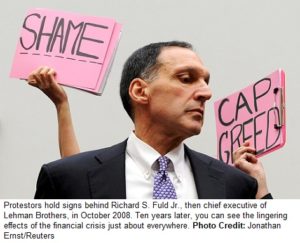
This is an example of a Watch Dog, the group FocusEconomics – see Appendix B VIDEO; they monitor the economic activity in the Latin America & Caribbean region and report to their clients accordingly. This is their summary of the full Caribbean region:

Strong fixed investment and spillovers from the expansion in the U.S. economy.

FocusEconomics do not rate each of the 30 Caribbean member-states, just a select few. This group of professional economists recognize that the Caribbean region has been burdened with repercussions from the Great Recession, and declare that only now is the recovery starting to take hold. See here, a sample of their projections for 2018 and beyond:

Belize FocusEconomics panelists expect GDP to expand 1.9% in 2018; continuing the recovery trend in the last 5 years: 2013: 1.6; 2014: 1.7; 2015: 1.8; 2016: 1.8; 2017: 1.9
Source: https://www.focus-economics.com/countries/belize
Dominican Republic FocusEconomics panelists expect GDP growth of 5.2% in 2018; continuing the recovery trend in the last 5 years: 2013: 4.9; 2014: 7.6; 2015: 7.0; 2016: 6.6; 2017: 4.6
Source: https://www.focus-economics.com/countries/dominican-republic
Haiti Reconstruction efforts should continue to drive growth rates, but political instability risks derailing the outlook. Haiti is vulnerable to the ending of the Temporary Protected Status for Haitians in the U.S. starting in July 2019, which will hit remittance inflows. FocusEconomics panelists foresee growth of 2.1% in 2018, which is down 0.1 percentage points from last month’s forecast. The panel expects the economy to expand 2.8% in 2019. The last five years recorded these growth rates: 2013: 4.2; 2014: 2.8; 2015: 1.2; 2016: 1.5; 2017: 1.2
Source: https://www.focus-economics.com/countries/haiti
Jamaica Moderating growth but still robust global economic activity and a pickup in mining output are expected to drive growth this year and the next. Panelists expect GDP growth of 1.9% in 2018, up 0.3 percentage points from last month’s forecast, and 2.2% in 2019. The last five years recorded these growth rates: 2013: 0.5; 2014: -0.7; 2015: 0.9; 2016: 1.4; 2017: 0.5
Source: https://www.focus-economics.com/countries/jamaica
Puerto Rico Due to a low base effect from last year’s dismal economic performance (i.e. Hurricane Maria) and the stimulus received from federal disaster relief funding, the economy is likely to grow in FY 2019. Our panelists forecast that GNP will expand 4.3% in FY 2019, and 2.9% in FY 2020. The last five years recorded these growth rates: 2013: -0.1; 2014: -1.8; 2015: -0.8; 2016: -1.3; 2017: -2.4
Source: https://www.focus-economics.com/countries/puerto-rico
Trinidad and Tobago Growth should accelerate in 2018 and over the following few years as new gas projects come online; these which should also support recovery in the non-oil economy. FocusEconomics panelists expect growth of 1.4% this year, and 2.0% in 2019. The last five years recorded these growth rates: 2013: 2.7; 2014: -0.6; 2015: -0.6; 2016: -2.3; 2017: NA
Source: https://www.focus-economics.com/countries/trinidad-tobago

Considering these assessments, there is no doubt about the Caribbean’s economic disposition: we are parasites of the US economy, not protégés. Our primary activity for our service based economy is tourism – catering to North American snowbirds; those escaping harsh winters during the peak months. Their leisure is our business; our business is their leisure.

The prime directive of the CU/CCB roadmap is to optimize the economic engines of the region to elevate the economies from the parasite status to starting the journey to become protégés. This need was pronounced early in the Go Lean book, in the opening Declaration of Interdependence – (Page 13) – with these statements:

xxiv. Whereas a free market economy can be induced and spurred for continuous progress, the Federation must install the controls to better manage aspects of the economy: jobs, inflation, savings rate, investments and other economic principles. Thereby attracting direct foreign investment because of the stability and vibrancy of our economy.

xxv.   Whereas the legacy of international democracies had been imperiled due to a global financial crisis, the structure of the Federation must allow for financial stability and assurance of the Federation’s institutions. To mandate the economic vibrancy of the region, monetary and fiscal controls and policies must be incorporated as proactive and reactive measures. These measures must address threats against the financial integrity of the CU and of the member-states.

The Go Lean book – available to download for free – provides 370-pages of turn-by-turn instructions on “how” to adopt new community ethos, plus the strategies, tactics, implementations and advocacies to execute so as to reboot, reform and transform the societal engines of Caribbean society. We never want to be in such a vulnerable position again, as we were in 2008, and the years thereafter. We must have technocratic oversight of the systems of commerce so that we can finally enjoy some diversification. This is perhaps the biggest-best lesson to glean from the 2008 crisis. But there are more lessons too; in fact, there is an advocacy in the book that relates specifically to lessons from that crisis. Consider the specific summaries, excerpts and headlines from the book on Page 136 entitled:

10 Lessons Learned from 2008

1 Lean-in for the Caribbean Single Market
This treaty unifies the region into a single economy of 30 countries, for 42 million people and a GDP of over $800 Billion. The neighbor to the northwest of the Caribbean, the US, is a unified economy of 50 states & 300 million people; they are the best example of economic prosperity in history. But the US suffered an economic “blood-bath” in the 2008 Great Recession; they lost $11 Trillion in net worth, mostly due to mortgage-based securities (MBS). Many lessons abound. The danger stemmed from banks initiating bad mortgages, then packaging them on the capital market for sale (globally) as bonds with no outsiders discerning the strength, or weakness, of the underlying mortgage assets.
2 Wall between Commercial and Investment Banking
3 Lax Oversight – NINJA Loans
In the aftermath of the Great Recession, there were many “autopsies” and post-mortem analysis on the root-causes and systemic risks. Most blamed the lax oversight in the housing and mortgage industries, where there were sub-prime mortgages jokingly described as NINJA loans (No-Income-No-Job-no-Assets). Many legislators attempted to return to some of the common sense provisions that protected the economy for the 65 years of “Glass-Steagall”; there were all these failed bills: the “Banking Integrity Act of 2009”, “SAFE Banking Act of 2010”, and the Return to Prudent Banking Act of 2011. A softer banking reform did pass, Dodd–Frank Wall Street Reform and Consumer Protection Act (2010).
4 Volcker Rules
The Dodd-Frank Act included the Volcker Rule, which among other things limited proprietary trading by banks and their affiliates. This proprietary trading ban prevents commercial banks and their affiliates from acquiring non-governmental securities with the intention of selling those securities for a profit in the near term. Some have described the Volcker Rule, particularly its proprietary trading ban, as a return to some prudence of “Glass-Steagall”, as “Glass–Steagall Lite”.
5 Credit Rating Reporting – Institutional and Individual
6 Opinions: Disclosure Requirement
7 Derivatives: As Insurance Product, Should Have Reserves
8 Leverage – Common Sense Restraints
Banking risk is managed by controlling leverage, the magnifying factor compared to equity that borrowing money allows for a bank. Banking regulations best practices keeps leverage amount near 12-to-1. In 2008, Lehman Brothers leverage rate was pegged at 31-to-1; the more they borrowed the less capital equity they featured, so profits, and losses, were magnified. The mortgage crisis led to Lehman Brothers massive losses, then bankruptcy; the US largest at $691 Billion.
9 Consumer Protections
10 Systemic Risk – Economic Security
The CU will monitor and mitigate systemic risks in the financial systems because failure can be cascading. This area, financial markets oversight, is where laissez-fare government oversight should end – economic security is too vital.

2008 was a giant mess for the US. We want to learn and apply lessons from their experiences. But truthfully, we have no power there. We have no vote and no voice to change them. We can only protect ourselves from their abusive activities; (the abuse to the American-self and the interconnected world). The bad trend of America stripping the new financial protections has begun – already after less than 10 years. This has been addressed in prior Go Lean commentaries; see a sample here:

https://goleancaribbean.com/blog/?p=8379 Fallacy of Going back to Self-Regulation of Economic Centers
https://goleancaribbean.com/blog/?p=7601 Returning to the Abusive Policies of Debt
https://goleancaribbean.com/blog/?p=3397 Christmas Present for the Banks – Rolling back some of Dodd-Frank
https://goleancaribbean.com/blog/?p=2259 Lax Regulation and Prosecutors again ,,, for American Business

So if we cannot change America, all we can do to prepare for the worst. We must first diversify our economy away from America First; we must no longer be parasites. The related subjects of rebooting the Caribbean economy – starting first by diversifying away from tourism – has been a frequent topic for Go Lean blog-commentaries; see a sample here:

https://goleancaribbean.com/blog/?p=15346 Industrial Reboot – A Series on Diversified Jobs
https://goleancaribbean.com/blog/?p=14242 Leading with Money Matters – Follow the Jobs
https://goleancaribbean.com/blog/?p=10585 Two Pies: Economic Plan for a New Caribbean
https://goleancaribbean.com/blog/?p=833 One currency, divergent economies

This is the quest of the Go Lean/CU roadmap, to reboot the societal engines of the region, the member-states individually and the region as a whole – in a Single Market. The roadmap details these 3 prime directives:

This is the quest for the Caribbean region, it is not unrealistic. It is conceivable, believable and achievable. Now is the time to lean-in to this roadmap for the CU. This is how we can make the the Caribbean homeland a better place to live, work and play. 🙂

Download the free e-Book of Go Lean … Caribbean – now!

Sign the petition to lean-in for this roadmap for the Caribbean Union Trade Federation.

—————

Appendix A – Opinion: We’re Measuring the Economy All Wrong
Sub-title: The official statistics say that the financial crisis is behind us. It’s not.
By: David Leonhardt

Ten years after the collapse of Lehman Brothers, the official economic statistics — the ones that fill news stories, television shows and presidential tweets — say that the American economy is fully recovered.
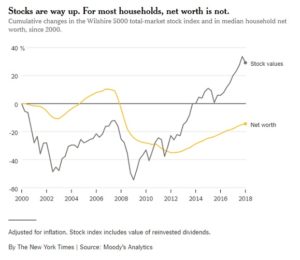
The unemployment rate is lower than it was before the financial crisis began. The stock market has soared. The total combined output of the American economy, also known as gross domestic product, has risen 20 percent since Lehman collapsed. The crisis is over.

But, of course, it isn’t over. The financial crisis remains the most influential event of the 21st century. It left millions of people — many of whom were already anxious about the economy — feeling much more anxious, if not downright angry. Their frustration has helped create a threat to Western liberal democracy that would have been hard to imagine a decade ago. Far-right political parties are on the rise across Europe, and Britain is leaving the European Union. The United States elected a racist reality-television star who has thrown the presidency into chaos.

Look around, and you can see the lingering effects of the financial crisis just about everywhere — everywhere, that is, except in the most commonly cited economic statistics. So who are you going to believe: those statistics, or your own eyes?

Over the course of history, financial crises — and the long downturns that follow — have reordered American society in all sorts of ways. One of those ways happens to involve the statistics that the government collects. Crises have often highlighted the need for new measures of human well-being.

The unemployment rate was invented in the 1870s in response to concerns about mass joblessness after the Panic of 1873. The government’s measure of national output, now called G.D.P., began during the Great Depression. Senator Robert La Follette, the progressive hero from Wisconsin, introduced the resolution that later led to the measurement of G.D.P., and the great economist Simon Kuznets, later a Nobel laureate, oversaw the first version.

Almost a century later, it is time for a new set of statistics. It’s time for measures that do a better job of capturing the realities of modern American life.

As a technical matter, the current batch of official numbers are perfectly accurate. They also describe some real and important aspects of the American economy. The trouble is that a handful of statistics dominate the public conversation about the economy despite the fact that they provide a misleading portrait of people’s lives. Even worse, the statistics have become more misleading over time.

The main reason is inequality. A small, affluent segment of the population receives a large and growing share of the economy’s bounty. It was true before Lehman Brothers collapsed on Sept. 15, 2008, and it has become even more so since. As a result, statistics that sound as if they describe the broad American economy — like G.D.P. and the Dow Jones industrial average — end up mostly describing the experiences of the affluent.

The stock market, for example, has completely recovered from the financial crisis, and then some. Stocks are now worth almost 60 percent more than when the crisis began in 2007, according to a inflation-adjusted measure from Moody’s Analytics. But wealthy households own the bulk of stocks. Most Americans are much more dependent on their houses. That’s why the net worth of the median household is still about 20 percent lower than it was in early 2007. When television commentators drone on about the Dow, they’re not talking about a good measure of most people’s wealth.

The unemployment rate has also become less meaningful than it once was. In recent decades, the number of idle working-age adults has surged. They are not working, not looking for work, not going to school and not taking care of children. Many of them would like to work, but they can’t find a decent-paying job and have given up looking. They are not counted in the official unemployment rate.

All the while, the federal government and much of the news media continue to act as if the same economic measures that made sense decades ago still make sense today. Habit comes before accuracy.

Fortunately, there is a nascent movement to change that. A team of academic economists — Gabriel Zucman, Emmanuel Saez and Thomas Piketty (the best-selling author on inequality) — has begun publishing a version of G.D.P. that separates out the share of national income flowing to rich, middle class and poor. For now, its data is published with a lag; the most recent available year is 2014. But the work is starting to receive attention from other academics and policy experts.

In the Senate, two Democratic senators, including Chuck Schumer, the party leader, have introduced a bill that would direct the federal government to publish a version of the same data series. Heather Boushey, who runs the Washington Center for Equitable Growth, told me that it could be the most important change in economic data collection in decades.

Source: New York Times – Posted September 15, 2018; retrieved September 20, 2018 from: https://www.nytimes.com/2018/09/14/opinion/columnists/great-recession-economy-gdp.html

—————-

Appendix B VIDEO – About FocusEconomics – https://youtu.be/L2Ys5GH_tmw

Published on Aug 2, 2018 – FocusEconomics is a leading provider of economic analysis and forecasts for 127 countries in Africa, Asia, Europe and the Americas, as well as price forecasts for 30 key commodities. The company is supported by an extensive global network of analysts.

Since its launch in 1999, FocusEconomics has established a solid reputation as a reliable source for timely and accurate business intelligence among Clients from a variety of industries, including the world’s major financial institutions, multinational companies and government agencies.

Source: Retrieved September 19, 2018 from: https://www.focus-economics.com/about-us

Share this post:
, ,
[Top]

Lessons Learned from 2008: Righting The Wrong – ENCORE

Learning lessons from the past means that we will not succumb to the same risks, threats and dangers.

Is this the case for the Caribbean? Have we truly learned from the Great Recession of 2008? Are we able to avoid those threats and overcome any dangers that may arise … anew.
Doubtful!

In the 10 years since 2008, our Caribbean region have only declined, not improved. We have still not recovered. 🙁

This is the continuation of a series of commentaries relating the Lessons Learned from 2008.  This one – entry 3 of 4 in this series from the movement behind the book Go Lean … Caribbean – is in consideration of the “economic chaos” that led-up to the 2008 Financial Crisis and the lack of recovery in the Caribbean region. Our economic engines have been based primarily on tourism, so when the economic crisis befell our trading partners, we were affected worse – think parasites attached to a sick host.

Lesson for us: We must diversify!

The commentaries in the series are fully cataloged as follows:

  1. Lessons Learned from 2008 – The Long View – ENCORE
  2. Lessons Learned from 2008 – Too Big to Fail –vs- Too Small to Thrive
  3. Lessons Learned from 2008 – Righting The Wrong – ENCORE
  4. Lessons Learned from 2008 – Still Recovering

All of these commentaries relate to “how” the stewards for a new Caribbean can shepherd the economic engines of the region to apply the best-practices to finally make progress. We need a more diversified economy. So we must learn from the mistakes of the past, ours and others.

This is the purpose of this commentary to apply lessons learned from the mistakes of the US housing crisis and apply the lessons here. We must learn how “they righted that wrong”. See this Encore of a previous blog-commentary here from May 6, 2017, as follows:

——————————-

Go Lean Commentary – Righting a Wrong: 2008 Housing Crisis

Have you ever made a mistake?

“Let him that is without sin, cast the first stone” – Jesus Christ (The Bible @ John 8:7)

Since everyone makes mistakes, a good measure of a good character is how we “Right the Wrongs” that we may have caused to others. This could be the measurement of a good man (or woman), a good company and a good community. People want to be associated with goodness. They will travel great lengths and at great cost to associate with good people, affiliate with good companies and live in a good community.

CU Blog - Righting a Wrong - 2008 Housing Crisis - Photo 1

There are lessons to be learned when people, companies and communities make mistakes and then make concerted efforts to “Right the Wrongs”. These are lessons that can be applied right here in the Caribbean so as to supplement our efforts to elevate our society, to make the Caribbean homeland a better place to live, work and play.

This is more than just an academic discussion for the Caribbean; we are known to have our defects – we repeatedly make mistakes, we endanger people, oppress them, suppress their rights and then carry on unrepentant – this all results in “pushing” people away, causing societal abandonment. We must recognize these defects and repent, reconcile, reform and “Right the Wrongs” of our society.

This is the purpose of the book Go Lean…Caribbean, to help reform and transform the societal engines in the 30 member-states of the Caribbean region. The book serves as a roadmap for the introduction and implementation of the Caribbean Union Trade Federation (CU). The Go Lean/CU roadmap applies best-practices for community empowerment and features these 3 prime directives, proclaimed as follows:

  • Optimization of the economic engines to grow the regional economy to $800 Billion & create 2.2 million new jobs.
  • Establishment of a security apparatus to protect public safety and ensure the economic engines of the region.
  • Improvement of Caribbean governance to support these engines.

What “Wrongs” exactly can we consider to glean lessons-learned for our community empowerment? This commentary is 1 of 4 in a series considering how to “Right a Wrong”. The full series is as follows:

  1. Righting a Wrong: 2008 Housing Crisis
  2. Righting a Wrong: Puerto Rico’s Bankruptcy
  3. Righting a Wrong: Volkswagen Emissions Crisis
  4. Righting a Wrong: Takata Air-Bags

These “Wrongs” relate to bad actions and inaction by different actors. The image and reputations of stakeholders “take a hit” while the issue is fresh. But eventually the recovery – Righting the Wrong – can override and became the lasting legacy. This first wrong – 2008 Housing Crisis – was one of the episodes of the recent Great Recession. The Go Lean book sought to catalog the cause-and-effect of many 2008 developments from an inside perspective. The book identifies its authority to comment on these developments. See this “Who We Are” quotation (Page 8) and the VIDEO in the Appendix below:

This book is published by the SFE Foundation, a community development foundation chartered for the purpose of empowering and re-booting economic engines. …

2008 – The peak day of the recent global financial crisis was September 15, 2008. On this day, Wall Street giant Lehman Brothers filed for bankruptcy protection, and eventual dissolution, after succumbing to the weight of over-leverage in mortgage-backed securities. There is an old observation/expression that states that “there are 3 kinds of people in the world, those who make things happen, those who watch things happen and those who wonder ‘what happened?’“
Principals of the SFE Foundation were there in 2008 … engaged with Lehman Brothers; on the inside looking out, not the outside looking in. Understanding the anatomy of the modern macro economy, allows the dissection of the processes and the creation of viable solutions.

Omaha – The book was initially composed in Omaha, Nebraska, the home of one of the world’s richest men, Warren Buffet – the “Oracle of Omaha” – CEO of corporate giant Berkshire Hathaway. While the United States experienced boom and bust during the Great Recession, Omaha remained a stable, consistent model of prosperity (in March 2008 the unemployment rate in Omaha was 3.9 percent). This was no accident. This community embraces a certain ethos that is fundamental for stability and vibrancy: good corporate citizenship. Omaha is home to other corporate movers-shakers in addition to Berkshire Hathaway; (see Appendix A [on Page 254]). This community example is purported as a model for assimilation by the Caribbean region.

The Go Lean book, though composed in 2013, set the pattern for the Caribbean region to look-listen-learn from models, samples and examples like these. This allows for the regional stewards and administrators to structure policies and procedures so as to apply the lessons learned in their jurisdictions. This was an original intent. As a planning tool, the Go Lean book commenced with a Declaration of Interdependence, pronouncing the need for regional integration so as to improve our society based on lessons learned from other societies. See a stanza here (Page 14):

xxxiii. Whereas lessons can be learned and applied from the study of the recent history of other societies, the Federation must formalize statutes and organizational dimensions to avoid the pitfalls of communities like East Germany, Detroit, Indian (Native American) Reservations, Egypt and the previous West Indies Federation. On the other hand, the Federation must also implement the good examples learned from developments/communities like New York City, [Omaha,] Germany, Japan, Canada, the old American West and tenants of the US Constitution.

So here is the Wrong … and here is the “Righting of the Wrong” associated with the 2008 Housing Crisis:

The Wrong:
In 2008 a perfect storm of economic disasters hit the US and indeed the entire world. The most serious began with the collapse of housing bubbles in California and Florida, and the collapse of housing prices and the construction industries. Millions of mortgages (averaging about $200,000 each) had been bundled into securities called collateralized debt obligations that were re-sold worldwide. Many banks and hedge funds had borrowed hundreds of billions of dollars to buy these securities, which were now “toxic” because unknown values and no buying markets.

A series of the largest banks in the US and Europe collapsed; some went bankrupt, such as Lehman Brothers with $690 billion in assets; others such as Citigroup, the leading insurance company AIG, and the two largest mortgage companies (Fannie Mae, Freddie Mac) were bailed out by the US government. Congress voted $700 billion in bailout money, and the Treasury and Federal Reserve committed trillions of dollars to shoring up the financial system. But the measures did not reverse the declines – banks drastically tightened their lending policies, despite infusions of federal money. The government, for the first time, took major ownership positions in some banks. The stock market plunged 40%, wiping out tens of trillions of dollars in wealth (estimates tallying $11 Trillion); housing prices fell 20% nationwide wiping out trillions more. By late 2008 distress was spreading beyond the financial and housing sectors, especially as the “Big Three” of the automobile industry (General Motors, Ford and Chrysler) were on the verge of bankruptcy, and the retail sector showed major weaknesses. Critics of the $700 billion Troubled Assets Relief Program (TARP) expressed anger that much of the TARP money that had been distributed to banks was seemingly unaccounted for, with banks being secretive on the issue.[45] [See this portrayal in these photos or the VIDEO at https://youtu.be/N9YLta5Tr2A.]

CU Blog - Righting a Wrong - 2008 Housing Crisis - Photo 2

CU Blog - Righting a Wrong - 2008 Housing Crisis - Photo 3

CU Blog - Righting a Wrong - 2008 Housing Crisis - Photo 4

CU Blog - Righting a Wrong - 2008 Housing Crisis - Photo 5

Righting the Wrong:
In February 2009, [the newly inaugurated] President Barack Obama signed the American Recovery and Reinvestment Act; the bill provided $787 billion in stimulus through a combination of spending and tax cuts. The plan was largely based on the Keynesian theory that government spending should offset the fall in private spending during an economic downturn; otherwise the fall in private spending would perpetuate itself and productive resources, such as the labor hours of the unemployed, will be wasted.[46] Critics at the time claimed that government spending cannot offset a fall in private spending because government must borrow money from the private sector in order to add money to it. However, most economists do not think such “crowding out” is an issue when interest rates are near zero and the economy is stagnant.

The recession period officially expended only 6 quarters (Q4-2007 to Q1-2009), but the effects were longer lasting. This was deemed the Great Recession because of the fundamental shifts the economy made. For example, in the US, jobs paying between $14 and $21 per hour made up about 60% those lost during the recession, but such mid-wage jobs have comprised only about 27% of jobs gained during the recovery through mid-2012. In contrast, lower-paying jobs constituted about 58% of the jobs regained.

As of December 2012, the US Federal Reserve Bank reported that the net worth of US households recovered by $1.7 trillion to $65 trillion during Q3-2012. It was still below the record high of $67 trillion during Q3-2007, but up $13.5 trillion since its recent cyclical low during Q1-2009.[47]

Source: Book Go Lean…Caribbean Page 69 – 70

None of the Boom-and-Bust homes in this drama were in the Caribbean; (though Puerto Rico and US Virgin Islands are American territories and did have crises, their home pricing were only mildly affected, going up or going down only a little).

While this was a crisis for continental America, due to inaction on the part of Caribbean regional stewards, this 2008 crisis brought devastation to our region. In some cases, we are still reeling from it; they are near Failed-State status as a result.

There were bad actors in this crisis. They had their Day of Reckoning as well. See these previous blog-commentaries that detailed the aftershocks of the 2008 economic crisis:

https://goleancaribbean.com/blog/?p=10187 Day of Reckoning for NINJA Loans
https://goleancaribbean.com/blog/?p=8379 Economic Fallacy: Self-regulation of the Centers of Economic Activity
https://goleancaribbean.com/blog/?p=6531 A Lesson in History – Book Review of the ‘Exigency of 2008’
https://goleancaribbean.com/blog/?p=1896 The Crisis in Black Homeownership
https://goleancaribbean.com/blog/?p=1309 5 Steps of a Bubble
https://goleancaribbean.com/blog/?p=353 Book: Wrong Economic Policy Disasters and What We Can Learn

One mission of this Go Lean roadmap is to apply the lessons from this American Drama in the stewardship of our Caribbean homeland. Since we also had financial upheavals in our region, many things these were due to contagions of the American crisis. So we needed remediation of our financial institutions as well. This point was detailed in this previous blog-commentary from November 14, 2014:

‘Too Big To Fail’ – Caribbean Version

There were [financial] crises on 2 levels: the Global Financial Crisis of 2007 – 2009 and regional financial banking dysfunctions. See here:

Global – The banks labeled “Too Big To Fail” impacted the world’s economy during the Global Financial Crisis. Though the epi-center was on Wall Street, the Caribbean was not spared; it was deeply impacted with onslaughts to every aspect of Caribbean life (think: Tourism decline). In many ways, the crisis has still not passed.

Regional – The Caribbean region has not been front-and-center to many financial crises in the past, compared to the 465 US bank failures between 2008 and 2012. But over the past few decades, there have been some failures among local commercial banks and affiliated insurance companies where the institutions could not meet demands from depositors for withdrawal. Consider these examples from Jamaica and Trinidad:

  • There was a banking crisis in Jamaica in the 1990s. In January 1997, the decision was made to establish the Financial Sector Adjustment Company (FINSAC) with a mandate to take control and restructure the financial sector. FINSAC took control of 5 of the 9 commercial banks, 10 merchant banks, 21 insurance companies, 34 securities firms and 15 hotels. It was also involved in the re-capitalization and restructuring of 2 life insurance companies, with the requirement that they relinquish their shares in 2 commercial banks.[48]
  • For Trinidad, the notable failure was the holding company CL Financial, with subsidiaries Colonial Life Insurance Company and the CLICO Investment Bank (CIB). In mid-January 2009, this group approached the Central Bank of Trinidad and Tobago requesting financial assistance due to persistent liquidity problems. The global financial events of 2008 combined with other factors placed tremendous strain on the group’s Balance Sheet. The CL Financial lines of business ranged from the areas of finance and energy to manufacturing and real estate services. The group’s assets were estimated at US$16 billion at year-end 2007, and it had a presence in at least thirty countries worldwide, including Barbados. Most significantly, the company held investments in real estate in Trinidad and the United States of America, and in the world’s largest methanol plant prior to its difficulties.

Going forward, there needs to be a solution to mitigate systemic threats that may plague the Caribbean region.

This is the quest of the Go Lean roadmap. The book first presents the community ethos that the region needs to adopt; then it presents detailed strategies, tactics, implementations and advocacies for the economic stewards to deploy. These constitute Big Ideas for the Caribbean region.

For one, there is the plan for a Caribbean Central Bank!

Among the Big Ideas of the Caribbean Union Trade Federation is the introduction and assimilation of the Caribbean Central Bank (CCB) and the Caribbean Dollar. The CCB is actually a cooperative among the region’s Central Banks. All the existing Central Banks, at the time of ascension, will cede their monetary powers to the CCB and continue their participation using well-established cooperative principles. – Go Lean…Caribbean book Page 73

Secondly, there is the tactic of a separation-of-powers between the CU/CCB entities and the member-states in the region. This directive allows for the transfer of oversight and administration of certain state functions to the CU federal authorities. This is modeled after the European Union and the European Central Bank.

This is how the Go Lean roadmap proposes to “Right the Wrongs” of the recent financial crises: to incorporate the organizational structure with the mandate to administer and shepherd the region’s monetary and banking eco-system. This intent was pronounced at the outset, in the opening Declaration of Interdependence, enshrining the need for regional integration on monetary matters for Caribbean society. See the related stanzas here (Pages 12, 13):

xi. Whereas all men are entitled to the benefits of good governance in a free society, “new guards” must be enacted to dissuade the emergence of incompetence, corruption, nepotism and cronyism at the peril of the people’s best interest. The Federation must guarantee the executions of a social contract between government and the governed.

xxiv. Whereas a free market economy can be induced and spurred for continuous progress, the Federation must install the controls to better manage aspects of the economy: jobs, inflation, savings rate, investments and other economic principles. Thereby attracting direct foreign investment because of the stability and vibrancy of our economy.

xxv. Whereas the legacy of international democracies had been imperiled due to a global financial crisis, the structure of the Federation must allow for financial stability and assurance of the Federation’s institutions. To mandate the economic vibrancy of the region, monetary and fiscal controls and policies must be incorporated as proactive and reactive measures. These measures must address threats against the financial integrity of the Federation and of the member-states.

Now is the time for the Caribbean to embrace change. From an economic perspective, we have done wrong … in the past – at a minimum, we are guilty of inaction. We now need to “right those wrongs” or especially to develop the defenses to ensure no future damage to our economy by dysfunctional administration of the region’s monetary and economic engines. It is time for new stewards of the Caribbean economy, security and governing engines. It’s time for the CU/CCB. We must prove that we have learned from our past and that of our trading partners. We must do better and be better.

A lot is at stake: the hopes and dreams of our people, young and old. They all want; we all want a better Caribbean; better places to live, work and play. 🙂

Download the free e-Book of Go Lean … Caribbean – now!

Sign the petition to lean-in for the roadmap for the Caribbean Union Trade Federation.

————

Footnote References

45 – Holt, Jeff. “A Summary of the Primary Causes of the Housing Bubble and the Resulting Credit Crisis: A Non-Technical Paper”. 2009, 8, 1, 120-129. The Journal of Business Inquiry. Retrieved 15 February 2013.

46 – Congressional Budget Office – “Estimated Impact of the American Recovery and Reinvestment Act on Employment and Economic Output from October 2011 Through December 2011”. February 2012; retrieved June 2013.

47 – American Enterprise Institute – Retrieved December 2012 from: www.aei-ideas.org/…/u-s-net-worth-hasrecovered-13-5-trillion-but-still- below-2007-peak/

48 – Retrieved November 14, 2014 from: http://www.centralbank.org.bb/WEBCBB.nsf/WorkingPapers/DB0CF759B9E97FB9042579D70047F645/$FILE/Exploring%20Liquidity%20Linkages%20among%20CARICOM%20Banking%20Systems.pdf

————

Appendix VIDEOThe 2008 Financial Crisis: Crash Course Economicshttps://youtu.be/GPOv72Awo68

Published on Oct 21, 2015 – Today on Crash Course Economics, Adriene and Jacob talk about the 2008 financial crisis and the US Goverment’s response to the troubles. So, all this starts with home mortgages, and the use of mortgages as an investment instrument. For years, it seemed like the US housing market would go up and up. Like a bubble or something. It turns out it was a bubble. But not the good kind. And the government response was…interesting. Anyway, why are you reading this? Watch the video!
More Financial Crisis Resources:
Financial Crisis Inquiry Report: http://www.gpo.gov/fdsys/pkg/GPO-FCIC…
TAL: Giant Pool of Money: http://www.thisamericanlife.org/radio…
Timeline of the crisis: https://www.stlouisfed.org/financial-…
http://www.economist.com/news/schools…


Share this post:
, , ,
[Top]

Lessons Learned from 2008: Too Big to Fail –vs- Too Small to Thrive

Go Lean Commentary

It is now 10 years later. The world is remembering the Financial Crisis of 2008.

This is the anniversary of the peak day, that of Lehman Brothers bankruptcy filing on September 15, 2008. The world has endured a lot since that time, we have looked, listened and learned. We have even added some new phraseology to our vocabulary; think …

… “Too Big to Fail”, a theory in economics that asserts that certain corporations, particularly financial institutions, are so large and so interconnected that their failure would be disastrous to the greater economic system, and that they therefore must be supported by government when they face potential failure.[1] .

“Too Big to Fail” was a Big Deal. This is more than just an academic discussion – see AUDIO Podcast below. In 2008 the biggest impact of the global financial contagions was the dilution of net worth for the citizens of the affected countries: US, Canada and Western Europe. These economies are the primary source of Caribbean tourists; since tourism is the primary economic driver, this was a real problem for the pocketbooks of every individual and institution in the region.

This is the continuation of a series of commentaries relating the Lessons Learned from 2008.  This one – entry 2 of 4 in this series from the movement behind the book Go Lean … Caribbean – is in consideration of the “economic chaos” that led-up to the 2008 Financial Crisis and the contrast between “Too Big to Fail” and “Too Small to Thrive”. Due to the contagions of 2008, the Caribbean also had economic collapse, but not because our banks are too big; rather they are too small – think parasite attached to a sick host – they have no leverage or shock-absorption from servicing the full region.

The commentaries in the series are fully cataloged as follows:

  1. Lessons Learned from 2008 –The Long View – ENCORE
  2. Lessons Learned from 2008 – Too Big to Fail –vs- Too Small to Thrive
  3. Lessons Learned from 2008 – Righting The Wrong – ENCORE
  4. Lessons Learned from 2008 – Still Recovering

All of these commentaries relate to “how” the stewards for a new Caribbean can shepherd the economic engines of the region to apply the best-practices to finally make progress; move forward, not stand still and not go backwards.

The book Go Lean…Caribbean serves as a roadmap to implement the technocratic Caribbean Union Trade Federation (CU) and Caribbean Central Bank (CCB) to provide better economic stewardship, to ensure that failures of the past do not re-occur.

What economic failures?

In a previous Go Lean blog-commentaries, it was detailed how our region has had to endure financial crises; yes this includes the Too Big to Fail collapse in the US but also home-grown ones in our neighborhood. The financial system we live in today has been transformed because of the impact and consequence of previous crises. So the banks that have the Too Big to Fail designation now get additional protection and can thusly grow – with less regard to risk. And grow, they have!

NEW YORK – MARCH 24: (FILE PHOTO) The JP Morgan Chase building is seen March 24, 2008 in New York City. The banking giant posted a $2.7 billion profit in the second quarter July 16, 2009, a 36% jump from 2008. Revenues were up 39%, at $25.62 billion. (Photo by Chris Hondros/Getty Images)

This was the summary from this news article/PODCAST here, where it explains that “just six banks now manage more than half the assets in the whole banking industry”. In fact, one sample bank, JPMorganChase, now manages US$2.8 trillion in assets; that’s more than the gross domestic product of Canada, Italy or Brazil. Listen to the PODCAST here and see that full transcript in the Appendix below:

Audio-Podcast– Once “too small to thrive,” now some banks are “too big to fail” –https://play.publicradio.org/api-2.0.1/d/podcast/marketplace/segments/2018/09/11/mp_20180911_seg_19_64.mp3

So how and why did community banking become national banking or global banking? One word: Consolidation. The foregoing PODCAST quotes:

“There’s been a tremendous amount of consolidation during the last four decades,” … “The American banking system went from about 13 or 14,000 commercial banks four decades ago down to closer to 5,000 now.”

This is the advocacy for the Caribbean, here in the Go Lean book. The strategy is for all the 30 member-states in the region to consolidate, collaborate and confederate to form a Single Market economy. The regional leverage allows for more growth because of a larger, stronger market. This consolidation – across 30 countries of 5 different colonial legacies and 4 languages – is for banking as well. This is to be shepherded by the CCB, a formal cooperative (collusion) of all the Central Banks in the region. The CCB will be ready for the heavy-lifting of this regional stewardship.

Without this cooperative, we will never have “Too Big to Fail”, instead we will only have “Too Small to Thrive”.

So imagine 1 currency, the Caribbean Dollar! Imagine the proliferation and liquidity of vibrant Capitals/Securities Market.

Welcome to the new Caribbean economy.

Here is where the Lessons from 2008 weigh heavy. A consolidated, integrated banking system will mean more linkages among the member-states of a new economic union. So the issue of financial contagions among these linked communities will now be a constant concern – so there must be a constant sentinel: the Caribbean Central Bank.

The prime directive of the CU/CCB roadmap is to optimize the economic engines of the region despite the reality of financial contagions. This need was pronounced early in the Go Lean book, in the Declaration of Interdependence – (Page 13):

xxv. Whereas the legacy of international democracies had been imperiled due to a global financial crisis, the structure of the Federation must allow for financial stability and assurance of the Federation’s institutions. To mandate the economic vibrancy of the region, monetary and fiscal controls and policies must be incorporated as proactive and reactive measures. These measures must address threats against the financial integrity of the CU and of the member-states.

The foregoing PODCAST relates the peril associated with banks only tied to a mono-industrial local economy; this quotation:

… Texas, where oil was king in the ‘80s. Texas had more banks than any other state. Regional banks, like those in Texas, were not diversified. They were tied to the local economy. So when the price of oil fell to $10 a barrel, hundreds of Texas banks failed.

The foregoing PODCAST helps us to appreciate the regional vision: We do NOT want to be “Too Small to Thrive”, but we do not want to grow to be “Too Big to Fail” either. There must be a happy medium, a “Goldilocks” destination.

VIDEO – Goldilocks and the Three Bears – https://youtu.be/PGI-4MrC_b8

TheLearningStation – Kids Songs and Nursery Rhymes

Published on Jul 8, 2016 – Your children will love this popular children’s fairy tale, “Goldilocks and the Three Bears” song and story! Goldilocks and the Three Bears is from the CD and CD Download “La Di Da, La Di Di, Dance with Me.” “La Di Da, La Di Di, Dance with Me”.

CD Download: http://store.learningstationmusic.com…

“La Di Da, La Di Di, Dance with Me” CD http://store.learningstationmusic.com…  

The Go Lean book provides 370-pages of turn-by-turn instructions on “how” to adopt new community ethos, plus the strategies, tactics, implementations and advocacies to execute so as to reboot, reform and transform the societal engines of Caribbean society … including banking and monetary control. We must have the technocratic bank supervision and oversight: assessing risk factors, monitoring risks, managing leverage and regulating industry performances.  There is an advocacy in the book that relates specifically to bank supervision; consider the specific plans, excerpts and headlines from the book on Page 199 entitled:

10 Reforms for Banking Regulations

1 Lean-in for the Caribbean Single Market
This treaty allows for the unification of the region into one market, creating a single economy of 30 member-states, 42 million people and the GDP impact of over $800 Billion. In addition, the CU treaty creates a security apparatus to defend against regional threats and systemic risks. When it comes to banking, without proper oversight, the financial systems can imperil the region’s economic security. Deficient oversight can also foster an environment for lawlessness with bad actors exploiting the lack of controls for money laundering, tax evasion and even funding terrorists. Many countries in the region have (had) a vibrant offshore banking industry. But with international reforms from the OECD (an arm of the IMF), US Treasury/Justice Departments, and other institutions, there has been external and internal pressure to reform the industry to curb illegal activities and cooperate more with cross border investigations. … The CU economic and security reboot will bring the balanced oversight, plus added protections like deposit insurance.
2 Foreign Currency Considerations
The Caribbean Dollar (C$) will be traded in the international market, so the need for various currencies will be minimized. Domestic currency devaluations were among the Failed-State indices that drove a lot of Caribbean citizens to emigrate. The reforms associated with securing the new regional currency, C$, is therefore vital. For example, all casinos in the region will be expected to “game” in Caribbean dollars.
3 Debit Cards & e-Government Disbursements
4 e-Purse and Internet Commerce
5 NFC and Mobile Payment Systems
6 Mortgage Banking
7 Credit Card Banking
8 Fair Credit Reporting
9 Fair Collection Practices
10 Bankruptcy Reform

The related subjects of banking oversight and optimizing  financial governance have been a frequent topic for Go Lean blog-commentaries; see a sample here:

Leading with Money Matters – The Almighty Dollar
Failure to Launch – Economics: The Quest for a ‘Single Currency
West African Case Study: ECOWAS to Launch ‘Single Currency’
Transforming ‘Money’ Countrywide
European Central Bank launch 1 Trillion Euro Stimulus
For Canadian Banks: Caribbean is a ‘Bad Bet’
5 Steps of a Bubble – Learning to make a resilient economy
Canadian Imperial Bank of Commerce failing investment in FirstCaribbean Bank
Barbados Central Bank records $3.7m loss in 2013
Dominica raises EC$20 million on regional securities market

The 2008 Great Recession / Financial Crisis exposed the trappings of the interconnected global economy. If we, in the Caribbean, are going to “play in this sandbox” – transact in this marketplace – then we must be prepared and On Guard, for the risks, threats and dangers.

Big Hairy Audacious Goal (BHAG)!

We were not prepared in 2008! We were Too Small to Thrive.

We must be ready now … and going forward! We must learn and apply this lesson from 2008.

This is the quest of the Go Lean/CU/CCB roadmap, to elevate the societal engines of the region, the member-states individually and the Single Market as a whole. Yes, we can! The roadmap details these 3 prime directives:

This quest is the BHAG for the Caribbean region, but it is conceivable, believable and achievable. Now is the time for change; time for all regional stakeholders, individuals and institutions, creditors and debtors, to lean-in to this roadmap for the CU and CCB.

The functioning of this roadmap is complex and complicated, requiring heavy-lifting. But the destination of this roadmap is simple: a better place to live, work and play. 🙂

Download the free e-Book of Go Lean … Caribbean – now!

Sign the petition to lean-in for this roadmap for the Caribbean Union Trade Federation.

——————–

APPENDIX – Once “too small to thrive,” now some banks are “too big to fail”
By: Sabri Ben-Achour

The idea behind “too big to fail,” of course, is that some institutions are just so massive and interconnected that their failure would mean disaster for the economy.

And today? Lots of firms seem to fit that classification.

Let’s just take JPMorgan Chase. It manages $2.8 trillion. That’s more than the gross domestic product of Canada, Italy or Brazil. Just six banks manage more than half the assets in the whole banking industry. Most of them would be considered too big to fail.

There was a time when banks were small and plentiful.

“At the all-time peak in the United States, around 1921 or 1922, there were 31,000 or 32,000 banks,” said Richard Sylla, New York University financial historian and professor emeritus.

The Great Depression wiped out thousands of banks, but for about 40 years after that, the number was stable. Until it wasn’t.

“There’s been a tremendous amount of consolidation during the last four decades,” Sylla said. “The American banking system went from about 13 or 14,000 commercial banks four decades ago down to closer to 5,000 now.”

One reason there were so many banks is because state laws ensured it. Federal law left the regulation of bank branches up to states. Different states had different rules, and rules within states could be pretty restrictive.

“For most of American history, banks were not able to cross state lines,” said Frederic Mishkin, Columbia University professor of banking and financial institutions. “In some states you could only have only one branch.”

Some banks lobbied for it to be this way, Mishkin said.

“This actually was a way for banks to not be as competitive, and particularly if you’re a bank in one state you don’t want to have people from other states come in and take away some of your business. So you’ll fight like hell to keep them out,” he said.

Just because there were a lot of banks back in the ‘70s and ‘80s does not mean they were good banks.

“I lived in Chicago in the 1980s, and the service was just horrendous because the competition was just terrible,” Mishkin said. “I had a case where they had a check that that was forged. They cashed it and they’re supposed to give me the money back. I never got it back. So it was a different world.”

But the real problem for banks of that era was that because they were small, they were fragile, said Robert Hendershott, hedge fund portfolio manager and Santa Clara University associate professor of finance. “Having tens of thousands of tiny little banks is economically insane,” he said. “It is not an efficient way to organize a banking system.”

Today we talk about banks being too big to fail, but back then they had the opposite problem.

“The U.S. banking industry was too small to thrive,” Hendershott said.

He points to Texas, where oil was king in the ‘80s. Texas had more banks than any other state. Regional banks, like those in Texas, were not diversified. They were tied to the local economy. So when the price of oil fell to $10 a barrel, hundreds of Texas banks failed. The number of banks in the United States also shrank during the thrift crisis in the late ‘80s and the recession in the early ‘90s.

It’s at this point that Congress started to take notice, and in 1994, it passed the Interstate Banking and Branching Efficiency Act.

“That was where Congress tore down all the barriers and banks became free to merge and grow across state lines,” Hendershott said.

And that is exactly what banks did. Through the Great Recession, banks consolidated even further as some failed and were bought up by others. And more banks went from “too small to thrive” to “too big to fail.”

This story is part of Divided Decade, a yearlong series examining how the financial crisis changed America. 

Source: Posted September 11, 2018; retrieved September 17, 2018 from: https://www.marketplace.org/2018/09/11/economy/divided-decade/once-too-small-thrive-now-some-banks-are-too-big-fail

Share this post:
, , ,
[Top]