Month: January 2018

The Spoken and Unspoken on Haiti

Go Lean Commentary

The US President said what?! 

He – Donald J. Trump – called Haiti a “shit-hole” country while negotiating the details for an immigration reform bill with his political opponents.

This declaration spewed controversy and disgust in the US … and abroad; even here in the Caribbean. See VIDEO’s here:

VIDEO 1 – The U.S.’s complicated relationship with a country Trump called a ‘shitholehttp://wapo.st/2ATEOSZ

According to the Washington Post, this is how ignorant you have to be to call Haiti a ‘shithole’.

President Trump’s defenders don’t know anything about Haiti’s history — or the United States’s. See the full article here: https://www.washingtonpost.com/news/posteverything/wp/2018/01/12/this-is-how-ignorant-you-have-to-be-to-call-haiti-a-shithole/?utm_term=.f82e10bad3d8

———-

VIDEO 2 – CNN and Fox News hosts react to Trump’s ‘shithole’ remark – https://youtu.be/NrynNeqx48I

Published on Jan 12, 2018 – President Trump referred to African nations and Haiti as “shithole” countries on Jan. 11. Here’s how hosts on CNN and Fox News reacted. Subscribe to The Washington Post on YouTube: http://bit.ly/2qiJ4dy

Follow us:
Twitter: https://twitter.com/washingtonpost
Instagram: https://www.instagram.com/washingtonp…
Facebook: https://www.facebook.com/washingtonpost/

See commentary from the Caribbean Intelligentsia here posted on the regional site Caribbean News Now:

Commentary: President Trump’s ‘shithole’ comments unfortunately deserve follow up

By: Youri A Kemp

In a bi-partisan meeting with Democrat and Republican lawmakers on immigration and particularly on the Deferred Action for Childhood Arrivals (DACA) portion of the immigration reform package, in an unprecedented show of extreme ignorance and crassness, the president of the USA, Donald Trump, referred to Haiti, El Salvador and African countries as “shitholes”.

No further comment [is] necessary, but I will comment anyway. I will because the overt stupidity of such a statement, particularly a statement made in the presence of Democrat and Republican lawmakers, shows how “off the rails” and “loose with his mouth” President Trump is.

For me personally, I cry foul on such comments. As everyone should. The president, or any world leader, should not be using such language in the open and especially not disparaging other countries, no matter how he or the grouping may feel about the issue.

See the full commentary here: http://wp.caribbeannewsnow.com/2018/01/12/commentary-president-trumps-shithole-comments-unfortunately-deserve-follow/#comment-1747 

Source: Caribbean New Noe e-Zine; posted January 12, 2018; retrieved January 16, 2018

No wait, it wasn’t “shit-hole” that he said, it was “shit-house”.

No wait, maybe he didn’t say these at all!

Just what is spoken and what is unspoken about the disposition of Haiti in the minds of American leaders?

The Bible says:

“From the abundance of the heart, the mouth speaks” – Luke 6:45

For people to say something like the above about a Caribbean country shows that truly, they have no regard for that country. Take away their words and study their actions (i.e. policies) and we see a consistent trend – spoken or unspoken – that there is really no regard for Haiti – and other Caribbean member-states.

The movement behind the book Go Lean…Caribbean – available to download for free – have said a lot about Haiti. We have told the truth, and the truth is not pretty.

Haiti is effectively a Failed-State.

Yet, still we make this statements in love – not hate; not bias; not prejudice nor blatant racism. We have also followed-up from “talking this talk” to “walking the walk” and have presented an Action Plan, a Way Forward for reforming and transforming Haiti. We have been doing this all along – since the start of these commentaries. See the previous submissions here:

https://goleancaribbean.com/blog/?p=13916 Haiti – Beauty ‘Only a Mother Can Love’
Many women sacrifice to help Haiti create jobs and elevate their society. The Go Lean roadmap presents a model for Self-Governing Entities as a job-creating engine.
https://goleancaribbean.com/blog/?p=13105 Fixing Haiti – Can the Diaspora be the Answer?
Any plan that encourages people to leave their homeland and try to remember it later when they find success, double-downs on failure. We need solutions that encourage our people to prosper where planted in the homeland, like Haiti.
https://goleancaribbean.com/blog/?p=10336 A Lesson in History: Haiti’s Reasonable Doubt
There is the little-known history of an American occupation in Haiti in 1915. This suppressed, oppressed and repressed this island-nation further. Haiti needs to accept that America is not always its friend.
https://goleancaribbean.com/blog/?p=8767 A Lesson in History: Haiti 1804
Haiti has the proud legacy of being the first successful Slave Rebellion to liberate its people and start the effort of nation-building. Though Haiti became a Republic, they paid a steep price for the brazen acts of 1804.
https://goleancaribbean.com/blog/?p=8508 Support sought for kids left behind by UN troops in Haiti.
The UN’s efforts to help Haiti was a good intention, but there were many bad consequences. Rather than the UN, Haiti needs its neighbors to help.
https://goleancaribbean.com/blog/?p=7896 The Logistics of Disaster Relief
When Caribbean communities suffer from disasters – earthquakes and hurricanes – we need technocratic efficiency to manage the relief and response. The past track record is truly sad.
https://goleancaribbean.com/blog/?p=5695 Repenting, Forgiving and Reconciling the Past
Haiti has been on the “wrong-side” of so many atrocities, there must be a reconciliation focus to have peace with neighbors, going forward.
https://goleancaribbean.com/blog/?p=5462 In Search Of The Red Cross’ $500 Million In Haiti Relief.
The 2010 earthquake devastation brought-in a lot of money that somehow never made it to Haiti. This proves that Caribbean people need the maturity to manage charities ourselves.
https://goleancaribbean.com/blog/?p=5333 France – Haiti Legacy: Cause and Effect – Still matters today.
As finally the President of France made a proclamation of acknowledgement that the Republic of Haiti has endured a long legacy of paying a debt (in blood and finances) for the natural right of freedom.
https://goleancaribbean.com/blog/?p=3662 Migrant flow into US from Caribbean spikes. Haitians take to the dangerous seas in desperation to flee their homeland.
https://goleancaribbean.com/blog/?p=3473 Haiti to Receive $70 Million Grant to Expand Caracol Industrial Park. This is a model for Self-Governing Entities that the Go Lean roadmap stresses.
https://goleancaribbean.com/blog/?p=2907 Local Miami Haitian leaders protest Bahamian immigration policy.
Bad treatment of Haitians is not just limited to Americans; other Caribbean countries (the Bahamas in this case) are guilty of unfair treatment. The Go Lean strategy is to elevate the entire region, not one country over another.
https://goleancaribbean.com/blog/?p=2547 Miami’s Success versus Caribbean Failure
Miami is thriving now, mostly due to the contributions of the Caribbean Diaspora.
https://goleancaribbean.com/blog/?p=1773 Miami’s Caribbean Marketplace Re-opens. The City of Miami now celebrates their Haitian community as opposed to the initial ridicule and rejection. This appears to be standard arc – rejection => toleration => acceptance => celebration – for all new immigrants.

All of this messaging comprise the Way Forward as prescribed in the book Go Lean…Caribbean. The book serves as a roadmap for the introduction and implementation of the technocratic Caribbean Union Trade Federation (CU), for the elevation of Caribbean society – for all member-states. This CU/Go Lean roadmap has these 3 prime directives:

  • Optimization of the economic engines in order to grow the regional economy to $800 Billion and create 2.2 million new jobs.
  • Establishment of a security apparatus to ensure public safety and protect the resultant economic engines.
  • Improve Caribbean governance to support these engines, including a separation-of-powers between the member-states and CU federal agencies.

The book stresses that reforming and transforming the Caribbean societal engines must be a regional pursuit of Caribbean people doing the work themselves for the Caribbean. This Way Forward was an early motivation for the roadmap, as pronounced in the opening Declaration of Interdependence (Pages 12 – 13):

x. Whereas we are surrounded and allied to nations of larger proportions in land mass, populations, and treasuries, elements in their societies may have ill-intent in their pursuits, at the expense of the safety and security of our citizens. We must therefore appoint “new guards” to ensure our [own] public safety and threats against our society, both domestic and foreign. …

xii. Whereas all men are entitled to the benefits of good governance in a free society, “new guards” must be enacted to dissuade the emergence of incompetence, corruption, nepotism and cronyism at the peril of the people’s best interest. The Federation must guarantee the executions of a social contract between government and the governed.

xvi. Whereas security of our homeland is inextricably linked to prosperity of the homeland, the economic and security interest of the region needs to be aligned under the same governance. Since economic crimes … can imperil the functioning of the wheels of commerce for all the citizenry, the accedence of this Federation must equip the security apparatus with the tools and techniques for predictive and proactive interdictions.

xxiv. Whereas a free market economy can be induced and spurred for continuous progress, the Federation must install the controls to better manage aspects of the economy: jobs, inflation, savings rate, investments and other economic principles. Thereby attracting direct foreign investment because of the stability and vibrancy of our economy.

The Go Lean book provides 370-pages of turn-by-turn instructions on “how” to adopt new community ethos, plus the strategies, tactics, implementations and advocacies to execute so as to reboot, reform and transform the societal engines of Caribbean society, including Haiti. We urge every Caribbean stakeholder to lean-in to this roadmap.

We must do this ourselves – as a confederation, a brotherhood – rather than waiting for other people to lead us or love us. Because frankly …

They don’t!

So let’s get busy in the hard-work and heavy-lifting to make our Caribbean homeland a better place to live, work and play. 🙂

Download the free e-book of Go Lean … Caribbean – now!

Sign the petition to lean-in for this roadmap for the Caribbean Union Trade Federation.

Share this post:
, ,

Welcoming the Caribbean Intelligentsia

Go Lean Commentary

Who knew?

    … the Caribbean has an Intelligentsia?

Well blow me away with a whisper! This fact is surprising new information for this movement behind the book Go Lean … Caribbean

    … and we should know as we “wrote the book” on the Caribbean.

So there are college degree programs at universities in North America that cover the subject matter of “Caribbean Studies”. This would normally include the sociology, anthropology and historicity of the region; its people, traditions, culture, institutions and industries.

    Big question mark on that last one!

It’s hard to think that there may be intelligent people studying the Caribbean industrial and economic eco-system and their credentials are not scorned in academic circles.

The truth is, the Caribbean is devoid of so much smart out-workings – there are many societal defects – that it’s hard to think there is an intelligentsia for this region:

in·tel·li·gent·si·a
noun

  1. Google: intellectuals or highly educated people as a group, especially when regarded as possessing culture and political influence.
  2. Merriam-Webster: intellectuals who form an artistic, social, or political vanguard or elite.

The opening assessment in the Go Lean book explained that there is undoubtedly a Caribbean geographical region; but there is no unified Caribbean society or culture. Rather there is crisis; there are 30 disjointed, unorganized member-states rimming the Caribbean Sea that has no universal leverage, comradery nor brotherhood. Even the Bible says:

Two are better than one because they have a good return for their labor. 10 For if either of them falls, the one will lift up his companion. But woe to the one who falls when there is not another to lift him up. 11 Furthermore, if two lie down together they keep warm, but how can one be warm alone? 12 And if one can overpower him who is alone, two can resist him. A cord of three strands is not quickly torn apart. – Ecclesiastes 4: 9-12

So for any existing Caribbean intelligentsia in the status quo, it must be for English-speaking territories alone, or Dutch-speaking alone (minus Suriname), or French-speaking alone (minus Haiti), or Spanish-speaking (though there is no unity even among those 3 countries: Cuba, Dominican Republic and Puerto Rico).

It is time now for a change; for the emergence of a Caribbean intelligentsia for all of the Caribbean, for all 30 member-states.

The book Go Lean…Caribbean – available to download for free – serves as a roadmap for the introduction and implementation of the technocratic Caribbean Union Trade Federation (CU), for the elevation of all Caribbean society – for all 30 member-states in all 4 language groups. This CU/Go Lean roadmap has these 3 prime directives:

  • Optimization of the economic engines in order to grow the regional economy to $800 Billion and create 2.2 million jobs.
  • Establishment of a security apparatus to ensure public safety and protect the resultant economic engines.
  • Improve Caribbean governance to support these engines, including a separation-of-powers between the member-states and CU federal agencies.

The book stresses that Caribbean societal engines must be reformed and transformed at a regional level. This shows the need for an intelligentsia influence on Caribbean society. This was an early motivation for the roadmap, as pronounced in the opening Declaration of Interdependence (Pages 12 – 13):

xi. Whereas all men are entitled to the benefits of good governance in a free society, “new guards” must be enacted to dissuade the emergence of incompetence, corruption, nepotism and cronyism at the peril of the people’s best interest. The Federation must guarantee the executions of a social contract between government and the governed.

xii. Whereas the legacy in recent times in individual states may be that of ineffectual governance with no redress to higher authority, the accedence of this Federation will ensure accountability and escalation of the human and civil rights of the people for good governance, justice assurances, due process and the rule of law. As such, any threats of a “failed state” status for any member state must enact emergency measures on behalf of the Federation to protect the human, civil and property rights of the citizens, residents, allies, trading partners, and visitors of the affected member state and the Federation as a whole.

xvi. Whereas security of our homeland is inextricably linked to prosperity of the homeland, the economic and security interest of the region needs to be aligned under the same governance. Since economic crimes … can imperil the functioning of the wheels of commerce for all the citizenry, the accedence of this Federation must equip the security apparatus with the tools and techniques for predictive and proactive interdictions.

xxiv. Whereas a free market economy can be induced and spurred for continuous progress, the Federation must install the controls to better manage aspects of the economy: jobs, inflation, savings rate, investments and other economic principles. Thereby attracting direct foreign investment because of the stability and vibrancy of our economy.

There is the need for a Caribbean Intelligentsia. This normally includes:

  • Think Tanks
  • Advisory Councils
  • Standards Organizations
  • Community Development Foundations
  • Organized Philanthropists
  • Non-Government social agencies

There have been so many expressions of intelligence-lacking practices (Stupidity, Orthodoxy and even Rent-Seeking) in Caribbean society that influence and guidance from well-educated, intelligent stakeholders need to be encouraged.

The Go Lean book provides 370-pages of turn-by-turn instructions on “how” to adopt new community ethos, plus the strategies, tactics, implementations and advocacies to execute so as to reboot, reform and transform the societal engines of Caribbean society: economics, security and governance. Intelligence-lacking practices can be found in all these three spheres of society.

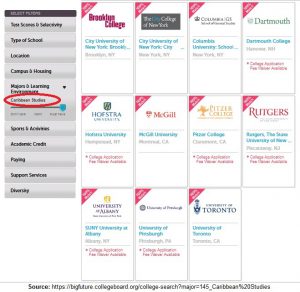
So teach away, all you colleges and universities, identified here from the online resource website CollegeBoard.org; (and learn more about the College Board in the Appendix VIDEO below):

College Search: Caribbean Studies

11 results

City University of New York: Brooklyn College

Brooklyn, NY

City University of New York: City College

New York, NY

Columbia University: School of General Studies

New York, NY

Dartmouth College

Hanover, NH

College Application Fee Waiver Available

Hofstra University

Hempstead, NY

College Application Fee Waiver Available

McGill University

Montreal, CA

Pitzer College

Claremont, CA

College Application Fee Waiver Available

Rutgers, The State University of New Jersey: New Brunswick/Piscataway Campus

Piscataway, NJ

College Application Fee Waiver Available

SUNY University at Albany

Albany, NY

College Application Fee Waiver Available

University of Pittsburgh

Pittsburgh, PA

College Application Fee Waiver Available

University of Toronto

Toronto, CA

Source: Retrieved January 11, 2018 from: https://bigfuture.collegeboard.org/college-search?major=145_Caribbean%20Studies

So we entreat you universities … to teach your ‘Caribbean Studies’; and then lets apply the teachings – the arts and the sciences – the scientific methods and technocratic best practices.

See how the Go Lean book considers specific plans, excerpts and headlines for the objective of Fostering a Technocracy; this is found in the book on Page 64:

Fostering a Technocracy

1 Lean-in for the Caribbean Single Market
This CU treaty calls for a technocratic confederation of the Caribbean region into a Single Market of 30 member-states and 42 million people. The term technocracy was originally used to designate the application of the scientific method to solving social & economic problems, in counter distinction to the traditional political or philosophic approaches. The CU must start as a technocratic confederation – a Trade Federation – rather than evolving to this eventuality due to some Failed-State status or insolvency.
2 Economists & Engineers – not Lawyers nor Politicians

The concept of a technocracy remains mostly hypothetical, though some nations have been considered as such in the sense of being governed primarily by technical experts in various fields of governmental decision-making. A technocrat has come to mean either ‘a member of a powerful technical elite’, or ‘someone who advocates the supremacy of technical experts’. Scientists, engineers, economists, and technologists, who have knowledge, expertise, or skills, would compose the governing body, instead of politicians and businesspeople. In a technocracy, decision makers would be selected based upon how knowledgeable and skillful they are in their fields. Even the leaders of the Communist Party of China are mostly professional engineers. The Five-Year plans of the People’s Republic of China have enabled them to plan ahead in a technocratic fashion to build projects such as the National Trunk Highway System, the High-speed rail system, and the Three Gorges Dam.

3 Professional Emergency Managers

The CU treaty calls for a collective security agreement for the Caribbean member-states to prepare-respond to natural disasters, emergency incidents and assuage against systemic threats against the homeland. The CU employs the professional arts and sciences of Emergency Management to spread the costs and risks across the entire region. Outside of hurricanes or earthquakes, the emergency scope includes medical trauma, pandemic incidents and   industrial accidents (i.e. oil or chemical spills) – any scenario that can impact the continuity of the economic engines and/or community.

4 Apolitical – Loved by All
5 Model of Constitutional Monarchy
6 Constitutional Mandates – Supporting Democracy

The Nobel Prize winning Public Choice Theory posits that public stakeholders (politicians & bureaucrats), tend to act in their own self-interest. The CU, in true technocratic fashion, will codify constitutional mandates (ie. lottery/school funding).

7 Balance Budget Constraints
8 Federal Civil Service – Guarantee Fair Treatment
9 Service Level Agreements

The CU is a proxy organization, chartered to execute deputized functions on behalf of member-states; this means a task-oriented philosophy with “Service Level Agreements” in place; i.e. 80% of all phone calls answered within 20 seconds.

10 ITIL – Systematic Assurances

The formal ITIL (Information Technology Infrastructure Library) discipline is the art/science that describes processes, procedures, tasks, and checklists for managing risks associated with information technology deployments, to ensure the optimal uptime. This includes the CU’s Continuity & Availability Management, Change Control & Release Management.

The Go Lean roadmap seeks to assuage the societal defects in the Caribbean region. This means identifying, qualifying and engaging curative strategies and tactics. This is a familiar theme for this Go Lean movement; the charter of the organization is to function as an Intelligentsia Group unto itself. Consider here, some previous blog-commentaries that have highlighted organizations, best-practices and new community attitudes, all under a consistent theme of the “Role of the Intelligentsia“. See the sample of prior submissions here:

https://goleancaribbean.com/blog/?p=13890 Role of Intelligentsia: We Need to Talk and Collaborate on Solutions
https://goleancaribbean.com/blog/?p=13524 Role of Intelligentsia: Future Focused – e-Government Portal 101
https://goleancaribbean.com/blog/?p=13321 Role of Intelligentsia: Making a Pluralistic Multilingual Democracy
https://goleancaribbean.com/blog/?p=12949 Role of Intelligentsia: Grow Up Already for Charity Management:
https://goleancaribbean.com/blog/?p=12621 Role of Intelligentsia: ‘If it is going to be, it starts with me’
https://goleancaribbean.com/blog/?p=11812 Role of Intelligentsia: Planning for Hope and Change
https://goleancaribbean.com/blog/?p=11759 Role of Intelligentsia: Understand the Market, Plan the …
https://goleancaribbean.com/blog/?p=11598 Role of Intelligentsia: Give us your Time, Talent and Treasuries
https://goleancaribbean.com/blog/?p=11358 Role of Intelligentsia: Preparing for the Inevitable Retail Apocalypse
https://goleancaribbean.com/blog/?p=10351 Role of Intelligentsia: ‘Culture Eats Strategy For Breakfast’
https://goleancaribbean.com/blog/?p=10166 Role of Intelligentsia: Looking Back at the Obama Years
https://goleancaribbean.com/blog/?p=9428 Role of Intelligentsia: Forging Change with a Herd Mentality
https://goleancaribbean.com/blog/?p=7769 Role of Intelligentsia: Being Lean – Asking the Question ‘Why’ 5 Times
https://goleancaribbean.com/blog/?p=7646 Role of Intelligentsia: Going from ‘Good to Great’
https://goleancaribbean.com/blog/?p=6341 Role of Intelligentsia: Tourism Stewardship
https://goleancaribbean.com/blog/?p=2709 Role of Intelligentsia: Caribbean Academic Study: Boy-Girl ‘Discipline’

Having educated individuals in society is good for society … and good for the individuals – see Appendix VIDEO below. These ones eventually make up the intelligentsia. If put to use this intelligentsia can be a source for good.

It was shocking and unbelievable that there is supposed to be a Caribbean Intelligentsia, individuals or groups studying the Caribbean’s past and planning the future. This can easily become the role-responsibilities of today’s students matriculating in the field of ‘Caribbean Studies’. They are out there! So let’s be shocked no more. The message to the people of the Caribbean region henceforth is that the Caribbean’s past is not necessarily condemned to be the Caribbean’s future.

Change has come! The CU will do the “heavy-lifting” to effect change, to implement agile/lean methodologies in the region, in the member-states and in the new federal agencies. Welcome to a  technocracy!

Now is the time for all Caribbean stakeholders – residents, Diaspora, businesses and institutions – to lean-in for the optimizations and empowerments described in the book Go Lean … Caribbean. Yes, we can make the region a better homeland to live, work and play. 🙂

Download the free e-Book of Go Lean … Caribbean – now!

Sign the petition to lean-in for this roadmap for the Caribbean Union Trade Federation. 

———–

Appendix VIDEO – Five Ways Education Pays: Having a college degree means a richer life in every way!https://youtu.be/spNDLD2KRuA

The College Board
Published on Nov 28, 2011 – For most students who go to college, the increase in their lifetime earnings far outweighs the costs of their education. That’s a powerful argument for college. But more income is by no means the only positive outcome students can expect. Learn about all the ways that a college degree can transform your life and lifestyle for the better!

  • Category: Education 
  • License: Standard YouTube License


Share this post:
,
[Top]

Haiti – Beauty ‘Only a Mother Can Love’

Go Lean Commentary

The Caribbean is among the most beautiful addresses on the planet.

Consider the tropical islands, coastal beaches, waterscapes, flora, fauna, etc.

This is true among most of the Caribbean member-states in the region …

… Haiti, not included! (Just yet! Stay tuned!)

While this country has some beautiful terrain, poverty and mis-management has sullied a lot of its natural beauty. In some places, Haiti is a land where “only a mother can love”.

Yet still, many mothers have stepped in, stepped up and are showing love to this land!

May we all be inspired by their examples. Consider the news story in this article here:

Title: These Haitian women were doing great in U.S. — and then returned to aid quake-hit nation

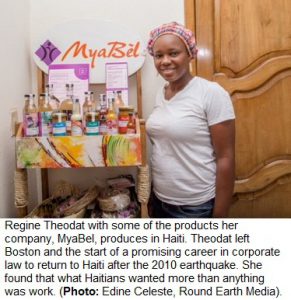
Croix-Des-Bouquets, Haiti — Regine Theodat had just passed the bar exam and at 25 years old was beginning a promising, if predictable, career in U.S. corporate law. She went to work, to spin class, home and to bed.

“Wake up and repeat,” she recalled. “I was very much a corporate lawyer — very strait-laced; not very adventurous.”

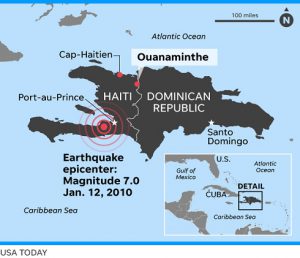
Then on Jan. 12, 2010, a magnitude-7.0 earthquake struck Haiti, killing hundreds of thousands of people. And the child of immigrants who left Haiti for greater opportunities did something shocking. She traded her comfortable life in Boston for the chaos of the poorest country in the Americas.

Aid groups and volunteers from around the world also poured into Haiti. Most have left. But eight years later, Theodat is still here.

She is among a small army, most of them women, who returned to Haiti and started businesses. Theodat makes food and cocktails. Another woman supplies castor oil beauty products to North American stores, including Whole Foods. Some of the others sell fruit smoothies, jewelry and chocolate.
More Haitians may soon be returning from the U.S., but not voluntarily. The Trump administration announced in November that “temporary protected status” for 59,000 Haitians will end in 2019. Many will have limited opportunities back home. VIDEO

What’s more, remittances make up almost a third of Haiti’s GDP, so for each person deported, several local people suffer. For those with education, drive and money, however, moving back is a chance to create jobs and help change practices that many believe perpetuate poverty.

Family members thought Theodat was insane for going back to a country they’d left in the 1980s.

“They said, ‘She’ll be back. The first demonstration that happens, she’ll be back. The first rocks she sees thrown, she’ll be back,’” she said. She has indeed seen a lot, but she has stayed.

Theodat spent her first year running a human rights clinic, until she found out that Haitians really wanted something else. “People kept asking me for jobs,” she said.

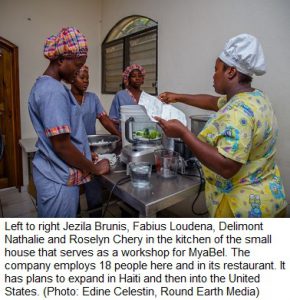
So she teamed up with two collaborators from her human right work, including a man she later married. They launched MyaBèl, a restaurant and cocktail bar in Croix-des-Bouquets, the hometown of Theodat’s family located northeast of Port-au-Prince.

Then they started bottling drinks and sauces in a middle-class house on a dirt side street and began a farm to supply fresh ingredients.

MyaBèl now sells products at more than a dozen Haitian supermarkets and boutiques. It employs 18 people and works with 65 farmers. This year, Theodat was nominated for an entrepreneur of the year award.

Jezila Brunis, 37, a single mother of three, makes minimum wage, about $5.50 a day, in the workshop. She’s able to send her children to school, and she likes the process of washing and chopping ingredients, feeding them into mixers and cooking them on a stove-top. “I’m always learning new things,” she said.
Even paying the minimum is a challenge because other costs — generators, fuel, imports and wear-and-tear on vehicles — are extremely high, Theodat said. Hiring and managing people is difficult because so few held jobs before, and they often fail to do basics, such as keeping kitchen doors closed, getting to work on time and finishing tasks quickly. Five out of the restaurant’s original six employees lost their jobs.

Most Haitians subsist in part on farms or work informally, so unemployment is hard to measure. But the World Bank says almost 60% of Haiti’s 11 million people live in poverty. In May, the insurance company FM Global rated Haiti the worst place to do business among 130 countries it studied.

Theodat came face-to-face with endemic corruption the first time she went to pay taxes. She was told she needed to pay someone to speed up the process. “I refused,” she said. “And then I just sat there until I was able to do it the way I was supposed to do it.” She did the same with immigration and customs.

Some of the émigrés couldn’t cut it. “They came, they tried, Haiti pummeled them, and they left,” said Isabelle Clérié, who came home to work with local entrepreneurs after studying anthropology in the U.S. “Some were able to stick it out, and through some truly big challenges.”

“One of the most valuable exports from Haiti is our brains,” she said. “It’s been really great to see these people come back.”

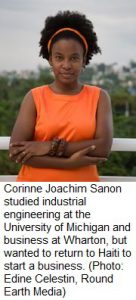
Unlike Theodat, Corinne Joachim Sanon long planned to start a business in Haiti. She grew up in Port-au-Prince, graduated from high school at 16 and headed to the University of Michigan to study industrial engineering. She was in Wharton’s business program when the earthquake struck, destroying her family home and killing her grandmother.

She launched Askanya, Haiti’s first bean-to-bar chocolate company, in her grandmother’s childhood home in Ouanaminthe, a town on the border with the Dominican Republic. The company works with cacao and sugar cooperatives representing more than 3,000 growers and employs 10 people full time.

One of them is Jocelyne Diomètre, 34, who had been a maid in the Dominican Republic and hated the hassle of crossing the border every day. At Askanya, she is working in her own country for the first time.

Askanya sells bars at scores of locations across Haiti and the U.S. Boosted by recognition at festivals in Seattle and Paris, Joachim Sanon is looking to expand production and double its number of growers.

MyaBèl is also growing, clearing and planting more than 30 acres of idle land. It is planning to hire local people to make machines for the workshop. Theodat said the company must increase production to meet local demand and then start exporting to the U.S., creating more jobs.

Theodat and Joachim Sanon know that returning émigrés can’t end poverty in Haiti. “I don’t think I’m going to go to bed and wake up and Haiti is going to be totally different,” Theodat said.

Refusing to take part in corruption might result in incremental change. Theodat also believes the more collaborative style of émigrés has been rubbing off on their local counterparts.

Joachim Sanon is encouraged that a Haitian company is now competing with Askanya by selling high-end chocolate bars. “Sometimes you want to see someone else succeed first before you try to put your toe in the water,” she said.

“It’s definitely changing the image of Haiti,” she said. “It creates a momentum.”

—–
Contributing: Michel Joseph. 

This story was produced in association with Round Earth Media, which trains and supports young journalists around the world.

Source: USA Today – Posted December 22, 2017; retrieved January 9, 2017 from:

https://www.usatoday.com/story/news/world/2017/12/22/these-haitian-women-were-doing-great-u-s-and-then-returned-aid-quake-hit-nation/938639001/ 

Related: Trump administration to send Haiti earthquake victims home in 2019 – See Appendix VIDEO below.

This commentary is about Haiti’s community re-development, jobs, image and pride. Plus the “Sheroes” who are transforming the country!

This foregoing article aligns with the movement behind the book Go Lean…Caribbean – available to download for free. The movement double-downs on the homeland; it advocates for the Caribbean Diaspora – like the above “Sheroes” – to return to their communities and for in-country residents to not leave in the first place. While no society is perfect anywhere in the world, the Go Lean book posits that the Caribbean is easier to reform and transform. Plus the inherent beauty of the islands, coastal states, cultures and hospitality makes the heavy-lifting to transform our community worth all the effort and sacrifice.

There is no doubt that Haiti has seen a lot of dysfunction; the country flirts with Failed-State status. But change is afoot – see A Supplication for Haiti in the Appendix below – here comes that change: “New Guards”. The Go Lean book serves as a roadmap for the introduction and implementation of the technocratic Caribbean Union Trade Federation (CU), for the elevation of Caribbean society – New Guards for all member-states. This CU/Go Lean roadmap has these 3 prime directives:

  • Optimization of the economic engines in order to grow the regional economy to $800 Billion and create 2.2 million new jobs. One strategy is to deploy industrial campuses, work-yards and job-sites as Self-Governing Entities (SGE’s).
  • Establishment of a security apparatus to protect the resultant economic engines, especially on the SGE’s.
  • Improve Caribbean governance to support these engines, including a separation-of-powers between the member-states and CU federal agencies. This allows for Self-Governing Entities independent of Haiti’s local government. Yippee!!!

The book stresses that reforming and transforming the Caribbean societal engines must be a regional pursuit. This was an early motivation for the roadmap, as pronounced in the opening Declaration of Interdependence (Pages 12 – 13):

xi. Whereas all men are entitled to the benefits of good governance in a free society, “new guards” must be enacted to dissuade the emergence of incompetence, corruption, nepotism and cronyism at the peril of the people’s best interest. The Federation must guarantee the executions of a social contract between government and the governed.

xii.  Whereas the legacy in recent times in individual states may be that of ineffectual governance with no redress to higher authority, the accedence of this Federation will ensure accountability and escalation of the human and civil rights of the people for good governance, justice assurances, due process and the rule of law. As such, any threats of a “failed state” status for any member state must enact emergency measures on behalf of the Federation to protect the human, civil and property rights of the citizens, residents, allies, trading partners, and visitors of the affected member state and the Federation as a whole.

xiii. Whereas the legacy of dissensions in many member-states (for example: Haiti and Cuba) will require a concerted effort to integrate the exile community’s repatriation, the Federation must arrange for Reconciliation Commissions to satiate a demand for justice.

xix. Whereas our legacy in recent times is one of societal abandonment, it is imperative that incentives and encouragement be put in place to first dissuade the human flight, and then entice and welcome the return of our Diaspora back to our shores. This repatriation should be effected with the appropriate guards so as not to imperil the lives and securities of the repatriated citizens or the communities they inhabit. The right of repatriation is to be extended to any natural born citizens despite any previous naturalization to foreign sovereignties.

xxiv. Whereas a free market economy can be induced and spurred for continuous progress, the Federation must install the controls to better manage aspects of the economy: jobs, inflation, savings rate, investments and other economic principles. Thereby attracting direct foreign investment because of the stability and vibrancy of our economy.

The Go Lean book provides 370-pages of turn-by-turn instructions on “how” to adopt new community ethos, plus the strategies, tactics, implementations and advocacies to execute so as to reboot, reform and transform the societal engines of Caribbean society. One advocacy is the deployment of Self-Governing Entities – industrial sites though physically located in a member-state, like Haiti, actually administered by agencies of the CU Federation (Page 105). Another advocacy is the Reboot of Haiti. The book posits that solutions for the Caribbean must first come from the Caribbean. Therefore, the roadmap calls for a Caribbean-styled Marshall Plan. (A similar advocacy is provided for Cuba). See this definition here, from Page 238:

The Bottom Line on the Marshall Plan

By the end of World War II much of Europe was devastated. The Marshall Plan, (officially the European Recovery Program, ERP), named after the then Secretary of State and retired general George Marshall, was the American program to aid Europe where the United States gave monetary support to help rebuild European economies after the end of the war. During the four years (1948 – 1952) that the plan was operational, US $13 billion in economic and technical assistance was given to help the recovery of the European countries. The plan looked to the future, and did not focus on the destruction caused by the war.

Much more important were efforts to modernize European industrial and business practices using high-efficiency American models, reduce artificial trade barriers, and instill a sense of hope and self-reliance. By 1952 as the funding ended, the economy of every participant state had surpassed pre-war levels; for all Marshall Plan recipients, output in 1951 was at least 35% higher than in 1938. Over the next two decades, Western Europe enjoyed unprecedented growth and prosperity. Generally, economists agree that the Marshall Plan was one of the first elements of European integration, as it erased trade barriers and set up institutions to coordinate the economy on a continental level—that is, it stimulated the total political reconstruction of Western Europe.

Today, the European Union, the latest successor of the integration effort, is the world largest integrated economy.

Consider too some specific plans, excerpts and headlines for the objective of engaging the Marshall Plan concept for Haiti; this too is found in the book on Page 238, entitled:

10 Ways to Reboot Haiti

1 Lean-in for the Caribbean Single Market
This regional re-boot will allow for the unification of the region into one market, thereby creating a single economy of 30 member-states, 42 million people and a GDP of over $800 Billion. Following the model of European integration, the CU will be the representative and negotiating body for Haiti and the entire region for all trade and security issues.
2 Marshall Plan for Haiti

Haiti is the poorest nation in the Western Hemisphere. But what they have is impassioned human capital as opposed to financial capital or valuable minerals. The CU is a total economic reboot for this country, one that involves developing internally and not thru emigration. To reboot Haiti will require a mini-Marshall Plan. The infrastructure, for the most part, is archaic compared to modern societies. The engines of the CU will enable a rapid upgrade of the infra-structure and some “low hanging fruit” for returns on the investment.

3 Leap Frog Philosophy

There is no need to move Haiti’s technology infrastructure baseline from the 1960’s, then to the 1970’s, and so on. Rather, the CU’s vision is to move Haiti to where technology is going, not coming from. This includes advanced urban planning concepts like electrified light-rail, prefab house constructions, alternative energies and e-delivery of governmental services and payment systems.

4 Repatriation and Reconciliation of the Haitian Diaspora
5 Access to Capital Markets
6 National Historic Places
7 World Heritage Sites
8 Labor, Immigration and Movement of People
The recovery plan for Haiti would discourage the emigration of the population. Haiti has a population base (10 million) that can imperil other islands if too many Haitians relocate within the Caribbean. As a result, the CU will expend the resources and facilitate the campaign to dissuade relocation for the first 10 years of the ascension of the CU [Treaty]. During these first 10 years, Haitians visiting other CU member states, with Visa’s, with careful monitoring to ensure compliance.
9 Educational Mandates

Whereas the CU educational facilitation is satisfied at the secondary level, there will be a greater need for Adult Education in Haiti. Because of the decades of poverty, illiteracy is more dire in Haiti than in other CU state. There will be no age limitation for the educational opportunities. The macro-economic principle is “every year of education raises a country’s GDP”; this will allow for easy pickings of the economic “low hanging fruit”.

10 Language Neutrality of the Union … French and Creole

According to the foregoing news article, a big concern for Haiti is the lack of jobs – the article cited a 60 percent poverty/unemployment rate. The Go Lean roadmap seeks to assuage this economic challenge by the facilitation of formal jobs and informal gigs, especially on the Self-Governing Entity job sites. Welcome to the Gig Economy

A gig economy is an environment in which temporary positions are common and organizations contract with independent workers for short-term engagements. The trend toward a gig economy has begun. A study by financial systems company, Intuit, predicted that by 2020, 40 percent of American workers would be independent contractors. – Source

We can ride this trend in the Caribbean as well. Haiti would be perfectly suited. Consider here, how the Go Lean movement identified many opportunities and expressions of the Gig Economy in these previous blog-commentaries:

https://goleancaribbean.com/blog/?p=13420 Lessons on Gigs from the History of Whaling Expedition
https://goleancaribbean.com/blog/?p=8262 UberEverything in Africa – Model of Gigs
https://goleancaribbean.com/blog/?p=6129 Lessons Learned from US Migrant Farm Workers on Seasonal Gigs
https://goleancaribbean.com/blog/?p=4145 Gigs for Eco-Tourism and World Heritage Sites
https://goleancaribbean.com/blog/?p=2857 Gig Economy Model – Entrepreneurism in Junk
https://goleancaribbean.com/blog/?p=2571 AirBnB Gig Economy Options Materializing
https://goleancaribbean.com/blog/?p=2003 Ship-breaking – One Job/Gig Scenario
https://goleancaribbean.com/blog/?p=1364 Uber Gigs Backlash Shows the Community Impact

Jobs in the Gig Economy are counted in the Go Lean roadmap as these are direct jobs; there is also the reality of indirect jobs – unrelated service and attendant functions – at a 3.75 multiplier rate would add even more to the job-creation effort.

According to the foregoing news article, there are many women in Haiti that have given a full measure to impact their communities and foster new jobs and economic activities. Such good news! How blessed they are:

The Lord gives the word; the women who announce the good news are a great host – English Standard Version

We urge all Caribbean stakeholders to lean-in to this roadmap to make the homeland a better place to live, work and play. 🙂

Download the free e-Book of Go Lean … Caribbean – now!

Sign the petition to lean-in for this roadmap for the Caribbean Union Trade Federation.

————

Appendix – Poem: A Supplication for Haiti!

Here’s my supplication for my brothers and sisters of Haiti:

Do not beg people to love you.
If you are successful in your begging,
it will not be love that you get, it will be pity!

Do you want to be pitied … as an individual?

Do you want to be pitied as a community; do you want to be pitied as a country?

This is most apropos on the heels of America ending her charity towards you – below. Yet, do not beg!

You do not want to be pitied by the world. You want to be honored by the world … for showing your proud heritage, as the progenitor of freedom for the New World.

Show them your pride. Show them your dignity.

————

Appendix VIDEO – US Ending Temporary Permits for Haitians – https://www.usatoday.com/videos/news/nation/2017/11/21/u.s.-ending-temporary-permits-haitians/107896498/

AP Nov. 21, 2017 – The Trump administration said Monday it is ending a temporary residency permit program that has allowed almost 60,000 citizens from Haiti to live and work in the United States since a 2010. Haitian advocates quickly criticized the decision.

Share this post:
, , ,
[Top]

Blog # 700 – We Need to Talk!

Go Lean Commentary

Hello, to those of you who live in and/or love the Caribbean, we have to make this urgent plea:

We need to talk …

This is a familiar advocacy from the movement behind the book Go Lean…Caribbean – available to download for free. The book declares that the Caribbean is in crisis, and opens with this sad disposition (Page 3):

There is something wrong in the Caribbean. It is the greatest address in the world for its 4 language groups, but instead of the world “beating a path” to these doors, the people of the Caribbean have “beat down their doors” to get out. For some Caribbean countries, their population has declined or been flat for the last 3 decades. This is only possible if despite new births and the absence of war, people are fleeing. This scenario, human flight, is a constant threat to prosperity for all the Caribbean despite their colonial legacies. Our youth, the next generation, may not be inspired to participate in the future workings of their country; they may measure success only by their exodus from their Caribbean homeland.

Today is January 5, 2018, as the rest of North America dips into a deep freeze – Winter Storm Grayson – the expectation should have been that the Caribbean would be a refuge. But sadly, we have to conclude that “all is not well in the sunny Caribbean“.

No, our dire situation depicts our wonderful Caribbean cultures flirting with failure, abandonment and extinction. Consider these highlights of island communities that have had to contend with failure and extinction:

  • Sad Puerto Rico, despite American power and prosperity, this US Territory is between a “rock and a hard-place” after Hurricane Maria this past season. More and more residents are now fleeing the island on a daily basis, justifiably so.
  • There are no guarantees that communities, countries and nations will survive. Just this past year, the twin-island nation of Antigua and Barbuda evacuated Barbuda – it is a twin-island nation no more.
  • The Pacific island nation of Kiribati has engaged a plan to evacuate the whole country and relocate to a foreign land – in a few generations Kiribati citizenship will cease to exist.
  • A few years ago, a volcano eruption in Montserrat led to the near-evacuation – a ghost-town – of the whole island.

Once again, no guarantees exist for the future. We reap what we sow.

In order to secure a future, communities must do the heavy-lifting to reform and transform their societal engines. So to you Caribbean people, the entreaty is:

We need to talk …

We need to consider some solutions that can bring us from the precipice of extinction to forge a new future. We need to talk about the workable strategies, tactics and implementations to reach this goal.

There had been some plans in the past, that failed to launch viable solutions:

  • There was the West Indies Federation among the Anglophone Caribbean. It failed after 4 years. (At one point there was talk of integrating the British Caribbean possessions into Canada as overseas territories, much like Hawaii is to the United States).
  • There was the renewed attempt for integration with the formal Caribbean Community organization, but its failures are so evident that now there is even talk of the EU funding a study to consider CariCom’s dissolution.

No, we need to talk about a newer, better plan, a roadmap to finally elevate Caribbean communities, all Caribbean communities – all 30 member-states in the geographic region. This is the thrust of the Go Lean book …

The Go Lean book therefore serves as a roadmap for the introduction and implementation of the technocratic Caribbean Union Trade Federation (CU), for the elevation of Caribbean society; this is a Way Forward for all member-states. This CU/Go Lean roadmap has these 3 prime directives:

  • Optimization of the economic engines in order to grow the regional economy to $800 Billion and create 2.2 million new jobs.
  • Establishment of a security apparatus to ensure public safety and protect the resultant economic engines.
  • Improve Caribbean governance to support these engines, with one stewardship among all Caribbean member-states despite the colonial heritage of American, British, Dutch, French or Spanish.

The book stresses that reforming and transforming the Caribbean societal engines must be a regional pursuit. This was an early motivation for the roadmap, as pronounced in the opening Declaration of Interdependence (Pages 12 – 13):

xi. Whereas all men are entitled to the benefits of good governance in a free society, “new guards” must be enacted to dissuade the emergence of incompetence, corruption, nepotism and cronyism at the peril of the people’s best interest. The Federation must guarantee the executions of a social contract between government and the governed.

xvi. Whereas security of our homeland is inextricably linked to prosperity of the homeland, the economic and security interest of the region needs to be aligned under the same governance. Since economic crimes … can imperil the functioning of the wheels of commerce for all the citizenry, the accedence of this Federation must equip the security apparatus with the tools and techniques for predictive and proactive interdictions.

xxiv. Whereas a free market economy can be induced and spurred for continuous progress, the Federation must install the controls to better manage aspects of the economy: jobs, inflation, savings rate, investments and other economic principles. Thereby attracting direct foreign investment because of the stability and vibrancy of our economy.

So the Caribbean needs to talk … about our current assessments and how we can move forward. The “talk” we need to have is really collaborative problem-solving. Just how do we conduct this “talk”?

A new book by radio-journalist Celeste Headlee gives us some suggestions. See the Book Review here and an accompanying Ted Talk VIDEO that follows:

Book Title: “WE NEED TO TALK” by Celeste Headlee
Sub-title: How to Have Conversations That Matter

In this urgent and insightful book, public radio journalist Celeste Headlee shows us how to bridge what divides us–by having real conversations. (BASED ON THE TED TALK WITH OVER 10 MILLION VIEWS)

NPR’s Best Books of 2017

“We Need to Talk is an important read for a conversationally-challenged, disconnected age. Headlee is a talented, honest storyteller, and her advice has helped me become a better spouse, friend, and mother.”  (Jessica Lahey, author of New York Times bestseller The Gift of Failure)

Today most of us communicate from behind electronic screens, and studies show that Americans feel less connected and more divided than ever before. The blame for some of this disconnect can be attributed to our political landscape, but the erosion of our conversational skills as a society lies with us as individuals.

And the only way forward, says Headlee, is to start talking to each other. In We Need to Talk, she outlines the strategies that have made her a better conversationalist—and offers simple tools that can improve anyone’s communication. For example:

  • BE THERE OR GO ELSEWHERE. Human beings are incapable of multitasking, and this is especially true of tasks that involve language. Think you can type up a few emails while on a business call, or hold a conversation with your child while texting your spouse? Think again.
  • CHECK YOUR BIAS. The belief that your intelligence protects you from erroneous assumptions can end up making you more vulnerable to them. We all have blind spots that affect the way we view others. Check your bias before you judge someone else.
  • HIDE YOUR PHONE. Don’t just put down your phone, put it away. New research suggests that the mere presence of a cell phone can negatively impact the quality of a conversation.

Whether you’re struggling to communicate with your kid’s teacher at school, an employee at work, or the people you love the most — Headlee offers smart strategies that can help us all have conversations that matter.

Source: Retrieved January 4, 2018 from: https://www.amazon.com/We-Need-Talk-Conversations-Matter/dp/0062669001/ref=sr_1_1?s=books&ie=UTF8&qid=1515111400&sr=1-1&keywords=we+need+to+talk

Biography
Celeste Headlee is the host of the daily news show On Second Thought on Georgia Public Broadcasting. She has spent more than a decade with National Public Radio and has been a host for Public Radio International since 2008. Celeste has appeared on CNN, the BBC, PBS, and MSNBC. She’s also a classically trained soprano who doesn’t get enough time to sing anymore. She has one son and one rescue dog, and lives in Atlanta, Georgia. <<< Photo 2 >>>
Source: Retrieved January 4, 2018 from: https://www.harpercollins.com/9780062669001/we-need-to-talk

———–

VIDEO – 10 ways to have a better conversation | Celeste Headlee – https://youtu.be/R1vskiVDwl4

TED
Published on Mar 8, 2016 – When your job hinges on how well you talk to people, you learn a lot about how to have conversations — and that most of us don’t converse very well. Celeste Headlee has worked as a radio host for decades, and she knows the ingredients of a great conversation: Honesty, brevity, clarity and a healthy amount of listening. In this insightful talk, she shares 10 useful rules for having better conversations. “Go out, talk to people, listen to people,” she says. “And, most importantly, be prepared to be amazed.”
TEDTalks is a daily video podcast of the best talks and performances from the TED Conference, where the world’s leading thinkers and doers give the talk of their lives in 18 minutes (or less). Look for talks on Technology, Entertainment and Design — plus science, business, global issues, the arts and much more.

Find closed captions and translated subtitles in many languages at http://www.ted.com/translate

Follow TED news on Twitter: http://www.twitter.com/tednews

Like TED on Facebook: https://www.facebook.com/TED

Subscribe to our channel: http://www.youtube.com/user/TEDtalksD…

This foregoing Book Review describes this global deficiency of talking-and-listening from an American perspective. But the need for collaborative problem-solving is really location agnostic. This is because America has problems; the Caribbean has problems; the whole world has problems. We need to come together and work towards assuaging our problems, yet the only way forward, says Headlee, is to start talking to each other.

The Go Lean book provides a Way Forward, 370-pages of turn-by-turn instructions on “how” to adopt new community ethos, plus the strategies, tactics, implementations and advocacies to execute so as to reboot, reform and transform the societal engines of Caribbean society.

This is Blog # 700, a major milestone within this Go Lean movement for the Caribbean Union Trade Federation. Over the years, the concept of a Way Forward for the universal Caribbean has been explored in other previous Go Lean blog-commentaries; see sample here:

https://goleancaribbean.com/blog/?p=12416 Conscientizing – Talking about Solutions – on the Radio
https://goleancaribbean.com/blog/?p=12274 State of the Union – Spanish Caribbean
https://goleancaribbean.com/blog/?p=11812 State of the Union – Hope and Change
https://goleancaribbean.com/blog/?p=11544 State of the Union – Need for Collective Bargaining
https://goleancaribbean.com/blog/?p=10554 State of the Union – French Caribbean Seeking Integration
https://goleancaribbean.com/blog/?p=4551 State of the Union – US Territories
https://goleancaribbean.com/blog/?p=4263 State of the Union – Aruba and Dutch Territories
https://goleancaribbean.com/blog/?p=3956 Art and Science of Collaboration

Now is the time for all of the Caribbean – the people in all the islands and coastal states and those in the Diaspora – to lean-in for this collaborative effort, the integrated Caribbean Union Trade Federation.

We can do this. We can all talk … and collaborate and conceive solutions to our regional problems. We can make our Caribbean homeland a better place to live, work and play. 🙂

Download the free e-book of Go Lean … Caribbean – now!

Sign the petition to lean-in for this roadmap for the Caribbean Union Trade Federation.

Share this post:
, , ,
[Top]

Managing ‘Change’ in California

Go Lean Commentary

This is a Big Deal

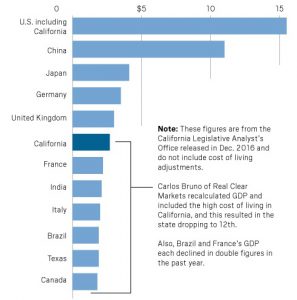
California, the biggest state in the Union (USA) – #6 GDP if ranked as an independent country – has enacted legislation to legitimize recreational marijuana use. Wow, what a ‘change’ to manage! That’s 37 million people, millions of cars and billions of dollars. The implementation of this New Order will surely be heavy-lifting.

For the Caribbean, let’s pay more than the usual attention for lessons learned for our own Big Deal implementation. See the VIDEO on California’s challenge here:

VIDEO – California residents line up to buy recreational marijuana – https://www.today.com/video/california-residents-line-up-to-buy-recreational-marijuana-1127548995762


Posted January 2, 2018 – Vendors in The Golden State began selling recreational marijuana legally on Monday, a milestone moment in the push to legalize marijuana across the country. NBC’s Jacob Soboroff has the report for TODAY from Los Angeles.

Again, California is managing the ‘change’ of implementing the legalization of recreational marijuana use, while the Caribbean needs to implement a roadmap to forge change in its societal engines (economics, security and governance) for the 30 member-states of our region.

The book Go Lean…Caribbean – available to download for free – serves as a roadmap for the introduction and implementation of the technocratic Caribbean Union Trade Federation (CU), for the elevation of Caribbean society – for all member-states. This CU/Go Lean roadmap has these 3 prime directives:

  • Optimization of the economic engines in order to grow the regional economy to $800 Billion and create 2.2 million new jobs.
  • Establishment of a security apparatus to ensure public safety and protect the resultant economic engines.
  • Improve Caribbean governance to support these engines, including a separation-of-powers between the member-states and CU federal agencies.

The State of California is taking on the heavy-lifting of this marijuana legalization while the US federal government continues to consider the drug as illegal. But California is NOT the first state; that distinction belongs to Colorado. The movement behind the Go Lean book has explored Colorado and observed-and-reported on the societal developments there. Notice these main points from a previous blog-commentary entitled – Lessons from Colorado: Legalized Marijuana: Heavy-lifting! – from August 17, 2017:

… in 2017, the phrase “Rocky Mountain High” has a total different meaning, because the State of Colorado has since legalized recreational use of marijuana.

This is not an easy topic; this is heavy …

There are so many lessons we can learn from the debate, legalization, implementation and regulation of this product in this State. All in all, it is heavy-lifting. This is the theme of this series of commentaries of lessons that have been learned by Caribbean stakeholders visiting, observing and reporting on the US State of Colorado.

We have so much in common and so much in contrast. One commonality to consider is how Colorado is now associated with marijuana consumption. …

“Welcome to our club”! This has always been the image of Caribbean people and culture – think: Rasta Man smoking Ganja.

California … Colorado … other states to follow, according to another previous blog-commentary after the last American General Election on November 8, 2016. That submission was entitled – Time to Go: American Vices; Don’t Follow and quoted:

Marijuana legalization is now the norm for 40 percent of the American population. …
Voter measures [passed] in Massachusetts and Nevada. Maine’s referendum was still being counted early Wednesday morning, and Arizona’s was poised to lose. Three other states passed medical marijuana reforms, and a fourth appeared likely to do so. This means that in eight states (plus Washington, D.C.) weed will be legal for recreational purposes, and in sum, 28 will have some kind of legalization on the books.

There will be a lot of security and governing dynamics that these states – like California – will now have to manage, since the process will decriminalize marijuana use, after a long history of criminalization. This is a BIG DEAL considering that many people may be in a penal status – active or parole – for marijuana use or trafficking. Wow, indeed; this is a BIG transformation!

This point too, was addressed in a previous blog-commentary entitled – Marijuana in Jamaica – ‘Puff Peace’:

There are moral, religious, legal and psychological (treatment) issues associated with this topic; and there is history – good and bad. Any jurisdiction decriminalizing the use of marijuana has to contend with the previous messaging to the community of: “Just say no to drugs”.

The [Go Lean] book asserts that before the strategies, tactics, implementations and advocacies of a roadmap to elevate a society can be deployed, the affected society must first embrace a progressive community ethos. The book defines this “community ethos” as the fundamental character or spirit of a culture; the underlying sentiment that informs the beliefs, customs, or practices of society; dominant assumptions of a people or period. Think of the derivative term: “work ethic”.

Marijuana is a mood-altering drug; it has negative effects, one being preponderance for apathy, to tune out of any active engagement. In the US, even in the states where marijuana is legal, most firms/governments still screen staffers (new hires and veterans) and ban consumption of the drug. The reason is simple: Apathy does not make for industriousness.

The Go Lean book provides 370-pages of turn-by-turn instructions on “how” to adopt new community ethos, plus the strategies, tactics, implementations and advocacies to execute so as to transform the societal engines of Caribbean society, regarding the whole drug eco-system. The Go Lean book asserts that every community has bad actors, and with a more liberal-progressive attitude towards a once-illegal drug, community attitudes must be paramount. There must be “new guards” to assuage any threats from this practice on society. This point is pronounced early in the book with the Declaration of Interdependence (Pages 12 – 13) that claims:

x. Whereas we are surrounded and allied to nations of larger proportions in land mass, populations, and treasuries, elements in their societies may have ill-intent in their pursuits, at the expense of the safety and security of our citizens. We must therefore appoint new guards to ensure our public safety and threats against our society, both domestic and foreign. The Federation must employ the latest advances and best practices of criminology and penology to assuage continuous threats against public safety. The Federation must allow for facilitations of detention for [domestic and foreign] convicted felons of federal crimes, and should over-build prisons to house trustees from other jurisdictions.

xi. Whereas all men are entitled to the benefits of good governance in a free society, “new guards” must be enacted to dissuade the emergence of incompetence, corruption, nepotism and cronyism at the peril of the people’s best interest. The Federation must guarantee the executions of a social contract between government and the governed.

xvi. Whereas security of our homeland is inextricably linked to prosperity of the homeland, the economic and security interest of the region needs to be aligned under the same governance. Since economic crimes, including piracy and other forms of terrorism, can imperil the functioning of the wheels of commerce for all the citizenry, the accedence of this Federation must equip the security apparatus with the tools and techniques for predictive and proactive interdictions.

So legalizing marijuana in the BIG market of California will be about more than just managing change, it will also be about managing risks. The Go Lean book relates that managing risk is more than just “One Act”, there is lengthy, engaged process (Page 76):

  • Education
  • Mentoring
  • Monitoring
  • Mitigation
  • Licensing
  • Coordination

Let’s see how this process goes for California. While this state’s independent streak has made it a “maverick” among the other American states – see Independence Movement detailed in this previous blog – this effort with marijuana may be “biting off more than they can chew”. This is truly a BIG DEAL!

We need to pay attention, as there are parallels for California compared to the full Caribbean:

This writer, having lived in California for 10 years, can conclude that California wants the same thing that the Caribbean wants (or should want): to be an elevated society; to be a better homeland, a better place to live, work and play. 🙂

Let’s observe-and-report on these California’s developments and manifestations, their successes and failures.

Download the free e-Book of Go Lean … Caribbean – now!

Sign the petition to lean-in for this roadmap for the Caribbean Union Trade Federation.

Share this post:
, ,
[Top]

Baha Mar: Doubling-down on Failure

Go Lean Commentary

“We told you it wouldn’t work.” – Previous Go Lean commentary.

Update: It hasn’t worked!

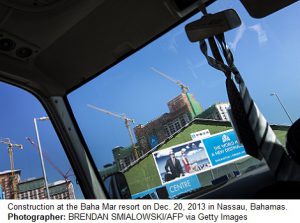
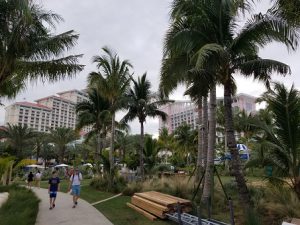
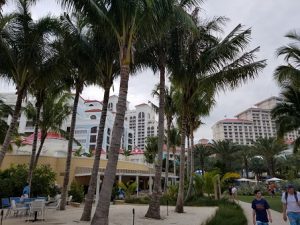
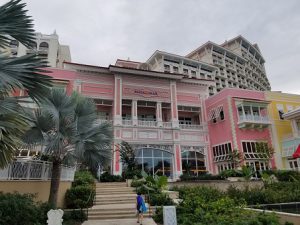
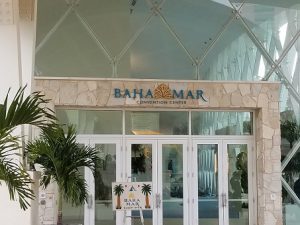
The Baha Mar Resort, Casino and Convention Center in Cable Beach, Nassau, Bahamas is now fully open – see Appendix VIDEO – and frankly empty! (See Photos below). This is the peak winter tourism season. This weather reality creates a seasonal demand for tropical resorts. Plus the excitement of a new property always generates a “buzz” … normally.

And yet, Baha Marthus far has been underwhelming! (There is hope for a better disposition in the future).

The Baha Mar project has been a source of contention for many years; one drama after another: dispute during construction, missed opening, bankruptcy filing, official wine-down, changed ownership, eventual opening, litigation among the originators.

See the latest breaking news in this Baha Mar drama in the news article here:


Title:
Bahamas Developer Claims Huge Chinese Fraud at $3.9 Billion Resort
By: Bob Van Voris

China Construction America Inc. was accused in a lawsuit of ripping off the original developer of the long-delayed $3.9 billion Baha Mar resort in the Bahamas by submitting fraudulent bills and collecting undeserved fees.

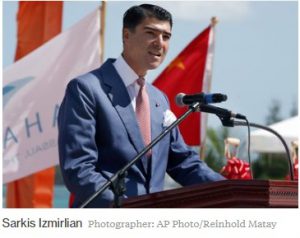
BML Properties Ltd., led by wealthy Bahamas businessman Sarkis Izmirlian, sued CCA Tuesday claiming the state-owned Chinese contractor pulled off a “massive fraud” to enrich itself at BML’s expense, leading to the collapse of the project in 2015. Delays in the construction of the biggest and most expensive resort to be built in the Caribbean have been a drag on the Bahamian economy in recent years.

BML claims that CCA submitted hundreds of millions of dollars in fake bills, understaffed the project and used it as a training ground for inexperienced workers. CCA knew it wouldn’t be able to meet the planned December 2014 deadline to open the resort but created the appearance that it would, in order to remain on the project and collect undeserved fees, BML claims. BML is seeking at least $2.25 billion in damages.

CCA didn’t respond to phone messages and an email seeking comment on the suit.

BML filed for Chapter 11 bankruptcy protection in Delaware in 2015. A U.S. bankruptcy judge dismissed the case in favor of a Bahamian court.

Baha Mar, which opened in April, is now owned by Hong Kong-based, Chow Tai Fook Enterprises Ltd. The development features more than 2,300 rooms, 40 restaurants and lounges, a convention center, a Jack Nicklaus-designed golf course, shopping and the biggest casino in the Caribbean, according to Baha Mar’s website.

BML outlined its claims in a 259-page complaint filed in state court in Manhattan.

The case is BML Properties Ltd. v. China Construction America Inc., 657550/2017, New York State Supreme Court, New York County (Manhattan).

Source: Bloomberg Business News Source – Posted December 26, 2017; retrieved December 30, 2017 from: https://www.bloomberg.com/news/articles/2017-12-26/baha-mar-developer-claims-to-be-victim-of-massive-china-fraud

All of this drama for a business model designed for … failure.

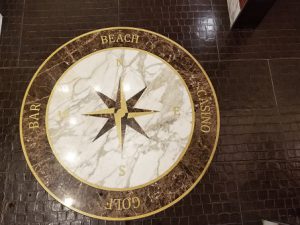
The Baha Mar Resort on Cable Beach features casino gambling and golf, two amenities that are failing more and more.

Casino
In a previous commentary, the business disposition of casino gambling was explored:

Increasingly in the casino/gaming industries, the money is not there. …

Despite the fact that the “house” always wins, the number of gamblers have declined! It is what it is!

  • 87% of Baby-Boomers gamble when visiting Las Vegas
  • 78% of Generation X-ers gamble when visiting Las Vegas
  • 63% of Millenials gamble when visiting Las Vegas

Golf
In a previous commentary, the business disposition of the sport of golf was explored:

“The games people play” … have relevance for our consideration. Golf is one of those games. But golf is more than just a game, it is an eco-system; but this eco-system is in peril.

    “The financial bubble burst and the Tiger bubble burst as well”.
    “Even as the economy recovered, golf is still in a nose dive”.
    “Your house is on fire”.

These (above) are among the key phrases from the narration of … [an] HBO Real Sports documentary story

This topic of the Baha Mar Resort is very important in the consideration of Caribbean economics, as casino gambling and golf has often been associated with Caribbean tourism.

The foregoing news article about Baha Mar aligns with the book Go Lean…Caribbean, which calls for the elevation of Caribbean economics. This book serves as a roadmap for the introduction and implementation of the technocratic Caribbean Union Trade Federation (CU) to better manage economic opportunities in the full Caribbean region. This is a Big Deal for the Go Lean roadmap to foster the diversification of the regional economy. Frankly, a $3.9 Billion investment should be able to generate better returns (job creation) than the Baha Mar fiasco has demonstrated. This hope for better tourism and economic diversification was identified early in the Go Lean book (Pages 11 – 14) in the following pronouncements in the Declaration of Interdependence:

iv. Whereas the natural formation of the landmass is in a tropical region, the flora and fauna allows for an inherent beauty that is enviable to peoples near and far, the structures must be strenuously guarded to protect and promote sustainable systems of commerce paramount to this reality.

vi. Whereas the finite nature of the landmass of our lands limits the populations and markets of commerce, by extending the bonds of brotherhood to our geographic neighbors allows for extended opportunities and better execution of the kinetics of our economies through trade. This regional focus must foster and promote diverse economic stimuli.

xxiv. Whereas a free market economy can be induced and spurred for continuous progress, the Federation must install the controls to better manage aspects of the economy: jobs, inflation, savings rate, investments and other economic principles. Thereby attracting direct foreign investment because of the stability and vibrancy of our economy.

xxvi. Whereas the Caribbean region must have new jobs to empower the engines of the economy and create the income sources for prosperity, and encourage the next generation to forge their dreams right at home, the Federation must therefore foster the development of new industries, like that of ship-building, automobile manufacturing, prefabricated housing, frozen foods, pipelines, call centers, and the prison industrial complex. In addition, the Federation must invigorate the enterprises related to existing industries like tourism, fisheries and lotteries – impacting the region with more jobs.

The Go Lean book posits that there is a need to re-boot and optimize the engines of commerce so as to make the Caribbean a better place to live, work and play. The tourism product, the mainstay of Caribbean economy, used to depend on certain amenities (i.e. Casinos and Golf) that have now come under attack by the social and demographic changes. It so appears that the future for Caribbean economics cannot lazily depend on factors like “sun, sand, surf and smiles”, no, there must be intelligent business models.

This is a changed world and changed marketplace. Likewise, our economic engines must change to keep pace … and get ahead!

The Go Lean book presents a Way Forward.

Way Forward
The Go Lean/CU roadmap seeks to elevate all of Caribbean society to remain competitive and consequential in the future. This is the heavy-lifting of shepherding a progressive region of 42 million people, 10 million Diaspora, 80 million tourists, and 4 language groups across 30 member-states. The CU’s charter is to effectuate progress in this region with these 3 prime directives:

  • Optimization of the economic engines in order to grow the regional economy to $800 Billion and create 2.2 million new jobs.
  • Establishment of a security apparatus to protect the resultant economic engines and marshal against economic crimes.
  • Improvement of Caribbean governance to support these above engines, including a separation-of-powers between CU federal administrations and local member-states.

The Way Forward / Go Lean roadmap includes the quest to create the jobs for the near-future. There is the plan to monitor, manage, and plan for new jobs. The roadmap provides 370-pages of turn-by-turn instructions on “how” to adopt new community ethos, plus strategies, tactics, implementations and advocacies to execute so as to reboot, reform and transform the societal engines of Caribbean society.

As a region, we have failed to keep pace of change. As related in that previous blog-commentary

… our society is now in desperate need of reform and to reboot to insulate from many demographic changes. On the one hand, we must diversify our economy and avail other high job-multiplier industries, away from tourism, but on the other hand, we must double-down in the tourism product, as the economic principles of “supply and demand” just cannot be ignored. (During the winter months, our Caribbean destinations are the “best addresses on the planet”.)

The Go Lean/CU roadmap calls for fostering industrial developments to aid economic diversification and to aid tourism. This includes incorporating best practices and quality assurances to deliver the “best experience in the world” for our visitors and trading partners.

This commentary has previously related details of the changing macro-economic factors in the world and how despite the dynamic conditions, jobs can be created. The following are samples of previous Go Lean blog-commentaries:

https://goleancaribbean.com/blog/?p=13700 Increasing Tourism Market Share
https://goleancaribbean.com/blog/?p=13420 A Lesson in Whaling History – Expeditions for Shipyard Jobs
https://goleancaribbean.com/blog/?p=13184 A Series on Industrial Reboots
https://goleancaribbean.com/blog/?p=12668 Common Sense of Eco-Tourism
https://goleancaribbean.com/blog/?p=8590 Build It and They Will Come – Politics of Infrastructure
https://goleancaribbean.com/blog/?p=7977 Transformations: Perfecting Our Core Competence – i.e. Tourism
https://goleancaribbean.com/blog/?p=6341 Doing Better with Tourism Stewardship
https://goleancaribbean.com/blog/?p=6089 Need Better Jobs Than ‘Minimum Wage’
https://goleancaribbean.com/blog/?p=4037 How to Train Your ‘Dragons’ or Direct Foreign Investors
https://goleancaribbean.com/blog/?p=2857 Where the Jobs Are – Example: Entrepreneurism in Junk
https://goleancaribbean.com/blog/?p=2126 Where the Jobs Are – Computers Reshaping Global Job Market
https://goleancaribbean.com/blog/?p=2003 Where the Jobs Are – One Scenario (Ship-breaking)

So this commentary advocates not doubling-down on bad trends that just “soak up” investments and produce very little return. We must be better and do better. We need to double-down on improving our tourism products and diversifying our economy away from tourism.

Yes, we can! We can do the heavy-lifting (hard-work and smart-work) to make our homeland a better place to live, work and play. 🙂

Download the free e-book of Go Lean … Caribbean – now!

Sign the petition to lean-in for this roadmap for the Caribbean Union Trade Federation.

———–

Appendix VIDEO – Baha Mar: The Las Vegas of the Caribbean – https://youtu.be/T7lGljlr01M

Caribbean Journal

Published on Aug 6, 2017 – The long-awaited Baha Mar resort project is finally here, and Caribbean Journal got an exclusive first look. So what’s it like? Well, it’s a unique, impressive project: a Las Vegas in the heart of the Caribbean.

Music: “Consortium of Cold Cool” by Craig Riley Listen ad-free with YouTube Red

Share this post:
, , ,
[Top]