Tag: Diaspora

US Territories – Between a ‘rock and a hard place’

Go Lean Commentary

The recipe seems so perfect for success. The US is the world’s largest Single Market economy, has the largest military establishment, and you are its sovereign territory. What could go wrong?!

Everything…

Starting first with the foundation. The premise for the acceptance of US Territories is that the people are “alien and inferior”; 98.4% are racial and ethnic minorities. With that defective reasoning how can anything turn out well?!

And thus…the US Territories find themselves between a “rock and a hard place”.

The below VIDEO/TV show is a production by Comedian-Commentator John Oliver for the HBO show Last Week Tonight. He usually comments on a lot of news events in a satirical manner. But in that satire there is a lot of truth.

VIDEO: Last Week Tonight with John Oliver (HBO): U.S. Territories – https://youtu.be/CesHr99ezWE

Published on Mar 8, 2015 – A set of Supreme Court decisions made over 100 years ago has left U.S. territories without meaningful representation. That’s weird, right?
Content warning: Some profanity!

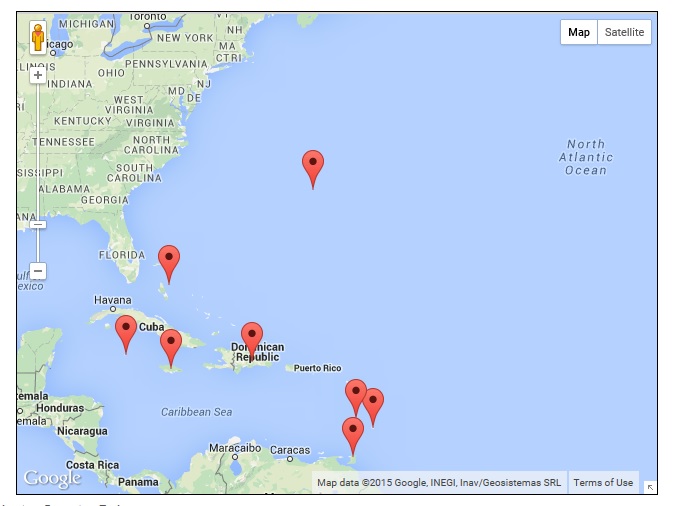
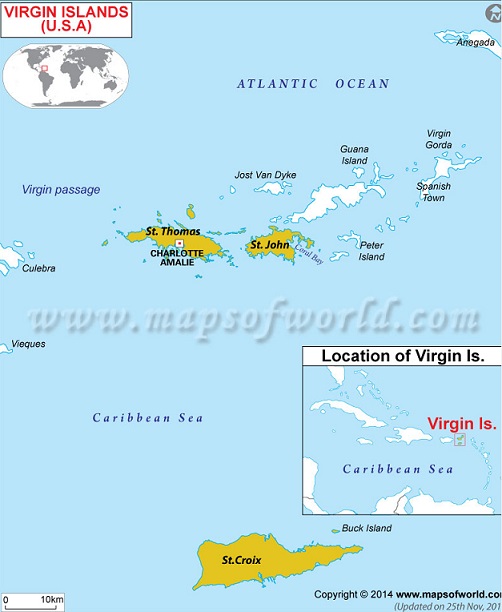
- Photo 1This VIDEO relates to the discussions in the book Go Lean…Caribbean and accompanying blog/commentaries primarily because there are 2 US Territories (Puerto Rico and the US Virgin Islands) in the center of the Caribbean. These cannot be ignored in the movement to unite and elevate the entire Caribbean region.

As depicted in the VIDEO, these territories are in crisis.

This is the purpose of the Go Lean book, as quoted from Economist Paul Romer (Page 8): “a crisis is a terrible thing to waste”. The truth is that American society stages all of the Caribbean in a “parasite” role; to serve as a playground for their leisure, consumers of their products and staffing for their Armed Forces. There is no advantage to being American, except to leave; and this is what people do, time and again. (Emigration is one of the major causes for the crisis in the Caribbean US Territories).
- Photo 2On the other hand, the goal of the Go Lean book is to serve as a roadmap for the introduction and implementation of the technocratic Caribbean Union Trade Federation (CU). So the CU would be set to optimize Caribbean society, starting with economic empowerment. In fact, the Go Lean roadmap has 3 prime directives:

  • Optimization of the economic engines in order to grow the regional economy to $800 Billion & create 2.2 million new jobs.
  • Establishment of a security apparatus to protect the resultant economic engines.
  • Improvement of Caribbean governance to support these engines.

The Go Lean movement asserts that the Caribbean region can do better; we must do better; we must not allow the US to take the lead for our own nation-building, for American self-interest (racism and capitalism) tend to hijack policies intended for the Greater Good. America thought their territories were populated with aliens, who could not be viewed as equals. Despite the 100 year old expiration of these prejudices, the policy remains. The mitigation and remediation to make territorial life successful must therefore come from another source. This is the siren call of the Go Lean movement.

(The scope of the Go Lean roadmap is limited to just the Caribbean territories, not the Pacific ones of Guam, Northern Marianas, and Samoa. Further, this commentary nor the Go Lean book advocates any political change of legal status of the territories to Statehood or Independence; rather this CU confederation alone is being promoted.)

There are more issues in consideration of this book. A compelling mission of the Go Lean book is to lower the “push and pull” factors that lead many to abandon the Caribbean homeland for American shores. The book posits that the region must create jobs so that its citizens do not have to leave to become aliens in a foreign land looking for a better life. The better life can be obtained right at home; Caribbean citizens can prosper where they are planted.

There are many Go Lean blog commentaries that have echoed this point. Here are a sample of related commentaries:

https://goleancaribbean.com/blog/?p=4531 Big Defense: Exploiting US Territories to fill the Armed Forces for their profit.
https://goleancaribbean.com/blog/?p=4360 Dreading the ‘Caribbean Basin Security Initiative’ as inadequate for PR/VI
https://goleancaribbean.com/blog/?p=2887 Caribbean must work together to address rum subsidies and promote this vital industry
https://goleancaribbean.com/blog/?p=2809 A Lesson in History: Economics of East Berlin; Failed-states can go from bad to worse.
https://goleancaribbean.com/blog/?p=2251 What’s In A Name? Latin & Caribbean people in the US still disenfranchised in American society.
https://goleancaribbean.com/blog/?p=2025 Caribbean Jobs – Attitudes & Images of the Diaspora
https://goleancaribbean.com/blog/?p=1433 Caribbean loses more than 70 percent of tertiary educated to brain drain
https://goleancaribbean.com/blog/?p=1325 Puerto Rico Governor Signs Bill on Small-Medium-Enterprises, attempts to re-boot commerce as 95% of businesses have 50 employees or less.
https://goleancaribbean.com/blog/?p=841 Having less babies (and people) is bad for the Caribbean economy
https://goleancaribbean.com/blog/?p=599 Ailing Puerto Rico open to radical economic fixes
https://goleancaribbean.com/blog/?p=286 Puerto Rico’s Comprehensive Cancer Center project breaks ground; model for future empowerment efforts.
https://goleancaribbean.com/blog/?p=273 10 Things We Don’t Want from the US – Discrimination of Immigrations

The foregoing VIDEO conveys that there is little respect in Washington, DC for the needs of the Territories. The islands having a voice, but no vote, really mean no voice at all, as they are inconsequential to all other legislators and power-brokers in Congress. Since the effort to elevate and empower the total Caribbean region cannot be pursued without these US Territories, there must be some engagement there. This effort is Day One/Step One in the Go Lean roadmap (Page 96). This approach is detailed under the American legal concept of an “Interstate Compact”; which allows the US Territories to confederate with their “foreign” Caribbean neighbors in this non-sovereign endeavor; thereby making these two island groups separate member-states of the CU.

Puerto Rico and the US Virgin Islands would have full benefits and voting privileges in the CU Trade Federation; the same for all British, Dutch and French “Overseas” Caribbean territories.

This vision is vital. The book Go Lean…Caribbean clearly hypothesizes that many problems of the region are too big for any one member-state to solve alone; that there is the need for the technocracy of the Caribbean Union Trade Federation. The Go Lean roadmap therefore calls for this strategy of confederation with a tactic of separation-of-powers between CU federal agencies and member-states’ governments. This allows for a lot of autonomy from Washington, DC for Puerto Rico and the USVI.

This change is essential for progress and growth. Despite all the advantages of American affiliation, these US Territories suffer from monumental dysfunction. As a result, these “American citizens” there are on the move, abandoning their homeland and forging near-Failed-States in their wake.

The Go Lean book posits that we need more than jokes and satire to arrest the downward spiral for PR/VI and the rest of the Caribbean; we need action too. We need this roadmap.

We do not want to be the “laughing stock” of the developed world. We want to be recognized as protégés, not parasites! This point is pronounced early in the book with the Declaration of Interdependence (Pages 12 & 14) with many statements that demonstrate the need to remediate Caribbean communities – including PR & VI – and make the homelands better places to live, work and play:

xix.    Whereas our legacy in recent times is one of societal abandonment, it is imperative that incentives and encouragement be put in place to first dissuade the human flight, and then entice and welcome the return of our Diaspora back to our shores. This repatriation should be effected with the appropriate guards so as not to imperil the lives and securities of the repatriated citizens or the communities they inhabit. The right of repatriation is to be extended to any natural born citizens despite any previous naturalization to foreign sovereignties.

xx.  Whereas the preparation of our labor force can foster opportunities and dictate economic progress for current and future generations, the Federation must ensure that educational and job training opportunities are fully optimized for all residents of all member-states, with no partiality towards any gender or ethnic group. The Federation must recognize and facilitate excellence in many different fields of endeavor, including sciences, languages, arts, music and sports. This responsibility should be executed without incurring the risks of further human flight, as has been the past history.

xxiii.  Whereas many countries in our region are dependent Overseas Territory of imperial powers, the systems of governance can be instituted on a regional and local basis, rather than requiring oversight or accountability from distant masters far removed from their subjects of administration. The Federation must facilitate success in autonomous rule by sharing tools, systems and teamwork within the geographical region.

xxiv.  Whereas a free market economy can be induced and spurred for continuous progress, the Federation must install the controls to better manage aspects of the economy: jobs, inflation, savings rate, investments and other economic principles. Thereby attracting direct foreign investment because of the stability and vibrancy of our economy.

xxv.  Whereas the Caribbean region must have new jobs to empower the engines of the economy and create the income sources for prosperity, and encourage the next generation to forge their dreams right at home, the Federation must therefore foster the development of new industries, like that of ship-building, automobile manufacturing, pre-fabricated housing, frozen foods, pipelines, call centers, and the prison industrial complex. In addition, the Federation must invigorate the enterprises related to existing industries like tourism, fisheries and lotteries – impacting the region with more jobs.

The Go Lean book also details a series of community ethos, strategies, tactics, implementations and advocacies to impact the full region, and US Territories. The following samples are excepted from the book: economic prospects:

Community Ethos – Economic Principle – Economic Systems Influence Choices   & Incentives Page 21
Community Ethos – Economic Principle – Consequences of Choices Lie in   the Future Page 21
Community Ethos – Job Multiplier Page 22
Community Ethos – Lean Operations Page 24
Community Ethos – Ways to Promote Happiness Page 36
Community Ethos – Ways to Impact the Greater Good Page 37
Strategy – Vision – Confederating a Non-Sovereign Union Page 45
Strategy – Mission – Keep the next generation at home Page 46
Tactical – Fostering a Technocracy Page 64
Tactical – Tactics to Forge an $800 Billion Economy Page 67
Tactical – Separation of Powers Page 71
Implementation – Ways to Pay for Change Page 101
Implementation – Ways to Deliver Page 109
Implementation – Trade Mission Office – Washington, DC Page 117
Implementation – Reasons to Repatriate to the Caribbean Page 118
Implementation – Ways to Promote Independence – Interdependence Page 120
Planning – 10 Big Ideas – A Single Market in the G-20 Page 127
Planning – Ways to Make the Caribbean Better Page 131
Planning – Ways to Better Manage Image – Not Inferior Aliens Page 133
Advocacy – Ways to Grow the Economy Page 151
Advocacy – Ways to Create Jobs Page 152
Advocacy – Ways to Improve Governance Page 168
Advocacy – Ways to Enhance Tourism – The world should enjoy our hospitality Page 190
Advocacy – Ways to Impact the Diaspora Page 217
Advocacy – Ways to Impact the US Territories Page 244
Appendix – Interstate Compacts Page 278
Appendix – Puerto Rican Migration to New York Page 303
Appendix – Puerto Rican Population in the US – Census 2010 Page 304
Appendix – US Virgin Islands: Economy Past, Present & Future Page 305
Appendix – Electronic Benefits Transfers – e-Government & e-Payments for PR & VI too Page 353

The Go Lean book posits (Page 3) that the Caribbean islands, including the American Territories of Puerto Rico and the US Virgin Islands, are among the greatest addresses in the world. But instead of the world “beating a path” to these doors, the people of the Caribbean have “beat down their doors” to get out; responding to “push and pull” factors. This abandonment must stop now!

While we want the rest of the world – the people of North America, Europe and beyond – enjoying our hospitality, culture, music, cuisine and produce, we most especially want to enjoy these for ourselves. We do not want to admire them from afar. We instead want to be planted and to prosper here in the Caribbean.

Considering the foregoing VIDEO, our birthright should be a privilege and the envy of the world, not the joke for the rest of the world. We want the world laughing with us, not at us!

A better future. This is our simple quest. This is easy to say, but hard to do. The heavy-lifting tasks must come from us in the Caribbean. This is the charge of the CU. We cannot expect solutions from Washington. They have no respect for any territories.

The people and governing institutions of all the Caribbean are hereby urged to lean-in to this Go Lean roadmap for Caribbean empowerment. With the successful execution of this roadmap, we can make all of the Caribbean homeland, a better place to live, work and play. 🙂
Download the book Go Lean … Caribbean – now!

Share this post:
, , , , ,

The State of Aruba’s Economy

Go Lean Commentary

The Caribbean is comprised of 4 different language groups. We hear mostly of the English, French and Spanish speaking islands, but the Dutch speaking islands are far from inconsequential. They are integral to the Caribbean landscape and integral to the plan for regional confederation, consolidation and elevation.

The book Go Lean…Caribbean addresses the needs of all the Caribbean, including the Dutch territories. In the book, the islands are referred to as the formal name of the Netherlands Antilles (Page 16). This consists of two island groups; the ABC Islands of Aruba, Bonaire and Curaçao, located just off the Venezuelan coast. Plus also the SSS islands of Sint Maarten, Saba and Sint Eustatius, located in the Leeward Islands southeast of the Virgin Islands near the northern end of the Lesser Antilles. The Dutch colonized these islands in the 17th century, (at one point, Anguilla, Tobago, the British Virgin Islands, and St. Croix of the US Virgin Islands had also been Dutch), and united them in the new constituent state of the Netherlands Antilles in December 1954.

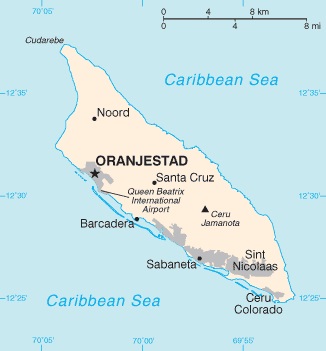
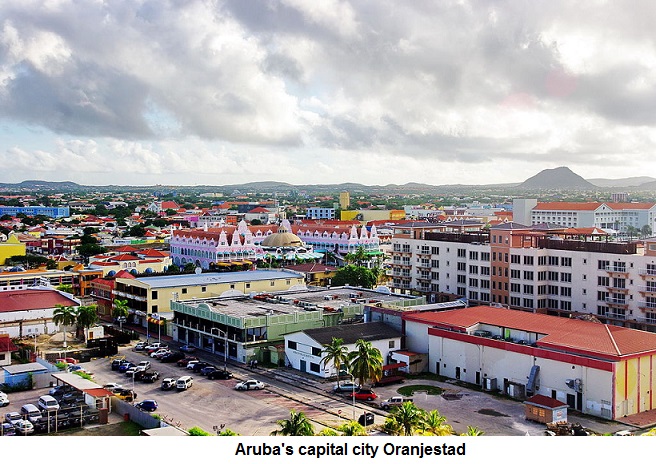
s Economy - Photo 2The largest of the Dutch Caribbean is Aruba.

Aruba called for secession from the Netherlands Antilles from as early as the 1930s, becoming a separate state within the Kingdom of the Netherlands in 1986. After many other organizational developments, by 2010, Aruba is dispositioned as one of the four constituent countries that form the Kingdom of the Netherlands, along with the Netherlands (European homeland), Curaçao and Sint Maarten.

What is the status of Aruba today?

How has it fared as an autonomous state?

The Go Lean book posits that Aruba is in crisis; (along with the rest of the Caribbean). This is also the assessment by the International Monetary Fund, as related in this news article:

By: By the Caribbean Journal staff
Aruba’s economy is “recovering gradually” from a “severe double-dip recession,” according to the International Monetary Fund, which recently concluded its 2015 Article IV Mission to the Dutch Caribbean island.

The recession was [exacerbated] by a pair of factors: the global financial crisis and the shutdown of the oil refinery in Aruba.

“These shocks have substantially increased public debt—over 80 percent of GDP in 2014—and eroded fiscal space,” the IMF said in a statement. “To address these fiscal challenges, the authorities have undertaken major entitlement reforms and are aiming to reach a small fiscal surplus in 2018.”

Without similar measures, however, the IMF warned that the pace of fiscal consolidation in the island could slow and public debt would continue to rise in the medium term.

s Economy - Photo 1Growth in Aruba is projected to rise by about 2.5 percent in 2015, which would put the island in favorable territory with the rest of the region, though.

The closure of the refinery, however, puts even more pressure on the island’s tourism sector, the IMF said.

That could compound the island’s risk, though, given its large dependence on tourists from the US and from Venezuela, with the latter’s economic crisis adding to the risk.

But the IMF said that Aruba had maintained its competitiveness in tourism, with its share of the Caribbean’s tourism market share continuing to grow.

“In addition, the authorities’ marketing efforts, access to new US hubs, and additional airlift capacity from South America have improved resilience,” the IMF said. “Increasing labor market flexibility and reducing the costs of doing business would not only further improve Aruba’s competitiveness, but would also help its adjustment to external shocks and facilitate diversification.”
Caribbean Journal Regional News Site – Posted February 16, 2015 –
http://www.caribjournal.com/2015/02/16/the-state-of-arubas-economy/

The Caribbean country of Aruba needs to focus on growing its economy and creating jobs. The Go Lean book asserts that this effort is too big a task for just one Caribbean member-state alone, that Aruba needs to convene, confederate and collaborate with the other regional member-states. As such, the Go Lean book serves as a roadmap for the introduction and implementation of the technocratic Caribbean Union Trade Federation (CU), for the elevation of Caribbean society – for all member-states. This CU/Go Lean roadmap has these 3 prime directives:

  • Optimization of the economic engines in order to grow the regional economy to $800 Billion and create 2.2 million new jobs.
  • Establishment of a security apparatus to protect the resultant economic engines.
  • Improvement of Caribbean governance to support these engines.

The Go Lean book (Page 3) makes this simple assertion regarding the state of Aruba and all the Caribbean economy: the region is in crisis. There is something wrong in these island and coastal states, that  despite the greatest address in the world, instead of the world “beating a path” to these doors, the people of the Caribbean have “beat down their doors” to get out. Aruba fails to keep its young people at home. In fact, the anecdotal experience (one story after another) is that young people abandon this island as soon as they finish high school; many never to return again, except for occasional visits. (Aruban natives – plus all Netherland Antilles states – have Dutch citizenship, sharing the same Dutch passport as the Kingdom of the Netherlands).

A mission of the Go Lean roadmap is to minimize the “push-and-pull” factors that contribute to this alarmingly high rate of societal abandonment – one report reflects a 70% brain drain rate for the overall Caribbean. The book stresses (early at Page 13 & 14) the need to be on-guard for these “push-and-pull” factors in these pronouncements in the Declaration of Interdependence:

xix.      Whereas our legacy in recent times is one of societal abandonment, it is imperative that incentives and encouragement be put in place to first dissuade the human flight, and then entice and welcome the return of our Diaspora back to our shores. This repatriation should be effected with the appropriate guards so as not to imperil the lives and securities of the repatriated citizens or the communities they inhabit. The right of repatriation is to be extended to any natural born citizens despite any previous naturalization to foreign sovereignties.

xxi.      Whereas the preparation of our labor force can foster opportunities and dictate economic progress for current and future generations, the Federation must ensure that educational and job training opportunities are fully optimized for all residents of all member-states, with no partiality towards any gender or ethnic group. The Federation must recognize and facilitate excellence in many different fields of endeavor, including sciences, languages, arts, music and sports. This responsibility should be executed without incurring the risks of further human flight, as has been the past history.

xxv.      Whereas the legacy of international democracies had been imperiled due to a global financial crisis, the structure of the Federation must allow for financial stability and assurance of the Federation’s institutions. To mandate the economic vibrancy of the region, monetary and fiscal controls and policies must be incorporated as proactive and reactive measures. These measures must address threats against the financial integrity of the Federation and of the member-states.

xxvi.      Whereas the Caribbean region must have new jobs to empower the engines of the economy and create the income sources for prosperity, and encourage the next generation to forge their dreams right at home, the Federation must therefore foster the development of new industries, like that of ship-building, automobile manufacturing, prefabricated housing, frozen foods, pipelines, call centers, and the prison industrial complex. In addition, the Federation must invigorate the enterprises related to existing industries like tourism… – impacting the region with more jobs.

This commentary previously related details of the “push-and-pull” factors for Caribbean emigration to North America and Europe, and the region’s own job-creation efforts. Here is a sample of earlier blogs:

https://goleancaribbean.com/blog/?p=3834 State of the Caribbean Union
https://goleancaribbean.com/blog/?p=3780 National Sacrifice: The Missing Ingredient – Caribbean people not willing to die or live in sacrifice to their homeland
https://goleancaribbean.com/blog/?p=3446 Forecast for higher unemployment in Caribbean in 2015
https://goleancaribbean.com/blog/?p=3050 Obama’s immigration tweaks leave Big Tech wanting more
https://goleancaribbean.com/blog/?p=1698 American “Pull” Factors – STEM Jobs Are Filling Slowly
https://goleancaribbean.com/blog/?p=1683 British public sector workers strike over ‘poverty pay’
https://goleancaribbean.com/blog/?p=1596 Book Review: ‘Prosper Where You Are Planted’
https://goleancaribbean.com/blog/?p=1433 Caribbean loses more than 70 percent of tertiary educated to brain drain
https://goleancaribbean.com/blog/?p=1296 Remittances to Caribbean Increased By 3 Percent in 2013
https://goleancaribbean.com/blog/?p=1256 Traditional 4-year College Degree are Terrible Investments for the Caribbean Region
https://goleancaribbean.com/blog/?p=841 Having Less Babies (Population) is Bad for the Economy

The Go Lean book and these accompanying blogs posit that the economic failures in the Caribbean in general and Aruba in particular is the direct result of the lack of diversity in industrial development. The region depends too heavily on tourism. Aruba though, made some diversification attempts with oil refinery installations; according to Wikipedia:

With its location near Venezuela, the island became an attractive spot for oil refineries. The Lago Oil and Transport Company, owned by Standard Oil of New Jersey (now Exxon), opened in 1929 near the transshipping port of San Nicolaas. Following in their footsteps, the Eagle Oil Refinery opened soon after. Over the next few decades, the oil industry took over as Aruba’s primary economic force.

During World War II, considerable expansion was done to the Lago Refinery, becoming one of the largest refineries in the world – only bested by Royal Dutch Shell Isla refinery on nearby Curaçao – and a major producer of petroleum products for the Allied war efforts.

The Eagle Oil Refinery shut down and was dismantled in the late 1950s. But the Lago refinery kept going until 1985, when the demand for oil fell and Exxon closed it. In 1991, the Coastal Corporation bought it, scaled down operations, and reopened it. Coastal Corporation later sold the refinery to Valero Energy Corporation in 2004. Its reopening didn’t raise Aruba’s oil industry to its previous heights although it did revive that sector and continued to be a key contributor to the country’s economy until 2009 when it was closed.

Aruba is now applying a strategy to “double-down” on tourism; see Appendix-VIDEO below. The Go Lean roadmap asserts that this strategy is flawed; that while prudence dictates that the Caribbean nations expand and optimize their tourism products, the Caribbean must also look for other opportunities for economic expansion. The requisite investment of the resources (time, talent, treasuries) for this goal may be too big for any one Caribbean member-state like Aruba. Rather, shifting the responsibility to a region-wide, professionally-managed, deputized technocracy will result in greater production and greater accountability. The roadmap will facilitate economic growth and job creation.

This is the charge of the Go Lean…Caribbean roadmap, to do the heavy-lifting, to implement the organization dynamics to impact Caribbean society here and now with economic growth and jobs. The following are the community ethos, strategies, tactics and operational advocacies to effectuate this goal:

Community Ethos – People Respond to Incentives Page 21
Community Ethos – Economic Systems Influences Choices & Incentives Page 21
Community Ethos – The Consequences of Choice Lie in the Future Page 21
Community Ethos – Job Multiplier Page 22
Community Ethos – Minority Equalization Page 24
Community Ethos – Lean Operations Page 24
Community Ethos – Ways to Impact the Greater Good Page 37
Strategy – Vision – Make the Caribbean the Best Address   on Planet Page 45
Strategy – Mission – Repatriate Diaspora Page 46
Strategy – Mission – Dissuade Human Flight/“Brain Drain” Page 46
Tactical – Separation of Powers – Union versus Member-States Page 71
Implementation – Assemble CariCom, Dutch, French, Cuba and US   Territories Page 95
Implementation – Enact Territorial Compacts for PR & the Virgin Islands Page 96
Implementation – Foreign Policy Initiatives at Start-up Page 102
Implementation – Ways to Deliver Page 109
Implementation – Ways to Better Manage Debt Page 114
Implementation – Reasons to Repatriate Page 118
Implementation – Ways to Benefit from Globalization Page 119
Implementation – Ways to Promote Independence Page 120
Planning – 10 Big Ideas for the Caribbean Page 127
Planning – Ways to Make the Caribbean Better Page 131
Advocacy – Ways to Grow the Economy Page 151
Advocacy – Ways to Create Jobs Page 152
Advocacy – Ways to Improve Governance Page 168
Advocacy – Ways to Enhance Tourism Page 190
Advocacy – Ways to Market Southern California – New Markets Page 194
Advocacy – Ways to Impact Extractions Page 195
Advocacy – Ways to Impact the Diaspora Page 217
Advocacy – Ways to Impact DutchTerritories Page 246

This Go Lean book accepts that the current State of Aruba’s Economy does not have to be a permanent disposition. The roadmap presents a plan for greater energy independence, energy security and energy generation in the region – there will be the need to capitalize on Aruba’s core-competence with oil refineries. So under the Go Lean roadmap, Aruba’s economy will do better; the same as all of the Caribbean will do better. This roadmap is a 5-year plan to effect change, to make our homeland a better place to live, work and play.

As for the Dutch Caribbean territories, even though they are no longer considered colonies, but rather constituent countries of the Kingdom of the Netherlands, they are effectively just welfare states dependent on Amsterdam; and a feeder for low-cost labor in Holland. They are inconsequential within the Dutch sphere of influence. There are parasites not protégés!

We must do better!

Now is the time for Aruba, the Dutch Caribbean and all of the Caribbean, the people and institutions, to lean-in to this Go Lean … Caribbean roadmap. 🙂

Download the book Go Lean … Caribbean – now!

———-

Appendix – VIDEO: Aruba – One Happy Island – http://youtu.be/p7NdI0jmvXA

Published on Mar 28, 2012 – Our white-sand beaches, cooling trade winds and warm, friendly people are just a few reasons why so many people return to Aruba year after year. Discover everything that makes this One Happy Island…


Share this post:
, , , , , ,
[Top]

National Sacrifice – The Missing Ingredient

Go Lean Commentary

CU Blog - National Sacrifice - The Missing Ingredient - Photo 3The term National Sacrifice is defined here as the willingness to die for a greater cause; think “King/Queen and Country”. This spirit is currently missing in the recipe for “community” in the Caribbean homeland.

To be willing to die for a cause means that one is willing to live for the cause. Admittedly, “dying” is a bit extreme. The concept of “sacrifice” in general is the focus of this commentary.

The publishers of the book Go Lean…Caribbean wants to forge change in the Caribbean, we want to change the attitudes for an entire community, country and region. We have the track record of this type of commitment being exemplified in other communities. (Think: The US during WW II). Now we want to bring a National Sacrifice attitude to the Caribbean, as it is undoubtedly missing. This is evidenced by the fact the every Caribbean member-state suffers from alarming rates of societal abandonment: 70% of college educated population in the English states have left in a brain drain, while the US territories have lost more than 50% of their populations).

The book Go Lean…Caribbean opens with the acknowledgement that despite having the “greatest address in the world… the people of the Caribbean have beat down their doors to get out”, (Page 5).

CU Blog - National Sacrifice - The Missing Ingredient - Photo 4The book Go Lean…Caribbean serves as a roadmap for the introduction and implementation of the Caribbean Union Trade Federation (CU); a confederation to bring change, empowerment, to the Caribbean region; to make the region a better place to live, work and play for all stakeholders (residents, visitors, businesses, organizations – NGO’s and governments). This Go Lean roadmap also has initiatives to foster solutions for the Caribbean youth. The Go Lean book posits that permanent change for Caribbean society will only take root as a result of adjustments to the community attitudes, the national spirit that drives the character and identity of its people. This is identified in the book as “community ethos”; and that one such character, National Sacrifice is sorely missing in this region.

Any attempts to change Caribbean society’s community ethos must start with the youth.

At no point should it be construed that this commentary is advocating sacrificing young men (and women) on the altar of the God of War. But rather, this commentary laments the missing ingredients of wholesale commitment to any national cause. Thusly, the recommendation is for conscription/draft (Appendix B) into a National Youth Service (NYS) program for the Caribbean. Take it one step further and make the Youth Service program regional in its scope rather than “national”; with applicable exemptions for:

  • military/police enrollments
  • student/research deferments (at regional institutions)
  • religious/missionary assignments
  • medical/disability exceptions

This quest relates a commitment so vital to a community that everyone should be willing to sacrifice and lean-in for the desired outcome. This Caribbean effort is not new to the world; it is currently being championed by a Washington-DC-based global Non-Government Organization (NGO) branded the Innovations in Civic Participation (ICP). Much can be learned from analyzing their successes … and failures. See details here:

Innovations in Civic Participation – NGO – Leaders for Youth Civic Engagement (Retrieved 01/15/2015):

Innovations in Civic Participation (ICP) is a global leader in the field of Youth Civic Engagement. ICP envisions a world where young people in every nation are actively engaged in improving their lives and their communities through civic participation. We believe that well-structured youth service programs can provide innovative solutions to social and environmental issues, while helping young people develop skills for future employment and active citizenship.

ICP carries out its mission through four main activities:

  1. Incubating innovative models for youth service programs;
  2. Creating and expanding global networks;
  3. Conducting research and publicizing information on youth civic engagement, especially national youth service and service-learning; and
  4. Serving as a financial intermediary to support program innovation and policy development.

In addition to these activities, ICP regularly consults with its extensive network of over 2,500 academics, policymakers, program entrepreneurs, and other leaders in the field on program and policy work.

Contact Information:

Innovations in Civic Participation
P.O. Box 39222
Washington, DC 20016
202-775-0290

http://www.icicp.org/about-us/

A quest for a National Youth Service has previously been advocated in Sub-Saharan Africa (see Appendix C). There, the NYS was designed to explore the potential to foster youth employability, entrepreneurship, and sustainable livelihoods. This effort stemmed from an existing tradition of NYS programs in Sub-Saharan Africa, which were originally designed to cultivate a sense of national identity and mobilize skills for development in post-independence nations; (see Appendix A). Today, NYS programs operate in the context of a deepening regional youth unemployment crisis, which averages over 20 percent, according to African Economic Outlook. NYS programs engage hundreds of thousands of young people each year and have the potential to equip them with strong civic skills and prepare them for employment and livelihood opportunities.

Despite its potential as an economic strategy, little is still known about how effective NYS programs are at increasing youth employability in Africa. But there is no doubt for the commitment to community that is forged from these efforts. Young people cry, sweat, and bleed for their community, embedding a desire to sacrifice for the Greater Good.

This corresponds with the Bible precept: “There is more happiness in giving than in receiving” – Acts 20:35

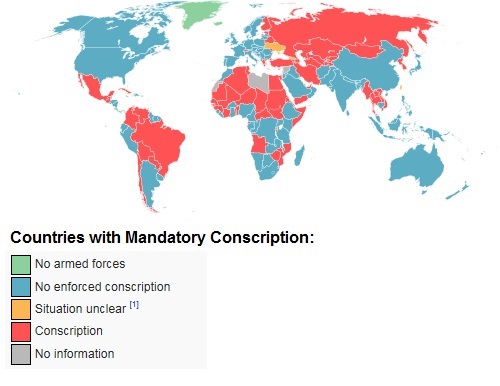
There are NYS programs already deployed or proposed for these Caribbean member-states, (though many have been snagged or stalled):

CU Blog - National Sacrifice - The Missing Ingredient - Photo 1

The purpose of the Go Lean book/roadmap is more than just the embedding of new community ethos, but rather the elevation/empowerment of Caribbean society. In total, the Caribbean empowerment roadmap has these 3 prime directives:

  • Optimization of the economic engines in order to grow the regional economy to $800 Billion & create 2.2 million new jobs.
  • Establishment of a security apparatus to protect the resultant economic engines.
  • Improve Caribbean governance and industrial policies to support these engines.

The roadmap details the following community ethos, plus the execution of these strategies, tactics, implementation and advocacies to forge permanent change in the region:

Community Ethos – Deferred Gratification Page 21
Community Ethos – Economic Principles – People Choose Page 21
Community Ethos – Economic Principles – People Respond to Incentives in Predictable Ways Page 21
Community Ethos – Economic Principles – The Consequences of Choices Lie in the Future Page 21
Community Ethos – Governing Principles – Lean Operations Page 24
Community Ethos – Governing Principles – Cooperatives Page 25
Community Ethos – Ways to Impact the Future Page 26
Community Ethos – Ways to Impact a Turn-Around Page 33
Community Ethos – Ways to Improve Sharing Page 35
Community Ethos – Ways to Promote Happiness Page 36
Community Ethos – Ways to Impact the Greater Good Page 37
Strategy – Vision – Confederate 30 Member-States Page 45
Strategy – Mission – Enact a Defense Pact to Defend the Homeland Page 45
Strategy – Mission – Keep the next generation at home Page 46
Tactical – Confederating a Permanent Union Page 63
Tactical – Fostering a Technocracy Page 64
Tactical – Separation-of-Powers Between CU & Member-States Governments Page 71
Implementation – Assemble – Incorporating all the existing regional organizations Page 96
Implementation – Ways to Pay for Change Page 101
Implementation – Security Initiatives at Start-up Page 103
Implementation – Ways to Deliver Page 109
Planning – 10 Big Ideas for the Caribbean – Confederation Without Sovereignty Page 127
Planning – Ways to Make the Caribbean Better Page 131
Planning – Lessons Learned from the West Indies Federation – Military Units Page 135
Advocacy – Ways to Grow the Economy Page 151
Advocacy – Ways to Create Jobs Page 152
Advocacy – Ways to Better Manage the Social Contract Page 170
Advocacy – Ways to Manage Federal Civil Service Page 173
Advocacy – Ways to Improve Homeland Security Page 181
Advocacy – Ways to Improve Communications Page 186
Advocacy – Ways to Preserve Caribbean Heritage Page 218
Advocacy – Ways to Impact Youth Page 227
Appendix – 30,000 Federal Employees Page 299
Appendix – Previous West Indies Integration – Caribbean Regiment Page 301

Previously Go Lean blog/commentaries have considered historic references and have also stressed fostering the proper and appropriate community ethos for the Caribbean to prosper; and reported on the repercussions and consequences of bad ethos. The following sample applies:

https://goleancaribbean.com/blog/?p=2830 Bad Ethos: Jamaica’s Public Pension Under-funded
https://goleancaribbean.com/blog/?p=2809 A Lesson in Bad Community Ethos : East Berlin/Germany
https://goleancaribbean.com/blog/?p=2480 A Lesson in History: Community Ethos of WW II
https://goleancaribbean.com/blog/?p=2297 A Lesson in History – Booker T versus Du Bois – to Change a Bad Community Ethos
https://goleancaribbean.com/blog/?p=1531 A Lesson in History: 100 Years Ago – World War I – Cause and Effect in Community Ethos
https://goleancaribbean.com/blog/?p=841 Having Less Babies is Bad for the Economy – Need People
https://goleancaribbean.com/blog/?p=623 Only at the Precipice, Do Communities Change
https://goleancaribbean.com/blog/?p=353 Book Review: ‘Wrong – Nine Economic Policy Disasters and What We Can Learn…’
https://goleancaribbean.com/blog/?p=228 Egalitarianism versus Anarchism – Community Ethos Debate

All in all, there is a certain community ethos associated with populations that have endured change. It is a National Sacrifice, a deferred gratification and focus on the future. Any losses of privileges are appreciated by the entire community, not just the affected individual or family member. This is the purpose of the US Memorial Day Holiday on the last Monday in May, honoring the military service of all our men and women in uniform, their families at home, and those who have made the ultimate sacrifice in dying for their country. A quest to unite the country in remembrance and appreciation of the fallen and to serve those who are grieving is a good way to forge a community ethos of National Sacrifice.

See VIDEO here of a community’s great honor to a slain soldier:

VIDEO: Sky Mote: Community Honors a Fallen Soldier from El Dorado County with a Hero’s Welcome –   http://youtu.be/MVQORRQvTpU

Published on Aug 17, 2012 – Starting with a Marine Honor Guard carrying the transfer case containing the body of Staff Sgt. Sky R. Mote of El Dorado, CA, upon arrival at Dover Air Force Base, Del. on Sunday Aug. 12, 2012. (AP Photo/Jose Luis Magana). Then continuing with the great Welcome Home the community gave. His family will never forget!

Though this Fallen Soldier is mourned and missed, his sacrifice is duly acknowledged, appreciated and honored in his hometown. This community spirit creates a value system for public service and National Sacrifice.

The US is not the only country that memorializes their war dead. Those countries that do, experience less societal abandonment. The British Commonwealth of Nations (representative of 18 Caribbean member-states) shows likewise homage to their Fallen Soldiers. The Commonwealth War Graves Commission (CWGC) is responsible for maintaining the war graves of 1.7 million service personnel that died in the First and Second World Wars fighting for Commonwealth member states. Founded in 1917 (as the Imperial War Graves Commission), the Commission has constructed 2,500 war cemeteries, and maintains individual graves at another 20,000 sites around the world.[107] The vast majority of the latter [however] are civilian cemeteries in Great Britain. (Source: http://en.wikipedia.org/wiki/Commonwealth_War_Graves_Commission).

The former British colonies did not adopt this National Sacrifice value system. As most Caribbean (notwithstanding the US Territories) member-states do not even have a (work-free) holiday to honor the sacrifices of those that fought, bled and/or died for their country.

No appreciation, no sacrifice; no sacrifice, no victory. It is that simple!

It is the recommendation of this blog/commentary that all Caribbean member-states should mandate a civilian conscription service for their citizens (1 year between ages 18 and 25); it is common for a confederation – the CU for the Caribbean – to marshal a multi-state, allied military force. Then the CU should facilitate a complete eco-system of engaging the conscripted NYS participants to serve and protect the people and resources of the Caribbean. After which, the communities should show proper appreciation and honor to those that make these sacrifices for “King/Queen and Country”, from all conscription services: military service, public and civilian.

(Many times school teachers and administrators are lowly paid; their service to their country is a great sacrifice).

Veteran-style benefits should thusly be considered for all these “national” servants. This commitment from the community would go far in forging deep loyalty within the citizenry, thus mitigating quick abandonment of the homeland.

There is a separation-of-powers between the CU federal agencies and Caribbean member-states, so the CU would have no authority on how member-states manage, appreciate or honor their civil servants; unless some CU grants/funding apply. But for CU personnel, the practice will be institutionalized to recognize the service of long-time civil servants (active or retired) and their sacrifices. So for any human resource that die in the line of duty, the funeral processions will be filled with pomp and circumstance, much like the foregoing VIDEO.

“The [servants] who perform well are to be considered worthy of double honor, especially those who work hard …” – Bible 1 Timothy 5:17

Now is the time to lean-in to this roadmap for Caribbean change, as depicted in the book Go Lean…Caribbean. All the mitigations and empowerments in this roadmap require people to remain in the homeland. No people, no hope! A community ethos, a spirit or attitude of sacrifice for the Greater Good is a great start to forge change; no sacrifice, no victory.

🙂

Download the book Go Lean … Caribbean – now!

——————-

Appendix A – ICP Studies and Results

Overview of the National Youth Service Landscape in Sub-Saharan Africa

National Youth Service Project on Employability, Entrepreneurship and Sustainable Livelihoods in Sub-Saharan Africa: Synthesis Report

——————

Appendix B – Conscription (or Drafting)
This is the compulsory enlistment of people in some sort of National Service, most often military service.[2] Conscription dates back to antiquity and continues in some countries to the present day under various names. The modern system of near-universal national conscription for young men dates to the French Revolution in the 1790s, where it became the basis of a very large and powerful military. Most European nations later copied the system in peacetime, so that men at a certain age would serve 1–8 years on active duty and then transfer to the reserve force.

CU Blog - National Sacrifice - The Missing Ingredient - Photo 2Conscription is controversial for a range of reasons, including conscientious objection to military engagements on religious or philosophical grounds; political objection, for example to service for a disliked government or unpopular war; and ideological objection, for example, to a perceived violation of individual rights. Those conscripted may evade service, sometimes by leaving the country.[4] Some selection systems accommodate these attitudes by providing alternative service outside combat-operations roles or even outside the military, such as civil service in Austria and Switzerland.

As of the early 21st century, many states no longer conscript soldiers, relying instead upon professional militaries with volunteers enlisted to meet the demand for troops. The ability to rely on such an arrangement, however, presupposes some degree of predictability with regard to both war-fighting requirements and the scope of hostilities. Many states that have abolished conscription therefore still reserve the power to resume it during wartime or times of crisis.[5] (Source: http://en.wikipedia.org/wiki/Conscription)

National Service is a common name for mandatory or volunteer government service programmes. The term became common British usage during and for some years following the Second World War. Many young people spent one or more years in such programmes. Compulsory military service typically requires all citizens, or all male citizens, to participate for a period of a year (or more in some countries) during their youth, usually at some point between the age of 18 and their late twenties. (Source: http://en.wikipedia.org/wiki/National_service)

——————

Appendix C  – National Youth Service Corps in Nigeria
The National Youth Service Corps (NYSC) is an organisation set up by the Nigerian government to involve the country’s graduates in the development of the country. There is no military conscription in Nigeria, but since 1973 graduates of universities and later polytechnics have been required to take part in the National Youth Service Corps (NYSC) program for one year.[1] This is known as national service year.

“Corp” members are posted to cities far from their city of origin. They are expected to mix with people of other tribes, social and family backgrounds, to learn the culture of the indigenes in the place they are posted to. This action is aimed to bring about unity in the country and to help youths appreciate other ethnic groups.

There is an “orientation” period of approximately three weeks spent in a camp away from family and friends. There is also a “passing out ceremony” at the end of the year and primary assignment followed by one month of vacation.

The program has also helped in creating entry-level jobs for many Nigerian youth. An NYSC forum dedicated to the NYSC members was built to bridge the gap amongst members serving across Nigeria and also an avenue for members to share job information and career resources as well as getting loans from the National Directorate Of Employment.

The program has been met with serious criticism by a large portion of the country. The NYSC members have complained of being underpaid, paid late or not paid at all.[2] Several youths carrying out the NYSC program have been killed in the regions they were sent to due to religious violence, ethnic violence or political violence.[3]

A series of bomb and other violent attacks, especially in the North, rocked the country’s stability in the period preceding the 2011 gubernatorial and presidential elections. Most common of these attacks was perpetuated by the Islamist extremist terrorist group called Boko Haram. “Boko Haram” means “Western education is a sin” in the local hausa dialect in Nigeria. The group “Boko Haram” is against western education and wants to establish an Islamic state in Nigeria’s northern region.

Worst hit were National Youth Service Corps members, some of whom lost their lives.
(Source: http://en.wikipedia.org/wiki/National_Youth_Service_Corps)

Share this post:
, , ,
[Top]

Jamaica-Canada employment programme pumps millions into local economy

Go Lean Commentary

“Where there is no vision the people perish” – Bible Quotation (Proverbs 29:18) posted in the book Go Lean … Caribbean (Page 125).

It is the assessment of this commentary that Jamaica’s Minister of Agriculture, Labour and Social Security, Derrick Kellier in the subsequent news article, is probably a man of goodwill. He only hopes to help his country and his people; he simply wants to fight for any opportunity. But this man is bringing “a knife to a gun fight”. As a result, his constituents suffer.

This is the assertion of the book Go Lean…Caribbean, and many aligned blog submissions, that the problems facing the Caribbean are too big for one member-state alone to address; there needs to be a regional solution. This book Go Lean…Caribbean serves as a roadmap for the introduction and implementation of the technocratic Caribbean Union Trade Federation (CU).

The Good Minister, in the following news article, is not advocating for a regional solution, only trying to facilitate another 7,952 low-skill, low-wage jobs for Jamaicans in 2015. The Go Lean roadmap on the other hand, strives to create 2.2 million new jobs, many in the highly paid, highly coveted STEM (Science, Technology, Engineering, Mathematics) category. The news article is listed here:

By: Alecia Smith-Edwards

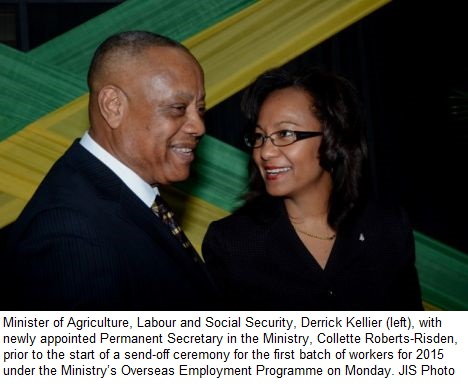
CU Blog - Jamaica-Canada employment programme pumps millions into local economy - Photo 1KINGSTON, Jamaica (JIS) — Remittance inflows from the Jamaica-Canada employment programme contributed Cdn$15.5 million (approximately JA$1.7 billion) to the Jamaican economy during 2014.

This was disclosed by Minister of Agriculture, Labour and Social Security, Derrick Kellier, who noted that the programme, which is a vital source of foreign exchange remittances, “continues to be a beacon of hope and opportunity for thousands of Jamaicans.”

The minister was speaking at a send-off ceremony for the first batch of farm workers for 2015 under the ministry’s overseas employment programme in Kingston on Monday.

Kellier further noted that, during 2014, approximately 7,952 Jamaicans benefitted from employment opportunities in Canada.

“The farm work component accounted for 90 percent (7,156) of this number, while the others travelled under the low skill and skilled worker programmes,” he said.
A total of 340 workers, selected under the Canadian seasonal agricultural workers programme, were due to depart the island on Monday to take up employment opportunities on various farms in Ontario, Canada.
This batch of all males, most of whom will do eight-month stints, will be employed in greenhouse crop production, food processing, tobacco plants as well as nurseries which are involved in the cultivation of various vegetables. They will also be engaged in packaging tobacco and fruits for shipment.

The minister noted that 20 percent of the workers are new employees, while the remaining 80 percent are ‘returnees’ or requested workers, noting that “this is a testament to the hard and dedicated work provided by Jamaican workers abroad.”

He implored the new cohort to continue being professional while on the job, so that the programme can be expanded to provide opportunities for more unemployed Jamaicans.

“I am urging you too, to observe regulations as much as possible for your safety and health. I advise you all not to breach rules (such as absence without leave), which will disqualify you and other Jamaicans in the future,” he said.

The minister reminded the workers that the Overseas Employment Family Services Unit will continue to focus on the welfare of their families through a range of social interventions, including household visits, referrals for assistance, care for the sick and injured, care of children and self-empowerment programmes.
Caribbean News Now – Regional News Source (Retrieved 01/08/2015) –
http://www.caribbeannewsnow.com/topstory-Jamaica-Canada-employment-programme-pumps-millions-into-local-economy-24290.html

Jamaica has one of the highest rates of societal abandonment in the Caribbean. In a previous blog commentary, it was revealed that the Caribbean loses more than 70 percent of the tertiary educated to brain drain, but Jamaica’s rate is at 85%; (plus 35% of the secondary educated population leaves). This Foreign Guest Worker program, in the foregoing article, seems to be a “double down” on the itinerant Jamaican strategy. Imagine the analogy of a teenage runaway leaving his family behind; then when the parents finally discover that prodigal’s son’s whereabouts, they send another child to join them, rather than encourage a return home and a plea to prosper and be planted at home. The people of Jamaica deserves better.

As revealed in the foregoing article, the Government of Jamaica is counting on the short-term benefits, the remittances of these guest workers back to the homeland; they seem unaware and unconcerned for the mid-term and long-term well-being of Jamaica and Jamaicans. The fears and threats is that Guest Workers will mix-and-mingle with people in the host countries, establish new personal-family ties and relocate permanently, as legal migrants. In addition, there should be the concern that pregnant spouses left behind would travel to visit their husbands, just in time to give birthin Canada, availing the birth-right privileges of that country. Just that easily, one family’s next generation would not be Jamaica-based, but pursue a life in the Diaspora community instead, “fattening frogs for snake”.

The Caribbean Diaspora amounts to 10 million people, compared to 42 million residents in the region; Jamaica population is listed at 2,825,928 people (2010), but their Diaspora is estimated at follows (http://en.wikipedia.org/wiki/Jamaican_diaspora):

US:          740,000
Canada: 257,000
UK:         800,000
Total:    1,797,000

In addition, there is a report that there are 100,000 illegal Jamaicans in the US alone.

Legal or not legal, a great measurement of the economic activity of this diasporic population is their remittance activity. A previous blog reported that Jamaica has been experiencing 5.3% annual growth rate in the amount of remittances transferred to the island.

Change has come to the region! The forgoing article describes a negative ethos that the new Caribbean planners want to break from.

The Go Lean book describes that the CU will assume the role and responsibility to empower the regional economy and facilitate trade, not just “count the money” in remittance activity. The following 3 prime directives are explored in full details in the roadmap:

  • Optimization of the economic engines in order to grow the regional economy to $800 Billion & create 2.2 million new jobs.
  • Establishment of a security apparatus to protect the resultant economic engines.
  • Improve Caribbean governance to support these engines.

A mission of the CU is to minimize the need for the Caribbean labor force to migrate to foreign lands for work; and also to invite those that have left, the Diaspora, to repatriate. The Go Lean roadmap features a methodical implementation over a 5 year period, to create more and more local jobs.

Consider the employers described in the foregoing article. They need Guest Workers to facilitate their winter agricultural expressions: greenhouses and incubators. The Go Lean roadmap calls for expanding agricultural production in the Caribbean region – winter crops are opportunistic in their marketability – then exporting the produce to markets like Canada, utilizing strategic concepts for frozen food industries like refrigerated warehouses and refrigerated containers (reefers). Those Canadian stakeholders can be Direct Foreign Investors in the region rather than employers. This approach is better! We still profit more from trade, but keep our human capital at home. This is a win-win.

This sample business model reflects the technocratic approaches being advocated in the roadmap, from top to bottom. This commences with the recognition that all the Caribbean has defective business models, underemployment, and suffering on the wrong side of the globalization divide (producers versus consumers). These acknowledgements are pronounced in the Declaration of Interdependence, (Page 13 & 14). The statements are included as follows:

xix.  Whereas our legacy in recent times is one of societal abandonment, it is imperative that incentives and encouragement be put in place to first dissuade the human flight, and then entice and welcome the return of our Diaspora back to our shores. This repatriation should be effected with the appropriate guards so as not to imperil the lives and securities of the repatriated citizens or the communities they inhabit. The right of repatriation is to be extended to any natural born citizens despite any previous naturalization to foreign sovereignties.

xx.  Whereas the results of our decades of migration created a vibrant Diaspora in foreign lands, the Federation must organize interactions with this population into structured markets. Thus allowing foreign consumption of domestic products, services and media, which is a positive trade impact. These economic activities must not be exploited by others’ profiteering but rather harnessed by Federation resources for efficient repatriations.

xxi.  Whereas the preparation of our labor force can foster opportunities and dictate economic progress for current and future generations, the Federation must ensure that educational and job training opportunities are fully optimized for all residents of all member-states, with no partiality towards any gender or ethnic group. The Federation must recognize and facilitate excellence in many different fields of endeavor, including sciences, languages, arts, music and sports. This responsibility should be executed without incurring the risks of further human flight, as has been the past history.

xxiv.  Whereas a free market economy can be induced and spurred for continuous progress, the Federation must install the controls to better manage aspects of the economy: jobs, inflation, savings rate, investments and other economic principles. Thereby attracting direct foreign investment because of the stability and vibrancy of our economy.

xxv.  Whereas the Caribbean region must have new jobs to empower the engines of the economy and create the income sources for prosperity, and encourage the next generation to forge their dreams right at home, the Federation must therefore foster the development of new industries, like … frozen foods…  In addition, the Federation must invigorate the enterprises related to existing … – impacting the region with more jobs.

xxx.  Whereas the effects of globalization can be felt in every aspect of Caribbean life, from the acquisition of food and clothing, to the ubiquity of ICT, the region cannot only consume, it is imperative that our lands also produce and add to the international community, even if doing so requires some sacrifice and subsidy.

The message now being trumpeted to the Cabinet Member in the foregoing article: No more migrant culture! Already, a new Jamaican – American sub-culture has emerged and is now thriving; see Appendix for a sample of “Jamerican” music. (Once the “genie leaves the bottle”, there is no returning; the “Jamerican” legacies, though appreciative of their Jamaican influences, will perhaps never take up residence in Jamaica).

We want solutions built around staying home, not “renting” our young men to foreign shores. This is a vision for all the Caribbean to embrace, not just Jamaica; it entails confederating the 30 member-states into an integrated “single market”, thereby fostering economic growth to grow the regional economy to $800 Billion (from the 2010 base of $378 Billion). This growth would be the cause-and-effect of 2.2 million new jobs. The following list details the series of community ethos, strategies, tactics, implementations and advocacies necessary to effectuate these empowerments for the region to graduate from this migrant culture, described in the foregoing article:

Community Ethos – Economic Systems Influence Individual Choices Page 21
Community Ethos – Voluntary Trade Creates Local Wealth Page 21
Community Ethos – Consequences of Choices Lie in the Future Page 21
Community Ethos – Job Multiplier Page 22
Community Ethos – Lean Operations Page 24
Community Ethos – Return on Investments Page 24
Community Ethos – Ways to Impact the Future Page 26
Community Ethos – Ways to Help Entrepreneurship Page 28
Strategic – Vision – Integrated Region in a   Single Market Page 45
Strategic – Vision – Encourage Repatriation of   the Diaspora Page 46
Strategic – Vision – Agents of Change Page 57
Tactical – Fostering a Technocracy Page 64
Tactical – Growing to $800 Billion Regional Economy Page 67
Tactical – Separation of Powers Page 71
Tactical – Interstate Commerce Admin – Econometrics Data Analysis Page 79
Implementation – Ways to Pay for Change Page 101
Implementation – Ways to Deliver Page 109
Planning – Big Ideas for the Caribbean Region Page 127
Planning – Lessons Learned from 2008 Page 136
Planning – Ways to Measure Progress Page 147
Advocacy – Ways to Grow the Economy Page 151
Advocacy – Ways to Create Jobs – Feed Ourselves Page 152
Advocacy – Ways to Better Manage Foreign Exchange Page 154
Advocacy – Ways to Better Manage Food Consumption – Agri-Business Page 162
Advocacy – Ways to Improve Governance Page 168
Advocacy – Ways to Improve Leadership Page 171
Advocacy – Ways to Develop a Frozen Food Industry Page 208
Advocacy – Ways to Impact the Diaspora Page 217
Appendix – Job Multipliers Page 259
Appendix – Trade SHIELD – “Strategic“ planning & “Logistical” solutions Page 264

The people of the Caribbean deserve every opportunity to prosper where they are planted. If this is to be the quest, then the region’s leadership should lean-in to this roadmap. One person can make a difference; this fact has been demonstrated time and again. The Go Lean book provides the step-by-step instructions on how to move Caribbean society from the status quo to the desired destination: a better place to live, work and play.

The Go Lean roadmap calls for both “Top-Down” (leadership) and “Bottoms-Up” (popular) movements to effectuate this change. We need better leadership, yes. We also want the people, the common men and women on the streets to demand this change. They do not have to sit and watch their loved one leave their beloved homeland to make a living abroad. We can all prosper right here at home.

No more! Let’s change this culture. This means you Jamaica, and the rest of the Caribbean region.

Now is the time for all of the region, the people and governing institutions, to lean-in for the empowerments of the Caribbean Union Trade Federation. Now is the time for this viable plan to make our homeland the best address in the world.  🙂

Download the book Go Lean … Caribbean – now!

———–

Appendix: Reflection of the New Jamaican Diaspora Culture –  http://youtu.be/t4iRnETnmtw – Born Jamericans – Wherever We Go


Share this post:
, , ,
[Top]

CARICOM Chair calls for an end to US embargo on Cuba

Go Lean Commentary

Welcome to the fight Mr. Browne; welcome to the struggle to elevate Caribbean society.

The publishers of the book Go Lean…Caribbean monitor the organizational developments of the Caribbean Community super-national organization. The Chairman position rotates among the Heads of Government for the 15 member-states. This year’s turn at the helm is Antigua & Barbuda; just in time after the June election of Gaston Browne as the new Prime Minister. This is a “baptism in fire” for Mr. Browne, as he is new in the leadership role for Antigua and also new for the CariCom. His latest regional salvo is a “shot across the bow” of American foreign policy, calling for the end of the US embargo on Cuba. See full article & VIDEO here:

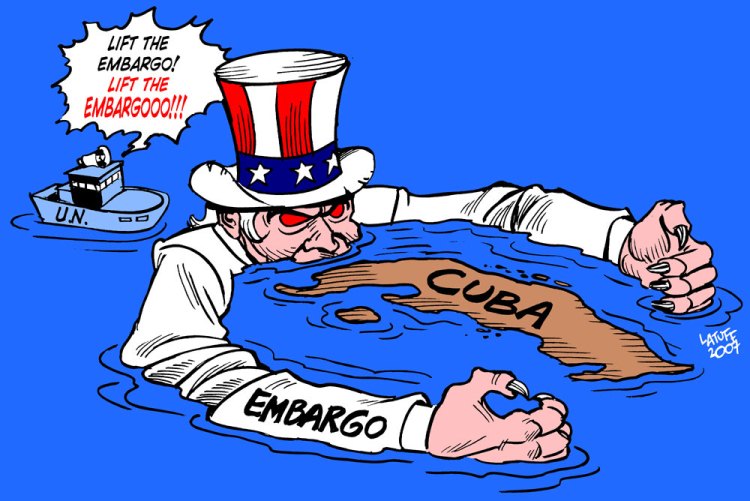
 CU Blog - CARICOM chair calls for an end to US embargo on Cuba - Photo 1HAVANA, Cuba — Chairman of the Caribbean Community (CARICOM) Gaston Browne, prime minister of Antigua and Barbuda called on the United States president and congress to end its “senseless embargo of Cuba now.”

Browne was speaking at the opening ceremony of the fifth CARICOM-Cuba Summit in Havana, Cuba, on Monday. He said that CARICOM’s solidarity with Cuba was manifested by the region’s repeated calls “in every council in every part of the world” for an end to the embargo.

The CARICOM chairman also took the opportunity to express profound appreciation to the host for its role in the fight against Ebola disease.

“Cuban doctors, nurses and technicians have not only put their lives at risk to save lives in West Africa; they have saved lives around the world by helping to contain and control the spread of Ebola. They deserve our deep respect, our great gratitude and our enduring thanks,” he stated.

The prime minister noted that trade between the two sides had grown but was mindful of the challenges that existed for its expansion. He referred to the work being done on a protocol to widen the existing trade and development agreement and stated he had no doubt that a mutually satisfactory result would be achieved.

Browne said a practical machinery had to be established to expand trade and investment.

“Central to such machinery is effective and affordable transportation for the movement of goods and people between our countries. In this connection, I call on this summit meeting to place high priority on creating mechanisms to move goods, services and passengers throughout our countries. I am convinced that if Cuba and CARICOM countries can jointly build a transportation network, all our economies will benefit,” he added.
He pointed to the advantages particularly in the field of tourism that such a network could bring.

“If Cuba and CARICOM countries can establish the air transportation links and a network of collaboration between our hotels, multi-destination tourism — that offers the distinctiveness of our culturally-rich countries — could be a winner for all of us,” he said.

The CARICOM chairman suggested that CARICOM and Cuba share their knowledge and experience in sports, particular athletics.

He joked that “if we teach Cubans to play cricket, we might produce a Caribbean cricket team that would restore West Indian cricket to the heights it once majestically enjoyed.”
Browne said that areas for co-operation between CARICOM and Cuba existed at a broad level and it was up to “us to be creative and ingenious in the ways in which we bolster each other.”

“On matters such as climate change and global warming; on financial services and the dictates of the countries of the Organization for Economic Cooperation and development; on the marginalization of our concerns by the G20, we should be coordinating our positions and acting in unison. We may not be able to stand-up to them alone, but they cannot ignore us if we stand-up together,” the prime minister said.
Caribbean News Now – Regional News Source (Posted 12/11/2014) –
http://www.caribbeannewsnow.com/headline-CARICOM-chair-calls-for-an-end-to-US-embargo-on-Cuba-23985.html

———-

VIDEO – Has the US-Cuba trade embargo reached the end of the road? – BBC News – http://youtu.be/SR8CPBO6C8Q

Published on May 20, 2014 – America’s long-standing trade embargo with Cuba is facing calls to be eased from an unlikely source. President Obama’s administration has relaxed some of its provisions but there are growing calls to lift it completely.

The “acting in unison” rallying cry from Mr. Browne aligns with the assertions of the Go Lean book, that the challenges the Caribbean face are too big for any one Caribbean member-state to tackle alone. Rather, shifting the responsibility to a region-wide, professionally-managed, deputized technocracy will result in greater production and greater accountability. This deputized agency is the Caribbean Union Trade Federation (CU). The Go Lean book is a roadmap for the introduction and implementation of the CU.

Though this CU effort shares some similar goals, there is no association of the Go Lean publishers to the CariCom. Instead, the Go Lean movement is external to CariCom. In fact, the book assesses that most of CariCom executions have failed – Pages 92, 167, 255 – and proposes the CU as the next step of integration evolution for the Caribbean region.

In addition to the book, the publishers have previously addressed CariCom’s efforts and mis-firings in the following Go Lean blogs entries:

CARICOM calls for innovative ideas to finance SIDS development
EU willing to fund study on cost of not having CARICOM
The Future of CariCom
Grenada PM Urges CARICOM on ICT
CARICOM Chairman to deliver address on reparations
Caribbean leaders convene for CARICOM summit in St Vincent

The foregoing article stressed the potential for Caribbean elevation with the imminent re-integration of Cuba. The CariCom Chairman’s urging for the US to end the trade embargo is a great start – just talk – but the actions associated with Cuba’s full integration are weighty. The Go Lean book describes the heavy-lifting associated with this quest.

This book, Go Lean… Caribbean, details the step-by-step roadmap for elevating the entire Caribbean, including Cuba, into a confederation of 30 member-states of the region into a “single market”. Thusly, the prime directives of the CU are pronounced in these statements:

  • Optimization of the economic engines in order to grow the regional economy to $800 Billion & create 2.2 million new jobs.
  • Establishment of a security apparatus to protect the resultant economic engines.
  • Improve Caribbean governance to support these engines.

The Go Lean book details the series of community ethos, strategies, tactics, implementations and advocacies designed to re-boot and integrate Cuba in to an optimized Caribbean brotherhood:

Anecdote – Caribbean Single Market & Economy Page 15
Community Ethos – Economic Systems Influence Individual Choices & Incentives Page 21
Community Ethos – Job Multiplier Page 22
Community Ethos – “Crap” Happens Page 23
Community Ethos – Lean Operations Page 24
Community Ethos – Cooperatives Page 25
Community Ethos – Ways to Impact the Future Page 26
Community Ethos – Ways to Manage Reconciliations Page 34
Community Ethos – Ways to Impact the Greater Good Page 37
Strategic – Vision – Integrated Region in a Single Market Page 45
Strategic – Vision – Agents of Change Page 57
Tactical – Confederating a Non-sovereign Union Page 63
Tactical – Fostering a Technocracy Page 64
Tactical – Growing to $800 Billion Regional Economy Page 67
Tactical – Separation of Powers – Office of Trade Negotiations Page 80
Tactical – Separation of Powers – Federal Courts – Truth & Reconciliation   Commissions Page 90
Anecdote – Turning Around CariCom Page 92
Anecdote – “Lean” in Government Page 93
Implementation – Assemble & Create Super-Regional Organs to represent all Caribbean Page 96
Implementation – Ways to Pay for Change Page 101
Implementation – Foreign Policy Initiatives at Start-up Page 102
Implementation – Ways to Deliver Page 109
Implementation – Reasons to Repatriate to the Caribbean Page 118
Implementation – Ways to Benefit from Globalization Page 119
Planning – 10 Big Ideas – Cuba Page 127
Planning – Big Ideas for the Caribbean Region Page 127
Planning – Ways to Model the EU Page 130
Planning – Ways to Improve Failed-State Indices Page 134
Advocacy – Ways to Grow the Economy Page 151
Anecdote – Governmental Integration: CariCom Parliament Page 167
Advocacy – Ways to Improve Governance Page 168
Advocacy – Ways to Impact the Diaspora Page 217
Advocacy – Ways to Re-boot Cuba Page 236
Appendix – New CariCom Model Urged Page 255

The foregoing news article and this commentary is not the first call for the re-instatement of Cuba – 55 years is long enough. In a recent blog about the Big 3 automakers of Detroit, reference was made to the expansion of auto assembly plants of General Motors and Ford Motors in global cities. Both companies now have installations in Vietnam, a country that fought a bloody unpopular war with the US 40 years ago; (65,000 American deaths). Cuba has never shed American blood, and yet their embargo persists – this defies logic. This is why these previous blogs posit that it is only a matter of (short) time for this change, and so the blogs/commentaries feature subjects on Cuba’s eventual integration into the Caribbean brotherhood. These are detailed here:

‘Raul Castro reforms not enough’, Cuba’s bishops say
Cuban Cigars – Declared “Among the best in the world”
Cuba mulls economy in Parliament session
America’s War on the Caribbean
Cuban cancer medication registered in 28 countries
Cuba Approves New “Law on Foreign Investment”

CU Blog - CARICOM chair calls for an end to US embargo on Cuba - Photo 2Many entities in the international community have heralded a normalization of Cuban-American relations; see foregoing VIDEO and Appendix below.

The book Go Lean … Caribbean recognizes the historicity of Cuba and the polarization of the Castro Brothers (Fidel & Raul). But now that the current President, Raul, has announced that he will retire/step-down in 2017, it is reasonable to expect that the long-awaited change is imminent for the Republic of Cuba.

The CU roadmap is especially inviting to the Cuban and Caribbean Diaspora; it presents a comprehensive plan (370 pages) for the contribution of their time, talents and treasuries in the repatriation to their homeland.

Now is the time for Caribbean stakeholders, the residents, Diaspora, trading partners and governing institutions, to lean-in for this regional re-boot plan. Now is the time to end the embargo, re-instate Cuba and make all of the Caribbean a better place to live, work and play. 🙂

Download Go Lean … Caribbean – now!

———-

Appendix: UN Blasts US Embargo of Cuba – http://youtu.be/S5sZ5ZBlv4M
Published on Nov 6, 2013 – The US embargo against Cuba is being criticized by the UN, who are taking issue with the 50 year old sanctions against the socialist island nation just 90 miles from Florida’s southern shore. On October 29th, [2013] the UN voted 188-2 for a resolution to end the embargo, which it said “…lacks every ethical or legal ground.” We discuss the vote on this Buzzsaw news clip with Tyrel Ventura and Tabetha Wallace.

Share this post:
, , ,
[Top]

A Lesson in History – Economics of East Berlin

Go Lean Commentary

The book Go Lean…Caribbean serves as a roadmap for elevating Caribbean society; the book posits that the history of East Germany is a tutorial to the Caribbean effort. As such there are direct references in the book of the failed Communist State (Pages 132 & 139).

On this date 25 years ago, the “walls came tumbling down”, quickening the reunification of the nations of West Germany and East Germany. That is the headline, but beneath the surface, the German Democratic Republic (GDR or East Germany) was also rife with some other ugly truths.

In summary, the City of “East” Berlin was a maximum security prison in the heart of Europe. (This refers to City of East Berlin, not the whole country of East Germany).

Title: 25 Years Ago – The Berlin Wall Crumbled

CU Blog - A Lesson in History - Economics of East Berlin - Photo 1On the night of November 9, 1989, the Berlin Wall came down. East German authorities opened the border between East and West Berlin and the door to the fall of tyranny.

The wall went up in the early morning darkness of August 13, 1961, to keep millions of people from fleeing communist East Germany after World War II. It fell as suddenly as it had been built. For 28 years, Germany was a country divided not only by ideology but by stone, barbed wire and deadly force. The Berlin Wall — die Mauer — stood as a testament to the eternal struggle between open and closed societies. For all its might, the wall could not stop the free flow of news into East Berlin.

The West side of the wall became a stage for politicians and a canvas for artists. The East side grew grimmer, as social and economic problems worsened. In the end, people rose in protest. When the wall finally crumbled, there was dancing and celebration. But the wall’s toll could not be forgotten: Nearly 200 people died trying to escape; more than 30,000 political prisoners were jailed.

Today, the fallen wall is a memorial to their sacrifice, one of the world’s great symbols of the victory of freedom over oppression. The eight, 12-foot-high segments of the Berlin Wall in the Newseum’s Berlin Wall Gallery weigh 2.5 tons each and came from throughout Berlin. The Newseum acquired the pieces in 1993, along with the three-story East German guard tower that stood near Checkpoint Charlie.

Newseum Institute – Archives and Exhibit of News Artifacts
http://www.newseum.org/2014/11/06/25-years-ago-the-berlin-wall-crumbled/

CU Blog - A Lesson in History - Economics of East Berlin - Photo 2This is more than just dry history. No, this is a lesson plan for the Caribbean empowerment effort. That effort is part-and-parcel of the Go Lean…Caribbean movement, this refers to the book and accompanying blog/commentaries. The book posits that the experiences of East Germany and the reunification with the Federal Republic of Germany (FRG or West Germany) provide a fitting example for the Caribbean people and institutions. What most people in the Caribbean may not realize, due to the far distance of a continent away, is that the national border for West and East Germany did not traverse through the City of Berlin, but rather 100 miles to the west of Berlin; (see map here). So the City of Berlin stood as an “island” within the country of East Germany, with that island itself split into West and East territories. (This is so similar to many Caribbean locales). The Western portion of Berlin belonged to West Germany; the residents had travel access via “air bridge” to other ports in the Federal Republic of Germany, while East Berliners were restricted – imprisoned in their own country, despite committing no offenses. This is classic human rights violation.

East Berlin, and by extension East Germany was a definitive Failed-State.

This audio-podcast here relates a practice of East Germany selling prisoners to the West for hard currency, so as to remediate the government’s economic deficiencies:

Video: Public Radio International East Germany Prisoner Ransom … http://youtu.be/FjozYlAlMew

The narratives described in this audio-podcast constitutes state-sponsored human trafficking.

This is abominable!

The German Reunification was not a merger, rather it was a repossession. East Germany was at the precipice of a Failed-State. The Caribbean today is at a similar precipice of dysfunction. This status is not due to the failure of communism (though one Caribbean member-state – Cuba – does feature a failed communist society), but rather the global financial crisis. Cuba also parallels East Germany with a human trafficking crisis; many citizens are desperate to leave the island and families pay huge “ransoms” to extract them.

The review of the historic events of this day regarding the Berlin Wall 25 years ago is more than just an academic discussion, the book Go Lean…Caribbean aspires to economic principles that dictate that “consequences of choices lie in the future”. The book serves as a roadmap for the introduction and implementation of the technocratic Caribbean Union Trade Federation (CU). The people of the Caribbean may not know the intimate details of East Germany, but we do understand societal decline and dysfunction all too well.

What have we learned from the East/West Germany experiences? How will those lessons help us today?

  • Brain Drain is unrecoverable – East Germany learned quickly that they had to keep their talented citizens by any means necessary, and thus the wall. The CU/Go Lean roadmap places priority on the atmosphere for the Caribbean talent to want to stay in the homeland and for the Diaspora to repatriate..
  • Most valuable resource – East German sold their human resources to the West; (over 300,000 people according to the above audio-podcast/VIDEO). This was their best marketable resource. The Go Lean roadmap posits that one person can make a difference and impact the economic engines in the fields of endeavor. Rather than one, the CU/Go Lean effort strives to foster the masses for their collective and individual contributions.
  • Promote opportunities for the Pursuit of Happiness – People in the West were NOT trying to sneak into the East. Basic needs were not fully satisfied there, so higher level needs were rarely pursued. The Go Lean roadmap posits that when the basic needs are in place, only then can the pursuit of happiness be tackled.
  • Consider the Greater Good – Complying with this Greater Good principle would have prevented a lot of the conflict during the 28-year East-West segregation. This philosophy is directly quoted in the book as: “it is the greatest good to the greatest number of people which is the measure of right and wrong”. The CU/Go Lean roadmap calls for a number of measures that strike directly at the Greater Good mandate: accountable justice institutions, economic empowerment for rich and poor, strategic education initiatives, proactive health/wellness, etc.
  • Quit on “failed” policies  – With the Soviet Union and Eastern European trading partners collapsing, the East German currency, the Mark, had become worthless outside of the GDR, creating the acute need to merge the two German economies. The GDR did not try to prop up the failing currency beyond 1989, instead they transferred its financial & monetary policy to the stewards of the stronger West Germany currency. The Go Lean roadmap will employ a technocratic Caribbean Central Bank and Caribbean Dollar so as to shore up the currency and economic engines in the region.
  • Negotiating as partners not competitors – Considering the German reunification models, consolidating millions of people with divergent politics and cultures into one Federation requires toleration and adjustments by all stakeholders. Success is possible only when all sides are willing to negotiate as partners not competitors. The CU requires negotiations and treaty considerations for economics, security and governing solutions. So the Go Lean roadmap adopts negotiations as a community ethos.
  • Reconciliation of issues is not optional, more conflict will emerge otherwise – There was loss of life and many human rights abuses in the history of the East-West schism, and there must be accountability. The CU plans for Truth & Reconciliation Commissions for dealing with a lot of latent issues in the last Caribbean century (i.e. Cuba, Haiti, Dominican Republic, etc).

The related subjects of economic, security and governing dysfunction have been a frequent topic for blogging by the Go Lean promoters, as sampled here:

https://goleancaribbean.com/blog/?p=2585 A Lesson in History: Concorde SST
https://goleancaribbean.com/blog/?p=2480 A Lesson in History: Community Ethos of WW II
https://goleancaribbean.com/blog/?p=2359 CariCom calls for innovative ideas to finance SIDS development
https://goleancaribbean.com/blog/?p=2330 ‘Raul Castro reforms not enough’, Cuba’s bishops say
https://goleancaribbean.com/blog/?p=2297 A Lesson in History: Booker T versus Du Bois
https://goleancaribbean.com/blog/?p=1531 A Lesson in History: 100 Years Ago Today – World War I
https://goleancaribbean.com/blog/?p=1433 Caribbean loses over 70% of tertiary educated citizens to the brain drain
https://goleancaribbean.com/blog/?p=1309 5 Steps of a Bubble – Learning from the past and mitigating negatives
https://goleancaribbean.com/blog/?p=1014 All is not well in the sunny Caribbean
https://goleancaribbean.com/blog/?p=816 The Future of Caribbean Integration and CariCom
https://goleancaribbean.com/blog/?p=782 Open the Time Capsule: The Great Recession of 2008
https://goleancaribbean.com/blog/?p=623 Only at the precipice, do they change
https://goleancaribbean.com/blog/?p=599 Ailing Puerto Rico open to radical economic fixes
https://goleancaribbean.com/blog/?p=451 CariCom Chairman to deliver address on slavery/colonization reparations
https://goleancaribbean.com/blog/?p=353 Book Review: ‘Wrong – Nine Economic Policy Disasters and What We Can Learn…’

The purpose of the Go Lean roadmap is to turn-around the downward trends in the Caribbean today, to reverse course and elevate Caribbean society. This CU/Go Lean roadmap, applying lessons from the last 25 years of German history, has developed these prime directives, pronounced as follows:

  • Optimization of the economic engines in order to grow the regional economy to $800 Billion & create 2.2 million new jobs.
  • Establishment of a security apparatus to protect the resultant economic engines.
  • Improve Caribbean governance to support these engines.

The Go Lean book details a series of assessments, community ethos, strategies, tactics, implementations and advocacies to empower all the factions in the Caribbean region:

Community Ethos – Economic Systems Influence Choices & Incentives Page 21
Community Ethos – Consequences of Choices Lie in the Future Page 21
Community Ethos – Money Multiplier – Control of Local/Regional Currency Page 22
Community Ethos – Anti-Bullying and Mitigation Page 23
Community Ethos – Intelligence Gathering Page 23
Community Ethos – “Crap” Happens Page 23
Community Ethos – Minority Equalization Page 24
Community Ethos – Ways to Impact the Future Page 26
Community Ethos – Ways to Improve Negotiations Page 32
Community Ethos – Ways to Manage Reconciliations Page 34
Community Ethos – Ways to Improve Sharing Page 35
Community Ethos – Ways to Promote Happiness Page 36
Community Ethos – Ways to Impact the Greater Good Page 37
Strategy – Vision –  Integrate Region into a Single Market Economy Page 45
Strategy – Agents of Change – Globalization Page 57
Tactical – Separation of Powers – Department of Homeland Security Page 75
Implementation – Assemble Existing Super-national Institutions Page 96
Implementation – Ways to Pay for Change Page 101
Implementation – Foreign Policy Initiatives at Start-up Page 102
Implementation – Security Initiatives at Start-up Page 103
Implementation – Ways to Deliver Page 109
Planning – Ways to Ways to Model the EU Page 130
Planning – Ways to Make the Caribbean Better Page 131
Planning – Reasons Why the CU Will Succeed – Germany Reunification Model Page 132
Planning – Ways to Improve Failed-State Indices Page 134
Planning – Lessons from East Germany Page 139
Advocacy – Ways to Grow the Economy Page 151
Advocacy – Ways to Create Jobs Page 152
Advocacy – Ways to Better Manage the Social Contract Page 170
Advocacy – Ways to Foster Cooperatives Page 176
Advocacy – Ways to Impact Justice Page 177
Advocacy – Ways to Improve Homeland Security Page 180
Advocacy – Ways to Improve Intelligence Gathering and Analysis Page 182
Advocacy – Ways to Protect Human Rights Page 220

1989 was pivotal in the history of modern Germany. Today the unified country is the Number One Economy in Europe and a role model for the Caribbean.

Now is the time for all of the Caribbean to learn the lessons from East Germany’s failed economy. The book Go Lean … Caribbean posits that the Caribbean is in a serious crisis, but asserts that this crisis would be a terrible thing to waste. The people and governing institutions of the region are hereby urged to lean-in for the empowerments described in the book Go Lean … Caribbean. This is a big deal for the region, the same way 1989 was a big year for Germany. While “impacting Germany” is out-of-scope for this CU roadmap, applying effective turn-around strategies (as in emerging from communism in Cuba) and elevating the Caribbean neighborhood is realistic and plausible. We can make our Caribbean homeland a better place to live, work, and play. 🙂

Download the book Go Lean … Caribbean – now!

Share this post:
, , , ,
[Top]

The Geography of Joblessness

Go Lean Commentary

“A better place to live, work and play” – this is the tagline for the book Go Lean…Caribbean, thereby placing emphasis on the verb “work”. To work, there must be jobs, so the entire eco-system of jobs is a constant focus of the book’s publishers.

The foregoing news article relates to this mission. The underlying issue in this consideration relates to jobs and joblessness. There is the need for more jobs – in urban communities in OECD – Organization of Economic Cooperation and Development – countries (like US, Canada, Europe) and also in the Caribbean – see VIDEO in the Appendix below. But there are many issues that underlie the availability of jobs, such as geography, transportation and racial discrimination. To effect change in the job creation quest, there must be some consideration of these issues:

Subtitle: The difficulty people have in getting to jobs makes unemployment unnecessarily high

CU Blog - The Geography of Joblessness - PhotoIN THE OECD, a club mostly of rich countries, nearly 45 million people are unemployed. Of these, 16 million have been seeking work for over a year. Many put this apparently intractable scourge down to workers’ inadequate skills or overgenerous welfare states. But might geography also play a role?

In a paper* published in 1965, John Kain, an economist at Harvard University, proposed what came to be known as the “spatial-mismatch hypothesis”. Kain had noticed that while the unemployment rate in America as a whole was below 5%, it was 40% in many black, inner-city communities. He suggested that high and persistent urban joblessness was due to a movement of jobs away from the inner city, coupled with the inability of those living there to move closer to the places where jobs had gone, due to racial discrimination in housing. Employers might also discriminate against those that came from “bad” neighbourhoods. As a result, finding work was tough for many inner-city types, especially if public transport was poor and they did not own a car.

For the past 50 years, urban economists have argued over Kain’s theory. Some, like William Julius Wilson, then of University of Chicago, pointed to the decline of inner-city manufacturing to explain the sharp spike in poverty in black inner-city neighbourhoods between 1970 and 1980—in keeping with Kain’s logic. Others, like Edward Glaeser, another Harvard economist, suggest that spatial mismatch is overblown. There may indeed be a correlation between where people live and their chances of finding a job. But the connection may not be causal: people may live in bad areas because they have been shunned by employers, either for lack of skills or because of racial discrimination.

Until recently economists did not have adequate data to back up their opinions. Studies used cross-sectional data—a snapshot of an economy at a single point in time—which made it hard to disentangle cause and effect. Did someone live in a bad area because they could not find a job, or was it more difficult to find a job because they lived in a bad area? It was also hard to know quite how inaccessible a particular job was. Researchers could calculate the distance between homes and job opportunities but struggled to estimate how much time it would take to get from one to the other by car or public transport. And the research was marred by small samples, often all from a single city.

A new paper, published by the National Bureau of Economic Research, avoids these pitfalls. It looks at the job searches of nearly 250,000 poor Americans living in nine cities in the Midwest. These places contain pockets of penury: unemployment in inner Chicago, for instance, is twice the average for the remainder of the city. Even more impressive than the size of the sample is the richness of the data. They are longitudinal, not cross-sectional: the authors have repeated observations over a number of years (in this case, six). That helps them to separate cause and effect. Most importantly, the paper looks only at workers who lost their jobs during “mass lay-offs”, in which at least 30% of a company’s workforce was let go. That means the sample is less likely to include people who may live in a certain area, and be looking for work, for reasons other than plain bad luck.

For each worker the authors build an index of accessibility, which measures how far a jobseeker is from the available jobs, adjusted for how many other people are likely to be competing for them. The authors use rush-hour travel times to estimate how long a jobseeker would need to get to a particular job.

If a spatial mismatch exists, then accessibility should influence how long it takes to find a job. That is indeed what the authors find: jobs are often located where poorer people cannot afford to live. Those at the 25th percentile of the authors’ index take 7% longer to find a job that replaces at least 90% of their previous earnings than those at the 75th percentile. Those who commuted a long way to their old job find a new one faster, possibly because they are used to a long trek.

The annihilation of space with time

Other papers suggest that workers may be in the wrong place. A study from the Brookings Institution, a think-tank, finds that poverty in America has become more concentrated over the past decade. During the 2000s the number of neighbourhoods with poverty rates of 40% or more climbed by three-quarters. Unlike Kain’s day, though, poverty is growing fastest in the suburbs, not the inner cities. Pockets of concentrated poverty also tend to suffer from bad schools and crime, making them even more difficult to escape.

Spatial mismatch is not just an American problem. A paper by Laurent Gobillon of the French National Institute for Demographic Studies and Harris Selod of the Paris School of Economics finds that neighbourhood segregation prevents unemployed Parisians from finding work. Another study, conducted in England, concludes that those who live far from jobs spend less time looking for work than those who live nearby, presumably because they think they have little hope of finding one.

All this has big policy implications. Some suggest that governments should encourage companies to set up shop in areas with high unemployment. That is a tall order: firms that hire unskilled workers often need to be near customers or suppliers. A better approach would be to help workers either to move to areas with lots of jobs, or at least to commute to them. That would involve scrapping zoning laws that discourage cheaper housing, and improving public transport. The typical American city dweller can reach just 30% of jobs in their city within 90 minutes on public transport. That is a recipe for unemployment.
The Economist Magazine (Posted October 25, 2014; Retrieved November 7, 2014) –
http://www.economist.com/news/finance-and-economics/21627628-difficulty-people-have-getting-jobs-makes-unemployment-unnecessarily

References – *Studies cited in this article

“Job displacement and the duration of joblessness: The role of spatial mismatch”, by F. Andersson et al, National Bureau of Economic Research, 2014

“The effect of segregation and spatial mismatch on unemployment: evidence from France”, by L. Gobillon & H. Selod, Centre for Economic Policy Research, 2007

“The spatial mismatch hypothesis: three decades later”, by J.F. Kain, Housing Policy Debate, 3(2), 371-460, 1992

“Spatial mismatch, transport mode and search decisions in England”, by E. Patacchini, & Y. Zenou, Journal of Urban Economics, 58(1), 62-90, 2005.

The Growth and Spread of Concentrated Poverty, 2000 to 2008-2012“, by E. Kneebone, Brookings Institution

The book Go Lean…Caribbean serves as a roadmap for the introduction and implementation of the technocratic Caribbean Union Trade Federation (CU). The CU is set to optimize Caribbean society, starting with economic empowerment. In fact, the Go Lean roadmap has 3 prime directives:

  • Optimization of the economic engines in order to grow the regional economy to $800 Billion & create 2.2 million new jobs.
  • Establishment of a security apparatus to protect the resultant economic engines.
  • Improve Caribbean governance to support these engines.

The Go Lean roadmap calls for many changes and empowerments. One such example is the infrastructure of Self-Governing Entities (SGE), to allow for industrial developments in a controlled (bordered) environment. There is so much that can be accomplished with the right climate, entrepreneurial spirit, access to capital and willing work force. But location is significant with this model, workers must physically get to the bordered campuses/compounds, to get to the jobs. So transportation solutions are paramount to this roadmap.

The CU will foster the installation of SGE’s, and the infrastructure to transport workers to the jobs. The roadmap identifies electrified streetcars, light-rail, natural gas buses and other transit options.

Another compelling mission of the Go Lean book is to lower the “push and pull” factors that lead many to abandon their Caribbean homeland for foreign shores. The book posits that the region must create jobs, the roadmap calls for 2.2 million new jobs over a 5-year period, so that its citizens do not have to leave to become aliens in a foreign land, to be discriminated against as victims of joblessness due to the compelling factors depicted in the foregoing article. The CU does not aim to change North American or European societies, beyond impacting the Diaspora – our scope is the Caribbean. So the public messaging of the societal defects in those countries, as depicted in the foregoing article, should have the effect of dissuading Caribbean emigration. This affects the “pull” factors for Caribbean citizens wanting to leave.

That’s the “pull”; we must still deal with the “push” factors …

There are so many other defects of Caribbean life that need to be addressed to lower the “push” factors. This point is pronounced early in the book with the Declaration of Interdependence (Pages 12 – 14) with many statements that demonstrate the need to remediate Caribbean communities:

xix. Whereas our legacy in recent times is one of societal abandonment, it is imperative that incentives and encouragement be put in place to first dissuade the human flight, and then entice and welcome the return of our Diaspora back to our shores. This repatriation should be effected with the appropriate guards so as not to imperil the lives and securities of the repatriated citizens or the communities they inhabit. The right of repatriation is to be extended to any natural born citizens despite any previous naturalization to foreign sovereignties.

xx.  Whereas the preparation of our labor force can foster opportunities and dictate economic progress for current and future generations, the Federation must ensure that educational and job training opportunities are fully optimized for all residents of all member-states, with no partiality towards any gender or ethnic group. The Federation must recognize and facilitate excellence in many different fields of endeavor, including sciences, languages, arts, music and sports. This responsibility should be executed without incurring the risks of further human flight, as has been the past history.

xxiv. Whereas a free market economy can be induced and spurred for continuous progress, the Federation must install the controls to better manage aspects of the economy: jobs, inflation, savings rate, investments and other economic principles. Thereby attracting direct foreign investment because of the stability and vibrancy of our economy.

xxv.  Whereas the legacy of international democracies had been imperiled due to a global financial crisis, the structure of the Federation must allow for financial stability and assurance of the Federation’s institutions. To mandate the economic vibrancy of the region, monetary and fiscal controls and policies must be incorporated as proactive and reactive measures. These measures must address threats against the financial integrity of the Federation and of the member-states.

xxvi. Whereas the Caribbean region must have new jobs to empower the engines of the economy and create the income sources for prosperity, and encourage the next generation to forge their dreams right at home, the Federation must therefore foster the development of new industries, like that of ship-building, automobile manufacturing, pre-fabricated housing, frozen foods, pipelines, call centers, and the prison industrial complex. In addition, the Federation must invigorate the enterprises related to existing industries like tourism, fisheries and lotteries – impacting the region with more jobs.

The purpose of the Go Lean…Caribbean roadmap is to compose, communicate and compel economic, security and governing solutions for the Caribbean homeland. We want a better society than the past, and perhaps even better than our OECD counterparts. (A CU mission is to repatriate the Diaspora back to the homeland).

How, what, when?

The Go Lean book details a series of community ethos, strategies, tactics, implementations and advocacies to impact jobs in the region, member-states, cities and communities. Below is a sample:

Community Ethos – Deferred Gratification Page 21
Community Ethos – Economic Principle – Economic Systems Influence Choices & Incentives Page 21
Community Ethos – Economic Principle – Voluntary Trade Creates Wealth Page 21
Community Ethos – Job Multiplier Page 22
Community Ethos – Minority Equalization Page 24
Community Ethos – Lean Operations Page 24
Community Ethos – Ways to Impact the Future Page 26
Community Ethos – Ways to Foster Genius Page 27
Community Ethos – Ways to Help Entrepreneurship Page 28
Community Ethos – Ways to Promote Happiness Page 36
Community Ethos – Ways to Impact the Greater Good Page 37
Strategy – Mission – Facilitate Job-Creating Industries Page 46
Tactical – Fostering a Technocracy Page 64
Tactical – Tactics to Forge an $800 Billion Economy – High Multiplier Industries Page 70
Tactical – Separation of Powers – Self-Governing Entities Page 80
Implementation – Ways to Pay for Change Page 101
Implementation – Steps to Implement Self-Governing Entities Page 105
Implementation – Ways to Deliver Page 109
Implementation – Reasons to Repatriate to the Caribbean Page 118
Planning – 10 Big Ideas – Self Governing Entities as Job Creating Engines Page 128
Planning – Ways to Make the Caribbean Better Page 131
Planning – Ways to Improve Failed-State Indices – OECD-style Big Data Analysis Page 133
Advocacy – Ways to Grow the Economy Page 151
Advocacy – Ways to Create Jobs Page 152
Advocacy – Ways to Improve Transportation Page 205
Advocacy – Ways to Impact the Diaspora Page 217
Advocacy – Battles in the War on Poverty Page 222
Advocacy – Ways to Impact Trinidad & Tobago – Bottom Line: OECD Case Study Page 240
Appendix – Job Multipliers Page 259

Other subjects related to job empowerments (and joblessness) for the region have been blogged in other Go Lean…Caribbean commentaries, as sampled here:

https://goleancaribbean.com/blog/?p=2769 DC Streetcars to Facilitate Easier Urban Transportation Options
https://goleancaribbean.com/blog/?p=2750 Disney World’s example of Self Governing Entities and Economic Impacts
https://goleancaribbean.com/blog/?p=2602 Jobless Rural Guyana Wrestles With High Rate of Suicides
https://goleancaribbean.com/blog/?p=2126 Where the Jobs Are – Computers Reshaping Global Job Market
https://goleancaribbean.com/blog/?p=2025 Where the Jobs Are – Attitudes & Images of the Caribbean Diaspora in US
https://goleancaribbean.com/blog/?p=2003 Where the Jobs Are – Ship-breaking under the SGE Structure
https://goleancaribbean.com/blog/?p=1698 Where the Jobs Are – STEM Jobs Are Filling Slowly
https://goleancaribbean.com/blog/?p=1683 Where the Jobs Were – British public sector now strike over ‘poverty pay’
https://goleancaribbean.com/blog/?p=1596 Book Review: ‘Prosper Where You Are Planted’
https://goleancaribbean.com/blog/?p=1433 Caribbean loses more than 70 percent of tertiary educated to brain drain
https://goleancaribbean.com/blog/?p=1214 Where the Jobs Are – Fairgrounds as SGE & Landlords for Sports Leagues
https://goleancaribbean.com/blog/?p=273 10 Things We Don’t Want from the US – Job Discrimination of Immigrations

The purpose of this roadmap is to elevate Caribbean society. To succeed we must apply lessons from the advanced economy countries (OECD) like the US, Canada and Western Europe; lessons from their good, bad and ugly experiences of the past.

The Go Lean book embraces economic principles. One basic tenet is “supply and demand”. The assumption would be that if there are job openings and unemployed people, that “suppliers and demanders” would align. Unfortunately that is not the reality; the foregoing article relates the other issues in OECD countries of racism and geography.

Life in the OECD countries is not fair. It is a struggle; perhaps even more so than necessary.

The Go Lean movement (book and blog commentaries) posits that there is less effort to remediate the Caribbean homeland, than to thrive in an alien land. So it thusly advocates to “prosper where planted”. With some effort, as defined in the Go Lean book, the Caribbean can truly become a better place to live, work and play. 🙂

Download the free e-Book of Go Lean … Caribbean – now!

————

AppendixVideo: OECD – For A Better World Economyhttp://youtu.be/B5XGiihBfaU


Share this post:
, , , ,
[Top]

Miami’s Success versus Caribbean Failure

Go Lean Commentary

The Greater Miami Metropolitan Area has provided refuge to many of the Caribbean Diaspora.

Thank you Miami.

But make no mistake: Miami has benefited as well.

s Success versus Caribbean Failure - Photo 1

This fact is based on a proven economic principle that growth in population means growth in the economy. In parallel, declines in populations could lead to declines in economic growth. This point was vividly depicted in this previous blog commentary: Having Less Babies is Bad for the Economy; with this quoted reference:

We tend to think economic growth comes from working harder and smarter. But economists attribute up to a third of it to more people joining the workforce each year than leaving it. The result is more producing, earning and spending. – http://www.huffingtonpost.com/2014/05/07/birth-rate-economy_n_5281597.html

According to the below article (Appendix and VIDEOS below), the Miami Metropolitan Area has benefited greatly from the infusion of Caribbean refugees into its population. The benefits to the metropolitan area have been economic, cultural and also in governing leadership. This brings to the fore a compelling mission of the book Go Lean…Caribbean, to elevate Caribbean society so as to encourage the repatriation of the Diaspora back to their homelands.

Title: South Florida Caribbean’s – November 2006
The Caribbean Island Nations, has an overall population of over 40 million.

In the US, they number over 25 million (Strategy Research Corporation). The Caribbean population in the U.S. Diaspora has grown by over 6.4 million in the last decade.

SOUTH FLORIDA CARIBBEANS – November 2006
• An estimated 400,000 Caribbean nationals live in South Florida.

• More than 92,000 Jamaicans live in BrowardCounty and more than 32,000 Jamaicans live in Miami-Dade.

• Haitians make up the second-largest ethnic group in Miami-DadeCounty —109,817 — after Cubans, and are second to Jamaicans in Broward with 88,121.

North Miami, Dade County, Florida according to the 2000 census, has a population of 60,036 and is home to 18,656 Haitians, the most of any city in the county.

As at May 4, 2007 there are 10 Haitian elected officials now serving in the Florida Legislature and Miami-Dade municipalities. Another Haitian politician, North Miami Beach Councilman John Patrick Julien, won the primary but faces a runoff May 15, 2007 with developer Gary Goldman.

• Broward County added more new black residents (92,378) than any other county between 2000 and 2005, while Miami-Dade County added about 10,528, The surge is driven by Caribbeans.
• Broward’s black population grew 22 percent from 2000 to 2005; 34 percent among Caribbeans.
• Broward, Miami-Dade and Palm Beach counties are home to about one-fifth of the 785,771 Jamaicans living in the  United States.

Just as we argue that Cubans go to Miami and Mexicans to Texas for geographic and cultural blending in, we can make the same argument for West Indians in South Florida. It’s a natural habitat.”

SOURCE: U.S. Census
Editors note: The above figures are very conservative
Caribbean Business Community (North America) Inc.  (Retrieved 10-10-2014) –
http://www.caribbeanbusinesscommunity.com/newsletters/caribbeans_abroad.html

The book Go Lean…Caribbean champions the causes of retaining Caribbean citizens in the Caribbean, and inviting the Diaspora back to their homelands. These intentions were pronounced early in the book with these statements in the Declaration of Interdependence (Pages 13):

xix.      Whereas our legacy in recent times is one of societal abandonment, it is imperative that incentives and encouragement be put in place to first dissuade the human flight, and then entice and welcome the return of our Diaspora back to our shores. This repatriation should be effected with the appropriate guards so as not to imperil the lives and securities of the repatriated citizens or the communities they inhabit. The right of repatriation is to be extended to any natural born citizens despite any previous naturalization to foreign sovereignties.

xx.      Whereas the results of our decades of migration created a vibrant Diaspora in foreign lands, the Federation must organize interactions with this population into structured markets. Thus allowing foreign consumption of domestic products, services and media, which is a positive trade impact. These economic activities must not be exploited by others’ profiteering but rather harnessed by Federation resources for efficient repatriations.

Looking at this quest from the point-of-view of Miami introduces a paradox: Miami’s success versus Caribbean failure.

According to Miami’s history, the metropolitan area has benefited, population-wise, with every Failed-State episode in the Caribbean. This is describing a win-lose scenario, where the Caribbean losses resulted in Miami’s gains. The following list describes the Caribbean countries that experienced near-Failed-State status, detailed in the Go Lean book, that effected change (growth) in Miami:

Cuba (Page 236)
Dominican Republic (Pages 237, 306)
Haiti (Page 238)
Jamaica (Page 239)
Trinidad (Page 240)
US Territories – Puerto Rico & US Virgin Islands (Page 244)
British Caribbean Territories (Page 245)
Dutch Caribbean Territories (Page 246)
French Caribbean Territories (Page 247)

s Success versus Caribbean Failure - Photo 2

With Miami’s location at the bottom of the Florida peninsula, it protrudes into the tropics – 50 miles West from the Bahamas and 90 miles North from Cuba. For the local community, this Caribbean proximity was perceived as a disadvantage, a misfortune, but the Caribbean infusion instead has proven to be an asset, a win for Miami. As many Caribbean member-states flirted with failure, Miami succeeded, despite being on the frontlines and having to absorb many incoming refugees.

But now, change has now come to the Caribbean … as detailed in the Go Lean book.

The Go Lean book serves as a roadmap for the introduction and implementation of the technocratic Caribbean Union Trade Federation (CU) to bring positive change. The CU‘s prime directives are identified with the following 3 statements:

  • Optimization of the economic engines in order to grow the regional economy to $800 Billion & create 2.2 million new jobs.
  • Establishment of a security apparatus to protect the resultant economic engines.
  • Improve Caribbean governance to support these engines.

Will these changes reverse the patterns of success for Miami? Will more for Caribbean member-states mean less for Miami? Will Cuba’s return to democracy cause a crash for the Cuban-American investments in Miami? Will a stabilization of Haiti finally shift the successes of Haitian-Americans back to their homeland? Will an end of Caribbean Sclerosis (economic dysfunction) finally mean the English-speaking Caribbean will abandon Miami as their destination of hopes-and-dreams (see Appendix and VIDEOS below)? Will a successful execution of the Go Lean roadmap reverse the patterns of success for Miami? These ill-fated scenarios do not have to be the conclusion. The Go Lean roadmap for an elevated Caribbean, can be a win-win for Miami and the Caribbean.

The Go Lean book defines “luck” as the intersection of preparation and opportunity (Page 3). With the execution of the Go Lean roadmap, the change that comes to the Caribbean, and accompanying success should not mean failure for Miami. No, Miami can get “lucky” … purposely, with these impending changes. With Miami’s physical location it can continue to facilitate a lot of  trade and logistics for the Latin America and Caribbean region.

The Go Lean roadmap calls for elevating the Caribbean’s GDP from $378 Billion (2010) to $800 Billion. The Miami community can benefit from this regional growth, with some shrewd strategies on their part. (The Go Lean roadmap includes shrewd strategies for elevating the Caribbean, not Miami).

Caribbean stakeholders are hereby urged to lean-in to the community ethos, shrewd strategies, tactics, implementations and advocacies to finally re-boot Caribbean society; as detailed in the book Go Lean…Caribbean, sampled here:

Assessment – Anecdote – Caribbean Single Market & Economy Page 15
Assessment – Anecdote – Dutch Caribbean – Integration & Secessions Page 16
Assessment – Anecdote – French Caribbean – Organization & Discord Page 17
Assessment – Anecdote – Puerto Rico – The Greece of the Caribbean Page 18
Community Ethos – Economic Systems Influence Individual Choices & Incentives Page 21
Community Ethos – Voluntary Trade Creates Wealth Page 21
Community Ethos – Consequences of Choices Lie in the Future Page 21
Community Ethos – Minority Equalization Page 24
Community Ethos – Lean Operations Page 24
Community Ethos – Return on Investments Page 24
Community Ethos – Ways to Impact Turn-Arounds Page 33
Community Ethos – Ways to Manage Reconciliations Page 34
Community Ethos – Ways to Impact the Greater Good Page 37
Strategic – Vision – Integrating Region in to a Single Market Page 45
Strategic – Agents of Change – Globalization Page 57
Tactical – $800 Billion Economy – How and When Page 67
Tactical – Separation of Powers – State Department – Culture Administration Page 81
Implementation – Ways to Pay for Change Page 101
Implementation – Foreign Policy Initiatives at Start-up Page 102
Implementation – Ways to Deliver Page 109
Implementation – Trade Mission Objectives Page 117
Implementation – Reasons to Repatriate Page 118
Implementation – Ways to Benefit from Globalization Page 119
Planning – 10 Big Ideas – Cuba/Haiti Page 127
Planning – Ways to Make the Caribbean Better Page 131
Planning – Ways to Improve Failed-State Indices Page 134
Advocacy – Ways to Grow the Economy Page 151
Advocacy – Ways to Impact the Diaspora Page 217
Advocacy – Ways to Preserve Caribbean Heritage Page 218
Advocacy – Ways to Improve the Arts Page 230
Advocacy – Ways to Promote Music Page 231

This commentary previously featured subjects related to the Caribbean Diaspora in the Greater Miami Metropolitan Area. The following is a sample:

‘Raul Castro reforms not enough’, Cuba’s bishops say
Continued Discrimination for Latins/Caribbeans in Job Markets
Miami’s Caribbean Marketplace Re-opens
Caribbean loses more than 70 percent of tertiary educated to brain drain
Miami Sports – Franchise Values and Sports Bubbles in Basketball
eMerge conference aims to jump-start Miami tech hub

Today, Miami is a better place to live, work and play … due in many ways to the contributions of the Caribbean Diaspora. The Cuban, Dominican and Afro-Caribbean (Haitian, Jamaican, Bahamian) communities dominate the culture of South Florida, resulting in a distinctive character that has made Miami unique as a travel/tourist destination; see VIDEOS below that vividly describe the positive input of the Caribbean culture on Miami:

Video Title: The Miami Sound Machine – https://www.youtube.com/watch?v=CZkjeJKBI0M:

This is now a new day for the Caribbean; with the empowerments identified, qualified and proposed in the Go Lean book, the region will also be a better place to live, work and play. We urge all to lean-in to this roadmap, those residing in the region and the Diaspora, especially those in Miami.

The Caribbean and Miami. This can be a win-win!

Video Title: Miami-Broward Carnival – https://youtu.be/aT4hU85-lOk:

Download the book Go Lean … Caribbean – now!

—————

APPENDIX – Miami Demographic Analysis – http://en.wikipedia.org/wiki/Miami_metropolitan_area

Demographics

Miami Metropolitan Area Historical population
Census Pop.  
1900 4,955
1910 17,510 253.4%
1920 66,542 280.0%
1930 214,830 222.8%
1940 387,522 80.4%
1950 693,705 79.0%
1960 1,497,099 115.8%
1970 2,236,645 49.4%
1980 3,220,844 44.0%
1990 4,056,100 25.9%
2000 5,007,564 23.5%
2010 5,564,635 11.1%

Ethnicity:
The racial makeup of population of the Miami Area [5,334,685] as of 2010 [43]:

  • White: 70.3% [3,914,239]
    • White Non-Hispanic: 34.8% [1,937,939]
    • White Hispanic: 35.2% [1,976,300]
  • Black or African American (many from the Caribbean): 21% [1,075,174]
  • Native American: 0.3% [16,108]
  • Asian: 2.3% [125,564]; (0.7% Indian, 0.5% Chinese, 0.3% Filipino, 0.2% Vietnamese, 0.1% Korean, 0.1% Japanese, 0.4% Other Asian)
  • Pacific Islander: 0.0% [2,356]
  • Other races: 3.5% [197,183]
  • Two or more races: 2.5% [140,000]
  • Hispanic or Latino of any race were 41.6% [2,312,929] of the population

The city proper is home to less than one-thirteenth of the population of South Florida. Miami is the 42nd most populous city in the United States. [But] the Miami Metropolitan Area, which includes Miami-Dade, Broward and Palm Beach counties, had a combined population of more than 5.5 million people, ranked seventh largest in the United States,[44] and is the largest metropolitan area in the Southeastern United States. As of 2008, the United Nations estimates that the Miami Urban Agglomeration is the 44th-largest in the world.[45]

The 2010 US Census file for “Hispanic or Latino Origin” reports[46] that: 34.4% of the population had Cuban origin, 8.7% South American ( 3.2% Colombian), 7.2% Nicaraguan, 5.8% Honduran, and 2.4% Dominican origin. In 2004, the United Nations Development Program (UNDP) reported that Miami had the highest proportion of foreign-born residents of any major city worldwide (59%), followed by Toronto (50%).

As of 2010, there were 183,994 households of which 14.0% were vacant.[47] As of 2000, 26.3% had children under the age of 18 living with them, 36.6% were married couples living together, 18.7% have a female head of household with no husband present, and 37.9% were non-families. 30.4% of all households were made up of individuals and 12.5% had someone living alone who was 65 years of age or older. The average household size was 2.61 and the average family size was 3.25. The age distribution was 21.7% under the age of 18, 8.8% from 18 to 24, 30.3% from 25 to 44, 22.1% from 45 to 64, and 17.0% who were 65 years of age or older. The median age was 38 years. For every 100 females there were 98.9 males. For every 100 females age 18 and over, there were 97.3 males.

In 2009, the median income for a household in the city was $29,812, and the median income for a family was $33,814. The per capita income for the city was $19,846. About 21.7% of families and 26.3% of the population were below the poverty line.

In 1960, non-Hispanic whites represented 80% of Miami-Dade county’s population.[48] In 1970, the Census Bureau reported Miami’s population as 45.3% Hispanic, 32.9% non-Hispanic White, and 22.7% Black.[49] Miami’s explosive population growth has been driven by internal migration from other parts of the country, primarily up until the 1980s, as well as by immigration, primarily from the 1960s to the 1990s. Today, immigration to Miami has slowed significantly and Miami’s growth today is attributed greatly to its fast urbanization and high-rise construction, which has increased its inner city neighborhood population densities, such as in Downtown, Brickell, and Edgewater, where one area in Downtown alone saw a 2,069% increase in population in the 2010 Census. Miami is regarded as more of a multicultural mosaic, than it is a melting pot, with residents still maintaining much of, or some of their cultural traits. The overall culture of Miami is heavily influenced by its large population of Hispanics and blacks mainly from the Caribbean islands.

Source References:
43. American FactFinder, United States Census Bureau and Housing Narrative Profile: 2005. Factfinder.census.gov. Retrieved November 8, 2011.

44. “Annual Estimates of the Population of Metropolitan and Micropolitan Statistical Areas: April 1, 2000 to July 1, 2009” (XLS). 2009 Population Estimates. United States Census Bureau, Population Division. March 19, 2010. Retrieved October 18, 2010. 

45. “Table A.12. Population of urban agglomerations with 750,000 inhabitants or more in 2005, by country, 1950–2015” (PDF). World Urbanization Prospects: The 2005 Revision. United Nations Department of Economic and Social Affairs/Population Division. Retrieved January 1, 2008. 

46. “Race and Hispanic or Latino Origin: 2010 more information 2010 Census Summary File 1”. American FactFinder. US Census Bureau. Retrieved 2014-08-18. 

47. American FactFinder, United States Census Bureau. “Miami city, Florida – Census 2010:Florida – USATODAY.com –”. USA Today. Retrieved January 12, 2012. 

48. Demographic Profile, Miami-Dade County, Florida 1960–2000 ” (PDF). Miamidade.gov.

49. “Florida – Race and Hispanic Origin for Selected Cities and Other Places: Earliest Census to 1990”. U.S. Census Bureau. Retrieved April 21, 2012.

Share this post:
, , , , , ,
[Top]

What’s In A Name…

Go Lean Commentary

What Name

Joe versus Jose; Emily versus Lakisha [a] – race still matters very much in the US labor market. So says the following VIDEO from NBC News The Today Show and the research in the appendix below.

Title: What’s in a name when you apply for a job?
By: NBC News – The Today Show

A man named Jose spent six fruitless months looking for work online. But when he dropped the “s” from his name and applied as “Joe,” the job offers started coming in.
NBC News – The Today Show – September 4, 2014 –
http://www.today.com/video/today/55986337#55986337

One would think that such a racially-charged society was only representative of the America of old; that now America has transformed, to the point that the President is of African-American descent. But it must be concluded that the more things change, the more they remain the same.

The issue in the foregoing news article/VIDEO relates to the lure of America as a destination for Caribbean immigrants. This is the labor market that new arrivals would have to navigate. Perhaps the shining light of that Welcome Sign should be dulled a little.

The story in the VIDEO, and the research in the Appendix, is being brought into focus in a consideration of the book Go Lean … Caribbean. The book serves as a roadmap for the introduction and implementation of the technocratic Caribbean Union Trade Federation (CU), for the economic optimization in the region. One mission of the roadmap is to minimize the “push-and-pull” factors that contribute to the alarmingly high societal abandonment rate of Caribbean citizens – one report reflects a 70% brain drain rate.

This blog/commentary also infers one additional issue, that of job creation. The Go Lean book posits that when the economic engines are not sufficient that people will flee, abandon their homelands, despite the love of family, friends and culture and endure all obstacles to secure a better livelihood. This has been the reality for all of the Caribbean, even the American member-states (Puerto Rico & Virgin Islands). If only, there would be a better option for the Caribbean?

Go Lean…Caribbean presents that option!

This CU/Go Lean roadmap provides the turn-by-turn details with the following 3 prime directives:

  • Optimization of the economic engines in order to grow the regional economy to $800 Billion & create 2.2 million new jobs.
  • Establishment of a security apparatus to protect the resultant economic engines.
  • Improve Caribbean governance to support these engines.

The roadmap posits that the United States of America should not be viewed as the panacea for Caribbean ailments; that when the choices of a challenge is “fight or flight” that Caribbean society must now consider the “fight” options. (No violent conflict is being advocated, but rather a strenuous effort, heavy-lifting, to compete and win economic battles).

As related in the foregoing article/VIDEO, America is not so welcoming a society for the “Black and Brown” populations from the Caribbean – and yet they come, there are in the USA and their numbers cannot be ignored. Here is the need for the heavy-lifting, to effect change to dissuade further brain drain and in reverse to incentivize repatriation. While not ignoring the “push” reasons that cause people to flee, the book stresses (early at Page 13) the need to be on-guard for this fight in the following pronouncements in the Declaration of Interdependence:

xix.      Whereas our legacy in recent times is one of societal abandonment, it is imperative that incentives and encouragement be put in place to first dissuade the human flight, and then entice and welcome the return of our Diaspora back to our shores. This repatriation should be effected with the appropriate guards so as not to imperil the lives and securities of the repatriated citizens or the communities they inhabit. The right of repatriation is to be extended to any natural born citizens despite any previous naturalization to foreign sovereignties.

xx.      Whereas the results of our decades of migration created a vibrant Diaspora in foreign lands, the Federation must organize interactions with this population into structured markets. Thus allowing foreign consumption of domestic products, services and media, which is a positive trade impact. These economic activities must not be exploited by others’ profiteering but rather harnessed by Federation resources for efficient repatriations.

xxi.      Whereas the preparation of our labor force can foster opportunities and dictate economic progress for current and future generations, the Federation must ensure that educational and job training opportunities are fully optimized for all residents of all member-states, with no partiality towards any gender or ethnic group. The Federation must recognize and facilitate excellence in many different fields of endeavor, including sciences, languages, arts, music and sports. This responsibility should be executed without incurring the risks of further human flight, as has been the past history.

xxvi.      Whereas the Caribbean region must have new jobs to empower the engines of the economy and create the income sources for prosperity, and encourage the next generation to forge their dreams right at home, the Federation must therefore foster the development of new industries, like that of ship-building, automobile manufacturing, prefabricated housing, frozen foods, pipelines, call centers, and the prison industrial complex. In addition, the Federation must invigorate the enterprises related to existing industries like tourism, fisheries and lotteries – impacting the region with more jobs.

This commentary previously related details of the Caribbean Diaspora experience, the “push-and-pull” factors in the US, and our region’s own job-creation efforts. Here is a sample of earlier Go Lean blogs:

https://goleancaribbean.com/blog/?p=2025 Caribbean Jobs – Attitudes & Images of the Diaspora
https://goleancaribbean.com/blog/?p=1896 American “Pull” Factors – Crisis in Black Homeownership
https://goleancaribbean.com/blog/?p=1698 American “Pull” Factors – STEM Jobs Are Filling Slowly
https://goleancaribbean.com/blog/?p=1596 Book Review: “Prosper Where You Are Planted”
https://goleancaribbean.com/blog/?p=1433 Caribbean loses more than 70 percent of tertiary educated to brain drain
https://goleancaribbean.com/blog/?p=1296 Remittances to Caribbean Increased By 3 Percent in 2013
https://goleancaribbean.com/blog/?p=1256 Traditional 4-year College Degree are Terrible Investments for the Caribbean Region
https://goleancaribbean.com/blog/?p=599 Ailing Puerto Rico Open to Radical Economic Fixes To Keep Citizens At Home
https://goleancaribbean.com/blog/?p=623 Book Review: “The Divide – American Injustice in the Age of the Wealth Gap”
https://goleancaribbean.com/blog/?p=273 10 Things We Don’t Want from the US – Discrimination of Immigrations
https://goleancaribbean.com/blog/?p=209 Muhammad Ali and Role Model/Advocate Kevin Connolly – Demanding Equal Rights in America’s Supreme Court

For the Caribbean Diaspora, fleeing from their homelands to reside in the US is akin to “jumping from the frying pan into the fire”. While we may not be able to change American society, we can – no, we must – impact our own society. How? What? When? Why? All of these questions are valid, because the answers are difficult. The Go Lean book describes the solution as heavy-lifting.

This is the charge of the Go Lean…Caribbean roadmap: to do the heavy-lifting, to implement the organizational dynamics to impact Caribbean society here and now. The following are the community ethos, strategies, tactics and operational advocacies to effectuate this goal:

Community Ethos – Deferred Gratification Page 21
Community Ethos – People Respond to Incentives Page 21
Community Ethos – Economic Systems Influences Choices & Incentives Page 21
Community Ethos – The Consequences of Choice Lie in the Future Page 21
Community Ethos – Job Multiplier Page 22
Community Ethos – Minority Equalization Page 24
Community Ethos – Lean Operations Page 24
Community Ethos – Ways to Foster Genius Page 27
Community Ethos – Ways to Impact the Greater Good Page 37
Strategy – Vision – Make the Caribbean the Best Address   on Planet Page 45
Strategy – Mission –   Repatriate Diaspora Page 46
Strategy – Mission –   Dissuade Human Flight/“Brain Drain” Page 46
Tactical – Separation of Powers – Department of Labor – Equal Opportunities Page 89
Implementation – Ways to Deliver Page 109
Implementation – Reasons to Repatriate Page 118
Implementation – Ways to Benefit from Globalization Page 119
Planning – Ways to Better Manage Image Page 133
Planning – Lessons from the US   Constitution Page 145
Advocacy – Ways to Grow the Economy Page 151
Advocacy – Ways to Create Jobs Page 152
Advocacy – Ways to Impact Labor Unions Page 164
Advocacy – Ways to Impact the Diaspora Page 217
Advocacy – Ways to Preserve Caribbean Heritage Page 218
Advocacy – Ways to Impact US Territories Page 244
Appendix – Analysis of Caribbean Diaspora by Country of   Residence Page 267
Appendix – Analysis of Caribbean Emigration Page 269
Appendix – Puerto Rican Population in the US Page 304

The scope of this roadmap is to focus on the changes we have to make in the Caribbean, not the changes for American society. Our success is conceivable, believable and achievable.  The Caribbean can be the world’s best address. Now is the time for all of the Caribbean, the people and governing institutions, to lean-in to this Go Lean … Caribbean roadmap.

This is a big deal for the region. This roadmap is not just a plan, its a prescription. We want the current Jose’s and Lakisha’s to fully “be all they can be”, here at home in the Caribbean. Let’s show America, and the world in general, that our homeland, is the best place to live, work and play, no matter our name.

Download the book Go Lean … Caribbean – now!

———————–

Appendix a: Emily versus Lakisha

The following is the summary/introduction of a landmark study conducted by academicians in 2004:

We study race in the labor market by sending fictitious resumes to help-wanted ads in Boston and Chicago newspapers. To manipulate perceived race, resumes are randomly assigned African-American or White-sounding names. White names receive 50 percent more callbacks for interviews. Callbacks are also more responsive to resume quality for White names than for African-American ones. The racial gap is uniform across occupation, industry, and employer size. We also find little evidence that employers are inferring social class from the names. Differential treatment by race still appears to be prominent in the U.S. labor market.

Marianne Bertrand and Sendhil Mullainathan (2004). “Are Emily and Greg More Employable than Lakisha and Jamal? A Field Experiment on Labor Market Discrimination”; The American Economic Review. Published September 2004. Retrieved September 4, 2014 from http://www.jstor.org/stable/3592802?origin=JSTOR-pdf

Share this post:
, ,
[Top]

Caribbean Jobs – Attitudes & Images of the Diaspora

Go Lean Commentary

“Make fun of our work ethic. I dare you. I double dare you.”

The experience of new Caribbean Diaspora members is that their work ethic is appreciated by employers. So if an employer has a tie in decision-making to fill a job with Caribbean candidate or an African American candidate, the Caribbean prospects wins out. [a]

CU Blog - Caribbean Jobs - Attitudes - Images of the Diaspora - Photo 1The foregoing VIDEO/TV show from the 1990’s was a production by African Americans (Wayans brothers of Keenen, Damon, Kim, Shawn and others) for an African American audience. They laughed at Caribbean immigrants in Urban America. This is a population that have no basis to berate others. They have suffered since the 2008 Great Recession with a 21% unemployment rate [b]; even worse among Black youth where the unemployment rate is 49% [c].

This following video harmonizes with the book Go Lean…Caribbean which posits that Caribbean image should be monitored and guarded against defamation and disparaging stereotypes. While the VIDEO/TV show was produced in 1990, this Go Lean effort is recent, composed November 2013. The negative image aside, the following VIDEO is funny:

The sketch comedy television show In Living Color debuted on FOX-TV in September 1990. This skit emerged in Season 1 Episode 7 depicting a hardworking West Indian family (Father, Mother, Son and Daughter) all with multiple jobs.


The underlying issue in this consideration is jobs.  There is the need for more jobs – in the US urban communities and in the Caribbean. But there are more issues in consideration of this book. A compelling mission of the Go Lean book is to lower the “push and pull” factors that lead many to abandon the Caribbean homeland for American shores. The book posits that the region must create jobs so that its citizens do not have to leave to become aliens in a foreign land, to be ridiculed for their accents, hairstyles (dreadlocks) and work ethic. This goal is detailed in the Go Lean book as it serves as a roadmap for the introduction and implementation of the technocratic Caribbean Union Trade Federation (CU). So the CU would be set to optimize Caribbean society, starting with economic empowerment. In fact, the Go Lean roadmap has 3 prime directives:

  • Optimization of the economic engines in order to grow the regional economy to $800 Billion & create 2.2 million new jobs.
  • Establishment of a security apparatus to protect the resultant economic engines.
  • Improve Caribbean governance to support these engines.

The Go Lean roadmap calls for many changes and empowerments. One such example is the infrastructure of Self-Governing Entities (SGE), to allow for industrial developments in a controlled environment. There is so much that can be accomplished with the right climate, entrepreneurial spirit, access to capital and willing work force.

There are so many other defects of Caribbean life that need to be addressed. We do not want to be the “laughing stock” of the developed world. We want to be recognized as protégés, not parasites! This point is pronounced early in the book with the Declaration of Interdependence (Page 12) with many statements that demonstrate the need to remediate Caribbean communities and enhance the Caribbean world-wide image:

xix.      Whereas our legacy in recent times is one of societal abandonment, it is imperative that incentives and encouragement be put in place to first dissuade the human flight, and then entice and welcome the return of our Diaspora back to our shores. This repatriation should be effected with the appropriate guards so as not to imperil the lives and securities of the repatriated citizens or the communities they inhabit. The right of repatriation is to be extended to any natural born citizens despite any previous naturalization to foreign sovereignties.

xx.      Whereas the results of our decades of migration created a vibrant Diaspora in foreign lands, the Federation must organize interactions with this population into structured markets. Thus allowing foreign consumption of domestic products, services and media, which is a positive trade impact. These economic activities must not be exploited by others’ profiteering but rather harnessed by Federation resources for efficient repatriations.

xxi.      Whereas the preparation of our labor force can foster opportunities and dictate economic progress for current and future generations, the Federation must ensure that educational and job training opportunities are fully optimized for all residents of all member-states, with no partiality towards any gender or ethnic group. The Federation must recognize and facilitate excellence in many different fields of endeavor, including sciences, languages, arts, music and sports. This responsibility should be executed without incurring the risks of further human flight, as has been the past history.

xxiv.      Whereas a free market economy can be induced and spurred for continuous progress, the Federation must install the controls to better manage aspects of the economy: jobs, inflation, savings rate, investments and other economic principles. Thereby attracting direct foreign investment because of the stability and vibrancy of our economy.

xxv.      Whereas the legacy of international democracies had been imperiled due to a global financial crisis, the structure of the Federation must allow for financial stability and assurance of the Federation’s institutions. To mandate the economic vibrancy of the region, monetary and fiscal controls and policies must be incorporated as proactive and reactive measures. These measures must address threats against the financial integrity of the Federation and of the member-states.

xxvi.      Whereas the Caribbean region must have new jobs to empower the engines of the economy and create the income sources for prosperity, and encourage the next generation to forge their dreams right at home, the Federation must therefore foster the development of new industries, like that of ship-building, automobile manufacturing, pre-fabricated housing, frozen foods, pipelines, call centers, and the prison industrial complex. In addition, the Federation must invigorate the enterprises related to existing industries like tourism, fisheries and lotteries – impacting the region with more jobs.

CU Blog - Caribbean Jobs - Attitudes - Images of the Diaspora - Photo 2It is the strong urging of every Caribbean empowerment plan to minimize the size of the Diaspora. We would prefer to keep our people and our educated work force “home” in the homeland. But it is what it is. Wishing alone will not accomplish this goal – there must be real solutions. This is the purpose of the Go Lean…Caribbean roadmap: to compose, communicate and compel solutions back in the Caribbean homeland. How, what, when? The Go Lean book also details a series of community ethos, strategies, tactics, implementations and advocacies to impact the region, member-states, cities and communities economic prospects:

Community Ethos – Deferred Gratification Page 21
Community Ethos – Economic Principle – Economic Systems Influence Choices & Incentives Page 21
Community Ethos – Economic Principle – Voluntary Trade Creates Wealth Page 21
Community Ethos – Job Multiplier Page 22
Community Ethos – Lean Operations Page 24
Community Ethos – Ways to Impact the Future Page 26
Community Ethos – Ways to Foster Genius Page 27
Community Ethos – Ways to Help Entrepreneurship Page 28
Community Ethos – Ways to Impact Research & Development Page 30
Community Ethos – Ways to Promote Happiness Page 36
Community Ethos – Ways to Impact the Greater Good Page 37
Strategy – Mission – Facilitate Job-Creating Industries Page 46
Tactical – Fostering a Technocracy Page 64
Tactical – Tactics to Forge an $800 Billion Economy – High Multiplier Industries Page 70
Tactical – Separation of Powers – Self-Governing Entities Page 80
Implementation – Ways to Pay for Change Page 101
Implementation – Steps to Implement Self-Governing Entities Page 105
Implementation – Ways to Deliver Page 109
Implementation – Reasons to Repatriate to the Caribbean Page 118
Planning – Ways to Make the Caribbean Better Page 131
Planning – Ways to Better Manage Caribbean Image Page 133
Advocacy – Ways to Grow the Economy Page 151
Advocacy – Ways to Create Jobs Page 152
Advocacy – Ways to Improve Emergency Management Processes and Systems Page 196
Advocacy – Ways to Foster Technology Page 197
Advocacy – Ways to Impact Hollywood Page 203
Advocacy – Ways to Impact the Diaspora Page 217
Appendix – Job Multipliers Page 259

With some measure of success, we should be able to reduce the size of the Diaspora, repatriating many to return to the homeland. Even more so, we should reduce the “push and pull” factors that lead many to abandon the region in the first place. We want North America (and Europe) laughing with us, not at us!

Other subjects related to job empowerments (and job losses) for the region have been blogged in other Go Lean…Caribbean commentary, as sampled here:

https://goleancaribbean.com/blog/?p=2003 Where the Jobs Are – One Scenario for Creating Caribbean Jobs
https://goleancaribbean.com/blog/?p=1698 STEM Jobs Are Filling Slowly
https://goleancaribbean.com/blog/?p=1683 British public sector workers (Afro-Caribbeans) strike over ‘poverty pay’
https://goleancaribbean.com/blog/?p=1596 Book Review: ‘Prosper Where You Are Planted’
https://goleancaribbean.com/blog/?p=1433 Caribbean loses more than 70 percent of tertiary educated to brain drain
https://goleancaribbean.com/blog/?p=1256 Traditional 4-year Colleges – Terrible Investment for Region and Jobs
http://goleancaribbean.com/blog/?p=857   Caribbean Image: Dreadlocks
https://goleancaribbean.com/blog/?p=398 Self-employment on the rise in the Caribbean
https://goleancaribbean.com/blog/?p=273 10 Things We Don’t Want from the US – Discrimination of New Immigrations

CU Blog - Caribbean Jobs - Attitudes - Images of the Diaspora - Photo 3The purpose of this roadmap is to make the Caribbean homeland, a better place to live, work and play. Comedy falls under the “Play” category. With all the emphasis on jobs, work ethic, image and opportunities, there is room for fun too, or better stated: funny. This dialogue from the skit in the foregoing VIDEO is just plain funny:

Father: “What happened to that boy you were dating with those 100 jobs?”
Daughter: “Him dead now”
Father/Mother: “What?! That means there are 100 jobs open”.
Father: “Where’s my newspaper?”

If only we were not the “butt” of the joke!

Download the free e-Book of Go Lean … Caribbean – now!

—————————————————————————

Appendix – Cited References

a. Posted September 26, 2012; retrieved August 17, 2014 from:
http://m.ibtimes.com/caribbean-americans-invisible-minority-seeking-identity-affirmation-795709

b. Posted August 6, 2013; retrieved August 17, 2014 from: http://newsone.com/2662081/black-unemployment-rate-2/

c. Posted November 2013; retrieved August 17, 2014 from: http://www.laprogressive.com/african-american-teen-unemployment/


Share this post:
, , , ,
[Top]