Tag: Security

America’s Navy – 100 Percent – Model for Caribbean

Go Lean Commentary

“Can’t we all just get along”. – Rodney King 1993

If only life could be that simple. Unfortunately, we do not “just all get along”. There is often conflict in the world and if we do not do something positive to aid in this process, then chaos results.

This subsequent VIDEO harmonizes with the book Go Lean…Caribbean which posits that “bad actors” will always emerge in times of economic prosperity to exploit opportunities, with bad or evil intent (Page 23).

It is what it is!

VIDEO – Always defending, always on watch, protecting our freedoms whenever and wherever they are needed. America’s Navy – A Global Force For Good – https://youtu.be/TiQODFm3IFg

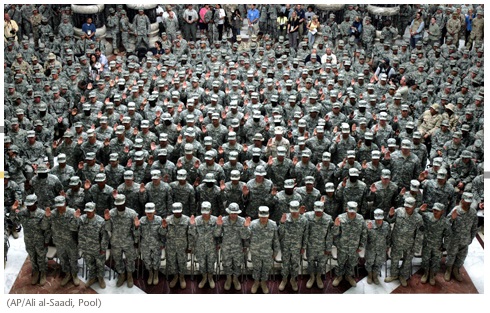
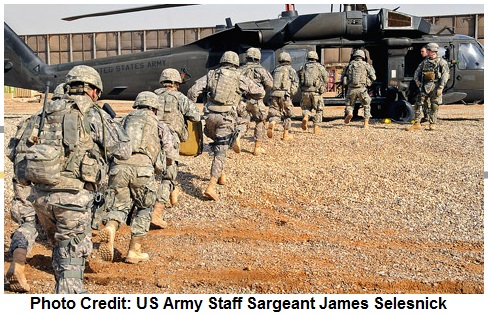
This commercial/VIDEO speaks of the “call to serve”; this is extremely important that someone “answers that call”; and be On Guard to protect the homeland and home seas. In an alternate commercial/VIDEO, it magnified how the US Navy also boasted these 4 percentage numbers:

70% – of the Earth covered by water
80% – of all people that live near the water
90% – of trade that travels by water
100% – percentage of time to be On The Watch and On Guard

(For the Caribbean, all of these above metrics are near 100%).

The US Navy does ensure the Greater Good in a lot of situations. For example, the Navy ensures secure passage of oil tankers through such threatening places as the Suez Canal and the Strait of Hormuz. The threat? For one, Iran has mined the Strait of Hormus (through which a majority of the world’s oil passes) and has threatened to blockade it, but its the US Navy preventing such action.

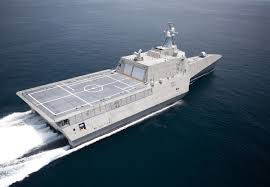
This US Navy consideration is relevant for the Caribbean to consider; not only for the fact that two Caribbean member-states, Puerto Rico and the US Virgin Islands, commits human capital to the American Armed Forces, but also because there is a parallel need for a powerful naval “force for good” in the region. The overriding theme of the foregoing VIDEO is that “freedom is not free” and that security forces must be put in place to ensure security. The security forces for the Caribbean must therefore be from … the Caribbean. We do not want to be parasites, but rather protégés of the US Navy, and those of other territorial powers: British, Dutch, France.

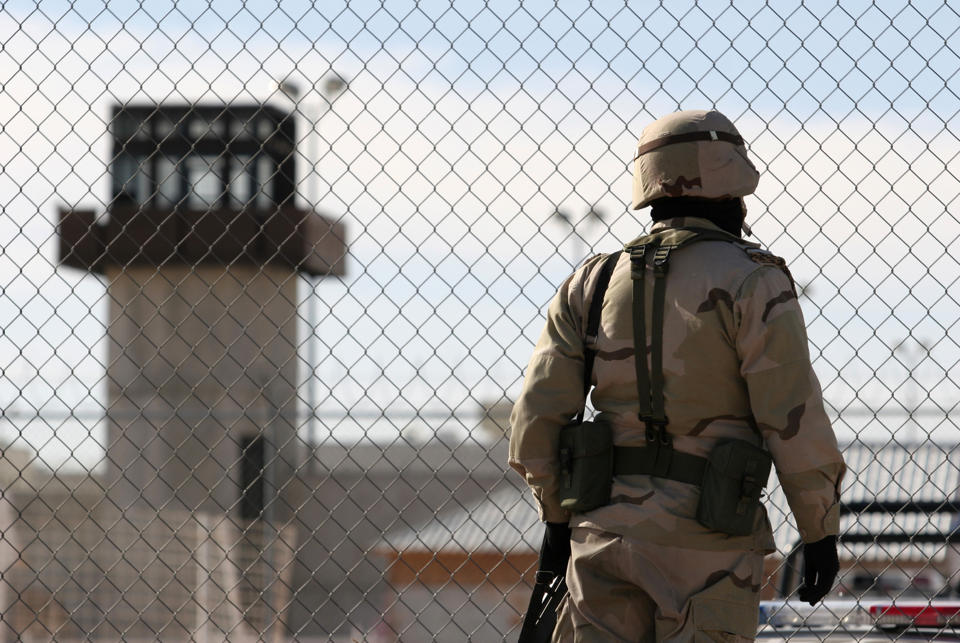
CU Blog - America's Navy - 100 Percent - Model for Caribbean - Photo 3

CU Blog - America's Navy - 100 Percent - Model for Caribbean - Photo 4

CU Blog - America's Navy - 100 Percent - Model for Caribbean - Photo 1

CU Blog - America's Navy - 100 Percent - Model for Caribbean - Photo 2

The book Go Lean…Caribbean posits that the region must prepare its own security apparatus for its own security needs. So the request is that all Caribbean member-states authorize a regional naval force to execute the security scope on the sovereign waters and territories in the region and for the Exclusive Economic Zone (EEZ) of the Caribbean Sea. This would be part and parcel of a Status of Forces Agreement (SOFA) signed with the 30 Caribbean member-states. The security goal is for public safety! This goal is detailed in the Go Lean book as it serves as a roadmap for the introduction and implementation of the technocratic Caribbean Union Trade Federation (CU). So the CU would be set to optimize Caribbean society through economic empowerment, and the aligning security dynamics. In fact, the Go Lean roadmap has these 3 prime directives:

  • Optimization of the economic engines in order to grow the regional economy to $800 Billion & create 2.2 million new jobs.
  • Establishment of a security apparatus to protect the resultant economic engines.
  • Improve Caribbean governance to support these engines.

Security/Defense policy for the Caribbean must be vastly different than that of the US Navy. There is no quest for world peace, or domination. Though we must be on guard against military intrusions like terrorism and piracy, we mostly have to contend with threats that may imperil the region’s economic engines, like tourism and fisheries. This includes man-made and natural concerns like narco-terrorism, enterprise corruption (human trafficking), oil/chemical spills, hurricanes, and earthquakes/tsunamis. For this purpose, the Go Lean roadmap calls for the establishment of the Caribbean Navy. While the US Coast Guard has a scope and agenda for all the US waterscapes/waterways, the CU Navy focus will only be the Caribbean, so the US Coast Guard will be able to shift its attention and resources else where.

So if there is the US Navy and the US Coast Guard already, why is their also a need for the Caribbean Navy? Simple! The US Navy and US Coast Guard report to American authorities. The CU Navy, on the other hand, will report to a Caribbean Commander-in-Chief and be held accountable to the Caribbean people. This point is pronounced early in the book with the Declaration of Interdependence (Page 12) that claims:

x.   Whereas we are surrounded and allied to nations of larger proportions in land mass, populations, and treasuries, elements in their societies may have ill-intent in their pursuits, at the expense of the safety and security of our citizens. We must therefore appoint “new guards” to ensure our public safety and threats against our society, both domestic and foreign. The Federation must employ the latest advances and best practices … to assuage continuous threats against public safety.

xvi. Whereas security of our homeland is inextricably linked to prosperity of the homeland, the economic and security interest of the region needs to be aligned under the same governance. Since economic crimes, including piracy and other forms of terrorism, can imperil the functioning of the wheels of commerce for all the citizenry, the accedence of this Federation must equip the security apparatus with the tools and techniques for predictive and proactive interdictions.

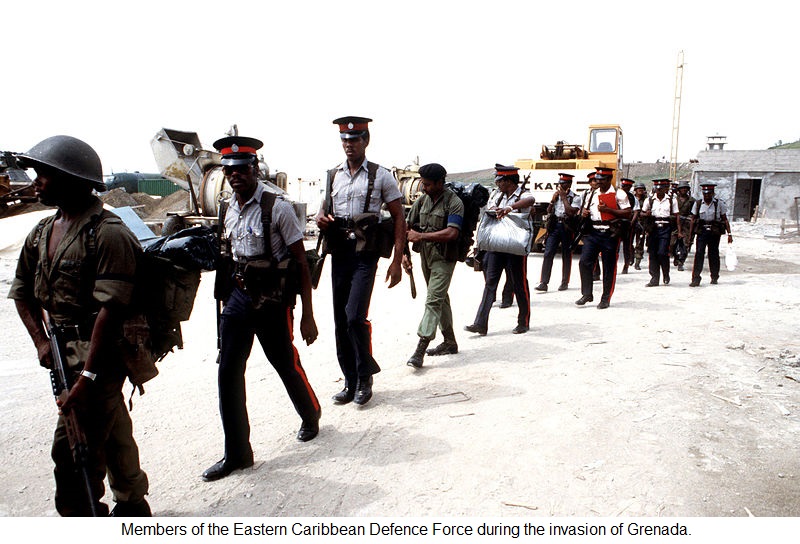
The Caribbean appointing “new guards”, or a security pact to ensure public safety is not so new an endeavor, as there are prior instances of this type of engagement in the region. There is an existing security pact, Regional Security System (RSS), for 5 Eastern Caribbean countries; but they have no ships – or any other naval/aviation resources for that matter. In effect, this RSS security pact would “bring a knife to a gun figh'”. The Go Lean roadmap however calls for a permanent professional Navy with the necessary Air Force, ground/Marine troops, intelligence gathering & analysis agency, and unified command-and-control for efficient coordination – even for all visiting allies. This CU Homeland Security Force would get its legal authorization from the Status of Forces Agreement instituted within the CU treaty enhancements.
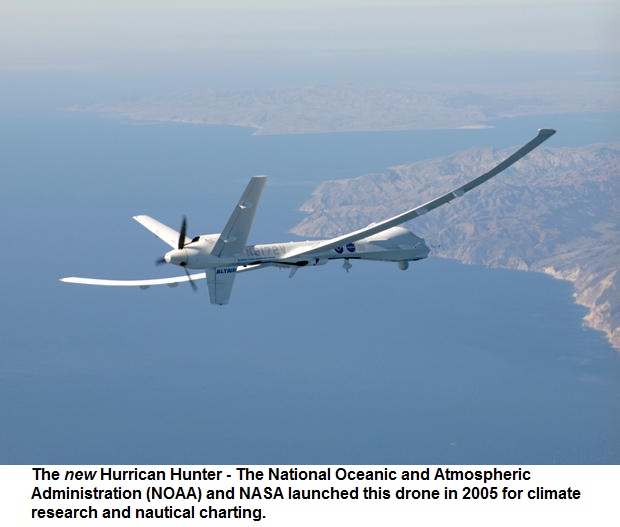
Drones - Weather

CU Blog - America's Navy - 100 Percent - Model for Caribbean - Photo 5

CU Blog - America's Navy - 100 Percent - Model for Caribbean - Photo 7

CU Blog - America's Navy - 100 Percent - Model for Caribbean - Photo 6

This Status of Forces Agreement would be “Step One, Day One” in the Go Lean roadmap. The Go Lean book also details a series of community ethos, strategies, tactics, implementations and advocacies to provide increased public safety & security in the Caribbean region:

Economic Principle – Consequences of Choices Lie in Future Page 21
Community Ethos – Privacy –vs- Public Protection Page 23
Community Ethos – Intelligence Gathering Page 23
Community Ethos – “Crap” Happens Page 23
Community Ethos – Minority Equalization Page 24
Community Ethos – Cooperatives Page 25
Community Ethos – Ways to Manage Reconciliations Page 34
Community Ethos – Ways to Improve Sharing Page 35
Community Ethos – Ways to Impact the Greater Good Page 37
Tactical – Confederating a non-sovereign union Page 63
Tactical – Fostering a Technocracy Page 64
Tactical – Separation of Powers – Homeland Security Page 75
Implementation – Ways to Pay for Change Page 101
Implementation – Start-up Foreign Policy Initiatives Page 102
Implementation – Start-up Security Initiatives Page 103
Implementation – Start-up Benefits from the Exclusive Economic Zone (EEZ) Page 104
Implementation – Ways to Foster International Aid Page 115
Planning – Ways to Make the Caribbean Better Page 131
Planning – Ways to Improve Failed-State Indices Page 134
Planning – Lessons Learned from the West Indies (WI) Federation – WI Regiment Page 135
Planning – Lessons from East Germany Page 139
Advocacy – Ways to Grow the Economy Page 151
Advocacy – Ways to Improve Governance Page 168
Advocacy – Ways to Better Manage the Social Contract Page 170
Advocacy – Ways to Improve Leadership Page 171
Advocacy – Ways to Impact   Justice Page 177
Advocacy – Ways to Reduce Crime Page 178
Advocacy – Ways to Improve for Gun Control Page 179
Advocacy – Ways to Improve Homeland Security Page 180
Advocacy – Ways to Mitigate Terrorism Page 181
Advocacy – Ways to Improve Intelligence Gathering/Analysis Page 182
Advocacy – Ways to Improve for Natural Disasters Page 184
Advocacy – Ways to Impact Extractions Page 196
Advocacy – Ways to Improve Fisheries Page 210
Advocacy – Ways to Protect Human Rights Page 220
Appendix – Analysis/Chapters of the Book The Art of War Page 327

Other subjects related to security empowerments for the region have been blogged in other Go Lean…Caribbean commentary, as sampled here:

https://goleancaribbean.com/blog/?p=1554 Status of Forces Agreement = Security Pact
https://goleancaribbean.com/blog/?p=1531 A Lesson in History: 100 Years Ago – World War I
https://goleancaribbean.com/blog/?p=1487 Here come the Drones … and the Concerns
https://goleancaribbean.com/blog/?p=1076 Trinidad Muslims travel to Venezuela for jihadist training
https://goleancaribbean.com/blog/?p=960 NSA records all phone calls in Bahamas, according to Snowden
https://goleancaribbean.com/blog/?p=809 Muslim officials condemn abductions of Nigerian girls
https://goleancaribbean.com/blog/?p=789 America’s War on the Caribbean
https://goleancaribbean.com/blog/?p=392 Jamaica to receive World Bank funds to help in crime fight
https://goleancaribbean.com/blog/?p=341 US slams Caribbean human rights practices
https://goleancaribbean.com/blog/?p=273 10 Things We Want from the US and 10 Things We Don’t Want …

Bad actors will always emerge…

Accepting this premise means preparing the necessary counter-measures. The model of the American Navy gives the Caribbean a template of how, what, when and why. We must stand-up and be counted in the defense and security of our own homeland.

Protégés, not parasites!

This security is necessary to make the Caribbean homeland, a better place to live, work and play. The stakeholders of the region need these assurances. The stakeholders? 42 million residents, 10 million itinerant Diaspora, and 80 million tourists, (with 10 million on cruise ships). All of these stakeholders deserve someone, some force, watching and dedicated to the Caribbean … 100 percent.
Download the book Go Lean … Caribbean – now!

Share this post:
, , , , , ,

Many drug inmates who get break under new plan to be deported

Go Lean Commentary

A crisis is coming!

Due to changes in US drug policy – 2 States have de-criminalized Marijuana and the new national ethos is that drug users are victims more so than villains (See VIDEO below) – incarcerated drug felons will have their sentences reduced. For those that are non-citizens, the likelihood is that they will be immediately deported to their homelands. Notice the trend, the US federal government will not want to pay billions of dollars to maintain these prisoners in the system or out of the system. So they would rather send them “home” and make them someone else’s problem. For the inmates with Caribbean heritage, that “someone else” would be the Caribbean member-states.

By: Liz Goodwin, Yahoo News

Many drug inmates who get break under new plan to be deported.

Thousands to land back in Mexico after early release.

US Drug Inmates PhotoThousands of federal prisoners set to be released early thanks to a change in drug rules will most likely be quickly deported to their home countries next year.

The U.S. Sentencing Commission, a group that controls advisory sentencing guidelines for federal judges, voted last week to shave an average of two years off the sentences of up to 46,000 inmates jailed for drug crimes. The first ones will be released on Nov. 1, 2015.

The group has begun to reverse older policies that sent people away for decades for nonviolent drug crimes, part of a larger criminal justice reform push that has attracted bipartisan support. In 2007, the group lightened sentences for crack offenders. Inmates will have to apply for the sentence reductions with the help of public defenders, and federal judges will have a year to decide who qualifies for early release.

But many of the people who will benefit from the change in policy will likely be deported as soon as they qualify for the sentence reduction. A quarter of all the qualifying inmates are not U.S. citizens, according to the group’s analysis, complicating the picture many have of drug offenders as gang-affiliated young men in run-down, poor urban neighborhoods. Many of the offenders, in fact, were caught with drugs in their vehicles as they tried to cross the border and were prosecuted in Texas. The Lone Star state has nearly 21 percent of all the prisoners who will benefit from the early release. Of those 10,296 prisoners in Texas, up to a third will be deported once released.

The hefty noncitizen portion of offenders could cut the state a break, since the criminal justice system does not have enough probation officers and halfway homes to handle the influx that’s expected when the first releases begin in November 2015.

“There wouldn’t have been enough facilities to absorb the number of people who would be released,” said Maureen Franco, public defender in the Western District of Texas, which covers much of the state’s border with Mexico.

Giving the judges a year to consider the early release petitions will also allow Immigration and Customs Enforcement time to make sure it has enough beds for the prisoners while they await their deportation.

Franco said her immigrant clients are just as eager for early release as those who are citizens, despite the deportation that awaits them. She’s already heard from some of them who are emailing her and asking when they can get out.

This might be in part because immigrants living illegally in the U.S. are not eligible for many programs in federal prison — they also can’t live in lower-security facilities. “It’s a much harsher sentence,” said Marjorie Meyers, federal public defender in the Southern District of Texas.

Ricardo Hinojosa, a vice chair of the Sentencing Commission and a federal judge in Laredo, brought up concerns before the group’s vote that the offenders who are sent back to Mexico will not be rigorously supervised by that country’s probation system. “Many of them will be tempted to come back, and maybe quicker, because of the fact that many of them have families on this side of the border,” Hinojosa said.

Those who are caught trying to come back over the border face up to 10 years in federal prison. They might fear the violence in Mexico, particularly if they were involved in drugs, more than detention in America, where at least they are safe.

Prisoners who had legal immigration status but were not citizens can try to fight their deportation, but it’s a long shot. “It’s very hard to fight,” Meyers said.
Yahoo News Online Source (Retrieved 07/22/2014) –
http://news.yahoo.com/many-drug-inmates-who-get-break-under-new-plan-to-be-deported-134758280.html
Photo Credit (Above): Andrew Burton – Getty Images

Video Credit (Below): White House National Drug Control Strategy:  http://www.whitehouse.gov/ondcp/drugpolicyreform

Ready or not, here they come!

For the Caribbean, the answer most likely is “Not Ready”!

This is a crisis that is looming. The book Go Lean…Caribbean declares that a crisis is a terrible thing to waste and that we should not waste this opportunity to elevate our own security engines in the region. If we do it right, we can even profit from the crisis as well. The overriding theme of the foregoing news article is the need for a prison industrial complex – the field of “penology”. With this coming crisis – November 2015 – the publishers of the book Go Lean…Caribbean see opportunities for commerce.

The Go Lean book serves as a roadmap for the introduction and implementation of the technocratic Caribbean Union Trade Federation (CU). With 2 American territories in the Caribbean (Puerto Rico & the US Virgin Islands), an immediate plan to host US federal prisoners is not so radical. Plus, this could mean billions of dollars for the Caribbean.

The Go Lean book goes further and posits that the region must prepare its own security apparatus for its own security needs. But while we are building facilities (prisons, jails, and detention centers) for our own needs, we can employ the strategy of over-building and insourcing for other jurisdictions. Had we been ready now, with this Go Lean roadmap, we would have been able to embrace the opportunities presented by the US Drug Policy Change. These unwanted “inmates” could have been guests in Caribbean facilities now – for a fee; a lower fee than the US federal government currently incurs, but more revenues than the Caribbean currently generates.

So then what happens when these US drug inmates are released?

“Mejor el diablo sabe que el diablo no tiene” – Spanish expression. The English translation is “Better the Devil you know than the Devil you don’t know”.

The Go Lean roadmap asserts that it is better to structure crime intelligence analysis around a population that we know is a “risk” than to watch/monitor everybody. At some point the Caribbean Diaspora in US Federal prisons will be sent home. We want to be prepared for them. If not only to offer them new chances of productive citizenship, then at least to closely guard against their post-incarceration activities. We already know these ones have a preponderance to engage in illicit activities, so it is prudent to “watch” them.

This point is pronounced early in the book with the Declaration of Interdependence (Page 12) that claims:

x. Whereas we are surrounded and allied to nations of larger proportions in land mass, populations, and treasuries, elements in their societies may have ill-intent in their pursuits, at the expense of the safety and security of our citizens. We must therefore appoint “new guards” to ensure our public safety and threats against our society, both domestic and foreign. The Federation must employ the latest advances and best practices of criminology and penology to assuage continuous threats against public safety. The Federation must allow for facilitations of detention for convicted felons of federal crimes, and should over-build prisons to house trustees from other jurisdictions.

xvi. Whereas security of our homeland is inextricably linked to prosperity of the homeland, the economic and security interest of the region needs to be aligned under the same governance. Since economic crimes … can imperil the functioning of the wheels of commerce for all the citizenry, the accedence of this Federation must equip the security apparatus with the tools and techniques for predictive and proactive interdictions.

The goal of Go Lean…Caribbean, roadmap is to confederate under a unified entity made up of all 30 Caribbean member-states. Then provide homeland security for our neighborhood, contending with man-made and natural threats. The CU security goal is not for world dominance, or promotion of idealistic concepts. No, it is simply for public safety! The CU is set to optimize Caribbean society through a number of missions. The Go Lean roadmap has 3 prime directives:

  • Optimization of the economic engines in order to grow the regional economy to $800 Billion & create 2.2 million new jobs.
  • Establishment of a security apparatus to protect the resultant economic engines.
  • Improve Caribbean governance to support these engines.

This Go Lean roadmap calls for the establishment of professional penology arts and sciences, a Caribbean prison industrial complex. This will include the prison/jail/detention facilities and the rest of the eco-system: bail enforcement, witness protection, probation/parole, anti-recidivism, intelligence gathering, job training/placement and in-prison labor options. There are lots of lessons (from global examples) to learn and apply in perfecting the Caribbean model. For one, we do not want the profit motive – the book speaks of learning from “Peonage Past and Ensuring Corporate Governance” (Page 211); rather we want to be motivated by the Greater Good. The CU security directive should always be in support of growing Caribbean society, not leading the charge – no police state – but rather supporting the lead or “bringing up the rear”.

In recent blog submissions, this commentary highlighted the security provisions that must be enacted to improve homeland security, as soon as possible:

https://goleancaribbean.com/blog/?p=1674 Obama’s Plans for $3.7 Billion Immigration Crisis Funds
https://goleancaribbean.com/blog/?p=1554 Status of Forces Agreement = Security Pact
https://goleancaribbean.com/blog/?p=1386 Marijuana De-criminalization – In Jamaica, a Puff Peace
https://goleancaribbean.com/blog/?p=1076 References to the Caribbean Regional Security System
https://goleancaribbean.com/blog/?p=392 Jamaica to receive World Bank funds to   help in crime fight

Look seriously at the issues in the foregoing news article.

These inmates in Federal prisons are persona non-grata in the US. So they will have no choice but to come home…eventually. Whereas these are not the type of new residents we may want in the Caribbean, ready or not, they are coming. It is better to be prepared. What’s worse, these ones may now have even better-tuned-skills and abilities for operating in the illicit world – many criminals learn how to be better criminals in prison.

The Go Lean book details a series of community ethos, strategies, tactics, implementations and advocacies to provide increased public safety & security in the Caribbean region:

Economic Principle – People Respond to Incentives in Predictable Ways Page 21
Economic Principle – Economic Systems Influence Choices & Incentives Page 21
Economic Principle – Consequences of Choices Lie in Future Page 21
Community Ethos – Privacy –vs- Public Protection Page 23
Community Ethos – Intelligence Gathering Page 23
Community Ethos – Witness Security & Protection Page 23
Community Ethos – Light Up the Dark Places Page 23
Community Ethos – “Crap” Happens Page 23
Community Ethos – Lean Operations Page 24
Community Ethos – Ways to Improve Sharing Page 35
Community Ethos – Ways to Impact the Greater Good Page 37
Tactical – Confederating a non-sovereign union Page 63
Tactical – Separation of Powers – Homeland Security Page 75
Tactical – Separation of Powers – Justice Department Page 77
Implementation – Ways to Pay for Change Page 101
Implementation – Start-up Foreign Policy Initiatives Page 102
Implementation – Start-up Security Initiatives Page 103
Planning – Ways to Make the Caribbean Better Page 131
Planning – Ways to Improve Failed-State Indices Page 134
Advocacy – Ways to Grow the Economy Page 151
Advocacy – Ways to Mitigate Black Markets Page 165
Advocacy – Ways to Improve Governance Page 168
Advocacy – Ways to Better Manage the Social Contract Page 170
Advocacy – Ways to Impact Justice Page 177
Advocacy – Ways to Reduce Crime Page 178
Advocacy – Ways to Improve Homeland Security Page 180
Advocacy – Ways to Mitigate Terrorism Page 181
Advocacy – Ways to Improve Intelligence Gathering and Analysis Page 182
Advocacy – Ways to Improve for Natural Disasters Page 184
Advocacy – Ways to Impact the Prison Industrial Complex Page 211
Advocacy – Ways to Protect Human Rights Page 220
Appendix – Prison Industrial Complex Model: Nauru Detention Center Page 290

We console with the communities that have to deal with this impending crisis – a lot of the inmates are identified as Mexican; while this is not in scope for the CU, there are a lot of lessons that the Caribbean can learn from this country’s dysfunction in dealing with its public safety, especially along the US border. This region is near Failed-State status.

The Go Lean roadmap is the Caribbean’s aspiration to mitigate against Failed-State indices. This is underlying to the prime directive of the CU, to elevate the economics, security and governing engines of the Caribbean. This is not an easy task; this is heavy-lifting, and thus the book features the turn-by-turn directions to implement the appropriate provisions. This is a sensible roadmap to make the Caribbean homeland a better place to live, work and play.

Download the book Go Lean … Caribbean – now!

Share this post:
,
[Top]

Obama’s Plans for $3.7 Billion Immigration Crisis Funds

Go Lean Commentary

If only we were ready now!

$3.7 Billion in new spending in communities that really do not want the activity.

This, according to the below article, is the ground situation regarding the current immigration crisis on the US-Mexico border with children from Guatemala, El Salvador and Honduras. The US government, Obama Administration, is requesting additional funding from Congress of $3.7 Billion to better interdict and respond during this crisis. The biggest part of the expense will be the detention functionality for the apprehended trustees.

This is a crisis … and this crisis is a terrible thing to waste!

By: Mary Bruce

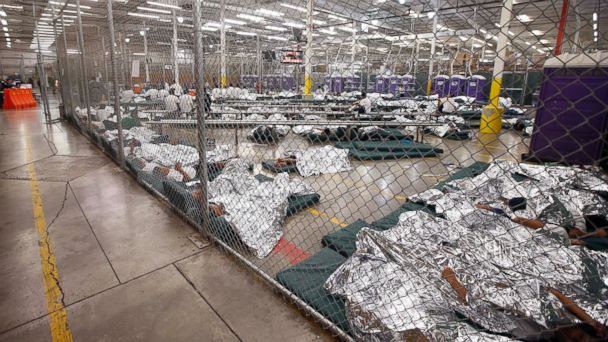
Detainees sleep and watch television in a holding cell where hundreds of mostly Central American immigrant children are being processed and held at the U.S. Customs and Border Protection Nogales Placement Center on June 18, 2014, in Nogales, Arizona. Ross D. Franklin-Pool/Getty Images

Detainees sleep and watch television in a holding cell where hundreds of mostly Central American immigrant children are being processed and held at the U.S. Customs and Border Protection Nogales Placement Center on June 18, 2014, in Nogales, Arizona. Ross D. Franklin-Pool/Getty Images

President Obama today is requesting $3.7 billion to cope with the humanitarian crisis on the border and the spike in illegal crossings by unaccompanied minors from Central America.

Roughly half of the funding would go to the Department of Health and Human Services to provide care for the surge of children crossing the border, including additional beds.

The rest would be split between several departments to tackle the issue on both sides of the border, including $1.6 billion to the Departments of Homeland Security and Justice to boost law enforcement at the Southwest border and pay for additional immigration judge teams, among other things, and $300 million to the State Department to tackle the root causes of this crisis and to send a clear message to these countries not to send children illegally to the U.S.

Today’s funding request is separate from policy changes that the administration is also seeking to speed up the deportation of the children, most of whom are from Guatemala, El Salvador and Honduras. The White House sent a letter to Congressional leadership last week requesting the legal changes to make it easier to send them home.

According to a White House official, greater administrative authority as well as the additional resources will help make it more efficient and expeditious to process and return the children.

What remains unclear is how much faster this additional funding would make the process to send children back to their home countries. White House officials today declined to speculate on such timing, but the administration has said that most of the unaccompanied minors will likely be “sent home.”

“Based on what we know about these cases, it is unlikely that most of these kids will qualify for humanitarian relief. And what that means is it means that they will not have a legal basis for remaining in this country and will be returned,” White House Press Secretary Josh Earnest said Monday.

The White House has yet to say how many of the roughly 52,000 children that have been apprehended this year have been sent back to Central America. Today, officials offered only the total figure, including adults. So far this year, Immigration and Customs Enforcement has removed almost 233,000, that includes over 87,000 to Central American countries.

Here’s a detailed look at some of the ways the president wants to spend $3.7 billion to deal with the influx of unaccompanied minors, according to the White House.

$364 MILLION:

To pay for operational costs of responding to the significant rise in apprehensions of unaccompanied children and families, including overtime and temporary duty costs for Border Patrol agents, contract services and facility costs to care for children while in CBP custody, and medical and transportation service arrangement.

$39.4 MILLION:

To increase air surveillance capabilities that would support 16,526 additional flight hours for border surveillance and 16 additional crews for unmanned aerial systems to improve detection and interdiction of illegal activity.

$109 MILLION:

To provide for immigration and customs enforcement efforts, including expanding the Border Enforcement Security Task Force program, doubling the size of vetted units in El Salvador, Guatemala, and Honduras, and expanding investigatory activities by ICE Homeland Security Investigations.

$879 MILLION:

To pay for detention and removal of apprehended undocumented adults traveling with children, expansion of alternatives to detention programs for these individuals, and additional prosecution capacity for adults with children who cross the border unlawfully.

$45.4 MILLION:

To hire approximately 40 additional immigration judge teams, including those anticipated to be hired on a temporary basis. This funding would also expand courtroom capacity including additional video conferencing and other equipment in support of the additional immigration judge teams. These additional resources, when combined with the FY 2015 Budget request for 35 additional teams, would provide sufficient capacity to process an additional 55,000 to 75,000 cases annually.
ABC News Online News Video Source (Retrieved 07/08/2014) – http://abcnews.go.com/blogs/politics/2014/07/obamas-plans-for-3-7-billion-immigration-crisis-funds/

ABC News | ABC Sports News

The overriding theme of the foregoing news article is the need for professional detention capabilities. Within this crisis, the publishers of the book Go Lean…Caribbean see opportunities for commerce.

The book posits that the region must prepare its own security apparatus for its own security needs. But while we are building facilities (prisons, jails, detention centers, etc) for our own needs, we can employ the strategy of over-building and insourcing for other jurisdictions. Had we been ready now, with this Go Lean plan, we would have been able to embrace the opportunities presented by this Central American Children Crisis. This point is pronounced early in the book with the Declaration of Interdependence (Page 12) that claims:

x.   Whereas we are surrounded and allied to nations of larger proportions in land mass, populations, and treasuries, elements in their societies may have ill-intent in their pursuits, at the expense of the safety and security of our citizens. We must therefore appoint “new guards” to ensure our public safety and threats against our society, both domestic and foreign. The Federation must employ the latest advances and best practices of criminology and penology to assuage continuous threats against public safety. The Federation must allow for facilitations of detention for convicted felons of federal crimes, and should over-build prisons to house trustees from other jurisdictions.

xvi. Whereas security of our homeland is inextricably linked to prosperity of the homeland, the economic and security interest of the region needs to be aligned under the same governance. Since economic crimes … can imperil the functioning of the wheels of commerce for all the citizenry, the accedence of this Federation must equip the security apparatus with the tools and techniques for predictive and proactive interdictions.

The Go Lean roadmap facilitates the introduction and implementation of the technocratic Caribbean Union Trade Federation (CU). With 2 American territories in the Caribbean (Puerto Rico & the US Virgin Islands), it would be a simple proposal to Washington to offer to house these Central American Children in a Caribbean detention center, until some disposition is finalized regarding their individual cases. Then portions of that $3.7 Billion could be earned here, in the Caribbean.

The book asserts that the CU can copy the model of the small Pacific island country of Nauru (Page 290).  As of July 2013 the detention center there was holding 545 asylum seekers on behalf of Australia … for a fee, assuaging an immigration crisis for Australia.

In addition to government spending, there will be the bonus of private spending from the visitors and family members of the detainees.

Just like that: Commerce!

This is the goal of Go Lean…Caribbean, to confederate under a unified entity made up of all 30 Caribbean member-states. Then provide homeland security for “our neighborhood”, contending with man-made and natural threats. The CU security goal is for public safety! The CU is set to optimize Caribbean society through a number of missions. The Go Lean roadmap has 3 prime directives:

  • Optimization of the economic engines in order to grow the regional economy to $800 Billion & create 2.2 million new jobs.
  • Establishment of a security apparatus to protect the resultant economic engines.
  • Improve Caribbean governance to support these engines.

In recent blog submissions, this commentary highlighted the security provisions that must be enacted to improve homeland security, as soon as possible:

https://goleancaribbean.com/blog/?p=1554 Status of Forces Agreement = Security Pact
https://goleancaribbean.com/blog/?p=1076 References to the Caribbean Regional Security System

If only those provisions were in place already!

We console with the communities dealing with this crisis; already there have been protests from townspeople where the existing American detention facilities are located. We also console with the refugees fleeing the crime, violence and despair in their homeland; this Go Lean roadmap is the Caribbean’s aspiration to mitigate against a similar Failed-State status (Page 134).

Underlying to the prime directive of elevating the economics, security and governing engines of the Caribbean is the desire to make the Caribbean homeland, a better place to live, work and play (Page 131) and to impact the Greater Good (Page 37) because “the needs of the many should outweigh the needs of the few”.

Download the free e-Book of Go Lean … Caribbean – now!

Share this post:
, , , , ,
[Top]

Blue is the New Green

Go Lean Commentary

First we said to “Go Green!”

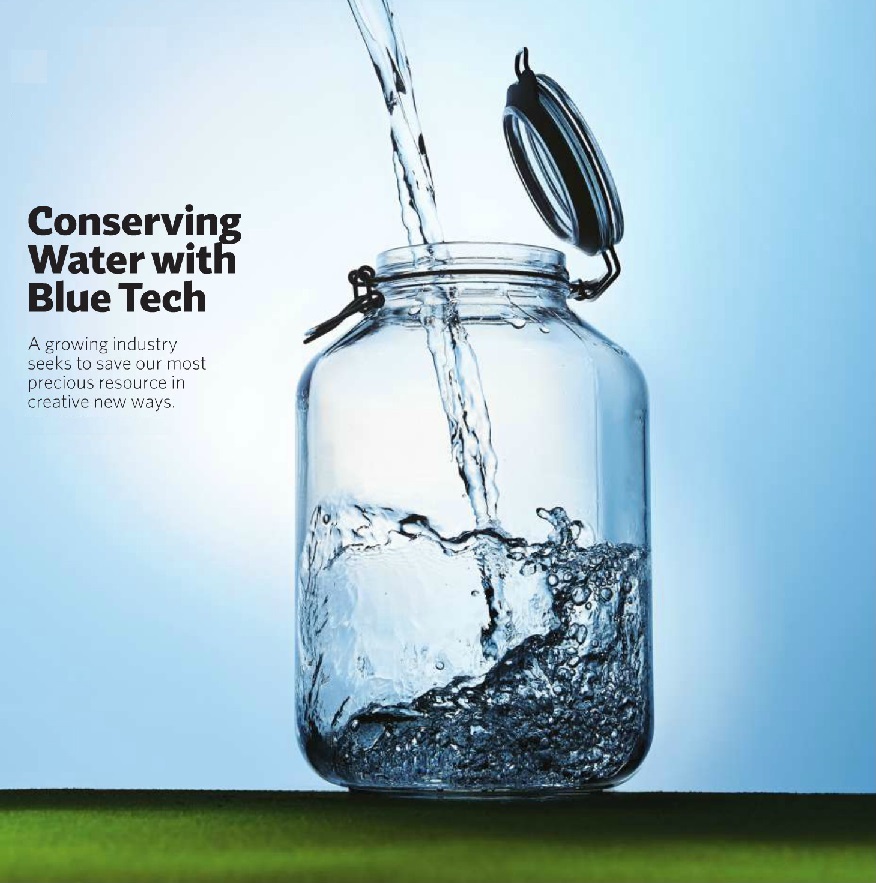
Now we are saying to “Go Blue”, because Blue is the new Green. While ‘Green’ is indicative for all-things-environmental, ‘Blue’ refers specifically to Water.

There is money in Green; there is money in Blue too! The references to Blue waters apply equally to fCU Blog - Blue is the New Green - Photoresh water and seawater. When we consider all the waterscapes in the Caribbean, (1,063,000 square-miles of the Caribbean seas and thousands of islands in the archipelago – The Bahamas has over 700 alone), we realize how much opportunity exists.

This is the time to be proactive; and to facilitate the intersection of preparation and opportunity. (This is one definition of luck. This is how to create one’s own luck).

Considering all the opportunities, how can the Caribbean prepare its economic engines to harvest all the fruitage from these Blue market conditions? This is the theme of the book Go Lean…Caribbean, that the world is struggling to contend with monumental changes related to technology, globalization and most importantly Climate Change.

Early in the book, the pressing need to be aware and to adapt to Climate Change is pronounced in the Declaration of Interdependence (Page 11), with these words:

i. Whereas the earth’s climate has undeniably changed resulting in more severe tropical weather storms, it is necessary to prepare to insure the safety and security of life, property and systems of commerce in our geographical region. As nature recognizes no borders in the target of its destruction, we also must set aside border considerations in the preparation and response to these weather challenges.

The Caribbean needs Blue Technology solutions to sustain our own lives, liberties and systems of commerce. But the Go Lean book posits that we cannot just consume, we must also create, produce, and foster. So we must foster industrial solutions for the rest of the world. This subsequent magazine-article-summary highlights the progression in this new Blue Technology industry-space in these areas:
Sourcing
Treating
Storing
Conserving
Keeping it Clean
————-

VIDEO – The Blue Economy – https://youtu.be/7NqhVbCtqNk

Published on Jul 3, 2012 – The oceans have long been the centre of economic activity. People have been living near the sea, feeding themselves by fishing and making their livelihoods on the coast for thousands of years. The challenge today is harnessing the potential of this Blue Economy.

————-

Excerpts of Article by: Adam Bluestein

Forget for a moment about carbon emissions. The world is facing a more immediate crisis — it is running out of clean water. The prospect of widespread shortages is creating a new kind of new economy. Featured here are a number of entrepreneurial firms who are ahead of the curve, finding opportunity in the largest emerging market the world has seen in some time.

Analysts estimate that the world will need to invest as much as $1 trillion a year on [water] conservation technologies, infrastructure, and sanitation to meet demand through 2030. As in the past, most of the large capital-intensive projects will be done by the usual multinational corporations and engineering firms. But the extent of the problem and the demand for new technology to address it present — pardon the metaphor — a kind of perfect storm for entrepreneurs. “Small companies with intellectual property, significant know-how, and a product that’s scalable can stake out a niche below the radar of the large companies,” says Laura Shenkar, a water expert and consultant in San Francisco. “This is an opportunity that will generate Googles.”

There are a number of business roles that emerge from seizing the opportunities to develop solutions to water challenges:

Sourcing – Increasing the Supply

The well-documented experience around the world is that poverty comes from inadequate access to fundamental resources, like water. To assuage this threat, there are solutions in place now to deliver added fresh water by many means: irrigation canals, pipelines and tanker trucks/tanker ships (i.e. tanker ships between France and Algeria; Turkey and Israel). An emerging solution operated in the Middle East and India is small-scale barge-based desalination systems. These systems play an important role in increasing the supply of freshwater, especially after a natural disaster (storm or earthquake) when normal infrastructure may be crippled.

In general, desalination is an expensive option. Desalination, of course, is well-and-good for communities close to the ocean/seas and that can afford relatively expensive water. For everyone else, exploring inland pumping solutions is essential. An innovation comes from Deerfield Beach, Florida-based company Moving Water Industries. They produce SolarPedalFlo, a solar and pedal-powered pump that can singly provide filtered and chlorinated water for thousands of people every day.

Treating It

As the gold standard of disinfection for more than 100 years, chlorine kills bacteria, viruses, and other pathogens, and it has played a key role in eliminating diseases such as typhoid and cholera in the U.S. Chlorine’s benefits in water are twofold: it not only disinfects but also remains at a residual level in the water, preventing reinfection by viruses or bacteria during transport, storage, and distribution.

Water treatment is just a basic fact. While moving water is very power intensive, a huge energy user that it doesn’t make sense to continue to treat it one place, pump it, live with “losses and degradation”, and move it someplace else to dispose of it. This is depicted with a swimming pool. One would not fill it up and dump it out every time it is used. This defies logic.

But safety and security issues abound with Chlorine solutions, as it is a hazardous material to transport. An emerging solution is a compact generator, by MIOX, an Albuquerque, New Mexico-based outfit founded in 1994. Their equipment allows water treatment facilities to produce liquid chlorine on site. This solution uses only water, salt, and electricity, thus eliminating the need to store or transport hazardous chemicals.

In a developing country, the ability to treat one’s own water at home can be a matter of life and death. Those with limited means often purify water by boiling it or mixing it with iodine tablets. Those who can afford it use home water-purification systems. One of the companies capitalizing on demand for such systems is Eureka Forbes, India’s largest manufacturer of home water-purification systems. They have profited from their effort to make home water-purification systems much more affordable.

Storing It

It’s nice to imagine that water flows magically from a pristine reservoir or spring to your home faucet, but that’s simply not the case. As we have seen, it is disinfected and pumped along through a sprawling network of water mains and pipes. The U.S. water network (including Puerto Rico and the US Virgin Islands), much of it built in the 1950s and ’60s, will require some $277 billion worth of construction, upgrades, and replacement in the next 20 years, according to EPA (Environmental Protection Agency) estimates. With scarcity driving water agencies to fix leaks — by some estimates, about six billion gallons per day in the U.S. are lost through literal cracks in the system — companies making high-tech metering and leak-detection technologies are doing well for themselves.

Water Storage Tanks – After being treated, drinking water can spend as long as 100 days in the distribution system before reaching an end user. That’s not necessarily a bad thing, but when water sits in a tank too long, it begins to stagnate and settle into layers of different temperatures, as in a lake. In warmer layers at the top, the disinfectants used in treatment are burned off, which increases the potential for contamination. Even when the water is being used, poor tank design can create an uneven distribution of disinfectant and encourage uneven aging, allowing water at the bottom of a tank to be replenished more quickly than water at the top.

The traditional solution is to dump more disinfecting chemicals into the holding system, leading to the formation of chemical byproducts. Another solution is to use energy-intensive “operational cycling” – basically pumping moving water around from tank to tank.

An energy-efficient, inexpensive, and elegant solution is called the Lily Impeller (by San Rafael, California-based PAX Water Technologies, founded in 2006). It’s a spiral propeller that’s installed on the bottom of a storage tank; it can mix up to seven million gallons of water while drawing the same amount of energy as three 100-watt light bulbs.

Another solution is a floating solar-powered impeller, which could improve surface water to be treated for drinking or even provide basic wastewater remediation.

Conserving It

A basic example of water conservation is a water recycling system that would take used water from the bathroom sink, disinfect it, and reroute it to the toilet tank for flushing.

One option: The AQUS System uses standard plumbing parts and can be installed by a professional plumber in about two hours. Priced at $395 (before rebates), it can save up to 6,000 gallons of water a year in a two-person household.

Another option: water-free urinals – biodegradable liquid with a specific gravity lighter than water.

Utilities have found that offering customers rebates for things such as low-flow showerheads and toilets and efficient front-loading clothes washers has been a reliable and cost-effective way to curb water use, and the cost of energy to supply and treat water.

A final option: WeatherTRAK irrigation controllers – a (software-based) system that uses live weather data, rather than preset timers, to tell sprinklers when and how much to water crops, lawns, and commercial landscapes.

Keeping It Clean

Though drought is one of the more obvious consequences of Climate Change, water experts are equally worried about the problems caused by extreme storms and flooding that many, if not most, scientists believe are another consequence of global warming. Storm-water runoff has become a concern for its effect on surface and ground water, as well as the additional burden that it puts on already creaky wastewater treatment facilities.

One solution: Scottsdale, Arizona-based AbTech Industries, first used their Smart Sponges — made from a synthetic polymer — in 1997 to clean up oil spills from tankers at sea. In 1999, when they turned their attention to storm water, most regulation was focused on runoff from new construction. But billions of gallons of rain that come down on the roads and go into our flood-control devices could be contaminated on the way through. This company molds their sponge material into different shapes that would fit into street-level storm drains and catch basins, soaking up oil and debris and letting clean water pass through. They also developed a way to coat the sponges with an antimicrobial agent so they would disinfect water as well. Their next iteration, add the ability to capture heavy metals, herbicides, and pesticides.

Another solution for eliminating challenging pollutants from water, compared to the traditional approach using mechanical filters or chemicals, researchers have experimented with using genetically modified organisms to degrade water pollutants. This new technological solution, being commercialized by companies like Overland Park, Kansas-based Microvi Biotech (founded in 2004), is literally eating these pollutants up. Their company verbiage explains: “The idea of using biotechnology — using concepts from nature — to clean up water has proven very appealing”.

—-

Adam Bluestein is a Burlington, Vermont-based freelance writer.
INC Magazine for Entrepreneurs (Article posted November 1 2008; retrieved 07/07/2014) – http://www.inc.com/magazine/20081101/blue-is-the-new-green.html

The topics in this commentary are relevant and familiar. Prudent water management is vital for Caribbean life, our public safety and commerce systems. Tourism continues to be the primary economic driver in the region. While the motivation behind the Caribbean “Lean” is to diversify the economy, prudence dictates that we do not undermine current successful tourism engines. Since tourists come to the region for sand, surf and sun, there must be a “quality” sentinel for Caribbean water works, waterscapes and water eco-systems.

This point is detailed in the book Go Lean…Caribbean, a roadmap for the introduction and implementation of the technocratic Caribbean Union Trade Federation (CU). This roadmap has 3 prime directives:

  • Optimization of the economic engines in order to grow the regional economy.
  • Establishment of a security apparatus to protect the homeland and related economic engines.
  • Improve Caribbean governance to support these engines.

This Go Lean commentary delved into related subjects in these previous blogs:

https://goleancaribbean.com/blog/?p=1516 Floods in Minnesota, Drought in California – Why Not Share?
https://goleancaribbean.com/blog/?p=915 Go ‘Green’… Caribbean

Water is not cheap. It is only free when it rains. The effort to source, treat, store, conserve and keep water clean takes a big investment on the part of community and governmental institutions. While we commend and applaud the regional executions thus far, the Go Lean book recognizing that there is more heavy-lifting to do. Help is on the way! The Go Lean roadmap details a series of community ethos, strategies, tactics, implementations and advocacies to foster the progress in the wide field of Blue technology. The following list applies:

Community Ethos – Lean Operations Page 24
Community Ethos – Return on Investments Page 24
Community Ethos – Cooperatives Page 25
Community Ethos – Non-Government Organizations Page 25
Community Ethos – Ways to Impact the Future Page 26
Community Ethos – Impact the Greater Good Page 37
Anecdote – Pipeline Transport – Strategies, Tactics &   Implementations Page 43
Strategy – Build and foster local economic engines Page 45
Tactical – Fostering a Technocracy Page 82
Tactical – Separation of Powers – Public Works Page 82
Anecdote – “Lean” Environmental Quality Process Page 93
Implementation – Ways to Develop Pipeline Industry Page 107
Advocacy – Ways to Impact Public Works Page 175
Advocacy – Ways to Foster Cooperatives Page 176
Advocacy – Ways to Better Manage Natural Resources – Water   Resources Page 182
Advocacy – Ways to   Foster Technology Page 197
Advocacy – Ways to Impact Monopolies Page 202
Advocacy – Ways to Impact   Rural Living – Minimize Irrigation Downsides Page   235
Appendix – Pipeline   Maintenance Robots Page   283

Water needs are undeniable.

Fulfilling those needs is a great target for lean, agile operations, perfect for the CU technocracy. While its “good to be green”, being “blue” is not an option we can choose to ignore, as the Caribbean is mostly made up of islands – surrounded by water.

Go Blue. Go Green. Go Lean.

Now is the time for all of the Caribbean, the people, entrepreneurs, institutions and governments, to lean-in for the optimizations and opportunities described in the book Go Lean … Caribbean.

Download the book Go Lean … Caribbean – now!


Share this post:
, , , , ,
[Top]

Status of Forces Agreement = Security Pact

  Go Lean Commentary

The following is typical of the kind of news headlines in the last few weeks:

Crisis In Iraq Escalates As Militants Seize Major Cities

Iraq again! Didn’t we just go through this in the last decade? Did we not settle this a few years ago, and now we’re here again? Deja Vu all over again. Not a repeat of the Iraqi drama, but rather a repeat of modern history in total. In a recent blog submission, the commentary (https://goleancaribbean.com/blog/?p=1531) cited the lessons learned from World War I; or better stated, the lack of learned-lessons, as the result was World War II. An actual news article on Iraq that parallels this lesson, is excerpted as follows:

By: Olivia Marshall

Media [outlets] have claimed that the current violence in Iraq is the result of the 2011 withdrawal of U.S. troops in Iraq and President Obama’s willful failure to secure a Status of Forces Agreement (SOFA) with Iraq’s Prime Minister Nouri al-Maliki. In reality, Iraq refused the terms of a SOFA with the U.S. despite Obama’s efforts to maintain a military presence there.

Time Magazine: Iraq’s Second Largest City Falls To Militants – Time reported on June 10 that Mosul, Iraq’s second largest city, fell to the Sunni militant group Islamic State in Iraq and al-Sham (ISIS):

The fall of Iraq’s second largest city to Islamist extremists Tuesday sends an alarming message about the deterioration of a country where the U.S. spent eight years, 4,500 lives and $1.7 trillion. Mosul, a city of 1.8 million located in the far north of the country, long cultivated a reputation as a military town. But Iraqi soldiers threw down their guns and stripped off their uniforms as the insurgents approached on Tuesday, according to officials stunned by the collapse of its defenses.
Media Matters (Posted June 16, 2014; retrieved 06/29/2014) –
http://mediamatters.org/research/2014/06/16/right-wing-media-ignore-iraqi-resistance-to-sta/199742

Iraq Surge - 2007Iraq Draw Down - 2011

The overriding theme of the foregoing news article is the Status of Forces Agreement [a]. Under international law, in order for a military presence to not be viewed as an occupation or ‘act of war”, there must be a SOFA of mutual consent between both the host and occupying powers. This lack of a SOFA is why the US is drawn back into Iraq.

This American experience is relevant for the Caribbean to consider; not only for the fact that two Caribbean member-states, Puerto Rico and the US Virgin Islands, had committed human capital to that Iraq War effort, and have thusly sacrificed “blood, sweat and tears” there, but also because there is a parallel need for a SOFA in the Caribbean region.

The book Go Lean…Caribbean posits that the region must prepare its own security apparatus for its own security needs. So the request is that all Caribbean member-states welcome a visiting security force to execute a limited scope on their sovereign territories. That visiting force: themselves!

Yes, the goal is to confederate under a unified entity made up of the Caribbean to provide homeland security to the Caribbean. But Homeland Security for the Caribbean has a different meaning than for our American counterparts. Though we must be on defense against military intrusions like terrorism & piracy, we mostly have to contend with threats that may imperil the region’s economic engines, like tourism. This includes natural and man-made concerns like hurricanes, earthquakes, oil/chemical spills, pandemic, enterprise corruption and narco-terrorism. The CU security goal is for public safety! This goal is detailed in the book as it serves as a roadmap for the introduction of the technocratic Caribbean Union Trade Federation (CU). So while the CU is set to optimize Caribbean society through economic empowerment, the truth of the matter is that the security dynamics of the region are inextricably linked to this same endeavor. Therefore the Go Lean roadmap has 3 prime directives:

  • Optimization of the economic engines in order to grow the regional economy to $800 Billion & create 2.2 million new jobs.
  • Establishment of a security apparatus to protect the resultant economic engines.
  • Improve Caribbean governance to support these engines.

The book contends that bad actors will emerge just as a result of economic successes in the region. This point is pronounced early in the book with the Declaration of Interdependence (Page 12) that claims:

x.   Whereas we are surrounded and allied to nations of larger proportions in land mass, populations, and treasuries, elements in their societies may have ill-intent in their pursuits, at the expense of the safety and security of our citizens. We must therefore appoint “new guards” to ensure our public safety and threats against our society, both domestic and foreign. The Federation must employ the latest advances and best practices … to assuage continuous threats against public safety.

xvi. Whereas security of our homeland is inextricably linked to prosperity of the homeland, the economic and security interest of the region needs to be aligned under the same governance. Since economic crimes, including piracy and other forms of terrorism, can imperil the functioning of the wheels of commerce for all the citizenry, the accedence of this Federation must equip the security apparatus with the tools and techniques for predictive and proactive interdictions.

The Caribbean appointing “new guards”, or a security pact to ensure public safety is not so new an endeavor. There are prior instances of this type of engagement in the region. There is currently a security pact; shared by 5 Eastern Caribbean member-states that was first consummated in 1982 – this was discussed in full depth in a previous commentary regarding the Regional Security System (https://goleancaribbean.com/blog/?p=1076). The Go Lean roadmap however calls for a permanent professional force with naval and ground (Marine) forces, plus an Intelligence agency. This security pact would be sanctioned by all 30 CU member-states, not just the current 5; (there is even a plan for the eventual inclusion of Cuba). The CU Trade Federation will lead, fund and facilitate the security force, encapsulating (full-time or part-time) all the existing armed forces in the region. This CU Homeland Security Force would get its legal authorization from a Status of Forces Agreement signed with the CU treaty enhancements.

This SOFA is “Step One, Day One” in the Go Lean roadmap, covering the approach for adequate funding, accountability and control. In step with the foregoing news article, there is the absolute need for the CU SOFA to be ratified as soon as possible.

The Go Lean book details a series of community ethos, strategies, tactics, implementations and advocacies to provide increased public safety & security in the Caribbean region:

Economic Principle – Consequences of Choices Lie in Future Page 21
Community Ethos – Privacy –vs- Public Protection Page 23
Community Ethos – “Crap” Happens Page 23
Community Ethos – Cooperatives Page 25
Community Ethos – Ways to Improve Sharing Page 35
Community Ethos – Ways to Impact the Greater Good Page 37
Tactical – Confederating a non-sovereign union Page 63
Tactical – Separation of Powers – Homeland Security Page 75
Implementation – Ways to Pay for Change Page 101
Implementation – Start-up Foreign Policy Initiatives Page 102
Implementation – Start-up Security Initiatives Page 103
Planning – Ways to Make the Caribbean Better Page 131
Planning – Ways to Improve Failed-State Indices Page 134
Advocacy – Ways to Grow the Economy Page 151
Advocacy – Ways to Improve Governance Page 168
Advocacy – Ways to Better Manage the Social Contract Page 170
Advocacy – Ways   to Impact Justice Page 177
Advocacy – Ways   to Reduce Crime Page 178
Advocacy – Ways to Improve Homeland Security Page 180
Advocacy – Ways to Mitigate Terrorism Page 181
Advocacy – Ways to Improve Intelligence Gathering/Analysis Page 182
Advocacy – Ways to Improve for Natural Disasters Page 184
Advocacy – Ways to Protect Human Rights Page 220
Advocacy – Ways to Re-boot Cuba Page 236

Other subjects related to security and governing empowerments for the region have been blogged in other Go Lean…Caribbean commentary, as sampled here:

https://goleancaribbean.com/blog/?p=1531 A Lesson in History: 100   Years Ago – World War I
https://goleancaribbean.com/blog/?p=1076 Trinidad Muslims travel to   Venezuela for jihadist training
https://goleancaribbean.com/blog/?p=960 NSA records all phone   calls in Bahamas, according to Snowden
https://goleancaribbean.com/blog/?p=789 America’s War on the Caribbean
https://goleancaribbean.com/blog/?p=546 Book Review:   ‘The Divide’ – … Injustice in the Age of the Wealth Gap
https://goleancaribbean.com/blog/?p=535 Remembering and learning   from Boston
https://goleancaribbean.com/blog/?p=392 Jamaica to receive World Bank funds to help in crime fight
https://goleancaribbean.com/blog/?p=341 US slams Caribbean human   rights practices
https://goleancaribbean.com/blog/?p=87 6.5M Earthquake Shakes   Eastern Caribbean

Underlying to the prime directive of elevating the economics, security and governing engines of the Caribbean, is the desire to make the Caribbean homeland, a better place to live, work and play. We do not want a few “bad actors” disrupting the peace of all Caribbean residents (42 million people), or the 10 million Diaspora as they frequent their tropical homeland or even the 80 million tourists that visit the region annually. The Go Lean roadmap states it most succinctly with the quotation: “the needs of the many outweigh the needs of the few” (Page 37).

All of the Caribbean are hereby urged to lean-in to this roadmap.

Download the book Go Lean … Caribbean – now!

——

Appendix: a – Status of Forces Agreement

A Status of Forces Agreement (SOFA) is an agreement between a host country and a foreign nation stationing military forces in that country. SOFAs are often included, along with other types of military agreements, as part of a comprehensive security arrangement. A SOFA does not constitute a security arrangement; it establishes the rights and privileges of foreign personnel present in a host country in support of the larger security arrangement. [1] Under international law a status of forces agreement differs from military occupation.

Agreements

SOFA - Photo 1While the United States military has the largest foreign presence and therefore accounts for most SOFAs, the United Kingdom, France, Australia, Germany, Italy, Russia, South Korea, and many other nations also station military forces abroad and negotiate SOFAs with their host countries. NATO (North Atlantic Treaty Organization) is a SOFA. In the past, the Soviet Union had SOFAs with most of its satellite states (See Go Lean…Caribbean Page 139). While most of the United States’ SOFAs are public, some remain classified. [2]

Terms of operation – The SOFA is intended to clarify the terms under which the foreign military is allowed to operate. Typically, purely military operational issues such as the locations of bases and access to facilities are covered by separate agreements. The SOFA is more concerned with the legal issues associated with military individuals and property. This may include issues like entry and exit into the country, tax liabilities, postal services, or employment terms for host-country nationals, but the most contentious issues are civil and criminal jurisdiction over bases and personnel. For civil matters, SOFAs provide for how civil damages caused by the forces will be determined and paid. Criminal issues vary, but the typical provision in U.S. SOFAs is that U.S. courts will have jurisdiction over crimes committed either by a service-member against another service-member or by a service-member as part of his or her military duty, but the host nation retains jurisdiction over other crimes.[3]

Host nation concerns – In many host nations, especially those with a large foreign presence such as South Korea and Japan, the SOFA can become a major political issue following crimes allegedly committed by service-members. This is especially true when the incidents involve crimes such as robbery, murder, manslaughter or sex crimes, especially when the charge is defined differently in the two nations. For example, in 2002 in South Korea, a U.S. military AVLB bridge-laying vehicle on the way to the base camp after a training exercise accidentally killed two girls. Under the SOFA, A U.S. military court martial panel tried the soldiers involved, The panel found the act to be an accident and acquitted the service members of negligent homicide, citing no criminal intent or negligence. The U.S. military accepted responsibility for the incident and paid civil damages. This resulted in widespread outrage in South Korea, demands that the soldiers be retried in a South Korean court, the airing of a wide variety of conspiracy theories, and a backlash against the local expatriate community.[4] As of 2011 American military authorities are allowing South Korea to charge and prosecute American soldiers in South Korean courts.[5][6]

(Retrieved 06/29/2014 from: http://en.wikipedia.org/wiki/Status_of_forces_agreement)

 Sources References:

1.  R. Chuck Mason (March 15, 2012). “Status of Forces Agreement (SOFA): What Is It, and How Might One Be Utilized In Iraq?” Congressional Research Service. Retrieved from: http://www.fas.org/sgp/crs/natsec/RL34531.pdf

2.  Bruno, Greg (October 2, 2008), U.S. Security Agreements and Iraq, Council on Foreign Relations. Retrieved from: http://www.cfr.org/publication/16448/us_security_agreements_and_iraq.html

3.  Pike, John (2005). “Status of Forces Agreement”. GlobalSecurity.org, 2005. Retrieved from: http://www.globalsecurity.org/military/facility/sofa.htm

4.  Ibiblio.org (2002). News articles on South Korean teenagers run over US military vehicle. Posted 22 August 2008; retrieved from http://www.ibiblio.org/ahkitj/wscfap/arms1974/HRS/2002/Stop%20US%20Military%20dossier/4.htm

5.  Stars and Stripes Newspaper (2011). “US soldier confesses during trial to rape of South Korean girl”. Retrieved http://www.stripes.com/u-s-soldier-confesses-during-trial-to-rape-of-south-korean-girl-1.161419

6.  Stars and Stripes Newspaper (2012). “Korea-based US soldier get 3 years in prison for rape conviction”. Posted 12 February 2012; retrieved from: http://www.stripes.com/news/pacific/korea/korea-based-u-s-soldier-gets-3-years-in-prison-for-rape-conviction-1.168182


Share this post:
, , , , ,
[Top]

A Lesson in History – 100 Years Ago Today – World War I

 Go Lean Commentary

The dominoes began to fall 100 years ago today.

Going backwards: The Caribbean is at the precipice of dysfunction due to a global financial crisis; the crisis is a by-product of an inter-connected world; the global unified economic systems (Bretton-Woods Accords [b]) and disbanding of the colonies of the Great Powers emerged for the rebuilding after World War II. Consequently, Word War II was a direct response to the unsatisfactory settlements from World War I and economic dysfunctions during the period between the World Wars. The first domino was therefore June 28, 1914.

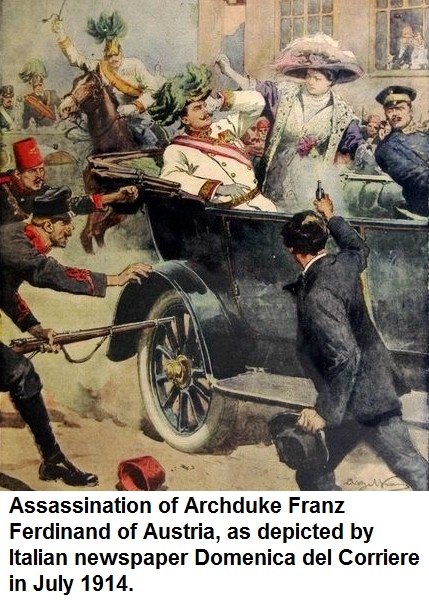
1914 Photo 1On this date 100 years ago, Archduke Franz Ferdinand of Austria, heir presumptive to the Austro-Hungarian throne, and his wife, Sophie, Duchess of Hohenberg, were shot dead in Sarajevo by Serbian assassins. The political objective of the assassination was to break off Austria-Hungary’s south-Slav provinces so they could be combined into a Yugoslavia. The assassination led directly to the First World War when Austria-Hungary subsequently issued an ultimatum against Serbia, which was partially rejected. Austria-Hungary then declared war, marking the outbreak of the war. [a]

Multilateral military alliances abounded in that day among the Great Powers: Austria-Hungary with Germany (Triple Alliance of 1882) and Serbia with Russia and France (Triple Entente of 1907) and Britain. When war ensued later in August 1914, these were the sides. Many other military treaties were triggered thereby engaging empires/countries like Ottoman-Turks, Portugal, Japan and Italy, (The United States joined in 1917 allied with Britain). The resulting conflict was dubbed the Great War until subsequently rebranded World War I.

The review of the historic events of this day 100 years ago is more than just an academic discussion, the book Go Lean…Caribbean aspires to economic principles that dictate that “consequences of choices lie in the future”. The book serves as a roadmap for the introduction and implementation of the technocratic Caribbean Union Trade Federation (CU). This confederation effort aligns many former colonies of the same Great Powers that waged WW I; like Great Britain or the United Kingdom (UK) for example. The British Dominion experienced dire consequences and suffered greatly as a result of this war. In 1914 The British Dominion controlled over 25% of the world’s population; today the UK wields little political, military or economic power, including that of the Caribbean.

The people of the Caribbean understand societal decline and dysfunction all too well.

What have we learned in the 100 years since the events of June 28, 1914? How will these lessons help us today?

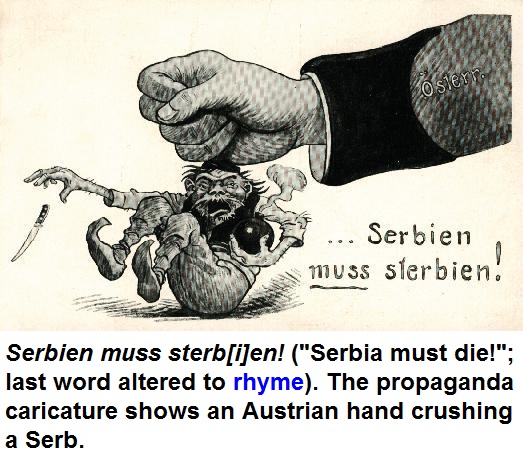
  • Minority Equalization – Bullying and terrorism must be mitigated at the earliest possible opportunity – the foregoing photo depicts the oppression the minority Balkan communities perceived in the Austria-Hungarian Empire. As a minority group they felt bullied in their own country; their Slavic culture and language set them apart, and their religious adherence led to even more dissension (Austria-Hungary: Catholic/Lutheran; Serbia: Eastern Orthodox and Bosnia- Herzegovina: Muslim) There were terrorist activities for decades before in the quest for independence. In the past 100 years, this same modus operandi has been repeated in countless locales around the world. The CU security pact must defend against regional threats, including domestic terrorism. This includes gangs and their junior counterparts, bullies. The CU plans for community messaging in the campaign to  mitigate bullying.

1914 Photo 2

  • Reconciliation of issues are not optional, more conflict will emerge otherwise – The issues that wedged the people of the Balkans were not resolved in World War I. More dissensions continued leading to World War II, and continued during the Cold War while most of the Balkans were under Soviets control. When the Soviet Union collapsed in 1991, civil war and ethnic cleansings proceeded in the Balkans. Their issues/differences had not been reconciled. A common practice after WW I & WW II was the prosecution of war crimes. But in South Africa an alternative justice approach was adopted, that of Truth & Reconciliation Commissions (TRC). These have become more successful as the emphasis is less on revenge and more on justice normalization. Many other countries have instituted similar TRC models. The CU plans for the TRC model for dealing with a lot of latent issues in the last Caribbean century (i.e. Cuba, Haiti, Dominican Republic, etc).
  • Self-determination of local currencies – in planning for postwar reconstruction, U.S. representatives with their British counterparts studied what had been lacking between the two world wars: a system of international payments that would allow trade to be conducted without fear of sudden currency depreciation or wild fluctuations in exchange rates—ailments that had nearly paralyzed world capitalism during the Great Depression. There is a multiplier associated with the currency in the money supply. Therefore the communities of the Caribbean must embrace its own currency, the Caribbean Dollar (managed by a technocratic Caribbean Central Bank), thereby bringing local benefits from local multipliers.
  • Security assurances must be enabled to complement economics objectives – A lot of dissension has resulted when economic engines become imperiled due to security conflicts. The instability then causes more economic dysfunction, which results in even more security threats – a downward spiral. The CU/Go Lean posits that security apparatus must be aligned with all economic empowerments. This is weaved throughout the roadmap.
  • Negotiate as partners not competitors – The end of World War I immediately set-up ripe conditions for WW II, because of the harsh terms in the Peace Treaties. The CU maintains that, negotiation is an art and a science. More can be accomplished by treating a negotiating counterpart as a partner, rather than not an adversary. (See VIDEO below).
  • Cooperatives and sharing schemes lighten burdens among neighbors – The Balkan conflict of 1914 resulted in a World War because of cooperative treaties with aligning nations. Despite this bad outcome, the practice of cooperatives and sharing still has more upside than downside. The CU will employ cooperatives and sharing schemes for limited scopes within the prime directives of optimizing the economic, security and governing engines.
  • Promote opportunities for the Pursuit of Happiness – A lot of terrorist activities are executed by “suicide” agents (i.e. suicide bombers). The Go Lean roadmap posits the when the following three fundamentals are in place, the risks of suicide is minimal: 1. something to do, 2. someone to love, 3. something to hope for. These are the things a man (or woman) needs to be happy.
  • Consider the Greater Good – Complying with this principle would have prevented a lot of conflict in the past century. The philosophy is directly quoted as: “It is the greatest good to the greatest number of people which is the measure of right and wrong”. The CU/Go Lean roadmap calls for a number of measures that strike directly at the Greater Good mandate: accountable justice institutions, economic empowerment for rich and poor, strategic education initiatives, proactive health/wellness, etc.

The related subjects of economic, security and governing dysfunction have been a frequent topic for blogging by the Go Lean promoters, as sampled here:

https://goleancaribbean.com/blog/?p=1433 Caribbean loses over 70% of tertiary educated citizens to the brain drain
https://goleancaribbean.com/blog/?p=1309 5 Steps of a Bubble
https://goleancaribbean.com/blog/?p=1014 All is not well in the sunny Caribbean
https://goleancaribbean.com/blog/?p=816 The Future of Caribbean Integration and CariCom
https://goleancaribbean.com/blog/?p=789 America’s War on the Caribbean
https://goleancaribbean.com/blog/?p=782 Open the Time Capsule: The Great Recession of 2008
https://goleancaribbean.com/blog/?p=623 Only at the precipice, do they change
https://goleancaribbean.com/blog/?p=599 Ailing Puerto Rico open to radical economic fixes
https://goleancaribbean.com/blog/?p=467 Barbados Central Bank records $3.7m loss in 2013
https://goleancaribbean.com/blog/?p=451 CariCom Chairman to deliver address on slavery/colonization reparations
https://goleancaribbean.com/blog/?p=353 Book Review: ‘Wrong – Nine Economic Policy Disasters and What We Can Learn…’

The purpose of the Go Lean roadmap is to turn-around the downward trends in the Caribbean today, to reverse course and elevate Caribbean society. The CU, applying lessons from the last 100 years, has prime directives proclaimed as follows:

  • Optimization of the economic engines in order to grow the regional economy to $800 Billion & create 2.2 million new jobs.
  • Establishment of a security apparatus to protect the resultant economic engines.
  • Improve Caribbean governance to support these engines.

The Go Lean book details a series of assessments, community ethos, strategies, tactics, implementations and advocacies to empower all the factions in the Caribbean region:

Community Ethos – Economic Systems Influence Choices & Incentives Page 21
Community Ethos – Consequences of Choices Lie in the Future Page 21
Community Ethos – Money Multiplier – Control of Local/Regional   Currency Page 22
Community Ethos – Anti-Bullying and Mitigation Page 23
Community Ethos – Intelligence Gathering Page 23
Community Ethos – “Crap” Happens Page 23
Community Ethos – Minority Equalization Page 24
Community Ethos – Ways to Impact the Future Page 26
Community Ethos – Ways to Improve Negotiations Page 32
Community Ethos – Ways to Manage Reconciliations Page 34
Community Ethos – Ways to Improve Sharing Page 35
Community Ethos – Ways to Promote Happiness Page 36
Community Ethos – Ways to Impact the Greater Good Page 37
Strategy – Vision –  Integrate Region into a Single Market Economy Page 45
Strategy – Agents of Change – Globalization Page 57
Tactical – Separation of Powers – Department of Homeland   Security Page 75
Tactical – Separation of Powers – Department of   Justice Page 77
Implementation – Assemble Existing Super-national Institutions Page 96
Implementation – Caribbean Central Bank (CCB) Cooperative Page 96
Implementation – Ways to Pay for Change Page 101
Implementation – Foreign Policy Initiatives   at Start-up Page 102
Implementation – Security Initiatives at   Start-up Page 103
Implementation – Ways to Deliver Page 109
Implementation – Ways to Promote Independence Page 120
Planning – Ways to Ways to Model the EU Page 130
Planning – Ways to Make the Caribbean Better Page 131
Planning – Ways to Improve Failed-State Indices Page 134
Planning – Lessons from East Germany Page 139
Advocacy – Ways to Grow the Economy Page 151
Advocacy – Ways to Create Jobs Page 152
Advocacy – Ways to Better Manage the Social Contract Page 170
Advocacy – Ways to Foster Cooperatives Page 176
Advocacy – Ways to Impact Justice Page 177
Advocacy – Ways to Improve Homeland Security Page 180
Advocacy – Ways to Mitigate Terrorism Page 181
Advocacy – Ways to Improve Intelligence Page 182
Advocacy – Banking Reforms – Caribbean Dollar Page 199
Advocacy – Ways to Protect Human Rights Page 220
Advocacy – Battles in the War on Poverty Page 222
Advocacy – Ways to Impact British Territories Page 245

The year 1914 is identified as a watershed year in the history of mankind. (There are even religious teachings that identify this year as the beginning of the Bible’s prophesied Last Days). No doubt there was a crisis, and it was wasted, even after losing 19 million people in the ensuing military conflict. The result was a 2nd World War that slaughtered 60 million more. Still all the divisions and animosities created during those conflicts forged even more conflicts (think: Middle East, Korea and Vietnam). In total, about 100 million people died in wars of the 20th Century.

See Comedian Bill Maher Commentary in the following VIDEO:

VIDEO – Real Time With Bill Maher: Sunni and Share (HBO) – 
https://youtu.be/Jz0YWIfBLa4


Real Time with Bill Maher
Published on Jul 1, 2014 – Bill Maher delivers his “New Rules” editorial on June 27, 2014.

  • Category: Entertainment

Now is the time for all of the Caribbean to learn the lessons from the last 100 years, and not waste our current crises. The book Go Lean … Caribbean posits that the Caribbean is in a serious crisis, but asserts that this crisis would be a terrible thing to waste. The people and governing institutions of the region are hereby urged to lean-in for the empowerments described in the book Go Lean … Caribbean.

This is a big deal for the region, the same way 1914 was a big year for our planet. While the planet is out-of-scope for this roadmap, a Caribbean neighborhood optimization is realistic and plausible. We can all work to make our homeland a better place to live, work, and play.

Download the free e-Book of Go Lean … Caribbean – now!

—————–

Referenced Sources:
a.     http://en.wikipedia.org/wiki/Assassination_of_Archduke_Franz_Ferdinand_of_Austria; retrieved June 28, 2014

b.     http://en.wikipedia.org/wiki/Bretton_Woods_system; retrieved June 28, 2014

Share this post:
, ,
[Top]

Here come the Drones … and the Concerns

Go Lean Commentary

Drones - SurveillanceThe Gee-Whiz days are over … for drones.

The initial excitement and fascination period seems to have ended. Now people are trying to curb, protect and run from all-things-drone.

This point is evident from the two foregoing articles & VIDEOS. Here come the drones, and here come troubles.

Despite the foregoing articles, the old adage still applies: “The early bird gets the worm”.

Story 1 – By: CBS News & The Associated Press

http://www.cbsnews.com/news/government-moves-to-ban-drones-in-400-national-parks/

Title: Government moves to ban drones in 400 national parks

WASHINGTON — The National Park Service is taking steps to ban drones from 84 million acres of public lands and waterways, saying the unmanned aircraft annoy visitors, harass wildlife and threaten safety.

Jonathan Jarvis, the park service’s director, told The Associated Press he doesn’t want drones flushing birds from their nests, hovering over rock climbers as they cling to the sides of cliffs or buzzing across the face of Mount Rushmore.

Jarvis said he would sign a policy memorandum on Friday directing superintendents of the service’s 401 parks to write rules prohibiting the launching, landing or operation of unmanned aircraft in their parks.

Two large national parks, Grand Canyon in Arizona and Zion in Utah, have already changed their rules to ban drones. Some other parks have interpreted existing regulations to permit them to ban drone flights, but Jarvis said each park must change its “compendium” – a set of regulations unique to that park – if a ban is to be enforceable.

At Yosemite National Park in California, where officials announced last month they would adopt a policy prohibiting drone flights, hobbyists have been using unmanned aircraft to film the park’s famous waterfalls and capture close-up shots of climbers on its granite cliffs. Zion officials were spurred to take action after an incident in which an unmanned aircraft was seen harassing bighorn sheep and causing youngsters to become separated from their herd.

At Mount Rushmore in South Dakota, park rangers last September confiscated an unmanned aircraft after it flew above 1,500 visitors seated in an amphitheater and then over the heads of the four presidents carved into the mountain.

Drones - HoverFlowImagine you’re a big wall climber in Yosemite working on a four-day climb up El Capitan, and you’re hanging off a bolt ready to make a (difficult) move, and an unmanned aircraft flies up beside you and is hovering a few feet from your head with its GoPro camera running,” Jarvis said in an interview. “Think about what that does to your experience and your safety,”

Some drone operators have complained that a ban favors some park users over others. They also say many unmanned aircraft flights are made without incident and with respect for other park users and wildlife.

Unmanned aircraft range from no bigger than a hummingbird to the size of an airliner, and their capabilities are improving rapidly. Use is growing as their price tags decline. The park service wants to get out in front of that by putting rules in place now, Jarvis said.

“This is a different kind of aircraft, and it is being used in different ways than what we have seen from the (model aircraft) hobbyists,” he said. “We want to have some control over it now before it proliferates.”

The memorandum directs superintendents to continue to allow model aircraft hobbyists and clubs that already have approval to operate in some parks. Also, parks can continue to grant permits for drone flights for other purposes like research, search and rescue, and firefighting, he said. Commercial operators like moviemakers can also apply for a permit to operate a drone, he said.

“We would have to hear why they would necessarily need this type of equipment in order to accomplish their goals,” Jarvis said.

Brendan Schulman, a New York attorney representing several commercial drone operators, said the park service appears to be “overreaching its authority with respect to the existing regulations, which only address the use of passenger aircraft.”

“A penalty imposed on a personal drone operator could certainly be challenged on the basis that there does not appear to be a regulation addressing that activity,” he said.

While parks are changing their individual rules, the park service will be drafting its own rule to ban drone flights in parks nationwide, Jarvis said. He said he hopes to have a proposal ready in about 18 months.

The ban only affects what Jarvis described as “operations inside parks,” and not high altitude flights over parks.

The park service has been working closely with the Federal Aviation Administration, although the service’s action is separate from the FAA’s ban on commercial drone flights, he said.

The FAA ban is being challenged by drone operators represented by Schulman.

Two years ago, Congress directed the FAA to put regulations in place to provide for the safe integration of commercial drones into the national airspace. The regulations were supposed to be finished by September 2015, but the agency isn’t expected to make that deadline.

Last week, the FAA said it had granted the first permission for commercial drone flights over land.

Earlier this month, CBS News transportation correspondent Jeff Pegues reported that some Hollywood production companies are trying to win an exemption from the FAA to use drones in the U.S.

YouTube Video Sharing Site (Retrieved 06-25-2014) from: www.youtube.com/embed/kTZ94RujpEg

Story 2 – By: Miguel Almaguer, NBC News

Title: Police investigate claims of peeping drones

Seattle police responded to an apartment complex after a woman said a drone was spying on her. The complaint raises interesting questions about drones and privacy.

Even though owning and flying drones is legal, the police will respond to privacy violations and other concerns. This drone is owned by Skyris Imaging, which owns an entire fleet, to photograph property, farm land and real estate. No laws appear to have been broken.

Visit NBCNews.com for breaking news, world news, and news about the economy

http://www.today.com/video/today/55502613#55502613 (Retrieved 06-25-2014)

Unmanned aircrafts are just another area of autonomous vehicles that the book Go Lean … Caribbean and aligning blogs have highlighted as being a source of future growth and jobs; 2 examples are listed here:

https://goleancaribbean.com/blog/?p=1277 The need for highway safety innovations – here comes Google
https://goleancaribbean.com/blog/?p=673 Ghost ships – Autonomous cargo vessels without a crew

Autonomous vehicles are a subset of the field of robotics – this is science, not science fiction. This is the future direction for so many industrial endeavors. The Go Lean book identifies the returns on investment for communities that prepare and foster development in impending technology fields. The book asserts that there is a race to create solutions to ease the challenges associated with the agents of change (Technology, Aging Diaspora, Climate Change, Globalization). The question is: who will create the solutions for this marketplace? The book posits that Caribbean stakeholders cannot only consume, but must also create, produce, develop and help construct the “vehicles” to get its people to the future. This applies whether the vehicle is a physical or figurative application.

“Don’t be a ‘stock on the shelf’” – Caribbean music icon Bob Marley in the song: Pimpers’ Paradise (Uprising Album, 1980).

This book purports that a new industrial revolution is emerging and the Caribbean society must participate, not just spectate. This point is  pronounced early in the Declaration of Interdependence (Page 14), with these opening statements:

xxvi. Whereas the Caribbean region must have new jobs to empower the engines of the economy and create the income sources for prosperity, and encourage the next generation to forge their dreams right at home, the Federation must therefore foster the development of new industries… In addition, the Federation must invigorate the enterprises related to existing industries like tourism…– impacting the region with more jobs.

xxvii. Whereas the region has endured a spectator status during the Industrial Revolution, we cannot stand on the sidelines of this new economy, the Information Revolution. Rather, the Federation must embrace all the tenets of Internet Communications Technology (ICT) to serve as an equalizing element in competition with the rest of the world. The Federation must bridge the digital divide and promote the community ethos that research/development is valuable and must be promoted and incentivized for adoption.

The book Go Lean… Caribbean, serves as a roadmap for the introduction and implementation of the Caribbean Union Trade Federation (CU). This agency will assume jurisdiction for the Caribbean skies (airspace), much like the Federal Aviation Administration (FAA) performs for the US. This role is not intended as just a regulatory arm, but a promotional agency as well. We must be partners with the aviation industry; and we want to be on the cutting-edge of unmanned aviation. We cannot be just a “stock on the shelf”. The failure to advocate in the aviation industry has already devastated Caribbean commerce, as dysfunction in regional air carriers has negatively affected tourism and the transport of tourists to their island resorts. This is happening now; this is real!

These issues were highlighted in previous blogs as follows:

https://goleancaribbean.com/blog/?p=798 Lessons Learned from the American Airlines merger
https://goleancaribbean.com/blog/?p=254 Air Antilles Launches St. Maarten Service

So this blog, and the undergirding book, is pinning for more than just “Gee-Whiz” avionics; this is championing a bigger cause, that of empowering Caribbean society. In fact the CU/Go Lean roadmap has these 3 prime directives:

  • Optimization of the economic engines in order to grow the regional economy.
  • Establishment of a security apparatus to protect the resultant economic engines.
  • Improve Caribbean governance to support these engines.

There is a lot at stake for the Caribbean in considering this subject area. According to the foregoing articles and VIDEOS, research-and-development (R&D identified in Go Lean as a community ethos) has started to deploy economic and security solutions with drones as effective tools. While there are still many growing pains to work through, the early adopters have gotten benefits … and profits.

Drones - WeatherThere are proponents and opponents of unmanned aviation, as depicted in the foregoing articles and VIDEOS.  One thing for sure, those “sweating the details”, resolving the issues are sowing the field for the many harvest seasons due to come from this industry space. The Go Lean book and blogs are hereby urging the Caribbean region to lean-in to this discussion, development and industry. The “harvest is great, while the workers are few” – The Bible (Matthew 9:37).

In the US, there is a 25-pound limit for “unmanned aerial systems”. This is regulated by the Federal Aviation Administration. The FAA has no jurisdiction in the Caribbean. Perhaps, the CU as the FAA counterpart can advocate a 30-pound limit, or some other rule changes that would be more industry-friendly. Also, testing-proving grounds abound in the Caribbean, with many remote islands and the 1,063,000 square-mile territory of the Caribbean Sea, which according to the roadmap would come under CU jurisdiction.

The Go Lean strategy is to confederate the 30 member-states of the Caribbean region to form the technocratic CU Trade Federation. The issues associated in this blog entry are too big for any one member-state, but a consolidated market of 42 million people allow for more economies-of-scale for generating returns on technological investments. Tactically, the Go Lean plan for a separation-of-powers allows the member-states to deputize authority of the Caribbean airspace to the one unified agency, with the mandate to promote, not just regulate. Operationally, there is no place with a greater need for unmanned aerial reconnaissance than the Caribbean. Every year, countless watercrafts become imperiled; the scanning & diagnostic capabilities on drones exceed human-eye capability for search-and-rescue. Other applications include pipelines, sea-bound wind farms, fairgrounds, isolated residents and Self-Governing Entities.

Drones - ShadowHawkIn general, there is the need for rules and public protection with evasive technologies like drones, but it is the assertion of the Go Lean book and subsequent blog entries that a protection mandate does not have to stifle technological innovation. A spirit of partnership in negotiations can foster a more productive business climate for R&D and a win-win for all stakeholders.

The book details community ethos to adopt, plus the executions of the following strategies, tactics, implementations and advocacies to forge R&D and industrial growth in Caribbean communities:

Community Ethos – Deferred Gratification Page 21
Community Ethos – All Choices Involve Costs Page 21
Community Ethos – Job   Multiplier Page 22
Community Ethos – Public Protection Over Privacy Concerns Page 23
Community Ethos – “Crap” Happens Page 23
Community Ethos – Lean Operations Page 24
Community Ethos – Return on Investments (ROI) Page 24
Community Ethos – Ways to Impact the Future Page 26
Community Ethos – Ways to Help Entrepreneurship Page 28
Community Ethos – Ways to Impact Research & Development Page 30
Community Ethos – Ways to Improve Negotiations Page 32
Community Ethos – Impact the Greater Good Page 37
Strategy – Vision – Confederating 30 Member-states in a Union Page 45
Strategy – Agents of Change – Technology Page 57
Strategy – Agents of Change – Aging Diaspora Page 57
Strategy – Agents of Change – Globalization Page 57
Strategy – Agents of Change – Climate Change Page 57
Tactical – Fostering a Technocracy Page 64
Tactical – Growing Economy – New High Multiplier Industries Page 68
Separation of Powers – Self Governing Entities Page 80
Separation of Powers – Interior Department Page 82
Separation of Powers – Regional Aviation Administration and Promotion Page 84
Implementation – Ways to Pay for Change Page 101
Implementation – Benefits from the Exclusive Economic Zone Page 104
Implementation – Steps to Implement Self-Governing Entities Page 105
Implementation – Ways to Deliver Page 109
Planning – 10 Big Ideas Page 127
Advocacy – Ways to Grow the Economy Page 151
Advocacy – Ways to Create Jobs Page 152
Advocacy – Ways to Improve Homeland Security Page 180
Advocacy – Ways to Improve Intelligence Gathering &   Analysis Page 182
Advocacy – Ways to Foster Technology Page 197
Advocacy – Ways to Improve Transportation Page 205
Advocacy – Ways to Improve Fisheries Page 210
Advocacy – Ways to Impact Urban Living Page 238
Advocacy – Ways to Impact Rural Living Page 239
Appendix – Industrial Sites at Sea-bound Wind Farms Page 335

Historically, forging change in the transportation sphere in the Caribbean has been burdensome – early adopters we are not. The region was very slow to adopt many provisions (seat belts, fast ferry, smoking on planes) that may be considered common sense by today’s standard. Managing change for the region must therefore be viewed as both an art and a science. The CU approach is different for spearheading this change of unmanned aviation – more technocracy, less democracy; (no need for consensus building).

The insights from the foregoing articles and embedded videos help us to appreciate that the future for unmanned aviation is now! We must therefore lean-in for the empowerments described in Go Lean … Caribbean. This roadmap allows us to build a better community and a better homeland to live, work and play. 🙂

Download the book Go Lean … Caribbean – now!

Share this post:
, , , , , ,
[Top]

Marijuana in Jamaica – Puff Peace

Go Lean Commentary

Weed 1Come to Jamaica and feel alright! – Advertising tag line sampling Bob Marley’s song: One Love.

Marijuana decriminalization is not a Jamaican issue… alone. Other countries have already addressed this debate; like Latin America[a] and Europe; legal in The Netherlands & Portugal, and decriminalized in Norway. In the US, Colorado is about to be joined by the State of Washington in allowing recreational use of the cannabis plant.

While medical marijuana originated in Jamaica (1970’s), many jurisdictions now allow marijuana to be legally distributed by medical professionals, with a prescription. Life imitates art, art imitates life. Hollywood has lampooned this practice many times in movies, TV shows and commentary. In the State of California, it is common-place to get a prescription for marijuana for “dubious” ailments like insomnia, appetite abatement, non-clinical depression, even sneezing. Without a doubt in California, the whole process is a farce! (See Comedian Bill Maher’s tongue-in-cheek commentary in Referenced VIDEO below[c]).

The world has changed; the acceptance of marijuana is changing.

The following news article addresses the issue of Marijuana decriminalization, (more so than legalization):

Port of Spain, Trinidad & Tobago – It would have seemed a lot more revolutionary just two years ago but for Jamaica, it is still a welcome whiff of sense. The island’s energy minister, Philip Paulwell, who also leads government business in parliament, has said he will find time this year to decriminalise possession of small amounts of marijuana. At a stroke, the move will cut the number of illicit smokes by as many as a million a week. It will also make a Jamaican break somewhat less nervy for ganja-puffing tourists.

Reform proposals have been knocking around for some time: a National Commission on Ganja recommended decriminalisation in 2001. But helped by moves towards legalisation in Uruguay and decriminalisation in the United States, momentum has been growing. A Cannabis Future Growers and Producers Association was launched last month, and a commercial company to support medical marijuana in December.

Selling for less than five dollars an ounce, ganja has a long history in Jamaica, going all the way back to 19th-century Indian immigrants. Cultivation and import have been illegal since 1913, but everyone’s granny remembers when the herb was quite openly on sale as a cure-all. Some of the early work on medicinal uses for marijuana was done in Jamaica in the 1970s and 1980s.

In practice, most small-time ganja users are not arrested or prosecuted. But for those who are, the consequences can be dire. A criminal record makes it hard to get a coveted American visa or to land jobs in Jamaica itself. For that reason alone, reform looks like a surefire vote-winner.

Decriminalisation will also unclog the courts and free up police time. But it won’t change the big picture. It will remain illegal to grow and trade marijuana in large quantities, something that suits the big players just fine. Full legalisation would knock the bottom out of the market, hurting the island’s powerful criminal gangs. It would also curtail the potential for extortion; seven police officers appeared in court this month to face allegations that they took a $2,750 bribe from a businessman in return for overlooking a ganja find on his premises.

Jamaicans are prone to waves of moral panic, but the proposal to decriminalise ganja has caused barely any waves. The foreign minister AJ Nicholson and the opposition leader, Andrew Holness, have expressed mild reservations; the vocal church lobby has been silent. Says a well-educated and dreadlocked Jamaican: “Most of them accept that there are people who do this, just like there are people who drink.” Such tolerant sentiments only go so far, however. The “abominable crime of buggery” carries a prison sentence of up to ten years, and the government has no plans to right that injustice.
The Economist Magazine; posted 06/13/2014; retrieved 06/18/2014 from: http://www.economist.com/blogs/americasview/2014/06/marijuana-jamaica?spc=scode&spv=xm&ah=9d7f7ab945510a56fa6d37c30b6f1709

Marijuana tourism or “ganja-puffing tourists” …
…these words jump off the page of this foregoing news article.

The book Go Lean…Caribbean anticipates the compelling issues associated with economic engines. The book serves as a roadmap for the introduction and implementation of the technocratic Caribbean Union Trade Federation (CU). This effort calls for the focus of the following 3 prime directives related to Trade:

  • Optimization of the economic engines in order to grow the regional economy to $800 Billion and create 2.2 million jobs.
  • Establishment of a security apparatus (including law enforcement enhancements) to protect the resultant economic engines.
  • Improve Caribbean governance to support these engines.

Weed 2But the subject of marijuana is bigger than Trade. There are moral, religious, legal and psychological (treatment) issues associated with this topic; and there is history – good and bad. Any jurisdiction decriminalizing the use of marijuana has to contend with the previous messaging to the community of: “Just say no to drugs”.

The book asserts that before the strategies, tactics, implementations and advocacies of a roadmap to elevate a society can be deployed, the affected society must first embrace a progressive community ethos. The book defines this “community ethos” as the fundamental character or spirit of a culture; the underlying sentiment that informs the beliefs, customs, or practices of society; dominant assumptions of a people or period. Think of the derivative term: “work ethic”.

Marijuana is a mood-altering drug; it has negative effects, one being preponderance for apathy, to tune out of any active engagement. In the US, even in the states where marijuana is legal, most firms/governments still screen staffers (new hires and veterans) and ban consumption of the drug. The reason is simple: Apathy does not make for industriousness. So this issue/drug presents a conundrum for the CU. The mission to grow the economy, promote industriousness, foster new jobs and new industries is pronounced early in the roadmap, detailed in the Declaration of Interdependence (Page 14) with this statement:

 xxvi.   Whereas the Caribbean region must have new jobs to empower the engines of the economy and create the income sources for prosperity, and encourage the next generation to forge their dreams right at home, the Federation must therefore foster the development of new industries … In addition, the Federation must invigorate the enterprises related to existing industries … impacting the region with more jobs.

According to the foregoing article, reconciling the history of marijuana/ganja will be a “tall order”:

ganja has a long history in Jamaica, going all the way back to 19th-century Indian immigrants.

The history of marijuana/ganja in the Caribbean in general and Jamaica in particular has generated a lot of proponents and opponents. Despite outlawing “the weed” for over 100 years, there is a vibrant black market economy associated with the drug. This reality challenges the security apparatus of the Caribbean’s legitimate governing entities. The Go Lean roadmap therefore features the necessary homeland security/law enforcement mitigations. This need was pronounced at the outset of the book (Page 12), recognizing that the problem of drug enforcement/interdiction may be too big for any one member-state alone:

xvi.   Whereas security of our homeland is inextricably linked to prosperity of the homeland, the economic and security interest of the region needs to be aligned under the same governance. Since economic crimes … can imperil the functioning of the wheels of commerce for all the citizenry, the accedence of this Federation must equip the security apparatus with the tools and techniques for predictive and proactive interdictions.

This issue of decriminalizing marijuana must now reconcile with the long history of criminal prosecutions, prison terms and probation/parole eco-system. Management of these attendant functions of criminology has been a consistent theme of the Go Lean roadmap, commencing with this statement in the same Declaration of Interdependence (Page 12):

x.   Whereas we are surrounded and allied to nations of larger proportions in land mass, populations, and treasuries, elements in their societies may have ill-intent in their pursuits, at the expense of the safety and security of our citizens. We must therefore appoint “new guards” to ensure our public safety and threats against our society, both domestic and foreign. The Federation must employ the latest advances and best practices of criminology and penology to assuage continuous threats against public safety. The Federation must allow for facilitations of detention for convicted felons of federal crimes, and should over-build prisons to house trustees from other jurisdictions.

The Go Lean book envisions the CU as a confederation of the 30 member-states of the Caribbean to do the heavy-lifting of empowering and elevating the Caribbean society by creating a “single market” for the region. Among the many benefits of this roadmap is the economies-of-scale for leveraging regional security solutions, like the upheavals of marijuana decriminalization.

Despite the many economic benefits researched for decriminalizing drugs, as measured in the mature market of the US [b], this roadmap and supporting blogs are NOT proposing this measure for the Caribbean … per se. This is presented here as a political issue; the CU strives to maintain an apolitical stance.

There is security risk on both sides of this issue. The book details the community ethos, strategies, tactics, implementations and advocacies to monitor, manage and mitigate the security risks to Caribbean society. The following is a sample list:

Community Ethos – Deferred Gratification Page 21
Community Ethos – Job Multiplier Page 22
Community Ethos – Privacy versus Public Protection Page 23
Community Ethos – Light Up the Dark Places Page 23
Community Ethos – Ways to Impact Research & Development Page 30
Community Ethos – Ways to Impact the Greater Good Page 37
Strategy – Vision – Integration of Single Market Economy Page 45
Strategy – Agents of Change – Globalization Page 57
Tactical – Fostering a Technocracy Page 64
Tactical – Separation of Powers – Homeland Security Page 75
Tactical – Separation of Powers – Justice Department Page 77
Implementation – Security Initiatives at Start-up Page 103
Advocacy – Ways to Grow the Economy Page 151
Advocacy – Ways to Ways to Mitigate Black Markets Page 165
Advocacy – Ways to Improve Governance Page 168
Advocacy – Ways to Better Manage the Social Contract Page 170
Advocacy – Ways to Impact Justice Page 177
Advocacy – Ways to Remediate and Mitigate Crime Page 178
Advocacy – Ways to Improve Homeland Security Page 180
Advocacy – Ways to Impact the Prison Industrial Complex Page 211

Now is the time for all of the Caribbean, the people and governing institutions, to lean-in for the empowerments described in the book Go Lean … Caribbean. For us to send the invitation to the wide-world to ”come to Caribbean and feel alright”, but we must first put “our house” in order.

The world’s acceptance of marijuana has changed. While this is true, this change has created opportunities and also challenges. There is plenty of work yet to be done; heavy-lifting.

Download the book Go Lean … Caribbean – now!

————————-

Referenced Citations:

a.  Marijuana is legal to some degree in 8 Latin America countries (Argentina, Brazil, Columbia, Costa Rica, Ecuador, Honduras, Mexico and Uruguay).

b.  A Harvard economist, Jeffery Miron, estimated that ending the war on drugs would inject 76.8 billion dollars into the US economy in 2010 alone.[1] He estimates that the government would save $41.3 billion for law enforcement and the government would gain up to $46.7 billion in tax revenue.[2] Since President Nixon began the war on drugs, the federal drug-fighting budget has increased from $100 million in 1970 to $15.1 billion in 2010, with a total cost estimated near 1 trillion dollars over 40 years.[3] In the same time period an estimated 37 million nonviolent drug offenders have been incarcerated. $121 billion was spent to arrest these offenders and $450 billion to incarcerate them.[3]

1.       Debusmann, Bernd (12/03/2008). “Einstein, Insanity and the War on Drugs”. Reuter. Retrieved 04/01/2012 from: http://blogs.reuters.com/great-debate/2008/12/03/einstein-insanity-and-the-war-on-drugs/.

2.       Miron, Jeffrey A.; Katherine Waldock. “The Budgetary Impact of Ending Drug Prohibition”. The Cato Institute.  Retrieved 05/03/2010 from: http://www.cato.org/publications/white-paper/budgetary-impact-ending-drug-prohibition

3.       The Associated Press (05/13/2010). “After 40 years, $1 trillion, US War on Drugs Has Failed to Meet Any of its Goals”. The Associated Press. Retrieved 04/01/2012 from: http://www.foxnews.com/world/2010/05/13/ap-impact-years-trillion-war-drugs-failed-meet-goals/.

c.  Referenced VIDEO:


On Friday night’s episode of “Real Time,” Bill Maher offered some advice to viewers and to the state of Colorado about how to use marijuana safely and effectively, which we need to do, he said, because “after all, we’re pretending it’s medicine…


Share this post:
, , , , , , ,
[Top]

Health-care fraud in America; criminals take $272 billion a year

Go Lean Commentary

Healthcare2Wherever there is vibrant economic activity, bad actors will emerge.

This is the claim of the book Go Lean…Caribbean, that the result of successful regional integration would be an elevated Caribbean economy, which consequently could result in increased felonious activities.

There is a lot of economic activity around health-care. According to a US News and World Report story, the US lacks health efficiencies, spending 20, 30, even 100 times as much on medical products and devices as what it would cost, at a typical big-box retailer like Wal-Mart. In a sample year (2012), the country spent over $2.8 trillion on health care, more than twice as much on a per-capita basis as other high-income countries such as England and France. [a]

The Caribbean wants to be a high-income country/region, but not in the model of the United States. We must be better; we must be lean!

The book, Go Lean … Caribbean, serves as a roadmap for the introduction and implementation of the Caribbean Union Trade Federation (CU), the next generation of integration for the region. This roadmap posits the eventual economic success will be quickly followed with the emergence of bad actors seeking to exploit the successes. So security/crime deterrents will not be an after-thought; no, rather the full crime-and-punishment eco-system (investigation, persecution, penology) is in scope for the CU as this technocratic agency will assume responsibility for economic crimes in the region. In effect, this roadmap has the prime directives to elevate the Caribbean’s:

(1) economy,

(2) security apparatus, and

(3) governing engines.

The Economist Magazine (Posted & Retrieved 05/31/2014) –
MEDICAL science is hazy about many things, but doctors agree that if a patient is losing pints of blood all over the carpet, it is a good idea to stanch his wounds. The same is true of a health-care system. If crooks are bleeding it of vast quantities of cash, it is time to tighten the safeguards.

In America the scale of medical embezzlement is extraordinary. According to Donald Berwick, the ex-boss of Medicare and Medicaid (the public health schemes for the old and poor), America lost between $82 billion and $272 billion in 2011 to medical fraud and abuse (see article). The higher figure is 10% of medical spending and a whopping 1.7% of GDP – as if robbers had made off with the entire output of Tennessee or nearly twice the budget of Britain’s National Health Service (NHS).

Crooks love American health care for two reasons. First, as Willie Sutton said of banks, it’s where the money is – no other country spends nearly as much on pills and procedures. Second, unlike a bank, it is barely guarded.

Some scams are simple. Patients claim benefits to which they are not entitled; suppliers charge Medicaid for non-existent services. One doctor was recently accused of fraudulently billing for 1,000 powered wheelchairs, for example. Fancier schemes involve syndicates of health workers and patients. Scammers scour nursing homes for old people willing, for a few hundred dollars, to let pharmacists supply their pills but bill Medicare for much costlier ones. Criminal gangs are switching from cocaine to prescription drugs – the rewards are as juicy, but with less risk of being shot or arrested. One clinic in New York allegedly wrote bogus prescriptions for more than 5m painkillers, which were then sold on the street for $30-90 each. Identity thieves have realised that medical records are more valuable than credit-card numbers. Steal a credit card and the victim quickly notices; photocopy a Medicare card and you can bill Uncle Sam for ages, undetected.

Healthcare1It is hard to make such a vast system secure: Medicare’s contractors process 4.5 [million] claims a day. But pointless complexity makes it even harder. Does Medicare really need 140,000 billing codes, as it will have next year, including ten for injuries that take place in mobile homes and nine for attacks by turtles? A toxic mix of incompetence and political gridlock has made matters worse. Medicare does not check new suppliers for links to firms that have previously been caught embezzling (though a new bill aims to fix this). Fraud experts have long begged the government to remove Social Security numbers from Medicare cards to deter identity thieves – to no avail.

Start by closing the safe door
One piece of the solution is obvious: crack down on the criminals. Obamacare, for all its flaws, includes some useful measures. Suppliers are better screened. And when Medicaid blackballs a dodgy provider, it now shares that information with Medicare – which previously it did not. For every dollar spent on probing health-care fraud, taxpayers recover eight. So the sleuths’ budgets should be boosted, not squeezed, as now.

But the broader point is that American health care needs to be simplified. Whatever its defects, Britain’s single-payer National Health Service is much simpler, much cheaper and relatively difficult to defraud. Doctors are paid to keep people well, not for every extra thing they do, so they don’t make more money by recommending unnecessary tests and operations – let alone billing for non-existent ones.

Too socialist for America? Then simplify what is left, scale back the health tax-perks for the rich and give people health accounts so they watch the dollars that are spent on their treatment. After all, Dr. Berwick’s study found that administrative complexity and unnecessary treatment waste even more health dollars than fraud does. Perhaps that is the real crime.
http://www.economist.com/news/leaders/21603026-how-hand-over-272-billion-year-criminals-thats-where-money?fsrc=nlw%7Chig%7C30-05-2014%7C53552127899249e1cc9ea210%7CNA

The Go Lean … Caribbean roadmap commences with the statement that the Caribbean is in crisis, and that this “crisis is a terrible thing to waste”. Later generations of Caribbean parents have had fewer children than their predecessors, 2.1 children per household, as opposed to the previous average of 5 – 6 children. Now, that older generation is aging, and the numbers do not lie, there are fewer children to care for their aging parents. What’s worse, many of the Caribbean labor pool had fled the region and emigrated to the US, Canada and Europe. Actuarially, we have a financial tsunami building and targeting the region. This crisis is identified early in the book, in the opening Declaration of Interdependence (Page 12), with this pronouncement:

ix.  Whereas the realities of healthcare and an aging population cannot be ignored and cannot be afforded without some advanced mitigation, the Federation must arrange for health plans to consolidate premiums of both healthy and sickly people across the wider base of the entire Caribbean population. The mitigation should extend further to disease management, wellness, obesity and smoking cessation programs. The Federation must proactively anticipate the demand and supply of organ transplantation as developing countries are often exploited by richer neighbors for illicit organ trade.

Creating the solution to mitigate health-care fraud (and other economic crimes) is “Step One, Day One” in the Go Lean roadmap. Implementing the appropriate regulatory framework, to marshal against the scenarios depicted in the foregoing news article, will allow for a “value exchange” for the vital investments the CU must make in the delivery of health-care solutions.

Health-care solutions also entail the astute application of information technology (IT). Agile IT systems, mobile and web applications can foster good value to health-care institutions and government payers. The book considers the Healthways model.

The Go Lean roadmap maintains that efficiency in health services delivery is not automatic, but rather must be forged and bred from experience, expertise, attitudes, training, and the quality application of delivery arts and sciences. The book details a series of community ethos, strategies, tactics, implementations and advocacies to foster the proper controls for health-care efficiency in the Caribbean region:

Community   Ethos – Economic Choices Involve Costs Page 21
Community   Ethos – Whistleblower Protection Page 23
Community   Ethos – Intelligence Gathering Page 23
Community   Ethos – Lean Operations Page 24
Community   Ethos – Impacting   Research & Development Page 30
Community   Ethos – Pursue the Greater Good Page 37
Strategic   – Agents of Change – Aging Diaspora Page 57
Tactical –   Fostering a Technocracy Page 64
Tactical –   Repatriation to Grow to a $800 Billion GDP Page 70
Tactical –   Separation of Powers – Medicare Admin. Page 86
Tactical –   Separation of Powers – Licensing/Standards Page 86
Anecdote – “Lean” in Government – Improve Process Page 93
Implementation – Ways to Pay for Change Page 101
Implementation – Security Initiatives at Start-up Page 103
Implementation – Ways to Deliver Page 109
Implementation – Reasons to Repatriate Page 118
Advocacy – Ways to Grow the Economy Page 151
Advocacy – Ways to Improve Healthcare Page 156
Advocacy –   Ways to Impact Entitlements Page 158
Advocacy –   Better Manage the Social Contract Page 170
Advocacy –   Ways to Remediate and Mitigate Crime Page 178
Advocacy –   Ways to Improve Emergency Management Page 196
Advocacy –   Ways to Foster Technology Page 197
Appendix –   Disease Management – Healthways   Model Page 300
Appendix –   Controlling Inflation – Healthcare Realities Page 320
Appendix –   TraumaCenter Realities Page 336

Change has come to the Caribbean. Costs dynamics are unavoidable with this impending change.

Now is the time for all of the Caribbean, the people and governing institutions, to lean-in for the changes described in the book Go Lean … Caribbean. The benefits are too alluring, a better place to live, work, heal and play.

Download the free e-Book of Go Lean … Caribbean – now!

Source Reference:

a. US News & World Report. “The High Cost of Staying Well – the U.S. gets poor bang for its medical buck”. Retrieved May 31, 2014 from: http://www.usnews.com/opinion/mzuckerman/articles/2013/10/22/why-health-care-costs-so-much-and-how-to-fix-it

Share this post:
, ,
[Top]

Trinidad Muslims travel to Venezuela for jihadist training

Go Lean Commentary

BS 1The American War on Terror has come to the Caribbean. This is obvious with the news in the subsequenr news article. It is also obvious that with two member-states (Guyana & Trinidad) with large Islamic populations, their Muslim adherents may invariably side with some of their Middle Eastern brothers.

The United States of America is the Caribbean’s biggest trading partner and benefactor. But, the US has enemies. What’s more, many American activities enrage their enemies. Consider these known facts:

  • Unmanned Drone attacks in Pakistan/Afghanistan, with collateral damage of innocent women/children.
  • NSA spying on its own citizens, and those of foreign lands in their home country, including the Caribbean; (this was disclosed last week by NSA Leaker Edward Snowden – see https://goleancaribbean.com/blog/?p=960).
  • American “Vulture” Capitalism – painfully exploiting natural resources at the expense of indigenous people

American foreign policy is determined by the US government (White House & Congress). The needs of our small Caribbean states may not factor in US policy determinations. Even the US territories (Puerto Rico & US Virgin Islands) have little voice and no vote in the formation of policy. The Caribbean finds itself in the same role as the words (sang by Michael Jackson) of the Scarecrow in the 1977 movie The Wiz:

We can’t win,
We can’t break-even, and …
We can’t get out of the game.

The book Go Lean…Caribbean posits that we must maintain our own security apparatus against systemic threats, like terrorism, that can imperil our way of life. This goal is detailed in the book, serving as a roadmap for the introduction of the Caribbean Union Trade Federation (CU). This Go Lean roadmap has 3 prime directives:

  • Optimization of the economic engines in order to grow the regional economy to $800 Billion & create 2.2 million new jobs.
  • Establishment of a security apparatus to protect the resultant economic engines.
  • Improve Caribbean governance to support these engines.

The book contends that bad actors will emerge just as a result of economic successes in the region. Combine further, the alignments with the US, and we have to be prepared for even more “enemies at the gate”. The other European nations with Caribbean territories (Britain, France, and The Netherlands) also have to contend with terrorism activities. This point is pronounced early in the book with the Declaration of Interdependence (Page 13), and these claims:

x.   Whereas we are surrounded and allied to nations of larger proportions in land mass, populations, and treasuries, elements in their societies may have ill-intent in their pursuits, at the expense of the safety and security of our citizens. We must therefore appoint “new guards” to ensure our public safety and threats against our society, both domestic and foreign. The Federation must employ the latest advances and best practices … to assuage continuous threats against public safety.

xvi. Whereas security of our homeland is inextricably linked to prosperity of the homeland, the economic and security interest of the region needs to be aligned under the same governance. Since economic crimes, including piracy and other forms of terrorism, can imperil the functioning of the wheels of commerce for all the citizenry, the accedence of this Federation must equip the security apparatus with the tools and techniques for predictive and proactive interdictions.

Appointing “new guards” to ensure our public safety is not so new of an endeavor. This effort has commenced already. There is currently a security pact of 7 Eastern Caribbean member-states that was first consummated in 1982 – see the Regional Security System below. The roadmap calls for the expansion and professionalization of this security pact for all 30 member-states. It will be the responsibility of the CU to lead, fund and facilitate this pact.

Creating the CU security apparatus is “Step One, Day One” in the Go Lean roadmap. This implementation, with the appropriate funding mechanisms, is essential for success. In line with the foregoing news article, there is the absolute need for a Unified Command-and-Control (UCC), including intelligence gathering and analysis, to monitor and mitigate threats against the region.

By Caribbean News Now contributor

PORT OF SPAIN, Trinidad — Cellphone images seized by SEBIN, Venezuela’s intelligence service, allegedly show Trinidadian Muslims arrested in Venezuela engaging in what SEBIN described as “pre-jihad training” on a firing range using high-powered weapons, the Trinidad Express reported.

The images were reportedly extracted from the cellphones seized from some of the Muslims in a group that travelled to Venezuela from Trinidad and were later arrested in a raid at the Plaza Hotel in Caracas on March 19, together with women and children, who were later released.

The training resembled what takes place in the Middle East as Muslims prepare for what they term jihad, or holy war, an important religious duty for Muslims that includes armed struggle against persecution and oppression.

Intense military, arms and ammunition training is part and parcel of their routine and some of this kind of training, SEBIN alleged, was taking place in Venezuela by some of the Trinidadian Muslims.

In a top secret document prepared by SEBIN and sent to the Trinidad and Tobago government, the pictures in question were taken by three Venezuelan police officers who were later arrested. There are at least six photographs showing the men.

Eight Trinidadian Muslims are currently detained by Venezuelan authorities on suspicion of terrorist activities. The 14 women and children who were held with them at the Plaza Hotel in Caracas on March 19 were released some ten days later and sent back to Trinidad.

This followed a visit of a Trinidad and Tobago delegation headed by Rear Admiral Richard Kelshall who met with Venezuelan authorities two days prior to their release.

Out of that meeting emanated the top secret document given to the Trinidad and Tobago government, which the Trinidad Express reported exposes some alarming security concerns that the country’s security forces need to monitor closely.

The document outlines in detail the day the Trinidadian Muslims were held at the Plaza Hotel in Caracas and revelations about possible terrorist activities that can have far reaching consequences for Trinidad and Tobago.

Minister of National Security Gary Griffith spoke about the document in late April.

“A secret document has been given to me through the delegation from the Venezuelan authorities and this is obviously a sensitive document and I would not be able to actually state what is in the document, it is sensitive correspondence,” Griffith said.

In the top secret document, there are dates of the arrivals for all the Trinidadians who touched down at the Simon Bolivar International Airport in Venezuela between January and March this year.

The raid on the Trinidadian Muslims at the Plaza Hotel, authorities said, was brought to the attention of SEBIN “after a prolonged stay at the hotel” and the use of “cash to cover their bills”.

Further suspicion arose, SEBIN stated, when members of the group were reclusive, as more persons continued to arrive and bills continued “to be paid exclusively in cash”.

Cleaning staff at the hotel were even barred from entering the rooms, the report revealed.

SEBIN’s suspicion was compounded further as they “implemented surveillance on the group and observed that Dominic Pitilal [one of the group] was routinely changing large sums of US” currency.

BS #3It was then SEBIN decided to make their move, executing a search warrant in the rooms occupied by “Pitilal and associates” and reportedly discovered: two satellite phones, 20 mobile phones, two laptops, six tablets, army type uniforms, combat paraphernalia, firearm training paraphernalia, telephone video of several of the detained persons in firearms training in Caracas.

According to the Trinidad Express, the accusation of jihad is only the beginning of something more profoundly troubling.

Sources within the Muslim community in Trinidad told the Express they have received information about Trinidadian Muslims fighting in the Syrian civil war as part of the anti-Assad movement.

Sources said every individual is paid US$150,000 to come to Syria and fight.

The subject is rarely discussed in certain Muslim circles in Trinidad, some fearing if they say anything, their lives might be in jeopardy. It is also a case that Muslim women know about, but are not willing to inform on friends or family members.

Well-placed Muslim sources who met and spoke with the Express in the last few weeks on the condition of anonymity say some of the women and children who were detained in Venezuela were in transit to Syria.

Three well-placed sources say people had confided in them about how the operation would go down.

One said, “What they do is buy plane tickets showing travel from Venezuela to China in transit through Turkey. When the plane stops there they get off and cross the border into Syria, but many would be thinking they have gone on to China as the ticket states.”

Another indicated that a named Trinidadian Muslim now in Syria has been in contact with family members in Trinidad and is also in constant contact with another local Muslim man.

Intelligence sources said they have been monitoring the movements of certain people, but would not commit to a solid answer.

When asked about Trinidadians using Venezuela as a stepping stone to head to Syria to fight in the jihad, Griffith said, “We most definitely have intelligence of all matters of national security but pertaining to that quite obviously, I would not be able to actually state what intelligence that we have for obvious reasons.”

In the last three weeks, the UK Guardian has carried stories about Muslim men leaving the United Kingdom to fight the war in Syria with young women also trying to follow. When they return to their countries they could be a serious security risk and the Anti-Terrorism Unit in Britain is closely monitoring the situation.

CNN in a recent report online entitled “West’s biggest threat: Battle hardened homegrown terrorists”, warned about American Muslims leaving to fight in Syria and returning as a potential threat to the US.

Intelligence sources in Trinidad also said they are fearful that some of those fighting in Syria will return to Trinidad with the radical ability to carry out violent acts there.

In fact, SEBIN in its secret report made specific recommendations to Trinidad’s national security ministry indicating it should pay closer attention to particular mosques.

Concerns outlined in the report also included:

• The increase of illegal diesel trafficking.

• Increase of the volume and flow of narco-trafficking and arms and ammunition trafficking.

• Increase of persons from the Middle East entering and transiting Venezuela onward to Trinidad.

SEBIN also revealed to the Trinidad and Tobago government that “British and US sources have expressed through official channels that there is an uneasiness relative to chatter emanating from Trinidad and Tobago at this time.”

Griffith said, “When we get types of intelligence that can be perceived as individuals being enemies of the state or trying to have any plan to overthrow the government, or any democracy as we know it, we would have that pre-emptive strike. We would be aware of what is happening and we would ensure that we do it to them before they do it to us.”

Attempts to assess the level of US concern in relation to the security of the Caribbean generally – a region that is variously described as America’s “third border” and America’s “backyard” – by means of official comment have largely proven to be fruitless.

There has been the so-called Third Border Initiative (now apparently moribund) and the more recent Caribbean Basin Security Initiative but the latter has largely focused on maritime interdiction of drug traffickers while seemingly ignoring the fact that the vacuum left by US financial and political inattention has been quickly filled by the Chinese (economically), Venezuela (politically and economically) also acting as a proxy for Iran, and more recently by the Russians for their own reasons.

Apart from the fact that questionable individuals from these and other countries are using the economic citizenship programs of many of the small Caribbean countries to obscure their real nationality and background, there is the concern expressed by intelligence sources in Trinidad that some of their nationals fighting in Syria will return with the radical ability to carry out violent acts in that country – i.e. part of America’s “third border”.

The so far unanswered questions posed to various US House and Senate committees that ought to have an interest in this area have tried to address the apparent inattention to the situation in the region itself, thus allowing hostile elements virtual freedom of movement in an area up to the actual border when, with a fairly modest effort in the overall scheme of things, the situation could be dealt with much more effectively.

With all the ex post facto hand-wringing over events in Benghazi, an increased level of congressional interest and concern in working to prevent other potential problems closer to home might have been expected but is apparently thus far non-existent.

Caribbean News Now (Posted May 13, 2014; retrieved 05/29/2014) –http://www.caribbeannewsnow.com/topstory-Trinidad-Muslims-travel-to-Venezuela-for-jihadist-training-21089.html

The Go Lean book details a series of community ethos, strategies, tactics, implementations and advocacies to provide increased public safety & security in the Caribbean region:

Community Ethos – Privacy –vs- Public Protection Page 23
Community Ethos – Intelligence Gathering Page 23
Community Ethos – “Crap” Happens Page 23
Community Ethos – Cooperatives Page 25
Community Ethos – Ways to Improve Sharing Page 35
Strategy – Security Pact to defend the homeland Page 45
Tactical – Confederating a non-sovereign union Page 63
Tactical – Separation of Powers – Homeland Security Page 75
Implementation – Ways to Pay for Change Page 101
Implementation – Start-up Foreign Policy Initiatives Page 102
Implementation – Start-up Security Initiatives Page 103
Advocacy – Ways to Grow the Economy Page 151
Advocacy – Ways to Improve Governance Page 168
Advocacy – Improve Homeland Security Page 180
Advocacy – Mitigate Terrorism Page 181
Advocacy – Improve Intelligence Gathering/Analysis Page 182
Advocacy – Improve for Natural Disasters Page 184

Paramount to the prime directive of elevating the economics, security and governing engines of the region is the desire to make the Caribbean, a better place to live, work and play. This has been the hope for generations. Finally now, the CU is here to traverse this journey. All of the Caribbean institutions are hereby urged to lean-in to this roadmap, or better stated, to Go Lean.

Download the Book – Go Lean…Caribbean – Now!!!

Appendix – Regional Security System

(Retrieved 05/29/2014 from: http://en.wikipedia.org/wiki/Regional_Security_System)

The Regional Security System (RSS) is an international agreement for the defence and security of the eastern Caribbean region. The Regional Security System was created out of a need for collective response to security threats, which were impacting on the stability of the region in the late 1970s and early 1980s. On 29 October 1982 four members of the Organisation of Eastern Caribbean States—namely, Antigua & Barbuda, Dominica, St. Lucia, and St. Vincent & the Grenadines—signed a memorandum of understanding (MOU) with Barbados to provide for “mutual assistance on request”. The signatories agreed to prepare contingency plans and assist one another, on request, in national emergencies, prevention of smuggling, search and rescue, immigration control, fishery protection, customs and excise control, maritime policing duties, protection of off-shore installations, pollution control, national and other disasters and threats to national security.[1] CU Blog - Trinidad Muslims travel to Venezuela for jihadist training - Photo 2Saint Kitts and Nevis joined following independence in 1983, and Grenada followed two years later after Operation Urgent Fury, a combined U.S. and RSS invasion of the country. The MOU was updated in 1992 and the system acquired juridical status on 5 March 1996 under the Treaty which was signed at St. Georges, Grenada.

The RSS initially started as a U.S. instrument to combat the spread of Communism in the Caribbean region.[2][3] As of 2001, the RSS further cooperates with the CARICOM Regional Task Force on Crime and Security (CRTFCS).[4]

In June 2010, United States and Caribbean regional officials resumed a plan for close cooperation established under the former Partnership for Prosperity and Security in the Caribbean (PPS) from the Clinton era.[5] As part of the joint agreement the United States pledged assistance with the creation of an Eastern Caribbean Coast Guard unit among RSS countries.[6] The Coast Guard unit will underpin the wider US-Caribbean Basin Security Initiative (CBSI) which has deemed the RSS as “central to the CBSI’s success, given its reach across the Eastern Caribbean.”[6]

Subsequently, Canada also pledged collaboration with the RSS bloc.[7][8] to combat a threat of Central American criminal gangs from expanding into the English-speaking Caribbean region.[9]

The current member nations are:

Antigua and Barbuda (since 1982)
Barbados (since 1982)
Dominica (since 1982)
Grenada (since 1985)
Saint Kitts and Nevis (since 1983)
Saint Lucia (since 1982)
Saint Vincent and the Grenadines (since 1982)

Date

Operation name

Country

Reason

1983 Grenada Intervention Grenada Restore a government in Grenada
1989 Hugo Antigua, Montserrat and Saint Kitts and Nevis Assistance in aftermath of Hurricane Hugo
1990 Coup Trinidad and Tobago Aftermath of an attempted Coup d’état in Trinidad and Tobago
1994 Internal Security Saint Kitts and Nevis Prison riot
1995 Luis, Marilyn Antigua and Saint Kitts and Nevis Assistance in aftermath of Hurricane Luis and Hurricane Marilyn
1998 Georges Saint Kitts and Nevis Assistance in aftermath of Hurricane Georges
1998 Weedeater Saint Vincent and the Grenadines Eradication of cannabis
2003 Bordelais Saint Lucia Transfer prisoners to new prison facility
2004 Ivan Relief Efforts Grenada Assistance in aftermath of Hurricane Ivan
2006 Glendairy Barbados Prison uprising
2009 Operation VINCYPAC St Vincent and the Grenadines Eradication of Cannabis
2010 Haiti Haiti Assistance in aftermath of the Haiti 2010 Earthquake

Sources References:

  1. “APPROACHES ON SECURITY IN THE CARIBBEAN REGION: Statement by Ambassador Odeen Ishmael of Guyana at the Meeting of the Committee on Hemispheric Security of the OAS Washington DC, 29 October 2002”. Retrieved 17 December 2012 from: http://www.guyana.org/Speeches/ishmael_102902.html.
  2.  http://www.country-data.com/cgi-bin/query/r-3378.html
  3. Lewis, Patsy (2002). Surviving Small Size: Regional Integration in Caribbean Mini-states. Kingston, Jamaica: University of West Indies Press. ISBN 976-640-116-0.
  4. Regional Task Force, the Caribbean Community (CARICOM) Implementation Agency for Crime and Security (IMPACS). Retrieved from: http://www.caricomimpacs.org/index.php?option=com_content&task=view&id=5&Itemid=29
  5. Singh, Rickey (13 June 2010). “A USA-CARIBBEAN ‘RENEWAL’?”. Guyana Chronicle. Retrieved 17 September 2010.
  6. “CARIBBEAN SECURITY: United States to help upgrade Regional Security System”. Caribbean News Agency (CANA). Retrieved 17 September 2010 from: http://www.cananews.net/news/131/ARTICLE/48413/2010-04-17.html.
  7. “Security important to Canada”. The Barbados Today. Retrieved 17 September 2010 from: http://news.barbadostoday.bb/index.php?option=com_content&view=article&id=4431:Security-important-to-Canada&catid=1:latest-news.
  8. “Canada to boost help to region”. Nation Newspaper. Retrieved 5 July 2010 from: http://www.nationnews.com/index.php/articles/view/canada-to-boost-help-to-region/.
  9. H., J. (17 September 2010). “Region warned of displaced criminal elements”. The Barbados Advocate. Retrieved 17 September 2010 from: http://www.barbadosadvocate.com/newsitem.asp?more=local&NewsID=12798.
Share this post:
, , , ,
[Top]