Tag: Transform

In Defense of Trade – China Realities

Go Lean Commentary

Here’s the challenge:

You have 1.3 billion people; you must facilitate economic growth to provide them with jobs, basic needs and the pursuit of happiness. Where do you go? What do you do?
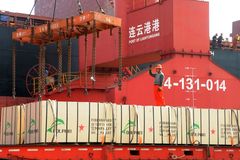
Answer: Trade, trade, trade …

This is what the experts say.

The experts? Economists …

These economists say the best practice to grow an economy is to double-down on trade and market-based economics.

Voluntary Trade Creates Wealth: People specialize in the production of certain goods and services because they expect to gain from it. People trade what they produce with other people when they think they can gain something from the exchange. Some benefits of voluntary trade include higher standards of living and broader choices of goods and services.

This urging was proclaimed in the book Go Lean…Caribbean which presents the strategies, tactics, implementations and advocacies for growing the Caribbean economy. The book serves as a roadmap for the introduction and implementation of the technocratic Caribbean Union Trade Federation (CU). Yes, the emphasis is on trade . The CU will serve as an integrated entity to shepherd progress and optimization among the region’s societal engines for economics, security and governance.

This best practice for societal growth is a lesson learned from the study of other communities – ancient and modern – that have done “this” successfully. The book presents the role models of the Great Britain, United States, Germany, Japan, Asian Tigers (Singapore, Hong Kong. South Korea and Taiwan).

So China doubling-down on trade is just another iteration of the accepted best practice of market-based economics. In fact in a previous blog-commentary about China’s motive – their end game – for Caribbean investments, the following points were detailed:

If this Golden Rule is true: “he who has the gold makes the rules”, then we will be held to account to stakeholders in China, as their many state-own companies are definitely “bringing gold” to the table. This was vividly communicated in a previous (2014) China-Caribbean Trade/Business Summit:

“Latin America has much to gain from deepening its relationship with China, just as China has much to gain from our region,” said Luis Alberto Moreno, president of the Inter-American Development Bank (IDB). “For our governments, this is a strategic priority. But much of the day-to-day building of those links will fall on the private sector.”

China joined the IDB as a shareholder in 2009, and is now the top trade partner for several countries in the region, including Brazil and Chile.

Trade between Latin America and the Caribbean and China is expected to double in the next decade. … Source: http://caribjournal.com/2014/09/15/china-holds-business-summit-with-latin-america-caribbean/

This is the same playbook of the United States of America in building the world’s largest Single Market economy. (Remember, with the Army Corp of Engineers, the US built the Panama Canal, but with more strings attached). China is simply following the same American script – minus the cronyism and militarism – of promoting trade of their products, services and capital.

Capital? Yes, many of the projects highlighted … are being financed by China’s state-owned banks and lending institutions. They are “putting their money, where their mouth is”. These are economic battles only!

This commentary is the first of a 5-part series from the movement behind the Go Lean book in consideration of the subject “In Defense of Trade“. The focus here is that Trade must be prioritized in the Caribbean region if we want a new economic regime. The other commentaries in the series are cataloged as follows:

  1. In Defense of Trade: China Realities
  2. In Defense of Trade: Macy’s Thanksgiving Parade Model – ENCORE
  3. In Defense of Trade: India BPO’s
  4. In Defense of Trade: Bilateral Tariffs – No one wins
  5. In Defense of Trade: Currency Assassins – Real Threat

No doubt, there is the need to grow the Caribbean economy; we need jobs, entrepreneurial opportunities, better educational and healthcare options, a safer homeland and more efficient governmental services. Since trade policies (chattel goods and intellectual property) affect all of these deliveries, we need to pay more than the usual attention to these discussions. Trade has also been prominent in the news as of late, with the current American Federal government’s (under President Donald Trump) new penchant for tariffs and the UK negotiating a new trade deal as they leave the European Union (Brexit).

So there is the need for a 360 degree view of trade: the good; the bad; and the ugly. The Caribbean status quo is ugly, in terms of trade, there is the need to reform and transform, so as to reboot our society. But we are not the first, (and will not be the last). Let’s see the lessons we can learn from the trade strategies, tactics and implementations of others. We can all benefit!

Let’s start with China; there are parallels to consider. They need to provide for 1.3 Billion people, and so they are embracing market-based economics. In the Caribbean we only need to provide for 42 million, but we are like a fish in the pond; it does not matter how big the ocean is, we are limited to our pond. This is the definition of scope; our time, talents and treasuries must be designed to impact just these 30 island-nations and coastal states. Despite the size, there is the need for efficiency and effectiveness with market-based economic concepts. This is defined in the Go Lean book as technocratic/technocracy:

The term technocracy was originally used to designate the application of the scientific method to solving social & economic problems, in counter distinction to the traditional political or philosophic approaches. – Go Lean book Page 64.

The CU seeks to optimize the region’s economic systems – to make more efficient and effective – to better deliver on the prime directives of the Go Lean roadmap. The prime directives are pronounced as the following statements:

  • Optimization of the economic engines in order to grow the regional economy to $800 Billion & create 2.2 million new jobs.
  • Establishment of a security apparatus to protect the resultant economic engines and mitigate challenges/threats to ensure public safety for the region’s stakeholders.
  • Improvement of Caribbean governance, including a separation-of-powers with member-states, to support these economic/security engines.

So the CU Trade Federation vision is to provide the stewardship for the region’s economic engines, to optimize trade (chattel goods and intellectual property), so as to succeed in the goals of the roadmap. The focus on trade is intra-region so as to minimize the expenditure of foreign reserves and also extra-regional so as to grow the economy. This vision was pronounced at the outset of the book in the opening Declaration of Interdependence (Page 13):

vi. Whereas the finite nature of the landmass of our lands limits the populations and markets of commerce, by extending the bonds of brotherhood to our geographic neighbors allows for extended opportunities and better execution of the kinetics of our economies through trade. This regional focus must foster and promote diverse economic stimuli.

xxiv.   Whereas a free market economy can be induced and spurred for continuous progress, the Federation must install the controls to better manage aspects of the economy: jobs, inflation, savings rate, investments and other economic principles. Thereby attracting direct foreign investment because of the stability and vibrancy of our economy.

According to the following article-commentary from Canada, expanding trade with China –  a willing partner – is a good strategy for improving the economic engines of a community – trade is that important:

Title: We need a China trade strategy, so let’s get it right
By: Edward Greenspon and Kevin Lynch

With exports over 30 per cent of GDP, Canada’s economy would be much smaller and its citizens considerably poorer if not for trade and investment with other countries. That three-quarters of that trade relies on ready access to the increasingly self-absorbed, aggressive and fickle United States is cause for serious deliberation, beyond indignation.

Canada’s special relationship with the United States has served us both well. It is always a risky proposition to have so many eggs in a single basket, but those risks were mitigated by Canada’s embrace of predictable rules to govern both bilateral trade, beginning with the Auto Pact, which morphed into the Canada-U.S. free-trade agreement (FTA) and NAFTA, and the international-trading system through the General Agreement on Tariffs and Trade (GATT) and World Trade Organization (WTO).

Even in the best of times, there were breakdowns, such as the repeated U.S. attacks over softwood lumber or former president Barack Obama’s rejection of the Keystone pipeline. Unfortunately, we’ve now entered a world where it’s softwood lumber all the time. So, what are we to do?

Some answers are clear enough. The long-held and oft-ignored objective of diversifying our trade relations must be pursued with urgency and vigour. Canada has done well by its recent agreements with the European Union and with Japan and others in the Comprehensive and Progressive Agreement for Trans-Pacific Partnership (CPTPP). Business leaders must now put commercial meat on the bones of these agreements.

Secondly, if a trading country such as Canada wants to grow, by definition it needs to trade with countries with both fast growth and with sufficient scale to make an appreciable difference to our export volumes. By and large, these are Asian – and you can’t speak of Asia without including China in the conversation. China’s annual growth is roughly two to three times that of Canada and the United States – off a base of 1.3 billion people. Any government seeking to represent the national interests of Canadians in the time of Donald Trump must be in possession of a long-term strategy that includes China, and not, as for more than a decade, a hodgepodge of inconsistent and reactive decisions.

Canadians don’t seem troubled by the proposition of an Asian diversification strategy with China at its core. Despite concerns about Chinese authoritarianism, human-rights violations and the perceived behaviour of some state-owned enterprises, polling shows support for a free-trade agreement trending up over the past few years. Qualtrics places the number at about 70 per cent and the Asia-Pacific Foundation about 10 points lower. No poll puts it below 50 per cent.

This shift in Canadian attitudes began even before Mr. Trump’s immodest arrival on the scene. His words and deeds have merely added impetus. Canadians get that American economic and geopolitical power is declining in relative terms and that China is an emerging force to reckon with. In the Asia Pacific Foundation’s recent annual survey, 59 per cent of respondents believe trade with Asia, led by China, will outweigh trade with the United States in the future. Canadians essentially are asking: “How can we not have a clear engagement strategy with a country that within the next 10 years will be the world’s biggest economy, largest exporter of capital, goods and services, largest emitter of [greenhouse gases] GHGs, a technology superpower and the world’s largest source of tourists and expatriate students?”

As co-chairs of the Public Policy Forum’s Consultative Forum on China, we have spent the past 14 months consulting on what a made-in-Canada strategy for future Canada-China relations should look like. Our blueprint will be released in the fall.

It is strikingly clear from our discussions that more value-added trade in sectors such as agri-food, forestry, resources, educational services, tourism and clean-tech is unambiguously beneficial for Canadians. Selling lobsters and lumber raise no national security flags, real or imagined, but they do create lots of jobs all across Canada. A case in point today is the 180 fishing fleet jobs and 304 processing plant positions in Atlantic Canada directly flowing from Clearwater Foods’ seafood exports to China.

Interestingly, both Canada and China have diversification agendas – we seek greater security of demand for our exports while China wants greater security of supply through trade arrangements with a broader range of exporting countries. Canada appeals because it is a highly developed, rule-of-law based, G7 country that poses few geopolitical risks, unlike many other global exporters.

Meanwhile, China, having raised hundreds of millions from poverty to middle-class status since it embraced a market-based economy, is now learning this middle class comes with expanding expectations for a better life – starting with livable cities, healthy food, safe workplaces, reliable pensions and available eldercare. Beyond traditional exports, China knows it can benefit from Canada’s long experience designing policies and services for the middle class.

China elicits a wide spectrum of passionately held views, of that there is no doubt. Whatever one may think, however, the question is whether a balanced engagement strategy with an economically dynamic China serves our national interests at a time when the President of the United States is pursuing a beggar-thy-neighbour policy. Risk management and prudent diversification certainly suggest yes. Time to decide how best.

———

Edward Greenspon is president and CEO of the Public Policy Forum. Kevin Lynch is co-chair of PPF’s Consultative Forum on China.

Source: The Globe & Mail – Toronto, Canada’s Largest Daily – Posted June 18, 2018; retrieved November 21, 2018 from: https://www.theglobeandmail.com/business/commentary/article-we-need-a-china-trade-strategy-so-lets-get-it-right/

This article stresses how important it is for Canada to trade with China, with this quotation:

… if a trading country such as Canada wants to grow, by definition it needs to trade with countries with both fast growth and with sufficient scale to make an appreciable difference to our export volumes …

We want this kind of growth right here in the Caribbean. Therefore we must also want market-based trade with China.

The underlying motivation of the Go Lean book is to reform and transform the Caribbean member-states. Therefore we need to embrace market-based economics, the way China has. They only shifted to a market-based economy since the 1970’s, and now they have the 2nd largest single market economy … in the world – it works that fast. While America – the champion of market-based economies – is the largest trading partner for Caribbean member-states, we cannot just be parasites; no, we must be protégées.

The CU roadmap seeks to drive change among the economic, security and governing engines. The Go Lean book – within its 370 pages – describes how and when a new Caribbean can emerge using market-based economic principles. These solutions are as new community ethos, strategies, tactics, implementations and advocates designed to grow the regional economy to $800 Billion.  Consider how and when in the specific plans, excerpts and headlines from the book on Page 67 entitled:

$800 Billion Economy – How and When? – 10 Reasons and Tactics

Quotation: The whole is worth more than the sum of its parts.
The CU is a confederation treaty to unify the region of 30 countries and 42 million people into a single market, an integrated economy with a GDP of $800 Billion, even though the sum of its parts amount to $378 Billion, (per 2010  World Bank ratings).
.
Why and how will this number grow to $800 Billion? For the 10 reasons and tactics provided below; this includes samples and examples of hyper growth scenarios in specific times and places from around the world, from the past to the present. When will the meter reach $800B? Not at first, but steadily over a 5 year period. This harmonizes with the economic “Catchup” principle of “convergence”. This establishes that emerging economies experience hyper-growth (7 to 20%) for a limited period, and then normalizes into standard growth patterns of 2 – 3% [180]. This has been the documented cases of the BRIC countries (Brazil, Russia, India & China) and the Caribbean Union Trade Federation (CU) asserts that this Trade Federation will experience the same. This growth rate, from $378 Billion, would experience compounded GDP growth as follows:

  • Year 1 @ 20% = $454 Billion
  • Year 2 @ 20% = $544 Billion
  • Year 3 @ 15% = $625 Billion
  • Year 4 @ 15% = $720 Billion
  • Year 5 @ 12% = $806 Billion
1 Louisiana Purchase – US Experience
2 California Gold Rush to the Gilded Age
3 Post WW II Germany – Marshall Plan / Free Market
4 Post WW II Japan – No Marshall Plan
5 Convergence of East Asian Tigers
6 Economic Bubbles – $11 Trillion Burst / $13.5 Trillion Recovery
7 New High Multiplier Industries
8 Trade and Globalization
9 Repatriation
10 Education

The foregoing article details how beneficial trade with China could be, and how Canadians are not afraid of Chinese interactions:

Despite concerns about Chinese authoritarianism, human-rights violations and the perceived behaviour of some state-owned enterprises, polling shows support for a free-trade agreement trending up over the past few years.

See the related news VIDEO in the Appendix below.
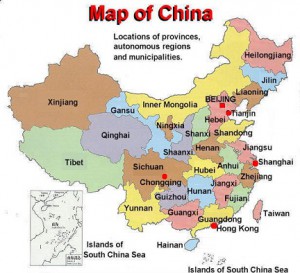
The growth that China has shown is remarkable … and repeatable. We can model their successes here in our Caribbean region; the foregoing article conveyed their growth:

China, having raised hundreds of millions from poverty to middle-class status since it embraced a market-based economy.

The Caribbean is arguably the best address on the planet, but there are many deficiencies, as in jobs and economic empowerments. With the previous North & West (American) focus we have suffered. Our deficiencies has led to societal abandonment so bad that the region has lost a large share of our human capital, one estimate of 70% of the college-educated population to the brain-drain.

Yes, the Caribbean region needs the type of growth than can come from a progressive trade policy and market-based economics. We need to embrace Trade; this is the panacea for what ails our societal engines. Yes, we can improve with trade among ourselves and trade with foreigners. We cannot only look to the North & West – that strategy has worn thin – we must now look East and South; like China.

Mastering trade and globalization is how we must compete in today’s trade wars. This is the Go Lean roadmap.

Everyone in the Caribbean is urged to lean-in to this roadmap to make the Caribbean a better place to live, work and play. 🙂

Download the free e-Book of Go Lean … Caribbean – now!

Sign the petition to lean-in for this roadmap for the Caribbean Union Trade Federation.

———–

Appendix VIDEO – Trudeau outlines new Canada-China trade deals – https://youtu.be/-OTb6JqXGLw

Published on Sep 22, 2016 –  Prime Minister Justin Trudeau outlines the results of trade discussions with Chinese Premier Li Keqiang which include a new deal on canola. To read more: http://cbc.ca/1.3773699

Share this post:
, , ,

A Lesson in History: Jonestown, Guyana

Go Lean Commentary

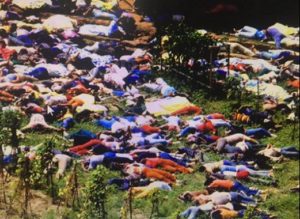
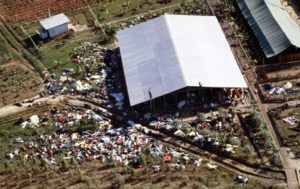
On this day, 40 years ago, the Caribbean member-state of Guyana was home to one of the worst abuses of religious freedoms in the history of the world. This was the Jonestown People’s Temple “Revolutionary Suicide” on November 18, 1978.

From a Caribbean perspective, we must admit and accept the culpability: “My Bad!”

We have bloodguilt on our hands for the 918 people who died on this day in Guyana 40 years ago; (one third of whom were minor children). See the encyclopedic details here:

Tile: Jonestown
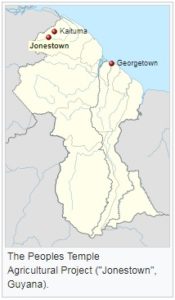
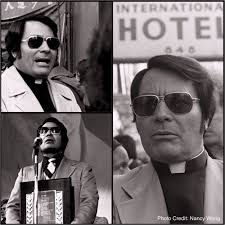
The Peoples Temple Agricultural Project, better known by its informal name “Jonestown“, was a remote settlement established by the Peoples Temple, an American cult under the leadership of reverend Jim Jones, in north Guyana. It became internationally notorious when, on November 18, 1978, a total of 918[1][2] people died in the settlement, at the nearby airstrip in Port Kaituma, and at a Temple-run building in Georgetown, Guyana’s capital city. The name of the settlement became synonymous with the incidents at those locations.
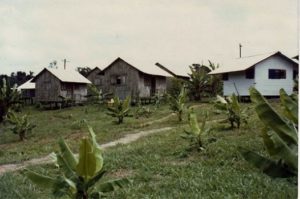
909 individuals died in Jonestown,[1] all but two from apparent cyanide poisoning, in an event termed “revolutionary suicide” by Jones and some members on an audio tape of the event and in prior discussions. The poisonings in Jonestown followed the murder of five others by Temple members at Port Kaituma, including United States Congressman Leo Ryan, an act that Jones ordered. Four other Temple members committed murder-suicide in Georgetown at Jones’ command.

While some refer to the events in Jonestown as mass suicide, many others, including Jonestown survivors, regard them as mass murder.[3][4] As many as 70 people may have been injected with poison, and a third of the victims (304) were minors.[5][6] It was the largest such event in modern history and resulted in the largest single loss of American civilian life in a deliberate act until September 11, 2001.[7]
Selection and establishment of Guyanese land


The Temple chose Guyana, in part, because of its own socialist politics, which were moving further to the [political] left during the selection process.[18][19] Former Temple member Tim Carter stated that the reasons for choosing Guyana were the Temple’s view of a perceived dominance of racism and multinational corporations in the U.S. government.[20] According to Carter, the Temple concluded that Guyana, an English-speaking, socialist country with a predominantly indigenous population and with a government including prominent black leaders, would afford black Temple members a peaceful place to live.[20] Later, Guyanese Prime Minister Forbes Burnham stated that Jones may have “wanted to use cooperatives as the basis for the establishment of socialism, and maybe his idea of setting up a commune meshed with that”.[19] Jones also thought that Guyana was small, poor, and independent enough for him to easily obtain influence and official protection.[18]

See the remaining reference in the Source link here …

Source: Retrieved November 18, 2018 from: https://en.wikipedia.org/wiki/Jonestown

Surely this Jonestown drama is a manifestation of evil, despite the “Reverend” Jim Jones and the Christian affiliation of the People’s Temple.

This atrocity is on us!

Actually, after the events of the November 18, 1978 tragedy, there was a formal inquest – Commission of Inquiry – which concluded that Guyanese Prime Minister Forbes Burnham was responsible for the deaths at Jonestown. There is no way to misconstrue the culpability in this drama:

As a representative democracy, the leaders act on behalf of the people.

What kind of environment was the Caribbean country of Guyana to where a Bad Actor with evil Intents and Purposes could thrive in our neighborhood?

Surely, there were societal defects in place then; the Guyana orthodoxy was surely flawed. (Even though, on the surface, the solidarity of Guyana’s political leadership aligned with Jim Jones and the People’s Temple movement in their opposition to racial inequality and Crony-Capitalism. See the Appendix VIDEO below).

This is the lesson we learn from Jonestown 1978: When we tolerate Human Rights abuses, things go from bad to worse.

How about today?

Is Guyana reformed or transformed today, away from that old bad society to a more viable society today?

According to the movement behind the book Go Lean…Caribbean, the answer is:

No, actually!

The Go Lean book asserts that the Caribbean is in crisis. We have many societal defects that are so badly in need of reform. Guyana’s disposition is especially acute. Of all the societal abandonment transpiring in the region, Guyana is among the worst. One report related a 89% Brain Drain rate with their college educated populations. In addition, Guyana is still notoriously bad for mitigating and counteracting suicides. In a 2014 report, this country was ranked #1 for Suicides Per Capita.

Guyana needs a reboot!

The whole Caribbean region needs a reboot.

This is the “why” the Go Lean book presents a roadmap for the introduction and implementation of a super-national governing authority, the Caribbean Union Trade Federation (CU). This entity will be empowered to effect change in all 30 Caribbean member-states. This would be a new regime for the region; one that is apolitical (not left nor right-leaning) and religiously-neutral; (no blindspots in oversights to “Christian” religious groups).

Under this new regime, as described in the Go Lean book, religious institutions will be recognized, respected and defined as Non-Government Organizations (NGO), nothing more … nothing less. Caribbean integration is the priority and this priority would allow for a more efficient delivery of the Social Contract. (Social Contract is defined for when citizens surrender some of their freedoms and submit to the authority of the State in exchange for protection of remaining natural and legal rights).

It is universally accepted that the Government of Guyana failed those 918 people in 1978. The religious eco-system should not have been looked on for protection and security. No, Jonestown was a failing of the government. There is a variety of religious adherents in this country – Christians, Muslims, Hindus, Indigenous Animists – no one religious group should ever be put above or below another. Religious diversity must be a concern for all Caribbean member-states; the Social Contract for the Caribbean must reflect a Pluralistic Democracy.

40 years later, and the stewards for a new Caribbean have learned how to apply the lessons of Jonestown in this plan to forge a better society. The Go Lean/CU roadmap presents the strategies, tactics and implementations to impact Caribbean communities and all their societal engines. In fact, these statements are identified as the prime directives for this roadmap:

  • Optimize the economic engines in order to grow the regional economy to $800 Billion & create 2.2 million new jobs.
  • Establish a security apparatus to protect the resultant economic engines, plus ensure public safety and justice institutions. Security provisions should apply to the macro and the micro.
  • Improve Caribbean governance to support these engines, including a separation-of-powers between the member-states and CU federal agencies, plus even oversight for NGO’s.

These prime directives transcend religions and national borders. There is an expectation of Human Rights that is expected no matter the country, languages or culture. Protections of Human Rights should just be delivered. The approach is to move the Caribbean region to a Single Market. Guyana-based CariCom started this vision, but they have failed to deliver on it. We need a better integration – with a stronger foundation – that would ensure that a Jonestown can never happen again – NEVER AGAIN.

The book Go Lean…Caribbean – available to download for free – opened with the assessment that regional governance is dysfunctional and the challenges for the Caribbean are too Big for anyone one of these small islands or coastal states alone – there must be regional solutions. Thusly, the roadmap calls for a regional interdependence. This need was pronounced in the opening Declaration of Interdependence (Pages 10 – 12):

Preamble: That whenever any form of government becomes destructive to these ends, it is the right of the people to alter or to abolish it, and to institute new government … when a long train of abuses and usurpations, pursuing invariably the same object evinces a design to reduce them under absolute despotism, it is their right, it is their duty, to throw off such government, and to provide new guards for their future security.

vi. Whereas the finite nature of the landmass of our lands limits the populations and markets of commerce, by extending the bonds of brotherhood to our geographic neighbors allows for extended opportunities and better execution of the kinetics of our economies through trade. This regional focus must foster and promote diverse economic stimuli.

x. Whereas we are surrounded and allied to nations of larger proportions in land mass, populations, and treasuries, elements in their societies may have ill-intent in their pursuits, at the expense of the safety and security of our citizens. We must therefore appoint “new guards” to ensure our public safety and threats against our society, both domestic and foreign. The Federation must employ the latest advances and best practices of criminology and penology to assuage continuous threats against public safety. …

xi. Whereas all men are entitled to the benefits of good governance in a free society, “new guards” must be enacted to dissuade the emergence of incompetence, corruption, nepotism and cronyism at the peril of the people’s best interest. The Federation must guarantee the executions of a social contract between government and the governed.

The Go Lean book provides 370-pages of turn-by-turn instructions on “how” to adopt new community ethos, plus the strategies, tactics, implementations and advocacies to execute so as to transform the Caribbean region into a “better society”.  The book details a “better society” in terms of Human Rights in one specific Chapter on Page 220. See here, some of the excerpts and headlines from that Chapter:

10 Ways to Protect Human Rights

1 Lean-in for Caribbean Integration
This regional re-boot will allow for the unification of the region into one market, thereby creating a single economy of 30 member-states, 42 million people and a GDP of over $800 Billion. The CU will assume the primary coordination for the region’s economy and the requisite security to protect the resultant economic engines. While the CU is an economic initiative, there is a mission to monitor/mitigate Fail State Indices, and Human Rights violations constitute a Failed State Indicator.
2 Watchful World

A CU mission is to monitor the image of the Caribbean to the rest of the world. Not only will the world be watching the activities in the region, but the “story” being told will be directed to depict a positive behind-the-scenes view, that the region is the best place to live-work-play.

3 Caribbeans with Disabilities
4 Women & Youth

The CU will allow for empowerment and protections of women & children, orphans & widows, in compliance with Judeo-Christian precepts, Human Rights requirements, & natural instincts. These efforts will include the special needs for young girls, adult women and senior women.

5 LGBT Toleration
6 Reconciliations

There were many reasons why Caribbean citizens abandoned their homelands and fled to distant shores. In some cases, the expatriates were actually political/human rights refugees. The CU mission for formal Truth & Reconciliation Commissions will allow many past issues to be settled and set aside, not necessary as criminal prosecutions, as statutes of limitations may have been exceeded. Plus punishing the past, at times may short circuit the future.

7 Future Focus
8 Justice Focus

The people of the Caribbean have the right to good government and the fulfillment of the social contract. This would ensure law-and-order, due process, the rule of law, and some justice assurance. The CU will facilitate monitoring and accountability of the justice institutions to ensure compliance and mitigate abuse, compared to times in the past.

9 Tourist Omnipresence
Extending hospitability to guests is putting “the best foot forward”. The vertical industries of tourism are based on this premise. The CU will expand tourist offerings away from resort-life, including eco-tourism (i.e. rainforest & scuba-diving excursions, bird-watching). This brings more tourists into daily interaction with residents – always on our best behavior.
10 Long-Form Journalism
The CU will support and promote Public Broadcasting media outlets for TV/Radio. This has historically allowed for long-form journalistic productions, a great advantage for human rights foundations & agencies. This allows messaging to get deep and detailed, beyond the headline-only of compressed newscasts. These types of endeavors have forged many changes in American society, like exposing the ills of rural poverty and the atrocities of the old peonage system.

Our region has gotten a “Black-Eye” because of the atrocities of Jonestown, Guyana. We must do better, going forward. That “better society” is one that pursues this definition of the Greater Good:

“It is the greatest good to the greatest number of people which is the measure of right and wrong”. – Jeremy Bentham (1748-1832)

The Caribbean must foster a better homeland that protects its citizens and visitors; (the 918 people who died on November 18, 1978 were Americans – non-Guyanese citizens). Considering the lessons being learned from Jonestown, we must also hold religious organizations – and NGO’s – accountable for their actions and violations of Human Rights and modern justice requirements. This Go Lean movement has previously detailed many related issues and advocacies for Human Rights mandates in our region; consider this sample of previous blog-commentaries:

https://goleancaribbean.com/blog/?p=15580 Caribbean Unity? Religion’s Role: False Friend
https://goleancaribbean.com/blog/?p=14482 International Women’s Day – Protecting Rural Women
https://goleancaribbean.com/blog/?p=11224 ‘Loose Lips Sink Ships’ – Fanatical Theologians Undermine Tourism
https://goleancaribbean.com/blog/?p=10566 Funding the Caribbean Security Pact
https://goleancaribbean.com/blog/?p=10216 Waging a Successful War on Orthodoxy
https://goleancaribbean.com/blog/?p=9766 Rwanda’s Catholic bishops apologize for genocide
https://goleancaribbean.com/blog/?p=6718 A Lesson in History Before the Civil War: Compromising Human Rights
https://goleancaribbean.com/blog/?p=5695 Repenting, Forgiving and Reconciling the Past
https://goleancaribbean.com/blog/?p=5210 Cruise Ship Labor Abuses – Getting Ready for Change
https://goleancaribbean.com/blog/?p=4971 A Lesson in Church History – Royal Charters: Truth & Consequence
https://goleancaribbean.com/blog/?p=341 US slams Caribbean human rights practices

As a result of Jonestown 1978, the expression “drinking the Kool-Aid” has entered into the English-speaking lexicon. Yes, this 40 year old tragedy in Guyana has branded the Caribbean with a global brand as inadequate and Less Than when it comes to effective governance in public safety and Human Rights protection.

After all, one third of the 918 victims in Jonestown were minor children.

Surely we have learned lessons in the 40 years since. Surely, we have now learned how to protect our people … and our visitors.

Surely, our communities will embrace all strategies, tactics, implementations and advocacies to ensure such a tragedy will never happen again.

The Go Lean book is the lesson-learn.

Surely, this roadmap will be embraced and adopted as part of the regional pledge of NEVER AGAIN.

We urge all Caribbean stakeholders to lean-in to this roadmap to reboot the region, to bring change … and empowerment. We must make sure those 918 lives were not lost in vain; We must learn the lessons from Jonestown. We must make our communities better places to live, work and play. 🙂

Download the book Go Lean … Caribbean – now!

Sign the petition to lean-in for this roadmap for the Caribbean Union Trade Federation.

—————–

Appendix VIDEO – The Story of The Jonestown Massacre – https://youtu.be/GKqQ1CyneWw

FactFile
Published on Feb 5, 2018 – The Jonestown massacre was a horrendous event that led to the deaths of almost a thousand people. Today we tell the story that led up to that most horrendous of days.

Share this post:
, , ,
[Top]

Diwali 2018 – A Glimpse of our Pluralistic Democracy – ENCORE

Happy Diwali!

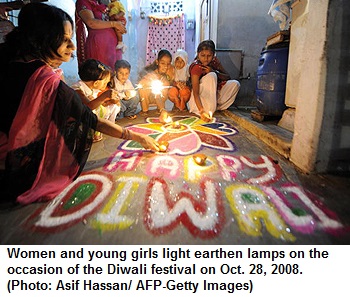
As the clay pots are lit from the villages to the center centers, the Festival of Lights is about to begin. Diwali is one of the biggest and brightest holidays celebrated all across India and the U.S. each year. Fireworks, song and prayer fill the five-day festival to celebrate inner light over spiritual darkness.

Today and always, we honor the many cultures and traditions among our beautifully diverse global organization. As we join in celebrating Diwali, we hope you enjoy this special time with friends and family.

May the divine light of Diwali shine with peace, prosperity, happiness and good health in your life. Happy Diwali.

Signed: The Technology Leadership Team and Saul Van Beurden, CIO, JPMorganChase Consumer & Community Bank

Today is the start of Diwali 2018.

This is one of the biggest holidays for a the global Hindu community. That is the population of India and the Indian Diaspora. That Diaspora includes the Caribbean. JPMorganChase, Americas largest bank, has a large staff based in India. They are a pluralistic corporation; they obviously want their team members to feel honored in their institution.

We want our Caribbean brothers and sisters with Indian heritage to feel that they are honored here in their Caribbean homeland. This was addressed in a previous Go Lean commentary on October 19, 2017. It is appropriate to Encore that submission here-now:

————————–

Go Lean Commentary Respecting Diwali – Making a Pluralistic Democracy

CU Blog - Respecting Diwali - Making a Pluralistic Democracy - Photo 3What is the ethnic composition of the Caribbean?

Not a singularity!

Our quest now is to make the Caribbean a Single Market and a “Pluralistic Democracy”. This means a society where the many different ethnic groups (and religions) have respect, equal rights, equal privileges and equal protections under the law; where there are no superior rights to any majority and no special deprivations to any minority. The expectation is for anyone person to be treated like everyone else. The legal definition of Pluralism as a political philosophy is as follows …

… the recognition and affirmation of diversity within a political body, which permits the peaceful coexistence of different interests, convictions and lifestyles.[1] While not all political pluralists advocate for a pluralist democracy, this is most common as democracy is often viewed as the most fair and effective way to moderate between the discrete values.[2]Wikipedia

This vision of a Caribbean “Pluralistic Democracy” should be more than words; it must be action too!

Yet we fail so miserably in respecting non-standard traditions. The truth of the matter is that while religious toleration appears to be high in the Caribbean, this is really only true of European-styled Christian faiths. Other non-White religious traditions (let’s consider Hindu) are often ignored or even ridiculed in open Caribbean society, despite the large number of adherents. Of the 30 member-states to comprise the Caribbean Single Market, 3 of them have a large Indian-Hindu ethnicity. As a result, in these communities, though lowly promoted, one of the biggest annual celebrations for those communities is Diwali or Divali:

Diwali (or Deepavali) is the Hindu festival of lights celebrated every year in autumn in the northern hemisphere (spring in southern hemisphere).[4][5] It is an official holiday in Fiji, Guyana, India,[6] Malaysia, Mauritius, Myanmar, Nepal, Singapore, Sri Lanka, Suriname, Trinidad and Tobago. One of the most popular festivals of Hinduism, it spiritually signifies the victory of light over darkness, good over evil, knowledge over ignorance, and hope over despair.[7][8][9] Its celebration includes millions of lights shining on housetops, outside doors and windows, around temples and other buildings in the communities and countries where it is observed.[10] The festival preparations and rituals typically extend over a five-day period, but the main festival night of Diwali coincides with the dark night of the Hindu Lunisolar month Kartika in Bikram Sambat calendar (the month of Aippasi in Tamil Calendar), on the 15th of the month. In the Gregorian calendar, Diwali night falls between mid-October and mid-November.[11]

Before Diwali night, people clean, renovate, and decorate their homes and offices.[12] On Diwali night, people dress up in new clothes or their best outfits, light up diyas (lamps and candles) inside and outside their home, participate in family puja (prayers) typically to Lakshmi – the goddess of fertility and prosperity. After puja, fireworks follow,[13] then a family feast including mithai (sweets), and an exchange of gifts between family members and close friends. Deepavali also marks a major shopping period in nations where it is celebrated.[14]

The name of festive days as well as the rituals of Diwali vary significantly among Hindus, based on the region of India. – Wikipedia.

See the VIDEO’s in the Appendix below.

While Diwali is a religious celebration, many aspects of this culture spills-over to general society; see the detailed plans of a previous year (2009) in Appendix A below. This celebration, in many ways, is similar to Christmas spilling-over to non-Christian people in Christian countries. So the festivities carry a heavy civic-cultural “feel” as opposed to religious Hindu adherence. Plus, these values here are positive community ethos that any stewards in any society would want to promote:

“the victory of light over darkness, good over evil, knowledge over ignorance, and hope over despair”.

This year Diwali is celebrated between October 18 – 22, 2017. It is a public holiday only for Wednesday October 18 in Trinidad and Guyana; plus on Thursday October 19 in Suriname.

This celebration of Diwali is only MEDIUM in these 3 Caribbean member-states; but with the proper fostering it could be BIG; it could be an impactful event! Imagine Event Tourism targeted to the 1.2 Billion people of the emerging economy of India; plus the 35 million people in the Indian Diaspora world-wide.

The book Go Lean…Caribbean presents the advocacy of Event Tourism (Page 191). This is fundamental to elevating Caribbean society to be a better place to live, work and play; (or live, work and pray). The Go Lean book – available to download for free – serves as a roadmap for the introduction and implementation of the technocratic Caribbean Union Trade Federation (CU), for the elevation of Caribbean society – for all 30 member-states – to foster a “Pluralistic Democracy”. This CU/Go Lean roadmap has these 3 prime directives:

  • Optimization of the economic engines in order to grow the regional economy to $800 Billion and create 2.2 million new jobs.
  • Establishment of a security apparatus to ensure public safety and protect the resultant economic engines.
  • Improve Caribbean governance to support these engines, including a separation-of-powers between the member-states and CU federal agencies.

The Go Lean roadmap posits that events can be fostered so as to better impact the economic, security and governing engines of society. This was this declaration from a previous blog-commentary, that touristic events could be so much more lucrative, if only there was a whole-souled commitment by the full community – everyone show respect. Think of the success in Sturgis, South Dakota where a small town of 10,000 hosts up to 600,000 visitors (Page 288). Imagine the economic impact!

The movement behind the Go Lean book has repeatedly related that there is a need for new stewardship of the Caribbean tourism apparatus. The world has changed; our target markets have changed. We cannot just advertise to the Northeast corner of North America for the peak winter season (January & February) anymore. No we must now look to alternate markets and target alternate calendar days so as to expand our product offering.

Imagine the prospect of marketing Diwali – see VIDEO’s below – usually in the tourist-slow month of October.

Beautiful Sky Lantern

This is what is needed to expand the region economically. There is no longer the need for tourism stewards to just “rub shoulders” with travel agents, but rather, there is the need for e-Commerce strategies and tactics (think: Search Engines Optimization) and for efficient execution of events. Welcome to Technocracy 101.

A previous blog-commentary (from September 15, 2015) regarding Tourism Stewardship related these details:

The book Go Lean…Caribbean calls for the elevation of Caribbean society, to re-focus, re-boot, and optimize all the engines of commerce so as to make the Caribbean a better place to live, work and play.  The category of “play” covers the full scope of tourism, which is the primary economic driver for our Caribbean region; the book estimates 80 million visitors among the region. (Since that number includes cruise passengers that may visit multiple Caribbean islands on one itinerary, each port is counted separately; without cruise passengers, a figure of 68 – 69 million is perhaps more accurate).

This commentary is a consideration of tourism, not travel. Tourism is a subset of the travel eco-system, so any Agent of Change in the world of travel must be carefully considered on tourism, on Caribbean tourism. …

The Go Lean book considers these Agents of Change (Page 57) that have dynamically affected the Caribbean economic eco-systems:

  • Technology
  • Globalization
  • Aging Diaspora
  • Climate Change

Technology, the Internet-Communications-Technology (ICT) in particular has furnished alternative and better options for travel enterprises to find passengers-guests-travelers-tourists…. Travel agents are now inconsequential. ….

The book Go Lean…Caribbean and the underlying movement seeks to re-boot the strategies and tactics of tourism marketing for the entire Caribbean region. The book asserts Caribbean member-states must expand and optimize their tourism outreach but that the requisite investment of the resources (time, talent, treasuries) for this goal may be too big for any one Caribbean member-state … alone. Rather, shifting the responsibility to a region-wide, professionally-managed, deputized technocracy will result in greater production and greater accountability. This deputized agency is the Caribbean Union Trade Federation (CU). The book thereafter introduces the CU and provides a roadmap for its implementation into a Single Market for the Caribbean economy … and tourism marketing.

The goal of the CU is to bring the proper tools and techniques to the Caribbean region to optimize the stewardship of the economic, security and governing engines.  The book posits that the economy can be induced and spurred for continuous progress, with technocratic management and stewardship better than the status quo. While the goal of the roadmap is to pursue a diversification strategy, the reality is that tourism will continue to be the primary economic driver in the region for the foreseeable future. The publisher of the book Go Lean…Caribbean convenes the talents and skill-sets of movers-and-shakers in electronic commerce [and project management] so as to forge the best tools and techniques for this new ICT-based marketing.

Lessons need to be learned from the execution of events in these Hindu-populated Caribbean countries. Can the Caribbean flare of a dynamic Hindu culture be exploited further for global marketing and appeal? The Hindu Diaspora is huge, comprising sizeable populations in many countries, including BIG numbers (millions) here:

Australia Nepal
Canada Saudi Arabia
Fiji Singapore
India South Africa
Ireland Sri Lanka
Malaysia United Arab Emirates
Mauritius United Kingdom
Myanmar United States

This is the charter of the Go Lean roadmap, to deploy the technocratic administration to optimize Caribbean Event Tourism. The Go Lean book specifically details the community ethos Caribbean communities need to adopt to be successful in Event Tourism; plus the strategies, tactics, implementations and advocacies to ensure successful deployments; see a sample here:

Community Ethos – Deferred Gratification Page 21
Community Ethos – Governing Principles – Lean Operations Page 24
Community Ethos – Governing Principles – Cooperatives Page 25
Community Ethos – Ways to Promote Intellectual Property Page 29
Community Ethos – Ways to Bridge the Digital Divide Page 31
Community Ethos – Ways to Impact Turn-Arounds Page 33
Community Ethos – Ways to Promote Happiness Page 36
Community Ethos – Ways to Impact the Greater Good Page 37
Strategy – Vision – Confederate 30 Member-States Page 45
Strategy – Mission – Celebrate the Music, Sports, Art and Culture of the Caribbean Page 46
Tactical – Fostering a Technocracy Page 64
Tactical – Separation-of-Powers – CU Federal Agencies versus Member-State Governments Page 71
Implementation – Ways to Deliver Page 109
Planning – 10 Big Ideas for the Caribbean Region Page 127
Planning – Ways to Make the Caribbean Better Page 131
Planning – Lessons from Omaha – College World Series Model Page 138
Advocacy – Ways to Enhance Tourism Page 190
Advocacy – Ways to Impact Events Page 191
Advocacy – Ways to Promote Fairgrounds Page 192
Advocacy – Ways to Preserve Caribbean Heritage Page 218
Advocacy – Ways to Improve the Arts Page 230
Advocacy – Ways to Promote Music Page 231
Appendix – Case Study of “The Rally” in Sturgis, South Dakota Page 288

In summary, the Caribbean is in good position to show respect to the Indian-Hindu community and their Festival of Lights – Diwali. In doing so, we double-down on our quest to be a “Pluralistic Democracy” and optimize our economic engines for Event Tourism.

 “Make happy those who are near, and those are far will come” – Chinese Proverb.
gonna-change-photo-2

What a contrast this is to the Climate of Hate that is so prevalent in so many Caribbean communities, towards people who are different or hold alternative viewpoints.

Yes, the Go Lean roadmap is different … and better.

It seeks to unite the people of the entire Caribbean region, diversify the regional economy (to create new 2.2 million jobs) and make our communities better places to live, work and play. This is why we have a quest for a “Pluralistic Democracy”. This is Part 1 of 3 in the series on this topic; the full collection is as follows:

  1. Making a “Pluralistic Democracy” – Respect for Diwali
  2. Making a “Pluralistic Democracy” – Freedom of Movement
  3. Making a “Pluralistic Democracy” – Multilingual Realities

Now is the time for all stakeholders in the Caribbean – governments, residents, religious devotee (Hindus, Christians, etc.), event planners, participants and tourists – to lean-in to this Go Lean roadmap. We can do better and be better. This quest for a “Pluralistic Democracy” is conceivable, believable and achievable. 🙂

Download the free e-book of Go Lean … Caribbean – now!

Sign the petition to lean-in for the roadmap for the Caribbean Union Trade Federation.

————

Appendix A – Divali Festival in Trinidad and Tobago

By: Dr. Kumar Mahabir

Pakistani Hindu women light earthen lampTrinidad and Tobago is the land of Carnival, steel band, tassa, calypso and chutney. It is the same country that gives the world its unique brand of Divali. Indeed, the Hindu Festival of Lights has become Trinidad’s second largest national open-air festival after Carnival. Divali is a welcomed alternative to the rambunctious indulgence in meat, alcohol, party and “wine,” and is arguably the largest vegetarian alcohol-free festival in the Caribbean, if not the western hemisphere. Divali is an event that the Ministry of Tourism can market as a major attraction in the fastest-growing worldwide trend of spiritual tourism.

Divali is the defining event that marks Trinidad as a multi-religious, multi-ethnic society with Hindus comprising the second largest religious group (24 percent) after Roman Catholics in the twin-island population of 1.3 million people. While Divali is essentially a Hindu festival, people of all faiths actively join in celebrating the triumph of light over darkness, knowledge over ignorance, and good over evil. Non-Hindu adherents are attracted to the festival’s universal message as well as to the extravaganza that is not only unique but also provides a clean environment for the cultivation of a healthy body, mind and soul.

Nowhere else in the world do non-Hindus and non-Indians actively take part in the lighting of over 10 million deyas on a single night in the year. These tiny clay lamps are lit in homes, yards, streets, offices, public parks and playing fields. It is perhaps only in Trinidad that one can find split bamboo tubes transformed into magnificent works of art on which the deyas are placed. The split bamboo strips reach out toward neighboring houses, streets and communities to symbolize the popular local mantra “all ah we is one.”

The eagerness to decorate is everywhere, and payment is the pride of the finished product. Streamers of all colors and patterns are made with kite paper and plastic and strung from jhandi [flag] poles. Brightly colored fabric, balloons and bulbs decorate homes, offices and stages. Indeed, it is Divali that heralds the joy of the end-of-year celebrations. Strings of twinkling lights—clear and colored—are strung high on buildings, trees, and even across streets. Effigies of Mother Lakshmi are made from bamboo tubes and large cardboard cutouts. Calligraphy on signs and banners glitters with decorative paint. The starry designs of deyas and bulbs transform simple houses into magical kingdoms.

The nights are filled with free public performances in public parks and playing fields. Divali provides the perfect forum for showcasing the talent of both foreign and local performers in Indian song, music, dance and drama. Fashion shows are the highlight of all celebrations. Indeed, no celebration is considered complete or magnificent without a fashion show that is always eagerly anticipated by all. Indians in the Caribbean keep the tradition of Indian fashion alive by wearing dhotis, kurtas, Nehru jackets, saris, shalwars, nose-pins, necklaces, bangles, anklets, eyeliners, mehendi markings and forehead tikkas/bindis. Most Divali celebrations end with a competition for women in the crowd who vie to be the best-dressed fashion finalist. A Divali Queen is not only bestowed with a crown, but she is also showered with gifts and prizes.

Divali also boasts of Ram Leela/Lila, which is perhaps the oldest living form of outdoor folk theatre in the Caribbean. The worship of Rama takes many forms, but community devotion [Ramayana yagna] outside the temple has the most public impact. During Divali, tons of sweetmeats like parsad, kurma, burfi, pera, ladoo, jalebi, gulab jamoon and kheer [sweet rice] are made and distributed free.

Indian trade fairs during Divali have become the shopping hotspots for women who flock to the sites in thousands to buy mainly clothes and accessories. A kind of dizzy euphoria can also be seen in any one of the Indian apparel stores in the countdown to Divali. It is all part of the excitement that hums through the air during this pre-Christmas celebration as women try to dress their best and stores try to outsell one another. More than men, women dress in their finest traditional Indian wear with matching jewelry, as models of grace and elegance.

The hub of all Divali celebrations in the island is Divali Nagar in central Trinidad. Indeed, the Nagar is the most frequented entertainment center in the country during Divali, second only to the Grand Stand in the Queen’s Park Savannah during Carnival. The grand display of fireworks in the air at the entertainment park resonates with the thunder of bamboo cannons, the explosions of firecrackers, and the sparkle of “star-lights” in villages across the country. On Divali night, thousands of people take to the streets on foot and in vehicles to behold houses and communities that look like an illuminated fairyland.

Divali will be celebrated as a national holiday in Trinidad and Tobago on Saturday, October 17 [2009].

Dr. Kumar Mahabir is the chairman of the Indo-Caribbean Cultural Council and assistant professor at the University of Trinidad and Tobago.

Source: Posted October 14, 2009; retrieved October 19, 2017 from: http://www.worldpress.org/Americas/3437.cfm

————

Appendix B VIDEO – Diwali – Festival of Lights | National Geographic – https://youtu.be/HrrW3rO51ak


Published on May 19, 2010 – In India, one of the most significant festivals is Diwali, or the Festival of Lights. It’s a five day celebration that includes good food, fireworks, colored sand, and special candles and lamps.
Diwali – Festival of Lights | National Geographic https://youtu.be/HrrW3rO51ak

National Geographic https://www.youtube.com/natgeo

————

Appendix C VIDEO – Diwali – The Festival of Lights – https://youtu.be/mPwmXRws7FA


WildFilmsIndia

Published on May 30, 2013 – Diwali is certainly one of the biggest, brightest and most important festivals of India. While Diwali is popularly known as the “festival of lights”. The celebration of Diwali as the “victory of good over evil” refers to the light of higher knowledge dispelling all ignorance. While the story behind Diwali and the manner of celebration of the festival differ greatly depending on the region, the essence of the festival remains the same – the celebration of life, its enjoyment and goodness. …

  • Category: Travel & Events
  • License: Standard YouTube License
Share this post:
, , ,
[Top]

Good Governance: Getting ‘Out of the Way’ of Local Economic Empowerment

Go Lean Commentary

“I am from the Government and I am here to help” – Ronald Reagan tongue-in-cheek Campaign Attack against excessive government regulation; 1980.

When it comes to government regulations, there could be too much … and too little.

Good Government is the art-and-science of finding the “just right” balance – remember Goldilocks. In some countries this is a big challenge as there are so many different levels of government; think the US where there is the federal government (plus regulations), State, County (a subset of the State) and local city. In the Caribbean, on the other hand, for many member-states, there is only one level of administration, the National government.

All in all, finding the right mix of stewardship is a reflection of best-practices. This is because of one basic fact:

Smart people have a tendency to think that they are the only smart people. – Dunning-Kruger Effect – See Appendix A

If only we can weed-out this bad trend and assume that local people may bring some value to the governing equations for their communities. This conclusion is hard-wrought, a product of research and study by noted economists; who actually won a Nobel Prize for this effort. This is relayed in the book Go Lean…Caribbean within the advocacy of Better Managing Natural Resources. The book (Page 183) states:

The Bottom Line on Common Pool Resources
The 2009 Nobel Prize winning economist Elinor Ostrom (1933 – 2012), a Political Science Professor at Indiana University, received the award for her landmark work on the management of common pool resources. Her analysis of economic governance, especially the commons, showed how groups work together to manage common resources such as water supplies, fish and lobster stocks, and pastures through collective property rights. She showed that common pool resources can be effectively managed collectively, even without government or private control, as long as those using the resource are physically close to it and have a relationship with each other. Because outsiders and government agencies don’t understand local conditions or norms, and lack relationships with the community, they may manage common resources poorly. By contrast, insiders who are given a say in resource management will self-police to insure that all participants follow the community’s rules.

So outsiders and remote government agencies may not fully understand local conditions or norms so their oversight may be prone to error. This may not reflect Good Governance. We have seen this manifested many times. Remember overseas masters making decisions about local conditions – think tropical hurricane building standards in the Caribbean being decided by stakeholders in Northern Europe. That was the dreaded history of colonialism!

It is obvious and self-evident that Good Governance must reflect shepherding and oversight with an eye towards local needs. Imagine the imagery of a “Watchman in a high tower in an medieval walled city”, scanning and monitoring the threats that face his community. While such a concern may be security-minded, the other spheres of society – think economics – must also be addressed for local versus national deliberations:
  • Can economic empowerment efforts be spurred locally, or must they always originate in the Capitol?
  • Should Direct Foreign Investors all be vetted by the Foreign Affairs Office (State Department, etc.)?
  • Can a local farmer increase his yield by plowing addition plots of land?
  • Can a local fisherman add additional boats and “hands on deck”?
  • Can a local chicken farmer add additional coops?

These are important questions, as communities struggle with the challenge of growth. This brings to mind the strategy of whether growth must be Top-Down or can it be Bottoms-up.

  • Pull yourself up by the bootstrap…
  • Give me a job … or create my own job …

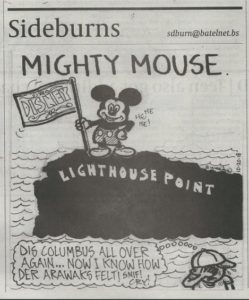
This is not just an academic discussion; there are real world implications. In one drama, in the Bahamas, friends and enemies are choosing sides right now, as a local project by the global media and hospitality conglomerate Walt Disney Company (Disney Cruise Lines) is being debated.
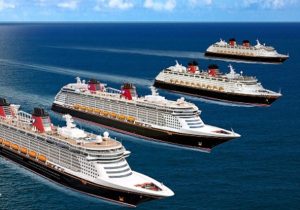

Actually, the debate is over, but the fall-out and “weeping-gnashing of teeth” continues. See the full news story and VIDEO in the Appendices B & C below.

This commentary continues this discussion on Good Governance. If Good Governance is to be the norm in Caribbean society, we must decide – in advance – how we want to grow our economies and what role local economic empowerment will have in the equation to transform society. In the foregoing Bahamian drama, the locals want the job multipliers from the Disney project while the opposition, remote people in metropolitan Nassau, do not want any projects that may impact the environment.

This is a familiar consideration for the book Go Lean…Caribbean – available to download for free. The book asserts that the problems of the Caribbean are too big for any one member-state to assuage alone; so there must be cooperation, collaboration and confederation. But does this mean that we must confer on everything, big and small? No! Just the opposite.

Surely, everyone can be expected “to take care of their own business” … first.

This is a mark of maturity, that we can provide for our own basic needs: food, clothing and shelter.

In fact, the Go Lean movement posits that for reform to succeed in the region, we must start by transforming neighborhoods, then elevate cities, then for whole member-states and lastly for the entire region. In fact, the book asserts the tactic of a Separation-of-Powers, in which certain duties-responsibilities are expected to be addressed locally while others will be within scope for a federal government.

The purpose of the Go Lean book is the introduction and implementation of that federal government, the Caribbean Union Trade Federation (CU). The book serves as a roadmap for a new technocratic regime for Good Governance. Notice these statements in the opening Declaration of Interdependence (Pages 10 – 12):

viii. Whereas the population size is too small to foster good negotiations for products and commodities from international vendors, the Federation must allow the unification of the region as one purchasing agent, thereby garnering better terms and discounts.

xi. Whereas all men are entitled to the benefits of good governance in a free society, “new guards” must be enacted to dissuade the emergence of incompetence, corruption, nepotism and cronyism at the peril of the people’s best interest. The Federation must guarantee the executions of a social contract between government and the governed.

xii. Whereas the legacy in recent times in individual states may be that of ineffectual governance with no redress to higher authority, the accedence of this Federation will ensure accountability and escalation of the human and civil rights of the people for good governance, justice assurances, due process and the rule of law. As such, any threats of a “failed state” status for any member state must enact emergency measures on behalf of the Federation to protect the human, civil and property rights of the citizens, residents, allies, trading partners, and visitors of the affected member state and the Federation as a whole.

xxiii. Whereas many countries in our region are dependent Overseas Territory of imperial powers, the systems of governance can be instituted on a regional and local basis, rather than requiring oversight or accountability from distant masters far removed from their subjects of administration. The Federation must facilitate success in autonomous rule by sharing tools, systems and teamwork within the geographical region.

This commentary is the fourth of this 5-part series – 4 of 5 – from the movement behind the Go Lean book in consideration of the Good Governance needs for a new Caribbean regime. The other commentaries in the series are cataloged as follows:

  1. Good Governance: … Versus Partisan Politics
  2. Good GovernanceStepping Up in an Emergency
  3. Good GovernanceThe Kind of Society We Want
  4. Good Governance: Getting ‘Out of the Way’ of Local Economic Empowerment
  5. Good GovernanceGood Corporate Compliance

No doubt there is the need for Good Governance for the Caribbean; we need better stewardship and shepherding of the 30 member-states to ensure that we do not repeat the mistakes of the past. We need to value independence, resiliency and vigilance, not stymie progress because it may not have originated in some Capitol. This is the lesson from the opening anecdote about Common Pool Resources.

The best chance for success is for those who work with a local resource to participate in managing the local resource. So at times, we may need national government – or even federal governments – to get ‘Out of the Way’ and allow local economic empowerments.

In fact, the Go Lean roadmap introduces the concept of Self-Government Entities (SGE), an ideal concept for a job-creation engine, with its exclusive federal regulation/promotion activities. Imagine bordered campuses – exclusive resorts, industrial labs, educational facilities, R&D parks – with separate (local) arrangements to provision basic needs. This local empowerment accelerates the job multiplier factor – how certain industries are better than others for generating multiple indirect jobs down the line (off-campus) for each direct job on the SGE’s payroll.

This is how the Go Lean roadmap seeks to reform or transform the societal engines for all the Caribbean. This is our quest, our prime directive, as related in the following statements:

  • Optimization of the economic engines in order to grow the regional economy to $800 Billion & create 2.2 million new jobs.
  • Establishment of a security apparatus to ensure public safety and protect the resultant economic engines.
  • Improvement of Caribbean governance to support these engines, including a separation-of-powers between the member-states and CU federal agencies.

Good Governance based on best-practices, especially as recognized by a Nobel Prize, is a good starting point to transform a society. This is why Common Pool Resources are so frequently highlighted in the Go Lean book. Within the 370-pages of the book are details of Common Pool Resource management, urged for adoption within the new Caribbean regime. Here is a sample of the references to Common Pool Resources and how it relates to Good Governance through-out the book:

Tactical – Separation of Powers

F – Interior Department
The CU initiates its charter with a petition to the United Nations for a designation of an Exclusive Economic Zone for the spaces (seas) between the islands. This Department manages the oversight of this “common” territory. In addition, this Agency will have to work with foreign entities in the management of common pool resources, like water rights, river ecosystems in Guyana, Suriname and Belize where they are bordered by other (bigger) countries.

Page 82
Tactical – Separation of Powers

J – Agriculture and Fisheries Department
This Department in the Executive Branch coordinates the region efforts in agriculture, agri-business and fisheries. … this office is to be managed like a Project Management Office, coordinating one region-wide project after another. This department will also oversee the common pool resources for the region. This will include fish stock and common grazing lands. This effort will have to be coordinated and collaborated with the Department of the Interior agencies and resources.

Page 88
Advocacy – 10 Lessons from the American West

# 5 – Common Pool Resources: Water / Public Works

There were many environmental deterrents to conquering the West. There is actually a continental divide in North America in which minimal rain falls west of that divide; the western states were not sustainable for large populations.

Over the years, the US Army Corps of Engineers created canals, dams, reservoirs, irrigation, water pipelines and other measures, in multi-state compacts. The CU must also engineer multi-state public works projects to improve economies.

Page 142
Advocacy – 10 Ways to Better Manage Natural Resources
# 2 – Lean in for the Caribbean Union Trade Federation (CU) treaty.
This treaty allows for the unification of the region into one market, thereby integrating to a single economy of 30 member-states, 42 million people and GDP of over $800 Billion in (2010). The region needs joint management of the common pool of natural resources, and this one of the foremost reasons for confederating the CU. First it garners international support for the UN petition for an Exclusive Economic Zone in and near the Caribbean Seas. The CU’s representation of a single market allows for effective negotiations with foreign parties – the islands will no longer be viewed as inconsequential. The CU’s separation of powers mandate is germane for managing the local needs of the region’s common resources; it allows for closer oversight of local regulators, but with CU principles.
Page 183
Advocacy – 10 Ways to Improve Fisheries
# 3 –
Common Pool Resources (Lobster, Conch, Grouper, Flying Fish)
Though the waters between the islands may be uninhabited, their resources can still be depleted. The CU will govern the common pool resources to promote the sustainability of fish stock. Fishing for lobster, conch, grouper, “flying fish” and other species must be controlled, with limited harvesting seasons, otherwise there will be none for future generations.
Page 210
Advocacy – 10 Ways to Impact Rural Living
# 3 – Common Pool Resources Oversight and Management
The CU will exercise eminent domain to buy a lot of “crown” land, and the Exclusive Economic Zone, to promote as common pool resources (farming, fishing, and mining). This ownership allows for the implementation of proper oversight rules, with local coordination, and best practices. This is the “golden rule” – the one with the “gold”, makes the rule!
Page 235
Advocacy – 10 Ways to Impact The Guianas
# 1 – Lean in for the Caribbean Single Market & Economy
The CU will allow for the unification of the region into one market, thereby creating a single economy of 30 member-states for 42 million, including the independent states of Guyana and Suriname. Other territories that made up The Guianas region include French Guiana, Spanish Guiana (today, the Guayana Region comprises three of the federal States of Venezuela: Amazonas, Bolívar, Delta Amacuro), and Portuguese Guiana (Brazil’s State of Amapa). On the CU roadmap, annexations will be explored in Year 5; French Guiana is ideal candidate, but not the Venezuelan and Brazilian regions. But there is the immediate need for foreign policy synchronizations with these other states for common pool resources and regional threats.
Page 241

Consider how this vision of a rebooted economic landscape – with the technocratic management of Common Pool Resources – have been portrayed in these previous blog-commentaries; see this sample:

https://goleancaribbean.com/blog/?p=15359 Industrial Reboot – Fisheries 101
https://goleancaribbean.com/blog/?p=15907 Industrial Reboot – Navy Pier 101
https://goleancaribbean.com/blog/?p=14911 Would Less People Mean More Resources For the Remnant? No!
https://goleancaribbean.com/blog/?p=12724 Lessons from Colorado: Water Management Arts & Sciences
https://goleancaribbean.com/blog/?p=1092 Managing the Airwaves as a Common Pool Resource

The Go Lean book was very clear in its conclusion, the problem with the Caribbean is not the land/sea – it is the greatest address on the planet – it is not the people – we have a unique mix of African, Amer-Indian, Asian and European cultures, it is the stewardship. We must abandon bad ineffectual governing practices and embrace best-practices anew. We need to employ good ideas, even if they do not come from the Capitol. So we must be willing to accept local economic empowerment initiatives.

Our past roads are littered with failure; let’s do better going forward. Let’s embrace Good Governance. Let’s start aright with the strategies, tactics, implementations and advocacies as prescribed in the book Go Lean…Caribbean. We urge everyone to lean-in to this roadmap. This is how we can make our homeland better places to live, work and play. 🙂

Download the free e-Book of Go Lean … Caribbean – now!

Sign the petition to lean-in for this roadmap for the Caribbean Union Trade Federation.

—————-

Appendix A – What Is the Dunning-Kruger Effect?

The Dunning-Kruger effect is a type of cognitive bias in which people believe that they are smarter and more capable than they really are. …

The term lends a scientific name and explanation to a problem that many people immediately recognize—that fools are blind to their own foolishness. …

An Overview of the Dunning-Kruger Effect

This phenomenon is something you have likely experienced in real life, perhaps around the dinner table at a holiday family gathering. Throughout the course of the meal, a member of your extended family begins spouting off on a topic at length, boldly proclaiming that he is correct and that everyone else’s opinion is stupid, uninformed, and just plain wrong. It may be plainly evident to everyone in the room that this person has no idea what he is talking about, yet he prattles on, blithely oblivious to his own ignorance.

The effect is named after researchers David Dunning and Justin Kruger, the two social psychologists who first described it. …

A Little Knowledge Can Lead to Overconfidence

Another contributing factor is that sometimes a tiny bit of knowledge on a subject can lead people to mistakenly believe that they know all there is to know about it. As the old saying goes, a little bit of knowledge can be a dangerous thing. A person might have the slimmest bit of awareness about a subject, yet thanks to the Dunning-Kruger effect, believe that he or she is an expert. …

See the remaining article here …

Source: Posted April 9, 2018; retrieved October 29, 2018 from: https://www.verywellmind.com/an-overview-of-the-dunning-kruger-effect-4160740

—————–

Appendix B – Title: Disney’s Lighthouse Point: Bahamian Government Approves Sale of Lighthouse Point to Disney Cruise Line

Disney is one step closer to calling Lighthouse Point, Disney’s Lighthouse Point after Bahamian Prime Minister announced the government is choosing The Walt Disney Company’s proposal. Today’s approval gives Disney Cruise Line a green light to move ahead plans to purchase the 700 to 800-acre Lighthouse Point property at the tip of South Eleuthera for a second private cruise destination. EyeWitness News reported the decision just before the 3 o’clock hour.

Below is a copy of the press statement issued by The Bahamas Cabinet:

Press Statement
Cabinet Office
19 October 2018

The Lighthouse Point Development has been the subject of considerable public discussion, particularly in recent months.

The National Economic Council considered the matter today, 19 October, and approved the proposal submitted by Disney Cruise Line Island Development Ltd.

Negotiations will now begin on a Heads of Agreement, which will detail the scope of the project, the obligations of the Disney Cruise Lines Island Development Ltd. and the obligations of the Government of The Bahamas.

The negotiation of the Heads of Agreement will commence immediately. When concluded, it will be presented to Parliament in keeping with the government’s commitment to transparency and accountability.

The Cabinet Office wishes to emphasize that the land which is the subject of the proposal is privately owned. It has been on the real estate market for a long period.

The land is not Crown Land and is not owned by the Government of The Bahamas.

The Disney Cruise Lines Development Ltd. has a sales agreement with the land owner to purchase the land.

The Cabinet Office notes that both the Disney Cruise Lines Island Development Ltd. and the One Eleuthera Foundation and its partners have been publicly noting their plans for the development of Lighthouse Point.

It is also noted that recent polling revealed that more than 60 percent of Bahamians “very much” or “somewhat” support Disney’s proposal for Lighthouse Point, Eleuthera.

The Cabinet Office is also aware of meetings held in the communities of Central and South Eleuthera by respective groups, and live radio broadcasts, which have allowed individuals to express their views.

During one of his regular town hall meetings, this one held at the Green Castle Primary School on 10 October 2018, the Prime Minister informed the people of Central and South Eleuthera of the Government’s plans for the nation and listened to their concerns.

During this meeting overwhelming support was expressed for the Disney Cruise Lines Development Ltd. proposal.

The Cabinet Office notes that prior to that town meeting, the One Eleuthera Foundation and its partners held several community meetings in Central and South Eleuthera to promote their proposal.

This included meetings at Wemyss Bight on 27 July, Deep Creek on 10 August, Tarpum Bay on 17 August, Rock Sound on 31 August and Bannerman Town on 7 September 2018.

Some of the core elements of the Disney Cruise Lines Island Development Ltd. proposal which are of fundamental importance and to which Disney is committed, include: low density development and sustainable design, public access, and the restoration of various historical and cultural sites.

The development will create approximately 150 new jobs and an array of entrepreneurial opportunities for residents of Eleuthera and Bahamians in general.

Disney will convey approximately 190 acres of the land purchased from the private seller to the Government of The Bahamas for conservation and a national park.

Other elements of the project include: the integration of Bahamian cultural and artistic expression into the design of the site and experiences offered, and partnership with the community to develop training and professional development programs.

The Disney Cruise Lines began its cruises to The Bahamas in 1998.

Since that time, the economic impact on the Bahamian economy has been significant. With the development of the Eleuthera project an increase in port calls to Nassau is also projected.

The Government notes Disney’s record of environmental stewardship and will ensure that the project is implemented in a manner which safeguards our environment and the interests of the people of The Bahamas.

The Government of The Bahamas having taken into consideration the views of the majority of the people of Central and South Eleuthera is satisfied that it has made the best decision in the interest of the Bahamian people, a sustainable future for the people of Central and South Eleuthera and the economic development of the country.

I think one of the key factors in the Cabinet’s decision aside from the revenue stream that will be generated by Disney Cruise Line is that the Lighthouse Point property is privately owned. The property has been on the market for a long period. The land is not Crown Land, therefore, is not owned by the Government of The Bahamas. Disney Cruise Line has a sales agreement with the land owner to purchase the land.

What’s next? Disney and The Bahamas will negotiate a Heads of Agreement that will then be presented to Parliament. One Eleuthera’s press release claims there will not be an economic impact until at least 2023.

“We are excited to reach this important milestone and look forward to working with Government and the people of The Bahamas to create new economic opportunities while preserving the natural beauty of Lighthouse Point. We are grateful for the warm welcome and support we have received from so many in Eleuthera and look forward to further developing relationships that will endure for many years to come. In the short term, we are focused on reaching an agreement that is mutually beneficial for The Bahamas and our company, as well as moving forward with an environmental impact assessment and environmental management plan. Our team also looks forward to working with local artists, historians and others as we ensure that the stories and culture of The Bahamas shine through when Disney guests and Bahamians alike visit this special place.” — Jeff Vahle

Disney Cruise Line’s Vice President of Public Affairs, Kim Prunty, told Tribune 242 an environmental impact study (EIA) could take months which Disney will work with the government on this effort. The Bahamas Planning and Subdivisions Act from 2010 requires complete EIA for proposed projects such as Disney’s Lighthouse Point development. The required EIA would be submitted to the Department of Physical Planning as part of the proposed development which is either likely to give rise to significant affects on the environment, of national importance, proposed for sensitive lands, significant in terms of size or complexity, of a nature that may have potentially adverse environmental effects or is considered a development of regional impact.

For more, here is a look at Disney Cruise Line’s proposal and plans for Disney’s Lighthouse Point.

Source: Posted on October 19, 2018; retrieved October 28, 2018 from:

https://disneycruiselineblog.com/2018/10/disneys-lighthouse-point-bahamian-government-approves-sale-of-lighthouse-point-to-disney-cruise-line/

——————

Appendix C VIDEO – DISNEYS PROPOSAL FOR LIGHTHOUSE POINT APPROVED – https://youtu.be/xHlA-AM9HGY

ZNSNetwork

Published on Oct 19, 2018 – Local Bahamas Nightly Newscast

Share this post:
, , ,
[Top]

Good Governance: … vs Partisan Politics

Go Lean Commentary

A Traffic Light is a simple instrument for controlling transport; it ensures order and security for the public. This is an issue of governance, not politics.

There must be an orderly arrangement for society to function. If a driver does not obey the commands of a Traffic Light he/she would be considered a Bad Actor. This is Good Governance.

Even if its midnight and no other traffic is on the road, if a person waits at a RED traffic light, their compliance would be considered normal; a violation of this norm – even with no traffic at midnight – would be inexcusable and indefensible.

Good Governance is expected to be the norm in any society.

This was the declaration in the book Go Lean…Caribbean – available to download for free. The purpose of the Go Lean book is the introduction and implementation of the Caribbean Union Trade Federation (CU), as a technocratic federal government for the 30 member-states of the political Caribbean. The Go Lean book serves as a roadmap for this new regime in governance; this mandate is for Good Governance. Notice these statements in the opening Declaration of Interdependence (Pages 10 – 12):

Preamble: … while our rights to exercise good governance and promote a more perfect society are the natural assumptions among the powers of the earth, no one other than ourselves can be held accountable for our failure to succeed if we do not try to promote the opportunities that a democratic society fosters.

xi. Whereas all men are entitled to the benefits of good governance in a free society, “new guards” must be enacted to dissuade the emergence of incompetence, corruption, nepotism and cronyism at the peril of the people’s best interest. The Federation must guarantee the executions of a social contract between government and the governed.

xii. Whereas the legacy in recent times in individual states may be that of ineffectual governance with no redress to higher authority, the accedence of this Federation will ensure accountability and escalation of the human and civil rights of the people for good governance, justice assurances, due process and the rule of law. As such, any threats of a “failed state” status for any member state must enact emergency measures on behalf of the Federation to protect the human, civil and property rights of the citizens, residents, allies, trading partners, and visitors of the affected member state and the Federation as a whole.

There is a contrast to Good Governance; no doubt “Partisan Politics” fits in that contrast. This refers to the trend of prioritizing and conforming to the whims of a political party over the needs of a government. Imagine shutting down a government because a stakeholder wants their “pet” project funded. This happened; this was a recent threat in the US for President Donald Trump and his desire for a border wall over the passage of the federal government’s annual budget.  See summary of the news story here:

Title: Trump may choose to shut down the government this weekend over his border wall demands
  • President Trump could decide to veto a spending bill and allow parts of the government to shut down.
  • The House is set to pass spending legislation as early as Wednesday, and funding for large parts of the government lapses on Sunday at midnight.
  • Trump has expressed frustration that the bill does not fund his proposed border wall.

By: Jacob Pramuk@jacobpramuk

Published 12:48 PM ET Wed, 26 Sept 2018; retrieved from:
Source: https://www.cnbc.com/2018/09/26/trump-may-force-government-shutdown-over-border-wall-spending.html 

See VIDEO presentation of this news story in the Appendix below.

Obviously Good Governance and “Partisan Politics” do no equate. Consider that traffic light analogy from the outset of this commentary. While the need for law-and-order may not be in dispute, where a community chooses to put a traffic light, or a road or highway for that matter, may be politically motivated, with a lot of party dynamics, and Crony-Capitalistic influences.

This is not just an American drama; this is very much alive and well in the Caribbean region. Consider this example from Barbados; they must reboot a lot of their government financing because of excessive debt; will they now follow a path of Good Governance or “Partisan Politics”? See the news story here:

Title: Former Saint Lucia PM Confident Barbados Will Return to Glory Days
Barbados Today:–  St Lucia’s former prime minister Dr Kenny Anthony has described Barbados’ economic restructuring as necessary and unavoidable.

But Dr Anthony told Barbados TODAY he was confident the country would return to its glory days, while calling on the Government to continue communicating with citizens during the adjustment process.

“I think the policy measures of the Government are necessary and unavoidable because they have inherited a very difficult and complex situation,” he said as he reacted to Government’s ongoing debt restructuring exercise.

Pointing out that Barbados had gone through several “painful adjustments” in the past, Anthony said it meant [be] that there were some continued structural deformities.

“But I believe the sacrifice that has to be made at this time is essential to the recovery of Barbados. I think the good thing is that the people of Barbados understand that despite what may have happened in the past, that they do have to make adjustments, that they have to endure some pain before the problems in the economy is resolved,” he said.

See the full article at: https://stluciatimes.com/2018/10/14/former-saint-lucia-pm-confident-barbados-will-return-to-glory-days/

As related here, economic restructuring may be “necessary and unavoidable“. This could be a product of a new commitment to Good Governance going forward. But surely, there is no doubt that the lack of Good Governance adherence in the past form a part of the problem. Amazing too, is the observation of one former Head of Government (St. Lucia) about the activities in the government of another member-state (Barbados).

The lack of and need for Good Governance is obviously a regional concern.

This commentary is the first of a 5-part series from the movement behind the Go Lean book in consideration of the Good Governance needs for a new Caribbean regime. The other commentaries in the series are cataloged as follows:

  1. Good Governance: … Versus Partisan Politics
  2. Good GovernanceStepping Up in an Emergency
  3. Good GovernanceThe Kind of Society We Want
  4. Good GovernanceGetting ‘Out of the Way’ of Local Economic Empowerment
  5. Good GovernanceGood Corporate Compliance

No doubt there is the need for Good Governance for the Caribbean; we need better stewardship and shepherding of the 30 member-states – all the island states, plus the 2 South American countries (Guyana and Suriname) and the Central American country of Belize – to ensure that we do not repeat the mistakes of the past and can forge a new future for our children. No future is assured otherwise.

While the focus of this series is on governance, there is the need now to reboot, reform or transform all societal engines including: economics and security. But for this region, the governments are the largest employers and the only security offering. So this is it! To change Caribbean society, our focus must start here with government. Transforming the homeland is our quest, our prime directive. This intent has been proclaimed with the following statements:

  • Optimization of the economic engines in order to grow the regional economy to $800 Billion & create 2.2 million new jobs.
  • Establishment of a security apparatus to ensure public safety and protect the resultant economic engines.
  • Improvement of Caribbean governance to support these engines, including a separation-of-powers between the member-states and CU federal agencies.

There is no doubt that the operations of government is necessary for a functioning society.

As related in a previous blog-commentary, there is an implied Social Contract that states “that citizens surrender some of their freedoms and submit to the authority of the State in exchange for protection of remaining natural and legal rights”. The more efficient a State is in delivering its obligations to its citizens, the better for that State, and its citizens. For when there is failure in this delivery, people complain, protest and … leave (or flee)!

Puerto Rico High Resolution Population Concept

This flight or societal abandonment is among the most distressing challenges for Caribbean society today.

Remember the foregoing story on Barbados, imagine their finances. Imagine bonds and debt authorized with the expectation of future payments as a factor of economic activity from the population – pennies on the dollar as in Sales Tax or Value-Added Tax (VAT) – but the population has decreased … due to abandonment and defection. This story is being repeated in one Caribbean member-state after another – i.e. Puerto Rico may have lost 470,000 people – 14% of the population – since Hurricanes Maria and Irma in September 2018 – Source posted February 20, 2018.

These previous Go Lean commentaries on Defection related this sad actuality:

https://goleancaribbean.com/blog/?p=13391 After Maria, Destruction and Defection for Puerto Rico
https://goleancaribbean.com/blog/?p=12996 After Irma, Destruction and Defection in the Eastern Caribbean
https://goleancaribbean.com/blog/?p=12977 After Irma, Barbuda Becomes a ‘Ghost Town’
https://goleancaribbean.com/blog/?p=10470 More ‘Bad News’, More Defections for Freeport, Bahamas
https://goleancaribbean.com/blog/?p=5759 Model: Pressed by Debt Crisis, Doctors Defect from Greece in Droves

It is the assertion of the Go Lean book that Good Governance is a deterrence to defection. This is the lesson learned from so many other communities that have endured this plight; consider again, the Doctors in the Greece crisis. We must simply do better with delivering on the Social Contract. The book calls for this delivery responsibility to be split between the CU federal agencies and the existing member-states. This is referred to as a Separation of Powers.

Within the 370-pages of the Go Lean book are details of the Good Governance requirement for the new Caribbean. Here is a sample of references to the eco-system of Good Governance through-out the Go Lean book:

Tactical – Separation of Powers

C – Justice Department | C1 – District Attorneys
In accordance with the CU‘s mandate for “Good Governance“, the District Attorneys will spearhead any investigations and prosecutions for crimes of Public Integrity; this covers corruption of elected and appointed constitutional officers. The CU … [treaty is vested with] the litigation powers for the Justice Department must be granted by member-states as Special Prosecutors or Commissions of Inquiries, as allowed by existing laws.

Page 77
Advocacy – 10 Ways to Improve Governance

# 1 – Lean-in for the Caribbean Single Market & Economy
The CU will adopt a “Right to Good Governance” in its charter; thereby bringing accountability beyond state borders. The CU’s initiatives allow for more effective governance by separating many duties that are now managed on a national level to a federal level within the CU. So national governments will perform less services, and with the dividends from the CU, more revenues to control. But with these benefits come greater fiscal accountability.

Page 168
Advocacy – 10 Ways to Impact Wall Street
# 2 – Ensure Corporate Governance
The CU adoption of a “Good Governance” principle in its charter extends to its oversight of corporations and other publicly-held institutions. The CU regulatory agencies will oversee under a laissez-faire policy (minimum governmental interference in the economic affairs of individuals and society), yet be vigilant against systemic risks to the monetary and economic engines. So provisions like full disclosure, certifiable accounting integrity and risk-best-practices will maintain public confidence. The CU’s initiatives allows for more separating of duties versus the state regulators.
Page 200
Advocacy – 10 Ways to Impact the Prison Industrial Complex
# 10 –
Learn from Peonage Past and Ensure Corporate Governance
The CU adopts a “Good Governance” principle in its oversight of the public penal industry, and private Bounty Hunters to enforce bail violations. The CU regulation in this industry will not apply a “laissez-faire” policy but rather extra vigilance against abuses in these industries. Provisos will be in place for accountability and recourse for any innocent citizens.
Page 211
Advocacy – 10 Ways to Promote Contact Centers
# 2 – Laissez-fare Utility Regulations
With the CU Trade Federation as the cross-national communications and media regulator, the policy should be to promote open competition and choice in this industry space. There is always the government leaning to promote monopolies and oligopolies for communications utilities, but for the CU to advance this industry and remain on the cutting edge, the free market must be allowed to flourish. The regulators should focus more on ensuring good governance, transparencies and anti-trust compliance. When necessity dictates only one “cable” provider, then an infrastructure-versus-application “wall” should be erected to ensure “net neutrality”.
Page 212

This is the vision of an efficient governing regime for the Caribbean region. This is a transformation for how and where a new societal eco-system can be introduced and engineered here.

Yes, we can …

The CU will also launch the www.myCaribbean.gov website on Day One/Step One of this confederation roadmap. This Government portal, is part of the Social Contract delivery. This portal resembles a social media site, accessible from computers and smart-phones, allowing citizens to interact with their government from the palm of their hands. Consider how this vision – e-Government and e-Delivery – have been portrayed in these previous blog-commentaries; see this sample:

https://goleancaribbean.com/blog/?p=15947 Climate Change Catastrophe: 12 Year Countdown for new Governance
https://goleancaribbean.com/blog/?p=15923 Industrial Reboot from Government Payment Cards
https://goleancaribbean.com/blog/?p=15479 ‘Lean Is’ as ‘Lean Does’ – Good Project Management in Government
https://goleancaribbean.com/blog/?p=15245 Righting a Wrong: Re-thinking the Regional Governance of CSME
https://goleancaribbean.com/blog/?p=15126 States and Governments must have ‘population increases’
https://goleancaribbean.com/blog/?p=15075 e-Government 3.0
https://goleancaribbean.com/blog/?p=13991 Free European Money – To Start at Top for Good Governance
https://goleancaribbean.com/blog/?p=13524 Future Focused – e-Government Portal 101
https://goleancaribbean.com/blog/?p=7991 Transformations: Caribbean Postal Union – Delivering the Future
https://goleancaribbean.com/blog/?p=888 How to Re-invent Government in a Digital Image – Book Review

We must reform and transform our Caribbean governing engines. We want Good Governance, not “Partisan Politics”. While it may be heavy-lifting to weed out the corrupting influence of “Partisan Politics” from existing member-state governments, it is easier to start aright with the new federal government: the CU Trade Federation.

“Abandonment and Defection” is a Caribbean reality due to inefficiencies in the delivery of the Social Contract. Let’s put that reality in our “rearview mirror” and move forward in building a better homeland to live, work and play. 🙂

Download the free e-Book of Go Lean … Caribbean – now!

Sign the petition to lean-in for this roadmap for the Caribbean Union Trade Federation.

——————

Appendix VIDEO – Trump could shut down parts of government over border wall funding – https://www.cnbc.com/video/2018/09/26/trump-could-shut-down-parts-of-government-over-border-wall-funding.html

Trump could shut down parts of government over border wall funding from CNBC.

Published on September 26, 2018 – While the Government was not shutdown before the 2018 Mid-Term elections; this threat shows the preponderance for “Partisan Politics” over Good Governance … in the US.

Is there a need for a Border Wall? Then build it – that’s Good Governance.

Don’t hold back to protect the Party’s Political prospects.

If there is no money for a wall – or no need? Then let it go.

Do not shutdown the government to make a political point!

Share this post:
, ,
[Top]

Industrial Reboot – Payment Cards 101

Go Lean Commentary

The purpose of any business is to earn a profit.

Profit is good!

We may be more familiar with a parallel version of this expression, as related in a previous blog-commentary:

greed is good! In this case “greed” is not being defined as excess, but rather the natural desire to possess wealth, goods, or objects of abstract value with the intention to keep it for one’s self. The dreaded excess of “greed”, on the other hand, is a “vice” that must be cautiously monitored and curtailed, i.e. Crony-Capitalism.

When there is an opportunity for profit, people, companies and industries step-in and step-up for the chances to earn. This is the basis for capitalism and other market-based economies. So the profit motive is attached to any industrial landscape. Whenever economic engines become strained and stressed – devoid of profit – the industrial landscape should be revisited and rebooted.

This is the assessment of the Caribbean – our economic engines are in crisis – and this is the intent of the movement behind the book Go Lean…Caribbean – a crisis is a terrible thing to waste . This is why the book opens with a relevant pronouncement in the Declaration of Interdependence (Page 13):

xxiv. Whereas a free market economy can be induced and spurred for continuous progress, the Federation must install the controls to better manage aspects of the economy: jobs, inflation, savings rate, investments and other economic principles. Thereby attracting direct foreign investment because of the stability and vibrancy of our economy.

There is now the opportunity to transform the industrial landscape of Caribbean communities; we can install controls so as to better manage our economy and industrial landscape. Among the many strategies and tactics discussed by this Go Lean movement, there is this one irresistible prospect of introducing electronic money (e-Money) or Payment Cards through out the region.

So, instead of cash, industrial stakeholders will do most transactions … electronically. This changes everything!

With an e-Money/Payment Cards deployment, there would be so many benefits; consider these possibilities:

  • Functional – Payroll and Government Benefits can be easily loaded; credit programs can also be added.
  • Universality – whether its e-Money or Payment Cards, all financial transactions can be executed
  • Portability – e-Money can be used in Cyberspace and in the real world transactions (merchant POS, ATMs)
  • Security – Smartchips and PIN options can ensure against unauthorized use.
  • Resilience – card-to-card transactions can be conducted even with no online connection – think Block-chain.
  • Risk-aversion – The informal economy and Black Markets are mitigated, thereby fostering tax revenues.
  • Far-reaching – Benefits outside of the payment transaction; the scheme increases the money supply (M1), which increases available bank capital for community investments.

This is Payment Cards 101. See the exploratory VIDEO in the Appendix below.

The actuality of a country’s universal acceptance of e-Money/Payment Cards is not just academic, it is already in play … in model countries – think India. They, this emerging economy of 1.2 billion people, have rolled out numerous e-Money products for their “rupee” currency. They have learned-lessons – good, bad and ugly – for us to apply in our implementation. This summary was detailed in a previous Go Lean commentary; consider this excerpt:

Excerpt: What the U.S. can learn from India’s move toward a cashless society

Silicon Valley fancies itself the global leader in innovation. Its leaders hype technologies such as bitcoin and blockchain, which some claim are the greatest inventions since the Internet. They are so complex that only a few mathematicians can understand them, and they require massive computing resources to operate — yet billions of dollars are invested in them.

India may have leapfrogged the U.S. technology industry with simple and practical innovations and massive grunt work. It has built a digital infrastructure that will soon process billions more transactions than bitcoin ever has. With this, India will skip two generations of financial technologies and build something as monumental as China’s Great Wall and America’s interstate highways.

In 2009, the government launched a massive project, called Aadhar, to solve this problem by providing a digital identity to everyone based on an individual’s fingerprints and retina scans. As of 2016, the program had issued 12-digit identification numbers to 1.1 billion people. This was the largest and most successful I.T. project in the world and created the foundation for a digital economy.

And then India launched its Unified Payment Interface (UPI), a way for banks to transfer money directly to one another based on a single identifier, such as the Aadhar number.

With a system such as UPI, the billing processor is eliminated, and transaction costs are close to zero. …

Nobel Prize-winning economist Joseph Stiglitz said at the World Economic Forum meeting in Davos, Switzerland, that the United States should follow Modi’s lead in phasing out currency and moving toward a digital economy, because it would have “benefits that outweigh the cost.” …

Where as India’s e-Money deployment is for their rupee currency, the Caribbean’s plan is to introduce a regional integrated currency branded the Caribbean Dollar (C$). This was the stated intent of the book Go Lean … Caribbean, to serves as a roadmap for the introduction and implementation of the Caribbean Union Trade Federation (CU) and the aligning Caribbean Central Bank (CCB), the issuer of C$. This Go Lean/CU/CCB roadmap depicts e-Money and Payment Cards as a hallmark of technocratic efficiency, with the agility to manage this deployment. This will affect all aspects of Caribbean society – economics, security and governance. As a currency product, surely it affects the economic engines, but with the ubiquity of a government Payment Card system – the government is the largest employer – the universality of this reboot will have immediate impacted.

This reality fits in with the quest of the Go Lean roadmap, to optimize all societal engines, as stated with these 3 prime directives:

  • Optimization of the economic engines in order to grow the regional economy to $800 Billion & create 2.2 million new jobs.
  • Establishment of a security apparatus to ensure public safety and protect the resultant economic engines ; where there is economic successes, “bad actors” always emerge, so there must be a solution for predictive and reactive mitigations and interdictions.
  • Improvement of Caribbean governance to support these above engines. This include a separation-of-powers between the member-states and CU federal agencies, including the independent administration of the Caribbean Central Bank.

The Go Lean/CU/CCB roadmap anticipated e-Money and Payment Card schemes. The book detailed strategies as follows:

  • e-Government – The CU is prescribed as the regional administrator for ICT for the Single Market of 30 states and 42-million people. While the Caribbean Central Bank (CCB) will manage the region’s M1, they will embrace the e-Government mandate, calling for card-based, electronic payment options for all federal transactions and encouraging this mode for state/municipal/private facilitations as well. This means that the Caribbean dollar (C$) will be mostly cashless, an accounting currency much like the first years of the Euro. The CCB will settle all C$ electronic transactions (MasterCard-Visa style or ACH style) and charge interchange/clearance fees. – This scheme is fully defined on Page 198.
  • Cruise line passengers using smart-chips – the cruise industry needs the Caribbean more than the Caribbean needs the industry. But the cruise lines have embedded rules/regulations designed to maximize their revenues at the expense of the port-side establishments. The CU solution is to deploy a scheme for smartcards (or smart-phone applications) that function on the ships and at the port cities. This scheme will also employ NFC technology – (Near Field Communications; defined fully at Page 193 – so as to glean the additional security benefits of shielding private financial data of the guest and passengers. [This scheme will incentivize more spending among cruise line passengers.] – Defined fully on Page 193.
  • Electronic Commerce – This holds the promise of “leveling the playing field” so that small merchants can compete against larger merchants. To facilitate e-Commerce, purchased merchandise must get to their destinations as efficiently as possible. The CU’s implementation of the Caribbean Postal Union allows for better logistics for package delivery. – Defined fully on Page 201.
  • Internet Marketplace / Social Media – The CU‘s web portal, www.myCaribbean.gov, will grant free access, email, IM, and profile pages for CU stakeholders, even normalizing communications thru social media sites. This will facilitate internet commerce activities in the region, as the CU will have hot data on profiles, habits and previous activities, thereby creating opportunities for measured marketing. – Defined fully on Page 198.
  • Government Benefits / Electronic Benefits Transfer (EBT) – allows State welfare departments to issue benefits via magnetically encoded payment card, used in the United States and the United Kingdom. Common benefits provided (in the United States) via EBT are typically of two general categories: food and cash benefits. – Defined fully on Page 353.
  • Unemployment Benefits – The CU‘s mandate for e-Delivery and e-Payment will make the unemployment benefits process more effective and more efficient. Claimants will be able to apply online or on the phone, and payments will be disbursed to debit/payment cards, as opposed to paper checks. (Payments will be in Caribbean dollars, even in Puerto Rico and the US Virgin Islands). – Defined fully on Page 89.
  • Remittance Solutions for Diaspora – By pursuing the e-Government / e-Payment strategy, the Caribbean Diaspora will be able to remit transfers back home by just loading values onto C$ payment cards [for free]. This simplified system will minimize transfer fees and furnish [Foreign Currency] (Fx) controls. – Defined fully on Page 154.

There are countless examples of electronic money schemes facilitating more commerce (i.e. e-Commerce). The key is having an settlement / clearing entity. Under the Go Lean roadmap, that role is assumed by the CCB.

This changes everything … for everyone. Yes, we can!

The Go Lean book provides details of the community ethos to adopt, plus the strategies, tactics, implementations and advocacies that are necessary to executed in order to deliver the e-Money / Payment Card solutions to the Caribbean region. Within its 370-pages, the Go Lean book re-affirms the mantra that Internet & Communication Technologies (ICT) can be used as a great equalizer so that small nation-states can compete against large nation-states.

The points of effective, technocratic e-Money stewardship were further elaborated upon in previous blog/commentaries. Consider this sample:

https://goleancaribbean.com/blog/?p=14248 Leading with Money Matters – Almighty Dollar
https://goleancaribbean.com/blog/?p=10513 Transforming Money Countrywide – The Model of India
https://goleancaribbean.com/blog/?p=7034 The Future of Money
https://goleancaribbean.com/blog/?p=6635 New Security Chip in Credit Cards Unveiled
https://goleancaribbean.com/blog/?p=5668 Move over Mastercard/Visa, Time for Local Settlement
https://goleancaribbean.com/blog/?p=5210 Cruise Ship Commerce – Getting Ready for Change
https://goleancaribbean.com/blog/?p=4425 Cash, Credit or iPhone …
https://goleancaribbean.com/blog/?p=3889 RBC EZPay – Ready for Change
https://goleancaribbean.com/blog/?p=2074 MetroCard – Model for the Caribbean Dollar
https://goleancaribbean.com/blog/?p=1350 PayPal expands payment services to 10 markets
https://goleancaribbean.com/blog/?p=906 Bitcoin virtual currency needs regulatory framework to change image
https://goleancaribbean.com/blog/?p=528 Facebook plans to provide Fintech – Mobile payment services
https://goleancaribbean.com/blog/?p=833 One single currency, divergent economies – Europe’s Model

An e-Money transformation will mean rebooting the industrial landscape of the Caribbean. In general, rebooting the region’s industrial landscape is not a new subject for this Go Lean movement; this commentary has previously identified a number of industrial initiatives to launch a reboot in the region. See the list of previous submissions on Industrial Reboots here:

  1. Industrial RebootsFerries 101 – Published June 27, 2017
  2. Industrial RebootsPrisons 101 – Published October 4, 2017
  3. Industrial RebootsPipeline 101 – Published October 5, 2017
  4. Industrial RebootsFrozen Foods 101 – Published October 6, 2017
  5. Industrial RebootsCall Centers 101 – Published July 2, 2018
  6. Industrial RebootsPrefab Housing 101 – Published July 14, 2018
  7. Industrial RebootsTrauma 101 – Published July 18, 2018
  8. Industrial RebootsAuto-making 101 – Published July 19, 2018
  9. Industrial RebootsShipbuilding 101 – Published July 20, 2018
  10. Industrial RebootsFisheries 101 – Published July 23, 2018
  11. Industrial RebootsLottery 101 – Published July 24, 2018
  12. Industrial RebootsCulture 101 – Published July 25, 2018
  13. Industrial RebootsTourism 2.0 – Published July 27, 2018
  14. Industrial RebootsCruise Tourism 2.0 – Published July 27, 2018
  15. Industrial RebootsReinsurance Sidecars 101 – Published October 2, 2018
  16. Industrial RebootsNavy Piers 101 – Published October 9, 2018
  17. Industrial Reboots – Payment Cards 101 – Published Today – October 11, 2018

In summary, our Caribbean region needs a better industrial landscape to improve our economics, security and governance. While transforming to an e-Money / Payment Card economy may be heavy-lifting, it is worth all the hard work. This plan is conceivable, believable and achievable – India is doing it!

Let’s lean-in to the Go Lean roadmap to reboot our industrial landscape. Time to get going. There is only one destination for all of this effort: a better Caribbean homeland to live, work and play. 🙂

Download the free e-Book of Go Lean … Caribbean – now!

Sign the petition to lean-in for this roadmap for the Caribbean Union Trade Federation.

——————-

Appendix VIDEOHow Credit Card Processing Works – Transaction Cycle & 2 Pricing Modelshttps://youtu.be/avRkRuQsZ6M

BancardSales
Published on Apr 4, 2014 –
How Credit Card Processing Works : http://www.bancardsales.com

This video explains how credit card payments are passed from the cardholder to the merchant bank account. Included in the video is the transaction cycle, and a detailed explanation of the two main pricing models. If you’ve ever wondered:
How Does Credit Card Processing Work?
How To Process Credit Cards?
How Credit Card Processing Works?
How To Accept Credit Card Payments At Your Business or Understanding the transaction flow?

Then you’ll want to watch this video. It’s part of a credit card processing basics video series so be sure to check back for more updates and additional videos in the series.
Additionally, you can check out http://www.bancardsales.com for more tips and tutorials on how merchant account processing works.

Category: Education

Share this post:
, , , ,
[Top]

Industrial Reboot – Navy Pier 101

Go Lean Commentary

From small investments (seedlings) come big harvests. Remember the “mustard seed” …

“… like a grain of mustard seed, which a man took, and sowed in his field; which indeed is smaller than all seeds. But when it is grown, it is greater than the herbs, and becomes a tree, so that the birds of the air come and lodge in its branches.” — Matthew 13:31–32, World English Bible

Imagine an industrial reboot that can take a small investment – seed money – but grow into huge returns for the community.
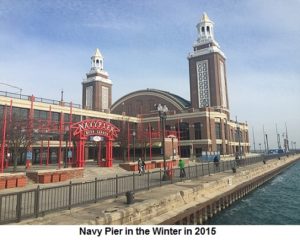

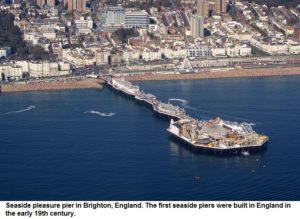
Yes, we can!

The book Go Lean…Caribbean related a community investment that should be made in each Caribbean member-state, that of Navy Piers, and described how BIG returns can be gathered from the resultant infrastructure. The book describes that such an implementation can impact many of the societal engines – think: economy, security and governance.

What is a Navy Pier?

In short, it’s a dock … and “then some”. The most famous one, and name sake is in Chicago, Illinois; see historic details here:

Navy Pier is a 3,300-foot-long (1,010 m) pier on the Chicago shoreline of Lake Michigan. It is located in the Streeterville neighborhood of the Near North Side community area. The Navy Pier currently encompasses more than fifty acres of parks, gardens, shops, restaurants, family attractions and exhibition facilities and is the top leisure destination in the Midwestern United States (“Midwest”), drawing nearly nine million visitors annually.[2] It is one of the most visited attractions in the entire Midwest and is Chicago’s number one tourist attraction.[3]

The Navy Pier opened to the public on July 15, 1916.[4] … Its original purpose was to serve as a dock for freights, passenger traffic, and indoor and outdoor recreation; events like expositions and pageants were held there.

In the summer of 1918 the pier was also used as a jail for draft dodgers. In 1927, the pier was renamed Navy Pier to honor the naval veterans who served in World War I.

In 1941, during World War II, the pier became a training center for the U.S. Navy; about 10,000 people worked, trained, and lived there. The pier contained a 2,500-seat theater, gym, 12-chair barber shop, tailor, cobbler shops, soda fountain and a vast kitchen and hospital.[6]

In 1989, the City of Chicago had the Urban Land Institute (ULI) reimagine uses for the pier. The Metropolitan Pier and Exposition Authority (MPEA) was created; its responsibility was to manage and operate Navy Pier as well as McCormick Place. The MPEA undertook the redevelopment, incorporating some of ULI’s recommendations.[8]

In 1995, Navy Pier was redesigned and introduced to the public as a mixed-use venue incorporating retail, dining, entertainment, and cultural spaces.

Starting in 2014, the redevelopment plan called The Centennial Vision was implemented. The purpose of this plan is to fulfill the mission to keep Navy Pier as a world-class public space and to renovate the pier so it will have more evening and year-round entertainment and more compelling landscape and design features.[9] The Centennial Vision was completed in summer 2016.
Source: Retrieved October 8, 2018 from: https://en.wikipedia.org/wiki/Navy_Pier


VIDEO – Navy Pier Ferris Wheel in Chicago – https://youtu.be/YVFx0FIb82g

Published on Nov 15, 2016 – Navy Pier’s ferris wheel, an iconic part of Chicago’s skyline, received a makeover this year for the pier’s 100th anniversary. Soaring nearly 200-feet high, the ferris wheel offers 360-degree views of the Windy City and is now taller and faster than ever.

The upgrades to the Navy Pier Ferris Wheel, AKA the Centennial Wheel, are part of a larger project to revitalize the pier, giving it a more modern, sophisticated feel. …

The new wheel is 50 feet taller than its predecessor. Each ride lasts about 13 minutes and rotates three times. A ride on the old ferris wheel was only seven minutes and rotated once. DAY/NIGHT; SUMMER/WINTER The new gondolas have air conditioning and heating systems. This improvement allows you to comfortably ride the Centennial Wheel in Chicago’s painfully cold winters and hot summers. The wheel operates during the day at after dark, offering two distinct experiences.

So where there is a coastline, there is an opportunity for a connecting pier. There are 3 types of piers that are common in the modern world: Working piers, Pleasure piers and Fishing piers. These do not need a lot of land; they are normally created as land-less structures into bodies of water. See this encyclopedic definition here:

pier is a raised structure in a body of water, typically supported by well-spaced piles or pillars. Bridges, buildings, and walkways may all be supported by piers. Their open structure allows tides and currents to flow relatively unhindered, whereas the more solid foundations of a quay or the closely spaced piles of a wharf can act as a breakwater, and are consequently more liable to silting. Piers can range in size and complexity from a simple lightweight wooden structure to major structures extended over 1600 metres.

Coastlines abound throughout the Caribbean, as each of the 30 member-states is either an island or a coastal state (Belize, Guyana or Suriname). So this concept of a Navy Pier will be both a strategic and tactical implementation for the roadmap presented by the Go Lean book for the introduction and implementation of the technocratic Caribbean Union Trade Federation (CU). Consider the prime directives of the roadmap and how a Navy Pier can impact those directives:

  • Economics – The CU seeks to optimize the economic engines in order to grow the regional economy to $800 Billion and to create 2.2 million new jobs. Piers can be structured as event-entertainment destinations, even amusement parks abound. So a pier strategy can greatly impact tourism and recreation spending. Imagine new cruise ports-of-call.
  • Security – Navy Piers were originally designed for the Navy, an entity for national defense. Within the Go Lean roadmap, there is the plan for a comprehensive Homeland Security and Emergency Management apparatus to ensure public safety and protect the resultant economic engines. Imagine the quick roll-out of a floating pier after a hurricane for relief, recovery and restoration.
  • Governance – The CU seeks to improve Caribbean governance to support the above engines. This include a separation-of-powers between the member-states and CU federal agencies. Since ships can also be tendered at Navy Piers, many deliveries of the Social Contract can be built on these structures – imagine ferry access ramps, “pop-up” medical clinics, agencies for special administrative processing and kiosks. The CU plan for Self-Governing Entities allows for the piers themselves and any aligning easements to be a separate federal territory.

The Caribbean’s industrial landscape is in crisis. It must reboot! A Navy Pier can help … in every member-state. In fact the CU/Go Lean roadmap calls for a CU federal agency to build and operate – serve as landlord – the piers. Accordingly, the CU will facilitate this eco-system as Self-Governing Entities (SGE), an ideal concept for ports and piers, with its exclusive federal regulation/promotion activities. Imagine the construction equipment – dam walls, earth-moving machinery, dredging barges, etc – being used again and again as new Navy Piers are deployed through the region. Imagine the jobs …

Within the 370-pages of the Go Lean book are details of the job multiplier principle; this is how certain industries and infrastructures are better than others for generating multiple indirect jobs down the line for each direct job on a company’s payroll.

Here is a sample of references to the eco-system of piers through-out the Go Lean book:

Implementation – 10 Ways to Re-boot [Sample City] Freeport

# 7 – Cruise Ship Pier in Lucaya or Smith Point
Currently, cruise ships have to dock at the Freeport Harbor and the passengers transported to more amiable destinations, quite often the destination was the International Bazaar in the middle of a pine forest. By establishing a docking pier in the Port Lucaya vicinity, the cruise ship tourist destination will be all-encompassing in one geographic area and more value can be offered to the visitors. Cultural festivities (Gombay, Junkanoo, rake-n-scrape bands, etc.) can be a daily highlight; This would be modeling Walt Disney World’s 4 Parks and their afternoon character parades.

Page 112
Advocacy – 10 Ways to Impact Public Works

# 2 – Union Atlantic Turnpike
The Union Atlantic Turnpike is a big initiative of the CU to logistically connect all member-states for easier transport of goods and passengers. There are many transportation arteries and facilities envisioned for the Turnpike: Toll Roads, Railroads, Ferry Piers, and Navy Piers. …

Page 175
Advocacy – 10 Ways to Improve Homeland Security
# 4 – Naval Authority
Since any defense of the island and coastal states must be naval first, the Homeland Security efforts must work in conjunction with Naval operations. … The CU will build separate Navy Piers in the appropriate markets, aside from Cruise Ship docks.
Page 180
Advocacy – 10 Ways to Promote Fairgrounds
# 9 – Transit Consideration – Turnpike – Navy Piers
The Union Atlantic Turnpike initiative fits ideally into the fairgrounds business plan, as passengers and cargo can move efficiently from island to island along rail lines, toll highways, tunnels & causeways and over-the-seas ferries. The CU facilitation of Navy Piers can accommodate naval vessel shore leaves and even cruise ship traffic. …
Page 192
Advocacy – 10 Ways to Improve Fisheries
# 2 – Cooperatives
Fishery cooperatives allow fishermen and industry players to pool their resources in certain (non-competitive) areas of activity. This strategy is vital for sharing the cost and expense of installing piers/docks, locating systems (Loran-C & GPS), canaries, refrigerated warehouses and transportation solutions.
Page 210

This is the vision of an industrial reboot! A transformation for how and where a new societal eco-system can be introduced and engineered.

This Go Lean book projects the roll-out of the Union Atlantic Turnpike and accompanying Navy Piers as Day One / Step One of the Go Lean/CU roadmap. Over the 5-year implementation for this roadmap, more and more of the features of piers will be deployed and their effect on the region will be undeniable: they will help to make the whole Caribbean a better place to live, work and play.

The Go Lean book stresses that reforming and transforming Caribbean engines must be a regional pursuit. These piers need to be  installed everywhere, every member-state, island and coastal state. But this effort is truly too big for any one member-state alone. This rationale, the need for interdependence, is the reason for the Caribbean Union. This interdependence was an early motivation for this roadmap; see these statements in the opening Declaration of Interdependence (Pages 12 – 13):

xvi. Whereas security of our homeland is inextricably linked to prosperity of the homeland, the economic and security interest of the region needs to be aligned under the same governance. Since economic crimes … can imperil the functioning of the wheels of commerce for all the citizenry, the accedence of this Federation must equip the security apparatus with the tools and techniques for predictive and proactive interdictions.

xxiv.  Whereas a free market economy can be induced and spurred for continuous progress, the Federation must install the controls to better manage aspects of the economy: jobs, inflation, savings rate, investments and other economic principles. Thereby attracting direct foreign investment because of the stability and vibrancy of our economy.

xxvi.  Whereas the Caribbean region must have new jobs to empower the engines of the economy and create the income sources for prosperity, and encourage the next generation to forge their dreams right at home, the Federation must therefore foster the development of new industries… . In addition, the Federation must invigorate the enterprises related to existing industries … – impacting the region with more jobs.

Installing Navy Piers will mean rebooting the industrial landscape of the Caribbean. This is not a new subject for this Go Lean roadmap; this commentary has previously identified a number of industrial initiatives to launch a reboot in the region. See the list of previous submissions on Industrial Reboots here:

  1. Industrial RebootsFerries 101 – Published June 27, 2017
  2. Industrial RebootsPrisons 101 – Published October 4, 2017
  3. Industrial RebootsPipeline 101 – Published October 5, 2017
  4. Industrial RebootsFrozen Foods 101 – Published October 6, 2017
  5. Industrial RebootsCall Centers 101 – Published July 2, 2018
  6. Industrial RebootsPrefab Housing 101 – Published July 14, 2018
  7. Industrial RebootsTrauma 101 – Published July 18, 2018
  8. Industrial RebootsAuto-making 101 – Published July 19, 2018
  9. Industrial RebootsShipbuilding 101 – Published July 20, 2018
  10. Industrial RebootsFisheries 101 – Published July 23, 2018
  11. Industrial RebootsLottery 101 – Published July 24, 2018
  12. Industrial RebootsCulture 101 – Published July 25, 2018
  13. Industrial RebootsTourism 2.0 – Published July 27, 2018
  14. Industrial RebootsCruise Tourism 2.0 – Published July 27, 2018
  15. Industrial RebootsReinsurance Sidecars 101 – Published October 2, 2018
  16. Industrial Reboots – Navy Piers 101 – Published Today – October 9, 2018

In summary, our Caribbean region needs a better industrial landscape to improve our economics, security and governance. We can make small investments – think mustard seeds – that can yield huge returns. This is too appealing to ignore.

Let’s get going!

We urge all Caribbean stakeholders to lean-in to this roadmap for industrial reboots, to make our region better islands and coastal states to live, work and play. 🙂

Download the free e-Book of Go Lean … Caribbean – now!

Sign the petition to lean-in for this roadmap for the Caribbean Union Trade Federation.

Share this post:
, , ,
[Top]

Industrial Reboot – Reinsurance 101

Go Lean Commentary

Continuity of Business (CoB)

It’s a simple concept; it asserts that if there are any extraordinary events – i.e. emergencies and natural disasters – that the tools and techniques are in place to pick-up and continue for business-as-usual. For some companies, this field is so formalized that they have stakeholders (team) with the responsibilities to ensure that “no stone is left un-turned”. These companies have a C-level executive with this responsibility, i.e. …

  • VP of Risk [Management]
  • Director of Disaster Recovery

One popular risk mitigation strategy is to buy “insurance“. Yet the Caribbean is in crisis! Due to Climate Change realities, there are fewer and fewer “Property & Casualty” insurance products available to Caribbean stakeholders.

This is Sad!

Yes, it is that simple: insurance is a protection to ensure the continuation of business operations, and is expected  for all modern business operations. This theme was addressed in a previous blog-commentary by the movement behind the book Go Lean…Caribbean, in relation to the need to ensure the continuation of a community in the wake of Caribbean natural disasters. That submission presents this quotation:

… an insurance strategy could be even smarter for rainy days or catastrophes; it allows the hedging of risks by leveraging across a wider pool; more people – savers – put-in and only a few … or just one withdraws. This is also the approach of the thoughtful Caribbean Catastrophe Risk Insurance Fund (CCRIF).

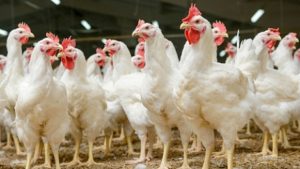
It is very sad when communities are not able to save or insure a “Rainy Day” fund for when it rains, especially in the tropical region where it doesn’t just rain, but pours and storms.

What is sadder is when the heavy-lifting of “savings” or insurance is done, but the dollar amount is not enough; because a “penny saved is only just a penny”.

The Caribbean’s industrial landscape is in crisis. It must reboot; we do not have adequate “Property & Casualty” offerings. The identified CCRIF Catastrophe Fund, though it’s too-little-too-late, is for member-states governments, by the member-states governments. Individuals and companies need not apply; yet still, there is the need. Individuals, institutions and enterprises need the protection of a viable CoB solution. This glaring need is so obvious, right now on the heels of Tropical Storm Kirk. Though not a major storm, it brought major destruction to one particular business. See the full story here:

Title: Poultry farmer loses 2000 chickens during storm

Poultry farmer Linus Bernadine suffered a major setback Thursday night, when high winds associated with Tropical Storm Kirk destroyed his chicken houses at Babonneau.

Bernadine told St Lucia Times it resulted in the loss of 2000 broiler chicks.

He explained that the loss has impacted significantly on his livelihood.

“This is what I am expecting to put bread on my table,”  Bernadine stated.

He estimated that his losses are in the region of some $90,000.

Bernadine said he does not know how he will recover from the calamity.

“Right now I am just on the farm demolishing things,” he said.

“What happened is that these birds, I just got them on Wednesday last week and the storm was Thursday night,” Bernadine disclosed.

The poultry farmer recalled having left his home for Vieux Fort to pick up the chicks.

“I got back home about ten past nine in the night, I put the birds down and that was it,” he stated.

“Friday morning I had no choice but to bury them,” he told St Lucia Times, adding that both of the chicken pens on his property had been destroyed by the storm and the chicks that were in them died.

“I am flat down – everything is just gone,” Bernadine lamented.

“I have a capacity of about 7000 birds and all of that is flat down,” he said.

Source: St Lucia Times Daily Newspaper – Posted September 30th, 2018; retrieved October 2, 2018 from: https://stluciatimes.com/2018/09/30/poultry-farmer-loses-2000-chickens-during-storm/

Needless to say, the underlying problem in the foregoing story is “money”, the lack of money in Caribbean communities for restoring business operations in the wake of disasters.

The lack of money is the root of all evil” – Pejorative Pun credited to “Rev. Ike”

There is not enough money in the St. Lucia pool. The Go Lean book simply declares that there needs to be a Bigger pool, one that individuals, institutions and enterprises can participate in. The Go Lean book proposed the solution of Reinsurance Sidecars, related in the book on Page 101 as follows:

Hurricane Insurance Fund
The risk pool for a 42-million population is so much lower than each member-state’s sole mitigation efforts. The CU will establish (contract with a service provider) reinsurance funds (& sidecars) from Day One, and glean the excess premiums-over-claims as profit.

So this is the solution that is proposed in the Go Lean book, to allow for Reinsurance Sidecars in the regional Capital Markets. This way more liquidity will be brought to the marketplace and investors can share in the risk … and profit. See a fuller definition of Sidecars here:

Reinsurance Sidecars, conventionally referred to as “sidecars”, are financial structures that are created to allow investors to take on the risk and return of a group of insurance policies (a “book of business”) written by an insurer or reinsurer (henceforth re/insurer) and earn the risk and return that arises from that business. A re/insurer will only pay (“cede”) the premiums associated with a book of business to such an entity if the investors place sufficient funds in the vehicle to ensure that it can meet claims if they arise. Typically, the liability of investors is limited to these funds. These structures have become quite prominent in the aftermath of Hurricane Katrina as a vehicle for re/insurers to add risk-bearing capacity, and for investors to participate in the potential profits resulting from sharp price increases in re/insurance over the four quarters following Katrina. An earlier and smaller generation of sidecars were created after 9/11 for the same purpose. 
Source:
Retrieved October 13, 2017 from: https://en.wikipedia.org/wiki/Reinsurance_sidecar

The introduction of Reinsurance Sidecars will reboot the entire industrial landscape in the Caribbean. With this product, businesses will have the Property & Casualty insurance products to provide some assurances; also banks will be able to compel their loan clients to maintain these coverages. This is the whole definition of “Escrows”, that of banks requiring Property & Casualty insurance for their loan customers:

In layman’s terms, this means an escrow service is basically a middleman between a buyer and a seller, or in the case of a mortgage, a middleman between a homeowner and the county (for property taxes), insurance companies, and anyone else who the homeowner designates to pay with funds from the escrow account.

1. Imagine the effect of sidecars on bank escrow processing departments.

2. Imagine the effect of sidecars on the insurance retail and wholesale markets.

3. Imagine the effect of business insurance on businesses.

4. Imagine the effect of business continuity on community continuity.

5. Imagine the effect of an industrial reboot on Caribbean life and our day-to-day reality.

So the goal here is to better explore the industrialization of Reinsurance Sidecar products and escrow processing. We must pursue this reboot of our industrial landscape; we need to foster the many new opportunities (jobs, entrepreneurism and industrial development). This is the declaration of the book Go Lean…Caribbean – available to download for free; it serves as a roadmap for the introduction and implementation of the technocratic Caribbean Union Trade Federation (CU); this is a confederation of all 30 member-states – the larger pool – to execute a reboot of the Caribbean economic eco-system. This CU/Go Lean roadmap has these 3 prime directives:

  • Optimization of the economic engines in order to grow the regional economy to $800 Billion & create 2.2 million new jobs.
  • Establishment of a Homeland Security and Emergency Management apparatus to ensure public safety and protect the resultant economic engines.
  • Improvement of Caribbean governance to support these engines, including a separation-of-powers between the member-states and CU federal agencies.

The Go Lean book stresses that reforming and transforming the Caribbean economic engines must be a regional pursuit – always remember the reality of a larger pool. This was an early motivation for the roadmap, as pronounced in the opening Declaration of Interdependence (Pages 11 – 13):

i. Whereas the earth’s climate has undeniably changed resulting in more severe tropical weather storms, it is necessary to prepare to insure the safety and security of life, property and systems of commerce in our geographical region. As nature recognizes no borders in the target of its destruction, we also must set aside border considerations in the preparation and response to these weather challenges.

xvi. Whereas security of our homeland is inextricably linked to prosperity of the homeland, the economic and security interest of the region needs to be aligned under the same governance. Since economic crimes … can imperil the functioning of the wheels of commerce for all the citizenry, the accedence of this Federation must equip the security apparatus with the tools and techniques for predictive and proactive interdictions.

xxiv. Whereas a free market economy can be induced and spurred for continuous progress, the Federation must install the controls to better manage aspects of the economy: jobs, inflation, savings rate, investments and other economic principles. Thereby attracting direct foreign investment because of the stability and vibrancy of our economy.

xxvi. Whereas the Caribbean region must have new jobs to empower the engines of the economy and create the income sources for prosperity, and encourage the next generation to forge their dreams right at home, the Federation must therefore foster the development of new industries… . In addition, the Federation must invigorate the enterprises related to existing industries … – impacting the region with more jobs.

This is the vision of an industrial reboot! This transformation is where and how the economic eco-system is reinforced, re-engaged and re-engineered. With this reboot in the Caribbean, new jobs can be created, companies started and industries optimized.

Despite the references to “industrial”, there are benefits to individuals as well.

Mortgages and houses will have protections, this means the Caribbean home will be more secure. This fits the quest of the Go Lean movement, to make the Caribbean a better homeland to live, work and play.

The foregoing news article related the agri-business of a Chicken Farm. Have you eaten chicken lately?
Probably! For some people it’s everyday!

So the out-workings of this industrial reboot will also have an effect on consumer goods. That’s food and shelter, part of the pantheon of basic needs: food, clothing and shelter.

The Go Lean book provides 370-pages of turn-by-turn instructions on “how” to adopt new community ethos, plus the strategies, tactics, implementations and advocacies to execute so as to reboot, reform and transform the societal engines of Caribbean society. One advocacy in rebooting the industrial landscape is to work to improve the delivery systems for our food supply. All Caribbean islands and coastal states should have chicken farms. It is unconscionable that ALL CHICKENS may be imported from abroad. Surely, we can provide the industrial landscape so that every community have their own chicken farms.

Surely …

This will mean that we will have to manage and mitigate the risks of storms and natural disasters; remember Climate Change.

Consider these specific excerpts and headlines from the book on Page 162 entitled:

10 Ways to Better Manage Food Consumption

1 Lean-in for the Caribbean Single Market
The CU will allow for the unification of the region into one market, thereby creating a single economy of 30 member-states, 42 million people and a GDP of over $800 Billion – the CU will take the lead in facilitating the food supply and distribution systems to ensure the region can feed itself, more from local production and less from trade. Though the cost savings of imports should never be ignored, some CU countries (Greater Antilles, Belize, Guyana & Suriname) have a low opportunity cost for increasing food production for the regional market. Thus a mission of the CU is to streamline the systems, processes, logistics, funding, training, and market promotions so that the Caribbean can fulfill this basic need.
2 Public Health Dynamics – Produce Deserts & Farmers Market
3 “Nouvelle” Caribbean Cuisine
4 Agri-Business
Many of the member-states get 90% (or more) of their food supplies from imports; even fish is imported from Alaska, despite the 1,063,000 square miles of harvestable waters of the Caribbean Sea. The CU will implement agri-business (and aqua-culture) investments to generate more regional options for food production: cooperatives (co-ops), farm credit, common grazing lands, fisheries oversight, canaries, aqua-culture endeavors, etc.
5 Logistics for the Food Supply
6 Fresh Frozen
7 Food Labeling
8 Export – Help Regional Businesses Find Foreign Markets
9 Media Industrial Complex
10 Food Tourism

Rebooting the industrial landscape of the Caribbean is not a new subject for this Go Lean roadmap. In fact, this commentary has previously identified a number of different industries that can be rebooted under this roadmap. See the list of previous submissions on Industrial Reboots here:

  1. Industrial RebootsFerries 101 – Published June 27, 2017
  2. Industrial RebootsPrisons 101 – Published October 4, 2017
  3. Industrial RebootsPipeline 101 – Published October 5, 2017
  4. Industrial RebootsFrozen Foods 101 – Published October 6, 2017
  5. Industrial RebootsCall Centers 101 – Published July 2, 2018
  6. Industrial RebootsPrefab Housing 101 – Published July 14, 2018
  7. Industrial RebootsTrauma 101 – Published July 18, 2018
  8. Industrial RebootsAuto-making 101 – Published – July 19, 2018
  9. Industrial RebootsShipbuilding 101 – Published – July 20, 2018
  10. Industrial RebootsFisheries 101 – Published – July 23, 2018
  11. Industrial RebootsLottery 101 – Published – July 24, 2018
  12. Industrial RebootsCulture 101 – Published – July 25, 2018
  13. Industrial RebootsTourism 2.0 – Published – July 27, 2018
  14. Industrial RebootsCruise Tourism 2.0 – Published – July 27, 2018
  15. Industrial Reboots – Reinsurance Sidecars 101 – Published Today – October 2, 2018

Reinsurance Sidecars – remember the name. While these, and other derivative products, are not commonly known in the Caribbean today, they will be. They are too important for our future.

Don’t ever forget, as this fact often gets overlooked, they are also vastly profitable investment products. See the VIDEO‘s in the Appendices for more details on Reinsurance Sidecar derivatives as investment products.

In summary, our Caribbean region needs a better industrial landscape so as to make our homeland better. In fact, one of the reasons why so many Caribbean citizens have emigrated away from the homeland is the lack of the ability to quickly recover after natural disasters. This is why Homeland Security – preparation and response of emergencies – is coupled with economic policies for rebooting the societal engines in the region. So creating a new economic landscape will require rebooting the industrial landscape.

So as an enterprise, an institution or an individual, we need good insurance options – a Continuity of Business. A bigger-better regional risk pool is paramount for a better Caribbean. This is how we can make our region a better homeland to live, work and play.  We urge all Caribbean stakeholders to lean-in to this roadmap for industrial reboots, security enhancements and economic empowerments. 🙂

Download the free e-Book of Go Lean … Caribbean – now!

Sign the petition to lean-in for this roadmap for the Caribbean Union Trade Federation.

————-

Appendix A VIDEO – What is REINSURANCE? What does REINSURANCE mean? REINSURANCE meaning, definition & explanation – https://youtu.be/7Qe4-Ei2PHY


The Audiopedia

Published on May 17, 2017 – What is REINSURANCE? What doe REINSURANCE mean? REINSURANCE meaning – REINSURANCE pronunciation – REINSURANCE definition – REINSURANCE explanation – How to pronounce REINSURANCE?
Source: Wikipedia.org article, adapted under https://creativecommons.org/licenses/… license.

  • Category: Education
  • License: Creative Commons Attribution license (reuse allowed)

————-

Appendix B VIDEO – What Is Financial Reinsurance? – https://youtu.be/W45REh7Pt7I


ehowfinance

Published on May 25, 2015 – What Is Financial Reinsurance?. Part of the series: Small Business Tips. Financial reinsurance is a key component to any successful business. Learn about financial reinsurance with help from a business consultant and marketing expert in this free video clip. Read more: http://www.ehow.com/video_12214988_fi…

————-

Appendix C VIDEO – Reinsurance the perfect Hedge Fund Strategy to Diversify a Portfolio – https://youtu.be/rfp2gRsFD2M


BGN – Blockchain Global News

Published on Mar 2, 2016 – Jane King interviews Don Steinbrugge, Managing Director, Agecroft Partners. For more information please visit http://www.agecroftpartners.com

Share this post:
, , , ,
[Top]

Amazon: ‘What I want to be when I grow up’

Go Lean Commentary

For the planned entity, Caribbean Postal Union, the question should be asked:

What do you want to be when you grow up?

The answer should be:

Amazon

It turns out that Amazon was only founded in 1999, so this is less than 20 years. It is that quickly that an enterprise can have a transformative effect on society. We need transformations in the Caribbean and we are hoping to follow the Amazon business model as the solution for our regional postal-logistical needs.

How successful is Amazon as a model for success?

Well, now Amazon market capitalization has exceeded $1 Trillion. See the VIDEO and news story here:

VIDEO – Amazon 2nd company to top $1 trillion valuation – https://www.usatoday.com/videos/tech/nation-now/2018/09/05/amazon-2nd-company-top-1-trillion-valuation/37720169/

Sep 4, 2018 – Amazon has become the 2nd publicly traded company to be worth $1 trillion, after Apple. Amazon has cemented customer loyalty through its devices and fast, free shipping as well as music and video streaming perks. AP

————-

Title Amazon’s stock value tops $1 trillion, joins Apple in trillionaire club

Amazon’s meteoric stock surge briefly pushed its market value above $1 trillion, a milestone that makes the online retail giant only the second publicly traded company in the U.S. to pass that mark – following Apple.

Amazon topped $1 trillion for the first time Tuesday when its shares climbed past $2,050.27 in late-morning trading and hit an intraday record high of $2,050.50. Shares pulled back to $2,039.51 for a gain of 1.3 percent for     the day.

The accomplishment comes after Amazon’s per-share price crossed $2,000 for the first time last week.

Under CEO Jeff Bezos, who is now the richest person in the world with a net worth of an estimated $166 billion, Amazon has emerged as the most powerful force in the e-commerce business, capturing roughly 50 percent of the online retail market, according to eMarketer.

But it’s not just Amazon’s disruptive force in retail that has attracted investors on Wall Street. The company has diversified its sales and profit streams, from a public cloud-computing business to paid subscription services like Amazon Prime, and advertising revenue on its website.

Some Wall Street pros see the stock climbing even higher.

Citing Amazon’s improving business mix, rapid growth and profit potential, Morgan Stanley analyst Brian Nowak last week upped his price target for Amazon shares to $2,500, which is the highest on Wall Street, according to Bloomberg. If that fresh target is reached, it would boost the company’s market capitalization to more than $1.2 trillion.

In the race for most valuable U.S. company, Amazon now trails Apple by roughly $100 billion.

….

See the rest of the news article in the Appendix below.

This one company is worth US$1 Trillion. The whole Caribbean’s Gross Domestic Product (GDP) is [far] less; it is our plan to elevate the economic engines in the region to get the economy’s output up to $800 Billion.

Amazon is a model for e-Commerce, logistics, media and innovation. This is the role model we want for our Caribbean Postal Union and the aligning online portal, www.myCaribbean.gov. It is good to have a roadmap to follow to duplicate the successful journey of Amazon.

The book Go Lean…Caribbean serves as such a roadmap for the introduction and implementation of the technocratic Caribbean Union Trade Federation (CU) and the Caribbean Postal Union (CPU). These entities are designed to address the “Agents of Change“ in modern society, but for a Caribbean scope only.  The “Agents of Change” at play in the foregoing news sources, according to the book (Page 57), are defined as follows:

  • Technology
  • Globalization

Asking the question: “What I want to be when I grow up?” is emblematic of future planning. This exercise is important for the region if we truly want to have a future. Though our people may survive, such an eventuality is not guaranteed for our culture. Ghost Towns do happen!

Our Caribbean region cannot continue with the status quo in terms of business operations and societal outworking. We must now reboot our industrial landscape to foster new opportunities (jobs, entrepreneurism and industrial development). This is the charter of the Caribbean Postal Union effort. In fact, the following 3 statements are identified as the prime directives of this CU charter:

  • Optimization of the economic engines in order to grow the regional economy to $800 Billion & create 2.2 million new jobs.
  • Establishment of a security apparatus to protect the resultant economic engines.
  • Improve Caribbean governance to support these engines.

In a previous Go Lean blog-commentary, it was related that …

… what Amazon did and does, is the epitome of what the CU/CPU needs to do to reboot Caribbean society. The company disrupted the status quo in so many industries – think: book retailers & movie rentals – and transformed markets to exploit opportunities and derive profits. This is the “Sum of All Caribbean Dreams“.

This reference to Caribbean Dreams is presented early in the Go Lean book with these opening pronouncements in the Declaration of Interdependence (Page 13 and 14):

xxiv. Whereas a free market economy can be induced and spurred for continuous progress, the Federation must install the controls to better manage aspects of the economy: jobs, inflation, savings rate, investments and other economic principles. Thereby attracting direct foreign investment because of the stability and vibrancy of our economy.

xxvii. Whereas the region has endured a spectator status during the Industrial Revolution, we cannot stand on the sidelines of this new economy, the Information Revolution. Rather, the Federation must embrace all the tenets of Internet Communications Technology (ICT) to serve as an equalizing element in competition with the rest of the world. The Federation must bridge the digital divide and promote the community ethos that research/development is valuable and must be promoted and incentivized for adoption.

Monitoring and analyzing the business model of Amazon has been a frequent occupation for these Go Lean blog-commentaries; consider these previous submissions, as follows:

https://goleancaribbean.com/blog/?p=14316 Forging Change: Soft Power – Clean-up or ‘Adios Amazon’

Amazon is proving that people and communities will be motivated to change in order to have the prospect of acquiring money or to prevent losing money. This “soft power” is now emerging as the preferred way to forge change on society. The summary statement is: “Clean-up your societal defects or else … face the loss of an economic bonanza”.

https://goleancaribbean.com/blog/?p=14191 Scheduling in the ‘Gig Economy’

Amazon is proving that there is always “honorable” work available in the service industry. Any reference to the Post Office of 1987 can now be replaced with the Gig Economy. Amazon is very prominent in the Gig Economy in the US.

https://goleancaribbean.com/blog/?p=13627 Amazon: Then and Now

It has only been 18 years ago (1999 – 2017) since Amazon launched in Seattle, Washington USA. Now today, they are huge … and transforming how America shops … and consume media; even their digital assistant – Alexa – is transformative.

https://goleancaribbean.com/blog/?p=13091 Amazon Opens Search for HQ2
Amazon is accepting bids for a 2nd headquarters in North America. The city that lands HQ2 will have a lot to celebrate, as this enterprise can create many high-paying direct jobs – 50,000 – and have an indirect stimulus on the rest of the economy. This is a feature of Amazon that “we” want to model in the Caribbean.
https://goleancaribbean.com/blog/?p=12291 Big Tech’s Amazon – The Retailers’ Enemy
Big Tech companies like Amazon have the treasuries, talent and temperament (culture, values and commitment) to change the world, for good and for bad. The Amazon threat had been “all things internet”, but now they are attempting to dominate the physical retail space as well, with their acquisition of Whole Foods grocery stores.
https://goleancaribbean.com/blog/?p=11358 Retail Apocalypse – Preparing for the Inevitable
There is feast and famine “in the cards” for the retail eco-system. On one end of the spectrum , there will be prosperity for electronic commerce stakeholders, but on the other end, for brick-and-mortar establishments, there will be a Retail Apocalypse. This is not just a future problem as the threat has already manifested!
https://goleancaribbean.com/blog/?p=9839 Alibaba and Amazon’s Cloud allows for global reach
This model, with cutting-edge data centers, is the new colonialism.
https://goleancaribbean.com/blog/?p=7297 Death of the ‘Department Store’: Exaggerated or Eventual
Modern technology and electronic commerce has transformed many aspects of society; much has been added and much taken away. Just consider: cameras, watches, pagers, maps, calculators, calendars, payphones, books, music and more. The related industries have also been affected: travel agencies, music retailers, book retailers, newspapers, travel agencies and Big Box retailers. Amazon is to blame for many of the transformations.
https://goleancaribbean.com/blog/?p=7023 Thanksgiving & American Commerce – Past, Present and Amazon
To better understand American commerce, one must understand Cyber Monday and its dominant player Amazon. This company demonstrates how to be lean and technocratic as it employs cutting-edge automation  and robotics. They are a great model for a new Caribbean.
https://goleancaribbean.com/blog/?p=1416 Model of an E-Commerce Fulfillment Company: Amazon
Amazon is the model for the Caribbean Postal Union (CPU): our means for delivering the mail. Considering the US, one might think that the American model would be the US Postal Service (USPS). No, the Go Lean book relates how the USPS is a failing enterprise, while Amazon flourishes with growth, capital and profits.

One Trillion Dollars …

… this sounds great! This is what is meant by the old encouragement: Reach for the stars!

Can we pursue such a quest in the new Caribbean?

Yes, we can!

Consolidating and integrating the existing postal agencies in the Caribbean, should be “low hanging fruit”. Currently, these entities are just inefficient, ineffective cost centers, but here is the opportunity to transform them to this new vision: the CPU functioning as a job-creating profit center.

We cannot ignore this win-win possibility.

We hereby urge all Caribbean stakeholders to lean-in to the empowerments in the Go Lean/CU/CPU roadmap. Whether we pursue this roadmap to make a trillion dollars or just to optimize the mail, the end-result will be a positive benefit. This quest can make our homeland a better place to live, work and play. 🙂

Download the free e-Book of Go Lean … Caribbean – now!

Sign the petition to lean-in for the roadmap for the Caribbean Union Trade Federation.

—————-

AppendixAmazon’s stock value tops $1 trillion, joins Apple in trillionaire club – Cont’d

By: Adam Shell, USA TODAY


Amazon’s stock, which is up nearly 75 percent this year, has been one of Wall Street’s top performers in the bull market that began in March 2009, gaining more than 3,000 percent, according to S&P Dow Jones Indices.

Amazon is also pushing into new businesses, such as groceries, a move highlighted by its purchase last year of upscale grocer Whole Foods Market for $13.7 billion. It also entered the health care space in June, with the purchase of online pharmacy PillPack.

The only other U.S. stocks within striking distance of a $1 trillion market value are Microsoft and Google-parent Alphabet, both of which are valued at roughly $850 billion.

Tuna Amobi, an analyst at Wall Street firm CFRA, sees Amazon’s stock price rising as high as $2,200 a share. Amazon’s suite of businesses, he says, act as “building blocks” that give it a diversified stream of revenue and will help it deliver “consistent” earnings results in the quarters ahead. “A lot of investments are starting to pay off,” he says.

Still, like any stock, Amazon is not risk free. Despite reporting a profit of $2.5 billion on $52.9 billion in sales in the quarter ended in June, and forecasting year-over-year sales growth of 23 percent to 31 percent in the current quarter, Amazon is not a cheap stock.

It currently trades at nearly 100 times its expected earnings over the next 12 months, which is about five times the broad market’s price-to-earnings ratio of 21, according to Bloomberg.

Another potential risk that could derail Amazon is a potential regulatory crackdown from Washington, D.C., which could look to counter its clout in online retailing, Amobi says.

Amazon is one of the popular and strong-performing “FAANG” stocks – Facebook, Apple, Netflix and Google parent Alphabet are the others – that have come under increased scrutiny from President Donald Trump and lawmakers because of their growing dominance. Executives from Facebook and Twitter will testify Wednesday before the Senate Intelligence Committee regarding interference of foreign nations on social-media platforms.

Amazon also faces increasing competition in online retailing from big players like Walmart and Target that are fighting to regain lost market share. It is also facing challenges from Microsoft and Google in the competitive cloud-computing business.

Source: USA Today – Posted September 4, 2018; retrieved October 1, 2018 from: https://www.usatoday.com/story/money/2018/09/04/amazon-tops-1-trillion-market-value/1191141002/?csp=chromepush

Share this post:
, , , , ,
[Top]

Network Mandates for a New Caribbean

Go Lean Commentary

Golden Rule: “He who has the gold, makes the rules” …

When it comes to media industry (movies, film, fashion modeling), there are some other relevant idioms; consider this list:

  • Dress for the job you want, not the job you have.
  • Fake it until you can make it.
  • A face out of “Central Casting”.

All of these idioms help us to appreciate that in the media industry you must look the part. So if you have facial or grooming features that are different – zag while everyone else zig – you may not be selected for promotion and production. (Think: Dreadlocks, Afros and Braids).

This is sad! “Look the part”? What part, as determined by who? Obviously, there is an adjudicator as to Good/Bad, Yes/No. Who is that? That’s the opening idiom, the Golden Rule. In the media industry that adjudicator is the producer, director, promoter or media company executive. (See Appendix VIDEO for background on one big Broadcast & Media company).

So at times, even though “you are home”, you may have to act foreign. This is definitely the sad narrative taking place in this story below, when a Caribbean model/beauty queen had been scolded for looking too … “Caribbean”. See the full story here:

Title: Caribbean Next Top Model contestant wants apology from Wendy

ASPIRING international model Gabriella Bernard feels she deserves an apology from former Miss Universe and executive producer of the Caribbean Next Top Model competition, Wendy Fitzwilliam, after she was given an ultimatum on the television show- relax her natural hair or go home.


The particular episode was filmed in Jamaica last year and aired on television in February.

An excerpt featuring Bernard’s experience was posted to Facebook yesterday.

The majority of persons who commented on the video criticised Fitzwilliam for her response to the model’s stance.

Bernard, 24, told the Express via telephone on Thursday that she and other contestants had to undergo a makeover for the segment.

She said Fitzwilliam had the final say in what each girl’s look should be.

“For my look they wanted my hair relaxed,” she said.

In the video, Bernard was seen pleading with a hairdresser not to chemically process her curly tresses as she had spent the last three years growing it.

“I’m ok with texturizing my hair once my curls stay intact. You need to understand my hair is my identity,” she begged.

Bernard told the Express that the show’s producers, judges and hairdresser were nonchalant about how she felt.

“A lot more happened which you didn’t see in the video. But basically I was trying to reason with them but they were like it was no big deal, it’s just hair,” she said, adding that she was told that she could either relax her hair or leave the show.

Bernard’s hair was relaxed and she remained in the competition.

Towards the end of the video she appeared before Fitzwilliam and two other judges- international photographer Pedro Virgil and Caribbean fashion expert Socrates McKinney.

Before critiquing the model’s makeover photograph, Fitzwilliam scolded her for her “naughty” and “unprofessional” behaviour.

Bernard apologised, but explained that she previously had her hair relaxed for 15 years. She said when she transitioned to again wearing her hair natural she began loving herself more.

“We live in a world where the media tells us that we need to have straight hair to be accepted,” Bernard emphasised.

Fitzwilliam said she understood the young lady’s point, as she too had made the transition.

“However, as a young and upcoming model, as a young and upcoming attorney facing the judges and senior counsel, you have to be professional.

Shutting down my salon, creating that mayhem, when there were so many other young women to get done and to look fabulous as well, it’s a loud non-starter,” Fitzwilliam said.

Why didn’t she leave?

Asked why she did not stand her ground and bow out of the competition instead of having her hair relaxed, Bernard explained that she weighed her options and felt that she had reached too far in the competition to turn back.

“I had a conversation with myself and I said if I go home what am I going home to? Because I left my job to go on the show. I put in my application the Thursday and by the following Thursday I was flying out. I told myself that I had already reached this far and this was something that I wanted so much,” she said.

Bernard placed third in the competition.

She said she had always looked up to the former beauty queen and was disappointed by her approach and response.

Bernard has turned her experience on the show into a 20-minute documentary called Black Hair.

The documentary will be shown at the 2018 Trinidad and Tobago Film Festival, from today until Tuesday.

She said she was also lined up for several modelling jobs and competitions.

As for her hair: “Monday actually marks the one year anniversary that I cut my hair and to me it’s growing beautifully.”

Fitzwilliam did not respond to calls from the Express, but she told the Newsday that she had no comment on the issue.

Source: The Daily Express – posted September 20, 2018; retrieved September 25, 2018 from: https://www.trinidadexpress.com/news/caribbean-next-top-model-contestant-wants-apology-from-wendy/article_48563808-bd29-11e8-8047-577ec8f9d0e1.html

While this is an issue of image, the movement behind the book Go Lean…Caribbean asserts that Caribbean people can prosper where they are planted in the Caribbean homeland. At home, they do not have to adapt or comply with any foreign standards. They are home! At a bare minimum, Caribbean beauty should be recognized in the eyes of Caribbean beholders.

At a bare minimum! (For the record, the model in the foregoing article is undeniably beautiful, with her natural hair grooming).

But truth be told, if the media networks in the region are owned by foreign entities, then foreign standards are still “the rule”.

No more!

Change has come to the world and to the Caribbean region. The advent of Internet Communications Technologies (ICT) now has voluminous options for media to be delivered without the large footprint … or investment. Now anyone can easily publish VIDEO’s and Music files to the internet and sell them to the public – models abounds: i.e. pay-per-play, or subscription.

The book Go Lean…Caribbean serves as a roadmap for the introduction and implementation of the Caribbean Union Trade Federation (CU), a technocratic federal government to administer and optimize the economic-security-governing engines of the region’s 30 member-states. Embedded in this roadmap is the plan for the Caribbean Postal Union (CPU) whose focus is  to coordinate the regional mail eco-system plus the www.myCaribbean.gov portal to offer email and social media functionality for all Caribbean stakeholders: 42 million residents, visitors (up to 80 million), trading partners and the 10 million people in the Diaspora.

All of these numbers constitute a media market. Therefore …

… “ICT is the great equalizer” – Go Lean book (Page 198).

The book explains that the CU treaty will forge electronic commerce industries to allow Internet Communications Technology (ICT) to be the great equalizer in economic battles with the rest of the world; this model holds the promise of “leveling the playing field” between small … and large … .

Imagine the deployment of a new Caribbean Network! Not like ABC or NBC (in the US) nor the BBC in England, but rather like the WWE. In a previous blog-commentary it was related that:

This is better! (Every mobile/smart-phone owner walks around with an advanced digital video camera in their pocket). We are now able to have a network without the “network”. Many models abound on the world-wide-web. Previously, this commentary identified one such network (ESPN-W); now the focus is on another, the WWE Network, associated with the World Wrestling Entertainment, Inc. This network is delivered via the internet-streaming only (and On-Demand with limited Cable TV systems).

We have so many examples-business models; think: WWE, ESPN-W, YouTube and Netflix …

… surely, we can deploy our own digital, streaming network as well, one just for the Caribbean region … so that we can better exploit the Agents of Change affecting the world – and reset image standards The Go Lean book specifically identifies technology and globalization among the transformations affecting our world (Page 57); it then declares that our region cannot only consume – we must produce – so we need to move to the corner of preparation and opportunity.

We need Caribbean stakeholders to own Caribbean media! We can then impose our own standards and remove restrictions that denigrate our lifestyles. So this issue is bigger than just image; this is having the means by which to control our destiny. Despite all the benefits for our image, this is an economic issue first and foremost. With the Agent of Change of globalization, we now have a product that the rest of the world wants to consume: our culture. Digital media allows us to disseminate that culture electronically, with a small investment footprint.

This is about supply and demand – a basic precept in the study of Economics. The transformation to new media has taken hold. More and more people are consuming electronic media; so much so that it is becoming the mainstay for communications and entertainment. This reference to electronic media does not only convey the visual images of television; there is also the ubiquity of the internet, with its many video streaming services.

Even TV networks are perplexed as to what video streaming will do to their medium. See this summary of a New York Times Business News article here and a related VIDEO:

General Electric wants to sell NBC because of rising losses … [as] a testament to the uncertain future of mainstream media, as the Internet has fractured audiences and few viable business models have emerged for the distribution of content online.

Source: Posted November 30, 2009; retrieved September 26, 2018 from: https://www.nytimes.com/2009/12/01/business/media/01deal.html
————-

VIDEO – The Future Of TV On The Internet, Streaming Services, Subscribership | Squawk Box | CNBC – https://youtu.be/VcKBwSzZArk

CNBC
Published on Dec 1, 2016 – Larry Haverty, Gabelli Multimedia Trust, and Porter Bibb, Mediatech Capital Partners, discuss the changing media landscape as well as the fight for viewers and subscribers. » Subscribe to CNBC: http://cnb.cx/SubscribeCNBC

About CNBC: From ‘Wall Street’ to ‘Main Street’ to award winning original documentaries and Reality TV series, CNBC has you covered. Experience special sneak peeks of your favorite shows, exclusive video and more.

Connect with CNBC News Online Get the latest news: http://www.cnbc.com/

Find CNBC News on Facebook: http://cnb.cx/LikeCNBC

Follow CNBC News on Twitter: http://cnb.cx/FollowCNBC

Follow CNBC News on Google+: http://cnb.cx/PlusCNBC

Follow CNBC News on Instagram: http://cnb.cx/InstagramCNBC

The Future Of TV On The Internet, Streaming Services, Subscribership | Squawk Box | CNBC

This is the change that has come to the world … and the Caribbean.

The book Go Lean … Caribbean advocates for the Caribbean region to better prepare for this changing world and to better exploit the Agents of Change affecting us. With ICT, we are now able to have a network without the “network”. Many of the aforementioned online models have shown us that any platform that is nimble and focused can succeed with only a moderate level of investment. So a Caribbean homegrown network-portal, www.myCaribbean.gov, can be impactful and help to elevate our regional eco-systems for ICT, entertainment and television.

While this effort to forge a new Caribbean network is heavy-lifting, it is only the politics that is hard – consensus-building, consolidation and confederation – the technology is easy. This politics, to create a regional Single Media Market, is the purpose of the Go Lean roadmap.

At the outset, the roadmap recognizes the need to develop the homegrown ICT eco-system … with these statements in the opening Declaration of Interdependence (Pages 12 – 14):

xv. Whereas the business of the Federation and the commercial interest in the region cannot prosper without an efficient facilitation of postal services, the Caribbean Union must allow for the integration of the existing mail operations of the governments of the member-states into a consolidated Caribbean Postal Union, allowing for the adoption of best practices and technical advances to deliver foreign/domestic mail in the region.

xx. Whereas the results of our decades of migration created a vibrant Diaspora in foreign lands, the Federation must organize interactions with this population into structured markets. Thus allowing foreign consumption of domestic products, services and media, which is a positive trade impact. These economic activities must not be exploited by others’ profiteering but rather harnessed by Federation resources for efficient repatriations.

xxvii. Whereas the region has endured a spectator status during the Industrial Revolution, we cannot stand on the sidelines of this new economy, the Information Revolution. Rather, the Federation must embrace all the tenets of Internet Communications Technology (ICT) to serve as an equalizing element in competition with the rest of the world. The Federation must bridge the digital divide and promote the community ethos that research/development is valuable and must be promoted and incentivized for adoption.

xxviii. Whereas intellectual property can easily traverse national borders, the rights and privileges of intellectual property must be respected at home and abroad. The Federation must install protections to ensure that no abuse of these rights go with impunity, and to ensure that foreign authorities enforce the rights of the intellectual property registered in our region.

xxx. Whereas the effects of globalization can be felt in every aspect of Caribbean life, from the acquisition of food and clothing, to the ubiquity of ICT, the region cannot only consume, it is imperative that our lands also produce and add to the international community, even if doing so requires some sacrifice and subsidy.

xxxii. Whereas the cultural arts and music of the region are germane to the quality of Caribbean life, and the international appreciation of Caribbean life, the Federation must implement the support systems to teach, encourage, incentivize, monetize and promote the related industries for arts and music in domestic and foreign markets. These endeavors will make the Caribbean a better place to live, work and play.

In the Go Lean book and previous blogs, the Go Lean movement asserted that the market organizations and community investments to garner economic benefits of ICT is within reach, with the proper technocracy. As related in a previous blog-commentary, the eco-system for streaming videos – i.e. YouTube, Netflix, Hulu, WWE, ESPN-W, Amazon Prime, etc. – is inclusive of the roadmap’s quest to make the Caribbean region a better place to live, work and play.

Now is the time for all of the Caribbean to lean-in to this Go Lean roadmap. There in are the details of the community ethos, strategies, tactics, implementations and advocacies that are to be adopted and executed to deliver the ICT solutions for the Caribbean region. Within its 370-pages, the Go Lean book re-affirms the mantra that ICT can be the great equalizer so that small nation-states can compete against large nation-states.

Once we – Caribbean stakeholders – control our network, then we control the standard – what is acceptable, what is NOT. Our declaration: Natural hair, for African-descended people, is Good!

The Go Lean roadmap conveys that we can deploy our own media enterprises to satisfy our own media demands – and maybe even satisfy some of the world’s demand. Yes, Hollywood could be virtual, not just in Hollywood, California, but anywhere; think: iHollywood. Consider how the book related the advocacy for improving the Hollywood-like landscape – the term “Hollywood” is a metonym referring to the overall American Motion Picture (film and television) industry – in the Caribbean; see these summaries, excerpts and headlines from this one page in the book on Page 203 entitled:

10 Ways to Impact Hollywood

1 Lean-in for the Caribbean Single Market
This treaty allows for the unification of the region into one market, thereby creating a single economy of 30 member-states, 42 million people and a GDP of over $800 Billion, (circa 2010). With its Los Angeles Trade Mission Office, the CU will empower the economic engines of the region to impact the movie/TV/media industries. One CU mission is to impact globalization by not just consuming media products, but creating it as well. As such, the eco-systems are to be fostered, starting with promoting Hollywood movie studios to film/spend more in the CU region – a function of the CU Department of Commerce. Then the CU will incentivize a local industry by building/supporting facilities, guiding artists, brokering funding and distribution. The CU must assume the role of rating movies for the region.
2 Image Management
Many times Hollywood portrays a “negative” depiction of Caribbean life, culture and people. The CU will have the scale and “muscle” (diplomatic and economic) to effectuate negotiations to better manage the region’s image. When movies are banned that have negative community portrayal, it is normally considered suppressing free speech; but when movies are labeled Rated R or NC-17, then such designations suppresses sales with violating freedoms. Thus ratings have clout.
3 Bollywood
Bollywood is the term popularly used for the Hindi-language film industry based in Mumbai (Bombay), India. The term is often used to refer to the whole of Indian cinema industry, a metonym. Bollywood is the largest film producer in India and one of the largest centers of film production in the world – (See Appendix ZR on Page 346). Bollywood is a good example of developing and fostering a nascent film industry – the CU can use this as a model.
4 Underwater Filming
5 Respect for Intellectual Property
6 Caribbean Music Soundtracks
7 Movie/TV Studios Production and Sharing
The CU will promote cooperatives for many industrial endeavors, including movie and TV studios. The physical buildings can be jointly owned and time-shared. Many times in Hollywood (California), the same studio is used to produce shows for one network or another. For example, the Bob Barker Studio is used to film the TV Game Show The Price Is Right (for CBS), Real Time with Bill Maher (for HBO), a Soap Opera (for ABC) and sound stages for independent movies.
8 Digital Broadcast (Spectrum) Regulations
The CU will regulate and oversee services that cross national borders of the member-states. This includes broadcast rights (spectrum auctions). While each state have previously regulated TV and radio rights inside their borders, the unification of the single market will require a regional perspective. The value of broadcast rights will also be heightened because of the enlarged market (see Appendix IB), once the multi-language SAP feature is mandated.
9 e-Payments
10 Internet Streaming
The Caribbean Central Bank settlement of electronic payments will provide the payment mechanisms for domestic and foreign media to be downloaded legally. This is not the case now, as each Caribbean nation is too small to negotiate individual-independent solutions. But with a unified population base of 42 million, the CU brings a huge economic clout.

The Go Lean book asserts that the region can be a better place to live, work and play; that the economy can be grown methodically by embracing progressive strategies in ICT and video streaming. This point was further detailed in these previous blogs:

How the Youth are Consuming Media Today – Digitally
YouTube Millionaire: ‘Tipsy Bartender’
UberEverything in Africa – Model for ICT and Logistics
Transformations: Caribbean Postal Union – Delivering the Future
The Future of Money – Necessary for Media Purchases
Truth in Commerce – Learning from Yelp for managing e-Commerce
Net Neutrality: It matters here … in the Caribbean
Amazon’s new FIRE Smartphone – Doubling down on ICT
Grenada PM Urges CARICOM on ICT

This Go Lean roadmap is committed to availing the economic opportunities of ICT but the roadmap is bigger than just media; it’s a concerted effort to elevate all of Caribbean society. The CU is the vehicle for this goal, this is detailed by the following 3 prime directives:

  • Optimization of the economic engines in order to grow the regional economy to $800 Billion & create 2.2 million new jobs.
  • Establishment of a security apparatus to protect the resultant economic engines.
  • Improve Caribbean governance to support these engines, including a separation-of-powers between the member-states and CU federal agencies.

This Go Lean roadmap looks for the opportunities to foster economic growth in the Caribbean and foster good image of our Caribbean people. A Caribbean beauty reflecting her Caribbean heritage is good! While the rest of the world may not grant us that recognition, it will be up to them to change their perceptions. We cannot change the world – yet, but in time – but we can change our Caribbean society; we can reform and transform.

It is heavy-lifting, but we are up to the task. Let’s get started! In time, the rest of the world will conform and embrace this undeniable truth, that the Caribbean is the greatest address on the planet … and that Caribbean people are not Less Than.

This quest is conceivable, believable and achievable. This is the quest of Go Lean/CU roadmap, to do the heavy-lifting to make the Caribbean a better place to live, work and play. 🙂

Download the free e-Book of Go Lean … Caribbean – now!

Sign the petition to lean-in for this roadmap for the Caribbean Union Trade Federation.

———————

Appendix VIDEO – The History of Comcast NBCUniversal – https://youtu.be/aXmTwvLTWRE

Cow Missing
Published on Jul 24, 2017 –
In the early years of the twentieth century, NBC and Universal began creating their extraordinary legacies in the exciting new worlds of motion picture production and distribution, location-based entertainment, and radio and television production and broadcasting. Today, as one company under the ownership of Comcast, NBCUniversal continues to build on this legacy of quality and innovation. …


Share this post:
, , ,
[Top]