This should be the start of the peak tourist season – its the First Day of Autumn, its time to head South.
The movement behind the book Go Lean … Caribbean asserts that Caribbean tourism can be rebooted, reformed and transformed to capture a reliable market of Snowbirds – people who live in Northern climates who want to spend the winter in warmer destinations. A case for this Tourism 2.0 was presented in this previous blog-commentary.
Imagine this vision of a Caribbean future. Instead of Late September/October being the slow season for tourism, it could be the peak “Travel South Season”. See the photo here; imagine island-hopping on ferries to get to a tropical destination.
This is the business model envisioned in the Go Lean book. It asserts that with the right guidance, investments and the adoption of best practices that the Caribbean region can give refuge to these northern snowbirds for the winter, and profit our communities at the same time. One required investment would be the network of island-hopping ferries, as depicted here.
Imagine the scenario – in the VIDEO here – but a ferry of cars and RV’s (Recreation Vehicles) arriving in one Caribbean port after another:
VIDEO – RVing on the Gulf Coast Ferry System –https://youtu.be/XlTYa83EoTM Published on Mar 6, 2013 – … On a recent trip from New Orleans, LA to Galveston Island, TX, both Google Maps and our GPS suggested that we drive inland, along interstate 10. Since we prefer to stay on more scenic local roads whenever possible (and we were also eager to take the RV on the ferry ride to Galveston Island) we stayed along the coast instead. As a bonus, we drove through peaceful and scenic marshland and got some views of the Gulf of Mexico as well.
While researching our route, we discovered that there would be an additional water crossing required, on the Cameron-Holly Beach ferry. We weren’t sure if a large motorhome would be able to make the crossing. Were large vehicles allowed? Was there a problem with low tide causing steep approach or departure angles? A little online research showed that it wouldn’t be a problem, although we’d recommend that anyone planning to follow this route check for any updates or changes to ferry policies or conditions. The Cameron-Holly Beach ferry trip is laughably short… only 1/4 mile and about 3 1/2 minutes. …
When we arrived in Port Bolivar, TX to catch the ferry to Galveston Island, we were pleased to find that the trip was free for all ages! During the crossing we saw dolphins riding in our bow wave and were lucky enough to catch one of them on video, as you can see. Next time you’re RVing along the Gulf Coast, get off the Interstate and head out onto the water. It’s a great way to travel by RV!
Consider the original blog-commentary here from April 11, 2014. It is being ENCORED for this first day of Autumn 2018:
============
Go Lean Commentary – Florida’s Snowbirds Chilly Welcome
To the Canadian Snowbirds, looking for warm climates and a warm welcome, we say:
“Be our guest”.
To the Caribbean Diaspora, living in Canada and other northern countries, we say:
“Come in from the cold”.
The book Go Lean…Caribbean aligns with the news story in the below article. While the US may be retracting the Welcome Mats from Canadian snowbirds, after 180 days, the islands of the Caribbean extend the invitation for them to pass the wintry months here. They are invited to bring their time, talent and treasuries; (according to the foregoing article: billions of dollars).
Need an extra month? No problem.
Need access to cutting-edge medical treatment? Got it.
Need protection from crime and harassment? Got you covered.
Need video communications to interact with Embassy and government officials? Sure thing.
Need access to your Canadian dollar bank accounts? No problem.
The source news article is embedded here as follows:
Title: “Congress protects America from Canadian pensioners”
Gulfport, Florida – A chore combining carpentry with diplomacy awaits Gordon Bennett, a retired Canadian soldier, after his move to a larger mobile home near Florida’s Gulf coast. As commander of an overseas post of the Royal Canadian Legion, he likes to fly his national flag from a handy palm tree. But as a respectful guest—one of about half a million Canadian “snowbirds” who own winter homes in Florida, using special visas good for a total of 180 days in any 12-month period—he knows to follow strict protocol when mounting his flags, or face complaints from American neighbours. His Canadian flag cannot be flown on its own but must be paired with the Stars and Stripes (though never on the same pole). The American flag may not be smaller or fly lower, and must be flown in the position of honour (the right, as you emerge from a doorway).
Mr. Bennett, a genial octogenarian, does not resent the fussing. In his winter home of Pinellas County—an unflashy region of mobile home parks, “senior living” complexes, golf courses and strip malls—the welcome is mostly warm for Canadian snowbirds, who pump billions of dollars into Florida’s economy each year. His post shares premises with the American Legion, and has introduced local veterans to Moose Milk, a lethal Canuck eggnog-variant involving maple syrup. He routinely brings 50 or 60 Canadians to ex-servicemen’s parades, picnics or dinner-dances.
But once issues of sovereignty are raised, America’s welcome can chill. Visa rules force Canadian pensioners to count each day after they cross the border, typically in late October. They are enforced ferociously: overstayers may be barred from re-entry for five years. Some members of Congress have been trying to ease the rules for Canadian pensioners since the late 1990s. A law allowing Canadians over 55 to spend up to eight months in America each year, as long as they can show leases for property down south and do not work, passed the Senate in 2013 as part of a comprehensive immigration bill, but like the bigger bill, it has now stalled. In the House of Representatives an extension for Canadian snowbirds has been tucked into the JOLT Act, a tourism-promotion law introduced by Joe Heck, a Nevada Republican.
Canadian pensioners are not an obviously threatening group—few Americans report being mugged by elderly Ottawans armed with ice-hockey sticks. They pay property and sales taxes in America. They must cover their own health-care costs while down south, through the Canadian public health-care system and private top-up policies. If allowed to stay for eight months, most would stay only seven, predicts Dann Oliver, president of the Canadian Club of the Gulf Coast (staying longer would complicate their health cover and their tax status). They just want a few more weeks in the sun.
Yet even something this easy is proving hard. Mr. Heck is willing to tweak his bill to focus on two reforms: the Canadian extension and visa interviews by video-conference for Chinese, Brazilian and Indian would-be visitors, who currently face long journeys to American consulates. But many members of the House “are reluctant to do anything with the word immigration in it,” says Mr. Heck. Optimists hope the bill might come up for a vote this year. For Mr. Bennett and his wife, Evelyn, Canadians whose “bones ache” in their homeland’s cold, it can’t come too soon. Source: The Economist (Retrieved 03/08/2014) –http://www.economist.com/news/united-states/21598680-congress-protects-america-canadian-pensioners-chilly-welcome
The book, Go Lean…Caribbean, serves as a roadmap for the implementation of the Caribbean Union Trade Federation (CU) over a 5 year period. The book posits that tourism products can be further extended to attract, accommodate and harvest the market of Snowbirds. These ones bring more than they take, and therefore should be viewed as low-hanging fruit for tourism’s economic harvest. While some CU member-states may target a High-Net-Worth clientele, there is room too for the hordes of retirees who may seek more modest accommodations. In the end, billions of dollars of economic output from the Snowbird market are still … billions of dollars.
From the outset, the book defined that the purpose of the CU is to optimize economic, security and governing engines to impact Caribbean society, for residents and visitors. This was pronounced in Verse IV (Page 11) of the opening Declaration of Interdependence:
Whereas the natural formation of the landmass is in a tropical region, the flora and fauna allows for an inherent beauty that is enviable to peoples near and far. The structures must be strenuously guarded to protect and promote sustainable systems of commerce paramount to this reality.
In line with the foregoing article, the Go Lean book details some applicable infrastructure enhancements and advocacies to facilitate more Snowbird traffic:
The purpose of this roadmap is to make the Caribbean, a better place to live, work and play; for snowbirds too! This way we can benefit from their presence.
It is now 10 years later. The world is remembering the Financial Crisis of 2008.
This is the anniversary of the peak day, that of Lehman Brothers bankruptcy filing on September 15, 2008. The world has endured a lot since that time, we have looked, listened and learned. We have even added some new phraseology to our vocabulary; think …
… “Too Big to Fail”, a theory in economics that asserts that certain corporations, particularly financial institutions, are so large and so interconnected that their failure would be disastrous to the greater economic system, and that they therefore must be supported by government when they face potential failure.[1] .
“Too Big to Fail” was a Big Deal. This is more than just an academic discussion – see AUDIO Podcast below. In 2008 the biggest impact of the global financial contagions was the dilution of net worth for the citizens of the affected countries: US, Canada and Western Europe. These economies are the primary source of Caribbean tourists; since tourism is the primary economic driver, this was a real problem for the pocketbooks of every individual and institution in the region.
This is the continuation of a series of commentaries relating the Lessons Learned from 2008. This one – entry 2 of 4 in this series from the movement behind the book Go Lean … Caribbean – is in consideration of the “economic chaos” that led-up to the 2008 Financial Crisis and the contrast between “Too Big to Fail” and “Too Small to Thrive”. Due to the contagions of 2008, the Caribbean also had economic collapse, but not because our banks are too big; rather they are too small – think parasite attached to a sick host – they have no leverage or shock-absorption from servicing the full region.
The commentaries in the series are fully cataloged as follows:
All of these commentaries relate to “how” the stewards for a new Caribbean can shepherd the economic engines of the region to apply the best-practices to finally make progress; move forward, not stand still and not go backwards.
The book Go Lean…Caribbean serves as a roadmap to implement the technocratic Caribbean Union Trade Federation (CU) and Caribbean Central Bank (CCB) to provide better economic stewardship, to ensure that failures of the past do not re-occur.
What economic failures?
In a previous Go Lean blog-commentaries, it was detailed how our region has had to endure financial crises; yes this includes the Too Big to Fail collapse in the US but also home-grown ones in our neighborhood. The financial system we live in today has been transformed because of the impact and consequence of previous crises. So the banks that have the Too Big to Fail designation now get additional protection and can thusly grow – with less regard to risk. And grow, they have!
NEW YORK – MARCH 24: (FILE PHOTO) The JP Morgan Chase building is seen March 24, 2008 in New York City. The banking giant posted a $2.7 billion profit in the second quarter July 16, 2009, a 36% jump from 2008. Revenues were up 39%, at $25.62 billion. (Photo by Chris Hondros/Getty Images)
This was the summary from this news article/PODCAST here, where it explains that “just six banks now manage more than half the assets in the whole banking industry”. In fact, one sample bank, JPMorganChase, now manages US$2.8 trillion in assets; that’s more than the gross domestic product of Canada, Italy or Brazil. Listen to the PODCAST here and see that full transcript in the Appendix below:
So how and why did community banking become national banking or global banking? One word: Consolidation. The foregoing PODCAST quotes:
“There’s been a tremendous amount of consolidation during the last four decades,” … “The American banking system went from about 13 or 14,000 commercial banks four decades ago down to closer to 5,000 now.”
This is the advocacy for the Caribbean, here in the Go Lean book. The strategy is for all the 30 member-states in the region to consolidate, collaborate and confederate to form a Single Market economy. The regional leverage allows for more growth because of a larger, stronger market. This consolidation – across 30 countries of 5 different colonial legacies and 4 languages – is for banking as well. This is to be shepherded by the CCB, a formal cooperative (collusion) of all the Central Banks in the region. The CCB will be ready for the heavy-lifting of this regional stewardship.
Without this cooperative, we will never have “Too Big to Fail”, instead we will only have “Too Small to Thrive”.
So imagine 1 currency, the Caribbean Dollar! Imagine the proliferation and liquidity of vibrant Capitals/Securities Market.
Welcome to the new Caribbean economy.
Here is where the Lessons from 2008 weigh heavy. A consolidated, integrated banking system will mean more linkages among the member-states of a new economic union. So the issue of financial contagions among these linked communities will now be a constant concern – so there must be a constant sentinel: the Caribbean Central Bank.
The prime directive of the CU/CCB roadmap is to optimize the economic engines of the region despite the reality of financial contagions. This need was pronounced early in the Go Lean book, in the Declaration of Interdependence – (Page 13):
xxv. Whereas the legacy of international democracies had been imperiled due to a global financial crisis, the structure of the Federation must allow for financial stability and assurance of the Federation’s institutions. To mandate the economic vibrancy of the region, monetary and fiscal controls and policies must be incorporated as proactive and reactive measures. These measures must address threats against the financial integrity of the CU and of the member-states.
The foregoing PODCAST relates the peril associated with banks only tied to a mono-industrial local economy; this quotation:
… Texas, where oil was king in the ‘80s. Texas had more banks than any other state. Regional banks, like those in Texas, were not diversified. They were tied to the local economy. So when the price of oil fell to $10 a barrel, hundreds of Texas banks failed.
The foregoing PODCAST helps us to appreciate the regional vision: We do NOT want to be “Too Small to Thrive”, but we do not want to grow to be “Too Big to Fail” either. There must be a happy medium, a “Goldilocks” destination.
Published on Jul 8, 2016 – Your children will love this popular children’s fairy tale, “Goldilocks and the Three Bears” song and story! Goldilocks and the Three Bears is from the CD and CD Download “La Di Da, La Di Di, Dance with Me.” “La Di Da, La Di Di, Dance with Me”.
The Go Lean book provides 370-pages of turn-by-turn instructions on “how” to adopt new community ethos, plus the strategies, tactics, implementations and advocacies to execute so as to reboot, reform and transform the societal engines of Caribbean society … including banking and monetary control. We must have the technocratic bank supervision and oversight: assessing risk factors, monitoring risks, managing leverage and regulating industry performances. There is an advocacy in the book that relates specifically to bank supervision; consider the specific plans, excerpts and headlines from the book on Page 199 entitled:
10 Reforms for Banking Regulations
1
Lean-in for the Caribbean Single Market
This treaty allows for the unification of the region into one market, creating a single economy of 30 member-states, 42 million people and the GDP impact of over $800 Billion. In addition, the CU treaty creates a security apparatus to defend against regional threats and systemic risks. When it comes to banking, without proper oversight, the financial systems can imperil the region’s economic security. Deficient oversight can also foster an environment for lawlessness with bad actors exploiting the lack of controls for money laundering, tax evasion and even funding terrorists. Many countries in the region have (had) a vibrant offshore banking industry. But with international reforms from the OECD (an arm of the IMF), US Treasury/Justice Departments, and other institutions, there has been external and internal pressure to reform the industry to curb illegal activities and cooperate more with cross border investigations. … The CU economic and security reboot will bring the balanced oversight, plus added protections like deposit insurance.
2
Foreign Currency Considerations The Caribbean Dollar (C$) will be traded in the international market, so the need for various currencies will be minimized. Domestic currency devaluations were among the Failed-State indices that drove a lot of Caribbean citizens to emigrate. The reforms associated with securing the new regional currency, C$, is therefore vital. For example, all casinos in the region will be expected to “game” in Caribbean dollars.
3
Debit Cards & e-Government Disbursements
4
e-Purse and Internet Commerce
5
NFC and Mobile Payment Systems
6
Mortgage Banking
7
Credit Card Banking
8
Fair Credit Reporting
9
Fair Collection Practices
10
Bankruptcy Reform
The related subjects of banking oversight and optimizing financial governance have been a frequent topic for Go Lean blog-commentaries; see a sample here:
The 2008 Great Recession / Financial Crisis exposed the trappings of the interconnected global economy. If we, in the Caribbean, are going to “play in this sandbox” – transact in this marketplace – then we must be prepared and On Guard, for the risks, threats and dangers.
Big Hairy Audacious Goal (BHAG)!
We were not prepared in 2008! We were Too Small to Thrive.
We must be ready now … and going forward! We must learn and apply this lesson from 2008.
This is the quest of the Go Lean/CU/CCB roadmap, to elevate the societal engines of the region, the member-states individually and the Single Market as a whole. Yes, we can! The roadmap details these 3 prime directives:
Optimization of the economic engines in order to grow the regional economy to $800 Billion and create 2.2 million new jobs.
Improve Caribbean governance to support these engines.
This quest is the BHAG for the Caribbean region, but it is conceivable, believable and achievable. Now is the time for change; time for all regional stakeholders, individuals and institutions, creditors and debtors, to lean-in to this roadmap for the CU and CCB.
The functioning of this roadmap is complex and complicated, requiring heavy-lifting. But the destination of this roadmap is simple: a better place to live, work and play. 🙂
Sign the petition to lean-in for this roadmap for the Caribbean Union Trade Federation.
——————–
APPENDIX – Once “too small to thrive,” now some banks are “too big to fail” By:Sabri Ben-Achour
The idea behind “too big to fail,” of course, is that some institutions are just so massive and interconnected that their failure would mean disaster for the economy.
And today? Lots of firms seem to fit that classification.
Let’s just take JPMorgan Chase. It manages $2.8 trillion. That’s more than the gross domestic product of Canada, Italy or Brazil. Just six banks manage more than half the assets in the whole banking industry. Most of them would be considered too big to fail.
There was a time when banks were small and plentiful.
“At the all-time peak in the United States, around 1921 or 1922, there were 31,000 or 32,000 banks,” said Richard Sylla, New York University financial historian and professor emeritus.
The Great Depression wiped out thousands of banks, but for about 40 years after that, the number was stable. Until it wasn’t.
“There’s been a tremendous amount of consolidation during the last four decades,” Sylla said. “The American banking system went from about 13 or 14,000 commercial banks four decades ago down to closer to 5,000 now.”
One reason there were so many banks is because state laws ensured it. Federal law left the regulation of bank branches up to states. Different states had different rules, and rules within states could be pretty restrictive.
“For most of American history, banks were not able to cross state lines,” said Frederic Mishkin, Columbia University professor of banking and financial institutions. “In some states you could only have only one branch.”
Some banks lobbied for it to be this way, Mishkin said.
“This actually was a way for banks to not be as competitive, and particularly if you’re a bank in one state you don’t want to have people from other states come in and take away some of your business. So you’ll fight like hell to keep them out,” he said.
Just because there were a lot of banks back in the ‘70s and ‘80s does not mean they were good banks.
“I lived in Chicago in the 1980s, and the service was just horrendous because the competition was just terrible,” Mishkin said. “I had a case where they had a check that that was forged. They cashed it and they’re supposed to give me the money back. I never got it back. So it was a different world.”
But the real problem for banks of that era was that because they were small, they were fragile, said Robert Hendershott, hedge fund portfolio manager and Santa Clara University associate professor of finance. “Having tens of thousands of tiny little banks is economically insane,” he said. “It is not an efficient way to organize a banking system.”
Today we talk about banks being too big to fail, but back then they had the opposite problem.
“The U.S. banking industry was too small to thrive,” Hendershott said.
He points to Texas, where oil was king in the ‘80s. Texas had more banks than any other state. Regional banks, like those in Texas, were not diversified. They were tied to the local economy. So when the price of oil fell to $10 a barrel, hundreds of Texas banks failed. The number of banks in the United States also shrank during the thrift crisis in the late ‘80s and the recession in the early ‘90s.
It’s at this point that Congress started to take notice, and in 1994, it passed the Interstate Banking and Branching Efficiency Act.
“That was where Congress tore down all the barriers and banks became free to merge and grow across state lines,” Hendershott said.
And that is exactly what banks did. Through the Great Recession, banks consolidated even further as some failed and were bought up by others. And more banks went from “too small to thrive” to “too big to fail.”
This story is part of Divided Decade, a yearlong series examining how the financial crisis changed America.
Get out of the way and ‘they’ will come and build it.
It could be that simple – there are players who want the opportunity to test their theories, manifest their visions and explore their ideas. They will come to you and build High-Tech neighborhoods, but only if you let them, not trample on their sensibilities and not block their progress.
Are you willing to cooperate in a climate like that? Can you “live and let live”?
The answer is not so obvious. A lot of people treasure their independence. They are willing to endure whatever disposition in life as long as they “do it their way”. This is why Self-Governing Entities are so critical in this plan for a new Caribbean.
Self-Governing Entities (SGE), as defined in the book Go Lean … Caribbean, allows communities to apply changes to a limited geographic area. (Truth be told, it is hard to change whole countries; it is easier to change just a small area at a time).
The Go Lean book serves as a roadmap for the introduction and implementation of the technocratic Caribbean Union Trade Federation (CU), for the elevation of Caribbean society – for all member-states, bottoms-up neighborhood by neighborhood. The book defines SGE’s as follows (Page 30):
Self-Governing Entities The CU will promote and administer all Self-Governing Entities (SGE) throughout the region. This refers to scientific labs, industrial parks, commercial campuses, experimental hospitals, and even foreign bases. These facilities will not be subject to the laws of the local states of their address, rather CU, international, foreign sovereignty, or maritime laws, thus spurring [Research & Development or] R&D.
Who will be the owners/investors of the Self-Governing Entities that embark in the new Caribbean?
Many candidates abound! Here is one example. Here is Google – and their subsidiary Sidewalk Labs – as they engage their test-plan and manifest their vision for a limited urban area … in Toronto, Canada. See the full story here:
Title: Google’s parent company just reached an agreement with Toronto to plan a $50 million high-tech neighborhood By: Leanna Garfield
On Tuesday (07/31/2018) morning, Waterfront Toronto’s board unanimously agreed to work with Sidewalk Labs to develop a 12-acre swath of the city into a high-tech neighborhood.
Sidewalk Labs, the urban-innovation arm of Google’s parent company, Alphabet, had committed $10 million for the planning process, and an additional $40 million in investment has now been unlocked. The entire development is expected to cost at least $1 billion.
The company has been quiet about the exact plans for the neighborhood, but its CEO, Dan Doctoroff, has spoken about how urban environments could be improved through self-driving cars, machine learning, high-speed internet, and embedded sensors that track energy usage.
——————
Sidewalk Labs — the urban-innovation arm of Google’s parent company, Alphabet — just got the green light to plan a high-tech neighborhood on Toronto’s waterfront.
On Tuesday morning, the board of Waterfront Toronto, the organization administering revitalization projects along the Canadian city’s waterfront, unanimously agreed to work with the company to design the neighborhood. Final approval to physically develop the plans is likely to happen next year.
Called Quayside, the neighborhood will be designed to prioritize “sustainability, affordability, mobility, and economic opportunity,” according to Sidewalk Labs. The city of Toronto and Sidewalk Labs call the larger project “Sidewalk Toronto.”
Sidewalk had already committed $10 million for the planning process, and an additional $40 million in investment was unlocked with the board’s approval. The entire 12-acre development, however, is expected to cost at least $1 billion, The Wall Street Journal estimated.
The agreement “lays out a path towards a transparent, collaborative partnership with Waterfront Toronto and the people of Toronto,” Josh Sirefman, Sidewalk Labs’ head of development, told Business Insider in a statement. “We look forward to working together to develop a groundbreaking plan to improve the lives of people living in Toronto and cities like it around the world.”
The company has been quiet about the exact plans for the neighborhood, but Sidewalk Labs’ CEO, Dan Doctoroff, has spoken about how urban environments could be improved through self-driving cars, machine learning, high-speed internet, and embedded sensors that track energy usage.
“We are excited to take this next step with Sidewalk Labs to set the stage for a transformational project on the waterfront that addresses many critical urban issues faced by Toronto and other cities around the world,” Waterfront Toronto tweeted Tuesday.
Based on 2017 renderings, it looks as if Sidewalk Labs wants Quayside to be a mixed-use, pedestrian-friendly neighborhood. The preliminary illustrations include bike-share systems, apartment housing, bus lines, and parks.
The project has been in the works for more than a year. In March 2017, Sidewalk Labs responded to Toronto’s request for proposals to redevelop the waterfront parcel. The planning process kicked off with a community town-hall meeting in November where residents discussed their thoughts and concerns about the project.
From the Caribbean to Google: “We want some of that!”
It is our hope that with the appropriate governmental structure in place, Google (Alphabet) may bring some of those investment dollars – see related Appendix VIDEO – to our Caribbean shores. This type of investor was an early motivation for this roadmap for regional cooperation and confederation, as pronounced in the opening Declaration of Interdependence (Pages 13):
xxiv. Whereas a free market economy can be induced and spurred for continuous progress, the Federation must install the controls to better manage aspects of the economy: jobs, inflation, savings rate, investments and other economic principles. Thereby attracting direct foreign investment because of the stability and vibrancy of our economy.
Following and studying the machinations of the Google company/enterprise is a good idea. This company “puts its money where its mouth is”. We have previously identified these Research & Development efforts that have manifested over the years:
The need for highway safety innovations – here comes Google
In a previous Go Lean blog-commentary, it was related how it is much easier to reform and transform a country by focusing on families, neighborhoods and cities. Do this again and again, and the whole nation, even the region is transformed.
Imagine Caribbean islands and coastal states with SGE’s peppered throughout the region. This is the new Caribbean that is being presented: reforming and transforming the full region, one neighborhood at a time. Imagine too, if the transformations are technological: electric street cars, self-driving vehicles, high-speed internet, and smart energy systems.
The Art & Science of cities is very important for this Go Lean roadmap to elevate Caribbean society. The Go Lean book applied detailed analyses of a number of cities (Caribbean city: Freeport, Bahamas; American cities: New York City; Omaha, Nebraska; Detroit, Michigan; Los Angeles City-County), then proceeded to detail the needed strategies, tactics and implementation to reform Caribbean urban areas. In fact, the CU/Go Lean roadmap has these 3 prime directives:
Optimization of the economic engines in order to grow the regional economy to $800 Billion and create 2.2 million new jobs. This roadmap calls for Self-Governing Entities, even in urban area, so as to optimize industrial policy.
Improve Caribbean governance to support these engines, including a separation-of-powers between the member-states and CU federal agencies. SGE’s are managed only at the federal level, but there must be negotiations with local/municipal governments.
The Go Lean book provides 370-pages of turn-by-turn instructions on “how” to adopt new community ethos, plus the strategies, tactics, implementations and advocacies to execute so as to reboot, reform and transform the societal engines of Caribbean society … including the urban communities. There is even one advocacy that relates specifically to urban optimization; consider the specific plans, excerpts and headlines from the book on Page 234 entitled:
10 Ways to Impact Urban Living
1
Lean-in for the Caribbean Single Market
This treaty allows for the unification of the region into one market, thereby expanding to an economy of 30 countries, 42 million people and a GDP of over $800 Billion (according to 2010 metrics). The mission of the CU is to enhance the economic engines of the region, fostering institutions like capital markets, secondary mortgage funds and consumer credit reporting. These initiatives will facilitate local governments and town-planning efforts by providing the financing vehicles, and eco-system, for the real estate developers and municipal governments to predict the supply-and-demand..
2
Self-Governing Entities
The CU will promote and administer all self-governing entities (SGE) throughout the region. This refers to scientific labs, industrial parks, commercial campuses, experimental hospitals, and even foreign bases. These facilities will not be subject of the laws of the local states of their address, rather CU, international, foreign sovereignty, or maritime laws; but depend on the local infrastructure to provide basic needs. Thereby creating jobs and economic activity.
3
Proximity to Healthcare
4
Online Education Facilitation
5
Optimizing Transportation Options
The CU will spearhead transportation solutions for intra-city transit, so as to assuage urban traffic congestion. This will include rail options such as above-ground light-rail and street cars on the major arterial roads. The development of toll roads, with price-traffic elasticity, is a basic CU strategy for urban transportation infrastructure. So too, is bicycle options; the CU will foster local deployments of bicycle paths, dedicated lanes and on-demand bike sharing/rental programs; (see Appendix ZU). Bike Sharing is a synergistic solution for health/wellness and transportation. A lot of urban areas in the Caribbean region are old cities, designed centuries ago; therefore they have small quaint streets – perfect for bicycling.
6
In-sourcing
7
Service Continuity – ITIL
8
Financial Guarantees
9
Big Data Analysis
The CU’s embrace of e-Government and e-Delivery models allows for a lot of data to be collected and analyzed so as to measure many aspects of Caribbean life, including: trade, economic, consumption, societal values and macro-performance, and media consumption. This way, “course adjustments” can be made to strategic and tactical pursuits.
10
Legislative Oversight
In addition to the book, previous Go Lean commentaries related details of urban life and how best-practices can be applied so as to make the Caribbean homeland a better place to live, work and play. Here is a sample of previous blogs:
The Go Lean book and these accompanying blogs posit that economic success can be forged by doubling-down on R&D in Caribbean cities. We can improve one urban neighborhood at a time. Before we know it, we have changed the whole region.
We can do better, than our Status Quo.
There are many role models to follow.
The foregoing example – Google-Sidewalk Labs in Toronto, Canada – is a manifestation that the change we seek is conceivable, believable and achievable. Yes, we can … make our homelands better places to live, work and play. 🙂
Sign the petition to lean-in for this roadmap for the Caribbean Union Trade Federation.
—————–
Appendix VIDEO – Inside the construction project promising to transform Toronto’s waterfront – https://youtu.be/PAgTA6tQdZs
CityNews Toronto
Published on Jun 27, 2018 – It’s a $1.25 billion multi-year project that promises to transform how Torontonians live, work and play along the waterfront. Tina Yazdani checks in on the creation of a new shoreline and flood protection system in the Portlands.
Friday Night Lights – A reference to High School Football, starts in earnest today.
College Football – This is Week 1 of 14 of the 2018 season, starting today.
National Football League (NFL) – The 16 week season starts on Sunday September 9, 2018; it will then be followed with a 5 week playoff, capped by SuperBowl LIII in the Mercedes-Benz Stadium in Atlanta on February 3, 2019.
This commentary has frequently focused on this American past time. We have highlighted the “art and science” of the sport, the business and the pride.
But there is one caution that we feel the need to constantly remind the Caribbean eco-system about when it comes to American football; this is the very real threat with Concussions.
Every year, month and week that goes by, we learn more and more about the dangers of Concussions and the dreaded disease Chronic Traumatic Encephalopathy (CTE). We are learning now that the onslaught of this affliction is so much worse than originally thought:
Title: 99 Percent Of Studied NFL Brains Diagnosed With CTE, Researchers Say Sub-title: The numbers are only slightly lower among college football players, too. By: Maxwell Strachan and Travis Waldron
A new study out of Boston diagnosed a startlingly high percentage of deceased NFL players with chronic traumatic encephalopathy (CTE), and the numbers don’t get much better when you move on down to college players.
Researchers from VA Boston Healthcare System (VABHS) and Boston University School of Medicine looked at the brains of 202 deceased American football players. All told, the researchers found 87 percent of the players to have CTE, a degenerative brain disease commonly found in athletes and military veterans with a history of head trauma.
Among NFL players, that percentage shot all the way up to 99 percent. In fact, only one of the 111 deceased NFL players analyzed did not have CTE.
“It is no longer debatable whether or not there is a problem in football; there is a problem,” Ann McKee, director of BU’s CTE Center, said in a statement. ”[I]t is time to come together to find solutions,”
But it’s not just NFL players who are at risk. Among college football players involved in the study, 91 percent were diagnosed with CTE. Even among those subjects that only played high school football, 21 percent were found to have CTE.
Today – August 31, marks the exact 3rd anniversary of the publication of a landmark blog-commentary on Concussions. It is only apropos to Encore that 2015 blog now.
“Are you ready for some football?” – Promotional song by Hank Williams, Jr. for Monday Night Football on ABC & ESPN networks for 22 years (1989 – 2011).
This iconic song (see Appendix) and catch-phrase is reflective of exactly how popular the National Football League (NFL) is in the US:
“They own an entire day of the week”.
So says the new movie ‘Concussions’, starring Will Smith, referring to the media domination of NFL Football on Sundays during the Autumn season. The movie’s script is along a line that resonates well in Hollywood’s Academy Award balloting: “David versus Goliath”; “a small man speaking truth to power”.
In the case of the NFL, it is not just about power, it is about money, prestige and protecting the status quo; the NFL is responsible for the livelihood of so many people. The book Go Lean … Caribbean recognized the importance of the NFL in the American lexicon of “live, work and play”; it featured a case study (Page 32) of the NFL and it’s collective bargaining successes (and failures) in 2011. An excerpt from the book is quoted as follows:
Football is big business in the US, $9 billion in revenue, and more than a business; emotions – civic pride, rivalries, and fanaticism – run high on both sides.
Previous Go Lean commentaries presents the socio-economic realities of much of the American football eco-system. Consider a sample here:
While football plays a big role in American life, so do movies. Their role is more unique; they are able to change society. In a previous blog / commentary regarding Caribbean Diaspora member and Hollywood great, Sidney Poitier, it was declared that …
“Movies are an amazing business model. People give money to spend a couple of hours watching someone else’s creation and then leave the theater with nothing to show for the investment; except perhaps a different perspective”.
Yes, movies help us to glean a better view of ourselves … and our failings; and many times, show us a way-forward.
These descriptors actually describe the latest production from Hollywood icon Will Smith (the former Fresh Prince of Bel-Air). This movie, the film “Concussion”, in the following news article, relates the real life drama of one man, Dr. Bennet Omalu, a Nigerian-born medical doctor – a pathologist – who prepared autopsies of former players that suffered from football-related concussions. He did not buckle under the acute pressure to maintain the status quo, and now, he is celebrated for forging change in his adopted homeland. This one man made a difference. (The NFL is now credited for a Concussion awareness and prevention protocol so advanced that other levels of the sport – college, high schools and Youth – are being urged to emulate).
See news article here on the release of the movie:
Title: ‘Concussion’: 5 Take-a-ways From Will Smith’s New Film
Will Smith, 46, is definitely going to get a ton of Oscar buzz portraying Dr. Bennet Omalu in the new film “Concussion.” NFL columnist Peter King of Sports Illustrated got an exclusive first peek at the trailer and it has been widely shared on social media since. And it’s very chilling.
Here are five take-aways and background you need to know before checking out the clip:
1 – It’s Based on a True Story
Omalu is the forensic pathologist and neuropathologist who discovered chronic traumatic encephalopathy in football players who got hit in the head over and over again, according to the Washington Post.
In the clip, he says repetitive “head trauma chokes the brain.”
Omalu was one of the founding members of the Brain Injury Research Institute in 2002. He conducted the autopsy of Pittsburgh Steelers center Mike Webster, played by David Morse in the film, which led to this discovery.
2 – Smith’s Version of Omalu’s Accent Is Spot On
Omalu is from Nigeria and Smith has been known to transform completely for a role. He was nominated for an Oscar for 2011’s “Ali,” playing the legendary Muhammad Ali.
For comparison, here’s Omalu’s PBS interview from 2013.
3 – Smith Is a Reluctant Hero
“If you don’t speak for them, who will,” Gugu Mbatha-Raw, who plays Prema Mutiso in the film, tells Smith’s character.
He admits he idolized America growing up and “was the wrong person to have discovered this.”
“Concussion” brought in some heavyweights for this movie. Baldwin plays Dr. Julian Bailes, who advises Omalu, and Wilson, who will reportedly play NFL Commissioner Roger Goodell, according to IMDB. There’s no official word on this. He’s seen at a podium in the trailer, but doesn’t speak.
5 – “Tell the Truth”
Smith captures Omalu’s passion to have the truth told about this injury and disease.
“I was afraid of letting Mike [Webster] down. I was afraid. I don’t know. I was afraid I was going to fail,” Omalu told PBS a couple years back.
Will Smith stars in the incredible true David vs. Goliath story of Dr. Bennet Omalu, the brilliant forensic neuropathologist who made the first discovery of CTE, a football-related brain trauma, in a pro player.
The subject of concussions is serious – life and death. Just a few weeks ago (August 8), an NFL Hall-of-Fame inductee was honored for his play on the field during his 20-year professional career, but his family, his daughter in particular, is the one that made his acceptance / induction speech. He had died, in 2012; he committed suicide after apparently suffering from a brain disorder – chronic traumatic encephalopathy (CTE), a type of chronic brain damage that has also been found in other deceased former NFL players[4] – sustained from his years of brutal head contacts in organized football in high school, college and in his NFL career. This player was Junior Seau.
Why would there be a need for “David versus Goliath”; “a small man speaking truth to power”? Is not the actuality of an acclaimed football player committing suicide in this manner – he shot himself in the chest so as to preserve his brain for research – telling enough to drive home the message for reform?
No. Hardly. As previously discussed, there is too much money at stake.
These stakes bring out the Crony-capitalism in American society.
The book Go Lean…Caribbean (and subsequent blog/commentaries) relates many examples of cronyism in the American eco-system. There is a lot of money at stake. Those who want to preserve the status quo or not invest in the required mitigations to remediate concussions will fight back against any Advocate promoting the Greater Good. The profit motive is powerful. There are doubters and those who want to spurn doubt. “Concussions in Football”is not the first issue these “actors” have promoted doubt on. The efforts to downplay concussion alarmists are from a familiar playbook, used previously by Climate Change deniers, Big Tobacco, Toxic Waste, Acid Rain, and other dangerous chemicals.
This Go Lean book serves as a roadmap for the introduction and implementation of the technocratic Caribbean Union Trade Federation (CU). Sports are integral to the Go Lean/CU roadmap. While sports can be good and promote positives in society, even economically, the safety issues must be addressed upfront. This is a matter of community security. Thusly, the prime directives of the CU are described as:
Optimize the economic engines of the Caribbean to elevate the regional economy to grow to $800 Billion and create 2.2 million new jobs, including sports-related industries with a projection of 21,000 direct jobs at Fairgrounds and sports enterprises.
Establish a security apparatus to protect the people and economic engines.
Improvement of Caribbean governance to support these economic and security engines.
The CU/Go Lean sports mission is to harness the individual abilities of athletes to not just elevate their performance, but also to harness the economic impact for their communities. So modern sports endeavors cannot be analyzed without considering the impact on “dollars and cents” for stakeholders. This is a fact and should never be ignored. There is therefore the need to carefully assess and be on guard for crony-capitalistic influences entering the decision-making of sports stakeholders. The Go Lean book posits that with the emergence of new economic engines, “bad actors” will also emerge thereafter to exploit the opportunities, with good, bad and evil intent”. These points were pronounced early in the opening Declaration of Interdependence (Page 12 &14):
x. Whereas we are surrounded and allied to nations of larger proportions in land mass, populations, and treasuries, elements in their societies may have ill-intent in their pursuits, at the expense of the safety and security of our citizens. We must therefore appoint “new guards” to ensure our public safety and threats against our society, both domestic and foreign. The Federation must employ the latest advances and best practices of criminology and penology to assuage continuous threats against public safety. …
xi. Whereas all men are entitled to the benefits of good governance in a free society, “new guards” must be enacted to dissuade the emergence of incompetence, corruption, nepotism and cronyism at the peril of the people’s best interest. The Federation must guarantee the executions of a social contract between government and the governed.
xvi. Whereas security of our homeland is inextricably linked to prosperity of the homeland, the economic and security interests of the region needs to be aligned under the same governance. Since economic crimes … can imperil the functioning of the wheels of commerce for all the citizenry, the accedence of this Federation must equip the security apparatus with the tools and techniques for predictive and proactive interdictions.
xxxi. Whereas sports have been a source of great pride for the Caribbean region, the economic returns from these ventures have not been evenly distributed as in other societies. The Federation must therefore facilitate the eco-systems and vertical industries of sports as a business, recreation, national pastime and even sports tourism …
The Go Lean book envisions the CU – a confederation of the 30 member-states of the Caribbean chartered to do the heavy-lifting of empowering and elevating the Caribbean economy – as the landlord of many sports facilities (within the Self-Governing Entities design), and the regulator for inter-state sport federations. The book details the economic principles and community ethos to adopt, plus the executions of strategies, tactics, implementations and advocacies to optimize sports enterprises in the Caribbean:
Community Ethos – Deferred Gratification
Page 21
Economic Principles – People Respond to Incentives in Predictable Ways
Page 21
Economic Principles – Economic Systems Influence Individual Choices / Incentives
Page 21
Economic Principles – The Consequences of Choices Lie in the Future
Page 21
Economic Principles – Job Multiplier
Page 22
Community Ethos – Security Principles – Whistleblower Protection
Page 23
Community Ethos – Security Principles – Light-Up the Dark Places
Page 23
Community Ethos – Security Principles – “Crap” Happens
Page 23
Community Ethos – Governing Principles – Lean Operations
Page 24
Community Ethos – Ways to Impact the Future
Page 26
Community Ethos – Ways to Promote Happiness – Mitigate Suicide Threats
Page 36
Community Ethos – Impact the Greater Good
Page 37
Strategy – Vision – Confederating 30 Member-States into a Single Market
Page 45
Strategy – Vision – Foster Local Economic Engines for Basic Needs
Page 45
Strategy – Mission – Prepare for Natural Disasters
Page 45
Strategic – Staffing – Sporting Events at Fairgrounds
Page 55
Strategy – Agents of Change – Climate Change
Page 57
Strategy – Agents of Change – Globalization
Page 57
Tactical – Confederating a Permanent Union
Page 63
Tactical – Fostering a Technocracy
Page 64
Tactical – Separation of Powers – Sports & Culture Administration
Page 81
Tactical – Separation of Powers – Fairgrounds Administration
Page 83
Tactical – Separation of Powers – Health Department – Disease Management
Page 86
Implementation – Assemble Regional Organs into a Single Market Economy
Page 96
Implementation – Steps to Implement Self-Governing Entities – Sports Stadia
Page 105
Implementation – Security Initiatives at Start-up – Unified Command & Control
Page 103
Implementation – Industrial Policy for CU Self Governing Entities
Page 103
Implementation – Ways to Deliver – Project Management/Accountabilities
Page 109
Anatomy of Advocacies – Examples of Individuals Who Made Impact
Page 122
Planning – Ways to Make the Caribbean Better
Page 131
Advocacy – Ways to Grow the Economy
Page 151
Advocacy – Ways to Create Jobs
Page 152
Advocacy – Ways to Improve Governance
Page 168
Advocacy – Ways to Better Manage the Social Contract
Page 170
Advocacy – Ways to Promote Fairgrounds
Page 192
Advocacy – Ways to Improve Emergency Management – Trauma Arts & Sciences
Page 196
Advocacy – Ways to Improve Sports
Page 229
Advocacy – Ways to Impact Urban Living – Sports Leagues
Page 234
The Go Lean book and accompanying blogs declare that the Caribbean needs to learn lessons from other communities, especially when big money is involved in pursuits like sports. These activities should be beneficial to health, not detrimental. So the admonition is to be “on guard” against the “cronies”; they will always try to sacrifice public policy – the Greater Good – for private gain: profit.
The design of Self-Governing Entities allow for greater protections from Crony-Capitalistic abuses. While this roadmap is committed to availing the economic opportunities of sports and accompanying infrastructure, as demonstrated in the foregoing movie trailer, sport teams and owners can be plutocratic “animals” in their greed. We must learn to mitigate plutocratic abuses. While an optimized eco-system is good, there is always the need for an Advocate, one person to step up, blow the whistle and transform society. The Go Lean roadmap encourages these role models.
Bravo Dr. Bennet Omalu. Thank you for this example … and for being a role model for all of the Caribbean.
RIP Junior Seau.
Now is the time for all of the Caribbean, the people and governing institutions, to lean-in for the empowerments described in the book Go Lean … Caribbean. This roadmap will result in more positive socio-economic changes throughout the region; it will make the Caribbean a better place to live, work and play. 🙂
In the US, today kicks-off Labor Day holiday weekend. The head of the Federal Government, President Donald Trump, sends out a message to the millions of federal employees:
Remember that raise you were approved for?
Nevermind!
This is true! This is happening! Actually, this is “Not happening”! See the story & VIDEO here as reported by the American news outlet CNN:
Title:Trump cancels pay raises for federal employees
Washington (CNN) – President Donald Trump told lawmakers on Thursday he wants to scrap a pay raise for civilian federal workers, saying the nation’s budget couldn’t support it.
In a letter to House and Senate leaders, Trump described the pay increase as “inappropriate.”
“We must maintain efforts to put our Nation on a fiscally sustainable course, and Federal agency budgets cannot sustain such increases,” the President wrote. An across-the-board 2.1% pay increase for federal workers was slated to take effect in January. In addition, a yearly adjustment of paychecks based on the region of the country where a worker is posted — the “locality pay increase” — was due to take effect.
Trump said both increases should no longer happen.
This is just a reminder to all Caribbean people who want to emigrate to the US looking for better labor opportunities. The reminder: “The Grass is Not Greener on the American side“. Let’s work to make the Caribbean homeland a better place to live, work and play.
Labor Day is a day set aside to honor workers. It is not just an American tradition. No, many countries have an equivalent of Labor Day. Many of the historicity of these movements were tied to labor unions.
Consider this Encore of the blog-commentary from June 18, 2015, discussing the trends in the labor markets, which depict a decline of collective bargaining:
The field of Economics is unique! We all practice it every day, no matter the level of skill or competence. There is even the subject area in basic education branded Home Economics, teaching the students the fundamentals of maintaining, supporting and optimizing a home environment. Most assuredly, economics is an art and a science, albeit a social science.
In a previous blog/commentary, Scotman’s Adam Smith was identified as the father of modern macro-economics. Though he lived from 1723 to 1790, his writings defined advanced economic concepts even in this 21st Century. His landmark book An Inquiry into the Nature and Causes of the Wealth of Nations qualified the divisions of income into these following categories: profit, wage, and rent.[4] We have previously explored profit-seeking (a positive ethos that needs to be fostered in the Caribbean region) and rent-seeking (a negative effort that proliferates in the Caribbean but needs to be mitigated), so now the focus of this commentary is on the activity of wage-seeking, and the concepts of governance and public choice theory to allow for maximum employment.
This is hard! Change has come to the world of wage-seekers – the middle classes are under attack; the labor-pool of most industrialized nations have endured decline, not in the numbers, but rather in prosperity. While wage-earners have not kept pace with inflation, top-earners (bonuses, commissions and business profits) have soared; (see Photo).
As a direct result, every Caribbean member-state struggles with employment issues in their homeland. In fact, this was an initial motivation for the book Go Lean…Caribbean, stemming from the fall-out of the 2008 Great Recession, this publication was presented as a roadmap for the introduction and implementation of the Caribbean Union Trade Federation (CU) to elevate the economic, security and governing engines of the Caribbean region to create 2.2 million new jobs, despite global challenges.
Needless to say, the global challenge is far more complex than Home Economics. The Go Lean book describes the effort as heavy-lifting; then proceeds to detail the turn-by-turn directions of a roadmap to remediate and mitigate wage-seeking.
The roadmap channels the Economic Principles and best-practices of technocrats like Adam Smith and 11 other named economists, many of them Nobel Laureates. A review of the work of these great men and woman constitute “Lessons in Economic Principles”. Why would these lessons matter in the oversight of Caribbean administration? Cause-and-effect!
The root of the current challenge for wage-seekers is income equality; and this is bigger than just the Caribbean. It is tied to the global adoption of globalization and technology/ automation – a product of global Market Forces as opposed to previous Collective Bargaining factors. This relates back to the fundamental Economic Principle of “supply-and-demand”; but now the “supply” is global. This photo/”process flow” here depicts the ingredients of Market Forces. When there is the need for labor, the principle of comparative analysis is employed, and most times the conclusion is to “off-shore” the labor efforts, and then import the finished products. This is reversed of the colonialism that was advocated by Adam Smith; instead of the developed country providing factory labor for Third World consumption, the developed nation (i.e. United States) is now in the consumer-only role, with less and less production activities, for products fabricated in the Third World. This reality is not sustainable for providing prosperity to the middle classes, to the wage-seekers.
As a community, we may not like the laws of Economics, but we cannot ignore them. The Go Lean book explains the roles and significance of Economic Principles … with this excerpt (Page 21):
While money is not the most important factor in society, the lack of money and the struggle to acquire money creates challenges that cannot be ignored. The primary reason why the Caribbean has suffered so much human flight in the recent decades is the performance of the Caribbean economy. Though this book is not a study in economics, it recommends, applies and embraces these 6 core Economic Principles as sound and relevant to this roadmap:
People Choose: We always want more than we can get and productive resources (human, natural, capital) are always limited. Therefore, because of this major economic problem of scarcity, we usually choose the alternative that provides the most benefits with the least cost.
All Choices Involve Costs: The opportunity cost is the next best alternative you give up when you make a choice. When we choose one thing, we refuse something else at the same time.
People Respond to Incentives in Predictable Ways: Incentives are actions, awards, or rewards that determine the choices people make. Incentives can be positive or negative. When incentives change, people change their behaviors in predictable ways.
Economic Systems Influence Individual Choices and Incentives: People cooperate and govern their actions through both written and unwritten rules that determine methods of allocating scarce resources. These rules determine what is produced, how it is produced, and for whom it is produced. As the rules change, so do individual choices, incentives, and behavior.
Voluntary Trade Creates Wealth: People specialize in the production of certain goods and services because they expect to gain from it. People trade what they produce with other people when they think they can gain something from the exchange. Some benefits of voluntary trade include higher standards of living and broader choices of goods and services.
The Consequences of Choices Lie in the Future: Economists believe that the cost and benefits of decision making appear in the future, since it is only the future that we can influence. Sometimes our choices can lead to unintended consequences.
Source: Handy Dandy Guide (HDC) by the National Council on Economic Education (2000)
The Go Lean book describes the end result of the application of best-practices in this field of economics over the course of a 5-year roadmap: the CU … as a hallmark of technocracy. But the purpose is not the edification of the region’s economists, rather to make the Caribbean homeland “better places to live, work and play” for its citizens. This branding therefore puts emphasis on the verb “work”; the nouns “jobs” and “wages” must thusly be a constant focus of the roadmap.
This Go Lean book declares that the Caribbean eco-system for job-creation is in crisis … due to the same global dilemma. The roadmap describes the crisis as losing a war, the battle of globalization and technology. The consequence of the defeat is 2 undesirable conditions: income inequality and societal abandonment, citizens driven away to a life in the Diaspora. This assessment currently applies in all 30 Caribbean member-states, as every community has lost human capital to emigration. Some communities, like Puerto Rico and the US Virgin Islands have suffered with an abandonment rate of more than 50% and others have watched more than 70% of college-educated citizens flee their community for foreign shores. Even education is presented as failed investments as those educated in the region and leave to find work do not even return remittances in proportion to their costs of development. (See Table 4.1 in the Photo)
The Go Lean book therefore posits that there is a need to re-focus, re-boot, and optimize the labor/wage-seeking engines so as to create more jobs with livable wages. Alas, this is not just a Caribbean issue, but a global (i.e. American) one as well. See the following encyclopedic references for wage-seeking and Collective Bargaining to fully understand the complexities of these global issues:
A wage is monetary compensation paid by an employer to an employee in exchange for work done. Payment may be calculated as a fixed amount for each task completed (a task wage or piece rate), or at an hourly or daily rate, or based on an easily measured quantity of work done.
Wages are an example of expenses that are involved in running a business.
Payment by wage contrasts with salaried work, in which the employer pays an arranged amount at steady intervals (such as a week or month) regardless of hours worked, with commission which conditions pay on individual performance, and with compensation based on the performance of the company as a whole. Waged employees may also receive tips or gratuity paid directly by clients and employee benefits which are non-monetary forms of compensation. Since wage labour is the predominant form of work, the term “wage” sometimes refers to all forms (or all monetary forms) of employee compensation.
Determinants of wage rates Depending on the structure and traditions of different economies around the world, wage rates will be influenced by market forces (supply and demand), legislation, and tradition. Market forces are perhaps more dominant in the United States, while tradition, social structure and seniority, perhaps play a greater role in Japan.[6]
Wage Differences Even in countries where market forces primarily set wage rates, studies show that there are still differences in remuneration for work based on sex and race. For example, according to the U.S. Bureau of Labor Statistics, in 2007 women of all races made approximately 80% of the median wage of their male counterparts. This is likely due to the supply and demand for women in the market because of family obligations. [7] Similarly, white men made about 84% the wage of Asian men, and black men 64%.[8] These are overall averages and are not adjusted for the type, amount, and quality of work done.
Real Wage The term real wages refers to wages that have been adjusted for inflation, or, equivalently, wages in terms of the amount of goods and services that can be bought. This term is used in contrast to nominal wages or unadjusted wages. Because it has been adjusted to account for changes in the prices of goods and services, real wages provide a clearer representation of an individual’s wages in terms of what they can afford to buy with those wages – specifically, in terms of the amount of goods and services that can be bought.
See Table of European Model in the Appendix below. (The European Union is the model for the Caribbean Union).
Collective Bargaining is a process of negotiation between employers and a group of employees aimed at reaching agreements to regulate working conditions. The interests of the employees are commonly presented by representatives of a trade union to which the employees belong. The collective agreements reached by these negotiations usually set out wage scales, working hours, training, health and safety, overtime, grievance mechanisms, and rights to participate in workplace or company affairs.[1]
The union may negotiate with a single employer (who is typically representing a company’s shareholders) or may negotiate with a group of businesses, depending on the country, to reach an industry wide agreement. A collective agreement functions as a labor contract between an employer and one or more unions.
The industrial revolution brought a swell of labor-organizing in [to many industrialized countries, like] the US. The American Federation of Labor (AFL) was formed in 1886, providing unprecedented bargaining powers for a variety of workers.[11] The Railway Labor Act (1926) required employers to bargain collectively with unions. While globally, International Labour Organization Conventions (ILO) were ratified in parallel to the United Nations efforts (i.e. Declaration of Human Rights, etc.). There were a total of eight ILO fundamental conventions[3] all ascending between 1930 and 1973, i.e. the Freedom of Association and Protection of the Right to Organise Convention (1949).
The Go Lean book presents a roadmap on how to benefit from the above Economic Principles – and how to empower communities anew – in the midst of tumultuous global challenges. This roadmap addresses more than economics, as there are other areas of societal concern. This is expressed in the CU charter; as defined by these 3 prime directives:
Optimization of economic engines in order to grow the regional economy to $800 Billion and create 2.2 million new jobs.
Establishment of a security apparatus to protect the resultant economic.
Improvement of Caribbean governance to support these engines.
Early in the Go Lean book, the responsibility to create jobs was identified as an important function for the CU with these pronouncements in the Declaration of Interdependence (Pages 14):
xix. Whereas our legacy in recent times is one of societal abandonment, it is imperative that incentives and encouragement be put in place to first dissuade the human flight, and then entice and welcome the return of our Diaspora back to our shores.…
xxi. Whereas the preparation of our labor force can foster opportunities and dictate economic progress for current and future generations, the Federation must ensure that educational and job training opportunities are fully optimized for all residents of all member-states, with no partiality towards any gender or ethnic group. The Federation must recognize and facilitate excellence in many different fields of endeavor, including sciences, languages, arts, music and sports. This responsibility should be executed without incurring the risks of further human flight, as has been the past history.
xxiv. Whereas a free market economy can be induced and spurred for continuous progress, the Federation must install the controls to better manage aspects of the economy: jobs, inflation, savings rate, investments and other economic principles. Thereby attracting direct foreign investment because of the stability and vibrancy of our economy.
xxvi. Whereas the Caribbean region must have new jobs to empower the engines of the economy and create the income sources for prosperity, and encourage the next generation to forge their dreams right at home, the Federation must therefore foster the development of new industries, like that of ship-building, automobile manufacturing, prefabricated housing, frozen foods, pipelines, call centers, and the prison industrial complex. In addition, the Federation must invigorate the enterprises related to existing industries tourism, fisheries and lotteries – impacting the region with more jobs.
According to an article from the Economic Policy Institute, entitled The Decline of Collective Bargaining and the Erosion of Middle-class Incomes in Michigan by Lawrence Mishel (September 25, 2012), the challenges to middle class income are indisputable, and the previous solution – Collective Bargaining – is no longer as effective as in the past. (The industrial landscape of Michigan had previously been identified as a model for the Caribbean to consider). See a summary of the article here (italics added) and VIDEO in the Appendix:
In Michigan between 1979 and 2007, the last year before the Great Recession, the state’s economy experienced substantial growth and incomes rose for high-income households. But middle-class incomes did not grow. The Michigan experience is slightly worse than but parallels that of the United States as a whole, where middle-class income gains were modest but still far less than the income gains at the top. What the experience of Michiganders and other Americans makes clear is that income inequality is rising, and it has prevented middle-class incomes from growing adequately in either Michigan or the nation.
The key dynamic driving this income disparity has been the divergence between the growth of productivity—the improvement in the output of goods and services produced per hour worked—and the growth of wages and benefits (compensation) for the typical worker. It has been amply documented that productivity and hourly compensation grew in tandem between the late 1940s and the late 1970s, but split apart radically after 1979. Nationwide, productivity grew by 69.1 percent between 1979 and 2011, but the hourly compensation of the median worker (who makes more than half the workforce but less than the other half) grew by just 9.6 percent (Mishel and Gee 2012; Mishel et al. 2012). In other words, since 1979 the typical worker has hardly benefited from improvements in the economy’s ability to raise living standards and, consequently, middle-class families’ living standards have barely budged since then. This phenomenon has occurred across the nation, including in Michigan.
This divergence between pay and productivity and the corresponding failure of middle-class incomes to grow is strongly related to the erosion of collective bargaining. And collective bargaining has eroded more in Michigan than in the rest of the nation, helping to explain Michigan’s more disappointing outcomes.
Research three decades ago by economist Richard Freeman (1980) showed that collective bargaining reduces wage inequality, and all the research since then (see Freeman 2005) has confirmed his finding. Collective bargaining reduces wage inequality for three reasons. The first is that wage setting in collective bargaining focuses on establishing “standard rates” for comparable work across business establishments and for particular occupations within establishments. The outcome is less differentiation of wages among workers and, correspondingly, less discrimination against women and minorities. A second reason is that wage gaps between occupations tend to be lower where there is collective bargaining, and so the wages in occupations that are typically low-paid tend to be higher under collective bargaining. A third reason is that collective bargaining has been most prevalent among middle-class workers, so it reduces the wage gaps between middle-class workers and high earners (who have tended not to benefit from collective bargaining).
Collective bargaining also reduces wage inequality in a less-direct way. Wage and benefit standards set by collective bargaining are often followed in workplaces not covered by collective bargaining, at least where there is extensive coverage by collective bargaining in particular occupations and industries. This spillover effect means that the impact of collective bargaining on the wages and benefits of middle-class workers extends far beyond those workers directly covered by an agreement. … Source:http://www.epi.org/publication/bp347-collective-bargaining/
The siren call went out 20 years ago, of the emergence of an “Apartheid” economy, a distinct separation between the classes: labor and management. Former US Secretary of Labor Robert Reich (1993 – 1997 during the Clinton Administration’s First Term) identified vividly, in this 1996 Harvard Business Review paper, that something was wrong with the U.S. economy then; (it is worst now):
That something is not the country’s productivity, technological leadership, or rate of economic growth, though there is room for improvement in all those areas. That something is an issue normally on the back burner in U.S. public discourse: the distribution of the fruits of economic progress. For many, the rise in AT&T’s stock after it announced plans [on January 3, 1996] to lay off 40,000 employees crystallized the picture of an economy gone haywire, with shareholders gaining and employees losing as a result of innovation and advances in productivity.
Has the distribution of the benefits of economic growth in the United States in fact gone awry? Is the nation heading toward an apartheid economy—one in which the wealthy and powerful prosper while the less well-off struggle? What are the facts? What do they mean? Are there real problems—and can they be solved? …
Deploying solutions for the problem of income equality in the Caribbean is the quest of the Go Lean/CU roadmap. The book identified Agents of Change (Page 57) that is confronting the region, (America as well); they include: Globalization and Technology. A lot of the jobs that paid a “living wage” are now being shipped overseas to countries with lower wage levels, or neutralized by the advancement of technology. Yes, computers are reshaping the global job market, so even Collective Bargaining may fail to counter any eventual obsolescence of wage-earners, their valuation and appreciation; (see EncyclopedicArticle # 2). The Go Lean book, and previous blog/commentaries, therefore detailed the campaign to not just consume technology, but to also innovate, produce and distribute the computer-enabled end-products. Therefore industries relating to STEM (Science, Technology, Engineering and Mathematics/Medicine) are critical in the roadmap. Not only do these careers yield good-paying direct jobs, but also factor in the indirect job market, and the job-multiplier rate (3.0 to 4.1) for down-the-line employment (Page 260) opportunities.
The Go Lean… Caribbean book details the creation of 2.2 million new jobs for the Caribbean region, many embracing ICT/STEM skill-sets. This is easier said than done, so how does Go Lean purpose to deliver on this quest? By the adoption of certain community ethos, plus the executions of key strategies, tactics, implementations and advocacies. The following is a sample from the book:
Assessment – Puerto Rico – Extreme Unemployment – The Greece of the Caribbean
Page 18
Community Ethos – Deferred Gratification
Page 21
Community Ethos – Job Multiplier
Page 22
Community Ethos – Anti-Bullying and Mitigation
Page 23
Community Ethos – Lean Operations
Page 24
Community Ethos – Return on Investments
Page 24
Community Ethos – Ways to Impact the Future
Page 26
Community Ethos – Ways to Foster Genius
Page 27
Community Ethos – Ways to Help Entrepreneurship
Page 28
Community Ethos – Ways to Promote Intellectual Property – Key to ICT Careers
Page 29
Community Ethos – Ways to Impact Research and Development – Germaine for STEM jobs
Page 30
Community Ethos – Ways to Close the Digital Divide – Vital for fostering ICT careers
Page 31
Strategy – Mission – Education Without Further Brain Drain
Page 46
Strategy – Agents of Change – Technology
Page 57
Strategy – Agents of Change – Globalization
Page 57
Tactical – Fostering a Technocracy
Page 64
Tactical – Tactics to Forge an $800 Billion Economy – East Asian Tigers Model
Page 69
Tactical – Tactics to Forge an $800 Billion Economy – High Multiplier Industries
Page 70
Tactical – Tactics to Forge an $800 Billion Economy – Trade and Globalization
Page 70
Tactical – Separation of Powers – Commerce Department – Patents & Copyrights
Page 78
Implementation – Steps to Implement Self-Governing Entities – As Job-creating Engines
Page 105
Implementation – Ways to Benefit from Globalization – Technology: The Great Equalizer
Page 119
Planning – Ways to Improve Trade
Page 128
Planning – Ways to Model the EU
Page 130
Planning – Lessons Learned from 2008 – Income Equality Now More Pronounced
Page 136
Advocacy – Ways to Grow the Economy
Page 151
Advocacy – Ways to Create Jobs
Page 152
Advocacy – Ways to Improve Education – e-Learning Options
Page 159
Advocacy – Ways to Impact Labor Markets and Unions – Collective Bargaining Best-Practices
Page 164
Advocacy – Ways to Foster Empowering Immigration – STEM Resources
Page 174
Advocacy – Ways to Foster Technology – Credits, Incentives and Investments
Page 197
Advocacy – Ways to Foster e-Commerce – Optimize Remittance Methods
Page 198
Advocacy – Ways to Help the Middle Class – Exploit Globalization
Page 223
Appendix – Growing 2.2 Million Jobs in 5 Years
Page 257
Appendix – Job Multipliers – Direct & Indirect Job Correlations
Page 259
Appendix – Emigration Bad Example – Puerto Rican Population in the US Mainland
Page 304
The CU will foster job-creating developments, incentivizing many high-tech start-ups and incubating viable companies. The primary ingredient for CU success will be Caribbean people, so we must foster and incite participation of many young people into fields currently sharing higher job demands, like ICT and STEM, so as to better impact their communities. A second ingredient will be the support of the community – the Go Lean movement recognizes the limitation that not everyone in the community can embrace the opportunity to lead in these endeavors. An apathetic disposition is fine-and-well; we simply must not allow that to be a hindrance to those wanting to progress – there are both direct jobs and indirect jobs connected with the embrace of ICT/STEM disciplines. The community ethos or national spirit, must encourage and spur “achievers” into roles where “they can be all they can be”. Go Lean asserts that one person can make a difference … to a community (Page 122).
Other subjects related to job empowerments for wage-seekers in the region have been blogged in other Go Lean…Caribbean commentaries, as sampled here:
10 Things We Don’t Want from the US – Job Discrimination of Immigrations
The Caribbean is arguably the best address on the planet, but “man cannot live on beauty alone”, there is the need for a livelihood as well. This is the challenge, considering the reality of unemployment in the region; the jobless rate among the youth is even higher.
The crisis of income inequality for the US is a direct result of free trade agreements, like NAFTA, and China’s Preferential Trading Status. Despite this status, we can benefit from the realities of globalization; jobs are being moved to conducive locations with lower labor costs. We should invite these investors to look for cheaper labor options, here in the Caribbean region (Haiti, Dominican Republic, Jamaica, etc.). This is the same reality as in Europe with different wage levels for the different countries (see Appendix below); the Caribbean also has these wage differences.
The Go Lean roadmap seeks to foster higher-paying job options: Call Centers, Offshore Software Development Centers, R&D Medical campuses, light-manufacturing and assembly plants for “basic needs” products (food, clothing shelter, energy, and transportation) for Caribbean consumption. This is the successful model of Japan, China and the “East Asia Tigers” economies; these are manifestations of effective Economic Principles.
The Go Lean book therefore digs deeper, providing turn-by-turn directions to get to the desired Caribbean results: a better place to live, work and play. 🙂
2014 Annual values (in national currency) for a family with two children with one average salary, including tax credits and allowances.[1] Net amount is computed after Taxes, Social Security and Family Allowances; the result is provided in both the National Currency and the Euro, if different. The table, sorted from highest Net amount to the lowest, is presented as follows:
State
Gross
Net (Natl. Curr)
Net (Euro)
Switzerland
90,521.98
86,731.20
71,407.21
Luxembourg
54,560.39
52,041.36
52,041.36
Norway
542,385.96
415,557.87
49.,741.20
Denmark
397,483.78
289,292.48
38,806.20
Iceland
6,856,099.69
5,872.114.66
37,865.07
UNITED STATES
56,067
45,582
37,671
Sweden
407,974.45
335,501.45
36,874.37
Netherlands
48,855.70
36,648.71
36,648.71
United Kingdom
35,632.64
28,960.38
35,925.65
Belgium
46,464.41
35,810.55
35,810.55
Italy
41,462.67
24,539.93
35,539.93
Germany
45,952.05
36,269.23
35,269.23
France
38,427.35
30,776.75
34,776.75
Ireland
34,465.85
34,382.63
34,382.63
Austria
42,573.25
33,666.04
33,666.04
Finland
42,909.72
32,386.59
32,386.59
JAPAN
4,881,994.24
4,132.432.02
29,452.16
Spain
26,161.81
22,129.78
22,129.78
Greece
24,201.50
17,250.24
17,250.24
Slovenia
17,851.28
15,882.53
15,882.53
Portugal
17,435.71
15,140.25
15,140.25
Estonia
12,435.95
11,176.87
11,176.87
Czech Republic
312,083.83
306,153.76
11,118.31
Slovakia
10,342.10
9,778.16
9,778.16
Poland
42,360.01
34,638.77
8,278.27
Hungary
3,009,283.93
2,530.280.97
8,196.30
Turkey
28,370.00
21,072.12
7,250.00
————-
Appendix Video – Collective Bargaining and Shared Prosperity: Michigan, 1979 – 2009 http://youtu.be/PcT4jK89JmE
Published on September 27, 2012 – This VIDEO depicts the positive effects of Collective Bargaining on the quest for income equality in the US State of Michigan; and the sad consequence of the widening income inequality when Collective Bargaining is less pervasive.
This reflect the “Observe and Report” functionality of the Go Lean…Caribbean promoters in the Greater Detroit-Michigan area.
This Dead President – the Savior of the American Union – is right! A homeland cannot have unity, harmony or leverage if it is divided.
Being divided, things go from “bad to worse”.
For the Caribbean, despite the 30 different member-states, it is really just one house; we are all in the “same boat”, so then, we can think of it as the same “house boat”. 🙂
As a region, we are divided!
Why are we so dysfunctional in this regard?
One clue: Lack of war.
Wait, what?!
Yes, the opening comment by President Lincoln was uttered in the build-up to that country’s Civil War. In addition, the model that the Caribbean should be emulating, that of the European Union, was only possible after all the devastation and losses of World War II. Yes, this is a human reality:
This commentary declares that despite a lack of war, our Caribbean region is at “the precipice”. We have already suffered disasters, abandonment, insolvency and corruption. The only thing we have been spared, compared to other communities that were forced to unite, is the “blood on the streets”. (Though there are some that assess our uncontrollable crime problem as “blood on the streets”). So why have we not succeeded in any unification movement?
We have tried, but we only have failure to show for our efforts.
This is the focus of this series of commentaries on Caribbean unity – make that disunity. This first one – entry 1 of 4 in this series from the movement behind the book Go Lean … Caribbean – is in consideration of the “misstep” in our societal attitudes – defects – that prevents us from collaborating and partnering together. We do not reform nor transform like other communities; we do not confederate nor consolidate; we somehow think that we are better than our neighbors and can survive alone – “Its Better in … ”
The commentaries in the series are cataloged as follows:
All of these commentaries relate to “how” the stewards for a new Caribbean can shepherd unity in this region. But first we must accept that Caribbean Unity is a joke.
Ask anyone! Most people do not even realize that the full Caribbean region is 42 million people. Why is this surprising?
There is no unity!
Our primary outreach to the world – tourism – is a competition among the islands, rather than a collaboration. The fastest growing segment of Caribbean tourism is the cruise industry; and they are banking on our disunity, playing one port-of-call against another – to our peril. This charge of disunity is not just our movement’s complaint alone; no, even many government leaders lament this actuality. Consider here, this news article which asserts the same premise:
Title: Tourism can bring Caribbean together Press Release:– Tourism has enormous potential to promote Caribbean regional integration. So said Jamaica’s Tourism Minister, Edmund Bartlett who, at the time, was addressing the 54th annual general meeting of the St. Lucia Hotel & Tourism Association, which was held Friday (June 20) at Harbour Club St. Lucia. He was the featured guest speaker at the AGM.
“The Caribbean is the most tourism-dependent region in the world,” said Bartlett, adding, “The sector generates investments and jobs for all the islands and supports overall economic growth through critical sectoral linkages. The tourism sector, by its very nature, also promotes some of the main values of regional integration as tourism involves the close contact and interaction of millions of individuals from diverse cultural, ethnic, racial, socio-economic and national backgrounds working together for mutually-beneficial exchanges.’
Describing the tourism sector in the Caribbean as “cutting across many spheres, sectors and boundaries,” Bartlett characterized the sector as “a shared model of development for the region,” and one that shares a special place among Caribbean states.
“The sector thus provides considerable scope for collaboration and cooperation among many stakeholders at the regional level in a wide range of areas including; investment and product development, human resource development, tourism awareness, research and statistics, access and transportation, regional facilitation, environmental and cultural sustainability, marketing, communications and addressing crime that involves visitors,” said Jamaica’s tourism minister.
Bartlett buttressed his assertion by noting that CARICOM leaders attending the 29th Inter-Sessional Meeting of the Conference of Heads of Government of CARICOM held at Port-au-Prince, Haiti in February 2018 had acknowledged tourism as the Caribbean’s largest economic sector and declared that it needs to be “stimulated urgently and sustainably for the region’s long-term development prospects.”
Bartlett further noted that at the 39th CARICOM Heads of Government meeting held in Jamaica July 2, the regional leaders in attendance reaffirmed their commitment to the effective implementation of the CSME, which is aimed at facilitating the expansion of investment and trade in goods and services, and the free movement of people across the region.
“Tourism is also a catalyst for promoting the successful implementation of the Caribbean Single Market and Economy (CSME) framework which has been the leading initiative developed by CARICOM to promote regional integration,” he added.
Moreover, tourism could become a catalyst for increased intra-regional travel and a value-added component to diversify the region’s tourism product and spread the benefits of tourism across the region, said Bartlett. “Intra-regional tourism provides vast economic exchange and opportunities for the regional economy that would have otherwise gone to countries such as the USA, Canada and England. This form of inward-looking tourism is also a very practical approach to reversing the over-dependence of the region’s tourism sector on international markets,” Bartlett added.
Citing the recent signing of the Multi-lateral Air Services Agreement (MASA) by CARICOM heads as one of the region’s most noted successes in the promotion of intra-regional tourism, Bartlett said it could help to make travelling within and beyond the Caribbean much easier. The MASA is aimed at creating a liberalized environment that is consistent with emerging WTO aviation policies.
“It is anticipated that the full implementation of MASA will improve connectivity and facilitate increased trade in goods and services, including tourism. MASA has been expanded to include the conditions for a single security check for direct transit passengers on multi-stop intra-Community flights,” said Bartlett.
In addition, he said the Caribbean Tourism Organization’s (CTO) aviation task force is currently working with intra-Caribbean carriers to ensure hassle-free movement and to boost connectivity around the region.
These include legal and regulatory concerns, safety and security issues, taxation and the high cost of airline tickets and the passenger’s experience, which involves persons requiring a visa to travel,” said Bartlett.
He suggested the development of a regional tourism rating or classification scheme as yet another way of deepening regional integration through tourism and enhancing the visitor experience, provided common standards and criteria could be agreed upon and the scheme is furnished with adequate resources and managed effectively and impartially
“Such a scheme could ensure a level of quality assurance for visitors and stimulate product and service quality improvement through the objective benchmarking of visitor facilities and service standards,” said Bartlett.
Bartlett also envisions the “economic convergence between complimentary economies” in the Caribbean through tourism as another way of deepening regional economic integration, citing this as an emergent perspective in the region.
“The suggestion was that there were better opportunities for growth through a more rational approach to economic integration between geographically proximate, complementary economies linked to much-improved transport infrastructure. This was not meant to replace CARICOM but to be a new route to economic convergence in the Caribbean basin.”
Bartlett acknowledged, however, that there are a number of obstacles that must be overcome in the quest to establish a sustainable regional tourism sector.
“It is no secret that there remain several impediments to the development of a sustainable regional tourism sector, including: the general lack of emphasis and promotion of intra-regional tourism at national levels, the prohibitive cost of intra-regional travel, continued restrictions to free movement and insufficient harmonization and coordination in the area of disaster risk management.”
The Caribbean’s vulnerability to climate change constitute another of the threats” to the region’s tourism sector, said Bartlett, stressing that these issues necessitate sophisticated resilience mechanisms and crisis management systems.
“Indeed, it was this spirit of regional cooperation that led to the recent conceptualization of the Caribbean Disaster Resilience Centre, the first of its kind in the region, which will be established at the University of the West Indies Mona,” he added.
Bartlett concluded by urging the Caribbean states to work together in order to take full advantage of tourism’s vast untapped potential to promote the sustainable development of the region.
“We must thus find common ground on a number of issues and strengthen our cooperation in a number of shared areas to ensure that tourism development truly brings us together,” he added.
Several government officials attended the SLHTA AGM, including Prime Minister Allen Chastanet, Minister for Tourism, Dominic Fedee, Minister for Agriculture, Ezechiel Joseph, Minister for Infrastructure, Stephenson King, Minister for Home Affairs, Hermangild Francis, and Minister for Health and Wellness Mary Isaac. Also present were Mayor of Castries, Peterson Francis, Parliamentary Representative for Castries South, Ernest Hilaire, several private sector executives and members of the diplomatic corps.
— END Press Release
About the Saint Lucia Hotel and Tourism Association (SLHTA)
The Saint Lucia Hotel and Tourism Association (SLHTA) is a private non-profit membership organization [that provides sound and dynamic leadership for its members; it functions as the principal intermediary for tourism service providers and an influential lobby for tourism development issues].
As related in the foregoing, these words by the Jamaica Tourism Minister ring loud:
“The tourism sector … promotes some of the main values of regional integration”
What a joke!
Don’t get it twisted! There is no Caribbean integration. We all think there should be; but we all acknowledge that such a construct does not exist. This fact has been proclaimed time and again by the movement behind the book Go Lean…Caribbean – available to download for free. Just recently, this previous blog-commentary asserted the need to unite after natural disasters:
… this is a matter of image and geographic misconceptions, more so than it is about disasters or even tourism. The world is telling the Caribbean: Better band together to assuage your challenges. We are united in affliction, we might as well be united in solutions. Yes, it is no longer optional for our region to confederate as a Single Market.
Confederation is not a bad thing!
…
Tourism is the current dominant industry; the goal is to “stand on the shoulders” of previous accomplishments, add infrastructure not possible by just one member-state alone and then reap the benefits. Imagine this manifestation in just this one new strategy: inter-island ferries that connect all islands for people, cars and goods.
The movement behind the book Go Lean … Caribbean seeks to reboot the economic engines of the Caribbean member-states. So while tourism is the region’s primary economic driver, the status quo is inadequate for providing the needs of the people in the region, and inadequate for dealing with the challenges of nation-building. We must do better! We must collaborate and not compete.
The Go Lean book serves as a roadmap for the introduction and implementation of the Caribbean Union Trade Federation (CU). The CU is designed to be a technocratic intergovernmental entity that shepherds economic growth for the full Caribbean region and mitigate against related security challenges. The goal is to use this new regional focus to reboot and optimize the region’s commerce or economics; plus the aligning security and governing engines.
The Go Lean/CU roadmap will employ strategies, tactics and implementations to impact its prime directives; identified with the following 3 statements:
Optimization of the economic engines in order to grow the regional economy to $800 Billion & create 2.2 million new jobs.
Improvement of Caribbean governance to support these engines, including a separation-of-powers between the member-states and CU federal agencies, as in a “Commerce Department” and Self-Governing Entities.
The Go Lean book provides 370-pages of turn-by-turn instructions on “how” to adopt new community ethos, plus the strategies, tactics, implementations and advocacies to execute so as to elevate the Caribbean’s tourism product, across the full region. The book features anecdotes and Case Studies assessing the integration among Caribbean member-states, or the lack there of. One anecdote introduces the non-government organization (NGO), the Caribbean Hotel & Tourism Association and their plea for integration strategies. See this except from that anecdote in the book (Page 60):
Anecdote # 9 – Caribbean Strategy: Hotel & Tourism Association
Hotel Association urges Caribbean governments to take action…
By Caribbean News Now – Published on August 31, 2010 MONTEGO BAY, Jamaica — Caribbean Hotel and Tourism Association President Josef Forstmayr has called for urgent action by all Caribbean governments for a sustainable cooperative marketing and promotion fund and regional integration and removal of barriers for intra-Caribbean travel. …..Forstmayr also quoted Robert Crandall, former Chairman of American Airlines, who remarked at the annual Caribbean Hotel and Tourism Investment Conference (CHTIC) in May [2010] with, “The Caribbean is uniquely dependent on tourism. Everyone involved in travel and tourism knows that our industry is immensely important to the world economy, generating and supporting – either directly or indirectly – about one in eleven jobs worldwide.”
.
Here in the Caribbean, it is even more important. On a number of islands, travel and tourism accounts for more than 50% of all employment, and on some islands for more than 75%. Overall, about 20% of Caribbean employment is travel and tourism dependent – something on the order of 2.5 million jobs.”
.
Crandall also urged that “travel and tourism should be at the center of our collective consciousness since the Caribbean is more dependent on travel and tourism than almost any other region. Of the 10 countries in the world most dependent on tourism, seven are in the Caribbean.” …
.
[Forstmayr] noted that American Airlines’ Robert Crandall “told us that 18 years ago in 1992, at a meeting held in Kingston, the Caribbean heads of government agreed to collaborate in a partnership with the private sector to organize and sustain – the key word is sustain – a regional marketing fund. However, despite substantial private sector contributions from CHTA and our members in 1993 which resulted in a regional advertising program and a 10.4% increase in visitor traffic to the Caribbean, governments cannot agree on a sustainable funding mechanism for a regional marketing program now.”
A tactic the book seeks to optimize is the promotion of the regional tourism product – think; island hopping (see Appendix), universal customs clearance, foreign gateway airports – by enabling such a promotion-administration role-responsibility into a Cabinet level department. This is described in the book as follows on Page 88 with the section title:
D. Commerce Department
D1 – Tourism and Film Promotion and Administration
This department will work in conjunction with the Tourism Promotion arms of each member states (not exclusive); the same too with film, video, and media productions. There is the opportunity to exploit regional tourism efforts like cruise ships, conventions, island hopping, foreign gateway airports, and excess inventory marketing. This agency will also spearhead a Regional Language Translation 24-hour Call Center to accommodate the needs for any foreign visitors in the region.
Imagine island hopping like this – see Appendix VIDEO …
… flying into one Caribbean airport – i.e. St. Martin in the Leeward Islands or Montego Bay in Jamaica – and receiving a “Customs Clearing” for all 30 Caribbean member-states. Wow! This is Free Movement of People, a benefit of a Single Market.
The Go Lean book explains that there is the need for better stewardship of the economic engines on these touristic islands. There are obvious challenges to being on an island – it is what it is! Optimizing island life was an original intent of the Go Lean roadmap. The opening Declaration of Interdependence stresses this (Page 11) with these pronouncements:
iii. Whereas the natural formation of the landmass for our society is that of an archipelago of islands, inherent to this nature is the limitation of terrain and the natural resources there in. We must therefore provide “new guards” and protections to ensure the efficient and effective management of these resources.
iv. Whereas the natural formation of the landmass is in a tropical region, the flora and fauna allows for an inherent beauty that is enviable to peoples near and far. The structures must be strenuously guarded to protect and promote sustainable systems of commerce paramount to this reality.
vi. Whereas the finite nature of the landmass of our lands limits the populations and markets of commerce, by extending the bonds of brotherhood to our geographic neighbors allows for extended opportunities and better execution of the kinetics of our economies through trade. This regional focus must foster and promote diverse economic stimuli.
The Go Lean movement has previously detailed many related issues and advocacies for regional tourism promotion and administration. Consider this sample of previous blog-commentaries:
The Caribbean has a problem. So many of our people flee their beloved homelands. The reasons they leave are defined as both “push” and “pull”. Pull refers to the perception that there are better economic opportunities abroad, so our citizens are lured or pulled to make a living elsewhere.
The reasons people leave is not just because “they are pulled”. Sometimes, they are pushed as well. This refers to our people fleeing in search of refuge. Economic refuge is perhaps the largest reasons why our citizens have abandoned their beloved homelands – a 70 percent brain drain rate has been reported among the professional classes. Since the economics of the region is principally based on tourism, we understand this cause-and-effect. Yes, for a primary industry, we sure do have a lot of defects in our business model. We have a “divided house” and the divisions are evident and obvious.
So we must reform and transform the Caribbean’s societal engines so as to elevate our tourism product. The simple functions of a regional tourist packages/customs clearance is not “a bridge too far”. Yes, we can!
This is the quest of the Go Lean roadmap. These practical measures are conceivable, believable and achievable.
All Caribbean stakeholders – governments and citizens alike – are urged to lean-in to this roadmap for change … and empowerment. We can make our region a better place to live work and play. 🙂
Sign the petition to lean-in for this roadmap for the Caribbean Union Trade Federation.
——————–
Appendix VIDEO – Island Hopping the Caribbean Islands: Aruba, Bonaire, Curacao Adventures – https://youtu.be/erlk8h4txV8
Marko Roth // World Traveller
Published on Jul 8, 2016 – Explore the mind blowing beauty of the Caribbean! The crystal clear waters with dolphins and turtles, the island hopping to Aruba, Bonaire and Curacao in small airplanes and the friendly locals made our time in the Caribbean worthwhile. We went scuba diving with dolphins, went sailing in the blue ocean and explored stunning caves. Read the full story on http://www.markoroth.com/caribbean-ab…
So where do all the used plastics – and Styrofoam – go?
In a landfill …
… and may not degrade for a thousand years!
But for the ones that end up in the water (oceans and seas), they too do not degrade. They linger, pollute and disrupt eco-systems.
No one can just “stick their head in the sand”; this issue must be addressed, the crisis must be assuaged, the threat must be mitigated. See this crisis as depicted in this VIDEO here:
Published on Mar 28, 2017 – What can you do to make the oceans plastic-free?
Ocean plastic pollution is a massive environmental problem. Millions of tons of plastic waste enter the ocean every year, even plastic that goes in the trash can often ends up in the sea! This week we learn about the Great Pacific Garbage Patch and look at the dangers ocean plastic poses to ocean animals. Plus, a few tips for you to reduce your own plastic use!
Welcome to the Caribbean! We are 30 member-states in an all-coastal region – with many archipelagos (i.e. the Bahamas alone features over 700 islands). We have a lot of waterways and seascapes to contend with … and manage! So this global problem of plastics and Styrofoam is a local problem too.
Think global; act local!
What are we doing in our Caribbean region to mitigate the problem of plastics and Styrofoam? One member-state, St. Lucia, has proposed something; see the full news story here:
Title:Saint Lucia to ban Styrofoam and plastics
August 13th, 2018 – Saint Lucia plans to phase-out Styrofoam food service containers and plastics, both plates and cups, beginning December 1, 2018, with a total ban on their importation before the end of next year.
The announcement came in a statement from Minister of Education, Innovation, Gender Relations and Sustainable Development, Doctor Gale Rigobert.
Rigobert said the Government of Saint Lucia is cognizant of the negative impact on the environment and human health from food service containers made from Polystyrene and Expanded Polystyrene, also known as Styrofoam, along with Plastics.
However, she observed that the administration recognises that the healthier alternative to these products, such as biodegradable and compostable food service containers, are more costly.
” We are doing our very best to alleviate this issue,” the minister explained.
She disclosed that over the last few months, the Department of Sustainable Development, in partnership with other key agencies such as the Saint Lucia Solid Waste Management Authority, the Department of Finance, the Ministry of Commerce and the Customs and Excise Department, has been working towards the development of a strategy to eliminate single use plastics, polystyrene and expanded polystyrene from the Saint Lucia market.
“To date, we have completed fiscal analyses, conducted a survey of the key suppliers of these products and we have also identified suppliers of the biodegradable and compostable food service containers, all this to ensure that Saint Lucia creates the enabling environment to facilitate this process,” Rigobert stated.
She explained that in light of this, the Department of Sustainable Development will be taking a phased approach to facilitate a smooth transition for all stakeholders.
“The phase-out, along with a ban on the importation of Styrofoam food service containers, and plastics, both plates and cups, will commence December 1, 2018 with a total ban culminating by November 30, 2019:”
Rigovert revealed that in order to ensure adequate sensitisation, the Department of Sustainable Development will continue its campaign to educate the general public on the options they have available to them during this phase.
“With respect to plastic bottles, discussions are ongoing with major stakeholders to finalize legislation that would curb and control their use,” the minister noted.
“I encourage you to join the fight to reduce your dependency on single use plastics and Styrofoam by utilizing re-useable bottles, food containers, cutlery and shopping bags. Let us act responsibly in our everyday consumption and production,”Rigobert stated.
Source: St. Lucia Times – Daily Newspaper – Posted 08-13-2018; retrieved 08-21-2018: https://stluciatimes.com/2018/08/13/saint-lucia-to-ban-styrofoam-and-plastics/
This problem is bigger than just the Caribbean member-state of St Lucia. They did not start this fight; nor can they finish it. This is BIG Deal that is too big for any one member-state or the full Caribbean region alone. This will require a global effort, including some Caribbean mitigation!
But here in the Caribbean, we cannot expect others to do all the heavy-lifting and clean-up; we must do our share; clean-up our own environment. This has been a frequent theme by the movement behind the book Go Lean … Commentary – available for download now. In the book, and in previous Go Lean blog-commentaries, it was asserted that we – the Caribbean region – must do our share to “Go Green” so as to assuage our own contributions to global pollution and greenhouse gases; yes, we must keep our own neighborhoods clean and optimize our own industrial footprint, so that we may be less hypocritical – have moral authority – in calling for reform from the big polluting nations. This sample – as follows – depicts some previous blog-commentaries that relates this theme:
From the foregoing news articles and these previous blog-commentaries, we see the compelling need for a concerted anti-pollution-Go Green effort in our region. We must “Reduce, Re-use, Recycle”. Who will stand-up and lead this charge?
“Here I am, send me” – The Bible; Isaiah 6:8
This is the charter of the Go Lean book. It serves as a roadmap for the introduction and implementation of the technocratic Caribbean Union Trade Federation (CU). The roadmap depicts how this federal government is designed to stand-up and lead the charge to assuage and mitigate the threats on Caribbean life. The book identifies a list of crises as Agents of Change that are crippling our way of life. We can add pollution to that list. As a Single Market, we need a regional sentinel to be on guard and to tackle these “plastics pollution” problems.
Why regional?
Because the national effort has been unsuccessful; in many cases, even unknown, unavailable and unfunded.
No, individual member-states will not be able to succeed in this effort; we need a regional effort; it is too big to tackle alone; so we must acknowledge our regional dependency or interdependence to have any chance of success. This vision is embedded in the opening Declaration of Interdependence, pronouncing as follows, (Pages 11, 12):
vi. Whereas the finite nature of the landmass of our lands limits the populations and markets of commerce, by extending the bonds of brotherhood to our geographic neighbors allows for extended opportunities and better execution of the kinetics of our economies through trade. This regional focus must foster and promote diverse economic stimuli.
viii. Whereas the population size is too small to foster good negotiations for products and commodities from international vendors, the Federation must allow the unification of the region as one purchasing agent, thereby garnering better terms and discounts.
x. Whereas we are surrounded and allied to nations of larger proportions in land mass, populations, and treasuries, elements in their societies may have ill-intent in their pursuits, at the expense of the safety and security of our citizens. We must therefore appoint “new guards” to ensure our public safety and threats against our society, both domestic and foreign. …
xi. Whereas all men are entitled to the benefits of good governance in a free society, “new guards” must be enacted to dissuade the emergence of incompetence, corruption, nepotism and cronyism at the peril of the people’s best interest. The Federation must guarantee the executions of a social contract between government and the governed.
The Go Lean book and previous blog-commentaries posit that the “whole is worth more than the sum of its parts”, that from this roadmap disparate Caribbean nations can speak with “one voice” … collectively as a Single Market and be heard. The international community – the big polluters – would therefore have more respect and accountability to our regional Caribbean entity, rather than the many (30) Small Island Development States. But while contributing to the problem ourselves, though on a smaller scale, we cannot just say to these big polluters:
“You break it, you fix it”.
No, we must unite and take our stand in this fight … to mitigate plastics and Styrofoam … and advocate for change!
As related in the Go Lean roadmap, the CU Trade Federation is designed to elevate Caribbean society, but not just against pollution, rather these other engines in the regional construct as well. The roadmap therefore has these 3 prime directives:
Optimize the economic engines of the Caribbean to elevate the regional economy to grow to $800 Billion & create 2.2 million new jobs.
Establish a security apparatus to ensure public safety and protect the resultant economic engines over the seas & land.
Improve Caribbean governance to support these engines.
So the CU will serve as the regional administrator to optimize the economy, homeland security and governing engines for the Caribbean. These efforts are already important in the fight for Climate Change abatement; so the same can apply for the mitigation of polluting plastics and Styrofoam.
The Go Lean book provides 370-pages of turn-by-turn instructions on “how” to adopt new community ethos, plus the strategies, tactics, implementations and advocacies to execute so as to reboot, reform and transform the societal engines of Caribbean society. This is the heavy-lifting that we must do to sustain our planet, region, island and communities.
We can all do more!
Some hotel resorts in the Caribbean have already embraced the strategy of being early-adopters of plastics-Styrofoam bans. See a related article here from St Lucia:
Change has come to the Caribbean region. This heavy-lifting is the quest of the CU/Go Lean roadmap; to make the Caribbean region more self-reliant collectively; to act more proactively and reactively for our own emergencies and natural disaster events; and to be more efficient in our governance.
If “plastics pollution” is not arrested, then even more devastating changes will come. So there is the need for our region to establish a regional Sentinel, a permanent union to provide efficient stewardship for our economic, security and governing engines.
Now is the time for all of the Caribbean, the people and governing institutions, to lean-in to the efforts and empowerments to mitigate and abate “plastics pollution”. It is also time to lean-in to this roadmap described in the book Go Lean … Caribbean. Plastic pollution is a Big Deal. We have other Big Deals too, so as to reform and transform our society. We must make our waterways and homelands better places to live, work and play. 🙂
On this day 45 years ago, Hip-Hop was forged as a musical genre …
… and Caribbean fingerprints were all over this origination. This was the assertion of the previous blog from August 11, 2016, on its 43rd anniversary. But for this 45th anniversary, we need to “spin” at a faster speed.
… 45 revolutions per minute (RPM) is the speed to play “Singles” on a record-player.
Record-players and 45’s are now all gone, but Hip-Hop is here to stay. In fact, in the past year, Hip-Hop exceeded Rock-n-Roll as the Number 1 consumed genre of music. People are celebrating …
Hip-Hop at 45 – From Tribe Called Quest to Jay-Z to Cash Money, it’s hard to say what the best era of Hip-Hop is. As apart of Fuse’s Hip-Hop at 45 celebration, watch as these all star artists talk about their favorite era of Hip-Hop.
Now, is a good time to re-visit the historicity of Caribbean founders for Hip-Hop – yes, the father of Hip-Hop was Jamaican. See the Encore of that previous blog-commentary here-now:
… a member of the Caribbean Diaspora – Jamaica – may have changed the world … for Hip Hop. On this day in 1973, Clive Campbell – better known to history as DJ Kool Herc – helped out his sister by “DJ-ing” her birthday party in a recreation room in The Bronx. History shows that he used his inspiration and influence from his Caribbean musical roots to innovate a music style and performance that would subsequently change the world … for good …
… or bad.
It’s music; you be the judge.
Musical taste is like “beauty” … in the “eye of the beholder”. The main thing is that the music made you listen and maybe learned something about the urban experience of America … and now the world.
See the story of Clive Campbell aka DJ Kool Herc here:
Title: This Day In History: 1973 – Hip Hop is born at a birthday party in the Bronx
Like any style of music, hip hop has roots in other forms, and its evolution was shaped by many different artists, but there’s a case to be made that it came to life precisely on this day in 1973, at a birthday party in the recreation room of an apartment building in the west Bronx, New York City. The location of that birthplace was 1520 Sedgwick Avenue, and the man who presided over that historic party was the birthday girl’s brother, Clive Campbell—better known to history as DJ Kool Herc, founding father of hip hop.
Born and raised to the age of 10 in Kingston, Jamaica, DJ Kool Herc began spinning records at parties and between sets his father’s band played while he was a teenager in the Bronx in the early 1970s. Herc often emulated the style of Jamaican “selectors” (DJs) by “toasting” (i.e., talking) over the records he spun, but his historical significance has nothing to do with rapping. Kool Herc’s contribution to hip hop was even more fundamental.
DJ Kool Herc’s signature innovation came from observing how the crowds would react to different parts of whatever record he happened to be playing: “I was noticing people used to wait for particular parts of the record to dance, maybe [to] do their specialty move.” Those moments tended to occur at the drum breaks—the moments in a record when the vocals and other instruments would drop out completely for a measure or two of pure rhythm. What Kool Herc decided to do was to use the two turntables in a typical DJ setup not as a way to make a smooth transition between two records, but as a way to switch back and forth repeatedly between two copies of the same record, extending the short drum break that the crowd most wanted to hear. He called his trick the Merry Go-Round. Today, it is known as the “break beat.” [(See Appendix VIDEO below).]
By the summer of 1973, DJ Kool Herc had been using and refining his break-beat style for the better part of a year. His sister’s party on August 11, however, put him before his biggest crowd ever and with the most powerful sound system he’d ever worked. It was the success of that party that would begin a grassroots musical revolution, fully six years before the term “hip hop” even entered the popular vocabulary. Source: History Channel – This Day In History – Posted & Retrieved August 11, 2016 from: http://www.history.com/this-day-in-history/hip-hop-is-born-at-a-birthday-party-in-the-bronx
Can we – in the Caribbean and from the Caribbean – change the world again?
Yes, we can!
This consideration is in line with the book Go Lean … Caribbean. It serves as a roadmap for the introduction and implementation of the technocratic Caribbean Union Trade Federation (CU). This CU strives to advance Caribbean culture with these 3 prime directives:
Optimization of the economic engines in order to grow the regional economy to $800 Billion and create 2.2 million new jobs.
Establishment of a security apparatus to protect the resultant economic engines.
Improve Caribbean governance.
This will not be the first time a Caribbean personality has changed the world through music (and hopefully not the last). Previously, this blog-commentary detailed the influence of music icon Bob Marley. Today, his name is synonymous with Reggae and socially-conscious music. RIP Bob Marley (1945 – 1981).
The Go Lean book identifies, in total, 169 different musical/national combinations of genres throughout the Caribbean. From these styles, Hip Hop has had its origins and roots. And then the transformation continued, with more inspiration back to the Caribbean sounds and more social messaging (classic of Reggae) going back to the Hip Hop sound.
Music does not stand still; it evolves. An excellent example of this cross-meshing is the musical genre of Reggaeton:
Reggaetón is a genre of music characterized by its repetitive beat rhythm that originated in Puerto Rico. Its roots can be traced back to the “underground” music of the island during the late 90’s, when music borrowing elements of reggae, rap, and hip-hop was being performed (in Spanish) in small, unofficial venues. Bootleg recordings and word of mouth were the means of distribution for this music until 1997. In 1998 eventually that music coalesced into what today is known as Reggaeton. The music’s popularity skyrocketed in the early 2000s as it spread to North American, European, Asian, and African audiences.[1]Source: Retrieved 08/11/2016 from: https://en.wikipedia.org/wiki/Reggaeton.
The movement behind the Go Lean book asserts that “one person can make a difference”. So just like Bob Marley, Clive Campbell aka DJ Kool Herc, should be recognized for his contributions to music, culture and Caribbean identity. This one Caribbean character has made a difference while residing as an alien in a foreign land. He has forge an example and a sample of how other Caribbean stakeholders can do more in the arts and impact the world – we can build a city on “rock-and-roll”.
Too bad he made this impact after leaving his Caribbean home of Jamaica.
Alas, we now bring the quest for change to Jamaica and all of the rest of the Caribbean. And that quest includes music and the arts. Early in the Go Lean book, the contributions that music can make is pronounced as an community ethos for the entire region to embrace, (Declaration of Interdependence –Page 15) with these statements:
xxxii. Whereas the cultural arts and music of the region are germane to the quality of Caribbean life, and the international appreciation of Caribbean life, the Federation must implement the support systems to teach, encourage, incentivize, monetize and promote the related industries for arts and music in domestic and foreign markets. These endeavors will make the Caribbean a better place to live, work and play.
This Go Lean/CU roadmap recognizes that a prerequisite for advancing society is a change in the community ethos – the fundamental spirit of a culture that drives the beliefs, customs and practices – in that society. Music should be appreciated for the truth of its power; it “can soothe the savage beast”. It can communicate culture and impact the economics for a people. One person, or a group of people can do this, can make a difference.
The following list from the Go Lean book details the community ethos, strategies, tactics, implementations and advocacies to foster the next generation of artist:
Tactical – Separation of Powers – Patents & Copyrights
Page 78
Tactical – Separation of Powers – Culture Administration
Page 81
Implementation – Ways to Impact Social Media
Page 111
Advocacy – Ways to Make the Caribbean Better
Page 131
Advocacy – Ways to Impact Hollywood
Page 203
Advocacy – Ways to Promote Music
Page 231
Advocacy – Ways to Re-boot Jamaica
Page 239
Thank you Clive Campbell aka DJ Kool Herc; see Appendix VIDEO below.
Thank you for setting the pathway for success for new generations of talented, inspirational and influential artists – musical geniuses of Caribbean heritage – who are sure to follow. These artists, too will “rock the world”.
We are hereby “banking” on it here in the Caribbean, as communicated further in that Declaration of Interdependence –Page 13:
xxi. Whereas the preparation of our labor force can foster opportunities and dictate economic progress for current and future generations, the Federation must ensure that educational and job training opportunities are fully optimized for all residents of all member-states, with no partiality towards any gender or ethnic group. The Federation must recognize and facilitate excellence in many different fields of endeavor, including sciences, languages, arts, music and sports. This responsibility should be executed without incurring the risks of further human flight, as has been the past history.
The Go Lean book posits “a change is going to come” to the Caribbean. The people, institutions and governance of region are all urged to “lean-in” to this roadmap for change and empowerment. Let’s do this … and make our homeland – all of the Caribbean – a better place to live, work and play.
‘Lean’ is the focus of the book Go Lean…Caribbean – available to download for free. The book identifies the word as a noun, a verb, an adjective and an adverb.
It is good to be lean.
But lean does not just happen, it takes real effort to be lean.
This is the awakening, right now at the Wall Street Big Bank CitiGroup. They are making an all-out effort to “do more with less” and they are thusly investing in “process and people” or “people and process” to be lean. They have launched an all-encompassing program branded CitiLean – a continuous improvement program with tangible and measurable benefits to Citi and its customers. This features “process and people” in every sphere of Citi’s operations: employees, contractors, suppliers and vendors. In fact, they even present an annual Lean Partner Award to recognize the supplier that most embodies the spirit of CitiLean. See this story below in Appendix A announcing the 2017 Award Winner.
This program is working for Citi; they are getting the returns on their investment. They have the results to show; see Appendix B with an internal Memo from the bank’s Global Head of Operations & Technology, and the Appendix C VIDEO below.
The Go Lean book serves as a roadmap for the introduction and implementation of the technocratic Caribbean Union Trade Federation (CU), for the elevation of Caribbean society – for all member-states. The book asserts that this Caribbean super-national governance must be a lean operation, embracing the best-practices of the Art & Science of lean methodologies. The book opens with this introduction of lean (Page 4):
The CU will also be lean (adjective), in that it will not feature a “fat” bureaucracy. To the contrary, the institutions of the CU Trade Federation will embrace lean, agile, efficient organization structures – more virtual, less physical, more systems, less payroll. This will result in less of a tax burden for the people of the Caribbean.
The Go Lean book explains that with this CU/Go Lean roadmap, we can do more with less; these statements feature the prime directives as such:
Optimization of the economic engines in order to grow the regional economy to $800 Billion and create 2.2 million new jobs.
Improve Caribbean governance to support these engines, including a separation-of-powers between the member-states and CU federal agencies. All CU agencies will be trained and coach in lean methodologies.
The book stresses that reforming and transforming the Caribbean societal engines must be a regional pursuit. This was an early motivation for the roadmap, as pronounced in the opening Declaration of Interdependence (Pages 12):
xi. Whereas all men are entitled to the benefits of good governance in a free society, “new guards” must be enacted to dissuade the emergence of incompetence, corruption, nepotism and cronyism at the peril of the people’s best interest. The Federation must guarantee the executions of a social contract between government and the governed.
xii. Whereas the legacy in recent times in individual states may be that of ineffectual governance with no redress to higher authority, the accedence of this Federation will ensure accountability and escalation of the human and civil rights of the people for good governance, justice assurances, due process and the rule of law. As such, any threats of a “failed state” status for any member state must enact emergency measures on behalf of the Federation to protect the human, civil and property rights of the citizens, residents, allies, trading partners, and visitors of the affected member state and the Federation as a whole.
While this commentary examines CitiGroup as a hallmark of lean ambition, the Go Lean book identified Toyota Motor Company as a role model. That automaker has provided a great track record of deploying agile/lean methodologies in delivering quality in their design, supply and fabrication processes. Since quality delivery is also a mission of the Go Lean movement, we would want to pay more than the usual attention to Toyota’s and CitiGroup’s examples. There is the need to employ agile/lean methodologies to ensure that a small organizational footprint – the federal government will be optimized with only 30,000 staffers in all CU agencies – can provide the facilitations to enhance the region’s economic, security and governing engines.
30,000 people administering for 42 million citizens? Yes, we can … with the support of lean/agile systems and methodologies.
This is doing more with less. The Go Lean book explains how …
The Go Lean book provides 370-pages of turn-by-turn instructions on “how” to adopt new community ethos, plus the strategies, tactics, implementations and advocacies to execute so as to reboot, reform and transform the societal engines of Caribbean society … to be more lean. One advocacy that relates to community ethos involves embracing the art and science of Project Management (PM); consider the specific PM plans, excerpts and headlines from the book on Page 109 entitled:
10 Ways to Deliver
1
Lean-in for the Caribbean Single Market
This treaty allows for the unification of the region into one market, expanding to an economy of 30 member-states of 42 million people, with an economic impact of $800 Billion. The CU is a reboot of the economic engines and security apparatus of the region. There are many projects that must be delivered on time, within budget and with a measurable satisfaction. These include Public Works, Information Technologies, Industrialization and others. Embracing a technocratic ethos means that these projects cannot be left to chance and hope for the best. They must be delivered.The CU envisions strict project management disciplines in the planning and executions of these regional endeavors.
2
Agile – Lean
Agile project management is an iterative and incremental method of managing the design-and-build activities for engineering, information technology, and new product or service development projects in a highly flexible and interactive manner. Agile, linked to lean techniques, (delivering more value with less waste) is best used in small-scale projects.
3
PMI/Six Sigma/Kanban Trained Project Managers
The CU will actively recruit Project Managers that are trained in established methodologies, like PMI, CMM (Capabilities-Maturity Model), Six Sigma and Kandan (a scheduling system for lean and just-in-time production).
The CU’s own Project Management Office will establish local standards.
4
Quality Assurance (QA)
QA refers to the engineering activities implemented in a quality system so that requirements for a product or service will be fulfilled. It is a systematic measurement, comparison against standards, monitoring of processes and a structured feedback loop to confer error prevention.
For IT, QA includes phases like integrated system testing, regression testing and stress testing.
5
Outsourcing needs Project Management
6
In-sourcing
7
Service Continuity – ITIL
8
Financial Guarantees
9
Big Data Analysis
The CU’s embrace of e-Government and e-Delivery models allows for a lot of data to be collected and analyzed so as to measure many aspects of Caribbean life, including: trade, economic, consumption, societal values and macro-performance, and media consumption. This way, “course adjustments” can be made to strategic and tactical pursuits..
10
Legislative Oversight
The subject of project management methodology and deliveries is not new for this Go Lean roadmap; there have been a number of previous blog-commentaries by the Go Lean movement that referenced these concepts. See a sample list here:
The formal process of Making a Great Place to Work®
Yes, we can make our homeland a better place by being lean. This is how the stewards of this new Caribbean can fulfill the Go Lean vision: a better region to live, work and play. 🙂
Sign the petition to lean-in for this roadmap for the Caribbean Union Trade Federation.
——————
Appendix A – SHI Wins Citi Lean Partner Award Sub-title: Award recognizes SHI as a valued partner that helped accelerate Citi’s software license deployment
SOMERSET, N.J.–(BUSINESS WIRE)–SHI International, one of North America’s top 10 largest IT solutions providers, has been granted the Citi Lean Partner Award by Citigroup, Inc., in recognition of SHI’s high levels of service, performance, and collaboration with Citi. The award was announced at the Citi Supplier Awards event held Sept. 25 in New York.
The Lean Partner Award recognizes the supplier that has most embodied the spirit of CitiLean, a continuous improvement program with tangible and measurable benefits to Citi and its customers. It honors speed to purpose (rapid and consistent turnaround time for services delivered), quality, efficiency, controls, and overall customer experience, allowing Citi to pursue growth and economic progress.
SHI partnered with Citi to re-design and implement software solution processes, resulting in a more streamlined environment.
“SHI’s years of software licensing and IT asset management expertise made possible a process that significantly reduced the time and resources it takes for Citi to make its employees productive, allowing Citi to improve its own level of service to its customers,” said Thai Lee, President and CEO of SHI. “Our work with Citi shows what SHI does best: understand our customers’ IT and business needs and create a solution that exceeds their expectations. This award recognizes a true partnership, one founded on shared values of quality, customer service, and continuous improvement.”
Founded in 1989, SHI International Corp. is a $7.5 billion+ global provider of technology products and services. Driven by the industry’s most experienced and stable sales force and backed by software volume licensing experts, hardware procurement specialists, and certified IT services professionals, SHI delivers custom IT solutions to Corporate, Enterprise, Public Sector, and Academic customers. With over 3,500 employees worldwide, SHI is the largest Minority and Woman Owned Business Enterprise (MWBE) in the U.S. and is ranked 9th among CRN’s Solution Provider 500 list of North American IT solution providers. For more information, visit https://www.SHI.com.
Appendix B – Citi Internal Message From Don Callahan, Global Head of Operations & Technology
May 18, 2018 – I am very pleased to announce more than 80,000 employees have been trained through the CitiLean Digital Training Academy. It was only last March when we celebrated our 50,000 mark!
This is an outstanding accomplishment. More than one-third of the entire organization – and over 90 percent of the EO&T workforce – has an understanding of how to identify and drive end-to-end process change.
To my CitiLean Colleagues, I thank and applaud you for your diligence and dedication to the program. CitiLean is more than just a way to standardize and optimize processes. It’s a way to facilitate remarkable client experiences or, in other words, a way to Be the Best for our Clients.
I urge you to continue to grow, hone, and practice your CitiLean skills. The CitiLean Team has designed and revamped a number of programs to encourage knowledge sharing and application of CitiLean methodologies into projects and daily routines. With the online training modules providing a foundation, you can apply what you’ve learned by completing these new, interactive CitiLean in Action exercises to improve your own personal productivity, receive GLMS credit hours, and earn Collaborate badges.
For our 25,000+ Apprentices, I encourage you to practice and apply your CitiLean skills in the “CitiLean Apprentice Challenge”. This friendly contest encourages you to identify a process to improve using CitiLean and complete a full case study with estimated impacts of the solution ideas. Similar to last year, the winners of the Challenge – which runs through the month of July – will have the opportunity to present their case studies to Citi’s Senior Leaders.
CitiLean, the change it drives and mindset it facilitates, is central to the continued growth and well-being of Citi. There are many programs throughout my time with Citi that I’ve been passionate about, and CitiLean is certainly one of them.
Thank you again for your continued participation, commitment, and enthusiasm for CitiLean.
Published on Dec 8, 2016 – Citigroup’s Head of Operations and Technology describes the bank’s efforts to accelerate its digital transition, as well as the importance of having the right talent and agility to pull it off. Learn more: http://www.mckinsey.com/business-func…
Tourism in the Caribbean has been impacted by the disrupting eco-system of Cruise ships. More and more visitors shift from stay-overs – flying in on a jet and taking it slow at a resort hotel – to consuming the Caribbean ports-of-call on cruise ships. This is not all good; there are some dire consequences. The economic engines are all in shambles because of this shift. The result is less economic impact to the local markets.
When a cruise ship arrives in port, over 4,000 passengers disembark – they are the 800-pound Gorilla – their presence is felt; the ship cannot be ignored and cannot be dismissed …
… we cannot beat this industrial giant, so we have to join them [… then beat them].
This “joining-beating” refers to an Industrial Reboot. Yes, as a region, we must first stop the bleeding, then reboot our industrial landscape so as to explore the opportunities associated with Cruise Tourism.
What? How? Why?
Rebooting the industrial landscape means understanding the macro-economic factors affecting a community and then applying changes to assuage negative developments and to exploit the positives. This 800-pound Gorilla is hard to “beat” alone, each Caribbean country will have to collectively-bargain with the Cruise industry – along with the other Caribbean countries – to have any hope of negotiating for changes to this industrial landscape.
This thought is what was related in a previous blog-commentary, from May 6, 2015, by the movement behind the book Go Lean…Caribbean:
The book … opens with the thesis (Page 3) that the problems of the Caribbean are too big for any one member-state to tackle alone. Some of the most popular cruise destinations include the Bahamas, Jamaica, Cayman Islands and Saint Martin. Alone, these port cities/member states cannot effect change on this cruise line industry. But together, as one unified front, the chances for success improves exponentially. The unified front is the Caribbean Union Trade Federation (CU). The term Union is more than a coincidence; it was branded as such by design. The Go Lean book serves as a roadmap for the introduction and implementation of the CU.
The vision of this integration movement is for the region to function as a Single Market. …
The book Go Lean…Caribbean asserts that we cannot just maintain the status quo – 1.0 – with Cruise Tourism. The port-city merchants are not happy; the rest of the tourism landscape is not happy; the passengers are not happy; and the cruise line employees are not happy. The book relates:
The Bottom Line for the Caribbean Cruise Industry The Caribbean is the number one (1) destination for the cruise line industry, with some 10 million passengers a year and an annual growth of 7.4% since 1980. But each cruise line serves multiple ports and so can play one market against the other. They are the “800 pound gorilla that can sleep wherever it chooses”. The cruise line industry “squeezes every bit of copper out of a penny”, challenging their stakeholders to optimize their business model more and more every year – they maximize revenues from the marketplace and minimize their spending. And yet, without the Caribbean as a whole, their product is far less appealing. – Page 193
The only people that are happy with cruise operations are the shareholders of the cruise lines. (It is doubtful that many of these one would be Caribbean stakeholders). The Cruise Tourism 1.0 business model needs to transform to 2.0.
This Go Lean book presents a roadmap to elevate the economic engines in Caribbean society; it details new strategies, tactics and implementations to reboot the Cruise Tourism eco-system. One tactic is to deploy a scheme for Passenger Payment Cards (smartcards or smart-phone applications) that function on the ships and at the port cities. This scheme will also employ NFC technology (Near Field Communications) – so as to glean the additional security benefits of shielding private financial data of the guest and passengers.
Another tactic is to double-down on Culture! We would want to overwhelm cruise passengers with our unique culture. Under 1.0, these passengers only consume a port-city for portions of 1 day. So we need to fill the port-side harbors, courtyards and verandas with so much locally-produced cultural expressions; think: art, parades, dance, song, storytelling, souvenirs …
… modeling Walt Disney World’s 4 Parks and their afternoon character parades …
… we must overload our guests-passengers so that they feel underserved by the cruise experience, and would prefer a fuller experience. Cruises should be likened to Movie Trailers: “Previews of Coming Attractions”.
This new technological, cultural and economic scheme will usher in change for Cruise Commerce. The Go Lean book projects that 800 new direct jobs can be created just with the proposed Cruise Passenger Payment Card. (Even more indirect jobs – 3.75-to-1 multiplier rate – can be created). This is how the industrial landscape of the Caribbean region can be rebooted, by starting with this mandatory smartcard/chip-card for every cruise passenger.
For this month of July 2018, the phraseology “reboot” has been a consistent theme. This commentary has previously identified a number of different industries that can be rebooted under this Go Lean roadmap. See the list of previous submissions on Industrial Reboots here:
Industrial Reboots – Ferries 101 – Published June 27, 2017
Industrial Reboots – Prisons 101 – Published October 4, 2017
Industrial Reboots – Pipeline 101 – Published October 5, 2017
Industrial Reboots – Frozen Foods 101 – Published October 6, 2017
Industrial Reboots – Fisheries 101 – Published July 23, 2018
Industrial Reboots – Lottery 101 – Published July 24, 2018
Industrial Reboots – Culture 101 – Published July 25, 2018
Industrial Reboots – Tourism 2.0 – Published July 27, 2018
Industrial Reboots – Cruise Tourism 2.0 – Published Today – July 30, 2018
This 14th (and final) submission to the commentary considers the basics of economic stewardship (financial payments, collective bargaining and labor relations) for the Cruise Tourism industry and how it can harness many jobs if we reboot our industrial landscape to optimize the industry. There is no need for a new commentary; this subject had already been elaborated upon previously. See here the highlights of these two Encores of Go Lean commentaries:
It’s time to introduce the Caribbean Dollar (C$) as a regional currency. Though there will be coins and notes, the primary focus will be on electronic transactions. This is the future!
Electronic Payments schemes (card-based & internet) are very important in the strategy to elevate the Caribbean economy, bring change and empower people, process and profits.
According to the subsequent news article, the regional banks – in this case the Royal Bank of Canada (RBC) – are ready for this change. …
This Go Lean/CU/CCB roadmap looks to employ electronic payments schemes to impact the growth of the regional economy. There are two CU schemes that relate to this foregoing news story, as they require the demonstrated POS terminals:
Cruise Passenger Smartcards – The Go Lean roadmap posits that the cruise industry needs the Caribbean more than the Caribbean needs the industry. But the cruise lines have embedded rules/regulations designed to maximize their revenues at the expense of the port-side establishments. The CU solution is to deploy a scheme for smartcards that function on the ships and at the port cities.
e-Commerce Facilitation – The Go Lean roadmap defines that the Caribbean Dollar (C$) will be mostly cashless, an accounting currency. So the Caribbean Central Bank (CCB) will settle all C$ electronic transactions (MasterCard-Visa style or ACH style) and charge interchange/clearance fees. This scheme allows for the emergence of full-throttle e-Commerce activities.
The focus of these schemes is not technology, its economics. These electronic payments provide the impetus for M1, the economic measurement of currency/money in circulation (M0) plus overnight bank deposits. As M1 values increase, there is a dynamic to create money “from thin-air”, called the money multiplier. The more money in the system, the more liquidity for investment and industrial expansion opportunities. …
See the full blog-commentary here.
This is the focus of this commentary and advocacy. There are strict divisions of labor on cruise ships – wait staff and cabin stewards are reserved for citizens from Third World countries like the Caribbean and Asia – with terrible pay scales – while the officers/leadership roles are reserved for Europeans-only – Scandinavians proliferate. We appreciate the fact they set aside jobs for people of the Caribbean, but it is unacceptable that job advancements are unattainable. The resultant discrimination is real. Cruise ships, and other maritime vessels in general, are the last bastion of segregation. Descriptors like “modern-day-slavery”, “sweatships” and “extreme poverty” are far too common. Case in point, many ship-domestic staff are “tip earners”, paid only about US$50 a month and expected to survive on the generosity of the passengers’ gratuity. … This is a human resource matter and thusly will be within the sphere of influence for the new HR executive at [Royal Caribbean Cruise Lines or] RCL. While many ships are only governed by maritime laws, injustice is injustice. Good shepherding of Caribbean economic eco-system requires some focus to these bad practices.
…
The confederacy goal entails accepting that there is interdependence among the Caribbean member-states. Implementation-wise, this shifts the responsibility for cruise line negotiations to a region-wide, professionally-managed, deputized technocracy that can result in greater production and greater accountability.
An advocacy, in this case collective bargaining, on behalf of the oppressed workers in Caribbean waters is a just and honorable cause. The quest of this Go Lean movement is to make the Caribbean region better to live, work and play. Labor practices on cruise ships are therefore within scope of the CU.
This is the change … that now confronts the new RCL HR executive. But the CU quest to elevate Caribbean society should not run afoul of this or any cruise line’s modus operandii. The CU sets out to be their trading partner, not adversarial opponent. This should be win-win. …
See the full blog-commentary here.
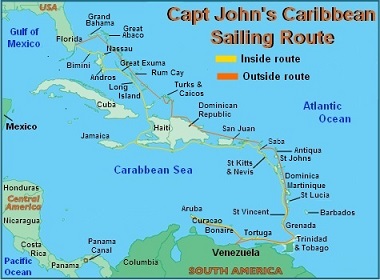
 To the Canadian Snowbirds, looking for warm climates and a warm welcome, we say:
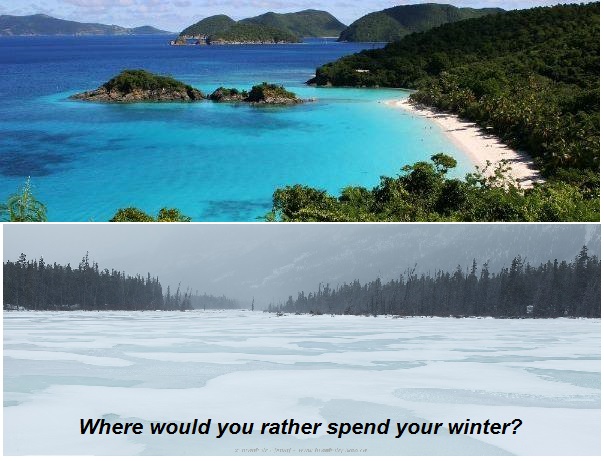 The book, Go Lean…Caribbean, serves as a roadmap for the implementation of the Caribbean Union Trade Federation (CU) over a 5 year period. The book posits that tourism products can be further extended to attract, accommodate and harvest the market of Snowbirds. These ones bring more than they take, and therefore should be viewed as low-hanging fruit for tourism’s economic harvest. While some CU member-states may target a High-Net-Worth clientele, there is room too for the hordes of retirees who may seek more modest accommodations. In the end, billions of dollars of economic output from the Snowbird market are still … billions of dollars.
 It is now 10 years later. The world is remembering the Financial Crisis of 2008.
 It could be that simple – there are players who want the opportunity to test their theories, manifest their visions and explore their ideas. They will come to you and build High-Tech neighborhoods, but only if you let them, not trample on their sensibilities and not block their progress.
 On Tuesday morning, the board of Waterfront Toronto, the organization administering revitalization projects along the Canadian city’s waterfront, unanimously agreed to work with the company to design the neighborhood. Final approval to physically develop the plans is likely to happen next year.
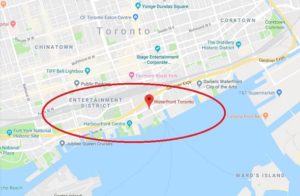
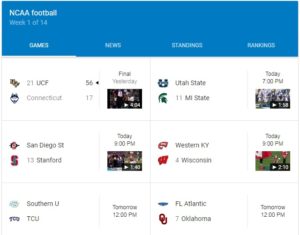




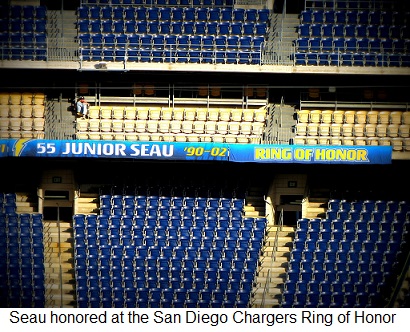
 In the US, today kicks-off Labor Day holiday weekend. The head of the Federal Government, President Donald Trump, sends out a message to the millions of federal employees: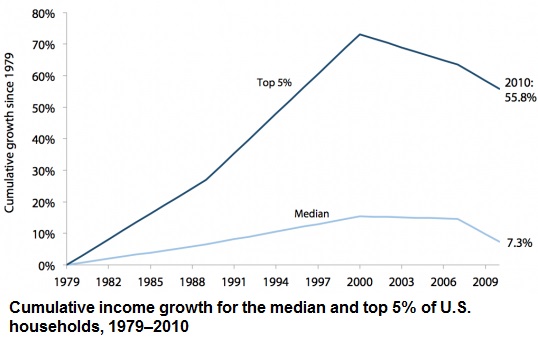
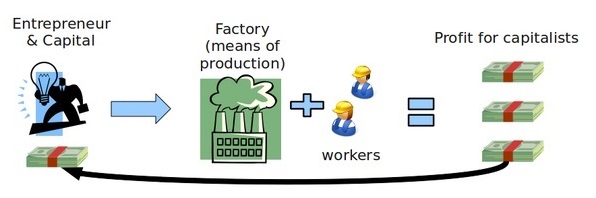

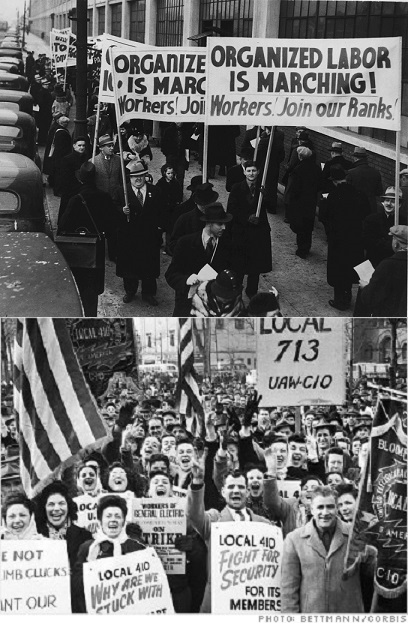

 This Dead President – the Savior of the American Union – is right! A homeland cannot have unity, harmony or leverage if it is divided.
 Press Release:– Tourism has enormous potential to promote Caribbean regional integration. So said Jamaica’s Tourism Minister, Edmund Bartlett who, at the time, was addressing the 54th annual general meeting of the St. Lucia Hotel & Tourism Association, which was held Friday (June 20) at Harbour Club St. Lucia. He was the featured guest speaker at the AGM.
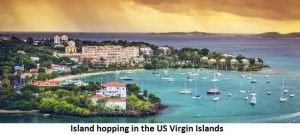

 So where do all the used plastics – and Styrofoam – go?
 August 13th, 2018 – Saint Lucia plans to phase-out Styrofoam food service containers and plastics, both plates and cups, beginning December 1, 2018, with a total ban on their importation before the end of next year.
 On this day 45 years ago, Hip-Hop was forged as a musical genre …
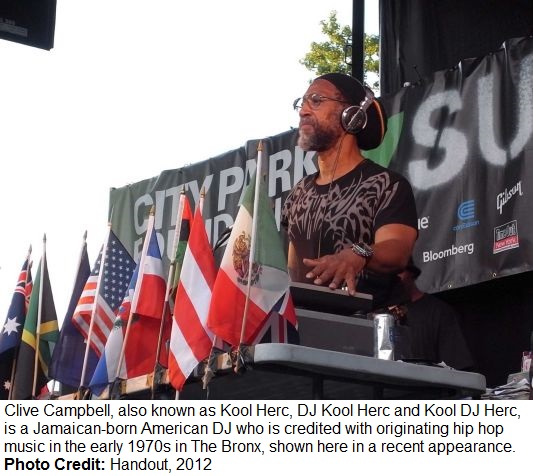

 The Go Lean book serves as a roadmap for the introduction and implementation of the technocratic Caribbean Union Trade Federation (CU), for the elevation of Caribbean society – for all member-states. The book asserts that this Caribbean super-national governance must be a lean operation, embracing the best-practices of the Art & Science of lean methodologies. The book opens with this introduction of lean (Page 4):
 30,000 people administering for 42 million citizens? Yes, we can … with the support of lean/agile systems and methodologies.
 May 18, 2018 – I am very pleased to announce more than 80,000 employees have been trained through the CitiLean Digital Training Academy. It was only last March when we celebrated our 50,000 mark!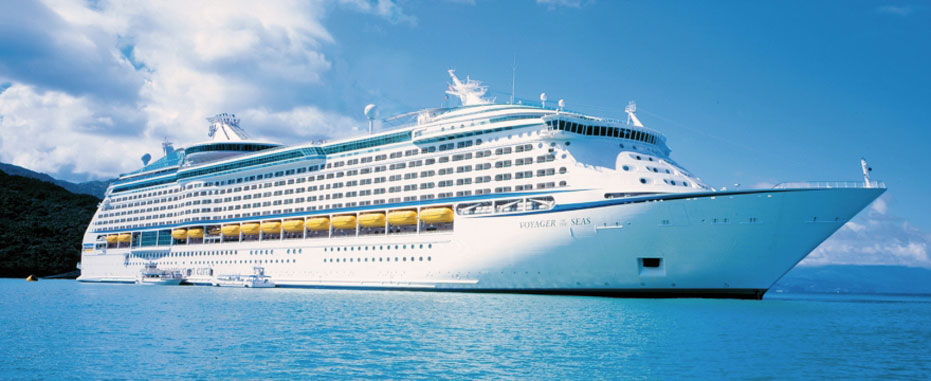
 When a cruise ship arrives in port, over 4,000 passengers disembark – they are the 800-pound Gorilla – their presence is felt; the ship cannot be ignored and cannot be dismissed …
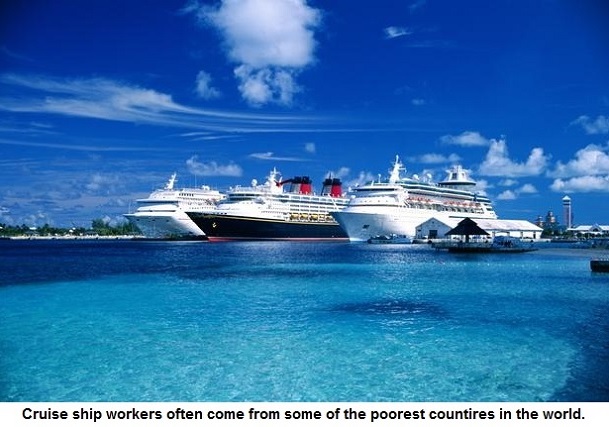
 It’s time to introduce the Caribbean Dollar (C$) as a regional currency. Though there will be coins and notes, the primary focus will be on electronic transactions. This is the future!
 …
…