Tag: Model

In Defense of Trade – Currency Assassins: Real Threat

Go Lean Commentary

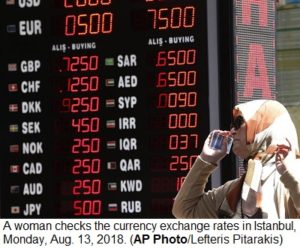
Want a good return on your investment? How about 45 percent? People have enjoyed these returns in the Foreign Currency Exchange (Fx) Markets.
Sounds appealing, right?!

This is why “they” do what “they” do. Currency Speculators & Vulture Capitalists that is! They can work their “Black Magic” and exploit vulnerable countries-currencies. Imagine the crime: “they” lend or borrow ill-advised monies requiring repayment in a foreign currency; then “they” manipulate supply and demand of the domestic currency against that foreign currency so as “to buy low and sell high”, at the expense of the foreign reserves maintained by a nation-state. Imagine hoarding the supply or artificially inflating the demand of the currency to manipulate a price increase. Boom! Instant profits.

This is the unrighteous work of Currency Assassins, Manipulators and/or Speculators. There are so many dangers of Speculative Attacks. Learn more here (in addition to the Appendix B VIDEO below):

In Economics, a speculative attack is a precipitous acquisition of some assets (currencies, gold, emission permits, remaining quotas) by previously inactive speculators. The first model of a speculative attack was contained in a 1975 discussion paper on the gold market by Stephen Salant and Dale Henderson at the Federal Reserve BoardPaul Krugman, who visited the Board as a graduate student intern, soon [1] adapted their mechanism[2] to explain speculative attacks in the foreign exchange market.[3]Source.

These ones, who practice these exploits are indeed Bad Actors.

The book Go Lean…Caribbean warns the region to be On Guard for Bad Actors … like these:

… history teaches that with the emergence of new economic engines, “bad actors” will also emerge thereafter to exploit the opportunities, with good, bad and evil intent. – Go Lean book Page 21.

This subject matter is not just academic; this happened for real, even to the large country of Great Britain/United Kingdom; this was the experience of the notorious Black Wednesday:

An example of this can be seen in the United Kingdom prior to the implementation of the Euro [currency] when European countries used a fixed exchange rate amongst the nations. The Bank of England had an interest rate that was too low while Germany had a relatively higher interest rate. Speculators increasingly borrowed money from the Bank of England and converted the money into the German mark at the fixed exchange rate. The demand for the British pound dropped so much that the exchange rate was no longer able to be maintained and the pound depreciated suddenly. Investors were then able to convert their German marks back into pounds at a significantly higher rate, allowing them to pay off their loans and keep large profits.

In a previous Go Lean Commentary, the dangers of currency speculation was identified and qualified:

Venezuela sues black market currency website in US
The Central Bank of Venezuela has filed a lawsuit in US courts against Miami-based entity DolarToday, alleging that this website undermines the Venezuelan bank, currency and economy by falsifying the country’s exchange rates.

Also, in another Go Lean Commentary, the dangers of Economic Assassins – Vulture Capitalists – were identified & qualified:

Beware of Vulture Capitalists
The term “vulture fund” is a metaphor, which can be considered a pejorative term, used to compare hedge funds to the behavior of vulture birds “preying” on debtors in financial distress by purchasing the now-cheap credit on a secondary market to make a large monetary gain, in many cases leaving the debtor in a worse state. …

This dire disposition of debt is … applies to many other communities, in North America, Europe (think Greece), Latin America and even in the Caribbean. …

The better the Credit Rating … the less of a chance to be limited to Vulture Capitalists.
Holy Cow! Economic Assassins; Vulture Capitalists; Currency Speculators; these are truly Bad Actors and a serious threat! Trade & economic stewardship is hard!

In truth, the book Go Lean…Caribbean calls this effort heavy-lifting, as it presents the strategies, tactics, implementations and advocacies to shepherd the Caribbean economy. The book serves as a roadmap for the introduction and implementation of the technocratic Caribbean Union Trade Federation (CU) and the aligning Caribbean Central Bank (CCB). Considering the branding, the emphasis is on trade . The CU/CCB will serve as integrated entities to shepherd the complexities for the region’s currency affairs.

This commentary is the final of a 5-part series (5 of 5) from the movement behind the Go Lean book in consideration of the subject “In Defense of Trade“. A discussion on currency is a discussion on trade. The focus is that for a new economic regime, Trade optimization must be coupled with optimization in monetary governance. The commentaries in the series are as follows:

  1. In Defense of Trade: China Realities
  2. In Defense of Trade: Macy’s Thanksgiving Parade Model – ENCORE
  3. In Defense of Trade: India BPO’s
  4. In Defense of Trade: Bilateral Tariffs – No one wins
  5. In Defense of Trade: Currency Assassins – Real Threat

No doubt, despite the identified dangers, there is the need to grow the Caribbean economy. We need the jobs, entrepreneurial opportunities, better educational and healthcare options that would arise because of the embrace of trade. So we must have “Guards at the Gate” to protect our homeland from all Bad Actors. This is the quest of the Go Lean movement. In fact, the books states this quest as prime directives. The prime directives are pronounced as the following statements:

  • Optimization of the economic engines in order to grow the regional economy to $800 Billion & create 2.2 million new jobs.
  • Establishment of a security apparatus to protect the resultant economic engines and mitigate challenges/threats to ensure public safety for the region’s stakeholders.
  • Improvement of Caribbean governance, including a separation-of-powers with member-states, to support these economic/security engines.

These prime directives reflect the best practice for managing Caribbean societal engines – economy, security and governance –  with an interdependent focus. This was pronounced at the outset of the book in the opening Declaration of Interdependence (Pages 10 – 13):

Preamble: … when a long train of abuses and usurpations, pursuing invariably the same object evinces a design to reduce them under absolute despotism, it is their right, it is their duty, to throw off such government, and to provide new guards for their future security.

x. Whereas we are surrounded and allied to nations of larger proportions in land mass, populations, and treasuries, elements in their societies may have ill-intent in their pursuits, at the expense of the safety and security of our citizens. We must therefore appoint “new guards” to ensure our public safety and threats against our society, both domestic and foreign. …

xvi. Whereas security of our homeland is inextricably linked to prosperity of the homeland, the economic and security interest of the region needs to be aligned under the same governance. Since economic crimes … can imperil the functioning of the wheels of commerce for all the citizenry, the accedence of this Federation must equip the security apparatus with the tools and techniques for predictive and proactive interdictions.

xxiv.   Whereas a free market economy can be induced and spurred for continuous progress, the Federation must install the controls to better manage aspects of the economy: jobs, inflation, savings rate, investments and other economic principles. Thereby attracting direct foreign investment because of the stability and vibrancy of our economy.

There must be New Guards to mitigate the Caribbean advance into trade. This is the charter of the CU Trade Federation. The vision is to provide the stewardship for the region’s economic engines, to optimize trade for intra-region and also extra-regional. This vision details some sound principles for adoption; consider this nugget from Page 129:

Caribbean Dollar
The Caribbean Dollar will be the medium of exchange for trade between CU member-states. There is no need to trade in any foreign currency (i.e. US$). In fact, the Caribbean Central Bank will control the monetary policies of the CU region. Any mis-management of US fiscal policies, often the case with Congress’ deficit spending, would not impede on the necessary trade of one Caribbean state to another.
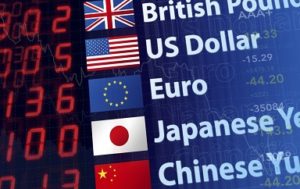
The CCB will be empowered to intervene in the currency affairs of the region. This constitute the New Guards that will be watching the Caribbean regional marketplace. This is what Central Banks do – should do – and now there will be one for our region:

Currency intervention is a monetary policy operation which occurs when a government or central bank buys or sells foreign currency in exchange for their own domestic currency, generally with the intention of influencing the exchange rate and trade policy. Policymakers may have different reasons for currency manipulation, such as controlling inflation, maintaining international competitiveness, financial stability, etc. – Source

In the Caribbean we have a crisis that stems from our high societal abandonment rate. Every time we have had currency devaluation episodes, a consequence has been citizens fleeing away from their homelands. What is the cause of these episodes? Number 1 reason/answer: Currency Speculators … trying to exploit our vulnerabilities. See this evidence-sample:

  1. Barbados
    Like many small developing countries, Barbados’ capital markets are comparatively unsophisticated and protected by legislative and non-legislative barriers to capital flows. However, by imposing a simple Uncovered Interest Parity (UIP) condition, the counterfactual situation of free capital movements and efficient capital markets can be simulated. It is shown that in these conditions successful speculative attacks on the currency anchor would have occurred in times of macroeconomic disequilibrium. This paper is, therefore, supportive of those who, in the wake of the 1990s’ major financial, balance of payments and currency crises, have argued for a more cautious approach to financial and capital account liberalisation, particularly for those countries that have chosen to maintain a fixed currency arrangement.
    Source: Caribbean Development Bank Staff Working Paper May 2000; retrieved November 27, 2018 from: http://www.caribank.org/uploads/publications-reports/staff-papers/wkgppr_2_exchange_rates[1].pdf
  2. Jamaica
    This paper attempts to generate an empirical model aimed at predicting the timing and magnitude of currency depreciation forced by speculative attacks on Jamaica’s managed exchange rate system. The paper is grounded within a first generation approach (‘fundamentals approach’) to speculative attack modeling, which stresses the role played by weak economic fundamentals in inducing currency crises. –
    Source: Bank of Jamaica White Paper; “Estimation of Speculative Attach Models and the Implications for Macroeconomic Policy – 1990 to 2000“; published January 2001; retrieved November 27, 2018 from: http://www.boj.org.jm/uploads/pdf/papers_pamphlets/papers_pamphlets_Estimation_of_Speculative_Attack_Models_and_the_Implication_for_Macroeconomic_Policy.pdf
  3. Dominican Republic
    This paper examines the determinants of speculative attacks that occurred recently in the Dominican Republic, and proposes a series of indicators to serve as an early warning system for identifying vulnerable periods. The estimates were made using monthly data covering the period between January 1996 and June 2008. The results show that the proposed indicators have the ability to reasonably explain and predict the existence of a speculative attack.
    Source: Academic Paper – Pontificia Universidad Católica Madre y Maestra; “Pressure and speculative attacks on the foreign exchange market of the Dominican Republic“; published November 2008; retrieved November 27, 2018 from: https://www.researchgate.net/publication/254443014_Pressure_and_speculative_attacks_on_the_foreign_exchange_market_of_the_Dominican_Republic

Here in the Caribbean, we must learn …

Fool me once, shame on you; fool me twice same on me.

This Go Lean/CU roadmap is designed to address all of this societal engines: economic (monetary), security and governance. The Go Lean book – within its 370 pages – describes how a new Caribbean regime can be empowered to promote and protect trade. The solutions include adopting new community ethos; plus the execution of new strategies, tactics, and implementations to impact the regional economy.  Consider this one advocacy from the book, for optimizing Foreign Currency management. See the specific plans, excerpts and headlines on Page 154 under the title:

10 Ways to Better Manage Foreign Exchange

The Bottom Line on Foreign Exchange Markets

The foreign exchange market is the most liquid financial market in the world. [This is a recent history compared to international commerce in general, with most of the market structure being developed since World War II and after the abandonment of the gold standard. After WWII, the Bretton Woods Accord was signed allowing currencies to fluctuate within a range of 1% to the currencies par; then this structure was eclipsed in the 1970’s, ending fixed rates of exchange and bringing about eventually a free-floating currency system. After 40 years and more iterations, we now have the status quo].

Today, currency traders include large banks, central banks, institutional investors, currency speculators, corporations, governments, other financial institutions, and retail investors. The average daily turnover in the global foreign exchange and related markets is continuously growing. According to the 2010 Triennial Central Bank Survey, coordinated by the Bank for International Settlements, average daily turnover was US$3.98 trillion in April 2010 (vs $1.7 trillion in 1998). Of this $3.98 trillion, $1.5 trillion was spot transactions and $2.5 trillion was traded in outright forwards, swaps and other derivatives. Foreign exchange trading increased by 20% between April 2007 and April 2010 and has more than doubled since 2004.

A foreign exchange market is closest to the ideal of perfect competition, notwithstanding currency intervention (capital controls) by central banks. Totally free markets spurn the development of complex products like derivatives. The 2007 – 2009 Global Financial Crisis demonstrated that free-radical derivative markets do bring systemic threats. (Appendix ZA on Page 315).

1 Lean-in for the Caribbean Single Market & Economy

This treaty allows for the unification of the region into one market, thereby expanding to an economy of 30 countries, 42 million people and GDP of over $800 Billion (circa 2010). A mission of the CU is to empower the economic engines in the region. The Caribbean Central Bank (CCB) will manage the monetary policy and reserves, taking a long view to the region’s economic vibrancy. The Governors of the CCB will be appointed for 14-year terms, thus insulating them from political alignments. This strategy is necessary for the management of advanced exchange products affecting the region’s capital controls (derivatives will be managed in a controlled environment to assuage against systemic risk).

2 Mixed-Basket of Foreign Reserves

The Caribbean Central Bank will control the money supply of the region with new monetary tools (i.e. Open Market Operations not available before), and using a mixed-basket (modeled after the IMF) of foreign reserves assuage the risk tied to any one Super Power, (a la the US dollar). The tool-kits for capital controls (see Appendix ZA) expand under this management approach. The US decisions are made by and for Americans, the Caribbean gets no vote.

3 Overcome Fear of Math
4 E-Payments Neutralizations
5 Apply Lessons-Learned in Region
6 Currency Manipulators / Speculators

The Caribbean Central Bank will enforce monetary control for amounts exceeding a moderate limit, to assuage currency manipulators from “gaming” and abusing the system for illicit gains. This was a lesson-learned from Jamaica.

7 Realities of Dual Currencies

The CU Treaty does not nullify local currencies, rather the C$ is designed to replace the US Dollar default dominance in the region. As such all regional casinos (except in PR & USVI) will game in C$, not US$. This nullifies “black markets”.

8 Diaspora Realities
9 Euro Zone Model for CU and CCB
10 Add the British Pound Sterling to CCB Basket

Do you want to grow the economy?

Trade … more!

Do you want to trade more?

Be prepared to buy-and-sell foreign currency; and be prepared for foreigners to buy-and-sell your domestic currency.

They will be strangers; some will be nice; some will be Bad Actors – “Currency Assassins”.

This is the reality of global trade and foreign currency: Bad Actors will always merge … some with evil intent.

Currency Assassins … are real!

But we can be better and do better. We can trade with the globe and be On Guard for Bad Actors.

Yes, we can …

Mastering globalization, trade and foreign currency is how we must compete in today’s trade battles. This is the quest of the Go Lean roadmap.

Everyone in the Caribbean is urged to lean-in to this roadmap to make the Caribbean a better place to live, work and play. 🙂

Download the free e-Book of Go Lean … Caribbean – now!

Sign the petition to lean-in for this roadmap for the Caribbean Union Trade Federation.

——————-

Appendix A – Understanding the Foreign Exchange Market

Lesson summary

The foreign exchange market is like any other market insofar as something is being bought and sold. However, the foreign exchange market is unique in two ways:

  1. currencyis being bought and sold, rather than a good or service
  2. The currency being bought and sold is being bought with a different currency.

See remainder of lesson at source here:

Source- Khan Academy e-Learning retrieved November 26, 2018 from: https://www.khanacademy.org/economics-finance-domain/macroeconomics/forex-trade-topic/macro-the-foreign-exchange-market/a/the-foreign-exchange-market

——————-

Appendix B VIDEO – Speculative attack on a currency | Foreign exchange and trade | Macroeconomics | Khan Academy – https://youtu.be/P2IWGlR1SHs

Khan Academy
Published on May 8, 2012 – Macroeconomics on Khan Academy: Topics covered in a traditional college level introductory macroeconomics course.

About Khan Academy: Khan Academy offers practice exercises, instructional videos, and a personalized learning dashboard that empower learners to study at their own pace in and outside of the classroom. We tackle math, science, computer programming, history, art history, economics, and more. Our math missions guide learners from kindergarten to calculus using state-of-the-art, adaptive technology that identifies strengths and learning gaps. We’ve also partnered with institutions like NASA, The Museum of Modern Art, The California Academy of Sciences, and MIT to offer specialized content.

For free. For everyone. Forever. #YouCanLearnAnything
Subscribe to Khan Academy’s Macroeconomics channel: https://www.youtube.com/channel/UCByt…
Subscribe to Khan Academy: https://www.youtube.com/subscription_…

Original Source: https://www.khanacademy.org/economics-finance-domain/macroeconomics/forex-trade-topic/macro-the-foreign-exchange-market/v/speculative-attack-on-a-currency

Share this post:
, , ,

In Defense of Trade – Bilateral Tariffs: No one wins

Go Lean Commentary

Trade giveth; trade taketh away …

This has now been established: trade can transform a society, elevating masses of people out of poverty to a middle-class life.

We have seen this formula succeed and repeated time and again – Great Britain, United States, Germany, Japan, Asian Tigers (Singapore, Hong Kong. South Korea and Taiwan). The formula also works in the reverse: stopping trade and people become more improvised.

We are seeing this actuality now as well.

This is the assessment in the US where the current American Federal government (under President Donald Trump) has a new penchant for tariffs. This is also en vogue with the experiences in the UK; London is negotiating a new trade deal with the European Union as they leave – Brexit – that Single Market. Both of these developments appear to be inviting doom for the perspective economies.

This commentary is the fourth submission of a 5-part series (4 of 5) from the movement behind the book Go Lean…Caribbean in consideration of the subject “In Defense of Trade“. The focus here is that Trade must be prioritized in the Caribbean region if we want a new economic regime. The other commentaries in the series are cataloged as follows:

  1. In Defense of Trade: China Realities
  2. In Defense of Trade: Macy’s Thanksgiving Parade Model – ENCORE
  3. In Defense of Trade: India BPO’s
  4. In Defense of Trade: Bilateral Tariffs – No one wins
  5. In Defense of Trade: Currency Assassins – Real Threat

No doubt, we want growth, so this means we must embrace the strategies, tactics and implementations related to trade. This is how we can succeed with the quest for jobs, entrepreneurial opportunities, better educational and healthcare options, a safer homeland and more efficient governmental services. We must pay more than the usual attention to these discussions, especially related to tariffs.

tariff is a tax on imports or exports between sovereign states. Trade deficits mean that consumers buy too much foreign goods and too few domestic products. According to Keynesian theory, trade deficits are harmful. Countries that import more than they export weaken their economies. As the trade deficit increases, unemployment or poverty increases and GDP slows down. And surplus countries are getting richer at the expense of deficit countries. Keynes thought that surplus countries should be taxed[1].The tariff is used to equalize the trade balance in order to protect domestic workers. It is a policy that taxes foreign products and encourages home industry. – Source: Wikipedia.

Right now the US is doubling-down on a tariff strategy so as to force their will on the international community – especially targeting China. But the experts are asserting that a tariff strategy is not the solution.

Experts? The Economists … and Wall Street Titans. See this one Wall Street Titan prognosticate the vision of trade realities in this November 2018 VIDEO:

VIDEO – Ray Dalio on U.S. – China Trade Tensions, Markets – https://youtu.be/ZTJkNDlHB3s

CNBC
Published on Nov 15, 2018 – Ray Dalio, hedge fund giant Bridgewater Associates, joins ‘Squawk Box’ to discuss markets, interest rates, the debt market and U.S.-China trade tensions.

The dispute between the U.S. and China over trade deficits and surpluses is rather trivial compared to the broader philosophical differences between the world’s two biggest economic superpowers, Bridgewater Associates founder Ray Dalio told CNBC on Thursday.

“The trade war, I think, can be worked out,” the billionaire investor Dalio said in a “Squawk Box” interview on CNBC. But he argued the conflict goes “way beyond the trade war.”

Dalio, co-CIO and co-chairman at Bridgewater, said the two nations’ polar opposite methods of governing is the broader, more difficult issue to reconcile. “It goes back to Confucius in 500 B.C.,” he said.

“It’s basically a top-down versus a bottom-up type of approach,” said Dalio, whose China unit of Bridgewater last month launched its first onshore Chinese investment fund.

“When you look at the 2025 plan in China, the government believes that they should have a plan for making China great” and will coordinate all aspects of public and private enterprise to achieve their goals, he said. “That type of activity is objectionable to the United States” in its free market economy.

The China 2025 plan is a state-backed industrial policy that’s provoked alarm in the West, and is core to Washington’s complaints about Beijing’s technological ambitions.

Dalio appeared on CNBC from the Greenwich Economic Forum in Connecticut where he later spoke to the elite gathering of “investment thought leaders“.

So Wall Street experts like Ray Dalio are urging caution for national governments implementing trade tariffs. In fact, an editorial by the iconic Wall Street Journal is strongly urging the trump administration to tread lightly with their new found affinity for tariff. The reason is simple:

No one wins a Trade War fought with the weapons of tariffs. It’s a fallacy and defective reasoning to think that tariff’s can be used to win a Trade War in this modern age of globalization.

This is the conclusion of the below Opinion Commentary in the Appendix: See the excerpt-summary here:

Mr. Trump has instead employed a unilateral tariff policy that lets him boast about being tough without a clear goal. The tariffs will hurt Chinese exporters, though many will move production to other countries. But tariffs also damage American producers and consumers, as does the $60 billion in new retaliatory tariffs that Beijing announced Tuesday.

The Caribbean needs to take note. We need effective strategies, tactics and implementation for trade. This is the quest of the book Go Lean…Caribbean.

The Go Lean book serves as a roadmap for the introduction and implementation of the technocratic Caribbean Union Trade Federation (CU). The CU seeks to optimize the region’s economic systems to better deliver on the prime directives of the Go Lean roadmap. The prime directives are pronounced as the following statements:

  • Optimization of the economic engines in order to grow the regional economy to $800 Billion & create 2.2 million new jobs.
  • Establishment of a security apparatus to protect the resultant economic engines and mitigate challenges/threats to ensure public safety for the region’s stakeholders.
  • Improvement of Caribbean governance, including a separation-of-powers between member-states and CU federal agencies.

So the CU Trade Federation vision is to provide the stewardship for the region’s economic engines, to optimize trade, so as to succeed in the goals of the roadmap.

The Go Lean/CU roadmap is designed to drive change among the economic, security and governing engines of the Caribbean member-states. The Go Lean book – within its 370 pages – describes how a new Caribbean regime can better exploit the benefits of trade – thereby avoiding the pitfalls of faulty trade reasoning. Among the new community ethos the book urges the region to adopt and the strategies, tactics and implementations the book urges the region to execute is this one advocacy to double-down on trade. Consider the specific plans, excerpts and headlines from this advocacy on Page 128 entitled:

10 Ways to Improve Trade

1 Lean-in for the Caribbean Single Market

This treaty allows for the unification of the region into one market, thereby creating a single economy of 30 member-states, 42 million people and a GDP of over $800 Billion. The CU will function as a proxy organization of the governments of all 30 member-states … . The similar exclusivity of roles and responsibilities will allow the CU to deploy and then empower the economic engines of this region. The profits from this new Trading Company, the CU, also go back to its stockholders; in this case, the member-states.

In addition, the treaty will call for a homeland security pact, with emergency management provisions, to assuage regional threats and risks. The CU gets to apply the lessons-learned from … experience to pursue the Greater Good, ensure that its powers are always authorized and deputized by the sovereign states, and proper governance, transparency and accountability accompany all activities.

2 Adopt Trade SHIELD

The CU will adopt the Trade SHIELD principles (see APPENDIX D on Page 264) to foster and optimize domestic and international trade.

3 Caribbean Dollar (C$) Currency Stabilization Derived from Learned Lessons
4 Electronic Commerce to Streamline a Bigger Better Domestic Trade Market
5 CU Citizens as Foreign Guest Workers
6 Diaspora Trade

The presence of a Caribbean Diaspora in North American and EU cities furnishes an export market to profit from trade. Since most often, the Diaspora live in “pockets” in their foreign lands, the logistics of exporting products (food supplies and intellectual property) has been efficient, but the CU envisions an even more optimized trade process with Free Trade provisions, collaborated customs processing, pre-approved inspections, and electronic commerce in C$ Dollars.

7 Intellectual Property – Media, Music
8 Tourism Enhancers
9 Strategic Priorities (Food, Fisheries)

One mission of the CU is to facilitate the food supply so that the region can feed itself, more from local production and less from trade; this includes yields from domestic agriculture and fisheries. Even if the opportunity cost is too high for domestic food production compared to foreign trade, the CU must supplement with subsidies. Food is non-negotiable!

10 Trade Missions

The CU will foster a stronger foreign policy by “speaking on one accord” for all the member-states. The CU will therefore open/staff foreign Trade Missions to not only perform diplomatic services, but economic ones as well. This will extend beyond the current Trade Negotiations (OTN), so as to add the functions of a Group Purchasing Organization (GPO).

Tariffs are bad by the country imposing them, but by any competing entity – you hurt yourself.

Imagine the absurdity of this analogy: A Bad Actor robs a bank and instead of targeting the innocent hostages in the bank, he threatens to harm himself – “Give me the money or I will shoot … myself”.

Now that the Great Recession (2008) is over in the US, the country is enjoying a full recovery. But as warned in the foregoing editorial, faulty trade reasoning can jeopardize this disposition:

Strong U.S. growth after tax reform and deregulation is so far dwarfing the overall economic harm from tariffs, as Tuesday’s market nonchalance indicates. But the tariffs are doing arbitrary harm to innocent Americans, and a policy of hurting yourself until the other guy changes his behavior is hard to sustain.

This Go Lean movement has addressed Good -vs- Bad Trade Policies in the past. This consideration has reviewed the business prospects of chattel items (raw materials and finished goods), intelligent property (music and media products) and services (tourism, medical, outsourcing, etc.). Consider this sample of previous blog-commentaries:

https://goleancaribbean.com/blog/?p=15346 Industrial Reboot – Shipbuilding 101
https://goleancaribbean.com/blog/?p=13184 Industrial Reboot – Frozen Foods 101
https://goleancaribbean.com/blog/?p=15310 Industrial Reboot with Trauma Centers
https://goleancaribbean.com/blog/?p=13138 Industrial Reboot – Prisons 101
https://goleancaribbean.com/blog/?p=12230 Commerce of the Seas – Extraction Realities
https://goleancaribbean.com/blog/?p=12126 Stupidity of the Jones Act on PR, USVI Trade
https://goleancaribbean.com/blog/?p=7789 An Ode to Detroit – Good Luck on Trade!
https://goleancaribbean.com/blog/?p=6867 How to address high consumer prices? Better Trade
https://goleancaribbean.com/blog/?p=5648 New Trade Regime for Music Industry
https://goleancaribbean.com/blog/?p=4767 Welcoming WTO? Say Goodbye to Nationalism
https://goleancaribbean.com/blog/?p=479 PetroCaribe approach to Regional Trade & Social Advocacy

The Caribbean can be a better homeland to live, work and play with a better execution of trade policies. Trade is more about “brains than it is about brawn”. We need to think smart and work smart to reform and transform our society.

Let’s do this!

This is the Go Lean quest.

We urge everyone in the Caribbean to lean-in to this roadmap. It is conceivable, believable and achievable. 🙂

Download the free e-Book of Go Lean … Caribbean – now!

Sign the petition to lean-in for this roadmap for the Caribbean Union Trade Federation.

—————-

Appendix – Title: The Missing China Trade Strategy
Sub-title: Trump imposes new tariffs but what he wants from Beijing isn’t clear.
By: WSJ Editorial Board

President Trump on Monday imposed a long-threatened 10% tariff on $200 billion of Chinese imports, effective next week, with the rate set to increase to 25% at the end of the year. More than half of Chinese imports now face punitive taxes, so it’s remarkable that the U.S. still hasn’t spelled out what it wants from Beijing. The lack of a strategy makes it hard to secure meaningful gains and resolve a trade war that is damaging both economies.

The Administration is on solid ground when it says China’s behavior threatens the global trading system. A study by the U.S. Trade Representative found “numerous unfair policies and practices relating to United States technology and intellectual property.” There is bipartisan U.S. support to address China’s violations of its promises to respect market forces.

But Mr. Trump also continues to rail against China for its large bilateral trade surplus with the U.S., and this is clearly motivating his escalation of tariffs. The surplus is driven largely by Chinese comparative advantage in low-end manufacturing and global capital flows to the U.S. Prioritizing a goal that flies in the face of market forces sends a mixed message to Beijing on what the U.S. wants, and it allows China to pose as the defender of free trade.

Cabinet members have tried to negotiate deals that would satisfy Mr. Trump’s obsession with the trade deficit, only to have him reject them as insufficient. Commerce Secretary Wilbur Ross struck a compromise last year on steel production that was discarded after he returned from Beijing. In May Treasury Secretary Steve Mnuchin reached a tentative deal to put tariffs on hold if the Chinese bought more soybeans and natural gas, but the White House resumed its tariff threats in June.

Mr. Trump is correct on many points, including his complaints that his predecessors failed to address changing Chinese behavior. China’s accession to the World Trade Organization in 2001 assumed the country was committed to what it then called “reform and opening” and would honor its promises to let foreign companies compete and protect intellectual property. The agreement largely treated China like other trading nations and relied on WTO arbitration to resolve disputes.

But China’s economic reforms stalled after its WTO entry. Beijing responded to the global financial crisis by directing credit to state-owned enterprises, which led officials to discriminate against foreign companies. After President Xi Jinping took power in 2012, he continued this trend and created the “Made in China 2025” plan requiring foreign companies to turn over intellectual property in return for access to China.

If China were a small country, the U.S. could afford to absorb surplus goods and let American consumers benefit. China’s effort to leapfrog into the ranks of developed economies by forcing companies to relocate their most valuable processes and pervert the law of comparative advantage will ultimately fail.

But when the world’s second-largest economy goes rogue, the collateral damage is huge and has undermined political support in the U.S. and the West for free trade. More ominously, China’s mercantilism is part of a larger Xi Jinping strategy to establish a new military and commercial hegemony in Asia.

The U.S. goal now should be to negotiate a deal with Beijing that sets new rules of the trading road. That agreement should seek to change Chinese practices, not reduce the trade deficit per se. This may require superseding current WTO rules, and that is best accomplished with a united front that includes the world’s other major trading powers.

Mr. Trump has instead employed a unilateral tariff policy that lets him boast about being tough without a clear goal. The tariffs will hurt Chinese exporters, though many will move production to other countries. But tariffs also damage American producers and consumers, as does the $60 billion in new retaliatory tariffs that Beijing announced Tuesday.

Strong U.S. growth after tax reform and deregulation is so far dwarfing the overall economic harm from tariffs, as Tuesday’s market nonchalance indicates. But the tariffs are doing arbitrary harm to innocent Americans, and a policy of hurting yourself until the other guy changes his behavior is hard to sustain. Mr. Trump’s political support will erode if he can’t deliver the new trade deals he promises.

If Mr. Trump wants to change Chinese behavior, he should first finish a new NAFTA, drop his blunderbuss steel tariffs on allies, forget new auto tariffs, negotiate a zero tariff deal with Europe, and re-enter the Trans-Pacific Partnership. Then lead a coalition to confront Xi Jinping from a position of strength with targeted trade enforcement rather than scattershot tariffs. The real worry is that Mr. Trump supports tariffs for their own sake, and he may not want a China deal. With Donald Trump and trade, you never know.

Source: Posted September 18, 2018; retrieved November 25, 2018 from: https://www.wsj.com/articles/the-missing-china-trade-strategy-1537313246

—————-

Related Media – Foreign Edition Podcast

Asia Avoids a Crisis; Britain Falls Into One – http://traffic.megaphone.fm/WSJ6726301554.mp3

Share this post:
, , ,
[Top]

In Defense of Trade – India’s Business Process Outsourcing

Go Lean Commentary

Pay more than the usual attention to Trade

… this is the urging of this series of commentaries. Why?

Trade may be the panacea (cure all) for the ills of the Caribbean. Let’s consider one example, BPO.
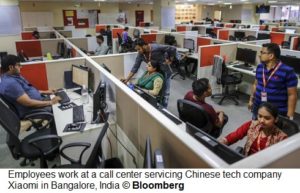
BPO = Business Process Outsourcing

Individually, these 3 words are very common in our daily life: Business, Process and Outsourcing. Put together and most people … have no clue.

BPO is not just an informal association of these 3 letters. Rather it’s a formal business model; see this encyclopedic reference:

Business process outsourcing (BPO) is a subset of outsourcing that involves the contracting of the operations and responsibilities of a specific business process to a third-party service provider. Originally, this was associated with manufacturing firms, such as Coca-Cola that outsourced large segments of its supply chain.[1]

BPO is typically categorized into back office outsourcing, which includes internal business functions such as human resources or finance and accounting, and front office outsourcing, which includes customer-related services such as contact center (customer care) services.[2]

BPO that is contracted outside a company’s country is called offshore outsourcing. BPO that is contracted to a company’s neighbouring (or nearby) country is called nearshore outsourcing.

Often the business processes are information technology-based, and are referred to as ITES-BPO, where ITES stands for Information Technology Enabled Service.[3] Knowledge process outsourcing (KPO) and legal process outsourcing (LPO) are some of the sub-segments of business process outsourcing industry.

Benefits
The main advantage of any BPO is the way in which it helps increase a company’s flexibility. However, several sources have different ways in which they perceive organizational flexibility. In early 2000s BPO was all about cost efficiency, which allowed a certain level of flexibility at the time. Due to technological advances and changes in the industry (specifically the move to more service-based rather than product-based contracts), companies who choose to outsource their back-office increasingly look for time flexibility and direct quality control.[4] Business process outsourcing enhances the flexibility of an organization in different ways:

  • … transforming fixed into variable costs.[7]
  • … focus on its core competencies, without being burdened by the demands of bureaucratic restraints.[9]
  • … increasing the speed of business processes.
  • … allows firms to retain their entrepreneurial speed and agility, which they would otherwise sacrifice in order to become efficient as they expanded.

Source: Retrieved November 23, 2018 from: https://en.wikipedia.org/wiki/Business_process_outsourcing

The most common BPO in the US is payroll-processing. Most companies have specific missions, they are not in the payroll business, but payroll – every week, bi-week, fortnight, or monthly – is a necessary evil for operations. BPO for this HR-Accounting functionality allows the firm to concentrate on its mission and enjoy greater functionality and sometimes better cost savings.

Here’s another: have you gotten a Passport lately? Then chances are you are familiar with the subject. You show up with a completed application and a photo; a clerk receives you and inspects your form for completeness; they package your submissions into a bundled folder and send it off for processing (Black-box). 2 weeks, 3 weeks or 5 weeks later (according to the Service Level Agreement or SLA), a finished passport is ready for pick-up. That Black-box is classic BPO.
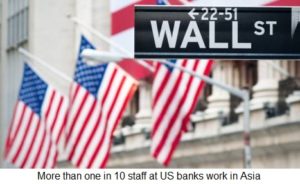
Worldwide, the BPO market is estimated at about US$140 billion for 2016 – from the BPO Services Global Industry Almanac 2017.[27]  One country has double-down on this strategy that they can provide jobs, entrepreneurial opportunities and economic growth to their citizens by pursuing more and more BPO.

This is India. See the related VIDEO in Appendix B below.

The foregoing encyclopedic reference continues:

India, China and the Philippines are major powerhouses in the industry. In 2017, in India the BPO industry generated US$30 billion in revenue according to the national industry association.[28] The BPO industry is a small segment of the total outsourcing industry in India. The BPO industry and IT services industry in combination are worth a total of US$154 billion in revenue in 2017.[29] The BPO industry in the Philippines generated $22.9 billion in revenues in 2016.[30] In 2015, official statistics put the size of the total outsourcing industry in China, including not only the BPO industry but also IT outsourcing services, at $130.9 billion.[31]

Lessons learned from India is not unfamiliar to this movement behind the book Go Lean…Caribbean. Here we go again!

We can benefit from the consideration of trade with other countries; we previously considered China and now we are looking at India. This commentary is the 3rd of the 5-part series (3 of 5) from the movement behind the book Go Lean…Caribbean in consideration of the subject “In Defense of Trade“. The focus here is that Trade must be prioritized in the Caribbean region if we want a new economic regime. The other commentaries in the series are cataloged as follows:

  1. In Defense of Trade: China Realities
  2. In Defense of Trade: Macy’s Thanksgiving Parade Model – ENCORE
  3. In Defense of Trade: India BPO’s
  4. In Defense of Trade: Bilateral Tariffs – No one wins
  5. In Defense of Trade: Currency Assassins – Real Threat

The Go Lean movement asserts that Trade is pivotal for Caribbean growth. It does not only affect the region’s economics, but the security and governing engines as well. In the case of BPO, the trade product is intellectual: human services. India has benefited greatly from Wall Street’s BPO jobs; this Asia region now boasts 10 percent of all the jobs servicing Wall Street banks; see Appendix A below for a full article of how Wall Street firm Goldman Sachs employ professional functions in their Bangalore BPO facility, including Quantitative Analysts. We need to pay more than the usual attention to this model. We can copy some of the BPO functionality and bring jobs here to the Caribbean.

The Go Lean book serves as a roadmap for the introduction and implementation of the technocratic Caribbean Union Trade Federation (CU). The CU seeks to optimize the region’s economic systems to better deliver on the prime directives of the Go Lean roadmap. The prime directives are pronounced as the following statements:

  • Optimization of the economic engines in order to grow the regional economy to $800 Billion & create 2.2 million new jobs.
  • Establishment of a security apparatus to protect the resultant economic engines and mitigate challenges/threats to ensure public safety for the region’s stakeholders.
  • Improvement of Caribbean governance to support these economic/security engines, including a separation-of-powers between member-states and CU federal agencies.

So the CU Trade Federation vision is to provide the stewardship for the region’s economic engines, to optimize trade so as to succeed in the goals of the roadmap.

The Go Lean/CU roadmap details how to drive change for the 30 member-states and their economic, security and governing engines. The Go Lean book – within its 370 pages – describes the new community ethos, strategies, tactics, implementations and advocates that must be executed to manifest this roadmap.

BPO’s are affiliated with Contact Centers …

… this commentary had previously identified the economic benefits that can come to a community that invest in BPO’s:

With modern Internet Communications Technology (ICT) – think Voice-over-IP – a phone call can originate or terminate around the globe, but feel/sound like it is next door. The premise of this business model for the Caribbean is simple: Why not make those calls / answer the phone here in the Caribbean?

Jobs are at stake.

Direct and indirect jobs at physical and virtual call centers: 12,000.

In addition to these industry jobs; there is also the reality of indirect jobs – unrelated service and attendant functions – at a 3.75 multiplier rate would add another 45,000 jobs.

The subject of banking jobs have been thoroughly elaborated upon in these previous Go Lean blog-commentaries:

https://goleancaribbean.com/blog/?p=15923 Industrial Reboot – Payment Cards 101
https://goleancaribbean.com/blog/?p=15479 ‘Lean Is’ as ‘Lean Does’ – Good Bank Project Management
https://goleancaribbean.com/blog/?p=14242 Leading with Money Matters – Follow the Jobs
https://goleancaribbean.com/blog/?p=11184 JPMorganChase spent $10 billion on ‘Fintech’ for 1 year

In summary, while the Caribbean is arguably the best address on the planet, we have a deficiency in job creation. We need more trade. There is the opportunity to double-down on trade … in services – BPO’s await us – this will create more jobs.

India did this – mastering trade and globalization – so can we.

This is the Go Lean roadmap. This plan is conceivable, believable and achievable.

We urge everyone in the Caribbean – bankers et al – to lean-in to this roadmap to make the Caribbean a better place to live, work and play. 🙂

Download the free e-Book of Go Lean … Caribbean – now!

Sign the petition to lean-in for this roadmap for the Caribbean Union Trade Federation.

———————-

Appendix A – Title: The new back office: inside Goldman Sachs’ Bangalore hub 
Sub-title:
Quants are hired in India as economics, politics and tech shape the banking industry
By: Andrew Hill

When Goldman Sachs opened its wholly owned Bangalore operation in 2004, it was a typical back office. Just under 300 full-time staff supported a front line of revenue-generating bankers worldwide. They worked in limited areas such as information technology, finance and accounting.

The group put no cap on Bangalore’s ambitions, says Bunty Bohra, who heads the office, but “we didn’t envisage anything like the scale and complexity” of the current operation — let alone what is now planned for the group.

Goldman now employs about 5,000 staff in Bangalore, 4,000 of them full-time, across almost every division of the bank, including revenue-generating “front office” roles. In 2019, it expects to open a $250m campus on Bangalore’s traffic-clogged outer ring road that will be able to accommodate 9,000 people in two buildings, across 1m sq ft.

The evolution of Goldman’s presence in Bangalore is one example of how economics, technology and politics have shaped the back office over the past 15 years. Companies have started to look at back offices not just as low-cost support centres, but sources of skills for the rest of the organisation. At the same time, they have learnt to flex the mixture and location of their own staff, and of outsourced teams, to meet customer needs.

In the mid-1990s, multinationals strove to cut the cost of support functions such as handling payroll, or dealing with customer queries. Moving them to cheaper countries such as India was the obvious solution. Since then, however, the response to the question of how, where and with whom to carry out back-office functions has become more complex, and more strategic.

Goldman is a case in point. Its Bangalore-based staff now represent 14 activities — from compliance and legal services to investment banking, though the most senior client-handling vice-presidents still operate out of Mumbai. “It really is a talent story, not ‘Where are there people and office space that’s inexpensive?’” says Mr Bohra. Last year, for instance, the bank hired 150 “quants” in Bangalore. These mathematicians and scientists work on the bank’s quantitative investment strategies, but also analyse big data in areas such as risk management or human resources.

The bank’s plans for its new campus would allow it to expand to become the biggest office outside New York. But at the same time, the bank does not have to take up the option to lease the second of two buildings. At the moment, it expects headcount to remain flat. Mr Bohra uses an analogy with a potentially uncontrollable family pet: “We don’t want to have a ‘golden retriever’ problem. We want the intellect, maturity and seasoning to exist at the same time.”

This is only one way in which companies are reviewing their back-office strategy. For instance, growth in the use of “captive” centres, serving the whole company, has accelerated. Ilan Oshri of Loughborough University found that between 1990 and 2009, the world’s largest 250 companies established 367 captive centres worldwide. There are now an estimated 2,000 such hubs.

Outsourcing companies have also become more agile. Susir Kumar, chairman of Intelenet Global Services, says outsourcers have moved from carrying out processes to making more judgments for clients. Intelenet’s agents have long had the responsibility for deciding, say, whether to grant a loan or approve an insurance claim. “The ability to manage change in a fast-changing environment is the key,” he says. Often, contract workers are used in a blend with in-house back-office staff.

Even Goldman’s Bangalore operation, which prides itself on propagating a “Goldman culture”, now outsources certain functions — such as accounting — to multiple contractors.

Prof Oshri says the trend of companies moving their offshored back offices to the next cheapest location as labour costs increase has also changed.

One factor for large companies that have expanded overseas is political pressure to “bring jobs home”. That could be a particular issue for US retail banks. They are potentially in president Donald Trump’s line of fire, although they argue they need to support front offices round the clock, and therefore round the world.

Other sectors have, over the past five years, also started to trim earlier policies to offshore customer service operations. In the UK, Santander, the bank, United Utilities, the water company, and BT all “reshored” call-centre work from India in 2011. Vodafone UK recently announced it would create 2,100 jobs across the UK, essentially by relocating customer service roles currently carried out, via an external agency, in South Africa. Last year’s Brexit vote could accelerate the trend, as outsourcers and insourcers adapt to a more nationalistic popular tone.

In the case of call centres, location is highly dependent on customers’ perception of quality — bluntly, whether they can understand the call-centre staff. But there are other advantages to having support staff closer to headquarters, including control over recruitment, rewards and training. Strategic support functions, like risk management, may be better handled by a “middle office”, based closer to the main revenue-generating activities.

The cost and skills combination needed for back offices still tilts the choices heavily towards emerging markets, though. Vodafone UK’s IT shared services are still in Bangalore and Pune in India, where it uses a blend of captive operations and third parties, often dealing with enterprise customers.

Campbell Harvey of Duke University’s Fuqua School of Business says cost is still companies’ main motivation and technology will be a more important influence than politics on future back-office decisions. “People traditionally doing back-office functions in New York and London were disrupted by offshoring and that’s a sideshow compared with what’s coming,” he says.

That said, while the rise of machine learning sounds like a threat to back-office jobs, when Prof Oshri asked 150 corporate buyers of outsourced services how much they had spent on cognitive computing, the answer averaged out at £350,000 per enterprise over the past five years — barely enough to cover a pilot project.

Leslie Willcocks of London School of Economics says he is “staggered how slow” big organisations are to introduce basic automation, let alone artificial intelligence.

Intelenet’s Mr Kumar is equally sanguine, both about the US political pressure, to which he thinks the industry will adapt, and the rise of the robots. He believes the same number of employees will work with machines to do more sophisticated jobs for clients. But Prof Harvey has a warning for institutions that do not plan ahead. “It’s a race to the bottom and the bottom is not a human, it’s a machine.”

Source: The Financial Times – Posted April 13, 2017; retrieved November 23, 2018 from: https://www.ft.com/content/6c1481ea-185d-11e7-9c35-0dd2cb31823a

———————-

Appendix B VIDEO – The Transformation Of India’s BPO Industry – https://youtu.be/44RlATt7S2w


NDTV

Published on Nov 19, 2017 –
India’s BPO industry first caught our imagination over a decade ago with its world-class offices and relatively high starting salaries. But with the downsides of strange shift timings and stranger accents. How has it changed since then? As it lost its novelty value, the BPO world fell out of the headlines. Is the industry still flourishing in India or have protectionism, automation and competition from other countries hurt the famous Indian outsourcing industry?

NDTV is one of the leaders in the production and broadcasting of un-biased and comprehensive news and entertainment programmes in India and abroad. NDTV delivers reliable information across all platforms: TV, Internet and Mobile.

Share this post:
, , ,
[Top]

In Defense of Trade – Macy’s Thanksgiving Parade Model – ENCORE

Today is the Thanksgiving Holiday in the US. It’s a Public Holiday, that the government has set-aside for the population to Give Thanks … to whomever …
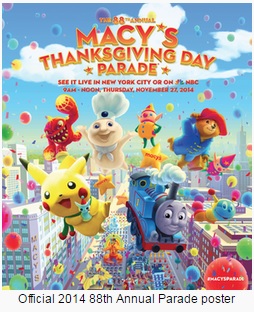
This is a civic holiday more so than it is a religious holiday.

It is also a commercial holiday – lots of Trade activities; lots of Trade Inspirations.

The Trade Inspiration applies to us in the Caribbean. There is one event associated with the American Thanksgiving tradition that gives us pause – as observers and reporters of the America eco-system – that is the Macy’s Thanksgiving Parade. This subject has been detailed in a previous Go Lean Commentary from November 25, 2016; it is appropriate to Encore that now; see below.

This commentary is the 2nd of the 5-part series (2 of 5) from the movement behind the book Go Lean…Caribbean in consideration of the subject “In Defense of Trade“. The focus here is that Trade must be prioritized in the Caribbean region if we want a new economic regime. The other commentaries in the series are cataloged as follows:

  1. In Defense of Trade: China Realities
  2. In Defense of Trade: Macy’s Thanksgiving Parade Model – ENCORE
  3. In Defense of Trade: India BPO’s
  4. In Defense of Trade: Bilateral Tariffs – No one wins
  5. In Defense of Trade: Currency Assassins – Real Threat

No doubt, there is the need to grow the Caribbean economy; we need jobs, entrepreneurial opportunities, better educational and healthcare options, a safer homeland and more efficient governmental services. Since trade policies (chattel goods and intellectual property) affect all of these deliveries, we need to pay more than the usual attention to these discussions. Truthfully, we do NOT have a lot of chattel goods in our region; we do not manufacture much; but we can thrive in the intellectual property arena. This is where we need successful role models to show us how we can better exploit the opportunities with trade.

Let’s look-listen-learn from the Macy’s model. See the Encore here:

—————————————

Go Lean CommentaryModel of the Macy’s Thanksgiving Day Parade – By The Numbers

“We are giving this for free as a gift to America” – CNBC Newscast: Amy Kule, Executive Producer, 2014 Macy’s Thanksgiving Parade*.

Free?

Hardly! There is nothing free about American Thanksgiving. This is just another example of American Crony-Capitalism. Consider the facts in this VIDEO here of the Macy’s Thanksgiving Day Parade, by the numbers:

VIDEOMacy’s Thanksgiving Day Parade by the Numbers – http://www.aol.com/video/channel/news/582e4599134aa15f420ded1a/

playbutton-300x300

Click on the Photo to Play VIDEO 

This discussion is promoting the idea of the Caribbean modeling the best-practices of American commerce – there are a lot of economic returns from events. The Macy’s Thanksgiving Day Parade, in the foregoing, is an event – one of the biggest on the calendar for New York City. So the focus of this commentary is the impact that one event can have on the societal engines of a community: economics, security and governance.

One person – or company – can make a difference.

Notice how this parade is mostly administered by one private company: Macy’s Department Stores.

Reference Title: Macy’s Department Store
Macy’s, originally R. H. Macy & Co., is a department store owned by Macy’s, Inc. It is one of two divisions owned by the company, with the other being Bloomingdale’s. As of January 2014, the Macy’s division operates 789 department store locations in the continental United States, Hawaii, Puerto Rico, and Guam, including the prominent Herald Square flagship location in Midtown Manhattan, New York City.[2]:35

cu-blog-macys-thanksgiving-day-parade-by-the-numbers-photo-2Macy’s has conducted the annual Macy’s Thanksgiving Day Parade in New York City since 1924 and has sponsored the city’s annual Fourth of July fireworks display since 1976. Macy’s Herald Square is the largest department store in the world. The flagship store covers almost an entire New York City block, features about 1.1 million square feet of retail space, includes additional space for offices and storage, and serves as the endpoint for Macy’s annual Thanksgiving Day parade. It is estimated that the value of Herald Square is under $3 billion to more than $4 billion.[3]

As of 2015, Macy’s is the largest U.S. department store company by retail sales and is the 15th-largest retailer in the United States for 2014 in terms of revenue.[4][5]
Source: Retrieved November 25, 2016 from: https://en.wikipedia.org/wiki/Macy%27s

The focus of the book Go Lean…Caribbean is to elevate the Caribbean economic disposition, based on the existing infrastructure and new implementations. So we would want to look-listen-learn from this American model and then apply the lessons here in the Caribbean. Events are integral to the touristic experience; this is why the Go Lean book, serving as a roadmap for the introduction and implementation of the technocratic Caribbean Union Trade Federation (CU), details so many dimensions of eco-system for events. The book prominently highlights that even small towns can get in on the economic buoyancy of events by detailing the role model of the City of Sturgis (population 6,600) in the US State of South Dakota – Page 191. Their annual event – Sturgis Motorcycle Rally in August – generates about $800 million in community revenues.

Successful management of events is a mission of Go Lean roadmap. The region needs the jobs. These events – think Carnival or Junkanoo in the Bahamas – create permanent and temporary jobs. This is part-and-parcel of the Go Lean/CU prime directives, as identified with the following 3 statements:

  • Optimization of the economic engines in order to grow the regional economy to $800 Billion & create 2.2 million overall new jobs; 9,000 jobs are attributed to Events.
  • Establishment of a security apparatus to protect the resultant economic engines.
  • Improve Caribbean governance to support these engines.

The Go Lean book presented the roadmap to imbrue the Caribbean region with new community ethos, plus new strategies, tactics, implementation and advocacies to improve event-job creation in the region. The following is a sample of these specific details from the book:

Community Ethos – Deferred Gratification Page 21
Community Ethos – Economic Principles – People Choose Page 21
Community Ethos – Economic Principles – People Respond to Incentives in Predictable Ways Page 21
Community Ethos – Economic Principles – Economic Systems Influence Individual Choices Page 21
Community Ethos – Economic Principles – The Consequences of Choices Lie in the Future Page 21
Community Ethos – Governing Principles – Lean Operations Page 24
Community Ethos – Governing Principles – Cooperatives Page 25
Community Ethos – Ways to Impact the Future Page 26
Community Ethos – Ways to Foster Genius – Consider Artists, Musicians and Performers Page 27
Community Ethos – Ways to Help Entrepreneurship Page 28
Community Ethos – Ways to Promote Happiness Page 36
Community Ethos – Ways to Impact the Greater Good Page 37
Strategy – Vision – Confederate 30 Member-States Page 45
Strategy – Mission – Celebrate the Music, Sports, Art and Culture of the Caribbean Page 46
Tactical – Confederating a Permanent Union Page 63
Tactical – Fostering a Technocracy Page 64
Tactical – Separation-of-Powers – CU Federal Agencies versus Member-State Governments Page 71
Implementation – Ways to Pay for Change Page 101
Implementation – Ways to Deliver Page 109
Planning – 10 Big Ideas for the Caribbean Region Page 127
Planning – Ways to Make the Caribbean Better Page 131
Planning – Lessons from New York City Page 137
Planning – Lessons from Omaha – College World Series Model Page 138
Advocacy – Ways to Grow the Economy Page 151
Advocacy – Ways to Create Jobs Page 152
Advocacy – Ways to Enhance Tourism Page 190
Advocacy – Ways to Impact Events Page 191
Advocacy – Ways to Promote Fairgrounds Page 192
Advocacy – Ways to Preserve Caribbean Heritage Page 218
Advocacy – Ways to Improve Sports – Fairgrounds as Sport Venues Page 229
Advocacy – Ways to Improve the Arts Page 230
Advocacy – Ways to Promote Music Page 231

The empowerments in the Go Lean book calls for permanent change to ensure that Caribbean people have opportunities; they only want to be able to provide for their families and preserve their unique Caribbean culture.

The Go Lean roadmap offers the technocratic execution of these deliverables. Imagine the expansion of the existing events in the region. Plus, imagine the artistic expressions and entertainment (singers, dancers, musicians, performers, etc.). Just like for the Macy’s Parade in the foregoing, economic gains await. This is the business model of “events”. From the outset, the Go Lean book recognized the significance of events and festivities in the roadmap with these statements in the opening Declaration of Interdependence (Page 12 & 14):

xxi.  Whereas the preparation of our labor force can foster opportunities and dictate economic progress for current and future generations, the Federation must … recognize and facilitate excellence in many different fields of endeavor, including sciences, languages, arts, music and sports. This responsibility should be executed without incurring the risks of further human flight, as has been the past history.

xxxii. Whereas the cultural arts and music of the region are germane to the quality of Caribbean life, and the international appreciation of Caribbean life, the Federation must implement the support systems to teach, encourage, incentivize, monetize and promote the related industries for arts and music in domestic and foreign markets. These endeavors will make the Caribbean a better place to live, work and play.

There are many other communities that have flourished in this strategy – business model of fun and festivities – as depicted with the example of the Macy’s Thanksgiving Parade. Success is possible; we need only to look, listen and learn.

Many previous Go Lean blog-commentaries have focused on the business of events. See samples-examples detailed in these previous blogs:

https://goleancaribbean.com/blog/?p=9712 Forging Change: Panem et Circenses
https://goleancaribbean.com/blog/?p=5251 Post-Mortem of Inaugural Junkanoo Carnival
https://goleancaribbean.com/blog/?p=4879 Model of a Sports Event: Martinique Surfing
https://goleancaribbean.com/blog/?p=3292 Model of an Artistic Event: Art Basel Miami
https://goleancaribbean.com/blog/?p=2152 Model of a Sports Event: Little League World Series
https://goleancaribbean.com/blog/?p=1341 College World Series Time – Lessons from Omaha
https://goleancaribbean.com/blog/?p=1214 Landlord of Temporary Stadiums
https://goleancaribbean.com/blog/?p=535 Event Security: Remembering and learning from Boston
https://goleancaribbean.com/blog/?p=318 Collegiate Sports in the Caribbean

Now is the time for all of the Caribbean, the people and governing institutions, to lean-in for the empowerments in the book Go Lean … Caribbean. This is a Big Idea for the region; that of expanding Caribbean events for greater economic throughput. We have the foundations in place already, the many artistic, cultural and sporting events for locals and visitors.

We can employ the strategies, tactics and implementations from models like the Macy’s Thanksgiving Parade to make our Caribbean region a better place to live, work and play. 🙂

Download the book Go Lean … Caribbean – now!

———

Appendix * – Source References:

https://youtu.be/61kyIsEBuUA posted Published on Nov 26, 2014; (retrieved November 25, 2016).

Executive producer of the Macy’s Thanksgiving Day Parade, Amy Kule, provides insight to the numbers behind tomorrow’s big parade and reveals some new characters.

———

Appendix VIDEO7 Macy’s Thanksgiving Day Parade Facts You Never Knew!https://youtu.be/zOtWeyh1aRs


Share this post:
, ,
[Top]

In Defense of Trade – China Realities

Go Lean Commentary

Here’s the challenge:

You have 1.3 billion people; you must facilitate economic growth to provide them with jobs, basic needs and the pursuit of happiness. Where do you go? What do you do?

Answer: Trade, trade, trade …

This is what the experts say.

The experts? Economists …

These economists say the best practice to grow an economy is to double-down on trade and market-based economics.

Voluntary Trade Creates Wealth: People specialize in the production of certain goods and services because they expect to gain from it. People trade what they produce with other people when they think they can gain something from the exchange. Some benefits of voluntary trade include higher standards of living and broader choices of goods and services.

This urging was proclaimed in the book Go Lean…Caribbean which presents the strategies, tactics, implementations and advocacies for growing the Caribbean economy. The book serves as a roadmap for the introduction and implementation of the technocratic Caribbean Union Trade Federation (CU). Yes, the emphasis is on trade . The CU will serve as an integrated entity to shepherd progress and optimization among the region’s societal engines for economics, security and governance.

This best practice for societal growth is a lesson learned from the study of other communities – ancient and modern – that have done “this” successfully. The book presents the role models of the Great Britain, United States, Germany, Japan, Asian Tigers (Singapore, Hong Kong. South Korea and Taiwan).

So China doubling-down on trade is just another iteration of the accepted best practice of market-based economics. In fact in a previous blog-commentary about China’s motive – their end game – for Caribbean investments, the following points were detailed:

If this Golden Rule is true: “he who has the gold makes the rules”, then we will be held to account to stakeholders in China, as their many state-own companies are definitely “bringing gold” to the table. This was vividly communicated in a previous (2014) China-Caribbean Trade/Business Summit:

“Latin America has much to gain from deepening its relationship with China, just as China has much to gain from our region,” said Luis Alberto Moreno, president of the Inter-American Development Bank (IDB). “For our governments, this is a strategic priority. But much of the day-to-day building of those links will fall on the private sector.”

China joined the IDB as a shareholder in 2009, and is now the top trade partner for several countries in the region, including Brazil and Chile.

Trade between Latin America and the Caribbean and China is expected to double in the next decade. … Source: http://caribjournal.com/2014/09/15/china-holds-business-summit-with-latin-america-caribbean/

This is the same playbook of the United States of America in building the world’s largest Single Market economy. (Remember, with the Army Corp of Engineers, the US built the Panama Canal, but with more strings attached). China is simply following the same American script – minus the cronyism and militarism – of promoting trade of their products, services and capital.

Capital? Yes, many of the projects highlighted … are being financed by China’s state-owned banks and lending institutions. They are “putting their money, where their mouth is”. These are economic battles only!

This commentary is the first of a 5-part series from the movement behind the Go Lean book in consideration of the subject “In Defense of Trade“. The focus here is that Trade must be prioritized in the Caribbean region if we want a new economic regime. The other commentaries in the series are cataloged as follows:

  1. In Defense of Trade: China Realities
  2. In Defense of Trade: Macy’s Thanksgiving Parade Model – ENCORE
  3. In Defense of Trade: India BPO’s
  4. In Defense of Trade: Bilateral Tariffs – No one wins
  5. In Defense of Trade: Currency Assassins – Real Threat

No doubt, there is the need to grow the Caribbean economy; we need jobs, entrepreneurial opportunities, better educational and healthcare options, a safer homeland and more efficient governmental services. Since trade policies (chattel goods and intellectual property) affect all of these deliveries, we need to pay more than the usual attention to these discussions. Trade has also been prominent in the news as of late, with the current American Federal government’s (under President Donald Trump) new penchant for tariffs and the UK negotiating a new trade deal as they leave the European Union (Brexit).

So there is the need for a 360 degree view of trade: the good; the bad; and the ugly. The Caribbean status quo is ugly, in terms of trade, there is the need to reform and transform, so as to reboot our society. But we are not the first, (and will not be the last). Let’s see the lessons we can learn from the trade strategies, tactics and implementations of others. We can all benefit!

Let’s start with China; there are parallels to consider. They need to provide for 1.3 Billion people, and so they are embracing market-based economics. In the Caribbean we only need to provide for 42 million, but we are like a fish in the pond; it does not matter how big the ocean is, we are limited to our pond. This is the definition of scope; our time, talents and treasuries must be designed to impact just these 30 island-nations and coastal states. Despite the size, there is the need for efficiency and effectiveness with market-based economic concepts. This is defined in the Go Lean book as technocratic/technocracy:

The term technocracy was originally used to designate the application of the scientific method to solving social & economic problems, in counter distinction to the traditional political or philosophic approaches. – Go Lean book Page 64.

The CU seeks to optimize the region’s economic systems – to make more efficient and effective – to better deliver on the prime directives of the Go Lean roadmap. The prime directives are pronounced as the following statements:

  • Optimization of the economic engines in order to grow the regional economy to $800 Billion & create 2.2 million new jobs.
  • Establishment of a security apparatus to protect the resultant economic engines and mitigate challenges/threats to ensure public safety for the region’s stakeholders.
  • Improvement of Caribbean governance, including a separation-of-powers with member-states, to support these economic/security engines.

So the CU Trade Federation vision is to provide the stewardship for the region’s economic engines, to optimize trade (chattel goods and intellectual property), so as to succeed in the goals of the roadmap. The focus on trade is intra-region so as to minimize the expenditure of foreign reserves and also extra-regional so as to grow the economy. This vision was pronounced at the outset of the book in the opening Declaration of Interdependence (Page 13):

vi. Whereas the finite nature of the landmass of our lands limits the populations and markets of commerce, by extending the bonds of brotherhood to our geographic neighbors allows for extended opportunities and better execution of the kinetics of our economies through trade. This regional focus must foster and promote diverse economic stimuli.

xxiv.   Whereas a free market economy can be induced and spurred for continuous progress, the Federation must install the controls to better manage aspects of the economy: jobs, inflation, savings rate, investments and other economic principles. Thereby attracting direct foreign investment because of the stability and vibrancy of our economy.

According to the following article-commentary from Canada, expanding trade with China –  a willing partner – is a good strategy for improving the economic engines of a community – trade is that important:

Title: We need a China trade strategy, so let’s get it right
By: Edward Greenspon and Kevin Lynch

With exports over 30 per cent of GDP, Canada’s economy would be much smaller and its citizens considerably poorer if not for trade and investment with other countries. That three-quarters of that trade relies on ready access to the increasingly self-absorbed, aggressive and fickle United States is cause for serious deliberation, beyond indignation.

Canada’s special relationship with the United States has served us both well. It is always a risky proposition to have so many eggs in a single basket, but those risks were mitigated by Canada’s embrace of predictable rules to govern both bilateral trade, beginning with the Auto Pact, which morphed into the Canada-U.S. free-trade agreement (FTA) and NAFTA, and the international-trading system through the General Agreement on Tariffs and Trade (GATT) and World Trade Organization (WTO).

Even in the best of times, there were breakdowns, such as the repeated U.S. attacks over softwood lumber or former president Barack Obama’s rejection of the Keystone pipeline. Unfortunately, we’ve now entered a world where it’s softwood lumber all the time. So, what are we to do?

Some answers are clear enough. The long-held and oft-ignored objective of diversifying our trade relations must be pursued with urgency and vigour. Canada has done well by its recent agreements with the European Union and with Japan and others in the Comprehensive and Progressive Agreement for Trans-Pacific Partnership (CPTPP). Business leaders must now put commercial meat on the bones of these agreements.

Secondly, if a trading country such as Canada wants to grow, by definition it needs to trade with countries with both fast growth and with sufficient scale to make an appreciable difference to our export volumes. By and large, these are Asian – and you can’t speak of Asia without including China in the conversation. China’s annual growth is roughly two to three times that of Canada and the United States – off a base of 1.3 billion people. Any government seeking to represent the national interests of Canadians in the time of Donald Trump must be in possession of a long-term strategy that includes China, and not, as for more than a decade, a hodgepodge of inconsistent and reactive decisions.

Canadians don’t seem troubled by the proposition of an Asian diversification strategy with China at its core. Despite concerns about Chinese authoritarianism, human-rights violations and the perceived behaviour of some state-owned enterprises, polling shows support for a free-trade agreement trending up over the past few years. Qualtrics places the number at about 70 per cent and the Asia-Pacific Foundation about 10 points lower. No poll puts it below 50 per cent.

This shift in Canadian attitudes began even before Mr. Trump’s immodest arrival on the scene. His words and deeds have merely added impetus. Canadians get that American economic and geopolitical power is declining in relative terms and that China is an emerging force to reckon with. In the Asia Pacific Foundation’s recent annual survey, 59 per cent of respondents believe trade with Asia, led by China, will outweigh trade with the United States in the future. Canadians essentially are asking: “How can we not have a clear engagement strategy with a country that within the next 10 years will be the world’s biggest economy, largest exporter of capital, goods and services, largest emitter of [greenhouse gases] GHGs, a technology superpower and the world’s largest source of tourists and expatriate students?”

As co-chairs of the Public Policy Forum’s Consultative Forum on China, we have spent the past 14 months consulting on what a made-in-Canada strategy for future Canada-China relations should look like. Our blueprint will be released in the fall.

It is strikingly clear from our discussions that more value-added trade in sectors such as agri-food, forestry, resources, educational services, tourism and clean-tech is unambiguously beneficial for Canadians. Selling lobsters and lumber raise no national security flags, real or imagined, but they do create lots of jobs all across Canada. A case in point today is the 180 fishing fleet jobs and 304 processing plant positions in Atlantic Canada directly flowing from Clearwater Foods’ seafood exports to China.

Interestingly, both Canada and China have diversification agendas – we seek greater security of demand for our exports while China wants greater security of supply through trade arrangements with a broader range of exporting countries. Canada appeals because it is a highly developed, rule-of-law based, G7 country that poses few geopolitical risks, unlike many other global exporters.

Meanwhile, China, having raised hundreds of millions from poverty to middle-class status since it embraced a market-based economy, is now learning this middle class comes with expanding expectations for a better life – starting with livable cities, healthy food, safe workplaces, reliable pensions and available eldercare. Beyond traditional exports, China knows it can benefit from Canada’s long experience designing policies and services for the middle class.

China elicits a wide spectrum of passionately held views, of that there is no doubt. Whatever one may think, however, the question is whether a balanced engagement strategy with an economically dynamic China serves our national interests at a time when the President of the United States is pursuing a beggar-thy-neighbour policy. Risk management and prudent diversification certainly suggest yes. Time to decide how best.

———

Edward Greenspon is president and CEO of the Public Policy Forum. Kevin Lynch is co-chair of PPF’s Consultative Forum on China.

Source: The Globe & Mail – Toronto, Canada’s Largest Daily – Posted June 18, 2018; retrieved November 21, 2018 from: https://www.theglobeandmail.com/business/commentary/article-we-need-a-china-trade-strategy-so-lets-get-it-right/

This article stresses how important it is for Canada to trade with China, with this quotation:
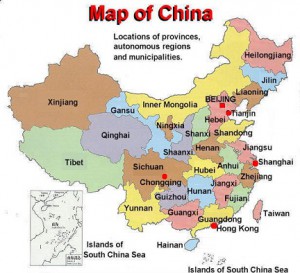
… if a trading country such as Canada wants to grow, by definition it needs to trade with countries with both fast growth and with sufficient scale to make an appreciable difference to our export volumes …

We want this kind of growth right here in the Caribbean. Therefore we must also want market-based trade with China.

The underlying motivation of the Go Lean book is to reform and transform the Caribbean member-states. Therefore we need to embrace market-based economics, the way China has. They only shifted to a market-based economy since the 1970’s, and now they have the 2nd largest single market economy … in the world – it works that fast. While America – the champion of market-based economies – is the largest trading partner for Caribbean member-states, we cannot just be parasites; no, we must be protégées.

The CU roadmap seeks to drive change among the economic, security and governing engines. The Go Lean book – within its 370 pages – describes how and when a new Caribbean can emerge using market-based economic principles. These solutions are as new community ethos, strategies, tactics, implementations and advocates designed to grow the regional economy to $800 Billion.  Consider how and when in the specific plans, excerpts and headlines from the book on Page 67 entitled:

$800 Billion Economy – How and When? – 10 Reasons and Tactics

Quotation: The whole is worth more than the sum of its parts.
The CU is a confederation treaty to unify the region of 30 countries and 42 million people into a single market, an integrated economy with a GDP of $800 Billion, even though the sum of its parts amount to $378 Billion, (per 2010  World Bank ratings).
.
Why and how will this number grow to $800 Billion? For the 10 reasons and tactics provided below; this includes samples and examples of hyper growth scenarios in specific times and places from around the world, from the past to the present. When will the meter reach $800B? Not at first, but steadily over a 5 year period. This harmonizes with the economic “Catchup” principle of “convergence”. This establishes that emerging economies experience hyper-growth (7 to 20%) for a limited period, and then normalizes into standard growth patterns of 2 – 3% [180]. This has been the documented cases of the BRIC countries (Brazil, Russia, India & China) and the Caribbean Union Trade Federation (CU) asserts that this Trade Federation will experience the same. This growth rate, from $378 Billion, would experience compounded GDP growth as follows:

  • Year 1 @ 20% = $454 Billion
  • Year 2 @ 20% = $544 Billion
  • Year 3 @ 15% = $625 Billion
  • Year 4 @ 15% = $720 Billion
  • Year 5 @ 12% = $806 Billion
1 Louisiana Purchase – US Experience
2 California Gold Rush to the Gilded Age
3 Post WW II Germany – Marshall Plan / Free Market
4 Post WW II Japan – No Marshall Plan
5 Convergence of East Asian Tigers
6 Economic Bubbles – $11 Trillion Burst / $13.5 Trillion Recovery
7 New High Multiplier Industries
8 Trade and Globalization
9 Repatriation
10 Education

The foregoing article details how beneficial trade with China could be, and how Canadians are not afraid of Chinese interactions:

Despite concerns about Chinese authoritarianism, human-rights violations and the perceived behaviour of some state-owned enterprises, polling shows support for a free-trade agreement trending up over the past few years.

See the related news VIDEO in the Appendix below.

The growth that China has shown is remarkable … and repeatable. We can model their successes here in our Caribbean region; the foregoing article conveyed their growth:

China, having raised hundreds of millions from poverty to middle-class status since it embraced a market-based economy.

The Caribbean is arguably the best address on the planet, but there are many deficiencies, as in jobs and economic empowerments. With the previous North & West (American) focus we have suffered. Our deficiencies has led to societal abandonment so bad that the region has lost a large share of our human capital, one estimate of 70% of the college-educated population to the brain-drain.

Yes, the Caribbean region needs the type of growth than can come from a progressive trade policy and market-based economics. We need to embrace Trade; this is the panacea for what ails our societal engines. Yes, we can improve with trade among ourselves and trade with foreigners. We cannot only look to the North & West – that strategy has worn thin – we must now look East and South; like China.

Mastering trade and globalization is how we must compete in today’s trade wars. This is the Go Lean roadmap.

Everyone in the Caribbean is urged to lean-in to this roadmap to make the Caribbean a better place to live, work and play. 🙂

Download the free e-Book of Go Lean … Caribbean – now!

Sign the petition to lean-in for this roadmap for the Caribbean Union Trade Federation.

———–

Appendix VIDEO – Trudeau outlines new Canada-China trade deals – https://youtu.be/-OTb6JqXGLw

Published on Sep 22, 2016 –  Prime Minister Justin Trudeau outlines the results of trade discussions with Chinese Premier Li Keqiang which include a new deal on canola. To read more: http://cbc.ca/1.3773699

Share this post:
, , ,
[Top]

Guy Fawkes – A Lesson in History

Go Lean Commentary

“… Keep doing this, whenever you drink it, in remembrance of me.” For whenever you eat this loaf and drink this cup, you keep proclaiming  … – The Bible 1 Corinthians 11: 25, 26 NWT

Its a simple formula, keep doing things in remembrance … and you will remember.

Remember, remember the Fifth of November, 

The Gunpowder Treason and Plot,
I know of no reason
Why the Gunpowder Treason
Should ever be forgot.

See the full poem and all its variations in Appendix A below.

Throughout the British West Indies (18 of the 30 countries that comprise the political Caribbean), the night of November 5th was a Red Letter Day on the Calendar. It was Guy Fawkes / Bonfire Night. The tradition was to burn a stuffed dummy in effigy!

This was not our finest moment.

Without realizing it, we were fostering a Climate of Hate.

Surely, we have grown … since those Bad Old Days?!

Surely?!

Sorry! The answer is No! Those Bad Old Days was … 5 days ago.

This practice was/is bad … because we have not reformed and retrained our Community Ethos. This refers to:

The national spirit that drives the character and identity of its people.

In a lot of the Anglophone world, Guy Fawkes or Bonfire Night is a memorable Calendar event. Here are examples:

  1. Bahamas
    Though the Bahamas gained independence from England more than 40 years ago, a great deal of our culture remains steeped in the traditions of our British ancestors.
    One of these traditions is Guy Fawkes Night. …
    Today, nearly 250 years later, Guy Fawkes Night is still celebrated throughout the Bahamas. “Guys” are constructed using old clothing, newspapers and masks, and burned on giant bonfires.
    Green Turtle Cay’s Guy Fawkes Night is observed on the Saturday evening closest to November 5th. … – Source:https://littlehousebytheferry.com/2015/11/05/guy-fawkes-on-green-turtle-cay/
  2. Bermuda
    England celebrates this … Gun Powder Plot and every year his effigy is burned on a bonfire.
    Oh and there are fireworks! Well of course there are. No sense in just letting him burn in silence!
    In true Bermudian fashion we will be joining the Brits in their burning! Well at least the fireworks that is. Aptly placed our fireworks will be around an old Fort here, Fort St. Catherine! Source: https://robynskinner.wordpress.com/tag/guy-fawkes-day-in-bermuda/
  3. Jamaica
    Bonfire Night in Jamaica can be one of the most exciting nights of the year. There are loads of Guy Fawkes events in Jamaica and no matter what the weather’s like, you can always be sure a firework party in Jamaica will always draw in a big crowd. – Source: https://www.skiddle.com/cities/jamaica/bonfirenight.html
    See a relevant news article in Appendix B. 
  4. St. Kitts and Nevis
    This Caribbean islands knows how to party. Guy Fawkes is just another excuse to head down to the beach or attend a party where firework displays are the highlight of the night. – Source: https://www.onetravel.com/going-places/light-it-up-guy-fawkes-day-celebrations-around-the-world/ 
  5. St. Vincent and the Grenadines
    The former British colony in the Caribbean, Guy Fawkes Day is celebrated with English customs such as tea parties as well as the unique tradition of bamboo blowing, where heated kerosene is used to ignite an explosion in hollowed out bamboo cannons (to mimic the sound and fire of old cannons from the colonial days). In addition, there are fireworks displays on many beaches. – See Appendix C VIDEO below. 
  6. United Kingdom
    The British city of Lewes (a small market town in East Sussex) is legendary for their bonfire festivities: https://www.gapyear.com/articles/travel-ideas/the-most-mental-bonfire-night-in-the-world

This is not good!

Underlying to the Guy Fawkes remembrance is the enmity and animosity between England’s Protestants (Anglicans) and Roman Catholics – see Appendix A below. There was war; there was hatred; this was the climate for hundreds of years. Every time we consume Guy Fawkes festivities, we promote that Climate of Hate; we continue the bad community ethos. So instead of persecuted minorities – Protestants-hating-Catholics or Catholics-hating-Protestants – the recommended community ethos is:

Live and let live.

The opposite of persecuted minorities would be “Respect for Minorities”. This has been a familiar topic for the movement behind the book Go Lean…Caribbean. This movement has related the Climate of Hate in these scenarios:

These are lessons for us to learn and apply. The Caribbean member-states, collectively and individually, need to curb its Climate of Hate so we need to pay more attention to historic traditions; they furnish lessons we need to take to heart.

This is not just an issue of history, but one of currency for our economics, security, governance  and overall spirit in society. These are all important subjects for the book Go Lean…Caribbean. The book serves as a roadmap for elevating Caribbean society – for its 42 million residents and 80 million visitors, across all 30 member-states – by introducing and implementing the technocratic Caribbean Union Trade Federation (CU).

The quest of the Go Lean roadmap is to make the Caribbean homeland a better place to live, work and play. The CU, applying best-practices for community empowerment has these 3 prime directives, proclaimed as follows:

  • Optimization of the economic engines in order to grow the regional economy to $800 Billion & create 2.2 million new jobs.
  • Establishment of a security apparatus to protect the resultant economic engines and ensure the respect of human rights and public safety.
  • Improve Caribbean governance to support these engines.

We have a Climate of Hate in the Caribbean, the Go Lean book – within its 370 pages – therefore details a series of community ethos to adopt to overcome the bad attitudes plus the strategies, tactics, implementations and advocacies to execute to forge permanent change in the homeland. Fixing the Caribbean eco-system is the quest of the Go Lean roadmap. Our focus is fixing the Caribbean. Considering the acute and pronounced Climate of Hate, we have a lot of work to do to garner more respect for our minorities.

The Go Lean/CU roadmap specifies best practices to effect change in society, the attitudes and actions. Success in these efforts will reform and transform our climate, and assure public safety and justice for all. This quest is worth all our efforts.

When is the right time to start these efforts? Now!

Now … is the time for all of the Caribbean to lean-in to this roadmap and learn the lessons from history or other communities – successful, plus unsuccessful. The Go Lean book posits that the Caribbean is in a serious crisis, but asserts that this crisis would be a terrible thing to waste. The people and governing institutions of the Caribbean region are hereby urged to lean-in to this Go Lean roadmap to impact the whole Caribbean region,to benefit everyone … Protestants and Catholics.

If we remember to do good – on the Fifth of November and ever other day – we will have a great society.  🙂

Download the free e-book of Go Lean … Caribbean – now!

Sign the petition to lean-in for this roadmap for the Caribbean Union Trade Federation.

—————-

Appendix A – Gunpowder Plot in Popular Culture
Several traditional rhymes have accompanied the Guy Fawkes Night festivities. “God Save the King” can be replaced by “God save the Queen” depending on who is on the throne.

Remember, remember the Fifth of November,
The Gunpowder Treason and Plot,
I know of no reason
Why the Gunpowder Treason
Should ever be forgot.

Guy Fawkes, Guy Fawkes, t’was his intent
To blow up the King and Parli’ment.
Three-score barrels of powder below,
Poor old England to overthrow;
By God’s providence he was catch’d (or by God’s mercy*)
With a dark lantern and burning match.

Holla boys, Holla boys, let the bells ring.
Holloa boys, holloa boys, God save the King!
And what should we do with him? Burn him!

In more common use the “bonfire cry” is occasionally altered with the last three lines (after “burning match”) supplanted by the following;

A traitor to the Crown by his action,
No Parli’ment mercy from any faction,
His just end should’st be grim,
What should we do? Burn him!
Holler boys, holler boys, let the bells ring,
Holler boys, holler boys, God save the King!

Some of the Bonfire Societies in the town of Lewes use a second verse reflecting the struggle between Protestants and Roman Catholics. This was widely used, but due to its anti-Roman Catholic tone has fallen out of favour.

penny loaf to feed the Pope
A farthing o’ cheese to choke him.
A pint of beer to rinse it down.
A fagot of sticks to burn him.
Burn him in a tub of tar.
Burn him like a blazing star.
Burn his body from his head.
Then we’ll say ol’ Pope is dead.
Hip hip hoorah!
Hip hip hoorah hoorah!

Source: Retrieved 11/05/2018 from: https://en.wikipedia.org/wiki/Gunpowder_Plot_in_popular_culture

—————-

Appendix B – Is Guy Fawkes Day relevant to Jamaica?

By: Michael Burke

Today is the 410th anniversary of the ‘Gun Powder Plot’, the day when an attempt to bomb the parliament building in England with King James and the House of Lords present was foiled in 1605. Today is known as Guy Fawkes Day in England, but is sometimes called ‘Bonfire Night’. It is celebrated as a day of thanksgiving that the plot in 1605 was foiled and this is done by lighting bonfires and fireworks.

Is the Gun Powder Plot of 1605 in England relevant to Jamaica? Yes it is, in terms of its impact on Jamaica’s history. The ‘gun powder plotters’ were Roman Catholics who wanted to end the oppression of Roman Catholics in England by the restoration of Roman Catholicism there. The failed plan was to first assassinate the king and the lords by blowing up the parliament building and then install a puppet Roman Catholic monarch to restore the Roman Catholic Church.

Today in some places around the world Guy Fawkes is hailed as a revolutionary hero. But the Roman Catholic Church does not condone violence, so Guy Fawkes was not canonised as a saint. In any case, Guy Fawkes Day is a misnomer because the plot was actually hatched by Robert Catesby. But Fawkes was the hitman who was caught red-handed with 36 barrels of gunpowder in the parliament building.

The oppression of Roman Catholics in England started in 1534 when the pope excommunicated King Henry VIII for divorcing his wife. King Henry issued a decree to separate the Church of England (or Anglican Church) from the Roman Catholic Church and declared himself as the divinely appointed head of the Church of England.

A martyr of the schism was Sir Thomas More, the chancellor of the exchequer (or minister of finance), who was put to death in 1535 for refusing to denounce the pope, and 400 years later in 1935 was canonised as a saint of the Roman Catholic Church. St Thomas More Church and preparatory school in May Pen, Clarendon, are named in his honour.

Robert Catesby could not carry out the Gun Powder Plot all by himself, so he confided in 13 men, including the brother-in-law of a member of the House of Lords. As the bombing was to have taken place at the opening of parliament when the king and the House of Lords would be present, he revealed the plot to his brother-in-law who in turn ‘broadcasted’ it. Guy Fawkes was imprisoned in the Tower of London and was later put to death by hanging, drawing and quartering.

But the Gun Powder Plot of 1605 only made the oppression against Roman Catholics in England far more severe. Eventually, all Roman Catholic priests were imprisoned in England. Roman Catholics could not inherit land from anyone. Attending Roman Catholic mass was an offence punishable with imprisonment. And informers were paid one hundred pounds for reporting any Roman Catholic found attending mass.

The impact of the schism and Gun Powder Plot on Jamaica

Had the Gun Powder Plot succeeded, and England restored to Roman Catholicism, there might not have been friction between England and Spain, so the capture of Jamaica might not have happened. The then English dictator Oliver Cromwell dispatched Admiral Penn and General Venables with soldiers to capture Hispaniola but that attempt failed. Fearing the wrath of Cromwell, Penn and Venables captured nearby Jamaica instead. Had that not happened, Jamaica’s history would be very different in many ways, especially after 1655.

First, when the British captured Jamaica in 1655, the year of the 50th anniversary of the ‘Gunpowder Plot’ starring Robert Catesby, Guy Fawkes and 11 others, the Roman Catholic Church was banned in Jamaica. This was in keeping with the schism of 1534 that continued after the foiled Gun Powder Plot. The ban lasted for 136 years, from 1655 to 1791. The first priest-martyr in Jamaica was Father Gabriel de Barona, who was killed on the banks of the Black River, St Elizabeth, while urging the Spaniards to keep on fighting.

Second, without the English capture of Jamaica there would not have been English bondsmen coming here to serve six-year sentences at hard labour. And had they not come here they would not have stayed to become pirates and make Port Royal their headquarters. They plundered ships and stopped all trade between the Caribbean and Europeans as ship crews were afraid of pirates.

Third, the Treaty of Madrid obliged Britain to control piracy, and this led to the imprisonment of pirate captain Henry Morgan who was shipped by boat to the Tower of London. But only Morgan could control the pirates, and so King Charles II made him governor of Jamaica to do that. Morgan controlled piracy by selling land cheaply to the pirates and they became the aristocracy. This meant that the ex-pirates became owners of slaves and masters of corruption and criminality that affects many Jamaicans to this day.

Fourth, some time in either the 17th or 18th century, Roman Catholic African slaves of a Spanish colony were passengers on a boat en route to Cuba for them to do slave labour there. Pirates invaded the boat and stole the slaves who were transported to Jamaica at Castle Mines in St Mary. Had Jamaica remained under the Spanish rule, the Castle Mines slaves in St Mary would never have had a need to set up an underground Roman Catholic Church.

Long after the Catholic Church in Jamaica was restored in 1791, and some time after 1838 when slavery was fully abolished, the descendants of the Castle Mines slaves sought out a Roman Catholic priest and eventually a church was built at Preston Hill, St Mary.

Fifth, had the English not captured Jamaica from the Spaniards, there might never have been a change in the crops planted for export from tobacco to sugar cane, which required hundreds of thousands of workers. After Emancipation, the ex-slaves refused to work on the estates, so the landowners switched to less labour-intensive bananas, out of which came the tourist industry via the United Fruit Company Banana Boats to Port Antonio.

Source: Posted November 5, 2015; retrieved November 5, 2018 from: http://www.jamaicaobserver.com/columns/Is-Guy-Fawkes-Day-relevant-to-Jamaica_19236886

—————-

Appendix VIDEO – Bamboo (cannon) Blowing in St. Vincent and the grenadines (Mespo) – https://youtu.be/IUYEILYPza8

Published on Nov 2, 2013 – During the Guy Fawkes celebrations, persons make Bamboo cannons which they ignite using heated kerosene. The kerosene vapors ignite in the bamboo’s hallowed out interior and creates a loud explosion.

——-

See a related VIDEO about Lewes, UK here: https://www.newsflare.com/video/252900/other/firework-display-guy-fawkes-night

Share this post:
,
[Top]

Mid-Term Elections 2018: No Vote; No Voice

Go Lean Commentary

It’s a BIG Day (November 6, 2018) in the US; it’s the Mid-Term Elections to choose the new Congress.

As related in this previous blog-commentary, the Caribbean has No Vote and No Voice in the US elections for the power of their leaders.

But one Caribbean stakeholder – “Rock Star” Rihanna – has chimed in with her own power; she has a voice and a vote. She has declared:

Please stop the music.
See the full news article in the Appendix below, to see how she has forbidden any of her music at Trump rallies.

For this election, there is a lot at stake for this American eco-system – as the only Super Power in the western hemisphere – this affects the Caribbean in an impactful way as well.

Bad things happen when Good people do not vote.
The opposite of justice is not injustice; it’s apathy, indifference and inaction. – Senator Corey Booker Nov 5, 2018.

The United States of America is the richest, most powerful democracy – a government of the people, by the people, for the people – on the planet and yet their power does not appear to lie with the population, but rather the passionate. So many times, the winner of campaign races are not the people with the majority, but rather the people who are passionate enough to show up and vote … consistently. The current federal administration – under President Donald Trump – seems to have little regards for the needs of Caribbean people. So now is the first chance for America to chime in on their support or opposition of this President. This is the actuality of the Mid-term elections.

The results are in:

  • In summary, the opposition party, the Democrats, has won back the US House of Representatives.
  • The Senate remains with the incumbent party, the Republicans.
  • Many State races revert to the opposition parties, except for Florida and Georgia where both Democratic gubernatorial candidates have apparently lost. In Florida, Andrew Gillum would had become the first African-American governor in the State; while Georgia’s Stacey Abrams would have been the first African-American female governor ever … anywhere.

The quest for a pluralistic democracy is still not complete. (When its No Vote and No Voice, it gets even more difficult).

The Caribbean remains inconsequential to this American process. Even the American territories remain with No Voice, No Vote and No Progress. That previous blog-commentary related:

[For] the US Territories of Puerto Rico and the Virgin Islands, … American economic prosperity does not always extend to the islands. The emigration (brain & capital drain) for these islands has been acute for over 100 years and continues, unchecked today. The pattern of the US Territories is what the rest of the [Caribbean] region does not want: half abandoned; where the emigrated population exceeds the on-island population. These islands are paradise – there should be no reason to leave. – Book Go Lean…Caribbean Page 244

The US as the regional Super Power does not mean power nor prosperity for the neighboring Caribbean region. We are not protégés; we are parasites. The solution to assuage Caribbean crises is not America; we must do the heavy-lifting to reform and transform our society ourselves.

Solving our own problems; providing for our own needs; handling our own affairs – there is an umbrella word for these activities: Independence. (With independence, our Vote and Voice matters).

The Go Lean book – a roadmap for the Caribbean Union Trade Federation (CU) – provides 370-pages of turn-by-turn instructions for a Way Forward, a guide “how” to adopt new community ethos, plus the strategies, tactics, implementations and advocacies to execute so as to reboot, reform, transform and promote independence. We need to be able to deliver without dependence on “overseas masters”: Washington, Paris, Amsterdam or London. Our focus here is on Washington. Though our quest is not to impact the US – notwithstanding the Diaspora living there – there is the need for the CU to limit our scope to the 2 American territories and other 28 lands in the Caribbean. One advocacy in the book (Page 120) is entitled “10 Ways to Promote Independence“; this allows for the heightened delivery of basic needs. See the headlines, summaries and excerpts from that advocacy here:

10 Ways to Promote Independence

1 Lean-in for the Treaty for a Caribbean Single Market
This treaty calls for the unification of the Caribbean region into an integrated market, thereby expanding to an economy of 30 member-states of 42 million people. The vision of the CU is independence! But independence as a regional entity, one Single Market. The missions of the CU entail empowering the economic engines, securing the homeland and assuaging the emergency crises of natural disasters.The current state of the CU region would equate to the unsettled period in US history from 1776 until the accedence of the constitution in 1789. If independence is likened to the birth of a new nation, then the CU would be considered the adult stage of this fictitious entity – partnering in a marriage; ready for growth (annexation) once settled and stable.
2 Autonomous Rule for Territories
The CU treaty includes the American, British, Dutch and French Overseas Territories. Though the legacy powers are among the world’s biggest economies, such prosperity has not always extended to these islands. The CU only seeks autonomous rule from their legacies, not sovereignty, and receivership status in the case of any financial insolvency.
3 CU Neutrality
The CU Federation must “get and give” independence. Many CU agencies are configured as independent entities from the political structures within the region. This is especially noted with the Caribbean Central Bank, Federal Elections, Organ Procurement, Education Testing, Federal Courts and Self Governing Entities. The independence of these service providers must be assured with compliance reviews and audits – these protect public integrity.
4 Elections Management – International Monitors
5 Security Independence
The CU region has enemies, (narco-terrorists, and sworn enemies of legacy nations). So the collective security pact will create a Homeland Security Department, to defend against all enemies, foreign and domestic. The CU will coalesce with the Defense Forces of the US, France, Netherlands, British Navies for Intelligence sharing and naval patrols and shore leaves. The CU will acquire tactical defensive weapons: helicopters, submarines, drones, & anti-aircraft systems.
6 Energy Independence
7 Financial Independence
8 Disaster Response Independence
Every hurricane or earthquake should not constitute an international crisis. Adults are required to be prepared for rainy days, so too the CU must position relief supplies and recovery equipment to quickly respond to events and aftermaths.
9 Food Independence
10 Foreign Aid

Yes, the Caribbean must stand-up, rise-up and act responsibly to fulfill it needs; our Vote and Voice must matter. Such an independence mandate is embedded in the implied Social Contract for every member-state. The Social Contract is defined as follows:

Where citizens surrender some of their freedoms and submit to the authority of the State in exchange for protection of remaining natural and legal rights.

The American association does not merit progress. Just look at Puerto Rico and the Virgin Islands. Of the 30 member-states that constitute the Caribbean, only these two gets American systems of governance, commerce and culture. So any plan to elevate the Caribbean region must also consider the legal and constitutional mandates of the US; and yet these territories have No Vote and No Voice in Washington.

The Caribbean must get started with reforming and transforming our societies ourselves – no rescue is coming from abroad.

While any consideration for leading from the Top must partner with American stakeholders, we must do the heavy-lifting ourselves. This prescription does not only apply to the 2 US territories; no these are urgings for all the Caribbean. We still need the wisdom and insight provided in this Go Lean roadmap on how to reform and transform the Caribbean member-states so that they can be better places to live, work and play.

The Go Lean book – available to download for free – serves as a roadmap for the introduction and implementation of the technocratic CU Trade Federation, for the elevation of Caribbean society – for all member-states. This CU/Go Lean roadmap has these 3 prime directives:

  • Optimization of the economic engines in order to grow the regional economy to $800 Billion & create 2.2 million new jobs.
  • Establishment of a security apparatus to ensure public safety and protect the resultant economic engines.
  • Improve Caribbean governance to support these engines, including a separation-of-powers between the member-states and CU federal agencies.

The book stresses that reforming and transforming the Caribbean societal engines must be a regional pursuit. This was an early motivation for the roadmap, as pronounced in the opening Declaration of Interdependence (Pages 12 – 13):

xi. Whereas all men are entitled to the benefits of good governance in a free society, “new guards” must be enacted to dissuade the emergence of incompetence, corruption, nepotism and cronyism at the peril of the people’s best interest. The Federation must guarantee the executions of a social contract between government and the governed.

xxiii.  Whereas many countries in our region are dependent Overseas Territory of imperial powers, the systems of governance can be instituted on a regional and local basis, rather than requiring oversight or accountability from distant masters far removed from their subjects of administration. The Federation must facilitate success in autonomous rule by sharing tools, systems and teamwork within the geographical region.

xxiv. Whereas a free market economy can be induced and spurred for continuous progress, the Federation must install the controls to better manage aspects of the economy: jobs, inflation, savings rate, investments and other economic principles. Thereby attracting direct foreign investment because of the stability and vibrancy of our economy.

This Go Lean book stresses that forging change in the Caribbean (American territories and all other legacies) requiring effort from the Top (leaders) and from the Bottom (citizens). Political transformation alone will not do it. As is evident in the US Mid-Term Elections in 2018, politics do not always manifest as hoped, expected or promised. This is even more frustrating when we have No Vote and No Voice. This is why both Top-Down and Bottoms-Up must be pursued simultaneously.

Do it – sow this seed – and in the end, we will reap a good harvest.

The subject of Caribbean people’s political expressions – attempting to forge change at the top – have been detailed in many previous Go Lean commentaries. See this list here:

http://goleancaribbean.com/blog/?p=13995 The Sad Reality of the US Territories: No Vote; No Voice
https://goleancaribbean.com/blog/?p=11989 The Dynamics of Diaspora Voting
https://goleancaribbean.com/blog/?p=9626 American Tragedy – Marginalizing The Black-and-Brown Vote
https://goleancaribbean.com/blog/?p=9354 Courting the Caribbean Votes – Cuban-Americans
https://goleancaribbean.com/blog/?p=9352 Courting the Caribbean Votes – ‘Jamericans’
https://goleancaribbean.com/blog/?p=9350 Courting Caribbean Votes – Puerto Ricans
https://goleancaribbean.com/blog/?p=8306 Women Get Ready for New Lean-In Campaign
https://goleancaribbean.com/blog/?p=8155 Gender Equality Referendum Outcome: Impact on the ‘Brain Drain’
https://goleancaribbean.com/blog/?p=7749 Lessons from Regional Elections
https://goleancaribbean.com/blog/?p=6937 Women in Politics – The Fight for Gender Equality

Forging change from the top is effective. But we also need to forge change from the bottom. This is how we can make our homeland a better place to live, work and play. We urge everyone to  lean-in to this Go Lean roadmap. 🙂

Sign the petition to lean-in for this roadmap for the Caribbean Union Trade Federation.

——————

Appendix – Title: Rihanna tells Trump to stop playing her music at his rallies

NBC News:-  Please stop the music.

That’s the message Rihanna sent to President Donald Trump Sunday night after learning that her 2007 single “Don’t Stop the Music” was played at one of his rallies.

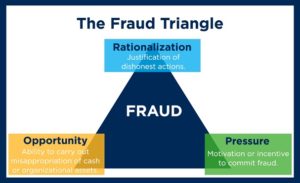
Rucker said the song was played while aides tossed Trump T-shirts into the crowd, as is commonly done at baseball games. “Everyone’s loving it,” he said.

Rihanna’s warning to the president came hours after she endorsed Andrew Gillum, the Democratic candidate for governor of Florida, in an Instagram post.

“Florida: You have the opportunity to make history this election,” Rihanna, 30, wrote on Instagram. “The US has only had four black governors in its entire history and we can help make #AndrewGillum the next one and Florida’s first.”

With her rebuke, Rihanna, who was born in Barbados, joins a growing list of artists who have asked that their music not be part of the soundtrack of Republican rallies. Last week, Pharrell Williams issued a cease-and-desist letter after Trump played his 2013 song “Happy” at a rally on the same day 11 people were killed in a Pittsburgh synagogue shooting.

In August, Aerosmith’s Steven Tyler sent Trump a cease-and-desist letter over use of the song “Livin’ on the Edge” at a political rally without permission.

“This is not about Dems vs. Repub.,” Tyler tweeted at the time. “I do not let anyone use my songs without my permission. My music is for causes, not for political campaigns or rallies. Protecting copyright and songwriters is what I’ve been fighting for even before this current administration took office.”

In 2015, the singer’s legal team warned Trump, then a Republican presidential candidate, over his use of “Dream On.”

Rihanna’s remarks came a day after Axl Rose, who has been a vocal critic of the Trump administration, accused his campaign of “using loopholes in the various venues’ blanket performance licenses, which were not intended for such craven political purposes, without the songwriters’ consent.”

The Guns N’ Roses frontman also said the band had formally requested that its music not be used at Trump rallies or Trump-associated events.

After Washington Post reporter Philip Rucker on Sunday tweetedthat Rihanna’s hit song was playing at a rally in Chattanooga, Tennessee, the singer replied: “Not for much longer.”

She also said: “Me nor my people would ever be at or around one of those tragic rallies.”

Source: Posted November 5, 2018; retrieved November 6, 2018 from: https://stluciatimes.com/arts-entertainment/rihanna-tells-trump-to-stop-playing-her-music-at-his-rallies/

Share this post:
,
[Top]

Good Governance: Good Corporate Compliance

Go Lean Commentary

(Photo by Chris Hondros/Getty Images)

Private business versus public government …

Business is to the East, while government is to the West. … East is East and West is West – never the twain shall meet.

Not quite!

Governments many times place restrictions and regulations on private businesses; think:

  • Workers Compensation
  • Child Labor Restrictions
  • Occupational Hazards
  • Social Security / National Security
  • Family Leave / Pregnancy Job Guarantees

So we accept that in a modern society, corporate entities may be required to comply with intrusive government mandates that go above and beyond basic consumer protections; and we call it Good Governance

… then in 2002, considering an American example, along came an even more intrusive government mandate on corporate enterprises (publicly-traded corporations) and the repercussion has been:

Crickets!

… no one complains; in fact, all the qualifying companies comply and buy into the notion that these sets of intrusive laws are good for the overall society. Whew! How did this happen?

This is the drama of the Sarbanes-Oxley law in the US. See the encyclopedic details here:

Title: Sarbanes–Oxley Act
The Sarbanes–Oxley Act of 2002, also known as the “Public Company Accounting Reform and Investor Protection Act” (in the Senate) and “Corporate and Auditing Accountability, Responsibility, and Transparency Act” (in the House) and more commonly called Sarbanes–Oxley, Sarbox or SOX, is a United States federal law that set new or expanded requirements for all U.S. public company boards, management and public accounting firms. A number of provisions of the Act also apply to privately held companies, such as the willful destruction of evidence to impede a federal investigation.

The bill, which contains eleven sections, was enacted as a reaction to a number of major corporate and accounting scandals, including Enron and WorldCom. The sections of the bill cover responsibilities of a public corporation’s board of directors, adds criminal penalties for certain misconduct, and requires the Securities and Exchange Commission to create regulations to define how public corporations are to comply with the law.

5.0 Implementation of key provisions

Source: Retrieved October 30, 2018 from: https://en.wikipedia.org/wiki/Sarbanes%E2%80%93Oxley_Act

—————-

VIDEO 1 – Enron Scandal Explained in One Minute: Corporate Recklessness, Lies and Bankruptcy – https://youtu.be/jrEf8uabe7E

One Minute Economics

Published on Aug 9, 2016 – Enron represents perhaps the most popular example of how a corporation can go from hero to zero or in their case, from a stock price of $90.75 and a market capitalization which made it the 7th largest US corporation to bankruptcy. Enron’s bankruptcy made it clear just how far corporate recklesness can go and represented a warning signal that should have been taken a lot more seriously, as the Great Recession has proven.

—————–

VIDEO 2 – WorldCom – What Went Wrong – https://youtu.be/7g_d-phoUrU

Published on Nov 28, 2008 – A brief documentary dealing with the largest corporate scandal in history. Created for a second year college accounting class.

The historicity of those events that spurred the Sarbanes-Oxley Act is most incredible. Those two companies – Enron and WorldCom – flouted the presumption of integrity in American business; even the external auditors – Arthur Anderson – was complicit in the wrong-doing. Reform became inevitable. Something had to be done to ensure Good Corporate Governance.

Sarbanes-Oxley became the Good Governance solution. It details roles and responsibilities for firms and auditors alike!

The book Go Lean…Caribbean – available to download for free – serves as a roadmap for the introduction and implementation of the Caribbean Union Trade Federation (CU), as a technocratic federal government among the 30 member-states in the region. The goal is for expressions of Good Governance in all of Caribbean life; two role models are presented for the Caribbean to emulate: Sarbanes-Oxley (SOX) for Corporate Compliance and the Information Technology Infrastructure Library (ITIL) for computer-based data processing. These assert Good Corporate Governance models. The Go Lean book specifically quotes these references “10 Ways to Grow the Economy” (Page 151) and “Appendix ZN – ITIL Supplement” (Page 338) respectively:

  1. Better Corporate Governance and Financial Markets Oversight
    Learning from the experiences of the US and Europe, provisions embedded in legislation like Sarbanes-Oxley Act and Dodd-Frank Act would be in place from the beginning. The CU will apply the lessons-learned proactively, rather than wait for the economies to implode before instituting reform, like common sense lending standards, transparency, full disclosure, “sunshine” laws. The CU will also implement controls on automated trading systems, ensuring the proper safety valves, monitoring and metering oversight. These measures equal security, a secondary mandate for the CU.
  2. Information Technology Infrastructure Library (ITIL)
    A set of practices for IT Service Management (ITSM) that focuses on aligning IT services with the needs of business. …
    History
    Responding to growing dependence on IT, the UK Government’s Central Computer and Telecommunications Agency (CCTA) in the 1980s developed a set of recommendations. It recognized that without standard practices, government agencies and private sector contracts had started independently creating their own IT management practices.
    The IT Infrastructure Library originated as a collection of books, each covering a specific practice within IT service management. ITIL was built around a process-model based view of controlling and managing operations. [From among the many, the Go Lean book details these 2 practices:]
    o  IT Service Continuity Management
    o  Availability Management

Good Governance is important in the government realms – member-states, federal and non-governmental organization (NGO’s) – but also in the private-corporate sector. Implementing these practices and compliance may be Too Big for Any One Caribbean country alone to introduce and implement; but together – with some interdependence – a leveraged roll-out is viable. Notice this theme, as pronounced in these statements in the opening Declaration of Interdependence (Pages 10 – 12):

Preamble: … while our rights to exercise good governance and promote a more perfect society are the natural assumptions among the powers of the earth, no one other than ourselves can be held accountable for our failure to succeed if we do not try to promote the opportunities that a democratic society fosters.

xi. Whereas all men are entitled to the benefits of good governance in a free society, “new guards” must be enacted to dissuade the emergence of incompetence, corruption, nepotism and cronyism at the peril of the people’s best interest. The Federation must guarantee the executions of a social contract between government and the governed.

xvi. Whereas security of our homeland is inextricably linked to prosperity of the homeland, the economic and security interest of the region needs to be aligned under the same governance. Since economic crimes … can imperil the functioning of the wheels of commerce for all the citizenry, the accedence of this Federation must equip the security apparatus with the tools and techniques for predictive and proactive interdictions.

xxv. Whereas the legacy of international democracies had been imperiled due to a global financial crisis, the structure of the Federation must allow for financial stability and assurance of the Federation’s institutions. To mandate the economic vibrancy of the region, monetary & fiscal controls and policies must be incorporated as proactive and reactive measures. These measures must address threats against the financial integrity of the Federation and of the member-states.

While the Sarbanes-Oxley Act is an American law, that is not the only country that needs to ensure Good Corporate Governance. As related in a recent blog-commentary, the Caribbean specifically, and the whole world in general, is still reeling from the dire effects of the Great Recession of 2008. This crisis was spurned by bad corporate governance: over-leveraged banks, mis-stated credit ratings, and NINJA home mortgage-holders.  We cannot afford a repeat of these mistakes … ever.

This commentary concludes a 5-part series from the movement behind the Go Lean book in consideration of the Good Governance needs for a new Caribbean regime. The other commentaries in the series are cataloged as follows:

  1. Good Governance: … Versus Partisan Politics
  2. Good Governance: Stepping Up in an Emergency
  3. Good Governance: The Kind of Society We Want
  4. Good Governance: Getting ‘Out of the Way’ of Local Economic Empowerment
  5. Good Governance: Good Corporate Compliance

The Go Lean book was written in the wake of the Great Recession of 2008, reflecting all of the lessons learned from the earlier 2002 crises of Enron and WorldCom referenced in the foregoing encyclopedic reference.

Fool me once, shame on you.
Fool me twice, shame on me.

The book featured Good Corporate Governance practices; this is best described in this one chapter entitled “10 Ways to Impact Wall Street“. The goal of this chapter was to look, listen and learn about best-practices by studying the American eco-system of Wall Street. We do not want to be America; we want to be better! See the specific plans, excerpts and headlines from the book on Page 200 entitled:

10 Ways to Impact Wall Street

1 Lean-in for the Caribbean Single Market
This treaty allows for the unification of the region into one market, thereby expanding to an economy of 30 countries, 42 million people and a GDP of over $800 Billion. The CU’s single market and currency union will allow for the emergence of viable capital markets for stocks, public/private bonds, and securities to create the economic engines needed to fuel growth, expansion and development. The CU will fill in the missing piece of the equation for successful international financial centers by providing the “whole institutional infrastructure of laws, regulations, contracts, trust and disclosure”.
2 Ensure Corporate Governance
The CU adoption of a “Good Governance” principle in its charter extends to its oversight of corporations and other publicly-held institutions. The CU regulatory agencies will oversee under a laissez-faire policy (minimum governmental interference in the economic affairs of individuals and society), yet be vigilant against systemic risks to the monetary and economic engines. So provisions like full disclosure, certifiable accounting integrity and risk-best-practices will maintain public confidence. The CU’s initiatives allows for more separating of duties versus the state regulators.
3 Protect Public Financing Vehicles
4 Adopt Advanced Products
5 Apply Common Sense – Derivatives – Lessons Learned

The use of derivatives helped cause the 2008 Financial Crisis in the US. Though these have the potential of being beneficial products, the compliance, leverage limits, and reserve requirements will not be abandoned as in the US.

6 Ensure Quality and Limits on Electronic Trading systems
These computer programs will have to be certified by CU Independent Auditors before coming online. The process for Quality Assurance (QA) will be assumed by the CU for maintenance of these systems. Before program changes can be implemented the CU will conduct the Test Plan to certify compliance and rollback strategies are in place.
7 Downplay Lawless Impressions – Offshore Banking
8 Protect Against Foreign Currency Manipulators
9 Protect Against Insider Trading and Securities Fraud

Economic crimes involving the securities industry can have far reaching consequences beyond normal felonies. As such, the CU will maintain jurisdiction and marshal the investigations, prosecutions and sentencing of these crimes.

10 Learn from Occupy Wall Street Protest Movement

This Go Lean book presents that the expansion of the 9 stock exchanges in the Caribbean region …

Bahamas (BISX), Barbados (BSE), Bermuda (BSX), Cayman Islands (CSX), Eastern Caribbean (ECSE), Guyana (GASCI), Haiti (HSE), Jamaica (JSE) and Trinidad (TTSE).

… will provide many opportunities to implement Good Corporate Governance standards and practices. But it is conceivable, believable and achievable that we can provide good stewardship to this financial eco-system, for the betterment of all Caribbean society.

The roll-out of these Financial-Watchdog duties for CU agencies will be Day One / Step One of the Go Lean/CU roadmap.

There have been many glimpses of economic governance for a new Caribbean in previous blog-commentaries; consider:

https://goleancaribbean.com/blog/?p=15923 Industrial Reboot – Payment Cards 101
https://goleancaribbean.com/blog/?p=15787 Lessons Learned from 2008: Too Big to Fail –vs- Too Small to Thrive
https://goleancaribbean.com/blog/?p=14834 Counter-culture: Monetizing the Change
https://goleancaribbean.com/blog/?p=14596 Change! Forging Change – Corporate Vigilantism
https://goleancaribbean.com/blog/?p=13677 Model: Economics of ‘South Beach’
https://goleancaribbean.com/blog/?p=11184 JPMorganChase spent $10 billion on ‘Fintech’ for 1 year
https://goleancaribbean.com/blog/?p=10585 Two Pies: Economic Plan for a New Caribbean
https://goleancaribbean.com/blog/?p=9839 Alibaba Cloud stretches global reach with four new Data Center facilities

It is the assertion of the Go Lean book and the many previous blog-commentaries that Good Governance is a requirement to reform and transform Caribbean society. Reforming and transforming the homeland is our quest, our prime directive. This intent has been proclaimed with the following statements:

  • Optimization of the economic engines in order to grow the regional economy to $800 Billion & create 2.2 million new jobs.
  • Establishment of a security apparatus to ensure public safety and protect the resultant economic engines.
  • Improvement of Caribbean governance to support these engines, including a separation-of-powers between the member-states and CU federal agencies.

This is the vision of a new regime for governments and corporate institutions. We want and need Good Governance. We must have this future. While it may be heavy-lifting, it is worth every effort. This is how we make our society a better place to live, work and play. 🙂

Download the free e-Book of Go Lean … Caribbean – now!

Sign the petition to lean-in for this roadmap for the Caribbean Union Trade Federation.

Share this post:
,
[Top]

Good Governance: Getting ‘Out of the Way’ of Local Economic Empowerment

Go Lean Commentary

“I am from the Government and I am here to help” – Ronald Reagan tongue-in-cheek Campaign Attack against excessive government regulation; 1980.

When it comes to government regulations, there could be too much … and too little.

Good Government is the art-and-science of finding the “just right” balance – remember Goldilocks. In some countries this is a big challenge as there are so many different levels of government; think the US where there is the federal government (plus regulations), State, County (a subset of the State) and local city. In the Caribbean, on the other hand, for many member-states, there is only one level of administration, the National government.

All in all, finding the right mix of stewardship is a reflection of best-practices. This is because of one basic fact:

Smart people have a tendency to think that they are the only smart people. – Dunning-Kruger Effect – See Appendix A

If only we can weed-out this bad trend and assume that local people may bring some value to the governing equations for their communities. This conclusion is hard-wrought, a product of research and study by noted economists; who actually won a Nobel Prize for this effort. This is relayed in the book Go Lean…Caribbean within the advocacy of Better Managing Natural Resources. The book (Page 183) states:

The Bottom Line on Common Pool Resources
The 2009 Nobel Prize winning economist Elinor Ostrom (1933 – 2012), a Political Science Professor at Indiana University, received the award for her landmark work on the management of common pool resources. Her analysis of economic governance, especially the commons, showed how groups work together to manage common resources such as water supplies, fish and lobster stocks, and pastures through collective property rights. She showed that common pool resources can be effectively managed collectively, even without government or private control, as long as those using the resource are physically close to it and have a relationship with each other. Because outsiders and government agencies don’t understand local conditions or norms, and lack relationships with the community, they may manage common resources poorly. By contrast, insiders who are given a say in resource management will self-police to insure that all participants follow the community’s rules.

So outsiders and remote government agencies may not fully understand local conditions or norms so their oversight may be prone to error. This may not reflect Good Governance. We have seen this manifested many times. Remember overseas masters making decisions about local conditions – think tropical hurricane building standards in the Caribbean being decided by stakeholders in Northern Europe. That was the dreaded history of colonialism!

It is obvious and self-evident that Good Governance must reflect shepherding and oversight with an eye towards local needs. Imagine the imagery of a “Watchman in a high tower in an medieval walled city”, scanning and monitoring the threats that face his community. While such a concern may be security-minded, the other spheres of society – think economics – must also be addressed for local versus national deliberations:
  • Can economic empowerment efforts be spurred locally, or must they always originate in the Capitol?
  • Should Direct Foreign Investors all be vetted by the Foreign Affairs Office (State Department, etc.)?
  • Can a local farmer increase his yield by plowing addition plots of land?
  • Can a local fisherman add additional boats and “hands on deck”?
  • Can a local chicken farmer add additional coops?

These are important questions, as communities struggle with the challenge of growth. This brings to mind the strategy of whether growth must be Top-Down or can it be Bottoms-up.

  • Pull yourself up by the bootstrap…
  • Give me a job … or create my own job …

This is not just an academic discussion; there are real world implications. In one drama, in the Bahamas, friends and enemies are choosing sides right now, as a local project by the global media and hospitality conglomerate Walt Disney Company (Disney Cruise Lines) is being debated.
Actually, the debate is over, but the fall-out and “weeping-gnashing of teeth” continues. See the full news story and VIDEO in the Appendices B & C below.

This commentary continues this discussion on Good Governance. If Good Governance is to be the norm in Caribbean society, we must decide – in advance – how we want to grow our economies and what role local economic empowerment will have in the equation to transform society. In the foregoing Bahamian drama, the locals want the job multipliers from the Disney project while the opposition, remote people in metropolitan Nassau, do not want any projects that may impact the environment.

This is a familiar consideration for the book Go Lean…Caribbean – available to download for free. The book asserts that the problems of the Caribbean are too big for any one member-state to assuage alone; so there must be cooperation, collaboration and confederation. But does this mean that we must confer on everything, big and small? No! Just the opposite.

Surely, everyone can be expected “to take care of their own business” … first.

This is a mark of maturity, that we can provide for our own basic needs: food, clothing and shelter.

In fact, the Go Lean movement posits that for reform to succeed in the region, we must start by transforming neighborhoods, then elevate cities, then for whole member-states and lastly for the entire region. In fact, the book asserts the tactic of a Separation-of-Powers, in which certain duties-responsibilities are expected to be addressed locally while others will be within scope for a federal government.

The purpose of the Go Lean book is the introduction and implementation of that federal government, the Caribbean Union Trade Federation (CU). The book serves as a roadmap for a new technocratic regime for Good Governance. Notice these statements in the opening Declaration of Interdependence (Pages 10 – 12):

viii. Whereas the population size is too small to foster good negotiations for products and commodities from international vendors, the Federation must allow the unification of the region as one purchasing agent, thereby garnering better terms and discounts.

xi. Whereas all men are entitled to the benefits of good governance in a free society, “new guards” must be enacted to dissuade the emergence of incompetence, corruption, nepotism and cronyism at the peril of the people’s best interest. The Federation must guarantee the executions of a social contract between government and the governed.

xii. Whereas the legacy in recent times in individual states may be that of ineffectual governance with no redress to higher authority, the accedence of this Federation will ensure accountability and escalation of the human and civil rights of the people for good governance, justice assurances, due process and the rule of law. As such, any threats of a “failed state” status for any member state must enact emergency measures on behalf of the Federation to protect the human, civil and property rights of the citizens, residents, allies, trading partners, and visitors of the affected member state and the Federation as a whole.

xxiii. Whereas many countries in our region are dependent Overseas Territory of imperial powers, the systems of governance can be instituted on a regional and local basis, rather than requiring oversight or accountability from distant masters far removed from their subjects of administration. The Federation must facilitate success in autonomous rule by sharing tools, systems and teamwork within the geographical region.

This commentary is the fourth of this 5-part series – 4 of 5 – from the movement behind the Go Lean book in consideration of the Good Governance needs for a new Caribbean regime. The other commentaries in the series are cataloged as follows:

  1. Good Governance: … Versus Partisan Politics
  2. Good GovernanceStepping Up in an Emergency
  3. Good GovernanceThe Kind of Society We Want
  4. Good Governance: Getting ‘Out of the Way’ of Local Economic Empowerment
  5. Good GovernanceGood Corporate Compliance

No doubt there is the need for Good Governance for the Caribbean; we need better stewardship and shepherding of the 30 member-states to ensure that we do not repeat the mistakes of the past. We need to value independence, resiliency and vigilance, not stymie progress because it may not have originated in some Capitol. This is the lesson from the opening anecdote about Common Pool Resources.

The best chance for success is for those who work with a local resource to participate in managing the local resource. So at times, we may need national government – or even federal governments – to get ‘Out of the Way’ and allow local economic empowerments.

In fact, the Go Lean roadmap introduces the concept of Self-Government Entities (SGE), an ideal concept for a job-creation engine, with its exclusive federal regulation/promotion activities. Imagine bordered campuses – exclusive resorts, industrial labs, educational facilities, R&D parks – with separate (local) arrangements to provision basic needs. This local empowerment accelerates the job multiplier factor – how certain industries are better than others for generating multiple indirect jobs down the line (off-campus) for each direct job on the SGE’s payroll.

This is how the Go Lean roadmap seeks to reform or transform the societal engines for all the Caribbean. This is our quest, our prime directive, as related in the following statements:

  • Optimization of the economic engines in order to grow the regional economy to $800 Billion & create 2.2 million new jobs.
  • Establishment of a security apparatus to ensure public safety and protect the resultant economic engines.
  • Improvement of Caribbean governance to support these engines, including a separation-of-powers between the member-states and CU federal agencies.

Good Governance based on best-practices, especially as recognized by a Nobel Prize, is a good starting point to transform a society. This is why Common Pool Resources are so frequently highlighted in the Go Lean book. Within the 370-pages of the book are details of Common Pool Resource management, urged for adoption within the new Caribbean regime. Here is a sample of the references to Common Pool Resources and how it relates to Good Governance through-out the book:

Tactical – Separation of Powers

F – Interior Department
The CU initiates its charter with a petition to the United Nations for a designation of an Exclusive Economic Zone for the spaces (seas) between the islands. This Department manages the oversight of this “common” territory. In addition, this Agency will have to work with foreign entities in the management of common pool resources, like water rights, river ecosystems in Guyana, Suriname and Belize where they are bordered by other (bigger) countries.

Page 82
Tactical – Separation of Powers

J – Agriculture and Fisheries Department
This Department in the Executive Branch coordinates the region efforts in agriculture, agri-business and fisheries. … this office is to be managed like a Project Management Office, coordinating one region-wide project after another. This department will also oversee the common pool resources for the region. This will include fish stock and common grazing lands. This effort will have to be coordinated and collaborated with the Department of the Interior agencies and resources.

Page 88
Advocacy – 10 Lessons from the American West

# 5 – Common Pool Resources: Water / Public Works

There were many environmental deterrents to conquering the West. There is actually a continental divide in North America in which minimal rain falls west of that divide; the western states were not sustainable for large populations.

Over the years, the US Army Corps of Engineers created canals, dams, reservoirs, irrigation, water pipelines and other measures, in multi-state compacts. The CU must also engineer multi-state public works projects to improve economies.

Page 142
Advocacy – 10 Ways to Better Manage Natural Resources
# 2 – Lean in for the Caribbean Union Trade Federation (CU) treaty.
This treaty allows for the unification of the region into one market, thereby integrating to a single economy of 30 member-states, 42 million people and GDP of over $800 Billion in (2010). The region needs joint management of the common pool of natural resources, and this one of the foremost reasons for confederating the CU. First it garners international support for the UN petition for an Exclusive Economic Zone in and near the Caribbean Seas. The CU’s representation of a single market allows for effective negotiations with foreign parties – the islands will no longer be viewed as inconsequential. The CU’s separation of powers mandate is germane for managing the local needs of the region’s common resources; it allows for closer oversight of local regulators, but with CU principles.
Page 183
Advocacy – 10 Ways to Improve Fisheries
# 3 –
Common Pool Resources (Lobster, Conch, Grouper, Flying Fish)
Though the waters between the islands may be uninhabited, their resources can still be depleted. The CU will govern the common pool resources to promote the sustainability of fish stock. Fishing for lobster, conch, grouper, “flying fish” and other species must be controlled, with limited harvesting seasons, otherwise there will be none for future generations.
Page 210
Advocacy – 10 Ways to Impact Rural Living
# 3 – Common Pool Resources Oversight and Management
The CU will exercise eminent domain to buy a lot of “crown” land, and the Exclusive Economic Zone, to promote as common pool resources (farming, fishing, and mining). This ownership allows for the implementation of proper oversight rules, with local coordination, and best practices. This is the “golden rule” – the one with the “gold”, makes the rule!
Page 235
Advocacy – 10 Ways to Impact The Guianas
# 1 – Lean in for the Caribbean Single Market & Economy
The CU will allow for the unification of the region into one market, thereby creating a single economy of 30 member-states for 42 million, including the independent states of Guyana and Suriname. Other territories that made up The Guianas region include French Guiana, Spanish Guiana (today, the Guayana Region comprises three of the federal States of Venezuela: Amazonas, Bolívar, Delta Amacuro), and Portuguese Guiana (Brazil’s State of Amapa). On the CU roadmap, annexations will be explored in Year 5; French Guiana is ideal candidate, but not the Venezuelan and Brazilian regions. But there is the immediate need for foreign policy synchronizations with these other states for common pool resources and regional threats.
Page 241

Consider how this vision of a rebooted economic landscape – with the technocratic management of Common Pool Resources – have been portrayed in these previous blog-commentaries; see this sample:

https://goleancaribbean.com/blog/?p=15359 Industrial Reboot – Fisheries 101
https://goleancaribbean.com/blog/?p=15907 Industrial Reboot – Navy Pier 101
https://goleancaribbean.com/blog/?p=14911 Would Less People Mean More Resources For the Remnant? No!
https://goleancaribbean.com/blog/?p=12724 Lessons from Colorado: Water Management Arts & Sciences
https://goleancaribbean.com/blog/?p=1092 Managing the Airwaves as a Common Pool Resource

The Go Lean book was very clear in its conclusion, the problem with the Caribbean is not the land/sea – it is the greatest address on the planet – it is not the people – we have a unique mix of African, Amer-Indian, Asian and European cultures, it is the stewardship. We must abandon bad ineffectual governing practices and embrace best-practices anew. We need to employ good ideas, even if they do not come from the Capitol. So we must be willing to accept local economic empowerment initiatives.

Our past roads are littered with failure; let’s do better going forward. Let’s embrace Good Governance. Let’s start aright with the strategies, tactics, implementations and advocacies as prescribed in the book Go Lean…Caribbean. We urge everyone to lean-in to this roadmap. This is how we can make our homeland better places to live, work and play. 🙂

Download the free e-Book of Go Lean … Caribbean – now!

Sign the petition to lean-in for this roadmap for the Caribbean Union Trade Federation.

—————-

Appendix A – What Is the Dunning-Kruger Effect?

The Dunning-Kruger effect is a type of cognitive bias in which people believe that they are smarter and more capable than they really are. …

The term lends a scientific name and explanation to a problem that many people immediately recognize—that fools are blind to their own foolishness. …

An Overview of the Dunning-Kruger Effect

This phenomenon is something you have likely experienced in real life, perhaps around the dinner table at a holiday family gathering. Throughout the course of the meal, a member of your extended family begins spouting off on a topic at length, boldly proclaiming that he is correct and that everyone else’s opinion is stupid, uninformed, and just plain wrong. It may be plainly evident to everyone in the room that this person has no idea what he is talking about, yet he prattles on, blithely oblivious to his own ignorance.

The effect is named after researchers David Dunning and Justin Kruger, the two social psychologists who first described it. …

A Little Knowledge Can Lead to Overconfidence

Another contributing factor is that sometimes a tiny bit of knowledge on a subject can lead people to mistakenly believe that they know all there is to know about it. As the old saying goes, a little bit of knowledge can be a dangerous thing. A person might have the slimmest bit of awareness about a subject, yet thanks to the Dunning-Kruger effect, believe that he or she is an expert. …

See the remaining article here …

Source: Posted April 9, 2018; retrieved October 29, 2018 from: https://www.verywellmind.com/an-overview-of-the-dunning-kruger-effect-4160740

—————–

Appendix B – Title: Disney’s Lighthouse Point: Bahamian Government Approves Sale of Lighthouse Point to Disney Cruise Line

Disney is one step closer to calling Lighthouse Point, Disney’s Lighthouse Point after Bahamian Prime Minister announced the government is choosing The Walt Disney Company’s proposal. Today’s approval gives Disney Cruise Line a green light to move ahead plans to purchase the 700 to 800-acre Lighthouse Point property at the tip of South Eleuthera for a second private cruise destination. EyeWitness News reported the decision just before the 3 o’clock hour.

Below is a copy of the press statement issued by The Bahamas Cabinet:

Press Statement
Cabinet Office
19 October 2018

The Lighthouse Point Development has been the subject of considerable public discussion, particularly in recent months.

The National Economic Council considered the matter today, 19 October, and approved the proposal submitted by Disney Cruise Line Island Development Ltd.

Negotiations will now begin on a Heads of Agreement, which will detail the scope of the project, the obligations of the Disney Cruise Lines Island Development Ltd. and the obligations of the Government of The Bahamas.

The negotiation of the Heads of Agreement will commence immediately. When concluded, it will be presented to Parliament in keeping with the government’s commitment to transparency and accountability.

The Cabinet Office wishes to emphasize that the land which is the subject of the proposal is privately owned. It has been on the real estate market for a long period.

The land is not Crown Land and is not owned by the Government of The Bahamas.

The Disney Cruise Lines Development Ltd. has a sales agreement with the land owner to purchase the land.

The Cabinet Office notes that both the Disney Cruise Lines Island Development Ltd. and the One Eleuthera Foundation and its partners have been publicly noting their plans for the development of Lighthouse Point.

It is also noted that recent polling revealed that more than 60 percent of Bahamians “very much” or “somewhat” support Disney’s proposal for Lighthouse Point, Eleuthera.

The Cabinet Office is also aware of meetings held in the communities of Central and South Eleuthera by respective groups, and live radio broadcasts, which have allowed individuals to express their views.

During one of his regular town hall meetings, this one held at the Green Castle Primary School on 10 October 2018, the Prime Minister informed the people of Central and South Eleuthera of the Government’s plans for the nation and listened to their concerns.

During this meeting overwhelming support was expressed for the Disney Cruise Lines Development Ltd. proposal.

The Cabinet Office notes that prior to that town meeting, the One Eleuthera Foundation and its partners held several community meetings in Central and South Eleuthera to promote their proposal.

This included meetings at Wemyss Bight on 27 July, Deep Creek on 10 August, Tarpum Bay on 17 August, Rock Sound on 31 August and Bannerman Town on 7 September 2018.

Some of the core elements of the Disney Cruise Lines Island Development Ltd. proposal which are of fundamental importance and to which Disney is committed, include: low density development and sustainable design, public access, and the restoration of various historical and cultural sites.

The development will create approximately 150 new jobs and an array of entrepreneurial opportunities for residents of Eleuthera and Bahamians in general.

Disney will convey approximately 190 acres of the land purchased from the private seller to the Government of The Bahamas for conservation and a national park.

Other elements of the project include: the integration of Bahamian cultural and artistic expression into the design of the site and experiences offered, and partnership with the community to develop training and professional development programs.

The Disney Cruise Lines began its cruises to The Bahamas in 1998.

Since that time, the economic impact on the Bahamian economy has been significant. With the development of the Eleuthera project an increase in port calls to Nassau is also projected.

The Government notes Disney’s record of environmental stewardship and will ensure that the project is implemented in a manner which safeguards our environment and the interests of the people of The Bahamas.

The Government of The Bahamas having taken into consideration the views of the majority of the people of Central and South Eleuthera is satisfied that it has made the best decision in the interest of the Bahamian people, a sustainable future for the people of Central and South Eleuthera and the economic development of the country.

I think one of the key factors in the Cabinet’s decision aside from the revenue stream that will be generated by Disney Cruise Line is that the Lighthouse Point property is privately owned. The property has been on the market for a long period. The land is not Crown Land, therefore, is not owned by the Government of The Bahamas. Disney Cruise Line has a sales agreement with the land owner to purchase the land.

What’s next? Disney and The Bahamas will negotiate a Heads of Agreement that will then be presented to Parliament. One Eleuthera’s press release claims there will not be an economic impact until at least 2023.

“We are excited to reach this important milestone and look forward to working with Government and the people of The Bahamas to create new economic opportunities while preserving the natural beauty of Lighthouse Point. We are grateful for the warm welcome and support we have received from so many in Eleuthera and look forward to further developing relationships that will endure for many years to come. In the short term, we are focused on reaching an agreement that is mutually beneficial for The Bahamas and our company, as well as moving forward with an environmental impact assessment and environmental management plan. Our team also looks forward to working with local artists, historians and others as we ensure that the stories and culture of The Bahamas shine through when Disney guests and Bahamians alike visit this special place.” — Jeff Vahle

Disney Cruise Line’s Vice President of Public Affairs, Kim Prunty, told Tribune 242 an environmental impact study (EIA) could take months which Disney will work with the government on this effort. The Bahamas Planning and Subdivisions Act from 2010 requires complete EIA for proposed projects such as Disney’s Lighthouse Point development. The required EIA would be submitted to the Department of Physical Planning as part of the proposed development which is either likely to give rise to significant affects on the environment, of national importance, proposed for sensitive lands, significant in terms of size or complexity, of a nature that may have potentially adverse environmental effects or is considered a development of regional impact.

For more, here is a look at Disney Cruise Line’s proposal and plans for Disney’s Lighthouse Point.

Source: Posted on October 19, 2018; retrieved October 28, 2018 from:

https://disneycruiselineblog.com/2018/10/disneys-lighthouse-point-bahamian-government-approves-sale-of-lighthouse-point-to-disney-cruise-line/

——————

Appendix C VIDEO – DISNEYS PROPOSAL FOR LIGHTHOUSE POINT APPROVED – https://youtu.be/xHlA-AM9HGY

ZNSNetwork

Published on Oct 19, 2018 – Local Bahamas Nightly Newscast

Share this post:
, , ,
[Top]

Good Governance: The Kind of Society We Want

Go Lean Commentary

What kind of society do you want to live in?

This is important to consider. As a democracy – of the people, by the people, for the people – what is done by the government is done on the people’s behalf, in our name.

“This is on us”.

Frankly, I would not want to live in a society where the strong abuses the weak.

To the contrast, I would want to live in a society, where we protect the vulnerable ones among us. This is also a Biblical concept …

The form of worship* that is clean and undefiled from the standpoint of our God and Father is this: to look after orphans+ and widows+ in their tribulation,+ and to keep oneself without spot from the world.+James 1:27 NWT

This is a discussion about the modern plague of Human Trafficking.

Modern? Yes, there is “nothing new under the sun”. Human trafficking has always been a plight in the Caribbean; (see Appendix VIDEO below). Surely you recognize the parallels of this old practice of another name:

Slave Trade

Yes, Human Trafficking is the new brand for the old abominable practice of the slave trade. The Caribbean has a sad history with this practice – ancient and modern. Stories continue to emerge of contemporary occurrences. See this one here:

Title: Suspected Human Trafficking Victim Rescued In Castries

Crying young woman

A sixteen year old female, suspected to be a victim of human trafficking, was rescued Sunday in Castries and handed over to Saint Lucia Police, a senior law enforcement source has confirmed.

The teenager, originally from Venezuela but living in neighbouring Martinique for some time, ran to a complete stranger and begged for help, saying that she had been kidnapped and sexually abused, the source said.

According to the source, the young woman was partially naked and was complaining of intense pain.

“She said she was sedated by her captors and brought to Saint Lucia,” the source told St Lucia Times.

The stranger, a woman, to whom the teenager ran for help, took the girl to her home where she was given a meal and some clothing and later handed over to the Criminal Investigations Department of the Royal Saint Lucia Police Force (RSLPF), it was reported.

The law enforcement source told St Lucia Times that it appears that the teenager had been reported missing by officials in Martinique.

Investigations into the matter are continuing.

Source: Posted October 23, 2018; retrieved October 26, 2018 from https://stluciatimes.com/2018/10/23/suspected-human-trafficking-victim-rescued-in-castries/

As related here, this victim originated in Spanish-speaking Venezuela and has since been trafficked in the French Caribbean territory of Martinique and now the Anglophone country of St. Lucia.

This is more than just an academic discussion; this is a defining issue for the Caribbean and all of the New World territories in the Americas: What kind of society do we want to be?

My answer: one with Good Governance; one where we ensure that the strong do not abuse the weak and the vulnerable.

Human trafficking is a clear obvious violation of human rights of a weak subject; see the definition in the Appendix below.

In a previous Go Lean blog-commentary, the reference was made to a higher standard for governments and shepherds of society – the Code of Hammurabi – enacted within the ancient Babylonian Empire Super Power; it featured this statement:

“So that the strong should not harm the weak”

There is an obvious “ignorance or negligence of this [Old World] concept” in the New World. …

So the abuse of the “strong against the weak” is clearly an unabashed societal defect in the New World. History teaches that with the emergence of any new economic engines, “bad actors” will also emerge thereafter to exploit the opportunities – the weak – with good, bad and evil intent.

The New World needs to apply this lesson-learned from the “Old World of 1754 BC” to protect the “poor, sick and huddled masses yearning to be free”.

This lesson from history aligns with the book Go Lean…Caribbean, which seeks to reform and transform the 30 member-states of the Caribbean region; the book describes empowerments to target the economic, security and governing engines of society to ensure an adherence to the principle of the Greater Good. While we can observe-and-report on the other countries, we can only effect change here in our Caribbean homeland.

For the strong to protect the weak, the minimum expectation is an assumption of Good Governance. It is expected that someone-somewhere will step-in and step-up to police against human trafficking …

… failing this, we would have a Failed-State.

Unfortunately, according to the foregoing news article, this is the reality and actuality in the Caribbean. A Failed-State emerges when the governmental entities are not able to deliver on the Social Contract as defined here in a previous blog-commentary:

“Citizens surrender some of their freedoms and submit to the authority of the State in exchange for protection of remaining natural and legal rights”.

When a State fails on the delivery of the Social Contract; the most common consequence in society is human flight in search of refuge. This aligns with the societal abandonment reasons of “Push and Pull“:

  • Push – refers to the reasons people who feel compelled to leave, to seek refuge in a foreign land. “Refuge” is an appropriate word; because of societal defects – like the “strong abusing the weak” – many from the Caribbean must leave as refugees – think DisabilityDomestic-abuseMedically-challenged and LGBT – for their life, liberty and pursuit of happiness.
  • Pull – refers to the lure of a more safer life abroad; many times our people are emigrating to communities where there are protections for the “weak against the abusive strong”.

The kind of society we want is one where Human Traffickers do not find safe haven in our communities. We want Good Governance not Failed-States.

This commentary is the third of a 5-part series (3 of 5) from the movement behind the Go Lean book in consideration of the Good Governance needs for a new Caribbean regime. The other commentaries in the series are cataloged as follows:

  1. Good Governance: … Versus Partisan Politics
  2. Good GovernanceStepping Up in an Emergency
  3. Good Governance: The Kind of Society We Want
  4. Good GovernanceGetting ‘Out of the Way’ of Local Economic Empowerment
  5. Good GovernanceGood Corporate Compliance

This need for Good Governance and a Caribbean Regional Police – CariPol – is embedded in this plan to elevate Caribbean life, the Go Lean book serves as a roadmap for the introduction and implementation of the Caribbean Union Trade Federation (CU). The purpose of this roadmap is to transform the region’s societal engines, which includes economics, security and governance. This is stated as the prime directive of the CU/Go Lean roadmap, see here:

  • Optimization of the economic engines in order to grow the regional economy to $800 Billion & create 2.2 million new jobs.
  • Establishment of a regional security apparatus to ensure public safety and protect the resultant economic engines.
  • Improvement of Caribbean governance to support these engines, including a separation-of-powers between the member-states and CU federal agencies.

Good Governance, CariPol and Homeland Security are all part of the Go Lean book’s emphasis on New Guards. Notice these references in the opening Declaration of Interdependence (Pages 11 – 13):

x. Whereas we are surrounded and allied to nations of larger proportions in land mass, populations, and treasuries, elements in their societies may have ill-intent in their pursuits, at the expense of the safety and security of our citizens. We must therefore appoint “new guards” to ensure our public safety and threats against our society, both domestic and foreign. …

xi. Whereas all men are entitled to the benefits of good governance in a free society, “new guards” must be enacted to dissuade the emergence of incompetence, corruption, nepotism and cronyism at the peril of the people’s best interest. The Federation must guarantee the executions of a social contract between government and the governed.

xii. Whereas the legacy in recent times in individual states may be that of ineffectual governance with no redress to higher authority, the accedence of this Federation will ensure accountability and escalation of the human and civil rights of the people for good governance, justice assurances, due process and the rule of law. As such, any threats of a “failed state” status for any member state must enact emergency measures on behalf of the Federation to protect the human, civil and property rights of the citizens, residents, allies, trading partners, and visitors of the affected member state and the Federation as a whole.

xviii. Whereas all citizens in the Federation member-states may not have the same physical abilities, reasonable accommodations must be made so that individuals with physical and mental disabilities can still access public and governmental services so as to foster a satisfactory pursuit of life’s liberties and opportunities for happiness.

These  references to New Guards is a glimpse of a new Caribbean as envisioned in the Go Lean book. The Go Lean book provides 370-pages of turn-by-turn instructions on “how” to adopt new community ethos, plus the strategies, tactics, implementations and advocacies to execute so as to reboot, reform and transform the societal engines of Caribbean society. We need to avoid Failed-State statuses. In addition, there is one advocacy in the book for mitigating the downward trend to Failed-State status. This includes considerations for the delivery of the Social Contract. Notice the specific plans, excerpts and headlines from the book on Page 134 entitled:

10 Ways to Improve Failed-State Indices

1 Lean-in for the Caribbean Single Market
This will allow for the unification of the region into one market of 42 million people across 30 member-states, thereby creating an economic zone to protect the interest of the participant trading partner-member-states. The GDP of the region will amount to $800 Billion (circa 2010). In addition, the treaty calls for a collective security agreement of the member states so as to ensure homeland security and assuage against systemic threats. The CU will ensure that law-and-order persist during times of distress. When a member state declares a State of Emergency, due to natural disaster or civil unrest, this triggers an automatic CU response – this is equivalent to the governmental dialing 911.
2 Image and Defamation
3 Local Government and the Social Contract

The Social Contract is the concept that individuals have consented, either explicitly or tacitly, to surrender some of their freedoms and submit to the authority of the State in exchange for protection of their remaining rights (natural and legal). People therefore expect their government (national or municipal) to provide public safety, health, education and other services. The CU will facilitate overhead services for local governments and access to financial markets to fund capital infrastructure investments. The member-states will therefore have more accountability and reporting to CU institutions.

4 Law Enforcement Oversight

The CU will maintain jurisdiction for economic crimes and regional threats. Plus, the CU will collaborate and facilitate

local law enforcement with grants of equipment and training to better fulfill their roles. Lastly, the regional security treaty will grant the CU the audit and compliance responsibility for “use of force” investigations and internal affairs.

5 Military and Political Monitoring

The CU will carefully monitor the activities of the military units (Army, Navy and Coast Guard) – this accountability will be the by-product of increased CU funding. The CU will assume the Judge Advocate General role for military justice affairs. For cross border engagements, the National armed forces will be marshaled by the CU’s Commander-in-Chief.

6 Crime/Homeland Intelligence
The CU will install advanced systems, processes, and personnel for intelligence gathering and analysis to assist public safety institutions. This includes terrestrial and satellite surveillance systems, phone eavesdropping, data mining and predictive modeling. The findings will be used to mitigate risks and threats (gangs, anarchy, and organized crime).
7 Minority and Human Rights

The CU will protect the minority and human rights for the region’s population; this includes ethnic mixes of African, European, Amerindian, and Asian heritage; 4 languages, various religions, and 5 colonial legacies. The CU strategizes this diversity as an asset, rather than a source of contention, to be exploited as cultural exchanges in music, festivals, events, and food services. This will have a positive effect on tourism (foreign & domestic) and media initiatives.

8 Election Outsourcing
9 War Against Poverty
10 Big Data

This Go Lean book presents that the function and responsibility of assuaging Failed-State indices will be a priority on Day One / Step One of the Go Lean/CU roadmap. The point of Failed-State downward spirals has been elaborated on in previous blog-commentaries; consider this sample:

https://goleancaribbean.com/blog/?p=13391 After Maria, Failed-State Indicators: Destruction and Defection for PR
https://goleancaribbean.com/blog/?p=12996 After Irma, Failed-State Indicators: Destruction and Defection
https://goleancaribbean.com/blog/?p=12098 Inaction: A Recipe for ‘Failed-State’ Status in Venezuela
https://goleancaribbean.com/blog/?p=2547 Miami’s Success versus Caribbean Failure

We want the kind of society that looks after – protects – the vulnerable people in our community. This is what Good Governance should mean to us. So we must reform and transform our Caribbean governing engines to reach this goal. Let’s lean-in to this Go Lean roadmap to accomplish this.

A commitment for Good Governance is a commitment to fully deliver on the Social Contract. Succeeding, or trying to succeed is how to can make the Caribbean a better homeland to live, work and play. 🙂

Download the free e-Book of Go Lean … Caribbean – now!

Sign the petition to lean-in for this roadmap for the Caribbean Union Trade Federation.

—————-

Appendix – Human Trafficking

Human trafficking is the trade of humans for the purpose of forced laboursexual slavery, or commercial sexual exploitation for the trafficker or others.[1][2] This may encompass providing a spouse in the context of forced marriage,[3][4][5] or the extraction of organs or tissues,[6][7] including for surrogacy and ova removal.[8] Human trafficking can occur within a country or trans-nationally. Human trafficking is a crime against the person because of the violation of the victim’s rights of movement through coercion and because of their commercial exploitation.[9] Human trafficking is the trade in people, especially women and children, and does not necessarily involve the movement of the person from one place to another.[citation needed]

According to the International Labour Organization (ILO), forced labor alone (one component of human trafficking) generates an estimated $150 billion in profits per annum as of 2014.[10] In 2012, the ILO estimated that 21 million victims are trapped in modern-day slavery. Of these, 14.2 million (68%) were exploited for labor, 4.5 million (22%) were sexually exploited, and 2.2 million (10%) were exploited in state-imposed forced labor.[11]

Human trafficking is thought to be one of the fastest-growing activities of trans-national criminal organizations.[12]

Human trafficking is condemned as a violation of human rights by international conventions. In addition, human trafficking is subject to a directive in the European Union.[13] According to a report by the U.S. State Department, BelarusIranRussia, and Turkmenistan remain among the worst countries when it comes to providing protection against human trafficking and forced labor. [14]

Revenues

In 2014, the International Labour Organization estimated $150 billion in annual profit is generated from forced labor alone.[10]

The average cost of a human trafficking victim today is USD $90 whereas the average slave in 1800 America cost the equivalent of USD $40,000.[18]

(Human trafficking differs from people smuggling, which involves a person voluntarily requesting or hiring another individual to covertly transport them across an international border, usually because the smuggled person would be denied entry into a country by legal channels. )

Source: Retrieved from: https://en.wikipedia.org/wiki/Human_trafficking

—————–

Appendix VIDEO – Human Trafficking – Short Documentary in the Caribbean – https://youtu.be/Hy0uA-srXig

UK Foreign & Commonwealth Office
Published on Sep 24, 2013 – A short film to inform the public about human trafficking in the Caribbean and to raise awareness of this modern form of slavery.

Share this post:
, , ,
[Top]