Tag: Power

The Cost of Cancer Drugs

Go Lean Commentary:

1. Even a broken clock is right … twice a day.
2. Greed is good … for incentivizing innovation.

According to the transcript in the below VIDEO, “Cancer is so pervasive that it touches virtually every family in this country. More than one out of three Americans will be diagnosed with some form of it in their lifetime. And as anyone who’s been through it knows, the shock and anxiety of the diagnosis is followed by a second jolt: the high price of cancer drugs.”

“If 1-in-3 Americans are at risk for cancer, Caribbean citizens cannot be far behind”. So declares the book Go Lean…Caribbean (Page 157). This is not speculative, this is real … life and death. The principal author for the Go Lean book dedicated the book to his sister who had recently died after losing her battle with cancer. 42 years earlier, their mother died of the same cause.

The opening quotations relate the underlying theme of this commentary, that the cost of cancer drugs is a distortion of the “free market”; reflective of American “crony” capitalism. Also, that despite an obvious broken eco-system, failed-state status in Cuba, this Caribbean country “does cancer drugs right”. This point is related in the following article:

Title #1: Medimpex to sell Cuban ‘scorpion’ cancer drug here [in Jamaica]
By: HG Helps, Editor-at-Large
helpsh@jamaicaobserver.com

CU Blog - The Cost of Cancer Drugs - Photo 1HUNGARIAN drug distribution company Medimpex has been granted exclusive rights to import and sell to retailers the Cuban cancer-fighting drug Vidatox.

The drug, produced by protein peptides from the venom of the blue or Rhopalrus Junceus scorpion — endemic to Cuba — will be available in Jamaican pharmacies before the end of October, an official of Medimpex told the Jamaica Observer.

“On September 18, we signed a contract with Cuban company Labiofam, which distributes Vidatox and we are awaiting the first shipment in another four weeks,” Medimpex’s Managing Director Laszlo Bakon said.

“We see a huge potential for the drug in Jamaica, because cancer is one of the leading causes of death in Jamaica and other countries of the world.

“The demand is definitely there. We have held meetings with oncologists in Jamaica and the feedback from them and the rest of the market is good. It is a unique cancer treatment,” Bakon said.

Jamaica’s Ministry of Health approved the introduction of Vidatox to the shelves of local pharmacies, following its registration on June 18, when a team of technocrats from the socialist country visited.

Early indications are that the cost of the oral drug could be in the region of US$150 for a 30ml bottle, which normally represents two months’ usage.

Vidatox is already being used in Asia, Europe, North, South and Central America.

The drug has been used to treat cancer-related ailments among the Cuban population for over 200 years. This followed 15 years of clinical research spearheaded by Cuban biologist Misael Bordier and tests involving more than 10,000 people — 3,500 of them foreigners — which yielded positive results in improving quality of life, retarding tumour growth and boosting the immune system in cancer patients.

The drug is said to be safe, with no side effects, and is principally used along with conventional medicines.

“The Cubans have done their job and from now on it will be our job to put it on the market. There is a lot of scepticism from the western world about the drug, but the truth always triumphs. When they see what happens to patients, then they will believe. We have clinical proof that Vidatox works,” said Bakon, who is also Hungary’s honorary consul in Jamaica.

Cuba’s Ambassador to Jamaica, Yuri Gala Lopez, hailed the new business alliances.

“I hope that doctors in Jamaica will take advantage of this partnership, as steps like this will strengthen the already close relationship between Jamaica and Cuba,” Gala Lopez said.

Bakon said that there would be sharp monitoring of the use of the drug and meetings have been held with the National Health Fund and the Jamaica Cancer Society, but no direct communication has been established with the management of public hospitals yet.
Jamaica Observer Daily Newspaper = Posted 09-24-2012; Retrieved 10-07-2014
http://www.jamaicaobserver.com/news/Medimpex-to-sell-Cuban–scorpion–cancer-drug-here_12606863

—————————-

VIDEO Title: The Cost of Cancer Drugs in the US
CBS News Magazine 60 Minutes – Posted 10-05-2014. (VIDEO plays best in Internet Explorer). http://www.cbsnews.com/news/the-cost-of-cancer-drugs/

Why is the cost of cancer drugs so high in the US?

One theory was posited in a recent Go Lean blog, that related that Big Pharma, the Pharmaceutical industry, dictates standards of care in the field of medicine, more so than may be a best-practice. The blog painted a picture of a familiar scene where pharmaceutical salesmen slip in the backdoor to visit doctors to showcase latest product lines; the foregoing VIDEO relates that there are commission kick-backs in these arrangements. The Go Lean book posits that the Caribbean must take its own lead in the battle of health, wellness and cancer. The US eco-system is mostly motivated by profit.

Cuba is right, on this matter. As they demonstrate, we can do better in the Caribbean homeland, and still glean economic benefits.

The Go Lean book strategizes a roadmap for economic empowerment in the region, clearly relating that healthcare, and pharmaceutical (cancer drug) acquisitions are important in the quest to make the Caribbean a better place to live, work and play. At the outset of the Go Lean book, in the Declaration of Interdependence (Page 11), these points are pronounced:

viii.  Whereas the population size is too small to foster good negotiations for products and commodities from international vendors, the Federation must allow the unification of the region as one purchasing agent, thereby garnering better terms and discounts.

ix.     Whereas the realities of healthcare and an aging population cannot be ignored and cannot be afforded without some advanced mitigation, the Federation must arrange for health plans to consolidate premiums of both healthy and sickly people across the wider base of the entire Caribbean population. The mitigation should extend further to disease management, wellness, obesity and smoking cessation programs.

The Go Lean serves as a roadmap for the implementation and introduction of the technocratic Caribbean Union Trade Federation (CU). The CU‘s prime directives are identified with the following 3 statements:

  • Optimization of the economic engines in order to grow the regional economy to $800 Billion & create 2.2 million new jobs.
  • Establishment of a security apparatus to protect the resultant economic engines.
  • Improve Caribbean governance to support these engines.

Previous blog/commentaries addressed issues of capitalistic conflicts in American medical practices, compared to other countries, and the Caribbean. The following sample applies:

Antibiotics Misuse Linked to Obesity in the US
CHOP Research: Climate Change May Bring More Kidney Stones
Big Pharma & Criminalization of American Business
New Research and New Hope in the Fight against Alzheimer’s Disease
Health-care fraud in America; criminals take $272 billion a year
New Cuban Cancer medication registered in 28 countries

The foregoing news article and VIDEO provides an inside glimpse in the retailing of cancer groups bred from a research discipline. Obviously, the innovators and developers of drugs have the right to glean the economic returns of their research. The two foregoing articles (#1-Print and #2-VIDEO) show two paths, one altruistic and one bent on greed. In the Caribbean, Cuba currently performs a lot of R&D into cancer, diabetes and other ailments. The Go Lean roadmap posits that more innovations will emerge in the region as a direct result of the CU prioritization on science, technology, engineering and medical (STEM) activities on Caribbean R&D campuses and educational institutions.

The Caribbean Union Trade Federation has the prime directive of optimizing the economic, security and governing engines of the region. The foregoing article and VIDEO depicts that research is very important to identify and qualify best-practices in health management for the public. This is the manifestation and benefit of Research & Development (R&D). The roadmap describes this focus as a community ethos and promote R&D as valuable for the region. The following list details additional ethos, strategies, tactics, implementations and advocacies to optimize the region’s health deliveries and R&D investments:

Community Ethos – Deferred Gratification Page 21
Community Ethos – Economic Systems Influence Individual Choices and Incentives Page 21
Community Ethos – The Consequences of Choices Lie in the Future Page 21
Community Ethos – Governing Principles – Lean Operations – Group Purchasing Page 24
Community Ethos – Governing Principles – Return on Investments Page 24
Community Ethos – Governing Principles – Cooperatives Page 25
Community Ethos – Non-Government Organizations Page 25
Community Ethos – Ways to Impact Research & Development (R&D) Page 30
Community Ethos – Ways to Promote Happiness Page 36
Community Ethos – Ways to Impact the Greater Good Page 37
Strategy – Integrate and unify region in a Single Market Page 45
Strategy – Agents of Change – Globalization Page 57
Tactical – Fostering a Technocracy Page 64
Tactical – Separation of Powers – Health Department Page 86
Tactical – Separation of Powers – Drug Administration Page 87
Implementation – Ways to Pay for Change Page 101
Implementation – Ways to Implement Self-Government Entities – R&D Campuses Page 105
Implementation – Ways to Deliver Page 109
Planning – Ways to Improve Trade Page 128
Planning – Ways to Make the Caribbean Better Page 131
Advocacy – Ways to Improve Healthcare Page 156
Advocacy – Ways to Better Manage the Social Contract Page 170
Advocacy – Ways Foster Cooperatives Page 176
Advocacy – Ways to Improve Emergency Management Page 196
Advocacy – Ways to Impact Foundations Page 219
Advocacy – Ways to Impact Persons with Disabilities Page 228
Appendix – Emergency Management – Medical Trauma Centers Page 336

The Go Lean roadmap does not purport to be an authority on medical or cancer research best-practices. The CU economic-security-governance empowerment plan should not direct the course of direction for cancer research and/or treatment. But something is wrong here. The pharmaceutical companies cannot claim any adherence to any “better nature” in their practices. Their motive is strictly profit …

CU Blog - The Cost of Cancer Drugs - Photo 2The King of Pop, Michael Jackson, released a song with the title: “They don’t [really] care about us”; he very well could have been talking about Big Pharma; (https://www.youtube.com/watch?v=QNJL6nfu__Q). The foregoing CBS 60 Minutes VIDEO relates one drug, Gleevec, as a  top selling option for industry giant Novartis, “bringing in more than $4 billion a year in sales. $35 billion since the drug came to market. There are now several other drugs like it. So, you’d think with the competition, the price of Gleevec would have come down. Yet, the price of the drug tripled from $28,000 a year in 2001 to $92,000 a year in 2012”.

This is not economics, which extols principles like the “law of diminishing returns”, or “competition breathes lower prices and higher quality”. No, the cancer drug industry is just a “pure evil” version of American Crony Capitalism.

This is not the role model upon which we want to build Caribbean society.

We can do better in the Caribbean – thanks to Cuba, we have done better. We can use this ethos to impact the Greater Good; this means life-or-death. This is the heavy-lifting of the CU. We can make the Caribbean a better place to live, work, heal and play.

Download the book Go Lean … Caribbean – now!

Share this post:
, , , , ,

Antibiotics Use Associated With Obesity Risk

 Go Lean Commentary:

The below news article relates to our most vulnerable victims in society, our children under age 2. The article helps us to appreciate that they need to be protected.

This report was published by a recognized technocratic institution, the Children’s Hospital of Philadelphia (CHOP), a previously referenced source for the publishers of the book Go Lean…Caribbean. Many of the research of CHOP have relevance for Caribbean life and the Go Lean elevation effort.

The CHOP research is published as follows:

Title: Antibiotic Use by Age 2 Associated With Obesity Risk

CU Blog - Antibiotics Use Associated with Obesity Risk - Photo 2

Repeated exposure to broad-spectrum antibiotics in the first two years of life is associated with early childhood obesity, say researchers from The Children’s Hospital of Philadelphia in a retrospective study based on data from electronic health records from the extensive CHOP Care Network.

Studying early life events that may affect how the body regulates weight

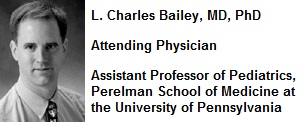
CU Blog - Antibiotics Use Associated with Obesity Risk - Photo 1The researchers found that children with four or more exposures to broad spectrum antibiotics during infancy were particularly more likely to be at risk for obesity. The study, published online September 29, 2014 in JAMA Pediatrics, did not directly examine cause and effect, said Charles Bailey, MD, PhD, (See Photo) lead author of the study, but he added, “as pediatricians, we’re interested in whether events that happen early in life might reset the baseline and have a long-term effect on how the body regulates weight.”

The researchers were intrigued by the emerging idea that the microbial population that begins to colonize in infants’ intestines shortly after birth, known as the microbiome, plays an important role in establishing energy metabolism. Previous studies have shown that antibiotic exposure influences the microbiome’s diversity and composition. “The thought is that the microbiome may be critically dependent on what is going on during infancy,” Bailey added.

The study team analyzed electronic health records from 2001 to 2013 of 64,580 children with annual visits at ages 0 to 23 months, as well as one or more visits at ages 24 to 59 months within the CHOP Care Network. They assessed the relationships between antibiotic prescription and related diagnoses before age 24 months and the development of obesity in the following three years.

Broad-spectrum drugs associated with obesity but not narrow-spectrum drugs

The investigators saw the association with broad-spectrum drugs, but they reported no significant association between obesity and narrow-spectrum drugs. For this study, they classified first-line therapy for common pediatric infections, such as penicillin and amoxicillin, as narrow-spectrum. They considered broad-spectrum antibiotics to include those recommended in current guidelines as second-line therapy.

“Treating obesity is going to be a matter of finding the collection of things that together have a major effect, even though each alone has only a small effect,” said Patricia DeRusso, MD, director of the Healthy Weight Program and vice president of Medical Staff Affairs at Children’s Hospital who was the senior author of the study. “Part of what we are exploring in this study is one of those factors that we can possibly modify in the way we take care of kids and make it better.”

Future investigations are needed involving multiple large pediatric health systems that will take a broader look at several populations and how adopting guidelines that accentuate the use of narrow-spectrum antibiotics might affect patients’ risk of obesity, Dr. Bailey said. In addition to supporting this type of research locally, CHOP is also a key contributor to networks such as PEDSnet that link many children’s hospitals to make more effective clinical research possible. Researchers also are looking at ways the microbial communities living in infants’ intestines are swayed by dietary and environmental factors.

Early intervention is key

Childhood obesity has more than doubled in children over the past 30 years, according to the Centers for Disease Control and Prevention. Many will remain obese into adulthood and be susceptible to heart disease, type 2 diabetes, stroke, several types of cancer, and osteoarthritis. Medical researchers at CHOP want to identify ways to intervene as early as possible, in order to avert the lifetime of medical, developmental, and social problems associated with obesity.

More information

“Association of Antibiotics in Infancy With Early Childhood Obesity” JAMA Pediatrics, published online on September 29, 2014 doi:10.1001/jamapediatrics.2014.1539

Dr. Bailey’s coauthors were Christopher Forrest, MD, PhD; Peixin Zhang, PhD; Thomas M. Richards, MS; Alice Livshits, BS; and Patricia A. DeRusso, MD, MS.

This research project was funded by an unrestricted donation to The Children’s Hospital of Philadelphia’s Healthy Weight Program from the American Beverage Foundation for a Healthy America.

Contact: Joey McCool, The Children’s Hospital of Philadelphia, 267-426-6070 or McCool@email.chop.edu
Children’s Hospital of Philadelphia Web Site – Posted 9-30-2014
http://www.chop.edu/news/antibiotic-use-by-age-2-associated-with-obesity-risk.html

Referenced Video: https://www.youtube.com/watch?v=HF3zTp5YQSg

Why is antibiotics misuse so high in American society*?

One theory is that Big Pharma, the Pharmaceutical industry, dictates standards of care in the field of medicine, more so than may be a best-practice. (Picture the scene of a Pharmaceutical Salesperson slipping in the backdoor to visit a doctor and showcase latest product lines).

This subject of damaging health effects deriving from capitalistic practices in medicine aligns with Go Lean … Caribbean (Page 157), as it posits that Cancer treatment (in the US) has been driven by the profit motive, more so than a quest for wellness and/or a cure.

This is not the model we want to effect the well-being of our young children.

The Go Lean roadmap specifies where we are as a region (minimal advanced medicine options), where we want to go (elevation of Caribbean society in the homeland for all citizens to optimize wellness) and how we plan to get there – confederating as a Single Market entity. While the Go Lean book strategizes a roadmap for economic empowerment, it clearly relates that healthcare, and pharmaceutical acquisitions are important in the quest to make the Caribbean a better place to live, work and play. At the outset of the Go Lean book, in the Declaration of Interdependence (Page 11), these points are pronounced:

viii.  Whereas the population size is too small to foster good negotiations for products and commodities from international vendors, the Federation must allow the unification of the region as one purchasing agent, thereby garnering better terms and discounts.

ix.     Whereas the realities of healthcare and an aging population cannot be ignored and cannot be afforded without some advanced mitigation, the Federation must arrange for health plans to consolidate premiums of both healthy and sickly people across the wider base of the entire Caribbean population. The mitigation should extend further to disease management, wellness, obesity and smoking cessation programs.

The Go Lean book is not a medical reference or science book, but it does touch on medical issues, especially as they relate to community economics. The publishers of the book are not trying to dictate policies for medical practice; that would be out-of-scope for Go Lean, which serves as a roadmap for the implementation and introduction of the technocratic Caribbean Union Trade Federation (CU). The CU‘s prime directives are identified with the following 3 statements:

  • Optimization of the economic engines in order to grow the regional economy to $800 Billion & create 2.2 million new jobs.
  • Establishment of a security apparatus to protect the resultant economic engines.
  • Improve Caribbean governance to support these engines.

Previous blog/commentaries addressed similar issues as the foregoing article. The following sample applies:

CHOP Research: Climate Change May Bring More Kidney Stones
Big Pharma & Criminalization of American Business
New Research and New Hope in the Fight against Alzheimer’s Disease
New Cuban Cancer medication registered in 28 countries

The Caribbean Union Trade Federation has the prime directive of optimizing the economic, security and governing engines of the region. The foregoing article/VIDEO depicts that research is very important to identify and qualify best-practices in health management for the public. Obviously the scourge of obesity is unwelcomed. Nutrition education is a key mitigation, but the foregoing article/VIDEO proclaims another driver that is outside of the control of the afflicted, or their families. This is the manifestation and benefits of Research & Development (R&D). The roadmap describes this focus as a community ethos. Then it goes on to stress that the CU must promote the community ethos that R&D is valuable and must be incentivized for adoption. The following list details additional ethos, strategies, tactics, implementations and advocacies to optimize the region’s health deliveries:

Community Ethos – Deferred Gratification Page 21
Community Ethos – The Consequences of Choices Lie in the Future Page 21
Community Ethos – Governing Principles – Return on Investments Page 24
Community Ethos – Cooperatives Page 25
Community Ethos – Non-Government Organizations Page 25
Community Ethos – Ways to Impact Research & Development (R&D) Page 30
Community Ethos – Ways to Promote Happiness Page 36
Community Ethos – Ways to Impact the Greater Good Page 37
Strategy – Integrate and unify region in a Single Market Page 45
Strategy – Agents of Change – Globalization Page 57
Tactical – Fostering a Technocracy Page 64
Tactical – Separation of Powers – Health Department Page 86
Tactical – Separation of Powers – Drug Administration Page 87
Implementation – Ways to Pay for Change Page 101
Implementation – Ways to Implement Self-Government Entities – R&D Campuses Page 105
Implementation – Ways to Deliver Page 109
Planning – Ways to Make the Caribbean Better Page 131
Advocacy – Ways to Improve Healthcare Page 156
Advocacy – Ways to Better Manage the Social Contract Page 170
Advocacy – Ways Foster Cooperatives Page 176
Advocacy – Ways to Improve Emergency Management Page 196
Advocacy – Ways to Impact Foundations Page 219
Advocacy – Ways to Impact Youth – Healthcare Page 227
Advocacy – Ways to Impact Persons with Disabilities Page 228
Appendix – Emergency Management – Medical Trauma Centers Page 336

The foregoing news/VIDEO story depicted analysis administered by the Children’s Hospital of Philadelphia, a teaching and research facility for the care of children.  There is a need for more such R&D on obesity causes and drivers. In the Caribbean, Cuba currently performs a lot of R&D into cancer, diabetes and other ailments. The Go Lean roadmap posits that more innovations will emerge in the region as a direct result of the CU prioritization on science, technology, engineering and medical (STEM) activities on Caribbean R&D campuses and educational institutions.

The Go Lean roadmap does not purport to be an authority on medical best-practices. The CU economic-security-governance empowerment plan should not direct the course of direction for obesity research and treatment. Neither should pharmaceutical salesmen. Their motive is strictly profit …

The CU motive, to impact the Greater Good, mandates monitoring progress in obesity research, the causes and effects. The hope is to minimize the affliction. This is the heavy-lifting the Caribbean region needs. This means life-or-death for some. All of the Caribbean is hereby urged to lean-in to this roadmap for Caribbean elevation.

Download the book Go Lean … Caribbean – now!

————–

* Appendix – Antibiotics Misuse – (http://en.wikipedia.org/wiki/Antibiotics)

“The first rule of antibiotics is try not to use them, and the second rule is try not to use too many of them.” – The ICU Book [70]

Inappropriate antibiotic treatment and overuse of antibiotics have contributed to the emergence of antibiotic-resistant bacteria. Self prescription of antibiotics is an example of misuse.[71] Many antibiotics are frequently prescribed to treat symptoms or diseases that do not respond to antibiotics or that are likely to resolve without treatment. Also incorrect or suboptimal antibiotics are prescribed for certain bacterial infections.[41][71] The overuse of antibiotics, like penicillin and erythromycin, have been associated with emerging antibiotic resistance since the 1950s.[56][72] Widespread usage of antibiotics in hospitals has also been associated with increases in bacterial strains and species that no longer respond to treatment with the most common antibiotics.[72]

Common forms of antibiotic misuse include excessive use of prophylactic antibiotics in travelers and failure of medical professionals to prescribe the correct dosage of antibiotics on the basis of the patient’s weight and history of prior use. Other forms of misuse include failure to take the entire prescribed course of the antibiotic, incorrect dosage and administration, or failure to rest for sufficient recovery. Inappropriate antibiotic treatment, for example, is their prescription to treat viral infections such as the common cold. One study on respiratory tract infections found “physicians were more likely to prescribe antibiotics to patients who appeared to expect them”.[73] Multifactorial interventions aimed at both physicians and patients can reduce inappropriate prescription of antibiotics.[74]

Referenced Sources:

41. Slama TG, Amin A, Brunton SA, et al. (July 2005). “A clinician’s guide to the appropriate and accurate use of antibiotics: the Council for Appropriate and Rational Antibiotic Therapy (CARAT) criteria”. Am. J. Med. 118 Suppl 7A (7): 1S–6S. doi:10.1016/j.amjmed.2005.05.007

56. Pearson, Carol (28 February 2007). “Antibiotic Resistance Fast-Growing Problem Worldwide”. Voice Of America. Archived from the original on 2 December 2008. Retrieved 29 December 2008.

70. Marino PL (2007). “Antimicrobial therapy”. The ICU book. Hagerstown, MD: Lippincott Williams & Wilkins. p. 817. ISBN 978-0-7817-4802-5.

71. Larson E (2007). “Community factors in the development of antibiotic resistance”. Annu Rev Public Health 28: 435–447. doi:10.1146/annurev.publhealth.28.021406.144020. PMID 17094768.

72. Hawkey PM (September 2008). “The growing burden of antimicrobial resistance”. J. Antimicrob. Chemother. 62 Suppl 1: i1–9. doi:10.1093/jac/dkn241. PMID 18684701.

73. Ong S, Nakase J, Moran GJ, Karras DJ, Kuehnert MJ, Talan DA (2007). “Antibiotic use for emergency department patients with upper respiratory infections: prescribing practices, patient expectations, and patient satisfaction”. Annals of Emergency Medicine 50 (3): 213–20. doi:10.1016/j.annemergmed.2007.03.026. PMID 17467120.

74. Metlay JP, Camargo CA, MacKenzie T, et al. (2007). “Cluster-randomized trial to improve antibiotic use for adults with acute respiratory infections treated in emergency departments”. Annals of Emergency Medicine 50 (3): 221–30. doi:10.1016/j.annemergmed.2007.03.022. PMID 17509729


Share this post:
, , ,
[Top]

Stopping Ebola

Go Lean Commentary

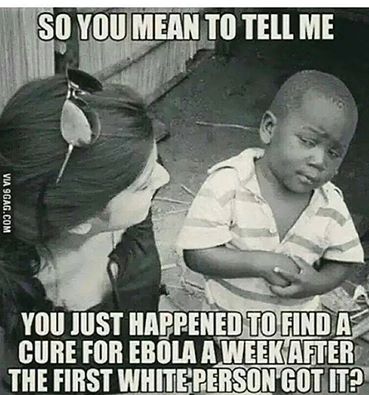
CU Blog - Stopping Ebola - Photo 1What a cute little boy in this photo…

Look at that sly look. It’s as if he just doesn’t understand why he is expected to believe the “nonsense”. He will not “drink the Kool-Aid”.

From the mouths of babes -The Bible; Matthew 21:16

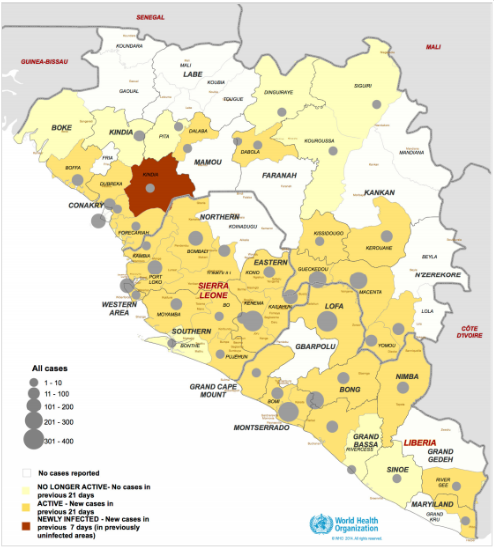
The below article by the Editorial Board of the Miami Herald newspaper seems to indicate that someone has been “drinking the Kool-Aid”. Ebola is not an American problem. As of this moment the figures reported by the World Health Organization is that 2,300 people have died during this recent spread of Ebola in West Africa (Sierra Leone, Liberia, Guinea and other neighboring countries). What’s more, that number afflicted is expected to rise to 20,000 by the end of November. What’s worse, 70% of the afflicted are expected to die, if nothing is done.

There is the need for leadership.

This editorial article therefore petitions for American leadership in this Ebola threat:

By: Miami Herald Editorial Board

CU Blog - Stopping Ebola - Photo 2 Rarely has the idea of the global village and the mantra that the world is one big neighborhood seemed as real as in the frightening case of the raging Ebola epidemic in Africa.

There was a time, not so long ago, that an outbreak of disease anywhere in the Third World would have seemed far removed from the daily concerns of Americans and the nation’s foreign-policy agenda. Safely protected from foreign plagues by vast oceans, U.S. leaders would not have felt compelled to order a rapid response along the lines announced last week by President Obama as a matter of self-protection.

There might have been a tardy and symbolic response, if any at all, but certainly it would not have been treated as a priority demanding presidential action, complete with a significant military deployment.

What makes Ebola different is the realization that the world is indeed smaller, that modern modes of transportation — with busier travel patterns and habits — have lowered the barriers against infection. In places like Miami, a major port of entry for overseas visitors, the threat is very real, and Ebola is a particularly scary virus.

The disease kills between 50 percent and 90 percent of people infected with the virus, and there is as yet no specific and effective treatment available. No vaccine exists. Senior U.N. officials say cases are rising at an almost exponential level, with 5,000 reported by the end of August and many more expected.

Officials in Africa are plainly scared, and should be. Over the weekend, the government in Sierra Leone confined the country’s entire population, some 6 million people, to their homes for three days, an action that one news report called “the most sweeping lockdown against disease since the Middle Ages.”

Some experts estimate that as many as 20,000 people could become infected before the epidemic is under control. Others said the number would be several times higher by year’s end.

“We don’t know where the numbers are going,” said Dr. Bruce Aylward, assistant director general of the World Health Organization. He said the virus was spreading faster than the (belated) escalation of the response by the international community.

Indeed, the international community could have responded more quickly, and more effectively. A major outbreak was reported in Guinea in March by WHO, but it was not until last week that President Obama announced action commensurate with the nature of the threat.

He ordered a deployment of medicine, equipment and soldiers to Liberia and Senegal. A contingent of 3,000 military personnel will help build emergency treatment centers and establish what Pentagon officials call “command and control” assistance to coordinate the overall effort with other countries. According to the White House, the Centers for Disease Control and Prevention has committed more than $100 million to the fight since the outbreak started, but months were lost before the alarm was sounded outside the borders of the affected countries.

As Mr. Obama explained, as a virus multiplies, it also mutates to fight human immunology and counter-measures. That adds to the urgency of the crisis and makes it imperative for the United   States to coordinate an effort on a scale large enough to make a difference.
Miami Herald Daily Newspaper (Posted 09-21-2014) – http://www.miamiherald.com/opinion/editorials/article2180670.html

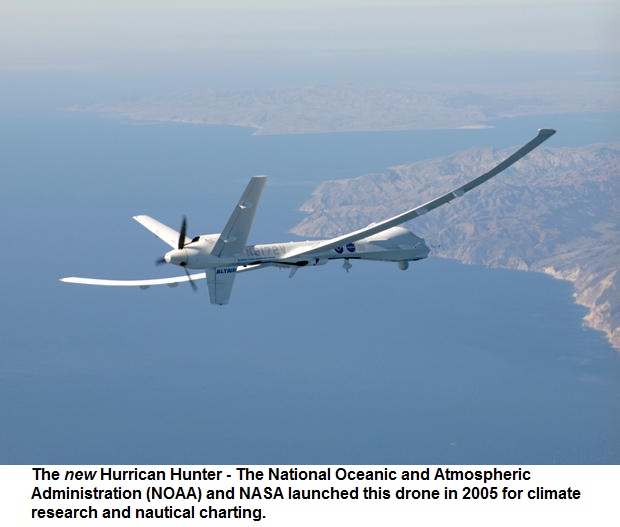
Ebola is not an American problem but when American citizens have been afflicted, the US response has been inspiringly genius, deploying a potential cure within a week. (See caption on above photo). This is not the resume of a global leader, this is the resume of a nation playing favorites.

CU Blog - Stopping Ebola - Photo 3

The book Go Lean…Caribbean posits that the Caribbean region must promote its own interest and protect its own citizens. We cannot count on the US to pursue the Greater Good for the whole world, or the Caribbean for that matter. Assuredly, we must have our own preparation and response vehicle.

This is the goal of the Go Lean…Caribbean book.

The book serves as a roadmap for the introduction and implementation of that regional sentinel, the Caribbean Union Trade Federation (CU). The complete prime directives of the CU:

  • Optimize the economic engines of the Caribbean to elevate the regional economy.
  • Establish a security apparatus to protect the resultant economic engines.
  • Improve Caribbean governance to support these engines.

This CU roadmap declares that “Crap happens” (Page 23). The Go Lean roadmap immediately calls for the establishment of a Homeland Security Department, with an agency to practice the arts and sciences of Emergency Management. The emergencies include more than natural disasters (hurricanes, earthquakes, tsunamis, volcanoes, flooding, forest fires, and droughts), they include the man-made variety (industrial accidents, oil spills, factory accidents, chemical spills, explosions, terroristic attacks, prison riots) and epidemic threats. Of course, these types of emergencies, described in the foregoing article, require professional expertise, a medical discipline. Stopping Ebola therefore would require a hybrid response of the Emergency Management agency and the CU’s Department of Health Disease Control & Management agency. This agency of Medical experts would help contend with systemic threats of epidemic illness and infectious diseases.

The Go Lean roadmap immediately calls for the coordination of security monitoring and mitigation in the Caribbean; this point is declared early in the Go Lean book with a pronouncement in the Declaration of Interdependence (Page 12), as follows:

xvi. Whereas security of our homeland is inextricably linked to prosperity of the homeland, the economic and security interest of the region needs to be aligned under the same governance. …[to ensure] the functioning of the wheels of commerce for all the citizenry, the accedence of this Federation must equip the security apparatus with the tools and techniques for predictive and proactive interdictions.

The Go Lean roadmap calls for the integration of the viral sentinel responsibility of the 30 Caribbean member-states, despite the 4 different languages and 5 colonial legacies (American, British, Dutch, French, Spanish) into a Trade Federation with the tools/techniques to bring immediate change to the region to benefit one and all member-states. This includes the monitoring and epidemiological defense of common and emerging viruses. This empowered CU agency will liaison with foreign entities with the same scope, like the World Health Organization (WHO), and the US’s Center for Disease Control (CDC). The need for this empowerment had previously been discussed in a similar blog/commentary regarding the Chikungunya virus.

Embedded YouTube Video: https://www.youtube.com/watch?v=Ui8wMZpwnp0

Since the CU roadmap leads with economic reform, the primary economic driver of the region (tourism) would be a constant concern. A lot is at stake if the Ebola threat comes to Caribbean shores. The realization, or even the unsubstantiated rumor, of viral outbreaks can imperil the tourism product. We must therefore take proactive steps to protect our economic engines. So there are heavy responsibilities for the stewardship of the Caribbean economy, security and governing engines; the goal is to impact the Greater Good of the entire Caribbean region. There is the need for a Caribbean-based agency to do the heavy-lifting of epidemiology for the region – no such entity exists today.  The emerging CU will invite this role and will promote it as a community ethos.

The book details the community ethos, plus the executions of the following strategies, tactics, implementations and advocacies to impact the region’s public health security in protection of the economy:

Community Ethos – Privacy versus Public Protection Page 23
Community Ethos – “Crap” Happens Page 23
Community Ethos – Lean Operations Page 24
Community Ethos – Cooperatives Page 24
Community Ethos – Non-Government Organizations Page 25
Community Ethos – Ways to Improve Sharing Page 35
Community Ethos – Impact the Greater Good Page 37
Strategy – Vision – Confederate a Non-Sovereign Single Market Entity Page 45
Strategy – Customers – Residents & Visitors Page 47
Strategy – Agents of Change – Globalization Page 57
Tactical – Confederating a Permanent Union Page 63
Tactical – Fostering a Technocracy Page 64
Separation of Powers – Emergency Management Page 76
Separation of Powers – Disease Control & Management Page 86
Implementation – Ways to Pay for Change Page 101
Implementation – Security Initiatives at Start-up Page 103
Implementation – Ways to Deliver Page 109
Implementation – Ways to Foster International Aid Page 115
Implementation – Ways to Benefit from Globalization Page 119
Planning – Ways to Improve Failed-State Indices Page 134
Planning – Ways to Measure Progress Page 148
Advocacy – Ways to Grow the Economy Page 151
Advocacy – Ways to Improve Healthcare Page 156
Advocacy – Ways to Improve Governance Page 168
Advocacy – Ways to Better Manage the Social Contract Page 170
Advocacy – Ways to Foster Cooperatives Page 176
Advocacy – Ways to Improve for Natural Disasters Page 184
Advocacy – Ways to Improve Emergency Management Page 196

The foregoing news editorial assumes the US will be altruistic and only pursue the Greater Good for the rest of the world.

LOL…

Recent Go Lean blogs have reported that the US is still not an equal society for its own citizens; forget those in foreign lands looking to the US for leadership. See sample list here:

https://goleancaribbean.com/blog/?p=2297 A Lesson in US Racial History – Booker T versus Du Bois
https://goleancaribbean.com/blog/?p=2259 The Criminalization of American Business
https://goleancaribbean.com/blog/?p=2251 What’s In A Name… (American Job Discrimination for Minorities)
https://goleancaribbean.com/blog/?p=2183 A Textbook Case of Price-gouging
https://goleancaribbean.com/blog/?p=1896 The Unbalanced Crisis in Black Homeownership
https://goleancaribbean.com/blog/?p=1832 Many drug inmates who get break under new plan to be deported
https://goleancaribbean.com/blog/?p=1674 Obama’s Plans for $3.7 Billion Immigration Crisis Funds
https://goleancaribbean.com/blog/?p=1143 Health-care fraud in America; criminals take $272 billion a year
https://goleancaribbean.com/blog/?p=789 America’s War on the Caribbean
https://goleancaribbean.com/blog/?p=546 Book Review: ‘The Divide’ – American Injustice in the Age of the Wealth Gap
https://goleancaribbean.com/blog/?p=341 Hypocritical US slams Caribbean human rights practices
https://goleancaribbean.com/blog/?p=273 10 Things We Don’t Want from the US: #7 – Discrimination of Immigrants

The change now being fostered by this Go Lean roadmap (and blogs) is focused on the Caribbean member-states, not on the United States of America. The US is out-of-scope; the Caribbean, on the other hand is our home. According to the old adage: “charity begins at home”.

The region is hereby urged to lean-in to this Go Lean roadmap, to fulfill the vision of making the Caribbean region a better place to live, work and play.

Share this post:
, , , , , , ,
[Top]

Corporate Tax Dodging – Transfer Policing

Go Lean Commentary

Bermuda, Bahama … come on pretty mama” – List of fun-spots from the lyrics of the song “Kokomo” by the Beach Boys. (See Appendix & VIDEO below).

“Bermuda, Luxembourg and Ireland” – List of countries from the foregoing article that facilitate tax dodging and evading schemes by corporations in Big Economy countries.

Somehow this just seems wrong!

It seems even worst to be on this latter list.

This is not the Caribbean that we want to bequeath to our children. (According to previous blog commentaries, the children have also voted to divorce themselves of their Caribbean heritage).

The following article depicts the great lengths that “tax dodgers” go through to avoid their social responsibilities…and then use the Caribbean as “partners in crime”.

Subtitle: Big Economies take aim at the firms running circles around their taxmen

POLITICIANS in the rich world like to splutter about the ever more elaborate dodges that big multinational firms undertake to minimise their tax bills. But doing something about them is trickier. America’s Congress is struggling to agree on ways to stop companies “inverting”—switching domicile to reduce tax bills (see article). The European Union is locked in a protracted debate about whether the favourable treatment that some of its members give to particular forms of corporate revenue are tantamount to illegal subsidies. So the news that the world’s biggest economies have agreed on a plan to limit “base erosion and profit shifting” in corporate tax is something of a watershed.

It has become the norm for multinationals to park themselves or large chunks of their assets—especially intangible ones, such as rights to royalties—in low- or no-tax places such as Bermuda, Luxembourg and Ireland. The wiliest, including Apple, have even discovered ways to re-route funds so as to render income stateless. These transactions are generally legal, or at least exploit grey areas in the tax codes of the countries concerned. But they appear unfair to many in these fiscally strained times, not least because they are beyond the reach of small, domestic firms.

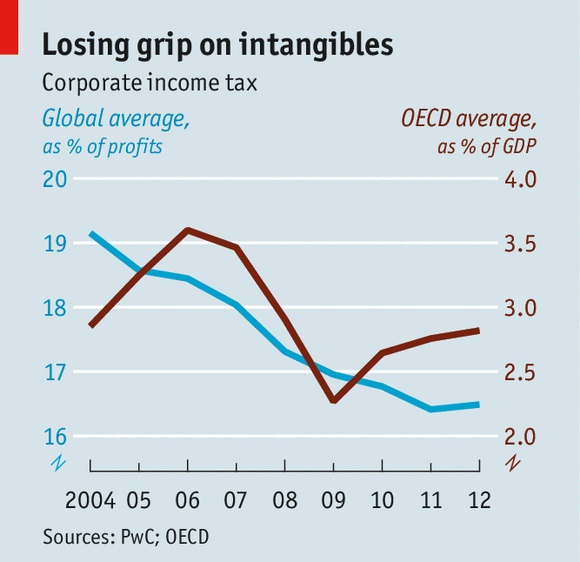
CU Blog - Corporate Tax Dodging - Transfer policing - Photo 1It is only natural that companies take advantage of the gaps. They plough huge resources into doing so, viewing cutting-edge tax arbitrage as a competitive advantage. One study estimated that the resulting tax avoidance could amount to a quarter of total corporate profit-tax receipts in rich countries, and more in poor ones. In truth, the extent of the fleecing is unclear. Corporate tax receipts as a share of GDP, although volatile, do not appear to have declined markedly in the past decade. As a share of profits, however, they have fallen steeply (see chart), though that is partly due to declining rates.

In 2012 the G20, a club of the world’s biggest economies, called on the OECD*, a similar grouping which has long overseen international tax standards, to seek consensus on ways to close the loopholes. Its members have agreed on one set of proposals, released this week, and are working on another. The G20 will formally approve the OECD’s plan at a summit in Australia on September 20th. All told, 44 countries accounting for 90% of the world economy are on board.

The proposals aim to reduce the discrepancy, for many firms, between where they do most of their business and where they pay most of their taxes. One target is “transfer pricing”, the rates that subsidiaries of a single firm charge each other for goods and services. By setting these high, firms can spirit profits out of the countries where they do most of their business to tax havens where they locate their intangibles. The proposals would also clamp down on “treaty shopping”, arrangements through which firms obtain benefits from a tax treaty despite not being resident in either country that is party to it.

Another measure attempts to end the absurd practice of “hybrid mismatches”, whereby companies claim double deductions by classifying financial instruments as debt in some countries and equity in others. In a genuine coup, all members will share basic information about multinationals (such as assets, sales, profits and employees), giving authorities a better chance of spotting tax dodging.

In some areas, consensus could not be reached or is slow to emerge. There was, for instance, no agreement on restricting the use of “patent boxes”, favourable tax regimes for patented inventions and other innovations. In a win for America, the countries agreed not to treat e-commerce as a distinct sector, subject to special “Google taxes”, although they did undertake to study the digital economy’s impact on taxes further. The second set of proposals, expected late next year, is unlikely to include anything much more concrete on this. It will, however, tackle a number of other thorny issues, such as the rampant use of intra-group loans to “strip” earnings out of higher-tax countries.

The chief complaint against the OECD’s approach is that it eschews more radical reforms, such as divvying up taxing rights among countries according to the proportion of a firm’s sales or staff located there. Sol Picciotto of Lancaster University and the Tax Justice Network, an NGO, calls the reforms “a patch-up job” that maintains the “fiction” that subsidiaries charge each other market prices and does little for the poor African countries that are among the main victims of profit-shifting. Jeffrey Owens, a former head of the OECD’s tax division, applauds his former employer’s work but thinks policymakers could struggle to keep up as location becomes an ever-fuzzier concept in business.

Moreover, much of what has been agreed requires the amending of laws and treaties. The risk is that countries implement only the bits that suit them. It remains to be seen how Britain, for instance, will square its official support for the project with its desire to be the most tax-competitive nation in the G20. It offers an alluring patent box and generous treatment of interest and has enthusiastically cut its corporate tax rate, to 20%. America often drops multilateral initiatives in favour of its own preferences.

Small wonder, then, that only 23% of the 3,000 firms surveyed recently by Grant Thornton, an accountancy, expect the proposals to win global approval. And even if they do, the next step is even harder: making sure the multinationals’ supremely inventive lawyers and accountants do not find a way around them.
The Economist Magazine (Posted 09-20-2014) –
http://www.economist.com/news/finance-and-economics/21618911-big-economies-take-aim-firms-running-circles-around-their-taxmen-transfer?fsrc=nlw|hig|18-09-2014|53552127899249e1cc9ea210|NA

*OECD = Organization of Economic Cooperation & Development

The book Go Lean…Caribbean asserts that governments need to collect their taxes, plain and simple. The Social Contract with their citizens requires that they collect revenues so as to render services on behalf of their people. The less tax revenues, the less services that can be rendered. When this trending continues, the destination takes on a “failed-state status”. Unfortunately, the Caribbean region is far too familiar with this “failed-state status”. So  cooperating with foreign companies looking to continue tax dodging practices would be counter-productive – a negative community ethos that we would want to avoid.

The Go Lean book purports that the Caribbean can – and must – do better.

This book, Go Lean… Caribbean, serves as a roadmap for the introduction and implementation of the technocratic Caribbean Union Trade Federation (CU), which represents change for the region. The CU/Go Lean roadmap has 3 prime directives:

  • Optimization of the economic engines in order to grow the regional economy.
  • Establishment of a security apparatus to protect the resultant economic engines against “bad actors”.
  • Improve Caribbean governance to support these engines.

The Go Lean roadmap provides turn-by-turn directions on how to forge a change in the region’s community ethos to encourage honest/moral business practices and a level-playing field.  There is this established business axiom: “there are two certainties: Death and Taxes”. This roadmap thusly views the moral obligation to facilitate government tax deliverables, pronouncing this point early in the Declaration of Interdependence (Page 12) with these statements:

xiv.      Whereas government services cannot be delivered without the appropriate funding mechanisms, “new guards” must be incorporated to assess, accrue, calculate and collect revenues, fees and other income sources for the Federation and member-states. The Federation can spur government revenues directly through cross-border services and indirectly by fostering industries and economic activities not possible without this Union.

The Caribbean have for far too long looked for opportunities on the grey-side of international laws. The foregoing article relates the business historicity of booking Intellectual Property rights royalties and other intangible assets in off-shore locales:

“These transactions are generally legal, or at least exploit grey areas in the tax codes of the countries concerned. But they appear unfair …”

Rather than being complicit in these “grey” activities, indicative of a “parasite” mentality, this roadmap now projects that it is past the time to “straighten up and fly right”. The Go Lean book, and accompanying blog commentaries, go even deeper in describing a “parasite” status that proliferates the Caribbean disposition.

Change has now come to the Caribbean. Rather than a “parasite” ethos, the Go Lean movement calls for a protégé ethos. This shift is now in progress. The Go Lean book (Pages 199, 321 – 326) describes the reform developments in the Offshore Tax & Financial Services industries, in moving the industries from Black List to White List status.

There are many Go Lean blog commentaries that have echoed this point, addressing the change for the Caribbean to shift from “parasite” to protégé:

https://goleancaribbean.com/blog/?p=2207 Hotels Parasite Policies are making billions from added fees
https://goleancaribbean.com/blog/?p=1984 Casinos Failing Business Model
https://goleancaribbean.com/blog/?p=1869 Senate Bill targets cowardly companies that move overseas
https://goleancaribbean.com/blog/?p=623 Only at the precipice, do they change
https://goleancaribbean.com/blog/?p=451 CARICOM Chairman to deliver address on reparations – Parasitical
https://goleancaribbean.com/blog/?p=273 10 Things We Want from the US – Free Market

Change is coming throughout the world, a by-product of globalization. It will not be tolerated for one country to exploit tax loopholes in other countries. This intolerance for “parasites” is not just among the publishers of Go Lean. While this movement anticipates change and then prepares the Caribbean for it, there is an international parallel effort. The G20, a club of the world’s biggest economies, has called on the OECD to oversee international tax standards, to seek consensus on ways to close the tax loopholes. The foregoing article relates that its members have agreed on one set of proposals; so far  44 countries, accounting for 90% of the world economy, are on board for the proposals.

How about for the Caribbean? It is only a matter of time for some international corporate tax reforms to take root. How will those changes affect the Offshore Financial industries and the practice of allowing companies to run circles around tax rules by using “Black List” countries?  The fact that these questions have to be considered demonstrate the need for a more “White List” community/business ethos. These questions should be moot! Never mind the answers.

Debate Over!

The Go Lean book purports that the Caribbean can – and must – do better. The roadmap for the CU is a confederation of the 30 member-states of the Caribbean to do the heavy-lifting of optimizing economic-security-governing engines. The Go Lean book details the community ethos to adopt, plus the executions of the following strategies, tactics, implementations and advocacies to change Caribbean society:

Community Ethos – Deferred Gratification Page 21
Community Ethos – Consequences of Choices Lie in the Future Page 21
Community Ethos – Whistleblower Protection Page 23
Community Ethos – Intelligence Gathering Page 23
Community Ethos – Lean Operations Page 24
Community Ethos – Ways to Help Entrepreneurship Page 28
Community Ethos – Ways to Promote Intellectual Property Page 29
Community Ethos – Ways to Impact Research & Development Page 30
Community Ethos – Ways to Impact the Greater Good Page 37
Strategy – Agents of Change – Technology Page 57
Strategy – Agents of Change – Globalization Page 57
Tactical – How to Grow to a $800 Economy – Trade and Globalization Page 70
Tactical – Separation of Powers – Securities Exchange Regulatory Agency Page 74
Tactical – Separation of Powers – Trade Anti-Trust Regulatory Commission Page 77
Tactical – Separation of Powers – Patent, Standards, and Copyrights Office Page 78
Implementation – Trade Mission Offices Objectives Page 117
Implementation – Ways to Benefit from Globalization Page 119
Planning – Ways to Improve Trade Page 128
Planning – Ways to Make the Caribbean Better Page 131
Advocacy – Ways to Grow the Economy Page 151
Advocacy – Ways to Create Jobs Page 152
Advocacy – Ways to Improve Governance Page 169
Advocacy – Ways to Better Manage the Social Contract Page 171
Advocacy – Ways to Impact Justice Page 177
Advocacy – Ways to Improve Intelligence Gathering & Analysis Page 182
Advocacy – Reforms for Banking Regulations Page 199
Advocacy – Ways to Impact Wall Street Page 200
Advocacy – Ways to Impact Main Street Page 201
Advocacy – Ways to Impact the One Percent Page 224
Advocacy – Ways to Impact … – Bottom Line on the OECD Page 240
Appendix – Offshore Tax & Financial Services Industry Developments Page 321
Appendix – Offshore Tax & Financial Services Industry – Bahamas Example Page 322

The book Go Lean…Caribbean posits that many problems of the region are too big for any one member-state to solve alone, that there is the need for the technocracy of the Caribbean Union Trade Federation. The purpose of this Go Lean/CU roadmap is to make the Caribbean homeland, a better place to live, work and play. We want to be on the list of fun places to PLAY, as conveyed by the below Beach Boys song, not on the list of the “grey”/shady places to WORK.

We do want to be on the consciousness of the rest of the world. We want them envious of our lifestyle and desirous to sample this imagery:

That’s where you wanna go
to get away from it all
Bodies in the sand,
tropical drink melting in your hand
We’ll be falling in love
to the rhythm of a steel drum band

Now is the time for all of the Caribbean, the people and governing institutions, to lean-in for the changes described in the book Go Lean … Caribbean.

Download the e-Book of Go Lean … Caribbean – free … now!

———————————–

Appendix – Song Lyrics for “Kokomo” by the Beach Boys

Aruba, Jamaica, ooh I wanna take ya
Bermuda, Bahama, come on pretty mama
Key Largo, Montego,
baby why don’t we go,
Jamaica

Off the Florida Keys
there’s a place called Kokomo
That’s where you wanna go
to get away from it all
Bodies in the sand,
tropical drink melting in your hand
We’ll be falling in love
to the rhythm of a steel drum band
Down in Kokomo

[Chorus:]
Aruba, Jamaica, ooh I wanna take you to
Bermuda, Bahama, come on pretty mama
Key Largo Montego,
baby why don’t we go
Ooh I wanna take you down to Kokomo,
we’ll get there fast
and then we’ll take it slow
That’s where we wanna go,
way down in Kokomo.

Martinique, that Monserrat mystique…

We’ll put out to sea
and we’ll perfect our chemistry
By and by we’ll defy
a little bit of gravity
Afternoon delight,
cocktails and moonlit nights
That dreamy look in your eye,
give me a tropical contact high
Way down in Kokomo

[Chorus]

Port au Prince, I wanna catch a glimpse…

Everybody knows a little place like Kokomo Now if you wanna go to get away from it all
Go down to Kokomo

[Chorus]

—————

YouTube Video: https://www.youtube.com/embed/_wHiliL4He4


Share this post:
, , , , , ,
[Top]

Welcoming the Dreaded ‘Plutocracy’

Go Lean Commentary

 Plutocracy 2

It is not nice to be called a plutocracy, it’s almost considered a derogatory term – see Appendix below. It simply refers to the undue influence that a super-rich minority group can have on a nation.

The dread of plutocracies is not new, societies have contended with them since the dawn of civilization (Ancient Greece and Rome). Many countries in the Caribbean had de facto plutocracies during their colonial years (Montserrat, Belize and the Bahamas’s Bay Street Boys come to mind), just as a natural off-shoot from a mono-industrial economy (sugar, coffee, tobacco planters). Considering existing plutocracies today, like the City of London and Wall Street, we see that an appropriate strategy can allow a society to “bottle the plutocratic concept” and use it for good.

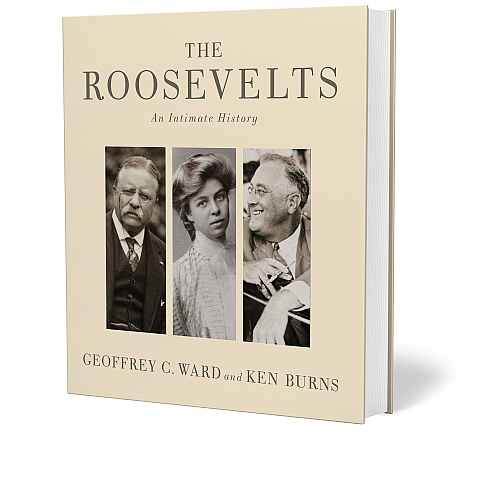
There is currency to this discussion. Award winning documentary film-maker Ken Burns is debuting his new production on The Roosevelts on PBS in the United States, starting tonight (Sunday September 14, 2014). When we consider the lives and advocacies of Theodore, Franklin and Eleanor Roosevelt, we see that there was a consistent urging to take on big business/special interest (plutocratic endeavors) to benefit the working-class man/woman of America. The following is the synopsis of the documentary:

Plutocracy 1The Roosevelts: An Intimate History chronicles the lives of Theodore, Franklin and Eleanor Roosevelt, three members of the most prominent and influential family in American politics. It is the first time in a major documentary television series that their individual stories have been interwoven into a single narrative.  This seven-part, fourteen hour film follows the Roosevelts for more than a century, from Theodore’s birth in 1858 to Eleanor’s death in 1962. Over the course of those years, Theodore would become the 26th President of the United States and his beloved niece, Eleanor, would marry his fifth cousin, Franklin, who became the 32nd President of the United States. Together, these three individuals not only redefined the relationship Americans had with their government and with each other, but also redefined the role of the United States within the wider world. The series encompasses the history the Roosevelts helped to shape: the creation of National Parks, the digging of the Panama Canal, the passage of innovative New Deal programs, the defeat of Hitler, and the postwar struggles for civil rights at home and human rights abroad. It is also an intimate human story about love, betrayal, family loyalty, personal courage and the conquest of fear.

A film by Ken Burns. Written by Geoffrey C. Ward. Produced by Paul Barnes, Pam Tubridy Baucom and Ken Burns.

The Roosevelts airs for a week starting September 14, 2014.

http://www.pbs.org/kenburns/films/the-roosevelts

The idea of “bottling” plutocratic institutions for the Greater Good is a “big idea” in the book Go Lean…Caribbean. How exactly is this envisioned? The answer provided in the book is that of Self-Governing Entities (SGE).

The Go Lean book delves into this approach of inviting the super-rich to establish industrial parks, corporate campuses and research parks in bordered territories in the Caribbean. These entities would be governed solely by the technocratic Caribbean Union Trade Federation (CU). The Go Lean book serves as a roadmap for the introduction and implementation of the CU and SGE’s.

The approach of the Go Lean roadmap is not to punish the super-rich for their success nor cower to any special interests group at the expense of the greater population.

Too bad this approach has not been employed in the US.

Many previous Go Lean blog/commentaries stressed the changes on American society (and by extension, other communities including the Caribbean) due to plutocratic abuses of corporations, super-rich individuals/institutions and special-interest groups, especially since 2008. The following sample applies:

https://goleancaribbean.com/blog/?p=2259 The Criminalization of American Business
https://goleancaribbean.com/blog/?p=2183 A Textbook Case of Price-gouging
https://goleancaribbean.com/blog/?p=2126 Where the Jobs Are – Computers Reshaping Global Job Market
https://goleancaribbean.com/blog/?p=1869 Senate bill targets companies that move overseas
https://goleancaribbean.com/blog/?p=926 Conservative heavyweights have solar industry in their sights
https://goleancaribbean.com/blog/?p=789 America’s War on the Caribbean
https://goleancaribbean.com/blog/?p=782 Open the Time Capsule: The Great Recession of 2008
https://goleancaribbean.com/blog/?p=546 Book Review: ‘The Divide’ – American Injustice in the Age of the Wealth Gap
https://goleancaribbean.com/blog/?p=273 10 Things We Want from the US and 10 Things We Don’t Want from the US: American Capital – Yes; Quantitative Easing – No.
https://goleancaribbean.com/blog/?p=242 The Erosion of the Middle Class

The charter of the CU, on the other hand, is to pursue the Greater Good for all of the Caribbean, to make the region a better place to live, work and play. This Go Lean roadmap aligns this charter with the following 3 prime directives:

  • Optimization of the economic engines in order to grow the regional economy to $800 Billion & create 2.2 million new jobs.
  • Establishment of a security apparatus to protect the resultant economic engines.
  • Improve Caribbean governance to support these engines.

The book describes the CU as a technocratic administration with 144 different missions to elevate the Caribbean homeland. The underlying goal to regulate the regional economy, and solicit (super-rich) investors, is stated early in the book with this pronouncement in the opening Declaration of Interdependence (Page 13):

xxiv. Whereas a free market economy can be induced and spurred for continuous progress, the Federation must install the controls to better manage aspects of the economy: jobs, inflation, savings rate, investments and other economic principles. Thereby attracting direct foreign investment because of the stability and vibrancy of our economy.

The Go Lean…Caribbean book challenges the reader, and the Caribbean as a whole, to create a structure that would be inviting to the super-rich and their resources. The SGE concept is a creative approach for that goal, but it is not so revolutionary – similar concepts already exists. Some examples of SGE-like structures are the city-states of Hong Kong, Liechtenstein (Europe), Vatican City (Italy), Panama City Zone (during the 20th Century, alluded to in the foregoing documentary synopsis) and many Free Trade Zones operating throughout the world.

The Go Lean/CU roadmap constitutes change for the Caribbean. The goal is to structure SGE’s at the federal level only, so as to incentivize the super-rich to consider this region. The plan calls for a Special Liaison Group within the CU Department of State just for the One Percent. Already this population enjoys the Caribbean for play, the plan now is to invite them to live and work in the region as well.

The Go Lean roadmap highlights the required community ethos, plus the execution of strategies, tactics, implementation and advocacies to construct the climate for the promotion of “plutocracies in a bottle”. The following is a sample of these specific details from the book:

Community Ethos – Economic Principles – People Respond to Incentives in Predictable Ways Page 21
Community Ethos – Economic Principles – Economic Systems Influence Individual Choices Page 21
Community Ethos – Economic Principles – Voluntary Trade Creates Wealth Page 21
Community Ethos – Economic Principles – Job Multipliers Page 22
Community Ethos – Security Principles – Privacy versus Public Protection Page 23
Community Ethos – Security Principles – Whistleblower Protection Page 23
Community Ethos – Security Principles – “Crap” Happens Page 23
Community Ethos – Governing Principles – Minority Equalization Page 24
Community Ethos – Governing Principles   – Lean Operations Page 24
Community Ethos – Governing Principles – Return on Investments Page 24
Community Ethos – Ways to Foster Genius Page 27
Community Ethos – Ways to Help Entrepreneurship Page 28
Community Ethos – Ways to Impact Research & Development Page 30
Community Ethos – Ways to Improve Negotiations Page 32
Community Ethos – Ways to Impact the Greater Good Page 37
Strategy – Vision – Confederation   of the 30 Caribbean Member-States into a   Single Market Page 45
Strategy – Mission – Invite empowering immigrants to help us move our society and economy Page 46
Strategy – Mission – Customers (Subjects/Citizens) – Foreign Direct Investors Page 48
Tactical – Confederating a Permanent Union Page 63
Tactical – Fostering a Technocracy Page 64
Tactical – How to Grow the Economy to $800 Billion – US Example of Economic Bubbles Page 69
Tactical –  Separation of Powers: – State Department – Special Interest Group Page 80
Tactical –  Separation of Powers: – State Department – Self Governing Entities Page 80
Implementation – Assemble Existing Regional Organizations into CU Page 96
Implementation – Ways to Pay for Change – SGE Licenses Page 101
Implementation – Steps to Implement Self-Governing Entities Page 105
Implementation – Ways to Deliver Page 109
Implementation – Trade Mission Objectives Page 117
Planning – 10 Big Ideas for the Caribbean Region – Self Governing Entities Page 127
Planning – Ways to Improve Trade – Trade Missions Page 131
Planning – Lessons Learned from 2008 Page 136
Advocacy – Ways to Grow the Economy Page 151
Advocacy – Ways to Create Jobs Page 152
Advocacy – Ways to Foster Empowering Immigration – SGE Labor Rules Page 174
Advocacy – Ways to Market Southern California Page 194
Advocacy – Ways to Impact Wall Street Page 200
Advocacy – Ways to Help the Middle Class Page 223
Advocacy – Ways to Impact the One Percent Page 224
Appendix – Job Multipliers Page 259
Appendix – List of One Percent Billionaires and Giving Pledge Signatories Page 292

Allowing a super-rich minority to wield unchecked influence could be destructive to a society – the rich would get richer while the poor gets poorer. But the structure of SGE’s would allow the participation of the super-rich class in a manner that would not foster conflict with democratic principles – of the people, by the people, for the people.

Imagine a parade of workers entering an industrial park in the morning, then returning to their individual communities in the evening. This is the exact model of the City of London, described in the Appendix below. This model creates direct jobs on the SGE campuses/parks and a multiplier-effect for indirect jobs in the neighboring communities.

“Keep your friends close and your enemies closer” – Old adage.

While the Go Lean book details these specifics, it also stands “on guard” as a Sentinel against possible abuses and threats to the economic/financial eco-systems. There it is: “plutocracy in a bottle”.

“Tame the market’s excesses” – Theodore Roosevelt.

According to the referenced documentary, the Presidency of Theodore Roosevelt made great gains in curtailing the market excesses of that day; (there was a Depression in the 1870’s and Recession in the 1890’s). The oil industry and railroads were dominated by a small number of individuals. This Roosevelt Administration presided over a divestiture of Standard Oil and the railroad barons.

In addition, the Presidency of Franklin Roosevelt also made great gains in curtailing the market excesses of Wall Street and the Big Banks, the dysfunctional source of the Great Depression (1929 – 1933). The New Deal initiatives balanced the scales of justice for rich versus poor Americans.

Is the US a plutocracy today? Not technically, but the trending has been leaning in that direction, especially with the downward pressures on the middle classes.

The purpose of this commentary is not to assess and fix the challenges of an America plutocracy trend, but rather to identify, qualify and propose arrangements for Direct Foreign Investments in the Caribbean without creating the dreaded plutocracy. The Go Lean book declares that the Caribbean can “count on the greedy to be greedy”, (Page 26).

Opportunities will abound in this new Caribbean … for the rich, the poor, and the middle classes. Everyone is urged to lean-in to this regional empowerment roadmap, to “go lean“. Everyone can contribute to make the Caribbean a better place to live, work and play. 🙂

Download the book Go Lean … Caribbean – now!

———————–

Appendix – Plutocracy Definition and Relevance

Retrieved from Wikipedia Online Encyclopedia; 09/14/2014: http://en.wikipedia.org/wiki/Plutocracy

Plutocracy defines a society or a system ruled and dominated by the small minority of the wealthiest citizens. The first known use of the term was in 1652.[1] Unlike systems such as democracy, capitalism, socialism or anarchism, plutocracy is not rooted in an established political philosophy. The concept of plutocracy may be advocated by the wealthy classes of a society in an indirect or surreptitious fashion, though the term itself is almost always used in a pejorative sense.[2]

The term plutocracy is generally used as a pejorative to describe or warn against an undesirable condition.[3][4] Throughout history, political thinkers such as Winston Churchill, 19th-century French sociologist and historian Alexis de Tocqueville, 19th-century Spanish monarchist Juan Donoso Cortés and today Noam Chomsky have condemned plutocrats for ignoring their social responsibilities, using their power to serve their own purposes and thereby increasing poverty and nurturing class conflict, corrupting societies with greed and hedonism.[5][6]

Examples

Examples of plutocracies include the Roman Empire, some city-states in Ancient Greece, the civilization of Carthage, the Italian city-states/merchant republics of Venice, Florence, Genoa, and pre-World War II Empire of Japan (the Zaibatsu).

One modern, formal example of what some critics have described as a plutocracy is the City of London.[7] The City (not the whole of modern London but the area of the ancient city, about 1 sq mile or 2.5 km2, which now mainly comprises the financial district) has a unique electoral system for its local administration. More than two-thirds of voters are not residents, but rather representatives of businesses and other bodies that occupy premises in the City, with votes distributed according to their numbers of employees. The principal justification for this arrangement is that most of the services provided by the Corporation are used by the businesses in the City. In fact about 450,000 non-residents constitute the city’s day-time population, far outnumbering the City’s 7,000 residents.[8]

Modern politics

Historically, wealthy individuals and organizations have exerted influence over the political arena. In the modern era, many democratic republics permit fundraising for politicians who frequently rely on such income for advertising their candidacy to the voting public.

Whether through individuals, corporations or advocacy groups, such donations are often believed to engender a cronyist or patronage system by which major contributors are rewarded on a quid pro quo basis. While campaign donations need not directly affect the legislative decisions of elected representatives, the natural expectation of donors is that their needs will be served by the person to whom they donated. If not, it is in their self-interest to fund a different candidate or political organization.

While quid pro quo agreements are generally illegal in most democracies, they are difficult to prove, short of a well-documented paper trail. A core basis of democracy, being a politician’s ability to freely advocate policies which benefit his or her constituents, also makes it difficult to prove that doing so might be a crime. Even the granting of appointed positions to a well-documented contributor may not transgress the law, particularly if the appointee appears to be suitably qualified for the post. Some systems even specifically provide for such patronage.

United States

Some modern historians, politicians and economists state that the United States was effectively plutocratic for at least part of the Gilded Age and Progressive Era periods between the end of the Civil War until the beginning of the Great Depression.[9][10][11][12][13][14] President Theodore Roosevelt became known as the “trust-buster” for his aggressive use of United States antitrust law, through which he managed to break up such major combinations as the largest railroad and Standard Oil, the largest oil company.[15]According to historian David Burton, “When it came to domestic political concerns, TR’s Bete Noire was the plutocracy.[16] In his autobiographical account of taking on monopolistic corporations as president, TR recounted:

’’ …we had come to the stage where for our people what was needed was a real democracy; and of all forms of tyranny the least attractive and the most vulgar is the tyranny of mere wealth, the tyranny of a plutocracy.’’[17]

The Sherman Antitrust Act had been enacted in 1890, with large industries reaching monopolistic or near-monopolistic levels of market concentration and financial capital increasingly integrating corporations, a handful of very wealthy heads of large corporations began to exert increasing influence over industry, public opinion and politics after the Civil War. Money, according to contemporary progressive and journalist Walter Weyl, was “the mortar of this edifice”, with ideological differences among politicians fading and the political realm becoming “a mere branch in a still larger, integrated business. The state, which through the party formally sold favors to the large corporations, became one of their departments.”[18]

In his book The Conscience of a Liberal, in a section entitled The Politics of Plutocracy, economist Paul Krugman says plutocracy took hold because of three factors: at that time, the poorest quarter of American residents (African-Americans and non-naturalized immigrants) were ineligible to vote, the wealthy funded the campaigns of politicians they preferred, and vote buying was “feasible, easy and widespread”, as were other forms of electoral fraud such as ballot-box stuffing and intimidation of the other party’s voters.[19]

Post World War II

In modern times, the term is sometimes used pejoratively to refer to societies rooted in state-corporate capitalism or which prioritize the accumulation of wealth over other interests. According to Kevin Phillips, author and political strategist to U.S. President Richard Nixon, the United States is a plutocracy in which there is a “fusion of money and government.”[20]

Chrystia Freeland, author of Plutocrats: The Rise of the New Global Super-Rich and the Fall of Everyone Else,[21] says that the present trend towards plutocracy occurs – and is self-justified – because the rich feel “[their] own personal self-interest is in the interests of everybody else.”[22][23]

Some researchers have said the US may be drifting towards a form of oligarchy, as individual citizens have less impact than economic elites and organized interest groups upon public policy.[24] A study conducted by political scientists Martin Gilens (Princeton University) and Benjamin Page (Northwestern University), which was released in April 2014,[25] stated that their “analyses suggest that majorities of the American public actually have little influence over the policies our government adopts.” that Gilens and Page do not characterize the US as an “oligarchy” or “plutocracy” per se; however, they do apply the concept of “civil oligarchy” as used by Jeffrey A. Winters[26] with respect to the US.

Most recently, Jeffrey Winters has posited a comparative theory of “Oligarchy,” in which the wealthiest citizens – even in a “civil oligarchy” like the United   States – dominate policy concerning crucial issues of wealth- and income-protection.[27]

On August 13, 2014, on Al Jazeera, in response to questions related to US responses to the Israeli/Gaza situation, professor Noam Chomsky of MIT effectively repeated the quote on American public influence over policies. When questioned further, he suggested that significant amounts of research indicated that the US was in effect a plutocracy.

As a propaganda term

In the political jargon and propaganda of Fascist Italy, Nazi Germany and the Communist International, western democratic states were referred to as plutocracies, with the implication being that a small number of extremely wealthy individuals were controlling the countries and holding them to ransom.[28][29] Plutocracy replaced democracy and capitalism as the principal fascist term for the United States and Great Britain during the Second World War.[29] For the Nazis, the term was often a code word for “the Jews”.[29]

Cited References

  1. “Plutocracy”. Merriam Webster. Retrieved 13 October 2012.
  2. “The study of attitudes is reasonably easy […] it’s concluded that for roughly 70% of the population – the lower 70% on the wealth/income scale – they have no influence on policy whatsoever. They’re effectively disenfranchised. As you move up the wealth/income ladder, you get a little bit more influence on policy. When you get to the top, which is maybe a tenth of one percent, people essentially get what they want, i.e. they determine the policy. So the proper term for that is not democracy; it’s plutocracy.” Extract from the transcript of a speech delivered by Noam Chomsky in Bonn, Germany, at DW Global Media Forum, 15 August 2013.
  3. Fiske, Edward B.; Mallison, Jane; Hatcher, David (2009). Fiske 250 words every high school freshman needs to know. Naperville, Ill.: Sourcebooks. p. 250. ISBN 1402218400.
  4. Coates, ed. by Colin M. (2006). Majesty in Canada: essays on the role of royalty. Toronto: Dundurn. p. 119. ISBN 1550025864.
  5. Conservative thinkers: from John Adams to Winston Churchill. New Brunswick, New Jersey: Transaction Publishers. 2006. pp. 19–68. ISBN 1412805260.
  6. Toupin, Alexis de Tocqueville; edited by Roger Boesche; translated by James; Boesche, Roger (1985). Selected letters on politics and society. Berkeley: University of California Press. pp. 197–198. ISBN 0520057511.
  7. The medieval, unaccountable Corporation of London is ripe for protest, The Guardian, retrieved 01/11/2011 from: http://www.guardian.co.uk/commentisfree/2011/oct/31/corporation-london-city-medieval.
  8. René Lavanchy (12 February 2009). “Labour runs in City of London poll against ‘get-rich’ bankers”. Tribune. Retrieved 14 February 2009 from: http://www.tribunemagazine.org/2009/02/labour-runs-in-city-of-london-poll-against-‘get-rich’-bankers/.
  9. Pettigrew, Richard Franklin (2010). Triumphant Plutocracy: The Story of American Public Life from 1870 to 1920. Nabu Press. ISBN 1146542747.
  10. Calvin Reed, John (1903). The New Plutocracy. Kessinger Publishing, LLC (2010 reprint). ISBN 1120909155.
  11. Brinkmeyer, Robert H. (2009). The fourth ghost: white Southern writers and European fascism, 1930-1950. Baton Rouge: Louisiana State University Press. p. 331. ISBN 0807133833.
  12. Allitt, Patrick (2009). The conservatives: ideas and personalities throughout American history. New Haven: Yale University Press. p. 143. ISBN 0300118945.
  13. Ryan, foreword by Vincent P. De Santis; edited by Leonard Schlup, James G. (2003). Historical dictionary of the Gilded Age. Armonk, N.Y.: M.E. Sharpe. p. 145. ISBN 0765603314.
  14. Conservative thinkers: from John Adams to Winston Churchill. New Brunswick, New Jersey: Transaction Publishers. 2006. p. 103. ISBN 1412805260.
  15. Schweikart, Larry (2009). American Entrepreneur: The Fascinating Stories of the People Who Defined Business in the United   States. AMACOM Div American Mgmt Assn.
  16. David Henry Burton: Theodore Rooselvelt, American Politician, An Assessment, Fairleigh Dickinson Univ Press, 1997
  17. Theodore Roosevelt: Theodore Roosevelt: an autobiography. New York, Macmillan, 1913
  18. Bowman, Scott R. (1996). The modern corporation and American political thought: law, power, and ideology. University Park, Pa.: Pennsylvania State University Press. pp. 92–103. ISBN 0271014733.
  19. Krugman, Paul (2009). The conscience of a liberal ([Pbk. ed.] ed.). New York: Norton. pp. 21–26. ISBN 0393333132.
  20. Transcript. Bill Moyers Interviews Kevin Phillips. NOW with Bill Moyers 4.09.04 | PBS. Retrieved from http://www.pbs.org/now/transcript/transcript_phillips.html.
  21. Freeland, Chrystia (2012). Plutocrats: the rise of the new global super-rich and the fall of everyone else. New York: Penguin. ISBN 9781594204098. OCLC 780480424.
  22. National Public Radio (October 15, 2012) “A Startling Gap Between Us And Them In ‘Plutocrats'”. Retrieved from: http://www.npr.org/2012/10/15/162799512/a-startling-gap-between-us-and-them-in-plutocrats
  23. See also the Chrystia Freeland interview for the Moyers Book Club (October12, 2012) Moyers & Company Full Show: Plutocracy Rising. Retrieved from: http://billmoyers.com/episode/full-show-plutocracy-rising/
  24. Piketty, Thomas (2014). Capital in the Twenty-First Century. Belknap Press. ISBN 067443000X p. 514: “the risk of a drift towards oligarchy is real and gives little reason for optimism about where the United States is headed.”
  25. Gilens & Page (2014) Testing Theories of American Politics: Elites, Interest Groups, and Average Citizens, Perspectives on Politics,PrincetonUniversity. Retrieved 18 April 2014.
  26. Winters, Jeffrey A. “Oligarchy” CambridgeUniversity Press, 2011, p. 208-254
  27. Gilens & Page (2014) p. 6
  28. http://www.marxists.org/history/etol/newspape/fi/vol02/no02/editors2.htm
  29. Blamires, Cyprian; Jackson, Paul (2006). World fascism: a historical encyclopedia, Vol. 1. ABC-CLIO. p. 522. ISBN 978-1-57607-940-9.


Share this post:
, , ,
[Top]

A Textbook Case of Price-gouging

Go Lean Commentary

Its déjà-vu all over again.

Didn’t we see this before? Yes, just recently as the cause of the Great Recession, where the global economy was brought to the precipice (2008) due to a defective eco-system with American home mortgage financing and servicing. Now, the foregoing VIDEO alludes to a similar “fox in charge of the hen house” scenario – this time with college education textbooks.

Why university books in America are so expensive? (Click ad-supported VIDEO here)

The Economist Magazine (Posted 08-20-2014) –
http://www.economist.com/blogs/graphicdetail/2014/08/daily-chart-11

Textbook Price 1The issue in this VIDEO reflects American Capitalism 101 – not free market economics – where public policy is set to benefit private parties. (This is defined by some as Crony Capitalism). Since many college expenses are subsidized by governments (federal and state) by means of grants or low-interest, deferred student loans, the marketplace knows that governmental entities will pay…unconditionally, so of course prices go up … and up.

The book Go Lean…Caribbean asserts that the Caribbean region must not allow the US to take the lead for our own nation-building, that American capitalistic interest tends to highjack policies intended for the Greater Good.

This assessment applies to the mortgage bubble/crisis of the 2000’s, foreign policy in the Latin America and now to college education textbooks. When will we learn?

The Go Lean book, and accompanying blog commentaries, go even deeper and hypothesize that the traditional American college educated career paths has led to disastrous policies for the Caribbean in whole, and for each specific country in particular. This is a conclusion based on a macro focus, not the micro.

From a micro perspective, college education is great for the individual, enabling them to increase their earning potential in society – every additional year of schooling increases their earnings by about 10%. But on the macro, the Caribbean assimilation of an American college education strategy has been one disaster after another – an incontrovertible brain drain, capital flight of unpaid student loans and illegal immigration.

Now we are learning from this VIDEO, that the American Textbook Publishing schema is designed to take even more of the treasuries from the parents of Caribbean students that are paying tuition, plus room-and-board.

This broken system in America does not have to be tolerated in the Caribbean, anymore. Change has now come. The driver of this change is technology and globalization. The Go Lean book posits that the governmental administrations and educational institutions of the region should invest in alternative higher education options and as much technological educational advances (e-Learning) as possible, for its citizens.

This book Go Lean… Caribbean, serves as a roadmap for the introduction and implementation of the Caribbean Union Trade Federation (CU), which represents change for the region. The CU/Go Lean roadmap has 3 prime directives:

  • Optimization of the economic engines in order to grow the regional economy.
  • Establishment of a security apparatus to protect the resultant economic engines.
  • Improve Caribbean governance to support these engines.

The Go Lean roadmap provides turn-by-turn directions on how to forge this change in the region for a reboot of the Caribbean tertiary education systems, economy, governance and Caribbean society as a whole. This roadmap is presented as a planning tool, pronouncing this point early in the Declaration of Interdependence (Page 12 & 14) with these statements:

xix.      Whereas our legacy in recent times is one of societal abandonment, it is imperative that incentives and encouragement be put in place to first dissuade the human flight, and then entice and welcome the return of our Diaspora back to our shores

xxi.      Whereas the preparation of our labor force can foster opportunities and dictate economic progress for current and future generations, the Federation must ensure that educational and job training opportunities are fully optimized for all residents of all member-states, with no partiality towards any gender or ethnic group. The Federation must recognize and facilitate excellence in many different fields of endeavor, including sciences, languages, arts, music and sports. This responsibility should be executed without incurring the risks of further human flight, as has been the past history.

xxvii.      Whereas the region has endured a spectator status during the Industrial Revolution, we cannot stand on the sidelines of this new economy, the Information Revolution. Rather, the Federation must embrace all the tenets of Internet Communications Technology (ICT) to serve as an equalizing element in competition with the rest of the world. The Federation must bridge the digital divide and promote the community ethos that research/development is valuable and must be promoted and incentivized for adoption.

The Go Lean book posits that even though education is a vital ingredient for Caribbean economic empowerment, there has been a lot of flawed decision-making in the past, both individually and community-wise. The vision of the CU is a confederation of the 30 member-states of the Caribbean to do the heavy-lifting of optimizing educational policies. The Go Lean book details those policies; and other ethos to adopt, plus the executions of the following strategies, tactics, implementations and advocacies to impact the tertiary education in the region:

Community Ethos – Deferred Gratification Page 21
Community Ethos – People Respond to Incentives Page 21
Community Ethos – Job Multiplier Page 22
Community Ethos – Lean Operations Page 24
Community Ethos – Return on Investments (ROI) Page 24
Community Ethos – Ways to Impact the Future Page 26
Community Ethos – Ways to Foster Genius Page 27
Community Ethos – Ways to Promote Intellectual Property Page 29
Community Ethos – Ways to Close the Digital Divide Page 31
Community Ethos – Ways to Improve Sharing – Purchasing Cooperatives Page 35
Community Ethos – Ways to Impact the Greater Good Page 37
Strategy – Agents of Change – Technology Page 57
Strategy – Agents of Change – Globalization Page 57
Tactical – Separation of Powers – Education Department Page 85
Tactical – Separation of Powers – Labor Department – On Job Training Page 89
Implementation – Ways to Pay for Change Page 101
Implementation – Ways to Benefit from Globalization Page 119
Planning – Lessons Learned from 2008 Page 136
Advocacy – Ways to Grow the Economy Page 151
Advocacy – Ways to Create Jobs Page 152
Advocacy – Ways to Improve Education Page 159
Advocacy – Ways to Impact Student Loans Page 160
Advocacy – Ways to Improve Governance Page 169
Advocacy – Ways to Foster Cooperatives Page 176
Advocacy – Ways to Improve Libraries Page 187
Appendix – Education and Economic Growth Page 258
Appendix – Measuring Education Page 266
Appendix – New Student Loan Scandal – Rolling Stone Magazine Page 286

The foregoing video relates to topics that are of serious concern for Caribbean planners. While the US is the world’s largest Single Market economy, we want to only model some of the American example. We want to foster an education agenda that propels the Caribbean’s best interest, not some American special interest group. There are many Go Lean blog commentaries that have echoed this point, addressing the subject of Caribbean education decision-making and ramifications. See sample here:

https://goleancaribbean.com/blog/?p=2126 Where the Jobs Are – Computers Reshaping   Global Job Market
https://goleancaribbean.com/blog/?p=1698 STEM Jobs Are Filling Slowly
https://goleancaribbean.com/blog/?p=1596 Book Review: ‘Prosper Where You Are   Planted’
https://goleancaribbean.com/blog/?p=1470 College of the Bahamas Master Plan 2025 – Reach   for the Lamp-Post
https://goleancaribbean.com/blog/?p=1433 Caribbean   loses more than 70 percent of tertiary educated to brain drain
https://goleancaribbean.com/blog/?p=1256 Traditional 4-year Colleges – Terrible   Investment for Region and Jobs
https://goleancaribbean.com/blog/?p=459 CXC and UK   textbook publisher hosting CCSLC workshops in Barbados
https://goleancaribbean.com/blog/?p=398 Self-employment on the rise in the Caribbean
https://goleancaribbean.com/blog/?p=273 10 Things We Don’t Want from the US – American   Self-Interest Policies

The book Go Lean…Caribbean posits that many problems of the region are too big for any one member-state to solve alone, that there is the need for the technocracy of the Caribbean Union Trade Federation. The purpose of this Go Lean/CU roadmap is to make the Caribbean homeland, a better place to live, work, learn and play. This effort is more than academic, this involves some alleviation of the pain and suffering back in the homeland.

We need jobs, and we need an educated labor-force to facilitate the demands of a competitive world. The roadmap posits that to succeed in the global marketplace, the Caribbean region must not only consume but rather also create, produce, and distribute intellectual property. So subjects like prices of textbooks and e-books are germane for our consideration, (see Appendix below). Plus with tactics like Group Purchasing (GPO), there are effective ways to minimize the associated costs of educating the general population, and specific learning needs.

Textbook Price 2

There is the need for specific skills training – we need more STEM enthusiasts (Science, Technology, Engineering, Math). So the issue, as expressed in the foregoing video, and the remediation as expressed in Go Lean…Caribbean is an important reflection of technocratic problem solving being advocated for the CU.

Now is the time for all of the Caribbean, the people and governing institutions, to lean-in for the changes described in the book Go Lean … Caribbean.

Download the book Go Lean…Caribbean now!

—————————————————————————————————————-

APPENDIX

High Textbook Prices Anecdote #1: (http://www.timesheraldonline.com/news/ci_25464834/throwing-book-at-high-costs-college-textbooks)

Former Napa College student Jena Goodman of Vallejo said student higher education leaders from across California are working to find ways to lighten the financial load of buying textbooks.

“For me, I’ve spent up to $150 for a textbook and as much as $500 to $600 per semester on books,” said Goodman.

High Textbook Prices Anecdote #2: (http://www.theatlantic.com/business/archive/2013/01/why-are-college-textbooks-so-absurdly-expensive/266801/)

According to the National Association of College Stores, the average college student reports paying about $655 for textbooks and supplies annually, down a bit from $702 four years ago. The NACS credits that fall to its efforts to promote used books along with programs that let students rent rather than buy their texts.

Proposed Solution: (http://www.vox.com/2014/8/25/6058017/why-are-college-textbooks-so-expensive)

One [option] is to treat college textbooks more like high school textbooks — a college would purchase the textbooks, then rent them out to students for a fee. That spreads out the cost of materials over multiple years and for multiple students, and makes textbooks cheaper. But to be effective, it also has to work in bulk, which means faculty have to agree on texts to use for their classes.

Another alternative is open educational resources, which are open-source materials available for free that can take the place of textbooks. Peter Thorsness, a University of Wyoming professor [and a father of a first time college student], said upper-level science classes are now more likely to use such materials from the National Institutes of Health. And some researchers think that open educational resources and other online materials are poised to disrupt the textbook market.

Share this post:
, ,
[Top]

Cooling Effect – Oceans and the Climate

Go Lean Commentary

Are you smarter than a 5th Grader?

The following is an analysis based on some basic elementary school science. For starters, salt (salinity) has an effect on the absorption of heat – it freezes at a colder temperature (28.4 degrees Fahrenheit) than the 32 degrees for water – salt is thusly the #1 tool for managing snow removal during the winter months in the colder climates. (This dynamic may be unfamiliar to many residents in the Caribbean). When salt is scattered/applied on sidewalks or roads, affected snow would melt … on its own.

Another principle in consideration of this discussion is that Climate Change is mostly associated with Global Warming, and yet, this year (this summer especially in the Northeast US) has been cooler than usual.

So do we have Global Warming or not? Is this a fluke that this summer is cooler than usual? Do we need to prepare for more devastating effects of Climate Change?

Yes, yes and yes!

The book Go Lean…Caribbean calls for the establishment of a regional sentinel to monitor, mitigate and manage the effects of Climate Change on the region’s economic, security and governing engines. This subject is more than just academic for the Caribbean, this affects our life and livelihood. When we get this stewardship wrong, and for 50 years this has been the assessment, we lose out. We have a long track record of losses associated with the perils of Climate Change; consider this sample: Hurricane Andrew (1992 – Bahamas), Hurricane Marilyn (1995 – Virgin Islands), Hurricane Wilma (2005 – Bahamas) and Hurricane Dean (2007 – Belize).

Caribbean losses have not only been property damage and the disruption of commerce. Inevitably, each storm episode created “push” factors for societal abandonment. Then as a community, we lost out on even more economic opportunities associated with the time, talent and treasuries of the Caribbean residents who left – we experienced a brain drain. Today, our “sorry state of affairs” find some regional member-states with an abandonment rate of more than 50% (Puerto Rico and US Virgin Islands) and the absence of more than 70% of college-educated citizens.

While 5th Grade Science is important for this empowerment effort, the book Go Lean … Caribbean is not a book of science; it gleans from scientific concepts in communicating the plan to elevate Caribbean society. The book focuses on economics, and relates that the resultant societal engines can be seriously impacted by climate change-led natural disasters: threats and actual impact. The book thusly serves as a roadmap for the introduction and implementation of the technocratic Caribbean Union Trade Federation (CU). The prime directives of this agency are described as:

  • Optimize the economic engines of the Caribbean to elevate the regional economy to grow to $800 Billion and create 2.2 million new jobs.
  • Establish a security apparatus to protect the resultant economic engines.
  • Improve Caribbean governance to support these engines.

The Go Lean roadmap immediately calls for the establishment of a Homeland Security Department, with an agency to practice the arts and sciences of Emergency Management. The emergencies include natural disasters like hurricanes, earthquakes, tsunamis, volcanoes, flooding, forest fires, and droughts – all now of more frequent occurrences. These types of emergencies should be impacted even further based on the dynamics described in the foregoing article. Emergency Management is not just reactive, it must be proactive as well. This direct correlation of warmer seas and cooling temperatures with the economy, thusly depicts the need for this CU charter and mission:

Title: Davy Jones’s heat locker
Subtitle: The mystery of the pause in global warming may have been solved. The answer seems to lie at the bottom of the sea

CU Blog - Cooling Effect - Oceans and the Climate - Photo 1Over the past few years one of the biggest questions in climate science has been why, since the turn of the century, average surface-air temperatures on Earth have not risen, even though the concentration in the atmosphere of heat-trapping carbon dioxide has continued to go up. This “pause” in global warming has been seized on by those skeptical that humanity needs to act to curb greenhouse-gas emissions or even (in the case of some extreme skeptics) who think that man-made global warming itself is a fantasy. People with a grasp of the law of conservation of energy are, however, skeptical in their turn of these positions and doubt that the pause is such good news. They would rather understand where the missing heat has gone, and why – and thus whether the pause can be expected to continue.

The most likely explanation is that it is hiding in the oceans, which store nine times as much of the sun’s heat as do the atmosphere and land combined. But until this week, descriptions of how the sea might do this have largely come from computer models. Now, thanks to a study published in Science by Chen Xianyao of the Ocean University of China, Qingdao, and Ka-Kit Tung of the University of Washington, Seattle, there are data.

Dr Chen and Dr Tung have shown where exactly in the sea the missing heat is lurking. As the left-hand chart below shows, over the past decade and a bit the ocean depths have been warming faster than the surface. This period corresponds perfectly with the pause, and contrasts with the last two decades of the 20th century, when the surface was warming faster than the deep. The authors calculate that, between 1999 and 2012, 69 zettajoules of heat (that is, 69 x 1011 joules—a huge amount of energy) have been sequestered in the oceans between 300 metres and 1,500 metres down. If it had not been so sequestered, they think, there would have been no pause in warming at the surface.

Hidden depths
The two researchers draw this conclusion from observations collected by 3,000 floats launched by Argo, an international scientific collaboration. These measure the temperature and salinity of the top 2,000 metres of the world’s oceans. In general, their readings match the models’ predictions. But one of the specifics is weird.

Most workers in the field have assumed the Pacific Ocean would be the biggest heat sink, since it is the largest body of water. A study published in Nature in 2013 by Yu Kosaka and Shang-Ping Xie of the Scripps Institution of Oceanography, in San Diego, argued that cooling in the eastern Pacific explained most of the difference between actual temperatures and models of the climate that predict continuous warming. Dr Chen’s and Dr Tung’s research, though, suggests it is the Atlantic (see middle chart) and the Southern Ocean that are doing the sequestering. The Pacific (right-hand chart), and also the Indian Ocean, contribute nothing this way—for surface and deepwater temperatures in both have risen in parallel since 1999.

This has an intriguing implication. Because the Pacific has previously been thought of as the world’s main heat sink, fluctuations affecting it are considered among the most important influences upon the climate. During episodes called El Niño, for example, warm water from its west sloshes eastward over the cooler surface layer there, warming the atmosphere. Kevin Trenberth of America’s National Centre for Atmospheric Research has suggested that a strong Niño could produce a jump in surface-air temperatures and herald the end of the pause. Earlier this summer, a strong Niño was indeed forecast, though the chances of this happening seem to have receded recently.

But if Dr Chen and Dr Tung are right, then the fluctuations in the Atlantic may be more important. In this ocean, saltier tropical water tends to move towards the poles (surface water at the tropics is especially saline because of greater evaporation). As it travels it cools and sinks, carrying its heat into the depths—but not before melting polar ice, which makes the surface water less dense, fresh water being lighter than brine. This fresher water has the effect of slowing the poleward movement of tropical water, moderating heat sequestration. It is not clear precisely how this mechanism is changing so as to send heat farther into the depths. But changing it presumably is.

Understanding that variation is the next task. The process of sequestration must reverse itself at some point, since otherwise the ocean depths would end up hotter than the surface—an unsustainable outcome. And when it does, global warming will resume.

CU Blog - Cooling Effect - Oceans and the Climate - Photo 2

A lot is at stake with this consideration. Our economic drivers in the region – tourism and fisheries – depend on the strength of the Caribbean climate compared to other parts of the world. If change is coming to our climate, then we must be front-and-center in the planning of the mitigations and responses.

The Go Lean book posits that Climate Change is wreaking havoc on Caribbean life now, for the potential for even more harm in the future. This point is pronounced early in the book with this Declaration of Interdependence (Page 11), with this opening statement:

i.     Whereas the earth’s climate has undeniably changed resulting in more severe tropical weather storms, it is necessary to prepare to insure the safety and security of life, property and systems of commerce in our geographical region. As nature recognizes no borders in the target of its destruction, we also must set aside border considerations in the preparation and response to these weather challenges.

To counteract the changes in nature, the Go Lean book advocates the immediate confederation of the 30 member-states into a Trade Federation with the tools/techniques to bring immediate change to the region to benefit one and all member-states. This includes the monitoring/studying of the dynamics of Climate Change. The region’s total population is only 42 million, compared to the whole world’s 6 Billion. We may not be able to change the world’s habits and practices that may exacerbate Climate Change – we must still try – but we can better prepare our homeland for nature’s onslaughts. The empowered CU agencies must therefore liaise with non-governmental organizations (NGOs) and foreign entities with the similar scope to monitor, mitigate and manage the causes-and-effects of oceans warming/cooling trends.

The book details that we must first adopt a community ethos, the appropriate attitude/spirit, to forge change in our region. Go Lean details this and other ethos; plus the executions of the following strategies, tactics, implementations and advocacies to better impact the region’s response (& preparation) for Climate Change:

Community Ethos – Economic Systems Influence Individual Choices Page 21
Community Ethos – “Crap” Happens Page 23
Community Ethos – Lean Operations Page 24
Community Ethos – Cooperatives Page 24
Community Ethos – Non-Government Organizations Page 25
Community Ethos – Ways to Improve Sharing Page 35
Community Ethos – Impact the Greater Good Page 37
Strategy – Vision – Single Market & Economy Page 45
Strategy – Mission – Prepare for Natural Disasters Page 45
Strategy – Agents of Change – Climate Change Page 57
Tactical – Confederating a Permanent Union Page 63
Tactical – Fostering a Technocracy Page 64
Separation of Powers – Emergency Management Page 76
Separation of Powers – Meteorological & Geological Service Page 79
Implementation – Ways to Pay for Change Page 101
Implementation – Security Initiatives at Start-up Page 103
Implementation – Ways to Deliver Page 109
Implementation – Ways to Benefit from Globalization Page 119
Planning – Ways to Measure Progress Page 148
Advocacy – Ways to Grow the Economy Page 151
Advocacy – Ways to Create Jobs Page 152
Advocacy – Ways to Improve Governance Page 168
Advocacy – Ways to Better Manage the Social Contract Page 170
Advocacy – Ways to Foster Cooperatives Page 176
Advocacy – Ways to Improve for Natural Disasters Page 184
Advocacy – Ways to Ways to Enhance Tourism in the Region Page 190
Advocacy – Ways to Improve Emergency Management Page 196
Advocacy – Ways to Improve Fisheries Page 210
Appendix – History of Puerto Rican Migration to US Page 303
Appendix – US Virgin Islands Economic Timeline Page 305

Change has come to the Caribbean.

The foregoing news article discusses the threats of warming oceans and cooler temperatures. This is today’s issue. New issues will emerge tomorrow and the days after. This establishes that there is a need for a permanent union – a sentinel – to provide efficient stewardship for Caribbean economy, security and governing engines.

The Go Lean…Caribbean posits that the problems of the region are too big for just any one member-state to tackle, there is the need for a regional solution, a regional sentinel. The Caribbean Union Trade Federation submits for this job to be the Caribbean sentinel for the issues, conditions and threats of Climate Change. The people and institutions of the region are hereby urged to lean-in to this Go Lean roadmap, to embrace these changes to make the Caribbean a better place to live, work and play.

At the time of this writing, it is 76 degrees in the peak of a mid-summer day in Philadelphia. It should be 96 degrees. The weather forecast for parts of Montana is a winter weather advisory during the next 24 hours, usually it would be 90 degrees. Despite the detractors and naysayers to Climate Change, something is wrong! Even a 5th Grader can discern this.


Share this post:
, ,
[Top]

Breaking Up – The Port Authority – Is Hard To Do

Go Lean Commentary

The concept of a super-national / multi-state administration to foster development and growth in the Caribbean sounds so revolutionary.  Has such a concept ever been attempted or succeeded before?

Yes … and yes.

The book Go Lean…Caribbean identifies one such winning role model (Page 137): The Port Authority of New York and New Jersey (PANYNJ).

This entity was created in 1921 by an act of the US Congress, an interstate compact, to coordinate the common interest of the two states, even above and beyond the self-interest of each state. The focus is on common interest, not self interest. This charter facilitates trade and transportation. This is a very exacting model for a Caribbean focus, as the Go Lean book serves as a roadmap for the introduction and implementation of the Caribbean Union Trade Federation (CU). Facilitating trade is a parallel objective of both the CU and the PANYNJ. In fact, this Go Lean/CU roadmap has these 3 prime directives:

  • Optimization of the economic engines in order to grow the regional economy to $800 Billion & create 2.2 million new jobs.
  • Establishment of a security apparatus to protect the resultant economic engines.
  • Improve Caribbean governance to support these engines.

The Port Authority of New York and New Jersey operates much of the region’s key transportation infrastructure. But some assets are profitable while others are not; some hubs chew up a lot more cash than they generate. So says the following news article:

By: Aaron Elstein
Subtitle: Why the agency endures despite political interference, scandal and lots of red ink.

PANYNJ 1

It didn’t take long after the George Washington Bridge traffic caper erupted for people to start demanding dramatic change at the Port Authority of New York and New Jersey. By a unanimous vote, the New Jersey state Senate urged Congress to examine the “organizational structure” of the agency, which runs the region’s bridges, tunnels, airports and much else. Others called for more drastic measures.

“I’ve started hearing people say that it’s time to break the Port up,” said Carol Kellermann, president of the Citizens Budget Commission.

A breakup might sound like fair comeuppance for the Port Authority, a massive government body that’s now seen as a jobs bank for Gov. Chris Christie’s friends. Carving up the agency into its New York and New Jersey parts would certainly simplify the chain of command in an unwieldy organization that effectively has two chief executives and a board that reports to two governors, who each have veto power over decisions. Even a consulting firm hired by the authority described management two years ago as “dysfunctional.”

“It could be simpler and cleaner if you separated the different parts of the Port into individual agencies,” said Stephen Berger, a former Port Authority executive director. “It would also be insane.”

PANYNJ 3Dismantling the agency is not a new idea. The idea was first broached in the 1940s and most recently in 1996, when Mayor Rudolph Giuliani unveiled a plan to merge PATH into the Metropolitan Transportation Authority, sell the World Trade Center, fold the Port Authority police into the city’s Police Department and create a new agency called the New York Airport Authority that would have been in charge of rebuilding the city’s airports.

Mr. Giuliani, who didn’t return a call seeking comment, argued at the time that the Port Authority was riddled with inefficiencies and mismanagement. The idea went nowhere.

The agency endures for a simple reason: The economics of a breakup don’t work. Many of the authority’s operations lose substantial sums and couldn’t survive without hefty subsidies from other parts of the organization.

PATH, for instance, devoured $2.3 billion in cash between 2007 and 2011. The harbor ports and midtown bus terminal chewed up $755 million and $537 million, respectively, during the same period. Rebuilding the WorldTradeCenter has cost the agency about $8 billion in the past decade.

Cash Cows

Yet even amid these gushers of red ink, the Port Authority in 2012 managed to generate $1.1 billion in net income on $4 billion in revenue. That gain was all thanks to the huge toll and fee revenue coming from the region’s three major airports and the George Washington  Bridge. Those four hubs generated about $5 billion in operating cash between 2007 and 2011.”One of the most powerful things about the Port is how it moves revenues from one place to another,” Mr. Berger said.

PANYNJ 2The Port Authority’s diverse revenue streams also mean it can borrow more cheaply than the airports or bridges could on their own. That’s an important consideration because the agency has $20 billion in debt obligations and is expected to borrow another $8 billion over the next four years to pay for such projects as completing the World Trade Center, building a new central terminal at LaGuardia Airport and raising the Bayonne Bridge so larger ships going to and coming from the Panama Canal can dock here.

“The Port is different from just about any city or state in that they can go to the market and raise whatever capital they need whenever they want,” said Matt Fabian, a managing director at independent debt-research firm Municipal Market Advisors. “The management team is seen by investors as very sophisticated.”

“Sophisticated” might not be the word preferred by most people to describe the management team behind the Fort Lee traffic jam engineered by aides of Mr. Christie, but interference from elected leaders and their lackeys isn’t new at the agency.

Jameson Doig, a professor of government at DartmouthCollege, dates the first example to 1927, six years after the Port Authority’s creation. That’s when the governor of New Jersey demanded—and won—the right to veto agency decisions because he wanted to help a company get a contract installing wire cables on the GeorgeWashingtonBridge.

Political Interference

Mr. Doig said many of the Port Authority’s current problems stem from an agreement made in 1995, when Gov. George Pataki appointed an investment banker with no experience in transportation to the executive director job. After New Jersey Gov. Christine Todd Whitman objected, the leaders compromised by creating a new deputy executive director position to be filled by the New Jersey side. The executive director and the deputy share the same box on the authority’s organizational chart, and the deputy can’t be fired by the executive director.

At the time, the move was applauded as a sensible division of power, but “that’s when you started seeing the management problems that are blindingly obvious today,” said Mr. Doig, author of a book about the agency called Empire on the Hudson.

He added that Port Authority management suffered further when Mr. Christie rewarded up to 60 political backers with jobs for them or their family members after he was elected in 2010. In the past, governors have appointed no more than five supporters to Port Authority jobs.

“The first thing you change with the Port is eliminate those patronage appointees and put in people who are strong and independent,” Mr. Doig said. “And get rid of that deputy executive director job.”

At least for now, that job is vacant. Bill Baroni, one of the masterminds behind the Fort Lee traffic jam, resigned last month.

See Revenue/Profit Appendix below.

Crains New York Business News Online Site (Posted 01-19-2014; retrieved 08/18/2014) –http://www.crainsnewyork.com/article/20140119/POLITICS/301199988/breaking-up-the-port-authority-is-hard-to-do#

The foregoing article was a published news item; this generated feedback and commentary. As follows is a valid and relevant comment by a regular citizen identified as Roger. His comments are “spot on“, as follows:

Roger wrote on 01/19/14 at 6:44 AM:

Breaking up the Port brings the region back to the bad old days of NY-NJ rivalry and stalemate that necessitated the creation of the bi-state Authority in the first place in 1921.  The Port Authority for most of its history was an incredibly effective, highly professional and often visionary agency of development of the region’s essential trade and transportation infrastructure.  This it did reasonably free of political interference and cronyism, especially considering the political cultures of the two state parents.  Its great fault was a dearth of public accountability and transparency, in response to which the Governors have steadily sought greater oversight which morphed into outright control, ending in the current miasma of political patronage that now afflicts the Port Authority.  What is needed is a new regime of state oversight that provides broad policy direction but keeps hands-off to let the agency do what it once was permitted – as intended – to do so well.

This subject of regional administration is important in the consideration of Caribbean elevation. How do we learn from the successes and failures of PANYNJ and ensure that we do our multi-state compact right. (The CU is a confederation of 30 member-states). Some previous Go Lean blogs, highlighted here in the following samples, showed how the application of the Go Lean roadmap is designed to benefit the region, and glean insights, intelligence and wisdom from other models/examples:

https://goleancaribbean.com/blog/?p=888 Book Review: ‘Citizenville – Take the Town Square Digital and Reinvent Government’
https://goleancaribbean.com/blog/?p=829 Trucks and Trains Play Well Together
https://goleancaribbean.com/blog/?p=798 Lessons Learned from the American Airlines merger
https://goleancaribbean.com/blog/?p=353 Book   Review: ‘Wrong – Nine Economic Policy Disasters and What We Can Learn…’

The people and institutions of the Caribbean must lean-in to the initiatives spelled out in the book Go Lean…Caribbean. Similar to the PANYNJ, there is no need for CU member-states to fund the CU Trade Federation, just the opposite, the CU will generate revenues to remit back to each member-state. This commission involves duplicating a lot of the functions that PANYNJ conduct now, but we must do it better (efficiently and effectively). This point is clearly defined in (Page 12) of the Declaration of Interdependence, with these statements:

xi. Whereas all men are entitled to the benefits of good governance in a free society, “new guards” must be enacted to dissuade the emergence of incompetence, corruption, nepotism and cronyism at the peril of the people’s best interest. The Federation must guarantee the executions of a social contract between government and the governed.

xii. Whereas the legacy in recent times in individual states may be that of ineffectual governance with no redress to higher authority, the accedence of this Federation will ensure accountability and escalation of the human and civil rights of the people for good governance, justice assurances, due process and the rule of law. As such, any threats of a “failed state” status for any member state must enact emergency measures on behalf of the Federation to protect the human, civil and property rights of the citizens, residents, allies, trading partners, and visitors of the affected member state and the Federation as a whole.

xiv. Whereas government services cannot be delivered without the appropriate funding mechanisms, “new guards” must be incorporated to assess, accrue, calculate and collect revenues, fees and other income sources for the Federation and member-states. The Federation can spur government revenues directly through cross-border services and indirectly by fostering industries and economic activities not possible without this Union.

xvi. Whereas security of our homeland is inextricably linked to prosperity of the homeland, the economic and security interest of the region needs to be aligned under the same governance. Since economic crimes, including piracy and other forms of terrorism, can imperil the functioning of the wheels of commerce for all the citizenry, the accedence of this Federation must equip the security apparatus with the tools and techniques for predictive and proactive interdictions.

Enacting a multi-state compact, and the related governance, is “Step One, Day One” in the Go Lean roadmap. Implementing the CU with a heightened regulatory framework compared to PANYNJ as depicted in the foregoing news article, allows the transparency and checks-and-balances that stakeholders deserve, but not to undermine the fundamentals of a technocracy – we must be able to deliver first and foremost on our obligations, irrespective of political maneuvering. The CU emergence would therefore provide the foundation so that the regional society can be elevated, economically and governmentally.

The Go Lean book details samples in this series of community ethos, strategies, tactics, implementations and advocacies to foster progress in regional administration:

Community Ethos – Deferred Gratification Page 21
Community Ethos – Voluntary Trade Creates   Wealth Page 21
Community Ethos – Lean Operations Page 24
Community Ethos – Cooperatives Page 25
Community Ethos – Ways to Impact the Future Page 26
Community Ethos – Impact the Greater Good Page 37
Strategy – Vision – Confederating 30   Member-States Page 45
Strategy – Agents of Change – Globalization Page 57
Tactical – Fostering a Technocracy Page 64
Tactical – Growing the Region’s Economy to   $800 Billion Page 67
Tactical – Separation of Powers – Legislative   Oversight Page 72
Anecdote – “Lean” in Government Page 93
Implementation – Ways to Pay for Change Page 101
Implementation – Start-up Benefits from the   EEZ Page 104
Implementation – Ways to Deliver Page 109
Implementation – Ways   to Re-boot an Existing Port Authority Page 112
Planning – Ways to Improve Trade Page 128
Planning – Lessons from New York City Page 137
Advocacy – Ways to Grow the Economy Page 151
Advocacy – Ways to Improve Governance Page 168
Advocacy – Revenue Sources … for Regional Administration Page 172
Advocacy – Ways to Improve Transportation Page 205
Appendix – Enacting Interstate Compacts Page 278

The Port Authority of New York and New Jersey set out to manage the common waterways (and related trade) of the Hudson River as it empties into the Atlantic Ocean. That was the initiation; it has since over-reached, but still for the providential benefit of the people of States of New York and New Jersey. As a parallel, the Caribbean Union Trade Federation sets out to manage the common waterscapes of the Caribbean Sea, with the built-in “over-reach” mandate from the beginning – the focus is not just limited to port activities. In fact the Go Lean roadmap details 144 different mission/advocacies.

This, the CU, is not for political gain, or to accumulate power and wealth for a few. No, the purpose, planning and execution of the CU is for the Greater Good. In fact, a lot of the executions for the CU is neutral/agnostic of politics. While politicians may have influence on budgets and policies, as a technocracy the Federation is required to just deliver – think postal mail (“neither snow nor rain nor heat nor gloom of night stays these couriers from the swift completion of their appointed rounds”).

Now is the time for all of the Caribbean, the people and governing institutions, to lean-in for the elevations described in the book Go Lean … Caribbean. The benefits are too alluring, a better place to live, work and play.

Download the book Go Lean … Caribbean – now!

—————————————————————————–

APPENDIX – PANYNJ Revenues / Profits

TOTAL AVIATION: +$2.5 BILLION

Airport

Profit

JFK

+$990 million

LaGuardia

+$273 million

Newark

+$1.3 million

Teterboro, Stewart, heliports

-$65 million

TOTAL BRIDGE AND TUNNEL: -$537 MILLION*

Bridge/Tunnel

Profit

GW Bridge

+$1.3 billion

Lincoln Tunnel

+167 million

Holland Tunnel

+$141 million

Port Authority Bus Terminal

-$479 million

PATH

-$2.3 billion

TOTAL PORT COMMERCE: -$755 MILLION*

Port

Profit

Port Newark

-$317 million

Port Jersey

-$184 million

Howland Hook

-$160 million

Brooklyn Marine   Terminal

-$27 million

TOTAL WORLD TRADE CENTER: -$3.1 BILLION

GRAND TOTAL: -$2.5 BILLION

The total shows the authority doesn’t generate enough from tolls, fees and grants to cover its costs. It borrows to cover the shortfall.

*Total includes other entities not listed here.

Source: Phase II report to the special committee of Port Authority’s board, prepared by consulting firm Navigant in September 2012.

Share this post:
, ,
[Top]

America’s Navy – 100 Percent – Model for Caribbean

Go Lean Commentary

“Can’t we all just get along”. – Rodney King 1993

If only life could be that simple. Unfortunately, we do not “just all get along”. There is often conflict in the world and if we do not do something positive to aid in this process, then chaos results.

This subsequent VIDEO harmonizes with the book Go Lean…Caribbean which posits that “bad actors” will always emerge in times of economic prosperity to exploit opportunities, with bad or evil intent (Page 23).

It is what it is!

VIDEO – Always defending, always on watch, protecting our freedoms whenever and wherever they are needed. America’s Navy – A Global Force For Good – https://youtu.be/TiQODFm3IFg

This commercial/VIDEO speaks of the “call to serve”; this is extremely important that someone “answers that call”; and be On Guard to protect the homeland and home seas. In an alternate commercial/VIDEO, it magnified how the US Navy also boasted these 4 percentage numbers:

70% – of the Earth covered by water
80% – of all people that live near the water
90% – of trade that travels by water
100% – percentage of time to be On The Watch and On Guard

(For the Caribbean, all of these above metrics are near 100%).

The US Navy does ensure the Greater Good in a lot of situations. For example, the Navy ensures secure passage of oil tankers through such threatening places as the Suez Canal and the Strait of Hormuz. The threat? For one, Iran has mined the Strait of Hormus (through which a majority of the world’s oil passes) and has threatened to blockade it, but its the US Navy preventing such action.

This US Navy consideration is relevant for the Caribbean to consider; not only for the fact that two Caribbean member-states, Puerto Rico and the US Virgin Islands, commits human capital to the American Armed Forces, but also because there is a parallel need for a powerful naval “force for good” in the region. The overriding theme of the foregoing VIDEO is that “freedom is not free” and that security forces must be put in place to ensure security. The security forces for the Caribbean must therefore be from … the Caribbean. We do not want to be parasites, but rather protégés of the US Navy, and those of other territorial powers: British, Dutch, France.

CU Blog - America's Navy - 100 Percent - Model for Caribbean - Photo 3

CU Blog - America's Navy - 100 Percent - Model for Caribbean - Photo 4

CU Blog - America's Navy - 100 Percent - Model for Caribbean - Photo 1

CU Blog - America's Navy - 100 Percent - Model for Caribbean - Photo 2

The book Go Lean…Caribbean posits that the region must prepare its own security apparatus for its own security needs. So the request is that all Caribbean member-states authorize a regional naval force to execute the security scope on the sovereign waters and territories in the region and for the Exclusive Economic Zone (EEZ) of the Caribbean Sea. This would be part and parcel of a Status of Forces Agreement (SOFA) signed with the 30 Caribbean member-states. The security goal is for public safety! This goal is detailed in the Go Lean book as it serves as a roadmap for the introduction and implementation of the technocratic Caribbean Union Trade Federation (CU). So the CU would be set to optimize Caribbean society through economic empowerment, and the aligning security dynamics. In fact, the Go Lean roadmap has these 3 prime directives:

  • Optimization of the economic engines in order to grow the regional economy to $800 Billion & create 2.2 million new jobs.
  • Establishment of a security apparatus to protect the resultant economic engines.
  • Improve Caribbean governance to support these engines.

Security/Defense policy for the Caribbean must be vastly different than that of the US Navy. There is no quest for world peace, or domination. Though we must be on guard against military intrusions like terrorism and piracy, we mostly have to contend with threats that may imperil the region’s economic engines, like tourism and fisheries. This includes man-made and natural concerns like narco-terrorism, enterprise corruption (human trafficking), oil/chemical spills, hurricanes, and earthquakes/tsunamis. For this purpose, the Go Lean roadmap calls for the establishment of the Caribbean Navy. While the US Coast Guard has a scope and agenda for all the US waterscapes/waterways, the CU Navy focus will only be the Caribbean, so the US Coast Guard will be able to shift its attention and resources else where.

So if there is the US Navy and the US Coast Guard already, why is their also a need for the Caribbean Navy? Simple! The US Navy and US Coast Guard report to American authorities. The CU Navy, on the other hand, will report to a Caribbean Commander-in-Chief and be held accountable to the Caribbean people. This point is pronounced early in the book with the Declaration of Interdependence (Page 12) that claims:

x.   Whereas we are surrounded and allied to nations of larger proportions in land mass, populations, and treasuries, elements in their societies may have ill-intent in their pursuits, at the expense of the safety and security of our citizens. We must therefore appoint “new guards” to ensure our public safety and threats against our society, both domestic and foreign. The Federation must employ the latest advances and best practices … to assuage continuous threats against public safety.

xvi. Whereas security of our homeland is inextricably linked to prosperity of the homeland, the economic and security interest of the region needs to be aligned under the same governance. Since economic crimes, including piracy and other forms of terrorism, can imperil the functioning of the wheels of commerce for all the citizenry, the accedence of this Federation must equip the security apparatus with the tools and techniques for predictive and proactive interdictions.

The Caribbean appointing “new guards”, or a security pact to ensure public safety is not so new an endeavor, as there are prior instances of this type of engagement in the region. There is an existing security pact, Regional Security System (RSS), for 5 Eastern Caribbean countries; but they have no ships – or any other naval/aviation resources for that matter. In effect, this RSS security pact would “bring a knife to a gun figh'”. The Go Lean roadmap however calls for a permanent professional Navy with the necessary Air Force, ground/Marine troops, intelligence gathering & analysis agency, and unified command-and-control for efficient coordination – even for all visiting allies. This CU Homeland Security Force would get its legal authorization from the Status of Forces Agreement instituted within the CU treaty enhancements.

Drones - Weather

CU Blog - America's Navy - 100 Percent - Model for Caribbean - Photo 5

CU Blog - America's Navy - 100 Percent - Model for Caribbean - Photo 7

CU Blog - America's Navy - 100 Percent - Model for Caribbean - Photo 6

This Status of Forces Agreement would be “Step One, Day One” in the Go Lean roadmap. The Go Lean book also details a series of community ethos, strategies, tactics, implementations and advocacies to provide increased public safety & security in the Caribbean region:

Economic Principle – Consequences of Choices Lie in Future Page 21
Community Ethos – Privacy –vs- Public Protection Page 23
Community Ethos – Intelligence Gathering Page 23
Community Ethos – “Crap” Happens Page 23
Community Ethos – Minority Equalization Page 24
Community Ethos – Cooperatives Page 25
Community Ethos – Ways to Manage Reconciliations Page 34
Community Ethos – Ways to Improve Sharing Page 35
Community Ethos – Ways to Impact the Greater Good Page 37
Tactical – Confederating a non-sovereign union Page 63
Tactical – Fostering a Technocracy Page 64
Tactical – Separation of Powers – Homeland Security Page 75
Implementation – Ways to Pay for Change Page 101
Implementation – Start-up Foreign Policy Initiatives Page 102
Implementation – Start-up Security Initiatives Page 103
Implementation – Start-up Benefits from the Exclusive Economic Zone (EEZ) Page 104
Implementation – Ways to Foster International Aid Page 115
Planning – Ways to Make the Caribbean Better Page 131
Planning – Ways to Improve Failed-State Indices Page 134
Planning – Lessons Learned from the West Indies (WI) Federation – WI Regiment Page 135
Planning – Lessons from East Germany Page 139
Advocacy – Ways to Grow the Economy Page 151
Advocacy – Ways to Improve Governance Page 168
Advocacy – Ways to Better Manage the Social Contract Page 170
Advocacy – Ways to Improve Leadership Page 171
Advocacy – Ways to Impact   Justice Page 177
Advocacy – Ways to Reduce Crime Page 178
Advocacy – Ways to Improve for Gun Control Page 179
Advocacy – Ways to Improve Homeland Security Page 180
Advocacy – Ways to Mitigate Terrorism Page 181
Advocacy – Ways to Improve Intelligence Gathering/Analysis Page 182
Advocacy – Ways to Improve for Natural Disasters Page 184
Advocacy – Ways to Impact Extractions Page 196
Advocacy – Ways to Improve Fisheries Page 210
Advocacy – Ways to Protect Human Rights Page 220
Appendix – Analysis/Chapters of the Book The Art of War Page 327

Other subjects related to security empowerments for the region have been blogged in other Go Lean…Caribbean commentary, as sampled here:

https://goleancaribbean.com/blog/?p=1554 Status of Forces Agreement = Security Pact
https://goleancaribbean.com/blog/?p=1531 A Lesson in History: 100 Years Ago – World War I
https://goleancaribbean.com/blog/?p=1487 Here come the Drones … and the Concerns
https://goleancaribbean.com/blog/?p=1076 Trinidad Muslims travel to Venezuela for jihadist training
https://goleancaribbean.com/blog/?p=960 NSA records all phone calls in Bahamas, according to Snowden
https://goleancaribbean.com/blog/?p=809 Muslim officials condemn abductions of Nigerian girls
https://goleancaribbean.com/blog/?p=789 America’s War on the Caribbean
https://goleancaribbean.com/blog/?p=392 Jamaica to receive World Bank funds to help in crime fight
https://goleancaribbean.com/blog/?p=341 US slams Caribbean human rights practices
https://goleancaribbean.com/blog/?p=273 10 Things We Want from the US and 10 Things We Don’t Want …

Bad actors will always emerge…

Accepting this premise means preparing the necessary counter-measures. The model of the American Navy gives the Caribbean a template of how, what, when and why. We must stand-up and be counted in the defense and security of our own homeland.

Protégés, not parasites!

This security is necessary to make the Caribbean homeland, a better place to live, work and play. The stakeholders of the region need these assurances. The stakeholders? 42 million residents, 10 million itinerant Diaspora, and 80 million tourists, (with 10 million on cruise ships). All of these stakeholders deserve someone, some force, watching and dedicated to the Caribbean … 100 percent.

Download the book Go Lean … Caribbean – now!

Share this post:
, , , , , ,
[Top]

Philadelphia Freedom – Some Restrictions Apply

Go Lean Commentary

“You have to know your place”

… this was a familiar edict in the US for minority populations. These were more than words; this was indicative of the repression, suppression and oppression of living in the US, and not being White, English-speaking, Protestant, Straight, Male and/or able-bodied.

Anyone with exception to this above list had to endure restrictions.

CU Blog - Philadelphia Freedom - Some Restrictions Apply - Photo 4Philadelphia proved different!

This city became synonymous with a love for freedom and had an infectious impact on the country, and the rest of the world for that matter.

All in all, there is a certain community ethos associated with Philadelphia that aligns with the book Go Lean…Caribbean. It is a focus on the future, a deferred gratification as investment for future returns. These attributes have been promoted by the Go Lean movement as necessary traits to forge change in the Caribbean region. We need our own Caribbean flavor of Philadelphia Freedom.

 “Philadelphia Freedom” is a song released by “The Elton John Band” as a single in 1975. The song was one of Elton John’s seven #1 US hits during the early and mid-1970s, which saw his recordings dominating the charts. In Canada, it was his eighth single to hit the top of the RPM (Records, Promotion, Music Magazine) national singles chart.

The song was written by Elton John and Bernie Taupin as a favour to John’s friend, tennis star Billie Jean King. King was part of the Philadelphia Freedoms professional tennis team. The song features an orchestral arrangement by Gene Page, including flutes, horns, and strings.

Background
Recorded in the summer of 1974, during breaks between sessions for Captain Fantastic and the Brown Dirt Cowboy (Elton John’s ninth studio album), the song was at the time the only song Elton John and Bernie Taupin ever consciously wrote as a single, as John told journalist Paul Gambaccini [in a subsequent interview]. John was looking to honour Billie Jean King, and so asked Taupin to write a song called “Philadelphia Freedom” as a homage to her tennis team.

In [the book] His Song: The Musical History of Elton John, [writer] Elizabeth Rosenthal recounts that Taupin said, “I can’t write a song about tennis,” and did not. Taupin maintains that the lyrics bear no relation to tennis, Philly Soul (a style of soul music characterized by funk influences), or even flag-waving patriotism. Nonetheless, the lyrics have been interpreted as patriotic and uplifting, and even though released in 1975, the song’s sentiment, intended or not, meshed perfectly with an American music audience gearing up for the country’s bicentennial celebration in July 1976. In the US, the song was certified Gold in 1975 and Platinum in 1995 by the Recording Industry Association of America.

The song was dedicated in part to the Philadelphia sound: the music of the Delfonics, producers Kenny Gamble and Leon Huff; and The Spinners, producer Thom Bell, with whom John would work two years later on The Thom Bell Sessions. This song plays in Philadelphia’s Franklin Institute IMAX Theater before every show as a tribute to the city’s love for freedom and its impact on the country. The lyrics are also printed on the walls of the Hard Rock Cafe in Philadelphia.

Song Lyrics
CU Blog - Philadelphia Freedom - Some Restrictions Apply - Photo 1I used to be a rolling stone
You know if the cause was right
I’d leave to find the answer on the road
I used to be a heart beating for someone
But the times have changed
The less I say the more my work gets done

`Cause I live and breathe this Philadelphia freedom
From the day that I was born I’ve waved the flag
Philadelphia freedom took me knee-high to a man
Yeah gave me peace of mind my daddy never had

Oh Philadelphia freedom shine on me, I love you
Shine a light through the eyes of the ones left behind
Shine a light shine a light
Shine a light won’t you shine a light
Philadelphia freedom I love you, yes I do

If you choose to you can live your life alone
Some people choose the city
Some others choose the good old family home
I like living easy without family ties
Till the whippoorwill of freedom zapped me
Right between the eyes


Wikipedia Online Encyclopedia Reference Source (Retrieved 08-07-2014) – http://en.wikipedia.org/wiki/Philadelphia_Freedom_(song)

“Knowing your place” was never accepted by citizens of this Philadelphia. This revolutionary attitude or ethos dates back to before Colonial America, the Revolution War, 1776 and beyond [a]:

  • Religious Tolerance – King Charles II of England granted William Penn a charter for the Pennsylvania colony. As a member of the religious sect the Quakers, Penn had experienced religious persecution and wanted his colony to be a place where anyone could worship freely. This tolerance, far more than by most other colonies, led to better relations with the local Native American tribes and fostered Philadelphia’s rapid growth into colonial America’s most important city.
  • CU Blog - Philadelphia Freedom - Some Restrictions Apply - Photo 2American Revolution – Philadelphia’s importance and central location in the colonies made it a natural center for America’s revolutionaries. The city hosted the First Continental Congress before the war; the Second Continental Congress, which signed the United States Declaration of Independence, during the war; and the Constitutional Convention (1787) after the war.
  • Abolition – Philadelphia was called the “Quaker City” and was recognized as an anti-slavery stronghold. This is where noted runaway-slave-turned-Abolitionist Frederick Douglas sought refuge on his way to New York and later gave one of his most famous speeches: “Speech at National Hall, Philadelphia July 6, 1863 for the Promotion of Colored Enlistments”. Another advocate was Thaddeus Stevens. He hailed from Adams County, a rural suburb of Philadelphia, as one of the leaders of the radical faction of the Republican Party during the 1860s. He was a fierce opponent of slavery and discrimination against African-Americans. As chairman of the House “Ways and Means” Committee during the Civil War, he played a major part in the war’s financing. He sought to secure emancipated slave’s rights during Reconstruction, even in opposition to the contrarian President, Andrew Johnson.
  • Civil Rights – Philadelphia emerged as a prime destination for African Americans during the Great Migration and the city surpassed two million occupants by 1950. This set the stage for the impending civil rights movement. One battle saw black activists in Philadelphia (and Harlem, New York) successfully integrating state construction projects in 1963. The city was also front-and-center to race riots in the summer of 1964.
  • Women’s Rights – Some of the early Abolitionists were interested in human rights not just for Blacks but for women as well. The Philadelphia-area Quakers, were known for their early leadership for women’s rights. One prominent example was Lucretia Coffin Mott (1793 – 1880), as a Quaker, she proved to be an effective leader, orator and advocate for women’s rights, abolition and social reform.
  • Gay Rights – The Elton John song Philadelphia Freedom was dedicated to tennis star Billie Jean King, noted gay rights activist, social reformer and advocate for sexual equality. The song, see VIDEO above, is recognized as a anthem for the gay (LGBT) community.
  • Animal Rights (Zoo) – Philadelphia is home to the United States’ first zoo, chartered by the Commonwealth of Pennsylvania on March 21, 1859, though its opening was delayed by the Civil War until July 1, 1874. The environmental and animal rights movement all stemmed from these origins.
  • Repatriation – After 400 years of development and progress, ebb-and-flow, Philadelphia must constantly redefine itself. Faced with “white flight” and the abandonment of its tax base, the City had to strategize a repatriation plan – gentrification (a shift toward wealthier residents/businesses and increasing property values in the urban community).  Gentrification of Philadelphia’s neighborhoods has emerged into the 21st century and the city has now reversed its decades-long trend of population loss.

The revolutionaries of Philadelphia (past and present) have strived for the same goal as this Caribbean empowerment movement:

Elevation of society.

The book Go Lean … Caribbean strives to accomplish this revolution with the introduction and implementation of the technocratic Caribbean Union Trade Federation (CU). In fact, the prime directives of the CU are pronounced in these declarative statements:

  • Optimization of the economic engines in order to grow the regional economy to $800 Billion & create 2.2 million new jobs.
  • Establishment of a security apparatus to protect the resultant economic engines.
  • Improve Caribbean governance to support these engines.

The Go Lean book, serving as a roadmap, initiates with a “Prologue” that identifies many community ethos that must be embraced for a chance of success and permanent change. It should be noted that until recently, Philadelphia was considered on the brink of  failure, much like Detroit. But like many revolutionaries, it is only “at the precipice” that they show their true mettle, their revolutionary spirit.

The Go Lean book accepts this premise, that only at a crisis that people act forthrightly to correct institutional wrongs. For this reason the book declares that a ‘crisis is a terrible thing to waste’. Already, this commentary has assessed the Caribbean failing eco-systems and conveyed the merits of this Go Lean movement, with these posts:

https://goleancaribbean.com/blog/?p=1596 Book Review: ‘Prosper
Where You Are Planted’
https://goleancaribbean.com/blog/?p=1014 All is not well in the sunny Caribbean
https://goleancaribbean.com/blog/?p=623 Only at the precipice, do they   change
https://goleancaribbean.com/blog/?p=599 Ailing Caribbean   island open to radical economic fixes
https://goleancaribbean.com/blog/?p=273 10 Things We Want from the US and 10 Things We Don’t Want from the US

In the roadmap for the CU, in order to change the Caribbean, the relativity of freedom is prominent in planning and considerations.  This point is detailed in the  Declaration of Interdependence at the outset of the book, modeling the US movement in Philadelphia in 1776 and pronouncing this need for a sober view of freedom (Page 10):

Therefore we hereby accept a model democracy for our guide. To that end, we recognize and esteem the same initiation as did the United States of America with this declaration that we ourselves cherish, revere and concur:

We hold these truths to be self-evident, that all men are created equal, that they are endowed by their Creator with certain unalienable rights, that among these are life, liberty and the pursuit of happiness; that to secure these rights, governments are instituted among men, deriving their just powers from the consent of the governed. That whenever any form of government becomes destructive to these ends, it is the right of the people to alter or to abolish it, and to institute new government, laying its foundation on such principles and organizing its powers in such form, as to them shall seem most likely to effect their safety and happiness

The Go Lean roadmap accepts that change has come to the Caribbean. There is the need for a Philadelphia-style revolution. There is also the need for technocratic facilitations to deliver the functionalities of this federal administration. The book posits that this burden is too big for any one Caribbean member-state, and thus the collaboration efforts of the CU is necessary, as the strategy is to confederate all the 30 member-states of the Caribbean into an integrated “single market”, into a United States of the Caribbean.

The tactical approach for the Go Lean roadmap is a Separation-of-Powers mandate between the CU federal government versus the Caribbean member-states. This model is perfected by the City of Philadelphia with the only consolidated city-county charter [b] in the State of Pennsylvania, sharing and dividing a lot of municipal services in the social contract fulfillment.

Change happens! The old adage is that “there is only one constant, change”. Change comes about either evolutionary or revolutionary. Philadelphia is associated, from history and today, with revolutionary change. For the Caribbean we need some revolutionary change. The following list details the community ethos, strategies, tactics, implementations and advocacies to foster the Philadelphia-style Caribbean revolution:

Community Ethos – Deferred Gratification Page 21
Community Ethos – “Crap” Happens Page 23
Community Ethos – Lean Operations Page 24
Community Ethos – Return on Investments Page 24
Community Ethos – Ways to Impact the Future Page 26
Community Ethos – Ways to Improve Negotiations Page 32
Community Ethos – Ways to Impact Turn-Arounds Page 33
Community Ethos – Ways to Impact the Greater Good Page 37
Strategy – Caribbean Vision – Confederate 30 Member-States Page 45
Strategy – Mission – Repatriate Caribbean Diaspora Page 46
Strategy – Agents of Change Page 57
Tactical – Growing the Caribbean Economy to $800   Billion Page 67
Tactical – Separation of Powers – Federal Departments versus Member-States Page 71
Implementation – Ways to Pay for Change Page 101
Implementation – Ways to Deliver Page 109
Implementation – Reasons to Repatriate Page 118
Implementation – Ways to Promote Independence Page 120
Anatomy of Advocacies – Role Model Frederick Douglas Page 122
Planning – Ways to Make the Caribbean Better Page 131
Planning – Lessons Learned from a Thriving City – New York Page 137
Planning – Lessons Learned from a Failed City – Detroit Page 140
Planning – Lessons Learned from the US Constitution Page 145
Advocacy – Ways to Grow the Economy Page 151
Advocacy – Ways to Create Jobs Page 152
Advocacy – Ways to Improve Governance Page 168
Advocacy – Ways to Better Manage the Social Contract Page 170
Advocacy – Ways to Impact Urban Living Page 234

The Go Lean roadmap has a simple motive, to facilitate revolutionary change in the Caribbean, with the end result being a better place to live, work and play. We can glean a powerful lesson from the historicity of Philadelphia in that freedom is not free. The stakeholders of society may prefer that advocates “know their place”, accept restrictions. While freedom may be dependent on others’ cooperation, their acquiescence may take a struggle, a revolution.

Elton John’s song conveys a great inspiration for the Caribbean: Philadelphia freedom shine on me … shine a light through the eyes of the ones left behind!

Download the free e-Book of Go Lean … Caribbean – now!

————

Appendices – Cited References:

a. Wikipedia keywords: William Penn, Philadelphia, Frederick Douglass, Thaddeus StevensCivil Rights Movement, Lucretia Coffin Mott, Billie Jean King, and Philadelphia Zoo.

b. a City-County Charter is simultaneously a city, a municipal corporation, and a county, an administrative division of the State. It has the powers and responsibilities of both types of entities.

Share this post:
, , ,
[Top]