Tag: Foreign Policy

Inaction: A Recipe for ‘Failed-State’ Status

Go Lean Commentary

Do you remember when …?

Why not? It was such an important event that you should never forget. And yet!
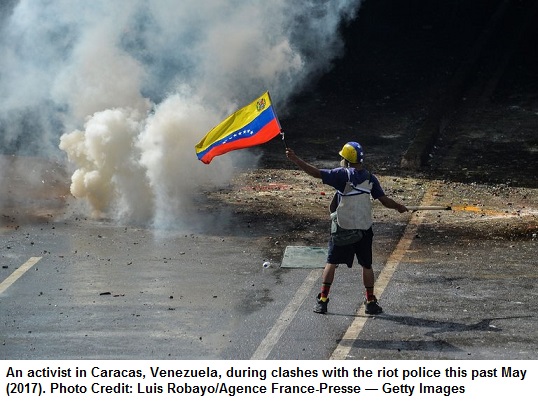
CU Blog - Inaction - A Recipe for 'Failed-State' Status - Photo 2This is the current situation today for a country that is a Caribbean neighbor: Venezuela. Atrocities are happening there and we, as observing-reporting neighbors have done nothing and now propose more of the same: 

Inaction.

This is the formula, the recipe, for creating a Failed-State:

 “The only thing necessary for the triumph of evil is for good men to do nothing” – Edmund Burke; 1729 – 1797; an Irish statesman and member of British Parliament.

How can we forget?!?!

The recipe of good people … doing nothing to prevent atrocities is what was prevalent in Nazi Germany, Rwanda, Bosnia and many other troubled spots – Failed-States – in modern times; (see Appendix D below). Despite all of our pledges of “Never Again“, we now see it happening again; this time in Venezuela; see VIDEO in Appendix C below.

In a previous blog-commentary by the movement behind the book Go Lean…Caribbean – available to download for free – it was related that …

… unless mitigated, Venezuela will become a Failed-State. We hope that the country, and their South American neighbors, can secure their society to assure peace and the protection of human rights.

In fact, the Go Lean commentary had observed-and-reported on a number of negative developments regarding Venezuela; see this sample list of previous blogs here:

Link Date Title
https://goleancaribbean.com/blog/?p=8132 05-31-2016 Venezuela: Watching a ‘Train Wreck in Slow Motion’
https://goleancaribbean.com/blog/?p=6800 10-26-2015 Venezuela sues black market currency website in US
https://goleancaribbean.com/blog/?p=1076 05-29-2014 Trinidad Muslims travel to Venezuela for jihadist training

The situation in Venezuela is dire –  see VIDEO in Appendix C below – action must be taken to abate the downward spiral of the societal engines there. There is something the Caribbean community can do to help mitigate the threats.

There are new Caribbean-Venezuela developments … happening now (last week actually):

Proposals for more of the same … inaction.

CU Blog - Inaction - A Recipe for 'Failed-State' Status - Photo 1See the news articles in the Appendices (A & B) below. The overall theme from the articles is that government leaders in the formal Caribbean Community (CariCom) want to not disturb Venezuela’s sovereignty and further these leaders oppose any entity – i.e. the Organization of American States or OAS – that may want to condemn the status quo and ruling class in Venezuela.

Say it ain’t so CariCom!

Venezuela is near-Failed-State status; lives are being lost; economic systems are dysfunctional and people are taking flight, seeking refuge in foreign countries; see VIDEO below. Despite these conditions, CariCom – who weld some power and influence through peer pressure – wants Inaction.

We object!

Down with CariCom …
Time for a change …
Time to reboot the Caribbean …

This is the declaration of the book Go Lean…Caribbean; this book serves as a roadmap for the introduction and implementation of the technocratic Caribbean Union Trade Federation (CU), for the elevation of Caribbean society – for all member-states. The book posits that CariCom is a failure (Page 3) and that the quest for regional integration in the Caribbean needs a new – and better – expression. The book therefore presents the Go Lean/CU roadmap with these 3 prime directives:

The book stresses that reforming and transforming the Caribbean societal engines must be a regional pursuit. This was an early motivation for the roadmap, as pronounced in the opening Declaration of Interdependence (Pages 12 – 13):

xi. Whereas all men are entitled to the benefits of good governance in a free society, “new guards” must be enacted to dissuade the emergence of incompetence, corruption, nepotism and cronyism at the peril of the people’s best interest. The Federation must guarantee the executions of a social contract between government and the governed.

xvi. Whereas security of our homeland is inextricably linked to prosperity of the homeland, the economic and security interest of the region needs to be aligned under the same governance. Since economic crimes … can imperil the functioning of the wheels of commerce for all the citizenry, the accedence of this Federation must equip the security apparatus with the tools and techniques for predictive and proactive interdictions.

xxiv. Whereas a free market economy can be induced and spurred for continuous progress, the Federation must install the controls to better manage aspects of the economy: jobs, inflation, savings rate, investments and other economic principles. Thereby attracting direct foreign investment because of the stability and vibrancy of our economy.

The Go Lean book provides 370-pages of turn-by-turn instructions and actions to adopt new community ethos, plus the strategies, tactics, implementations and advocacies to execute so as to reboot, reform and transform the societal engines of Caribbean society. To prevent atrocities, there must be actions, positive engagements, before and after; see Appendix D below.

To political leaders like Ralph Gonsalves, Prime Minister of St Vincent and the Grenadines, the Go Lean movement gives this salutation (Page 252):

[Step aside]. Thank you for your service. Change has come.

We must do this: change from the inaction of the current political leadership and lean-in to this roadmap to re-boot, reform and transform the Caribbean region.

Yes, we can act and help prevent atrocities in our region and make our own homeland better places to live, work and play. 🙂

Download the free e-Book of Go Lean … Caribbean – now!

Sign the petition to lean-in for this roadmap for the Caribbean Union Trade Federation. 

————-

Appendix A – Gonsalves warns CariCom of plot against Venezuela

KINGSTOWN, St. Vincent – Prime Minister Ralph Gonsalves of St Vincent and the Grenadines has cautioned the Caribbean Community (CariCom) to refrain from allowing a small group of powerful nations to dilute the collective strength of the 15-member regional grouping.

Gonsalves, in a three page letter to CariCom leaders, that was circulated to the media, warned that a wedge is being driven through CariCom over a plan for regime change in Venezuela and the group of powerful nations with the Organisation of America States (OAS) has an agenda of naked self-interest.

He said the group has strategically invited select CariCom countries to their meetings and ignored the others. In the result, they have succeeded in disuniting and weakening CariCom countries whose only strength lies in our solidarity. This worrying development has been particularly manifest in matters relating to Venezuela, said Gonsalves in a letter dated May 10.

There is clearly a calculated strategy in place by a group of nations to achieve regime change in Venezuela by using the OAS as a weapon of destruction, he added.

Gonsalves said while CARICOM countries may have concerns about the political, economic and social conditions in Venezuela, we are all sufficiently seasoned political leaders to know that toppling a government will not end those conditions, particularly when there is no viable, electable single alternative to replace it.

Resolving the conflict
He acknowledged that CariCom member states could have a role in promoting dialogue to help resolve the conflict in Venezuela he warned fellow regional leaders against allowing themselves to be ambushed into breaking our solidarity and aligning ourselves with fair-weather friends.

Meanwhile, representatives from 18 OAS member states have approved a meeting of foreign ministers scheduled for May 31 in Washington to discuss the Venezuelan crisis.

In recent weeks, there has been growing unrest across Venezuela, with several killed and others injured as they have called for elections, freedom for jailed activists, foreign humanitarian aid to offset the economic crisis, and autonomy for the opposition-controlled legislature.

Source: Posted May 17, 2017; retrieved June 7, 2017 from: https://www.iwnsvg.com/2017/05/17/gonsalves-warns-caricom-of-plot-against-venezuela/

————-

Appendix B – St Vincent PM praises CariCom on position taken on Venezuela
By: Peter Richards

BRIDGETOWN, Barbados (CMC) St. Vincent and the Grenadines Prime Minister, Ralph Gonsalves has praised Caribbean Community (CariCom) countries for acting “with independence, courage and concerted action” during the Permanent Council meeting of the Organisation of American States (OAS) called to discuss the situation in Venezuela earlier this week.

In a two-page letter sent to the Irwin La Rocque, secretary general of CariCom, Gonsalves said that the “CariCom stance is a tribute to our region’s commitment to the highest ideals of our Caribbean civilisation and of its institutional expression, politically, the independent and sovereign nation-state”.

He said that through its position at the OAS, CariCom countries have honoured the names of “our revered leaders of yesteryear” including Errol Barrow of Barbados, Forbes Burnham of Guyana, Michael Manley of Jamaica and Trinidad and Tobago’s Dr. Eric Williams “whose respective countries defied the edict of a hegemonic neighbour in their formal diplomatic recognition of revolutionary Cuba in 1972”.

In his letter, which was copied to heads of state and governments in CariCom and obtained by the Caribbean Media Corporation (CMC), Gonsalves said he was “humbled and proud of the majesty of CARICOM’s united stance in defence of the principle of non-interference in the internal affairs of states; the bedrock ideas of sovereignty and independence (and) the nobility of the fundamental precepts of representative democracy”.

During the OAS meeting, Jamaica, for example, called for dialogue among all parties in Venezuela, where opposition-led street demonstrations to force the Nicolas Maduro government out of office have resulted in more than 40 deaths and a split among members of the OAS.

Jamaica’s Foreign Affairs Minister, Kamina Johnson-Smith, addressing the 29th Meeting of Consultation of Ministers of Foreign Affairs at the OAS in Washington earlier this week, said the Andrew Holness government is “gravely concerned by the continued deterioration of the situation in Venezuela”.

She cited increased violence, loss of life, damage to infrastructure, severe economic hardships for the people, and “a hardening of deeply entrenched positions by both Government and opposition groups…

“Jamaica continues to highly favour meaningful dialogue and discourages the isolation of Venezuela. We, therefore, invite the Government of Venezuela to reconsider that decision,” Johnson Smith added.

On Wednesday, Trinidad and Tobago called for the removal of the OAS Secretary General Luis Almagro, over his non-neutral position on the political situation in Venezuela and warned the 15-member CariCom grouping of the possibility of destroying “itself as an honest broker with respect to any involvement in assistance to Venezuela and its internal problems…

“Trinidad and Tobago registered a strong objection to the behaviour of the OAS leadership. The public servants from the OAS took it upon themselves to engage the Government of Venezuela, the president in fact, in a very derogatory manner,” Prime Minister Keith Rowley told a news conference on his return from an official two-day visit to Chile.

Last month, CariCom foreign ministers called for non-interference in the internal affairs of Venezuela.

Gonsalves, who had last month had cautioned CARICOM to refrain from allowing a small group of powerful nations to dilute the “collective strength” of the 15 member regional grouping on the Venezuela issue, said in his letter to La Rocque that he was “heartened that CariCom member-states are alive to the maneuverings of those who would wish to deliver Venezuela and its oil on a platter to a handful of global enterprises, who are focused on their own greed, duplicity, and narrow self interest….

“We know the road very well. But CariCom has taken the road less travelled by, and that has made all the difference,” Gonsalves wrote, adding, “I do not underestimate the current travails of Venezuela and I am pleased that CariCom is prepared to play a facilitating role, along with other countries and leading personalities in fostering peace, dialogue and constitutionalism in Venezuela”.

But he acknowledged that “at the end of the day, this is a matter for Venezuelans themselves”.

Gonsalves said that he is “sure that the overwhelming majority of nation-states, globally, are pleased with CariCom’s stance at the OAS.

“We must now allow our unity and good sense to be put asunder. Now more than ever we must remain firm. The enemies at the gates of non-interference, sovereignty, and independence will not rest; indeed, they will redouble their efforts. They will raise aloft, hypocritically, any number of high-sounding phrases but beneath them are base motives. History has taught us all this, and more.

“I am confident of CariCom’s continuing embrace of independence, courage, and concerted action, remembering always that, of all time, only the future is ours to desecrate. Our Caribbean civilisation must never be engaged in the desecration of our future,” the St. Vincent and the Grenadines prime minister wrote.

Source: Posted June 3, 2017; retrieved June 7, 2017 from: https://www.iwnsvg.com/2017/06/03/st-vincent-pm-praises-caricom-on-position-taken-on-venezuela/

————-

Appendix C VIDEO – Exclusive Interview on Venezeula: “We’re Being Ruthlessly Killed by the Venezuelan Gov’t” – https://youtu.be/qwPZ75_rj0k

Published on Jun 7, 2017 – Venezuelan citizen Aura Garrillo joined MRCTV’s Nick Kangadis to talk about the atrocities happening in the “dictatorial” nation of Venezuela.

Garrillo speaks out about the hyper-inflation, crime-ridden neighborhoods, lack of affordable goods and bloodshed, courtesy of the Nicolas Maduro-led government.

Subscribe: www.youtube.com/mrctvdotorg

About: MRCTV is an online media platform designed to broadcast conservative values, culture, politics, liberal media bias, and entertainment to a new and diverse audience on a social media optimized site. Our goal is to break down the boundaries between traditional conservative media and mainstream culture.

Follow Us:
www.mrctv.org
facebook.com/MRCTV
twitter.com/mrctv
Nick Kangadis on Twitter: twitter.com/TruthOfChicago
Nick Kangadis on Facebook: https://www.facebook.com/UncommonSens…

MRCTV is brought to you by the Media Research Center. The mission of the MRC is to create a media culture in America where truth and liberty flourish. The MRC is a research and education organization operating under Section 501(c)(3) of the Internal Revenue Code.

————-

Appendix D – Preventing mass atrocities – An agenda for policymakers and citizens

    Introduction ………………………………………………………. 1
    Early warning ……….. ………………………………………….. 3
    Detecting risk and promoting action
    Diplomacy …………………………………………………………. 5
    The first line of prevention
    Development aid ………………………………………………… 7
    Building resilient societies to prevent atrocities
    Security assistance ……………………………………………… 9
    Helping countries protect their people
    International action ………………………………………………11
    Working together to prevent atrocities

CU Blog - Inaction - A Recipe for 'Failed-State' Status - Photo 3

See the full report here; retrieved June 7, 2017 from:
http://responsibilitytoprotect.org/Cit%20for%20glob%20sol-Preventing_mass_atrocities-highres-singlepages.pdf


Share this post:
, , , ,

Hurricane Season 2017 and ‘Climate Change’ Abatement

CU Blog - Hurricane Season 2017 - Photo 1

Go Lean Commentary

Its June 1st, the start of the Hurricane season. According to Weather Authorities, it is going to be a tumultuous season, maybe even more destructive than last year; see Appendix A below.

Thanks Climate Change.

What hope is there to abate the threats from Climate Change?

Thanks to the Paris Accord, there is now hope; (we remember the effectiveness of the accord to abate “Acid Rain”).

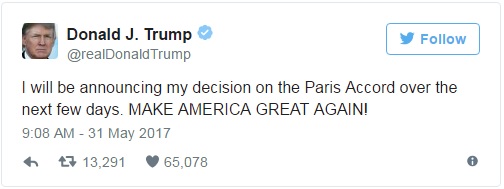
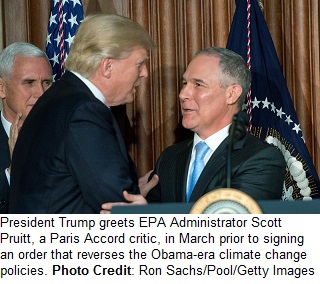
But wait! The American President – Donald Trump – announces that he is withdrawing the United States from the Paris Accord. (See the news article/link in Appendix B below).

CU Blog - Hurricane Season 2017 - Photo 3

W.T.H.?!?!

This is a matter of security; perhaps we should not look to the US to take the lead for our own fate. This is so familiar … and a Hot Topic today as European member-states are contemplating how much they can look to the US for leadership for their security needs; (see the VIDEO in the Appendix C below).

This is the assertion of the book Go Lean…Caribbean; available to download for free. It serves as a roadmap for the introduction and implementation of the technocratic Caribbean Union Trade Federation (CU), for the elevation of Caribbean society – for all member-states. The quest is that we take our own lead – collectively – for our own fate. This CU/Go Lean roadmap has these 3 prime directives:

The book stresses that reforming and transforming the Caribbean societal engines must be a regional pursuit; the issues at hand are too big for anyone member-state alone. This was an early motivation for the roadmap, as pronounced in the opening Declaration of Interdependence (Pages 12 – 13):

i. Whereas the earth’s climate has undeniably changed resulting in more severe tropical weather storms, it is necessary to prepare to insure the safety and security of life, property and systems of commerce in our geographical region. As nature recognizes no borders in the target of its destruction, we also must set aside border considerations in the preparation and response to these weather challenges.

xi. Whereas all men are entitled to the benefits of good governance in a free society, “new guards” must be enacted to dissuade the emergence of incompetence, corruption, nepotism and cronyism at the peril of the people’s best interest. The Federation must guarantee the executions of a social contract between government and the governed.

xvi. Whereas security of our homeland is inextricably linked to prosperity of the homeland, the economic and security interest of the region needs to be aligned under the same governance. Since economic crimes … can imperil the functioning of the wheels of commerce for all the citizenry, the accedence of this Federation must equip the security apparatus with the tools and techniques for predictive and proactive interdictions.

xxiv. Whereas a free market economy can be induced and spurred for continuous progress, the Federation must install the controls to better manage aspects of the economy: jobs, inflation, savings rate, investments and other economic principles. Thereby attracting direct foreign investment because of the stability and vibrancy of our economy.

The Go Lean book provides 370-pages of turn-by-turn instructions on “how” to adopt new community ethos, plus the strategies, tactics, implementations and advocacies to execute so as to reboot, reform and transform the societal engines of Caribbean society.

The issue of Hurricane Season 2017 is bigger than initial appearances – there are BIG  issues afoot. Many are issues that were addressed in previous Go Lean blog-commentaries; see a sample here:

https://goleancaribbean.com/blog/?p=11858 Welcome to Kiribati – Hello and Goodbye
https://goleancaribbean.com/blog/?p=11442 Caribbean Roots: Al Roker – ‘Climate Change’ Defender
https://goleancaribbean.com/blog/?p=9455 Fix ‘Climate Change’ – Yes, We Can
https://goleancaribbean.com/blog/?p=9334 Hurricane Categories – The Science
https://goleancaribbean.com/blog/?p=7449 Due to Climate Change, ‘Crap Happens’ – So What Now?
https://goleancaribbean.com/blog/?p=7103 COP21 – ‘Climate Change’ Acknowledged
https://goleancaribbean.com/blog/?p=6893 A Meteorologist’s View On Climate Change
https://goleancaribbean.com/blog/?p=6016 ‘Hotter than July’ – Reality in the Caribbean
https://goleancaribbean.com/blog/?p=4673 Climate Change‘ Merchants of Doubt … to Preserve Profits!!
https://goleancaribbean.com/blog/?p=2465 Book: ‘This Changes Everything: Capitalism vs. the Climate’
https://goleancaribbean.com/blog/?p=2276 Climate Change May Affect Food Supply Within a Decade
https://goleancaribbean.com/blog/?p=2119 Cooling Effect – Oceans and the Climate
https://goleancaribbean.com/blog/?p=1883 Climate Change May Bring More Kidney Stones
https://goleancaribbean.com/blog/?p=1817 Caribbean grapples with intense cycles of flooding & drought
https://goleancaribbean.com/blog/?p=926 Conservative heavyweights have solar industry in their sights
https://goleancaribbean.com/blog/?p=915 Go ‘Green’ … Caribbean

We endured a bitter Hurricane Season last year; Hurricane Matthew was devastating for a number of Caribbean islands in September/October; i.e. Haiti and the Bahamas. (In fact, the Bahamian city of Freeport was so severely impacted that one of its biggest Hotel-Casino resorts closed … permanently).

The Caribbean status quo is unsustainable under the real threats of Climate Change. The region must reboot, reform and transform. We must do the heavy-lifting ourselves; we cannot expect relief and refuge from others, like the American Super-Power. We must find and “sail” under our own power.

Hope and Change! Yes, we can …

… we can make our Caribbean homeland a better place to live, work and play. 🙂

Download the free e-Book of Go Lean … Caribbean – now!

Sign the petition to lean-in for this roadmap for the Caribbean Union Trade Federation.

————

Appendix A – Forecasters predict active 2017 hurricane season

With the start of the Atlantic hurricane season less than one week away, the National Oceanic and Atmospheric Administration, says it could be a busy one with five to nine hurricanes expected to form.

Overall, NOAA forecasts 11 to 17 named tropical storms will develop in the region, which includes the Atlantic, the Caribbean Sea and Gulf of Mexico, the agency announced Thursday.

The season officially begins June 1 and runs through Nov. 30.

Of the hurricanes, two to four could be major, with wind speeds of 111 mph or higher and rated as Category 3, 4 or 5 on the Saffir-Simpson Scale of Hurricane Intensity.

An average season typically produces 12 named tropical storms and six hurricanes and peaks in August and September.

A tropical storm contains wind speeds of 39 mph or higher and becomes a hurricane when winds reach 74 mph.

Factors contributing to the prediction include: A weak or non-existent El Nino, near- or above-average sea-surface temperatures, and average or weaker-than-average vertical wind shear, said Gerry Bell, Ph.D., lead seasonal hurricane forecaster with NOAA’s Climate Prediction Center.

Meteorologists at Colorado State University last month estimated 11 tropical storms will form, with four becoming hurricanes.

The late Colorado State University meteorologist William Gray was the first scientist to make seasonal hurricane forecasts back in the 1980s.

The Weather Channel predicts an average season, with 12 named storms, of which six will become hurricanes. AccuWeather forecasts 10 named storms, five of which are projected to become hurricanes.

Source: St. Lucia Times Daily Newspaper –  Posted May 25, 2017 retrieved June 1, 2017 from: https://stluciatimes.com/2017/05/26/forecasters-predict-active-2017-hurricane-season

————

Appendix B – Trump expected to withdraw from Paris Accord

Washington (CNN) President Donald Trump is expected to withdraw from the Paris climate agreement, two senior US officials familiar with his plans told CNN Wednesday, a major break from international partners that would isolate the United States in global efforts to curb global warming.

CU Blog - Hurricane Season 2017 - Photo 2

The decision would put the US at odds with nearly every other nation on earth. It would reflect a major reversal of the Obama administration’s efforts on climate change. And it could trigger further efforts to erode the landmark climate accord.

Source: Posted and retrieved May 31, 2017 from http://www.cnn.com/2017/05/31/politics/trump-paris-accord/

——

In actuality, President Trump officially announces  the exit and former President Obama barks. See story and VIDEO here: http://www.independent.co.uk/news/world/americas/us-politics/paris-agreement-trump-obama-response-rejecting-future-climate-change-deal-latest-news-updates-a7768171.html

————

Appendix C VIDEO – Thanks to Trump, Germany says it can’t rely on the United Stateshttp://wapo.st/2qsrQHd

Share this post:
, , ,
[Top]

Farewell to Obama and to ‘Wet Foot/Dry Foot’

Go Lean Commentary

This is a Red Letter Day in the affairs of the United States of America: it is the inauguration of the 45th President, Donald J. Trump. Out with the old, in with the new. The old, Barack Obama, bid farewell to the American Halls of Power; but he bid farewell too, to one of the most egregious immigration policies in the history of civilization: ‘Wet Foot / Dry Foot’ policy for Cuban migrants.

Good  riddance to a bad policy!

Many people have died trying to flee Cuba, (Haiti too); see the “Bad Old Days” in Appendix B VIDEO.

CU Blog - Farewell to Obama and to 'Wet Foot-Dry Foot' - Photo 1Obama disbanded this executive policy – instituted by the 42nd President Bill Clinton – as one of his final acts, before his term ended. Yippee, Mr. Obama. This ‘Wet Foot / Dry Foot’ was indefensible. It portrayed the impression that the American homeland was the panacea of Caribbean (and/or Cuban) ills, and if one was lucky enough to put their ‘Dry Foot’ down on American soil, they were blessed; if their ‘Wet Foot’ never touched American soil, then they’d be cursed to a substandard Caribbean existence. Plus, with the Cuban exclusivity, this policy put a wedge among Caribbean people in general: Yes to Cubans; no to Haitians, Dominicans, Jamaican or any other regional citizens.

Now, all of the Caribbean can be treated the same and as one, by the American legal-governmental institutions.

We are the same!

We could be one!

Caribbean leaders must do the heavy-lifting to reform and transform the Caribbean member-states to fix our eco-systems, to make our homeland a better place to live, win and play. This is the purpose of the book Go Lean…Caribbean, to serve as a roadmap for elevating Caribbean society, for all 30 member-states (Cuba et al). The book does not ignore the subject of immigration and refugees. In fact the roadmap provides perhaps the ultimate resolution to this perplexing problem, that of a regional entity providing a regional solution.

We must give Caribbean citizens every reason to want to stay, rather than the status quo, where they are willing to risk life-and-limb (for themselves and their children) to get out and get to the US. This is the sad-and-bad reality that is depicted in this news article here:

Title: Cubans amass at Mexico-Texas border after ‘wet foot/dry foot’ change
By: Rick Jervis, USA TODAY Daily Newspaper

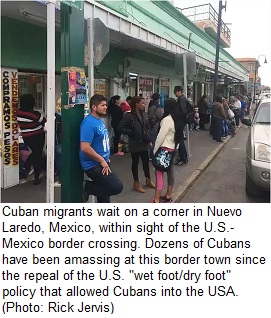
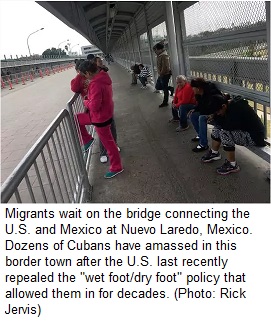
CU Blog - Farewell to Obama and to 'Wet Foot-Dry Foot' - Photo 2NUEVO LAREDO, Mexico — Joel Gonzalez was midway across the narrow pedestrian bridge connecting the U.S. and Mexico at this border crossing when U.S. border guards waved him back to Mexico.

A U.S. policy that for decades awarded Cubans like Gonzalez, 31, automatic amnesty was repealed the day before. His dream of a new life in America instantly vanished.

“You feel this weight in your chest,” he said, recalling that day last week. “You have these ideas about the future, all these thoughts in your head. To get so close and have your dream of freedom taken from you is very hard.”

Gonzalez and dozens of other Cubans have been amassing at this crossing since the Obama administration ended the so-called “wet foot/dry foot” policy on Jan. 12. The rule, created by President Clinton in 1995, allowed most Cubans who touched U.S. soil to stay in the country, while those intercepted at sea were returned to Cuba. Those who remained in the U.S. for one year were allowed to apply for legal permanent residence.

CU Blog - Farewell to Obama and to 'Wet Foot-Dry Foot' - Photo 3Cuban officials have long denounced the rule, saying it incentivizes Cubans to leave the communist island. Other critics say while the policy was put in place to help Cubans fleeing political persecution, many instead used it for economic betterment in recent years.

The new policy forces Cubans to apply for visas in their home country or face deportation if they enter illegally, just like migrants from other countries. About 20,000 U.S. visas are awarded in Cuba each year.

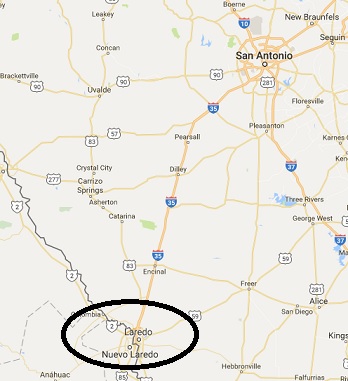
Despite the shift, Cubans continue to arrive at this border crossing, just across the Rio Grande from Laredo, Texas. Around 120 Cubans are now in this Mexican border town, according to local estimates, staying at churches or in migrant centers. Many, like Gonzalez, say they won’t leave.

“In Cuba, if you think differently from the system, you’re marked,” said Gonzalez, a systems engineer. “You don’t get jobs, you don’t get opportunity. If you’re against the system, there’s no way to survive.”

The repeal of wet foot/dry foot is the latest in a series of efforts by President Obama, beginning in late 2014, to end five decades of isolation with Cuba. President-elect Donald Trump, however, has said he may renegotiate the accords.

Sensing a change was imminent as relations warmed between Washington and Havana, thousands of Cubans rushed to enter the U.S. last year. Overall, 56,406 Cubans entered the U.S. via ports of entry in fiscal year 2016, more than double the number who arrived in 2014, according to a study by the Pew Research Center.

The change in U.S. policy will likely improve relations between the two countries and could force Cuban officials to focus on improving conditions, rather than simply allowing the disaffected to flee, said Ted Piccone, a senior fellow at the Brookings Institution who studies Cuba.

“The safety valve – of exporting unhappy Cubans who could cause trouble – just got smaller,” he said.

Some Cubans at Nuevo Laredo said they hoped Trump would reverse the repeal. But that may be wishful thinking, Piccone said, given Trump’s tough stance on illegal immigration.

Some arriving here now left the island months ago, well before the policy change. Each morning, they gather at the intersection of Avenida 15 de Julio and Avenida Vincente Guerrero, within sight of the U.S., sharing the latest news and debating the next move.

Idania Laurencio Fernandez, 44, left Cuba in mid-October for the small South American country of Guyana. From there, she traveled to Brazil, trekked through jungles, sailed up the Amazon River, traveled across nine countries in Central and South America and spent 12 days in an immigration detention center in Tapachula, Mexico, before being able to leave for Nuevo Laredo.

She arrived Jan. 13, the day after the policy was repealed. She said she planned to stay until something changes, fearing repercussions if she returned to Cuba. “We can’t go back,” Fernandez said. “I’m persona non grata in Cuba.”

Fernandez said she hopes her predicament sheds light on what she described as a worsening situation on the island, where the average worker earns $20 a month and dissension isn’t tolerated. “Obama doesn’t understand,” she said. “He let himself be fooled. The Cubans in Cuba know the reality.”

As a worker in the service industry in Varadero, one of Cuba’s most popular tourist beach destinations, Manuel Reyes, 37, said he was earning a decent living. But the island’s lack of basic rights and stagnant economic growth was suffocating, he said. He was denied visas to the U.S. and Canada and tried leaving Cuba three times on homemade rafts but was forced back each time due to mechanical failures.

Finally gaining a Mexico visa, he flew to Monterrey on Jan. 12 and arrived at the Nuevo Laredo border crossing early the next morning. Dreams of joining friends in Miami or Las Vegas came to an abrupt end when he learned of the changed policy.

Like most others gathered here, Reyes said he’s not leaving. He sleeps at a local church and prays each day for a reversal in U.S. policy.

“We’re going to stay firm. We have a lot of faith,” he said. “And there are many more Cubans coming.”

CU Blog - Farewell to Obama and to 'Wet Foot-Dry Foot' - Photo 4

Related stories:

Obama ends ‘wet foot, dry foot’ policy for Cubans

Cuban-Americans at odds over ‘wet foot, dry foot’ repeal

In final days, Obama administration signs law enforcement pact with Cuba

On 2nd anniversary, Cubans race to sign U.S. contracts to secure opening

Source: Posted Jan. 19, 2017; retrieved Jan 20, 2017 from: http://www.usatoday.com/story/news/nation/2017/01/19/cubans-texas-border-wet-foot-dry-foot/96770142/

One person can disrupt the lives of so many people … in the Caribbean.

The ‘Wet Foot / Dry Foot’ policy was initiated by Presidential Executive Order – by Clinton.

The ‘Wet Foot / Dry Foot’ policy was canceled by Presidential Executive Order – by Obama.

So the new president – Donald Trump – can readily re-institute a ‘Wet Foot / Dry Foot’ policy again.

Please, Mr. President Trump, do not do it!

We do not need to send the wrong message to people in the Caribbean that it is OK to take to the High Seas and endanger their lives, or their children lives. We also do not need to incite Smugglers and Human Traffickers – see Appendix A VIDEO – to entice Caribbean citizens to flee their homeland. The cancellation of the ‘Wet Foot / Dry Foot’ policy takes away the incentive, inducement and rationale for migrating in the first place.

Why do people want to leave their Caribbean homes?

Two factors: “Push” and “Pull”. These factors highlight reasons that people want to flee “home” and seek “refuge” in foreign countries. “Refuge” is an appropriate word; because of societal defects, many from the Caribbean must leave as refugees – think LGBTDisabilityDomestic-abuseMedically-challenged – for their life, liberty and pursuit of happiness. In addition, the lure of a more prosperous life in the US (and other destinations) drive the “pull” side of the equation, making most people emigrating economic refugees.

A key problem with this ‘Wet Foot / Dry Foot’ migration policy is that it echoes a bad and wrong message, that some Caribbean people are “Less Than“, and the rest of the people are worth even less than that.

The book Go Lean … Caribbean posits that the region should be “mad as hell and refuse” to accept the continuation of any image defying immigration policy. As a people, we must not tolerate just any standards; we must stand for something more and better. We must fight for change … with revolutionary fervor.

Another dire consequence of the ‘Wet Foot / Dry Foot’ policy is that it hardened the attitudes of other Caribbean countries in the middle of migrant source countries (like Cuba and Haiti) and their American destination. The Bahamas, in particular in the Caribbean, had been “in the way” and have thusly developed harsh attitudes and treatment of Cuban and Haitian refugees. This country have changed their constitution to tighten their immigration policy to end the automatic birthright citizenship for children of illegal immigrants; this is the provision:

The Bahamas no longer automatically grants citizenship to people born in its homeland, as was the case for all citizens born before Independence in 1973. There are now special provisos that applies when one parent is or is not a Bahamian citizen; many of these provisos are gender-biased.

Other countries that have been in the way” include Mexico and Guyana.

The Caribbean member-states are badly in need of remediation, to lower the “push and pull” factors that drive so many to risk their ‘life and limb’, and those of their children, to take flight to where “Wet Foot / Dry Foot” would matter. How can we reform and transform? While this is easier said than done, the Go Lean book and blogs posit that the effort is less to cure the Caribbean homeland than to thrive as an alien in a foreign land. So this is the quest of the Go Lean roadmap, to make the Caribbean homeland a better place to live, work and play for its 42 million residents across the 30 member-states. The Go Lean book serves as a roadmap for the introduction and implementation of the technocratic Caribbean Union Trade Federation (CU), which would apply best-practices for community empowerment. This roadmap has these 3 prime directives, proclaimed as follows:

  • Optimization of the economic engines in order to grow the regional economy to $800 Billion & create 2.2 million new jobs.
  • Establishment of a security apparatus to protect the resultant economic engines.
  • Improve Caribbean governance, with consideration for minority equalization, to support these engines.

How exactly can the CU impact Cuba and Haiti, the most troubled countries in the region and the primary sources of migrants? The book relates the strategy that was successful in the history of post-war Europe, the Marshall Plan. The Go Lean book details the Caribbean Marshall Plan (roadmap) for Cuba and Haiti, and other failing Caribbean communities.

The related subjects of rebooting European and Caribbean societal engines have been frequently blogged on by the Go Lean promoters, as sampled here:

https://goleancaribbean.com/blog/?p=9813 Fidel Castro Is Dead; Now What for Cuba?
https://goleancaribbean.com/blog/?p=9487 10 Things We Want from Europe and 10 Things We Do Not Want
https://goleancaribbean.com/blog/?p=6563 Lessons from Iceland – Model of Recovery
https://goleancaribbean.com/blog/?p=5733 Better than America? Yes, We Can!
https://goleancaribbean.com/blog/?p=3473 Haiti’s Caracol Industrial Park – a preview of a Self-Governing Entity
https://goleancaribbean.com/blog/?p=3455 Restoration of Diplomatic Relations with Cuba – Need for Re-boot Now
https://goleancaribbean.com/blog/?p=3090 Introduction to Europe – All Grown Up
https://goleancaribbean.com/blog/?p=2907 Local Miami Haitian leaders protest Bahamian ‘Bad’ immigration policy
https://goleancaribbean.com/blog/?p=2809 A Lesson in History: Economics of East Germany
https://goleancaribbean.com/blog/?p=2330 ‘Raul Castro reforms not enough’, Cuba’s bishops say
https://goleancaribbean.com/blog/?p=1531 A Lesson in History: 100 Years Ago Today – World War I
https://goleancaribbean.com/blog/?p=1433 Caribbean 70% brain drain to foreign shores
https://goleancaribbean.com/blog/?p=1014 All is not well in the sunny Caribbean
https://goleancaribbean.com/blog/?p=599 Ailing Puerto Rico open to radical economic fixes
https://goleancaribbean.com/blog/?p=273 10 Things We Want from the US and 10 Things We Do Not Want

The Go Lean book details a series of community ethos, strategies, tactics, implementations and advocacies to optimize the “push/pull” factors that send Caribbean citizens to the High Seas to flee their homeland:

Community Ethos – Economic Systems Influence Choices & Incentives Page 21
Community Ethos – Consequences of Choices Lie in the Future Page 21
Community Ethos – Anti-Bullying and Mitigation Page 23
Community Ethos – Minority Equalization Page 24
Community Ethos – Ways to Impact the Future Page 26
Community Ethos – Ways to Manage Reconciliations Page 34
Community Ethos – Ways to Impact the Greater Good Page 37
Strategy – Vision –  Integrate region into a Single Market Economy Page 45
Strategy – Agents of Change – Globalization Page 57
Tactical – Separation of Powers – Department of Homeland Security Page 75
Implementation – Ways to Foster International Aid Page 115
Planning – 10 Big Ideas … in the Caribbean Region – Haiti & Cuba Page 127
Planning – Ways to Ways to Model the EU – From Worst to First Page 130
Planning – Reasons Why the CU Will Succeed – Germany Reconciliation Model Page 132
Planning – Ways to Improve Failed-State Indices – Cuba & Haiti on the List Page 134
Planning – Lessons from East Germany – European post-war rebuilding Page 139
Planning – Lessons from the US Constitution Page 145
Planning – Lessons from Canada’s History Page 146
Advocacy – Ways to Grow the Economy Page 151
Advocacy – Ways to Create Jobs Page 152
Advocacy – Ways to Better Manage the Social Contract Page 172
Advocacy – Ways to Foster Empowering Immigration – Case Study of Indian Migrants Page 174
Advocacy – Ways to Impact Justice Page 178
Advocacy – Ways to Impact the Diaspora Page 217
Advocacy – Ways to Protect Human Rights Page 220
Advocacy – Ways to Re-boot Cuba Page 236
Advocacy – Ways to Impact the Dominican Republic Page 237
Advocacy – Ways to Re-boot Haiti Page 238
Advocacy – Ways to Re-boot Jamaica Page 239
Appendix – Puerto Rico Migrations to New York Page 303

All of the Caribbean needs to deal with our domestic issues … now! We do not need the good fortune of putting ‘Dry Foot’ on US soil. We need to just work to fix our home. This is the purpose of the Go Lean book, to show how … to minimize the push-pull factors leading to societal abandonment.

The Go Lean/CU roadmap has proposed the solutions: assembling of many regional organization and institutions to engage reboot strategies, tactics and implementations.

Now is the time for all of the Caribbean to learn the lessons from other societies. The Go Lean book posits that the Caribbean is in a serious crisis, but asserts that this crisis would be a terrible thing to waste. The people and governing institutions of Cuba, Haiti and the entire Caribbean region are hereby urged to lean-in for the empowerments described in the book Go Lean … Caribbean. The Caribbean should be the greatest address on the planet. People should be dying to get in, not dying to get out. It is time to reboot and turn-around our fortunes.

Let’s do this … right, just us, with no American interference – no ‘Wet Foot/Dry Foot’ – just Caribbean solutions.

Farewell Obama and farewell to ‘Wet Foot/Dry Foot’. 🙂

Download the book Go Lean … Caribbean – now!

—————

Appendix A VIDEO – U.S. Upgrades Cuba’s Ranking on Human Trafficking List https://youtu.be/JPkuw4ak9eM

Published on Jul 28, 2015 – The U.S. State Department government upgraded Cuba’s ranking in its Human Trafficking list. According to Washington, Cuba has made significant progress in combatting sex and human trafficking and now stands at midlevel in the annual list. teleSUR http://multimedia.telesurtv.net/v/us-…

  •  Category: News & Politics
  • License: Standard YouTube License

—————

Appendix B VIDEO – Bad Old Days: Cuban Human Traffickinghttps://youtu.be/CTwMouJKL38

Published on Oct 23, 2013 – Latest news across Belize; source: http://edition.channel5belize.com/

  • Category: News & Politics
  • License: Standard YouTube License


Share this post:
, ,
[Top]

Fidel Castro Is Dead; Now What? – ENCORE

The news is out; Fidel Castro died on Friday November 25, 2016 at age 90. This former Revolutionary Leader and President of Cuba was monumental and impactful. He made friends and enemies at home, in the region and around the world.

He accomplished some good; guaranteeing education – one of the highest literacy rates in the world – and advanced healthcare to all of his people.

He made many enemies; persecuting and executing his political enemies

… the United States imposed a Trade Embargo for his entire reign, up until now.

Now that he is dead, what future holds for his beloved country?

First, Fidel Castro turned over the presidency to his younger brother Raul in 2008; so oversight of the country’s affairs has been the direct concern of President Raul Castro. That is expected to continue. So the answer is more of the same.

Same?

This “same” was defined in an earlier blog-commentary on February 4, 2016. It is being encored here on the occasion of Fidel’s passing.

==============

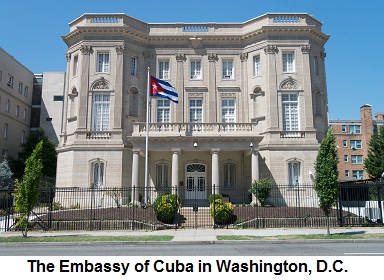
Go Lean CommentaryThe Road to Restoring Cuba

CU Blog - The Road to Restoring Cuba - Photo 3In a visit to Jamaica and CariCom leaders in April 2015,  US President Barack Obama concluded that 55 years of indifference towards Cuba was long-enough and that as of December 17, 2014 he had “set the machinery in motion” to normalize relations with Cuba. This descriptor paints the picture of a journey, a marathon and not just a “100-yard dash”.

What is the status of that journey now?

Where are we in the process? How are the issues being addressed?

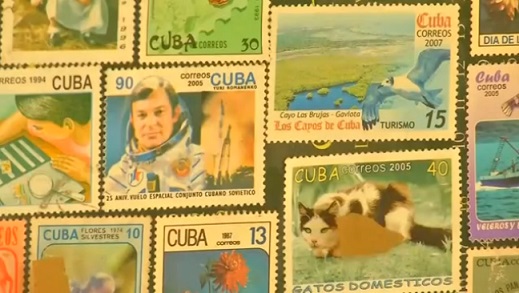
It turns out this is a weighty task (heavy-lifting), and while many of the issues are minor (i.e. Postal Mail), some are life-and-death (i.e. Human Trafficking).

Firstly, the current restoration of Cuban and American relations is strictly an act of Executive Orders – directives by the US President (currently of the Democratic Party) and not supported by his Republican legislature, the Congress. There is a definitive divide among these Democrats and Republicans in this regard. Here are some updates of those Executive Orders, since the December 2014 baseline:

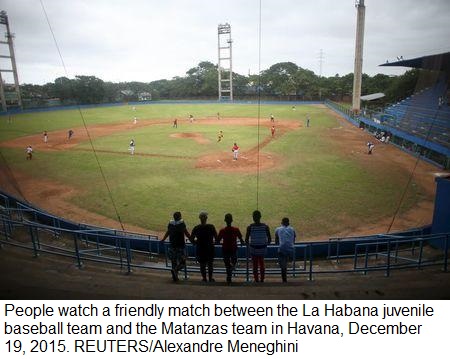
People watch a friendly match between the La Habana juvenile baseball team and the Matanzas team in Havana

People watch a friendly match between the La Habana juvenile baseball team and the Matanzas team in Havana

Cuba needs to have the American Trade Embargo officially lifted! This is a Congressional action and cannot be accomplished by Executive Orders alone.

The book Go Lean…Caribbean was designed with the intent of the eventual integration of Cuba in a Caribbean Single Market. This would allow for technocratic stewardship and oversight of the region’s economic, security and governing engines for all 30 Caribbean member-states. The book therefore serves as a roadmap for the introduction and implementation of the Caribbean Union Trade Federation (CU).

There is no minimizing of the risks and responsibility of Cuba in the Go Lean book. It is clearly recognized that integrating and restoring Cuba is a BIG deal; with heavy-lifting; and other reconciliation descriptors used to depict this monumental effort. See the relevant statement here from the opening Declaration of Interdependence (Page 12):

xiii. Whereas the legacy of dissensions in many member-states (for example: Haiti and Cuba) will require a concerted effort to integrate the exile community’s repatriation, the Federation must arrange for Reconciliation Commissions to satiate a demand for justice.

Though World War II was not directly waged in the Caribbean, the Go Lean/CU roadmap still prescribes a Marshall Plan strategy – a reference to the post-WWII European Rebuilding Plan – for re-building Cuba (and Haiti).

In truth, Cuba is the biggest market in the Caribbean. This one island has the largest landmass among the islands; (notwithstanding the landmasses of South America-situated CU member-states of Guyana and Suriname). They also have the largest population of 11,236,444 people (circa 2010) and the most agricultural output. Cuba needs the Caribbean; and the Caribbean needs Cuba. The entire region needs to act in unison as the challenges the region face are too big for any one country to tackle alone.

All in all, the book and accompanying blogs declare despite an absence of trade embargo in the other Caribbean member-states, that these countries have still failed to deliver to their citizens the standards assumed in any Social Contract. Some member-states are even flirting with Failed-State statuses. People in each Caribbean country are prone to flee the region, at every opportunity. The people of the region deserve better!

There is the need to re-boot … the entire region. This re-boot roadmap commences with the recognition that all the Caribbean is in crisis, and in the “same boat” despite the colonial heritage or language. All 30 geographical member-states need to confederate, collaborate, and convene for solutions. This is the purpose of the Go Lean/CU roadmap, as featured in this declaration of the Go Lean/CU prime directives:

  • Optimization of the economic engines in order to grow the regional economy to $800 Billion & create 2.2 million new jobs.
  • Establishment of a security apparatus to protect the resultant economic engines.
  • Improve Caribbean governance to support these engines.

Consider the start of the ill-fated Cuban-Communism Revolution in 1959, Cuba has lost 57 years in its maturation process. The Go Lean book’s opening Declaration of Interdependence (Page 11) also included this pronouncement that it is beyond time now for Caribbean success stories, rather than the continued Caribbean Failed-State stories:

While our rights to exercise good governance and promote a more perfect society are the natural assumptions among the powers of the earth, no one other than ourselves can be held accountable for our failure to succeed if we do not try to promote the opportunities that a democratic society fosters.

The Go Lean book therefore details the series of community ethos, strategies, tactics, implementations and advocacies to facilitate a re-boot in the region and to final manifest a quality delivery of a regional Social Contract:

Anecdote – Caribbean Single Market & Economy Page 15
Community Ethos – new Economic Principles Page 21
Community Ethos – new Security Principles Page 22
Community Ethos – new Governing Principles Page 24
Community Ethos – Ways to Impact the Future Page 26
Community Ethos – Ways to Manage Reconciliations – TRC Cuba Page 34
Community Ethos – Ways to Impact the Greater Good Page 37
Strategic – Vision – Integrated Region in a Single Market Page 45
Strategic – Vision – Core Competence – Specialty Agriculture Page 58
Tactical – Confederating a Non-sovereign Union Page 63
Tactical – Fostering a Technocracy Page 64
Tactical – CU Member-States   Facts & Figures Page 66
Tactical – Growing to $800 Billion Regional Economy – Marshall Plan Models Page 67
Tactical – Separation of Powers Page 71
Implementation – Ways to Pay for Change Page 101
Implementation – Foreign Policy Initiatives at Start-up Page 102
Implementation – Security Initiatives at Start-up Page 103
Implementation – Ways to Deliver Page 109
Implementation – Reasons to Repatriate Page 118
Planning – Big Ideas for the Caribbean Region – Marshall Plan for Cuba Page 127
Planning – Reasons Why the CU Will Succeed – Lessons from Unifying Germany Page 132
Planning – Ways to Improve Failed-State Indices Page 134
Planning – Lessons from East Germany – Post-Communism Integration Page 139
Planning – Ways to Model the EU – Immediate Integration after WWII Crisis Page 130
Advocacy – Ways to Grow the Economy Page 151
Advocacy – Ways to Improve Governance Page 168
Advocacy – Ways to Better Manage the Social Contract Page 176
Advocacy – Ways to Re-boot Cuba Page 236

The issue of Cuba’s eventual integration into the Caribbean brotherhood has previously been addressed in the following Go Lean commentary-blog entries:

https://goleancaribbean.com/blog/?p=6664 Cuba to Expand Internet Access
https://goleancaribbean.com/blog/?p=4506 Colorism in Cuba … and Beyond
https://goleancaribbean.com/blog/?p=3455 Restoration of Diplomatic Relations with Cuba
https://goleancaribbean.com/blog/?p=3354 CariCom Chairman calls for an end to US Embargo on Cuba
https://goleancaribbean.com/blog/?p=2330 ‘Raul Castro reforms not enough’, Cuba’s bishops say
https://goleancaribbean.com/blog/?p=1609 Cuba mulls economy in Parliament session
https://goleancaribbean.com/blog/?p=554 Cuban cancer medication registered in 28 countries
https://goleancaribbean.com/blog/?p=436 Cuba Approves New “Law on Foreign Investment”

For a long time people have hoped for a restored Cuba. This hope was shared by Cuban people on the island and in the Diaspora abroad. The hope is also shared by neighbors, tourists, trading-partners, and international stakeholders, alike. Maybe, just maybe with President Barack Obama’s Executive Orders, the journey down this road to restoration will be irreversible. (A new President of the US will be sworn-in on January 20, 2017; this one can reverse Obama’s Executive Orders).

The Go Lean roadmap for the CU strives to put the Command-and-Control of Caribbean affairs in the hands of Caribbean people. The book and accompanying blogs declare the desire for the Caribbean to no longer be a parasite of the US, but rather a protégé. This parasite status stems all the way back to the year 1898 – to the start of the Spanish – American War for Cuban Independence.

Enough already! Surely we have grown since 1898 or even since 1959.

The Go Lean…Caribbean movement turns the corner, and instead of an American dependence, or a nationalistic independence, it leads the region in a new direction: neighborly interdependence. The Go Lean…Caribbean book is a turn-by-turn guide (370 pages) for the region to dive deeper in an integrated Single Market.

Now is the time for all of the Caribbean, the people – residents and Diaspora – and governing institutions, to lean-in for this Caribbean and Cuban re-boot. Now is the time to make this region – all 30 countries – a better place to live, work and play.  🙂

Download the book Go Lean … Caribbean – now!

————

Appendix A VIDEO – US-Cuba direct mail services to resume – http://news.yahoo.com/video/us-cuba-direct-mail-services-155808360.html

Posted Dec 12, 2015 – Cuba and the United States are to resume direct postal services after half a century of having to send mail via a third country. Paul Chapman reports.

————

Appendix B – News Article: As MLB seeks legal entry to Cuba, Obama considers playing ball

By: Daniel Trotta, Reuters

HAVANA (Reuters) – Major League Baseball is asking the U.S. government for special permission to sign players in Cuba, handing the administration of U.S. President Barack Obama the opportunity to try some baseball diplomacy while dealing a setback to human traffickers.

The U.S. trade embargo generally bars MLB from any agreement directing money to the Cuban government, but the White House says baseball is one area where it can advance U.S. goals and the Treasury Department’s Office of Foreign Assets Control (OFAC) has authority to allow a deal.

MLB and Cuba are closer than at any time since the 1959 revolution, as evidenced by a goodwill tour last week in which big leaguers, including Cuban defectors, gave clinics to Cuban youth.

“Indeed, baseball has a unique cultural significance to both the United States and Cuba. It is therefore an area where we can further our goals of charting a new course in our relations with Cuba and further engaging and empowering the Cuban people,” a senior administration official told Reuters.

Since Obama and Cuban President Raul Castro broke with Cold War history and announced detente a year ago, Obama has asked Congress to repeal the embargo, but the Republican majority has resisted. Instead the administration has used other means to promote exchanges.

If MLB were able to sign players in Cuba, where baseball is the most popular sport, it could end a wave of defections in which Cuban ballplayers put themselves in the hands of human traffickers and risk their lives on illegal journeys at sea.

Some 130 ballplayers have defected this past year, according to Cuban journalists.

But the best players on the island remain off limits, and the Cuban government stops them from leaving without permission, leading those with big-league dreams to turn to smugglers. In some cases, organized crime rackets force players to sign over huge cuts of future earnings, threatening players and their families.

“It’s not an uncommon story,” said Paul Minoff, a lawyer who represents Leonys Martin, an outfielder now with the Seattle Mariners who earned $15.5 million over the past five seasons with the Texas Rangers.

After defecting, Martin was held by armed men in Mexico for months, and under duress agreed to pay his captors 35 percent of his salary, Minoff said. When Martin reached America, he fought back. The smugglers sued Martin but the suit was dismissed after U.S. prosecutors brought criminal charges against them.

Cuban players have mostly stuck to a code of silence about their defections, but some details emerge through court cases.

When Yasiel Puig of the Los Angeles Dodgers left Cuba in 2012, he soon found himself entangled with Mexico’s notorious Zetas crime organization, which threatened to chop off his arm if it failed to receive a promised $250,000 fee.

While Puig signed a $42 million contract, others are abandoned in foreign countries, never to hit paydirt.

SOLUTION SOUGHT

To normalize the transfer of players, Major League Baseball has asked the Treasury’s OFAC for a specific license. The office has wide latitude to grant such licenses and can issue regulations to approve activity otherwise proscribed by the embargo.

OFAC Acting Director John E. Smith said he could not comment on the baseball case, but in general his office “acts in consultation with the State Department and other relevant U.S. government agencies in determining whether (authorizing transactions) would be consistent with current policy.”

MLB applied for its OFAC license in early June, MLB Chief Legal Officer Dan Halem told Reuters. Halem declined to detail the request except to say it included signing players in Cuba, stressing that baseball’s priority was to provide a safe and legal path for Cuban players.

“There’s a willingness on the part of our government to end the trafficking. The White House has been very sympathetic to helping us end some of the abusive practices,” Halem said.

Legally, experts say, there is no impediment to granting MLB’s request. Politically, it may be tricky to explain a deal that provides revenue for the Cuban government while favoring MLB, a $10 billion industry. The administration’s stated preference is to support Cuba’s private sector.

RETURN OF THE DEFECTORS

Cuba made a significant gesture when it permitted once-shunned defectors to return for the goodwill tour, including Puig and Jose Abreu, who has a $68 million contract with the Chicago White Sox.

When they left Cuba, Puig and Abreu had little hope of returning soon. The trip allowed Abreu to reunite with his 5-year-old son and Puig with a half-brother.

“This demonstrates that Cuba is open to the world, that we are not closed, not even with our players who are playing in MLB,” Higinio Velez, president of the Cuban Baseball Federation, told Reuters.

Attempting to slow the defections, Cuba has increased pay and allowed more players to sign in Japan, Mexico and elsewhere. Those leagues pay Cuba a fee equivalent to 10 percent of the player’s salary, but Cuba is believed to want more from MLB.

“This is a vulnerable time. It’s a reality that the exodus has harmed the level of our baseball,” Heriberto Suarez, Cuba’s National Baseball Commissioner, told Reuters.

With an MLB deal, Cuba could regulate the egress of players and protect its professional league, the country’s greatest sporting attraction. Sixteen teams are the pride of each province, the games infused with a conga beat celebration.

Should legally emigrated stars begin playing in the United States, they would pay taxes to Cuba, which is also likely to seek compensation for player rights. Both measures would require OFAC permission and help preserve the Cuban league.

(Additional reporting by Jeff Mason in Washington)
Source: http://news.yahoo.com/mlb-seeks-legal-entry-cuba-obama-considers-playing-191751615–mlb.html; posted December 23, 2015; retrieved February 4, 2016.

Share this post:
, , , , ,
[Top]

Lessons from China – South China Seas: Exclusive Economic Zones

Go Lean Commentary

There is a risk for war, right now, on the other side of the Earth. Have you been paying attention? Do you understand the issues?

Understanding the geo-political issues affecting China means understanding the United Nations Convention on the Law of the Sea (UNCLOS).

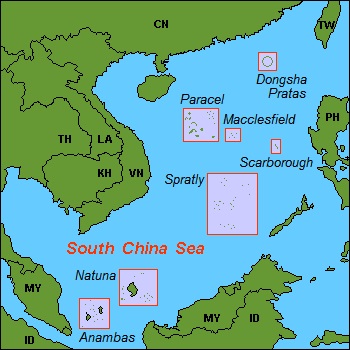
CU Blog - Lessons from China - South China Seas - Exclusive Economic Zone - Photo 1This is an old international maritime law that dates from the days of piracy all the way down to today with modern updates and trends. This is the international convention that governs the 200-mile Exclusive Economic Zone along the coastline of a country. There is a hot issue in the South China Seas region right now involving China and its neighbors.

This issue is so urgent and emergent that many analysts believe dysfunctions in this regards can lead to war.

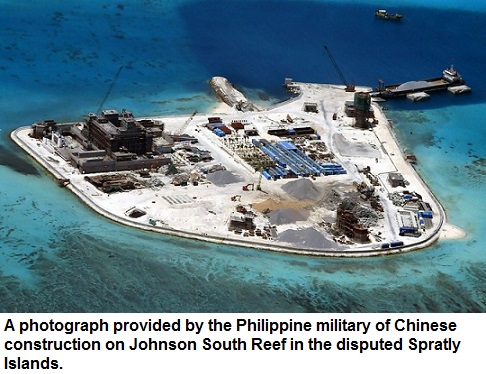
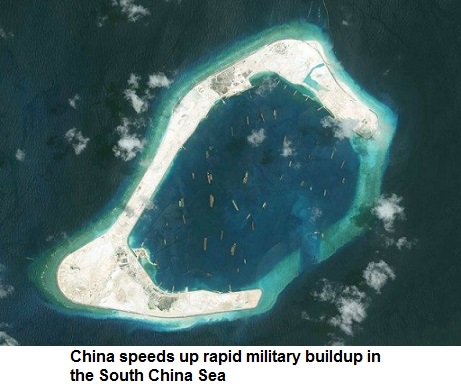
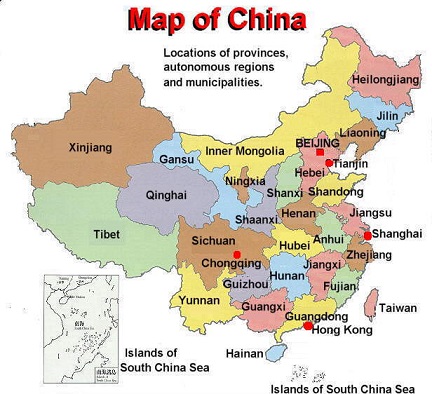
See photos in Appendix B below.

There has now been an update in this case. This update is furnished by the Hague Tribunal for the UNCLOS.

This news story here speaks of the ruling in the Hague about the disposition of China’s claims regarding their Exclusive Economic Zone in the South China Seas. See story here:

VIDEOSouth China Sea Ruling: 5 Things to Know https://youtu.be/qOeEMsdYzm4

Published on Jul 15, 2016 – China’s South China Sea ambitions have been denied! The ruling by a United Nations Convention on the Law of the Sea tribunal in the Hague said China’s claims to the South China Sea have “no legal basis.” Is this a victory for the Philippines? The United States? Or will this lead to war? Find out on this episode of China Uncensored!

MORE EPISODES:

Indonesia “Attacks” China in South China Sea
https://www.youtube.com/watch?v=WS5qi…

China Defends South China Sea from Japanese Aggression
https://www.youtube.com/watch?v=pg7BM…

US Sends Destroyers to South China Sea — Is War Next?
https://www.youtube.com/watch?v=nC8wR…

Will China Provoke War in South China Sea
https://www.youtube.com/watch?v=MxU6w…

Why is this discussion about conflicts in the South China Seas – see Appendix A – important to us in the Caribbean region?

The focus is on the concept of an Exclusive Economic Zone (EEZ); see Appendix C. This is an applicable reference for the Caribbean as we have a similar quest, to extend oversight for the Caribbean Sea. This point had been detailed in a previous blog-commentary regarding the Association of Caribbean States (ACS); an excerpt follows:

One agenda adopted by the ACS has been an attempt to secure the designation of the Caribbean Sea as a special zone in the context of sustainable development; it is pushing for the UN to consider the Caribbean Sea as an invaluable asset that is worth protecting and treasuring. The organization has sought to form a coalition among member states to devise a United Nations General Assembly resolution to ban the transshipment of nuclear materials through the Caribbean Sea and the Panama Canal. The Go Lean roadmap aligns with this agenda with the implementation plan of an Exclusive Economic Zone for these seas.

This commentary is part of a series on China. This is commentary 5 of 6 in consideration of the good and bad lessons from China. The other commentaries detailed in this series are as follows:

  1. History of China Trade: Too Big to Ignore
  2. Why China will soon be Hollywood’s largest market
  3. Organ Transplantation: Facts and Fiction
  4. Mobile Game Apps: The new Playground
  5. South China Seas: Exclusive Economic Zones
  6. WeChat: Model for Caribbean Social Media – www.MyCaribbean.gov

All of these commentaries relate to nation-building, stressing the community investments required to facilitate the short-term, mid-term and long-term needs of our communities. But this one commentary identifies China as a “bully” in the neighborhood of the South China Seas. So the lesson for the Caribbean is how to deal with a bully.

What empowers China as a bully in this conflict? Their size! China, with its 1.3 billion people, is the largest country bordering on the South China Seas. Truth be told, China is the largest country in the world. That 1.3 billion population is … 1.3 billion. It is hard for those observing-and-reporting from North America to comprehend the perspective. The US has 320 million people; the Caribbean, as a consolidated region is 42 million. Size does matter!

This is the guidance from the book Go Lean … Caribbean. It serves as a roadmap – turn by turn directions – for the introduction and implementation of the Caribbean Union Trade Federation (CU). This confederation treaty is designed to leverage the 30 member-states of the Caribbean so as to get some economy-of-scale. The book asserts that some problems in the region are too big for anyone member-state to contend with alone. An integrated Single Market of all 42 million people across the 30 member-states allows us to stand-up more forthrightly to bullies in our region. And we do have bullies.

This is the strategy for the Caribbean region to elevate its society. In fact, the roadmap has these 3 prime directives:

  • Optimization of the economic engines in order to grow the regional economy to $800 Billion & create 2.2 million new jobs.
  • Establishment of a security apparatus – with oversight of the EEZ – to provide public safety and protect the resultant economic engines of the Caribbean homeland.
  • Improvement of Caribbean governance – with oversight of the EEZ – to support these engines.

The implementation of the CU allows for the designation of more Exclusive Economic Zones, the consolidation existing EEZ’s and the deployment of a security apparatus to ensure protections in these zones.

Where does an 800 pound sleep? Anywhere he wants” – Old Wives Tale

Injustice anywhere is a threat to justice everywhere.” – Quotation from Martin Luther King, Jr.

“The only thing necessary for the triumph of evil is for good men to do nothing” – Edmund Burke; 1729 – 1797

It is important to remember from this commentary, the primary lesson from China is the undeniable size of their market, population and military. Without even trying, China can be a bully!

The Caribbean does not need to stand-up to China – but we stand up on the side of justice. We are not a world Super-Power, nor do we aspire to be. We leave that role to our allies in NATO (the North American Treaty Organization including the US and Western European states). Nonetheless, our region will be stronger with the 42 million; while no billions as in China, our consolidated size will allow us to stand-up to regional threats: border encroachments, narco-terrorism and piracy. This need for  security strength was pronounced in the opening of the Go Lean book, with these statements in the Declaration of Interdependence (Pages 11 – 13):

v.  Whereas the natural formation of our landmass and coastlines entail a large portion of waterscapes, the reality of management of our interior calls for extended oversight of the waterways between the islands. The internationally accepted 12-mile limits for national borders must be extended by International Tribunals to encompass the areas in between islands. The individual states must maintain their 12-mile borders while the sovereignty of this expanded  area, the Exclusive Economic Zone, must be vested in the accedence of this Federation.

x.   Whereas we are surrounded and allied to nations of larger proportions in land mass, populations, and treasuries, elements in their societies may have ill-intent in their pursuits, at the expense of the safety and security of our citizens. We must therefore appoint “new guards” to ensure our public safety and threats against our society, both domestic and foreign.

xi.  Whereas all men are entitled to the benefits of good governance in a free society, “new guards” must be enacted to dissuade the emergence of incompetence, corruption, nepotism and cronyism at the peril of the people’s best interest. The Federation must guarantee the executions of a social contract between government and the governed.

xii. Whereas the legacy in recent times in individual states may be that of ineffectual governance with no redress to higher authority, the accedence of this Federation will ensure accountability and escalation of the human and civil rights of the people for good governance, justice assurances, due process and the rule of law. As such, any threats of a “failed state” status for any member state must enact emergency measures on behalf of the Federation to protect the human, civil and property rights of the citizens, residents, allies, trading partners, and visitors of the affected member state and the Federation as a whole.

xvi. Whereas security of our homeland is inextricably linked to prosperity of the homeland, the economic and security interest of the region needs to be aligned under the same governance. Since economic crimes, including piracy and other forms of terrorism, can imperil the functioning of the wheels of commerce for all the citizenry, the accedence of this Federation must equip the security apparatus with the tools and techniques for predictive and proactive interdictions.

The Go Lean book, and previous blog/commentaries, stressed the key community ethos, strategies, tactics, implementations and advocacies necessary to provide better homeland security to the Caribbean region, and to foster development, administration and protections in the Caribbean EEZ. These points are detailed in the book as follows:

Community Ethos – Deferred Gratification Page 21
Community Ethos – Economic Principles – All Choices Involve Costs Page 21
Community Ethos – Economic Principles – Economic Systems Influence Individual Choices Page 21
Community Ethos – Economic Principles – Voluntary Trade Creates Wealth Page 21
Community Ethos – Economic Principles – Consequences of Choices Lie in the Future Page 21
Community Ethos – Security Principles – Anti-Bullying and Mitigations Page 22
Community Ethos – Security Principles – Intelligence Gathering Page 23
Community Ethos – Security Principles – “Crap” Happens Page 23
Community Ethos – Governing Principles – Lean Operations Page 24
Community Ethos – Governing Principles – Return on Investments Page 24
Community Ethos – Governing Principles – Cooperatives Page 25
Strategy – Agents of Change – Globalization Page 57
Tactical – Fostering a Technocracy Page 64
Tactical – Separation of Powers – Homeland Security Department Page 75
Tactical – Separation of Powers – Coast Guard and Naval Authority Page 75
Tactical – Separation of Powers – Militia Page 75
Implementation – Ways to Pay for Change – EEZ Exploration Rights Page 101
Implementation – Security Initiatives at Start-up Page 103
Implementation – Start-up Benefits from the EEZ Page 104
Advocacy – Ways to Grow the Economy – Enterprise Zones & Empowerment Zones Page 151
Advocacy – Ways to Improve Governance Page 168
Advocacy – Ways to Improve Homeland Security Page 180
Advocacy – Ways to Mitigate Terrorism – Piracy Page 181
Advocacy – Ways to Better Manage Natural Resources Page 183
Advocacy – Ways to Improve Emergency Management Page 196
Advocacy – Ways to Improve Fisheries – Model of Alaska EEZ Page 210
Appendix – Cape Cod Wind Farm – Model for Caribbean EEZ Page 335

Other subjects related to security, anti-bullying and justice empowerments for the region have been blogged in previous Go Lean…Caribbean commentaries, as sampled here:

https://goleancaribbean.com/blog/?p=7896 The Need for Local Administration: The Logistics of Disaster Relief
https://goleancaribbean.com/blog/?p=7449 ‘Crap Happens’ – Planning and Execution
https://goleancaribbean.com/blog/?p=7345 ISIS reaches the Caribbean Region
https://goleancaribbean.com/blog/?p=7119 Role Model for the Caribbean: African Standby Force
https://goleancaribbean.com/blog/?p=6247 Tragic images show Mediterranean Sea Refugee Crisis
https://goleancaribbean.com/blog/?p=6103 Sum of All Fears – ‘On Guard’ Against Deadly Threats
https://goleancaribbean.com/blog/?p=5462 Case of American NGO Bullying: Red Cross’ Missing $500 Million In Haiti Relief
https://goleancaribbean.com/blog/?p=5183 A Lesson in History – Cinco De Mayo and Mexico’s Security Lapses
https://goleancaribbean.com/blog/?p=5002 Managing a ‘Clear and Present Danger’
https://goleancaribbean.com/blog/?p=4360 Dreading the ‘CaribbeanBasin Security Initiative’
https://goleancaribbean.com/blog/?p=1965 America’s Navy – 100 Percent – Model for Caribbean
https://goleancaribbean.com/blog/?p=1554 Status of Forces Agreement = Security Pact
https://goleancaribbean.com/blog/?p=1076 Regional Threat: Trinidad Muslims travel for Jihadist training
https://goleancaribbean.com/blog/?p=809 Muslim officials condemn bullying and abductions of Nigerian girls
https://goleancaribbean.com/blog/?p=535 Remembering and learning from Boston’s Terror Attack
https://goleancaribbean.com/blog/?p=273 10 Things We Want from the US – #4: Pax Americana

The Caribbean sorely needs the empowerments in this roadmap to mitigate threats and ensure protections on our seaways and waterscapes. The key is the Exclusive Economic Zone designation.

This is an important lesson being learned from consideration of China. EEZ dimensions should not be left up to vague interpretations. There is need for surety! In fact, the Go Lean book (Page 101) asserts that this surety will subsequently have long-ranging economic implications:

EEZ Exploration Rights
Representing the member-states, the CU will petition the UN for an Exclusive Economic Zone (EEZ) for the areas between the islands. All economic activity in these non-state areas (underwater cables, oil/gas drilling, mines, etc.) will be awarded & regulated by the CU.
Exploratory rights are awarded for license fees upfront.

We have this and other important lessons from China. Their large population makes them a venerable threat to all their smaller neighboring countries. There is the need for security and justice mitigations in their region.

There is the need for security and justice mitigations in our region, too. Justice takes a constant effort – a sentinel. This is the role envisioned for the CU and its security apparatus.

“On guard” … for threats against justice.

Now is the time for all of the Caribbean – the people, institutions and governments – to lean-in for these justice assurances described in the book Go Lean … Caribbean. This effort will make the Caribbean homeland a better, safer, place to live, work and play. 🙂

Download the free e-Book of Go Lean … Caribbean – now!

————-

Appendix A – South China Sea

The South China Sea is a marginal sea that is part of the Pacific Ocean, encompassing an area from the Karimata and Malacca Straits to the Strait of Taiwan of around 3,500,000 square kilometres (1,400,000 sq mi). The area’s importance largely results from one-third of the world’s shipping sailing through its waters and that it is believed to hold huge oil and gas reserves beneath its seabed.[2]

It is located[3]:

The minute South China Sea Islands, collectively an archipelago, number in the hundreds. The sea and its mostly uninhabited islands are subject to competing claims of sovereignty by several countries. These claims are also reflected in the variety of names used for the islands and the sea.

Geography

States and territories with borders on the sea (clockwise from north) include: the People’s Republic of China (including Macau and Hong Kong), the Republic of China (Taiwan), the Philippines, Malaysia, Brunei, Indonesia, Singapore, and Vietnam.

Major rivers that flow into the South China Sea include the PearlMinJiulongRedMekongRajangPahangPampanga, and Pasig Rivers.
Source: Retrieved August 30 from: https://en.wikipedia.org/wiki/South_China_Sea

————-

Appendix B – Photos of Military Escalations

CU Blog - Lessons from China - South China Seas - Exclusive Economic Zone - Photo 2


CU Blog - Lessons from China - South China Seas - Exclusive Economic Zone - Photo 5


CU Blog - Lessons from China - South China Seas - Exclusive Economic Zone - Photo 4

CU Blog - Lessons from China - South China Seas - Exclusive Economic Zone - Photo 3

————-

Appendix C – Exclusive Economic Zone

An Exclusive Economic Zone (EEZ) is a sea zone prescribed by the United Nations Convention on the Law of the Sea over which a state has special rights regarding the exploration and use of marine resources, including energy production from water and wind.[1] It stretches from the baseline out to 200 nautical miles (nmi) from its coast. In colloquial usage, the term may include the continental shelf. The term does not include either the territorial sea or the continental shelf beyond the 200 nmi limit. The difference between the territorial sea and the exclusive economic zone is that the first confers full sovereignty over the waters, whereas the second is merely a “sovereign right” which refers to the coastal state’s rights below the surface of the sea. The surface waters, as can be seen in the map, are international waters.[2]

Generally, a state’s EEZ extends to a distance of 200 nautical miles (370 km) out from its coastal baseline. The exception to this rule occurs when EEZs would overlap; that is, state coastal baselines are less than 400 nautical miles (740 km) apart. When an overlap occurs, it is up to the states to delineate the actual maritime boundary.[3] Generally, any point within an overlapping area defaults to the nearest state.[4]

A state’s Exclusive Economic Zone starts at the landward edge of its territorial sea and extends outward to a distance of 200 nautical miles (370.4 km) from the baseline. The Exclusive Economic Zone stretches much further into sea than the territorial waters, which end at 12 nmi (22 km) from the coastal baseline (if following the rules set out in the UN Convention on the Law of the Sea).[5] Thus, the EEZ includes the contiguous zone. States also have rights to the seabed of what is called the continental shelf up to 350 nautical miles (648 km) from the coastal baseline, beyond the EEZ, but such areas are not part of their EEZ. The legal definition of the continental shelf does not directly correspond to the geological meaning of the term, as it also includes the continental rise and slope, and the entire seabed within the EEZ.

The following is a list of the largest Exclusive Economic Zones; by country with a few noticeable deviations:

Country EEZ Kilometers2 Additional Details
United States 11,351,000 The American EEZ – the world’s largest – includes the Caribbean overseas territories of Puerto Rico and the US Virgin Islands.
France 11,035,000 The French EEZ includes the Caribbean overseas territories of Guadeloupe, Martinique, Saint Martin, Saint Barthélemy and French Guiana.
Australia 8,505,348 Australia has the third largest exclusive economic zone, behind the United States and France, with the total area actually exceeding that of its land territory. Per the UN convention, Australia’s EEZ generally extends 200 nautical miles (370 km) from the coastline of Australia and its external territories, except where a maritime delimitation agreement exists with another state.[15]The United Nations Commission on the Limits of the Continental Shelf confirmed, in April 2008, Australia’s rights over an additional 2.5 million square kilometres of seabed beyond the limits of Australia’s EEZ.[16][17] Australia also claimed, in its submission to the UN Commission on the Limits of the Continental Shelf, additional Continental Shelf past its EEZ from the Australian Antarctic Territory,[18] but these claims were deferred on Australia’s request. However, Australia’s EEZ from its Antarctic Territory is approximately 2 million square kilometres.[17]
Russia 7,566,673
United Kingdom 6,805,586 The UK includes the Caribbean territories of Anguilla, Bermuda, Cayman Islands, Montserrat, Turks & Caicos and the British Virgin Islands.
Indonesia 6,159,032
Canada 5,599,077 Canada is unusual in that its EEZ, covering 2,755,564 km2, is slightly smaller than its territorial waters.[20] The latter generally extend only 12 nautical miles from the shore, but also include inland marine waters such as Hudson Bay (about 300 nautical miles (560 km; 350 mi) across), the Gulf of Saint Lawrence and the internal waters of the Arctic archipelago.
Japan 4,479,388 In addition to Japan’s recognized EEZ, it also has a joint regime with Republic of (South) Korea and has disputes over other territories it claims but are in dispute with all its Asian neighbors (Russia, Republic of Korea and China).
New Zealand 4,083,744
Chile 3,681,989
Brazil 3,660,955 In 2004, the country submitted its claims to the United Nations Commission on the Limits of the Continental Shelf (CLCS) to extend its maritime continental margin.[19]
Mexico 3,269,386 Mexico’s EEZ comprises half of the Gulf of Mexico, with the other half claimed by the US.[32]
Micronesia 2,996,419 The Federated States of Micronesia comprise around 607 islands (a combined land area of approximately 702 km2 or 271 sq mi) that cover a longitudinal distance of almost 2,700 km (1,678 mi) just north of the equator. They lie northeast of New Guinea, south of Guam and the Marianas, west of Nauru and the Marshall Islands, east of Palau and the Philippines, about 2,900 km (1,802 mi) north of eastern Australia and some 4,000 km (2,485 mi) southwest of the main islands of Hawaii. While the FSM’s total land area is quite small, its EEZ occupies more than 2,900,000 km2 (1,000,000 sq mi) of the Pacific Ocean.
Denmark 2,551,238 The Kingdom of Denmark includes the autonomous province of Greenland and the self-governing province of the Faroe Islands. The EEZs of the latter two do not form part of the EEZ of the European Union.
Papua New Guinea 2,402,288
China 2,287,969
Marshall Islands 1,990,530 The Republic of the Marshall Islands is an island country located near the equator in the Pacific Ocean, slightly west of the International Date Line. Geographically, the country is part of the larger island group of Micronesia. The country’s population of 68,480 people is spread out over 24 coral atolls, comprising 1,156 individual islands and islets. The land mass amounts to 181 km2 (70 sq mi) but the EEZ is 1,990,000 km2, one of the world’s largest.
Portugal 1,727,408 Portugal has the 10th largest EEZ in the world. Presently, it is divided in three non-contiguous sub-zones:

Portugal submitted a claim to extend its jurisdiction over additional 2.15 million square kilometers of the neighboring continental shelf in May 2009,[44] resulting in an area with a total of more than 3,877,408 km2. The submission, as well as a detailed map, can be found in the Task Group for the extension of the Continental Shelf website.

Spain disputes the EEZ’s southern border, maintaining that it should be drawn halfway between Madeira and the Canary Islands. But Portugal exercises sovereignty over the SavageIslands, a small archipelago north of the Canaries, claiming an EEZ border further south. Spain objects, arguing that the SavageIslands do not have a separate continental shelf,[45] citing article 121 of the United Nations Convention on the Law of the Sea.[46]

Philippines 1,590,780 The Philippines’ EEZ covers 2,265,684 (135,783) km2[41].
Solomon Islands 1,589,477
South Africa 1,535,538
Fiji 1,282,978 Fiji is an archipelago of more than 332 islands, of which 110 are permanently inhabited, and more than 500 islets, amounting to a total land area of about 18,300 square kilometres (7,100 sq mi).
Argentina 1,159,063
Spain 1,039,233
Bahamas 654,715
Cuba 350,751
Jamaica 258,137
Dominican Republic 255,898
Barbados 186,898
Netherlands 154,011 The Kingdom of the Netherlands include the Antilles islands of Aruba. Bonaire, Curacao, Saba, Sint Maarten and Sint Eustatius
Guyana 137,765
Suriname 127,772
Haiti 126,760
Antigua and Barbuda 110,089
Trinidad and Tobago 74,199
St Vincent and the Grenadines 36,302
Belize 35,351
Dominica 28,985
Grenada 27,426
Saint Lucia 15,617
Saint Kitts and Nevis 9,974

(Source: http://en.wikipedia.org/wiki/Exclusive_economic_zone)


Share this post:
, , ,
[Top]

Lessons from China – Too Big To Ignore

Go Lean Commentary

The Caribbean has a serious problem with societal abandonment. Far too many of our citizens flee their Caribbean homelands for life in foreign countries. Most assuredly, the destination country is rarely, if ever, China.

CU Blog - Lessons from China - Too Big To Ignore - Photo 3

They have 1.3 billion people inside their borders; we have 42 million in our entire region. China wouldn’t even notice us, our people and our impact. This is not the case in the United States, where 1 in 11 Black residents may be from the Caribbean.

Still our goal is not to make China notice. Our goal is to mitigate the reasons why our people may want/need to leave in the first place. We want our citizens to prosper where they are planted here at home, and not set their sights on migrating to China, or any other country. But still, we can get a lot of benefits from China, as in trade and … lessons learned from their nation-building. They are too big to ignore.

There are a lot of lessons, good and bad, for us to glean and apply here at home. This commentary is 1 of 6 from the movement behind the book Go Lean … Caribbean, in consideration of lessons from China. The other commentaries detailed in this series are as follows:

  1. History of China Trade: Too Big to Ignore
  2. Why China will soon be Hollywood’s largest market
  3. Organ Transplantation: Facts and Fiction
  4. Mobile Games Apps: The new Playground
  5. South China Seas: Exclusive Economic Zones
  6. WeChat: Model for Caribbean Social Media – www.MyCaribbean.gov

All of these commentaries relate to nation-building, stressing the community investments required to facilitate the short-term, mid-term and long-term needs of our communities.

There used to be a time when we thought of the “closed” country of China only as a country on the other side of the planet…

“I’ve got a whole in my heart that goes all the way to China…” – song by pop singer Cyndi Lauper from movie soundtrack for the 1988 film Vibes. – See Appendix VIDEO.

CU Blog - Lessons from China - Too Big To Ignore - Photo 1… but now, we must recognize China as a Super Power; one with a large domestic market and a huge international reach; see this Photo/Chart here.

How did this come about, apparently so quickly? In a word … Trade.

China has grown in the past few decades tremendously by “opening up” and adopting the tenants of this one economic principle, one that is also detailed and recommended for adoption for the Caribbean in the book Go Lean … Caribbean:

Voluntary Trade Creates Wealth: People specialize in the production of certain goods and services because they expect to gain from it. People trade what they produce with other people when they think they can gain something from the exchange. Some benefits of voluntary trade include higher standards of living and broader choices of goods and services.

This analysis of China’s trade development history is part of the technocratic activities needed in the Caribbean, to ensure our region becomes competitive. This effort is inclusive of the Go Lean book as it serves as a roadmap for the introduction and implementation of the technocratic Caribbean Union Trade Federation (CU). The branding “Trade” Federation “gives light” to this economic objective:

Optimize Trade in products and services.

Look at this news article here for a detail discussion on China’s recent history in world trade, their successes and some failures:

Title: How China’s trade concessions made it stronger

It’s still a mystery why.

In negotiations with the U.S. over WTO membership, China made nearly all the concessions. It agreed to cut tariffs, reduce subsidies, lessen the role of state-owned firms and eliminate barriers investment — in other words, to become more like the U.S. economy. All the U.S. did was end an annual renewal of China’s access to the U.S. market, which China’s allies in Congress won every summer, anyway. “Economically, this agreement is the equivalent of a one-way street,” President Bill Clinton said in 2000.

But freer trade with China had outcomes few predicted — especially a surge in imports to the U.S. and a huge U.S. trade deficit. Industries and workers around the U.S. were upended.

To understand what happened, look back to the 1990s. China’s opening to the world was progressing, but suspicion of Beijing ran high in Washington. The 1989 Tiananmen Square massacre made China’s human rights practices a big issue with lawmakers. Congress’s annual review of China’s trading status with the U.S.—what was then called “most favored nation”—became a way to pressure Beijing. While grand-sounding, most-favored status simply meant that China received the same tariffs as nearly every other U.S. trading partner.

From 1990 through 2001, Washington went through an annual theater. The president—whether Republican George H.W. Bush or Democrat Bill Clinton—renewed China’s favored status, and Congress had 90 days to disapprove the measure. Despite frequent threats issued by lawmakers, Congress never came close to overturning the president’s decision.

By the late 1990s, China wanted to join the WTO. To do so, it had to negotiate a deal with every WTO member. None was more important than the U.S., which in 1999, won concession after concession from China to remake its economy in the Western mold. What China wanted in return was an end to the annual most-favored status review. After lobbying by the Clinton administration, Congress agreed to lift the requirement.

“This is a great day for this country and I think it’s a good day for the world because we have opened the doors of trade” to China, said the Republican Speaker of the House Dennis Hastert at the bill signing ceremony at the White House in October 2000.

With lower Chinese tariffs, U.S. exports to China increased more than five-fold from $16 billion in 2000 to $92 billion in 2010. But U.S. imports from China soared far higher, from $100 billion in 2000 to $365 billion a decade later. The trade deficit ballooned.

Why?

Yale economist Peter Schott says that eliminating the most-favored status review gave a huge shot of confidence to Western and Chinese firms that the U.S. market would remain open to China. Investment in China soared from $47 billion in 2001 to $115 billion in 2010 as the country became an ever-larger export platform. Foreign firms also saw China’s vast population as a huge market to be served. “Policy uncertainty can inhibit investment,” Mr. Schott said.

A paper he wrote with Federal Reserve economist Justin Pierce cites a Mattel executive who explained that the toy company wouldn’t invest heavily in China if there was a chance the country could lose its favored trade status. While the risk was small, “the consequences would be catastrophic,” the executive said, because Mattel’s toy imports from China would have been hit with 70% tariffs.

But perhaps even more important than being considered a most-favored nation were the trade “concessions” that China made to get into the WTO. In the I-win, you-lose world of trade negotiating, a tariff reduction is considered a loss because it encourages imports and can endanger jobs. Cutting subsidies is also seen as a loss because it weakens the domestic firms being subsidized.

CU Blog - Lessons from China - Too Big To Ignore - Photo 2But the reality can be very different. China’s “concessions” made it a more attractive place to do business. Reducing tariffs made it much easier for Chinese and Western firms to set up factories in China, import parts, assemble them into final goods, and export them to the U.S. Reducing the role of lumbering, subsidized state-owned enterprises encouraged more competitive private firms to take their place in apparel, furniture and other industries. That made China a far more aggressive exporter.

“In hindsight, we missed the unintended consequences” of China’s trade concessions, says University of California at San Diego economist Gordon Hanson. “These were provisions we were pushing for. China wound up providing cheaper goods for the rest of the world. But we didn’t see the increase in U.S. exports to China” that the U.S. expected.
Source: Wall Street Journal – Columnist Bob Davis – August 13, 2016; retrieved August 25, 2016 from: http://www.msn.com/en-us/money/markets/how-chinas-trade-concessions-made-it-stronger/ar-BBvye3o

Considering lessons that we can learn from China, is it possible that the Caribbean, with a much smaller 42 million population base, can model some of China’s successes – and avoid their failures – to grow our economy further?

Yes, we can.

The Go Lean book explains how; it provides turn-by-turn directions on how to integrate the 30 member-states of the Caribbean region to forge an $800 Billion Single Market economy. In fact, this is inclusive of the prime directives of the Go Lean/CU roadmap:

  • Optimization of the economic engines in order to grow the regional economy and create 2.2 million new jobs.
  • Establishment of a security apparatus to protect the resultant economic engines.
  • Improve Caribbean governance/administration/oversight to support these engines.

At the outset of the book, the roadmap presents the urgent need to enlarge our neighborhood and engage some economies-of-scale benefits to extend our market, economy and population. This was pronounced in this clause in the opening Declaration of Interdependence (Page 11):

viii.   Whereas the population size is too small to foster good negotiations for products and commodities from international vendors, the Federation must allow the unification of the region as one purchasing agent, thereby garnering better terms and discounts.

xxiv.  Whereas a free market economy can be induced and spurred for continuous progress, the Federation must install the controls to better manage aspects of the economy: jobs, inflation, savings rate, investments and other economic principles. Thereby attracting direct foreign investment because of the stability and vibrancy of our economy.

The Go Lean roadmap signals change and empowerment for the Caribbean region. It introduces new measures, new opportunities and new strategies to grow our region. The goal is to reform and transform the economic-security-governing engines of the 30 member-states, collectively and individually so as to lower the “push-pull” reasons why our citizens emigrate. We simply want them to prosper where they are planted here at home.

We do not need 1.3 billion people to succeed; we just need best-practices.

The Go Lean book describes the best-practices as new community ethos, strategies, tactics, implementations and advocates. See a sample list here, as follows:

Community Ethos – Voluntary Trade Creates Wealth Page 21
Community Ethos – Consequences of Choices Lie in the Future Page 21
Community Ethos – Money Multiplier Page 22
Community Ethos – Job Multiplier Page 22
Community Ethos – Cooperatives Page 25
Community Ethos – Impact the Greater Good Page 37
Strategy – CU Vision and Mission Page 45
Strategy – Customers – Foreign Direct Investors Page 48
Strategy – Agents of Change – Globalization Page 57
Tactical – Confederating a Permanent Union Page 63
Tactical – Fostering a Technocracy Page 64
Tactical – $800 Billion Economy – How and When – Trade Page 67
Tactical – Growth Approach – Trade and Globalization Page 70
Tactical – Separation of Powers – Interstate Commerce Admin Page 79
Tactical – Separation of Powers – Office of Trade Negotiations Page 80
Implementation – Ways to Pay for Change Page 101
Implementation – Ways to Deliver Page 109
Implementation – Trade Mission Objectives Page 117
Implementation – Ways to Benefit Globalization Page 119
Planning – Ways to Improve Trade Page 128
Planning – Ways to Improve Interstate Commerce Page 129
Advocacy – Ways to Grow the Economy Page 151
Advocacy – Ways to Create Jobs Page 152
Advocacy – Ways to Improve Governance Page 168
Advocacy – Ways to Better Manage the Social Contract Page 170

The Caribbean region needs to learn from the lessons from China; then we need to do the work, the heavy-lifting, to be able to better compete with them, and the rest of the world in trade and culture. This subject of China and our Caribbean trade empowerment has been directly addressed and further elaborated upon in these previous blog/commentaries:

https://goleancaribbean.com/blog/?p=6231 China’s Caribbean Playbook: America’s Script
https://goleancaribbean.com/blog/?p=5435 China Internet Policing – Model for Caribbean
https://goleancaribbean.com/blog/?p=4767 Welcoming WTO? Say Goodbye to Nationalism
https://goleancaribbean.com/blog/?p=2887 Caribbean must work together to address rum subsidies
https://goleancaribbean.com/blog/?p=2488 Role Model Jack Ma brings Trade Marketplace Alibaba to America
https://goleancaribbean.com/blog/?p=2435 Latin America’s Dream and Trade Role-model: Korea
https://goleancaribbean.com/blog/?p=294 Bahamas and China’s New Visa Agreement

China went from “zero to hero”, in terms of emergence as an economic Super Power.

This fast-paced growth brought growing pains with it – good, bad and ugly – these descriptors are also too big to ignore. Consider the experience in the VIDEO here which depicts the harsh reality of over-crowding in Beijing and the quest to de-populate: http://a.msn.com/00/en-us/BBvye3o?ocid=se

The Caribbean is arguably better, the best address on the planet in terms of terrain, weather, hospitality and culture. But, make no mistakes, our Caribbean region has many deficiencies, as in jobs and economic opportunities.

The end result of our deficiencies has been abandonment. The causes of “push and pull” is greatly related to economics. “Pull”, as in the perception that life is more prosperous abroad; “push” in that the remnant in the region experiences deprivations that causes further societal dysfunctions, blame-gaming and a “climate of hate”. The end-results of our deficiencies has been a loss to the brain drain, one estimate of 70%. Our societal abandonment rate is too big to ignore.

No More! It’s time for the Caribbean to go from “zero to hero”. Everyone is urged to lean-in to this roadmap, to make the Caribbean a better place to live, work and play. 🙂

Download the free e-Book of Go Lean … Caribbean – now!

——————-

Appendix VIDEO – Cyndi Lauper – Hole In My Heart (Vibes Version) – https://youtu.be/8QWXH89U6Jc

Published on Oct 11, 2013 – One of her best songs ever, a top ten hit in NZ, Australia and Japan…
Composer Richard Orange. Copyright Dick James Music Ltd./Universal Music.
No copyright infringement intended. All rights to (C) 1988 Sony BMG Music Entertainment.

  • Category: Music
  • License : Standard YouTube License
Share this post:
, ,
[Top]

Transformations: Money Matters – ‘Getting over’ with ‘free money’

Go Lean Commentary

Here is a fact we have learned about transformations: there must be political transformations and practical transformations.

The Go Lean quest is to transform the 30 member-states in the Caribbean region. We are not the first …

    … and we guarantee that we will not be the last.

CU Blog - Transformations - Getting Over with Free Money - Photo 2So there are good, bad and ugly lessons for us to consider from other societies at other times. Take the recent example of Iraq. This is one of the lessons we have learned from that society: the practical transformation is easier than the political transformation. After the regime change by the United States in 2003 – a practical transformation – the country had a very tough time forging a stable society … because they could not succeed with the required political transformations. This is heavy-lifting, requiring collaboration, compromise and consensus-building. Iraq is not so homogeneous; they have sectarian discord, multiple ethnic groups that compose the country: Shiite, Sunni, Kurds, Yazidis  and others; different religions, races, ethnicities, languages, values and goals.

The dysfunctions created voids in leadership, administration and security. Enter ISIS!

This experience relates that one benefit of getting the political transformation right is some assurance of peace and security.

Another benefit: Money!

Once political transformations transpire, the opportunity emerges to acquire free money. Again, consider Iraq:

On November 20, 2004, the Paris Club of creditor nations agreed to write off 80% ($33 billion) of Iraq’s $42 billion debt to Club members. Iraq’s total external debt was around $120 billion at the time of the 2003 invasion, and had grown another $5 billion by 2004. The debt relief will be implemented in three stages: two of 30% each and one of 20%.[133]
Source: Retrieved May 11, 2016 from: https://en.wikipedia.org/wiki/Iraq#Economy

This point aligns with the book Go Lean…Caribbean, which asserts that the societal engines in the Caribbean (economy, security, and governance) are deficient and defective; in some cases we even feature Failed-States (think: Haiti, Cuba, Puerto Rico and others). The book posits that the region can improve and make our homelands a better place to live, work and play.

How? One way we can “get over the hump” of transformation is to acquire Free Money… as much as possible.

This is commentary 2 of 4, from the movement behind the Go Lean book, on the subject of transformations: how to move our region from the deficient-defective status quo to the undisputed title of “greatest address on the planet”. All these commentaries detail these issues, considering:

  1. Perfecting our Core Competence
  2. Money Matters – “Getting over” with “free money”
  3. Caribbean Postal Union (CPU) – Delivering the Future
  4. Civil Disobedience – Still Effective

The Go Lean book details the quest to transform the Caribbean; it features a how-to guide, a roadmap for elevating the region’s societal engines of economics, security and governance. It leads with economic issues, not political ones!

It recognizes that while political transformation is heavy-lifting – requiring collaboration, compromise and consensus-building – economic ones are a little easier. Show up in any community with a boatload of jobs and people will line-up around the corner to transform and accept the jobs … and any dependent conditions. (Free Money always comes with conditions!)

This is the Go Lean quest … but first, we acquire all the “free money” possible. (There should be no entitlement attitude to Foreign Aid).

A previous blog related how the community of Haiti was granted $500 million in grants-aid for the 2010 Earthquake; the money was collected and administered by the American Red Cross … but very little of it reached it’s target destination in Haiti. The assertion is that we must take the lead for our own administration and stewardship.

Build it, and they will come. – Movie Quotation

The Go Lean position is that if we put the technocratic processes in place, we will benefit from a lot of available grant-aid monies. These “free” monies can help us to “get over the hump”, to succeed with the needed transformations in our society; see VIDEO here:

VIDEO: Foreign Aid 101https://youtu.be/s0Ps0UIY2Xc


Published on Mar 4, 2014 – Everything you need to know about U.S. foreign aid in 3 minutes, i.e. foreign aid is only less than 1 percent of the US federal government’s budget.

The book Go Lean … Caribbean serves as a roadmap for the introduction and implementation for the technocratic Caribbean Union Trade Federation (CU). As a federation or federal government representing all 30 member-states, the prime directives of this roadmap is the cause of elevating society by addressing these 3 focus areas:

  • Optimization of the economic engines in order to grow the regional economy to $800 Billion & create 2.2 million new jobs.
  • Establishment of a security apparatus to protect the resultant economic engines.
  • Improve Caribbean governance, including efforts with non-governmental agencies, to support these engines.

The samples and examples of so many other societies provide us with role models for how to procure grant/aid for our cause; see photo here.

CU Blog - Transformations - Getting Over with Free Money - Photo 1

Source: “Foreign Aid Explorer website”Foreign Aid Explorer. USAID. Posted July 27, 2015.

Continuing with Iraq, that country was able to procure a lot of grant/aid/loans from different international sources; see here:

Foreign aid to Iraq has increased to handle reconstruction efforts.
In 2004 the U.S. Agency for International Development was responsible for awarding contracts totaling US$900 million for capital construction, seaport renovation, personnel support, public educationpublic health, government administration, and airport management. The World Bank committed US$3 billion to US$5 billion for reconstruction over a five-year period, and smaller commitments came from Japan, the European UnionBritain, and SpainRussia canceled 65 percent of Iraq’s debt of US$8 billion, and Saudi Arabia offered an aid package totaling US$1 billion. Also, Iran has been accused of giving some monetary support to individual political parties. Some US$20 billion of US 2004 appropriations for Iraq were earmarked for reconstruction. Effective application of such funds, however, depends on substantial improvement in infrastructural and institutional resources. Because Iraq’s international debt situation had not been elaborated in 2005, for the foreseeable future US funds are expected to pay for capital investments in rebuilding.
Source: Retrieved May 11, 2016 from: https://en.wikipedia.org/wiki/Foreign_aid_to_Iraq

We can, and must, do better in the Caribbean, compared to Iraq, a country still in disarray. We are able to be more accountable, transparent and productive with grants/aid that we receive. The Go Lean book fully anticipated this strategy, as Page 115 cited:

The Go Lean/CU roadmap provides the scale and the means by which to plan and act for our Caribbean emergencies and natural disasters… But … the Caribbean must not be perennial beggars; we do need capital/money, especially to get started.

CariCom -vs- the Caribbean Union
The conclusion of consultants hired to advise the CariCom [(Caribbean Community Secretariat)] confessed that the Pact’s tacit strategy is to exploit the international donor community. The CU represents a break from this “Rich Man-Poor Man-Beggar Man-Thief” stance, and leans in to the alternate ethos of “Butcher-Baker-Candlestick Maker”. The CU vision is a Trade Federation that earns its keep thru trade and industriousness. In the Federation roadmap, the CariCom is re-constituted to the CU in Year 3.

In the Caribbean, we need grants/aid … to get started, to “get over the hump”; then we want to be able to stand-alone as a mature democracy – a regional Single Market. We need the initial help to optimize all 3 societal engines: economics, security and governance:

  • The economic help we seek should be viewed as seed money, so that we can sow in the fields of our marketplace, and later reap bountiful harvests. See Appendix VIDEO below.
  • The security help will allow us to foster a regional homeland security apparatus of our own; there is the specific need for military “hardware”; (think watercrafts, helicopters, and unmanned aerial drones).
  • For governance, we need technical assistance; the focus here is more on “software” or intellectual property, to provide better shepherding to the federal government, member-state governments and non-governmental organization (NGO) so as to execute the roadmap.

The following list from the Go Lean book is a sample of the strategies, tactics, implementation and advocacies of the Go Lean/CU roadmap related to the quest to foster more international aid:

Community Ethos – Lean Operations Page 24
Community Ethos – Ways to Improve Sharing Page 35
Community Ethos – Ways to Impact the Greater Good Page 37
Strategy – Customers – Member-State Governments Page 51
Strategy – Agents of Change – Globalization Page 57
Tactical – Confederating a Permanent Union Page 63
Tactical – Fostering a Technocracy Page 64
Tactical – Separation of Powers Page 71
Anecdote – Turning Around the CARICOM construct Page 92
Anecdote – “Lean” in Government Page 93
Implementation – Ways to Pay for Change Page 101
Implementation – Foreign Policy Initiatives at Start-up Page 102
Implementation – Ways to Deliver Page 109
Implementation – Ways to Better Manage Debt Page 114
Implementation – Ways to Foster International Aid Page 115
Planning – Ways to Make the Caribbean Better Page 131
Planning – Reasons Why the CU Will Succeed Page 132
Planning – Lessons Learned from the West Indies Federation Page 134
Advocacy – Ways to Grow the Economy Page 151
Advocacy – Ways to Create Jobs Page 152
Advocacy – Ways to Improve Credit Reporting – Improve Debt Management Page 155
Advocacy – Ways to Improve Governance Page 168
Advocacy – Better Manage the Social Contract Page 170
Advocacy – Revenue Sources … for Administration Page 172
Advocacy – Ways to Foster Cooperatives Page 176

The Caribbean can truly be a great place to live, work and play. With the proper structures, we can qualify for a lot of ‘free money’, but free always comes with conditions and strings. That makes us dependent, not independent; we maintain a status of a parasite, not a protégé. This is why the strategy in the roadmap is not to depend on Foreign Aid for the long term, but rather to tease and tempt the people and institutions in the region to conform and acquiesce to behavioral changes needed in the community. Consider this as a “carrot and stick” motivation:

  • Comply and get the money
  • Non-compliance and future money is taken away

Remember, political transformations versus practical transformations…

… many politicians are arrogant, dogmatic and defiant; but when the budgets do not add up, they begrudgingly become willing to be practical and pragmatic. Math rules … over mania. Consider this:

There is a current issue in some Caribbean member-states where there is the need to correct constitutional deficiencies for gender equality; (the Bahamas in particular has a public referendum slated for June 7, 2016). One strong motivation is the compliance with the United Nation’s Convention on the Elimination of All Forms of Discrimination Against Women. Future foreign aid and grants are tied to the successful execution of these constitutional reforms.

Previously, Go Lean blogs commented on transformations, identifying the status in Caribbean member-states; as sampled here:

https://goleancaribbean.com/blog/?p=7963 Being a ‘Good Neighbor’ – Like Puerto Rico needs right now
https://goleancaribbean.com/blog/?p=7198 State of the Caribbean Union
https://goleancaribbean.com/blog/?p=6231 China’s Caribbean Playbook: Helping Transform the region
https://goleancaribbean.com/blog/?p=4360 Dreading the ‘Caribbean Basin Security Initiative’ and planning for better
https://goleancaribbean.com/blog/?p=2953 Funding Caribbean Entrepreneurs – The ‘Crowdfunding’ Way
https://goleancaribbean.com/blog/?p=2887 Caribbean must work together to address rum subsidies
https://goleancaribbean.com/blog/?p=2435 Latin America’s Korean dream – A Model of a Rebuilt Economy
https://goleancaribbean.com/blog/?p=2359 CARICOM calls for innovative ideas to finance SmallIsland development
https://goleancaribbean.com/blog/?p=1965 America’s Naval Security – Model for Caribbean Security
https://goleancaribbean.com/blog/?p=1554 Status of Forces Agreement = Security Pact
https://goleancaribbean.com/blog/?p=1193 EU willing to fund study on cost of not having CARICOM
https://goleancaribbean.com/blog/?p=1014 Canada’s assessment: All is not well in the Caribbean – willing to help
https://goleancaribbean.com/blog/?p=816 The Future of CariCom
https://goleancaribbean.com/blog/?p=451 CARICOM deliver address on reparations – Looking for Free Money

There is a community ethos that fosters the building of effective economic engines, deploying an efficient security apparatus and organizing governing stewardship. It is called the Greater Good! The Go Lean roadmap describes any continuation of a dependent attitude, or expectation of entitlement to foreign aid, as “parasite” but the mature, independent attitude as “protégé”. So this roadmap calls on the Caribbean region to be collectively self-reliant – interdependent – both proactively and reactively.

Transformations …

… any transformation to the Caribbean societal engines must be permanent! The Go Lean book declares that for permanent change to take place, there must first be an adoption of new community ethos, the national spirit that drives the character and identity of its people. The roadmap was constructed with the primary community ethos of the Greater Good, not a profit motive, not a perennial-beggar motive nor a nationalistic motive; but rather a commitment for the “greatest good for the greatest number of people”.

Now is the time for all Caribbean stakeholders to lean-in to this Go Lean regional solution. With this roadmap, the Caribbean can transform to a better society; a better place to live, work and play. 🙂

Download the book Go Lean … Caribbean – now!

——————–

Appendix VIDEO – What’s Wrong With International Aid? – https://youtu.be/xNfOnqf5g6Y

Published on Oct 15, 2012 – Bran Dougherty-Johnson and Jennifer Holt designed the animated clip for Building Markets. Hatfarm produced the sound design.
Category: Nonprofits & Activism


Share this post:
, , ,
[Top]

ENCORE: Celebrating ‘Cinco De Mayo’

This Go Lean blog-commentary from May 5, 2015 is re-distributed on this occasion of Cinco De Mayo 2016. As always, this year’s commemoration is a celebration of Mexican culture, more so than Mexican history.

CU Blog - Celebrating Mexican Culture - Photo 1

Bienvenido Amigos …

————–

Go Lean Commentary

Today (May 5) is Cinco De Mayo – celebrating this is a move of solidarity with Mexico; its people and culture – Enjoy the festivities!

Enjoy the Mexican food, spirits, music and culture. The country and people of Mexico have so much to offer the world – see VIDEO below – this includes the Caribbean.

One thing more that they can offer us in our region: A Lesson in History!

The summary of this celebration is simple on the surface: Mexican forces commanded by General Ignacio Zaragoza defeated the French army in the Battle of Puebla on 5 May 1862. 4 days later, on 9 May 1862, The then-President Benito Juárez declared that the anniversary of the Battle of Puebla would be a national holiday,[14][15][16][17][18] regarded as “Battle of Puebla Day” or “Battle of Cinco de Mayo”. Although today it is recognized in some countries as a day of Mexican heritage celebration, it is not a federal holiday in Mexico.[19]

Considering the real history of Cinco De Mayo is a really big deal. For starters, while Mexico was not the aggressor in this war, they were not exactly blameless.

The 1858 – 1860 Mexican civil war known as The Reform War had caused distress throughout Mexico’s economy. When taking office as the newly-elected president of the Republic in 1861, Juárez was forced to suspend payments of interest on foreign debts for a period of two years. At the end of October 1861 diplomats from Spain, France, and Britain met in London to form the Tripartite Alliance, with the main purpose of launching an allied invasion of Mexico, taking control of Veracruz, its major port, and forcing the Mexican government to negotiate terms for repaying its debts and for reparations for alleged harm to foreign citizens in Mexico. In December 1861, Spanish troops landed in Veracruz; British and French followed in early January. The allied forces occupied Veracruz and advanced to Orizaba. However, the Tripartite Alliance fell apart by early April 1862, when it became clear the French wanted to impose harsh demands on the Juarez government and provoke a war. The British and Spanish withdrew, leaving the French to march alone on Mexico City. French Emperor-President Napoleon III – the first democratically elected French President – wanted to set up a puppet regime, the Mexican Empire.

Thus started this French Intervention in Mexico. The effects of these 5 years were far-reaching, even to this day – consider the similarities in flags for these countries.

CU Blog - A Lesson in History - Cinco De Mayo - Photo 1Title: French Intervention in Mexico 1862 – 1867
Emperor Napoleon III of France was the instigator, justifying military intervention by claiming a broad foreign policy of commitment to free trade. For him, a friendly government in Mexico would ensure European access to Latin American markets. Napoleon also wanted the silver that could be mined in Mexico to finance his empire. Napoleon built a coalition with Spain and Britain while the U.S. was deeply engaged in its own civil war from 1861 to 1865.

Here is the main timeline of this French Intervention period:

1. 1862: Arrival of the French
After the initial victory by the Mexicans at the Battle of Puebla, the war continued in a different direction. The pursuing Mexican army was contained by the French at Orizaba, Veracruz, on 14 June. More British troops arrived on 21 September, and General Bazaine arrived with French reinforcements on 16 October. The French occupied the port of Tamaulipas on 23 October, and unopposed by Mexican forces took control of Xalapa, Veracruz on 12 December.

2. 1863: The French take the capital
CU Blog - A Lesson in History - Cinco De Mayo - Photo 2The French army of General François Achille Bazaine defeated the Mexican army led by General Comonfort in its campaign to relieve the siege of Puebla, at San Lorenzo, to the south of Puebla. Puebla surrendered to the French shortly afterward, on 17 May. On 31 May, President Juárez fled the capital city (Mexico City) with his cabinet, retreating northward to Paso del Norte and later to Chihuahua. Having taken the treasure of the state with them, the government-in-exile remained in Chihuahua until 1867.

French troops under Bazaine entered Mexico City on 7 June 1863. The main army entered the city three days later, led by General Forey. General Almonte was appointed the provisional President of Mexico on 16 June, by the Superior Junta (which had been appointed by Forey). The Superior Junta with its 35 members met on 21 June, and proclaimed a Catholic Empire on 10 July. The crown was offered to Austrian Prince Archduke Ferdinand Maximilian, following pressures by Napoleon. Maximilian accepted the crown on 3 October.

3. 1864: Arrival of Maximilian
Further decisive French victories continued with the fall of Guadalajara, Zacatecas, Acapulco, Durango by 3 July, and the defeat of republicans in the states of Sinaloa and Jalisco in November.

Maximilian formally accepted the crown on 10 April, signing the Treaty of Miramar (between France and Mexico), and landed at Veracruz on 28 May. He was enthroned as Maximilian I, Emperor of Mexico, [under French occupation].

4. 1865: Beginning of Republican victories
CU Blog - A Lesson in History - Cinco De Mayo - Photo 3After many more French victories, finally on 11 April, republicans defeated Imperial forces at Tacámbaro in Michoacán. In April and May the republicans had many forces in the states of Sinaloa and Chihuahua. Most towns along the Rio Grande, [(the border with the US),] were also occupied by republicans.

The decree known as the “Black Decree” was issued by Maximilian on 3 October, which threatened any Mexican captured in the war with immediate execution.

5. 1859-1867: U.S. Diplomacy and Involvement
The United States did not condone the French occupation of Mexico but it had to use its resources for the American Civil War, which lasted 1861 to 1865. Then-President Abraham Lincoln expressed his sympathy to Latin American republics against any European attempt to establish a monarchy; and the Congress passed a resolution in disgust of these French actions. In 1865, The US supported the sale of Mexican bonds by Mexican agents in the US to fund the Juarez Administration, raising up to $18-million dollars for the purchase of American war material.[16] By 1867, American policy shifted from thinly veiled sympathy to the republican government of Juarez to open threat of war to induce a French withdrawal, invoking the Monroe Doctrine, a policy to thwart any aggression by European powers in the Americas.

6. 1866: French withdrawal and Republican victories
Choosing Franco-American relations over his Mexican monarchy ambitions, Napoleon III announced the withdrawal of French forces beginning 31 May. Taking advantage of the end of French military support to the Imperial troops, the Republicans won a series of crippling victories in Chihuahua on 25 March, Guadalajara, Matamoros, Tampico and Acapulco in July. Napoleon III urged Maximilian to abandon Mexico and evacuate with the French troops; [but he persisted]. The French evacuated Monterrey on 26 July, Saltillo on 5 August, and the whole state of Sonora in September. Maximilian’s French cabinet members resigned on 18 September. The Republicans defeated imperial troops in Oaxaca in October, occupying the whole of Oaxaca in November, as well as parts of Zacatecas, San Luis Potosí and Guanajuato.

7. 1867: Republicans take the capital
The Republicans occupied the rest of the states of Zacatecas, San Luis Potosí and Guanajuato in January. The French evacuated the capital on 5 February.

On 13 February 1867, Maximilian withdrew to Querétaro. The Republicans began a siege of the city on 9 March, and Mexico City on 12 April. On 11 May, Maximilian finally resolved to try to escape through the enemy lines. He was intercepted on 15 May. Following a court-martial, he was sentenced to death and executed on 19 June.
Source: http://en.wikipedia.org/wiki/French intervention_in_Mexico  

This subject has relevance for the Caribbean. Mexico is a stakeholder in Caribbean affairs. They have a vast coastline (Yucatan Peninsula) on the Caribbean Sea, plus a few Caribbean islands (Cozumel, Isla Mujeres, Isla Contoy, and Isla Blanca). This country is also a member of the ACS – Association of Caribbean States – one of the relevant entities that must be assembled for this regional integration movement championed in the book Go Lean…Caribbean.

The underlying theme of this Lesson in Mexican History is the lack of effective security for the people and societal engines of Mexico. Now, after 150 years, this historic pattern has continued; Mexico proceeded to endure one revolution-rebellion-overthrow-coup d’etat after another until recent times.

The Caribbean cannot afford this same disposition: the dread and damage endured from decades of dysfunction.

Today, Mexico is known as a lawless society in many pockets, especially along the US border. Considering the art and science of security, it is sad that they never got it right! They resemble a Failed-State in so many perspectives. This is where their history, especially those 5 years of the Franco-Mexican War, provides lessons for the Caribbean people and institutions. But this Go Lean movement does not seek to remediate Mexico; this is out of scope. Rather the focus is strictly on the 30 Caribbean member-states: islands of the Caribbean plus the Central & South American states that caucus with the Caribbean Community (Belize, Guyana and Suriname).

This effort to elevate Caribbean society fully recognizes that security mitigations must be prioritized equally with economic and governing remediation. This is an underlying theme of the book Go Lean…Caribbean. The book declares that the region is in crisis, at the precipice of Failed-State status. This is the assertion of the Go Lean book, that the region must prepare its own security apparatus for its own security needs.

This book serves as a roadmap for the introduction and implementation of the technocratic Caribbean Union Trade Federation (CU). So while the CU is set to optimize Caribbean society through economic empowerment, the security dynamics will be inextricably linked to this same endeavor. Therefore the Go Lean roadmap has 3 prime directives:

  • Optimization of the economic engines in order to grow the regional economy to $800 Billion & create 2.2 million new jobs.
  • Establishment of a security apparatus to protect the resultant economic engines.
  • Improvement of Caribbean governance to support these engines.

The book contends, just as the French proved to be a “bad actor” to Mexico in 1862, that new “bad actors” will emerge for the Caribbean to contend with. This will be as a by-product of new economic successes in the region. This point is pronounced early in the book with the Declaration of Interdependence (Page 12) that claims:

x.   Whereas we are surrounded and allied to nations of larger proportions in land mass, populations, and treasuries, elements in their societies may have ill-intent in their pursuits, at the expense of the safety and security of our citizens. We must therefore appoint “new guards” to ensure our public safety and threats against our society, both domestic and foreign. The Federation must employ the latest advances and best practices … to assuage continuous threats against public safety.

xvi. Whereas security of our homeland is inextricably linked to prosperity of the homeland, the economic and security interest of the region needs to be aligned under the same governance. Since economic crimes, including piracy and other forms of terrorism, can imperil the functioning of the wheels of commerce for all the citizenry, the accedence of this Federation must equip the security apparatus with the tools and techniques for predictive and proactive interdictions.

The need for the Caribbean to appoint “new guards” or a security pact to mitigate foreign and domestic threats in the region is the primary lesson to glean from the foregoing encyclopedic article – a consideration of the history of Cinco De Mayo. This security pact is to be legally constituted by a Status of Forces Agreement which would be enacted as a complement to the CU confederation treaty. The Go Lean roadmap provides 370-pages of turn-by-turn directions on how to deploy cutting-edge strategies, tactics and implementations to succeed in this goal.

In addition, there are other lessons – secondary – that we learn from this consideration of the history of Cinco De Mayo:

The Go Lean book details a roadmap with turn-by-turn directions for transforming the Caribbean homeland. The following is a sample of the community ethos, strategies, tactics, implementations and advocacies to impact the Caribbean region for this turnaround:

Community Ethos – Economic Principle – Economic Systems Influence Choices Page 21
Community Ethos – Economic Principle – Consequences of Choices Lie in the Future Page 21
Community Ethos – Anti-Bullying and Mitigation Page 23
Community Ethos – Minority Equalization Page 24
Community Ethos – Cooperatives Page 25
Community Ethos – Ways to Improve Sharing Page 35
Strategy – Vision – Confederating a Non-Sovereign Union Page 45
Strategy – Mission – Protect Economic Engines from threats Page 45
Tactical – Fostering a Technocracy Page 64
Tactical – Separation of Powers Page 71
Implementation – Start-up Foreign Policy Initiatives Page 102
Implementation – Security Initiatives at Start-up Page 103
Implementation – Ways to Deliver Page 109
Implementation – Ways to Better Manage Debt Page 118
Implementation – Ways to Promote Independence – Interdependence Page 120
Planning – 10 Big Ideas – Defense / Homeland Security Pact Page 127
Planning – Ways to Make the Caribbean Better Page 131
Planning – Ways to Better Manage Image Page 133
Planning – Ways to Improve Failed-State Indices Page 134
Planning – Lessons from the American West Page 142
Advocacy – Ways to Grow the Economy Page 151
Advocacy – Ways to Create Jobs Page 152
Advocacy – Ways to Improve Governance Page 168
Advocacy – Ways to Better Manage the Social Contract Page 170
Advocacy – Ways to Impact Justice Page 177
Advocacy – Ways to Improve Homeland Security Page 180
Advocacy – Ways to Mitigate Terrorism Page 181
Advocacy – Ways to Protect Human Rights Page 220

Mexico is a beautiful country, with a beautifully diverse population plus a lot of natural resources. They experience a vibrant tourism product where millions visit annually for Mexican hospitality – they are a fit competitor of Caribbean tourism, even for cruises. See VIDEO here:

VIDEO: Mexico: Live It to Believe It – Cultural Diversity 2015 – https://youtu.be/jciVmLL_UgY

Published on Feb 27, 2014 – A production of the Mexico Department of Tourism; commissioned for the Central American and Caribbean Games in Veracruz from November 14 to 30, 2014.

Many people visit Mexico, but few would consider moving there permanently. In fact just the opposite occurs, the societal abandonment problem in Mexico is very pronounced. Their northern neighbor, the United States, has constant security issues of illegal Mexican migrants. Mexico has been dysfunctional for their entire history as a Republic. They must do better! While this quest is out-of-scope for the CU/Go Lean roadmap, we can learn lessons from their actions and inactions.

The Go Lean book posits (Page 3) that the Caribbean islands are among the greatest addresses in the world. But like Mexico, instead of the world “beating a path” to our doors, the people of the Caribbean have “beat down their doors” to get out; despite the absence of any war or revolution … like our Mexican neighbors. Our abandonment is inexcusable.

May we learn from this history of Mexico! Mexican culture is great! Enjoy the festivities: their people, food, drink, music and dance. But let’s do better … than they have done. Let’s make the Caribbean even better, where our citizens can prosper where they are planted; let’s make our homeland better places to live, work and play.  🙂

Download the free e-Book of Go Lean … Caribbean – now!

Share this post:
, , , , , ,
[Top]

The Road to Restoring Cuba

Go Lean Commentary

CU Blog - The Road to Restoring Cuba - Photo 3In a visit to Jamaica and CariCom leaders in April 2015,  US President Barack Obama concluded that 55 years of indifference towards Cuba was long-enough and that as of December 17, 2014 he had “set the machinery in motion” to normalize relations with Cuba. This descriptor paints the picture of a journey, a marathon and not just a “100-yard dash”.

What is the status of that journey now?

Where are we in the process? How are the issues being addressed?

It turns out this is a weighty task (heavy-lifting), and while many of the issues are minor (i.e. Postal Mail), some are life-and-death (i.e. Human Trafficking).

Firstly, the current restoration of Cuban and American relations is strictly an act of Executive Orders – directives by the US President (currently of the Democratic Party) and not supported by his Republican legislature, the Congress. There is a definitive divide among these Democrats and Republicans in this regard. Here are some updates of those Executive Orders, since the December 2014 baseline:

People watch a friendly match between the La Habana juvenile baseball team and the Matanzas team in Havana

People watch a friendly match between the La Habana juvenile baseball team and the Matanzas team in Havana

Cuba needs to have the American Trade Embargo officially lifted! This is a Congressional action and cannot be accomplished by Executive Orders alone.

The book Go Lean…Caribbean was designed with the intent of the eventual integration of Cuba in a Caribbean Single Market. This would allow for technocratic stewardship and oversight of the region’s economic, security and governing engines for all 30 Caribbean member-states. The book therefore serves as a roadmap for the introduction and implementation of the Caribbean Union Trade Federation (CU).

There is no minimizing of the risks and responsibility of Cuba in the Go Lean book. It is clearly recognized that integrating and restoring Cuba is a BIG deal; with heavy-lifting; and other reconciliation descriptors used to depict this monumental effort. See the relevant statement here from the opening Declaration of Interdependence (Page 12):

xiii. Whereas the legacy of dissensions in many member-states (for example: Haiti and Cuba) will require a concerted effort to integrate the exile community’s repatriation, the Federation must arrange for Reconciliation Commissions to satiate a demand for justice.

Though World War II was not directly waged in the Caribbean, the Go Lean/CU roadmap still prescribes a Marshall Plan strategy – a reference to the post-WWII European Rebuilding Plan – for re-building Cuba (and Haiti).

In truth, Cuba is the biggest market in the Caribbean. This one island has the largest landmass among the islands; (notwithstanding the landmasses of South America-situated CU member-states of Guyana and Suriname). They also have the largest population of 11,236,444 people (circa 2010) and the most agricultural output. Cuba needs the Caribbean; and the Caribbean needs Cuba. The entire region needs to act in unison as the challenges the region face are too big for any one country to tackle alone.

All in all, the book and accompanying blogs declare despite an absence of trade embargo in the other Caribbean member-states, that these countries have still failed to deliver to their citizens the standards assumed in any Social Contract. Some member-states are even flirting with Failed-State statuses. People in each Caribbean country are prone to flee the region, at every opportunity. The people of the region deserve better!

There is the need to re-boot … the entire region. This re-boot roadmap commences with the recognition that all the Caribbean is in crisis, and in the “same boat” despite the colonial heritage or language. All 30 geographical member-states need to confederate, collaborate, and convene for solutions. This is the purpose of the Go Lean/CU roadmap, as featured in this declaration of the Go Lean/CU prime directives:

  • Optimization of the economic engines in order to grow the regional economy to $800 Billion & create 2.2 million new jobs.
  • Establishment of a security apparatus to protect the resultant economic engines.
  • Improve Caribbean governance to support these engines.

Consider the start of the ill-fated Cuban-Communism Revolution in 1959, Cuba has lost 57 years in its maturation process. The Go Lean book’s opening Declaration of Interdependence (Page 11) also included this pronouncement that it is beyond time now for Caribbean success stories, rather than the continued Caribbean Failed-State stories:

While our rights to exercise good governance and promote a more perfect society are the natural assumptions among the powers of the earth, no one other than ourselves can be held accountable for our failure to succeed if we do not try to promote the opportunities that a democratic society fosters.

The Go Lean book therefore details the series of community ethos, strategies, tactics, implementations and advocacies to facilitate a re-boot in the region and to final manifest a quality delivery of a regional Social Contract:

Anecdote – Caribbean Single Market & Economy Page 15
Community Ethos – new Economic Principles Page 21
Community Ethos – new Security Principles Page 22
Community Ethos – new Governing Principles Page 24
Community Ethos – Ways to Impact the Future Page 26
Community Ethos – Ways to Manage Reconciliations – TRC Cuba Page 34
Community Ethos – Ways to Impact the Greater Good Page 37
Strategic – Vision – Integrated Region in a Single Market Page 45
Strategic – Vision – Core Competence – Specialty Agriculture Page 58
Tactical – Confederating a Non-sovereign Union Page 63
Tactical – Fostering a Technocracy Page 64
Tactical – CU Member-States   Facts & Figures Page 66
Tactical – Growing to $800 Billion Regional Economy – Marshall Plan Models Page 67
Tactical – Separation of Powers Page 71
Implementation – Ways to Pay for Change Page 101
Implementation – Foreign Policy Initiatives at Start-up Page 102
Implementation – Security Initiatives at Start-up Page 103
Implementation – Ways to Deliver Page 109
Implementation – Reasons to Repatriate Page 118
Planning – Big Ideas for the Caribbean Region – Marshall Plan for Cuba Page 127
Planning – Reasons Why the CU Will Succeed – Lessons from Unifying Germany Page 132
Planning – Ways to Improve Failed-State Indices Page 134
Planning – Lessons from East Germany – Post-Communism Integration Page 139
Planning – Ways to Model the EU – Immediate Integration after WWII Crisis Page 130
Advocacy – Ways to Grow the Economy Page 151
Advocacy – Ways to Improve Governance Page 168
Advocacy – Ways to Better Manage the Social Contract Page 176
Advocacy – Ways to Re-boot Cuba Page 236

The issue of Cuba’s eventual integration into the Caribbean brotherhood has previously been addressed in the following Go Lean commentary-blog entries:

https://goleancaribbean.com/blog/?p=6664 Cuba to Expand Internet Access
https://goleancaribbean.com/blog/?p=4506 Colorism in Cuba … and Beyond
https://goleancaribbean.com/blog/?p=3455 Restoration of Diplomatic Relations with Cuba
https://goleancaribbean.com/blog/?p=3354 CariCom Chairman calls for an end to US Embargo on Cuba
https://goleancaribbean.com/blog/?p=2330 ‘Raul Castro reforms not enough’, Cuba’s bishops say
https://goleancaribbean.com/blog/?p=1609 Cuba mulls economy in Parliament session
https://goleancaribbean.com/blog/?p=554 Cuban cancer medication registered in 28 countries
https://goleancaribbean.com/blog/?p=436 Cuba Approves New “Law on Foreign Investment”

For a long time people have hoped for a restored Cuba. This hope was shared by Cuban people on the island and in the Diaspora abroad. The hope is also shared by neighbors, tourists, trading-partners, and international stakeholders, alike. Maybe, just maybe with President Barack Obama’s Executive Orders, the journey down this road to restoration will be irreversible. (A new President of the US will be sworn-in on January 20, 2017; this one can reverse Obama’s Executive Orders).

The Go Lean roadmap for the CU strives to put the Command-and-Control of Caribbean affairs in the hands of Caribbean people. The book and accompanying blogs declare the desire for the Caribbean to no longer be a parasite of the US, but rather a protégé. This parasite status stems all the way back to the year 1898 – to the start of the Spanish – American War for Cuban Independence.

Enough already! Surely we have grown since 1898 or even since 1959.

The Go Lean…Caribbean movement turns the corner, and instead of an American dependence, or a nationalistic independence, it leads the region in a new direction: neighborly interdependence. The Go Lean…Caribbean book is a turn-by-turn guide (370 pages) for the region to dive deeper in an integrated Single Market.

Now is the time for all of the Caribbean, the people – residents and Diaspora – and governing institutions, to lean-in for this Caribbean and Cuban re-boot. Now is the time to make this region – all 30 countries – a better place to live, work and play.  🙂

Download the book Go Lean … Caribbean – now!

————

Appendix A VIDEO – US-Cuba direct mail services to resume – http://news.yahoo.com/video/us-cuba-direct-mail-services-155808360.html

Posted Dec 12, 2015 – Cuba and the United States are to resume direct postal services after half a century of having to send mail via a third country. Paul Chapman reports.

————

Appendix B – News Article: As MLB seeks legal entry to Cuba, Obama considers playing ball

By: Daniel Trotta, Reuters

HAVANA (Reuters) – Major League Baseball is asking the U.S. government for special permission to sign players in Cuba, handing the administration of U.S. President Barack Obama the opportunity to try some baseball diplomacy while dealing a setback to human traffickers.

The U.S. trade embargo generally bars MLB from any agreement directing money to the Cuban government, but the White House says baseball is one area where it can advance U.S. goals and the Treasury Department’s Office of Foreign Assets Control (OFAC) has authority to allow a deal.

MLB and Cuba are closer than at any time since the 1959 revolution, as evidenced by a goodwill tour last week in which big leaguers, including Cuban defectors, gave clinics to Cuban youth.

“Indeed, baseball has a unique cultural significance to both the United States and Cuba. It is therefore an area where we can further our goals of charting a new course in our relations with Cuba and further engaging and empowering the Cuban people,” a senior administration official told Reuters.

Since Obama and Cuban President Raul Castro broke with Cold War history and announced detente a year ago, Obama has asked Congress to repeal the embargo, but the Republican majority has resisted. Instead the administration has used other means to promote exchanges.

If MLB were able to sign players in Cuba, where baseball is the most popular sport, it could end a wave of defections in which Cuban ballplayers put themselves in the hands of human traffickers and risk their lives on illegal journeys at sea.

Some 130 ballplayers have defected this past year, according to Cuban journalists.

But the best players on the island remain off limits, and the Cuban government stops them from leaving without permission, leading those with big-league dreams to turn to smugglers. In some cases, organized crime rackets force players to sign over huge cuts of future earnings, threatening players and their families.

“It’s not an uncommon story,” said Paul Minoff, a lawyer who represents Leonys Martin, an outfielder now with the Seattle Mariners who earned $15.5 million over the past five seasons with the Texas Rangers.

After defecting, Martin was held by armed men in Mexico for months, and under duress agreed to pay his captors 35 percent of his salary, Minoff said. When Martin reached America, he fought back. The smugglers sued Martin but the suit was dismissed after U.S. prosecutors brought criminal charges against them.

Cuban players have mostly stuck to a code of silence about their defections, but some details emerge through court cases.

When Yasiel Puig of the Los Angeles Dodgers left Cuba in 2012, he soon found himself entangled with Mexico’s notorious Zetas crime organization, which threatened to chop off his arm if it failed to receive a promised $250,000 fee.

While Puig signed a $42 million contract, others are abandoned in foreign countries, never to hit paydirt.

SOLUTION SOUGHT

To normalize the transfer of players, Major League Baseball has asked the Treasury’s OFAC for a specific license. The office has wide latitude to grant such licenses and can issue regulations to approve activity otherwise proscribed by the embargo.

OFAC Acting Director John E. Smith said he could not comment on the baseball case, but in general his office “acts in consultation with the State Department and other relevant U.S. government agencies in determining whether (authorizing transactions) would be consistent with current policy.”

MLB applied for its OFAC license in early June, MLB Chief Legal Officer Dan Halem told Reuters. Halem declined to detail the request except to say it included signing players in Cuba, stressing that baseball’s priority was to provide a safe and legal path for Cuban players.

“There’s a willingness on the part of our government to end the trafficking. The White House has been very sympathetic to helping us end some of the abusive practices,” Halem said.

Legally, experts say, there is no impediment to granting MLB’s request. Politically, it may be tricky to explain a deal that provides revenue for the Cuban government while favoring MLB, a $10 billion industry. The administration’s stated preference is to support Cuba’s private sector.

RETURN OF THE DEFECTORS

Cuba made a significant gesture when it permitted once-shunned defectors to return for the goodwill tour, including Puig and Jose Abreu, who has a $68 million contract with the Chicago White Sox.

When they left Cuba, Puig and Abreu had little hope of returning soon. The trip allowed Abreu to reunite with his 5-year-old son and Puig with a half-brother.

“This demonstrates that Cuba is open to the world, that we are not closed, not even with our players who are playing in MLB,” Higinio Velez, president of the Cuban Baseball Federation, told Reuters.

Attempting to slow the defections, Cuba has increased pay and allowed more players to sign in Japan, Mexico and elsewhere. Those leagues pay Cuba a fee equivalent to 10 percent of the player’s salary, but Cuba is believed to want more from MLB.

“This is a vulnerable time. It’s a reality that the exodus has harmed the level of our baseball,” Heriberto Suarez, Cuba’s National Baseball Commissioner, told Reuters.

With an MLB deal, Cuba could regulate the egress of players and protect its professional league, the country’s greatest sporting attraction. Sixteen teams are the pride of each province, the games infused with a conga beat celebration.

Should legally emigrated stars begin playing in the United States, they would pay taxes to Cuba, which is also likely to seek compensation for player rights. Both measures would require OFAC permission and help preserve the Cuban league.

(Additional reporting by Jeff Mason in Washington)
Source: http://news.yahoo.com/mlb-seeks-legal-entry-cuba-obama-considers-playing-191751615–mlb.html; posted December 23, 2015; retrieved February 4, 2016.

Share this post:
, , , ,
[Top]

‘The Covenant with Black America’ – Ten Years Later

Go Lean Commentary

In 2006, [writer-commentator] Tavis Smiley — along with a team of esteemed contributors — laid out a national plan of action to address the ten most crucial issues facing African Americans. The Covenant, which became a #1 New York Times bestseller, ran the gamut from health care to criminal justice, affordable housing to education, voting rights to racial divides. But a decade later, Black men still fall to police bullets and brutality, Black women still die from preventable diseases, Black children still struggle to get a high quality education, the digital divide and environmental inequality persist, and American cities from Ferguson to Baltimore burn with frustration. In short, the last decade has seen the evaporation of Black wealth, with Black fellow citizens having lost ground in nearly every leading economic category.

And so in these pages Smiley calls for a renewal of The Covenant, presenting the original action plan alongside new data from the Indiana University School of Public & Environmental Affairs (SPEA) to underscore missed opportunities and the work that remains to be done. While life for far too many African Americans remains a struggle, the great freedom fighter Frederick Douglass was right: “If there is no struggle, there is no progress.”

Now is the time to finally convert the trials and tribulations of Black America into the progress that all of America yearns for.
The Covenant with Black America – Ten Years Later (Retrieved 01/14/2016) –
Hay House, Inc, January 5, 2016 – Social Science – 296 pages
https://books.google.com/books?id=VIk1CwAAQBAJ&source=gbs_similarbooks
- Photo 1

With descriptors like the foregoing, it would be understandable if Black people from other countries are dissuaded from emigrating to the United States. Yet, the opposite is happening! The book Go Lean … Caribbean relates that people in the Caribbean – mostly Black and Brown – are beating down the doors to get out of their Caribbean homelands, to seek refuge in places like the US; (a smaller faction emigrate to Canada and Western Europe). This really conveys the sad state of affairs for the Caribbean eco-system. While things are bad for Blacks in America, according to the foregoing, more Black people want to come in, instead of working to remediate the problems in their own homelands.

Black America has some work to do. Travis Smiley – the eloquent social-political commentator, and his band of experts – provided a blueprint-roadmap to effect change in their communities. See here:

Book Title: Covenant with Black America
By: Tavis Smiley
Third World Press, 2006 – Political Science – 254 pages

Six years’ worth of symposiums come together in this rich collection of essays that plot a course for African Americans, explaining how individuals and households can make changes that will immediately improve their circumstances in areas ranging from health and education to crime reduction and financial well-being. Addressing these pressing concerns are contributors Dr. David Satcher, former U.S. surgeon general; Wade Henderson, executive director of the Leadership Conference on Civil Rights; Angela Glover Blackwell, founder of the research think tank PolicyLink; and Cornell West, professor of Religion at PrincetonUniversity. Each chapter outlines one key issue and provides a list of resources, suggestions for action, and a checklist for what concerned citizens can do to keep their communities progressing socially, politically, and economically. Though the African American community faces devastating social disparities—in which more than 8 million people live in poverty—this celebration of possibility, hope, and strength will help leaders and citizens keep Black America moving forward.

What is the Covenant with Black America?

The Covenant with Black America is a national plan of action to address the primary concerns of African Americans today—from health to housing, from crime to criminal justice, from education to economic parity.

Why A Covenant and Why Now?

As we witnessed in the 2004 and 2008 presidential elections, Americans are deeply divided between race, class, gender, political ideology and moral values. A divide so extreme, that in order to bridge it, we must speak openly, freely, without judgment and work together. It is imperative that we take this opportunity to consider the issues of particular interest to African Americans and to establish a national plan of action to address them. No longer can we sit back and expect one political party, one segment of the population or one religious denomination to speak for us or to act on our behalf. It is our responsibility as an entire community to no longer be left behind politically, socially, or economically and to bridge the economic and social divides ourselves, by encouraging a conversation and a commitment that will inevitably benefit all Americans.

State of the Black Union: Defining the African American Agenda Part I & II

For the last ten years, the country’s visionaries, educators, public policy makers, religious leaders, opinion makers, and community organizers have come together to weigh in on the most challenging issues facing Black America. This symposium—The State of the Black Union—has always encouraged dialogue and the exchange of ideas about issues and factors that gauge the progress of America’s promise for African Americans; however, last year’s gathering marked a turning point.

On the heels of the 2004 presidential election, a sour economy, a rising death toll in Iraq, a growing prison population, and deepening disparities in healthcare and public education, collectively “we the people” decided that it was time to shift the conversation from talking about our “pain” to talking about our “plan”. It is a plan that moves our critique of America to a construction of America—a country that is as good as its promise. At the close of the 2005 State of the Black Union, the public was invited to share what they wanted from this plan. African Americans across the country let us know what their concerns were once we put out the call for them to do so at our website. In short, take control of their own destiny. We believe that The Covenant has the power to do this and more.

Less than one year later, that plan, roadmap, blueprint was published as the Covenant with Black America. On the recommendation of Rev. Dr. Joseph E. Lowery, co-founder with Dr. Martin Luther King, Jr. of the Southern Christian Leadership Conference, we decided to call this document a “covenant” and not a “contract” because it speaks to the spiritual dimension of the Black struggle for progress in America.

We are especially pleased with the thought-leaders and opinion-makers who have contributed introductory essays to each of the 10 covenant chapters in the book. Each is nationally recognized for contributions in their various fields of interest and each donated his/her time and expertise to make this project possible.

It was important for us to maintain the integrity of this project by guaranteeing that from conception to birth, this project would be imbued with the spirit and soul of Black people. We made the plea over the nationally-syndicated Tom Joyner Morning Show and Black folk everywhere responded. The name of each donor is listed in the text of the book. It’s a wonderful thing to peruse the list and to see the names of individual Black family members who supported this effort. It is even more empowering to know that these citizens are serious about their future and that of our country.

The rise of the Covenant with Black America to #1 on the New York Times best-seller list proved that there was tremendous interest in a plan of action that addressed the concerns of Black Americans. Tavis Smiley, the visionary responsible for creating and building the momentum around the book, embarked on a five-month, 20-city national tour, holding sessions in churches in cities such as Philadelphia, Atlanta, Memphis, New York, Baltimore, and Cleveland.

To build on the excitement and discussion around the book, Tavis Smiley invited people around the country to host Covenant Celebrations as part of the Covenant Conversation and Celebration Weekend. The first 1,000 party hosts who sent Smiley an invitation to their celebration received a special covenant gift pack. One lucky party hosted Smiley and PrincetonUniversity professor Cornel West as their guests, where they discussed issues in The Covenant.

- Photo 2Dr. Martin Luther King, Jr. once said that the nettlesome task of Black Americans is to bear the burden of redeeming the soul of America. Without question, Black folk have always been the conscience of the country. It is our hope that we can yet again help our beloved nation live up to the promise of her ideals. The political paradigm has shifted; it’s time to build a new construct, and the Covenant with Black America is the tool for the task.

The Back Story of The Covenant Cover Photo

The background image on the cover of The Covenant book is an original photograph by world renowned photographer Chester Higgins, Jr. The photograph features eight year old Sojourner from New York.

In the face of this young girl, the cover of The Covenant represents our family histories. The image of the child’s face is composed of over three hundred smaller images of our ancestors submitted by African Americans across the country.

The Covenant is about the future. About the hope of Black youth yet unborn. About our past and the courage of our ancestors. About the present—right here and right now. The Covenant will reflect our independence, our interdependence and our interconnectedness.
Source: http://www.covenantwithblackamerica.com/background.htm; posted 2006; retrieved January 14, 2016

The Caribbean also has some work to do. The book Go Lean … Caribbean serves as a roadmap for effecting change in the Caribbean; it introduces the technocratic Caribbean Union Trade Federation (CU) as a vehicle to bring about desired change in the region’s economics, security and governing engines.

The Covenant with Black America addresses Income Inequality in the US, identifying the Black population versus the full general population. The book reveals that the Black Population is not just failing to keep pace with other communities, but also falling behind; going backwards, in the last 10 years.

This is bad! This corresponds with much of the time period for the focus of the Go Lean book. Go Lean was composed in the wake of the Great Recession of 2008 – a frequent topic for the Go Lean book and accompanying blogs. The desire to eliminate or reduce Income Inequality is a practical argument to enhance social cohesion and reduce social unrest. Social eruptions can weaken society and start the slide down the “slippery slope” to Failed-State status. It is important for Caribbean society to be “on guard” for encroachments in this regard.

This Go Lean/CU roadmap is designed to provide better economic stewardship (governance), to ensure that the economic failures of the past, in the Caribbean and other regions – like the US – do not re-occur here in the Caribbean homeland. The book posits that we must NOT fashion ourselves as parasites of the US, but rather pursue a status as a protégé, benefiting from their lessons-learned but molding a better society.

The Go Lean book cites the example of the American Dream and the failings to execute on that promise, as demonstrated with the Occupy Wall Street protests of 2011, with these quotations:

The Bottom Line on the American DreamPage 223
The American Dream is a national ethos of the United States, a set of ideals in which freedom includes the opportunity for prosperity and success, and an upward social mobility achieved through hard work. This idea of the American Dream is rooted in the US Declaration of Independence which proclaims that “all men are created equal… endowed by their Creator with certain inalienable rights” including “Life, Liberty and the pursuit of Happiness.” The meaning of the “American Dream” has changed over history, and includes components as home-ownership and upward mobility. A lot of people followed the American Dream to achieve a greater chance of becoming rich. For example, the discovery of gold in California in 1849 brought in 100,000 men looking for their fortune overnight—and a few did find it. Thus was born the California Dream of instant success. Historian H. W. Brands noted that in the years after the Gold Rush, the California Dream spread across the nation: “The old American Dream . . . was the dream of the Puritans, of Benjamin Franklin’s “Poor Richard” . . . of men and women content to accumulate their modest fortunes a little at a time, year by year by year. The new dream was the dream of instant wealth, won in a twinkling by audacity and good luck. [This] golden dream . . . became a prominent part of the American psyche”. Today, some posit that the ease of achieving this Dream changes with technological advances, available infrastructure, regulations, state of the economy, and the evolving cultural values of the US demographics.

Ways to Impact Wall Street – Learn from Occupy Wall Street Protest MovementPage 200
This protest movement began on September 17, 2011, in Zuccotti Park, located in New York City’s Wall Street financial district. The main issues raised by the protests were social and economic inequality, greed, corruption and the perceived undue influence of financial service firms on the Federal government. The slogan, “We are the 99%”, referred to Income Inequality and wealth distribution in the U.S. between the wealthiest 1% and the rest of the population. In hindsight and as a lesson for the CU, these underlying concerns were legitimate as the 2008 Great Recession had its root causes tied to the many issues of Wall Street abuses against Main Street.

The Go Lean book does not cast judgment on all of the American people. It is the position of this commentary that for the most part, the people of the United States are good-natured and mean well in their pursuits of the Greater Good. But this commentary frequently relates that the continued institutional racism in America sets a barrier for progress for  Black Americans, in terms of education and career opportunities. In addition, there is a Shadow Influence in the US financial eco-system that undermines a lot of policies for the Greater Good. Therefore the inequalities between Black society and general society are merely a reflection of the societal defects in the US in total. This land (America), despite the actuality, should not be so alluring to foreign Black people. See a related VIDEO here:

VIDEOhttps://youtu.be/qIc014b491YTavis Smiley: Obama Failed Black Americans as President

Published on Jan 11, 2016 – Radio show host Tavis Smiley tells Fox News’ Megyn Kelly that Barack Obama failed Black Americans as President.

The book Go Lean … Caribbean posits that America is plagued with institutional racism and Crony-Capitalism. It is therefore not the eco-system for the Caribbean to model. Rather the roadmap designs more empowerments for the Caribbean Middle Class – as in creating 2.2 million new jobs – and less to the Rich – One Percent. (Though there is no plan to penalize success and to forcibly redistribute any wealth).

In general, the CU will employ better strategies, tactics and implementations to impact its prime directives; identified with the following 3 statements:

  • Optimization of the economic engines in order to grow the regional economy to $800 Billion & create 2.2 million new jobs.
  • Establishment of a security apparatus to protect the resultant economic engines and mitigate internal and external threats.
  • Improvement of Caribbean governance to support these engines.

Early in the Go Lean book, this need for careful technocratic stewardship of the regional Caribbean economy was pronounced (Declaration of Interdependence – Page 12 – 13) with these acknowledgements and statements:

xi.   Whereas all men are entitled to the benefits of good governance in a free society, “new guards” must be enacted to dissuade the emergence of incompetence, corruption, nepotism and cronyism at the peril of the people’s best interest. The Federation must guarantee the executions of a social contract between government and the governed.

xii.   Whereas the legacy in recent times in individual states may be that of ineffectual governance with no redress to higher authority, the accedence of this Federation will ensure accountability and escalation of the human and civil rights of the people for good governance, justice assurances, due process and the rule of law. As such, any threats of a “failed state” status for any member state must enact emergency measures on behalf of the Federation to protect the human, civil and property rights of the citizens, residents, allies, trading partners, and visitors of the affected member state and the Federation as a whole.

xxiv. Whereas a free market economy can be induced and spurred for continuous progress, the Federation must install the controls to better manage aspects of the economy: jobs, inflation, savings rate, investments and other economic principles. Thereby attracting direct foreign investment because of the stability and vibrancy of our economy.

xxv.  Whereas the legacy of international democracies had been imperiled due to a global financial crisis, the structure of the Federation must allow for financial stability and assurance of the Federation’s institutions. To mandate the economic vibrancy of the region, monetary and fiscal controls and policies must be incorporated as proactive and reactive measures. These measures must address threats against the financial integrity of the Federation and of the member-states.

The Go Lean book stressed the key community ethos, strategies, tactics, implementations and advocacies necessary to regulate and manage the regional economy and mitigate Income Inequality in the Caribbean eco-system. These points are detailed in the book, as in this sample list:

Community Ethos – Economic Principles – Economic Systems Influence Individual Choices Page 21
Community Ethos – Economic Principles – Consequences of Choices Lie in the Future Page 21
Community Ethos – Economic Principles – Money Multiplier Page 23
Community Ethos – Governing Principles – Lean Operations Page 24
Community Ethos – Ways to Impact the Future Page 26
Community Ethos – Ways to Impact the Greater Good Page 37
Strategy – Mission – Fortify the Stability of the Banking Institutions Page 45
Strategy – Provide Proper Oversight and Support for the Depository Institutions Page 46
Tactical – Ways to Foster a Technocracy Page 64
Tactical – Growing the Economy – Minimizing Bubbles Page 69
Tactical – Separation-of-Powers – Caribbean Central Bank Page 73
Tactical – Separation-of-Powers – Depository Institutions Regulatory Agency Page 73
Anecdote – Turning Around CARICOM – Effects of 2008 Financial Crisis Page 92
Implementation – Assemble Caribbean Central Bank as a Cooperative Page 96
Implementation – Ways to Better Manage Debt Page 114
Planning – 10 Big Ideas – Single Market / Currency Union Page 127
Planning – Ways to Improve Failed-State Indices Page 134
Planning – Lessons Learned from 2008 Page 136
Advocacy – Ways to Grow the Economy Page 151
Advocacy – Ways to Control Inflation Page 153
Advocacy – Ways to Impact Wall Street – Lessons from the “Occupy Wall Street” Protests Page 200
Advocacy – Ways to Impact Main Street Page 201
Advocacy – Battles in the War on Poverty Page 222
Advocacy – Ways to Help the Middle Class Page 223
Advocacy – Ways to Impact the One Percent Page 224

The points of effective, technocratic economic stewardship of the Caribbean have been detailed in these previous blog/commentaries:

https://goleancaribbean.com/blog/?p=6563 Lessons from Iceland – Model of Recovery
https://goleancaribbean.com/blog/?p=6531 A Lesson in History – Book Review of the ‘Exigency of 2008’
https://goleancaribbean.com/blog/?p=6399 Book Review on ‘Mitigating Income Inequality’
https://goleancaribbean.com/blog/?p=6286 Managing the ‘Invisible Hand of the Market’
https://goleancaribbean.com/blog/?p=5733 Better than America? Yes, We Can!
https://goleancaribbean.com/blog/?p=5597 Economic Principle: Market Forces -vs- Collective Bargaining
https://goleancaribbean.com/blog/?p=3582 For Canadian Banks: Caribbean is a ‘Bad Bet’
https://goleancaribbean.com/blog/?p=3090 Introduction to Europe – All Grown Up
https://goleancaribbean.com/blog/?p=2930 ‘Too Big To Fail’ – Caribbean Version
https://goleancaribbean.com/blog/?p=1014 All is not well in the sunny Caribbean
https://goleancaribbean.com/blog/?p=782 Open the Time Capsule: The Great Recession of 2008
https://goleancaribbean.com/blog/?p=353 Book Review: ‘Wrong – 9 Economic Policy Disasters and What We Can Learn…’

- Photo 3The Go Lean book reports that the Caribbean is in crisis. Too many people leave! The region is suffering a debilitating brain-drain estimated at 70% with some countries reporting up to 81%. This is due to “push-and-pull” factors. We must lower these factors. The “push” refers to the overbearing deficiencies in the homeland that people need refuge from; the “pull” refers to the lure from distant shores, as if the “grass is greener on the other side”. But look here at the 10 issues of concern for Black America. So while all is not well in the Caribbean, neither is all well in America.

The Go Lean roadmap declares that “enough is enough”. It is easier for the average person to remediate and mitigate defects in their Caribbean homeland than to try and fix America. It is akin to “jumping from the frying pan to the fire”.

This message must be enunciated, more stridently.

It is time for more empowerments in the Caribbean! It is time for us to build a better society. The strategies, tactics and implementations proposed in the book Go Lean…Caribbean are conceivable, believable and achievable. We can do these! We can be better; yes, we can!

Everyone in the Caribbean is hereby urged to lean-in for this Go Lean roadmap.  🙂

Download the book Go Lean … Caribbean Now!

Share this post:
, , , ,
[Top]