Tag: Model

Slave Trade – International Day of Rememberance – ENCORE

Today – August 23 – is a BIG day in Caribbean history; it is the “International Day for Remembrance of the Slave Trade and its Abolition“.

CU Blog - Encore - International Day of Remembrance for the Slave Trade - Photo 1

Yes, that is a real thing!

Not only was the Slave Trade a real thing, but so too this Remembrance. In fact the United Nations Educational Scientific and Cultural Organization (UNESCO) had actually commissioned an artist – Rodney Leon, an American architect of Haitian descent – to erect a monument, at the UN’s New York Headquarters, to highlight these 3 elements:

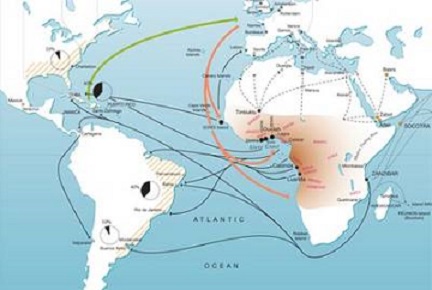
  • FIRST ELEMENT: “Acknowledge the tragedy” is a three dimensional map inscribed on the interior of the memorial. This map highlights the African continent at the centre of the slave trade and illustrates the global scale, complexity and impact of the triangular slave trade.
  • SECOND ELEMENT: “Consider the legacy” features a full-scale human replica carved out of black Zimbabwean granite. This element illustrates the extreme conditions under which millions of African people were transported during the middle passage. The sculpture represents the spirit of the men, women and children who lost their lives in the transatlantic slave trade.
  • THIRD ELEMENT: “Lest we forget” is a triangular reflecting pool where visitors can honour the memory of the millions of souls that were lost.

Source retrieved August 23, 2017 from: http://www.unesco.org/new/en/unesco/events/prizes-and-celebrations/celebrations/international-days/slave-trade-and-its-abolition-2017/the-ark-of-return-memorial/

The Memorial can be visited at:

      United Nations Visitors Plaza
      1st Avenue and 46th Street
      New York, NY 10017

———

VIDEO – The Ark of Return – https://youtu.be/sqeMLnxHmy4

Published on Jul 20, 2015 – United Nations – After winning a design competition sponsored by UNESCO in 2013, Rodney Leon’s masterpiece, the Ark of Return, which is the Permanent Memorial in honour of the Victims of Slavery and the Transatlantic Slave Trade, was officially unveiled in New York on 25th March 2015.

Category: News & Politics

License: Standard YouTube License

This commemoration is presented with an Encore of the blog-commentary from this day last year (2016) which detailed: “A Lesson in History – Haiti 1804“. This day in 1791 – when Haiti’s slave rebellion began – turns out to be a BIG day in that country’s history as well. See the Encore here:

—————————–

Go Lean Commentary – A Lesson in History – Haiti 1804

There are important lessons to learn from history. This commentary considers one particular lesson: the repercussions and consequences from Slavery and the Slave Trade.
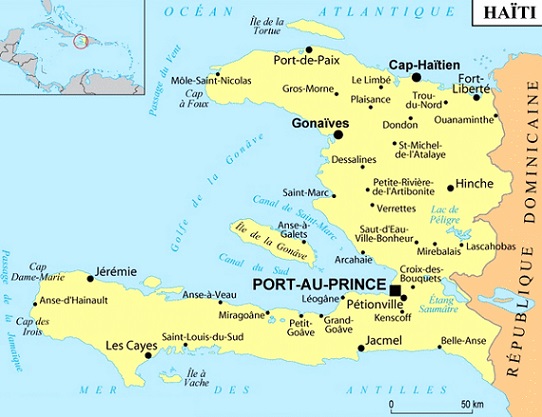
CU Blog - A Lesson in History - Haiti 1804 - Photo 3Today – August 23 – is the official commemoration of the Slave Trade, as declared by UNESCO (United Nations Educational Scientific and Cultural Organization). It measures the date that the 1791 Slave Rebellion in Haiti commenced.

“All of humanity is part of this story, in its transgressions and good deeds” – Irina Bokova, UNESCO Director-General

This is a very important lesson that we glean from this history, no matter our race or homeland. Let’s consider this lesson from the perspective of the Caribbean and for the benefit of Caribbean elevation.

In jurisprudence, there is the concept of felony murder.

… if a perpetrator robs a liquor store and the clerk has a heart-attack and dies, that perpetrator, once caught is tried for felony murder. The definition is the consequence of death in the act of committing a felony. What’s ironic is this charge would also apply if its a co-perpetrator that dies of the heart-attack rather than a victim-clerk.

This justice standard also applies with family discipline. If/when a child is being naughty and accordingly a sibling is unintentionally hurt, the naughty behavior will almost always be punished for the injury, because it was linked to the bad behavior.

A lesson learned from family discipline; and a lesson learned from criminal law. All of these scenarios present consequences to bad, abusive behavior. This sets the stage for better understanding of this important lesson from the international history of the year 1804. After 200 years of the Slave Trade, repercussions and consequences were bound to strike. This happened in the Caribbean country of Haiti. The following catastrophic events transpired in the decade leading up to 1804:

        • 1791 Slave Rebellion – See Appendix A below – A direct spinoff from the French Revolution’s demand for equality
        • Leadership of Louverture – As Governor-General, Toussaint Louverture sought to return Haiti to France without Slavery.
        • Resistance to Slavery – The French planned and attempted to re-instate Slavery
        • Free Republic – The first Black State in the New World
        • 1804 Massacre of the French – See Appendix B below – An illogical solution that killing Whites would prevent future enslavement. 

Make no mistake, the Massacre of 1804 – where 3,000 to 5,000 White men, women and children were killed – was a direct consequence of Slavery and the Slave Trade.

See VIDEO here of a comprehensive TED story:

VIDEO – The Atlantic Slave Trade: What too few textbooks told you – https://youtu.be/3NXC4Q_4JVg

Published on Dec 22, 2014 – Slavery has occurred in many forms throughout the world, but the Atlantic slave trade — which forcibly brought more than 10 million Africans to the Americas — stands out for both its global scale and its lasting legacy. Anthony Hazard discusses the historical, economic and personal impact of this massive historical injustice.
Lesson by Anthony Hazard, animation by NEIGHBOR.
View full lesson: http://ed.ted.com/lessons/the-atlanti…

  • Category – Education
  • License – Standard YouTube License

The review of the historic events is more than just an academic discussion, the book Go Lean…Caribbean aspires to economic principles that dictate that “consequences of choices lie in the future”. The book serves as a roadmap for the introduction and implementation of the technocratic Caribbean Union Trade Federation (CU). Haiti – the poorest country in the Western Hemisphere – is one of the 30 member-states for this Caribbean confederacy.

The people of the Caribbean need to understand the cause of this country’s decline and dysfunction; and by extension, the cause of dysfunction for the rest of the Caribbean. It is tied to the events of 1804. How will this lesson help us today?

        • Reality of the Legacy – The new Black State of Haiti was censored, sanctioned and scorned upon by all European powers (White people). According to a previous blog-commentary, to finally be recognized, France required the new country of Haiti to offset the income that would be lost by French settlers and slave owners; they demanded compensation amounting to 150 million gold francs. After a new deal was struck in 1838, Haiti agreed to pay France 90 million gold francs (the equivalent of €17 billion today). It was not until 1952 that Haiti made the final payment on what became known as its “Independence Debt”. Many analysts posit that the compensation Haiti paid to France throughout the 19th century “strangled development” and hindered the “evolution of the country”. The CU/Go Lean book assessed the near-Failed-State status of Haiti – “it is what it is”; Haiti is as bad as advertised – and then strategized solutions to reboot the economic-security-governing engines of this Republic.  
        • Security assurances must be enabled to complement economics objectives – Slavery was introduced to the New World as an economic empowerment strategy, though it was flawed in its premise of oppressing the human rights of a whole class of humans. The only way to succeed for the centuries that it survived was with a strong military backing – fear of immediate death and destruction. The CU/Go Lean premise is that economics engines and security apparatus must work hand-in-hand. This is weaved throughout the roadmap.
        • Minority Equalization – The lessons of slavery is that race divides societies; and when there is this division, there is always the tendency for one group to put themselves above other groups. Many times the divisions are for majority population groups versus minorities. If the planners of the new Caribbean want to apply lessons from Slavery’s history, we must allow for justice institutions to consider the realities of minorities. The CU security pact must defend against regional threats, including domestic terrorism. This includes gangs and their junior counterparts, bullies. The CU plans for community messaging in the campaign for anti-bullying and mitigations.
        • Reconciliation of issues are not optional, more conflict will emerge otherwise – The issues that caused division in Haiti where not dealt with between 1791 and 1803. A “Great Day of Reckoning” could not be avoided. The Natural Law instinct was to avenge for past atrocities – “an eye for an eye”. The CU/Go Lean roadmap accepts that an “eye for an eye” justice stance would result in a lot of “blindness”; so instead of revenge, the strategy is justice by means of Truth & Reconciliation Commissions – a lesson learned from South Africa – to deal with a lot of the  latent issues from the last Caribbean century (i.e. Cuba, Haiti, Dominican Republic, etc).

The purpose of the Go Lean roadmap is to turn-around the downward trends in the Caribbean today, to reverse course and elevate Caribbean society. The CU, applying lessons from best-practices, has prime directives proclaimed as follows:

        • Optimization of the economic engines in order to grow the regional economy to $800 Billion & create 2.2 million new jobs.
        • Establishment of a security apparatus to protect the resultant economic engines.
        • Improve Caribbean governance to support these engines.

The Go Lean book details a series of assessments, community ethos, strategies, tactics, implementations and advocacies to empower all the factions in the Caribbean region:

Community Ethos – Deferred Gratification Page 21
Community Ethos – Economic Systems Influence Choices & Incentives Page 21
Community Ethos – Consequences of Choices Lie in the Future Page 21
Community Ethos – “Crap” Happens Page 23
Community Ethos – Minority Equalization Page 24
Community Ethos – Ways to Impact the Future Page 26
Community Ethos – Ways to Manage Reconciliations Page 34
Community Ethos – Ways to Improve Sharing Page 35
Community Ethos – Ways to Promote Happiness Page 36
Community Ethos – Ways to Impact the Greater Good Page 37
Strategy – Vision –  Integrate region for Economics & Security Page 45
Strategy – Agents of Change – Globalization Page 57
Tactical – Separation of Powers – Department of Homeland Security Page 75
Tactical – Separation of Powers – Department of Justice Page 77
Implementation – Assemble Existing Super-national Institutions Page 96
Implementation – Ways to Pay for Change Page 101
Implementation – Foreign Policy Initiatives at Start-up Page 102
Implementation – Security Initiatives at Start-up Page 103
Implementation – Ways to Deliver Page 109
Implementation – Ways to Promote Independence Page 120
Planning – Ways to Make the Caribbean Better Page 131
Planning – Ways to Improve Failed-State Indices Page 134
Planning – Lessons from the US Constitution Page 145
Advocacy – Ways to Grow the Economy Page 151
Advocacy – Ways to Create Jobs Page 152
Advocacy – Ways to Better Manage the Social Contract Page 170
Advocacy – Ways to Foster Cooperatives Page 176
Advocacy – Ways to Impact Justice Page 177
Advocacy – Ways to Improve Homeland Security Page 180
Advocacy – Ways to Mitigate Terrorism Page 181
Advocacy – Ways to Protect Human Rights Page 220
Advocacy – Battles in the War on Poverty Page 222
Advocacy – Ways to Re-boot Haiti Page 238

Why bother with all this dark talk about Slavery and the Slave Trade?

UNESCO has provided a clear answer for this question with this declarative statement:

Ignorance or concealment of major historical events constitutes an obstacle to mutual understanding, reconciliation and cooperation among peoples. UNESCO has thus decided to break the silence surrounding the Slave Trade and Slavery that have concerned all continents and caused the great upheavals that have shaped our modern societies.

The subject of Slavery and the Slave Trade relates to economic, security and governing functioning in a society. The repercussions and consequences of 1804 lingers down to this day. There have been a number of blog-commentaries by the Go Lean promoters that have developed related topics. See a sample list here:

https://goleancaribbean.com/blog/?p=8724 Remembering African Nationalist Marcus Garvey: Still Relevant Today
https://goleancaribbean.com/blog/?p=7682 Frederick Douglass – Pioneer & Role Model for Single Cause: Abolition
https://goleancaribbean.com/blog/?p=7221 Street naming for Martin Luther King reveals continued racial animosity
https://goleancaribbean.com/blog/?p=5695 Repenting, Forgiving and Reconciling the Past Bad Deeds
https://goleancaribbean.com/blog/?p=5123 A Lesson in History – Royal Charters: Zimbabwe -vs- South Africa
https://goleancaribbean.com/blog/?p=4971 A Lesson in History – Royal Charters: Truth & Consequence
https://goleancaribbean.com/blog/?p=451 CariCom position on Slavery/Colonization Reparations

This commentary purports that there have been watershed events in history since the emergence of the slave economy. They include:

  • 1804 – Haiti’s Massacre of White Slave Advocates
  • 1861 – US Civil War – A Demonstration of the Resolve of the “Pro” and “Anti” Slavery Camps
  • 1914 – World War I: “Line in the Sand”
  • 1948 – United Nations Declaration of Human Rights

No doubt the Massacre of 1804 was a crisis. It was not wasted; it was used in a good way to escalate the abolition of the Slave Trade in 1807. It was also used in a bad way to justify further oppression of the African Diaspora in the New World.

A pivotal year.

Let’s learn from this year of 1804; and from the repercussions and consequences from that year. In many ways, the world has not moved! Racism and the suppression of the African race lingers … even today … in Europe and in the Americas.

Our goal is to reform and transform the Caribbean, not Europe or America. We hereby urge everyone in the Caribbean – people, institutions and governments – to lean-in to this Go Lean roadmap. It is time now to move. We must get the Caribbean region to a new destination, one where opportunity meets preparation. This is the destination where the Caribbean is a better homeland to live, work and play. 🙂

Download the book Go Lean … Caribbean – now!

—————

Appendix A Title: International Day for the Remembrance of the Slave Trade and its Abolition 2016

— Message from Irina Bokova, Director-General of UNESCO —
CU Blog - A Lesson in History - Haiti 1804 - Photo 1In the night of 22 to 23 August 1791, men and women, torn from Africa and sold into slavery, revolted against the slave system to obtain freedom and independence for Haiti, gained in 1804. The uprising was a turning point in human history, greatly impacting the establishment of universal human rights, for which we are all indebted.

The courage of these men and women has created obligations for us. UNESCO is marking International Day for the Remembrance of the Slave Trade and its Abolition to pay tribute to all those who fought for freedom, and, in their name, to continue teaching about their story and the values therein. The success of this rebellion, led by the slaves themselves, is a deep source of inspiration today for the fight against all forms of servitude, racism, prejudice, racial discrimination and social injustice that are a legacy of slavery.

The history of the slave trade and slavery created a storm of rage, cruelty and bitterness that has not yet abated. It is also a story of courage, freedom and pride in newfound freedom. All of humanity is part of this story, in its transgressions and good deeds. It would be a mistake and a crime to cover it up and forget. Through its project The Slave Route, UNESCO intends to find in this collective memory the strength to build a better world and to show the historical and moral connections that unite different peoples.

In this same frame of mind, the United Nations proclaimed the International Decade for People of African Descent (2015-2024). UNESCO is contributing to it through its educational, cultural and scientific programmes so as to promote the contribution of people of African descent to building modern societies and ensuring dignity and equality for all human beings, without distinction.
Source: Retrieved August 23, 2016 from: http://www.unesco.org/new/en/unesco/events/prizes-and-celebrations/celebrations/international-days/slave-trade-and-its-abolition/
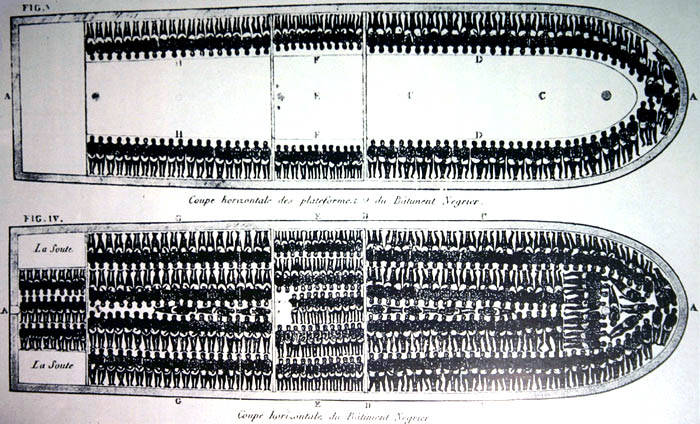
Slave Ship

—————

Appendix B Title: 1804 Haiti Massacre

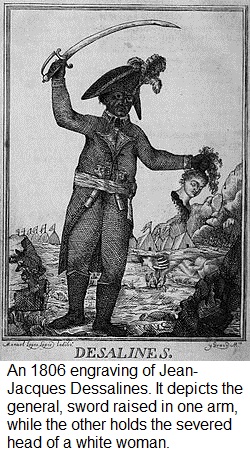
The 1804 Haiti Massacre was a massacre carried out against the remaining white population of native Frenchmen and French Creoles (or Franco-Haitians) in Haiti by Haitian soldiers by the order of Jean-Jacques Dessalines who had decreed that all those suspected of conspiring in the acts of the expelled army should be put to death.[1] Throughout the nineteenth century, these events were well known in the United States where they were referred to as “the horrors of St. Domingo” and particularly polarized Southern public opinion on the question of the abolition of slavery.[2][3]

The massacre, which took place in the entire territory of Haiti, was carried out from early February 1804 until 22 April 1804, and resulted in the deaths of between 3,000 and 5,000 people of all ages and genders.[4]

Squads of soldiers moved from house to house, torturing and killing entire families.[5] Even whites who had been friendly and sympathetic to the black population were imprisoned and later killed.[6] A second wave of massacres targeted white women and children.[6]

Writers Dirk Moses and Dan Stone wrote that it served as a form of revenge by an oppressed group that exacted out against those who had previously dominated them.[7]

Aftermath
By the end of April 1804, some 3,000 to 5,000 people had been killed[23] and the white Haitians were practically eradicated. Only three categories of white people, except foreigners, were selected as exceptions and spared: the Polish soldiers who deserted from the French army; the little group of German colonists invited to Nord-Ouest (North-West), Haiti before the revolution; and a group of medical doctors and professionals.[14] Reportedly, also people with connections to officers in the Haitian army were spared, as well as the women who agreed to marry non-white men.[23]

Dessalines did not try to hide the massacre from the world. In an official proclamation of 8 April 1804, he stated, “We have given these true cannibals war for war, crime for crime, outrage for outrage. Yes, I have saved my country, I have avenged America”.[14] He referred to the massacre as an act of national authority. Dessalines regarded the elimination of the white Haitians an act of political necessity, as they were regarded as a threat to the peace between the black and the colored. It was also regarded as a necessary act of vengeance.[23]

Dessalines was eager to assure that Haiti was not a threat to other nations and that it sought to establish friendly relations also to nations where slavery was still allowed.[26]Dessalines’ secretary Boisrond-Tonnerre stated, “For our declaration of independence, we should have the skin of a white man for parchment, his skull for an inkwell, his blood for ink, and a bayonet for a pen!”[27]

In the 1805 constitution, all citizens were defined as “black”,[28] and white men were banned from owning land.[23][29]

The 1804 massacre had a long-lasting effect on the view of the Haitian Revolution and helped to create a legacy of racial hostility in Haitian society.[28]

At the time of the civil war, a major reason for southern whites, most of whom did not own slaves, to support slave-owners (and ultimately fight for the Confederacy) was fear of a genocide similar to the Haitian Massacre of 1804. This was explicitly referred to in Confederate discourse and propaganda.[30][31]

The torture and massacre of whites in Haiti, normally known at the time as “the horrors of St. Domingo“, was a constant and prominent theme in the discourse of southern political leaders and had influenced American public opinion since the events took place.
Source: Retrieved August 22, 2016 from: https://en.wikipedia.org/wiki/1804_Haiti_massacre

CU Blog - A Lesson in History - Haiti 1804 - Photo 2


Share this post:
, , ,

Lessons from Colorado: Black Ghost Towns – “Booker T. turning in his grave”

Go Lean Commentary

CU Blog - Lessons from Colorado - Black Ghost Towns - Photo 0This precept is straight-forward, natural and moral:

Whatever a man sows, that he will also reap. – The Bible – Galatians 6:7

Or stated otherwise:

If you sow wheat, you will reap wheat … during the harvest.

Barring any extra-natural intervention, a roadmap that is based on this natural law should indeed experience success. And yet, Booker T. Washington – one of the most influential African-American leaders in the history of the country – is probably “turning in his grave”, when considering the actuality of so many Black townships that were formed in his wake.

The book Go Lean…Caribbean makes an important point about the African experience in the US; it is one of deferred gratification, not to expect an immediate return, result and consequence; the reap-what-you-sow mantra had been irrelevant.

There is a Lesson in History that Caribbean communities must consider. One commentator, activist and comedian summarized it as the “home court advantage”:

The world is mourning the passing of this comedian, Dick Gregory at age 84 (October 12, 1932 – August 19, 2017). Among the many accomplishments in his full life was this one declaration – quoted in a previous Go Lean commentary – on November 27, 1963 when President Lyndon Johnson announced at a Joint-Session of Congress that he would continue with the recently assassinated John Kennedy’s Civil Rights agenda:

“Twenty million American Negroes unpacked”.

He thereby acknowledged that until that moment – in the 1960’s – the United States of America was really not home for the minority African-American populations. No, White America had the “home-court advantage”.

This “home-court advantage” is in contrast with the straight-forward, natural and moral precept … mentioned at the outset. That precept was vocalized by Booker T. Washington. He advocated an economic empowerment plan to “prosper where planted”. This was sound, if not for the actuality of White Supremacy in early 20th Century America.

The details of Booker T.’s advocacy was fully detailed in a previous Go Lean blog-commentary:

A Lesson in History – Booker T versus Du Bois

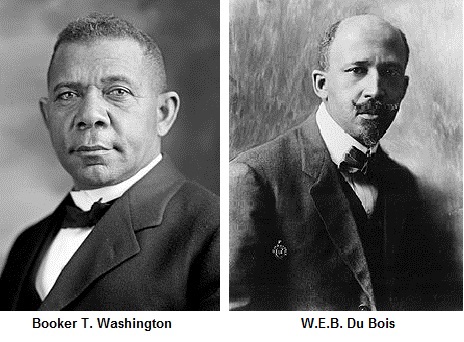
Booker T. Washington and W.E.B. Du Bois … were [both] very important in the history of civil rights for African-Americans. They both wanted the same elevation of their community – [the “Way Forward”] – in American society, but they both had different strategies, tactics and implementations.

CU Blog - A Lesson in History - Booker T versus DuBois - Photo Combined

Washington’s biggest legacy is the Tuskegee University (Tuskegee Institute in his day). Du Bois’s legacy stems from his co-founding the NAACP (National Association for the Advancement of Colored People).

The conclusion … is that the journey for full citizenship for African-Americans took 100 years from the time of the Washington / Du Bois chasm. No matter the detailed approach, 100 years is still 100 years.

From the point of view of the Caribbean and the publishers of Go Lean…Caribbean, we side with both civil rights leaders in aspirations, but lean towards Booker T. Washington in strategies. Underlying to Mr. Washington’s advocacy, was for the Black Man to remain in the South, find a way to reconcile with his White neighbors and to prosper where he was planted.

The point from a Caribbean perspective is “the more things change, the more they remain the same”. We have problems in the Caribbean to contend with, many of which we are failing miserably. But our biggest crisis stems from the fact that so many of our citizens have fled their Caribbean homelands for foreign (including American) shores.

The purpose of this commentary is not to fix America, it is to fix the Caribbean. But the push-and-pull factors are too strong coming from the US. We must lower the glimmering light, the “pull factors”, that so many Caribbean residents perceive of the “Welcome” sign hanging at American ports-of-entry. A consideration of this commentary helps us to understand the DNA of American society: un-reconciled race relations in which Black-and-Brown are still not respected.

The logical conclusion: stay home in the Caribbean and work toward improving the homeland. The US should not be the panacea of Caribbean hopes and dreams.

Booker T. Washington advocated this strategy: prosper where you’re planted.

After 100 years, and despite an African-American President, we must say to Mr. Booker T. Washington: We concur!

The history and legacy of one of the Booker T’s inspired Black townships – Dearfield, Colorado – is commemorated in the Black American West Museum and Heritage Center in Denver, Colorado. This historicity – see encyclopedic details here – is one of the lessons learned from developments in Denver and the State of Colorado. This is the theme of this series of commentaries on lessons that have been learned by Caribbean stakeholders visiting, observing and reporting on this US State of Colorado.

Reference – Dearfield, Colorado

CU Blog - Lessons from Colorado - Black Ghost Towns - Photo 1

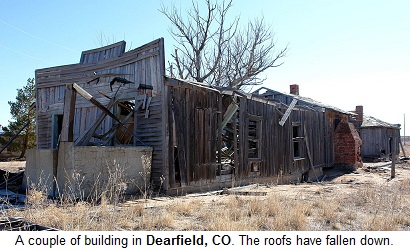
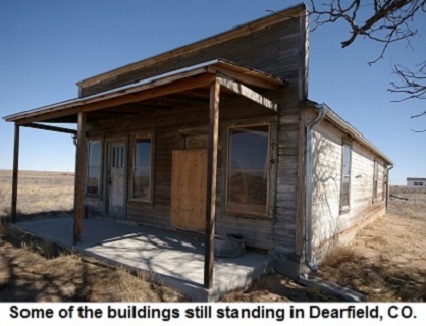
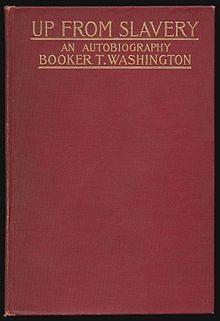
Dearfield is a “ghost town” and a historically black majority settlement in Weld County, Colorado, United States. It is 30 miles (48 km) east of Greeley. The town was formed by Oliver T. Jackson who desired to create a colony for African Americans; [he was inspired by the ideals set forth in Booker T. Washington’s book “Up from Slavery”; see Appendix below]. In 1910, Jackson, a successful businessman from Boulder, filed on the homestead that later became the town and began to advertise for “colonists.” The name Dearfield was suggested by one of the town’s citizens, Dr. J.H.P. Westbrook who was from Denver. The word dear was chosen as the foundation for the town’s name due to the precious value of the land and community to the town’s settlers.[2]

The first settlers of Dearfield had great difficulty farming the surrounding pasture and endured several harsh seasons. However, by 1921, 700 people lived in Dearfield. The town’s net worth was appraised at $1,075,000. After several prosperous years, the Great Depression arrived and the town’s agricultural success significantly declined. Settlers began to leave Dearfield in order to find better opportunities. By 1940, the town population had decreased to 12, only 2% of the town’s 1921 population. Jackson desperately attempted to spur interest in the town, even offering it for sale. However, there was little interest in Dearfield. Jackson died on February 18, 1948.

CU Blog - Lessons from Colorado - Black Ghost Towns - Photo 2

CU Blog - Lessons from Colorado - Black Ghost Towns - Photo 2b

CU Blog - Lessons from Colorado - Black Ghost Towns - Photo 2c

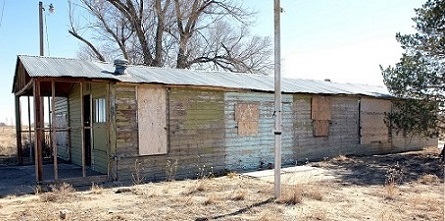
A few deserted buildings remain in Dearfield: a gas station, a diner, and the founder’s home. In 1998, the Black American West Museum in Denver began to make attempts to preserve the town’s site. It is a Colorado Registered Historic Landmark. A 2010 monument next to one of the remaining buildings contains information about the history of the site.

A 2001 state historical marker [3] at U.S. Route 85 mile marker 264 near Evans, Colorado, includes a panel with the history of Dearfield.
Source: Retrieved August 20, 2017 from: https://en.wikipedia.org/wiki/Dearfield,_Colorado

There were other Black townships as well; consider: Allensworth, California, Boley, Oklahoma, and Nicodemus, Kansas.

What befell these towns?

Agents of Change

This is a strong point of contention in the Go Lean book (Page 45). It asserts that the modern world does NOT stand-still; change is ever-present. The Agents of Change that befell the Black townships of that era were mostly:

  • Geo-political – An early round of globalization where focus, investments and jobs  shifted away from the farms to the factories in the cities.
  • Technology – Agricultural science and methods changed; i.e. fertilizers, seeds, etc.
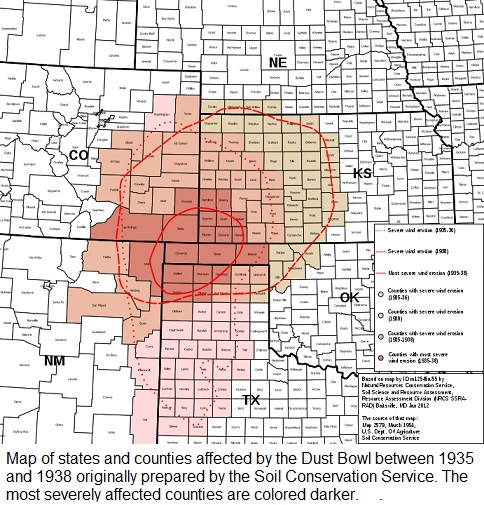
  • Climate Change – In the early 1930’s, a pervasive drought afflicted the High Plains of the Mid-West United States, creating the Dust Bowl; this was exacerbated by bad farming practices, that cause the disaster to linger longer than best-practices dictated.
    CU Blog - Lessons from Colorado - Black Ghost Towns - Photo 3
  • Racism and White Supremacy could have been considered among these Agents of Change, though this societal defect remained unresolved and un-reconciled in American society, no matter the location, North-South or Urban-Rural. Whenever Black townships made progress, malicious acts from the White Majority curtailed any advances. See here:
    VIDEO – How Black Communities Were Destroyed | Sincere History – https://youtu.be/jRZ6o0W_pHI
    Published on Dec 21, 2015 – A hundred years ago, in communities across the U.S., white residents forced thousands of black families to flee their homes. Even a century later, these towns remain almost entirely white. BANISHED tells the story of three of these communities and their black descendants, who return to learn their shocking histories.”
    Reason TV: Urban Renewal – https://www.youtube.com/watch?v=mWGws…
    For more, go to http://sincereignorance.com/2014/08/0…
    Sincere Ignorance Social Media
    Facebook: https://www.facebook.com/sincereignor…
    Twitter: https://twitter.com/sincereignorant

In the Caribbean, we have so much in common and so much in contrast with this community of Dearfield, and the other towns who suffered the same Ghost Town fate. For starters, we have our own Ghost Towns. We also have Agents of Change (Globalization, Technology, Climate Change and the Aging Diaspora) to contend with. So we have to build-up our Caribbean homeland so that our people can “prosper where planted”. But we do have a home-court advantage that Dearfield et al never enjoyed; we have a majority Black population.

This commentary completes the 5-part series on the subject of Lessons from Colorado. There are so many lessons that we have considered from this land-locked US State; good ones and bad ones. In fact, the full list of 5 entries are detailed as follows:

  1. Lessons from Colorado – Common Sense of Eco-Tourism
  2. Lessons from Colorado – Legalized Marijuana: Heavy-lifting!
  3. Lessons from Colorado – How the West Was Won
  4. Lessons from Colorado – Water Management Art and Science
  5. Lessons from Colorado – Black Ghost Towns

This book Go Lean… Caribbean, serves as a roadmap for the introduction and implementation of the Caribbean Union Trade Federation (CU), which represents change for the region. The CU/Go Lean roadmap has 3 prime directives:

  • Optimization of the economic engines in order to grow the regional economy and create 2.2 million new jobs.
  • Establishment of a security apparatus to ensure public safety and protect the resultant economic engines.
  • Improve Caribbean governance – including best practices in town planning and agricultture – to support these engines.

The Go Lean roadmap provides turn-by-turn directions on how to forge this change in the region for a reboot of the Caribbean societal engines: economy, security and governance. This roadmap is presented as a planning tool, pronouncing this point early in the Declaration of Interdependence with these statements: (Pages 12 – 13):

xi. Whereas all men are entitled to the benefits of good governance in a free society, “new guards” must be enacted to dissuade the emergence of incompetence, corruption, nepotism and cronyism at the peril of the people’s best interest. The Federation must guarantee the executions of a social contract between government and the governed.

xvi. Whereas security of our homeland is inextricably linked to prosperity of the homeland, the economic and security interest of the region needs to be aligned under the same governance. Since economic crimes … can imperil the functioning of the wheels of commerce for all the citizenry, the accedence of this Federation must equip the security apparatus with the tools and techniques for predictive and proactive interdictions.

xxiv.  Whereas a free market economy can be induced and spurred for continuous progress, the Federation must install the controls to better manage aspects of the economy: jobs, inflation, savings rate, investments and other economic principles. Thereby attracting direct foreign investment because of the stability and vibrancy of our economy.

The Go Lean book calls for the elevation of Caribbean society, to re-focus, re-boot, and optimize all the societal engines so as to make the 30 member-states of the Caribbean a better place to live, work and play.  Thank you Colorado for these lessons from your past, present and future on how we can better shepherd our society.

Your land is a great place to visit, but it is not our home. But still, you have shown us that nation-building is heavy-lifting and that we need good role models to follow.

There have been other Go Lean blog-commentaries that presented good role models for nation-building, especially in the light of societal defects; see this sample here:

https://goleancaribbean.com/blog/?p=12369 Happy Canada Day 150 to a Pluralistic Democracy
https://goleancaribbean.com/blog/?p=11386 Building Better Cities
https://goleancaribbean.com/blog/?p=10513 Transforming ‘Money’ Countrywide
https://goleancaribbean.com/blog/?p=6563 Lessons from Iceland – Model of Recovery

If we do not learn from history, we are forced to repeat it.

This also applies to other people’s history. There are so many lessons that the Caribbean can learn from other communities: best practices and bad practices. Let’s pay more than the usual attention to these lessons.

We need all the help we can get. The bad old days of Caribbean dysfunction must end. We must work to do better, to be better.

These lands are our home! (Unlike our African-American brothers and sisters of olden times, we have the home-court advantage):

This is my island in the sun
Where my people have toiled since time begun
I may sail on many a sea
Her shores will always be home to me

Song: Island in the Sun by Harry Belafonte

Yes, we can! We can make our homelands better places to live, work and play. 🙂

… and RIP Dick Gregory.

Download the book Go Lean … Caribbean – now!

Sign the petition to lean-in for this roadmap for the Caribbean Union Trade Federation.

———–

Book Review: Up from Slavery 

CU Blog - Lessons from Colorado - Black Ghost Towns - Photo 4Up from Slavery is the 1901 autobiography of Booker T. Washington sharing his personal experience of having to work to rise up from the position of a slave child during the Civil War, to the difficulties and obstacles he overcame to get an education at the new Hampton Institute, to his work establishing vocational schools—most notably the Tuskegee Institute in Alabama—to help black people and other disadvantaged minorities learn useful, marketable skills and work to pull themselves, as a race, up by the bootstraps. He reflects on the generosity of both teachers and philanthropists who helped in educating blacks and Native Americans. He describes his efforts to instill manners, breeding, health and a feeling of dignity to students. His educational philosophy stresses combining academic subjects with learning a trade (something which is reminiscent of the educational theories of John Ruskin). Washington explained that the integration of practical subjects is partly designed to reassure the white community as to the usefulness of educating black people.

This book was first released as a serialized work in 1900 through The Outlook, a Christian newspaper of New York. This work was serialized because this meant that during the writing process, Washington was able to hear critiques and requests from his audience and could more easily adapt his paper to his diverse audience.[1]

Washington was a controversial figure in his own lifetime, and W. E. B. Du Bois, among others, criticized some of his views. The book was, however, a best-seller, and remained the most popular African American autobiography until that of Malcolm X.[2] In 1998, the Modern Librarylisted the book at No. 3 on its list of the 100 best nonfiction books of the 20th century, and in 1999 it was also listed by the conservative Intercollegiate Review as one of the “50 Best Books of the Twentieth Century”.[3]

Plot summary

Up from Slavery chronicles more than forty years of Washington’s life: from slave to schoolmaster to the face of southern race relations. In this text, Washington climbs the social ladder through hard, manual labor, a decent education, and relationships with great people. Throughout the text, he stresses the importance of education for the black population as a reasonable tactic to ease race relations in the South (particularly in the context of Reconstruction).

Source: Retrieved August 21, 2017 from: https://en.wikipedia.org/wiki/Up_from_Slavery

Share this post:
, , , , ,
[Top]

Lessons from Colorado: Water Management Arts & Sciences

Go Lean Commentary

CU Blog - Lessons from Colorado - Water Management Art and Science - Photo 4Water is vital for the sustenance of life. So if you’re surrounded by water, then the assumption would be that you have an abundance of life?

Assumption?! The reality in the Caribbean … is just the opposite.

While it should be so easy – 27 of the 30 member-states are islands and the other 3 coastal states are embedded with rainforests – the actuality is the water management in the Caribbean is deficient and dysfunctional.

Say it ain’t so!

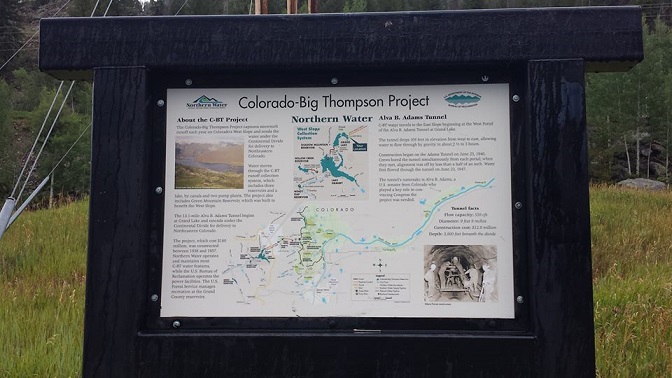
There are lessons to be learned by visiting, observing and reporting on other communities that do water management better. This commentary reflects that activity; some Caribbean stakeholders explored the US State of Colorado and discovered that we have so much to learn about how to facilitate the infrastructure of an optimized society. We have seen how water management is an art and a science. (All non-encyclopedic photos in this commentary were snapped in Colorado by Bahamian student Camille Lorraine).

CU Blog - Lessons from Colorado - Water Management Art and Science - Photo 1a

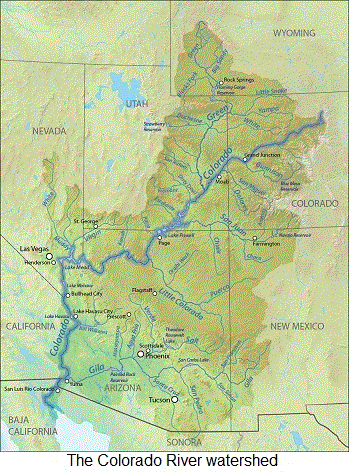
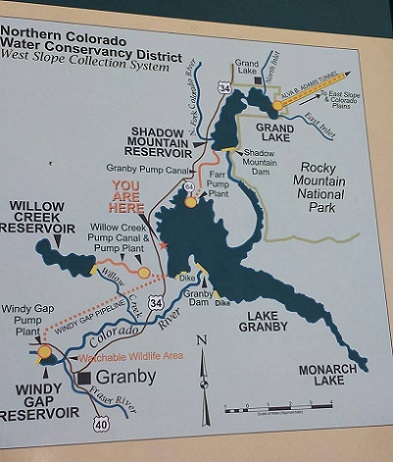
As reported previously, the Caribbean has so much in common and so much in contrast with Colorado. One contrast to consider is how Colorado’s lakes, rivers and waterways are structured to sustain the lives and systems of commerce of that State and … 6 other States plus 2 States in the foreign country of Mexico.

CU Blog - Lessons from Colorado - Water Management Art and Science - Photo 7

The 2013 book Go Lean…Caribbean visited Colorado’s water management. It detailed the strategies, tactics and implementation of the Colorado River Interstate Compact (an agreement between two or more states). This is reported on Page 278 of the book:

The Colorado River Compact is a 1922 agreement among seven US states (upper division: Colorado, New Mexico, Utah and Wyoming; lower division: (Nevada, Arizona and California) in the basin of the Colorado River in the American Southwest governing the allocation of the water rights to the river’s water among the parties of the interstate compact. The agreement was signed at a meeting at Bishop’s Lodge, near Santa Fe, New Mexico, by representatives of the seven states the Colorado river and its tributaries pass through on the way to Mexico.

The compact requires the UpperBasin states not to deplete the flow of the river below 7,500,000 acre feet during any period of ten consecutive years. Based on rainfall patterns observed in the years before the treaty’s signing in 1922, the amount specified in the compact was assumed to allow a roughly equal division of water between the two regions. The states within each basin were required to divide their 7,500,000-acre foot per year share allotment among themselves. In addition to this, 1,500,000-acre-foot per year of Colorado River water is allocated to Mexico, pursuant to the treaty relating to the use of waters of the Colorado and Tijuana rivers and of the Rio Grande, signed February 3, 1944, and its supplementary protocol signed November 14, 1944.



The compact enabled the widespread irrigation of the Southwest, as well as the subsequent development of state and federal water works projects under the United States Bureau of Reclamation. Such projects included the Hoover Dam, Lake Mead and Lake Powell, the 1st and 2nd largest man-made reservoirs in the US.

CU Blog - Lessons from Colorado - Water Management Art and Science - Photo 3

The headwaters of the Colorado River originate … in Colorado. This is the source.

CU Blog - Lessons from Colorado - Water Management Art and Science - Photo 6

CU Blog - Lessons from Colorado - Water Management Art and Science - Photo 5

CU Blog - Lessons from Colorado - Water Management Art and Science - Photo 2

CU Blog - Lessons from Colorado - Water Management Art and Science - Photo 8

This commentary continues the 5-part series – this is 4 of 5 – on the subject of Lessons from Colorado. There are so many lessons that we must consider from this land-locked US State; good ones and bad ones. In fact, the full list of 5 entries are detailed as follows:

  1. Lessons from Colorado – Common Sense of Eco-Tourism
  2. Lessons from Colorado – Legalized Marijuana – Heavy-lifting!
  3. Lessons from Colorado – How the West Was Won
  4. Lessons from Colorado – Water Management Art & Science
  5. Lessons from Colorado – Black Ghost Towns – “Booker T. turning in his grave”

The book Go Lean…Caribbean calls for the elevation of Caribbean society, to re-focus, re-boot, and optimize all the societal engines (economics, security and governance) so as to make the Caribbean a better place to live, work and play.  Water is connected to each of these facets of society. The purpose of Water Management is to ensure that the supply of fresh, clean water is steady and inexpensive.

This is an art and a science.

There is even a designating color that is used to brand this science: Blue. This point was identified and qualified in a previous Go Lean commentary, entitled “Blue is the new Green“. There, it stated:

First we said to “Go Green!” Now we are saying to “Go Blue”, because Blue is the new Green. While ‘Green’ is motivated for all-things-environmental, ‘Blue’ refers specifically to Water Conservation.

There is money in Green; there is money in Blue too! The references to Blue waters apply equally to fresh water and seawater. When we consider all the waterscapes in the Caribbean, (1,063,000 square-miles of the Caribbean seas and thousands of islands in the archipelago – The Bahamas has over 700 alone), we realize how much opportunity exists.

There is the chance to get lucky; where luck is defined as the intersection of preparation and opportunity.

Considering all the opportunities, how can the Caribbean prepare its economic engines to harvest all the fruitage from these Blue market conditions? This is the theme of the book Go Lean…Caribbean, that the world is struggling to contend with monumental changes related to technology, globalization and most importantly Climate Change.

Early in the book, the pressing need to be aware of climate change is pronounced in the Declaration of Interdependence (Page 11), with these words, (the first of many “causes of complaints”):

    i. Whereas the earth’s climate has undeniably changed resulting in more severe tropical weather storms, it is necessary to prepare to insure the safety and security of life, property and systems of commerce in our geographical region. As nature recognizes no borders in the target of its destruction, we also must set aside border considerations in the preparation and response to these weather challenges.

The Caribbean needs Blue Technology solutions to sustain our own lives, liberties and systems of commerce. But the Go Lean book posits that we cannot just consume, we must also create, produce, and foster. So we must foster industrial solutions for the rest of the world. This foregoing [embedded] magazine article summary highlighted the progression in this new Blue Technology industry-space in these areas:

  • Sourcing
  • Treating
  • Storing
  • Conserving
  • Keeping it Clean

So a study of Colorado allows us, in the Caribbean, the opportunity to see Blue Technology solutions at work, in motion and at success in sustaining millions of lives and their dependent systems of commerce. A specific lesson from Colorado is that the responsible parties for the mastery of this “art and science” in Colorado is not Colorado, but rather the US Federal government agency referred to as the United States Bureau of Reclamation (USBR). This agency …

… oversees water resource management, specifically as it applies to the oversight and operation of the diversion, delivery, and storage projects that it has built throughout the western United States for irrigation, water supply, and attendant hydroelectric power generation. Currently the USBR is the largest wholesaler of water in the country, bringing water to more than 31 million people, and providing one in five Western farmers with irrigation water for 10 million acres of farmland, which produce 60% of the nation’s vegetables and 25% of its fruits and nuts. The USBR is also the second largest producer of hydroelectric power in the western United States.[4] – Source: Wikipedia.

CU Blog - Lessons from Colorado - Water Management Art and Science - Photo 1b

The book Go Lean…Caribbean – available to download for free – serves as a roadmap for the introduction and implementation of the technocratic Caribbean Union Trade Federation (CU), for the elevation of Caribbean society – for all member-states. The CU would serve the Caribbean role of the USBR, the “new guards” of Caribbean Common Pool Resources; it would be staffed with water management professionals and scientists with the authority – vested by the CU treaty – to execute a master plan that facilitates water efficiencies in the region.

There are lives involved, as water is essential for life. There are also jobs involved, and societal efficiency. The lack of efficiency in the Caribbean status quo –  “push” and “pull” factors – is what is responsible for so much abandonment. (In fact, it has been reported that the professional classes of people in the region have abandoned their communities at a rate of 70 percent). So this CU/Go Lean roadmap seeks to reform and transform this bad trending; it has these 3 prime directives:

  • Optimization of the economic engines in order to grow the regional economy to $800 Billion and create 2.2 million new jobs.
  • Establishment of a security apparatus to ensure public safety and protect the resultant economic engines.
  • Improve Caribbean governance to support these engines, including a separation-of-powers between the member-states and CU federal agencies.

The book stresses that reforming and transforming the Caribbean societal engines must be a regional pursuit, at a federal level; (CU Federation = federal). This was an early motivation for the roadmap, as pronounced in the opening Declaration of Interdependence (Pages 12 – 13):

iii. Whereas the natural formation of the landmass for our society is that of an archipelago of islands, inherent to this nature is the limitation of terrain and the natural resources there in. We must therefore provide “new guards” and protections to ensure the efficient and effective management of these resources.

v. Whereas the natural formation of our landmass and coastlines entail a large portion of waterscapes, the reality of management of our interior calls for extended oversight of the waterways between the islands. The internationally accepted 12-mile limits for national borders must be extended by International Tribunals to encompass the areas in between islands. The individual states must maintain their 12-mile borders while the sovereignty of this expanded area, the Exclusive Economic Zone, must be vested in the accedence of this Federation.

vi. Whereas the finite nature of the landmass of our lands limits the populations and markets of commerce, by extending the bonds of brotherhood to our geographic neighbors allows for extended opportunities and better execution of the kinetics of our economies through trade. This regional focus must foster and promote diverse economic stimuli.

xi. Whereas all men are entitled to the benefits of good governance in a free society, “new guards” must be enacted to dissuade the emergence of incompetence, corruption, nepotism and cronyism at the peril of the people’s best interest. The Federation must guarantee the executions of a social contract between government and the governed.

xvi. Whereas security of our homeland is inextricably linked to prosperity of the homeland, the economic and security interest of the region needs to be aligned under the same governance. Since economic crimes … can imperil the functioning of the wheels of commerce for all the citizenry, the accedence of this Federation must equip the security apparatus with the tools and techniques for predictive and proactive interdictions.

xxiv. Whereas a free market economy can be induced and spurred for continuous progress, the Federation must install the controls to better manage aspects of the economy: jobs, inflation, savings rate, investments and other economic principles. Thereby attracting direct foreign investment because of the stability and vibrancy of our economy.

The Go Lean book provides 370-pages of turn-by-turn instructions on “how” to adopt new community ethos, plus the strategies, tactics, implementations and advocacies to execute so as to reboot, reform and transform the societal engines of Caribbean society.

Water management is not just vital for basic needs – quenching thirsts – it is also needed to advance the economy. Resorts (tourism) and factories alike, all depend on good water management. Imagine:

As previously detailed, water resources are not cheap. It is only free when it rains. The effort to source, treat, store, conserve and keep water clean takes a big investment on the part of community and governmental institutions.

Thank you Colorado – and your management of this principal river of the Southwestern United States and northern Mexico (the other one is the Rio Grande). This 1,450-mile-long river is the hardest working river in North America, as it sustains an arid watershed – (the western US states are considered desert wilderness) – that encompasses parts of 7 US States and 2 Mexican States (Sonora and Baja California). This great river gets its start in the central Rocky Mountains, in the heart of Colorado. See this VIDEO here:

VIDEO – Colorado River – I Am Red – https://youtu.be/mqYcC7jEe44

Published on Apr 16, 2013 – The Colorado River is a lifeline in the desert, its water sustaining tens of millions of people in seven states, as well as endangered fish and wildlife. However, demand on the river’s water now exceeds its supply, leaving the river so over-tapped that it no longer flows to the sea. (Video by Pete McBride. Flights by Lighthawk, Ecoflight.)

Learn more and be part of the solution: www.AmericanRivers.org/Colorado

Colorado is showing us in the Caribbean how hard work pays off; (all photos in this commentary here are from Colorado, and not the Caribbean, despite any leanings). We now know where we can find “best practices” to model effective and efficient water management. The successful application of this lesson from Colorado can help us to make our Caribbean homelands and waterways better places to live, work and play. 🙂

Download the free e-Book of Go Lean … Caribbean – now!

Sign the petition to lean-in for this roadmap for the Caribbean Union Trade Federation.

Share this post:
, ,
[Top]

Lessons from Colorado: How the West Was Won

Go Lean Commentary

CU Blog - Lesson from Colorado - How the West Was Won - Photo 0

America – a large country that spans from sea to shiny sea –  is the richest, most powerful country in the world. That is today; but this was not always the case. In fact, when the country started in 1776, it only featured 13 colonies (States today) on the mid-coast of the Atlantic Ocean, from Georgia up to New Hampshire. There were no territories on the coast of the Gulf of Mexico nor near the western extremities of the Pacific Ocean.

Question: How and why did the expansion happen from East to West?

Answer: Its complicated!

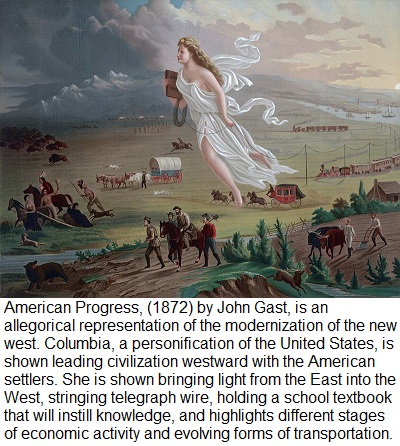
It was a philosophy embedded in all societal engines of early America (economics, security and governance), branded Manifest Destiny – see the encyclopedic definition in the Appendix below.

The book Go Lean…Caribbean makes an important point about US history and its quest to expand across the North American continent. The book asserts that there are lessons for the Caribbean to glean and learn about nation-building. This is how the subject is addressed in the book: How the West Was Won. This declarative statement is presented as a question and an answer (Page 142) under this title:

10 Lessons from the American West

The Bottom Line on How the West Was Won

The concept of Cowboys (and Indians), riding off in the sunset is embedded into every American child’s DNA. The Old West has been a constant feature and inspiration in American literature, film and TV shows; the concept is enamored by readers and movie-goers around the world. In 1997 the film: How the West Was Won (1962) was selected for preservation in the US National Film Registry by the Library of Congress as being “culturally, historically, or aesthetically significant”. In addition to the film, this title is featured in a number of American media productions:

  • How the West Was Won (TV series), a 1970s television series loosely based on the film
  • How the West Was Won (Bing Crosby album) (1959)
  • How the West Was Won (Led Zeppelin album), a 2003 live album featuring the band live in 1972
  • How the West Was Won, a 2002 album by rapper Luni Coleone
  • How the West Was Won, a song by Laibach on the 1987 album Opus Dei

Despite the projected image, the America of Old was always a pluralistic democracy; there were Africans (slaves and their descendants), Native Americans, Asians (Chinese, Japanese, Pacific Islanders, etc.) and Eastern Europeans. Those that worked so hard to build America were men, women and children of many races and ethnicities. So the “concept of Cowboys riding off in the sunset [that] is embedded into every American child’s DNA” was inaccurately portrayed as only those of White Anglo-Saxon Protestant (WASP) persuasion.

Question: How the West Was Won?

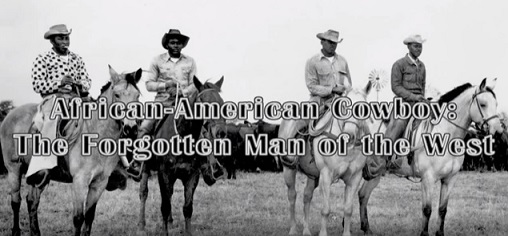
Answer: With the contributions of many different people. See VIDEO here:

VIDEO: African-American Cowboy – PART 1https://youtu.be/JAr2UzErToA

Published on Jun 9, 2010 – Documentary: “African-American Cowboy: The Forgotten Man of the West”. Had to break it into two parts due to YouTube requirements at the time. You can find the complete 14-minute documentary at https://www.youtube.com/watch?v=5jwlM….

PART II: https://youtu.be/kvgh7Pr8s-E

  • Category: Education
  • License: Standard YouTube License

Yes, there were Black Cowboys … the image and brand of those who “Won the West” needs to be pluralistic, not just WASP.

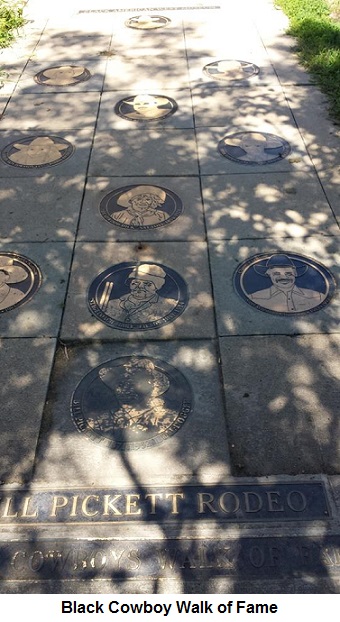
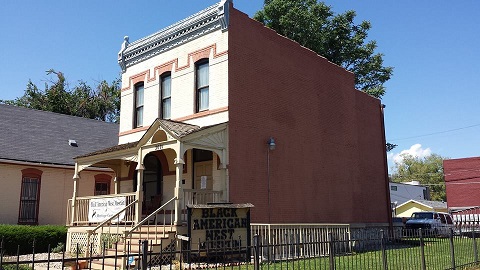
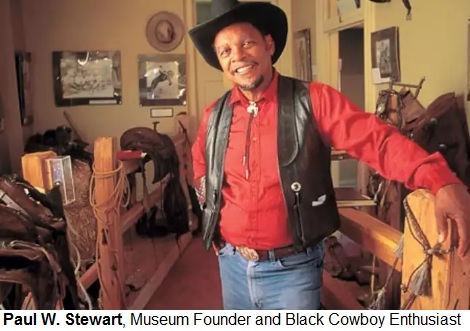
… this is the charter of the Black American West Museum and Heritage Center in Denver, Colorado. This site “preserves the history and culture of those African American men and women who helped settle and develop the American West. Located in the former home of Dr. Justina Ford, the first Black woman doctor in Denver. Exhibits on African American cowboys including Bill Pickett“.

CU Blog - Lesson from Colorado - How the West Was Won - Photo 3a

CU Blog - Lesson from Colorado - How the West Was Won - Photo 3b

African-American cowboys made up approximately 25% of the 35,000 cowboys in the Western Frontier during the 1870s and 1880s.

This is truly How the West Was Won.

This museum presents a unique collection of artifacts and profiles of people, things and equipment of Black Cowboys and their stories of contributions to the great American Western experience.

The emphasis of the museum’s collection is the contribution of black cowboys, ranchers, farmers, miners and buffalo soldiers on the development of the West . The artifacts are available to scholars with advance reservation.

CU Blog - Lesson from Colorado - How the West Was Won - Photo 1a

CU Blog - Lesson from Colorado - How the West Was Won - Photo 2

CU Blog - Lesson from Colorado - How the West Was Won - Photo 1b

Field Trips and Guided Tours
The museum offers students an educational and entertaining experience through guided tours or a self-directed outing. The museum tour meets the Colorado Model Content Standards and can be customized to your students’ educational needs.  – Source: BAWMHC.org

There are many lessons that Caribbean stakeholders can learn from developments in Denver and the State of Colorado. This is the theme of this series of commentaries on lessons that have been learned by Caribbean stakeholders visiting, observing and reporting on the US State of Colorado. (All non-encyclopedic photos in this commentary were snapped in Colorado by Bahamian student Camille Lorraine).

We have so much in common with this community. We have also built our Caribbean homelands with the blood, sweat and tears of many different contributors. In particular, Caribbean member-states have demographic compositions of Africans (29 of 30 territories have this majority), European, Amerindians and Asians (Indian, Chinese, etc.).

This commentary continues the 5-part series – this is entry 3 of 5 – on the subject of Lessons from Colorado. There are so many lessons that we must consider from this land-locked US State; good ones and bad ones. In fact, the full list of 5 entries are detailed as follows:

  1. Lessons from Colorado – Common Sense of Eco-Tourism
  2. Lessons from Colorado – Legalized Marijuana: Heavy-lifting!
  3. Lessons from Colorado – How the West Was Won
  4. Lessons from Colorado – Water Management Art & Science
  5. Lessons from Colorado – Black Ghost Towns – “Booker T. turning in his grave”

The book Go Lean…Caribbean calls for the elevation of Caribbean society, to re-focus, re-boot, and optimize all the societal engines so as to make the 30 member-states of the Caribbean a better place to live, work and play.  Thank you Colorado for this lesson from the past on how museums can play a vital role in disseminating truth and fostering reconciliation; these are necessary ingredients for nation-building of a multicultural society.

In a previous blog-commentary commemorating the opening of the new museum in Washington, DC – National Museum of African American History and Culture – it was highlighted how America featured some dark episodes in its history, but that the historic sacrifices of the African sons and daughters contributed greatly to the great society that America became:

This discussion of museums and reconciliations align with the objections of the book Go Lean…Caribbean, in that it serves as a roadmap for the introduction and implementation of the technocratic Caribbean Union Trade Federation (CU). The purpose of this roadmap is to elevate the economy in our Caribbean region, while harnessing the individual genius abilities – as in the arts. This Go Lean/CU roadmap employs strategies, tactics and implementations to impact its prime directives; identified with the following 3 statements:

  • Optimization of the economic engines in order to grow the regional economy to $800 Billion & create 2.2 million new jobs.
  • Establishment of a security apparatus to protect the resultant economic engines.
  • Improve Caribbean governance to support these engines.

While the Go Lean book is primarily an economic elevation roadmap for the Caribbean, it also details the eco-systems surrounding the business of the arts; there is consideration for jobs and entrepreneurship. The book declares (Page 230) that “art can be a business enabler, [while also serving as an] expression for civic pride and national identity”.

There is even a plan to foster museums that commemorate Caribbean history and culture in a new Caribbean Capital District. (The roadmap calls for a neutral location, among the 30 member-states, to host leaders of the Federation’s Executive, Legislative and Judicial branches of government). See the quotation here from the book (Page 230):

      CU Administered Museums
      Modeled after the Smithsonian, the CU “mother” (first-tier) museums will be placed in the Capital District. There will also be “child” museums scattered through out the regions with touring exhibitions.

The Go Lean book identified this vision of reconciliations-museums-art early in the book (Page 10 – 14), as implied in the following pronouncements in the opening Declaration of Interdependence:

      Preamble: As the history of our region and the oppression, suppression and repression of its indigenous people is duly documented, there is no one alive who can be held accountable for the prior actions, and so we must put aside the shackles of systems of repression to instead formulate efficient and effective systems to steer our own destiny.
      As the colonial history of our region was initiated to create economic expansion opportunities for our previous imperial masters, the structures of government instituted in their wake have not fostered the best systems for prosperity of the indigenous people.
      xxxii. Whereas the cultural arts and music of the region are germane  to the quality of Caribbean life, and the international appreciation of Caribbean life, the Federation must implement the support systems to teach, encourage, incentivize, monetize and promote the related industries for arts and music in domestic and foreign markets. These endeavors will make the Caribbean a better place to live, work and play.

In addition, there were other commentaries that also addressed the wisdom of museums-monuments and the business of the arts; see this sample here:

https://goleancaribbean.com/blog/?p=9897 Wynward’s Art Walk – The Energy of the Arts
https://goleancaribbean.com/blog/?p=4145 The African Monument in Dakar, Senegal, Africa
https://goleancaribbean.com/blog/?p=3292 Art Basel Miami – a Testament to the Spread of Art & Culture

There are lessons that the Caribbean today can learn from Colorado’s past. There are economic benefits – imagine art and monument tourism – to many stakeholders; the Go Lean roadmap calls for a federal museum in the CU‘s Capital District.

Most importantly, there are benefits from reconciling the past with the present; to tell the truth of How the West Was Won:

The Good Old Days weren’t always good and tomorrow isn’t as bad as it seems – Song Lyrics: “Keeping the Faith” by Billie Joel.

Now is the time for all of the Caribbean, the people (Cowboys & Indians) and societal leaders (business, security and government), to lean-in to this Go Lean roadmap. Caribbean causes can also be won! We can all work to make our homelands better places to live, work and play. 🙂

Download the book Go Lean … Caribbean – now!

Sign the petition to lean-in for this roadmap for the Caribbean Union Trade Federation.

————

Appendix – Manifest Destiny

CU Blog - Lesson from Colorado - How the West Was Won - Photo 4

In the 19th century, manifest destiny was a widely held belief in the United States that its settlers were destined to expand across North America. There are three basic themes to manifest destiny:

  • The special virtues of the American people and their institutions
  • The mission of the United States to redeem and remake the west in the image of agrarian America
  • An irresistible destiny to accomplish this essential duty[3]

Historian Frederick Merk says this concept was born out of “a sense of mission to redeem the Old World by high example … generated by the potentialities of a new earth for building a new heaven”.[4]

Historians have emphasized that “manifest destiny” was a contested concept—pre-civil war Democrats endorsed the idea but many prominent Americans (such as Abraham Lincoln, Ulysses S. Grant, and most Whigs) rejected it. Historian Daniel Walker Howe writes, “American imperialism did not represent an American consensus; it provoked bitter dissent within the national polity … Whigs saw America’s moral mission as one of democratic example rather than one of conquest.”[5]

Newspaper editor John O’Sullivan is generally credited with coining the term manifest destiny in 1845 to describe the essence of this mindset, which was a rhetorical tone;[6] however, the unsigned editorial titled “Annexation” in which it first appeared was arguably written by journalist and annexation advocate Jane Cazneau.[7] The term was used by Democrats in the 1840s to justify the war with Mexico and it was also used to divide half of Oregon with the United Kingdom. But manifest destiny always limped along because of its internal limitations and the issue of slavery, says Merk. It never became a national priority. By 1843 John Quincy Adams, originally a major supporter of the concept underlying manifest destiny, had changed his mind and repudiated expansionism because it meant the expansion of slavery in Texas.[8]

Merk concluded:

From the outset Manifest Destiny—vast in program, in its sense of continentalism—was slight in support. It lacked national, sectional, or party following commensurate with its magnitude. The reason was it did not reflect the national spirit. The thesis that it embodied nationalism, found in much historical writing, is backed by little real supporting evidence.[9]

The day before finalizing the wording of the Declaration of Independence, John Adams wrote to his wife, Abigail “I am apt to believe that [Independence Day] will be celebrated, by succeeding Generations, as the great anniversary Festival. It ought to be commemorated, as the Day of Deliverance by solemn Acts of Devotion to God Almighty. It ought to be solemnized with Pomp and Parade, with shews, Games, Sports, Guns, Bells, Bonfires and Illuminations from one End of this Continent to the other from this Time forward forever more.”[10]

Source: Retrieved August 19, 2017 from: https://en.wikipedia.org/wiki/Manifest_destiny

Share this post:
, ,
[Top]

Lessons from Colorado: Legalized Marijuana – Heavy-lifting!

Go Lean Commentary

“Rocky Mountain High … Colorado” – Song verbiage from John Denver’s Rocky Mountain High – see Appendix A

CU Blog - Lesson from Colorado - Legalized Marijuana - Photo 1

This is a familiar refrain from a familiar song; a folk rock song written by John Denver and Mike Taylor about Colorado, and is one of the two official state songs of Colorado;[1] recorded by Denver in 1972, it went to #9 on the US Hot 100 in 1973; (source: Wikipedia). The song also made #3 on the Easy Listening chart …

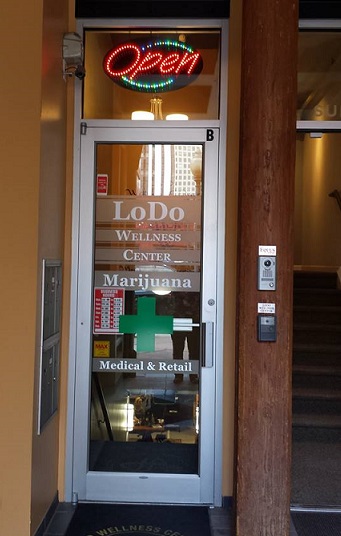
But in 2017, the phrase “Rocky Mountain High” has a total different meaning, because the State of Colorado has since legalized recreational use of marijuana.

This is not an easy topic; this is heavy …

There are so many lessons we can learn from the debate, legalization, implementation, regulation and societal repercussions of this product in this State. All in all, it is heavy-lifting. This is the theme of this series of commentaries of lessons that have been learned by Caribbean stakeholders visiting, observing and reporting on the US State of Colorado. (All non-encyclopedic photos in this commentary were snapped in Colorado by Bahamian student Camille Lorraine).

We have so much in common and so much in contrast. One commonality to consider is how Colorado is now associated with marijuana consumption. See Appendix B VIDEO below.

“Welcome to our club”! This has always been the image of Caribbean people and culture – think: Rasta Man smoking Ganja; (marijuana is called ganja in Sanskrit and other modern Indo-Aryan languages.[173]).

Don’t like the imagery, reputation or sullied practice? Then welcome to societal development 2017; welcome to heavy-lifting.

This commentary continues the 5-part series on the subject of Lessons from Colorado. There are so many lessons that we must consider from this land-locked US State; good ones and bad ones. In fact, the full list of 5 entries are detailed as follows:

  1. Lessons from Colorado – Common Sense of Eco-Tourism
  2. Lessons from Colorado – Legalized Marijuana: Heavy-lifting!
  3. Lessons from Colorado – How the West Was Won
  4. Lessons from Colorado – Water Management Art & Science
  5. Lessons from Colorado – Black Ghost Towns – “Booker T. turning in his grave”

The book Go Lean…Caribbean calls for the elevation of Caribbean society, to re-focus, re-boot, and optimize all the societal engines so as to make the Caribbean a better place to live, work and play.  The movement behind this book wants to do the heavy-lifting to reform and transform Caribbean society. So we must tackle these “heavy” issues that others may just want to brush aside. As goes Colorado, soon the rest of the US – 4 states currently support recreational use of marijuana; many others support medical marijuana; in total 28 states will have some kind of legalization on the books).

“Marijuana legalization is now the norm for 40 percent of the American population.”

It is only a matter of time – considering American tourism, trade and Caribbean students matriculating in the US – when this debate comes to our door in the Caribbean.

Oops, too late!

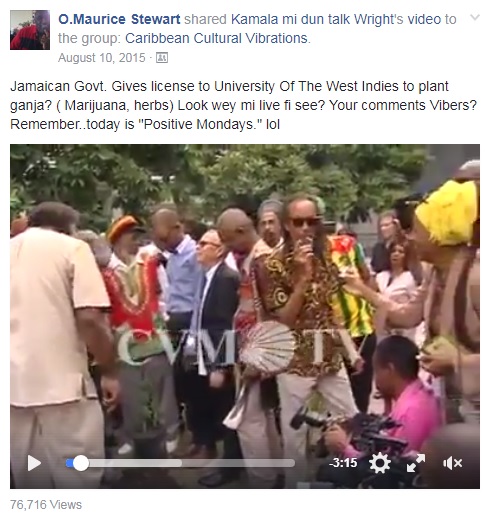
According to social media sites, there is already an outcry for regional leaders to consider some form of legalization or decriminalization in the Caribbean.

CU Blog - Lesson from Colorado - Legalized Marijuana - Photo 0

This issue has previously been addressed by planners of a new Caribbean stewardship – see here:

https://goleancaribbean.com/blog/?p=9646 ‘Time to Go’ – American Vices, i.e. Marijuana. Don’t Follow!
https://goleancaribbean.com/blog/?p=1386 Puff Peace – The Debate  for Marijuana in Jamaica

The book Go Lean…Caribbean – available to download for free – serves as a roadmap for the introduction and implementation of the technocratic Caribbean Union Trade Federation (CU), for the elevation of Caribbean society – for all member-states. This CU/Go Lean roadmap has these 3 prime directives:

  • Optimization of the economic engines in order to grow the regional economy to $800 Billion and create 2.2 million new jobs.
  • Establishment of a security apparatus to ensure public safety and protect the resultant economic engines.
  • Improve Caribbean governance to support these engines, including a separation-of-powers between the member-states and CU federal agencies.

The book stresses that reforming and transforming the Caribbean societal engines must be a regional pursuit. This was an early motivation for the roadmap, as pronounced in the opening Declaration of Interdependence (Pages 12 – 13):

xi. Whereas all men are entitled to the benefits of good governance in a free society, “new guards” must be enacted to dissuade the emergence of incompetence, corruption, nepotism and cronyism at the peril of the people’s best interest. The Federation must guarantee the executions of a social contract between government and the governed.

xvi. Whereas security of our homeland is inextricably linked to prosperity of the homeland, the economic and security interest of the region needs to be aligned under the same governance. Since economic crimes … can imperil the functioning of the wheels of commerce for all the citizenry, the accedence of this Federation must equip the security apparatus with the tools and techniques for predictive and proactive interdictions.

xxiv. Whereas a free market economy can be induced and spurred for continuous progress, the Federation must install the controls to better manage aspects of the economy: jobs, inflation, savings rate, investments and other economic principles. Thereby attracting direct foreign investment because of the stability and vibrancy of our economy.

The Go Lean book provides 370-pages of turn-by-turn instructions on “how” to adopt new community ethos, plus the strategies, tactics, implementations and advocacies to execute so as to reboot, reform and transform the societal engines of Caribbean society. According to that previous blog-commentary:

There are moral, religious, legal and psychological (treatment) issues associated with this topic; and there is history – good and bad. Any jurisdiction decriminalizing the use of marijuana has to contend with the previous messaging to the community of: “Just say no to drugs”.

The [Go Lean] book asserts that before the strategies, tactics, implementations and advocacies of a roadmap to elevate a society can be deployed, the affected society must first embrace a progressive community ethos. The book defines this “community ethos” as the fundamental character or spirit of a culture; the underlying sentiment that informs the beliefs, customs, or practices of society; dominant assumptions of a people or period. Think of the derivative term: “work ethic”.

Marijuana is a mood-altering drug; it has negative effects, one being preponderance for apathy, to tune out of any active engagement. In the US, even in the states where marijuana is legal, most firms/governments still screen staffers (new hires and veterans) and ban consumption of the drug. The reason is simple: Apathy does not make for industriousness. So this issue/drug presents a conundrum for the CU. The mission to grow the economy, promote industriousness, foster new jobs and new industries is pronounced early in the roadmap, detailed in the Declaration of Interdependence (Page 14) with this statement:

    xxvi. Whereas the Caribbean region must have new jobs to empower the engines of the economy and create the income sources for prosperity, and encourage the next generation to forge their dreams right at home, the Federation must therefore foster the development of new industries … In addition, the Federation must invigorate the enterprises related to existing industries … impacting the region with more jobs.

So to all you Caribbean stakeholders clamoring to follow Colorado’s lead … into the heavy-lifting of legalized marijuana use, we ask this one question:

Are you ready for this?

CU Blog - Lesson from Colorado - Legalized Marijuana - Photo 2

CU Blog - Lesson from Colorado - Legalized Marijuana - Photo 3

Thank you Colorado, for your fine role model. You have provided guidelines and learned-lessons that we can apply in our own jurisdictions. We learn that there are “pros” and “cons” to this controversial issue. Colorado authorities report that for 2016, they transacted over $1.1 Billion in marijuana sales for recreational and medicinal purposes; the State have collected $141 million in taxes, licenses and fees. The repercussions and consequences of legalized marijuana have not just been economic benefits, there have been public safety (security) incidents as well. Consider these headlines:

The Go Lean movement, as stewards of a new Caribbean, must answer the same question:

Are we ready?

No, our communities and societal engines (economics, security and governance) are NOT ready!

Yes, we accept the challenge; we hereby urge all Caribbean stakeholders – governments, law enforcement agencies, social and civic agencies – to lean-in to this Go Lean roadmap for how to make our Caribbean homeland a better place to live, work and play.

Our judgment now is that the Caribbean is not ready to sanction recreational marijuana use, but still …

… it is what it is.

We must be prepared and “on guard” for “bad actors” (and foreigners) to exploit the demand for this activity in our community. We are not trying to be Colorado, or to be America; no, we are trying to be better. 🙂

Download the free e-Book of Go Lean … Caribbean – now!

Sign the petition to lean-in for this roadmap for the Caribbean Union Trade Federation.

—————–

Appendix A – John Denver – Rocky Mountain High – https://youtu.be/eOB4VdlkzO4


Published on Apr 5, 2013 – John Denver’s official audio for ‘Rocky Mountain High’. Click to listen to John Denver on Spotify: http://smarturl.it/JohnDenverSpotify?…

As featured on The Essential John Denver. Click to buy the track or album via iTunes: http://smarturl.it/EssentialJD?IQid=J…
Google Play: http://smarturl.it/RMHGPlay?IQid=John…
Amazon: http://smarturl.it/EJDAmazon?IQid=Joh…

More from John Denver
Take Me Home, Country Roads: https://youtu.be/1vrEljMfXYo
Leaving On A Jet Plane: https://youtu.be/SneCkM0bJq0
Sunshine On My Shoulders: https://youtu.be/diwuu_r6GJE

More great 70s videos here: http://smarturl.it/Ultimate70?IQid=Jo…

Follow John Denver
Website: http://johndenver.com/
Facebook: https://www.facebook.com/JohnDenver
Twitter: https://twitter.com/johndenvermusic
Subscribe to John Denver on YouTube: http://smarturl.it/JohnDenverSub?IQid…
———
Lyrics:
He was born in the summer of his 27th year, coming home to a place he’d never been before.
He left yesterday behind him, you might say he was born again,
you might say he found a key for every door.
When he first came to the mountains, his life was far away on the road and hanging by a song.
But the string’s already broken and he doesn’t really care,
it keeps changing fast, and it don’t last for long.

And the Colorado Rocky Mountain high, I’ve seen it raining fire in the sky.
The shadows from the starlight are softer than a lullaby.
Rocky Mountain high, Colorado. Rocky Mountain high.

  • Category: Music
  • License: Standard YouTube License

—————–

Appendix B – Legalized: A Year In The Life Of Colorado’s Legal Weed Experiment | NBC News – https://youtu.be/B1cyfObqehI

Published on Nov 9, 2016 – Election night 2016 was a big night for the marijuana legalization movement as multiple states passed measures including recreations initiatives in California and Massachusetts. This piece documented the first year of Colorado’s legal weed experiment.

» Subscribe to NBC News: http://nbcnews.to/SubscribeToNBC
» Watch more NBC video: http://bit.ly/MoreNBCNews

NBC News is a leading source of global news and information. Here you will find clips from NBC Nightly News, Meet The Press, and our original series Debunker, Flashback, Nerdwatch, and Show Me. Subscribe to our channel for news stories, technology, politics, health, entertainment, science, business, and exclusive NBC investigations.

Connect with NBC News Online!
Visit NBCNews.Com: http://nbcnews.to/ReadNBC
Find NBC News on Facebook: http://nbcnews.to/LikeNBC
Follow NBC News on Twitter: http://nbcnews.to/FollowNBC
Follow NBC News on Google+: http://nbcnews.to/PlusNBC
Follow NBC News on Instagram: http://nbcnews.to/InstaNBC
Follow NBC News on Pinterest: http://nbcnews.to/PinNBC

Legalized: A Year In The Life Of Colorado’s Legal Weed Experiment | NBC News

Share this post:
, ,
[Top]

Lessons from Colorado: Common Sense of Eco-Tourism

Go Lean Commentary

Tourism is both give and take!

To visually depict this, imagine a “well of water”. In the Caribbean we take from that well with our voluminous tourism activities – many guests partake of our hospitality with stay-overs and cruises. And then, periodically, our Caribbean stakeholders “give back” by visiting other destinations.

This is the theme of this series of commentaries. There are lessons that have been learned from visiting a tourist destination that is foreign to the Caribbean. That destination is the US State of Colorado.

CU Blog - Lessons from Colorado - Common Sense of Eco-Tourism - Photo 0a

We have so much in common and so much in contrast. One commonality to consider is how Colorado structures its tourism around the natural terrain of its mountains: the Rocky Mountains range; see Appendix VIDEO. This is also true in the Caribbean, where we structure our tourism around our natural terrain: sun, sand and sea.

This commentary opens a 5-part series on the subject of Lessons from Colorado. There are so many lessons that we must consider from this land-locked US State; good ones and bad ones. In fact, the full list of 5 entries are detailed as follows:

  1. Lessons from Colorado – Common Sense of Eco-Tourism
  2. Lessons from Colorado – Legalized Marijuana: Heavy-lifting!
  3. Lessons from Colorado – How the West Was Won
  4. Lessons from Colorado – Water Management Art & Science
  5. Lessons from Colorado – Black Ghost Towns – “Booker T. turning in his grave”

The book Go Lean…Caribbean calls for the elevation of Caribbean society, to re-focus, re-boot, and optimize all the engines of commerce so as to make the Caribbean a better place to live, work and play.  The category of “play” covers the full scope of tourism, which is the primary economic driver for our Caribbean region – and a lot of American communities; see Appendix below – the book estimates 80 million visitors among the Caribbean member-states. (Since that number includes cruise passengers that may visit multiple Caribbean islands on one itinerary, each port is counted separately; without cruise passengers, a figure of 68 – 69 million is perhaps more accurate).

There are a number of specific categories of tourism. In the course of time, this commentary have considered these globally –accepted definitions:

  • Resort Tourism – Hospitality tied to destinations and attractions; think Disney World, Beaches.
  • Cruise Tourism – The destination is the ship (luxuries & amenities) and the ports-of-call.
  • Event Tourism – The focus is to attend cultural events; the capacity for accommodation can determine success.
  • Sports Tourism – Participants and spectators for sports tournaments.
  • Medical Tourism – Patients traveling for standard, alternative and experimental treatments.
  • Eco-Tourism – Structured around natural terrain and/or monuments, with minimal infrastructural enhancements (i.e. roads, docks, lifts, zip lines, etc.).

Our focus here is on eco-tourism.

ec·o·tour·ism
noun
1. tourism directed toward exotic, often threatened, natural environments, especially to support conservation efforts and observe wildlife. – Oxford.

2. a form of tourism involving visiting fragile, pristine, and relatively undisturbed natural areas, intended as a low-impact and often small scale alternative to standard commercial mass tourism. – Wikipedia

In terms of give-and-take, this category is all “take”. Visitors consume the territory and take nothing away but memories. This business model is masterfully administered in the State of Colorado; they feature two “crown jewels”: Rocky Mountain National Park and the Garden of the Gods:

Rocky Mountain National Park is a United States national park located approximately 76 mi (122 km) northwest of Denver International Airport[4] in north-central Colorado, within the Front Range of the Rocky Mountains. The park is situated between the towns of Estes Park to the east and Grand Lake to the west. The eastern and westerns slopes of the Continental Divide run directly through the center of the park with the headwaters of the Colorado River located in the park’s northwestern region.[5] The main features of the park include mountains, alpine lakes and a wide variety of wildlife within various climates and environments, from wooded forests to mountain tundra.

The Rocky Mountain National Park Act was signed by then–President Woodrow Wilson on January 26, 1915, establishing the park boundaries and protecting the area for future generations.[2] The Civilian Conservation Corps built the main automobile route, named Trail Ridge Road, in the 1930s.[2] In 1976, UNESCO designated the park as one of the first World Biosphere Reserves.[6] In 2016, more than four and a half million recreational visitors entered the park, which is an increase of about nine percent from the prior year.[7] [The actual number is 4,517,585 (in 2016)[3]]

CU Blog - Lessons from Colorado - Common Sense of Eco-Tourism - Photo 0

CU Blog - Lesson from Colorado - Common Sense of Eco-Tourism - Photo 0f

CU Blog - Lesson from Colorado - Common Sense of Eco-Tourism - Photo 0g

CU Blog - Lesson from Colorado - Common Sense of Eco-Tourism - Photo 0i

(Photo Credit: Camille Lorraine, vacationing Bahamian student)

The park has a total of five visitor centers[8] with park headquarters…  – Source: Wikipedia

To allow for the full consumption of this Rocky Mountain National Park, the authorities only had to invest in infrastructure for these visitor centers and roads. Ditto for the “Garden of the Gods” attraction; see details of this example here:

Garden of the Gods is a public park located in Colorado Springs, Colorado, US. It was designated a National Natural Landmark in 1971.[1]

CU Blog - Lesson from Colorado - Common Sense of Eco-Tourism - Photo 0b

CU Blog - Lesson from Colorado - Common Sense of Eco-Tourism - Photo 0c

CU Blog - Lesson from Colorado - Common Sense of Eco-Tourism - Photo 0d

CU Blog - Lesson from Colorado - Common Sense of Eco-Tourism - Photo 0e

(Photo Credit: Camille Lorraine, vacationing Bahamian student)

The Garden of the Gods Park is popular for hiking, technical rock climbing, road and mountain biking and horseback riding. It attracts more than two million visitors a year, making it the city’s most visited park. There are more than 15 miles of trails with a 1.5-mile trail running through the heart of the park that is paved and wheelchair accessible. Annual events including two summer running races, recreational bike rides and Pro Cycling Challenge Prologue also take place in this park.[9]

The main trail in the park, Perkins Central Garden Trail, is a paved, wheelchair-accessible 1.1-mile trail, “through the heart of the park’s largest and most scenic red rocks”. The trail begins at the North Parking lot, the main parking lot off of Juniper Way Loop.[10]

Because of the unusual and steep rock formations in the park, it is an attractive destination for rock climbers. Rock climbing is permitted, with annual permits obtained at the City of Colorado Springs’ website.

The Garden of the Gods Visitor and Nature Center is located at 1805 N. 30th Street and offers a view of the park. The center’s information center and 30 educational exhibits are staffed by Parks, Recreation and Culture employees of the City of Colorado Springs.  – Source: Wikipedia

The common sense of it all!

The book Go Lean…Caribbean – available to download for free – serves as a roadmap for the introduction and implementation of the technocratic Caribbean Union Trade Federation (CU), for the elevation of Caribbean society – for all member-states. This CU/Go Lean roadmap has these 3 prime directives:

  • Optimization of the economic engines in order to grow the regional economy to $800 Billion and create 2.2 million new jobs.
  • Establishment of a security apparatus to ensure public safety and protect the resultant economic engines.
  • Improve Caribbean governance to support these engines, including a separation-of-powers between the member-states and CU federal agencies.

The book stresses that reforming and transforming the Caribbean societal engines must be a regional pursuit. This was an early motivation for the roadmap, as pronounced in the opening Declaration of Interdependence (Pages 11 – 13):

iii. Whereas the natural formation of the landmass for our society is that of an archipelago of islands, inherent to this nature is the limitation of terrain and the natural resources there in. We must therefore provide “new guards” and protections to ensure the efficient and effective management of these resources.

iv. Whereas the natural formation of the landmass is in a tropical region, the flora and fauna allows for an inherent beauty that is enviable to peoples near and far. The structures must be strenuously guarded to protect and promote sustainable systems of commerce paramount to this reality.

xi. Whereas all men are entitled to the benefits of good governance in a free society, “new guards” must be enacted to dissuade the emergence of incompetence, corruption, nepotism and cronyism at the peril of the people’s best interest. The Federation must guarantee the executions of a social contract between government and the governed.

xvi. Whereas security of our homeland is inextricably linked to prosperity of the homeland, the economic and security interest of the region needs to be aligned under the same governance. Since economic crimes … can imperil the functioning of the wheels of commerce for all the citizenry, the accedence of this Federation must equip the security apparatus with the tools and techniques for predictive and proactive interdictions.

xxiv. Whereas a free market economy can be induced and spurred for continuous progress, the Federation must install the controls to better manage aspects of the economy: jobs, inflation, savings rate, investments and other economic principles. Thereby attracting direct foreign investment because of the stability and vibrancy of our economy.

The Go Lean book provides 370-pages of turn-by-turn instructions on “how” to adopt new community ethos, plus the strategies, tactics, implementations and advocacies to execute so as to reboot, reform and transform the societal engines of Caribbean society.

Eco-tourism is just common sense. We should not miss out on these benefits.

Yes, there is the need for some investment (roads, trails, lifts and visitor centers), but the returns are quantifiable, undeniable and irresistible. This is how Caribbean communities can grow their economic engines. This is the quest of the Go Lean movement. This was anticipated from the beginning of the Go Lean movement with the focus on UNESCO World Heritage Sites for the Caribbean region. See this Page (248) from the book:

CU Blog - Lessons from Colorado - Common Sense of Eco-Tourism - Photo 3

Click on Photo to Enlarge

The Go Lean details that 1,000 additional jobs can be created by fostering the promotion and development of UNESCO World Heritage Sites in the region. This is just common sense.

Thank you Colorado, for your fine role model.

We can do the same; we can make our Caribbean homeland a better place to live, work and play. 🙂

Download the free e-Book of Go Lean … Caribbean – now!

Sign the petition to lean-in for this roadmap for the Caribbean Union Trade Federation. 

———-

Appendix VIDEO – Rocky Mountain National Park, Colorado, USA in 4K (Ultra HD) – https://youtu.be/tdWV2xEyOfE

Published on Sep 23, 2016 – 

Rocky Mountain National Park in Colorado is one of the most popular and scenic National Parks in the United States, famous for its high mountain peaks, alpine lakes, abundant wildlife. The main sightseeing road in the park, and some of the hiking trails cross over the 12,000 feet/3,600 m altitude line;

Locations in the video:
Sprague Lake (0:01), Nymph Lake (0:17), Dream Lake (0:38), Emerald Lake (0:59), Lake Haiyaha (1:12), The Loch (1:26), Timberline Falls (1:51), Sky Pond (2:24), Mills Lake (2:57), Alberta Falls (3:05), Multiple viewpoints along the Trail Ridge Road (3:108:12), Chasm Lake Trail (4:03), Chasm Lake (4:54), Mt Ida Hike (6:39), Horseshoe Falls (8:58), Chasm Falls (9:26), Old Fall River Road (9:31).

Recorded August 2016 in 4K (Ultra HD) with Sony AX100.

Music:
Mystic Crock – Difference – The Difference (Part II)
http://mysticcrock.bandcamp.com
Licensed via ilicensemusic.com

If you enjoyed this video please like, share, comment, favorite, subscribe!
Visit my channel for more Amazing Places on Our Planet:
https://www.youtube.com/milosh9k

———-

APPENDIX – American Tourism Statistics

CU Blog - Lessons from Colorado - Common Sense of Eco-Tourism - Photo 1

(Click on Photo to Enlarge)


Share this post:
, , , ,
[Top]

Back to the Future: Textbooks or Tablets in School?

Go Lean Commentary

CU Blog - Textbooks or Tablets in School - Photo 1Its back-to-school time … again.

That there – what you just did: reminiscing about your own back-to-school experiences – that is the problem. You see, we cannot project “our” back-to-school visuals on today’s students.

  • The world has changed;
  • Schools have to change;
  • Students have to change; and yes …
  • We – parents – must change too.

We have said it repeatedly in these commentaries: the Caribbean is “partying like it’s 1999” when in truth the world’s academic competition is clocking in at 2017.

Don’t believe it?

Look at all those high school students that graduated from their Caribbean high schools in 2017, 2016, 2015, etc.. Where are they now? For far too many Caribbean communities, a majority of those graduates have abandoned their Caribbean homes. Why? Our inability to compete.

So it should not be “Back to school” or “back to the status quo”, rather it should be …

“Back to the Future”.

The Caribbean must now transform to become a community that they have never been before; a community only envisioned for the future.

The future is now! Even textbooks are so “Old School”, while e-Textbooks are so new …

CU Blog - Textbooks or Tablets in School - Photo 2

This is the debate right now: Should schools continue to distribute textbooks or deploy tablets or PC’s (personal computers) for students’ course work?

This is a debate … everywhere – even here in the Caribbean – see this news article here from the local St Lucia Times Daily Newspaper:

News Article: Textbooks or Tablets in School?

(By Marie Miguel) There is a huge debate going on in schools all across the country. It is not about violence, bullying, drugs, or similar issues. The debate is whether schools should continue using text books or switch to using computer tablets. There are many good arguments on both sides, but the fact is, schools are doing it anyway, regardless of what the parents want. Of course, you have the choice whether to sign the paper saying it is alright for your child to use a tablet and be on the internet. However, if you do not sign that paper, your child will not get the same education as the rest of the class. The world has gone digital and there isn’t a whole lot you can do about it.

The Pros and Cons of Tablets in School
Here are some of the pros and cons of tablets in the classroom:

Pros

  • According to the United States Department of Education, students learn 30-80% faster with tablets.
  • A tablet can hold hundreds of books on one device as well as homework, files, and communication with the teachers. This means no more heavy backpacks or lost books.
  • E-books are up to 60% cheaper than printed books.
  • Children scored 30% higher on tests using a tablet rather than a textbook.
  • Tablets have interactive features that textbooks do not have such as a search function, highlighters, and a built-in dictionary and thesaurus.
  • Learning technology skills are important for their future.
  • Tablets can be automatically updated.
  • Students and schools save money on paper, pencils, and other items that tablets do not need.
  • Files on the tablet can be transferred to other electronic devices and portable data recorders. That means no more lost homework.
  • Students enjoy learning on tablets more than with textbooks so they learn more.

Cons

  • There are medical consequences with using tablets such as neck pain, back pain, carpal tunnel syndrome, dry eyes, blurred vision, headaches, and eye strain.
  • Textbooks are five times cheaper than tablets, including training teachers and buying software.
  • Tablets have a lot of distractions such as games, email, apps, and other websites the children can get onto instead of doing their work or listening to the teacher.
  • The brain is able to comprehend more when reading printed text rather than digital text. In fact, on average, people read digital text up to 30% slower than printed text.
  • Many students do not have (or cannot afford) sufficient internet service to use their tablets at home. That means homework is not going to get done.
  • Repairing a tablet costs a great deal more than fixing a book.
  • Textbooks do not get malware, spyware, freeze, crash, and cannot get hacked.
  • Tablets need to be charged and cannot last a whole school day.
  • Students are able to cheat or use shortcuts to do their schoolwork.
  • Some textbooks are still not available in digital format.

Time for a Solution
Many parents just do not want their children to use the internet. Some have never had the opportunity to experience the technological advances that are available to their children or they just do not understand. These feelings of inadequacy can make parents angry and ill-equipped to make a good decision for their children. Other parents are computer savvy but do not think their child is ready for the internet. It is important for these parents to have someone to talk to that understands these issues and can help them realize the benefits of letting their children learn computer skills. There are licensed professionals that parents and their children can talk to or chat with online or over the phone. Together they may be able to come to some kind of compromise that works out well for everyone.

Source: St Lucia Times – Daily Newspaper (Posted 08-03-2014) from:  https://stluciatimes.com/2017/08/03/textbooks-tablets-school

In a previous Go Lean commentary, it was detailed how a related issue, textbooks pricing, reflects American Capitalism – not free market economics – whereby the College Textbook industry is known for their abuses and classic Crony-Capitalism, (where public policy is set to benefit private parties). That commentary explained that since many college expenses are subsidized by governments (federal and state) by means of grants or low-interest, deferred student loans, the marketplace knows that governmental entities will pay…unconditionally, so textbook prices go up … and up.

So how do we move the community forward into the future while also being “on guard” for Crony-Capitalistic abuses?

As related in that commentary from August 25, 2014, the book Go Lean…Caribbean asserts that the Caribbean region must not allow the US to take the lead for our own nation-building, that American capitalistic interest tends to hijack policies intended for the Greater Good. The recommended strategy is to leverage the needs of all 30 countries (42 million people & 4 languages) with Group Purchasing and fully embrace e-Learning (e-Books and tablets).

This book, Go Lean… Caribbean – available to download for free – serves as a roadmap for the introduction and implementation of the Caribbean Union Trade Federation (CU), which represents change for the region. The CU/Go Lean roadmap has 3 future-focused prime directives:

  • Optimization of the economic engines – and the educational apparatus – in order to grow the regional economy and create 2.2 million new jobs.
  • Establishment of a security apparatus to protect the resultant economic engines.
  • Improve Caribbean governance – including primary, secondary and tertiary school administrations plus Group Purchasing Organizations – to support these engines.

The Go Lean roadmap provides turn-by-turn directions on how to leverage Group Purchasing and to elevate the Caribbean’s tertiary education systems as a whole. This roadmap is presented as a planning tool, pronouncing the collaborative benefits of a unified educational agenda with these early statements in the opening Declaration of Interdependence (Page 12 & 14):

viii. Whereas the population size is too small to foster good negotiations for products and commodities from international vendors, the Federation must allow the unification of the region as one purchasing agent, thereby garnering better terms and discounts.

xi. Whereas all men are entitled to the benefits of good governance in a free society, “new guards” must be enacted to dissuade the emergence of incompetence, corruption, nepotism and cronyism at the peril of the people’s best interest. The Federation must guarantee the executions of a social contract between government and the governed.

xix. Whereas our legacy in recent times is one of societal abandonment, it is imperative that incentives and encouragement be put in place to first dissuade the human flight, and then entice and welcome the return of our Diaspora back to our shores

xxi.  Whereas the preparation of our labor force can foster opportunities and dictate economic progress for current and future generations, the Federation must ensure that educational and job training opportunities are fully optimized for all residents of all member-states, with no partiality towards any gender or ethnic group. The Federation must recognize and facilitate excellence in many different fields of endeavor, including sciences, languages, arts, music and sports. This responsibility should be executed without incurring the risks of further human flight, as has been the past history.

xxvii.  Whereas the region has endured a spectator status during the Industrial Revolution, we cannot stand on the sidelines of this new economy, the Information Revolution. Rather, the Federation must embrace all the tenets of Internet Communications Technology (ICT) to serve as an equalizing element in competition with the rest of the world. The Federation must bridge the digital divide and promote the community ethos that research/development is valuable and must be promoted and incentivized for adoption.

The Go Lean book posits that even though education is a vital ingredient for Caribbean economic empowerment, there has been a lot of flawed decision-making in the past, both individually and community-wise. The vision in the Go Lean/CU roadmap is that of a confederation of the 30 Caribbean member-states doing the heavy-lifting of optimizing economic and education policies. The Go Lean book details those future-focused policies; and other ethos to adopt, plus the executions of the following strategies, tactics, implementations and advocacies to impact the tertiary education in the region:

Community Ethos – Deferred Gratification Page 21
Community Ethos – People Respond to Incentives Page 21
Community Ethos – Job Multiplier Page 22
Community Ethos – Lean Operations – Group Purchase Organizations Page 24
Community Ethos – Return on Investments (ROI) Page 24
Community Ethos – Ways to Impact the Future Page 26
Community Ethos – Ways to Foster Genius Page 27
Community Ethos – Ways to Promote Intellectual Property Page 29
Community Ethos – Ways to Close the Digital Divide Page 31
Community Ethos – Ways to Improve Sharing – Purchasing Cooperatives Page 35
Community Ethos – Ways to Impact the Greater Good Page 37
Strategy – Agents of Change – Technology Page 57
Strategy – Agents of Change – Globalization Page 57
Tactical – Separation of Powers – Education Department Page 85
Tactical – Separation of Powers – Labor Department – On Job Training Page 89
Implementation – Ways to Benefit from Globalization Page 119
Advocacy – Ways to Grow the Economy Page 151
Advocacy – Ways to Create Jobs Page 152
Advocacy – Ways to Improve Education Page 159
Advocacy – Ways to Impact Student Loans Page 160
Advocacy – Ways to Improve Governance Page 169
Advocacy – Ways to Foster Cooperatives Page 176
Advocacy – Ways to Improve Libraries Page 187
Appendix – Education and Economic Growth Page 258
Appendix – Measuring Education Page 266
Appendix – New Student Loan Scandal – Bad American Example Page 286
Appendix – India’s $35 Tablet– Good Model-Example Page 296

This is the assertion of the Go Lean book (Page 31): if there is a choice or debate between Textbooks versus Tablets, choose Tablets. This quest should be pursued aggressively by Caribbean stakeholders, welcoming any help from global foundations:

The Bottom Line on One Laptop Per Child (OLPC)
OLPC is a project supported by the Miami-based “One Laptop per Child Association” (OLPCA) and the Cambridge, MA-based OLPC Foundation (OLPCF), two U.S. non-profit organizations set up to oversee the creation of affordable educational devices for use in the developing world. The project was originally founded by MIT Professor Nicholas Negroponte and funded by member organizations like AMD, Chi Mei, eBay, Google, Marvell, News Corporation, Nortel, RedHat, & Quanta. In the first years of the project, the Association managed development and logistics, and the Foundation managed fundraising such as the Give One Get One campaign. In 2010 the Association set up a new office in Miami under Rodrigo Halaby, and currently oversees deployment and support for their XO-1.5 laptop and its successors, and country partnerships. The foundation, led by now Chairman Nicholas Negroponte, currently oversees development of future software and hardware, including the ARM based OLPC XO-1.75 laptop ($180) and the OLPC XO-3 tablet ($100).

Information on the official site of OLPC indicates that as of 2011 there were about over 2.4 million XO laptops delivered.

The Go Lean roadmap calls for bridging the Digital Divide and aligning with many not-for-profit foundations, of domestic and foreign sources. For example, the One Laptop Per Child movement – identified above – offers $200 laptops (or cheaper) for Third World countries. In addition, there are now $35 tablets emerging from India (Page 296Appendix OC). The plan is for the CU to steer foundations and philanthropic causes to impact this mission, to equip/train low-income Caribbean residents for computerized terminals and access.

CU Blog - Textbooks or Tablets in School - Photo 3

Tablets and e-Books should be all the rage. See here for the 8 Best Tablets for Students for 2017:

VIDEO – 8 Best Tablets For Students 2017 – https://youtu.be/7XqZIeDC-lU

Published on May 17, 2017
CLICK FOR WIKI ►► https://wiki.ezvid.com/best-tablets-f…
Please Note: Our choices for this wiki may have changed since we published this review video. Our most recent set of reviews in this category, including our selection for the year’s best tablet for students, is exclusively available on Ezvid Wiki.
Tablets for students included in this wiki include the dell venue 8 7000, amazon fire hd 8, lenovo tab 10, lg electronics g pad ii, microsoft surface pro 4, apple ipad pro, samsung galaxy tab s3, and asus zenpad z580c.
Most Recent Picks: https://wiki.ezvid.com/best-tablets-f…

The foregoing news article and VIDEO relate to topics that should be of serious concern for Caribbean planners. We want to foster an education agenda that propels the Caribbean’s best interest. We do not want to be parasites of the American hegemony; we want to be better. While the US is the world’s largest Single Market economy, we only want to model some of their examples.

Most importantly, we want our students to study at home, primarily, or at worst, remain in the region. This minimizes the risks of matriculating abroad and never returning – a frequent Caribbean dilemma.

All of these educational issues have been addressed in previous Go Lean blog-commentaries; consider this sample here:

https://goleancaribbean.com/blog/?p=11054 American Bad Model: Lower Ed!
https://goleancaribbean.com/blog/?p=10845 American Good Example: College Sports
https://goleancaribbean.com/blog/?p=10733 American Experiences: 150 Years of HBCU’s
https://goleancaribbean.com/blog/?p=9751 Where the Jobs Are – Animation and Game Design
https://goleancaribbean.com/blog/?p=8669 Detroit makes Community College free
https://goleancaribbean.com/blog/?p=2126 Where the Jobs Are – Computers Reshaping Global Job Market
https://goleancaribbean.com/blog/?p=9724 Bahamas Welcomes the New University
https://goleancaribbean.com/blog/?p=1698 STEM Jobs Are Filling Slowly
https://goleancaribbean.com/blog/?p=1470 College of the Bahamas Master Plan 2025 – Reach for the Lamp-Post
https://goleancaribbean.com/blog/?p=1433 Caribbean loses more than 70 percent of tertiary educated to brain drain
https://goleancaribbean.com/blog/?p=459 CXC and UK textbook publisher hosting CCSLC workshops in Barbados

The book Go Lean…Caribbean posits that many problems of the region – education, a most prominent issue – are too big for any one member-state to solve alone, that there is the need for the leverage of a wider Caribbean confederacy. The purpose of this Go Lean/CU roadmap is to make the Caribbean homeland, a better place to live, work, learn and play. This effort is more than academic, more than just future scheming; no, this must be a plan for today.

We first employ e-Learning … and all of its related arts and sciences. And do it now!

We need to better compete with the world; education and e-learning could be the great equalizer. The book projects a Cyber Caribbean (Page 127):

Forge electronic commerce industries so that the internet communications technology (ICT) can be a great equalizer in economic battles of global trade. This includes e-Government (outsourcing and in-sourcing for member-states systems) and e-Delivery, Postal Electronic Last Leg mail, e-Learning and wireline/wireless/satellite initiatives.

Strategically, the Go Lean roadmap posits that to succeed in the global marketplace, the Caribbean region must not only consume but rather also create, produce, and distribute intellectual property. So subjects like tablets and e-books are germane for our considerations. Tactics like Group Purchasing (GPO) makes it efficient and effective to minimize the associated costs of educating the general population, and specific learning needs.

These are hallmarks of the CU technocracy: policies that reflect a future-focus.

Now is the time for all of the Caribbean, the people and school administrations, to lean-in for the changes described in the book Go Lean…Caribbean. 🙂

Sign the petition to lean-in for this roadmap for the Caribbean Union Trade Federation.

Download the book Go Lean … Caribbean – now!

Share this post:
, , ,
[Top]

‘If it is going to be, it starts with me’

Go Lean Commentary

“If it is going to be, it starts with me” – Self-Help Mantra

This has become a common rallying cry for Social Justice advocates – see Appendix A below. It is a very simple, yet powerful concept; it asserts:

Want to change the world, first change yourself, then work on changing your community and your country!

This theme is sang in songs – consider Appendix B and this song here by Michael Jackson, the Late-Great King of Pop. He said the same, but in a more melodious tune:

I’m starting with the man in the mirror. I’m asking him to change his ways; and no message could be any clearer: If you want to make the world a better place, take a look at yourself and make a change.

VIDEO – Michael Jackson – Man In The Mirror (Official Video) – https://youtu.be/PivWY9wn5ps

Published on Oct 2, 2009

In keeping with the lyrical message of “Man in the Mirror,” which was strongly identified with Michael Jackson and reflective of his own philosophies, the short film features powerful images of events and leaders whose work embodies the song’s message to”make that change.” Rolling Stone praised the short film in 2014 as “a powerful statement to deliver to personality-driven MTV.”

Written by Siedah Garrett and Glen Ballard
Produced by Quincy Jones for Quincy Jones Productions
Co-Produced by Michael Jackson for MJJ Productions, Inc.
From the album Bad, released August 31, 1987
Released as a single January 16, 1988

THE SHORT FILM
Director: Don Wilson

Michael Jackson’s short film for “Man in the Mirror” was the third of nine short films produced for recordings from Bad, one of the best-selling albums of all time. The “Man in the Mirror” single hit No. 1 in four countries in 1988, topping the charts in the United States, Italy, Belgium and Poland and reaching Top 5 in Canada, Ireland and New Zealand. In the U.S., “Man in the Mirror” was the fourth of five consecutive No. 1 singles from one album on the Billboard Hot 100-making Michael the first artist to achieve this milestone.

“Man in the Mirror,” written by Siedah Garrett (Michael’s duet partner on “I Just Can’t Stop Loving You”) and Glen Ballard, is one of only two songs on Bad not written by Michael Jackson and, even though it wasn’t a song he wrote himself, it was a message that was strongly identified with him and reflective of his own philosophies, as demonstrated through his actions and expressed in some of his own lyrics. “‘Man in the Mirror’ has a great message,” he wrote in his 1988 memoir Moonwalk. “I love that song. ..Start with yourself. Don’t be looking at all the other things. Start with you. That’s the truth.” A review of Bad in Rolling Stone in 1987 called the song “among the half dozen best things Jackson has done.”

In contrast to Michael’s other short films of the Bad era, “Man of the Mirror” tells a story not through performance, but through powerful images of oppression, homelessness, hunger, police brutality and other ills of the world, as well as events and leaders of the 20th century whose work is reflective of the song’s message to “make that change.”

Follow the Official Michael Jackson Accounts:
Facebook – http://smarturl.it/mj_facebook?IQid=y…
Twitter – http://smarturl.it/mj_twitter?IQid=yt…
Spotify – http://smarturl.it/mj_spotify?IQid=yt…
Newsletter – http://smarturl.it/mj_newsletter?IQid…
YouTube – http://smarturl.it/mj_youtube?IQid=yt…
Website – http://smarturl.it/mj_website?IQid=yt…

  • Category: Music
  • License: Standard YouTube License

Changing one-self; changing the community and changing the world; these are great aspirations! This is such a familiar theme for the movement behind the book Go Lean … Caribbean. In a previous blog-commentary, the point was elaborated that if you “change the way you see the world; you change the world you see”. But that thesis was related to technology and Augmented Reality Holograms; in this commentary however, the focus is strictly on Self-Help, for oneself and the community.

There is the need to help Caribbean communities.

The 30 member-states of the Caribbean region are all in dire straits; some are even flirting with Failed-States status – think: Puerto Rico Bankruptcy, Spanish Caribbean territorial abandonment, deficient Westminster structures, unstable volcanic states, etc.. Our communities are plagued with defects and dysfunctions in the economic, security and governing engines of society. But these can be remediated; the Go Lean movement posits that the entire region can be reformed and transformed, however that effort is described as heavy-lifting.

Yes, the societal defects of the Caribbean can be fixed – remediated and mitigated – but “if it is going to be, it starts with me”; it is necessary for all stakeholders to engage in the effort to turn-around the Caribbean. To forge change, the region must consider top-down and bottoms-up approaches, so we need the multitude of Caribbean people (bottoms-up) and politicians and community leaders (top-down) to lean-in to this quest to turn-around the community. Yes, it starts with “me”, as in everyone.

The quest to turn-around the Caribbean is detailed in the book Go Lean…Caribbean – available to download for free – which serves as a roadmap for the introduction and implementation of the technocratic Caribbean Union Trade Federation (CU), for the elevation of Caribbean society – for all 30 member-states. This CU/Go Lean roadmap has these 3 prime directives:

  • Optimization of the economic engines in order to grow the regional economy to $800 Billion and create 2.2 million new jobs.
  • Establishment of a security apparatus to ensure public safety and protect the resultant economic engines.
  • Improve Caribbean governance to support these engines, including a separation-of-powers between the member-states and CU federal agencies.

The book stresses that reforming and transforming the Caribbean societal engines must be a regional pursuit. This was an early motivation for the roadmap, as pronounced in the opening Declaration of Interdependence (Pages 12 – 13):

xi. Whereas all men are entitled to the benefits of good governance in a free society, “new guards” must be enacted to dissuade the emergence of incompetence, corruption, nepotism and cronyism at the peril of the people’s best interest. The Federation must guarantee the executions of a social contract between government and the governed.

xvi. Whereas security of our homeland is inextricably linked to prosperity of the homeland, the economic and security interest of the region needs to be aligned under the same governance. Since economic crimes … can imperil the functioning of the wheels of commerce for all the citizenry, the accedence of this Federation must equip the security apparatus with the tools and techniques for predictive and proactive interdictions.

xxiv. Whereas a free market economy can be induced and spurred for continuous progress, the Federation must install the controls to better manage aspects of the economy: jobs, inflation, savings rate, investments and other economic principles. Thereby attracting direct foreign investment because of the stability and vibrancy of our economy.

The Go Lean book provides 370-pages of turn-by-turn instructions on “how” to adopt new community ethos, plus the strategies, tactics, implementations and advocacies to execute so as to reboot, reform and transform the societal engines of Caribbean society.

You must be the change you want to see in the world – Mahatma Gandhi.

CU Blog - 'If it is going to be it starts with me' - Photo 2

This quotation from Mahatma Gandhi relates to the theme of this commentary: “if it is going to be, it starts with me”.

Yes, the Revival the Caribbean needs must start with me! See song in Appendix B.

Other communities have successfully reformed and transformed; we can as well. This point has been conveyed in many previous blog-commentaries; consider this sample:

https://goleancaribbean.com/blog/?p=12322 Lesson from Canada – Ferries help Economics, Security & Governance
https://goleancaribbean.com/blog/?p=11386 Building Better Cities
https://goleancaribbean.com/blog/?p=10513 Lesson from India – Transforming ‘Money’ Countrywide
https://goleancaribbean.com/blog/?p=6563 Lessons from Iceland – Model of Recovery
https://goleancaribbean.com/blog/?p=4587 Burlington, Vermont: First city to be powered 100% by renewables
https://goleancaribbean.com/blog/?p=3490 How One Entrepreneur Can Rally a Whole Community
https://goleancaribbean.com/blog/?p=3326 M-1 Rail: Alternative Motion in the MotorCity
https://goleancaribbean.com/blog/?p=1918 Philadelphia Freedom – We can Look, Listen and Learn
https://goleancaribbean.com/blog/?p=1731 Lesson from Omaha – One Person Forging Change
https://goleancaribbean.com/blog/?p=1596 ‘Prospering Where … Planted’

This is not just idle talk. No, it is a viable plan – a roadmap – that is a conceivable, believable and achievable. The Go Lean book offers the turn-by-turn directions for strategies, tactics and implementations. So with the commitment of time, talent and treasuries of everyone in the Caribbean – or maybe just 1 person: “me” or “you” –  we can succeed in making our homeland a better place to live, work and play. 🙂

Download the free e-Book of Go Lean … Caribbean – now!

Sign the petition to lean-in for this roadmap for the Caribbean Union Trade Federation.

———-

Appendix A – PhD Dissertation

If It’s to Be, It Starts With Me!

The Bidirectional Relation between Goals and the Self

Inaugural-Dissertation

zur Erlangung der Doktorwürde der
Philosophischen Fakultät II

Der Julius-Maximilians – University of Würzburg

URL: https://opus.bibliothek.uni-wuerzburg.de/files/3501/PetraMarkelDissertation.pdf

———-

Appendix B VIDEO – Tim Timmons – Starts With Me – https://youtu.be/pslWA2VRmxg  

Published on Apr 29, 2013 – Download the song now: http://hyperurl.co/2fmddf

Subscribe: http://hyperurl.co/ilhqdq

Share this post:
, ,
[Top]

Dr. Thomas W. Mason – FAMU Professor & STEM Influencer – RIP

Go Lean Commentary

“I didn’t come to FAMU; I came to Dr. Mason” – Familiar experience of FAMU Computer Science students.

It is with a heavy heart that we report the passing of a great educator and STEM influencer, Dr. Thomas W. Mason. He was the founder and legendary professor of Mathematics, Data Processing and Computer Science at Florida Agriculture & Mechanical University. The University offering has now evolved to now being embedded in the FAMU-Florida State University College of Engineering – see VIDEO in the Appendix below.

See the published obituary here:

CU Blog - Dr. Thomas W. Mason - FAMU Professor - STEM Influencer - RIP - Photo 1

Title: Obituary of Dr. Thomas W. Mason

Dr. Thomas W. Mason, a retired professor of Computer Science and Math at Florida A & M University, passed away from a long struggle with heart disease on July 3, 2017. He taught at the university for 30 years.

Dr. Mason received his doctorate in Information and Computer Systems at the University of Illinois in 1973, where he met Dr. Sybil Mobley who encouraged him to join the faculty at FAMU School of Business & Industry in Tallahassee.

Tom was born in Kansas City, Kansas on June 14, 1940. He lost his father, Thomas, early and was raised along with his sister, Elizabeth by his devoted mother, Thelma, both are deceased. He also lost two maternal uncles, Harold and Wendall Robbins and a cousin, Barbara Robbins.

After graduating Cum Laude from Sumner High School, Tom earned a degree in math at the University of Kansas in 1961 and moved to Washington, DC to work as a computer programmer at IBM. This was done while completing a Masters degree in Engineering from George Washington University.

While in DC Tom met and married Yolande Clarke who survives him and their deceased son, Thomas James “Jimmy”. He is survived by a second son, Christopher, who is a FAMU graduate in Journalism. Dr. Mason is also survived by his cousin, Wendell Robbins, Jr. (wife) and their two children, Sheryl and Corky in Houston, Texas; a niece, Tiea of Kansas; his mother-in-law, Thelma Clarke; sisters-in-law, Charlene Hardy and Sheryl Clark along with many nieces, nephews and friends.
Services will be planned at a later date. In lieu of flowers, send donations to the American Heart Association.

Published in the Tallahassee Democrat [Newspaper] on July 13, 2017; retrieved July 24, 2017: http://www.legacy.com/obituaries/tallahassee/obituary.aspx?page=lifestory&pid=186032969

CU Blog - FAMU is No. 3 for Facilitating Economic Opportunity - Photo 1

Back in the 1970’s, the idea of priority on STEM students appeared to be NO BIG deal; just a bunch of nerds and techies passing time in the Computer Lab. Internet and Communications Technologies (ICT) was only just a lab project of university stakeholders.

Now, in 2017, Science, Technology, Engineering and Mathematics (STEM) students and ICT are all the rage. We recognize now, that we need more STEM students and educators in Black-and-Brown communities; but this was the vision of Dr. Mason all the while. When excessive focus was paid to FAMU’s esteemed Business School, led by Dr. Sybil Mobley – a fellow University of Illinois PhD cohort who recruited Dr. Mason to FAMU – he felt that the focus was overlooking STEM students …

… he was right!

According to a new study [(2014)] by Brookings Institution, there is a clear evidence of a skills gap in the US. The report stated that a high school graduate with a Science, Technology, Engineering, and Math (STEM) background seems to be in higher demand than a person with an undergraduate degree not in a STEM background. – Money Economics Magazine

Considering the proud legacy of Historical Black Colleges and University (HBCU), Dr. Mason was agnostic to all of that; he was first and foremost a computer scientist, who happened to be Black, He matriculated for his PhD at the University of Illinois (completing in 1973); there he worked on the ILLIAC project, directly on the ILLIAC IV effort:

ILLIAC (Illinois Automatic Computer) was a series of supercomputers built at a variety of locations, some at the University of Illinois at Urbana-Champaign (UIUC). In all, five computers were built in this series between 1951 and 1974. Some more modern projects also use the name.

The architecture for the first two UIUC computers was taken from a technical report from a committee at the Institute for Advanced Study (IAS) at PrincetonFirst Draft of a Report on the EDVAC [1945], edited by John von Neumann (but with ideas from Eckert & Mauchley and many others.) The designs in this report were not tested at Princeton until a later machine, JOHNNIAC, was completed in 1953. However, the technical report was a major influence on computing in the 1950s, and was used as a blueprint for many other computers, including two at the University of Illinois, which were both completed before Princeton finished Johnniac. The University of Illinois was the only institution to build two instances of the IAS machine. In fairness, several of the other universities, including Princeton, invented new technology (new types of memory or I/O devices) during the construction of their computers, which delayed those projects. For ILLIAC I, II, and IV, students associated with IAS at Princeton (Abraham H. TaubDonald B. GilliesDaniel Slotnick) played a key role in the computer design(s).[1]

———
The ILLIAC IV was one of the first attempts to build a massively parallel computer. One of a series of research machines (the ILLIACsfrom the University of Illinois), the ILLIAC IV design featured fairly high parallelism with up to 256 processors, used to allow the machine to work on large data sets in what would later be known as vector processing. After several delays and redesigns, the computer was delivered to NASA’s Ames Research Center at Moffett Airfield in Mountain View, California in 1971. After thorough testing and four years of NASA use, ILLIAC IV was connected to the ARPANet for distributed use in November 1975, becoming the first network-available supercomputer, beating Cray’s Cray-1 by nearly 12 months.

CU Blog - Dr. Thomas W. Mason - FAMU Professor - STEM Influencer - RIP - Photo 2

Notice the reference here to ARPA and ARPANet – ARPA, the Advanced Research Projects Agency, renamed the Defense Advanced Research Projects Agency (DARPA) in 1972 – this was the forerunner to today’s Internet. Dr. Mason was proud of this participation and accomplishments of this endeavor – he often embedded this history in his lectures. He sought to influence the next generation of students to look, listen, learn, lend-a-hand and lead in the development of these cutting-edge technologies. (By extension, his impact extended to the Caribbean as well).

For those who listened and learned, we are forever grateful for Dr. Mason contributions and tutelage.

The publishers of the book Go Lean…Caribbean recognize the life contributions of Dr. Mason as a STEM educator, visionary and influencer. The book – available to download for free – serves as a roadmap for the introduction and implementation of the Caribbean Union Trade Federation (CU) with the quest to elevate the region’s job-creating prowess. Any hope of creating more jobs requires more STEM … students, participants, entrepreneurs and educators. The Go Lean roadmap seeks to put Caribbean people in a place of better command-and-control of the STEM field for their region. We need contributions from people with the profile like Dr. Mason; he provided a role model for inspiration … for this writer, a former protégé.

Like Dr. Mason, the prime directive of the Go Lean book is also to elevate society, but instead of impacting America, this roadmap’s focus is the “Caribbean first”. In fact, the declarative statements are as follows:

  • Optimization of the economic engines in order to grow the regional economy to $800 Billion & create 2.2 million new jobs.
  • Establishment of a security apparatus to protect the resultant economic engines.
  • Improve Caribbean governance to support these engines.

Dr. Mason  is hereby recognized as a role model and influencer that the entire Caribbean can emulate. He provided a successful track record of forging change, overcoming obstacles, influencing next generations, inspiring thought leaders and paying forward to benefit future stakeholders in technology education. While the Go Lean book posits that economics, security and governance are all important for the development of Caribbean society, the process starts with education. So we must honor the teachers, professors and researchers.

Though Dr. Mason was not of Caribbean heritage, planners for a new Caribbean posit that one person, despite their field of endeavor, can make a difference for the Caribbean, and its impact on the world; that there are many opportunities where one champion, one advocate, can elevate society. In this light, the book features 144 different advocacies, so there is inspiration for the “next” Dr. Thomas Mason to emerge, establish and excel right here at home in the Caribbean.

This Go Lean roadmap specifically encourages the region, to lean-in and foster this “next” generation of Dr. Mason’s with these specific community ethos, strategies, tactics, implementations and advocacies:

Community Ethos – Job Multiplier – STEM should be a Priority Page 22
Community Ethos – Return on Investments – ROI Page 24
Community Ethos – Ways to Impact the Future Page 26
Community Ethos – Ways to Foster Genius Page 27
Community Ethos – Ways to Help Entrepreneurship Page 28
Strategy – Agent of Change – Technology Page 57
Tactical – Separation of Powers – Education Department Page 85
Tactical – Separation of Powers – Labor Department – Job Training Page 89
Implementation – Ways to Impact Social Media Page 111
Advocacy – Ways to Grow the Economy Page 151
Advocacy – Ways to Create Jobs Page 152
Advocacy – Ways to Improve Education Page 159
Advocacy – Ways to Improve Governance Page 169
Advocacy – Ways to Better Manage the Social Contract Page 171
Advocacy – Ways to Foster Cooperatives Page 176
Advocacy – Ways to Improve Libraries Page 187
Advocacy – Ways to Foster Technology Page 197
Advocacy – Ways to Foster e-Commerce Page 198
Appendix – Education and Economic Growth Page 258

This quest to elevate society through technology innovations is pronounced early in the Go Lean book in the Declaration of Interdependence at the outset, pronouncing this need for regional solutions (Pages 13 & 14) with these statements:

xxi. Whereas the preparation of our labor force can foster opportunities and dictate economic progress for current and future generations, the Federation must ensure that educational and job training opportunities are fully optimized for all residents of all member-states, with no partiality towards any gender or ethnic group. The Federation must recognize and facilitate excellence in many different fields of endeavor, including sciences, languages, arts, music and sports. This responsibility should be executed without incurring the risks of further human flight, as has been the past history.

xxvii. Whereas the region has endured a spectator status during the Industrial Revolution, we cannot stand on the sidelines of this new economy, the Information Revolution. Rather, the Federation must embrace all the tenets of Internet Communications Technology (ICT) to serve as an equalizing element in competition with the rest of the world. The Federation must bridge the digital divide and promote the community ethos that research/development is valuable and must be promoted and incentivized for adoption.

xxx. Whereas the effects of globalization can be felt in every aspect of Caribbean life, from the acquisition of food and clothing, to the ubiquity of ICT, the region cannot only consume, it is imperative that our lands also produce and add to the international community, even if doing so requires some sacrifice and subsidy.

If attention was paid in Dr. Mason’s classes, then it would have been obvious that the key to future growth in a society is to build-up the industrial infrastructure to explore the STEM and ICT eco-systems. This advocacy is consistent with the pledge for more STEM education here at home in the Caribbean. This is also a familiar advocacy for the Go Lean movement; consider these previous blog-commentaries:

https://goleancaribbean.com/blog/?p=12532 Where the Jobs Are – A.I.: Subtraction, not Addition
https://goleancaribbean.com/blog/?p=11184 JPMorganChase spent $10 billion on ‘Fintech’ for 1 year
https://goleancaribbean.com/blog/?p=9751 Where the Jobs Are – Animation and Game Design
https://goleancaribbean.com/blog/?p=6341 Tourism Digital Marketing & Stewardship — What’s Next?
https://goleancaribbean.com/blog/?p=6269 Education & Economics: Lessons from Detroit
https://goleancaribbean.com/blog/?p=6151 3D Printing: This Changes … Everything
https://goleancaribbean.com/blog/?p=3915 ‘Change the way you see the world; you change the world you see’
https://goleancaribbean.com/blog/?p=3490 How One Internet Entrepreneur Can Rally a Whole Community
https://goleancaribbean.com/blog/?p=2126 Computers Reshaping Global Job Market
https://goleancaribbean.com/blog/?p=1698 STEM Jobs Are Filling Slowly
https://goleancaribbean.com/blog/?p=1416 Amazon – A Role Model for Caribbean Logistics
https://goleancaribbean.com/blog/?p=476 CARICOM Urged on ICT
https://goleancaribbean.com/blog/?p=308 Caribbean Communications Infrastructure Program Urges Innovation

With the participation of many advocates on many different paths for progress, the Caribbean can truly become a better place to live, work and play.

The Go Lean book focuses primarily on economic issues but it recognizes that computer technology is the future direction for industrial developments. So education in the fields of STEM and ICT is essential for the Caribbean community to invest in to be consequential for the future; no wait, for the present. The life and legacy of Dr. Thomas Mason, is that the computer-connected world he envisioned – and toiled for – manifested in his lifetime.

Rest in Peace Dr. Mason. Thank you for your contributions; thank you for the tutelage. You showed us a way, to help our region to be a better homeland to live, work, learn and play. 🙁

Download the free e-book of Go Lean … Caribbean – now!

Sign the petition to lean-in for this roadmap for the Caribbean Union Trade Federation.

———–

Appendix VIDEOFAMU-FSU Engineering Students Reap Benefits of Dept. of Defense Grant‏ https://youtu.be/plmu77iWYF0

Published on May 1, 2013 – A U.S. Department of Defense grant is paving the way for Florida A & M University students and faculty to work on four projects that could assist the military and average citizens.

  • Category: Education
  • License: Standard YouTube License
Share this post:
, , , ,
[Top]

Where the Jobs Are – A.I.: Subtraction, not Addition

Go Lean Commentary

Artificial Intelligence or A.I. … this is “where the jobs are”.

TIME Summit On Higher Education

When you hear the phrase “where the jobs are”, it most certainly connotes addition: the industries, places or circumstances where new employment can be located – “where the jobs are … coming from”. However in this case, the phraseology connotes “where the jobs are … going to”.

It is that serious! This is the charter of the movement behind the book Go Lean … Caribbean. The book – available to download for free – serves as a roadmap for the introduction and implementation of the technocratic Caribbean Union Trade Federation (CU), to optimize the societal engines for all 30 member-states. The roadmap starts the focus with economics first – jobs, entrepreneurial opportunities, direct foreign investments, education and occupational training. The movement asserts:

Frankly, selling economic empowerment to the public is easy…

… just show up with a boat-load of jobs and people will “cow tail” and cooperate; (the heavy-lifting is involved in selling industry stakeholders). Security and governing changes on the other hand require much more heavy-lifting: consensus-building, convincing and compromise of existing institutions and officials.

So this Go Lean/CU roadmap joins in chorus in declaring:

“It’s the economy, Stupid” – James Carville coined this phrase as a campaign strategist of Bill Clinton‘s successful 1992 presidential campaign against sitting president George H. W. Bush.
CU Blog - Where the Jobs Are - A.I. - Subtraction, not Addition - Photo 2

The Go Lean/CU roadmap complies with this strategy by adhering to these 3 prime directives:

  • Optimization of the economic engines in order to grow the regional economy to $800 Billion and create 2.2 million new jobs.
  • Establishment of a security apparatus to ensure public safety and protect the resultant economic engines.
  • Improve Caribbean governance to support these engines, including a separation-of-powers between the member-states and CU federal agencies.

So the CU presents a functionality to monitor the eco-system of job creation; this means considering where the jobs are “coming from” and “going to”. A.I. is all the rage, as it pronounces that it does affect jobs … by subtraction; think: 3.5 million truck drivers in the US.

  • This is not soon; this is now!
  • This is not tomorrow; this is today.

That is the topic in this AUDIO Podcast from NPR’s show “The 1A” (1A = First Amendment). Listen to the show here:

AUDIO Podcast – Getting Really Smart About Artificial Intelligence – https://the1a.org/segments/2017-07-19-getting-real-smart-about-artificial-intelligence/

 Getting Really Smart About Artificial Intelligence

Chances are, you’ve already encountered artificial intelligence today.

Did your email spam filter keep junk out of your inbox? Did you find this site through Google? Did you encounter a targeted ad on your way?

We constantly hear that we’re on the verge of an AI revolution, but the technology is already everywhere. And Coursera co-founder Andrew Ng predicts that smart technology will help humans do even more. It will drive our cars, read our X-rays and affect pretty much every job and industry. And this will happen soon.

As AI rises, concerns grow about the future of humans. So how can we make sure our economy and our society are ready for a technology that could soon dominate our lives?

So the CU/Go Lean roadmap calls for fostering job-creating developments, incentivizing many high-tech start-ups and incubating viable companies. These career options now proliferate:

  • Big Data Analysis
  • Search Engines
  • Online Advertising
  • Realtime Credit Decision Engines
  • Machine Learning
  • Interactive Voice Response (IVR)
  • Self-Driving Cars, etc.

Accepting that technology start-ups can be disruptive to legacy businesses means that we have to be prepared for subtractions and not just additions. This is “why“ the Go Lean plan to create 2.2 million new jobs is such heavy-lifting: we have to hit a moving target while our society is moving itself. Whew!

Welcome to transformational change!

The Go Lean roadmap also provides the “how”. The book presents a 370-page turn-by-turn guide on “how” to adopt new community ethos, plus the strategies, tactics, implementations and advocacies to execute so as to reboot, reform and transform the societal engines of Caribbean society.

The “why’s and how’s” were detailed in previous blog-commentaries; consider this sample:

https://goleancaribbean.com/blog/?p=9751 Where the Jobs Are – Animation and Game Design
https://goleancaribbean.com/blog/?p=9203 Where the Jobs Are – Employer Models in the United States
https://goleancaribbean.com/blog/?p=6089 Where the Jobs Are – Futility of Minimum Wage
https://goleancaribbean.com/blog/?p=2857 Where the Jobs Are – Entrepreneurism in Junk
https://goleancaribbean.com/blog/?p=2126 Where the Jobs Are – Computers Reshaping Global Job Market
https://goleancaribbean.com/blog/?p=2025 Where the Jobs Are – Attitudes & Images of the Diaspora
https://goleancaribbean.com/blog/?p=2003 Where the Jobs Are – One Scenario: Ship-breaking
https://goleancaribbean.com/blog/?p=1698 Where the Jobs Are – STEM Jobs Are Filling Slowly

The primary ingredient for the “job creation” roadmap for the Caribbean must be Caribbean people. The book therefore stresses the process to reform and transform the region’s societal engines. This was an early motivation for the roadmap, as pronounced in the opening Declaration of Interdependence (Pages 12 – 13):

xi. Whereas all men are entitled to the benefits of good governance in a free society, “new guards” must be enacted to dissuade the emergence of incompetence, corruption, nepotism and cronyism at the peril of the people’s best interest. The Federation must guarantee the executions of a social contract between government and the governed.

xvi. Whereas security of our homeland is inextricably linked to prosperity of the homeland, the economic and security interest of the region needs to be aligned under the same governance. Since economic crimes … can imperil the functioning of the wheels of commerce for all the citizenry, the accedence of this Federation must equip the security apparatus with the tools and techniques for predictive and proactive interdictions.

xxi.  Whereas the preparation of our labor force can foster opportunities and dictate economic progress for current and future generations, the Federation must ensure that educational and job training opportunities are fully optimized for all residents of all member-states, with no partiality towards any gender or ethnic group. The Federation must recognize and facilitate excellence in many different fields of endeavor, including sciences, languages, arts, music and sports. This responsibility should be executed without incurring the risks of further human flight, as has been the past history.

xxiv. Whereas a free market economy can be induced and spurred for continuous progress, the Federation must install the controls to better manage aspects of the economy: jobs, inflation, savings rate, investments and other economic principles. Thereby attracting direct foreign investment because of the stability and vibrancy of our economy.

xxvii. Whereas the region has endured a spectator status during the Industrial Revolution, we cannot stand on the sidelines of this new economy, the Information Revolution. Rather, the Federation must embrace all the tenets of Internet Communications Technology (ICT) to serve as an equalizing element in competition with the rest of the world. The Federation must bridge the digital divide and promote the community ethos that research/development is valuable and must be promoted and incentivized for adoption.

The subject of automation is a familiar theme for the Go Lean movement. Consider this sample:

Robots Building Houses – More than Fiction
Bill Gates: ‘Tax the Robots’
‘Olli’ – The Self-Driving Public Transit Vehicle
Drones to be used for Insurance Damage Claims
Here come the Drones … and the Concerns
The need for Google’s highway safety innovations
Autonomous Ghost Ships

Heavy-lifting, yes! But still, this plan is conceivable, believable and achievable. This is the track record of technology-innovations emerging from many corners of the world. Where there’s a will – community ethos for fostering innovation – there is a way.

The Go Lean book details the special focus of this advocacy on Page 197:

10 Ways to Foster Technology

Yes, we can … make our homeland a better place to live, work and play. 🙂

Download the free e-Book of Go Lean … Caribbean – now!

Sign the petition to lean-in for this roadmap for the Caribbean Union Trade Federation.

Share this post:
, , , ,
[Top]