Tag: Model

10 Things We Want from Europe and 10 Things We Do Not Want

Go Lean Commentary

The phrase “New World” assumes that there was an “Old World“.
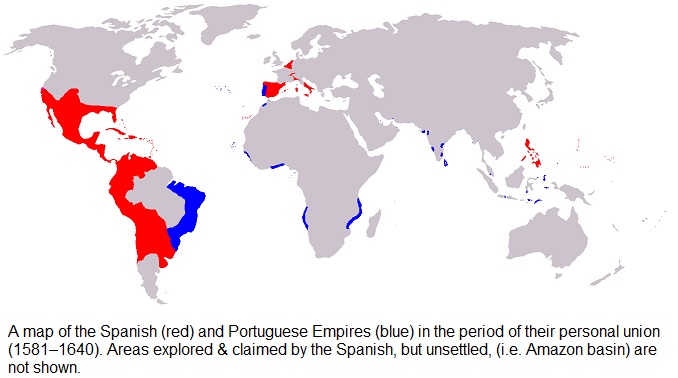
CU Blog - A Lesson in History - Royal Charter - Truth and Consequence - Photo 3The Old World would refer to Europe. The New World on the other hand, refers to the lands in the Western Hemisphere – North, Central and South America, plus the Caribbean – that was first opened up with the 1492 Discovery by Christopher Columbus. After the first 100 years of legal and papal wrangling, the settlement of the New World by diverse European powers commenced in earnest in the 1600’s. This started a period of colonization by Imperial powers from Europe grappling for dominance and/or some presence in the Americas.

This colonization historicity was detailed in the book Go Lean…Caribbean; it summarized the European history of ebb-and-flow of the colonial power struggle in the Americas in general and in the Caribbean region in particular; see these samples:

The Bottom Line on European Colonialism  – (Page 241)
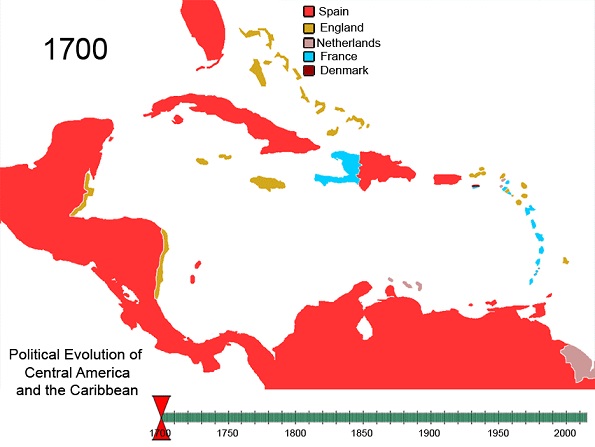
The European colonial period was the era from the 1500s to the mid-1900s when several European powers (Spain, Britain, the Netherlands, France and Portugal) established colonies in the Americas, in a “Space Race” to dominate the New World. The Northern Coast of South America became a typical New World battleground for conflict and pushing between these powers, and many military campaigns and diplomatic initiatives (treaties) ensued. … When did this European Colonial “push-shove-match” end? Not until almost 500 years later, after World War II, after the effects of that war left all these European powers drained – of finances and the will to continue.

***********

Appendix – US Virgin Islands – Economy Past, Present & Future  – (Page 305)
The Virgin Islands were held by many European powers, including Spain, Great Britain, the Netherlands, France, and Denmark-Norway. The Danish West India Company settled on Saint Thomas in 1672, on Saint John in 1694, and purchased Saint Croix from France in 1733. The islands became royal Danish colonies in 1754, named the Danish-West Indian Islands. Like other Caribbean islands, sugarcane, produced by slave labor, drove the islands’ economy during the 18th and early 19th centuries, until the abolition of slavery by Danish Governor Peter von Scholten on July 3, 1848.

During the submarine warfare phases of the First World War, the United States, fearing that the islands might be seized by Germany as a submarine base, … approached Denmark with a view to buying them. After a few months of negotiations, a selling price of $25 million in United States gold coin was agreed. (This is equivalent to $2.2 Billion in 2012 dollars @ $1770 per ounce)…. The United States took possession of the islands on March 31, 1917.

To recap, here are the European countries that have shown “interest” in the Caribbean:

Britain
Denmark
Germany
The Netherlands
Norway
France
Portugal
Spain
cu-blog-10-things-we-from-europe-photo-2

The Old World powers came to the New World, liked what they saw and fought over it. As referenced above, these Caribbean territories featured an economy based on African slavery. In the end, the European colonizers left the island and coastal territories, mostly in the hands of the descendants of former slaves. These mature empires and advanced democracies left these shores without the needed governance to lead their own affairs efficiently or effectively. Today, all of these European countries (listed above) function as better societies than their former colonies here in the Caribbean.

This is a sad but true reality. The Caribbean could be argued to be the “greatest address in the world”, in terms of terrain, fauna/flora, hospitality, culture, food, drink (rum) and tobacco (cigars). Yet, a large number of Caribbean people have fled and now live abroad. They live in places like the US, Canada, the UK and the European countries listed above.

This seems illogical, considering all the blood, sweat and tears for domination here in the Caribbean over the years, decades and centuries. But it is what it is! People leave … in droves. They do not only leave to go somewhere else (the destinations), but rather they leave just to get away from “here”.

So for Europe – not considering the UK-Britain-England this time – we must ask the questions of our Diaspora there:

  • Why do they now live in Europe and what can we learn from that experience?
  • What can we gather for the Pros and Cons of European life?

This commentary is Part 4 of 4 in a series examining the destinations of the Caribbean Diaspora. The full series is as follows:

  1. 10 Things We Want from the US and 10 Things We Do Not Want
  2. 10 Things We Want from Canada and 10 Things We Do Not Want
  3. 10 Things We Want from the UK and 10 Things We Do Not Want
  4. 10 Things We Want from Europe and 10 Things We Do Not Want

The stakeholders of this Go Lean … Caribbean movement truly believe that the Caribbean is the “greatest address in the world”. Yet still, we have an atrocious record of societal abandonment. This disposition is so acute that we report 70% of the region’s college-educated classes have fled the region for refuge elsewhere.

Refuge? An appropriate word, as there are “push and pull” reasons why Caribbean citizens leave such beauty to relocate to the cold and unknown places like Europe. Our societal defects – in the economic, security and governing engines – are that bad.

This is a crisis! Alas, the Go Lean book also asserts that a “crisis is a terrible thing to waste” (Page 8). Let’s look, listen and learn from the European mainland, and then let’s lend-a-hand and then eventually lead a reboot and turn-around of Caribbean society. We can do better than our recent past. We must do better!

This is the quest of the Go Lean book and subsequent movement, to make the Caribbean a better place to live, work and play. Previously, these Go Lean blog-commentaries have looked inward and identified the many facets of our societal defects. Now, this commentary looks at these refuge countries that our people flee to, and glean the Good and Bad of those destinations. We want our people back … and to not lose anymore; so consider this review a competitive analysis to discern how we compete with these foreign locales. We want our young people to set their sights – their hopes and dreams – on a viable future, right here in the Caribbean homeland.

This honest assessment requires that we study the things that we, in the Caribbean, want and things that we do not want from places like Europe ; (the UK was previously considered separatedly). Here is a laundry list of the Good and the Bad and how the roadmap to elevate Caribbean society, the book Go Lean…Caribbean, describes how the lessons should be applied in the implementation of the Caribbean Union Trade Federation (CU):

European Imports

10 GOOD Things We Want from Europe

10 BAD Things We Don’t Want from Europe

1

Profit-Seeking Many people frame the motivation for New World expansion as the quest to expand sovereign empires, or a quest for religious missions; but many historians put the motivation accurately at “profit”. First there was the gold and other precious metals extracted from the Americas, then after exhaustion, then came slavery to exploit the agricultural opportunities for crops not grown in Europe: cotton, sugar cane, tobacco, etc. The Go Lean roadmap accepts that profit-seeking – not greed – is not a bad ethos; there must be growth in a community, otherwise people leave to seek profit elsewhere. The CU seeks to grow the regional GDP to US$800 Billion over 5 years. History of Aggression To protect the Empire expansion goals, countries were willing to be aggressive militarily; as a result there where many scrimmages in the Caribbean, and many islands changed hands from one power to another. That aggression continued for the hundreds of years since the start of colonization of the New World, leading to World War I and World War II. Though there has not been any global conflicts in the 70 years since WW II, the community ethos is there, to become aggressive easily. The Go Lean roadmap anticipates the emergence of “bad actors”, so mitigations need to be proactive and reactive. The roadmap therefore stresses economics and security measures equally.

2

Tourists Tourism is still the primary economic driver for the Caribbean region. While there is a lot of competition for European tourists, the Caribbean continues to make the case that its region is the best tourist destination in the world. The region wants to continue to appeal to Europeans of all demographic persuasions to come visit the islands for stay-overs (land-based hotels) and/or cruise ships. We want to forge vacation options and traffic for the upper, middle and lower classes of European society. See VIDEO in the Appendix below. The CU forges plans, advocacies and re-boots to further enhance the Caribbean tourism product array. Latent Racism For societies to promote the exploitation of slaves, there must have been an underlying creed of racism, or racial supremacy. This emerges from time to time, as reflected recently with the Middle East Refugee crisis.  People with this mindset may not have a problem with coming to a Black majority Caribbean destination for leisure travel; it may be fun for them to be pampered by “servants”, but not so much for those facilitating the service. The Go Lean roadmap promotes racial equality in a free market. But accepting that the past was tainted, the roadmap also invites Truth and Reconciliation Commissions to settle many prior conflicts.

3

Capital There are many Financial Centers around the world and in Europe (Zurich, Paris, London, etc.). They have the capital the Caribbean needs for Direct Foreign Investments. To be attractive for these opportunities, we have to facilitate the corporate governance to allow for full transparency and accountability. The Go Lean roadmap calls for the emergence of a new financial eco-system around the Caribbean Dollar (C$) managed by a regional technocratic Caribbean Central Bank. This structure will allow for more liquidity in the existing regional stock exchanges. Austerity The European Sovereign Debt Crisis (2009 – 2012) is mostly over now. But the remediation required more taxes and spending cuts, austerity. But economists assert that economic growth is the best way to counteract recession. So austerity measures may be a flawed strategy. The Go Lean roadmap presents strategies, tactics and implementation to grow the economy … sharply. The plan is to create 2.2 million new jobs and the incubation of many entrepreneurial endeavors. There is also the plan to streamline municipal operations and finances. This execution will eliminate the need for austerity measures.

4

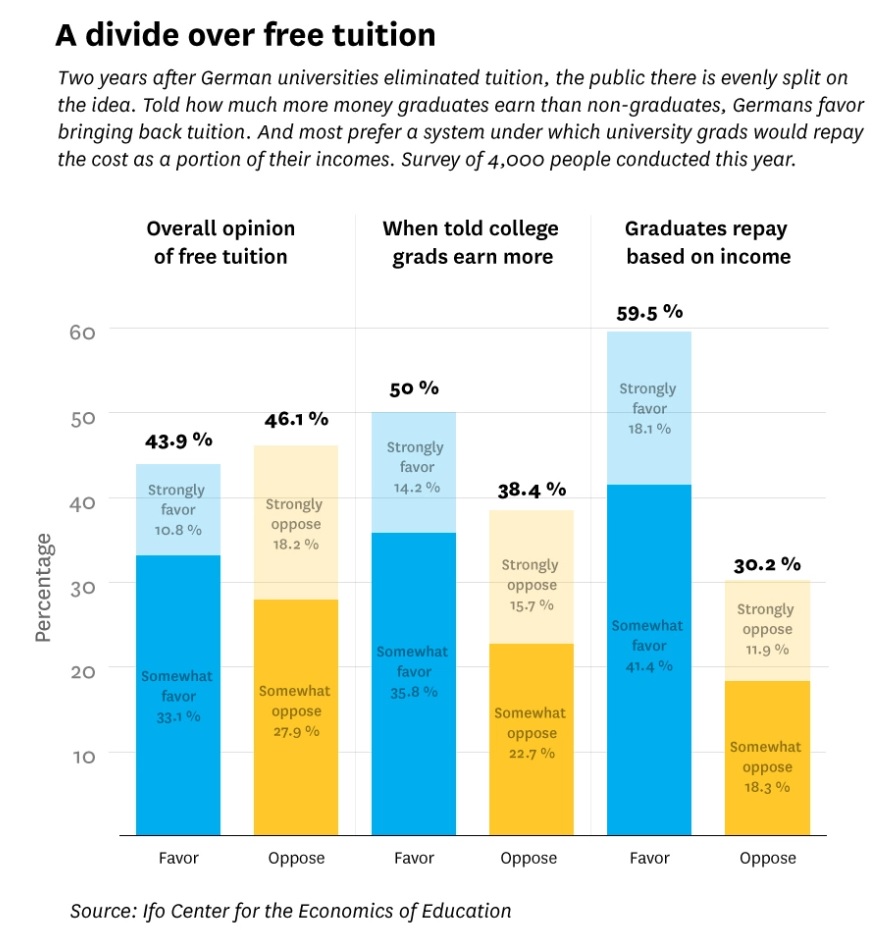
Education System Germany provides tuition-free colleges (see Photo). Many other European states feature progressive education systems that foster more STEM careers. This commitment starts at kindergarten school and follows suit all the way up to college. Rather than incurring mounds of debt, the European model is a state investment in its youth. The Go Lean roadmap seeks to reboot the education eco-system and invest in STEM fields. One strategy is to deploy more e-Learning schemes. This will benefit people in urban and rural addresses of the Caribbean. Study Abroad Going off to school is one of the most exciting times in a young student’s life, but for the CaribbeanEuropeanOverseasTerritories, it is also a rite of “passage” to the Diaspora. Places like Aruba, Curacao, Guadeloupe and Martinique have the experience of hosting graduations one week and final emigration-trips the next week. The CU/Go Lean roadmap seek to turn-around the tertiary education environment in the Caribbean, so that local students do not have to leave. They are encouraged to study in-country.

5

Health Care/Dental CareMany European member-states feature a Universal Health scheme. These programs provide examples of successful healthcare for all of its citizens. They ensure that everyone has access and quality delivery, including dental care. They have coverage for indigents, alleviating price shocks.The Go Lean roadmap calls for schemes to mandate healthcare insurance for every adult. With the leverage across the 30 member-states and 42 million people, the wholesale costs of products/services would be reduced. GMO’sThere are Crony-Capitalists in most European powers, especially in the agricultural sectors. Leave unchecked, GMO’s could easily become the standard and deployed to the general public. (This is the American experience).The European Medicines Agency is a model for the corresponding Caribbean Medicine-Food-Nutrition regulatory agency. The Go Lean roadmap calls for strict food labeling, resembling the EU more so than the deceit/ American bad example. Life is more important than profit.  

European Imports (cont’d)

10 GOOD Things We Want from Europe

10 BAD Things We Don’t Want from Europe

6

Human Rights Ideals The Nobel Prize is awarded by a committee in Stockholm, Sweden. Plus the United Nations Human Rights Commission is based in The Hague in the Netherlands. European are the most active in watching human/civil rights abuses around the world. The CU/Go Lean roadmap features monitoring for human rights in the Caribbean region. There is the need, we have a pattern of hatred towards certain minority groups. Same Sex Marriage While there is a need for human rights and civil rights, many consider Same Sex Marriage to be “a bridge too far” too fast. For those communities with orthodox religious traditions, they balk at Same Sex Marriage being shoved on them. The CU advocates for human rights and civil rights. There must be a compromise to extend property and privacy rights without insulting religious standards.

7

Social Safety Nets The Western European nations all feature Democratic Socialism as the form of government, even with monarchs in some countries. This structure allows for more social “Safety Nets”, like unemployment benefits, welfare and disability. The people are still “covered” even if their plans for their life and career do not succeed. This incentivizes people to stay “home” for the “good, bad and the ugly”. To benefit the “Greater Good”, the CU plans a lot of “Safety Nets” for when Crap Happens, financed through insurance schemes: premiums and claims, spread across a wide region for more leverage (42 million people). Taxes on Poor People The European states featuring Democratic Socialism feature a high tax structure – (see Photo/Chart below). This means poor people have the same tax burden as rich people. The preference is now to consider a progressive tax scheme where the rich bear a heavier burden than the poor, through either consumption or sliding scale. The CU/Go Lean roadmap proposes new balanced tax schemes that mostly “skim off the top”. The CU will deploy systems to help member-state governments do better at collecting their tax revenues. Overall the Caribbean tax burden will increase, but only marginally.

8

Police Training Security concerns are equally important in nation-building. With economic prosperity comes “bad actors”, so good law-enforcement is vital for social cohesion. In Europe, the incidences of police-civil-rights abuses is lower than say the Americans, one reason is good police training. The CU does not want a repeat of Cop-on-Black violence that the Americans experience. We want to follow the European models more for best-practices. War on Terror Considering the historic past with former colonized people, the European mainland has to be “on guard” for bad actors and terrorism attacks; there have been recent attacks in France, Belgium and Germany. The EU is now cooperating with security intelligence globally to mitigate these threats. The CU seeks to implement a comprehensive security apparatus with robust intelligence gathering and analysis.

9

Media Arts – Film, TV, Music & e-Games While prospects for many traditional 20th Century jobs and industries (factories, auto, steel, mining) have declined in Europe due to the competitive imbalance of globalization and technology, electronic media-related industries now flourish. The challenge of language translation has been mitigated with technology – a global market has emerged. The CU roadmap posits that art and music can drive big economic returns. The only way to win in the global marketplace is to ensure that “we” produce/contribute and not just consume. The CU will ensure the complete eco-system is there to identify, foster & compensate stakeholders for this new world of electronic media.. Cultural Neutralizations – Domination of Euro-centric There are other cultures other than just White-Europeans. European (White) media brings European values, and these may not always advocate what’s best for Caribbean life. If not abated, the world gets the impression that Black-and-Brown only “takes”, rather than “give” to the world’s cultural landscape. Afro-Caribbean culture must be preserved and promoted to the rest of the world. The Go Lean book compares cultural protectionism as employed in France versus the free market approach. While France doesn’t lead many of the world’s media output, they maintain and promote their unique culture. This propels their tourism: 25 million to Paris alone.

10

Sports Professionalism The European legacies for Soccer/Football and even their Olympic models (Track & Field) inspire athletes that they can earn a living based on their talents, disciplines and abilities. The Go Lean roadmap includes a comprehensive sport promotion and administration apparatus to facilitate amateur, collegiate and professional sports careers. Win at all costs ethic There is a worldwide movement to curb the sports world of performance enhancing drugs. Many European stakeholders have been identified and censured for bad sportsmanship in this area. The Go Lean roadmap calls for rebooting sports eco-system to include an Anti-Doping agency within the CU Trade Federation to elevate regulation and enforcement.

cu-blog-10-things-we-from-europe-photo-1

Europe has been a frequent topic for considerations from the Go Lean movement (book and blogs). The opening Declaration of Interdependence (Page 14) recognized that there is value in considering the Good and Bad examples of Europe, with this statement:

xxxiii. Whereas lessons can be learned and applied from the study of the recent history of other societies, the Federation must formalize statutes and organizational dimensions to avoid the pitfalls of communities like East Germany …. On the other hand, the Federation must also implement the good examples learned from developments/communities like … Germany….

Not just life in Europe is addressed by the Go Lean book, but also life in the remaining European Overseas Territories in the Caribbean (Dutch & French). The CU treaty includes the DutchTerritories (Netherland Antilles: Aruba, Bonaire, Curaçao, Sint Maarten, Saba, and Sint Eustatius) and also these FrenchTerritories (Guadeloupe, Martinique, Saint Martin and Saint Barthélemy, and French Guiana eventually).

Though France and the Netherlands are among the most prosperous economies in the world, that prosperity has not always extended to these islands.

In addition, the book specifically addresses Europe, Dutch/French Territories and the Caribbean Diaspora in Europe with these direct references of community ethos, strategies, tactics, implementations and advocates:

Community Ethos – Economic Systems Influence Individual Choices Page 21
Community Ethos – Voluntary Trade Creates Wealth Page 21
Community Ethos – Minority Equalizations – 4 Languages; One People Page 24
Strategy – Invite empowering immigrants – Like STEM stakeholders from Europe Page 46
Tactical – Confederation Models – i.e. Denmark, Sweden, Norway Page 63
Tactical – Separation of Powers – Homeland Security – Model of NATO Page 75
Tactical – Separation of Powers – Health Department – Medicine-Food-Nutrition Administration Page 87
Implementation – Assemble Dutch and FrenchTerritories into the Caribbean Union Page 96
Implementation – Trade Mission Objectives – Trade Mission Offices: Paris, Amsterdam, Spain Page 117
Implementation – Reason to Repatriate – From Europe Page 118
Implementation – Ways to Promote Independence – Autonomous Rule for Territories Page 120
Planning – Ways to Improve Trade – Trade to Diaspora in Europe Page 128
Planning – Ways to Model the European Union Page 130
Advocacy – Ways to Grow the Economy – Encourage More Foreign Investment from Europe Page 151
Advocacy – Ways to Better Manage the Social Contract Page 170
Advocacy – Ways to Foster Cooperatives – Models from French Origins Page 178
Advocacy – Ways to Impact the Diaspora – Large Pockets in Holland and France Page 218
Advocacy – Ways to ImpactDutchTerritories Page 246
Advocacy – Ways to ImpactFrenchTerritories Page 247
Appendix – The Guianas Historic Timeline – Sample European Grappling Page 307

In addition, previous Go Lean blog/commentaries addressed many issues in regards to Europe, the Dutch/French Overseas Territories and the interactions of Caribbean people that live there in Europe; see sample list here:

https://goleancaribbean.com/blog/?p=7834 French Caribbean ready for the Martinique Surf Pro
https://goleancaribbean.com/blog/?p=6247 Tragic images show refugee crisis at a tipping point in Europe
https://goleancaribbean.com/blog/?p=5818 European Country of Greece: From Bad to Worse
https://goleancaribbean.com/blog/?p=4971 The Legacy of Royal Charters in Europe: Good & Bad
https://goleancaribbean.com/blog/?p=3090 Introduction to Europe – All Grown Up
https://goleancaribbean.com/blog/?p=2809 A Lesson in History – Economics of East Berlin, Germany
https://goleancaribbean.com/blog/?p=1364 Uber Demonstrations Snarl Traffic from London to Berlin
https://goleancaribbean.com/blog/?p=1193 EU willing to fund study on cost of not having CARICOM
https://goleancaribbean.com/blog/?p=1020 Revolutionary Changes needed in European Soccer
https://goleancaribbean.com/blog/?p=833 The Euro – One currency, Divergent Economies

The Go Lean book serves as a roadmap for the introduction and implementation of the CU. Our scope is to impact the Caribbean’s economic, security and governing engines, not European society. But we do hope to engage the Caribbean Diaspora living there. Perhaps even entice them to consider a Caribbean repatriation. 🙂

There are Good lessons and Bad lessons that we can learned from Europe. The Old World can now teach the New World important new lessons.

So let’s pay more than the usual attention to the lessons from “over there”. Everyone is urged to lean-in to this Go Lean/CU roadmap for the Caribbean Union Trade Federation, to make our homeland a better place to live, work and play. 🙂

Download the book Go Lean … Caribbean – now!

———–

Appendix VIDEOCayman looks to boost tourism from Europehttps://youtu.be/s6rQ5lsRp-Y

Uploaded on Jan 21, 2008 – Charles Clifford, Minister of Tourism for the Cayman Islands. The islands in the Caribbean are looking to boost tourism from the European region. The Mandarin Oriental is also planning to open a property in the islands. The interview was conducted by Breaking Travel News at Caribbean Marketplace.

Share this post:
,

10 Things We Want from the UK and 10 Things We Do Not Want

Go Lean Commentary 

cu-blog-10-things-we-from-the-uk-photo-1There is a “give and take” relationship between the Caribbean and the United Kingdom (a reference to Britain or England).

18 of the current Caribbean 30 member-states have a British heritage. They (the UK) have given a lot to the Caribbean over the centuries: systems of commerce, systems of governance, education, language, art and culture. The UK was more than just a country, it was an Empire, with colonialism exploited to the maximum; Mother England.

In addition to giving, they have taken a lot as well; consider the centuries of British mercantilism. Plus, during the World Wars, the UK drafted this population to staff their Armed Forces; see the drama depicted in the classic cultural song in the Appendix B VIDEO below. After the Second World War, with their economy in tatters, the UK, took from the Caribbean again, this time the human capital of so many Caribbean territories; see the Caribbean experience related musically in the Appendix A VIDEO below.

This historicity was detailed in this previous blog-commentary

“There was plenty of work in post-war Britain and industries such as British Rail, the National Health Service and public transport recruited almost exclusively from Jamaica and Barbados”. Retrieved July 10, 2014 from: http://en.wikipedia.org/wiki/British_African-Caribbean_people#The_.22Windrush_generation.22

This point is in consideration of the book Go Lean…Caribbean; it posits (Page 3) that “the Caribbean is the greatest address in the world”, but yet the region could not compete with the economic opportunities extended by England and the rest of Europe after World War II. The hope was always to glean some of the economic returns by venturing to England – for a short while – and then come back home. There was the definite plan to discourage any subsequent emigration by future generations of Caribbean citizens.

To our chagrin, that is not what happened. The situation went from bad to worse in the English-speaking Caribbean.

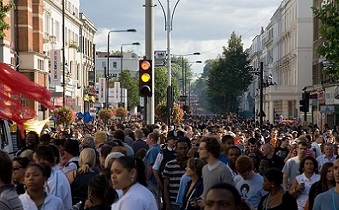
 The Annual Notting Hill Carnival Celebrations Take Place

cu-blog-10-things-we-from-the-uk-photo-3

The Caribbean British territories created a pipeline to England for a cheap, low-skilled, labor force. As more and more residents left, the society declined more and more in their wake. Today, a large number of Caribbean people live abroad; in places like the UK, Europe, Canada and the US. This commentary is Part 3 of 4 in a series examining the destinations of the Caribbean Diaspora. The full series is as follows:

  1. 10 Things We Want from the US and 10 Things We Do Not Want
  2. 10 Things We Want from Canada and 10 Things We Do Not Want
  3. 10 Things We Want from the UK and 10 Things We Do Not Want
  4. 10 Things We Want from Europe and 10 Things We Do Not Want

So for the United Kingdom (England, Northern Ireland, Scotland and Wales), we must ask the questions of our Diaspora there:

  • Why do they live in the UK and what can we learn from that experience?
  • What can we gather for the Pros and Cons of British life?

Overall, there continues to be “push and pull” reasons why Caribbean citizens have emigrated in the past – and continue to do so now. The extent of that societal abandonment is so acute that it is now at an atrocious 70% rate among the region’s college-educated classes. The Go Lean book makes the frank and earnest admission that the Caribbean has blatant societal defects … in the economic, security and governing engines of the communities.

The Go Lean movement (book and blog-commentaries) have looked inward and identified the defects of Caribbean life. Now we look at these refuge countries so as to glean the Good and Bad lessons of those destinations. This is also a competitive analysis, as the Caribbean region is competing with these foreign locales for the hearts and minds of the Caribbean youth. Like other submissions in this series, here is the laundry list of the Good and the Bad from the UK and the Go Lean roadmap describes the applications or mitigations of these lessons in the implementation of the Caribbean Union Trade Federation (CU):

CU Blog – UK Imports

10 GOOD Things We Want from the UK

10 BAD Things We Don’t Want from the UK

1

Leadership in International Commerce Up until 1876, the United Kingdom was the richest nation on earth. (After the California Gold Rush, the US took that mantle). The key to Britain riches was mercantilism in which they exploited the resources from their colonies, imported raw materials to England, engaged factories processes for finished goods, and exported goods back to the colonies (and the rest of the world) for huge profits. Despite decline over the past century, the UK is still the 5th strongest economy in the world (by GDP) and a permanent member of the United Nation Security Council. The Go Lean roadmap recognizes the strategic advantages for expanded trade; the book quotes the Economic Principle that “Voluntary Trade Creates Wealth”. The CU is branded a “Trade” Federation. Brexit Mentality The UK is still one of the major economic and political powers. But the public approved a referendum on June 23, 2016 to exit the European Union within 2 years. The Brexit proponents want more autonomy and less subjection to EU authorities. The freedom of movement mandate in the EU made the “Brexiters” uncomfortable with recent Middle Eastern refugees. The UK can lose the “world leader” statue they current enjoy. The Go Lean roadmap advocates for interdependence more so that independence. The CU is modeled after the EU, so we want all that the UK is now trying to “throw away”. Our strategy for free movement of labor is more conditional than our EU counterparts. For jobs, priority go first to locals, then other CU members, then foreigners.

2

National Healthcare The UK’s National Health System is a great example of successful healthcare for all of its citizens. They ensure that everyone has access and quality delivery. They have coverage for indigent care, so there are no price shocks. The Go Lean roadmap calls for schemes to mandate healthcare insurance for every adult. With the leverage across the 30 member-states and 42 million people, the wholesale costs of products/services would be reduced. Healthcare Egalitarianism The British Health delivery is a Single Payer and not an insurance program. So everyone gets the same level of treatment. The realities of personal healthcare is that there is no universality, “one size does not fit all”. Many times patients may have had to wait for specialized procedures.The Go Lean roadmap advocates for a mandated insurance solution. The key is that every adult will be required to select some insurance plan, of their choosing.

3

Tourists Tourism is still the primary economic driver for the Caribbean region. While there is a lot of competition  for British tourists, the Caribbean continues to make the case that its region is the best tourism destination in the world. The region wants to continue to appeal to Britons of all demographic persuasions to come visit the islands for stay-overs (land-based hotels) and/or cruise ships. We want to forge vacation options and traffic for the upper, middle and lower classes of British society. The CU forges plans, advocacies and re-boots to further enhance the Caribbean tourism product array. British Diaspora During the early days of nation-building, many British workers came to the English-speaking Caribbean to work jobs that many locals could have done. As many Caribbean states obtained independence, many Britons still remain. This practice led to the false ethos that White Britons were “better” capable than local personnel. The Go Lean roadmap dictates a labor standard where local workers get priority for jobs, then regional citizens, then and only then foreign workers (like Britons).The Single Market would have freedom of movement but with this labor-qualifying caveat.

4

Capital There are many FinancialCenters around the world (London, New York, Zurich, Hong Kong, etc.); London has huge liquidity, second only to New York’s Wall Street. So they have the capital the Caribbean wants and needs for Direct Foreign Investments. The Go Lean roadmap calls for the emergence of the Caribbean Dollar (C$) managed by a regional technocratic Caribbean Central Bank. This structure allows for more liquidity in the existing stock exchanges in the regions. Re-valued Currency The British Pound is stronger than the US dollar and the Euro, so British products are more costly. When a UK- Caribbean financial transaction is executed in US dollars, a British trading partner have to endure higher prices. The C$ is not designed to be pegged to the US dollar, but rather a basket of currencies including the British Pound, Euro, and Japanese Yen. So Britons doing business in the Caribbean will not be vulnerable to US$ fluctuations. The C$ is modeled on the Euro dollar in that regards.

5

British Navy Great Britain has been a military powerhouse, with a rich history of naval dominance. The British Navy enforced the abolition of the Slave Trade in support of international treaties and accords. We are forever grateful. The CU roadmap provide for a complete Homeland Security apparatus to defend the Caribbean region and the Caribbean Sea. In addition, there is a comprehensive Intelligence Gathering and Analysis functionality. Deportees The UK repatriates Caribbean citizens guilty of criminality on British soil. So these one become the concern for Caribbean authorities once deported. The Go Lean roadmap calls for proactive mitigations for “bad actors” that might bring a lawless ethos to the homeland. We seek a treaty with the UK for full intelligence sharing for those affiliated with organized crime (gangs) and low-level felons.


UK
Imports (cont’d)

10 GOOD Things We Want from the US

10 BAD Things We Don’t Want from the US

6

Foreign Aid The UK designed the defunct West Indies Federation, with independence and societal elevation in mind. The regional construct was intended as mature democratic entity. Despite the rejection of this scheme, the British still do help out in the “time of our need” after natural disasters (earthquakes and hurricanes). But they prefer to help as a regional bloc rather than country by country. The CU is designed to be a new regional construct. The Go Lean roadmap corrects many of the defects from the original UK designed. We can finally get regionalism right! Then we can better manage foreign aid (financial and technical assistance) from the UK and other donors. Condition for Philanthropic Support Many times foreign aid comes from NGO’s who skim too much for their administrative overhead – think Red Cross. The CU wants the aid, funding and philanthropy from the UK, but not the “bad actors” raising money on our behalf with little follow-up to the Caribbean / West Indies region. The Go Lean roadmap asserts that the region must “grow up” and handle its own development, philanthropic fund- raising, collection and distribution, with full accountability. The CU thusly features the regulatory oversight for governmental and NGO accountability. This is the maturity envisioned at the start of the West Indies regional construct and all subsequent integration movements.

7

Reconciliation after Colonialism The UK has a history of repression of the native colonized peoples in their homeland and those in the Diaspora in the UK; but this country has reconciled that bad history with positive empowerments; and human rights mandates. The Go Lean roadmap calls for formal reconciliation commissions to settle a lot of bad treatment in the past. Virtual Segregation The UK has a bad history of racial divide in many cities (Liverpool, Birmingham, Manchester, etc). While not a legal segregation, there was a de facto segregation with many ethnic migrants living in urban pockets. The CU proposes repatriation back to the Caribbean homeland. There is nothing like being home.

8

Co-existence of the Diverse The UK has become a diverse society, with the immigration of so many people from so many corners of world, most representing the former the British Empire. These diverse groups co-exist well in the urban areas. The Go Lean roadmap calls for Minority Equalization for different language groups; this includes multilingual media and government communications. Right-Wing Extremism The UK has been negatively impacted by the global Agents of Change: Globalization, Technology, etc.. Many Britons – on the “Right” – wrongly feel that declines in the economics of their society are due to the emergence of immigrants. The CU/Go Lean roadmap calls for managing the country of Canada as a competitor for our hearts of our youth.

9

Media Arts – Film, TV, Stage, Music The British Film, Television and Music industries thrive. They produce and distribute many movies (i.e. James Bond), television shows (i.e. Downton Abbey) and music artists (i.e. Beatles, Adele) to international markets. (Shakespeare is still “King”). Their quality contributes to a media trade surplus with the rest of the world. The CU roadmap posits that art and music can drive big economic returns as long as the complete eco-system is there to identify, foster & compensate stakeholders. Cultural Neutralizations – Domination of airwaves If not abated, the English-speaking Caribbean media can be dominated by British programming. There is the need to promote local and regional media for both the cultural and economic expressions. The CU makes it a priority to foster a local-regional industry in the arts. Success in this area would increase trade in media and also tourism, as the performing arts make the cultural exchange better. One of the missing ingredients is the payment systems.

10

Sports Professionalism The English Premier League (Soccer/Football) is a great example for monetizing the interest in sports. This British league is appreciated and celebrated globally; consider that Manchester United is one of the most valuable sports franchises internationally. In addition, national teams (Cricket, Rugby, Field Hockey, etc.) foster professional occupations for participants. The Go Lean roadmap places high priority on the business of sports; it includes a comprehensive promotion and administration apparatus within the CU Cabinet level State Department. Recruitment of Caribbean Athletes Due to a lack of professional opportunities in the Caribbean region, the British sports eco-system recruits Caribbean talent. Unfortunately, these athletes then “make a life” in the UK, exacerbating our “brain drain”. The Go Lean roadmap seeks to reboot the Caribbean societal engines, lowering the “push and pull” factors that cause citizens to flee to other countries, like the UK. For athletes with the “genius qualifiers”, there must be adequate opportunities in the Caribbean. The Go Lean roadmap seeks to implement a regional sports eco-system for amateur, collegiate and professional participation.

The UK has been a frequent topic for considerations from the Go Lean movement (book and blogs). The opening Declaration of Interdependence (Page 14) recognized that there is value in considering the Good and Bad examples of Canada, with this statement:

xxxiii. Whereas lessons can be learned and applied from the study of the recent history of other societies, the Federation must formalize statutes and organizational dimensions to avoid the pitfalls of communities … On the other hand, the Federation must also implement the good examples learned from developments/ communities …

Not just life in Britain is addressed by the Go Lean book, but also life in the British Overseas Territories in the Caribbean. The CU treaty includes the British Overseas Territories of Anguilla, Bermuda, Cayman Islands, Montserrat, Turks & Caicos and the Virgin Islands. Though the UK is one of the biggest/richest economies (#5 by GDP), British economic prosperity has not always extended to these islands; so many chose to just emigrate to the British mainland.

In addition, the book specifically addresses Britain, British Territories and the Caribbean Diaspora in Britain with these direct references of community ethos, strategies, tactics, implementations and advocates:

Community Ethos – Economic Systems Influence Individual Choices Page 21
Community Ethos – Voluntary Trade Creates Wealth Page 21
Community Ethos – Minority Equalizations – Westminster Parliamentary Model of 2 Chambers Page 24
Strategy – Invite empowering immigrants – Like British Intellectuals & Snowbirds Page 46
Tactical – Fostering a Technocracy – Case Study of British Invasions for Sovereign Debt Issues Page 66
Tactical – Separation of Powers – Homeland Security – Alliance for Defending British Territories Page 75
Implementation – Trade Mission Objectives – Trade Mission Office: London Page 117
Implementation – Reason to Repatriate – From the UK Page 118
Implementation – Ways to Promote Independence – Autonomous Rule for Territories Page 120
Planning – Ways to Improve Trade – Trade to Diaspora in the UK Page 128
Planning – Lessons from the previous West Indies Federation – Designed for UK Independence Page 135
Advocacy – Ways to Grow the Economy – Encourage More Foreign Investment from the UK Page 151
Advocacy – Ways to Impact Entitlements – UK Model of Bad Austerity Policies Page 158
Advocacy – Ways to Better Manage the Social Contract Page 170
Advocacy – Ways to Foster Cooperatives – Models from British Origins Page 178
Advocacy – Ways to Impact the Diaspora – England‘s Large Pockets Page 218
Advocacy – Ways to Impact British Territories Page 245
Appendix – Transportation Infrastructure Model: English Channel Tunnel Page 281
Appendix – The Guianas Historic Timeline Page 307

In addition, previous Go Lean blog/commentaries addressed many issues in regards to the UK, the British Overseas Territories and the interactions of Caribbean people that live there in the UK; see sample list here:

https://goleancaribbean.com/blog/?p=8351 ‘Brexit’ Lesson in Economic Fallacies: No Such Independence
https://goleancaribbean.com/blog/?p=7682 American Abolitionist Frederick Douglass Success in the UK
https://goleancaribbean.com/blog/?p=5123 The Legacy of Royal Charters from the UK: Good & Bad
https://goleancaribbean.com/blog/?p=4840 Jamaican Poll: ‘Bring back the British!’
https://goleancaribbean.com/blog/?p=1933 Britain’s Neglected Diaspora
https://goleancaribbean.com/blog/?p=1683 British Public Sector Workers / Diaspora Strike Over Pay
https://goleancaribbean.com/blog/?p=732 UK’s Turks and Caicos Islands Drama with Autonomous Rule
https://goleancaribbean.com/blog/?p=451 CariCom Address Issue of Reparations from the UK
https://goleancaribbean.com/blog/?p=353 Nine Economic Policy Disasters: #1 British Mercantilism

The Go Lean book serves as a roadmap for the introduction and implementation of the CU. Our scope is to impact the Caribbean’s economic, security and governing engines, not British society. But we do hope to engage the Caribbean Diaspora living there. Perhaps even entice them to consider a Caribbean repatriation. 🙂

There are Good lessons and Bad lessons that we can learned from the UK. So let’s pay more than the usual attention to the lessons from “over there”. Everyone is urged to lean-in to this Go Lean/CU roadmap for the Caribbean Union Trade Federation, to make our homeland a better place to live, work and play. 🙂

Download the book Go Lean … Caribbean – now!

———–

Appendix A VIDEO – Prince Malachi – Great Welcome [Official Video 2015] – https://youtu.be/6lr6VnE0AQM

Published on Sep 24, 2015 – http://www.REGGAEVILLE.com
Commenters: 1. “No Blacks, No Irish & No Dogs in England”
2. “Really big tune with meaningful lyrics. ‘The troubles we face are still not yet done but we’ll have to keep on pushing through’.

———–

Appendix B VIDEO – The Last Farewell ~ Roger Whittaker – https://youtu.be/sGWs1HK8iDU

Uploaded on Feb 13, 10 – Song Lyrics; a cultural phenomenon depicting the “love” of a British Expatriate in the Caribbean.

There’s a ship lies rigged and ready in the harbor
Tomorrow for old England she sails
Far away from your land of endless sunshine
To my land full of rainy skies and gales
And I shall be aboard that ship tomorrow
Though my heart is full of tears at this farewell

For you are beautiful, I have loved you dearly
More dearly than the spoken word can tell
For you are beautiful, I have loved you dearly
More dearly than the spoken word can tell

I’ve heard there’s a wicked war a-blazing
And the taste of war I know so very well
Even now I see the foreign flag a-raising
Their guns on fire as we sail into hell
I have no fear of death, it brings no sorrow
But how bitter will be this last farewell

For you are beautiful, I have loved you dearly
More dearly than the spoken word can tell
For you are beautiful, I have loved you dearly
More dearly than the spoken word can tell

Though death and darkness gather all about me
My ship be torn apart upon the seas
I shall smell again the fragrance of these islands
And the heaving waves that brought me once to thee
And should I return home safe again to England
I shall watch the English mist roll through the dell

For you are beautiful, I have loved you dearly
More dearly than the spoken word can tell
For you are beautiful, I have loved you dearly
More dearly than the spoken word can tell

Share this post:
,
[Top]

10 Things We Want from Canada and 10 Things We Do Not Want

Go Lean Commentary

“The Caribbean is the greatest address in the world”…

… so argues the book Go Lean…Caribbean in it’s opening (Page 3). Yet, a large number of Caribbean people live abroad. They live in places like the US, Canada, the UK and Europe. This commentary is Part 2 of 4 in a series examining the destinations of the Caribbean Diaspora. The full series is as follows:

  1. 10 Things We Want from the US and 10 Things We Do Not Want
  2. 10 Things We Want from Canada and 10 Things We Do Not Want
  3. 10 Things We Want from the UK and 10 Things We Do Not Want
  4. 10 Things We Want from Europe and 10 Things We Do Not Want

So for Canada, we must ask the questions of our Diaspora there:

cu-blog-10-things-we-from-the-canada-photo-1

  • Why do they live in Canada and what can we learn from that experience?
  • What can we gather for the Pros and Cons of Canadian life?

There are “push and pull” reasons why Caribbean citizens have emigrated in the past – and continue to do so now – to places like Canada.

“In the 2006 census, 578,695 Canadians reported that they originated from the Caribbean, and the overwhelming majority of these people have immigrated to Canada since the 1970s. … the largest populations of Canadians of Caribbean origin were from Jamaica (231,110), followed by those from Haiti (102,430), Guyana (61,085) and Trinidad and Tobago (58,415).” – Historica Canada

To our chagrin, the extent of that societal abandonment is so acute that it is now at an atrocious 70% rate among the region’s college-educated classes. Yes, this is bad! The frank admission, in the Go Lean book, is that the Caribbean has societal defects … in the economic, security and governing engines of society.

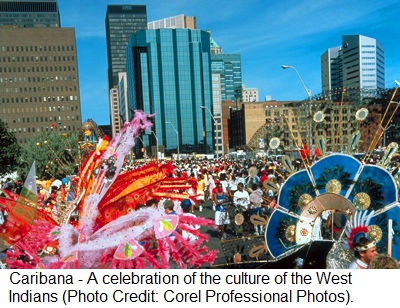
In the course of these Go Lean blog-commentaries, we have looked inward and identified the defects of our society. Now we need to look at these refuge countries and glean the Good and Bad of those destinations. This can be considered a “competitive analysis” as the Caribbean region is competing with these foreign locales for the hopes and dreams of our young people. (See the full immersion of Caribbean culture in Toronto in the Appendix-VIDEO below).

Here is a laundry list of the Good and the Bad of Canada; and how the roadmap to elevate Caribbean society, the Go Lean book, describes how the lessons should be applied in the implementation of the Caribbean Union Trade Federation (CU):

Canadian Imports

10 GOOD Things We Want from Canada

10 BAD Things We Don’t Want from Canada

1

Free Market Economy Canada has always embraced Free Market capitalism; today, their brand is more Liberal Socialism than Conservative Republicanism. Many social programs are offered to Canadian residents as a result, so the government plays a BIG role in the lives of most citizens. The Go Lean roadmap promotes Free Market principles for the region’s industrial development. The structure of Self-Governing Entities allows for further Free Market expressions without local government constraints. Massive Tax Burdens Many Canadians complain of high taxes. The governments defend the policy as necessary to support the many social programs (healthcare, subsidized college education, advanced infrastructure, etc). The Go Lean roadmap advocates deploying balanced tax schemes that mostly “skim off the top”. The CU will deploy systems to help member-state governments do better at collecting their tax revenues. Overall the Caribbean tax burden will increase, but only marginally.

2

Universal Healthcare Canada is a great example of successful healthcare for all of its citizens. They ensure that everyone has access and quality delivery. This minimizes the expensive repercussions of indigent care. The Go Lean roadmap calls for schemes to mandate healthcare insurance for every adult. With the leverage across the 30 member-states and 42 million people, the wholesale cost could be reduced. Healthcare Egalitarianism The Canadian Health delivery is a Single Payer and not an insurance program. So everyone gets the same level of treatment. The realities of healthcare is that different people have different needs, so a “one size fits all” approach is not preferred. The Go Lean roadmap advocates for a mandated insurance solution. The key is that every adult will be required to select some insurance plan, of their choosing.

3

Weather – Cool Summers Climate Change is a reality. So the warm seasons in Canada now last longer, 8 months instead of 6 months. Summertime in Canadian cities is pleasant, without air-conditioning. The Go Lean roadmap promotes better infrastructure for Caribbean cities, developing refrigeration utilities for urban areas. This will leverage energy costs for cooling. Weather – Cold Winters Canadian winters are not preferred, especially the months of January and February. The Caribbean Diaspora dread life there for those months. The Go Lean roadmap details the invitation to Canadian senior citizens to be Snowbirds in the Caribbean for the whole season. The economic returns of this strategy are too appealing to ignore.

4

Tourists There is a lot of competition for Canadian tourists; the Caribbean continues to make the case that its region is the best tourist destination in the world. The region wants to continue to appeal to Canadians of all demographic persuasions to come visit the islands for stay-overs (land-based hotels) and/or cruise ships. We want to forge vacation options and traffic for the upper, middle and lower classes of Canadian society.The CU forges plans, advocacies and re-boots to further enhance the Caribbean tourism product array. Expatriate Workers During the early days of nation-building, many Canadians workers came to the English-speaking Caribbean to work jobs (teachers, nurses, bankers, etc.) that many locals could have done. This practice led to the ethos that “White” Canadians were “better” than local personnel. The Go Lean roadmap dictates a labor standard where local workers get priority for jobs, then regional citizens, then and only then foreign workers (like Canadians).The Single Market would have freedom of movement but with this labor-qualifying caveat.

5

Capital There is a long history of Canadian banks in the Caribbean region. (Think Scotiabank, Royal Bank of Canada, and the First Caribbean-CIBC (Canadian Imperial Bank of Commerce)). Despite recent losses for Canadian banks in the Caribbean region, there is still the need for these banks’ active participation in the region. The Go Lean roadmap calls for strenuous oversight for the Caribbean Dollar (C$) and regional banks participating in transactions using this currency. Devalued Currency The Canadian dollar was 1-to-1 with the US dollar in the 1970’s. The currency has since been devalued, but only a little; between $.95 and $1.08. When a Caribbean financial transaction is executed in US dollars, a Canadian customer has to endure higher prices. The C$ is not designed to be pegged to the US dollar, rather a basket of foreign currencies including the Euro, British Pounds and Japanese Yen. So Canadians doing business in the Caribbean will not be as vulnerable to US$ fluctuations.

 Canadian Imports (cont’d)

10 GOOD Things We Want from Canada

10 BAD Things We Don’t Want from Canada

6

Supportive Defense Canada is not a militarized state like their American neighbor, but they do feature a robust internationally respected Army, Navy, and Air Force in support of their homeland.The CU roadmap provide for a complete Homeland Security apparatus to defend the Caribbean region. In addition, there is a comprehensive Intelligence Gathering and Analysis functionality. Deportees Canada repatriates Caribbean citizens guilty of criminality on Canadian soil. So these one become the concern for Caribbean authorities once deported.The Go Lean roadmap calls for proactive mitigations for “bad actors” that might bring a lawless ethos to the homeland. We seek a treaty with Canada for full intelligence sharing for those affiliated with organized crime (gangs) and low-level felons.

7

Foreign Aid Canada was one of the only foreign supporters for the defunct West Indies Federation; they have always shown our region “love”. Plus they always step up to aid the Caribbean in their “time of need” after natural disasters (earthquakes and hurricanes). But they prefer to help as a regional bloc rather than country by country.The CU/Go Lean roadmap is designed to process all foreign aid from Canada; from both the Canadian government and NGO’s. Condition for Philanthropic Support Many Giving Organizations attach strings to their gifts. The burdens of compliance is so difficult that many times, public-private entities – think Red Cross – attach themselves to the gifts to ensure accountability. This adds an additional layer in administrative costs, and less funding goes to the beneficiaries.The CU envisions a federal agency for oversight of the NGO’s in the region. We must do the heavy-lifting ourselves, rather than submitting perils of “bad actors”.

8

‘First Nation’ Reconciliation Like other European settlers in the New World, Canada had a history of repression of the indigenous peoples, but this country has reconciled that bad history with many positive empowerments. The Go Lean roadmap calls for formal reconciliation commissions to settle a lot of bad treatment in the past. Virtual Segregation Canada has the same history of racial divide as many other American Northern cities. While not a legal segregation, there is a de facto segregation with many ethnic migrants living in pockets.
The CU proposes repatriation back to the Caribbean homeland. There is nothing like being home.

9

Bilingual Co-existence Canada is a bilingual society, with the majority French culture in Quebec Province. The English and French co-exist well and insist on bilingual media expressions. The Go Lean roadmap calls for multilingual media and government communications. There is also the need for Minority Equalization for different language groups. Quebec Pull for French Caribbean Migrants Many French-speaking Caribbean people target Quebec as the destination for their emigration. In the 2006 Census, there were 102,430 people of Haitian descent living in Canada. The CU/Go Lean roadmap calls for managing the country of Canada as a competitor for the hearts of our youth.

10

Professional Sports Role Model Despite the regional domination of continental sports (baseball, football, basketball) by Americans, Canadians still dominate in their own rite – they are usually among the best hockey players in the world. They nurture the skills from youth participation up to the professional levels. The Go Lean roadmap calls for empowering the sports eco-system in the region, allowing for more opportunities for amateur, collegiate and professional participation. Other benefits of the regional focus will include better oversight of sports academies, agents and leagues. Recruitment of Caribbean Athletes During the 2016 Rio Olympics, there were many Track and Field athletes representing Canada that were of Caribbean heritage. Canada extends a “welcome mat” to these ones, therefore encouraging more to naturalize and discouraging loyalty to the Caribbean homeland. The Go Lean roadmap seeks to reboot the Caribbean societal engines. This will lower the “push and pull” factors that cause citizens to flee to other countries and switch their allegiances. This will allow athletes to fully engage their professions without leaving home.

Canada has been a frequent topic for considerations from the Go Lean movement (book and blogs). The opening Declaration of Interdependence (Page 14) recognized that there is value in considering the Good and Bad examples of Canada, with this statement:

xxxiii. Whereas lessons can be learned and applied from the study of the recent history of other societies, the Federation must formalize statutes and organizational dimensions to avoid the pitfalls of communities … On the other hand, the Federation must also implement the good examples learned from developments/ communities like … Canada….

The book specifically addresses Canada with these direct references of community ethos, strategies, tactics, implementations and advocates:

Community Ethos – Deferred Gratification – Cold Weather Residents Must Wait Until Spring Page 21
Community Ethos – Economic Systems Influence Individual Choices Page 21
Community Ethos – Minority Equalizations – Model of Canada’s Territories Page 24
Community Ethos – Ways to Help Entrepreneurship Page 28
Strategy – Invite empowering immigrants – Like Canadians Snowbirds Page 46
Tactical – Separation of Powers – Secretary of State – Trade Mission Offices Page 80
Implementation – Reason to Repatriate – From Canada Page 118
Planning – Lessons Learned from the previous West Indies Federation –Canada’s Support Page 135
Planning – Lessons from Canada’s History Page 146
Advocacy – Ways to Better Manage the Social Contract Page 170
Advocacy – Ways to Impact the Diaspora – Toronto‘s Large Pocket Page 218
Advocacy – Ways to Impact Foundations – Many Canadians NGO’s Page 219
Advocacy – Ways to Protect Human Rights Page 220
Advocacy – Ways to Improve Elder-Care – Snowbirds Invitations Page 225
Advocacy – Ways to Empower Women – Canada‘s great example Page 226

In addition, previous Go Lean blog/commentaries addressed many issues in regards to Canada and the interactions of Caribbean people and Canada; see sample list here:

https://goleancaribbean.com/blog/?p=9179 First Day of Autumn – Time for Canadians to Head South
https://goleancaribbean.com/blog/?p=6937 Canada’s Great Example of Women in Politics
https://goleancaribbean.com/blog/?p=3694 Economic Help: Jamaica-Canada Employment Program
https://goleancaribbean.com/blog/?p=3582 For Canadian Banks: Caribbean is a ‘Bad Bet’
https://goleancaribbean.com/blog/?p=1014 A Canadian’s View: ‘All is not well in the sunny Caribbean’
https://goleancaribbean.com/blog/?p=732 Turks and Caicos Drama with Canadian Healthcare Contract
https://goleancaribbean.com/blog/?p=214 Canada: The Best Address/Destination … per this Bahamian

The Go Lean book serves as a roadmap for the introduction and implementation of the CU. Our scope is to impact the Caribbean’s economic, security and governing engines, not Canada’s. But we do hope to engage the Caribbean Diaspora living there.

There are Good lessons and Bad lessons that we can learned from Canada. So let’s pay more than the usual attention to these insights. Everyone is urged to lean-in to this Go Lean/CU roadmap for the Caribbean Union Trade Federation, to make our region a better place to live, work and play. 🙂

Download the book Go Lean … Caribbean – now!

———

Related Article: 10 Fast Facts About Caribbean Immigrants In Canada

———

Appendix VIDEO – Caribbean West Indian Street Food|Toronto  – https://youtu.be/8ECKojESpOs


Published on Jun 18, 2016 – If you never had West Indian/Trini/Caribbean food, you are seriously missing out. They might not be the healthiest foods out there but it is definitely hot and delicious. Their foods are pretty much like their people, warm and welcoming. I’ve had doubles once before and it made me realize what I have been missing out my entire life. The aloo pie with tamarind sauce gave me the exact same shiver. No fancy complexity, just simple west Indian food.

Share this post:
,
[Top]

Fix ‘Climate Change’ – Yes, We Can

Go Lean Commentary

“Here I am, send me*“.

This is the declaration of Advocates wanting to abate the global problem of Climate Change. They have examined the science and are confident that they can make a difference. They are thereby further declaring that:

“We can fix Climate Change. Yes, we can…”

This is conceivable, believable and achievable.

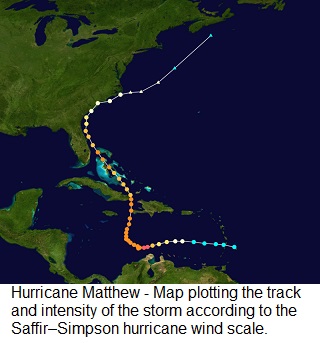
cu-blog-fixing-climate-change-yes-we-can-photo-2Why is this so important? Climate Change is causing more and more severe hurricanes in the Caribbean region. We have just had to “batten down the hatches” and endure the passage of Hurricane Matthew.

Endure?

Not all survived! The death toll in Haiti in the wake of this tumultuous storm has counted 473 (with 75 people missing) .. so far.

The advocacy to arrest greenhouse gases (GHG) is therefore a matter of life-and-death; it has a successful track record to consider and provide encouragement and hope:

Remember Acid Rain?

That was a big deal in the 1970’s and 1980’s. It was a big environmental problem; the stakeholders came together – many kicking and screaming – to put in the remediation and mitigation and now the problem is greatly abated. See the encyclopedia details of the problem in the Appendix A below, where it is reported that Acid Rain levels have dropped 65% since 1976.

Climate Change is another area of atmospheric pollution that can also be abated with a lot of the same strategies, tactics and implementations as was employed to abate Acid Rain. But instead of the smoke stacks of factories and power plants, the problematic culprit this time is fossil fuels.

Fossil fuels and carbon emission = Climate Change!

Unlike Acid Rain, the “bad actors” for Climate Change are not just industrial installations; this time it is “almost everybody”. Cars are one of the biggest contributors. There is no denying this cause-effect any more. The problem is now globally acknowledged! There are new international agreements – Paris Conference of the Parties (COP) or COP21 – to curb fossil fuels / carbon dioxide emissions. 195 countries have signed on to these accords, including big polluters China (#1) and the US (#2).

The overall goal of these international accords is to achieve significant environmental benefits through reductions in emissions of greenhouse gases, the primary causes of Climate Change. The remediation and mitigations employ regulatory and market based approaches for controlling GHG elements. It should be noted that the COP21 accord is a non-binding agreement, but the biggest contribution is that the community will is now entrenched.

The book Go Lean … Caribbean uses an alternate technical term for “community will”; it identifies “community ethos”, as “the fundamental character or spirit of a culture; the underlying sentiment that informs the beliefs, customs, or practices of a society” (Page 20). So, in everyday practical terms, it will now be politically incorrect to pursue policies in denial of Climate Change.

The Go Lean book presents a 370-page roadmap for re-booting, re-organizing and restructuring the economic, security and governmental institutions of the 30 member-states in the Caribbean region, especially in light of the realities of Climate Change. Though this is a global battle, the Caribbean is on the front lines. As related in a previous blog-commentary, no Caribbean member-state appears high of the list of greenhouse gases emitters and yet we must still participate in the mitigations. We must “Go Green” to arrest our own carbon footprint, so that we may be less hypocritical – have moral authority – in calling for reform from the big polluting nations.

The Go Lean book serves as a roadmap for the introduction and implementation of the technocratic Caribbean Union Trade Federation (CU). The roadmap depicts how this CU federal government will take the lead in ensuring the Climate Change mitigation efforts are incentivized, executed and accounted for. There are economic (BIG dollar issues), security and governing implications to a lot of these measures. The CU/Go Lean roadmap allows for the leverage of a regional Single Market that would spread the burden across the 42 million people of the 30 member-states. Other Climate Change benefits were embedded in the motivation of the book, the opening Declaration of Interdependence stated these points (Pages 12-14):

xxvii. Whereas the region has endured a spectator status during the Industrial Revolution, we cannot stand on the sidelines of this new economy, the Information Revolution. Rather, the Federation must embrace all the tenets of Internet Communications Technology (ICT) to serve as an equalizing element in competition with the rest of the world. The Federation must bridge the digital divide and promote the community ethos that research/development is valuable and must be promoted and incentivized for adoption.

xxxiii. Whereas lessons can be learned and applied from the study of the recent history of other societies, the Federation must formalize statutes and organizational dimensions to avoid the pitfalls of communities like East Germany, Detroit, Indian (Native American) Reservations, Egypt and the previous West Indies Federation. On the other hand, the Federation must also implement the good examples learned from developments / communities like New York City, Germany, Japan, Canada, the old American West and tenants of the US Constitution.

The Go Lean book posits that the “whole is worth more than the sum of its parts”, that from this roadmap Caribbean economies will grow individually and even more collectively as a Single Market. The 3 CU prime directives of the roadmap include:

  • Optimization of the economic engines of the Caribbean to elevate the regional economy to grow to $800 Billion and create 2.2 million new jobs.
  • Establishment of a security apparatus to protect the resultant economic engines.
  • Improvement of Caribbean governance to support these engines.

The Go Lean roadmap calls for the CU to serve as the regional administration to optimize the societal engines for the Caribbean, especially in light of our Climate Change battleground frontline status. This is the first pronouncement (Page 11) of the same opening Declaration of Interdependence:

i. Whereas the earth’s climate has undeniably changed resulting in more severe tropical weather storms, it is necessary to prepare to insure the safety and security of life, property and systems of commerce in our geographical region. As nature recognizes no borders in the target of its destruction, we also must set aside border considerations in the preparation and response to these weather challenges.

The following details from the Go Lean…Caribbean book highlights the community ethos, strategies, tactics, implementation and advocacies necessary to elevate the regions stance in this global battle consequences on Climate Change:

Community Ethos – Deferred Gratification Page 21
Community Ethos – Economic Systems Influence Individual Choices / Incentives Page 21
Community Ethos – The Consequences of Choices Lie in the Future Page 21
Community Ethos – “Crap” Happens Page 23
Community Ethos – Lean Operations Page 24
Community Ethos – Cooperatives Page 24
Community Ethos – Non-Government Organizations Page 25
Community Ethos – Ways to Impact the Future Page 26
Community Ethos – Ways to Improve Sharing Page 35
Community Ethos – Impact the Greater Good Page 37
Strategy – Vision – Confederating 30 Member-States into a Single Market Page 45
Strategy – Vision – Foster Local Economic Engines for Basic Needs Page 45
Strategy – Mission – Prepare for Natural Disasters Page 45
Strategy – Agents of Change – Climate Change Page 57
Strategy – Agents of Change – Globalization Page 57
Tactical – Confederating a Permanent Union Page 63
Tactical – Fostering a Technocracy Page 64
Separation of Powers – Emergency Management Page 76
Separation of Powers – Interstate Commerce Administration Page 79
Separation of Powers – Meteorological & Geological Service Page 79
Separation of Powers – Fisheries Department – Regulator Page 88
Anecdote – “Lean” in Government Page 93
Implementation – Assemble Regional Organs into a Single Market Economy Page 96
Implementation – Ways to Pay for Change Page 101
Implementation – Security Initiatives at Start-up – Unified Command & Control Page 103
Implementation – Industrial Policy for CU Self Governing Entities Page 103
Implementation – Ways to Deliver Page 109
Implementation – Ways to Foster International Aid Page 115
Implementation – Ways to Benefit from Globalization Page 119
Planning – Big Ideas for the Caribbean Region Page 127
Planning – Ways to Make the Caribbean Better Page 131
Advocacy – Ways to Grow the Economy Page 151
Advocacy – Ways to Create Jobs Page 152
Advocacy – Ways to Improve Governance Page 168
Advocacy – Ways to Better Manage the Social Contract Page 170
Advocacy – Ways to Foster Cooperatives Page 176
Advocacy – Ways to Improve for Natural Disasters Page 184
Advocacy – Ways to Improve Emergency Management Page 196
Advocacy – Ways to Improve Transportation Page 205
Advocacy – Ways to Develop the Auto Industry Page 206

The quest to Go Green has frequently been detailed in previous blog-commentaries since the publication of the Go Lean book:

https://goleancaribbean.com/blog/?p=7449 Due to Climate Change, ‘Crap Happens’ – So What Now?
https://goleancaribbean.com/blog/?p=7103 COP21 – ‘Climate Change’ Acknowledged
https://goleancaribbean.com/blog/?p=7056 Electric Cars: ‘Necessity – Climate Change – is the Mother of Invention’
https://goleancaribbean.com/blog/?p=6893 A Meteorologist’s View On Climate Change
https://goleancaribbean.com/blog/?p=6016 ‘Hotter than July’ – Reality in the Caribbean
https://goleancaribbean.com/blog/?p=4673 Climate Change‘ Merchants of Doubt … to Preserve Profits!!
https://goleancaribbean.com/blog/?p=2465 Book Review: ‘This Changes Everything: Capitalism vs. the Climate’
https://goleancaribbean.com/blog/?p=2276 Climate Change May Affect Food Supply Within a Decade
https://goleancaribbean.com/blog/?p=2119 Cooling Effect – Oceans and the Climate
https://goleancaribbean.com/blog/?p=1883 Climate Change May Bring More Kidney Stones
https://goleancaribbean.com/blog/?p=1817 Caribbean grapples with intense new cycles of flooding & drought
https://goleancaribbean.com/blog/?p=1516 Floods in Minnesota, Drought in California – Why Not Share?
https://goleancaribbean.com/blog/?p=926 Conservative heavyweights have solar industry in their sights
https://goleancaribbean.com/blog/?p=915 Go ‘Green’ … Caribbean

The quest of the CU/Go Lean roadmap is to make the Caribbean region a more self-reliant society; to act more proactively and reactively for our own emergencies and natural disaster events; and to be more efficient in our governance. Hurricane Matthew was a natural disaster; a Climate Change-induced hurricane, that was a Category 5 at one point … for 6 hours. No technocracy can dissuade such an event.

Climate Change causes the temperature of the oceans to be a little warmer, even 1 or 2 degrees can intensify storms: from Category 1 to Category 2, or from Category 2 to Category 3, or Category 3 to Category 4, or Category 4 to Category 5.

The solution for Climate Change-induced storms is a “long game”. Lowering the GHG in the atmosphere will reverse the previous bad trend: increasing GHG has raised the ocean temperatures.

To fix Climate Change, we need to support the mandates of COP21 … and other accords; (see Appendix – VIDEO). We also need to use peer pressure to convince other nations to comply with the accords. We can get them to capitulate by appealing to their “better nature”.

If Climate Change is not arrested, then even more devastating storms will come – more Category 5 storms. There is the need for the Caribbean region to establish a permanent union to provide efficient stewardship for our economic, security and governing engines; and to champion the region’s participation and fulfillment of COP21 mandates.

Now is the time for all of the Caribbean, the people and governing institutions, to lean-in to the empowerments described in the book Go Lean … Caribbean. This is the course we must pursue, how we can fix Climate Change; and how we make the Caribbean homeland a better place to live, work and play. 🙂

Download the book Go Lean … Caribbean – now!

———

Appendix VIDEOCan We Fix Climate Change?https://youtu.be/sIpr0SwJncs

Published on Oct 29, 2015 – Bill Nye [the Science Guy] speaks on the ways in which we can mitigate Climate Change – National Geographic.
➡ Subscribe: http://bit.ly/NatGeoSubscribe
➡ Get More Explorer: http://bit.ly/MoreExplorer

———–

Appendix A – Reference Title: Acid Rain

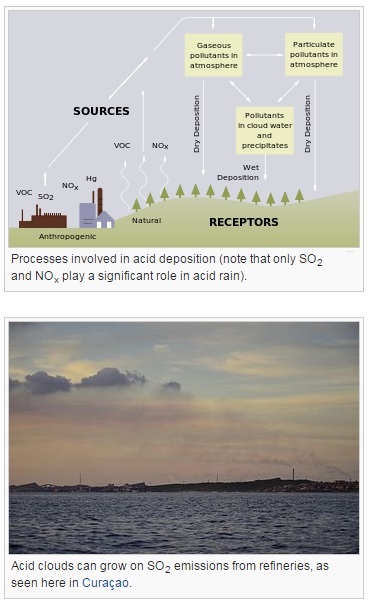
cu-blog-fixing-climate-change-yes-we-can-photo-1Acid Rain is a rain or any other form of precipitation that is unusually acidic, meaning that it possesses elevated levels of hydrogen ions (low pH). It can have harmful effects on plants, aquatic animals and infrastructure. Acid rain is caused by emissions of sulfur dioxide and nitrogen oxide, which react with the water molecules in the atmosphere to produce acids. Some governments have made efforts since the 1970s to reduce the release of sulfur dioxide and nitrogen oxide into the atmosphere with positive results. Nitrogen oxides can also be produced naturally by lightning strikes, and sulfur dioxide is produced by volcanic eruptions. The chemicals in acid rain can cause paint to peel, corrosion of steel structures such as bridges, and weathering of stone buildings and statues.

Definition

Acid Rain is a popular term referring to the deposition of a mixture from wet (rain, snow, sleet, fog, cloudwater, and dew) and dry (acidifying particles and gases) acidic components. Distilled water, once carbon dioxide is removed, has a neutral pH of 7. Liquids with a pH less than 7 are acidic, and those with a pH greater than 7 are alkaline. “Clean” or unpolluted rain has an acidic pH, but usually no lower than 5.7, because carbon dioxide and water in the air react together to form the weak carbonic acid.

Carbonic acid then can ionize in water forming low concentrations of hydronium and carbonate ions.

[Water is H2O ; Acid Rain is represented as H2CO3.] Acid deposition as an environmental issue would include additional acids to H2CO3

Adverse effects

Acid rain has been shown to have adverse impacts on forests, freshwaters and soils, killing insect and aquatic life-forms as well as causing damage to buildings and having impacts on human health.

Other adverse effects
cu-blog-fixing-climate-change-yes-we-can-photo-3Acid rain can damage buildings, historic monuments, and statues, especially those made of rocks, such as limestone and marble, that contain large amounts of calcium carbonate. Acids in the rain react with the calcium compounds in the stones to create gypsum, which then flakes off.

History

Since the Industrial Revolution, emissions of sulfur dioxide and nitrogen oxides into the atmosphere have increased.[3][4] In 1852, Robert Angus Smith was the first to show the relationship between acid rain and atmospheric pollution in Manchester, England.[5]

Though acidic rain was discovered in 1853, it was not until the late 1960s that scientists began widely observing and studying the phenomenon.[6] The term “acid rain” was coined in 1872 by Robert Angus Smith.[7] Canadian Harold Harvey was among the first to research a “dead” lake. Public awareness of acid rain in the U.S increased in the 1970s after The New York Times published reports from the Hubbard Brook Experimental Forest in New Hampshire of the myriad deleterious environmental effects shown to result from it.[8][9]

Occasional pH readings in rain and fog water of well below 2.4 have been reported in industrialized areas.[3] Industrial acid rain is a substantial problem in China and Russia[10][11]and areas downwind from them. These areas all burn sulfur-containing coal to generate heat and electricity.[12]

The problem of acid rain has not only increased with population and industrial growth, but has become more widespread. The use of tall smokestacks to reduce local pollution has contributed to the spread of acid rain by releasing gases into regional atmospheric circulation.[13][14] Often deposition occurs a considerable distance downwind of the emissions, with mountainous regions tending to receive the greatest deposition (simply because of their higher rainfall). An example of this effect is the low pH of rain which falls in Scandinavia.

History of acid rain in the United States
In 1980, the U.S. Congress passed an Acid Deposition Act.[16] This Act established an 18-year assessment and research program under the direction of the National Acidic Precipitation Assessment Program (NAPAP). NAPAP looked at the entire problem from a scientific perspective. It enlarged a network of monitoring sites to determine how acidic the precipitation actually was, and to determine long-term trends, and established a network for dry deposition. It looked at the effects of acid rain and funded research on the effects of acid precipitation on freshwater and terrestrial ecosystems, historical buildings, monuments, and building materials. It also funded extensive studies on atmospheric processes and potential control programs.

From the start, policy advocates from all sides attempted to influence NAPAP activities to support their particular policy advocacy efforts, or to disparage those of their opponents.[16] For the U.S. Government’s scientific enterprise, a significant impact of NAPAP were lessons learned in the assessment process and in environmental research management to a relatively large group of scientists, program managers and the public.[17]

In 1991, DENR provided its first assessment of acid rain in the United States. It reported that 5% of New EnglandLakes were acidic, with sulfates being the most common problem. They noted that 2% of the lakes could no longer support Brook Trout, and 6% of the lakes were unsuitable for the survival of many species of minnow. Subsequent Reports to Congress have documented chemical changes in soil and freshwater ecosystems, nitrogen saturation, decreases in amounts of nutrients in soil, episodic acidification, regional haze, and damage to historical monuments.

Meanwhile, in 1989, the U.S. Congress passed a series of amendments to the Clean Air Act. Title IV of these amendments established the Acid Rain Program, a cap and trade system designed to control emissions of sulfur dioxide and nitrogen oxides. Title IV called for a total reduction of about 10 million tons of SO2 emissions from power plants. It was implemented in two phases. Phase I began in 1995, and limited sulfur dioxide emissions from 110 of the largest power plants to a combined total of 8.7 million tons of sulfur dioxide. One power plant in New England (Merrimack) was in Phase I. Four other plants (Newington, MountTom, Brayton Point, and SalemHarbor) were added under other provisions of the program. Phase II began in 2000, and affects most of the power plants in the country.

During the 1990s, research continued. On March 10, 2005, EPA issued the Clean Air Interstate Rule (CAIR). This rule provides states with a solution to the problem of power plant pollution that drifts from one state to another. CAIR will permanently cap emissions of SO2 and NOx in the eastern United States. When fully implemented, CAIR will reduce SO2 emissions in 28 eastern states and the District of Columbia by over 70% and NOx emissions by over 60% from 2003 levels.[18]

Overall, the program’s cap and trade program has been successful in achieving its goals. Since the 1990s, SO2 emissions have dropped 40%, and according to the Pacific Research Institute, Acid Rain levels have dropped 65% since 1976.[19][20] Conventional regulation was used in the European Union, which saw a decrease of over 70% in SO2emissions during the same time period.[21]

In 2007, total SO2 emissions were 8.9 million tons, achieving the program’s long-term goal ahead of the 2010 statutory deadline.[22]

Prevention methods
The overall goal of the Acid Rain [reduction] program is to achieve significant environmental and public health benefits through reductions in emissions of sulfur dioxide (SO2) and nitrogen oxides (NOx), the primary causes of acid rain[39]. To achieve this goal at the lowest cost to society, the program employs both regulatory and market based approaches for controlling air pollution.

Technical solutions

1. Many coal-firing power stations use flue-gas desulfurization (FGD) to remove sulfur-containing gases from their stack gases. For a typical coal-fired power station, FGD will remove 95% or more of the SO2 in the flue gases. An example of FGD is the wet scrubber which is commonly used. A wet scrubber is basically a reaction tower equipped with a fan that extracts hot smoke stack gases from a power plant into the tower. Lime or limestone in slurry form is also injected into the tower to mix with the stack gases and combine with the sulfur dioxide present. The calcium carbonate of the limestone produces pH-neutral calcium sulfate that is physically removed from the scrubber.

2. Fluidized bed combustion also reduces the amount of sulfur emitted by power production.

3. Vehicle emissions control reduces emissions of nitrogen oxides from motor vehicles.

International treaties

A number of international treaties on the long-range transport of atmospheric pollutants have been agreed for example, the 1985 Helsinki Protocol on the Reduction of Sulphur Emissions under the Convention on Long-Range Transboundary Air Pollution. Canada and the US signed the Air Quality Agreement in 1991. Most European countries and Canada have signed the treaties.

Emissions trading
This refers to a regulatory scheme where polluting facilities can purchase on an open market an emissions allowance for each unit of a designated pollutant it emits. Operators can then install pollution control equipment, and sell portions of their emissions allowances they no longer need for their own operations, thereby recovering some of the capital cost of their investment in such equipment. The intention is to give operators economic incentives to install pollution controls.

Source: Wikipedia.com Online Encyclopedia; retrieved October 12, 2016: https://en.wikipedia.org/wiki/Acid_rain

Share this post:
, ,
[Top]

Forging Change: Herd Mentality

Go Lean Commentary

This is an accepted fact about communities, taken from the science of Anthropology and Sociology: in any grouping, there are only a few leaders but a large number of followers. This is the principle of the Alpha Male or Female; see Appendix. It turns out that this fact is a key strategy for forging change:

“Everyone knows that we are sheep. It takes only the strong to break out from the herd mentality” – Published YouTube comment on the below VIDEO.

cu-blog-forging-change-herd-mentality-photo-1

The movement behind the book Go Lean…Caribbean wants to forge change in the Caribbean. We have consider many different strategies, tactics and tools for forging change. Here’s another: skip the Alpha Male-Female and target the herd.

So is it that easy? We simply need to exploit the herd mentality and we can get hordes of people to conform, reform and transform. That is an exciting prospect, especially considering the positive value when leaders in a community want to pursue the Greater Good.

See as this is portrayed in this VIDEO here:

VIDEO – Social experiment – most people are sheep – https://youtu.be/MEhSk71gUCQ

Published on Aug 31, 2016 – Hidden camera…

This experiment is very thought-provoking. Sheep, goats and other animals follow a herd mentality. Apparently, humans too!

cu-blog-forging-change-herd-mentality-photo-3

The motives of the movement behind the book Go Lean…Caribbean is to forge change in the Caribbean. Plain and simple! The strategies, tactics and implementations from the book is designed to elevate the Caribbean for all stakeholders, to make the homeland a better place to live, work and play. This is conceivable, believable and achievable if we bypass the Alpha Males and target the rest of the herd. These ones can be led and influenced to adopt new community ethos. This is defined as:

“the fundamental character or spirit of a culture; the underlying sentiment that informs the beliefs, customs, or practices of a group or society”.

The Go Lean book asserts that with strenuous efforts, new community ethos can be adopted. The book cites samples, examples and Role Models:

  • Smoking Cessation – Page 20 – At one point in the 1960’s, 67 percent of American adults smoked cigarettes. Today, smokers are a fringed segment of society, almost as “outlaws”. The cessation efforts are identified as an approach to forge change for an individual, “starting in the head (thoughts, visions), penetrating the heart (feelings, motivations) and then finally manifesting in the hands (actions). Role Model – Alpha Male-Female: Surgeon General.
  • Civil Rights – Page 122 –  Even though the slaves were emancipated in America in 1865, the African-American population did not enjoy the freedom, justice and equality of full citizenship. The effort to bring Civil Rights to the Southern US succeeded only with millions of people protesting in a non-violent movement. Eventually the government leaders complied and made changes to laws guaranteeing equal protection. Role Model – Alpha Male: Martin Luther King.
  • Farm Migrant Labor – Page 122 – The Latino American farm workers’ struggle was presented as a moral cause with nationwide support by Labor and Civil Rights leaders. By the 1970’s, the strategies and tactics of this movement had forced agricultural businesses and growers to grant respect to migrant workers, which helped to improve conditions for 50,000 field workers in California & Florida. Role Model – Alpha Male: Cesar Chavez.
  • Drunk Driving – Page 122 – The values and attitudes of drunk-driving needed to change in America. Families endured heartache and pain because of the tragic loss of innocents due to negligence by inebriated drivers. Change was forged in this advocacy by challenging acceptance, laws and enforcement. Eventually the general attitudes – bars, passengers and drivers – changed for the good.  Role Model – Alpha Female: Candice Lightner, Mothers Against Drunk Driving or MADD.

The Go Lean book presents a plan to reboot economic engines (jobs, educational and entrepreneurial opportunities), optimize the security apparatus (anti-crime and public safety) and accountable governance (regional alliances) for all citizens … including many minority factions. The majority of the population must acquiesce and accept the new ethos in order to allow the societal empowerments to take hold.

Caribbean society have traditionally featured a parasite disposition – to their European colonial masters, or the American SuperPower, in effect an Alpha Male. As a region, we have been drawn to the “shadows”, gleaning opportunities from the leftovers from the host countries, think tourism-hospitality, off-shore banking, and the business of vices: cigar and rum production. The quest now  is a turn-around, to be a protégé, rather than just a parasite.

The Go Lean book serves as a roadmap for the introduction and implementation of the technocratic Caribbean Union Trade Federation (CU) to make the region a better place to live, work and play. This is a roadmap to forge a Single Market of the 30 member-states of 4 language groups and 42 million people. If the region is to “herd”, they should be led to this elevated destination.

The challenge and alternate strategies for forging change have been identified in a series; see these previous Go Lean blog-commentaries, published over the past 2 years:

  1.       Forging Change – The Fun Theory (September 9, 2014)
  2.       Forging Change – The Sales Process (December 22, 2014)
  3.       Forging Change – Music Moves People (December 30, 2014)
  4.       Forging Change – ‘Food’ for Thought (April 29, 2015)
  5.       Forging Change – ‘Something To Lose’ (November 18, 2015)
  6.       Forging Change – Herd Mentality (Today)

This commentary – Number 6 – is urging the herding the people of the Caribbean to a new protégé destination – that sounds unnerving. But there is nothing nefarious or malevolent about this Go Lean roadmap. As detailed in this previous blogs, the efforts to forge change in the region are not intended for any one person or organization to wrestle power or the elevation of any one leader. The roadmap features only one objective: the Greater Good. This is defined in the book (Page 37) by Jeremy Bentham (1748-1832), a British philosopher, jurist, and social reformer as …

… “the greatest good to the greatest number of people which is the measure of right and wrong”.

The Go Lean book and accompanying blogs all accept that forging this change in the Caribbean will be hard, heavy-lifting. There may not be just one strategy; we may have to employ all 6. This would be worth it in the end, with these sought-after prime directives:

  • Optimization of the economic engines, creating 2.2 million new jobs and growing the regional economy to $800 Billion GDP.
  • Establishment of a security apparatus to protect the resultant economic engines and ensure better public safety for stakeholders of the Caribbean.
  • Improvement of Caribbean governance – with a separation-of-powers between member-states and the CU federal agencies – to support these engines.

As depicted in the foregoing VIDEO, “most people are sheep”; they can be cajoled and persuaded to change, to improve their habits and practices. The act of cajoling and persuading implies messaging campaigns. With campaigns from the technocratic leadership of the CU, the Caribbean as a region can be reformed and transformed to becoming a new destination: a better place to live, work and play.

The Go Lean book presented the roadmap for reach the people, to herd them effectively and efficiently. The roadmap details the new community ethos to adopt, plus the execution of strategies, tactics, implementation and advocacies to forge change in the region. The following is a sample of these specific details from the book:

Community Ethos – Deferred Gratification Page 21
Community Ethos – Economic Principles – People Choose Page 21
Community Ethos – Economic Principles – People Respond to Incentives in Predictable Ways Page 21
Community Ethos – Economic Principles – Economic Systems Influence Individual Choices Page 21
Community Ethos – Economic Principles – The Consequences of Choices Lie in the Future Page 21
Community Ethos – Governing Principles – Minority Equalization Page 23
Community Ethos – Governing Principles – Lean Operations Page 24
Community Ethos – Governing Principles – Cooperatives Page 25
Community Ethos – Ways to Impact the Future Page 26
Community Ethos – Ways to Help Entrepreneurship Page 28
Community Ethos – Ways to Promote Intellectual Property Page 29
Community Ethos – Ways to Impact Research & Development – Social Experiments Page 30
Community Ethos – Ways to Bridge the Digital Divide Page 31
Community Ethos – Ways to Impact Turn-Arounds Page 33
Community Ethos – Ways to Improve Sharing Page 35
Community Ethos – Ways to Promote Happiness Page 36
Community Ethos – Ways to Impact the Greater Good Page 37
Strategy – Vision – Confederate 30 Member-States Page 45
Strategy – Mission – Celebrate the Music, Sports, Art, People and Culture of the Caribbean Page 46
Tactical – Confederating a Permanent Union Page 63
Tactical – Fostering a Technocracy Page 64
Implementation – Ways to Pay for Change Page 101
Implementation – Ways to Deliver Page 109
Planning – 10 Big Ideas for the Caribbean Region Page 127
Planning – Ways to Make the Caribbean Better Page 136
Planning – Reasons Why the CU Will Succeed Page 137
Advocacy – Ways to Grow the Economy Page 151
Advocacy – Ways to Create Jobs Page 152
Advocacy – Ways to Improve Communications – Community Messaging Page 186
Advocacy – Ways to Improve Libraries Page 187
Advocacy – Ways to Impact Hollywood – Mastery of Visual Arts & Storytelling Page 202
Advocacy – Ways to Preserve Caribbean Heritage Page 218
Advocacy – Ways to Impact Youth – Impressionable Age for New Work Ethic Page 227
Advocacy – Ways to Improve the Arts Page 230

The quest to change the Caribbean will require convincing people through messaging campaigns. We have seen the effectiveness of this strategy with movies; we have influential actor – of Caribbean heritage (Bahamas) – Sidney Poitier as a fitting Role Model:

Movies are an amazing business model. People give money to spend a couple of hours watching someone else’s creation and then leave the theater with nothing to show for the investment; except perhaps a different perspective. That is all!

But no one wants to live in a world without this art-form, without movies. Those few hours can entertain, engage and transform; sometimes even “break new ground” and change the world. So movies and movie stars can be extremely influential in modern society. This is the power of the arts, and this art-form in particular. – Blog: How Sidney Poitier changed cinema by demanding and deserving a difference

The empowerments in the Go Lean book calls for permanent change. This is possible. The people of the Caribbean only want opportunities; they want to be able to provide for their families, and offer a future of modernity to their children. It is an “easy sell” to convince people that the best-practices in the roadmap will bring benefits. Especially with reporting of the success of the same best practices in other locations. This point was pronounced in the opening Declaration of Interdependence (Page 14) in the book with this statement:

xxxiii. Whereas lessons can be learned and applied from the study of the recent history of other societies, the Federation must formalize statutes and organizational dimensions to avoid the pitfalls of communities like East Germany, Detroit, Indian (Native American) Reservations, Egypt and the previous West Indies Federation. On the other hand, the Federation must also implement the good examples learned from developments/communities like New York City, Germany, Japan, Canada, the old American West and tenants of the US Constitution.

cu-blog-forging-change-herd-mentality-photo-2In general, being called sheep is not “derisive”. It is a complement when the comparison is made to goats – (The Bible; Matthew 25: 31–46). While this is a reference to a grouping of benevolence versus malevolence, for this commentary, there is similarity in sheep and goats as they both display a herd mentality; they follow the lead and assimilate the habits, practices and ethos of the Alpha Male-Female.

The CU/Go Lean seeks to assume the role of the Alpha Male-Female. We encourage all Caribbean stakeholders – residents, institutions and governments – to lean-in now, to the Go Lean roadmap. 🙂

Download the book Go Lean … Caribbean – now!

————-

Appendix – Alpha Males-Females

In studies of social animals, the highest ranking individual is sometimes designated as the alpha. Males, females, or both, can be alphas, depending on the species. Where one male and one female fulfill this role together, they are sometimes referred to as the alpha pair. Other animals in the same social group may exhibit deference or other species-specific subordinate behaviours towards the alpha or alphas.

Alpha animals usually gain preferential access to food and other desirable items or activities, though the extent of this varies widely between species. Male or female alphas may gain preferential access to sex or mates; in some species, only alphas or an alpha pair reproduce.

Alphas may achieve their status by superior physical strength and aggression, or through social efforts and building alliances within the group.[1]

Source: https://en.wikipedia.org/wiki/Alpha_(ethology) retrieved October 10, 2016.

Share this post:
, ,
[Top]

ENCORE: Snowden – The Movie. The Role Model.

This is a re-distribution of the blog-commentary published on June 8, 2015, now that a movie has been released chronicling this advocate, Edward Snowden; his life story and impact. The movie is powerful … in dramatizing the risk the man endured and the impact that this one person fostered on his homeland, all in pursuit of the Greater Good.

The movie portrays a consistent theme of a Whistleblower.

The movie is directed by renowned film director Oliver Stone. See the trailer-preview of the movie here and the ENCORE of the blog-commentary below:

VIDEO Movie Trailer – SNOWDEN – Official Trailer – https://youtu.be/QlSAiI3xMh4

Published on Apr 27, 2016 – Academy Award®-winning director Oliver Stone, who brought Platoon, Born on the Fourth of July, Wall Street and JFK to the big screen, tackles the most important and fascinating true story of the 21st century. Snowden, the politically-charged, pulse-pounding thriller starring Joseph Gordon-Levitt and Shailene Woodley, reveals the incredible untold personal story of Edward Snowden, the polarizing figure who exposed shocking illegal surveillance activities by the NSA and became one of the most wanted men in the world. He is considered a hero by some, and a traitor by others. No matter which you believe, the epic story of why he did it, who he left behind, and how he pulled it off makes for one of the most compelling films of the year.

  • Category – Entertainment
  • License – Standard YouTube License

====================================

Go Lean Commentary

Edward Snowden: Friend or Foe?

Snowden Photo 1This will be a subject of debate for the weeks, months, years and decades to come.

What is not debatable is the fact that he has been impactful. Yes, one man has made a difference.

The publishers of the book Go Lean…Caribbean recognize the contributions that Edward Snowden has made to the discussions of democratic principles: privacy versus security. The book serves as a roadmap for the introduction and implementation of the Caribbean Union Trade Federation (CU). The CU seeks to empower a security apparatus for the Caribbean region. The issues of data monitoring and eavesdropping will be a big consideration here as well. We thank Mr. Snowden for bringing many of these issues to the fore; as the Go Lean roadmap also seeks to employ leading edge technologies to interdict domestic and foreign threats that may imperil Caribbean societal engines – without an “abuse of power”. We therefore want to study the dramatic events of this episode so as to apply best-practices in the formation of our own administration.

See the following news article (and VIDEO in the Appendix below) that summarizes the Snowden drama into 8 lessons:

Title: The Snowden Effect: 8 Things That Happened Only Because Of The NSA Leaks
One year ago Thursday, one of the most consequential leaks of classified U.S. government documents in history exploded onto the world scene: The first story based on documents from former National Security Agency (NSA) contractor Edward Snowden was published. Americans finally knew the spy agency was sucking up virtually all of the data about who they called and when.

What followed was a torrent of articles based on the Snowden documents, as well as political and diplomatic reaction. Public debate was transformed by a new level of knowledge about the NSA — which Snowden himself said was mission accomplished. And in some modest ways Congress, companies and other countries also took concrete action. Here are the most consequential reactions to Snowden’s leaks.

1. Director of National Intelligence James Clapper had to admit he lied to Congress.
Three months before the Snowden leaks began, Sen. Ron Wyden (D-Ore.) asked the nation’s top intelligence official if the NSA collected data on millions, or hundreds of millions, of Americans.

“No, sir,” Clapper replied. “Not wittingly.”

By that point, of course, the NSA had quite wittingly been running a massive bulk telephone metadata collection program for years. The government had repeatedly asked a secret surveillance court for permission to do so, and it deemed every American’s phone record “relevant” to terrorism in the process.

Wyden fumed in secret about Clapper’s lie — but felt he could not reveal it because the metadata collection program was classified. That all changed after the publication of the first story on June 5, 2013, based off a Snowden leak.

Days later, Clapper gave the most halfhearted, or perhaps least forthcoming, admission that he had lied: “I responded in what I thought was the most truthful, or least untruthful manner by saying no.”

2. The House passed a bill (ostensibly) meant to stop bulk collection of phone metadata.
Americans were furious about the NSA’s sweeping phone metadata collection program. Even the man who wrote the original Patriot Act, Wisconsin Republican Rep. James Sensenbrenner, said the program went too far.

So last month the House passed a bill that its sponsors said would end bulk collection. Whether it actually does is a matter of dispute, since the White House and the spy agencies appear to have stripped out many of its toughest provisions. But its passage is nonetheless a clear signal that nobody in Congress wants to look like they’re doing nothing about the NSA.

3. A federal judge said the NSA phone surveillance program is unconstitutional.
In December, U.S. District Court Judge Richard Leon issued a ruling in a lawsuit against the NSA program that said its technology was “almost-Orwellian” and that James Madison “would be aghast.”

Because other judges in other districts have found differently — one in Manhattan dismissed an American Civil Liberties Union lawsuit citing the threat of terrorists’ “bold jujitsu” — the program still stands. And it had previously been approved, though behind closed doors, by the special Foreign   Intelligence Surveillance Court. But with Leon’s ruling on the books, the program could eventually wind up before the Supreme Court.

4. Tech companies finally got serious about privacy.
Big tech players had been paying lip service for years to the idea that they protect their customers’ privacy. But after the Snowden revelation that the NSA was accessing company servers via its PRISM program, privacy suddenly became a very tangible good. Cloud providers stand to lose $35 billion over the next three years in business with foreign customers afraid of storing their data with U.S. companies.

So the companies are responding by adding encryption measures such as Transport Layer Security. Google even announced on Tuesday that it is testing a new extension for the Chrome browser that could make encrypting email easier.

5. Britain held its first-ever open intelligence hearing.
If you thought intelligence oversight was weak in the United States, you won’t believe how it works with our closest ally. The powerful British spy agencies MI5 and GCHQ had never faced a public hearing in front of Parliament until Snowden’s stories dropped.

The November hearing was hardly confrontational. But it was a step forward for a country that has generally reacted to the Snowden leaks with little more than a shrug. And that step matters for Americans as well: In April, The Intercept revealed that the GCHQ had secretly asked for “unsupervised access” to the NSA’s data pools.

6. Germany opened an investigation into the tapping of Chancellor Angela Merkel’s cell phone.
The revelation that the NSA was monitoring the German chancellor’s cell phone came as a surprise to her — and to Senate Intelligence Chairwoman Dianne Feinstein (D-Calif.). Merkel was so outraged that she reportedly compared the surveillance to that of the Stasi, the former East German spy agency. (And she would know, having grown up in East Germany.)

On Wednesday, GermanFederalProsecutorHaraldRangeannounced that he is opening an investigation into the monitoring of Merkel’s phone calls. The investigation is proof positive that the Snowden leaks have frayed some U.S. diplomatic relations, but also that people the world over are starting to take surveillance seriously.

7. Brazil scotched a $4 billion defense contract with Boeing.
In another example of soured relations abroad, Brazil gave a massive fighter jet contract to Saab instead of the American company Boeing. Opinions varied as to how much that had to do with Snowden’s leaks, with one government source telling Reuters that he “ruined it for the Americans.” One analyst believed, however, that the Boeing jet simply cost too much.

The jet aside, Brazilian President Dilma Rousseff was clearly steamed, taking to the podium at the U.N. General Assembly to denounce the surveillance on her. Snowden’s leaks also helped propel the passage of an Internet bill of rights meant to protect privacy in the South American nation.

8. President Barack Obama admitted there would be no surveillance debate without Snowden.
In a major speech in January, Obama said he was “not going to dwell on Mr. Snowden’s actions or his motivations.” But he essentially acknowledged that the roiling, yearlong debate over surveillance would not have happened without him.

“We have to make some important decisions about how to protect ourselves and sustain our leadership in the world, while upholding the civil liberties and privacy protections that our ideals — and our Constitution — require,” Obama said.

The secretive Foreign Intelligence Surveillance Court also nodded toward the “considerable public interest and debate” that Snowden’s leaks created. And even Clapper acknowledged, “It’s clear that some of the conversations this has generated, some of the debate, actually needed to happen.”

The surveillance court finally started publicly posting some filings from its major cases. And in further acknowledgement of the need for a debate, the NSA and other agencies have posted declassified files to a new intelligence Tumblr — revealing for the first time aside from Snowden’s leaks documentary evidence of the inner workings of mass surveillance.
Source: Huffington Post Online News Source; posted June 5, 2015; retrieved June 7, 2015 from: http://www.huffingtonpost.com/2014/06/05/edward-snowden-nsa-effect_n_5447431.html

s Difference - Photo 2An important consideration related to Mr. Snowden is the priority on human/civil rights. The motive for mass surveillance from the US Patriot Act was national security, but in its execution, it became abusive to human and civil rights. That is the formula for tyranny! Yet the authorities refused to “stop, drop and roll”; there was no remediation.

The Patriot Act went into effect in 2001 (effective for 4 years), then re-authorized in 2005 and 2011 (for 4 years only) with little debate. But thanks to one man, Edward Snowden, the 2015 renewal was stalled, debated, re-visited, re-considered and eventually defeated. People asked questions, challenged disclosures, protested and resolved … to do better.

One man … made a difference!

This one man impacted his country … and the whole world.

“The only thing necessary for the triumph of evil is for good men to do nothing” – Edmund Burke; 1729 – 1797; an Irish statesman, member of the British Parliament and supporter of the American Revolution.

Edmund Burke! Edward Snowden! These two men – one from history and another of contemporary times – have more in common than what may have been obvious. Another expression Edmund Burke is credited for, is perhaps more apropos:

“People crushed by laws, have no hope but to evade power. If the laws are their enemies, they will be enemies to the law; and those who have most to hope and nothing to lose will always be dangerous”.

There is now a new security monitoring legislative provision!  Credit or not, this is a direct impact of the actions of Edward Snowden! This law allows for security monitoring, without the privacy violations. (The USA Freedom Act was passed on June 2, 2015 with a new expiration of 2019;[5] however, Section 215 of the law was amended to stop the NSA from continuing its mass phone data collection program.[6]). This end-product is better all around. In fact, “a White House investigation found that the prior NSA program may have never stopped a single terrorist attack”. This new provision is an elevation for society.

Like Edward Snowden’s advocacy, the prime directive of the book Go Lean…Caribbean is to elevate society, but instead of impacting America, the roadmap focus is the Caribbean. In fact, the declarative statements are as follows:

  • Optimization of the economic engines in order to grow the regional economy.
  • Establishment of a security apparatus to protect the resultant societal engines again foreign and domestic threats.
  • Improvement Caribbean governance – with appropriate checks-and-balances – to support these engines.

Edward Snowden is hereby recognized as a role model that the Caribbean can emulate. (He disclosed that telephone data for one Caribbean member-state, the Bahamas, was also being collected and analyzed by the NSA). He has provided a successful track record of forging change, resisting the “abuse of power”, managing crises to successful conclusions and paying forward the benefits for a tyranny-free society to all peoples; see his letter in the Appendix. The Go Lean book relates that Caribbean member-states do have a tyrannical past, considering examples of Cuba (236), Haiti (238), and the Dominican Republic (306).

The book posits that one person, despite their field of endeavor, can make a difference in the Caribbean, and its impact on the world; that there are many opportunities where one champion, one advocate, can elevate society. In this light, the book features 144 different advocacies, so there is inspiration for the “next” Edward Snowden or Edmund Burke to emerge and excel right here at home in the Caribbean. We need vanguards and sentinels against the dreaded “abuse of power”.

The roadmap specifically encourages the region, to lean-in to open advocacy with these specific community ethos, strategies, tactics, and implementations:

Community Ethos – Security Principles – Privacy vs Public Protection Page 23
Community Ethos – Security Principles – Whistleblower Protection Page 23
Community Ethos – Security Principles – Anti-Bullying and Mitigation Page 23
Community Ethos – Security Principles – Intelligence Gathering Page 23
Community Ethos – Governing Principles – Minority Equalization Page 24
Community Ethos – Governing Principles – Lean Operations Page 24
Community Ethos – Ways to Promote Intellectual Property Page 31
Community Ethos – Ways to Impact the Greater Good Page 37
Strategy – Vision – Confederate all 30 Member-states Page 45
Strategy – Mission – Enact a Security Apparatus Against Threats Page 45
Strategy – Mission – Protect Homeland with Anti-crime   Measures Page 45
Anatomy of Advocacies – Examples of Individuals Who Made Impact Page 122
Planning – 10 Big Ideas – Defense / Homeland Security Pact Page 127
Planning – Ways to Improve Failed-State Indices Page 134
Planning – Lessons from East Germany – Bad Checks-and-Balances Page 139
Advocacy – Ways to Improve Governance Page 168
Advocacy – Ways to Better Manage the Social Contract Page 170
Advocacy – Ways to Improve Leadership Page 171
Advocacy – Ways to Impact Justice Page 177
Advocacy – Ways to Remediate and Mitigate Crime Page 178
Advocacy – Ways to Impact Homeland Security Page 180
Advocacy – Ways to Mitigate Terrorism Page 181
Advocacy – Ways to Improve Intelligence Gathering & Analysis Page 182
Advocacy – Ways to Foster Technology Page 197
Advocacy – Ways to Protect Human Rights Page 220

The Caribbean region wants a more optimized security apparatus.

The region wants to mitigate human rights and civil rights abuses; in general all “abuse of power”.

This book posits that “bad actors” – even tyrants – will emerge to exploit inefficient economic, security and governing models.  Early in the book, the pressing need to streamline protections – for citizens and institutions – was pronounced in the Declaration of Interdependence (Page 12), with these opening statements:

x. Whereas we are surrounded and allied to nations of larger proportions in land mass, populations, and treasuries, elements in their societies may have ill-intent in their pursuits, at the expense of the safety and security of our citizens. We must therefore appoint “new guards” to ensure our public safety and threats against our society, both domestic and foreign.

xvi. Whereas security of our homeland is inextricably linked to prosperity of the homeland, the economic and security interest of the region needs to be aligned under the same governance. Since economic crimes, including … forms of terrorism, can imperil the functioning of the wheels of commerce for all the citizenry, the accedence of this Federation must equip the security apparatus with the tools and techniques for predictive and proactive interdictions.

The Go Lean book explicitly acknowledges that optimizing the needs for security, justice and privacy are not easy; they require strenuous effort; heavy-lifting. There needs to be a better balance of public protection versus privacy concerns. Balance? That is the quest of the CU/Go Lean roadmap: an optimized society with better checks-and-balances.

Other subjects related to civil/human rights checks-and-balances for the region have been blogged in other Go Lean…Caribbean commentary, as sampled here:

https://goleancaribbean.com/blog/?p=5304 Mitigating the Eventual ‘Abuse of Power’
https://goleancaribbean.com/blog/?p=4809 Using Surveillance to Interdict Americans Who Aided ISIS
https://goleancaribbean.com/blog/?p=4447 Abuse of Power Example: Ferguson-Missouri biased cops & courts
https://goleancaribbean.com/blog/?p=4360 Dreading the American ‘Caribbean Basin Security Initiative’
https://goleancaribbean.com/blog/?p=3881 Intelligence Agencies to Up Cyber Security Cooperation
https://goleancaribbean.com/blog/?p=1554 Status of Forces Agreement = Security Pact
https://goleancaribbean.com/blog/?p=960 NSA records all phone calls in Bahamas, according to Snowden
https://goleancaribbean.com/blog/?p=535 Remembering and learning from Boston
https://goleancaribbean.com/blog/?p=341 American Human Rights Leaders Slams Caribbean Poor Record

With a heightened focus on balanced justice institutions and the participation of many advocates on many different paths for progress, the Caribbean can truly become a better place to live, work and play.  🙂

Download the book Go Lean … Caribbean – now!

———-

Appendix – Edward Snowden Letter – June 5, 2015 – “This is the power of an informed public

Dear XXXXXXX,

Simple truths can change the world.

Two years ago today, in a Hong Kong hotel room, three journalists and I waited nervously to see how the world would react to the revelation that the National Security Agency had been collecting records of nearly every phone call in the United States.

Though we have come a long way, the right to privacy remains under attack. Join me in standing up for our rights: Tell President Obama to log off.

Last month, the NSA’s invasive call-tracking program was declared unlawful by the courts, and it was disowned by Congress. And, after a White House investigation found that the program never stopped a single terrorist attack, even President Obama ordered it terminated.

This is because of you. This is the power of an informed public.

Ending mass surveillance of private phone calls under the Patriot Act is a historic victory for the rights of every citizen. Yet while we have reformed this one program, many others remain.

We need to push back and challenge the lawmakers who defend these programs. We need to make it clear that a vote in favor of mass surveillance is a vote in favor of illegal and ineffective violations of the right to privacy for all Americans. Take action to ban mass surveillance today.

As I said at an Amnesty event in London this week, arguing that you don’t care about the right to privacy because you have nothing to hide is no different than saying you don’t care about free speech because you have nothing to say.

We can’t take the right to privacy for granted, just like we can’t take the right to free speech for granted. We can’t let these invasions of our rights stand.

While we worked away in that hotel room in Hong Kong, there were moments when we worried we might have put our lives at risk for nothing — that the public would react with apathy to the publication of evidence that revealed that democratic governments had been collecting and storing billions of intimate records of innocent people.

Never have I been so grateful to have been so wrong.

In solidarity,

Edward Snowden, for Amnesty International

———-

APPENDIX VIDEO – HuffingtonPost Analysis Video – http://www.huffingtonpost.com/2014/06/05/edward-snowden-nsa-effect_n_5447431.html

Share this post:
, , ,
[Top]

Where the Jobs Are – Employers in the United States

Go Lean Commentary

There are a lot of lessons for the Caribbean to learn from the US regarding jobs. They do better at job creation than we do in our region. They have met their goal!

The goal of creating jobs in the US after the Great Recession led to the genesis of the book Go Lean … Caribbean. See the quotation here at Page 151:

How many jobs does the US economy have to generate to return to the unemployment rate of December 2007 (5.0) when the Great Financial Crisis started, by the end of President Obama’s second term in November 2016. This analysis for the number of jobs is assessed at 261,200 every month between October 2011 and 2016 to get to 16.2 million jobs.

This is the figure for the US. How about the Caribbean? How many jobs do we need to create to competitively present the Caribbean as a viable alternative to the US for our young people? To extrapolate based on the population, yields:

Population

Jobs/month

Jobs/year

Jobs in 5 years

US

310,000,000

261,200

3,134,400

16,194,400

Caribbean

42,000,000

35,388

424,661

2,194,080

They did it; the unemployment rate in the US today is 4.9% – US Department of Labor; Bureau of Labor Statistics.

cu-blog-where-the-jobs-are-in-the-us-photo-1

Now the Caribbean needs to follow this model to create our needed jobs in our 30 member-states.

So where are the jobs in the US?

As the largest Single Market economy in the world, the US maintains a large number of jobs among the member-states. Who exactly – companies, institutions, etc. – contribute these jobs?

In almost every case in the US, a state’s government is its largest employer. However, government employment is spread across various organizations. In each state, there is one company or public institution that employs the most people. “24/7 Wall Street” reviewed data from a range of sources in order to identify the largest employers in each state. …

As the world’s largest retailer, Walmart has an outsized impact on state labor markets.

Walmart is the only company to claim the top employer spot in more than one state. In fact, the nation’s largest retailer employs the most people in 19 states.

Educational and medical institutions also frequently top a state’s list of employers. The most common largest employer across the 50 states, after Walmart, is the state’s university system. Educational services dominate statewide employment in 16 states. Organizations operating in the healthcare sector are often major employers as well. Several of these are also part of a university system.
Source: http://247wallst.com/special-report/2016/03/11/the-largest-employer-in-every-state/

The formula for creating jobs is a diverse array of companies, so as to maintain a stable and healthy labor market. Some companies, however, impact a state’s economy and labor market far more than others, as in Walmart in the foregoing. See the actual list here:

State Company Number of Employees
Alabama Walmart 37,537
Alaska Providence Health & Services 4,000
Arizona Walmart 33,838
Arkansas Walmart 51,680
California University of California 205,177
Colorado University of Colorado 30,000
Connecticut Yale New Haven Health System 20,396
Delaware Christiana Care Health System 11,100
Florida Walmart 104,228
Georgia Walmart 57,276
Hawaii University of Hawaii 10,167
Idaho St. Luke’s Health System 13,557
Illinois Walmart 51,900
Indiana IndianaUniversity Health 29,395
Iowa University of Iowa 22,827
Kansas University of Kansas 13,862
Kentucky Walmart 29,005
Louisiana Walmart 36,763
Maine Hannaford Supermarkets 10,000
Maryland University System of Maryland 38,595
Massachusetts Partners Healthcare 65,000
Michigan University of Michigan 45,397
Minnesota Mayo Clinic 64,033
Mississippi Walmart 24,741
Missouri Walmart 42,312
Montana Walmart 4,508
Nebraska University of Nebraska 13,000
Nevada MGM Grand Las Vegas 55,000
New Hampshire Dartmouth-HitchcockMedicalCenter 9,300
New Jersey Wakefern Food Corporation 36,000
New Mexico University of New Mexico 24,061
New York StateUniversity of New York 89,871
North Carolina University of North Carolina System 74,079
North Dakota Sanford Health 12,292
Ohio Walmart 46,611
Oklahoma Walmart 33,268
Oregon Intel 18,600
Pennsylvania University of PittsburghMedicalCenter 60,000
Rhode Island Lifespan system of hospitals 13,710
South Carolina Walmart 30,828
South Dakota Avera Health 13,000
Tennessee Walmart 40,398
Texas Walmart 166,131
Utah Intermountain Healthcare 20,000+
Vermont The University of VermontMedicalCenter 7,400
Virginia Walmart 42,915
Washington Boeing 77,947
West Virginia Walmart 12,454
Wisconsin University of Wisconsin 40,000+
Wyoming Walmart 4,647

Source: Retrieved 09-23-2016 from: http://247wallst.com/special-report/2016/03/11/the-largest-employer-in-every-state/2/

Examining this foregoing chart, allows us to glean certain intelligence:

  • Jobs come from disruptive systems of commerce – Big-Box retailer Walmart has undermined the business models of the previous delivery solutions for food, clothing and shelter (home goods). They are now the largest employer in 19 states.
  • The education eco-system is important for more than  just enrolled student bodies; whole communities are affected. Just consider the California example here, which is indicative of all the other states where a University System is the largest employer: The University of California system, which has campuses in Berkeley, Davis, Irvine, Los Angeles, Riverside, Merced, Santa Cruz, Santa Barbara, San Diego, and San Francisco, is the largest employer in the state. The university network also includes the UCLA Health System, which consists of five medical centers, and three national laboratories.

See the detailed depictions of these two business models in the related VIDEO here:

VIDEO – The Largest Employers In Top 10  Most Populous States – https://youtu.be/fcVHwjnmqCc


Published on Jan 11, 2016 – http://247wallst.com/

The foregoing analysis on this chart is very revealing for the Caribbean. We need to move to where the world is moving, not where the world is coming from. This analysis synchronizes with the book Go Lean…Caribbean which asserts that there are 4 ‘Agents of Change’ (Technology, Globalization, Aging Diaspora, Climate Change) that is forging great change in society.

  • Walmart is a product of a successful optimization of globalization – manufacturing many products aboard but featuring just-in-time delivery to the retail shelves.
  • The Universities and their medical school/service deliveries prove the merits of a STEM (Science, Technology, Engineering & Math/Medicine) focus and the reality of a aging-always-in-need-of medical-services marketplace.

The Go Lean book calls for the elevation of Caribbean economics, asserting that the Caribbean region has been losing the battle of globalization and technology. The consequence of our defeat is the sacrifice of our most precious treasures, our people, especially our youth. The assessment of all 30 Caribbean member-states is that every community has lost human capital to emigration. Some communities, suffering an abandonment rate of more than 50% of the general population, while others watched as more than 70% of college-educated citizens flee their homelands for foreign shores, including these US jobs – many Caribbean Diaspora work for Walmart.

The Go Lean book doesn’t just report the problem; it also proposes solutions. The book stresses that the world now boast a New Economy, and that we must re-focus, re-boot, and optimize the engines of commerce – fix the broken eco-systems – so as to make the Caribbean a better place to live, work and play. We need the jobs of this New Economy; the book presents a plan to create the 2.2 million stated above. How?

The Go Lean book serves as a roadmap for the introduction and implementation of the technocratic Caribbean Union Trade Federation (CU) with the charter to facilitate jobs in the region. The book posits that ICT (Internet & Communications Technology) can be a great catalyst for job-creation. This would refer to the education of ICT and the delivery of ICT. This job-creation focus is among these 3 prime directives of CU/Go Lean:

  • Optimization of economic engines in order to grow the regional economy to $800 Billion and create 2.2 million new jobs.
  • Establishment of a security apparatus to protect the resultant economic.
  • Improvement of Caribbean governance to support these engines.

Early in the Go Lean book, the responsibility to create jobs was identified as an important function for the CU with these pronouncements in the Declaration of Interdependence (Pages 14):

xxvi.     Whereas the Caribbean region must have new jobs to empower the engines of the economy and create the income sources for prosperity, and encourage the next generation to forge their dreams right at home, the Federation must therefore foster the development of new industries, like that of ship-building, automobile manufacturing, prefabricated housing, frozen foods, pipelines, call centers, and the prison industrial complex. In addition, the Federation must invigorate the enterprises related to existing industries tourism, fisheries and lotteries – impacting the region with more jobs.

xxvii.    Whereas the region has endured a spectator status during the Industrial Revolution, we cannot stand on the sidelines of this new economy, the Information Revolution. Rather, the Federation must embrace all the tenets of Internet Communications Technology (ICT) to serve as an equalizing element in competition with the rest of the world. The Federation must bridge the digital divide and promote the community ethos that research/development is valuable and must be promoted and incentivized for adoption.

xxviii.   Whereas intellectual property can easily traverse national borders, the rights and privileges of intellectual property must be respected at home and abroad. The Federation must install protections to ensure that no abuse of these rights go with impunity, and to ensure that foreign authorities enforce the rights of the intellectual property registered in our region.

The book Go Lean…Caribbean details the creation of 2.2 million new jobs for the Caribbean region, many embracing the ICT/STEM skill-sets. The book also describes what the Caribbean region have to do in order to have a change for these jobs. It details the new community ethos that need to be adopted, plus the executions of key strategies, tactics, implementations and advocacies. The following list is depicted in the book:

Community Ethos – Deferred Gratification Page 21
Community Ethos – Economic Principle – Economic Systems Influence Choices & Incentives Page 21
Community Ethos – Consequences of Choices Lie in the Future Page 21
Community Ethos – Job Multiplier Page 22
Community Ethos – Lean Operations Page 24
Community Ethos – Return on Investments Page 24
Community Ethos – Ways to Impact the Future Page 26
Community Ethos – Ways to Help Entrepreneurship Page 28
Community Ethos – Ways to Promote Intellectual Property Page 29
Community Ethos – Ways to Impact Research & Development Page 30
Community Ethos – Ways to Bridge the Digital Divide Page 31
Strategy – Mission – Education Without Further Brain Drain Page 46
Tactical – Fostering a Technocracy Page 64
Tactical – Tactics to Forge an $800 Billion Economy – High Multiplier Industries Page 70
Tactical – Separation of Powers – Commerce Department – Patents & Copyrights Page 78
Implementation – Ways to Pay for Change Page 101
Implementation – Ways to Deliver Page 109
Implementation – Ways to Impact ICT and Social Media Page 111
Planning – Ways to Improve Trade Page 128
Advocacy – Ways to Create Jobs Page 152
Advocacy – Ways to Improve Education Page 159
Advocacy – Ways to Improve Housing Page 161
Advocacy – Ways to Better Manage Food Consumption Page 162
Advocacy – Ways to Better Provide Clothing Page 163
Advocacy – Ways to Impact Labor Markets and Unions Page 164
Advocacy – Ways to Foster Technology Page 197
Advocacy – Ways to Foster e-Commerce Page 198
Advocacy – Ways to Battle Poverty – Third World Realities Page 222
Advocacy – Ways to Help the Middle Class Page 223
Advocacy – Ways to Impact Youth – Usual Candidates for Fast-Food Jobs Page 227
Appendix – Growing 2.2 Million Jobs in 5 Years Page 257
Appendix – Job Multipliers Page 259
Appendix – Nuyorican Movement Page 303

Previous blog/commentaries detailed exactly where the jobs are for this New Economy. Consider these submissions here:

https://goleancaribbean.com/blog/?p=8929 Where the Jobs Are – A reflection on Labor on Labor Day
https://goleancaribbean.com/blog/?p=8328 Where the Jobs Are – One Scenario: YouTube Millionaires
https://goleancaribbean.com/blog/?p=8262 Where the Jobs Are – One Scenario: Uber Model from Africa
https://goleancaribbean.com/blog/?p=6089 Where the Jobs Are – The futility of Minimum Wage
https://goleancaribbean.com/blog/?p=2857 Where the Jobs Are – Entrepreneurism in Junk
https://goleancaribbean.com/blog/?p=2025 Where the Jobs Are – Attitudes & Images of the Diaspora
https://goleancaribbean.com/blog/?p=2003 Where the Jobs Are – One Scenario: Shipbreaking
https://goleancaribbean.com/blog/?p=1698 Where the Jobs Are – STEM Jobs Are Filling Slowly

The Caribbean can be the best address on the planet, if only we had jobs …

… yet, we can create more.

We have successful models of other societies – like the US in the foregoing. But there are other examples too, think South Korea, Iceland, India, and China. All of these countries business models have also been detailed by the Go Lean movement.

Now is the time … everyone is hereby urged to lean-in to this Go Lean roadmap, so that we can start to create the new jobs our region badly needs. This is not easy; in fact the Go Lean book describes it as heavy-lifting. But it also describes that it is conceivable, believable and achievable.

Yes, we can … also … make the Caribbean a better place to live, work and play. 🙂

Download the free e-Book of Go Lean … Caribbean – now!

Share this post:
, ,
[Top]

Charity Management: Grow Up Already!

cu-blog-charity-management-grow-up-already-photo-7

Go Lean Commentary

“Don’t be a stock on the shelf” – Bob Marley: Pimpers Paradise – Album: Uprising – 1980.

What does the lyrics of this song mean? (See VIDEO here). The analysis is that it is poetic and prophetic. The song has a personal indictment and a community indictment. The lyrics directly address a young girl who stumbles into a party lifestyle; being victimized by abusers or “pimps”. The warning is that she would be considered nothing more than a commodity – to be counted on for illicit profits – rather than a real human with hopes and dreams. As for the community indictment, this submission on SongMeanings.com conveys an insightful point:

General Comment
I’ve always had the impression that this song is about Jamaica, Bob’s mother-country, and its contradictions, described through the technique of personification. If this were the case, most of the girl’s attributes and actions would refer to the whole community of Jamaicans and not to a single person, as it first appears. What makes this song so beautiful is the sadness, tenderness and pride of Marley’s lyrics and voice, as he describes his people’s use and abuse of drugs, its innate tendency to smile, have fun and carry on in spite of the poverty, violence and harshness which characterizes life in that country, and above all its vulnerability to the lies, deception and empty promises of politicians and elites in general, a vulnerability which forces most people into a lifelong submission and which gives this song its title.
By: dettawalker on April 19, 2015

There is a vulnerability to lies, deception and empty promises in the Caribbean. Other people have raised money under the guise of helping our region, but then only kept the monies for themselves … mostly. There is the need for philanthropy, charitable donations and community development, but we need to take the lead for this ourselves, rather than the potential of being victimized by others.

This is not a theory; this is a fact! Remember the $500 million raised by the American Red Cross to benefit Haiti after the 2010 Earthquake; the money mostly disappeared with little manifestation in Haiti. 🙁

Perhaps this is a by-product of the attitude of depending on “other peoples money”; this is so familiar in the Caribbean. For the past 50 years of Caribbean integration movements (West Indies Federation, Organization of Eastern Caribbean States and Caribbean Community or CariCom), the focus had been on soliciting aid – begging – from the richer North American and European nations.

Today, our message to Caribbean stakeholders is: Grow Up Already!

Truly, at what point is it expected that we would mature and take care of our own responsibilities?

Answer: Now! Half-pass now!

This point was eloquently conveyed in a previous blog-commentary, where it related how Caribbean member-states use “development funds” (International Aid) for budgetary support for the governments to fulfill their responsibilities in the Social Contract. As a reminder, this implied Social Contract refers to the arrangement where citizens surrender some of their freedoms and submit to the authority of the State in exchange for protection of remaining natural and legal rights. This contract authorizes the State to raise revenues from taxes and fees, but “one cannot get blood from a stone”. The 30 Caribbean member-states are mostly all Third World countries; they hover near the poverty line.

Yet still, the book Go Lean … Caribbean asserts it is high-time for this region to grow up and adapt best-practices to elevate our society. We can improve all societal engines: economics, security and governance. This theme is weaved throughout the Go Lean book which serves as a roadmap for the introduction and implementation of the technocratic Caribbean Union Trade Federation (CU). This Go Lean/CU roadmap has the vision of elevating Caribbean society by optimizing these engines. Observe the prime directives as published in the book:

  • Optimization of the economic engines in order to grow the regional economy to $800 Billion & create 2.2 million new jobs.
  • Establishment of a security apparatus to protect the resultant engines and mitigate internal and external “bad actors”.
  • Improvement of Caribbean governance to support these engines, including a separation-of-powers between the CU federal government and the member-states.

The Bible states …

… “anyone with ears to hear should listen and understand!” – Matthew 11:15; New Living Translation.

This does not mean that gleaning the wisdom of the fallacy of other people taking the lead for our development will eliminate our poverty. No; we are still a region of Third Word countries; that same Bible translation continues that “you will always have the poor among you” –  Matthew 26:11. We simply need to take the lead ourselves of soliciting aid, collecting the aid and managing the distribution of that aid and the resultant accountability. This is no “rocket science”; in fact, it is no science at all. It is mostly an art, and there are competent role models who perform these functions well; we only need to adapt their best-practices.

Consider this company Brewco Marketing; they consider themselves “the marketing vehicle for America’s most trusted brands”. This is a fitting analysis as this company currently conducts marketing campaigns to raise money to benefit impoverished people in several Caribbean countries, the Dominican Republic for example.

cu-blog-charity-management-grow-up-already-photo-9

cu-blog-charity-management-grow-up-already-photo-2

cu-blog-charity-management-grow-up-already-photo-1

cu-blog-charity-management-grow-up-already-photo-3

cu-blog-charity-management-grow-up-already-photo-8

cu-blog-charity-management-grow-up-already-photo-4

cu-blog-charity-management-grow-up-already-photo-6Brewco Marketing Group – see Appendix VIDEO below – is a leading experiential marketing company specializing in strategy, design, in-house fabrication, activation and program management. They provide these marketing services for other companies: for-profit corporations and not-for-profit charities. One such client is Compassion International, a Christian child sponsorship organization dedicated to the long-term development of children living in poverty around the world. They are headquartered in the US city of Colorado Springs, Colorado; but they function in 26 countries such as Bolivia, Colombia, Mexico, Haiti, Kenya, India and the Dominican Republic. According to the Wikipedia page on this charity, (retrieved September 12, 2016), this organization provides aid to more than 1,700,000 children.

Bravo Compassion International! See an example here of the type of faith-based advocacy Compassion International is conducting in our Caribbean region; in this case, the Dominican Republic: http://changetour.compassion.com/experience-dominican-republic/    

But, consider that Compassion International outsources to a for-profit marketing firm – Brewco – to solicit funding. What is Brewco’s motivation? Simple: Profit.

While not impugning any bad motives to Brewco or Compassion International, this commentary asserts for self-sufficiency, that “charity begins at home”. This is a basic prerequisite for a mature society.

This consideration aligns with the strategies, tactics, implementations and advocacies of the book Go Lean…Caribbean. The declaration is that the Caribbean must be front-and-center in providing for our own solutions. The alternative of someone else taking the lead for our solution, despite how altruistic the motives, seems to be lacking…every time! Consider this encyclopedia detail on criticism of “Child Sponsorship” charities:

Critics have argued that child sponsorship could alienate the relatively privileged sponsored children from their peers and may perpetuate harmful stereotypes about third-world citizens being helpless. They also claim that child sponsorship causes cultural confusion and unrealistic aspirations on the part of the recipient, and that child sponsorship is expensive to administer.[8][9] This latter problem has led some charities to offer information about a “typical” child to sponsors rather than one specifically supported by the sponsor. In some cases charities have been caught sending forged updates from deceased children.[10]

The Effective Altruism community – social movement that applies evidence and reason to determining the most effective ways to improve the world – generally opposes child sponsorship as a type of donor illusionGivewell – American non-profit charity evaluator – describes sponsorship thusly:[11]

  • Illusion: through an organization such as “Save the Children“, your money supports a specific child.
  • Reality: as “Save the Children” now discloses: “Your sponsorship contributions are not given directly to a child. Instead, your contributions are pooled with those of other sponsors to provide community-based programming for all eligible children in the area.”

Source: https://en.wikipedia.org/wiki/Child_sponsorship retrieved September 12, 2016

cu-blog-charity-management-grow-up-already-photo-5

This – reality of Big Charity – is just another example of Crony-Capitalism. See the running inventory list of all the Crony-Capitalism models that proliferate in the US, here at https://goleancaribbean.com/blog/?p=5529.

Considering this reality, we exclaim to the Caribbean: Grow up already!

The Go Lean book declares (Page 115) that:

“Haiti [in particular and the Caribbean in general] – should not be a perennial beggar; the Caribbean should not be perennial beggars, but we do need capital/money, especially to get started”.

The Go Lean movement (book and blogs) posits that the Caribbean must not be vulnerable to these American Crony-Capitalistic forces.

We do not need some external entity fleecing the public in our name – under the guise of charities but retain vast majorities of the funding as administrative costs – executive salary and bonuses – rather than the intended benefactors.

The Caribbean must do better!

The book Go Lean…Caribbean pursues the quest to elevate the Caribbean region through economic, security and governing empowerments. This includes oversight and guidance for Non-Governmental Organizations (NGO’s) in the region. The Go Lean/CU roadmap provides for better stewardship for the Caribbean homeland; and it describes NGO’s as additional Caribbean stakeholders. Governance to this vital area is part of the maturity our region must show; it is not about independence, but rather it conveys the community ethos of interdependence. This point was pronounced early in the Go Lean book, in the opening Declaration of Interdependence (Pages 11 & 14) with these acknowledgements and statements:

xi.   Whereas all men are entitled to the benefits of good governance in a free society, “new guards” must be enacted to dissuade the emergence of incompetence, corruption, nepotism and cronyism at the peril of the people’s best interest. The Federation must guarantee the executions of a social contract between government and the governed.

xii. Whereas the legacy in recent times in individual states may be that of ineffectual governance with no redress to higher authority, the accedence of this Federation will ensure accountability and escalation of the human and civil rights of the people for good governance, justice assurances, due process and the rule of law. As such, any threats of a “failed state” status for any member state must enact emergency measures on behalf of the Federation to protect the human, civil and property rights of the citizens, residents, allies, trading partners, and visitors of the affected member state and the Federation as a whole.

xxxiii. Whereas lessons can be learned and applied from the study of the recent history of other societies, the Federation must formalize statutes and organizational dimensions to avoid the pitfalls of [other] communities.

This is the quest of CU/Go Lean roadmap: to provide new guards for a more competent Caribbean administration … by governmental organizations and non-governmental organizations. Under this roadmap, NGO’s would be promoted, audited and overseen by CU administrators. The CU would be legally authorized as “deputies” of the member-state governments.

The Go Lean book stresses key community ethos, strategies, tactics, implementations and advocacies necessary to turn-around the eco-systems of Caribbean governance. These points are detailed in the book as follows:

Community Ethos – Deferred Gratification Page 21
Community Ethos – Economic Principles – Respond to Incentives in Predictable Ways Page 21
Community Ethos – Economic Principles – Economic Systems Influence Individual Choices Page 21
Community Ethos – Economic Principles – Consequences of Choices Lie in the Future Page 21
Community Ethos – Security Principles – Intelligence Gathering Page 23
Community Ethos – Security Principles – “Crap” Happens Page 23
Community Ethos – Governing Principles – Cooperatives Page 25
Community Ethos – Ways to Impact the Future Page 26
Community Ethos – Ways to Impact Turn-Arounds Page 33
Community Ethos – Ways to Improve Sharing – Emergency Response Page 35
Community Ethos – Ways to Impact the Greater Good Page 37
Strategy – Vision – Confederate all 30 member-states/ 4 languages into a Single Market Page 45
Strategy – Mission – Prepare for the eventuality of natural disasters Page 45
Strategy – Agents of Change – Climate Change Page 57
Tactical – Ways to Foster a Technocracy Page 64
Tactical – Growing the Economy – Post WW II European Marshall Plan/Recovery Model Page 68
Tactical – Separation-of-Powers – CU Federal Government versus Member-State Governance Page 71
Tactical – Separation-of-Powers – Treasury Department – Shared Property Recording Systems Page 74
Tactical – Separation-of-Powers – State Department – Liaison/Oversight for NGO’s Page 80
Tactical – Separation-of-Powers – Interior Department – Housing & Urban Authority Page 83
Implementation – Assemble All Regionally-focus Organizations of All Caribbean Communities Page 96
Implementation – Ways to Pay for Change Page 101
Implementation – Ways to Foster International Aid Page 115
Planning – 10 Big Ideas – Cuba & Haiti Marshall Plans Page 127
Planning – Ways to Make the Caribbean Better Page 131
Planning – Ways to Improve Failed-State Indices – Governance and the Social Contract Page 134
Advocacy – Ways to Grow the Economy Page 151
Advocacy – Ways to Create Jobs Page 152
Advocacy – Ways to Improve Housing – Optimizing Property Registration Process Page 152
Advocacy – Ways to Improve Governance Page 168
Advocacy – Ways to Better Manage the Social Contract Page 170
Advocacy – Ways to Improve Homeland Security Page 180
Advocacy – Ways to Improve for Natural Disasters – Enhanced local response and recovery Page 184
Advocacy – Ways to Develop a Pre-Fab Housing Industry – One solution ideal for Slums Page 207
Advocacy – Ways to Impact the Dominican Republic Page 237
Advocacy – Ways to Re-boot Haiti Page 238

These subjects – Charity Management, Philanthropy and International Aid – have been a source of consistent concern for the Go Lean movement. Consider the details from these previous blog-commentaries:

https://goleancaribbean.com/blog/?p=8243 Facebook Founder’s Philanthropy Project Makes First Major Investment
https://goleancaribbean.com/blog/?p=7989 ‘Getting over’ with ‘free money’ for societal transformations
https://goleancaribbean.com/blog/?p=7896 The Logistics of Disaster Relief
https://goleancaribbean.com/blog/?p=6129 Innovative Partnership Aids Farm Workers
https://goleancaribbean.com/blog/?p=3432 OECS diplomat has dire warning for Caribbean countries
https://goleancaribbean.com/blog/?p=1763 Bill & Melinda Gates Foundation Philanthropy Efforts

So the Caribbean experience with Charity Management in the past and at present is not ideal. How do we apply this insight to impact our future executions?

The primary strategy for improving Charity Management is to keep the administration local; this includes the fund development and the decision-making.

Looking at the great models and samples from Compassion International and Brewco Marketing, can we deploy mobile trailers and immersive exhibits? Can we deploy smart phone apps or tablets with walk-along narration to convey the desperate need for international aid in the Caribbean? Can we foster an eco-system with monthly billing, credit card transactions, or text-message billing?

Yes, we can …

… and this is the “grown up” thing to do, after being burned so often by outsiders.

When I was a child, I spoke and thought and reasoned as a child. But when I grew up, I put away childish things. – 1 Corinthians 13:11 – New Living Translation

The Go Lean roadmap seeks to empower and elevate Caribbean societal engines. We have a lot to do, the Go Lean book describes it as heavy-lifting. We see the American Crony-Capitalism in action. We do not want to follow their lead. We want to learn from their good and bad examples and models. (It is out-of-scope for the Go Lean movement to fix America). We simply want to fix our Caribbean society to be more self-reliant, both proactively and reactively.

Our quest is simple, a regional effort to make the Caribbean homeland a better place to live, work and play. 🙂

Download the free e-Book of Go Lean … Caribbean – now!

———–

Appendix VIDEO – Brewco Marketing Group – https://vimeo.com/101107626

The company’s offerings: from long-term experiential brand strategy to overall program execution and management. Engaging audiences where they work, live and play.

———–

Appendix VIDEO – Interactive Tour Immerses Visitors Into Daily Life in a Foreign Country – http://vimeo.com/73958461

Preview of The Compassion Experience from The Compassion Experience on Vimeo.

Retrieved September 12, 2016 – A self-guided tour will immerse visitors in the lives of the children. Through the use of an iPod, a headset and over 1,700 square feet of interactive space, visitors will see the children’s homes, walk through schools and markets, and hear life-changing stories of hope—all from the perspective of a child whose life began in poverty. This free event is appropriate for all ages and is an excellent opportunity for anyone who has never had the chance to travel outside the U.S. to get a small glimpse of what life can be like in developing countries. See more at http://changetour.compassion.com/


Share this post:
, , ,
[Top]

Proclaim ‘International Caribbean Day’

Go Lean Commentary

There are some special non-Holidays on the calendar; consider:

These dates are special in that they celebrate culture; the culture of the Irish and Mexicans. Now, there is a movement to add August 1st to that non-Holiday Culture Celebration tradition; this effort is to establish Caribbean Day. (This date was originally codified as Emancipation Day in 1834 for all slaves in the British Empire).

cu-blog-proclaim-international-caribbean-day-photo-3

The Caribbean Day colors are blue yellow and black, as demonstrated in the logo here,
to depict the Caribbean sun against the blue sky touching the deep blue Caribbean Sea.

The petition is being made to the Caribbean Community (CariCom) Secretariat for the Caribbean member-states to resolve to recognize August 1, every year, as the International Caribbean Day. The petitioners want the Caribbean governments to do their part, then they will take the lead to advocate this as an International Cultural Day, in the mold of St. Patrick’s Day and Cinco De Mayo.

Petitioners? Advocates?

There is a whole movement. Consider the actual petition here from Change.org, and the Letter to the CariCom Secretariat in the Appendix below:

In Caribbean history the extraordinary importance of the 1st August 1834 is inescapable as the date which restored human dignity to the mass of Caribbean inhabitants. Today we are many people living together in harmony, respect and one love. Our descendent Caribbean children across the world are a rainbow of races, colours, and nationalities, however there is the ever growing risk that identities become diluted and confused. Therefore our movement say: on this one day people of Caribbean heritage should join in thanks giving and celebration to recognize our joint history, future and the warm fact that we all belong!

Sign this petition

This petition – along with below letter – will be delivered to:

  • Caribbean Community (CARICOM) Secretariat
    CARICOM (15 heads of Caribbean nations)

Adviser, Public Information Unit CariCom
Mr. Leonard Robertson

Source: Change.org Petition; retrieved September 10, 2016 from: https://www.change.org/p/caricom-15-heads-of-caribbean-nations-proclaim-international-caribbean-day

cu-blog-proclaim-international-caribbean-day-photo-1A champion of this movement is Attorney Hamilton Daley. As a lawyer, he is a “member of the Bar” in Jamaica and in the UK. He is a member of the Caribbean Diaspora; and a role model for enacting change and empowerment for the Caribbean image.

See an interview in the Appendix-VIDEO below where he explains the fundamentals of the movement. Also see an assortment of his commentaries here: http://jamaicans.com/author/hamiltondaley/.

The Caribbean Diaspora, broadly interpreted, contains all those born in the Caribbean region but now live abroad. The term legacy – a subset of the Diaspora – refers more to those born abroad but known to have Caribbean ancestry.

This subject of Caribbean Diaspora is also an important consideration in the book Go Lean … Caribbean . It relates a societal elevation plan for the Caribbean region that accepts the premise that the member-states have experienced too high an abandonment rate. Far too many Caribbean citizens have fled their tropical homes and created a new life on foreign shores. Yet, the love and affinity they hold for their homeland is undeniable. They must be factored in as stakeholders of any effort to pursue change in the region. The quest is simple, to make the Caribbean a better place to live, work and play, so that future generations of Caribbean citizens do not have to flee as well. Then to incentivize the people who have left – the Diaspora – to consider a return … someday.

As Diasporas go, our experience is not the first, nor the worst. We have the Irish history and example to glean lessons from. Their Diaspora is considered over 100 million people, while the island population is below 10 million. Despite any desire to do better, our current disposition so parallels Ireland’s history. Just like the Irish, our Diaspora love their country and culture, but have to live abroad; they want conditions to be different (better) at home to consider any repatriation.

Over the centuries, the Irish Diaspora endured a lot of misery, resistance and discrimination in their foreign homes. As related in a previous commentary, the usual path for new immigrants is one of eventual celebration, but only after a “long train of abuses”: rejection, anger, protest, bargaining, toleration and eventual acceptance. But now today, people the world over wear green on March 17th as a statement of acceptance and celebration of Irish people and culture. This is now viewed as a proud heritage for what they have endured and accomplished. The Caribbean Day movement wants to model this success for persons of Caribbean heritage.

Ditto for the Go Lean movement. Just like the Caribbean Day movement, both efforts are inclusive of all language groups, not just the English-speaking Caribbean. This is demonstrated by first petitioning CariCom, which now includes Dutch-speaking Suriname and French/Creole-speaking Haiti. The Go Lean movement takes their effort further by targeting the Dutch Antilles, French Antilles, US Virgin Islands and the neighboring Spanish Caribbean territories (Cuba, Dominican Republic and Puerto Rico), in addition to CariCom. The Go Lean book relates that these 30 member-states – with 42 million people – all share the same societal abandonment disposition. The book considers Puerto Rico, for example, that had an on-island population of 3,725,789 in 2010, but Puerto Ricans living abroad in the US mainland was 4,623,716; (Page 303).

The Go Lean book serves as a roadmap for the introduction and implementation of the Caribbean Union Trade Federation (CU), a technocratic federal government to administer and optimize the economic/security/ governing engines of all 30 member-states. The quest is to provide a better direct stewardship, applying lessons-learned from global best practices.

There are a lot of lessons for the Caribbean to learn from these other cultures: Ireland … and Mexico. There is a constant need for better societal engines: economic, security, and governance. Fulfilling these needs is the underlying theme behind this Go Lean movement, to “appoint new guards” for all of the region to make the Caribbean homeland a better place to live, work and play. This Declaration of Interdependence is pronounced at the outset of the Go Lean book (Page 11):

xi. Whereas all men are entitled to the benefits of good governance in a free society, “new guards” must be enacted to dissuade the emergence of incompetence, corruption, nepotism and cronyism at the peril of the people’s best interest. The Federation must guarantee the executions of a social contract between government and the governed.

The Go Lean movement declares solidarity with the Caribbean Day movement. This alignment is more than just feelings, but words and actions as well. The promoters of the Go Lean movement conducted a structured interview with the identified promoter of the Caribbean Day movement, Hamilton Daley (or HD; Author = Bold). Consider his responses here as related to these parallel tracks to elevate Caribbean image and reality:

Tell me your story:

HD: I am the founder of Caribbean Day Movement International, which started as a social media based movement to establish recognition of 1st August as a date of cultural significance for the international Caribbean community – CARIBBEAN DAY.  I am a dual qualified lawyer simultaneously practicing in both London, UK and the Caribbean, Jamaica.  I maintain offices and homes in both jurisdictions.

Though your aspiration is to unite Caribbean people through out the world, how would you feel if your children return to a Caribbean destination for permanent residency?

HD: I would be very pleased.

Considering all your travels, where in the world would you consider the best place to live?

HD: I am obviously biased in my opinion. But this has always been a motivation for the Caribbean Day movement, to convey to the world that our Caribbean homelands are the best addresses in the world. This “fact” is not always recognized, accepted or valued in the world.

But our Caribbean people have obviously abandoned their homeland, for good reasons, what we call “push and pull”: defects in the region’s economic, security and governing engines. How do you feel about the Caribbean economy?

HD: There is much room for beneficial improvement with some coordination, which sadly is lacking at the moment.

How do you feel about Caribbean security?

HD: Personal security is an issue of concern in some places, more so than in others. This is definitely a societal defect that needs to be remediated and mitigated.

Accepting that the Caribbean in general and Jamaica in particular is your homeland, what would you want to see there in … 5 years?

HD: I would hope to see all generations of Jamaicans from kindergarten to grandparents celebrating their Caribbean heritage on August 1st. I would also want to see Jamaica become a successful trading partner and better realize it’s full potential within the Caribbean family of nations and in doing so, develop its global brand.

What would you want to see in Jamaica in … 10 years?

HD: I would want to see the issues which perpetuate crime, violence and corruption to become tamed or made historical in keeping of a greater developed nation. I would want to see strong ties and bonds with the broad global Caribbean community.

What would you want to see in Jamaica in … … 20 years?

HD: I would want to see Jamaica established and reaffirmed as a safe, progressive “diamond” destination – stable, beautiful and valuable – and a strong player in the region and inclusive Caribbean Diaspora.

Thank you for your responses and your commitment to the Caribbean. We see you; we hear you and we feel your passion. We entreat you to look here, going forward, for more on solutions.

The Go Lean movement has collected the complaints of the Caribbean Diaspora like Hamilton Daley. This book was the response. The book declared that the Caribbean is in crisis, but posits that a “crisis is a terrible thing to waste” (Page 8). The book asserts that the solution for the Caribbean crisis is within reach:

The Go Lean movement is not affiliated with the CariCom or any of its agencies or institutions. This movement is not an attempt to re-boot the CariCom, but rather a plan to re-boot the Caribbean. This movement was bred from the frustrations of the Diaspora, longing to go home, to lands of opportunities. But this is not a call for a revolt against the governments, agencies or institutions of the Caribbean region, but rather a petition for a peaceful transition and optimization of the economic, security and governing engines in the region.

The Go Lean book details a 5-year roadmap, with turn-by-turn directions, for transforming our homeland. The following is a sample of the assessments, community ethos, strategies, tactics, implementations and advocacies to impact the Caribbean region for this turnaround:

Assessment – CariCom Single Market & Economy Hope and Failure Page 15
Assessment – Dutch Caribbean – Integration & Secessions Page 16
Assessment – French Caribbean – Organization & Discord Page 17
Assessment – Puerto Rico – The Greece of the Caribbean Page 18
Prologue – New CariCom Model Urged Page 20
Community Ethos – Economic Principle – Economic Systems Influence Choices & Incentives Page 21
Community Ethos – Economic Principle – Consequences of Choices Lie in the Future Page 21
Community Ethos – Job Multiplier Page 22
Community Ethos – Lean Operations Page 24
Community Ethos – Ways to Promote Happiness Page 36
Community Ethos – Ways to Impact the Greater Good Page 37
Strategy – Vision – Confederating a Non-Sovereign Union Page 45
Strategy – Mission – Keep the next generation at home Page 46
Strategy – Mission – Invite & Incentivize Diaspora Repatriation Page 46
Tactical – Fostering a Technocracy Page 64
Tactical – Tactics to Forge an $800 Billion Economy Page 67
Tactical – Separation of Powers Page 71
Implementation – Ways to Pay for Change Page 101
Implementation – Ways to Deliver Page 109
Implementation – Reasons to Repatriate to the Caribbean Page 118
Implementation – Ways to Promote Independence – Interdependence Page 120
Planning – 10 Big Ideas – A Single Market in the G-20 Page 127
Planning – Ways to Make the Caribbean Better Page 131
Planning – Ways to Better Manage Image – Not Unwanted Aliens Page 133
Advocacy – Ways to Grow the Economy Page 151
Advocacy – Ways to Create Jobs Page 152
Advocacy – Ways to Improve Governance Page 168
Advocacy – Ways to Impact the Diaspora Page 217
Advocacy – Ways to Impact the BritishTerritories Page 245

The efforts of the Caribbean Day movement is needed and very much welcomed by the promoters of the Go Lean movement. Even for the Diaspora living abroad, this Caribbean Day movement will have positive effect on Caribbean image. This subject has been a source of concern for the Go Lean movement. Consider the details from these previous blog-commentaries:

https://goleancaribbean.com/blog/?p=8724 Remembering Marcus Garvey: His Image and Perception is relevant today
https://goleancaribbean.com/blog/?p=8099 Caribbean Image: ‘Less Than’?
https://goleancaribbean.com/blog/?p=2025 Image of the Caribbean Diaspora – Butt of the Joke
https://goleancaribbean.com/blog/?p=857 Caribbean Image: Dreadlocks

In addition, the subject of “push and pull” resulting in an increased Diaspora has been examined further in many related Go Lean blog-commentaries; see sample list here:

https://goleancaribbean.com/blog/?p=8155 Gender Equality Referendum Outcome: Brain Drain Bound
https://goleancaribbean.com/blog/?p=7866 Switching Allegiances: Athletes move on to represent other countries
https://goleancaribbean.com/blog/?p=7682 Role Model Frederick Douglass: Single Cause – Death or Diaspora
https://goleancaribbean.com/blog/?p=7151 The Caribbean is Looking for Heroes … ‘to Return’
https://goleancaribbean.com/blog/?p=5759 Bad example of Greece – Crisis leading to abandonment of Doctors
https://goleancaribbean.com/blog/?p=5733 Better than America? Yes, We Can!
https://goleancaribbean.com/blog/?p=5695 Repenting, Forgiving and Reconciling the Past
https://goleancaribbean.com/blog/?p=5088 Immigrants account for 1 in 11 Blacks in USA
https://goleancaribbean.com/blog/?p=2547 Miami’s Success versus Caribbean Failure
https://goleancaribbean.com/blog/?p=2251 The Reality of Names of Caribbean people
https://goleancaribbean.com/blog/?p=1433 Caribbean loses more than 70 percent of tertiary educated to brain drain
https://goleancaribbean.com/blog/?p=273 10 Things We Don’t Want from the US – Discrimination of Immigrations

The Go Lean book posits (Page 3) that the Caribbean islands are among the greatest addresses in the world. But instead of the world “beating a path” to these doors, the people of the Caribbean have “beat down their doors” to get out; despite the absence of any famine, or war for that matter. This is classic societal abandonment – plain an simple.

This must stop … now! We must fix the defects that “push” our people away, and dissuade the “pull” factors that lure unsuspecting Caribbean citizens to believe that life is better “there”, wherever.

We wish Hamilton Daley and the Caribbean Day success, while we work in our quest to make our homeland a better place to live, work and play.; thusly keeping more of our citizens at home and away from the Diaspora. 🙂

Download the free e-Book of Go Lean … Caribbean – now!

——–

Appendix- VIDEO: Hamilton Daley (Caribbean Day) || Exclusive Interview || The Sylbourne Show – https://youtu.be/5SQlsDpIRN8

Published on Aug 22, 2016 – Joining us on the red chair we have Hamilton Daley. Mr Daley has held an illustrious career as a lawyer in both the UK and Jamaica and is the founder of the Caribbean Day Movement International. He wants to see August 1st to be declared CARIBBEAN DAY!

——–

Appendix – Actual Open Letter to CariCom:

We look forward to being still together to see this Day, here is our case:

We, the undersigned are representative of the views of persons and organisations based in or associated with countries of CARICOM membership, and expatriate Caribbean communities in the UK, USA and Canada, and other world destinations where people of Caribbean heritage may reside. Our sole purpose and cause of this our gathering is to request that CARICOM place on its agenda for regional consideration and approval, the issue of proclaiming international Caribbean Day to be on the 1st August each year.

The reason we make this request is that the Caribbean and its people have to date no single date to recognise their identity as one connected community. We make this request in recognition that CARICOM reflects the interest not only of the people resident in its member states, but also the hopes of millions of expatriates, their offsprings, relatives and associates, residing outside CARICOM’s geographical region. In common, we all, regardless of our Caribbean ancestry, age, race, creed or nationality, harbour only positive ambitions for the success and development of the Caribbean region.

During any Cricket World Cup tournament, people of Caribbean allegiance across the globe rally behind our united international sporting icons the West Indies Cricket team.

Further, we observe that for the English-speaking Caribbean, we share a degree of common representational politics in the form of the region’s international institution CARICOM. We have a Caribbean Court of Justice, and a regional University with its campuses situated across three CARICOM countries. The framework for a Caribbean Single Market Economy is in place and the region has introduced a CARICOM passport. We note also at the CARICOM heads of government summit held in Antigua in July 2014, those discussions announced the formulation of a five year strategic plan for “repositioning the Community and identifying priorities and activities that would meet the challenges of the international environment”. Amongst other things, the said plan included building economic resilience, social resilience and strengthening the CARICOM spirit of community.

We remind you that on the 25 March 2007, the 15 independent member nations comprising CARICOM agreed by resolution to synchronize a minute’s silence in commemoration of the 1807 Abolition of the Trans-Atlantic Slave Trade. The significance of this synchronized one minute, we say, is now historical in defining a moment in time when the Caribbean first sought to synchronise a sentiment across all peoples of its nations. It is maintaining and building upon this foundation that we invite CARICOM to proclaim an international Caribbean Day.

The vision of an international ‘Caribbean Day‘ is linked to the concept of celebrating the ‘rebirth’ of our Region on the 1st August. Many countries of the English-speaking Caribbean, including Jamaica, Barbados and Trinidad and Tobago already celebrate Emancipation Day on the 1st August. However, with respect whilst it is important that we should each never forget our history, we implore that as a developing region, the emphasis on going forward for the next 200 years should now be to create annual dynamism, rather than a day of reflection to reminisce the date colonial slavery ended.

In truth, whilst not forgetting our history, it is also right to free our minds if devotion to remembrance might keep us on the ground – instead of just keeping us grounded. For, it is our destiny that we as a people will forever rise and be greater than our past.

Therefore, we say; the past does not define our future, and we look to the words of a great man who did a good thing, after 25 years of personal sacrifice for the cause of his fellow men: “The time for the healing of the wounds has come. The moment to bridge the chasms that divide us has come. The time to build is upon us.” – Nelson Mandela

A vision of a ‘Caribbean Day’ would be an international day of celebration by Caribbean people of all races, colours and faiths, as part of one Caribbean family. It would be a day which forever promises to present the opportunity for those who reside overseas to pamper their nostalgia, as well as provide a boost to regional tourism whereby our visitors could annually island hop through the celebrations.

A ‘Caribbean Day’ would be a day in the yearly calendar when the Caribbean diasporas would gather in their communities, wherever they may congregate across the globe. It would be an immense family day, where inter-Island relationships and our children’s children would at last enjoy a day to celebrate their common Caribbean heritage.

We consider the concerns of the Caribbean diasporas, whom with each generation born overseas loses sense of ties to the Caribbean. We consider also the quantitative effect of brain drain on the region’s developing economies because the flow of talent may forever be lost to the region. We are of the view that a Caribbean Day would create job opportunities, commercial incentives and re-invigorate community ties regardless of geography and generational distance.

If the World can readily recognise dates like 14th February, 1st April and 25th December, surely it can come to recognise our 1st August Caribbean Day.

We implore upon the heads of CARICOM to endorse the proclamation of an international ‘Caribbean Day’.

Thank You.

CARIBBEAN DAY MOVEMENT FOR ITS ESTABLISHMENT

Share this post:
, , ,
[Top]

GraceKennedy: Profile of a Caribbean Transnational Corporation

Go Lean Commentary

CU Blog - GraceKennedy - Caribbean Transnational Corporation - Photo 1A

The accusation is that the Caribbean – as a region, a people, and a culture – features a parasite status rather than the preferred protégé status. This would mean we only glean the economic activity left over from the other “host” countries; we would also consume the offerings and trends of these more advanced economy countries, rather than dictate our own trends.

This accusation … is mostly true!

But alas, there is a spark of hope in our Caribbean region. There are a number of corporate entities that do dictate trends in the region and throughout the world. The book Go Lean…Caribbean addressed this trend and identified one such company, Jamaica-based ATL Group, the owners of Sandals/Beaches Resorts, an Office Equipment business, Honda automobile dealerships and the media company behind The Jamaica Observer newspaper. But now, we consider another one, this time we focus on the transnational corporation, GraceKennedy Group of Companies who operate in the food and financial sectors.

But first, we must consider the definition of transnationalism:

Transnationalism as an economic process involves the global reorganization of the production process, in which various stages of the production of any product can occur in various countries, typically with the aim of minimizing costs. Economic transnationalism, commonly known as Globalization, was spurred in the latter half of the 20th century by the development of the internet and wireless communication, as well as the reduction in global transportation costs caused by containerization. Multinational corporations could be seen as a form of transnationalism, in that they seek to minimize costs, and hence maximize profits, by organizing their operations in the most efficient means possible irrespective of political boundaries.

multinational corporation is an organization that owns or controls production of goods or services in one or more countries other than their home country.[2]

What Drives Transnationalism?
Some argue that the main driver of transnationalism has been the development of technologies that have made transportation and communication more accessible and affordable, thus dramatically changing the relationship between people and places. It is now possible for immigrants to maintain closer and more frequent contact with their home societies than ever before. However, the integration of international migrations to the demographic future of many developed countries is another important driver for transnationalism. Beyond simply filling a demand for low-wage workers, migration also fills the demographic gaps created by declining natural populations in most industrialized countries. Today, migration accounts for 3/5 of population growth on western countries as a whole. And this trend shows no sign of slowing down. Moreover, global political transformations and new international legal regimes have weakened the state as the only legitimate source of rights. Decolonization, coupled with the fall of communism and the ascendance of human rights, have forced states to take account of persons qua persons, rather than persons qua citizens.

Immigrant Transnational Activities – When immigrants engage in transnational activities, they create “social fields” that link their original country with their new country or countries of residence. These social fields are the product of a series of interconnected and overlapping economic, political, and socio-cultural activities. As for economic transnational activities, these include business investments in home countries and monetary remittances from source countries. The Inter-American Development Bank (IDB) estimates that in 2006 immigrants living in developed countries sent home the equivalent of $300 billion in remittances, an amount more than double the level of international aid. This intense influx of resources may mean that for some nations development prospects become inextricably linked- if not dependent upon – the economic activities of their respective Diasporas.
Source: Retrieved September 5, 2016 from: https://en.wikipedia.org/wiki/Transnationalism

CU Blog - GraceKennedy - Caribbean Transnational Corporation - Photo 1

The GraceKennedy Group of Companies, started in 1922, is based in Kingston, Jamaica, but they are one of the Caribbean “largest and most dynamic corporate entities” in the region. Though they are based in Jamaica, they generate a lot of their global revenue – from food services and financial services – from the rest of the globe. They depend on globalization – economic transnationalism – in order to be an ongoing concern. Their marketing slogan is “Jamaican born; global bound”. They own 60 subsidiaries – see partial list in the Appendix below – and affiliated companies across the Caribbean, Africa, UK, North and Central America; they are a model of a transnational corporation. See VIDEO here:

VIDEO – GraceKennedy at 90 – https://youtu.be/okDBEAdC6LY

Published on Feb 10, 2012 – Jamaican conglomerate Grace Kennedy is celebrating 90 years of existence. The Gleaner recently toured its Harbour Street corporate office and learnt what drives the company’s success.

The history of this company traces a parallel arch of change in the Caribbean region for the 20th Century:

Regional Change Dynamics Year Company Dynamic Changes
European Colonialism 1922 Company formed to facilitate importation / local distribution
Decolonization 1952 Nation-building rather than mother-country dependence
Emigration from Homeland / Diaspora 1959 Export Caribbean home products to the world
Embrace of regionalism 1962 Incorporating in other Caribbean member-states
Shift to Service Economy 1990 Financial Services focus on Remittance

GraceKennedy has expanded and diversified over the years,[2] changing from a privately owned enterprise to a public company listed on the stock exchanges of Jamaica, Trinidad, Barbados and the Eastern Caribbean.

CU Blog - GraceKennedy - Caribbean Transnational Corporation - Photo 2

CU Blog - GraceKennedy - Caribbean Transnational Corporation - Photo 4

CU Blog - GraceKennedy - Caribbean Transnational Corporation - Photo 5

The company does not only appeal to the Jamaican community (domestic or Diaspora) or not only to the Anglo-speaking Caribbean; they also strategize for the Hispanic communities. In that vein, as reported in the foregoing VIDEO, in 2014 CU Blog - GraceKennedy - Caribbean Transnational Corporation - Photo 6GraceKennedy acquired La Fe Foods Inc., a top Hispanic consumer foods company – especially dominant in the frozen food category – in the US.

This transnational corporation aligns with the vision for societal elevation in the book Go Lean … Caribbean. These two visions actually parallel:

  • GraceKennedy – To be a Global Consumer Group delivering long term consumer and shareholder value, through brand building and innovative solutions in food and financial services, provided by highly skilled and motivated people.
  • Go Lean – To integrate and unify the Caribbean region into a Single Market Economy, enabling the homeland to be the best address on the planet, inviting our young people to participate in the effort to make our home the best place to live, work and play in the future. – Page 45.

The Go Lean book serves as a roadmap for the introduction and implementation of the technocratic Caribbean Union Trade Federation (CU). This is a call for confederating, collaborating and convening the 30 member-states of the region – despite the language or colonial legacy – into a Single Market; and for one federal governmental entity to optimize the economic, security and governing endeavors. This would also mean optimization of the food supply and financial services landscape. The Go Lean/CU roadmap creates the atmosphere for many more transnational corporations – homegrown and foreign – to emerge and thrive. This is part-and-parcel of the prime directives (3) of the CU/Go Lean roadmap:

  • Optimization of the economic engines – facilitating the growth in corporate citizens – in order to grow the regional economy to $800 Billion & create 2.2 million new jobs.
  • Establishment of a security apparatus to protect the resultant economic engines.
  • Improvement of Caribbean governance to support these economic engines, reflecting a separation-of-powers between CU agencies and member-state governments.

The CU seeks to facilitate better mastery of the advanced fields of economics by incentivizing, incubating and fostering entrepreneurial efforts, small-to-medium-businesses (SMB) and large multi-national corporations. This is how to create new jobs; jobs are not created by governments, but yet, the governmental administrations can implement the right climate to spur industrial and corporate growth. The job-creation solutions for the Caribbean, are not so much dependent on a specific government, but rather good corporate guidance.

A goal of the Go Lean/CU roadmap is to attract more transnational corporations, to establish a footprint in the Caribbean. How? Why? Why will they come to the Caribbean under the Go Lean/CU regime when they will not come now under the status quo? One answer is the structure of Self-Governing Entities (SGE), and Exclusive Economic Zones (EEZ). SGE refers to dedicated, bordered grounds that are ideal for corporate campuses, research laboratories, industrial bases (like shipyards, factory plants). The SGE structure will require a hybrid governance involving the CU federal agencies and local administrators influence– at the start-up.

The book Go Lean … Caribbean asserts that SGE’s and the EEZ can be strategic, tactical and operationally efficient for elevating Caribbean society – creating jobs. These points are pronounced early in the book with this Declaration of Interdependence (Pages 11 thru 14), with these statements:

v. Whereas the natural formation of our landmass and coastlines entail a large portion of waterscapes, the reality of management of our interior calls for extended oversight of the waterways between the islands. The internationally accepted 12-mile limits for national borders must be extended by International Tribunals to encompass the areas in between islands. The individual states must maintain their 12-mile borders while the sovereignty of this expanded area, the Exclusive Economic Zone, must be vested in the accedence of this Federation.

xxiv.  Whereas a free market economy can be induced and spurred for continuous progress, the Federation must install the controls to better manage aspects of the economy: jobs, inflation, savings rate, investments and other economic principles. Thereby attracting direct foreign investment because of the stability and vibrancy of our economy.

xxv.   Whereas the legacy of international democracies had been imperiled due to a global financial crisis, the structure of the Federation must allow for financial stability and assurance of the Federation’s institutions. To mandate the economic vibrancy of the region, monetary and fiscal controls and policies must be incorporated as proactive and reactive measures. These measures must address threats against the financial integrity of the Federation and of the member-states.

xxvi.  Whereas the Caribbean region must have new jobs to empower the engines of the economy and create the income sources for prosperity, and encourage the next generation to forge their dreams right at home, the Federation must therefore foster the development of new industries, like that of ship-building, automobile manufacturing, prefabricated housing, frozen foods, pipelines, call centers, and the prison industrial complex. In addition, the Federation must invigorate the enterprises related to existing industries tourism, fisheries and lotteries – impacting the region with more jobs.

xxx. Whereas the effects of globalization can be felt in every aspect of Caribbean life, from the acquisition of food and clothing, to the ubiquity of ICT, the region cannot only consume, it is imperative that our lands also produce and add to the international community, even if doing so requires some sacrifice and subsidy.

Though there is a need for more jobs, there is a legitimate fear to inviting more corporations. There are real-life experiences and stories of abuse in mono-industrial communities – Company Towns. Abuse by the “super-rich” is implied in the old adage: “golden rule is he who has the gold makes the rule”. But the Go Lean roadmap is designed to mitigate abuses of plutocracies. This is the advantage of the SGE structure; it allows for better promotion, oversight, and governance for transnational corporate expressions. These SGE’s would be regulated solely by the technocratic CU; there would be features like advanced monitoring (intelligence gathering) and embedded protections for whistleblowers.

CU Blog - GraceKennedy - Caribbean Transnational Corporation - Photo 3The Go Lean roadmap identifies 40,000 new direct jobs tied to SGE’s; plus more tied to industrial activities directly related to the business activities that aligns with GraceKennedy business model, such as 30,000 new direct jobs in the food supply industries and 2,000 direct jobs in the frozen foods industry. These job-creation empowerments will impact every aspect of Caribbean life throughout the Caribbean.

The Go Lean book details a series of community ethos, strategies, tactics, implementations and advocacies to foster industrial developments and SGE’s. The following list applies:

Community Ethos – Economic Principles – Economic Systems Influence Individual Choices Page 21
Community Ethos – Economic Principles – Voluntary Trade Creates Wealth Page 21
Community Ethos – Lean Operations Page 24
Community Ethos – Return on Investments Page 24
Community Ethos – Cooperatives Page 25
Community Ethos – Ways to Impact the Future Page 26
Community Ethos – Ways to Impact the Greater Good Page 32
Strategy – Vision – Confederate to form a Single Market Page 45
Strategy – Mission –  Build and foster local economic engines Page 45
Strategy – Mission –  Exploit the benefits and opportunities of globalization Page 46
Strategy – Mission –  Keep the next generation at home Page 46
Tactical – Fostering a Technocracy Page 64
Tactical – Separation of Powers – Commerce Department – Interstate Commerce Administration Page 79
Tactical – Separation of Powers – Department of Agriculture Page 88
Anecdote – “Lean” in Government Page 93
Implementation – Foreign Policy Initiatives at Start-up Page 102
Implementation – Start-up Benefits from the EEZ Page 104
Implementation – Steps to Implement Self-Governing Entities Page 105
Advocacy – 10 Big Ideas – Single Market Leverage Page 127
Advocacy – Ways to Improve Interstate Commerce Page 129
Advocacy – Ways to Better Manage Food Consumption – Export: Help Find Foreign Markets Page 156
Advocacy – Ways to Better Manage the Social Contract Page 170
Advocacy – Ways to Foster Cooperatives – Common for Agricultural Structures Page 176
Advocacy – Ways to Better Manage Natural Resources – Optimization of Pastoral Lands Page 183
Anecdote # 18 – Caribbean Industrialist: Sandals’ Butch Stewart Page 189
Advocacy – Reforms for Banking Regulations Page 199
Advocacy – Ways to Impact Wall Street – Expansion of local Securities markets Page 200
Advocacy – Ways to Impact Main Street Page 201
Advocacy – Ways to Develop a Frozen Foods Industry Page 208
Advocacy – Ways to Improve Fisheries – Canaries & Refrigerated Warehouse Cooperatives Page 210
Advocacy – Ways to Impact the Diaspora Page 217
Advocacy – Ways to Impact Rural Living – SGE Strategic Locations Page 235
Advocacy – Ways to Re-boot Jamaica Page 239

This commentary asserts that industrial development is hard-work. It is difficult now to get Direct Foreign Investors to consider individual Caribbean member-states, but with this new approach of a regional Single Market, a leveraged Caribbean – 42 million people – can be more attractive, appealing and inviting. Despite the appeal, executing this Go Lean/CU roadmap will still be hard; the book describes the effort as heavy-lifting.

Many of these heavy-lifting issues have been previously identified and detailed in prior Go Lean blog-commentaries. See this sample list:

https://goleancaribbean.com/blog/?p=8379 The Need for Technocratic Regulation of the SGE’s
https://goleancaribbean.com/blog/?p=5921 Socio-Economic Change: Impact Analysis of SGE’s
https://goleancaribbean.com/blog/?p=4037 How to Train Your ‘Dragon’ – Direct Foreign Investors
https://goleancaribbean.com/blog/?p=3473 Haiti’s Example of Success with an SGE: CaracolIndustrial Park
https://goleancaribbean.com/blog/?p=2750 Disney World – Role Model for Self-Governing Entities

This Go Lean movement, fostering a new Caribbean business climate, hereby applauds the corporate stakeholders at the GraceKennedy Group of Companies. We invite them to partner with us to make the Caribbean region a better place to live, work and play. But there is the need for a cautionary warning to them: the change that is coming has “plus & minus” ramifications for their business model.

There are aspects of the Go Lean roadmap that will not be good for some of GraceKennedy’s business model, remittances in particular. (While a GraceKennedy subsidiary is the regional partner representing Western Union in the Caribbean, the Go Lean book – Page 270 – introduces new electronic payment schemes that will lessen the need to pay for money transfers). It is clearly apparent in the Go Lean book, that change is not always good; sometimes it brings unintentional consequences. So if we know change is happening, it is best to get ahead of it. This point was stated poignantly at Page 252:

Opportunities abound; even if there is only little commerce to exploit now, there is opportunity enough in the preparation for the coming change. So act now! Get moving to that place, the “corner” of preparation and opportunity.

With the execution of this Go Lean roadmap, the Caribbean region sends a message to the business world: Change is afoot. There will be new partnerships and collaborations for corporate stakeholders. A message is sent to the Caribbean people as well: there are solutions to these complex problems befalling our society. Whereas the Caribbean may have been a parasite before, now we can function in the role of a protégé.

Like all parasites, their healthy disposition depends on a healthy disposition of the hosts. The Caribbean has been in crisis; therefore the parasitic people have fled – the Caribbean’s “brain drain” and Diaspora has grown as a result – not good. The successful execution of this roadmap will affect this disposition as well. We will and must do better! Optimizing the economic, security and governing engines in the region will lower the abandonment rate. This will also constitute change – good change – for the region.

The Caribbean homeland will then be a better place to compete globally and present more favorable options for our youth to stay home in the region.

Now is the time for all Caribbean stakeholders – corporate citizens included – to lean-in for the optimizations and empowerments described in the book Go Lean … Caribbean. This roadmap is conceivable, believable and achievable. 🙂

Download the free e-Book of Go Lean … Caribbean – now!

—————–

Appendix – List of Subsidiaries: GraceKennedy Group of Companies

  • Banking and Financial services
    • First Global Bank Limited
    • First Global Financial Services Limited
    • FG Funds Management (Cayman) Limited
    • First Global Trinidad & Tobago Limited (formerly One1 Financial Limited)
    • Signia Financial Group Incorporated
  • Remittances
    • GraceKennedy Remittance Services Limited
    • GraceKennedy Remittance Services (United States) Incorporated
    • GraceKennedy Remittance Services (Trinidad & Tobago) Limited
    • GraceKennedy Remittance Services (Guyana) Limited
  • Insurance Life and General
    • Allied Insurance Brokers Limited
    • EC Global Insurance Company Limited
    • First Global Insurance Brokers Limited
    • Jamaica International Insurance Company Limited
    • Trident Insurance Company Limited
  • Manufacturing, retail and distribution
    • Dairy Industries (Jamaica) Limited
    • Grace Foods and Services Company
    • GraceKennedy (Belize) Limited
    • Grace Food Processors Limited
    • Grace Food Processors (Canning) Limited
    • GraceKennedy (United States) Incorporated
    • Grace Foods International Limited
    • National Processors Division
    • World Brands Services Limited
    • Hi-Lo Food Stores (Jamaica) Limited
    • GK Foods (United Kingdom) Limited
    • GraceKennedy (Ontario) Incorporated
    • Hardware & Lumber Limited


Share this post:
, , ,
[Top]