Tag: Disaster

Blog # 800 – An Inconvenient Truth – Caribbean Version

Go Lean Commentary

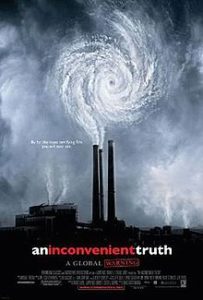
There was a film released in 2006 entitled An Inconvenient Truth. This capped the campaign by former US Vice-President Al Gore (1993-2001) to educate citizens about global warming; this was a comprehensive slide show that he estimated to have given more than a thousand times.  This film was part documentary and part prophecy. When asked of the need for a sequel, Co-Producer Laurie David responded:

“God, do we need one, everything in that movie has come to pass. At the time we did the movie, there was Hurricane Katrina; now we have extreme weather events every other week. The update has to be incredible and shocking.”[149]

Incredible and shocking is also our Inconvenient Truth for the Caribbean. The prophecy highlighted in that 2006 documentary manifested in the Caribbean in the years since. There was a sequel to that original film, the 2017 An Inconvenient Sequel: Truth to Power. The tagline for the movie was:

Fight like your world depends on it.
See a Trailer of the sequel in Appendix B below.

Here is where we are in the Caribbean – our world depends on our fighting to assuage the great threats to our society. These are defined in the book Go Lean…Caribbean – available to download for free. The book serves as a roadmap for the introduction and implementation of the technocratic Caribbean Union Trade Federation (CU), for the elevation and protection of Caribbean society – for all member-states.

In the book, the threats are described as Agents of Change (Page 57), none more challenging than Climate Change for us:

  • Climate Change – This issue is a major concern for the whole world, but particularly impactful on the Caribbean. There is some debate as to the causes of Climate Change, but no question as to its outcome: temperatures are rising, droughts prevail, and most devastating, hurricanes are more threatening. The CU roadmap must address the causes of Climate Change and most assuredly its consequences. The CU federal government must therefore advocate systems and schemes for a lower carbon footprint. Notwithstanding, the CU must implement recovery measures to respond, react and rebuild from the ever-more-devastating hurricanes.
  • Technology – Internet & Communications Technologies (ICT) is dynamically shifting the world. There are also industrial changes taking place, as in more efficient manufacturing methods, automation/robotics, and transportation options … in response to Climate Change, i.e. Green Energy options.
  • Aging Diaspora – Those that expatriated in the 1950’s and 1960’s now comprise an aging Diaspora – with the desire to return to the “town of their boyhood”. With inadequacies to prepare and respond to natural disasters, the repatriations may not happen.
  • Globalization – We are competing against a “flat” world. Any one country can provide a competitive delivery of the needs and wants of any other society, no matter where they are located physically.

*************

Inconvenient Truth 1

What is inconvenient is that we do not have a partner in the United States of America. We must raise the mantle ourselves and fight for our own cause. President Trump has wiped out all Global Climate Change initiatives by the US federal government. So this government is headed by someone that does not even believe the scientific certainty of Climate Change.

This actuality was boldly lamented in the book, in the opening Declaration of Interdependence (Page 11):

i. Whereas the earth’s climate has undeniably changed resulting in more severe tropical weather storms, it is necessary to prepare to insure the safety and security of life, property and systems of commerce in our geographical region. As nature recognizes no borders in the target of its destruction, we also must set aside border considerations in the preparation and response to these weather challenges.

Inconvenient Truth 2

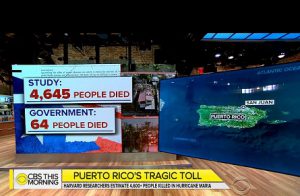
Natural Disaster preparation and response is reflective of our priorities. Hurricane Maria exposed the deficiency among the American stakeholders. Puerto Rico got no love from Washington; even in death the misery was understated, under-valued and undercounted. Despite this bad report, President Trump continues to defend his administration actions, despite irrefutable evidence to the contrary; see article in Appendix A.

Our other colonial legacies were equally unprepared:

The Go Lean book asserts that the full region of 30 member-states must come together – ourselves – to optimize the societal engines of economics, security and governance. We have delivered a “day late and a dollar short” on so many mitigations – consider our Catastrophic Risk Insurance Funds.

Inconvenient Truth 3

Rising Sea Levels may cover the coral islands.

The geology of the Caribbean has resulted inn 2 kinds of islands: Volcanic versus Coral (Reef). The volcanic islands tend to be mountainous, while coral islands tend to be flat. Climate Change have a real devastating effects on coral islands. Already the Pacific island-nation of Kiribati is facing extinction from high sea-level rise. This same fate awaits many Caribbean member-states. This is why many Caribbean states are members of the formal SIDS (Small Islands Development States).

Inconvenient Truth 4

Seaweed is not so innocent. The beautiful beaches are no longer “so beautiful” without strenuous re-engineering, This is a direct result of Climate Changehttps://stluciatimes.com/2018/03/04/fisheries-department-supports-sargassum-cleanup/

Inconvenient Truth 5

Our Diaspora is not returning. The original implied contract was for Caribbean citizens to emigrate abroad then come back home for retirement. Due to societal defects, many of the Diaspora are not returning; even to support their elderly parents; rather, they have been bringing their elderly to the foreign destinations. There is also a Climate Change angle, winters in northern locations – think: Canada – is milder due to global warming.

Inconvenient Truth 6

We are doubling-down on economic failure.

The primary economic engine in the Caribbean region is based on tourism. There is the need to diversify; yet the member-states have been doubling-down on the failing business models in tourism rather than investing in better models. Consider the example of resort-casino gambling.

Inconvenient Truth 7

We are doubling-down on our societal defects and hate.

Our people leave their Caribbean homes for “Push” and “Pull” reasons. “Pull” refers to the lure that life is better abroad, but “push” refers to the societal defects that drive people away to seek refuge. The Caribbean region does not embrace the “live and let live” ethos, so minority groups have experienced a Climate of Hate.

This is inconvenient and sad!

***********

These Inconvenient Truths are consistent for the movement behind the Go Lean book. The original book, and subsequent blog-commentaries, detailed the assessment in current Caribbean society, and then advocated for a new Caribbean – with new community ethos, strategies, tactics and implementations.

This submission is a new milestone; this is blog-commentary # 800.

These prior entries posit that the Caribbean status quo is truly in crisis. Alas, this crisis is a terrible thing to waste. Let’s reform and transform now! Yes, we can!

This is the quest of the Go Lean movement, to forge a Single Market and a technocratic government for the 30 Caribbean member-states. But the Go Lean book asserts that this effort is too big a task for just for Caribbean member-state alone, so the book urges all 30 member-states to convene, confederate and collaborate in order to effect change. This CU/Go Lean roadmap has these 3 prime directives:

  • Optimization of the economic engines in order to grow the regional economy to $800 Billion and create 2.2 million new jobs. (The issue of jobs alone is paramount to any Hope and Change movement in the region).
  • Establishment of a security apparatus to ensure public safety and protect the resultant economic engines.
  • Improve Caribbean governance to support these engines, including a separation-of-powers between the member-states and CU federal agencies.

The book stresses that reforming and transforming Caribbean communities must be a regional pursuit. This was an early motivation for the roadmap, as pronounced in the opening Declaration of Interdependence (Pages 11 – 14):

xi. Whereas all men are entitled to the benefits of good governance in a free society, “new guards” must be enacted to dissuade the emergence of incompetence, corruption, nepotism and cronyism at the peril of the people’s best interest. The Federation must guarantee the executions of a social contract between government and the governed.

xii. Whereas the legacy in recent times in individual states may be that of ineffectual governance with no redress to higher authority, the accedence of this Federation will ensure accountability and escalation of the human and civil rights of the people for good governance, justice assurances, due process and the rule of law. As such, any threats of a “failed state” status for any member state must enact emergency measures on behalf of the Federation to protect the human, civil and property rights of the citizens, residents, allies, trading partners, and visitors of the affected member state and the Federation as a whole.

xvi. Whereas security of our homeland is inextricably linked to prosperity of the homeland, the economic and security interest of the region needs to be aligned under the same governance. Since economic crimes … can imperil the functioning of the wheels of commerce for all the citizenry, the accedence of this Federation must equip the security apparatus with the tools and techniques for predictive and proactive interdictions.

xxiv. Whereas a free market economy can be induced and spurred for continuous progress, the Federation must install the controls to better manage aspects of the economy: jobs, inflation, savings rate, investments and other economic principles. Thereby attracting direct foreign investment because of the stability and vibrancy of our economy.

The Go Lean book accepts that the Caribbean region – all 30 member-states – is currently at a Failing disposition. But we can do better and be better. First, we must acknowledged our Inconvenient Truths.

And then work or fight towards reforming and transforming our society. Our world depends on it!

This is hard, heavy-lifting, but this roadmap is conceivable, believable and achievable. Let’s get started. Let’s make our homeland a better place to live, work and play. 🙂

Download the free e-book of Go Lean … Caribbean – now!

Sign the petition to lean-in for this roadmap for the Caribbean Union Trade Federation.

—————–

Appendix A – Trump questions Puerto Rico death toll, prompting San Juan mayor to call him ‘delusional’ and ‘paranoid’

WASHINGTON – President Donald Trump on Thursday questioned a report putting the death toll from last year’s catastrophic hurricane in Puerto Rico at nearly 3,000. He also called the new estimate an effort by Democrats to discredit him.
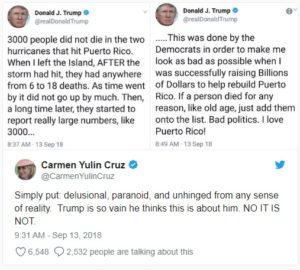
San Juan’s mayor described the president’s claim as “delusional” and even prominent Republicans such as House Speaker Paul Ryan distanced themselves from Trump’s tweets about Puerto Rico.

“This was done by the Democrats in order to make me look as bad as possible when I was successfully raising Billions of Dollars to help rebuild Puerto Rico,” Trump wrote on Twitter. “If a person died for any reason, like old age, just add them onto the list. Bad politics. I love Puerto Rico!”

Trump’s comments, which come as his administration prepares for Hurricane Florence to hit the East Coast, led both Democratic and Republican lawmakers to weigh in countering his claim. When Hurricane Maria hit Puerto Rico last year, it devastated homes and infrastructure and left large swaths of the territory without power for months.

Ryan, pressed by reporters on Trump’s tweet, said he disagreed with the president but would not comment on whether he thought Trump should apologize.

Ryan said he had  “no reason to dispute” the findings of a study commissioned by Puerto Rico’s government that put its death toll at nearly 3,000 people.

“Those are just the facts of what happens when a horrible hurricane hits an isolated place like an island,” Ryan said when asked about Trump’s tweet.

Sen. Marco Rubio, a Florida Republican who has been outspoken on the government’s response to the storm, lamented in a tweet that the deaths had become political. He repeated the study’s findings that 3,000 more people died on the island after the hurricane than during comparable periods.

“Both Fed & local gov made mistakes,” Rubio wrote. “We all need to stop the blame game & focus on recovery, helping those still hurting & fixing the mistakes.”

Florida Gov. Rick Scott, a Republican and early Trump supporter, said he disagreed with the president.

“I’ve been to Puerto Rico 7 times & saw devastation firsthand,” Scott, now a candidate for Senate, posted on Twitter. “The loss of any life is tragic; the extent of lives lost as a result of Maria is heart wrenching. I’ll continue to help PR.”

Ron DeSantis, a former Republican congressman running for governor in Florida, also disputed Trump’s assertion. “He doesn’t believe any loss of life has been inflated,” spokesman Stephen Lawson said in an emailed statement.

As his team braces for Hurricane Florence, Trump has praised his administration’s responses to deadly storms – including in Puerto Rico.

San Juan mayor Cruz responded, …

“Simply put: delusional, paranoid, and unhinged from any sense of reality.”

“Trump is so vain he thinks this is about him. NO IT IS NOT,” Cruz wrote on Twitter.

Puerto Rico Gov. Ricardo Rosselló said he “strongly denounced” what he described as questioning the impact of the storm for political purposes.

“The victims and the people of Puerto Rico do not deserve to have their pain questioned,” he said in a statement. “It is not time to deny what happened, it is time to make sure that it does not happen again.”

Democrats on Capitol Hill blasted Trump.

“Only Donald Trump could see the tragedy in Puerto Rico and conclude that he is the victim,” said Sen. Ed Markey, D-Mass. “May God bless the souls of the nearly 3,000 Americans that died in Puerto Rico and may he take pity on your soul Mr. President.”

Without mentioning Trump by name, Rep. Sheila Jackson Lee, D-Texas, a member of the House Committee on Homeland Security, slammed the “cavalier” tweeting about the number of deaths in Puerto Rico.

“You have lost compassion for people who are diverse,” she said.

Trump’s Thursday morning tweets focused on a George Washington University study released last month that examined the toll from Hurricane Maria. From September 2017 to February 2018, 2,975 people died, according to that study, which was commissioned by Puerto Rico’s government.

Late Thursday, deputy press secretary Hogan Gidley pushed back on criticism of the Trump’s response to Maria in a statement, saying the administration provided “unprecedented support to Puerto Rico.” Gidley said Cruz and the “liberal media” have tried to “exploit the devastation by pushing out a constant stream of misinformation and false accusations.”

In addition to force of the hurricane itself, many people in Puerto Rico died because disease and infection due to the lack of electricity and drinkable water on the island. The storm destroyed homes and and crippled roads, bridges, and hospitals.

George Washington University said Thursday it stands by the methodology used in the report and said the work was conducted with “complete independence and freedom from any kind of interference.”

“We are confident that the number – 2,975 – is the most accurate and unbiased estimate of excess mortality to date,” the school said in a statement.

Trump also took heat after he visited Puerto Rico in the aftermath of the Sept. 20, 2017, storm. The president tossed paper towels to Puerto Rican residents at a local relief center, angering storm victims and others who saw his actions as insensitive.

After his tweets Thursday, Democrats accused Trump of minimizing the death toll for callous political reasons.

Andrew Gillum, the Democratic candidate for governor in Florida, slammed Trump’s tweet.

“No death is partisan and our brothers and sisters in Puerto Rico deserved better from @realDonaldTrump before, during, and after the hurricane.”

The House Democratic Caucus tweeted that Trump “won’t acknowledge the thousands of Americans who died on his watch,” and added, “Even worse, Republicans have no interest in holding this administration accountable and ensuring that Congress is prepared to respond to these disasters.”

A report released this summer by the Federal Emergency Management Agency identified deficiencies in the administration’s response, including that the agency was not adequately staffed heading into the hurricane season. In the months leading up to Maria’s approach, FEMA had 10,683 people on hand, about 86 percent of the agency’s target, the report found.

The report found that the island itself was not prepared for such a storm, which contributed to widespread loss of power and communications – hampering the response.

A Government Accountability Office report last week confirmed many of those findings, and also noted that 54 percent of the FEMA workers deployed last year were serving in a role they were not qualified to perform. Staffing shortfalls complicated many aspects of the response, including the effort to move people into temporary housing in the mainland, the GAO found.

“The 2017 hurricanes and wildfires highlighted some longstanding issues and revealed other emerging response and recovery challenges,” the report said.

Source: USA Today newspaper – Posted September 13, 2018; retrieved September 14, 2018 from: https://www.usatoday.com/story/news/politics/2018/09/13/donald-trump-without-evidence-questions-puerto-rico-death-toll/1288118002/

—————–

Appendix B VIDEO – An Inconvenient Sequel: Truth To Power (2017) – Official Trailer – https://youtu.be/huX1bmfdkyA

Published on Mar 28, 2017 – Watch the new trailer for An Inconvenient Sequel: Truth to Power, the sequel to An Inconvenient Truth. In theatres July 28, 2017. #BeInconvenient

Climate Changes, Truth Does Not.

A decade after AN INCONVENIENT TRUTH brought Climate Change into the heart of popular culture, comes the riveting and rousing follow-up that shows just how close we are to a real energy revolution. Vice President Al Gore continues his tireless fight traveling around the world training an army of climate champions and influencing international climate policy. Cameras follow him behind the scenes – in moments both private and public, funny and poignant — as he pursues the inspirational idea that while the stakes have never been higher, the perils of Climate Change can be overcome with human ingenuity and passion.

Official Movie Site: http://www.inconvenientsequel.com/

Facebook: https://www.facebook.com/AnInconvenie…

Twitter: https://twitter.com/aitruthfilm

Instagram: https://www.instagram.com/aninconveni…

Share this post:
, , ,

Caribbean Unity? Need French Antilles

Go Lean Commentary

Bedrock, Baby!

This is the lesson being learned in San Francisco for the new Salesforce Tower: If you’re going to build a skyscraper, make sure it has a good foundation. While a building can go up with a weak foundation, there will be structural problems along the way. See Appendix VIDEO for the story of the Millennium Tower sinking, and leaning.

This is an important lesson for the Caribbean; there is a need for integration, consolidation and collaboration among the Caribbean member-states. But, we need a good foundation; we need full participation from all the neighbors (Dutch, English, French and Spanish speaking islands). Just look at this photo here, depicting that the French Antilles territories of Guadeloupe and Martinique are “next door” to English-speaking Caribbean island nation-states:

(The island of Saint Martin is shared as a French territory and Dutch territory – this is considered a legal condominium; St Bartholomew is also on the list of current French Caribbean islands; but French Guiana – on the South American mainland next to Suriname completes the list of French territories; Haiti gained independence from France in 1804).

This is the assertion of the movement behind the book Go Lean … Caribbean. This book declares that Caribbean regional governance is deficient and inadequate; there must be a regional integration that integrates the entire region. Yes, the existing Caribbean Community (CariCom) integration effort without the French territories is like building a skyscraper on a shaky foundation. What a skyscraper really needs is: Bedrock, Baby!
What Caribbean integration really needs is: Complete participation of all the neighbors in the neighborhood.

This is the purpose of this commentary, to lament the inadequacies because of Caribbean disunity. This is the continued focus of this series of commentaries on the joke (absurdity) of the premise that there is some Caribbean unity; this is a mirage. This submission is 3 of 4 from the Go Lean movement. The urging is that the full Caribbean – all 30 member-states – must confederate and consolidate; otherwise our communities will not thrive, maybe, not even survive. The assessment is that the prior attempts of nation-building – without some sort of alliance – is just a joke!

The other commentaries in the series are cataloged as follows:

  1. Caribbean Unity? What a joke – Tourism Missteps
  2. Caribbean Unity? – Ross University Saga
  3. Caribbean Unity? – No Freedom of Movement in/out of French Antilles
  4. Caribbean Unity? – Religion’s Role: False Friend

All of these commentaries relate to “how” the stewards for a new Caribbean can finally foster unity in this region. The previous formal exercises in regional integration were flawed at the foundation; this includes the current Caribbean Community or CariCom plus the previous attempt among the English-speaking islands: the disastrous West Indies Federation, and the attempt in the Dutch-speaking islands, the now-defunct Netherlands Antilles. These many iterations ignored the bedrock foundational principle of: Liberty, Equality and Fraternity.

Those 3 principles sound familiar …

Yes, they are the values of the French Revolutionary movement. This is relevant because the French are also among the World Powers that discovered, exploited and colonized the Caribbean. To this day, they claim the afore-mentioned 4 territories in the region.

This commentary is not a criticism of the French eco-system or history, except for calling out their failure to integrate with their Caribbean neighbors. The country of France was always front-and-center in the enlightenment movement as their Declaration of the Rights of the Man and of the Citizen of 1789, together with Magna Carta, the English Bill of Rights, and the United States Bill of Rights, inspired in large part the 1948 United Nations Universal Declaration of Human Rights.[4]

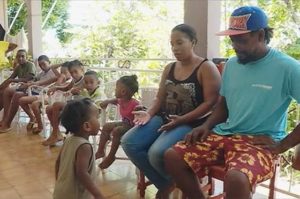
Human rights – or Liberty, Equality and Fraternity – does not fit the description of colonies in these French Antilles. They are being administered remotely from Metropolitan France (Paris) rather than exercising autonomy to partner with their next door neighbors. As a result of this failing, we have no Freedom of Movement between the French Antilles and their neighbors – but there is Freedom of Movement in the European Union (and the Schengen Area). See the plight highlighted in this news story:

Title # 1: Dominican family facing expulsion from Martinique
A Dominican family of nine have been threatened with expulsion from Martinique, one year after fleeing there in the aftermath of hurricane Maria, local news reports have said.

The family, seven children and their parents, have been asked to leave Martinique this Thursday, August 16, 2018, according to Martinique 1Ere.

The online publication said the Dominican immigrants have all been living at the home of the children’s grandmother in the community of Prêcheur.

However,  since arriving in Martinique the visitors could not obtain a residence permit and must leave Martinique for their native Dominica, Martinique 1Ere reported.

The Mayor of the area,  Marcellin Nadeau, is reportedly opposed to the expulsion and has cited the historical links of the community with Dominicans.

Hurricane Maria blasted across Dominica on the night of September 18, 2017, with torrential rain and gusts of some 160 mph.

Damage to the Island was estimated at over $EC 2 billion and some one fifth of the population is said to have sought refuge in other countries in the aftermath of the storm.
Source: St. Lucia Times – posted August 15, 2018; retrieved August 29, 2018 from: https://stluciatimes.com/2018/08/15/dominican-family-facing-expulsion-from-martinique/

—————-

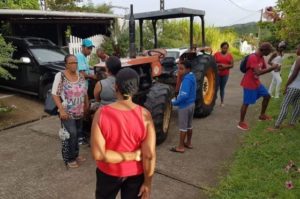
Title # 2: Martinique: Supporters mobilise against expulsion of Dominican family
Residents of the community of Prêcheur in Martinique Friday morning began mobilising to prevent the expulsion of a Dominican family, local news reports say.

The nine Dominicans had sought refuge in the French overseas territory following the passage of Hurricane Maria, which devastated Dominica last year.

According to Martinique 1 Ere, since 6:30 Friday morning, several inhabitants of Prêcheur, began mobilising to prevent the departure of Durand family.

The family, seven children and their parents, had been living with the children’s grandmother in Martinique for the past year.

They were due to leave Martinique Friday because they do not have a residence permit.

Local news reports said the family made several attempts to obtain the permit but failed to do so.

They were originally due to leave on Thursday, August 16, but the authorities gave them a few more hours to prepare for their departure, it was reported.

Residents of the community where the visitors have been staying have stated their intention to block access to the port at Fort de France to prevent the Dominicans from leaving, Martinique 1 Ere has reported.

The online publication quoted lawyer, Camille Célénice, as saying that a request for a residence permit must be filed Friday morning in the presence of the Mayor of  Prêcheur, Marcellin Nadeau.

Nadeau is reported to be opposed to the move to expel the Dominican family, citing the historical links of the town with its neighbours from Dominica.
Source: St. Lucia Times – posted August 17, 2018; retrieved August 29, 2018 from: https://stluciatimes.com/2018/08/17/martinique-supporters-mobilise-against-expulsion-of-dominican-family/

It is apparent from this article, that refuge-seekers from hurricane-damaged areas seek refuge in their neighborhoods, first. It is only logical that displaced people will only want to move the shortest distances possible. If your island is only 40 miles away, then despite the divergent colonial heritage, that proximity overrides any cultural affinity.

Culture can move and adapt to a land; a land cannot move and adapt to a culture.

The Go Lean book serves as a roadmap for the introduction and implementation of the Caribbean Union Trade Federation (CU), an intergovernmental entity to empower all of the Caribbean member-states – the independent and dependent territories. This new regime for the Caribbean needs the islands in the French Antilles. But, the French Antilles need the CU, too. Accordingly, there is a lot of discord in those lands; see this opening anecdote from the Go Lean book on Page 17:

Anecdote # 3

French Caribbean – Organization & Discord

The terms French Caribbean, French West Indies or French Antilles all refer to the five territories currently under French sovereignty in the Antilles islands and related areas of the Caribbean. There are two organizational types:
1. Overseas departments are constituencies of France that are outside metropolitan France. They have the same political status as metropolitan departments. As integral parts of France and the European Union, overseas departments are represented in the National Assembly, Senate, and Economic and Social Council, vote to elect European Parliament (MEP), and also use the Euro as their currency. Under the 1946 Constitution of the Fourth Republic, the French colonies were defined as overseas departments. Since 1982, following the French government’s policy of decentralization, overseas departments have elected regional councils with powers similar to those of the regions of metropolitan France. As a result of a constitutional revision that occurred in 2003, these regions are now to be called overseas regions; though there is no difference in relevance or function.

o Guadeloupe (Basse-Terre & Grande-Terre); plus dependencies: Les Saintes, Marie-Galante, La Désirade
o Martinique
o French Guiana – actually on the South America mainland

2. Overseas collectivities are first-order administrative divisions of France. These constitute some former French overseas territories and other French overseas entities with a particular status, all of which became collectivities by constitutional reform on 28 March 2003. For the Caribbean, they include:

o Saint Martin – the northern part of the island shared with a Dutch Territory
o Saint Barthélemy

There is recent history of discord in the French Caribbean. Saint Barthélemy has a more developed and prosperous economy than its previous administrative “big brother” Guadeloupe. Duty-free port attractions, retail trade, high-end tourism and its luxury hotels/villas have increased that island’s standard of living for its citizens, even exceeding metropolitan France. Plus, unlike most Caribbean islands, the population of Saint “Barths” is mostly of European ancestry. With the 2003 constitutional reforms, the populations of the French territories of Saint Barthélemy and Saint Martin were given the choice to remain within France or alter their status; they voted in favor of secession from Guadeloupe and to form separate overseas collectivities of France. In July 2007, these island communes were officially detached from Guadeloupe and became two separate French overseas collectivities with their own local administration and own deputies in the French National Assembly and Senate.

There is also discord in Guadeloupe and Martinique. The average salary in Guadeloupe is lower than in mainland France while the unemployment and poverty rates on both islands are double those found in metropolitan France; these islands suffered the 2nd and 3rd highest unemployment rates in the European Union (2007), and #1 in youth unemployment.

In January/February 2009, an umbrella group of approximately fifty labor unions and other associations called for a €200 ($260 USD) monthly pay increase for Guadeloupe and Martinique’s low income workers. The protesters had proposed that authorities “lower business taxes as a top up to company finances” to pay for the €200 pay raises. Employers and business leaders in Guadeloupe had said that they could not afford the salary increase. The strike lasted 44 days, during the high season, and escalated to “the verge of revolt”, finally ending with an accord in March 2009 in which the French government agreed to raise the salaries of the lowest paid by the requested €200 and granted the petitioners top 20 demands. Tourism suffered greatly during this time and affected the 2010 tourist season as well; the islands were believed to have lost millions of dollars in tourism revenues due to cancelled vacations and closed hotels. The strikes exposed deep ethnic, racial, and class tensions and disparities – discord – within the French Caribbean territories.

<—————————->

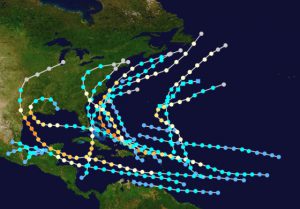
Hurricanes are a serious threat for Caribbean life. This is true for the French Caribbean as well. There is nothing that Paris can do to eliminate the threat! (Notwithstanding the COP 21 Paris Accords to mitigate Greenhouse Gases to retard the effects of Climate Change).

All the Caribbean must band together to cope. This includes all islands of all colonial heritage. This was the opening declaration in the Go Lean book (Page 5), quoting the lyrics of the popular 1970 song “Lean On Me”:

Second Verse
If there is a load you have to bear
That you can’t carry
I’m right up the road
I’ll share your load
If you just call me

The current governance in the Caribbean is inadequate for dealing with the challenges of Climate Change; this is affecting all facets of our society: economics, security and governance. Rather than an intra-island focus, all these lands need to look to the full region and then convene, consolidate, collude, confederate and collaborate with each other to make the homelands better places to live, work and play. A regional construct is the focus of the technocratic CU; it is designed to shepherd the economic engines, while also guarding against all security challenges – including preparation and response for natural disasters.

The Go Lean/CU roadmap will employ strategies, tactics and implementations to impact its prime directives; identified with the following 3 statements:

This directive transcends national borders, languages or culture. It just delivers …

This was always the hope for the Caribbean Single Market and Economy (CSME), the initiative spurred by CariCom; but it never delivered. This new regime embraces the spirit of CariCom – the need for integration – but with an execution foundation that goes down to the bedrock.

The book Go Lean…Caribbean – available to download for free – opened with an honest assessment there must be a regional interdependence. This assessment was pronounced in the opening Declaration of Interdependence (Pages 12 – 13):

i. Whereas the earth’s climate has undeniably changed resulting in more severe tropical weather storms, it is necessary to prepare to insure the safety and security of life, property and systems of commerce in our geographical region. As nature recognizes no borders in the target of its destruction, we also must set aside border considerations in the preparation and response to these weather challenges.

xi. Whereas all men are entitled to the benefits of good governance in a free society, “new guards” must be enacted to dissuade the emergence of incompetence, corruption, nepotism and cronyism at the peril of the people’s best interest. The Federation must guarantee the executions of a social contract between government and the governed.

xvi. Whereas security of our homeland is inextricably linked to prosperity of the homeland, the economic and security interest of the region needs to be aligned under the same governance. Since economic crimes … can imperil the functioning of the wheels of commerce for all the citizenry, the accedence of this Federation must equip the security apparatus with the tools and techniques for predictive and proactive interdictions.

xxiv. Whereas a free market economy can be induced and spurred for continuous progress, the Federation must install the controls to better manage aspects of the economy: jobs, inflation, savings rate, investments and other economic principles. Thereby attracting direct foreign investment because of the stability and vibrancy of our economy.

The Go Lean book provides 370-pages of turn-by-turn instructions on “how” to adopt new community ethos, plus the strategies, tactics, implementations and advocacies to execute so as to transform the Caribbean society, even the French Antilles. Consider the Chapter excerpts and headlines from this sample on Page 239 entitled:

10 Ways to Impact French Territories

1 Lean-in for Caribbean Integration
The CU will allow for the unification of the region into one market, thereby creating a single economy of 30 member-states for 42 million people with the scale to effect change; the CU does not involve sovereignty. The treaty includes the French Overseas Territories of Guadeloupe, Martinique, Saint Martin and Saint Barthélemy, but not French Guiana initially. Though France is one of the biggest economies, French economic prosperity has not always extended to these islands
2 Trading Partners based on Nature not Politics
One original motive of French colonialism was the facilitation of trade. That need is even more pronounced now. But with the changes of globalization, technology and the demographic regionalization it is more fitting to trade with neighbors, based on natural location, rather than political alignment. The CU extends that push with this Trade Federation.
3 Homeland Security Pact – NATO style
4 Disaster Preparation & Response
Mother Nature, and the reality of hurricanes, plays no favorites for one island versus another due to political alliance. The CU will better plan/prepare/respond, with a professional Emergency Management Agency and recover with elite financial products (i.e. reinsurance sidecars) powered by capital markets to restore economic engines in the islands.
5 Caribbean Dollar and the Caribbean Central Bank
6 Emigration Circuit Breaker
7 EU Participants
8 Cruise Line Collective Bargaining
9 Paris Hand-off / Proxy
10 Host Country Entitlements

The Caribbean must foster a better homeland that allows for Free Movement of People … and also better disaster preparation and response. This Go Lean movement has previously detailed many related issues and advocacies for the French Caribbean and their full participation in this regional construct; consider this sample of previous blog-commentaries:

https://goleancaribbean.com/blog/?p=13319 Making a ‘Pluralistic Democracy’ – Freedom of Movement
https://goleancaribbean.com/blog/?p=12581 State of the Union – Annexation: French Guiana
https://goleancaribbean.com/blog/?p=11287 Creating a Legacy in Pro-Surfing in Martinique
https://goleancaribbean.com/blog/?p=10554 Welcoming the French
https://goleancaribbean.com/blog/?p=10043 Caribbean Integration Plan for Greater Prosperity
https://goleancaribbean.com/blog/?p=382 Guadeloupe, Martinique, St Maarten Join the ACS

The reasons why people abandon a beloved homeland is due to 2 reasons: “push” and “pull” factors. “Push” would refer to the resultant deficient infrastructure forcing stakeholders to abandon the community, and “pull” would refer to the perception that there are better economic opportunities elsewhere. The French Antilles have many of the same problems as the rest of the Caribbean. Societal defects abound, to the point that many of the people – and institutions – flee their homelands. This is true even more so right after a disastrous storm – a “push” factor. In the foregoing news articles, the displacement drama was associated with the aftermath of Category 5 Hurricane Maria in Dominica. Since all Caribbean member-states are “in the same boat”, all territories-countries should “pick up an oar” and collaborate on solutions.

(The absolute latest news on this Dominican family: Stay of Execution on Deportation –  https://stluciatimes.com/2018/08/29/martinique-decision-pending-on-expulsion-of-dominican-family/).

In summary, the Go Lean roadmap seeks to reboot and relaunch the integration effort. But this time, with all Caribbean member-states (30), not just the English-speaking, but partnering with the French Antilles and Spanish-speaking states as well. Due to our Climate Change realities, our region must reform and transform the Caribbean’s societal engines so as to better allow for our tropical realities.

Let’s be better – together.

All Caribbean stakeholders – including European governments (i.e. France and The Netherlands) – are urged to lean-in to this roadmap for change … and empowerment. We need “all hands on deck” to make this region a better place to live work and play. 🙂

Download the book Go Lean … Caribbean – now!

Sign the petition to lean-in for this roadmap for the Caribbean Union Trade Federation.

—————-

Appendix VIDEO – The Leaning Tower of San Francisco – https://youtu.be/qKtlZc-u9TU

Published on November 5, 2017 – The Millennium Tower opened to great acclaim with high-priced, posh apartments. But those accolades and property values are sinking, along with the building’s foundation. No Bedrock! Jon Wertheim reports.

See full story here: https://www.cbs.com/shows/60_minutes/video/nn9f_o573SfUTgnxuseZn5qbLYNtHCQI/the-leaning-tower-of-san-francisco/

Share this post:
, , , ,
[Top]

Caribbean Unity? Ross University Saga

Go Lean Commentary

11Again, if two lie down together, they will keep warm; but how can one keep warm alone? 12And though one may be overpowered, two can resist. Moreover, a cord of three strands is not quickly broken. – The Bible Ecclesiastes 4:11 – 12 Berean Study Bible

It is so unfortunate that these Caribbean islands think that they are … “islands”. Didn’t they ever hear:

‘No man is an island’? – English metaphysical poet John Donne (1572-1631)
The phrase ‘no man is an island‘ expresses the idea that human beings do badly when isolated from others and need to be part of a community in order to thrive. Donne was a Christian but this concept is shared by other religions, principally Buddhism.

These islands do acknowledge that there are other islands, but rather than cooperating and collaborating together, the strategy seems to be limited to just competition – “It’s Better in …

This is the continued focus of this series of commentaries on Caribbean [dis]unity. This submission is 2 of 4 from the movement behind the book Go Lean … Caribbean – is in consideration of the societal defects in the region that prevents us from banding together. We do not reform nor transform like other communities; we do not confederate nor consolidate; we somehow think that we are better than our neighbors and can survive alone. What a joke!

The other commentaries in the series are cataloged as follows:

  1. Caribbean Unity? – What a joke – Tourism Missteps
  2. Caribbean Unity? – Ross University Saga
  3. Caribbean Unity? – No Freedom of Movement in/out of French Antilles
  4. Caribbean Unity? – Religion’s Role: False Friend

All of these commentaries relate to “how” the stewards for a new Caribbean can shepherd unity in this region. But first we must accept that Caribbean Unity is a joke, despite a previous formal exercise in regional integration called CariCom. In truth, CariCom is not the first integration attempt:

  • In the English-speaking islands, there was the disastrous West Indies Federation.
  • In the Dutch-speaking islands, there was the now-defunct Netherlands Antilles.

This talk of Caribbean Unity/Disunity is not just academic; this has real world implications. Just last year, the Eastern Caribbean island of Dominica was devastated by Category 5 Hurricane Maria; the operations of their biggest non-tourism economic engine – Ross University and their 3500 students – was greatly impacted. The end result, another island, Barbados seems to have recruited Ross University to “relocate shop” to their island … permanently – not just during the recovery. This charge reflects the disunity of the region. Dominica and Barbados should have been collaborating, not competing.

This is not just our movement’s complaint alone; many community leaders identify and observe this bad trend. Consider here, this news article relating the story:

Title: Ross University saga an indictment on CARICOM
The leader of the Lucian Peoples Movement, Therold Prudent, has declared that the Ross University saga involving Dominica and Barbados, is an indictment on the Caribbean Community (CARICOM), the regional grouping to which both countries belong.
The institution is relocating from Dominica to Barbados.

“It just proves that we are like crabs in a barrel,” Prudent told St Lucia Times in an interview Friday.

“We are continually fighting each other for a little bread, for opportunity, whereas we should be standing with each other and at least saying to this University ‘Listen, this is a sister Island. You can’t just pick up and go and just come into another Caribbean Island because you believe that the terms aren’t favourable to you anymore in that particular country.’”

The LPM leader asserted that countries within CARICOM need to speak with one voice.

He expressed the view that the Ross University issue demonstrates that foreigners and investors understand the disunity and weakness in CARICOM and Caribbean Islands.

According to Prudent, the investors understand that all they have to do is “put a carrot before us and we will jump for it, not mindful if it is going to cost the other nation or country which is a part of CARICOM. ”

He said CARICOM has not lived up to expectations, including speaking with one voice on the international stage and adopting a unified foreign policy.

“Right now we are in a situation where everybody is looking after themselves and it is not about the region as a whole” the LPM leader lamented.

He told St Lucia Times that under such circumstances, it is easy for investors to disrespect the Caribbean.

On Tuesday, Barbados Prime Minister, Mia Mottley was quoted as  denying that there was anything underhanded by her administration, in accepting the Ross University School of Medicine’s move to the island from Dominica.

Mottley asserted that the hands of her administration are clean, local media reports said.

Last Friday,  Dominica’s Prime Minister Roosevelt Skerrit announced that Ross University, which had been forced to relocate its operations to St Kitts and the state of Tennessee in the United States following the passage of Hurricane Maria last September, would be leaving the Eastern Caribbean nation after 40 years.

Source: Posted August 10, 2018; retrieved August 23, 2018 from: https://stluciatimes.com/2018/08/10/prudent-ross-university-saga-an-indictment-on-caricom/

As related in the foregoing, these words by a St Lucian Opposition Party Leader is quite an indictment:

“… foreigners and investors understand the disunity and weakness in CARICOM and Caribbean Islands”

Our disunity is a joke … to the rest of the world!

No doubt, there should be regional integration. In fact what is needed is a Single Market. The spirit of CariCom – attempting integration – is a good one; but the execution is failing. The book Go Lean…Caribbean – available to download for free – opened with an honest assessment of CariCom; it stated (Page 14):

In July 2013, the Caribbean Community (CariCom) celebrated its 40th anniversary of ascension to pomp and gallantry… and much criticism. Many political and social commentators expressed how the CariCom had disappointed so many in their delivery of any reasonable success for economic integration. One commentator, Caribbean icon Sir Shridath Ramphal, (who served as the second British Commonwealth Secretary-General from 1975-1990; Foreign Minister of Guyana from 1972 – 1975; and previous stints as Chancellor at the University of the West Indies – until 2003 – and of the University of Guyana), charged that the leadership in the Caribbean region has “put the gears of the CariCom Single Market in neutral and the gears of its Single Economy into reverse”.

The movement behind the book Go Lean … Caribbean seeks to reboot and relaunch the integration effort. But this time, with all Caribbean member-states (30), not just the English-speaking, but partnering with the French Antilles and Spanish-speaking states as well. The Go Lean book serves as a roadmap for the introduction and implementation of the Caribbean Union Trade Federation (CU), an elevated entity that graduates from CariCom. The CU is design to reach greater heights than CariCom ever contemplated; see Appendix CU > CC below.

There are a lot of issues that affect the economic landscape that are too big for any one member-state to contend with alone. Category 5 hurricanes are one of them. The facilitation to restore and recover should be a regional effort and not just a national issue. Obviously, Dominica failed in its delivery for Ross University; see the encyclopedic details on that school history and recovery here (and the Appendix VIDEO on Ross 40th Year Timeline below):

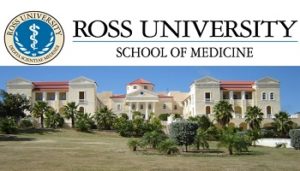
Title: Ross University School of Medicine
History
The medical school was founded in 1978 as The University of Dominica School of Medicine by Robert Ross, an entrepreneur.[2][3] At the time, it was housed in leased facilities at The Castaways Hotel, with an inaugural class of 11 students. In 1982, the University of Dominica School of Medicine formally changed its name to Ross University School of Medicine at the request of the government of Dominica.

In 1985 California state medical licensing officials (the Board of Medical Quality Assurance), began investigating RUSM, along with other medical schools located in the Caribbean.[4] The officials released a report stating that RUSM at that time had nearly no admissions standards, and that the school was in the business of providing medical degrees to “everyone that wants one.”[4] RUSM agreed to implement a number of changes recommended by the board and has since graduated over 11,000 practicing physicians.[4]

In the late 1990s, RUSM expressed interest in opening a new medical school in Casper, in the U.S. state of Wyoming, but accreditation was denied by the Liaison Committee on Medical Education, the organization that accredits MD-granting medical schools in the United States.[5] Some local individuals welcomed the economic impact of a new medical school on the town, but critics questioned the quality of education at a for-profit institution.[5] In 2003, RUSM was acquired by DeVry Education Group,[6] which has since renamed itself Adtalem Global Education.

The school was impacted by Hurricane Maria in 2017, when the Category 5 storm made landfall on the island of Dominica. The hurricane knocked out communications, effectively isolating RUSM from the outside world. The campus suffered moderate damage from the effects of Maria. Students and faculty were located through a university-initiated roll call, and then were evacuated from the campus to the U.S. mainland.[7]

In October 2017, the university announced that classes for the fall semester would resume mid-October aboard the GNV Excellent, an Italian ferry that would be docked off the coast of the island of St. Kitts. The ship was reconfigured as an educational venue. [7]

In November 2017, Ross University School of Medicine announced plans to relocate temporarily to Knoxville, Tennessee for continuation of medical school classes. Lincoln Memorial University (LMU), based in Harrogate, Tennessee and with operations in Knoxville, will provide the necessary operational capacity and the technical capabilities to support RUSM faculty, students, and staff. [8]

Ross University School of Medicine has announced that the main campus will be relocated from Dominica to Barbados for the beginning of the 2019 Spring semester. [9] [10]

Source: Retrieved August 23,  2018 from:

https://en.wikipedia.org/wiki/Ross_University_School_of_Medicine#History

Poor Ross University and poor Dominica.

The governance in this Caribbean region is so poor that these institutions could not anticipate the worst-case scenario of a hurricane. Sad! 🙁

The Caribbean as a region and the nation-state of Dominica has an inadequate status quo for providing the needs of the people and trading partners in these homelands. We are also inadequate for dealing with the challenges of nation-building. As a regional construct, we must do better! We must convene, consolidate, collude, confederate and collaborate, not compete.

The CU is designed to be a technocratic intergovernmental entity that shepherds economic growth for the full Caribbean region and mitigate against related security challenges – including preparation and response for natural disasters. The goal is to use a regional focus to reboot and optimize the region’s societal engines. The Go Lean/CU roadmap will employ strategies, tactics and implementations to impact its prime directives; identified with the following 3 statements:

The Go Lean book stresses that the required reform to transform Caribbean disaster preparation may be too big for any one country (think: Dominica); the solution must be a regional delivery (think: CariCom). This was an early motivation for the roadmap, as pronounced in the opening Declaration of Interdependence (Pages 12 – 13):

i. Whereas the earth’s climate has undeniably changed resulting in more severe tropical weather storms, it is necessary to prepare to insure the safety and security of life, property and systems of commerce in our geographical region. As nature recognizes no borders in the target of its destruction, we also must set aside border considerations in the preparation and response to these weather challenges.

xi. Whereas all men are entitled to the benefits of good governance in a free society, “new guards” must be enacted to dissuade the emergence of incompetence, corruption, nepotism and cronyism at the peril of the people’s best interest. The Federation must guarantee the executions of a social contract between government and the governed.

xvi. Whereas security of our homeland is inextricably linked to prosperity of the homeland, the economic and security interest of the region needs to be aligned under the same governance. Since economic crimes … can imperil the functioning of the wheels of commerce for all the citizenry, the accedence of this Federation must equip the security apparatus with the tools and techniques for predictive and proactive interdictions.

xxiv. Whereas a free market economy can be induced and spurred for continuous progress, the Federation must install the controls to better manage aspects of the economy: jobs, inflation, savings rate, investments and other economic principles. Thereby attracting direct foreign investment because of the stability and vibrancy of our economy.

The Go Lean book provides 370-pages of turn-by-turn instructions on “how” to adopt new community ethos, plus the strategies, tactics, implementations and advocacies to execute so as to reboot, reform and transform the societal engines of Caribbean society, for better preparation for natural disasters. Consider this specific implementation the book, where the functionality of the Emergency Management Agency is described; this is a subset of the Cabinet-level Homeland Security Department. This is described in the book as follows on Page 76 with the section title:

B – Homeland Security Department

B4 – Emergency Management

This area is perhaps one of the most important functions of the CU. The Emergency Management Department will coordinate the planning, response, rebuilding and recovery before, during and after natural disasters and other emergency events. This is the risk management arm of the CU Trade Federation. As such, the scope of Emergency Management will also include education, mentoring, monitoring, mitigation, licensing and coordination of all volunteer activities.

Emergencies also include the man-made variety as in industrial (oil spills, factory accidents, chemical spills), explosions, terroristic attacks and prison riots. The purpose of the Trade Federation is to enhance the economic engines of the region.

While the # 1 economic driver in the region is tourism, any poorly managed episode of “man-made” emergencies will have devastating effects on tourist bookings. Therefore, the CU must respond quickly, forcefully and professionally to contain the physical and image damage that can occur from these incidents.

Though not exclusive, this agency will coordinate its specialized services, skill-sets and occupations like Paramedic, EMT, Search-and-Rescue, Canine (K-9) with other governing (law enforcement) entities. Regional training will therefore be coordinated, licensed, and certified by this CU Emergency Management Department.

This Emergency Management agency will also coordinate the training and management of animal responders, in conjunction with the other federal agencies of Justice, Agriculture, Interior (Parks). The animals will include bomb sniffing dogs, cadaver dogs, drug dogs and mounted police horses.

There is also an economic/financial scope for this department. As the effort for a comprehensive property-casualty fund to cover the entire Caribbean region will also be coordinated by this agency. The classic solution is a large pool of premium payers and claims filed by the affected area. Beyond this model, there are also advanced products like re-issuance side-cars for market assimilation. The public can then invest and profit from the threat/realization of regional risks. This derivative product is a bet, a gamble, but in the end, the result is an insurance fund of last resort, much like the Joint Underwriters Agency (JUA) in Florida.

The Caribbean must foster a better disaster preparation and response apparatus. Systems of commerce are at stake. So the Go Lean roadmap address “this” as a Prime Directive, asserting that the region’s security and economics must be managed with the same priorities. This Go Lean movement has previously detailed many related issues and advocacies for regional disaster preparation and response; consider this sample of previous blog-commentaries:

https://goleancaribbean.com/blog/?p=15059 Regional Tourism & Disaster Coordination – No Longer Optional
https://goleancaribbean.com/blog/?p=15031 “Profiting” from Hurricanes – Disaster Risk Funds
https://goleancaribbean.com/blog/?p=15012 In Life or Death: No Love for Puerto Rico
https://goleancaribbean.com/blog/?p=14832 Example of Manifesting Environmental Change
https://goleancaribbean.com/blog/?p=13391 After Maria, Destruction and Defection for Puerto Rico
https://goleancaribbean.com/blog/?p=12996 After Irma, Failed State Indicators: Destruction and Defection
https://goleancaribbean.com/blog/?p=12977 After Irma, Barbuda Becomes a ‘Ghost Town’
https://goleancaribbean.com/blog/?p=12900 The Logistics of Disaster Relief
https://goleancaribbean.com/blog/?p=12879 Disaster Preparation: ‘Rinse and Repeat’
https://goleancaribbean.com/blog/?p=9455 Fix ‘Climate Change’ – Yes, We Can
https://goleancaribbean.com/blog/?p=6893 A Meteorologist’s View On Climate Change
https://goleancaribbean.com/blog/?p=1817 Caribbean grapples with intense cycles of flooding & drought

In summary, the Caribbean has a problem. So many of our people – and institutions – flee their homelands, especially in the aftermath of disastrous storms. The reasons they leave are defined as both “push” and “pull”. “Push” would refer to the resultant deficient infrastructure forcing stakeholders to abandon the community, and “pull” would refer to the perception that there are better economic opportunities elsewhere, so these ones are lured or pulled to make a living elsewhere.

Ross University was pushed from Dominica and pulled to Barbados! This is a direct product of deficient recovery!

In general, 70 percent brain drain rate has been reported among the professional classes., so our problem experienced by Ross University in this case is not unique. This lack of recovery ability emerged before Hurricane Maria and will continue long after … if the region do not implement better recovery systems and schemes.

It is time now to deploy the practical measure of a better recovery system and scheme – think Regional Risk Reinsurance Funds. This starts with the concepts of confederation and collaboration; not competition. This is our best hope for the future.

So we must reform and transform the Caribbean’s societal engines to better allow for our tropical realities. This is the quest of the Go Lean roadmap. These practical measures are conceivable, believable and achievable.

All Caribbean stakeholders – governments and citizens alike – are urged to lean-in to this roadmap for change … and empowerment. We can make our region a better place to live work, learn and play. 🙂

Download the e-Book Go Lean … Caribbean – now!

Sign the petition to lean-in for this roadmap for the Caribbean Union Trade Federation.

—————

Appendix – CU > CC (CU Greater Than CariCom)

There have been some efforts at regional integration, but only for individual language groups.

The Caribbean Union is the next evolution from the structured economic integration that became the Caribbean Community, but now for all neighbors. The globally accepted 7 degrees of economic integration, which spurned CariCom, are defined as:

  1. Preferential trading area
  2. Free trade area, Monetary union
  3. Customs union, Common market
  4. Economic union, Customs and monetary union
  5. Economic and monetary union
  6. Fiscal union
  7. Complete economic integration

CariCom was enacted in 1973 as Stage 3; but Stage 4 was ratified in 2001 and branded the Caribbean Single Market & Economy. This effort sputtered – see Anecdote # 1. The CU is a new manifestation of Stage 4; a graduation for CariCom.

Source: Book – Go Lean … Caribbean Page 3

—————

Appendix VIDEO – RUSM 40th Anniversary Timeline – https://youtu.be/R62eushQSdE

Ross University School of Medicine

Published on Jun 22, 2018 –

Category: Education

Share this post:
, , , ,
[Top]

Plastics and Styrofoam – A Mitigation Plan

Go Lean Commentary

So where do all the used plastics – and Styrofoam – go?

In a landfill …

… and may not degrade for a thousand years!

But for the ones that end up in the water (oceans and seas), they too do not degrade. They linger, pollute and disrupt eco-systems.

No one can just “stick their head in the sand”; this issue must be addressed, the crisis must be assuaged, the threat must be mitigated. See this crisis as depicted in this VIDEO here:

VIDEO – How Much Plastic is in the Ocean? – https://youtu.be/YFZS3Vh4lfI

It’s Okay To Be Smart

Published on Mar 28, 2017 – What can you do to make the oceans plastic-free?

Ocean plastic pollution is a massive environmental problem. Millions of tons of plastic waste enter the ocean every year, even plastic that goes in the trash can often ends up in the sea! This week we learn about the Great Pacific Garbage Patch and look at the dangers ocean plastic poses to ocean animals. Plus, a few tips for you to reduce your own plastic use!

Sample Resources

Plastic Oceans Foundation: http://www.plasticoceans.org/

United Nations “Clean Seas” program: http://www.cleanseas.org/

Ocean plastic pollution resources from Monterey Bay Aquarium: https://www.montereybayaquarium.org/c…

Welcome to the Caribbean! We are 30 member-states in an all-coastal region – with many archipelagos (i.e. the Bahamas alone features over 700 islands). We have a lot of waterways and seascapes to contend with … and manage! So this global problem of plastics and Styrofoam is a local problem too.

Think global; act local!

What are we doing in our Caribbean region to mitigate the problem of plastics and Styrofoam? One member-state, St. Lucia, has proposed something; see the full news story here:

Title: Saint Lucia to ban Styrofoam and plastics

August 13th, 2018 – Saint Lucia plans to phase-out Styrofoam food service containers and plastics, both plates and cups, beginning December 1, 2018, with a total ban on their importation before the end of next year.

The announcement came in a statement from Minister of Education, Innovation, Gender Relations and Sustainable Development, Doctor Gale Rigobert.

Rigobert said the Government of Saint Lucia is cognizant of the negative impact on the environment and human health from food service containers made from Polystyrene and Expanded Polystyrene, also known as Styrofoam, along with Plastics.

However, she observed that the administration recognises that the healthier alternative to these products, such as biodegradable and compostable food service containers, are more costly.

” We are doing our very best to alleviate this issue,” the minister explained.

She disclosed that over the last few months, the Department of Sustainable Development, in partnership with other key agencies such as the Saint Lucia Solid Waste Management Authority, the Department of Finance, the Ministry of Commerce and the Customs and Excise Department, has been working towards the development of a strategy to eliminate single use plastics, polystyrene and expanded polystyrene from the Saint Lucia market.

“To date, we have completed fiscal analyses, conducted a survey of the key suppliers of these products and we have also identified suppliers of the biodegradable and compostable food service containers, all this to ensure that Saint Lucia creates the enabling environment to facilitate this process,” Rigobert stated.

She explained that in light of this, the Department of Sustainable Development will be taking a phased approach to facilitate a smooth transition for all stakeholders.

“The phase-out, along with a ban on the importation of Styrofoam food service containers, and plastics, both plates and cups, will commence December 1, 2018 with a total ban culminating by November 30, 2019:”

Rigovert revealed that in order to ensure adequate sensitisation, the Department of Sustainable Development will continue its campaign to educate the general public on the options they have available to them during this phase.

“With respect to plastic bottles, discussions are ongoing with major stakeholders to finalize legislation that would curb and control their use,” the minister noted.

“I encourage you to join the fight to reduce your dependency on single use plastics and Styrofoam by utilizing re-useable bottles, food containers, cutlery and shopping bags. Let us act responsibly in our everyday consumption and production,”Rigobert stated.
Source: St. Lucia Times – Daily Newspaper – Posted 08-13-2018; retrieved 08-21-2018: https://stluciatimes.com/2018/08/13/saint-lucia-to-ban-styrofoam-and-plastics/

This problem is bigger than just the Caribbean member-state of St Lucia. They did not start this fight; nor can they finish it. This is BIG Deal that is too big for any one member-state or the full Caribbean region alone. This will require a global effort, including some Caribbean mitigation!

But here in the Caribbean, we cannot expect others to do all the heavy-lifting and clean-up; we must do our share; clean-up our own environment. This has been a frequent theme by the movement behind the book Go Lean … Commentaryavailable for download now. In the book, and in previous Go Lean blog-commentaries, it was asserted that we – the Caribbean region – must do our share to “Go Green” so as to assuage our own contributions to global pollution and greenhouse gases; yes, we must keep our own neighborhoods clean and optimize our own industrial footprint, so that we may be less hypocritical – have moral authority – in calling for reform from the big polluting nations. This sample – as follows – depicts some previous blog-commentaries that relates this theme:

https://goleancaribbean.com/blog/?p=14832 Counter-culture: Manifesting Change – Environmentalism
https://goleancaribbean.com/blog/?p=14174 Canada: “Follow Me” for Model on Environmental Action
https://goleancaribbean.com/blog/?p=12724 Lessons from Colorado: Water Management Arts & Sciences
https://goleancaribbean.com/blog/?p=12144 Book Review: ‘Sea Power’ – The Need for Good Oversight
https://goleancaribbean.com/blog/?p=9455 Fix ‘Climate Change’ and other Environmental Issues? Yes, We Can
https://goleancaribbean.com/blog/?p=2465 Book Review: ‘This Changes Everything: Capitalism vs. the Climate’
https://goleancaribbean.com/blog/?p=2276 Climate Change May Affect Food Supply Within a Decade
https://goleancaribbean.com/blog/?p=1656 Blue is the New Green
https://goleancaribbean.com/blog/?p=915 Go ‘Green’ … Caribbean

From the foregoing news articles and these previous blog-commentaries, we see the compelling need for a concerted anti-pollution-Go Green effort in our region. We must “Reduce, Re-use, Recycle”. Who will stand-up and lead this charge?

“Here I am, send me” – The Bible; Isaiah 6:8

This is the charter of the Go Lean book. It serves as a roadmap for the introduction and implementation of the technocratic Caribbean Union Trade Federation (CU). The roadmap depicts how this federal government is designed to stand-up and lead the charge to assuage and mitigate the threats on Caribbean life. The book identifies a list of crises as Agents of Change that are crippling our way of life. We can add pollution to that list. As a Single Market, we need a regional sentinel to be on guard and to tackle these “plastics pollution” problems.

Why regional?

Because the national effort has been unsuccessful; in many cases, even unknown, unavailable and unfunded.

No, individual member-states will not be able to succeed in this effort; we need a regional effort; it is too big to tackle alone; so we must acknowledge our regional dependency or interdependence to have any chance of success. This vision is embedded in the opening Declaration of Interdependence, pronouncing as follows, (Pages 11, 12):

vi. Whereas the finite nature of the landmass of our lands limits the populations and markets of commerce, by extending the bonds of brotherhood to our geographic neighbors allows for extended opportunities and better execution of the kinetics of our economies through trade. This regional focus must foster and promote diverse economic stimuli.

viii. Whereas the population size is too small to foster good negotiations for products and commodities from international vendors, the Federation must allow the unification of the region as one purchasing agent, thereby garnering better terms and discounts.

x. Whereas we are surrounded and allied to nations of larger proportions in land mass, populations, and treasuries, elements in their societies may have ill-intent in their pursuits, at the expense of the safety and security of our citizens. We must therefore appoint “new guards” to ensure our public safety and threats against our society, both domestic and foreign. …

xi. Whereas all men are entitled to the benefits of good governance in a free society, “new guards” must be enacted to dissuade the emergence of incompetence, corruption, nepotism and cronyism at the peril of the people’s best interest. The Federation must guarantee the executions of a social contract between government and the governed.

The Go Lean book and previous blog-commentaries posit that the “whole is worth more than the sum of its parts”, that from this roadmap disparate Caribbean nations can speak with “one voice” … collectively as a Single Market and be heard. The international community – the big polluters – would therefore have more respect and accountability to our regional Caribbean entity, rather than the many (30) Small Island Development States. But while contributing to the problem ourselves, though on a smaller scale, we cannot just say to these big polluters:

“You break it, you fix it”.

No, we must unite and take our stand in this fight … to mitigate plastics and Styrofoam … and advocate for change!

As related in the Go Lean roadmap, the CU Trade Federation is designed to elevate Caribbean society, but not just against pollution, rather these other engines in the regional construct as well. The roadmap therefore has these 3 prime directives:

  • Optimize the economic engines of the Caribbean to elevate the regional economy to grow to $800 Billion & create 2.2 million new jobs.
  • Establish a security apparatus to ensure public safety and protect the resultant economic engines over the seas & land.
  • Improve Caribbean governance to support these engines.

So the CU will serve as the regional administrator to optimize the economy, homeland security and governing engines for the Caribbean. These efforts are already important in the fight for Climate Change abatement; so the same can apply for the mitigation of polluting plastics and Styrofoam.

The Go Lean book provides 370-pages of turn-by-turn instructions on “how” to adopt new community ethos, plus the strategies, tactics, implementations and advocacies to execute so as to reboot, reform and transform the societal engines of Caribbean society. This is the heavy-lifting that we must do to sustain our planet, region, island and communities.

We can all do more!

Some hotel resorts in the Caribbean have already embraced the strategy of being early-adopters of plastics-Styrofoam bans. See a related article here from St Lucia:

Bay Gardens Resorts discontinues use of Expanded Polystyrene EPS (Styrofoam) products https://stluciatimes.com/2017/02/17/bay-gardens-resorts-discontinues-use-expanded-polystyrene-eps-styrofoam-products/

Change has come to the Caribbean region. This heavy-lifting is the quest of the CU/Go Lean roadmap; to make the Caribbean region more self-reliant collectively; to act more proactively and reactively for our own emergencies and natural disaster events; and to be more efficient in our governance.

If “plastics pollution” is not arrested, then even more devastating changes will come. So there is the need for our region to establish a regional Sentinel, a permanent union to provide efficient stewardship for our economic, security and governing engines.

Now is the time for all of the Caribbean, the people and governing institutions, to lean-in to the efforts and empowerments to mitigate and abate “plastics pollution”. It is also time to lean-in to this roadmap described in the book Go Lean … Caribbean. Plastic pollution is a Big Deal. We have other Big Deals too, so as to reform and transform our society. We must make our waterways and homelands better places to live, work and play. 🙂

Download the e-Book of Go Lean … Caribbean – now!

Sign the petition to lean-in for this roadmap for the Caribbean Union Trade Federation.

Share this post:
, , , ,
[Top]

Regional Tourism Coordination – No Longer Optional

Go Lean Commentary

No one can hide anymore!

There are 30 different member-states, with 5 different colonial legacies and 4 different languages, and yet people around the world only considers our region as One Caribbean:

Event Consequence to Perception
Devastating hurricane Oops, the Caribbean is unable to function commercially
Devastating earthquake Oops, the Caribbean is unable to function commercially
Emergence of a pandemic Oops, the Caribbean is unable to function commercially

All of the Caribbean member-states are in this “same boat”, so this is a matter of image and geographic misconceptions, more so than it is about disasters.

So, good or bad, the fate of one Caribbean member-state is tied to the other member-states, when it comes to tourism. See this point conveyed in this news article here:

Title: Geographic misconceptions hurting Caribbean economies
By Sarah Peter

Nassau, Bahamas – The mistaken perception among many travelers of the complete devastation of the Caribbean in the wake of the 2017 hurricane season caused further economic destruction to the region’s economy.
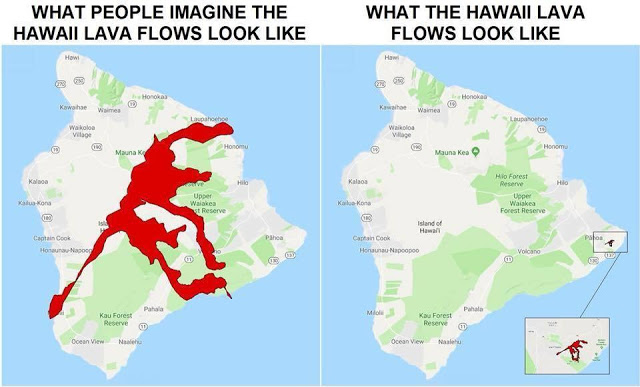
That’s according to the Chair of the Caribbean Tourism Organization (CTO), Joy Jibrilu. She raised the concern amid staggering losses among countries which were not impacted by the 2017 Hurricane season.

Jibrilu says following the devastation caused by hurricanes Irma and Maria to some islands in the region, many travelers called and canceled for countries who were not impacted by the storm.

This resulted in a significant drop in hotel room demand across the entire Caribbean. In light of that another disaster, an economic storm, was created which resulted in great losses in tourism revenue and a challenge for tourism officials.

“All our travel partners, all of them without exception called and said that we have heard the Caribbean  is closed.”

She further added that  Caribbean islands irrespective of if they were not actually impacted by the storm were economically  affected.

We all lost when people were not sure if or when to book if they canceled. You saw a dip in bookings because people thought that the islands which were not impacted were. We must quantify the figures of lost business so we can share the story with the world to tell them how serious it is. “

The chair of the CTO says that over one billion US dollars in tourism revenue was lost in the wake of last year’s hurricane season, the costliest hurricane season on record.

Jibrilu, who is also the Director of Tourism for the island of Barbados says the region’s reconstruction and recovery effort has been estimated at close to  6 billion dollars.

“Tourism is the region’s greatest driver of foreign exchange tax revenue and reliable vehicle of poverty reduction and human capital development for the region’s small island developing states. The tragedy is that the dampening of demand occurred even among islands that were not in the path of the storm.  This contributes to  an economic disaster as tourism visitation dropped of resulting in significant losses in revenue.”

Jilbrilu blamed the international media for the problem. She says their reports describes the region as if it was one country as opposed to several different islands. The chairman of the CTO says this inaccurate reporting is costing a region millions and negatively impacting lives in the region.

“First of all if we look at international news reporters when they talk about a hurricane they say the “Caribbean” has been impacted. They generalize and say the entire Caribbean. As a result, people look at the Caribbean as a whole unit as oppose to all these different countries, thousands of miles away from each other. To put it in context the Bahamas alone from north to south covers one hundred thousand square miles that is further than the distance of  Toronto to New York.  So if a storm happens in New York no one would say I am not going to Toronto. They just would not, it just does not make sense but when people lump the Caribbean  together as just one region ( as if it was just one country ) it  is negative.”

Jilbrilu says the region’s economy and people lives depend on accurate reporting and think making the international media more aware of this matter is a matter of economic prosperity or suffering for the region’s people.

“What we have done is to educate people of the geography of the Caribbean, that the same time it takes to travel from the Bahamas to Barbados is the same as traveling from London in the UK to Rome, Italy. So what happens to the Bahamas does not impact Barbados and vice versa.  We really  want to get that message out.”

Jilbrilu made the disclosure at the 2018 annual Caribbean Aviation Meetup in the Bahamas. Dubbed as the Caribbean region’s largest aviation conference the annual event brings together major players from the aviation and tourism industries aimed at tackling problems faced by the  World and the Caribbean’s Tourism and Aviation industries.
Source: Posted and retrieved June 15, 2018 from: https://stluciatimes.com/2018/06/15/geographic-misconceptions-hurting-caribbean-economies/

As related in the foregoing, the whole world knew of the 2017 devastation from Hurricanes Irma and Maria. But the affected (wiped-out) islands were only Barbuda, Grenada and Puerto Rico. And yet:

… following the devastation caused by hurricanes Irma and Maria to some islands in the region, many travelers called and canceled for countries who were not impacted.

Again, this is a matter of image and geographic misconceptions, more so than it is about disasters or even tourism. The world is telling the Caribbean: Better band together to assuage your challenges. We are united in affliction, we might as well be united in solutions. Yes, it is no longer optional for our region to confederate as a Single Market. This, we must do!

Confederation is not a bad thing! In a previous blog-commentary, it was asserted that our Caribbean member-states all suffer from the same inadequate image, and thusly we can all benefit from a regional elevation. Yes, the effect of regional integration could be an Increased Caribbean Tourism Market Share. That commentary quoted:

It’s time to take inventory of Caribbean tourism:

It has been weighed in the balance; it has been measured …
It has been found wanting!

Tourism is the current dominant industry; the goal is to “stand on the shoulders” of previous accomplishments, add infrastructure not possible by just one member-state alone and then reap the benefits. Imagine this manifestation in just this one new strategy: inter-island ferries that connect all islands for people, cars and goods.

The movement behind the book Go Lean … Caribbean seeks to reboot the economic engines of the Caribbean member-states. So while tourism is the region’s primary economic driver, it is inadequate for providing the needs of the people in the region, and inadequate for dealing with the crisis of natural disasters. We must do better!

The Go Lean book serves as a roadmap for the introduction and implementation of the Caribbean Union Trade Federation (CU). The CU is designed to be a technocratic intergovernmental entity that shepherds economic growth for the Caribbean region and mitigate against all security-disaster challenges. The goal is to reboot and optimize the region’s economic, security and governing engines with a regional focus.

The Go Lean/CU roadmap will employ strategies, tactics and implementations to impact its prime directives; identified with the following 3 statements:

  • Optimization of the economic engines in order to grow the regional economy to $800 Billion & create 2.2 million new jobs.
  • Establishment of a security apparatus to ensure public safety and protect the resultant economic engines. This includes a professional disaster planning and response organization.
  • Improvement of Caribbean governance to support these engines, including a separation-of-powers between the member-states and CU federal agencies, as in Self-Governing Entities.

The Go Lean book provides 370-pages of turn-by-turn instructions on “how” to adopt new community ethos, plus the strategies, tactics, implementations and advocacies to execute so as to elevate Caribbean image in good times and bad. One advocacy seeks to optimize the Caribbean tourism brand throughout the world; consider some specific plans, excerpts and headlines from the book on Page 133 entitled:

10 Ways to Better Manage Image

1 Lean-in for the Caribbean Single Market
This will allow for the unification of the region into one market of 42 million people across 30 member-states, with a GDP of $800 Billion (according to 2010 figures). In addition, the treaty calls for collective bargaining with foreign countries and industry representatives for causes of significance to the Caribbean community. There are many times when the media portray a “negative” depiction of Caribbean life, culture and people. The CU will have the scale to effectuate negotiations to better manage the region’s image, and the means by which to enforce the tenets.
2 Media Industrial Complex
The Caribbean Central Bank will settle electronic payments transactions; this will allow electronic commerce to flourish in the region. With the payment mechanisms in place, music, movies, TV shows and other media (domestic and foreign) can be paid for and downloaded legally. For a population base of 42 million, this brings a huge economic clout.
3 Respect for Intellectual Property
4 Sentinel in Hollywood
5 Anti-Defamation League
This Pro-Jewish organization provides a great model for marshalling against negative stereotypes that can belittle a race. The CU will study, copy, and model a lot of the successes of the Anti-Defamation League. This organization can also be consulted with to coach the CU’s efforts. (Consider the example of Uptown Yardies Rasta Gang in the game Grand Theft Auto [206]).
6 Power of the Boycott
The CU is an economic negotiating bloc. The power to ban, boycott and censure trade in intellectual property is a powerful deterrent for producers to be balanced in their media portrayals. A CU federal agency will assume the role to rate pending moves, as performed by MPAA in the US. While the content may not be banned outright, placing a Rated R, NC-17 or X label to a film will affect the economic results from the box office. This is the “power of the purse”.
7 Freedom of the Press
8 Libel and Slander Litigation and Enforcement
9 Public Relations and Press Releases
To facilitate effective communications, the CU’s agencies will embrace the role of “Press Secretaries” to disseminateaccurate records, news and portrayals of Caribbean life. This role is Offensive rather than the above Defensive tactics.
10 Image Award Medals and Recognition
Following the model of the NAACP Image Awards, the CU will recognize and give accolades for individual and institutions that portray a positive “image” of Caribbean life and CU initiatives. This would be similar to the Presidential Medal of … / Congressional Medal of …

The likelihood of more hurricanes in the Caribbean is undeniable. This is further exacerbated with the reality of Climate Change. Our Caribbean region must be prepared to Rinse & Repeat. It is no longer an option to maybe manage our image on a regional level. The world must know that we are bigger than just whatever island has been recently impacted by a natural disaster. This challenge is heavy-lifting because, as a region, we rarely muster an adequate response to our natural disasters.

The Go Lean book explains further that the Caribbean region must install a security apparatus with the directive to prepare and respond to natural disasters. The efficiency and effectiveness of a Caribbean Emergency Management Agency must be streamlined to ensure the world of the business continuity of our systems of commerce. This quotation is derived from the book at Page 184:

Modeled after FEMA in the US, this agency will be charged with the preparation, response and reconstruction for the regions for the eventual manifestations of hurricanes, earthquakes, tsunamis, flooding and other declared disasters, natural and man-made like medical epidemic, drought, pollution, oil spills, terrorism, etc.

This is what it means to be a technocracy, to promote the best delivery arts and sciences, in this case for Professional Emergency Management; as explained further at Page 64:

The CU treaty calls for a collective security agreement for the Caribbean member-states to prepare-respond to natural disasters, emergency incidents and assuage against systemic threats against the homeland. The CU employs the professional arts and sciences of Emergency Management to spread the costs and risks across the entire region. Outside of hurricanes or earthquakes, the emergency scope includes medical trauma, pandemic incidents and industrial accidents (i.e. oil or chemical spills) – any scenario that can impact the continuity of the economic engines and/or community.

This above scenario describes the dynamics of regional tourism promotion and protection. Yes, managing regional tourism means optimizing the planning and response for natural disasters. This is no longer optional for this homeland. We are compelled to invest in this integration and collaboration. We must have the leverage to spread the costs, risks and premium base across the entire region. Only then will the rest of the world know that any hurricane in the Caribbean does not mean a shutdown of the entire Caribbean region. Our image will then be:

Be our guests … in rain and shine.

Consider this Hawaiian example; yes this problem of promoting tourism while contending with natural disasters is not just an issue for the Caribbean. Rather, the US State of Hawaii is contending with the same thing right now, with the active Kīlauea volcano. See related news VIDEO in the Appendix below.

There is the need for better stewardship of the economic engines on touristic islands, be it Hawaii or the Caribbean. It is what it is! And our situations will worsen; things will get worse before they get worst. This is due to the reality and eventuality of Climate Change. This need to assuage against the threats and realities of Climate Change was an original intent of the Go Lean roadmap. The opening Declaration of Interdependence stresses this (Page 11) in the first of many pronouncements:

i. Whereas the earth’s climate has undeniably changed resulting in more severe tropical weather storms, it is necessary to prepare to insure the safety and security of life, property and systems of commerce in our geographical region. As nature recognizes no borders in the target of its destruction, we also must set aside border considerations in the preparation and response to these weather challenges.

The Go Lean movement has previously detailed many related issues and advocacies for disaster awareness and abatement. Consider this sample of previous blog-commentaries:

https://goleancaribbean.com/blog/?p=15012 In Life or Death: No Love for Puerto Rico
https://goleancaribbean.com/blog/?p=14925 ‘Climate Change’ Reality!? Numbers Don’t Lie
https://goleancaribbean.com/blog/?p=14832 Example of Manifesting Environmental Change
https://goleancaribbean.com/blog/?p=13391 After Maria, Failed-State Indicators: Destruction and Defection for Puerto Rico
https://goleancaribbean.com/blog/?p=12996 After Irma, Failed State Indicators: Destruction and Defection
https://goleancaribbean.com/blog/?p=12977 After Irma, Barbuda Becomes a ‘Ghost Town’
https://goleancaribbean.com/blog/?p=12900 The Logistics of Disaster Relief
https://goleancaribbean.com/blog/?p=12879 Disaster Preparation: ‘Rinse and Repeat’
https://goleancaribbean.com/blog/?p=11858 Looking and Learning from the Cautionary Tale of Kiribati
https://goleancaribbean.com/blog/?p=9455 Fix ‘Climate Change’ – Yes, We Can
https://goleancaribbean.com/blog/?p=7103 COP21 – ‘Climate Change’ Acknowledged
https://goleancaribbean.com/blog/?p=6893 A Meteorologist’s View On Climate Change
https://goleancaribbean.com/blog/?p=4673 Climate Change‘ Merchants of Doubt … to Preserve Profits!!
https://goleancaribbean.com/blog/?p=2465 Book: ‘This Changes Everything: Capitalism vs. the Climate’
https://goleancaribbean.com/blog/?p=2276 Climate Change May Affect Food Supply Within a Decade
https://goleancaribbean.com/blog/?p=1883 Climate Change May Bring More Kidney Stones
https://goleancaribbean.com/blog/?p=1817 Caribbean grapples with intense cycles of flooding & drought

In summary, the issues in this commentary relate more to image and geographic misconceptions than they do tourism and natural disasters. Do we have the global reputation to “take a punch and stand back up”.

Unfortunately, no!

So we must reform and transform the Caribbean’s societal engines so as to assuage the dangers of Climate Change and natural disasters; pandemics too. This is the quest of the Go Lean roadmap, and this is not just a pipe dream; it is conceivable, believable and achievable for our regional stakeholders to do better and be better.

All Caribbean stakeholders – residents and tourists alike – are urged to lean-in to this roadmap for change … and empowerment. Yes, we can make the region a better place to live work and play. 🙂

Sign the petition to lean-in for this roadmap for the Caribbean Union Trade Federation.

—————-

Appendix VIDEO – Hawaii tourism hit hard by Kilauea volcano eruption – https://youtu.be/89ppKLS5ufI

CBS Evening News
Published on Jun 2, 2018 – As molten lava destroys more homes in Hawaii, police have been ordered to arrest people who refuse to evacuate. Thousands have already been forced to flee to safety. Now, dramatic images broadcast around the world are having another impact — on tourism. CBS News correspondent Carter Evans reports.

Share this post:
, , ,
[Top]

In Life or Death: No Love for Puerto Rico

Go Lean Commentary

The American association is just not working for failing Puerto Rico (PR). This is no longer a theory; this is now a fact!

The devastating Category 5 Hurricane Maria came by and desolated the island, 9 months ago (September 18, 2017). The restoration and recovery is finally complete …

Wait, no!

The restoration and recovery is still not complete, even though it’s the eve of a new Hurricane Season (June 1).

In life, Puerto Rico just gets no love.

Unfortunately, this is true in death too – we learn now that even the resultant deaths from Hurricane Maria had been under counted.

What? How? Why?

The act of counting deaths is more straight-forward than the Washington and San Juan officials would have you believe. Simply count the number of mortalities (death certificates issued) for the 4th Quarter of the last few years. The PR government try to assert that the number of deaths were 64 people; and yet demographers and other social scientists counted the mortality rate for 4th Quarter 2017 and the 4th Quarters in previous years and the real count is more like:

4600+

Wait, wait … don’t tell me! According to this story here, “researchers concluded the final death count could [actually] be as high as 8,500”:

Title: Puerto Rico governor welcomes “real number” of Hurricane Maria deaths after shocking report

new Harvard University study says the death toll from Hurricane Maria last year is dramatically larger than reported. The study, published in the New England Journal of Medicine, estimates more than 4,600 people died on the island. The official government death toll is just 64.

Researchers randomly knocked on doors and asked if anyone died thereThere were more questions — but that’s how it started. It took six weeks and $50,000 from Harvard to come up with a number that is stunning, reports CBS News’ David Begnaud.

Puerto Rico’s Governor Ricardo Rosselló, who himself is a scientist, seemed blindsided by the Harvard study. His government wasn’t involved and he didn’t know it was being released.

“We welcome all studies,” Rosselló said at a press conference Tuesday. “We want the real number to come out. We had a protocol that really was subpar and we recognize it.”

The government protocol is for doctors to tell the government if a death was caused by Hurricane Maria. Families have to petition the government to investigate if they disagree with a doctor’s opinion.

The Harvard study surveyed more than 3,000 homes across the island and found the mortality rate rose 62 percent in the three months after Hurricane Maria compared to that period the year before. Researchers concluded the final death count could be as high as 8,500.

“One third of our deaths were reported because lack of medical treatment,” said Domingo Marques, who was a lead author of the study.

During his visit to Puerto Rico last October, President Trump hailed the low death toll, which at the time was 16. He compared it to Hurricane Katrina. In light of the Harvard report, a White House spokesperson said the people of Puerto Rico deserve nothing less than transparency and accountability.

“The negligence that allowed those lives to be lost, needs to be accounted for,” San Juan mayor Carmen Yulín Cruz said.

Cruz has blasted Mr. Trump for being tone deaf and slow to respond. When asked to evaluate her own response she said, “I know I didn’t get to everyone… We did the best we could, but that wasn’t’ good enough. That wasn’t good enough.”

Why this story is more than just a shocking number? For every death that is certified by a government official to be related to Hurricane Maria, family members are eligible to have the federal government help pay for funeral expenses. The numbers matter.

© 2018 CBS Interactive Inc. All Rights Reserved.

Source: CBS News; retrieved May 30, 2018 from: https://www.cbsnews.com/news/hurricane-maria-death-toll-puerto-rico-harvard-university-study/

Related stories:

————-

VIDEO – Puerto Rico’s Tragic Toll – https://www.cbsnews.com/video/puerto-rico-hurricane-death-toll-in-the-thousands-researchers-say/

Posted May 30, 2018 – CBS This Morning: Harvard Researchers estimate 4,600+ people killed in Hurricane Maria.

Wow; these people, this island – Puerto Rico – don’t even get respect in death.

Call a spade a spade!

There is no love for Puerto Rico. (This is not “our” assessment alone; see the Mayor of San Juan in the Appendix VIDEO).

Time to make a move! It is past time now for Puerto Rico to change from its parasite status as an American Protectorate and graduate to being a US State. Or maybe, it’s time for Puerto Rico to divorce the American relationship entirely and become an independent nation – as was done in the Philippines. In a previous commentary by the movement behind the book Go Lean…Caribbean, the assertion was that the American association maybe the problem for Puerto Rico. That blog-commentary stated:

Where is your pride Puerto Rico? “Have you no sense of decency?” You are not being loved; you are being pitied.

No wait, even the pity is gone – compassion exhaustion after the prior hurricanes Harvey and Irma; plus forest fires in California.

Puerto Rico: You “cannot win; cannot break-even and cannot get out of the game”.

… Puerto Rico is now at the cross roads; things will get worse before it gets worse! … The outcome for Puerto Rico, and other Caribbean islands, would be defection – “forced uprooting-displacement of large communities”. Truly, this is what has happened.

The book Go Lean…Caribbean – available to download for free – serves as a roadmap for the introduction and implementation of the technocratic Caribbean Union Trade Federation (CU), for the elevation of Caribbean society – for all member-states, including the American Territories of Puerto Rico and the US Virgin Islands. This roadmap asserts that regional integration is the key for future Caribbean success; it thus presents these 3 prime directives:

  • Optimization of the economic engines in order to grow the regional economy to $800 Billion and create 2.2 million new jobs. Puerto Ricans have been defecting for decade looking for jobs.
  • Establishment of a security apparatus to ensure public safety and protect the resultant economic engines. This security pact encompasses an emergency planning/response apparatus to deal with the reality of natural disasters. The CU mandate is to protect against any Failed-State
  • Improve Caribbean governance to support these engines, including a separation-of-powers between the member-states and CU federal agencies.

To Puerto Rico, we entreat you: there are successful countries that are separate and detached of America. Your status quo is not the only destiny.

The Go Lean book stresses reform for Caribbean society. It reminds the readers of the American Revolutionary experience: the original 13 colonies were failing under the weight of their British baggage. So to reach success, they had to “break of the shackles“ of British colonialism.

This is Puerto Rico today! They need to “break of the shackles of American colonialism”. This island needs to echo the revolutionary sentiments of “Founding Father” Thomas Jefferson, who wrote in the Declaration of Independence:

… That whenever any form of government becomes destructive to these ends, it is the right of the people to alter or to abolish it, and to institute new government, laying its foundation on such principles and organizing its powers in such form, as to them shall seem most likely to effect their safety and happiness. Prudence, indeed, will dictate that governments long established should not be changed for light and transient causes; and accordingly all experience hath shown that mankind are more disposed to suffer, while evils are sufferable, than to right themselves by abolishing the forms to which they are accustomed. But when a long train of abuses and usurpations, pursuing invariably the same object evinces a design to reduce them under absolute despotism, it is their right, it is their duty, to throw off such government, and to provide new guards for their future security. — Such has been the patient sufferance of these [former] colonies …- book Go Lean…Caribbean (Page 10).

These words, this break from a failing status quo was an early motivation for the CU/Go Lean roadmap, as pronounced in the opening Declaration of Interdependence (Pages 12 – 13) of the book:

xi. Whereas all men are entitled to the benefits of good governance in a free society, “new guards” must be enacted to dissuade the emergence of incompetence, corruption, nepotism and cronyism at the peril of the people’s best interest. The Federation must guarantee the executions of a social contract between government and the governed.

xii. Whereas the legacy in recent times in individual states may be that of ineffectual governance with no redress to higher authority, the accedence of this Federation will ensure accountability and escalation of the human and civil rights of the people for good governance, justice assurances, due process and the rule of law. As such, any threats of a “failed state” status for any member state must enact emergency measures on behalf of the Federation to protect the human, civil and property rights of the citizens, residents, allies, trading partners, and visitors of the affected member state and the Federation as a whole.

xvi. Whereas security of our homeland is inextricably linked to prosperity of the homeland, the economic and security interest of the region needs to be aligned under the same governance. Since economic crimes … can imperil the functioning of the wheels of commerce for all the citizenry, the accedence of this Federation must equip the security apparatus with the tools and techniques for predictive and proactive interdictions.

The Go Lean book provides 370-pages of turn-by-turn instructions on “how” to adopt new community ethos, plus the strategies, tactics, implementations and advocacies to execute so as to effect a reboot and turn-around. In fact, the book (Page 33) provides one advocacy specifically dedicated to the subject of Turn-arounds. See the headlines, excerpts and quotations here:

10 Ways to Impact Turn-Arounds

1 Lean-in for the Caribbean Single Market and Economy
The CU treaty facilitates a reboot of the region’s economic engines, security apparatus and emergency management(preparation/response for the 30 member-states, 42 million people and $800 Billion GDP. The treaty allows for theestablishment of Self Governing Entities where the CU will be the municipal administrator – this allows for civic planning, zoning, demolitions and imminent domain decision-making separate from the member-states. While too, dispositions of abandoned buildings in the member-states still relate to CU missions, as in the protection of image (“psychological trauma” is inflicted daily on neighbors of abandoned structures) and the quest for beauty. While beauty, aesthetics and preservation may be paramount for communities, these should only be a concern after basic needs are satisfied – housing is a basic need. The economics of housing can be impacted with the over-supply ofabandoned buildings, as it brings the value down for other properties, and sends out the false vision, like Detroit’sabandoned structures, that just a “little rehab” and their new manifestations will be readily available. Learning from Detroit, it is more beneficial to raze abandoned buildings and build anew – turn-around, rather than considering restoration or preservation.
2 Bankruptcy Processing
3 Homeland Security Concerns
Abandoned buildings are a security concern for the community as these buildings are often used as drug “dens” or to house other illegal/criminal activities. Playing children can also be ensnared by dilapidated structures and thus consume emergency medical services. Therefore, impacting turn-arounds of abandoned properties is proactive for CU security.
4 Property Tax Revenue and Services
5 Clean Slate / Blank Canvas

By razing abandoned buildings, the community can truly engage a turn-around strategy. The property now becomes a clean slate / blank canvas, ready for any new development or a return to a natural disposition of Caribbean flora/fauna.

6 Explosives Use – Art & Science
7 Demolition Jobs
8 Recycling Materials
9 Community Gardens and Fruit Trees – by Non-Government Organizations (NGO)
10 Common Grazing Rights

To Washington, these Caribbean islands are far-off territories – out of sight, out of mind. But these Caribbean islands are our home:

Oh, island in the sun. Willed to me by my father’s hand.

So the Caribbean stakeholders in the region must be the ones to foster the workable solutions for the region: a better disaster preparation and response apparatus. We must not count on the “kindness of strangers”!

Duh!!! – The jury is in! They do not even count our dead!

The Way Forward for Puerto Rico must be the Way Forward for the rest of the Caribbean region – we are “all in the same boat”.

Hurricane Season 2018 starts tomorrow – June 1. (The American president, Donald Trump, even denies Climate Change as a fact or a science. By denying our reality; he is denying “us”).

This assertion – Puerto Rico needing to rely more on their geographical neighbors rather than the American hegemony – is not new. This has been the consistent pleading from this Go Lean movement. Consider these previous blog-commentaries:

https://goleancaribbean.com/blog/?p=14718 ‘At the Table’ or ‘On the Menu’ – PR’s No Vote; No Voice in D.C.
https://goleancaribbean.com/blog/?p=14101 Wait, ‘We Are The World’ – Raising money for PR Relief
https://goleancaribbean.com/blog/?p=13995 First Steps for PR & USVI – Congressional Interstate Compacts
https://goleancaribbean.com/blog/?p=13391 After Maria, Failed-State Indicators: Destruction and Defection
https://goleancaribbean.com/blog/?p=12959 After Irma, America Should Scrap the ‘Jones Act’
https://goleancaribbean.com/blog/?p=12126 Commerce of the Seas – Stupidity of the Jones Act
https://goleancaribbean.com/blog/?p=11963 Oscar López Rivera: The ‘Nelson Mandela’ of Puerto Rico?
https://goleancaribbean.com/blog/?p=11647 Righting a Wrong: Puerto Rico’s Bankruptcy
https://goleancaribbean.com/blog/?p=7963 ‘Like a Good Neighbor’ – Being there for Puerto Rico
https://goleancaribbean.com/blog/?p=4551 US Territories – Between a ‘rock and a hard place’
https://goleancaribbean.com/blog/?p=1325 Puerto Rico Governor Signs Bill on Small Businesses
https://goleancaribbean.com/blog/?p=599 Ailing Puerto Rico open to radical economic fixes

The PR should not stand for this. Time to move … away from this inconsequential, parasitic status quo. It is past time for debate:

“A little less conversation; a little more action” – Song: Elvis Presley.

The responsibility to improve our homeland is ours alone. The quest to make our homeland a better place to live, work and play must be engaged by Caribbean people. The rest of the world have no love for us. We must love ourselves, first and foremost! Puerto Rico, you do not have to do this heavy-lifting task alone; we need to lift the same heavy load. Let’s do it together! 🙂

Download the free e-book of Go Lean … Caribbean – now!

Sign the petition to lean-in for this roadmap for the Caribbean Union Trade Federation.

—————

Appendix VIDEOSan Juan mayor on hurricane death toll studyhttps://www.cbsnews.com/video/san-juan-mayor-criticizes-local-leaders-trump-after-hurricane-death-toll-study/

Posted May 30, 2018 – CBS This Morning: San Juan mayor criticizes local leaders, Trump after hurricane death toll study

Share this post:
, ,
[Top]

‘Climate Change’ Reality!? Numbers Don’t Lie

Go Lean Commentary

It’s simple: Numbers don’t lie!

There are many subjective topics: best this, greatest that! If a company thinks they are successful – i.e. one of the fastest growing firms – but they do not have money in the bank, they are “in the RED”, then frankly their Balance Sheet simply doesn’t lie, they are insolvent.

The same for the subjective topic of Climate Change. Is Global Warming real? Is the planet getting warmer?

There is no longer any doubt, the Numbers don’t lie: the earth has had 400 straight warmer-than-average months. See the full story of this actuality here:

VIDEO – This weather event hasn’t happened since 1984 https://www.usatoday.com/videos/weather/2018/05/17/weather-event-hasnt-happened-since-1984/618961002/

Published May 17, 2018 – NOAA climate scientists say April 2018 marked the planet’s 400th consecutive month with above-average temperatures. USA TODAY

———–

Title: Earth just had its 400th straight warmer-than-average month thanks to global warming

It was December 1984, and President Reagan had just been elected to his second term, Dynasty was the top show on TV and Madonna’s Like a Virgin topped the musical charts.

It was also the last time the Earth had a cooler-than-average month.

Last month marked the planet’s 400th consecutive month with above-average temperatures, federal scientists from the National Oceanic and Atmospheric Administration announced Thursday.

The cause for the streak? Unquestionably, it’s climate change, caused by humanity’s burning of fossil fuels.

“We live in and share a world that is unequivocally, appreciably and consequentially warmer than just a few decades ago, and our world continues to warm,” said NOAA climate scientist Deke Arndt. “Speeding by a ‘400’ sign only underscores that, but it does not prove anything new.”

Climate scientists use the 20th-century average as a benchmark for global temperature measurements. That’s because it’s fixed in time, allowing for consistent “goal posts” when reviewing climate data. It’s also a sufficiently long period to include several cycles of climate variability.

“The thing that really matters is that, by whatever metric, we’ve spent every month for several decades on the warm side of any reasonable baseline,” Arndt said.

NOAA’s analysis found last month was the 3rd-warmest April on record globally. The unusual heat was most noteworthy in Europe, which had its warmest April on record, and Australia, which had its second-warmest.

Portions of Asia also experienced some extreme heat: In southern Pakistan, the town of Nawabshah soared to a scalding 122.4 degrees on April 30, which may have been the warmest April temperature on record for the globe, according to Meteo France.

Argentina also had its warmest April since national records began there in 1961.

North America was the one part of the world that didn’t get in on the heat parade. Last month, the average U.S. temperature was 48.9 degrees, 2.2 degrees below average, “making it the 13th-coldest April on record and the coldest since 1997,” NOAA said.

For the year-to-date, the Earth is seeing its 5th-warmest start to the year.

A separate analysis of global temperature data from NASA also found last month was the third-warmest April on record.

Another milestone was reached in April, also related to the number “400”: Carbon dioxide — the gas scientists say is most responsible for global warming — reached its highest level in recorded history at 410 parts per million.

This amount is highest in at least the past 800,000 years, according to the Scripps Institute of Oceanography.

Source: Retrieved May 18, 2018 from: https://www.usatoday.com/story/news/world/2018/05/17/global-warming-april-400th-consecutive-warm-month/618484002/

Once we accept the facts, then we can move on to debating solutions.

Perhaps there was some debate when it was 4 straight months, or 20 straight months; but 400 straight months is an abundance of obvious. Our argument should not be whether Climate Change is real, it should be:

What are we going to do about it?

Option A or Option B?

i.e. There are serious debates for terminating the use of fossil fuels immediately! There is no doubt “we” must employ solar, wind and tidal power generating solutions now. But that is still not enough! How do we fill the gaps in the vacuum for power generation?

  • Option A: Nuclear.
  • Option B: Natural Gas.

Pro’s and Con’s abound!

Anyone who still argues the incontrovertible facts of the reality of Climate Change, should just be ignored, ridiculed and rendered to the “trash heap” of history.

Wait, what?! The US President, Donald J. Trump, is a Climate Change denier, so what are we saying?

Yes, we should ignore, ridicule and render his policies to the “trash heap” of history, while we move forward with our Climate Change abatement.

While this commentary is from the movement behind the book Go Lean…Caribbean, these words to ignore-ridicule-render Trump are also the declaration of …

Climate Change is one of the biggest threats for the Caribbean region. The region must therefore work to mitigate this threat. Yes, we can! We have many successful track records of effecting environmental changes.

Hurricane Season 20018 is about to begun; (June 1).
Climate Change can exacerbate storms… These represent a Clear-and-Present Danger for the Caribbean … for many US communities as well. The US President should not be so dismissive.

In the previous blog-commentary, it was asserted …

The reality of Caribbean life: we must contend with natural disasters, not of our making, “again and again”. The situation can be described as “Rinse and Repeat“.

The book Go Lean…Caribbean – available to download for free – serves as a roadmap for the introduction and implementation of the technocratic Caribbean Union Trade Federation (CU), to reform and transform all of Caribbean society – all 30 member-states. There is the need to shepherd our communities to abate for Climate Change episodes – before and after storms. This CU/Go Lean roadmap has these 3 prime directives:

Fixing Climate Change in the US is out-of-scope for this Go Lean…Caribbean effort. Our scope is the Caribbean only. But we must not be hypocritical … or parasitic. We must do our own heavy-lifting and fix our own communities, in preparation for a global abatement initiative – no matter how small we may perceive our impact may be because of our small size in the grand scheme of the planet’s population. How else do we shame the Big Polluters?!

The Go Lean movement has previously detailed many related issues and advocacies for Climate Change awareness and abatement. Consider this sample of previous blog-commentaries:

https://goleancaribbean.com/blog/?p=14832 Manifesting Environmental Change
https://goleancaribbean.com/blog/?p=13985 EU Assists Barbados to Go Green
https://goleancaribbean.com/blog/?p=11858 Looking and Learning from the Cautionary Tale of Kiribati
https://goleancaribbean.com/blog/?p=9455 Fix ‘Climate Change’ – Yes, We Can
https://goleancaribbean.com/blog/?p=7103 COP21 – ‘Climate Change’ Acknowledged
https://goleancaribbean.com/blog/?p=6893 A Meteorologist’s View On Climate Change
https://goleancaribbean.com/blog/?p=4673 Climate Change‘ Merchants of Doubt … to Preserve Profits!!
https://goleancaribbean.com/blog/?p=2465 Book: ‘This Changes Everything: Capitalism vs. the Climate’
https://goleancaribbean.com/blog/?p=2276 Climate Change May Affect Food Supply Within a Decade
https://goleancaribbean.com/blog/?p=1883 Climate Change May Bring More Kidney Stones
https://goleancaribbean.com/blog/?p=1817 Caribbean grapples with intense cycles of flooding & drought
https://goleancaribbean.com/blog/?p=915 Go ‘Green’ … Caribbean

The Go Lean book and roadmap stresses that reforming and transforming the Caribbean’s societal engines to abate Climate Change is possible; it is conceivable, believable and achievable. But this is heavy-lifting.

The Go Lean book provides 370-pages of turn-by-turn instructions on “how” to prepare and respond for Climate Change-infused storms. This quest is the actual title of one advocacy in the Go Lean book. Consider the specific plans, excerpts and headlines here from Page 184, entitled:

10 Ways to Improve for Natural Disasters

1 Lean-in for the Caribbean Single Market and Economy
This allows for the unification of the 30 member-states into one market, thereby spreading the risk and premium base across a market of 42 million people. The Caribbean member-states have Hurricane Katrina styled disasters (relatively speaking) every year.
2 Caribbean Emergency Management Agency – Federal Disaster Declarations

Modeled after FEMA in the US, this agency will be charged with the preparation, response and reconstruction for the regions for the eventual manifestations of hurricanes, earthquakes, tsunamis, flooding and other declared disasters, natural and man-made like medical epidemic, drought, pollution, oil spills, terrorism, etc.

3 Support Services for First Responders

Training, licensing and standards for Emergency Managers, Paramedics, Firefighters, Search and Rescue resources. For major disasters, some of these resources will come from international origins; they will need the support services (language translation, guides, maps, etc.) and coordination to maximize their results.

4 Animal Partner Training and Development

Maintain plantations for the training, development and boarding of “search & rescue” dogs, cadavers dogs and other service animals (horses, mules, pigs, etc.) so that there will be local resources within the region. (We cannot always depend on international responses in light of other regions experiencing their own disasters). These animals need not be owned by any one member-state, they can be on loan from CU resources

5 Siren Warnings & Notifications
6 Airlift & Sealift Authorizations

The CU Emergency Management Agency can license, regulate and authorize (air & sea) vessels and vehicles for emergency deployment in a disaster zone, before during and after the disastrous event.

7 JUA-style Insurance Fund

The fiduciary management of premiums and claims to allow the immediate response for reconstruction after disasters. These financial services, sidecars traded in markets can be direct or indirect as in reinsurance or insurer-of-last-resort.

8 Economic Crime Enforcement During and After Disasters
9 Disaster Declaration Loans
10 Building Codes and Standards

The Numbers – 400 straight months of above-average temperatures – tell the truth! We do not have a choice to just ignore this reality. We must prepare! Any Caribbean community leader who do not endorse proactive measures of a regional disaster apparatus needs to be ignored, ridiculed and rendered to the “trash heap” of history.

We need serious leaders … only! Climate Change can be abated, remember Acid Rain. We urge all Caribbean stakeholders to lean-in to this Go Lean roadmap for change, to make our homeland safer. This is a necessary step in forging a better homeland to live, work and play. 🙂

Download the free e-Book of Go Lean … Caribbean – now!

Sign the petition to lean-in for this roadmap for the Caribbean Union Trade Federation.

Share this post:
, , , ,
[Top]

Counter-culture: Manifesting Change – Environmentalism

Go Lean Commentary

News Flash: The hippies of the 1960’s grew up! They became middle class suburbanites. They traded in their tie-dye T-shirts for Polo shirts; and their Volkswagen Beetles for ‘Soccer-Mom’ Minivans.

Did the revolution for the 60’s Hippies simply fail? Did they retreat into the mainstream?
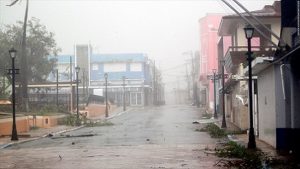
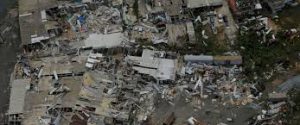
No and No, they simply won, their fight; the changes the counter-culture demanded were manifested:

The counter-culture has been argued to have diminished in the early 1970s, and some have attributed two reasons for this. First, it has been suggested that the most popular of its political goals—civil rightscivil libertiesgender equalityenvironmentalism, and the end of the Vietnam War—were “accomplished” (to at least some degree); and also that its most popular social attributes—particularly a “live and let live” mentality in personal lifestyles (the “sexual revolution“)—were co-opted by mainstream society.[57][65] Second, a decline of idealism and hedonism occurred as many notable counter-culture figures died, the rest settled into mainstream society and started their own families, and the “magic economy” of the 1960s gave way to the stagflation of the 1970s[57]—the latter costing many in the middle-classes the luxury of being able to live outside conventional social institutions. The counter-culture, however, continues to influence social movements, art, music, and society in general, and the post-1973 mainstream society has been in many ways a hybrid of the 1960s establishment and counter-culture.[65]Wikipedia.

Wait, what?!

The fights for civil rights, civil liberties, gender equality, environmentalism, and the “end of the Vietnam War” was successful. The world – America and Western Europe – we live in today is radically different than the world before the 1960’s. So they – the counter-culturists – are able to declare some relative victory.

Unfortunately, while that success was only limited, the Caribbean was left out in this fight … and the victory tour.

For example, the mentality to “live and let live” which is present in the US and other countries is painfully absent in the Caribbean. Many Caribbean citizens have fled the Caribbean orthodoxy, many being “pushed”, to live in a society where they can “live and let live”.

Let’s consider one fight that was manifested by the counter-culture: environmentalism.

At its crux, environmentalism is an attempt to balance relations between humans and the various natural systems on which we depend in such a way that all the components are accorded a proper degree of sustainability. There was a relative success for environmentalism in the US with the creation and facilitation of the EPA (Environmental Protection Agency). This new independent federal agency was established by the 37th US President Richard Nixon in December 1970. The Administrator of the EPA is accorded Cabinet rank, so it wields power and authority to effect change in American society. In fact, under the 44th President, Barack Obama, the EPA began to impose regulations on carbon emissions from cars, power plants and other industries who contribute to Climate Change.

Despite all the accomplishments with environmental protection (land, air and water), there is still more work to do. In fact, Climate Change has been identified as one of the biggest threats for the Caribbean region. There is a need for our Caribbean communities to stand-up and fight for better Climate Change mitigations. This commentary asserts that there is the need to re-kindle that old counter-cultural vigor and vigilance.

This commentary – entry 2 of 4 – is a continuation in this series on the counter-culture of the 1960’s/1970’s. This series from the movement behind the book Go Lean … Caribbean considers the experiences of how people deviated from the mainstream society to forge change in their communities. The people – youth mostly – were scorned and ridiculed, but they persisted … and manifested the needed change. The other commentaries in the series are cataloged as follows:

  1. Counter-culture: Embracing the Change – Battling against Orthodoxy
  2. Counter-culture: Manifesting Change – Environmentalism & ‘Climate Change’ abatement
  3. Counter-culture: Monetizing the Change – Education, Workplace, Healthcare & Retirement Mandates
  4. Counter-culture: Pushing for Change – Is Ganja here to stay?

All of these commentaries convey “how” the stewards for a new Caribbean can take a “page from the counter-culture book” so as to shepherd societal change in this region.

Yes, we can!

We need that 1960’s vigor and vigilance in our efforts to abate Climate Change today. Remember the powerful anthem by R&B singer Marvin Gaye Mercy, Mercy Me! See the VIDEO here:

VIDEO-AUDIO – Marvin Gaye: Mercy, Mercy Me! (1971)https://youtu.be/U9BA6fFGMjI

Published on Aug 21, 2007
Marvin Gaye – Mercy, Mercy Me (the ecology); Rest in Peace Marvin

———–

VIDEO-AUDIO – Robert Palmer – Mercy Mercy Me/I Want You (1991)https://youtu.be/RMT-oiiY7DE

Published on Aug 20, 2006
A cover of two Marvin Gaye’s “Mercy Mercy Me” and “I Want You” singles from Robert Palmer (Rest in Peace).

  • Category: Music 
  • License: Standard YouTube License

The science has proven that Climate Change is man-made – it is not just Mother Nature – and so man can mitigate the risks and remediate the threats. While this is a global problem, one man, one community, one country and one region can make a difference. Since we are on the frontlines of this battle – due to our vulnerabilities with hurricanes (see Appendix A below) – we need to be front-and-center in the fight.

We have the successful track record of Acid Rain.

In a previous blog-commentary (October 13, 2016), it was related that previous fight against Acid Rain is a good model for Climate Change today. Consider this direct quote:

Remember Acid Rain?

That was a big deal in the 1970’s and 1980’s. It was a big environmental problem; the stakeholders came together – many kicking and screaming – to put in the remediation and mitigation and now the problem is greatly abated. See the encyclopedia details of the problem in the Appendix A below, where it is reported that Acid Rain levels have dropped 65% since 1976.

Climate Change is another area of atmospheric pollution that can also be abated with a lot of the same strategies, tactics and implementations as was employed to abate Acid Rain. But instead of the smoke stacks of factories and power plants, the problematic culprit this time is fossil fuels.

Fossil fuels and carbon emission = Climate Change!

Unlike Acid Rain, the “bad actors” for Climate Change are not just industrial installations; this time it is “almost everybody”. Cars are one of the biggest contributors. There is no denying this cause-effect any more. The problem is now globally acknowledged! There are new international agreements – Paris Conference of the Parties (COP) or COP21 – to curb fossil fuels / carbon dioxide emissions. 195 countries have signed on to these accords, including big polluters China (#1) and the US (#2).

The overall goal of these international accords is to achieve significant environmental benefits through reductions in emissions of greenhouse gases, the primary causes of Climate Change. The remediation and mitigations employ regulatory and market based approaches for controlling GHG [(Greenhouse Gases)] elements. It should be noted that the COP21 accord is a non-binding agreement, but the biggest contribution is that the community will is now entrenched.

The book Go Lean … Caribbean uses an alternate technical term for “community will”; it identifies “community ethos”, as “the fundamental character or spirit of a culture; the underlying sentiment that informs the beliefs, customs, or practices of a society” (Page 20). So, in everyday practical terms, it will now be politically incorrect to pursue policies in denial of Climate Change.

The Go Lean book presents a 370-page roadmap for rebooting, re-organizing and restructuring the economic, security and governmental institutions of the 30 member-states in the Caribbean region, especially in light of the realities of Climate Change. … We must “Go Green” to arrest our own carbon footprint, so that we may be less hypocritical – have moral authority – in calling for reform from the big polluting nations.

The timing for this commentary, and reminder, is crucial! We are on the threshold of the 2018 hurricane season and the scientists are expecting a catastrophic one … again. See the related article in Appendix A below.

We must do better this year and in the future, compared to how we did last year. In 2017, 2 major storms impacted the Caribbean regions, leaving death, destruction, dysfunction and defection in their wake:

  • Irma – A Category 5 storm on September 4, 2017; this caused devastation in many islands, hitting Barbuda and the Virgin Islands especially hard.
  • Maria – A Category 5 storm on September 18, 2017; this caused devastation in many islands, hitting Puerto Rico and Dominica especially hard.

Remember that Hurricane Season is imminent.

Remember Acid Rain …

Remember the Hippies …

In the previous submission in this “counter-culture” series, it was asserted …

… the ‘Hippies’ stood in the track of an oncoming locomotive … and stopped the train!

We need to apply the lessons-learned from the counter-culture most urgently in getting our communities ready for Climate Change abatement.

The book Go Lean…Caribbean – available to download for free – serves as a roadmap for the introduction and implementation of the technocratic Caribbean Union Trade Federation (CU), to reform and transform all of Caribbean society – all 30 member-states. There is the need to shepherd our communities through major challenges, ones that are too big for any one member-state alone; we need to confederate. This CU/Go Lean roadmap has these 3 prime directives:

  • Optimization of the economic engines in order to grow the regional economy to $800 Billion & create 2.2 million new jobs.
  • Establishment of a security apparatus to ensure public safety and protect the resultant economic engines; including a disaster planning and response functionality.
  • Improve Caribbean governance to support these engines, including a separation-of-powers between the member-states and CU federal agencies.

The Caribbean needs the spirit of the previous counter-culture to “stop the train” that is on our track. Can we remember and role-model the previous rebels and revolutionaries who did not settle for the status quo? Yes, we can!

No we are not saying become hippies! Yes, we are saying to counter the status quo.

The movement behind the Go Lean book has previously detailed many related issues and advocacies for Climate Change awareness and abatement. Consider this sample of previous blog-commentaries:

https://goleancaribbean.com/blog/?p=14174 Canada says: “Follow-me” for Model on ‘Climate Change’ Action
https://goleancaribbean.com/blog/?p=13985 EU Assists Barbados to Go Green
https://goleancaribbean.com/blog/?p=11858 Looking and Learning from the Cautionary Tale of Kiribati
https://goleancaribbean.com/blog/?p=10367 The Science of Green Batteries
https://goleancaribbean.com/blog/?p=9455 Fix ‘Climate Change’ – Yes, We Can
https://goleancaribbean.com/blog/?p=7449 Due to Climate Change, ‘Crap Happens’ – So What Now?
https://goleancaribbean.com/blog/?p=7103 COP21 – ‘Climate Change’ Acknowledged
https://goleancaribbean.com/blog/?p=6893 A Meteorologist’s View On Climate Change
https://goleancaribbean.com/blog/?p=6016 ‘Hotter than July’ – Reality in the Caribbean
https://goleancaribbean.com/blog/?p=4673 Climate Change‘ Merchants of Doubt … to Preserve Profits!!
https://goleancaribbean.com/blog/?p=2465 Book: ‘This Changes Everything: Capitalism vs. the Climate’
https://goleancaribbean.com/blog/?p=2276 Climate Change May Affect Food Supply Within a Decade
https://goleancaribbean.com/blog/?p=1883 Climate Change May Bring More Kidney Stones
https://goleancaribbean.com/blog/?p=1817 Caribbean grapples with intense cycles of flooding & drought
https://goleancaribbean.com/blog/?p=915 Go ‘Green’ … Caribbean

The Go Lean book and roadmap stresses that reforming and transforming the Caribbean’s societal engines is possible; it is conceivable, believable and achievable. But changing society entails changing the people in society, their attitudes and values.

We saw change manifest with the counter-culture of the 1960’s/1970’s. As related above, “the post-1973 mainstream society has been in many ways a hybrid of the 1960s establishment and counter-culture”.

We now need to change our people, our Caribbean people. We need them committed, devoted and inspired to adopt the appropriate community ethos to derail the current trajectory – to doom – and move our countries in a new direction.

The Go Lean book provides 370-pages of turn-by-turn instructions on “how” to forge a counter-cultural revolution transition in the Caribbean; it details the new community ethos that needs to be adopted, plus the strategies, tactics, implementations and advocacies to execute so as to reboot, reform and transform the societal engines of Caribbean society.

We urge all Caribbean stakeholders to lean-in to this roadmap for change, to make our homeland a better place to live, work and play. 🙂

Download the free e-Book of Go Lean … Caribbean – now!

Sign the petition to lean-in for this roadmap for the Caribbean Union Trade Federation.

————-

Appendix – Grenada’s Forestry Department Concerned About ‘Climate Change’ And Its Effects On Hurricanes

By: Maryam J. Tawfiq-iLAND Resilience Project

With the announcement from Colorado State University hurricane researchers of their projections for the 2018 Atlantic Hurricane Season the forestry department of the ministry of agriculture in Grenada is concerned with the likely effects of this year’s storm and of them possibly intensifying.

The 14 named storms of the 2018 season will be slightly above-average, said a report from the university. It projects that seven of the storms will become hurricanes; three of them “major’’ hurricanes.

Ever more people around the world seem to be experiencing freak storms, floods and droughts — including catastrophes that devastate whole regions. The reasons for these complex weather events aren’t straightforward. Some say the crazy weather we’re experiencing is due to greenhouse gas emissions around the world; others disagree.

Anthony Jeremiah, acting chief forestry officer, said the ministry of agriculture is adopting “active preparedness measures’’, admitting that “we are very much concerned regarding the destruction that can arise from hurricanes’’.

During the 2017 Atlantic basin hurricane season, six major storms – all of which were Category 3 or higher – produced devastating human, material and financial losses across the southern United States and the Caribbean.

Last year’s above-average storm activity was foreseeable. Hurricane intensity ticked up in 2016 and scientists have predicted this trend will hold as global temperatures continue to rise.

Though the Caribbean is facing increasing vulnerability to hurricanes, many in the region hold very different opinions about the severity of climate change. According to results from the latest Vanderbilt University Americas Barometer survey, a strong majority of Caribbean residents perceive climate change as a “very serious” problem. In contrast, just 44 percent of the U.S. public does.

The 2018 Atlantic hurricane season runs from June 1 to Nov. 30.

Source: Posted May 5, 2018; retrieved May 8, 2018 from: https://stluciatimes.com/2018/05/05/grenadas-forestry-department-concerned-about-climate-change-and-its-effects-on-hurricanes/

Share this post:
, , ,
[Top]

After Maria, Failed-State Indicators: Destruction and Defection for Puerto Rico

Go Lean Commentary

Independence, Statehood or the Status Quo?

These are the choices for Puerto Rico today. There is no doubt that the Status Quo is unbecoming! It is time for a change! But change to what?

Statehood; becoming  the 51st American State is an option. But, this commentary asserts that maybe the problem is the American affiliation in the first place; it may be more of the same.

Remember this advice from a loving parent:

Never beg someone to love you!

If you’re successful, it is not love that you will get; its pity.

Where is your pride Puerto Rico? “Have you no sense of decency?” You are not being loved right now; you are being pitied. No wait, even the pity is gone – compassion exhaustion after the prior hurricanes of Harvey and Irma; plus forest fires in California. This is what the American affinity has gotten you:

You “cannot win; cannot break-even and cannot get out of the game”.

See Photos here of destruction from Hurricane Maria:

This is a familiar cry from the movement behind the book Go Lean…Caribbean. Just last month (September) we published a series of blog-commentaries assailing the inadequate response to Hurricane Irma. Those submissions were entitled:

After Irma, Failed-State Indicators: Destruction and Defection 

After Irma, the Science of ‘Power Restoration’ 

After Irma, Barbuda Becomes a ‘Ghost Town’ 

After Irma, America Should Scrap the ‘Jones Act’

It would be so easy to just publish Encore‘s at this time and change the name from Irma to Maria. But no, as so much more has transpired in these past weeks. Puerto Rico is now at the cross roads; things will get worse before it gets worse! That previous blogs warned that the outcome for Puerto Rico, and other Caribbean islands, would be defection – “forced uprooting-displacement of large communities”. Truly, this is what has happened.

See this sad manifestation here, reported by a local news broadcast in Tampa, Florida from Tuesday October 24:

VIDEO 1 – Nearly 70,000 Puerto Ricans relocated to Florida after Hurricane Maria – http://www.wtsp.com/news/local/almost-70-thousand-have-arrived-in-fl-from-puerto-rico-after-mara/485479136

Posted October 24, 2017 – WTSP TV, Tampa, Fla. – Anxious relatives stand around switching between staring at their phones and the shuttle drop off at Tampa International Airport.

Some have watery eyes out of nervousness and anticipation.

The tears streamed once they embraced their loved ones arriving from Puerto Rico.

This scene plays out at least once a day after a flight from San Juan lands in Tampa. …

ALERT! We estimate now that Puerto Rico (PR) will lose over 500,000 people directly and indirectly because of Hurricane Maria. So it is time now for a reboot! It is time for PR to change its status, away from US Territory; perhaps to consider an American Divorce, or Independence, yet stilled aligned as an American Protectorate.

In a previous Go Lean blog-commentary, we warned that there is no guarantee that Caribbean communities – like PR – will survive their current crises, that Failed-State status is imminent. See this excerpt here:

What happens after a community is devastated by a catastrophic hurricane? Many things; mostly all bad:

This is not just theoretical; this is the current disposition in the Caribbean after the recent Category 5 Hurricane Irma; [make that Hurricane Maria]. These descriptors are all indicative of a Failed State status. This is a familiar theme for this movement behind the 2013 book Go Lean…Caribbean (and the subsequent blog-commentaries). The book opens (Page 3) with this introduction to the subject of failure in the Caribbean:

    Failure is just too familiar. Already we have member-states …  on the verge of a ‘Failed-State’ status… . These states are not contending with the challenges of modern life: changing weather patterns, ever-pervasive technology, and the “flat world” of globalization. To reverse the fortunes of these failing states, and guide others in the opposite direction to a destination of prosperity, the Caribbean must re-boot the regional economy and systems of commerce.

Hurricanes are tied to failure and Failed-State Indicators. The consequences of hurricanes are more than just natural, there is also the preponderance for people to leave their homelands afterwards – to defect. …

In Failed-State formal-speak, the Go Lean book (Page 271) details 2 indicators or indices: Mounting Demographic Pressures (DP) and Massive Movement of Refugees (REF). These downward movements are indicators of Failed-State status – a bad report on the Fail-State index is simply a reflection of a miserable existence in society:

  • Mounting Demographic Pressures
    Pressures on the population such as disease and natural disasters make it difficult for the government to protect its citizens or demonstrate a lack of capacity or will. This indicator include pressures and measures related to: Natural Disaster, Disease, Environment, Pollution, Food Scarcity, Malnutrition, Water Scarcity, Population Growth, Youth or Age Bulge, and Mortality
  • Massive Movement of Refugees or IDPs
    Forced uprooting of large communities as a result of random or targeted violence and/or repression, causing food shortages, disease, lack of clean water, land competition, and turmoil that can spiral into larger humanitarian and security problems, both within and between countries. This indicator refers to refugees leaving or entering a country. This indicator include pressures and measures related to: Displacement, Refugee Camps, IDP (Internally Displaced Persons) Camps, Disease Related to Displacement, Refugees per capita, and IDPs per capita.

So rather than an American affinity, this commentary asserts that maybe the subject of “Puerto Rico Independence” should be re-visited. How about this twist: an independent Puerto Rico with a Caribbean interdependence.

The book Go Lean…Caribbean – available to download for free – serves as a roadmap for the introduction and implementation of the technocratic Caribbean Union Trade Federation (CU), for the elevation of Caribbean society – for all 30 member-states, Puerto Rico included. This CU/Go Lean roadmap has these 3 prime directives for regional integration:

  • Optimization of the economic engines in order to grow the regional economy to $800 Billion and create 2.2 million new jobs. Puerto Ricans have been defecting for decades looking for jobs.
  • Establishment of a security apparatus to ensure public safety and protect the resultant economic engines. This security pact encompasses an emergency planning/response apparatus to deal with the reality of natural disasters. The CU mandate is to protect against any Failed-State encroachments.
  • Improve Caribbean governance to support these engines, including a separation-of-powers between the member-states and CU federal agencies.

The Go Lean book stresses that reforming and transforming the Caribbean societal engines must be a regional pursuit. This was an early motivation for the roadmap, as pronounced in the opening Declaration of Interdependence (Pages 12 – 13):

xi. Whereas all men are entitled to the benefits of good governance in a free society, “new guards” must be enacted to dissuade the emergence of incompetence, corruption, nepotism and cronyism at the peril of the people’s best interest. The Federation must guarantee the executions of a social contract between government and the governed.

xii. Whereas the legacy in recent times in individual states may be that of ineffectual governance with no redress to higher authority, the accedence of this Federation will ensure accountability and escalation of the human and civil rights of the people for good governance, justice assurances, due process and the rule of law. As such, any threats of a “failed state” status for any member state must enact emergency measures on behalf of the Federation to protect the human, civil and property rights of the citizens, residents, allies, trading partners, and visitors of the affected member state and the Federation as a whole.

xvi. Whereas security of our homeland is inextricably linked to prosperity of the homeland, the economic and security interest of the region needs to be aligned under the same governance. Since economic crimes … can imperil the functioning of the wheels of commerce for all the citizenry, the accedence of this Federation must equip the security apparatus with the tools and techniques for predictive and proactive interdictions.

The Go Lean book provides 370-pages of turn-by-turn instructions on “how” to adopt new community ethos, plus the strategies, tactics, implementations and advocacies to execute so as to assuage the miserable existence; to reboot, reform and transform the societal engines of Caribbean society, to reverse the trending towards Failed-State status (Page 134).

The Caribbean must foster a better disaster preparation and response apparatus than the Puerto Rico Status Quo. That island seems to be counting on the kindness of strangers – the American Super Power. They are looking to Washington as the cure.

The Way Forward for Puerto Rico must be more and better than their previous stance. Perhaps, the American colonial status is the problem … and not the cure.

This is not our opinion alone!

Many others – including the United Nations, who have declared PR technically “a colony” – feel that the Puerto Rico-Washington relationship is dysfunctional, that there should be a friendly divorce.

See this VIDEO here, showcasing the blatant Crony-Capitalism of this storm recovery:

VIDEO 2 – Tiny Trump-Linked Company Gets $300 Million Puerto Rico Contract – https://youtu.be/kUbyWrfg22g

Published on Oct 25, 2017 – The Trump administration awards a $300 million contract intended to get power back on in Puerto Rico to Whitefish Energy, a small Montana company located in Interior Secretary Ryan Zinke’s hometown that had only two full-time employees the day Hurricane Maria hit Puerto Rico.

Subscribe to The David Pakman Show for more: http://www.youtube.com/subscription_c… Timely news is important! We upload new clips every day, 6-8 stories! Make sure to subscribe! Broadcast on October 25, 2017.

Here are some related facts about US-PR dysfunctions, that have been detailed in previous blog-commentaries:

Puerto Rico can do “bad” all by itself; it does not need to be America’s Failed-State!

They do not need the American Hegemony to create an unbearable situation for them. This is NOT an assessment based on the fact that Donald Trump is in the White House now, no rather, this is an summary-analysis based on 120 years of US-PR history. Like many abusive marriages, the US has reserved its most abusive behavior for its own family member, the island territory of PR. This, despite the President or the administration. (See “American ColonyVIDEO in the Appendix below).

No one should be expected to tolerate 2nd Class Citizenship status … for 120 years!

So what’s next? This recommendation:

PR should wipe-out the previous debt and start anew as an independent country / American Protectorate. The island should apply this strategy … based on lessons learned from Detroit. They should expect the defection of 500,000 people and downsize accordingly. Who ever wants to leave, let them leave; build a new society with the remainders.

PR should do this, in order to be better, here in the Caribbean, to make this homeland a better place to live, work and play. 🙂

Download the free e-book of Go Lean … Caribbean – now!

Sign the petition to lean-in for this roadmap for the Caribbean Union Trade Federation. 

———-

Appendix – WTSP-TV Transcript Excerpt … and Beyond

Sub-title: Influx of evacuees 

Nearly 70,000 people have arrived in Florida from Puerto Rico since Hurricane Maria, according to state officials.

Hillsborough county schools have enrolled at least 50 students from Puerto Rico. And local agencies are getting calls every day with questions about affordable housing and jobs.

“I’m hoping I will find a job quickly,” García said with a sigh.

Her husband will also need a job when he arrives, but they don’t know when he will reunite with them.

“We’re a team and after this we’re more united than before so it’s going to be hard,” she said. “It’s going to be really hard but we’re going to make it. After everything we still feel blessed.”

Those seeking information on assistance for Puerto Ricans following Hurricane María can call the State of Florida information line at 1-800-342-3557 or visit the Disaster Recovery Center at The Regent, 6437 Watson Rd., Riverview. The center is open daily from 8 a.m. to 8 p.m. Appointments are not necessary.

More than a dozen agencies are providing resources at the center, including:

  • Federal Emergency Management Administration
  • U.S. Small Business Administration (SBA)
  • Florida Department of Children and Families
  • Florida Department of Health
  • Hillsborough County Aging Services
  • Hillsborough County Affordable Housing Services
  • Hillsborough County Health Care Services
  • Hillsborough County Homeless Services
  • Hillsborough County Social Services
  • American Red Cross
  • Career Source Tampa Bay
  • Central Florida Behavioral Health Network
  • Senior Connection from Area Agency on Aging

© 2017 WTSP-TV

———-

Appendix VIDEO – Satirical Government Ad: “PR – An American Colony” – https://youtu.be/g-GYqakwHdg

Published on Jul 3, 2017 – thejuicemedia


Share this post:
, ,
[Top]

Industrial Reboot – Pipelines 101

Go Lean Commentary 

CU Blog - Industrial Reboot - Pipelines 101 - Photo 0There is the need to create jobs in the Caribbean. Where and how do we proceed?

First, we must reboot our industrial landscape; and the “art and science” of pipelines can be pivotal, especially in light of the recent eruptions in natural disasters. There were 2 major hurricanes in September 2017 – Irma and Maria – and the devastation in some member-states has been almost complete – i.e. remember Barbuda. A great benefit of over-ground, underground and underwater pipelines is that they can be sustained during hurricanes…and can help to quickly restore power and the systems of commerce.

The movement behind the book Go Lean … Caribbean posits that it is possible to create the required jobs that we need and has presented a roadmap for 2.2 million jobs. But the book warns that for this task to be successful, it is heavy-lifting. The entire industrial landscape must be rebooted. There is now a full catalog for this Industrial Reboot 101 effort and this commentary is 3 of 4 in this occasional series. The full series is as follows:

  1. Industrial Reboot – Ferries 101
  2. Industrial Reboot – Prisons 101
  3. Industrial Reboot – Pipelines 101
  4. Industrial Reboot – Frozen Foods 101

Continuing with pipelines, a recent blog-commentary detailed how diverse pipeline technologies can help restore post-storm normality in quick order:

  • Flood Control drainage pipelines
    CU Blog - Industrial Reboot - Pipelines 101 - Photo 3b
    CU Blog - Industrial Reboot - Pipelines 101 - Photo 3a
    CU Blog - Industrial Reboot - Pipelines 101 - Photo 3c
  • Underground-piped and underwater-piped electrical cables – see specifications sample in Appendix A
    CU Blog - After Irma, the Science of Power Restoration - Photo 1

CU Blog - Industrial Reboot - Pipelines 101 - Photo 4The book Go Lean … Caribbean details more; it asserts that pipelines can be strategic, tactical and operationally efficient for building community wealth in the Caribbean region. Yes, they can mitigate challenges from Mother Nature, create jobs and grow the economy at the same time. The book purports that a new technology-enhanced industrial revolution is emerging, in which there is more efficiency for installing-monitoring-maintaining pipelines. Caribbean society must participate in these developments, in order to “survive with the fittest”. This point is pronounced early in the book with this Declaration of Interdependence (Page 14), with these statements:

xxvi. Whereas the Caribbean region must have new jobs to empower the engines of the economy and create the income sources for prosperity, and encourage the next generation to forge their dreams right at home, the Federation must therefore foster the development of new industries, like that of … pipelines

xxvii. Whereas the region has endured a spectator status during the Industrial Revolution, we cannot stand on the sidelines of this new economy, the Information Revolution. Rather, the Federation must embrace all the tenets of Internet Communications Technology (ICT) to serve as an equalizing element in competition with the rest of the world. The Federation must bridge the digital divide and promote the community ethos that research/development is valuable and must be promoted and incentivized for adoption.

This Go Lean book serves as a roadmap for the introduction and implementation of the technocratic Caribbean Union Trade Federation (CU) to elevate the 30 Caribbean member-states. This Federation will assume jurisdiction for the 1,063,000 square-mile Caribbean Sea, in an Exclusive Economic Zone (EEZ). This approach allows for cooperation and coordination for pipelines among the member-states, The Go Lean book specifically identifies that pipelines can impact these societal engines (Page 96):

  • Economics – Pipelines bring resources from the source to the destination in a steady consistency, thereby fulfilling the economic supply-demand conundrum. This is vital for resources like water, energy elements (oil, gas, & minerals) – see Appendix B –  electricity, and telecommunications lines. There are newer innovations planned for pipelines, like Pneumatic Capsules, to allow for the transport of cargo, and even the far-reaching testing for high-speed passenger travel.
  • Governance – Administration to include a separation-of-powers between the member-states and CU federal agencies.
  • Security – This category does not refer to some military application, but rather public safety/security provisions. Pipelines can be erected in web design formations to allow transport from source to destination via alternate routes if ever extraordinary conditions (storms) impact normal flow – see model in Appendix C – this is modeled after the internet’s worldwide-web. There is also an element of economic security with the emergence of pipeline maintenance jobs to engineer, maintain and monitor installations.
    • Emergency – Tourism is the region’s primary industry driver so pipeline spills/accidents may have a major impact on the fauna/flora of the islands. But there are “best practices” to apply to mitigate the risks associated with pipelines. The web design approach also facilitates a recovery plan for emergencies. So when a Hurricane Watch is declared anywhere in the region, (normal 3 days from landfall), the mandate is that all pipeline flow must cease.

The subject of pipelines has also been addressed and further elaborated upon in these previous blog/commentaries:

https://goleancaribbean.com/blog/?p=6867 Pipelines can address high consumer prices
https://goleancaribbean.com/blog/?p=2670 A Lesson in History – Rockefeller’s Pipeline
https://goleancaribbean.com/blog/?p=1817 Caribbean grapples with intense new cycles of flooding & drought
https://goleancaribbean.com/blog/?p=1516 Floods in Minnesota, Drought in California – Why Not Share?

The Go Lean book provides 370 pages of details on the economic principles and community ethos to adopt, plus the executions of strategies, tactics, implementations and advocacies to forge pipelines and industrial growth in the Caribbean:

Economic Principles – Economic Systems Influence Individual Choices Page 21
Community Ethos – Job Multiplier Page 22
Community Ethos – “Crap” Happens – So we must be prepared Page 23
Community Ethos – Lean Operations Page 24
Community Ethos – Return on Investments (ROI) Page 24
Community Ethos – Cooperatives Page 25
Community Ethos – Ways to Impact the Future Page 26
Community Ethos – Ways to Help Entrepreneurship Page 28
Community Ethos – Ways to Promote Intellectual Property Page 29
Community Ethos – Ways to Impact Research & Development Page 30
Community Ethos – Ways to Improve Sharing Page 35
Community Ethos – Impact the Greater Good Page 37
Anecdote – Pipeline Transport – Strategies, Tactics & Implementations Page 43
Strategy – Agents of Change – Technology Page 57
Tactical – Fostering a Technocracy Page 64
Tactical – Growing Economy – New High Multiplier Industries Page 68
Separation of Powers – Interstate Commerce Administration Page 79
Separation of Powers – Interior Department – Exclusive Economic Zone Page 82
Implementation – Assemble – Pipeline as a Focused Activity Page 96
Implementation – Ways to Pay for Change Page 101
Implementation – Benefits from the Exclusive Economic Zone Page 104
Implementation – Ways to Develop a Pipeline Industry Page 107
Implementation – Ways to Deliver Page 109
Planning – 10 Big Ideas – Pipeline Projects Page 127
Planning – Ways to Improve Interstate Commerce Page 129
Planning – Lessons from New York City Page 137
Planning – Lessons from Omaha Page 138
Advocacy – Ways to Grow the Economy Page 151
Advocacy – Ways to Create Jobs Page 152
Advocacy – Ways to Better Manage the Social Contract – Infrastructure Page 170
Advocacy – Ways to Ways to Impact Public Works – Ideal for Pipelines Page 175
Advocacy – Ways to Foster Cooperatives Page 176
Advocacy – Ways to Better Manage Natural Resources – Water Resources Page 183
Anecdote – Caribbean Industrialist & Entrepreneur Role Model Page 189
Advocacy – Ways to Impact Extractions – Pipeline Strategy Alignment Page 195
Advocacy – Ways to Improve Emergency Management Page 196
Advocacy – Ways to Foster Technology Page 197
Advocacy – Ways to Improve Monopolies – Foster Cooperatives Page 202
Advocacy – Ways to Improve Transportation – Pipeline Options Page 205
Appendix – Interstate Compacts – Needed for Pipelines in US Territories Page 278
Appendix – Pipeline Maintenance Robots Page 283
Appendix – North Dakota Example – Oil Drilling Economic-Societal Effects Page 334

The economic principles of pipelines are sound.

The Go Lean book details that the Caribbean can create …

2,000 direct jobs building/maintaining pipelines, tunnels, and the regional power grid

These are direct jobs; there is also the reality of indirect jobs – unrelated service and attendant functions – at a 3.75 multiplier rate would add another 7,500 jobs. That makes a total of 9,500 jobs.

Hurricanes are so dire and disruptive that they need to be mitigated. We need pipelines and we need them NOW!

How” would the Caribbean region reboot, reform and transform their societal engines to develop a Pipeline industry. This is the actual title of one advocacy in the Go Lean book. Consider the specific plans, excerpts and headlines here from Page 107, entitled:

10 Ways to Develop a Pipeline Industry

1

Lean-in for the Caribbean Single Market
The CU will allow for the unification of the region into one market, thereby creating a single economy of 30 member-states, 42 million people and a GDP of over $800 Billion. The CU envisions applications to connect the member states with a network of pipelines/tunnels/cables; facilitated at the federal level due to cross-border implications and oversight of the region’s energy/environment missions. Another dimension that aligns with the CU is fostering hi-technology jobs.

2

Pneumatic Cargo TubesThe CU is ideal for the implementation of PCP systems to handle containers and trailers through underwater, underground and above-ground pipelines powered by magnetic levitation systems (ILM). There are some pre-defined sites well-fitted for PCP: 7 miles between Venezuela & Trinidad; Nassau’s cruise/cargo port to an intermodal exchange site, etc..

3

Underwater Tunnels

4

Underwater Pipes and CablesThe CU will employ the best practices, arts and sciences to install underwater pipelines and underwater cables. (Cables are flexible and can be inserted in/out of pipes). All pipes can be treated with an epoxy to withstand salt-water erosion.

5

Fresh WaterSome CU islands have water resource challenges (i.e. Antigua). They installed desalination as a solution. An alternate solution is now water pipelines. The CU will install the infrastructure to transport water from source to target via pipelines.

6

Oil-to-Oil RefineryThere are oil-producing states with the CU. (Plus, a lot of oil explorations engagements). There are also a number of oil refineries. The CU envisions above-ground/undersea pipelines to connect refineries to oil sources/shipping terminals.

7

High Intensity Power LinesThe CU will deploy a regional power grid, which is now feasible with the unified market. With the reality of island chains, and the reality of new technologies (like HVDC), the high intensity power lines can be mounted underground or underwater, (see Appendix below), in a solo fashion or in other CU built/maintained tunnels/pipelines.

8

Natural Gas on Land

9

Emergency ManagementThe CU treaty grants jurisdiction of strategic pipelines to federal governing authorities. The CU will apply the world’s best-in-breed tools, best-practice techniques and systems for ensuring the viability and integrity of pipelines:

  • Maintenance – The CU will engage pipe crawlers (robots) for inspections to assuage pipeline risks (Appendix IF).
  • Incidents – Every incident must be rated for severity: Stratification 1 (leakage); “Strat” 2 (shutdown). While all incidents will be reported and published on the CU portal, Strat 3 (property damage) and 4 (loss of life) must have public hearings.
  • Disasters – The CU region have seasonal threats of hurricanes, and these dictate extraordinary measures and disaster recovery plans for Emergency Managers. The CU will mandate remediation & pipeline shutdown during storm warnings.

10

Tourism / Eco ImpactThe primary economic engine for the Caribbean is tourism. The CU will always promote and protect this industry. But pipelines can co-exist, and the natural/pristine environs can be protected! The CU envisions underground pipeline in urban/suburban areas, above ground pipelines in rural areas and underwater pipeline to connect the islands.

In summary, we need jobs; our Caribbean job creation dysfunction is acute. Jobs in the Pipeline industry are stable, reliable and providential to facilitate growth in other industries and to assure business continuity. These infrastructural enhancements would help us to make our homeland a better place to live, work and play.

Pipeline = Infrastructure! A region-wide pipeline deployment = Industrial Reboot!

CU Blog - Industrial Reboot - Pipelines 101 - Photo 1

Yes, we can … reboot our industrial landscape and deploy our own web of pipelines; consider the US model in Appendix C. We can create new jobs – and other economic opportunities – that the Caribbean region needs. We urge all Caribbean stakeholders – governments and citizens – to lean-in to this roadmap for economic empowerment. We can make all of the Caribbean homeland better places to live, work and play. 🙂

Download the free e-Book of Go Lean … Caribbean – now!

Sign the petition to lean-in for this roadmap for the Caribbean Union Trade Federation.

———–

Appendix A Title: Underwater High Intensity Power Lines

High-Voltage Direct Current (HVDC) Light technology is designed to transmit power over long distances in both underground and under-water settings. HVDC Light technology, offered by ABB – the German Industrial powerhouse, leading in the development and implementation of HVDC technology.

Buried HVDC is a feasible technology for the Caribbean Union Regional Power Grid. Its feasibility is based upon several factors that include it being a time-tested technology, having suitable cable capacity, utilizing efficient and small footprint converter stations.

A classical HVDC transmission has a power of more than 100 Megawatts (MW) and many are in the 1,000 – 3,000 MW range. There are classical HVDC transmissions that use overhead lines (OHL) and some that use undersea (and underground) cables (or combinations of cables and lines). ABB’s HVDC Light technology uses underground or submarine cables with an economical upper power range now reaching 1,200 MW and ±500 kV.

HVDC can be used to span OHL routes with a length of 1,000 km (about 600 miles) or more and undersea routes (submarine cables) from a length of 60 km (about 40 miles) upwards more economically than with alternating current (AC). Direct current has the advantage over alternating current that it does not cause eddy currents and can thus make use of the full cross section of the cable. Heat losses are lower because of the lower resistance for the same cross-section. Incidentally: Power losses with AC voltage are higher under water than in the air or underground because with deep sea cables it is not possible to use compensating elements (coils, capacitors) against inductive and capacitive losses.

The modern form of HVDC transmission uses technology developed extensively in the 1930s in Sweden at ASEA (a founding company of ABB). More specific to this document, buried HVDC has been employed in land and submarine transmission settings for many decades. This technology has been used most extensively in Europe, and is now being proposed for long distance high-voltage transmission lines in the northeast and eastern areas of the USA. The Champlain Hudson Power Express, a 333 mile-long transmission line from the U.S. – Canadian border to New York City, is currently in the EIS preparation stage. The transmission system will consist of two 5 inch diameter cables to be laid under water and on land. The proposed route will start at the U.S. – Canadian border, travel south through Lake Champlain and along railroad right of ways, and then enter the Hudson River south of Albany. The power will ultimately go to a converter station in Astoria Queens.

Working examples of HVDC buried land and underwater lines include: Cross Sound, across 42 kilometers of the Long Island Sound (New York); the Trans-Bay HVDC cable project under construction in California connecting Pittsburg in East Bay to San Francisco; a large number of working HVDC submarine cables transporting power between Europe and Scandinavia, between the UK and France, between the islands of New Zealand, and between Italy and Greece.

HVDC requires terminals, or converter stations, at the line ends. A significant feature of the HVDC Light transmission system is that an HVDC Light converter station has a much smaller size than even a classical HVDC converter station, and certainly is much smaller in size than an AC substation. A significant characteristic of HVDC Light cable is its excellent ability to stabilize AC voltage at the terminals. This is especially important for wind parks, where the variation in wind speed can cause severe voltage fluctuations. Additional technical aspects of this cable include: 1) if the cable is damaged, HVDC protection reduces the current and voltage to zero in a fraction of a second so there is no possibility of damage to persons and infrastructure, 2) the HVDC transmission system uses underwater and underground cables that are solid, are made from non-flammable materials, are well insulated, and contain no liquids or gels.

The burial of HVDC Light cable is similar to that of fiber-optic cables because the equipment used for trenching and the depths at which the cables are laid are comparable (1 to 1.5 m below the surface). In some relevant projects, underground cables are installed using modified pipeline installation equipment. The strength and flexibility of HVDC Light cables make them suitable for submarine use. They can be laid in deeper waters and on rough bottoms.

CU Blog - Industrial Reboot - Pipelines 101 - Photo 2

Source: ABB Technical Specification documents

———–

Appendix B VIDEO – Key US gasoline pipeline now ready to carry more fuel, just days after Harvey – https://youtu.be/NOG4j6PHv10

CBS North Carolina
Published on Aug 31, 2017 – Key US gasoline pipeline aims to carry more fuel by Sunday; Cooper urges caution.

———–

Appendix C VIDEO – Animated map of the major oil and gas pipelines in the US – https://youtu.be/MEIerHQ9IAw

Business Insider
Published on Dec 31, 2015 – The United States is the world’s largest consumer of oil, using over 19 million barrels a day in 2014. This high level of consumption wouldn’t be possible without the 2.5 million mile network of pipeline used to transport the fuel from its source to the market.

Business Insider is the fastest growing business news site in the US. Our mission: to tell you all you need to know about the big world around you. The BI Video team focuses on technology, strategy and science with an emphasis on unique storytelling and data that appeals to the next generation of leaders – the digital generation.

See a related VIDEO here at https://youtu.be/JXRFIqtCMzM that showcases pipeline safety, disaster and recovery dimensions.


Share this post:
, , ,
[Top]