Tag: Foreign Policy

Britain’s Neglected Diaspora

Go Lean Commentary

Oh, how the mighty has fallen!

It is not only the Third World that struggles with brain drain. According to the foregoing news article, Great Britain, one of the world’s richest economies, also has a problem keeping their highly skilled workers as home. Accordingly, the article reports that there are over 5 million British expatriates living abroad.

Title: Message to the British Diaspora: “… and don’t come back”

CU Blog - Britain's neglected diaspora - Photo 1

Sub-title: Some 5 million Britons live abroad. The country could do far more to exploit its high-flying expats

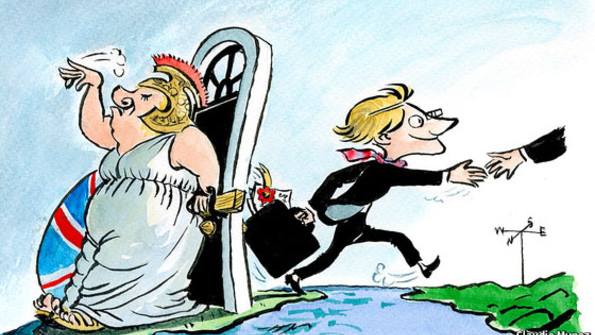
When British politicians talk about winning the “global economic race” (as they often do) they have athletes like Gregor Wilson in mind. Mr. Wilson taught himself to code as a child. He started and built his first company while at university and sold it on graduating. His second venture, a software firm, is booming and will soon be ready to take on more staff. He is also preparing to leave Britain for good.

In the popular imagination, British expats are leathery retirees in the Mediterranean. But from 2006 onwards the weak pound, the bursting of Spain’s property bubble and rising taxes in France made the costas less attractive. The number of old Britons emigrating annually has more than halved since then. Dean Blackburn, head of HSBC Expat, part of the high-street bank, says that a different breed of emigrant is now on the march: the ambitious graduate bound for North America or Asia.

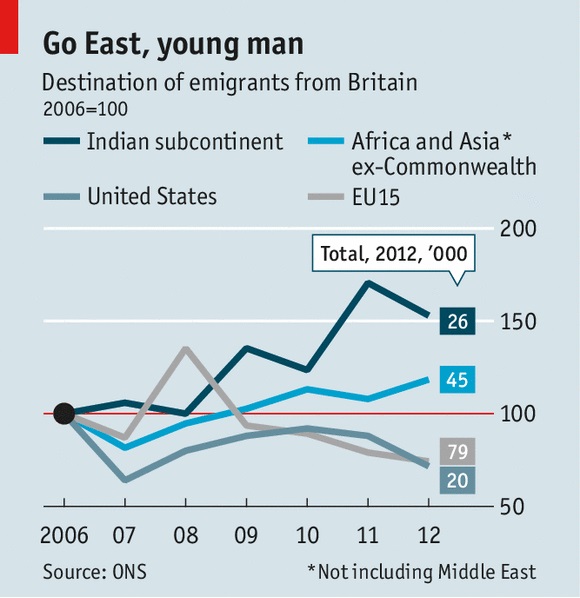
CU Blog - Britain's neglected diaspora - Photo 2The sharpest rise has been among those moving to the glittering East (see chart). Mr Wilson will build his business in Hong Kong. The web, along with the reach of the English language and the cachet of a British degree, gives young people like him opportunities undreamed-of by their parents’ generation. They are also un-tethered for longer: on average, they buy a house and form a family later in life than did previous generations. Figures from the Office for National Statistics show that, since the eve of the economic crisis, emigration is down by 19% overall but up by 8% among 15- to 24-year-olds.

High housing costs help to drive young folk abroad. For the monthly rent on a rabbit hutch anywhere near central London, graduates live grandly elsewhere. “We can afford to travel around Australia, rent an apartment with a sea view and save some money,” explains Emma, a publisher and recent Oxford graduate who moved to Melbourne last year. Those with advanced degrees are especially likely to leave for countries where pay and research facilities are better.

This is regrettable. Britain’s productivity rate is puny; firms and factories badly need such skilled employees. But it is also an opportunity—which the country is squandering.

According to the World Bank, the British diaspora (at nearly 5m people, roughly the size of Scotland) is the largest of any rich country and the eighth biggest overall. Britain’s many expats could strengthen its trading links, channel investment into its economy and generally burnish the national brand. But Britain’s government seems to have “no coherent strategy” for engaging with them, says Alan Gamlen of the Oxford Diasporas Programme, a research unit at OxfordUniversity.

Of 193 UN member states, 110 have formal programmes to build links with citizens abroad. Britain is not one of them. The Foreign and Commonwealth Office’s database of Britons abroad is patchy. Of all the high-flying expats with British passports your correspondent asks, only one—Danny Sriskandarajah, a migration expert based in South Africa—has had any contact with local embassies or with UKTI, Britain’s trade-promotion body. And his Indian friend has received much more attention from his consulate.

Indeed, India is a trailblazer in this field. It has an entire ministry for its emigrants. Mr. Gamlen says it partly has this to thank for the success of its IT industry, built by Indians lured home from Silicon Valley and Europe. Other countries are similarly welcoming. Italy and France even reserve parliamentary seats for their diasporas.

The British government would probably have to work harder than most to sustain ties with the country’s expats. Britons are relatively good at melting into other countries without trace. They are a individualistic bunch, have Commonwealth links and a native language that often makes it easy to integrate.

Kiwi seeds
New Zealand offers a good model for Britain’s hands-off diplomats to emulate. Wellington has spent 30 years encouraging firms and philanthropists to root out Kiwis abroad. Its proudest achievement is the Kiwi Expat Association, a public-private partnership that supports and connects overseas New Zealanders through social media and networking events, and helps them return home if they so wish. Britain might also make it easier to bring spouses into the country. Expats who want to move back with their non-British partners often collide with their home country’s ever-tougher immigration regime.

If Britain does not want its talented globetrotters, others do. Germany actively recruits Britons to take apprenticeships there. Middle Eastern governments tour British universities doling out visas. Mr. Wilson was contacted out of the blue by the Chinese authorities, who invited him to relocate his firm and offered to pay for his flight. “America and China seem really keen to attract us,” he says. “Britain just doesn’t seem that interested.”
The Economist Magazine – (Posted 08/09/2014) –
http://www.economist.com/news/britain/21611102-some-5m-britons-live-abroad-country-could-do-far-more-exploit-its-high-flying-expats-and?fsrc=nlw
The analysis is straight forward, this is Globalization 101. In a global economy, the economic rules of supply and demand are magnified globally. Highly skilled individuals are a commodity that is in demand, customers for that commodity emerged from all corners of the earth.

For the Caribbean, the lessons are very pointed, the exacerbated brain drain, estimated at 70%, with one country Guyana registering a 81% ratio, will not go away on its own. There must be a concerted effort of mitigations and solutions to remediate the problem. The book Go Lean…Caribbean is the concerted mitigation effort on behalf of the Caribbean region. The book Go Lean…Caribbean serves as a roadmap for the introduction and implementation of the technocratic Caribbean Union Trade Federation (CU).

This roadmap is for the elevation of Caribbean society, including the Diaspora. There is no laissez-faire attitude toward this population, there are specific missions to impact the Diaspora into the effort to empower the Caribbean. In fact, the prime directives of the CU are presented as the following 3 statements:

  • Optimization of the economic engines in order to grow the regional economy to $800 Billion & create 2.2 million new jobs.
  • Establishment of a security apparatus to protect the resultant economic engines.
  • Improve Caribbean governance to support these engines.

The book posits that, just like Great Britain in the foregoing article, the Caribbean is in crisis with this brain drain problem. This point is stressed early in the book (Page 13) in the following pronouncements in the Declaration of Interdependence:

 xix.   Whereas our legacy in recent times is one of societal abandonment, it is imperative that incentives and encouragement be put in place to first dissuade the human flight, and then entice and welcome the return of our Diaspora back to our shores. This repatriation should be effected with the appropriate guards so as not to imperil the lives and securities of the repatriated citizens or the communities they inhabit. The right of repatriation is to be extended to any natural born citizens despite any previous naturalization to foreign sovereignties.

xx.   Whereas the results of our decades of migration created a vibrant Diaspora in foreign lands, the Federation must organize interactions with this population into structured markets. Thus allowing foreign consumption of domestic products, services and media, which is a positive trade impact. These economic activities must not be exploited by others’ profiteering but rather harnessed by Federation resources for efficient repatriations.

This commentary previously related details of the vibrant Caribbean Diaspora, such as the causes of emigration, efforts to reduce the “push-and-pull” factors and the region’s continuous interaction with the “exile community”, in these earlier Go Lean blogs:

https://goleancaribbean.com/blog/?p=1896 American “Pull” Factors – Crisis in Black Homeownership
https://goleancaribbean.com/blog/?p=1698 American “Pull” Factors – STEM Jobs Are Filling Slowly
https://goleancaribbean.com/blog/?p=1683 British public sector workers strike over ‘poverty pay’
https://goleancaribbean.com/blog/?p=1596 Book Review: ‘Prosper Where You Are Planted’
https://goleancaribbean.com/blog/?p=1433 Caribbean loses more than 70 percent of tertiary educated to brain drain
https://goleancaribbean.com/blog/?p=1350 PayPal expands payment services to 10 markets
https://goleancaribbean.com/blog/?p=1296 Remittances to Caribbean Increased By 3 Percent in 2013
https://goleancaribbean.com/blog/?p=1256 Traditional 4-year College Degree are Terrible Investments for the Caribbean Region
https://goleancaribbean.com/blog/?p=841 Having Less Babies is Bad for the   Economy
https://goleancaribbean.com/blog/?p=740 Trade/Foreign Mission Offices – Why not … a profit center?

Losing a portion of  any population is bad for any economy. But losing large portions of a skilled population, is worst still as it creates a debilitating brain drain.

So how do we, in the Caribbean, find success when even John Bull (metonym referring to England) has failed? The foregoing article identifies a best practice: Diaspora outreach. This plan requires capturing a database of all Caribbean Diaspora and their legacies, a natural feature of the myCaribbean.gov social media site.

The Go Lean roadmap spells out the full details of the plan to engage the Diaspora residing, working, and studying in foreign lands. (Many students study abroad and never return “home”). The goal is to expand trade and absolutely-positively encourage a repatriation to their Caribbean homelands.

The CU will surely not abandon their Caribbean expatriates, even though these ones may have abandoned the Caribbean.

In line with the foregoing article, the Go Lean book details a series of community ethos, strategies, tactics, implementations and advocacies to foster the best practices in Diaspora outreach, thus furthering interaction with far-flung Caribbean stakeholders:

Community Ethos – Deferred Gratification Page 21
Community Ethos – People Respond to Incentives Page 21
Community Ethos – Economic Systems Influences Choices & Incentives Page 21
Community Ethos – The Consequences of Choice Lie in the Future Page 21
Community Ethos – Job Multiplier Page 22
Community Ethos – Lean Operations Page 24
Community Ethos – Return on Investments Page 24
Community Ethos – Ways to Impact the Future Page 26
Community Ethos – Ways to Help Entrepreneurship Page 28
Community Ethos – Ways to Impact Research & Development Page 30
Community Ethos – Ways to Manage Reconciliations Page 34
Community Ethos – Ways to Impact the Greater Good Page 37
Strategy – Mission – Repatriate Diaspora Page 46
Strategy – Customers – Diaspora Page 47
Tactical – Separation of Powers – Department of State – Foreign Affairs Page 80
Implementation – Year 1 / Assemble Phase Page 96
Implementation – Year 4 / Repatriate Phase Page 98
Implementation – Improve Mail Services – e-Mail for Diaspora Page 108
Implementation – Ways to Deliver Page 109
Implementation – Ways to Impact Social Media Page 111
Implementation – Trade Mission   Objectives Page 117
Implementation – Reasons to Repatriate Page 118
Implementation – Ways to Benefit from Globalization Page 119
Planning – Ways to Improve Trade Page 128
Advocacy – Ways to Grow the Economy Page 151
Advocacy – Ways to Create Jobs Page 152
Advocacy – Ways to Improve Education Page 159
Advocacy – Ways to Foster Technology Page 197
Advocacy – Ways to Impact the Diaspora Page 217
Advocacy – Ways to Impact British Territories Page 245
Appendix – Analysis of Caribbean Diaspora by Country of Residence Page 267
Appendix – Analysis of Caribbean Remittances Page 268
Appendix – Analysis of Caribbean Emigration Page 269
Appendix – Alternative Remittance Modes Page 270
Appendix – Puerto Rican Diaspora Population in the US Page 304

This roadmap focuses on the Caribbean, arguably the world’s best address, not Great Britain, a less than tropical, less than paradisiacal land . Now is the time for all of the Caribbean, the people and governing institutions, to lean-in for the changes in this Go Lean … Caribbean roadmap.

This is a big deal for the region. This roadmap is not just a plan, its a prescription for what ails the region; it advocates for the CU to serve as a delivery vehicle to carry the hopes and dreams of generations of Caribbean residents…and Diaspora.

The region needs this delivery; the region needs this cure. The region needs this roadmap to be a better place to live, work and play.

Download the book Go Lean … Caribbean – now!

 

Share this post:
, , , ,

Senate bill targets companies that move overseas

Go Lean Commentary

“Honor among thieves’ …

… this seems to be the code by which Caribbean society is based. And this is not new! This is the community ethos that dates back almost 500 years.

This ethos seems to “raise its head” again with the below news article as published in a Jamaican newspaper. Even though the US middle class has been devastated by globalization – shipping jobs overseas, many times to Caribbean countries like Jamaica – the motives behind the cited legislation seems wholesome for American self-interest. What is astonishing is the adversarial comments of a Jamaican readers. Consider the original article here and the comment:

By: The Associated Press

Subtitle: The Senate voted Wednesday to advance an election-year bill limiting tax breaks for United States (US) companies that move operations overseas. But big hurdles remain.

CU Blog - Senate bill targets companies that move overseas - Photo 1The Senate voted 93-7 to begin debating the bill, which would prevent companies from deducting expenses related to moving operations to a foreign country. The bill would offer tax credits to companies that move operations to the US from a foreign country.

Senate Democratic leaders say the bill would end senseless tax breaks for companies that ship jobs abroad.

“It would end the absurd practice of American taxpayers bankrolling the outsourcing of their very own jobs,” said Senate Majority Leader Harry Reid, a Democrat.

Most Republicans joined Democrats in voting to take up the bill. But Republican senators are unlikely to support final passage of the bill without significant changes.

Senate Republican Leader Mitch McConnell said the bill is an election-year ploy that has no chance of becoming law.

“It’s a bill that’s designed for campaign rhetoric and failure, not to create jobs here in the US,” McConnell said. “But that’s not stopping our friends on the other side from bringing it up again – just as they did right before the last big election, too.”

The bill would cost US companies that move overseas $143 million in additional taxes over the next decade, according to the Joint Committee on Taxation, which analyses tax bills for Congress. Companies moving into the US would see their tax bills drop by $357 million over the same period.

The difference – $214 million – would be added to the budget deficit.
The Jamaica Gleaner Daily Newspaper (Posted 07-25-2014) –
http://jamaica-gleaner.com/gleaner/20140724/business/business1.html 

——–

Commentator basing the proposed legislation – nervousinvestor •  Thursday July 24, 2014:
    “Seems like a stupid bill if you ask my opinion”.

——–

Question: Why would Jamaican stakeholders (all of the Caribbean for that matter) lean-in for a contrarian view? Answer: Their own self-interest – a penchant to operate on the shadows of American (and European) economies and pilfer illicit gains.

The book Go Lean…Caribbean examines the varied history of the Caribbean during the colonization and post-colonization eras, and then concludes that the region always operated with an outlaw mentality – always on the dark side. While there is wise business strategy associated with satisfying unfulfilled market needs, the Caribbean experience is decidedly different, one of exploiting loopholes. It is apparent that aspects of Caribbean society still reflect this outside-the-law disposition, it is an institutional trend that appears consistent over the centuries. (The book posits that this approach has been counter-productive for building an industrious society; not everyone wants to, or should operate in the shadows).

Consider the historic evidence as follows:

PCU Blog - Senate bill targets companies that move overseas - Photo 2rivateering [a] – This was the practice of private ships, authorized by governments or royal decree, to attack foreign vessels during wartime. While Privateering was a way of mobilizing armed ships and sailors without having to spend treasury resources or commit naval officers, this was a business operation, with the cost being borne by investors hoping to profit from prize money earned from captured cargo and vessels. The proceeds would be distributed among the privateer’s investors, officers, and crew.

CU Blog - Senate bill targets companies that move overseas - Photo 3Pirates of the Caribbean [b] – The distinction between a privateer and a pirate has always been vague beyond the licensing Letters of Marque. Without the letters, the parties were considered pirates; of which many frequented the Caribbean region. This industry employed many unemployed seafarers as a way to make ends meet, but became increasingly damaging to the region’s economic and commercial prospects.

CU Blog - Senate bill targets companies that move overseas - Photo 4Wrecking (Ships) [c] –  This was the practice of taking valuables (cargo) from a shipwreck which has floundered close to shore; this evolved into what is now known as “marine salvage”. While wrecking is no longer economically significant, this practice was in itself an industry as recently as the 19th century in some parts of the world, and a mainstay in many Caribbean economies. The Caribbean islands, waterways and ports have to contend with a lot of hidden water hazards, like reefs. So this industry thrived on the uncertainty of shipping,  (before better navigational tools and systems), but also created their own pro-wrecking incidents and threats, like false lighting and sabotage.

CU Blog - Senate bill targets companies that move overseas - Photo 5Rum-running/Bootlegging [d] – This refers to the illegal business of smuggling alcoholic beverages (over water) where such transportation is forbidden by law. Most prominently, this activity was done to circumvent the taxation and prohibition laws of the US in the early 20th Century (1920 to 1933). Due to its close proximity, many ships came from the island of Bimini in the western Bahamas to transport cheap Caribbean rum to Florida. But rum’s cheapness made it a low-profit item for the rum-runners, and they soon moved on to smuggling Canadian Whiskey, French Champagne, and English Gin to major cities like New York City and Boston, where prices ran high. (It was said that some ships carried $200,000 in contraband in a single run). Distilleries and breweries in the Caribbean flourished during this period as their products were either consumed by visiting Americans or smuggled into the US illegally. When the US government complained to the British that American law was being undermined by officials in Nassau, Bahamas, the head of the British Colonial Office refused to intervene. The British Caribbean attitude was echoed by UK Prime Minister Winston Churchill, who believed that Prohibition was “an affront to the whole history of mankind”.

CU Blog - Senate bill targets companies that move overseas - Photo 6Offshore Banking [e] – This refers to banks located outside the country of residence of the depositor, typically in a low tax jurisdiction (or tax haven) that provides financial and legal advantages- a mainstay in Antigua, Bahamas, Bermuda and Caymans. These advantages typically include: greater privacy, little or no taxation, easy access to deposits, and protection against local, political, or financial instability. These Offshore banks have often been associated with underground (informal) economies and organized crime, via tax evasion and money laundering. Legally, offshore activities do not prevent assets from being subject to personal income taxes on interest income, often times it is the privacy feature that skirts tax computation and collection.

CU Blog - Senate bill targets companies that move overseas - Photo 7Tax Evasion [f] – This activity is part of the business model of the Caribbean, though it is commonly associated with the informal economy. There are legal and illegal activities associated with the avoidance of taxes by individuals, corporations and trusts. Tax evasion often entails taxpayers deliberately misrepresenting the true state of their affairs to the tax authorities to reduce their tax liability and includes dishonest tax reporting, such as declaring less income, profits or gains than the amounts actually earned, or overstating deductions. Tax avoidance employ many tax havens or jurisdictions to facilitate lower tax bills. Caribbean member-states encourage many tax avoidance practices, campaigning to high net worth individuals to do business or establish their residence in the region.

CU Blog - Senate bill targets companies that move overseas - Photo 8Offshore Gambling – This category refers to more than just casinos operating at Caribbean resorts, but rather the practice of coordinating gambling/gaming operations worldwide that only have a legal footprint in the region. Caribbean jurisdictions have actually emerged as a favorite destination for legally licensing gaming institutions and companies, like sports books and online gambling. “In 1994 the Caribbean nation of Antigua and   Barbuda passed the Free Trade & Processing act, allowing licenses to be granted to organizations applying to open online casinos. The practice continues, even fighting and winning legal bouts at the WTO against the US. Many of the companies operating out of Antigua are publicly traded on various stock exchanges, specifically the London Stock Exchange. Antigua has met British regulatory standards and has been added to the UK’s “white list”, which allows licensed Antiguan companies to advertise in the UK. By 2001, the estimated number of people who had participated in online gambling rose to 8 million and the growth continued, despite legislation and lawsuit challenges to online gambling. By 2008, estimates for worldwide online gambling revenue were at $21 billion.”Go Lean…Caribbean; Page 213.

The book serves as a roadmap for the introduction and implementation of the Caribbean Union Trade Federation (CU), a technocratic federal government to administer and optimize the economic/security/governing engines of the region’s 30 member-states. The goal is to move business operations “out of the shadows” and “into the light”, mitigating against the threats represented in the historic review above. There are many legitimate business endeavors that the Caribbean can, and must, pursue in order to elevate its society. The Go Lean book details specifics for growing the regional economy to $800 Billion and creating 2.2 million new jobs – all using legitimate, in-the-light activities.

The Caribbean is the “best address in the world” and provides the best of certain products (see previous blog/commentary sample here: https://goleancaribbean.com/blog/?p=1847 – ‘Declared “Among the best in the world”’) and is the best at performing certain services. We can compete! There should not be the need to “run for the shadows”. The world should be soliciting us, not us begging for the “crumbs following from the table” of the world economy.

At the outset, the Go Lean roadmap recognizes the significance of best-of-breed industrial developments with these statements in the Declaration of Interdependence (Page 13 & 14):

xxiv.  Whereas a free market economy can be induced and spurred for continuous progress, the Federation must install the controls to better manage aspects of the economy: jobs, inflation, savings rate, investments and other economic principles. Thereby attracting direct foreign investment because of the stability and vibrancy of our economy.

xxvii. Whereas the region has endured a spectator status during the Industrial Revolution, we cannot stand on the sidelines of this new economy, the Information Revolution. Rather, the Federation must embrace all the tenets of Internet Communications Technology (ICT) to serve as an equalizing element in competition with the rest of the world. The Federation must bridge the digital divide and promote the community ethos that research/development is valuable and must be promoted and incentivized for adoption.

The change starts now; say goodbye to the shadows, say hello to the light. The Caribbean is hereby urged to lean-in to the following community ethos, strategies, tactics, implementations and advocacies to re-boot Caribbean industry and society; as detailed in the book Go Lean … Caribbean, sampled here:

Community Ethos – Deferred Gratification Page 21
Community Ethos – Economic Principles Page 21
Community Ethos – All Choices Involve Costs Page 21
Community Ethos – Job   Multiplier Page 22
Community Ethos – Light Up the Dark Places Page 23
Community Ethos – “Crap” Happens Page 23
Community Ethos – Lean Operations Page 24
Community Ethos – Return on Investments Page 24
Community Ethos – Ways to Impact the Future Page 26
Community Ethos – Ways to Help   Entrepreneurship Page 28
Community Ethos – Ways   to Promote Intellectual Property Page 29
Community Ethos – Ways to Impact Research   & Development Page 30
Community Ethos – Impact the Greater Good Page 37
Strategy – Vision – Confederating 30   Member-states in a Union Page 45
Strategy – Agents of Change – Technology Page 57
Strategy – Agents of Change – Globalization Page 57
Tactical – Fostering a Technocracy Page 64
Tactical – Growing Economy – New High   Multiplier Industries Page 68
Tactical – Separation of Powers – Commerce Department Page 78
Tactical – Separation of Powers – Self   Governing Entities Page 80
Implementation – Ways to Pay for Change Page 101
Implementation – Benefits from the Exclusive   Economic Zone Page 104
Implementation – Steps to Implement   Self-Governing Entities Page 105
Implementation – Ways to Deliver Page 109
Implementation – Ways to Benefit from   Globalization Page 119
Planning – 10 Big Ideas Page 127
Planning – Ways to Improve Trade Page 128
Planning – Ways to Make the Caribbean Better Page 131
Advocacy – Ways to Grow the Economy Page 151
Advocacy – Ways to Create Jobs Page 152
Advocacy – Ways to Mitigate Black Markets Page 165
Advocacy – Ways to Improve Homeland Security –   Naval Authorities Page 180
Advocacy – Ways to Foster Technology Page 197
Advocacy – Reforms for Banking Regulations Page 199
Advocacy – Ways to Impact Lotteries/Gambling Page 213
Advocacy – Ways to Help the Middle Class Page 223
Advocacy – Ways to Impact the One Percent – Tax Avoidance Options Page 223

The foregoing news article addresses an important move the US should make to counteract the effects of globalization on its core jobs. The Go Lean book stresses the importance of an empowered middle class. So the Caribbean has the same needs, but our success should not be dependent on breaking the laws of other countries. We can compete head on. This is a subject that impacts economics, security and governing engines. This is heavy-lifting!

The Go Lean roadmap maintains that change is coming to the Caribbean in general and industrial pursuits in particular, so that we may break from the past and have a vibrant future. The Caribbean will be a better place to live, work and play. 🙂

Download the free e-Book of Go Lean … Caribbean – now!

——————————————————————————————————————————–

Appendices:

a. Retrieved July 29, 2014 from: https://en.wikipedia.org/wiki/Privateering

b. Retrieved July 29, 2014 from: https://en.wikipedia.org/wiki/Pirate#Caribbean

c. Retrieved July 29, 2014 from: https://en.wikipedia.org/wiki/Wrecking_(shipwreck)

d. Retrieved July 29, 2014 from: https://en.wikipedia.org/wiki/Rum-running  and https://en.wikipedia.org/wiki/Prohibition_in_the_United_States

e. Retrieved July 29, 2014 from: http://en.wikipedia.org/wiki/Offshore_banking

f. Retrieved July 29, 2014 from: http://en.wikipedia.org/wiki/Tax_evasion and http://en.wikipedia.org/wiki/Tax_avoidance

Share this post:
, , ,
[Top]

STEM Jobs Are Filling Slowly

Go Lean Commentary

Here comes more “pull pressure” on the Caribbean work force.

According to the foregoing article, there is a greater demand for STEM (Science, Technology, Engineering and Mathematics) workers in the United States. According to US Government immigration policies, employers can search outside the borders to find job applicants to fill roles that are hard to place. This constitutes additional demand for individuals in the Caribbean work force with this skill-set to avail themselves of opportunities in the US. This article depicted here, constitutes an additional “pull” factor:

By: Justin Kim
Money Economics – Finance e-Zine (Posted 07/01/2014; Retrieved 07/11/2014 from:
http://www.moneyeconomics.com/headlines/stem-jobs-are-filling-slowly/

CU Blog - STEM Jobs Are Filling Slowly - Photo 1According to a new study by Brookings Institution, there is a clear evidence of a skills gap in the US. The report stated that a high school graduate with a Science, Technology, Engineering, and Math (STEM) background seems to be in higher demand than a person with an undergraduate degree not in a STEM background. The study looked at all job openings which were advertised on the companies’ websites totaling 52,000 companies in Q1 2013. Jobs in healthcare sector that require technical skills such as positions for doctors, nurses, and radiologists, filled at the slowest rate. To fill those jobs, the advertisement lasted an average of 47 days with the next being architectural and engineering openings that took an average of 41 days to fill. Computer and math jobs did relatively better in 39 days. On the other hand, jobs that do necessarily require higher education—installation, maintenance and repair—were filled more rapidly as the opening averaged 33 days of advertisement. Some of the fastest-filling jobs were office and administrative support, manufacturing, and construction type of jobs that took about 24 to 28 days to fill up. The study also breaks down the rate into different geographic regions and showed that jobs in San Francisco and San Jose, right in the vicinity of Silicon Valley, were the hardest to fill.

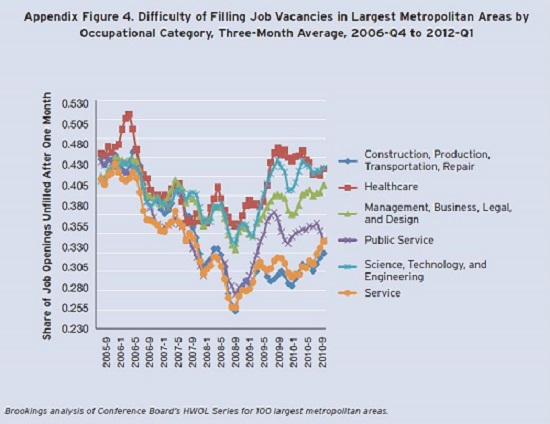
CU Blog - STEM Jobs Are Filling Slowly - Photo 2This graph depicts the percentage of jobs that remain unfilled after a month of advertising in the major sectors. It displays the skill gap in which healthcare and STEM sectors have a much harder time filling their positions than construction, production, transport, repair as well as public service sectors. Some analysts have argued in the past that due to the skill gap, the unemployment rate will be slow to fall. The author states that such gap will increase as this survey results show earnings and unemployment rate for STEM and non-STEM workers will be enlarged.

The book Go Lean…Caribbean posits that the reasons why the Caribbean brain drain is so acute, reported at exceeding 70%, are “push and pull” factors. That North American, and European countries can appeal to Caribbean educated workers more enticingly that their homeland. This is the pull factor. In addition the economic, security and governing deficiencies in the Caribbean “push” the native workers to consider expatriating. This can be likened to casting a ballot. The well-educated, skilled STEM worker in the Caribbean can simply choose to vote for “none of the above”; they vote with their feet and their wallet and simply flee the region. Today, that pace is 70%. Since the Caribbean has its own needs for the STEM work force, these numbers cannot be ignored.

The Caribbean is in crisis. The book Go Lean…Caribbean serves as a roadmap for the introduction and implementation of the technocratic Caribbean Union Trade Federation (CU). The roadmap declares that a crisis is a terrible thing to waste, and thus will respond to minimize “push” factors while also creating more competitive environments to dampen the pull factors.

The roadmap, in total will elevate Caribbean society. The prime directives of the CU are presented as the following 3 statements:

  • Optimization of the economic engines in order to grow the regional economy to $800 Billion & create 2.2 million new jobs.
  • Establishment of a security apparatus to protect the resultant economic engines.
  • Improve Caribbean governance to support these engines.

The book posits that all of the Caribbean is in crisis with this brain drain problem, while at the same time we have the same urgent need for STEM talent. This point is stressed early in the book (Page 13) in the following pronouncements in the Declaration of Interdependence:

xix.   Whereas our legacy in recent times is one of societal abandonment, it is imperative that incentives and encouragement be put in place to first dissuade the human flight, and then entice and welcome the return of our Diaspora back to our shores. This repatriation should be effected with the appropriate guards so as not to imperil the lives and securities of the repatriated citizens or the communities they inhabit. The right of repatriation is to be extended to any natural born citizens despite any previous naturalization to foreign sovereignties.

xxi.   Whereas the preparation of our labor force can foster opportunities and dictate economic progress for current and future generations, the Federation must ensure that educational and job training opportunities are fully optimized for all residents of all member-states, with no partiality towards any gender or ethnic group. The Federation must recognize and facilitate excellence in many different fields of endeavor, including sciences, languages, arts, music and sports. This responsibility should be executed without incurring the risks of further human flight, as has been the past history.

This blog relates to the challenge of mitigating the brain drain. This has been a frequent topic for these Go Lean blogs, highlighted here in the following samples:

a. https://goleancaribbean.com/blog/?p=1683 Caribbean Diaspora subject to ‘poverty pay’ in Britain
b. https://goleancaribbean.com/blog/?p=1674 Obama’s Plans for $3.7 Billion Immigration Crisis Funds, stressing the need for reform in the US.
c. https://goleancaribbean.com/blog/?p=1596 Book Review: ‘Prosper Where You Are Planted’ – the antithesis of emigration
d. https://goleancaribbean.com/blog/?p=1470 College of the Bahamas Master Plan 2025 – Lacking response for brain drain
e. https://goleancaribbean.com/blog/?p=1433 Caribbean loses more than 70 percent of tertiary educated to brain drain
f. https://goleancaribbean.com/blog/?p=1296 Remittances from Diaspora to Caribbean Increased By 3 Percent in 2013
g. https://goleancaribbean.com/blog/?p=1256 Is a Traditional 4-year College Degree a Terrible Investment? Yes, for Caribbean students studying abroad.

The Go Lean roadmap is based on sound economic principles, of which a basic concept is supply-and-demand. For the US, according to the foregoing article, there are more demand than supply for STEM workers, In the past, demand-supply gaps have been filled with a liberal immigration policy, but there is no stomach for that in today’s political climate. So the family re-unification approach is the likely strategy to be employed imminently – ethnicities with larger immigrant populations already in the US will have an advantage but their homelands will have more brain drain.

This is the premise for this commentary, that more pressure will be created for Caribbean citizens with STEM skill-sets to consider relocation, by connecting with their vibrant diaspora and family members for applying for entry into the US.

This means war.

Actually, war has already ensued; this issue is just the latest battle in this trade war.

To assuage these fears, and counteract the Caribbean losing dispositions in this trade war, the Go Lean book details a series of community ethos, strategies, tactics, implementations and advocacies to foster the best practices to mitigate further brain drain for the Caribbean region:

Community Ethos – Deferred Gratification Page 21
Community Ethos – Economic Systems Influence Choices & Incentives Page 21
Community Ethos – Job Multiplier Page 22
Community Ethos – Anti-Bullying and Mitigation Page 23
Community Ethos – Minority Equalization Page 24
Community Ethos – Return on Investments Page 24
Community Ethos – Ways to Impact the Future Page 27
Community Ethos – Ways to Foster Genius Page 26
Community Ethos – Ways to Help Entrepreneurship Page 28
Community Ethos – Promote Intellectual Property Page 29
Community Ethos – Ways to Impact Research & Development Page 30
Community Ethos – Ways to Close the Digital Divide Page 31
Community Ethos – Ways to Impact the Greater Good Page 37
Anecdote – Valedictorian and Caribbean Diaspora Member Page 38
Strategy – Customers – Citizens, Business   Community & Diaspora Page 47
Strategy – Meeting Region’s Needs Today, Preparing For Future Page 58
Tactical – Separation of Powers – Patent,   Standards, & Copyrights Page 78
Tactical – Separation of Powers – Education   Department Page 85
Implementation – Assemble all   Super-Regional Governing Entities Page 96
Implementation – Trends in Implementing   Data Centers Page 106
Implementation – Ways to Deliver Page 109
Implementation – Better Manage Debt –   Better Student Loans Dynamics Page 114
Planning – Ways to Improve Trade Page 128
Planning – Ways to Make the Caribbean Better Page 131
Advocacy – Ways to Grow the Economy Page 151
Advocacy – Ways to Create Jobs Page 152
Advocacy – Ways to Improve Education Page 159
Advocacy – Ways to Impact Student Loans – Forgivable Provisions Page 160
Advocacy – Ways to Foster Empowering Immigration – STEM Professionals Page 174
Advocacy – Ways to Foster Technology Page 197
Advocacy – Ways to Impact the Diaspora Page 217

Now is the time for all of the Caribbean, the people and governing (education) institutions, to lean-in for the elevations described in the book Go Lean … Caribbean. This is a big deal for the region. This roadmap is not just a plan; it is also the delivery of the hopes and dreams of generations of Caribbean residents to finally assuage the brain drain.

The region needs the deliveries, described in the Go Lean roadmap. Otherwise, we have no hope to incite and retain our young people, especially those with STEM skill-sets. As a region, we would be condemned to a future of the status quo, or worse, simply “fattening frogs for snakes”. This roadmap therefore is vital in the quest to make the Caribbean a better place to live, work, learn and play.

Download the book Go Lean … Caribbean – now!
Share this post:
, , ,
[Top]

Obama’s Plans for $3.7 Billion Immigration Crisis Funds

Go Lean Commentary

If only we were ready now!

$3.7 Billion in new spending in communities that really do not want the activity.

This, according to the below article, is the ground situation regarding the current immigration crisis on the US-Mexico border with children from Guatemala, El Salvador and Honduras. The US government, Obama Administration, is requesting additional funding from Congress of $3.7 Billion to better interdict and respond during this crisis. The biggest part of the expense will be the detention functionality for the apprehended trustees.

This is a crisis … and this crisis is a terrible thing to waste!

By: Mary Bruce

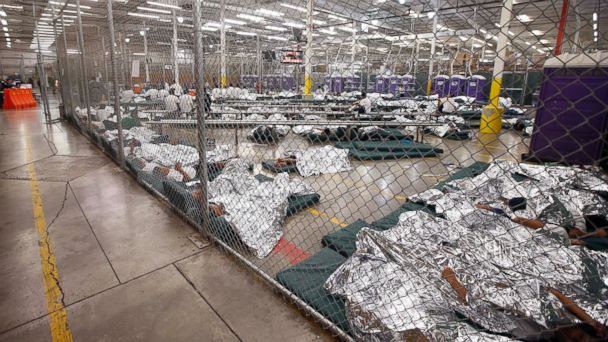
Detainees sleep and watch television in a holding cell where hundreds of mostly Central American immigrant children are being processed and held at the U.S. Customs and Border Protection Nogales Placement Center on June 18, 2014, in Nogales, Arizona. Ross D. Franklin-Pool/Getty Images

Detainees sleep and watch television in a holding cell where hundreds of mostly Central American immigrant children are being processed and held at the U.S. Customs and Border Protection Nogales Placement Center on June 18, 2014, in Nogales, Arizona. Ross D. Franklin-Pool/Getty Images

President Obama today is requesting $3.7 billion to cope with the humanitarian crisis on the border and the spike in illegal crossings by unaccompanied minors from Central America.

Roughly half of the funding would go to the Department of Health and Human Services to provide care for the surge of children crossing the border, including additional beds.

The rest would be split between several departments to tackle the issue on both sides of the border, including $1.6 billion to the Departments of Homeland Security and Justice to boost law enforcement at the Southwest border and pay for additional immigration judge teams, among other things, and $300 million to the State Department to tackle the root causes of this crisis and to send a clear message to these countries not to send children illegally to the U.S.

Today’s funding request is separate from policy changes that the administration is also seeking to speed up the deportation of the children, most of whom are from Guatemala, El Salvador and Honduras. The White House sent a letter to Congressional leadership last week requesting the legal changes to make it easier to send them home.

According to a White House official, greater administrative authority as well as the additional resources will help make it more efficient and expeditious to process and return the children.

What remains unclear is how much faster this additional funding would make the process to send children back to their home countries. White House officials today declined to speculate on such timing, but the administration has said that most of the unaccompanied minors will likely be “sent home.”

“Based on what we know about these cases, it is unlikely that most of these kids will qualify for humanitarian relief. And what that means is it means that they will not have a legal basis for remaining in this country and will be returned,” White House Press Secretary Josh Earnest said Monday.

The White House has yet to say how many of the roughly 52,000 children that have been apprehended this year have been sent back to Central America. Today, officials offered only the total figure, including adults. So far this year, Immigration and Customs Enforcement has removed almost 233,000, that includes over 87,000 to Central American countries.

Here’s a detailed look at some of the ways the president wants to spend $3.7 billion to deal with the influx of unaccompanied minors, according to the White House.

$364 MILLION:

To pay for operational costs of responding to the significant rise in apprehensions of unaccompanied children and families, including overtime and temporary duty costs for Border Patrol agents, contract services and facility costs to care for children while in CBP custody, and medical and transportation service arrangement.

$39.4 MILLION:

To increase air surveillance capabilities that would support 16,526 additional flight hours for border surveillance and 16 additional crews for unmanned aerial systems to improve detection and interdiction of illegal activity.

$109 MILLION:

To provide for immigration and customs enforcement efforts, including expanding the Border Enforcement Security Task Force program, doubling the size of vetted units in El Salvador, Guatemala, and Honduras, and expanding investigatory activities by ICE Homeland Security Investigations.

$879 MILLION:

To pay for detention and removal of apprehended undocumented adults traveling with children, expansion of alternatives to detention programs for these individuals, and additional prosecution capacity for adults with children who cross the border unlawfully.

$45.4 MILLION:

To hire approximately 40 additional immigration judge teams, including those anticipated to be hired on a temporary basis. This funding would also expand courtroom capacity including additional video conferencing and other equipment in support of the additional immigration judge teams. These additional resources, when combined with the FY 2015 Budget request for 35 additional teams, would provide sufficient capacity to process an additional 55,000 to 75,000 cases annually.
ABC News Online News Video Source (Retrieved 07/08/2014) – http://abcnews.go.com/blogs/politics/2014/07/obamas-plans-for-3-7-billion-immigration-crisis-funds/

ABC News | ABC Sports News

The overriding theme of the foregoing news article is the need for professional detention capabilities. Within this crisis, the publishers of the book Go Lean…Caribbean see opportunities for commerce.

The book posits that the region must prepare its own security apparatus for its own security needs. But while we are building facilities (prisons, jails, detention centers, etc) for our own needs, we can employ the strategy of over-building and insourcing for other jurisdictions. Had we been ready now, with this Go Lean plan, we would have been able to embrace the opportunities presented by this Central American Children Crisis. This point is pronounced early in the book with the Declaration of Interdependence (Page 12) that claims:

x.   Whereas we are surrounded and allied to nations of larger proportions in land mass, populations, and treasuries, elements in their societies may have ill-intent in their pursuits, at the expense of the safety and security of our citizens. We must therefore appoint “new guards” to ensure our public safety and threats against our society, both domestic and foreign. The Federation must employ the latest advances and best practices of criminology and penology to assuage continuous threats against public safety. The Federation must allow for facilitations of detention for convicted felons of federal crimes, and should over-build prisons to house trustees from other jurisdictions.

xvi. Whereas security of our homeland is inextricably linked to prosperity of the homeland, the economic and security interest of the region needs to be aligned under the same governance. Since economic crimes … can imperil the functioning of the wheels of commerce for all the citizenry, the accedence of this Federation must equip the security apparatus with the tools and techniques for predictive and proactive interdictions.

The Go Lean roadmap facilitates the introduction and implementation of the technocratic Caribbean Union Trade Federation (CU). With 2 American territories in the Caribbean (Puerto Rico & the US Virgin Islands), it would be a simple proposal to Washington to offer to house these Central American Children in a Caribbean detention center, until some disposition is finalized regarding their individual cases. Then portions of that $3.7 Billion could be earned here, in the Caribbean.

The book asserts that the CU can copy the model of the small Pacific island country of Nauru (Page 290).  As of July 2013 the detention center there was holding 545 asylum seekers on behalf of Australia … for a fee, assuaging an immigration crisis for Australia.

In addition to government spending, there will be the bonus of private spending from the visitors and family members of the detainees.

Just like that: Commerce!

This is the goal of Go Lean…Caribbean, to confederate under a unified entity made up of all 30 Caribbean member-states. Then provide homeland security for “our neighborhood”, contending with man-made and natural threats. The CU security goal is for public safety! The CU is set to optimize Caribbean society through a number of missions. The Go Lean roadmap has 3 prime directives:

  • Optimization of the economic engines in order to grow the regional economy to $800 Billion & create 2.2 million new jobs.
  • Establishment of a security apparatus to protect the resultant economic engines.
  • Improve Caribbean governance to support these engines.

In recent blog submissions, this commentary highlighted the security provisions that must be enacted to improve homeland security, as soon as possible:

https://goleancaribbean.com/blog/?p=1554 Status of Forces Agreement = Security Pact
https://goleancaribbean.com/blog/?p=1076 References to the Caribbean Regional Security System

If only those provisions were in place already!

We console with the communities dealing with this crisis; already there have been protests from townspeople where the existing American detention facilities are located. We also console with the refugees fleeing the crime, violence and despair in their homeland; this Go Lean roadmap is the Caribbean’s aspiration to mitigate against a similar Failed-State status (Page 134).

Underlying to the prime directive of elevating the economics, security and governing engines of the Caribbean is the desire to make the Caribbean homeland, a better place to live, work and play (Page 131) and to impact the Greater Good (Page 37) because “the needs of the many should outweigh the needs of the few”.

Download the free e-Book of Go Lean … Caribbean – now!

Share this post:
, , , , ,
[Top]

Bad Tweet: Dutch airline angers Mexico soccer fans

Go Lean Commentary

“In 2 minutes a computer can make as many mistakes as 20 men in 20 years” – Murphy’s Law on Technology.

“Once posted, you can’t take it back” – Social Media Harsh Reality.

These two expressions are the new normal. Social media can be an effective communication tool to reach the general public and/or a dedicated controlled group. This can be a blessing and a curse. This fact was demonstrated after the recent World Cup Elimination Game between Mexico and The Netherlands. Mexico lost! In its haste to capitalize on all the fanfare, representatives at Dutch airline KLM committed this PR blunder of denigrating Mexican fans:

By: AP Writer Alan Clendenning
RIO DE JANEIRO (AP) — What was meant to be a joke has turned into a PR blunder for Dutch airline KLM after it angered Mexican soccer fans by taking to Twitter to celebrate the Netherlands’ dramatic comeback victory in the World Cup.

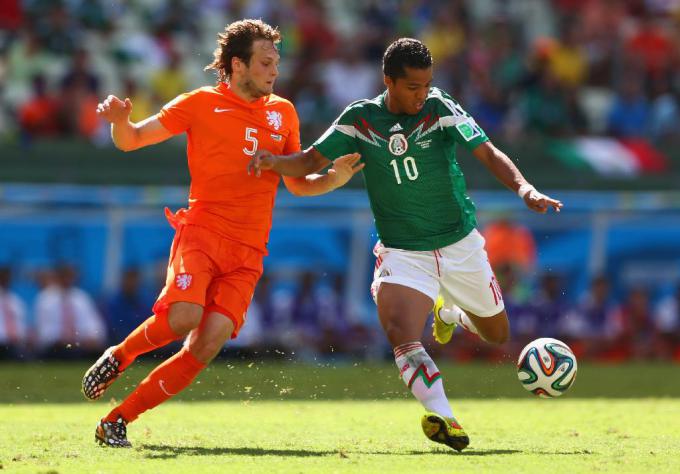
Netherlands v MexicoWithin minutes of the Netherlands’ 2-1 victory over the Tri, KLM let loose on its Twitter feed a picture of an airport departures sign under the heading “Adios Amigos!” Next to the word “Departures” is the image of a man with a mustache wearing a sombrero.

The post immediately went viral, with A-list Mexican actor Gael Garcia Bernal using not one but two expletives in a 140-character Tweet to tell his 2 million-plus followers that he’ll never fly the carrier again. Amid the widespread protest online, the post was pulled a half-hour later without an explanation.

“It was meant to be a joke,” KLM spokeswoman Lisette Ebeling Koning told The Associated Press, adding that the airline never intended to offend Mexicans, which it serves via a daily direct flight between Mexico City and Amsterdam. “But there was too much negative reaction.”

KLM issued a formal apology late Sunday.

“In the best of sportsmanship, we offer our heartfelt apologies to those who have been offended by the comment,” said Marnix Fruitema, director general of KLM in North America.

For its part, Mexican national carrier AeroMexico is also getting in on the fun, broadcasting on Twitter its support for the country’s soccer team under an arrivals sign.

“Thank you for this great championship,” AeroMexico said. “You’ve made us proud and we’re waiting for you at home.”
Associated Press (AP) News Wire Service (Retrieved 06/30/2014) –
http://news.yahoo.com/bad-tweet-dutch-airline-angers-mexico-soccer-fans-205929269.html

The expression “the post immediately went viral” could be a good thing or a bad thing. The book Go Lean…Caribbean posits that the power of social media must be harnessed strategically and tactically in order to explore all the benefits of Internet Communications Technologies. The book further asserts that the internet can be a great equalizer between large and small economy states, that talent and value can readily be searched and discovered.

The foregoing article depicts a Bad Tweet; then proceeds to describe how impactful response tweets can be, especially when wielded by an “Influencer” – a person with at least 100,000 followers – such as A-list Mexican celebrity Gael Garcia Bernal.

The book serves as a roadmap for the introduction and implementation of the technocratic Caribbean Union Trade Federation (CU). This effort will launch the Caribbean Postal Union to facilitate the region’s “mail” functionality. In 2014, the mail delivery cannot be seriously mentioned without considering electronic messaging options. Social media is an electronic messaging scheme. The CPU will administer the domain for www.myCaribbean.gov. The universe for this domain is scoped at 130 million unique users.

This strategy will elevate Caribbean society, and image. There is the need for a sentinel role for Caribbean image, as there are a lot of times that Caribbean life and people are denigrated in works of media arts: film, TV, books, magazines. Consider the example of Jamaican “Yardies”, or Dominican Cartels. The Go Lean roadmap calls for the CU to assume that role.

The CU, using cutting edge delivery of best practices, will employ strategies, tactics and implementations to impact its prime directives; identified with the following 3 statements:

  • Optimization of the economic engines in order to grow the regional economy to $800 Billion & create 2.2 million new jobs.
  • Establishment of a security apparatus to protect the resultant economic engines.
  • Improve Caribbean governance to support these engines.

Dutch KLM Photo

AeroMexico Photo

The Go Lean book speaks of a Caribbean crisis and posits that this crisis can be averted, the same way the non-malevolent jest on social media by KLM was quickly averted using stronger social media tactics. Considering the events in the foregoing article, an undeniable credo is reiterated that “a crisis is a terrible thing to waste”. The Go Lean roadmap seeks to optimize the entire Caribbean economic/security/governance eco-system. This vision is defined early in the book (Page 12 & 14) in the following pronouncements in the Declaration of Interdependence:

xv. Whereas the business of the Federation and the commercial interest in the region cannot prosper without an efficient facilitation of postal services, the Caribbean Union must allow for the integration of the existing mail operations of the governments of the member-states into a consolidated Caribbean Postal Union, allowing for the adoption of best practices and technical advances to deliver foreign/domestic mail in the region.

xxvii. Whereas the region has endured a spectator status during the Industrial Revolution, we cannot stand on the sidelines of this new economy, the Information Revolution. Rather, the Federation must embrace all the tenets of Internet Communications Technology (ICT) to serve as an equalizing element in competition with the rest of the world. The Federation must bridge the digital divide and promote the community ethos that research/development is valuable and must be promoted and incentivized for adoption.

xxx. Whereas the effects of globalization can be felt in every aspect of Caribbean life, from the acquisition of food and clothing, to the ubiquity of ICT, the region cannot only consume, it is imperative that our lands also produce and add to the international community, even if doing so requires some sacrifice and subsidy.

The Go Lean book details a lot more, a series of assessments, community ethos, strategies, tactics, implementations and advocacies to garner the benefits of ICT in the Caribbean region:

Community Ethos – Economic Systems Influence Choices & Incentives Page 21
Community Ethos – People Respond to Incentives Page 21
Community Ethos – Consequences of Choices Lie in the Future Page 21
Community Ethos – Return on Investments Page 24
Community Ethos – Ways to Impact the Future Page 26
Community Ethos – Ways to Foster Genius Page 27
Community Ethos – Ways to Impact Research & Development Page 30
Community Ethos – Ways to Bridge the Digital Divide Page 31
Community Ethos – Ways to Impact the Greater Good Page 37
Strategy – Vision – Confederating a Non-Sovereign Union Page 45
Tactical – Separation of Powers – Caribbean Postal Union Page 78
Implementation – Ways to Pay for Change Page 101
Implementation – Ways to Improve Mail   Services Page 108
Implementation – Ways to Deliver Page 109
Implementation – Ways to Impact Social   Media Page 111
Planning – Ways to Improve Image Page 133
Advocacy – Ways to Grow the Economy Page 151
Advocacy – Ways to Create Jobs Page 152
Advocacy – Ways to Foster Technology Page 197
Advocacy – Ways to Foster e-Commerce Page 198
Appendix – Measuring Media   Consumption Page 265

Now is the time for all of the Caribbean, the people and governing institutions, to lean-in for the empowerments described in the book Go Lean…Caribbean. There is reason to believe that these empowerment efforts can be successful. The Go Lean roadmap conveys how single causes/advocacies have successfully been forged throughout the world (Page 122 – Anatomy of Advocacies). With social media deployments, millions of people can be advocates. No defamation of Caribbean image will go unchallenged. We, in the Caribbean, can do the same as the Mexican power brokers when bad sportsmanship was displayed by the KLM airline.

The Caribbean can succeed in the advocacy to improve the Caribbean image and deployments of social media in the region. There are previous blog commentaries that delve into aspects of these same issues:

https://goleancaribbean.com/blog/?p=1416 Amazon’s new FIRE Smartphone
https://goleancaribbean.com/blog/?p=1404 Facebook goes down across multiple countries
https://goleancaribbean.com/blog/?p=857 Caribbean Image:   Dreadlocks

Congratulation to the Netherlands football/soccer national team in their pursuits of the FIFA World Cup. There is room for good sportsmanship for all.

Download the book Go Lean … Caribbean – now!

Share this post:
, , , , , ,
[Top]

Marijuana in Jamaica – Puff Peace

Go Lean Commentary

Weed 1Come to Jamaica and feel alright! – Advertising tag line sampling Bob Marley’s song: One Love.

Marijuana decriminalization is not a Jamaican issue… alone. Other countries have already addressed this debate; like Latin America[a] and Europe; legal in The Netherlands & Portugal, and decriminalized in Norway. In the US, Colorado is about to be joined by the State of Washington in allowing recreational use of the cannabis plant.

While medical marijuana originated in Jamaica (1970’s), many jurisdictions now allow marijuana to be legally distributed by medical professionals, with a prescription. Life imitates art, art imitates life. Hollywood has lampooned this practice many times in movies, TV shows and commentary. In the State of California, it is common-place to get a prescription for marijuana for “dubious” ailments like insomnia, appetite abatement, non-clinical depression, even sneezing. Without a doubt in California, the whole process is a farce! (See Comedian Bill Maher’s tongue-in-cheek commentary in Referenced VIDEO below[c]).

The world has changed; the acceptance of marijuana is changing.

The following news article addresses the issue of Marijuana decriminalization, (more so than legalization):

Port of Spain, Trinidad & Tobago – It would have seemed a lot more revolutionary just two years ago but for Jamaica, it is still a welcome whiff of sense. The island’s energy minister, Philip Paulwell, who also leads government business in parliament, has said he will find time this year to decriminalise possession of small amounts of marijuana. At a stroke, the move will cut the number of illicit smokes by as many as a million a week. It will also make a Jamaican break somewhat less nervy for ganja-puffing tourists.

Reform proposals have been knocking around for some time: a National Commission on Ganja recommended decriminalisation in 2001. But helped by moves towards legalisation in Uruguay and decriminalisation in the United States, momentum has been growing. A Cannabis Future Growers and Producers Association was launched last month, and a commercial company to support medical marijuana in December.

Selling for less than five dollars an ounce, ganja has a long history in Jamaica, going all the way back to 19th-century Indian immigrants. Cultivation and import have been illegal since 1913, but everyone’s granny remembers when the herb was quite openly on sale as a cure-all. Some of the early work on medicinal uses for marijuana was done in Jamaica in the 1970s and 1980s.

In practice, most small-time ganja users are not arrested or prosecuted. But for those who are, the consequences can be dire. A criminal record makes it hard to get a coveted American visa or to land jobs in Jamaica itself. For that reason alone, reform looks like a surefire vote-winner.

Decriminalisation will also unclog the courts and free up police time. But it won’t change the big picture. It will remain illegal to grow and trade marijuana in large quantities, something that suits the big players just fine. Full legalisation would knock the bottom out of the market, hurting the island’s powerful criminal gangs. It would also curtail the potential for extortion; seven police officers appeared in court this month to face allegations that they took a $2,750 bribe from a businessman in return for overlooking a ganja find on his premises.

Jamaicans are prone to waves of moral panic, but the proposal to decriminalise ganja has caused barely any waves. The foreign minister AJ Nicholson and the opposition leader, Andrew Holness, have expressed mild reservations; the vocal church lobby has been silent. Says a well-educated and dreadlocked Jamaican: “Most of them accept that there are people who do this, just like there are people who drink.” Such tolerant sentiments only go so far, however. The “abominable crime of buggery” carries a prison sentence of up to ten years, and the government has no plans to right that injustice.
The Economist Magazine; posted 06/13/2014; retrieved 06/18/2014 from: http://www.economist.com/blogs/americasview/2014/06/marijuana-jamaica?spc=scode&spv=xm&ah=9d7f7ab945510a56fa6d37c30b6f1709

Marijuana tourism or “ganja-puffing tourists” …
…these words jump off the page of this foregoing news article.

The book Go Lean…Caribbean anticipates the compelling issues associated with economic engines. The book serves as a roadmap for the introduction and implementation of the technocratic Caribbean Union Trade Federation (CU). This effort calls for the focus of the following 3 prime directives related to Trade:

  • Optimization of the economic engines in order to grow the regional economy to $800 Billion and create 2.2 million jobs.
  • Establishment of a security apparatus (including law enforcement enhancements) to protect the resultant economic engines.
  • Improve Caribbean governance to support these engines.

Weed 2But the subject of marijuana is bigger than Trade. There are moral, religious, legal and psychological (treatment) issues associated with this topic; and there is history – good and bad. Any jurisdiction decriminalizing the use of marijuana has to contend with the previous messaging to the community of: “Just say no to drugs”.

The book asserts that before the strategies, tactics, implementations and advocacies of a roadmap to elevate a society can be deployed, the affected society must first embrace a progressive community ethos. The book defines this “community ethos” as the fundamental character or spirit of a culture; the underlying sentiment that informs the beliefs, customs, or practices of society; dominant assumptions of a people or period. Think of the derivative term: “work ethic”.

Marijuana is a mood-altering drug; it has negative effects, one being preponderance for apathy, to tune out of any active engagement. In the US, even in the states where marijuana is legal, most firms/governments still screen staffers (new hires and veterans) and ban consumption of the drug. The reason is simple: Apathy does not make for industriousness. So this issue/drug presents a conundrum for the CU. The mission to grow the economy, promote industriousness, foster new jobs and new industries is pronounced early in the roadmap, detailed in the Declaration of Interdependence (Page 14) with this statement:

 xxvi.   Whereas the Caribbean region must have new jobs to empower the engines of the economy and create the income sources for prosperity, and encourage the next generation to forge their dreams right at home, the Federation must therefore foster the development of new industries … In addition, the Federation must invigorate the enterprises related to existing industries … impacting the region with more jobs.

According to the foregoing article, reconciling the history of marijuana/ganja will be a “tall order”:

ganja has a long history in Jamaica, going all the way back to 19th-century Indian immigrants.

The history of marijuana/ganja in the Caribbean in general and Jamaica in particular has generated a lot of proponents and opponents. Despite outlawing “the weed” for over 100 years, there is a vibrant black market economy associated with the drug. This reality challenges the security apparatus of the Caribbean’s legitimate governing entities. The Go Lean roadmap therefore features the necessary homeland security/law enforcement mitigations. This need was pronounced at the outset of the book (Page 12), recognizing that the problem of drug enforcement/interdiction may be too big for any one member-state alone:

xvi.   Whereas security of our homeland is inextricably linked to prosperity of the homeland, the economic and security interest of the region needs to be aligned under the same governance. Since economic crimes … can imperil the functioning of the wheels of commerce for all the citizenry, the accedence of this Federation must equip the security apparatus with the tools and techniques for predictive and proactive interdictions.

This issue of decriminalizing marijuana must now reconcile with the long history of criminal prosecutions, prison terms and probation/parole eco-system. Management of these attendant functions of criminology has been a consistent theme of the Go Lean roadmap, commencing with this statement in the same Declaration of Interdependence (Page 12):

x.   Whereas we are surrounded and allied to nations of larger proportions in land mass, populations, and treasuries, elements in their societies may have ill-intent in their pursuits, at the expense of the safety and security of our citizens. We must therefore appoint “new guards” to ensure our public safety and threats against our society, both domestic and foreign. The Federation must employ the latest advances and best practices of criminology and penology to assuage continuous threats against public safety. The Federation must allow for facilitations of detention for convicted felons of federal crimes, and should over-build prisons to house trustees from other jurisdictions.

The Go Lean book envisions the CU as a confederation of the 30 member-states of the Caribbean to do the heavy-lifting of empowering and elevating the Caribbean society by creating a “single market” for the region. Among the many benefits of this roadmap is the economies-of-scale for leveraging regional security solutions, like the upheavals of marijuana decriminalization.

Despite the many economic benefits researched for decriminalizing drugs, as measured in the mature market of the US [b], this roadmap and supporting blogs are NOT proposing this measure for the Caribbean … per se. This is presented here as a political issue; the CU strives to maintain an apolitical stance.

There is security risk on both sides of this issue. The book details the community ethos, strategies, tactics, implementations and advocacies to monitor, manage and mitigate the security risks to Caribbean society. The following is a sample list:

Community Ethos – Deferred Gratification Page 21
Community Ethos – Job Multiplier Page 22
Community Ethos – Privacy versus Public Protection Page 23
Community Ethos – Light Up the Dark Places Page 23
Community Ethos – Ways to Impact Research & Development Page 30
Community Ethos – Ways to Impact the Greater Good Page 37
Strategy – Vision – Integration of Single Market Economy Page 45
Strategy – Agents of Change – Globalization Page 57
Tactical – Fostering a Technocracy Page 64
Tactical – Separation of Powers – Homeland Security Page 75
Tactical – Separation of Powers – Justice Department Page 77
Implementation – Security Initiatives at Start-up Page 103
Advocacy – Ways to Grow the Economy Page 151
Advocacy – Ways to Ways to Mitigate Black Markets Page 165
Advocacy – Ways to Improve Governance Page 168
Advocacy – Ways to Better Manage the Social Contract Page 170
Advocacy – Ways to Impact Justice Page 177
Advocacy – Ways to Remediate and Mitigate Crime Page 178
Advocacy – Ways to Improve Homeland Security Page 180
Advocacy – Ways to Impact the Prison Industrial Complex Page 211

Now is the time for all of the Caribbean, the people and governing institutions, to lean-in for the empowerments described in the book Go Lean … Caribbean. For us to send the invitation to the wide-world to ”come to Caribbean and feel alright”, but we must first put “our house” in order.

The world’s acceptance of marijuana has changed. While this is true, this change has created opportunities and also challenges. There is plenty of work yet to be done; heavy-lifting.

Download the book Go Lean … Caribbean – now!
————————-

Referenced Citations:

a.  Marijuana is legal to some degree in 8 Latin America countries (Argentina, Brazil, Columbia, Costa Rica, Ecuador, Honduras, Mexico and Uruguay).

b.  A Harvard economist, Jeffery Miron, estimated that ending the war on drugs would inject 76.8 billion dollars into the US economy in 2010 alone.[1] He estimates that the government would save $41.3 billion for law enforcement and the government would gain up to $46.7 billion in tax revenue.[2] Since President Nixon began the war on drugs, the federal drug-fighting budget has increased from $100 million in 1970 to $15.1 billion in 2010, with a total cost estimated near 1 trillion dollars over 40 years.[3] In the same time period an estimated 37 million nonviolent drug offenders have been incarcerated. $121 billion was spent to arrest these offenders and $450 billion to incarcerate them.[3]

1.       Debusmann, Bernd (12/03/2008). “Einstein, Insanity and the War on Drugs”. Reuter. Retrieved 04/01/2012 from: http://blogs.reuters.com/great-debate/2008/12/03/einstein-insanity-and-the-war-on-drugs/.

2.       Miron, Jeffrey A.; Katherine Waldock. “The Budgetary Impact of Ending Drug Prohibition”. The Cato Institute.  Retrieved 05/03/2010 from: http://www.cato.org/publications/white-paper/budgetary-impact-ending-drug-prohibition

3.       The Associated Press (05/13/2010). “After 40 years, $1 trillion, US War on Drugs Has Failed to Meet Any of its Goals”. The Associated Press. Retrieved 04/01/2012 from: http://www.foxnews.com/world/2010/05/13/ap-impact-years-trillion-war-drugs-failed-meet-goals/.

c.  Referenced VIDEO:


On Friday night’s episode of “Real Time,” Bill Maher offered some advice to viewers and to the state of Colorado about how to use marijuana safely and effectively, which we need to do, he said, because “after all, we’re pretending it’s medicine…


Share this post:
, , , , , , ,
[Top]

Remittances to Caribbean Increased By 3 Percent in 2013

Go Lean Commentary

Participation in Caribbean national elections seems to have an additional candidate to vote for: None of the Above.

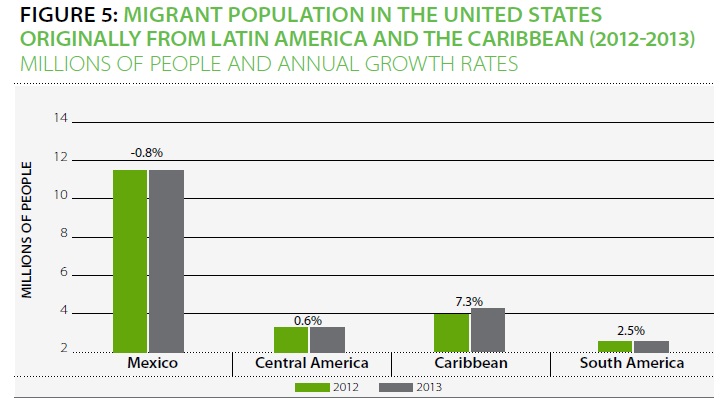
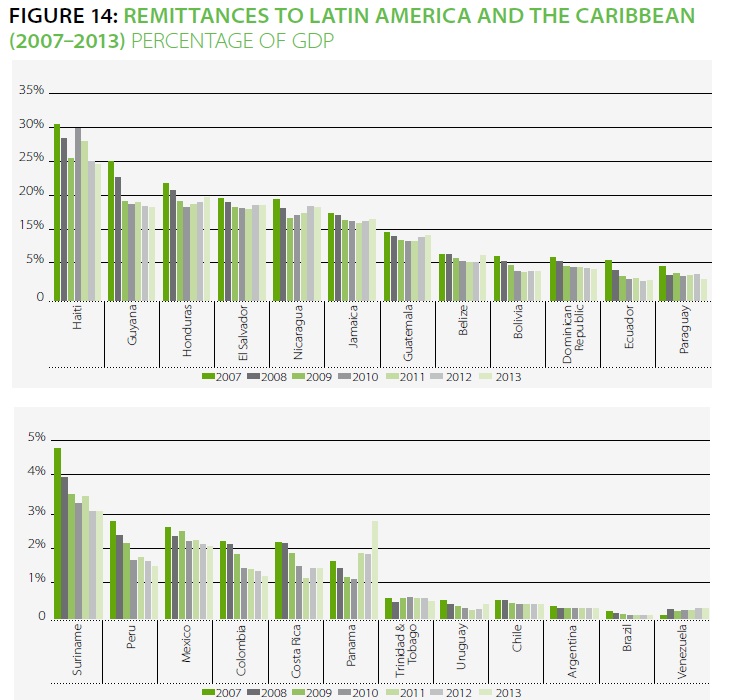
This is the assertion of the book Go Lean…Caribbean, and many aligned blog submissions, that Caribbean citizens are voting with their “feet and wallet” and leaving their tropical homelands for life in foreign countries. In fact, the book posits that the Caribbean Diaspora amount to 10 million people, compared to 42 million residents in the homeland. A great measurement of the economic activity of this diasporic population is their remittance activity. (Though not all migrants remit back to their homelands).

This book Go Lean…Caribbean serves as a roadmap for the introduction and implementation of the technocratic Caribbean Union Trade Federation (CU). The CU will assume the role and responsibility of empowering the regional economy and measuring trade/financial/remittance activity. The following 3 prime directives are explored in full details in the roadmap:

  • Optimization of the economic engines in order to grow the regional economy to $800 Billion & create 2.2 million new jobs.
  • Establishment of a security apparatus to protect the resultant economic engines.
  • Improve Caribbean governance to support these engines.

A mission of the CU is to minimize the need for Caribbean labor force to migrate to foreign lands for work; and also to invite the Diaspora to repatriate. We need to expand the labor pool at home. But the reality of the Go Lean roadmap is the methodical implementation over a 5 year period, so in the interim, there may still be more prosperous opportunities abroad.

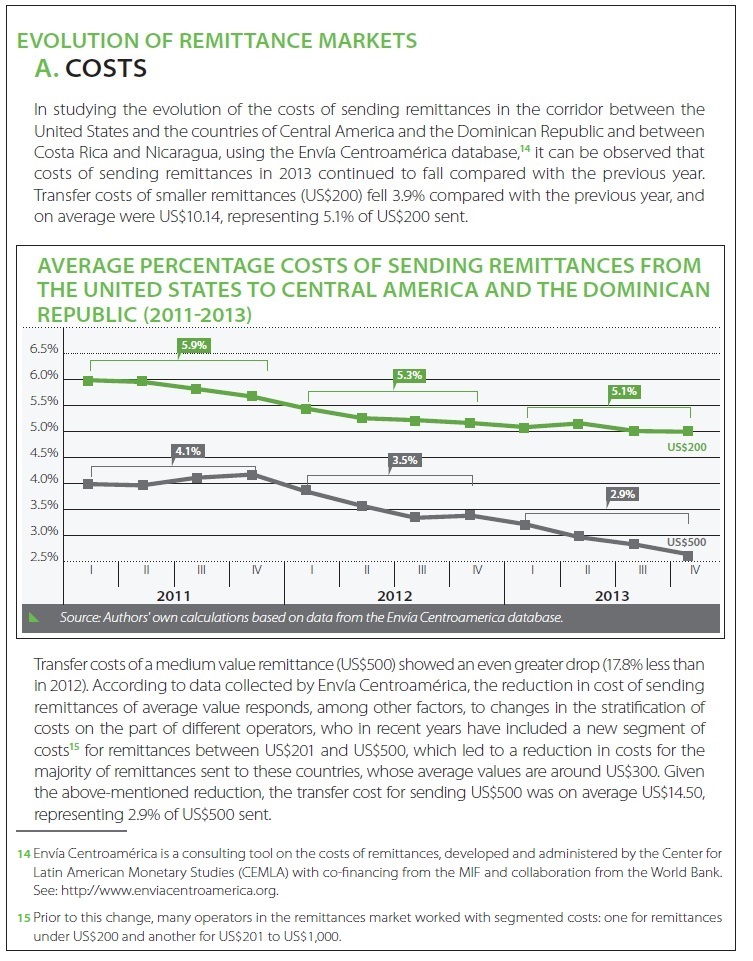
It is what it is! The CU/Go Lean plan then is to optimize the remittance process where possible: lowering the costs of transfers and managing the accompanying foreign currency and economic crime risks.

The reference source for the foregoing article came from the MIF (Multilateral Investment Fund), a member of the Inter-American Development Bank (IDB) Group; the MIF is funded by 39 donors and supports private sector-led development benefitting low-income populations and the poor –-their businesses, their farms, and their households. A core MIF mission is to act as a development laboratory in order to build and support successful micro and SME (Small-Medium-sized Enterprises) business models. [a]

By the Caribbean Journal staff

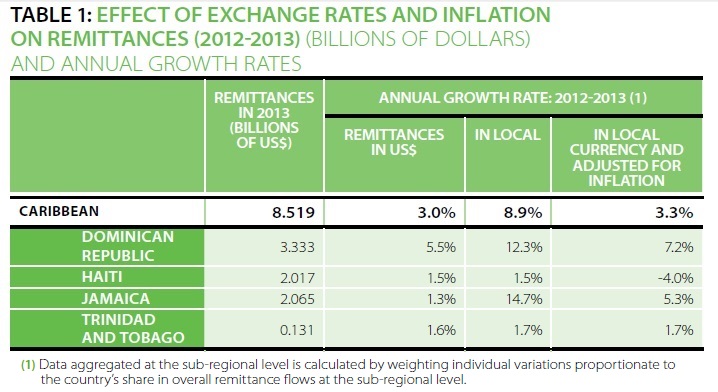
Table 1Remittances to the Caribbean region increased by 3 percent in 2013, according to a new report from the Inter-American Development Bank’s Multilateral Investment Fund.

Remittances to the region totaled $8.519 billion, a 3 percent improvement in US dollar terms, an 8.9 percent increase in local currency and a 3.3 percent improvement in local currency and adjusted for inflation.

“Remittance flows to Latin America and the Caribbean (LAC) remain an important source of income for millions of poor and vulnerable families,” said MIF General Manager Nancy Lee. “Remittance recipients need more access to financial tools that will help them use remittances to save and make investments for their future in areas like education, housing, and starting and growing businesses.”

The Dominican Republic received $3.333 billion USD in 2013, a 5.5 percent improvement, followed by Jamaica, which received $2.065 billion and Haiti, which received $2.017 billion.

Trinidad and Tobago was next with $131 million in remittances.

Of the group, the Dominican Republic saw the largest increase.

The Latin America and Caribbean region received a total of $61.251 billion last year, with the United States the source of about 75 percent of remittances to the region.

See the Table 1 (photo on this page) from the IDB for full details.

Caribbean Journal – Regional News Source (Retrieved 06/11/2014) –http://www.caribjournal.com/2014/06/10/remittances-to-caribbean-increased-by-3-percent-in-2013-report/

The reference source for the foregoing article came from the MIF (Multilateral Investment Fund), a member of the Inter-American Development Bank (IDB) Group; the MIF is funded by 39 donors and supports private sector-led development benefitting low-income populations and the poor –-their businesses, their farms, and their households. A core MIF mission is to act as a development laboratory in order to build and support successful micro and SME (Small-Medium-sized Enterprises) business models. [a]

Another mission of the CU/Go Lean roadmap is to apply lessons from the 2008 Great Recession financial crisis.

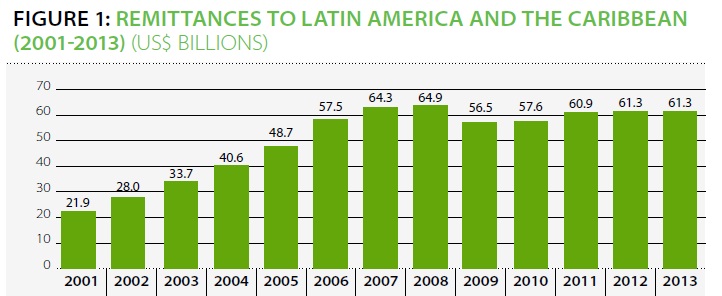
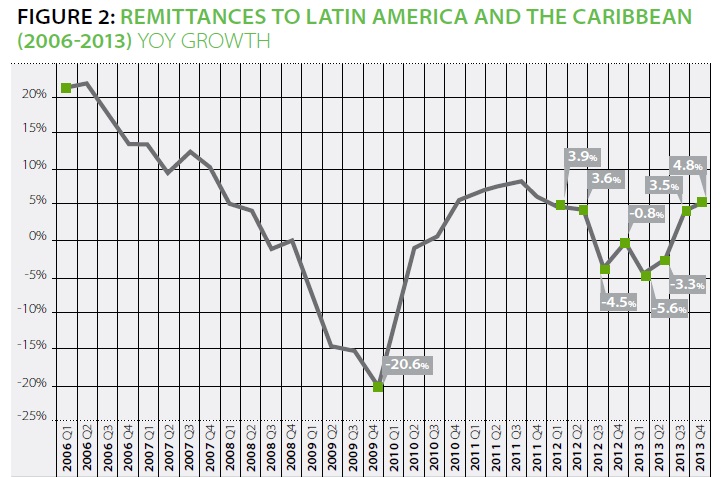
The MIF reports that in the years before the financial crisis of 2008-2009, remittances to the region as a whole experienced average annual growth of 17 percent. After a record high in 2008 of $64.9 billion, there was a sharp drop in 2009 of over 10 percent, followed by an increase in 2011 of 6 percent, and subsequent stagnation that continued up to 2013.

Figure 1

Figure 2

Figure 5

Figure 14

For 2014, macroeconomic projections show an encouraging landscape at the global level; it is predicted that the US economy will continue its path to recovery, as will EU countries, although at a slower pace. Employment data on LAC migrants, in both the United States and Spain, also show a recovery process enabling the prediction of growth in remittances sent from both countries. (See the accompanying charts, figures and tables on this page; sourced from the MIF/IDB report [b]).

This issue of continued fallout from the Great Recession has been a consistent theme of the Go Lean blogs entries as sampled here:

a. https://goleancaribbean.com/blog/?p=841 – Post 2008: Having Less Babies is Bad for the Economy

b. https://goleancaribbean.com/blog/?p=782 – Open the Time Capsule: The Great Recession of 2008

c. https://goleancaribbean.com/blog/?p=709 – Post 2008 Student Debt Holds Back Many Would-be Home Buyers

d. https://goleancaribbean.com/blog/?p=528 – Facebook plans to provide mobile payment services and remittances

e. https://goleancaribbean.com/blog/?p=378 – US Federal Reserve Releases Transcripts from 2008 Meetings

f. https://goleancaribbean.com/blog/?p=353 – Book Review: ‘Wrong – Nine Economic Policy Disasters and What We Can Learn…’

g. https://goleancaribbean.com/blog/?p=235 – Post 2008 Tourism’s changing profile

All in all, the roadmap commences with the recognition that all the Caribbean is in crisis, exacerbated after 2008, with defective business models, underemployment, globalization, and aging demographics. These acknowledgements are pronounced in the Declaration of Interdependence, (Page 13 & 14). The statements are included as follows:

xix.   Whereas our legacy in recent times is one of societal abandonment, it is imperative that incentives and encouragement be put in place to first dissuade the human flight, and then entice and welcome the return of our Diaspora back to our shores. This repatriation should be effected with the appropriate guards so as not to imperil the lives and securities of the repatriated citizens or the communities they inhabit. The right of repatriation is to be extended to any natural born citizens despite any previous naturalization to foreign sovereignties.  

xx.   Whereas the results of our decades of migration created a vibrant Diaspora in foreign lands, the Federation must organize interactions with this population into structured markets. Thus allowing foreign consumption of domestic products, services and media, which is a positive trade impact. These economic activities must not be exploited by others’ profiteering but rather harnessed by Federation resources for efficient repatriations.

xxi.   Whereas the preparation of our labor force can foster opportunities and dictate economic progress for current and future generations, the Federation must ensure that educational and job training opportunities are fully optimized for all residents of all member-states, with no partiality towards any gender or ethnic group. The Federation must recognize and facilitate excellence in many different fields of endeavor, including sciences, languages, arts, music and sports. This responsibility should be executed without incurring the risks of further human flight, as has been the past history.

 xxiv.   Whereas a free market economy can be induced and spurred for continuous progress, the Federation must install the controls to better manage aspects of the economy: jobs, inflation, savings rate, investments and other economic principles. Thereby attracting direct foreign investment because of the stability and vibrancy of our economy.

xxv.   Whereas the legacy of international democracies had been imperiled due to a global financial crisis, the structure of the Federation must allow for financial stability and assurance of the Federation’s institutions. To mandate the economic vibrancy of the region, monetary and fiscal controls and policies must be incorporated as proactive and reactive measures. These measures must address threats against the financial integrity of the Federation and of the member-states.

xxvi.   Whereas the Caribbean region must have new jobs to empower the engines of the economy and create the income sources for prosperity, and encourage the next generation to forge their dreams right at home, the Federation must therefore foster the development of new industries… In addition, the Federation must invigorate the enterprises related to existing … – impacting the region with more jobs.

The vision of the CU is a confederation of the 30 member-states of the Caribbean into an integrated “single market”, thereby fostering economic growth to grow the regional economy to $800 Billion (from the 2010 base of $378 Billion). This growth would be the cause-and-effect of 2.2 million new jobs. No more migrant culture! Tactically, the CU allows for a separation-of-powers between the member-state governments and the new federal agencies, so as to allow a technocratic management approach to simply “deliver” on the Go Lean roadmap, devoid of partisan politics! The following list details the series of community ethos, strategies, tactics, implementations and advocacies necessary to effectuate the change in the region to graduate from this migrant culture, described in the foregoing article and accompanying charts:

Community Ethos – Economic Systems Influence Individual Choices Page 21
Community Ethos – Job Multiplier Page 22
Community Ethos – Lean Operations Page 24
Community Ethos – Return on Investments Page 24
Community Ethos – Ways to Impact the Future Page 26
Community Ethos – Ways to Help Entrepreneurship Page 28
Strategic – Vision – Integrated Region in a Single Market Page 45
Strategic – Vision – Agents of Change Page 57
Tactical – Fostering a Technocracy Page 64
Tactical – Growing to $800 Billion Regional Economy Page 67
Tactical – Separation of Powers Page 71
Tactical – Interstate Commerce Admin – Econometrics Data Analysis Page 79
Implementation – Ways to Pay for Change Page 101
Implementation – Ways to Deliver Page 109
Planning – Big Ideas for the Caribbean Region Page 127
Planning – Lessons Learned from 2008 Page 136
Planning – Ways to Measure Progress Page 147
Advocacy – Ways to Grow the Economy Page 151
Advocacy – Ways to Create Jobs Page 152
Advocacy – Ways to Better Manage Foreign Exchange Page 154
Advocacy – Ways to Impact the Diaspora Page 217
Appendix – Job Multipliers Page 259
Appendix – Trade SHIELD – “Harvest“ Comprehensive Data Analysis Page 264
Appendix – Alternate (Cheaper & More Efficient) Remittance Modes Page 270

The Go Lean roadmap for the CU stresses the importance of a solid data foundation to analyze and measure progress. Since this is a 5-year roadmap, there must be milestones along the way, opportunities to plan-do-review. This approach allows for the proper adjustments to strategies, tactics and operations. The people of the Caribbean deserve every opportunity to deliver success. We need to be able to capture the traffic/data of remittances to all CU countries – only the large member-states were measured in these accompanying charts – and glean intelligence from the analysis. This approach reflects a true technocracy; this reflects the change that is coming to the region. Figure 15

Now is the time for all of the Caribbean, the people and governing institutions, to lean-in for the change that is the Caribbean Union Trade Federation. Now is the time for a viable plan for the millions abroad, and the next generation of young people, to work here at home … to make this region a better place to live, work and play.

Referenced Citations:

a. http://www.iadb.org/en/news/news-releases/2014-06-10/mif-2013-remittances-report,10838.html

b. http://idbdocs.iadb.org/wsdocs/getDocument.aspx?DOCNUM=38842219

Download the Book- Go Lean…Caribbean Now!!!


Share this post:
, ,
[Top]

Trinidad Muslims travel to Venezuela for jihadist training

Go Lean Commentary

BS 1The American War on Terror has come to the Caribbean. This is obvious with the news in the subsequenr news article. It is also obvious that with two member-states (Guyana & Trinidad) with large Islamic populations, their Muslim adherents may invariably side with some of their Middle Eastern brothers.

The United States of America is the Caribbean’s biggest trading partner and benefactor. But, the US has enemies. What’s more, many American activities enrage their enemies. Consider these known facts:

  • Unmanned Drone attacks in Pakistan/Afghanistan, with collateral damage of innocent women/children.
  • NSA spying on its own citizens, and those of foreign lands in their home country, including the Caribbean; (this was disclosed last week by NSA Leaker Edward Snowden – see https://goleancaribbean.com/blog/?p=960).
  • American “Vulture” Capitalism – painfully exploiting natural resources at the expense of indigenous people

American foreign policy is determined by the US government (White House & Congress). The needs of our small Caribbean states may not factor in US policy determinations. Even the US territories (Puerto Rico & US Virgin Islands) have little voice and no vote in the formation of policy. The Caribbean finds itself in the same role as the words (sang by Michael Jackson) of the Scarecrow in the 1977 movie The Wiz:

We can’t win,
We can’t break-even, and …
We can’t get out of the game.

The book Go Lean…Caribbean posits that we must maintain our own security apparatus against systemic threats, like terrorism, that can imperil our way of life. This goal is detailed in the book, serving as a roadmap for the introduction of the Caribbean Union Trade Federation (CU). This Go Lean roadmap has 3 prime directives:

  • Optimization of the economic engines in order to grow the regional economy to $800 Billion & create 2.2 million new jobs.
  • Establishment of a security apparatus to protect the resultant economic engines.
  • Improve Caribbean governance to support these engines.

The book contends that bad actors will emerge just as a result of economic successes in the region. Combine further, the alignments with the US, and we have to be prepared for even more “enemies at the gate”. The other European nations with Caribbean territories (Britain, France, and The Netherlands) also have to contend with terrorism activities. This point is pronounced early in the book with the Declaration of Interdependence (Page 13), and these claims:

x.   Whereas we are surrounded and allied to nations of larger proportions in land mass, populations, and treasuries, elements in their societies may have ill-intent in their pursuits, at the expense of the safety and security of our citizens. We must therefore appoint “new guards” to ensure our public safety and threats against our society, both domestic and foreign. The Federation must employ the latest advances and best practices … to assuage continuous threats against public safety.

xvi. Whereas security of our homeland is inextricably linked to prosperity of the homeland, the economic and security interest of the region needs to be aligned under the same governance. Since economic crimes, including piracy and other forms of terrorism, can imperil the functioning of the wheels of commerce for all the citizenry, the accedence of this Federation must equip the security apparatus with the tools and techniques for predictive and proactive interdictions.

Appointing “new guards” to ensure our public safety is not so new of an endeavor. This effort has commenced already. There is currently a security pact of 7 Eastern Caribbean member-states that was first consummated in 1982 – see the Regional Security System below. The roadmap calls for the expansion and professionalization of this security pact for all 30 member-states. It will be the responsibility of the CU to lead, fund and facilitate this pact.

Creating the CU security apparatus is “Step One, Day One” in the Go Lean roadmap. This implementation, with the appropriate funding mechanisms, is essential for success. In line with the foregoing news article, there is the absolute need for a Unified Command-and-Control (UCC), including intelligence gathering and analysis, to monitor and mitigate threats against the region.

By Caribbean News Now contributor

PORT OF SPAIN, Trinidad — Cellphone images seized by SEBIN, Venezuela’s intelligence service, allegedly show Trinidadian Muslims arrested in Venezuela engaging in what SEBIN described as “pre-jihad training” on a firing range using high-powered weapons, the Trinidad Express reported.

The images were reportedly extracted from the cellphones seized from some of the Muslims in a group that travelled to Venezuela from Trinidad and were later arrested in a raid at the Plaza Hotel in Caracas on March 19, together with women and children, who were later released.

The training resembled what takes place in the Middle East as Muslims prepare for what they term jihad, or holy war, an important religious duty for Muslims that includes armed struggle against persecution and oppression.

Intense military, arms and ammunition training is part and parcel of their routine and some of this kind of training, SEBIN alleged, was taking place in Venezuela by some of the Trinidadian Muslims.

In a top secret document prepared by SEBIN and sent to the Trinidad and Tobago government, the pictures in question were taken by three Venezuelan police officers who were later arrested. There are at least six photographs showing the men.

Eight Trinidadian Muslims are currently detained by Venezuelan authorities on suspicion of terrorist activities. The 14 women and children who were held with them at the Plaza Hotel in Caracas on March 19 were released some ten days later and sent back to Trinidad.

This followed a visit of a Trinidad and Tobago delegation headed by Rear Admiral Richard Kelshall who met with Venezuelan authorities two days prior to their release.

Out of that meeting emanated the top secret document given to the Trinidad and Tobago government, which the Trinidad Express reported exposes some alarming security concerns that the country’s security forces need to monitor closely.

The document outlines in detail the day the Trinidadian Muslims were held at the Plaza Hotel in Caracas and revelations about possible terrorist activities that can have far reaching consequences for Trinidad and Tobago.

Minister of National Security Gary Griffith spoke about the document in late April.

“A secret document has been given to me through the delegation from the Venezuelan authorities and this is obviously a sensitive document and I would not be able to actually state what is in the document, it is sensitive correspondence,” Griffith said.

In the top secret document, there are dates of the arrivals for all the Trinidadians who touched down at the Simon Bolivar International Airport in Venezuela between January and March this year.

The raid on the Trinidadian Muslims at the Plaza Hotel, authorities said, was brought to the attention of SEBIN “after a prolonged stay at the hotel” and the use of “cash to cover their bills”.

Further suspicion arose, SEBIN stated, when members of the group were reclusive, as more persons continued to arrive and bills continued “to be paid exclusively in cash”.

Cleaning staff at the hotel were even barred from entering the rooms, the report revealed.

SEBIN’s suspicion was compounded further as they “implemented surveillance on the group and observed that Dominic Pitilal [one of the group] was routinely changing large sums of US” currency.

BS #3It was then SEBIN decided to make their move, executing a search warrant in the rooms occupied by “Pitilal and associates” and reportedly discovered: two satellite phones, 20 mobile phones, two laptops, six tablets, army type uniforms, combat paraphernalia, firearm training paraphernalia, telephone video of several of the detained persons in firearms training in Caracas.

According to the Trinidad Express, the accusation of jihad is only the beginning of something more profoundly troubling.

Sources within the Muslim community in Trinidad told the Express they have received information about Trinidadian Muslims fighting in the Syrian civil war as part of the anti-Assad movement.

Sources said every individual is paid US$150,000 to come to Syria and fight.

The subject is rarely discussed in certain Muslim circles in Trinidad, some fearing if they say anything, their lives might be in jeopardy. It is also a case that Muslim women know about, but are not willing to inform on friends or family members.

Well-placed Muslim sources who met and spoke with the Express in the last few weeks on the condition of anonymity say some of the women and children who were detained in Venezuela were in transit to Syria.

Three well-placed sources say people had confided in them about how the operation would go down.

One said, “What they do is buy plane tickets showing travel from Venezuela to China in transit through Turkey. When the plane stops there they get off and cross the border into Syria, but many would be thinking they have gone on to China as the ticket states.”

Another indicated that a named Trinidadian Muslim now in Syria has been in contact with family members in Trinidad and is also in constant contact with another local Muslim man.

Intelligence sources said they have been monitoring the movements of certain people, but would not commit to a solid answer.

When asked about Trinidadians using Venezuela as a stepping stone to head to Syria to fight in the jihad, Griffith said, “We most definitely have intelligence of all matters of national security but pertaining to that quite obviously, I would not be able to actually state what intelligence that we have for obvious reasons.”

In the last three weeks, the UK Guardian has carried stories about Muslim men leaving the United Kingdom to fight the war in Syria with young women also trying to follow. When they return to their countries they could be a serious security risk and the Anti-Terrorism Unit in Britain is closely monitoring the situation.

CNN in a recent report online entitled “West’s biggest threat: Battle hardened homegrown terrorists”, warned about American Muslims leaving to fight in Syria and returning as a potential threat to the US.

Intelligence sources in Trinidad also said they are fearful that some of those fighting in Syria will return to Trinidad with the radical ability to carry out violent acts there.

In fact, SEBIN in its secret report made specific recommendations to Trinidad’s national security ministry indicating it should pay closer attention to particular mosques.

Concerns outlined in the report also included:

• The increase of illegal diesel trafficking.

• Increase of the volume and flow of narco-trafficking and arms and ammunition trafficking.

• Increase of persons from the Middle East entering and transiting Venezuela onward to Trinidad.

SEBIN also revealed to the Trinidad and Tobago government that “British and US sources have expressed through official channels that there is an uneasiness relative to chatter emanating from Trinidad and Tobago at this time.”

Griffith said, “When we get types of intelligence that can be perceived as individuals being enemies of the state or trying to have any plan to overthrow the government, or any democracy as we know it, we would have that pre-emptive strike. We would be aware of what is happening and we would ensure that we do it to them before they do it to us.”

Attempts to assess the level of US concern in relation to the security of the Caribbean generally – a region that is variously described as America’s “third border” and America’s “backyard” – by means of official comment have largely proven to be fruitless.

There has been the so-called Third Border Initiative (now apparently moribund) and the more recent Caribbean Basin Security Initiative but the latter has largely focused on maritime interdiction of drug traffickers while seemingly ignoring the fact that the vacuum left by US financial and political inattention has been quickly filled by the Chinese (economically), Venezuela (politically and economically) also acting as a proxy for Iran, and more recently by the Russians for their own reasons.

Apart from the fact that questionable individuals from these and other countries are using the economic citizenship programs of many of the small Caribbean countries to obscure their real nationality and background, there is the concern expressed by intelligence sources in Trinidad that some of their nationals fighting in Syria will return with the radical ability to carry out violent acts in that country – i.e. part of America’s “third border”.

The so far unanswered questions posed to various US House and Senate committees that ought to have an interest in this area have tried to address the apparent inattention to the situation in the region itself, thus allowing hostile elements virtual freedom of movement in an area up to the actual border when, with a fairly modest effort in the overall scheme of things, the situation could be dealt with much more effectively.

With all the ex post facto hand-wringing over events in Benghazi, an increased level of congressional interest and concern in working to prevent other potential problems closer to home might have been expected but is apparently thus far non-existent.

Caribbean News Now (Posted May 13, 2014; retrieved 05/29/2014) –http://www.caribbeannewsnow.com/topstory-Trinidad-Muslims-travel-to-Venezuela-for-jihadist-training-21089.html

The Go Lean book details a series of community ethos, strategies, tactics, implementations and advocacies to provide increased public safety & security in the Caribbean region:

Community Ethos – Privacy –vs- Public Protection Page 23
Community Ethos – Intelligence Gathering Page 23
Community Ethos – “Crap” Happens Page 23
Community Ethos – Cooperatives Page 25
Community Ethos – Ways to Improve Sharing Page 35
Strategy – Security Pact to defend the homeland Page 45
Tactical – Confederating a non-sovereign union Page 63
Tactical – Separation of Powers – Homeland Security Page 75
Implementation – Ways to Pay for Change Page 101
Implementation – Start-up Foreign Policy Initiatives Page 102
Implementation – Start-up Security Initiatives Page 103
Advocacy – Ways to Grow the Economy Page 151
Advocacy – Ways to Improve Governance Page 168
Advocacy – Improve Homeland Security Page 180
Advocacy – Mitigate Terrorism Page 181
Advocacy – Improve Intelligence Gathering/Analysis Page 182
Advocacy – Improve for Natural Disasters Page 184

Paramount to the prime directive of elevating the economics, security and governing engines of the region is the desire to make the Caribbean, a better place to live, work and play. This has been the hope for generations. Finally now, the CU is here to traverse this journey. All of the Caribbean institutions are hereby urged to lean-in to this roadmap, or better stated, to Go Lean.

Download the Book – Go Lean…Caribbean – Now!!!

Appendix – Regional Security System

(Retrieved 05/29/2014 from: http://en.wikipedia.org/wiki/Regional_Security_System)

The Regional Security System (RSS) is an international agreement for the defence and security of the eastern Caribbean region. The Regional Security System was created out of a need for collective response to security threats, which were impacting on the stability of the region in the late 1970s and early 1980s. On 29 October 1982 four members of the Organisation of Eastern Caribbean States—namely, Antigua & Barbuda, Dominica, St. Lucia, and St. Vincent & the Grenadines—signed a memorandum of understanding (MOU) with Barbados to provide for “mutual assistance on request”. The signatories agreed to prepare contingency plans and assist one another, on request, in national emergencies, prevention of smuggling, search and rescue, immigration control, fishery protection, customs and excise control, maritime policing duties, protection of off-shore installations, pollution control, national and other disasters and threats to national security.[1] CU Blog - Trinidad Muslims travel to Venezuela for jihadist training - Photo 2Saint Kitts and Nevis joined following independence in 1983, and Grenada followed two years later after Operation Urgent Fury, a combined U.S. and RSS invasion of the country. The MOU was updated in 1992 and the system acquired juridical status on 5 March 1996 under the Treaty which was signed at St. Georges, Grenada.

The RSS initially started as a U.S. instrument to combat the spread of Communism in the Caribbean region.[2][3] As of 2001, the RSS further cooperates with the CARICOM Regional Task Force on Crime and Security (CRTFCS).[4]

In June 2010, United States and Caribbean regional officials resumed a plan for close cooperation established under the former Partnership for Prosperity and Security in the Caribbean (PPS) from the Clinton era.[5] As part of the joint agreement the United States pledged assistance with the creation of an Eastern Caribbean Coast Guard unit among RSS countries.[6] The Coast Guard unit will underpin the wider US-Caribbean Basin Security Initiative (CBSI) which has deemed the RSS as “central to the CBSI’s success, given its reach across the Eastern Caribbean.”[6]

Subsequently, Canada also pledged collaboration with the RSS bloc.[7][8] to combat a threat of Central American criminal gangs from expanding into the English-speaking Caribbean region.[9]

The current member nations are:

Antigua and Barbuda (since 1982)
Barbados (since 1982)
Dominica (since 1982)
Grenada (since 1985)
Saint Kitts and Nevis (since 1983)
Saint Lucia (since 1982)
Saint Vincent and the Grenadines (since 1982)

Date

Operation name

Country

Reason

1983 Grenada Intervention Grenada Restore a government in Grenada
1989 Hugo Antigua, Montserrat and Saint Kitts and Nevis Assistance in aftermath of Hurricane Hugo
1990 Coup Trinidad and Tobago Aftermath of an attempted Coup d’état in Trinidad and Tobago
1994 Internal Security Saint Kitts and Nevis Prison riot
1995 Luis, Marilyn Antigua and Saint Kitts and Nevis Assistance in aftermath of Hurricane Luis and Hurricane Marilyn
1998 Georges Saint Kitts and Nevis Assistance in aftermath of Hurricane Georges
1998 Weedeater Saint Vincent and the Grenadines Eradication of cannabis
2003 Bordelais Saint Lucia Transfer prisoners to new prison facility
2004 Ivan Relief Efforts Grenada Assistance in aftermath of Hurricane Ivan
2006 Glendairy Barbados Prison uprising
2009 Operation VINCYPAC St Vincent and the Grenadines Eradication of Cannabis
2010 Haiti Haiti Assistance in aftermath of the Haiti 2010 Earthquake

Sources References:

  1. “APPROACHES ON SECURITY IN THE CARIBBEAN REGION: Statement by Ambassador Odeen Ishmael of Guyana at the Meeting of the Committee on Hemispheric Security of the OAS Washington DC, 29 October 2002”. Retrieved 17 December 2012 from: http://www.guyana.org/Speeches/ishmael_102902.html.
  2.  http://www.country-data.com/cgi-bin/query/r-3378.html
  3. Lewis, Patsy (2002). Surviving Small Size: Regional Integration in Caribbean Mini-states. Kingston, Jamaica: University of West Indies Press. ISBN 976-640-116-0.
  4. Regional Task Force, the Caribbean Community (CARICOM) Implementation Agency for Crime and Security (IMPACS). Retrieved from: http://www.caricomimpacs.org/index.php?option=com_content&task=view&id=5&Itemid=29
  5. Singh, Rickey (13 June 2010). “A USA-CARIBBEAN ‘RENEWAL’?”. Guyana Chronicle. Retrieved 17 September 2010.
  6. “CARIBBEAN SECURITY: United States to help upgrade Regional Security System”. Caribbean News Agency (CANA). Retrieved 17 September 2010 from: http://www.cananews.net/news/131/ARTICLE/48413/2010-04-17.html.
  7. “Security important to Canada”. The Barbados Today. Retrieved 17 September 2010 from: http://news.barbadostoday.bb/index.php?option=com_content&view=article&id=4431:Security-important-to-Canada&catid=1:latest-news.
  8. “Canada to boost help to region”. Nation Newspaper. Retrieved 5 July 2010 from: http://www.nationnews.com/index.php/articles/view/canada-to-boost-help-to-region/.
  9. H., J. (17 September 2010). “Region warned of displaced criminal elements”. The Barbados Advocate. Retrieved 17 September 2010 from: http://www.barbadosadvocate.com/newsitem.asp?more=local&NewsID=12798.
Share this post:
, , , ,
[Top]

Why not … a profit center?

Go Lean Commentary

Most Caribbean countries have embassies, consular offices and/or trade mission offices in world capitals. These are normally cost centers, where the governments have to maintain the cost burden for these facilities. But why do they have to be cost centers, why not profit centers?

Why not … a profit center? As in one integrated, consolidated center on behalf of all the Caribbean member-states – a classic “cooperative” model. This strategy meets a basic requirement of retail design: traffic. All the embassy, consular and trade mission activities would create impactful retail traffic demands.

This vision comes into focus as a result of the emergence of the Caribbean Union Trade Federation (CU), and the news article[c] below. The book Go Lean…Caribbean serves as a roadmap for the introduction and implementation of the CU. The roadmap fully anticipated integrating and consolidating Trade Mission Offices (Page 116) to advance the causes of the Caribbean people in foreign countries; eight (8) cities are specified in details.

The resultant facility, and accompanying eco-system, would fulfill a CU mandate, global outreach to expand Caribbean trade within the source country, city and regional area.

From the outset of the roadmap, the intent to leverage Trade Mission Offices was pronounced in the Declaration of Interdependence (Page 13), as follows:

xix. Whereas our legacy in recent times is one of societal abandonment, it is imperative that incentives and encouragement be put in place to first dissuade the human flight, and then entice and welcome the return of our Diaspora back to our shores. … The right of repatriation is to be extended to any natural born citizens despite any previous naturalization to foreign sovereignties.

xx. Whereas the results of our decades of migration created a vibrant Diaspora in foreign lands, the Federation must organize interactions with this population into structured markets. Thus allowing foreign consumption of domestic products, services and media, which is a positive trade impact. These economic activities must not be exploited by others’ profiteering but rather harnessed by Federation resources for efficient repatriations.

The roadmap also urges the urban design approach for mixed-use developments; (Page 234). This dictates a structure designed as retail (ground floor), mezzanine for offices, and higher levels/floors for residences (apartments, condominiums, and hotels). See a sample site in a US Midwestern city here – Photos & VIDEO:

Why Not ... a profit center - Photo 1 (2)

Why Not ... a profit center - Photo 2

Why Not ... a profit center - Photo SPECIAL

VIDEO Midtown Crossing Commercial – https://youtu.be/3Ua3FjWLfKk

A model of a successful mixed-use development is the Omaha-Nebraska Midtown Crossing[a].

Consider New York City; it is one of 8 mission cities envisioned. This  map below and the Appendix Table lists all the addresses of the Caribbean embassies, consulates, and outreach offices in New York City[b] – all within a 5 mile radius. Imagine if all those facilities were in one property – a mixed-use development.

Why Not ... a profit center - Photo 4 (3)

Imagine too, a climate-controlled atrium with Caribbean fauna & flora; a food court showcasing cuisines from all the participating Caribbean countries, (up to 30); art galleries, convention/banquet facilities, exhibit halls, night clubs, performing arts theaters and maybe even an indoor entertainment center (for instance, modeling the legacy of Caribbean Pirates). This vision would generate multiple streams of revenue – a profit center as opposed to 30 cost centers.

This vision would benefit a lot of Caribbean stakeholders with support and outreach services – those desiring to live, work, learn, heal and play in the Caribbean. These stakeholders include:

  • Visitors
  • Caribbean Citizens (travelling abroad)
  • Diaspora
  • Foreign Direct Investors
  • Students

There is the need for this manifestation right now in London, England (another designated Trade Mission Office – Page 116 ); as depicted in this referenced news story[c]:

LONDON, England (May 1, 2014) — Overseas Territory representatives from the British Virgin Islands, Bermuda, Montserrat, the Cayman Islands and Anguilla met with United Kingdom business networking specialists, CaribDirect International Business Network (CIBN) in London last week, as the first networking session focusing on trade and investment gathers momentum.

These discussions, held at the offices of the Bermuda representative, focused on introducing the CaribDirect International Business Network (CIBN) concept; outlining its broad scope; revealing the economic and political opportunities available for the Caribbean Overseas Territories (OTs); and examining practical ways to work together for the benefit of the dependent territories of the Caribbean.

CIBN is an agency designed to facilitate and connect entrepreneurs and business people in the UK with Caribbean government and business representatives for trade and investment.

Representatives attending the meeting were Cayman Islands’ deputy director Charles Parchment, Montserrat director Janice Panton, BVI London Office director Kedrick Malone, Bermuda director Kimberley Durrant, CaribDirect director of policy Ron Belgrave and CaribDirect multi-media CEO David Roberts.

If only this profit center concept existed now … in London … and in New York.

The CU roadmap is designed to bring change to the Caribbean region. This commentary demonstrates that a lean, nimble organization structure can also be “at the corner of preparation and opportunity” and that opportunity can be made in turning a cost center into a profit center. This structure can optimize the Caribbean’s economic, security and governing engines – no matter the location. If the Trade Mission Offices were constituted as profit centers, the following details from the book Go Lean…Caribbean would manifest, with impacted community ethos, strategies, tactics, implementations and advocates; listed as follows:

Community Ethos – Lean Operations Page 24
Community Ethos – Cooperatives Page 25
Community Ethos – Ways to Improve Sharing Page 37
Strategy – Repatriating Caribbean Diaspora Page 47
Strategy – Inviting Foreign Direct Investments Page 48
Tactical – Separation of Powers – State Department Page 80
Tactical – Design Requirements for the Capital District Page 110
Implementation – Trade Mission Objectives Page 116
Implementation – Reasons to Repatriate Page 118
Implementation – Ways to Benefit from Globalization Page 119
Advocacy – Ways to Improve Trade Page 128
Advocacy – Lessons from New York City Page 137
Advocacy – Ways to Enhance Tourism Page 190
Advocacy – Impact the Diaspora Page 217
Advocacy – Ways to Impact Urban Living Page 234

The Go Lean roadmap will make the outreach, and foreign support, for Caribbean stakeholders more efficient and effective. This plan would impact and change the Caribbean and the foreign world we reach out to.

All Caribbean stakeholders – citizens, businesses and governments alike – are urged to lean-in to this Go Lean roadmap.

Download the free e-Book of Go Lean … Caribbean – now!

———————

Appendix – References

a. http://www.midtowncrossing.com/about/default.aspx
b. http://michaelbenjamin2012.com/2012/06/21/caribbean-region-consulates-in-nyc/
c. http://www.caribbeannewsnow.com/topstory-Caribbean-overseas-territories-meet-with-UK-networking-specialists-20934.html

———————

Appendix – TABLE – Caribbean States Mission Offices – New York City

Member-State

Address

Anguilla 845 Third Avenue, New York, NY 10022  Phone: 212-745-0277
Antigua & Barbuda 610 Fifth Avenue, Ste 311, New York, NY 10020  Phone: 212-541-4117
Aruba 666 Third Avenue, 19th floor, New York, NY 10017 Phone 877-388-2443
Bahamas 231 East 46th Street, New York, NY 10017  Phone: 212-421-6420
Barbados 820 Second Avenue, 5th Fl, New York, NY 10017  Phone: 212-551-4325
Belize 675 Third Avenue, Ste 1911, New York, NY 10017  Phone: 212-593-0999
Bermuda 845 Third Avenue, New York, NY 10022 Phone: 212-745-8272
British Virgin Islands 845 Third Avenue, New York, NY 10022 Phone: 212-745-8272
Cayman Islands 845 Third Avenue, New York, NY 10022 Phone: 212-745-8272
Cuba 315 Lexington Ave 38th Street New York, NY 10016 Ph. 212-689-7215
Dominica 800 Second Ave, Ste 400H, New York, NY 10017 Phone: 212-949-0853
Dominican Republic 1500 Broadway, Ste 410, New York, NY 10036  Phone: 212-768-2480
Grenada 800 Second Ave, Ste 400K, New York, NY 10017 Phone 212-599-0301
Guadeloupe 45 W 34th Street, Suite 703, New York, NY 10001 Phone  877-203-2551
Guyana 370 Seventh Avenue, 4th Fl, New York, NY 10001  Phone: 212-947-5110
Haiti 271 Madison Avenue, 17th Fl, New York, NY 10016 Phone: 212-967-9767
Jamaica 767 Third Avenue, New York, NY 10017  Phone: 212-935-9000
Martinique 444 Madison Avenue, 16th Fl, New York, NY 10022 Phone: 212-838-6887
Monserrat 845 Third Avenue, New York, NY 10022  Phone: 212-745-0200
Netherland Antilles:Bonaire, Curaçao, Sint Eustatius, Saba 1 Rockefeller Plaza 11th Floor, New York, NY 10020 212-246-1429
Puerto Rico 666 5th Avenue # 15l, New York, NY, 10103-1599. Phone: 212-333-0300
St. Barthelemy 934 Fifth Ave, New York, NY 10021 Phone: 212-606-3601
St. Kitts & Nevis 414 East 75th Street, New York, NY 10103 – 212-535-5521
St. Lucia 800 Second Avenue, 9th Fl, New York, NY 10017 – 212-697-9360
St. Maarten 675 Third Avenue, Ste 1807, New York, NY 10017 – 800-786-2278
St. Vincent & The Grenadines 801 Second Avenue, 21st Fl, New York, NY – 212-687-4490
Suriname 1 UN Plaza, 26th Fl, New York, NY 10017 – 212-826-0660
Trinidad & Tobago 125 Maiden Lane, Unit 4A, 4th Fl, New York, NY 10038 Ph. 212-682-7272
Turks & Caicos Island 845 Third Avenue, New York, NY 10022 Phone: 212-745-8272
US Virgin Islands 45 W 34th Street, Suite 703, New York, NY 10001 Phone 877-203-2551
Share this post:
, , , , , , , , ,
[Top]

How Nigeria’s economy grew by 89% overnight

Go Lean Commentary

Nigeria EconomyThese words jump off the page in reviewing the foregoing article:

Nigeria has a deserved reputation for corruption, so a skeptic might think the doubling of its economy a result of fiddling the numbers.

The publishers of the book Go Lean…Caribbean are among the skeptics.

The measurement of Gross Domestic Product (GDP) is a very important function for the governing authorities of any state. This point is strongly advocated in the Go Lean book, serving as a roadmap for the introduction and implementation of both the Caribbean Union Trade Federation (CU) and the independent, yet aligned Caribbean Central Bank (CCB). These institutions depend on (and will ensure) accurate GDP calculations.

What is so wrong with an 89% overnight GDP jump? Isn’t a jump in GDP indicative of successful economic policies for a country’s administration? Yes!

But 89% is beyond common sense and sensibilities! See the full news article, here:

ON SATURDAY, April 5th, South Africa was Africa’s largest economy. The IMF put its GDP at $354 billion last year, well ahead of its closest rival for the crown, Nigeria. By Sunday afternoon that had changed. Nigeria’s statistician-general announced that his country’s GDP for 2013 had been revised from 42.4 trillion naira to 80.2 trillion naira ($509 billion). The estimated income of the average Nigerian went from less than $1,500 a year to $2,688 in a trice. How can an economy grow by almost 90% overnight?

Nigeria has a deserved reputation for corruption, so a skeptic might think the doubling of its economy a result of fiddling the numbers. In fact it is the old numbers that are dodgy. An economy’s real growth rate is typically measured by reference to prices in a base year. In Nigeria the reference year for the old estimate of GDP was 1990. The IMF recommends that base years be updated at least every five years. Nigeria left it far too long; as a result, its old GDP figures were hopelessly inaccurate.

The new figures use 2010 as the base year. Why was the upgrade so big? To come up with an estimate of GDP, statisticians need to add together estimates of output from a sample of businesses in every part of the economy, from farming to service industries. The weight they give to each sector depends on its importance to the economy in the base year. A snapshot of Nigeria’s economy in 1990 gave little or no weight to fast-growing parts of the economy such as mobile telephony or the movie industry. At the time the state-owned telephone company had a few hundred thousand customers. Today the country has 120m mobile-phone subscriptions. On the old 1990 figures, the telecoms sector was less than 1% of GDP; it is now almost 9% of GDP. Motion pictures had not shown up at all in the old figures, but the industry’s size is now put at 1.4% of GDP. Nigeria’s number-crunchers have improved the gathering of statistics in other ways. The old GDP figures were based on an estimate of output. The new figures are cross-checked against separate surveys of spending and income. The sample on which the data are based has increased from around 85,000 establishments to 850,000. Only businesses with a fixed location are included: the traders who weave precariously between the traffic are not captured. Even so, many small businesses are now part of the GDP picture.

Of course, Nigerians are no richer than they were on Saturday night. The majority of the country’s 170m people live on less than a dollar a day. What the revised GDP figures show is that its economy is far more than just an oil enclave, exporting crude to pay for imported goods from richer countries. The oil industry’s share of GDP is now put at just 14%, compared with 33% according to the old figures. Manufacturing is much larger than previously thought. Services are booming. It is still a tough place in which to do business. But any company or investor who wants exposure to Africa’s fast-growing markets cannot afford to pass the continent’s largest economy by.
Source: The Economist Magazine – Retrieved 04/08/2014 from:  http://www.economist.com/blogs/economist-explains/2014/04/economist-explains-2

According to the foregoing article, the current GDP determination may be correct, while the previous GDP figures may be wrong. A better approach may have been to correct and methodically adjust the base year (1990) slowly over a period of some years.

Why is accurate GDP so important? The lessons from Greece (years: 2000-2010) are too vivid! GDP growth measures success in economic engines. From a Central Bank perspective, the measure of GDP contributes to the determination of the money supply (M0 and M1). Too much currency in circulation can result in devaluation. This fate has been the affliction for many Caribbean member-states. The book describes the dilemma of currency/economic mis-management and their impact on Caribbean society; this is one of the “push” factors contributing to human flight; (Anecdote 16 – Caribbean Currencies, Page 149). Assuaging further human flight/brain drain is a prime directive of the Go Lean roadmap for the CU. This point is pronounced in the opening Declaration of Interdependence – Page 13:

xxiv. Whereas a free market economy can be induced and spurred for continuous progress, the Federation must install the controls to better manage aspects of the economy: jobs, inflation, savings rate, investments and other economic principles. Thereby attracting direct foreign investment because of the stability and vibrancy of our economy.

The Go Lean roadmap calls for confederating all 30 member-states of the Caribbean, despite their language and legacy, into an integrated Single Market, with a unified currency, Caribbean Dollar (C$). The end result after 5 years, not overnight, would be the growth in GDP from $378 Billion (per 2010) to $800 Billion. This growth is based on new jobs, industrial output and lean operational efficiency, not fiddling with the accounting numbers.

The book posits that the adoption of electronic payment systems by the governing entities (e-Government – Page 168), and fostering Electronic Commerce (Page 198) will Mitigate Black Markets (Page 165), thus reducing the guesswork of statistical abstracts. Thus, the CU will be able to better Measure the Progress (Page 147) of the Go Lean roadmap, and make the required course correction; this is a path to indisputable success.

Download the free e-Book of Go Lean … Caribbean – now!

Share this post:
, ,
[Top]