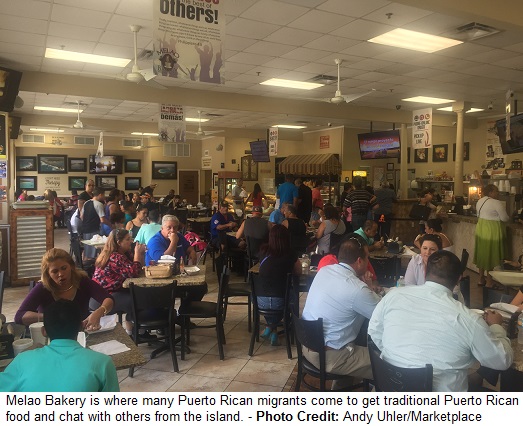
Tag: Diaspora

ENCORE: Looking Back at the Obama Years

Just one more week and the Obama years will be over. (The new President – Donald J. Trump – will be inaugurated on January 20, 2017).

  • This is good …
  • This is bad …

Barack H. Obama has been transformational as the 44th President of the United States. He has truly impacted American society, but the Caribbean, not so much. This was the theme of the previous blog-commentary (from March 31, 2016) that detailed Obama’s bad consequences on the Caribbean. See here:

===================

Title: Obama – Bad For Caribbean Status Quo

Go Lean Commentary
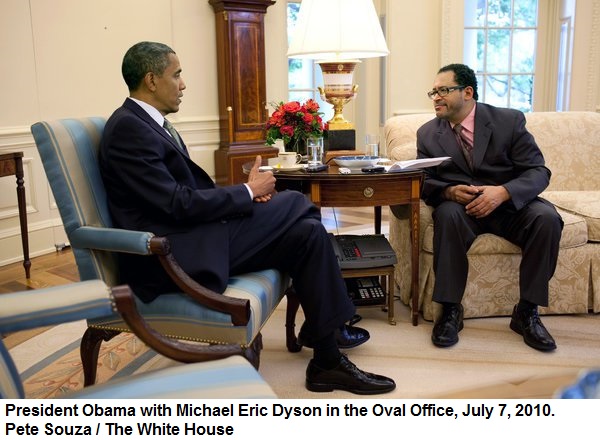
CU Blog - Obama - Bad For Caribbean Status Quo - Photo 2Yes, Barack Obama was elected in 2008 as the first Black President of the United States, with his campaign of “Hope and Change”. While one would think that would be good for all Black (African-American) people in the US – and around the world – alas, that has not been the case. It is the conclusion of many commentators and analysts that Obama has not been able to do as much for his race as he would like, nor his race would like. (Obama himself has confessed this). Or that another White person may have been able to do more for the African American community.

This seems like a paradox!

Yet, it is what it is. The truth of the matter is that race still plays a huge decision-making factor in all things in America. This reality has curtailed Obama in any quest to do more for his people.

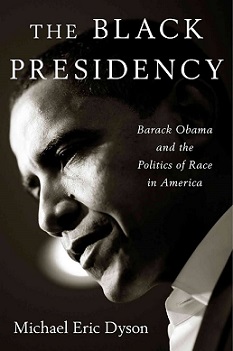
This is the assessment by noted commentator and analyst, Professor Michael Eric Dyson, in his new book “The Black Presidency: Barack Obama and the Politics of Race in America“. Professor Dyson points out some actual events during the Obama presidency and concludes that a White President would have been more successfully championing certain race-related causes. (Think: the Black Lives Matter movement was ignited during the Obama presidency).

VIDEO – Michael Eric Dyson on Democracy Now – https://youtu.be/F7Uo06_NfCw

Published on Feb 3, 2016 – http://democracynow.org – As the 2016 presidential race heats up and the nation marks Black History Month, we turn to look back on President Obama’s legacy as the nation’s first African-American president. Georgetown professor Michael Eric Dyson has just published a new book titled The Black Presidency: Barack Obama and the Politics of Race in America. From the protests in Ferguson to the church shooting in Charleston, South Carolina, to the controversy over the arrest of Harvard professor Henry Louis Gates, Michael Eric Dyson explores how President Obama has changed how he talks about race over the past seven years.

Democracy Now! is an independent global news hour that airs weekdays on nearly 1,400 TV and radio stations Monday through Friday. Watch the live-stream 8-9AM ET: http://democracynow.org.

The summary is that White Privilege still dominates in America. See the review of this book in Appendix A below.

This conclusion aligns with the assertions of the book Go Lean…Caribbean, and many aligned blog submissions, that America is not the ideal society for Caribbean citizens to seek for refuge, that rather Caribbean people can exert less effort to reform and transform their homelands than trying to prosper in this foreign land. The conclusion is the priority should be on a local/regional quest to prosper where planted in the Caribbean. This is a mission of the Go Lean…Caribbean movement, to lower the push and pull factors that lead many in the Caribbean to flee their tropical homes. Highlighting and enunciating the truths of American “Race Reality” aligns with that mission. We must lower the “pull” factors!

It is this commentary’s conclusion that Obama has been a good president for American self-interest. (The economy has recovered and rebounded from the “bad old days” of the 2008 financial crisis).

It is also this commentary’s conclusion that Obama has been a bad president for the Caribbean status-quo! His administration has brought ” change” to many facets of Caribbean life – good, bad and ugly, as follows:

  • Consider the good: The American re-approachment to Cuba – under Obama – is presenting an end to the Cold War animosity of these regional neighbors – Cuba’s status quo is changing. A bad actor from this conflict, former Cuban President Fidel Castro, just penned his own commentary lamenting Obama’s salesmanship in his recent official visit to Cuba on March 15; see Appendix B.
  • Consider the bad:
    • (A) The US has doubled-down on globalization, forcing countries with little manufacturing or agricultural production to consume even more and produce even less; a lose-lose proposition.
    • (B) The primary industry in the Caribbean – tourism – has experienced change and decline as a direct result of heightened income inequality in the US, the region’s biggest source of touristic visitors; now more middle class can only afford cruise vacations as opposed to the more lucrative (for the region) stop-overs.
    • (C) The secondary industry in the Caribbean – Offshore Banking – has come under fire from the US-led Organization for Economic Cooperation & Development (OECD) to deter offshore banking growth; the industry, jobs and economic contributions have thusly receded.
  • Consider the ugly: Emigration of Caribbean citizens to the US has accelerated during this presidency, more so than any other time in American-Caribbean history. Published rates of societal abandonment among the college educated classes have reported an average of 70 percent in most member-states, with some countries (i.e. Guyana) tallying up to 89 percent.

The Caribbean status quo has changed. It is now time for a Caribbean version of “hope and change”.

This book Go Lean…Caribbean serves as a roadmap for the introduction and implementation of the Caribbean Union Trade Federation (CU). This roadmap presents “hope and change” for empowering the Caribbean region’s societal engines: economic, security and governance. In fact, the following are the prime directives of the roadmap:

  • Optimization of the economic engines in order to grow the regional economy to $800 Billion & create 2.2 million new jobs.
  • Establishment of a security apparatus to protect the resultant economic engines.
  • Improve Caribbean governance to support these engines.

A mission of the CU is to minimize the push and pull factors that lead so many Caribbean citizens to migrate to foreign lands – to America; and also to invite the Diaspora living there to repatriate home. The argument is that America is not the most welcoming for the Black and Brown populations of the Caribbean. Let’s work to prosper where planted at home.

Yes, there are societal defects in the Caribbean, as there are defects in America. But the defects in America are greater: institutional racism and Crony-Capitalism. Though it is heavy-lifting, it is easier to reform and transform the Caribbean.

The reference sources in the Appendices relate that the Obama effect is changing the status quo … in America … and the Caribbean.

This issue of reducing the societal abandonment rate and encouraging repatriation has been a consistent theme of Go Lean blogs entries; as sampled here:

https://goleancaribbean.com/blog/?p=7628 ‘A Change Is Gonna Come’
https://goleancaribbean.com/blog/?p=7204 ‘The Covenant with Black America’ – Ten Years Later
https://goleancaribbean.com/blog/?p=7151 The Caribbean is Looking for Heroes … ‘to Return’
https://goleancaribbean.com/blog/?p=7412 The Road to Restoring Cuba
https://goleancaribbean.com/blog/?p=7151 The Caribbean is Looking for Heroes … ‘to Return’
https://goleancaribbean.com/blog/?p=6016 Hotter than July – Still ‘Third World’ – The Need for Cooling …
https://goleancaribbean.com/blog/?p=5784 The Need for Human Rights/LGBT Reform in the Region
https://goleancaribbean.com/blog/?p=4613 ‘Luck of the Irish’ – Lessons from their Past, Present and Future
https://goleancaribbean.com/blog/?p=4447 Probe of Ferguson, Missouri exposes Institutional Racism

All in all, the roadmap commences with the recognition that all the Caribbean is in crisis, with its high abandonment rate. These acknowledgements are pronounced in the Declaration of Interdependence (Page 13). The statements are included as follows:

xix.   Whereas our legacy in recent times is one of societal abandonment, it is imperative that incentives and encouragement be put in place to first dissuade the human flight, and then entice and welcome the return of our Diaspora back to our shores. This repatriation should be effected with the appropriate guards so as not to imperil the lives and securities of the repatriated citizens or the communities they inhabit. The right of repatriation is to be extended to any natural born citizens despite any previous naturalization to foreign sovereignties.

xx.   Whereas the results of our decades of migration created a vibrant Diaspora in foreign lands, the Federation must organize interactions with this population into structured markets. Thus allowing foreign consumption of domestic products, services and media, which is a positive trade impact. These economic activities must not be exploited by others’ profiteering but rather harnessed by Federation resources for efficient repatriations.

The Go Lean roadmap lists the following details on the series of community ethos, strategies, tactics, implementations and advocacies necessary to effectuate the “hope and change” in the Caribbean region to mitigate the continued risk of emigration and the brain drain. The list is as follows:

Community Ethos – Economic Systems Influence Individual Choices Page 21
Community Ethos – Job Multiplier Page 22
Community Ethos – Lean Operations Page 24
Community Ethos – Return on Investments Page 24
Community Ethos – Ways to Impact the Future Page 26
Community Ethos – Ways to Help Entrepreneurship Page 28
Strategic – Vision – Integrated Region in a Single Market Page 45
Strategic – Vision – Agents of Change Page 57
Tactical – Fostering a Technocracy Page 64
Tactical – Growing to $800 Billion Regional Economy Page 67
Tactical – Separation of Powers Page 71
Implementation – Ways to Pay for Change Page 101
Implementation – Ways to Deliver Page 109
Implementation – Reasons to Repatriate Page 118
Planning – Big Ideas for the Caribbean Region Page 127
Planning – Lessons Learned from the US Constitution Page 145
Advocacy – Ways to Grow the Economy Page 151
Advocacy – Ways to Create Jobs Page 152
Advocacy – Ways to Improve Governance Page 168
Advocacy – Ways to Impact the Diaspora Page 217
Appendix – Source of 2.2 Million New Jobs Page 257

The  Go Lean roadmap allows for the Caribbean region to deliver success, to mitigate the risk of further push and pull. The world in general and the Caribbean in particular needs to know the truth of life in America for the Black and Brown populations. This heavy-lifting task is the mission of the CU technocracy.

Now is the time for all of the Caribbean, the people and institutions, to lean-in for the “hope and change” that is the Caribbean Union Trade Federation. Yes, we can … make this region a better place to live, work and play. 🙂

Download the free e-Book of Go Lean … Caribbean – now!

————–

Appendix A

Book Review: ‘The Black Presidency: Barack Obama and the Politics of Race in America’ By Michael Eric Dyson. 346 Pages. Houghton Mifflin Harcourt. $27. ISBN 978-0544387669
Review By: N. D. B. Connolly
CU Blog - Obama - Bad For Caribbean Status Quo - Photo 3What happens when the nation’s foremost voice on the race question is also its most confined and restrained? Michael Eric Dyson raises this question about President Obama in his latest book, “The Black Presidency: Barack Obama and the Politics of Race in America.” The book inspires one to raise similar questions about Dyson himself. For, while hardly restrained, Dyson appears noticeably boxed in by the limitations placed on celebrity race commentators in the Age of Obama.

Readers will recognize Dyson’s practiced flair for language and metaphor as he makes an important and layered argument about American political culture and the narrowness of presidential speech. The book argues that Americans live under a black presidency — not so much because the president is black, but because Obama’s presidency remains bound by the rules and rituals of black respectability and white supremacy. Even the leader of the free world, we learn in Dyson’s book, conforms principally to white expectations. (Dyson maintained in the November issue of The New Republic that Hillary Clinton may well do more for black people than Obama did.) But Obama’s presidency is “black” in a more hopeful way, too, providing Americans with an opportunity to better realize the nation’s democratic ideals and promises. “Obama’s achievement gestures toward what the state had not allowed at the highest level before his emergence,” Dyson writes. “Equality of opportunity, fairness in democracy and justice in society.”

A certain optimism ebbs and flows in “The Black Presidency,” but only occasionally does it refer to white Americans’ beliefs about race. Far more often, Dyson hangs hope on Obama’s impromptu shows of racial solidarity. One such moment was the president’s remarks after the 2009 arrest of the Harvard professor Henry Louis Gates Jr. (who was arrested trying to get into his own home). Another was Obama’s public identification with Trayvon Martin. Both acts may have been politically risky, but they also greatly heartened African- Americans. Hope builds, and by book’s end, readers find a chapter-long celebration of the president’s soaring invocations of “Amazing Grace” during last year’s memorial service for the slain parishioners of EmanuelA.M.E.Church. For Dyson, the eulogy at Emanuel seems to serve as a sign of grace that black America may still yet enjoy from the Obama White House.

Its cresting invocations of hope aside, the book ably maintains a sharp critical edge. Dyson uncovers a troubling consistency to the president’s race speech and shows that in spite of Obama’s reliance on black political networks and black votes during his meteoric rise, the president chose to follow a governing and rhetorical template largely hewed by his white predecessors. As both candidate and president, Obama’s speeches have tended to allay white guilt. They have scolded ­African-American masses for cultural pathology and implied that blacks were to blame for lingering white antipathy. Obama’s speeches have also often consigned the worst forms of racism and anti-black violence to the past or to the fringes of American political culture. One finds passive-voice constructions everywhere in Obama’s race talk, as black folk are found suffering under pressures and at the hands of parties that go largely unnamed. “Obama is forced to exaggerate black responsibility,” Dyson advances, “because he must always underplay white responsibility.”

Critically, Dyson contends that the president’s tepid anti-racism comes from political pragmatism rather than a set of deeper ideological concerns. “Obama is anti-ideological,” Dyson maintains, and that is “the very reason he was electable.”

That characterization, however, overlooks how liberal pragmatism functions as ideology. What’s more, it ignores the marginalization and violence that black and brown people often suffer — at home and abroad — whenever moderates resolve to “get things done.” If the Obama era proved anything about liberalism, it’s that there remains little room for an explicit policy approach to racial justice — even, or perhaps especially, under a black president. As Obama himself explains to Dyson: “I have to appropriate dollars for any program which has to go through ways and means committees, or appropriations committees, that are not dominated by folks who read Cornel West or listen to Michael Eric Dyson.”

Upon a careful reading of Dyson’s book, loss seems always to arrive on the heels of hope. As we might expect, the author explores Obama’s estrangement from the Rev. Jeremiah Wright in 2008. He also attends to his own very public and more recent split from Cornel West. But even beyond these signal episodes, “The Black Presidency” is suffused with a bittersweet tone about relationships strained. President Obama seems to leave a host of people and political commitments at the White House door as he conforms to the racial demands of a historically white office. Even Dyson seems unaware of all the ways in which “The Black Presidency,” as a book, both explicates and illustrates how the Obama administration leaves black folk behind.

All but the last two of the book’s eight chapters begin with the author placing himself in close and often luxurious proximity to Obama. The repetition has the literary effect of a Facebook feed. Here is Michael at Oprah’s sumptuous California mansion during a 2007 fund-raiser, sharing a joke with Barack and Chris Rock. Here is Michael on the private plane and in the S.U.V., giving the candidate tips on how to use a “ ‘blacker’ rhetorical style” during his debate performances against a surging Hillary Clinton. Here he is in the V.I.P. section of the 50th-anniversary ceremony for the March on Washington and, yet again, at the White House Correspondents’ Association dinner. Through these and similar moments, Dyson projects his status and, in ways less clear, his authority. Dyson knows Obama, the reader is assured, because he has kept his company. He has swapped playful taunts and bro-hugs with the president; he has been intimate, one might say, with history.

Moments like these have a secondary effect. They illuminate a tension cutting through and profoundly limiting “The Black Presidency” as a work of political commentary. Regardless of who Michael Eric Dyson may have been to Obama the candidate, Dyson now has barely any access to Obama the president. Time and circumstance have rendered Dyson, the man and the thinker, increasingly irrelevant to Obama’s presidency. He can be at the party, but not at the table.

Perhaps worse in relation to the book’s stated aim to be the first full measure of Obama and America’s race problem, Dy­son, the author, has none but only the smallest role to play in assessing and narrating Obama’s legacy. When Bill Clinton decided to chronicle his own historic turn in the White House, he called on Taylor Branch and recorded with the historian some 150 hours of interviews over 79 separate sessions. Dyson, in 2015, gets far shabbier treatment. Chapter 5, “The Scold of Black Folk,” opens: “I was waiting outside the Oval Office to speak to President Obama. I had a tough time getting on his schedule.” In response to Dyson’s request for a presidential audience, the White House offered the author 10 whole minutes. By his own telling, Dyson “politely declined” and pressed Obama’s confidante, Valerie Jarrett, to remember his long history with and support of the president. “I eventually negotiated a 20-minute interview that turned into half an hour.” It appears to be the only interview Dyson conducted for the book.

In the end, “The Black Presidency” possesses a loaves-and-fishes quality. Drawing mostly on the news cycle, close readings of carefully crafted speeches and a handful of glittering encounters, Dyson has managed to do a lot with a little. The book might well be considered an interpretive miracle, one performed in fealty and hope for a future show of presidential grace, either from this president or, should she get elected, the next one.

Source: http://www.nytimes.com/2016/02/07/books/review/the-black-presidency-barack-obama-and-the-politics-of-race-in-america-by-michael-eric-dyson.html. Posted February 2, 2016; retrieved March 29, 2016.

————–

Appendix B

Title: Cuba’s Fidel Castro knocks sweet-talking Obama after ‘honey-coated’ visit
By: Marc Frank
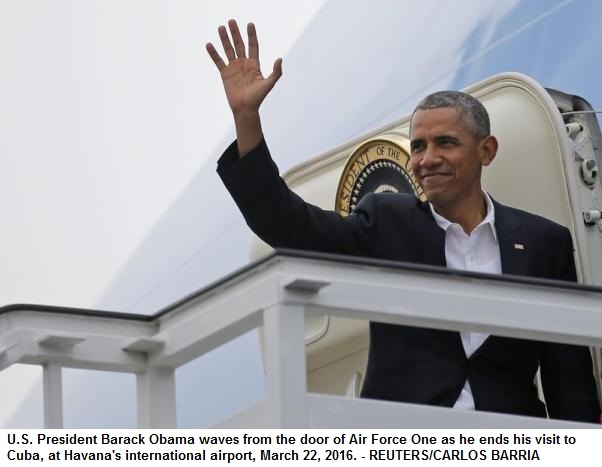
U.S. President Barack Obama waves from the door of Air Force One in HavanaHavana – Retired leader Fidel Castro accused U.S. President Barack Obama of sweet-talking the Cuban people during his visit to the island last week and ignoring the accomplishments of Communist rule, in an opinion piece carried by all state-run media on Monday.

Obama’s visit was aimed at consolidating a detente between the once intractable Cold War enemies and the U.S. president said in a speech to the Cuban people that it was time for both nations to put the past behind them and face the future “as friends and as neighbors and as family, together.”

“One assumes that every one of us ran the risk of a heart attack listening to these words,” Castro said in his column, dismissing Obama’s comments as “honey-coated” and reminding Cubans of the many U.S. efforts to overthrow and weaken the Communist government.

Castro, 89, laced his opinion piece with nationalist sentiment and, bristling at Obama’s offer to help Cuba, said the country was able to produce the food and material riches it needs with the efforts of its people.

“We don’t need the empire to give us anything,” he wrote.

Asked about Fidel Castro’s criticisms on Monday, White House spokesman Josh Earnest said the Obama administration was pleased with the reception the president received from the Cuban people and the conversations he had with Cuban officials.

“The fact that the former president felt compelled to respond so forcefully to the president’s visit, I think is an indication of the significant impact of President Obama’s visit to Cuba,” Earnest said.

After the visit, major obstacles remain to full normalization of ties between Cuba and the United States, with no major concessions offered by Cuba on rights and economic freedom.

“The president made clear time and time again both in private meetings with President Castro, but also in public when he delivered a speech to the Cuban people, that the U.S. commitment to human rights is rock solid and that’s not going to change,” Earnest said.

Fidel Castro took power in a 1959 revolution and led the country until 2006, when he fell ill and passed power to his brother Raul Castro. He now lives in relative seclusion but is occasionally heard from in opinion pieces or seen on television and in photos meeting with visiting dignitaries.

The iconic figure’s influence has waned in his retirement and the introduction of market-style reforms carried out by Raul Castro, but Fidel Castro still has a moral authority among many residents, especially older generations.

Obama did not meet with Fidel Castro during his three-day visit, nor mention him in any of his public appearances. It was the first visit of a sitting U.S. president for 88 years.

Fidel Castro blasted Obama for not referring in his speech to the extermination of native peoples in both the United States and Cuba, not recognizing Cuba’s gains in health and education, and not coming clean on what he might know about how South Africa obtained nuclear weapons before apartheid ended, presumably with the aid of the U.S. government.

“My modest suggestion is that he reflects (on the U.S. role in South Africa and Cuba’s in Angola) and not now try to elaborate theories about Cuban politics,” Castro said.

Castro also took aim at the tourism industry in Cuba, which has grown further since Obama’s rapprochement with Raul Castro in December 2014. He said it was dominated by large foreign corporations which took for granted billion-dollar profits.

(Reporting by Marc Frank; Additional reporting by Doina Chiacu in Washington; Editing by Bill Rigby)
Share this post:
, , , ,

Caribbean Roots: Esther Rolle of ‘Good Times’

Go Lean Commentary

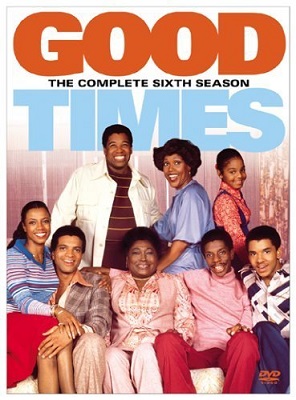
The movement behind the book Go Lean … Caribbean recognizes the significance of the TV Show “Good Times”, 1974 – 1979.

cu-blog-esther-rolle-caribbean-roots-photo-3The show – the first episode titled Too Old Blues aired on February 8, 1974 – was a situation comedy about the African-American Evans Family; led by father James, mother Florida or “Flo”, sons J.J. and Michael and daughter Thelma. There were other supporting characters as well, like Willona Woods and her adopted daughter Penny. (Penny was the first acting role for music superstar Janet Jackson, the youngest sister of Michael Jackson of the Jackson 5 fame).

The show was produced by legendary TV producer Norman Lear and recorded on a “sound stage” in Hollywood, California. (There was no “live studio audience”).

What made “Good Times” notable was the ensemble cast of African American actors. But what kept viewers tuning in was the recognition of themselves in the faces on the screen. During the tough economic struggles of the seventies, many families struggled like the Evans family to put food on the table and a roof over their heads. While the subject matter was often bleak, the family had a way of making viewers forget their own troubles for at least 30 minutes.

Despite the canned laugh tracks, we fell in love with the characters. More importantly, we fell in love with the actors and actresses who brought the show to life. Forty years after the show ended, we are just as interested in the actors as we were when the show was on the air. Chances are good that another 40 years can pass and the show will still hold interest. The actors who brought the show to life may leave this world but their characters will live in our memories and on our television screens for decades to come. It is rare for a show to last longer than a few seasons; [this show lasted 6 seasons]. It is rarer still for a show to generate new fans decades after it went off the air. For whatever reason, “Good Times” accomplished that rare feat, and the actors who starred in the show will always have us wondering -where are they now? – Depost.com Ad-supported Website

The focus of this show for the Go Lean movement is the composition of its cast, and the Caribbean roots of one of the main characters, Esther Rolle. The full cast is as follows:

BernNadette Stanis  Thelma Evans / … (133 episodes, 1974-1979)
Jimmie Walker  James ‘J.J.’ Evans, Jr. (133 episodes, 1974-1979)
Ralph Carter  Michael Evans (132 episodes, 1974-1979)
Ja’net DuBois  Willona Woods (124 episodes, 1974-1979)
Esther Rolle  Florida Evans (108 episodes, 1974-1979)
John Amos  James Evans, Sr. (59 episodes, 1974-1976)
Johnny Brown  Nathan Bookman (57 episodes, 1975-1979)

The  Go Lean book identifies that film, television, theater and the arts can greatly impact society; in addition to the entertainment value, there is also image and impression. People can override many false precepts with excellent deliveries and contributions of great role models. This show, “Good Times”, was frequently recognized for a positive Black image.

So this great American TV show also had a great Caribbean contributor, Bahamas-bred Esther Rolle. Wow!

Esther Rolle became the first woman to receive the NAACP Chairman’s Civil Rights Leadership Award.

See the encyclopedic details here:

Title: Esther Rolle as Florida Evans in “Good Times”

cu-blog-esther-rolle-caribbean-roots-photo-1

You may remember Esther Rolle for her portrayal as the loving but strict mother of three children in the hit television show “Good Times.” Rolle was born 10th in a family of 18 children whom all dreamed of becoming actors and actresses. She began her career as a dancer and played many of her earliest roles on stage. Fans of the hit television show “Maude” may remember her introduction as Findlay’s housekeeper, which is how the popular spin-off show “Good Times” was introduced.

As the show progressed, Rolle became unhappy with the writer’s creative direction and felt that Jimmie Walker’s character was frivolous. Fans of the show might remember her heartbreaking performance as Florida Evans when she received news that her husband had died in a tragic car accident. The series went on with Rolle as a single mother struggling to make ends meet without his income, insurance, or support.

After her contract had ended, Rolle quit the show, and moved on to win an Emmy for her performance as a maid in the 1979 television movie “Summer of My German Soldier.” Her successful return to the stage also included a role in “A Raisin in the Sun,” and “Down in the Delta,” which was directed by Maya Angelou. She gained notoriety once again for another Maya Angelou classic, “I Know Why the Caged Bird Sings.”

Esther Rolle’s later works included film work in “Driving Miss Daisy,” in 1990, and “Rosewood” in 1997.  She was recognized as the first woman to receive the NAACP Civil Rights Leadership Award for raising the image of African Americans through her work on stage, television, and film. The same year, Rolle fell ill and was placed on kidney dialysis. She passed away, on November 17, 1998, shortly after her 78th birthday, from complications of diabetes. Rolle was married once but had no children.
Source: Retrieved December 30, 2016 from: http://deposts.com/cast-good-times-now/3/

———–

Early Life Biography:
Esther Rolle was born in Pompano Beach, Florida, to Bahamian immigrants Jonathan Rolle (1883–1953),[2] a farmer, and Elizabeth Iris Rolle (née Dames; 1893–1981).[3] Her parents were both born and raised in Nassau, New Providence, The Bahamas[4][5][6] and moved to Florida some time after their marriage. She was the tenth of 18 children (children who included siblings and fellow actresses Estelle Evans and Rosanna Carter).[7] Rolle graduated from Blanche Ely High School in Pompano Beach, Florida.[8] She initially studied at Spelman College in Atlanta, but she moved to New York City.[8] While in New York, she attended Hunter College. Rolle transferred to The New School and, finally, Yale University in New Haven, Connecticut.”[9] For many years, Rolle worked in a traditional day job in New York City’s garment district.[10]
Source: Retrieved December 30, 2016 from: https://en.wikipedia.org/wiki/Esther_Rolle#Early_life

Though she died over 18 years ago, on November 17, 1998, we still feel her impact. She proved to be an iconic TV character for 20th Century America; she fomented and fostered a great image not just for Americans or Bahamians or Caribbean people, but for the entire African-descended race, for their entertainers. For this reason, she received the first ever NAACP Civil Rights Leadership Award given to a woman.

Caribbean Girls rock!

As specified in a recent blog-commentary and in the Go Lean book, the American Civil Rights agency, the National Association for the Advancement for Colored People (NAACP), was established in 1915 and immediately campaigned to elevate the status and image of Black people in America and beyond.  This “image” precept is also an important factor in the roadmap to elevate Caribbean society. So the Go Lean book details a plan to monitor defamations against the Caribbean image; this includes recognition and appreciation for Caribbean achievement as well. As  follows, this excerpt (Page 133) from Go Lean book highlights this “Image Quest”:

The majority of the Caribbean population descends from an African ancestry – a legacy of slavery from previous centuries. Despite the differences in nationality, culture and language, the image of the African Diaspora is all linked hand-in-hand. And thus, when Martin Luther King, Malcolm X, Nelson Mandela, Muhammad Ali and Bob Marley impacted the world with their contributions, the reverberations were felt globally, not just in their homelands. It is hard for one segment of the black world to advance when other segments have a negative global image. This is exemplified with the election of Barack Obama as US President; his election was viewed as an ascent for the entire Black race.

Over 100 years ago, the NAACP came to understand the power and influence of the then new medium of film and added the mandate to their charter to confront the misuse of media to influence negative public attitudes toward race. … Today, the NAACP Hollywood Bureau continues to monitor the industry for offensive and defamatory images in film and television. It also sponsors the Image Awards Show to honor outstanding people of color in film, television, music, and literature, as well as those individuals or groups who promote social justice through their creative endeavors.

The book Go Lean…Caribbean serves as a roadmap for the introduction and implementation of the Caribbean Union Trade Federation (CU). This CU strives to advance Caribbean image and culture with these 3 prime directives:

  • Optimization of the economic engines in order to grow the regional economy.
  • Establishment of a security apparatus to protect the resultant economic engines.
  • Improve Caribbean governance.

This roadmap recognizes that a prerequisite for advancing society is a change in the Caribbean community ethos. Early in the book, the contributions that culture (music, film, theater, dance and artistic expressions) can make is pronounced as an ethos for the entire region to embrace, (opening Declaration of Interdependence – DOI – Pages 15) with these statements:

xxxii. Whereas the cultural arts and music of the region are germane to the quality of Caribbean life, and the international appreciation of Caribbean life, the Federation must implement the support systems to teach, encourage, incentivize, monetize and promote the related industries for arts and music in domestic and foreign markets. These endeavors will make the Caribbean a better place to live, work and play.

Esther Rolle – an American of Caribbean descent – was the embodiment of all of these above values. She impacted the image and culture of African Americans in her country, and thusly  impacted the Black image to the rest of the world. Like another Caribbean musical icon, Bob Marley, Esther Rolle set a pathway for success for other generations of talented, inspirational and influential artists to follow. Other artists of Caribbean heritage are sure to emerge and “impact the world”. We are preparing for it, as specified in the same DOI – Page 13:

xxi. Whereas the preparation of our labor force can foster opportunities and dictate economic progress for current and future generations, the Federation must ensure that educational and job training opportunities are fully optimized for all residents of all member-states, with no partiality towards any gender or ethnic group. The Federation must recognize and facilitate excellence in many different fields of endeavor, including sciences, languages, arts, music and sports. This responsibility should be executed without incurring the risks of further human flight, as has been the past history.

The CU represents the change that has come to the Caribbean. The people, institutions and governance of the region are all urged to “lean-in” to this roadmap for change. We know it is important to highlight the positive contributions of Caribbean people, even their descendants and legacies.

We salute those ones from our past, people like Esther Rolle whose parents left their Bahamas home for job opportunities in the agricultural fields of Florida. We know there are “new” Esther Rolle-types throughout Caribbean member-states, waiting to be fostered. We salute them as our future and pledge to create the local-domestic opportunities … without leaving home.

The following list details the community ethos, strategies, tactics, implementations and advocacies to foster future entertainers in the Caribbean:

Community Ethos – Ways to Foster Genius Page 27
Community Ethos – Promote Intellectual Property Page 29
Community Ethos – Ways to Promote Happiness Page 36
Community Ethos – Impact the Greater Good Page 37
Strategy – Caribbean Vision Page 45
Tactical – Separation of Powers – Patents & Copyrights Page 78
Tactical – Separation of Powers – Culture Administration Page 81
Implementation – Ways to Impact Social Media Page 111
Advocacy – Ways to Make the Caribbean Better Page 131
Advocacy – Ways to Impact Hollywood Page 203
Advocacy – Ways to Improve the Arts Page 230
Advocacy – Ways to Promote Music Page 231

Esther Rolle also impacted the world as a role model for Senior Citizens. In her last movie, Down in the Delta, she played the role of an aging wife-mother who suffered from Alzheimer’s Dementia. She played that role with dignity; she showcased to the world the challenge  and honor associated with families fulfilling their obligations to their aging parents and spouses. This movie was written and directed by famed African-American poet Maya Angelou; (also a familiar role model for the Caribbean). See the highlights of the movie here:

VIDEO – Down in the Delta TRAILER – https://youtu.be/IOij6VZrBWE

Published on Jul 19, 2013 – Sometimes The Best Place To Be…Is The Place You Least Expected. Down In The Delta brings together an outstanding cast of stars in an uplifting story of family, community and friendship! In a desperate attempt to change her life, Loretta a troubled single mother from a tough Chicago neighborhood – is sent to spend a summer at her family’s ancestral home in rural Mississippi. In The Delta, with the support and wisdom of her hardworking uncle Earl, Loretta finally begins to see a way to provide for her young children and reverse the downward slide of her life!

Esther Rolle also provided a fine example of retirement and estate planning:

cu-blog-esther-rolle-caribbean-roots-photo-2

When she died in 1998 – at age 78 – she left an estate valued in excess of $1.7 million including $200,000 in cash a $400,000 home, $1,072,000 in treasuries. In addition, she owned 1,000 shares of Bethdames Corporation, several Mutual Funds, and 2% interest in El Toro (Restaurants), Ltd.. – Source: IMDB.com.

Esther Rolle came, saw and conquered! The same was said of Sammy Davis Jr. in the previous blog. See an interview in the Appendix below between Davis and Rolle. They both fit the definition of role models – as defined here by Booker T Washington – where they overcame obstacles and made an impact to benefit more than just themselves.

“I have learned that success is to be measured not so much by the position that one has reached in life as by the obstacles which he has had to overcome while trying to succeed.”[B].

Previously, this blog-commentary identified other role models in these obituary submissions:

https://goleancaribbean.com/blog/?p=10015 E. R. Braithwaite, Author of ‘To Sir, With Love’ – RIP
https://goleancaribbean.com/blog/?p=9948 Role Model and Caribbean Roots of Sammy Davis, Jr.
https://goleancaribbean.com/blog/?p=8724 Remembering Marcus Garvey: A Role Model; Still Relevant Today
https://goleancaribbean.com/blog/?p=7682 Frederick Douglass: Role Model for a Single Cause
https://goleancaribbean.com/blog/?p=6593 Dr. Mobley – Role Model as a BusinessSchool Dean
https://goleancaribbean.com/blog/?p=2726 Caribbean Role Model – Oscar De La Renta – RIP
https://goleancaribbean.com/blog/?p=2297 Role Models in Contrast: Booker T Washington -vs- W.E.B. Du Bois
https://goleancaribbean.com/blog/?p=1037 Role Model and Humanities Advocate – Maya Angelou – R.I.P.
https://goleancaribbean.com/blog/?p=866 Caribbean Musical Icon and Role Model: Bob Marley

The world is a better place because of Esther Rolle. Her contribution were on the stage and the screen; as an actress she was known for her dramatic roles and stage presence; but she had great “comedic chops” as well. Her days were truly “Good Times”, as her TV show portrayed.

She died 18 years ago; that’s a long time as celebrities die every year – 2016 has been an especially bad year; see list here – and yet we are remembering this one from 1998; this is because of her Caribbean roots. She helped to elevate the Caribbean image; to reinforce the message that we are just as good as anyone else; or maybe even better with our diverse passions. We carry on without her but we are better off for her role model; and forever impacted by her legacy. We urged all Caribbean stakeholders to lean-in to the Go Lean … Caribbean roadmap and the fine role model-example of Esther Rolle. 🙂

Download the book Go Lean … Caribbean – now!

———-

Appendix VIDEO – Sammy Davis Jr. Interviews Esther Rolle – https://youtu.be/npHzc6CBGp8

Uploaded November 4, 2010 – Clip from the 1970’s Variety-Talk Show: “Sammy & Company”

Share this post:
, , , , ,
[Top]

E. R. Braithwaite, Author of ‘To Sir, With Love’ – RIP

Go Lean Commentary 

The movement behind the book Go Lean … Caribbean asserts that one person can make a difference in society; that one can engage a hero’s journey and overcome obstacles to impact society to benefit themselves and others. The book posits that such a hero can function in a lot of different areas of specialty; in fact the book identifies 144 different advocacies, therefore portraying that there a lot of ways to help our Caribbean society. This aligns with this principle:

“ordinary people who choose to do extraordinary things, and in doing so, become part of something greater than themselves”.

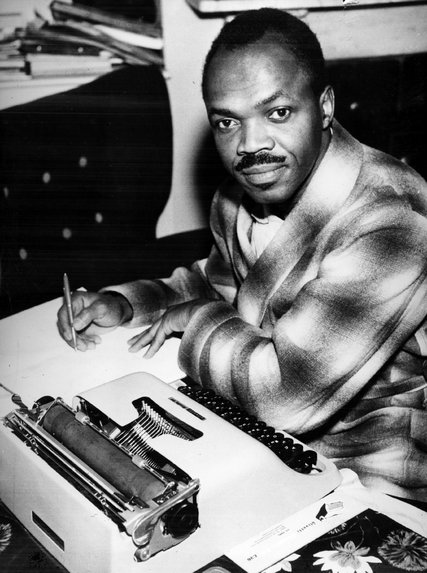
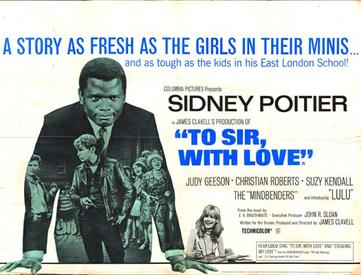
braithwaite-photo-1We come to this reckoning today … as the Caribbean mourns the passing of Guyana-born author Edward Ricardo Braithwaite; (June 27, 1912 – December 12, 2016); he published under the name E. R. Braithwaite. In his long and accomplished lifetime he excelled as a novelist, writer, teacher, and diplomat, best known for his stories of social conditions and racial discrimination against Black people. He was the author of the 1959 book To Sir, With Love, which was made into the highly acclaimed 1967 British drama film of the same title, starring Sidney Poitier and budding musical artist Lulu. May he “Rest In Peace”.

See the New York Times story here and an excerpt VIDEO from movie below:

Title: E. R. Braithwaite, Author of ‘To Sir, With Love,’ Dies at 104
E. R. Braithwaite, a Guyanese author, diplomat and former Royal Air Force pilot whose book “To Sir, With Love,” a memoir of teaching in London’s deprived East End, was adapted into a hit 1967 film starring Sidney Poitier, died on Monday in Rockville, Md. He was 104.

Mr. Braithwaite’s companion, Genevieve Ast, confirmed his death to The Associated Press. He had taught English at HowardUniversity, in Washington, and lived in the area for many years.

Mr. Braithwaite, who became a diplomat and represented Guyana at the United Nations and in Venezuela, wrote several books, many about racism in countries like South Africa and the United States, where he lived much of his life. But he is best known for “To Sir, With Love” (1959).

The book chronicled his efforts — as a courtly, Cambridge-educated military veteran who had been denied employment as an engineer because he was black — to motivate a group of unruly adolescents raised in a slum in early-1950s Britain, which was still slowly recovering from the austerity of the war years.

The students’ antisocial behavior, casual racism, penchant for violence and, worst of all, self-hatred horrify the new teacher, whose colleagues expect little of the pupils.

He takes them to museums and tells them about his childhood. Slowly, he gains their trust by showing respect and affection, which, for most of the students, have been in short supply. (The title of the book comes from an inscription his appreciative students wrote on a pack of cigarettes they gave him.) He also develops romantic feelings for another teacher, who, like the students, is white.

The memoir was praised for offering a sympathetic account of race and class without naïveté or excessive sentimentality.
Source: New York Times – Daily Newspaper; Posted 12-13-2016; retrieved 12-15-2016 from: http://www.nytimes.com/2016/12/13/books/e-r-braithwaite-author-of-to-sir-with-love-dies-at-104.html?_r=1
braithwaite-photo-2

VIDEO – Excerpt: ‘To Sir With Love’ (1967) – The Ending – https://youtu.be/nXaEf4ktpPA

Published on Apr 2, 2014 – The rather mawkish, sentimental ending of ‘To Sir, with love’ – Thackeray (Sidney Poitier) tears up his letter of acceptance for an engineering job, and decides to stay at the school.

See the link for the Full Movie in the Appendix below.

That book – To Sir With Love – in 1959 and the subsequent movie in 1967 was a great depiction of the struggles of Black people that migrated to America and the UK; (all of Western Europe for that matter). This was autobiographical. Despite the colonial heritage and the “One Empire” precept, Black immigrants were not treated kindly – “K.B.W.” was a popular phrase at that time: Keep Britain White – they were rejected and resisted in all corners of society of their new homes. These media works helped to convey that pain and suffering for the ordinary (Black) man who tried to move there.

These works were acclaimed and recognized with many awards:

Awards and honors

Laurel Awards

Nominations

Directors Guild of America

Laurel Awards

10th Annual Grammy Awards

Other honors

The film is recognized by American Film Institute in these lists:

Source: Retrieved December 13, 2016 from: https://en.wikipedia.org/wiki/To_Sir,_with_Love

That world of 1959 (or 1967) was a hard existence for a Black man … of Caribbean heritage in America or in the UK. For E.R. Braithwaite to be so accomplished, despite the overbearing racism of the day, is a testament to his devotion to excellence and accomplishment.

The book Go Lean…Caribbean defines that the struggle and effort of this great media work – To Sir With Love – and its Author, a Guyana Diaspora-member, aligns with our movement. The book serves as a roadmap for the introduction and implementation of the Caribbean Union Trade Federation (CU). This CU strives to advance Caribbean image and culture with these 3 prime directives:

  • Optimization of the economic engines in order to grow the regional economy.
  • Establishment of a security apparatus to protect the resultant economic engines.
  • Improve Caribbean governance.

A celebration of life for E.R. Braithwaite is also a celebration of Sidney Poitier (age 89), the starring actor of the movie ‘To Sir With Love‘. As Braithwaite was a Caribbean Diaspora-member – from Guyana – so too is Poitier, who is from the Bahamas. Poitier is equally accomplished; as reported in a previous Go Lean commentary, in 1964, Poitier won an Oscar for his performance in the movie ‘Lillies of the Field‘. Hollywood Star and Actress Ann Bancroft, presenting him the award during the telecast and gave him a peck on the cheek. Racial conservatives were outraged. Interracial marriage was still widely outlawed in different communities (think Southern US) and civil rights workers were being killed. Poitier’s Oscar was a symbol that things were changing.

This Go Lean roadmap seeks to change … the Caribbean (not the UK or the rest of the world), so that men (and women) of accomplishment do not have to leave their Caribbean homes to work their craft; they should be able to “work” at home. Our region has to be reformed and transformed to provide such advanced opportunities. The roadmap recognizes that a prerequisite for advancing society is a change in the Caribbean community ethos. Early in the book, the contributions of the arts and artists (music, film, theater and artistic expressions) are pronounced as an ethos for the entire region to embrace; this is identified in the opening Declaration of Interdependence (Page 15) with this statement:

xxxii. Whereas the cultural arts and music of the region are germane to the quality of Caribbean life, and the international appreciation of Caribbean life, the Federation must implement the support systems to teach, encourage, incentivize, monetize and promote the related industries for arts and music in domestic and foreign markets. These endeavors will make the Caribbean a better place to live, work and play.

E.R. Braithwaite elevated the culture and image of African Caribbean people in refuge countries (UK and US), and thusly  elevated the Black image to the rest of the world. Perhaps this is his greatest legacy, presenting the viability that anyone, from anywhere, can impact his home and the rest of the world. Other Caribbean artists have thusly followed – think musical icon Bob Marley – and more will follow suit going forward. The Go Lean book has prepared a pathway for success for future generations of talented, inspirational and influential Caribbean artists. These ones are sure to emerge, and we want them to have the greatest impact on the world and on the Caribbean image further. We are thusly preparing for this, as specified in the same Declaration of Interdependence (Page 13) with this statement:

xxi. Whereas the preparation of our labor force can foster opportunities and dictate economic progress for current and future generations, the Federation must ensure that educational and job training opportunities are fully optimized for all residents of all member-states, with no partiality towards any gender or ethnic group. The Federation must recognize and facilitate excellence in many different fields of endeavor, including sciences, languages, arts, music and sports. This responsibility should be executed without incurring the risks of further human flight, as has been the past history.

The CU represents the change that must be made in and to the Caribbean. The people, institutions and governance of the region are all urged to “lean-in” to this roadmap for change. We know it is important to highlight the positive contributions of Caribbean people, even their Diaspora.

The following list details the community ethos, strategies, tactics, implementations and advocacies to foster future artists in the Caribbean:

Community Ethos – Ways to Foster Genius Page 27
Community Ethos – Promote Intellectual Property Page 29
Community Ethos – Ways to Promote Happiness Page 36
Community Ethos – Impact the Greater Good Page 37
Strategy – Caribbean Vision Page 45
Tactical – Separation of Powers – Patents & Copyrights Page 78
Tactical – Separation of Powers – Culture Administration Page 81
Implementation – Ways to Impact Social Media Page 111
Advocacy – Ways to Make the Caribbean Better Page 131
Advocacy – Ways to Impact Hollywood Page 203
Advocacy – Ways to Impact the Diaspora Page 217
Advocacy – Ways to Improve the Arts Page 230
Advocacy – Ways to Promote Music Page 231

Previously, this blog-commentary composed other obituaries of role models whose life and legacy made an impact on Caribbean life. These are the previous submissions:

https://goleancaribbean.com/blog/?p=9948 Caribbean Roots: Sammy Davis, Jr. – RIP
https://goleancaribbean.com/blog/?p=9813 Fidel Castro – RIP – Is Dead. Now What?
https://goleancaribbean.com/blog/?p=8165 Role Model Muhammad Ali’s Greatest Fight – RIP
https://goleancaribbean.com/blog/?p=6593 Dr. Mobley – Role Model as a BusinessSchool Dean – RIP
https://goleancaribbean.com/blog/?p=2726 Caribbean Role Model – Oscar De La Renta – RIP
https://goleancaribbean.com/blog/?p=1037 Role Model and Humanities Advocate – Maya Angelou – R.I.P.
https://goleancaribbean.com/blog/?p=866 Caribbean Musical Icon and Role Model: Bob Marley – RIP

E.R. Braithwaite impacted the world of popular culture … and then some. There was the book, movie and song all entitled To Sir With Love. We felt his impact on the world and we will all miss his presence; RIP. The world is a better place because he was here. He came; he saw; he conquered.

We must now carry on without him, but we are empowered by his role model. We now know that any Caribbean stakeholder, resident or Diaspora, can impact the world and their homeland to make it a better place to live, work and play. 🙂

Download the book Go Lean … Caribbean – now!

———-

Appendix VIDEO‘To Sir With Love’ (1967) – Watch the Full Movie – https://www.youtube.com/watch?v=89yJ6rIdibs

Share this post:
, , ,
[Top]

Caribbean Roots: Sammy Davis, Jr.

Go Lean Commentary

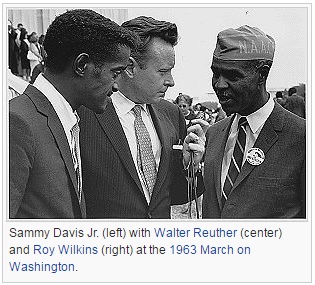
cu-blog-sammy-davis-jr-caribbean-roots-photo-1The movement behind the book Go Lean … Caribbean recognizes the significance of this day, December 8th as the 91st birthday of the late great American entertainer Sammy Davis, Jr..

The Go Lean book identifies that music and the arts can greatly impact society; in addition to the entertainment value, there is also image, impression and advocacy – music can move people to change. People can override many false precepts with excellent deliveries and contributions of great role models, despite any handicaps.

“Talk about handicap. I’m a one-eyed Negro Jew.” – Sammy Davis Jr. Quote

Here’s a little known Black History fact:

The mother of Sammy Davis Jr., Elvera Sanchez, was an Afro-Cuban tap dancer.[A]

So this great American entertainer actually had Caribbean roots. Wow! See the encyclopedic details here:

Title: Elvera Sanchez
Elvera Sanchez (September 1, 1905 – September 2, 2000) was an American dancer and the mother of Sammy Davis Jr..

During his lifetime, Davis Jr. stated that his mother was Puerto Rican and born in San Juan; however, in the 2003 biography In Black and White, author Wil Haygood wrote that Davis’ mother was born in New York City, of Afro-Cuban descent, and that Davis claimed she was Puerto Rican because he feared anti-Cuban backlash would hurt his record sales.
———-
Title: Sammy Davis Jr.
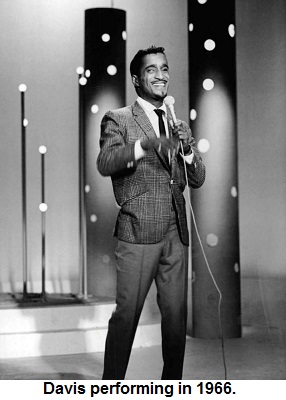
Samuel George “Sammy” Davis Jr. (December 8, 1925 – May 16, 1990) was an American entertainer. Primarily a dancer and singer, he was also an actor of stage and screen, comedian, musician, and impressionist, noted for his impersonations of actors, musicians and other celebrities. At the age of 3, Davis began his career in vaudeville with his father and Will Mastin as the Will Mastin Trio, which toured nationally. After military service, Davis returned to the trio. Davis became an overnight sensation following a nightclub performance at Ciro’s (in West Hollywood) after the 1951 Academy Awards. With the trio, he became a recording artist. In 1954, he lost his left eye in a car accident, and several years later, he converted to Judaism.

Davis’s film career began as a child in 1933. In 1960, he appeared in the Rat Pack film Ocean’s 11. After a starring role on Broadway in 1956’s Mr Wonderful, he returned to the stage in 1964’s Golden Boy. In 1966 he had his own TV variety show, titled The Sammy Davis Jr. Show. Davis’s career slowed in the late 1960s, but he had a hit record with “The Candy Man” in 1972 and became a star in Las Vegas, earning him the nickname “Mister Show Business”.

Davis was a victim of racism throughout his life, particularly during the pre-Civil Rights era, and was a large financial supporter of the Civil Rights movement. Davis had a complex relationship with the black community, and drew criticism after physically embracing President Richard Nixon in 1972. One day on a golf course with Jack Benny, he was asked what his handicap was. “Handicap?” he asked. “Talk about handicap. I’m a one-eyed Negro Jew.” This was to become a signature comment, recounted in his autobiography, and in countless articles.

After reuniting with Sinatra and Dean Martin in 1987, Davis toured with them and Liza Minnelli internationally, before he died of throat cancer in 1990. He died in debt to the Internal Revenue Service,[9] and his estate was the subject of legal battles.

Davis was awarded the Spingarn Medal by the NAACP and was nominated for a Golden Globe Award and an Emmy Award for his television performances. He was the recipient of the Kennedy Center Honors in 1987, and in 2001, he was posthumously awarded the Grammy Lifetime Achievement Award.
Source: Wikipedia Online Encyclopedia – Retrieved December 6, 2016 from: https://en.wikipedia.org/wiki/Sammy_Davis_Jr.

cu-blog-sammy-davis-jr-caribbean-roots-photo-3Though he died over 26 years ago, we still feel his impact. Sammy Davis Jr. was one of the most iconic characters in the American 20th Century. But his shadow spread across the entire African-descended world, not just America. He fomented and fostered a great image for African-descended entertainers. For this reason, the annual Soul Train Award for Best Entertainer of the Year has been renamed the Sammy Davis Jr. Award. (Soul Train refers to the weekly 1-hour TV program showcasing African-American Musicians and Dancers).

Since its inception in 1915, the American Civil Rights agency, the National Association for the Advancement for Colored People (NAACP), campaigned to elevate the status and image of Black people in America and beyond.  This “image” precept is also an important factor in the roadmap to elevate Caribbean society. So the Go Lean book details a plan to monitor for defamations against the Caribbean image; this includes recognition and appreciation for Caribbean achievement as well. As  follows, this excerpt (Page 133) from Go Lean book highlights this “Image Quest”:

The majority of the Caribbean population descends from an African ancestry – a legacy of slavery from previous centuries. Despite the differences in nationality, culture and language, the image of the African Diaspora is all linked hand-in-hand. And thus, when Martin Luther King, Malcolm X, Nelson Mandela, Muhammad Ali and Bob Marley impacted the world with their contributions, the reverberations were felt globally, not just in their homelands. It is hard for one segment of the black world to advance when other segments have a negative global image. This is exemplified with the election of Barack Obama as US President; his election was viewed as an ascent for the entire Black race.

Over 100 years ago, the NAACP came to understand the power and influence of the then new medium of film and added the mandate to their charter to confront the misuse of media to influence negative public attitudes toward race. … Today, the NAACP Hollywood Bureau continues to monitor the industry for offensive and defamatory images in film and television. It also sponsors the Image Awards Show to honor outstanding people of color in film, television, music, and literature, as well as those individuals or groups who promote social justice through their creative endeavors.

Sammy Davis, Jr. was awarded the NAACP Image Award in 1989.

The book Go Lean…Caribbean serves as a roadmap for the introduction and implementation of the Caribbean Union Trade Federation (CU). This CU strives to advance Caribbean image and culture with these 3 prime directives:

  • Optimization of the economic engines in order to grow the regional economy.
  • Establishment of a security apparatus to protect the resultant economic engines.
  • Improve Caribbean governance.

This roadmap recognizes that a prerequisite for advancing society is a change in the Caribbean community ethos. Early in the book, the contributions that culture (music, film, theater, dance and artistic expressions) can make is pronounced as an ethos for the entire region to embrace, (opening Declaration of Interdependence – DOI – Pages 15) with these statements:

xxxii. Whereas the cultural arts and music of the region are germane to the quality of Caribbean life, and the international appreciation of Caribbean life, the Federation must implement the support systems to teach, encourage, incentivize, monetize and promote the related industries for arts and music in domestic and foreign markets. These endeavors will make the Caribbean a better place to live, work and play.

Sammy Davis Jr. – an American of Caribbean descent – was the embodiment of all of these above values. He impacted the music, culture and image of African American in his country, and thusly impacted the Black image for the rest of the world. Like Caribbean musical icon, Bob Marley, Sammy Davis Jr. set a pathway for success for other generations of talented, inspirational and influential artists to follow. Other artists of Caribbean heritage are sure to emerge and “impact the world”. We are preparing for it, as specified in the same DOI – Page 13:

xxi. Whereas the preparation of our labor force can foster opportunities and dictate economic progress for current and future generations, the Federation must ensure that educational and job training opportunities are fully optimized for all residents of all member-states, with no partiality towards any gender or ethnic group. The Federation must recognize and facilitate excellence in many different fields of endeavor, including sciences, languages, arts, music and sports. This responsibility should be executed without incurring the risks of further human flight, as has been the past history.

The CU represents the change that has come to the Caribbean. The people, institutions and governance of region are all urged to “lean-in” to this roadmap for change. We know it is important to highlight the positive contributions of Caribbean people, even their descendants and legacies.

We salute those ones from our past, people like Elvera Sanchez who left Cuba as a youth for opportunities in the world of entertainment. We know there are “new” Elvera Sanchez-types and “new” Sammy Davis-types throughout Caribbean member-states, waiting to be fostered. We salute them as our future.

The following list details the community ethos, strategies, tactics, implementations and advocacies to foster future entertainers in the Caribbean:

Community Ethos – Ways to Foster Genius Page 27
Community Ethos – Promote Intellectual Property Page 29
Community Ethos – Ways to Promote Happiness Page 36
Community Ethos – Impact the Greater Good Page 37
Strategy – Caribbean Vision Page 45
Tactical – Separation of Powers – Patents & Copyrights Page 78
Tactical – Separation of Powers – Culture Administration Page 81
Implementation – Ways to Impact Social Media Page 111
Advocacy – Ways to Make the Caribbean Better Page 131
Advocacy – Ways to Better Manage Image Page 133
Advocacy – Ways to Impact Hollywood Page 203
Advocacy – Ways to Improve the Arts Page 230
Advocacy – Ways to Promote Music Page 231

Sammy Davis, Jr. also impacted the world of politics and civil rights. See here:

cu-blog-sammy-davis-jr-caribbean-roots-photo-2

Davis was a registered Democrat – [as most African Americans] – and supported John F. Kennedy’s 1960 election campaign as well as Robert F. Kennedy’s 1968 campaign.[43]

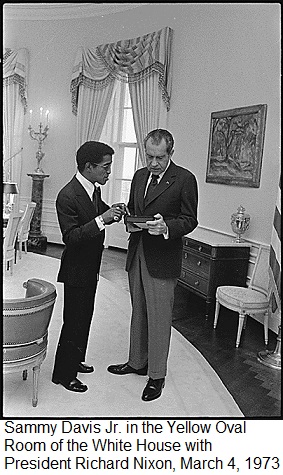
However, he became a close friend to President Richard Nixon and publicly endorsed him at the 1972 Republican National Convention.[43] Davis also made a USO tour to South Vietnam – during the Vietnam War – at Nixon’s request. Previously, Davis had won Nixon’s respect with his participation in the Civil Rights Movement. Nixon invited Davis and his wife, Altovise, to sleep in the White House in 1973, the first time African Americans were invited to do so. The Davises spent the night in the Queens’ Bedroom.[44]

Davis was a long-time donor to the Reverend Jesse Jackson‘s Operation PUSH organization. Jackson also performed Davis’s wedding.[45]

cu-blog-sammy-davis-jr-caribbean-roots-photo-4

Sammy Davis Jr. came, saw and conquered! He fit the definition of a role model, where he overcame obstacles and made an impact to benefit more than just himself.

“I have learned that success is to be measured not so much by the position that one has reached in life as by the obstacles which he has had to overcome while trying to succeed.”[B]Booker T Washington.

Previously, this blog-commentary identified other role models in these submissions:

https://goleancaribbean.com/blog/?p=8724 Remembering Marcus Garvey: A Role Model; Still Relevant Today
https://goleancaribbean.com/blog/?p=8495 NBA Greatness and Caribbean Roots: Tim Duncan Retires
https://goleancaribbean.com/blog/?p=8328 YouTube Role Model with Caribbean Roots: ‘Tipsy Bartender’
https://goleancaribbean.com/blog/?p=7682 Frederick Douglass: Role Model for a Single Cause
https://goleancaribbean.com/blog/?p=6593 Dr. Mobley – Role Model as a Business School Dean
https://goleancaribbean.com/blog/?p=2726 Caribbean Role Model – Oscar De La Renta – RIP
https://goleancaribbean.com/blog/?p=2297 Role Models in Contrast: Booker T Washington versus W.E.B. Du Bois
https://goleancaribbean.com/blog/?p=1037 Role Model and Humanities Advocate – Maya Angelou – R.I.P.
https://goleancaribbean.com/blog/?p=866 Caribbean Musical Icon and Role Model: Bob Marley

The world is a better place because of Sammy Davis Jr.  being born on this day in 1925. Thank you “Candy Man” for all the love you showed for your craft, your country and your people. See the VIDEO here of his 1987 Kennedy Center Induction:

VIDEO – Sammy Davis, JR. “Honoree” – 10th Kennedy Center Honors, 1987 – https://youtu.be/ii3XpjCOlXo

Published on Jan 20, 2015 – LUCILLE BALL introduces honoree SAMMY DAVIS, JR. Excellent performances for Sammy by RAY CHARLES “Birth Of The Blues” & tap dancers, in order of appearance onto stage: 1 & 2) The NICOLAS BROTHERS (HAROLD & FAYARD), 3) CHUCK GREEN, 4) JIMMY SLYDE, and 5) ‘SANDMAN’ SIMS.

We carry on without Sammy Davis Jr., but we are better off for his role model and forever impacted by his legacy. 🙂

Download the book Go Lean … Caribbean – now!

————-

Appendix Reference A

“Elvera Sanchez Davis, obituary, September 8, 2000”The New York Times. September 8, 2000. Retrieved September 18, 2009.

————-

Appendix Reference B

Harlan, Louis R (1972), Booker T. Washington: volume 1: The Making of a Black Leader, 1856–1901. The major scholarly biography.

Share this post:
, , , , ,
[Top]

‘Time to Go’ – Public Schools for Black-and-Brown

Go Lean Commentary

Let’s understand the expectation:

“You emigrate from the Caribbean to the US – to New York City – to give your children – the next generation – a better opportunity for life, liberty and the pursuit of happiness; you automatically assume that the public schools will be excellent, above-average or at least acceptable”. – Book: Go Lean … CaribbeanPage 126.

Sorry to burst your bubble. But the reality is far different than the expectation.

cu-blog-time-to-go-public-schools-for-blacks-and-hispanics-photo-1

This is the conclusion of the below article, that immigrant students are imperiled more than ordinary in the New York City’s schools. The prospects for the next generation may not be as bright as “you” had hoped. This undermines the whole premise of the “push and pull” for emigration in the first place. (“Push” refers to the societal defects in the Caribbean that moves people to want to get way; and “pull” factors refer to the impressions and perceptions that America is better).

That “pull” expectation was from before – 1970’s and 1980’s; see Anecdote in the Appendix below – but today the disposition in New York City’s schools is just dire. See the news article here:

Title: City finds most poverty-stricken or homeless public school students are Black, Hispanic
By: Ben Chapman and Lisa Colangelo
Black and Hispanic kids are more likely to face a variety of challenges in public classrooms, according to data the city Education Department released Tuesday.

The majority of students who were homeless or live in poverty are black or Hispanic, according to the report, which is mandated by the City Council.

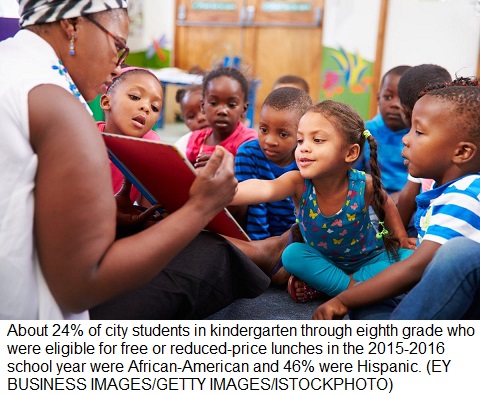
About 24% of city students in kindergarten through eighth grade who were eligible for free or reduced-price lunches in the 2015-2016 school year were African-American and 46% were Hispanic.

Additionally, about 33% of the K-8 students who live in temporary housing — which includes homeless shelters and those doubled up with friends and relatives — are black and 54% are Hispanic.

City Education Department officials said they have started a number of initiatives to make schools more diverse, including support for LGBT students, helping more black and Hispanic students apply to the city’s elite specialized high schools and encouraging high-performing schools to admit more low-income students.

But Mona Davids of the NYC Parents Union said the city is “skirting the issue of desegregating the city school system.”

“Encouraging schools isn’t enough,” she said. “There needs to be a top-down mandate.”
Source: New York Daily News; Posted November 2, 2016′ retrieved November 13, 2016 from: http://www.nydailynews.com/new-york/education/city-finds-black-hispanic-public-school-kids-hardships-article-1.2854566

This – the foregoing – is not the expectation that Caribbean immigrants had, but it is what it is! While this article relates to New York, the anecdotal experience is the same in urban communities across the US.

The majority population in the Caribbean member-states is Black and Hispanic, or more typically classified as Black-and-Brown. So this foregoing article is really referring to “us”, the Caribbean Diaspora living in the US. This strategy – emigrate for education sake – employed by previous Caribbean immigrants now needs a reality check.

The purpose of this commentary is to relate two strong points of contention:

  • Dissuade the high emigration rates of Caribbean citizens to the American homeland.
  • Encourage the Caribbean Diaspora to repatriate back to their ancestral homeland.

According to the foregoing article, emigrating to New York City (NYC) may be one step forward, two steps backwards. So this commentary asserts that it is easier for the Black-and-Brown populations in the Caribbean to prosper where planted in the Caribbean, rather than emigrating to foreign countries, like the United States, to foreign cities like NYC. This disposition applies to Caribbean students, yes, but to teachers as well; see the Appendix VIDEO below relating a consistent drama for imported-Caribbean teachers in NYC.

This commentary is the completion of the series from the movement behind the book Go Lean … Caribbean, in consideration of reasons why the Diaspora should repatriate back to the Caribbean homeland. There was an original 3-part series, with these submissions:

  1.     Time to Go: Spot-on for Protest
  2.     Time to Go: No Respect for our Hair
  3.     Time to Go: Logic of Senior Immigration

Now, this new extension to the series considers the additional topics as detailed in this series as follows:

  1.     Time to Go: Marginalizing Our Vote
  2.     Time to Go: American Vices; Don’t Follow
  3.     Time to Go: Public Schools for Black-and-Brown

All of these commentaries relate to the Caribbean disposition in the United States. The Go Lean book (and movement) serves as a roadmap for the introduction of the technocratic Caribbean Union Trade Federation (CU). The CU is set to optimize Caribbean society through economic, security and governing optimizations. Therefore the Go Lean roadmap has 3 prime directives:

  • Optimization of the economic engines in order to grow the regional economy to $800 Billion & create 2.2 million new jobs.
  • Establishment of a security apparatus to ensure public safety and protect the economic engines.
  • Improve Caribbean governance – including empowerments for education – to support these engines.

The “push and pull” factors do imperil Caribbean life. We push our citizens out. Then the resultant effect is a brain drain and even more endangerment to our society: less skilled workers, less entrepreneurs, less law-abiding citizens, less capable public servants – we lose our best and leave the communities with the rest. This create a crisis.

cu-blog-vision-and-values-for-a-new-caribbean-photo-2The Go Lean roadmap posits that the entire Caribbean is in crisis now; so many of our citizens have fled for refuge in the US and other foreign countries, but the refuge is a mirage. The “grass is not necessarily greener on the other side”. Life in the US, in New York City for example, is definitely not optimized for the Caribbean’s Black-and-Brown. There is a challenge to reform and transform the community in the US; and there is a challenge to reform and transform the community in the Caribbean. It is easier to fix the Caribbean than to fix the American eco-system. It is Time to Go! Our Caribbean people can better prosper where planted in the Caribbean.

Rich, poor, middle-class …

The Go Lean book asserts that every community has poor people. The Caribbean has poverty; and the US has poverty. With the empowerments in the Go Lean roadmap, it will be easier to elevate from poverty in the Caribbean. Education is one such empowerment. The US still has some societal defects – racism for example – that are so imbrued that they are tied to the country’s DNA. As alluded to in the foregoing news article, segregation, de jure or de facto, is a deterrence to optimized educational opportunities. This is why the Go Lean movement posits that it is easier to effect change at home in the Caribbean, than in the foreign country of the US.

Education is key … in the Go Lean roadmap. We cannot effect an elevation from poverty to middle-class without education. Research by Economists have established that every additional year of schooling an individual increases their earnings by about 10%. This is a very impressive rate of return. The Go Lean book quotes these proven economic studies, showing the impact that additional years of education have had on individuals’ earning power (Page 258).  If the Caribbean Diaspora, the Black-and-Brown in New York City cannot get fair educational opportunities in New York, then we declare that it is “Time to Go“. We are hereby preparing for their return – fixing our defects – rebooting our education eco-system.

The Go Lean book posits that Caribbean stakeholders made many flawed education decisions in the past, both individually and community-wise. (Consider the example of Government grants, loans and scholarships for students that ended up never returning “home”). The vision of the CU is a confederation of the 30 member-states of the Caribbean to do the heavy-lifting of championing better educational policies. There is the structure of a separation-of-powers between CU agencies and the individual member-states.

The Go Lean roadmap provides turn-by-turn directions on how to reform the Caribbean education systems, economy, governance and Caribbean society as a whole. This roadmap admits that because the Caribbean is in crisis, this “crisis would be a terrible thing to waste”. As a planning tool, the roadmap commences with a Declaration of Interdependence, pronouncing the approach of regional integration (Page 12 & 14) as a viable solution to elevate the region’s educational opportunities:

xix. Whereas our legacy in recent times is one of societal abandonment, it is imperative that incentives and encouragement be put in place to first dissuade the human flight, and then entice and welcome the return of our Diaspora back to our shores

xxi. Whereas the preparation of our labor force can foster opportunities and dictate economic progress for current and future generations, the Federation must ensure that educational and job training opportunities are fully optimized for all residents of all member-states, with no partiality towards any gender or ethnic group. The Federation must recognize and facilitate excellence in many different fields of endeavor, including sciences, languages, arts, music and sports. This responsibility should be executed without incurring the risks of further human flight, as has been the past history.

xxvii. Whereas the region has endured a spectator status during the Industrial Revolution, we cannot stand on the sidelines of this new economy, the Information Revolution. Rather, the Federation must embrace all the tenets of Internet Communications Technology (ICT) to serve as an equalizing element in competition with the rest of the world. The Federation must bridge the digital divide and promote the community ethos that research/development is valuable and must be promoted and incentivized for adoption.

Change has now come. The driver of this change is technology and globalization. Under the tenants of globalization, the Caribbean labor pool is a commodity; their talents are subject to the economic realities of supply-and-demand. The Go Lean book posits therefore that the governmental administrations of the region should invest in better education options, and as much technological education advances (like e-Learning) as possible, for its citizens. The bottom-line motive should be the Greater Good – “the greatest good for the greatest number of people which is the measure of right and wrong – not profit nor emigration.

How exactly do we accomplish this goal? The book details those policies; and other ethos to adopt, plus the executions of the following strategies, tactics, implementations and advocacies to impact the education eco-system in the Caribbean region:

Foreword – Lean On Me Film – Inspiration for Educational Reform Page 5
Community Ethos – Deferred Gratification Page 21
Community Ethos – People Respond to Incentives Page 21
Community Ethos – Job Multiplier Page 22
Community Ethos – Lean Operations Page 24
Community Ethos – Return on Investments (ROI) Page 24
Community Ethos – Ways to Impact the Future Page 26
Community Ethos – Ways to Foster Genius Page 27
Community Ethos – Ways to Help Entrepreneurship – Incubator Training Page 28
Community Ethos – Ways to Impact the Greater Good Page 37
Tactical – Separation of Powers – Education Department Page 85
Tactical – Separation of Powers – Labor Department – On-the-Job-Training Oversight Page 89
Planning – Lessons from New York City Page 137
Advocacy – Ways to Grow the Economy Page 151
Advocacy – Ways to Create Jobs Page 152
Advocacy – Ways to Improve Education Page 159
Advocacy – Ways to Improve Governance Page 169
Advocacy – Ways to Improve Libraries Page 187
Advocacy – Ways to Foster Technology Page 197
Appendix – Education and Economic Growth Page 258
Appendix – Measuring Education with Standardized Testing Page 266

The subject of “pull” (from the “push and pull” dynamics) has been frequently blogged on in other Go Lean commentaries; as sampled here with these entries relating American “pull” factors:

https://goleancaribbean.com/blog/?p=8431 Bahamas Issued US Travel Advisory Citing Police Violence
https://goleancaribbean.com/blog/?p=8202 Respect for Minorities: Lessons Learned from American Dysfunction
https://goleancaribbean.com/blog/?p=8099 Caribbean Image: ‘Less Than’?
https://goleancaribbean.com/blog/?p=7221 Street naming for Martin Luther King unveils the real America
https://goleancaribbean.com/blog/?p=7204 ‘The Covenant with Black America’ – Ten Years Later
https://goleancaribbean.com/blog/?p=6189 A Lesson in History – Hurricane ‘Katrina’ exposed a “Climate of Hate”
https://goleancaribbean.com/blog/?p=5733 Better than America? Yes, We Can!
https://goleancaribbean.com/blog/?p=5527 American Defects: Racism – Is It Over?
https://goleancaribbean.com/blog/?p=5333 Racial Legacies: Cause and Effect
https://goleancaribbean.com/blog/?p=546 American Model: Book Review – ‘The Divide’ – … Injustice in the Age of the Wealth Gap
https://goleancaribbean.com/blog/?p=273 10 Things We Don’t Want from the US: Racism against minorities

Underlying to the Go Lean/CU prime directive of elevating the economics, security and governing engines of the Caribbean, is the desire to make the Caribbean homeland, a better place to live, work and play. Saying that it is “Time to Go“, must mean that we are ready to receive our Caribbean Diaspora from New York City and other destinations. Are we ready, now?

As related previously: frankly, no …

… but we are ready, willing and able to start the change process, to reform and transform the Caribbean. This is the intent of the book Go Lean … Caribbean. This subject of improving the conditions for successful Caribbean repatriation has been blogged in previous Go Lean commentaries; as sampled here:

https://goleancaribbean.com/blog/?p=8530 Tired Waiting? Time to Reform & Transform the Caribbean
https://goleancaribbean.com/blog/?p=7151 The Caribbean is Looking for Heroes … ‘to Return’
https://goleancaribbean.com/blog/?p=5304 Mitigating the Eventual Abuse of Power

The Go Lean/CU roadmap asserts that America should not be presented as the panacea for all of the Caribbean ills – we must reform and transform our own society. While America does so many things right, the country acts poorly towards its Black-and-Brown citizens. Our people, the Black-and-Brown of the Caribbean, can expect more success from less effort in the Caribbean region than in the US, especially education-wise.

It is Time to Go … back home.

Now is the time for all of the Caribbean, the people and governing institutions, to lean-in for the empowerments described in the book Go Lean … Caribbean. This is the roadmap to elevate the Caribbean; to make our homeland a better place to live, work, learn and play. 🙂

Download the book Go Lean … Caribbean – now!

———

Appendix – Anecdote # 15 – Repatriated Resident: Pearline Anglin (Page 126)

Bold = Author

Pearline Anglin has returned to Jamaica after living abroad (New York City, United States) for over 35 years. Why leave NYC and go to Jamaica, when so many Jamaicans would rather emigrate to New York? Simple, she never envisioned spending her “golden” years in America. She is now retired and has to contend with all the challenges of growing old. In her mind there are challenges everywhere; she would rather face her challenges at “home” rather than be a constant “alien’ in a foreign land. At home, her accent does not set her apart; her preference for food and drink is common among all her neighbors and is consumed by everyone else. Most importantly, she has no unbearable winters to contend with.

So why leave when you have such an obvious love for your country/culture? Ms. Anglin intimated that her decision to emigrate was based on the need to give her children a better life, a better future. (She has 7 children, all of whom live in the US; plus an additional son that died as an infant). The children needed opportunities for education; such as would not require a large investment for private schools. She knew that the public education systems in the US were better than the public education  system in Jamaica. And then there were the economic realities. Ms. Anglin first emigrated to Canada, as it was easier to expatriate there. Then she returned to Jamaica for a short period. Her mother, now deceased, had US residency at this point and was able to sponsor Pearline, and then later Pearline sponsored her children. (The time apart from the children required that she remit monies back home, at least monthly, for their care).This started the flow of all the family “abandoning” their homeland. (Ms. Anglin has 2 siblings who also emigrated to the NYC area). To this day, her 7 children and 19 grand and great-grandchildren all live abroad.

How would you feel if your children or grandchildren decide to return to their Caribbean roots? Ms. Anglin revealed that while she feels “good” about a decision like that, there must be more to such a plan. They must prepare for such a return thoroughly, and responsibly; they would have to consider all aspects of life and living in the islands. She is not holding her breath.

How do you feel about Caribbean Security? Most disappointed – considering what life used to be like in Jamaica, she is troubled at the pervasive crime in or near the cities, like Montego Bay. As an older woman she has to live very cautiously, she does not go out at night and takes many other precautions. This is a beloved vision for her, where security would be more assured for Caribbean people. Other areas of concern for the future would include better health care facilities nearby so that she does not have to venture so far from her Black River area home (St. Elizabeth Parrish) to seek professional medical attention.

How do you feel about Caribbean Economy? Same as the economy in New York – recessions and economic downturns affect everyone. There are problems in Jamaica, there are problems too in the US. One cannot run away from economic challenges, rather one must equip themselves with the tools to compete, wherever they are.

Do you long for life back in the US? She really loved New York; but do not consider it an ideal lifestyle for the elderly. The hustle-and-bustle is perhaps too great!

Where do you consider to be the best place to live? For her considerations, there is no place like home, Jamaica.

———

Appendix VIDEO – Caribbean Teachers Treated Like ‘Indentured Servants’ by NYC Board of Education – https://youtu.be/kPmVuoH1xsQ

Uploaded on Apr 18, 2011 – Judith Hall, who heads the Association of International Educators and also teaches at Marie Curie High School in the Bronx, and Bertha Lewis from the Black Institute, an advocacy organization, voiced concerns on Monday’s “Inside City Hall” about what they call false promises by the Department of Education to Caribbean teachers.

Share this post:
, ,
[Top]

‘Time to Go’ – American Vices. Don’t Follow!

Go Lean Commentary

Sex, …
Drugs …
… and Rock-n-Roll.

America has taken the lead in the fostering of these vices for the rest of the world. 🙁

For the Caribbean looking to American leadership, the stern advice here is to not follow these American vices:

Sex

cu-blog-time-to-go-american-vices-dont-follow-photo-2While natural and normal, there is a distortion in America with the promotion of pornography. Comedian Bill Maher joked “that America invented the internet, then filled it with porn”; see Pornhub profile here and “List of Websites By Traffic” in the Appendix below:

Pornhub, part of the Pornhub NETWORK campaign, is a pornographic video sharing website and the largest pornography site on the Internet.[4][5] Pornhub was launched in Montreal, providing professional and amateur photography since 2007. Pornhub also has offices and servers in San Francisco, Houston, New Orleans and London. In March 2010, Pornhub was bought by Manwin (now known as MindGeek), which owns numerous other porn websites.As of 2009, three of the largest porn sites “RedTube, YouPorn and PornHub -collectively make up 100 million unique visitors”.[12]
Malvertising – Researcher Conrad Longmore claims that advertisements displayed by the sites were found to contain malware programs, which install harmful files on users’ machines without their permission. Longmore told the BBC that two popular sites – XHamster and PornHub – pose the greatest threat.[28]Source: https://en.wikipedia.org/wiki/Pornhub retrieved November 12, 2016.
[On the List of Websites By Traffic in the Appendix below, pornographic sites are # 57, 60, 67, 78, 139 and 190]

Drugs

cu-blog-time-to-go-american-vices-dont-followMarijuana legalization is now the norm for 40 percent of the American population. (A previous blog-commentary details the challenges of decriminalizing drugs in the Caribbean region). See the story here:
Title: A Bunch of States Just Legalized Weed, Which Is Great Because We All Need It Now
California’s referendum to legalize marijuana in the world’s sixth-largest economy passed Tuesday night. So did voter measures in Massachusetts and Nevada. Maine’s referendum was still being counted early Wednesday morning, and Arizona’s was poised to lose. Three other states passed medical marijuana reforms, and a fourth appeared likely to do so. This means that in eight states (plus Washington, D.C.) weed will be legal for recreational purposes, and in sum, 28 will have some kind of legalization on the books.

It’s a good thing that a large chunk of America will soon be able toke up at their leisure, because for the next four years, we are really going to need it.

The conventional wisdom about the 2016 ballot measures was that their approval would make federal legalization truly inevitable — millions of Americans are already using marijuana within the letter of state law. This has created a $6 billion industry, and those figures are only likely to continue to multiply. While the Obama administration has continued to go after some growers and sellers, it has largely allowed state legalization to take its course. The state policies certainly aren’t perfect, but they’re ultimately good and just: Currently, there are hundreds of thousands of marijuana-possession arrests every year, and they disproportionately affect (read: ruin the lives of) poor minorities. Treating marijuana more like alcohol and less like heroin changes that.

Of course, now all that could go up in smoke. If it wanted to, a Trump administration could undo the progress marijuana regulation has made in an instant. As one reform advocate told the Washington Post: “The prospect of Rudy Giuliani or Chris Christie as attorney general does not bode well.” Sure doesn’t! But what policy implication of a Trump presidency does?

Someone pass me some of the strong stuff.
By: Jonathan L. Fischer, Slate senior editor.
Source: Slate Online Magazine; Posted November 9, 2016 from: http://www.slate.com/blogs/the_slatest/2016/11/09/a_bunch_of_states_just_legalized_weed_good_we_all_need_it.html

————

VIDEO – Big Pot: The Commercial Takeover – http://www.cbsnews.com/videos/big-pot-the-commercial-takeover

November 7, 2016 – CBSN Originals explores the rapidly changing landscape of legal marijuana, traveling to five states and Canada to interview key figures on all sides of the issue.

Rock-n-Roll

cu-blog-time-to-go-american-vices-dont-follow-photo-3America gave birth to this musical art-form; but is now leading the music industry into a downward spiral of dissolution, dissension and dysfunction. The sad state of the music industry is a frequent topic for this commentary and the underlying book Go Lean…Caribbean. This subject was exhausted in a “Lessons Learned Case Study” regarding Music Piracy: See Appendix ZT – To Catch A Thief –  Page 351. Many previous blog-commentaries have detailed the sad state of the music industry:

The vice associated with Rock-n-Roll is that of cultural nullification. The Go Lean book details this debate as deliberated in France: cultural preservation versus cultural nullification from American Rock-n-Roll. France held its ground … and today, the city of Paris enjoys 30 million tourists and $25 Billion in culture/tourism spending …annually.

This commentary asserts that it is easier for Caribbean people to prosper where planted in the Caribbean, rather than emigrating to foreign countries, like the United States.

But, globalization being what it is, means that left unchecked, we will see all of these American vices in our communities, whether we want them or not.

This commentary declares: We do not want them.

This point aligns with the book Go Lean…Caribbean, which states that American leadership is not always focused on the best interest of America, but rather the best interest of special interest groups. We cannot submit, yield and follow their lead in fostering our own society. The book supports the notion that the Caribbean can be an even better place compared to America for Caribbean people if we adhere to the community ethos of the Greater Good, “the greatest good for the greatest number of people which is the measure of right and wrong.” – Page 37.

If we succeed at adopting this community ethos – underlying sentiment that informs the beliefs, customs, or practices of our society – then we can make our homeland a better place to live, work and play. There is the need to optimize the economic, security and governing engines in the Caribbean region to pursue these goals, not American values.

This is a continuation from the previous 3-part series from the movement behind the book Go Lean … Caribbean, in consideration of reasons why the Diaspora should repatriate back to the Caribbean homeland. The previous commentaries detailed:

  1.     Time to Go: Spot-on for Protest
  2.     Time to Go: No Respect for our Hair
  3.     Time to Go: Logic of Senior Immigration

Now, this new extension to the series considers the additional topics as detailed in this series as follows:

  1.     Time to Go: Marginalizing Our Vote
  2.     Time to Go: American Vices; Don’t Follow
  3.     Time to Go: Public Schools for Black-and-Brown

All of these commentaries relate to the Caribbean disposition in the United States. The Go Lean book and movement serves as a roadmap for the introduction of the technocratic Caribbean Union Trade Federation (CU). The CU is set to optimize Caribbean society through economic, security and governing optimizations. Therefore the Go Lean roadmap has 3 prime directives:

  • Optimization of the economic engines in order to grow the regional economy to $800 Billion & create 2.2 million new jobs.
  • Establishment of a security apparatus to ensure public safety and protect the economic engines.
  • Improve Caribbean governance to support these engines.

The Go Lean roadmap posits that the Caribbean region is in crisis now, and so many are quick to flee for refuge in foreign countries. But the “grass is not necessarily greener on the other side”. Considering the actual vices in American society – which will only get worse with time – life there is definitely not optimized for Caribbean people. As mentioned in the foregoing, the Black-and-Brown of America are the ones that have been imperiled the most because of the drug eco-system. The Go Lean book asserts that because every community has bad actors – the Caribbean has bad actors and the US has bad actors – there is the obvious need to reform and transform the region, security-wise. This point is pronounced early in the book with the Declaration of Interdependence (Page 12) that claims:

x.  Whereas we are surrounded and allied to nations of larger proportions in land mass, populations, and treasuries, elements in their societies may have ill-intent in their pursuits, at the expense of the safety and security of our citizens. We must therefore appoint “new guards” to ensure our public safety and threats against our society, both domestic and foreign. The Federation must employ the latest advances and best practices of criminology and penology to assuage continuous threats against public safety. The Federation must allow for facilitations of detention for [domestic and foreign] convicted felons of federal crimes, and should over-build prisons to house trustees from other jurisdictions.

xvi. Whereas security of our homeland is inextricably linked to prosperity of the homeland, the economic and security interest of the region needs to be aligned under the same governance. Since economic crimes, including piracy and other forms of terrorism, can imperil the functioning of the wheels of commerce for all the citizenry, the accedence of this Federation must equip the security apparatus with the tools and techniques for predictive and proactive interdictions.

The Caribbean appointing “new guards” or a security apparatus to ensure public safety and justice assurance is a comprehensive endeavor, that will encapsulate the needs of all Caribbean stakeholders: governments, institutions and citizens (residents and Diaspora).

An important mission of the Go Lean roadmap is to dissuade the high emigration rates of Caribbean citizens to the American homeland. This means being conscious of why people flee – “push” and “pull” reasons – and monitoring the societal engines to ensure improvement – optimization. (“Push” refers to the societal defects in the Caribbean that moves people to want to get way; and “pull” factors refer to the impressions and perceptions that America is better). A second mission is to encourage the repatriation of the Caribbean Diaspora back to their ancestral homeland, where the dangers associated with these vices are less intense.

There is risk to security and justice assurance on all sides of the issue of vices – this is heavy-lifting. The book details this complexity, with a focus on the community ethos, strategies, tactics, implementations and advocacies to monitor, manage and mitigate the security risks to Caribbean society. The following is a sample list:

Community Ethos – Deferred Gratification Page 21
Community Ethos – Job Multiplier Page 22
Community Ethos – Privacy versus Public Protection Page 23
Community Ethos – Light Up the Dark Places Page 23
Community Ethos – Ways to Impact Research & Development Page 30
Community Ethos – Ways to Impact the Greater Good Page 37
Strategy – Vision – Integration of Single Market Economy Page 45
Strategy – Agents of Change – Globalization Page 57
Tactical – Fostering a Technocracy Page 64
Tactical – Separation of Powers – Homeland Security Page 75
Tactical – Separation of Powers – Justice Department Page 77
Implementation – Security Initiatives at Start-up Page 103
Advocacy – Ways to Grow the Economy Page 151
Advocacy – Ways to Ways to Mitigate Black Markets Page 165
Advocacy – Ways to Improve Governance Page 168
Advocacy – Ways to Better Manage the Social Contract Page 170
Advocacy – Ways to Impact Justice Page 177
Advocacy – Ways to Remediate and Mitigate Crime Page 178
Advocacy – Ways to Improve Homeland Security Page 180
Advocacy – Ways to Impact the Prison Industrial Complex – Parole Eco-System Page 211
Advocacy – Ways to Preserve Caribbean Heritage Page 218
Appendix – Mediating as French Culture and Economics Collide Page 311

Now is the time for all of the Caribbean, the people and governing institutions, to lean-in for the empowerments described in the book Go Lean … Caribbean.

For a long time these vices that are now being unleashed on American soil were heavily regulated by other societies; the governments and leaders were protecting the people from destructive behavior. These vices are still destructive despite any American Stamp of Approval. This is not the lead we want to follow.

“Disregard them! They are blind guides. If a blind man leads a blind man, both will fall into a pit.”. – Matthew 15:14 Berean Study Bible.

America has lost its moral high ground. It is Time to Go!

As reported in previous commentaries, justice – for its Black-and-Brown populations – is already a fallacy in the US. Now personal virtue is also becoming frivolous in their society. The country is so duplicitous: there is so much that America does right, but there is so much that America does poorly – and people that they do not respect – that we want to mitigate those influences in our homeland.

It is the conclusion of this Go Lean movement that the “grass is not greener on the American side”. We can do better. We can make our homeland a better place to live, work and play. All Caribbean stakeholders are hereby urged to lean-in to this Go Lean/CU roadmap to elevate the Caribbean. 🙂

Download the book Go Lean … Caribbean – now!

———-

Appendix – List of Websites By Traffic

Site

Domain

Alexa top 100 websites
(As of September 4, 2016)[3]

Type

Principal country

Google google.com 1 Internet services and products  U.S.
YouTube youtube.com 2 Video sharing  U.S.
Facebook facebook.com 3 Social network  U.S.
Baidu baidu.com 4 Search engine  China
Yahoo! yahoo.com 5 Portal and media  U.S.
Amazon amazon.com 6 E-commerce and cloud computing  U.S.
Wikipedia wikipedia.org 7 Encyclopedia  U.S.
Tencent QQ qq.com 8 Portal  China
Google India google.co.in 9 Search engine  India
Twitter twitter.com 10 Social network  U.S.
Windows Live live.com 11 Emailweb services and software suite  U.S.
Taobao taobao.com 12 Online shopping  China
Google Japan google.co.jp 13 Search engine  Japan
Bing bing.com 14 Search engine  U.S.
Instagram instagram.com 15 Photo sharing and social media  U.S.
Sina Weibo weibo.com 16 Social network  China
Sina Corp sina.com.cn 17 Portal and instant messaging  China
LinkedIn linkedin.com 18 Professional Social network  U.S.
Yahoo! Japan yahoo.co.jp 19 Portal  Japan
MSN msn.com 20 Portal  U.S.
VK vk.com 21 Social network  Russia
Google Germany google.de 22 Search engine  Germany
Yandex yandex.ru 23 Search engine  Russia
Hao123 hao123.com 24 Web directories  China
Google UK google.co.uk 25 Search engine  UK
Reddit reddit.com 26 social news networking, entertainment  U.S.
eBay ebay.com 27 Online auctions and shopping  U.S.
Google France google.fr 28 Search engine  France
t.co t.co 29 URL shortening for links on Twitter  U.S.
Tmall tmall.com 30 Retail  China
Google Brazil google.com.br 31 Search engine  Brazil
360 Safeguard 360.cn 32 Internet security and anti-trojan software  China
Sohu sohu.com 33 Portal  China
Amazon Japan amazon.co.jp 34 E-commerce  Japan
Pinterest pinterest.com 35 Social media  U.S.
Mail.ru mail.ru 36 Portal  Russia
Onclickads onclickads.net 37 Online advertising network  U.S.
Netflix netflix.com 38 Streaming TV and movies  U.S.
Google Italy google.it 39 Search engine  Italy
Google Russia google.ru 40 Search engine  Russia
Microsoft microsoft.com 41 Software and technology  U.S.
Google Spain google.es 42 Search engine  Spain
WordPress.com wordpress.com 43 Blogging and social media  U.S.
Guangming Daily gmw.cn 44 Newspaper  China
Tumblr tumblr.com 45 Social media  U.S.
PayPal PayPal.com 46 Payment system  U.S.
Blogspot blogspot.com 47 Blogging  U.S.
Imgur imgur.com 48 Image sharing  U.S.
Stack Overflow stackoverflow.com 49 Question and answer site  U.S.
AliExpress aliexpress.com 50 Online shopping  China
Naver Naver.com 51 Portal  Korea
Odnoklassniki ok.ru 52 Social Networking  Russia
Apple Inc. apple.com 53 Technology and software  U.S.
GitHub github.com 54 Source code hosting service  U.S.
Google Mexico google.com.mx 55 Search Engine  Mexico
China Daily chinadaily.com.cn 56 Newspaper  China
XVideos xvideos.com 57 Pornography  U.S.
IMDb imdb.com 58 FilmTV show, and video game database  U.S.
Google Korea google.co.kr 59 Search Engine  Korea
Pornhub pornhub.com 60 Pornography  Canada
FC2 Portal fc2.com 61 Portal  Japan
Jingdong Mall jd.com 62 E-commerce  China
Blogger blogger.com 63 Blogging  U.S.
NetEase 163.com 64 Portal  China
Google Canada google.ca 65 Search engine  Canada
Google Hong Kong google.com.hk 66 Search engine  Hong Kong
xHamster xhamster.com 67 Pornography  Cyprus
WhatsApp whatsapp.com 68 Instant Messaging  U.S.
Amazon India amazon.in 69 E-commerce  India
Microsoft Office office.com 70 Online Office Suite  U.S.
Google Turkey google.com.tr 71 Search engine  Turkey
Tianya Club tianya.cn 72 Internet forum  China
Google Indonesia google.co.id 73 Search engine  Indonesia
Youku youku.com 74 Video sharing  China
Rakuten rakuten.co.jp 75 E-commerce  Japan
Craigslist craigslist.org 76 Classified advertising  U.S.
Amazon Germany amazon.de 77 E-commerce  Germany
Bonga Cams bongacams.com 78 Pornography  U.S.
Nicovideo nicovideo.jp 79 Video sharing  Japan
Google Poland google.pl 80 Search engine  Poland
Soso.com soso.com 81 Search engine  China
Bilibili bilibili.com 82 Video sharing  China
Dropbox dropbox.com 83 File hosting service  U.S.
Xinhua News Agency xinhuanet.com 84 News  China
Outbrain outbrain.com 85 Content marketing  U.S.
Pixnet pixnet.net 86 Social networkphoto sharingblogging  Taiwan
Alibaba Group alibaba.com 87 E-commerce and portal  China
Alipay alipay.com 88 Payment system  China
Microsoft Online microsoftonline.com 89 Software as a service  U.S.
Google Taiwan google.com.tw 90 Search engine  Taiwan
Booking.com booking.com 91 Booking engine  Netherlands
Google file storage googleusercontent.com 92 File hosting service  U.S.
Google Australia google.com.au 93 Search Engine  Australia
PopAds popads.net 94 Pop-up advertising  Costa Rica
CNTV cntv.cn 95 Television  China
Zhihu zhihu.com 96 Question and answer site  China
Amazon UK amazon.co.uk 97 E-commerce  UK
Diply diply.com 98 Entertainment  Canada
Cốc Cốc coccoc.com 99 Search engine and web browser  Vietnam
CNN cnn.com 100 News  U.S.
BBC bbc.co.uk 101 News  U.K.
Twitch twitch.tv 102 Livestreams  U.S.
Wikia wikia.com 103 Wikis  U.S.
Google Thailand google.co.th 111 Search engine  Thailand
Google Argentina google.com.ar 112 Search engine  Argentina
Go.com go.com 118 Disney portal  U.S.
Google Netherlands google.nl 119 Search engine  Netherlands
eBay UK ebay.co.uk 127 E-commerce  U.K.
KickassTorrents kat.cr 137 Torrents  Costa Rica
XNXX xnxx.com 139 Pornography  Poland[5]
Grupo Globo globo.com 155 Search engine  Brazil
Google Ukraine google.com.ua 163 Search engine  Ukraine
Universo Online uol.com.br 167 Portal  Brazil
Avito avito.ru 170 E-commerce  Russia
Google Colombia google.com.co 182 Search engine  Colombia
RedTube redtube.com 190 Pornography  U.S.
Google Vietnam google.com.vn 209 Search engine  Vietnam
Google Philippines google.com.ph 214 Search engine  Philippines
DoubleClick doubleclick.net 234 Ad serving  U.S.
Onet.pl onet.pl 261 Web portal  Poland
Google Ad Services googleadservices.com 1319 Advertising  U.S.
AccuWeather accuweather.com 331 Weather forecasting  U.S.
Google Web Light googleweblight.com 30447 Webpage transcoder for slow connections  U.S.
Yahoo Answers answers.yahoo.com N/A[notes 2] Question and answer site  U.S.

 Source: https://en.wikipedia.org/wiki/List_of_most_popular_websites retrieved November 12, 2016


Share this post:
, ,
[Top]

‘Time to Go’ – Marginalizing Our Vote

Go Lean Commentary

cu-blog-time-to-go-marginalizing-our-vote-photo-5The US Election is now over.

Yippee! Now, the country – the world for that matter – can get back to business as usual.

The business as usual in the United States is the business of the United States, not necessarily the business of the rest of the world, and definitely not the business of the Caribbean. This commentary has always maintained that the Caribbean needs to take its own lead, rather than depend on American leadership; we do not want to be parasites – anymore – rather, we want to be a protégé. Parasites are people, not policies, so the Caribbean political leadership must be concerned about Caribbean people, not just policies.

It is parasitic of the Caribbean to have the affinity to abandon our homeland so readily. For those that go to the US – as reported in a recent blog-commentary: the estimate of the number of Caribbean Diaspora living in the US is projected up to 22 million – the refuge they seek in America may be elusive or non-existent, especially politically. Why is this the case?

The answer is that the destination, the United States, does not value Black-and-Brown people en masse. Sure, one or a few persons can find success and respect, but in general, this people is marginalized.

Is this a fair judgment?

Yes, indeed. This manifestation is so bad that the United States should not be considered a refuge for the Caribbean Diaspora. What’s more, those of the Diaspora in the US should seriously consider that its “Time To Go“.

This marginalization of the Black-and-Brown population is evident in how the country’s allows them to vote. The Black Vote is monolithic. 90+% of the Black population belong to one partisan alignment, the Democratic Party.

All Blacks are Democrats and the Democratic Party caters to Blacks. Why and how did this come about? See the full story here:

AUDIO PODCAST – http://www.npr.org/sections/codeswitch/2014/07/14/331298996/why-did-black-voters-flee-the-republican-party-in-the-1960s


———
Title: Why Did Black Voters Flee The Republican Party In The 1960s?
By: Karen Grigsby Bates

If you’d walked into a gathering of older black folks 100 years ago, you’d have found that most of them would have been Republican.

Wait… what?

Yep. Republican. Party of Lincoln. Party of the Emancipation. Party that pushed not only Black Votes but black politicians during that post-bellum period known as Reconstruction.

Today, it’s almost the exact opposite. That migration of Black Voters away from the GOP reached its last phase 50 years ago this week.

Walking through the Farmer’s Market at 18th Street and La Cienega Boulevard in Los Angeles, a mixture of Angelenos strolled the asphalt parking lot, surveying rows of leafy produce and ripe stone fruit. Virtually all the people I approached who were registered voters were registered to one party.

“I’m affiliated with the Democratic party, of course!” laughs Arthur Little, a thin man in shorts and electric turquoise-framed sun glasses.

“Why ‘of course’?” I asked.

“Because I think of it as the party that is at least officially interested in putting people’s rights before corporate rights,” Little shakes his head. “I don’t even know why a black person even would be a Republican,” he muses, as he walks off with his teenaged son.

Darlene Lee-Bolgen, eyeballing fresh fingerlings and young onions, said she was worried about income inequality, and she didn’t believe that was a Republican concern. “It doesn’t seem like they’re for the regular people, for civil rights… they’re not doing anything to help the people. They’re all for themselves.”

Black Voters began supporting the Democratic party in greater numbers almost a century ago. But the events of 1964 marked a dramatic shift in voting patterns that’s still with us today.

ap6410010461

A More Even Distribution
Vincent Hutchings, a political scientist who studies voter patterns at the University of Michigan, says the first major shift in black party affiliation away from the Republican Party happened during the Depression. Franklin Roosevelt’s second administration — led by the New Deal — made the Democrats a beacon for black Americans deeply affected by the crushing poverty that was plaguing the country.

But many Black Voters stuck with the party of Lincoln.

“The data suggests that even as late as 1960, only about two-thirds of African-Americans were identified with the Democratic Party,” he says. “Now, two-thirds is a pretty big number. But when you compare it to today, that number hovers at about 90 percent.”

Ninety percent. So what happened?

Well, according to Hutchings and to TuftsUniversity historian Peniel Joseph, Barry Goldwater happened.

“Barry Goldwater, for Republicans, becomes a metaphor for the Republican response for this revolution that’s happening in the United States,” Joseph says.

The “revolution” was Freedom Summer, the period 50 years ago when hundreds of college students, most of them white, had journeyed to Mississippi to help black Mississippians become registered voters. The state’s response to that integrated movement had been swift — and violent. Less than a month before the GOP met for its national convention in San Francisco, organizers Andrew Goodman, James Chaney (who was African-American and Mississippi-born) and Michael Schwerner had been kidnapped on a dark back road in NeshobaCounty. The only hint that they’d existed was Schwerner’s charred Ford station wagon.

The media attention that followed the men’s disappearance roiled the entire South. (Their bodies would be found in early August, buried in the shallow earthen works of a dam.)

Then, two weeks after the men’s disappearance and mere days before the GOP convention opened, Lyndon Johnson signed the Civil Rights Act into law, making discrimination in public venues illegal.

Peniel Joseph says the events outside the GOP’s convention hall affected what went on under its roof. Supporters of the presumed front-runner, liberal New York Gov. Nelson Rockefeller, were blindsided by the party’s well-organized conservative wing, which nominated Arizona’s Sen. Barry Goldwater. His nickname was “Mr. Conservative.”

Goldwater can be seen as the godfather (or maybe the midwife) of the current Tea Party. He wanted the federal government out of the states’ business. He believed the Civil Rights Act was unconstitutional — although he said that once it had been enacted into law, it would be obeyed. But states, he said, should implement the law in their own time. Many white southerners, especially segregationists, felt reassured by Goldwater’s words. Black Americans, says Vince Hutchings, felt anything but:

“African-Americans heard the message that was intended to be heard. Which was that Goldwater and the Goldwater wing of the Republican party were opposed not only to the Civil Rights Act, but to the civil rights movement, in large part, as well.”

An Abrupt Exit From The GOP
When Goldwater, in his acceptance speech, famously told the ecstatic convention “extremism in the defense of liberty is no vice,” he was speaking of “a very specific notion of liberty,” says Peniel Joseph: “Small government, a government that doesn’t give out handouts to black people. A government that doesn’t have laws that interfere with states’ rights. A government that is not conducting a war on poverty.”

It was a signal both sides heard loud and clear. Goldwater attracted the white Southern votes his advisers thought were essential, paving the way for the “Southern Strategy” that Richard Nixon and Ronald Reagan would use successfully in later years. And the third of black Republican voters remaining speedily exited the party.

“It was an abrupt shift,” says Hutchings. “For [the] relatively few — but still not trivial — fraction of blacks, they moved aggressively, and almost unanimously, into the Democratic Party.”

And Black Voters have stayed there, in increasing numbers, ever since. Not that all of them want to be.

Back at the farmer’s market, Jasmine Patton-Grant, in a flower-patterned sundress, sells lavender soap and lotions to passers-by. She says she grew up in a family of Democrats, going into the voting booth with her father when she was a toddler and voting in elections — national and local — since she was legally able to vote. She considers voting a privilege and her civic obligation. And she says she’s sick of the choices she sees before her.

“I’m a Democrat only because I’ve inherited that from my family,” she explains. “It’s not as if I’d ever be a Republican, but I’m completely dissatisfied with both parties.”

Which suggests if an alternative comes along that Patton-Gant and others find attractive, the Black Voter party affiliation percentages might change yet again.
Source: National Public Radio (NPR); Published July 14, 2014; retrieved November 4, 2016: http://www.npr.org/sections/codeswitch/2014/07/14/331298996/why-did-black-voters-flee-the-republican-party-in-the-1960s

If Blacks do vote, they are expected to vote Democrat. This monolith allows any opposition to neutralize their vote by the simple strategies of Redistricting & Malapportionment; see Appendix A below.

The 2016 Election is now over and the winner for President is the Republican’s Donald Trump. He won the Electoral College vote, despite his opponent Hillary Clinton winning the popular vote. This is the fact, despite Mr. Trump exhibiting blatant racist, misogynist and abusive behavior. Very few Black people voted for him. But the marginalization of the Black Vote, allows the Republican Party to completely disenfranchise the entire Black participation in the political process. The Democrats have the majority registration of the US population, yet the Republicans have won the Presidency and the Congress (with majorities in both chambers: House of Representatives and the Senate).

This commentary asserts that it is easier for the Black-and-Brown populations in the Caribbean to prosper where planted in the Caribbean, rather than emigrating to the United States. It would be better too, for this population to repatriate to their Caribbean homelands. Based on the 2016 Presidential campaign, no doubt it is “Time to Go“.

This point aligns with the book Go Lean…Caribbean, which states that while the blatant racist attitudes and actions may now be considered politically incorrect and the presence of a Black President, the foundations of institutional racism in the US have become even more entrenched. The book supports the notion that the Caribbean can be an even better place to live for the Caribbean people, once we make the homeland a better place to live, work and play. At least out votes count and matter.

This is a continuation from the previous 3-part series from the movement behind the book Go Lean … Caribbean, in consideration of reasons why the Diaspora should repatriate back to the Caribbean homeland. The previous commentaries detailed:

  1.     Time to Go: Spot-on for Protest
  2.     Time to Go: No Respect for our Hair
  3.     Time to Go: Logic of Senior Immigration

Now, this new extension to the series considers the additional topics as detailed in this series as follows:

  1.     Time to Go: Marginalizing Our Vote
  2.     Time to Go: American Vices; Don’t Follow
  3.     Time to Go: Public Schools for Black-and-Brown

All of these commentaries relate to the Caribbean image and disposition as minorities in the United States, while being a majority in the Caribbean region. The quest is to reform and transform the Caribbean member-states so that they can be better societies to live, work and play. Then, only then, can the trend of emigrating to the US end. The US should not be a land of refuge for Caribbean people; we need to find refuge at home.

The Go Lean book and movement serves as a roadmap for the introduction of the technocratic Caribbean Union Trade Federation (CU). The CU is set to optimize Caribbean society through economic empowerment, security and governing optimizations. The Go Lean roadmap thusly has these 3 prime directives:

  • Optimization of the economic engines in order to grow the regional economy to $800 Billion & create 2.2 million new jobs.
  • Establishment of a security apparatus to ensure public safety and protect the economic engines.
  • Improve Caribbean governance to support these engines.

The Go Lean roadmap posits that the “grass is not necessarily greener on the other side”; life in the US, is definitely not optimized for the Caribbean’s Black-and-Brown people.

The Go Lean book asserts that every community has bad actors and the Caribbean region needs to prepare, to remediate and mitigate for bad actors. But the problem of marginalization of the Black Vote,  is not just a factor of “bad actors”, it is a bad foundation in the American DNA.

Let’s consider one example – in the Appendix B below – in the city of Houston, Texas. First, these are the demographic facts:

Racial composition 2010[94] 1990[25] 1970[25]
White 50.5% 52.7% 73.4%
Black or African American 23.7% 28.1% 25.7%,[96]
Hispanic or Latino 43.7% 27.6% 11.3%[95]
Asian 6.0% 4.1% 0.4%

Source: Retrieved November 11, 2016 from: https://en.wikipedia.org/wiki/Houston#Demographics

cu-blog-time-to-go-marginalizing-our-vote-photo-3b

With these numbers, the normal expectation is that half of the Congressmen representing the Greater Houston area would be Black-or-Brown, 4 of the 8 seats, but instead the actual number is 2, or 25 percent of the actual seats; see photos in Appendix B below. Why? “Gerrymandering” to link together all the Black neighborhoods – despite their location – so that they can all be represented by only a few Democratic congressional seats, and then all the other seats would go to the White Republicans.

This practice is obvious and unapologetic in Texas.

cu-blog-time-to-go-marginalizing-our-vote-photo-2Unfortunately other American cities – North and South, East and West – feature this same practice. This portrays a deficiency in democratic justice – the precept of one man one vote.

This fact supports the Go Lean assertion: It is “Time To Go“. We can and must do better in promoting justice for Caribbean people than the Americans do. This point is pronounced early in the book with the Declaration of Interdependence (Page 12) that claims:

x.   Whereas we are surrounded and allied to nations of larger proportions in land mass, populations, and treasuries, elements in their societies may have ill-intent in their pursuits, at the expense of the safety and security of our citizens. We must therefore appoint “new guards” to ensure our public safety and threats against our society, both domestic and foreign. The Federation must employ the latest … to assuage continuous threats against public safety.

The Caribbean appointing “new guards” to ensure justice assurance is a comprehensive endeavor, that will encapsulate the needs of all Caribbean stakeholders: governments, institutions and citizens (residents and Diaspora alike).

An important mission of the Go Lean roadmap is to dissuade the high emigration rates of Caribbean citizens to the American homeland. This means being conscious of why people flee – “push” and “pull” reasons – and monitoring the societal engines to ensure improvement – optimization. (“Push” refers to the societal defects in the Caribbean that moves people to want to get way; and “pull” factors refer to the impressions and perceptions that America is better). There is the need for good messaging that the Black Vote is only marginalized in the US. In addition to this messaging, there is also a mission to encourage the repatriation of the Caribbean Diaspora back to their ancestral homeland.

To attract our Diaspora for repatriation, we must be better in the Caribbean, than in the past. How do we accomplish that? The Go Lean book details how; with a series of community ethos, strategies, tactics, implementations and advocacies to better optimize our Caribbean life (economic and security concerns):

Community Ethos – Consequences of Choices Lie in Future Page 21
Community Ethos – Economic Principle – Consequences of Choices Lie in Future Page 21
Community Ethos – Minority Equalization Page 24
Community Ethos – Ways to Impact the Greater Good Page 37
Tactical – Confederating a non-sovereign union Page 63
Tactical – Fostering a Technocracy Page 64
Tactical – Separation of Powers – CU Federal Agencies -vs- Member-states Page 75
Implementation – Ways to Pay for Change Page 101
Implementation – Ways to Impact Elections Page 116
Implementation – Reasons to Repatriate Page 118
Planning – Big Ideas – Regional Single Market Page 127
Planning – Ways to Make the Caribbean Better Page 131
Planning – Ways to Better Manage the Caribbean Image Page 133
Advocacy – Ways to Grow the Economy Page 151
Advocacy – Ways to Create Jobs Page 152
Advocacy – Ways to Improve Governance Page 168
Advocacy – Ways to Better Manage the Social Contract Page 170
Advocacy – Ways to Improve Leadership Page 171
Advocacy – Ways to Impact Justice Page 177
Advocacy – Ways to Reduce Crime Page 178
Advocacy – Ways to Improve Homeland Security Page 180
Advocacy – Ways to Impact the Diaspora Page 217

This subject of lowering American “pull” has been frequently blogged on in other Go Lean commentaries; as sampled here with these entries relating American “pull” factors:

https://goleancaribbean.com/blog/?p=8431 Bahamas Issued US Travel Advisory to the US Citing Police Violence
https://goleancaribbean.com/blog/?p=8202 Respect for Minorities: Lessons Learned from American Dysfunction
https://goleancaribbean.com/blog/?p=8200 Respect for Minorities: Climate of Hate
https://goleancaribbean.com/blog/?p=8099 Caribbean Image: ‘Less Than’?
https://goleancaribbean.com/blog/?p=7749 Lessons from Regional Elections
https://goleancaribbean.com/blog/?p=7221 Street naming for Martin Luther King unveils the real America
https://goleancaribbean.com/blog/?p=6189 A Lesson in History – Hurricane ‘Katrina’ exposed Black America’s Disenfranchisement
https://goleancaribbean.com/blog/?p=5733 Better than America? Yes, We Can!
https://goleancaribbean.com/blog/?p=5527 American Defects: Racism – Is It Over?
https://goleancaribbean.com/blog/?p=5333 Racial Legacies: Cause and Effect
https://goleancaribbean.com/blog/?p=273 10 Things We Don’t Want from the US: Racial institutions against minorities

Underlying to the Go Lean/CU prime directive of elevating the economics, security and governing engines of the Caribbean, is the desire to make the Caribbean homeland, a better place to live, work and play for all. We do not want to marginalize any segment of our populations. For this, we must remain “on guard”.

The Go Lean roadmap seeks to remediate and mitigate any abuse of power of any majority group against a minority segment. We want to ensure our Caribbean communities are more appealing than the American counterparts; we do not want American defects here. While we entreat American leaders to work towards remediating their own defects, fixing the US is not within our scope; fixing the Caribbean is our only charter.

Once we have our reformations in place, then it is “Time to Go“.

The intent of the book Go Lean … Caribbean is to prepare the region for the return of all of our people, back to these shores. This point is also pronounced early in the book with the Declaration of Interdependence (Pages 13 & 14), as stated:

xix.    Whereas our legacy in recent times is one of societal abandonment, it is imperative that incentives and encouragement be put in place to first dissuade the human flight, and then entice and welcome the return of our Diaspora back to our shores. This repatriation should be effected with the appropriate guards so as not to imperil the lives and securities of the repatriated citizens or the communities they inhabit. The right of repatriation is to be extended to any natural born citizens despite any previous naturalization to foreign sovereignties.

xxxiii.   Whereas lessons can be learned and applied from the study of the recent history of other societies, the Federation must formalize statutes and organizational dimensions to avoid the pitfalls of [such] communities …

The Go Lean book was composed with the community ethos in mind of the Greater Good, “the greatest good for the greatest number of people” – Page 37. This is NOT the based community ethos for the United States – too bad! We can and must do better!

The disenfranchisement of the Caribbean’s Black-and-Brown in this week’s federal election, is a reminder that “grass is not greener on the American side”. While an earnest effort is needed everywhere to improve society, such efforts will be more successful in the Caribbean than in the US for the Caribbean Diaspora. The underlying legacy of racism in America may still be too hard to assuage.

All Caribbean stakeholders are hereby urged to lean-in to this Go Lean/CU roadmap to elevate the Caribbean; to make our homeland a better place to live, work and play. 🙂

Download the book Go Lean … Caribbean – now!

———

Appendix A – Redistricting & Malapportionment

Each state determines its own district boundaries, either through legislation or through non-partisan panels. “Malapportionment” is unconstitutional and districts must be approximately equal in population (see Wesberry v. Sanders). Additionally, Section 2 of the Voting Rights Act of 1965 prohibits redistricting plans that are intended to, or have the effect of, discriminating against racial or language minority voters.[11] Aside from malapportionment and discrimination against racial or language minorities, federal courts have allowed state legislatures to engage in gerrymandering for the benefit of political parties or incumbents.[12][13] In a 1984 case, Davis v. Bandemer, the Supreme Court held that gerrymandered districts could be struck down on the basis of the Equal Protection Clause, but the Court did not articulate a standard for when districts are impermissibly gerrymandered. However, the court overruled Davis in 2004 in Vieth v. Jubelirer,and Court precedent currently holds gerrymandering to be a political question. According to calculations made by Burt Neuborne using criteria set forth by the American Political Science Association, about 40 seats, less than 10% of the House membership, is chosen through a genuinely contested electoral process, given bipartisan gerrymandering.[14][15]

———

Appendix B – Houston’s Congressional Districts

cu-blog-time-to-go-marginalizing-our-vote-photo-3

cu-blog-time-to-go-marginalizing-our-vote-photo-3a

Texas is the second largest state in the United States by both area (after Alaska) and population (after California). While California has 53 Congressional seats, Texas has 36. Houston is its largest city, within city limit dimensions; (see the table below). But the Greater Metropolitan Area of Houston–The Woodlands–Sugar Land is the country’s 5th largest urban-suburban area; (behind New York, Chicago, Los Angeles and the Greater Dallas-Fort Worth Metroplex). The recorded population is 6,490,180 as of the 2010 U.S. Census. There are 8 representatives for this area in the US Congress, 2 of them are Black.

The City of Houston has historically voted Democratic except for its affluent western and west-central portions, including the River OaksWestchaseMemorial, and Uptown areas, as well as the Kingwood and Clear Lake City master-planned communities on Houston’s far northeast and southeast sides, respectively. All these areas, populated mostly by wealthy WASPS (White Anglo-Saxon Protestants), favor and are almost entirely represented both in Congress and in the Texas Legislature by Republicans. Democrats’ strongest areas are within Loop 610, and in the largely poor and minority northern, eastern, and southern portions of Houston. Most of these areas have sizable Hispanic populations, though some northern and southern parts of the city have mostly notable African American communities. Democrats are also stronger in the more liberal Neartown area, which is home to a large artist and LGBT community, and Alief, which houses a sizable Asian American population.] In 2008, almost every county in the region voted for Republican John McCain; only Harris County [(Houston)] was won by Democratic candidate Barack Obama, by a small margin (51%–49%).[59] Galveston has long been a staunch Democratic stronghold, with the most active Democratic county establishment in the state.[60]

cu-blog-time-to-go-marginalizing-our-vote-photo-4a

cu-blog-time-to-go-marginalizing-our-vote-photo-4b

cu-blog-time-to-go-marginalizing-our-vote-photo-4c

cu-blog-time-to-go-marginalizing-our-vote-photo-4d

cu-blog-time-to-go-marginalizing-our-vote-photo-4e

cu-blog-time-to-go-marginalizing-our-vote-photo-4f

cu-blog-time-to-go-marginalizing-our-vote-photo-4g

cu-blog-time-to-go-marginalizing-our-vote-photo-4h

Texas Top 10 Cities – By Official Population

Rank Place name 2015 population 2010 Census
1 Houston 2,296,224 2,100,389 9.34%
2 San Antonio 1,469,845 1,327,407 10.73%
3 Dallas 1,300,092 1,197,816 8.53%
4 Austin 931,820 790,390 17.89%
5 Fort Worth 833,319 741,206 12.42%
6 El Paso 681,124 649,121 4.93%
7 Arlington 388,125 365,438 6.20%
8 Corpus Christi 324,074 305,215 6.17%
9 Plano 283,558 259,841 9.12%
10 Laredo 255,473 236,091 8.20%

https://en.wikipedia.org/wiki/United_States_congressional_delegations_from_Texas

https://en.wikipedia.org/wiki/Greater_Houston

Share this post:
, ,
[Top]

Courting Caribbean Votes – Cuban-Americans

Go Lean Commentary

Dateline: Miami, Florida – There is a huge chasm in the Cuban-American community…

… not Black versus White … not rich versus poor … but rather old versus young.

cu-blog-courting-caribbean-votes-cuban-americans-photo-1

The old wants Cuba on its knees and forced to conform, reform and transform to a model of “their” making, while the young just wants to “move on”, accept Cuba for “what it is” now and then just move forward together. This chasm is expressed in the numbers and the anecdotes.

For the Florida Presidential Primary this past March, the observation was made that supporters at a rally at a popular Cuban restaurant, Versailles, ranged in age from 49 and 93; they were both Cuban-born and U.S.-born. But none younger than 40 supporting any Republican candidate. According to the Pew Research Group, this is evidence of a ‘growing partisan gap’ between younger and older Cubans.

So in effect, the partisan gap for Cuban-Americans is a choice between the past versus the future; embargo versus re-approachment. The leader of this Cuba re-approachment movement?

The President of the United States: Barack Obama.

Passions run “hot” on both sides. Obama, a Democrat, has 4 more months left on his administration. His successor is being selected now:

Hillary Clinton or Donald Trump.

CU Blog - Women Get Ready for New Lean-In Campaign - Photo 5

CU Blog - Going from Good to Great - Photo 2

This is the question being debated. The election is November 8, 2016. Of the 22 million that compose the Caribbean Diaspora, (including foreign born and 1st generation US-born), Cuban-Americans are one of the largest sub-groups with 1,173,000 persons born in Cuba. These are being courted right now for their support and their vote.

  • Who will they vote for? Who should they vote for?
  • What if the criterion for the vote is benevolence to Caribbean causes?

This commentary is 3 of 3 of a series from the movement behind the book Go Lean … Caribbean, in consideration of Courting the Caribbean Votes for the American federal elections – President, Vice-President and Congress (Senate & US House of Representatives). This and the other commentaries detail different ethnic communities within the Caribbean Diaspora and their voting trends; the series is as follows:

  1.       Courting the Caribbean Votes – Puerto Ricans
  2.       Courting the Caribbean Votes – ‘Jamericans’
  3.       Courting the Caribbean Votes – Cuban-Americans

The quest of the Go Lean book is to elevate the Caribbean’s societal engines – economics, security and governance. All of the commentaries in this series relate to governance, the election of the leaders of the American federal government. The Go Lean movement (book and blog-commentaries) asserts that Caribbean stakeholders need to take their own lead for the Caribbean destiny, but it does acknowledge that we have a dependency to the economic, security and governing eco-systems of the American SuperPower. This dependency is derisively called a parasite status, with the US as the host.

Cuban-Americans love Cuba … and America. For those Cuban-born, but living in exile, their quest is to impact the island nation to be better, one way or another. This year they are looking to impact their homeland with their vote. So they seek to support American candidates for federal offices that can help to transform the island of Cuba. See a related news article and VIDEO here:

Article Title: Millennial Cuban-Americans abandoning GOP to support Clinton, poll shows
By:  Serafin Gómez and Mary Beth Loretta of Fox News Latino
Rafael Sanchez is a Cuban-American who lives in the predominately Cuban neighborhood of Westchester in Miami-DadeCounty. He works at a local health center and has voted for the Republican presidential nominee in previous elections.

But this November, for the first time, the 29-year-old plans to switch his political affiliation.

“I’m voting for Hillary Clinton,” Sanchez told Fox News Latino. “As much as I like to vote Republican as often as I can, the party itself has changed dramatically – to the point where I just vote Democrat.”

Sanchez is not alone.

According to a new poll by Florida International University, for the first time in decades the majority of South Florida’s Cuban-American voters – a dominant voting bloc in the region – are not supporting Republican nominee Donald J. Trump, despite him being a part-time local.

According to FIU, Trump is now in a dead heat with Clinton among Cuban-Americans in the area.

“As Trump struggles to garner the support of Latinos across the U.S., he may have lost the one group every Republican candidate has been able to count on for more than 30 years,” FIU spokeswoman Dianne Fernandez said in a statement.

She described the trend as GOP “voter erosion.”

Another new poll, conducted by Benixen &  Amandi International with the Tarrance Group, shows Clinton with a 53 to 29 percent lead over Trump among all Hispanics in Florida.

Clinton’s 24-point lead, the Miami Herald points out, is still lower than the 60 percent support Barack Obama enjoyed among Florida Latinos when he won the state in 2012.

With the overall race for the SunshineState so close – the Real Clear Politics average of recent polls shows Clinton and Trump deadlocked at 44 percent – Latinos, especially Cuban-Americans who formerly backed GOP presidential candidates, could tip the state – along with its 29 Electoral College votes – to the former secretary of state.

Leading the trend toward Clinton among Cuban-American voters are younger millennials who are breaking away from their parents’ and grandparents’ voting habits.

“There is definitely a difference, generationally,” Melissa Pomares, a 25-year-old Cuban-American law student from Miami, told FNL in an interview.

Pomares voted for Mitt Romney in 2012 but is leaning toward Clinton this year. She says social issues are a big part of why.

“I was very pro-gay marriage,” she said. “I think that there is definitely a disconnect between me and [previous generations in her family] as far as social issues go. They’re definitely more traditionally conservative, and I think I’m more liberal.”
Serafin Gomez covers Special Events and Politics for FOX News Channel and is also a contributor to FOX News Latino. Fin formerly worked as the Miami Bureau Producer for Fox News Channel where he covered Latin America.
Source: http://latino.foxnews.com/latino/politics/2016/09/14/millennial-cuban-americans-abandoning-gop-to-support-clinton-poll-shows/ Posted September 14, 2016; retrieved October 9, 2016
————–
VIDEO – Donald Trump’s town hall with South Florida Hispanics – http://www.miamiherald.com/news/politics-government/election/donald-trump/article104515586.html

Posted Sep 27, 2016 – Following the night of the first 2016 presidential debate, Donald Trump visited Miami Dade College to hear testimonials from South Florida Hispanics, who shared life experiences and their admiration for Trump. He was given a linen Cuban guayabera [(a shirt)] by Rep. Carlos Trujillo (R-FL 105th District), who served as the moderator at the meeting. – CBS Miami/ Alexa Ard/ McClatchy. Read more here: http://www.miamiherald.com/news/politics-government/election/donald-trump/article104515586.html#storylink=cpy

As related in the previous blog-commentaries in this series, the experience in the US is that the politicians do not always represent the majority of the people, but rather the majority of the passionate ones in their constituency – those who turn out to vote. According to the foregoing story, it is obvious that passion for Cuba is resulting in passion for the voting booth. Therefore, there is a jockeying to win these votes for the different parties this election year. The Cuban numbers are so impactful that they can swing the vote in this swing state of Florida.

The Go Lean book serves as a roadmap for the introduction and implementation of the technocratic Caribbean Union Trade Federation (CU). It advocates optimizing the societal engines of economics, security and governance in the Caribbean; This is not an elevation plan for Florida or any other jurisdiction in the US. Though the roadmap features strategies, tactics and implementations to better engage the Diaspora’s time, talent and treasuries, our focus is first and foremost the homeland.

We are not encouraging the Diaspora how to vote for the best American destiny; rather we are presenting the Diaspora with the urgency to chose candidates that can, by extension, impact the Caribbean for the better.

Better? That is the goal; to make the Caribbean – Cuba included – a better place to live, work and play.

Considering all 30 Caribbean member-states, the acknowledgement is that Cuba is different. It is what it is.

Cuba has suffered from censure and sanctions from the US and many Western Powers for more than 56 years. They have had a debilitating Trade Embargo since 1962. Only now is the abatement of some of those sanctions. Under Obama, he has re-instated diplomatic relations – by Executive action – with Havana and pleaded with the US Congress to lift the Trade Embargo. Change is taking place, in the US and in Cuba. What will be the next steps?

The next President will determine.

The Caribbean Diaspora, and Cuban exiles, can have an impact now. They can lend voice and vote to the cause for Cuba: entrenchment or re-approachment.

The CU/Go Lean roadmap seeks to reboot the Caribbean societal engines, the economics, security and governance. To be successful we need all-hands-on-deck: residents and Diaspora. To start, we need to lower the trend for expanding the Diaspora, we want to dissuade further migration and hopefully to facilitate a subsequent repatriation. Countries need to grow their populations in order to grow their economies.

People who leave their beloved homelands do so for a reason; the Go Lean movement (book and blogs) identified these reasons as “push and pull” factors. We must do better in lowering these factors than we have in the past. By doing so, we become an American protégé, rather than just an American parasite. This is the quest of the Go Lean/CU roadmap, to elevate the Caribbean’s economic-security-governing engines. The roadmap recognizes that the changes the region needs must start first with convening, collaborating, confederating the regional neighborhood, no matter the ethnicity, language or colonial legacy of the member-states. This means including Cuba, not censuring them; (if the US Congress refuses to end the Trade Embargo, that only affects Caribbean territories of Puerto Rico and the US Virgin Islands, we can still support interstate commerce with the remaining 28 member-states).

The need to confederate the region in a Single Market, including a reconciled Cuba, was pronounced early in the book, in the opening Declaration of Interdependence (Pages 12 & 13) with these statements:

xi.  Whereas all men are entitled to the benefits of good governance in a free society, “new guards” must be enacted to dissuade the emergence of incompetence, corruption, nepotism and cronyism at the peril of the people’s best interest. The Federation must guarantee the executions of a social contract between government and the governed.

xii. Whereas the legacy in recent times in individual states may be that of ineffectual governance with no redress to higher authority, the accedence of this Federation will ensure accountability and escalation … for good governance, justice assurances, due process and the rule of law. As such, any threats of a “failed state” status for any member state must enact emergency measures on behalf of the Federation to protect the human, civil and property rights of the citizens, residents, allies, trading partners, and visitors of the affected member state and the Federation as a whole.

xiii.    Whereas the legacy of dissensions in many member-states (for example: Haiti and Cuba) will require a concerted effort to integrate the exile community’s repatriation, the Federation must arrange for Reconciliation Commissions to satiate a demand for justice.

xx. Whereas the results of our decades of migration created a vibrant Diaspora in foreign lands, the Federation must organize interactions with this population into structured markets. Thus allowing foreign consumption of domestic products, services and media, which is a positive trade impact. These economic activities must not be exploited by others’ profiteering but rather harnessed by Federation resources for efficient repatriations.

The Go Lean book, and previous blog/commentaries, stressed the key community ethos, strategies, tactics, implementation and advocacies necessary to effect change in the region for all member-states – including Cuba – to improve the oversight of the governing process. They are detailed as follows:

Anecdote – Caribbean Single Market & Economy Page 15
Community Ethos – Economic Principles – Economic Systems Influence Individual Choices Page 21
Community Ethos – new Security Principles Page 22
Community Ethos – new Governing Principles Page 24
Community Ethos – Ways to Impact the Future – Give the Youth a Voice & Vote Page 26
Community Ethos – Ways to Impact Turn-around Page 33
Community Ethos – Ways to Manage Reconciliations – TRC Cuba Page 34
Community Ethos – Ways to Improve Sharing Page 35
Community Ethos – Ways to Impact the Greater Good Page 37
Strategic – Vision – Integrated Region in a Single Market Page 45
Strategic – Vision – Core Competence – Specialty Agriculture like Cigars Page 58
Tactical – Confederating a Non-sovereign Union Page 63
Tactical – Fostering a Technocracy Page 64
Tactical – Growing to $800 Billion Regional Economy – Marshall Plan Models Page 67
Tactical – Separation of Powers Page 71
Implementation – Ways to Pay for Change Page 101
Implementation – Foreign Policy Initiatives at Start-up Page 102
Implementation – Ways to Deliver Page 109
Implementation – Ways to Impact Elections Page 116
Implementation – Reasons to Repatriate Page 118
Planning – Big Ideas for the Caribbean Region – Marshall Plan for Cuba Page 127
Planning – Reasons Why the CU Will Succeed – Lessons from Unifying Germany Page 132
Planning – Ways to Improve Failed-State Indices Page 139
Advocacy – Ways to Grow the Economy Page 151
Advocacy – Ways to Improve Governance Page 168
Advocacy – Ways to Better Manage the Social Contract Page 176
Advocacy – Ways to Re-boot Cuba Page 236

The points of effective, technocratic oversight and stewardship for Cuba were further elaborated upon in these previous blog/commentaries:

https://goleancaribbean.com/blog/?p=7689 Obama – Bad For Caribbean Status Quo
https://goleancaribbean.com/blog/?p=7412 The Road to Restoring Cuba
https://goleancaribbean.com/blog/?p=6664 Cuba to Expand Internet Access
https://goleancaribbean.com/blog/?p=5695 Repenting, Forgiving and Reconciling the Past
https://goleancaribbean.com/blog/?p=4551 US Territories – Between a ‘rock and a hard place’
https://goleancaribbean.com/blog/?p=4506 Colorism in Cuba … and Beyond
https://goleancaribbean.com/blog/?p=3662 Migrant flow into US from Caribbean spikes
https://goleancaribbean.com/blog/?p=3455 Restoration of Diplomatic Relations with Cuba
https://goleancaribbean.com/blog/?p=3354 CariCom Chairman calls for an end to US embargo on Cuba
https://goleancaribbean.com/blog/?p=2330 ‘Raul Castro reforms not enough’, Cuba’s bishops say
https://goleancaribbean.com/blog/?p=1609 Cuba mulls economy in Parliament session
https://goleancaribbean.com/blog/?p=554 Cuban cancer medication registered in 28 countries
https://goleancaribbean.com/blog/?p=436 Cuba Approves New “Law on Foreign Investment”

We want to make Cuba and other places in our Caribbean homeland, better places to live, work and play. So we must engage the political process in Washington, DC as the Trade Embargo is a major obstacle for Cuba. There is the need to put the island’s communism history “to bed”. Cuba had to adapt the strategy of “the enemy of my enemy is my friend” when they previously aligned with communist Russia (the Soviet Union). But this is now 2016; the Soviet Union is “no more”. The Trade Embargo should also be “no more”.

(There is still the need for formal reconciliations).

The only way to impact Washington is through voting. This is why the Cuban-American vote is being courted. Which presidential candidate best extols the vision and values for a new Caribbean? This is the question being debated in places like Miami.

The Go Lean movement urges Cuban-Americans to decide based on one criterion, one Single Cause: a unified, forward-moving Caribbean, with Cuba included.

The Go Lean roadmap advocates being a protégé, not just a parasite. This is a turn-around plan for Cuba and all the Caribbean. We must now seek out solutions that encourage participation of all Caribbean member-states in nation-building. The goal is to stop any future societal abandonment. Rather than life abroad, like the Cubans living in exile, the Go Lean roadmap calls for the empowerments so that Caribbean people can prosper where planted in their homeland.

Its election time in America; and the candidates are courting voters … of Caribbean heritage. The Go Lean movement urges participation in this process, but not to change America; our only focus is to change/elevate the Caribbean; all of it. 🙂

Download the book Go Lean … Caribbean – now!

Share this post:
, , ,
[Top]

Courting Caribbean Votes – ‘Jamericans’

Go Lean Commentary

What is Jamerican?

cu-blog-courting-caribbean-votes-jamericans-photo-1In a previous blog-commentary, the term was defined as the Jamaican – American sub-culture that now thrives in many American urban communities; think Brooklyn’s Flatbush in New York City, or Kingston Hill in the Broward County (Florida) community of Lauderhill. These communities feature a thriving Jamaican Diaspora with empowered business leaders, elected politicians and cultural expressions. That previous blog even introduced the musical artists-duo ‘Born Jamericans’; (see them here at http://youtu.be/t4iRnETnmtw). It concluded with the analogy of a “genie leaving a bottle”, that there is no returning. Now we see the ‘Jamericans’ doubling-down on this legacy, even trying to influence US federal elections for more liberal immigration policies – to bring in more Jamaicans and grow the Jamerican population even more.

This commentary from the movement behind the book Go Lean … Caribbean differs in strategies, tactics and implementation from the Jamerican movement. We want to build up Jamaica – in conjunction with the other Caribbean member-states – not some American population group.

Our motives are simple: we think the Caribbean is the greatest address on the planet!

We recognize and accept that there are many defects in the region – in the economic, security and governing engines – but assert that it is easier to remediate Caribbean defects than trying to fix America. Therefore, the Go Lean book posits that Jamaicans in particular, and Caribbean people in general, need to engage the democratic process to appoint leaders that will be more benevolent towards the Caribbean.

This commentary is 2 of 3 of a series from the Go Lean movement, in consideration of Courting the Caribbean Votes for the American federal elections – President (Donald Trump -vs- Hillary Clinton), Vice-President and Congress (Senate & US House of Representatives). This and the other commentaries detail different ethnic communities within the Caribbean Diaspora and their voting trends; the series is as follows:

  1.      Courting the Caribbean Votes – Puerto Ricans
  2.      Courting the Caribbean Votes – ‘Jamericans’
  3.      Courting the Caribbean Votes – Cuban-Americans

All of these commentaries relate to governance, the election of the leaders of the American federal government. The Go Lean movement (book and blog-commentaries) asserts that Caribbean stakeholders need to take their own lead for the Caribbean destiny, but it does acknowledge that we have a dependency to the economic, security and governing eco-systems of the American SuperPower. So the quest to elevate the Caribbean’s societal economics, governance and governing engines must consider the strategies of voting, and courting votes.

Most of the Jamaican Diaspora in the US – 61 percent – are American citizens; their tactic has always been to “naturalize” as soon as possible so that they can sponsor other family members. The number of the Jamaican Diaspora was estimated at 706,000 – an amazing statistic considering that the population in the Jamaican homeland is just 2.8 million (in 2010).

So many members of the Caribbean Diaspora living in the US are eligible to vote on November 8, 2016.

  • Who will they vote for? Who should they vote for?
  • What if the criterion for the vote is benevolence to Caribbean causes?

Hands-down, without a doubt, the Jamerican population – and other Caribbean groups (587K Haitians, 879K Dominicans & 500K Other*) – lean towards the Democratic Party – “they are with her: Hillary Clinton”. In fact, as prominent Jamerican personalities emerged in support of the opposing candidate, Donald Trump, they have received scorn and ridicule. See this drama here in these 2 VIDEO’s:

cu-blog-courting-caribbean-votes-jamericans-photo-2

cu-blog-courting-caribbean-votes-jamericans-photo-3

VIDEO # 1 – Etana Tells Anthony Miller – Yes, I am a Trump Supporter – https://youtu.be/I-413phYSjo

Published on Sep 24, 2016Reggae artist Etana is interviewed by Jamaican Media Personality Anthony Miller.

———————-

VIDEO # 2 – Dr Sexy-Ann talks about Etana – https://youtu.be/OlGKFMC7t9o

Published on Sep 24, 2016 – Reggae artist Etana says she will vote for Donald Trump, had some criticisms for Jamaican life and other things… Dr Sexy-Ann – Sex Educator and Media Personality Shelly-Ann Weeks – gives her thoughts on her comments.

These foregoing stories depict a consistent disposition for Jamaica; there are economic, security and governing defects there that are so acute that it is understandable if Jamaicans want to flee. Reference is made to Jamaica’s minimum wage of J$5000 per week; at today’s exchange rate of J$127.44 to US$1, that is less than US$40 a week; ($39.23 exactly). This menial amount is impossible to sustain life in the US, and not much better in Jamaica. Reference is also made to the lack of mitigations for crime and inadequate governing response. No wonder that many Jamaicans view a migration to the US as a measurement of success in their life – America is a refuge. These describe the “push and pull” factors contributing to Caribbean abandonment.

Fears of changes to the American “refuge” status are troubling. There have been times during this American election season when the polls showed some surging by Donald Trump, the Republican Anti-Immigration Candidate. The Jamerican community became nervous. See here in this editorial submission in a newspaper that appeals to the Jamaican Diaspora in South Florida:

Editorial Title: Fear of the unknown
Concern continues to mount in the Caribbean American community about the stance being taken on immigration  by the Republican Party’s presidential nominee, Donald Trump.

Weston Immigration attorney, Caroly Pedersen believes Trump, is causing alarm within the Caribbean-American community.

“I’ve had a growing number of calls daily from immigrants in distress, scrambling to find any path to legal immigration status before a possible Trump Presidency,” she told the National Weekly.

Pedersen, who has a large Caribbean-American clientele, has urged

“those still on the fence” about voting in this presidential election to consider Trump’s words as a foreshadowing of what may occur in his administration.

“He speaks of an ideological test for admission to the U.S., admission of only those who love our country and our people and  (the) extreme vetting of immigrants. These could virtually halt most legal immigration, for starters. Those of us who see the danger must vote to keep our country safe –by keeping Trump out of the Oval Office.”

Pedersen believes the Republican nominee is actually targeting innocent immigrants for political purposes by  “fanning the flames of nativist ignorance and fear to turn against America’s immigrant communities.”

“His inflammatory comments go directly against American values and straight to the heart of what makes our country great –immigrants, diversity, new ideas, innovation and inspiration,” she said.

Pedersen’s sentiments have been endorsed by Florida Immigration Coalition advocate Norma Downer, who says Trump, unlike his rival Hilary Clinton, “continues to stoke fear in the Caribbean-American community”.

“Hillary Clinton has consistently assured Caribbean-American and other immigrant communities of efforts towards immigration reform if elected, she has been consistent in her support for a path to citizenship for the millions of undocumented immigrants living in the US, citing,” said Downer via a posting on twitter.

He added that Clinton favors the “humane, targeted and effective” application of the nation laws against illegal immigration, but states that those who commit crimes while living in American illegally should be deported.

Throughout his presidential campaign Trump has adapted a strong anti-immigration stand especially against Mexicans and Muslims.

Clinton sees any proposals to ban Muslim immigration as offensive and counterproductive.

Clinton has been quoted as saying that “America is strongest when we all believe we have a stake in our country and our future,” adding that engaging in “inflammatory, anti-Muslim rhetoric” against immigrants made America less safe.

Since Trumps rise to relevance in the 2016 presidential elections, his anti-immigration stance has driven qualified immigrants to seek US citizenship, and increased voter registration in South Florida. “There’s a definite noticeable trend in voting Democrat by Haitian-Americans, other Caribbean-Americans, and Hispanic-Americans ever since January,” said Downer.

Gabby Fairweather, a 24 year-old Jamaican-American, is among several Caribbean-American volunteers involved in Clinton’s South Florida campaign. “My priority is to ensure young people turn out to vote. As an immigrant American I have genuine fears should Clinton not win in November.”
Source: http://www.caribbeannationalweekly.com/featured/fear-of-the-unknown/ Posted September 23, 2016; retrieved October 7, 2016

The experience in the US is that the politicians do not always represent the majority of the people, but rather the majority of the passionate – those who turn out to vote. According to the foregoing stories, there is a lot of passion in the Jamerican community for the American election this year. The Go Lean movement wants “to bottle that passion” and direct it towards the Caribbean.

The Go Lean book serves as a roadmap for the introduction and implementation of the technocratic Caribbean Union Trade Federation (CU). It advocates optimizing the societal engines of economics, security and governance in the Caribbean, not in the US. But the Jamaican Diaspora is here-now; (and we fear that they will not seek to return). So we must succeed in this Caribbean reboot to dissuade the next generation of any further migration. And then maybe, at retirement, we can hopefully incentivize the Jamericans to consider repatriation for their “golden years”.

cu-blog-courting-caribbean-votes-jamericans-photo-4

To succeed at this quest, we must do better than our past. We must emerge as an American protégé, rather than just an American parasite – the status our region holds now. The Go Lean roadmap starts with the recognition that first we need to convene, collaborate and confederate the regional neighborhood into a Single Market despite differences in colonial heritage. This need was pronounced in the opening Declaration of Interdependence (Pages 12 & 13) in the book with these statements:

xi.  Whereas all men are entitled to the benefits of good governance in a free society, “new guards” must be enacted to dissuade the emergence of incompetence, corruption, nepotism and cronyism at the peril of the people’s best interest. The Federation must guarantee the executions of a social contract between government and the governed.

xii. Whereas the legacy in recent times in individual states may be that of ineffectual governance with no redress to higher authority, the accedence of this Federation will ensure accountability and escalation … for good governance, justice assurances, due process and the rule of law. As such, any threats of a “failed state” status for any member state must enact emergency measures on behalf of the Federation to protect the human, civil and property rights of the citizens, residents, allies, trading partners, and visitors of the affected member state and the Federation as a whole.

xix. Whereas our legacy in recent times is one of societal abandonment, it is imperative that incentives and encouragement be put in place to first dissuade the human flight, and then entice and welcome the return of our Diaspora back to our shores. This repatriation should be effected with the appropriate guards so as not to imperil the lives and securities of the repatriated citizens or the communities they inhabit. The right of repatriation is to be extended to any natural born citizens despite any previous naturalization to foreign sovereignties.

xx. Whereas the results of our decades of migration created a vibrant Diaspora in foreign lands, the Federation must organize interactions with this population into structured markets. Thus allowing foreign consumption of domestic products, services and media, which is a positive trade impact. These economic activities must not be exploited by others’ profiteering but rather harnessed by Federation resources for efficient repatriations.

The Go Lean roadmap seeks to optimize the eco-systems for Jamaica and the entire Caribbean. The problems for Jamaica is bigger than just Jamaica alone; it’s a regional problem, requiring a regional solution. The book stresses new community ethos, strategies, tactics, implementations and advocacies necessary to transform and turn-around the eco-systems of the regional society. These points are detailed in the book as follows:

Community Ethos – Economic Principles – Economic Systems Influence Individual Choices Page 21
Community Ethos – Governing Principles – Minority Equalization Page 24
Community Ethos – Governing Principles – Lean Operations Page 24
Community Ethos – Security Principles – Cooperatives Page 25
Community Ethos – Ways to Impact the Future – Give the Youth a Voice & Vote Page 26
Community Ethos – Ways to Impact Turn-around Page 33
Community Ethos – Ways to Improve Sharing Page 35
Community Ethos – Ways to Impact the Greater Good Page 37
Strategy – Vision – Confederate all 30 member-states into a Single Market Page 45
Strategy – Mission – Build and foster local economic engines Page 45
Strategy – Mission – Repatriate the Diaspora Page 46
Strategy – CU Stakeholders to Protect – Diaspora Page 47
Tactical – Ways to Foster a Technocracy Page 64
Tactical – Growing the Economy to $800 Billion GDP Page 68
Tactical – Separation-of-Powers – CU Federal -vs- Member-state governments Page 71
Implementation – Ways to Impact Elections Page 116
Implementation – Reasons to Repatriate to the Caribbean Page 118
Planning – 10 Big Ideas – Confederate a Single Market of 4 language groups Page 127
Planning – Ways to Make the Caribbean Better Page 131
Advocacy – Ways to Grow the Economy Page 151
Advocacy – Ways to Create Jobs Page 152
Advocacy – Ways to Improve Governance – For All Citizens Page 168
Advocacy – Ways to Better Manage the Social Contract – Security against “Bad Actors” Page 170
Advocacy – Ways to Impact Justice Page 177
Advocacy – Ways to Remediate and Mitigate Crime – Better 911 Response Page 178
Advocacy – Ways to Improve Homeland Security Page 180
Advocacy – Ways to Mitigate Terrorism – Consider Bullying as Junior Terrorism Page 181
Advocacy – Ways to Preserve Caribbean Heritage Page 218
Advocacy – Ways to Impact Youth – Collaborating with Foundations Page 227
Advocacy – Ways to Reboot Jamaica Page 239

The points of effective, technocratic oversight and stewardship for Jamaica were further elaborated upon in these previous blog/commentaries:

https://goleancaribbean.com/blog/?p=8982 GraceKennedy: Profile of a Jamaican Transnational Corporation
https://goleancaribbean.com/blog/?p=8724 Remembering Jamaican Marcus Garvey: Still Relevant Today
https://goleancaribbean.com/blog/?p=7866 Switching Allegiances: Jamaican sprinters representing other countries
https://goleancaribbean.com/blog/?p=5784 Jamaican “Push” Factor: Archaic Buggery Values
https://goleancaribbean.com/blog/?p=5055 A Lesson in History – Empowering Jamaican Families
https://goleancaribbean.com/blog/?p=4840 Jamaican Poll: ‘Bring back the British!’
https://goleancaribbean.com/blog/?p=3694 Jamaica-Canada employment program remits millions
https://goleancaribbean.com/blog/?p=2830 Jamaica’s Public Pension Under-funded
https://goleancaribbean.com/blog/?p=392 Jamaica to receive World Bank funds to help in crime fight
https://goleancaribbean.com/blog/?p=313 What’s Holding Back Jamaica’s Reforms

Jamaica has a large Diaspora…

… most of this Diaspora that has abandoned the island now lives in the US, Canada or the UK. Their new homes, feature optimization of the societal engines. We want that in Jamaica …

… we want to make Jamaica and other places in our Caribbean homeland, better places to live, work and play. We must use cutting-edge delivery of best practices to execute the strategies, tactics and implementations to impact the Go Lean prime directives; identified with the following 3 statements:

  • Optimization of the economic engines in order to grow the regional economy to $800 Billion & create 2.2 million new jobs.
  • Establishment of a security apparatus to protect public safety and assure the economic engines.
  • Improvement of Caribbean governance to support these engines.

So we must engage the political process in Washington, DC (and Ottawa and London) as the disposition of the Diaspora – the Jamericans et al, is important for exporting progress back to the homeland. As Jamaicans in their homeland, these ones had no “voice nor vote” in Washington. Now they do. They can impact Washington through voting. This is why the Jamerican vote is being courted. Which presidential candidate best extols the vision and values to help forge a new Caribbean?

Hillary Clinton or Donald Trump.

This is the question being debated.

The Go Lean movement advocates this turn-around for the Caribbean, being a protégé, not just a parasite. We want to stop the abandonment – a quest of the Go Lean roadmap – we want our citizens to prosper where planted in their homelands.

This is the purpose of the Go Lean roadmap, to provide a turn-by-turn direction to accomplish the needed turn-round. Despite urging the Jamericans to vote, we are not seeking to change America; we seek to change the Caribbean. 🙂

Download the book Go Lean … Caribbean – now!

————–

Reference Footnote * – Other Caribbean includes Anguilla, Antigua and Barbuda, Aruba, Bahamas, Barbados, British Virgin Islands, Cayman Islands, Dominica, Grenada, the former country of Guadeloupe (including St. Barthélemy and Saint-Martin), Martinique, Montserrat, the former country of the Netherlands Antilles (including Bonaire, Curaçao, Saba, Sint Eustatius, and Sint Maarten), St. Kitts and Nevis, St. Lucia, St. Vincent and the Grenadines, Trinidad and Tobago, and Turks and Caicos Islands. – http://www.census.gov/prod/2011pubs/acsbr10-15.pdf posted September 2011; retrieved June 12, 2016.

Share this post:
, , ,
[Top]

Courting Caribbean Votes – Puerto Ricans

Go Lean Commentary

Dateline: Miami, Florida – Voting is a hallmark of democracy!

CU Blog - Lessons from Regional Elections - Photo 2Every Caribbean member-state is a democracy; (Even Cuba, but with only the one Communist Party).

So any quest to elevate the Caribbean’s societal engines – economics, security and governance – must consider the strategies of voting, and courting votes.

Right now, it is election season in the United States. There are many members of the Caribbean Diaspora living in the US – some figures project up to 22 million; many of them are eligible to vote on November 8, 2016.

  • Who will they vote for? Who should they vote for?
  • What if the criterion for the vote is benevolence to Caribbean causes?

This commentary is 1 of 3 of a series from the movement behind the book Go Lean … Caribbean, in consideration of Courting the Caribbean Votes for the American federal elections – President (Donald Trump -vs- Hillary Clinton), Vice-President and Congress (Senate & US House of Representatives). This and the other commentaries detail different ethnic communities within the Caribbean Diaspora and their voting trends; the series is as follows:

  1.       Courting the Caribbean Votes – Puerto Ricans
  2.       Courting the Caribbean Votes – ‘Jamericans’
  3.       Courting the Caribbean Votes – Cuban-Americans

All of these commentaries relate to governance, the election of the leaders of the American federal government. The Go Lean movement (book and blog-commentaries) asserts that Caribbean stakeholders need to take their own lead for their Caribbean destiny, but it does acknowledge that we have a dependency to the economic, security and governing eco-systems of the American SuperPower. This dependency is derisively called a parasite status, with the US as the host.

CU Blog - Puerto Rico Bondholders Coalition Launches Ad Campaign - Photo 1This accurately describes Puerto Rico.

Not only is the island of Puerto Rico a parasite of the US, but a near-Failed-State as well. While this has been a consistent theme of the Go Lean movement, it is no secret. Washington and Puerto Rico readily admit to this disposition. In fact this failing condition has driven many Puerto Ricans out of Puerto Rico. This has been within that consistent Go Lean theme, that “push-and-pull” factors drive Caribbean citizens away from their beloved homeland. Greater Orlando has become a new destination.

They are gone from Puerto Rico, but have not forgotten home. This year they are looking to impact their homeland with their vote. They seek to support candidates for federal offices that can help to reform and transform the island. See the  AUDIO Podcast here and related news article:

AUDIO – Puerto Ricans Could Sway Florida for Trump or Clinton – http://www.marketplace.org/2016/09/29/world/puerto-ricans-could-sway-florida-trump-or-clinton/

———————–

News Article Title: Puerto Ricans, in Florida, could be a political catch
By: Andy Uhler

There’s a new, growing population of American citizens in Florida who might be able to vote for president for the first time – Puerto Ricans. And a lot of those leaving the island’s broken economy end up in Central Florida. Thousands of Puerto Ricans have settled over the past couple of decades in a town south of Orlando, near Disney World, called Kissimmee.

One of the main Puerto Rican hubs in the town is Melao Bakery. Wilfredo Ramirez stood outside most of the day asking people in Spanish if they’re registered to vote. It’s not normally the first thing a new acquaintance asks, but Wilfredo’s on a mission. He moved here from Puerto Rico a few months ago and has a job registering people. He said the electoral system on the mainland is tough for some new arrivals to figure out.

cu-blog-courting-caribbean-votes-puerto-ricans-photo-1

“It’s a bit confusing. Puerto Ricans are considered U.S. citizens, but it’s not the same as being born in the U.S.” mainland,  he said. “And that is the ultimate motive, for Puerto Ricans to register and give their vote.”

Puerto Ricans are U.S. citizens, but because of its territory status, those on the island can’t vote for president. Puerto Rico holds a presidential primary, but that’s where it ends. If they come to Florida and establish residency, though, Puerto Ricans can vote in November.

Wilfredo had been at the bakery for a couple of hours and had talked to more than 150 people. His contract will have him in Central Florida through November. The group he’s with, Hispanic Federation, isn’t affiliated with any party but has been vocal about Donald Trump’s immigration statements – calling them “misleading, demeaning and unfounded.”

But unlike in Florida, the island’s dominant parties aren’t Democrats and Republicans, and the main issue is whether Puerto Rico should stay a territory, become a state, or assert independence.

Carlos Vargas-Ramos is a researcher at the Center for Puerto Rican Studies at HunterCollege. He said the Puerto Rican migration to Florida wouldn’t affect the election if groups weren’t out there explaining what’s happening.

“In general, were it anywhere else, where there’s not a mobilization effort, those Puerto Ricans would be less likely to turn out to vote,” he said. “But because, precisely, they’re going to be targets, they will be in play.”

The presidential campaigns know that. Florida is a battleground state, and apart from spending on TV, the Clinton campaign has been focused on trying to get people registered to vote. What they’re finding is that recent migrants aren’t necessarily as Democratic as once assumed.

Mark Oxner, Republican chairman in OsceolaCounty, where 60 percent of the Hispanic population identify as Puerto Rican, said he’s pleasantly surprised that they’re seeing the same thing

“The big thing is, they’re not coming all Democrats, most of them come over and sign as no party affiliation,” he said. “So they’re not, specifically tied to the Democratic party.”

That could make it a little more difficult for Democrats and Republicans to directly identify supporters. Which means it’ll probably be more expensive to get those independent voters to pick a side.

But in this part of Central Florida the community’s biggest concerns are extremely local. Newly arrived Puerto Ricans need teachers in the schools who can help their children transition to living on the mainland. That means, teachers who are bilingual.

Pablo Caceres, director of the Puerto Rican Federal Affairs Administration, a Puerto Rican governmental arm with an office in Kissimmee, said that’s what he hears all the time.

“The issues that are most important for us, the Puerto Rican community, that we need to obviously start talking about is having good quality education for our kids,” he said. “And there are also other big issues like immigration.”

At the same time, a lot of Puerto Ricans left the island and came to Florida because things were so bad. Unemployment is twice that of the mainland, almost half the population is living under the poverty line, hospitals have to limit hours because they can’t pay for electricity and schools are closing because teachers aren’t getting paid.

Now some migrants feel like they might have an impact on what Washington does about their home’s crippling debt crisis.

Jose Rivera moved here from the island in 1994. He’s an engineer in favor of independence.

“It’s about time we own our own destiny,” he said. “We are the 32-year-old guy that still lives with mom and dad and we’re expecting mom and dad to fix all our broken plates.”

Independence would come with a complete financial break from the federal government and a complete rethinking of the economy of the island.
Source: http://www.marketplace.org/2016/09/29/world/puerto-ricans-could-sway-florida-trump-or-clinton Posted September 30, 2016; retrieved October 4, 2016

The experience in the US is that the politicians do not always represent the majority of the people, but rather the majority of the passionate ones in their constituency – those who turn out to vote. According to the foregoing story, it is obvious that passion for the Caribbean homeland is resulting in passion for the voting booth. Therefore, there is a jockeying to win these votes for the different parties this election year. The Puerto Rican numbers are so impactful that they can swing the vote in this swing state of Florida. (Legally, Puerto Ricans need only establish legal residence for 6 months in a US state – Florida in this case – and then they can vote).

The Go Lean book serves as a roadmap for the introduction and implementation of the technocratic Caribbean Union Trade Federation (CU). It advocates optimizing the societal engines of economics, security and governance in the Caribbean, not in Florida or any other jurisdiction in the US. But it is what it is. The Diaspora is here-now. We must succeed in this Caribbean reboot to dissuade further migration and hopefully to facilitate a subsequent repatriation.

We must do better than our past. We must be an American protégé, rather than just an American parasite. This is the quest of the Go Lean/CU roadmap, to elevate the Caribbean’s economic-security-governing engines. The roadmap recognizes that the changes the region needs must start first with convening, collaborating, confederating the regional neighborhood into a Single Market, no matter the ethnicity, language or colonial legacy of the member-states. This need was pronounced early in the book, in the opening Declaration of Interdependence (Pages 12 & 13) with these statements:

xi.  Whereas all men are entitled to the benefits of good governance in a free society, “new guards” must be enacted to dissuade the emergence of incompetence, corruption, nepotism and cronyism at the peril of the people’s best interest. The Federation must guarantee the executions of a social contract between government and the governed.

xii. Whereas the legacy in recent times in individual states may be that of ineffectual governance with no redress to higher authority, the accedence of this Federation will ensure accountability and escalation … for good governance, justice assurances, due process and the rule of law. As such, any threats of a “failed state” status for any member state must enact emergency measures on behalf of the Federation to protect the human, civil and property rights of the citizens, residents, allies, trading partners, and visitors of the affected member state and the Federation as a whole.

xxiii. Whereas many countries in our region are dependent OverseasTerritory of imperial powers, the systems of governance can be instituted on a regional and local basis, rather than requiring oversight or accountability from distant masters far removed from their subjects of administration. The Federation must facilitate success in autonomous rule by sharing tools, systems and teamwork within the geographical region.

The Go Lean book, and previous blog/commentaries, stressed the key community ethos, strategies, tactics, implementation and advocacies necessary to effect change in the region, to improve the oversight of the governing process. They are detailed as follows:

Community Ethos – Economic Principles – Economic Systems Influence Individual Choices Page 21
Community Ethos – Governing Principles – Minority Equalization Page 24
Community Ethos – Governing Principles – Lean Operations Page 24
Community Ethos – Security Principles – Cooperatives Page 25
Community Ethos – Ways to Impact the Future – Give the Youth a Voice & Vote Page 26
Community Ethos – Ways to Impact Turn-around Page 33
Community Ethos – Ways to Improve Sharing Page 35
Community Ethos – Ways to Impact the Greater Good Page 37
Strategy – Vision – Confederate all 30 Member-states into a Single Market Page 45
Strategy – CU Stakeholders to Protect – Diaspora Page 47
Tactical – Separation-of-Powers – CU Federal -vs- Member-state governments Page 71
Anecdote – Turning Around CARICOM – Regional oversight Page 92
Implementation – Assemble Caribbean Election Oversight as Cooperative Page 96
Implementation – Assemble Constitutional Convention – Start of federal elections Page 97
Implementation – Ways to Impact Elections Page 116
Implementation – Reasons to Repatriate to the Caribbean Page 118
Planning – 10 Big Ideas – Confederate a Single Market of 4 language groups Page 127
Planning – Ways to Improve Failed-State Indices – Election Outsourcing Page 134
Planning – Lessons Learned from US Constitution – Progress over generations Page 145
Advocacy – Ways to Grow the Economy Page 151
Advocacy – Ways to Preserve Caribbean Heritage Page 218
Advocacy – Ways to Impact US Territories Page 244
Appendix – Interstate Compacts for Puerto Rico & US Virgin Islands Page 278
Appendix – Nuyorican Movement Page 303
Appendix – Puerto Rican Population in the US (2010 Census) Page 304

The points of effective, technocratic oversight and stewardship for Puerto Rico were further elaborated upon in these previous blog/commentaries:

https://goleancaribbean.com/blog/?p=7963 ‘Like a Good Neighbor’ – Being there for Puerto Rico
https://goleancaribbean.com/blog/?p=6693 Ten Puerto Rico Police Accused of Criminal Network
https://goleancaribbean.com/blog/?p=6260 Puerto Rico Bondholders Coalition Launches Ad Campaign
https://goleancaribbean.com/blog/?p=4551 US Territories – Between a ‘rock and a hard place’
https://goleancaribbean.com/blog/?p=4185 Caribbean Ghost Towns: It Could Happen … in Puerto Rico
https://goleancaribbean.com/blog/?p=1325 Puerto Rico Governor Signs Bill on SME’s
https://goleancaribbean.com/blog/?p=599 Ailing Puerto Rico open to radical economic fixes

We want to make Puerto Rico and other places in our Caribbean homeland, better places to live, work and play. So we must engage the political process in Washington, DC as they are a major stakeholder for Puerto Rico. The island is bankrupt, it depends on federal bailouts just to execute even the basic functions in the Social Contract. Personally, many residents on the island depend on federal subsidies to survive: benefits like veterans, social security (disability & pension) and welfare. Many Puerto Ricans have understandably abandoned the island – this is both “push” and “pull”.

The Go Lean movement advocates being a protégé of America, not just a parasite. This is a turn-around from the status quo. We must now seek out solutions that encourage participation of Puerto Ricans in the nation-building process, as a territory, a new US State or an independent nation; (as alluded to in the foregoing story). If we want to stop the abandonment – a quest of the Go Lean roadmap – then we have no other choice; we must present the opportunities for citizens to prosper where planted in the Caribbean.

The choice for president should consider these needs.

We need Washington’s help. But the only way to impact Washington is through voting. This is why the Puerto Rican vote – for those in the Diaspora – is being courted. Which presidential candidate best extols the vision and values for a new Caribbean?

Hillary Clinton or Donald Trump.

This is the question being considered. These two camps are the ones courting Puerto Ricans in the Diaspora.

The purpose of the Go Lean roadmap is to provide the turn-by-turn directions to accomplish the needed turn-round. The Go Lean roadmap does not seek to change America; our only focus is to change the Caribbean, to make it better to live, work and play. 🙂

Download the book Go Lean … Caribbean – now!

Share this post:
, , , ,
[Top]