What should be a day set-aside for lovers – Valentines Day – is now only being remembered for the bad episode of a School Shooting at Marjory Stoneman Douglas High School in Parkland, Florida – a suburban town in Greater Miami.
May we never forget!
But this is America; a warped pattern of gun use in society is common and now expected. For Caribbean communities, we have always been able to sit on the sidelines and just laugh-weep-mourn at these bad practices. On February 14, 2018 however, things change. One of our Caribbean Diaspora was enrolled at that High School … and victimized accordingly.
This American social dysfunction came to “our home” to roost.
So we must advocate for change, not just in our Caribbean homeland, but also for America, as the full Caribbean eco-system includes our Diaspora that have left the homeland 50, 40, 30, and 20 years ago – plus their children … and grandchildren. Surely, as compassionate people, we feel the thug on our hearts if/when a little one is victimized by this cruel American dysfunction.
Surely, we mourn for our own, and for those who emigrated from our communities; ones who may still consider the Caribbean their true identity and their tropical homeland as their true “yard”.
Surely!
This was the theme of a previousGo Lean commentary from March 26, 2018, asserting that while we need to work to reform our Caribbean homeland, to make it a better place to live, work and play, that we also need to lend-a-hand to change America. That previous blog is Encored here-now:
This is a Big Deal … right now. There was a school shooting in the US again; this time on February 14, 2018 in Parkland, Florida. 17 people were killed, 14 students and 3 staff members. Though the school, Marjory Stoneman Douglas High School, has 3100+ students, the survivors are not going away quietly; they are “mad as hell and not taking it anymore”; they are not satisfied with the status quo for gun control in this country and they are not going to settle for anything other than:
Change.
When asked about the #Enough hashtag – “hactivism” – these young ones responses has been consistent, summarized as:
America should have considered it “Enough” with Columbine (1999), Virginia Tech (2007), Aurora Theater (2008), SandyHook (2012), Pulse Nightclub (2016), Las Vegas Concert (2017), or any of the other 260 shootings since Columbine. The fact that these shootings have proliferated is proof that the adults have failed to protect their children. Now the children will not be satisfied until there is real reform, real change.
The implementation of any reforms will surely be heavy-lifting.
For the Caribbean, let’s pay more than the usual attention for lessons learned for our own Big Deal implementation for change in our region. But let’s lend-a-hand here too. We do have our Caribbean Diaspora here, and students and visitors. These ones amount to millions. Any lack of reform can and do imperil our own loved ones. This is sad, but true – one of the 17 victims in Parkland, Helena Ramsay (Age 17), was of Caribbean (Jamaica/Trinidad) heritage. See story here:
Title: Student of Caribbean-American descent among 17 victims killed at Parkland high school
According to reports obtained by the Jamaican Consulate in Miami, one of the victims of the tragic mass shooting at the Marjory Stoneman Douglas High School in Parkland, Florida on Wednesday, February 14 was the child of Caribbean Americans parents.
Again, the US is being urged to reform and transform its policies on guns and school safety, while the Caribbean needs to implement a roadmap to forge change in the societal engines (economics, security and governance) for the 30 member-states of our region.
The book Go Lean…Caribbean – available to download for free – serves as a roadmap for the introduction and implementation of the technocratic Caribbean Union Trade Federation (CU), for the elevation of Caribbean society – for all member-states. This CU/Go Lean roadmap has these 3 prime directives:
Optimization of the economic engines in order to grow the regional economy to $800 Billion and create 2.2 million new jobs.
Improve Caribbean governance to support these engines, including a separation-of-powers between the member-states and CU federal agencies.
There will be a lot of security and governing dynamics associated with the topic of guns.
The Go Lean book provides 370-pages of turn-by-turn instructions on “how” to adopt new community ethos, plus the strategies, tactics, implementations and advocacies to execute so as to transform the societal engines of Caribbean society, regarding guns and gun control. In fact, there is 1 advocacy entitled “10 Ways to Improve Gun Control” (Page 179), with specific highlights, mitigations and solutions. There is also this encyclopedic reference to the US’s Second Amendment, here:
The Bottom Line on the 2nd Amendment
The Second Amendment to the United States Constitution is the part of the United States Bill of Rights that protects the right to keep and bear arms. It was adopted on December 15, 1791, along with the rest of the Bill of Rights.
In the 19th and 20th centuries, the Supreme Court ruled on several occasions that the amendment did not bar state regulation of firearms, considering the amendment to be “a limitation only upon the power of Congress and the National government and not upon that of the States.” Along with the incorporation of the Second Amendment in the 21st century, the Supreme Court ruled that the Second Amendment protects an individual right to possess and carry firearms. In 2008 and 2010, the Court issued these two landmark decisions to officially establish an “individual rights” interpretation of the Second Amendment:
a. In District of Columbia v. Heller (2008), the Court ruled that the Second Amendment protects an individual’s right to possess a firearm, unconnected to service in a militia and to use that arm for traditionally lawful purposes, such as self-defense within the home within many longstanding prohibitions and restrictions on firearms possession listed by the Court as being consistent with the Second Amendment.
b. In McDonald v. Chicago (2010), the Court ruled that the Second Amendment limits state and local governments to the same extent that it limits the federal government.
The US has the most liberal gun ownership laws in the western world, accompanied by highest gun crime and murder rate.
The Go Lean book asserts that every community has bad actors, and coupled with guns, a bad actor can do a lot of damage. The assumption in the Social Contract – where citizens surrender some of their freedoms and submit to the authority of the State in exchange for protection of remaining natural and legal rights – is for the State or governing entity to regulate weapons to ensure protections for all members of society. There must be “new guards” to assuage any gun risks and threats in Caribbean communities. This point is pronounced early in the book with the Declaration of Interdependence (Pages 12 – 13) that claims:
x. Whereas we are surrounded and allied to nations of larger proportions in land mass, populations, and treasuries, elements in their societies may have ill-intent in their pursuits, at the expense of the safety and security of our citizens. We must therefore appoint “new guards” to ensure our public safety and threats against our society, both domestic and foreign. The Federation must employ the latest advances and best practices of criminology and penology to assuage continuous threats against public safety. …
xi. Whereas all men are entitled to the benefits of good governance in a free society, “new guards” must be enacted to dissuade the emergence of incompetence, corruption, nepotism and cronyism at the peril of the people’s best interest. The Federation must guarantee the executions of a social contract between government and the governed.
xvi. Whereas security of our homeland is inextricably linked to prosperity of the homeland, the economic and security interest of the region needs to be aligned under the same governance. Since economic crimes, including piracy and other forms of terrorism, can imperil the functioning of the wheels of commerce for all the citizenry, the accedence of this Federation must equip the security apparatus with the tools and techniques for predictive and proactive interdictions.
Reforming guns in the US is a BIG DEAL considering that many Caribbean people have emigrated to the US from their island homes. It is a frightening prospect that our people may have jumped from the “frying pan” of failing communities, “into the fire” of a gun-crazed society. This point was addressed recently in a previous blog-commentary entitled – ‘Pulled’ – Despite American Guns with this excerpt:
The repeated incidences of mass shootings – with no gun control remediation – makes American life defective …
This commentary aligns with charter of the book Go Lean … Caribbean to make the countries of the Caribbean region better places to live, work and play. The goal is to be Better Than America; to be a protégé without the ignominious Second Amendment; to exercise better governance.
Let’s see how this process goes in the US. Guns are in the DNA of this country; the Second Amendment was ratified in 1791; the US has more gun ownership per capita than any other country in the world; more gun deaths too. Changing this culture will truly be a BIG DEAL!
This writer is doing more than just “look, see or observe”; I will lend-a-hand as well.
I have children and grandchildren in the US States of Florida and Arizona. Though my efforts are only in the scope of reforming and transforming the Caribbean, my heart does want to ensure change in the US regarding guns and school safety.
I would not want to sacrifice my children nor grandchildren to the American twisted perception of gun rights. No, and while I accept the premise that I cannot fix America, I can work to fix the Caribbean homelands to be better places to live, work and play. Hopefully then we can provide a model to the US on how to effect change.
Let’s observe-and-report on this American effort – these Parkland students – let’s observe their successes and their failures, while we hope for change.
Speaking of change, this commentary commences a short 3-part series on “Change” in society. The full catalog of commentaries in this series are as follows:
Change! Observing the Change – Student Marches for Gun Control Reform and Action
Change! Be the Change – RIP Linda Brown; the little girl in “Brown vs Board of Education”
All of these commentaries give insights on “how” the stewards of a new Caribbean can persuade people, establishments and institutions to forge change in their communities. 🙂
Here’s the summary of the life and legacy of W.E.B. Du Bois – see Appendix below:
The smartest Black man in America – the first to earn a doctorate – “wised” up and left America.
Du Bois lived from February 23, 1868 to August 27, 1963. That dash in between birth and death (1868 – 1963) was a long learning period for him (… and us). He died in Africa …
… after abandoning his American citizenship and taking up residence in Ghana, West Africa.
Dr. Du Bois was a sociologist, historian, civil rights activist, Pan-Africanist, author, writer, editor and professor. He was front-and-center of all efforts to reform and transform America’s relations with the African-American population during his lifetime:
Du Bois’s life-long creed was that African-Americans should fight for equal rights and higher opportunities, rather than passively submit to the segregation and discrimination of White Supremacy[53]; he felt that in time, they would succeed.
“Silly Rabbit” …
Perhaps the biggest lesson he taught us was that the America of old could not be redeemed.
Go back to Africa! – chant of so many White Americans objecting to Civil Rights protests and demonstrations.
So simple, yet still so wise.
This is Black History Month; the media is filled with biographies or men and women who have toiled, labored and achieved in America despite the suppression, repression and oppression against them. Most just endured … until their end. This one though – Du Bois – the world smartest Black Man – in his day – did something different-better: He left!
Yes, Dr. Du Bois abandoned his American citizenship de facto (all practicality), not “de jure” (by law). How?
Even though Du Bois was not convicted [of any crimes], the [US] government confiscated Du Bois’s passport [in 1951] and withheld it for eight years.[261]
In 1958, Du Bois regained his passport …
In early 1963, the United States refused to renew his passport, so he made the symbolic gesture of becoming a citizen of Ghana.[277] While it is sometimes stated that he renounced his U.S. citizenship at that time,[278][279][280] and he did state his intention to do so, Du Bois never actually did.[281] His health declined during the two years he was in Ghana, and he died on August 27, 1963, in the capital of Accra at the age of 95.[277]
This history is apropos to consider now during February, during Black History Month. This entry – 5 of 5 – completes this series from the movement behind the book Go Lean … Caribbean in consideration of the impact that Black people have had on the recent history of modern society.
The full list of commentaries in the series are cataloged as follows:
Black History Month 2019: Dr. Bennet Omalu – Definer of Gladiator Sports
Black History Month 2019: W.E.B. Du Bois – Moved to Africa for Later Life
Though he was not of Caribbean heritage, this submission about Dr. Du Bois helps us to appreciate that it is difficult for Black-and-Brown people to prosper where planted in the USA. Du Bois is hereby presented as a Role Model for our quest to dissuade Caribbean youth from leaving their homelands for American shores and encouraging the Diaspora there already to contemplate repatriating back home.
In all truth and fairness, change finally did come to America. The next generation of activists and advocates were able to “stand on the shoulders of Du Bois – and others – accomplishments” and reached greater heights … even an African-American President. This was openly acknowledged immediately after his death on August 27, 1963, on the occasion of Martin Luther King’s “I have a Dream” speech on August 28.
The following day, at the March on Washington, speaker Roy Wilkins asked the hundreds of thousands of marchers to honor Du Bois with a moment of silence.[282]
The Civil Rights Act of 1964, embodying many of the reforms Du Bois had campaigned for his entire life, was enacted almost a year after his death.[283]
But this Go Lean movement has repeatedly asserted that America is not home for the Black-and-Brown of the Caribbean. The racism that Dr. Du Bois navigated has only gone underground; so many facets of American life still reflect a “Less Than” disposition for Black Americans, even more so for those of Caribbean heritage. Many previous commentaries have highlighted the need for Caribbean people to Go Home and/or Stay Home; consider this sample here:
This is what so many of our forefathers lived and died for:
Oh, island in the sun
Willed to me by my father’s hand
All my days I will sing in praise
Of your forest, waters,
Your shining sand … – Calypso song by Harry Belafonte – Island in the Sun
As we close-out this series on great Black men and women who have impacted the recent history of modern society, let’s give a “shout of gratitude” to these Role Models of the past – they are deserving of double honor. Let us now lean-in to this roadmap described in the Go Lean book to reform and transform our Caribbean homeland. We truly believe that …
… Yes, we can!
Reforming and transforming America may be possible … eventually. But it will take less effort now to make our Caribbean homeland a better place to live, work and play. 🙂
About the Book
The book Go Lean…Caribbean serves as a roadmap for the introduction and implementation of the technocratic Caribbean Union Trade Federation (CU), for the elevation of Caribbean society – for all member-states. This CU/Go Lean roadmap has these 3 prime directives:
Optimization of the economic engines in order to grow the regional economy to $800 Billion and create 2.2 million new jobs.
Improve Caribbean governance to support these engines, including a separation-of-powers between the member-states and CU federal agencies.
The Go Lean book provides 370-pages of turn-by-turn instructions on “how” to adopt new community ethos, plus the strategies, tactics, implementations and advocacies to execute so as to reboot, reform and transform the societal engines of Caribbean society.
Who We Are
The movement behind the Go Lean book – a non-partisan, apolitical, religiously-neutral Community Development Foundation chartered for the purpose of empowering and re-booting economic engines – stresses that reforming and transforming the Caribbean societal engines must be a regional pursuit. This was an early motivation for the roadmap, as pronounced in the opening Declaration of Interdependence (Pages 12 – 13):
xi. Whereas all men are entitled to the benefits of good governance in a free society, “new guards” must be enacted to dissuade the emergence of incompetence, corruption, nepotism and cronyism at the peril of the people’s best interest. The Federation must guarantee the executions of a social contract between government and the governed.
xix. Whereas our legacy in recent times is one of societal abandonment, it is imperative that incentives and encouragement be put in place to first dissuade the human flight, and then entice and welcome the return of our Diaspora back to our shores. This repatriation should be effected with the appropriate guards so as not to imperil the lives and securities of the repatriated citizens or the communities they inhabit. The right of repatriation is to be extended to any natural born citizens despite any previous naturalization to foreign sovereignties.
xxxiii. Whereas lessons can be learned and applied from the study of the recent history of other societies, the Federation must formalize statutes and organizational dimensions to avoid the pitfalls of communities… . On the other hand, the Federation must also implement the good examples learned from developments/communities …
Sign the petition to lean-in for this roadmap for the Caribbean Union Trade Federation.
Before that, Du Bois had risen to national prominence as the leader of the Niagara Movement, a group of African-American activists who wanted equal rights for blacks. Du Bois and his supporters opposed the Atlanta compromise, an agreement crafted by Booker T. Washington which provided that Southern blacks would work and submit to white political rule, while Southern whites guaranteed that blacks would receive basic educational and economic opportunities. Instead, Du Bois insisted on full civil rights and increased political representation, which he believed would be brought about by the African-American intellectual elite. He referred to this group as the Talented Tenth and believed that African Americans needed the chances for advanced education to develop its leadership.
Racism was the main target of Du Bois’s polemics, and he strongly protested against lynching, Jim Crow laws, and discrimination in education and employment. His cause included people of color everywhere, particularly Africans and Asians in colonies. He was a proponent of Pan-Africanism and helped organize several Pan-African Congresses to fight for the independence of African colonies from European powers. Du Bois made several trips to Europe, Africa and Asia. After World War I, he surveyed the experiences of American black soldiers in France and documented widespread prejudice in the United States military.
Du Bois was a prolific author. His collection of essays, The Souls of Black Folk, was a seminal work in African-American literature; and his 1935 magnum opus, Black Reconstruction in America, challenged the prevailing orthodoxy that blacks were responsible for the failures of the Reconstruction Era. Borrowing a phrase from Frederick Douglass, he popularized the use of the term color line to represent the injustice of the separate but equal doctrine prevalent in American social and political life. He opens The Souls of Black Folk with the central thesis of much of his life’s work: “The problem of the twentieth century is the problem of the color-line.”
He wrote one of the first scientific treatises in the field of American sociology, and he published three autobiographies, each of which contains essays on sociology, politics and history. In his role as editor of the NAACP’s journal The Crisis, he published many influential pieces. Du Bois believed that capitalism was a primary cause of racism, and he was generally sympathetic to socialist causes throughout his life. He was an ardent peace activist and advocated nuclear disarmament. The United States’ Civil Rights Act, embodying many of the reforms for which Du Bois had campaigned his entire life, was enacted a year after his death.
If this proverb is correct then the opposite must also have some merit: “those who are highly accomplished will make mistakes … and enemies along the way”. This can be said about most Civil Rights activists. In fact, the book Go Lean…Caribbean asserts that there must be effective advocates in society if change is to be forged; then the book lists some samples and examples like Mohandas Gandhi (India) and Dr. Martin Luther King (US Civil Rights). Both of these men were killed by assassins, their enemies.
The Caribbean wants change and progress; we want to reform and transform; we will also need advocates and sacrifice; (hopefully no assassinations). An earlier advocate Abolitionist Frederick Douglass is quoted as saying:
“Those who profess to favor freedom, yet deprecate agitation, are men who want crops without plowing up the ground. They want rain without thunder and lightening. They want the ocean without the awful roar of its many waters. This struggle may be a moral one; or it may be a physical one; or it may be both moral and physical; but it must be a struggle.Power concedes nothing without a demand. It never did and it never will.”
This is Black History Month; the encyclopedia is filled with biographies or men and women who have agitated, plowed, enticed thunder-lightening, roared and struggled; (we have address many in the postings of this commentary; see below). There is one more to consider; that of an American Civil Rights Activist with a long reach around the world, Dr. Angela Davis. Davis is associated with Good, Bad and Ugly; her biography features good deeds, bad deeds and some “ugly”.
Yes, Angela Davis’s resumé is not so straight-forward; to say she has “a controversial past” is kind of simplistic. Here are some highlights, according to the news article in Appendix A below:
Activism with the Black Panthers.
Running for Vice-President of the United States on the Communist party ticket.
Her role in a 1970 hostage situation in a California courtroom, where a judge and three others were killed. (She was accused of providing the weapons used in the attack and landed on the FBI Ten Most Wanted list, but was eventually acquitted).
This history is apropos to consider during this February, during Black History Month. This entry is 4 of 5 in this series from the movement behind the book Go Lean … Caribbean in consideration of the impact that Black people have had on the recent history of modern society.
The full list of commentaries in the series are cataloged as follows:
Black History Month 2019: Dr. Bennet Omalu – Definer of Gladiator Sports
Though not of Caribbean heritage, this submission presents Dr. Angela Davis as a Role Model that has had an effect on our Caribbean people and culture. In the past, Davis has had direct relations with Caribbean affairs. Looking back – see Appendix B below – she has been Right and Wrong on Caribbean transformations:
Good: She has advocated for Majority Rule in this region, as most Caribbean lands – 29 of 30 – feature a majority Black-and-Brown population, but until the last 50 – 60 years, most only had ‘White Minority Rule“, while the Majority languished.
Bad: Embracing Angela Davis required a wide-eyed acceptance of her political leanings; she was a vocal and unapologetic Communist. She is known to have said: “only under socialism could the fight against racism be successfully executed”. This experimentation turned perilous for Cuba, Grenada and many other countries that toiled under this failed economic-political regime; (remember the USSR).
Ugly: The experimentations and sampling of cooperative-commune living turned deadly in Guyana in 1978 with the Jonestown Massacre where more than 900 people died. Though she was not there physically, many times she projected her presence there “virtually” with recordings, films and inspirational writings. It is difficult not to assign her some of the bloodguilt.
The Go Lean movement has presented many previous commentaries that highlight the effectiveness of Role Models; consider this sample here:
Katherine Johnson – Rocket Scientist? Yes, We Can!
While many of these previous advocates and Role Models are dead-and-gone, Angela Davis is very much alive-and-well. She continues to give us her words (she has written a few books), her perspectives and her actions – she continues to advocate for Human Rights causes around the world. She has provided so much content for us to look, listen and learn lessons from.
We can truly summarize her biography with this assessment:
Her heart was in the right place.
This is what we should always expect from the February Black History Month exercises: education, inspiration, reflection, and a call to action.
Thank you Dr, Angela Davis, for all that you have done in trying to help the Caribbean and other victims of Human Rights and Civil Rights abuses around the world. We say to you as we concluded the epilogue of the Go Lean book (Page 252):
Thank you for your service. We’ll take it from here.
So thank for helping us to get one step closer to making our homelands, better places to live, work and play. 🙂
About the Book
The book Go Lean…Caribbean serves as a roadmap for the introduction and implementation of the technocratic Caribbean Union Trade Federation (CU), for the elevation of Caribbean society – for all member-states. This CU/Go Lean roadmap has these 3 prime directives:
Optimization of the economic engines in order to grow the regional economy to $800 Billion and create 2.2 million new jobs.
Improve Caribbean governance to support these engines, including a separation-of-powers between the member-states and CU federal agencies.
The Go Lean book provides 370-pages of turn-by-turn instructions on “how” to adopt new community ethos, plus the strategies, tactics, implementations and advocacies to execute so as to reboot, reform and transform the societal engines of Caribbean society.
Who We Are
The movement behind the Go Lean book – a non-partisan, apolitical, religiously-neutral Community Development Foundation chartered for the purpose of empowering and re-booting economic engines – stresses that reforming and transforming the Caribbean societal engines must be a regional pursuit. This was an early motivation for the roadmap, as pronounced in the opening Declaration of Interdependence (Pages 12 – 13):
xi. Whereas all men are entitled to the benefits of good governance in a free society, “new guards” must be enacted to dissuade the emergence of incompetence, corruption, nepotism and cronyism at the peril of the people’s best interest. The Federation must guarantee the executions of a social contract between government and the governed.
xvi. Whereas security of our homeland is inextricably linked to prosperity of the homeland, the economic and security interest of the region needs to be aligned under the same governance. Since economic crimes … can imperil the functioning of the wheels of commerce for all the citizenry, the accedence of this Federation must equip the security apparatus with the tools and techniques for predictive and proactive interdictions.
xxiv. Whereas a free market economy can be induced and spurred for continuous progress, the Federation must install the controls to better manage aspects of the economy: jobs, inflation, savings rate, investments and other economic principles. Thereby attracting direct foreign investment because of the stability and vibrancy of our economy.
Sign the petition to lean-in for this roadmap for the Caribbean Union Trade Federation.
—————–
Appendix A – Title: Alabama group reverses course, wants to honor Angela Davis By: Joe Sterling, CNN
An Alabama civil rights group that rescinded an award for political activist Angela Davis said it learned from its “mistakes” over the controversial move and asked the Birmingham native to accept the honor after all.
The move comes after the group’s board of directors last week issued a “public apology for its missteps in conferring, then rescinding, its nomination of Dr. Angela Y. Davis in early January ”
It is not known whether Davis will attend. CNN has reached out to her for comment.
Birmingham Civil Rights Institute President and CEO Andrea Taylor said in a statement. that “Dr. Angela Davis, a daughter of Birmingham, is highly regarded throughout the world as a human rights activist.
“In fact, the Schlesinger Library at Harvard University’s Radcliffe Institute of Advanced Study acquired her personal archives in 2018, recognizing her significance in the movement for human rights, her involvement in raising issues of feminism, as well as her leadership in the campaign against mass incarceration. Her credentials in championing human rights are noteworthy.”
The Birmingham Civil Rights Institute initially intended to honor her with its 2018 Reverend Fred L. Shuttlesworth Human Rights Award in February.
But the group earlier this month rescinded the honor following opposition.
Withdrawing the award came after “supporters and other concerned individuals and organizations, both inside and outside of our local community, began to make requests that we reconsider our decision,” the institute’s board said in a statement at the time.
“Upon closer examination of Ms. Davis’ statements and public record, we concluded that she unfortunately does not meet all of the criteria on which the award is based,” the statement said.
Mayor Randall Woodfin, who said he regretted the board’s move, said protests were made “by some members of the community, Jewish and otherwise.”
Reacting to the rescission, Davis said that “although the BCRI refused my requests to reveal the substantive reasons for this action, I later learned that my long-term support of justice for Palestine was at issue. ”
“I have devoted much of my own activism to international solidarity and, specifically, to linking struggles in other parts of the world to US grassroots campaigns against police violence, the prison industrial complex and racism more broadly. The rescinding of this invitation and the cancellation of the event where I was scheduled to speak was thus not primarily an attack against me but rather against the very spirit of the indivisibility of justice,” she said.
“Dissension” and “missteps” The rescinding drew criticism from academics and the institute lost three board members who stepped down from their positions because they “regret the circumstances surrounding the selection process regarding the 2018 Reverend Fred L. Shuttlesworth Human Rights Award and the dissension this has caused.”
The institute’s board of directors on January 14 made a “public apology for its missteps in conferring, then rescinding, its nomination” of Davis.
“Immediately after that public apology, in keeping with its commitment to learning from its mistakes and in order to stay true to the BCRI’s founding mission, the board voted to reaffirm Dr. Davis as the recipient. Dr. Davis was immediately thereafter personally invited to reaccept the award,” the institute said.”
The Rev. Thomas L. Wilder, interim BCRI board chair, asked people to “partner with us to rebuild trust in the Institute and its important work.”
“At the end of the day, we stand for open and honest dialogue on issues. It is only through our ability to talk openly and honestly with one another that we can achieve true understanding and appreciation for one another’s perspectives. We look forward to continuing the institute’s legacy as we foster dialogue and open communications, improve our board governance and policies, and stay focused on our Vision 2020 strategic plan.”
In her reaction to the board’s initial rescinding, Davis said she was intent on planning an “alternative event organized by those who believe that the movement for civil rights in this moment must include a robust discussion of all of the injustices that surround us. ”
Other issues, not just Palestinians Larry Brook, editor of Southern Jewish Life magazine, said it is incorrect that opposition to the Davis appearance was solely due to her stance on Israel and the Palestinians.
He wrote a story in December about Davis’ appearance but he said there wasn’t much talk about why the cancellation originally happened.
“In the absence of a concrete explanation, a narrative spread nationally and internationally that the event had been canceled because the Jewish community dislikes her views on the Middle East, with pro-Palestinian groups charging that the Jewish community is trying to ‘silence’ dissenting voices,” Brook said.
There were other issues, he said, and other recipients of the award had been tough on Israel, too.
“Davis also has a controversial past, through activism with the Black Panthers, running for vice president on the Communist party ticket, and her role in a 1970 hostage situation in a California courtroom, where a judge and three others were killed. She was accused of providing the weapons used in the attack and landed on the FBI Ten Most Wanted list, but was eventually acquitted,” Brook. wrote in his piece on Friday.
Brook said the latest development was unexpected.
“When they originally canceled the honor, I was surprised they’ve gone that far. Now that they’ve gone back and reestablished it? That also surprised me.”
Appendix B – Reference: Angela Davis
Angela Yvonne Davis (born January 26, 1944) is an American political activist, academic, and author. She emerged as a prominent counterculture activist in the 1960s working with the Communist Party USA, of which she was a member until 1991, and was briefly involved in the Black Panther Party during the Civil Rights Movement.[4]
After Davis purchased firearms for personal security guards, those guards used them in the 1970 armed takeover of a Marin County, California courtroom, in which four people were killed. She was prosecuted for three capital felonies, including conspiracy to murder, but was acquitted of the charges.[5][6]
Davis’s membership in the Communist Party USA (CPUSA) led California Governor Ronald Reagan in 1969 to attempt to have her barred from teaching at any California university. She supported the governments of the Soviet Bloc for several decades. During the 1980s, she was twice a candidate for Vice President on the CPUSA ticket. She left the party in 1991.[8] … Source: Retrieved February 6, 2019 from: https://en.wikipedia.org/wiki/Angela_Davis
Today – February 6 – is the 74th Birthday for Caribbean Music legend Bob Marley. Despite his passing 38 years ago (1981), his life and productions continue to impact our society – even the whole world.
Despite the 42 million people alive in the Caribbean region right now, Bob Marley stands first among the All-time Lists of the Caribbean’s Most Impactful People. (This #1 status even considers the different languages and ethnic groups of our region: Dutch, English, French & Spanish).
Bob Marley was not a legend – tall tales of dubious accuracy – he was a legacy.
Starting tomorrow, we start to enjoy the 75th year of his legacy.
Role Model for the Future
The world may never see another “star as bright” as Bob Marley; but we can still learn from his Role Model.
Since it has been 37 – 38 years since his passing, we must now count Bob Marley as an historic character – what a character he was. He provides so much content for us to look, listen and learn from. This is one of the many purposes of designating February as Black History Month: education, entertainment, remembrance and inspiration.
Bob Marley’s music is loved by all races of people. What’s more, his appeal for the Caribbean, Africa and Reggae Music continues to inspire. What a legacy! This entry is 3 of 5 in this series from the movement behind the book Go Lean … Caribbean in consideration of the impact that Black people have had on the recent history of modern society.
The other commentaries in the series are cataloged as follows:
Black History Month 2019: Dr. Bennet Omalu – Definer of Gladiator Sports
Bob Marley, as a legacy is paramount among Caribbean artists for any discussion on Black History. It is only appropriate to Encore this July 14, 2017 landmark blog-commentary on Marley. This submission was published on the occasion of the release of the new book: “So Much Things to Say: The Oral History of Bob Marley” byRoger Steffens. See this Encore of that previous blog-commentary here-now:
Bob Marley was not a saint; but he was saintly. – Author Roger Steffens
Bob Marley was perhaps the most influential person of Caribbean heritage; arguably so. He died 36 years ago, after living only to the age of 36. We have doubled the years of his life …
36 years here … 36 years gone!
… but it seems as if he lived a life of achievement equaling two or 3 lifetimes.
He was more than just a musician or an entertainer, he was a revolutionary icon. Many of the advocacies that he championed have now come full circle; come to fruition and come to regret:
In fact, references to Bob Marley have been consistent for the movement behind the book Go Lean… Caribbean – a guide to confederate, collaborate and convene the 30 member-states of the Caribbean region into a Single Market – he is mentioned in the book (Pages 119, 133 & 218) and featured in multiple blog-commentaries:
We now learn even more about Bob Marley in the new book by Reggae Archivist Roger Steffens, entitled: So Much Things to Say: The Oral History of Bob Marley. See a summary-review of that book here and listen to an AUDIO-Podcast interview with the Author:
Book Review for Book:So Much Things to Say: The Oral History of Bob Marley By Roger Steffens
A revelatory, myth-shattering history of one of the most influential musicians of all time, told in the words of those who knew him best.
Roger Steffens is one of the world’s leading Bob Marley experts. He toured with the Wailers in the 1970s and was closely acquainted with Bunny Wailer, Peter Tosh and the rest of the band members. Over several decades he has interviewed more than seventy-five friends, business managers, relatives and confidants—many speaking publicly for the first time. Forty years in the making, So Much Things to Say weaves this rich testimony into a definitive telling of the life of the reggae king—the full, inside account of how a boy from the slums of Kingston, Jamaica, became a cultural icon and inspiration to millions around the world.
The intimacy of the voices and the frankness of their revelations will astonish even longtime Marley fans. Readers see the intense bonds of teenage friendship among Peter, Bunny and Bob, the vibrant early sessions with the original Wailers (as witnessed by members Junior Braithwaite, Beverley Kelso and Cherry Green) and the tumultuous relationships with Rita Marley and Cindy Breakspeare.
With unprecedented candor, these interviews tell dramatic, little-known stories, from the writing of some of Marley’s most beloved songs to the Wailers’ violent confrontation involving producer Lee “Scratch” Perry, Bob’s intensive musical training with star singer Johnny Nash and the harrowing assassination attempt at 56 Hope Road in Kingston, which led to Marley’s defiant performance two nights later with a bullet lodged in his arm.
Readers witness Marley’s rise to international fame in London, his triumphant visit to Zimbabwe to sing for freedom fighters inspired by his anthems and the devastating moment of his collapse while jogging in New York’s Central Park. Steffens masterfully conducts the story of Marley’s last months, as Marley poignantly sings “Another One Bites the Dust” during the sound check before his final concert in Pittsburgh, followed by his tragic death at the age of thirty-six.
So Much Things to Say explores major controversies, examining who actually ordered the shooting attack on Hope Road, scrutinizing claims of CIA involvement and investigating why Marley’s fatal cancer wasn’t diagnosed sooner. Featuring Steffens’s own candid photographs of Marley and his circle, this magisterial work preserves an invaluable, transformative slice of music history: the life of the legendary performer who brought reggae to the international stage.
Published July 10, 2017 – Reggae historian Roger Steffens has written that “there are no facts in Jamaica, just versions” of the truth. That’s certainly the case with the star of Steffens’ latest book: Bob Marley.
Marley lived a life of art, inspiration and hard and fast adherence to his principles and spirituality. While he only lived to the age of 36, Marley and his music inspired a wave of devotees who fought for freedom, as well as a few enemies who wanted him dead.
But even though he was a global superstar, there are many mysteries and misconceptions about Marley.
Steffens new book, “So Much Things to Say: The Oral History of Bob Marley” gathers 40 years of interviews with those closest to Marley to separate truth from the various versions.
Host Joshua Johnson interviews guest Roger Steffens, reggae archivist and author of the book “So Much Things to Say: The Oral History of Bob Marley“.
We learn so much more about Bob Marley and Caribbean culture from these foregoing media productions. Marley was truly a musical genius who overcame obstacles and the challenge of a dysfunctional Jamaican society to soar and shine as a star in the world of music. This corresponds with a theme in the book Go Lean…Caribbean which relates that genius – in its many forms, be it music, arts, sciences, sports, etc. – can flourish in the Caribbean … with the proper fostering. The Go Lean book serves as a roadmap for the introduction and implementation of the Caribbean Union Trade Federation (CU). This would be an inter-governmental entity to promote a regional Single Market that covers the homelands of all 30 Caribbean member-states. This effort strives to advance Caribbean culture. The Go Lean/CU roadmap features this prime directive, as defined by these 3 statements:
Optimization of the economic engines to grow the regional economy to $800 Billion & create 2.2 million new jobs.
Improvement of Caribbean governance to support these engines, including a separation-of-powers between the member-states and CU federal agencies.
The Go Lean roadmap recognizes that a prerequisite for advancing society is a change in the Caribbean “community ethos”. This book opens early with the declaration that music can contribute to the fabric of society, but that society must contribute to the fostering of musicians. The book relates that such an attitude – community ethos or national spirit – can be forged in the entire region; see these statements in the Declaration of Interdependence (Pages 13 – 14):
xxi. Whereas the preparation of our labor force can foster opportunities and dictate economic progress for current and future generations, the Federation must ensure that educational and job training opportunities are fully optimized for all residents of all member-states, with no partiality towards any gender or ethnic group. The Federation must recognize and facilitate excellence in many different fields of endeavor, including sciences, languages, arts, music and sports. This responsibility should be executed without incurring the risks of further human flight, as has been the past history.
xxxii. Whereas the cultural arts and music of the region are germane to the quality of Caribbean life, and the international appreciation of Caribbean life, the Federation must implement the support systems to teach, encourage, incentivize, monetize and promote the related industries for arts and music in domestic and foreign markets. These endeavors will make the Caribbean a better place to live, work and play.
“… he was the embodiment of all of these above values. He impacted the music, culture and economics of the region. He set a pathway for success for other generations of talented, inspirational and influential artists – musical geniuses – to follow. Other artists of Caribbean heritage are sure to emerge and “rock the world”; we are hereby “banking” on it, with these CU preparations.”
The CU presents that change has come to the Caribbean; with this Go Lean movement, there is a plan for new stewardship so that the Caribbean can better avail themselves of the benefits of music. So when we consider Bob Marley – as gleaned from the foregoing book by author Roger Steffens – we can assign all these descriptors and attributes to him:
Artist – Musician
Caribbean Ambassador
Inspirational Leader
Saintly, though not a saint.
Role Model for the Future
The world may never see another “star as bright” as Bob Marley; but we can still learn from his Role Model. The Go Lean book provides 370-pages of turn-by-turn instructions on “how” to adopt new community ethos, plus the strategies, tactics, implementations and advocacies to execute so as to reboot, reform and transform the societal engines of Caribbean society. Consider the sample from this list detailing this “how” for the Caribbean region to foster more musical geniuses:
Community Ethos – Ways to Foster Genius
Page 27
Community Ethos –Promote Intellectual Property
Page 29
Community Ethos – Ways to Promote Happiness
Page 36
Community Ethos – Impact the Greater Good
Page 37
Strategy – Vision – Celebrate the music, people and culture of the Caribbean
Page 46
Tactical – Separation of Powers – Patents & Copyrights
Page 78
Tactical – Separation of Powers – Culture Administration
Page 81
Implementation – Ways to Benefit from Globalization
Page 118
Advocacy – Ways to Make the Caribbean Better
Page 131
Advocacy – Ways to Better Manage Image
Page 133
Advocacy – Ways to Preserve Caribbean Heritage
Page 218
Advocacy – Ways to Promote Music
Page 231
Advocacy – Ways to Re-boot Jamaica – To make it less dysfunctional
Page 239
Bob Marley – 36 years here … 36 years gone!
We urge all Caribbean stakeholders – governments and citizens alike – to learn the lessons from the life and legacy of Bob Marley, and then lean-in to this Go Lean roadmap to make the Caribbean homeland a better place to live, work and play. 🙂
Sign the petition to lean-in for this roadmap for the Caribbean Union Trade Federation.
“All men are created equal so all Black Men have the same rights and privilege to thrive in society with every opportunity for life, liberty and the pursuit of happiness”.
That about sums it up, right?
This World View was not always the default assessment in the world. No, for many years, decades and centuries, the default World View was that the Black Race was “there for the taking”. This argument sounds so much like Black Nationalist & Civil Rights Leader Marcus Garvey.
But Garvey was right! There was a constant, efficient and emphatic “grab” for the assets and capital of Africa – human capital included. Garvey’s assessment was 100 years after the formal Slave Trade ended in 1807. Yes, the European nations had divided up all of the African continent for their own empire-building and economic manifestations; see the encyclopedic reference here:
The Scramble for Africa was the occupation, division, and colonization of African territory by European powers during the period of New Imperialism, between 1881 and 1914. It is also called the Partition of Africa and by some the Conquest of Africa. In 1870, only 10 percent of Africa was under formal European control; by 1914 it had increased to almost 90 percent of the continent, with only Ethiopia (Abyssinia) and Liberia still being independent. With the Italian occupation of Ethiopia in 1936, only Liberia remained independent. There were multiple motivations including the quest for national prestige, tensions between pairs of European powers, religious missionary zeal and internal African native politics.
The Berlin Conference of 1884, which regulated European colonisation and trade in Africa, is usually referred to as the ultimate point of the scramble for Africa.[1] Consequent to the political and economic rivalries among the European empires in the last quarter of the 19th century, the partitioning, or splitting up of Africa was how the Europeans avoided warring amongst themselves over Africa.[2] The later years of the 19th century saw the transition from “informal imperialism” by military influence and economic dominance, to direct rule, bringing about colonial imperialism.[3]
Source: Wikipedia – retrieved February 5, 2019 from: https://en.wikipedia.org/wiki/Scramble_for_Africa
Garvey’s solution was straight-forward: repatriate the pan-African world back to an African homeland.
This history is apropos to consider during this February, during Black History Month. This entry is 2 of 5 in this series from the movement behind the book Go Lean … Caribbean in consideration of the impact that Black people have had on the recent history of modern society. Though not a majority, there was a movement for African-Americans and Afro-Caribbean to return their attention to Africa, the African people and culture. All the commentaries in the series are cataloged as follows:
Black History Month 2019: Dr. Bennet Omalu – Definer of Gladiator Sports
Black History Month 2019: Marcus Garvey’s World View
Marcus Garvey is paramount among Black role models of the last 100 years of Black History. Garvey is the epitome of Pan-Africanism. It is only appropriate to Encore this August 20, 2016 landmark blog-commentary on Garvey. The theme of that prior submission was the urgent plea for the then-US-President Barack Obama to award a Presidential Pardon posthumously to Garvey – he failed to do so. See that Encore here-now:
But there is one more rift in the Caribbean-American history to consider, that of Marcus Garvey. Can this historicity also be re-approached, revisited, redeemed and reconciled? Is there a need for repentance?
In a previous commentary from this Go Lean movement, it was established how we cannot always leave past events in the past. At times, we must re-approach historic injustices so as to recognize the pain and legacy caused; only then can true reconciliation occur.
Accordingly, some stakeholders in the US Congress want that repentance, in the form of a posthumous pardon. See the story here:
Title: U.S. Congresswoman Wants President Obama to Pardon Marcus Garvey Marcus Garvey, Jamaica’s national hero who was charged with mail fraud in the United States could be in line for a presidential pardon if Congresswoman Yvette Clarke gets her way. Clarke is working to ensure that Garvey is exonerated before Obama steps down from his post in January 2017. Clarke announced the potential action in a speech to the Jamaica Diaspora after receiving the first Talawah Award for Politics. According to Clarke, two other congressional representatives – Charles Rangel and John Conyers – will join her in making sure that Garvey receives a pardon and that his name is cleared.
In 1923, Garvey was arrested in the U.S. on charges of mail fraud and spent two years in a federal prison before being deported back to Jamaica. In the years following, a number of governments and organizations lobbied authorities in the U.S. to expunge the record of Jamaica’s national hero. Clarke was one of seven Jamaicans presented with the Inaugural Talawah Awards for their contributions to both their homeland and their adopted home. Source: Jamaicans.com – Lifestyle E-zine; posted: 05/15/2016; Retrieved 08/19/2016 from: http://jamaicans.com/u-s-congresswoman-wants-president-obama-pardon-marcus-garvey/
The subject of Marcus Garvey – see Appendix& VIDEO below – is very important from a Jamaican perspective. He is considered a National Hero in his homeland, where he was awarded the “Order of National Hero” posthumously in 1964; an esteemed honor awarded by the government (Parliament) of Jamaica and one of its first official acts after independence.
But the story of Marcus Garvey is more than just a “treasure to one, trash to another” consideration. Recognizing Jamaican value and worth, means recognizing Jamaica’s endurance despite a history of oppression, repression and suppression. Remember, there was a world, not very long ago, of no civil rights and intensed colonization. Marcus Garvey transcended that world. In effect, Jamaicans are saying to the world: “You see Marcus Garvey; you see me”.
Garvey was given major prominence as a national hero during Jamaica’s move towards independence. As such, he has numerous tributes there. The first of these is the Garvey statue and shrine in Kingston’s National Heroes Park. Among the honors to him in Jamaica are his name upon the Jamaican Ministry of Foreign Affairs; a major highway bearing his name and the Marcus Garvey Scholarship tenable at the University of the West Indies sponsored by The National Association of Jamaican and Supportive Organizations, Inc (NAJASO) since 1988.
Garvey’s birthplace, 32 Market Street, St. Ann’s Bay, Jamaica, has a marker signifying it as a site of importance in the nation’s history.[64]His likeness is on the 20-dollar coin and 25-cent coin. Garvey’s recognition is probably most significant in Kingston, Jamaica. Source: Retrieved August 20, 2016 from: https://en.wikipedia.org/wiki/Marcus_Garvey
The book Go Lean…Caribbean posits that any attempt at unification of the Caribbean 30 member-states must consider the ancient and modern injustices some member-states have experienced (within themselves and with other nations). The book serves as a roadmap for the introduction and implementation of the Caribbean Union Trade Federation (CU). A mission of the roadmap is to champion the cause of Caribbean Image. For far too long, Caribbean people have been classified as “Less Than”, as parasites rather than protégés. Therefore an additional mission of the roadmap is to facilitate formal reconciliations, (much consideration is given to the model in South Africa with their Truth & Reconciliation Commissions (TRC)). But this commentary posits, that we need reconciliations in foreign relations too, (i.e. Caribbean / United States).
The approach is simple, correct the bad “community ethos” from the past. The African-American and African-Caribbean populations were oppressed, repressed an suppressed in the “White” world of the 1920’s. A good “community ethos” now is to repent, forgive and reconcile from that legacy.
“Community Ethos” is described in the Go Lean book as the fundamental character or spirit of a culture; the underlying sentiment that informs the beliefs, customs, or practices of a group or society; the dominant assumptions of a people or period. America has surely transformed – the current President, Barack Obama is of African-American heritage. Has that transformation advanced to the point of taking ownership of past misdeeds.
We truly hope so! But show us, by recognizing and redeeming the bad acts of the US federal government against Marcus Garvey. This year marks the 8th and final year of the Obama administration. He has always had the power to grant a pardon to the “good name” of Marcus Garvey. When requested before in 2011, his stance was that it is his policy not to consider requests for posthumous pardons. His assertion is that they should be enjoyed only by the living.
But more is involved, Mr. President. A pardon would send a message to the world about African-American and African-Caribbean heroes:
In hindsight, they should be held in high esteem for doing so much in a world that valued them so little!
The historicity of Marcus Garvey is a powerful role model for today’s Caribbean. He was truly an Advocate for the African race universally. (This race represents the majority of the population of all the Caribbean member-states except the French Overseas Territory of Saint Barthélemy). He championed this cause in words (speeches and writings), actions, commitments and sacrifice. He truly gave a full measure of blood, sweat and tears. He presented his vision and values in his quest to unify and elevate the Black race.
Our emulation of Marcus Garvey is a lot less ambitious, rather than the African-ethnic world, our scope is just the elevation of the 30 Caribbean member-states. Rather than the narrow focus of Blacks in general, our scope involves all current Caribbean ethnicities and languages. We are trying to “raise the tide in the Caribbean waters so that all boats will be elevated”. Further, as communicated in previous blog-commentaries, we are not trying to impact the United States of America – beyond help to our Diaspora – nor the continent of Africa – beyond providing them a great model of our technocratic deliveries. Our mission is a lot more laser-focused than that of Marcus Garvey; we are simply trying to make our Caribbean homeland a better place to live, work and play.
This CU/Go Lean mission is to elevate Caribbean society through cutting edge delivery of best practices, strategies, tactics and implementations. The prime directives of this movement is defined as the following 3 statements:
Optimization of the economic engines in order to grow the regional economy to $800 Billion & create 2.2 million new jobs.
Establishment of a security apparatus for public safety and to protect the resultant economic engines.
Improvement of Caribbean governance to support these engines.
The Go Lean book speaks of the Caribbean past, as it relates to the American past. The legacy of the common sufferings of slavery and racial repression should create a common bond; this bond should unite all of the Black World. It should also unite the Caribbean into accepting a premise of interdependence for solutions in the economic-security-governance eco-systems. This common need was defined early in the book (Page 10) in the following pronouncements in the Declaration of Interdependence:
Preamble: As the history of our region and the oppression, suppression and repression of its indigenous people is duly documented, there is no one alive who can be held accountable for the prior actions, and so we must put aside the shackles of systems of repression to instead formulate efficient and effective systems to steer our own destiny.
As the colonial history of our region was initiated to create economic expansion opportunities for our previous imperial masters, the structures of government instituted in their wake have not fostered the best systems for prosperity of the indigenous people. Despite this past, we thrust our energies only to the future, in adapting the best practices and successes of the societies of these previous imperial masters and recognizing the positive spirit of their intent and vow to learn from their past accomplishments and mistakes so as to optimize the opportunities for our own citizenry to create a more perfect bond of union.
xi. Whereas all men are entitled to the benefits of good governance in a free society, “new guards” must be enacted to dissuade the emergence of incompetence, corruption, nepotism and cronyism at the peril of the people’s best interest. The Federation must guarantee the executions of a social contract between government and the governed.
xii. Whereas the legacy in recent times in individual states may be that of ineffectual governance with no redress to higher authority, the accedence of this Federation will ensure accountability and escalation of the human and civil rights of the people for good governance, justice assurances, due process and the rule of law. As such, any threats of a “failed state” status for any member state must enact emergency measures on behalf of the Federation to protect the human, civil and property rights of the citizens, residents, allies, trading partners, and visitors of the affected member state and the Federation as a whole.
xiii. Whereas the legacy of dissensions in many member-states (for example: Haiti and Cuba) will require a concerted effort to integrate the exile community’s repatriation, the Federation must arrange for Reconciliation Commissions to satiate a demand for justice.
The Go Lean book details a lot more, a series of assessments, community ethos, strategies, tactics, implementations and advocacies to glean lessons from history and impact the Caribbean-side of the common Black experience:
Community Ethos – Deferred Gratification – Example of Black America of Olden Days
Page 21
Community Ethos – Economic Systems Influence Choices & Incentives
Page 21
Community Ethos – People Respond to Incentives
Page 21
Community Ethos – Consequences of Choices Lie in the Future
Page 21
Community Ethos – Ways to Impact Turn-Arounds
Page 33
Community Ethos – Ways to Manage Reconciliations
Page 34
Community Ethos – Ways to Promote Happiness
Page 36
Community Ethos – Ways to Impact the Greater Good
Page 37
Strategy – Vision – Confederating a Non-Sovereign Union of 30 Member-states
Page 45
Strategy – Mission – Keep the next generation at home; Repatriate Diaspora
Page 46
Tactical – Separation of Powers – Truth & Reconciliation Courts
Page 78
Implementation – Ways to Deliver
Page 109
Implementation – Reasons to Repatriate
Page 118
Anatomy of Advocacies
Page 122
Planning – Ways to Improve Image
Page 133
Planning – Improve Failed-State Indices
Page 134
Advocacy – Ways to Grow the Economy
Page 151
Advocacy – Ways to Better Manage the Social Contract
Page 170
Advocacy – Ways to Impact Justice – Truth & Reconciliation Commissions
Page 177
Advocacy – Ways to Impact Hollywood – Managing Image through Films
Page 203
Advocacy – Ways to Preserve Caribbean Heritage
Page 218
The foregoing article relates the second request to US President Obama to extend a pardon to the legacy of Marcus Garvey. This is important to “us” in the Caribbean.
Just do it!
Obama claims to be a friend of the Caribbean, though many times his policies have worked contrary to the Caribbean’s best interests. Consider these examples:
Obama’s Plans for $3.7 Billion Immigration Crisis Funds
The Go Lean/CU roadmap addresses the past, present and future challenges of Caribbean empowerment and image.
Now is the time for all of the Caribbean, the people and governing institutions, to lean-in for the empowerments described in the book Go Lean … Caribbean. There is reason to believe that these empowerment efforts can be successful. We have the legacy of so many National Heroes; we can now stand on their shoulders and reach even greater heights.
The Go Lean roadmap conveys how single causes have successfully been forged throughout the world (Page 122 – Anatomy of Advocacies) by individual Advocates. There is consideration for these examples:
Please note, while this movement petitions for reconciliation of the sullied past in race relations, there is no request for reparations. The Go Lean book punctuates this point with the following quotation:
We cannot ignore the past, as it defines who we are, but we do not wish to be shackled to the past either, for then, we miss the future. So we must learn from the past, our experiences and that of other states in similar situations, mount our feet solidly to the ground and then lean-in, to reach for new heights; forward, upward and onward. – Page 5
The new ethos being developed for the Caribbean by this Go Lean movement, is to reconcile conflicts from the past; to repent, forgive and hopefully forget the long history of human rights abuses from the past. All of this effort is heavy-lifting, but the Bible gives us an assurance that makes all the effort worthwhile:
Then you will know the truth, and the truth will set you free. – John 8:32; New International Version
Published on Oct 8, 2012 – Black History Studies team (BHS) presents their Marcus Garvey screening, at the Marcus Garvey Centre in Tottenham. Sis Sonia Scully interviews film goers in the break, to find out how they’re receiving the Friday Black History Month screenings.
Garveyism intended persons of African ancestry in the diaspora to “redeem” the nations of Africa and for the European colonial powers to leave the continent. His essential ideas about Africa were stated in an editorial in the Negro World entitled “African Fundamentalism”, where he wrote: “Our union must know no clime, boundary, or nationality… to let us hold together under all climes and in every country…”[5]
The UNIA held an international convention in 1921 at New York City’s MadisonSquareGarden. Also represented at the convention were organizations such as the Universal Black Cross Nurses, the Black Eagle Flying Corps, and the Universal African Legion. Garvey attracted more than 50,000 people to the event and in his cause. The UNIA had 65,000 to 75,000 members paying dues to his support and funding. The national level of support in Jamaica helped Garvey to become one of the most influential leaders of the 20th century on the island.[13]
After corresponding with Booker T. Washington, head of the Tuskegee Institute in Alabama and a national African-American leader in the United States, Garvey traveled by ship to the U.S., arriving on 23 March 1916 aboard the SS Tallac. He intended to make a lecture tour and to raise funds to establish a school in Jamaica modeled after Washington’s Institute. Garvey visited Tuskegee, and afterwards, visited with a number of black leaders.
After moving to New York, he found work as a printer by day. He was influenced by Hubert Harrison. At night he would speak on street corners, much as he did in London’s Hyde Park. Garvey thought there was a leadership vacuum among African Americans. On 9 May 1916, he held his first public lecture in New York City at St Mark’s Church in-the-Bowery and undertook a 38-state speaking tour.
The next year in May 1917, Garvey and thirteen others formed the first UNIA division outside Jamaica. They began advancing ideas to promote social, political, and economic freedom for black people. On 2 July, the East St. Louis riots broke out. On 8 July, Garvey delivered an address, entitled “The Conspiracy of the East St. Louis Riots”, at Lafayette Hall in Harlem. During the speech, he declared the riot was “one of the bloodiest outrages against mankind”, condemning America’s claims to represent democracy when black people were victimized “for no other reason than they are black people seeking an industrial chance in a country that they have laboured for three hundred years to make great”. It is “a time to lift one’s voice against the savagery of a people who claim to be the dispensers of democracy”.[14] …
Garvey worked to develop a program to improve the conditions of ethnic Africans “at home and abroad” under UNIA auspices. On 17 August 1918, he began publishing the Negro World newspaper in New York, which was widely distributed. Garvey worked as an editor without pay until November 1920. He used Negro World as a platform for his views to encourage growth of the UNIA.[15] By June 1919, the membership of the organization had grown to over two million, according to its records.
On 27 June 1919, the UNIA set up its first business, incorporating the Black Star Line of Delaware, with Garvey as President. By September, it acquired its first ship. Much fanfare surrounded the inspection of the S.S. Yarmouth and its rechristening as the S.S. Frederick Douglass on 14 September 1919. Such a rapid accomplishment garnered attention from many.[15] The Black Star Line also formed a fine winery, using grapes harvested only in Ethiopia. During the first year, the Black Star Line’s stock sales brought in $600,000. This caused it to be successful during that year. It had numerous problems during the next two years: mechanical breakdowns on its ships, what it said were incompetent workers, and poor record keeping. The officers were eventually accused of mail fraud.[15]
Edwin P. Kilroe, Assistant District Attorney in the District Attorney’s office of the County of New York, began an investigation into the activities of the UNIA. He never filed charges against Garvey or other officers.
By August 1920, the UNIA claimed four million members. The number has been questioned because of the organization’s poor record keeping.[15] That month, the International Convention of the UNIA was held. With delegates from all over the world attending, 25,000 people filled Madison Square Garden on 1 August 1920 to hear Garvey speak.[16]Over the next couple of years, Garvey’s movement was able to attract an enormous number of followers. Reasons for this included the cultural revolution of the Harlem Renaissance, the large number of West Indians who immigrated to New York, and the appeal of the slogan “One God, One Aim, One Destiny,” to black veterans of the first World War.[17]
Garvey also established the business, the Negro Factories Corporation. He planned to develop the businesses to manufacture every marketable commodity in every big U.S. industrial center, as well as in Central America, the West Indies, and Africa. Related endeavors included a grocery chain, restaurant, publishing house, and other businesses.
Convinced that black people should have a permanent homeland in Africa, Garvey sought to develop Liberia. It had been founded by the American Colonization Society in the 19th century as a colony to free blacks from the United States. Garvey launched the Liberia program in 1920, intended to build colleges, industrial plants, and railroads as part of an industrial base from which to operate. He abandoned the program in the mid-1920s after much opposition from European powers with interests in Liberia.
Sometime around November 1919, the Bureau of Investigation or BOI (after 1935, the Federal Bureau of Investigation) began an investigation into the activities of Garvey and the UNIA. … Although initial efforts by the BOI were to find grounds upon which to deport Garvey as “an undesirable alien”, a charge of mail fraud was brought against Garvey in connection with stock sales of the Black Star Line after the U.S. Post Office and the Attorney General joined the investigation.[36]
The accusation centered on the fact that the corporation had not yet purchased a ship, which had appeared in a BSL brochure emblazoned with the name “Phyllis Wheatley” (after the African-American poet) on its bow. The prosecution stated that a ship pictured with that name had not actually been purchased by the BSL and still had the name “Orion” at the time; thus the misrepresentation of the ship as a BSL-owned vessel constituted fraud. The brochure had been produced in anticipation of the purchase of the ship, which appeared to be on the verge of completion at the time. However, “registration of the Phyllis Wheatley to the Black Star Line was thrown into abeyance as there were still some clauses in the contract that needed to be agreed.”[37] In the end, the ship was never registered to the BSL.
Garvey chose to defend himself. In the opinion of his biographer Colin Grant, Garvey’s “belligerent” manner alienated the jury. … Of the four Black Star Line officers charged in connection with the enterprise, only Garvey was found guilty of using the mail service to defraud. His supporters called the trial fraudulent, [a miscarriage of justice].
He initially spent three months in the Tombs Jail awaiting approval of bail. While on bail, he continued to maintain his innocence, travel, speak and organize the UNIA. After numerous attempts at appeal were unsuccessful, he was taken into custody and began serving his sentence at the Atlanta Federal Penitentiary on 8 February 1925.[41] Two days later, he penned his well known “First Message to the Negroes of the World From Atlanta Prison”, wherein he made his famous proclamation: “Look for me in the whirlwind or the storm, look for me all around you, for, with God’s grace, I shall come and bring with me countless millions of black slaves who have died in America and the West Indies and the millions in Africa to aid you in the fight for Liberty, Freedom and Life.”[42]
Garvey’s sentence was eventually commuted by President Calvin Coolidge. Upon his release in November 1927, Garvey was deported via New Orleans to Jamaica, where a large crowd met him in Kingston. Though the popularity of the UNIA diminished greatly following Garvey’s expulsion, he nevertheless remained committed to his political ideals.[44]
Garvey continued active in international civil rights, politics and business in the West Indies and Europe.
Garvey died in London on 10 June 1940, at the age of 52, having suffered two strokes. Due to travel restrictions during World War II, his body was interred (no burial mentioned but preserved in a lead-lined coffin) within the lower crypt in St. Mary’s Catholic cemetery in London near KensalGreenCemetery. Twenty years later, his body was removed from the shelves of the lower crypt and taken to Jamaica, where the government proclaimed him Jamaica’s first national hero and re-interred him at a shrine in the National Heroes Park.[52]
Influence
Schools, colleges, highways, and buildings in Africa, Europe, the Caribbean, and the United States have been named in his honor. The UNIA red, black, and green flag has been adopted as the Black Liberation Flag. Since 1980, Garvey’s bust has been housed in the Organization of American States‘ Hall of Heroes in Washington, D.C.
Malcolm X‘s parents, Earl and Louise Little, met at a UNIA convention in Montreal. Earl was the president of the UNIA division in Omaha, Nebraska, and sold the Negro World newspaper, for which Louise covered UNIA activities.[53]
Kwame Nkrumah named the national shipping line of Ghana the Black Star Line in honor of Garvey and the UNIA. Nkrumah also named the national football team the Black Stars as well. The black star at the centre of Ghana’s flag is also inspired by the Black Star.
During a trip to Jamaica, Martin Luther King and his wife Coretta Scott King visited Garvey’s shrine on 20 June 1965 and laid a wreath.[54] In a speech he told the audience that Garvey “was the first man of color to lead and develop a mass movement. He was the first man on a mass scale and level to give millions of Negroes a sense of dignity and destiny. And make the Negro feel he was somebody.”[55]
The commemorations of this month are not just an American concept as this is not the only country in the New World with a large Black population. In fact, most of the homelands that comprise the political Caribbean – 29 of 30 – present a majority Black population. There is also the African continent, with majority of its 1.2 Billion population being Black (or some related ethnic blend).
Here, we present a full series of commentaries related to Black History Month; the series is cataloged as follows:
Black History Month 2019: Dr. Bennet Omalu – Definer of Gladiator Sports
In this series, reference is made to the last 100 years of Black History in the New World. There are many Role Models in Pan-Africana and many lessons to learn from their history that can impact our daily lives now. Most important, there is a Caribbean consideration for all of these submissions. While the Caribbean region is in dire straits – we must reform and transform away from our bad history – the rest of Pan-Africana also remains in danger.
This commentary opens a 5-part series for Black History Month 2019. This entry is 1 of 5 in this series from the movement behind the book Go Lean … Caribbean in consideration of the impact that Black people have had on the recent history of modern society. This first submission looks at the “Dark Side of the American Sports World”, and the open acknowledgement that there is a undisputed danger with concussions and the dreaded disease Chronic Traumatic Encephalopathy (CTE).
Due to the advocacy of one initial role model, Nigerian-born Dr. Bennet Omalu, the world can no longer deny the medical consequences of these Gladiator Sports – the Football World did try; again and again, in classic Crony-Capitalistic denial mode – think Big Tobacco. In the midst of SuperBowl season – SuperBowl LIII was played yesterday (Sunday February 3, 2019) in the Mercedes-Benz Stadium in Atlanta, Georgia – it is now the clear analysis that the US has entered in a new age of Gladiator Sports. See this related news article here:
Are Football Players Really Modern-Day Gladiators?
Sub-title: Comparisons between American football and Roman gladiator games are common. Do historians think they’re apt?
The analogy is nothing new. In1881, a New York Times editorial lamented the brutality of this “modern gladiatorial contest.” Since then, every time football’s violence has caused concern, observers and critics have heard the clashing weapons of ancient Rome. The similarities seem obvious. Brutal conflict. Cheering fans. Competitors who end up broken or dead.
In fact, in the traditional Pre-Game Presidential Interview, Donald Trump intimated that while he loves football, he will not allow his teenage son to participate in the sport due to the concussion risk. See that reference here:
Donald Trump Calls Football “Dangerous Sport” But “Great Product” On Super Bowl Sunday President Donald Trump says he would steer youngest son Barron away from playing football, calling it a “dangerous sport” but a “great product.”
“I just don’t like the reports I see coming out having to do with football. It’s a dangerous sport,” Trump said in the traditional POTUS Super Bowl Sunday sit-down with the broadcasting network. … See the full article here:https://www.yahoo.com/entertainment/donald-trump-calls-football-dangerous-173332866.html; posted February 3, 2019; retrieved February 4, 2019
So who then will be the participants … and who will be the spectators?
This harkens back to the days of Gladiators.
So many of the participants in the American football space reflect the Black-and-Brown (Pan-Africana) populations in America. See this related VIDEO here, previewing the story on HBO’s Real Sports:
This Go Lean commentary has frequently focused on American Football. We have highlighted the “art and science” of the sport, the business and the pride. But the caution that was bravely warned by Dr. Bennet Omalu is even more apropos now for the American Black-and-Brown populations. His impact is thusly summarized:
Concussions? “They” do not care about you; as long as their families are spared.
Listen up people, the White Middle-class world is leaving the sport to you to entertain them. We must do better.
For the purpose of Black History Month, on the heals of SuperBowl LIII, it is only appropriate to Encore the 2015 landmark blog-commentary on Concussions.featuring Dr. Bennet Omalu. See that Encore here-now:
“Are you ready for some football?” – Promotional song by Hank Williams, Jr. for Monday Night Football on ABC & ESPN networks for 22 years (1989 – 2011).
This iconic song (see Appendix) and catch-phrase is reflective of exactly how popular the National Football League (NFL) is in the US:
“They own an entire day of the week”.
So says the new movie ‘Concussions’, starring Will Smith, referring to the media domination of NFL Football on Sundays during the Autumn season. The movie’s script is along a line that resonates well in Hollywood’s Academy Award balloting: “David versus Goliath”; “a small man speaking truth to power”.
In the case of the NFL, it is not just about power, it is about money, prestige and protecting the status quo; the NFL is responsible for the livelihood of so many people. The book Go Lean … Caribbean recognized the importance of the NFL in the American lexicon of “live, work and play”; it featured a case study (Page 32) of the NFL and it’s collective bargaining successes (and failures) in 2011. An excerpt from the book is quoted as follows:
Football is big business in the US, $9 billion in revenue, and more than a business; emotions – civic pride, rivalries, and fanaticism – run high on both sides.
Previous Go Lean commentaries presents the socio-economic realities of much of the American football eco-system. Consider a sample here:
While football plays a big role in American life, so do movies. Their role is more unique; they are able to change society. In a previous blog / commentary regarding Caribbean Diaspora member and Hollywood great, Sidney Poitier, it was declared that …
“Movies are an amazing business model. People give money to spend a couple of hours watching someone else’s creation and then leave the theater with nothing to show for the investment; except perhaps a different perspective”.
Yes, movies help us to glean a better view of ourselves … and our failings; and many times, show us a way-forward.
These descriptors actually describe the latest production from Hollywood icon Will Smith (the former Fresh Prince of Bel-Air). This movie, the film “Concussion”, in the following news article, relates the real life drama of one man, Dr. Bennet Omalu, a Nigerian-born medical doctor – a pathologist – who prepared autopsies of former players that suffered from football-related concussions. He did not buckle under the acute pressure to maintain the status quo, and now, he is celebrated for forging change in his adopted homeland. This one man made a difference. (The NFL is now credited for a Concussion awareness and prevention protocol so advanced that other levels of the sport – college, high schools and Youth – are being urged to emulate).
See news article here on the release of the movie:
Title: ‘Concussion’: 5 Take-a-ways From Will Smith’s New Film Will Smith, 46, is definitely going to get a ton of Oscar buzz portraying Dr. Bennet Omalu in the new film “Concussion.” NFL columnist Peter King of Sports Illustrated got an exclusive first peek at the trailer and it has been widely shared on social media since. And it’s very chilling.
Here are five take-aways and background you need to know before checking out the clip:
1 – It’s Based on a True Story
Omalu is the forensic pathologist and neuropathologist who discovered chronic traumatic encephalopathy in football players who got hit in the head over and over again, according to the Washington Post.
In the clip, he says repetitive “head trauma chokes the brain.”
Omalu was one of the founding members of the Brain Injury Research Institute in 2002. He conducted the autopsy of Pittsburgh Steelers center Mike Webster, played by David Morse in the film, which led to this discovery.
2 – Smith’s Version of Omalu’s Accent Is Spot On
Omalu is from Nigeria and Smith has been known to transform completely for a role. He was nominated for an Oscar for 2011’s “Ali,” playing the legendary Muhammad Ali.
For comparison, here’s Omalu’s PBS interview from 2013.
3 – Smith Is a Reluctant Hero
“If you don’t speak for them, who will,” Gugu Mbatha-Raw, who plays Prema Mutiso in the film, tells Smith’s character.
He admits he idolized America growing up and “was the wrong person to have discovered this.”
“Concussion” brought in some heavyweights for this movie. Baldwin plays Dr. Julian Bailes, who advises Omalu, and Wilson, who will reportedly play NFL Commissioner Roger Goodell, according to IMDB. There’s no official word on this. He’s seen at a podium in the trailer, but doesn’t speak.
5 – “Tell the Truth”
Smith captures Omalu’s passion to have the truth told about this injury and disease.
“I was afraid of letting Mike [Webster] down. I was afraid. I don’t know. I was afraid I was going to fail,” Omalu told PBS a couple years back.
Will Smith stars in the incredible true David vs. Goliath story of Dr. Bennet Omalu, the brilliant forensic neuropathologist who made the first discovery of CTE, a football-related brain trauma, in a pro player.
The subject of concussions is serious – life and death. Just a few weeks ago (August 8), an NFL Hall-of-Fame inductee was honored for his play on the field during his 20-year professional career, but his family, his daughter in particular, is the one that made his acceptance / induction speech. He had died, in 2012; he committed suicide after apparently suffering from a brain disorder – chronic traumatic encephalopathy (CTE), a type of chronic brain damage that has also been found in other deceased former NFL players[4] – sustained from his years of brutal head contacts in organized football in high school, college and in his NFL career. This player was Junior Seau.
Why would there be a need for “David versus Goliath”; “a small man speaking truth to power”? Is not the actuality of an acclaimed football player committing suicide in this manner – he shot himself in the chest so as to preserve his brain for research – telling enough to drive home the message for reform?
No. Hardly. As previously discussed, there is too much money at stake.
These stakes bring out the Crony-capitalism in American society.
The book Go Lean…Caribbean (and subsequent blog/commentaries) relates many examples of cronyism in the American eco-system. There is a lot of money at stake. Those who want to preserve the status quo or not invest in the required mitigations to remediate concussions will fight back against any Advocate promoting the Greater Good. The profit motive is powerful. There are doubters and those who want to spurn doubt. “Concussions in Football”is not the first issue these “actors” have promoted doubt on. The efforts to downplay concussion alarmists are from a familiar playbook, used previously by Climate Change deniers, Big Tobacco, Toxic Waste, Acid Rain, and other dangerous chemicals.
This Go Lean book serves as a roadmap for the introduction and implementation of the technocratic Caribbean Union Trade Federation (CU). Sports are integral to the Go Lean/CU roadmap. While sports can be good and promote positives in society, even economically, the safety issues must be addressed upfront. This is a matter of community security. Thusly, the prime directives of the CU are described as:
Optimize the economic engines of the Caribbean to elevate the regional economy to grow to $800 Billion and create 2.2 million new jobs, including sports-related industries with a projection of 21,000 direct jobs at Fairgrounds and sports enterprises.
Establish a security apparatus to protect the people and economic engines.
Improvement of Caribbean governance to support these economic and security engines.
The CU/Go Lean sports mission is to harness the individual abilities of athletes to not just elevate their performance, but also to harness the economic impact for their communities. So modern sports endeavors cannot be analyzed without considering the impact on “dollars and cents” for stakeholders. This is a fact and should never be ignored. There is therefore the need to carefully assess and be on guard for crony-capitalistic influences entering the decision-making of sports stakeholders. The Go Lean book posits that with the emergence of new economic engines, “bad actors” will also emerge thereafter to exploit the opportunities, with good, bad and evil intent”. These points were pronounced early in the opening Declaration of Interdependence (Page 12 &14):
x. Whereas we are surrounded and allied to nations of larger proportions in land mass, populations, and treasuries, elements in their societies may have ill-intent in their pursuits, at the expense of the safety and security of our citizens. We must therefore appoint “new guards” to ensure our public safety and threats against our society, both domestic and foreign. The Federation must employ the latest advances and best practices of criminology and penology to assuage continuous threats against public safety. …
xi. Whereas all men are entitled to the benefits of good governance in a free society, “new guards” must be enacted to dissuade the emergence of incompetence, corruption, nepotism and cronyism at the peril of the people’s best interest. The Federation must guarantee the executions of a social contract between government and the governed.
xvi. Whereas security of our homeland is inextricably linked to prosperity of the homeland, the economic and security interests of the region needs to be aligned under the same governance. Since economic crimes … can imperil the functioning of the wheels of commerce for all the citizenry, the accedence of this Federation must equip the security apparatus with the tools and techniques for predictive and proactive interdictions.
xxxi. Whereas sports have been a source of great pride for the Caribbean region, the economic returns from these ventures have not been evenly distributed as in other societies. The Federation must therefore facilitate the eco-systems and vertical industries of sports as a business, recreation, national pastime and even sports tourism …
The Go Lean book envisions the CU – a confederation of the 30 member-states of the Caribbean chartered to do the heavy-lifting of empowering and elevating the Caribbean economy – as the landlord of many sports facilities (within the Self-Governing Entities design), and the regulator for inter-state sport federations. The book details the economic principles and community ethos to adopt, plus the executions of strategies, tactics, implementations and advocacies to optimize sports enterprises in the Caribbean:
Community Ethos – Deferred Gratification
Page 21
Economic Principles – People Respond to Incentives in Predictable Ways
Page 21
Economic Principles – Economic Systems Influence Individual Choices / Incentives
Page 21
Economic Principles – The Consequences of Choices Lie in the Future
Page 21
Economic Principles – Job Multiplier
Page 22
Community Ethos – Security Principles – Whistleblower Protection
Page 23
Community Ethos – Security Principles – Light-Up the Dark Places
Page 23
Community Ethos – Security Principles – “Crap” Happens
Page 23
Community Ethos – Governing Principles – Lean Operations
Page 24
Community Ethos – Ways to Impact the Future
Page 26
Community Ethos – Ways to Promote Happiness – Mitigate Suicide Threats
Page 36
Community Ethos – Impact the Greater Good
Page 37
Strategy – Vision – Confederating 30 Member-States into a Single Market
Page 45
Strategy – Vision – Foster Local Economic Engines for Basic Needs
Page 45
Strategy – Mission – Prepare for Natural Disasters
Page 45
Strategic – Staffing – Sporting Events at Fairgrounds
Page 55
Strategy – Agents of Change – Climate Change
Page 57
Strategy – Agents of Change – Globalization
Page 57
Tactical – Confederating a Permanent Union
Page 63
Tactical – Fostering a Technocracy
Page 64
Tactical – Separation of Powers – Sports & Culture Administration
Page 81
Tactical – Separation of Powers – Fairgrounds Administration
Page 83
Tactical – Separation of Powers – Health Department – Disease Management
Page 86
Implementation – Assemble Regional Organs into a Single Market Economy
Page 96
Implementation – Steps to Implement Self-Governing Entities – Sports Stadia
Page 105
Implementation – Security Initiatives at Start-up – Unified Command & Control
Page 103
Implementation – Industrial Policy for CU Self Governing Entities
Page 103
Implementation – Ways to Deliver – Project Management/Accountabilities
Page 109
Anatomy of Advocacies – Examples of Individuals Who Made Impact
Page 122
Planning – Ways to Make the Caribbean Better
Page 131
Advocacy – Ways to Grow the Economy
Page 151
Advocacy – Ways to Create Jobs
Page 152
Advocacy – Ways to Improve Governance
Page 168
Advocacy – Ways to Better Manage the Social Contract
Page 170
Advocacy – Ways to Promote Fairgrounds
Page 192
Advocacy – Ways to Improve Emergency Management – Trauma Arts & Sciences
Page 196
Advocacy – Ways to Improve Sports
Page 229
Advocacy – Ways to Impact Urban Living – Sports Leagues
Page 234
The Go Lean book and accompanying blogs declare that the Caribbean needs to learn lessons from other communities, especially when big money is involved in pursuits like sports. These activities should be beneficial to health, not detrimental. So the admonition is to be “on guard” against the “cronies”; they will always try to sacrifice public policy – the Greater Good – for private gain: profit.
The design of Self-Governing Entities allow for greater protections from Crony-Capitalistic abuses. While this roadmap is committed to availing the economic opportunities of sports and accompanying infrastructure, as demonstrated in the foregoing movie trailer, sport teams and owners can be plutocratic “animals” in their greed. We must learn to mitigate plutocratic abuses. While an optimized eco-system is good, there is always the need for an Advocate, one person to step up, blow the whistle and transform society. The Go Lean roadmap encourages these role models.
Bravo Dr. Bennet Omalu. Thank you for this example … and for being a role model for all of the Caribbean.
RIP Junior Seau.
Now is the time for all of the Caribbean, the people and governing institutions, to lean-in for the empowerments described in the book Go Lean … Caribbean. This roadmap will result in more positive socio-economic changes throughout the region; it will make the Caribbean a better place to live, work and play. 🙂
While Black History Month is official only in the United States of America, it is recognized elsewhere.
It needs to be …
It should be appreciated, commemorated and celebrated worldwide, because Black History has had an impact worldwide: good, bad and ugly.
So here-now, from a Caribbean perspective, we are ready for February 2019 and all the planned Black History events, activities, stories and remembrances. See this Encore of the previous blog-commentary from 2018 remembering the originator of the concept of setting-aside time for Black History considerations: Carter G. Woodson.
See the full submission of that previous blog, here:
Believe it or not, this was not always recognized or considered important. It was at the urging of one man that this cultural phenomenon came about. That one man is:
Carter G. Woodson
Yes, one man can make a difference. His research and archive accomplishments are fully recognized and celebrated, as is his subject – the contributions of the African-American people in the development of the United States. This high regard for Woodson is not just our opinion alone; today, Google has awarded Woodson with a Google Doodle – see above photo.
Also, see the full Wikipedia reference article on Carter Woodson in the Appendix below.
Though Woodson died in 1950 and the monthly observance started in 1970, he is still credited for the creation and fostering of this cultural phenomenon of Black History Month.
The movement behind the book Go Lean…Caribbean – available to download for free – tracks and monitors the developments of the African-American community. Since the majority population of 28 of the 30 Caribbean member-states is Black, we share the same ancestral heritage (Africa), same colonial origins (slave trade), and same history of societal oppression as American Blacks. Plus the vast majority of our Caribbean Diaspora who fled their homeland lives in the US – one estimate is 22 million.
The Go Lean book posits that one person – an advocate like Woodson – can make a difference (Page 122). It relates:
An advocacy is an act of pleading for, supporting, or recommending a cause or subject. For this book, it’s a situational analysis, strategy or tactic for dealing with a narrowly defined subject.
Advocacies are not uncommon in modern history. There are many that have defined generations and personalities. Consider these notable examples from the last two centuries in different locales around the world:
Frederick Douglas
Mohandas Gandhi
Martin Luther King
Nelson Mandela
Cesar Chavez
Candice Lightner
We must now consider Carter G. Woodson in this ilk; he is deserving of double honor:
Let the elders who preside in a fine way be considered worthy of double honor, especially those who work hard in speaking and teaching. – The Bible1 Timothy 5:17
The Go Lean book seeks to advocate and teach the Caribbean – and the people who love it; it strives to learn lessons from history and direct regional stakeholders to a Way Forward from the dysfunctional past to a brighter future. The book serves as a roadmap for the introduction and implementation of the technocratic Caribbean Union Trade Federation (CU), for the elevation of Caribbean society – for all member-states. This CU/Go Lean roadmap has these 3 prime directives:
Optimization of the economic engines in order to grow the regional economy to $800 Billion and create 2.2 million new jobs.
Improve Caribbean governance to support these engines, including a separation-of-powers between the member-states and CU federal agencies.
The book stresses that reforming and transforming the Caribbean societal engines must be a regional pursuit – we must unite all of the Caribbean: Black, White, Red and Yellow – that the problems are too big for any one Caribbean member-state alone. This was an early motivation for the roadmap, as pronounced in the opening Declaration of Interdependence (Pages 12 – 14):
xi. Whereas all men are entitled to the benefits of good governance in a free society, “new guards” must be enacted to dissuade the emergence of incompetence, corruption, nepotism and cronyism at the peril of the people’s best interest. The Federation must guarantee the executions of a social contract between government and the governed.
xix. Whereas our legacy in recent times is one of societal abandonment, it is imperative that incentives and encouragement be put in place to first dissuade the human flight, and then entice and welcome the return of our Diaspora …
xxxii. Whereas the cultural arts … of the region are germane to the quality of Caribbean life, and the international appreciation of Caribbean life, the Federation must implement the support systems to teach, encourage, incentivize, monetize and promote the related industries for arts … in domestic and foreign markets. These endeavors will make the Caribbean a better place to live, work and play.
xxxiii. Whereas lessons can be learned and applied from the study of the recent history of other societies, the Federation must formalize statutes and organizational dimensions to avoid the pitfalls of communities like East Germany, Detroit, Indian (Native American) Reservations, Egypt and the previous West Indies Federation. On the other hand, the Federation must also implement the good examples learned from developments/ communities …
The Go Lean book provides 370-pages of turn-by-turn instructions on “how” to adopt new community ethos, plus the strategies, tactics, implementations and advocacies to execute so as to reboot, reform and transform the societal engines of Caribbean society.
The Go Lean movement calls on every man, woman and child in the Caribbean to be an advocate, and/or appreciate the efforts of previous advocates. Their examples can truly help us today with our passions and purpose. Consider this sample of prior blog/commentaries where advocates and role models have been elaborated upon:
In summary, we conclude about Carter Woodson as we do about our own Caribbean historians and advocates; we say (Go Lean book conclusion Page 252):
Thank you for your service, love and commitment to all Caribbean people. We will take it from here.
The movement behind the Go Lean book, the planners of a new Caribbean stresses that a ‘change is going to come’, one way or another. We have endured failure for far too long; we have seen what works and what does not. We want to learn from history – the good, bad and ugly lessons. We have looked, listened, learned and lend-a-hand since then. We are now ready to lead our region to a better destination, to being a homeland that is better to live, work and play. 🙂
[He] was born in Buckingham County, Virginia[4] on December 19, 1875, the son of former slaves, James and Eliza Riddle Woodson.[5] His father helped Union soldiers during the Civil War and moved his family to West Virginia when he heard that Huntington was building a high school for blacks.
Coming from a large, poor family, Carter Woodson could not regularly attend school. Through self-instruction, he mastered the fundamentals of common school subjects by the age of 17. Wanting more education, he went to Fayette County to earn a living as a miner in the coal fields, and was able to devote only a few months each year to his schooling.
In 1895, at the age of 20, Woodson entered Douglass High School, where he received his diploma in less than two years.[6] From 1897 to 1900, Woodson taught at Winona in Fayette County. In 1900 he was selected as the principal of Douglass High School. He earned his Bachelor of Literature degree from Berea College in Kentucky in 1903 by taking classes part-time between 1901 and 1903. From 1903 to 1907, Woodson was a school supervisor in the Philippines.
Woodson later attended the University of Chicago, where he was awarded an A.B. and A.M. in 1908. He was a member of the first black professional fraternity Sigma Pi Phi[7] and a member of Omega Psi Phi. He completed his PhD in history at Harvard University in 1912, where he was the second African American (after W. E. B. Du Bois) to earn a doctorate.[8] His doctoral dissertation, The Disruption of Virginia, was based on research he did at the Library of Congress while teaching high school in Washington, D.C. After earning the doctoral degree, he continued teaching in public schools, later joining the faculty at Howard University as a professor, and served there as Dean of the College of Arts and Sciences.
Career Convinced that the role of his own people in American history and in the history of other cultures was being ignored or misrepresented among scholars, Woodson realized the need for research into the neglected past of African Americans. Along with Alexander L. Jackson and three associates, he founded the Association for the Study of Negro Life and History on September 9, 1915, in Chicago.[9][10] That was the year Woodson published The Education of the Negro Prior to 1861. His other books followed: A Century of Negro Migration (1918) and The History of the Negro Church (1927). His work The Negro in Our History has been reprinted in numerous editions and was revised by Charles H. Wesley after Woodson’s death in 1950.
Woodson believed that education and increasing social and professional contacts among blacks and whites could reduce racism and he promoted the organized study of African-American history partly for that purpose. He would later promote the first Negro History Week in Washington, D.C., in 1926, forerunner of Black History Month.[13] The Bronzeville neighborhood declined during the late 1960s and 1970s like many other inner-city neighborhoods across the country, and the Wabash Avenue YMCA was forced to close during the 1970s, until being restored in 1992 by The Renaissance Collaborative.[14]
He studied many aspects of African-American history. For instance, in 1924, he published the first survey of free black slaveowners in the United States in 1830.[16]
He once wrote: “If you can control a man’s thinking, you don’t have to worry about his actions. If you can determine what a man thinks you do not have to worry about what he will do. If you can make a man believe that he is inferior, you don’t have to compel him to seek an inferior status, he will do so without being told and if you can make a man believe that he is justly an outcast, you don’t have to order him to the back door, he will go to the back door on his own and if there is no back door, the very nature of the man will demand that you build one.”
NAACP
Woodson became affiliated with the Washington, D.C. branch of the NAACP, and its chairman Archibald Grimké. On January 28, 1915, Woodson wrote a letter to Grimké expressing his dissatisfaction with activities and making two proposals:
That the branch secure an office for a center to which persons may report whatever concerns the black race may have, and from which the Association may extend its operations into every part of the city; and
That a canvasser be appointed to enlist members and obtain subscriptions for The Crisis, the NAACP magazine edited by W. E. B. Du Bois.
Du Bois added the proposal to divert “patronage from business establishments which do not treat races alike,” that is, boycott businesses. Woodson wrote that he would cooperate as one of the twenty-five effective canvassers, adding that he would pay the office rent for one month. [But] Grimké did not welcome Woodson’s ideas. …
[Woodson’s] difference of opinion with Grimké, who wanted a more conservative course, contributed to Woodson’s ending his affiliation with the NAACP.
Black History Month Woodson devoted the rest of his life to historical research. He worked to preserve the history of African Americans and accumulated a collection of thousands of artifacts and publications. He noted that African-American contributions “were overlooked, ignored, and even suppressed by the writers of history textbooks and the teachers who use them.”[18] Race prejudice, he concluded, “is merely the logical result of tradition, the inevitable outcome of thorough instruction to the effect that the Negro has never contributed anything to the progress of mankind.”[18]
In 1926, Woodson pioneered the celebration of “Negro History Week”,[19] designated for the second week in February, to coincide with marking the birthdays of Abraham Lincoln and Frederick Douglass.[20] However, it was the Black United Students and Black educators at Kent State University that founded Black History Month, on February 1, 1970.[21] Six years later Black History Month was being celebrated all across the country in educational institutions, centers of Black culture and community centers, both great and small, when President Gerald Ford recognized Black History Month, during the celebration of the United States Bicentennial. He urged Americans to “seize the opportunity to honor the too-often neglected accomplishments of black Americans in every area of endeavor throughout our history.”[22]
Colleagues
Woodson believed in self-reliance and racial respect, values he shared with Marcus Garvey, a Jamaican activist who worked in New York. Woodson became a regular columnist for Garvey’s weekly Negro World.
…
Death and legacy Woodson died … within his home in … Washington, D.C., on April 3, 1950, at the age of 74.
The time that schools have set aside each year to focus on African-American history is Woodson’s most visible legacy. His determination to further the recognition of the Negro in American and world history, however, inspired countless other scholars. Woodson remained focused on his work throughout his life. Many see him as a man of vision and understanding. Although Woodson was among the ranks of the educated few, he did not feel particularly sentimental about elite educational institutions. The Association and journal that he started are still operating, and both have earned intellectual respect.
Modern civilizations would not tolerate people using violence to avenge their honor or property loss. The new way is to sue in the Court of Law …
… lawsuits are even prevalent when there is the Wrongful Death of an individual:
Wrongful death is a claim against a person who can be held liable for a death.[1] The claim is brought in a civil action, usually by close relatives, as enumerated by statute. …
Many wrongful death claims are based upon death resulting from negligence, for example following a motor vehicle accident caused by another driver, a dangerous roadway or defective vehicle, or medical malpractice.[2] Dangerous roadway claims result from deaths caused in whole or in part by the condition of the roadway.[3] Source: Retrieved January 30, 2019 from: https://en.wikipedia.org/wiki/Wrongful_death_claim
While the life of a loved one cannot be substituted for money, it does help to bring justice to the survivors that there is a judgment that “someone” has to pay.
But what if there was a “magic bullet” that can just swipe out the accountability of a valid Wrongful Death claim. There is …
… it’s called bankruptcy!
See this actuality portrayed in this news article here about the recent forest fires in California. People died; there is corporate negligence; there should be a reckoning, accountability and justice. See the full article and VIDEO here:
Title: PG&E to file for bankruptcy following devastating California wildfires
Sub-title: Company blames liabilities, reconstruction costs and ‘increase in wildfire risk resulting from climate change’ By: Hamza ShabanandSteven Mufson
California’s largest power company intends to file for bankruptcy as it faces tens of billions of dollars in potential liability after massive wildfires devastated parts of the state over the past two years, according to a filing with the Securities and Exchange Commission.
Pacific Gas and Electric said Monday that declaring insolvency is “ultimately the only viable option to restore PG&E’s financial stability to fund ongoing operations and provide safe service to customers.”
The California wildfires, which have killed dozens of people and destroyed thousands of homes, have led to a surge in insurance claims. PG&E estimates that it could be held liable for more than $30 billion, according to the SEC filing, not including potential punitive damages, fines or damages tied to future claims. The company’s wildfire insurance for 2018 was $1.4 billion.
The PG&E bankruptcy promises to be more complex and political than most bankruptcies, pitting fire victims, ratepayers, bankers, insurance companies and renewable-energy providers against one another. Homeowners with property insurance will collect from their insurers, and a person familiar with the bankruptcy planning said that hedge funds are already offering to buy settlement claims from insurance companies.
One casualty of a bankruptcy could be billions of dollars of funding for clean-energy initiatives designed to fight the effects of climate change, Ralph Cavanagh, a California-based energy expert at the Natural Resources Defense Council (NRDC), said in an email. “PG&E is the state’s largest investor in energy efficiency and electric vehicle infrastructure alone, with annual commitments well in excess of $1 billion,” he said. “Other threatened initiatives involve grid upgrades, small-scale ‘distributed’ resources and technology innovation.”
Solar and wind-energy providers are among those who could suffer. In its drive to make the state electricity grid free from carbon dioxide emissions, California has pushed utilities to buy renewable energy. Gabe Grosberg, a utilities analyst at S&P Global, said Monday that “many of the power contracts are above market price” and that a renegotiation of those contracts “is something the bankruptcy judge will take a look at.”
The company said financial alternatives to bankruptcy would not serve the best interests of PG&E and its shareholders and “would not address the fundamental issues and challenges PG&E faces.” Among the many considerations that pushed the company closer to bankruptcy were the need to resolve its potential liabilities, extensive rebuilding efforts and “the significant increase in wildfire risk resulting from climate change,” PG&E said.
PG&E’s shares plummeted Monday, and closed at $8.38 a share, down 52 percent.
The filing comes a day after the company announced the resignation of its chief executive, Geisha Williams. Williams, three other top executives who resigned last week and the company have come under harsh criticism in recent weeks over the utility’s corporate culture. The president of the California Public Utilities Commission had in November widened his investigation of PG&E to include its “safety culture” more generally.
“In our opinion, [PG&E] has significant organizational and leadership problems that have eroded the utility’s trust capital in Sacramento,” the investment advisory firm Height Securities said in a note at the time.
The company was already on federal probation as a result of a 2010 natural-gas pipeline explosion in San Bruno, Calif., that exposed violations of the Natural Gas Act and led to obstruction-of-justice charges. The five-year probation period runs through this year.
PG&E said it was required to give employees at least 15 days’ notice before it filed for bankruptcy, which it plans to do “on or about” Jan. 29.
PG&E said that, as of last week, it had about $1.5 billion in “cash or cash equivalents on hand” and was in discussions with “a number of major banks” to secure more than $5 billion to fund its ongoing operations as it seeks bankruptcy protection.
As a regulated utility, PG&E has appealed to the California Public Utilities Commission for higher gas and electric rates to recover costs. And the company has appealed to the California state legislature for protection, asking it to cap liabilities stemming from the fires.
Few politicians want to rush to the defense of a big utility, but many policy experts argue that PG&E wouldn’t be in this position if it weren’t for a unique California legal standard that makes utilities strictly liable for damages from wildfires linked to their equipment, even if the utilities were not negligent or unreasonable.
“The report of PG&E’s likely bankruptcy is deeply concerning news for the state, fire victims, and ratepayers,” California State Assembly member Chris Holden (D) said in a statement. “We don’t want to see the victims victimized again.” Holden, who has been an ally of PG&E, said he would work with the legislature and the state’s new governor, Gavin Newsom (D), on how to protect fire victims and ratepayers.
Newsom issued a statement saying that he would seek “a solution that ensures consumers have access to safe, affordable and reliable service, fire victims are treated fairly, and California can continue to make progress toward our climate goals.” He said the utility should “honor promises made to energy suppliers and to our community.”
Energy suppliers and the community, however, will join others with unsecured claims. Much of the power over how much they receive depends on how much higher the California Public Utilities Commission is willing to raise rates, PG&E’s revenue source.
PG&E, formed more than a century ago, has been blamed for dozens of major California fires that have started when trees have fallen on power lines, sending sparks onto dry grass or other trees. In response in May to a report by the California Department of Forestry and Fire Protection (Cal Fire) regarding October 2017 blazes, PG&E said it prunes or removes about 1.4 million trees a year in an effort to prevent such fires.
The company, which serves about 5.4 million electricity customers and 4.5 million natural-gas customers, also blamed changing weather for exacerbating the task of preventing fires. “Years of drought, extreme heat and 129 million dead trees have created a ‘new normal’ for our state,” the company said.
Moody’s investor rating service warned Nov. 15 that the potential liability of 21 major wildfires in 2017 was roughly $10 billion and that the destructive 2018 Camp Fire, which devastated the town of Paradise, Calif., and killed 86 people, would add further costs. PG&E said the cause of that fire was still under investigation, but Cal Fire is focusing on several of the utility’s transmission lines and towers.
The 2018 fires have compounded concerns about the viability of the company. Its stock has plunged about 80 percent since early November, wiping out about $19 billion of market value.
S&P Global’s Grosberg said that PG&E’s ratings were slashed as “public anger” spread after the Camp Fire, with protesters demonstrating outside a regulatory hearing in late November and in front of PG&E’s headquarters in early December.
“All Californians sympathize deeply with the victims of our recent catastrophes, which caused dozens of deaths and wreaked unprecedented destruction across the state,” the NRDC’s Cavanagh said. “But victims’ interests won’t be served by pushing utilities into bankruptcy, converting wildfire sufferers into one more class of frustrated creditors pursuing inadequate funds.”
Published January 14, 2019 – The wildfires reduced Paradise to ashes and razed much of Malibu’s landscape. (Luis Velarde /The Washington Post)
This foregoing article was composed before hand, with the anticipation that PG&E would file bankruptcy, despite being profitable – see Appendix below. They did file; see here:
January 29, 2019 – Pacific Gas and Electric’s bankruptcy filing on Tuesday, to deal with billions of dollars in wildfire liability, set off a scramble by the company, investors and elected leaders in California to protect themselves and influence what happens next.
The corporate reorganization is shaping up to be one of the most complicated and difficult in recent years. In addition to traditional legal tussles between the company and its creditors and suppliers, the bankruptcy court will contend with demands by California officials and victims to force PG&E to pay damage claims estimated at tens of billions of dollars for wildfires started by its equipment. … See the full article here; (retrieved January 30, 2019): https://www.nytimes.com/2019/01/29/business/energy-environment/pge-file-bankruptcy.html
This is about the Social Contract – where citizens surrender some of their freedoms and submit to the authority of the State in exchange for protection of remaining natural and legal rights. The important lesson is that to have security and justice, there must be an economic requirement as well. The book Go Lean…Caribbean presents a roadmap to reform and transform the Caribbean societal engines of economics, security and governance. It introduces a new federal government branded the Caribbean Union Trade Federation (CU); this plan asserts that bankruptcy functionality must be elevated to federal jurisdiction rather than remain at the member-state level for processing. The need for justice is the rationale why; (as related here from the Go Lean book):
Ways to Impact Turn-Arounds – Bankruptcy Processing (Page 33)
Upon acceding this treaty, all bankruptcy processing in the region will be assimilated under the CU Federal Courts – applying to individuals, companies and even municipalities – thereby bringing protection to plaintiffs, but also balance and fairness to creditors.
Separation of Powers – Federal Courts (Page 90) Upon the accedence of this CU Trade Federation, all the bankruptcy processing in the region will be assembled and rolled under the federal courts. These cases apply for individuals, companies and even municipalities. This federalized process will bring protection to plaintiffs, but also will bring balance and fairness to the creditors and avoid abuse by debtors.
Ways to Better Manage Debt – CU Federal Bankruptcies (Page 114)
When debt become too excessive and can no longer be managed by the debtor, the usual solution is bankruptcy. Most advanced economies even allow for governmental entities to avail this privilege. The CU treaty will grant this oversight (and receivership) to CU federal courts, with a mandate to lean towards reorganization, rather than outright dismissal of legitimate debt, though all creditors may have to take a “hair-cut” (minor loss). The courts will appoint direct receivership to Trustees to facilitate the processing of the bankruptcy obligations for municipalities, companies and individuals.
This bankruptcy theme aligns with previous Go Lean commentaries; see a sample list here:
If bankruptcies are not regulated with the economic engines, then justice becomes elusive. This is because, as the Go Lean book posits, “bad actors” will always emerge in times of economic optimizations to exploit opportunities, with bad or evil intent. The institutions must be in place to marshal against injustice in society. Once there is a reckoning, it must not be easily undermined with abusive bankruptcy practices.
Everyone in the Caribbean, the people and institutions, are hereby urged to lean-in to this Go Lean roadmap for elevation of Caribbean society. The roadmap calls for the heavy-lifting so that justice institutions, including the courts, can execute their responsibilities in a just manner, thus impacting the Greater Good.
We must do the heavy-lifting to ensure justice reigns – no justice; no peace. This is how we can make our homeland a better place to live, work and play. 🙂
About the Book
The book Go Lean…Caribbean serves as a roadmap for the introduction and implementation of the technocratic Caribbean Union Trade Federation (CU), for the elevation of Caribbean society – for all member-states. This CU/Go Lean roadmap has these 3 prime directives:
Optimization of the economic engines in order to grow the regional economy to $800 Billion and create 2.2 million new jobs.
Improve Caribbean governance to support these engines, including a separation-of-powers between the member-states and CU federal agencies.
The Go Lean book provides 370-pages of turn-by-turn instructions on “how” to adopt new community ethos, plus the strategies, tactics, implementations and advocacies to execute so as to reboot, reform and transform the societal engines of Caribbean society.
Who We Are
The movement behind the Go Lean book – a non-partisan, apolitical, religiously-neutral Community Development Foundation chartered for the purpose of empowering and re-booting economic engines – stresses that reforming and transforming the Caribbean societal engines must be a regional pursuit. This was an early motivation for the roadmap, as pronounced in the opening Declaration of Interdependence (Pages 12 – 13):
xi. Whereas all men are entitled to the benefits of good governance in a free society, “new guards” must be enacted to dissuade the emergence of incompetence, corruption, nepotism and cronyism at the peril of the people’s best interest. The Federation must guarantee the executions of a social contract between government and the governed.
xvi. Whereas security of our homeland is inextricably linked to prosperity of the homeland, the economic and security interest of the region needs to be aligned under the same governance. Since economic crimes … can imperil the functioning of the wheels of commerce for all the citizenry, the accedence of this Federation must equip the security apparatus with the tools and techniques for predictive and proactive interdictions.
xxiv. Whereas a free market economy can be induced and spurred for continuous progress, the Federation must install the controls to better manage aspects of the economy: jobs, inflation, savings rate, investments and other economic principles. Thereby attracting direct foreign investment because of the stability and vibrancy of our economy.
Sign the petition to lean-in for this roadmap for the Caribbean Union Trade Federation.
—————
Appendix – PG&E Fortune 500 Metrics
PREVIOUS RANK: 157
REVENUES ($M): $17,135
REVENUE CHANGE: -3.0%
PROFITS ($M): $1,646.0
PROFIT CHANGE: 18.2%
ASSETS ($M): $68,012
MARKET VALUE AS OF 3/29/18 ($M): $22,664
EMPLOYEES: 23,000
… he/she should be working towards maximizing the returns for your partnership. Each one should be pursuing what’s best for “us”, not “me”. This is a basic premise for any partnership: think marriage, business, musical band …
A partnership is an arrangement where parties, known as partners, agree to cooperate to advance their mutual interests. The partners in a partnership may be individuals, businesses, interest-based organizations, schools, governments or combinations. Organizations may partner to increase the likelihood of each achieving their mission and to amplify their reach. A partnership may result in issuing and holding equity or may be only governed by a contract. – Source:Wikipedia
Here is the partnership objectives that should be operating in our Caribbean marketplace:
Caribbean Port-of-Call: We need travelers to visit our shores and spend money to spur economic activity.
Cruise Line: We need passengers to book our cruises to consume Caribbean hospitality from onboard ships.
But a basic fault seem to be present in this partnership between the Cruise Line industry and their Caribbean ports-of-call:
The relationship appears to be one of détente – easing of strained relations – rather than a true partnership.
“I won’t destroy you if you don’t destroy me”.
While the partnership model may mean hoping that all parties profit, the détente model assumes a posture of mitigating mutual destruction. Yet, destroying the image of a port city is exactly what this cruise ship Captain has appeared to have accomplished in Nassau, Bahamas in December (2018) with the release of this personal Crime-Warning letter:
Discouraging his passengers from consuming a port-city?! That seems counter-productive! That seems counter-partnering!
See this related news article here, depicting the complaint and rebuke of the Bahamas Tourism officials towards this cruise line:
Title: Bahamas persuades Royal Caribbean to tone down warnings about crime in Nassau
Royal Caribbean Cruise Line has agreed to stop warning its cruise passengers about increased crime in Nassau and identifying parts of the city to avoid.
Dionisio D’Aguilar, minister of tourism and aviation for the island nation, told the Nassau Tribune this week that he employed “gentle nudging” to persuade Royal Caribbean to drop an “unwarranted” passenger advisory being distributed to disembarking passengers of the cruise line’s Anthem of the Seas.
D’Aguilar reached out to Miami-based Royal Caribbean after several cruise industry websites reported on the letter, signed by Anthem of the Seas’ captain Srecko Ban.
“We feel it is important to make our guests aware that Nassau has been experiencing an increase in crime,” the letter said.
A copy of Ban’s letter posted on various websites, dated Dec. 26, pointed out that the most common types of crimes are nonviolent, “such as theft of personal items,” and noted that “thousands of visitors routinely travel to Nassau without incident.”
It went on to provide safety tips and urged visitors to Nassau to be mindful of their personal safety “like visitors to all major foreign cities in the world today.”
Among the tips:
— Leave valuables and irreplaceable items inside your stateroom safe.
— Avoid wearing obviously expensive jewelry
— Carry only cash and credit cards needed on each outing.
— Use discretion when handling cash publicly.
— Keep belongings, especially expensive cameras and phones, secure and in sight.
The letter also recommended guests “not venture too far from tourist areas,” and identified as “particular areas of concern” the Sand Trap, the Fish Fry at Arawak Cay, “and areas of Nassau referred to as ‘Over the Hill’ by locals, which should be avoided after sunset.”
After stories about the letter were posted by such sites as cruiseradio.net and travelpulse.com, D’Aguilar on Dec. 27 told a Bahamas newspaper, the Nassau Tribune, that he felt “blindsided.”
But the Tribune story noted that the Anthem captain’s warning mirrored a January 2018 travel advisory by the U.S. State Department, telling tourists to “exercise increased caution in the Bahamas because of crime” and avoid the Over the Hill and Fish Fry areas at night.
The Canadian government warned tourists to avoid the same two areas in its own advisory on Dec. 20. Both countries’ advisories listed armed robberies, burglaries, purse snatchings, theft, fraud and sexual assaults as the most common crimes against travelers.
The Tribune story quoted D’Aguilar saying he had never heard complaints about the Fish Fry in numerous meetings with cruise line executives.
“I don’t know of any major or significant crime happening to a cruise passenger in quite some time,” he said. “I don’t know about petty crime, but in my humble opinion Nassau is as safe as any other city.”
Despite the warnings, the State Department advisory also reported statistics from Royal Bahamas Police Force Commissioner Anthony Ferguson showing a 14 percent drop in overall crime and a 22 percent drop in violent crime. “The one exception was a 10 percent increased in murders,” the advisory said, adding most reported violent crimes took place in areas not frequented by tourists.
On Monday, the Nassau Tribune posted a follow-up story quoting D’Aguilar saying he convinced Royal Caribbean through “gentle nudging” to withdraw its crime warning and replace it with “a more generalized warning … that does not mention Nassau by name and could be taken as referring to any of its ports of call.”
A story posted Wednesday on BahamasLocal.com, a search engine site, quoted a statement by Royal Caribbean pledging to replace the letters with a generic statement in its daily newsletter urging travelers to “use the same common sense you would in any major city” and consult the U.S. State Department for specific information about any country on the cruise line’s itinerary.
Reached by email Wednesday, Royal Caribbean spokeswoman Tracy Quan verified that the story in BahamasLocal “is accurate.”
The story further quotes Michael Bayley, president and CEO of Royal Caribbean International, as saying Nassau remains the cruise line’s most popular port of call among more than 300 destinations.
Published on Nov 14, 2015 – A video produced by: Tobias Bruns in cooperation with: Oceanliner Pictures.com Schiffsjournal.de Special thanks to Royal Caribbean International! Want to book a cruise with the “Anthem of the Seas”? check out www.kreuzfahrten-mehr.de Informations about the ship (german langauge) ausfürhrliches Schiffsportrait auf Schiffsjournal.de: http://www.schiffsjournal.de/schiffsp…
It’s time to reboot the entire Cruise-Port-City eco-system. This is a familiar advocacy for the movement behind the 2013 book Go Lean … Caribbean, a roadmap for the Caribbean Union Trade Federation (CU). “Stop competing“, the book urges, and start working together – collaborate, cooperate, confederate – as true partners.
Are there problems? Let’s collaborate to solve them.
You’re not making any profit? Then what changes can we make so that everyone wins.
There are no Bad Guys here; just the need to reboot. The first step is this rebooting must be the strategy of Collective Bargaining. The Go Lean book detailed this strategy (Page 32) early, as follows:
Cruise Line Collective Bargaining – Setting Matters Straight
The CU will collectively bargain with operators to garner more benefits and protections. In general, port cities are not gleaning much income from ship visits. In order to reboot the industry’s economic impact, changes need to be made, rescinding some exploitive rules the ships implemented and adding some new products, like smartcard e-purse options.
In addition, here are some suggestions, as summarized and excerpted from this advocacy in the Go Lean book (Page 193) entitled – 10 Ways to Impact Cruise Tourism:
1
Lean-in for the Caribbean Single Market – Negotiate-Bargain as a Collective agent for the region.
2
Quality Assurance Programs
The CU will regulate and enforce high standards among the port-side establishments, therefore eliminating the need for cruise lines to “curry favor” with merchants. A Charge-back eco-system and quality assurance programs like surveys for passenger feedback will be used and the results published extensively.
3
e-Purse Settlement with Central Bank in Caribbean Dollars
4
Port-side Risk Mitigations Economic crimes against tourists are the jurisdiction of the CU. Therefore crime prevention responsibility rest primarily with the CU for monitoring, investigations and interdictions of systemic and racketeering threats. As such the ship ID cards can feature NFC features for location tagging.
5
Disabled Passengers Accommodations
6
Emergency Management Proactive and Reactive Services
The cruise lines will not go at it alone for emergencies in the region. The CU Emergency Managers will collaborate with cruise line managers for best practices/tactics during hurricane threats. As of late, (2013), Carnival Cruise Lines had a number of bad incidents impacting their cruise operations and generating bad publicity. The CU will deploy emergency support barges on demand, for Cruise lines to quickly respond and return ships to normal services.
7
Medical Escalated Response
8
Co-Marketing with National Tourism Departments, Excess Inventory and One-Way Travel
The Cruise industry should not be considered a competitor of Caribbean tourism, but rather a cooperative partner and even a transportation mode, ship lines could help with sea-lifts. Travel planners should be able to plan one-way cruise travel coupled with air-hotel packages. This option could extend to excess inventory during the slow season.
9
Domestic Market
The CU market of 42 million people also has vacation needs. Cruises should be able to start/end locally in the region, for example a passenger should be able to join a cruise in the Bahamas and complete the circuit back in the Bahamas. The Caribbean represents different cultures, languages, urban and rural destinations, therefore many taste can be accommodated. An alignment with tender boats can also accommodate eco-tourism hand-off to/from cruise ships. These are among the service offerings for collective bargaining negotiations.
10
Shipbuilding Support Services
The CU roadmap calls for fostering a shipbuilding/maintenance industry, so transfer prices and rebates could be offered to cruise lines for in-sourcing shipyard and dry-dock engagements in the CU region. The travel time to CU area shipyards can minimize the downtime for active cruise ships, positively affecting cruise lines cash flows.
More and more cruise ships are equipped with amenities once only available at on-shore facilities; think: ice-skating rink, zip line, go-cart racing, etc. – see foregoing VIDEO. This sends the message to on-island resorts that cruise lines will do Caribbean hospitality without them. This undermines any precept of a partnership.
This theme – trouble in the Cruise-Port-City eco-system – aligns with previous Go Lean commentaries; see a sample list here:
Hotels undermining Cruise Competition with Resort-fees
The problems in cruise tourism are not just in the Bahamas alone; rather all Caribbean port-cities are affected; think Montego Bay, Jamaica; Saint Martin, Grand Cayman, etc.. In summary, the assumed partnership between cruise lines and port-cities needs to be rebooted. In fact, all the societal engines of the Caribbean – economics, security and governance – need to be rebooted. The defects are glaring! But a regional approach, rather than a national focus, allows us the opportunity to finally pursue better strategies, tactics and implementations to improve the tourism product for all.
The effort to improve the Cruise-Port-City eco-system is Day One/Step One in the Go Lean roadmap. These pursuits need to succeed sooner, rather than later.
Let’s do this! Let’s make our homeland a better place to live, work and play. 🙂
About the Book
The book Go Lean…Caribbean serves as a roadmap for the introduction and implementation of the technocratic Caribbean Union Trade Federation (CU), for the elevation of Caribbean society – for all member-states. This CU/Go Lean roadmap has these 3 prime directives:
Optimization of the economic engines in order to grow the regional economy to $800 Billion and create 2.2 million new jobs.
Improve Caribbean governance to support these engines, including a separation-of-powers between the member-states and CU federal agencies.
The Go Lean book provides 370-pages of turn-by-turn instructions on “how” to adopt new community ethos, plus the strategies, tactics, implementations and advocacies to execute so as to reboot, reform and transform the societal engines of Caribbean society.
Who We Are
The movement behind the Go Lean book – a non-partisan, apolitical, religiously-neutral Community Development Foundation chartered for the purpose of empowering and re-booting economic engines – stresses that reforming and transforming the Caribbean societal engines must be a regional pursuit. This was an early motivation for the roadmap, as pronounced in the opening Declaration of Interdependence (Pages 12 – 13):
xi. Whereas all men are entitled to the benefits of good governance in a free society, “new guards” must be enacted to dissuade the emergence of incompetence, corruption, nepotism and cronyism at the peril of the people’s best interest. The Federation must guarantee the executions of a social contract between government and the governed.
xvi. Whereas security of our homeland is inextricably linked to prosperity of the homeland, the economic and security interest of the region needs to be aligned under the same governance. Since economic crimes … can imperil the functioning of the wheels of commerce for all the citizenry, the accedence of this Federation must equip the security apparatus with the tools and techniques for predictive and proactive interdictions.
xxiv. Whereas a free market economy can be induced and spurred for continuous progress, the Federation must install the controls to better manage aspects of the economy: jobs, inflation, savings rate, investments and other economic principles. Thereby attracting direct foreign investment because of the stability and vibrancy of our economy.
Sign the petition to lean-in for this roadmap for the Caribbean Union Trade Federation.
We did a reckoning of the European eco-system – called to account their prior actions; demanded they fulfill their obligations – as it relates to the past, present and future of Caribbean relations. We started this reckoning with a look at economic motivations of European society … at the time of the New World exploration and conquest. We wanted to start at the beginning and we assessed that would be economics, not religion.
Pray tell …
The Original Sin of the New World was not slavery, but rather Crony-Capitalism – where private-short-term profits are made at the expense of innocent people, moral values and/or long term benefits. This was the past; we have supposedly “come a long way, Baby”. But have we?
This commentary concludes this 5-part series on European Reckoning. This entry is 5 of 5 in this series from the movement behind the Go Lean book in consideration of White-Christian European interactions with the Caribbean; (White-Christian Europe includes the culture of the North American countries of the US and Canada). Previous submissions in this series addressed both the economic eco-system and the religious reality (hypocrisy); now this entry posits that modern Western society has not reformed as much as advertised. There continues to be racial inadequacies in the West. It raises the question: “when will European, African and Native American people truly live together in harmony?” The answer is not “Today”. But maybe, if we do the reckoning now, the answer can be “Soon”. At least, this is our quest for the Caribbean.
The other commentaries in this 5-part series are cataloged as follows:
European Reckoning: Black “Greco-Roman” Wrestler victimized for his hair
A consistent theme in this series is that there is both an Old World and New World theater to the European actuality. We now consider that even the Old World was new compared to the previous societal influences – Greece and Rome:
The Greco-Roman world, Greco-Roman culture, or the term Greco-Roman, when used as an adjective, as understood by modern scholars and writers, refers to those geographical regions and countries that culturally (and so historically) were directly, long-term, and intimately influenced by the language, culture, government and religion of the ancient Greeks and Romans. It is also better known as the Classical Civilisation. In exact terms the area refers to the “Mediterranean world“, the extensive tracts of land centered on the Mediterranean and Black Sea basins, the “swimming-pool and spa” of the Greeks and Romans, i.e. one wherein the cultural perceptions, ideas and sensitivities of these peoples were dominant.
This process was aided by the universal adoption of Greek as the language of intellectual culture and commerce in the Eastern Mediterranean Sea, and of Latin as the tongue for public management and forensic advocacy, especially in the Western Mediterranean.
… Culture
In the schools of art, philosophy and rhetoric, the foundations of education were transmitted throughout the lands of Greek and Roman rule. Within its educated class spanning all of the “Greco-Roman” eras, the testimony of literary borrowings and influences is overwhelming proof of a mantle of mutual knowledge. Source: Retrieved January 21, 2019 from: https://en.wikipedia.org/wiki/Greco-Roman_world
There was only one race that comprised that ancient world: White European. The Greco-Roman influences are not just ancient; there are a lot of cultural references in our modern world that derived from the formal Greco-Roman eco-system; sports too. There are many people in White European world that would like to keep it “White”. In fact, the purpose of this commentary is to report on the case of a Black (African-American) New Jersey teenage athlete who was participating in his school’s athletic program as a Greco-Roman wrestler.
Greco-Romanwrestling is a style of wrestling that is practiced worldwide. It was contested at the first modern Olympic Games in 1896 and has been included in every edition of the summer Olympics held since 1908.[2]This style of wrestling forbids holds below the waist; this is the major difference from freestyle wrestling, the other form of wrestling at the Olympics. This restriction results in an emphasis on throws because a wrestler cannot use trips to take an opponent to the ground, or avoid throws by hooking or grabbing the opponent’s leg.
How far has the New World evolved away from the mono-racial Greco-Roman Old World? Plenty. The New World (in this case the US and Canada) is a pluralistic democracy now, home to Europeans, Native Americans, Asians and Africans. But still not evolved enough; there are many segments in the North American population that would dissuade this pluralism.
See this reality portrayed in the news article here:
Title: N.J. wrestler forced to cut dreadlocks still targeted over hair, lawyer says Sub-title: Video of Andrew Johnson’s haircut during a match last month led to a firestorm of criticism and accusations of abuse of power and racism. By: Erik Ortiz Video of a black high school wrestler in New Jersey who was forced to cut his dreadlocks at a match last month led to a firestorm of criticism against the referee and accusations of abuse of power and racism.
But following outcry from the community and the opening of a state civil rights investigation, an attorney for wrestler Andrew Johnson claims officials and referees are still giving him grief over his hair and have an “unrelenting fixation” with him.
In a letter sent Wednesday to the New Jersey Division on Civil Rights, the Johnson family’s lawyer, Dominic Speziali, wrote that Johnson initially took a break from competing with his team at Buena Regional High School in Atlantic County so he wouldn’t be a distraction after the Dec. 19 match grabbed national headlines.
During Johnson’s first match back last weekend, the 16-year-old varsity wrestler went through a routine weigh-in and check of his hair and skin. But then, Speziali said, a referee informed a Buena coach that Johnson would have to cover his hair before he could wrestle.
After Johnson’s mother questioned why, she was told “that there was some confusion and it was another wrestler that would have to wear a hair covering, not Andrew,” Speziali wrote.
“However, no wrestler for Buena or Buena’s first opponent wore any type of hair covering,” he continued. “Andrew wrestled in four matches without wearing a hair covering and without any referee raising an issue about his hair.”
Then, on Monday, an official with the state association that regulates athletics and conducts tournaments sent an email to state wrestling officials detailing which hairstyles require the hair to be covered. One image, according to NJ Advance Media, which reviewed the email, was of an unidentified black person with short, braided or dreadlocked hair and closely shaved sides.
But Elliott Hopkins, a director with the National Federation of State High School Associations, which writes the rules for competitions, told NJ Advance Media that the hair shown in the images would not require a covering despite what a state athletics association official had indicated. In general, if a wrestler’s hair “in its natural state” extends past the earlobe or touches the top of a shirt, a “legal hair cover” must be worn, the rules say.
Finally, Johnson’s team was set to compete again Wednesday at a home match. Speziali wrote in his letter that a day before, a referee had already warned Buena’s athletic director that he “planned to require Andrew to wear a hair covering if he intended on wrestling.”
As questions over hairstyle came up again, the match was abruptly canceled just hours earlier without reason.
Now, Speziali said he wants an explanation.
“Yet it appears, for reasons that the Division can hopefully soon unmask, that certain officials have a desire to unnecessarily escalate and prolong this ordeal due on an unrelenting fixation on the hair of a 16-year-old young man that asked for absolutely none of this,” he added.
On Wednesday, the New Jersey State Interscholastic Athletic Association announced it was also opening an investigation alongside the state to determine whether national rules in regard to hairstyle had been properly enforced.
The initial incident in December was condemned by New Jersey Gov. Phil Murphy, Olympic wrestler Jordan Burroughs and film director Ava DuVernay, among others.
The referee at that match, Alan Maloney, who is white, had told Johnson that his hair and headgear did not comply with rules, and that if he wanted to compete, he would have to immediately cut his dreadlocks — or forfeit.
Maloney, who was once accused of calling another referee a racial slur during a March 2016 social gathering, has been suspended pending the outcome of the state investigation. He has not commented publicly about the incident, but his supporters say he was merely enforcing the rules.
David Cappuccio, the superintendent of the Buena Regional School District, has said the district “will continue to support and stand by all of our students and student athletes.”
——–
Erik Ortiz is an NBC News staff writer focusing on racial injustice and social inequality.
This is a story about racial intolerance, and how some people of the White European persuasion are slow to accept “common ground” with people not of that racial alignment. The reality that we have to reckon with is that the European people have always been slow to accept non-Europeans as Brothers. Some of the people will cooperate all the time, and all the people some of the time, but never all the people all the time.
This is why the standards of right and wrong must be color-blind and enforced at all times. This is the quest for the new Caribbean, to embed this post-racial standard in all societal engines: economics, security and governance. We have always been pluralistic in population, though not pluralistic in power or economics.
The movement behind the Go Lean book has addressed this issue – pluralistic democracy – previously. Consider these prior submissions:
Street naming for Martin Luther King unveils the real America
Say it with me:
We hold these truths to be self-evident, that all men are created equal, that they are endowed by their Creator with certain unalienable rights, that among these are life, liberty and the pursuit of happiness …
This premise from the Age of Enlightenment is valid and true on both sides of the Atlantic Ocean, the Old World of Europe and the New World for Europe. Everybody know this (mentally), but not everyone practices this; there are even some that feel that the White race is superior – even some non-White people:
In the New World, most of the political leaders reflect White European ancestry, even in countries that are majority Black-and-Brown, i.e. Brazil and Mexico. Even when a non-White person becomes “Head of Government”, the international focus is only on the fact that a “minority” is leading the government, rather than the governing policies or principles. See this conveyed in a sample archive from one Caribbean country:
The act of “Reckoning European” history needs to be done on both sides of the Atlantic, and by all the ethnicities. There is Good and Bad in every population, Black and White. So our societies simply need to do the heavy-lifting to practice being a pluralistic democracy.
There are people in society that do not want pluralism. We must work to foster a society that respects everyone as equal. This is not the America of today, but we can facilitate this more in the Caribbean. The book Go Lean … Caribbean provides a full roadmap of strategies, tactics, implementations and advocacies to elevate the societal engines of the Caribbean homeland.
Yes, we can … make the Caribbean, our homeland, a better place to live, work and play. 🙂
About the Book
The book Go Lean…Caribbean serves as a roadmap for the introduction and implementation of the technocratic Caribbean Union Trade Federation (CU), for the elevation of Caribbean society – for all member-states. This CU/Go Lean roadmap has these 3 prime directives:
Optimization of the economic engines in order to grow the regional economy to $800 Billion and create 2.2 million new jobs.
Improve Caribbean governance to support these engines, including a separation-of-powers between the member-states and CU federal agencies.
The Go Lean book provides 370-pages of turn-by-turn instructions on “how” to adopt new community ethos, plus the strategies, tactics, implementations and advocacies to execute so as to reboot, reform and transform the societal engines of Caribbean society.
Who We Are
The movement behind the Go Lean book – a non-partisan, apolitical, religiously-neutral Community Development Foundation chartered for the purpose of empowering and re-booting economic engines – stresses that reforming and transforming the Caribbean societal engines must be a regional pursuit. This was an early motivation for the roadmap, as pronounced in the opening Declaration of Interdependence (Pages 12 – 13):
x. Whereas we are surrounded and allied to nations of larger proportions in land mass, populations, and treasuries, elements in their societies may have ill-intent in their pursuits, at the expense of the safety and security of our citizens. We must therefore appoint “new guards” to ensure our public safety and threats against our society, both domestic and foreign. …
xi. Whereas all men are entitled to the benefits of good governance in a free society, “new guards” must be enacted to dissuade the emergence of incompetence, corruption, nepotism and cronyism at the peril of the people’s best interest. The Federation must guarantee the executions of a social contract between government and the governed.
xix. Whereas our legacy in recent times is one of societal abandonment, it is imperative that incentives and encouragement be put in place to first dissuade the human flight, and then entice and welcome the return of our Diaspora back to our shores. This repatriation should be effected with the appropriate guards so as not to imperil the lives and securities of the repatriated citizens or the communities they inhabit. The right of repatriation is to be extended to any natural born citizens despite any previous naturalization to foreign sovereignties.
xx. Whereas the results of our decades of migration created a vibrant Diaspora in foreign lands, the Federation must organize interactions with this population into structured markets. Thus allowing foreign consumption of domestic products, services and media, which is a positive trade impact. These economic activities must not be exploited by others’ profiteering but rather harnessed by Federation resources for efficient repatriations.
xxii. Whereas the heritage of our lands share the distinction of cultural tutelage from European and American imperialists that forged their tongues upon our consciousness, it is imperative to form a society that is neutral and tolerant of the mother tongue influences of our people to foster efficient and effective communications among our citizens.
xxxi. Whereas sports have been a source of great pride for the Caribbean region, the economic returns from these ventures have not been evenly distributed as in other societies. The Federation must therefore facilitate the eco-systems and vertical industries of sports as a business, recreation, national pastime and even sports tourism – modeling the Olympics.
Sign the petition to lean-in for this roadmap for the Caribbean Union Trade Federation.
 This is Greater Miami – 2019.
 So we must advocate for change, not just in our Caribbean homeland, but also for America, as the full Caribbean eco-system includes our Diaspora that have left the homeland 50, 40, 30, and 20 years ago – plus their children … and grandchildren. Surely, as compassionate people, we feel the thug on our hearts if/when a little one is victimized by this cruel American dysfunction.
 This is a Big Deal … right now. There was a school shooting in the US again; this time on February 14, 2018 in Parkland, Florida. 17 people were killed, 14 students and 3 staff members. Though the school, Marjory Stoneman Douglas High School, has 3100+ students, the survivors are not going away quietly; they are “mad as hell and not taking it anymore”; they are not satisfied with the status quo for gun control in this country and they are not going to settle for anything other than:

According to reports obtained by the Jamaican Consulate in Miami, one of the victims of the tragic mass shooting at the Marjory Stoneman Douglas High School in Parkland, Florida on Wednesday, February 14 was the child of Caribbean Americans parents.
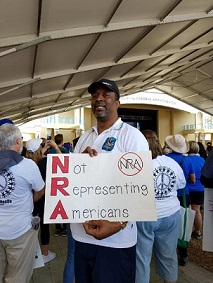
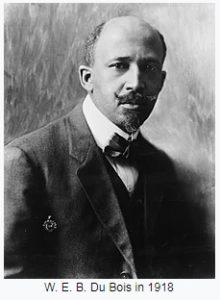 Here’s the summary of the life and legacy of W.E.B. Du Bois – see Appendix below: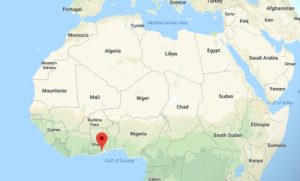

 Even though Du Bois was not convicted [of any crimes], the [US] government confiscated Du Bois’s passport [in 1951] and withheld it for eight years.
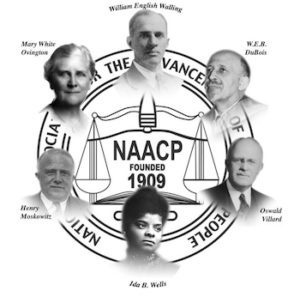 American
 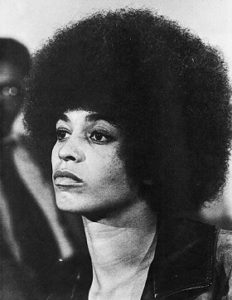 “Those who profess to favor freedom, yet deprecate agitation, are men who want crops without plowing up the ground. They want rain without thunder and lightening. They want the ocean without the awful roar of its many waters. This struggle may be a moral one; or it may be a physical one; or it may be both moral and physical; but it must be a struggle. Power concedes nothing without a demand. It never did and it never will.”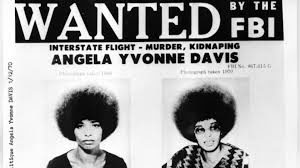
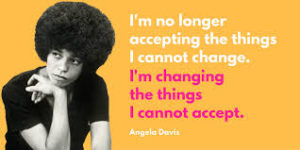
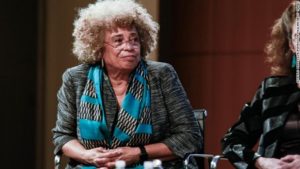

 Since it has been 37 – 38 years since his passing, we must now count Bob Marley as an historic character – what a character he was. He provides so much content for us to look, listen and learn from. This is one of the many purposes of designating February as Black History Month: education, entertainment, remembrance and inspiration.
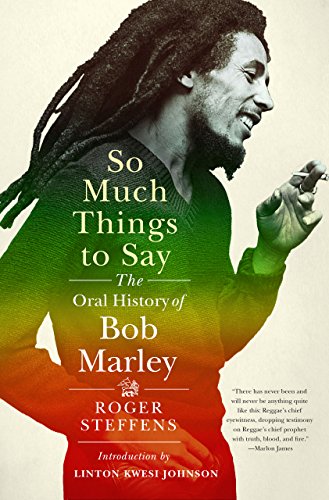

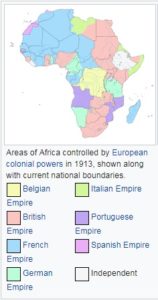 This World View was not always the default assessment in the world. No, for many years, decades and centuries, the default World View was that the Black Race was “there for the taking”. This argument sounds so much like Black Nationalist & Civil Rights Leader Marcus Garvey.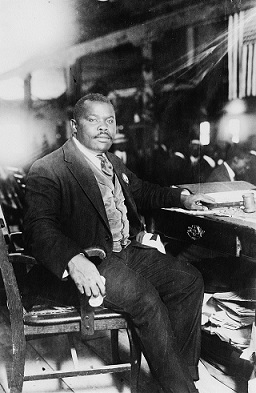
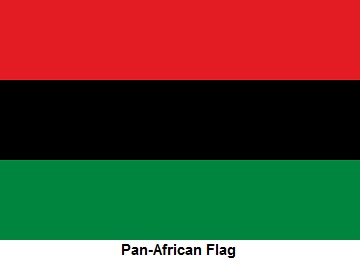
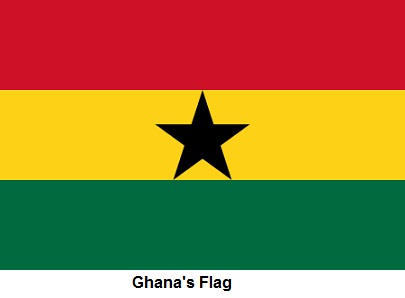
 Welcome to Black History Month 2019.

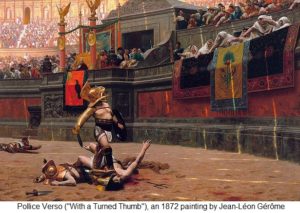
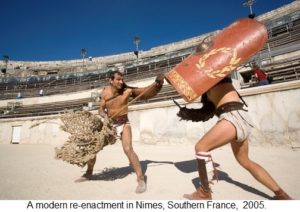
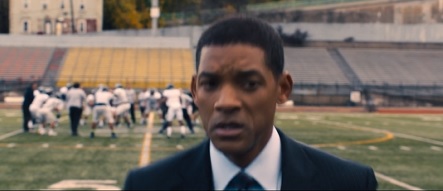
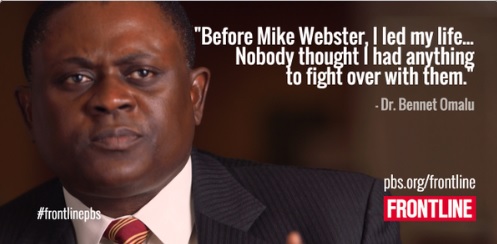

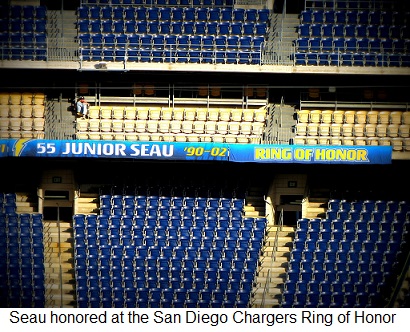
 While Black History Month is official only in the United States of America, it is recognized elsewhere.
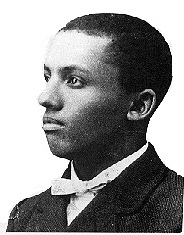 [He] was born in Buckingham County, Virginia

 Solar and wind-energy providers are among those who could suffer. In its drive to make the state electricity grid free from carbon dioxide emissions, California has pushed utilities to buy renewable energy. Gabe Grosberg, a utilities analyst at S&P Global, said Monday that “many of the power contracts are above market price” and that a renegotiation of those contracts “is something the bankruptcy judge will take a look at.”
 So you got a partner …
 A copy of Ban’s letter posted on various websites, dated Dec. 26, pointed out that the most common types of crimes are nonviolent, “such as theft of personal items,” and noted that “thousands of visitors routinely travel to Nassau without incident.”
 We did a reckoning of the European eco-system – called to account their prior actions; demanded they fulfill their obligations – as it relates to the past, present and future of Caribbean relations. We started this reckoning with a look at economic motivations of European society … at the time of the New World exploration and conquest. We wanted to start at the beginning and we assessed that would be economics, not religion.
 Greco-Roman wrestling is a style of