Women Empowerment – Captain Marvel: We need “Sheroes” in Facts and Fiction

Go Lean Commentary

A ‘Shero’ is quite simply a female hero. What is it that ‘Sheroes’ want?

A better life; better protections ; better promotion; better empowerment and also: Better Balance … or #BalanceforBetter.

This is important, today and beyond.

From empowerment seminars to street strikes, pop-up art shows to business master classes, female voices will echo across the globe Friday with a resounding message: Women want balance.

#BalanceforBetter is the theme for this year’s International Women’s Day, which is observed each year on March 8. The 2019 initiative is aimed at gender equality, a greater awareness of discrimination and a celebration of women’s achievements, according to the International Women’s Day website. That includes reducing the global pay gap between men and women and making sure all are equal – and balanced – in activist movements, boardrooms and beyond. – USA Today

Today, we acknowledge International Women’s Day 2019, as part of the consideration for Women’s History Month 2019. In addition to #BalanceforBetter in real life (facts), we also want to see more balance in our fiction (movies, novels and comic books).

Life imitating art; art imitating life.

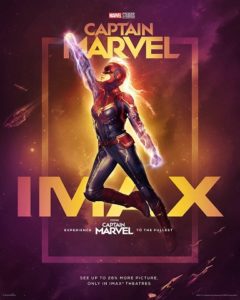
In honor of International Women’s Day 2019, the media conglomerate Disney Pictures is releasing a new film Captain Marvel under their subsidiary Marvel Studios – Marvel Cinematic Universe (MCU). This live-action movie – see Trailer below – renders the comic book superhero Carol Danvers, aka Captain Marvel, in a powerful role where she has to overcome immense odds to protect, promote and empower balance and peace in the galaxy. Forgive the spoiler, but in the film, Carol Danvers begins fighting  for the Kree against the Skrulls, has to endure a hero’s journey in which she learns the truth of herself, her friends and her enemies. In the end, she helps and support the Skrulls; she fights for balance and in pursuit of the Greater Good!

The confluence of Marvel (MCU) and International Women’s Day is the theme of this feature article here:

Title: On International Women’s Day, we’re celebrating the women of Marvel, from Black Widow to Captain Marvel
Subtitle: For International Women’s Day and Month, women across CBS Interactive have teamed up to spotlight the fierce ladies pushing Marvel ahead, both on and off screen.
By: Rebecca Fleenor, Caitlin Petrakovitz

Black Widow takes out a room of men — while tied to a chair. Gamora wins an electric sword fight with her sister Nebula. Okoye points a spear at her own husband after he charges her down on a rhino. The women of Marvel, needless to say, are fearless.

CBS Interactive, which CNET is part of, is celebrating the March 8 release of Captain Marvel, and all of International Women’s Month, by highlighting the powerful women of Marvel movies and shows. We’re focusing not only on the incredible women of the MCU, but also on Marvel comics and their impact on pop culture.

Multiple CBS sites have come together to produce this special report on the women of the Marvel universe. CNET has a mega-bracket showdown of powerful womenEntertainment Tonight is profiling prominent women behind and in front of the camera; and TV Guide will look ahead at the future of Marvel’s strong characters on the small screen.

Highlighting the scope of talented women who work at CBS Interactive, women throughout the company wrote, edited and produced every article, gallery and video in this collection — from our long-running compendium of Marvel movies to our roundtable of women talking about more strong ladies and our Q&A with Danai Gurira, Black Panther’s General Okoye, for CNET Magazine.

Captain Marvel sets the stage
Brie Larson stars as Carol Danvers, aka Captain Marvel, the 21st MCU movie now open around the world. For anyone unfamiliar with Captain Marvel’s backstory, check out GameSpot’s comic book history of Captain Marvel. CNET’s Patricia Puentes called the film “two hours of pure female empowerment packaged with all the visual power you’d expect from a Marvel blockbuster.”

Additionally, Entertainment Tonight‘s Meredith B. Kile reviewed Captain Marvel, noting that its “origin-story-in-reverse structure allows Captain Marvel to do away with many of the more overdone origin story tropes.” As the film opens, GameSpot will feature more explainers, spoilers, and breakdowns of how Captain Marvel (and those post-credits scenes!) will tie into Avengers: Endgame.

International Women’s Month
The first National Women’s Day was observed in the United States all the way back in 1909, many years before we’d celebrate Women’s History Month. In 1980, President Jimmy Carter declared the week of March 8 to be National Women’s History Week, and by 1987, Congress had passed a statute designating March as Women’s History Month. We continue to celebrate International Women’s Day on March 8. Did we mention one or 100 times that’s the day Captain Marvel, the first female-led film in the entire MCU, comes out?

Since the ’90s, the United Nations has focused on an annual theme for International Women’s Day. This year’s theme is “Think equal, build smart, innovate for change.” That’s why it feels appropriate for us to look to the women of Marvel who’ve been working in innovative ways, both on screen and off screen, to get more seats at the franchise’s proverbial table.

Women of the MCU making magic 
Captain Marvel may be taking the lead right now, but many other women have been key to making magic happen in the Marvel universe. CNET’s Patricia Puentes talked to costume designer Ruth E. Carter, who just won an Oscar for costume design for Black Panther. Entertainment Tonight looks at the women of Wakanda, aka all the women behind Black Panther, making Oscar history. And there’ll be much, much more Marvel flying your way.

Source: C-NET.com – Posted and retrieved March 8, 2019 from: https://www.cnet.com/news/celebrating-the-women-of-marvel-from-black-widow-to-captain-marvel-international-womens-day/

This – relevance of fictional heroes impacting real life – is a familiar theme for the movement behind the book Go Lean … Caribbean. We have published a lot of media advocating for balance and the Greater Good. We have even published many previous Go Lean commentaries that reviewed superhero films; see a sample list here:

https://goleancaribbean.com/blog/?p=14911 Film: Avengers Infinity War
Art Imitating Life – Was ‘Thanos’ Right?
https://goleancaribbean.com/blog/?p=14359 Film: Black Panther
Wakanda Forever – Conceive, Believe and Achieve
https://goleancaribbean.com/blog/?p=13579 Film: Thor Ragnarok
Colonialism’s Bloody History Revisited
https://goleancaribbean.com/blog/?p=12035 Film: Wonder Woman
‘Wonder Woman’ Leaning-in Then (75 years) and Now
https://goleancaribbean.com/blog/?p=7151 Film: Star Wars – The Force Awakens
The Caribbean is Looking for Heroes … ‘to Return’
https://goleancaribbean.com/blog/?p=5964 Film: Tomorrowland
Feed the right wolf

These prior commentaries portray how the Caribbean also need heroes and sheroes to impact our real communities – the facts, not just the fiction. This means protecting, promoting and empowering the sisters, mothers and daughters in our society. Our status quo is lacking …

Without the appropriate female empowerment, many of our sisters, mothers and daughters leave the homeland to seek refuge else where – one reports states 70 percent of our tertiary educated citizens have already left and live abroad. It is understandable, justifiable and viable that they would have left; our governing engines continue to double-down of female-dishonoring policies.

We need to stop … and fight these bad orthodoxies. It is so heroic of our Caribbean women who have returned and those who contemplate doing so. We need them! We want them back!

Many women fight the bad orthodoxies in society; they challenge us to overcome obstacles and positively impact our communities. This is a continuation of this series of commentaries from the movement behind the book Go Lean … Caribbean. This is part 4 of 6 for Women History Month; this series addresses how one woman can make a difference in society; and how society can make a difference for women; other commentaries in this series include these entries:

  1. Women History Month 2019Thoughts, Feelings, Speech and Actions
  2. Women History Month 2019Viola Desmond – The Rosa Parks of Canada
  3. Women History Month 2019Kamala Harris – Caribbean Legacy to the White House?
  4. Women History Month 2019: Captain Marvel – We need “Sheroes”
  5. Women History Month 2019Ellevest CEO: Sallie Krawcheck
  6. Women History Month 2019: Accepting Black Women As Is

As related in the foregoing, the United Nations designates the annual theme for International Women’s Day. This year’s theme is “Think equal, build smart, innovate for change.” The foregoing article continues:

“That’s why it feels appropriate for us to look to the women of Marvel who’ve been working in innovative ways, both on screen and off screen, to get more seats at the franchise’s proverbial table”.

Ditto … for the Caribbean.

We need more heroes and sheroes … to help us make our homeland a better place to live, work and play. 🙂

About the Book
The book Go Lean…Caribbean serves as a roadmap for the introduction and implementation of the technocratic Caribbean Union Trade Federation (CU), for the elevation of Caribbean society – for all member-states. This CU/Go Lean roadmap has these 3 prime directives:

  • Optimization of the economic engines in order to grow the regional economy to $800 Billion and create 2.2 million new jobs.
  • Establishment of a security apparatus to ensure public safety and protect the resultant economic engines.
  • Improve Caribbean governance to support these engines, including a separation-of-powers between the member-states and CU federal agencies.

The Go Lean book provides 370-pages of turn-by-turn instructions on “how” to adopt new community ethos, plus the strategies, tactics, implementations and advocacies to execute so as to reboot, reform and transform the societal engines of Caribbean society.

Download the free e-Book of Go Lean … Caribbean – now!

Who We Are
The movement behind the Go Lean book – a non-partisan, apolitical, religiously-neutral Community Development Foundation chartered for the purpose of empowering and re-booting economic engines – stresses that reforming and transforming the Caribbean societal engines must be a regional pursuit. This was an early motivation for the roadmap, as pronounced in the opening Declaration of Interdependence (Pages 12 – 13):

xi. Whereas all men are entitled to the benefits of good governance in a free society, “new guards” must be enacted to dissuade the emergence of incompetence, corruption, nepotism and cronyism at the peril of the people’s best interest. The Federation must guarantee the executions of a social contract between government and the governed.

xvi. Whereas security of our homeland is inextricably linked to prosperity of the homeland, the economic and security interest of the region needs to be aligned under the same governance. Since economic crimes … can imperil the functioning of the wheels of commerce for all the citizenry, the accedence of this Federation must equip the security apparatus with the tools and techniques for predictive and proactive interdictions.

xxiv. Whereas a free market economy can be induced and spurred for continuous progress, the Federation must install the controls to better manage aspects of the economy: jobs, inflation, savings rate, investments and other economic principles. Thereby attracting direct foreign investment because of the stability and vibrancy of our economy.

Sign the petition to lean-in for this roadmap for the Caribbean Union Trade Federation.

—————–

Appendix VIDEO – TRAILER: Captain Marvel (2019)  – https://youtu.be/_tnGmshDB4I


FilmSelect Trailer

Published on Dec 3, 2018 – Trailer 2 for Marvel Studios CAPTAIN MARVEL

Release date: March 8, 2019

Category: Entertainment
 

Share this post:
, , , ,

Women Empowerment – Kamala Harris: From Caribbean Legacy to the White House?

Go Lean Commentary

Who is the most powerful person in the world?

No doubt, the President of the United States. But this is not just an American drama, as the holder of that office is often considered the “Leader of the Free World“.

Free World?!

Q: Are there other worlds? A: Sure, countries like North Korea, Cuba, Venezuela, Yemen and others, may not consider the American Hegemony. But, most ironic, all those countries are considered Failed-States. So in summary, the President of the US is considered the Leader of all functioning societies on the planet – including our Caribbean member-states.

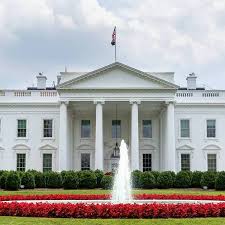
There is a chance, that a person of Caribbean heritage – an empowering woman: California Senator Kamala Harris – could assume that office. See the introductory news story / VIDEO here:

VIDEO – Who Is Kamala Harris? | 2020 Presidential Candidate | NYT News – https://youtu.be/cO_CZCebc5U

The New York Times
Published on Jan 21, 2019 – Senator Kamala Harris, Democrat of California, is joining the race for the White House. Ms. Harris becomes the fourth woman currently serving in Congress to announce her presidential ambitions.
Read the story here: https://nyti.ms/2FSqIHD Subscribe: http://bit.ly/U8Ys7n
More from The New York Times Video: http://nytimes.com/video

———-

Whether it’s reporting on conflicts abroad and political divisions at home, or covering the latest style trends and scientific developments, New York Times video journalists provide a revealing and unforgettable view of the world. It’s all the news that’s fit to watch.

So can she go from Caribbean Legacy to the White House? That would be shocking and empowering, considering that “Jamaican” comes with certain stereotypes. See a related news article here, detailing the affinity and conflict “she” has with her Jamaican father/heritage:

Title: Donald Harris slams his daughter Senator Kamala Harris for fraudulently stereotyping Jamaicans and accuses her of playing Identity Politics
By: Jamaican Global

Professor Donald Harris Kamala Harris’ Jamaican father, has vigorously dissociated himself from statements made on the New York Breakfast Club radio show earlier this week attributing her support for smoking marijuana to her Jamaican heritage. Professor Harris has issued a statement to jamaicaglobalonline.com in which he declares:

    “My dear departed grandmothers(whose extraordinary legacy I described in a recent essay on this website), as well as my deceased parents , must be turning in their grave right now to see their family’s name, reputation and proud Jamaican identity being connected, in any way, jokingly or not with the fraudulent stereotype of a pot-smoking joy seeker and in the pursuit of identity politics. Speaking for myself and my immediate Jamaican family, we wish to categorically dissociate ourselves from this travesty.”

This is the line – “Half my family’s from Jamaica. Are you kidding me?” – that has been repeated over by virtually every news media since Kamala Harris gave that response to the interviewer on New York’s Breakfast Club radio show when asked if she smoked marijuana.

Jamaica’s venerable Gleaner newspaper headlined:

    US Presidential Candidate Kamala Harris wants Marijuana Legalized, cites Jamaican roots.

While the locally based online news source Loop reported:

    Kamala Harris cites Jamaican roots in support of ganja legislation.

The Georgia based Macon Telegraph  was less subtle. Its report screamed:

    Kamala Harris supports legal pot. “Half my family’s from Jamaica. Are you kidding me?”

The 2020 presidential hopeful with a Jamaican heritage said she not only smoked but added “I inhale”. Perhaps said jokingly at first in the spirit of the interview, she proceeded to suggest that her Jamaican father’s side of the family would be disappointed in her if she did not support the legalization of marijuana. And that IS a serious statement. Now Harris’ father has come out vigorously dissociating himself from his daughter’s statement.

And well he might. V.G. McGee in a op ed piece published on January 12 in Urbanislandz writes “ Back in 2014 while running for re-election for California attorney general, she wasn’t in support of legalizing recreational use of the plant , but it is good that she has evolved on the issue and we can thank her Jamaican relatives for influencing her changing opinion.” So, the perception created by Ms. Harris’ statement is real and has caused some unease amongst Jamaicans at home and in the diaspora and now, it seems, her father and his Jamaican family. For some, it is more than mere unease; one Jamaican commenting on social media expressed the concern that “soon my job will be singling me out to drug test me since I am from Jamaica. What a stereotype”. Her concern is not unfounded given the experience of Jamaicans travelling to US ports having sniffer dogs around them in customs halls.

The Indian/Jamaican Marijuana connection: Did Kamala Harris deliberately and unfairly stereotype Jamaica as a nation of pot smokers? 

An ironic twist in Ms. Harris’ associating marijuana smoking with her Jamaican heritage that seems to have escaped her as well as media watchers is the fact that it is also very much a part of her Indian heritage that she is so proud of claiming. Is she aware that it was India that bequeathed a marijuana culture to Jamaica? In her authoritative Encyclopedia of Jamaican Heritage (2003) Oliver Senior writes:

    ‘The practice of cultivating, smoking and otherwise consuming the herb (marijuana) is believed to have been popularized by Indian indentured immigrants who began to arrive from 1845. The local name ‘ganja’ is Indian. The concept of ganja as a holy herb is a Hindu one; it is widely used to enhance the religious experience in parts of India (despite government prohibition).

This seeming lack of knowledge about the connection between her Indian and Jamaican heritage provides additional ammunition for some Jamaicans who are of the view that Ms. Harris tends to downplay her Jamaican heritage when it suits her, crediting her Tamil Indian mother with the most significant influence on her life and outlook and rarely talks about her father’s influence. Her father Donald, hardly ever gets credit except when mentioned alongside her mother, but rarely as an individual. Even when asked by her host in the now famous ‘marijuana interview’ about her motivation to enter the presidential race, Ms. Harris referenced ONLY her mother whom she said, raised her and her sister Maya with many beliefs and rules – one being never to sit and complain about something, but to do something about it. Yet, anyone who has read ‘Reflections of a Jamaican Father’ Donald Harris’ heart-warming account of how he raised his two daughters, will immediately realize that there is another side to the Kamala Harris story. In that article Donald Harris writes:
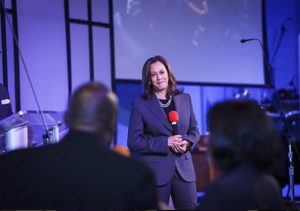
    “As a child growing up in Jamaica, I often heard it said by my parents and family friends ‘member whe you come fram’ (remember from where you came). To this day I continue to retain the deep social awareness and strong sense of identity which that grassroots Jamaican philosophy fed in me. As a father, I naturally sought to develop the same sensibility in my two daughters.”

Continuing, Harris says:

    “My message to them was that the sky is the limit on what one can achieve with effort and determination and that in the process, it is important not to lose sight of those who get left behind by social neglect or abuse and lack of access to resources or ‘privilege’.

If Kamala Harris inherits some of ‘that deep social awareness’ and heeds the advice of her Jamaican father, she will make an excellent President of the United States of America.

Source: Posted February 15, 2019; retrieved March 7, 2018 from: https://www.jamaicaglobalonline.com/donald-harris-slams-his-daughter-senator-kamala-harris-for-fraudulently-stereotyping-jamaicans-and-accusing-her-of-playing-identity-politics/

How realistic is the notion of a Kamala Harris presidency?

History is on her side!

“Last time we knocked on the door  – this time, we are going to kick the son-of-a-bitch in!”

In the last presidential election (2016) Democratic Candidate Hillary Clinton knocked-on-the-door and won the popular vote, but lost out in the Electoral College. (Today, investigations are concluding on the possibility that the eventual winner, Donald J. Trump, may have benefited from illegal campaign funding activities and collusion with the foreign government of Russia – he may have cheated). So yes, a woman can win the office.

Based on the “Blue Wave” of the 2018 General Election (Mid-terms) results, there is reason to believe that the 2020 race will have a Democratic Party winner, rather than the Republican incumbent. Plus, ex-President Barack Obama proved that a “Black” person can win the office.

Will this combination propel Kamala Harris to the Office of the Presidency?

There is still a long journey to go, with a lot of obstacles to overcome and challenges to meet. But many women have overcame obstacles and met challenges to obtain their goals to impact society. In fact, this is the very theme this month of this series of commentaries from the movement behind the book Go Lean … Caribbean. This is part 3 of 6 for Women History Month; this series addresses how one woman can make a difference in society; and how society can make a difference for women; this is because qualities like courage, problem-solving, determination and a zeal for justice flourishes with some women … as it does with some men.

Other commentaries in this series include these entries:

  1. Women History Month 2019: Thoughts, Feelings, Speech and Actions
  2. Women History Month 2019Viola Desmond – The Rosa Parks of Canada
  3. Women History Month 2019: Kamala Harris – Caribbean Legacy to the White House?
  4. Women History Month 2019: Captain Marvel – We need “Sheroes”
  5. Women History Month 2019Ellevest CEO: Sallie Krawcheck
  6. Women History Month 2019: Accepting Black Women As Is

For Kamala Harris to win the presidency, she will have to “win over” America; but first she must “win over” the Democratic Party; even before that, she must “win over” the Black community. Some people think that will be her biggest challenge; see a related news article/opinion-editorial here:

Title: Kamala Harris Can’t Count on the Black Vote in 2020
Opinion by: Luther Campbell

Kamala Harris will have trouble persuading black voters to make her president in 2020. First, the U.S. senator from California must explain why Donald Trump has a better prison-reform record than she had as the Golden State’s attorney general. Then she’ll have to overcome the perception she’ll do anything to climb to the top.
On the street, many blue-collar African-Americans, especially men, have already made up their minds not to vote for her. Between 2004 and 2016, when Harris worked as San Francisco’s district attorney and state attorney general, she supported legislation that sent kids who skipped school to jail. And she opposed federal supervision of California’s prisons after a U.S. Supreme Court ruling declared the overcrowded facilities inflicted cruel and unusual punishment on inmates.

When she appealed a court order to implement new parole programs, Harris cited the need to use prisoners as slave labor to fight wildfires and pick up highway trash.

Though black voters want politicians who’ll put away thugs and killers terrorizing the neighborhood, they don’t support those who deny defendants rehabilitation and send them to prison for crimes they didn’t commit to line private prison companies’ pockets.

Harris rose to prominence in California after an affair with married, but separated, former San Francisco Mayor Willie Brown, who recently wrote a column that mentioned their relationship. Brown said he influenced Harris’ career by appointing her to two state commissions when he was California Assembly speaker. He also helped her in her first race for San Francisco district attorney.

When Harris, whose mother is from India and father is from Jamaica, decided it was time to take her talents to Washington, D.C., she married Douglas Emhoff, a rich white lawyer. For better or worse, black men don’t want to vote for a black woman who married a white man or was the mistress of a powerful black man.

Like everyone else, black voters want help from one of their own. The Bushes made sure their people got oil money. Bill Clinton let the telecommunications industry gobble up small radio and TV stations. And Donald Trump is looking out for his developer buddies through a tax cut and opportunity zones that gentrify minority neighborhoods. Meanwhile, Harris has let black people know they can’t count on her.

Source: Posted February 5, 2019; retrieved March 7, 2019 from: https://www.miaminewtimes.com/news/kamala-harris-cant-count-on-the-black-vote-to-win-in-2020-11068985

(This foregoing writer is not endorsed by this commentary; his editorial seems misogynistic).

Women in Politics? To the highest office in the land? This theme aligns with previous Go Lean commentaries asserting that ” Yes, they can!”; see a sample list here:

https://goleancaribbean.com/blog/?p=14718 ‘At the Table’ or ‘On the Menu’
https://goleancaribbean.com/blog/?p=13063 Gender Equity without a ‘Battle of the Sexes’
https://goleancaribbean.com/blog/?p=12035 Fact & Fiction: Lean-in for ‘Wonder Woman Day’
https://goleancaribbean.com/blog/?p=8306 Women Get Ready for New Lean-In Campaign
https://goleancaribbean.com/blog/?p=6937 Women in Politics – Yes, They Can!
https://goleancaribbean.com/blog/?p=6836 #FatGirlsCan – Women do not have to be a ‘Ten’ to have impact

For those of us in the Caribbean, we have No Vote and No Voice in this 2020 presidential race. But we can observe-and-report. We can apply the proven “5-L” methodology: Look, Listen and Learn how to overcome orthodoxies to finally get the best person elected for the job, despite any race or gender.

We can also Lend-a-hand! (Many people of Caribbean heritage live in the US – many can vote). In fact, we – Jamaicans, Cubans, Puerto Ricans – were target demographics in the 2016 race.

Lastly, there is the opportunity to Lead – especially to define good leadership; recognizing attributes and personal qualities are bigger and of more importance than race and/or gender. We need to apply these lessons and leadership development in the Caribbean member-states.

So “Yes, we can” … learn from this American drama and learn to make our Caribbean homeland a better place to live, work and play. 🙂

About the Book
The book Go Lean…Caribbean serves as a roadmap for the introduction and implementation of the technocratic Caribbean Union Trade Federation (CU), for the elevation of Caribbean society – for all member-states. This CU/Go Lean roadmap has these 3 prime directives:

  • Optimization of the economic engines in order to grow the regional economy to $800 Billion and create 2.2 million new jobs.
  • Establishment of a security apparatus to ensure public safety and protect the resultant economic engines.
  • Improve Caribbean governance to support these engines, including a separation-of-powers between the member-states and CU federal agencies.

The Go Lean book provides 370-pages of turn-by-turn instructions on “how” to adopt new community ethos, plus the strategies, tactics, implementations and advocacies to execute so as to reboot, reform and transform the societal engines of Caribbean society.

Download the free e-Book of Go Lean … Caribbean – now!

Who We Are
The movement behind the Go Lean book – a non-partisan, apolitical, religiously-neutral Community Development Foundation chartered for the purpose of empowering and re-booting economic engines – stresses that reforming and transforming the Caribbean societal engines must be a regional pursuit. This was an early motivation for the roadmap, as pronounced in the opening Declaration of Interdependence (Pages 12 – 13):

xi. Whereas all men are entitled to the benefits of good governance in a free society, “new guards” must be enacted to dissuade the emergence of incompetence, corruption, nepotism and cronyism at the peril of the people’s best interest. The Federation must guarantee the executions of a social contract between government and the governed.

xvi. Whereas security of our homeland is inextricably linked to prosperity of the homeland, the economic and security interest of the region needs to be aligned under the same governance. Since economic crimes … can imperil the functioning of the wheels of commerce for all the citizenry, the accedence of this Federation must equip the security apparatus with the tools and techniques for predictive and proactive interdictions.

xxiv. Whereas a free market economy can be induced and spurred for continuous progress, the Federation must install the controls to better manage aspects of the economy: jobs, inflation, savings rate, investments and other economic principles. Thereby attracting direct foreign investment because of the stability and vibrancy of our economy.

Sign the petition to lean-in for this roadmap for the Caribbean Union Trade Federation.

Share this post:
, , ,
[Top]

Women Empowerment – Viola Desmond Fascination – Encore

There is virtual … and then there is physical.

There is plan … and then there is actual.

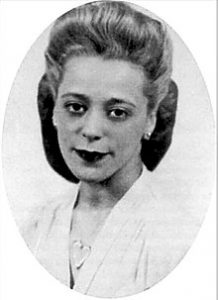
We were previously fascinated with the story of the life and legacy of Canadian Civil Rights icon Viola Desmond. Wow!

The country even honored her by putting her image on their $10 Bill currency.

Alas, “we” got a chance to see it, touch it, feel it …

… it is even more fascinating now. See the VIDEO here depicting “our” exploring that currency note:

VIDEO – Fascinated by the Canadian $10 Bill – https://youtu.be/f2K3YQk9CQk

Published on Mar 6, 2019 – Wow, this is so impressive. What a marvelous honor to Viola Desmond. She was the Rosa Parks of Canada.

This consideration of Viola Desmond is a continuation of this series about impactful-empowering women in recent history. This is part 2 of 6 for Women History Month; this series addresses how one woman can make a difference in society; and how society can make a difference for women; this is because qualities like courage, determination and a zeal for justice flourishes with women as it does with some men.

Other commentaries in this series include these entries:

  1. Women History Month 2019: Thoughts, Feelings, Speech and Actions
  2. Women History Month 2019: Viola Desmond – The Rosa Parks of Canada
  3. Women History Month 2019Kamala Harris – Caribbean Legacy to the White House?
  4. Women History Month 2019: Captain Marvel – We need “Sheroes”
  5. Women History Month 2019Ellevest CEO: Sallie Krawcheck
  6. Women History Month 2019: Accepting Black Women As Is

It is only appropriate that we Encore that previous blog-commentary on Viola Desmond here-now:

—————–

Go Lean CommentaryViola Desmond: One Woman Made A Difference

In North America, there is Black History Month and there is Women’s History Month …

This story – about Canadian Viola Desmond – is both!

Viola Desmond challenged racial segregation at a cinema in New Glasgow, Nova Scotia, in 1946. She refused to leave a whites-only area of the Roseland Theatre and was convicted of a minor tax violation for the one-cent tax difference between the seat she had paid for and the seat she used which was more expensive. Desmond’s case is one of the most publicized incidents of racial discrimination in Canadian history and helped start the modern civil rights movement in Canada.


In 2010, Viola Desmond was granted a posthumous pardon, the first to be granted in Canada.[2][3] The government of Nova Scotia also apologized for prosecuting her for tax evasion and acknowledged she was rightfully resisting racial discrimination.[4] … In late 2018 Desmond will be the first Canadian born woman to appear alone on a $10 bill which was unveiled by Finance Minister Bill Morneau and Bank of Canada governor Stephen Poloz during a ceremony at the Halifax Central Library on March 8, 2018.[5][6] Desmond was also named a National Historic Person in 2018.[7]

[Reverend] Dr. William Pearly Oliver – [a Social Justice Champion in the vein of Martin Luther King] – reflecting on the case 15 years later[21] stated regarding Desmond’s legacy:

    “… this meant something to our people. Neither before or since has there been such an aggressive effort to obtain rights. The people arose as one and with one voice. This positive stand enhanced the prestige of the Negro community throughout the Province. It is my conviction that much of the positive action that has since taken place stemmed from this …”.

Desmond is often compared to Rosa Parks, given they both challenged racism by taking seats in a Whites only section and contributed to the rise of the Civil Rights Movement.
Source: Retrieved March 14, 2018 from: https://en.wikipedia.org/wiki/Viola_Desmond

Yes, one woman, or one man, can make a difference in society. Viola Desmond proved it! Her commitment to justice and righteous principles compelled her community to take note and make a change.

“Wanna make the world a better place, take a look at yourself and make a change.” – Michael Jackson’s song: Man in the Mirror (1987).

Canada today is a very progressive society. From the Caribbean perspective, Canada is now a role model for a pluralistic democracy and Climate Change action. As is the experience, positive reform always starts with one person. In a previous blog-commentary, the movement behind the book Go Lean…Caribbean explained how immigrants to a new community (and minorities) normally go through a long train of abuse, then toleration, followed by acceptance and then finally celebration. Today, Canada is celebrating Viola Desmond; see the news article in the Appendix below.

The success of this community – Canada – has been hard fought, but they did the heavy-lifting and now are enjoying the fruitage of their labor. People from all over the world “are beating down the doors to get in”.

Poor Caribbean communities. We have NOT done the heavy-lifting and our people “are beating down the doors to get out”. (Many times, they flee to Canada for refuge).

This is what the book Go Lean…Caribbean – available to download for free – warned: “Push and Pull” factors are resulting in an abandonment of Caribbean homelands for foreign shores like Canada; (Page 3). Now to learn and apply this lesson.

The Viola Desmond story resonates with us in the Caribbean. Since she was a Black Woman and the majority population of 28 of the 30 Caribbean member-states is Black, we share the same ancestral heritage – Africa – colonial origins – slave trade – and history of oppression as Canadian Blacks. Plus a large number of our Caribbean Diaspora who fled their homeland lives in Canada – one estimate is near a million.

The Go Lean book posits that one person – an advocate like Desmond – can make a difference (Page 122). It relates:

An advocacy is an act of pleading for, supporting, or recommending a cause or subject. For this book, it’s a situational analysis, strategy or tactic for dealing with a narrowly defined subject.

Advocacies are not uncommon in modern history. There are many that have defined generations and personalities. Consider these notable examples from the last two centuries in different locales around the world:

  • Frederick Douglas
  • Mohandas Gandhi
  • Martin Luther King
  • Nelson Mandela
  • Cesar Chavez
  • Candice Lightner

The Go Lean book seeks to advocate and correct the Caribbean, not Canada, and the people who love our homeland. Yet still we can learn lessons from Canada’s history (Page 146) and direct our regional stakeholders to a Way Forward based on best-practices gleaned from Canada’s dysfunctional past. The book, in its 370 pages, serves as a roadmap for the introduction and implementation of the technocratic Caribbean Union Trade Federation (CU), to move our society to a brighter future, by elevating our societal engines – for all member-states. This CU/Go Lean roadmap has these 3 prime directives:

  • Optimization of the economic engines in order to grow the regional economy to $800 Billion and create 2.2 million new jobs.
  • Establishment of a security apparatus to ensure public safety and protect the resultant economic engines.
  • Improve Caribbean governance to support these engines, including a separation-of-powers between the member-states and CU federal agencies.

The book stresses that reforming and transforming the Caribbean societal engines must be a regional pursuit – we must become a pluralistic democracy: Black, White, Red and Yellow. Our problems are too big for any one Caribbean member-state to contend with alone. This was an early motivation for the roadmap, as pronounced in the opening Declaration of Interdependence (Pages 12 – 14):

xi. Whereas all men are entitled to the benefits of good governance in a free society, “new guards” must be enacted to dissuade the emergence of incompetence, corruption, nepotism and cronyism at the peril of the people’s best interest. The Federation must guarantee the executions of a social contract between government and the governed.

xix. Whereas our legacy in recent times is one of societal abandonment, it is imperative that incentives and encouragement be put in place to first dissuade the human flight, and then entice and welcome the return of our Diaspora …

xxxii. Whereas the cultural arts … of the region are germane to the quality of Caribbean life, and the international appreciation of Caribbean life, the Federation must implement the support systems to teach, encourage, incentivize, monetize and promote the related industries for arts … in domestic and foreign markets. These endeavors will make the Caribbean a better place to live, work and play.

xxxiii. Whereas lessons can be learned and applied from the study of the recent history of other societies, the Federation must formalize statutes and organizational dimensions to avoid the pitfalls of communities like East Germany, Detroit, Indian (Native American) Reservations, Egypt and the previous West Indies Federation. On the other hand, the Federation must also implement the good examples learned from developments/ communities …

The Go Lean book provides 370-pages of turn-by-turn instructions on “how” to adopt new community ethos, plus the strategies, tactics, implementations and advocacies to execute so as to reboot, reform and transform the societal engines of Caribbean society.

The Go Lean movement calls on every man, woman and child in the Caribbean to be an advocate and a champion, or at least appreciate the championing efforts of previous advocates. Their examples can truly help us today with our passions and purpose. Consider this sample of prior blog/commentaries where advocates and role models have been elaborated upon:

https://goleancaribbean.com/blog/?p=14139 Carter Woodson – One Man Made a Difference … for Black History
https://goleancaribbean.com/blog/?p=11963 Oscar López Rivera – The ‘Nelson Mandela’ of the Caribbean?
https://goleancaribbean.com/blog/?p=11442 Caribbean Roots: Al Roker – ‘Climate Change’ Defender
https://goleancaribbean.com/blog/?p=10801 Caribbean Roots: John Carlos – The Man. The Moment. The Movement
https://goleancaribbean.com/blog/?p=10114 Caribbean Roots: Esther Rolle of ‘Good Times’
https://goleancaribbean.com/blog/?p=9948 Caribbean Roots: Sammy Davis, Jr.
https://goleancaribbean.com/blog/?p=9300 Edward Snowden – One Person Making a Difference
https://goleancaribbean.com/blog/?p=8724 Remembering Marcus Garvey: Still Relevant Today
https://goleancaribbean.com/blog/?p=8495 The NBA’s Tim Duncan – Champion On and Off the Court
https://goleancaribbean.com/blog/?p=8328 YouTube Millionaire: ‘Tipsy Bartender’ Bahamas Origins
https://goleancaribbean.com/blog/?p=8165 Role Model Muhammad Ali’s Greatest Fight
https://goleancaribbean.com/blog/?p=7682 Frederick Douglass: Role Model for Single Cause – Death or Diaspora
https://goleancaribbean.com/blog/?p=866 Bob Marley: The Role Model and Legend … lives on!

Thank you Viola Desmond, for being a good role model, and a reminder: Black Girls Rock!

We conclude about Viola Desmond as we do about our own Caribbean champions and advocates; we said (Go Lean book Valedictions on Page 252):

Thank you for your service, love and commitment to all Caribbean people. We will take it from here.

The movement behind Go Lean book, the planners of a new Caribbean stresses that a ‘change is going to come’ our way. We have endured failure for far too long; we have seen what works and what does not. We want to learn from Canada’s History – the good, bad and ugly lessons.

There are the 5 L‘s. We have now Looked, Listened, Learned and Lend-a-hand; we are now ready to Lead our region to a better destination, to being a homeland that is better to live, work and play. Let’s move! 🙂

Download the free e-Book of Go Lean … Caribbean – now!

Sign the petition to lean-in for this roadmap for the Caribbean Union Trade Federation.

————

Appendix – Viola Desmond On New Canadian $10 Bill

March 12, 2018 – Canadian hero Viola Desmond is the face on the new $10 bill in Canada, which goes into circulation at the end of March.

Viola Desmond was thrown in jail in Nova Scotia in 1946 because, in a movie theatre, she wanted to sit downstairs where the white people were allowed to sit. She didn’t want to sit up in the balcony, where the black people had to sit. The police held her in jail overnight. The dignified and brave Desmond paid a fine of $20 the next day, even though she had done nothing wrong. Today, we think of her for being a brave advocate for the rights of African-Canadians and helping to inspire the human rights movement in Canada.

(Learn more about Desmond on Historica Canada’s Viola Desmond page.)

It is a great honour to have your face on a country’s money. This is the first time an African-Canadian woman has been featured on Canadian paper money. (Queen Elizabeth is featured on the $20 bill.)

There’s something else interesting about the new bill. For the first time, it is vertical, meaning it’s meant to be looked at up-and-down rather than horizontally (across).

The new bill also features a number of images that are reminders of human rights. For instance, there is an image of the Canadian Museum for Human Rights, in Winnipeg, Manitoba, where Desmond’s story is part of the permanent collection. There is an image of a feather, to recognize rights and freedoms for Canada’s Indigenous Peoples. And it features a paragraph from the Canadian Charter of Rights and Freedoms (section 15, which says, “Every individual is equal before and under the law.”

Viola Desmond’s sister, Wanda Robson, was one of the first people in Canada to receive a copy of the new $10 bill. In a Bank of Canada video (below), she said her sister’s photo on it is “so life-like. It’s as if she’s in this room!”

Source: Retrieved March 14, 2018 from http://teachingkidsnews.com/2018/03/12/viola-desmond-on-new-canadian-10-bill/

Related Videos
The video below (1:00) is a “Heritage Minute” produced by Historica Canada. It tells the story of Viola Desmond.

——–

VIDEO – Heritage Minutes: Viola Desmond – https://youtu.be/ie0xWYRSX7Y

Historica Canada
Published on Feb 2, 2016 – The story of Viola Desmond, an entrepreneur who challenged segregation in Nova Scotia in the 1940s. The 82nd Heritage Minute in Historica Canada’s collection. For more information about Viola Desmond, visit: http://www.thecanadianencyclopedia.ca…

——–

Additional Video: Wanda Robson sees Canada’s new $10 note featuring her sister (Viola Desmond) for the first time  – https://youtu.be/dfdlPrglcS8

Share this post:
, , , , ,
[Top]

Women Empowerment – Thoughts. Feelings. Speech. Action.

Go Lean Commentary

“Thoughts. Feelings. Speech. Action.”

This is usually the order and process for change. Change doesn’t just start with Action; a lot more goes into it. It can be likened to a factory process; there is input and there is output. While Action is the output, “Thoughts, Feelings and Speech” qualify as input.
Got Change?

Want Change?

The movement behind the book Go Lean … Caribbean asserts that we have to be prepared to contribute the appropriate Inputs. In fact we must start changing the current Inputs to better reflect the values we want to see in our society. That means changing our thoughts, feeling and speech.

In the Caribbean, we have a problem…

… the women in our society are not always protected, promoted and empowered as they should be and need to be. That is the requested Change, or output. So our goal now – for this Women’s History Month 2019 – is to focus on the appropriate Inputs.

What do we need to change with our thoughts, feelings, speech and actions?

Thoughts & Feelings
Believe it or not, a lot of the inappropriate thinking about women in our society come from the religious orthodoxy. This commentary has previously identified that the Caribbean’s Christian legacy has not been always been a force for good in our society. In the case of protecting, promoting and empowering our women, the religiosity has many times been the problem; the Natural Law preponderance has been to view women as subservient to men. See how this theme had been elaborated in these previous Go Lean commentaries here:

https://goleancaribbean.com/blog/?p=16534 European Reckoning – Christianity’s Indictment
https://goleancaribbean.com/blog/?p=16477 Transforming Hindus versus Women – What it means for us?
https://goleancaribbean.com/blog/?p=15580 Caribbean Unity? Religion’s Role: False Friend
https://goleancaribbean.com/blog/?p=10216 Waging a Successful War on Orthodoxy

Speech
As humans, we cannot see other people’s thoughts or feelings; we can only hear their speech and see their actions.

“Out of the abundance of the heart the mouth speaks”. – The Bible Matthew 12:34

So when we see or hear bad words (maledictions) coming from Caribbean institutions, its important to name, blame and shame it immediately. This problem is acute in many Caribbean musical genres; and have been for years. There is now the awareness that this bad trend needs to be remediated and mitigated. See this related news article (and VIDEO of the role model) here:

Title: Sarah concerned about songs that degrade women
External Affairs Minister, Sarah Flood-Beaubrun has expressed concern about the playing of songs that are degrading to women.

She told reporters Tuesday that despite all the work that has gone into trying to reduce domestic violence, globally there has been an increase.

‘So we have to look at everything that causes violence – violent language, violent songs,’ the minister stated.

‘I hear so many songs that are downright degrading to women – an affront to our dignity. Yet still we women who – talking about issues facing women, are supporting these songs being played. What do they do to our girls? What do they tell our girls about themselves?’  The outspoken founder of the Caribbean Centre for Family and Human Rights (CARIFAM), remarked.

She spoke of the need to address the problem of violence holistically and not ‘point fingers.’

Flood-Beaubrun noted that it must be recognised that everyone has a part to play in the situation, although those in leadership positions must ‘take charge’.

‘Leadership at all levels, not just at the political level – in the home, in the school, in the community etc. So it is a job for everybody,’ the minister explained.

Source: Posted February 13, 2018; retrieved March 4, 2019 from: https://stluciatimes.com/sarah-concerned-songs-degrade-women/

—————–

VIDEO – Sarah Flood Beaubrun Appointed Ministerhttps://youtu.be/zSkWSY0FzPQ

HTS St. Lucia
Published on Jul 26, 2016 – The Allen Chastanet-led cabinet has grown to 16 government ministers. Castries central MP Sarah Flood-Beaubrun was sworn into office as a minister. Her appointment leaves the deputy speaker post vacant.

Action
There are inexcusable actions that simply must be marshaled against in society. Remember these “sad but true” offenses detailed in prior blog-commentaries:

https://goleancaribbean.com/blog/?p=16408 Sad but true: Bad Ethos on Home Violence Leads to Tourists Violence (Jamaica)
https://goleancaribbean.com/blog/?p=13664 High Profile Sexual Harassment Accusers – Women should be believed!
https://goleancaribbean.com/blog/?p=5307 Sad but true: Violent Crime Against Female Tourists (Bahamas)
https://goleancaribbean.com/blog/?p=2709 Caribbean Study: 58% Of Boys Agree to Female ‘Discipline’
https://goleancaribbean.com/blog/?p=2201 Students developing nail polish to detect date rape drugs. A sad but true need!
https://goleancaribbean.com/blog/?p=809 Muslim officials condemn their own for the abductions of Nigerian girls

So in order to reform and transform the Caribbean’s bad practices in protecting, promoting and empowering our women, there must be the heavy-lifting tasks to first win people over for more positive thoughts and feelings, then regulate “bad” speech and finally “police” bad actions against women efficiently, effectively and purposefully in our society.

This is our quest!

Here, we present a full series of commentaries related to women empowerment for Women History Month; this series addresses and presents the Thoughts, Feelings, Speech and Actions of great contemporary women who impacted society – these are role models for us:

  1. Women History Month 2019: Thoughts, Feelings, Speech and Actions
  2. Women History Month 2019Viola Desmond – The Rosa Parks of Canada
  3. Women History Month 2019Kamala Harris – Caribbean Legacy to the White House?
  4. Women History Month 2019: Captain Marvel – We need “Sheroes”
  5. Women History Month 2019Ellevest CEO: Sallie Krawcheck
  6. Women History Month 2019: Accepting Black Women As Is

In this series, reference is made to a “Next Frontier” of Gender Relations – women are now on the verge of breaking all “glass ceilings” in society.

Yes, they can! They have in the past and can do it again now!

See foregoing VIDEO

Most importantly, there is a Caribbean consideration in all of these submissions. We must do the heavy-lifting of protecting, promoting and empowering our mothers, sisters and daughters. With at least 50 percent of the population, women should naturally be considered our partners … not some subservient “property”.

Yes, we can do this – partner up with our women – and make our homeland a better place to live, work and play for all. 🙂

About the Book
The book Go Lean…Caribbean serves as a roadmap for the introduction and implementation of the technocratic Caribbean Union Trade Federation (CU), for the elevation of Caribbean society – for all member-states. This CU/Go Lean roadmap has these 3 prime directives:

  • Optimization of the economic engines in order to grow the regional economy to $800 Billion and create 2.2 million new jobs.
  • Establishment of a security apparatus to ensure public safety and protect the resultant economic engines.
  • Improve Caribbean governance to support these engines, including a separation-of-powers between the member-states and CU federal agencies.

The Go Lean book provides 370-pages of turn-by-turn instructions on “how” to adopt new community ethos, plus the strategies, tactics, implementations and advocacies to execute so as to reboot, reform and transform the societal engines of Caribbean society. There is even a chapter (Page 226) specifically addressing the need to elevate women in our society, entitled: “10 Ways to Empower Women“.

Download the free e-Book of Go Lean … Caribbean – now!

Who We Are
The movement behind the Go Lean book – a non-partisan, apolitical, religiously-neutral Community Development Foundation chartered for the purpose of empowering and re-booting economic engines – stresses that reforming and transforming the Caribbean societal engines must be a regional pursuit. This was an early motivation for the roadmap, as pronounced in the opening Declaration of Interdependence (Pages 12 – 13):

xi. Whereas all men are entitled to the benefits of good governance in a free society, “new guards” must be enacted to dissuade the emergence of incompetence, corruption, nepotism and cronyism at the peril of the people’s best interest. The Federation must guarantee the executions of a social contract between government and the governed.

xvi. Whereas security of our homeland is inextricably linked to prosperity of the homeland, the economic and security interest of the region needs to be aligned under the same governance. Since economic crimes … can imperil the functioning of the wheels of commerce for all the citizenry, the accedence of this Federation must equip the security apparatus with the tools and techniques for predictive and proactive interdictions.

xxi. Whereas the preparation of our labor force can foster opportunities and dictate economic progress for current and future generations, the Federation must ensure that educational and job training opportunities are fully optimized for all residents of all member-states, with no partiality towards any gender or ethnic group. The Federation must recognize and facilitate excellence in many different fields of endeavor, including sciences, languages, arts, music and sports. This responsibility should be executed without incurring the risks of further human flight, as has been the past history.

xxiv. Whereas a free market economy can be induced and spurred for continuous progress, the Federation must install the controls to better manage aspects of the economy: jobs, inflation, savings rate, investments and other economic principles. Thereby attracting direct foreign investment because of the stability and vibrancy of our economy.

Sign the petition to lean-in for this roadmap for the Caribbean Union Trade Federation.

Share this post:
, , ,
[Top]

Exploring Medical School Opportunities … as Economic Engines

Go Lean Commentary

“Birds of a feather flock together” – Old Adage

Is this true?

Can we use this actuality to explore economic opportunities for our communities?

The reality is that Medical Schools average over $300,000 in tuition for a 4-year education; ($60,000/yr). Imagine 3,000 students. That’s a lot of economic opportunity; that’s $180 million annually added to a community’s GDP just based on tuition. Imagine too, room-and-board, extra-curricular activities and spending by visitors to the campus and students.

Economics = supply and demand dynamics; fulfilling the outstanding demand for some financial remuneration.

Now that we have your attention for the supply-side of Medical Education, how realistic is it to explore opportunities on the demand-side? (Unfortunately, this industry and demographic have seen abuse; thus the need for a new technocratic stewardship).

Since “birds of a feather flock together”, “we” assert that there is a great opportunity right now to attract and foster medical students from the African-American communities in the US to our Caribbean destinations. See a recent news article story here relating this overarching need:

Title: After decades of effort, African-American enrollment in medical school still lags
By:
Jayne O’Donnell and David Robinson, USA TODAY NETWORK

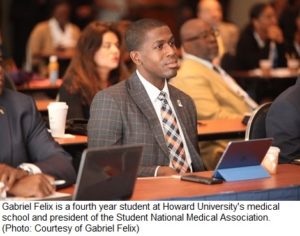
WASHINGTON – Gabriel Felix is on track to graduate from Howard University’s medical school in May. 

The 27-year-old from Rockland County, N.Y., has beaten the odds to make it this far, and knows he faces challenges going forward.

He and other black medical school students have grown used to dealing with doctors’ doubts about their abilities, and other slights: being confused with hospital support staff, or being advised to pick a nickname because their actual names would be too difficult to pronounce.

“We’re still on a steady hill toward progress,” says Felix, president of the Student National Medical Association, which represents medical students of color. But “there’s still a lot more work to do.”

After decades of effort to increase the ranks of African-American doctors, blacks remain an underrepresented minority in the nation’s medical schools.

USA TODAY examined medical school enrollment after the wide coverage of the racially controversial photo that appeared in the 1984 Eastern Virginia Medical School yearbook entry of Virginia Gov. Ralph Northam. The picture showed one person in blackface and another in a Ku Klux Klan hood and robe.

The proportion of medical students who identified as African-American or black rose from 5.6 percent in 1980 to 7.7 percent in 2016, according to the Association of American Medical Colleges. That’s a substantial increase but still short of the 13.2 percent in the general population.

The disparity matters, physicians, students and others say, because doctors of color can help the African-American community overcome a historical mistrust of the medical system – a factor in poorer health outcomes for black Americans.

“It’s been a persistent, stubborn racial disparity in the medical workforce,” says Dr. Vanessa Gamble, a professor at George Washington University. “Medical schools have tried, but it also has to do with societal issues about what happens to a lot of kids in our country these days.”

Those who have studied the disparity blame much of it on socioeconomic conditions, themselves the legacy of systemic racism. African Americans lag other Americans in household income and educational opportunity, among other indicators.

Medical schools and professional organizations have tried to boost enrollment and graduation rates by considering applicants’ socioeconomic backgrounds when reviewing grades and test scores, connecting doctors of color with elementary and middle schools and awarding more scholarship money.

They’ve achieved some success: The number of medical students who identified as African-American or black grew from 3,722 in 1980 to 6,758 in 2016, an 82 percent increase.

Individual schools have outperformed their peers.

Eastern Virginia Medical School has increased the enrollment of students of color since then. In 1984, 5 percent of M.D. students identified as black, the only category then available. In the school’s most recent class, 12.4 percent identified as African, African-American, Afro-Caribbean or black.

But further progress toward a more representative student body nationwide remains elusive. That’s due largely to the high cost of medical school – student loans average $160,000 and can take decades to pay off – and the attraction of other professional options available to the strongest minority students that cost less and require fewer years of training.

The benefits of greater enrollment could be considerable: Studies show that having more black doctors would likely improve black health in the United States. Many African-Americans remain mistrustful of the health care system, with some historic justification, and so are less likely than others to seek preventative or other care.

Gamble knows the phenomenon as well as anyone. She chaired a committee that investigated the Tuskegee Syphilis Study, the notorious experiment conducted by the U.S. Public Health Service from 1932 to 1972. Researchers withheld treatment from a group of black men with syphilis to study the progress of the disease, jeopardizing their health and that of their sexual partners.

Building pipelines to medical school
Universities are working to boost minority enrollment and increase the likelihood that students will stay in school and pass the exams required to graduate and get licensed to practice.

Dr. Thomas Madejski, president of the Medical Society of the State of New York, says efforts such as the American Medical Association’s Doctors Back to School program, in which physicians of color visit grade schools, help encourage minority students consider careers in medicine.

But he cautions that such programs don’t address all of the socioeconomic hurdles confronting African Americans.

“I think we may have to relook at some of the factors that may still be barriers and create some new initiatives to overcome those and get the citizens of the U.S. to have the physician workforce that they want and need,” Madejski says.

His group and others are pushing for tuition relief and expansion of scholarship programs for underrepresented groups.

Felix, the Howard student, calls for more outreach by physicians of color, particularly in African American communities.

Felix’s parents are from Haiti, where black doctors are a common sight. They could easily envision the career for their son. Felix says African-American parents might discourage their children.

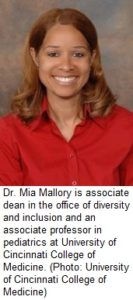
Dr. Mia Mallory is associate dean for diversity, equity and inclusion at the University of Cincinnati medical school.

“Patients do better when they are taken care of by people who look like them,” she says. “So we’re trying to grow talented physicians that look like them and are more likely to go back into the community they came from.”

Some of what’s being done:

► New York. About a third of the state’s population is black and/or Latino, but only 12 percent of doctors in practice are. The decision of New York University’s decision to offer free tuition to medical students who maintain a certain grade point average has more than doubled the number of applicants who identify as a member of a group that’s underrepresented in medicine.

Associated Medical Schools of New York, which represents the state’s 16 public and private medical schools, says several programs give college students academic help, mentoring or other aid, and guarantee medical school acceptance upon completion.

About 500 practicing physicians from underrepresented groups graduated from one of these programs at University at Buffalo.

These were “kids who otherwise never would have gotten into medical school,” says Jo Wiederhorn, president of Associated Medical Schools of New York.

The share of black and Latino students at medical school rose from 13.5 percent in the 2010-11 school year to 15.4 percent for the past school year, Wiederhorn said.

► Maryland. University of Maryland, Baltimore County, produces more African-Americans who go on to earn dual M.D./Ph.D. degrees than any college in the country.

Its Meyerhoff Scholars program selects promising high school students for a rigorous undergraduate program that connects them with research opportunities, conferences, paid internships, and study-abroad experiences. The program is open to all people, but nearly 70 percent of the scholars are black.

The university also sends students in its Sherman Scholars program to teach math and science in disadvantaged elementary schools in the Baltimore area. That helps build an early pipeline to the university and its science and math programs.

UMBC President Freeman A. Hrabowski III says, “We’re going to find some prejudice wherever we go.” But he prefers to look for solutions that keep students of color in math and science, which increases their chances of medical school acceptance.

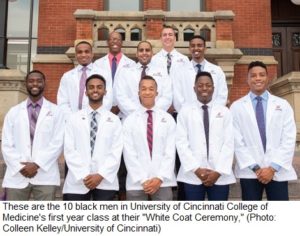
► University of Cincinnati. The College of Medicine welcomed the largest group of African-American men in its history last year at 10 – an important milestone, given the gender gap within the few black doctors.

Mallory says the school looks at students’ applications “holistically,” considering “what it took for them to get where they are.” That includes whether they had to work while they were in college and whether they had access to tutors.

The school’s Office of Diversity and Inclusion hired Dr. Swati Pandya, a physician and learning specialist, to teach medical school students how to take standardized tests and improve study habits.

All of the school’s third-year students last year passed the first of their medical licensing exams, achieving the highest average in the school’s and the highest of any medical school in the state.

Why so few?

Dr. Georges Benjamin executive director of the American Public Health Association, cites the criminal justice system’s targeting of young black men and the pull of other professions for others.

“The cream of the crop has a broader portfolio of things they can do,”  Benjamin says. “They can go into other disciplines, including MBA and law programs.”

Dr. Garth Graham is a cardiologist by training, but in a nearly 20-year career, he has become something akin to a doctor of disparities.

A former assistant secretary in the U.S. Department of Health and Human Services’ Office of Minority Health, he’s Aetna’s vice president of community health and president of the Aetna Foundation.

He also chairs the Harvard Medical School Diversity Fund, which supports science, technology, engineering and math education and other support for minority students and faculty members in kindergarten through grade 12.

The National Bureau of Economic Research studied African-American men’s use of preventive health services when they had black and non-black doctors. The bureau reported last year that black doctors could reduce black men’s deaths from heart disease by 16 deaths per 100,000 every year. That would reduce the gap between black and white men by 19 percent.

Black doctors “bring a cultural understanding because of their background in their communities,” Graham says. “Relatability is important in patient-doctor relationships.”

Contributing: Shari Rudavsky, The Indianapolis Star 

Source: Posted February 28, 2019; retrieved March 1, 2019 from: https://www.usatoday.com/story/news/health/2019/02/28/medical-school-student-african-american-enrollment-black-doctors-health-disparity/2841925002/

Since 29 of the 30 member-states of the Caribbean boast a majority Black population, it should be a natural assimilation to invite Black American students to Caribbean campuses.

By the way, this is being done already! There are medical colleges and universities operating in Caribbean communities right now that do a good job of providing the needed educational training and experience (internships). See the list of campuses in Appendix A below. Some schools have an impressive track record of success with testing and examinations on medical boards. Many alumni get residency in the US as International Medical Graduates.

This theme of medical education eco-system has been elaborated in previous blog-commentaries from the movement behind the book Go Lean … Caribbean; see a sample list here:

https://goleancaribbean.com/blog/?p=15543 Ross University Saga – Search for a New Home
This medical school actually had to move from their Dominica campus due to Hurricane Irma’s devastation in 2017. They created a new campus in Barbados.
https://goleancaribbean.com/blog/?p=15310 Industrial Reboot – Trauma 101
A successful business model is Trauma Centers affiliated with medical schools. For example: Jackson Memorial Hospital / University of Miami / Ryder Trauma Center (Miami, Florida).
https://goleancaribbean.com/blog/?p=13472 Future Focused – College, Caribbean Style
There is a comprehensive tertiary education eco-system already in the region.
https://goleancaribbean.com/blog/?p=9724 Bahamas Welcomes the New University
But no medical education option. HHMMmmmm?!?!?!
https://goleancaribbean.com/blog/?p=425 Low-cost Dominican surgeries spark warnings by US
Example of demand from patients for medical services.

The Go Lean book serves as a roadmap for the elevation of Caribbean economic engines. It describes an eco-system for a structure of autonomous industrial campuses branded Self-Governing Entities (SGE). These are ideal for Medical School campuses, with their exclusive regulation/promotion activities. Imagine bordered campuses – with backup power generations, autonomy for professional standards, building codes, and transportation easements from/to the campuses. The Go Lean movement (book and blogs) details the principles of SGE’s and job multipliers, how certain industries – education and medical deliveries are ideal – are better than others for generating multiple indirect jobs down the line (or off-campus) for each direct job on the SGE’s payroll.

One particular Caribbean city, the 2nd City in the Bahamas, Freeport, seems like a good candidate for medical education campuses. They have abandoned infrastructure that can be easily refurbished as educational facilities and student housing solutions.

But for the Bahamas to even contemplate such ventures in educational facilities, they have some heavy-lifting to do; they must first correct societal defects that deter young adults from their markets. Consider:

There is an organized movement to promote medical education in the Black community; see the foregoing news article above and the VIDEO about the Student National Medical Association in Appendix B below. Why is this important? It means economic opportunities (jobs and entrepreneurship) and better health deliveries. This is all good!

Yes, medical education – as a delivery, vocation and occupation – can facilitate better overall environments; “it” can help make our homeland a better place to live, work, learn, heal and play. 🙂

About the Book
The book Go Lean…Caribbean serves as a roadmap for the introduction and implementation of the technocratic Caribbean Union Trade Federation (CU), for the elevation of Caribbean society – for all member-states. This CU/Go Lean roadmap has these 3 prime directives:

  • Optimization of the economic engines in order to grow the regional economy to $800 Billion and create 2.2 million new jobs.
  • Establishment of a security apparatus to ensure public safety and protect the resultant economic engines.
  • Improve Caribbean governance to support these engines, including a separation-of-powers between the member-states and CU federal agencies.

The Go Lean book provides 370-pages of turn-by-turn instructions on “how” to adopt new community ethos, plus the strategies, tactics, implementations and advocacies to execute so as to reboot, reform and transform the societal engines of Caribbean society.

Download the free e-Book of Go Lean … Caribbean – now!

Who We Are
The movement behind the Go Lean book – a non-partisan, apolitical, religiously-neutral Community Development Foundation chartered for the purpose of empowering and re-booting economic engines – stresses that reforming and transforming the Caribbean societal engines must be a regional pursuit. This was an early motivation for the roadmap, as pronounced in the opening Declaration of Interdependence (Pages 12 – 13):

xi. Whereas all men are entitled to the benefits of good governance in a free society, “new guards” must be enacted to dissuade the emergence of incompetence, corruption, nepotism and cronyism at the peril of the people’s best interest. The Federation must guarantee the executions of a social contract between government and the governed.

xvi. Whereas security of our homeland is inextricably linked to prosperity of the homeland, the economic and security interest of the region needs to be aligned under the same governance. Since economic crimes … can imperil the functioning of the wheels of commerce for all the citizenry, the accedence of this Federation must equip the security apparatus with the tools and techniques for predictive and proactive interdictions.

xxiv. Whereas a free market economy can be induced and spurred for continuous progress, the Federation must install the controls to better manage aspects of the economy: jobs, inflation, savings rate, investments and other economic principles. Thereby attracting direct foreign investment because of the stability and vibrancy of our economy.

Sign the petition to lean-in for this roadmap for the Caribbean Union Trade Federation.

———–

Appendix A – List of Caribbean Medical Schools

Country or territory School Established Degree Regional/offshore WDMS CAAM-HP Other Accreditations
Anguilla(UK) Saint James School of Medicine 2010[6] MD Offshore Yes[7] CAAM-HP Probation[8]
Antigua and Barbuda American University of Antigua 2004 MD Offshore Yes[9] CAAM-HP[8] NYSED,[10]
Metropolitan University College Of Medicine 2018 MD Offshore Yes
University of Health Sciences Antigua School of Medicine 1983 MD Offshore Yes No
Aruba (NL) American University School of Medicine Aruba 2011 MD Offshore Yes Aruba Ministry of Education
Aureus University School of Medicine 2004 MD Offshore Yes No
Xavier University School of Medicine 2004 MD Offshore Yes CAAM-HP[8] ACCM[11]
Barbados American University of Barbados School of Medicine 2011 MD Offshore Yes CAAM-HP Initial Provisional[8]
American University of Integrative Sciences 1999 MD Offshore Yes No
Bridgetown International University 2017 MD Offshore Yes
Victoria University of Barbados 2017 MD Offshore Yes
Ross University School of Medicine 1978 MD Offshore Yes[12] CAAM-HP[8] NYSED,[10] Medical Board of Dominica
Washington University of Barbados 2015 MD Offshore Yes No
University of the West Indies Faculty of Medicine (Cave Hill) 1967 MBBS Regional Yes CAAM-HP[8]
Belize Central America Health Sciences University Belize Medical College 1996 MD Offshore Yes No Belize Ministry of Education
Washington University of Health & Science 2005 MD Offshore Yes No Belize Ministry of Education
Cayman Islands (UK) St. Matthew’s University School of Medicine 2002 MD Offshore Yes[13] No NYSED,[10] ACCM[11]
Cuba Escuela Latinoamericana de Medicina 1999 MD Offshore Yes No Cuban Ministry of Higher Education
Facultad de Ciencias Medicas Ciego de Avila 2000 MD Regional Yes No Cuban Ministry of Higher Education
Facultad de Ciencias Medicas Cienfuegos 1990 MD Regional Yes No Cuban Ministry of Higher Education
Facultad de Ciencias Medicas Granma 1982 MD Regional Yes No Cuban Ministry of Higher Education
Facultad de Ciencias Medicas Holguin 1976 MD Regional Yes No Cuban Ministry of Higher Education
Facultad de Ciencias Medicas Las Tunas 1986 MD Regional Yes No Cuban Ministry of Higher Education
Facultad de Ciencias Medicas Matanzas 1969 MD Regional Yes No Cuban Ministry of Higher Education
Facultad de Ciencias Medicas Pinar del Rio 1976 MD Regional Yes No Cuban Ministry of Higher Education
Facultad de Ciencias Medicas Sancti Spiritus 1994 MD Regional Yes No Cuban Ministry of Higher Education
Instituto Superior de Ciencias Medicas de La Habana 1976 MD Regional Yes No Cuban Ministry of Higher Education
Instituto Superior de Ciencias Medicas de Santiago de Cuba 1962 MD Regional Yes No Cuban Ministry of Higher Education
Instituto Superior de Ciencias Medicas de Villa Clara 1966 MD Regional Yes No Cuban Ministry of Higher Education
Universidad de Ciencias Medicas de Camaguey 1968 MD Regional Yes No Cuban Ministry of Higher Education
Universidad de Ciencias Medicas de Guantanamo 1982 MD Regional Yes No Cuban Ministry of Higher Education
Curacao(NL) Avalon University School of Medicine 2003 MD Offshore Yes[14] CAAM-HP No[8] Government of Curacao
Caribbean Medical University School of Medicine 2007 MD Offshore Yes CAAM-HP Denied[8]
John F. Kennedy University School of Medicine 2014 MD Offshore Yes No Government of Curacao
St. Martinus University Faculty of Medicine 2000 MD No Yes
Dominica All Saints University School of Medicine 2006 MD Offshore Yes No
Dominican Republic Instituto Tecnológico de Santo Domingo Escuela de Medicina 1972 MD Regional Yes CAAM-HP[8] Ministry of Higher Education, Science and Technology
Pontificia Universidad Católica Madre y Maestra Departamento de Medicina 1976 MD Regional Yes No Ministry of Higher Education, Science and Technology
Universidad Autónoma de Santo Domingo Departamento de Medicina 1538 MD Regional Yes No Ministry of Higher Education, Science and Technology
Universidad Católica Nordestana Facultad de Ciencias Medicas 1978 MD Regional Yes No Ministry of Higher Education, Science and Technology
Universidad Católica Tecnológica del Cibao Escuela de Medicina 1983 MD Regional Yes No Ministry of Higher Education, Science and Technology
Universidad Central del Este Escuela de Medicina 1970 MD Regional Yes No Ministry of Higher Education, Science and Technology
Universidad Iberoamericana (UNIBE) Escuela de Medicina 1982 MD Offshore Yes No Ministry of Higher Education, Science and Technology
Universidad Nacional Pedro Henríquez Ureña Escuela de Medicina 1966 MD Regional Yes No Ministry of Higher Education, Science and Technology
Universidad Tecnológica de Santiago Escuela de Medicina, Santiago de Los Caballeros 1979 MD Regional Yes No Secretary of State for Higher Education, Science and Technology
Universidad Tecnológica de Santiago Escuela de Medicina, Santo Domingo 1981 MD Regional Yes No Ministry of Higher Education, Science and Technology
France University of the French West Indies 2015 MD Regional Yes[15] No
Grenada St. George’s University School of Medicine 1977 MD Offshore Yes[16] CAAM-HP[8] Grenada Ministry of Health, NYSED,[10]
Guyana University of Guyana 1985 MBBS Regional Yes CAAM-HP[8]
American International School of Medicine 1999 MD Offshore Yes No World Health Organization; Ministry of Education and Health (Guyana); NAC (National Accreditation Council) of Guyana[17]
Georgetown American University 2013 MD Offshore Yes No NAC (National Accreditation Council) of Guyana[17]
Lincoln American University 2016 MD Offshore Yes No NAC (National Accreditation Council) of Guyana,[18]World Directory of Medical School,[19] Foundation for Advancement of International Medical Education and Research,[20] Educational Commission for Foreign Medical Graduates (ECFMG)[20]
Texila American University 2010 MD Offshore Yes CAAM-HP Denied[8] NAC (National Accreditation Council) of Guyana,[17] World Directory of Medical School
Alexander American University 2015 MD Offshore No No
Haiti Université d’Etat d’Haïti Faculté de Médecine 1867 MD Regional Yes No
GreenHeart Medical University 2007 MD Offshore No No World Health Organization; Ministry of Education and Health (Guyana); NAC (National Accreditation Council) of Guyana[17]
Université Lumière Faculté de Médecine 2006 MD No No
Université Notre Dame d’HaïtiFaculté de Médecine 1997 MD Regional Yes No
Université Quisqueya Faculté des Sciences de la Santé 2002 MD Yes No
Université Joseph Lafortune Faculté de Médecine 2005 MD Regional Yes[21] No
Jamaica All American Institute of Medical Sciences 2011 MD Offshore Yes[22] CAAM-HP Withdrawn[8]
University of the West Indies Faculty of Medicine (Mona) 1948 MBBS Regional Yes CAAM-HP[8]
Montserrat(UK) Seoul Central College of Medicine 2003 MD Offshore Yes No
University of Science, Arts and Technology Faculty of Medicine 2003 MD Offshore Yes CAAM-HP No[8]
Saba (NL) Saba University School of Medicine 1994 MD Offshore Yes[23] No NYSED,[10] NVAO[24]
Saint Kitts and Nevis International University of the Health Sciences (IUHS) 1998 MD Offshore Yes No Accreditation Board of Saint Kitts and Nevis[17]
University of Medicine and Health Sciences 2008 MD Offshore Yes No Accreditation Board of Saint Kitts and Nevis[17] ACCM[11]
Medical University of the Americas 1998 MD Offshore Yes[25] No ACCM,[11] NYSED[10]
Windsor University School of Medicine 2000 MD Offshore Yes CAAM-HP No[8] Accreditation Board of Saint Kitts and Nevis in the Caribbean[17]
Saint Lucia American International Medical University 2007 MD Offshore No CAAM-HP Denied[8]
Atlantic University School Of Medicine (AUSOM) 2010 MD Offshore No[26] No
College of Medicine and Health Sciences/aka Destiny University 2001 MD Offshore Yes No Provisional Accreditation from the Government of Saint Lucia
International American University College of Medicine 2003 MD Offshore Yes CAAM-HP[8] Ministry of Education, Saint Lucia
Spartan Health Sciences University 1980 MD Offshore Yes CAAM-HP[8] Ministry of Education, Saint Lucia
Washington Medical Sciences Institute 2011 MD Offshore Yes No
Saint Vincent and the Grenadines All Saints University School of Medicine 2011 MD Offshore Yes[27] CAAM-HP No[8] Recognized by Canadian Government of Designated Educational Institutions,[28] Considered a qualified Institution by the General Medical Council (UK),[29]recognized by the Ministry of Health and Ministry of Education, St. Vincent and the Grenadines,[30] IMED
American University of St Vincent School of Medicine 2012 MD Offshore Yes No National Accreditation Board (NAB) of the Government of St. Vincent and the Grenadines[31]
Saint James School of Medicine 2014[6] MD Offshore Yes[32] CAAM-HP Probation[8] National Accreditation Board (NAB) of the Government of St. Vincent and the Grenadines[33] WCFMG.
Trinity School of Medicine 2008 MD Offshore Yes CAAM-HP[8] National Accreditation Board (NAB) of the Government of St. Vincent and the Grenadines[34]
Sint Maarten(NL) American University of the Caribbean School of Medicine 1978 MD Offshore Yes[35] No NYSED,[10] ACCM[11]
Trinidad and Tobago University of the West Indies Faculty of Medicine (St. Augustine) 1967 MBBS Regional Yes CAAM-HP[8]

Source: Retrieved March 1, 2019 from: https://en.wikipedia.org/wiki/List_of_medical_schools_in_the_Caribbean

———-

Appendix B VIDEO – Student National Medical Assoc 2016 “Rep Your Region” – https://youtu.be/jsHys6jEOUo

SNMA Region III

Published on Aug 7, 2016

Share this post:
, , , , ,
[Top]

Cuba’s Progress: New Constitution

Go Lean Commentary

There are 30 member-states in the Caribbean; they all embrace a “Free Market” ideology in some way; but one of them is different; this is Cuba. This country features a communist governmental structure, unique for our region. This affects more than just governance, as communism features a comprehensive philosophical, social, political, and economic ideology.

What does communism really mean?

Classically, it is a socioeconomic order structured upon the common ownership of the means of production (inputs, factories and infrastructure used in the production of economic value) and the absence of social classesmoney,[3][4] and the state.[5]

In Cuba however, communism can be defined as just anti-American. Their 1959 Revolution was a rejection of the societal defects of that day, which highlighted two major social classes that became irreconcilable in the country. The two classes are the working class — those who work for a living; they make up the majority within society—and the capitalist class — a minority who derives profit from employing the working class through private ownership of the means of production; this capitalist class was heavily backed by American interest and many times reflected American direct investors. The Cuban revolution put the “working class” in power and established social ownership of the means of production in Cuba, which is the primary element in any transformation of a society towards communist principles and theory.[8]
After a 60 year experiment with communism, Cuba is progressing away from its previous ideology (and failures). We have observed-and-reported on this trend during the last 5 years. But rather than just being a trend, Cuba is now codifying this progress in the country’s constitution.

See the full story and VIDEO here, published before the referendum on Sunday February 24, 2019; (the results: the measure passed by 87 percent):

Title: Cubans vote on new constitution to replace Cold War-era charter
Sub-title:
Vote presents ‘unique opportunity’ to show how many Cubans voice dissent, analysts say.
By: Heather Gies

Cubans began voting on Sunday in a referendum on a draft constitution to update its 1976 charter on the heels of significant economic reforms on the island over the past few years.

The new constitution, approved in the National Assembly late last year after a popular consultation, enshrines private property and promotes foreign investment. State enterprise remains the cornerstone of the economy, though the new constitution dictates state-owned companies have autonomous management.

On the political front, the document limits the president to two consecutive five-year terms, but does not open the door for Cubans to elect the president directly. The Communist Party remains the central political force in a one-party system.

Jose Jasan Nieves, editor at the non-state media outlet El Toque, told Al Jazeera by legalising economic measures put in practice in recent years, the new constitution “adapts” to a set of reforms already under way.

“This is the first opportunity the Cuban people will have in 43 years to express ‘yes’ or ‘no’ in the face of a government programme,” he said. “That is a unique opportunity because it will allow us to know what percentage of the Cuban society will start to express dissent.”

He estimated one-quarter of voters could reject the new constitution.

‘Most Cubans hoping for more’
Eight million Cubans are eligible to vote on Sunday. The polls will close at 6pm (23:00 GMT) local time. More than 225,000 electoral authorities will oversee the vote, while some 200,000 students will steward the ballot boxes.

The electoral commission will release preliminary results in a press conference Monday at 3pm local time (20:00 GMT).

“This constitution is a step forward, we cannot deny that. But I think most Cubans were hoping for more,” Camilo Condis, an entrepreneur in Havana, told Al Jazeera. “Most of the changes in the Constitution are to legalise what was already happening in the country.”

Economic reforms introduced under former President Raul Castro in 2010 and 2011 to encourage self-employment and entrepreneurship “helped to boost the private sector”, said Condis, who rents out a residence and works as a contractor for restaurants. But he added that the rollback in US-Cuban relations under President Donald Trump has created fresh challenges.

Now, he sees the Cuban government’s approach to private enterprise as an effort to “regulate but not shrink the private sector”. Close to 600,000 people are currently self-employed in Cuba, up from 150,000 in 2010.

For Maria Jose Espinosa Carrillo, director of programmes and operations at the Washington-based Center for Democracy in the Americas, one of the positive outcomes of drafting the new constitution has been the public debate that grew out of a three-month consultation process. Nearly nine million people attended public meetings to discuss an earlier draft of the Constitution, putting forward more than 700,000 proposals.

“For the first time, people had the opportunity to debate on issues that hadn’t been part of grassroots debates before,” Espinosa Carillo told Al Jazeera. “This, together with access to the internet, has brought new platforms for discussion that was previously not public.”
She expects such public debate to be an “increasing trend”, especially through new digital media outlets, Twitter, and other online platforms.

After the popular consultation, the drafting commission made 760 changes to the draft constitution, revising about 60 percent of articles in the document.

Critics say it was not clear how the commission evaluated and incorporated feedback. More than 11,000 proposals called for a direct vote for the president, for example, but the suggestion was not included in the text.

‘Space and visibility’ to tensions
Meanwhile, marriage equality sparked a debate that is likely to continue after the referendum. An earlier version of the draft constitution defined marriage as a union between two people. But the final draft sidestepped outright legalisation after evangelical protests, leaving the definition of marriage to be determined in a separate referendum at a later date.

“It created a big debate, which is positive because it gave space and visibility to tensions that are happening and that people maybe weren’t even aware of,” Maria Isabel Alfonso, professor of Spanish and Cuban studies at St. Joseph’s College, New York, told Al Jazeera.

State-led mobilisations “are progressively being replaced by these spontaneous associations and ways of thinking”, said Alfonso, creator of the documentary, Rethinking Cuban Civil Society, and cofounder of Cuban Americans for Engagement, an organisation that promotes the normalization of US-Cuba ties.

“Many of them are very emphatic that they don’t want to be in the opposition because the opposition receives, in many instances, funds from the US government,” she added.
Nieves agreed the debate is “complex and varied” beyond clear cut “yes” versus “no” or government versus opposition lines.

“These sectors – journalists, intellectuals, artists, entrepreneurs, LGBTI activists, animal rights activists, religious activists – are sectors of a thriving, growing civil society that don’t necessarily have an agenda of opposition politics, but rather of participation and defence of their respective interests,” he said.

Changes to political and social rights in the Constitution include broader recognition of freedom of thought and expression, a right to request and receive information from the state, and the ability to hold dual citizenship.

The document expands non-discrimination to include on the basis of sexual orientation and gender identity in addition to sex, gender, age, ethnic origin, skin colour, religious belief, and ability. On women’s rights, the new text guarantees women’s sexual and reproductive rights and protects women from gender violence.

Cubans living abroad also were able to submit proposals for the new constitution in the public consultation process. “That was a great step to include the diaspora,” said Espinosa Carillo.

However, other than diplomats, Cubans abroad will not be allowed to vote in the referendum unless the return to the island to cast their ballots.

——

Heather Gies is a freelance journalist who writes about human rights, resource conflicts, and politics in Latin America. She is also an editor at Upside Down World.

Source: Posted February 24, 2019; retrieved February 25, 2019 from: https://www.aljazeera.com/news/2019/02/cubans-vote-constitution-replace-cold-war-era-charter-190224035045660.html 

—————

VIDEO – Cuba Constitution: Millions expected to oppose Government – https://www.aljazeera.com/news/2019/02/cubans-vote-constitution-replace-cold-war-era-charter-190224035045660.html

—————

Related:

  1. Cubans approve a new Constitution: What does the vote mean?
    Although Cubans voted overwhelmingly – 86.85 percent in favour – to approve the Constitution, Sunday’s vote saw a growing portion express dissent. 
  2. Cuba celebrates 60 years since Castro’s communist revolutionposted January 2, 2019; Retrieved Feb, 26, 2019

This referendum is a move away from “pure” communism and towards a “Free Market” economy – the constitutional changes embrace property ownership and Direct Foreign Investments while doubling-down on a more enterprising form of Socialism. The trend of Cuba progressing towards “Free Market” ideology has been observed-and-reported in many previous blog-commentaries by the movement behind the book Go Lean…Caribbean; see a sample list here (in chronological order):

https://goleancaribbean.com/blog/?p=436 Apr 2014 – Cuba Approves New “Law on Foreign Investment”
https://goleancaribbean.com/blog/?p=1609 July 2014 – Cuba mulls economic reforms in Parliament session
https://goleancaribbean.com/blog/?p=2330 Sep 2014 – ‘Raul Castro reforms not enough’, Cuba’s bishops say
https://goleancaribbean.com/blog/?p=3455 Dec 2014 – Restoration of Diplomatic Relations with Cuba
https://goleancaribbean.com/blog/?p=4506 Mar 2015 – Colorism in Cuba (Blacks making gains)
https://goleancaribbean.com/blog/?p=6664 Oct 2015 – Cuba to Expand Internet Access
https://goleancaribbean.com/blog/?p=7412 Feb 2016 – The Road to Restoring Cuba
https://goleancaribbean.com/blog/?p=9813 Nov 2016 – Fidel Castro Is Dead; Now What?
https://goleancaribbean.com/blog/?p=10201 Jan 2017 – Farewell to ‘Wet Foot/Dry Foot’ Policy for Cubans
https://goleancaribbean.com/blog/?p=14732 April 2018 – ‘Red Letter Day’ for Cuba – Raul Castro Retires
https://goleancaribbean.com/blog/?p=16364 Nov 2018 – Technology: Caribbean countries – Cuba – fully on board

The Go Lean movement has consistently asserted that change will come to Cuba (and the full Caribbean), especially now that no Castro is the Chief Executive of the country. In fact this referendum appears to be the initiative more of new President Miguel Diaz-Canel, rather than the Old Guard of Cuban leadership.

The Go Lean movement wants to prepare the full Caribbean for more inclusion of Cuba in the political, social and economic fabric of the regional society. Cuba is equal to 25 percent of the region’s population and landmass. No one can be serious about Caribbean integration with out contemplating the roles and responsibilities towards Cuba.

We are serious! In fact the Go Lean book details a full advocacy (Page 236) on reforming and transforming Cuba. The goal is to reboot this island, modeling the Marshall Plan strategies, tactics and implementations as forged in “Post WW II” Europe.

So yes, we can … again … embrace the winds of change; we must shepherd this effort to make Cuba – and all of the Caribbean – a better place to live, work and play. 🙂

About the Book
The book Go Lean…Caribbean serves as a roadmap for the introduction and implementation of the technocratic Caribbean Union Trade Federation (CU), for the elevation of Caribbean society – for all member-states, Cuba included. This CU/Go Lean roadmap has these 3 prime directives:

  • Optimization of the economic engines in order to grow the regional economy to $800 Billion and create 2.2 million new jobs.
  • Establishment of a security apparatus to ensure public safety and protect the resultant economic engines.
  • Improve Caribbean governance to support these engines, including a separation-of-powers between the member-states and CU federal agencies.

The Go Lean book provides 370-pages of turn-by-turn instructions on “how” to adopt new community ethos, plus the strategies, tactics, implementations and advocacies to execute so as to reboot, reform and transform the societal engines of Caribbean society.

Download the free e-Book of Go Lean … Caribbean – now!

Who We Are
The movement behind the Go Lean book – a non-partisan, apolitical, religiously-neutral Community Development Foundation chartered for the purpose of empowering and re-booting economic engines – stresses that reforming and transforming the Caribbean societal engines must be a regional pursuit. This was an early motivation for the roadmap, as pronounced in the opening Declaration of Interdependence (Pages 12 – 13):

xi. Whereas all men are entitled to the benefits of good governance in a free society, “new guards” must be enacted to dissuade the emergence of incompetence, corruption, nepotism and cronyism at the peril of the people’s best interest. The Federation must guarantee the executions of a social contract between government and the governed.

xiii. Whereas the legacy of dissensions in many member-states (for example: Haiti and Cuba) will require a concerted effort to integrate the exile community’s repatriation, the Federation must arrange for Reconciliation Commissions to satiate a demand for justice.

xvi. Whereas security of our homeland is inextricably linked to prosperity of the homeland, the economic and security interest of the region needs to be aligned under the same governance. Since economic crimes … can imperil the functioning of the wheels of commerce for all the citizenry, the accedence of this Federation must equip the security apparatus with the tools and techniques for predictive and proactive interdictions.

xxiv. Whereas a free market economy can be induced and spurred for continuous progress, the Federation must install the controls to better manage aspects of the economy: jobs, inflation, savings rate, investments and other economic principles. Thereby attracting direct foreign investment because of the stability and vibrancy of our economy.

Sign the petition to lean-in for this roadmap for the Caribbean Union Trade Federation.

Share this post:
, ,
[Top]

‘Two Pies’ for a New Caribbean – ENCORE

Here’s a known fact of life in the USA; let’s examine:

The State of Florida does not have to pay for any of the deliverables for the people in the State of Minnesota; California does not have to worry about the needs of Vermont; Pennsylvania does not have to concern themselves with Arizona; and so on.
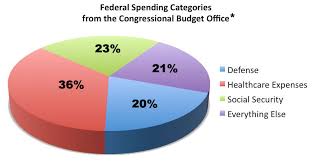
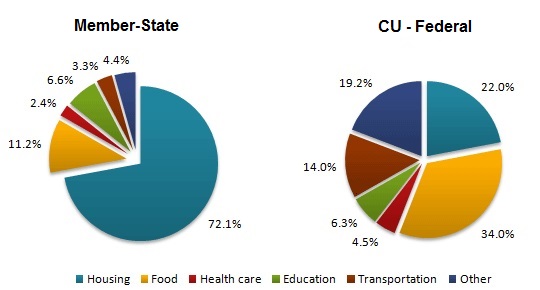
Every state only have to address and pay for the needs of the people in their state. Anything cross-border is handled by a different entity, the US federal government.

Yes, as an individual resident, a citizen would see Two Pies while in the USA; one for their State and one for the federal government.

This model is now proposed for the member-states of the Caribbean. This is the roadmap from the 2013 book Go Lean…Caribbean. The book introduces the Caribbean Union Trade Federation (CU) which will serve as a governing entity for cross-border services and deliveries. While it has always been a point of contention that any regional integration in the Caribbean would have the richer countries paying for the poorer countries. This is a fallacy! Each member-state has their own “pie” and the CU Federal entity will have its own “pie”.

This design of Two Pies have been thoroughly detailed in a previous blog-commentary from February 23, 2017; (two years ago exactly). See an Encore of that submission here-now.

————————

Go Lean Commentary Two Pies: Economic Plan for a new Caribbean

“Get your hands out of my pocket!” – Term used by another man in the room to cause a disturbance and distraction during the killing of Malcolm X in New York on February 21, 1965 – 52 years ago this week. See VIDEO in the Appendix below.
CU Blog - Two Pies - Economic Plan for a New Caribbean - Photo 4

The words above that were shouted to cause a disturbance are riot-inducing and can cause alarm for many communities. No one wants to think that someone unauthorized and unworthy may be pilfering hard-earned funds from innocent victims.

No one wants to be that victim!

CU Blog - Two Pies - Economic Plan for a New Caribbean - Photo 2This was a point of consideration in the conception of the book Go Lean…Caribbean. There was the inspiration to conceive an economic empowerment plan for all the Caribbean that would NOT take money out of one person’s pockets and give to another … unauthorized and unworthy. The solution?

Two pockets … or two pies.

… pie as in a pie-chart; this is the graphical representation of the distribution of a budget. Pie-charts are very effective in expressing one amount in comparison to another amount. So when there are two pie-charts, it undoubtedly expresses that there are two different funds, no intermingling. That is the economic plan for the new Caribbean:

Two Pies.

CU Blog - Two Pies - Economic Plan for a New Caribbean - Photo 3b

This means that there are two different funds. The Go Lean book serves as a roadmap for the introduction and implementation of the technocratic Caribbean Union Trade Federation (CU). This is a regional integration effort to benefit the 30 member-states of the Caribbean. There are a lot of money issues to contend with – but no one person’s hands are in another person’s pockets. So all the money issues for CU are exclusive to the CU. This is true of money-economics and other facets of Caribbean life: security and governance. In total, these 3 prime directives explore the full dimensions of the roadmap:

  • Optimization of the economic engines in order to grow the regional economy to $800 Billion & create 2.2 million new jobs.
  • Establishment of a security apparatus to ensure justice institutions and protect the resultant economic engines.
  • Improve Caribbean governance including a separation-of-powers between the member-states and CU federal agencies to support the economic and security engines.

In order to reboot the societal engines there must be these Two Pies. The CU Trade Federation is designed to lead, fund and facilitate regional empowerment plans. But the plan is NOT for the individual member-states to write checks to the CU so as to share one state’s treasuries with another state. Rather, the CU Trade Federation creates its own funding – from regionalized services – and then encumbers the funds for each member-state to deliver the economic, security and governing  mandates. This is analogized as Two Pies:

  • One ‘pie‘ to represent the existing budgets of the member-states and how they distribute their government funding between government services (education, healthcare, etc.), security measures (Police, Coast Guards)
  • One ‘pie‘ to represent the CU funding from exclusive activities (Spectrum Auctions, Lottery, Exploration Rights, Licenses, Foreign-Aid, etc.).

All in all, the book, and accompanying blogs, declare that the proposed CU Trade Federation is a new governmental layer, and thusly creates a new government budget. This is a confederation; designed to enhance the governmental deliveries for the 30 member-states. This necessity is expressed as a pronouncement in the opening Declaration of Interdependence, (Pages 10 – 11) with the following statement:

Preamble: While our rights to exercise good governance and promote a more perfect society are the natural assumptions among the powers of the earth, no one other than ourselves can be held accountable for our failure to succeed if we do not try to promote the opportunities that a democratic society fosters.

xi. Whereas all men are entitled to the benefits of good governance in a free society, “new guards” must be enacted to dissuade the emergence of incompetence, corruption, nepotism and cronyism at the peril of the people’s best interest. The Federation must guarantee the executions of a social contract between government and the governed.

CU Blog - Two Pies - Economic Plan for a New Caribbean - Photo 1The vision of a confederation is an integrated Single Market for the 30 member-states of the Caribbean; this means the Dutch, English, French and Spanish speaking territories. This also includes the US territories of Puerto Rico and the US Virgin Islands. Tactically, the CU allows for a separation-of-powers between the member-state governments and the new federal agencies.

Currently the Caribbean member-states pockets are bare – these are all Third World destinations – even the US Territories of Puerto Rico and the Virgin Islands. Consider this First World comparison; consider Apple Corporation – the firm behind the iPhone, iPad, iTunes, etc. – due to their success in technology and business, they have a lot of money (cash on hand); a lot more than many Caribbean member-states … combined.

We need this CU roadmap to impact a turn-around for this region; we need the new “Pie” of the CU Single Market. The member-state’s economic engines – their “Pies” – are in crisis, but since a crisis would be a terrible thing to waste, we need to transform these economic engines for a new Caribbean by introducing the CU “Pie”, as follows:

  • Regional Capital Markets with a regional currency – Caribbean Dollar – would increase liquidity and lower the cost of capital. Rather than international debt, member-state governments and corporate institutions can avail themselves of lower financing costs, sometimes as low as 2% interest rates.
    Notice a glimpse of this vision in this previous blog-commentary:
    https://goleancaribbean.com/blog/?p=372 |  Dominica raises EC$20 million on regional securities market
  • Municipal financing – Debt by any governmental entity does not only reflect on the past, but impacts the future as well. Excessive debt can be so bad that at times the providers … and collectors of debt may be derisively called “vultures”. The CU pledges to re-purchase existing municipal debt and convert them to Caribbean Dollar instruments.
    Notice this portrayal in this previous blog-commentary:
    https://goleancaribbean.com/blog/?p=7601 |  Beware of Vulture Capitalists Commercial banking enhancements
  • Individual finance: Student Loans – Many Caribbean students obtained loans from their home countries, matriculated abroad and then never returned home. There was no return on investment and many times, no loan repayment. The CU pledges to buy outstanding loans (new, active and default) and enforce cross-border collections.
    Notice the details of this student loan crisis in this previous blog-commentary:
    https://goleancaribbean.com/blog/?p=8373 |  A Lesson in Economic Fallacies – Student Loans As Investments
  • Individual finance: Mortgages – Housing can be a great stimuli on the economy, but it is difficult for banks to recycle the capital that is tied up for 30 years without a Secondary Market. The CU pledges to deploy a Mortgage Secondary Market across the entire region (Go Lean book Page 83 and 199). This strategy will re-enforce banking within the region.
    Notice the issues associated with a dysfunctional mortgage eco-system in this previous blog-commentary:
    https://goleancaribbean.com/blog/?p=10187 |  Day of Reckoning for NINJA Loans
  • Individual finance: Retirement – Growing old in the Caribbean has become strained due to the high abandonment rate. National Pension plans depend on a macro structure where young people pay into the fund while the elderly withdraws from the fund. With so much emigration, the actuarial tables are distorted.
    Consider this previous blog-commentary that depicts a failing pension system in one member-state:
    https://goleancaribbean.com/blog/?p=2830 |  Jamaica’s Public Pension Under-funded
    … and one blog-commentary that describes how best to prosper:
    https://goleancaribbean.com/blog/?p=4222 |  Getting Rich Slowly in the Caribbean
  • Self-Governing Entities (SGE) – The Go Lean/CU roadmap features the installation of SGE’s as job-creating engines in many communities; these sites are ideal for technology laboratories, medical campuses, corporate parks, industrial sites, educational facilities and other forms of establishments situated inside bordered facilitates. They allow for an efficient process to launch and manage industrial efforts in the region. These types of installations will thrive under the strategies and tactics of the Go Lean roadmap. SGE’s do require governmental concurrence and maybe even public approvals – referendums – but only at the initiation. Beyond that, they are not a concern, or an expense, for local governments – they bring their own economic “Pie“.
    Consider this previous blog-commentary that details the dynamics of SGE’s:
    https://goleancaribbean.com/blog/?p=5921 |  Socio-Economic Change: Impact Analysis of SGE’s
  • Exclusive Economic Zones (EEZ) – The Go Lean/CU roadmap calls for the strategy of petitioning the United Nations Convention on the Law of the Sea (UNCLOS) for expanded territory in the Caribbean Sea for the CU to develop, explore, protect and exploit for the benefit to the Caribbean en-masse only. This means the CUPie” for revenues-and-expenses and not individual member-states.
    Consider this previous blog-commentary that details the dynamics of the EEZ:
    https://goleancaribbean.com/blog/?p=8819 |  Lessons from China – South China Seas: Exclusive Economic Zones

The Go Lean book details the series of community ethos, strategies, tactics, implementations and advocacies designed to create a federal “Pie” in the Caribbean region; see here:

Anecdote – Caribbean Single Market & Economy Page 15
Community Ethos – Money Multiplier Page 22
Community Ethos – Job Multiplier Page 22
Community Ethos – Lean Operations Page 24
Community Ethos – Ways to Impact the Future Page 26
Community Ethos – Ways to Impact the Greater Good Page 37
Strategic – Vision – Integrated Region in a Single Market Page 45
Strategic – Vision – Agents of Change Page 57
Tactical – Confederating a Non-sovereign Union Page 63
Tactical – Fostering a Technocracy Page 64
Tactical – Growing to $800 Billion Regional Economy Page 67
Tactical – Separation-of-Powers Page 71
Anecdote – “Lean” in Government – Optimizing Societal Engines Page 93
Implementation – Ways to Pay for Change Page 101
Implementation – Start-up Benefits from the Exclusive Economic Zone Page 104
Implementation – Steps to Implement Self-Governing Entities Page 105
Implementation – Ways to Better Manage Debt Page 114
Planning – Big Ideas for the Caribbean Region Page 127
Planning – Ways to Model the EU Page 130
Advocacy – Ways to Grow the Economy Page 151
Advocacy – Ways to Improve Governance Page 168
Advocacy – Ways to Better Manage the Social Contract Page 170
Advocacy – Reforms for Banking Regulations Page 199
Advocacy – Ways to Impact Wall Street Page 199

While the Caribbean needs its people, these people need a better Caribbean society – more prosperous. The region status quo is that “they got it bad”! Due to the many failures in the region, many people have fled to find refuge in foreign countries, resulting in a debilitating brain drain in the Caribbean, and thusly less people-less potential-less profits; so even more failure on top of failure.

The Go Lean roadmap for the CU stresses the need for this new “Pie“, the economics of a Caribbean Single Market. This theme was previously blogged on in so many previous Go Lean blog-commentaries; see sample here:

https://goleancaribbean.com/blog/?p=10043 Integration Plan for Greater Caribbean Prosperity
https://goleancaribbean.com/blog/?p=9595 Vision and Values for a ‘New’ Caribbean
https://goleancaribbean.com/blog/?p=8813 Lessons from China – Size Does Matter
https://goleancaribbean.com/blog/?p=841 Having Less Babies is Bad for the Economy
https://goleancaribbean.com/blog/?p=833 European Integration Currency Model: One Currency
https://goleancaribbean.com/blog/?p=599 Ailing Puerto Rico open to radical economic fixes
https://goleancaribbean.com/blog/?p=364 Time Value of Money
https://goleancaribbean.com/blog/?p=360 How to Create Money from Thin Air

Now is the time for all of the Caribbean – the people and governing institutions – to lean-in for the Caribbean integration re-boot, this Caribbean Union Trade Federation. We need the “Two Pies“. We need better engines to make our region more prosperous, to make it a better homeland to live, work and play. 🙂

Download the book Go Lean … Caribbean – now!

———

Appendix VIDEO – Malcolm X: Get your hand out my pocket – https://youtu.be/zHM8lAIFoU4

Uploaded on Jan 26, 2011 – Classic scene from a classic movie.


Share this post:
, ,
[Top]

Crypto-currency: Here comes ‘Trouble’

Go Lean Commentary

What materials should money be made from: Gold, Silver, Copper, Diamonds, Emeralds, Rubies and other precious stones?

How about “nothing”? Thin Air?

To insist on some orthodoxy of precious materials, would be inconsequential. Remember, the default currency now is paper. How much more precious a material is paper as opposed to Digits (1’s and 0’s). These are all close to “nothing”.

Yet, this is our economy. Yes, the medium for our currency is not the physical material, but rather: Trust.

The Trust equation is about to change, again. This time, instead of National Trust, we are looking at Corporate Trust.

Here comes the banks; here comes blockchain; here comes crypto-currency; here comes digitization.

Yes, here comes ‘trouble’. Here comes Big Wall Street Bank JPMorganChase. Here comes other players in other markets – see the news articles in the Appendices below:

  • Appendix A – JPMorganChase
  • Appendix B – Belarus
  • Appendix C – Sweden

All of these articles and news developments speak to the digitization of money and banking, highlighting that the primary ingredient in this recipe for success is Trust.

This is where this discussion comes home. In the Caribbean we need to embrace digital money and electronic payment solutions, but first we need Trust in a regional financial institution to manifest this roadmap. When we look at the reality of our Caribbean geography, we see:

American, Dutch, English, French, Spanish, Independent and Overseas Territories

Here comes trouble! We realize something very obvious: we do not trust each other!  So we may actually have to do the heavy-lifting that was always needed for our regional society to finally function as a coherent neighborhood. We have always needed to come together … in trust and unity; but never have.

Now more than ever, we must convene, collaborate and confederate banking solutions for our Caribbean homeland by committing vital resources for every Caribbean country, all 30 member-states. The basis for our trust must be, that we all have something to lose.

Then, only then, will we have no choice but to trust each other for a unified monetary and currency solution.

Trust but verify – Russian proverb Doveryai, no proveryai used by the 40th US President Ronald Reagan to emphasize “the extensive verification procedures that would enable both sides to monitor compliance with the INF Treaty of 1987 for nuclear disarmament by the US and USSR”[4].

We are urged to follow this wise “trust but verify” course of action. If it worked for bilateral cooperation between arch-enemies – USA and USSR – it can work for friendly neighbors in the Caribbean region.

The verification is key. The book Go Lean … Caribbean proposed a monetary-currency (Caribbean Dollar or C$) solution involving a cooperative of the Central Banks already in the region, dubbed the Caribbean Central Bank (CCB). Such a move should not be so unnerving. There is already currency interdependence for many member-states:

  • Eastern Caribbean Central Bank – services the monetary-currency needs of 8 countries (Antigua & Barbuda, Anguilla, Dominica, Grenada, Montserrat, St. Kitts & Nevis, St. Lucia, and St. Vincent & the Grenadines)
  • US Dollar is used as the monetary-currency solution for 4 Caribbean countries: British Virgin Islands, Puerto Rico, Turks & Caicos Islands, US Virgin Islands. (Plus used widely along with local currency in 9 countries).

With a Central Bank cooperative, we would already be half-way there! The Go Lean book (Page 73) details this CCB cooperative as follows:

The Caribbean Central Bank (CCB) is actually a cooperative among the region’s Central Banks. All the existing Central Banks, at the time of ascension, will cede their monetary powers to the CCB and continue their participation using well-established cooperative principles (Rochdale). This includes these 7 prime directives:
1). Open/voluntary membership – based on CU treaty ratification;
2). Democratic member control – the CCB cooperative is controlled by their Central Bank Governor-members, who actively participate in setting monetary policies and making tactical decisions;
3)-a. Members contribute equitably to, and democratically control, the capital of their co-operative – the C$ is the capital;
3)-b. Members are compensated for funds invested in the CCB cooperative, and decide how surpluses should be used – how much reserves to maintain and how much to return to the member-state governments;
4). Autonomous and independent – the very definition of a technocracy;
5). Provide education and training to their members and the public – the CCB champions the cause of an integrated currency to the public;
6). Co-ops cooperate with each other;
7). Work for the sustainable development of their communities through policies approved by their members – the community is the region as a whole.

Now, we can launch our own crypto-currency and electronic payments, clearing and settlements from this strong foundation. The missing ingredient, Trust, would be fulfilled. See how the underlying technology behind crypto-currencies, Blockchain, is explained in this TED Talk VIDEO here:

VIDEOHow the blockchain will radically transform the economy | Bettina Warburghttps://youtu.be/RplnSVTzvnU

TED
Published on Dec 8, 2016
– Say hello to the decentralized economy — the blockchain is about to change everything. In this lucid explainer of the complex (and confusing) technology, Bettina Warburg describes how the blockchain will eliminate the need for centralized institutions like banks or governments to facilitate trade, evolving age-old models of commerce and finance into something far more interesting: a distributed, transparent, autonomous system for exchanging value.

TEDTalks is a daily video podcast of the best talks and performances from the TED Conference, where the world’s leading thinkers and doers give the talk of their lives in 18 minutes (or less). Look for talks on Technology, Entertainment and Design — plus science, business, global issues, the arts and much more. Find closed captions and translated subtitles in many languages at http://www.ted.com/translate

Follow TED news on Twitter: http://www.twitter.com/tednews
Like TED on Facebook: https://www.facebook.com/TED
Subscribe to our channel: http://www.youtube.com/user/TEDtalksD…

A successful digital money / electronic payment scheme is very important in the strategy for elevating the Caribbean economy. The “risky” image of crypto-currency may now be nullified with all the global developments taking place.

Let’s get started!

This theme of Caribbean monetary and currency solutions have been elaborated in previous Go Lean commentaries; see a sample list here:

https://goleancaribbean.com/blog/?p=14248 Leading with Money Matters – New Almighty Caribbean Dollar
https://goleancaribbean.com/blog/?p=13744 Failure to Launch: The Quest for a Caribbean ‘Single Currency’
https://goleancaribbean.com/blog/?p=8381 Case Study on Central Banking for Puerto Rico
https://goleancaribbean.com/blog/?p=7034 The Future of Money – For the Caribbean and Beyond
https://goleancaribbean.com/blog/?p=906 Bitcoin needs regulatory framework to change ‘risky’ image
https://goleancaribbean.com/blog/?p=467 Barbados Central Bank records $3.7m loss in 2013
https://goleancaribbean.com/blog/?p=360 Central Banks Can Create Money from ‘Thin Air’ – Here’s How

The world of crypto-currency and electronic payment systems is here! But this is a good thing. The benefits of these new schemes are too enticing to ignore: fostering more e-Commerce, increasing regional money supply, mitigating Black Markets, more cruise tourism spending, growing the economy, creating jobs, enhancing security and optimizing governance.

Yep! Count us in!

Now is the time for all stakeholders of the Caribbean, (residents, visitors, merchants, vendors, bankers, and governing institutions), to lean-in for the empowerments described in the book Go Lean roadmap. These empowerments can help to make the Caribbean a better place to live, work and play. 🙂

About the Book
The book Go Lean…Caribbean serves as a roadmap for the introduction and implementation of the technocratic Caribbean Union Trade Federation (CU) and aligning Caribbean Central Bank (CCB), for the elevation of Caribbean society – for all member-states. This CU/Go Lean roadmap has these 3 prime directives:

  • Optimization of the economic engines in order to grow the regional economy to $800 Billion and create 2.2 million new jobs.
  • Establishment of a security apparatus to ensure public safety and protect the resultant economic engines.
  • Improve Caribbean governance to support these engines, including a separation-of-powers between the member-states and CU federal agencies.

The CCB provides a comprehensive role in this roadmap: facilitating and settling interbank transactions for the region, especially in light of the introduction of for new digital payment systems: new cards, telephony apps and crypto-currency. The Go Lean book provides 370-pages of turn-by-turn instructions on these solutions; and on “how” to adopt new community ethos, plus the strategies, tactics, implementations and advocacies to execute so as to reboot, reform and transform the societal engines of Caribbean society.

Download the free e-Book of Go Lean … Caribbean – now!

Who We Are
The movement behind the Go Lean book – a non-partisan, apolitical, religiously-neutral Community Development Foundation chartered for the purpose of empowering and re-booting economic engines – stresses that reforming and transforming the Caribbean societal engines must be a regional pursuit. This was an early motivation for the roadmap, as pronounced in the opening Declaration of Interdependence (Pages 12 – 13):

xi. Whereas all men are entitled to the benefits of good governance in a free society, “new guards” must be enacted to dissuade the emergence of incompetence, corruption, nepotism and cronyism at the peril of the people’s best interest. The Federation must guarantee the executions of a social contract between government and the governed.

xvi. Whereas security of our homeland is inextricably linked to prosperity of the homeland, the economic and security interest of the region needs to be aligned under the same governance. Since economic crimes … can imperil the functioning of the wheels of commerce for all the citizenry, the accedence of this Federation must equip the security apparatus with the tools and techniques for predictive and proactive interdictions.

xxiv. Whereas a free market economy can be induced and spurred for continuous progress, the Federation must install the controls to better manage aspects of the economy: jobs, inflation, savings rate, investments and other economic principles. Thereby attracting direct foreign investment because of the stability and vibrancy of our economy.

Sign the petition to lean-in for this roadmap for the Caribbean Union Trade Federation.

————-

Appendix A – JPMorgan launches ‘JPM Coin’ cryptocurrency, becomes first major bank to create its own digital coin By: Jade Scipioni

Nearly two years after JPMorgan Chase chief Jamie Dimon Opens a New Window. famously bashed bitcoin, calling it a “fraud,” the big bank announces it has created its own  cryptocurrency Opens a New Window. prototype.

Dubbed JPM Coin, the new tokens, which will be the first cryptocurrency backed by a U.S. bank, are set to be tested to instantly settle transactions, on a small portion of payments, among clients of the big bank’s wholesale payments business.

“The JPM Coin isn’t money per se. It is a digital coin representing United States Dollars held in designated accounts at JPMorganChase,” the company said in a press release.

In short, a JPM Coin will have a fixed value redeemable for one U.S. dollar. However, it won’t trade freely like bitcoin or other cryptocurrencies.

“When one client sends money to another over the blockchain, JPM Coins are transferred and instantaneously redeemed for the equivalents amount of U.S. dollars, reducing the typical settlement time,” the company added.

JPMorgan Opens a New Window. said it believes the new technology can help lower costs and risks associated with big money transfers around the world.

While the new tokens are initially designed for major ‘institutional clients’ for business-to-business transactions, not individuals, the cost-savings and efficiency benefits “would extend to the end customers of our institutional clients,” the company said.

The news does not come as a surprise either, as JPMorgan has been leading the charge in testing blockchain payments for more than two years.

As reported by FOX Business last September,Opens a New Window. more than 157 banks globally have joined a blockchain-based payment project led by JPMorgan to test how to streamline cross-border transactions.

The shared ledger called Interbank Information Network (IIN) was built by Dimon’s team in 2017 through its own blockchain platform called Quorum.

While Dimon did famously call bitcoin a “fraud” and “worse than tulip bulbs” — a reference to the 17th century economic bubble  — he and his key managers have consistently said that blockchain and regulated digital currencies do have promise.

Source: Posted February 14, 2019; retrieved February 19, 2019 from: https://www.foxbusiness.com/features/jpmorgan-set-to-roll-out-the-first-bank-backed-cryptocurrency

—— Related: Several banks (75) have now joined JPMORGAN to test Blockchain Payments

————-

Appendix B – Belarus’ Biggest Bank is ‘Working on’ Launching Its Own Cryptocurrency Exchange
By: Jimmy Aki, CCN
According to a report by local news outlet BeITA, Belarusbank, the largest bank in Belarus, is considering the launch of its very own cryptocurrency exchange platform.

The plans for the exchange were revealed by Viktor Ananich, the Chairman of Belrusbank’s board. Speaking with Belarus 1 TV channel, Ananich remarked:
“We are considering a possibility to establish a cryptocurrency exchange. We are working on it.”

For Belarusbank, Digitization is the Future
The bank is looking to intensify its focus on digitization, and it is reportedly seeking ways to expand its range of services by forming alliances with various mobile service providers. In addition to the reported cryptocurrency exchange, BeITA also stated that the bank is in the process of issuing virtual cards soon.

Source: Posted January 31, 2019; retrieved February 20, 2019 from: https://finance.yahoo.com/news/belarus-biggest-bank-working-launching-155444267.html

————-

Appendix C – Sweden Officially Backs a Cryptocurrency and Establishes It As Their Official Coin

It’s finally happened. A major worldwide government has just bestowed a huge vote of confidence and legitimacy onto the world of cryptocurrencies. Sweden, in an unprecedented move, just announced that they are officially adopting a certain cryptocurrency as Sweden’s official coin!
The Swedish government just informed us that they have chosen a preferred firm for the purchase and marketing of their new coin – Kryptonex Research Group. The sales of Sweden’s coin officially started on Friday, April 27th and currently these coins can be bought only from Kryptonex Research Group.

Industry experts weren’t surprised when Kryptonex was chosen by Sweden as their preferred firm for the release of their official coin. They had all seen for their own eyes the cutting edge insight that Kryptonex had brought to the cryptocurrency markets for their clients.

See the full article here: https://elevenews.com/2018/04/28/sweden-officially-backs-cryptocurrency-and-establishes-it-as-their-official-coin/ – posted April 28, 2018; retrieved January 20, 2018.

Share this post:
, , ,
[Top]

War on Cancer: Survivors Emerge from ‘Better Battles’

Go Lean Commentary

In 1971, there was a War Declaration … against the dreaded disease of Cancer.

We all know someone that has battled cancer. Many of us know people who fought and lost. Truly, the designation of a War on Cancer is appropriate. Here is the historical details as related in the 2013 book Go Lean … Caribbean on Page 157:

The Bottom Line on Cancer Industrial Complex
Cancer strikes nearly 1 in every 2 men and more than 1 in every 3 women. When President Richard Nixon signed the landmark measure, National Cancer Act, in 1971, he declared it as America’s War on Cancer. After 40 years, the overall incidence of cancer in the U.S. has escalated to epidemic proportions, now striking 1.8 million, and killing about 550,000 annually. The median age for the diagnosis of cancer is 67 in adults, and six in children. The war is being lost, even though it is being fought at the public’s expense (medically & financially).
.
To win the war on cancer would mean preventing cancer. Yet cancer is a multi-billion dollar business and preventing cancer would be bad for business. It is bad for the pharmaceutical and mammography businesses. These industries have intricate ties to U. S. policy makers, directing research funds to insure their continued profits in cancer diagnosis/treatment. – Cancer Prevention Coalition’s www.PreventCancer.com.
.
There are many medical practitioners and general advocates alike, that feel that cancer treatment uses “slash and burn” technology. They claim that these treatment schemes are a racket, designed to fleece the public. They point out that chemo-therapy costs $10,000 – $30,000 a month, and its success rate today is no better than 40 years ago. “It’s firstly a business; as long as health is considered to be a profit center, there is no reason for the cancer-industrial complex to cure cancer”.

The Go Lean book does not portend to be a manual on diagnosing or treating cancer. But it does strategize a roadmap for economic empowerment. It clearly relates that healthcare, disease management, cancer treatments and medicines are germane to the Caribbean quest for health, wealth and happiness. The primary author of the book was inspired to write this roadmap, after his sister died after a 32-year battle with cancer – See Dedication (Page 2). This supplemented the fact that their mother died first of breast cancer, almost 50 years ago in 1970.

This is now war …

… battles continue … there are victors and victims.

Yes, some people do survive their battles with cancer. They live to share lessons with the rest of us. These lessons are not just medical, but emotional, social and yes: economic as well.

Examine the experiences here in this news article from the American Daily Newspaper “USA Today“. The story is too important to ignore; (despite the American settings, there is application for us in the Caribbean as well):

Title: Life after cancer: More survivors living longer, facing new health challenges
Sub-title:
More cancer patients are living longer. Few are getting the help they need to stay healthy
By: Kim Painter, USA TODAY

When Susan Leigh finished treatment for Hodgkin lymphoma back in 1972, she says, “no one knew what was going to happen.”

Certainly, no one knew that the Arizona woman would develop three more cancers and heart damage, all likely linked to the aggressive radiation and chemotherapy treatments that helped save her life.

Those treatments were new at the time. When Leigh finished them, apparently cancer-free, she was a pioneer.

“I remember saying to my radiation doctor, what do I do now?” recalls Leigh, 71, a retired cancer nurse. “What do I do to keep this from coming back and to recover?

“He said he really didn’t know. He said maybe I could try taking a good multivitamin pill.”

Four decades later, doctors know much more. They know that some cancer survivors are at increased risk for other cancers later, and for problems ranging from brittle bones to heart failure.

They also know more about how to help patients head off or manage those risks.

But few patients are getting that help – even 13 years after the influential Institute of Medicine warned that many survivors were “lost in transition,” and weren’t getting adequate follow-up care.

The number of cancer survivors continues to grow, yet high-quality, coordinated survivorship care is still infrequent,” experts from the National Academies of Sciences, Engineering, and Medicine said in a recent follow-up report (the nonprofit includes the former Institute of Medicine).

“Strides have been made, but there’s also been an acceleration in the demand,” says Neeraj Arora, associate director for science at the nonprofit Patient-Centered Outcomes Research Institute.

Arora, a 25-year survivor of non-Hodgkin lymphoma, helped write the report.

Even today, Leigh says, too many people “don’t get the kind of follow-up care they need.”

“Doctors say, ‘You are OK, we don’t need to see you anymore.’ ”

Numbers are growing – and so is the need
The American Cancer Society says more than 15.5 million Americans with a history of cancer were alive in 2016. By 2026, the group says, that number will rise to 20.3 million.

The population of survivors is also aging. Nearly two thirds are over age 65, meaning most face health challenges beyond those linked to their cancer.

And those over age 85 are the fastest growing segment – giving famous survivors such as Supreme Court Justice Ruth Bader Ginsburg, 85, and former President Jimmy Carter, 94, a lot of generational company.

Meanwhile, cancer patients, young and old, are living longer.

“Now, thanks to early detection and better treatment, we have a lot more people living many years beyond their initial diagnosis,” says Catherine Alfano, the cancer society’s vice president for survivorship.

The five-year survival rate for all cancers combined stands at 70 percent for whites and 63 percent for blacks, the society says. That’s up from 39 percent for whites and 27 percent for blacks in the 1960s.

People treated in 2019 might do still better. But they also might face unknown long-term risks, even from treatments meant to be less toxic and more targeted than those of the past.

Surviving cancer does not mean leaving health concerns behind.

Cancers can recur. And some survivors face an increased risk of other cancers, sometimes related to their treatment.

Some cancer treatments can damage bones, hearts and other organs in ways that might not show up for decades. Leigh and Arora can attest to that: both have been diagnosed with congestive heart failure.

Patients can leave initial treatment with ongoing symptoms. More than a quarter of patients in one study reported lingering problems such as fatigue, sleep disturbances and foggy thinking.

In another survey, 24 percent of survivors reported poor physical health and 10 percent reported poor mental health – roughly double the rates for other adults.

Psychologist Julia Rowland led the National Cancer Institute’s Office of Cancer Survivorship for 18 years.

“People are now thinking of cancer survival not just in terms of lifespan but health span,” she says. “There’s a growing recognition that it’s not just the length of life but the quality of life.”

The push for survivorship care plans
Arora, now 49, was diagnosed two decades after Leigh. But he also left treatment unprepared for his future.

“I got absolutely top-notch treatment. But when I left, after five years, my doctor said, ‘You are good.’ He said, ‘You don’t need to see anybody.’ Which today I know is not the right thing to say.  But that’s where the field was then.”

Under reforms first envisioned by the Institute of Medicine in 2006, patients are supposed to leave initial treatment with two things: A brief written summary that lists all treatments received and a survivorship care plan.

For a breast cancer survivor, the plan might prescribe regular mammograms and an exercise program. It might tell someone who took heart-toxic chemotherapy drugs to watch for cardiac symptoms. Some patients might be urged to keep seeing their cancer care team, often or occasionally; others might be told they face few cancer-related risks and can return to routine care by their regular doctors.

Ideally, advocates say, the plan starts a dialogue among providers, patients and caregivers and tells patients where to seek help with mental health, family matters, jobs and finances.

But when 53 top cancer centers were surveyed several years after the initial recommendation, fewer than half were using the plans.

The Commission on Cancer, which accredits cancer centers, started in 2015 to require them to phase in the plans. But uptake was so slow that the commission altered the standard in 2018 to allow more time for full implementation.

Costs, staffing shortages and inadequate electronic records all slow adoption, the National Academies reports.

Even where care plans have been adopted, their usefulness has not been proved.

“The data is not impressive,” Rowland says. One reason, she says, is that “people are treating this not as a conversation, but a piece of paper.”

Innovative cancer programs are now weaving survival planning into every phase of care, Alfano says. They’re also seeking better ways to use technology to track and guide patients.

But those innovations are not reaching enough patients, she says.

Progress for survivors
Leigh says much progress has been made since she became a founding member of the National Coalition for Cancer Survivorship in 1986.

“When we first started this, we were called cancer victims,” she says. “It was a way of looking a it that said you didn’t have any control.”

Today, the survivor community embraces everyone from newly diagnosed patients to the growing cadre of chronic cancer patients who stay on therapies for years.

Some, Leigh notes, reject the label “survivor,” for various reasons, including perceptions that it excludes those who will never be cancer-free. But even that debate, she says, is a sign that the movement has matured.

Another sign of progress: Most states now at least mention cancer survivors in their official cancer control plans, says Larissa Nekhlyudov, an associate professor of medicine at Harvard Medical School.

It’s not clear what impact state efforts have had, she says. But some states have launched innovative programs, often with funding from the federal Centers for Disease Control and Prevention.

In Kansas, for example, health officials worked with farmer’s markets for seniors to boost fruit and vegetable consumption among survivors. Iowa created educational materials for survivors facing sexual problems. Vermont trained survivors to counsel newly diagnosed patients as part of a program called Kindred Connections.

Volunteer David Cranmer says the program helps the volunteers almost as much as it helps those they counsel.

“We have training sessions with potluck suppers, and people get together and tell their stories,” says Cranmer, 70, of Williston, Vermont.

His own story includes a bone marrow transplant for chronic myeloid leukemia in 1999, followed by thyroid cancer. He’s now undergoing long-term chemotherapy for another condition, amyloidosis.

Despite his difficulties, he says, his story offers hope – and plants the idea that today’s cancer patients can and should plan for their futures.

“Most people aren’t thinking five or ten years from now. They are thinking about today,” he says. “But when I call up and say I’m a 20-year cancer survivor, that turns on a light that oh, there is life after cancer.”

Source: USA Today Newspaper; posted February 15, 2019; retrieved February 19, 2019 from: https://www.usatoday.com/in-depth/news/50-states/2019/02/13/life-after-cancer-survivors-oncology-survivorship-plans-long-term-health/2794121002/

————

Related: Advice for cancer patients: plan on surviving

————

VIDEO – Four-time cancer survivor pioneers recovery and advocacy – https://www.usatoday.com/videos/news/2019/02/13/four-time-cancer-survivor-pioneers-recovery-and-advocacy/2859322002/

USA TODAY – Susan Leigh has beaten multiple cancers and heart problems and now champions survivorship care plans for patients and their families.

Lessons abound – we must Battle Cancer Better:

  • We reap what we sow in this war. Hard work, smart work and better work pays off in victory.
  • Some places are better for surviving cancer than others.
  • The battle continues … even after cancer has been defeated … initially.
  • There are high-tech (advances drugs and surgical procedures) and low-tech solutions (diet, exercise, stress management, positivity, etc.).
  • The Caribbean must prepare and invest in Research & Development (R&D) and treatment deliveries for our people and visiting guests (patients) who may want to benefit from a new Caribbean commitment to Battle Cancer Better.

This theme has been elaborated upon in previous Go Lean commentaries; see a sample list here:

https://goleancaribbean.com/blog/?p=7822 Cancer: Doing More
Many Role Models want to invest their time, talent (business & entrepreneurship) and treasuries in this quest to impact the world of cancer R&D and treatment. This is good! This is better if/when we invite them to bring their operations to a Caribbean address. We have the perfect structure to Do More for cancer: Self-Governing Entities are detailed in the Go Lean roadmap.
https://goleancaribbean.com/blog/?p=3276 Role Model Shaking Up the World of Cancer
One person can make a difference in cancer R&D and treatment. We should always incentivizes innovators. In fact, the Go Lean roadmaps invites them to avail our Self-Governing Entity concepts for ful industrialization of medical research and delivery.
https://goleancaribbean.com/blog/?p=2522 The Cost of Cancer Drugs
The Americans eco-system may not be the best role model for emulating R&D and treatment for cancer. Their Crony-Capitalism is so acute  that their motives maybe profit more so than life.
https://goleancaribbean.com/blog/?p=554 Cuban cancer medication registered in 28 countries
Innovation in cancer drugs and treatment have already emerged from the Caribbean – Cuba or all places have doubled-down in their R&D ethos. Any apathy towards their politics should not deter medical progress – lives are at stake.
https://goleancaribbean.com/blog/?p=286 PR’s Comprehensive Cancer Center Project Breaks Ground
The Caribbean needs to facilitate an atmosphere for Cancer R&D and Treatment. There can be an organized industry for this quest. Jobs can be created, in addition to Battling Cancer Better.

Cancer is a crisis … everywhere. This is not just an American drama and solutions do not only emerge from America.

The Go Lean book demonstrates how developing the ethos that a “crisis is a terrible thing to waste”, could help save lives … and communities. There are winning battles in the War on Cancer, but we must do the heavy-lifting to succeed.

Let’s fight … and keep on battling!

Many of our loved ones have died trying. Let’s not allow their deaths to be in vain. Let’s work harder, smarter and better and win more battles in this War on Cancer. This is how we can make our homeland a better place to live, work, heal and play. 🙂

About the Book
The book Go Lean…Caribbean serves as a roadmap for the introduction and implementation of the technocratic Caribbean Union Trade Federation (CU), for the elevation of Caribbean society – for all member-states. This CU/Go Lean roadmap has these 3 prime directives:

  • Optimization of the economic engines in order to grow the regional economy to $800 Billion and create 2.2 million new jobs.
  • Establishment of a security apparatus to ensure public safety and protect the resultant economic engines.
  • Improve Caribbean governance to support these engines, including a separation-of-powers between the member-states and CU federal agencies.

The Go Lean book provides 370-pages of turn-by-turn instructions on “how” to adopt new community ethos, plus the strategies, tactics, implementations and advocacies to execute so as to reboot, reform and transform the societal engines of Caribbean society.

Download the free e-Book of Go Lean … Caribbean – now!

Who We Are
The movement behind the Go Lean book – a non-partisan, apolitical, religiously-neutral Community Development Foundation chartered for the purpose of empowering and re-booting economic engines – stresses that reforming and transforming the Caribbean societal engines must be a regional pursuit. This was an early motivation for the roadmap, as pronounced in the opening Declaration of Interdependence (Pages 11 – 13):

viii. Whereas the population size is too small to foster good negotiations for products and commodities from international vendors, the Federation must allow the unification of the region as one purchasing agent, thereby garnering better terms and discounts.

ix. Whereas the realities of healthcare and an aging population cannot be ignored and cannot be afforded without some advanced mitigation, the Federation must arrange for health plans to consolidate premiums of both healthy and sickly people across the wider base of the entire Caribbean population. The mitigation should extend further to disease management, wellness, obesity and smoking cessation programs.

xi. Whereas all men are entitled to the benefits of good governance in a free society, “new guards” must be enacted to dissuade the emergence of incompetence, corruption, nepotism and cronyism at the peril of the people’s best interest. The Federation must guarantee the executions of a social contract between government and the governed.

xvi. Whereas security of our homeland is inextricably linked to prosperity of the homeland, the economic and security interest of the region needs to be aligned under the same governance. Since economic crimes … can imperil the functioning of the wheels of commerce for all the citizenry, the accedence of this Federation must equip the security apparatus with the tools and techniques for predictive and proactive interdictions.

xxiv. Whereas a free market economy can be induced and spurred for continuous progress, the Federation must install the controls to better manage aspects of the economy: jobs, inflation, savings rate, investments and other economic principles. Thereby attracting direct foreign investment because of the stability and vibrancy of our economy.

Sign the petition to lean-in for this roadmap for the Caribbean Union Trade Federation.

Share this post:
, ,
[Top]

Barbados Ready for ‘Free Movement’

Go Lean Commentary

“Free Movement of People” is one aspect of the Single Market concept that is strongly urged by this commentary. Even though this view is not unanimous in its appeal – in the Caribbean especially – many advanced economies do have Free Movement:
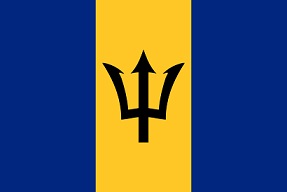
  • US – Yes
  • European Union – Yes

These two markets are Number 1 and Number 2 accordingly in the world’s GDP rankings. There truly is merit to this strategy, as people can freely go where they are needed and job openings can be freely filled by people – from near or far.

This means neighboring communities get to share in the opportunities and challenges of any one destination.

The book Go Lean … Caribbean (Page 5) drew reference to neighborly collaboration, cooperation and confederation by detailing the lyrics of a 1972 song, as follows:

If there is a load you have to bear
That you can’t carry
I’m right up the road
I’ll share your load
If you just call me – Song: Lean On Me by Bill Withers

One country gets it …

An Economic Affairs Minister for Barbados has declared that his country needs to be more welcoming of workers from other Caribbean communities. In fact, he indicated that the demographic trends in Barbados is all bad; their population is getting older as there are now fewer and fewer young people. The “load” of rebooting the Caribbean can be shared among the region – Caribbean Community or CariCom. See the news article here relating this thesis:

Title: Barbados opening jobs to CARICOM nationals
By:
 George Alleyne

Responding to a growing demographics imbalance in which the retired and close to retirement members of the population are growing while the number of working-age nationals is dwindling, Barbados will soon open its doors to skilled labour, especially persons from the Caribbean Community.

This situation caused Minister of Home Affairs, Edmund Hinkson, to say recently, “I as minister of immigration am firmly of the view that we have too small a population for Barbados to sustain and grow this economy and we will have ‘managed migration’ into this country especially among our fellow Caribbean people who are productive, who will make a mark.”

He said that the island, however, will not be open to “those who are going to be a drain on our economy or public purse,” but will be welcoming “those who are productive, who have skills”.

“We need more young people in this country in their most productive age.”

Hinkson’s revelation of the island’s intent found support in fellow government minister, Marsha Caddle, who has said, “we’ve realised that the population base of the country is not sufficient to generate the revenue that we need to be able to contribute to the standard of living that we want to have.”

The junior economic affairs minister said that 20 to 25 years ago the population group between ages 20 and 29 was the largest, however, “that same cohort is now still the largest, but it is 50 years old. And the 20 to 29 [age group is] now is much smaller.”

With Barbados restructuring its flagging economy to make it welcoming to investors, and a number of major construction projects set to begin this year, she said, “it is not just a question of diversifying the economy and having a revenue-positive policy …but it is also a question of making sure you have the population base to support it.”

This unevenness in the island’s population was the reason that Ronald Jones, a minister in the former government, had pleaded with Barbadians to make more babies to counter the lowering birth rate, which in turn leads to a reduced workforce.

“A declining population will have an impact on what we do to support older generations and national development as a whole,” Jones had said.

But Hinkson dismissed that as the solution for Barbados’ immediate need for a larger workforce.

“We’re not going to do like what the then minister of education said two or three years ago that people must get more children because they will take 20 years plus nine months before a child might become productive if conceived today,” the home affairs minister said.

Barbados’s soon-to-be implemented programme of ‘managed migration’ should provide pointers to sister CARICOM nations on how to implement the grouping’s policy of the right of skilled nationals to work in most of the 15 countries in this body.

Source: Posted February 15, 2019 retrieved February 17, 2019 from: https://www.caribbeanlifenews.com/stories/2019/2/2019-02-15-ga-barbados-jobs-caricom-nationals-cl.html

According to this foregoing article, there is the need for Barbados to fill its job openings from CariCom countries nearby. The original plan for the now-stalled Caribbean Single Market & Economy (CSME) called for such “Free Movement of People”. Too bad, this scheme was never fully incorporated; many societal defects could have been averted.

The book Go Lean…Caribbean addressed CSME from the beginning; starting with this opening assessment of the State of Caribbean Integration. The book detailed CSME on Page 15 as follows:

What is the CSME?
The initials refer to the Caribbean Single Market & Economy, the attempted integrated development strategy envisioned at the 10th Meeting of the Conference of Heads of Government of the Caribbean Community which took place in July 1989 in Grand Anse, Grenada. The Grand Anse Declaration had three key features:

  1. Deepening economic integration by advancing beyond a common market towards a Single Market and Economy.
  2. Widening the membership and thereby expanding the economic mass of the Caribbean Community (e.g. Suriname and Haiti were admitted as full members in 1995 and 2002 respectively).
  3. Progressive insertion of the region into the global trading and economic system by strengthening trading links with non-traditional partners.

What was the hope for CSME?
Whereas CariCom started as a Common Market and Customs Union, to facilitate more intra-region trade, the CSME was intended to effect more integration of the economies of the member states. But this turned out to be mere talk, fanciful murmurings of politicians during their bi-annual Heads of Government meetings. No deployment plans ever emerged, even though up to 15 member-states signed on to the accord; (and 10 more as “Observers” only).

The recommendation of the movement behind the Go Lean book is to confederate now, as this would expand the labor pool and job market. This is the purpose of the book Go Lean…Caribbean, to help reform and transform the economic engines of the 30 member-states of the Caribbean region. The book serves as a roadmap for the introduction and implementation of the Caribbean Union Trade Federation (CU).

The Go Lean roadmap is designed to elevate the Caribbean region, to be better destinations to live, work and play. The roadmap asserts that in addition to the ease of travel and transport for touristic purposes – the primary industry in the region – Caribbean communities get to benefit from Free Movement of Labor under controlled employment rules-conditions. This is why the CU Trade Federation is a graduation from the CSME – something better. We accomplish Free Trade and Free Movement of People for Domestic (Intra-region) Tourism, but controlled Freedom of Movement for jobs … based on a Labor Certification process. Here is how the Go Lean book describes the Certification process as regulated by one of the CU agencies:

CU Labor Relations Board
This agency coordinates the activities of labor certifications, labor unions and other organizational dimensions in the region. This effort will be collaborated and in cooperation with member-state Labor Relations agencies. The CU‘s focus will be towards interstate activities and enterprises, as opposed to intra-state.

Labor Certification is an important role for this agency as it requires monitoring the labor needs of the region to ascertain where skills are needed and where and who can supply the skills. The certification role involves rating the level of expertise needed for job and rating workers skill sets. (Consider a 10-point grading system for positions and personnel, where “apprentice” level ranges from 1 – 3, “journeyman” level ranges from 4 – 6, and “master” ranges from 7 – 10). This certification role is vital to the strategy of preserving Caribbean human capital in the region, even if this involves some movement among the member-states.  [When a high skilled job becomes available, it has to be rated so that if no local talents are available, workers with qualifying ratings in other CU member-states can apply and be engaged].

Embracing the tenants of a Single Market have been elaborated upon in previous blog-commentaries. Consider this sample:

https://goleancaribbean.com/blog/?p=15245 Righting a Wrong: Re-thinking CSME
https://goleancaribbean.com/blog/?p=14954 Overseas Workers – Not the Panacea
https://goleancaribbean.com/blog/?p=13319 Making a ‘Pluralistic Democracy’ – Freedom of Movement
https://goleancaribbean.com/blog/?p=8377 Fallacy of Minimum Wage
https://goleancaribbean.com/blog/?p=8351 Brexit reality tied to Free Movement of People.

Considering Barbados’s move in the foregoing, it is a good start for embracing the concept of a Single Market. They are not the first country in the region to lean-in to this initiative – and should not be the last. Consider the VIDEO here, relating the CARICOM Skilled Nationals Act in Guyana:

VIDEOGov’t to amend CARICOM Skilled Nationals Acthttps://youtu.be/IduFS86PGpM

CapitolNewsGY
Published on Feb 5, 2014

http://www.capitolnewsonline.com | http://www.capitolnewsgy.com
Twitter: https://twitter.com/#!/wrhmnews
Facebook: https://www.facebook.com/CapitolNewsGY

Listen up you other countries: Follow suit!

All Caribbean stakeholders – leaders, citizens, businesses, employers, Union workers and professionals – need to embrace the strategy of a Single Market. The movement behind the Go Lean book invites everyone in the Caribbean to lean-in for the empowerments described here-in. We must do better than in the past; we cannot sustain our society with our current population dimensions. We must come together so that we can finally make our homelands better places to live, work and play. 🙂

About the Book
The book Go Lean…Caribbean serves as a roadmap for the introduction and implementation of the technocratic Caribbean Union Trade Federation (CU), for the elevation of Caribbean society – for all member-states. This CU/Go Lean roadmap has these 3 prime directives:

  • Optimization of the economic engines in order to grow the regional economy to $800 Billion & create 2.2 million new jobs.
  • Establishment of a security apparatus to ensure public safety and protect the resultant economic engines.
  • Improve Caribbean governance to support these engines, including a separation-of-powers between the member-states and CU federal agencies.

The Go Lean book provides 370-pages of turn-by-turn instructions on “how” to adopt new community ethos, plus the strategies, tactics, implementations and advocacies to execute so as to reboot, reform and transform the societal engines of Caribbean society.

Download the free e-Book of Go Lean … Caribbean – now!

Who We Are
The movement behind the Go Lean book – a non-partisan, apolitical, religiously-neutral Community Development Foundation chartered for the purpose of empowering and re-booting economic engines – stresses that reforming and transforming the Caribbean societal engines must be a regional pursuit. This was an early motivation for the roadmap, as pronounced in the opening Declaration of Interdependence (Pages 12 – 13):

xi. Whereas all men are entitled to the benefits of good governance in a free society, “new guards” must be enacted to dissuade the emergence of incompetence, corruption, nepotism and cronyism at the peril of the people’s best interest. The Federation must guarantee the executions of a social contract between government and the governed.

xxi. Whereas the preparation of our labor force can foster opportunities and dictate economic progress for current and future generations, the Federation must ensure that educational and job training opportunities are fully optimized for all residents of all member-states, with no partiality towards any gender or ethnic group. The Federation must recognize and facilitate excellence in many different fields of endeavor, including sciences, languages, arts, music and sports. This responsibility should be executed without incurring the risks of further human flight, as has been the past history.

xxiv. Whereas a free market economy can be induced and spurred for continuous progress, the Federation must install the controls to better manage aspects of the economy: jobs, inflation, savings rate, investments and other economic principles. Thereby attracting direct foreign investment because of the stability and vibrancy of our economy.

Sign the petition to lean-in for this roadmap for the Caribbean Union Trade Federation.

Share this post:
, ,
[Top]