Go Lean Commentary
Welcome to Yugoslavia … one of the most classic Toxic Environments in the history of civilization.
Wait, what?!
That country does not exist anymore. (See the encyclopedic reference in the Appendix A below). The land is still there; the people are still there … mostly, but the culture and national identity is gone.
The only things that remain are lessons … for other communities – like us in the Caribbean – to learn the consequences of an unchecked, un-remediated Toxic Environment. We need to look, listen and learn the lessons. But first consider the historic references in the VIDEO here:
VIDEO – The Breakup of Yugoslavia – https://youtu.be/oiSgAiM0d8A
Posted April 30, 2016 – Why did Yugoslavia split up? In this video, I attempt to look at the complex situation of the former Yugoslav republics and what led to their breakup.
Free audiobook and a 30-day free trial at: http://www.audible.com/wonderwhy
Thanks to Audible for sponsoring this video!MUSIC Satiate Kevin MacLeod (incompetech.com)All images/footage used in this video are either public domain, CC or free use.Fair use as this is a transformative work for educational proposes.
No doubt, the Balkan region was Toxic in the distant past and the recent past. This is the same region that ignited World War I, back in 1914. We had addressed this history before, in a previous Go Lean commentary; see highlights in Appendix B below.

What are the lessons that we glean from this history, then and now?
- The one country of Yugoslavia was an integrated and consolidated federation that combined these 6 neighboring member-states in a Single Market:
Bosnia and Herzegovina, Croatia, Macedonia, Montenegro, Serbia, and Slovenia - The 6 member-states were not homogenous; there were many differences in their populations, i.e Official languages: Serbo-Croatian, Macedonian and Slovene.
- Religiosity do not contribute to peace; in fact, religious intolerance can lead to Civil War. Yugoslavia featured 3 major faiths: Western Catholicism, Eastern Orthodox and Islam.
- Historical disputes and grievances do not just dissipate – they must be reconciled – or future generation will still contest the issue.
- Minorities will always be persecuted by majorities in Toxic Environments.
The lessons from World War I cannot be ignored.
The lessons from the recent Yugoslavia conflicts cannot be ignored.
This discussion on Yugoslavia underpins a consideration of the Toxic Environment that we suffer here in the Caribbean. The 2013 book Go Lean…Caribbean, serving as a roadmap for the introduction of the Caribbean Union Trade Federation (CU), asserts that Caribbean economic, security (Public Safety) and governing stakeholders must all work together to abate our Toxic Environment.
This commentary is a continuation on the Teaching Series related to Toxic Environments where we addressed the pseudo-phobias – irrational fear or hatred – and how these bring on the “fight or flight” psycho-drama in everyone’s response. In Yugoslavia, “fight” was frequently the selected option. Every month, the movement behind the Go Lean book presents a Teaching Series to address issues germane to Caribbean life and culture. For this month of September 2020, this is entry 3-of-6, we are looking at the history of persecuted minorities in this Eastern Europe country-culture – that is now extinct.
Consider here, the full catalog of the series this month:
- Toxic Environment: Ready for Football – Washington “Redskins”
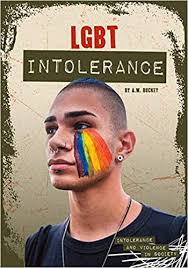
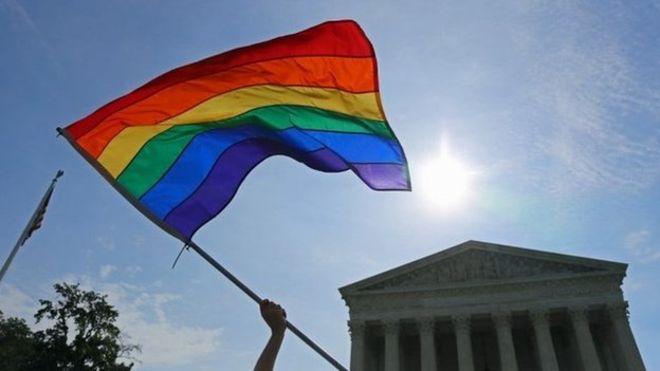
- Toxic Environment: Homophobia – The problem is the Hate, not the Fear
- Toxic Environment: Opposite of Diversity & Inclusion
- Toxic Environment: Lessons from Yugoslavia
- Toxic Environment: Ease of Doing Business
- Toxic Environment: Make the Caribbean Great (Anew)
After 100 years, according to the foregoing VIDEO, the member-states that constituted Yugoslavia have now reconciled their Toxic Environments from the past – they gave up on integration. They gave up on diversity and just decided to continue as independent homogeneous nations – no leverage, no economies-of-scale, no “whole is more than the sum of its parts”. Sad!
The Go Lean roadmap urges the Caribbean region to confederate, asserting that we double-down on Diversity & Inclusion among the 30 different member-states. We need the inherent benefits; we need the leverage; we need the economies-of-scale; we need the “whole to be more than the sum of its parts”. Consider this list of previous blog-commentaries on the subject of confederation, when it worked and when it did not:
| https://goleancaribbean.com/blog/?p=20072 | Rise from the Ashes – Political Revolutions: Calling ‘Balls & Strikes’ |
| https://goleancaribbean.com/blog/?p=19570 | European Role Model: Not when ‘Push’ comes to ‘Shove’ |
| https://goleancaribbean.com/blog/?p=19494 | BHAG – One Voice: Foreign Policy and Diplomatic Stance |
| https://goleancaribbean.com/blog/?p=19452 | BHAG – Regional Currency – ‘In God We Trust’ |
| https://goleancaribbean.com/blog/?p=3090 | Introduction to Europe – All Grown Up |
| https://goleancaribbean.com/blog/?p=816 | The Future of CariCom – A Technocratic Confederacy |
Yugoslavia was a unified country across a large geographic area. They were among the most successful communities; they even hosted the Olympics – Sarajevo 1984. They could have been in the G20 and be one of the “best addresses on the planet”, if only they had learned “how to get along” with each other, despite ethnic differences.
We must do better …
We must consider Yugoslavia as a cautionary tale for us in the Caribbean. We want Diversity & Inclusion; we want every distinct group in our society to have a “seat at the table, with no one being on the menu”.
- Different races, no problem.
- Different languages, no problem.
- Different religions, no problem.
- Different colonial heritage, no problem.
Yes, we can …
Let’s work to remediate and mitigate our Toxic Environment. Let’s make our homeland a better place to live, work and play. 🙂
About the Book
The book Go Lean…Caribbean serves as a roadmap for the introduction and implementation of the technocratic Caribbean Union Trade Federation (CU), for the elevation of Caribbean society – for all member-states. This CU/Go Lean roadmap has these 3 prime directives:
- Optimization of the economic engines in order to grow the regional economy to $800 Billion & create 2.2 million new jobs.
- Establishment of a security apparatus to ensure public safety and protect the resultant economic engines.
- Improve Caribbean governance to support these engines, including a separation-of-powers between the member-states and CU federal agencies.
The Go Lean book provides 370-pages of turn-by-turn instructions on “how” to adopt new community ethos, plus the strategies, tactics, implementations and advocacies to execute so as to reboot, reform and transform the societal engines of Caribbean society.
Download the free e-Book of Go Lean … Caribbean – now!
Who We Are
The movement behind the Go Lean book – a non-partisan, apolitical, religiously-neutral Community Development Foundation chartered for the purpose of empowering and re-booting economic engines – stresses that reforming and transforming the Caribbean societal engines must be a regional pursuit. This was an early motivation for the roadmap, as pronounced in the opening Declaration of Interdependence (Pages 11 – 13):
x. Whereas we are surrounded and allied to nations of larger proportions in land mass, populations, and treasuries, elements in their societies may have ill-intent in their pursuits, at the expense of the safety and security of our citizens. We must therefore appoint “new guards” to ensure our public safety and threats against our society, both domestic and foreign. The Federation must employ the latest advances and best practices … to assuage continuous threats against public safety.
xi. Whereas all men are entitled to the benefits of good governance in a free society, “new guards” must be enacted to dissuade the emergence of incompetence, corruption, nepotism and cronyism at the peril of the people’s best interest. The Federation must guarantee the executions of a social contract between government and the governed.
xiv. Whereas a free market economy can be induced and spurred for continuous progress, the Federation must install the controls to better manage aspects of the economy: jobs, inflation, savings rate, investments and other economic principles. Thereby attracting direct foreign investment because of the stability and vibrancy of our economy.
xvi. Whereas security of our homeland is inextricably linked to prosperity of the homeland, the economic and security interest of the region needs to be aligned under the same governance. Since economic crimes … can imperil the functioning of the wheels of commerce for all the citizenry, the accidence of this Federation must equip the security apparatus with the tools and techniques for predictive and proactive interdictions.
Sign the petition to lean-in for this roadmap for the Caribbean Union Trade Federation.
————–
Appendix A – Yugoslavia
Yugoslavia (literally. ‘South Slavic Land’) was a country in Southeast Europe and Central Europe for most of the 20th century. It came into existence after World War I in 1918[B] under the name of the Kingdom of Serbs, Croats and Slovenes by the merger of the provisional State of Slovenes, Croats and Serbs (it was formed from territories of the former Austro-Hungarian Empire) with the Kingdom of Serbia, and constituted the first union of the South Slavic people as a sovereign state, following centuries in which the region had been part of the Ottoman Empire and Austria-Hungary. Peter I of Serbia was its first sovereign. The kingdom gained international recognition on 13 July 1922 at the Conference of Ambassadors in Paris.[2] The official name of the state was changed to Kingdom of Yugoslavia on 3 October 1929.
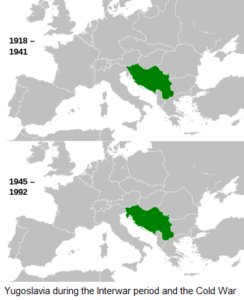 Yugoslavia was invaded by the Axis powers on 6 April 1941. In 1943, a Democratic Federal Yugoslavia was proclaimed by the Partisan resistance. In 1944 King Peter II, then living in exile, recognised it as the legitimate government. The monarchy was subsequently abolished in November 1945. Yugoslavia was renamed the Federal People’s Republic of Yugoslavia in 1946, when a communist government was established. It acquired the territories of Istria, Rijeka, and Zadar from Italy. Partisan leader Josip Broz Tito ruled the country as president until his death in 1980. In 1963, the country was renamed again, as the Socialist Federal Republic of Yugoslavia (SFRY).
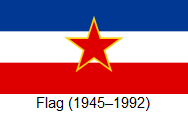 The six constituent republics that made up the SFRY were the SR Bosnia and Herzegovina, SR Croatia, SR Macedonia, SR Montenegro, SR Serbia, and SR Slovenia. Serbia contained two Socialist Autonomous Provinces, Vojvodina and Kosovo, which after 1974 were largely equal to the other members of the federation.[3][4] After an economic and political crisis in the 1980s and the rise of nationalism, Yugoslavia broke up along its republics’ borders, at first into five countries, leading to the Yugoslav Wars. From 1993 to 2017, the International Criminal Tribunal for the former Yugoslavia tried political and military leaders from the former Yugoslavia for war crimes, genocide, and other crimes committed during those wars.
After the breakup, the republics of Montenegro and Serbia formed a reduced federative state, Serbia and Montenegro, known officially until 2003 as the Federal Republic of Yugoslavia (FRY). This state aspired to the status of sole legal successor to the SFRY, but those claims were opposed by the other former republics. Eventually, it accepted the opinion of the Badinter Arbitration Committee about shared succession[5] and in 2003 its official name was changed to Serbia and Montenegro. This state dissolved when Montenegro and Serbia each became independent states in 2006, while Kosovo proclaimed its independence from Serbia in 2008.
…
Source: Retrieved September 24, 2020 from: https://en.wikipedia.org/wiki/Yugoslavia
—————–
Appendix B – Previous Blog from June 28, 2014
A Lesson in History – 100 Years Ago Today – World War I
On this date 100 years ago, Archduke Franz Ferdinand of Austria, heir presumptive to the Austro-Hungarian throne, and his wife, Sophie, Duchess of Hohenberg, were shot dead in Sarajevo by Serbian assassins. The political objective of the assassination was to break off Austria-Hungary’s south-Slavic provinces so they could be combined into a Yugoslavia. The assassination led directly to the First World War when Austria-Hungary subsequently issued an ultimatum against Serbia, which was partially rejected. Austria-Hungary then declared war, marking the outbreak of the war. [a]
 Multilateral military alliances abounded in that day among the Great Powers: Austria-Hungary with Germany (Triple Alliance of 1882) and Serbia with Russia and France (Triple Entente of 1907) and Britain. When war ensued later in August 1914, these were the sides. Many other military treaties were triggered thereby engaging empires/countries like Ottoman-Turks, Portugal, Japan and Italy, (The United States joined in 1917 allied with Britain). The resulting conflict was dubbed the Great War until subsequently rebranded World War I.
…
The people of the Caribbean understand societal decline and dysfunction all too well.
What have we learned in the 100 years since the events of June 28, 1914? How will these lessons help us today?
- Minority Equalization – Bullying and terrorism must be mitigated at the earliest possible opportunity – the foregoing photo depicts the oppression the minority Balkan communities perceived in the Austria-Hungarian Empire. As a minority group they felt bullied in their own country; their Slavic culture and language set them apart, and their religious adherence led to even more dissension (Austria-Hungary: Catholic/Lutheran; Serbia: Eastern Orthodox and Bosnia- Herzegovina: Muslim) There were terrorist activities for decades before in the quest for independence. In the past 100 years, this same modus operandi has been repeated in countless locales around the world. The CU security pact must defend against regional threats, including domestic terrorism. This includes gangs and their junior counterparts, bullies. The CU plans for community messaging in the campaign to mitigate bullying.
- Reconciliation of issues are not optional, more conflict will emerge otherwise – The issues that wedged the people of the Balkans were not resolved in World War I. More dissensions continued leading to World War II, and continued during the Cold War while most of the Balkans were under Soviets control. When the Soviet Union collapsed in 1991, civil war and ethnic cleansings proceeded in the Balkans. Their issues/differences had not been reconciled. A common practice after WW I & WW II was the prosecution of war crimes. But in South Africa an alternative justice approach was adopted, that of Truth & Reconciliation Commissions (TRC). These have become more successful as the emphasis is less on revenge and more on justice normalization. Many other countries have instituted similar TRC models. The CU plans for the TRC model for dealing with a lot of latent issues in the last Caribbean century (i.e. Cuba, Haiti, Dominican Republic, etc).
- Self-determination of local currencies – in planning for postwar reconstruction, U.S. representatives with their British counterparts studied what had been lacking between the two world wars: a system of international payments that would allow trade to be conducted without fear of sudden currency depreciation or wild fluctuations in exchange rates—ailments that had nearly paralyzed world capitalism during the Great Depression. There is a multiplier associated with the currency in the money supply. Therefore the communities of the Caribbean must embrace its own currency, the Caribbean Dollar (managed by a technocratic Caribbean Central Bank), thereby bringing local benefits from local multipliers.
- Security assurances must be enabled to complement economics objectives – A lot of dissension has resulted when economic engines become imperiled due to security conflicts. The instability then causes more economic dysfunction, which results in even more security threats – a downward spiral. The CU/Go Lean posits that security apparatus must be aligned with all economic empowerments. This is weaved throughout the roadmap.
- Negotiate as partners not competitors – The end of World War I immediately set-up ripe conditions for WW II, because of the harsh terms in the Peace Treaties. The CU maintains that, negotiation is an art and a science. More can be accomplished by treating a negotiating counterpart as a partner, rather than not an adversary. (See VIDEO below).
- Cooperatives and sharing schemes lighten burdens among neighbors – The Balkan conflict of 1914 resulted in a World War because of cooperative treaties with aligning nations. Despite this bad outcome, the practice of cooperatives and sharing still has more upside than downside. The CU will employ cooperatives and sharing schemes for limited scopes within the prime directives of optimizing the economic, security and governing engines.
- Promote opportunities for the Pursuit of Happiness – A lot of terrorist activities are executed by “suicide” agents (i.e. suicide bombers). The Go Lean roadmap posits the when the following three fundamentals are in place, the risks of suicide is minimal: 1. something to do, 2. someone to love, 3. something to hope for. These are the things a man (or woman) needs to be happy.
- Consider the Greater Good – Complying with this principle would have prevented a lot of conflict in the past century. The philosophy is directly quoted as: “It is the greatest good to the greatest number of people which is the measure of right and wrong”. The CU/Go Lean roadmap calls for a number of measures that strike directly at the Greater Good mandate: accountable justice institutions, economic empowerment for rich and poor, strategic education initiatives, proactive health/wellness, etc.institutions, economic empowerment for rich and poor, strategic education initiatives, proactive health/wellness, etc.
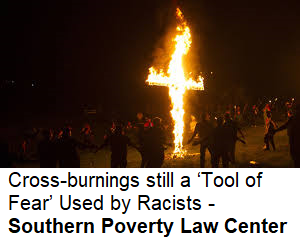
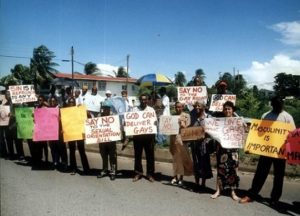
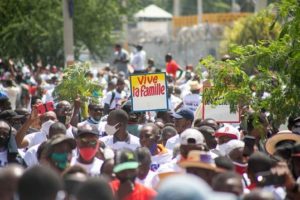
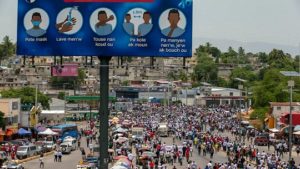
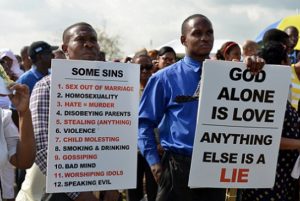
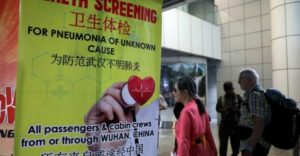
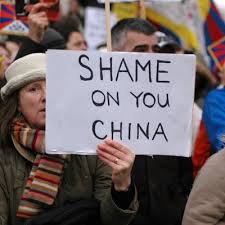
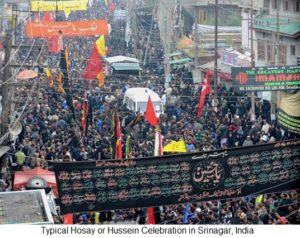
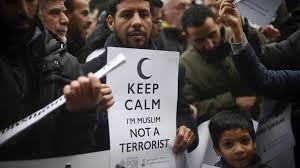 The actuality of Intolerance is the opposite of the qualities a pluralistic society like the Caribbean needs to develop. We have a new found economic engine that we can now exploit: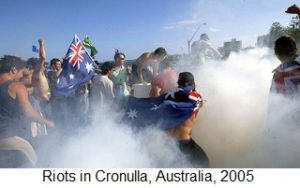


 24 “Anyone who listens to my teaching and follows it is wise, like a person who builds a house on solid rock. 25 Though the rain comes in torrents and the floodwaters rise and the winds beat against that house, it won’t collapse because it is built on bedrock. 26 But anyone who hears my teaching and doesn’t obey it is foolish, like a person who builds a house on sand. 27 When the rains and floods come and the winds beat against that house, it will collapse with a mighty crash.” – The Bible re: Building on a Solid Foundation – Matthew 7:24-27 –
 When the
  The
The  [Thoughts-feeling-speech-action] is usually the order and process for change. Change doesn’t just start with Action; a lot more goes into it. It can be likened to a factory process; there is input and there is output. While Action is the output, “Thoughts, Feelings and Speech” qualify as input.
 The Washington Football Team are a professional
 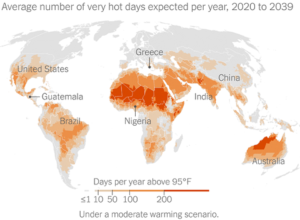 This is not true for Climate Change. Some communities are on the frontlines; some communities take all the beatings, while some other communities are unscathed.
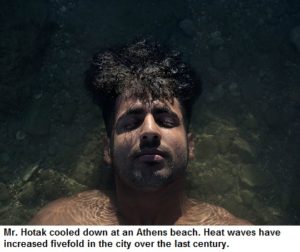 … Mr. Hotak was 16 when he left his home in the Sholgara district of Afghanistan, the only one among his 11 brothers and sisters to do so. After one failed attempt to enter Europe and two years in a refugee camp, he was granted asylum in Greece. That’s when he arrived on the rooftop refuge with a friend, in the crowded warrens of Kolonos, a working class Athens neighborhood where many migrants have settled.
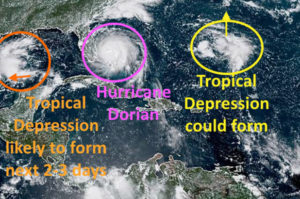 Hurricanes are worse; more frequent and more powerful. In fact for 2020, the meteorological officials have ran out of names to assign for this year’s Atlantic Hurricane season. They are now assigning the Greek alphabet as hurricane names; think Alpha, Beta, Gamma, Delta, Epsilon, etc.. Here is the actuality of the Alpha Storm here:
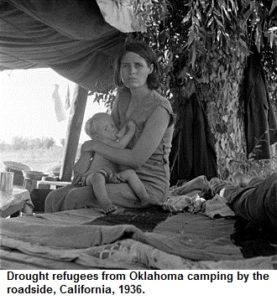 Well, the opposite is occurring; there are shortages – like precipitation, cool breezes, shady trees – and dire consequences (
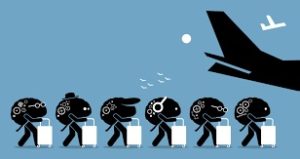 So first there was the brain drain (
 Our choices are that simple: prepare for Climate Change or watch our people migrate away from the homeland to foreign shores where the dire effects are lessened. While all humans are created equal, all people do not get equal treatment from … Mother Nature. Some people get more hot and wet than other people, yet they may not be able to afford the physical relief.
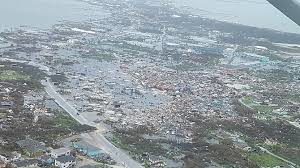
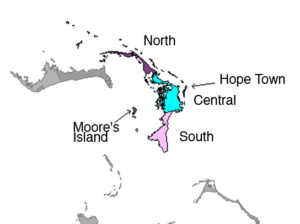 There is a parallel situation today in the Caribbean, in the Northern Bahamas community of Abaco in particular. They have battles on two fronts: A hurricane and a pandemic.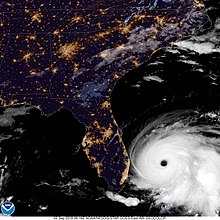
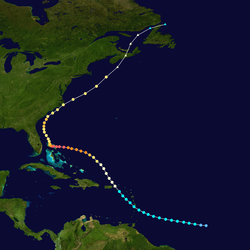
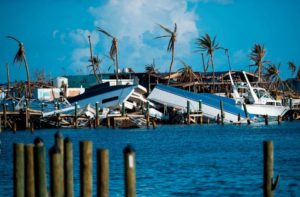 It’s been a little over a year since the prolonged and record-breaking
  Respected for their storytelling techniques, industry contacts, and ability to spread awareness, Brown and his directorial partner Bobby Pura were hired by
  NASSAU, BAHAMAS — Central and South Abaco MP James Albury said because the construction industry represents a major hotspot for COVID-19, Abaco is in a “precarious situation” as reconstruction forges on.
 In the two weeks prior, 35 cases were recorded.
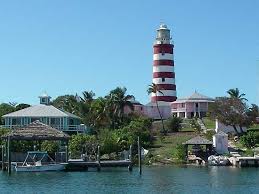
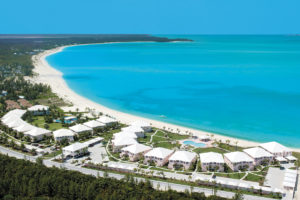
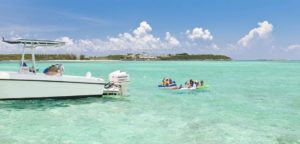 The Abaco chain of islands are a beautiful part of the Bahamas archipelago – the natural beauty flourishes. The Bahamas has been rocked by the pandemic but the country was in crisis even before COVID-19; this was due to structural deficiencies that were exacerbated by Agents of Change like Climate Change, globalization, technology and an Aging Diaspora. So the cupboards are now bare; this makes relief and refuge from these recent crises (COVID-19 and Dorian) untenable. Crisis within a crisis; failure on top of failure.
 This is the urging right now; we need more than a string; we need to make the “rope” of our society stronger and better. We must … confederate, collaborate, collude, consolidate and convene:
 For the Caribbean, there has been little for us to smile about. Unless, we look at the Wide World of Sports. Here is this example in this summary of a big Sports News story: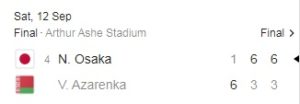
 Meld Caribbean distinctiveness with that of other cultures.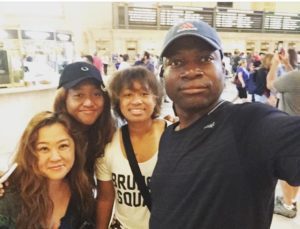

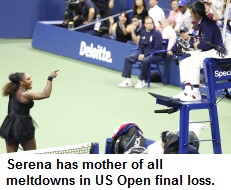 Yet rather than cheer Osaka, the crowd, the commentators and US Open officials all expressed shock and grief that Serena Williams lost.

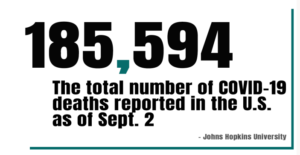
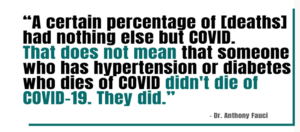 A closer look at the CDC data, meanwhile, reveals that many of the comorbidities listed by medical providers are complications caused by COVID-19 rather than chronic conditions that predated infection: heart failure, renal failure, respiratory failure, sepsis and so on.
 There is this great Summer Festival in this small town in the US State of South Dakota, the Sturgis Bike Rally. This event is so impressive that the Caribbean has long been urged to look, listen and learn from this event model. In fact, the 2013 book Go Lean…Caribbean – introducing the Caribbean Union Trade Federation (CU) – dedicates one Appendix (Page 288) to Sturgis.
 The COVID-19 pandemic is threatening many of our most cherished freedoms. We are told by the government not to travel. We are told we can’t gather for religious services. We are told we must wear masks, but we must not go to restaurants or stores. Our favorite sporting events, school activities and even graduations are cancelled. In some places, we are told we may not gather even for the most important things in life: the birth of a newborn or the passing of a loved one. At rallies protesting the lockdown, participants claim their constitutional rights are being violated and that the “illegal” government orders must be lifted. Who is right: the protestors or the government?Put another way, do the governments’ actions taking away certain rights, even if only temporarily, violate the Constitution? This article seeks to answer that question using a few real-life examples.
 —–
—–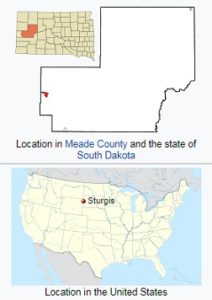 Sturgis is a city in Meade County, South Dakota, United States. The population was 6,627 as of the 2010 census. It is the county seat of Meade County and is named after General Samuel D. Sturgis. Sturgis is famous for being the location of one of the largest annual motorcycle events in the world, which [started in 1938 and] is held annually on the first full week of August. Motorcycle enthusiasts from around the world flock to this usually sleepy town during the Sturgis Motorcycle Rally.
 Keeping up with the Joneses.
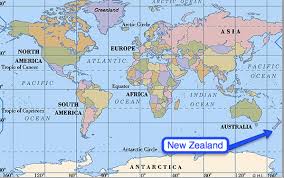
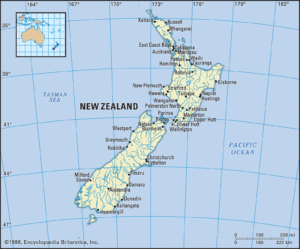
 New Zealand, a modern small island nation, has become an emblematic champion of proper prevention and response to the
 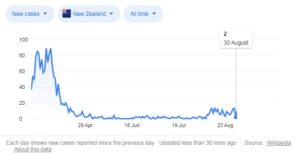 What else went into New Zealand’s pandemic response—and what could serve as guidance for other countries?