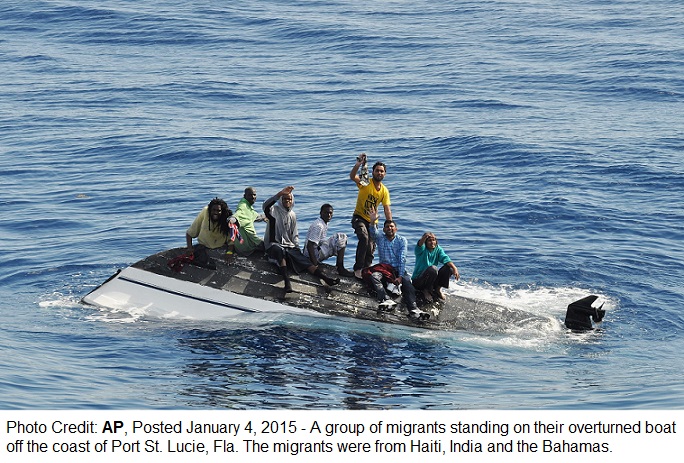
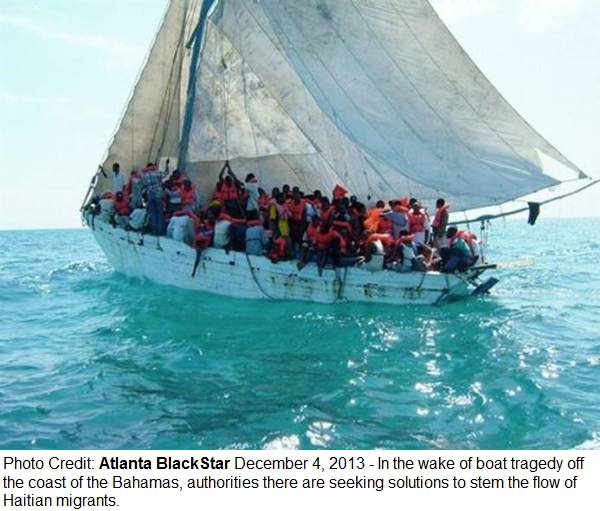
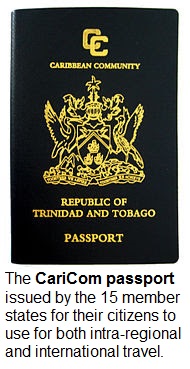
Intelligence Agencies to Up Cyber Security Cooperation

Go Lean Commentary

Cyber Security has been all the rage in the news as of late, affecting governments (both sides of the Atlantic and Pacific Oceans), corporations and regular citizens. Consider these recent headlines*:

N.S.A. tapped into North Korean networks before Sony attack
China suspected of cyber-attack on Microsoft
19,000 French websites suffered cyber attacks
North Korea’s official news website serves malware
Sony hack – by North Korea – corporate cyberwar game changer

It is therefore not surprising that governments are ramping up their cyber-security defenses. The following news story relates a bilateral effort by the US and the UK. This is of importance to Caribbean stakeholders as there are 2 US Territories in the region (Puerto Rico & Virgin Islands) and 18 British affiliates (Overseas Territories and Commonwealth nations). The article is as follows:

Title: UK and U.S. intelligence agencies to up cyber security cooperation
Reporting by: Kylie MacLellan; Editing by: Dominic Evans

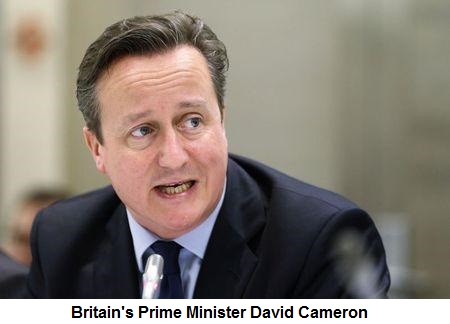
Britain's Prime Minister David Cameron speaks at a debate to promote the EU-US trade deal, in BrusselsLONDON (Reuters) – Britain and the United States will increase cooperation on cyber security, Prime Minister David Cameron said, setting up “cyber cells” to share intelligence and conduct simulated attacks to test the defences of organisations such as banks.

Cameron is on a two-day visit to Washington focused on the economy and security, and is due to have a second meeting with President Barack Obama on Friday at the White House.

“We have got hugely capable cyber defences, we have got the expertise and that is why we should combine as we are going to, set up cyber cells on both sides of the Atlantic to share information,” Cameron told the BBC in an interview aired on Friday.

The cooperation between Britain’s GCHQ eavesdropping agency and the U.S. National Security Agency will include joint war games, with the first exercise later this year to involve the Bank of England and commercial banks in both the City of London and Wall Street, the BBC reported.

“This is a real signal it is time to step up the efforts and to do more,” said Cameron.

The British leader said he also planned to discuss with Obama how the two countries could work more closely with big Internet companies such as Facebook and Google to monitor communications between terror suspects.

The overriding theme of the foregoing news article is the cyber-security is not automatic; it takes heavy-lifting on behalf of stakeholders to ensure the appropriate protections.
Reuters News Wire Service (Posted January 16, 2015; retrieved January 23, 2015) –
http://news.yahoo.com/uk-u-intelligence-agencies-cyber-security-cooperation-090538081–finance.html
What are the Caribbean protections? Are we prepared?

These questions are being considered in connection of the new book Go Lean…Caribbean. The book calls for the elevation of Caribbean society by means of economic optimizations, security provisions and enhanced governance. The issues in the foregoing article are all security related; but this cyber-security is a new battleground, so everything is different: the weapons, tools, and even the enemies are different. This is a changed, scary world!

But this new world must be embraced and mastered. The Go Lean book hails the advantages that technology can bring to small countries. The book relates (Page 127) how Internet & Communications Technologies (ICT) can be a great equalizer in competition with the rest of the world. This embrace of ICT must include e-Government and e-Delivery (outsourcing and in-sourcing for member-states systems), Mobile, Social Media, Postal/Electronic Mail, e-Learning and wireline/wireless/satellite initiatives. Technology brings good, bad and ugly repercussions.

The book Go Lean…Caribbean posits that the region must prepare its own security apparatus for its own security needs, including cyber-security. So the request is that all 30 Caribbean member-states confederate and create the technocratic Caribbean Union Trade Federation (CU), complete with the authority to establish and execute a security apparatus. In fact, this Go Lean book serves as a roadmap for the introduction and implementation of the CU and 3 prime directives:

  • Optimization of the economic engines in order to grow the regional economy to $800 Billion & create 2.2 million new jobs.
  • Establishment of a security apparatus, authorized by a Status of Forces Agreement (SOFA), to protect the resultant economic engines.
  • Improve Caribbean governance, including a separation-of-powers between CU federal agencies and member-states’ governments, to support these engines.

The book contends, and the recent news reports confirm, that bad actors will also emerge to exploit any economic successes in the world. This point is pronounced early in the book with the Declaration of Interdependence (Page 12) that claims:

x.   Whereas we are surrounded and allied to nations of larger proportions in land mass, populations, and treasuries, elements in their societies may have ill-intent in their pursuits, at the expense of the safety and security of our citizens. We must therefore appoint “new guards” to ensure our public safety and threats against our society, both domestic and foreign. The Federation must employ the latest advances and best practices … to assuage continuous threats against public safety.

xvi. Whereas security of our homeland is inextricably linked to prosperity of the homeland, the economic and security interest of the region needs to be aligned under the same governance. Since economic crimes, including piracy and other forms of terrorism, can imperil the functioning of the wheels of commerce for all the citizenry, the accedence of this Federation must equip the security apparatus with the tools and techniques for predictive and proactive interdictions.

So while the CU is set to optimize Caribbean society through economic empowerment, with a heavy emphasis of technology, the Go Lean roadmap posits that the security dynamics (and cyber-security) of the region must be linked to this same endeavor.

The strategy is to confederate under a unified entity made up of the Caribbean to provide homeland security and intelligence gathering-and-analysis for the Caribbean. But this Homeland Security for the Caribbean will have a different meaning than for our American and British counterparts. Though we must be on defense against military intrusions like terrorism and piracy, we mostly have to contend with threats that may imperil the region’s economic engines, like tourism. This includes online fraud scheme and breaches that may undermine the integrity of our institutions and establishments. Imagine a “hack” that harvests credit card account numbers used at area hotels; if those fall into the wrong hands, the experience could tarnish the goodwill of the Caribbean brand.

There is also the need for vigilance against natural and man-made concerns like hurricanes, earthquakes, oil/chemical spills, enterprise corruption and narco-terrorism. These episodes create the need for intelligence gathering-and-analysis to manage the right resource for the right time and right place. All in all, the goal of CU intelligence must be public safety and economic security!

The Go Lean roadmap thusly calls for permanent professional Naval and Marine expeditionary forces, plus a robust Intelligence Agency (including Cyber-security). The CU Trade Federation will lead, fund and facilitate these entities. This effort will be “Step One, Day One” in the Go Lean roadmap, with the full facilitation and accountability.

This effort is defined in the book and blog commentaries as Unified Command-and-Control (UCC). The Go Lean book details a series of community ethos, strategies, tactics, implementations and advocacies necessary to establish and succeed with UCC structures in the Caribbean region:

Economic Principle – Consequences of Choices Lie in Future Page 21
Community Ethos – Privacy –vs- Public Protection Page 23
Community Ethos – Intelligence Gathering Page 23
Community Ethos – “Crap” Happens Page 23
Community Ethos – Cooperatives Page 25
Community Ethos – Ways to Foster Genius Page 27
Community Ethos – Ways to Improve Sharing Page 35
Community Ethos – Ways to Impact the Greater Good Page 37
Tactical – Confederating a non-sovereign union Page 63
Tactical – Fostering a Technocracy Page 64
Tactical – Separation of Powers – Homeland Security Page 75
Tactical – Separation of Powers – Emergency Management Page 76
Implementation – Ways to Pay for Change Page 101
Implementation – Start-up Foreign Policy Initiatives Page 102
Implementation – Start-up Security Initiatives Page 103
Implementation – 10 Trends in Implementing Data Centers Page 106
Implementation – Ways to Impact Social Media – www.myCaribbean.gov Page 111
Implementation – Ways to Foster International Aid – Military Aid Page 115
Implementation – Ways to Benefit from Globalization Page 119
Planning – 10 Big Ideas – #3: Homeland Security Pact Page 127
Planning – 10 Big Ideas – #8: Cyber Caribbean Efforts Page 127
Planning – Ways to Model the EU – Sharing Page 130
Planning – Ways to Make the Caribbean Better Page 131
Planning – Ways to Improve Failed-State Indices – Intelligence Page 134
Planning – Lessons from East Germany – Regional Security Page 139
Planning – Lessons from the American West – Law & Order Page 142
Advocacy – Ways to Grow the Economy Page 151
Advocacy – Ways to Improve Governance Page 168
Advocacy – Ways to Better Manage the Social Contract Page 170
Advocacy – Ways to Improve Leadership Page 171
Advocacy – Ways   to Impact Justice Page 177
Advocacy – Ways   to Reduce Crime Page 178
Advocacy – Ways to Improve for Gun Control Page 179
Advocacy – Ways to Improve Homeland Security Page 180
Advocacy – Ways to Mitigate Terrorism Page 181
Advocacy – Ways to Improve Intelligence Gathering/Analysis Page 182
Advocacy – Ways to Improve for Natural Disasters Page 184
Advocacy – Ways to Protect Human Rights Page 220
Appendix – Failed-State Definition: Security Apparatus Oversight Page 273

Other subjects related to security empowerments and UCC for the region have been blogged in other Go Lean…Caribbean commentaries, as sampled here:

https://goleancaribbean.com/blog/?p=3713 NEXUS: Facilitating Detroit-Windsor Border Security & Commerce
https://goleancaribbean.com/blog/?p=3662 Migrant flow from Caribbean spikes and threaten US Border Security
https://goleancaribbean.com/blog/?p=2684 Role Model for Justice-Intelligence-Security: The Pinkertons
https://goleancaribbean.com/blog/?p=1965 America’s Navy – 100 Percent – Model for Caribbean
https://goleancaribbean.com/blog/?p=1554 Status of Forces Agreement = Security Pact
https://goleancaribbean.com/blog/?p=1531 A Lesson in History: 100 Years Ago – World War I
https://goleancaribbean.com/blog/?p=1487 Here come the Drones … and the Concerns
https://goleancaribbean.com/blog/?p=1076 Trinidad Muslims travel to Venezuela for jihadist training
https://goleancaribbean.com/blog/?p=960 NSA records all phone calls in Bahamas, according to Snowden
https://goleancaribbean.com/blog/?p=809 Muslim officials condemn abductions of Nigerian girls
https://goleancaribbean.com/blog/?p=789 America’s War on the Caribbean
https://goleancaribbean.com/blog/?p=535 Remembering and learning from Boston
https://goleancaribbean.com/blog/?p=392 Jamaica to receive World Bank funds to help in crime fight
https://goleancaribbean.com/blog/?p=273 10 Things We Want from the US: #4 – Pax Americana

Cyber-security is now en vogue; everyone understands the complexity and necessity to secure personal data, data centers and online privacy. “Art is now imitating life” in this regards, as a new television show is about to be launched in the US on the CBS network; see VIDEO below.

This fact mandates that the Social Contract between Caribbean citizens and their governments now automatically assumes that data protections are in place. Yet, the foregoing article helps to appreciate the cutting-edge advances being promulgated on both sides, benevolent and malevolent. The Go Lean roadmap posits that the challenges for the Caribbean to compete, even in the fields of cyber-security, may be too big for any one Caribbean member-state to tackle alone, rather, shifting the responsibility to a region-wide, professionally-managed, deputized technocracy will result in greater production and greater accountability. This deputized agency is the Caribbean Union Trade Federation.

Underlying to the prime directives of elevating the economics, security and governing engines of the Caribbean, is the desire to make the Caribbean homeland, a better place to live, work and play. We do not want a few “bad actors”, high-tech or low-tech, disrupting the peace and integrity of Caribbean institutions. Therefore all Caribbean stakeholders – residents, Diaspora, visitors, businesses and governments – are hereby urged to lean-in to the Go Lean roadmap, this plan for confederacy, collaboration and convention. 🙂

Download the book Go Lean … Caribbean – now!

——

Appendix  *Source Reference: http://www.telos.com/news-and-events/cybersecurity-news/

——

APPENDIX  VIDEO: Trailer of new CBS TV Show: CSI Cyber – https://youtu.be/cWMcSiRcbC8

Published on Jan 9, 2015CSI Cyber premieres March 4th, 2015 at 10pm on CBS.
Property of CBS ©. No copyright infringement intended or implied.

 

Share this post:
, ,

ECB unveils 1 trillion Euro stimulus program

Go Lean Commentary

Inflation is not always bad…

Rise in prices equal to a rise in the economic growth. In parallel, a drop in prices could translate to a drop in the economy. From a macro perspective, this scenario – deflation – is bad. Thus there is the need for a stimulus.

The following news article aligns with the book Go Lean…Caribbean; it serves as a roadmap for the introduction and implementation of the technocratic Caribbean Union Trade Federation (CU) and Caribbean Central Bank (CCB) to provide better stewardship, to ensure that the economic failures of the past, in the Caribbean and other regions, do not re-occur here in the homeland. The purpose of the Go Lean book/roadmap is economics, and important methods to elevate and empower Caribbean society. In total, the societal elevation roadmap has these 3 prime directives:

  • Optimization of the economic engines in order to grow the regional economy to $800 Billion & create 2.2 million new jobs.
  • Establishment of a security apparatus to protect the resultant economic engines.
  • Improve Caribbean governance and industrial policies to support these engines.

This AFP article here reports on the move by the European Central Bank (ECB) to mitigate negative movements in the regional economy. Economic news from Europe is germane for Caribbean consideration as that region is our largest trading partner after North America; plus the Dutch and French Caribbean member-states are directly impacted. Lastly, the Go Lean roadmap is modeled after the structures of the EU and the ECB. See the full story here and VIDEO below:

Title: ECB unveils 1 trln euro stimulus programme
By: AFP – Agence France-Presse – Paris-based Global News Agency – (Posted 01/22/2015) –
http://www.economist.com/blogs/economist-explains/2015/01/economist-explains-13

GERMANY-REAL ESTATE-SCULPTURE-EURO-ECBFrankfurt (AFP) – The European Central Bank on Thursday unveiled plans for a massive programme of bond purchases to avert the threat of deflation in the euro area.

After the ECB held its key interest rates at their current all-time lows at its first policy meeting of 2015, central bank chief Mario Draghi said a programme would be launched to buy 60 billion euros of private and public bonds per month starting in March.

“The combined monthly purchases of public and private sector securities will amount to 60 billion euros ($70 billion). They are intended to be carried out until end-September 2016 and will in any case be conducted until we see a sustained adjustment in the path of inflation,” Draghi told a news conference.

Critics had expressed concern that European taxpayers would have to foot the bill of such a programme, known as quantitative easing (QE), if any one country defaulted on its debt.

But the plan had been designed so that only 20 percent of those risks would be shared, with the other 80 percent to be shouldered by the national central banks of the countries concerned, Draghi said.

QE is regarded as the central bank’s most powerful tool yet to ward off deflation in the single currency area, where consumer prices actually started to fall in December.

These issues are huge in world economics.

The Switzerland Nation Bank made a controversial move last week of unpegging their currency (franc) from the Euro in anticipation of this move. Even oil prices are affected, as the wholesale price of oil rebounded in internal exchanges also in anticipation of this ECB move.

A previous blog/commentary delved into the topic of inflation, but this time, the issue is deflation. In economics*, deflation is a decrease in the general price level of goods and services.[1] Deflation occurs when the inflation rate falls below 0% (a negative inflation rate). Inflation reduces the real value of money over time; conversely, deflation increases the real value of money –- the currency of a national or regional economy. While on the micro basis, deflation allows one to buy more goods with the same amount of money over time, on the macro, Economists generally believe that deflation is a problem in a modern economy because it increases the real value of debt, and may aggravate recessions and lead to a deflationary spiral.[3]

Deflation is caused by a shift in the supply and demand curve for goods and services, particularly a fall in the aggregate level of demand. That is, there is a fall in how much the whole economy is willing to buy and the going price for goods. Because the price of goods is falling, consumers have an incentive to delay purchases and consumption until prices fall further, which in turn reduces overall economic activity. Since this disposition idles the productive capacity of a society, investment activity also falls, leading to further reductions in aggregate demand. This is the deflationary spiral.

Deflation was present during most economic depressions in US history. [23] A decline in production and investments always signals fewer jobs.

An answer to falling aggregate demand is a stimulus from a central bank authority, as being facilitated now by the ECB, by expanding the money supply.

Whether you realize it or not, the issues in this commentary have a bearing on the disposition of the Caribbean economy. The region is mostly a service economy with little manufacturing/production businesses, so the dynamics of supply-and-demand bare heavy on the dynamics of our society. Our trading markets consume our products and services when their economy is growing, but defer spending when the economy is unsteady – the Caribbean and much of the western world are still reeling from the Great Recession (2007 – 2009). Early in the Go Lean book, the need for careful technocratic stewardship of the regional Caribbean economy was pronounced (Declaration of Interdependence – Page 13) with these statements:

xxiv.    Whereas a free market economy can be induced and spurred for continuous progress, the Federation must install the controls to better manage aspects of the economy: jobs, inflation, savings rate, investments and other economic principles. Thereby attracting direct foreign investment because of the stability and vibrancy of our economy.

xxv.    Whereas the legacy of international democracies had been imperiled due to a global financial crisis, the structure of the Federation must allow for financial stability and assurance of the Federation’s institutions. To mandate the economic vibrancy of the region, monetary and fiscal controls and policies must be incorporated as proactive and reactive measures. These measures must address threats against the financial integrity of the Federation and of the member-states.

The Go Lean book, and previous blog/commentaries, stressed the key community ethos, strategies, tactics, implementations and advocacies necessary to regulate and manage the regional financial eco-systems for the Caribbean. These points are detailed in the book as follows:

Community Ethos – Economic Principles – Economic Systems Influence Individual Choices Page 21
Community Ethos – Economic Principles – Consequences of Choices Lie in the Future Page 21
Community Ethos – Economic Principles – Money Multiplier Page 23
Community Ethos – Governing Principles – Lean Operations Page 24
Community Ethos – Governing Principles – Cooperatives Page 25
Community Ethos – Ways to Impact the Future Page 26
Community Ethos – Ways to Impact the Greater Good Page 37
Strategy – Mission – Fortify the Stability of the Banking Institutions Page 45
Strategy – Provide Proper Oversight and Support for the Depository Institutions Page 46
Tactical – Ways to Foster a Technocracy Page 64
Tactical – Growing the Economy – Minimizing Bubbles Page 69
Tactical – Separation-of-Powers – Caribbean Central Bank Page 73
Tactical – Separation-of-Powers – Depository Institutions Regulatory Agency Page 73
Anecdote – Turning Around CARICOM – Effects of 2008 Financial Crisis Page 92
Implementation – Assemble Caribbean Central Bank as a Cooperative Page 96
Implementation – Ways to Better Manage Debt Page 114
Planning – 10 Big Ideas – Single Market / Currency Union Page 127
Planning – Ways to Model the EU Page 130
Planning – Ways to Improve Failed-State Indices Page 134
Planning – Lessons Learned from 2008 Page 136
Planning – Lessons Learned from the Bible Page 144
Planning – Ways to Measure Progress & Adapt for Forward Movement Page 147
Anecdote – Caribbean Currencies – Intergration Opportunities Page 150
Advocacy – Ways to Grow the Economy Page 151
Advocacy – Ways to Control Inflation Page 153
Advocacy – Ways to Improve Governance Page 168
Advocacy – Ways to Foster Cooperatives Page 176
Advocacy – Reforms for Banking Regulations Page 199
Advocacy – Ways to Impact Wall Street Page 200
Advocacy – Ways to Impact Main Street Page 201
Appendix – Controlling Inflation – Technical Details Page 318

The points of effective, technocratic banking/economic stewardship, were further elaborated upon in these previous blog/commentaries:

https://goleancaribbean.com/blog/?p=3814 Lessons from the Swiss unpegging the franc
https://goleancaribbean.com/blog/?p=3743 Trinidad cuts 2015 budget as oil prices tumble
https://goleancaribbean.com/blog/?p=3582 For Canadian Banks: Caribbean is a ‘Bad Bet’
https://goleancaribbean.com/blog/?p=3090 Lessons Learned – Europe Sovereign Debt Crisis of 2009
https://goleancaribbean.com/blog/?p=2930 ‘Too Big To Fail’ – Caribbean Version
https://goleancaribbean.com/blog/?p=949 Inflation Matters
https://goleancaribbean.com/blog/?p=833 One currency, divergent economies
https://goleancaribbean.com/blog/?p=518 Analyzing the Data – What Banks learn about financial risks
https://goleancaribbean.com/blog/?p=378 US Federal Reserve Releases Transcripts from 2008 Meetings/Stimulus
https://goleancaribbean.com/blog/?p=273 10 Things We Don’t Want from the US – #3: Quantitative Easing

Also, there is the assertion (blogged on previously), that there are 3 kinds of people in the world:

  1. Those who make things happen
  2. Those who watch things happen
  3. Those who wonder “What happened?”

Where does the Caribbean lie in these classifications? How did the region perform in the more recent crises? The Go Lean book reports that “we” failed miserably. The book opens with the declaration that the Caribbean is very much in crisis, many member-states suffered societal abandonment: the brain-drain rate is estimated at 70% with some countries reporting up to 81%; Puerto Rico and their fellow US territory, Virgin Islands, watched as more that 50% of the general population have fled those islands, and now all aspects of their society are in a “pickle”. This disposition is symptomatic of a Failed-State status. But alas, the book relates on Page 8: “a crisis is a terrible thing to waste”.

The concept of “lean” in the title Go Lean…Caribbean brings to the fore the agility and efficiency needed to shepherd the regional economy. The namesake draws reference to a popular 1970’s song entitled Lean On Me (artist: Bill Withers) and these key lyrics; quoted in the book on Page 5:

If there is a load you have to bear, that you can’t carry, I’m right up the road; I’ll share your load, if you just call me.

Needless to say, the issues derived from the foregoing news article about deflation/stimulus in Europe require strenuous monitoring of the world’s economic landscape by Caribbean stakeholders so as to mitigate the risks and threats to the regional Caribbean economy. There was no one performing this heavy-lifting for the run-up of the 2007 – 2009 Great Recession / Financial Crisis. Perhaps they were only watching things happen, or worse, caught off-guard and just “wondering” what happened.

No more! Change has come to the Caribbean. The quest of this Go Lean roadmap is to structure the unified Command-and-Control toolkits to better manage the economic affairs for the people of this region. This God-given responsibility for the leaders of these countries was stated in the Preamble of the aforementioned Declaration of Interdependence (Page 10):

While the laws of nature and of nature’s God entitle us to form a society and a brotherhood to foster manifestations of our hopes and aspirations and to forge solutions to the challenges that imperil us…

Continuing that devotional theme, the duties of Caribbean leaders can be likened to the role of a “Watchman Class”, described in scripture:

Ezekiel 3:17 – “Son of man, I have appointed you a watchman for the house … Whenever you hear a word from my mouth, you must give them a warning from me. (New English Translation).

The CU/Go Lean planners hereby report for duty in facilitating this heavy burden, the oversight of Caribbean economic concerns to facilitate proactive and reactive protections of regional fortunes. The roadmap calls for “watching” and doing – making things happen. The responsible party is the CCB or Caribbean Central Bank. This cooperative will combine the foreign reserves of all 30 member-states and issue Caribbean Dollars (C$) in their place. By technocratically controlling the C$ money supply, the CCB will be able to stimulate and/or curtail growth, inflation and deflation. This type of unified Command-and-Control was needed but missing during previous Caribbean crises.

The Caribbean’s 30 member-states, the people and institutions, are urged to lean-in to this Go Lean confederation roadmap.

Hebrews 13:17 – Have confidence in your leaders and submit to their authority, because they keep watch over you as those who must give an account. Do this so that their work will be a joy, not a burden, for that would be of no benefit to you.

The Go Lean roadmap does not claim any divine inspiration, but it is derived from wise principles codified in the Bible (Page 144); the roadmap serves as turn-by-turn directions, the heavy-lifting, to apply those principles, to move the region to a new destination: a better place to live, work and play. 🙂

Download the book Go Lean … Caribbean – now!

———

* Source Reference: Some information retrieved from http://en.wikipedia.org/wiki/Deflation.

———

VIDEO: ECB launches 60 billion Euro stimulus program (Preceding Advertisement) – http://www.nbcnews.com/video/cnbc/56842268/#56842256

The ECB’s Mario Draghi, reveals the central bank’s asset-buying program, and interest rate decision.

Share this post:
, ,
[Top]

State of the Caribbean Union

Go Lean Commentary

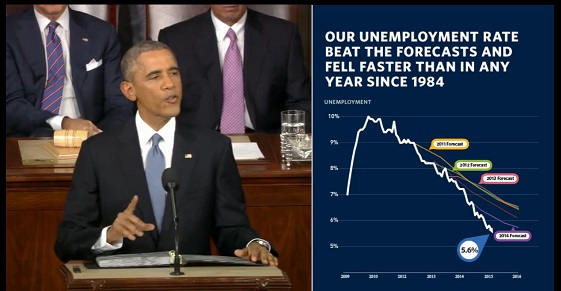
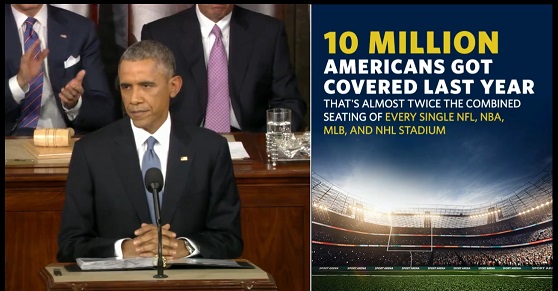
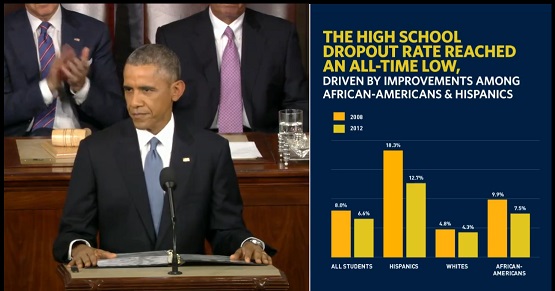
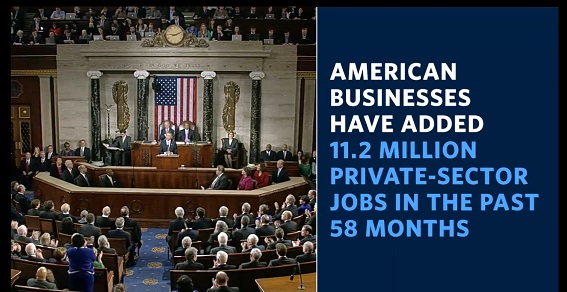
You are invited to watch the State of the Union address that President Barack Obama delivered to the US Congress on Tuesday night (January 20, 2015). You are urged to listen carefully and count the number of times the Caribbean is referred to. The answer:

Once!

The reference to the restoration of diplomatic relations with Cuba.

That’s it!

(The Guantanamo Bay Naval Base is a perpetual leased US territory; so it will not count as Caribbean-specific).

No reference to the US Territories (Puerto Rico and the Virgin Islands); no reference to the Dutch Caribbean; nor to the French Caribbean; and especially not to the English-speaking Caribbean member-states.

The truth of the matter is that the Caribbean is out-of-scope for Obama. It was the State of the Union of the United States of America. Not the State of the Caribbean Union. Even the US territories have to be concerned. They have a voice in the US Congress, but no vote. (A lesson in American Civics teaches that territories have Congressional representation that can vote in committees, but not vote in full Congress).

So all the President’s focus on job creation, energy independence, growing the economy, controlling healthcare costs, securing the homeland, and optimizing government was directed to his American constituency and not to the Caribbean member-states.

VIDEO Title: The State of the Union (SOTU) 2015 – http://youtu.be/cse5cCGuHmE
Watch President Obama’s 1-hour remarks during his 6th SOTU address and learn more below.

Published on Jan 20, 2015
President Barack Obama delivers his sixth State of the Union address, at the United States Capitol, January 20, 2015.

CU Blog - State of the Caribbean Union - Photo 1

CU Blog - State of the Caribbean Union - Photo 2

CU Blog - State of the Caribbean Union - Photo 3

CU Blog - State of the Caribbean Union - Photo 4

We, the Caribbean, are required to focus on the State of our own Union.

The people, the 320 million Americans, elect a President to pursue their best interest, not the world’s best interest. Though the US tries to be a Good Neighbor, there may be times when the priorities of the US conflict with the priorities of the Caribbean, or the rest of the world. In those scenarios, the President is under charge to pursue the American best option.

The 42 million people of the Caribbean homeland are not in his scope!

The foregoing VIDEO and this commentary is being brought into focus in a consideration of the book Go Lean … Caribbean. The book serves as a roadmap for the introduction and implementation of the technocratic Caribbean Union Trade Federation (CU), for the elevation of Caribbean society. This CU/Go Lean roadmap has these 3 prime directives:

  • Optimization of the economic engines in order to grow the regional economy to $800 Billion and create 2.2 million new jobs.
  • Establishment of a security apparatus to protect the resultant economic engines.
  • Improve Caribbean governance to support these engines.

The Go Lean book (Page 3) makes a simple assertion regarding the State of our Union: the Caribbean is in crisis. The book details that there is something wrong in the homeland, that while it is the greatest address in the world, instead of the world “beating a path” to these doors, the people of the Caribbean have “beat down their doors” to get out.

Why do people leave? The book identifies a number of reasons, classified as “push-and-pull”. There are economic (jobs and entrepreneurial opportunities), security and governance issues.

One mission of the Go Lean roadmap is to minimize these “push-and-pull” factors that contribute to this alarmingly high abandonment rate of Caribbean citizens – one report reflects a 70% brain drain rate.

Considering “pull” factors, the roadmap posits that the United States of America should not be viewed as the panacea for Caribbean ailments; that when the choice of any challenge is “fight or flight” that Caribbean society must now consider anew, the “fight” options. (No violence is implied, but rather a strenuous effort, heavy-lifting, to compete and win economic battles). One strong reason for cautioning Caribbean emigrants is that America is not so welcoming a society for the “Black and Brown” populations from the Caribbean. This was not addressed by Obama; he has to address the needs of all Americans – not just “Black and Brown” – racial discrimination have not been as high a priority among his initiatives, to the chagrin of many in the African-American communities, including the Caribbean Diaspora.

On the other hand, the Go Lean book does not ignore the “push” factors that cause many Caribbean people to flee. The book stresses (early at Pages 12 – 13) the need to be on-guard for “push” factors in these pronouncements in the Declaration of Interdependence:

xii.     Whereas the legacy in recent times in individual states may be that of ineffectual governance with no redress to higher authority, the accedence of this Federation will ensure accountability and escalation of the human and civil rights of the people for good governance, justice assurances, due process and the rule of law. As such, any threats of a “failed state” status for any member state must enact emergency measures on behalf of the Federation to protect the human, civil and property rights of the citizens, residents, allies, trading partners, and visitors of the affected member state and the Federation as a whole.

xix.    Whereas our legacy in recent times is one of societal abandonment, it is imperative that incentives and encouragement be put in place to first dissuade the human flight, and then entice and welcome the return of our Diaspora back to our shores. This repatriation should be effected with the appropriate guards so as not to imperil the lives and securities of the repatriated citizens or the communities they inhabit. The right of repatriation is to be extended to any natural born citizens despite any previous naturalization to foreign sovereignties.

xx.    Whereas the results of our decades of migration created a vibrant Diaspora in foreign lands, the Federation must organize interactions with this population into structured markets. Thus allowing foreign consumption of domestic products, services and media, which is a positive trade impact. These economic activities must not be exploited by others’ profiteering but rather harnessed by Federation resources for efficient repatriations.

xxi.    Whereas the preparation of our labor force can foster opportunities and dictate economic progress for current and future generations, the Federation must ensure that educational and job training opportunities are fully optimized for all residents of all member-states, with no partiality towards any gender or ethnic group. The Federation must recognize and facilitate excellence in many different fields of endeavor, including sciences, languages, arts, music and sports. This responsibility should be executed without incurring the risks of further human flight, as has been the past history.

xxvi.  Whereas the Caribbean region must have new jobs to empower the engines of the economy and create the income sources for prosperity, and encourage the next generation to forge their dreams right at home, the Federation must therefore foster the development of new industries, like that of ship-building, automobile manufacturing, prefabricated housing, frozen foods, pipelines, call centers, and the prison industrial complex. In addition, the Federation must invigorate the enterprises related to existing industries like tourism, fisheries and lotteries – impacting the region with more jobs.

This commentary previously related details of Caribbean emigration and their experiences (Diaspora), the “push-and-pull” factors in the US, and our region’s own job-creation efforts – State of Our Own Union. Here is a sample of earlier blogs:

https://goleancaribbean.com/blog/?p=3780 National Sacrifice: The Missing Ingredient – Caribbean people not willing to die or live in sacrifice to their homeland
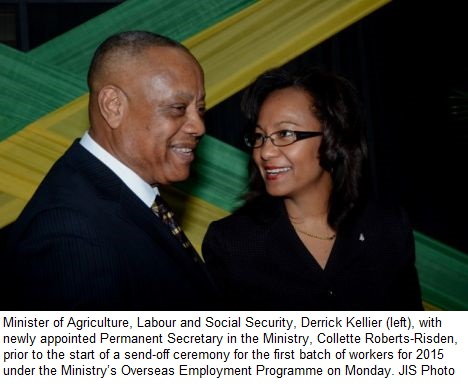
https://goleancaribbean.com/blog/?p=3694 Jamaica-Canada employment program pumps millions into local economy
https://goleancaribbean.com/blog/?p=3662 Migrant flow into US from Caribbean spikes
https://goleancaribbean.com/blog/?p=3446 Forecast for higher unemployment in Caribbean in 2015
https://goleancaribbean.com/blog/?p=3050 Obama’s immigration tweaks – Bad for the Caribbean
https://goleancaribbean.com/blog/?p=2547 Miami’s Success versus Caribbean Failure
https://goleancaribbean.com/blog/?p=2251 What’s In A Name? Plight of “Black and Brown” in the US
https://goleancaribbean.com/blog/?p=1896 American “Pull” Factors – Crisis in Black Homeownership
https://goleancaribbean.com/blog/?p=1698 American “Pull” Factors – STEM Jobs Are Filling Slowly
https://goleancaribbean.com/blog/?p=1596 Book Review: ‘Prosper Where You Are Planted’
https://goleancaribbean.com/blog/?p=1433 Caribbean loses more than 70 percent of tertiary educated to Brain-Drain
https://goleancaribbean.com/blog/?p=1296 Remittances to Caribbean Increased By 3 Percent in 2013
https://goleancaribbean.com/blog/?p=1256 Traditional 4-year College Degree are Terrible Investments for the Caribbean Region Due to Brain-Drain

The Go Lean book and accompanying blogs posit that for the Caribbean Diaspora, fleeing from their homelands to reside in the US is akin to “jumping from the frying pan into the fire” in terms of effort to succeed and thrive in a community. The message of the Go Lean movement is that it takes less effort to remediate the Caribbean than to fix a new adopted homeland. While the Go Lean planners may not be able to change American society, we can – no, we must – impact our own society. This is the charge of the Go Lean…Caribbean roadmap, to do the heavy-lifting, to implement the organization dynamics to impact Caribbean society here and now. The following are the community ethos, strategies, tactics and operational advocacies to effectuate this goal:

Community Ethos – People Respond to Incentives Page 21
Community Ethos – Economic Systems Influences Choices & Incentives Page 21
Community Ethos – The Consequences of Choice Lie in the Future Page 21
Community Ethos – Job Multiplier Page 22
Community Ethos – Minority Equalization Page 24
Community Ethos – Lean Operations Page 24
Community Ethos – Ways to Foster Genius Page 27
Community Ethos – Ways to Improve Negotiations Page 32
Community Ethos – Ways to Impact the Greater Good Page 37
Strategy – Vision – Make the Caribbean the Best Address on Planet Page 45
Strategy – Mission – Repatriate Diaspora Page 46
Strategy – Mission – Dissuade Human Flight/“Brain Drain” Page 46
Tactical – Separation of Powers – Union versus Member-States Page 71
Implementation – Assemble CariCom, Dutch, French, Cuba and US Territories Page 95
Implementation – Enact Territorial Compacts for PR & the Virgin Islands Page 96
Implementation – Foreign Policy Initiatives at Start-up Page 102
Implementation – Ways to Deliver Page 109
Implementation – Reasons to Repatriate Page 118
Implementation – Ways to Benefit from Globalization Page 119
Implementation – Ways to Promote Independence Page 120
Planning – 10 Big Ideas for the Caribbean Page 127
Planning – Lessons from the US Constitution Page 145
Advocacy – Ways to Grow the Economy Page 151
Advocacy – Ways to Create Jobs Page 152
Advocacy – Ways to Improve Governance Page 168
Advocacy – Ways to Improve Homeland Security Page 180
Advocacy – Ways to Impact the Diaspora Page 217
Advocacy – Ways to Preserve Caribbean Heritage Page 218
Advocacy – Ways to Re-boot Cuba Page 236
Advocacy – Ways to Impact US Territories Page 244
Appendix – Interstate Compacts Page 278

This Go Lean book accepts that the current State of Our Own Union is not a permanent disposition. We can do better. This roadmap is a 5-year plan to effect change, to make our homeland a better place to live, work and play. From Day One/Step One, positive change emerges. The roadmap therefore serves as turn-by-turn directions for what-how-when-where-why to apply the needed remediation, mitigations and empowerments.

The scope of this roadmap is change for the Caribbean, not change for American society – though there is the need for some lobbying of American authorities for Interstate/Foreign Compacts (Page 278).

That’s lobbying, not begging

As for the Caribbean US territories – the great American Empire – having a voice, but no vote is disadvantageous. A Congressman from Nebraska would not negotiate with a Congressman from Puerto Rico because there is no vote to offer, compromise or “horse-trade”. American territories are therefore just traditional colonies, parasites and subjective to their imperial masters.

The Caribbean strives to be protégés, not parasites! We can be the world’s best address. How glorious the day when we can declare that as the State of the Caribbean Union!

Now is the time for all of the Caribbean, the people and governing institutions, to lean-in to this Go Lean … Caribbean roadmap. 🙂

Download the book Go Lean … Caribbean – now!

Share this post:
, , , , ,
[Top]

Lessons from the Swiss unpegging the franc

 Go Lean Commentary

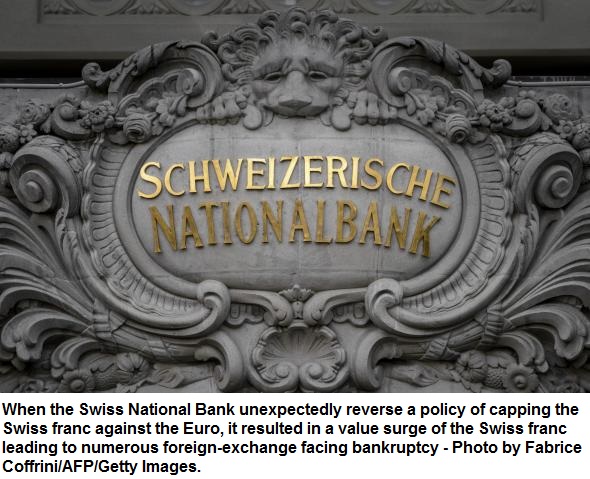
The financial world is all abuzz regarding the move by the Switzerland National Bank to unpeg their currency from their default value tied to the Euro.

Change is afoot:

o CNBC – VIDEO: Swiss franc soars, stocks tank as euro peg scrapped

o Business Insider-UK: The Swiss Franc Is Out of Control

o Bloomberg: Swiss Franc Stages Historic Rally as SNB Move Shocks Market

o Wall Street Journal: Swiss Franc Remains at Sky-High Levels; Swiss Stocks Regain Some Stability

o Financial Times (London): Swiss franc fallout claims more casualties

o Business Insider Editorial: The Decision To Let The Swiss Franc Cause Market Chaos

There are winners and losers from this new move.

How does it relate to the Caribbean?

The Swiss franc is not one of our focused currencies; we get little tourism from that country in particular and we do little trade. Yet this move is HUGE for Caribbean consideration.

This article is in consideration of the book Go Lean…Caribbean; it serves as a roadmap for the introduction and implementation of the technocratic Caribbean Union Trade Federation (CU) and Caribbean Central Bank (CCB) to provide better stewardship, to ensure that the economic/currency failures of the past, in the Caribbean and other regions, do not re-occur here in the homeland.

This Economist article here explains more fundamental dynamics from this global-currency strategy-play:

Title: The Economist explains: Why the Swiss unpegged the franc
By: C.W.
CU Blog - Lessons from the Swiss unpegging the franc - Photo 1IN THE world of central banking, slow and predictable decisions are the aim. So on January 15th, when the Swiss National Bank (SNB) suddenly announced that it would no longer hold the Swiss franc at a fixed exchange rate with the Euro, there was panic. The franc soared. On Wednesday one Euro was worth 1.2 Swiss francs; at one point on Thursday its value had fallen to just 0.85 francs. A number of hedge funds across the world made big losses. The Swiss stock market collapsed. Why did the SNB provoke such chaos?

The SNB introduced the exchange-rate peg in 2011, while financial markets around the world were in turmoil. Investors consider the Swiss franc as a “safe haven” asset, along with American government bonds: buy them and you know your money will not be at risk. Investors like the franc because they think the Swiss government is a safe pair of hands: it runs a balanced budget, for instance. But as investors flocked to the franc, they dramatically pushed up its value. An expensive franc hurts Switzerland because the economy is heavily reliant on selling things abroad: exports of goods and services are worth over 70% of GDP. To bring down the franc’s value, the SNB created new francs and used them to buy Euros. Increasing the supply of francs relative to Euros on foreign-exchange markets caused the franc’s value to fall (thereby ensuring a Euro was worth 1.2 francs). Thanks to this policy, by 2014 the SNB had amassed about $480 billion-worth of foreign currency, a sum equal to about 70% of Swiss GDP.

The SNB suddenly dropped the cap last week for several reasons. First, many Swiss are angry that the SNB has built up such large foreign-exchange reserves. Printing all those francs, they say, will eventually lead to hyperinflation. Those fears are probably unfounded: Swiss inflation is too low, not too high. But it is a hot political issue. In November there was a referendum which, had it passed, would have made it difficult for the SNB to increase its reserves. Second, the SNB risked irritating its critics even more, thanks to something that is happening this Thursday: many expect the European Central Bank to introduce “quantitative easing”. This entails the creation of money to buy the government debt of Euro-Zone countries. That will push down the value of the Euro, which might have required the SNB to print lots more francs to maintain the cap. But there is also a third reason behind the SNB’s decision. During 2014 the Euro depreciated against other major currencies. As a result, the franc (being pegged to the Euro) has depreciated too: in 2014 it lost about 12% of its value against the dollar and 10% against the Rupee (though it appreciated against both currencies following the SNB’s decision). A cheaper franc boosts exports to America and India, which together make up about 20% of Swiss exports. If the Swiss franc is not so overvalued, the SNB argues, then it has no reason to continue trying to weaken it.

The big question now is how much the removal of the cap will hurt the Swiss economy. The stock market fell because Swiss companies will now find it more difficult to sell their wares to European customers (high-rolling Europeans are already complaining about the price of this year’s skiing holidays). UBS, a bank, downgraded its forecast for Swiss growth in 2015 from 1.8% to 0.5%. Switzerland will probably remain in deflation. But the SNB should not be lambasted for removing the cap. Rather, it should be criticized for adopting it in the first place. When central banks try to manipulate exchange rates, it almost always ends in tears.

Source: The Economist Magazine – Financial Weekly (Posted 01/18/2015) –
 http://www.economist.com/blogs/economist-explains/2015/01/economist-explains-13

CU Blog - Lessons from the Swiss unpegging the franc - Photo 2The Swiss National Bank is unlike other central banks because it is not owned by the Swiss government but is a listed company with shareholders that include Swiss administrative regions, known as cantons, as well other public bodies and private individuals. This arrangement provides a cool 1 billion francs ($1.15 billion) annually split between Switzerland’s 26 cantons in proportion to their populations and, most importantly, was considered a safe and reliable stream of income. In fact, according to the Swiss Central Bank, the dividend had been paid every year for over 100 years until a 2013 collapse in the price of gold hurt the bank’s gold asset holdings.

Here is where the lessons for the Caribbean magnify. The Swiss National Bank is a confederation, much like the Go Lean roadmap for the Caribbean Union, Caribbean Central Bank (CCB) and the Caribbean Dollar (C$). The roadmap calls for a cooperative entity of the existing Central Banks in the region; fostering interdependence for the regional Greater Good. There is now interconnectivity of the financial systems, bank/currency troubles in foreign countries easily become trouble for the Caribbean region. Though there is elasticity from these foreign financial centers, the Caribbean is big enough (42 million people in 30 member-states) to streamline its own viable currency/financial/securities market – just like the Swiss (a country of 8 million people but with a $680 Billion economy).

The Caribbean has had to learn hard lessons on currency, as many of the CU member-states have had to endure painful devaluations over the past decades – on more than one occasions. Any attempt to reboot Caribbean economic landscape must first start with a strenuous oversight of the C$ currency. Oversight would imply actions in offense and defense of our own currency. This is what the Swiss (SNB) has done in the foregoing articles. They were at the mercy of the Euro Zone, being pegged to the Euro, as the Euro moved up, the franc would move up; as the Euro moved down, the franc moved down. This parasitical elasticity undermined their independence and any discipline on their part was neutralized by the Euro Zone.

This is the exact position of the Caribbean today. Most Caribbean currencies are pegged to the US dollar. As the dollar rises and falls, so do Caribbean currencies. The US Dollar planners (Federal Reserve) do not have the Caribbean best-interest in mind; they have American self-interest in mind. Good for them; bad for us! Change has now come. A strong currency is a good thing! The Go Lean book strongly urges the region to overcome any “fear of math” because the C$ may become stronger in comparison to the US$. This is why e-Commerce and e-Payments schemes are strongly urged within the CU/Go Lean roadmap.

Early in the book, this need for regional stewardship of Caribbean currencies was pronounced (Declaration of Interdependence – Page 13) with these statements:

xxiv.    Whereas a free market economy can be induced and spurred for continuous progress, the Federation must install the controls to better manage aspects of the economy: jobs, inflation, savings rate, investments and other economic principles. Thereby attracting direct foreign investment because of the stability and vibrancy of our economy.

xxv.    Whereas the legacy of international democracies had been imperiled due to a global financial crisis, the structure of the Federation must allow for financial stability and assurance of the Federation’s institutions. To mandate the economic vibrancy of the region, monetary and fiscal controls and policies must be incorporated as proactive and reactive measures. These measures must address threats against the financial integrity of the Federation and of the member-states.

The Go Lean book, and previous blog/commentaries, stressed the key community ethos, strategies, tactics, implementations and advocacies necessary to establish the regional financial eco-systems for Caribbean self-determination. These points are detailed in the book as follows:

Community Ethos – Economic Principles – Economic Systems Influence   Individual Choices Page 21
Community Ethos – Economic Principles – Voluntary Trade Creates Wealth Page 21
Community Ethos – Economic Principles – Consequences of Choices Lie in   the Future Page 21
Community Ethos – Economic Principles – Money Multiplier Page 23
Community Ethos – Governing Principles – Lean Operations Page 24
Community Ethos – Governing Principles – Return on Investments Page 24
Community Ethos – Governing Principles – Cooperatives Page 25
Community Ethos – Ways to Impact the Future – Count on the Greedy to   be Greedy Page 26
Community Ethos – Ways to Impact the Greater Good Page 37
Strategy – Mission – Fortify the Stability of   the Securities Markets Page 45
Strategy – Provide Proper Oversight and Support for the Depository   Institutions Page 46
Strategy – e-Payments and Card-based Transactions Page 49
Tactical – Summary of Swiss Confederation and Other Models Page 63
Tactical – Growing the Economy – Minimizing Bubbles Page 69
Tactical – Separation-of-Powers – Depository Insurance &   Regulatory Agency Page 73
Anecdote – Turning Around CARICOM – Effects of 2008 Financial Crisis Page 92
Implementation – Assemble Caribbean Central Bank as a Cooperative Page 96
Implementation – Ways to Better Manage Debt – Optimizing Wall Street   Role Page 114
Planning – 10 Big Ideas – Single Market / Currency Union Page 127
Planning – Ways to Model the European Union Page 130
Planning – Lessons Learned from 2008 Page 136
Planning – Lessons Learned from New York City – Wall Street Page 137
Planning – Ways to Measure Progress Page 147
Anecdote – Caribbean Currencies Page 149
Advocacy – Ways to Grow the Economy Page 151
Advocacy – Ways to Control Inflation Page 153
Advocacy – Ways to Better Manage Foreign Exchange Page 154
Advocacy – Ways to Foster Cooperatives – Caribbean Central Bank Page 176
Advocacy – Ways to Foster Electronic Commerce Page 198
Advocacy – Reforms for Banking Regulations Page 199
Advocacy – Ways to Impact Wall Street Page 200
Appendix – Tool-kits for Capital Controls Page 315
Appendix – Lessons Learned from Floating the Trinidad & Tobago   Dollar Page 316
Appendix – Controlling Inflation – Technical Details Page 318
Appendix – e-Government and e-Payments Example: EBT Page 353

The points of effective, technocratic banking/economic stewardship, were further elaborated upon in these previous blog/commentaries:

https://goleancaribbean.com/blog/?p=3582 For Canadian Banks: Caribbean is a ‘Bad Bet’
https://goleancaribbean.com/blog/?p=3397 A Christmas Present for the Banks from the Omnibus Bill
https://goleancaribbean.com/blog/?p=3090 Lessons Learned – Europe Sovereign Debt Crisis of 2009
https://goleancaribbean.com/blog/?p=3028 Why India is doing better than most emerging markets
https://goleancaribbean.com/blog/?p=2930 ‘Too Big To Fail’ – Caribbean Version
https://goleancaribbean.com/blog/?p=2090 The Depth & Breadth of Remediating 2008 – Need for Command-and-Control
https://goleancaribbean.com/blog/?p=1014 Canadian View: All is not well in the sunny Caribbean
https://goleancaribbean.com/blog/?p=833 One currency, divergent economies
https://goleancaribbean.com/blog/?p=518 Analyzing the Data – What Banks learn about financial risks
https://goleancaribbean.com/blog/?p=378 US Federal Reserve Releases Transcripts from 2008 Meetings

The Caribbean dream is the coveted role of protégé to our North American and European trading partners, not the parasite role we have thus far assumed. But this is easier said than done, as the doing part requires heavy-lifting. But this plan is conceivable, believable and achievable. The Swiss, while not a member of the EU nor Euro Zone, provides such a great role model for the Caribbean:

Switzerland comprises four main linguistic and cultural regions: German, French, Italian and the Romansh unique dialect. Therefore the Swiss, although predominantly German-speaking, do not form a nation in the sense of a common ethnicity or language; rather, Switzerland’s strong sense of identity and community is founded on a common historical background, shared values such as federalism and direct democracy,[10] and Alpine symbolism.[11] 

Switzerland ranks high in several metrics of national performance, including government transparency, civil liberties, economic competitiveness, and human development. It has the highest nominal wealth per adult (financial and non-financial assets) in the world according to Credit Suisse and the eighth-highest per capita gross domestic product (GDP)  on the IMF list.[12][13] Swiss citizens have the second-highest life expectancy in the world. Zürich and Geneva each have been ranked among the top cities with the highest quality of life in the world; (Source: http://en.wikipedia.org/wiki/Switzerland).

All in all, the country is a great place to live, work and play.

On the other hand, the Go Lean book declares to “count on greedy people to be greedy” (Page 26). This situation is manifested here in the foregoing articles; investors will always exploit opportunities to maximize profits. Globalization affords options to move money from one financial “bucket” in one country to another “bucket” in another country. This exercise has affected many middle-wage jobs in developed lands. The end result, increased profits for the decision-makers, less jobs for the workers; thus a growing income inequality: so the “Rich” get richer, but the “Middle Class” get shrunk.

CU Blog - Lessons from the Swiss unpegging the franc - Photo 3We have so many lessons to learn from the Swiss in this mission to elevate Caribbean economic-security-governing engines. The Swiss Confederacy (circa 1300 – 1798) facilitated management of common interests and ensured peace on their important trade routes. The Swiss has demonstrated that a Permanent Union can facilitate the Greater Good for multiple states (26) in a geographical region. That’s the Old Lesson; based on the foregoing articles, there are now many new lessons; some good, some bad. Foreign currency (Fx) brokerage houses are suffering financial setbacks because of these sudden changes with the Swiss franc; with leverage and derivatives, the Fx industry has become one big gamble. This point impresses the lesson of how Fx speculators can manipulate a country’s currency – this plight previously afflicted individual Caribbean currencies (Page 149). But now we see the Swiss using their unified command-and-control to set their currency standards for their own best interest, not the profit motives of some external stakeholders. The Swiss are no parasites! They are protégés!

Switzerland has hereby demonstrated that having command-and-control is required for economic success. Lesson learned!

The Caribbean’s 30 member-states are urged to lean-in to this Go Lean confederation roadmap. This is the turn-by-turn directions, the heavy-lifting, to move the region to its new destination: a better homeland to live, work and play.  🙂

Download the book Go Lean … Caribbean – now!

Share this post:
, , , ,
[Top]

National Sacrifice – The Missing Ingredient

Go Lean Commentary

CU Blog - National Sacrifice - The Missing Ingredient - Photo 3The term National Sacrifice is defined here as the willingness to die for a greater cause; think “King/Queen and Country”. This spirit is currently missing in the recipe for “community” in the Caribbean homeland.

To be willing to die for a cause means that one is willing to live for the cause. Admittedly, “dying” is a bit extreme. The concept of “sacrifice” in general is the focus of this commentary.

The publishers of the book Go Lean…Caribbean wants to forge change in the Caribbean, we want to change the attitudes for an entire community, country and region. We have the track record of this type of commitment being exemplified in other communities. (Think: The US during WW II). Now we want to bring a National Sacrifice attitude to the Caribbean, as it is undoubtedly missing. This is evidenced by the fact the every Caribbean member-state suffers from alarming rates of societal abandonment: 70% of college educated population in the English states have left in a brain drain, while the US territories have lost more than 50% of their populations).

The book Go Lean…Caribbean opens with the acknowledgement that despite having the “greatest address in the world… the people of the Caribbean have beat down their doors to get out”, (Page 5).

CU Blog - National Sacrifice - The Missing Ingredient - Photo 4The book Go Lean…Caribbean serves as a roadmap for the introduction and implementation of the Caribbean Union Trade Federation (CU); a confederation to bring change, empowerment, to the Caribbean region; to make the region a better place to live, work and play for all stakeholders (residents, visitors, businesses, organizations – NGO’s and governments). This Go Lean roadmap also has initiatives to foster solutions for the Caribbean youth. The Go Lean book posits that permanent change for Caribbean society will only take root as a result of adjustments to the community attitudes, the national spirit that drives the character and identity of its people. This is identified in the book as “community ethos”; and that one such character, National Sacrifice is sorely missing in this region.

Any attempts to change Caribbean society’s community ethos must start with the youth.

At no point should it be construed that this commentary is advocating sacrificing young men (and women) on the altar of the God of War. But rather, this commentary laments the missing ingredients of wholesale commitment to any national cause. Thusly, the recommendation is for conscription/draft (Appendix B) into a National Youth Service (NYS) program for the Caribbean. Take it one step further and make the Youth Service program regional in its scope rather than “national”; with applicable exemptions for:

  • military/police enrollments
  • student/research deferments (at regional institutions)
  • religious/missionary assignments
  • medical/disability exceptions

This quest relates a commitment so vital to a community that everyone should be willing to sacrifice and lean-in for the desired outcome. This Caribbean effort is not new to the world; it is currently being championed by a Washington-DC-based global Non-Government Organization (NGO) branded the Innovations in Civic Participation (ICP). Much can be learned from analyzing their successes … and failures. See details here:

Innovations in Civic Participation – NGO – Leaders for Youth Civic Engagement (Retrieved 01/15/2015):

Innovations in Civic Participation (ICP) is a global leader in the field of Youth Civic Engagement. ICP envisions a world where young people in every nation are actively engaged in improving their lives and their communities through civic participation. We believe that well-structured youth service programs can provide innovative solutions to social and environmental issues, while helping young people develop skills for future employment and active citizenship.

ICP carries out its mission through four main activities:

  1. Incubating innovative models for youth service programs;
  2. Creating and expanding global networks;
  3. Conducting research and publicizing information on youth civic engagement, especially national youth service and service-learning; and
  4. Serving as a financial intermediary to support program innovation and policy development.

In addition to these activities, ICP regularly consults with its extensive network of over 2,500 academics, policymakers, program entrepreneurs, and other leaders in the field on program and policy work.

Contact Information:

Innovations in Civic Participation
P.O. Box 39222
Washington, DC 20016
202-775-0290

http://www.icicp.org/about-us/

A quest for a National Youth Service has previously been advocated in Sub-Saharan Africa (see Appendix C). There, the NYS was designed to explore the potential to foster youth employability, entrepreneurship, and sustainable livelihoods. This effort stemmed from an existing tradition of NYS programs in Sub-Saharan Africa, which were originally designed to cultivate a sense of national identity and mobilize skills for development in post-independence nations; (see Appendix A). Today, NYS programs operate in the context of a deepening regional youth unemployment crisis, which averages over 20 percent, according to African Economic Outlook. NYS programs engage hundreds of thousands of young people each year and have the potential to equip them with strong civic skills and prepare them for employment and livelihood opportunities.

Despite its potential as an economic strategy, little is still known about how effective NYS programs are at increasing youth employability in Africa. But there is no doubt for the commitment to community that is forged from these efforts. Young people cry, sweat, and bleed for their community, embedding a desire to sacrifice for the Greater Good.

This corresponds with the Bible precept: “There is more happiness in giving than in receiving” – Acts 20:35

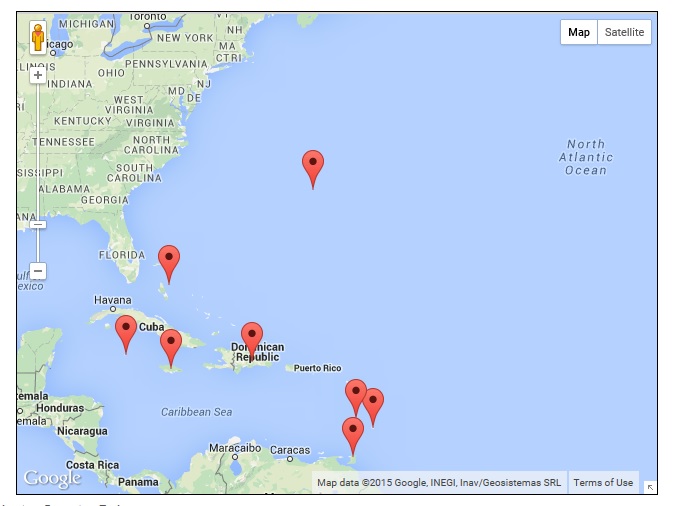
There are NYS programs already deployed or proposed for these Caribbean member-states, (though many have been snagged or stalled):

CU Blog - National Sacrifice - The Missing Ingredient - Photo 1

The purpose of the Go Lean book/roadmap is more than just the embedding of new community ethos, but rather the elevation/empowerment of Caribbean society. In total, the Caribbean empowerment roadmap has these 3 prime directives:

  • Optimization of the economic engines in order to grow the regional economy to $800 Billion & create 2.2 million new jobs.
  • Establishment of a security apparatus to protect the resultant economic engines.
  • Improve Caribbean governance and industrial policies to support these engines.

The roadmap details the following community ethos, plus the execution of these strategies, tactics, implementation and advocacies to forge permanent change in the region:

Community Ethos – Deferred Gratification Page 21
Community Ethos – Economic Principles – People Choose Page 21
Community Ethos – Economic Principles – People Respond to Incentives in Predictable Ways Page 21
Community Ethos – Economic Principles – The Consequences of Choices Lie in the Future Page 21
Community Ethos – Governing Principles – Lean Operations Page 24
Community Ethos – Governing Principles – Cooperatives Page 25
Community Ethos – Ways to Impact the Future Page 26
Community Ethos – Ways to Impact a Turn-Around Page 33
Community Ethos – Ways to Improve Sharing Page 35
Community Ethos – Ways to Promote Happiness Page 36
Community Ethos – Ways to Impact the Greater Good Page 37
Strategy – Vision – Confederate 30 Member-States Page 45
Strategy – Mission – Enact a Defense Pact to Defend the Homeland Page 45
Strategy – Mission – Keep the next generation at home Page 46
Tactical – Confederating a Permanent Union Page 63
Tactical – Fostering a Technocracy Page 64
Tactical – Separation-of-Powers Between CU & Member-States Governments Page 71
Implementation – Assemble – Incorporating all the existing regional organizations Page 96
Implementation – Ways to Pay for Change Page 101
Implementation – Security Initiatives at Start-up Page 103
Implementation – Ways to Deliver Page 109
Planning – 10 Big Ideas for the Caribbean – Confederation Without Sovereignty Page 127
Planning – Ways to Make the Caribbean Better Page 131
Planning – Lessons Learned from the West Indies Federation – Military Units Page 135
Advocacy – Ways to Grow the Economy Page 151
Advocacy – Ways to Create Jobs Page 152
Advocacy – Ways to Better Manage the Social Contract Page 170
Advocacy – Ways to Manage Federal Civil Service Page 173
Advocacy – Ways to Improve Homeland Security Page 181
Advocacy – Ways to Improve Communications Page 186
Advocacy – Ways to Preserve Caribbean Heritage Page 218
Advocacy – Ways to Impact Youth Page 227
Appendix – 30,000 Federal Employees Page 299
Appendix – Previous West Indies Integration – Caribbean Regiment Page 301

Previously Go Lean blog/commentaries have considered historic references and have also stressed fostering the proper and appropriate community ethos for the Caribbean to prosper; and reported on the repercussions and consequences of bad ethos. The following sample applies:

https://goleancaribbean.com/blog/?p=2830 Bad Ethos: Jamaica’s Public Pension Under-funded
https://goleancaribbean.com/blog/?p=2809 A Lesson in Bad Community Ethos : East Berlin/Germany
https://goleancaribbean.com/blog/?p=2480 A Lesson in History: Community Ethos of WW II
https://goleancaribbean.com/blog/?p=2297 A Lesson in History – Booker T versus Du Bois – to Change a Bad Community Ethos
https://goleancaribbean.com/blog/?p=1531 A Lesson in History: 100 Years Ago – World War I – Cause and Effect in Community Ethos
https://goleancaribbean.com/blog/?p=841 Having Less Babies is Bad for the Economy – Need People
https://goleancaribbean.com/blog/?p=623 Only at the Precipice, Do Communities Change
https://goleancaribbean.com/blog/?p=353 Book Review: ‘Wrong – Nine Economic Policy Disasters and What We Can Learn…’
https://goleancaribbean.com/blog/?p=228 Egalitarianism versus Anarchism – Community Ethos Debate

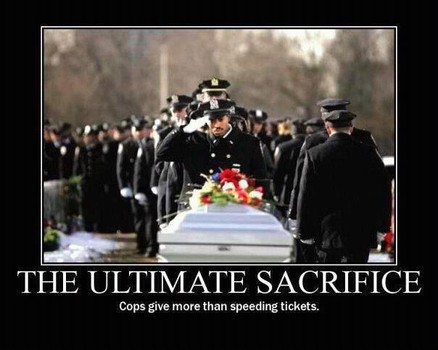
All in all, there is a certain community ethos associated with populations that have endured change. It is a National Sacrifice, a deferred gratification and focus on the future. Any losses of privileges are appreciated by the entire community, not just the affected individual or family member. This is the purpose of the US Memorial Day Holiday on the last Monday in May, honoring the military service of all our men and women in uniform, their families at home, and those who have made the ultimate sacrifice in dying for their country. A quest to unite the country in remembrance and appreciation of the fallen and to serve those who are grieving is a good way to forge a community ethos of National Sacrifice.

See VIDEO here of a community’s great honor to a slain soldier:

VIDEO: Sky Mote: Community Honors a Fallen Soldier from El Dorado County with a Hero’s Welcome –   http://youtu.be/MVQORRQvTpU

Published on Aug 17, 2012 – Starting with a Marine Honor Guard carrying the transfer case containing the body of Staff Sgt. Sky R. Mote of El Dorado, CA, upon arrival at Dover Air Force Base, Del. on Sunday Aug. 12, 2012. (AP Photo/Jose Luis Magana). Then continuing with the great Welcome Home the community gave. His family will never forget!

Though this Fallen Soldier is mourned and missed, his sacrifice is duly acknowledged, appreciated and honored in his hometown. This community spirit creates a value system for public service and National Sacrifice.

The US is not the only country that memorializes their war dead. Those countries that do, experience less societal abandonment. The British Commonwealth of Nations (representative of 18 Caribbean member-states) shows likewise homage to their Fallen Soldiers. The Commonwealth War Graves Commission (CWGC) is responsible for maintaining the war graves of 1.7 million service personnel that died in the First and Second World Wars fighting for Commonwealth member states. Founded in 1917 (as the Imperial War Graves Commission), the Commission has constructed 2,500 war cemeteries, and maintains individual graves at another 20,000 sites around the world.[107] The vast majority of the latter [however] are civilian cemeteries in Great Britain. (Source: http://en.wikipedia.org/wiki/Commonwealth_War_Graves_Commission).

The former British colonies did not adopt this National Sacrifice value system. As most Caribbean (notwithstanding the US Territories) member-states do not even have a (work-free) holiday to honor the sacrifices of those that fought, bled and/or died for their country.

No appreciation, no sacrifice; no sacrifice, no victory. It is that simple!

It is the recommendation of this blog/commentary that all Caribbean member-states should mandate a civilian conscription service for their citizens (1 year between ages 18 and 25); it is common for a confederation – the CU for the Caribbean – to marshal a multi-state, allied military force. Then the CU should facilitate a complete eco-system of engaging the conscripted NYS participants to serve and protect the people and resources of the Caribbean. After which, the communities should show proper appreciation and honor to those that make these sacrifices for “King/Queen and Country”, from all conscription services: military service, public and civilian.

(Many times school teachers and administrators are lowly paid; their service to their country is a great sacrifice).

Veteran-style benefits should thusly be considered for all these “national” servants. This commitment from the community would go far in forging deep loyalty within the citizenry, thus mitigating quick abandonment of the homeland.

There is a separation-of-powers between the CU federal agencies and Caribbean member-states, so the CU would have no authority on how member-states manage, appreciate or honor their civil servants; unless some CU grants/funding apply. But for CU personnel, the practice will be institutionalized to recognize the service of long-time civil servants (active or retired) and their sacrifices. So for any human resource that die in the line of duty, the funeral processions will be filled with pomp and circumstance, much like the foregoing VIDEO.

“The [servants] who perform well are to be considered worthy of double honor, especially those who work hard …” – Bible 1 Timothy 5:17

Now is the time to lean-in to this roadmap for Caribbean change, as depicted in the book Go Lean…Caribbean. All the mitigations and empowerments in this roadmap require people to remain in the homeland. No people, no hope! A community ethos, a spirit or attitude of sacrifice for the Greater Good is a great start to forge change; no sacrifice, no victory.

🙂

Download the book Go Lean … Caribbean – now!

——————-

Appendix A – ICP Studies and Results

Overview of the National Youth Service Landscape in Sub-Saharan Africa

National Youth Service Project on Employability, Entrepreneurship and Sustainable Livelihoods in Sub-Saharan Africa: Synthesis Report

——————

Appendix B – Conscription (or Drafting)
This is the compulsory enlistment of people in some sort of National Service, most often military service.[2] Conscription dates back to antiquity and continues in some countries to the present day under various names. The modern system of near-universal national conscription for young men dates to the French Revolution in the 1790s, where it became the basis of a very large and powerful military. Most European nations later copied the system in peacetime, so that men at a certain age would serve 1–8 years on active duty and then transfer to the reserve force.

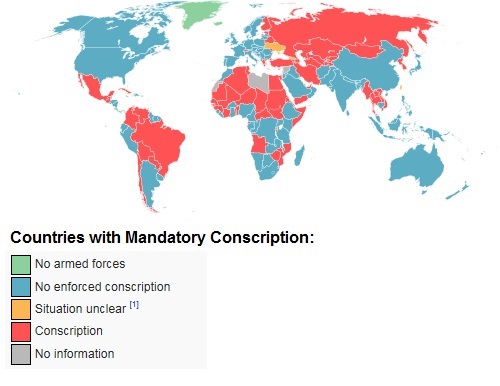
CU Blog - National Sacrifice - The Missing Ingredient - Photo 2Conscription is controversial for a range of reasons, including conscientious objection to military engagements on religious or philosophical grounds; political objection, for example to service for a disliked government or unpopular war; and ideological objection, for example, to a perceived violation of individual rights. Those conscripted may evade service, sometimes by leaving the country.[4] Some selection systems accommodate these attitudes by providing alternative service outside combat-operations roles or even outside the military, such as civil service in Austria and Switzerland.

As of the early 21st century, many states no longer conscript soldiers, relying instead upon professional militaries with volunteers enlisted to meet the demand for troops. The ability to rely on such an arrangement, however, presupposes some degree of predictability with regard to both war-fighting requirements and the scope of hostilities. Many states that have abolished conscription therefore still reserve the power to resume it during wartime or times of crisis.[5] (Source: http://en.wikipedia.org/wiki/Conscription)

National Service is a common name for mandatory or volunteer government service programmes. The term became common British usage during and for some years following the Second World War. Many young people spent one or more years in such programmes. Compulsory military service typically requires all citizens, or all male citizens, to participate for a period of a year (or more in some countries) during their youth, usually at some point between the age of 18 and their late twenties. (Source: http://en.wikipedia.org/wiki/National_service)

——————

Appendix C  – National Youth Service Corps in Nigeria
The National Youth Service Corps (NYSC) is an organisation set up by the Nigerian government to involve the country’s graduates in the development of the country. There is no military conscription in Nigeria, but since 1973 graduates of universities and later polytechnics have been required to take part in the National Youth Service Corps (NYSC) program for one year.[1] This is known as national service year.

“Corp” members are posted to cities far from their city of origin. They are expected to mix with people of other tribes, social and family backgrounds, to learn the culture of the indigenes in the place they are posted to. This action is aimed to bring about unity in the country and to help youths appreciate other ethnic groups.

There is an “orientation” period of approximately three weeks spent in a camp away from family and friends. There is also a “passing out ceremony” at the end of the year and primary assignment followed by one month of vacation.

The program has also helped in creating entry-level jobs for many Nigerian youth. An NYSC forum dedicated to the NYSC members was built to bridge the gap amongst members serving across Nigeria and also an avenue for members to share job information and career resources as well as getting loans from the National Directorate Of Employment.

The program has been met with serious criticism by a large portion of the country. The NYSC members have complained of being underpaid, paid late or not paid at all.[2] Several youths carrying out the NYSC program have been killed in the regions they were sent to due to religious violence, ethnic violence or political violence.[3]

A series of bomb and other violent attacks, especially in the North, rocked the country’s stability in the period preceding the 2011 gubernatorial and presidential elections. Most common of these attacks was perpetuated by the Islamist extremist terrorist group called Boko Haram. “Boko Haram” means “Western education is a sin” in the local hausa dialect in Nigeria. The group “Boko Haram” is against western education and wants to establish an Islamic state in Nigeria’s northern region.

Worst hit were National Youth Service Corps members, some of whom lost their lives.
(Source: http://en.wikipedia.org/wiki/National_Youth_Service_Corps)

Share this post:
, , ,
[Top]

Concerns about ‘Citizenship By Investment Programs’

Go Lean Commentary

People come to the Caribbean for so many reasons. The book Go Lean…Caribbean cataloged 3 primary reasons: 1. Live, 2. Work, and 3. Play.

This last category is so vast that it covers the full scope of tourism: sun, sand, sea, surf, savor, salsa and smoke; (savor as in foods; salsa as in dance and smoke as in cigars). This is the region’s primary economic activity.  But now there are reports of a new attraction starting to emerge in certain Caribbean member-states:

Citizenship.

“Say it ain’t so?!?!”

There are reports that many newcomers are relocating to Caribbean member-states for other, sometimes nefarious, reasons: proximity (to other North American markets), legacy status (Overseas territory of European powers), favorable tax status, and lax governmental oversight. These occurrences have raised the ire of many developed nations (United States, Canada and the EU). There are concerns too for the planners of a new elevated Caribbean, the promoters of the book Go Lean … Caribbean. This book serves as a roadmap for the introduction and implementation of the technocratic Caribbean Union Trade Federation (CU); the purpose of which is to elevate Caribbean society, for all 30 member-states. The book does not ignore the subject of nationality and immigration, so reports of newcomers relocating to member-states just for citizenship purposes must be fully vetted.

Consider this article on this issue in St. Kitts & Nevis:

Title #1: US, Canada and EU monitoring St Kitts-Nevis citizenship programme, says opposition
By: Ken Richards, West Indies News Network; Posted: January 6 2015  – http://www.caribbeannewsnow.com/headline-US%2C-Canada-and-EU-monitoring-St-Kitts-Nevis-citizenship-programme%2C-says-opposition-24268.html

BASSETERRE, St Kitts (WINN) — There is fresh criticism of the St Kitts and Nevis citizenship by investment programme (CIP), following reports that the US Department of Treasury is closely monitoring the activities of a former Iranian national who now holds a St Kitts and Nevis passport.

According to the Treasury Department, 49-year-old Hossein Zeidi was responsible for converting foreign currency into US bank notes for delivery to the Iranian government.

Zeidi is reported to be among nine individuals and entities under surveillance pursuant to various Iran-related regulations.
They are accused by the US of supporting Iranian government sanctions evasion efforts.

The US Treasury Department says that Zeidi holds a St Kitts and Nevis passport, number RE0003553.

- Photo 1Team Unity leader Timothy Harris is reiterating the opposition group’s concern about such developments, and the impact they are having on the CIP.

He recalled that the Americans had issued an advisory last May against the federation’s citizenship programme.

“It is therefore reasonable that that department will continue to pursue the activities of the citizenship by investment programme and of the government officials in particular,” Harris told WINN FM.

“We know for sure that the US Treasury Department continues to be interested in the CIP programme, continues to be interested in the cavalier manner in which our passports are being sold like black pudding on a Saturday,” the MP who heads the opposition alliance said.

According to Harris, Canada and the European Union are also monitoring the St Kitts and Nevis programme.

The US Treasury Department gave no details as to how Zeidi had in his possession a St Kitts-Nevis passport, but the twin island Federation provides citizenship to foreigners who make significant investments in the country.

Treasury Department officials claim that the Iranian government contracted with Zeidi and Seyed Kamal Yasini to convert Iranian funds denominated in non-Iranian local currency into US dollars.

According to the Americans, these individuals and their network have to date effected the delivery of hundreds of millions of dollars in US dollar bank notes to the Iranian government in violation of existing sanctions.

Republished with permission of West Indies News Network

Consider too, this older article of this issue in the Turks & Caicos Islands:

Title #2: British government refutes Turks and Caicos economic citizenship claim
By: Caribbean News Now contributor Published on April 18, 2014; retrieved January 13, 2015 from: http://www.caribbeannewsnow.com/topstory-British-government-refutes-Turks-and-Caicos-economic-citizenship-claim-20771.html

- Photo 3PROVIDENCIALES, Turks and Caicos Islands — Britain’s Home Office has refuted a claim by promoters of a resort in the Turks and Caicos Islands (TCI) that investors are eligible to apply for a British Overseas Territory Citizen passport, thereby enabling the holder to reside in the UK.

In a press release on Monday entitled “Eligibility for British Overseas Territory Citizen passport … with Turks and Caicos resort project”, Asia Pacific Investment House claimed that “Investors in Caicos Beach Club Resort and Marina are eligible to apply for a permanent residency certificate and British Overseas Territory Citizen passport, enabling the holder to reside in the UK, making this a highly coveted investment opportunity.”

However, according to Tom Lawrence, at the Home Office Communications Directorate in London:

  • Eligibility for British Overseas Territory Citizenship ((BOTC) is governed by the British Nationality Act 1981. Citizenship is granted by the governor of the territory and OverseasTerritories are not able to grant BOTC status other than in accordance with that Act.
  • Residency and other requirements for BOTC status apply, so anyone who has not lived lawfully in the territory for a number of years is unlikely to qualify.
  • Criteria for the grant of BOT Citizenship include residence requirements, a good character requirement and an intention to make the principal home within the relevant territory.
  • Generally, the residency requirements are for a minimum of five years residence immediately preceding the application, during which total absences must not exceed 450 days with a maximum of 90 days absence in the last year. The applicant must not have been in breach of immigration rules at any time during those five years and the last year of residence must have been free of any immigration control.
  • BOTCs do not have the right of abode in the UK unless they later become British citizens.

“There is no direct route to BOTC and the investor will have to meet the eligibility requirements as noted,” Neil Smith, the TCI governor’s spokesman, confirmed.

Asia Pacific Investment House, which describes itself as “a leading venture capital company, registered in the offshore regime of the British Virgin Islands, with its operating HQ in Singapore’s financial district”, did not respond to requests for comment.

It is not known at this time if the British and/or TCI authorities will take action in relation to these apparently false claims targeting uninformed investors.

There is a consistent pattern here, in order to attract Foreign Direct Investments (FDI), Caribbean politicians, administrators or business/investment development specialists make promises related to easy citizenship. This is definitely a wrong community ethos!

There are other Caribbean member-states that have Citizenship by Investment Programs established (or proposed):

* The first persons to attain Antigua & Barbuda citizenship under the Citizenship by Investment Programme was George Georges and his family of four, Syrian nationals.

- Photo 2

“Other countries (Australia, Belgium, Portugal, Singapore, Spain the UK and the US) provide an alternate approach, temporary residence permits or “golden visas” to wealthy individuals in return for investment. Applicants can often receive permanent residency through such schemes by sustaining their investment through a period of two to five years, but the aforementioned Caribbean nations typically offer cheaper and almost immediate routes to full citizenship in exchange for a one-off investment. In St. Kitts & Nevis, for example, the entire process, including background checks, takes as little as 90 days”. (Source: Nearshores Americas). “Most countries withhold official data regarding the number of people who have become citizens through CIPs or the amount of FDI recouped, but Henley and Partners$  [(Professional Residency & Citizenship Advisors with offices in 25 countries)] estimate that such schemes generate US$2 billion a year worldwide. Unsurprisingly, cash-strapped Caribbean countries that are often overly reliant on tourism have been quick to take notice”.

When factoring in the recent publicity of the harsh treatments to boat-bound refugees, these lax CIPs give the impression that citizenship in the Caribbean is For Sale; that there is no concern for human rights for certain refugees (Haitian, Cubans, Jamaicans, etc.); but let someone show up with some money then the nationality doors are wide open. This too is wrong!

In a previous blog commentary, the increased migrant flow of Caribbean refugees were detailed.  Also, the current conflict in the Bahamas, with the accusations of human rights abuses from the Haitian-American Diaspora in Miami was also thoroughly addressed.

The One Percent versus the 99 Percent; the “Have’s versus the Have-Not’s”! So many Failed-State images# come to mind. The Go Lean book qualifies the characteristics of Failed-States (Page 272-273); these 2 attributes here are most prominent:

  • Uneven Economic Development Along Group Lines (UED)
  • Rise of Factionalized  Elites (FE)

The Go Lean roadmap seeks to elevate the Caribbean, in its entirety. The impressions of some “Banana Republic” – Failed-State – are unbecoming! It undermines legitimate investment in the region and the worthiness of natives from these Caribbean islands when they travel abroad. The occurrence of some “Citizenship for Hire” practice for some Caribbean state automatically draws scorn for other nearby states. Truthfully, the rest of the world does not know the difference of St. Kitts versus St. Vincent, or the Turks/Caicos Islands versus the Bahama Islands. All of these Caribbean member-states are in the “same boat”, and are judged by the same yardstick.

Change has now come to the Caribbean! This is the call for greater accountability/transparency on a regional basis.

Why should the CU be charged with responsibility in this area? Does this not relate to individual sovereignty? “Mind your own business” – may be a logical retort from member-states criticized for their citizenship/nationality practices.

The Go Lean book relates an opening declaration that the Caribbean is in crisis and that these geographic neighbors must band together – confederate – to mitigate these common problems with superlative solutions, on the regional basis. This need was pronounced early in the book in the Declaration of Interdependence (Page 10 – 14) with these statements:

Preamble: While the laws of nature and of nature’s God entitle us to form a society and a brotherhood to foster manifestations of our hopes and aspirations and to forge solutions to the challenges that imperil us, … our rights to exercise good governance and promote a more perfect society are the natural assumptions among the powers of the earth, no one other than ourselves can be held accountable for our failure to succeed if we do not try to promote the opportunities that a democratic society fosters.

xi.  Whereas all men are entitled to the benefits of good governance in a free society, “new guards” must be enacted to dissuade the emergence of incompetence, corruption, nepotism and cronyism at the peril of the people’s best interest. The Federation must guarantee the executions of a social contract between government and the governed.

xii. Whereas the legacy in recent times in individual states may be that of ineffectual governance with no redress to higher authority, the accedence of this Federation will ensure accountability and escalation of the human and civil rights of the people for good governance, justice assurances, due process and the rule of law. As such, any threats of a “failed state” status for any member state must enact emergency measures on behalf of the Federation to protect the human, civil and property rights of the citizens, residents, allies, trading partners, and visitors of the affected member state and the Federation as a whole.

xxiii.    Whereas many countries in our region are dependent Overseas Territory of imperial powers, the systems of governance can be instituted on a regional and local basis, rather than requiring oversight or accountability from distant masters far removed from their subjects of administration. The Federation must facilitate success in autonomous rule by sharing tools, systems and teamwork within the geographical region.

xxiv.    Whereas a free market economy can be induced and spurred for continuous progress, the Federation must install the controls to better manage aspects of the economy: jobs, inflation, savings rate, investments and other economic principles. Thereby attracting direct foreign investment because of the stability and vibrancy of our economy.

The Go Lean book and blogs posit that the problems of the Caribbean are too big for any one member-state to tackle alone; rather there is the need for a regional technocratic solution; thus the CU. Only then can all 30 Caribbean member-states in the homeland be a better place to live, work and play for all of its stakeholders: 42 million residents; 80 million visitors; 10 million Diaspora; countless Foreign Direct Investors.

The CU, applying best-practices for advanced governance and agile deliveries would facilitate these 3 prime directives:

  • Optimization of the economic engines in order to grow the regional economy to $800 Billion & create 2.2 million new jobs.
  • Establishment of a security apparatus to protect the resultant economic engines.
  • Improve Caribbean governance, with consideration for minority equalization, to support these engines.

How exactly can the CU impact the citizenship/nationality practices in the region?

The Go Lean book, and previous blog/commentaries, stressed key community ethos, strategies, tactics, implementation and advocacies necessary to effect change in the region, to improve the regional stewardship over Caribbean society. They are detailed as follows:

Community Ethos – Economic Systems Influence Choices & Incentives Page 21
Community Ethos – Consequences of Choices Lie in the Future Page 21
Community Ethos – Minority Equalization Page 24
Community Ethos – Ways to Impact the Future Page 26
Community Ethos – Ways to Foster Genius Page 27
Community Ethos – Ways to Help Entrepreneurship Page 28
Community Ethos – Ways to Impact Research & Development – Invited SGE’s Page 30
Community Ethos – Ways to Impact the Greater Good Page 37
Strategy – Vision –  Integrate region into a Single Market Economy Page 45
Strategy – Mission –  Invite empowering immigrants for economic benefits Page 46
Strategy – Customers – Foreign Direct Investors Page 48
Strategy – Agents of Change – Globalization Page 57
Tactical – Fostering a Technocracy Page 64
Tactical – Separation of Powers – Department of Justice Page 77
Tactical – Separation of Powers – Department of State – SGE’s & One Percent Liaison Page 80
Implementation – Steps to Implement Self-Governing Entities – Ideal for FDI Page 105
Implementation – Ways to Foster International Aid – CariCom versus CU Page 115
Planning – 10 Big Ideas … in the Caribbean Region – Confederation without Sovereignty Page 127
Planning – Ways to Better Manage Image Page 133
Planning – Ways to Improve Failed-State Indices – Guard against Encroachments Page 134
Planning – Ways to Measure Progress Page 147
Advocacy – Ways to Grow the Economy Page 151
Advocacy – Ways to Create Jobs Page 152
Advocacy – Ways to Better Manage the Social Contract – Failed-State Indices Movements Page 170
Advocacy – Ways to Foster Empowering Immigration – FDI Time, Talent & Treasuries Page 174
Advocacy – Ways to Impact Justice – Federal Accountability Page 178
Advocacy – Ways to Protect Human Rights Page 220
Advocacy – Ways to Impact the One Percent Page 224
Appendix – Failed State Indicators and Definitions for the CU Page 271

All of the Caribbean needs to deal with these domestic issues … now! But some issues, due to image, public relations or quest for justice, should be managed with special care.

In the legal arena – juris prudence – there is an arrangement referred to as a Special Prosecutor. This allows for a detached, objective view of issues of Justice. (In the US for many decades, Naturalization and Citizenship processing was managed by the federal Department of Justice).

The Go Lean/CU roadmap has a similar proposed solution: facilitating the Proxy and e-Government processing at the CU level on behalf of member-states – thereby removing the subjectivity and bias to the citizenship/nationality process. Each state sets their criteria and the CU technocracy simply provides the processing, with full accountability and transparency; no appearance of bribery, corruption and creating eligible voters just in time for elections.  Already there is an eco-system with the issuance of CariCom passports. Step One/Day One of the Go Lean roadmap is the assembly of CariCom organs into the CU Trade Federation. Any one passport issued by a CariCom country is automatically respected by other CariCom countries.  So “mind your own business” cannot be considered a valid response.

If Caribbean people want change, progress, empowerment, growth, jobs, justice, security and equality, then this move of deputizing “nationality process” to the federal level is simply the “price that must be paid”.

Now is the time for all of the Caribbean to lean-in for the empowerments described in the book Go Lean … Caribbean. This is Big Deal for the region as real solutions can finally be realized. Then we can present to the world that while the Caribbean homeland is Not For Sale, it is truly a better place to live, work, and play. 🙂

Download the free e-Book of Go Lean … Caribbean – now!

————

# Appendix: Failed-State Indicators & Definitions

a. UED – Uneven Economic Development Along Group Lines

When there are ethnic, religious, or regional disparities or inequalities, governments tend to be uneven in their commitment to the social contract. There may be group-based inequality, or perceived inequality, in areas like education and economic opportunities. Uneven economic empowerments are manifest in group-based impoverishments as measured by poverty levels, infant mortality rates, educational levels, etc. The end result may be the rise of communal nationalism, based on real or perceived group inequalities.

This indicator include pressures and measures related to:

Income Share of Highest 10%; Income Share of Lowest 10%; Urban-Rural Service Distribution; Slum Population

b. FE – Rise of Factionalized Elites

When local and national leaders engage in deadlock and brinksmanship for political gain, this undermines the social contract. The brinkmanship may be expressed with nationalistic political rhetoric by ruling elites, often in terms of communal irredentism (e.g., a “greater Serbia” to annex neighboring lands with Serbian ethnics) or of communal solidarity (e.g., “ethnic cleansing” or “defending the faith”). With the absence of legitimate leadership widely accepted as representing the entire citizenry, the result may be fragmentation of ruling elites and state institutions along ethnic, class, clan, racial or religious lines.

This indicator include pressures and measures related to:

Power Struggles; Defectors; Flawed Elections; Political Competition.

$ Appendix VIDEO: Henley & Partners – The Firm of Global Citizens – http://youtu.be/XoBcb4qLn1s

Published on May 7, 2014 – Henley & Partners is the global leader in residence and citizenship planning … The firm also runs an industry-leading government advisory practice.


Share this post:
, , ,
[Top]

Trinidad cuts 2015 budget as oil prices tumble

Go Lean Commentary

One man’s trash is another man’s treasure; on the other hand, one man’s windfall is another man’s shortfall. This parallel poetry is indicative of what is transpiring in the world market for producers and consumers of oil. Consumers are enjoying a windfall with sub-$2.00 pricing (per gallon) while petroleum producing nations are having to suffer and adapt to a shortfall of revenues.

For one oil-exporting country in the Caribbean, Trinidad and Tobago, this constitutes a crisis. The book Go Lean … Caribbean was written to address crises, declaring in the foreword that a “crisis is a terrible thing to waste”.

See news article here:

Title: Trinidad and Tobago cuts 2015 budget as oil prices tumble
By: Ria Taitt, Political Editor
CU Blog - Trinidad cuts 2015 budget as oil prices tumble - Photo 1PORT OF SPAIN, Trinidad — A $7.4 billion (US$1.16 billion) budget shortfall as a result of falling oil prices is what Trinidad and Tobago Prime Minister Kamla Persad-Bissessar identified on Thursday night.

The PM reaffirmed that the support grants, senior citizens’ pension, new minimum wage and baby grants will be untouched. But she provided no precise cost-cutting details or any sacrifices that the population might be called upon to make.

What the Prime Minister did announce was the government’s 2015 budget would now be pegged on a revised oil price of US$45 a barrel, a 44 percent reduction from the original benchmark of US$80 a barrel.

The natural gas price on which the budget is premised was also revised, from US$2.75 per mmbtu to $2.25 per mmbtu, she stated.

This points to a major realignment in Government revenue and therefore adjustments in spending.

However, delivering her address to the nation on the economic situation, in light of the new budgetary and fiscal situation, Persad-Bissessar identified savings in government expenditure from one source — $1.4 billion from a lower fuel subsidy outlay.

“What (areas) are we adjusting? In moving forward there’ll be areas where we must moderate or redirect our spending in order to manage the present situation, always making sure that we keep people and country first — reviews of our PSIP and current expenditure are ongoing, with the aim of identifying savings of approximately $4.5 billion,” the Prime Minister stated.

“Amongst the areas identified for re-directional spending and indeed in helping us to make up the shortfall of the $7.5 billion… these are the areas that we would consider — infrastructural projects for which funding has not yet been confirmed; lower expenditure on non-critical goods and services; and cuts in allocation in selective ministries by about 15 percent.

“Any additional shortfall will be met from revenues generated as a result of our continued public offering programme,” she added, referring to the IPO to be held for the public sale of shares in Phoenix Park Gas Processors Limited.
“This would be the first-ever listing of an energy stock on the local stock market, thereby giving the citizens a direct stake in our very important energy sector.”

The Prime Minister said the international credit rating agencies, Standard and Poor’s and Moody’s, have projected that oil will rebound to between US$62.7 and US$70 a barrel in the near to medium term.

However, she said, government decided to use the “more conservative assumptions” (of US$45 a barrel) for oil and gas.
“What this means is that the shortfall we may experience in Trinidad and Tobago would be in the region of TT$7.4 billion,” she said.

The price of oil has moved from a high of US$107 per barrel in June 2014 to US$48.65 at the close of business on Thursday, representing a 55 percent decline, Persad-Bissessar pointed out.

But in noting that the country had to adjust its spending, she committed her government to continue expenditure on “the things that matter most to you (the population)”.

Persad-Bissessar singled out the energy corridor — San Fernando to Mayaro highway, describing it as a “key investment”.
She also cited her government’s commitment to the “provision of protection to the vulnerable and disadvantaged; to ensuring the pace of business activity continues; to preserving jobs and personal incomes; to intensifying its efforts in making our nation safer; to maintaining successful investments in education; to making improvements in the quality of health care so urgently required; and to keeping our commitment to critical infrastructure projects, including schools, hospitals and the housing programme”.

The Prime Minister gave the assurance that her government will navigate safety through these turbulent times.
She pointed to the achievements of her government, stating that the economic fundamentals were stronger today than ever and that her government’s economic policies had halted the decline that it inherited.

Persad-Bissessar recalled that, when she was a member of the government in the 1990s the oil price fell to as low as US$9 a barrel, yet the economy was kept strong and investor confidence high and stability was maintained.

“I make this reference to reinforce the reference that Trinidad and   Tobago has been here before and was able to overcome the challenges faced. The population can feel confident that once again the nation is fortunate to have a government in place that has demonstrated responsible fiscal policies, that has balanced investment in social programmes and people-centred development whilst simultaneously turning the fragile economy we inherited in 2010 into the stable and strong one that it is today,” she said.

“The same prudence with which we managed the economy since 2010, to bring us to a position of resilience and stability, will be used in shifting our priorities and maintaining stability,” the Prime Minister stated.

“History will record this period as one of our finest when we stood strong, made the right choices, exercised the right amount of restraint, held the right course and indeed saw the right results,” Persad-Bissessar said.

Before delivering her address, the Prime Minister met with senior executives of the energy companies in the state sector and the Ministry of Energy and held another meeting of a sub-committee of the Cabinet.

Republished with permission of the Trinidad Express
Caribbean
News Now – Regional Online News Site (Posted 01-10-2015; retrieved 01-12-2015
http://www.caribbeannewsnow.com/headline-Trinidad-and-Tobago-cuts-2015-budget-as-oil-prices-tumble-24325.html

In 2008, a pivotal year in Go Lean consideration, prices for a gallon of gas reached $5.00 in some locations, (California for example). Now most locales in the US are enjoying sub $2.00/gallon prices. See this reporting in a previous blog.

There is no evil, no malice at work here; the fluctuations in oil prices is simply a product of economics, of supply-and-demand. Higher demand, lower supply equals to higher prices. While on the other hand, higher supply and lower demand equals lower prices. The forces pushing for higher prices (OPEC) are simply pursuing their stakeholders’ self-interest.

Trinidad, a non-OPEC country, is simply squeezed in the middle. The Go Lean book serves as a roadmap for the introduction and implementation of the Caribbean Union Trade Federation (CU). This federation is built on economic principles, designed to exploit the best practices of the social science of global economics. Instead of looking for ways to increase supply-demand of petroleum, the CU seeks to diversify: energy mix of the 30 Caribbean member-states and the revenue generators of the overall Caribbean economy. In fact, the CU/Go Lean roadmap has these 3 prime directives:

  • Optimization of the economic engines in order to grow the regional economy to $800 Billion & create 2.2 million new jobs.
  • Establishment of a security apparatus, including energy security, to protect the resultant economic engines.
  • Improve Caribbean governance to support these engines.

The goal of the CU is to optimize Caribbean society, allowing us to better compete globally and hopefully present more favorable options for our youth to prosper here at homeland, instead of fleeing the region as practiced by previous generations.

Considering the foregoing article, it is obvious that Trinidad’s economy is overly dependent on the oil market. An unsavory dip in oil prices is affecting all aspects of this country’s societal engines (economy, security and governance). This is not a formula for success. This describes a mono-industrial society; they ebb-and-flow with the fortunes of the one economic driver. This is also the case in many other Caribbean member-states with their mono-industrial expressions of tourism. The region needs to do better with the diversification quest. The Go Lean roadmap asserts many unrelated, disconnected, industries for job creation – a decades-old pursuit.

CU Blog - Trinidad cuts 2015 budget as oil prices tumble - Photo 2Despite an oil-producing country in the region, this Go Lean/CU roadmap pursues a viable mix of energy sources for Caribbean deployment. The book proposes solutions for the region to optimize energy generation, distribution and consumption. Some features include solar/wind/tidal power generation, a regional power grid, electric mass transit street cars, natural gas vehicles, electric-hybrid passenger cars, and the separation of power generating and power distribution utilities. The Go Lean posits that the average costs of energy can be lowered from an average of US$0.35/kWh to US$0.088/kWh with this roadmap. (Page 100).

Just how does energy affect our modern world? See VIDEO here depicting Exxon’s (known in the Caribbean as ESSO) strategic expressions in the world:

VIDEO: Energy lives here™ anthem – http://youtu.be/FZ3S2EOBbwE

Published on Nov 27, 2013 – If you could see energy, what would you see? It powers our lives. And no one applies more technology to produce American energy and refine it more efficiently than ExxonMobil.

The Go Lean roadmap details a series of community ethos, strategies, tactics, implementations and advocacies to foster the progress in the wide fields of the energy business: generation, distribution and consumption. The following list applies:

Community Ethos – Economic Principles – People Choose Page 21
Community Ethos – Economic Principles – All Choices Involve Costs Page 21
Community Ethos – Economic Principles – Economic Systems Influence Individual Choices Page 21
Community Ethos – Economic Principles – Voluntary Trade Creates Wealth Page 21
Community Ethos – Economic Principles – Consequences of Choices Lie in the Future Page 21
Community Ethos – Economic Principles – Job Multiplier Page 22
Community Ethos – Lean Operations Page 24
Community Ethos – Return on Investments Page 24
Community Ethos – Cooperatives Page 25
Community Ethos – Regional Taxi Commissions – for Regional Energy Compliance Shift Page 25
Community Ethos – Ways to Impact the Future Page 26
Community Ethos – Ways to Impact Research & Development Page 30
Anecdote – Pipeline Transport – Strategies, Tactics & Implementations Page 43
Strategy – Alternative Energy: Harness the   power of the sun, winds and tides Page 46
Strategy – Agents of Change – Technology Page 57
Strategy – Agents of Change – Globalization Page 57
Strategy – Agents of Change – Climate Change Page 57
Tactical – Fostering a Technocracy Page 82
Tactical – Separation of Powers – Energy Commission Page 82
Anecdote – “Lean” in Government – Energy Permits Page 93
Anecdote – Caribbean Energy Grid Implementation Page 100
Implementation – Ways to Develop Pipeline Industry Page 107
Implementation – Ways to Improve Energy Usage Page 113
Planning – Lessons Learned from 2008 Page 136
Advocacy – Ways to Impact Public Works Page 175
Advocacy – Ways to Foster Cooperatives Page 176
Advocacy – Ways to Impact Extractions – Oil Exploration & Mitigations Page 195
Advocacy – Ways to Improve Emergency Management Page 196
Advocacy – Ways to Impact Monopolies – Ratings and Rankings Page 202
Advocacy – Ways to Improve Transportation – More Fuel Efficiency Page 205
Advocacy – Ways to Develop a Local Auto Industry – Lead with Fuel Efficiency Page 206
Advocacy – Ways Impact Trinidad & Tobago – Oil Boom to Expire in 2018 Page 240
Appendix – North Dakota Oil Boom Economic-Societal Effects Page 334
Appendix – Off-Shore Wind Farm Sample/Model Page 335

This commentary asserts that the Caribbean energy needs are undeniable and that the oil-depended economy of Trinidad & Tobago needs to diversify. The CU/Go Lean roadmap is here to help Trinidad, and all of the Caribbean. On a “per capita” basis Trinidad is among the most affluent of the Caribbean independent member-states (Page 66), even higher than the US Territory of Puerto Rico. But Trinidad sorely needs the mitigations and empowerments in this roadmap; their status quo is unsustainable; too many of their human capital flee their homeland, just like many other Caribbean locations.

More changes are imminent for Trinidad. After the $5.00/gallon prices of 2008 the world has a new resolve, to be less-dependent on oil. That imminence has now materialized with the manifestation of more energy options and less demand for oil. Thusly, oil prices have declined. It is the expectation that more efficiency and diversity will emerge and assimilate the world economy. The CU/Go Lean roadmap is designed to bring that efficiency and diversity to the Caribbean region as well.

The Go Lean roadmap will prepare and mitigate Trinidad & Tobago, and the rest of the Caribbean for global changes.

Trinidad’s oil reserves are also depleting … fast (Page 240). The stakeholders of Trinidad’s economic, security and governing engines cannot “stick their heads in the sand” while these change dynamics emerge. There is the need for heavy-lifting.

Now is the time for all of the Caribbean, the people, business, institutions and governments, to lean-in for the efficiencies and diversities described in the book Go Lean … Caribbean.  🙂

Download the Book Go Lean … Caribbean – Now!

Share this post:
, , , , ,
[Top]

NEXUS: Facilitating Detroit-Windsor Commerce

Go Lean Commentary

Trade and location go hand in hand. Until globalization took root, the quest was always to do business in a nearby marketplace. Even now there is a Green Conservation movement to return to those principles, to minimize energy usage by growing most foods locally and consuming locally. This move uses the tagline: Think Global, Buy Local!

In Marketing 101, a basic tenet is “location, location, location”.

But what if that location is at the cross-roads of countries, borders and independent states?

The same precepts should apply, only with more coordination.

This is a lesson learned from the Detroit-Windsor metropolitan area; but this lesson is fitting for application throughout the Caribbean.

This consideration by the publishers of the book Go Lean … Caribbean, a roadmap for the Caribbean Union Trade Federation (CU), is a continuation of the effort to “observe and report” on the turn-around of the once great City of Detroit. Previous commentaries alluded that transportation options are critical to this metropolitan’s area’s revitalization. Now that consideration extends across the international border for the US and Canada. Detroit aligns the west-side of the Detroit River (see Appendix below); the east-side is the City of Windsor in the Canadian Province of Ontario. Despite the two cities and two countries, this area is actually just one “single market”.

The vision of the Go Lean roadmap is a “single market” out of all the Caribbean 30 member-states of independent countries and overseas territories. Since so many individual states are in close-proximity with other states, many times of different jurisdiction and even language, cross border coordination is fitting for deployment within this region. Consider these examples:

  • Haiti – Dominican Republic: Shared island with a border
  • St. Martin – Saint Maarten: Shared island with a border
  • Lesser Antilles: Neighboring islands, 30 to 40 miles apart
  • Trinidad – Venezuela: 7 mile strait
  • US – British Virgin Islands: 6 Major Islands 30 to 40 miles apart

The Go Lean roadmap calls for the deployment of ferries, railroads, tunnels, bridges, causeways, light-rail streetcars, natural-gas powered vehicles/buses and toll roads, all part of the effort to empower the region through transit (Page 205).

In order to facilitate commerce between the Caribbean member-states, there is the need to efficiently and effectively process Customs and Border Inspections. The Detroit-Windsor model furnishes a great example of pre-registering stakeholders as “Known Travelers” and then allowing this efficient border crossing system branded as NEXUS. See details here of the program and aligned products/features (NEXPRESS Toll Cards/Transponders and DWT Mobile App):

NEXUS
The NEXUS alternative inspection program has been completely harmonized and integrated into a single program. NEXUS members now have crossing privileges at air, land, and marine ports of entry. Under the Western Hemisphere Travel Initiative, the NEXUS card has been approved as an alternative to the passport for air, land, and sea travel into the United States for US and Canadian citizens.

The NEXUS program allows pre-screened travelers expedited processing by United   States and Canadian officials at dedicated processing lanes at designated northern border ports of entry, at NEXUS (CA Entry) and Global Entry (US Entry) kiosks at Canadian Preclearance airports, and at marine reporting locations. Approved applicants are issued a photo-identification, proximity Radio Frequency Identification (RFID) card. Participants use the three modes of passage where they will present their NEXUS card, have their iris scanned, or present a WHTI (Western Hemisphere Travel Initiative) and make a declaration.

U.S. Customs and Border Protection (CBP) and Canada Border Services Agency (CBSA) are cooperating in this venture to simplify passage for pre-approved travelers.

What are the Benefits of NEXUS?
Individuals approved to participate in NEXUS receive an identification card that allows them to:

  • Receive expedited passage at NEXUS-dedicated lanes, airport kiosks, and by calling a marine telephone reporting center to report their arrival into the United States and Canada; and
  • Cross the border with a minimum of customs and immigration questioning

NEXUS applicants only need to submit one application and one fee. Applicants may apply on-line via the CBP Global On-Line Enrollment System (GOES) Web site. Qualified applicants are required to travel to a NEXUSEnrollmentCenter for an interview. If they are approved for the program at that time, a photo identification card will be mailed to them in 7-10 business days. NEXUS allows United States and Canadian border agencies to concentrate their efforts on potentially higher-risk travelers and goods, which helps to ensure the security and integrity of our borders.

How Do I Apply?

Applications can be submitted using the CBP on-line application system, Global On-Line Enrollment System (GOES), or to one of the Canadian Processing Centers (CPC), along with photocopies of their supporting documentation and the US $50 or CN $50 application-processing fee.

(Source: http://www.cbp.gov/travel/trusted-traveler-programs/nexus)

————
NEXPRESS
As a NEXPRESS TOLL card holder you can take advantage of dedicated lanes, express toll lanes and expedited crossing-service to get to your destination faster.

o Travel to Caesars Windsor, Detroit Tigers baseball, Red Wings hockey, and other attractions… fast.

Are you commuting to work, visiting top restaurants, gaming in the Detroit Casinos and/or Caesars Windsor [Casino], attending your favorite sporting events and attractions, or just visiting family and friends?

No matter the destination, we’ll try to get you there as fast as possible.

Located between Detroit, Michigan and Windsor, Ontario, our tunnel connects the U.S. interstates to Ontario’s Highway 401. In fact, the Detroit Windsor Tunnel provides one of the fastest links between Canada and the United States.

o Use our expanded inspections facilities that ease the Customs and Immigration process.

As part of the U.S.Western Hemisphere Travel Initiative (WHTI), the United States requires that all travelers, including U.S. and Canadian citizens, present a specific document to enter the United States by air, land or water:

  • A valid Passport, a Passport Card, a Nexus card, or
  • An Enhanced Michigan Driver’s License, a FAST Card
  • Commercial Carriers

Have you replaced your larger vehicles with vans for environmental and economic reasons? You may enjoy a savings of up to 25% on toll and volume discounts!

And with our commercial credit system, you can take advantage of faster processing at the toll booths, automatic fare calculation by vehicle weight, easier record-keeping, and top-notch customer service.

o Tunnel Bus

Check out The Tunnel Bus, operated by Transit Windsor. With this exclusive feature of the Detroit-Windsor tunnel, you can leave the driving to us and enjoy quick, cost-effective trips between downtown Windsor and Detroit.

—————–

VIDEO:  http://youtu.be/igdqylbm8yI – American Roads – “Innovating Mobile, Transit, Tolling and Parking technologies”


DWT Mobile
 CU Blog - NEXUS - Facilitating Detroit-Windsor Commerce - Photo 1

DWT Mobile is a free app now available for Apple and Android devices!

Cross the border faster and pay only $4.25 per trip with your smartphone! Pre-purchase your trips, show the barcode at the gate, and be on your way. You will save time, save gas, AND save money!
(Source: Detroit – Windsor Tunnel Authority – Retrieved December 11, 2014
http://www.dwtunnel.com/Default.aspx )

As the once great City of Detroit attempts to re-boot, remake and revive its metropolitan area, cross-border regionalism is very important to foster commerce in the wider metropolitan area. There is the need to efficiently move people between these “states” to facilitate live, work and play options.

There are security issues as well. The Appendix (Outlaw History/Prohibition) relate past challenges on the Detroit River. (The Caribbean was also complicit in Prohibition-era security breaches).

Customs and Border operations facilitates security as well as commerce. The NEXUS model demonstrate how technology can be employed to foster efficiency in this process. “Known Traveler” processing can be used to filter daily/occasional commuters, so that security officials can focus more attention on high-risk/high-threat cargo and passengers.

The Go Lean book asserts the economic principle that “voluntary trade creates wealth” (Page 21); the more trade the more wealth. The roadmap anticipates the challenges that port cities and border towns, (like the role of Detroit for the US), would have to endure and changes they must foster to help grow the regional economy. These points were pronounced early in the book, in the opening Declaration of Interdependence (Pages 12 – 14), with these statements:

vi.     Whereas the finite nature of the landmass of our lands limits the populations and markets of commerce, by extending the bonds of brotherhood to our geographic neighbors allows for extended opportunities and better execution of the kinetics of our economies through trade. This regional focus must foster and promote diverse economic stimuli.

xvi.   Whereas security of our homeland is inextricably linked to prosperity of the homeland, the economic and security interest of the region needs to be aligned under the same governance. Since economic crimes, including piracy and other forms of terrorism, can imperil the functioning of the wheels of commerce for all the citizenry, the accedence of this Federation must equip the security apparatus with the tools and techniques for predictive and proactive interdictions.

xxiii.  Whereas many countries in our region are dependent OverseasTerritory of imperial powers, the systems of governance can be instituted on a regional and local basis, rather than requiring oversight or accountability from distant masters far removed from their subjects of administration. The Federation must facilitate success in autonomous rule by sharing tools, systems and teamwork within the geographical region.

xxvi.  Whereas the Caribbean region must have new jobs to empower the engines of the economy and create the income sources for prosperity, and encourage the next generation to forge their dreams right at home, the Federation must therefore foster the development of new industries… In addition, the Federation must invigorate the enterprises related to existing industries … impacting the region with more jobs.

xxx.   Whereas the effects of globalization can be felt in every aspect of Caribbean life, from the acquisition of food and clothing, to the ubiquity of ICT, the region cannot only consume, it is imperative that our lands also produce and add to the international community, even if doing so requires some sacrifice and subsidy.

The CU mission is to implement the complete eco-system to expand interstate trade in the region. There are many strategies, tactics, implementations and advocacies that will facilitate this mission; a sample is detailed here:

Economic Principles – Economic Systems Influence Individual Choices Page 21
Economic Principles – People Choose because Resources are Limited Page 21
Economic Principles – All Choices Involve Costs Page 21
Economic Principles – People Respond to Incentives Page 21
Economic Principles – Voluntary Trade Creates Wealth Page 21
Community Ethos – Job Multiplier Page 22
Community Ethos – Lean Operations Page 24
Community Ethos – Return on Investments Page 24
Community Ethos – Cooperatives Page 25
Community Ethos – Ways to Impact the Future Page 26
Community Ethos – Ways to Improve Sharing Page 35
Community Ethos – Ways to Impact the Greater Good Page 37
Tactical – Separation of Powers – Homeland Security Page 75
Tactical – Separation of Powers – Department of Commerce – Interstate Commerce Page 79
Tactical – Separation of Powers – Department of Transportation – Turnpike Operations Page 84
Implementation – Security Initiatives at Start-up – Command-and-Control Page 103
Implementation – Ways to Benefit from Globalization Page 119
Planning – 10 Big Ideas for the Caribbean – Union Atlantic Turnpike Page 127
Planning – Ways to Improve Trade Page 128
Planning – Ways to Improve Interstate Commerce Page 129
Advocacy – Ways to Grow the Economy Page 151
Advocacy – Ways to Create Jobs Page 152
Advocacy – Ways to Improve Governance Page 168
Advocacy – Ways to Improve Local Government Page 169
Advocacy – Ways to Foster Cooperatives Page 176
Advocacy – Ways to Improve Homeland Security Page 180
Advocacy – Ways to Improve Intelligence Gathering & Analysis Page 182
Advocacy – Ways to Better Manage Natural Resources Page 183
Advocacy – Ways to Foster Technology Page 197
Advocacy – Ways to Impact Main Street Page 201
Advocacy – Ways to Improve Transportation Page 205
Advocacy – Ways to Develop the Auto Industry Page 206
Advocacy – Ways to Impact Urban Living – Transit Options Page 234
Appendix – Alaska Marine Highway System Page 280

The world is preparing for changes to more efficient border crossing and customs operations, as demonstrated in Detroit. This is a tenet of globalization: less Customs duties-less barriers, plus easier access to foreign markets, customers and patrons. The Caribbean must compete better in this global marketplace by first optimizing interstate trade in the regional market. This blog commentary touches on many related issues and subjects that affect planning for Caribbean empowerment in this trade and transportation industry-space. Many of these issues were elaborated upon in these previous blog/commentaries:

M-1 Rail: Detroit’s Alternative Transit to Expand Commerce
Caribbean must work together to address rum subsidies and improve this trade
DC Streetcars – Model For Caribbean Re-development
Growing Trade and Transport – The NYNJ Port Authority Model
Trains and Trucks play well together

The Go Lean book introduces the “Union Atlantic” Turnpike as a big initiative of the CU to logistically connect all CU member-states for easier transport of goods and passengers. Crossing borders means there must be “Customs” operations embedded in this Turnpike structure; Known Traveler processing, as modeled by the NEXUS program, allows for the empowerments described here in this blog commentary and in the 370 pages of the Go Lean book. This plan refers to multiple transportation arteries envisioned for the Turnpike: Tunnels, Pipelines, Ferries, Tolled Highways, and Railroads.

The Caribbean needs help with transportation options, jobs, security and growing the economy; plus the heavy-lifting tasks of motivating our youth to impact their future here at home… in the Caribbean; as opposed to the recent history of societal abandonment. Detroit as a model, teaches many lessons: good, bad and ugly.

Let’s pay more than the usual attention to these lessons, examining how the Detroit metropolitan area has managed the agents of change; much is dependent on our applying lessons learned.

The people of the region are urged to “lean-in” for the Caribbean empowerments as described in the book Go Lean … Caribbean. The benefits of this roadmap are very alluring: emergence of an $800 Billion single market economy and 2.2 million new jobs.

Download the book Go Lean … Caribbean – now!

————–

Appendix – Outlaw History / Prohibition (http://en.wikipedia.org/wiki/Detroit_River):

CU Blog - NEXUS - Facilitating Detroit-Windsor Commerce - PhotoThe Detroit River is a 24-nautical-mile-long[1] river that is a strait in the Great Lakes system.[2] The name comes from the French Rivière du Détroit, which translates literally as River of the Strait. The Detroit River has served an important role in the history of Detroit and is one of the busiest waterways in the world.[3] The river travels west and south from Lake St. Clair to Lake Erie, and the whole river carries the international border between Canada and the United States. The river divides the major metropolitan areas of Detroit, Michigan and Windsor, Ontario — an area referred to as Detroit–Windsor. The two are connected by the Ambassador Bridge and the Detroit–Windsor Tunnel.

On January 16, 1919, the Eighteenth Amendment of the US Constitution was ratified, ushering in Prohibition in the country of the United States, which lasted from 1920 to 1933. To go into effect one year after its ratification, the sale, manufacture, and transportation of alcohol for consumption were nationally banned. Detroit was (and still is) the largest city bordering Canada, where alcohol remained legal during Prohibition.

Detroit became the center of a new industry known as rum-running, which was the illegal smuggling or transporting of alcoholic beverages or any other illegal drinks during Prohibition. There were no bridges in the area connecting Canada and the United States until the Ambassador Bridge was finished in 1929 and the Detroit–Windsor Tunnel in 1930. Since ferry services were inoperable during the winter months, “rum-runners” traveled across the frozen Detroit River by car to Canada and back with trunk loads of alcohol. Rum-running in Windsor became a very common practice. This led to the rise of mobsters such as the Purple Gang, who regularly traveled across the frozen river and used violence as a means to control the route known as the “Detroit-Windsor Funnel” — parodying the newly built tunnel.[12] The river typically freezes over during much of the winter. Detroit became the leader in the illegal importation of alcohol, which found its way all over the country.

CU Blog - NEXUS - Facilitating Detroit-Windsor Commerce - Photo 3The Detroit River, Lake St. Clair, and the St. Clair River (another strait connecting Lake St. Clair with Lake Superior) carried 75% of all liquor smuggled into the United States during Prohibition. During warmer months, specialized boats were used to haul alcohol across the river. There was no limit on the methods used by rum-runners to import alcohol across the river. Government officials were unable or unwilling to deter the flow of alcohol coming across the Detroit River. In some cases, overloaded cars fell through the ice, and today, car parts from this illegal era can still be seen on the bottom of the river. When Prohibition was repealed in 1933 by the Twenty-first Amendment to the Constitution, the rum-running industry ended.[3][13][14]


Share this post:
, , ,
[Top]

Jamaica-Canada employment programme pumps millions into local economy

Go Lean Commentary

“Where there is no vision the people perish” – Bible Quotation (Proverbs 29:18) posted in the book Go Lean … Caribbean (Page 125).

It is the assessment of this commentary that Jamaica’s Minister of Agriculture, Labour and Social Security, Derrick Kellier in the subsequent news article, is probably a man of goodwill. He only hopes to help his country and his people; he simply wants to fight for any opportunity. But this man is bringing “a knife to a gun fight”. As a result, his constituents suffer.

This is the assertion of the book Go Lean…Caribbean, and many aligned blog submissions, that the problems facing the Caribbean are too big for one member-state alone to address; there needs to be a regional solution. This book Go Lean…Caribbean serves as a roadmap for the introduction and implementation of the technocratic Caribbean Union Trade Federation (CU).

The Good Minister, in the following news article, is not advocating for a regional solution, only trying to facilitate another 7,952 low-skill, low-wage jobs for Jamaicans in 2015. The Go Lean roadmap on the other hand, strives to create 2.2 million new jobs, many in the highly paid, highly coveted STEM (Science, Technology, Engineering, Mathematics) category. The news article is listed here:

By: Alecia Smith-Edwards

CU Blog - Jamaica-Canada employment programme pumps millions into local economy - Photo 1KINGSTON, Jamaica (JIS) — Remittance inflows from the Jamaica-Canada employment programme contributed Cdn$15.5 million (approximately JA$1.7 billion) to the Jamaican economy during 2014.

This was disclosed by Minister of Agriculture, Labour and Social Security, Derrick Kellier, who noted that the programme, which is a vital source of foreign exchange remittances, “continues to be a beacon of hope and opportunity for thousands of Jamaicans.”

The minister was speaking at a send-off ceremony for the first batch of farm workers for 2015 under the ministry’s overseas employment programme in Kingston on Monday.

Kellier further noted that, during 2014, approximately 7,952 Jamaicans benefitted from employment opportunities in Canada.

“The farm work component accounted for 90 percent (7,156) of this number, while the others travelled under the low skill and skilled worker programmes,” he said.
A total of 340 workers, selected under the Canadian seasonal agricultural workers programme, were due to depart the island on Monday to take up employment opportunities on various farms in Ontario, Canada.
This batch of all males, most of whom will do eight-month stints, will be employed in greenhouse crop production, food processing, tobacco plants as well as nurseries which are involved in the cultivation of various vegetables. They will also be engaged in packaging tobacco and fruits for shipment.

The minister noted that 20 percent of the workers are new employees, while the remaining 80 percent are ‘returnees’ or requested workers, noting that “this is a testament to the hard and dedicated work provided by Jamaican workers abroad.”

He implored the new cohort to continue being professional while on the job, so that the programme can be expanded to provide opportunities for more unemployed Jamaicans.

“I am urging you too, to observe regulations as much as possible for your safety and health. I advise you all not to breach rules (such as absence without leave), which will disqualify you and other Jamaicans in the future,” he said.

The minister reminded the workers that the Overseas Employment Family Services Unit will continue to focus on the welfare of their families through a range of social interventions, including household visits, referrals for assistance, care for the sick and injured, care of children and self-empowerment programmes.
Caribbean News Now – Regional News Source (Retrieved 01/08/2015) –
http://www.caribbeannewsnow.com/topstory-Jamaica-Canada-employment-programme-pumps-millions-into-local-economy-24290.html

Jamaica has one of the highest rates of societal abandonment in the Caribbean. In a previous blog commentary, it was revealed that the Caribbean loses more than 70 percent of the tertiary educated to brain drain, but Jamaica’s rate is at 85%; (plus 35% of the secondary educated population leaves). This Foreign Guest Worker program, in the foregoing article, seems to be a “double down” on the itinerant Jamaican strategy. Imagine the analogy of a teenage runaway leaving his family behind; then when the parents finally discover that prodigal’s son’s whereabouts, they send another child to join them, rather than encourage a return home and a plea to prosper and be planted at home. The people of Jamaica deserves better.

As revealed in the foregoing article, the Government of Jamaica is counting on the short-term benefits, the remittances of these guest workers back to the homeland; they seem unaware and unconcerned for the mid-term and long-term well-being of Jamaica and Jamaicans. The fears and threats is that Guest Workers will mix-and-mingle with people in the host countries, establish new personal-family ties and relocate permanently, as legal migrants. In addition, there should be the concern that pregnant spouses left behind would travel to visit their husbands, just in time to give birthin Canada, availing the birth-right privileges of that country. Just that easily, one family’s next generation would not be Jamaica-based, but pursue a life in the Diaspora community instead, “fattening frogs for snake”.

The Caribbean Diaspora amounts to 10 million people, compared to 42 million residents in the region; Jamaica population is listed at 2,825,928 people (2010), but their Diaspora is estimated at follows (http://en.wikipedia.org/wiki/Jamaican_diaspora):

US:          740,000
Canada: 257,000
UK:         800,000
Total:    1,797,000

In addition, there is a report that there are 100,000 illegal Jamaicans in the US alone.

Legal or not legal, a great measurement of the economic activity of this diasporic population is their remittance activity. A previous blog reported that Jamaica has been experiencing 5.3% annual growth rate in the amount of remittances transferred to the island.

Change has come to the region! The forgoing article describes a negative ethos that the new Caribbean planners want to break from.

The Go Lean book describes that the CU will assume the role and responsibility to empower the regional economy and facilitate trade, not just “count the money” in remittance activity. The following 3 prime directives are explored in full details in the roadmap:

  • Optimization of the economic engines in order to grow the regional economy to $800 Billion & create 2.2 million new jobs.
  • Establishment of a security apparatus to protect the resultant economic engines.
  • Improve Caribbean governance to support these engines.

A mission of the CU is to minimize the need for the Caribbean labor force to migrate to foreign lands for work; and also to invite those that have left, the Diaspora, to repatriate. The Go Lean roadmap features a methodical implementation over a 5 year period, to create more and more local jobs.

Consider the employers described in the foregoing article. They need Guest Workers to facilitate their winter agricultural expressions: greenhouses and incubators. The Go Lean roadmap calls for expanding agricultural production in the Caribbean region – winter crops are opportunistic in their marketability – then exporting the produce to markets like Canada, utilizing strategic concepts for frozen food industries like refrigerated warehouses and refrigerated containers (reefers). Those Canadian stakeholders can be Direct Foreign Investors in the region rather than employers. This approach is better! We still profit more from trade, but keep our human capital at home. This is a win-win.

This sample business model reflects the technocratic approaches being advocated in the roadmap, from top to bottom. This commences with the recognition that all the Caribbean has defective business models, underemployment, and suffering on the wrong side of the globalization divide (producers versus consumers). These acknowledgements are pronounced in the Declaration of Interdependence, (Page 13 & 14). The statements are included as follows:

xix.  Whereas our legacy in recent times is one of societal abandonment, it is imperative that incentives and encouragement be put in place to first dissuade the human flight, and then entice and welcome the return of our Diaspora back to our shores. This repatriation should be effected with the appropriate guards so as not to imperil the lives and securities of the repatriated citizens or the communities they inhabit. The right of repatriation is to be extended to any natural born citizens despite any previous naturalization to foreign sovereignties.

xx.  Whereas the results of our decades of migration created a vibrant Diaspora in foreign lands, the Federation must organize interactions with this population into structured markets. Thus allowing foreign consumption of domestic products, services and media, which is a positive trade impact. These economic activities must not be exploited by others’ profiteering but rather harnessed by Federation resources for efficient repatriations.

xxi.  Whereas the preparation of our labor force can foster opportunities and dictate economic progress for current and future generations, the Federation must ensure that educational and job training opportunities are fully optimized for all residents of all member-states, with no partiality towards any gender or ethnic group. The Federation must recognize and facilitate excellence in many different fields of endeavor, including sciences, languages, arts, music and sports. This responsibility should be executed without incurring the risks of further human flight, as has been the past history.

xxiv.  Whereas a free market economy can be induced and spurred for continuous progress, the Federation must install the controls to better manage aspects of the economy: jobs, inflation, savings rate, investments and other economic principles. Thereby attracting direct foreign investment because of the stability and vibrancy of our economy.

xxv.  Whereas the Caribbean region must have new jobs to empower the engines of the economy and create the income sources for prosperity, and encourage the next generation to forge their dreams right at home, the Federation must therefore foster the development of new industries, like … frozen foods…  In addition, the Federation must invigorate the enterprises related to existing … – impacting the region with more jobs.

xxx.  Whereas the effects of globalization can be felt in every aspect of Caribbean life, from the acquisition of food and clothing, to the ubiquity of ICT, the region cannot only consume, it is imperative that our lands also produce and add to the international community, even if doing so requires some sacrifice and subsidy.

The message now being trumpeted to the Cabinet Member in the foregoing article: No more migrant culture! Already, a new Jamaican – American sub-culture has emerged and is now thriving; see Appendix for a sample of “Jamerican” music. (Once the “genie leaves the bottle”, there is no returning; the “Jamerican” legacies, though appreciative of their Jamaican influences, will perhaps never take up residence in Jamaica).

We want solutions built around staying home, not “renting” our young men to foreign shores. This is a vision for all the Caribbean to embrace, not just Jamaica; it entails confederating the 30 member-states into an integrated “single market”, thereby fostering economic growth to grow the regional economy to $800 Billion (from the 2010 base of $378 Billion). This growth would be the cause-and-effect of 2.2 million new jobs. The following list details the series of community ethos, strategies, tactics, implementations and advocacies necessary to effectuate these empowerments for the region to graduate from this migrant culture, described in the foregoing article:

Community Ethos – Economic Systems Influence Individual Choices Page 21
Community Ethos – Voluntary Trade Creates Local Wealth Page 21
Community Ethos – Consequences of Choices Lie in the Future Page 21
Community Ethos – Job Multiplier Page 22
Community Ethos – Lean Operations Page 24
Community Ethos – Return on Investments Page 24
Community Ethos – Ways to Impact the Future Page 26
Community Ethos – Ways to Help Entrepreneurship Page 28
Strategic – Vision – Integrated Region in a   Single Market Page 45
Strategic – Vision – Encourage Repatriation of   the Diaspora Page 46
Strategic – Vision – Agents of Change Page 57
Tactical – Fostering a Technocracy Page 64
Tactical – Growing to $800 Billion Regional Economy Page 67
Tactical – Separation of Powers Page 71
Tactical – Interstate Commerce Admin – Econometrics Data Analysis Page 79
Implementation – Ways to Pay for Change Page 101
Implementation – Ways to Deliver Page 109
Planning – Big Ideas for the Caribbean Region Page 127
Planning – Lessons Learned from 2008 Page 136
Planning – Ways to Measure Progress Page 147
Advocacy – Ways to Grow the Economy Page 151
Advocacy – Ways to Create Jobs – Feed Ourselves Page 152
Advocacy – Ways to Better Manage Foreign Exchange Page 154
Advocacy – Ways to Better Manage Food Consumption – Agri-Business Page 162
Advocacy – Ways to Improve Governance Page 168
Advocacy – Ways to Improve Leadership Page 171
Advocacy – Ways to Develop a Frozen Food Industry Page 208
Advocacy – Ways to Impact the Diaspora Page 217
Appendix – Job Multipliers Page 259
Appendix – Trade SHIELD – “Strategic“ planning & “Logistical” solutions Page 264

The people of the Caribbean deserve every opportunity to prosper where they are planted. If this is to be the quest, then the region’s leadership should lean-in to this roadmap. One person can make a difference; this fact has been demonstrated time and again. The Go Lean book provides the step-by-step instructions on how to move Caribbean society from the status quo to the desired destination: a better place to live, work and play.

The Go Lean roadmap calls for both “Top-Down” (leadership) and “Bottoms-Up” (popular) movements to effectuate this change. We need better leadership, yes. We also want the people, the common men and women on the streets to demand this change. They do not have to sit and watch their loved one leave their beloved homeland to make a living abroad. We can all prosper right here at home.

No more! Let’s change this culture. This means you Jamaica, and the rest of the Caribbean region.

Now is the time for all of the region, the people and governing institutions, to lean-in for the empowerments of the Caribbean Union Trade Federation. Now is the time for this viable plan to make our homeland the best address in the world.  🙂

Download the book Go Lean … Caribbean – now!

———–

Appendix: Reflection of the New Jamaican Diaspora Culture –  http://youtu.be/t4iRnETnmtw – Born Jamericans – Wherever We Go


Share this post:
, , ,
[Top]

Migrant flow into US from Caribbean spikes

Go Lean Commentary

The subject of nationality is dominant in the news right now. This is due to many illegal migrants fleeing their homelands seeking a better life abroad, for themselves and/or their children, many times at great risk to their lives. The issue of the processing of immigrant children is where the simple desires meets complicated politics.

Do children of illegal immigrants have the right to stay in their new country of birth or be deported back to the homelands of their parents? What if one parent is a citizen of the host country, should gender of the parent matter?

These questions reflect the heavy-lifting burdens that the Caribbean member-states must address regarding nationality and immigration.

The book Go Lean…Caribbean serves as a roadmap for elevating Caribbean society, for all 30 member-states. The book does not ignore the subject of nationality and immigration. In fact the roadmap provides perhaps the ultimate resolution to this perplexing problem, that of a regional entity providing a regional solution. Consider the details of this news article:

Title: Migrant flow into US from Caribbean spikes
Associated Press Wire Service; Posted: January 4, 2015
http://news.yahoo.com/migrant-flow-us-caribbean-spikes-145024265.html
By: Jennifer Kay

MIAMI (AP) — Just starting a five-year sentence for illegally re-entering the United States, George Lewis stared at the officers staring back at him at Miami’s federal detention center and considered whether he’d risk getting on another smuggler’s boat — a chance that soaring numbers of Caribbean islanders are taking — once he’s deported again.

CU Blog - Migrant flow into US from Caribbean spikes - Photo 1U.S. authorities deported Lewis following a four-year sentence for a felony drug conviction in May 2013 to the Bahamas, where he was born but lived only briefly. His Haitian mother brought him to Miami as an infant, and though he always considered the U.S. home, he never became a legal resident.

Just five months after he was deported, he got on a Bahamian smuggler’s boat with over a dozen other people trying to sneak into Florida. It capsized and four Haitian women drowned. He and the others were rescued.

So would he dare make another attempt?

“Yeah,” Lewis, 39, said with a sigh. But, he added, “I would put on a life vest next time.”

A recent spike in Cubans attempting to reach the United States by sea has generated headlines. But the numbers of Haitians and other Caribbean islanders making similar journeys are up even more. And while federal law grants legal residency to Cubans reaching U.S. soil, anyone else can be detained and deported.

That law, the so-called wet foot-dry foot policy, and Coast Guard operations related to migrants remain unchanged even as Cuban and U.S. leaders say they are restoring diplomatic relations after more than 50 years.

“The Coast Guard strongly discourages attempts to illegally enter the country by taking to the sea. These trips are extremely dangerous. Individuals located at sea may be returned to Cuba,” said Lt. Cmdr. Gabe Somma, spokesman for the Coast Guard’s 7th District in Miami.

According to the Coast Guard, in the fiscal year that ended Sept. 30, U.S. authorities captured, intercepted or chased away at least 5,585 Haitians, 3,940 Cubans and hundreds from the Dominican Republic and other Caribbean countries attempting to sneak into the country.

That’s at least 3,000 more migrants intercepted than in the previous fiscal year. It’s also the highest number of Haitian migrants documented in five years and the highest number of Cubans recorded in six. It’s unknown how many made it to U.S. shores without getting caught, or how many died trying.

More than 1,920 migrants — most of them Cuban or Haitian — have been intercepted so far in the fiscal year that began Oct. 1. The Coast Guard worries that number will only increase as news spreads about recent changes to the U.S. immigration system, including fast-tracking visas for some Haitians already approved to join family here and an executive order signed by President Barack Obama that would make millions already illegally in the U.S. eligible for work permits and protection from deportation.

“Any perceived changes to U.S. immigration policy can cause a spike in immigration because it gives a glimmer of hope,” even to people not eligible under those changes, said Capt. Mark Fedor, chief of response for the Coast Guard’s 7th District.

It’s unclear why the numbers are jumping. Poverty and political repression have long caused Caribbean islanders to attempt the journey, and the outlook remains dismal for many. Coast Guard and U.S. immigration officials think another calm summer without many tropical storms and a recovering U.S. economy might have encouraged more to take to the sea. They also say the increased captures may reflect better law enforcement.

Smuggling operations in the region range from individual opportunists looking to use their vessels for extra money to sophisticated networks that may add drug shipments to their human cargo, said Carmen Pino, an official with U.S. Immigration and Customs Enforcement in Miami. Smugglers also lure people, especially in relatively new routes that send Haitians into the neighboring Dominican Republic to board boats bound for Puerto Rico.

Lewis said he easily talked his way onto a smuggler’s boat with about a dozen Haitians and Jamaicans hoping to make it to Florida under the cover of darkness. He just struck up a conversation with some locals at a sports bar in Bimini, a small cluster of Bahamian islands 57 miles off Miami, where Lewis figured he could find a boat home.

CU Blog - Migrant flow into US from Caribbean spikes - Photo 2“It was like getting a number from a girl. I just needed the right line,” Lewis said in an interview in November. The failed trip cost $4,000.

After his rescue, U.S. authorities initially accused him of being a smuggler, partly because he was the only person on board with a phone, which he used to call 911 when the boat started taking on water. He scoffed at the allegation. He remembered that on the boat he was talking to a teenage Haitian girl and thinking about his mother’s boat trip from Haiti to the Bahamas as a young girl, a crossing he never thought he would emulate. “I said, ‘Run behind me when we hit land.'” He said. ” I said, ‘Follow me, I’ll get you there.'”

Now Lewis finds himself back in the U.S. but not at home and facing another forced return to the Bahamas, a homeland he doesn’t know and where the government considers Haitians who have migrated illegally and their children an unwanted burden.

Lewis knows he’d try to reach the U.S. again.

“It’s not worth losing your life, but what life do you have when you have a whole country against you? I’m completely alienated from a country where I’m supposed to be from,” Lewis said.

A key problem with this immigration issue is the nationality sensitivity of any audience. As a people, what standards are we willing to tolerate versus what conditions are so deplorable that we must protest for change, with revolutionary fervor?

The American standard, because of its “Super Power” status, tends to influence the “normalized” view for many people in the Caribbean neighborhood for what is right and what is wrong with nationality recognition. But the US standard is bred from lessons learned from hard experiences. The 14th Amendment to the United States Constitution, (adopted on July 9, 1868, as one of the Reconstruction Amendments, addressing citizenship rights and equal protection of the laws, and was proposed in response to issues related to former slaves following the American Civil War of 1860 – 1865), provides that “all persons born or naturalized in the United States, and subject to the jurisdiction thereof, are citizens of the United States and of the State wherein they reside.”[24] The phrase “subject to the jurisdiction thereof” excludes children born to foreign diplomats and children born to enemy forces engaged in hostile occupation of the country’s territory.[25] Birthright citizenship is a separate concept from “natural-born citizen”, a qualification for the office of President of the United States.

The sensitivities of the issues of migration and nationality are heightened right now because countries in the Caribbean neighborhood have become more exacting in their treatment of Cuban and Haitian refugees, many even considering changes to their constitutions in an effort to tighten immigration policies so as to end the automatic birthright citizenship for children of illegal immigrants.[12] This is already the status quo for the Bahamas.

In a previous blog commentary, the issue of the Bahamas versus the Haitian-American Diaspora in Miami was thoroughly detailed. This one point is extracted for consideration here:

The Bahamas does not automatically grant citizenship to people born of foreign parentage in its homeland. There are special provisos even if one parent is a Bahamian citizen; many details of which are gender-biased.

This Bahamian nationality standard creates a repressive circumstance for many born there to foreign parents; they have no status in the Bahamas, nor may they have any in their parent’s homeland. This means they are disqualified for jobs, advanced education or a passport – see experience of George Lewis in the foregoing news article. They cannot prosper where they are planted, nor legally migrate for better opportunities. As depicted in the Appendix AVIDEO: “they cannot win, cannot break-even and cannot get out of the game”. These ones would rather risk their lives and the lives of their children than accept this status quo.

This previous blog commentary related the Bahamas citizenship standard (jus sanguinis) versus the US/Canadian standard (jus soli), as applied to Puerto Rico and the US Virgin Islands member-states as well. All the independent countries in the Caribbean ascribe to either the one standard or the other – see ‘Nations Granting Birthright Citizenship’ Appendix B below. The French Caribbean member-states apply French nationality standards and the Netherlands Antilles member-states apply the nationality standards of the Kingdom of the Netherlands. The only other Caribbean member-states for nationality consideration are the British Overseas Territories (Bermuda, BVI, Caymans, Montserrat, and the Turks & Caicos); there is a formal Citizenship/Nationality B.O.T. process based on British Nationality standards. This summarizes all 30 member-states.

These Latin phrases, jus soli and jus sanguinis, for the applicable legal concepts are hereby explored:

1. Encyclopedic Reference: Jus soli (Latin: right of the soil)  – http://en.wikipedia.org/wiki/Jus_soli – Retrieved January 7, 2015

Jus soli is the right of anyone born in the territory of a state to nationality or citizenship.[2] As an unconditional basis for citizenship, it is the predominant rule in the Americas, but is rare elsewhere.[3][4][5][6] Since the Twenty-seventh Amendment of the Constitution of Ireland was enacted in 2004, no European country grants citizenship based on unconditional jus soli.[7][8] A study in 2010 found that only 30 of the world’s 194 countries grant citizenship at birth to the children of undocumented foreign residents.[5]

Almost all states in Europe, Asia, Africa and Oceania grant citizenship at birth based upon the principle of jus sanguinis (right of blood), in which citizenship is inherited through parents not by birthplace, or a restricted version of jus soli in which citizenship by birthplace is not automatic for the children of certain immigrants. Countries that have acceded to the 1961 Convention on the Reduction of Statelessness will grant nationality to otherwise stateless persons who were born on their territory, or on a ship or plane flagged by that country.

Jus soli is associated with permissive citizenship rights. Most countries with unconditional jus soli laws tend to give birthright citizenship (and nationality) based on jus sanguinis rules as well, although these stipulations tend to be more restrictive than in countries that use jus sanguinis as the primary basis for nationality.

At one time, jus sanguinis was the sole means of determining nationality in Europe (where it is still widespread in Central and Eastern Europe) and Asia. An individual belonged to a family, a tribe or a people, not to a territory. It was a basic tenet of Roman law.[9] [This is the premise of the “Christmas” story, the reason why Joseph and a pregnant Mary had to go to Bethlehem to register in accord with the declaration of Roman Emperor Caesar Augustus – Luke Chapter 2:1–5; The Bible].

Lex soli is a law used in practice to regulate who and under what circumstances an individual can assert the right of jus soli. Most states provide a specific lex soli, in application of the respective jus soli, and it is the most common means of acquiring nationality.

[Consider additional sources in the reference work by Jon Feere: “Birthright Citizenship in the United States: A Global Comparison,” Center for Immigration Studies].

————–

2. Encyclopedic Reference: Jus sanguinis (Latin: right of blood)  – http://en.wikipedia.org/wiki/Jus_sanguinis – Retrieved January 7, 2015

Jus sanguinis is a principle of nationality law by which citizenship is not determined by place of birth but by having one or both parents who are citizens of the state. Children at birth may automatically be citizens if their parents have state citizenship or national identities of ethnic, cultural or other origins.[1] Citizenship can also apply to children whose parents belong to a diaspora and were not themselves citizens of the state conferring citizenship. This principle contrasts with jus soli (Latin: right of soil).[22]

At the end of the 19th century, the French-German debate on nationality saw the French, such as Ernest Renan, oppose the German conception, exemplified by Johann Fichte, who believed in an “objective nationality”, based on blood, race or language. Renan’s republican conception, but perhaps also the presence of a German-speaking population in Alsace-Lorraine, explains France’s early adoption of jus soli. Many nations have a mixture of jus sanguinis and jus soli, including the United States, Canada, Israel, Greece, Ireland, and recently Germany.

Today France only narrowly applies jus sanguinis, but it is still the most common means of passing on citizenship in many continental European countries. Some countries provide almost the same rights as a citizen to people born in the country, without actually giving them citizenship. An example is Indfødsret in Denmark, which provides that upon reaching 18, non-citizen residents can decide to take a test to gain citizenship.

Some modern European states which arose out of dissolved empires, like the Austro-Hungarian or Ottoman, have huge numbers of ethnic populations outside of their new ‘national’ boundaries, as do most of the former Soviet states. Such long-standing diasporas do not conform to codified 20th-century European rules of citizenship.

In many cases, jus sanguinis rights are mandated by international treaty, with citizenship definitions imposed by the international community. In other cases, minorities are subject to legal and extra-legal persecution and choose to immigrate to their ancestral home country. States offering jus sanguinis rights to ethnic citizens and their descendants include Italy, Greece, Turkey, Bulgaria, Lebanon, Armenia and Romania. Each is required by international treaty to extend those rights.

The Caribbean member-states are badly in need of reform and remediation, to lower the “push and pull” factors that drive so many to risk their ‘life and limb’, and those of their children, to take flight under dangerous circumstances to seek a better life. Many people of goodwill do not want to live in a society where dead bodies may float up on beaches because people are desperate to leave their homeland at any cost. The Go Lean roadmap opens with the hypothesis that the Caribbean is the greatest address in the world; people should be “beating paths to get here”, not “beating down doors to get out”; (Page 3).

The idea of desperate migration is not just a problem for Cuba, Haiti and the countries in the migrants’ path (Bahamas, Dominican Republic, Puerto Rico) to get to better living conditions. This is a problem for all the Caribbean. There is always someone doing better and someone doing worst. For instance, while the Bahamas may have 80,000 illegal Haitians on their shores, there is a report that there were 70,000 illegal Bahamians in the US as of 2003; (College of The Bahamas 2005 Study on Haitian Migration, Page 10). The problem is so much bigger than just what’s at “face value”, the initial impression. This is a deep, serious issue that cuts at the heart of the Caribbean community ethos and requires heavy-lifting to address.

The Go Lean book and blogs posit that the effort is less to cure the Caribbean homeland than to thrive as an alien in a foreign land. But. this is easier said than done! Yet this is the quest of the Go Lean roadmap, to make the Caribbean homeland a better place to live, work and play for its 42 million residents and 80 million visitors, across the 30 member-states. The CU, applying best-practices for community empowerment has these 3 prime directives, proclaimed as follows:

  • Optimization of the economic engines in order to grow the regional economy to $800 Billion & create 2.2 million new jobs.
  • Establishment of a security apparatus to protect the resultant economic engines.
  • Improve Caribbean governance, with consideration for minority equalization, to support these engines.

The vision is to lower the “push and pull” factors that drives many to abandon their Caribbean homeland.

How exactly can the CU impact the most troubled countries that are the source of so many illegal migrants: Cuba and Haiti? The book relates the history of post-war Europe, where the Marshall Plan was instrumental in rebooting that continent. The book Go Lean…Caribbean details a Marshall Plan-like roadmap for Cuba and Haiti, and other failing Caribbean institutions.

The related subjects of economic, security and governing dysfunction among European and Caribbean member-states have been a frequent topic for blogging by the Go Lean promoters, as sampled here:

https://goleancaribbean.com/blog/?p=3473 Haiti’s Failed Attempts to Expand Caracol Industrial Park and Job Engines
https://goleancaribbean.com/blog/?p=3455 Restoration of Diplomatic Relations with Cuba – Need for Re-boot Now
https://goleancaribbean.com/blog/?p=3050 Obama’s immigration tweaks leave Big Tech wanting more
https://goleancaribbean.com/blog/?p=2907 Local Miami Haitian leaders protest Bahamian immigration policy
https://goleancaribbean.com/blog/?p=2809 A Lesson in History: Economics of East Germany
https://goleancaribbean.com/blog/?p=2480 A Lesson in History: Community Ethos of WW II
https://goleancaribbean.com/blog/?p=2330 ‘Raul Castro reforms not enough’, Cuba’s bishops say
https://goleancaribbean.com/blog/?p=1531 A Lesson in History: 100 Years Ago Today – World War I
https://goleancaribbean.com/blog/?p=1433 Caribbean loses over 70% of tertiary educated citizens to the   brain drain
https://goleancaribbean.com/blog/?p=1014 All is not well in the sunny Caribbean
https://goleancaribbean.com/blog/?p=623 Only at the precipice, do they change
https://goleancaribbean.com/blog/?p=599 Ailing Puerto Rico open to radical economic fixes

The Go Lean book details a series of community ethos, strategies, tactics, implementations and advocacies to optimize the “push/pull” factors that send Caribbean citizens to the High Seas to flee their homeland:

Community Ethos – Economic Systems Influence Choices & Incentives Page 21
Community Ethos – Consequences of Choices Lie in the Future Page 21
Community Ethos – Anti-Bullying and Mitigation Page 23
Community Ethos – Minority Equalization Page 24
Community Ethos – Ways to Impact the Future Page 26
Community Ethos – Ways to Manage Reconciliations Page 34
Community Ethos – Ways to Impact the Greater Good Page 37
Strategy – Vision –  Integrate region into a Single Market Economy Page 45
Strategy – Agents of Change – Globalization Page 57
Tactical – Separation of Powers – Department of Homeland Security Page 75
Implementation – Ways to Foster International Aid Page 115
Planning – 10 Big Ideas … in the Caribbean Region – Haiti & Cuba Page 127
Planning – Ways to Ways to Model the EU – From Worst to First Page 130
Planning – Reasons Why the CU Will Succeed – Germany Reconciliation Model Page 132
Planning – Ways to Improve Failed-State Indices – Cuba & Haiti on the List Page 134
Planning – Lessons from East Germany – European post-war rebuilding Page 139
Planning – Lessons from the US Constitution Page 145
Planning – Lessons from Canada’s History Page 146
Advocacy – Ways to Grow the Economy Page 151
Advocacy – Ways to Create Jobs Page 152
Advocacy – Ways to Foster Empowering Immigration – Case Study of Indian Migrants Page 174
Advocacy – Ways to Impact Justice Page 178
Advocacy – Ways to Impact the Diaspora Page 217
Advocacy – Ways to Protect Human Rights Page 220
Advocacy – Ways to Help Women Page 226
Advocacy – Ways to Impact Youth Page 227
Advocacy – Ways to Impact the Dominican Republic Page 237
Advocacy – Ways to Re-boot Haiti Page 238
Advocacy – Ways to Impact Trinidad & Tobago – Indo versus Afro Page 240
Advocacy – Ways to Impact Guyana – Indo versus Afro Page 241
Advocacy – Ways to Impact US Territories – All is not well Page 244
Appendix – Puerto Rico Migrations to New York Page 303

All of the Caribbean needs to deal with these domestic issues … now! We need to learn from the experiences of our neighbors, as depicted in the Go Lean book, and minimize the push-pull factors leading to societal abandonment. The US learned its lessons from a Civil War (Page 145), Canada from the fears of war (Page 146). As depicted in the foregoing news article, our citizens are dying in the waters trying to flee our homelands. When is enough, enough?

CU Blog - Migrant flow into US from Caribbean spikes - Photo 3The Go Lean/CU roadmap has proposed solutions: CU citizenship; and facilitating the Lex soli process at the CU level – thereby removing the subjectivity and bias to the nationality process. Fragments of this proposed system is already in place with the issuance of CariCom passports. The Go Lean roadmap calls for the assembling of CariCom organs into the CU Trade Federation, the Caribbean passport practice would therefore continue.

Now is the time for all of the Caribbean to learn the lessons from history or other successful (US & Canada) and unsuccessful societies (East Germany, etc.). The Go Lean book posits that the Caribbean is in a serious crisis, but asserts that this crisis would be a terrible thing to waste. The people and governing institutions of Cuba, Haiti and the entire Caribbean region are hereby urged to lean-in for the empowerments described in the book Go Lean … Caribbean.

This is a Big Deal for the region, as real solutions can finally be realized. Then we can present to the world that the Caribbean homeland is truly a better place to live, work, and play.

Download the book Go Lean … Caribbean – now!

————————–

Appendix A – VIDEO: The Wiz – http://youtu.be/3r1ssg1LIt4 The Crow Anthem (1978)

“You can’t win … can’t break-even and you can’t get out of the game”

Appendix B – Nations Granting Birthright Citizenship – Excerpts

(Source: https://www.numbersusa.com/content/learn/issues/birthright-citizenship/nations-granting-birthright-citizenship.html)

Birthright Citizenship is the automatic granting of citizenship to children born within a nation’s borders or territories. The United States and Canada are the only developed nations in the world to still offer Birthright Citizenship to tourists and illegal aliens. 8 U.S.C. § 1401 : US Code – Section 1401 (1952) grants automatic citizenship to any person born in the United States.

The following are among the nations repealing Birthright Citizenship in recent years:

  • Australia (2007)
  • New Zealand (2005)
  • Ireland (2005)
  • France (1993)
  • India (1987)
  • Malta (1989)
  • UK (1983)
  • Portugal (1981)

DEVELOPED NATIONS
Birthright Citizenship – Caribbean Neighborhood Only

YES

NO

Canada Bermuda
United States Netherlands
United Kingdom

OTHER NATIONS
Birthright Citizenship – Caribbean Neighborhood Only

YES

NO

Antigua and Barbuda Bahamas
Barbados Haiti
Belize Suriname
Dominica
Dominican Republic
Grenada
Guyana
Jamaica
St. Kitts and Nevis
St. Lucia
St. Vincent and the Grenadines
Trinidad and Tobago


Share this post:
, , , ,
[Top]