‘We Built This City …’

Go Lean Commentary

There are 3 kinds of people:

  1. Those who make things happen
  2. Those who watch things happen
  3. Those who wonder “What happened?”

VIDEO # 1http://youtu.be/K1b8AhIsSYQ – We Built This City on Rock and Roll

Music video by Starship performing We Built This City. (C) 1985 Sony Music Entertainment.
A Number 1 song in the US, Canada and Australia. In 2011 a Rolling Stone magazine online poll named this as the worst song of the 1980s. – Song facts: http://www.songfacts.com/detail.php?id=1248

Needless to say the ones who build a city, society or country are from that first group identified above: The “movers and shakers” that make things happen. But reality sets in and teaches us that not all people make up that first group; it may very well only be 10 percent (the Talented Tenth) or maybe even just the One Percent. The majority are constituted in the next 2 groupings. This first group though is the focus of this commentary. Make no mistake, when a community suffers societal abandonment, this “mover-shaker” group is always the first to leave.

This is the Caribbean’s current disposition.

According to the song in the foregoing VIDEO #1, the “city” was built on “Rock-and-Roll”. What city exactly is being referred to? The song describes a metonym of any American city with lyrics describing a city built on rock n’ roll music. The lyrics explicitly mention the Golden Gate Bridge and refer to “the City by the Bay”, a common moniker for the recording artists’ Starship’s hometown of San Francisco, California. However, the lyrics also refer to “the City That Rocks”, a reference to Cleveland, Ohio, and “the City That Never Sleeps”, a reference to New York City. [Lastly, the reference as a destination for “runaways” is iconic for Los Angeles].  Capitalizing on this ambiguity, several radio stations added descriptions of their own local areas when they broadcast the song, or even simply added their own identity in its place. – ‘We Built This City On Rock and Roll’“, OddCulture, Retrieved June 2, 2011.

The “city” reference can apply to any Caribbean city as well.

The book Go Lean…Caribbean champions the cause of building and optimizing Caribbean communities, cities included. The book uses the tagline “a better place to live, work and play”. Building a city involves work – see VIDEO #2 below. Rock-and-Roll is clearly a playtime activity. All of this makes the community a great place to live.

One city is identified in the book is Freeport, the Bahamas 2nd city (Page 112). This metropolis has a history of fostering great musical artists in “Rock and Roll” and profiting from the investment (T-Connection, Johnny Kemp with the band Foxfire, and others). The city has now endured hard times and needs a renaissance, a rebirth perhaps based on its “Rock and Roll” upbringing. Don’t you remember

The book serves as a roadmap for the introduction and implementation of the Caribbean Union Trade Federation (CU), a technocratic federal government to administer and optimize the economic/security/ governing engines in the homeland of the region’s 30 member-states. The CU strives to elevate all of Caribbean society and culture. The Go Lean…Caribbean clearly recognizes that Caribbean culture is unique … and exquisite. In addition, to “rock and roll”, the Caribbean features mastery of 169 different musical genres; imagine reggae, calypso, salsa, merengue and the “mambo” featured in the lyrics of the featured song of this commentary (see VIDEO above):

Marconi plays the Mamba, listen to the radio, don’t you remember…

(Marconi refers to the inventor of the radio, Nobel Prize Winner Guglielmo Giovanni Marconi; (1874 – 1937)).

At the outset, the Go Lean roadmap recognizes the value and significance of building communities with the assets and strengths of the Caribbean people and catering to the ‘games people play’. There is no doubt the region excels with music; this intent was pronounced early in the book with these statements in the Declaration of Interdependence (Page 12 & 14):

xiii.  Whereas the preparation of our labor force can foster opportunities and dictate economic progress for current and future generations, the Federation must ensure that educational and job training opportunities are fully optimized for all residents of all member-states, with no partiality towards any gender or ethnic group. The Federation must recognize and facilitate excellence in many different fields of endeavor, including sciences, languages, arts, music and sports. This responsibility should be executed without incurring the risks of further human flight, as has been the past history.

xxxii.  Whereas the cultural arts and music of the region are germane to the quality of Caribbean life, and the international appreciation of Caribbean life, the Federation must implement the support systems to teach, encourage, incentivize, monetize and promote the related industries for arts and music in domestic and foreign markets. These endeavors will make the Caribbean a better place to live, work and play.

The Caribbean needs the people who would make things happen. We have lost many of them in the past to the brain drain and societal abandonment. We now declare that we want them back. Failing that, we must keep the next generation at home. This point was also pronounced in the Declaration of Interdependence (Page 13) with this statement:

xix.  Whereas our legacy in recent times is one of societal abandonment, it is imperative that incentives and encouragement be put in place to first dissuade the human flight, and then entice and welcome the return of our Diaspora back to our shores. This repatriation should be effected with the appropriate guards so as not to imperil the lives and securities of the repatriated citizens or the communities they inhabit…

The Go Lean roadmap was constructed with the community ethos in mind to forge change and build up the communities, plus the execution of related strategies, tactics, implementations and advocacies to make the change permanent. The following is a sample of these specific details from the book related to building up the music eco-system:

Community Ethos – Deferred Gratification Page 21
Community Ethos – Economic Principles – People Choose Page 21
Community Ethos – Economic Principles – People Respond to Incentives in Predictable Ways Page 21
Community Ethos – Economic Principles – The Consequences of Choices Lie in the Future Page 21
Community Ethos – Governing Principles – Lean Operations Page 24
Community Ethos – Ways to Impact the Future Page 26
Community Ethos – Ways to Foster Genius Page 27
Community Ethos – Ways to Promote Intellectual Property Page 29
Community Ethos – Ways to Impact Research & Development Page 30
Community Ethos – Ways to Bridge the Digital Divide Page 31
Community Ethos – Ways to Impact Turn-Around Page 33
Community Ethos – Ways to Promote Happiness Page 36
Community Ethos – Ways to Impact the Greater Good Page 37
Strategy – Vision – Confederate 30 Member-States Page 45
Strategy – Vision – Invite Diaspora to the Caribbean Homeland Page 46
Strategy – Mission – Celebrate the Music, Sports, Art, People and Culture of the Caribbean Page 46
Tactical – Confederating a Permanent Union Page 63
Tactical – Fostering a Technocracy Page 64
Implementation – Ways to Pay for Change Page 101
Implementation – Ways to Deliver Page 109
Implementation – Ways to Re-boot Freeport Page 112
Implementation – Reasons to Repatriate to the Caribbean Page 118
Planning – 10 Big Ideas for the Caribbean Region Page 127
Planning – Ways to Make the Caribbean Better Page 136
Planning – Reasons Why the CU Will Succeed Page 137
Advocacy – Ways to Grow the Economy Page 151
Advocacy – Ways to Create Jobs Page 152
Advocacy – Ways to Improve Local Government Page 169
Advocacy – Ways to Improve Communications Page 186
Advocacy – Ways to Impact Hollywood Page 202
Advocacy – Ways to Preserve Caribbean Heritage Page 218
Advocacy – Ways to Improve the Arts Page 230
Advocacy – Ways to Promote Music Page 231
Appendix – Copyright Infringement – Catching Music Thieves – Protecting the Music Business Page 351

This Go Lean commentary previously featured subjects related to developing the eco-systems of the music/show business, as sampled here:

https://goleancaribbean.com/blog/?p=3568 Forging Change: Music Moves People
https://goleancaribbean.com/blog/?p=2415 The Broadway Musical ‘The Lion King’ Roars into History With its Impact
https://goleancaribbean.com/blog/?p=1909 Music Role Model Berry Gordy – No Town Like Motown
https://goleancaribbean.com/blog/?p=866 Caribbean Music Man Bob Marley: The legend lives on!
https://goleancaribbean.com/blog/?p=676 Introduction of Bahamian ‘Carnival’ – The New Quest to Build on Music

This Go Lean roadmap calls for heavy-lifting to build up Caribbean communities, by shepherding important aspects of Caribbean life, beyond music and/or show business. In fact, the development roadmap has these 3 prime directives:

  • Optimization of the economic engines in order to grow the regional economy to $800 Billion & create 2.2 million new jobs.
  • Establishment of a security apparatus to protect the resultant economic engines.
  • Improve Caribbean governance to support these engines.

The Go Lean book focuses primarily on economic issues, but it recognizes that music, in its many genres can build a city, community and nation. But the quest to re-build, re-boot and re-tool the Caribbean will be more than just song-and-dance. No, the Go Lean roadmap describes the heavy-lifting of many people, organizations and governments. But the goal is conceivable, believable and achievable. We can build our cities on rock-and-roll (music), art, sports, culture, education and heritage. We can make the region a better place to live, work and play; and have fun doing it.

🙂

Download the book Go Lean…Caribbean now!

—————

VIDEO # 2 – http://youtu.be/DTvpikMIs3Q – “We Built This Business” – ITT Commercial, 1990

Published on Aug 21, 2012 – The much-maligned Starship hit single “We Built This City” (described by some as among worst pop songs of all time) is re-interpreted in September 1990 with this commercial for ITT, an amorphous conglomerate then promoting its acquisition of The Hartford Financial Services Group.

Appendix – Song Lyrics:

“We Built This City” was written by Page, Martin George / Taupin, Bernard J.P. / Lambert, Dennis / Wolf, Peter F..

- Photo 1

Say, “You don’t know me or recognize my face”
Say, “You don’t care who goes to that kind of place”
Knee deep in the hoopla sinking in your fight
Too many runaways eating up the night

Marconi plays the Mamba, listen to the radio, don’t you remember
We built this city, we built this city on rock and roll
Built this city, we built this city on rock and roll

Someone always playing corporation games
Who cares they’re always changing corporation names
We just want to dance here, someone stole the stage
They call us irresponsible, write us off the page

Marconi plays the Mamba, listen to the radio, don’t you remember
We built this city, we built this city on rock and roll
Built this city, we built this city on rock and roll

It’s just another Sunday, in a tired old street
Police have got the choke hold, oh, then we just lost the beat

Who counts the money, underneath the bar
Who rides the wrecking ball in two rock guitars
Don’t tell us you need us, ‘cos we’re the ship of fools
Looking for America coming through your schools

Don’t you remember
(‘Member, ‘member)

Marconi plays the Mamba, listen to the radio, don’t you remember
We built this city, we built this city on rock and roll
Built this city, we built this city on rock and roll

(We built, we built this city)
Built this city
(We built, we built this city)
Built this city
(We built, we built this city)


 

Share this post:
, , ,

Bahamas VAT Regime Barreling Towards Informal Economy

Go Lean Commentary

Those who refuse to learn from history are condemned to repeat it – Dire warning from all High School History Teachers.

The purpose of this commentary is not a lesson in history but rather a navigational guide for managing the change process. Other lands in the Caribbean have previously introduced Value Added Taxes (VAT) and/or Sales Taxes and learned bitter lessons; that the public shifts to the Informal Economy or Black Market. In particular, this was a hard lesson learned in Puerto Rico…

The Bahamas now attempts a VAT implemetation; it is feared that this country too, may barrel towards the Informal Economy/Black Market. See article here:

Title: PM says ‘We were right on VAT’ (Excerpt Only)
Subtitle: Christie Addressed nation on VAT, crime, immigration and economy
By: Royston Jones, Jr., Staff Reporter

CU Blog - VAT Regime Barreling Towards Informal Economy - Photo 2Prime Minister Perry Christie yesterday assured Bahamians that despite what will be “the inevitable growing pains that always attend the early days of important changes, the Bahamian people will see that we were right to introduce VAT (value-added tax) and do it when we did”.

Calling the controversial implementation of VAT on January 1 the “single most fundamental change to our public revenue system in the modern history of The Bahamas”, the prime minister used his New Year’s Day address to the nation to point out that while crime, unemployment and underemployment remain pressing challenges for The Bahamas, his administration has made what he termed “commendable progress in tackling a number of pressing issues”.

Focusing primarily on VAT, Christie said he viewed the new tax as a “necessary improvement”.

“It may not be the most popular move for a government to make but it is an absolutely necessary one,” Christie said. “We were right because VAT is going to expand the revenue base in a way that will enable the government to better meet the social and infrastructural needs of the Bahamian people, now and well into the future.

“Our obligations to build hospitals and clinics; to build schools and community development facilities; to provide critical funding support for our electricity, water and sewerage infrastructure; to provide relief to the elderly and indigent in our communities; to meet the costs of Family Island development; and to meet the costs of our public service bureaucracy – these obligations could simply not be met out of our traditional sources of public revenue any longer.

“VAT, therefore, is a necessary improvement and one that is destined, I am convinced, to bring brighter skies and clearer days for our country and its finances.”

The prime minister also focused on immigration reform

Christie also promised a renewed focus on crime in the New Year

With regard to the economy, Christie said 2015 will see major advances. “The multi-billion dollar Baha Mar project

———-

CU Blog - VAT Regime Barreling Towards Informal Economy - Photo 1

Other related local news articles reporting the challenges of VAT in this country:

VAT Price Hikes Fears Heightened

Mixed Reviews from Shoppers after VAT Implementation

Pain, confusion on VAT roll-out; Not yet applied on Gasoline

VAT Registration Process Simplified

No VAT On Tourism-specific transactions

Hotels Brace For 150% Vat Tax Burden Rise

White Paper: The Economic Consequences of the Value-Added – Market Response

White Paper: A Valued Add Tax Within A Reformed Tax System – Official Government Publication

Bahamas Official VAT Website: VAT Bahamas

CU Blog - VAT Regime Barreling Towards Informal Economy - Photo 3There are advanced lessons here for the Bahamas and all the Caribbean to learn.

The book Go Lean … Caribbean made an assessment of Puerto Rico and reported that much of that country’s spending is conducted in the Informal Economy/Black Market (Page 18). This is bad! There is a Social Contract between governments and their constituents. People need their government and governments need people … and their legitimate spending. With an informal economy (i.e. “under the table” retail transactions and bartering) much of the government’s deliverables are handicapped as governmental agencies do not get the needed revenues.

This issue is among the primary focus of the book, serving as a roadmap for the introduction and implementation of the technocratic Caribbean Union Trade Federation (CU). The following 3 prime directives are explored in full details:

  • Optimization of the economic engines in order to grow the regional economy to $800 Billion & create 2.2 million new jobs.
  • Establishment of a security apparatus to protect the resultant economic engines.
  • Improve Caribbean governance to support these engines.

As a planning tool, the Go Lean roadmap accepts the challenge to adapt for societal empowerments, such as tax regime changes. This point was pronounced in the opening Declaration of Interdependence (Page 12), with this statement as follows:

xiv. Whereas government services cannot be delivered without the appropriate funding mechanisms, “new guards” must be incorporated to assess, accrue, calculate and collect revenues, fees and other income sources for the Federation and member-states. The Federation can spur government revenues directly through cross-border services and indirectly by fostering industries and economic activities not possible without this Union.

The foregoing news articles highlight the issue of VAT implementation in the Bahamas. This government, and the people, are struggling with this roll-out – this change is hard and everyone is affected; see VIDEOs below. This issue had previously been addressed in Go Lean blogs:

CARICOM calls for innovative ideas to finance SIDS development
Bahamas Planning to Introduce 7.5 Percent VAT in 2015

The issues of government revenue reform, operational processing, and best practices for delivery are critical for the Caribbean region and for the CU to master. VAT is very much related, as it already applies in Barbados (17.5 percent), Guyana (16 percent) Saint Kitts & Nevis (17 percent) and Trinidad & Tobago (15 percent).

The Go Lean strategy is to confederate all the 30 member-states of the Caribbean, despite their language and legacy, into an integrated “single market”. Tactically, this will allow a separation-of-powers between the member-states governments and federal agencies, allowing for efficient economies-of-scale for revenue collection systems, processes and people. In total, the Go Lean book details a series of community ethos, plus strategies, tactics, implementations and advocacies to deliver better revenue solutions:

Anecdote Puerto Rico – The Greece of the Caribbean Page 18
Community Ethos – All Choices Involve Costs Page 21
Community Ethos – People Respond to Incentives in Predictable Ways Page 21
Community Ethos – Economic Systems Influence Individual Choices Page 21
Community Ethos – The Consequences of Choices Lie in the Future Page 21
Community Ethos – Lean Operations Page 24
Community Ethos – Cooperatives Page 25
Community Ethos – Ways to Improve Sharing Page 35
Strategic – Vision – Integrated region in a Single Market Page 45
Strategic – Vision – Agents of Change – Globalization Page 57
Tactical – Confederating a Non-sovereign Union Page 63
Tactical – Fostering a Technocracy Page 64
Tactical – Growing to $800 Billion – Trade & Globalization Page 70
Tactical – Separation of Powers – Union Revenue Administration Page 74
Anecdote – “Lean” in Government Page 93
Implementation – Ways to Pay for Change Page 101
Implementation – Ways to Deliver Page 109
Implementation – Ways to Better Manage Debt Page 114
Implementation – Ways to Benefit from Globalization – Reform Tax Systems Page 119
Advocacy – Ways to Grow the Economy Page 151
Advocacy – Ways to Ways to Mitigate Black Markets Page 165
Advocacy – Ways to Improve Governance Page 168
Advocacy – Ways to Improve Local Governments Page 169
Advocacy – Ways to Better Manage the Social Contract Page 170
Advocacy – Revenue Sources for Administration Page 172
Advocacy – Ways to Foster Cooperatives Page 176
Advocacy – Ways to Foster e-Commerce Page 198

The introduction of new taxes is a heavy-lifting activity. For every action, there will be reaction, consequences and repercussions. This commentary hereby warns the Bahamas tax planners regarding the emergence of Black Markets, as was experienced in other states, like Puerto Rico. The Go Lean book provides the remediation and mitigation plans for Black Markets (Page 165).

This process of implementing a new tax regime is a complex one. There are a lot of fears associated with the implementation, as this strategy can be counter-productive – one step forward, two steps backwards; (one Economic Impact Study predicts VAT adoption will lead to a $165 million decline in government revenues). An identified frightened scenario stems from a competition analysis with other tourism-based economies in the Caribbean that do not charge VAT taxes on the revenue of the wholesale tour operators/industrial-players. This is bad! This point was echoed by Mr. Stuart Bowe, the Bahamas Hotel and Tourism Association’s (BHTA) president with these words: ”… [tax regime] change “would have resulted in overseas wholesalers, tour operators, travel agencies and online travel agencies steering business away from the Bahamas“. The current VAT-assessing countries trail the Bahamas in tourism numbers – by far.

The publishers of the Go Lean book calls on the Government of the Bahamas to engage a Plan-Do-Review approach for VAT implementation:

1. Apply best-practices.
2. Be nimble and technocratic so as to adapt to new realities bred from this new tax regime.
3. Your goal should be a net gain of 15% more revenues (in the first year) compared to the old tax regime.
4. Be prepared to disband strategies and tactics that do not work as hoped.
5. Immediately adopt e-Government and e-Payment schemes.
6. Look out for the Black Market encroachment.

CU Blog - VAT Regime Barreling Towards Informal Economy - Photo 4

VAT should be more about the future than it is about the present. So the most important consideration should be that something better is on the way! This is also the thrust of the  Go Lean/CU roadmap.

Now is the time for the Bahamas, and all of the Caribbean – the people and governing institutions – to lean-in for the empowerments described in the book Go Lean … Caribbean. The local governments need this comprehensive roadmap; they need their revenues. They are part of the eco-system to elevate Caribbean life, culture and systems of commerce.

Download the free e-Book of Go Lean … Caribbean – now!

————-

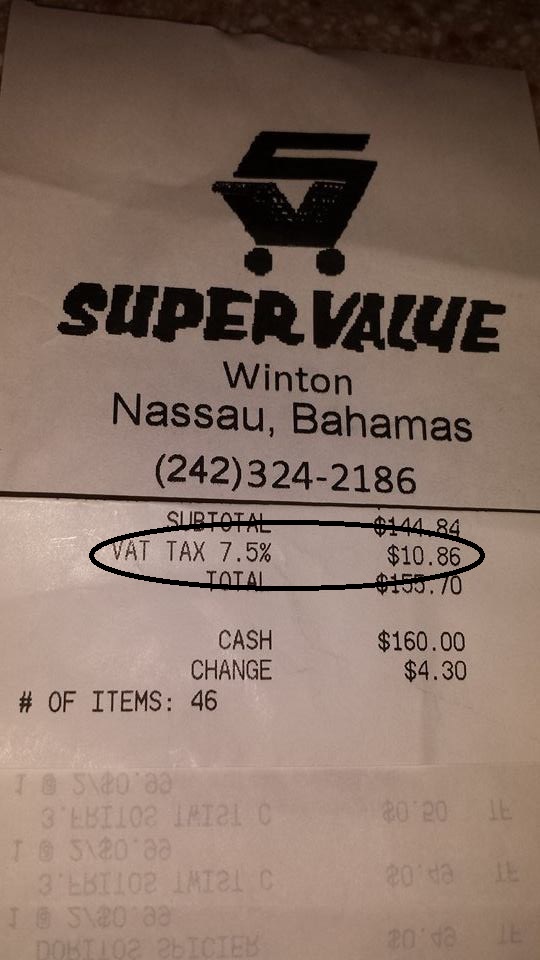
Photo: Sample Receipt with VAT applied
CU Blog - VAT Regime Barreling Towards Informal Economy - Photo 5 Rotated

VIDEO # 1: http://youtu.be/SsgKkp2Dpxg – One Bahamian Man’s Random Thoughts on VAT

VIDEO # 2 – http://youtu.be/Qzzxq1mBbF4 – Economist – Is VAT Good for The Bahamas?

Published on Apr 1, 2014 – Royal Fidelity “Face Time” with CEO Tyler Cowen.
At Fidelity Bank’s Cayman Economic Outlook, Feb 2014, with author, economist, and professor at George Mason University, Tyler Cowen.
Share this post:
, ,
[Top]

Lessons Learned from Queen Conch

Go Lean Commentary

So you think you are independent?

Just consider the lessons from the Queen Conch and discover exactly how independent, or interdependent, you truly are.

This is just one of the many lessons that the Queen Conch teaches Caribbean stakeholders.

According to the subsequent news article, there is a “Minority Report” (WildEarth Guardians) that the Queen Conch may be endangered and facing extinction. A Federal Government (US) agency listened intently to the concerns expressed by advocates alerting them of the conch’s dwindling status – an argument of extinction. Stakeholders in the Caribbean should have been sitting on “pins and needles” for the verdict. If this agency agreed with the Minority Report … Boom!

No more conch imports to the US. Further the host countries would have to regulate their conch fisheries to better manage the stock in national and international waters. Life as we know it, in the affected countries, would change forever; see VIDEOs below.

Where is your independence now?!

The publishers of book Go Lean…Caribbean monitor the developments in the societal engines related to the economic, security and governing aspect of Caribbean life.  The book serves as a roadmap for the introduction and implementation of the technocratic Caribbean Union Trade Federation (CU), an agency for managing integration and “common cause” issues for all the Caribbean. The issues in the following news article  highlights the subject matter of “Common Pool Resources“:

Title: No conch ban; Queen conch ‘not currently in danger of extinction’
By: K. Quincy Parker, Business Editor

CU Blog - Lessons Learned from Queen Conch - Photo 1The United States’ National Oceanic and Atmospheric Administration (NOAA) has decided not to place the queen conch on the endangered species list, erasing fears of a U.S. import ban on one of the Caribbean’s most valuable marine resources.

Concern over the potential of a conch ban was evident in the region, given the importance of conch exports to the Caribbean. Conch meat exports from 12 Caribbean countries are about 14,000 tons and contribute around $185 million in earnings. Even the shells are exported, albeit to a far lesser extent. CARICOM states together are the main suppliers of queen conch on the international market.

The matter was raised recently at the sixth meeting of the CARICOM-United States Trade and Investment Council (TIC) in Nassau.

In 2013, The Bahamas exported $4.2 million in fresh and frozen conch, practically all of it to the U.S. The value of conch shell exports was $43,700.

Study and findings
The National Marine Fisheries Service (NMFS), a division of the NOAA responsible for the stewardship of living marine resources within the United States’ exclusive economic zone, conducted a 12-month study and on Wednesday issued its determination on the petition to list the queen conch (Strombus gigas) as threatened or endangered under the United States’ Endangered Species Act (ESA).

“We have completed a comprehensive status report for the queen conch in response to the petition submitted by WildEarth Guardians,” NFMS said. “Based on the best scientific and commercial information available…we have determined that the species does not warrant listing at this time.”

The NMFS explained the process through which the decision had been made. First NMFS conducted a biological review of the species’ taxonomy, distribution, abundance, life history and biology. Available information on threats affecting the species’ status was compiled into a status report, which also defined the foreseeable future for the NMFS evaluation of extinction risk.

The group then established a group of biologists and marine mollusk experts – referred to as the Extinction Risk Analysis (ERA) group – to conduct a threats assessment for the queen conch, using the information in the status report. The ERA group was comprised of six Endangered Species Act policy experts from NMFS’ Office of Protected Resources and its southeast and southwest regional office’s protected resources divisions; three biologists with fisheries management expertise from NMFS’ southeast region’s sustainable fisheries division, and two marine mollusk biologists from NMFS’ northwest and southeast fisheries science centers. The ERA group had expertise in marine mollusk biology, ecology, population dynamics, ESA policy and fisheries management. The group members were asked to independently evaluate the severity, scope, and certainty for each threat currently and in the foreseeable future, which they qualified as 15 years from now.

After the year-long investigation, the ERA spoke.

“We conclude that the queen conch is not currently in danger of extinction throughout all or a significant portion of its range, nor is it not likely to become so within the foreseeable future,” the NMFS reported.
The Nassau Guardian; Bahamas Daily Newspaper (Posted 11/07/2014; Retrieved 12/30/2014) –
http://www.thenassauguardian.com/bahamas-business/40-bahamas-business/51572-no-conch-ban-queen-conch-not-currently-in-danger-of-extinction

The foregoing article trumpets the need for regional stewardship of resources that traverse from one member-state to another: sovereign democracies and overseas territories in and around the Caribbean Sea. The following 3 prime directives are explored in full details in the roadmap:

  • Optimization of the economic engines in order to grow the regional economy to $800 Billion & create 2.2 million new jobs.
  • Establishment of a security apparatus to protect the resultant economic engines.
  • Improve Caribbean governance to support these engines.

For the Queen Conch, there is no border consideration, they move and multiply from one Caribbean member-state to another. So there needs to be an administration over Caribbean Common Pool Resource that is agnostic of borders. This is the role of a super-national organization to provide the effective integration and administration for the region. All the geographical member-states, 30 in all, need to confederate, collaborate, and convene with the CU for Common Pool Resource solutions. This pronouncement is made in the Declaration of Interdependence, (Page 10 & 11). The statements are included as follows:

Preamble: While our rights to exercise good governance and promote a more perfect society are the natural assumptions among the powers of the earth, no one other than ourselves can be held accountable for our failure to succeed if we do not try to promote the opportunities that a democratic society fosters.

iii.  Whereas the natural formation of the landmass for our society is that of an archipelago of islands, inherent to this nature is the limitation of terrain and the natural resources there in. We must therefore provide “new guards” and protections to ensure the efficient and effective management of these resources.

The vision of this Go Lean roadmap is a confederation of the 30 member-states of the Caribbean into an integrated “Single Market” – Dutch, English, French and Spanish homelands – vested with the powers, tools and techniques to conduct the oversight role and responsibility for the region’s Common Pool Resource. The governance will include an Exclusive Economic Zone (EEZ) of the 1,063,000 square miles of the Caribbean Sea and a separation-of-powers between the CU federal and member-state Environmental Protection governing agencies. The Go Lean book details these series of community ethos, strategies, tactics, implementations and advocacies designed to foster regional oversight and solutions for the Queen Conch … and other Caribbean resources:

Anecdote – Caribbean Single Market & Economy Page 15
Community Ethos – Deferred Gratification Page 21
Community Ethos – Economic Principle – Consequences of Choice Lie in Future Page 21
Community Ethos – “Crap” Happens Page 23
Community Ethos – Minority Equalization Page 24
Community Ethos – Lean Operations Page 24
Community Ethos – Cooperatives Page 25
Community Ethos – Ways to Impact the Future Page 26
Community Ethos – Ways to Improve Sharing Page 35
Community Ethos – Ways to Impact the Greater Good Page 37
Strategic – Vision – Integrated Region in a Single Market Page 45
Strategic – Vision – Agents of Change: Globalization Page 57
Tactical – Confederating a Non-sovereign Union Page 63
Tactical – Fostering a Technocracy Page 64
Tactical – Growing to $800 Billion Regional Economy – Exploration of EEZ resources Page 67
Tactical – Separation of Powers – Interstate Commerce   Administration Page 79
Tactical – Separation of Powers – Environmental Control   & Regulatory Commission Page 83
Tactical – Separation of Powers – Agriculture and   Fisheries Department Page 88
Anecdote – Turning Around The Current Regional Administration: CariCom Page 92
Anecdote – Success Story: “Lean” in Government Page 93
Implementation – Ways to Pay for Change – EEZ Exploration Rights Page 101
Implementation – Foreign Policy Initiatives at Start-up – US Relationship Page 102
Implementation – Security Initiatives at Start-up – Border Security Page 103
Implementation – Ways to Deliver Page 109
Planning – 10 Big Ideas for the Caribbean Region – # 3 Integrated Homeland Security Page 127
Planning – Ways to Improve Trade Page 128
Planning – Ways to Improve Interstate Commerce – Trade SHIELD Page 129
Planning – Ways to Model the EU – Deputized   Agencies for Entire Region Page 130
Planning – Ways to Measure Progress – Big Data Capture and Analysis Page 147
Advocacy – Ways to Grow the Economy Page 151
Anecdote – Governmental Integration: CariCom Parliament Page 167
Advocacy – Ways to Improve Governance Page 168
Advocacy – Ways to Foster Cooperatives Page 176
Advocacy – Ways to Improve Homeland Security – Caribbean Naval Authority Page 180
Advocacy – Ways to Better Manage Natural Resources – Common Pool Resources Page 183
Advocacy – Ways to Preserve Caribbean Heritage – Natural Resources Oversight Page 22?
Appendix – Trade SHIELD – “Enforcement“ Trade -versus- Environment Paradox Page 264

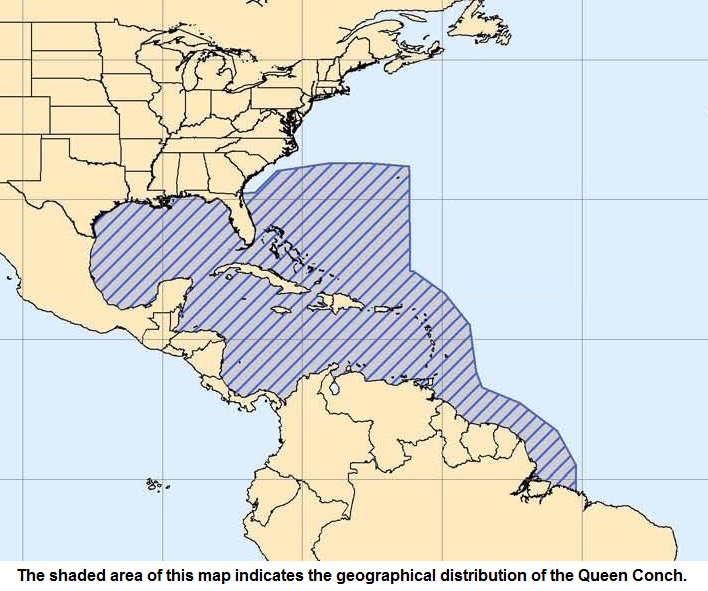
As mentioned in the foregoing article, the 12 conch exporting countries and (US) territories in the Caribbean are as follows:

Aruba, (Netherlands Antilles) Dominican Republic
Barbados Grenada (the “Grenadines”)
Bahamas Jamaica
Belize Martinique / Saint Barthélemy
Bermuda Turks and Caicos Islands
British Virgin Islands US / Puerto Rico
Cuba US / Virgin Islands

CU Blog - Lessons Learned from Queen Conch - Photo 3

The problem for the Queen Conch lie in the management (or lack there-of) for Common Pool Resources. There are now threats and risks to the viability of this Caribbean inhabitant. There are attempts at conservation too. Consider this encyclopedic information[1] as follows:

Threats
CU Blog - Lessons Learned from Queen Conch - Photo 4Photo: The island of Anegada, British Virgin Islands, a heap consisting of thousands of queen conch shells discarded after their flesh was taken for human consumption.

Within the conch fisheries, one of the threats to sustainability stems from the fact that there is almost as much meat in large juveniles as there is in adults, but only adult conchs can reproduce, and thus sustain a population.[62] In many places where adult conchs have become rare due to overfishing, larger juveniles and sub-adults are taken before they ever mate.[62][69] On a number of islands, sub-adults provide the majority of the harvest.[70] Lobatus gigas abundance is declining throughout its range as a result of overfishing and poaching. Populations in Honduras, Haiti and the Dominican Republic, in particular, are currently being exploited at rates considered unsustainable. Trade from many Caribbean countries is known or thought to be unsustainable. Illegal harvest, including fishing in foreign waters and subsequent illegal international trade, is a common problem.[50] The Caribbean “International Queen Conch Initiative” is an international attempt at managing this species.[52]

Conservation
CU Blog - Lessons Learned from Queen Conch - Photo 2The queen conch fishery is usually managed under the regulations of individual nations. In the United States all taking of queen conch is prohibited in Florida and in adjacent Federal waters. No international regional fishery management organization exists for the whole Caribbean area, but in places such as Puerto Rico and the Virgin Islands, queen conch is regulated under the auspices of the Caribbean Fishery Management Council (CFMC).[50] In 1990, the Parties to the Convention for the Protection and Development of the Marine Environment of the Wider Caribbean Region (Cartagena Convention) included queen conch in Annex II of its Protocol Concerning Specially Protected Areas and Wildlife (SPAW Protocol) as a species that may be used on a rational and sustainable basis, but that requires protective measures.

This species has been mentioned in the Convention on International Trade in Endangered Species of Wild Fauna and Flora (CITES) since 1985.[32] In 1992 the United States proposed queen conch for listing in CITES Appendix II, making queen conch the first large-scale fisheries product to be regulated by CITES (as Strombus gigas).[50][71][72] In 1995 CITES began reviewing the biological and trade status of the queen conch under its “Significant Trade Review” process. These reviews are undertaken to address concerns about trade levels in an Appendix II species. Based on the 2003 review,[63] CITES recommended that all countries prohibit importation from Honduras, Haiti and the Dominican Republic, according to Standing Committee Recommendations.[73] Queen conch meat continues to be available from other Caribbean countries, including Jamaica and Turks and Caicos, which operate well-managed queen conch fisheries.[50]

The Go Lean roadmap for the CU stresses the importance of common pool resource management. Managing the quota and harvesting seasons of seafood stock is a classic role for governmental agencies. But without the CU, there is no jurisdiction for the international waters between the islands. The area of “Fisheries” is a big economic engine for the coastal communities, but mitigating the risks of stock depletion would be a priority for the CU. This oversight is necessary for Queen Conch, plus other seafood stock like lobster, grouper and flying fish.

While the Minority Report by the “WildEarth Guardians” group in the foregoing news article may not have been adhered to by the US government, Caribbean stakeholders need to take heed. We have more at stake; any depletion of Queen Conch populations, endangered, extinct or not, is a serious matter of concern for our homeland.

The Go Lean book, foregoing news article and the encyclopedia references above all recommend a best-practice for the Caribbean: technocratic administration of the regional common pool resources, regardless of independence or sovereignty consideration. This is a matter of interdependence and survival of Caribbean culture and our way of life. See VIDEO #1 below demonstrating conch preparation in the Bahamas and VIDEO #2 revealing a Belizean recipe for the Caribbean conch delicacy.

Now is the time for all of the Caribbean, the people and governing institutions, to lean-in for this Caribbean integration roadmap, this exercise in “single market” promotion. Now is the time to Go Lean and make the Caribbean region a better homeland to live, work and play. 🙂

Download the free e-Book of Go Lean … Caribbean – now!

————–

Appendix – Referenced Citations:

1.http://en.wikipedia.org/wiki/Queen_conch
32. McCarthy, K. (2007). “A review of queen conch (Strombus gigas) life-history. Sustainable Fisheries Division NOAA. SEDAR 14-DW-4.
50. NOAA.Queen Conch (Strombus gigas). Retrieved 4 July 2009.
52.“International Queen Conch Initiative”. NOAA: Caribbean Fishery Management Council. Retrieved 2009-09-27.
62.“Virgin Islands Vacation Guide & Community”. Retrieved 13 April 2010.
63. CITES (2003). Review of Significant Trade in specimens of Appendix-II species. (Resolution Conf. 12.8 and Decision 12.75). Nineteenth meeting of the Animals Committee, Geneva (Switzerland), 18–21.
69. Theile, S. (2001). “Queen conch fisheries and their management in the Caribbean”. Traffic Europe (CITES): 1–77.
70. Oxenford, H. A.; et al. (2007). Fishing and marketing of queen conch (Strombus gigas) in Barbados. CERMES Technical Report Number 16. University of the West Indies, Barbados: Centre for Resource Management and Environmental Studies.
71.Appendices I, II and III. cites.org website. Retrieved 4 July 2009.
72.NOAA Fisheries Office of International Affairs website: CITES. Retrieved 4 July 2009.
73.“Standing Committee Recommendations”. CITES Official Documents No 2003/057. 2003. Retrieved 16 April 2010.

————–

Appendix – VIDEO # 1http://youtu.be/lqHwoX3VXeY – Conch Salad – Eleuthera Island, Bahamas – Martha Stewart

————–

Appendix – VIDEO # 2http://youtu.be/w1JP05CeA9A – Conch Fritters: Fry Jack – Cooking with Flavors of Belize & Chef Sean Kuylen

Published on Jan 14, 2014 – A classic Belizean dish, perfect for an appetizer at dinner time or a quick snack. And as usual, Chef Sean puts his spin on things adding Belikin Lighthouse Beer to the batter while giving chefs at home good tips when preparing this simple dish.

Share this post:
, , , ,
[Top]

For Canadian Banks: Caribbean is a ‘Bad Bet’

Go Lean Commentary

There is no one entity designated to regulate the Caribbean banking sector in its full entirety. There are however some financial institutions doing business in much of the region who thusly have to make regionalized assessments. This includes NGOs like the World Bank and the Inter-American Development Bank, plus for-profit institutions like the Royal Bank of Canada (RBC) and the Bank of Nova Scotia (Scotiabank).

The subsequent news articles reflect the assessment of Caribbean economics from the point-of-view of Canadian Bankers: RBC and Scotiabank. Their conclusion:

All is not well in the Caribbean.

These articles highlighting the need for regional stewardship and oversight of banking in the Caribbean. This is the siren call of the book Go Lean…Caribbean; it serves as a roadmap for the introduction and implementation of the technocratic Caribbean Union Trade Federation (CU) and Caribbean Central Bank (CCB) to provide better stewardship, to ensure that the economic failures of the past, in the Caribbean and other regions, do not re-occur here in the homeland.

According to these following articles, the need for this CU/CCB administration is past due:

Title # 1: RBC Wealth Management pulls out of Caribbean markets
Caribbean 360 – Regional News Site (Posted 11/21/2014; retrieved 12/30/2014) –
http://www.caribbean360.com/news/canadas-largest-bank-shutters-wealth-management-branches-in-the-bahamas-barbados-and-the-cayman-islands

BRIDGETOWN, Barbados – The Royal Bank of Canada (RBC) is now the latest Canadian bank to cut its losses in the Caribbean, following a decision to close its Caribbean wealth management divisions and several international advisory businesses in North America.

CU Blog - For Canadian Banks - Caribbean a Bad Bet - Photo 1The move follows RBC’s sale of its Jamaican operations earlier this year, and an announcement by The Bank of Nova Scotia earlier this month of its plans to close around 120 branches in Mexico and the Caribbean (35 in the Caribbean specifically).

Canadian bank CIBC also suffered a net-loss on its FirstCaribbean bank operations in April 2014, for which it incurred a CDN $420 million goodwill impairment charge primarily related to its under-performing operation in the Bahamas.

Speaking to media sources in Canada following the RBC developments, Craig Fehr – an analyst with Edward Jones – said:

What we’re seeing is the banks are doing a thorough evaluation of their business mix and figuring out what makes sense long term and what is probably best left in the hands of someone else.

Sources indicate that the closure of RBC’s regional wealth management divisions – domiciled in The Bahamas, Barbados and the Cayman Islands – as well as management teams in Toronto, Montreal and the United States, could affect over 300 employees.

While heads of RBC’s regional wealth management divisions in the Caribbean declined specific comment on the exit and its impacts, RBC spokesman Claire Holland has confirmed the closures, while declining to offer specifics on the bank’s exit strategy:

“As there are a number of strategic options being considered as part of the exit, it would be premature at this stage to estimate the number of employees that will be impacted”, she said, while adding that the focus of the bank’s international growth strategy will now be on operating in major financial centres where RBC has “competitive strengths.”

RBC’s Caribbean wealth management divisions manage a portion of over CDN$43.2 billion in assets under the affected US and international wealth management operations.

When contacted for comment, Director of the Barbados International Business Association (BIBA), Henderson Holmes, said that his organisation was still trying to ascertain the facts before making a full statement on the RBC exit.

Holmes however cautioned that an exit “would not be good for Barbados”, while stating that BIBA’s current considerations were in whether a purchaser has been identified for the Barbados business, and whether its assets would remain in the country.

According to the International Monetary Fund, RBC, CIBC and the Bank of Nova Scotia hold around 60% of total banking assets in the Caribbean – a fact which the Fund says places the region at an increased risk of exposure to foreign financial crises.

For its part, RBC indicates that the closures will allow the bank to place increased focus on high net-worth and ultra-high net worth clients in key expansion markets, including Canada, the United States, the British Isles and Asia.

————

Title # 2: Scotiabank loans to hospitality sector ‘impaired’
Nassau Guardian Daily Newspaper Website (Posted 11/07/2014; retrieved 12/30/2014) –
http://www.thenassauguardian.com/bahamas-business/40-bahamas-business/51574-scotiabank-loans-to-hospitality-sector-impaired
By:
K. Quincy Parker, Guardian Business Editor

Scotiabank loans to the Caribbean hospitality sector have apparently lost hundreds of millions of dollars in value; a portfolio worth $1.3 billion a year ago fell to a $1 billion before a restructuring which has led to write-downs in the region, and which may mean branch closures and job losses in The Bahamas.

It appears that Scotiabank’s Caribbean write-downs – or adjustment to the value of its business – largely stem from three “net impaired” loans to the hospitality sector in the region. In fact, Canadian financial publications note that “trouble in the Caribbean” is becoming a common refrain. Scotiabank’s write-down follows on the heels of an even bigger one by First Caribbean earlier this year.

After 125 years of operations in the region, Scotiabank’s Chief Executive Officer Brian Porter said during a call this week that the bank will close a significant number of branches in the Caribbean (35 branches was the estimate given) as part of the restructuring. The shift is expected to mean layoffs as well, but local representatives could not speak to the extent – if any – of closures or job cuts in The Bahamas.

Scotiabank’s spokespeople told Guardian Business on Thursday that the lender’s growth in the region has “created some overlap and duplication of services”.

“As a result, we undertook a review of our operating model and international distribution network and found opportunities to strengthen our retail presence by investing in areas that are going to improve the speed and quality of service for our customers,” the bank said in a statement released to this paper.

Porter has announced changes including branch closures, restructuring charges totaling more than $450 million, 1,500 layoffs – mostly in Canada – and loan losses of $109 million in the Caribbean. He also revealed that Scotiabank will either close or downsize 120 branches, largely in Mexico and the Caribbean, to focus on high-growth markets such as Chile and Colombia.

The Scotiabank Bahamas statement said: “The numbers announced relating to branch closures were across the Bank’s international network.

“The bank is still undergoing its review and while this process will take some time, it will be carefully planned with consideration given to all affected stakeholders including employees and our customers”.

The Caribbean has had to learn hard lessons on banking … abroad. Due to the interconnectivity of the financial systems, bank troubles in foreign countries easily become trouble for the region. This was definitely true for the 2008 Banking Crisis that spurred the Great Recession. (Eventually the middle classes were impacted and shrunk our tourism marketing prospects). The events of this period were the lynchpin for the Go Lean movement, (book and blogs). This Go Lean book, and the associated movement, posits that the effects of the 2008 Great Recession continue to linger in the Caribbean. Therefore the book advocates instituting the appropriate governance on the region’s banking sector so as to apply the learned lessons from 2008. We do not want to be vulnerable to any financial mis-management of our North American neighbors; or some “plutocratic” elements there-in.

2008 was all about Wall Street (New York City). Today’s headlines are all about Canada. Though there is elasticity from these foreign financial centers, the Caribbean is big enough (42 million people in 30 member-states) to streamline its own viable financial / securities market. We can exert some control over our own economic destiny. We must assume the coveted role of protégé to our North American partners, not parasites, as experienced … to date.

The CU’s prime directive is to elevate the Caribbean’s economic-security-governing engines. Early in the book, the need for a regional steward was pronounced (Declaration of Interdependence – Page 13) with these statements:

xxiv.    Whereas a free market economy can be induced and spurred for continuous progress, the Federation must install the controls to better manage aspects of the economy: jobs, inflation, savings rate, investments and other economic principles. Thereby attracting direct foreign investment because of the stability and vibrancy of our economy.

xxv.    Whereas the legacy of international democracies had been imperiled due to a global financial crisis, the structure of the Federation must allow for financial stability and assurance of the Federation’s institutions. To mandate the economic vibrancy of the region, monetary and fiscal controls and policies must be incorporated as proactive and reactive measures. These measures must address threats against the financial integrity of the Federation and of the member-states.

The Go Lean book, and previous blog/commentaries, stressed the key community ethos, strategies, tactics, implementations and advocacies necessary to establish the regional financial eco-systems for Caribbean self-determination. These pointed are detailed in the book as follows:

Community Ethos – Economic Principles – Economic Systems Influence   Individual Choices Page 21
Community Ethos – Economic Principles – Voluntary Trade Creates Wealth Page 21
Community Ethos – Economic Principles – Consequences of Choices Lie in   the Future Page 21
Community Ethos – Economic Principles – Money Multiplier Page 23
Community Ethos – Governing Principles – Lean Operations Page 24
Community Ethos – Governing Principles – Return on Investments Page 24
Community Ethos – Ways to Impact the Future Page 26
Community Ethos – Ways to Help Entrepreneurship Page 28
Community Ethos – Ways to Impact Turn-around – 2008 Crisis Page 33
Community Ethos – Ways to Impact the Greater Good Page 37
Strategy – Mission – Fortify the Stability of   the Securities Markets Page 47
Strategy – CU Stakeholders   to Protect – Banks & Depositors Page 47
Tactical – Growing the Economy – Minimizing Bubbles Page 69
Tactical – Separation-of-Powers – Depository Insurance &   Regulatory Agency Page 73
Anecdote – Turning Around CARICOM – Effects of 2008 Financial Crisis Page 92
Implementation – Assemble Caribbean Central Bank as Cooperative Page 96
Implementation – Ways to Better Manage Debt – Optimizing Wall Street   Role Page 114
Planning – 10 Big Ideas – Single Market / Currency Union Page 127
Planning – Lessons Learned from the old West Indies Federation – Canada’s   Help Page 135
Planning – Lessons Learned from 2008 Page 136
Planning – Lessons Learned from Canada’s History Page 146
Planning – Ways to Measure Progress Page 147
Advocacy – Ways to Grow the Economy Page 151
Advocacy – Ways to Improve Credit Ratings – 2008 Lessons Page 155
Advocacy – Ways to Improve Housing – 2008 Mortgage Crisis Lessons Page 161
Advocacy – Ways to Impact Labor Unions – 2008 Effects on Main Street   Jobs Page 164
Anecdote – Caribbean Industrialist – Growth and Success Page 189
Advocacy – Reforms for Banking Regulations Page 199
Advocacy – Ways to Impact Wall Street Page 200
Advocacy – Ways to Impact Main Street Page 201
Appendix – Offshore Financial Services Industry Developments Page 321
Appendix – Bahamas & Tax Info Exchange Agreements Page 322

The points of effective, technocratic regional stewardship, especially in response to the 2008 Great Recession / Financial Crisis, were further elaborated upon in these previous blog/commentaries:

https://goleancaribbean.com/blog/?p=3397 A Christmas Present for the Banks from the Omnibus Bill
https://goleancaribbean.com/blog/?p=3090 Lessons Learned – Europe Sovereign Debt Crisis of 2009
https://goleancaribbean.com/blog/?p=3028 Why India is doing better than most emerging markets since the crisis
https://goleancaribbean.com/blog/?p=2930 ‘Too Big To Fail’ – Caribbean Version
https://goleancaribbean.com/blog/?p=2090 The Depth & Breadth of Remediating 2008
https://goleancaribbean.com/blog/?p=1896 The Crisis in Black Homeownership since 2008
https://goleancaribbean.com/blog/?p=1014 Canadian View: All is not well in the sunny Caribbean
https://goleancaribbean.com/blog/?p=841 Post 2008 – Having Less Babies is Bad for the Economy?
https://goleancaribbean.com/blog/?p=782 Open/Review the Time Capsule: The Great Recession of 2008
https://goleancaribbean.com/blog/?p=709 Analyzing the Data – Student debt holds back home buyers
https://goleancaribbean.com/blog/?p=518 Analyzing the Data – What Banks learn about financial risks

Canada has been a dear friend to the Caribbean – see Appendices below. It is unfortunate that so many of their banks have experienced losses doing business in the Caribbean – we have been a ‘bad bet’. We want these Canadian banks and Canada in general to have good returns on their Caribbean investments and nothing but pleasurable experiences interacting with our culture and society. We want the Caribbean to be a better place to live, work and play for Canadians.

According to the foregoing news articles, our parasitic regional culture has not being gracious to our Canadian guest and direct investors. We need the proposed successes of the Go Lean roadmap for so many reasons; one strong motivation is to turn-around the results of the Canadian-Caribbean relationships. We must diversify our economy, fortify our security and improve our governance so that Canada would consider us in the role of a protégé, not a parasite again and again. This is the purpose of the Go Lean roadmap, to provide a turn-by-turn direction to move the region to that destination.

Don’t give up on us Canada!

🙂

Download the book Go Lean … Caribbean – now!

——————–

Appendix A – Scotiabank in the Caribbean and Central America
We have been part of the Caribbean and Central America region since 1889 when we opened our first office in Kingston, Jamaica to support the trade of rum sugar and fish. This was the first time a Canadian bank had opened a branch outside the U.K. or the U.S. Scotiabank had a branch in Kingston before opening a branch in Toronto, Canada, where the Executive Offices are now located.

Some 120 plus years later, Scotiabank is the leading bank in the Caribbean and Central America, with operations in 25 countries, including affiliates. We are the only Canadian bank with operations in four of the seven Central American countries, namely Costa Rica, Belize, Panama and El Salvador.

Scotiabank Facts:

  • Scotiabank employs 7,765 people in the region
  • Serves more than two million customers
  • About 99% of employees are hired locally
  • There are 294 branches and over 655 automated banking machines (ATMs) throughout the region

Our international strategy focuses on investing resources in high-potential markets where Scotiabank anticipates solid, long-term economic growth. We pride ourselves on leveraging the best Canadian sales and service practices to retain and attract high-value customers abroad. Our core purpose is to be the best at helping you become financially better off by providing relevant solutions to meet your unique needs.
(Source: http://www.scotiabank.com/jm/en/0,,37,00.html retrieved December 31, 2014)

VIDEOScotiabank Celebrates 125 Years in Jamaicahttp://youtu.be/17WPQTE4Lr8

————-

Appendix B – Scotiabank and the Diaspora

CU Blog - For Canadian Banks - Caribbean a Bad Bet - Photo 2The Scotiabank Caribbean Carnival Toronto is an exciting three-week cultural explosion of Caribbean music, cuisine, revelry as well as visual and performing arts. In its 45th year it has become a major international event and the largest cultural festival of its kind in North America.

As Carnival is an international cultural phenomenon, the great metropolis of Toronto and its environs will come alive as the city explodes with the pulsating rhythms and melodies of Calypso, Soca, Reggae, Hip Hop, Chutney, Steel Pan and Brass Bands. This colourful exhibition and display of genius is truly a musical panorama that is certain to bring a pleasing smile to the ancestral titans of Pan and Calypso music.

Share this post:
, , , , ,
[Top]

Forging Change: Music Moves People

Go Lean Commentary

CU Blog - Forging Change - Music Moves People - Photo 1“I write the songs that make the whole world sing; I write the songs of love and special things; I write the songs that make the young girls cry; … I am music and I write the songs”. – Barry Manilow (see Appendix A below).

The publishers of the book Go Lean…Caribbean want to forge change in the Caribbean. How do we go about doing that?

The book identifies music as one of the viable approaches.

Consider what happened in 2014, with this song (Happy by Pharrell Williams) and related experiences:

Video: “Happy” Makes Pharrell Williams Cry – http://youtu.be/IYFKnXu623s

As the foregoing VIDEO depicts, the song moved us all. In this writer’s opinion, one of the promoters of the Go Lean book and movement, this is the song of the year (2014).

The book Go Lean…Caribbean serves as a roadmap for the introduction and implementation of the Caribbean Union Trade Federation (CU), an initiative to bring change and empowerment to the Caribbean region, to make the region a better place to live, work and play. From the outset, the book recognized the significance of music in the Caribbean change/empowering plan with these statements in the opening Declaration of Interdependence (Page 12 & 14):

xxi.    Whereas the preparation of our labor force can foster opportunities and dictate economic progress for current and future generations, the Federation must ensure that educational and job training opportunities are fully optimized for all residents of all member-states, with no partiality towards any gender or ethnic group. The Federation must recognize and facilitate excellence in many different fields of endeavor, including sciences, languages, arts, music and sports. This responsibility should be executed without incurring the risks of further human flight, as has been the past history.

xxxii.    Whereas the cultural arts and music of the region are germane to the quality of Caribbean life, and the international appreciation of Caribbean life, the Federation must implement the support systems to teach, encourage, incentivize, monetize and promote the related industries for arts and music in domestic and foreign markets. These endeavors will make the Caribbean a better place to live, work and play.

The purpose of the Go Lean roadmap is not specifically on music, but rather change, and yet there is the acknowledgement that music can help forge change.

This Go Lean roadmap calls for the heavy-lifting in shepherding important aspects of Caribbean life. In fact, the empowerment roadmap has these 3 prime directives:

  • Optimization of the economic engines in order to grow the regional economy to $800 Billion & create 2.2 million new jobs.
  • Establishment of a security apparatus to protect the resultant economic engines.
  • Improve Caribbean governance to support these engines.

The book describes the CU as a hallmark of a technocracy, a commitment to efficiency and effectiveness, and also includes a commitment to concepts of fun, such as music, arts, sports, film/media (Hollywood-related), heritage and overall happiness. In fact, there are a total of 144 different missions for the CU. While much focus is on “live and work” activities, many others are targeting the areas of “play”‘; music is definitely a play-time activity … for young and old.

As depicted in the foregoing VIDEO, “music” can be used to forge change. The Go Lean book declares that before any real change takes root in the Caribbean that we must reach the heart, that there must be an adoption of new community ethos – the national spirit that drives the character and identity of its people. We must therefore use effective and efficient drivers to touch the heart and forge this change. How? Here’s one suggestion, (from Appendix A):

Oh, my music makes you dance and gives you spirit to take a chance
And I wrote some rock ‘n roll so you can move
Music fills your heart, well that’s a real fine place to start

The Go Lean roadmap was constructed with the community ethos in mind to forge change, plus the execution of related strategies, tactics, implementations and advocacies to make the change permanent. The following is a sample of these specific details from the book:

Community Ethos – Deferred Gratification Page 21
Community Ethos – Economic Principles – People Choose Page 21
Community Ethos – Economic Principles – People Respond to Incentives in Predictable Ways Page 21
Community Ethos – Economic Principles – The Consequences of Choices Lie in the Future Page 21
Community Ethos – Governing Principles – Lean Operations Page 24
Community Ethos – Ways to Impact the Future Page 26
Community Ethos – Ways to Foster Genius Page 27
Community Ethos – Ways to Promote Intellectual Property Page 29
Community Ethos – Ways to Impact Research & Development Page 30
Community Ethos – Ways to Bridge the Digital Divide Page 31
Community Ethos – Ways to Impact Turn-Around Page 33
Community Ethos – Ways to Promote Happiness Page 36
Community Ethos – Ways to Impact the Greater Good Page 37
Strategy – Vision – Confederate 30 Member-States Page 45
Strategy – Mission – Celebrate the Music, Sports, Art, People and Culture of the Caribbean Page 46
Tactical – Confederating a Permanent Union Page 63
Tactical – Fostering a Technocracy Page 64
Implementation – Ways to Pay for Change Page 101
Implementation – Ways to Deliver Page 109
Implementation – Ways to Impact Social Media Page 111
Planning – 10 Big Ideas for the Caribbean Region – Cyber-Caribbean Page 127
Planning – Ways to Make the Caribbean Better Page 136
Planning – Reasons Why the CU Will Succeed Page 137
Advocacy – Ways to Grow the Economy Page 151
Advocacy – Ways to Create Jobs Page 152
Advocacy – Ways to Improve Communications Page 186
Advocacy – Ways to Foster e-Commerce Page 198
Advocacy – Ways to Impact Hollywood Page 202
Advocacy – Ways to Impact Beauty Pageants Page 203
Advocacy – Ways to Preserve Caribbean Heritage Page 218
Advocacy – Ways to Improve the Arts Page 230
Advocacy – Ways to Promote Music Page 231

While the roadmap is optimistic; it is realistic too. There is the acknowledgement that the business of music (Show Business in general) has changed in the light of modern dynamics, particularly due to Internet & Communications Technologies. To spur more development in music, the economic engines of the music/show business must be secured. This point was previously detailed in these Go Lean blog/commentaries:

https://goleancaribbean.com/blog/?p=2415 How ‘The Lion King’ roared into history
https://goleancaribbean.com/blog/?p=2291 Forging Change: The Fun Theory
https://goleancaribbean.com/blog/?p=1909 Music Role Model Berry Gordy – No Town Like Motown
https://goleancaribbean.com/blog/?p=866 Music Man Bob Marley: The legend lives on!
https://goleancaribbean.com/blog/?p=676 Introduction of a Bahamian ‘Carnival’; Big Change for Country

“Do what you have always done, get what you’ve always got” – Old Adage.

The quest to change the Caribbean is more complex than just playing or listening to music. This is serious, this is heavy-lifting; but all the earnest effort will be a waste unless people are moved to change. So we must use all effective tools to forge the required change; music is one of the best.

Even if we fail, at least we would have had fun trying to execute the plan. As depicted in the underlying video (Appendix B): “Because I’m happy”.

This is the mandate of the Go Lean roadmap: making the Caribbean a better place to live, work and play; and having fun while doing it. Everyone is encouraged to lean-in to this roadmap:

Clap along if you feel like happiness is the truth
Because I’m happy
Clap along if you know what happiness is to you
Because I’m happy
Clap along if you feel like that’s what you wanna do
Because I’m happy

🙂

Download the book Go Lean … Caribbean – now!

————

Appendix A – Song: “I Write The Songs”; written, produced and performed by Barry Manilow:

I’ve been alive forever
And I wrote the very first song
I put the words and the melodies together
I am music
And I write the songs

I write the songs that make the whole world sing
I write the songs of love and special things
I write the songs that make the young girls cry
I write the songs, I write the songs

My home lies deep within you
And I’ve got my own place in your soul
Now when I look out through your eyes
I’m young again, even tho’ I’m very old

I write the songs that make the whole world sing
I write the songs of love and special things
I write the songs that make the young girls cry
I write the songs, I write the songs

Oh, my music makes you dance and gives you spirit to take a chance
And I wrote some rock ‘n roll so you can move
Music fills your heart, well that’s a real fine place to start
It’s from me, it’s for you
It’s from you, it’s for me
It’s a worldwide symphony

I write the songs that make the whole world sing
I write the songs of love and special things
I write the songs that make the young girls cry
I write the songs, I write the songs

I write the songs that make the whole world sing
I write the songs of love and special things
I write the songs that make the young girls cry
I write the songs, I write the songs

I am music and I write the songs

———

Appendix B: Pharrell Williams – Happy (Official Music Video) – http://youtu.be/y6Sxv-sUYtM

Share this post:
, , ,
[Top]

No Fear of Failure – Case Study: Bahamasair

Go Lean Commentary

CU Blog - No Fear of Failure - Photo 3The book Go Lean … Caribbean stresses the need to adopt best practices in the regional airline industry so as to better facilitate the region’s primary economic driver of tourism. The tagline for the book is “a better place to live, work and play”.

The reference to “better” and “best practices” in this case refers to “quality” – a missing ingredient in much of the Caribbean air transport industry. The bad example being cited in this case is Bahamasair, the National Flag Carrier of the Bahamas.

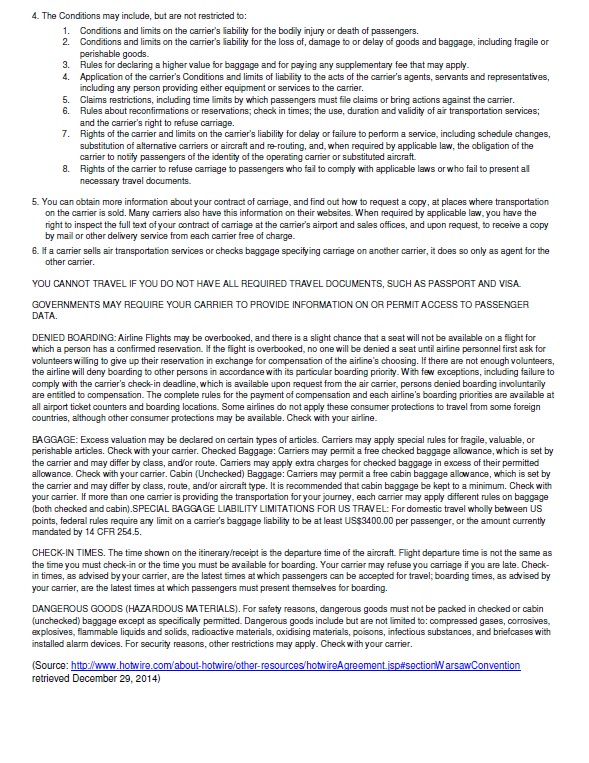
Bahamasair Holdings Limited, operating as Bahamasair, is an airline based in Nassau. It is the national airline and operates domestic scheduled services to 14 destinations and regional scheduled services to destinations in the Caribbean and the United States. Its main base is Lynden Pindling International Airport. It has the same logo as the current Bahamas national tourism marketing logo, but with the tagline: “We don’t just fly there, we live there”.

CU Blog - No Fear of Failure - Photo 2

The story being related in the following article is a far cry from a pursuit of quality, in fact the overriding theme is “no fear of failure” on the part of the airline’s stakeholders; “if we succeed or fail, it doesn’t really matter”:

Title: Bahamasair Flights Cancelled as Pilots Strike
Local South Florida TV Newscasts (Posted 12/23/2014; retrieved 12/29/2014) –
http://www.nbcmiami.com/news/local/Bahamasair–286735471.html

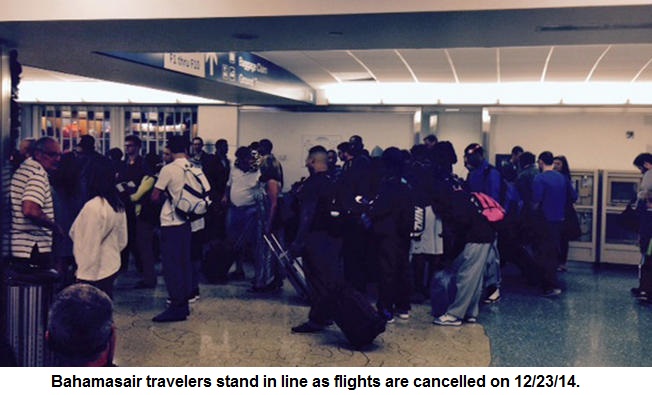
CU Blog - No Fear of Failure - Photo 1Hundreds of air travelers hoping to get to the Bahamas continue to wait for answers as their flights on Bahamasair have been cancelled.

The cancelled flights have left some passengers at South Florida airports for more than 10 hours.

All flights out of Miami International Airport and Fort Lauderdale International Airport on board Bahamasair that were scheduled for Tuesday have been cancelled. That includes two scheduled arrivals in Fort   Lauderdale, along with one departure from FLL. MIA has seen two departures cancelled along with one arrival.

Miami International Airport has one Bahamasair flight scheduled to arrive at 7:40 a.m. on Christmas Eve that is still on the board as of 8:30 p.m.

NBC 6 has reached out to Bahamasair about the cancellations, but has not received a response.

According to the website tribune242.com, the airline has seen their flights grounded due to a protest from pilots over salary negotiations. The Nassau Guardian reported that the pilots’ union denied it instructed its pilots to go on strike over the negotiations.

The airline told the Nassau Guardian, “Bahamasair is cognizant that this is the height of our peak travel period and we will do the best we can to mitigate any further disruption to your holiday travel plans.”

VIDEO: http://youtu.be/mPM0mDg4-5E  – CBS4 Miami Reporting on the Christmas-time Bahamasair Pilots Strike

This airline has an eclectic history, one bred out of the need to optimize economic engines, and yet they have failed so often in their delivery of this charter. Bahamasair was born out of the oil crisis of the 1970s. In 1970, British Airways stopped flying to The Bahamas, and the Bahamian Government accurately predicted that some of the other major airlines flying to the country would follow British Airways’ lead. Bahamasair was therefore established by the government and started operations on 7 June 1973, by acquiring the operations of Flamingo Airlines and Out Island Airways. [1]

Bahamasair initially encountered operating difficulties, including poor maintenance facilities, economic conditions and company structure. Those factors brought public distrust as a consequence. However, jet airliners started to arrive in the shape of British Aircraft Corporation BAC One-Elevens followed by brand new Boeing 737s, and in 1972, it opened its first international service, from Nassau to Tampa, Florida. In 1973, the government’s vision of many airlines leaving the island became a reality, when Pan Am and some other major companies decided to stop operating to the Bahamas. This enabled Bahamasair to capture a substantial part of the Bahamas scheduled air transport market. Through the rest of the 1970s, Bahamasair kept adding flights to other cities in Florida and, domestically, the presence of the airline also grew rapidly.

During the early 1980s, Bahamasair unsuccessfully tried to expand to the Northeast United States [so as to influence market prices for this vital tourism source territory], opening flights to Philadelphia, Washington-DC and Newark, New Jersey. But in 1989, the airline’s directors decided that those routes were not profitable and eliminated them from the airline’s route map – an exercise in futility. In 1991, the airline streamlined it fleet operations, with the acquisition of de Havilland Canada DHC-8 Dash 8 turbine propeller aircrafts, purchased to substitute for the whole jet fleet; the Boeing 737-200s were taken out of service. In 1997 however, Boeing 737-200’s were returned to service because key routes warranted the cargo and passenger carrying capabilities offered by these jetliners. The 737-200 was deployed to Fort Lauderdale, Miami and Orlando as well as one domestic route, being Nassau-Freeport. Today, Bahamasair operates efficient late model Boeing 737-500 jetliners, in addition to the stretched Dash 8 series 300 turboprop. But, the culture of dysfunction persists…

This foregoing news article, VIDEO and encyclopedic details are just echoes of the negative community ethos of failure with this airline for this country. While most Bahamians may not know the intricate details of the airline industry, they do know that the Bahamasair’s model is the epitome of failure, as the performance history has been consistently poor. This sad culture has resulted in the local community concocting phrases like:

1. BahamaScare
2. A religious airline: only God knows when they are arriving and only God knows when they are taking off.

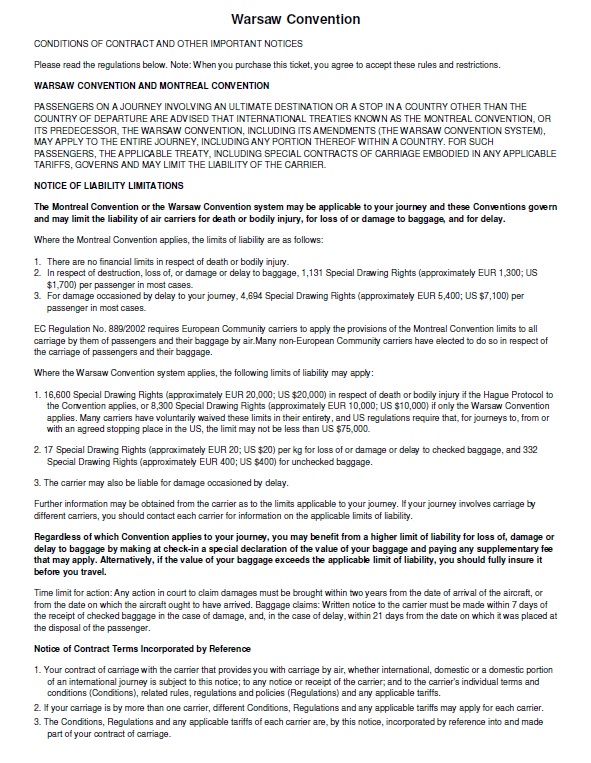
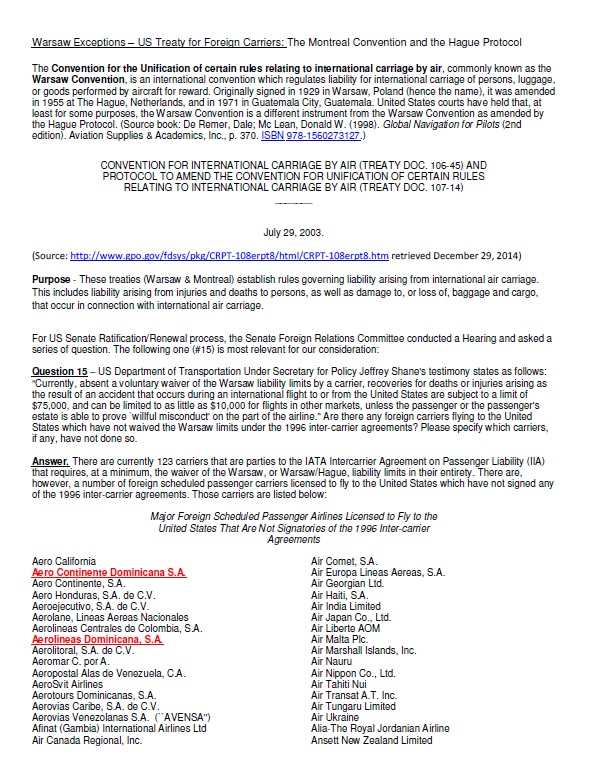
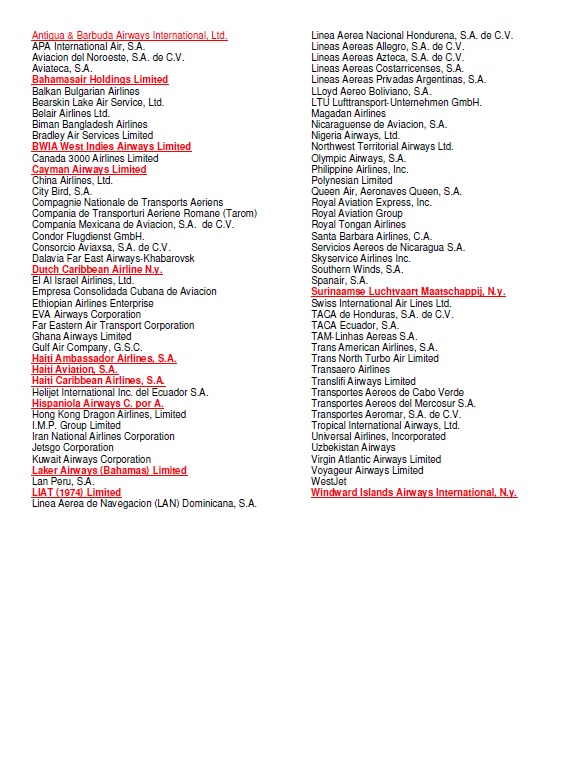
This negative community ethos is even enshrined in the regulatory filing for the airline as an international carrier. Appendix B highlights the accepted quality standard in aviation known as the Warsaw Convention. Appendix C on the other hand, demonstrates how Bahamasair, and other Caribbean carriers, have petitioned for waivers so as not to abide by these high standards. Imagine the impressions and messaging this plea relates to the world:

No, hold us to a lower standard.
We are not afraid to fail.
We will not try to satisfy our customers.

This message aligns with the news report above. The Pilot Union in this case gained a bargaining edge in salary negotiations with the airline’s management, but at the expense of any goodwill with the flying public… or the affected tourist industry “partners” in the island-nation’s homeland.

This is sad … and embarrassing!

Change must come to the airline industry for the Bahamas … and the entire region. The book Go Lean … Caribbean serves as a roadmap for the introduction and implementation of the Caribbean Union Trade Federation (CU), an alliance of the 30 Caribbean member-states. This Go Lean roadmap has 3 prime directives:

  • Optimization of the economic engines in order to grow the regional economy to $800 Billion and create 2.2 million new jobs.
  • Establishment of a security apparatus to protect the resultant economic engines.
  • Improve Caribbean governance to support these engines.

This Go Lean roadmap portrays the need for regional integration, administration, and promotion for Caribbean air carriers. The book posits that transportation and logistics empowers the economic engines of a community, in this case tourism. The forgoing news articles definitely assert this economic leaning. There must be efficient air carrier solutions, to service the transportation and tourism needs of the Caribbean islands with optimized deliveries and best practices.

Efficiency, optimization, best practices …
… a new standard for a national character, reputation, image, and brand!

For the region as a whole, Bahamas included, it is the expectation that air travel will continue to grow and impact Caribbean society – thus the need for more regional coordination. New models are detailed in the book in which tourism will be enhanced with features like “air lifts” and “air bridges” to partner with Caribbean events and properties.

For much of the Caribbean, air service is the only transportation option for land-based visitations (stop-overs), so this Go Lean roadmap introduces the Union Atlantic Turnpike to offer more transportation solutions (ferries, toll roads, railways, and pipelines) to better facilitate the efficient movement of people and cargo.

The roadmap also calls for regulating and promoting the Caribbean’s aviation industry. We need Bahamasair and other regional carriers to better deliver on their charters to facilitate air passengers to and within the Caribbean.

This is how the CU will optimize the region’s economic engines. This is change!

The Go Lean book presents a series of positive community ethos, in place of the negative ethos that permeates the Caribbean air transport industry; these positive ethos must first be adopted to forge the desired change. In addition, there are these specific strategies, tactics, implementations and advocacies to apply, that would contribute to better deliveries:

Introduction to Lean – Quality in Production and Delivery Page 4
Who We Are – Experts in Lean, Agile and Quality Delivery Page 8
Anecdote – Learning from the French Caribbean’s Peak Season Strike Page 17
Community Ethos – Deferred Gratification Page 21
Community Ethos – People Choose Due to Scarcity of Resources Page 21
Community Ethos – All Choice Involve Costs Page 21
Community Ethos – People Respond to Incentives Page 21
Community Ethos – Economic Systems Influence Individual Choices Page 21
Community Ethos – Consequences of Choices Lie in the Future Page 21
Community Ethos – Lean Operations Page 24
Community Ethos – Cooperatives Page 25
Community Ethos – Ways to Foster Genius – Promote Excellence Page 27
Community Ethos – Ways to Improve on the Art of Negotiations Page 32
Community Ethos – Ways to Improve Sharing Page 35
Community Ethos – Impacting the Greater Good Page 37
Strategy – Customers – Visitors Page 47
Strategy – Competitive Analysis –  Event Patrons Page 55
Strategy – Core Competence – Tourism Page 58
Anecdote – Caribbean Hotel & Tourism Assoc. focus on Air Transport Page 60
Tactical – Fostering a Technocracy Page 64
Tactical – Separation of Powers: Commerce – Tourism Promotion Page 78
Tactical – Separation of Powers: Aviation Administration & Promotion Page 84
Anecdote – “Lean” in Government – Extracting Quality from Best Practices Page 93
Implementation – Ways to Deliver Page 109
Implementation – Ways to Impact Social Media – Outreach to CU Stakeholders Page 111
Implementation – Trade Mission Objectives – Elevate Image Page 116
Planning – Ways to Improve Trade Page 128
Planning – Ways to Better Manage Image – Public Relations Page 133
Planning – Negative Lessons Learned from Egypt’s Tourism Mis-steps Page 143
Planning – Ways to Measure Quality and Progress – Six Sigma Page 147
Advocacy – Ways to Impact Labor Unions – Quality Adoptions Page 162
Advocacy – Ways to Improve Leadership – Inspire Excellence Page 171
Advocacy – Ways to Enhance Tourism Page 190
Advocacy – Ways to Impact Events Page 191
Advocacy – Ways to Market Southern California – Air Bridge Page 194
Advocacy – Ways to Impact Main Street – Tourism Spin-offs Page 201
Advocacy – Ways to Improve Transportation – Aviation Promotion Page 205

Previous Go Lean blogs also detailed the dynamics of the air transport industry in the region; see sample here:

Caribbean less competitive due to increasing aviation taxes
Lessons Learned from the American Airlines Merger
Caribbean Changes – Air Antilles Launches St. Maarten Service

What exactly can be done to immediately turn-around the delivery practices for Bahamasair, and other regional carriers? The Go Lean book provides specific details within its 370 pages, serving as a roadmap for forging change in Caribbean society. Here is a list of products/services that would have elevated the experiences of the travelling public in the foregoing news article/VIDEO:

  • Cooperative among Regional Carriers – Sharing the burden of industrial crises
  • Service Level Agreements – Guaranteeing performance of service providers and accepting liability for failures (Appendix B)
  • www.myCaribbean.gov – Social Media / Online Account Interactions – Awarding e-Credits for performance failures
  • Labor Union Escalation of Grievances – Providing recourse for the Pilots’ Petition – Mitigating the need for peak season strikes

Now is the time to lean-in to this roadmap for Caribbean change, as depicted in the book Go Lean…Caribbean. We cannot afford more news headlines like in the foregoing news article/VIDEO. Flying as a National Flag Carrier is a public trust. The Caribbean can – and must – do better.

Download the book Go Lean … Caribbean – now!

———-

Appendix A – Source Reference:

http://en.wikipedia.org/wiki/Bahamasair retrieved December 29, 2014

———————–

Appendix B – Hotwire/Industry Quality Standards: Warsaw Convention

See Photo 1 & 2 of Fare Rules/Details:

CU Blog - No Fear of Failure - Photo 4

CU Blog - No Fear of Failure - Photo 5

————————

Appendix C – Warsaw Convention Exemptions for International Carriers in the US.

See Photo 1 & 2 of Detailed List of Exempted Airlines – Highlighting Caribbean regional carriers:

CU Blog - No Fear of Failure - Photo 6

CU Blog - No Fear of Failure - Photo 7

Share this post:
, , , , ,
[Top]

Forging Change: The Sales Process

Go Lean Commentary

CU Blog - Forging Change - The Sales Process - Photo 1

Now starts the quest to change the Caribbean, to empower its economic, security and governing engines so as to elevate society. The book Go Lean…Caribbean posits that for any permanent change to take root, an accompanying community ethos – the fundamental character/spirit that informs the beliefs, customs, or practices – must first be adopted. How do we go about doing that?

Change is not easy! It can come about in two ways: revolution or evolution. The Go Lean book is asserting for evolutionary change. The book describes (Page 20) that change begins in the “heart”. This figurative body part is associated with feelings, values and commitments. This is why the heart is considered the “seat of motivation”. The people of the Caribbean must change their feelings about elements of their society – elements that are in place and elements missing.

The book identifies a number of best-practices for forging change or adopting new community ethos. According to a previous blog/commentary that was a review of the book ‘Chasing Youth Culture and Getting It Right’, it was established that forging change in the region requires selling to the Caribbean youth. In the past, this audience has been quick to abandon the region and set the destination of their hopes and dreams on to foreign shores. But the Go Lean roadmap requires youth participation and their engagement in the homeland. So this audience must be sold on this vision to make the region a better place to live, work and play.

What process do we use to sell to the Caribbean youth, our target market? (And by extension to the entire Caribbean).

The book Go Lean…Caribbean serves as a roadmap for the introduction and implementation – a Sales Process – of the technocratic Caribbean Union Trade Federation (CU). This initiative to bring change and empowerment to the Caribbean region will require the application of best-practices in Delivery arts and sciences. This Go Lean roadmap is set to deliver, with these 3 prime directives:

  • Optimization of the economic engines in order to grow the regional economy to $800 Billion & create 2.2 million new jobs.
  • Establishment of a security apparatus to protect the resultant economic engines.
  • Improve Caribbean governance to support these engines.

Frankly, selling economic empowerment to the public is easy…
… just show up with a boat-load of jobs and people will “cow tail” and cooperate; (the heavy-lifting is involved in selling industry stakeholders). Security and governing changes on the other hand require much more heavy-lifting: consensus-building, convincing and compromise of existing institutions and officials. This is the charter of the CU, to employ a Sales Process to persuade these different stakeholders. Persuasion equals selling.

The Go Lean roadmap includes the steps for this goal; to apply a technocratic Sales Process. Consider the details of this source/article; (references here to “company” would relate to the CU while “customer” relate to Caribbean stakeholders):

Title: What is your Sales Process?

…for achieving the sales edge? Do you have one? Is it working? Do you need one?

CU Blog - Forging Change - The Sales Process - Photo 3
Our answer to this last question is a loud YES. Not all sales people are rainmakers. In fact only 20% of the sales population possess the intuition and luck to make things just happen. And with these sales personalities, your best bet is to let them “do their thing” with some management to make sure your goals are met and your image maintained. The remaining 80% of sales people, however, are most successful when they follow a specific sales process that details steps along the way and the tools to use at each step.

You should define and standardize your company’s sales process based on best-practices within your team, your industry, and the sales field in general. Here are some guidelines for creating a sales process workflow to get you started:

LEVEL 1—Contact Type. First start by defining your contact types. One of the mistakes we frequently see is confusion (and therefore a lack of appropriate prioritization) around whether a contact type is a Suspect, Prospect, or Lead.

  • Suspect. A suspect is a name and a name only. In fact, it may only be the company name. You may not know the contact name of the buyer most likely to purchase your products and services. Or, if you have a name, it may be a reader of a publication, a listener to a radio station, or an attendee at a trade show, and you don’t know if this person is the appropriate buyer. You only suspect this “entity” is a target for your products or services.
  • Prospect. A prospect is a suspect that has engaged with you in some way, whether it is an action taken on a web visit, a phone inquiry, etc. Your goal in this stage is to qualify this prospect to the point that you know the decision-maker and you’ve identified an interest level in your products and/or services.
  • Lead. A prospect becomes a lead when you’ve established a future (maybe not immediate) need. The more immediate the need, the more hot the lead. Before you can move the lead to the assess phase, you must determine what information you most need to know. For example, what is their decision-making process/timeline, do they understand your offering and value proposition, does your solution align with their business problem, etc?
  • Customer. A customer is someone who bought, or has contracted to buy, your product and/or service.

LEVEL 2—Process Milestones. The process for converting suspects into prospects, prospects into leads, leads into customers is much like playing a baseball game. You’d love to hit a home run every time you step to the plate, but the game is really won on first and second base hits. This is where your focus should be. And like baseball, where you don’t get to skip second base to speed your journey to home plate, you must also make sure you touch every milestone within your sales process. Not doing so can result in wasted time quoting or selling to unqualified opportunities. Build out the second level of your sales process to include the milestones in your standard sales process, including:

  • Engage. This is the first milestone in the sales process and usually happens during the Suspect to Prospect conversion phase. Engaging a suspect can include their inquiry into you or your inquiry into them, but does require that you have interacted with the contact (either through marketing or sales efforts) to introduce yourselves, your company, your offering, and uncover their general need.
  • Qualify. Once you’ve engaged the suspect and determined they fit your overall target profile, you need to qualify the lead further to make sure it’s a “fit” with your company and what you offer. We recommend creating a Lead Qualification Checklist to help define what makes a good lead and to ensure it’s fully qualified before moving the lead to the next milestone.
  • Assess. Once you have qualified the lead using the criteria you defined, you must assess the opportunity before expending the resources to develop a quote or proposal. You want to make sure you understand the key factors driving the lead’s buying criteria. Such as, what are the specifics of their need, what is the main decision-making factor, what is their budget, do they understand your value proposition, and are they looking at competition?
  • Propose. You’ve assessed the opportunity to the level you required during the assess stage, and now it’s time to move into the proposal stage. Make sure your proposal process is appropriate for the buying cycle. You want your proposal created with the right amount of detail and speed to meet the decision-maker’s needs. Consider including all terms, as well as credit, inside the proposal to avoid slowing the approval, and therefore the sales process, down.
  • Close. At this phase of the pipeline, you must follow-up to uncover and combat any possible objections, negotiate terms, and close the deal. Too many deals are lost at this phase due to neglect. In the sales and marketing industry we call this “dying on the vine.” Define what activities, and how often, you must implement during this phase to stay on top of the closing process.
  • SALE! Hopefully at this point, you’ve done such a good job of managing your sales process and pipeline that you have moved your lead to a sale. Congratulations! In the event you lose a deal at any phase of the process, make sure to track why.

LEVEL 3—Tools. Finally, you must determine what sales tools you have or need to help move your potential customer through the sales process from milestone to milestone. For instance at the Engagement stage you will need Lead Generation Tools and at the Qualify Stage you will need marketing materials, lead qualification checklists, etc.
Go-To-Market Strategy – Sales   & Marketing Resource Center (Retrieved 12/21/2014) –
http://www.gtms-inc.com/What-is-your-Sales-Process_ep_123.html

Contact types, process milestones and tools…
… these three elements from the foregoing article require detailed instructions, turn-by-turn directions to apply the best-practices.

So the CU has to “Win Friends and Influence People“. How do we go about doing this? Answer: using the Sales Process in the foregoing article.

The Caribbean is not the first entity required to execute a monumental task of forging change. There are lessons to learn and apply from other successful (and parallel) endeavors. One role model for successfully executing this art was Dale Carnegie; see Appendix below. Insights from Dale Carnegie’s teachings can be gleaned and applied as best-practices for the region’s people and institutions to emulate.

The Go Lean book describes the CU as a hallmark of technocracy, a commitment to efficiency and effectiveness in the Sales Process. As depicted in the foregoing article, selling change is a Big Deal and requires some sales tools and persuasion. But the Go Lean roadmap is not exclusive to a “Sales Cycle”; there is a parallel effort, a “Lean-in Cycle”. There are some differences, as depicted here:


Sales Cycle Go Lean/Lean-in Cycle

1

Engage Engage

2

Qualify Qualify

3

Assess Assess

4

Propose Messaging

5

Close Execute/Implement

6

Sale Assimilate

CU Blog - Forging Change - The Sales Process - Photo 2While the Go Lean roadmap advocates for evolutionary change, not revolutionary, there is still some benefit to formal protests. This relates back to community ethos – there are certain issues that must simply not be tolerated – people must get “mad as hell and refuse to take it anymore”. This attitude was the motivation for the Go Lean book (Page 3); where it relates that despite the world’s greatest address, the people of the Caribbean have “beaten down their doors” to get out. This status quo is not to be tolerated. This demands protesting… through messaging!

The roadmap lists multiple approaches for messaging: a benign protest movement and the arts (music, festivals, visual and performance arts, sports, film, media and literature). This paints the picture of both overt and subliminal messaging. Yes! All tried-and-true tools are to be employed. The Sales Process/Messaging plan was constructed with the following community ethos in mind. The roadmap also details the execution of these strategies, tactics, implementation and advocacies to forge the identified permanent change in the region. The following is a sample of these specific details from the book:

Community Ethos – Deferred Gratification Page 21
Community Ethos – Economic Principles – People Choose Page 21
Community Ethos – Economic Principles – People Respond to Incentives in Predictable Ways Page 21
Community Ethos – Economic Principles – The Consequences of Choices Lie in the Future Page 21
Community Ethos – Governing Principles – Minority Equalization Page 23
Community Ethos – Governing Principles – Lean Operations Page 24
Community Ethos – Governing Principles – Cooperatives Page 25
Community Ethos – Ways to Impact the Future Page 26
Community Ethos – Ways to Foster Genius Page 27
Community Ethos – Ways to Promote Intellectual Property Page 29
Community Ethos – Ways to Impact Research & Development Page 30
Community Ethos – Ways to Bridge the Digital Divide Page 31
Community Ethos – Ways to Impact Turn-Arounds Page 33
Community Ethos – Ways to Promote Happiness Page 36
Community Ethos – Ways to Impact the Greater Good Page 37
Strategy – Vision – Confederate 30 Member-States Page 45
Strategy – Mission – Celebrate the Music, Sports, Art, People and Culture of the Caribbean Page 46
Strategy – Competitive Analysis – How does the Caribbean stack up? Page 49
Strategy – Managing Agents of Change (Understand the Market and Plan the Business) Page 57
Tactical – Confederating a Permanent Union Page 63
Tactical – Fostering a Technocracy Page 64
Tactical – Separating Powers between the CU and   Member-states Page 71
Implementation – Ways to Pay for Change Page 101
Implementation – Ways to Deliver Page 109
Planning – 10 Big Ideas for the Caribbean Region Page 127
Planning – Ways to Make the Caribbean Better Page 136
Planning – Reasons Why the CU Will Succeed Page 137
Planning – Ways to Measure Progress Page 147
Advocacy – Ways to Grow the Economy Page 151
Advocacy – Ways to Create Jobs Page 152
Advocacy – Ways to Improve Communications Page 186
Advocacy – Ways to Improve Libraries – Portals for Digital Access Page 187
Advocacy – Ways to Impact Events Page 191
Advocacy – Ways to Foster Technology Page 197
Advocacy – Ways to Preserve Caribbean Heritage Page 218
Advocacy – Ways to Improve Sports Page 229
Advocacy – Ways to Improve the Arts Page 230
Advocacy – Ways to Promote Music Page 231

Previously Go Lean blog/commentaries have stressed impacting the community, forging change, through overt and subliminal protests (like fun-and-games). The following sample applies:

https://goleancaribbean.com/blog/?p=2907 Local Miami Haitian leaders protest Bahamian immigration policy
https://goleancaribbean.com/blog/?p=2633 Book Review: ‘The Protest Psychosis’
https://goleancaribbean.com/blog/?p=2291 Forging Change – The Fun Theory
https://goleancaribbean.com/blog/?p=2222 Sports Role Model – Playing For Pride … And More
https://goleancaribbean.com/blog/?p=2171 Sports Role Model – Turn On the SEC Network
https://goleancaribbean.com/blog/?p=1634 Book Review: ‘Chasing Youth Culture and Getting It Right’
https://goleancaribbean.com/blog/?p=1909 Music Role Model Berry Gordy – No Town Like Motown
https://goleancaribbean.com/blog/?p=623 Only at the precipice, do they change
https://goleancaribbean.com/blog/?p=318 Collegiate Sports in the Caribbean

The quest to change the Caribbean will require some protests, but this alone will not inspire all to engage. The strategy of fun-and-games is also effective, for some, especially the youth, but still not all elements of society will respond. These facts posit that “change” is serious business, maybe even life-and-death. So different theories will have to be tested, engaged and measured; (plan, do & review).

We must reach our audience – our communities – then grab their attention to send a message of the need for change and to lean-in to this roadmap to elevate Caribbean society. This is heavy-lifting but in the end, the result is a better homeland, a better place to live, work and play.

We encourage all of the Caribbean to lean-in now, to Go Lean. 🙂

Download the book Go Lean … Caribbean – now!

————-

APPENDIX – How to Win Friends and Influence People – Dale Carnegie

Dale Carnegie (1888 – 1955) was an American writer and lecturer and the developer of famous courses in self-improvement, salesmanship, corporate training, public speaking, and interpersonal skills. Born into poverty on a farm in Missouri, he was the author of How to Win Friends and Influence People (1936), a massive bestseller that remains popular today. He also wrote several other books. One of the core ideas in his books is that it is possible to change other people’s behavior by changing one’s behavior toward them. (Source: http://en.wikipedia.org/wiki/Dale_Carnegie)

Video: How to Be More Social – A take on “How to Win Friends and Influence People by Dale Carnegie” – http://youtu.be/kuYBNuEs6sA

Published on Oct 11, 2014 – How to Be More Social – How to Win Friends and Influence People by Dale Carnegie (summary, review). How to Win Friends and Influence People was one of the first books I read that really increased my social IQ. It has always stayed as one of my most favorite books and I definitely recommend reading it.

Summary of the VIDEO:
Big Concept 1: Become genuinely interested in other people.
Big Concept 2: Show respect for the other man’s opinions. Never tell a man he is wrong.
Big Concept 3: Talk in terms of the other man’s interest.


Share this post:
,
[Top]

How One Entrepreneur Can Rally a Whole Community

Go Lean Commentary

We introduce the individual Brandi Temple… and declare that one person can make a difference.

This is a consistent theme in the book Go Lean…Caribbean in stressing the economic impact of artistic and entrepreneurial endeavors. The book pledges that Caribbean society can be elevated by improving the eco-system to live, work and play. The subsequent news article (Appendix) and VIDEOs address electronic commerce (e-Commerce) and the fashion/apparel industry; this covers “live” and “work”.

The book Go Lean…Caribbean stress an economic empowerment mandate for a community, that of supplying its own basic needs: food, clothing, shelter and energy. The book is a 370-page roadmap detailing how the Caribbean can elevate its community by leaning-in to these principles. The book therefore serves as a roadmap for the introduction and implementation of the Caribbean Union Trade Federation (CU). This technocratic agency will do the heavy-lifting of executing this roadmap; the prime directives are stated as follows:

  • Optimization of the economic engines in order to grow the regional economy to $800 Billion & create 2.2 million new jobs.
  • Establishment of a security apparatus to protect the resultant economic engines.
  • Improve Caribbean governance to support these engines.

Electronic Commerce is not the future. It is now … in North America and Europe; (even China, with Alibaba, has shown a lot of advances in this industry). Many innovators have exploited the opportunities associated with the expression “early bird gets the worm”. But now everyone has arrived to this marketplace. We now need our own version of “early bird” innovators to stand-up in the Caribbean.

The message that one person, a role model, can make a difference in transforming a community is echoed loud-and-clear in previous blogs/commentaries, the underlying Go Lean book and this news VIDEO here:

VIDEO 1: Published on Aug 31, 2014 – Stay-at-home mom Brandi Temple turns her sewing machine into a million dollar business, Lolly Wolly Doodle. – http://youtu.be/KSf8MvfQHw8

The Go Lean roadmap declares that the region needs “all hands on deck”, stressing the mission of creating jobs in the areas of Science, Technology, Engineering and Medicine (STEM), and also the less-“geeky” areas – like clothing/apparel – that are essential for life. The book relates that many people show genius qualifiers in areas unrelated to STEM, like fashion, music, arts, sports and media endeavors. This point is pronounced early in the following statements in the book’s Declaration of Interdependence (Pages 13 & 14):

xxi. Whereas the preparation of our labor force can foster opportunities and dictate economic progress for current and future generations, the Federation must ensure that educational and job training opportunities are fully optimized for all residents of all member-states, with no partiality towards any gender or ethnic group. The Federation must recognize and facilitate excellence in many different fields of endeavor, including sciences, languages, arts, music and sports. This responsibility should be executed without incurring the risks of further human flight, as has been the past history.

xxx. Whereas the effects of globalization can be felt in every aspect of Caribbean life, from the acquisition of food and clothing, to the ubiquity of ICT, the region cannot only consume, it is imperative that our lands also produce and add to the international community, even if doing so requires some sacrifice and subsidy.

xxxii. Whereas the cultural arts and music of the region are germane to the quality of Caribbean life, and the international appreciation of Caribbean life, the Federation must implement the support systems to teach, encourage, incentivize, monetize and promote the related industries for the arts [i.e. fashion] … in domestic and foreign markets. These endeavors will make the Caribbean a better place to live, work and play.

There are economic and change considerations with this subject and news article (Appendix). This is also a lesson in e-Commerce. How, what, why, when can a company market their wares via electronic and social media portals? This role model of Brandi Temple also provides detail guidance for fostering this market approach. See VIDEO here:

VIDEO 2: 7 Secrets to Growing Your Business on Social Media | Inc. Magazine – http://youtu.be/jOI1pyMHgMM

Published on May 30, 2014 Brandi Temple, founder of Lolly Wolly Doodle, explains exactly how she achieved massive success selling kids clothes on social media.

The Go Lean roadmap accepts that change has come to the marketplace. This is due mostly to the convergence of Internet & Communications Technology (ICT) and electronic payment options. The book posits that size no longer matters, that from any location, innovative design and creations can be promoted to an appreciative audience. The first requirement is the community ethos of valuing intellectual property. This ethos would be new for the Caribbean market; it is therefore a mission of the CU to forge.

The Go Lean/CU roadmap details the empowerments needed for progress in this industry. With these efforts and investments by the people and institutions of the region, the returns will be undeniable. The book posits that the technocratic facilitations may be too big for any one Caribbean member-state to invest alone, rather the collaboration efforts of the CU is necessary, as the strategy is to confederate all the 30 member-states of the Caribbean despite their language and legacy, into an integrated “single market”, allowing better leverage of supply and demand.

The CU is designed to do the heavy-lifting of organizing and optimizing Caribbean delivery systems; we need clothiers, like Lolly Wolly Doodle… to provide for all citizens: babies, toddlers, children, teenagers (school uniforms), and adults (work uniforms). The following list details the ethos, strategies, tactics, implementations and advocacies to foster this industry:

Community   Ethos – Forging Change Page 20
Community Ethos – Lean Operations Page 24
Community Ethos – Return on Investments Page 24
Community Ethos – Ways to Foster Genius Page 27
Community Ethos – Help Entrepreneurship Page 28
Community Ethos – Promote Intellectual Property Page 29
Anecdote – Valedictorian Experience Page 38
Strategy – Strategy – Caribbean Vision Page 45
Strategy – Agents of Change – Globalization Page 57
Tactical – Separation of Powers – Central Bank – e-Payment Deployments Page 73
Tactical – Separation of Powers – Patent, Standards, and Copyrights Page 78
Tactical – Separation of Powers – Interstate Trade Page 79
Implementation – Ways to Impact Social Media Page 111
Planning – Ways to Make the Caribbean Better Page 131
Planning – Lessons from New York City: Fashion Page 137
Advocacy – Ways to Measure Progress Page 147
Advocacy – Ways to Grow the Economy Page 151
Advocacy – Ways to Create Jobs Page 152
Advocacy – Education – Online Job Training Page 159
Advocacy – Ways to Better Provide Clothing Page 163
Advocacy – Better Manage the Social Contract Page 170
Anecdote – Caribbean Industrialist: Butch Stewart Page 187
Advocacy – Reforms for Banking: e-Payments Page 199
Advocacy – Impact Main Street: Big Box Stores Page 201
Advocacy – Ways to Foster Technology Page 203
Advocacy – Ways to Foster Electronic Commerce Page 204
Advocacy – Anti-Poverty – Entrepreneurial Values Page 222
Advocacy – Empower Women Seamstress Jobs Page 226
Advocacy – Ways to Impact the Arts and Fashion Page 230
Appendix – New York Model Fashion-related Jobs Page 277
Appendix – Job Multipliers Page 259

Considering the experience of Brandi Temple in the appending news article and foregoing VIDEOs, the Go Lean roadmap asserts that one man, or woman, can make a difference in the quest to elevate Caribbean society. We want to foster any genius qualifiers found within the region. This refers to the “apparel design” of Brandi Temple’s firm or their website design genius or their marketing prowess. There is a need for many contributors.

The point of one person, role models, making a difference in transforming a community has been frequently conveyed in previous blogs/commentaries. Consider this sample here:

Role Model Shaking Up the World of Cancer
Caribbean Fashion Role Model – Oscar De La Renta – RIP
e-Commerce Role Model Jack Ma brings Alibaba to America
The Lion King’s Julie Taymor – Role Model for the Arts
Role Model Berry Gordy – No Town Like Motown
Bob Marley: The Role Model’s legend lives on!

The Go Lean/CU roadmap represents the change that has come to the Caribbean. The people, institutions and governance of the region are all urged to “lean-in” to this roadmap for empowerment. We know there are “new Brandi Temples” in our region, throughout the Caribbean member-states. They are waiting to be fostered; we are waiting to nurture them – all for the Greater Good.  🙂

Download Go Lean … Caribbean – now!

Appendix: Inc Magazine Profile of Lolly Wolly Doodle

(Though not the norm, due to it’s length, this news article here reporting on Brandi Temple’s entrepreneurism is presented as an Appendix to this blog/commentary.)

Inc. Magazine – Small Business & Entrepreneur Monthly (Posted June 2014; retrieved 12-21-2014) –
http://www.inc.com/magazine/201406/tom-foster/lolly-wolly-doodle-explosive-growth-from-facebook-sales.html
By: Tom Foster, Editor-at-Large
Title: The Startup That Conquered Facebook Sales
Sub-title: How a small-town manufacturer became the hottest seller on social media.

CU Blog - How One Entrepreneur Can Rally a Whole Community - Photo 2In a squat little structure overlooking a highway access road in Lexington, North Carolina, smack in the hilly, pork-loving Piedmont region, a revolution is brewing. There’s no sign on the building but a piece of paper taped to the door: LOLLY WOLLY DOODLE, it says, as if in some Southern code. Lolly Wolly Doodle. That’s the name of an unassuming online children’s clothing company started by Brandi Temple, a likable local mom who had never held a corporate job when she started posting her homemade dresses on the Web five years ago–then managed to seize one of the Holy Grails of online sales.

Over the past year or so, Lolly Wolly Doodle has become the envy of the e-commerce establishment, and the story of this nice lady in Lexington has become something of a viral legend. At a time when big brands are trying (and mostly failing) to harness social media to goose business, the story goes, an unheard-of startup out in the sticks has cracked the code on social commerce. Behind that little piece of paper on the door, it turns out, is a company that says it does more sales on Facebook than any other brand in the world. And outsiders seem to agree.

“I have an e-commerce crush on Lolly Wolly Doodle,” says Will Young, the director of Zappos Labs. Young does a lot of public speaking, and he tells the Lolly story every chance he gets. He first heard it at a retail conference in Germany, from an analyst who herself heard it from a venture capitalist in New York. As a rough benchmark for Lolly Wolly Doodle’s social success, Young points out that the company has about 900,000 fans on Facebook, whereas Zappos has 1.5 million. “But their business is a tiny fraction of our size,” he adds. More important, Temple’s fans are delivering: “Lolly,” says Young, “has been able to do something that no big brand has been able to do, which is to convince people to actually buy on Facebook.”

Lolly Wolly Doodle brought in about $11 million in 2013, and it has roughly doubled its revenue every year since its inception in 2009. It expects revenue to double again this year. Last June, Revolution Growth, a fund started by AOL co-founder Steve Case, invested $20 million in the company, and (of course) aims to make it a multibillion-dollar brand. The size of Case’s investment–and a look at how Temple’s business will probably evolve–suggests that Lolly has done more than solve the social-commerce conundrum. Along the way, Temple has created an innovative U.S.-based manufacturing process and supply chain that feed off the brand’s social-media cues to maximize efficiency. That mechanism seems likely to be adaptable to any number of products and services. Unlikely as it may seem, Temple’s company may just represent the beginning of the next e-commerce revolution.

Temple didn’t plan on becoming a CEO. “Really, I wanted to be a trophy wife,” she says, laughing at her former self. “I wanted to support a great husband and look cute.” This strategy led her to marry and have a son in her 20’s (the marriage ended in divorce), then to move to Orlando, where she got engaged again and had a daughter with Fran Papasedero, the coach of the Orlando Predators arena football team.

One night, on his way home from a team dinner, Papasedero crashed his car and died, apparently as a result of driving drunk. Temple moved back to Lexington, where her family has lived for generations. Within a few months, she met Will Temple, her current husband, and they combined their two families, Brady Bunch-style (he had a son from a previous relationship). Brandi and Will had a daughter, and life settled into a nice groove, with her as a stay-at-home mom while he made a good living selling bulldozers and other heavy equipment for the construction business.

The company Will worked for thrived during the housing boom of the mid-2000s, but over the course of 2009, the construction business stalled, and the couple watched Will’s earnings drop by half. Brandi, meanwhile, had started sewing clothes for her two daughters, who were five years apart, much as her mom and grandmother had done for her. The clothes had a certain ruffled, matchy Southern charm: “I wanted something that was cute for church that didn’t cost an arm and a leg, and I wanted to be able to monogram it,” she says. “I wanted the kids to look wholesome and look their age.” Not the mini-sexpot styles offered by many major brands, in other words. She also refused to pay the $80 charged by specialty boutiques that did stock the right styles.

Temple’s parents had never had much money and raised her to be thrifty (“I was born with a silver-plated spoon,” as she puts it), so she quickly grew frustrated with the fabric left over after making her daughters’ dresses. She figured she could post her finished garments on eBay as samples and offer to make more, on demand, in a size range that would use up all her remnants. The idea worked, and within a few months she found that she couldn’t keep up with demand, so she enlisted her family members and friends from church to help with cutting and sewing. She started to show her garments at Junior League events and began to establish a small following for Lolly Wolly Doodle. (About that name: It’s a nickname Temple once gave her niece, a twist on the old children’s song.)

But Temple isn’t one to dabble. “Anything I’ve ever done, I go over the top,” she says. “I can’t just pick up a book and start reading it, because I’ll stay up all night and keep reading.” Despite her best efforts at being a full-time homemaker, she’s also a born entrepreneur who had been trying to make and sell things to people since she was a little girl–friendship bracelets, pages from her coloring books. Now, as Will’s business dwindled, she started taking Lolly Wolly Doodle seriously.

One day, looking to scale her fledgling business, Temple tried having a company in China that she had found through the website Alibaba make a few dresses based on one of her patterns. When they came in, the dresses weren’t perfect–the smocked zebras looked more like cows, and the sewing wasn’t up to her standards. Wary of getting bad feedback on eBay, she posted the pieces on Lolly’s Facebook page and asked people to comment and leave their email address if they wanted to buy them cheap; she would just send them a PayPal invoice. She had 153 Facebook fans, mostly Junior League contacts.

“I walked away from the computer and came back in like 30 seconds, and all the dresses were gone!” she remembers. That afternoon, she tested a few other designs on Facebook, offering to make them to order, just as she had been doing on eBay. She had never seen anyone sell anything this way (no one had), and didn’t really understand how Facebook worked. She never used the social network, personally. But she sold more that first day on the site than she had in the previous month on eBay.

Temple closed her eBay store a few weeks later, and over the next six months, she says, she slept two hours a night and made as many dresses as she could to keep up with the demand. She filled her garage with friends-and-family seamstresses. By day, they would sew dresses and boys’ rompers and post them on Facebook and take orders. At night, they would send out invoices and ship product. Everybody pitched in. Will learned to monogram. Brandi’s dad would cook a family meal, and everybody would sit around the kitchen working late into the night.

Late in 2010, JCPenney opened the world’s first Facebook store from a major retailer–a separate, shoppable tab on its Facebook page–and many other retailers followed suit. So-called F-commerce was hailed as a potential Amazon killer in the press, but nothing happened. Within a year, all those social stores started to quietly shut down. “It was like trying to sell stuff to people while they’re hanging out with their friends at the bar,” Forrester online retail analyst Sucharita Mulpuru said at the time.

Temple’s Facebook business, on the other hand, was thriving. The reason was simple. Because her sales appeared in people’s regular News Feeds, alongside posts from their friends, and because buying an item required nothing more than entering a quick comment (with an email address, size, quantity, and customization request) then paying an invoice later, people were able to make impulse purchases. (See, “How a Small-Town Manufacturer Predicts Hits With Facebook”.) It was actually the opposite of what Mulpuru said: JCPenney’s store wasn’t asking people to shop at the bar; it was asking people to leave the bar and go to another tab, whereas Temple was essentially setting up trunk shows in the bar. And thanks to Facebook’s network effect, she didn’t have to spend a dime on marketing; her customers’ comments on the Facebook News Feed showed up on their friends’ News Feeds, and the community grew organically.

It wasn’t just Facebook that made it a good business. Temple was making each dress to order, so she had virtually no inventory risk. She could also react quickly to customer preferences, tailoring her designs accordingly. And because she was selling her goods directly to consumers, she was able to cut out layers of markups and offer great prices. If a particular dress sold well one day, she would post a similar one the next. This kept the sewing process simple–she didn’t have to reinvent her patterns, just riff on them–and eliminated much of the guesswork of merchandising. “When something went crazy, I would go really deep into that style and those colors,” she says. “And if it didn’t, then forget it. I didn’t make it again. We would fill whatever orders we got and move on to something else.” Those same dynamics power the business today.

Around mid-2010, though, everything almost ended. Will came home from work one day and said he was about to be laid off. Brandi, meanwhile, says she “hit a wall. I couldn’t do another thing. I knew this was a great business, but it was way beyond what I could keep doing in my garage.” Her first instinct was to sell the company. She plucked a number out of thin air–a million dollars–because it sounded like a lot of money and would buy the family enough time to get them through Will’s unemployment. She called a friend of a friend who was a banker in Charlotte and asked him if he could help line up buyers, and he called back a few days later suggesting she call an investor named Shana Fisher.

Fisher, a New Yorker, had become known for her knack as a deal hunter when she ran mergers and acquisitions for Barry Diller’s IAC. She had recently started her own venture capital firm, High Line Venture Partners, and has since been among the earliest investors in MakerBot, Vine, and Pinterest, and other star startups.

“Don’t you dare sell this company,” Fisher said over the phone, as Temple sat on the floor in the bathroom, trying to shut out the noise of her kids from the next room. “Let me invest, and let’s grow this business. You don’t realize what you’ve done.”

Temple had never run a business, aside from running a short-lived day spa she had opened in Lexington a few years earlier. Despite having built Lolly from scratch, she had no idea how to place a value on the company. “I was like, ‘If you’re telling me this is not worth $1 million but maybe $5 million, that’s interesting,’ ” Temple said.

Fisher laughed. “We wouldn’t be having this conversation if I thought this company were worth $5 million.” If they could keep expanding Lolly’s community, it could become a $50 million or $100 million business, she explained (let alone the much larger number Revolution Growth would love to see). Fisher invested $100,000 in the young company, and a few months later helped Temple line up a $1.4 million seed round of financing. Temple moved the operation out of the garage into a 4,000-square-foot former tire warehouse in Lexington and started hiring.

A town of antique stores and decaying red-brick factories, Lexington is a former textile and manufacturing hub, and it had fallen on hard times. Over the previous 10 years, many of the area’s manufacturing jobs had moved to China, and the recession had made things all the worse. Local unemployment hit 14 percent in early 2010.

That fall, Temple answered a knock on the unmarked office door and found an elderly woman standing there. “I don’t know what you do in there, but are you hiring?” the woman asked. She was 72 years old, and her name was–almost inevitably–Miss Daisy. Through tears, she explained that her husband had a heart condition and they could no longer afford his medication. “We’ve lost everything, and I just need a job really bad,” she said.

Miss Daisy had never worked as a seamstress and had little or no experience cutting and sewing, but Temple agreed to hire and train her because she needed as many hands as she could get. Word got around Lexington that a new company had jobs, and one after another, people started showing up at the door asking for work. “Person after person, they’d tell the same story,” Temple remembers. “I’ve lost my house, I’ve lost my car; what can I do?” She hired them all.

CU Blog - How One Entrepreneur Can Rally a Whole Community - Photo 1Temple tells this story in her bright, pastel-green office in one of the four buildings that now house the company. A 20,000-square-foot former medical-equipment warehouse, the headquarters facility opened in early 2012 after the state of North Carolina agreed to pay for half of the cost of buying and renovating it, to help boost job creation in the region. Manufacturing and design happen here, and next door a smaller building houses the company’s photo studio. Across town sits an 80,000-square-foot warehouse and shipping hub. With about 250 employees, Lolly Wolly Doodle is now one of the largest employers in Lexington. At the rate it’s growing, it could soon be the largest.

Increasingly, however, Lolly is not a local operation: The fourth location is in New York City, and a cadre of experienced retail and technology hands have climbed aboard, many recruited with the help of Shana Fisher. The COO, Emily Hickey, was a co-founder of the business-networking service Hashable and, earlier, a VP at HotJobs. The former e-commerce chief at Quidsi, the parent company of Diapers.com, now heads up Lolly’s New York tech team. Recently, John Singleton, a former JCPenney and Abercrombie & Fitch executive, came on to build better supply chain and manufacturing processes. “Brandi is recruiting some of the very best people in the world,” says Donn Davis, the co-founder of Revolution Growth and a member of Lolly’s board since his firm’s $20 million investment last year. “Most of the time, those people’s first reactions are like mine when I heard about the company. It’s called what? It’s where? It sells what? Then they see what the company is doing, and they say, ‘Wait, everybody is talking about trying to figure this out, but you’re already doing it.’ ”

What Temple is really doing, says Davis, is “reinventing apparel much as Dell reinvented the PC industry. It’s affordable custom [manufacturing] in real time with little inventory risk.” Davis sees Lolly’s Facebook commerce as an important tactic that kick-started the company, but it’s just that: a tactic. The real innovation is using social media as the starting point for a new e-commerce model that’s powered by a social feedback loop.

The cycle works like this: First, the company makes a sample product and puts it up on Facebook or another social platform for sale (the company is expanding to Instagram and will leverage Pinterest and other platforms soon). Then it makes only the sizes that people order, so there’s no overstock. The company compares sales of that product with past styles and decides if it’s a winner. If it is, two things happen: One, Lolly can mass-produce it and keep some of it on hand for sale on its own site, LollyWollyDoodle.com (even those garments are customizable with monograms and other touches, so customers are always getting something unique). Two, a winning design can become the basis for a new product “pod,” an ever-expanding collection built on that template; new iterations might be tweaked with different fabrics or necklines or ruffles, but there’s a limited palette of tweaks for any given pod, keeping manufacturing complexity to a minimum.

As the company cycles through this feedback loop, it amasses ever more data about what works, so that it can make smart design decisions and configure its operations accordingly. Social commerce, in other words, is not just about virality but also about predictive analytics. The company introduces about 15 new product SKUs every day, and one of the biggest priorities this year is to finish building custom software that better structures the design and sales data and allows the supply chain, cutting and sewing operations, and warehouse to be reorganized so that each piece of fabric moves through production as efficiently as possible.

If traditional garment manufacturing is a pretty straightforward assembly-line affair, the seamstresses at Lolly work more like short-order cooks in a diner where the menu changes daily. In one room, a dozen people cut fabric according to order tickets that flow through in real time–15 size-2 aqua chevron Charlotte dresses here, a single size-6 salmon Ruffle dress there. On the sewing floor, efficiency comes from how the orders are bundled (not necessarily by garment or size but, because many items share attributes, by the type of sewing required) and minimizing how many people or machines have to touch a garment. That information then informs the design process for new garments. A made-to-order dress now takes two weeks to land on a customer’s doorstep; Temple hopes to shave that down to a week.

Hickey, the COO, calls Lolly Wolly Doodle a “fast-fashion” company, referring to the category of retailers, epitomized by the Spanish chain Zara, that constantly refresh their product lines according to trends and sell at low prices, with low margins. Fast fashion is largely immune to the slow seasonal cycles that drive traditional fashion companies–which inevitably have to rely on deep discounts to move unsold inventory–but it requires nimble manufacturing that can take on small product runs and constantly adapt to demand signals. When companies rely on remote mega-factories, they have much less control. “It’s no small coincidence that Zara is not made in China,” says Forrester’s Mulpuru. “It’s no coincidence that Lolly Wolly Doodle is made in the U.S.

Well, partly. Lolly Wolly Doodle these days outsources about 30 percent of its manufacturing to China and Latin America, but those garments are all the proven winners that emerge from the U.S.-made small runs that first appear on Facebook and the Lolly site. The Lexington warehouse has racks of premade blanks that were made overseas and await monogramming or other customization before being shipped.

“There’s still going to be a level of imprecision in that system,” Mulpuru cautions. “There are all kinds of early demand indicators that could be wrong. But your chances of picking a hit are going to be better, and you will have fewer markdowns.” She finds it “truly baffling” that more companies haven’t “got their heads out of their asses” and adopted a similar model to predict and make hits.

Larger companies may not have caught on yet, but there are certainly Lolly imitators. In early 2012, a San Francisco entrepreneur named Chris Bennett heard Temple’s story right around the time he was looking to start a new company. Called Soldsie, Bennett’s new technology platform helps other entrepreneurs start businesses based on the Lolly Wolly Doodle model by handling all the order processing for them. “Lolly was really the light bulb moment,” for him he admits. “I read an old news story [from a local paper in North Carolina] that said they had generated something like $2 million in revenue based on 30,000 fans, and it was just far more volume than I’d seen anyone do with Facebook.” Today, Soldsie has more than 1,000 mostly tiny client companies, but it processes over $1 million in transactions every month, and Bennett says he’ll announce partnerships with several “huge” brands this summer.

Lolly, meanwhile, hopes to become a huge brand using the model. Davis, of Revolution Growth, thinks the company has created a template that it can ultimately apply far beyond children’s clothes. “Kids’ apparel, age 0 to 8, is a $10 billion market,” he says. “So the first step is to become the leading company there. And the second step is…to add new brands on top of it that go into other segments.” That means men’s and women’s clothes, home goods, and beyond.

Temple still marvels at how she has arrived at this point. She has “been blessed,” she likes to say, and at one point I ask her how much her faith has been a part of Lolly’s success story. “It is the story,” she says. “That moment I had the idea to put something on Facebook….” She chokes up and has to collect herself. “That idea didn’t come from me. God had a purpose in reaching out to build this business. From our missions in Africa to our Moms in a Jam”–two of the company’s recent philanthropic efforts–“to the people we employ, it’s not about me creating a business. It was about what we could all do together, the pay-it-forward mentality.”

The moment hangs there for a second, and she makes a self-deprecating joke about God’s sense of humor: Why would He choose her? Then she sits up straight and starts talking about the virtues of a vertically integrated supply chain, how to create authentic interaction on social media, the importance of Hickey, her COO (“She can never leave. I will hunt her down; I’m Southern enough”), quality control in China, her insistence on approving every design before it posts…. “We don’t even think about competition,” she says. “We are our only competition.”

Share this post:
, ,
[Top]

Haiti to Receive $70 Million Grant to Expand Caracol Industrial Park

Go Lean Commentary

The book Go Lean … Caribbean introduces the terminology of Self-Governing Entities (SGE), but the concept already exists within the Caribbean. According to the following news article, these sites can be very impactful. In this case it is an industrial park in Haiti, but other versions exists:

Free Trade Zones
Technology Bases
Education and Research Campuses
Foreign Military Bases – i.e. Guantanamo Bay in Cuba; AUTEC in Andros, Bahamas
Aerotropolis
– Airport Cities – like the ones with US Pre-Clearance Facilities in Aruba, Bahamas and Bermuda

The book Go Lean…Caribbean serves as a roadmap for the introduction and implementation of the Caribbean Union Trade Federation (CU) to provide a structure for multiple versions of SGE’s throughout the region. The book describes how these bordered site-zone-park-base-campus locales can function as economic engines for their host communities by transcending local limitations and administration.

This approach (strategy, tactic and implementation) represents the basis for change in the region, similar to how the Caracol Industrial Park has impacted change in Cap Haitien (Northern Haiti). The story here speaks to expansions of the Caracol site:

By: The Caribbean Journal staff

CU Blog - Haiti to Expand Caracol Industrial Park - Photo 1Haiti will be receiving $70 million in grant funding to expand its business facilities at the Caracol Industrial Park in the north of the country.

The funding is coming in the amount of $55 million from the Inter-American Development Bank, co-financed by the US government to the tune of $15 million.

The aim of the funding is to expand facilities and “create above-board jobs” in northern Haiti.

The programme aims to create 6,800 jobs by 2018 in companies operating out of the industrial park, according to the IDB, with 65 percent held by women.

The focus of the financing will be on the construction of buildings and factories for industrial activities, the IDB said, along with the expansion of roads and public services.
Caribbean Journal Regional News Service  (Posted 12-12-2014; retrieved 12-18-2014) –
http://www.caribjournal.com/2014/12/12/haiti-to-receive-70-million-grant-to-expand-caracol-industrial-park/#

This Caracol project initiated with no help from the CU/Go Lean promoters, but the actuality of this project provided a lot of lessons learned … and a new commitment for best practices in these types of endeavors in the future; see “Highs and Lows of Caracol”  experiences in the Appendix below.

The economic impacts of SGE’s are undeniable. A previous Go Lean blog related how one SGE in Orlando Florida contributes $18.2 billion in annual economic activity to that State. The Go Lean roadmap seeks to now emulate the strategic, tacticals and implementation successes of SGE’s of other countries in the 30 Caribbean member-states. (The CU may have no jurisdictions of existing SGE-like facilities except for marshalling economic crimes for the region). The roadmap seeks to elevate the region with economic engines (direct and indirect spin-off activities), by assuming jurisdiction for new Self-Governing Entities in the region and the Exclusive Economic Zone (EEZ) of the 1,063,000 square miles of the Caribbean Sea. This approach allows for initiation, cooperation and coordination of SGE’s and the EEZ to effectuate change in the region, allowing these 3 prime directives:

  • Optimization of the economic engines in order to grow the regional economy to $800 Billion GDP and create 2.2 million new jobs.
  • Establishment of a security apparatus to protect the resultant economic engines, specifically in SGE’s and the EEZ.
  • Improve Caribbean governance to support these engines, with a separation-of-powers and SGE exclusivity.

Since the Go Lean book posits that one person can make a difference and positively impact society, the book advocates for a community ethos of investment in the “gifts” that individuals (domestic and foreign) “bring to the table”. The book identifies the quality of geniuses and relates worthwhile returns from their investments. This mode of study allows us to consider this example of contributions from many artists, scientists, industrialists and philanthropists around the world and their corporate/artistic creations. Re-consider this point from these previous Go Lean blog/commentaries:

https://goleancaribbean.com/blog/?p=3276 Role Model Shaking Up the World of Cancer; Perfect for SGE Application
https://goleancaribbean.com/blog/?p=2750 Disney World – Role Model for Self Governing Entities
https://goleancaribbean.com/blog/?p=2670 A Lesson in History: Rockefeller’s Pipeline – A Glimpse for SGEs
https://goleancaribbean.com/blog/?p=2338 Using SGE’s to Welcome the Dreaded ‘Plutocracy’
https://goleancaribbean.com/blog/?p=2003 Where the Jobs Are – Ship-breaking under SGE Structure
https://goleancaribbean.com/blog/?p=1214 Fairgrounds as SGEs and Landlords for Sports Leagues
https://goleancaribbean.com/blog/?p=286 Puerto Rico’s Comprehensive Cancer Center Project Breaks Ground – Model of Medical SGEs

The book Go Lean … Caribbean asserts that SGE’s and the EEZ can be strategic, tactical and operationally efficient for elevating Caribbean society. These points are pronounced early in the book with this Declaration of Interdependence (Pages 11 and 14), with these statements:

v.      Whereas the natural formation of our landmass and coastlines entail a large portion of waterscapes, the reality of management of our interior calls for extended oversight of the waterways between the islands. The internationally accepted 12-mile limits for national borders must be extended by International Tribunals to encompass the areas in between islands. The individual states must maintain their 12-mile borders while the sovereignty of this expanded area, the Exclusive Economic Zone, must be vested in the accedence of this Federation.

xxvi.    Whereas the Caribbean region must have new jobs to empower the engines of the economy and create the income sources for prosperity, and encourage the next generation to forge their dreams right at home, the Federation must therefore foster the development of new industries… In addition, the Federation must invigorate the enterprises related to existing industries like tourism … impacting the region with more jobs.

The Go Lean book itself details the economic principles and community ethos to adopt, plus the executions of strategies, tactics, implementations and advocacies to forge Self-Governing Entities and industrial growth in the Caribbean:

Economic Principles – People Choose because Resources are Limited Page 21
Economic Principles – All Choices Involve Costs Page 21
Economic Principles – People Respond to Incentives Page 21
Economic Principles – Economic Systems Influence Individual Choices Page 21
Economic Principles – Voluntary Trade Creates Wealth Page 21
Economic Principles – Consequences of Choices Lie in the Future Page 21
Community Ethos – Job Multiplier Page 22
Community Ethos – “Crap” Happens Page 23
Community Ethos – Lean Operations Page 24
Community Ethos – Return on Investments (ROI) Page 24
Community Ethos – Cooperatives Page 25
Community Ethos – Ways to Impact the Future Page 26
Community Ethos – Ways to Foster Genius Page 27
Community Ethos – Ways to Help Entrepreneurship Page 28
Community Ethos – Ways to Impact Research & Development Page 30
Community Ethos – Ways to Improve Negotiations Page 32
Community Ethos – Impact the Greater Good Page 37
Strategy – Vision – Confederating 30 Member-states in a Union Page 45
Strategy – Mission – Build and Foster Local Economic Engines Page 45
Tactical – Fostering a Technocracy Page 64
Tactical – Growing Economy – New High Multiplier Industries Page 68
Separation of Powers – Department of State – Self-Governing   Entities Page 80
Separation of Powers – Interior Department – Exclusive Economic Zone Page 82
Implementation – Ways to Pay for Change – SGE Licenses Page 101
Implementation – Steps to Implement Self-Governing Entities Page 103
Anecdote – French Guiana Space Agency – Example of a SGE Page 103
Implementation – Benefits from the Exclusive Economic Zone Page 104
Planning – 10 Big Ideas – Self-Governing Entities Page 127
Planning – Ways to Improve Trade Page 128
Advocacy – Ways to Grow the Economy Page 151
Advocacy – Ways to Create Jobs Page 152
Advocacy – Ways to Better Manage Natural Resources – EEZ and SGE’s Page 183
Anecdote – Caribbean Industrialist & Entrepreneur Role Model Page 189
Advocacy – Ways to Promote Fairgrounds Page 192
Advocacy – Ways to Develop Ship-Building as SGE’s Page 209
Advocacy – Ways to Impact the Prison Industrial Complex as SGE’s Page 211
Advocacy – Ways to Impact the One Percent – Job Creators Inducements Page 224
Advocacy – Ways to Impact Urban Living – Self-Governing Entities Page 234
Advocacy – Ways to Impact Rural Living – Self-Governing Entities Page 235
Advocacy – Ways to Promote World-Heritage-Sites as SGE’s Page 248
Appendix – Airport Cities – Models for Self Governing Entities Page 287

The Go Lean roadmap requires new SGE projects to be negotiated with local and national governments in the affected geographic areas. A project may, or may not, align with community values from one place to another. Does a community cling to egalitarian values or allow individual achiever to rise-and-shine? The Go Lean messaging is important in this regard. The quest of the roadmap is to elevate the entire Caribbean, but reality and history shows that some climb the social-economic ladder faster, and some slower, than others. One size does not fit all!

So the Go Lean ethos is clear: there is a role for the contributions of one impactful person, institution or company, in this vision for the elevation and empowerment of the Caribbean homeland. The Go Lean … Caribbean roadmap invites these contributions. See Appendix below of the historic details of the Caracol project; the “good, bad and ugly”; this experience shows how SGE’s can easily impact a community, economically – bring in a lot of jobs; but the experience also shows how there are security and governing issues associated with these projects as well. This is why the Go Lean roadmap posits that there is the need for technocratic oversight for SGE’s.

Will the CU approach eliminate all risks and problems with these type of SGE projects? Of course not; but the CU will facilitate the accountability factors to ensure best practices. Considering the experiences in the Appendix below, will the CU mitigate minimum wage job placements? Again, of course not; wages are a representation of market forces: supply and demand. Citizens in Caribbean communities will have a choice: step into SGE grounds and accept their employment conditions or decline. The demand may be for higher wages to attract a ready work force; or the SGE operator/facilitator may enable its own supply of direct workers; then the community is limited to only indirect/spin-off economic benefits. This is reality of shepherding the Caribbean in a globalized economy. This heavy-lifting is the role of the CU.

Change has come to the Caribbean. All Caribbean stakeholders are hereby urged to lean-in to this win-win roadmap to make the Caribbean a better place to live, work and play.  🙂

Download the book Go Lean…Caribbean now!

———-

Appendix – Caracol Industrial Park – Highs and Lows

Background: In 2012 the Caracol Industrial Park was built on a square mile, 600 acre, 246 hectare, site near Caracol. The $300 million project, which includes a 10-megawatt power plant, road, a water-treatment plant, worker housing in neighboring communities, and development of a port in nearby Fort-Liberté, was built with hurricane relief funds, a loan from the Inter-American Development Bank,[1] contributions by the United States government, and The Clinton Foundation. Bill Clinton and Hillary Clinton, United States Secretary of State, played central roles in supporting and promoting the project. The anchor tenant is SNH Global, S.A, a subsidiary of Sae-A Trading Co. Ltd, Sae-A, a global clothing manufacturer headquartered in South Korea.[2][3] It began operations in the fall of 2012 with an expected work force of 20,000[4]. The eventual workforce is projected to increase to near 65,000 and result in a expansion of population in the area. Social and environmental disruption is anticipated as the result of this hastily-planned project.[3][4]

Source References

  1. “Haiti and its partners lay the foundation stone for the Caracol Industrial Park” (Press release). Inter-American Development Bank. November 28, 2011. Retrieved July 6, 2012.
  2. “New industrial park in Haiti” (Slide 4 of slideshow). The Miami Herald. Retrieved July 6, 2012.
  3. Jacqueline Charles (June 4, 2012). “New industrial park in northern Haiti sparks controversy”. The Miami Herald. Retrieved July 6, 2012.
  4. Deborah Sontag (July 5, 2012). “Earthquake Relief Where Haiti Wasn’t Broken”. The New York Times. Retrieved July 6, 2012.

Highs: Secretary Clinton Delivers Remarks at the Caracol Industrial Park Opening Ceremony – http://youtu.be/lAeMKmo4NEs

Published on Oct 24, 2012 – U.S. Secretary of State Hillary Rodham Clinton delivers remarks at the Caracol Industrial Park Opening Ceremony in Cap Haitien, Haiti on October 22, 2012. [Go to http://video.state.gov for more video and text transcript.]

Lows: The Bill and Hillary Clinton Haiti Debacle: Growing anger over reconstruction efforts – http://youtu.be/_Y53HPzCCtE

Published on May 25, 2014 – The news website Tout Haiti reported last month that two prominent lawyers have petitioned Haiti’s Superior Court of Auditors and Administrative Disputes, demanding an audit of Bill Clinton’s management of the Interim Haiti Recovery Commission (IHRC). There are powerful interests that won’t want to see the petition succeed and it may go nowhere. But the sentiment it expresses is spreading fast. In the immortal words of Charlie Brown, Mr. Clinton has gone from hero to goat.

Four years after a magnitude 7.0 earthquake toppled the capital city of Port-au-Prince and heavily damaged other parts of the country, hundreds of millions of dollars from the State Department’s U.S. Agency for International Development (USAID), allocated to the IHRC, are gone. Hundreds of millions more to the IHRC from international donors have also been spent. Left behind is a mishmash of low quality, poorly thought-out development experiments and half-finished projects

A June 2013 Government Accountability Office report gave a barely passing grade to USAID’s Haiti reconstruction effort. It said $170 million was allocated to build a power plant and a port near the Caracol Industrial Park, not far from Cap-Haïtien. The two projects “are interdependent; each must be completed and remain viable for the other to succeed,” the GAO explained. The first phase of the power plant was completed on time and under budget. But the port construction was delayed by two years “due in part to a lack of USAID expertise in port planning in Haiti.” Projected costs, according to the report, say the estimated shortfall of $117 million to $189 million is larger than originally estimated. “It is unclear whether the Haitian government will be able to find a private sector company willing to finance the remainder of the project.”

(Consider the source: This video/commentary is from Fox News Channel, a notorious right-wing-leaning media source in the US; they have historically reported with an anti-Clinton slant).

Lows: Caracol: Haiti’s miracle of development turns into nightmare of exploitation – http://youtu.be/qg_DSVwmX6s

Published on Oct 22, 2012 – WORKERS AT NEW CARACOL INDUSTRIAL PARK NOT BEING PAID MINIMUM WAGE

Despite the inauguration for the Caracol industrial park happening today, October 22, 2012, the first factory at the new Caracol industrial park in northern Haiti, Sae-A, began operations months ago. The new workers are being paid only 150 gourdes, or $3.75 US (less than $.50 an hour) for nine hours of work.

For months now, several hundered people have been working in the industrial park before the official launch. The employees, the majority of whom are young women, come from all over the region to work. While Secretary of State Hillary Clinton, Haitian government officials and others come together to celebrate the opening of the industrial park, the women who have been working there are calling for just wages and better working conditions.

Share this post:
, , ,
[Top]

Restoration of Diplomatic Relations with Cuba

Go Lean Commentary

The subject matter in this blog’s title does not mean the end of the Castro regime, but rather the beginning of the struggle to integrate Cuba with the rest of the Caribbean.

Let’s get started!

The book Go Lean…Caribbean was designed with this intent: integrate and unify all of the Caribbean into a Single Market with technocratic stewardship and oversight. This stewardship is the Caribbean Union Trade Federation (CU). The book describes the process of working for Cuba as heavy-lifting, including all the economic, security and governing engines. The article here describes the catalyst for these changes:

Title: US to Normalize Relations With Cuba
By: Alexander Britell

CU Blog - Restoration of Diplomatic Relations with Cuba - Photo 1The Caribbean changed forever on Wednesday morning.

United States President Barack Obama announced a major shift in more than half-century of American politics, signaling the two countries’ desire to work toward normalizing relations.

The announcement came alongside a high-level prisoner swap of Alan Gross, a USAID contractor jailed for five years on espionage charges, for three Cubans convicted of spying on the United States.

Gross was released alongside an unnamed agent whom Obama called one of the most important intelligence agents the US has ever had in Cuba, who had been imprisoned for nearly two decades.

The imprisonment of all parties had been a point of major contention between the two countries.

In an address Wednesday, Obama said he had ordered US Secretary of State John Kerry to immediately begin discussions with Cuba to reestablish diplomatic relations severed since January 1961.

The US will also reestablish an embassy in Havana and “high-ranking officials will visit Havana.”

Obama said he had also asked Kerry to review Cuba’s designation as a state sponsor of terrorism.

He said the US was taking steps to increase travel, commerce and the flow of information to Cuba.

The plan includes the aforementioned re-establishment of diplomatic relations, a change in travel and remittance policies to increase people to people contact and the overall expansion of travel to Cuba.

That also includes expanded sales and exports of certain goods and services from the US to Cuba, along with the authorization of American citizens to import $400 goods from Cuba, with a maximum of $100 on alcohol and tobacco.

The White House also said US telecom providers will be allowed to establish “the necessary mechanisms, including infrastructure, in Cuba to provide commercial telecommunications and internet services,” in a country that has one of the lowest rates of Internet penetration on earth.

Obama said he would end an “outdated approach that for decades has failed to advance our interests.”

In a statement to the Cuban people, Cuban President Raul Castro said he and Obama had spoken by telephone on Tuesday to address “issues of interest to both nations.”

He also thanked Pope Francis and the government of Canada, who reportedly helped facilitate high-level talks between the two countries.

Of course, much of the President’s actions will take time and face roadblocks, with the biggest impediment, the Cuban Embargo, one that can only be changed with approval by the US Congress.

Indeed, the announcement was immediately met with criticism from a number of US lawmakers and the Cuban diaspora community, including US Senator Marco Rubio, the son of Cuban exiles who criticized the prisoner exchange and said Obama’s actions had “vindicated the brutal behavior of the Cuban government.”

Raul Castro himself confirmed the agreement, but noted the tough road ahead and that the announcement was by no means decisive.

“This does not mean the main matter is resolved,” Castro said. “The economic, commercial and financial blockade that causes enormous human and economic damage to our country must cease.”

“Recognizing that we have deep differences, mainly on national sovereignty, democracy, human rights and foreign policy, I reaffirm our willingness to discuss all these issues,” Castro said.

Castor said he urged “the government of the United States to remove obstacles that prevent or restrict the links between our peoples, families and citizens of both countries,” Castro said. “In particular, those relating to travel, direct mail and telecommunications.”

But what does a normalized relationship mean for the wider Caribbean?

Cuba welcomed around 2.85 million tourists last year, the vast majority from Canada and Europe, and a number that, with the proper development of tourist infrastructure and the like, could surpass the Dominican Republic, the current regional leader.

Indeed, that number will certainly increase if and when American travel becomes formally legalized; but will that mean travelers choosing Cuba over Jamaica or the Dominican Republic?

Or will a renewed Cuban tourism sector mean a larger tourism pie for the whole Caribbean?

There is another issue — notably, the impact of the massive size of the Cuban market on the rest of the region’s economy — how will potential Cuban exports to America impact Caribbean exports to Cuba?

The answers will soon become clear.
Caribbean Journal Regional News Site – December 17, 2014 (Retrieved 12/11/2014) –
http://www.caribjournal.com/2014/12/17/us-to-normalize-relations-with-cuba/#

After news broke that President Obama would use Executive Powers to normalize diplomatic relations with Cuba, members of Miami’s Cuban and Cuban-American communities have “screamed in agony, cheered with joy, or vowed angrily to dismantle the decision”.

Here are some other headlines from the Miami Herald Daily Newspaper associated with this historic news:

Miami would be a natural choice should Havana want a consulate outside of Washington, D.C., but some elected officials expressed their opposition to such a move.

According to the Miami Herald, the public response was a mix of the opinionated, the emotional and the thoughtful.

“Depending on how old you were or how long you had lived in the United States, especially if you were U.S.-born, your view on Cuba and its politics might have been shaped generationally. [The Herald] asked South Florida Cubans and Cuban Americans for their thoughts on social platforms. This is some of what they shared:”

@Miamiblues – 1st gen immigrants are too stubborn and proud to admit that embargo was epic fail. In complete denial with blinders on.

@PedazosdelaIsla – It’s not a division of young/old, it’s a division of those who want 2 legitimize a brutal dictatorship & those who don’t #Cuba

@mannyafer  – Divide in Cuban-American community– old who lived thru Castro regime want embargo, while young gen wishes to do away with it.
(Source: http://www.miamiherald.com/news/nation-world/world/americas/cuba/article4623942.html)

The foregoing article stressed the potential of an imminent re-integration of Cuba. The current regional construct CariCom wants to consider the inclusion of Cuba as a member-state. But the Go Lean book asserts that CariCom is a failed institution and need to correct its own structural defects – they are in no position to claim the burdens of Cuba. The CU on the other hand is designed as a lean technocracy, mastering Delivery Arts and Sciences. This Go Lean book details the step-by-step roadmap for including Cuba in with the rest of the Caribbean to form a confederation of the 30 member-states of the region into the integrated Single Market. The prime directives of the CU are pronounced in these statements:

  • Optimization of the economic engines in order to grow the regional economy to $800 Billion & create 2.2 million new jobs.
  • Establishment of a security apparatus to protect the resultant economic engines.
  • Improve Caribbean governance to support these engines.

This re-boot roadmap commences with the recognition that Cuba and the rest of the Caribbean are in crisis; they are in the “same boat” despite their colonial heritage or language differences. One crisis is associated with the societal abandonment that has crippled so much of Caribbean societal engines. In Cuba, this transpired in mass, while the other countries experienced a steady draining. The CU member-states need to confederate, collaborate, and convene for repatriation and reconciliation. This pronouncement is made in the Declaration of Interdependence, (Page 12) is included as follows:

xiii.      Whereas the legacy of dissensions in many member-states (for example: Haiti and Cuba) will require a concerted effort to integrate the exile community’s repatriation, the Federation must arrange for Reconciliation Commissions to satiate a demand for justice.

The Go Lean book details the series of community ethos, strategies, tactics, implementations and advocacies designed to re-boot and integrate Cuba to the region:

Anecdote – Caribbean Single Market & Economy Page 15
Community Ethos – Economic Systems Influence Individual Choices & Incentives Page 21
Community Ethos – Job Multiplier Page 22
Community Ethos – “Crap” Happens Page 23
Community Ethos – Lean Operations Page 24
Community Ethos – Cooperatives Page 25
Community Ethos – Ways to Impact the Future Page 26
Community Ethos – Ways to Manage Reconciliations Page 34
Community Ethos – Ways to Impact the Greater Good Page 37
Strategic – Vision – Integrated Region in a Single Market Page 45
Strategic – Vision – Agents of Change Page 57
Tactical – Confederating a Non-sovereign Union Page 63
Tactical – Fostering a Technocracy Page 64
Tactical – Growing to $800 Billion Regional Economy Page 67
Tactical – Separation of Powers Page 71
Tactical – Separation of Powers – Office of Trade Negotiations Page 80
Tactical – Separation of Powers – Federal Courts – Truth & Reconciliation   Commissions Page 90
Anecdote – Turning Around CariCom Page 92
Anecdote – “Lean” in Government Page 93
Implementation – Assemble & Create Super-Regional Organs to   represent all Caribbean Page 96
Implementation – Ways to Pay for Change Page 101
Implementation – Foreign Policy Initiatives at Start-up Page 102
Implementation – Ways to Deliver Page 109
Implementation – Reasons to Repatriate to the Caribbean Page 118
Implementation – Ways to Benefit from Globalization Page 119
Planning – 10 Big Ideas – Cuba Page 127
Planning – Big Ideas for the Caribbean Region Page 127
Planning – Ways to Model the EU Page 130
Planning – Ways to Improve Failed-State Indices Page 134
Advocacy – Ways to Grow the Economy Page 151
Anecdote – Governmental Integration: CariCom Parliament Page 167
Advocacy – Ways to Improve Governance Page 168
Advocacy – Ways to Impact the Diaspora Page 217
Advocacy – Ways to Re-boot Cuba Page 236
Appendix – New CariCom Model Urged Page 255

The foregoing news article relates the bilateral move to re-instate Cuba’s diplomatic relations with the US; this was 55 years in the making – far too long. The next step: the Cuban Trade Embargo. Good luck with Congress … until the Castros (Fidel and Raul) are all gone from Cuban public life – expected for 2017.

This point is the strong theme of so many of these previous Go Lean commentaries/blogs that featured issues on Cuba’s eventual integration into the world’s economic networks; detailed here:

CARICOM Chair calls for an end to US embargo on Cuba
Miami’s Success versus Caribbean Failures
‘Raul Castro reforms not enough’, Cuba’s bishops say
Cuban Cigars – Declared “Among the best in the world”
Cuba mulls economy in Parliament session
America’s War on the Caribbean
Cuban cancer medication registered in 28 countries
Cuba Approves New “Law on Foreign Investment”

The news of President’s Obama Executive Order on Cuba is causing upheaval in the Cuban Diaspora, especially in Miami. But they are not the only stakeholders on guard of these pending changes. Another stakeholder of note is the US business community. What are their expectations? What are their fears? What is their hope? See AppendixVIDEO for a comprehensive report.

The Go Lean roadmap addresses the concerns of all Cuban and Caribbean stakeholders. The book posits that challenges that Cuba must face are too insurmountable for Cuba alone to contend with; there must be a regional solution, a super-national, professionally-managed, deputized technocracy to impact greater production and greater accountability than a re-invigorated Cuba can do alone. This deputized agency is the Caribbean Union Trade Federation. This CU structure is especially inviting to the Cuban and Caribbean Diaspora; it presents a workable plan for the contribution of their time, talents and treasuries in the repatriation to their homeland.

Now is the time for all Cuban stakeholders, the people, business community and governing institutions, to lean-in for the Caribbean/Cuban integration and re-boot. Now is the time to make this region as a whole, and Cuba specifically, a better place to live, work and play. 🙂

Download Go Lean … Caribbean – now!

——————

APPENDIX – The Nightly Business Report

The “Nightly Business Report produced by CNBC” (NBR) is an award-winning and highly-respected nightly business news program that airs on public television. Television’s longest-running evening business news broadcast, “NBR” features in-depth coverage and analysis of the biggest financial news stories of the day and access to some of the world’s top business leaders and policy makers.

Referenced Video – Nightly Business Report — December 17, 2014 – http://youtu.be/dnIEYPQ8K2A?t=8m43s

President Obama announces sweeping changes to U.S. policy with Cuba and it could, eventually, create opportunities for both investors and business.


Share this post:
, , , , ,
[Top]