Cuba mulls economy in Parliament session

Go Lean Commentary

Cuba is the largest population base in the Caribbean, with 11,236,444 people as of 2010. So any empowerment effort for the region cannot ignore this big landmass in the middle of the Caribbean and not this many people; (more than 26% of the region’s 42 million).

The book Go Lean…Caribbean does not ignore the island, but rather declares an interdependence with Cuba.

The book serves as a roadmap for the introduction and implementation of the Caribbean Union Trade Federation (CU), a technocratic federal government to administer and optimize the economic/security/ governing engines of the region’s 30 member-states – including Cuba. The premise for this inclusion is the pronouncement as reported here, in the foregoing article, of Cuba’s desire to be included in the international community:

Castro and other officials say they are not embracing capitalism but rather updating Cuba’s socialist model to survive in the 21st century global economy.

The entire article is listed as follows:

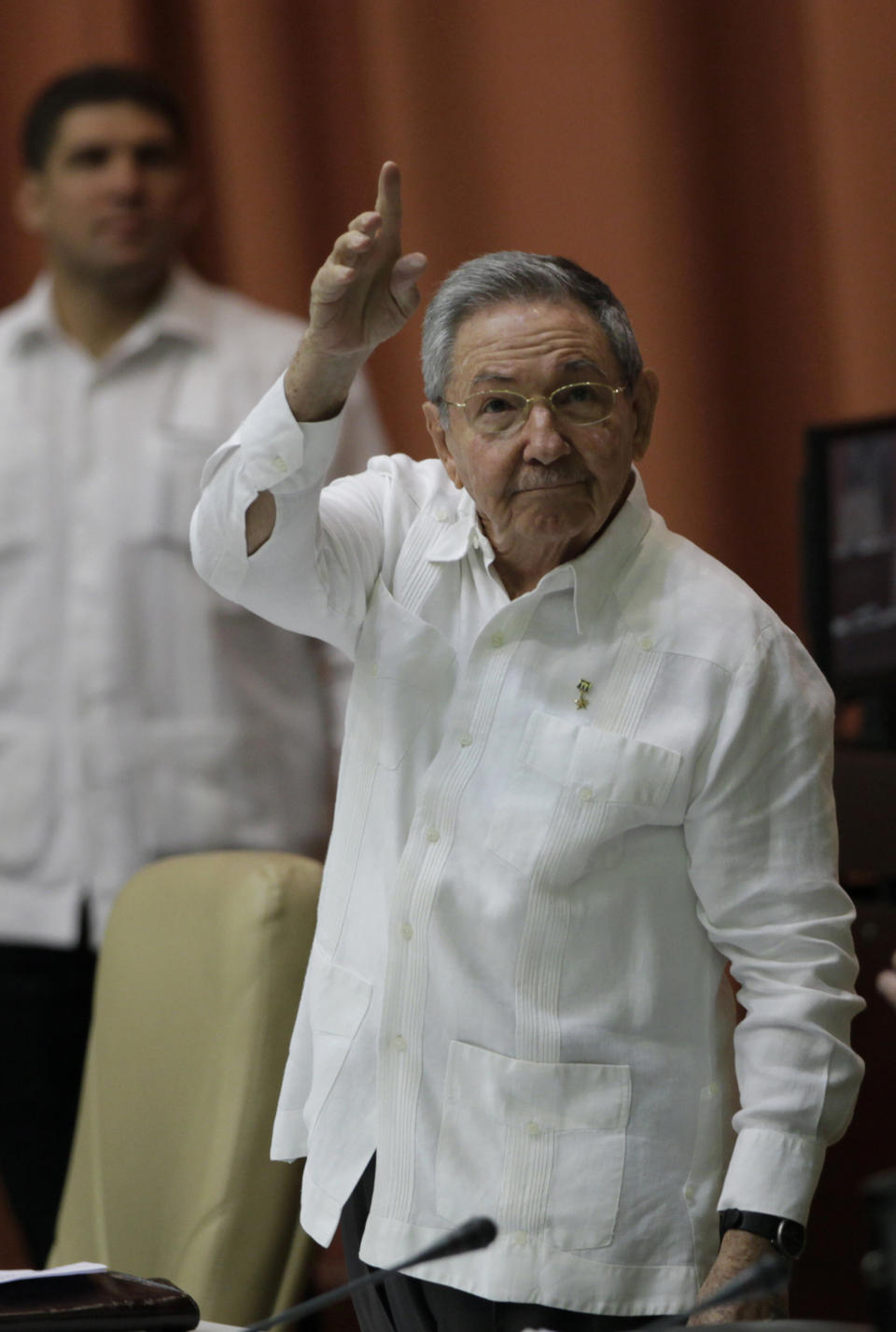
Cuba's President Raul Castro greets members of Parliament at the opening of the third regular session of the eighth legislature, at the National Assembly in Havana, Cuba, Saturday, July 5, 2014. (AP Photo/Ismael Francisco, Cubadebate)

Cuba’s President Raul Castro greets members of Parliament at the opening of the third regular session of the eighth legislature, at the National Assembly in Havana, Cuba, Saturday, July 5, 2014. (AP Photo/Ismael Francisco, Cubadebate)

HAVANA (AP)annual sessions, with the country’s limping economy and the 2014 budget foremost on the agenda.Government-run website Cubadebate published pictures of President Raul Castro presiding over the assembly with Vice President Miguel Diaz-Canel at his side.
Foreign journalists were not allowed access to the gathering at a convention center in western Havana.
Cuba recently downgraded its 2014 economic growth forecast to 1.4 percent, nearly a point lower than previous projections of 2.2 percent.
The government reported 2.7 GDP expansion the previous year.
Castro’s government is in the middle of a package of reforms that officials hope will improve economic performance.
Cuba has decentralized state-owned enterprises, legalized home and used car sales, and let hundreds of thousands of people open or work for small businesses in the private sector.
Castro and other officials say they are not embracing capitalism but rather updating Cuba’s socialist model to survive in the 21st century global economy.
Parliament was also expected to consider a report from the comptroller’s office on its attempts to root out corruption.
Lawmakers met earlier this week in committee to discuss matters including the biotechnology and agriculture.
Official media reported that Agriculture Minister Gustavo Rodriguez said Cuba’s food imports have reached $2 billion a year, but the country believes it could produce 60 percent of that domestically.
Associated Press Online News Source (Posted 07-05.2014) – http://news.yahoo.com/cuba-mulls-economy-graft-parliament-session-150935232.html
Go Lean…Caribbean is not a dream; it clearly recognizes the historicity of Cuba in the North American lexicon. There is a current trade embargo with the US and there are US$ 6 Billion of unsettled civil judgments against the Cuban government. The book posits that confederating with Cuba is a “Big Idea” for the Caribbean. This roadmap therefore, is a detailed, turn-by-turn plan for reconciling the 55 year-old rift in US-Cuban relations.

Cuban President Raul Castro has announced that he will retire in 2017 and now there is this declared intent above for Cuba to compete in the global economy, so now is the time to execute this Go Lean plan.

This commentary previously featured articles on the subjects of Cuba’s eventual integration into the Caribbean brotherhood, as sampled here:

https://goleancaribbean.com/blog/?p=789 America’s War on the Caribbean
https://goleancaribbean.com/blog/?p=554 Cuban cancer medication registered in 28 countries
https://goleancaribbean.com/blog/?p=436 Cuba Approves New “Law on Foreign Investment”

At the outset, the Go Lean roadmap recognizes the value of significance of Cuban reconciliation into any Caribbean integration with this statement in the Declaration of Interdependence (Page 12):

xiii. Whereas the legacy of dissensions in many member-states (for example: Haiti and Cuba) will require a concerted effort to integrate the exile community’s repatriation, the Federation must arrange for Reconciliation Commissions to satiate a demand for justice.

The Go Lean roadmap is not all “give” with no “take” for Cuba. There is heavy-lifting on their part in submitting to regional authority in matters of the CU scope: economic engines, security apparatus and governing support. This intent was also pronounced early in the same Declaration of Interdependence (Page 12):

xii. Whereas the legacy in recent times in individual states may be that of ineffectual governance with no redress to higher authority, the accedence of this Federation will ensure accountability and escalation of the human and civil rights of the people for good governance, justice assurances, due process and the rule of law. As such, any threats of a “failed state” status for any member state must enact emergency measures on behalf of the Federation to protect the human, civil and property rights of the citizens, residents, allies, trading partners, and visitors of the affected member state and the Federation as a whole.

It is commonly accepted that just the presence of anyone named “Castro” in administering Cuba would be a guaranteed deterrent for success in confederating Cuba with the rest of the Caribbean. But 2017 is not far away. So the planning must start now. The Caribbean is hereby urged to lean-in to the following community ethos, strategies, tactics, implementations and advocacies to re-boot Cuba; as detailed in the book Go Lean…Caribbean sampled here:

Community Ethos – Economic Systems Influence Individual Choices & Incentives Page 21
Community Ethos – Voluntary Trade Creates Wealth Page 21
Community Ethos – Lean Operations Page 24
Community Ethos – Return on Investments Page 24
Community Ethos – Ways to Manage Reconciliations Page 34
Community Ethos – Ways to Impact the Greater Good Page 37
Strategic – Vision – Integrating Region in to a Single Market Page 45
Strategic – Core Competence – Specialty Agriculture Page 58
Tactical – Fostering a Technocracy Page 64
Tactical – Separation of Powers – Office of Trade Negotiations Page 80
Tactical – Separation of Powers – Federal Courts – Truth & Reconciliation Commissions Page 90
Implementation – Assemble & Create Super-Regional Organs to represent all Caribbean Page 96
Implementation – Ways to Pay for Change Page 101
Implementation – Foreign Policy Initiatives at Start-up Page 102
Implementation – Ways to Deliver Page 109
Implementation – Ways to Benefit from Globalization Page 119
Planning – 10 Big Ideas for the Caribbean – Cuba Page 127
Advocacy – Ways to Grow the Economy Page 151
Advocacy – Ways to Re-boot Cuba Page 236

The foregoing article addresses the issue of economic expansion strategies, tactics and implementations, but the book focuses on much more than just money issues; it features the more important issue of societal elevation. The Go Lean roadmap addresses cultural issues such as music, sports, art, education, repatriation and heritage. The book declares how unfortunate that most of Cuba’s history has been neutralized due to the 1959 revolution, expansion of communism, trade embargo and 50 years of isolation.

But this is a new day! It’s time now for change; not just change for change sake, but the elevations that were identified, qualified and proposed in the book Go Lean…Caribbean.

Cuba será libre!

Cuba can … and must become a better place to live, work and play.

Download the free e-Book Go Lean … Caribbean – now!

Share this post:
, ,

Book Review: ‘Prosper Where You Are Planted’

Go Lean Commentary

The Caribbean is in crisis; according to a report by the Inter-American Development Bank (IDB), over 70% of college educated citizens have fled the region, looking for better opportunity. The fact that the percentage is so high is evident that it is more prosperous abroad than at home. This is the harsh reality. This is also an economic fact as many Caribbean states get 4 to 7 percent of their GDP as remittances back to the homeland from the Diaspora living abroad, mostly in North America and Western Europe.

But this is a losing proposition for the Caribbean – no doubt it is better to get 100% of Gross Domestic Production. In the same report by the IDB, it was stated that Caribbean member-states lose 10 to 11 percent of GDP from emigration and the “spent” cost of education on those expatriates, (https://goleancaribbean.com/blog/?p=1433), so whatever the level of remittance from the Diaspora, the community is still losing. What we need is the option to prosper where we’re planted in the Caribbean. This goal obviously requires heavy-lifting and is easier said than done. This is the focus of the book Go Lean…Caribbean, to elevate the Caribbean economy so that there would be optimal opportunities at home and no need to supplant to another land.

So how do we prosper where we’re planted? While this is a simple question (based on the Bible principle of Psalms 1:3), the answer is more complex. One writer, Dani Johnson, has advocated this theme in a series of books:

Title ISBN                               
First Steps to Wealth 978-0-9789551-8-2
Grooming the Next Generation for Success 978-1-4587-9610-3
Spirit-Driven Success 978-0-7684-9651-2

The below article (and VIDEO) is a review of her last book First Steps to Wealth: it breaks down into bite-size morsels the big meal of wealth building.

The book Go Lean…Caribbean concurs with First Steps to Wealth, but rather than individual wealth, it serves as a roadmap for the introduction and implementation of the technocratic Caribbean Union Trade Federation (CU) to do the heavy-lifting of optimizing community wealth and nation-building for the region.

By: Sheryl Nance-Nash
Title: Dani Johnson Offers Her 12 Laws for Creating Wealth – and Keeping It
DailyFinance e-Zine (Posted 07/23/2013 Retrieved 06/30/2014) –
http://www.dailyfinance.com/2011/07/23/dani-johnson-offers-her-12-laws-for-creating-wealth-and-keepi/

CU Blog - Book Review - Prosper Where You Are Planted - Photo 1

Dani Johnson says she was groomed by her drug addict parents to fail — financially, emotionally and socially. She seemed well on her way to living down to that expectation — by 17 she was pregnant, at 21, homeless. Two years later though, she was a millionaire, thanks to the thriving company she built manufacturing and selling her own nutritional and skin care products. She sold that company in 1996. Then, she lost her fortune, spending almost all of it and trusting the wrong people with the rest.

Today, as a multimillionaire with six businesses that employ more than 30 people, she knows a thing or two about wealth. She says there are three things you need to know about money: how to make it and more of it; how to keep it; and how to turn it into your slave.

“Ninety-eight percent of the population will end up dead or broke by age 65. Only two percent of the population will succeed,” says Johnson in her new book, First Steps to Wealth. “Where do you want to be?” she asks. You need a financial vision.

When she started raking in the cash, she didn’t have the vision thing down yet. “I believed I had to wear Christian Dior suits and $500 shoes to be successful. I believed wealth was about a new Mercedes Benz convertible, and the 6,000 square-foot house with a swimming pool, view of the mountains and tennis courts. But when I got those things, I never felt successful. I had a $250,000 wardrobe and $250,000 in jewelry, and I still felt this gaping hole in my belly that made me feel I was a failure,” she writes.

Challenge Yourself to Apply the Laws to Your Life

Everything starts with a decision. “There’s a theory that if you find your passion that’s where you’ll be successful, but I believe you have to go with what’s in front of you. I saw a box of weight-loss products in the backseat of my car and though I had no interest in selling, I made a decision that I needed to find out how to sell those products because if I relied on being a cocktail waitress it would take months to be able to afford an apartment,” says Johnson, who was homeless and suicidal then. She started a business from the trunk of her car and a phone booth.

“If I didn’t make that decision, I would still be broke. I didn’t want to sell, but it was the door in front of me,” says Johnson. When her first sales call ended with a hang up, she called another weight-loss product company, observed how they handled her, and developed a script from that. She used their advertisements to shape her own. To make a long story short, in 45 days she had $18,000 in sales.

Johnson credits her fortune to what she calls the 12 Laws of Success — fundamental principles that moved her from an impoverished past to a prosperous present. She has spent the last two decades telling others how those principles can help them too.

Law No. 1 – The Law of Vision

In her book she asks, “What are the things you dreamed of doing in your life? Do you remember what those dreams looked like? What happened to those dreams? “If you want to be successful financially, expand your income to fit your dreams. This is the Law of Vision. “For without vision, we perish. It is important to list where we want to go, what we want to do, and with whom we want to do it. If you do not know what you want, no one can help you get it,” she writes. But what do you want?

Law No. 2 – The Law of the Mind

There is something very different about the wealthy: The way they think, how they make decisions, act upon them, and how they see circumstances and react to them. It’s their mindset, says Johnson. What’s the right mindset? “It’s saying every time you meet a roadblock, ‘How can I make it happen?'” You decide to go around a problem, or dig a hole underneath a problem to make things happen, instead of quitting. Watch the company you keep. “You’re a product of your environment. I listen to uplifting music and life-giving audios,” says Johnson.

Law No. 3 – The Law of Value

The marketplace pays for value. What determines your value? Your skill set. Quite simply, “If you increase your skill, you will increase your pay.” Your value is not personality, looks, or where you were born, but has everything to do with your skills, she writes. Everybody is in control of his or her skills.

“Go beyond the basics. If I had focused just on weight-loss products, I would have been like everybody else, but we decided to go a step further, to focus on people — what makes them tick, to deal with bigger issues,” says Johnson. Not only did delving deeper into the customer distinguish her from competitors, it birthed another business, a training program for personal and professional development.

Law No. 4 – The Law of Reaping and Sowing

This is the greatest of all the laws, she says. “You have been taught a lie that success is about being lucky or being in the right place at the right time. But the bottom line, says Johnson, we reap what we sow. “If you waste money, you are going to reap what you sow. If you feed your financial problems and are focused on stressing out and not being able to pay your bills, you will have more problems. Focus on finding answers. Feed the solution, not the problem,” she writes.

Giving is also key. “With our businesses, we give 10% of our gross sales right off the top — to the poor, orphans, widows, or for freeing children out of the sex trade. That is about 30% of our net profit. When we do that, we have found that even more comes back to us,” she writes. She co-founded the nonprofit King’s Ransom Foundation, which serves the needy globally. She spread her generosity on ABC’s Secret Millionaire earlier this year. Johnson says giving motivates her. “The only reason I work is to be able give to the kids, the orphans. I don’t have to work another day in my life. My kids are set.”

Law No. 5 – The Law of Desire

Johnson says desire always reveals design and destiny. Everyone was born with a design to succeed. You were born with everything in you. “You have enthusiasm, persistence, faith, adventurous spirit, and the gift to get over it,” says Johnson. The only thing you’re lacking is the skill to succeed. “That’s the part you have to learn and invest in,” she writes. You were designed with wealth in mind. Replace the poverty mentality with a whole new way of thinking. No amount of debt is too small to pay off. “If you invest your money is something that makes more money, you create wealth. If you spend that money, the money is gone. Your monthly income is supposed to grow something, just like seed. But most people live from paycheck to paycheck, which means they are eating all of their seed. They have nothing to plant and grow.”

Law No. 6 – The Law of Teachability

There are people around you who have success in some areas of their lives. When you are teachable, you find them. When you are unteachable, you think you are them. Being teachable means you are hungry, pursuing success, and willing to learn from masters. When you follow this law you will achieve whatever you pursue.

Law No. 7 – The Law of Forgiveness

When you do not forgive, you make decisions out of bitterness. “This kills your time for being productive and creating wealth,” says Johnson.

Law No. 8 – The Law of Promotion

If you can be faithful with the little things, if you grow and improve what you have, then you will be made a ruler over much more. Johnson insists, “Prosper where you are planted.” Your answer might be right in front of you, and maybe you don’t like it. “The road to success is often paved with things we do not want to do,” says Johnson.

Then too, “People are always trying to hit a home run. Life doesn’t work like that. They try to make one big jump and flop. Work with what you have. If you have a job that you might think is ‘little’, be the best at it, effect people there, make a difference wherever you are.” Instead of always seeking something else, focus on where you are, whether it’s your job, your business, your relationships. “You will never prosper if you don’t,” says Johnson.

Law No. 9 – The Law of Focus

It’s simple: Whatever you focus on is what you get good at. She asks, “Where is your focus?”

Johnson used to work 100 hour weeks. “My marriage was miserable and I didn’t deserve the title mother,” says Johnson, whose five children are now 12 to 24. After a nervous breakdown in the 1990s, her priorities changed. “I decided that family came first and that I would only work 20 hours a week — that required focus. I discovered I was wasting 80 hours a week.” When she started working less, she was so focused that her income tripled. She began delegating. “Don’t think you’re the only one who can do something,” says Johnson, whose businesses include danijohnson.com, publishing company Call to Freedom, investment, software, real estate and oil firms.

Law No. 10 – The Law of Honor

Honoring people is the key to successful relationships, personal and professional. Says Johnson, “It’s about honoring people, giving them what they want. When you honor people, they honor you back, but it is not always the one you honor who honors you back.”

Law No. 11 – The Law of Decision

Everything in life boils down to choices. When you finally make a decision, everything begins to click. Make a decision.

Law No. 12 – The Law of Action

When we sit with indecision, we invite our enemies — procrastination, fear, unbelief, and excuses — into our lives, writes Johnson. When you immediately follow your decisions with action, a funnel of favor begins. Doors begin to open. People begin to help. Your life’s purpose becomes clear, and self-motivation mobilizes you from the inside out.

If the thought of trying to put all 12 laws into play seems overwhelming, there’s one good place to start. Says Johnson, “Change your attitude.

Rather than 12 Laws, the Go Lean roadmap uses cutting-edge delivery of best practices to employ strategies, tactics and implementations to impact its prime directives; identified with the following 3 statements:

  • Optimization of the economic engines in order to grow the regional economy to $800 Billion & create 2.2 million new jobs.
  • Establishment of a security apparatus to protect the resultant economic engines.
  • Improve Caribbean governance to support these engines.

The successful execution of these directives will allow Caribbean stakeholders to prosper, while remaining as residents in their homeland. The Go Lean book seeks to optimize the entire Caribbean economic/security/governance eco-system to reach this goal. This vision is defined early in the book (Page 13 & 14) in the following pronouncements in the Declaration of Interdependence:

xix.   Whereas our legacy in recent times is one of societal abandonment, it is imperative that incentives and encouragement be put in place to first dissuade the human flight, and then entice and welcome the return of our Diaspora back to our shores. This repatriation should be effected with the appropriate guards so as not to imperil the lives and securities of the repatriated citizens or the communities they inhabit. The right of repatriation is to be extended to any natural born citizens despite any previous naturalization to foreign sovereignties.

xxvi.   Whereas the Caribbean region must have new jobs to empower the engines of the economy and create the income sources for prosperity, and encourage the next generation to forge their dreams right at home, the Federation must therefore foster the development of new industries… In addition, the Federation must invigorate the enterprises related to existing industries … – impacting the region with more jobs.

The Go Lean book details (Page Numbers included below) features of assessments, community ethos, strategies, tactics, implementations and advocacies to plant and exploit local opportunities in the Caribbean region. These features are listed here to correspond with references from Dani Johnson’s book in the foregoing article:

Prosper   Where You Are Planted References Go Lean…Caribbean References
Assessment – 98% of the population will end up dead or   broke by age 65. Impacting   Retirement (Page 221); Improving   Elder-Care (Page 225).
Learning from   competitors Lessons from New   York City (Page 137); Canada (Page 146)
A “Hustling” Attitude Entrepreneurship Ethos (Page 28)
Law No. 1 – The Law of Vision Strategy – Vision (Page 45)
Law   No. 2 – The Law of the Mind Advocacies – Overcoming Obstacles (Pages 121 – 124)
Law No. 3 – The Law of Value Community Ethos – Genius (Page 27), Intellectual Property (Page 29), Turn-around (Page 33)
Law No. 4 – The Law of Reaping and Sowing Community Ethos – Return on Investments (Page 24), Lean Operations (Page 24), Non-Governmental Organizations   (Page 25)
Law No. 5 – The Law of Desire Strategy – Missions (Page 45)
Law No. 6 – The Law of Teachability Planning – Lessons Learned from … (Pages 135 – 146)
Law No. 7 – The Law of Forgiveness Community Ethos – Reconciliation (Page 34)
Law No. 8 – The Law of Promotion Optimize Existing Competencies (Page 58) – Tourism (Page 190), Banking (Page 199), Agriculture (Pages 162, 183 & 208)
Law No. 9 – The Law of Focus Implementation – Fostering a Lean   Technocracy (Page 64), Delivery   Arts (Page 109)
Law No. 10 – The Law of Honor Advocacy – One Percent (Page 224), Foundations (Page 219)
Law No. 11 – The Law of Decision Community Ethos – Intelligence Gathering   & Analysis (Page 23);    Impact Research & Development – Big   Data Analysis (Page 30)
Law No. 12 – The Law of Action Implementation – Delivery Arts &   Sciences (Page 109)

Now is the time for all of the Caribbean, the people and governing institutions, to lean-in for the empowerments described in the book Go Lean … Caribbean. It is time for the region to prosper right here where we are planted.

The Caribbean can succeed in this effort to improve the Caribbean as a place to live, work and play. There are previous blog commentaries that delve into these same issues:

https://goleancaribbean.com/blog/?p=1325 Puerto Rico Governor Signs Bill on SME’s
https://goleancaribbean.com/blog/?p=1296 Remittances to Caribbean Increased By 3 Percent in 2013
https://goleancaribbean.com/blog/?p=1014 Jack M. Mintz Commentary: All is not well in the sunny Caribbean
https://goleancaribbean.com/blog/?p=623 Only at the precipice, do they change
https://goleancaribbean.com/blog/?p=599 Ailing Puerto Rico open to radical economic fixes
https://goleancaribbean.com/blog/?p=398 Self-employment on the rise in the Caribbean – World Bank
https://goleancaribbean.com/blog/?p=364 Time Value of Money

Caribbean Music icon Bob Marley advocated a similar pledge, based on Psalms 1:3, in his song “We’d be Forever Loving Jah” (Album: Uprisings 1980) with the following lyrical stanza:

‘Cause just like a tree, planted, planted by the rivers of water
That bringeth forth fruits, bringeth forth fruits in due season.
Everything in life got its purpose,
Find its reason in every season,
Forever, yeah!
(We’ll be forever loving Jah) We’ll be forever!

See Bob Marley Embedded VIDEO here: https://youtu.be/VuAXl1LYY6o

Download the book Go Lean … Caribbean – now!

Share this post:
, , , ,
[Top]

Bad Tweet: Dutch airline angers Mexico soccer fans

Go Lean Commentary

“In 2 minutes a computer can make as many mistakes as 20 men in 20 years” – Murphy’s Law on Technology.

“Once posted, you can’t take it back” – Social Media Harsh Reality.

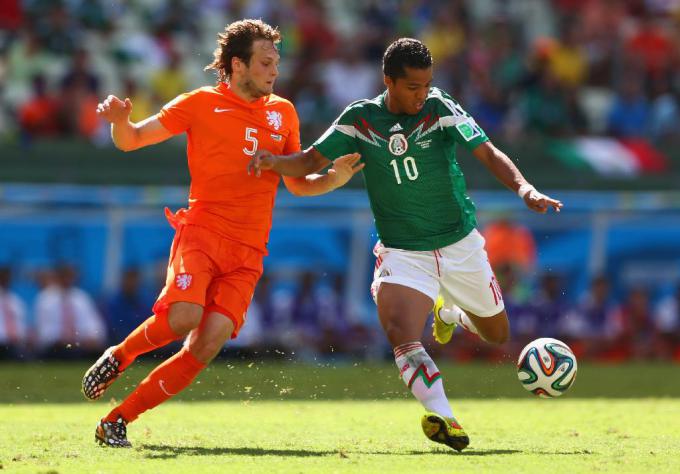
These two expressions are the new normal. Social media can be an effective communication tool to reach the general public and/or a dedicated controlled group. This can be a blessing and a curse. This fact was demonstrated after the recent World Cup Elimination Game between Mexico and The Netherlands. Mexico lost! In its haste to capitalize on all the fanfare, representatives at Dutch airline KLM committed this PR blunder of denigrating Mexican fans:

By: AP Writer Alan Clendenning
RIO DE JANEIRO (AP) — What was meant to be a joke has turned into a PR blunder for Dutch airline KLM after it angered Mexican soccer fans by taking to Twitter to celebrate the Netherlands’ dramatic comeback victory in the World Cup.

Netherlands v MexicoWithin minutes of the Netherlands’ 2-1 victory over the Tri, KLM let loose on its Twitter feed a picture of an airport departures sign under the heading “Adios Amigos!” Next to the word “Departures” is the image of a man with a mustache wearing a sombrero.

The post immediately went viral, with A-list Mexican actor Gael Garcia Bernal using not one but two expletives in a 140-character Tweet to tell his 2 million-plus followers that he’ll never fly the carrier again. Amid the widespread protest online, the post was pulled a half-hour later without an explanation.

“It was meant to be a joke,” KLM spokeswoman Lisette Ebeling Koning told The Associated Press, adding that the airline never intended to offend Mexicans, which it serves via a daily direct flight between Mexico City and Amsterdam. “But there was too much negative reaction.”

KLM issued a formal apology late Sunday.

“In the best of sportsmanship, we offer our heartfelt apologies to those who have been offended by the comment,” said Marnix Fruitema, director general of KLM in North America.

For its part, Mexican national carrier AeroMexico is also getting in on the fun, broadcasting on Twitter its support for the country’s soccer team under an arrivals sign.

“Thank you for this great championship,” AeroMexico said. “You’ve made us proud and we’re waiting for you at home.”
Associated Press (AP) News Wire Service (Retrieved 06/30/2014) –
http://news.yahoo.com/bad-tweet-dutch-airline-angers-mexico-soccer-fans-205929269.html

The expression “the post immediately went viral” could be a good thing or a bad thing. The book Go Lean…Caribbean posits that the power of social media must be harnessed strategically and tactically in order to explore all the benefits of Internet Communications Technologies. The book further asserts that the internet can be a great equalizer between large and small economy states, that talent and value can readily be searched and discovered.

The foregoing article depicts a Bad Tweet; then proceeds to describe how impactful response tweets can be, especially when wielded by an “Influencer” – a person with at least 100,000 followers – such as A-list Mexican celebrity Gael Garcia Bernal.

The book serves as a roadmap for the introduction and implementation of the technocratic Caribbean Union Trade Federation (CU). This effort will launch the Caribbean Postal Union to facilitate the region’s “mail” functionality. In 2014, the mail delivery cannot be seriously mentioned without considering electronic messaging options. Social media is an electronic messaging scheme. The CPU will administer the domain for www.myCaribbean.gov. The universe for this domain is scoped at 130 million unique users.

This strategy will elevate Caribbean society, and image. There is the need for a sentinel role for Caribbean image, as there are a lot of times that Caribbean life and people are denigrated in works of media arts: film, TV, books, magazines. Consider the example of Jamaican “Yardies”, or Dominican Cartels. The Go Lean roadmap calls for the CU to assume that role.

The CU, using cutting edge delivery of best practices, will employ strategies, tactics and implementations to impact its prime directives; identified with the following 3 statements:

  • Optimization of the economic engines in order to grow the regional economy to $800 Billion & create 2.2 million new jobs.
  • Establishment of a security apparatus to protect the resultant economic engines.
  • Improve Caribbean governance to support these engines.

Dutch KLM Photo

AeroMexico Photo

The Go Lean book speaks of a Caribbean crisis and posits that this crisis can be averted, the same way the non-malevolent jest on social media by KLM was quickly averted using stronger social media tactics. Considering the events in the foregoing article, an undeniable credo is reiterated that “a crisis is a terrible thing to waste”. The Go Lean roadmap seeks to optimize the entire Caribbean economic/security/governance eco-system. This vision is defined early in the book (Page 12 & 14) in the following pronouncements in the Declaration of Interdependence:

xv. Whereas the business of the Federation and the commercial interest in the region cannot prosper without an efficient facilitation of postal services, the Caribbean Union must allow for the integration of the existing mail operations of the governments of the member-states into a consolidated Caribbean Postal Union, allowing for the adoption of best practices and technical advances to deliver foreign/domestic mail in the region.

xxvii. Whereas the region has endured a spectator status during the Industrial Revolution, we cannot stand on the sidelines of this new economy, the Information Revolution. Rather, the Federation must embrace all the tenets of Internet Communications Technology (ICT) to serve as an equalizing element in competition with the rest of the world. The Federation must bridge the digital divide and promote the community ethos that research/development is valuable and must be promoted and incentivized for adoption.

xxx. Whereas the effects of globalization can be felt in every aspect of Caribbean life, from the acquisition of food and clothing, to the ubiquity of ICT, the region cannot only consume, it is imperative that our lands also produce and add to the international community, even if doing so requires some sacrifice and subsidy.

The Go Lean book details a lot more, a series of assessments, community ethos, strategies, tactics, implementations and advocacies to garner the benefits of ICT in the Caribbean region:

Community Ethos – Economic Systems Influence Choices & Incentives Page 21
Community Ethos – People Respond to Incentives Page 21
Community Ethos – Consequences of Choices Lie in the Future Page 21
Community Ethos – Return on Investments Page 24
Community Ethos – Ways to Impact the Future Page 26
Community Ethos – Ways to Foster Genius Page 27
Community Ethos – Ways to Impact Research & Development Page 30
Community Ethos – Ways to Bridge the Digital Divide Page 31
Community Ethos – Ways to Impact the Greater Good Page 37
Strategy – Vision – Confederating a Non-Sovereign Union Page 45
Tactical – Separation of Powers – Caribbean Postal Union Page 78
Implementation – Ways to Pay for Change Page 101
Implementation – Ways to Improve Mail   Services Page 108
Implementation – Ways to Deliver Page 109
Implementation – Ways to Impact Social   Media Page 111
Planning – Ways to Improve Image Page 133
Advocacy – Ways to Grow the Economy Page 151
Advocacy – Ways to Create Jobs Page 152
Advocacy – Ways to Foster Technology Page 197
Advocacy – Ways to Foster e-Commerce Page 198
Appendix – Measuring Media   Consumption Page 265

Now is the time for all of the Caribbean, the people and governing institutions, to lean-in for the empowerments described in the book Go Lean…Caribbean. There is reason to believe that these empowerment efforts can be successful. The Go Lean roadmap conveys how single causes/advocacies have successfully been forged throughout the world (Page 122 – Anatomy of Advocacies). With social media deployments, millions of people can be advocates. No defamation of Caribbean image will go unchallenged. We, in the Caribbean, can do the same as the Mexican power brokers when bad sportsmanship was displayed by the KLM airline.

The Caribbean can succeed in the advocacy to improve the Caribbean image and deployments of social media in the region. There are previous blog commentaries that delve into aspects of these same issues:

https://goleancaribbean.com/blog/?p=1416 Amazon’s new FIRE Smartphone
https://goleancaribbean.com/blog/?p=1404 Facebook goes down across multiple countries
https://goleancaribbean.com/blog/?p=857 Caribbean Image:   Dreadlocks

Congratulation to the Netherlands football/soccer national team in their pursuits of the FIFA World Cup. There is room for good sportsmanship for all.

Download the book Go Lean … Caribbean – now!
Share this post:
, , , , , ,
[Top]

Status of Forces Agreement = Security Pact

  Go Lean Commentary

The following is typical of the kind of news headlines in the last few weeks:

Crisis In Iraq Escalates As Militants Seize Major Cities

Iraq again! Didn’t we just go through this in the last decade? Did we not settle this a few years ago, and now we’re here again? Deja Vu all over again. Not a repeat of the Iraqi drama, but rather a repeat of modern history in total. In a recent blog submission, the commentary (https://goleancaribbean.com/blog/?p=1531) cited the lessons learned from World War I; or better stated, the lack of learned-lessons, as the result was World War II. An actual news article on Iraq that parallels this lesson, is excerpted as follows:

By: Olivia Marshall

Media [outlets] have claimed that the current violence in Iraq is the result of the 2011 withdrawal of U.S. troops in Iraq and President Obama’s willful failure to secure a Status of Forces Agreement (SOFA) with Iraq’s Prime Minister Nouri al-Maliki. In reality, Iraq refused the terms of a SOFA with the U.S. despite Obama’s efforts to maintain a military presence there.

Time Magazine: Iraq’s Second Largest City Falls To Militants – Time reported on June 10 that Mosul, Iraq’s second largest city, fell to the Sunni militant group Islamic State in Iraq and al-Sham (ISIS):

The fall of Iraq’s second largest city to Islamist extremists Tuesday sends an alarming message about the deterioration of a country where the U.S. spent eight years, 4,500 lives and $1.7 trillion. Mosul, a city of 1.8 million located in the far north of the country, long cultivated a reputation as a military town. But Iraqi soldiers threw down their guns and stripped off their uniforms as the insurgents approached on Tuesday, according to officials stunned by the collapse of its defenses.
Media Matters (Posted June 16, 2014; retrieved 06/29/2014) –
http://mediamatters.org/research/2014/06/16/right-wing-media-ignore-iraqi-resistance-to-sta/199742

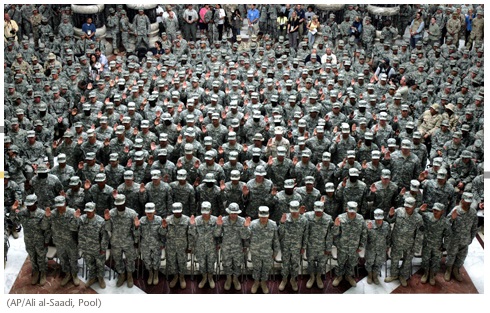
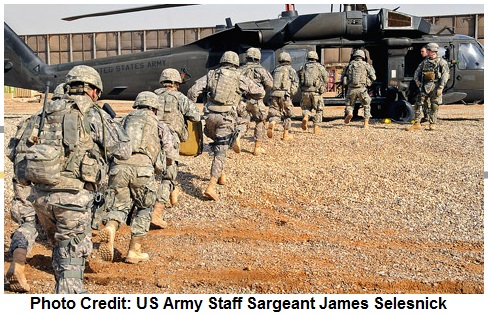
Iraq Surge - 2007Iraq Draw Down - 2011

The overriding theme of the foregoing news article is the Status of Forces Agreement [a]. Under international law, in order for a military presence to not be viewed as an occupation or ‘act of war”, there must be a SOFA of mutual consent between both the host and occupying powers. This lack of a SOFA is why the US is drawn back into Iraq.

This American experience is relevant for the Caribbean to consider; not only for the fact that two Caribbean member-states, Puerto Rico and the US Virgin Islands, had committed human capital to that Iraq War effort, and have thusly sacrificed “blood, sweat and tears” there, but also because there is a parallel need for a SOFA in the Caribbean region.

The book Go Lean…Caribbean posits that the region must prepare its own security apparatus for its own security needs. So the request is that all Caribbean member-states welcome a visiting security force to execute a limited scope on their sovereign territories. That visiting force: themselves!

Yes, the goal is to confederate under a unified entity made up of the Caribbean to provide homeland security to the Caribbean. But Homeland Security for the Caribbean has a different meaning than for our American counterparts. Though we must be on defense against military intrusions like terrorism & piracy, we mostly have to contend with threats that may imperil the region’s economic engines, like tourism. This includes natural and man-made concerns like hurricanes, earthquakes, oil/chemical spills, pandemic, enterprise corruption and narco-terrorism. The CU security goal is for public safety! This goal is detailed in the book as it serves as a roadmap for the introduction of the technocratic Caribbean Union Trade Federation (CU). So while the CU is set to optimize Caribbean society through economic empowerment, the truth of the matter is that the security dynamics of the region are inextricably linked to this same endeavor. Therefore the Go Lean roadmap has 3 prime directives:

  • Optimization of the economic engines in order to grow the regional economy to $800 Billion & create 2.2 million new jobs.
  • Establishment of a security apparatus to protect the resultant economic engines.
  • Improve Caribbean governance to support these engines.

The book contends that bad actors will emerge just as a result of economic successes in the region. This point is pronounced early in the book with the Declaration of Interdependence (Page 12) that claims:

x.   Whereas we are surrounded and allied to nations of larger proportions in land mass, populations, and treasuries, elements in their societies may have ill-intent in their pursuits, at the expense of the safety and security of our citizens. We must therefore appoint “new guards” to ensure our public safety and threats against our society, both domestic and foreign. The Federation must employ the latest advances and best practices … to assuage continuous threats against public safety.

xvi. Whereas security of our homeland is inextricably linked to prosperity of the homeland, the economic and security interest of the region needs to be aligned under the same governance. Since economic crimes, including piracy and other forms of terrorism, can imperil the functioning of the wheels of commerce for all the citizenry, the accedence of this Federation must equip the security apparatus with the tools and techniques for predictive and proactive interdictions.

The Caribbean appointing “new guards”, or a security pact to ensure public safety is not so new an endeavor. There are prior instances of this type of engagement in the region. There is currently a security pact; shared by 5 Eastern Caribbean member-states that was first consummated in 1982 – this was discussed in full depth in a previous commentary regarding the Regional Security System (https://goleancaribbean.com/blog/?p=1076). The Go Lean roadmap however calls for a permanent professional force with naval and ground (Marine) forces, plus an Intelligence agency. This security pact would be sanctioned by all 30 CU member-states, not just the current 5; (there is even a plan for the eventual inclusion of Cuba). The CU Trade Federation will lead, fund and facilitate the security force, encapsulating (full-time or part-time) all the existing armed forces in the region. This CU Homeland Security Force would get its legal authorization from a Status of Forces Agreement signed with the CU treaty enhancements.

This SOFA is “Step One, Day One” in the Go Lean roadmap, covering the approach for adequate funding, accountability and control. In step with the foregoing news article, there is the absolute need for the CU SOFA to be ratified as soon as possible.

The Go Lean book details a series of community ethos, strategies, tactics, implementations and advocacies to provide increased public safety & security in the Caribbean region:

Economic Principle – Consequences of Choices Lie in Future Page 21
Community Ethos – Privacy –vs- Public Protection Page 23
Community Ethos – “Crap” Happens Page 23
Community Ethos – Cooperatives Page 25
Community Ethos – Ways to Improve Sharing Page 35
Community Ethos – Ways to Impact the Greater Good Page 37
Tactical – Confederating a non-sovereign union Page 63
Tactical – Separation of Powers – Homeland Security Page 75
Implementation – Ways to Pay for Change Page 101
Implementation – Start-up Foreign Policy Initiatives Page 102
Implementation – Start-up Security Initiatives Page 103
Planning – Ways to Make the Caribbean Better Page 131
Planning – Ways to Improve Failed-State Indices Page 134
Advocacy – Ways to Grow the Economy Page 151
Advocacy – Ways to Improve Governance Page 168
Advocacy – Ways to Better Manage the Social Contract Page 170
Advocacy – Ways   to Impact Justice Page 177
Advocacy – Ways   to Reduce Crime Page 178
Advocacy – Ways to Improve Homeland Security Page 180
Advocacy – Ways to Mitigate Terrorism Page 181
Advocacy – Ways to Improve Intelligence Gathering/Analysis Page 182
Advocacy – Ways to Improve for Natural Disasters Page 184
Advocacy – Ways to Protect Human Rights Page 220
Advocacy – Ways to Re-boot Cuba Page 236

Other subjects related to security and governing empowerments for the region have been blogged in other Go Lean…Caribbean commentary, as sampled here:

https://goleancaribbean.com/blog/?p=1531 A Lesson in History: 100   Years Ago – World War I
https://goleancaribbean.com/blog/?p=1076 Trinidad Muslims travel to   Venezuela for jihadist training
https://goleancaribbean.com/blog/?p=960 NSA records all phone   calls in Bahamas, according to Snowden
https://goleancaribbean.com/blog/?p=789 America’s War on the Caribbean
https://goleancaribbean.com/blog/?p=546 Book Review:   ‘The Divide’ – … Injustice in the Age of the Wealth Gap
https://goleancaribbean.com/blog/?p=535 Remembering and learning   from Boston
https://goleancaribbean.com/blog/?p=392 Jamaica to receive World Bank funds to help in crime fight
https://goleancaribbean.com/blog/?p=341 US slams Caribbean human   rights practices
https://goleancaribbean.com/blog/?p=87 6.5M Earthquake Shakes   Eastern Caribbean

Underlying to the prime directive of elevating the economics, security and governing engines of the Caribbean, is the desire to make the Caribbean homeland, a better place to live, work and play. We do not want a few “bad actors” disrupting the peace of all Caribbean residents (42 million people), or the 10 million Diaspora as they frequent their tropical homeland or even the 80 million tourists that visit the region annually. The Go Lean roadmap states it most succinctly with the quotation: “the needs of the many outweigh the needs of the few” (Page 37).

All of the Caribbean are hereby urged to lean-in to this roadmap.

Download the book Go Lean … Caribbean – now!

——

Appendix: a – Status of Forces Agreement

A Status of Forces Agreement (SOFA) is an agreement between a host country and a foreign nation stationing military forces in that country. SOFAs are often included, along with other types of military agreements, as part of a comprehensive security arrangement. A SOFA does not constitute a security arrangement; it establishes the rights and privileges of foreign personnel present in a host country in support of the larger security arrangement. [1] Under international law a status of forces agreement differs from military occupation.

Agreements

SOFA - Photo 1While the United States military has the largest foreign presence and therefore accounts for most SOFAs, the United Kingdom, France, Australia, Germany, Italy, Russia, South Korea, and many other nations also station military forces abroad and negotiate SOFAs with their host countries. NATO (North Atlantic Treaty Organization) is a SOFA. In the past, the Soviet Union had SOFAs with most of its satellite states (See Go Lean…Caribbean Page 139). While most of the United States’ SOFAs are public, some remain classified. [2]

Terms of operation – The SOFA is intended to clarify the terms under which the foreign military is allowed to operate. Typically, purely military operational issues such as the locations of bases and access to facilities are covered by separate agreements. The SOFA is more concerned with the legal issues associated with military individuals and property. This may include issues like entry and exit into the country, tax liabilities, postal services, or employment terms for host-country nationals, but the most contentious issues are civil and criminal jurisdiction over bases and personnel. For civil matters, SOFAs provide for how civil damages caused by the forces will be determined and paid. Criminal issues vary, but the typical provision in U.S. SOFAs is that U.S. courts will have jurisdiction over crimes committed either by a service-member against another service-member or by a service-member as part of his or her military duty, but the host nation retains jurisdiction over other crimes.[3]

Host nation concerns – In many host nations, especially those with a large foreign presence such as South Korea and Japan, the SOFA can become a major political issue following crimes allegedly committed by service-members. This is especially true when the incidents involve crimes such as robbery, murder, manslaughter or sex crimes, especially when the charge is defined differently in the two nations. For example, in 2002 in South Korea, a U.S. military AVLB bridge-laying vehicle on the way to the base camp after a training exercise accidentally killed two girls. Under the SOFA, A U.S. military court martial panel tried the soldiers involved, The panel found the act to be an accident and acquitted the service members of negligent homicide, citing no criminal intent or negligence. The U.S. military accepted responsibility for the incident and paid civil damages. This resulted in widespread outrage in South Korea, demands that the soldiers be retried in a South Korean court, the airing of a wide variety of conspiracy theories, and a backlash against the local expatriate community.[4] As of 2011 American military authorities are allowing South Korea to charge and prosecute American soldiers in South Korean courts.[5][6]

(Retrieved 06/29/2014 from: http://en.wikipedia.org/wiki/Status_of_forces_agreement)

 Sources References:

1.  R. Chuck Mason (March 15, 2012). “Status of Forces Agreement (SOFA): What Is It, and How Might One Be Utilized In Iraq?” Congressional Research Service. Retrieved from: http://www.fas.org/sgp/crs/natsec/RL34531.pdf

2.  Bruno, Greg (October 2, 2008), U.S. Security Agreements and Iraq, Council on Foreign Relations. Retrieved from: http://www.cfr.org/publication/16448/us_security_agreements_and_iraq.html

3.  Pike, John (2005). “Status of Forces Agreement”. GlobalSecurity.org, 2005. Retrieved from: http://www.globalsecurity.org/military/facility/sofa.htm

4.  Ibiblio.org (2002). News articles on South Korean teenagers run over US military vehicle. Posted 22 August 2008; retrieved from http://www.ibiblio.org/ahkitj/wscfap/arms1974/HRS/2002/Stop%20US%20Military%20dossier/4.htm

5.  Stars and Stripes Newspaper (2011). “US soldier confesses during trial to rape of South Korean girl”. Retrieved http://www.stripes.com/u-s-soldier-confesses-during-trial-to-rape-of-south-korean-girl-1.161419

6.  Stars and Stripes Newspaper (2012). “Korea-based US soldier get 3 years in prison for rape conviction”. Posted 12 February 2012; retrieved from: http://www.stripes.com/news/pacific/korea/korea-based-u-s-soldier-gets-3-years-in-prison-for-rape-conviction-1.168182


Share this post:
, , , , ,
[Top]

A Lesson in History – 100 Years Ago Today – World War I

 Go Lean Commentary

The dominoes began to fall 100 years ago today.

Going backwards: The Caribbean is at the precipice of dysfunction due to a global financial crisis; the crisis is a by-product of an inter-connected world; the global unified economic systems (Bretton-Woods Accords [b]) and disbanding of the colonies of the Great Powers emerged for the rebuilding after World War II. Consequently, Word War II was a direct response to the unsatisfactory settlements from World War I and economic dysfunctions during the period between the World Wars. The first domino was therefore June 28, 1914.

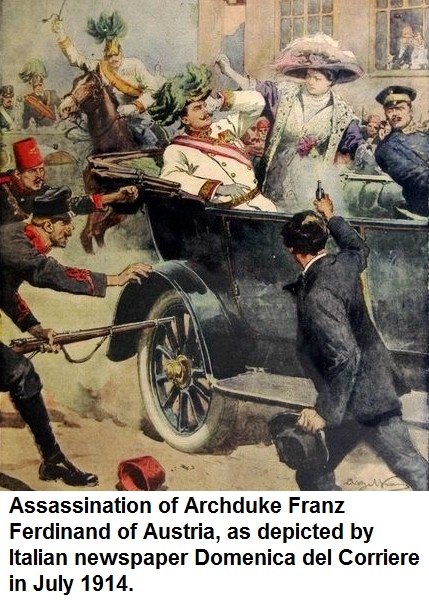
1914 Photo 1On this date 100 years ago, Archduke Franz Ferdinand of Austria, heir presumptive to the Austro-Hungarian throne, and his wife, Sophie, Duchess of Hohenberg, were shot dead in Sarajevo by Serbian assassins. The political objective of the assassination was to break off Austria-Hungary’s south-Slav provinces so they could be combined into a Yugoslavia. The assassination led directly to the First World War when Austria-Hungary subsequently issued an ultimatum against Serbia, which was partially rejected. Austria-Hungary then declared war, marking the outbreak of the war. [a]

Multilateral military alliances abounded in that day among the Great Powers: Austria-Hungary with Germany (Triple Alliance of 1882) and Serbia with Russia and France (Triple Entente of 1907) and Britain. When war ensued later in August 1914, these were the sides. Many other military treaties were triggered thereby engaging empires/countries like Ottoman-Turks, Portugal, Japan and Italy, (The United States joined in 1917 allied with Britain). The resulting conflict was dubbed the Great War until subsequently rebranded World War I.

The review of the historic events of this day 100 years ago is more than just an academic discussion, the book Go Lean…Caribbean aspires to economic principles that dictate that “consequences of choices lie in the future”. The book serves as a roadmap for the introduction and implementation of the technocratic Caribbean Union Trade Federation (CU). This confederation effort aligns many former colonies of the same Great Powers that waged WW I; like Great Britain or the United Kingdom (UK) for example. The British Dominion experienced dire consequences and suffered greatly as a result of this war. In 1914 The British Dominion controlled over 25% of the world’s population; today the UK wields little political, military or economic power, including that of the Caribbean.

The people of the Caribbean understand societal decline and dysfunction all too well.

What have we learned in the 100 years since the events of June 28, 1914? How will these lessons help us today?

  • Minority Equalization – Bullying and terrorism must be mitigated at the earliest possible opportunity – the foregoing photo depicts the oppression the minority Balkan communities perceived in the Austria-Hungarian Empire. As a minority group they felt bullied in their own country; their Slavic culture and language set them apart, and their religious adherence led to even more dissension (Austria-Hungary: Catholic/Lutheran; Serbia: Eastern Orthodox and Bosnia- Herzegovina: Muslim) There were terrorist activities for decades before in the quest for independence. In the past 100 years, this same modus operandi has been repeated in countless locales around the world. The CU security pact must defend against regional threats, including domestic terrorism. This includes gangs and their junior counterparts, bullies. The CU plans for community messaging in the campaign to  mitigate bullying.

1914 Photo 2

  • Reconciliation of issues are not optional, more conflict will emerge otherwise – The issues that wedged the people of the Balkans were not resolved in World War I. More dissensions continued leading to World War II, and continued during the Cold War while most of the Balkans were under Soviets control. When the Soviet Union collapsed in 1991, civil war and ethnic cleansings proceeded in the Balkans. Their issues/differences had not been reconciled. A common practice after WW I & WW II was the prosecution of war crimes. But in South Africa an alternative justice approach was adopted, that of Truth & Reconciliation Commissions (TRC). These have become more successful as the emphasis is less on revenge and more on justice normalization. Many other countries have instituted similar TRC models. The CU plans for the TRC model for dealing with a lot of latent issues in the last Caribbean century (i.e. Cuba, Haiti, Dominican Republic, etc).
  • Self-determination of local currencies – in planning for postwar reconstruction, U.S. representatives with their British counterparts studied what had been lacking between the two world wars: a system of international payments that would allow trade to be conducted without fear of sudden currency depreciation or wild fluctuations in exchange rates—ailments that had nearly paralyzed world capitalism during the Great Depression. There is a multiplier associated with the currency in the money supply. Therefore the communities of the Caribbean must embrace its own currency, the Caribbean Dollar (managed by a technocratic Caribbean Central Bank), thereby bringing local benefits from local multipliers.
  • Security assurances must be enabled to complement economics objectives – A lot of dissension has resulted when economic engines become imperiled due to security conflicts. The instability then causes more economic dysfunction, which results in even more security threats – a downward spiral. The CU/Go Lean posits that security apparatus must be aligned with all economic empowerments. This is weaved throughout the roadmap.
  • Negotiate as partners not competitors – The end of World War I immediately set-up ripe conditions for WW II, because of the harsh terms in the Peace Treaties. The CU maintains that, negotiation is an art and a science. More can be accomplished by treating a negotiating counterpart as a partner, rather than not an adversary. (See VIDEO below).
  • Cooperatives and sharing schemes lighten burdens among neighbors – The Balkan conflict of 1914 resulted in a World War because of cooperative treaties with aligning nations. Despite this bad outcome, the practice of cooperatives and sharing still has more upside than downside. The CU will employ cooperatives and sharing schemes for limited scopes within the prime directives of optimizing the economic, security and governing engines.
  • Promote opportunities for the Pursuit of Happiness – A lot of terrorist activities are executed by “suicide” agents (i.e. suicide bombers). The Go Lean roadmap posits the when the following three fundamentals are in place, the risks of suicide is minimal: 1. something to do, 2. someone to love, 3. something to hope for. These are the things a man (or woman) needs to be happy.
  • Consider the Greater Good – Complying with this principle would have prevented a lot of conflict in the past century. The philosophy is directly quoted as: “It is the greatest good to the greatest number of people which is the measure of right and wrong”. The CU/Go Lean roadmap calls for a number of measures that strike directly at the Greater Good mandate: accountable justice institutions, economic empowerment for rich and poor, strategic education initiatives, proactive health/wellness, etc.

The related subjects of economic, security and governing dysfunction have been a frequent topic for blogging by the Go Lean promoters, as sampled here:

https://goleancaribbean.com/blog/?p=1433 Caribbean loses over 70% of tertiary educated citizens to the brain drain
https://goleancaribbean.com/blog/?p=1309 5 Steps of a Bubble
https://goleancaribbean.com/blog/?p=1014 All is not well in the sunny Caribbean
https://goleancaribbean.com/blog/?p=816 The Future of Caribbean Integration and CariCom
https://goleancaribbean.com/blog/?p=789 America’s War on the Caribbean
https://goleancaribbean.com/blog/?p=782 Open the Time Capsule: The Great Recession of 2008
https://goleancaribbean.com/blog/?p=623 Only at the precipice, do they change
https://goleancaribbean.com/blog/?p=599 Ailing Puerto Rico open to radical economic fixes
https://goleancaribbean.com/blog/?p=467 Barbados Central Bank records $3.7m loss in 2013
https://goleancaribbean.com/blog/?p=451 CariCom Chairman to deliver address on slavery/colonization reparations
https://goleancaribbean.com/blog/?p=353 Book Review: ‘Wrong – Nine Economic Policy Disasters and What We Can Learn…’

The purpose of the Go Lean roadmap is to turn-around the downward trends in the Caribbean today, to reverse course and elevate Caribbean society. The CU, applying lessons from the last 100 years, has prime directives proclaimed as follows:

  • Optimization of the economic engines in order to grow the regional economy to $800 Billion & create 2.2 million new jobs.
  • Establishment of a security apparatus to protect the resultant economic engines.
  • Improve Caribbean governance to support these engines.

The Go Lean book details a series of assessments, community ethos, strategies, tactics, implementations and advocacies to empower all the factions in the Caribbean region:

Community Ethos – Economic Systems Influence Choices & Incentives Page 21
Community Ethos – Consequences of Choices Lie in the Future Page 21
Community Ethos – Money Multiplier – Control of Local/Regional   Currency Page 22
Community Ethos – Anti-Bullying and Mitigation Page 23
Community Ethos – Intelligence Gathering Page 23
Community Ethos – “Crap” Happens Page 23
Community Ethos – Minority Equalization Page 24
Community Ethos – Ways to Impact the Future Page 26
Community Ethos – Ways to Improve Negotiations Page 32
Community Ethos – Ways to Manage Reconciliations Page 34
Community Ethos – Ways to Improve Sharing Page 35
Community Ethos – Ways to Promote Happiness Page 36
Community Ethos – Ways to Impact the Greater Good Page 37
Strategy – Vision –  Integrate Region into a Single Market Economy Page 45
Strategy – Agents of Change – Globalization Page 57
Tactical – Separation of Powers – Department of Homeland   Security Page 75
Tactical – Separation of Powers – Department of   Justice Page 77
Implementation – Assemble Existing Super-national Institutions Page 96
Implementation – Caribbean Central Bank (CCB) Cooperative Page 96
Implementation – Ways to Pay for Change Page 101
Implementation – Foreign Policy Initiatives   at Start-up Page 102
Implementation – Security Initiatives at   Start-up Page 103
Implementation – Ways to Deliver Page 109
Implementation – Ways to Promote Independence Page 120
Planning – Ways to Ways to Model the EU Page 130
Planning – Ways to Make the Caribbean Better Page 131
Planning – Ways to Improve Failed-State Indices Page 134
Planning – Lessons from East Germany Page 139
Advocacy – Ways to Grow the Economy Page 151
Advocacy – Ways to Create Jobs Page 152
Advocacy – Ways to Better Manage the Social Contract Page 170
Advocacy – Ways to Foster Cooperatives Page 176
Advocacy – Ways to Impact Justice Page 177
Advocacy – Ways to Improve Homeland Security Page 180
Advocacy – Ways to Mitigate Terrorism Page 181
Advocacy – Ways to Improve Intelligence Page 182
Advocacy – Banking Reforms – Caribbean Dollar Page 199
Advocacy – Ways to Protect Human Rights Page 220
Advocacy – Battles in the War on Poverty Page 222
Advocacy – Ways to Impact British Territories Page 245

The year 1914 is identified as a watershed year in the history of mankind. (There are even religious teachings that identify this year as the beginning of the Bible’s prophesied Last Days). No doubt there was a crisis, and it was wasted, even after losing 19 million people in the ensuing military conflict. The result was a 2nd World War that slaughtered 60 million more. Still all the divisions and animosities created during those conflicts forged even more conflicts (think: Middle East, Korea and Vietnam). In total, about 100 million people died in wars of the 20th Century.

See Comedian Bill Maher Commentary in the following VIDEO:

VIDEO – Real Time With Bill Maher: Sunni and Share (HBO) – 
https://youtu.be/Jz0YWIfBLa4


Real Time with Bill Maher
Published on Jul 1, 2014 – Bill Maher delivers his “New Rules” editorial on June 27, 2014.

  • Category: Entertainment

Now is the time for all of the Caribbean to learn the lessons from the last 100 years, and not waste our current crises. The book Go Lean … Caribbean posits that the Caribbean is in a serious crisis, but asserts that this crisis would be a terrible thing to waste. The people and governing institutions of the region are hereby urged to lean-in for the empowerments described in the book Go Lean … Caribbean.

This is a big deal for the region, the same way 1914 was a big year for our planet. While the planet is out-of-scope for this roadmap, a Caribbean neighborhood optimization is realistic and plausible. We can all work to make our homeland a better place to live, work, and play.

Download the free e-Book of Go Lean … Caribbean – now!

—————–

Referenced Sources:
a.     http://en.wikipedia.org/wiki/Assassination_of_Archduke_Franz_Ferdinand_of_Austria; retrieved June 28, 2014

b.     http://en.wikipedia.org/wiki/Bretton_Woods_system; retrieved June 28, 2014

Share this post:
, ,
[Top]

Floods in Minnesota, Drought in California – Why Not Share?

 Go Lean Commentary

Millions across Minnesota are in the middle of a flooding disaster as a severe storm system moves over the central U.S.. See this VIDEO:

VIDEO – CBS News; posted June 23, 2014; retrieved June 27 from: http://www.cbsnews.com/videos/minnesota-communities-face-weeks-of-flooding/
Title: Minnesota communities face weeks of flooding

(VIDEO plays best in Internet Explorer).

At the same time, California continues to endure serious drought conditions. Many feel, though not supported by the facts, that this may be the worst drought in California history. See the aligning VIDEO here:

VIDEO – Win Rosenfeld, NBC News; posted June 2, 2014; retrieved June 27 from: https://www.youtube.com/watch?v=Gx7vFqU8iGY
Title: California’s Drought History | Debunker

So on the one hand, part of the United States is experiencing too much water and in other parts of the country, too little water. This is Climate Change 101. If only, there would be some equalizing between “the feast and the famine” with water.

This was the point/comment of one viewer of the CBS News Video:

Why are we not building a WATER PIPELINE from these flood prone areas to the parched West and South?!?!? If we can afford an OIL pipeline all the way to the southern gulf, we can definitely build a desperately needed pipeline for water! – By: uberengineer – June 24, 2014

This comment was spot on! According to the book Go Lean … Caribbean, pipelines can be strategic, tactical and operationally efficient. They can mitigate challenges of Mother Nature, create jobs and grow the economy at the same time.

The Go Lean book identifies that there are “agents-of-change” that our world have to now contend with. Proactively managing the cause-and-effect of these agents can yield great benefits and alleviate much suffering. The agents-of-change for the Caribbean are identified as follows:

Technology
Aging Diaspora
Climate Change
Globalization

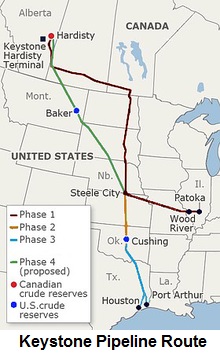
If the suggestion of above commentator Uber Engineer is to be seriously considered in the US, this would fall under the scope of the US federal government as two states California and Minnesota are involved – neither state has jurisdiction over the other. Plus, the many states in between (Iowa, Nebraska, Colorado, Utah and Nevada) where a pipeline would traverse would also have to be factored into the equation. Under US law this approach is called an Interstate Compact. Uber Engineer is right! This pipeline strategy is already being deployed for oil in the US with the TransCanada Keystone [a] Pipeline project, running from southern Canada down to the Gulf of Mexico; (see route map in the photo).

The question is: who can contemplate such a solution for the Caribbean marketplace? The Go Lean book posits that Climate Change is wreaking havoc on Caribbean life as well and that Caribbean stakeholders must proactively consider the benefits of pipeline deployments in the region. This book purports that a new technology-enhanced industrial revolution is emerging, in which there is more efficiency gleaned from installing, monitoring and maintaining pipelines. Caribbean society must participate, not just spectate the developments in this revolution. This point is pronounced early in the book with this Declaration of Interdependence (Page 11 &14), with the opening and subsequent statements:

i.     Whereas the earth’s climate has undeniably changed resulting in more severe tropical weather storms, it is necessary to prepare to insure the safety and security of life, property and systems of commerce in our geographical region. As nature recognizes no borders in the target of its destruction, we also must set aside border considerations in the preparation and response to these weather challenges.

xxvi.       Whereas the Caribbean region must have new jobs to empower the engines of the economy and create the income sources for prosperity, and encourage the next generation to forge their dreams right at home, the Federation must therefore foster the development of new industries, like that of … pipelines …

xxvii.     Whereas the region has endured a spectator status during the Industrial Revolution, we cannot stand on the sidelines of this new economy, the Information Revolution. Rather, the Federation must embrace all the tenets of Internet Communications Technology (ICT) to serve as an equalizing element in competition with the rest of the world. The Federation must bridge the digital divide and promote the community ethos that research/development is valuable and must be promoted and incentivized for adoption.

This book Go Lean… Caribbean, serves as a roadmap for the introduction and implementation of the technocratic Caribbean Union Trade Federation (CU) to elevate society of the 30 Caribbean member-states. This agency will assume jurisdiction for the Caribbean Sea, the 1,063,000 square-mile international waters under the guise of an Exclusive Economic Zone. This approach allows for cooperation and equalization between the feast-and-famine conditions in the region. This is a real solution to real problems! In fact the CU/Go Lean roadmap has these 3 prime directives:

  • Optimization of the economic engines in order to grow the regional economy.
  • Establishment of a security apparatus to protect the resultant economic engines.
  • Improve Caribbean governance to support these engines.

The Go Lean book details the economic principles and community ethos to adopt, plus the executions of strategies, tactics, implementations and advocacies to forge Research & Development with pipelines and industrial growth in Caribbean communities:

Economic Principles – People Choose because Resources are Limited Page 21
Economic Principles – All Choices Involve Costs Page 21
Economic Principles – People Respond to Incentives Page 21
Economic Principles – Economic Systems Influence Individual Choices Page 21
Economic Principles – Voluntary Trade Creates Wealth Page 21
Economic Principles – Consequences of Choices Lie in the Future Page 21
Community Ethos – Job   Multiplier Page 22
Community Ethos – “Crap” Happens Page 23
Community Ethos – Lean Operations Page 24
Community Ethos – Return on Investments (ROI) Page 24
Community Ethos – Cooperatives Page 25
Community Ethos – Ways to Impact the Future Page 26
Community Ethos – Ways to Help Entrepreneurship Page 28
Community Ethos – Ways to Impact Research & Development Page 30
Community Ethos – Ways to Improve Negotiations Page 32
Community Ethos – Ways to Improve Sharing Page 35
Community Ethos – Impact the Greater Good Page 37
Anecdote – Pipeline Transport – Strategies, Tactics &   Implementations Page 43
Strategy – Vision – Confederating 30 Member-states in a Union Page 45
Strategy – Agents of Change – Technology Page 57
Strategy – Agents of Change – Aging Diaspora Page 57
Strategy – Agents of Change – Globalization Page 57
Strategy – Agents of Change – Climate Change Page 57
Tactical – Fostering a Technocracy Page 64
Tactical – Growing Economy – New High Multiplier Industries Page 68
Separation of Powers – Interstate   Commerce Administration Page 79
Separation of Powers – Interior Department – Exclusive Economic Zone Page 82
Implementation – Assemble – Pipeline as a Focused   Activity Page 96
Implementation – Ways to Pay for Change Page 101
Implementation – Benefits from the Exclusive Economic Zone Page 104
Implementation – Ways to Develop a Pipeline Industry Page 107
Implementation – Ways to Deliver Page 109
Planning – 10 Big Ideas – Pipeline Projects Page 127
Advocacy – Ways to Grow the Economy Page 151
Advocacy – Ways to Create Jobs Page 152
Advocacy – Ways to Better Manage the Social Contract – Infrastructure Page 170
Advocacy – Ways to Ways to Impact Public Works – Ideal for Pipelines Page 175
Advocacy – Ways to Foster Cooperatives Page 176
Advocacy – Ways to Better Manage Natural Resources – Water   Resources Page 183
Advocacy – Ways to Impact Extractions – Pipeline Strategy   Alignment Page 195
Advocacy – Ways to Improve Emergency Management Page 196
Advocacy – Ways to Foster Technology Page 197
Advocacy – Ways to Ways to Improve Monopolies – Foster   Cooperatives Page 202
Advocacy – Ways to Improve Transportation – Pipeline Options Page 205
Advocacy – Ways to Impact Rural Living – Minimize Irrigation   Downsides Page 235
Appendix – Interstate Compacts Page 278
Appendix – Pipeline Maintenance Robots Page 283
Appendix – North Dakota Example – Oil Drilling Economic-Societal   Effects Page 334

Historically, pipelines are cheaper than alternative modes of transport for liquid materials like oil, natural gas and water. Plus the cost of water in all aspects of modern society is no longer negligible. Just conduct an acid test at a friendly neighborhood Gas Station; while a gallon of gas may be high, the equivalent pricing for cool drinking water is within the same range.

Water is only free in our society when it is raining; for all other times, there are costs associated with storage and distribution.

Thusly, the economic principles of pipelines are sound.

CU Blog - Floods in Minnesota, Drought in California - Why Not Share - Photo 2

Pipelines can be above ground, underground and/or underwater. (See Trans-Alaska Pipeline photo). There is a role for many schemes of pipeline deployments in the vision for the reboot of the Caribbean homeland. The roadmap Go Lean … Caribbean identifies pipelines as strategic, tactical and operationally mandatory for any chance at success in making the Caribbean a better place to live, work and play.

Download the book Go Lean … Caribbean – now!

——–

Appendix – Referenced Source:

a.     Keystone Pipeline (Retrieved June 27, 2014 from: http://en.wikipedia.org/wiki/Keystone_Pipeline):

The Keystone Pipeline System is an oil pipeline system in Canada and the United States. It runs from the Western Canadian Sedimentary Basin in Alberta, Canada, to refineries in the United States in Steele City, Nebraska; Wood River and Patoka, Illinois; and the Gulf Coast of Texas. In addition to the synthetic crude oil (syncrude) and diluted bitumen (dilbit) from the oil sands of Canada, it also carries light crude oil from the Williston Basin (Bakken) region in Montana and North Dakota.

CU Blog - Floods in Minnesota, Drought in California - Why Not Share - Photo 1Three phases of the project are in operation, and the fourth is awaiting U.S. government approval. Upon completion, the Keystone Pipeline System would consist of the completed 2,151-mile (3,462 km) Keystone Pipeline (Phases I and II), Keystone Gulf Coast Expansion (Phase III), and the proposed Keystone XL Pipeline Project (Phase IV). Phase I, delivering oil from Hardisty, Alberta, to Steele City, Wood River, and Patoka, was completed in the summer of 2010. Phase II, the Keystone-Cushing extension, was completed in February 2011 with the pipeline from Steele City to storage and distribution facilities at Cushing, Oklahoma. These two phases have the capacity to deliver up to 590,000 barrels per day (94,000 m3/d) of oil into the Mid-West refineries. Phase III, the Gulf Coast Extension, which was opened in January 2014, has capacity up to 700,000 barrels per day (110,000 m3/d). The proposed Phase IV, would begin in Hardisty, Alberta, and extend to Steele City, essentially replacing the existing phase I pipeline.

The Keystone XL proposal faced criticism from environmentalists and some members of the United States Congress. In January 2012, President Barack Obama rejected the application amid protests about the pipeline’s impact on Nebraska’s environmentally sensitive Sand Hills region. TransCanada Corporation changed the original proposed route of Keystone XL to minimize “disturbance of land, water resources and special areas”; the new route was approved by Nebraska Governor Dave Heineman in January 2013. On April 18, 2014 the Obama administration announced that the review of the controversial Keystone XL oil pipeline has been extended indefinitely, until at least after the November 4, 2014 mid-term United States elections.


Share this post:
, , , ,
[Top]

St Croix’s Tim Duncan to Return to Spurs For Another Season

Go Lean Commentary

Congratulations Tim Duncan. You deserve your champion’s accolades.

Tim Duncan Photo

This commentary has previously sided with Mr. Duncan’s opponent in the recent NBA Finals. Here below are the previous blogs citing a hope for the Miami Heat’s dominance in the NBA Playoff tournament.

https://goleancaribbean.com/blog/?p=1148 Sports Bubble – Franchise values in basketball
https://goleancaribbean.com/blog/?p=689 eMerge conference aims to jump-start Miami tech hub

But talent recognizes talent!

It is also good news, according to this foregoing news article, that Mr. Duncan will be returning for at least one more season.

By: The Caribbean Journal Staff

Tim Duncan isn’t going anywhere.

The St Croix native, who recently won his fifth NBA championship, will be returning to the San Antonio Spurs for his 18th NBA season.

The team announced Monday that the 38-year-old Duncan had exercised his player option for the 2014-2015 season, putting to rest any notion that he would be retiring.

Duncan helped the Spurs to a dominant 4-1 series win over the Miami Heat in this month’s NBA Finals.

The Christiansted native is one of five players in the history of the NBA to win five championships and five MVPs (either NBA Finals or regular season), along with Michael Jordan, Magic Johnson, Bill Russell and Kareem Abdul-Jabbar.

Duncan leads all active players in career wins, with 898.
Caribbean Journal Online News Source  (Posted 06-23-2014; retrieved 06-26-2014) –
http://www.caribjournal.com/2014/06/23/st-croixs-tim-duncan-to-return-to-spurs-for-another-season/

There is something bigger than sports alone at play here. As the foregoing news article depicts, Mr. Duncan is a member of the Caribbean Diaspora. He is recognized as one of the best in his field of endeavor; perhaps one of the best of all time. This is a claim of the book Go Lean … Caribbean, that sports require a genius qualifier and that genius  ability can be found in abundance in the Caribbean. Mr. Duncan makes us all proud: Christiansted, St. Croix, the US Virgin Islands and all of the Caribbean.

The Go Lean book serves as a roadmap for the introduction and implementation of the Caribbean Union Trade Federation (CU), a technocratic federal government to administer and optimize the economic/security/ governing engines of the region’s 30 member-states. At the outset, the roadmap recognizes the value of sports with these statements in the Declaration of Interdependence (Page 13 & 14):

xxvi.     Whereas the preparation of our labor force can foster opportunities and dictate economic progress for current and future generations, the Federation must ensure that educational and job training opportunities are fully optimized for all residents of all member-states, with no partiality towards any gender or ethnic group. The Federation must recognize and facilitate excellence in many different fields of endeavor, including sciences, languages, arts, music and sports. This responsibility should be executed without incurring the risks of further human flight, as has been the past history.

xxxi.     Whereas sports have been a source of great pride for the Caribbean region, the economic returns from these ventures have not been evenly distributed as in other societies. The Federation must therefore facilitate the eco-systems and vertical industries of sports as a business, recreation, national pastime and even sports tourism – modeling the Olympics.

The Go Lean roadmap calls for the market organizations to better explore the economic opportunities for sports. Sports can be big business! But even when money is not involved, other benefits abound. As such the CU will enhance the engines to elevate sports at all levels: amateur, intercollegiate and professional.

The other issue related to Tim Duncan is that of “image”. Mr. Duncan could be a proud ambassador of Caribbean character. Personally, he does not advocate any political or economic agenda, so others must do that for him. As a public figure, his story is free to relate to the listening world of how impactful a Caribbean heritage can be.

The subjects of sports and Caribbean image have been related in many previous Go Lean blogs; highlighted here in the following samples:

a. https://goleancaribbean.com/blog/?p=1446 Caribbean   Players in the 2014 World Cup
b. https://goleancaribbean.com/blog/?p=1341 College   World Series Time
c. https://goleancaribbean.com/blog/?p=1214 The Art &   Science of Temporary   Stadiums – No White Elephants
d. https://goleancaribbean.com/blog/?p=1148 Sports Bubble –   Franchise values in   basketball
e. https://goleancaribbean.com/blog/?p=1020 Sports Revolutionary: Advocate Jeffrey Webb
f. https://goleancaribbean.com/blog/?p=857 Caribbean Image: Dreadlocks
g. https://goleancaribbean.com/blog/?p=498 Book Review: ‘The Sports Gene’
h. https://goleancaribbean.com/blog/?p=334 Bahamians Make Presence Felt In Libyan   League
i. https://goleancaribbean.com/blog/?p=318 Collegiate Sports in the Caribbean
j. https://goleancaribbean.com/blog/?p=60 Could the Caribbean Host the Olympic Games?

The book Go Lean…Caribbean has an economic empowerment agenda, but there are still huge benefits for the region related to sports. The strategy is to consolidate the region’s 30 member-states / 4 languages into a Single Market of 42 million people – leverage for a viable sports landscape. The CU facilitation of applicable venues (stadia, arenas, fields, temporary structures) on CU-owned fairgrounds plus the negotiations for broadcast/streaming rights/licenses will elevate the art, science and genius of sports as an enterprise in the region.

Now is the time for all of the Caribbean to lean-in to the following community ethos, strategies, tactics, implementations and advocacies detailed in the book Go Lean … Caribbean to re-boot the delivery of the regional solutions to elevate the Caribbean region through sports:

Community Ethos – People Respond to Incentives in Predictable Ways Page 21
Community Ethos – Return on Investments Page 24
Community Ethos – Ways to Foster Genius Page 27
Community Ethos – Ways to Improve Negotiations Page 32
Community Ethos – Ways to Promote Happiness Page 36
Strategic – Vision – Integrating Region in to a Single Market Page 45
Strategic – Staffing – Sporting Events at Fairgrounds Page 55
Tactical – Fostering a Technocracy Page 64
Tactical – Separation of Powers – Sports & Culture Administration Page 81
Tactical – Separation of Powers – Fairgrounds Administration Page 83
Implementation – Steps to Implement Self-Governing Entities (Fairgrounds) Page 105
Implementation – Ways to Deliver Page 109
Planning – Ways to Make the Caribbean Better Page 131
Advocacy – Ways to Grow the Economy Page 151
Advocacy – Ways to Improve Local Government – Parks & Recreation Page 169
Advocacy – Ways to Impact Events Page 191
Advocacy – Ways to Promote Fairgrounds Page 192
Advocacy – Ways to Foster Technology Expositions Page 197
Advocacy – Ways to Improve Sports Page 229
Advocacy – Ways to Impact Urban Living – Sports Leagues Page 234

The foregoing article celebrates a Caribbean Champion. But there is more to celebrate with Caribbean life, culture and the homeland. With the Go Lean executions, we can all be champions, by making the Caribbean a better place to live, work and play.

Download the book Go Lean…Caribbean now!


Share this post:
, , , ,
[Top]

Here come the Drones … and the Concerns

Go Lean Commentary

Drones - SurveillanceThe Gee-Whiz days are over … for drones.

The initial excitement and fascination period seems to have ended. Now people are trying to curb, protect and run from all-things-drone.

This point is evident from the two foregoing articles & VIDEOS. Here come the drones, and here come troubles.

Despite the foregoing articles, the old adage still applies: “The early bird gets the worm”.

Story 1 – By: CBS News & The Associated Press

http://www.cbsnews.com/news/government-moves-to-ban-drones-in-400-national-parks/

Title: Government moves to ban drones in 400 national parks

WASHINGTON — The National Park Service is taking steps to ban drones from 84 million acres of public lands and waterways, saying the unmanned aircraft annoy visitors, harass wildlife and threaten safety.

Jonathan Jarvis, the park service’s director, told The Associated Press he doesn’t want drones flushing birds from their nests, hovering over rock climbers as they cling to the sides of cliffs or buzzing across the face of Mount Rushmore.

Jarvis said he would sign a policy memorandum on Friday directing superintendents of the service’s 401 parks to write rules prohibiting the launching, landing or operation of unmanned aircraft in their parks.

Two large national parks, Grand Canyon in Arizona and Zion in Utah, have already changed their rules to ban drones. Some other parks have interpreted existing regulations to permit them to ban drone flights, but Jarvis said each park must change its “compendium” – a set of regulations unique to that park – if a ban is to be enforceable.

At Yosemite National Park in California, where officials announced last month they would adopt a policy prohibiting drone flights, hobbyists have been using unmanned aircraft to film the park’s famous waterfalls and capture close-up shots of climbers on its granite cliffs. Zion officials were spurred to take action after an incident in which an unmanned aircraft was seen harassing bighorn sheep and causing youngsters to become separated from their herd.

At Mount Rushmore in South Dakota, park rangers last September confiscated an unmanned aircraft after it flew above 1,500 visitors seated in an amphitheater and then over the heads of the four presidents carved into the mountain.

Drones - HoverFlowImagine you’re a big wall climber in Yosemite working on a four-day climb up El Capitan, and you’re hanging off a bolt ready to make a (difficult) move, and an unmanned aircraft flies up beside you and is hovering a few feet from your head with its GoPro camera running,” Jarvis said in an interview. “Think about what that does to your experience and your safety,”

Some drone operators have complained that a ban favors some park users over others. They also say many unmanned aircraft flights are made without incident and with respect for other park users and wildlife.

Unmanned aircraft range from no bigger than a hummingbird to the size of an airliner, and their capabilities are improving rapidly. Use is growing as their price tags decline. The park service wants to get out in front of that by putting rules in place now, Jarvis said.

“This is a different kind of aircraft, and it is being used in different ways than what we have seen from the (model aircraft) hobbyists,” he said. “We want to have some control over it now before it proliferates.”

The memorandum directs superintendents to continue to allow model aircraft hobbyists and clubs that already have approval to operate in some parks. Also, parks can continue to grant permits for drone flights for other purposes like research, search and rescue, and firefighting, he said. Commercial operators like moviemakers can also apply for a permit to operate a drone, he said.

“We would have to hear why they would necessarily need this type of equipment in order to accomplish their goals,” Jarvis said.

Brendan Schulman, a New York attorney representing several commercial drone operators, said the park service appears to be “overreaching its authority with respect to the existing regulations, which only address the use of passenger aircraft.”

“A penalty imposed on a personal drone operator could certainly be challenged on the basis that there does not appear to be a regulation addressing that activity,” he said.

While parks are changing their individual rules, the park service will be drafting its own rule to ban drone flights in parks nationwide, Jarvis said. He said he hopes to have a proposal ready in about 18 months.

The ban only affects what Jarvis described as “operations inside parks,” and not high altitude flights over parks.

The park service has been working closely with the Federal Aviation Administration, although the service’s action is separate from the FAA’s ban on commercial drone flights, he said.

The FAA ban is being challenged by drone operators represented by Schulman.

Two years ago, Congress directed the FAA to put regulations in place to provide for the safe integration of commercial drones into the national airspace. The regulations were supposed to be finished by September 2015, but the agency isn’t expected to make that deadline.

Last week, the FAA said it had granted the first permission for commercial drone flights over land.

Earlier this month, CBS News transportation correspondent Jeff Pegues reported that some Hollywood production companies are trying to win an exemption from the FAA to use drones in the U.S.

YouTube Video Sharing Site (Retrieved 06-25-2014) from: www.youtube.com/embed/kTZ94RujpEg

Story 2 – By: Miguel Almaguer, NBC News

Title: Police investigate claims of peeping drones

Seattle police responded to an apartment complex after a woman said a drone was spying on her. The complaint raises interesting questions about drones and privacy.

Even though owning and flying drones is legal, the police will respond to privacy violations and other concerns. This drone is owned by Skyris Imaging, which owns an entire fleet, to photograph property, farm land and real estate. No laws appear to have been broken.

Visit NBCNews.com for breaking news, world news, and news about the economy

http://www.today.com/video/today/55502613#55502613 (Retrieved 06-25-2014)

Unmanned aircrafts are just another area of autonomous vehicles that the book Go Lean … Caribbean and aligning blogs have highlighted as being a source of future growth and jobs; 2 examples are listed here:

https://goleancaribbean.com/blog/?p=1277 The need for highway safety innovations – here comes Google
https://goleancaribbean.com/blog/?p=673 Ghost ships – Autonomous cargo vessels without a crew

Autonomous vehicles are a subset of the field of robotics – this is science, not science fiction. This is the future direction for so many industrial endeavors. The Go Lean book identifies the returns on investment for communities that prepare and foster development in impending technology fields. The book asserts that there is a race to create solutions to ease the challenges associated with the agents of change (Technology, Aging Diaspora, Climate Change, Globalization). The question is: who will create the solutions for this marketplace? The book posits that Caribbean stakeholders cannot only consume, but must also create, produce, develop and help construct the “vehicles” to get its people to the future. This applies whether the vehicle is a physical or figurative application.

“Don’t be a ‘stock on the shelf’” – Caribbean music icon Bob Marley in the song: Pimpers’ Paradise (Uprising Album, 1980).

This book purports that a new industrial revolution is emerging and the Caribbean society must participate, not just spectate. This point is  pronounced early in the Declaration of Interdependence (Page 14), with these opening statements:

xxvi. Whereas the Caribbean region must have new jobs to empower the engines of the economy and create the income sources for prosperity, and encourage the next generation to forge their dreams right at home, the Federation must therefore foster the development of new industries… In addition, the Federation must invigorate the enterprises related to existing industries like tourism…– impacting the region with more jobs.

xxvii. Whereas the region has endured a spectator status during the Industrial Revolution, we cannot stand on the sidelines of this new economy, the Information Revolution. Rather, the Federation must embrace all the tenets of Internet Communications Technology (ICT) to serve as an equalizing element in competition with the rest of the world. The Federation must bridge the digital divide and promote the community ethos that research/development is valuable and must be promoted and incentivized for adoption.

The book Go Lean… Caribbean, serves as a roadmap for the introduction and implementation of the Caribbean Union Trade Federation (CU). This agency will assume jurisdiction for the Caribbean skies (airspace), much like the Federal Aviation Administration (FAA) performs for the US. This role is not intended as just a regulatory arm, but a promotional agency as well. We must be partners with the aviation industry; and we want to be on the cutting-edge of unmanned aviation. We cannot be just a “stock on the shelf”. The failure to advocate in the aviation industry has already devastated Caribbean commerce, as dysfunction in regional air carriers has negatively affected tourism and the transport of tourists to their island resorts. This is happening now; this is real!

These issues were highlighted in previous blogs as follows:

https://goleancaribbean.com/blog/?p=798 Lessons Learned from the American Airlines merger
https://goleancaribbean.com/blog/?p=254 Air Antilles Launches St. Maarten Service

So this blog, and the undergirding book, is pinning for more than just “Gee-Whiz” avionics; this is championing a bigger cause, that of empowering Caribbean society. In fact the CU/Go Lean roadmap has these 3 prime directives:

  • Optimization of the economic engines in order to grow the regional economy.
  • Establishment of a security apparatus to protect the resultant economic engines.
  • Improve Caribbean governance to support these engines.

There is a lot at stake for the Caribbean in considering this subject area. According to the foregoing articles and VIDEOS, research-and-development (R&D identified in Go Lean as a community ethos) has started to deploy economic and security solutions with drones as effective tools. While there are still many growing pains to work through, the early adopters have gotten benefits … and profits.

Drones - WeatherThere are proponents and opponents of unmanned aviation, as depicted in the foregoing articles and VIDEOS.  One thing for sure, those “sweating the details”, resolving the issues are sowing the field for the many harvest seasons due to come from this industry space. The Go Lean book and blogs are hereby urging the Caribbean region to lean-in to this discussion, development and industry. The “harvest is great, while the workers are few” – The Bible (Matthew 9:37).

In the US, there is a 25-pound limit for “unmanned aerial systems”. This is regulated by the Federal Aviation Administration. The FAA has no jurisdiction in the Caribbean. Perhaps, the CU as the FAA counterpart can advocate a 30-pound limit, or some other rule changes that would be more industry-friendly. Also, testing-proving grounds abound in the Caribbean, with many remote islands and the 1,063,000 square-mile territory of the Caribbean Sea, which according to the roadmap would come under CU jurisdiction.

The Go Lean strategy is to confederate the 30 member-states of the Caribbean region to form the technocratic CU Trade Federation. The issues associated in this blog entry are too big for any one member-state, but a consolidated market of 42 million people allow for more economies-of-scale for generating returns on technological investments. Tactically, the Go Lean plan for a separation-of-powers allows the member-states to deputize authority of the Caribbean airspace to the one unified agency, with the mandate to promote, not just regulate. Operationally, there is no place with a greater need for unmanned aerial reconnaissance than the Caribbean. Every year, countless watercrafts become imperiled; the scanning & diagnostic capabilities on drones exceed human-eye capability for search-and-rescue. Other applications include pipelines, sea-bound wind farms, fairgrounds, isolated residents and Self-Governing Entities.

Drones - ShadowHawkIn general, there is the need for rules and public protection with evasive technologies like drones, but it is the assertion of the Go Lean book and subsequent blog entries that a protection mandate does not have to stifle technological innovation. A spirit of partnership in negotiations can foster a more productive business climate for R&D and a win-win for all stakeholders.

The book details community ethos to adopt, plus the executions of the following strategies, tactics, implementations and advocacies to forge R&D and industrial growth in Caribbean communities:

Community Ethos – Deferred Gratification Page 21
Community Ethos – All Choices Involve Costs Page 21
Community Ethos – Job   Multiplier Page 22
Community Ethos – Public Protection Over Privacy Concerns Page 23
Community Ethos – “Crap” Happens Page 23
Community Ethos – Lean Operations Page 24
Community Ethos – Return on Investments (ROI) Page 24
Community Ethos – Ways to Impact the Future Page 26
Community Ethos – Ways to Help Entrepreneurship Page 28
Community Ethos – Ways to Impact Research & Development Page 30
Community Ethos – Ways to Improve Negotiations Page 32
Community Ethos – Impact the Greater Good Page 37
Strategy – Vision – Confederating 30 Member-states in a Union Page 45
Strategy – Agents of Change – Technology Page 57
Strategy – Agents of Change – Aging Diaspora Page 57
Strategy – Agents of Change – Globalization Page 57
Strategy – Agents of Change – Climate Change Page 57
Tactical – Fostering a Technocracy Page 64
Tactical – Growing Economy – New High Multiplier Industries Page 68
Separation of Powers – Self Governing Entities Page 80
Separation of Powers – Interior Department Page 82
Separation of Powers – Regional Aviation Administration and Promotion Page 84
Implementation – Ways to Pay for Change Page 101
Implementation – Benefits from the Exclusive Economic Zone Page 104
Implementation – Steps to Implement Self-Governing Entities Page 105
Implementation – Ways to Deliver Page 109
Planning – 10 Big Ideas Page 127
Advocacy – Ways to Grow the Economy Page 151
Advocacy – Ways to Create Jobs Page 152
Advocacy – Ways to Improve Homeland Security Page 180
Advocacy – Ways to Improve Intelligence Gathering &   Analysis Page 182
Advocacy – Ways to Foster Technology Page 197
Advocacy – Ways to Improve Transportation Page 205
Advocacy – Ways to Improve Fisheries Page 210
Advocacy – Ways to Impact Urban Living Page 238
Advocacy – Ways to Impact Rural Living Page 239
Appendix – Industrial Sites at Sea-bound Wind Farms Page 335

Historically, forging change in the transportation sphere in the Caribbean has been burdensome – early adopters we are not. The region was very slow to adopt many provisions (seat belts, fast ferry, smoking on planes) that may be considered common sense by today’s standard. Managing change for the region must therefore be viewed as both an art and a science. The CU approach is different for spearheading this change of unmanned aviation – more technocracy, less democracy; (no need for consensus building).

The insights from the foregoing articles and embedded videos help us to appreciate that the future for unmanned aviation is now! We must therefore lean-in for the empowerments described in Go Lean … Caribbean. This roadmap allows us to build a better community and a better homeland to live, work and play. 🙂

Download the book Go Lean … Caribbean – now!
Share this post:
, , , , , ,
[Top]

COB Master Plan 2025 – Reach for the Lamp-Post

Go Lean Commentary

“Keep your feet on the ground and keep reaching for the stars” – Casey Kasem (1932 – 2014).

The world lost another icon of Rock-n-Roll last week with news of the passing of renowned DJ and Media Host Casey Kasem. He was well known for his closing salutation quoted above.

“Reaching for the stars” should be more than a radio catch phrase; it should be a community ethos. This is noticeably missing in the 2025 Master Plan for the University of the Bahamas. They appear to be striving for the cutting edge of 1985; they are not reaching for the stars, they are reaching for the lamp-post.

Title: College of The Bahamas Master Plan 2014-2024
The College’s plan to accommodate growth in programs and to improve campus life through the creation of a more beautiful and cohesive campus.

“Twenty-five percent growth in student enrollment is what the Master Plan for the University of the Bahamas seeks to accommodate”. Visit the link… to view this newly produced infomercial on the blueprint for the physical growth that will undergird the impending University.
Vimeo – Video Sharing Site (Retrieved 06/23/2014) – http://vimeo.com/98270213

College of The Bahamas Master Plan 2014-2024 from The College of The Bahamas on Vimeo.

Make no mistake; it is a good thing that the College of the Bahamas (COB) is graduating to the University of the Bahamas (in 2015). It is also incontrovertible that COB is inadequate in meeting tertiary education needs of Bahamians, not to think of the rest of the world. Don’t agree? Consider how many Bahamian students matriculate abroad; now consider how many foreign students matriculate at COB.

Debate over!

This is more than just an academic discussion, as the subject of Caribbean students abandoning their homeland for foreign shores is a motivator for the book Go Lean…Caribbean. The book serves as a roadmap for the introduction and implementation of the technocratic Caribbean Union Trade Federation (CU). This effort mitigates published reports that the Caribbean loses over 70% of tertiary educated citizens due to brain drain; (https://goleancaribbean.com/blog/?p=1433).

COB PhotoSo as the sole tertiary education institution in the Bahamas, it would be expected that a Master Plan would “dream a little dream” and strive to counter the negative realities of students matriculating abroad. Instead COB delivered a plan that only inches forward – only reaching for the lamp-post. The inadequacy in the Master Plan highlights the need for the Go Lean roadmap for elevating Caribbean society. The CU, using cutting edge delivery of best practices, will employ strategies, tactics and implementations to impact its prime directives; identified with the following 3 statements:

  • Optimization of the economic engines in order to grow the regional economy to $800 Billion & create 2.2 million new jobs.
  • Establishment of a security apparatus to protect the resultant economic engines.
  • Improvement of Caribbean governance to support these engines.

The Go Lean book posits that the Caribbean is in crisis, with the debilitating brain drain/societal abandonment rate, but that this crisis can be a useful because a “crisis is a terrible thing to waste”. Therefore the roadmap seeks to change the entire eco-system of Caribbean education and learning solutions. This vision is defined early in the book (Page 13 & 14) in the following pronouncements in the Declaration of Interdependence:

xix.   Whereas our legacy in recent times is one of societal abandonment, it is imperative that incentives and encouragement be put in place to first dissuade the human flight, and then entice and welcome the return of our Diaspora back to our shores…

xxi.   Whereas the preparation of our labor force can foster opportunities and dictate economic progress for current and future generations, the Federation must ensure that educational and job training opportunities are fully optimized for all residents of all member-states, with no partiality towards any gender or ethnic group. The Federation must recognize and facilitate excellence in many different fields of endeavor, including sciences, languages, arts, music and sports. This responsibility should be executed without incurring the risks of further human flight, as has been the past history.

xxvii.   Whereas the region has endured a spectator status during the Industrial Revolution, we cannot stand on the sidelines of this new economy, the Information Revolution. Rather, the Federation must embrace all the tenets of Internet Communications Technology (ICT) to serve as an equalizing element in competition with the rest of the world. The Federation must bridge the digital divide and promote the community ethos that research/development is valuable and must be promoted and incentivized for adoption.

So what (also how/when) should be featured in a Master Plan/roadmap for effectuating change in the tertiary education landscape for the Bahamas and the rest of the Caribbean?

The answer is not as simple as A-B-C-1-2-3. The answer requires heavy-lifting, a long reach, and a consideration of the economic realities of the region. Thus the Casey Kasem axiom is so applicable:

“Keep your feet on the ground and keep reaching for the stars”.

“Reaching for the stars” would include fostering Research & Development (R&D) on our college campuses. Also, the deployment of cutting-edge technologies to avail the benefits of e-Learning would deter the trend (and necessity) of young students studying abroad; thus minimizing the temptations to remain abroad or to subsequently emigrate. This would mean staying grounded!

The Go Lean book details a lot more, a series of assessments, community ethos, strategies, tactics, implementations and advocacies to foster the elevation of college education in the Caribbean region:

Community Ethos – Economic Systems Influence Choices & Incentives Page 21
Community Ethos – People Respond to Incentives Page 21
Community Ethos – Consequences of Choices Lie in the Future Page 21
Community Ethos – Return on Investments Page 24
Community Ethos – Ways to Impact the Future Page 26
Community Ethos – Ways to Foster Genius Page 27
Community Ethos – Ways to Impact Research & Development Page 30
Community Ethos – Ways to Bridge the Digital Divide Page 31
Community Ethos – Ways to Impact the Greater Good Page 37
Anecdote – Valedictorian Now Diaspora Member Page 38
Strategy – Vision – Realistic, Achievable, Demanding, & Inspirational Goal Page 45
Strategy – Mission – Local Education to Compete with the Best in the World Page 46
Tactical – Separation of Powers – Education Department – University Admin Page 85
Tactical – Separation of Powers – Labor Department – On-the-Job Training Page 89
Implementation – Ways to Pay for Change Page 101
Implementation – Steps to Implement Campuses   as Self-Governing Entities Page 105
Implementation – Ways to Deliver Page 109
Advocacy – Ways to Grow the Economy Page 151
Advocacy – Ways to Create Jobs Page 152
Advocacy – Ways to Improve Education Page 159
Advocacy – Ways to Impact Student Loans Page 160
Advocacy – Ways to Improve Libraries Page 187
Advocacy – Ways to Foster Technology Page 197
Advocacy – Ways to Impact Youth Page 227
Appendix – Education & Economic Growth Page 258
Appendix – Measuring Education Page 266

Now is the time for all of the Caribbean, the people and governing institutions, to lean-in for the empowerments described in the book Go Lean … Caribbean. This is a big deal for the region. This book is not just a Master Plan; it is roadmap with turn-by-turn directions of how to get from Point A, where we can only hope to dream of reaching the lamp-post, to Point B, where we can finally dream about reaching the stars.

The Bahamas in particular, and the Caribbean region as a whole needs the deliveries of Go Lean … Caribbean. Otherwise, we have no hope to incite/retain our young people to work towards promoting a better future for the Caribbean, and making it a better place to live, work, learn and play.

Thank you Casey Kasem, for reminding us, (with song, great-story-telling and a heartfelt out-reach), what it means to keep our feet on the ground while continuing to reach for the stars. Rest in Peace!

Download the book Go Lean … Caribbean – now!
Share this post:
, , , , , ,
[Top]

Caribbean Players in the 2014 World Cup

FIFA 2014Go Lean Commentary

Soccer (Association Football) is the world’s most popular game. The book Go Lean … Caribbean contemplates greater exploration of the economic opportunities associated with the business of sports – the Caribbean has a failing record in this important area. This quest must therefore give consideration to the eco-system of the World Cup. As such, the news story in the foregoing article synchronizes with the Go Lean book in that it depicts the societal abandonment by so many Caribbean athletes and the lack of professional opportunities in the Caribbean homeland. The two issues: lack of opportunities and society abandonment is a cause-and-effect conundrum. See article here:

Caribbean Journal – Caribbean e-Zine Online Site (Posted 06/14/2014; retrieved 06/21/2014) –
http://www.caribjournal.com/2014/06/16/caribbean-players-in-the-2014-world-cup/
There aren’t any teams from the traditional Caribbean in the 2014 World Cup in Brazil (although there are several from the wider Caribbean Basin), but that doesn’t mean there isn’t a strong Caribbean contingent. From powerhouses like the Netherlands and England to up-and-coming teams like Costa Rica, there are a number of Caribbean footballers in Brazil this month. Here are some of the featured Caribbean athletes:

Raheem Sterling

Raheem SterlingThe 19-year-old phenom who plays for England was actually born in Kingston, Jamaica. A midfielder, he plays professionally for Liverpool.

Raphael Varane

, Raphael VaraneVarane who plays professionally for Real Madrid, is a centre back for the French World Cup team. He is of Martiniquais heritage, as his father comes from the island.

Daniel Sturridge

Daniel SturridgeThe England striker is of Jamaican heritage, as both sides of his grandparents are Jamaican. Like Sterling, he plays for Liverpool professionally. (And he keeps up his ties to Jamaica with a charity in Portmore).

Alex Oxlade-Chamberlain

Alex Oxlade-ChamberlainOxlade-Chamberlain, the son of former England international player Mark Chamberlain, is of Jamaican heritage. A winger and central midfielder, he plays professionally for Arsenal.

Jean Beausejour

Jean BeausejourBeausejour, a 30-year-old left winger for Chile, is the son of a Haitian father. He plays professionally for Wigan Athletic in England.

Nigel de Jong

Nigel de JongMuch of the Netherlands’ football success over the years has come from the Caribbean nation of Suriname, and the trend continues today. de Jong, of Surinamese heritage, is a defensive midfielder who plays professionally for Milan.

Jeremain Lens

Jeremain LensLens, a striker, is of Surinamese heritage (and has even played internationally for the country). He plays professionally for FC Dyanmo Kyiv.

Georginio Wijnaldum

Georginio WijnaldumWijnald is of Surinamese heritage, and plays for professionally for PSV in the Netherlands. For Oranje, he’s a midfielder.

Leroy Fer

Leroy FerThe Norwich City player is a central midfielder who plays for (and was born in) the Netherlands. His roots, however, come from Curacao, where he comes from a family of sporting talents.

Jozy Altidore

Jozy AltidoreThe Haitian-American Altidore is one of the leaders of the American World Cup squad. A striker by trade, he plays professionally for Sunderland.

Chris Smalling

Chris SmallingSmalling, of Jamaican heritage, is a centre back for England who plays professionally for Manchester United.

Patrick Pemberton

Patrick PembertonCosta Rica has a Caribbean coastline, and it’s an area with a distinct heritage and culture in large part due to an influx of immigration from Caribbean countries like Jamaica in the 19th [and early 20th century for the construction of the Panama Canal]. One result [has been] last names like Pemberton in a Spanish-speaking country. Patrick Pemberton, a native of Puerto Limon, and is the lead goalie for the Costa Rican World Cup side, playing professionally for LD Alajuelense.

Marvin Chavez

Marvin ChavezThe winger Chavez is part of a group of Garifuna players on the Honduran side, those who live on the Caribbean coast of the country — indeed, almost half of the team is comprised of those of Garifuna heritage. Chavez plays professionally in Chivas USA in MLS.

David Myrie

David MyrieDavid Myrie, a defender for the Costa Rican team, hails from the Caribbean area of Puerto Viejo. He plays professionally for the Costa Rican side Herediano.

Loic Remy

Loic RemyThe 27-year-old native of Lyon is of Martiniquais heritage and plays for France. Professionally, the striker plays for Queens Park Rangers in England.

Jonathan de Guzman

Jonathan de GuzmanThe midfielder for the Netherlands is the son of a Jamaican mother. He plays professionally for Swansea City, on loan from Spain’s Villareal.

The Go Lean book serves as a roadmap for the introduction and implementation of the Caribbean Union Trade Federation (CU), a technocratic federal government to administer and optimize the economic/security/ governing engines of the region’s 30 member-states. At the outset, the roadmap recognizes the value of sports with these statements in the Declaration of Interdependence (Page 13 & 14):

xxi.     Whereas the preparation of our labor force can foster opportunities and dictate economic progress for current and future generations, the Federation must ensure that educational and job training opportunities are fully optimized for all residents of all member-states, with no partiality towards any gender or ethnic group. The Federation must recognize and facilitate excellence in many different fields of endeavor, including sciences, languages, arts, music and sports. This responsibility should be executed without incurring the risks of further human flight, as has been the past history.

xxxi.     Whereas sports have been a source of great pride for the Caribbean region, the economic returns from these ventures have not been evenly distributed as in other societies. The Federation must therefore facilitate the eco-systems and vertical industries of sports as a business, recreation, national pastime and even sports tourism – modeling the Olympics.

The Go Lean roadmap posits that sport genius qualifiers are found throughout Caribbean society. With the planned market organizations of this roadmap, sports can be more lucrative for Caribbean residents, Diaspora and their legacies. This is big business! There is money to be made in sports endeavors like the World Cup, as stated here:

World Cup Brazil will generate $4 billion in total revenue for FIFA, or 66% more than the previous tournament in South Africa in 2010. The vast majority of the money will come from the sale of television and marketing rights. The World Cup generates more revenue for its association than any other sports tournament, save the Olympics. – Source: Forbes Magazine; retrieved June 5, 2014 from: http://www.forbes.com/sites/mikeozanian/2014/06/05/the-billion-dollar-business-of-the-world-cup/

This subject of sports and World Cup Soccer relates to many previous Go Lean blogs; highlighted here in the following samples, including tangential issues like societal abandonment/brain drain and Caribbean image:

a. https://goleancaribbean.com/blog/?p=1433 Caribbean   loses more than 70 per cent of tertiary educated to brain drain
b. https://goleancaribbean.com/blog/?p=1341 College   World Series Time
c. https://goleancaribbean.com/blog/?p=1214 The Art &   Science of Temporary   Stadiums – No White Elephants
d. https://goleancaribbean.com/blog/?p=1148 Sports Bubble –   Franchise values in   basketball
e. https://goleancaribbean.com/blog/?p=1020 Sports   Revolutionary: Advocate   Jeffrey Webb
f. https://goleancaribbean.com/blog/?p=857 Caribbean Image: Dreadlocks
g. https://goleancaribbean.com/blog/?p=498 Book Review: ‘The   Sports Gene’
h. https://goleancaribbean.com/blog/?p=334 Bahamians Make   Presence Felt In   Libyan League
i. https://goleancaribbean.com/blog/?p=318 Collegiate Sports   in the Caribbean
j. https://goleancaribbean.com/blog/?p=60 Could the Caribbean Host the Olympic Games?

The Caribbean already competes on the world stage, in all other aspects of life. But for the World Cup it is unfortunate that we have to compete with teams aligned to other countries, as shown in the foregoing article.

While it’s too late for this year, perhaps in the near future, at the end of this roadmap, there will be more recognition of the Caribbean contribution to the World Cup. Take the dream one step further and imagine a unified Caribbean team fielding its best athletes in competition with the rest of the world. This is the basic strategy of the CU, to confederate and collaborate as a unified team for sports and most other endeavors. The Go Lean roadmap asserts that no one Caribbean member-state can thrive alone.

Though Go Lean is an economic empowerment agenda, there are huge benefits for the region related to sports: optimization of eco-systems for amateur, intercollegiate and professional engagements. The CU facilitation is straight-forward: to supply the missing elements of the previous generations: applicable venues (stadia, arenas, fields, temporary structures) and broadcast/streaming capabilities.

Now is the time for all of the Caribbean to forge permanent change by implementing the Five Year roadmap advocated in the book Go Lean … Caribbean. The hope is to keep our “star” athletes at home, playing for the home team and home country. Then finally, with the Go Lean executions in place, the Caribbean can become a better place for all citizens to live, work and play.

Download the book Go Lean … Caribbean – now!
Share this post:
, , , , ,
[Top]