Category: Ethos

Sad: ‘Only the Good Die Young’ – ENCORE

What a sad story! The favorite son of a prominent family left his Caribbean home for college in the US. He excelled while matriculating there and stayed on after college. He was an up-and-coming professional in a dynamic metropolis – the Big City.

This sad story continues with the harsh reality of Urban America setting in. He was gunned down in his own apartment, by a Police Officer who was at the wrong address.
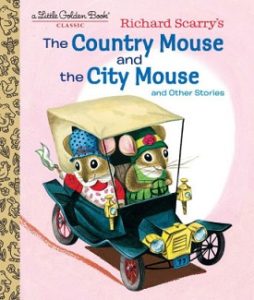
This sad story is the Caribbean version of the fable of the Country Mouse and the City Mouse – preferring security to opulence. Or that it is better to prosper where planted in the Caribbean than to venture to the Big City and live a Fast & Furious life. This was the assertion in a previous blog-commentary from the movement behind the book Go Lean…Caribbean; see below.

This sad story is actually a true story. The victim is St. Lucia born-and-raised Botham Jean. He was shot and killed this past Thursday at his residence in Dallas, Texas. See an aligning news story here:

Title: Government Extends Condolences to the Jean Family
Press Release:-  The Government of Saint Lucia extends deepest condolences to former Permanent Secretary Ms. Allison Jean following the sudden death of her son, Mr. Botham Shem Jean.

Acting Prime Minister Honourable Ezechiel Joseph, speaking on behalf of the Government of Saint Lucia, stated that the tragic circumstances leading to the death of the 26-year-old in Dallas, Texas, has come as a shock and stated that “our thoughts and prayers are with Ms. Jean, the Jean family and friends during this difficult time.”

Minister Joseph explained that The Embassy of Saint Lucia to the United States of America will do all within its power to assist the family in this time of great sorrow.

Ms. Jean is a long serving member of the Public Service and most recently served as Permanent Secretary in the Department of Education, Innovation and Gender Relations.
Source: Posted September 7, 2018; retrieved September 9, 2018 from: https://stluciatimes.com/2018/09/07/government-extends-condolences-to-the-jean-family/

Related news articles:

  1. https://abc13.com/police-dallas-officer-fatally-shoots-man-after-going-into-wrong-apartment/4171229/
  2. https://stluciatimes.com/2018/09/09/botham-jean-and-officer-amber-guyger-didnt-pose-together-for-a-photo/

Our deepest condolences to the Jean Family … who now have to endure this great loss.

See this previous blog-commentary that hypothesizes the theory that the Caribbean Diaspora would do better in their Caribbean homeland. They can actually work to reform and transform their ancestral communities, as opposed to contending with the societal defects in the US. Here-now is that previous submission from April 10, 2017:

——————-

Go Lean Commentary – To Live or Die in L.A.

CU Blog - 'To Live and Die in L.A.' - Photo 1b

“… live so fast and die so young…”
“… it’s like a jungle, sometimes it makes me wonder how I keep from going under…” – Rap Song: The Message – Grandmaster Flash & The Furious Five

Considering the edict of “life imitating art and art imitating life”, this has always been a subject of sharp debate and contrast. Is it better to live “fast & furious”, even though there might be a shorter mortality, or is it better to go slow and last longer, as far away from risky propositions as possible?

Shockingly, this is also a Caribbean debate: is it better to emigrate to L.A., New York, Miami, Toronto, London, Paris or any other foreign destination for faster success, or prosper where planted in the Caribbean homeland?

From an American perspective, this debate is best personified with a comparison of California versus the rest of the US. Los Angeles (L.A.) is the principal metropolis of the State of California and all of the West Coast for that matter.

But this debate is bigger than just a consideration of L.A. or California – see Appendix below – it spans the test of time. Even ancient philosopher Aesop presented this dilemma in the fable of “The Tortoise and The Hare”, in which the nimble jack-rabbit lost out to the slow-and-methodical tortoise in a race – this fable is universally accepted as a metaphor for the race of life.

Poets, songwriters, historians, and philosophers have all chimed in on this profound debate. Some claim that it is better to “live large”, make the “world your oyster”, even if that means having a short lifespan than to live a quiet ignoble life where the joys of life are rationed out for longevity instead.

Whenever a celebrity dies young, this debate rages anew. Consider some of the philosophical headlines:

The book Go Lean … Caribbean discusses this contrast; it draws reference to the American Dream versus the California Dream. Consider this excerpt from Page 223:

The Bottom Line on the American Dream
The American Dream is a national ethos of the United States, a set of ideals in which freedom includes the opportunity for prosperity and success, and an upward social mobility achieved through hard work. This idea of the American Dream is rooted in the US Declaration of Independence which proclaims that “all men are created equal… endowed by their Creator with certain inalienable rights” including “Life, Liberty and the pursuit of Happiness.” The meaning of the “American Dream” has changed over history, and includes components as home-ownership and upward mobility. A lot of people followed the American Dream to achieve a greater chance of becoming rich. For example, the discovery of gold in California in 1849 brought in 100,000 men looking for their fortune overnight—and a few did find it. Thus was born the California Dream of instant success. Historian H. W. Brands noted that in the years after the Gold Rush, the California Dream spread across the nation:

  • “The old American Dream … was the dream of the Puritans, of Benjamin Franklin’s “Poor Richard” … of men and women content to accumulate their modest fortunes a little at a time, year by year by year. The new dream was the dream of instant wealth, won in a twinkling by audacity and good luck. [This] golden dream . . . became a prominent part of the American psyche”. Today, some posit that the ease of achieving this Dream changes with technological advances, available infrastructure, regulations, state of the economy, and the evolving cultural values of the US demographics.

The Go Lean book serves as a roadmap to introduce the technocratic Caribbean Union Trade Federation (CU) to elevate the region’s societal engines – economics, homeland security and governance – of the 30 Caribbean member-states. In fact, the prime directives of the roadmap includes the following 3 statements:

  • Optimization of the economic engines in order to grow the regional economy to $800 Billion & create 2.2 million new jobs.
  • Establishment of a security apparatus to ensure public safety and protect the resultant economic engines.
  • Improve Caribbean governance for all people, even visiting tourists, to support these engines.

CU Blog - 'To Live and Die in L.A.' - Photo 2The quest is to minimize the paradox of future-planning/decision-making for Caribbean citizens. We want to make the Caribbean region better places to live, work and play; this way our citizens would not have to leave … to ‘live and die in L.A., or NYC, or Miami, or any other American, Canadian or European city. The truth of the matter is people die more readily in America due to gun-violence, and automobile accidents than they die in the Caribbean.

No doubt!

  • Visualizing gun deaths: Comparing the U.S. to rest of the world
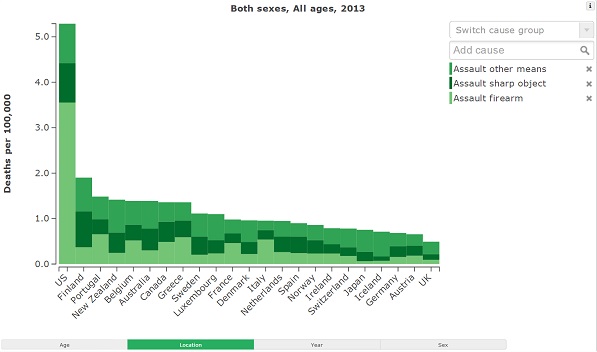
    Whenever a mass shooting occurs, a debate about gun violence ensues. An often-cited counter to the point about the United States’ high rates of gun homicides is that people in other countries kill one another at the same rate using different types of weapons. It’s not true.
    Compared to other countries with similar levels of development or socioeconomic status, the United States has exceptional homicide rates, and it’s driven by gun violence.
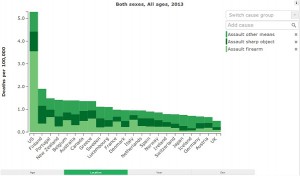
    CU Blog - 'To Live and Die in L.A.' - Photo 3
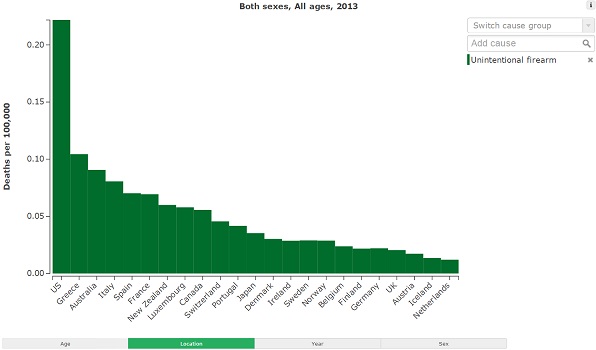
    Another issue that gets less attention is how many people die from firearms accidentally. Again, the U.S. has much higher rates of unintentional death from firearms compared to other countries.
    CU Blog - 'To Live and Die in L.A.' - Photo 4
  • U.S. has highest car crash death rate, despite progress, CDC says
    More people die in car crashes each year in the United States than in other high-income countries, the Centers for Disease Control and Prevention said in a report …
    In 2013, more than 32,000 people died on U.S. roads, roughly 90 fatalities a day, according to the CDC.
    The U.S. has seen a 31% reduction in its motor vehicle death rate per capita over the past 13 years. But compared with 19 other wealthy countries, which have declined an average of 56% during the same period, the U.S. has the slowest decrease.
A previous Go Lean blog-commentary highlighted other statistics of premature deaths (and disability) in the US due to societal defects:

But the truth is a two-sided coin …

… on the flipside, life in America is more prosperous than in any Caribbean member-state.

The Go Lean book introduces the Caribbean Union Trade Federation (CU) as an inter-governmental agency for the 30 member-states, to provide a better – technocratic – stewardship for Caribbean life, to make it more prosperous … at home. The book identifies that we have a crisis – our failing societal engines – but asserts that this crisis would be a terrible thing to waste. We can use the urgency to introduce and implement effective community ethos, strategies, tactics, implementations and advocacies to reboot, reform and transform the engines of Caribbean society.

We do not want our people to ‘live and die in L.A. …’. We want them to prosper right here in the Caribbean. How sad when our families do move to the US (and other countries) and fall victim to fatalities. Consider these headlines:

There are good and bad people everywhere. Bad things happen to good people … everywhere. The Bible declares that “time and unforeseen occurrences befall us all” (Ecclesiastes 9:11). Yet still, post-mortem analyses (crash investigations and autopsies) are always necessary to ascertain the root-causes and the lessons-learned:

What could have been done to prevent the loss of life?

This commentary is not asserting that Caribbean people will not be hurt if they remain in the Caribbean. There are car accidents, murders, robberies, rapes and other assaults in the 30 member-states as well.

But follow the numbers!

We are not #1 for either gun violence or auto deaths, like our American counterparts. This is just a matter odds, probabilities and trends; the preponderance for fatalities cannot be ignored.

The Go Lean book contends that as a people, we must be prepared for accidents, emergencies and security risks (Page 196). It asserts that bad actors will emerge just as a result of economic successes in the region. This point is pronounced early in the book with the Declaration of Interdependence (Page 12) that claims:

x. Whereas we are surrounded and allied to nations of larger proportions in land mass, populations, and treasuries, elements in their societies may have ill-intent in their pursuits, at the expense of the safety and security of our citizens. We must therefore appoint “new guards” to ensure our public safety and threats against our society, both domestic and foreign. The Federation must employ the latest advances and best practices … to assuage continuous threats against public safety.

xvi. Whereas security of our homeland is inextricably linked to prosperity of the homeland, the economic and security interest of the region needs to be aligned under the same governance. Since economic crimes, including piracy and other forms of terrorism, can imperil the functioning of the wheels of commerce for all the citizenry, the accedence of this Federation must equip the security apparatus with the tools and techniques for predictive and proactive interdictions.

There is this expression of wisdom, commonly referred to as the Serenity Prayer; it is a prayer written by the American theologian Reinhold Niebuhr[1][2] (1892–1971). The best-known form is:

  • God, grant me the serenity to accept the things I cannot change,
  • Courage to change the things I can,
  • And wisdom to know the difference.

The Go Lean book describes the need for the Caribbean to appoint “new guards” to apply this wisdom – to change the things we can change. The purpose of this security pact is to ensure public safety as a comprehensive endeavor, encapsulating the needs of all Caribbean stakeholders: residents and visitors alike.

We cannot impact Los Angeles, the US or any other foreign city, more than messaging to our Diaspora there. But we can forge change in our Caribbean homeland.

Applying the edict of “life imitating art and art imitating life”, let’s ‘live and die’ here in the Caribbean. Let’s apply the wisdom from the fictional character Spock (the Vulcan Commander on the TV Show/films Star Trek):

May we live long and prosper.

Now is the time for all of the Caribbean – the people and leaders – to lean-in for the empowerments described here in the book Go Lean…Caribbean. It is conceivable, believable and achievable to prosper where planted here in the region; to make the Caribbean a better place to live, work and play. 🙂

Download the free e-book of Go Lean … Caribbean – now!

Sign the petition to lean-in for the roadmap for the Caribbean Union Trade Federation.

————-
Appendix Review – Book/Movie: To Live and Die in L.A.

Sub-title: A 1984 novel by former Secret Service agent Gerald Petievich is the basis for the 1985 movie of the same name.

CU Blog - 'To Live and Die in L.A.' - Photo 1

A harrowing tale of the dark underside of America’s West Coast metropolis. Two U.S. Treasury agents, partners and antagonists, are drawn into a matrix of violence and corruption, southern California-style, that becomes a journey through a sunlit hell – at the end of which they become experts on the thin line between what it takes to live – and die – in L.A. – Source: Retrieved 04-10-2017 from: https://www.amazon.com/Live-Die-L-A-Gerald-Petievich/dp/1466219645

The action thriller film was directed by William Friedkin and based on the novel by Petievich, and co-written by the both men. The film features William Petersen, Willem Dafoe and John Pankow among others. The film tells the story of the lengths to which two Secret Service agents go to arrest a counterfeiter. – Source: Retrieved 04-10-2017 from: https://en.wikipedia.org/wiki/To_Live_and_Die_in_L.A._(film)

See Trailer in the Appendix VIDEO below.

Storyline
Working largely in cases of counterfeiting, L.A. based Secret Service agent Richie Chance exhibits reckless behavior which according to his longtime and now former partner Jimmy Hart will probably land him in the morgue before he’s ready to retire. That need for the thrill manifests itself in his personal life by his love of base jumping. Professionally, it is demonstrated by the fact that he is sextorting a parolee named Ruth Lanier, who feeds him information in return for him not sending her back to prison for some trumped up parole violation. With his new partner John Vukovich, Chance is more determined than ever, based on recent circumstances, to nab known longtime counterfeiter Ric Masters, who is more than willing to use violence against and kill anyone who crosses him. Masters is well aware that the Secret Service is after him. Masters’ operation is somewhat outwardly in disarray, with Chance being able to nab his mule, Carl Cody, in the course of moving some of the fake money , and one of his associates, a lawyer named Max Waxman, probably stealing money from him. Partly with information from Ruth, Chance is trying to find and exploit the weaknesses in Masters’ operation. To accomplish his goal, Chance takes more and more unethical and illegal measures, which may be problematic for Vukovich, who comes from a family of police officers who are sworn to uphold the law. Written by Huggo

————-
VIDEO – To Live and Die in L.A. – http://www.imdb.com/videoplayer/vi1755645209

A fearless Secret Service agent will stop at nothing to bring down the counterfeiter who killed his partner.

Stars: William Petersen, Willem Dafoe, John Pankow
Share this post:
, ,

Ready for Football 2018? – ENCORE

Are you ready for some football?

Ready of not, here it comes!

  • Friday Night Lights – A reference to High School Football, starts in earnest today.
  • College Football – This is Week 1 of 14 of the 2018 season, starting today.

  • National Football League (NFL) – The 16 week season starts on Sunday September 9, 2018; it will then be followed with a 5 week playoff, capped by SuperBowl LIII in the Mercedes-Benz Stadium in Atlanta on February 3, 2019.

This commentary has frequently focused on this American past time. We have highlighted the “art and science” of the sport, the business and the pride.

But there is one caution that we feel the need to constantly remind the Caribbean eco-system about when it comes to American football; this is the very real threat with Concussions.

Every year, month and week that goes by, we learn more and more about the dangers of Concussions and the dreaded disease Chronic Traumatic Encephalopathy (CTE). We are learning now that the onslaught of this affliction is so much worse than originally thought:

Title: 99 Percent Of Studied NFL Brains Diagnosed With CTE, Researchers Say
Sub-title: The numbers are only slightly lower among college football players, too.
By: Maxwell Strachan and Travis Waldron
A new study out of Boston diagnosed a startlingly high percentage of deceased NFL players with chronic traumatic encephalopathy (CTE), and the numbers don’t get much better when you move on down to college players.

Researchers from VA Boston Healthcare System (VABHS) and Boston University School of Medicine looked at the brains of 202 deceased American football players. All told, the researchers found 87 percent of the players to have CTE, a degenerative brain disease commonly found in athletes and military veterans with a history of head trauma.

Among NFL players, that percentage shot all the way up to 99 percent. In fact, only one of the 111 deceased NFL players analyzed did not have CTE.

“It is no longer debatable whether or not there is a problem in football; there is a problem,” Ann McKee, director of BU’s CTE Center, said in a statement. ”[I]t is time to come together to find solutions,”

But it’s not just NFL players who are at risk. Among college football players involved in the study, 91 percent were diagnosed with CTE. Even among those subjects that only played high school football, 21 percent were found to have CTE.

See the full article here: HuffPost Sport – published July 25, 2017; retrieved August 31, 2018 from: https://www.huffingtonpost.com/entry/nfl-cte-99-percent_us_5977621ce4b0e201d5786da9

Today – August 31, marks the exact 3rd anniversary of the publication of a landmark blog-commentary on Concussions. It is only apropos to Encore that 2015 blog now.

See the Encore of that previous blog here-now:

—————

Go Lean Commentary – ‘Concussions’ – The Movie; The Cause

“Are you ready for some football?” – Promotional song by Hank Williams, Jr. for Monday Night Football on ABC & ESPN networks for 22 years (1989 – 2011).

This iconic song (see Appendix) and catch-phrase is reflective of exactly how popular the National Football League (NFL) is in the US:

“They own an entire day of the week”.

- The Movie; The Cause - Photo 2So says the new movie ‘Concussions’, starring Will Smith, referring to the media domination of NFL Football on Sundays during the Autumn season. The movie’s script is along a line that resonates well in Hollywood’s Academy Award balloting: “David versus Goliath”; “a small man speaking truth to power”.

In the case of the NFL, it is not just about power, it is about money, prestige and protecting the status quo; the NFL is responsible for the livelihood of so many people. The book Go Lean … Caribbean recognized the importance of the NFL in the American lexicon of “live, work and play”; it featured a case study (Page 32) of the NFL and it’s collective bargaining successes (and failures) in 2011. An excerpt from the book is quoted as follows:

Football is big business in the US, $9 billion in revenue, and more than a business; emotions – civic pride, rivalries, and fanaticism – run high on both sides.

Previous Go Lean commentaries presents the socio-economic realities of much of the American football eco-system. Consider a sample here:

Socio-Economic Impact Analysis of [Football] Sports Stadiums
Watch the Super Bowl … Commercials
Levi’s® NFL Stadium: A Team Effort
Sports Role Model – College Football – Playing For Pride … And More
Sports Role Model – Turn On the SEC Network
Collegiate Sports in the Caribbean – Model of NCAA
10 Things We Want from the US: #10 – Sports Professionalism
10 Things We Don’t Want from the US: #10 – ‘Win At All Costs’ Ethos

While football plays a big role in American life, so do movies. Their role is more unique; they are able to change society. In a previous blog / commentary regarding Caribbean Diaspora member and Hollywood great, Sidney Poitier, it was declared that …

“Movies are an amazing business model. People give money to spend a couple of hours watching someone else’s creation and then leave the theater with nothing to show for the investment; except perhaps a different perspective”.

Yes, movies help us to glean a better view of ourselves … and our failings; and many times, show us a way-forward.

These descriptors actually describe the latest production from Hollywood icon Will Smith (the former Fresh Prince of Bel-Air). This movie, the film “Concussion”, in the following news article, relates the real life drama of one man, Dr. Bennet Omalu, a Nigerian-born medical doctor – a pathologist – who prepared autopsies of former players that suffered from football-related concussions. He did not buckle under the acute pressure to maintain the status quo, and now, he is celebrated for forging change in his adopted homeland. This one man made a difference. (The NFL is now credited for a Concussion awareness and prevention protocol so advanced that other levels of the sport – college, high schools and Youth – are being urged to emulate).

See news article here on the release of the movie:

Title: ‘Concussion’: 5 Take-a-ways From Will Smith’s New Film

Will Smith, 46, is definitely going to get a ton of Oscar buzz portraying Dr. Bennet Omalu in the new film “Concussion.” NFL columnist Peter King of Sports Illustrated got an exclusive first peek at the trailer and it has been widely shared on social media since. And it’s very chilling.

- The Movie; The Cause - Photo 1

Here are five take-aways and background you need to know before checking out the clip:

1 – It’s Based on a True Story

Omalu is the forensic pathologist and neuropathologist who discovered chronic traumatic encephalopathy in football players who got hit in the head over and over again, according to the Washington Post.

In the clip, he says repetitive “head trauma chokes the brain.”

Omalu was one of the founding members of the Brain Injury Research Institute in 2002. He conducted the autopsy of Pittsburgh Steelers center Mike Webster, played by David Morse in the film, which led to this discovery.

2 – Smith’s Version of Omalu’s Accent Is Spot On

Omalu is from Nigeria and Smith has been known to transform completely for a role. He was nominated for an Oscar for 2011’s “Ali,” playing the legendary Muhammad Ali.

For comparison, here’s Omalu’s PBS interview from 2013.

3 – Smith Is a Reluctant Hero

“If you don’t speak for them, who will,” Gugu Mbatha-Raw, who plays Prema Mutiso in the film, tells Smith’s character.

He admits he idolized America growing up and “was the wrong person to have discovered this.”

4 – Alec Baldwin and Luke Wilson

“Concussion” brought in some heavyweights for this movie. Baldwin plays Dr. Julian Bailes, who advises Omalu, and Wilson, who will reportedly play NFL Commissioner Roger Goodell, according to IMDB. There’s no official word on this. He’s seen at a podium in the trailer, but doesn’t speak.

5 – “Tell the Truth”

Smith captures Omalu’s passion to have the truth told about this injury and disease.

“I was afraid of letting Mike [Webster] down. I was afraid. I don’t know. I was afraid I was going to fail,” Omalu told PBS a couple years back.

———-

VIDEO Link: http://www.imdb.com/title/tt3322364/?ref_=nv_sr_1


Will Smith stars in the incredible true David vs. Goliath story of Dr. Bennet Omalu, the brilliant forensic neuropathologist who made the first discovery of CTE, a football-related brain trauma, in a pro player.

The subject of concussions is serious – life and death. Just a few weeks ago (August 8), an NFL Hall-of-Fame inductee was honored for his play on the field during his 20-year professional career, but his family, his daughter in particular, is the one that made his acceptance / induction speech. He had died, in 2012; he committed suicide after apparently suffering from a brain disorder – chronic traumatic encephalopathy (CTE), a type of chronic brain damage that has also been found in other deceased former NFL players[4] – sustained from his years of brutal head contacts in organized football in high school, college and in his NFL career. This player was Junior Seau.

- The Movie; The Cause - Photo 3a

- The Movie; The Cause - Photo 3b

Why would there be a need for “David versus Goliath”; “a small man speaking truth to power”? Is not the actuality of an acclaimed football player committing suicide in this manner – he shot himself in the chest so as to preserve his brain for research – telling enough to drive home the message for reform?

No. Hardly. As previously discussed, there is too much money at stake.

These stakes bring out the Crony-capitalism in American society.

The book Go Lean…Caribbean (and subsequent blog/commentaries) relates many examples of cronyism in the American eco-system. There is a lot of money at stake. Those who want to preserve the status quo or not invest in the required mitigations to remediate concussions will fight back against any Advocate promoting the Greater Good. The profit motive is powerful. There are doubters and those who want to spurn doubt. “Concussions in Football” is not the first issue these “actors” have promoted doubt on. The efforts to downplay concussion alarmists are from a familiar playbook, used previously by Climate Change deniers, Big Tobacco, Toxic Waste, Acid Rain, and other dangerous chemicals.

This Go Lean book serves as a roadmap for the introduction and implementation of the technocratic Caribbean Union Trade Federation (CU). Sports are integral to the Go Lean/CU roadmap. While sports can be good and promote positives in society, even economically, the safety issues must be addressed upfront. This is a matter of community security. Thusly, the prime directives of the CU are described as:

  • Optimize the economic engines of the Caribbean to elevate the regional economy to grow to $800 Billion and create 2.2 million new jobs, including sports-related industries with a projection of 21,000 direct jobs at Fairgrounds and sports enterprises.
  • Establish a security apparatus to protect the people and economic engines.
  • Improvement of Caribbean governance to support these economic and security engines.

The CU/Go Lean sports mission is to harness the individual abilities of athletes to not just elevate their performance, but also to harness the economic impact for their communities. So modern sports endeavors cannot be analyzed without considering the impact on “dollars and cents” for stakeholders. This is a fact and should never be ignored. There is therefore the need to carefully assess and be on guard for crony-capitalistic influences entering the decision-making of sports stakeholders. The Go Lean book posits that with the emergence of new economic engines, “bad actors” will also emerge thereafter to exploit the opportunities, with good, bad and evil intent”. These points were pronounced early in the opening Declaration of Interdependence (Page 12 &14):

x. Whereas we are surrounded and allied to nations of larger proportions in land mass, populations, and treasuries, elements in their societies may have ill-intent in their pursuits, at the expense of the safety and security of our citizens. We must therefore appoint “new guards” to ensure our public safety and threats against our society, both domestic and foreign. The Federation must employ the latest advances and best practices of criminology and penology to assuage continuous threats against public safety.

xi. Whereas all men are entitled to the benefits of good governance in a free society, “new guards” must be enacted to dissuade the emergence of incompetence, corruption, nepotism and cronyism at the peril of the people’s best interest. The Federation must guarantee the executions of a social contract between government and the governed.

xvi. Whereas security of our homeland is inextricably linked to prosperity of the homeland, the economic and security interests of the region needs to be aligned under the same governance. Since economic crimes … can imperil the functioning of the wheels of commerce for all the citizenry, the accedence of this Federation must equip the security apparatus with the tools and techniques for predictive and proactive interdictions.

xxxi. Whereas sports have been a source of great pride for the Caribbean region, the economic returns from these ventures have not been evenly distributed as in other societies. The Federation must therefore facilitate the eco-systems and vertical industries of sports as a business, recreation, national pastime and even sports tourism …

The Go Lean book envisions the CU – a confederation of the 30 member-states of the Caribbean chartered to do the heavy-lifting of empowering and elevating the Caribbean economy – as the landlord of many sports facilities (within the Self-Governing Entities design), and the regulator for inter-state sport federations. The book details the economic principles and community ethos to adopt, plus the executions of strategies, tactics, implementations and advocacies to optimize sports enterprises in the Caribbean:

Community Ethos – Deferred Gratification Page 21
Economic Principles – People Respond to Incentives in Predictable Ways Page 21
Economic Principles – Economic Systems Influence Individual Choices / Incentives Page 21
Economic Principles – The Consequences of Choices Lie in the Future Page 21
Economic Principles – Job Multiplier Page 22
Community Ethos – Security Principles – Whistleblower Protection Page 23
Community Ethos – Security Principles – Light-Up the Dark Places Page 23
Community Ethos – Security Principles – “Crap” Happens Page 23
Community Ethos – Governing Principles – Lean Operations Page 24
Community Ethos – Ways to Impact the Future Page 26
Community Ethos – Ways to Promote Happiness – Mitigate Suicide Threats Page 36
Community Ethos – Impact the Greater Good Page 37
Strategy – Vision – Confederating 30 Member-States into a Single Market Page 45
Strategy – Vision – Foster Local Economic Engines for Basic Needs Page 45
Strategy – Mission – Prepare for Natural Disasters Page 45
Strategic – Staffing – Sporting Events at Fairgrounds Page 55
Strategy – Agents of Change – Climate Change Page 57
Strategy – Agents of Change – Globalization Page 57
Tactical – Confederating a Permanent Union Page 63
Tactical – Fostering a Technocracy Page 64
Tactical – Separation of Powers – Sports & Culture Administration Page 81
Tactical – Separation of Powers – Fairgrounds Administration Page 83
Tactical – Separation of Powers – Health Department – Disease Management Page 86
Implementation – Assemble Regional Organs into a Single Market Economy Page 96
Implementation – Steps to Implement Self-Governing Entities – Sports Stadia Page 105
Implementation – Security Initiatives at Start-up – Unified Command & Control Page 103
Implementation – Industrial Policy for CU Self Governing Entities Page 103
Implementation – Ways to Deliver – Project Management/Accountabilities Page 109
Anatomy of Advocacies – Examples of Individuals Who Made Impact Page 122
Planning – Ways to Make the Caribbean Better Page 131
Advocacy – Ways to Grow the Economy Page 151
Advocacy – Ways to Create Jobs Page 152
Advocacy – Ways to Improve Governance Page 168
Advocacy – Ways to Better Manage the Social Contract Page 170
Advocacy – Ways to Promote Fairgrounds Page 192
Advocacy – Ways to Improve Emergency Management – Trauma Arts & Sciences Page 196
Advocacy – Ways to Improve Sports Page 229
Advocacy – Ways to Impact Urban Living – Sports Leagues Page 234

The Go Lean book and accompanying blogs declare that the Caribbean needs to learn lessons from other communities, especially when big money is involved in pursuits like sports. These activities should be beneficial to health, not detrimental. So the admonition is to be “on guard” against the “cronies”; they will always try to sacrifice public policy – the Greater Good – for private gain: profit.

Let’s do better. Yes, the Caribbean can be better than the American experiences.

The design of Self-Governing Entities allow for greater protections from Crony-Capitalistic abuses. While this roadmap is committed to availing the economic opportunities of sports and accompanying infrastructure, as demonstrated in the foregoing movie trailer, sport teams and owners can be plutocratic “animals” in their greed. We must learn to mitigate plutocratic abuses. While an optimized eco-system is good, there is always the need for an Advocate, one person to step up, blow the whistle and transform society. The Go Lean roadmap encourages these role models.

Bravo Dr. Bennet Omalu. Thank you for this example … and for being a role model for all of the Caribbean.

RIP Junior Seau.

Now is the time for all of the Caribbean, the people and governing institutions, to lean-in for the empowerments described in the book Go Lean … Caribbean. This roadmap will result in more positive socio-economic changes throughout the region; it will make the Caribbean a better place to live, work and play.   🙂

Download the free e-Book of Go Lean … Caribbean – now!

——-

Appendix VIDEO: Hank Williams Jr. – Are You Ready for Some Footballhttps://youtu.be/K8LLKO0-PAE

Uploaded on May 28, 2011 – Official Music Video


Share this post:
, , , , , ,
[Top]

Caribbean Unity? Religion’s Role: False Friend

Go Lean Commentary

Fool me once, shame on you. Fool me twice, shame on me.

There is no way to miss this; the dread of “pedophile priests” is in the news … again:

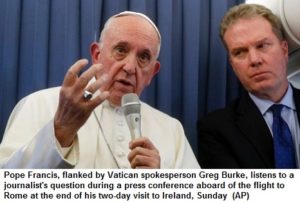
The Pope apologizes for the abuse afflicted on victims by thousands of pedophile priests, just in Pennsylvania, after a Grand Jury handed down indictments for the accused priests and the administrators in the cover-up.
“The heart-wrenching pain of these victims, which cries out to heaven, was long ignored, kept quiet or silenced”. – Pope Francis


– (Source: https://en.wikipedia.org/wiki/Grand_jury_investigation_of_Catholic_Church_sexual_abuse_in_Pennsylvania)

This is such a Big Story – see VIDEO in the Appendix below – there is even a request for the Pope to resign. Stay tuned to new developments on this “hot issue”; more and more revelations and upheavals are expected to emerge.

While this issue originated in the US State of Pennsylvania, there are many implications for the Caribbean. This is the same church that sanctioned and authorized the Slave Trade in the first place; (Pope Innocent VIII back in 1491). All of this history – then and now – forces us to ask these questions:

  • What role has the Church had on Caribbean life?
  • Has the Church been a uniting force … for good in the Caribbean?

These are important questions for the Caribbean. This commentary presents the thesis that the Church – the various religion organizations – have been a False Friend for integration, consolidation and collaboration among the Caribbean member-states.

Wait, what?!

The 30 member-states that constitute the political Caribbean have these colonial legacies and predominant religions:

Dutch-speaking – 3 Netherlands Dutch Reform – Protestantism
English-speaking – 18 England – Great Britain – United Kingdom Anglican – Protestantism
French-speaking – 5 France Catholicism
Spanish-speaking – 3 Cuba, Dominican Republic & Puerto Rico Catholicism
American Territories – 2 Puerto Rico & US Virgin Islands Protestantism

Notice this list, both the English and Dutch Caribbean feature a “nationalistic” Church as the predominant religion.

It has long been established that just because these member-states are “Christian”, does not make them “Brothers”. Many wars have been fought in Christian lands where nationalism overrode religious affinity – members of the same faith have fought against each other. Even more animosity have existed in contrasting religious sects: i.e. Catholics versus Protestants.

This reality directly contradicts the statures, principles and spirit of the teachings of the founder of Christianity, Jesus Christ:

35 By this all will know that you are my disciples—if you have love among yourselves.”+ – John 13:35 NWT

This is the assertion (Page 20) of the movement behind the book Go Lean … Caribbean that the Greater Good should be the community ethos – underlying sentiment that informs the beliefs, customs, or practices – that is promoted in the region; that it can be pursued despite any religiosity. This book defines this Greater Good community ethos as follows:

“It is the greatest good to the greatest number of people which is the measure of right and wrong”. Jeremy Bentham (1748-1832)

This is the “why”; now the “how”.

The Go Lean book serves as a roadmap for the introduction and implementation of the Caribbean Union Trade Federation (CU), an intergovernmental entity to empower all 30 Caribbean member-states – both Catholic and Protestants territories. This would constitute a new regime for the region; one that is apolitical and religiously-neutral. We must not favor one religion over another. Rather, we must insist on a clear “Separation of Church and State”, because we have so many different churches in so many States. As related in the foregoing: the Churches will not be a model of behavior and character development. Our ideals must be Greater.

A “Separation of Church and State” mantra is embedded in the implied Social Contract. The Go Lean book defines (Page 170) the Social Contract as follows:

“Citizens surrender some of their freedoms and submit to the authority of the State in exchange for protection of remaining natural and legal rights”.

Some Caribbean countries rely on Churches to deliver specific social services: education, welfare, disaster recovery, etc. But under the Go Lean roadmap, religious institutions will be recognized, respected and defined as Non-Government Organizations (NGO), nothing more … nothing less. Caribbean integration – all the language groups in all 30 member-states operating as one Single Market – is the priority and this priority would facilitate a more efficient delivery of the Social Contract.
The purpose of this commentary is to lament the inadequacies in the Caribbean region, due to our lack of unity or disunity. This completes this series of commentaries on the absurdity of the premise that “there is some Caribbean unity” – what a joke! This submission is 4 of 4 from the Go Lean movement. The consistent theme from the full series is that the full Caribbean – all 30 member-states – have never been able to convene, collude, consolidate, collaborate and confederate. As a result our community have never thrived; and now only barely survive; we are flirting with Failed-State status.

What a joke our disposition has become. This has been declared in all the commentaries in this series, cataloged as follows:

  1. Caribbean Unity? – Tourism Missteps
  2. Caribbean Unity? – Ross University Saga
  3. Caribbean Unity? – No Freedom of Movement in/out of French Antilles
  4. Caribbean Unity? – Religion’s Role: False Friend

All of these commentaries relate to “how” the stewards for a new Caribbean can finally foster unity in this region. There had been previous attempts at regional integration, all with the same language/heritage grouping. Now, there is the need to recognize the deterrents to regional unity – religious and national alignment – and finally make progress.

God is Good!

The Church? Not so much! The Church must not be a priority! They have been False Friends to the Caribbean. This commentary is not advocating for a God-less society, just a religiously neutral one.

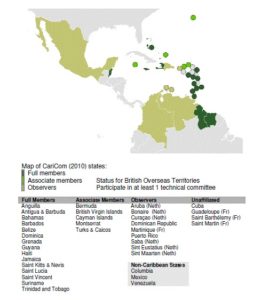
Today, there is the Caribbean Community or CariCom; it is not enough. It includes all the English-speaking territories, plus Haiti and Suriname. But that is only 20 member-states – in a Full or “Associated Member” status. “We” need universal participation for all neighbors in the neighborhood. This means you:

  • Cuba
  • French Caribbean
  • US Virgin Islands
  • Puerto Rico (Currently Observer status only)
  • Dominican Republic (Currently Observer status only)
  • Dutch Caribbean (Currently Observer status only)

These countries must be welcomed into the full brotherhood of an integrated Caribbean, despite any differences in religious affinity. That separation is very important; there are so many other issues at stake; think: economics, security (justice) and governance. The Go Lean/CU roadmap stresses the strategies, tactics and implementations to impact these societal engines. In fact, these statements are identified as the prime directives for the roadmap:

  • Optimize the economic engines in order to grow the regional economy to $800 Billion & create 2.2 million new jobs.
  • Establish a security apparatus to protect the resultant economic engines, plus ensure public safety and justice institutions.
  • Improve Caribbean governance to support these engines, including a separation-of-powers between the member-states and CU federal agencies, plus even oversight for NGO’s.

These prime directives transcend religions, languages or culture. They are designed to just deliver … on the empowerments that the homeland needs. The approach is to move the Caribbean region to a Single Market. CariCom started this vision, but failed to deliver on it. As related in the first commentary in this series, this new CU regime embraces the spirit of CariCom – the need for integration – but with a stronger foundation, one that includes all the neighbors in the neighborhood.

The book Go Lean…Caribbean – available to download for free – opened with the assessment that the challenges belying the Caribbean are Too Big for anyone one member-state alone – there must be regional solutions. Thusly, the book calls for a regional interdependence. This need was pronounced in the opening Declaration of Interdependence (Pages 11 – 13):

vi. Whereas the finite nature of the landmass of our lands limits the populations and markets of commerce, by extending the bonds of brotherhood to our geographic neighbors allows for extended opportunities and better execution of the kinetics of our economies through trade. This regional focus must foster and promote diverse economic stimuli.

viii. Whereas the population size is too small to foster good negotiations for products and commodities from international vendors, the Federation must allow the unification of the region as one purchasing agent, thereby garnering better terms and discounts.

x. Whereas we are surrounded and allied to nations of larger proportions in land mass, populations, and treasuries, elements in their societies may have ill-intent in their pursuits, at the expense of the safety and security of our citizens. We must therefore appoint “new guards” to ensure our public safety and threats against our society, both domestic and foreign. …

xi. Whereas all men are entitled to the benefits of good governance in a free society, “new guards” must be enacted to dissuade the emergence of incompetence, corruption, nepotism and cronyism at the peril of the people’s best interest. The Federation must guarantee the executions of a social contract between government and the governed.

xvi. Whereas security of our homeland is inextricably linked to prosperity of the homeland, the economic and security interest of the region needs to be aligned under the same governance. Since economic crimes … can imperil the functioning of the wheels of commerce for all the citizenry, the accedence of this Federation must equip the security apparatus with the tools and techniques for predictive and proactive interdictions.

xxiv. Whereas a free market economy can be induced and spurred for continuous progress, the Federation must install the controls to better manage aspects of the economy: jobs, inflation, savings rate, investments and other economic principles. Thereby attracting direct foreign investment because of the stability and vibrancy of our economy.

The Go Lean book provides 370-pages of turn-by-turn instructions on “how” to adopt new community ethos, plus the strategies, tactics, implementations and advocacies to execute so as to transform the Caribbean region into a Single Market with 30 different member-states, all striving for a “better society”. That “better society” is one that pursues the Greater Good. Consider the Chapter excerpts and headlines from this sample on Page 37 entitled:

10 Ways to Impact the Greater Good

1 Lean-in for Caribbean Integration
In addition to economic empowerment, this treaty calls for a collective security pact of the member-states so as to ensure homeland security, law-and-order, and assuage against systemic threats. It is an economic and historical fact that security solutions must accompany economic engines; otherwise any well-intentioned plans will be quickly defeated. As stated in scripture: “the love of money is the root of evil”. The community ethos for the CU therefore is for the greater good, at all costs.
2 Economic & Enforcement Openness
3 Reconciling the Poor/Black Experience
4 Public Relations – Messaging Against “Rats” (Snitches)
5 Focus on Justice
The CU will push a community ethos for justice and the rule of law, not “honor among thieves”. This will be fomented by the CU practice of transparency and accountability (including legislative oversight).  The many CU institutions for justice will be required to publish milestones and accomplishments so as to engender public trust and confidence.
6 Intelligence Gathering versus  Privacy
7 Military Deployments – Embedded Journalists
Since there are security threats for the region there is the need for a military apparatus. But to instill public confidence, the CU defense agencies will allow embedded journalists, even though their publications/broadcasts may be deferred.
8 Military Justice
9 Image Management
10 Foundation [and NGO] Alignment
There are many causes and advocacies that align with philanthropic foundations, NGOs and Not-For-Profits. The CU will liaison with these organizations, give them support and cooperation to pursue the greater good goals for the public.

The Caribbean must foster a better homeland that transcends the False Friends of the Church and other hypocrisies. Religion does have an effect on our culture and society, so we must pay more than the usual attention to their developments. Considering the lessons being learned from the pedophile priest crisis, we must also hold religious organizations – and NGO’s – accountable for their actions and violations of justice norms and requirements.

This Go Lean movement has previously detailed many related issues and advocacies for this kind of Truth and Reconciliation mandate in our region; consider this sample of previous blog-commentaries:

https://goleancaribbean.com/blog/?p=14482 International Women’s Day – Protecting Rural Women
https://goleancaribbean.com/blog/?p=13299 Making a Pluralistic Democracy – Respecting Diwali
https://goleancaribbean.com/blog/?p=11224 ‘Loose Lips Sink Ships’ – Fanatical Theologians Undermine Tourism
https://goleancaribbean.com/blog/?p=10216 Waging a Successful War on Orthodoxy
https://goleancaribbean.com/blog/?p=9766 Rwanda’s Catholic bishops apologize for genocide
https://goleancaribbean.com/blog/?p=5695 Repenting, Forgiving and Reconciling the Past
https://goleancaribbean.com/blog/?p=4971 A Lesson in Church History – Royal Charters: Truth & Consequence
https://goleancaribbean.com/blog/?p=809 Muslim Officials condemn abduction of Nigerian girls
https://goleancaribbean.com/blog/?p=631 The Pope as a Turnaround CEO – The Francis Effect

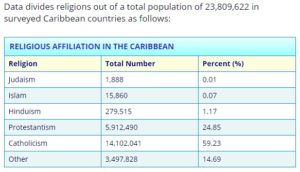
Christianity does not complete the religious landscape for the Caribbean. There are other faiths:

Source: Retrieved August 30, 2018 from: http://caribya.com/caribbean/religion/

The Caribbean is unique in that it has forged its own brand of religions:

  • Rastafarianism – The black power movements of the early 1900s helped launch a completely different kind of religion. Based on Christianity and the King James Bible, Rastafarian beliefs also include the worship of Ras (meaning Prince) Tafari of Ethiopia.
  • Creole Religions – The two best-known forms of these Creole religions are Voodoo and Santería. These were most often practiced on French and Spanish islands where Roman Catholicism was the religion of the whites. Other creole faiths/practices include Regla de Palo, Abakuá Secret Society, Espiritismo, Obeah, Myal, and Quimbois. These latter ones, Obeah, Myal, and Quimbois are Afro-Caribbean Creolized forms of witchcraft and healing practices. Ashanti and other linguistically united tribes were brought to the Caribbean as slaves almost exclusively by the British – the French and Spanish thought these Africans to be more likely to rebel. This means that these spiritual practices were performed almost exclusively on British islands, though Quimbois was a popular practice on Martinique and Guadeloupe.

These Afro-Caribbean Creolized forms of religious practices also have disruptive affects on regional unity.

In summary, religion have not been and cannot be the unifying force for the Caribbean; it must be something else.

We present the community ethos of the Greater Good. This is the best way to reform and transform the Caribbean’s societal engines to better allow for our pluralistic realities. This is the quest of the Go Lean roadmap.

All Caribbean stakeholders – church-goers and secularist alike – are urged to lean-in to this roadmap for change … and empowerment. We can make our region a better place to live work and play. 🙂

Download the e-Book of Go Lean … Caribbean – now!

Sign the petition to lean-in for this roadmap for the Caribbean Union Trade Federation.

—————–

Appendix VIDEO – Former Vatican official calls for Pope Francis to resign – http://www.foxnews.com/world/2018/08/28/pope-francis-facing-calls-to-resign-sexual-abuse-scandal-exposes-rifts-in-vatican.html

Posted August 28, 2018 – Former Archbishop Carlo Maria Vigano claims the pope knew about sexual abuse allegations against American Cardinal Theodore McCarrick; Bryan Llenas reports.

Share this post:
, ,
[Top]

The 45’s of Hip-Hop – ENCORE

On this day 45 years ago, Hip-Hop was forged as a musical genre …

… and Caribbean fingerprints were all over this origination. This was the assertion of the previous blog from August 11, 2016, on its 43rd anniversary. But for this 45th anniversary, we need to “spin” at a faster speed.

… 45 revolutions per minute (RPM) is the speed to play “Singles” on a record-player.

Record-players and 45’s are now all gone, but Hip-Hop is here to stay. In fact, in the past year, Hip-Hop exceeded Rock-n-Roll as the Number 1 consumed genre of music. People are celebrating …

VIDEO – Ne-Yo, Zaytoven, and more discuss their Favorite Era of Hip-Hop – https://www.fuse.tv/videos/2018/08/hip-hop-at-45-favorite-era-of-hip-hop

Now, is a good time to re-visit the historicity of Caribbean founders for Hip-Hop – yes, the father of Hip-Hop was Jamaican. See the Encore of that previous blog-commentary here-now:

=============================

#GoLeanCommentaryThis Day In History: Jamaican Innovation for Hip Hop

CU Blog - This Day In History - Jamaican Innovation for Hip Hop - Photo 1This day – August 11 – in 1973 …

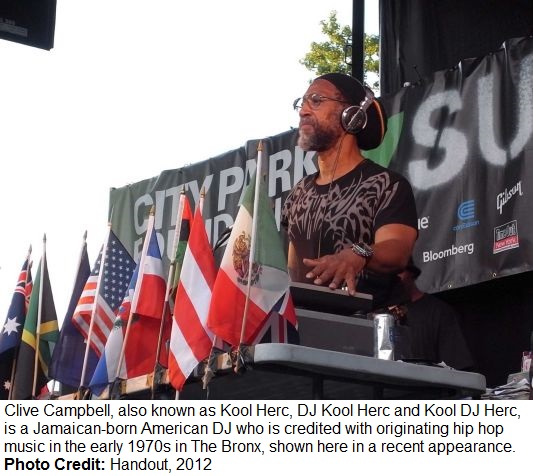
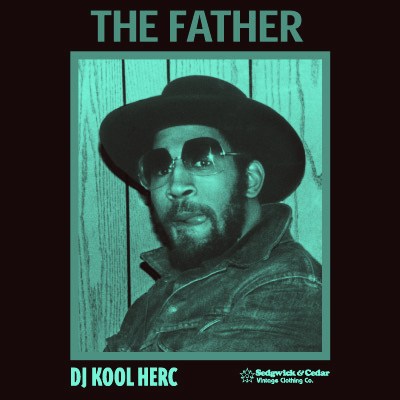
… a member of the Caribbean Diaspora – Jamaica – may have changed the world … for Hip Hop. On this day in 1973, Clive Campbell – better known to history as DJ Kool Herc – helped out his sister by “DJ-ing” her birthday party in a recreation room in The Bronx. History shows that he used his inspiration and influence from his Caribbean musical roots to innovate a music style and performance that would subsequently change the world … for good …

… or bad.

It’s music; you be the judge.

Musical taste is like “beauty” … in the “eye of the beholder”. The main thing is that the music made you listen and maybe learned something about the urban experience of America … and now the world.

See the story of Clive Campbell aka DJ Kool Herc here:

Title: This Day In History: 1973 – Hip Hop is born at a birthday party in the Bronx

Like any style of music, hip hop has roots in other forms, and its evolution was shaped by many different artists, but there’s a case to be made that it came to life precisely on this day in 1973, at a birthday party in the recreation room of an apartment building in the west Bronx, New York City. The location of that birthplace was 1520 Sedgwick Avenue, and the man who presided over that historic party was the birthday girl’s brother, Clive Campbell—better known to history as DJ Kool Herc, founding father of hip hop.

Born and raised to the age of 10 in Kingston, Jamaica, DJ Kool Herc began spinning records at parties and between sets his father’s band played while he was a teenager in the Bronx in the early 1970s. Herc often emulated the style of Jamaican “selectors” (DJs) by “toasting” (i.e., talking) over the records he spun, but his historical significance has nothing to do with rapping. Kool Herc’s contribution to hip hop was even more fundamental.

DJ Kool Herc’s signature innovation came from observing how the crowds would react to different parts of whatever record he happened to be playing: “I was noticing people used to wait for particular parts of the record to dance, maybe [to] do their specialty move.” Those moments tended to occur at the drum breaks—the moments in a record when the vocals and other instruments would drop out completely for a measure or two of pure rhythm. What Kool Herc decided to do was to use the two turntables in a typical DJ setup not as a way to make a smooth transition between two records, but as a way to switch back and forth repeatedly between two copies of the same record, extending the short drum break that the crowd most wanted to hear. He called his trick the Merry Go-Round. Today, it is known as the “break beat.” [(See Appendix VIDEO below).]

By the summer of 1973, DJ Kool Herc had been using and refining his break-beat style for the better part of a year. His sister’s party on August 11, however, put him before his biggest crowd ever and with the most powerful sound system he’d ever worked. It was the success of that party that would begin a grassroots musical revolution, fully six years before the term “hip hop” even entered the popular vocabulary.
Source: History Channel – This Day In History – Posted & Retrieved August 11, 2016 from: http://www.history.com/this-day-in-history/hip-hop-is-born-at-a-birthday-party-in-the-bronx

CU Blog - This Day In History - Jamaican Innovation for Hip Hop - Photo 2

Can we – in the Caribbean and from the Caribbean – change the world again?

Yes, we can!

This consideration is in line with the book Go Lean … Caribbean. It serves as a roadmap for the introduction and implementation of the technocratic Caribbean Union Trade Federation (CU). This CU strives to advance Caribbean culture with these 3 prime directives:

  • Optimization of the economic engines in order to grow the regional economy to $800 Billion and create 2.2 million new jobs.
  • Establishment of a security apparatus to protect the resultant economic engines.
  • Improve Caribbean governance.

This will not be the first time a Caribbean personality has changed the world through music (and hopefully not the last). Previously, this blog-commentary detailed the influence of music icon Bob Marley. Today, his name is synonymous with Reggae and socially-conscious music. RIP Bob Marley (1945 – 1981).

The Go Lean book identifies, in total, 169 different musical/national combinations of genres throughout the Caribbean. From these styles, Hip Hop has had its origins and roots. And then the transformation continued, with more inspiration back to the Caribbean sounds and more social messaging (classic of Reggae) going  back to the Hip Hop sound.

Music does not stand still; it evolves. An excellent example of this cross-meshing is the musical genre of Reggaeton:

Reggaetón is a genre of music characterized by its repetitive beat rhythm that originated in Puerto Rico. Its roots can be traced back to the “underground” music of the island during the late 90’s, when music borrowing elements of reggae, rap, and hip-hop was being performed (in Spanish) in small, unofficial venues. Bootleg recordings and word of mouth were the means of distribution for this music until 1997. In 1998 eventually that music coalesced into what today is known as Reggaeton. The music’s popularity skyrocketed in the early 2000s as it spread to North American, European, Asian, and African audiences.[1] Source: Retrieved 08/11/2016 from: https://en.wikipedia.org/wiki/Reggaeton.

See sample Reggaetón song here: https://youtu.be/uHgnebZ_jYo

The movement behind the Go Lean book asserts that “one person can make a difference”. So just like Bob Marley, Clive Campbell aka DJ Kool Herc, should be recognized for his contributions to music, culture and Caribbean identity. This one Caribbean character has made a difference while residing as an alien in a foreign land. He has forge an example and a sample of how other Caribbean stakeholders can do more in the arts and impact the world – we can build a city on “rock-and-roll”.

Too bad he made this impact after leaving his Caribbean home of Jamaica.

Alas, we now bring the quest for change to Jamaica and all of the rest of the Caribbean. And that quest includes music and the arts. Early in the Go Lean book, the contributions that music can make is pronounced as an community ethos for the entire region to embrace, (Declaration of Interdependence – Page 15) with these statements:

xxxii. Whereas the cultural arts and music of the region are germane to the quality of Caribbean life, and the international appreciation of Caribbean life, the Federation must implement the support systems to teach, encourage, incentivize, monetize and promote the related industries for arts and music in domestic and foreign markets. These endeavors will make the Caribbean a better place to live, work and play.

This Go Lean/CU roadmap recognizes that a prerequisite for advancing society is a change in the community ethos – the fundamental spirit of a culture that drives the beliefs, customs and practices – in that society. Music should be appreciated for the truth of its power; it “can soothe the savage beast”. It can communicate culture and impact the economics for a people. One person, or a group of people can do this, can make a difference.

The following list from the Go Lean book details the community ethos, strategies, tactics, implementations and advocacies to foster the next generation of artist:

Community Ethos – Ways to Foster Genius Page 27
Community Ethos – Promote Intellectual Property Page 29
Community Ethos – Ways to Promote Happiness Page 36
Community Ethos – Impact the Greater Good Page 37
Strategy – Vision – Unified CaribbeanSingle Market Page 45
Tactical – Separation of Powers – Patents & Copyrights Page 78
Tactical – Separation of Powers – Culture Administration Page 81
Implementation – Ways to Impact Social Media Page 111
Advocacy – Ways to Make the Caribbean Better Page 131
Advocacy – Ways to Impact Hollywood Page 203
Advocacy – Ways to Promote Music Page 231
Advocacy – Ways to Re-boot Jamaica Page 239

Thank you Clive Campbell aka DJ Kool Herc; see Appendix VIDEO below.

Thank you for setting the pathway for success for new generations of talented, inspirational and influential artists – musical geniuses of Caribbean heritage – who are sure to follow. These artists, too will “rock the world”.

We are hereby “banking” on it here in the Caribbean, as communicated further in that Declaration of Interdependence – Page 13:

xxi. Whereas the preparation of our labor force can foster opportunities and dictate economic progress for current and future generations, the Federation must ensure that educational and job training opportunities are fully optimized for all residents of all member-states, with no partiality towards any gender or ethnic group. The Federation must recognize and facilitate excellence in many different fields of endeavor, including sciences, languages, arts, music and sports. This responsibility should be executed without incurring the risks of further human flight, as has been the past history.

The Go Lean book posits “a change is going to come” to the Caribbean. The people, institutions and governance of region are all urged to “lean-in” to this roadmap for change and empowerment. Let’s do this … and make our homeland – all of the Caribbean – a better place to live, work and play.

🙂

Download the book Go Lean … Caribbean – now!

Sign the petition to lean-in for this roadmap for the Caribbean Union Trade Federation.

————

Appendix VIDEO – Kool DJ Herc, Merry Go Round – https://youtu.be/Hw4H2FZjfpo

Uploaded on Oct 26, 2009 – Kool DJ Herc describing how he invented the idea of playing two breakbeats together.

Share this post:
, , , , , , ,
[Top]

‘Lean Is’ as ‘Lean Does’ – Good Project Management

Go Lean Commentary

Lean Is as Lean Does

This is a take on that expression “Stupid Is as Stupid Does”. But lean is better than stupid.

Lean’ is the focus of the book Go Lean…Caribbean – available to download for free. The book identifies the word as a noun, a verb, an adjective and an adverb.

It is good to be lean.

But lean does not just happen, it takes real effort to be lean.

This is the awakening, right now at the Wall Street Big Bank CitiGroup. They are making an all-out effort to “do more with less” and they are thusly investing in “process and people” or “people and process” to be lean. They have launched an all-encompassing program branded CitiLean – a continuous improvement program with tangible and measurable benefits to Citi and its customers. This features “process and people” in every sphere of Citi’s operations: employees, contractors, suppliers and vendors. In fact, they even present an annual Lean Partner Award to recognize the supplier that most embodies the spirit of CitiLean. See this story below in Appendix A announcing the 2017 Award Winner.

This program is working for Citi; they are getting the returns on their investment. They have the results to show; see Appendix B with an internal Memo from the bank’s Global Head of Operations & Technology, and the Appendix C VIDEO below.

The Go Lean book serves as a roadmap for the introduction and implementation of the technocratic Caribbean Union Trade Federation (CU), for the elevation of Caribbean society – for all member-states. The book asserts that this Caribbean super-national governance must be a lean operation, embracing the best-practices of the Art & Science of lean methodologies. The book opens with this introduction of lean (Page 4):

The CU will also be lean (adjective), in that it will not feature a “fat” bureaucracy. To the contrary, the institutions of the CU Trade Federation will embrace lean, agile, efficient organization structures – more virtual, less physical, more systems, less payroll. This will result in less of a tax burden for the people of the Caribbean.

The Go Lean  book explains that with this CU/Go Lean roadmap, we can do more with less; these statements feature the prime directives as such:

  • Optimization of the economic engines in order to grow the regional economy to $800 Billion and create 2.2 million new jobs.
  • Establishment of a security apparatus to ensure public safety and protect the resultant economic engines.
  • Improve Caribbean governance to support these engines, including a separation-of-powers between the member-states and CU federal agencies. All CU agencies will be trained and coach in lean methodologies.

The book stresses that reforming and transforming the Caribbean societal engines must be a regional pursuit. This was an early motivation for the roadmap, as pronounced in the opening Declaration of Interdependence (Pages 12):

xi. Whereas all men are entitled to the benefits of good governance in a free society, “new guards” must be enacted to dissuade the emergence of incompetence, corruption, nepotism and cronyism at the peril of the people’s best interest. The Federation must guarantee the executions of a social contract between government and the governed.

xii. Whereas the legacy in recent times in individual states may be that of ineffectual governance with no redress to higher authority, the accedence of this Federation will ensure accountability and escalation of the human and civil rights of the people for good governance, justice assurances, due process and the rule of law. As such, any threats of a “failed state” status for any member state must enact emergency measures on behalf of the Federation to protect the human, civil and property rights of the citizens, residents, allies, trading partners, and visitors of the affected member state and the Federation as a whole.

While this commentary examines CitiGroup as a hallmark of lean ambition, the Go Lean book identified Toyota Motor Company as a role model. That automaker has provided a great track record of deploying agile/lean methodologies in delivering quality in their design, supply and fabrication processes. Since quality delivery is also a mission of the Go Lean movement, we would want to pay more than the usual attention to Toyota’s and CitiGroup’s examples.  There is the need to employ agile/lean methodologies to ensure that a small organizational footprint – the federal government will be optimized with only 30,000 staffers in all CU agencies – can provide the facilitations to enhance the region’s economic, security and governing engines.

30,000 people administering for 42 million citizens? Yes, we can … with the support of lean/agile systems and methodologies.

This is doing more with less. The Go Lean book explains how

The Go Lean book provides 370-pages of turn-by-turn instructions on “how” to adopt new community ethos, plus the strategies, tactics, implementations and advocacies to execute so as to reboot, reform and transform the societal engines of Caribbean society … to be more lean. One advocacy that relates to community ethos involves embracing the art and science of Project Management (PM); consider the specific PM plans, excerpts and headlines from the book on Page 109 entitled:

10 Ways to Deliver

1 Lean-in for the Caribbean Single Market
This treaty allows for the unification of the region into one market, expanding to an economy of 30 member-states of 42 million people, with an economic impact of $800 Billion. The CU is a reboot of the economic engines and security apparatus of the region. There are many projects that must be delivered on time, within budget and with a measurable satisfaction. These include Public Works, Information Technologies, Industrialization and others. Embracing a technocratic ethos means that these projects cannot be left to chance and hope for the best. They must be delivered.The CU envisions strict project management disciplines in the planning and executions of these regional endeavors.
2 Agile – Lean

Agile project management is an iterative and incremental method of managing the design-and-build activities for engineering, information technology, and new product or service development projects in a highly flexible and interactive manner. Agile, linked to lean techniques, (delivering more value with less waste) is best used in small-scale projects.

3 PMI/Six Sigma/Kanban Trained Project Managers

The CU will actively recruit Project Managers that are trained in established methodologies, like PMI, CMM (Capabilities-Maturity Model), Six Sigma and Kandan (a scheduling system for lean and just-in-time production).

The CU’s own Project Management Office will establish local standards.

4 Quality Assurance (QA)

QA refers to the engineering activities implemented in a quality system so that requirements for a product or service will be fulfilled. It is a systematic measurement, comparison against standards, monitoring of processes and a structured feedback loop to confer error prevention.

For IT, QA includes phases like integrated system testing, regression testing and stress testing.

5 Outsourcing needs Project Management
6 In-sourcing
7 Service Continuity – ITIL
8 Financial Guarantees
9 Big Data Analysis

The CU’s embrace of e-Government and e-Delivery models allows for a lot of data to be collected and analyzed so as to measure many aspects of Caribbean life, including: trade, economic, consumption, societal values and macro-performance, and media consumption. This way, “course adjustments” can be made to strategic and tactical pursuits..

10 Legislative Oversight

The subject of project management methodology and deliveries is not new for this Go Lean roadmap; there have been a number of previous blog-commentaries by the Go Lean movement that referenced these concepts. See a sample list here:

https://goleancaribbean.com/blog/?p=14316 Forging Change with Soft Power, Methodology and Persuasion
https://goleancaribbean.com/blog/?p=11184 JPMorganChase spent $10 billion on ‘Fintech’ for 1 year
https://goleancaribbean.com/blog/?p=8306 Women Get Ready for New Lean-In Campaign
https://goleancaribbean.com/blog/?p=7769 Being Lean: Asking the Question ‘Why’ 5 Times
https://goleancaribbean.com/blog/?p=7646 Methodology for going from ‘Good to Great
https://goleancaribbean.com/blog/?p=3956 Art and Science of Collaboration
https://goleancaribbean.com/blog/?p=3152 The formal process of Making a Great Place to Work®

Yes, we can make our homeland a better place by being lean. This is how the stewards of this new Caribbean can fulfill the Go Lean vision: a better region to live, work and play. 🙂

Download the free e-Book of Go Lean … Caribbean – now!

Sign the petition to lean-in for this roadmap for the Caribbean Union Trade Federation.

——————

Appendix A – SHI Wins Citi Lean Partner Award
Sub-title: Award recognizes SHI as a valued partner that helped accelerate Citi’s software license deployment

SOMERSET, N.J.–(BUSINESS WIRE)–SHI International, one of North America’s top 10 largest IT solutions providers, has been granted the Citi Lean Partner Award by Citigroup, Inc., in recognition of SHI’s high levels of service, performance, and collaboration with Citi. The award was announced at the Citi Supplier Awards event held Sept. 25 in New York.

The Lean Partner Award recognizes the supplier that has most embodied the spirit of CitiLean, a continuous improvement program with tangible and measurable benefits to Citi and its customers. It honors speed to purpose (rapid and consistent turnaround time for services delivered), quality, efficiency, controls, and overall customer experience, allowing Citi to pursue growth and economic progress.

SHI partnered with Citi to re-design and implement software solution processes, resulting in a more streamlined environment.

“SHI’s years of software licensing and IT asset management expertise made possible a process that significantly reduced the time and resources it takes for Citi to make its employees productive, allowing Citi to improve its own level of service to its customers,” said Thai Lee, President and CEO of SHI. “Our work with Citi shows what SHI does best: understand our customers’ IT and business needs and create a solution that exceeds their expectations. This award recognizes a true partnership, one founded on shared values of quality, customer service, and continuous improvement.”

For more information on SHI, please visit www.shi.com and blog.shi.com.

ABOUT SHI

Founded in 1989, SHI International Corp. is a $7.5 billion+ global provider of technology products and services. Driven by the industry’s most experienced and stable sales force and backed by software volume licensing experts, hardware procurement specialists, and certified IT services professionals, SHI delivers custom IT solutions to Corporate, Enterprise, Public Sector, and Academic customers. With over 3,500 employees worldwide, SHI is the largest Minority and Woman Owned Business Enterprise (MWBE) in the U.S. and is ranked 9th among CRN’s Solution Provider 500 list of North American IT solution providers. For more information, visit https://www.SHI.com.

Press Resources

SHI Corporate Website: https://www.SHI.com
SHI Blog: https://blog.SHI.com
SHI Twitter Handle: @SHI_Intl

Contacts: 
For SHI International:
Gregory FCA
Mike Lizun, 610-642-1435
Mike@GregoryFCA.com

Source: Posted October 12, 2018; retrieved August 9, 2018 from: https://www.businesswire.com/news/home/20171012006506/en/SHI-Wins-Citi-Lean-Partner-Award

——————

Appendix B – Citi Internal Message From Don Callahan, Global Head of Operations & Technology

May 18, 2018 – I am very pleased to announce more than 80,000 employees have been trained through the CitiLean Digital Training Academy. It was only last March when we celebrated our 50,000 mark!  
This is an outstanding accomplishment. More than one-third of the entire organization – and over 90 percent of the EO&T workforce – has an understanding of how to identify and drive end-to-end process change.

To my CitiLean Colleagues, I thank and applaud you for your diligence and dedication to the program. CitiLean is more than just a way to standardize and optimize processes. It’s a way to facilitate remarkable client experiences or, in other words, a way to Be the Best for our Clients.

I urge you to continue to grow, hone, and practice your CitiLean skills. The CitiLean Team has designed and revamped a number of programs to encourage knowledge sharing and application of CitiLean methodologies into projects and daily routines. With the online training modules providing a foundation, you can apply what you’ve learned by completing these new, interactive CitiLean in Action exercises to improve your own personal productivity, receive GLMS credit hours, and earn Collaborate badges.

For our 25,000+ Apprentices, I encourage you to practice and apply your CitiLean skills in the “CitiLean Apprentice Challenge”. This friendly contest encourages you to identify a process to improve using CitiLean and complete a full case study with estimated impacts of the solution ideas. Similar to last year, the winners of the Challenge – which runs through the month of July – will have the opportunity to present their case studies to Citi’s Senior Leaders.

CitiLean, the change it drives and mindset it facilitates, is central to the continued growth and well-being of Citi. There are many programs throughout my time with Citi that I’ve been passionate about, and CitiLean is certainly one of them.

Thank you again for your continued participation, commitment, and enthusiasm for CitiLean.

– Don

SOURCE: Non-confidential Internal Memo

——————

Appendix C VIDEO – Rewiring Citi for the digital age – https://youtu.be/7UN1q4wdDLE

Published on Dec 8, 2016 – Citigroup’s Head of Operations and Technology describes the bank’s efforts to accelerate its digital transition, as well as the importance of having the right talent and agility to pull it off. Learn more: http://www.mckinsey.com/business-func…

Share this post:
, ,
[Top]

Industrial Reboot – Tourism 2.0

Go Lean Commentary

“I would rather have 1 percent of 100 people than 100 percent of one person” – Famous Quotation

Think about this famous quotation; according to arithmetic, 100 X 1 = 1 X 100. The two sides of this equation amount to the same total. But strategy-wise, it is better for the “1 percent of 100 people”.
Why?

It is far easier to get people to elevate from 1 percent to contribute more – think 2 percent – but impossible to get a person to give more than 100 percent. So with a little effort, our formula can total to 200 (100 X 2). Maybe even more …

This is the strategy being proposed to reboot the industrial landscape of tourism for the Caribbean. The strategy employed by the 30 member-states is that they want “High Net Worth” tourists. The price point during the peak season are easily $500 per night at resort hotels. The flaw of this strategy is that the target population who can consume those prices is limited. This is Caribbean Tourism 1.0.

Caribbean Tourism 2.0 assumes that we can offer a great visitor experience to more people – middle class and working class – for lower prices. (See Appendix VIDEO). Imagine 5 beds rented for $100 per night. While the grand totals may be the same (1 X $500 = 5 X $100), the 2.0 approach creates a lot more economic spin-off opportunities than the 1.0 approach. 5 people, for example, eat more than 1 person; drink more rum; smoke more cigars; acquire more souvenirs; take more tours, etc.

We have many successful role models to consider. Think:

  1. Orlando, Florida who hosts Disney World and Universal Studios – enjoys 75 million tourists each year. 
  2. The tiny town of Sturgis, South Dakota annually hosts an 10-day event with over 500,000 attendees.

The book Go Lean … Caribbean asserts that the Caribbean industrial landscape must be reformed and transformed. Our Caribbean economic landscape is in shambles! Tourism is currently our primary economic driver in the region, and it is under assault; more and more visitors shift from stay-overs to cruise arrivals. Cruise packages are much cheaper than stay-overs – see photos here:

——————– Hotel Options ——————

———- Cruise Options (same dates) ———–

While cruises may be easier on the wallet, they are harder on our Caribbean economy. Having less tourist-stay-overs means less economic impact to the local markets – hotels, restaurants, taxis, souvenir retail sales, etc.. Jobs are at stake!

This cannot be ignored! As a region, we must reboot our industrial landscape and add more job-creating options.

The book Go Lean…Caribbean – available to download for free – serves as a roadmap for the introduction and implementation of the technocratic Caribbean Union Trade Federation (CU); this is a confederation of all 30 member-states to execute a reboot of the Caribbean economic eco-system. The quest is to introduce best-practices so as to optimize the economic engines in the local communities.

On the surface, a strategy to trade services based on the Caribbean’s assets of sun, sand, surf and sea is not a BAD approach. The problem was embedded when the stakeholders developed a lazy attitude towards the delivery of such services. The stewards of the tourism product preferred to cater to the few “High Net Worth” individuals rather than the masses. They opted to get $100 from 1 person, rather than $1 from 100 people.

Unfair criticism?

Just notice the bad practices with air travel out of Caribbean airports – the taxes are more than the airfare.

This is the wrong community ethos; defined as:

“the fundamental character or spirit of a culture; the underlying sentiment that informs the beliefs, customs, or practices of a group or society; dominant assumptions of a people or period” – Go Lean book Page 20

A change to the community ethos is the first advocacy of this new Reboot Tourism 2.0 endeavor. This “High Net Worth” first strategy is simply not working! The economic returns of the tourism status quo is simply not there!

Our cupboards are bare!

There are many more advocacies … depicted in the CU/Go Lean roadmap! In fact, the roadmap has these 3 prime directives:

  • Optimization of the economic engines in order to grow the regional economy to $800 Billion & create 2.2 million new jobs.
  • Establishment of a security apparatus to ensure public safety and protect the resultant economic engines.
  • Improvement of Caribbean governance to support these engines, including a separation-of-powers between the member-states and CU federal agencies.

Rather than lazy; it is time for heavy-lifting. The Go Lean book stresses that reforming and transforming Caribbean tourism and the relevant local economic engines may be Too Big a burden for just one member-state alone; it must be a regional pursuit. This was an early motivation for the roadmap, as pronounced in the opening Declaration of Interdependence (Pages 11 – 13):

iv. Whereas the natural formation of the landmass is in a tropical region, the flora and fauna allows for an inherent beauty that is enviable to peoples near and far. The structures must be strenuously guarded to protect and promote sustainable systems of commerce paramount to this reality.

vi. Whereas the finite nature of the landmass of our lands limits the populations and markets of commerce, by extending the bonds of brotherhood to our geographic neighbors allows for extended opportunities and better execution of the kinetics of our economies through trade. This regional focus must foster and promote diverse economic stimuli.

xxiv. Whereas a free market economy can be induced and spurred for continuous progress, the Federation must install the controls to better manage aspects of the economy: jobs, inflation, savings rate, investments and other economic principles. Thereby attracting direct foreign investment because of the stability and vibrancy of our economy.

xxvi. Whereas the Caribbean region must have new jobs to empower the engines of the economy and create the income sources for prosperity, and encourage the next generation to forge their dreams right at home, the Federation must therefore foster the development of new industries, like that of ship-building, automobile manufacturing, prefabricated housing, frozen foods, pipelines, call centers, and the prison industrial complex. In addition, the Federation must invigorate the enterprises related to existing industries like tourism, fisheries and lotteries – impacting the region with more jobs.

This is what this CU/Go Lean roadmap has presented, a plan to …

  • foster the development of new industries
  • invigorate the enterprises related to existing industries like tourism

In fact, this commentary has previously identified a number of different industries that can be rebooted under this Go Lean roadmap. See the list of previous submissions on Industrial Reboots here:

  1. Industrial RebootsFerries 101 – Published June 27, 2017
  2. Industrial RebootsPrisons 101 – Published October 4, 2017
  3. Industrial RebootsPipeline 101 – Published October 5, 2017
  4. Industrial RebootsFrozen Foods 101 – Published October 6, 2017
  5. Industrial RebootsCall Centers 101 – Published July 2, 2018
  6. Industrial RebootsPrefab Housing 101 – Published July 14, 2018
  7. Industrial RebootsTrauma 101 – Published July 18, 2018
  8. Industrial RebootsAuto-making 101 – Published – July 19, 2018
  9. Industrial RebootsShipbuilding 101 – Published – July 20, 2018
  10. Industrial RebootsFisheries 101 – Published – July 23, 2018
  11. Industrial RebootsLottery 101 – Published – July 24, 2018
  12. Industrial RebootsCulture 101 – Published – July 25, 2018
  13. Industrial Reboots – Tourism 2.0 – Published Today – July 27, 2018

There is the need for an Industrial Reboot and we can apply this even in our Tourism offerings.

Do what we have always done; get what we have always got.

This is the urging of the movement behind the Go Lean book: Do something different! Apply different strategies, tactics and implementations to impact change to the tourism eco-system. We do not want to go backwards; forward only. So we want resort hotels to continue their business model and even improve upon it. But, we want to do more; to stand on the shoulders of all the current accomplishments – consider the possibility of doubling-down in our outreach to the Snowbirds market in the Appendix below – and reach ever greater heights.

How … do we accomplish this?

The Go Lean book provides 370-pages of turn-by-turn instructions on “how” to adopt new community ethos, plus the strategies, tactics, implementations and advocacies to execute so as to reboot, reform and transform the societal engines of Caribbean society, including All-Things-Economic. There is a lot of consideration in the book for optimizing tourism, travel and transport across the Caribbean region. Notice these treatments from the book, in order of appearance:

  • 10 Ways to Improve Sharing (Page 35)
    #9 – Bed & Breakfast (B&B) – Online & Mobile Reservations
    The B&B industry has emerged from family sharing their homes with strangers to near-high end resort facilities. All in all, it is basically residences sharing their hospitality with guests. The CU will facilitate the mobile eco-systems for more Caribbean homes to share “beds and meals”, especially during the peaks of event tourism (festivals, carnivals, fairs).
  • 10 Ways to Improve Trade (Page 128)
    #8 – Tourism Enhancers
    A mission of the CU is to enhance the tourism prospects for the region. The CU will deploy the resources to attract back the Diaspora to repatriate to the islands. This includes the health delivery systems. This opens more opportunity for new markets; retirement/snowbirds, medical tourists, event tourists, High-End (One Percent) & Celebrity marketing, etc..
  • 10 Ways to Enhance Tourism in the Caribbean Region (Page 190)
    #1 – Special Festival Events
    Promote multi-day events in the style of Sturgis (Appendix J on Page 288), Coachella, and Milwaukee’s SummerFest. The CU will liberalize the loitering laws, allow for camping & car/van sleeping, public showers, food trucks, open canister for alcohol, etc. (Jamaica’s SunFest is a start). To facilitate traffic, jurisdictional governments should grant temporary motorcycle licenses and arranged for optimal shipping logistics.
  • 10 Ways to Impact Events (Page 191)
    #2 – Fairgrounds – Venues with Permanent and Temporary Facilities
    The CU will operate Fairgrounds with the charter of promoting and facilitating events year round and harvesting the economic benefits, civic pride and personal self-actualization. The fairgrounds can host existing events, if local authorities need bigger-better facilities – though the CU will not solicit such events so as not to undermine the historical significance. The CU holds law enforcement jurisdiction over the fairgrounds and will deputize “Rangers” for security.
  • 10 Ways to Promote Fairgrounds (Page 192)
    #2 – Self-Governing Entities (SGE)
    The vision of CU fairgrounds entail SGE’s for their administration. With the zoning and jurisdictional independence, similar to Disney World in Florida, direct foreign investments would be incentivized. Similar to industrial parks, these fair parks will be able to contemplate public works projects as long as the business model (future income) is viable. Funding can be provided by means of the regional capital markets: municipal bonds and stock issuance.
  • 10 Ways to Market Southern California (Page 194)
    #4 – Los Angeles County is one of the Richest Municipalities in the World
    Some cities are magnets for ultra-high net worth (UHNW) individuals, and the cities with the most of this wealthy class average approximately one in 3,075 people. Los Angeles is second on the list for UHNW; Wall Street-infused New York City is first. In addition to the entertainment industry and media moguls, the city is also a shipping/trade hub. The CU member-states and the region as a whole should target tourism marketing to go where the money is.
  • 10 Ways to Improve Transportation (Page 205)
    #3 – Turnpike: Ferries
    For the most part, the CU member-states are islands thereby allowing for a viable means of transportation via sea navigation. By deploying ferries, the CU facilitates passenger travel for business and leisure, (see model – Appendix IC on Page 280)

The Go Lean book asserts (Page 257) that many jobs can be forged, if we adopt a different community ethos – spirit of a culture that informs the beliefs, customs and practices – and seek to produce, not just consume. The book details this count:

Tourism – New markets, opening new opportunities and new traffic; sharing: 30,000 

Events – Festivals and other event staff at CU Fairgrounds: 9,000  

Fairgrounds – Direct maintenance/support jobs at CU Fairgrounds: 10,000 

The Go Lean movement (book and blogs) prepares the Caribbean region for this new business model for Tourism 2.0. In addition to these new 49,000 industry jobs; there is also the reality of indirect jobs – unrelated service and attendant functions – at a 3.75 multiplier rate would add another 183,750 jobs.

This constitutes an industrial reboot … on an old economic engine.

The thought of new twists to enhance tourism is not new for this Go Lean roadmap; there have been a number of previous blog-commentaries by the Go Lean movement that referenced economic opportunities embedded in the new industrial footprint of hosting, catering and facilitating visitors to our region. See a sample list here:

https://goleancaribbean.com/blog/?p=13700 Increasing Tourism Market Share
https://goleancaribbean.com/blog/?p=12668 Lessons from Colorado: Common Sense of Eco-Tourism
https://goleancaribbean.com/blog/?p=11287 Creating a Sports Tourism Legacy in Pro-Surfing
https://goleancaribbean.com/blog/?p=11033 The Prospects of Medical Tourism – Dangers and Opportunities
https://goleancaribbean.com/blog/?p=6341 The Demand for New Tourism Stewardship
https://goleancaribbean.com/blog/?p=4145 The Prospects of Art-Monument-Heritage Tourism

In summary, our Caribbean tourism eco-system needs a reboot – we need to create more jobs and derive more value from our industrial investments. A better job-creation ability would help us to make our homeland a better place to live, work and play. Failures in this endeavor is one of the reasons why so many Caribbean citizens have abandoned their beloved homeland, to seek refuge some where else.

Imagine the shame of greeting a clerk or maid with a strong Caribbean accent at a hotel in some foreign country – they left to go work a tourism-based job abroad. So sad! We must create a new economic landscape by rebooting our old industrial landscape.

Yes, we can … reboot our tourism landscape to 2.0, and create new jobs – and other economic opportunities.

We urge all Caribbean stakeholders to lean-in to this roadmap for economic empowerment. This vision – of a brighter tourism landscape – is conceivable, believable and achievable. 🙂

Download the free e-Book of Go Lean … Caribbean – now!

Sign the petition to lean-in for this roadmap for the Caribbean Union Trade Federation.

————-

Appendix – The Bottom Line on Snowbirds

A snowbird is someone from the U.S. Northeast, U.S. Midwest, Pacific Northwest, or Canada who spends a large portion of winter in warmer locales such as California, Arizona, Florida, Texas, the Carolinas, or elsewhere along the Sun Belt region of the southern and southwest United States, Mexico, and areas of the Caribbean.

Snowbirds are typically retirees, and business owners who have a second home in a warmer location or whose business can be easily moved from place to place, such as flea market and swap meet vendors. Some snowbirds carry their homes with them, as [RV’s or] campers (mounted on bus or truck frames) or as boats following the east coast Intracoastal waterway. In the past snowbirds were frequently wealthy with independent income who maintained several seasonal residences and shifted residence with the seasons to avail themselves of the best time to be at each location; this custom has declined considerably due to changing patterns of taxation and the relative ease of long-distance travel compared with earlier times.

Many of these “snowbirds” also use their vacation time to declare permanent residency in low- or no-tax income tax states (where the tax bases are augmented by high tourism taxes), and claim lower non-resident income taxes in their home states. Canadian snowbirds usually make sure they retain residency in Canada in order to retain health benefits.
Source: Book Go Lean…Caribbean Page 190.

————-

Appendix VIDEO – How to Travel to the Caribbean CHEAP – https://youtu.be/xHCoBZw1Qt0

IrixGuy’s Adventure Channel
Published on Jun 25, 2016 – How to travel to the Caribbean affordably. This is how to travel to the Caribbean on a budget. I hope that you enjoy this video and please share with others! Be sure to check out my other Caribbean travel advice videos too! #Caribbean #travel #how-to

Filmed with http://goo.gl/AXHBdZ camera. Edited with the following equipment http://goo.gl/63pfsh. Contains royalty-free music from YouTube Content Creator Audio Library.


Share this post:
, ,
[Top]

Industrial Reboot – Lottery 101 – ENCORE

“Cannot get Muhammad to the mountain? Take the mountain to Muhammad.”

This vivid saying portrays the heavy-lifting involved with bringing  two parties together. Sometimes, instead of bringing Party A to Place B, we have to bring Place B to Party A. This is the entire business model of the Pizza Delivery business. The end result is the same, a completed commercial transaction.

This same trend is happening in the Gaming (Gambling) industry. Rather than waiting for people to come to casinos, the gaming operators are bringing “games of chance” to the people, in alternate places where they might be. There is a consistent new practice around the North American sports landscape: bring Lottery-Raffle operations to Sports Fans – some sports teams are even selling 50/50 Raffle tickets online. This constitutes an industrial reboot!

Look at how this 50/50 Raffle program in Phoenix, Arizona is portrayed:

During each home game, the Arizona Diamondbacks Foundation draws a raffle ticket in which half of that night’s jackpot goes to one lucky fan and the other half benefits the Arizona Diamondbacks Foundation. The winner is announced at the end of the seventh inning and posted online at dbacks.com/5050raffle. FOX Sports Arizona will also promote during home game broadcasts to direct fans to purchase raffle tickets online, update the jackpot total and announce the winning ticket number on the “D-backs Live” post-game show.
Source: Retrieved July 24, 2018 from: https://www.foxsports.com/arizona/story/d-backs-50-50-raffle-tickets-now-available-online-for-purchase-by-television-audience-080717

Sometimes the purse gets VERY LARGE. Consider this example from Canada:

CFL fans hit record 50-50 jackpot worth $345K at Eskimos game
Two Canadian Football League fans claimed the largest 50-50 jackpot in North American sports history on Tuesday.

Quentin and Samantha Ebertz bought $20 worth of tickets for the sports raffle at Friday night’s Edmonton Eskimos game and walked away with a $345,160 ($435,919.50 Canadian) prize.

“It’s truly jaw-dropping and tax-free,” said Eskimos president and CEO Len Rhodes, referring to the fact that Canadian citizens don’t have to pay taxes on lottery winnings.

Source
: Posted July 18, 2017; retrieved July 23, 2018 from: http://www.espn.com/chalk/story/_/id/20098316/cfl-fans-win-345k-50-50-raffle-jackpot-edmonton-eskimos-game

The promoters behind the book Go Lean…Caribbean have come to the US City of Miami, Florida to observe-and-report on this bustling Metropolitan community – filled with Caribbean Diaspora.

We have noticed this same Lottery-Raffle trend in the sport venues here in the Greater Miami area:

Miami Dolphins NFL Football Miami Dolphins Foundation 50/50 Raffle
Miami Marlins MLB Baseball Marlins Foundation 50/50 Raffle
Florida Panthers NHL Hockey Florida Panther Foundation
Homestead Miami Speedway NASCAR Racing 50/50 NASCAR Foundation Raffle

This Sports-Lottery practice and the South Florida experience gives the Caribbean a lesson-learned that we must apply:

Bring Lottery-Raffles to visitors (tourists).
Bring the jobs to the people!

There is the urgent need to reboot the industrial landscape to create more jobs. We need a new economic landscape in our region because the current one is in shambles! This is due to the primary driver in the region – Tourism – being under assault; more and more visitors shift from stay-overs to cruise arrivals. So this means less economic impact to the local markets. As a region, we must reboot our industrial landscape and add more job-creating options.

Why not bring the “mountain to Muhammad” with … lotteries and raffles, right to the hotel resorts and cruise ports.

Boom, Bang, Bingo! Well, not bingo, rather a raffle.

The book Go Lean…Caribbean – published in November 2013 and available for download now – asserts that the business model of Lotteries could have a place in the Caribbean economic landscape. They can harness a lot of jobs. This book presents a roadmap to elevate the economic engines in Caribbean society and projects that 2,500 new direct jobs can be created with strategic endeavors for the Lottery industry; as follows:

The direct jobs relate to installing, maintaining merchant network & administrative staff.

Even more indirect jobs – 9,375 at a 3.75-to-1 multiplier rate – can be created.  This is how the industrial landscape of the Caribbean region can be rebooted, by doubling-down on the gaming interest of Caribbean tourists – most visitors are from North America and thusly familiar with the Sport-Venue Lottery-Raffles.

Rebooting our industrial landscape and adding more jobs has been a consistent theme this month (July 2018; though this effort started in earnest in 2017). This commentary has previously identified a number of different industries that can be rebooted under this Go Lean roadmap. See the list of previous submissions on Industrial Reboots here:

  1. Industrial RebootsFerries 101 – Published June 27, 2017
  2. Industrial RebootsPrisons 101 – Published October 4, 2017
  3. Industrial RebootsPipeline 101 – Published October 5, 2017
  4. Industrial RebootsFrozen Foods 101 – Published October 6, 2017
  5. Industrial RebootsCall Centers 101 – Published July 2, 2018
  6. Industrial RebootsPrefab Housing 101 – Published July 14, 2018
  7. Industrial RebootsTrauma 101 – Published July 18, 2018
  8. Industrial RebootsAuto-making 101 – Published July 19, 2018
  9. Industrial RebootsShipbuilding 101 – Published July 20, 2018
  10. Industrial RebootsFisheries 101 – Published – July 23, 2018
  11. Industrial Reboots – Lotteries 101 – Published Today – July 24, 2018

This commentary considers the basics of the Lottery industry and how it can harness many jobs if we reboot our industrial landscape to foster this opportunity. There is no need for a new commentary; this subject had already been elaborated upon in a previous Go Lean commentary from February 20, 2018. That submission is hereby Encored here:

————————————————-
Go Lean Commentary – Leading with Money Matters – Lottery Hopes and Dreams

There is no doubt that gambling is a bad vice, but can a little gaming be tolerated in society?

There are parallels:

  • There is no doubt that alcoholism is vice-full,  but can social consumption be tolerated in society?
  • There is no doubt tobacco smoking is a dangerous habit, but can some cigarette or the world’s best cigars be good for Caribbean society?

Gambling, mildly permitted can be tolerated and even beneficial for society. Think State Lotteries …

When the jackpot gets huge – millions, tens of millions, hundreds of millions – a lottery can inspire Hope and Dreams. It can even lead people, influence them, steer them to do and act accordingly. Yes, the Hope and Dreams of a Lottery Jackpot, like all other Money Matters, can lead people to a new destination.

Let’s use this power to inspire good, as in Hope and Dreams for our society. Consider this American model; see article here:

Title: Powerball and Mega Millions: What you need to know

By: Chris Sims and Channing King, IndyStar

The Mega Millions and Powerball jackpots now total more than $950 million combined after Wednesday’s drawing failed to produce a winner.

And this stretch is the first time that both multi-state lottery grand prizes have been at more than $400 million each. That makes Saturday’s Powerball $550 million jackpot potentially the eighth largest lottery prize ever and Friday’s Mega Millions $418 million pot potentially the 16th largest lottery prize.

The winning numbers for Wednesday night’s Powerball drawing were 2, 18, 37, 39, 42 and the Powerball was 12. The Power Play number was 3.

Wednesday’s Powerball jackpot worth $460 million was the game’s seventh largest and 10th largest for all lottery games in the United States, according to Dennis Rosebrough, public relations director for the Hoosier Lottery.

► Jan. 3: No one wins Powerball, Mega Millions drawings
► Jan. 2: Happier new year: $800 million in jackpots await lucky winners
► Dec. 31: Will you hit it rich in 2018 with soaring lottery jackpots?

Tuesday’s Mega Millions drawing would have netted a winner $361 million jackpot.

Here’s what you need to know if you play Powerball or Mega Millions:

What is a winning ticket worth?

The Powerball jackpot now stands at $550 million for Saturday’s drawing, payable in 30 annual installments, with a one-time cash option of $347.9 million before taxes.

The Mega Millions grand prize is $418 million for Friday night’s drawing with a cash value of $261 million before taxes.

► Dec. 30: What to do if you win the lottery in 2018
► Nov. 16: North Carolina woman wins lottery twice in one day

No matter how a winner chooses to go, lottery prizes that hefty are taxed as ordinary income and put a winner in the highest tax bracket. So that’s $128.7 million for the feds right off the top of that Powerball lump sum, not counting state and local taxes.

One benefit of winning now vs. last year: The new federal tax cut will allow the winner of Saturday’s Powerball jackpot who chooses the one-time cash option to keep about $9 million more for himself.

When are the drawings? 

Powerball numbers are drawn at 10:59 p.m. ET every Wednesday and Saturday. Mega Millions numbers are drawn at 11 p.m. every Tuesday and Friday.

Find out where to watch the drawings on your local TV station by heading to your state lottery’s webpage. (Sorry, Alabama, Alaska, Hawaii, Mississippi, Nevada and Utah; you can’t play unless you cross state lines.)

If you’d rather look online, Powerball’s drawing is streamed here; some websites offer live streaming video of Mega Millions drawings, and Mega Millions’ official YouTubechannel posts its video soon after the live event.

Odds of winning

The odds of buying a winning Powerball ticket are 1 in 25. The odds of hitting the jackpot are 1 in more than 292 million. The odds of becoming a millionaire by matching five numbers is 1 in more than 11.5 million.

Mega Millions’ odds of winning overall are a little better at 1 in 24. However, the odds of winning the grand prize are 1 in more than 302.5 million. A shot at matching five numbers for a $1 million is 1 in more than 12.5.

You have a better chance of achieving sainthood than winning either grand prize, 1 in 20 million, according to Gregory Baer, author of Life: The Odds.

How much does it cost to play?

Powerball and Mega Millions tickets sell for $2 each.

Powerball players can add Power Play for an extra $1 per ticket for a chance to multiply a non-jackpot prize up to five times.

Mega Millions players can purchase the Megaplier for an extra $1 a ticket for a chance to multiply a non-jackpot prize up to five times.

If you win …

Rosebrough recommends that players sign and secure their ticket. Winners should call the number on the back of their ticket when they are ready to claim their prize.

“First, you should pause and take a deep breath,” Rosebrough said. “Then, our experience with past winners says you should consult with some experts whether they be accounting, legal or whatever if you have a major prize.”

Rosenbrough has been impressed with most Indiana winners. Most have had a plan in place before they attempt to receive the money.

How long before you get paid?

Both Powerball and Mega Millions officials transfer the money from a central depository of all districts selling tickets — that includes 44 states, the District of Columbia, Puerto Rico and the U.S. Virgin Islands for Powerball; Mega Millions sells in all of those places except Puerto Rico — to respective state lotteries within 24 to 48 hours, Rosenbrough said.

However, the transfer sometimes can take longer because of things such as long holiday weekends.

Follow Chris Sims and Channing King on Twitter: @ChrisFSims and @ChanningKing

Source: USA Today Newspaper Website – Published, Jan. 4, 2018; retrieved February 20, 2018 from: https://www.usatoday.com/story/money/nation-now/2018/01/04/powerball-mega-millions-need-know/1002979001/

As related in the foregoing, this discussion does have a Caribbean footprint, as Powerball is featured in Puerto Rico and the U.S. Virgin Islands; though ‘Mega Millions’ sells only in the Virgin Island. So our Caribbean people can have lottery hopes and dreams.

Here’s to the losers , bless them all – Song by legendary crooner Frank Sinatra

Everybody will lose at these games, except one of two persons … maybe.

VIDEO – Why you wouldn’t win the lottery – https://www.usatoday.com/videos/money/2018/01/03/why-you-wont-win-lottery/109119580/

Posted January 3, 2018 – The odds of winning the Mega Millions jackpot are 1 in more than 302 million. You have a better chance at all these other extraordinary things. USA TODAY

Add among the list of losers: existing gaming establishments – Atlantic City, New Jersey is now a failing business model – horse racing and dog racing tracks, Jai Lai frontons and other pari-mutuels. There are only limited casino models that now work, mostly regional establishments – think Las Vegas, Mohegan Sun in Connecticut, etc. – with abundant entertainment options. Even in the Caribbean, more and more casino resort amenities are failing to lure guests and gamers.

Yes, the lottery eco-system spins many losers, but there are winners too: the State Governments and their designated beneficiaries. In some states, like Florida, the State Legislature guaranteed in statues that all monies – after prizes and overhead expenses – will go to education. Other states supplement education with other causes, like Elder-Care in Pennsylvania.

The foregoing news article and VIDEO aligns with the book Go Lean…Caribbean, which calls for the elevation of Caribbean economics. The book clearly states that gambling is a losing proposition, but concedes to the economic realities: if people will spend their money on gambling, then the structures should be put in place to limit and regulate these activities – see the Appendix below – this will minimize the vice-full effects on society and maximize the returns to the Greater Good. (This Greater Good was defined by Philosopher Jeremy Bentham – lived from 1748 to 1832 – as the “greatest good to the greatest number of people which is the measure of right and wrong”.

This commentary is the final part, 5 of 5 in a series from the movement behind the book Go Lean … Caribbean in consideration of Money Matters for leading the Caribbean down a different path from their status quo. The other commentaries in the series are cataloged as follows:

  1. Leading with Money Matters: Follow the Jobs
  2. Leading with Money Matters: Competing for New Industries
  3. Leading with Money Matters: Almighty Dollar
  4. Leading with Money Matters: As Goes Housing, Goes the Market
  5. Leading with Money Matters: Lottery Hopes and Dreams

All of these commentaries relate to “how” the stewards for a new Caribbean can persuade the region stakeholders to follow this empowerment roadmap for the region. The series has already establish that if we “dangle money in front of our subjects”, they will respond and react. Now, imagine dangling a big Lottery Jackpot – millions, tens of millions, hundreds of millions.

The book Go Lean… Caribbean, serves as a roadmap for the introduction and implementation of the technocratic Caribbean Union Trade Federation (CU) with the charter to effectuate change in the region with these 3 prime directives:

  • Optimization of the economic engines in order to grow the regional economy to $800 Billion and create 2.2 million new jobs.
  • Establishment of a security apparatus to protect the resultant economic engines and marshal against economic crimes.
  • Improve Caribbean governance to support these engines.

Early in the book, the responsibility to monitor, manage, and mitigate the risks and threats on Caribbean societal engines were identified as an important function for the CU. The plan therefore includes provisions for a regional lottery, even declaring the possibility of 2,500 direct new jobs from the ventures (installing, maintaining merchant network & administrative staff). The opening Declaration of Interdependence (Pages 13) stressed this model:

xxvi.  Whereas the Caribbean region must have new jobs to empower the engines of the economy and create the income sources for prosperity, and encourage the next generation to forge their dreams right at home, the Federation must therefore foster the development of new industries… In addition, the Federation must invigorate the enterprises related to existing industries like tourism, fisheries and lotteries – impacting the region with more jobs.

This commentary have previously looked at the vices of society – marijuana, cigars and rum – and prepared sober plans for managing change, risks and threats to Caribbean society. Consider this sample of earlier Go Lean blogs:

https://goleancaribbean.com/blog/?p=13882 Lessons Learned from Managing Marijuana Laws in California
https://goleancaribbean.com/blog/?p=12703 Lessons from Colorado: Legalized Marijuana – Heavy-lifting!
https://goleancaribbean.com/blog/?p=9646 ‘Time to Go’ – American Vices. Don’t Follow!
https://goleancaribbean.com/blog/?p=6680 Vegas Casinos Place Bets on Video Games
https://goleancaribbean.com/blog/?p=2887 Caribbean community must work together to address rum subsidies
https://goleancaribbean.com/blog/?p=1847 Caribbean Cigars – Declared “Among the best in the world”
https://goleancaribbean.com/blog/?p=1386 Marijuana in Jamaica – Puff Peace

The Go Lean book provides 370 pages of detailed instructions regarding the community ethos needed to effect change and empowerment in the societal engines. Lotteries will create a stark contrast for member-states to reconcile. In the past,they told their citizens to work hard, live a clean life and they will prosper where planted in the Caribbean region. Now the message changes to “Buy a Ticket; Get Rich Quick”. This transformation requires the right messaging, plus the executions of the required strategies, tactics, implementations and advocacies to shepherd these societal engines. One particular advocacy in the book relates directly to a regional lottery (Page 213); consider some of the specific plans, excerpts and headlines from that advocacy in the book:

10 Ways to Impact the Lottery

1 Lean-in for the Caribbean Single Market
This treaty allows for the unification of the region into one market, thereby expanding to an economy of 26 countries, 42 million people and a GDP of over $800 Billion (per 2010). The Trade Federation will function as a government “proxy”, a multi-national corporation to deliver the services for an integrated administration. The CU will generate revenues from its own sources, like a lottery, by developing and harvesting regional eco-systems for efforts too big for just one state. The CU is also the sole authority for Self Governing Entities, bordered sites, where lottery tickets can be sold & cashed.
2 Caribbean Dollars Only

The CU Lottery will transact in Caribbean Dollars, not US dollars, UK pounds nor Euros. This way the financial benefit and economic multiplier remains in the region. Consider this UK model: 12% of revenue proceeds go to the State Government, 5% goes to lottery retailers, 4% to Lottery operations, and the remainder (over 50%) paid out in winnings.

3 Powerball / Mega-Millions Models – where even the Retailers share in the Winnings

The CU will model the Caribbean Regional Lottery after the American examples of Powerball and Mega-Millions. These multi-state systems have melded ideally with state counterparts, by incentivizing more gaming due to extra large jackpots tied to more players. Most people, gamblers or not, have no qualms wagering $1-to-$2 on “surreal” jackpots.

4 Education as a Beneficiary

A lottery will be a “tough sell”, unless it’s for the greater good. Education as the beneficiary is the “winning” argument that has worked in some jurisdiction. In fact, in Florida, the Lottery Referendum failed to win majority support many times, until it was aligned with the state’s educational initiatives. Then it passed…overwhelmingly.

5 Elder-Care as a Beneficiary

Not everyone in a jurisdiction, (childless/empty-nesters), care about educational benefits. Pennsylvania-USA aligned their lottery operations to benefit Elder-Care. This too, is a winning inducement, as everyone hopes to be old someday.

6 Cooperation with National Lotteries

The CU’s Lottery will co-exist with State Lotteries, by not deploying CU scratchcard games. Jamaica, Trinidad, Aruba and St. Lucia have successful programs; the US Virgin Islands and Puerto Rico have US Dollar lotteries plus Powerball / Mega-Millions. The USVI Lottery is also a member of an existing small Caribbean Lottery with other islands, such as Sint Maarten, Saint Kitts and Nevis, and Barbados. The CU Lottery will assimilate this current regional effort.

7 Hurricane Risk Reinsurance Fund Merchant Network and Online Presence
8 Diaspora Purchasing
9 Prize: Annuity Pay-outs

Like most lotteries, the CU’s option will award large prizes as 20-year annuities, with no inheritance benefits. This approach allows more funds to be immediately applied to lotteries beneficiaries and promotes the CU’s capital markets.

10 Prize: Lump-Sum Pay-outs
Like most lotteries, the CU will also allow prize winners to take an immediate pay-out rather than elect the 20-year annuity. The rules of NPV (Net Present Value) apply, so the lump-sum payout averages 45 – 60% of the jackpot.

This Go Lean/CU roadmap is not advocating the abandonment of wholesome industrial values. No, in fact the regional government will actually message against gambling, even lotteries. But if people will still consume – and they do – then i is pragmatic to facilitate the consumption of lotteries and tax the revenues… and benefit the people (education, Elder-Care, etc.).

The Caribbean can be a better place to live, work and play; play will include lotteries. Our goal remains: to be the best address on the planet. This is not a lottery fantasy with long odds. No, while effectively leading with Money Matters, change can be fostered in the Caribbean homeland. This roadmap is conceivable, believable and achievable. 🙂

We urge everyone to lean-in to this vision.

Download the book Go Lean … Caribbean – now!

Sign the petition to lean-in for this roadmap for the Caribbean Union Trade Federation.

————

Appendix – The Bottom Line on Gambling

Gambling is a major international commercial activity, with the legal gambling market totaling an estimated US$335 billion in 2009. Religious perspectives on gambling have been mixed. The Catholic Church holds the position that there is no moral impediment to gambling, so long as it is fair, all bettors have a reasonable chance of winning, there is no fraud involved, and the parties involved do not have actual knowledge of the outcome of the bet. [Catholic Churches are notorious for BINGO fundraisers].

Gambling has often been seen as having social consequences. For these social and religious reasons, most legal jurisdictions limit [and regulate] gambling. Such regulation generally leads to gambling tourism and illegal gambling in areas where it is not allowed. The involvement of governments, through regulation and taxation, has led to close connections between many governments and gaming firms, where legal gambling provides significant government revenues.

Studies show that though many people participate in gambling as a form of recreation or even as a means to gain an income, gambling, like any behavior which involves variation in brain chemistry, can become harmful, psychologically addictive.

Online gambling, also known as Internet gambling, is a general term for gambling using the Internet. In 1994 the Caribbean nation of Antigua and Barbuda passed the Free Trade & Processing act, allowing licenses to be granted to organizations applying to open online casinos. [The practice continues, even fighting and winning legal bouts at the WTO against the US].

Many of the companies operating out of Antigua are publicly traded on various stock exchanges, specifically the London Stock Exchange. Antigua has met British regulatory standards and has been added to the UK’s “white list”, which allows licensed Antiguan companies to advertise in the UK. By 2001, the estimated number of people who had participated in online gambling rose to 8 million and the growth continued, despite legislation and lawsuit challenges to online gambling. By 2008, estimates for worldwide online gambling revenue were at $21 billion. Most lotteries are run by governments and are heavily protected from competition due to their ability to generate large taxable cash flows. The first online lotteries were run by private companies but these stop trading as governments passed new laws giving themselves and their own lotteries greater protection. Government controlled lotteries now offer their games online, as with the UK National Lottery.

References:

Source: Book Go Lean…Caribbean Page 213


Share this post:
, , , ,
[Top]

Industrial Reboot – Auto-making 101

Go Lean Commentary

Allow me to introduce this concept of planned obsolescence. This is the policy in industrial design and economics that calls for …

… designing a product with an artificially limited useful life, so it will become obsolete (that is, unfashionable or no longer functional) after a certain period of time. [1] The rationale behind the strategy is to generate long-term sales volume by reducing the time between repeat purchases (referred to as “shortening the replacement cycle”).[2]Wikipedia.

Let’s understand this better: you are a stock on the shelf!
There are planners out there that are designing products that you need that can last longer, but purposely choose to give it a short life so as to force you to “come again” and “buy again”. Considering all the stakeholders in such a transaction: buyers -vs- seller; consumers -vs- producers, who do you think benefits the most? No doubt:

The producer-seller!

So if you have to build an economy from scratch, you should try to forge a producer economy, rather than a consumer economy. Likewise, if you are to reboot an economy, this logic dictates that you should revisit all the consumer industries and ascertain as to whether they can be converted into producing industries. This is especially true of the auto industry.

The book Go Lean … Caribbean asserts that the Caribbean industrial landscape can be transformed so that many basic needs can be provisioned domestically, rather than imported. This is even true of the auto industry. This is the Go Lean quest!

The basic needs in focus of course include food, clothing and shelter. But the Caribbean reality has a supplemental list, consider energy, telecommunications, medical trauma and transportation. Every Caribbean community have a proliferation of automobiles, but despite the 42 million people in the 30 member-states, there are no auto manufacturers in the region at all. Our status is worse than initial appearances, not only do we not have any assembly plants, but no parts suppliers either. We are completely inconsequential on the automotive supply-chain.

The planners in the global automotive industry simply consider the Caribbean region as consumers, and not producers by any stretch of the imagination. This is sad, because many jobs are at stake in the automotive manufacturing industry.

“Somebody, throw us a bone!”

This is the urging of the movement behind the Go Lean book; the book asserts (Page 257) that many jobs can be forged, if we adopt a different community ethos – spirit of a culture that informs the beliefs, customs and practices – and seek to produce, not just consume. The book details this count:

Direct jobs in the design, fabrication and logistics for new autos: 12,000  

There is an Old Adage: “Divide and Conquer”. This is the reality of the Caribbean disposition; there are 30 different and separate countries-territories. If we are able to “buck this trend”, a consolidated-integrated Single Market would amount to 42 million people.

If only …

The Go Lean book prepares the business model for transportation solutions in the Caribbean region. The book ask the question: “Why can’t we contemplate our own auto manufacturing business model?” Yes, business model refers to jobs, entrepreneurial opportunities, trade transactions, etc. In addition to these industry jobs; there is also the reality of indirect jobs – unrelated service and attendant functions – at a 3.75 multiplier rate would add another 45,000 jobs.

This constitutes an industrial reboot. We have successful role models to consider … and lessons to learn.

Consider the Republic of Iran. When their society was sanctioned in 1979, their easy access to American, Japanese and European automobiles were curtailed; their solution:

    They developed a domestic auto manufacturing industry for their 82 million people. See this encyclopedic reference:

Iran’s automotive industry is the third most active industry of the country, after its oil and gas industry, accounting for 10% of Iran’s GDP and 4% of the workforce (700,000 persons).[1][2][3][4]

Iran developed a significant automotive industry with annual production of up to 200,000 units under the Mohammad Reza Shah Pahlavi‘s regime. But after the Iranian Revolution of 1979 production drastically decreased due to Iran–Iraq War and international sanctions. Since the early 2000s, automobile production in Iran has grown exponentially. Iran’s automobile production crossed the 1 million mark in 2007/2008. Today, Iran is the 18th largest automaker in the world and one of the largest in Asia, with annual production of more than 1.6 million.[5] In 2009 Iran ranked fifth in car production growth standing next to China, Taiwan, Romania and India.[6]

The Iranian manufacturers currently produce six different types of vehicle, including passenger cars, 4WD, trucks, buses, minibuses, and pickup trucks. … About 75% of local output is passenger cars, with pick-ups the next largest category, accounting for around 15%.[9]Source: Wikipedia.

We have no sanctions in the Caribbean (notwithstanding Cuba). We should, must be able to foster our own automotive productions. Iran did … with both hands tied behind it’s back – see Appendix VIDEO. Hopefully, in the Caribbean, we can at least try.

The book Go Lean…Caribbean – available to download for free – serves as a roadmap for the introduction and implementation of the technocratic Caribbean Union Trade Federation (CU); this is a confederation of all 30 member-states to execute a reboot of the Caribbean economic eco-system. This CU/Go Lean roadmap has these 3 prime directives:

  • Optimization of the economic engines in order to grow the regional economy to $800 Billion & create 2.2 million new jobs.
  • Establishment of a security apparatus to ensure public safety and protect the resultant economic engines.
  • Improvement of Caribbean governance to support these engines, including a separation-of-powers between the member-states and CU federal agencies.

The Caribbean economic landscape is in shambles! This is due to the primary driver in the region – Tourism – being under assault; more and more visitors shift from stay-overs to cruise arrivals. So this means less economic impact to the local markets. As a region, we must reboot our industrial landscape and add more job-creating options.

This commentary has previously identified a number of different industries that can be rebooted under this Go Lean roadmap. See the list of previous submissions on Industrial Reboots here:

  1. Industrial RebootsFerries 101 – Published June 27, 2017
  2. Industrial RebootsPrisons 101 – Published October 4, 2017
  3. Industrial RebootsPipeline 101 – Published October 5, 2017
  4. Industrial RebootsFrozen Foods 101 – Published October 6, 2017
  5. Industrial RebootsCall Centers 101 – Published July 2, 2018
  6. Industrial RebootsPrefab Housing 101 – Published July 14, 2018
  7. Industrial RebootsTrauma 101 – Published July 18, 2018
  8. Industrial Reboots – Auto-making 101 – Published Today – July 19, 2018

The Go Lean book stresses that reforming and transforming the Caribbean economic engines must be a regional pursuit. This was an early motivation for the roadmap, as pronounced in the opening Declaration of Interdependence (Pages 12 – 13):

xxiv.  Whereas a free market economy can be induced and spurred for continuous progress, the Federation must install the controls to better manage aspects of the economy: jobs, inflation, savings rate, investments and other economic principles. Thereby attracting direct foreign investment because of the stability and vibrancy of our economy.

xxvi.  Whereas the Caribbean region must have new jobs to empower the engines of the economy and create the income sources for prosperity, and encourage the next generation to forge their dreams right at home, the Federation must therefore foster the development of new industries, like that of ship-building, automobile manufacturing, prefabricated housing, frozen foods, pipelines, call centers, and the prison industrial complex … impacting the region with more jobs.

xxvii. Whereas the region has endured a spectator status during the Industrial Revolution, we cannot stand on the sidelines of this new economy, the Information Revolution. Rather, the Federation must embrace all the tenets of Internet Communications Technology (ICT) to serve as an equalizing element in competition with the rest of the world. The Federation must bridge the digital divide and promote the community ethos that research/development is valuable and must be promoted and incentivized for adoption.

Accordingly, the CU will facilitate the eco-system for Self-Governing Entities (SGE), an ideal concept for auto manufacturing with its exclusive federal regulation/promotion activities. Imagine bordered campuses – with R&D Concept Cars, test tracks, railroad lines, shipping docks and backup power generations. The focus for the Go Lean roadmap is locally provisioning for basic needs – being a protégé of advanced democracy countries and not just a parasite, thrown hither-and-thither to the winds of change. This is the fallout of the Planned Obsolescence strategy, as further elaborated on in the book (Page 206), with this addition to the definition here:

The Bottom Line on Planned Obsolescence
… Planned obsolescence has potential benefits for a producer because the consumer is under pressure to purchase again, whether from the same manufacturer (a replacement part or a newer model), or from a competitor which might also rely on planned obsolescence. Firms that pursue this strategy believe that the additional sales revenue it creates more than offsets the additional costs of research and development. Critics of this policy claim the process wastes and exploits customers, uses up resources in making changes that at times may only be cosmetic. Supporters, on the other hand, claim planned obsolescence drives technological advances and contributes to material well-being. They claim that a market structure of planned obsolescence and rapid innovation may be preferred to long-lasting products and slow innovation; that market success requires a perpetual innovation cycle. Planned obsolescence works best when a producer has at least an oligopoly. When a market becomes more competitive, product life-spans tend to increase. When Japanese vehicles with longer life-spans entered the American market in the 1960s and 1970s, American carmakers were forced to respond by building more durable products.

As a community, we would want to be on the driving end – pun intended – of Planned Obsolescence, not the receiving end – we do not just want to be a “stock on the shelf”.

The Go Lean movement (book and blogs) details the principles of SGE’s and job multipliers, how certain industries are better than others for generating multiple indirect jobs down the line (or off-campus) for each direct job on the SGE’s payroll.
This is the vision of an industrial reboot! This transformation is where and how new jobs are to be created in the Caribbean.

The Go Lean book provides 370-pages of turn-by-turn instructions on “how” to adopt new community ethos, plus the strategies, tactics, implementations and advocacies to execute so as to reboot, reform and transform the societal engines of Caribbean society. One advocacy in rebooting the industrial landscape is to develop some sort of automotive manufacturing industry; consider the  specific plans, excerpts and headlines from the book on Page 206 entitled:

10 Ways to Develop the Auto Industry

1 Lean-in for the Caribbean Single Market
The CU will allow for the unification of the region into one market, thereby creating a single economy of 30 member-states, 42 million people and a GDP of over $800 Billion. The people of the region have cars, and will continue to need cars. There is no demand shortages for the region; in addition, the CU as the regional Taxi Commission will also furnish demand for a fleet customized as taxi cabs; modeling the NYC model – see Appendix ZG. The CU will take the lead in facilitating the vertical industries to supply the needs of a domestic auto industry. The CU’s economic engines allows for investment capital to finance the supply mechanisms and a media complex to forge a constant demand.
2 Do It Yourself – Domestic Manufacturer
A domestic auto industry is a great source for jobs for a skilled and high-wage labor force. Fulfilling the automotive needs of the CU market will create a lot of economic spin-off activity. In the US, the Detroit 3 maintains 240,000 jobs, but impact an additional 3 million jobs in related communities; see Appendix C3. By continuing to buy cars from the US, then Detroit gets the multiplier benefits of CU auto purchases rather than the CU; the same for Germany, Japan, etc. The CU will foster the local manifestation of the global auto industry to grow the domestic economy and deduct from the trade deficit. Invitations will be made to entities like Ford, GM, Volkswagen, Fiat, Toyota, Nissan, etc to deploy a local assembly plant in a CU member-state. After one company thrives from this foothold, other firms will definitely follow.
3 Bring on the future – “Lego” – Modular Platforms
Auto manufacturing disciplines are changing. Companies, like Volkswagen (VW) have adopted a modular platform approach that allows multiple brands and models (VW: includes Audi, Citroen, Bentley, Lamborghini, etc.) to share base components: engines, transmissions, ventilation systems, etc. [185] This allows for the global distribution of plug compatible parts to be assembled for models servicing different markets. Assembly plants can be erected anywhere.
4 Embrace Alternative Energy & Hybrids
5 Optimize the Logistics Industry
Automobiles are assembled at factories, but the ensemble parts are made at supplier plants all over the world. The assembly factories have to receive the parts, just in time, so as to not impede production. [184] The CU will optimize the transportation modes to ensure that doing business in the region is not a deterrent to success. Once the autos are completed, they then need to get to the marketplace, as automakers do not sell directly to the consumers, they distribute through dealerships. So vertical industries are promoted to ship, and relocate completed vehicles.
6 Exploit Service and Maintenance
7 Don’t forget “After-Market” Parts
8 Help Regional Businesses Find Foreign Markets – Export
9 Promote Auto Shows
10 Re-capture Recycled Materials

Automobile transportation solutions are not new for this Go Lean roadmap; there have been a number of previous blog-commentaries by the Go Lean movement that referenced the economic opportunities embedded in the industrial footprint of cars. See a sample list here:

https://goleancaribbean.com/blog/?p=11649 Righting a Wrong: Volkswagen Emissions Crisis
https://goleancaribbean.com/blog/?p=8650 Now it’s Detroit’s turn to rescue Silicon Valley
https://goleancaribbean.com/blog/?p=7056 Electric Cars: ‘Necessity is the Mother of Invention’
https://goleancaribbean.com/blog/?p=1277 The need for highway safety innovations – here comes Google

In summary, our Caribbean region need jobs. A better job-creation ability would help us to make our homeland a better place to live, work and play. In fact, one of the reasons why so many Caribbean citizens have emigrated away from the homeland is the job-creation dysfunction. Creating a new economic landscape will require rebooting the industrial landscape.

Yes, we can … reboot our industrial landscape, and create new jobs – and other economic opportunities.

We urge all Caribbean stakeholders to lean-in to this roadmap for economic empowerment. Other countries with less partnerships have exploited the market opportunities of auto-making; so can we; this Go Lean roadmap is viable. J

Sign the petition to lean-in for this roadmap for the Caribbean Union Trade Federation.

—————

Appendix VIDEO – Iran Automotive Industry – https://youtu.be/mB8buctuO3w

PressTV

Published on Oct 26, 2014 – Iran’s leading auto manufacturer, Iran Khodro, has presented five new products at the 2014 Tabriz Auto Expo. This only days after it started the mass production of TU3 engines for type 2, Peugeot 206 cars. IKCO has experienced a boom in production since October 2013. The 2014 production target is 600,000 sets of car and IKCO is already 2% ahead of planning. Meanwhile, the 2014 Tabriz Auto Expo itself is quite intriguing with nearly 450 Iranian and foreign companies taking part. A great chance to see current automobile models, debuts, and the latest spare parts to pimp your ride!

Share this post:
, , ,
[Top]

100 Years of Mandela – ENCORE

Wow, time flies!

It is 100 years now that Nelson Mandela had come into this world, and though his life has ended, his impact continues to reverberate … up to today.

Nelson Rolihlahla Mandela (18 July 1918 – 5 December 2013) was a South African anti-apartheid revolutionarypolitical leader, and philanthropist, who served as President of South Africa from 1994 to 1999. He was the country’s first black head of state and the first elected in a fully representative democratic election. His government focused on dismantling the legacy of apartheid by tackling institutionalized racism and fostering racial reconciliation. Ideologically an African nationalist and socialist, he served as President of the African National Congress (ANC) party from 1991 to 1997.
Source: Retrieved July 17, 2018 from: https://en.wikipedia.org/wiki/Nelson_Mandela

There are so many lessons that the life and legacy of Nelson Mandela offers to the modern Caribbean. One such lesson was provided in a previous blog-commentary from April 30, 2015. See an Encore of that submission here/now:

———————————
Go Lean Commentary – A Lesson in History – Royal Charter: Zimbabwe -vs- South Africa

Zimbabwe - Photo 2If presented the choice, which would you rather be granted: riches or power?

Many would conclude riches, because of societal expressions like the “Golden Rule: He who has the Gold… rules”. Yet the truth is riches can be created and destroyed quickly. This was the experience just recently during the 2008 Great Recession, where people in the US – the richest country on the planet – lost $11 Trillion in net worth in short order.

On the other hand, there is power. History shows that with power, the rights to riches can be granted, exploited and passed on, from century to century, generation to generation. Consider for example the African continent (in particular the southern region) and the Royal Charters that granted abundant wealth to a privileged few:

The English had been the first to adopt the approach of bundling their resources into a monopoly enterprise, with the English East India Company in 1600. This threatened their Dutch competitors with ruin,[15] so in 1602 the Dutch monarchy followed suit and sponsored the creation of a single Dutch East Indies Company and granted it monopoly over the Asian trade. (Source: http://en.wikipedia.org/wiki/Dutch_East_India_Company#Formation_.281602.29)

CU Blog - A Lesson in History - Royal Charter - Zimbabwe -vs- South Africa - Photo 1The British monarchy has issued over 980 Royal Charters.[1] (A formal document issued by a monarch as letters patent, granting a right or power to an individual or a body corporate). A specific charter was issued for the South African region.

The British South Africa Company (BSAC) was established following the amalgamation of Cecil Rhodes‘ Central Search Association and the London-based Exploring Company Ltd which had originally competed to exploit the expected mineral wealth of Mashonaland but united because of common economic interests and to secure British government backing. The company received a Royal Charter in 1889 modeled on that of the English East India Company. Its first directors included the Duke of Abercorn, Rhodes himself and the South African financier Alfred Beit. Rhodes hoped BSAC would promote colonisation and economic exploitation across much of south-central Africa, as part of the “Scramble for Africa“. However, his main focus was south of the Zambezi, in Mashonaland and the coastal areas to its east, from which he believed the Portuguese could be removed by payment or force, and in the Transvaal, which he hoped would return to British control.[1] (Source: http://en.wikipedia.org/wiki/British_South_Africa_Company)

This historic information is being considered in conjunction with the book Go Lean…Caribbean; a publication designed to elevate the region’s economic (create 2.2 million new jobs), security and governing engines. Why would this “Lesson in History” matter in assessing today’s Caribbean status and fate?

It is of utmost importance. This discussion reveals how to reconcile the injustices of the past, and still build a better future. We have good models to consider, in this case the countries of Zimbabwe and South Africa.

In a previous blog/commentary, the issue of the origin of colonial entitlements was detailed at full length. A direct quote relates:

The most iconic of all the Papal Bulls [-“letters patent” or charters issued by a Pope, the Head of the Roman Catholic Church -] was the Inter caetera, a Papal Bull by Pope Alexander VI on 4 May 1493, which set a demarcation between the New Lands to Portugal and Spain; this granted to Spain all lands to the “west and south” … of the islands of the Azores … and all new lands to the East of this pole remained assigned to Portugal.

Just before this world-changing decree, there was an earlier Papal Bull that sealed the fate and would prejudice the African Diaspora for 500 years. The African Slave Trade and institution of “Slavery” was legally predicated on a Papal Bull from Pope Innocent VIII (Giovanni Battista Cybo) in 1491; just months before Christopher Columbus’s historic first voyage

From the origins of slavery, [colonialism] traversed the historic curves of social revolution and evolution. In the 1500, the Protestant movement took hold. As other European powers deviated from Catholicism, Papal Bulls carried no significance to them and compliance was ignored. England and Holland established their own Protestant Churches with their own monarch as head of Church and State; Papal decrees were replaced with Royal Decrees and Charters. The intent and end-result was still the same: territories and lands awarded (colonized) with the stroke of a pen by one European power after another. The Royal Decrees and Charters were then reinforced with a strong military presence and many battles…

[The resultant] “oligarchy” … power effectively rested with a small number of people. These people could be distinguished by royalty, wealth, family ties, education, corporate, religious or military affiliation.

In this discussion of oligarchy, focus is given to powerful families. There are encyclopedic references that relate that oligarchy structures are often controlled by a few prominent families, who typically pass their influence/wealth from one generation to the next, even though inheritance alone is not a necessary condition for oligarchies to prevail…

This is the challenge that belies Caribbean society. Most of the property and indigenous wealth of the Caribbean region is concentrated amongst the rich, powerful and yet small elite; an oligarchy. Many times these families received their property, corporate rights and/or monopolies by Royal Charter from the European monarchs of ancient times. These charters thus lingered in legacy from one generation to another … until …

The form of rulership that dominated these times in history is that of Oligarchy; empowered by Royal Charters/Decrees. Today, oligarchy – rule by the rich[4] – is synonymous with another term commonly used, plutocracy.

Zimbabwe Photo 3The subject of oligarchs is very familiar on the African continent. This has been a real issue there. In many countries after colonialism, like Zimbabwe (1980), the cure for the oligarch disease was nationalization – forfeiting and seizing commercial farms and mines. This turned out disastrously for this country; the cure was worse than the disease. But, next door in South Africa (14 years later), the strategy, tactics and implementation was different. This country did not ascend to majority-rule until 1994; the first majority-ruled President there, Nelson Mandela saw the futility of the nationalization strategy amongst the precedent independent African nations, so he pursued an alternate approach to assuage White Flight and keep the capital and skilled labor in the country. But the continuation of the oligarchs ill-gained, and public-perceived-stolen assets forged problems in the reality of economic/wealth inequality. Majority-rule therefore brought no revolutionary change for the average man.

All in all, change is not easy. It is heavy-lifting. This is abundantly clear in the examination of the independent majority-ruled Zimbabwe and majority-ruled South Africa. See Chart in the Appendix of the comparisons.

The details of the Republic of Zimbabwe (1980) evolution are as follows:

The British South Africa Company was a Royal Charter, to administer “North-Western Rhodesia” and “North-Eastern Rhodesia” for White settlement; it was not under those names, but the names of the geographic parts—”Mashonaland”, “Matabeleland”, “Barotseland”, and so on. The collective territories were initially referred to as “Zambesia” – the name origins of both Zambia and Zimbabwe – but became Rhodesia as an international brand. While the White minority community resisted the transition to black majority-rule, the change inevitably came, empowering revolutionary leader Robert Mugabe. The new regime – due to spite, revenge and broken promises – began confiscating White-owned farmlands. This is widely blamed for leading to the deterioration of the Zimbabwean economy (societal abandonment of human and financial capital); this has plagued the country even until this day.[113]

The details of the Republic of South Africa (1994) evolution are as follows:

The Cape Colony was a British colony in present-day South Africa and Namibia, named for the Cape of Good Hope. The British colony was preceded by an earlier Dutch colony of the same name, established in 1652 by the Dutch East India Company – granted by Royal Charter from the Dutch Monarchy. The Dutch lost the colony to Britain following the 1795 Battle of Muizenberg, but had it returned following the 1802 Peace Treaty of Amiens. It was re-occupied by the British following the Battle of Blaauwberg in 1806, and British possession affirmed with the Anglo-Dutch Treaty of 1814. The Cape Colony then remained in the British Empire, becoming self-governing in 1872, and uniting with three other colonies to form the Union of South Africa in 1910. Despite practicing racial segregation for most of its history, eventually integration and black majority-rule evolved in the Republic of South Africa. Despite their resistance to these changes, accommodations and reconciliations on the part of Nelson Mandela allowed for the continuation of the established societal engines; the minority White communities and business interests remained.

Zimbabwe - Photo 4Considering these case studies, the Failed-State status of Zimbabwe versus the economic successes of South Africa, we see a lesson in this history, an obvious appreciation for best-practices … for us to apply in the Caribbean. We can optimize these best-practices by applying regional strategies, tactics and implementations to benefit everyone – the Greater Good – and try not to disenfranchise any one group.

The masses of people in the democratic Caribbean now have the right to rule, not just some special group set aside by Royal Decree or granted power by a Royal Charter. Since there is the scientific fact that no one can go back in time and change history; we can only move forward, hopefully with wisdom from the lessons learned in history. The Go Lean book presents a roadmap on how to benefit from these lessons – good, bad and ugly – and how to empower communities anew; to use political power to impact the Greater Good. We therefore see a role for the Rich (One Percent – Page 224), the Poor (Page 222) and the Middle Classes (Page 223).

The consideration of the Go Lean book, as related to this subject is one of governance, the need for technocratic stewardship of the regional Caribbean society. This point was also pronounced in the opening Declaration of Interdependence (Page 12) with these acknowledgements and statements:

xi.   Whereas all men are entitled to the benefits of good governance in a free society, “new guards” must be enacted to dissuade the emergence of incompetence, corruption, nepotism and cronyism at the peril of the people’s best interest. The Federation must guarantee the executions of a social contract between government and the governed.

xii. Whereas the legacy in recent times in individual states may be that of ineffectual governance with no redress to higher authority, the accedence of this Federation will ensure accountability and escalation of the human and civil rights of the people for good governance, justice assurances, due process and the rule of law. As such, any threats of a “failed state” status for any member state must enact emergency measures on behalf of the Federation to protect the human, civil and property rights of the citizens, residents, allies, trading partners, and visitors of the affected member state and the Federation as a whole.

xiii. Whereas the legacy of dissensions in many member-states (for example: Haiti and Cuba) will require a concerted effort to integrate the exile community’s repatriation, the Federation must arrange for Reconciliation Commissions to satiate a demand for justice.

This Go Lean book serves as a roadmap for the introduction and implementation of the technocratic Caribbean Union Trade Federation (CU) to provide better stewardship for the 30 member-states of the Caribbean region, despite their European heritage. The book (and subsequent blog/commentaries) posits that we must not fashion ourselves as parasites of our previous European colonizers, but rather pursue a status as protégés.

Our past history feature much oppression and repression; European colonialism had been a villainous “dragon”. But we can train our dragons! We can make the most of previous bad history. This point was presented as a strategy for Direct Foreign Investments, asserting that we want to invite and attract investments. We can use their resources to elevate our own communities, while still providing a return/profit for the investors.

This is Pragmatism 101!

We, in the Caribbean, were not the only ones abused. Other indigenous people (Africans, Asians, Amerindians, etc.) also suffered, sometimes even more so. The goal should be to thrive despite the disabling legacy; (and if not for everyone, then make the most of the situation for the most number of people).

This is the community ethos of the Greater Good!

Globalization is now an ‘Agent of Change’ that we must contend with. We must “play nice in the sandbox” with people of other countries, especially those with capital resources. So if a minority group represents a faction that previously exploited our land and forefathers, we cannot expect to extract vengeance against them – Zimbabwe proved the futility of such a quest for justice and inequity. As related in the Go Lean book (Page 151), the best-practice for any governing entity to grow the economy is to protect all property rights; (real, personal or intellectual). This is the “new” New World; and the new formula for success.

Another formula, an economic principle, is that “voluntary trade creates wealth” (Page 21). This fact has often been overlooked in policy decisions for Africa. The following VIDEO portrays this dilemma, decrying the current migrant/refugee crisis in Europe, when the best-practice the continent can provide the African people is a more liberal trade policy, allowing markets for African agricultural produce. (Without this type of proactive strategies, the continent is being oppressed … all over again … by today’s Europe; this is a lesson learned from the Native American Reservations in the US).

VIDEO: UKIP Leader Nigel Farage Addressing European Parliament on African Culpability & Hyprocrisy – https://youtu.be/NTwOap7ohc4

Posted by Wednesday, April 29, 2015 – UKIP Leader Nigel Farage: speaks to the European Parliament on the EU suggestion that the continent should have a common asylum and migration policy. He felt it was important to represent the view that this is not just another attack on British sovereignty but also inherently dangerous.

In general, the Go Lean roadmap stresses key community ethos, strategies, tactics, implementations and advocacies necessary to transform and turn-around the eco-systems of Caribbean society. These points are detailed in the book as follows:

Community Ethos – Deferred Gratification Page 21
Community Ethos – Economic Principles – Economic Systems Influence   Individual Choices Page 21
Community Ethos – Economic Principles – Consequences of Choices Lie in   the Future Page 21
Community Ethos – Ways to Impact the Future Page 26
Community Ethos – Ways to Manage Reconciliations – South African Model Page 34
Community Ethos – Ways to Impact the Greater Good Page 37
Strategy – Vision – Confederate all 30 member-states/ 4 languages into a Single Market Page 45
Tactical – Separation-of-Powers – CU Federal Government versus Member-State Governance Page 71
Implementation – Ways to Pay for Change Page 101
Implementation – Ways to Foster International Aid Page 115
Planning – 10 Big Ideas – #4: Confederation Without Sovereignty Page 127
Planning – Ways to Improve Trade Page 128
Planning – Ways to Model the new European Union – Unified Economy Page 130
Planning – Ways to Make the Caribbean Better Page 131
Planning – Lessons Learned from 2008 Page 136
Planning – Lessons Learned from Indian Reservations – Audacity versus Absence of Hope Page 141
Advocacy – Ways to Grow the Economy – Protect Property Rights Page 151
Advocacy – Ways to Create Jobs Page 152
Advocacy – Ways to Improve Governance Page 168
Advocacy – Ways to Better Manage the Social Contract Page 170
Advocacy – Ways to Better Manage Natural Resources Page 183
Advocacy – Ways to Preserve Caribbean Heritage Page 218

In considering this history and re-addressing the opening question: given the choice between riches and power, we choose power!

With the proper stewardship, we can “create real money from thin air”; establish trade networks to grow the economy, educate our people to be global leaders, foster development of products and services that the world demands. The “world would beat a path to our doors”.

Adherence to these best-practices – gleaned from this lesson in history – would help us make our Caribbean community a better homeland to live, work and play.  🙂

Download the free e-Book of Go Lean … Caribbean – now!

———

Appendix – Comparative Analysis of Zimbabwe versus South Africa

Zimbabwe

South Africa

Economy – overview Zimbabwe’s economy is growing despite continuing political   uncertainty. Following a decade of contraction from 1998 to 2008, Zimbabwe’s   economy recorded real growth of roughly 10% per year in 2010-11, before   slowing in 2012-13 due poor harvests and low diamond revenues. The government   of Zimbabwe faces a number of difficult economic problems, including   infrastructure and regulatory deficiencies, ongoing indigenization pressure,   policy uncertainty, a large external debt burden, and insufficient formal   employment. Until early 2009, the Reserve Bank of Zimbabwe routinely printed money   to fund the budget deficit, causing hyperinflation. Dollarization in early   2009 – which allowed currencies such as the Botswana   pula, the South Africa   rand, and the US dollar to be used locally – ended hyperinflation and reduced   inflation below 10% per year, but exposed structural weaknesses that continue   to inhibit broad-based growth. South Africa is a middle-income, emerging market with an   abundant supply of natural resources; well-developed financial, legal,   communications, energy, and transport sectors and a stock exchange that is   the 16th largest in the world. Even though the country’s modern   infrastructure supports a relatively efficient distribution of goods to major   urban centers throughout the region, unstable electricity supplies retard   growth. The global financial crisis reduced commodity prices and world   demand. GDP fell nearly 2% in 2009 but has recovered since then, albeit   slowly with 2014 growth projected at about 2%. Unemployment, poverty, and   inequality – among the highest in the world – remain a challenge. Official   unemployment is at nearly 25% of the work force, and runs significantly   higher among black youth. Eskom, the state-run power company, has built two   new power stations and installed new power demand management programs to   improve power grid reliability. Construction delays at two additional plants,   however, mean South Africa   is operating on a razor thin margin; economists judge that growth cannot   exceed 3% until those plants come on line. South Africa’s economic policy   has focused on controlling inflation, however, the country has had   significant budget deficits that restrict its ability to deal with pressing   economic problems. The current government faces growing pressure from special   interest groups to use state-owned enterprises to deliver basic services to   low-income areas and to increase job growth.
Population 12,973,808 54,002,000
GDP (purchasing power parity) $7.496 billion (2013 est.) $595.7 billion (2013 est.)
$7.265 billion (2012 est.) $584 billion (2012 est.)
$6.957 billion (2011 est.) $569.5 billion (2011 est.)
note: data are in 2013 US dollars note: data are in 2013 US dollars
GDP – real growth rate 3.2% (2013 est.) 2% (2013 est.)
4.4% (2012 est.) 2.5% (2012 est.)
10.6% (2011 est.) 3.5% (2011 est.)
GDP – per capita (PPP) $600 (2013 est.) $11,500 (2013 est.)
$600 (2012 est.) $11,400 (2012 est.)
$500 (2011 est.) $11,300 (2011 est.)
note: data are in 2013 US dollars note: data are in 2013 US dollars
GDP – composition by sector agriculture: 20.1% agriculture: 2.6%
industry: 25.4% industry: 29%
services: 54.5% (2013 est.) services: 68.4% (2013 est.)
Population below poverty line 68% (2004) 31.3% (2009 est.)
Household income or consumption by   percentage share lowest 10%: 2% lowest 10%: 1.2%
highest 10%: 40.4% (1995) highest 10%: 51.7% (2009 est.)
Inflation rate (consumer prices) 8.5% (2013 est.) 5.8% (2013 est.)
8.2% (2012 est.) 5.7% (2012 est.)
Labor force 3.939 million (2013 est.) 18.54 million (2013 est.)
Labor force – by occupation agriculture: 66% agriculture: 9%
industry: 10% industry: 26%
services: 24% (1996) services: 65% (2007 est.)
Unemployment rate 95% (2009 est.) 24.9% (2013 est.)
80% (2005 est.) 25.1% (2012 est.)
note: figures include unemployment and underemployment;   true unemployment is unknown and, under current economic conditions,   unknowable
Distribution of family income – Gini   index 50.1 (2006) 63.1 (2005)
50.1 (1995) 59.3 (1994)
Budget revenues: $NA revenues: $88.53 billion
expenditures: $NA (2013 est.) expenditures: $105.5 billion (2013 est.)
Industries mining (coal, gold, platinum, copper,   nickel, tin, diamonds, clay, numerous metallic and nonmetallic ores), steel;   wood products, cement, chemicals, fertilizer, clothing and footwear, foodstuffs,   beverages mining (world’s largest producer of   platinum, gold, chromium), automobile assembly, metalworking, machinery,   textiles, iron and steel, chemicals, fertilizer, foodstuffs, commercial ship   repair
Industrial production growth rate 3.7% (2013 est.) 0.9% (2013 est.)
Agriculture – products corn, cotton, tobacco, wheat, coffee,   sugarcane, peanuts; sheep, goats, pigs corn, wheat, sugarcane, fruits,   vegetables; beef, poultry, mutton, wool, dairy products
Exports $3.144 billion (2013 est.) $91.05 billion (2013 est.)
$3.314 billion (2012 est.) $93.48 billion (2012 est.)
Exports – commodities platinum, cotton, tobacco, gold,   ferroalloys, textiles/clothing gold, diamonds, platinum, other metals   and minerals, machinery and equipment
Exports – partners China 21.1%, South Africa 15.1%,   Democratic Republic of the Congo 12.1%, Botswana 10.8%, Italy 4.6% (2012) China 11.8%, US 8.3%, Japan   6%, Germany 5.7%, India 4.2%   (2012)
Imports $4.571 billion (2013 est.) $99.55 billion (2013 est.)
$4.569 billion (2012 est.) $102.6 billion (2012 est.)
Imports – commodities machinery and transport equipment,   other manufactures, chemicals, fuels, food products machinery and equipment, chemicals,   petroleum products, scientific instruments, foodstuffs
Imports – partners South    Africa 51.9%, China 10%   (2012) China 14.4%, Germany   10.1%, Saudi Arabia 7.7%, US 7.4%, Japan   4.6%, India   4.5% (2012)
Debt – external $8.445 billion (31 December 2013 est.) $139 billion (31 December 2013 est.)
$8.765 billion (31 December 2012 est.) $130.4 billion (31 December 2012 est.)
Exchange rates Zimbabwean dollars (ZWD) per US dollar   – rand (ZAR) per US dollar –
234.25 (2010) 9.576 (2013 est.)
234.25 (2009) 8.2031 (2012 est.)
9,686.8 (2007) 7.3212 (2010 est.)
note: the dollar was adopted as a legal currency in 2009;   since then the Zimbabwean dollar has experienced hyperinflation and is   essentially worthless 8.42 (2009)
  7.9576 (2008)
Fiscal year calendar year 1 April – 31 March
Public debt 202.4% of GDP (2013 est.) 45.4% of GDP (2013 est.)
244.2% of GDP (2012 est.) 42.3% of GDP (2012 est.)
Reserves of foreign exchange and gold $437 million (31 December 2013 est.) $48.46 billion (31 December 2013 est.)
$575.6 million (31 December 2012 est.) $50.7 billion (31 December 2012 est.)
Current Account Balance -$576 million (2013 est.) -$23.78 billion (2013 est.)
-$416.5 million (2012 est.) -$24.07 billion (2012 est.)
GDP (official exchange rate) $10.48 billion (2013 est.) $353.9 billion (2013 est.)
Stock of direct foreign investment –   at home $NA $143.3 billion (31 December 2013 est.)


Share this post:
, , ,
[Top]

‘Time to Go’ – States must have ‘population increases’

Go Lean Commentary

“We need more people” – News Article conclusion below.

Economics is a complex social science. But it all boils now to advanced variations of this simple law:

Supply and demand

Whether it’s a product, service or population, there must be a good measure of supply and demand for eco-systems to work. When either side of the equation becomes dysfunctional, the supply or the demand, the stewards of the eco-system (company leaders or community leaders) must effect change in either the supply-side or demand-side, or both.

This is the actuality of the US State of Vermont today. They need more people! They need more supply and more demand. ‘Things’ are bad now, but will get even worse going forward if there are no mitigations to the current trends.

  • Vermont’s aging population … the median age nationally has increased by almost five years to 37.8 while Vermont’s has increased by 10 years
  • rapidly shrinking tax base
  • 16,000 fewer workers [now] than [they had] in 2009
  • “Must think outside the box …”

So that State is willing to pay $10,000 to people to move into the State.

Wait, what?

See the full news article and related VIDEO here:

Title: Vermont will pay you $10,000 to move there and work from home
By: Abigail Hess

Considering leaving the big city behind in favor of somewhere scenic? Now could be the right time.

On Wednesday, Quartz reports, Vermont Governor Phil Scott signed a bill into law that will pay people $10,000 if they move to Vermont and work remotely for an employer out of state. The Remote Worker Grant Program will take effect on January 1, 2019, and will help cover moving, living and working expenses. Grants can be used for relocation, computer software and hardware, broadband internet and access to a co-working space.

Currently, Vermont has budgeted funds to support 100 grants for the first three years and 20 additional workers each year from then on. Grant recipients will receive $10,000 over two years that will be distributed on a first-come, first-served basis.

This policy is intended to address Vermont’s aging population. While the state may be rich in beautiful landscapes and maple syrup, it has a rapidly shrinking tax base.

“Vermont continues to age, and age faster than the nation as a whole,” writes Art Woolf for the Burlington Free Press. “Over the past quarter of a century, the median age nationally has increased by almost five years to 37.8 while Vermont’s has increased by 10 years.”

This trend has made Vermont one of the oldest states in the nation.

In addition to the remote worker grant program, the bill also launches the state’s Stay-to-Stay initiative. The program, aimed at convincing the state’s 13 million annual tourists to permanently relocate to Vermont, will be organized by the Vermont Department of Tourism and Marketing and will connect visitors with local employers, entrepreneurs, community leaders and potential neighbors.

“We have about 16,000 fewer workers than we did in 2009. That’s why expanding our workforce is one of the top priorities of my administration,” Scott said in a statement. “We must think outside the box to help more Vermonters enter the labor force and attract more working families and young professionals to Vermont. That’s exactly what the Department of Tourism and Marketing did with this program for out-of-state visitors who may be interested in living full-time in Vermont, and I’m excited to see it move forward.”

The initiative will take place over four weekends and will be piloted in three communities. One of those selected communities is Brattleboro, Vermont. “The one thing we need more of in Vermont is people,” says Adam Grinold, executive director of the Brattleboro Development Credit Corporation. “We need more visitors, we need more employees, we need more business owners. We need more people.”

Source: CNBC Consumer & Business News – posted May 31, 2018; retrieved June 27, 2018 from: https://www.cnbc.com/2018/05/31/vermont-will-pay-you-10000-to-move-there-and-work-from-home.html

————

VIDEO – Move to Vermont, make $10,000 –  https://youtu.be/Q5Pum5HfNkQ


Published on Jun 1, 2018 – Fox Business News’ Tracee Carrasco on a new bill signed in Vermont allowing the state to offer $10,000 to those who move there and work remotely for out-of-state employers.

  • Category: News and Politics
  • License: Standard YouTube License

Vermont has a problem and they are willing to throw money at it for resolution. This just might work! Another observed-and-confirmed principle in Economics is that:

People Respond to Incentives in Predictable Ways

Think about the viability for Vermont. There are candidate individuals (and families) out there. These ones do work from home and can reside/live anywhere. Why not do it – reside – in Vermont and work from Vermont? Especially if “someone” will pay for it. These candidates have to live somewhere:

… an entity will pay you $10,000 to do something – Reside –  that you would otherwise have to do for free, or pay for!

This challenge for Vermont parallels with challenges for the Caribbean homeland. This commentary continues the series on Time to Go back to the Caribbean homeland as residents. In this instance, we are considering the reality for life in communities that constantly lose their population. Things will go from bad to worse. Considering the assessment of our Caribbean member-states:

Oops, too late! We are already Failing!
(See Appendix F below for references to Failed-State Indices for Caribbean member-states)

We have lost, and will continue to lose, so many of our professional population – one report measured the abandonment rate at 70 percent. Something must be done! Solutions must be sought!

This is commentary Number 11 in this series from the movement behind the book Go Lean … Caribbean which started in September 2016 with the first 6 issues. Now, this commentary, examines the actuality of an American State trying to recruit “good” people away from their current abodes. This is something we must be conscious of. Our advocacy is simple:

  • Our Caribbean Diaspora need to plan to repatriate to the region – we need them back!
  • While our young people, in the homeland, many times set their sights on foreign (American) shores – we need to dissuade this.

So, is this a competition? Are we trying to recruit people to come to the Caribbean instead of going to Vermont?

Ready or not, we have a battle on our hands.

The Go Lean book – available to download for free – serves as a roadmap for the technocratic Caribbean Union Trade Federation (CU). The book specifically states (Page 49):

Who are our competitors and how do we stack up against them?

Considering the customers of the CU (citizens, governments, business community, Diaspora, visitors, bank depositors, investors, monitors, NGOs), who else will be competing for their attention? From the Trade Federation perspective, this “attention” includes their time, talents, and their treasuries. Even as basic as the citizens of the region, though we’d like to think that we have a captive audience, the truth of the matter is that other role-players are campaigning to the same marketplace and audience. Consider the aspect of media: Caribbean citizens can listen to radio, watch television and read newspapers/magazines from anywhere around the world. Also, consider the City of Miami – Florida; they brand themselves as the “gateway to the Americas”. So they would rather provide most of the services – for profit – that the CU intends to provide for its citizens.

The world is flat … and as such, all societies are now competitors for the resources of Caribbean society. …

(The US State of Kansas is also incentivizing people to move there. See here: https://youtu.be/d7Gj1wDfKFM)

Vermont is cold … in the winter months! The same as Canada, the UK and Europe; they are all cold-weather locations during the winter season, yet the Caribbean has lost large numbers to those countries – our Diaspora. Weather is therefore nullified as a competitive disadvantage; it’s all about economics … and security … and governance. See more here:

The Go Lean roadmap posits that the Caribbean region is in crisis now, and so many are quick to flee for refuge in foreign countries. But the “grass is not necessarily greener on the other side”. Those destinations need our “new blood” the same as we need our people to remain. But in those countries, racial disparities continue to present challenges for new immigrants, especially those of Black-and-Brown characteristics. It is therefore easier and better for all stakeholders, that our people remain in the homeland; plus for those that have departed, that they would repatriate to the homeland.

But words alone will not suffice, we must also compete.

No, we do not need to give $10,000 to each individual. But we do need to invest … in our people and our infrastructure! We must give the effort to reform and transform our societies. We do have defects; we do have inadequacies; we are flirting with a Failed-State status. So we have heavy-lifting to do! The Go Lean/CU roadmap is designed for that heavy-lifting … to optimize Caribbean society through economic, security and governing empowerments. The Go Lean roadmap has these 3 prime directives for optimizing our societal engines:

This is the conclusion (for now) on this series of commentaries on this theme Time to Go! There are 11 in total, starting in September 2016; those 6 submissions were as follows:

  1. Time to Go: Spot-on for Protest
  2. Time to Go: No Respect for our Hair
  3. Time to Go: Logic of Senior Immigration
  4. Time to Go: Marginalizing Our Vote
  5. Time to Go: American Vices; Don’t Follow
  6. Time to Go: Public Schools for Black-and-Brown

Now, we consider these 5 new entries along that same theme:

  1. Time to Go: Windrush – 70th Anniversary
  2. Time to Go: Mandatory Guns – Say it Ain’t So
  3. Time to Go: Racist History of Loitering
  4. Time to Go: Blacks Get Longer Sentences From ‘Republican’ Judges
  5. Time to Go: States must have Population Increases

All of these commentaries relate to Caribbean people and their disposition in foreign lands and why they need to Go Back Home. Communities need their populations to grow! Our Caribbean member-states need our populations to grow. So many macro-economic programs – pensions, unemployment insurance, etc. – need gradual increases to remain solvent!

This subject is a familiar theme for this Go Lean commentary. This movement has consistently related the economic realities from societal abandonment. Less is not more! Consider these prior submissions:

https://goleancaribbean.com/blog/?p=14954 Overseas Workers Programs are not the Panacea; they create crises
https://goleancaribbean.com/blog/?p=14746 Calls for Repatriation Strategy to reverse Abandonment
https://goleancaribbean.com/blog/?p=13391 After Hurricane Maria : Destruction and Defection for Puerto Rico
https://goleancaribbean.com/blog/?p=12996 After Irma, Failed-State Indicators: Destruction and Defection
https://goleancaribbean.com/blog/?p=9203 Where the Jobs Are – Employers in the United States – They want our cheap labor
https://goleancaribbean.com/blog/?p=8155 Referendum Outcome: Impact on the ‘Brain Drain’
https://goleancaribbean.com/blog/?p=5759 Bad Role Model: Pressed by Debt Crisis, Doctors Leave Greece in Droves
https://goleancaribbean.com/blog/?p=4278 Businesses Try to Stave-off Brain Drain as “Baby Boomers” Retire
https://goleancaribbean.com/blog/?p=4185 Caribbean Ghost Towns: It Could Happen…Again
https://goleancaribbean.com/blog/?p=2547 Miami’s Success versus Caribbean Failure
https://goleancaribbean.com/blog/?p=841 Having Less Babies is Bad for the Economy

To Caribbean people: do not move to Vermont. While they are good people there – they are a great role model to emulate in terms of Green Energy initiative – it is not home. The Black-and-Brown of the Caribbean may forever be a minority there as their demographics feature 90.5% Non-Hispanic White with only 1.2% Black, 2.3% Hispanic and 2.7% Asian. This is still America; a society not built for the Caribbean’s Black-and-Brown. It is a dangerous proposition to be Black in America.

But to better compete, we must still “take care of our business” at home. The Go Lean book identifies the reasons why people abandon their homeland as “push and pull”. While the “push” refers to the societal defects that people take refuge from, the “pull” is mostly due to messaging. Our people perceive that the US is better for them, and that landing in the US will assuage all societal short-comings.

This is far from the truth. And it’s cold … in the winter!

You see! Good messaging will help mitigate our societal abandonment rate.

The Go Lean book asserts that it is easier for the Black-and-Brown populations in the Caribbean to prosper where planted in the Caribbean, rather than in Vermont or any American State, or Canada or Europe.

We need our Caribbean people to remain in the homeland, and they need to Stay Home! This is the quest of the Go Lean/CU roadmap. The book presents 370 pages of instructions for how to reform and transform our Caribbean member-states. It stresses the key community ethos that needs to be adopted, plus the strategies, tactics, implementations and advocacies necessary to optimize the societal engines in a community.

No doubt, it is Time to Go! We urge all Caribbean stakeholder, in the homeland and in the Diaspora to lean-in to this Go Lean/CU roadmap. This is our quest to reform and transform our society and make it better to live, work and play. 🙂

Download the free e-Book of Go Lean … Caribbean – now!

Sign the petition to lean-in for this roadmap for the Caribbean Union Trade Federation.

————-

APPENDIX F – CU Indicators & Definitions

The Bottom Line on the Failed States Index  – Go Lean … Caribbean (Page 134)
The Failed States Index (Appendix F) is an annual ranking of 177 nations based on their levels of stability and capacity. The Index is compiled by the Fund for Peace Institute, an independent, nonpartisan, 501(c)(3) non-profit research and educational organization, based in Washington DC, that works to prevent violent conflict and promote sustainable security. As a leader in the conflict assessment and early warning field, the Fund for Peace focuses on the problems of weak and failing states. The strength of the Failed States Index is its ability to distill millions of pieces of information into a form that is relevant as well as easily digestible and informative, as an indicator code.

Each Indicator is rated on a 1 to 10 scale with 1 (low) being the most stable and 10 (high) being the most at-risk of collapse and violence. Think of it as trying to bring down a fever, with high being dangerous, low being acceptable. An obvious example, consider Somalia, the state’s complete inability to provide public services for its citizens would warrant a score of 10 for the Public Service indicator. Conversely, Sweden’s extensive provision of health, education & other public services would produce a 1 or 2 for that indicator. – Fund For Peace®

Source: Appendix F of Go Lean … Caribbean (Pages 271 – 272)

For the Caribbean Failed-State rankings, some states are too small for consideration (i.e. Antigua, St. Kitts, etc.) and the Overseas Territories (Aruba, St. Martin, etc.) are not considered due to the fact that their legacy countries are ranked. The rankings for 2012 are as following:

Failing Indicator:

REF – Massive Movement of Refugees or IDPs
Forced uprooting of large communities as a result of random or targeted violence and/or repression, causing food shortages, disease, lack of clean water, land competition, and turmoil that can spiral into larger humanitarian and security problems, both within and between countries. This indicator refers to refugees leaving or entering a country.
This indicator include pressures and measures related to: Displacement, Refugee Camps, IDP (Internally Displaced Persons) Camps, Disease Related to Displacement, Refugees per capita, and IDPs per capita.

HF – Chronic and Sustained Human Flight and Brain Drain
When there is little opportunity, people migrate, leaving a vacuum of human capital. Those with resources often leave before, or just as, conflict erupts. This “brain drain” of professionals, intellectuals and political dissidents fearing persecution or repression is an indicating of the failing status of a state. Other features are voluntary emigration of “the middle class”, particularly economically productive segments of the population, such as entrepreneurs, businesspeople, artisans and traders, due to economic deterioration. The end result is the growth of exile communities and Diasporas.
This indicator include pressures and measures related to: Migration per capita, Human Capital, and Emigration of Educated Population

Share this post:
, ,
[Top]