Category: Ethos

High Profile Sexual Harassment Accusers – Finally Believed? – ENCORE

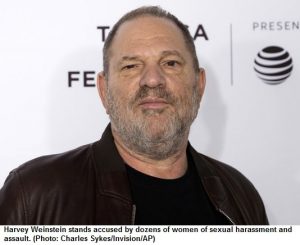
3 years ago, we were commenting on why the dozens of accusers against Bill Cosby were not believed, now we see that there has been a floodgate of women successfully getting their reckoning from powerful men (in media and politics) who had “taken liberties” with them.

Good for the women! (They are being believed … more and more).

Still the same question can be posed about women accusers in general: Why were they not believed?

In summary, “celebrities should not be glorified as all good, all the time” …
… for nation-building, women must be able to seek refuge in the Criminal Justice systems in their communities.

VIDEO – Matt Lauer Fired from TODAY – https://usat.ly/2Bv3zGi

See the ENCORE of this previous blog-commentary below, from November 26, 2014 on Bill Cosby’s Accusers: Why They Weren’t Believed.

Which men are being reckoned with now? See the full alphabetical list from USA Today national newspaper – to date as of December 4, 2017 – here:

Ben Afleck, Actor-Director Gavin Baker, Hedge Fund Manager John Besh, Celebrity Chef
David Blaine, Magician George H.W. Bush, Former President Louis C.K., Actor-Comedian
Nick Carter, Singer John Conyers, Congressman Andy Dick, Actor
Richard Dreyfuss Hamilton Fish, Magazine Publisher Al Franken, Ex-Actor-now-Senator
Alex Gilady, Olympics Organizer Gary Goddard, Writer-Producer David Guillod, Movie Producer
Mark Halperin, Political Analyst Dustin Hoffman, Actor Danny Jordaan, FIFA Organizer
Steve Jurvetson, Hedge Fund Manager Ethan Kath, Music Producer Garrison Keillor, Radio Host
Andrew Kreisberg, TV Producer John Lasseter, Movie Producer Matt Lauer, TV Host
Benny Medina, Talent Agent Murray Miller, Screenwriter Roy Moore, US Senate Candidate
Michael Oreskes, NPR Vice-President Jeremy Piven, Actor Roy Price, Movie Studio Executive
Brett Ratner, Producer-Director Twiggy Ramirez, Musician-Rock Star Terry Richardson, Photographer
Charlie Rose, TV Host Gilbert Rozon, Comedy Organizer Chris Savino, Animator-Writer
Mark Schwahn, Screenwriter Robert Scoble, Technology Blogger Steven Seagal, Actor-Producer
Russell Simmons, Music Mogul Tom Sizemore, Actor Kevin Spacey, Actor-Producer
Sylvester Stallone, Actor-Producer George Takei, Actor-Activist Jeffrey Tambor, Actor
Glenn Thrush, Newspaper Reporter James Toback, Director-Screenwriter Bob Weinstein, Movie Producer
Harvey Weinstein, Movie Producer Matthew Weiner, TV Producer Ed Westwick, Actor
Leon Wieseltier, Magazine Editor

Source: https://www.usatoday.com/story/news/2017/11/22/weinstein-aftermath-all-men-accused-sexual-misconduct/884778001/

————

Go Lean Commentary – Bill Cosby’s Accusers: Why They Weren’t Believed.

It is hard to reconcile the accusations floating against Bill Cosby with his television characters: Dr. Huxtable, Jell-O Pudding Pitch-Man and the voice/persona of the animated do-gooder Fat Albert (and the Cosby Kids ; see Appendix below*). Or is it?

… that it’s easy to categorize personalities as good versus bad. “We don’t think good and evil can co-exist in the same person” – Psychologist David Adams.

The following article posits that those who do horrible things may still be talented in their gifts and notoriously good to people in their lives, like family members. While it maybe difficult to understand the complexities of personalities, it is very much necessary that society be receptive to the possibility of good people doing bad things. The entire article is presented here:

By: NO MORE Staff

Bill Cosby Photo 1America’s Dad is having a very bad week. A few days ago, Barbara Bowman wrote a personal essay in The Washington Post chronicling how Bill Cosby drugged and raped her 30 years ago.

The story went viral and inspired several others to echo her experiences.

Not so when the teenager spoke out soon after the alleged attacks: When she went to a lawyer after the assaults, she was accused of lying. Her agent did nothing, either. Eventually, she moved on. Years later, Andrea Constand accused Cosby of rape and Bowman was asked to speak in court, but the case was quietly settled.

At this writing, a grand total of 15 women have accused Cosby of assault, dating from the late 1960s. (Here’s a timeline of the accusations.) Despite all this, Cosby’s career had coasted along—in fact, he was awarded the Mark Twain Prize for American Humor not long ago and was planning a new TV show.

But things are changing.

Finally, the accusers’ stories are getting traction. Why now? Last month, comedian Hannibal Buress called Cosby a rapist in his stand-up routine, which went viral. The Twitter-verse responded in kind: Last week, Cosby’s tone-deaf invitation to “meme me!” resulted in people superimposing assault accusations over his photo. #Cosbymeme did not go according to plan, and things only got worse: Last weekend, NPR interviewed him about his African American art collection and then asked him to respond to the Post story. He went silent. Eventually, his lawyer issued a statement firmly denying the allegations and refusing to comment further.

But the damage has been done: New stories about Cosby’s behavior continue to surface, Netflix has put his upcoming comedy special on hold, and NBC has abandoned plans to develop a new sitcom with him.

Why Accusations About Celebrities Aren’t Believed

Cosby isn’t the first icon to be accused of sexual assault or domestic violence, and yet the question persists: Why aren’t these accusers heard or given any credence—not just Cosby’s alleged victims, but the countless other people who have dared to challenge a celebrity?

The answer lies in the American conflation of celebrity and security, says Ulester Douglas, executive director of Men Stopping Violence. “We are a celebrity culture. Seeing someone we idolize, revere, and idealize being accused of horrific crimes makes us wonder: Who are we? It makes us realize that our own families could be capable of it, too,” he says. It’s unsettling and even terrifying to associate an idol with evil, particularly because there are so many celebrities who are good people, capable of powerful, positive influence.

Dissonance Perpetuates Silence

David Adams is a psychologist and co-director of Emerge, a Boston-based abusers’ intervention and counseling program. He sees a difference in how we respond to a stereotypical criminal and a celebrity accused of bad behavior due to our preconceptions about abusers. “We tend to think of an abuser as someone who is easily detectable: someone who is crude, sexist, and boorish. A quarter of men who abuse women do fit this stereotype, and since that’s a substantial subgroup, we tend to spot those guys and not the ones who are more likable. If we don’t know what to do with bad information about someone we adore, it creates dissonance, and we sometimes choose to disbelieve or to ignore it,” he says.

“When we see someone likable accused of a crime, we have a choice to believe something bad about them or to discount it because it doesn’t fit our experience. In some ways it’s easier to do that than to think, oh God, the world really is unknowable—I might as well give up on knowing people,” he says. “If we don’t know what to do with information about someone we worship, we put it aside.”

Why Celebrities Feel Immune

Of course, Cosby is hardly the first famous person to be accused of rape or assault. When we think about any celebrity facing serious allegations, though, it’s difficult to believe that an image-conscious idol could be willing to engage in hugely risky behavior, throwing away the very image they need. What’s going through their mind?

“Any consequence is overridden by the high of the conquest,” Douglas says. And, on a purely logistical level, “They do it because they can. They truly think they can get away with it, based on the very fact that they have a certain image. They will be believed; the accusers will be laughed out of the room.”

Absorbing The Narcissism Factor

In many celebrity cases, narcissism also plays a starring role. “A hallmark of narcissism is exceptionality. You literally think you will not get caught. This personality takes chances, acts reckless, and even associates the behavior with success, because they’ve always been rewarded,” Adams says.

“We think narcissists are people nobody would like. But, in fact, they’re quite charismatic, with good social and image-maintenance skills”— which often allow them to get away with bad behavior, even more so when there’s a PR team on call. Narcissists are also skilled at compartmentalization, Adams says, and they choose to focus on the “part of their life that everybody adores. They don’t focus on other parts of their lives, and if they do something wrong, they think, ‘Gee, everybody loves me. What’s the problem?’” he says. “It’s a lack of character development.”

“Narcissists can engage in all sorts of psychological gymnastics not to feel empathy,” says Douglas.

The Changing Tide

Adams says that it’s easy to categorize personalities as good versus bad. “We don’t think good and evil can co-exist in the same person,” he says. “But look at the Mafia—these guys who do horrible things but are notoriously good to their mothers. And along comes a show like The Sopranos to paint them in a more nuanced light. There’s now less focus on ‘good guys’ and ‘bad guys,’” he says. Understanding the complexities of personalities—refusing to glorify a celebrity as all good, all the time—could help to close the dissonance gap.

“We can also go a long way toward preventing male sexual and domestic violence against women by stopping the pervasive and pernicious victim-blaming,” Douglas says. “The media, for example, should quit asking the toxic, ‘Why did you go back to your abuser?’ and ‘Why didn’t you leave?’ A reporter could say instead, ‘As you know, there are some who question your credibility because of some of the choices you made. What, if anything, would you want to say to them?’ That is respectful journalism. The [accuser] should never be made to feel like she has to justify the choices she made or makes.”

Finally, in his own work with Men Stopping Violence, Douglas sees firsthand the power of healing through sharing. “I see survivors who are finding peace through coming forward and telling their stories. One of the most powerful things that survivors can do is tell their own stories, on their own terms,” he says.
The NO MORE Project – Posted November 19, 2014; retrieved November 26, 2014–
http://nomore.org/why-cosby-victims-werent-believed/

The subject matter in the foregoing article relates to the attitudes that communities must foster so as to mitigate the toleration of domestic violence, rape and stalking. These points are being brought into focus in a consideration of the book Go Lean … Caribbean. The book serves as a roadmap for the introduction and implementation of the technocratic Caribbean Union Trade Federation (CU), for the economic optimization in the region.

The focus of the Go Lean book is Economics, not domestic violence, rape or stalking! And yet this commentary relates that there is an alignment of objectives. The Go Lean roadmap posits that the economy of the Caribbean is inextricably linked to the security (public safety) of the Caribbean.

This CU/Go Lean roadmap has 3 prime directives:

  • Optimization of the economic engines in order to grow the regional economy and create 2.2 million new jobs.
  • Establishment of a security apparatus to protect the resultant economic engines and their relevant stakeholders.
  • Improve Caribbean governance (Executive facilitations, Legislative oversight and Judicial prudence) to support these economic/security engines.

Among the objectives to accomplish the economic elevation is the mission to retain Caribbean citizens in their homelands and repatriate the far-flung Diaspora back to the region. Since many people may have fled the region to mitigate abuse, attitudes of victim-blaming or complacency among public safety authorities must be “weeded out”.

The subject of Celebrity Culture is also germane for the Caribbean empowerment effort (Pages 203 & 224). The Go Lean roadmap consolidates the region’s 30 member-states into a Single Market, media market included – with the caveat of multi-language “simul-casting”. Celebrities will surely emerge. From a governance perspective, the CU will oversee the jurisdiction of monitoring and metering (ratings, rankings, service levels, etc) local public safety institutions to ensure their delivery of the Social Contract. for all regardless of gender or race.

Change has now come to the Caribbean. As the foregoing article depicts, there is a changing tide. It is no longer acceptable to dismiss accusers, even against celebrities. The article relates that “we can go a long way toward preventing male sexual and domestic violence against women by stopping the pervasive and pernicious victim-blaming”. This is part of a new community ethos – the value of women is not undermined! Many related issues/ points were elaborated in previous blogs, sampled here:

Justice Strategy: Special Prosecutors … et al
Caribbean Study: 58% Of Boys Agree to Female ‘Discipline’
Sex Crimes Mitigations – Students developing nail polish to detect date rape drugs
Aereo Founder on the future of TV; Caribbean included
Bob Marley: The legend of a Caribbean Celebrity lives on!
Muslim officials condemn abductions of Nigerian girls
Caribbean/Latin countries still view women as lesser
Book Review: ‘The Divide’ – Differences in US Justice for Rich versus Poor
Jamaica to receive World Bank funds to help in crime fight

The above commentaries examined global developments in crime mitigations and gender based attitudes, then relate their synchronicity with the principles in the Go Lean book. There are a number of touch points that relate to domestic violence, rape and stalking; these blogs also cite the community attitude to dissuade such behavior. Most importantly, the Go Lean book depicts solutions. These are presented as community ethos, strategies, tactics, implementations and advocates; detailed as follows:

Community Ethos – Privacy –vs- Public Protection Page 23
Community Ethos – Whistleblower Protection Page 23
Community Ethos – Witness Security Page 23
Community Ethos – Anti Bullying & Mitigations Page 23
Community Ethos – Light Up the Dark Places Page 23
Community Ethos – “Crap” Happens Page 23
Community Ethos – Minority Equalization Page 24
Community Ethos – Lean Operations Page 24
Community Ethos – NGO’s Page 25
Community Ethos – Reconciliations Page 34
Strategy – Rule of Law –vs- Vigilantism Page 49
Tactical – Separation of Powers – CariPol Page 77
Implementation – Reasons to Repatriate Page 118
Planning – Ways to Improve Failed-State Indices Page 134
Advocacy – Ways to Improve Governance Page 168
Advocacy – Ways to Better Manage the Social Contract Page 170
Advocacy – Ways to Impact Justice Page 177
Advocacy – Ways to Remediate and Mitigate Crime Page 178
Advocacy – Ways to Improve Gun Control – Restraining Orders Automatic Restrictions Page 179
Advocacy – Ways to Improve Intelligence Gathering Page 182
Advocacy – Ways to Improve Communications – Messaging Page 186
Advocacy – Ways to Impact Hollywood Page 203
Advocacy – Ways to Impact the Prison Industrial Complex – Reduce Recidivism Page 211
Advocacy – Ways to Impact Foundations Page 219
Advocacy – Ways to Protect Human Rights Page 220
Advocacy – Ways to Impact the One Percent –    Balancing Justice Provisions for Celebrities Page 224
Advocacy – Ways to Empower Women Page 226
Advocacy – Ways to Impact Persons with Disabilities – including Mental Challenges Page 228

The book Go Lean…Caribbean was written by resources from an organized movement, by people (residents and Diaspora) with passion to change/elevate the Caribbean’s economic, security and governing engines. One principal within this Go Lean movement has a direct job function to dissuade crimes against women.

While there is always the need to give the accused the benefit of the doubt, as in the current case against Bill Cosby, we do not want 30 years of inaction on reported sex crimes by celebrities. The CU roadmap’s goal is to optimize “Justice” institutions in the region. Why? All members of society (celebrities and regular citizens alike) need to be protected, and not dismissed or ignored, especially related to serious allegations like sexually inappropriate behavior. Any “misfeasance, malfeasance or nonfeasance” in this regards reflects negatively on the region’s hospitality – think of the unsolved disappearance of Natalee Holloway in Aruba in 2005; (see Page 190).

Though this topic may be a security issue, community wealth is undoubtedly linked, affecting push-and-pull factors for citizens to flee their homelands. This is lose-lose for all concerned. To the contrast, the goal of the Go Lean effort is to make the Caribbean a better place to live work and play; with justice for all. Since the region failed in the past, the new messaging is simple: “No More“!

The foregoing article is sourced by the Not-For-Profit organization, the “No More” Project. Their goal is to neutralize public attitudes that had previously tolerated and thusly promoted domestic violence, rape and stalking. This is a great role model for the Caribbean to emulate, as attitude adjustment is among the heavy-lifting tasks that regional administrators must undertake to bring positive change to the Caribbean.

Download the book Go Lean … Caribbean – now!

————

* Appendix – Video – Fat Albert And The Cosby Kidshttp://youtu.be/ga7gflAUGCc

It’s Bill Cosby coming at you with music and fun, and if you’re not careful, you might learn something before its done.

 

Share this post:
, , , ,

Africa: Past, Present and Future of Caribbean Relations

Go Lean Commentary

“How good and how pleasant it would be before God and man,
To see the unification of all Africans”
– Bob Marley’s Song Africa Unite; see Appendix VIDEO below.

These rhyming words of this song are shaping up to be more than just platitudes. There is an actual movement to forge an integrated, united Africa … at least economically. This is the movement for a Free Trade area for the whole continent of Africa. (A previous commentary detailed a continental security apparatus for Africa that the Caribbean should model).

Wow! That would be a start to fulfilling the dream of people like Bob Marley … and others (think: Marcus Garvey).

What is amazing is that these two late-great role models where movers-and-shakers for Africa, though they were natives, citizens and residents of the Caribbean.

This is because there is a historic Africa-Caribbean relationship that transcends time; there is a Past, Present and Future to Africa-Caribbean Relations, and it is more than just song-and-dance.

Past
The link between the Caribbean and Africa has always been one of interconnection. Yes, there is the ugly history of the African Slave Trade, but after that East-West human-capital flow ended (1807) the flow had since shifted to West-East between the two regions. (Think: Freetown, Sierra Leone and Liberia).

Following the Slave Trade, there was the legacy of colonialism and White Supremacy (think: South Africa’s Apartheid) until finally the post-colonial period arrived after World War II. This allowed for independence movements and nationalism, but not the integration and unity that Marley sang of.

Caribbean stakeholders where not just the singers and dreamers; no, they were fighters and soldiers as well. There is the one example of the southern Africa country of Angola. During their post-colonial independence drive, there were dissenting movements: one for a minority rule Apartheid-style system and one for majority rule democratic socialism. The Cuban Army helped to defeat the Apartheid-style regime.

This was the Caribbean reaching back and helping Africa.

Present
Today, the southern African region is at peace, liberated and striving for the best way to advance their societies on the world’s stage. Though still trailing, they have made some progress.

Congratulations to Demi-Leigh Nel-Peters of South Africa who was crowned Miss Universe 2018 on November 26, 2017 in Las Vegas, Nevada, USA.[12] (Miss Jamaica finished 3rd). This is the fourth time a contestant from the African continent has been crowned with this honor; the others include: 2011 Miss Angola, 1999 Miss Botswana and 1978 Miss South Africa (Apartheid-era).

Africa has “come a long way, Baby”.

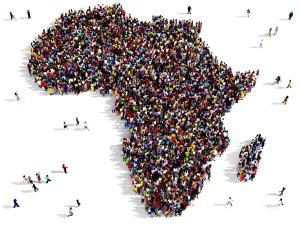
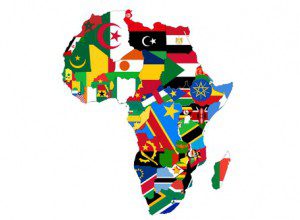
That “Dark Continent” may be the cradle of mankind and the Motherland for many people in the Caribbean, but “she” is playing catch-up in a lot of areas of modernity. For this reason, all embedded countries are considered “developing”. With 1.2 billion[1] people as of 2016, it accounts for about 16% of the world’s human population. (The continent includes Madagascar and various archipelagos). It contains 54 fully recognized sovereign states (countries), nine territories and two de facto independent states with limited or no recognition[3] (Western Sahara and Somaliland); a potential of 65 member-states.

Future
There is the proposal for all countries on the African continent to convene and confederate and form a Single Market among the member-states. This would be transformative. See the full news article here:

Title: Op-Ed: How Africa can create a Continental Free Trade Area
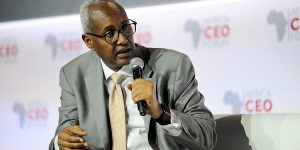
By: Aboubaker Omar Hadi, Chairman of Djibouti Ports and Free Zone Authority

Ours is a continent rich in resources. From the coffee beans and cotton to mineral ores and oil wells, Africa is world-renowned for its raw materials.

However, exporting raw materials alone will not allow Africa to reach its potential. Indeed, the recent slump in global commodity prices has served as a harsh reminder that our traditional reliance on raw materials needs to evolve. It is only by transforming our commodities into value added goods that Africa will reap the full benefits of our natural strengths. Transforming our resources will create larger profit margins, growth and jobs. This transformation will, however, require a big industrialisation drive across the continent to foster trade and growth.

In the wake of Africa Industrialisation Day, which this year reflected on how to accelerate Africa’s progress towards the creation of a Continental Free Trade Area, we must also consider the supporting infrastructure required to make this pre-eminent objective a reality. All economies – on the global scale, but also on the regional and local level – demand a high level of circulation, which is only possible through the development of the necessary infrastructure.

In Africa, the lack of infrastructure is one of the greatest inhibitions preventing transformative growth. Ours is the only continent in the world without a transcontinental railway; in a continent where 16 out of 54 countries are landlocked, this is a real issue. Our infrastructure development therefore needs to be multimodal, ensuring that our coastlines are connected to our railways, airways and highways so that in-land countries and coastal countries are sharing in each others’ successes.

Beyond our transport links and trade zones, we also need to develop one further key aspect in our infrastructure framework: energy production. Around 600 million Africans still live without power on a daily basis. Not only is this unsustainable for our own populations but it is untenable if we are to attract foreign investors. To truly be players on the global stage, Africa needs to make sure that it has the capacity to support the industrial needs of the best of business from around the world.

As the Chairman of the Djibouti Ports and Free Zone Authority, I’ve made this industrial transformation, of both my country and the surrounding region, a priority. In the last year, we have completed and opened three state-of-the-art port facilities which have the capacity to welcome over 30,000 ships every year. As Djibouti sits on two of the world’s busiest maritime trade routes, our country has a key role to play in regional development, by ensuring our neighbours also benefit from this strategic location. Thus, the recently launched Addis Ababa-Djibouti railway will allow the continent’s fastest growing economy,

Ethiopia, to profit from our maritime façade. Already, over 90% of Ethiopia’s trade passes through Djibouti and infrastructure development is vital in ensuring that these trade routes are as efficient as possible.

In terms of our energy infrastructure, Djibouti has developed strong partnerships to strengthen investment in vital gas projects. Only last week, a memorandum of understanding was signed between Djibouti and the Chinese company Poly CGL. This MoU is the start of an important process which will see investment in a gas pipeline, a liquefaction plant and an export terminal in the south of the country, in Damerjog.

Industrial transformation is a long term effort. We will only achieve it with methodical determination and cooperation, as we enter a turning point for the continent. Africa is the second most populated continent in the world with over 1.2 billion inhabitants. By 2050, it is estimated that around a quarter of the world’s population will be living on the African continent. Several African countries are among the fastest growing in the world in terms of economic growth. Out of the 10 fastest growing economies in the world, 3 of them are located in East Africa: Ethiopia, Djibouti and Tanzania. Now is the moment at which we must work hard to keep pace with the rate at which our continent is transforming.

Source: CNBC Africa; posted November 24, 2017; retrieved November 29, 2017 from: https://www.cnbcafrica.com/insights/2017/11/24/africa-potential/

——–

The Caribbean will “pay more than the usual attention” to these developments of 65 member-states for Africa. We have our own roadmap for integration, convention and confederation here in the Caribbean region. This quest is projected in the book Go Lean … Caribbean as it serves as a roadmap for the introduction and implementation for the Caribbean Union Trade Federation (CU). This would be the administrator – a federal government – of a regional Single Market of the Caribbean’s 30 member-states.

With the same goal, the same heavy-lifting is necessary. This is true for Africa and the Caribbean; there would be the need to forge “Pluralistic Democracies” in each region. Imagine the diverse languages, religions, tribes, ethnicities and colonial heritage.  This is the epitome of pluralism, the recognition and affirmation of diversity within a political body. Success or failure with the African pluralism efforts can provide a lot of lessons for the Caribbean effort.

This CU/Go Lean roadmap does more than just forge a Single Market; it has a charter to elevate all the societal engines. As there is the need to assuage the societal defects and deficiencies in the region – there are many. The following are the 3 prime directives designed to elevate society and assuage deficiencies:

  • Optimization of the economic engines in order to grow the regional economy to $800 Billion and create 2.2 million new jobs.
  • Establishment of a security apparatus to ensure public safety and protect the resultant economic engines.
  • Improvement of Caribbean governance to support these engines, including a separation-of-powers between the member-states and CU federal agencies.

Wow, for the BIG ideas of fostering a Single Market … to elevate the economic engines for 1.2 billion people in Africa and 42 million people in the Caribbean.

The Go Lean book has a scope of the Caribbean only. Though we will pay attention to Africa, there is no effort to impact that region with strategies, tactics or implementations. We must sing the song, but have our own twist:

Africa Unite!

‘Cause the children wanna come home.
Not to fight your wars, but to love your shores.

Our limited scope is to “observe and report” on Africa and the rest of the world, while we “serve and protect” the Caribbean. The Go Lean book presented BIG ideas for reforming and transforming the economic-security-governing engines for the 42 million people in our 30 Caribbean member-states. The book stresses that our Caribbean effort must be a regional pursuit. This was an early motivation for the roadmap, as pronounced in the opening Declaration of Interdependence (Pages 12 – 13):

xi. Whereas all men are entitled to the benefits of good governance in a free society, “new guards” must be enacted to dissuade the emergence of incompetence, corruption, nepotism and cronyism at the peril of the people’s best interest. The Federation must guarantee the executions of a social contract between government and the governed.

xvi. Whereas security of our homeland is inextricably linked to prosperity of the homeland, the economic and security interest of the region needs to be aligned under the same governance. Since economic crimes … can imperil the functioning of the wheels of commerce for all the citizenry, the accedence of this Federation must equip the security apparatus with the tools and techniques for predictive and proactive interdictions.

xxiv. Whereas a free market economy can be induced and spurred for continuous progress, the Federation must install the controls to better manage aspects of the economy: jobs, inflation, savings rate, investments and other economic principles. Thereby attracting direct foreign investment because of the stability and vibrancy of our economy.

The Go Lean book provides 370-pages of turn-by-turn instructions on “how” to adopt new community ethos, plus the strategies, tactics, implementations and advocacies to execute so as to reboot, reform and transform the societal engines of Caribbean society.

There have been a number of previous blog-commentaries by the Go Lean movement that have highlighted lessons-learned from Africa. Consider this sample here:

https://goleancaribbean.com/blog/?p=13365 West African Case Study: ECOWAS to Launch ‘Single Currency’
https://goleancaribbean.com/blog/?p=8262 UberEverything in Africa
https://goleancaribbean.com/blog/?p=7119 Role Model: African Standby Force
https://goleancaribbean.com/blog/?p=5123 A Lesson in History – Royal Charter: Zimbabwe -vs- South Africa
https://goleancaribbean.com/blog/?p=4971 A Lesson in History – Royal Charters: Truth & Consequence
https://goleancaribbean.com/blog/?p=4145 The African Renaissance Monument

In summary, shepherding the continental region of Africa is no simple task. It requires the best practices of skilled technocrats. Hopefully the African member-states will thrive with this effort.

We will be watching!

Hopefully too, the Single Market efforts in our region – Caribbean Single Market & Economy – will proceed. This subject was detailed in the Go Lean book (Page 15); consider this sample:

What is the CSME? The initials refer to the Caribbean Single Market & Economy, the attempted integrated development strategy envisioned at the 10th Meeting of the Conference of Heads of Government of the Caribbean Community which took place in July 1989 in Grand Anse, Grenada. The Grand Anse Declaration had three key features:

1. Deepening economic integration by advancing beyond a common market towards a Single Market and Economy.

2. Widening the membership and thereby expanding the economic mass of the Caribbean Community (e.g. Suriname and Haiti were admitted as full members in 1995 and 2002 respectively).

3. Progressive insertion of the region into the global trading and economic system by strengthening trading links with non-traditional partners.

What was the hope for CSME? Whereas CariCom started as a Common Market and Customs Union, to facilitate more intra-region trade, the CSME was intended to effect more integration of the economies of the member states. But this turned out to be mere talk, fanciful murmurings of politicians during their bi-annual Heads of Government meetings. No deployment plans ever emerged, even though up to 15 member-states signed on to the accord; (and 10 more as “Observers” only).

The benefits of a Single Market are too alluring to ignore: larger market, expanded trade, leveraging economic shocks across a larger base naturally associated with a Free Market economy.

Let’s do this … more earnestly in the Caribbean region.

We need to follow through on the words of Bob Marley – “African Unite” – and apply them here at home:

Caribbean Unite: ‘Cause the children wanna come home.

We urge all Caribbean stakeholders – government officials, residents and Diaspora – to lean-in for the empowerments detailed in this Go Lean roadmap. Yes, we can!  We can make our homeland a better place to live, work and play. 🙂

How good and how pleasant it would …

Sign the petition to lean-in for this roadmap for the Caribbean Union Trade Federation.

Download the free e-book of Go Lean … Caribbean – now!

———–

Appendix VIDEO – Africa Unite – https://youtu.be/QMS5vKarzO0

Published on Jun 24, 2009 – Lyrics

Africa, Unite
‘Cause we’re moving right out of Babylon,
And we’re going to our Father’s land, yea-ea.

How good and how pleasant it would be before God and man, yea-eah! –
To see the unification of all Africans, yeah! –
As it’s been said a’ready, let it be done, yeah!
We are the children of the Rastaman;
We are the children of the Iyaman.

So-o, Africa unite:
‘Cause the children (Africa unite) wanna come home.
Africa unite:
‘Cause we’re moving right out of Babylon, yea,
And we’re grooving to our Father’s land, yea-ea.

How good and how pleasant it would be before God and man
To see the unification of all Rastaman, yeah.
As it’s been said a’ready, let it be done!
I tell you who we are under the sun:
We are the children of the Rastaman;
We are the children of the Iyaman.

So-o: Africa unite,
Afri – Africa unite, yeah!
Unite for the benefit (Africa unite) for the benefit of your people!
Unite for it’s later (Africa unite) than you think!
Unite for the benefit (Africa unite) of my children!
Unite for it’s later (Africa uniting) than you think!
Africa awaits (Africa unite) its creators!
Africa awaiting (Africa uniting) its Creator!
Africa, you’re my (Africa unite) forefather cornerstone!
Unite for the Africans (Africa uniting) abroad
Unite for the Africans (Africa unite) a yard! [fadeout]

  • Category: Music 
  • License: Standard YouTube License


Share this post:
, , , , ,
[Top]

‘I Want You Back’: Caribbean to the Diaspora

Go Lean Commentary

If only all the islands and coastal states of the Caribbean region were integrated into a Single Market

… then our economy would be big. There would be 42 million people in this integrated Caribbean, counting all 30 member-states that caucus with the region.

If only there were even more …

This is a basic premise in the field of Economics, as reported in this prior blog-commentary from  the movement behind the book Go Lean…Caribbean:

We tend to think economic growth comes from working harder and smarter, but economists attribute up to a third of it [growth] to more people joining the workforce each year than leaving it. The result is more producing, earning and spending.

Many Caribbean natives love their homeland, but live abroad in the Diaspora – estimated at 10 to 25 million. Over the past decades, they had moved away looking for better opportunities or safe haven. The stakeholders of the Caribbean now need to declare to these people:

I Want You Back
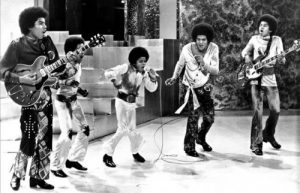
(See the VIDEO of the Jackson 5 singing the song I Want You Back” and the Lyrics in the Appendix below.)

Yes, the Caribbean needs its Diaspora back. But being pragmatic, the young people who have left … are probably NOT coming back. 🙁

The opportunities they sought are still not available in our homelands, and the refuge they needed is still elusive here.

It is what it is!

Unfortunately, our best bet is hold out for their …

Retirement.

This brings forth some economic opportunities. Can we better prepare for our aging Diaspora to come home to enjoy their retirement?

Yes, we can.

This also includes the Diaspora that left 50, 40, 30 years ago. These ones are now primed to contribute now as retirees.

This was an original motivation for the book Go Lean…Caribbean – available to download for free. It serves as a roadmap for the introduction and implementation of the technocratic Caribbean Union Trade Federation (CU), for the elevation of Caribbean societal engines – economic, security and governance for all member-states. It surveyed the world and assessed that the Caribbean was being impact by Agents of Change. The book states (Page 57):

Assuming a role to “understand the market and plan the business” requires looking at the business landscape today and planning the strategic, tactical, and operational changes to keep pace with the market and ahead of competitors. Strategic changes that must be accounted for now, includes: Technology, Aging Diaspora, Globalization and Climate Change.

Aging Diaspora
The demographics of the world we inhabit were shaped by the events in the aftermath of World War II. Many members of the Diaspora avail themselves of opportunities in Europe and North America during their rebuilding effort. So those that repatriated in the 1950’s and 1960’s now comprise an aging Diaspora – with the desire to return to the “town of their boyhood”. They should be welcomed back and incentivized to repatriate.
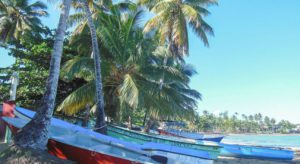
The “Welcome Mat” comes with challenges; of which the CU is prepared to accommodate: health care, disabilities, elder-care, entitlements, etc. These are all missions for the CU.

Yes, to all of those of Caribbean heritage: We want you back!

The Go Lean book asserts that the region must work together – in a formal regional integration – to hold on to its populations, to invite the Diaspora back and to better prepare for their repatriation. To accomplish this objective, this CU/Go Lean roadmap presents these 3 prime directives:

  • Optimization of the economic engines in order to grow the regional economy to $800 Billion and create 2.2 million new jobs. There are limited economic (job creation and entrepreneurial) opportunities today, but a regional reboot can create a new industrial landscape with long-sought opportunities.
  • Establishment of a security apparatus to ensure public safety and protect the resultant economic engines. This includes the proactive and reactive empowerments to better prepare and respond to natural and man-made threats.
  • Improvement of Caribbean governance to support these engines, including regional integration with a separation-of-powers between each state and CU There is also a plan to engage NGO’s/foundations for advocacies for aging seniors. This stewardship will also aid-assist repatriates to fully consume their entitlement benefits from foreign countries.

We are hereby presenting ourselves to do the heavy-lifting of preparing our society to better accommodate these repatriates, in all phases of life, young, mature adults and senior citizens. The Go Lean book therefore provides 370-pages of turn-by-turn instructions on “how” to adopt new community ethos, plus the strategies, tactics, implementations and advocacies to execute so as to reboot the region’s societal engines. Consider the details and headlines here on how the region can better prepare to accommodate the repatriation of the Diaspora to the Caribbean (Page 118):

10 Reasons to Repatriate to the Caribbean

1 Lean-in for the Caribbean Single Market
This treaty allows for the unification of the region into one market, hereby expanding to an economy of 30 countries, 42 million people and a GDP of over $800 Billion (according to 2010 figures). This accedence creates a “new” land of opportunity for so many ventures, and so many protections – the Caribbean will be a better place to live, work and play. The economic engines of the CU should therefore “flash the signs of opportunity” to come back home. The CU will not ignore the reasons why a lot of people emigrated in the first place, in some cases there were political and human rights refugees. Therefore, integral to the repatriation plan is a mission for formal Reconciliation Commissions that will allow many issues to be settled and set aside – punishing the past short circuits the future.
2 “New Guards” for Public Safety
The CU implements the anti-crime measures and provides special protections for classes of repatriates and retirees. Crimes against these special classes are marshaled by the CU, superseding local police. Since the CU will also install a penal system, with probation and parole, the region can institute prisoner exchange programs and in-source detention for foreign governments, especially for detainees of Caribbean heritage.
3 “New Guards” for Economic Stability
A Single Market and currency union, with non-political, technocratic Caribbean Central Bank leadership, will allow for the long-term adoption of monetary and economic best practices. Plus, with a strong currency, viable capital markets, and consumer finance options, a prosperous life for the middle class would be easily sustainable.
4 Citizenship at the CU/Federal Level
Over the decades, many Caribbean expatriates renounced their indigenous citizenship. The CU would extend new citizenship rights to this group, and their children (legacies) which will entitle them to infinite residency, equal civil rights but conditional employment, requiring labor certification or self-owned businesses. They would be issued CU passports.
5 Gerontology Initiatives
The Diaspora is aging! They therefore have special needs germane to senior citizens. The CU will facilitate the needs of the aging repatriates and ensure that the proper institutions are in place and appropriately managed. This includes medical, housing, economic and social areas of responsibility. This issue will be coupled with the CU’s efforts for the host countries to extend entitlement benefits to this region, including medical and Social/National Insurance pensions.
6 US, Canada and EU Closing Doors
7 “No Child Left Behind” Lessons
8 Quick Recovery from Natural Disasters
9 Educational Inducements in the Region
The CU will facilitate e-Learning schemes for institution in the US, Canada and the EU. The repatriates will have an array of educational choices for themselves and their offspring (legacies). This will counter the previous bad experience of students emigrating for advanced educational opportunities and then never returning, resulting in a brain drain.
10 Import US, Canada and EU Cultural Institutions

There have been a number of blog-commentaries by the Go Lean promoters that have detailed the prospects for Caribbean repatriation. See a sample list here:

https://goleancaribbean.com/blog/?p=11314 Forging Change: Home Addiction
https://goleancaribbean.com/blog/?p=10566 Funding the Caribbean Security Pact to Better Protect Repatriates
https://goleancaribbean.com/blog/?p=9214 Time to Go: Spot-on for Protest
https://goleancaribbean.com/blog/?p=9219 Time to Go: Logic of Senior Immigration
https://goleancaribbean.com/blog/?p=9646 Time to Go: American Vices; Don’t Follow
https://goleancaribbean.com/blog/?p=7151 The Caribbean is Looking for Heroes … ‘to Return’
https://goleancaribbean.com/blog/?p=5695 Repenting, Forgiving and Reconciling the Past
https://goleancaribbean.com/blog/?p=665 Real Estate Investment Trusts explained for Repatriates Housing

More and more people have fled the Caribbean homeland. While the expansion of the Caribbean Diaspora is a real tragedy, it is not so improbable. Our region has societal defects and dysfunctions that have to be assuaged. We are not alarmed when people choose to leave. We are not surprised when/if they turn their back on any interest to help their former homelands. The Go Lean movement has consistently urged regional leaders not to invest valuable resources in trying to solicit investment from the Diaspora.

History shows that the Diaspora usually do not bite on most investment offers; all efforts to outreach the Diaspora are usually futile. It is a losing cause to try and fight for young ones to return.

But come retirement, it’s a different story! All of the Caribbean needs to double-down on the effort to invite the Diaspora back for retirement.

The Caribbean in general is a great place to retire … for the Diaspora or just anyone else – retirement and/or snowbird tourism. See this magazine article here citing great destinations in the region to consider for retirement options. Our region makes the Best Places list and the Worst Places list – stressing the work that still needs to be done: See the related news article here:

Title: 5 Best Caribbean Islands to Live On… and 2 to Avoid
By: International Living Magazine

Mention the word “Caribbean” and most people think of places like Aruba, the Turks and Caicos, the Bahamas, and other tourist-rich dollops of sand. The region conjures well-deserved images of crystal-clear waters and white-sand beaches.

And there’s no question: If you like sun and sand, these islands are great for a vacation. But move there? Most folks assume it’s just too expensive and don’t give it another thought.

But that’s too bad. Because the Caribbean is bigger than many people realize. And when you look beyond the mass-market shores the tourist brochures describe, you’ll find a variety of sun-splashed islands well worth your attention. They’re not only beautiful… but a lot more affordable than most people realize.

Belize, Nicaragua, Honduras, and Mexico all offer islands off their Caribbean coasts – islands that share the same turquoise-blue waters and powder-white beaches you expect when you hear “Caribbean” – only you won’t pay a fortune to live on any of them.

Read on to find out more about five Caribbean islands that won’t break the bank…and two that just might…

  1. Ambergris Caye, Belize
  2. Roatán, Honduras
  3. Isla Mujeres, Mexico
  4. Las Terrenas, Dominican Republic
  5. Corn Islands, Nicaragua

 Two to Avoid…Because Costs Are High

The beauty and tropical appeal of St. Thomas and Grand Bahama are impossible to deny. An expat traveling with unlimited funds might well choose either for his island getaway. But for anybody who’s a budget-conscious, these Caribbean retreats will prove hard on the wallet…

  1. Thomas, U.S. Virgin Islands

    Located in the Caribbean, the U.S. Virgin Islandsis made up of over 60 islands…most of them uninhabited. The three most populated, and most visited, are St. Thomas, St. John, and St. Croix. The U.S. Virgin Islands are an organized, unincorporated United States territory and their people are U.S. citizens.
    ..
    The appeal of these tropical islands is the mixture of the exotic and the recognizable—an island paradise with modern comforts and a balance of Caribbean culture and American practicality.
    ..
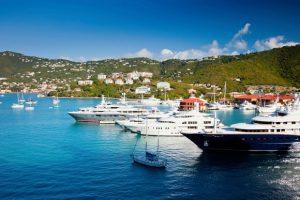
    St. Thomas is the island on which most of the population of the U.S. Virgin Island lives. It is also the most commercialized of the islands and a regular stopping off point for Caribbean cruise ships. This 30-square-mile island has jungle cliffs that soar high into the sky and the turquoise sea is dotted with yachts of all shapes and sizes. St. Thomas, and in particular the capital of Charlotte Amalie, can get overrun by tourists.
    ..
    While St. Thomas may be a nice place to live, we say “avoid” due to the high cost of living. Apartments rent for about $2,000 a month and to buy a two-bedroom house in a good neighborhood will cost about $225,000-plus.
  1. Grand Bahama Island, The Bahamas

    What do Nicolas Cage, Johnny Depp, Oprah Winfrey, Sean Connery, Bill Gates, and Tiger Woods have in common? Apart from being celebrities, they’re among thousands of North Americans and Europeans who own second homes in the Bahamas.
    ..
    Like other expats who live there for all or part of the year, these stars often think of the Bahamas as a paradise—an upscale group of islands with some of the most beautiful beaches in the world. The Bahamas are friendly to newcomers, there’s no foreign language to cope with, crime is relatively low, and the islands are positioned just off the Florida coast.
    ..
    That’s the good news. The bad news is that property on the islands usually isn’t cheap. Medium-size residences in exclusive gated communities with ocean views often cost more than $2 million.
    ..
    Even though Grand Bahama is the closest major Bahamian island to the U.S. (about 55 miles off the Florida coast), it was one of the least developed until only a few decades ago. In the middle of the last century, the population was about 500.
    ..
    Today Grand Bahama is the second most populous island, with more than 50,000 residents. Its major city, Freeport, has a population of about 27,000, making it the second-largest metropolitan area in the country, far eclipsing West End, the former capital of Grand Bahama.Grand Bahama Island has become a haven for beach-lovers as well as divers, fishermen, golfers, and sports enthusiasts of all kinds. It’s also a prime destination for people who enjoy world-class shopping. But living here costs a premium as it’s between 30% and 50% more expensive than in the U.S..
    Source: Posted July 18, 2016; retrieved November 21, 2017 from: https://internationalliving.com/5-affordable-caribbean-islands-to-live-on-and-2-to-avoid/

Planners of a new Caribbean are now saying to their Diaspora: We Want You Back!

We will do the work necessary to improve our prospects. As related in the song lyrics in the Appendix below:

Give me one more chance
(To show you that I love you)
Won’t you please let me back in your heart
Oh darlin’, I was blind to let you go

Trying to live without your love is one long sleepless night
Let me show you, girl, that I know wrong from right

In the Caribbean, we now need to do the heavy-lifting to reform and transform our societal engines to allow our people to prosper where planted here at home. If only we can get more and more of our Diaspora back. The Go Lean book made this urging in its conclusion … on Page 252:

Valediction – Bidding Farewell

To the Caribbean Resident: Count your blessings, while you work for improvement.

To the Caribbean Diaspora: Come in from the cold.


To the Caribbean Emigrant: Get yours, come home.


To the Caribbean Children, living at home: Help is on the way.

To the Caribbean Children, living aboard: You’re always welcome home.

To the Legacy Children of Caribbean parents: Come home, discover why your parents are so proud.

The Go Lean roadmap asserts that the Caribbean can assuage its defects and dysfunctions. The vision first calls for an interdependence among the 30 member-states in the region. This was the motivation for the CU/Go Lean roadmap, as pronounced in the opening Declaration of Interdependence (Pages 12 – 13) of the book:

x. Whereas we are surrounded and allied to nations of larger proportions in land mass, populations, and treasuries, elements in their societies may have ill-intent in their pursuits, at the expense of the safety and security of our citizens. We must therefore appoint “new guards” to ensure our public safety and threats against our society, domestic and foreign. …

xi. Whereas all men are entitled to the benefits of good governance in a free society, “new guards” must be enacted to dissuade the emergence of incompetence, corruption, nepotism and cronyism at the peril of the people’s best interest. The Federation must guarantee the executions of a social contract between government and the governed.

xix. Whereas our legacy in recent times is one of societal abandonment, it is imperative that incentives and encouragement be put in place to first dissuade the human flight, and then entice and welcome the return of our Diaspora back to our shores. This repatriation should be effected with the appropriate guards so as not to imperil the lives and securities of the repatriated citizens or the communities they inhabit. The right of repatriation is to be extended to any natural born citizens despite any previous naturalization to foreign sovereignties.

xx. Whereas the results of our decades of migration created a vibrant Diaspora in foreign lands, the Federation must organize interactions with this population into structured markets. Thus allowing foreign consumption of domestic products, services and media, which is a positive trade impact. These economic activities must not be exploited by others’ profiteering but rather harnessed by Federation resources for efficient repatriations.

xxiv.  Whereas a free market economy can be induced and spurred for continuous progress, the Federation must install the controls to better manage aspects of the economy: jobs, inflation, savings rate, investments and other economic principles. Thereby attracting direct foreign investment because of the stability and vibrancy of our economy.

The Caribbean is now begging for one more chance to prove that we love our citizens and can serve and protect them.

We want you back.

But what we want even more is to ensure that our young people do not have to leave in the first place.

Any policy that double-downs on the Diaspora is actually doubling-down on failure. We should never want our people to have to leave then hope they remember us for their retirement. No, we want and need them here at home at all times: in their youth, as young adults, middle age and senior citizens. We want and need them to “plant” … and prosper where planted.

We strongly urge Caribbean stakeholders – governmental leaders and citizens alike – to lean-in to this roadmap to make our homeland, all 30 member-states, better places to live, work and play. 🙂

Download the free e-book of Go Lean … Caribbean – now!

Sign the petition to lean-in for this roadmap for the Caribbean Union Trade Federation.

————

Appendix VIDEO – I Want You Back – The Jackson 5 – https://youtu.be/s3Q80mk7bxE

Published on Jan 10, 2010 – The Jackson 5 perform “I Want You Back” on their “Goin Back To Indiana” TV special in 1971. HQ sound.

  • Category: Music
  • License: Standard YouTube License

————

Appendix – I Want You Back – Lyrics
Sung by: The Jackson 5

When I had you to myself, I didn’t want you around
Those pretty faces always make you stand out in a crowd
But someone picked you from the bunch, one glance is all it took
Now it’s much too late for me to take a second look

Oh baby, give me one more chance
(To show you that I love you)
Won’t you please let me back in your heart
Oh darlin’, I was blind to let you go
(Let you go, baby)
But now since I’ve seen you it is on
(I want you back)
Oh I do now
(I want you back)
Ooh ooh baby
(I want you back)
Yeah yeah yeah yeah
(I want you back)
Na na na na

Trying to live without your love is one long sleepless night
Let me show you, girl, that I know wrong from right
Every street you walk on, I leave tear stains on the ground
Following the girl I didn’t even want around

Let me tell ya now
Oh baby, all I need is one more chance
(To show you that I love you)
Won’t you please let me back in your heart
Oh darlin’, I was blind to let you go
(Let you go, baby)
But now since I’ve seen you it is on

All I want
All I need
All I want!
All I need!

Oh, just one more chance
To show you that I love you
Baby baby baby baby baby baby!
(I want you back)
Forget what happened then
(I want you back)
And let me live again!

Oh baby, I was blind to let you go
But now since I’ve seen you it is on
(I want you back)
Spare me of this cost
(I want you back)
Give me back what I lost!

Oh baby, I need one more chance, hah
I’d show you that I love you
Baby, oh! Baby, oh! Baby, oh!
I want you back!
I want you back!

Songwriters: Freddie Perren / Alphonso Mizell / Deke Richards / Berry Gordy Jr

I Want You Back lyrics © Sony/ATV Music Publishing LLC

Share this post:
, , ,
[Top]

Colonialism’s Bloody History Revisited – ‘Thor’ Movie

Go Lean Commentary

How much of our past make up who we are and what we will become?

  • Are all children of alcoholics condemned to alcoholism themselves?
  • Children from homes with domestic violence; will they become abusers themselves?

These questions about individuals can also be extended to whole communities:

  • Will the bloody history of European colonialism be revisited in modern times and the future?

This has to do with societal defects – orthodoxy. There is so much we need to learn, and so many corrections we need to make. This is the quest of the movement behind the book Go Lean … Caribbean, to reform and transform the Caribbean member-states from our dysfunctional past so as to have a prosperous future. There are lots of lessons for us to consider; some from unusual places; consider the art world: comic books, world of film.

The edict of “life imitating art and art imitating life” provides a lot of teaching moments for the world in general and the Caribbean in particular. There is a lot we can learn from the art form of film and this newest blockbuster movie Thor: Ragnarok. (The film has grossed $212.1 million in US box office receipts after the first 2 weekends).

This is a film about comic book hero Thor, the God of Thunder, which is based on Norse mythology; the ancient culture of Nordic Vikings. There are other characters from that mythical homeland of Asgard: Odin, Loki, Hela and Valkyrie. This is all art and fiction, but it does imitate the real life history of colonialism; see here:
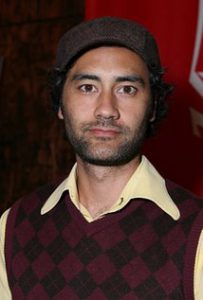
The film’s central revelation – that the legend of a benevolent Odin and Asgard ruling realms joined in peace is a lie, and that those realms were conquered by force – reflects British colonialism so perfectly it virtually had to come from a person of colour in the Commonwealth, [New Zealand-born Director Taika Waititi]. Though New Zealand today is markedly fairer in its treatment of its indigenous people than the rest of Britain’s English-speaking colonies, its history is still pockmarked with subjugation, violence, and deception, and it’s hard not to see the difference between the mythical and “true” Asgards as a representation of that.
Source: Retrieved November 15, 2017 from: http://birthmoviesdeath.com/2017/11/05/thor-ragnarok-taika-waititi-very-kiwi-comedy

Shockingly, this is also a Caribbean debate: the historicity of colonialism and British orthodoxy – good or bad?

This debate, considering the foregoing, is bigger than just a consideration of British colonialism; it allows parallels with the Dutch, French, Portuguese and Spanish conquests in the New World; and truthfully, this also applies to the American empire building with the territories of Puerto Rico and the Virgin Islands.

See this news article here that presents this hypothesis; and also see the VIDEO in the Appendix below:

Title: Asgard’s bloody history refuses to stay buried in ‘Thor: Ragnarok’
By: Angie Han

Asgard is a realm removed from Midgard (or as we know it, Earth), but make no mistake: Thor: Ragnarok is as much about us as it is about them.

Specifically, it’s about the bloody history of colonialism, and that history’s refusal to stay buried, no matter how eager we are to whitewash our sins.

In Thor: Ragnarok, we learn exactly how Asgard came to be the wealthy and powerful kingdom it is today. The answer isn’t pretty. Before Odin was known as a wise and benevolent ruler, he was known as a bloodthirsty conquerer, tearing through nations with his daughter, Hela, at his side.

But, Hela explains, her appetite for destruction eventually outmatched his. Odin turned on her, locking her away and essentially writing her out of the history books. He has her literally painted over in the palace mural, replaced by prettier pictures of peace and prosperity. As Hela bitterly remarks, Odin is proud of his power and riches, but ashamed of how he got them.

Centuries later, younger Asgardians like Thor seem to have only the faintest idea of their land’s ugly past. Thor is aware that his father was once a fearsome warrior (it’s explicitly mentioned and demonstrated in his earlier movies), but apparently hasn’t spent much time thinking about whom his father was fighting, or why.

As for Hela, he doesn’t even realize that she exists.

Not that it matters. By burying Hela instead of properly reckoning with her, Odin has ensured that she will, someday, be someone else’s problem – and that that someone else will be woefully unprepared to deal with her when that day comes.

Sound familiar? The story of Asgard has echoes all around our own world: the “free world” built on the subjugation and slaughter of others; the sanitization of our past and current misdeeds; the younger generation raised on patriotic half-truths. Hela serves as a terrifying reminder that the past has a way of catching up to the present, no matter how desperately you’d like to erase old sins.

In Thor: Ragnarok, Thor is the one who rises to the occasion of facing down Asgard’s ugly past. He doesn’t have to – Hela’s already thrown him off-planet, and the simplest and safest thing for him to do would be to stay out of her path – but he feels a duty to protect his people from his sister. Emphasis on “his people”: Thor takes to heart that Asgard is a people, not a place or a thing.

His priority throughout the final battle is Asgard’s population, not its land or its gold or its reputation. In other words, he prioritizes people over patriotism.

By the end, Thor has abandoned the physical realm of Asgard entirely, leaving Hela and Surtur to tear it apart. He and the other surviving Asgardians are huddled together on a spaceship, refugees hoping to make a new home on Midgard.

Thor’s not the only one who has some key decisions to make in Ragnarok. Hela’s right-hand man is Skurge, who goes along with her rule not out of some great passion for her cause, but because it just seems like the easy thing to do. When it becomes clear that the tides are turning, he boards the refugee ship with the other Asgardians.

Then, at the last minute, he does something genuinely heroic: He sacrifices himself to ensure that the ship can get to safety, laying waste to Hela’s forces with two machine guns he picked up on a lark in Texas. (They’re named Des and Troy, because when he puts them together, they destroy. Thor: Ragnarok may have weighty thoughts on its mind, but it’s never one to pass up a good joke.)

With Skurge, Ragnarok shows us that great evil can be enabled by ordinary indifference, that “hero” and “villain” are not fixed states, that it’s never too late to do the right thing, and that even nobodies must decide how to wield whatever power they have. He’s the rare Marvel character who isn’t easily categorized as “good” or “bad.” He’s the undecided voter of Asgard, and he finally steps up.

Meanwhile, back on Sakaar, the Grandmaster has his own problems to deal with. Thor and Hulk’s escape has sparked a rebellion led by Korg (with an assist from the Revengers). Whereas Hela is overtly destructive and dominant, the Grandmaster is a more ingratiating figure.

He’s introduced via a video that reassures his contenders they’ve been found by someone who loves them. Never mind that the Grandmaster holding people captive and forcing them to fight to the death – he fancies himself a benevolent caretaker. In a jab at the modern prison system, the Grandmaster shudders at the word “slaves” and prefers the euphemism “prisoners with jobs.” The message is clear: he’s the same old oppressive bullshit, repackaged to look brighter and gentler.

Key to all of Thor: Ragnarok‘s themes are who’s telling this story. Taika Waititi is the franchise’s first non-white director, and one of its few non-American directors. That unusual-for-Marvel perspective may have something to do with his decision to turn this superhero smash-’em-up into a reflection on the horrors of colonialism. Others more qualified than I am to discuss it have taken also note of Ragnarok‘s uniquely Kiwi and uniquely Maori sensibility.

While Thor: Ragnarok still centers around a white guy, it’s got a meatier role than ever before for Heimdall, leader of the Asgardian resistance and protector of its people in Thor’s absence during Hela’s reign. The film introduces Valkyrie as a former hero of Asgard who steps up again in its time of need, hinting at the trauma she endured in between. Plus, of course, there’s Korg, voiced and mo-capped by Waititi himself in a distinct New Zealand accent. This is a story about oppression that actually makes room for non-white people, unlike so many of the others that hit our theaters.

And, yes, Thor: Ragnarok does all this while delivering jokes about Shake Weights and Hulk dick and introducing something called the Devil’s Anus to the Marvel Cinematic Universe. It’s fizzy and funny and fun in a way that Thor’s earlier movies haven’t been. But don’t mistake its silliness for lack of depth.

Just as there’s more to Thor than his Point Break persona, there’s a lot more to Ragnarok than its gags.
Source: Posted November 8, 2017; retrieved November 15, 2017 from: http://mashable.com/2017/11/08/thor-ragnarok-themes-colonialism/#CZO2PDgfMZqP

There are so many points of consideration from this movie. In a previous blog/commentary regarding Caribbean Diaspora member and Hollywood great, Sidney Poitier, it was declared that …

“Movies are an amazing business model. People give money to spend a couple of hours watching someone else’s creation and then leave the theater with nothing to show for the investment; except perhaps a different perspective”.

Wow, this ‘Thor’ movie does present some different perspectives. The “art” of this movie does imitate the real life of the Caribbean colonial history. It was not benevolence that led to the European conquest; it was malevolence! The subjugation of the indigenous people, the introduction of slave economy, and continued mercantilism, until … just recently.

Some other/different perspectives gleaned from this movie are summarized here; (consider the links to previous blog-commentaries):

It is the commonly accepted history that colonialism was bad – even bloody, and yet so many Caribbean citizens “break down the doors to get out” to go to where the colonizers came from – Brain Drain reported at 70 percent  – and then live among these former colonizers.

This atrocious societal abandonment rate is so unbelievable … and unacceptable!

The book Go Lean … Caribbean discusses this history of European colonialism and the legacy left behind. Consider this excerpt from Page 241 regarding the Caribbean mainland states of the Guianas (Guyana and Suriname):

The Bottom Line on European Colonialism
The European colonial period was the era from the 1500s to the mid-1900s when several European powers (Spain, Britain, the Netherlands, France and Portugal) established colonies in the Americas, in a Space Race to dominate the New World. The Northern Coast of South America became a typical New World battleground for conflict and pushing between these powers, and many military campaigns and diplomatic initiatives (treaties) ensued. Through the contact period following the 1498 discovery by Christopher Columbus, the term “Guiana” was used to refer to all this area, between the Orinoco, the Rio Negro, and the Amazon rivers; it was seen as a unified, isolated entity that it was often referred to as the “Island of Guiana”. The real interest in the exploration and colonization of the Guianas did not begin until the end of the sixteenth century when the other European powers developed interest in the Guianas. This is depicted in the Timeline in Appendix TE (Page 307). When did this European Colonial “push-shove-match” end? Not until almost 500 years later, after World War II, after the effects of that war left all these European powers drained – of finances and the will to continue.

In the Thor: Ragnarok movie, the hero completed a journey that led him to finally place a higher priority on the people of his homeland rather than the actual land. This is enlightening, but this relevance is questioned for the Caribbean’s priority. In the movie, there was an all encompassing war – Ragnarok refers to the Norse concept of Armageddon – while the Caribbean is experiencing no war at all – we are deemed the greatest address on the planet. It is reasonable to expect that we can place priority on our people and our homeland.
The quest of the Go Lean roadmap is to elevate the societal engines so that Caribbean people can prosper where planted here in the Caribbean. There should be no priority to relocate Caribbean culture as refugees to a foreign land.

Like in the movie where Thor had an interdependence with other heroes – like Hulk, Valkyrie, and Heimdall, (leader of the Asgardian resistance and protector of its people while Thor was absent) – there is the need for our own heroes to work together to help us accomplish our goals as well. The Go Lean movement seeks to engage Caribbean heroes; the book serves as a roadmap to introduce the technocratic Caribbean Union Trade Federation (CU) to elevate the region’s societal engines – economics, homeland security and governance – of the 30 Caribbean member-states. In fact, the prime directives of the roadmap includes the following 3 statements:

  • Optimize the economic engines in order to grow the regional economy to $800 Billion & create 2.2 million new jobs.
  • Establish a security apparatus to ensure public safety and protect the resultant economic.
  • Improve Caribbean governance to support these engines, including a separation-of-powers between the member-states and CU federal agencies.

The Go Lean book makes the point of the need for heroic actions early in a Declaration of Interdependence (Pages 12 & 13) that claims:

x. Whereas we are surrounded and allied to nations of larger proportions in land mass, populations, and treasuries, elements in their societies may have ill-intent in their pursuits, at the expense of the safety and security of our citizens. We must therefore appoint “new guards” to ensure our public safety and threats against our society, both domestic and foreign. The Federation must employ the latest advances and best practices … to assuage continuous threats against public safety.

xi. Whereas all men are entitled to the benefits of good governance in a free society, “new guards” must be enacted to dissuade the emergence of incompetence, corruption, nepotism and cronyism at the peril of the people’s best interest. The Federation must guarantee the executions of a social contract between government and the governed.

xii. Whereas the legacy in recent times in individual states may be that of ineffectual governance with no redress to higher authority, the accedence of this Federation will ensure accountability and escalation of the human and civil rights of the people for good governance, justice assurances, due process and the rule of law. As such, any threats of a “failed state” status for any member state must enact emergency measures on behalf of the Federation to protect the human, civil and property rights of the citizens … of the affected member state and the Federation as a whole.

xvi. Whereas security of our homeland is inextricably linked to prosperity of the homeland, the economic and security interest of the region needs to be aligned under the same governance. Since economic crimes, including piracy and other forms of terrorism, can imperil the functioning of the wheels of commerce for all the citizenry, the accedence of this Federation must equip the security apparatus with the tools and techniques for predictive and proactive interdictions.

The Go Lean book describes the need for the Caribbean to appoint “new guards” to effect the necessary empowerments in the Caribbean. Those “old guards” would refer to the tenets of colonialism that the European masters left behind. Those are inadequate and deficient. We need the “new guards” or a regional security pact to engage to better protect our homeland from threats and risks, foreign and domestic. So the published strategies, tactics and implementations of this security pact is to ensure public safety as a comprehensive endeavor, encapsulating the needs of all Caribbean stakeholders: heroes and ordinary citizens alike.

Applying the edict of “life imitating art and art imitating life”, let’s lean-in for our own heroic instincts. Yes, we can … collectively if not individually, be heroes. We can lean-in for the empowerments described here in the book Go Lean…Caribbean. We can make the Caribbean a better place to live, work and play. 🙂

Download the free e-Book of Go Lean … Caribbean – now!

Sign the petition to lean-in for the roadmap for the Caribbean Union Trade Federation.
———–
Appendix VIDEOThor: Ragnarok – The Best Reviewed Super Hero Movie – http://mashable.com/2017/11/08/thor-ragnarok-themes-colonialism/#CZO2PDgfMZqP

Share this post:
, , ,
[Top]

Making a ‘Pluralistic Democracy’ – Multilingual Realities

Go Lean Commentary

So, what has happened in our Caribbean region of 42 million people and 5 colonial legacies (American, British, France, Netherlands, Spain) was inevitable:

Multilingual society!

There is no getting around it. If the planners for a new Caribbean want to form a unified, integrated community, they will have to select one of these language options:

  1. Dutch
  2. English
  3. French
  4. Spanish
  5. All of the Above

The answer must be #5. This is because the Caribbean is not a singularity; not in language, ethnicities nor culture.

In fact, the planners, the movement behind the book Go Lean … Caribbean has presented that quest: to first make the Caribbean’s member-states a “Pluralistic Democracy”; and form a Single Market economy.

This “Pluralistic Democracy” would mean a society where the many different ethnic groups (and languages) have consideration, equal rights, equal privileges and equal protections under the law; where there are no superior rights to any majority and no special deprivations to any minority. The expectation of this Pluralism is for any one person to be treated like everyone else. The legal definition of Pluralism as a political philosophy is as follows …

… the recognition and affirmation of diversity within a political body, which permits the peaceful coexistence of different interests, convictions and lifestyles.[1] While not all political pluralists advocate for a pluralist democracy, this is most common as democracy is often viewed as the most fair and effective way to moderate between the discrete values.[2]Wikipedia

This vision of a Caribbean “Pluralistic Democracy” should be more than words, but action too. The truth of the matter is that while this writer is English-speaking, the majority of the Caribbean’s population is not. Notice the correct Population and Language Distribution summary here and the full details in the Appendix below (based on 2010):

  Population: Dutch English French Spanish
Totals 42,198,874 809,834 6,747,229 9,887,899 24,753,912
Percentage 100.00% 1.92% 15.99% 23.43% 58.66%

The movement behind the book Go Lean…Caribbean has repeatedly related that there is a need for new stewardship of the Caribbean societal engines (economics, security and governance). Our region – collectively and individually – is in crisis due to our many societal defects and dysfunctions. The book opened with this declaration:

There is something wrong in the Caribbean. It is the greatest address in the world for its 4 language groups, but instead of the world “beating a path” to these doors, the people of the Caribbean have “beat down their doors” to get out.

The Go Lean book posits that the best-practice for reforming and transforming our society will come from confederating and collaborating a regional response to our local inadequacies; that the problems in Caribbean society are too dire for any one member-state to assuage on its own; there is the need for a regional technocracy. Further, the book explains that an integrated collective is the only way to contend with the Agents of Change (Page 57) that have dynamically affected the Caribbean eco-systems. These Agents of Change include:

  • Technology
  • Globalization
  • Aging Diaspora
  • Climate Change

The Agent of Change of Globalization implies trade of goods, services and capital with stakeholders in any location around the world. It goes without saying that the natural language of Globalization will be …

… it is what it is!

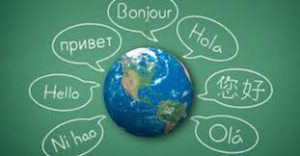
Here in the Caribbean, we must contend with the above 4 primary languages, plus a number of Creole spin-offs (think: Haitian Creole French and Papiamentu in the Dutch Caribbean). So we are not able to declare any one language standard. And this is OK, as we are ready for this Brave New World! We have spanned the globe and identified the best tools and techniques for managing a multilingual society.

In terms of tools, notice below this innovative technology being introduced in the North American marketplace, this year:

VIDEO 1 – Google Pixel Buds are wireless headphones that translate in real time – https://youtu.be/KE_DtGgovjc

Tech Insider

Published on Oct 4, 2017 – Google Pixel Buds are $160 wireless earbuds introduced during their October Pixel event. Designed to wrap around the back of a user’s neck, the headphones can use Google Assistant to answer questions and translate languages in real-time.

——–

VIDEO 2  – See how Pixel Buds translate languages on the fly – https://youtu.be/B_BQjRs94ec

CNET

Published on Oct 5, 2017 – Read the CNET review article here – http://cnet.co/2yJA95f
CNET’s Lexy Savvides and Sean Hollister try out the real-time translation feature for Google’s new Pixel Buds.

In terms of techniques, since our Caribbean territory is not the first region to contend with a multilingual population – and we will not be the last – we have great role models to consider.

The book Go Lean…Caribbean presents … Canada as such; a great role model that provides lessons-learned for a multilingual society. The Go Lean book – available to download for free – serves as a roadmap for the introduction and implementation of the technocratic Caribbean Union Trade Federation (CU), for the elevation of Caribbean society – for all 30 member-states – to foster a “Pluralistic Democracy”. The reference to Canada’s role-model continues further:

  • 10 Lessons from Canada’s History (Page 146)
    #3 – Multiple Cultural Legacies and Languages
    Canada is officially bilingual (English/French) & multicultural at the federal level. The need to structure legal frameworks for diversity was a compelling motivation for confederation, (and an example for the CU to model). The[ir] constitution allows for individual provinces to reflect realities of their populations & cultural differences.

VIDEO 3 – O Canada in 11 different languages – https://youtu.be/1jROsqdrLdk

Published on Jul 1, 2017 – Canada’s national anthem sung in 11 different languages

»»»»»»»»»»»»»»»»»»

For more than 75 years, CBC News has been the source Canadians turn to, to keep them informed about their communities, their country and their world. Through regional and national programming on multiple platforms, including CBC Television, CBC News Network, CBC Radio, CBCNews.ca, mobile and on-demand, CBC News and its internationally recognized team of award-winning journalists deliver the breaking stories, the issues, the analyses and the personalities that matter to Canadians.

This vision is very though-provoking for the Caribbean. It asserts that if we want to elevate our societal engines then we must do the heavy-lifting of reforming our value systems or our community ethos – the spirit that informs our beliefs, customs and practices –  to embrace all people in the region – despite the language – into an integrated brotherhood. This is the charter of the CU/Go Lean roadmap; it has these 3 prime directives:
  • Optimization of the economic engines in order to grow the regional economy to $800 Billion and create 2.2 million new jobs.
  • Establishment of a security apparatus to ensure public safety and protect the resultant economic engines.
  • Improve Caribbean governance to support these engines, including a separation-of-powers between the member-states and CU federal agencies.

The Go Lean book provides 370-pages of turn-by-turn instructions on “how” to adopt new community ethos, plus the strategies, tactics, implementations and advocacies to execute so as to reboot, reform and transform the societal engines of Caribbean society. There is a lot of consideration in the book for optimizing communications to the masses. Consider the Chapter excerpts and headlines from this sample on Page 186 entitled:

10 Ways to Improve Communications

1 Lean-in for the Caribbean Single Market & Economy (CSME) Initiative: Caribbean Union Trade Federation (CU).
2 CU Defense Pact: State Militias & Naval Operations
The collective security agreement of the CU will allow the creation of a Homeland Security Department, to defend the member states against all enemies, foreign and domestic. The size of the CU market will allow it to afford cutting edge equipment, systems and training …
3 Media Industrial Complex

The CU will oversee the radio spectrum used for radio, television and satellite communications. The radio spectrum must be regulated on a regional level, because the islands are so close to each other and foreign states, that there must be coordination of the common resource pool – the spectrum is limited. This FCC-style (USA) oversight will also extend to internet broadband (wireless & wire-line) governance. With the CU’s financial reforms, the emergence of card-based and e-payment systems will allow for the full exploitation of the media business models. Also, the CU, through licensing, can mandate a certain amount of programming of the educational, inspirational and public service variety.

4 4 Simultaneous Languages – SAP-type Channels

The technology used for SAP (Secondary Audio Programming) channels will be deployed extensively to cover all four languages (Dutch, English, French and Spanish) in broadcasts to multi-state markets. Official websites, by the CU administration will be published in the four languages and this practice encouraged for private websites.

5 Public Broadcasting
6 Press Secretary / Public Relations Officers
7 Journalism Industry Certifications
8 Libel and Slander Due Process
9 Internet & Social Media
10 Libraries and Archives

The CU will build and maintain libraries throughout the region, in a hub-and-spoke fashion. The central library, in the CU’s capital seat, will maintain the domain for all the official archives for the governmental administration, and then further provide intranet access to all the satellite library branches. The libraries are also pivotal for e-Learning in the CU.

In order to ensure success for the Caribbean’s future, the region must foster a better landscape for communicating to all people everywhere. (This includes sign-language for the hearing-impaired as well). Imagine hurricane and tsunami warnings, lives could be at stake!

Yes, this Go Lean roadmap considers the heavy-lifting of structuring Caribbean society to be a “Pluralistic Democracy”. This is far better than the unsustainable status quo. “Unsustainable” is an understatement; we have a crisis; we are bleeding our populations front-and-center. Communicating with our citizens in their Mother Tongue does feel more welcoming. There are direct references to jobs as well, with this multilingual advocacy.

The Go Lean book describes (Page 212) the Call/Contact Center industry that can be fostered in the Caribbean. Wherever there are people speaking the same language, local Caribbean Call Centers can be utilized to communicate with these people. The book specifically identifies 12,000 new …

Direct and indirect jobs at physical and virtual call centers

Imagine telemarketing, collections and customer service calls to Dutch-speaking people in Amsterdam … from Aruba. Or calls to French Canadians … from Martinique. This multilingual-based industry helps the people in the Caribbean to prosper where planted.

This – a “Pluralistic Democracy” – is indeed a Brave New World.

  • Welkom – Dutch
  • We welcome it – English
  • Bienvenue – French
  • Bienvenido – Spanish

Now is the time for all stakeholders in the Caribbean – in all language groups – to lean-in to this Go Lean roadmap. We can  just be ourselves, speaking our Mother Tongue. This is pivotal for our quest for a “Pluralistic Democracy”; this commentary is the final Part 3 of the 3-part series on this subject. The full collection is as follows:

  1. Making a “Pluralistic Democracy” – Respect for Diwali
  2. Making a “Pluralistic Democracy” – Freedom of Movement
  3. Making a “Pluralistic Democracy” – Multilingual Realities

Yes. this “Pluralistic Democracy” vision is a BIG deal, yet it is conceivable, believable and achievable for making the Caribbean homeland better to live, work and play. 🙂

Download the free e-Book of Go Lean … Caribbean – now!

Sign the petition to lean-in for the roadmap for the Caribbean Union Trade Federation.

———–

Appendix – Caribbean Population and Language Distribution

Member Language Population Dutch English French Spanish
Anguilla English 13,477 13,477
Antigua and Barbuda English 85,632 85,632
Aruba Dutch 106,000 106,000
Bahamas English 342,000 342,000
Barbados English 279,000 279,000
Belize English 320,000 320,000
Bermuda English 67,837 67,837
British Virgin Islands English 24,000 24,000
Cayman Islands English 56,000 56,000
Cuba Spanish 11,236,444 11,236,444
Dominica English 72,660 72,660
Dominican Republic Spanish 9,523,209 9,523,209
Grenada English 110,000 110,000
Guadeloupe French 405,500 405,500
Guyana English 772,298 772,298
Haiti French 9,035,536 9,035,536
Jamaica English 2,825,928 2,825,928
Martinique French 402,000 402,000
Montserrat English 4,488 4,488
Netherlands Antilles
(Bonaire, Curaçao, Saba, St. Eust, St Maarten)
Dutch 231,834 231,834
Puerto Rico Spanish 3,994,259 3,994,259
Saint Barthélemy French 8,938 8,938
Saint Kitts and Nevis English 42,696 42,696
Saint Lucia English 160,765 160,765
Saint Martin French 35,925 35,925
Saint Vincent and the Grenadines English 120,000 120,000
Suriname Dutch 472,000 472,000
Trinidad and Tobago English 1,305,000 1,305,000
Turks and Caicos Islands English 36,600 36,600
US Virgin Islands English 108,848 108,848
Totals 42,198,874 809,834 6,747,229 9,887,899 24,753,912
Percentage 100.00% 1.92% 15.99% 23.43% 58.66%

 Source: Page 66 of book Go Lean … Caribbean; Published November, 2013.

Share this post:
, , , ,
[Top]

ENCORE: It’s a FAMUly Affair

It’s Homecoming 2017 at Florida Agriculture & Mechanical University (FAMU). Time to reflect …

CU Blog - It's a FAMUly Affair - Photo 1

There have been many considerations of the FAMU eco-system, the FAMU Family or FAMUly. The university is a fine model for what the Caribbean needs to do to elevate our society, to facilitate social mobility. This is an ENCORE of a previous blog-commentary from March 6, 2015 highlighting the school’s contribution to American society.

FAMU was established as an educational institution in 1887, so this Homecoming is the 130th anniversary for the school. Over the years, there have been some excellent individual contributors; consider the following 2 obituaries of impactful influencers:

https://goleancaribbean.com/blog/?p=12542 Dr. Thomas W. Mason – FAMU Professor & STEM Influencer – RIPA computer scientist, who happened to be Black, he worked on the networking efforts that became today’s Internet. He passed on this vision and his passion to his students and the whole FAMUly.
https://goleancaribbean.com/blog/?p=6593 Dr. Sybil Mobley – FAMU’s Business School Dean – RIPThis Dean’s impact was that societal elevation with her mission to embed Black Americans in the conference rooms and board rooms of major corporations. She molded, prepared, energized and guided the best-of-the-best of Black America (many of Caribbean heritage as well; this writer included) and sent them off to impact the corporate world.

CU Blog - Its a FAMUly Affair - Photo 2

With the participation of these FAMU advocates – and others – the university has assumed it position at the pinnacle of Historically Black Colleges & Universities (HBCU). But the university  considers itself more than just an educational institution, but rather a family, the FAMUly. Keep in mind that the FAMU life is not only hard work, it is fun too. See the VIDEO here depicting the commitment, dedication, love and joyality of the FAMUly:

VIDEO – A FAMUly Reunion – Homecoming 2017 – https://youtu.be/J32plKqmqK8

Published on October 3, 2017


The FAMU experience is demonstrative to the Caribbean on how to optimize the effort to live, work, learn and play. Our Caribbean needs this role model example. See this portrayed in the ENCORE of the original blog-commentary here:

———–

Go Lean Commentary – FAMU is No. 3 for Facilitating Economic Opportunity

This commentary is a big proponent of a college education for Caribbean citizens.

This commentary is a big opponent of a college education for Caribbean citizens in American colleges and universities. The reason for the ambivalence on college education is consistent: the benefit of social mobility; facilitating new economic opportunities. We need this upward mobility for Caribbean citizens but in the Caribbean.

CU Blog - FAMU is No. 3 for Facilitating Economic Opportunity - Photo 1Some institutions are better at facilitating social mobility than others. On the National List of institutions, Florida Agriculture and Mechanical University (FAMU) stands out. It is #3 on the list.

In the interest of full disclosure, this writer is a Rattler, an alumnus of FAMU. (The mascot for FAMU athletics is ‘Rattlers’).

The chief goal of the Social Mobility Index (SMI), according to their website, is to stimulate policy changes within US higher education to help arrest the dangerous and growing economic divergence between rich and poor in the country. The gap in the US between rich and poor grew since the Great Recession, reaching proportions not seen since the period leading to and contributing to the onset of the Great Depression and two world wars. The common attributes include crumbling infrastructure, destroying asset values, and forcing high taxation to pay for war efforts.

If we learned anything from the global fallout of the Great Recession (in 2008 and beyond), it was that getting economic policy right in the US may be necessary for long-term world stability. So while the much publicized student debt overhang, now in excess of $1 trillion, imposes distress and financial burden on millions of students and families, it is a symptom of the much greater problem of economic and social divergence in the country. The good news is that colleges and universities carry great potential to powerfully address this problem.

Economist Thomas Piketty stated: “the principal force for convergence [reduction of inequality] – the diffusion of knowledge – …depends in large part on educational policies, access to training and to the acquisition of appropriate skills, and associated institutions.” – Capital in the 21st Century, pp. 21-2. The SMI asserts that if colleges can begin aggressively shifting policy towards increasing access to higher education, particularly for economically disadvantaged students and families, they will establish themselves as a key force for economic and social convergence.

FAMU has accomplished this feat; placing #3 on a ranking of universities pursuing this endeavor.

The full article of the recognition of FAMU’s SMI  is provided here:

Title: Social Mobility Index Ranks FAMU as No. 3 Institution in the Nation for Facilitating Economic Opportunity for Underserved Students
(Source: FAMU News and Events Site – Official Communications – Posted 11-01-2014; retrieved 03-05-2015 from http://www.famunews.com/?p=2153)
CU Blog - FAMU is No. 3 for Facilitating Economic Opportunity - Photo 3TALLAHASSEE, Fla. – The Social Mobility Index (SMI) has ranked Florida Agricultural and Mechanical University (FAMU) the No. 3 institution in the nation for facilitating economic opportunity for underserved students. The University outpaced the nation’s leading Ivy League institutions such as Princeton, Harvard and Yale, which placed 360th, 438th and 440th, respectively, on the rankings list.

The SMI is a new, data-driven ranking system, focused on the problem of economic mobility in the United   States. Rankings are based upon an institution’s tuition rate, student economic profile, graduation rate, average early career salary, and endowment.

According to SMI data analyses, FAMU ranks high in its contributions toward narrowing  socio-economic gaps by admitting and graduating more low-income students at lower tuition rates, yet with better economic outcomes following graduation. The University is noted on the SMI as having one of the lowest annual tuition rates in the nation.

“We are excited about the SMI recognition,” said President Elmira Mangum, Ph.D. “This new ranking speaks to FAMU’s 127-year legacy of providing access and opportunity to low-wealth citizens across the nation.”

“This ranking also speaks to our strong and unwavering commitment to economic empowerment. Many of our students come to FAMU with the odds stacked against them; however, they leave our institution with a high-quality education, a promising future, and the ability to be effective contributors to society, and, more specifically, to their families,” Dr. Mangum added.

Nearly 92 percent of FAMU students are considered low-income, according to SMI data. However, graduates are leaving the University earning an average salary of nearly $45,000 a year.

CU Blog - FAMU is No. 3 for Facilitating Economic Opportunity - Photo 2

For more information on the SMI ranking, visit: www.socialmobilityindex.org.

The book Go Lean…Caribbean posits, along with most economists, that education elevates individuals and entire communities. The book quotes that every year of additional community education raises GDP by 1 percent. Go Lean stakes the claim further that traditional college educated career paths have been disastrous policies for the Caribbean in whole, and for each specific country in particular, for the primary reason that so many students do not return home; or expatriate after returning for a short period. In fact, the World Bank has reported that the Caribbean has a 70% abandonment rate.

In line with the SMI ranking, the Go Lean book promotes education among the strategies to elevate Caribbean society. But this commentary previously asserted that college education has been a bad investment for the Caribbean.

From a strictly micro perspective, college education is great for the individual. The Go Lean book quotes proven economic studies showing the impact that every year of college education improves an individual’s earning power (Page 258). But from the macro perspective – the community – is different for the Caribbean; the region loses out because of an incontrovertible brain drain. Previously, the proverb was introduced of “fattening frogs for snake” referring to the preponderance for Caribbean college educated citizens to abandon their tropical homelands for foreign shores in the US, Canada and Europe, and take their Caribbean-funded education and skill-sets with them.

Change has now come. The driver of this change is technology and globalization. Under the tenants of globalization, institutions like FAMU are competing globally, and can rightly provide e-Learning and Distant Learning schemes. This ties to the other agent of change of technology. The internet allows for deliveries of education services anywhere around the world. The Go Lean book posits that small institutions and big institutions can complete equally on a global basis. If the regional education administrations could invest in more technological deliveries, it would be a win-win for all stakeholders. This type of impact would be more for the Greater Good.

The Go Lean roadmap provides turn-by-turn directions on how to reform the Caribbean tertiary education systems, economy, governance and Caribbean society as a whole. The roadmap commences with a Declaration of Interdependence, pronouncing the approach of regional integration (Page 12 & 14) as a viable solution to elevate the region’s educational opportunities:

xix. Whereas our legacy in recent times is one of societal abandonment, it is imperative that incentives and encouragement be put in place to first dissuade the human flight, and then entice and welcome the return of our Diaspora back to our shores

xxi. Whereas the preparation of our labor force can foster opportunities and dictate economic progress for current and future generations, the Federation must ensure that educational and job training opportunities are fully optimized for all residents of all member-states, with no partiality towards any gender or ethnic group. The Federation must recognize and facilitate excellence in many different fields of endeavor, including sciences, languages, arts, music and sports. This responsibility should be executed without incurring the risks of further human flight, as has been the past history.

xxvii. Whereas the region has endured a spectator status during the Industrial Revolution, we cannot stand on the sidelines of this new economy, the Information Revolution. Rather, the Federation must embrace all the tenets of Internet Communications Technology (ICT) to serve as an equalizing element in competition with the rest of the world. The Federation must bridge the digital divide and promote the community ethos that research/development is valuable and must be promoted and incentivized for adoption.

This book Go Lean… Caribbean, serves as a roadmap for the introduction and implementation of the Caribbean Union Trade Federation (CU). This represents change for the region. The CU/Go Lean roadmap has 3 prime directives:

  • Optimization of the economic engines in order to grow the regional economy.
  • Establishment of a security apparatus to protect the resultant economic engines.
  • Improve Caribbean governance to support these engines.

The Go Lean book details how education is a vital consideration for Caribbean economic empowerment, but with lessons-learned from all the flawed decision-making in the past, both individually and community-wise. The vision of the CU is a confederation of the 30 member-states of the Caribbean to do the heavy-lifting of championing better educational policies. No more government scholarships; forgive-able loans only from now on. The book details the policies; and other ethos to adopt, plus the executions of the following strategies, tactics, implementations and advocacies to deploy online education in the region:

Community Ethos – Deferred Gratification Page 21
Community Ethos – People Respond to Incentives Page 21
Community Ethos – Job Multiplier Page 22
Community Ethos – Lean Operations Page 24
Community Ethos – Return on Investments (ROI) Page 24
Community Ethos – Ways to Impact the Future Page 26
Community Ethos – Ways to Foster Genius Page 27
Community Ethos – Ways to Help Entrepreneurship Page 28
Strategy – Mission –   Facilitate Education without Risk of Abandonment Page 45
Tactical – Separation of Powers – Education Department Page 85
Tactical – Separation of Powers – Labor Department – Job   Training Page 89
Planning – Lessons Learned from 2008 Page 136
Advocacy – Ways to Grow the Economy Page 151
Advocacy – Ways to Create Jobs Page 152
Advocacy – Ways to Improve Education Page 159
Advocacy – Ways to Impact Student Loans Page 160
Advocacy – Ways to Improve Governance Page 168
Advocacy – Ways to Better Managed the Social Contract – Education Optimizations Page 170
Advocacy – Ways to Improve Libraries Page 187
Appendix – Education and Economic Growth Page 258
Appendix – Measuring Education Page 266
Appendix – Student Loan Crisis – Ripping Off America Page 286

FAMU is a model for the Caribbean tertiary educational endeavors.

FAMU has quite a reputation for other accomplishments as well – they are a great destination to live, work, learn and play. Their world famous band, the Marching 100 has been recognized as the “playingest band in the land”. They even shared the field with Prince as the Halftime performance for Super Bowl XLI in 2007 in Miami, Florida. See NewsVIDEO of their renown here; and also their 2011 Florida Classic Football Game Halftime Show in Orlando, Florida in the Appendix below.

VIDEOFAMU 2008 Segment on “CBS Evening News” – https://youtu.be/XqGvUg_rLNs


Posted November 27, 2008 – 2008 edition of the Marching 100… interview on Thanksgiving Night 2008 on CBS News… 11/27/08

Now is the time for all of the Caribbean, the people and governing institutions, to lean-in for the changes described in the book Go Lean … Caribbean. We welcome universities like FAMU in their desire to empower minorities in society; we only want that to be done in the Caribbean so as to mitigate societal abandonment. Suggestion: FAMU should develop a global campus presence, with satellite campuses and online matriculations.

Go Rattlers!!!

With the tune set by the Marching 100 band: “I’m so glad, I’m from FAMU”.

This is the win-win the Go Lean roadmap campaigns for. But it’s more than just talk; this is action too. The body part to focus on is not just the mouth; it is the heart – the seat of motivation. Without a doubt, the complete delivery for the Caribbean educational options would help to make the homeland a better place to live, work, learn and play. 🙂

Download the book Go Lean … Caribbean – now!

Appendix VIDEO – FAMU Marching 100 Halftime Show @ Florida Classic 2011 – http://youtu.be/FrviGJ1Dvvk

Uploaded on Nov 21, 2011 – The FAMU Marching 100 Halftime Performance at The 2011 Florida Classic. Definitely the best band in the land.

Share this post:
, , ,
[Top]

Caribbean proposes new US-Caribbean trade initiative

Go Lean Commentary

The problem with socialism is that you eventually run out of other peoples’ money. – Margaret Thatcher CU Blog - Caribbean Island proposes new US-Caribbean trade initiative - Photo 1

Many Caribbean member-states feature a governmental structure of democratic socialism; (see Appendix below).

In some places, socialism is a bad word – think Venezuela – but other states feature an advanced prosperous country despite the socialism tag – think Canada. In general, socialism can be depicted as a scale with leftist communism on one end and right-wing capitalism on the other end. The observation and analysis of these varying states during good times and bad times is that the left-leaning socialism countries tend to suffer from a lot of societal abandonment, especially when things go bad, for the reason as described by Margaret Thatcher above. (Consider for example, the Caribbean island of Barbuda, before their recent disaster, there was no private land-ownership).

So many Caribbean member-states have “run out of other people’s money”, thus ensuring a crisis. Alas, this …

… crisis is a terrible thing  to waste – American Economist Paul Romer

The crisis in the Caribbean region right now is in response to Hurricanes Irma and Maria in September 2017 that have devastated many islands – think Puerto Rico, Barbuda and Dominica. It is a good time to re-think the affinity for democratic socialism. These natural disasters are forcing our region to re-think one of the hallmarks of capitalism; our policies on …

… Trade; American Trade to be exact.

Yet still, it becomes obvious what the problem is for so many Caribbean member-states, they seem to “just” want to spend other people’s money rather than do the heavy-lifting – Big Deal – of growing their own economy/wealth. Notice this theme in the news article here from the St. Lucia Times daily newspaper regarding the urgings of their Prime Minister Allen Chastanet:

Title: Prime Minister Chastanet proposes new US-Caribbean trade initiative

CU Blog - Caribbean Island proposes new US-Caribbean trade initiative - Photo 2On the side-lines of the UN General Assembly in New York, Prime Minister Allen Chastanet has been speaking to the American business network CNBC.

Prime Minister Chastanet discussed the recent hurricanes that have devastated parts of the Caribbean, rebuilding the Caribbean and Caribbean – US relations.

He said recent events have showed that the Caribbean needs to diversify in terms of its sources of food, pointing to a shutdown of the American hub for several days.

“The support has had to come from the south because while we were going through this, you had two hurricanes heading up north. And literally Miami was on a shutdown. So unfortunately the American hub got shutdown almost for ten days out of Miami.  And so it really has shown us that we need to diversify ourselves a bit and maybe look a bit more to Panama in terms of supplies of food,” Chastanet.

Chastanet said the resilience of the Caribbean is very strong and the region will band together to recover from the disasters.

Chastanet proposed the establishment of a new private sector led initiative what would allow US companies to invest in St Lucia tax free and have their resources sent back home without facing heavy US government taxes.

He said there are great investment opportunities in the Caribbean for American companies.

“Can we not get an incentive, and that’s what we’re in discussions with the US about, that if US companies invest into the Caribbean, that those investments in our books are always tax free that the US allow those funds to be repatriated back into the US tax-free, only on those investments. So 1, it accomplishes getting the funds back into the United States of America. It creates an avenue for the private sector to participate in this growth and brings a lot of money to the table, Chastanet said.

Prime Minister Chastanet is expected to address the UN General Assembly today.

Source: Posted September 21, 2017; retrieved October 11, 2017 from: https://stluciatimes.com/2017/09/21/prime-minister-chastanet-proposes-new-us-caribbean-trade-initiative

As related, the Prime Minister of St. Lucia – also Chairman of the Organization of Eastern Caribbean States and a governing stakeholder of CariCom – wants to “count America’s money”! He is lobbying for a law – in the US – in which American investors will have tax concessions on their tax obligations to the US Treasury. (There would be no benefit to the US in this scheme).

He is the Chief Executive of a Caribbean member-state urging the US government to skip on their revenue collections so as to benefit the Caribbean; in effect he is “counting” America’s government revenues. See the full interview in the Appendix VIDEO below.

It should be noted that there is no such bill in the US Congress proposing these measures; so this is not lobbying. Rather the imagery of this whole appeal is just that of a foreign Head of Government begging for money with a sign that reads:

“Will NOT work for food”.

CU Blog - OECS diplomat has dire warning for Caribbean countries - Photo 3

No, this is not the branding or image we should want to project to the watching world. But rather, the Honorable Prime Minister’s earlier words reflect the ethos we really need to portray:

Chastanet said the resilience of the Caribbean is very strong and the region will band together to recover from the disasters.

Rather than looking to the US to solve our problems, we want to band together – an interdependence – and work for our own remediation. This is the theme of the book Go Lean…Caribbean and the accompanying blog-commentaries. “Band together” should have been the only appeal at the United Nations. These words should have been echoed in public forums and private discussions with other Caribbean leaders. The Go Lean movement describes this “banding” as a confederation of the 30 Caribbean member-states, including the 2 US Territories of Puerto Rico and the US Virgin Islands. This formation of a Single Market and accompanying Security Pact would usher in the economic empowerments and security/emergency optimization that the region needs.

The book Go Lean…Caribbean – available to download for free – serves as a roadmap for the introduction and implementation of this confederation, the technocratic Caribbean Union Trade Federation (CU). This complex organization structure is designed for the elevation of Caribbean society – for all member-states. This CU/Go Lean roadmap has these 3 prime directives:
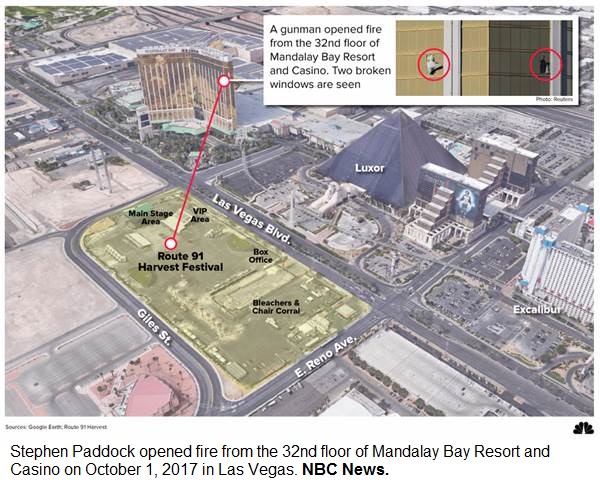
  • Optimization of the economic engines in order to grow the regional economy to $800 Billion and create 2.2 million new jobs.
  • Establishment of a security apparatus to ensure public safety and protect the resultant economic engines.
  • Improve Caribbean governance to support these engines, including a separation-of-powers between the member-states and CU federal agencies. This includes Self-Governing Entities, bordered campuses that practice pure capitalism.

The book stresses that reforming and transforming the Caribbean societal engines can be successful, but only if it is a regional pursuit – all the member-states band together. This was an early motivation for the roadmap, as pronounced in the opening Declaration of Interdependence (Pages 12 – 13):

i.   Whereas the earth’s climate has undeniably changed resulting in more severe tropical weather storms, it is necessary to prepare to insure the safety and security of life, property and systems of commerce in our geographical region. As nature recognizes no borders in the target of its destruction, we also must set aside border considerations in the preparation and response to these weather challenges.

xi. Whereas all men are entitled to the benefits of good governance in a free society, “new guards” must be enacted to dissuade the emergence of incompetence, corruption, nepotism and cronyism at the peril of the people’s best interest. The Federation must guarantee the executions of a social contract between government and the governed.

xvi. Whereas security of our homeland is inextricably linked to prosperity of the homeland, the economic and security interest of the region needs to be aligned under the same governance. Since economic crimes … can imperil the functioning of the wheels of commerce for all the citizenry, the accedence of this Federation must equip the security apparatus with the tools and techniques for predictive and proactive interdictions.

xxiv. Whereas a free market economy can be induced and spurred for continuous progress, the Federation must install the controls to better manage aspects of the economy: jobs, inflation, savings rate, investments and other economic principles. Thereby attracting direct foreign investment because of the stability and vibrancy of our economy.

Our appeal to the PM of St. Lucia and to the leaders of all the other member-states:

This is not our first hurricane nor will it be our last. We must recover from these ones and be prepared for others, a lot more of them. “Begging” should not be our recovery plan!

On the other hand, the Go Lean book provides 370-pages of turn-by-turn instructions on “how” to adopt new community ethos, plus the strategies, tactics, implementations and advocacies to execute so as to reboot, reform and transform the societal engines of Caribbean society.

The branding of the CU is a Trade federation, so there is emphasis for optimizing trade for the Caribbean region. Yes, there is tactical plan to establish trade routes beyond Miami-to-the-Caribbean. The Go Lean roadmap posits that with the close proximity of Trinidad to the South American country of Venezuela (7 miles), there could be an elaborate network of transportation options to facilitate the shipment of goods (and passengers) into the Singe Market.

This roadmap is a Big Deal / Big Idea for the Caribbean region; in many ways, the community commitment for the Caribbean may be similar to the American commitment in the 1960’s to Go to the Moon. The Go Lean book relates this on Page 127:

The Bottom Line on Kennedy’s Quest for the MoonOn 25 May 1961, US President John F. Kennedy announced his support for the American Space program’s “Apollo” missions and redefined the ultimate goal of the Space Race in an address to a special joint session of Congress:

  • “I believe that this nation should commit itself to achieving the goal, before this decade is out, of landing a man on the moon and returning him safely to the earth”.

His justification for the Moon Race was both that it was vital to national security and that it would focus the nation’s energies in other scientific and social fields.

This quest was succeeded. At 10:56 pm EDT, on 20 July 1969, the first human (American Astronaut Neil Armstrong) ventured out of the Apollo 11 landing craft and set foot on the Moon declaring: “one small step for man, one giant leap for mankind“.

Other countries have had subsequent moon landings.

Can we get the support of the Prime Minister of St. Lucia and the other Heads of Government throughout the whole region for our “Moon Shot” equivalent, our Big Deal / Big Idea? This is the actual title of one advocacy in the Go Lean book. Consider the specific plans, excerpts and headlines here from Page 127, entitled:

10 Big Ideas … in the Caribbean Region

1

Lean-in for the Caribbean Single Market
The CU is a big idea for the Caribbean, our parallel of the American “moon quest”, allowing for the unification of theregion into one market of 42 million people. This creates the world’s 29th largest economy, based on 2010 figures.The pre-ascension GDP figures are actually less that $800 Billion, but the aggregation into a Single Market willmanifest the economic “catch-up” principle, in 5 years. Further, after 10 years the CU’s GDP should double andrank among the Top 20 or G20 nations.

2

Currency Union / Single Currency

3

Defense / Homeland Security Pact

4

Confederation Without Sovereignty

5

Four Languages in Unison

6

Self-Governing Entities (SGE)

7

Virtual “Union Atlantic Turnpike” Operations
Ferries, Causeways/Bridges, Pipelines, Tunnels, Railways and limited access highways will function as “blood vessels to connect all the organs” within the region, thus allowing easier transport of goods and people among the islands and the mainland states (Belize, Guyana or Suriname) – See Appendix IC Alaska Marine Highway [on Page 280].

8

Cyber Caribbean
Forge electronic commerce industries so that the Internet Communications Technology (ICT) can be a great equalizer in economic battles of global trade. This includes e-Government (outsourcing and in-sourcing for member-states systems) and e-Delivery, Postal Electronic Last Leg mail, e-Learning and wireline/wireless/satellite initiatives.

9

e-Learning – Versus – Studying Abroad

10

Cuba & Haiti

There have been a number of blog-commentaries by the Go Lean movement that highlighted the art and science of optimizing our eco-system for “Trade and Transport”. See a sample list here:

https://goleancaribbean.com/blog/?p=13140 Region-wide Industrial Reboot of Caribbean Pipelines
https://goleancaribbean.com/blog/?p=12322 Ferries 101 – Launch of a Region-wide Inter-Island Ferry System
https://goleancaribbean.com/blog/?p=9179 The Vision of Ferries for Snowbirds to Head South
https://goleancaribbean.com/blog/?p=4897 Plan for Natural Gas Distribution for Caribbean Consumption
https://goleancaribbean.com/blog/?p=3225 Caribbean is Less Competitive Due to Increasing Aviation Taxes
https://goleancaribbean.com/blog/?p=829 Facilitating Trade with Trucks and Trains
https://goleancaribbean.com/blog/?p=673 Future Model: Ghost Ships – Autonomous Cargo Vessels

In summary, it is only logical to expect any stewards of society to “corral” the resources, assets and people of the community to effect change, to elevate. On the other hand, it is not logical to expect others to do it for us. This is a child’s expectation for his/her parents. This is inappropriate for independent Caribbean member-states. The aforementioned Economist, Paul Romer, asserted the appropriate strategic plan:

“Economic growth occurs whenever people take resources and re-arrange them in ways that are more valuable”.

Obviously, this economist was advocating a capitalist agenda, in contrast to the democratic socialism practice in the region.

There is only a 7-mile strait between the Caribbean island Trinidad of and its southern neighbor. It is only logical to consider that trade route when the northern route – Miami – is impeded. Such a tactical plan will allow for resiliency for post-disaster scenarios. A potpourri of transportation options – Union Atlantic Turnpike – to facilitate interstate commerce among the islands and coastal states is a better plan than begging for other people’s money.

To all you Caribbean leaders: Do not be surprised when a hurricane hits. Count on it! There will be more … such scenario’s. Climate Change is undeniable! Destructive storms will manifest! Bad actors will emerge. There is a need for security empowerments along with economic empowerments. The economic solution for the Caribbean cannot be: Counting other people’s money.

Now is the time for all of the Caribbean – the leaders and the people – to lean-in for the empowerments described here in the book Go Lean…Caribbean. It is conceivable, believable and achievable to prosper ourselves where planted here in the region; to reform and transform and make our own homeland a better place to live, work and play. 🙂

Download the free e-Book of Go Lean … Caribbean – now!

Sign the petition to lean-in for this roadmap for the Caribbean Union Trade Federation.

———–

Appendix VIDEO – Saint Lucia PM Allen Chastanet: Caribbean Needs To Diversify Search For Relief | CNBC – https://youtu.be/asg87s29c4E

Published on Sep 20, 2017 – Allen Chastanet, Prime Minister of Saint Lucia, talks about rebuilding the hard-hit Caribbean after recent storms left the islands devastated. Also Prime Minister Chastanet addresses insurance coverage.

———–

Appendix – Democratic Socialism

Democratic socialism is a political ideology that advocates political democracy alongside social ownership of the means of production, often with an emphasis on democratic management of enterprises within a socialist economic system.

Democratic socialists see capitalism as inherently incompatible with the democratic values of liberty, equality and solidarity; and believe that the issues inherent to capitalism can only be solved by superseding private ownership with some form of social ownership. Ultimately, democratic socialists believe that reforms aimed at addressing the economic contradictions of capitalism will only cause more problems to emerge elsewhere in the economy, that capitalism can never be sufficiently “humanized” and that it must therefore ultimately be replaced with socialism.[1][2]

Democratic socialism is distinguished from both the Soviet model of centralized socialism and from social democracy, where “social democracy” refers to support for political democracy; the nationalization and public ownership of key industries but otherwise preserving and strongly regulating, private ownership of the means of production; regulated markets in a mixed economy; and a robust welfare state.[3] The distinction with the former is made on the basis of the authoritarian form of government and centralized economic system that emerged in the Soviet Union during the 20th century,[4] while the distinction with the latter is made on the basis that democratic socialism is committed to systemic transformation of the economy while social democracy is not.[5]

The term “democratic socialism” is sometimes used synonymously with “socialism” and the adjective “democratic” is often added to distinguish it from the LeninistStalinist and Maoist types of socialism, which are widely viewed as being non-democratic in practice.[6]

Democratic socialism is not specifically revolutionary or reformist, as many types of democratic socialism can fall into either category, with some forms overlapping with social democracy, supporting reforms within capitalism as a prelude to the establishment of socialism.[7] Some forms of democratic socialism accept social democratic reformism to gradually convert the capitalist economy to a socialist one using pre-existing democratic institutions, while other forms are revolutionary in their political orientation and advocate for the overthrow of the bourgeoisie and the transformation of the capitalist economy to a socialist economy.[8]

Relation to economics

Democratic socialists have espoused a variety of different socialist economic models. Some democratic socialists advocate forms of market socialism where socially-owned enterprises operate in competitive markets and in some cases are self-managed by their workforce. On the other hand, other democratic socialists advocate for a non-market participatory economy based on decentralized economic planning.[38]

Democratic socialism has historically been committed to a decentralized form of economic planning opposed to Stalinist-style command planning, where productive units are integrated into a single organization and organized on the basis of self-management.[39]

Contemporary proponents of market socialism have argued that the major reasons for the failure (economic shortcomings) of Soviet-type planned economies was the totalitarian nature of the political systems they were combined with, lack of democracy and their failure to create rules for the efficient operation of state enterprises.[40]

Source: Retrieved October 11, 2017 from: https://en.wikipedia.org/wiki/Democratic_socialism

CU Blog - Caribbean Island proposes new US-Caribbean trade initiative - Photo 3

CU Blog - Caribbean Island proposes new US-Caribbean trade initiative - Photo 4


Share this post:
, , ,
[Top]

ENCORE: The Requirement for Better Security – ‘Must Love Dogs’

One Minute Las Vegas Was Rocking; the Next It Was ‘World War III’ – Report of October 1, 2017 attack at a Country Music Festival
CU Blog - Must Love Dogs ENCORE - Photo 1

It is obvious that tourism and terrorism do not “make good dance partners”. Las Vegas enjoys 47 million tourists year, but with last night’s terrorist attack, there may be the need for some security enhancements at tourist and festival venues.

This is the similar awareness after the May 2017 attack at the Ariana Grande concert in Manchester, England

… and the June 2016 Pulse Night Club shooting in Orlando, Florida.

The advocacy from the lessons-learned from all of these events is “Want Better Security? Must Love Dogs“. There are opportunities for bomb-sniffing and gun-sniffing dogs at venues and surrounding areas. This is the exact theme of a previous blog-commentary. Here is an ENCORE of that commentary:

———————

Go Lean Commentary – Want Better Security? Must Love Dogs

So you want to secure your homeland against terror and other threats? Here’s a key requirement:

‘Must Love Dogs’

This is so true; man’s best friend can also be our best partner for mitigating threats of terroristic acts in public places. This is common sense … now that we have seen how devious the terrorists can be, exploiting soft targets right outside any hard target zones.

This is a fresh concern as there was a terrorist attack at the Manchester Arena in Manchester, England last night (May 22, 2017). The attacker was an ISIS-backed suicide bomber who positioned himself among the exiting concert-goers for a show at the Arena. (The artist is American teen pop-sensation Ariana Grande, a fan-favorite among teenage girls and boys). He detonated his “Improvised Explosive Device” (IED) right outside the security zone while people were exiting to leave. So far, the death toll is 22, with 59 injuries. See full details on the story, aftermath and investigation here:

ISIS Claims Responsibility for Manchester Concert Attack; 22 Dead

Manchester Arena – Situation Normal
CU Blog - 'Must Love Dogs' - Photo 4

CU Blog - 'Must Love Dogs' - Photo 3

CU Blog - 'Must Love Dogs' - Photo 2

Manchester Arena – Monday Night May 22, 2017

CU Blog - 'Must Love Dogs' - Photo 1

CU Blog - 'Must Love Dogs' - Photo 5

Expect more revelations of the motives and bitter consequences of this attack against “innocence”.

This is a matter of serious concern for planners of a new Caribbean. This is Terrorism 101; this is affecting the whole world and our world. Though this attack was far away from the Caribbean islands, it was not far away from Caribbean people, as related in a previous blog-commentary from the promoters of the book Go Lean…Caribbean, there is a large Caribbean Diaspora in Manchester.

The book Go Lean…Caribbean – available to download for free – serves as a roadmap for the introduction and implementation of the technocratic Caribbean Union Trade Federation (CU), for the elevation of Caribbean society – for all member-states. The book asserts that the needed security apparatus to better defend against the modern threats of terrorism is too much for any one Caribbean member-state alone. There must be a regional integrated and confederated solution. This CU/Go Lean roadmap has these 3 prime directives:

  • Optimization of the economic engines in order to grow the regional economy and create new jobs.
  • Establishment of a security apparatus to ensure public safety and protect the resultant economic engines.
  • Improve Caribbean governance to support these engines, including a separation-of-powers between the member-states and CU federal agencies.

The book stresses that reforming and transforming the Caribbean societal engines must be a regional pursuit. This was an early motivation for the roadmap, as pronounced in the opening Declaration of Interdependence (Pages 12 – 13):

x. Whereas we are surrounded and allied to nations of larger proportions in land mass, populations, and treasuries, elements in their societies may have ill-intent in their pursuits, at the expense of the safety and security of our citizens. We must therefore appoint “new guards” to ensure our public safety and threats against our society, both domestic and foreign. The Federation must employ the latest advances and best practices of criminology and penology to assuage continuous threats against public safety. …

xi. Whereas all men are entitled to the benefits of good governance in a free society, “new guards” must be enacted to dissuade the emergence of incompetence, corruption, nepotism and cronyism at the peril of the people’s best interest. The Federation must guarantee the executions of a social contract between government and the governed.

xvi. Whereas security of our homeland is inextricably linked to prosperity of the homeland, the economic and security interest of the region needs to be aligned under the same governance. Since economic crimes … can imperil the functioning of the wheels of commerce for all the citizenry, the accedence of this Federation must equip the security apparatus with the tools and techniques for predictive and proactive interdictions.

Is there anything more that could have been done to prevent this Manchester Terrorist Attack? Let the post-trauma analysis begin! For one, the planners of the new Caribbean security apparatus have always presented this ingredient to the recipe for security success:

Must love dogs!

- Photo 6

In a previous blog-commentary, it was related how specially-trained canines can help to better secure the Caribbean homeland. Consider this quotation:

The subject of animals and animal companionship is also pivotal in the roadmap for elevating Caribbean society, especially for the security engines. The Go Lean book posits (Page 185) that better command of Animal Husbandry can facilitate better security around the region’s economic engines. Dogs feel a lot less intrusive and less intimidating than formal security screening, or personnel patrolling with AK47 automatic rifles.  Imagine a beautiful Caribbean beach scene with a plain clothes “officer” walking along with specialty dogs, or more exactly:

  • Drug Sniffing Dogs
  • Bomb [and Gun] Sniffing Dogs
  • Service/Therapy Dogs

This is one implementation that could have been deployed to mitigate the terrorism threat in Manchester … and everyday here in the Caribbean. Yes, this is in hindsight; this is “Monday Morning Quarterbacking“. This is not fair to the 22 lives lost in Manchester, but this is most importantly a pledge, not to let those lives die in vain. Let’s apply the lessons-learned.

This implementation with service dogs is just one “how”. The Go Lean book provides 370-pages of turn-by-turn instructions on “how” to adopt new community ethos, plus the strategies, tactics, implementations and advocacies to execute so as to better ensure homeland security in the Caribbean region.

Consider this one chapter (and Case Study) … where the Go Lean book fully detailed the advocacy of Animal Husbandry; see  these headlines from Page 185:

Case Study: Trikos K9 Warriors
When the bombs went off at the Boston Marathon [in April 2013], highly trained dogs were rushed to the scene to search for more explosives. Boston Police have said dogs swept the streets in the morning and a second time just an hour before the first marathoners crossed the finish line. It’s considered likely that the bombers planted their devices well after the dogs finished sweeping the area. Since 9/11, dogs have been used more than ever because nothing has proven more effective against hidden bombs than the nose of a working dog. The best of them serve with U.S. Special Operations, so much of what they do is classified, but by looking at the trainers, Trikos K9 Warriors (www.trikos.com) – on a 20-acre ranch in rural Cooper, Texas – one gets a rare glimpse inside the secretive world of these elite dogs. Most of them are from one breed, Belgian Malinois.
Dogs and their handlers work as a team, train as a team, and they go through so much together their bond is as strong as a band of brothers. In Afghanistan, they led their units and protected them in battlefields littered with hidden bombs. Per former Navy SEAL and Trikos Founder Mike Ritland: “same thing that they do for [the troops] overseas, detect explosives, they can do on American streets; plus they can run faster than 30 miles an hour so they can help take down suspects”.
See Appendix below for VIDEO from CBS News Magazine “60 Minutes”.


10 Ways to Improve Animal Husbandry

1 Lean-in for Caribbean Integration
The CU treaty allows for the unification of the region into one market, thereby impaneling a federal layer for oversight of the economy and security of the 30 member-states and 42 million people. One CU mission is to facilitate better security around the region’s economic engines. Another mission is to make the Caribbean a better place to live, work and play. In considering the needs of the 42-million population, there must be some consideration for their animals. Beyond the CU overseeing food-supply regulations and spearheading the security benefits of employing specially trained service animals, the CU will spur philanthropy for more animal husbandry efforts, such as foundations advocating Spay/Neuter goals for dogs/cats. Lastly, the CU will coalesce with local authorities to ensure “dog parks” in urban/suburban areas.
2 Plantations for Bomb Sniffing Dogs
The CU assumes the responsibility to assuage systemic risks and economic crimes. This includes marshaling defensive support for events/festivals, against terrorism and cross border gangs. The US model of Trikos K9 Warriors will be adopted with Belgian Malinois dogs, to breed them on plantations and train them to detect and interdict explosives.
3 Cadaver Dogs / Drug Sniffing Dogs / Drug Sniffing Pigs
The CU will install plantations for dogs and pigs (Vietnamese Potbellies are especially acute) to train them to detect drugs/contraband and cadavers. The CU will maintain animals on-the-ready for acquisition by local and federal police.
4 Police K9 Units
Each member-state may currently have a platoon of K9 police dogs, but their average service life is less than 10 years. So there is always a constant need for service animals. These needs will henceforth be fulfilled locally within the region.
5 Horses for Mounted Police
Many polices forces have a Mounted Police Squad. These are especially critical for patrols at events and crowded locales. The CU will facilitate the acquisition and training of horses for the region’s Mounted Police units. These breeding and training plantations are ideal for rural area development, thus spurning an economic benefit.
6 Water Focus – Seals and Dolphins
Service animals are not only the land variety. There are aquatic mammals as well: seals and dolphins. These species are excellent for securing maritime and naval operations – the CU are all islands and coastal states. The best practice is to mount mobile cameras on these mammals and have them patrol a specified grid. The economies of scale of the CU will allow for the deployment of these creative solutions while any one member-state alone cannot justify the investment.
These deployments should not be secretive, but rather exposed to local/foreign media for image promotion.
7 Service Dogs for the Blind / Disabled – Domestic and Tourists
8 Comfort Animals for Therapies and Treatment
9 Bio-Medical Farms (Pigs, Baboons)
10 Agricultural Considerations – Animals for Foods

The Go Lean movement (book and preceding blog-commentaries) relate that security is not automatic, innate nor natural – Freedom is not Free. There is heavy-lifting involved in protecting the homeland for Caribbean stakeholders: residents and visitors. This point was detailed in these previous blog-commentaries:

https://goleancaribbean.com/blog/?p=11332 Boston Bombing Anniversary – Learning Lessons
https://goleancaribbean.com/blog/?p=10959 See Something, Say Something … Do Something
https://goleancaribbean.com/blog/?p=10566 Funding the Caribbean Security Pact
https://goleancaribbean.com/blog/?p=10222 Waging a Successful War on Terrorism
https://goleancaribbean.com/blog/?p=9072 Securing the Homeland – On the Ground
https://goleancaribbean.com/blog/?p=6103 Sum of All Fears – ‘On Guard’ Against Deadly Threats
https://goleancaribbean.com/blog/?p=5307 8th Violent Crime Warning to Bahamas Tourists
https://goleancaribbean.com/blog/?p=5002 Managing a ‘Clear and Present Danger’
https://goleancaribbean.com/blog/?p=1965 America’s Navy – 100 Percent – Model for Caribbean Regional Security
https://goleancaribbean.com/blog/?p=1832 American Drug-arrested inmates to be deported – Look-out Caribbean
https://goleancaribbean.com/blog/?p=1554 Status of Forces Agreement for Regional Security Pact
https://goleancaribbean.com/blog/?p=1487 Here come the Drones … and the Concerns
https://goleancaribbean.com/blog/?p=392 Jamaica received World Bank funds to help in crime fight

The quest of the Go Lean roadmap is to make the Caribbean homeland, a better place to live, work and play. This means measurable reduction (mitigating and remediation) of crime, interpersonal violence and systemic threats in the region. The Go Lean book presents a regional solution to remediate and mitigate crime and terrorism in the Caribbean, featuring details of strategies, tactics and implementations designed based on best-practices from around the world. The book’s vision is quite simple:

If we fail to plan, then we plan to fail.

The premise in the Go Lean book is that “bad actors” will always emerge, from internal and external origins. We must be prepared and on-guard to defend our homeland against all threats, foreign and domestic, including terrorism and interpersonal violence. Plus, we must accomplish this goal with maximum transparency, accountability, and commitment to due-process and the rule-of-law. Thusly, there is a place for many tools and techniques, think: closed-circuit TV (CCTV), dashboard and body cameras.

The title on this commentary – ‘Must Love Dogs’ – puns the title of the 2005 Movie of the same name. That movie was not about Terrorism nor about dogs. (It was about a couple who met through an internet dating site that matched their dog-loving profiles).

See a review of the movie here: http://www.rogerebert.com/reviews/must-love-dogs-2005.
CU Blog - 'Must Love Dogs' - Photo 0

Yes, we can – with our “love for dogs” – make our homeland a better-safer place to live, work and play. 🙂

Download the free e-Book of Go Lean … Caribbean – now!

Sign the petition to lean-in for this roadmap for the Caribbean Union Trade Federation.

—————

Appendix VIDEO – Sniffing Out Bombs: America’s most elite dogs – https://youtu.be/FsnPAQ137fY

Published on Apr 21, 2013 – Lara Logan gets a rare look into the secretive world of working dogs — some of whose capabilities are military secrets — and their handlers.

Share this post:
, , , ,
[Top]

ENCORE on Charity Management: Grow Up Already!

One year later, have we grown up anymore in that time?

Unfortunately, no!

There is still the need to Grow Up and manage our own affairs. This was detailed in a comprehensive commentary exactly one year ago today. Let’s Encore it here-now:

————————————————–

Go Lean Commentary – Charity Management: Grow Up Already!

cu-blog-charity-management-grow-up-already-photo-7“Don’t be a stock on the shelf” – Bob Marley: Pimpers Paradise – Album: Uprising – 1980.

What does the lyrics of this song mean? (See VIDEO here). The analysis is that it is poetic and prophetic. The song has a personal indictment and a community indictment. The lyrics directly address a young girl who stumbles into a party lifestyle; being victimized by abusers or “pimps”. The warning is that she would be considered nothing more than a commodity – to be counted on for illicit profits – rather than a real human with hopes and dreams. As for the community indictment, this submission on SongMeanings.com conveys an insightful point:

General Comment
I’ve always had the impression that this song is about Jamaica, Bob’s mother-country, and its contradictions, described through the technique of personification. If this were the case, most of the girl’s attributes and actions would refer to the whole community of Jamaicans and not to a single person, as it first appears. What makes this song so beautiful is the sadness, tenderness and pride of Marley’s lyrics and voice, as he describes his people’s use and abuse of drugs, its innate tendency to smile, have fun and carry on in spite of the poverty, violence and harshness which characterizes life in that country, and above all its vulnerability to the lies, deception and empty promises of politicians and elites in general, a vulnerability which forces most people into a lifelong submission and which gives this song its title.
By: dettawalker on April 19, 2015

There is a vulnerability to lies, deception and empty promises in the Caribbean. Other people have raised money under the guise of helping our region, but then only kept the monies for themselves … mostly. There is the need for philanthropy, charitable donations and community development, but we need to take the lead for this ourselves, rather than the potential of being victimized by others.

This is not a theory; this is a fact! Remember the $500 million raised by the American Red Cross to benefit Haiti after the 2010 Earthquake; the money mostly disappeared with little manifestation in Haiti. 🙁

Perhaps this is a by-product of the attitude of depending on “other peoples money”; this is so familiar in the Caribbean. For the past 50 years of Caribbean integration movements (West Indies Federation, Organization of Eastern Caribbean States and Caribbean Community or CariCom), the focus had been on soliciting aid – begging – from the richer North American and European nations.

Today, our message to Caribbean stakeholders is: Grow Up Already!

Truly, at what point is it expected that we would mature and take care of our own responsibilities?

Answer: Now! Half-pass now!

This point was eloquently conveyed in a previous blog-commentary, where it related how Caribbean member-states use “development funds” (International Aid) for budgetary support for the governments to fulfill their responsibilities in the Social Contract. As a reminder, this implied Social Contract refers to the arrangement where citizens surrender some of their freedoms and submit to the authority of the State in exchange for protection of remaining natural and legal rights. This contract authorizes the State to raise revenues from taxes and fees, but “one cannot get blood from a stone”. The 30 Caribbean member-states are mostly all Third World countries; they hover near the poverty line.

Yet still, the book Go Lean … Caribbean asserts it is high-time for this region to grow up and adapt best-practices to elevate our society. We can improve all societal engines: economics, security and governance. This theme is weaved throughout the Go Lean book which serves as a roadmap for the introduction and implementation of the technocratic Caribbean Union Trade Federation (CU). This Go Lean/CU roadmap has the vision of elevating Caribbean society by optimizing these engines. Observe the prime directives as published in the book:

  • Optimization of the economic engines in order to grow the regional economy to $800 Billion & create 2.2 million new jobs.
  • Establishment of a security apparatus to protect the resultant engines and mitigate internal and external “bad actors”.
  • Improvement of Caribbean governance to support these engines, including a separation-of-powers between the CU federal government and the member-states.

The Bible states …

… “anyone with ears to hear should listen and understand!” – Matthew 11:15; New Living Translation.

This does not mean that gleaning the wisdom of the fallacy of other people taking the lead for our development will eliminate our poverty. No; we are still a region of Third Word countries; that same Bible translation continues that “you will always have the poor among you” –  Matthew 26:11. We simply need to take the lead ourselves of soliciting aid, collecting the aid and managing the distribution of that aid and the resultant accountability. This is no “rocket science”; in fact, it is no science at all. It is mostly an art, and there are competent role models who perform these functions well; we only need to adapt their best-practices.

Consider this company Brewco Marketing; they consider themselves “the marketing vehicle for America’s most trusted brands”. This is a fitting analysis as this company currently conducts marketing campaigns to raise money to benefit impoverished people in several Caribbean countries, the Dominican Republic for example.

cu-blog-charity-management-grow-up-already-photo-9

cu-blog-charity-management-grow-up-already-photo-2

cu-blog-charity-management-grow-up-already-photo-1

cu-blog-charity-management-grow-up-already-photo-3

cu-blog-charity-management-grow-up-already-photo-8

cu-blog-charity-management-grow-up-already-photo-4

cu-blog-charity-management-grow-up-already-photo-6Brewco Marketing Group – see Appendix VIDEO below – is a leading experiential marketing company specializing in strategy, design, in-house fabrication, activation and program management. They provide these marketing services for other companies: for-profit corporations and not-for-profit charities. One such client is Compassion International, a Christian child sponsorship organization dedicated to the long-term development of children living in poverty around the world. They are headquartered in the US city of Colorado Springs, Colorado; but they function in 26 countries such as Bolivia, Colombia, Mexico, Haiti, Kenya, India and the Dominican Republic. According to the Wikipedia page on this charity, (retrieved September 12, 2016), this organization provides aid to more than 1,700,000 children.

Bravo Compassion International! See an example here of the type of faith-based advocacy Compassion International is conducting in our Caribbean region; in this case, the Dominican Republic: http://changetour.compassion.com/experience-dominican-republic/    

But, consider that Compassion International outsources to a for-profit marketing firm – Brewco – to solicit funding. What is Brewco’s motivation? Simple: Profit.

While not impugning any bad motives to Brewco or Compassion International, this commentary asserts for self-sufficiency, that “charity begins at home”. This is a basic prerequisite for a mature society.

This consideration aligns with the strategies, tactics, implementations and advocacies of the book Go Lean…Caribbean. The declaration is that the Caribbean must be front-and-center in providing for our own solutions. The alternative of someone else taking the lead for our solution, despite how altruistic the motives, seems to be lacking…every time! Consider this encyclopedia detail on criticism of “Child Sponsorship” charities:

Critics have argued that child sponsorship could alienate the relatively privileged sponsored children from their peers and may perpetuate harmful stereotypes about third-world citizens being helpless. They also claim that child sponsorship causes cultural confusion and unrealistic aspirations on the part of the recipient, and that child sponsorship is expensive to administer.[8][9] This latter problem has led some charities to offer information about a “typical” child to sponsors rather than one specifically supported by the sponsor. In some cases charities have been caught sending forged updates from deceased children.[10]

The Effective Altruism community – social movement that applies evidence and reason to determining the most effective ways to improve the world – generally opposes child sponsorship as a type of donor illusionGivewell – American non-profit charity evaluator – describes sponsorship thusly:[11]

  • Illusion: through an organization such as “Save the Children“, your money supports a specific child.
  • Reality: as “Save the Children” now discloses: “Your sponsorship contributions are not given directly to a child. Instead, your contributions are pooled with those of other sponsors to provide community-based programming for all eligible children in the area.”

Source: https://en.wikipedia.org/wiki/Child_sponsorship retrieved September 12, 2016

cu-blog-charity-management-grow-up-already-photo-5

This – reality of Big Charity – is just another example of Crony-Capitalism. See the running inventory list of all the Crony-Capitalism models that proliferate in the US, here at https://goleancaribbean.com/blog/?p=5529.

Considering this reality, we exclaim to the Caribbean: Grow up already!

The Go Lean book declares (Page 115) that:

“Haiti [in particular and the Caribbean in general] – should not be a perennial beggar; the Caribbean should not be perennial beggars, but we do need capital/money, especially to get started”.

The Go Lean movement (book and blogs) posits that the Caribbean must not be vulnerable to these American Crony-Capitalistic forces.

We do not need some external entity fleecing the public in our name – under the guise of charities but retain vast majorities of the funding as administrative costs – executive salary and bonuses – rather than the intended benefactors.

The Caribbean must do better!

The book Go Lean…Caribbean pursues the quest to elevate the Caribbean region through economic, security and governing empowerments. This includes oversight and guidance for Non-Governmental Organizations (NGO’s) in the region. The Go Lean/CU roadmap provides for better stewardship for the Caribbean homeland; and it describes NGO’s as additional Caribbean stakeholders. Governance to this vital area is part of the maturity our region must show; it is not about independence, but rather it conveys the community ethos of interdependence. This point was pronounced early in the Go Lean book, in the opening Declaration of Interdependence (Pages 11 & 14) with these acknowledgements and statements:

xi.   Whereas all men are entitled to the benefits of good governance in a free society, “new guards” must be enacted to dissuade the emergence of incompetence, corruption, nepotism and cronyism at the peril of the people’s best interest. The Federation must guarantee the executions of a social contract between government and the governed.

xii. Whereas the legacy in recent times in individual states may be that of ineffectual governance with no redress to higher authority, the accedence of this Federation will ensure accountability and escalation of the human and civil rights of the people for good governance, justice assurances, due process and the rule of law. As such, any threats of a “failed state” status for any member state must enact emergency measures on behalf of the Federation to protect the human, civil and property rights of the citizens, residents, allies, trading partners, and visitors of the affected member state and the Federation as a whole.

xxxiii. Whereas lessons can be learned and applied from the study of the recent history of other societies, the Federation must formalize statutes and organizational dimensions to avoid the pitfalls of [other] communities.

This is the quest of CU/Go Lean roadmap: to provide new guards for a more competent Caribbean administration … by governmental organizations and non-governmental organizations. Under this roadmap, NGO’s would be promoted, audited and overseen by CU administrators. The CU would be legally authorized as “deputies” of the member-state governments.

The Go Lean book stresses key community ethos, strategies, tactics, implementations and advocacies necessary to turn-around the eco-systems of Caribbean governance. These points are detailed in the book as follows:

Community Ethos – Deferred Gratification Page 21
Community Ethos – Economic Principles – Respond to Incentives in Predictable Ways Page 21
Community Ethos – Economic Principles – Economic Systems Influence Individual Choices Page 21
Community Ethos – Economic Principles – Consequences of Choices Lie in the Future Page 21
Community Ethos – Security Principles – Intelligence Gathering Page 23
Community Ethos – Security Principles – “Crap” Happens Page 23
Community Ethos – Governing Principles – Cooperatives Page 25
Community Ethos – Ways to Impact the Future Page 26
Community Ethos – Ways to Impact Turn-Arounds Page 33
Community Ethos – Ways to Improve Sharing – Emergency Response Page 35
Community Ethos – Ways to Impact the Greater Good Page 37
Strategy – Vision – Confederate all 30 member-states/ 4 languages into a Single Market Page 45
Strategy – Mission – Prepare for the eventuality of natural disasters Page 45
Strategy – Agents of Change – Climate Change Page 57
Tactical – Ways to Foster a Technocracy Page 64
Tactical – Growing the Economy – Post WW II European Marshall Plan/Recovery Model Page 68
Tactical – Separation-of-Powers – CU Federal Government versus Member-State Governance Page 71
Tactical – Separation-of-Powers – Treasury Department – Shared Property Recording Systems Page 74
Tactical – Separation-of-Powers – State Department – Liaison/Oversight for NGO’s Page 80
Tactical – Separation-of-Powers – Interior Department – Housing & Urban Authority Page 83
Implementation – Assemble All Regionally-focus Organizations of All Caribbean Communities Page 96
Implementation – Ways to Pay for Change Page 101
Implementation – Ways to Foster International Aid Page 115
Planning – 10 Big Ideas – Cuba & Haiti Marshall Plans Page 127
Planning – Ways to Make the Caribbean Better Page 131
Planning – Ways to Improve Failed-State Indices – Governance and the Social Contract Page 134
Advocacy – Ways to Grow the Economy Page 151
Advocacy – Ways to Create Jobs Page 152
Advocacy – Ways to Improve Housing – Optimizing Property Registration Process Page 152
Advocacy – Ways to Improve Governance Page 168
Advocacy – Ways to Better Manage the Social Contract Page 170
Advocacy – Ways to Improve Homeland Security Page 180
Advocacy – Ways to Improve for Natural Disasters – Enhanced local response and recovery Page 184
Advocacy – Ways to Develop a Pre-Fab Housing Industry – One solution ideal for Slums Page 207
Advocacy – Ways to Impact the Dominican Republic Page 237
Advocacy – Ways to Re-boot Haiti Page 238

These subjects – Charity Management, Philanthropy and International Aid – have been a source of consistent concern for the Go Lean movement. Consider the details from these previous blog-commentaries:

https://goleancaribbean.com/blog/?p=8243 Facebook Founder’s Philanthropy Project Makes First Major Investment
https://goleancaribbean.com/blog/?p=7989 ‘Getting over’ with ‘free money’ for societal transformations
https://goleancaribbean.com/blog/?p=7896 The Logistics of Disaster Relief
https://goleancaribbean.com/blog/?p=6129 Innovative Partnership Aids Farm Workers
https://goleancaribbean.com/blog/?p=3432 OECS diplomat has dire warning for Caribbean countries
https://goleancaribbean.com/blog/?p=1763 Bill & Melinda Gates Foundation Philanthropy Efforts

So the Caribbean experience with Charity Management in the past and at present is not ideal. How do we apply this insight to impact our future executions?

The primary strategy for improving Charity Management is to keep the administration local; this includes the fund development and the decision-making.

Looking at the great models and samples from Compassion International and Brewco Marketing, can we deploy mobile trailers and immersive exhibits? Can we deploy smart phone apps or tablets with walk-along narration to convey the desperate need for international aid in the Caribbean? Can we foster an eco-system with monthly billing, credit card transactions, or text-message billing?

Yes, we can …

… and this is the “grown up” thing to do, after being burned so often by outsiders.

When I was a child, I spoke and thought and reasoned as a child. But when I grew up, I put away childish things. – 1 Corinthians 13:11 – New Living Translation

The Go Lean roadmap seeks to empower and elevate Caribbean societal engines. We have a lot to do, the Go Lean book describes it as heavy-lifting. We see the American Crony-Capitalism in action. We do not want to follow their lead. We want to learn from their good and bad examples and models. (It is out-of-scope for the Go Lean movement to fix America). We simply want to fix our Caribbean society to be more self-reliant, both proactively and reactively.

Our quest is simple, a regional effort to make the Caribbean homeland a better place to live, work and play. 🙂

Download the free e-Book of Go Lean … Caribbean – now!

———–

Appendix VIDEO – Brewco Marketing Group – https://vimeo.com/101107626

The company’s offerings: from long-term experiential brand strategy to overall program execution and management. Engaging audiences where they work, live and play.

———–

Appendix VIDEO – Interactive Tour Immerses Visitors Into Daily Life in a Foreign Country – http://vimeo.com/73958461

Preview of The Compassion Experience from The Compassion Experience on Vimeo.

Retrieved September 12, 2016 – A self-guided tour will immerse visitors in the lives of the children. Through the use of an iPod, a headset and over 1,700 square feet of interactive space, visitors will see the children’s homes, walk through schools and markets, and hear life-changing stories of hope—all from the perspective of a child whose life began in poverty. This free event is appropriate for all ages and is an excellent opportunity for anyone who has never had the chance to travel outside the U.S. to get a small glimpse of what life can be like in developing countries. See more at http://changetour.compassion.com/


Share this post:
, , ,
[Top]

Caribbean Island Honors Joseph Marcell

Go Lean Commentary

The movement behind the book Go Lean … Caribbean – and accompanying blog-commentaries – asserts that movies, music, theater, TV shows and other forms of the arts can greatly impact society; in addition to the entertainment value, there is also image and impression.

People can change their views and perceptions; prejudices can be overridden. There is the media; there is the message and there are the models: people who elevate to ‘role model’ status by their excellent deliveries and contributions. All of this in a barrage of message frequency – think: a weekly TV show – can dilute false precepts.

Caribbean = ‘Less Than‘? Hardly!

THE BOLD AND THE BEAUTIFULThis language adequately describes the artist Joseph Marcell. We all know him as the actor that played “Geoffrey” on the TV show The Fresh Prince of Bel-Air in the 1990’s. He is in the news again, as he is being honored by his birth country, the Caribbean island of St. Lucia; see this news article here:

Title: Saint Lucia honours Joseph Marcell
Press Release:–(Thursday, 07 September 2017) (TORONTO, ON) – The Saint Lucia Tourism Authority and the Consulate General of Saint Lucia, in partnership with CaribbeanTales International Film Festival honors Joseph Marcell (best known for his role as “Geoffrey” in Fresh Prince of Belair).

Marcell is in Toronto attending the 12th annual CaribbeanTales International Film Festival for the world premiere of a brand-new TV series, BATTLEDREAM CHRONICLES on September 6th at The Royal Cinema with an encore screening on September 7th at the Cineplex Cinemas, Scarborough.

On September 7th Marcell will appear as a guest on the hit TV Show – The Social. He will be talking to the hosts about what he’s been up to since the Fresh Prince, his Saint Lucia connection and love for theatre.

Saint Lucian nationals will have a unique opportunity to meet with Marcell at an exclusive VIP reception in Toronto from 12:30 – 2:30pm on September 8th, 2017. The Consulate General of Saint Lucia in Toronto, co-hosts of the event, will honor Marcell for his contributions to the arts worldwide.

The VIP reception will feature a travel presentation by the Saint Lucia Tourism Authority with product updates from Sunwing Vacations and Royalton Saint Lucia. Autograph signing will take place following the reception.

Source: Retrieved September 7, 3017 from https://stluciatimes.com/2017/09/07/saint-lucia-honours-joseph-marcell

Joseph Marcell is familiar to this commentary. He was among the many Caribbean-bred cast-members of the Fresh Prince show that was featured in the blog submission from February 25, 2017. That blog, encored below, portrayed how the Caribbean image was accentuated by those artists.

The purpose of the Go Lean movement, described as the prime directive, is the optimization of the Caribbean societal engines: economics, security and governance. A secondary directive is clearly an accentuation of the Caribbean image. For that quest, we honor Joseph Marcell

… we are so proud!

See the original February 25, 2017 blog-commentary here:

—————-

Commentary Tile: Caribbean Roots: Cast of ‘The Fresh Prince of Bel-Air’

For the generation born between 1980 and 2000 – Millennials – this TV show is an icon of their generation:

The Fresh Prince of Bel-Air.

It was a situation comedy (sit-com) with laughter, hip-hop music, urban cool lifestyle, family values and thought-provoking drama. This show was formative for all demographics of this generation – White and the Black-and-Brown –  but most people do not realize that a large number of the cast members had Caribbean roots.

We are so proud!

CU Blog - Caribbean Roots - Cast of Fresh Prince of Bel-Air - Photo 1

CU Blog - Caribbean Roots - Cast of Fresh Prince of Bel-Air - Photo 3

The movement behind the book Go Lean … Caribbean recognizes the significance of this art-form: sit-com television. On a consistent basis, audiences tuned into this show for entertainment and walked away with enlightenment as well – average ratings were 13 – 14 million viewers. They were constantly exposed to an affluent African-American household with an intact family structure: father, mother, and compliant children navigating a changing world. That was a different perspective – see Image Awards details in the Appendix below – compared to the realities of Black America and the pervasive media portrayals.

The show was not a docu-drama of “Black versus White America”, though many times, plotlines covered these dynamics. In general the storylines addressed teenage angst, but many plotlines addressed the family’s affluence versus working class families; this exposes a familiar rift in the Black community with passionate advocates for a Talented Tenth versus a ‘Power to the People’ contingent. See these encyclopedic details and VIDEO of the show here:

Title: The Fresh Prince of Bel-Air

CU Blog - Caribbean Roots - Cast of Fresh Prince of Bel-Air - Photo 0The Fresh Prince of Bel-Air is an American sitcom that originally aired on NBC from September 10, 1990, to May 20, 1996. The show stars Will Smith as a fictionalized version of himself, a street-smart teenager from West Philadelphia who is sent to move in with his wealthy aunt and uncle in their Bel Air mansion after getting into a fight on a local basketball court. In the series, his lifestyle often clashes with the lifestyle of his relatives in Bel Air. The series ran for six seasons and aired 148 episodes.[1][2]

Starring Cast

Will Smith as Will “The Fresh Prince” Smith
James Avery as Philip Banks
Janet Hubert-Whitten as Vivian Banks (1st)
Alfonso Ribeiro as Carlton Banks
Karyn Parsons as Hilary Banks
Tatyana M. Ali as Ashley Banks
Joseph Marcell as Geoffrey The Butler
Daphne Maxwell Reid as Vivian Banks (2nd)
Ross Bagley as Nicholas “Nicky” Banks (Seasons 5 & 6 only)

Development
In December 1989, NBC approached Will Smith, a popular rapper during the late 1980s.[3] The pilot episode began taping on May 1, 1990.[4] Season 1 aired in July 1990 and ended in March 1991. The series finale was taped on Thursday, March 21, 1996.[5][6]

The theme song was written and performed by Smith under his rap stage name, The Fresh Prince. The music was composed by QDIII (Quincy Jones III), who is credited with Smith at the end of each episode.

The music often used to bridge scenes together during the show is based on a similar chord structure. The full version of the theme song was used unedited in the first three episodes. The full length version, which is 2:52, was included on Will Smith’s Greatest Hits album and attributed to him only, as well as DJ Jazzy Jeff & the Fresh Prince in 1998. A 3:23 version was released in the Netherlands in 1992, reaching #3 on the charts.

In the second season, the kitchen and living room sets were rebuilt much larger with a more contemporary style (as opposed to the much more formal style of the first season), and were connected directly by an archway, allowing scenes to be shot continuously between the sets.

Plot
The theme song and opening sequence set the premise of the show. Will Smith is a street-smart teenager, born and raised in West Philadelphia. While playing basketball, Will misses a shot and the ball hits a group of people, causing a confrontation that frightens his mother, who sends him to live with his aunt and uncle in the town of Bel Air, Los Angeles.

He flies from Philadelphia to Los Angeles on a one-way ticket in first class. He then whistles for a taxi that has dice in the reflection screen and the word “FRESH” on its vanity plates. Will’s working class background ends up clashing in various humorous ways with the upper class, “bourgeois” world of the Banks family – Will’s uncle Phil and aunt Vivian and their children, Will’s cousins Hilary, Carlton, and Ashley.
Source: Wikipedia Online Encyclopedia – Retrieved February 24, 2017 from: https://en.wikipedia.org/wiki/The_Fresh_Prince_of_Bel-Air

————

VIDEO – The Fresh Prince Of Bel Air Theme Song – https://youtu.be/1nCqRmx3Dnw

Published on Feb 3, 2013 – This was obviously the first episode.

The reference to The Fresh Prince refers to the hip-hop rapper Will Smith; the show revolved around him.

The Go Lean book identifies that music – even hip-hop – and the arts can greatly impact society; in addition to the entertainment value, there is also image and impression. People can override many false precepts with excellent deliveries and contributions from great role models.

The book Go Lean…Caribbean serves as a roadmap for the introduction and implementation of the Caribbean Union Trade Federation (CU). This CU strives to advance Caribbean image and culture in the region and throughout the world, with these 3 prime directives:
  • Optimization of the economic engines in order to grow the regional economy.
  • Establishment of a security apparatus to protect the resultant economic engines.
  • Improve Caribbean governance.

This roadmap recognizes that a prerequisite for advancing society is a change in the Caribbean “community ethos”;  (the underlying attitude/spirit/sentiment that informs the beliefs, customs, or practices). Early in the book, the contributions that culture (music, television, film, theater and dance) can make is pronounced as an ethos for the entire region to embrace, (opening Declaration of Interdependence – DOI – Pages 15) with this statement:

xxxii. Whereas the cultural arts and music of the region are germane to the quality of Caribbean life, and the international appreciation of Caribbean life, the Federation must implement the support systems to teach, encourage, incentivize, monetize and promote the related industries for arts and music in domestic and foreign markets. These endeavors will make the Caribbean a better place to live, work and play.

The Go Lean/CU asserts that change has now come to the Caribbean, collectively and for each of the 30 member-states. The people, institutions and governance of the region are all urged to “lean-in” to this roadmap for change. We know it is important to highlight the positive contributions of Caribbean people, even their descendants and legacies.

The great role models being considered here are the many cast members of this iconic TV show – The Fresh Prince of Bel-Air – who had Caribbean roots. We learn lessons from these great role models: lessons that are good, bad and ugly.

The cast members for consideration are:

  • Alfonso Ribeiro as Carlton Banks
    This American-born actor has displayed many talents, beginning his career at the age of eight but securing his first TV sit-com on the series Silver Spoons at the age of 13; he is also accomplished as a television director, dancer, and show host. He was born in New York City to Trinidadian parents Michael and Joy Ribeiro (née De Leon) of Portuguese, Spanish and Afro-Trinidadian descent from Trinidad and Tobago. His mother was the daughter of Trinidadian Calypsonian the Roaring Lion, Rafael de Leon.[2][3]
  • Tatyana M. Ali as Ashley Banks
    This artist has excelled in her roles as an actress, model and R&B singer. She was born in New York to a mother of Afro-Panamanian[2][3] heritage and a father who is Indo-Trinidadian.[3] She began her acting career at the young age of six, starting as a regular child performer on Sesame Street starting in 1985. She has not stopped working in the entertainment industry, featuring acting and singing roles right up to the present day.
  • Joseph Marcell as Geoffrey The Butler
    This Saint Lucian-born British actor moved to the United Kingdom at the age of nine, grew up in South London, and still lives in that metropolitan area. He studied theatre and science at college, then took courses in speech and dance. As a member of the Royal Shakespeare Company, he appeared in productions of Othello and A Midsummer Night’s Dream. He has also appeared often on British television and in feature films.[2]

These artists have placed their signatures on the entertainment world – The Fresh Prince of Bel-Air show delivered 148 episodes – notwithstanding their Caribbean heritage. This is among the ‘Good‘ lessons.

What is ‘Bad and Ugly‘ is how they have excelled in their crafts in the US and the UK as opposed to their ancestral homelands. Their parents left the islands for greater opportunities 50 – 70 years ago and despite the passage of time we still do not have any manifestations that would have allowed their artistic expressions in the Caribbean region.

What is sad is that most of the Caribbean Diaspora left their beloved homelands with some aspirations of returning some day. This is depicted in the Go Lean book with this quotation (Page 118):

The Bottom Line for the Caribbean Diaspora
The Caribbean is the best address in the world. However for over 50 years many Caribbean citizens left their island homes to find greater opportunity in foreign lands: USA, Canada and Europe. Though the “man was taken out of the island, the island was never taken out of the man”, and as such many of the Diaspora live in pockets with other Caribbean expatriates in their foreign homelands (i.e. Flatbush in Brooklyn, New York, USA). What’s more, their children, legacies, are still raised and bred with Caribbean values and culture. Many left initially with the intention of returning someday, but life, loves and livelihoods got in the way of a successful return. Worse, many tried to return and found that they were targets of crime and terrorism, mandating that they abandon all hopes and dreams of a successful repatriation. The CU therefore must allow for the repatriation of peoples of the Diaspora, in all classes of society, “the good, the bad and the ugly”.

We salute these artists from the TV show ‘The Fresh Prince of Bel-Air’. Great job; great performances and great portrayals. We accept that these artists are great Americans and Britons; they may never be grouped with Caribbean artists.

This is our loss.

May we do better with our next generation. We can and have done some good in the past; Caribbean people have impacted the art world (music and culture) right from their Caribbean homeland. Consider Caribbean musical icon, Bob Marley; he set a pathway for success for other generations of talented, inspirational and influential artists to follow. More artists of Caribbean heritage are sure to emerge to “impact the world” with their artistry. The planners for a new more opportunistic Caribbean – the Go Lean movement – are preparing for it, as specified in the same DOI – Page 13:

xxi. Whereas the preparation of our labor force can foster opportunities and dictate economic progress for current and future generations, the Federation must ensure that educational and job training opportunities are fully optimized for all residents of all member-states, with no partiality towards any gender or ethnic group. The Federation must recognize and facilitate excellence in many different fields of endeavor, including sciences, languages, arts, music and sports. This responsibility should be executed without incurring the risks of further human flight, as has been the past history.

The foregoing three artists should be proud of their executions; we are proud of their heritage and thusly have an affinity for their works. We acknowledge those ones from our past who left their Caribbean homelands for better opportunities in the world of entertainment and we know that there are “new” artists who are just waiting to be fostered throughout the Caribbean member-states. We salute these ones as our future, and pledge to do better. The following list details the community ethos, strategies, tactics, implementations and advocacies to foster future entertainment options in the Caribbean:

Community Ethos – Ways to Foster Genius – All Artists Page 27
Community Ethos – Promote Intellectual Property Page 29
Community Ethos – Ways to Promote Happiness Page 36
Community Ethos – Impact the Greater Good Page 37
Strategy – Caribbean Vision Page 45
Tactical – Separation of Powers – Patents & Copyrights Page 78
Tactical – Separation of Powers – Culture Administration Page 81
Implementation – Ways to Impact Social Media Page 111
Advocacy – Ways to Make the Caribbean Better Page 131
Advocacy – Ways to Impact Hollywood Page 203
Advocacy – Ways to Impact the Diaspora Page 217
Advocacy – Ways to Preserve Caribbean Heritage Page 218
Advocacy – Ways to Improve the Arts Page 230
Advocacy – Ways to Promote Music Page 231

These foregoing artists – all good people in their own rite – have been impactful for their communities:

  • Alfonso Ribeiro has been front-and-center in charitable endeavors, exerting much time and resources in helping with children’s medical needs through his Shriners Hospital association.
  • Tatyana Ali has been very active politically, campaigning for “hope and change” with Barack Obama’s presidential campaign in 2008.[10][11] In 2012, she continued showing her support for the re-election campaign and other Democratic Party causes.[12]
  • Joseph Marcell devotes a lot of time, talent and treasuries to educational causes within the theater community.
    CU Blog - Caribbean Roots - Cast of Fresh Prince of Bel-Air - Photo 2

These examples continue the theme of the impact of good role models in their community. We need, want and deserve more of this in the Caribbean. This thought has been presented many times in this commentary; consider these previous Go Lean blogs that identified other role models, from many cultures, with these submissions:

https://goleancaribbean.com/blog/?p=10114 Esther Rolle – Caribbean Roots
https://goleancaribbean.com/blog/?p=9948 Sammy Davis, Jr. – Caribbean Roots
https://goleancaribbean.com/blog/?p=8724 Remembering Marcus Garvey: A Role Model; Still Relevant Today
https://goleancaribbean.com/blog/?p=8619 Clive Campbell – Jamaican Innovation for Hip Hop
https://goleancaribbean.com/blog/?p=8495 NBA Greatness and Caribbean Roots: Tim Duncan Retires
https://goleancaribbean.com/blog/?p=8328 YouTube Role Model with Caribbean Roots: ‘Tipsy Bartender’
https://goleancaribbean.com/blog/?p=7682 Frederick Douglass: Role Model for a Single Cause
https://goleancaribbean.com/blog/?p=6593 Dr. Mobley – Role Model as a Business School Dean
https://goleancaribbean.com/blog/?p=2726 Caribbean Role Model – Oscar De La Renta – RIP
https://goleancaribbean.com/blog/?p=2297 The Black Contrast: Booker T Washington versus W.E.B. Du Bois
https://goleancaribbean.com/blog/?p=1037 Role Model and Humanities Advocate – Maya Angelou – R.I.P.
https://goleancaribbean.com/blog/?p=866 Caribbean Musical Icon and Role Model: Bob Marley

The world is a better place, arts-wise, because of Caribbean contributions. Thank you to all past, present and future artists.

Just one more thing: Let’s make these contributions at home, from home; let’s prosper where we are planted.

This helps us to make our Caribbean homeland a better place to live, work and play. 🙂

Download the book Go Lean … Caribbean – now!

Sign the petition to lean-in for this roadmap for the Caribbean Union Trade Federation.

————–

Appendix Title: The Fresh Prince of Bel-Air‘s NAACP Image Awards

Outstanding Comedy Series

Nominated

1997
Outstanding Supporting Actor in a Comedy Series

Won

Alfonso Ribeiro 1996
Outstanding Lead Actor in a Comedy Series

Nominated

Will Smith 1997
Outstanding Youth Actor/Actress

Won

Tatyana M. Ali 1997
Outstanding Supporting Actress in a Comedy Series

Nominated

Janet Hubert-Whitten 1991
Outstanding Supporting Actress in a Comedy Series

Nominated

Nia Long 1996
Outstanding Supporting Actress in a Comedy Series

Nominated

Daphne Maxwell Reid 1996
Share this post:
, , , , ,
[Top]