Category: Ethos

Remembering Marcus Garvey: Still Relevant Today

Go Lean Commentary

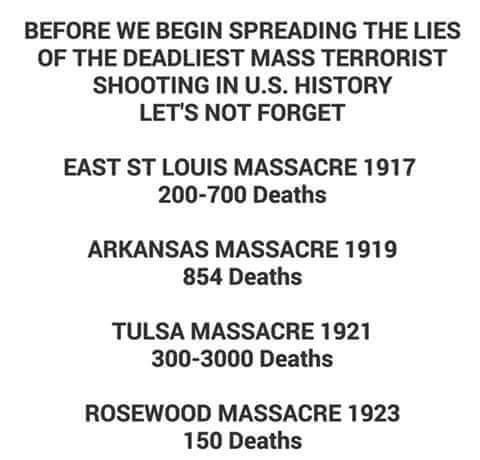
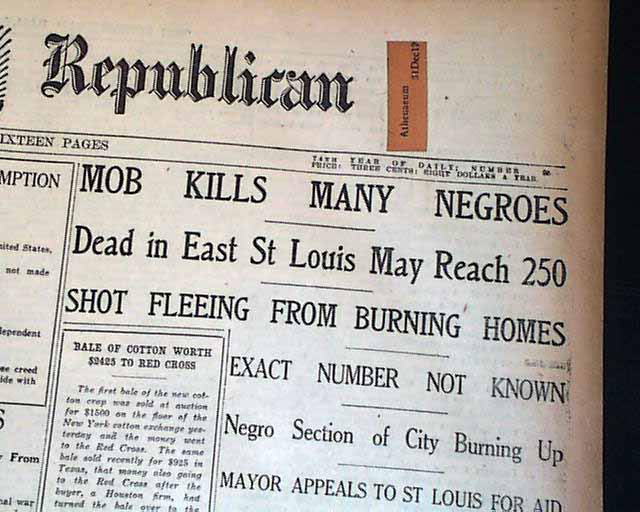
The relations between the Caribbean and the United States of America have had a bumpy ride in the past. Consider just these few incidences:

But now, the people of the Caribbean has forgiven the US and now approve “life” within its borders….

… as so many Caribbean citizens have now fled to life in the US, as residents. There has been some reconciliation of the past … to allow for this normalized status quo.

But there is one more rift in the Caribbean-American history to consider, that of Marcus Garvey. Can this historicity also be re-approached, revisited, redeemed and reconciled? Is there a need for repentance?

In a previous commentary from this Go Lean movement, it was established how we cannot always leave past events in the past. At times, we must re-approach historic injustices so as to recognize the pain and legacy caused; only then can true reconciliation occur.

America had a bad legacy in terms of race relations. Has that country of the US reformed since the days of Marcus Garvey?

Accordingly, some stakeholders in the US Congress want that repentance, in the form of a posthumous pardon. See the story here:

CU Blog - Remembering Marcus Garvey - Still Relevant Today - Photo 3Title: U.S. Congresswoman Wants President Obama to Pardon Marcus Garvey
Marcus Garvey, Jamaica’s national hero who was charged with mail fraud in the United States could be in line for a presidential pardon if Congresswoman Yvette Clarke gets her way. Clarke is working to ensure that Garvey is exonerated before Obama steps down from his post in January 2017. Clarke announced the potential action in a speech to the Jamaica Diaspora after receiving the first Talawah Award for Politics. According to Clarke, two other congressional representatives – Charles Rangel and John Conyers – will join her in making sure that Garvey receives a pardon and that his name is cleared.

In 1923, Garvey was arrested in the U.S. on charges of mail fraud and spent two years in a federal prison before being deported back to Jamaica. In the years following, a number of governments and organizations lobbied authorities in the U.S. to expunge the record of Jamaica’s national hero. Clarke was one of seven Jamaicans presented with the Inaugural Talawah Awards for their contributions to both their homeland and their adopted home.
Source: Jamaicans.com – Lifestyle E-zine; posted: 05/15/2016; Retrieved 08/19/2016 from: http://jamaicans.com/u-s-congresswoman-wants-president-obama-pardon-marcus-garvey/
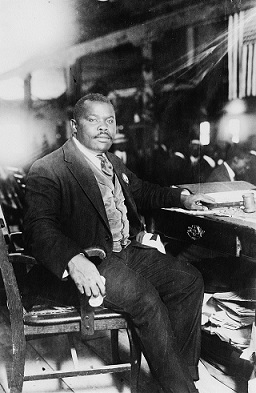
The subject of Marcus Garvey – see Appendix & VIDEO below – is very important from a Jamaican perspective. He is considered a National Hero in his homeland, where he was awarded the “Order of National Hero” posthumously in 1964; an esteemed honor awarded by the government (Parliament) of Jamaica and one of its first official acts after independence.

But the story of Marcus Garvey is more than just a “treasure to one, trash to another” consideration. Recognizing Jamaican value and worth, means recognizing Jamaica’s endurance despite a history of oppression, repression and suppression. Remember, there was a world, not very long ago, of no civil rights and intensed colonization. Marcus Garvey transcended that world. In effect, Jamaicans are saying to the world: “You see Marcus Garvey; you see me”.

Garvey was given major prominence as a national hero during Jamaica’s move towards independence. As such, he has numerous tributes there. The first of these is the Garvey statue and shrine in Kingston’s National Heroes Park. Among the honors to him in Jamaica are his name upon the Jamaican Ministry of Foreign Affairs; a major highway bearing his name and the Marcus Garvey Scholarship tenable at the University of the West Indies sponsored by The National Association of Jamaican and Supportive Organizations, Inc (NAJASO) since 1988.

Garvey’s birthplace, 32 Market Street, St. Ann’s Bay, Jamaica, has a marker signifying it as a site of importance in the nation’s history.[64]His likeness is on the 20-dollar coin and 25-cent coin. Garvey’s recognition is probably most significant in Kingston, Jamaica.
Source: Retrieved August 20, 2016 from: https://en.wikipedia.org/wiki/Marcus_Garvey

The book Go Lean…Caribbean posits that any attempt at unification of the Caribbean 30 member-states must consider the ancient and modern injustices some member-states have experienced (within themselves and with other nations). The book serves as a roadmap for the introduction and implementation of the Caribbean Union Trade Federation (CU). A mission of the roadmap is to champion the cause of Caribbean Image. For far too long, Caribbean people have been classified as “Less Than”, as parasites rather than protégés. Therefore an additional mission of the roadmap is to facilitate formal reconciliations, (much consideration is given to the model in South Africa with their Truth & Reconciliation Commissions (TRC)). But this commentary posits, that we need reconciliations in foreign relations too, (i.e. Caribbean / United States).

The approach is simple, correct the bad “community ethos” from the past. The African-American and African-Caribbean populations were oppressed, repressed an suppressed in the “White” world of the 1920’s. A good “community ethos” now is to repent, forgive and reconcile from that legacy.

“Community Ethos” is described in the Go Lean book as the fundamental character or spirit of a culture; the underlying sentiment that informs the beliefs, customs, or practices of a group or society; the dominant assumptions of a people or period. America has surely transformed – the current President, Barack Obama is of African-American heritage. Has that transformation advanced to the point of taking ownership of past misdeeds.

We truly hope so! But show us, by recognizing and redeeming the bad acts of the US federal government against Marcus Garvey. This year marks the 8th and final year of the Obama administration. He has always had the power to grant a pardon to the “good name” of Marcus Garvey. When requested before in 2011, his stance was that it is his policy not to consider requests for posthumous pardons. His assertion is that they should be enjoyed only by the living.

But more is involved, Mr. President. A pardon would send a message to the world about African-American and African-Caribbean heroes:

In hindsight, they should be held in high esteem for doing so much in a world that valued them so little!

The historicity of Marcus Garvey is a powerful role model for today’s Caribbean. He was truly an Advocate for the African race universally. (This race represents the majority of the population of all the Caribbean member-states except the French Overseas Territory of Saint Barthélemy). He championed this cause in words (speeches and writings), actions, commitments and sacrifice. He truly gave a full measure of blood, sweat and tears. He presented his vision and values in his quest to unify and elevate the Black race.

Our emulation of Marcus Garvey is a lot less ambitious, rather than the African-ethnic world, our scope is just the elevation of the 30 Caribbean member-states. Rather than the narrow focus of Blacks in general, our scope involves all current Caribbean ethnicities and languages. We are trying to “raise the tide in the Caribbean waters so that all boats will be elevated”. Further, as communicated in previous blog-commentaries, we are not trying to impact the United States of America – beyond help to our Diaspora – nor the continent of Africa – beyond providing them a great model of our technocratic deliveries. Our mission is a lot more laser-focused than that of Marcus Garvey; we are simply trying to make our Caribbean homeland a better place to live, work and play.

This CU/Go Lean mission is to elevate Caribbean society through cutting edge delivery of best practices, strategies, tactics and implementations. The prime directives of this movement is defined as the following 3 statements:

  • Optimization of the economic engines in order to grow the regional economy to $800 Billion & create 2.2 million new jobs.
  • Establishment of a security apparatus for public safety and to protect the resultant economic engines.
  • Improvement of Caribbean governance to support these engines.

The Go Lean book speaks of the Caribbean past, as it relates to the American past. The legacy of the common sufferings of slavery and racial repression should create a common bond; this bond should unite all of the Black World. It should also unite the Caribbean into accepting a premise of interdependence for solutions in the economic-security-governance eco-systems. This common need was defined early in the book (Page 10) in the following pronouncements in the Declaration of Interdependence:

Preamble: As the history of our region and the oppression, suppression and repression of its indigenous people is duly documented, there is no one alive who can be held accountable for the prior actions, and so we must put aside the shackles of systems of repression to instead formulate efficient and effective systems to steer our own destiny.

As the colonial history of our region was initiated to create economic expansion opportunities for our previous imperial masters, the structures of government instituted in their wake have not fostered the best systems for prosperity of the indigenous people. Despite this past, we thrust our energies only to the future, in adapting the best practices and successes of the societies of these previous imperial masters and recognizing the positive spirit of their intent and vow to learn from their past accomplishments and mistakes so as to optimize the opportunities for our own citizenry to create a more perfect bond of union.

xi. Whereas all men are entitled to the benefits of good governance in a free society, “new guards” must be enacted to dissuade the emergence of incompetence, corruption, nepotism and cronyism at the peril of the people’s best interest. The Federation must guarantee the executions of a social contract between government and the governed.

xii. Whereas the legacy in recent times in individual states may be that of ineffectual governance with no redress to higher authority, the accedence of this Federation will ensure accountability and escalation of the human and civil rights of the people for good governance, justice assurances, due process and the rule of law. As such, any threats of a “failed state” status for any member state must enact emergency measures on behalf of the Federation to protect the human, civil and property rights of the citizens, residents, allies, trading partners, and visitors of the affected member state and the Federation as a whole.

xiii. Whereas the legacy of dissensions in many member-states (for example: Haiti and Cuba) will require a concerted effort to integrate the exile community’s repatriation, the Federation must arrange for Reconciliation Commissions to satiate a demand for justice.

The Go Lean book details a lot more, a series of assessments, community ethos, strategies, tactics, implementations and advocacies to glean lessons from history and impact the Caribbean-side of the common Black experience:

Community Ethos – Deferred Gratification – Example of Black America of Olden Days Page 21
Community Ethos – Economic Systems Influence Choices & Incentives Page 21
Community Ethos – People Respond to Incentives Page 21
Community Ethos – Consequences of Choices Lie in the Future Page 21
Community Ethos – Ways to Impact Turn-Arounds Page 33
Community Ethos – Ways to Manage Reconciliations Page 34
Community Ethos – Ways to Promote Happiness Page 36
Community Ethos – Ways to Impact the Greater Good Page 37
Strategy – Vision – Confederating a Non-Sovereign Union of 30 Member-states Page 45
Strategy – Mission – Keep the next generation at home; Repatriate Diaspora Page 46
Tactical – Separation of Powers – Truth & Reconciliation Courts Page 78
Implementation – Ways to Deliver Page 109
Implementation – Reasons to Repatriate Page 118
Anatomy of Advocacies Page 122
Planning – Ways to Improve Image Page 133
Planning – Improve Failed-State Indices Page 134
Advocacy – Ways to Grow the Economy Page 151
Advocacy – Ways to Better Manage the Social Contract Page 170
Advocacy – Ways to Impact Justice – Truth & Reconciliation Commissions Page 177
Advocacy – Ways to Impact Hollywood – Managing Image through Films Page 203
Advocacy – Ways to Preserve Caribbean Heritage Page 218

The foregoing article relates the second request to US President Obama to extend a pardon to the legacy of Marcus Garvey. This is important to “us” in the Caribbean.

Just do it!

Obama claims to be a friend of the Caribbean, though many times his policies have worked contrary to the Caribbean’s best interests. Consider these examples:

https://goleancaribbean.com/blog/?p=7689 Obama – Bad For Caribbean Status Quo
https://goleancaribbean.com/blog/?p=4935 A Lesson Learned from Obama’s Caribbean Visit
https://goleancaribbean.com/blog/?p=1674 Obama’s Plans for $3.7 Billion Immigration Crisis Funds

The Go Lean/CU roadmap addresses the past, present and future challenges of Caribbean empowerment and image.

Now is the time for all of the Caribbean, the people and governing institutions, to lean-in for the empowerments described in the book Go Lean … Caribbean. There is reason to believe that these empowerment efforts can be successful. We have the legacy of so many National Heroes; we can now stand on their shoulders and reach even greater heights.

The Go Lean roadmap conveys how single causes have successfully been forged throughout the world (Page 122 – Anatomy of Advocacies) by individual Advocates. There is consideration for these examples:

Please note, while this movement petitions for reconciliation of the sullied past in race relations, there is no request for reparations. The Go Lean book punctuates this point with the following quotation:

We cannot ignore the past, as it defines who we are, but we do not wish to be shackled to the past either, for then, we miss the future. So we must learn from the past, our experiences and that of other states in similar situations, mount our feet solidly to the ground and then lean-in, to reach for new heights; forward, upward and onward. – Page 5

The new ethos being developed for the Caribbean by this Go Lean movement, is to reconcile conflicts from the past; to repent, forgive and hopefully forget the long history of human rights abuses from the past. All of this effort is heavy-lifting, but the Bible gives us an assurance that makes all the effort worthwhile:

Then you will know the truth, and the truth will set you free. – John 8:32; New International Version

🙂

Download the book Go Lean … Caribbean – now!

=============

Appendix VIDEO – Marcus Garvey — Look For Me In The Whirlwind (Review)https://youtu.be/hS3Y5RhBPd8

Published on Oct 8, 2012 – Black History Studies team (BHS) presents their Marcus Garvey screening, at the Marcus Garvey Centre in Tottenham. Sis Sonia Scully interviews film goers in the break, to find out how they’re receiving the Friday Black History Month screenings.

=============

Appendix – Marcus Garvey Biography Wiki

Marcus Mosiah Garvey, Jr., (17 August 1887 – 10 June 1940),[2] was a Jamaican political leader, publisher, journalist, entrepreneur, and orator who was a proponent of the Pan-Africanism movement, to which end he founded the Universal Negro Improvement Association and African Communities League (UNIA-ACL).[3] He also founded the Black Star Line, a shipping and passenger line which promoted the return of the African diaspora to their ancestral lands.
CU Blog - Remembering Marcus Garvey - Still Relevant Today - Photo 1Prior to the 20th century, leaders such as Prince HallMartin DelanyEdward Wilmot Blyden, and Henry Highland Garnet advocated the involvement of the African diaspora in African affairs. Garvey was unique in advancing a Pan-African philosophy to inspire a global mass movement and economic empowerment focusing on Africa known as Garveyism.[3] Promoted by the UNIA as a movement of African Redemption, Garveyism would eventually inspire others, ranging from the Nation of Islam to the Rastafari movement (some sects of which proclaim Garvey as a prophet.)[4]

Garveyism intended persons of African ancestry in the diaspora to “redeem” the nations of Africa and for the European colonial powers to leave the continent. His essential ideas about Africa were stated in an editorial in the Negro World entitled “African Fundamentalism”, where he wrote: “Our union must know no clime, boundary, or nationality… to let us hold together under all climes and in every country…”[5]

After years of working in the Caribbean, Garvey left Jamaica to live in London from 1912 to 1914, where he attended Birkbeck College, taking classes in law and philosophy. He also worked for the African Times and Orient Review, published by Dusé Mohamed Ali, who was a considerable influence on the young man. Garvey sometimes spoke at Hyde Park‘s Speakers’ Corner.

In 1914, Garvey returned to Jamaica, where he organized the Universal Negro Improvement Association (UNIA).

The UNIA held an international convention in 1921 at New York City’s MadisonSquareGarden. Also represented at the convention were organizations such as the Universal Black Cross Nurses, the Black Eagle Flying Corps, and the Universal African Legion. Garvey attracted more than 50,000 people to the event and in his cause. The UNIA had 65,000 to 75,000 members paying dues to his support and funding. The national level of support in Jamaica helped Garvey to become one of the most influential leaders of the 20th century on the island.[13]

After corresponding with Booker T. Washington, head of the Tuskegee Institute in Alabama and a national African-American leader in the United States, Garvey traveled by ship to the U.S., arriving on 23 March 1916 aboard the SS Tallac. He intended to make a lecture tour and to raise funds to establish a school in Jamaica modeled after Washington’s Institute. Garvey visited Tuskegee, and afterwards, visited with a number of black leaders.

After moving to New York, he found work as a printer by day. He was influenced by Hubert Harrison. At night he would speak on street corners, much as he did in London’s Hyde Park. Garvey thought there was a leadership vacuum among African Americans. On 9 May 1916, he held his first public lecture in New York City at St Mark’s Church in-the-Bowery and undertook a 38-state speaking tour.

The next year in May 1917, Garvey and thirteen others formed the first UNIA division outside Jamaica. They began advancing ideas to promote social, political, and economic freedom for black people. On 2 July, the East St. Louis riots broke out. On 8 July, Garvey delivered an address, entitled “The Conspiracy of the East St. Louis Riots”, at Lafayette Hall in Harlem. During the speech, he declared the riot was “one of the bloodiest outrages against mankind”, condemning America’s claims to represent democracy when black people were victimized “for no other reason than they are black people seeking an industrial chance in a country that they have laboured for three hundred years to make great”. It is “a time to lift one’s voice against the savagery of a people who claim to be the dispensers of democracy”.[14]

Garvey worked to develop a program to improve the conditions of ethnic Africans “at home and abroad” under UNIA auspices. On 17 August 1918, he began publishing the Negro World newspaper in New York, which was widely distributed. Garvey worked as an editor without pay until November 1920. He used Negro World as a platform for his views to encourage growth of the UNIA.[15] By June 1919, the membership of the organization had grown to over two million, according to its records.

On 27 June 1919, the UNIA set up its first business, incorporating the Black Star Line of Delaware, with Garvey as President. By September, it acquired its first ship. Much fanfare surrounded the inspection of the S.S. Yarmouth and its rechristening as the S.S. Frederick Douglass on 14 September 1919. Such a rapid accomplishment garnered attention from many.[15] The Black Star Line also formed a fine winery, using grapes harvested only in Ethiopia. During the first year, the Black Star Line’s stock sales brought in $600,000. This caused it to be successful during that year. It had numerous problems during the next two years: mechanical breakdowns on its ships, what it said were incompetent workers, and poor record keeping. The officers were eventually accused of mail fraud.[15]

Edwin P. Kilroe, Assistant District Attorney in the District Attorney’s office of the County of New York, began an investigation into the activities of the UNIA. He never filed charges against Garvey or other officers.

By August 1920, the UNIA claimed four million members. The number has been questioned because of the organization’s poor record keeping.[15] That month, the International Convention of the UNIA was held. With delegates from all over the world attending, 25,000 people filled Madison Square Garden on 1 August 1920 to hear Garvey speak.[16]Over the next couple of years, Garvey’s movement was able to attract an enormous number of followers. Reasons for this included the cultural revolution of the Harlem Renaissance, the large number of West Indians who immigrated to New York, and the appeal of the slogan “One God, One Aim, One Destiny,” to black veterans of the first World War.[17]
CU Blog - Remembering Marcus Garvey - Still Relevant Today - Photo 2Garvey also established the business, the Negro Factories Corporation. He planned to develop the businesses to manufacture every marketable commodity in every big U.S. industrial center, as well as in Central America, the West Indies, and Africa. Related endeavors included a grocery chain, restaurant, publishing house, and other businesses.

Convinced that black people should have a permanent homeland in Africa, Garvey sought to develop Liberia. It had been founded by the American Colonization Society in the 19th century as a colony to free blacks from the United States. Garvey launched the Liberia program in 1920, intended to build colleges, industrial plants, and railroads as part of an industrial base from which to operate. He abandoned the program in the mid-1920s after much opposition from European powers with interests in Liberia.

Sometime around November 1919, the Bureau of Investigation or BOI (after 1935, the Federal Bureau of Investigation) began an investigation into the activities of Garvey and the UNIA. … Although initial efforts by the BOI were to find grounds upon which to deport Garvey as “an undesirable alien”, a charge of mail fraud was brought against Garvey in connection with stock sales of the Black Star Line after the U.S. Post Office and the Attorney General joined the investigation.[36]

The accusation centered on the fact that the corporation had not yet purchased a ship, which had appeared in a BSL brochure emblazoned with the name “Phyllis Wheatley” (after the African-American poet) on its bow. The prosecution stated that a ship pictured with that name had not actually been purchased by the BSL and still had the name “Orion” at the time; thus the misrepresentation of the ship as a BSL-owned vessel constituted fraud. The brochure had been produced in anticipation of the purchase of the ship, which appeared to be on the verge of completion at the time. However, “registration of the Phyllis Wheatley to the Black Star Line was thrown into abeyance as there were still some clauses in the contract that needed to be agreed.”[37] In the end, the ship was never registered to the BSL.

Garvey chose to defend himself. In the opinion of his biographer Colin Grant, Garvey’s “belligerent” manner alienated the jury. … Of the four Black Star Line officers charged in connection with the enterprise, only Garvey was found guilty of using the mail service to defraud. His supporters called the trial fraudulent, [a miscarriage of justice].

He initially spent three months in the Tombs Jail awaiting approval of bail. While on bail, he continued to maintain his innocence, travel, speak and organize the UNIA. After numerous attempts at appeal were unsuccessful, he was taken into custody and began serving his sentence at the Atlanta Federal Penitentiary on 8 February 1925.[41] Two days later, he penned his well known “First Message to the Negroes of the World From Atlanta Prison”, wherein he made his famous proclamation: “Look for me in the whirlwind or the storm, look for me all around you, for, with God’s grace, I shall come and bring with me countless millions of black slaves who have died in America and the West Indies and the millions in Africa to aid you in the fight for Liberty, Freedom and Life.”[42]

Garvey’s sentence was eventually commuted by President Calvin Coolidge. Upon his release in November 1927, Garvey was deported via New Orleans to Jamaica, where a large crowd met him in Kingston. Though the popularity of the UNIA diminished greatly following Garvey’s expulsion, he nevertheless remained committed to his political ideals.[44]

Garvey continued active in international civil rights, politics and business in the West Indies and Europe.

Garvey died in London on 10 June 1940, at the age of 52, having suffered two strokes. Due to travel restrictions during World War II, his body was interred (no burial mentioned but preserved in a lead-lined coffin) within the lower crypt in St. Mary’s Catholic cemetery in London near KensalGreenCemetery. Twenty years later, his body was removed from the shelves of the lower crypt and taken to Jamaica, where the government proclaimed him Jamaica’s first national hero and re-interred him at a shrine in the National Heroes Park.[52]

Influence

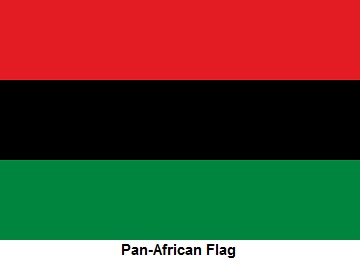
Schools, colleges, highways, and buildings in Africa, Europe, the Caribbean, and the United States have been named in his honor. The UNIA red, black, and green flag has been adopted as the Black Liberation Flag. Since 1980, Garvey’s bust has been housed in the Organization of American States‘ Hall of Heroes in Washington, D.C.

Malcolm X‘s parents, Earl and Louise Little, met at a UNIA convention in Montreal. Earl was the president of the UNIA division in Omaha, Nebraska, and sold the Negro World newspaper, for which Louise covered UNIA activities.[53]

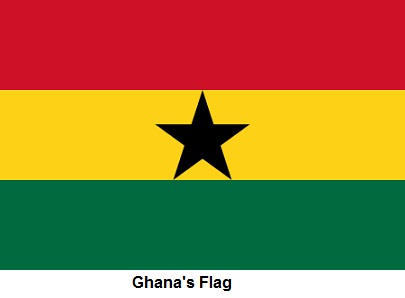
Kwame Nkrumah named the national shipping line of Ghana the Black Star Line in honor of Garvey and the UNIA. Nkrumah also named the national football team the Black Stars as well. The black star at the centre of Ghana’s flag is also inspired by the Black Star.

During a trip to Jamaica, Martin Luther King and his wife Coretta Scott King visited Garvey’s shrine on 20 June 1965 and laid a wreath.[54] In a speech he told the audience that Garvey “was the first man of color to lead and develop a mass movement. He was the first man on a mass scale and level to give millions of Negroes a sense of dignity and destiny. And make the Negro feel he was somebody.”[55]

King was a posthumous recipient of the first Marcus Garvey Prize for Human Rights on 10 December 1968, issued by the Jamaican Government and presented to King’s widow. In 2002, scholar Molefi Kete Asante listed Garvey on his list of 100 Greatest African Americans.[56]

Source: Retrieved August 20, 2016 from: https://en.wikipedia.org/wiki/Marcus_Garvey


Share this post:
, , ,

The Movie ‘Hidden Figures’ – Art Imitating Life

#GoLeanCommentary

** August 26, 2016 **

This day is the 98th birthday for “Katherine Johnson”.

CU Blog - 'Hidden Figures' - Art Imitating Life - Photo 2

Who is Katherine Johnson? And why is she important in the discussion of Caribbean empowerment?

Katherine Johnson (1918 – ) was a rocket scientist, physicist, and mathematician before there were rocket scientists. Why is this important? It is as 19th century Essayist Oscar Wilde dubbed it:

“Life imitates Art far more than Art imitates Life”.

The focus here is on the “Art imitating Life”; no, even further than “art” is the “science”. The “art” in this case is the movie “Hidden Figures”. The “science” is the mathematics associated with rockets and trajectory: Rocket Science.

The movie HIDDEN FIGURES is the incredible untold story of Katherine Johnson (Taraji P. Henson), Dorothy Vaughn (Octavia Spencer) and Mary Jackson (Janelle Monáe)—brilliant African-American women working at NASA, who served as the brains behind one of the greatest operations in history: the launch of astronaut John Glenn into orbit, a stunning achievement that restored the nation’s confidence, turned around the Space Race, and galvanized the world. The visionary trio crossed all gender and race lines to inspire generations to dream big. – 20 Century Fox Studio

This is the power associated with film. It’s an art that can promote a science. This is in harmony with a previous blog/commentary – by the Go Lean … Caribbean movement – regarding Caribbean Diaspora member and Hollywood great, Sidney Poitier, it was declared that …

… “Movies are an amazing business model. People give money to spend a couple of hours watching someone else’s creation and then leave the theater with nothing to show for the investment; except perhaps a different perspective”.

The untold story of Katherine Johnson is not so “unfamiliar” to the African-American experience. There has been millions of similar tales, where those with genius-qualifying abilities had to languish in a world where they were considered “less than“. (See the Appendix VIDEO below).

Oh, how wrong that world was!

Today, we tell the tale of Katherine Johnson. We celebrate her for her accomplishments and inspiration she provides to future generations of scientists, mathematicians, African-descendents and women. She is the definition of “Shero”; she is all of that! See how this is portrayed in the new film here, opening in January 2017:

VIDEO: Movie Trailer ‘Hidden Figures’ – https://youtu.be/RK8xHq6dfAo

Published on August 14, 2016 – Watch the new trailer for [the movie] #HiddenFigures, based on the incredible untold true story. Starring Taraji P. Henson, Octavia Spencer & Janelle Monáe. In theaters this January [2017].

Why is this discussion of Katherine Johnson important in the discussion of Caribbean empowerment?

R_1980-L-00022 001This is a story of one person making a difference! Her accomplishments required a resolve, determination and conviction to not buckle under the acute pressure to maintain the status quo. Her efforts and life’s pursuits helped to forge change in her homeland for her and all others that followed. The book Go Lean … Caribbean identified subjects like this as advocates; relating that their successful completion of their advocacy tend to benefit more than just them but the whole world (Page 122).

The story of Katherine Johnson is now being told as a movie. Movies can be effective for the goal of displaying a better view of people … and the community failings they have had to overcome. Previous Go Lean commentaries presented details of other movies that had the potential of reflecting and effecting change in society. See this sample here:

‘Concussion’ – The Movie; The Cause
Lesson from ‘Star Wars’ – ‘Heroes can return’
The Movie ‘Good Hair’ and the Strong Black Woman
Movie ‘Tomorrowland’ – Feed the Right Wolf
Documentary Movie: ‘Merchants of Doubt’ – Scary Proposition
Movie Lesson: ‘Only at the precipice, do they change’

The heroism of Katherine Johnson is against the backdrop of America’s segregation past. There is no way to justify America’s days of racial separation and oppression. Good riddance!

Surely, today our communities reflect a more inclusive environment. Surely?

Unfortunately, no!

America, still, and the Caribbean more, is plagued with a “climate of hate” in too many places. Far too often, in our own backyards, a class of people is oppressed, repressed and suppressed just because …

… the reasons do not even matter. It is just plain wrong and unwise and unproductive for our mission to retain our local geniuses.

Our community needs all hands on deck, with everybody contributing: all races, all genders, all ages, all classes of people. This point has also been conveyed in previous Go Lean commentaries; consider this sample here:

Respect for Minorities: Climate of Hate
Gender Equality Referendum Outcome: Impact on the ‘Brain Drain’
The Plea for Women in Politics
A Lesson in Civil War History – Compromising Human Rights
Socio-Economic Change: The Demographic Theory of Elderly Suicide
LGBT & Buggery in Jamaica – ‘Say It Ain’t So’!
The ‘Luck of the Irish’ – Past, Present and Future Lessons
10 Things We Don’t Want from the US: #7 Discrimination of Immigrants

The book Go Lean…Caribbean (and subsequent blog/commentaries) relates that we must do better than the American history. We have a problem now with societal abandonment for “push and pull” reasons. In order to encourage people to stay home and impact their homeland, we need to protect and promote those with genius qualifiers. There is a lot at stake.

This Go Lean book serves as a roadmap for the introduction and implementation of the technocratic Caribbean Union Trade Federation (CU). Fostering genius is very important to this movement. The book states (Page 27):

The CU assumes a mission of working with educational and youth agencies to identify and foster “genius” in our society, as early as possible. Geniuses are different from everyone else, although they maybe fairly easy to spot, defining exactly what makes one person a genius is a little trickier. Some researchers & theorists argue that the concept of genius is too limiting and doesn’t really give a full view of intelligence; they feel that intelligence is a combination of many factors; thereby concluding that genius can be found in many different  abilities and endeavors. The CU posits that any one person can make a difference and positively impact their society; so the community ethos of investment in this specially identified group, geniuses, would always be a worthwhile endeavor.

Fostering STEM (Science, Technology, Engineering and Mathematics) careers is integral to the Go Lean/CU roadmap. The goal is to identify students early with high aptitude in STEM areas, then develop them through academies and science fairs. The CU will even fund free tuition for these ones at local colleges/universities or forgive-able loans for those wishing to matriculate abroad. This is a matter of community ethos, defined as in the book as the fundamental spirit of a culture that drives the beliefs, customs and practices of a society. The book refers to this spirit motivating our Focus on the Future. This spirit would be embedded in every aspect of the Go Lean/CU roadmap. See here how the prime directives reflects this:

  • Optimization the economic engines of the Caribbean to elevate the regional economy to grow to $800 Billion and create 2.2 million new (direct & indirect) jobs, including STEM-related industries with a projection of 40,000 Research & Development direct jobs and 20,000 Technology direct jobs.
  • Establishment of a security apparatus to protect the people and economic engines.
  • Improvement of Caribbean governance to support these economic and security engines.

The Go Lean roadmap provides turn-by-turn directions on how to reform Caribbean STEM education initiatives – also the economic and governance aspects as a whole. The roadmap opens with a Declaration of Interdependence, pronouncing the approach of regional integration (Page 13 & 14) as a viable solution to elevate the region’s educational opportunities:

xix.  Whereas our legacy in recent times is one of societal abandonment, it is imperative that incentives and encouragement be put in place to first dissuade the human flight, and then entice and welcome the return of our Diaspora back to our shores …

xxi.  Whereas the preparation of our labor force can foster opportunities and dictate economic progress for current and future generations, the Federation must ensure that educational and job training opportunities are fully optimized for all residents of all member-states, with no partiality towards any gender or ethnic group. The Federation must recognize and facilitate excellence in many different fields of endeavor, including sciences, languages, arts, music and sports. This responsibility should be executed without incurring the risks of further human flight, as has been the past history.

xxvii. Whereas the region has endured a spectator status during the Industrial Revolution, we cannot stand on the sidelines of this new economy, the Information Revolution. Rather, the Federation must embrace all the tenets of Internet Communications Technology (ICT) to serve as an equalizing element in competition with the rest of the world. The Federation must bridge the digital divide and promote the community ethos that research/development is valuable and must be promoted and incentivized for adoption.

The Go Lean book envisions the CU – a confederation of the 30 member-states of the Caribbean chartered to do the heavy-lifting of empowering and elevating the Caribbean economy. The mission is to mitigate further brain drain of Caribbean citizens with STEM abilities.  The book details the economic principles and community ethos to adopt, plus the executions of strategies, tactics, implementations and advocacies to optimize STEM initiatives in the Caribbean region:

Community Ethos – Deferred Gratification Page 21
Community Ethos – Economic Systems Influence Choices & Incentives Page 21
Community Ethos – Job Multiplier – Indirect Jobs from Direct Ones Page 22
Community Ethos – Anti-Bullying and Mitigation Page 23
Community Ethos – Minority Equalization Page 24
Community Ethos – Return on Investments Page 24
Community Ethos – Ways to Impact the Future – Foster a Future Focus Page 27
Community Ethos – Ways to Foster Genius – For STEM & other fields Page 26
Community Ethos – Ways to Help Entrepreneurship Page 28
Community Ethos – Promote Intellectual Property Page 29
Community Ethos – Ways to Impact Research & Development Page 30
Community Ethos – Ways to Close the Digital Divide Page 31
Community Ethos – Ways to Impact the Greater Good Page 37
Anecdote – Valedictorian and Caribbean Diaspora Member Page 38
Strategy – Customers – Citizens, Business Community & Diaspora Page 47
Strategy – Meeting Region’s Needs Today, Preparing For Future Page 58
Tactical – Separation of Powers – Patent, Standards, & Copyrights Page 78
Tactical – Separation of Powers – Education Department Page 85
Implementation – Assemble all Super-Regional Governing Entities Page 96
Implementation – Trends in Implementing Data Centers Page 106
Implementation – Ways to Deliver Page 109
Implementation – Better Manage Debt – Better Student Loans Dynamics Page 114
Planning – Ways to Improve Trade Page 128
Planning – Ways to Make the Caribbean Better Page 131
Advocacy – Ways to Grow the Economy Page 151
Advocacy – Ways to Create Jobs Page 152
Advocacy – Ways to Improve Education Page 159
Advocacy – Ways to Impact Student Loans – Forgivable Provisions Page 160
Advocacy – Ways to Foster Empowering Immigration – STEM Professionals Page 174
Advocacy – Ways to Foster Technology Page 197
Advocacy – Ways to Impact the Diaspora Page 217

Katherine Johnson Receives Presidential Medal of FreedomThe Go Lean movement celebrates Katherine Johnson today as a role model in STEM. (Though she is an African-American with no Caribbean connection). She is recognized worldwide – just wait until the movie is released – as a woman of accomplishment – in 2015 she was awarded the Presidential Medal of Freedom:

“So if you think your job is pressure-packed, hers meant that forgetting to carry the one might send somebody floating off into the solar system.” – US President Barack Obama said in honoring Katherine Johnson on November 24, 2015.

This day – August 26 – is also Women’s Equality Day – commemorating women being granted the right to vote in the US on August 26, 1920.

So we celebrate all women that strive to achieve; there are those that do a lot; there are also women that choose to do little, or nothing. We celebrate them too. That is their equal right!

Yes, we can all do better than the past experiences from our communities. The Caribbean can be better!

Now is the time for all of the Caribbean, women and men, to lean-in for the empowerments described in the book Go Lean … Caribbean. This roadmap will result in more positive socio-economic changes throughout the region; it will make the Caribbean a better place to live, work and play. 🙂

Download the book Go Lean … Caribbean – now!

——-

Appendix VIDEO: Celebrating Katherine Johnson’s Great Mind – Human Computerhttps://youtu.be/Bdr9QBRcPEk

Published on Sep 1, 2015 – In the early days of spaceflight, if NASA needed to plot a rocket’s path or confirm a computer’s calculations, they knew who to ask: Katherine Johnson.

Share this post:
, , ,
[Top]

This Day In History: Jamaican Innovation for Hip Hop

#GoLeanCommentary

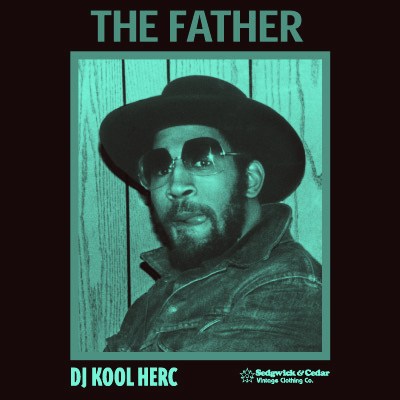
CU Blog - This Day In History - Jamaican Innovation for Hip Hop - Photo 1This day – August 11 – in 1973 …

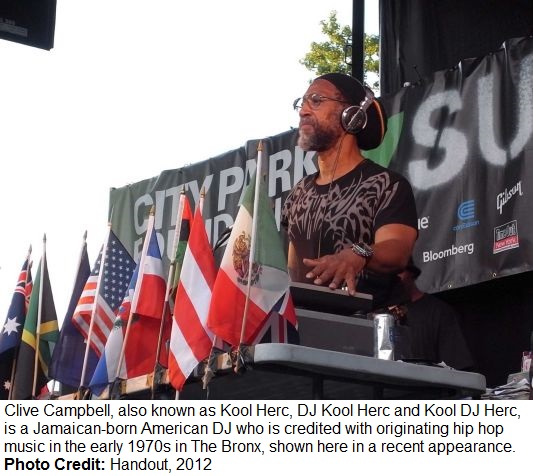
… a member of the Caribbean Diaspora – Jamaica – may have changed the world … for Hip Hop. On this day in 1973, Clive Campbell – better known to history as DJ Kool Herc – helped out his sister by “DJ-ing” her birthday party in a recreation room in The Bronx. History shows that he used his inspiration and influence from his Caribbean musical roots to innovate a music style and performance that would subsequently change the world … for good …

… or bad.

It’s music; you be the judge.

Musical taste is like “beauty” … in the “eye of the beholder”. The main thing is that the music made you listen and maybe learned something about the urban experience of America … and now the world.

See the story of Clive Campbell aka DJ Kool Herc here:

Title: This Day In History: 1973 – Hip Hop is born at a birthday party in the Bronx

Like any style of music, hip hop has roots in other forms, and its evolution was shaped by many different artists, but there’s a case to be made that it came to life precisely on this day in 1973, at a birthday party in the recreation room of an apartment building in the west Bronx, New York City. The location of that birthplace was 1520 Sedgwick Avenue, and the man who presided over that historic party was the birthday girl’s brother, Clive Campbell—better known to history as DJ Kool Herc, founding father of hip hop.

Born and raised to the age of 10 in Kingston, Jamaica, DJ Kool Herc began spinning records at parties and between sets his father’s band played while he was a teenager in the Bronx in the early 1970s. Herc often emulated the style of Jamaican “selectors” (DJs) by “toasting” (i.e., talking) over the records he spun, but his historical significance has nothing to do with rapping. Kool Herc’s contribution to hip hop was even more fundamental.

DJ Kool Herc’s signature innovation came from observing how the crowds would react to different parts of whatever record he happened to be playing: “I was noticing people used to wait for particular parts of the record to dance, maybe [to] do their specialty move.” Those moments tended to occur at the drum breaks—the moments in a record when the vocals and other instruments would drop out completely for a measure or two of pure rhythm. What Kool Herc decided to do was to use the two turntables in a typical DJ setup not as a way to make a smooth transition between two records, but as a way to switch back and forth repeatedly between two copies of the same record, extending the short drum break that the crowd most wanted to hear. He called his trick the Merry Go-Round. Today, it is known as the “break beat.” [(See Appendix VIDEO below).]

By the summer of 1973, DJ Kool Herc had been using and refining his break-beat style for the better part of a year. His sister’s party on August 11, however, put him before his biggest crowd ever and with the most powerful sound system he’d ever worked. It was the success of that party that would begin a grassroots musical revolution, fully six years before the term “hip hop” even entered the popular vocabulary.
Source: History Channel – This Day In History – Posted & Retrieved August 11, 2016 from: http://www.history.com/this-day-in-history/hip-hop-is-born-at-a-birthday-party-in-the-bronx

CU Blog - This Day In History - Jamaican Innovation for Hip Hop - Photo 2

Can we – in the Caribbean and from the Caribbean – change the world again?

Yes, we can!

This consideration is in line with the book Go Lean … Caribbean. It serves as a roadmap for the introduction and implementation of the technocratic Caribbean Union Trade Federation (CU). This CU strives to advance Caribbean culture with these 3 prime directives:

  • Optimization of the economic engines in order to grow the regional economy to $800 Billion and create 2.2 million new jobs.
  • Establishment of a security apparatus to protect the resultant economic engines.
  • Improve Caribbean governance.

This will not be the first time a Caribbean personality has changed the world through music (and hopefully not the last). Previously, this blog-commentary detailed the influence of music icon Bob Marley. Today, his name is synonymous with Reggae and socially-conscious music. RIP Bob Marley (1945 – 1981).

The Go Lean book identifies, in total, 169 different musical/national combinations of genres throughout the Caribbean. From these styles, Hip Hop has had its origins and roots. And then the transformation continued, with more inspiration back to the Caribbean sounds and more social messaging (classic of Reggae) going  back to the Hip Hop sound.

Music does not stand still; it evolves. An excellent example of this cross-meshing is the musical genre of Reggaeton:

Reggaetón is a genre of music characterized by its repetitive beat rhythm that originated in Puerto Rico. Its roots can be traced back to the “underground” music of the island during the late 90’s, when music borrowing elements of reggae, rap, and hip-hop was being performed (in Spanish) in small, unofficial venues. Bootleg recordings and word of mouth were the means of distribution for this music until 1997. In 1998 eventually that music coalesced into what today is known as Reggaeton. The music’s popularity skyrocketed in the early 2000s as it spread to North American, European, Asian, and African audiences.[1] Source: Retrieved 08/11/2016 from: https://en.wikipedia.org/wiki/Reggaeton.

See sample Reggaetón song here: https://youtu.be/uHgnebZ_jYo

The movement behind the Go Lean book asserts that “one person can make a difference”. So just like Bob Marley, Clive Campbell aka DJ Kool Herc, should be recognized for his contributions to music, culture and Caribbean identity. This one Caribbean character has made a difference while residing as an alien in a foreign land. He has forge an example and a sample of how other Caribbean stakeholders can do more in the arts and impact the world – we can build a city on “rock-and-roll”.

Too bad he made this impact after leaving his Caribbean home of Jamaica.

Alas, we now bring the quest for change to Jamaica and all of the rest of the Caribbean. And that quest includes music and the arts. Early in the Go Lean book, the contributions that music can make is pronounced as an community ethos for the entire region to embrace, (Declaration of Interdependence – Page 15) with these statements:

xxxii. Whereas the cultural arts and music of the region are germane to the quality of Caribbean life, and the international appreciation of Caribbean life, the Federation must implement the support systems to teach, encourage, incentivize, monetize and promote the related industries for arts and music in domestic and foreign markets. These endeavors will make the Caribbean a better place to live, work and play.

This Go Lean/CU roadmap recognizes that a prerequisite for advancing society is a change in the community ethos – the fundamental spirit of a culture that drives the beliefs, customs and practices – in that society. Music should be appreciated for the truth of its power; it “can soothe the savage beast”. It can communicate culture and impact the economics for a people. One person, or a group of people can do this, can make a difference.

The following list from the Go Lean book details the community ethos, strategies, tactics, implementations and advocacies to foster the next generation of artist:

Community Ethos – Ways to Foster Genius Page 27
Community Ethos – Promote Intellectual Property Page 29
Community Ethos – Ways to Promote Happiness Page 36
Community Ethos – Impact the Greater Good Page 37
Strategy – Vision – Unified CaribbeanSingle Market Page 45
Tactical – Separation of Powers – Patents & Copyrights Page 78
Tactical – Separation of Powers – Culture Administration Page 81
Implementation – Ways to Impact Social Media Page 111
Advocacy – Ways to Make the Caribbean Better Page 131
Advocacy – Ways to Impact Hollywood Page 203
Advocacy – Ways to Promote Music Page 231
Advocacy – Ways to Re-boot Jamaica Page 239

Thank you Clive Campbell aka DJ Kool Herc; see Appendix VIDEO below.

Thank you for setting the pathway for success for new generations of talented, inspirational and influential artists – musical geniuses of Caribbean heritage – who are sure to follow. These artists, too will “rock the world”.

We are hereby “banking” on it here in the Caribbean, as communicated further in that Declaration of Interdependence – Page 13:

xxi. Whereas the preparation of our labor force can foster opportunities and dictate economic progress for current and future generations, the Federation must ensure that educational and job training opportunities are fully optimized for all residents of all member-states, with no partiality towards any gender or ethnic group. The Federation must recognize and facilitate excellence in many different fields of endeavor, including sciences, languages, arts, music and sports. This responsibility should be executed without incurring the risks of further human flight, as has been the past history.

The Go Lean book posits “a change is going to come” to the Caribbean. The people, institutions and governance of region are all urged to “lean-in” to this roadmap for change and empowerment. Let’s do this … and make our homeland – all of the Caribbean – a better place to live, work and play.

🙂

Download the book Go Lean … Caribbean – now!

Sign the petition to lean-in for this roadmap for the Caribbean Union Trade Federation.

————

Appendix VIDEO – Kool DJ Herc, Merry Go Round – https://youtu.be/Hw4H2FZjfpo

Uploaded on Oct 26, 2009 – Kool DJ Herc describing how he invented the idea of playing two breakbeats together.

Share this post:
, , , , , , ,
[Top]

ENCORE: Caribbean’s Olympic Dreams

It’s time for the Olympics!

The Olympic Games are considered to be the world’s foremost sports competition.[2] These modern games are the leading international sporting events (featuring summer and winter sports competitions) in which thousands of athletes from around the world – more than 200 nations – participate in the variety of athletic feats.

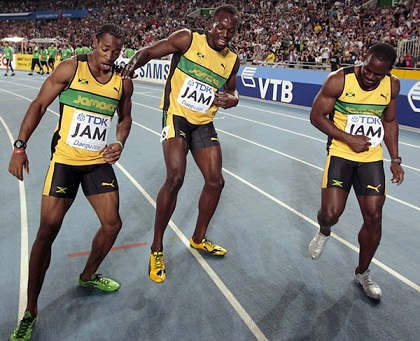
The Caribbean is duly represented, with a variety of athletes competing for their ancestral home countries – see photos in the Appendix below – and even some competing for adopted residential countries. This brings to mind a question of whether the Caribbean can someday, maybe, quite possibly consider the wild dream of hosting the games in one of its member-states. This proposition has been debated and dismissed; see this previous blog-commentary from March 12, 2014 regarding this laughable assertion. Ha ha ha …

This commentary is encored here today, August 5, 2016, on the occasion of the opening day of the XXXI Olympiad in Rio de Janiero, Brazil. See VIDEO here showcasing media coverage in the Caribbean member-state of the Cayman Islands:

VIDEOOlympics 2016 in Rio, Brazil – Flow brings Caribbean coverage – https://youtu.be/5LP9mje0bHo

Retrieved August 5, 2016 – Get ready for the action in Rio with Flow, Official broadcast partner of the 2016 Olympic Games for the Caribbean.

=================

Go Lean Commentary

Freedom of speech is great for the flow of information in a democracy. But freedom of speech has its limits, notwithstanding libel, slander and defamation possibilities. If a person yells out “FIRE, FIRE” in a crowded theater, knowing that there is no fire, the resultant panic and crush of people fleeing for the exits is actually criminally liable. In some jurisdiction, if death results, the culprit can be charged with statues against “depraved indifference”. Wow, that could be serious!

On the other hand, there is the practice of dreaming and acting on dreams. Some of the biggest accomplishments in world history, started as someone’s dreams. Once actuated, one step after another led to the eventual fulfillment of the dream. Once actuated, one step after another led to the eventual fulfillment of the dream. See this article here from Caribbean Journal Online News Site; retrieved 02/12/2014 from http://www.caribjournal.com/2014/02/13/caribbean-idea-could-the-caribbean-host-the-olympic-games/:

thumbWhile the Caribbean has become relatively accustomed to dominating at the Summer Olympics, this year’s crop of Caribbean winter athletes has us thinking. With all of the Caribbean’s continued success in international athletics, why couldn’t the region (or one of the countries in the region host the Summer Olympics? 

The Olympics has been held in the US, Asia, Australia, Europe and (soon) South America, but never in the Caribbean.  So we looked around the region to think about which countries could, at least hypothetically host the Games. The Games must be based in a single city; given much of the region’s size, the Games would likely need to be held across an entire island, though perhaps nominally based in a city.  

A potential Caribbean host country would also need several major qualities: a large enough territory to host the myriad events held in the Summer Games; a high enough level of infrastructural development; a big enough airport and a hotel stock large enough that it could expand without too much difficulty to meet the needs of the Games. We isolated several Caribbean islands: Jamaica, Hispaniola (Haiti and the Dominican Republic), Trinidad and Tobago, Guadeloupe, Puerto Rico.

Jamaica is large enough and its hotel stock is big enough, but its infrastructural development would need work; given Jamaica’s brand equity around the world (and its athletic dominance), this could be a natural choice, with Montego Bay being the best fit for a single city given its topography. Hispaniola would be the most provocative choice: could two neighbors that often have a stormy relationship bridge their divides and come together for international sport? Lack of infrastructure, particularly on the Haitian side, would be an issue, but adding that infrastructure would also enormously benefit the western half of the island.

Could the Games be held in Port-au-Prince and Santo Domingo together? Trinidad and Tobago has the infrastructural development, the territorial size, and the airport, but a small hotel stock. Could Port of Spain host the Games with many events held in Tobago? A system of fast ferries and increased flights would make for an entertaining twin-island Olympics.

 Guadeloupe would be a bit of a wild card; its roads and infrastructural development far outpace much of the region; it has enough undeveloped land and a relatively large size. Could the Games spread across each of the islands of the archipelago? Puerto Rico is large, with developed infrastructure, and it’s part of the United States, with a relatively robust hotel stock and strong existing sports infrastructure. Of course, its debt problems would pose a significant hindrance to hosting the Games in the next few decades.

Cuba is another option, although the continued embargo from the United States would likely be a significant stumbling block. Otherwise, the island has the size, infrastructure and level of development to be considered. There’s another option — what about a regionally-hosted Olympics? Would the IOC ever support something like that? Would the Caribbean grant temporary approval for foreign airlines to operate regional service? Would a fast-ferry company seize on the opportunity?

If the region could source the majority of the funding from sponsorship’s and other external sources, the benefits of new hotels, infrastructure, investment and prestige could be significant. But the Caribbean would need to ensure that the foreign money was enough that it didn’t put it any further into already-crippling debt. Ultimately, the question is this: instead of spending billions on developed countries hosting the Games, why not spend the same money for an Olympic Games that actually leads to development?

Imagine a Trinidad or a Jamaica or a Hispaniola with fresh, modern hotels, large stadia and, crucially, sparkling new roads (not to mention the vast tourism marketing potential of hosting the Games). Of course, there’s another major issue: the weather. Summer in the Caribbean means the risk of hurricanes. But with major storms popping up across the globe, is the Caribbean really alone in that risk anymore? And couldn’t Olympic development be done at a hurricane-proof standard?

What do you think? Could the Caribbean ever host an Olympic Games?

The Caribbean hosting the Olympics is just dreaming, not reporting. Most men and women standing on the podium receiving their winning medals can trace their origins back to some dream. A dream for the athlete, coach and/or parent. Sometimes, too the whole community is dreaming. Is the thought of the Caribbean hosting the Olympics some day just a dream now in 2014 or can the “dominoes” be put in place that once actuated can lead to an eventual successful bid to host some future Olympiad?

Tipping the “dominoes” to enable a better business environment is the mission of the book Go Lean … Caribbean; [it serves as a roadmap for the introduction and implementation of the technocratic Caribbean Union Trade Federation (CU)]. This even applies to sports. The books purports that sports can be a great economic driver for the region, and that the business model of the Olympics can be forged in the region on a minor scale. In fact the book proposes the CU Games as a bi-annual event that encompasses many Olympic-style events, more than just Track & Field. This approach would bring the necessary regional integration necessary to develop any long time plans for a big dream of the Olympics.

This commentary declares that the merits of the foregoing article is pure rubbish. No one Caribbean country possesses the population base and economic engine to make an Olympic bid viable. While comparisons can be made for Greece, the host country for the 2004 Summer Olympics, this example is a better argument for opposition of any Olympic hosting. Greece experienced much financial distress as a result of their Olympic hosting; the country was near insolvency during the European Sovereign Debt crisis of 2009 – 2012, if not for the bail-outs of the European Union.

To the contrary, the entire Caribbean region tallies 42 million people and the results of economic integration can yield a GDP of $800 Billion (2010). Greece on the other hand had a population count of 10.8 million and GDP of $250 for the same period.

Lastly, the Go Lean roadmap calls for the emergence of the Caribbean dollar unified currency. This structure would spur the elevation of the region’s capital markets for stocks and bonds. This approach would satisfy the liquidity needs to finance the construction of any and all sporting facilities required for sporting events.

Download the e-Book of Go Lean … Caribbean – free … now!

—————

Appendix – Caribbean Olympic Hopefuls …

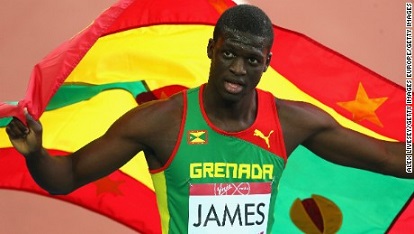
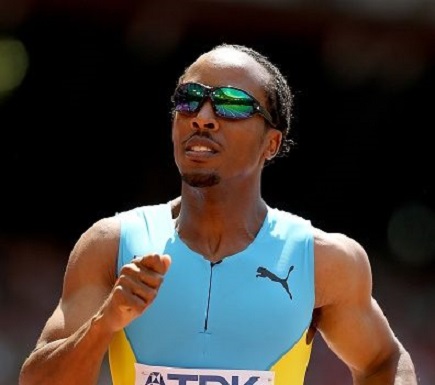
… for example, this sample from Jamaica, Grenada, the Bahamas and Trinidad.

CU Blog - Caribbean's Olympic Dream - Photo 1

CU Blog - Caribbean's Olympic Dream - Photo 4

CU Blog - Caribbean's Olympic Dream - Photo 3

CU Blog - Caribbean's Olympic Dream - Photo 2

Share this post:
, , ,
[Top]

Support sought for kids left behind by UN troops in Haiti

Go Lean Commentary

The United Nations – bless their heart – they mean well, but they are a complete failure.

You see, there is intent …

… and then there is delivery. The UN is a failure in delivery. In addition to failures of the UN to provide peace and security in the world – the prime directive of their charter – there is also direct, immediate repercussions of the presence of their Peacekeepers. These are human beings who bring human frailties with them – think love and romance.

So a word to the wise in the Caribbean: “Do not count on the UN nor their Peacekeeping Forces to provide positive solutions for the Caribbean region”.

Who are the Peacekeepers and what do they do? See VIDEO here:

VIDEO – What Exactly Do UN Peacekeepers Do?  – https://youtu.be/Ns37jHVUilE

Published on Feb 3, 2016 – How Does The UN Work? http://testu.be/1QUyy2f
Subscribe! http://bitly.com/1iLOHml

So rather than depend on the UN or any foreign Peacekeepers, we need our own local and/or regional solution.

The book Go Lean…Caribbean posits that the region needs to prepare its own security apparatus for its own security needs. We need to not depend on UN peacekeeping nor foreign peacekeeping. The request is that all Caribbean member-states confederate and empower a security force to execute a limited scope on our sovereign territories.

This will help us to avoid some peripheral problems like this one here in the following news report:

By: David McFadden
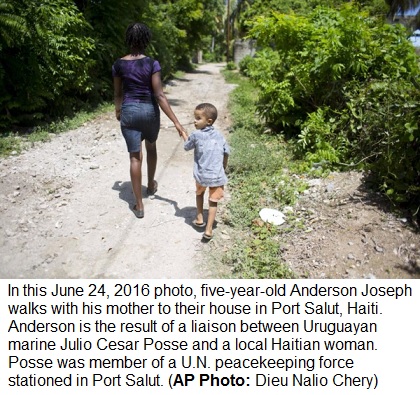
PORT SALUT, Haiti (AP) — The first time Rosa Mina Joseph met Julio Cesar Posse he was hanging out in civilian clothes on the beach in her hometown in southern Haiti, where he was stationed as a member of a U.N. peacekeeping force.

CU Blog - Support sought for kids left behind by UN troops in Haiti - Photo 1

Within weeks, she says, the Uruguayan marine was showing up every weekend at her family’s shack, pledging his love in Spanish and broken Haitian Creole.

But about a year later when his rotation ended, Posse quietly returned home. He left behind Joseph, a broken-hearted 17-year-old with an infant and no way to support the child without depending on struggling relatives.

“He promised me he’d marry me and would take care of me,” Joseph, now 22, tearfully said in a recent interview at her mother’s house in Port Salut, a town along the southwestern tip of Haiti.

After years of mounting frustration, she and several other women with children fathered by peacekeepers say they will now pursue claims for child support against the absentee fathers and the U.N.

Haitian human rights attorney Mario Joseph said he will file civil suits in Haiti this month. Joseph’s law firm also is involved in a high-profile claim on behalf of 5,000 cholera victims who blame the U.N. for introducing the disease. A U.S. federal appeals panel in New York is weighing whether the lawsuit can proceed or if the United Nations is entitled to immunity.

The peacekeeping force was sent to Haiti in 2004 to keep order following a violent rebellion that toppled President Jean-Bertrand Aristide.

Since then, some peacekeepers have been accused of rape and other abuse, of using excessive force and of inadvertently introducing cholera because of inadequate sanitation at a base used by troops from Nepal.

U.N. troops have been accused of sexual exploitation elsewhere as well, most recently in the Central African Republic, and “peacekeeper babies,” have long been a legacy of their deployments, as they have for other military forces throughout history.

Rosa Mina Joseph, whose son was born in 2011, said she received an envelope with $300 in cash from the U.N. two years ago when it established paternity. She had to drop out of school to care for the son and her dreams of becoming a nurse have all but vanished.

Posse sent her $100 once from Uruguay, she said, but has not sent anything more.

While Joseph was a minor at the time she gave birth, potential criminal charges against the marine would confront a difficult legal challenge: U.N. peacekeepers can’t be prosecuted in the countries in which they serve under international agreements.

The Associated Press does not typically identify sexual assault victims, but Joseph gave permission as long as a photo of her face was not published.

“I want him to take responsibility to care for his son because I don’t have the means by myself,” she said in the yard where she spends her days doing laundry and cooking.

The U.N. force in Haiti currently includes 4,899 uniformed personnel, a combination of military and civilian police, from more than a dozen countries. That’s down from over 13,000 peacekeepers following Haiti’s devastating 2010 earthquake.

Ghandi Shukry, head of a Conduct and Discipline Unit in the U.N. mission, which is known by its French acronym MINUSTAH, said 29 claims for paternity have been submitted to the U.N. in Haiti. He said 18 of the claimants have been classified as “victims” by the world body because they were receiving some kind of support.

“We are not facing a current wave of paternity claims. They are all kind of old cases,” said Shukry, stressing that any kind of sexual relations by peacekeepers and locals is prohibited.

The U.N. official confirmed that Joseph and three other Port Salut women represented by the attorney did have paternity established in 2014 after DNA swabs from the mothers, children and peacekeepers were analyzed. He declined to discuss any of the cases in detail.

He said that two members of his unit maintain regular contact with the Port Salut women. MINUSTAH also put the women in touch with a Uruguayan military representative, he said, since the U.N. allows troop-contributing countries to investigate allegations and decide how to pursue paternity claims.

The Port Salut women, however, say contact with U.N. staffers or Uruguay’s military representative is rare and generally bewildering.

A 2015 U.N. report by Secretary-General Ban Ki-moon acknowledged that there were “numerous obstacles to having paternity recognized and to obtaining support for children of United Nations personnel, whether they were born as a result of sexual exploitation and abuse or not.”

MINUSTAH’s uniformed personnel are now barred from leaving bases alone or when wearing civilian clothing and mission rules have changed in recent years to prohibit any fraternization. “Not only sexual relations are prohibited; even having normal relations with the local population is prohibited,” Shukry said.

Uruguay’s Navy spokesman, Capt. Gaston Jaunsolo, acknowledged there have been a small number of paternity cases and said service members found guilty are sanctioned and barred from peacekeeping missions.

He confirmed that Posse continued in the Navy and said service members are forbidden to speak the press without permission. A listed phone number for Posse was out of service. His profile on a social networking site says he’s looking for a young woman between 18 and 25 to start a family with.

The Uruguayan Army issued a statement to AP saying it’s sent roughly 3,000 troops to Haiti since 2011 and four paternity allegations were made against that military branch. There’s been one positive DNA test, the statement said, and no complaints have been made since 2014. It said the soldier who tested positive was punished but not discharged.

Meanwhile, the women struggling to raise their kids in Port Salut are eking out a living with the help of their families. Their children are sometimes teased by other kids who call them “MINUSTAH babies” or mockingly ask where their daddies are.

“When he’s older I’ll find a way to explain things. For now, the only thing I can say is that his father’s not here,” Joseph said as she held a snapshot showing her and Posse together at her 17th birthday party, a heart drawn on the back of it reading “Osemina y Julio.”

___

AP writer Leonardo Haberkorn contributed from Montevideo, Uruguay.

Source: https://www.yahoo.com/news/support-sought-kids-left-behind-un-troops-haiti-040556442.html?ref=gs Posted July 14, 2016; retrieved July 20, 2016.

There is a need for a local Caribbean security solution. The book Go Lean … Caribbean promotes the plan to confederate under a unified entity made up of the Caribbean to provide homeland security to the Caribbean. But homeland security for the Caribbean has a different meaning than some other regions and countries. Though we must be on defense against military intrusions like terrorism & piracy, we mostly have to contend with threats that may imperil the region’s economic engines, and crime remediation and mitigation. The CU security goal is for public safety! This goal is detailed in the book as it serves as a roadmap for the introduction of the technocratic Caribbean Union Trade Federation (CU). The CU is set to optimize Caribbean society through economic empowerment and also security implementations. The book describes that these two dynamics are inextricably linked in the same societal elevation endeavor. In fact, the Go Lean roadmap presents the following 3 prime directives:

  • Optimization of the economic engines in order to grow the regional economy to $800 Billion & create 2.2 million new jobs.
  • Establishment of a security apparatus to protect the resultant economic engines.
  • Improve Caribbean governance to support these engines.

The Go Lean book contends that bad actors will emerge just as a result of economic successes in the region. This point is pronounced early in the book with the Declaration of Interdependence (Page 12) that claims:

x.   Whereas we are surrounded and allied to nations of larger proportions in land mass, populations, and treasuries, elements in their societies may have ill-intent in their pursuits, at the expense of the safety and security of our citizens. We must therefore appoint “new guards” to ensure our public safety and threats against our society, both domestic and foreign. The Federation must employ the latest advances and best practices … to assuage continuous threats against public safety.

xvi. Whereas security of our homeland is inextricably linked to prosperity of the homeland, the economic and security interest of the region needs to be aligned under the same governance. Since economic crimes, including piracy and other forms of terrorism, can imperil the functioning of the wheels of commerce for all the citizenry, the accedence of this Federation must equip the security apparatus with the tools and techniques for predictive and proactive interdictions.

The Caribbean appointing “new guards”, or a security pact to ensure public safety is not so new an endeavor on the world scene; security threats have been a constant in the modern world. Since World War II, the UN, by means of its Security Council have tried to be the “new guard” for mitigating threats around the world. And yet, skirmishes, revolts and uprisings are a constant on the world scene. Yes, the UN has failed on the delivery execution of this charter.

There continues to be the need for intervention around the world. The decisioning of UN Peacekeeping Forces comes from this Security Council. The Council, following a mandate for the maintenance of international peace and security, assigns the Peacekeepers for a wide-variety of engagements. Consider the details of these current engagements in Appendix B below.

During the entire existence of the UN, there has not been a need for Peacekeepers in North America (US, Canada or Mexico) among these NAFTA members. There also has not been a need for Peacekeepers in the 27 member-states that now constitute the European Union – once they joined the EU. The truth is that integrated communities can more effectively provide their own security solutions, as an extension of the economic cooperation. This, an integrated community, is the quest of the CU/Go Lean roadmap, and to model the EU structure in our economic and security implementations.

So the Caribbean appointing “new guards”, or a security pact to ensure justice institutions and public safety in this region is not so revolutionary as a concept on the world scene. It is just what the mature democracies do. The Go Lean roadmap calls for a permanent professional security apparatus with naval and ground (Marine) forces, plus its own Military Justice establishment. This security pact would be sanctioned by all 30 CU member-states. The CU Trade Federation will lead, fund and facilitate this security force, encapsulating all the (full-time or part-time) existing armed forces in the region. This CU Homeland Security Force would get its legal authorization from a legal Status of Forces Agreement signed with the CU treaty enhancements.

This implementation will result in lesser social repercussions, because it will be Caribbean people protecting the Caribbean. So the ramifications as depicted in the foregoing news article, and in the Appendix A below, will be lessened.

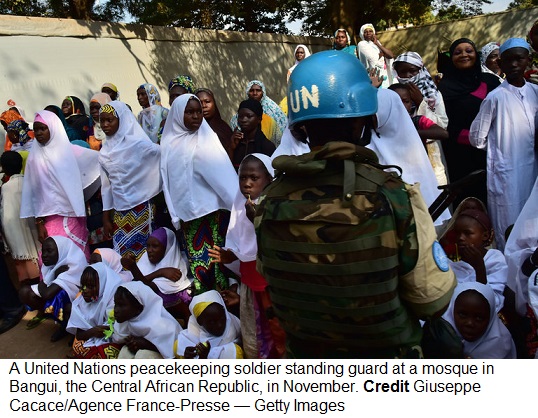
CU Blog - Support sought for kids left behind by UN troops in Haiti - Photo 2This problem detailed in the foregoing news article, has not only been a problem for Haiti and the Caribbean. In recent months, revelations have come forth of inappropriate and unprofessional actions of UN Peacekeeping forces in Africa. There had been accusations and convictions of soldiers abusing women and girls in that and other regions.

The truth is: Power abuses; and absolute power abuses absolutely. So this is not just a Pan-African problem, this is a human rights problem, for even those entities bringing relief, as was the intention in Haiti, can cause distress. Accountability and transparency must therefore be present and evident in all justice initiatives. This is the Go Lean plan for the military establishment; as detailed in the book (Page 177):

Military Justice – The CU will carefully monitor the activities of all military units (Marines, Navy & Coast Guard) – this accountability will be the by-product of increased CU funding. The CU will assume Judge Advocate General (JAG) role for military justice affairs.

This CU Security Apparatus is “Step One, Day One” in the Go Lean roadmap, covering the approach for adequate accountability and control. The Go Lean book details a series of community ethos, strategies, tactics, implementations and advocacies to provide increased public safety & security in the Caribbean region:

Economic Principle – Consequences of Choices Lie in Future Page 21
Community Ethos – Privacy –vs- Public Protection Page 23
Community Ethos – Anti-Bullying and Mitigation Page 23
Community Ethos – “Crap” Happens Page 23
Community Ethos – Minority Equalization Page 24
Community Ethos – Cooperatives Page 25
Community Ethos – Ways to Impact the Greater Good Page 37
Tactical – Confederating a non-sovereign union Page 63
Tactical – Fostering a Technocracy Page 64
Tactical – Separation of Powers – Homeland Security Page 75
Implementation – Start-up Security Initiatives Page 103
Implementation – Ways to Foster International Aid Page 115
Implementation – Reasons to Repatriate Page 118
Planning – Ways to Model the EU Page 130
Planning – Ways to Make the Caribbean Better Page 131
Planning – Ways to Improve Failed-State Indices Page 134
Planning – Lessons Learned from the West Indies Federation Page 135
Planning – Lessons from East Germany Page 139
Planning – Lessons from the American West Page 142
Planning – Lessons from Egypt Page 143
Advocacy – Ways to Grow the Economy Page 151
Advocacy – Ways to Improve Governance Page 168
Advocacy – Ways to Better Manage the Social Contract Page 170
Advocacy – Ways to Improve Leadership Page 171
Advocacy – Ways to Impact Justice – Military Prosecutions Page 177
Advocacy – Ways to Reduce Crime Page 178
Advocacy – Ways to Improve Homeland Security Page 180
Advocacy – Ways to Mitigate Terrorism Page 181
Advocacy – Ways to Improve for Natural Disasters Page 184
Advocacy – Ways to Impact Extractions Page 196
Advocacy – Ways to Improve Fisheries Page 210
Advocacy – Ways to Protect Human Rights Page 220
Advocacy – Ways to Re-boot Haiti Page 238

Other subjects related to security and justice empowerments for the region have been blogged in previous Go Lean…Caribbean commentaries, as sampled here:

https://goleancaribbean.com/blog/?p=7896 The Need for Local Administration: The Logistics of Disaster Relief
https://goleancaribbean.com/blog/?p=7345 ISIS reaches the Caribbean Region
https://goleancaribbean.com/blog/?p=7119 Role Model for the Caribbean: African Standby Force
https://goleancaribbean.com/blog/?p=6247 Tragic images show refugee crisis at a tipping point in Europe
https://goleancaribbean.com/blog/?p=6103 Sum of All Fears – ‘On Guard’ Against Deadly Threats
https://goleancaribbean.com/blog/?p=5462 The Need for Local Administration: The Red Cross’ Missing $500 Million In Haiti Relief
https://goleancaribbean.com/blog/?p=5304 Mitigating the Eventual ‘Abuse of Power’
https://goleancaribbean.com/blog/?p=5183 A Lesson in History – Cinco De Mayo and Mexico’s Security Lapses
https://goleancaribbean.com/blog/?p=5002 Managing a ‘Clear and Present Danger’
https://goleancaribbean.com/blog/?p=4360 Dreading the ‘CaribbeanBasin Security Initiative’
https://goleancaribbean.com/blog/?p=1965 America’s Navy – 100 Percent – Model for Caribbean
https://goleancaribbean.com/blog/?p=1554 Status of Forces Agreement = Security Pact
https://goleancaribbean.com/blog/?p=1531 A Lesson in History: 100 Years Ago – Root Causes of World War I
https://goleancaribbean.com/blog/?p=1076 Trinidad Muslims travel to Venezuela for Jihadist training
https://goleancaribbean.com/blog/?p=809 Muslim officials condemn abductions of Nigerian girls
https://goleancaribbean.com/blog/?p=535 Remembering and learning from Boston
https://goleancaribbean.com/blog/?p=273 10 Things We Want from the US – #4: Pax Americana

The narrative in the foregoing news article is a “tale as old as time”:

Boy meets girl…
Boy protects girl.
Girl likes boy.
Boy seduces girl and leaves her with a baby … with no regard for future support.

This narrative, though sad, is not uniquely Caribbean nor United Nations. It is just a human (rights) story.

Better command of human rights and security in the Caribbean will lead to mitigation of these sad scenarios.

Charity … (and security) begins at home.

We know that “bad actors” will always emerge; we do not want a few “bad actors” – as in the violent rebellion that toppled Haiti’s President Jean-Bertrand Aristide in 2004 – disrupting the peace of our 42 million Caribbean residents, or the 80 million visitors.

We know too that “wolves, sometimes dressed in “sheep’s clothing”, will always come to prey on the sheep”. This means you: UN Peacekeeper Julio Cesar Posse, who deflowered the innocent 17 year-old girl; and this means you of the UN Peacekeepers who were agitators – though not intentional – of the cholera disease resulting in 5,000 victims in Haiti.

The quest of the CU/Go Lean roadmap is better security and better justice executions for the people of the Caribbean region. Underlying to the prime directive of elevating the Caribbean societal engines – economics, security and governing – is the desire to simply make the Caribbean homeland, a better place to live, work and play.

Let’s do “this” … ourselves. 🙂

Download the book Go Lean … Caribbean – now!

————–

Appendix A Peacekeeping, human trafficking, and forced prostitution

Reporters witnessed a rapid increase in prostitution in Cambodia and Mozambique after UN peacekeeping forces moved in. In the 1996 U.N. study “The Impact of Armed Conflict on Children”, former first lady of Mozambique Graça Machel documented: “In 6 out of 12 country studies on sexual exploitation of children in situations of armed conflict prepared for the present report, the arrival of peacekeeping troops has been associated with a rapid rise in child prostitution.”[17]

Gita Sahgal spoke out in 2004 with regard to the fact that prostitution and sex abuse crops up wherever humanitarian intervention efforts are set up. She observed: “The issue with the UN is that peacekeeping operations unfortunately seem to be doing the same thing that other militaries do. Even the guardians have to be guarded.”[18]

Source: Retrieved July 14, 2016 from: https://en.wikipedia.org/wiki/Child_sexual_abuse_by_UN_peacekeepers

—————

Appendix B – Current Deployment (16)

Source: https://en.wikipedia.org/wiki/List_of_United_Nations_peacekeeping_missions

Africa

Start of operation Name of Operation Location Conflict Website
1991 United Nations Mission for the Referendum in Western Sahara (MINURSO) Western Sahara Western Sahara conflict [56]
2003 United Nations Mission in Liberia (UNMIL) Liberia Second Liberian Civil War [57]
2004 United Nations Operation in Côte d’Ivoire (UNOCI) Côte d’Ivoire Civil war in Côte d’Ivoire [58]
2007 United Nations/African Union Mission in Darfur (UNAMID) Sudan War in Darfur [59]
2010 United Nations Organisation Stabilisation Mission in the Democratic Republic of the Congo (MONUSCO) Congo Kivu conflict [60]
2011 United Nations Interim Security Force for Abyei (UNISFA) Sudan Abyei conflict [61]
2011 United Nations Mission in the Republic of South Sudan (UNMISS) South Sudan Ethnic violence in South Sudan
South Sudanese Civil War
[62]
1 July 2013 Multidimensional Integrated Stabilisation Mission in Mali (MINUSMA) Mali Northern Mali conflict [63]
2014 United Nations Multidimensional Integrated Stabilisation Mission in the Central African Republic (MINUSCA) Central African Republic Central African Republic conflict [64]

Americas

Start of operation Name of Operation Location Conflict Website
2004 United Nations Stabilisation Mission in Haiti (MINUSTAH) Haiti 2004 Haiti rebellion [65]

Asia

Start of operation Name of Operation Location Conflict Website
1949 United Nations Military Observer Group in India and Pakistan (UNMOGIP) Kashmir Kashmir conflict [66]

Europe

Start of operation Name of Operation Location Conflict Website
1964 United Nations Peacekeeping Force in Cyprus (UNFICYP) Cyprus1 Cyprus dispute [67]
1999 United Nations Interim Administration Mission in Kosovo (UNMIK) Kosovo2 Kosovo War [68]

Middle East

Start of operation Name of Operation Location Conflict Website
1948 United Nations Truce Supervision Organisation (UNTSO) Middle East (Monitors the various ceasefires and assists UNDOF and UNIFIL) [69]
1974 United Nations Disengagement Observer Force (UNDOF) Golan Heights Agreed withdrawal by Syrian and Israeliforces following the Yom Kippur War. [70]
1978 United Nations Interim Force in Lebanon (UNIFIL) Lebanon Israeli invasion of Lebanon and 2006 Israel-Lebanon conflict [71]


Share this post:
, ,
[Top]

ENCORE: Tim Duncan Retires

CU Blog - Tim Duncan Retires - Photo 1The Champ is calling it quits…

… after 19 years in the NBA, contributing solidly to his team and league, while maintaining a low-key presence, Tim Duncan rides into the sunset on a career that has taken his team to the playoffs every year, won 2 League MVPs, 5 NBA championships, 3 NBA Finals MVP, 15 All Stars appearances and the 1997-98 Rookie of the Year Award.

Is he one of the greatest players of all time? … the greatest “Power Forward” perhaps?

In typical fashion, he downplays any talk of his greatness. This is consistent with his humble demeanor ever since he was the No. 1 overall pick out of Wake Forest in 1997. He said he never pays attention to comparisons between himself and other all-time greats:

“I don’t really care where the rankings go,” he said. ”I’m in the conversation. I’m OK with that. That’s above and beyond anything I ever thought I’d ever be. That in itself is an honor.”

VIDEO – Tim Duncan: Career High Performance (53 points)https://youtu.be/P9wOz1fBtmg


Uploaded on Jul 31, 2011 – 19-28 FG, 15-15 FT, 11 rebounds

As follows is the 2014 Go Lean Commentary when he decided to re-sign for the final 2 years of his career, entitled:

St Croix’s Tim Duncan to Return to Spurs For Another Season

Congratulations Tim Duncan. You deserve your champion’s accolades.

Tim Duncan Photo

This commentary has previously sided with Mr. Duncan’s opponent in the recent NBA Finals. Here below are the previous blogs citing a hope for the Miami Heat’s dominance in the NBA Playoff tournament.

https://goleancaribbean.com/blog/?p=1148 Sports Bubble – Franchise values in basketball
https://goleancaribbean.com/blog/?p=689 eMerge conference aims to jump-start Miami tech hub

But talent recognizes talent!

It is also good news, according to this foregoing news article, that Mr. Duncan will be returning for at least one more season.

By: The Caribbean Journal Staff

Tim Duncan isn’t going anywhere.

The St Croix native, who recently won his fifth NBA championship, will be returning to the San Antonio Spurs for his 18th NBA season.

The team announced Monday that the 38-year-old Duncan had exercised his player option for the 2014-2015 season, putting to rest any notion that he would be retiring.

Duncan helped the Spurs to a dominant 4-1 series win over the Miami Heat in this month’s NBA Finals.

The Christiansted native is one of five players in the history of the NBA to win five championships and five MVPs (either NBA Finals or regular season), along with Michael Jordan, Magic Johnson, Bill Russell and Kareem Abdul-Jabbar.

Duncan leads all active players in career wins, with 898.
Caribbean Journal Online News Source  (Posted 06-23-2014; retrieved 06-26-2014) –
http://www.caribjournal.com/2014/06/23/st-croixs-tim-duncan-to-return-to-spurs-for-another-season/

There is something bigger than sports alone at play here. As the foregoing news article depicts, Mr. Duncan is a member of the Caribbean Diaspora. He is recognized as one of the best in his field of endeavor; perhaps one of the best of all time. This is a claim of the book Go Lean … Caribbean, that sports require a genius qualifier and that genius  ability can be found in abundance in the Caribbean. Mr. Duncan makes us all proud: Christiansted, St. Croix, the US Virgin Islands and all of the Caribbean.

The Go Lean book serves as a roadmap for the introduction and implementation of the Caribbean Union Trade Federation (CU), a technocratic federal government to administer and optimize the economic/security/ governing engines of the region’s 30 member-states. At the outset, the roadmap recognizes the value of sports with these statements in the Declaration of Interdependence (Page 13 & 14):

xxvi.     Whereas the preparation of our labor force can foster opportunities and dictate economic progress for current and future generations, the Federation must ensure that educational and job training opportunities are fully optimized for all residents of all member-states, with no partiality towards any gender or ethnic group. The Federation must recognize and facilitate excellence in many different fields of endeavor, including sciences, languages, arts, music and sports. This responsibility should be executed without incurring the risks of further human flight, as has been the past history.

xxxi.     Whereas sports have been a source of great pride for the Caribbean region, the economic returns from these ventures have not been evenly distributed as in other societies. The Federation must therefore facilitate the eco-systems and vertical industries of sports as a business, recreation, national pastime and even sports tourism – modeling the Olympics.

The Go Lean roadmap calls for the market organizations to better explore the economic opportunities for sports. Sports can be big business! But even when money is not involved, other benefits abound. As such the CU will enhance the engines to elevate sports at all levels: amateur, intercollegiate and professional.

The other issue related to Tim Duncan is that of “image”. Mr. Duncan could be a proud ambassador of Caribbean character. Personally, he does not advocate any political or economic agenda, so others must do that for him. As a public figure, his story is free to relate to the listening world of how impactful a Caribbean heritage can be.

The subjects of sports and Caribbean image have been related in many previous Go Lean blogs; highlighted here in the following samples:

a. https://goleancaribbean.com/blog/?p=1446 Caribbean   Players in the 2014 World Cup
b. https://goleancaribbean.com/blog/?p=1341 College   World Series Time
c. https://goleancaribbean.com/blog/?p=1214 The Art &   Science of Temporary   Stadiums – No White Elephants
d. https://goleancaribbean.com/blog/?p=1148 Sports Bubble –   Franchise values in   basketball
e. https://goleancaribbean.com/blog/?p=1020 Sports Revolutionary: Advocate Jeffrey Webb
f. https://goleancaribbean.com/blog/?p=857 Caribbean Image: Dreadlocks
g. https://goleancaribbean.com/blog/?p=498 Book Review: ‘The Sports Gene’
h. https://goleancaribbean.com/blog/?p=334 Bahamians Make Presence Felt In Libyan   League
i. https://goleancaribbean.com/blog/?p=318 Collegiate Sports in the Caribbean
j. https://goleancaribbean.com/blog/?p=60 Could the Caribbean Host the Olympic Games?

The book Go Lean…Caribbean has an economic empowerment agenda, but there are still huge benefits for the region related to sports. The strategy is to consolidate the region’s 30 member-states / 4 languages into a Single Market of 42 million people – leverage for a viable sports landscape. The CU facilitation of applicable venues (stadia, arenas, fields, temporary structures) on CU-owned fairgrounds plus the negotiations for broadcast/streaming rights/licenses will elevate the art, science and genius of sports as an enterprise in the region.

Now is the time for all of the Caribbean to lean-in to the following community ethos, strategies, tactics, implementations and advocacies detailed in the book Go Lean … Caribbean to re-boot the delivery of the regional solutions to elevate the Caribbean region through sports:

Community Ethos – People Respond to Incentives in Predictable Ways Page 21
Community Ethos – Return on Investments Page 24
Community Ethos – Ways to Foster Genius Page 27
Community Ethos – Ways to Improve Negotiations Page 32
Community Ethos – Ways to Promote Happiness Page 36
Strategic – Vision – Integrating Region in to a Single Market Page 45
Strategic – Staffing – Sporting Events at Fairgrounds Page 55
Tactical – Fostering a Technocracy Page 64
Tactical – Separation of Powers – Sports & Culture Administration Page 81
Tactical – Separation of Powers – Fairgrounds Administration Page 83
Implementation – Steps to Implement Self-Governing Entities (Fairgrounds) Page 105
Implementation – Ways to Deliver Page 109
Planning – Ways to Make the Caribbean Better Page 131
Advocacy – Ways to Grow the Economy Page 151
Advocacy – Ways to Improve Local Government – Parks & Recreation Page 169
Advocacy – Ways to Impact Events Page 191
Advocacy – Ways to Promote Fairgrounds Page 192
Advocacy – Ways to Foster Technology Expositions Page 197
Advocacy – Ways to Improve Sports Page 229
Advocacy – Ways to Impact Urban Living – Sports Leagues Page 234

The foregoing article celebrates a Caribbean Champion. But there is more to celebrate with Caribbean life, culture and the homeland. With the Go Lean executions, we can all be champions, by making the Caribbean a better place to live, work and play.

Download the book Go Lean … Caribbean – now!


Share this post:
, , , ,
[Top]

Women Get Ready for New Lean-In Campaign

Go Lean Commentary

CU Blog - Women Get Ready for New Lean-In Campaign - Photo 5The last 12 months (June 2015 to June 2016) is turning out to be a topsy-turvy year for women. On the one hand, the US has the first ever woman Presidential Candidate from a major party – Democrat Hillary Clinton. On the other hand, the Caribbean lost (in election defeat) it’s two women Heads of State (Jamaican – Portia Simpson-Miller; Trinidad – Kamla Persad-Bissessar). Canada has chimed into this discussion as well, with their new Prime Minister, Justin Trudeau, appointing women to half of the roles in his Cabinet.

That’s the government arena; in the business arena, there has been a good number of promotions for women CEO’s for Fortune 500 companies during this past year, bringing the total now to 22. See list here:

CEO Company 2015 Fortune 500 ranking
Mary Barra General Motors 6
Meg Whitman[3] Hewlett-Packard 19
Virginia Rometty[4] IBM 24
Indra K. Nooyi[5] PepsiCo, Inc. 44
Marillyn Hewson[6] Lockheed Martin 64
Safra A. Catz[7] Oracle 81
Irene B. Rosenfeld[8] Mondelēz International 91
Phebe Novakovic General Dynamics 100
Carol Meyrowitz The TJX Companies, Inc. 103
Lynn Good[9] Duke Energy 116
Ursula M. Burns[10] Xerox Corporation 143
Deanna M. Mulligan Guardian Life Insurance Company of America 254
Barbara Rentler Ross Stores 269
Debra L. Reed Sempra Energy 270
Kimberly Lubel CST Brands 277
Sheri S. McCoy[11] Avon Products Inc. 322
Susan M. Cameron Reynolds American 337
Denise M. Morrison[12] Campbell Soup 342
Kathleen Mazzarella Graybar Electric 445
Ilene Gordon Ingredion 462
Lisa Su[13] Advanced Micro Devices 473
Jacqueline C. Hinman CH2M Hill 480

Source: Retrieved June 23, 2016 from: https://en.wikipedia.org/wiki/List_of_women_CEOs_of_Fortune_500_companies

With women amounting to 50 percent of the population, 22 of 500 (4.4%) must only be a start. So how to propel forward? One person who have purported a strategy is Facebook’s Chief Operating Officer, author and advocate Sheryl Sandberg. She published her groundbreaking book Lean In: Women, Work, and the Will to Lead. This book inspired the composition of another book, Go Lean … Caribbean, to help the women … and men of the Caribbean by elevating their societal engines (economics, security and governance) of the region. The Go Lean book quotes this review of the Lean In book with these words on Page 5:

Thirty years after women became 50 percent of the college graduates in the United States, men still hold the vast majority of leadership positions in government and industry. This means that women’s voices are still not heard equally in the decisions that most affect our lives. In Lean In, Sheryl Sandberg examines why women’s progress in achieving leadership roles has stalled, explains the root causes, and offers compelling, commonsense solutions that can empower women to achieve their full potential.

Sandberg is the chief operating officer of Facebook and is ranked on Fortune’s list of the 50 Most Powerful Women in Business and as one of Time’s 100 Most Influential People in the World.

Since the release of Ms. Sandberg’s book in 2013, she has since invited other impactful women to join her advocacy. The call has been answered. See a related news article here:

Title: Washington, Dunham, Gomez are faces of new Lean-In campaign
By: AP Entertainment Writer Sandy Cohen

CU Blog - Women Get Ready for New Lean-In Campaign - Photo 4LOS ANGELES (AP) — Kerry Washington, Lena Dunham, Emma Watson, Selena Gomez and Serena Williams say help from other women has been critical to their success.

The stars appear in a video released Thursday by LeanIn.org to promote its new “Together Women Can ” campaign.

Washington says she’s “not really sure what my life would look like if it were not for Shonda Rhimes,” who cast her as the lead in “Scandal.”

Williams cited her sister Venus as her guide. Watson said Sofia Coppola was a mentor: “She supported my work and made me believe I could do more.”

Eva Longoria, newscaster Megyn Kelly and soccer star Abby Wambach also appear in the video.

CU Blog - Women Get Ready for New Lean-In Campaign - Photo 3LeanIn.org founder Sheryl Sandberg said the campaign is meant to raise awareness of the ways women can support each other in the workplace and encourage confidence and leadership skills in girls.

Women working together leads to more women in leadership positions, a key objective of LeanIn.org, Sandberg said.

The video is among several set to appear on the campaign’s website, which also includes tips for mentors and those they mentor and guidance for modeling leadership skills for girls.

“When women are CEOs, when women run for office, we inspire girls and women everywhere to believe they can do more,” Sandberg, a self-made billionaire and top executive at Facebook, said in an interview. “And we still have a very small percentage of leadership roles anywhere, in any industry, in any government anywhere in the world. Our goal is to change that. And while the gap may be big, the numbers change one by one.”
Source: Associated Press; posted June 23, 2016 at: https://www.yahoo.com/news/washington-dunham-gomez-faces-leanin-campaign-110033640.html?ref=gs

CU Blog - Women Get Ready for New Lean-In Campaign - Photo 1

CU Blog - Women Get Ready for New Lean-In Campaign - Photo 2

The Caribbean region needs to include more women in leadership roles so as to include maximum representation in the stewardship of Caribbean society. We need their voices in as policy-makers, that means politics and government.

The Caribbean region needs more women pursuing business and entrepreneurial opportunities.  We need their insights and investment of their time, talent and treasuries. With their earnest contributions, the whole community will benefit.

Our Caribbean women need to lean-in. And the supportive men in their lives, need to lean-in too.

This issue in the foregoing news article relate more participation than they do feminism. This consideration is being brought into focus as it relates to the book Go Lean … Caribbean. The book serves as a roadmap for the introduction and implementation of the technocratic Caribbean Union Trade Federation (CU). The roadmap solicits full participation from women and men as stakeholders in the new Caribbean. This is a mandate! We cannot marginalized women in our society. Otherwise, we run the risk of losing them; watching them abandon their ancestral homelands to seek refuge in foreign countries. This has been happening far too often.

The situation is so bad, that the Caribbean is now in crisis. Among the crises that the region battles is the brain drain or abandonment of the highly educated citizenry. Why do they leave? For “push-and-pull” reasons!

“Push” refers for deficient conditions at home that makes people want to flee. “Pull” refers to the presumption of better conditions abroad. Our Caribbean women gleaning the information of a possible women President in the US and a growing list of women CEO’s in the Fortune 500, may entice them for a better life, to pursue dreams abroad in the Diaspora.

Dissuading this human flight is a mission of the Go Lean/CU (including incentives for the Diaspora to repatriate). This point is pronounced early in the book with this Declaration of Interdependence (Pages 12 – 14), with these opening statements:

xi. Whereas all men are entitled to the benefits of good governance in a free society, “new guards” must be enacted to dissuade the emergence of incompetence, corruption, nepotism and cronyism at the peril of the people’s best interest. The Federation must guarantee the executions of a social contract between government and the governed.

xii. Whereas the legacy in recent times in individual states may be that of ineffectual governance with no redress to higher authority, the accedence of this Federation will ensure accountability and escalation of the human and civil rights of the people for good governance, justice assurances, due process and the rule of law.

xix. Whereas our legacy in recent times is one of societal abandonment, it is imperative that incentives and encouragement be put in place to first dissuade the human flight, and then entice and welcome the return of our Diaspora back to our shores.

xxi. Whereas the preparation of our labor force can foster opportunities and dictate economic progress for current and future generations, the Federation must ensure that educational and job training opportunities are fully optimized for all residents of all member-states, with no partiality towards any gender or ethnic group. The Federation must recognize and facilitate excellence in many different fields of endeavor, including sciences, languages, arts, music and sports. This responsibility should be executed without incurring the risks of further human flight, as has been the past history.

xxvi. Whereas the Caribbean region must have new jobs to empower the engines of the economy and create the income sources for prosperity, and encourage the next generation to forge their dreams right at home, the Federation must therefore foster the development of new industries

The subject of fostering gender equality, equal access and equal protections for women have been directly addressed and further elaborated upon in these previous blog/commentaries:

https://goleancaribbean.com/blog/?p=8155 Bahamas Referendum Outcome: Impact on the ‘Brain Drain’
https://goleancaribbean.com/blog/?p=7490 Push Factor: Interpersonal Violence / Domestic
https://goleancaribbean.com/blog/?p=6937 Women in Politics – Yes, They Can!
https://goleancaribbean.com/blog/?p=6836 Role Model – #FatGirlsCan – Empowering Women
https://goleancaribbean.com/blog/?p=6434 ‘Good Hair’ and the Strong Black Woman
https://goleancaribbean.com/blog/?p=6422 Getting More Women Interested in Science/Technology Careers
https://goleancaribbean.com/blog/?p=5720 Role Model/Disability Advocate Urging Reasonable Accommodations
https://goleancaribbean.com/blog/?p=3078 Bad Case Study: Bill Cosby’s Accusers – Why They Weren’t Believed
https://goleancaribbean.com/blog/?p=2709 Caribbean Study: 58% Of Boys Agree to Female ‘Discipline’
https://goleancaribbean.com/blog/?p=2201 Students developing nail polish to detect date rape drugs
https://goleancaribbean.com/blog/?p=809 Muslim officials condemn abductions of Nigerian girls
https://goleancaribbean.com/blog/?p=695 Help for Abused Women Depicts Societal Defects

The Go Lean book posits that every woman has a right to work towards making their homeland a better place to life, work and play. The Caribbean community needs their participation. So the book details the following community ethos, strategies, tactics, implementations and advocates to help women to impact the homeland:

Community Ethos – Deferred Gratification Page 21
Community Ethos – Economic Systems Influence Individual Choices Page 21
Community Ethos – Consequences of Choices Lie in the Future Page 21
Community Ethos – Anti Bullying & Mitigations Page 23
Community Ethos – Minority Equalizations Page 24
Community Ethos – Ways to Impact the Greater Good Page 37
Strategy – Fix the broken systems of governance Page 46
Tactical – Separation of Powers – Member-states versus CU Federal Government Page 71
Implementation – Reason to Repatriate Page 118
Planning – Ways to Improve Failed-State Indices – Law Enforcement Oversight Page 134
Advocacy – Ways to Better Manage the Social Contract Page 170
Advocacy – Ways to Impact the Diaspora – Encourage Repatriation Page 218
Advocacy – Ways to Impact Foundations – NGO’s for Women Causes Page 219
Advocacy – Ways to Protect Human Rights – Women’s Rights Page 220
Advocacy – Ways to Improve Elder-Care – Needs of Widows Page 225
Advocacy – Ways to Empower Women Page 226
Advocacy – Ways to Impact Youth – Steering Young Girls to STEM Careers Page 227
Advocacy – Ways to Impact Persons with Disabilities Page 228

There are serious issues impacting the Caribbean; these must be addressed . Since many of these issues affect women, it is better to have women as stakeholders, as leaders and policy-makers. This applies to work and play activities, like sports.

Women represent 50% of the population in most communities. To effectively engage a population, we must effectively engage women. But, we need the women to engage back as well. As Sheryl Sandberg’s movement states, we need them to “lean-in”. See Appendix for Sheryl Sandberg’s follow-up TEDTalk interview entitled: “So we leaned in … now what?” The Go Lean movement needs the Caribbean women (and men) to lean-in to this roadmap to elevate the societal engines of the region. This is our prime directive, defined as follows:

  • Optimization of the economic engines in order to grow the regional economy to $800 Billion & create 2.2 million new jobs.
  • Establishment of a security apparatus to protect the resultant economic engines.
  • Improve Caribbean governance to support these engines.

This CU/Go Lean roadmap is a conceivable, believable and achievable business plan. With the right commitment of time, talent and treasuries from women and men to support them, they can succeed in making the Caribbean region a better place to live, work and play. This is something everybody wants. 🙂

Download the book Go Lean … Caribbean – now!

—————-

Appendix VIDEO – Sheryl Sandberg: So we leaned in … now what? – https://youtu.be/YraU52j3y8s

Published on Jan 15, 2014 – Sheryl Sandberg admits she was terrified to step onto the TED stage in 2010 — because she was going to talk, for the first time, about the lonely experience of being a woman in the top tiers of business. Millions of views (and a best-selling book) later, the Facebook COO talks with the woman who pushed her to give that first talk, Pat Mitchell. Sandberg opens up about the reaction to her idea, and explores the ways that women still struggle with success.
TEDTalks is a daily video podcast of the best talks and performances from the TED Conference, where the world’s leading thinkers and doers give the talk of their lives in 18 minutes (or less). Look for talks on Technology, Entertainment and Design — plus science, business, global issues, the arts and much more.

Share this post:
,
[Top]

Respect for Minorities: Reconstruction then Redemption

Go Lean Commentary

This subject of “Respect for Minorities” is dominant in the news right now. This commentary is 3 of 3 in this series on lamentations for defective social values. The complete series is as follows:

  1. Respect for Minorities: ‘All For One’
  2. Respect for Minorities: Climate of Hate – ‘It Gets Worse Before It Gets Worse’
  3. Respect for Minorities: Reconstruction then Redemption – A Lesson in History

There are these familiar proverbs:

1. What has been will be again, what has been done will be done again; there is nothing new under the sun. – The Bible; Ecclesiastes 1: 9

2. The more things change, the more they remain the same.

CU Blog - Respect for Minorities - Reconstruction, Then Redemption - Photo 4There is a lot of history in the United States regarding “Respect for Minorities”; and the lessons from that history apply for the Caribbean. In this case, there is the history of the 2nd Reconstruction and 2nd Redemption that applies directly to Caribbean people living in the US. Life in the US for our Diaspora has been a familiar theme for the publishers of the book Go Lean…Caribbean; this theme has been exhausted in the book (Page 118 – Reasons to Repatriate to the Caribbean) and in countless blog/commentaries (see list below), within the quest to dissuade Caribbean people from emigrating to the US and to encourage many of the existing Diaspora to return to their homelands, to repatriate.

Why is this so important? The Go Lean movement (book and blogs) have been consistent: it is easier for the people of the Caribbean – a majority Black and Brown demographic – to prosper where planted in their homelands than to endure as alien residents in foreign countries. This commentary asserts the key ingredient for reforming and transforming societies with diverse demographics: “Respect for Minorities”.  This commentary seeks to learn this lesson based on  life (and history) in the US; though the principles here can easily apply to Canada and the many western European countries that receive our citizens. Consider this analogy:

Do you want to go a party – that you hear is a lot of fun – uninvited? What if you hear the host really wants you at the party, and then when you get there you discovered that they want you to serve and work and cater to the other preferred guests; you are just there as support staff?
Want to go home yet?

This is the experience for so many Caribbean Diaspora when they ‘come to America’. Just take a quick tour at so many tourist/travel facilities at America’s principal cities. So many of the “serving” staff are of Caribbean heritage. One would talk to taxi drivers, hotel maids, waiters and retail store clerks and you discover that these ones descend from the Caribbean.

You think: They came here for “this”? They are minorities among a majority that has little respect for them.

There is this above scenario, and then … there is “prosper where you’re planted”:

Just like a tree planted by the rivers of water
That bring forth fruit in due season
Source: The BiblePsalms Chapter 1 verse 3 – King James Bible

CU Blog - Respect for Minorities - Reconstruction, Then Redemption - Photo 3This was the strong point made by one of the key figures in African-American history, Booker T Washington. He asserted that the African-American community must work to prosper in its own hometown, that they must seek reconciliation with their White neighbors and find a way to co-exist. This was a good plan for Black America, the minorities; but White America, the majority population didn’t always cooperate. The effort to reconcile was attempted before, immediately following the Civil War, during the period of Reconstruction; 1865 – 1877. This period of time actually featured some real progress in liberating and promoting the previous enslaved minority population – an enfranchisement of all freedmen. But then, at the end of the formal Reconstruction period, there was redemption…

… redemption: a return to American original values, that is “White supremacy” and the repression of the African-American race.

During this Redemption period: Jim Crow laws – segregation in public places – were implemented, as the follow details depict:

The end of Reconstruction … was followed by a period that White Southerners labeled Redemption, during which White-dominated state legislatures enacted Jim Crow laws and, beginning in 1890, disenfranchised most Blacks and many poor Whites through a combination of constitutional amendments and electoral laws. The White Democrat Southerners’ memory of Reconstruction played a major role in imposing the system of white supremacy and second-class citizenship for Blacks. – Sourced from Wikipedia.

CU Blog - Respect for Minorities - Reconstruction, Then Redemption - Photo 1

That was then, 130 years ago; how about now? The notion of an Encore/”Second Take” seems unthinkable; and yet this is the historicity of events and experiences after this 2nd Reconstruction – the Civil Rights movement of the 20th Century: think Rosa Parks, Martin Luther King, Civil Rights Act, Voting Rights Act, Affirmative Action, Minority Set-Asides, etc.. See the encyclopedic reference here:

Reference Title: Second Reconstruction
Second Reconstruction is a term that refers to the American Civil Rights Movement. In many respects, the mass movement against segregation and discrimination that erupted following World War II, shared many similarities with the period of Reconstruction which followed the American Civil War. The period of Second Reconstruction featured active participation on the part of African-Americans to regain their rights that they had lost during the period of Redemption and Jim Crow segregation in the latter part of the nineteenth century.

During Second Reconstruction, African-Americans once again began holding various political offices, and reasserting and reclaiming their civil and political rights as American citizens. Unlike Reconstruction, however, most African-Americans abandoned the Republican Party for the Democratic Party. A noteworthy feature of Second Reconstruction was the political realignment that occurred in 1965, which transformed the nature and composition of both the Republican and Democratic Party’s, eroding the Democratic Solid South.

In the same way, however, that Reconstruction was followed by Redemption, some have also claimed that period following Second Reconstruction could be termed a Second Redemption characterized by more conservatism on the part of the federal government, and several Supreme Court decisions that weakened the scope of civil rights reforms, especially in the Northern States

The years between 1954-1972 have often been called the Second Reconstruction, since it has noteworthy similarities with the First Black Reconstruction (1865-1877), which began with the abolition of slavery by the enactment of the Thirteenth Amendment. Both periods saw African Americans making tremendous gains in the fields of politics and civil rights. Three major Supreme Court decisions (the Brown decision on school desegregation (1954), desegregation of public transportation (1956); bussing to achieve school desegregation (April 1971), two legislative enactments (the Civil Rights Act, 1964, and the Voting Rights Act, 1965) and the March on Washington, D.C. (April 28, 1963), many demonstrations and riots, resulted in major alterations in race relations. There was “change within change,” and America would never be the same.

While the Second Reconstruction destroyed the legal foundations of the segregationist system, it also highlighted the further and more difficult challenge of translating legal victories into real change. Moreover, the 1968 assassination of Martin Luther King, Jr., removed a key symbol and source of unity in the nonviolent freedom struggle. According to one activist, King was “the one man of our race that this country’s older generations, the militants, and the revolutionaries and the masses of black people would still listen to.” As the limitations of the Civil Rights movement became more apparent, growing numbers of young African Americans advocated Black Power as an alternative to nonviolent direct-action strategies. Partly because revolutionary black organizations like the Black Panther party (formed in 1966) emphasized the mass mobilization of poor and working-class blacks, armed struggle, and opposition to the Vietnam War, they came under the combined assault of federal, state, and local authorities. Under the weight of official and unofficial white resistance, the Black Power movement fragmented and gradually dissipated by the early 1970s.

Late Twentieth Century Developments. As the civil rights and Black Power movements weakened, white resistance to the gains of the Second Reconstruction intensified. Opposition to affirmative-action policies in employment and education were closely related to the deindustrialization of the nation’s economy. The loss of jobs to mechanization and low-wage overseas factories affected all industrial workers, black and white, but the persistence of overt and covert discriminatory employment practices rooted in white kin and friendship networks made black workers and their communities especially vulnerable to economic down swings. African-American unemployment rates persisted at well over the white rate, especially among young black males. At the same time, the beneficiaries of existing affirmative-action programs–the middle class and better-educated members of the black working class–experienced a degree of upward mobility and moved into outlying urban and suburban neighborhoods. They left working-class and poor blacks, disproportionately single women with children, concentrated in the central cities, where violence, drug addiction, and class-stratified social spaces intensified, causing acute tensions in day-to-day intraracial as well as interracial relations.

Perhaps even more than in the industrial era, the post- industrial age challenged African Americans to develop new strategies for coping with social change and the persistence of inequality. Some of their emerging responses built upon earlier struggles. Institution-building, marches, participation in electoral politics, and migration in search of better opportunities all continued to express black activism and resistance to social injustice. Yet, much had changed in the nation and in African American life, and such time-tested strategies took on different meanings in the 1980s and 1990s. Rising numbers of southern- born blacks returned to the South during the 1970s. After declining for more than a century, the proportion of blacks living in the South increased by 1980. Other African Americans rallied behind the Rainbow Coalition and supported the Reverend Jesse Jackson’s bid for the Democratic party’s presidential nomination in 1984 and 1988. Still others endorsed Nation of Islam minister Louis Farrakhan’s Million Man March (MMM) in 1994. Calling the march a “day of atonement” for black men, leaders of the MMM encouraged black men to earn and reclaim a position of authority in their families and communities. Four years later, many black women responded to the MMM’s gender bias with their own Million Woman March, which emphasized the centrality of women in the ongoing black freedom struggle. Through these various actions and many more, African Americans continued to resist shifting forms of inequality and gave direction to their own lives as a new century began.

These same years saw the emergence of a new generation of African-American academics, musicians, performers, sports figures, and writers. Such diverse men and women as the scholars and public intellectuals Henry Louis Gates, Cornel West, and Stephen L. Carter; basketball superstar Michael Jordan and track-and-field athlete Jackie Joyner-Kersee; film actors Eddie Murphy and Denzel Washington; jazz musicians Joshua Redman, Herbie Hancock, and Wynton and Bradford Marsalis; television celebrity Oprah Winfrey; and an array of novelists and writers including Maya Angelou, Alice Walker, and Toni Morrison enriched American life and gave voice to the black experience.

By the 1990s, the nation’s more than 30 million African Americans, representing about 12 percent of the total population, had transformed themselves from a predominantly rural people into an overwhelmingly urban people; from a southern regional group to a national population living in every part of the nation; and, perhaps most importantly, from a group confined to southern agriculture, domestic service, and general labor to a work force with representation in every sector of the nation’s economy.
Source:  Wikipedia Online Encyclopedia – Retrieved May 26, 2016 from: https://en.wikipedia.org/wiki/Second_Reconstruction

——————

VIDEO 1Henry Louis Gates assesses the black community todayhttps://youtu.be/g8XcWodA47g

Uploaded on Oct 28, 2011 – www.twaintrip.com

——————

VIDEO 2 – Powell Comments On Gates Arrest, Admits Being Profiled “Many Times”https://youtu.be/sVelDpz5ZT0

Uploaded on Jul 28, 2009 – Gen. Colin Powell talks about the Henry Louis Gates arrest with Larry King. He said the story “went viral” when President Obama commented on the story. Also, Powell thinks that America “isn’t quite post-racial” at this time. “These problems still exist in post-racial America.” However, he suggested that Gates should not have argued with the policeman arresting him. “You don’t argue with a police officer,” he says.

Powell also called the arresting cop, Sergeant James Crowley, “an outstanding police officer.”

Also, at 5:10, Powell admits he’s been profiled “many times” [even] as the National Security Advisor.

CU Blog - Respect for Minorities - Reconstruction, Then Redemption - Photo 2This conclusion of a 2nd Redemption is not so far-fetched!

Just consider the current campaign of Republican Presidential candidate Donald Trump: “Make America Great Again“. It bears to mind the question: “just when was America great before”? Answer: After the first Redemption.

It should be hard to justify migrating to this American climate/eco-system, rather than the quest to prosper where planted in the homeland. The societal defects in the Caribbean – that “pushes” many to flee – must be that acute!

The book Go Lean…Caribbean declares that the “Caribbean is in crisis”; but asserts that this crisis is a terrible thing to waste. The book serves as a roadmap for the introduction and implementation of the technocratic Caribbean Union Trade Federation (CU); an initiative to bring change, empowerment, to the Caribbean region; to make the region a better place to live, work and play. This Go Lean roadmap has these 3 prime directives:

  • Optimization of the economic engines in order to grow the regional economy to $800 Billion & create 2.2 million new jobs.
  • Establishment of a security apparatus to protect the resultant economic engines.
  • Improve Caribbean governance to support these engines.

The book describes the CU as a technocratic administration with 144 different missions to elevate the Caribbean homeland. This underlying goal is stated early in the book with this pronouncement in the opening Declaration of Interdependence (Page 12):

xii. Whereas the legacy in recent times in individual states may be that of ineffectual governance with no redress to higher authority, the accedence of this Federation will ensure accountability and escalation of the human and civil rights of the people for good governance, justice assurances, due process and the rule of law…

CU Blog - Respect for Minorities - Reconstruction, Then Redemption - Photo 1Change has come to the Caribbean. The Go Lean book declares that for permanent change to take place, there must first be an adoption of new community ethos of the Greater Good; this term community ethos refers to the national spirit that drives the character and identity of its people. This Greater Good ethos, with genuine concern and respect for minority groups, is what was missing in previous American generations … and current Caribbean population. This point of “Respect for Minorities” is therefore our biggest lesson from this consideration in history – the foregoing encyclopedic reference.

The Go Lean roadmap was constructed with this and other community ethos in mind, plus the execution of strategies, tactics, implementation and advocacies to forge the identified permanent change in the region. The following is a sample of these specific details from the book:

Community Ethos – Deferred Gratification – Historic Motivation of Black America Page 21
Community Ethos – Economic Principles – People Choose Page 21
Community Ethos – Economic Principles – All Choices Involve Costs Page 21
Community Ethos – Economic Principles – People Respond to Incentives in Predictable Ways Page 21
Community Ethos – Economic Principles – Economic Systems Influence Individual Choices Page 21
Community Ethos – Economic Principles – The Consequences of Choices Lie in the Future Page 21
Community Ethos – Security Principles – Anti-Bullying and Mitigation Page 23
Community Ethos – Governing Principles – Minority Equalization Page 24
Community Ethos – Governing Principles – Lean Operations Page 24
Community Ethos – Ways to Impact the Future Page 26
Community Ethos – Ways to Foster Genius Page 27
Community Ethos – Ways to Help Entrepreneurship Page 28
Community Ethos – Ways to Promote Intellectual Property Page 29
Community Ethos – Ways to Impact Research & Development Page 30
Community Ethos – Ways to Manage Reconciliations Page 34
Community Ethos – Ways to Improve Sharing Page 35
Community Ethos – Ways to Promote Happiness Page 36
Community Ethos – Ways to Impact the Greater Good Page 37
Anecdote – LCD versus an Entrepreneurial Ethos Page 39
Strategy – Vision – Confederation of the 30 Caribbean Member-States into a Single Market Page 45
Strategy – Mission – Celebrate the Music, Sports, Art, People and Culture of the Caribbean Page 46
Tactical – Confederating a Permanent Union Page 63
Tactical – Fostering a Technocracy Page 64
Tactical –  Separation of Powers: Federal Administration versus Member-States Governance Page 71
Implementation – Ways to Pay for Change Page 101
Implementation – Foreign Policy Initiatives at Start-up Page 102
Implementation – Ways to Deliver Page 109
Implementation – Reasons to Repatriate to the Caribbean Page 118
Planning – 10 Big Ideas for the Caribbean Region Page 127
Planning – Ways to Make the Caribbean Better Page 131
Planning – Ways to Better Manage Image Page 133
Advocacy – Ways to Grow the Economy Page 151
Advocacy – Ways to Create Jobs Page 152
Advocacy – Ways to Improve Governance in the Caribbean Region Page 168
Advocacy – Ways to Better Manage the Social Contract Page 170
Advocacy – Ways to Mitigate Terrorism – Anti-Bullying Mitigations Page 181
Advocacy – Ways to Improve Communications Page 186
Advocacy – Ways Impact the Diaspora Page 217
Advocacy – Ways to Preserve Caribbean Heritage Page 218
Advocacy – Ways to Improve the Arts Page 230
Advocacy – Ways to Promote Music Page 231

Previous Go Lean blog/commentaries stressed issues relating to respect for minority rights and full societal inclusion. The following sample applies:

https://goleancaribbean.com/blog/?p=8099 Caribbean Image: ‘Less Than’?
https://goleancaribbean.com/blog/?p=7221 Street naming for Martin Luther King unveils the real America
https://goleancaribbean.com/blog/?p=7204 ‘The Covenant with Black America’ – Ten Years Later
https://goleancaribbean.com/blog/?p=6722 A Lesson in History – After the Civil War: Birthright Mandates
https://goleancaribbean.com/blog/?p=6434 ‘Good Hair’ and the Strong Black Woman
https://goleancaribbean.com/blog/?p=5784 Buggery in Jamaica – ‘Say It Ain’t So’!
https://goleancaribbean.com/blog/?p=5733 Better than America? Yes, We Can!
https://goleancaribbean.com/blog/?p=5527 American Defects: Racism – Is It Over?
https://goleancaribbean.com/blog/?p=5333 Racial Legacies: Cause and Effect
https://goleancaribbean.com/blog/?p=4935 A Lesson in History – the ‘Grand Old Party’
https://goleancaribbean.com/blog/?p=2222 Sports Role Model – Playing For Pride … And More
https://goleancaribbean.com/blog/?p=1918 Philadelphia Freedom – Some Restrictions Apply
https://goleancaribbean.com/blog/?p=1896 The Crisis in Black Homeownership
https://goleancaribbean.com/blog/?p=1596 Book Review: ‘Prosper Where You Are Planted’
https://goleancaribbean.com/blog/?p=1020 Lack of Respect in European Sports – A Lesson; A Role Model
https://goleancaribbean.com/blog/?p=789 America’s War on the Caribbean
https://goleancaribbean.com/blog/?p=546 Book Review: ‘The Divide in American Injustice’
https://goleancaribbean.com/blog/?p=341 Hypocritical US slams Caribbean human rights practices

The purpose of the Go Lean movement (book and blogs) is not to fix America; it is to fix the Caribbean. We want to learn important lessons from this advanced democracy who have endured a bitter history but has now emerged as the richest, strongest and most-prosperous nation in world history. The US is now a “frienemy” of the Caribbean. As we lose so many of our Caribbean citizens to life in the Diaspora in the US.

Some reports are that the Diaspora and their heirs amount to over 20 million American residents. America’s population and economy grows while our region is in crisis.

Our people leave our homelands due to “push and pull” reasons; “push” as in societal defects that cause many to seek refuge abroad, and “pull” in the presumption that American life is now optimized for the Black-and-Brown people. But a consideration of this commentary helps us to understand the “DNA” of American society, that while “Respect for Minorities” is improved, it is far from optimized.

The recommendation from this commentary and the Go Lean book in general is:

  • “stay home” in the Caribbean and work toward improving the Caribbean homeland.
  • And for those who have left, please consider repatriating home and bring us your “time, talent and treasuries”; help us reform and transform our society.

The US should not be considered the panacea of Caribbean hopes and dreams”. With the adoption of the appropriate community ethos, strategies, tactics and implementations of the Go Lean roadmap, we can make all Caribbean member-states better places to live, work and play. 🙂

Download the book Go Lean … Caribbean – now!


Share this post:
, , ,
[Top]

Respect for Minorities: Climate of Hate

Go Lean Commentary

CU Blog - Climate of Hate - It Gets Worse Before It Gets Worse - Photo 6This subject of “Respect for Minorities” is dominant in the news right now: there was a terrorism attack in the US city of Orlando, Florida. The assailant targeted a night club (The Pulse) frequented by the LGBT community. On Saturday night/Sunday morning June 11/12, 2016, one man killed 49 patrons and injured another 53 in a hate-filled rampage.

This commentary is 2 of 3 in this series on lamentations for defective social values. This commentary applies to this terrorist attack/hate crime in America and also to other practices of “institutional hate” around the world, like in the Caribbean. The complete series is as follows:

  1. Respect for Minorities: ‘All For One’
  2. Respect for Minorities: Climate of Hate – ‘It Gets Worse Before It Gets Worse’
  3. Respect for Minorities: Reconstruction then Redemption

The actions of this one “bad actor” is a direct consequence of a “climate of hate”. The assailant pledged his allegiance to the fringed fundamentalist Islamic terrorist group ISIS; a group that has expressed their hatred time and again to targets like gays, non-Muslims and symbols of Western civilization. This hatred has manifested in their home territory of Iraq and Syria in the MiddleEast, and “on the road”, in places like Paris-France, Germany, England and San Bernardino-California.

When there is a “climate of hate”, the situation on the ground “gets worse before it gets worse”.

The US has confronted the issue of hate before; they have manifested a laboratory – the Civil War – for a comprehensive lesson to a watching world. The country had such a bad legacy of hate with the issue of racial supremacy and racism. The African American community suffered, along with the rest of the country where over 600,000 deaths –  mostly Whites- were tallied. So first, there was slavery, and the “climate of hate” that propagated it; then there was the Civil War for the abolition of slavery, while still “hot” in a “climate of hate”. Yet, despite these lessons, the “climate of hate” continued for over 100 years with the systematic oppression, suppression and oppression of the African-American/Black population.

In many respect, the climate continues. This incident in Orlando is being hailed as “the worst massacre in US history”, though this is far from the truth. Remember:

CU Blog - Climate of Hate - It Gets Worse Before It Gets Worse - Photo 2

CU Blog - Climate of Hate - It Gets Worse Before It Gets Worse - Photo 1

Is the nullification of these events, a fault in memory or lack of respect for the affected minority group – Blacks?

Without a doubt, the American experience with a “climate of hate” should be a cautionary tale for the rest of the world.

Planners for a new Caribbean, the movement behind the book Go Lean … Caribbean, see fitting applications from these American events, from this “climate of hate”, for the Caribbean.

Our Caribbean society, far too often, promotes a “climate of hate”. Consider these three examples:

  • Haitian Immigrants – Many Caribbean countries express vitriol towards Haitian migrants.
  • LGBT – Still clinging to the archaic “Buggery” laws, many countries persecute gays in their society as degenerates.
  • Equality-seeking Women – Just last week, a referendum failed in the Bahamas 3 to 1.

The Caribbean member-states, collectively and individually, need to curb its “climate of hate” and to pay more than the usual attention to the lessons from Orlando. See details here:

Title: What do we call the attack in Orlando? ‘Hate crime’ or ‘terrorism?’
Source: (Posted 06/13/2016; retrieved 06/14/2016) retrieved from: http://www.pri.org/stories/2016-06-13/what-do-we-call-attack-orlando-hate-crime-or-terrorism

President Barack Obama has called the attack on the Pulse nightclub in Orlando both a hate crime and terrorism. But experts can’t agree about whether there’s a connection to Islam.

“I have to say,” says GeorgiaStateUniversity professor Mia Bloom, “I think that the president was very on point as far as saying that it doesn’t have to be one thing at the exclusion of others. It was definitely a hate crime, and it was an act of terrorism.”

Bloom has devoted her 27-year career to the study of terrorism and is the author of several books on the subject.

“The extent to which it might have either been directed or inspired by ISIS remains part of the mystery that is unfolding,” she says.

Forty-nine people died and 53 were wounded by the time police took down the single suspected perpetrator, 29-year-old Omar Mateen, around 5 a.m. on Sunday. The nightmare at the popular gay club began around three hours earlier, just as the bartenders were taking last orders.

Mateen was a US citizen, born in the US to an Afghan family. He attended a mosque, but it’s not clear whether he was especially devout. It wasn’t until he was in the midst of the massacre in Orlando that Mateen dialed 911 and pledged allegiance to ISIS.

ISIS has claimed him as one of their own, although there is no evidence yet of any prior connection. An FBI investigation in 2014 found no substantial link.

What is becoming clear — from his ex-wife, and from past and present co-workers at G4S, the security firm where Mateen worked — is that he had a history of violence, homophobia, anti-Semitism, racism, and he was accused of mental instability.

Citing a report in the Daily Beast that Mateen was friends with at least one drag queen and had been comfortable hanging out with gay people in his teens, Bloom says, “I don’t know if part of the homophobia is an extreme interpretation of his own sexual repressedness. This is not someone who grew in Pakistan or Saudi Arabia. This is someone who grew up in the United States, watching TV, being exposed to things like ‘Will and Grace.’ This is not someone who’s never seen two gay people kiss before, especially if he’s hanging out at clubs with people who are cross-dressing.”

Bloom also notes that Mateen started casing gay clubs at least two weeks ago, when he tried to get on the VIP list at another club.

“So he’s basically had two weeks to make his pledge of allegiance [to ISIS] and he didn’t,” she says. “This attack looks to me a lot more like San Bernardino, where you have an individual who has pre-existing issues, and then the veneer of the ISIS affiliation provides either a seriousness or a street-cred, or even — in their perverse way of understanding it — a legitimacy to their actions.”

Presumptive GOP presidential nominee Donald Trump has said that President Obama needs to be more blunt in his characterization of the Orlando attack as an act of “radical Islamic terrorism.” But Daveed Gartenstein-Ross says using this phrase is not particularly important.

“I do think it’s important that one not disguise the motivation that the attacker had in this case, or to deny its connections to other strands of theological thought,” Gartenstein-Ross says, adding that Trump has gone too far with this rhetoric.

“The fact is that this is not an attack that represents the American Muslim community,” he says. “The American Muslim community has a right to grieve with all of the rest of us and shouldn’t be singled out as being different.”

At the same time, Gartenstein-Ross says the suspect “may be many other things as well, but he claimed this attack on behalf of ISIS. And he went after a set of victims that groups like ISIS and al-Qaeda have been known to target.”

“Factually, you cannot get around the notion that [Mateen] is a radical Islamist,” he says.

It seems irrelevant, however, for policy makers to be arguing about phrases like “radical Islamic terrorism” so soon after the Orlando massacre, says Shadi Hamid of the Brookings Institution.

Hamid says Trump’s rhetoric “is actually a stand-in for something darker.”

“This is a way of essentially castigating Muslims without explicitly doing it,” says Hamid, the author of a new book called “Islamic Exceptionalism: How Islam is Shaping the World,” which argues that US policy makers are not very good at talking about religion, especially in the Muslim world.

“Someone like President Obama, [a] self-styled technocrat who doesn’t like to be aroused by the passions of politics, he has, I think, a lot of trouble taking these motivations seriously,” Hamid says. “The way he’s traditionally talked about ISIS … is problematic, where he dismisses them oftentimes as a bunch of thugs and fanatics, as if he can’t even bring himself to take them seriously as a global force.”

For her part, presumptive Democratic presidential nominee Hillary Clinton appeared to shift her rhetoric on Monday. Clinton said she would not hesitate to describe the attack in Orlando as “radical Islamism,” something she has been reluctant to do in her recent rhetoric.

Clinton went on to say that she will not, “demonize and demagogue,” like Donald Trump, because “it’s plain dangerous.”

————-

AUDIOOrlando: ‘Hate crime’ or ‘Terrorism’?http://www.pri.org/node/89888/popout

Listen to the Story from PRI or Public Radio International, a not-for-profit aggregator and distributor of Public Broadcasting content.

The tragedy in Orlando provides a number of lessons for the Caribbean. This is an issue of economics, security, governance and overall spirit in society. These are all important subjects for the book Go Lean…Caribbean. The book serves as a roadmap for elevating Caribbean society – for its 42 million residents and 80 million visitors, across the 30 member-states – by introducing and implementing the technocratic Caribbean Union Trade Federation (CU).

The quest of the Go Lean roadmap, to make the Caribbean homeland a better place to live, work and play. The CU, applying best-practices for community empowerment has these 3 prime directives, proclaimed as follows:

  • Optimization of the economic engines in order to grow the regional economy to $800 Billion & create 2.2 million new jobs.
  • Establishment of a security apparatus to protect the resultant economic engines and ensure the respect of human rights and public safety.
  • Improve Caribbean governance to support these engines.

Despite any leanings on the question of homosexuality, a massacre against 100 people in one incident is first and foremost a tragedy. Consider these direct lessons from this tragedy:

  • This attack in Orlando will surely affect the city’s tourism through put. In a previous blog-commentary, it was detailed that the Disney World attraction enjoys 53 million visitors, alone.
    CU Blog - Climate of Hate - It Gets Worse Before It Gets Worse - Photo 5
  • This is a terrorism case study. The Go Lean roadmap is designed to mitigate the threats of terrorism. Consider too, the issue of gun controls; the need for reform may be too big to resist … this time.
    CU Blog - Climate of Hate - It Gets Worse Before It Gets Worse - Photo 3
  • The governing officials – city, county, State of Florida and the US President – see/listen to the AUDIO) – are campaigning against the ‘climate of hate’ that propelled this assailant and others in society that may have refused to tolerate and integrate with their LGBT neighbors. This ‘climate of hate’ is being discouraged towards any minority group.
    CU Blog - Climate of Hate - It Gets Worse Before It Gets Worse - Photo 4

How exactly can the Go Lean/CU roadmap impact the community spirit, so as to dissuade a ‘climate of hate’?

This relates to community ethos. The Go Lean book (Page 20) defines community ethos as the national spirit that drives the character and identity of its people. It is revealed that changing community ethos is hard, heavy-lifting, but there are effective strategies-tactics for accomplishing this.

We have a ‘climate of hate’ in the Caribbean, the Go Lean book therefore details a series of community ethos to adopt, plus the strategies, tactics, implementations and advocacies to execute to forge permanent change in the homeland:

Community Ethos – Economic Systems Influence Choices & Incentives Page 21
Community Ethos – Consequences of Choices Lie in the Future Page 21
Community Ethos – Anti-Bullying and Mitigation Page 23
Community Ethos – Minority Equalization Page 24
Community Ethos – Ways to Impact the Future Page 26
Community Ethos – Ways to Manage Reconciliations Page 34
Community Ethos – Ways to Impact the Greater Good Page 37
Strategy – Vision –  Integrate region into a Single Market Economy Page 45
Strategy – Agents of Change – Globalization Page 57
Tactical – Separation of Powers – Department of Homeland Security Page 75
Implementation – Ways to Foster International Aid Page 115
Planning – 10 Big Ideas … in the Caribbean Region – Haiti & Cuba Page 127
Planning – Ways to Improve Failed-State Indices Page 134
Planning – Lessons from East Germany – European Post-War Rebuilding – Attitudes Page 139
Planning – Lessons from the US Constitution – Progressive &  Evolutionary Page 145
Advocacy – Ways to Grow the Economy Page 151
Advocacy – Ways to Create Jobs Page 152
Advocacy – Ways to Foster Empowering Immigration – Case Study of Indian Migrants Page 174
Advocacy – Ways to Impact Justice Page 177
Advocacy – Ways to Remediate and Mitigate Crime Page 178
Advocacy – Ways to Improve Gun Control Page 179
Advocacy – Ways to Improve Homeland Security Page 180
Advocacy – Ways to Mitigate Terrorism Page 181
Advocacy – Ways to Improve Intelligence Gathering & Analysis Page 182
Advocacy – Ways to Protect Human Rights Page 220
Advocacy – Ways to Help Women – Mitigate Gender-based Violence Page 226
Advocacy – Ways to Impact Youth – Message new Community Ethos – Inclusion Page 227
Advocacy – Ways to Impact the Dominican Republic – Climate of Hate against Haiti Page 237
Advocacy – Ways to Re-boot Haiti – Regional Climate of Hate against Haiti Page 238
Advocacy – Ways to Impact Trinidad & Tobago – Indo versus Afro Climate Page 240
Advocacy – Ways to Impact Guyana – Indo versus Afro Climate Page 241
Advocacy – Ways to Impact Belize – Cross Border Climate with Guatemala Page 242
Advocacy – Ways to Impact US Territories – Interracial Climate Page 244

The related subjects of human rights and civil rights dysfunction in the Caribbean and other communities around the world have been a frequent topic for blogging by the Go Lean promoters, as sampled here:

https://goleancaribbean.com/blog/?p=8099 Caribbean Image: ‘Less Than’?
https://goleancaribbean.com/blog/?p=7682 A Lesson in History – Frederick Douglass Single Cause: Respect!
https://goleancaribbean.com/blog/?p=7345 Caribbean “Climate of Hate” Inviting to ISIS
https://goleancaribbean.com/blog/?p=7221 Street naming for Martin Luther King unveils a “Climate of Hate”
https://goleancaribbean.com/blog/?p=7204 ‘The Covenant with Black America’ – Ten Years Later
https://goleancaribbean.com/blog/?p=6937 Women in Politics – The Fight for Gender Equality
https://goleancaribbean.com/blog/?p=6722 A Lesson in History – After the Civil War: “Climate of Hate” Continues
https://goleancaribbean.com/blog/?p=6720 A Lesson in History – During the Civil War: Principle over Principal
https://goleancaribbean.com/blog/?p=6718 A Lesson in History – Before the Civil War: Human Rights Compromise
https://goleancaribbean.com/blog/?p=6189 A Lesson in History – Hurricane ‘Katrina’ exposed a “Climate of Hate”
https://goleancaribbean.com/blog/?p=5784 Buggery in Jamaica – Blatant LGBT Bias in the Caribbean
https://goleancaribbean.com/blog/?p=5527 American Defects: Racism – Is It Over?
https://goleancaribbean.com/blog/?p=5333 Racial Legacies: Cause and Effect
https://goleancaribbean.com/blog/?p=5123 A Lesson in History – Royal Charter: Zimbabwe -vs- South Africa
https://goleancaribbean.com/blog/?p=4971 A Lesson in History – Royal Charter: Truth & Consequence
https://goleancaribbean.com/blog/?p=4935 A Lesson in History: the ‘Grand Old Party’ of American Politics
https://goleancaribbean.com/blog/?p=2297 A Lesson in History: Booker T versus Du Bois
https://goleancaribbean.com/blog/?p=1531 A Lesson in History: 100 Years Ago Today – World War I
https://goleancaribbean.com/blog/?p=789 A Lesson in History: America’s War on the Caribbean

All of the Caribbean needs to learn from the experiences of our American neighbors, like in Orlando. The Go Lean book asserts that a “crisis is a terrible thing to waste” (Page 8).

Notice how the Orlando community is coming together! This is a crisis! It is not being wasted!

This is not the first time the LGBT community has been targeted for violence; they have frequently been bullied – this is Terrorism 101. Their demographic is a minority group that needs more respect.

When is enough, enough?

Fixing the American eco-system is out-of-scope for the Go Lean roadmap. Our focus is fixing the Caribbean. Considering the acute and pronounced “climate of hate” in our region, we have a lot of work to do to garner more respect for our minorities.

The Go Lean/CU roadmap specifies best practices to effect change in society, the attitudes and actions. Success in these efforts will reform and transform our climate, and assure public safety and justice for all. This quest is worth all our efforts.

When is the right time to start these efforts? Now…

Now … is the time for all of the Caribbean to lean-in to this roadmap and learn the lessons from history or other communities – successful, plus unsuccessful. The Go Lean book posits that the Caribbean is in a serious crisis, but asserts that this crisis would be a terrible thing to waste. The people and governing institutions of the Caribbean region are hereby urged to assimilate this Big Deal for the Caribbean region; this is a real solution to change the climate. 🙂

Download the book Go Lean … Caribbean – now!

Share this post:
, ,
[Top]

Respect for Minorities: ‘All For One’

Go Lean Commentary

This subject of “Respect for Minorities” is dominant in the news right now. This commentary is 1 of 3 in this series on lamentations for defective Caribbean social values. The complete series is as follows:

  1. Respect for Minorities: ‘All For One’
  2. Respect for Minorities: Climate of Hate – ‘It Gets Worse Before It Gets Worse’
  3. Respect for Minorities: Reconstruction then Redemption

There is this impactful quotation from the Bible:

“What do you think? If a man owns a hundred sheep, and one of them wanders away, will he not leave the ninety-nine on the hills and go to look for the one that wandered off? – The Bible; Matthew 18:12 – New International Version.

But someone might argue: “the needs of the many out-weight the needs of the few”. This is the principle of the Greater Good. Yes, this is true! This principle is very familiar to the publishers of the book Go Lean … Caribbean; the principle is foremost in the book (Page 37) as a community ethos, the underlying sentiment that informs the beliefs, customs, or practices of a society. The region needs to adopt this ethos to forge change in the Caribbean. But it turns out that the Greater Good is not just a priority on the majority, it is very much reflective of minorities.

All For One … and … One For All!
- Photo 4

This expression is from literature, the book: The Three Musketeers, by the nineteenth-century French author Alexandre Dumas – it represents “art imitating life” in it’s meaning:

All the members of a group support each of the individual members, and the individual members pledge to support the group. Note: “All for one and one for all” is best known as the motto of the title characters in the book. Source: http://www.dictionary.com/browse/all-for-one-and-one-for-all

Since everyone is unique, we may all be minorities in some respects. Consider (these previous blogs):

There is the need for the majority to protect the basic rights of minority groups; this is in effect protecting the rights for life, liberty and pursuit of happiness … for all.

What’s more, the minorities should not have to beg the majority for these rights; the rights should be an automatic entitlement.

Let’s consider the example here of the “peanut“.

It’s a great little snack; a lot of people enjoy them. But, for some – a small but growing minority in any society; see VIDEO below – the peanut is deadly, due to their allergic reactions. Should a majority of people be inconvenient due to allergies of just a few people, or sometimes, just one. Consider this model here:

Title: Customers with Disabilities – Peanut Dust Allergies
Source: Southwest Airlines Website – Customer Service Policy; retrieved 06/09/2016 from: https://www.southwest.com/html/customer-service/unique-travel-needs/customers-with-disabilities-pol.html

- Photo 3Because it is nearly impossible for persons who have an allergy to peanut dust to avoid triggering a reaction if peanut dust is in the air, Southwest Airlines is unable to guarantee a peanut-free or allergen-free flight. We have procedures in place to assist our Customers with severe allergies to peanut dust and will make every attempt not to serve packaged peanuts on the aircraft when our Customers alert us of their allergy to peanut dust.

We ask Customers with peanut dust allergies making reservations over the phone to advise our Customer Representatives of the allergy at the time the reservation is made. If the reservation is made via a travel agent, the Customer should telephone 1-800-I-FLY-SWA (1-800-435-9792) afterward to speak with a Customer Representative. If the reservation is made via southwest.com, the Customer may advise us of the allergy on the “Southwest Airlines Payment and Passenger Information” screen by clicking on the link to “Add/Edit Disability Assistance Options.”

We suggest that Customers with peanut dust allergies book travel on early morning flights as our aircraft undergo a thorough cleaning only at the end of the day.

We ask the Customer with the allergy (or someone speaking on the Customer’s behalf) to check in at the departure gate one hour prior to departure and speak with the Customer Service Agent (CSA) regarding the Customer’s allergy. Please allow enough time to park, check luggage and/or receive your boarding pass, and to pass through the security checkpoint. Our CSA will provide the Customer with a Peanut Dust Allergy Document and ask him/her to present the document to the Flight Attendant upon boarding. If the Customer has a connection, the CSA will provide the Customer with two documents, one of which should be retained to present to the Flight Attendant on the connecting flight.

Our CSA will advise the Operations (Boarding) Agent so that service of packaged peanuts can be suspended for that flight. Our Operations Agent will notify the Provisioning and/or Ramp Supervisor to stock the aircraft with a sufficient supply of pretzels or alternate snacks. The Operations Agent will also notify the Flight Attendants of the Customer’s final destination and advise them that we cannot serve packaged peanuts until the Customer deplanes.

As some of our other snack items may contain peanut particles, peanut oil, or have been packaged in a peanut facility, Customers who have allergic reactions to eating/ingesting peanuts should read the ingredients on any packaged snack before consumption. Of course, all Customers are welcome to bring their own snacks with them.

Southwest cannot prevent other Customers from bringing peanuts or products containing peanuts onboard our flights. In addition, Southwest cannot give assurances that remnants of peanuts and/or peanut dust/oil will not remain on the aircraft floor, seats, or tray tables from the flights earlier in the aircraft’s routing.

In addition, Southwest Airlines cannot guarantee that a flight will be free of other allergens such as perfumes, lotions, cleaning solutions, etc.

The publishers of the book Go Lean…Caribbean wants to forge change in the Caribbean; we want to change the attitudes for an entire community, country and region. As depicted in the foregoing article, but on a larger scale, we want to ensure that one peanut allergy sufferer can be assured of best efforts to not deprive them of life and health. But this quest is more than just peanuts; it is the attitudes of the people. We need majority populations to sacrifice, however small or large, to allow minority populations every opportunity to participate fully in society.

Besides, how much of a sacrifice is it truly to forego peanuts … for a short period. There are other alternative snacks. This is the full definition of a reasonable accommodation.

The “peanut” is this case is truly a metaphor. The seriousness of the allergy – life-and-death – is representative of the seriousness for the rights of minorities in a community. But at the same time, peanut allergies have increased in western societies. Why? See VIDEO in the Appendix below.  So for peanuts and other aspects of societal life, what may only be an inconvenience for the majority may actually be “life-and-death” for the affected minority. This is why the requirements for someone’s quality of life, should never be subject to a popularity contest. This is the Greater Good.

So the community ethos of the Greater Good must be tempered with the ethos of National Sacrifice. The Go Lean movement (book and blog-commentaries) posits that these new community ethos must be adopted by the Caribbean; they are undoubtedly missing. This is evidenced by the fact that every Caribbean member-state suffers from alarming rates of societal abandonment: on average 70% of college educated ones in the population have fled in a brain drain, while the US territories have lost more than 50% of their general populations). Why do people flee?

“Push and pull” reasons! “Push”, as in people fleeing to find refuge from abuses tied to their minority status, and “pull”, as in the perception (though many times false) that life is better on foreign shores.

The term National Sacrifice is defined here as the willingness to sacrifice for a greater cause; think “patriotism or love of country”. This spirit is currently missing, in that many in the community refuse to extend some reasonable accommodations so that others who may be minorities or differently-abled can participate in the out-workings of their community. As it turns out, “All For One and One For All” is also a recipe for forging successful communities.

The book Go Lean…Caribbean serves as a roadmap for the introduction and implementation of the Caribbean Union Trade Federation (CU); a confederation of the 30 member-states to bring change, empowerment, to the Caribbean region; to make the region a better place to live, work and play for all stakeholders (residents, tourists, visiting Diaspora and trading partners). This Go Lean roadmap also has initiatives (strategies) to foster solutions for the Caribbean youth. Any attempts to change Caribbean society’s community ethos (Greater Good and National Sacrifice) must start with the youth in order for the changes to be permanent. We are embarking on the effort to fix our Caribbean culture:

What is it that young people want in their society, so as to map a future for themselves at home: opportunity!

More specifically, equal access to opportunities – despite any minority status – to pursue their passions in life; whichever fields of endeavor they might pursue. This includes the strategies of education, jobs, entrepreneurial options, sports, and aspects of culture (art and music). Young people who cry, sweat, and bleed for their communities – embedding a desire to sacrifice for the Greater Good – are less inclined to flee. While these strategies are important, there is something else even more vital: a culture of inclusiveness; as follows:

Our community’s values, how we treat each other, our citizens, and stakeholders, and a healthy inclusive culture are more important than the elevation strategies executed.
- Photo 1

Yes, when we make reasonable accommodations to be a more inclusive society, we invite “more people to the party” and elevate our society.

An African proverb brings a lot of solace to this discussion:

“If you want to go fast, go alone. If you want to go far, go together.”
- Photo 2

This also corresponds with the next verse in the above Bible scripture:

“And if he finds it [the one errand sheep], truly I tell you, he rejoices more over that one sheep than over the ninety-nine that did not go astray.” – Matthew 18:12 – New International Version.

The purpose of the Go Lean book/roadmap is more than just the embedding of these new community ethos, but rather the elevation of Caribbean society. In total, the Caribbean elevation roadmap has these 3 prime directives:

  • Optimization of the economic engines in order to grow the regional economy to $800 Billion & create 2.2 million new jobs.
  • Establishment of a security apparatus to ensure protection to the economic engines, public safety and justice for all.
  • Improve Caribbean governance to support these societal engines.

The roadmap details the following community ethos, plus the execution of these strategies, tactics, implementation and advocacies to expand inclusiveness – to go together – and forge permanent change in Caribbean society:

Community Ethos – Deferred Gratification Page 21
Community Ethos – Economic Principles – People Choose Page 21
Community Ethos – Economic Principles – People Respond to Incentives in Predictable Ways Page 21
Community Ethos – Economic Principles – The Consequences of Choices Lie in the Future Page 21
Community Ethos – Governing Principles – Lean Operations Page 24
Community Ethos – Governing Principles – Cooperatives Page 25
Community Ethos – Ways to Impact the Future Page 26
Community Ethos – Ways to Impact a Turn-Around Page 33
Community Ethos – Ways to Improve Sharing Page 35
Community Ethos – Ways to Promote Happiness Page 36
Community Ethos – Ways to Impact the Greater Good Page 37
Strategy – Vision – Confederate 30 Member-States Page 45
Strategy – Mission – Enact a Defense Pact to Defend the Homeland Page 45
Strategy – Mission – Keep the next generation at home Page 46
Tactical – Confederating a Permanent Union Page 63
Tactical – Fostering a Technocracy Page 64
Implementation – Assemble – Incorporating all the existing regional organizations Page 96
Implementation – Ways to Pay for Change Page 101
Implementation – Foreign Policy at Start-up Page 102
Implementation – Ways to Deliver Page 109
Planning – 10 Big Ideas for the Caribbean – Confederation Without Sovereignty Page 127
Planning – Ways to Make the Caribbean Better Page 131
Advocacy – Ways to Grow the Economy Page 151
Advocacy – Ways to Create Jobs Page 152
Advocacy – Ways to Better Manage the Social Contract Page 170
Advocacy – Ways to Improve Homeland Security Page 181
Advocacy – Ways to Improve Communications Page 186
Advocacy – Ways to Preserve Caribbean Heritage Page 218
Advocacy – Ways to Impact Youth Page 227
Advocacy – Ways to Impact Persons with Disabilities – With Reasonable Accommodations Page 228

All in all, there are certain successful traits (community ethos) associated with populations that have endured change, like the Greater Good and National Sacrifice. These are focused more on deferred gratification; on the future more so than immediate impact.

No sacrifice; no victory.

Now is the time for all stakeholders – majority and minority – to lean-in to this roadmap for Caribbean elevation, as depicted in the book Go Lean…Caribbean. “We need all hands on deck” to make our homelands better places to live, work and play. 🙂

Download the free e-Book of Go Lean … Caribbean – now!

——————

Appendix VIDEO – Why Are Peanut Allergies Becoming So Common? – https://youtu.be/Mjr9h_QmdeM

Published on Oct 3, 2014 – Peanut allergies are becoming more and more common, and researchers are trying to find the cause. Trace is here to discuss this unique allergy, and how we might have finally found a cure.

Share this post:
, ,
[Top]