Category: Ethos

PR’s Comprehensive Cancer Center Project Breaks Ground

Go Lean Commentary

imgresThe forgoing article touches on a critical mission and motivation of the Caribbean Union Trade Federation (CU): to impact the battle against cancer. The roadmap for the implementation of the CU, Go Lean … Caribbean highlights that 1 in every 3 Americans are at risk of cancer, so surely the Caribbean rate of affliction cannot be far behind. Therefore the Caribbean region must prepare. Cancer treatments are expensive! Some treatments can cost $20,000 – $30,000 each month for 4 – 6 month stretches. Our population, like many other societies, continues to age, get sick and battle cancer, so we cannot be ill-prepared. Lives are at stake!

The CU mission is to prepare in advance for cancer: to install the mechanisms to garner as much cost-savings as possible while delivering the highest quality of care and health-related services for our people. And while we are making efforts to save lives of Caribbean citizens, Diaspora and visitors, we also want to exploit any economic opportunities.

By: The Caribbean Journal staff

A major new hospital project has broken ground in Puerto Rico, Governor Alejandro Garcia Padilla announced.

The new Comprehensive Cancer Center Hospital project is being built with an investment of $196 million. The 12-floor facility will include eight operating rooms and 72 beds.

Construction on the project, which is located in Rio Piedras, is projected to last around 30 months, with a completion date set for April 2016.

The government said the project could create more than 1,300 direct and indirect jobs during construction and 750 once the hospital is up and running.

“These types of centers are characterized by scientific excellence and the capacity to integrate a diversity of research approaches to investigating the problem,” Garcia Padilla said in a statement. “They have a key role in advancing the cause of reducing deaths from cancer.”

The Governor said the hospital is aiming to be a “primary source for discoveries about the nature of cancer and the development of new approaches to prevention, diagnosis and therapy.”

Construction of the hospital had initially been slated to begin in 2010.

“The ultimate recovery of Puerto Rico depends on economic development and the jobs we create,” the Governor said.

Source: http://www.caribjournal.com/2014/02/19/puerto-rico-comprehensive-cancer-center-project-breaks-ground/

The Go Lean roadmap takes a strategic approach. There is the need for cancer and medical research, so the CU promotes and invites the establishment of medical research parks, laboratories and campuses as Self-Governing Entities (SGE). These bordered facilitates, similar to the PR project depicted above in the artist rendition, would only submit to CU jurisdiction and authorities – no FDA regulations! This freedom allows for more latitude and creativity in the pursuit of cancer cures and treatments.

Without a doubt, this strategy of SGE’s fulfills many CU objectives. In addition to the life-saving potential of local cancer research, the CU seeks to improve the environment for academic and occupational endeavors for STEM (Science, Technology, Engineering & Medical) professionals. The region would now offer an alternative to the debilitating brain drain. In fact, the opposite would occur: the region invites empowering immigrants to help facilitate this vision. The Go Lean … Caribbean roadmap describes that the Diaspora and their legacies (foreign-born children), would see a Welcome Mat to “come in from the cold” – welcome home – to a better place to live, work, learn, heal and play.

Download the Book- Go Lean…Caribbean Now!!!

Share this post:
, , ,

The Erosion of the Middle Class

Go Lean Commentary

Middle ClassAs for the direct issues in this article, the experience has been the same in the Caribbean. The high-end tourist resorts have flourished since the Great Recession, while properties catering to the general middle class have floundered. The one exception being the emergence of the cruise industry as a viable vacation option for the general American population. The CU therefore plans to empower the industry directly, and to elevate the cruise industry’s impact on Caribbean society.

New York Times, February 2, 2014 – In Manhattan, the upscale clothing retailer Barneys will replace the bankrupt discounter Loehmann’s, whose Chelsea store closes in a few weeks. Across the country, Olive Garden and Red Lobster restaurants are struggling, while fine-dining chains like Capital Grille are thriving. And at General Electric, the increase in demand for high-end dishwashers and refrigerators dwarfs sales growth of mass-market models.

As politicians and pundits in Washington continue to spar over whether economic inequality is in fact deepening, in corporate America, there really is no debate at all. The post-recession reality is that the customer base for businesses that appeal to the middle class is shrinking as the top tier pulls even further away.

If there is any doubt, the speed at which companies are adapting to the new consumer landscape serves as very convincing evidence. Within top consulting firms and among Wall Street analysts, the shift is being described with a frankness more often associated with left-wing academics than business experts.

“Those consumers who have capital like real estate and stocks and are in the top 20 percent are feeling pretty good,” said John G. Maxwell, head of the global retail and consumer practice at PricewaterhouseCoopers.

In response to the upward shift in spending, PricewaterhouseCoopers clients like big stores and restaurants are chasing richer customers with a wider offering of high-end goods and services, or focusing on rock-bottom prices to attract the expanding ranks of penny-pinching consumers.

“As a retailer or restaurant chain, if you’re not at the really high level or the low level, that’s a tough place to be,” Mr. Maxwell said. “You don’t want to be stuck in the middle.”

Although data on consumption is less readily available than figures that show a comparable split in income gains, new research by the economists Steven Fazzari, of Washington University in St. Louis, and Barry Cynamon, of the Federal Reserve Bank of St. Louis, backs up what is already apparent in the marketplace.

In 2012, the top 5 percent of earners were responsible for 38 percent of domestic consumption, up from 28 percent in 1995, the researchers found.

Even more striking, the current recovery has been driven almost entirely by the upper crust, according to Mr. Fazzari and Mr. Cynamon. Since 2009, the year the recession ended, inflation-adjusted spending by this top echelon has risen 17 percent, compared with just 1 percent among the bottom 95 percent.

More broadly, about 90 percent of the overall increase in inflation-adjusted consumption between 2009 and 2012 was generated by the top 20 percent of households in terms of income, according to the study, which was sponsored by the Institute for New Economic Thinking, a research group in New York.

The effects of this phenomenon are now rippling through one sector after another in the American economy, from retailers and restaurants to hotels, casinos and even appliance makers.

For example, luxury gambling properties like Wynn and the Venetian in Las Vegas are booming, drawing in more high rollers than regional casinos in Atlantic City, upstate New York and Connecticut, which attract a less affluent clientele who are not betting as much, said Steven Kent, an analyst at Goldman Sachs.

Among hotels, revenue per room in the high-end category, which includes brands like the Four Seasons and St. Regis, grew 7.5 percent in 2013, compared with a 4.1 percent gain for midscale properties like Best Western, according to Smith Travel Research.

While spending among the most affluent consumers has managed to propel the economy forward, the sharpening divide is worrying, Mr. Fazzari said.

“It’s going to be hard to maintain strong economic growth with such a large proportion of the population falling behind,” he said. “We might be able to muddle along — but can we really recover?”

Mr. Fazzari also said that depending on a relatively small but affluent slice of the population to drive demand makes the economy more volatile, because this group does more discretionary spending that can rise and fall with the stock market, or track seesawing housing prices. The run-up on Wall Street in recent years has only heightened these trends, said Guy Berger, an economist at RBS, who estimates that 50 percent of Americans have no effective participation in the surging stock market, even counting retirement accounts.

Regardless, affluent shoppers like Mitchell Goldberg, an independent investment manager in Dix Hills, N.Y., say the rising stock market has encouraged people to open their wallets and purses more.

“Opulence isn’t back, but we’re spending a little more comfortably,” Mr. Goldberg said. He recently replaced his old Nike golf clubs with Callaway drivers and Adams irons, bought a Samsung tablet for work and traded in his minivan for a sport utility vehicle.

And while the superrich garner much of the attention, most companies are building their business strategies around a broader slice of affluent consumers.

At G.E. Appliances, for example, the fastest-growing brand is the Café line, which is aimed at the top quarter of the market, with refrigerators typically retailing for $1,700 to $3,000.

“This is a person who is willing to pay for features, like a double-oven range or a refrigerator with hot water,” said Brian McWaters, a general manager in G.E.’s Appliance division.

At street level, the divide is even more stark.

Sears and J. C. Penney, retailers whose wares are aimed squarely at middle-class Americans, are both in dire straits. Last month, Sears said it would shutter its flagship store on State Street in downtown Chicago, and J. C. Penney announced the closings of 33 stores and 2,000 layoffs.

Loehmann’s, where generations of middle-class shoppers hunted for marked-down designer labels in the famed Back Room, is now being liquidated after three trips to bankruptcy court since 1999.

The Loehmann’s store in Chelsea, like all 39 Loehmann’s outlets nationwide, will go dark as soon as the last items sell. Barneys New York, which started in the same location in 1923 before moving to a more luxurious spot on Madison Avenue two decades ago, plans to reopen a store on the site in 2017.

Investors have taken notice of the shrinking middle. Shares of Sears and J. C. Penney have fallen more than 50 percent since the end of 2009, even as upper-end stores like Nordstrom and bargain-basement chains like Dollar Tree and Family Dollar Stores have more than doubled in value over the same period.

Competition from online giants like Amazon has only added to the problems faced by old-line retailers, of course. But changes in the restaurant business show that the effects of rising inequality are widespread.

A shift at Darden, which calls itself the world’s largest full-service restaurant owner, encapsulates the trend. Foot traffic at midtier, casual dining properties like Red Lobster and Olive Garden has dropped in every quarter but one since 2005, according to John Glass, a restaurant industry analyst at Morgan Stanley.

With diners paying an average tab of $16.50 a person at Olive Garden, Mr. Glass said, “The customers are middle class. They’re not rich. They’re not poor.” With income growth stagnant and prices for necessities like health care and education on the rise, he said, “They are cutting back.” On the other hand, at the Capital Grille, an upscale Darden chain where the average check per person is about $71, spending is up by an average of 5 percent annually over the last three years.

LongHorn Steakhouse, another Darden chain, has been reworked to target a slightly more affluent crowd than Olive Garden, with décor intended to evoke a cattleman’s ranch instead of an Old West theme.

Now, hedge fund investors are pressuring Darden’s management to break up the company and spin out the more upscale properties into a separate entity.

“A separation could make sense from a strategic perspective,” Mr. Glass said. “Generally, the specialty restaurant group is more attractive demographically.”
Source: Retrieved March 21, 2014 from: https://www.nytimes.com/2014/02/03/business/the-middle-class-is-steadily-eroding-just-ask-the-business-world.html

This issue of income inequality has been covered widely in the book, Go Lean … Caribbean. The reality of the middle class is that their numbers represent too many of the population to ignore. To foster growth in the economy, there must be growth for the middle class, or something amazing happens: people leave. This is the experience of so many in the Caribbean Diaspora. If despite the adherence of best practices (education, law-abiding, savings-and-investments), the average middle class family cannot obtain societal progress and contentment, they will simply relocate. For the Dutch and French Caribbean, this relocation eventuality has resulted in emigration to The Netherlands and France; for the American Caribbean territories, the emigration has resulted in the abandonment of the islands for the US mainland. For example, Puerto Rico has 4.7 million people living in the US mainland (compared to 3.9 million on the island) identifying themselves with a Puerto Rican heritage. The ratio is the same for the US Virgin Islands. The English-speaking Caribbean has many expatriates that have abandoned their island homes for foreign shores, often in England, Canada and the US. The region’s Diaspora is estimated at 10 million.

The Go Lean roadmap advocates a 10-Step approach to elevate the middle class of Caribbean society. This advocacy championed the belief that the “American” Dream is viable for other locations as well. So a balance must be carefully maintained for the CU efforts to impact an achiever class versus efforts of egalitarianism. We want to raise all the poor to middle class status (egalitarian in theory), and all the middle class to wealthy – One Percent – status, but that’s not what happens in reality. Achievers will always emerge ahead of their peers. The CU posits that there should be no impediments to this emergence, rather excellence should be fostered and even incubated. With this roadmap, the Caribbean can be a better place for all to live, work and play.

Download the free e-book of Go Lean … Caribbean – now!

Share this post:
, , ,
[Top]

Egalitarianism versus Anarchism

imgres

Go Lean Commentary

This book Go Lean … Caribbean presents the two sides of the debate on “egalitarianism”: catering to the Least Common Denominator (LCD) or elevating the achievers. Let’s expand that discussion here. For the first argument, an essay by Gary Hull (Ayn Rand Institute) in Capitalism magazine which stipulates:

Egalitarianism claims only to want an “equality” in end results, hates the exceptional man who, through his own mental effort, achieves that which others cannot… In an attempt to “dumb down” all students to the lowest common denominator, today’s educators no longer promote excellence and students of superior ability… Imagine the following Academy Award ceremony. There are no awards for best picture or best actor. Instead, every picture gets a certificate and every actor receives a prize. That is not an awards ceremony, you say? So it isn’t. But it is an egalitarian’s dream — and an achiever’s torment. Talent and ability create inequality… To rectify this supposed injustice, we are told to sacrifice the able to the unable. Egalitarianism demands the punishment and envy of anyone who is better than someone else at anything. We must tear down the competent and the strong – raze them to the level of the incompetent and the weak… What would happen to a Thomas Edison today? If he survived school with his mind intact, he would be shackled by government regulators. His wealth would be confiscated by the IRS. He would be accused of ‘unfair competition’ for inventing so many more products than his competitors.[a]

On the other hand, Alexander Berkman argued the contrast:

…equality does not mean an equal amount but equal opportunity… Do not make the mistake of identifying equality in liberty with the forced equality of the convict camp. True anarchist equality implies freedom, not quantity. It does not mean that every one must eat, drink, or wear the same things, do the same work, or live in the same manner. Far from it: the very reverse in fact… Individual needs and tastes differ, as appetites differ. It is equal opportunity to satisfy them that constitutes true equality… Far from leveling, such equality opens the door for the greatest possible variety of activity and development. For human character is diverse.[b]

urlThe Go Lean book serves as a roadmap for the introduction and implementation of the Caribbean Union Trade Federation (CU). The book embraces both sides of this debate; on the one hand, as a federal entity, the CU will ensure equal access to regional opportunities to any petitioner; this is Egalitarian in nature. On the other hand, this Go Lean/CU roadmap posits the community ethos that one person can make a difference, and can impact the region for the Greater Good. The CU will foster the unique contributions of the achiever. This meritocracy leaning comes down on the Anarchist side of the debate.

In this vein, the following missions, aligned by Anarchist and Egalitarian, are elaborated in the Go Lean book:

Anarchist – leaning advocacies
Egalitarian – leaning advocacies
Fostering Genius
Bridge the Digital Divide
Help Entrepreneurship
Manage Reconciliations
Promote Intellectual Property
Improve Sharing
Fostering a Technocracy
Impact the Greater Good
Delivering More with Less
Impact Social Media
– Lean Project Management methodologies
Impact Entitlements
Improve Leadership
Battles against Poverty
Impact Beauty Pageants
Protect Human Rights
Impact Lotteries
Help the Middle Class
Impact Retirement
Improve Elder-Care
Impact the One Percent
Promoting Independence
Improve Sports
Improve Education
Improve the Arts
Empower Women
Promote Music
Impact Youth
Impact Persons with Disabilities

The Go Lean book is published by a movement seeking to make the Caribbean a better homeland to live, work and play. There can be no strict adherence to either egalitarianism or anarchism; the optimal society must reflect a perfect balance of both.

All in all, the Egalitarian versus Anarchist debate may now be considered anachronistic. This may have been a valid 1913 argument, but for 2013 (publication date of the Go Lean book)  it is “null-and-void”, irrelevant even. After 100 years of bad history – 2 World Wars and a Capitalism-versus-Communism schism – we must simply apply the lessons learned.  Today, we must consider all best practices, and embrace all tools, techniques and talents for success. The people of the Caribbean deserve the best of the best, despite whatever philosophical leanings.

Download the book Go Lean … Caribbean – now!

—————

Appendix – Citations

a. Egalitarianism: The New Torture Rack, by Gary Hull, Ayn Rand Institute, January 11, 2004

b. Alexander Berkman- Prison Memoirs of an Anarchist. Mother Earth Publishing 1912 – What is Anarchism? pp. 164-5


Share this post:
, ,
[Top]

Role Model: Kevin Connolly – Advocate for Muhammad Ali

Go Lean Commentary

This story-line is retrieved from the movie “Muhammad Ali’s Greatest Fight” (2013). See the summary here:

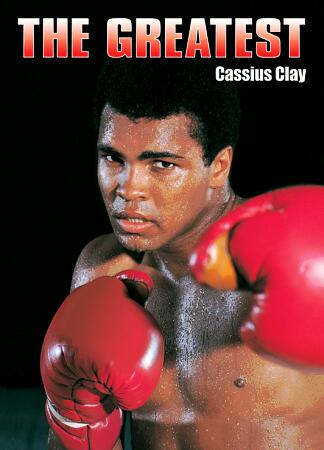
muhammad-ali-jpgIn 1964, world champion boxer Muhammad Ali requested exemption from the military draft based on his religious beliefs. His request was denied and when he subsequently refused induction into the army, he was convicted and sentenced to 5 years imprisonment. His case eventually works itself up the Supreme Court. In their first conference after the case is presented, the justices decide by majority vote (5 to 3) to uphold the conviction and Justice John Harlan is tasked with preparing the majority opinion. He assigns one of his clerks, Kevin Connolly, to prepare a first draft but try as he might [Mr. Connolly] believes that the decision is wrong. His draft argues for overturning the conviction… eventually Justice Harlan agrees with him. The Justice must now find a way to convince his colleagues.
Source: IMDB – http://www.imdb.com/title/tt2061756/?ref_=nv_sr_2

The review of this movie –  The Atlantic Magazine – adds great insight and perspective. Consider here:

In 1960 Cassius Clay burst onto the scene – and burst is about the only word to describe it – he was an 18-year-old amateur boxer who lit up the Summer Olympics in Rome with his brashness and youthful exuberance, to say nothing of his breathtaking ability. (He easily captured the light heavyweight gold medal.) Clay turned pro a few months after the Olympics, and within two years, he became more of a media star than the reigning heavyweight champion, Floyd Patterson, or Patterson’s successor, Sonny Liston. From the beginning he transcended boxing, making bold predictions – usually correct – about what round he would stop his opponents in; his hilarious doggerel poetry was recited by school kids who had never seen a boxing match. He cut a record (a cover of Ben E. King’s “Stand By Me”), appeared in a movie (as a heavyweight contender who knocks out Anthony Quinn in the opening moments of Requiem for a Heavyweight) and, in February of 1964, shocked everyone but himself by whipping the fearsome Sonny Liston, a 7-1 favorite for the heavyweight title. Within days of his victory, though, he created an even bigger shock when he announced that he had become a Black Muslim and changed his name to Muhammad Ali. And that was just the beginning.

In 1965, he failed a mental aptitude test for the draft. But early in 1966 the war in Vietnam was escalating and resistance to it was gathering momentum, so the standards for induction were lowered and Ali was classified as eligible for the draft. His lawyer presented a letter to the draft board requesting deferment as a conscientious objector. Three days later, the request was denied, and in 1967 he was arrested, convicted of draft evasion, and stripped of his heavyweight title by New York and other powerful state athletic commissions. In 1971, his appeal was heard by the U.S. Supreme Court. Opinion polls at the time (1971) indicated that the vast majority of older whites believed Ali should have been sent to jail, while an overwhelming number of blacks and younger white college students, many of whom had gone to see Ali on one of his campus appearances, vehemently supported his anti-war stance. Public sentiment about Ali pretty much followed the same lines as public opinion on the war in Vietnam, and as more people turned against the war, more supporters flocked to Ali’s corner.

The Justices reviewing this matter included Thurgood Marshall, as the only black justice on the court at the time. But Justice Marshall recused himself from the case, having been the Solicitor General on Ali’s earlier conviction. [(The Solicitor General is required to argue in front of the court on behalf of “The People”)]. Justice Harlan, the responsible party for communicating the majority decision, delegated this task to Kevin Connolly, his chief clerk; [(the Justices are allowed up to 4 Clerks to do the heavy-lifting of researching and composing opinions on before of their legal “masters”)]. Mr. Connolly was convincingly idealistic in this case; his dogged pursuit of justice helped turn the Court’s decision around.

At the time Justice Harlan, who was dying of cancer and would resign from the Court later that year, became finally convinced of the sincerity of Ali’s religious and anti-war beliefs and, against the wishes of his close friend Chief Justice Burger, shifted his vote to even the balance at 4 to 4. [(There was no further testimony from Ali or supporters, just the ruminated logic of the clerk Connolly and the appeal of a better nature)]. He eventually made such a convincing argument to the other conservatives on the court that the decision became unanimous (8 to 0, with an abstaining Justice Marshall).
Source: Extractions from Allen Barra, The Atlantic Magazine. Posted October 4, 2013; retrieved February 14, 2014 from: http://www.theatlantic.com/entertainment/archive/2013/10/muhammad-alis-most-formidable-opponent-was-the-us-supreme-court/280280/

The advocate in this drama is Kevin Connolly, the chief clerk for Supreme Court Justice Harland. His steadfast commitment to justice prevailed, in the end. He saw the miscarriage of justice in the un-balanced application of the law for religious/conscientious objections for White ministers as opposed to Black Muslim adherents of faith. He wielded his influence on his boss, Justice Harland, who then influenced the remaining court – one man made a difference on this court, and eventually the world.

The book Go Lean … Caribbean serves as a roadmap for the introduction and implementation of the Caribbean Union Trade Federation (CU). The book posits that one person can make a difference in the Caribbean; that there are many opportunities where one champion can elevate society. In fact the book is a collection of 144 different advocacies, so there is inspiration for the Kevin Connolly’s and Muhammad Ali’s of the region to make their mark in many different fields of endeavor. The roadmap specifically encourages the region to foster the genius potential (Page 27) in their communities, forge leadership skills (Page 171) and pursue the Greater Good (Page 37). With the participation of many advocates on many different paths for progress, the Caribbean can truly become a better place to live, work and play.

Download the book Go Lean … Caribbean – now!

Share this post:
, , ,
[Top]

6.5M Earthquake Shakes Eastern Caribbean

Go Lean Caribbean

The below news article highlights the regional threat of the active fault line (the Lesser Antilles subduction zone, also known for volcanoes) in the Eastern Caribbean basin. Notice that the countries affected are of American, Dutch, English and French legacies. In addition, there has been a number of small quakes in Puerto Rico in the last month.

Without a doubt, the Caribbean has to be on guard for danger from seismic activities. Plus, with constant threats during the annual hurricane season, there is a need for a full-time sentinel to monitor, mitigate and manage the risks of natural disasters in the region. This is the mandate for the Caribbean Union Trade Federation (CU). The Go Lean … Caribbean roadmap describes the CU’s prime directives as empowering the region’s economic engines, providing security assurances and preparing/responding to natural disasters.
BLOG Map Earthquake

A 6.5-magnitude earthquake northeast of Barbados caused shaking across the Eastern Caribbean early Tuesday morning, according to the United States Geological Survey. The quake, which occurred 172 kilometres |northeast of Barbados, struck at around 5:27 AM local time.

The University of the West Indies Seismic Research Centre also recorded the quake as having a magnitude of 6.5 on the Richter scale. The quake was felt across the region, with weak |shaking felt as far north as Philipsburg, St Maarten and light to moderate shaking from |Martinique all the way down to Grenada.

The most reports of shaking were felt in Martinique, which was about 128 kilometres directly west of the quake’s epicentre, along with Barbados. There were not any reports of damage or injuries, although authorities in Martinique were recommending “extreme caution” in coastal areas, according to reports. Other countries that felt shaking included St Lucia, Dominica, St Vincent and the Grenadines, Guadeloupe, Trinidad and even Venezuela. It was the second 6.5-magnitude earthquake in the region in just over a month, following a similarly-sized quake in near Puerto Rico in January.

It was the strongest quake in that portion of the region since 2007, when a 7.3-magnitude quake struck near Martinique. As a point of reference, the earthquake in 2010 in Haiti was a |7.0-magnitude on the Richter scale. The 2007 Martinique quake had been the largest in the |region since a 6.9-Magnitude tremblor near Antigua in 1974.
Source: Caribbean Journal Online (Retrieved 02/18/2014) –
http://www.caribjournal.com/2014/02/18/6-5m-earthquake-shakes-eastern-caribbean-from-martinique-to-grenada/

The book details the aftermath of the 2010 Haiti Earthquake as an indictment for the region’s lack of planning/response. What’s more the book, as a roadmap, posits that there is the threat of even more earthquakes along the Enriquillo fault line.

Earthquakes are Mother Nature’s fury 100%; there is no way to prevent them, only plan for their eventuality. Unfortunately the Caribbean region has not planned accordingly, despite due warning. Despite the constant threats for disasters, we have failed! There is no integrated agency to monitor and manage these threats. Yes, there is the US Geological Services, but this agency’s American priorities may not align with the priorities of the Caribbean people as a whole.

The roadmap does implement an integrated agency. Without this implementation, the region can only beg for help. Lastly, the Go Lean roadmap advocates a 10-Step approach to outgrow the statue of a perennial beggar for International Aid. The Caribbean, by the end of this roadmap, should at last be a better place to live, work and play.

Download the free e-Book of Go Lean … Caribbean – now!

Share this post:
,
[Top]

Could the Caribbean Host the Olympic Games?

Go Lean Commentary

Freedom of speech is great for the flow of information in a democracy. But freedom of speech has its limits, notwithstanding libel, slander and defamation possibilities. If a person yells out “FIRE, FIRE” in a crowded theater, knowing that there is no fire, the resultant panic and crush of people fleeing for the exits is actually criminally liable. In some jurisdiction, if death results, the culprit can be charged with statues against “depraved indifference”. Wow, that could be serious!

On the other hand, there is the practice of dreaming and acting on dreams. Some of the biggest accomplishments in world history, started as someone’s dreams. Once actuated, one step after another led to the eventual fulfillment of the dream.

See this article here from Caribbean Journal Online News Site; retrieved 02/12/2014 from http://www.caribjournal.com/2014/02/13/caribbean-idea-could-the-caribbean-host-the-olympic-games/:

thumbWhile the Caribbean has become relatively accustomed to dominating at the Summer Olympics, this year’s crop of Caribbean winter athletes has us thinking. With all of the Caribbean’s continued success in international athletics, why couldn’t the region (or one of the countries in the region host the Summer Olympics? 

The Olympics has been held in the US, Asia, Australia, Europe and (soon) South America, but never in the Caribbean.  So we looked around the region to think about which countries could, at least hypothetically host the Games. The Games must be based in a single city; given much of the region’s size, the Games would likely need to be held across an entire island, though perhaps nominally based in a city.  

A potential Caribbean host country would also need several major qualities: a large enough territory to host the myriad events held in the Summer Games; a high enough level of infrastructural development; a big enough airport and a hotel stock large enough that it could expand without too much difficulty to meet the needs of the Games. We isolated several Caribbean islands: Jamaica, Hispaniola (Haiti and the Dominican Republic), Trinidad and Tobago, Guadeloupe, Puerto Rico.

Jamaica is large enough and its hotel stock is big enough, but its infrastructural development would need work; given Jamaica’s brand equity around the world (and its athletic dominance), this could be a natural choice, with Montego Bay being the best fit for a single city given its topography. Hispaniola would be the most provocative choice: could two neighbors that often have a stormy relationship bridge their divides and come together for international sport? Lack of infrastructure, particularly on the Haitian side, would be an issue, but adding that infrastructure would also enormously benefit the western half of the island.

Could the Games be held in Port-au-Prince and Santo Domingo together? Trinidad and Tobago has the infrastructural development, the territorial size, and the airport, but a small hotel stock. Could Port of Spain host the Games with many events held in Tobago? A system of fast ferries and increased flights would make for an entertaining twin-island Olympics.

 Guadeloupe would be a bit of a wild card; its roads and infrastructural development far outpace much of the region; it has enough undeveloped land and a relatively large size. Could the Games spread across each of the islands of the archipelago? Puerto Rico is large, with developed infrastructure, and it’s part of the United States, with a relatively robust hotel stock and strong existing sports infrastructure. Of course, its debt problems would pose a significant hindrance to hosting the Games in the next few decades.

Cuba is another option, although the continued embargo from the United States would likely be a significant stumbling block. Otherwise, the island has the size, infrastructure and level of development to be considered. There’s another option — what about a regionally-hosted Olympics? Would the IOC ever support something like that? Would the Caribbean grant temporary approval for foreign airlines to operate regional service? Would a fast-ferry company seize on the opportunity?

If the region could source the majority of the funding from sponsorship’s and other external sources, the benefits of new hotels, infrastructure, investment and prestige could be significant. But the Caribbean would need to ensure that the foreign money was enough that it didn’t put it any further into already-crippling debt. Ultimately, the question is this: instead of spending billions on developed countries hosting the Games, why not spend the same money for an Olympic Games that actually leads to development?

Imagine a Trinidad or a Jamaica or a Hispaniola with fresh, modern hotels, large stadia and, crucially, sparkling new roads (not to mention the vast tourism marketing potential of hosting the Games). Of course, there’s another major issue: the weather. Summer in the Caribbean means the risk of hurricanes. But with major storms popping up across the globe, is the Caribbean really alone in that risk anymore? And couldn’t Olympic development be done at a hurricane-proof standard?

What do you think? Could the Caribbean ever host an Olympic Games?

The Caribbean hosting the Olympics is just dreaming, not reporting. Most men and women standing on the podium receiving their winning medals can trace their origins back to some dream. A dream for the athlete, coach and/or parent. Sometimes, too the whole community is dreaming. Is the thought of the Caribbean hosting the Olympics some day just a dream now in 2014 or can the “dominoes” be put in place that once actuated can lead to an eventual successful bid to host some future Olympiad?

Tipping the “dominoes” to enable a better business environment is the mission of the Go Lean … Caribbean roadmap. This even applies to sports. The books purports that sports can be a great economic driver for the region, and that the business model of the Olympics can be forged in the region on a minor scale. In fact the book proposes the CU Games as a bi-annual event that encompasses many Olympic-style events, more than just Track & Field. This approach would bring the necessary regional integration necessary to develop any long time plans for a big dream of the Olympics. (But the recommendation here is to NEVER host one).

This commentary declares that the merits of the foregoing article is pure rubbish. No one Caribbean country possesses the population base and economic engine to make an Olympic bid viable. While comparisons can be made for Greece, the host country for the 2004 Summer Olympics, this example is a better argument for opposition of any Olympic hosting. Greece experienced much financial distress as a result of their Olympic hosting; the country was near insolvency during the European Sovereign Debt crisis of 2009 – 2012, if not for the bail-outs of the European Union.

To the contrary, the entire Caribbean region tallies 42 million people and the results of economic integration can yield a GDP of $800 Billion (2010). Greece on the other hand had a population count of 10.8 million and GDP of $250 for the same period.

Lastly, the Go Lean roadmap calls for the emergence of the Caribbean dollar unified currency. This structure would spur the elevation of the region’s capital markets (9) for stocks and bonds. This approach would satisfy the liquidity needs to finance the construction of any and all sporting facilities required for sporting events.

Download the free e-Book of Go Lean … Caribbean – now!

Share this post:
, , ,
[Top]