Move your aging parents in with you … or move in with them?
This is a perplexing question that face most families … eventually; see the aligning VIDEO in the Appendix below.
This is especially true in the Caribbean as it is our practice to care for our elderly ourselves, not warehouse them in a Senior Care facility; cared for by strangers and professionals.
This Elder-Care preponderance was detailed in a previous Go Lean blog-commentary on March 24, 2014 – one of the first ones – entitled: 10 Things We Want from the US and 10 Things We Don’t Want from the US. That blog, and the hundreds since, all draw attention to the 2013 book Go Lean…Caribbean – available to download for free. The book serves as a roadmap for the introduction and implementation of the technocratic Caribbean Union Trade Federation (CU), for the elevation of Caribbean society – for all member-states. That previous blog actually stated:
Family Abandonment Senior Living Facilities are a big industry in the US. This is due to the family habit of abandoning elderly parents to the care of professional strangers. The Caribbean way traditionally is to house their Senior Citizens with families, whether the economics apply or not.
The CU has a prime directive to encourage repatriation back to the Caribbean homeland and assuage societal abandonment. Frankly, senior citizens should avoid the cold climates of North American and EU Diaspora cities.
The care of our seniors is presented in the Go Lean book as paramount – supreme importance. In fact, the book relates the challenges befalling Caribbean society and identifies the needs of our Aging Diaspora as one of the 4 impossible-to-deal-with-alone Agents of Change – Globalization, Climate Change, Technology and the Aging Diaspora. The book declared that we were failing miserably in our societal engines, but the opportunity now exists for re-approachment to the Diaspora that left their homeland 50, 40, 30 and 20-plus years ago. This should have been a economic boon for our communities!
But worse has happened: since the 2013 publication; our societal engines have failed even more. Rather than returning to the Caribbean homeland for retirement, families are now more prone to expatriate their elderly, rather than repatriate. 🙁
Our people are simply securing their seniors in a home … anywhere!
Such a declining trend is not true of all the Agents of Change, like Technology; we have actually improved there. In fact, the catalog of other Agents of Change commentaries in this series, cataloged here:
5 Years Later: Aging Diaspora – Finding Home … anywhere.
So now, Caribbean families have been finding homes abroad for their elderly loved one; in contrast to the past, now they have started to bring these aged ones to their Diasporic destinations.
Ouch!
The cold! And the abandonment of their beloved homeland and culture. Surely there must be home-sickness.
‘Time to Go’ – Logic of Senior Emigration It is a shame-and-a-disgrace – 70 percent of out tertiary-educated – gone! Now we have the report of a 104-year old woman [Jamaica-born May Garcia] who [had] just naturalized to become a US citizen. Just as much as this is a good story for her and America, this is an indictment for us – the Caribbean – and our failures as individual states. …
Ms. Garcia is an inspiration. She plainly demonstrates to the planners of a new Caribbean how acute our failures are. This [104 birthday] celebration should have been in her Caribbean homeland, Jamaica. This is our quest!
She should have been like a tree …
… planted by streams of water, which yields its fruit in season and whose leaf does not wither – whatever they do prospers. – The Bible; Psalms 1:3 – New International Version
A “planted tree” analogy relates that she would be firmly established … and others – her children and grandchildren – would come to her.
The theme of this current blog series is “5 Years Later and what is the condition now?“. That theme is to be supplemented with subsequent questions:
“Have the problems lessened, or have they intensified?”
“What can we do to mitigate the problems going forward?”
Pre-Fab Housing and Elder-Care Conjunction
Every community needs housing … for their seniors. This is just a basic fact of life: old age and illness … befall us all.
Just because an abled-bodied person has a house, it does not make it ideal when the circumstances change to “less than able”, or disabled, or differently-abled. Yet, disabilities are a reality … everyday: Just keep living.
This consideration is very appropriate for the Caribbean. We have some societal defects: consider our abandonment rate, especially among the younger generation, due mainly to a lack of economic opportunities, at home. Assuredly, they emigrate for refuge abroad, and then remit funds back to their Caribbean homelands, often to support their aging parents. These ones have the need for Elder-Care; but Elder-Care consists of more than remittances; many times, it includes nursing.
Providing housing, Elder-Care and nursing can be an economic conjunction, an activity at an intersection. The book Go Lean … Caribbean asserts that “luck” is the intersection of preparation and opportunity; that economic growth can be gained simply by positioning at that intersection and exploiting the opportunities.
…
Pre-fab housing solutions are conceivable, believable and achievable. … The Caribbean can and must foster our own solutions. But we have the constant threats of hurricanes, so our pre-fab structures must feature mitigations for storm resistance. The plausible options are depicted in great details in the Go Lean book (Page 207).
The Go Lean book does provide an advocacy for prefab housing (Page 207) and one for Elder-Care (Page 225). In fact, the book/roadmap presents the 3 prime directives to address all Caribbean societal engines:
Optimization of the economic engines in order to grow the regional economy to $800 Billion and create 2.2 million new jobs.
Improve Caribbean governance to support these engines, including a separation-of-powers between the member-states and CU federal agencies.
The book stresses that reforming and transforming the Caribbean societal engines must be a regional pursuit. This was an early motivation for the roadmap, as pronounced in the opening Declaration of Interdependence (Pages 11 – 13):
ix. Whereas the realities of healthcare and an aging population cannot be ignored and cannot be afforded without some advanced mitigation, the Federation must arrange for health plans to consolidate premiums of both healthy and sickly people across the wider base of the entire Caribbean population. The mitigation should extend further to disease management, wellness, mental health, obesity … programs.
xi. Whereas all men are entitled to the benefits of good governance in a free society, “new guards” must be enacted to dissuade the emergence of incompetence, corruption, nepotism and cronyism at the peril of the people’s best interest. The Federation must guarantee the executions of a social contract between government and the governed.
xvi. Whereas security of our homeland is inextricably linked to prosperity of the homeland, the economic and security interest of the region needs to be aligned under the same governance. Since economic crimes … can imperil the functioning of the wheels of commerce for all the citizenry, the accedence of this Federation must equip the security apparatus with the tools and techniques for predictive and proactive interdictions.
xxiv. Whereas a free market economy can be induced and spurred for continuous progress, the Federation must install the controls to better manage aspects of the economy: jobs, inflation, savings rate, investments and other economic principles. Thereby attracting direct foreign investment because of the stability and vibrancy of our economy.
The Go Lean book provides 370-pages of turn-by-turn instructions on “how” to adopt new community ethos, plus the strategies, tactics, implementations and advocacies to execute so as to reboot, reform and transform the societal engines of Caribbean society. These empowerments include the basic needs for our Aging Diaspora to seriously consider a return home; the book quote (Page 226):
Aging Population The CU will facilitate the Caribbean region to be the world’s best address for senior citizens. (The presumed security protection being in place first). This will send the invite to retirees (Caribbean Diaspora and foreign) to welcome their participation and contributions to CU society. This follows the model of Florida and Arizona – a “welcome mat” …
In the last 5 years, the Caribbean has missed out on the great economic and social opportunities to better cater to the Aging Diaspora. We must do better going forward. Yes, we can make our homeland a better place to live, work and play. 🙂
This day 77 years ago is a “day that will live in infamy”.
This is the anniversary of the Japanese attack on the United States Navy at Pearl Harbor, Hawaii. This event changed the world, as it ushered the US into World War II when they declared war against Japan the next day. Japan (Hirohito) was aligned with Germany (Hitler) and Italy (Mussolini), so by the US declaring war on Japan, the direct and immediate result was Germany and Italy declared war against the United States.
Germany, Italy, Japan, United States of America, …. these are just a sample of the countries involved in the conflict; it was a global war, the second one in 30 years.
There are a lot of lessons for the Caribbean in this history. This was the theme of this previous blog-commentary on December 7, 2016 during the 75th Anniversary commemoration. That entry is being Encored here-now, for the 2018 commemoration:
Retrieved December 7, 2016 from History.com – On December 7, 1941, Japan launches a surprise attack on American soil at Pearl Harbor.
This is the 75th Anniversary of that attack – a few days ago: December 7. That’s a lot of years and a lot of lessons. Still, 75 is a pretty round number, like 25, 50 and 100. This commentary has been reserved for now, a few days late on purpose because of the best-practice to “not speak ill of the dead” at a funeral or memorial service. But a “lessons learned analysis” is still an important exercise for benefiting from catastrophic efforts. After 75 years since the Pearl Harbor Attack on December 7, 1941, this post-mortem analysis is just as shocking as it was on this “day of infamy”.
Consider the details of this maligning article here (and the Appendices below); notice that it assumes a conspiracy:
Title: How U.S. Economic Warfare Provoked Japan’s Attack on Pearl Harbor
By: Robert Higgs
Ask a typical American how the United States got into World War II, and he will almost certainly tell you that the Japanese attacked Pearl Harbor and the Americans fought back. Ask him why the Japanese attacked Pearl Harbor, and he will probably need some time to gather his thoughts. He might say that the Japanese were aggressive militarists who wanted to take over the world, or at least the Asia-Pacific part of it. Ask him what the United States did to provoke the Japanese, and he will probably say that the Americans did nothing: we were just minding our own business when the crazy Japanese, completely without justification, mounted a sneak attack on us, catching us totally by surprise in Hawaii on December 7, 1941.
You can’t blame him much. For more than 60 years such beliefs have constituted the generally accepted view among Americans, the one taught in schools and depicted in movies—what “every schoolboy knows.” Unfortunately, this orthodox view is a tissue of misconceptions. Don’t bother to ask the typical American what U.S. economic warfare had to do with provoking the Japanese to mount their attack, because he won’t know. Indeed, he will have no idea what you are talking about.
In the late nineteenth century, Japan’s economy began to grow and to industrialize rapidly. Because Japan has few natural resources, many of the burgeoning industries had to rely on imported raw materials, such as coal, iron ore or steel scrap, tin, copper, bauxite, rubber, and petroleum. Without access to such imports, many of which came from the United States or from European colonies in southeast Asia, Japan’s industrial economy would have ground to a halt. By engaging in international trade, however, the Japanese had built a moderately advanced industrial economy by 1941.
At the same time, they also built a military-industrial complex to support an increasingly powerful army and navy. These armed forces allowed Japan to project its power into various places in the Pacific and east Asia, including Korea and northern China, much as the United States used its growing industrial might to equip armed forces that projected U.S. power into the Caribbean and Latin America, and even as far away as the Philippine Islands.
When Franklin D. Roosevelt became president in 1933, the U.S. government fell under the control of a man who disliked the Japanese and harbored a romantic affection for the Chinese because, some writers have speculated, Roosevelt’s ancestors had made money in the China trade.[1] Roosevelt also disliked the Germans (and of course Adolf Hitler), and he tended to favor the British in his personal relations and in world affairs. He did not pay much attention to foreign policy, however, until his New Deal began to peter out in 1937. Afterward, he relied heavily on foreign policy to fulfill his political ambitions, including his desire for reelection to an unprecedented third term.
When Germany began to rearm and to seek Lebensraum aggressively in the late 1930s, the Roosevelt administration cooperated closely with the British and the French in measures to oppose German expansion. After World War II commenced in 1939, this U.S. assistance grew ever greater and included such measures as the so-called destroyer deal and the deceptively named Lend-Lease program. In anticipation of U.S. entry into the war, British and U.S. military staffs secretly formulated plans for joint operations. U.S. forces sought to create a war-justifying incident by cooperating with the British navy in attacks on German U-boats in the north Atlantic, but Hitler refused to take the bait, thus denying Roosevelt the pretext he craved for making the United States a full-fledged, declared belligerent—an end that the great majority of Americans opposed.
In June 1940, Henry L. Stimson, who had been secretary of war under Taft and secretary of state under Hoover, became secretary of war again. Stimson was a lion of the Anglophile, northeastern upper crust and no friend of the Japanese. In support of the so-called Open Door Policy for China, Stimson favored the use of economic sanctions to obstruct Japan’s advance in Asia. Treasury Secretary Henry Morgenthau and Interior Secretary Harold Ickes vigorously endorsed this policy. Roosevelt hoped that such sanctions would goad the Japanese into making a rash mistake by launching a war against the United States, which would bring in Germany because Japan and Germany were allied.
Accordingly, the Roosevelt administration, while curtly dismissing Japanese diplomatic overtures to harmonize relations, imposed a series of increasingly stringent economic sanctions on Japan. In 1939 the United States terminated the 1911 commercial treaty with Japan. “On July 2, 1940, Roosevelt signed the Export Control Act, authorizing the President to license or prohibit the export of essential defense materials.” Under this authority, “[o]n July 31, exports of aviation motor fuels and lubricants and No. 1 heavy melting iron and steel scrap were restricted.” Next, in a move aimed at Japan, Roosevelt slapped an embargo, effective October 16, “on all exports of scrap iron and steel to destinations other than Britain and the nations of the Western Hemisphere.” Finally, on July 26, 1941, Roosevelt “froze Japanese assets in the United States, thus bringing commercial relations between the nations to an effective end. One week later Roosevelt embargoed the export of such grades of oil as still were in commercial flow to Japan.”[2] The British and the Dutch followed suit, embargoing exports to Japan from their colonies in southeast Asia.
An Untenable Position Roosevelt and his subordinates knew they were putting Japan in an untenable position and that the Japanese government might well try to escape the stranglehold by going to war. Having broken the Japanese diplomatic code, the Americans knew, among many other things, what Foreign Minister Teijiro Toyoda had communicated to Ambassador Kichisaburo Nomura on July 31: “Commercial and economic relations between Japan and third countries, led by England and the United States, are gradually becoming so horribly strained that we cannot endure it much longer. Consequently, our Empire, to save its very life, must take measures to secure the raw materials of the South Seas.”[3]
Because American cryptographers had also broken the Japanese naval code, the leaders in Washington knew as well that Japan’s “measures” would include an attack on Pearl Harbor.[4] Yet they withheld this critical information from the commanders in Hawaii, who might have headed off the attack or prepared themselves to defend against it. That Roosevelt and his chieftains did not ring the tocsin makes perfect sense: after all, the impending attack constituted precisely what they had been seeking for a long time. As Stimson confided to his diary after a meeting of the war cabinet on November 25, “The question was how we should maneuver them [the Japanese] into firing the first shot without allowing too much danger to ourselves.”[5] After the attack, Stimson confessed that “my first feeling was of relief … that a crisis had come in a way which would unite all our people.[6]
Source: The Independent Institute – Online Community – Posted: May 1, 2006; retrieved December 7, 2016 from: http://www.independent.org/newsroom/article.asp?id=1930
——–
See Appendices below for cited references and profiles of the Author and the Organization.
So this establishes why the Japanese may have been motivated to attack Pearl Harbor in the first place. The motivation seems more complicated than initially reported.
The Bible declares that:
“For there is nothing hidden that will not become manifest” – Luke 8:17
After 75 years, the before-during-after facts associated with the Pearl Harbor Attack should be available for full disclosure. What are the lessons here for the Caribbean and today’s effort to secure the Caribbean homeland while expanding the regional economy? We truly want to consider these main points, these lessons; (the hyperlinks refer to previous Go Lean commentaries):
Japan protested the sub-standard reality of the native Asians under the European colonial schemes. A people oppressed, suppressed and repressed would not remain docile forever; “that a downtrodden people would not stay down, that they would rise and revolt, that they would risk their lives and that of their children to pursue freedom.” – Go Lean book Page 251.
The US Territories (Hawaii and Philippines) were not the first targets for Japan. They targeted all European colonies (British, French and Dutch) territories. Their campaign was to rail against White Supremacy.
Japan avail themselves of expansion opportunities in Far-East Asia as the European powers became distracted in the time period during and after World War I. (Manchuria in China was occupied by Japan starting in 1931). Only a superior force, the US, was able to assuage their aggression.
Japan’s aggression was a direct result of their community ethos that honored Samurai warrior and battle culture. Men would walk the streets with their swords, ready for a challenge. On the other hand, the US (and Western Europe) community ethos of racism was so ingrained that the natural response in the US, post-Pearl Harbor, was to intern Japanese Americans in camps.
All of these bad community ethos were weeded out with post-WWII Human Rights reconciliations. – Go Lean book Page 220.
Japan felt justified in their Pacific aggression because of the US’s regional aggression in the Americas. Before Pearl Harbor, they withdrew from the League of Nations in protest of double standards.
Even after WWII, this double standard continues with countries with Veto power on the UN Security Council.
This discussion is analyzing the concept of “fight or flight”. According to Anthropologists, individuals and societies facing a crisis have to contend with these two options for survival. The very concept of refugees indicate that most people choose to flee; they choose internal displacement or refuge status in foreign countries. This point is consistent with the theme in the book Go Lean … Caribbean that this region is in crisis and as a result people have fled from their beloved homelands to foreign destinations in North America and Europe. How bad? According to one report, we have lost 70 percent of our tertiary-educated population.
Enough said! Our indictment is valid. Rather than flee, we now want the region to fight. This is not advocating a change to a militaristic state, but rather this commentary, and the underlying Go Lean book, advocates devoting “blood, sweat and tears” to empowering change in the Caribbean region. The book states this in its introduction (Page 3):
We cannot ignore the past, as it defines who we are, but we do not wish to be shackled to the past either, for then, we miss the future. So we must learn from the past, our experiences and that of other states in similar situations, mount our feet solidly to the ground and then lean-in, to reach for new heights; forward, upward and onward. This is what is advocated in this book: to Go Lean … Caribbean!
The Go Lean book serves as a roadmap for the introduction and implementation of the Caribbean Union Trade Federation (CU). One mission of this roadmap is to reduce the “push and pull” factors that contributes to the high emigration rates. For the most part the “push and pull” factors relate to the societal defects among the economic, security and governing engines. Another mission is to incentivize the far-flung Diaspora to consider a return to the region. Overall, the Go Lean roadmap asserts that the economy of the Caribbean is inextricably linked to the security of the Caribbean. The roadmap therefore proposes an accompanying Security Pact to accompany the CU treaty’s economic empowerment efforts. The plan is to cooperate, collaborate and confer with all regional counterparts so as to provide an optimized Caribbean defense, against all threats, foreign and domestic. This includes the American Caribbean territories (just like Pearl Harbor was on the American territory of Hawaii) of Puerto Rico and the US Virgin Islands. These American protectorates are included in this CU regional plan.
This CU/Go Lean regional plan strives to advance all of Caribbean society with these 3 prime directives:
Optimization of the economic engines in order to grow the regional economy to a $800 Billion Single Market by creating 2.2 million new jobs.
Establishment of a security apparatus to protect the resultant economic engines.
Improvement of Caribbean governance in support of these endeavors.
The Go Lean book stresses the effectiveness and efficiency of protecting life and property of all Caribbean stakeholders: residents, trading partners, visitors, etc.. This is why the book posits that some deployments are too big for any one member-state to manage alone – especially with such close proximities of one island nation to another – there are times when there must be a cross-border multi-lateral coordination – a regional partnership. This is the vision that is defined in the book (Pages 12 – 14), starting with these statements in the opening Declaration of Interdependence:
x. Whereas we are surrounded and allied to nations of larger proportions in land mass, populations, and treasuries, elements in their societies may have ill-intent in their pursuits, at the expense of the safety and security of our citizens. We must therefore appoint “new guards” to ensure our public safety and threats against our society, both domestic and foreign. …
xii. Whereas the legacy in recent times in individual states may be that of ineffectual governance with no redress to higher authority, the accedence of this Federation will ensure accountability and escalation of the human and civil rights of the people for good governance, justice assurances, due process and the rule of law. As such, any threats of a “failed state” status for any member state must enact emergency measures on behalf of the Federation to protect the human, civil and property rights of the citizens, residents, allies, trading partners, and visitors of the affected member state and the Federation as a whole.
xvi. Whereas security of our homeland is inextricably linked to prosperity of the homeland, the economic and security interest of the region needs to be aligned under the same governance. …
The Go Lean roadmap is not a call for a revolt against the governments, agencies or institutions of the Caribbean region, but rather a petition for a peaceful transition and optimization of the economic, security and governing engines in the region. To establish the security optimization, the Go Lean book presents a series of community ethos that must be adapted to forge this change. In addition, there are these specific strategies, tactics, implementation and advocacies to apply:
Community Ethos – new Economic Principles
Page 21
Community Ethos – new Security Principles
Page 22
Community Ethos – Minority Equalization
Page 24
Community Ethos – Impacting the Greater Good
Page 34
Strategy – Mission – Enact a Defense Pact to defend the homeland
Page 45
Tactical – Fostering a Technocracy
Page 64
Tactical – Homeland Security – Naval Operations
Page 75
Tactical – Homeland Security – Militias
Page 75
Implementation – Assemble – US Overseas Territory into CU
Page 96
Implementation – Foreign Policy Initiatives at Start-up
Page 102
Implementation – Security Initiatives at Start-up
Page 103
Implementation – Ways to Promote Independence
Page 120
Planning – Ways to Model the EU – Constructs after WW II
Page 130
Advocacy – Ways to Better Manage the Social Contract
Page 170
Advocacy – Ways to Improve Homeland Security
Page 180
Advocacy – Ways to Mitigate Terrorism
Page 181
Advocacy – Ways to Improve Intelligence Gathering
Page 182
Advocacy – Ways to Enhance Tourism – Mitigate Risky Image
Page 190
Advocacy – Ways to Improve Emergency Management
Page 196
Advocacy – Ways to Preserve Caribbean Heritage
Page 218
Advocacy – Ways to Impact US Territories
Page 244
Now is the time to lean-in to this roadmap and “fight” for Caribbean change, as depicted in the book Go Lean…Caribbean. At this time, there are no State Actor adversaries – like Imperial Japan – seeking to cause harm to our homeland, but that status quo can change very quickly. Some Caribbean member-states are still de facto “colonies”, so enemies of our colonial masters – France, Netherlands, US, UK – can quickly “pop up”. We must be ready and on guard to any possible threats and security risks.
The movement behind the Go Lean … Caribbean book seeks to make this homeland a better place to live, work and play. Since the Caribbean is arguably the best address of the planet, tourism is a primary concern. So security here in our homeland must take on a different priority. Tourists do not visit war zones – civil wars, genocides, active terrorism, Failed-States and rampant crime. Already our societal defects (economics) have created such crises that our people have chosen to flee as opposed to “fight”. We do not need security threats as well; we do not need Failed-States. We are now preparing to “fight” (exert great efforts), not flee, to wage economic war to elevate our communities.
This will not be easy; this is heavy-lifting, but success is possible. The strategies, tactics and implementations in the Go Lean roadmap are conceivable, believable and achievable. 🙂
Appendix A – Reference Notes: 1. Harry Elmer Barnes, “Summary and Conclusions,” in Perpetual War for Perpetual Peace:A Critical Examination of the Foreign Policy of Franklin Delano Roosevelt and Its Aftermath (Caldwell, Id.: Caxton Printers, 1953), pp. 682–83.
2. All quotations in this paragraph from George Morgenstern, “The Actual Road to Pearl Harbor,” in Perpetual War for Perpetual Peace, pp. 322–23, 327–28.
3. Quoted ibid., p. 329.
4. Robert B. Stinnett, Day of Deceit: The Truth about FDR and Pearl Harbor (NewYork: Free Press, 2000).
5. Stimson quoted in Morgenstern, p. 343.
6. Stimson quoted ibid., p. 384.
——-
Appendix B – About the Author:
Robert Higgs is a Senior Fellow in Political Economy at the Independent Institute and Editor at Large of the Institute’s quarterly journal The Independent Review. He received his Ph.D. in economics from JohnsHopkinsUniversity, and he has taught at the University of Washington, LafayetteCollege, SeattleUniversity, the University of Economics, Prague, and GeorgeMasonUniversity.
——-
Appendix C – About the Independent Institute:
The Independent Institute is a non-profit, non-partisan, scholarly research and educational organization that sponsors in-depth studies of critical social and economic issues.
The mission of the Independent Institute is to boldly advance peaceful, prosperous, and free societies grounded in a commitment to human worth and dignity.
Today, the influence of partisan interests is so pervasive that public-policy debate has become too politicized and is largely confined to a narrow reconsideration of existing policies. In order to fully understand the nature of public issues and possible solutions, the Institute’s program adheres to the highest standards of independent scholarly inquiry. Source:http://www.independent.org/aboutus/
Old age is justice; it is when able-bodied people and disabled people become equally disabled.
We are being reminded of this sad reality of aging by the life-and-death of the 41st President of United States of America. At the end of his life, this able-bodied man (former war hero) was bound to a wheelchair.
The United States is mourning the death of its ex-president (1989 – 1993), George H. W. Bush. Wednesday December 5, 2018 is set-aside as the National Day of Mourning.
“The best 1 term president in the history of the country” – as declared by George W. Bush, the eldest son and subsequent president (#43 2001 – 2009).
Who’s best? Who’s the greatest? These are all questions for historians to consider. But for one group of Americans – Persons with Disabilities – they will surely concur with the “best” and “greatest” tag to George H.W. Bush because of one reason, his passage of the Americans with Disabilities Act (ADA).
The book Go Lean…Caribbean – available to download for free – presents this landmark ADA legislation as a model for emulation and adoption in the Caribbean. The book provided this ADA summary (Page 228):
The Bottom Line on the American with Disabilities Act (ADA) This Act is a law that was enacted by the U.S. Congress in 1990. It was signed into law on July 26, 1990, by President George H. W. Bush, and later amended with changes effective January 1, 2009. The ADA is a wide-ranging civil rights law that prohibits, under certain circumstances, discrimination based on disability. It affords similar protections against discrimination to Americans with disabilities as the Civil Rights Act of 1964, which made discrimination based on race, religion, sex, national origin, and other characteristics illegal. Disability is defined by the ADA as “…a physical or mental impairment that substantially limits a major life activity.” The determination of whether any particular condition is considered a disability is made on a case by case basis. Certain specific conditions are excluded as disabilities, such as current substance abuse and visual impairment that is correctable by prescription lenses. [ADA is based on the premise of] reasonable accommodation – an adjustment made in a system to “accommodate” or make fair the same system for an individual based on a proven need. Accommodations can be religious, academic, or employment related. This provision is also prominent in international law as the United Nations has codified the principle in the Convention on the Rights of Persons with Disabilities. [There are many international signatories to these principles and resolutions].
The ADA allows private plaintiffs to receive only injunctive relief (a court order requiring the public accommodation to remedy violations of the accessibility regulations) and attorneys’ fees, and does not provide monetary rewards to private plaintiffs who sue non-compliant businesses. Unless a state law provides for monetary damages to private plaintiffs, qualified claimants do not obtain direct financial benefits from suing entities that violate the ADA. [Thus, no “professional plaintiffs”!]
Listen to this relevant AUDIO Podcast from today (December 3, 2018):
Published December 3, 2018 – President George H.W. Bush signed the Americans with Disabilities Act into law in 1990. It was landmark legislation that expanded rights and protections for millions of people. Bush, who died Friday at age 94, played a key role in its passage.
Here & Now‘s Jeremy Hobson talks with Marian Vessels, director of the Mid-Atlantic ADA Center in Maryland, who was at the ADA’s signing.
Unfortunately, the Caribbean has a terrible track record for accommodating Persons with Disabilities. The Go Lean book serves as a roadmap for the introduction and implementation of the technocratic Caribbean Union Trade Federation (CU), for the elevation of Caribbean society – for all member-states. This CU/Go Lean roadmap has these 3 prime directives:
Optimization of the economic engines in order to grow the regional economy to $800 Billion and create 2.2 million new jobs.
Improve Caribbean governance to support these engines, including a separation-of-powers between the member-states and CU federal agencies.
The book stresses that reforming and transforming the Caribbean societal engines must be a regional pursuit. This was an early motivation for the roadmap, as pronounced in the opening Declaration of Interdependence (Pages 12 – 13):
ix. Whereas the realities of healthcare and an aging population cannot be ignored and cannot be afforded without some advanced mitigation, the Federation must arrange for health plans to consolidate premiums of both healthy and sickly people across the wider base of the entire Caribbean population. The mitigation should extend further to disease management, wellness, mental health, obesity and smoking cessation programs. …
xi. Whereas all men are entitled to the benefits of good governance in a free society, “new guards” must be enacted to dissuade the emergence of incompetence, corruption, nepotism and cronyism at the peril of the people’s best interest. The Federation must guarantee the executions of a social contract between government and the governed.
xviii. Whereas all citizens in the Federation member-states may not have the same physical abilities, reasonable accommodations must be made so that individuals with physical and mental disabilities can still access public and governmental services so as to foster a satisfactory pursuit of life’s liberties and opportunities for happiness.
The Go Lean book provides 370-pages of turn-by-turn instructions on “how” to adopt new community ethos, plus the strategies, tactics, implementations and advocacies to execute so as to reboot, reform and transform the societal engines of Caribbean society – to benefit all people, able-bodied and the disabled. One specific advocacy addresses the needs of Persons with Disabilities. See the sample plans, excerpts and headlines from the book on Page 228 entitled:
10 Ways to Impact Persons with Disabilities
1
Lean-in for Treaty for a Caribbean Single Market
This treaty allows for the unification of the region into one market, thereby expanding to an economy of 26 countries, 42 million people and a GDP of over $800 Billion (per 2010). The CU will empower and enhance the economic engines for the participation and benefit of all people; this includes the number of citizens that may have some physical (deaf, blind, lame, etc.) or mental challenges. The CU’s vision is that this sector represents a critical talent pool that is underserved and underutilized. They will be included in this CU movement, with a Caribbean [Persons] with Disabilities (CDA) provision embedded in the treaty. In addition, to the economic missions, the treaty also establishes a security pact, with the mission to fortify homeland security and to mitigate regional threats including a strategic gun control policy.
2
Cruise Ships and Disability Tourism Since most western democracies have Reasonable Accommodation provisions for their citizenry, many disabled people in the US, Canada and EU countries live full-functioning lives with jobs, disposable income and the manifestation of vacation needs. The CU will incentivize the Cruise industry and tourism properties to make their own “reasonable accommodations” to cater to persons with disabilities. This also applies to the Elder-Care population.
3
Public Transportation and Public Accommodations – Assurance on CU facilities
4
Government Buildings and Proceedings
5
Mental Disabilities and Gun Control
6
Tele-type Call Center Access
The CU advocates e-Government and e-Delivery of government services, therefore call centers will be a primary feature for service delivery. To accommodate deaf residents, guests and trading partners, the CU call centers will be equipped with “Tele-type” terminals and agents with related certifiable skills (including 911).
7
Autism Awareness – Opt-Out Accommodations
8
Braille Websites
9
Closed Captioning … for Television As the regulator for cross-border radio spectrum, the CU’s Media Regulatory Authority will mandate that all broadcasters provide a closed-captioning option on their channels. This enables the hearing-impaired to have full access.
10
Public Awareness Campaign – Improve Image
The Go Lean movement (book and blogs) have maintained that there must always be the empowerments for Persons with Disabilities. This cannot be left to chance; it must be enacted in law. Thank you for this model President George H.W. Bush. The need for Caribbean empowerments for Persons with Disabilities has been alluded to in many previous blog-commentaries; consider this sample:
Mental Health is a real concern for the population in general and for men in particular. One of the biggest problems is that men rarely want to admit to any problems or seek any help. Yet, the evidence of dysfunction is there: 1. Substance Abuse (Drugs and Alcohol) 2. Suicide
Managing the ‘Strong versus the Weak’ – Mental Disabilities
The creed to protect the Weak from being abused by the Strong is age-old as an honor code. All societies have those that are mentally weak; the Social Contract must allow for protection and remediation of these ones.
Managing the ‘Strong versus the Weak’ – Model of Hammurabi
In every society, there are those that are able-bodied and those that are disabled. so there is the need for the authorities to ensure that the “strong should not harm the weak”. This is the legacy of the 3,800 year-old Hammurabi Code.
The Go Lean movement campaigns for reasonable accommodations so that persons in the Caribbean that are differently-abled can live a full and engaging life … and help to elevate their communities. This difference also includes those who are “fat”, overweight or obese.
Failures in health delivery results in suicides. Among senior citizens, this prevalence is due to the fact that they may not consider themselves as relevant in modern society. We can learn from others on health remediation and solutions for Caribbean senior citizens.
Role Model of a Disability Advocate: Reasonable Accommodations
With just a reasonable accommodation, persons with disabilities can live a full and engaging life … and help to elevate their communities and make “home” better places to live, work and play.
Mental Health disorders can spark when the economy sours. Public Health officials need to be “on guard” for Mental Health fallout during periods of economic recession.
Everyone ages, and so Alzheimer’s disease is a guaranteed risk in every community. This is a Mental Health reality that must be planned for, so as to ensure the best outcomes for communities.
As related above, American society is at the matured level now in their Social Contract deliveries. They now expect the standard to be “reasonable accommodations” so that Persons with Disabilities can participate in and contribute to society. This was not always the case, and then George H.W. Bush came along and forge change in American society. This is not the standard in the Caribbean member-states … yet. But part of this reboot effort – the quest of the Go Lean roadmap – is to reform and transform the societal engines to benefit all members of the community, able-bodied or not.
President Bush’s motives with the ADA efforts where not selfish; his legacy of public service is being lauded today leading up to his National Hero’s Funeral. But lo and behold, at the end of his life, he needed the reasonable accommodations he enshrined into law.
In the Caribbean, we need to apply this same lesson: even able-bodied people become disabled; therefore reasonable accommodations need to be ensured in society. Yes, we can benefit ourselves from such empowerments. This will make our homeland a better place to live, work and play. 🙂
On this day, 40 years ago, the Caribbean member-state of Guyana was home to one of the worst abuses of religious freedoms in the history of the world. This was the Jonestown People’s Temple “Revolutionary Suicide” on November 18, 1978.
From a Caribbean perspective, we must admit and accept the culpability: “My Bad!”
We have bloodguilt on our hands for the 918 people who died on this day in Guyana 40 years ago; (one third of whom were minor children). See the encyclopedic details here:
Tile: Jonestown The Peoples Temple Agricultural Project, better known by its informal name “Jonestown“, was a remote settlement established by the Peoples Temple, an American cult under the leadership of reverend Jim Jones, in north Guyana. It became internationally notorious when, on November 18, 1978, a total of 918[1][2] people died in the settlement, at the nearby airstrip in Port Kaituma, and at a Temple-run building in Georgetown, Guyana’s capital city. The name of the settlement became synonymous with the incidents at those locations.
909 individuals died in Jonestown,[1] all but two from apparent cyanide poisoning, in an event termed “revolutionary suicide” by Jones and some members on an audio tape of the event and in prior discussions. The poisonings in Jonestown followed the murder of five others by Temple members at Port Kaituma, including United States CongressmanLeo Ryan, an act that Jones ordered. Four other Temple members committed murder-suicide in Georgetown at Jones’ command.
While some refer to the events in Jonestown as mass suicide, many others, including Jonestown survivors, regard them as mass murder.[3][4] As many as 70 people may have been injected with poison, and a third of the victims (304) were minors.[5][6] It was the largest such event in modern history and resulted in the largest single loss of American civilian life in a deliberate act until September 11, 2001.[7]
…
Selection and establishment of Guyanese land
…
The Temple chose Guyana, in part, because of its own socialist politics, which were moving further to the [political] left during the selection process.[18][19] Former Temple member Tim Carter stated that the reasons for choosing Guyana were the Temple’s view of a perceived dominance of racism and multinational corporations in the U.S. government.[20] According to Carter, the Temple concluded that Guyana, an English-speaking, socialist country with a predominantly indigenous population and with a government including prominent black leaders, would afford black Temple members a peaceful place to live.[20] Later, Guyanese Prime Minister Forbes Burnham stated that Jones may have “wanted to use cooperatives as the basis for the establishment of socialism, and maybe his idea of setting up a commune meshed with that”.[19] Jones also thought that Guyana was small, poor, and independent enough for him to easily obtain influence and official protection.[18]
…
See the remaining reference in the Source link here …
Surely this Jonestown drama is a manifestation of evil, despite the “Reverend” Jim Jones and the Christian affiliation of the People’s Temple.
This atrocity is on us!
Actually, after the events of the November 18, 1978 tragedy, there was a formal inquest – Commission of Inquiry – which concluded that Guyanese Prime Minister Forbes Burnham was responsible for the deaths at Jonestown. There is no way to misconstrue the culpability in this drama:
As a representative democracy, the leaders act on behalf of the people.
What kind of environment was the Caribbean country of Guyana to where a Bad Actor with evil Intents and Purposes could thrive in our neighborhood?
Surely, there were societal defects in place then; the Guyana orthodoxy was surely flawed. (Even though, on the surface, the solidarity of Guyana’s political leadership aligned with Jim Jones and the People’s Temple movement in their opposition to racial inequality and Crony-Capitalism. See the Appendix VIDEO below).
This is the lesson we learn from Jonestown 1978: When we tolerate Human Rights abuses, things go from bad to worse.
How about today?
Is Guyana reformed or transformed today, away from that old bad society to a more viable society today?
According to the movement behind the book Go Lean…Caribbean, the answer is:
No, actually!
The Go Lean book asserts that the Caribbean is in crisis. We have many societal defects that are so badly in need of reform. Guyana’s disposition is especially acute. Of all the societal abandonment transpiring in the region, Guyana is among the worst. One report related a 89% Brain Drain rate with their college educated populations. In addition, Guyana is still notoriously bad for mitigating and counteracting suicides. In a 2014 report, this country was ranked #1 for Suicides Per Capita.
Guyana needs a reboot!
The whole Caribbean region needs a reboot.
This is the “why” the Go Lean book presents a roadmap for the introduction and implementation of a super-national governing authority, the Caribbean Union Trade Federation (CU). This entity will be empowered to effect change in all 30 Caribbean member-states. This would be a new regime for the region; one that is apolitical (not left nor right-leaning) and religiously-neutral; (no blindspots in oversights to “Christian” religious groups).
Under this new regime, as described in the Go Lean book, religious institutions will be recognized, respected and defined as Non-Government Organizations (NGO), nothing more … nothing less. Caribbean integration is the priority and this priority would allow for a more efficient delivery of the Social Contract. (Social Contract is defined for when citizens surrender some of their freedoms and submit to the authority of the State in exchange for protection of remaining natural and legal rights).
It is universally accepted that the Government of Guyana failed those 918 people in 1978. The religious eco-system should not have been looked on for protection and security. No, Jonestown was a failing of the government. There is a variety of religious adherents in this country – Christians, Muslims, Hindus, Indigenous Animists – no one religious group should ever be put above or below another. Religious diversity must be a concern for all Caribbean member-states; the Social Contract for the Caribbean must reflect a Pluralistic Democracy.
40 years later, and the stewards for a new Caribbean have learned how to apply the lessons of Jonestown in this plan to forge a better society. The Go Lean/CU roadmap presents the strategies, tactics and implementations to impact Caribbean communities and all their societal engines. In fact, these statements are identified as the prime directives for this roadmap:
Optimize the economic engines in order to grow the regional economy to $800 Billion & create 2.2 million new jobs.
Establish a security apparatus to protect the resultant economic engines, plus ensure public safety and justice institutions. Security provisions should apply to the macro and the micro.
Improve Caribbean governance to support these engines, including a separation-of-powers between the member-states and CU federal agencies, plus even oversight for NGO’s.
These prime directives transcend religions and national borders. There is an expectation of Human Rights that is expected no matter the country, languages or culture. Protections of Human Rights should just be delivered. The approach is to move the Caribbean region to a Single Market. Guyana-based CariCom started this vision, but they have failed to deliver on it. We need a better integration – with a stronger foundation – that would ensure that a Jonestown can never happen again – NEVER AGAIN.
The book Go Lean…Caribbean – available to download for free – opened with the assessment that regional governance is dysfunctional and the challenges for the Caribbean are too Big for anyone one of these small islands or coastal states alone – there must be regional solutions. Thusly, the roadmap calls for a regional interdependence. This need was pronounced in the opening Declaration of Interdependence (Pages 10 – 12):
Preamble: That whenever any form of government becomes destructive to these ends, it is the right of the people to alter or to abolish it, and to institute new government … when a long train of abuses and usurpations, pursuing invariably the same object evinces a design to reduce them under absolute despotism, it is their right, it is their duty, to throw off such government, and to provide new guards for their future security.
vi. Whereas the finite nature of the landmass of our lands limits the populations and markets of commerce, by extending the bonds of brotherhood to our geographic neighbors allows for extended opportunities and better execution of the kinetics of our economies through trade. This regional focus must foster and promote diverse economic stimuli.
x. Whereas we are surrounded and allied to nations of larger proportions in land mass, populations, and treasuries, elements in their societies may have ill-intent in their pursuits, at the expense of the safety and security of our citizens. We must therefore appoint “new guards” to ensure our public safety and threats against our society, both domestic and foreign. The Federation must employ the latest advances and best practices of criminology and penology to assuage continuous threats against public safety. …
xi. Whereas all men are entitled to the benefits of good governance in a free society, “new guards” must be enacted to dissuade the emergence of incompetence, corruption, nepotism and cronyism at the peril of the people’s best interest. The Federation must guarantee the executions of a social contract between government and the governed.
The Go Lean book provides 370-pages of turn-by-turn instructions on “how” to adopt new community ethos, plus the strategies, tactics, implementations and advocacies to execute so as to transform the Caribbean region into a “better society”. The book details a “better society” in terms of Human Rights in one specific Chapter on Page 220. See here, some of the excerpts and headlines from that Chapter:
10 Ways to Protect Human Rights
1
Lean-in for Caribbean Integration
This regional re-boot will allow for the unification of the region into one market, thereby creating a single economy of 30 member-states, 42 million people and a GDP of over $800 Billion. The CU will assume the primary coordination for the region’s economy and the requisite security to protect the resultant economic engines. While the CU is an economic initiative, there is a mission to monitor/mitigate Fail State Indices, and Human Rights violations constitute a Failed State Indicator.
2
Watchful World
A CU mission is to monitor the image of the Caribbean to the rest of the world. Not only will the world be watching the activities in the region, but the “story” being told will be directed to depict a positive behind-the-scenes view, that the region is the best place to live-work-play.
3
Caribbeans with Disabilities
4
Women & Youth
The CU will allow for empowerment and protections of women & children, orphans & widows, in compliance with Judeo-Christian precepts, Human Rights requirements, & natural instincts. These efforts will include the special needs for young girls, adult women and senior women.
5
LGBT Toleration
6
Reconciliations
There were many reasons why Caribbean citizens abandoned their homelands and fled to distant shores. In some cases, the expatriates were actually political/human rights refugees. The CU mission for formal Truth & Reconciliation Commissions will allow many past issues to be settled and set aside, not necessary as criminal prosecutions, as statutes of limitations may have been exceeded. Plus punishing the past, at times may short circuit the future.
7
Future Focus
8
Justice Focus
The people of the Caribbean have the right to good government and the fulfillment of the social contract. This would ensure law-and-order, due process, the rule of law, and some justice assurance. The CU will facilitate monitoring and accountability of the justice institutions to ensure compliance and mitigate abuse, compared to times in the past.
9
Tourist Omnipresence Extending hospitability to guests is putting “the best foot forward”. The vertical industries of tourism are based on this premise. The CU will expand tourist offerings away from resort-life, including eco-tourism (i.e. rainforest & scuba-diving excursions, bird-watching). This brings more tourists into daily interaction with residents – always on our best behavior.
10
Long-Form Journalism The CU will support and promote Public Broadcasting media outlets for TV/Radio. This has historically allowed for long-form journalistic productions, a great advantage for human rights foundations & agencies. This allows messaging to get deep and detailed, beyond the headline-only of compressed newscasts. These types of endeavors have forged many changes in American society, like exposing the ills of rural poverty and the atrocities of the old peonage system.
Our region has gotten a “Black-Eye” because of the atrocities of Jonestown, Guyana. We must do better, going forward. That “better society” is one that pursues this definition of the Greater Good:
“It is the greatest good to the greatest number of people which is the measure of right and wrong”. – Jeremy Bentham (1748-1832)
The Caribbean must foster a better homeland that protects its citizens and visitors; (the 918 people who died on November 18, 1978 were Americans – non-Guyanese citizens). Considering the lessons being learned from Jonestown, we must also hold religious organizations – and NGO’s – accountable for their actions and violations of Human Rights and modern justice requirements. This Go Lean movement has previously detailed many related issues and advocacies for Human Rights mandates in our region; consider this sample of previous blog-commentaries:
As a result of Jonestown 1978, the expression “drinking the Kool-Aid” has entered into the English-speaking lexicon. Yes, this 40 year old tragedy in Guyana has branded the Caribbean with a global brand as inadequate and Less Than when it comes to effective governance in public safety and Human Rights protection.
After all, one third of the 918 victims in Jonestown were minor children.
Surely we have learned lessons in the 40 years since. Surely, we have now learned how to protect our people … and our visitors.
Surely, our communities will embrace all strategies, tactics, implementations and advocacies to ensure such a tragedy will never happen again.
The Go Lean book is the lesson-learn.
Surely, this roadmap will be embraced and adopted as part of the regional pledge of NEVER AGAIN.
We urge all Caribbean stakeholders to lean-in to this roadmap to reboot the region, to bring change … and empowerment. We must make sure those 918 lives were not lost in vain; We must learn the lessons from Jonestown. We must make our communities better places to live, work and play. 🙂
FactFile Published on Feb 5, 2018 – The Jonestown massacre was a horrendous event that led to the deaths of almost a thousand people. Today we tell the story that led up to that most horrendous of days.
“… Keep doing this, whenever you drink it, in remembrance of me.” For whenever you eat this loaf and drink this cup, you keep proclaiming … – The Bible 1 Corinthians 11: 25, 26 NWT
Its a simple formula, keep doing things in remembrance … and you will remember.
Remember, remember the Fifth of November, The Gunpowder Treason and Plot, I know of no reason Why the Gunpowder Treason Should ever be forgot.
See the full poem and all its variations in Appendix A below.
Throughout the British West Indies (18 of the 30 countries that comprise the political Caribbean), the night of November 5th was a Red Letter Day on the Calendar. It was Guy Fawkes / Bonfire Night. The tradition was to burn a stuffed dummy in effigy!
This was not our finest moment.
Without realizing it, we were fostering a Climate of Hate.
Surely, we have grown … since those Bad Old Days?!
Surely?!
Sorry! The answer is No! Those Bad Old Days was … 5 days ago.
This practice was/is bad … because we have not reformed and retrained our Community Ethos. This refers to:
The national spirit that drives the character and identity of its people.
In a lot of the Anglophone world, Guy Fawkes or Bonfire Night is a memorable Calendar event. Here are examples:
Bahamas Though the Bahamas gained independence from England more than 40 years ago, a great deal of our culture remains steeped in the traditions of our British ancestors.
One of these traditions is Guy Fawkes Night. …
Today, nearly 250 years later, Guy Fawkes Night is still celebrated throughout the Bahamas. “Guys” are constructed using old clothing, newspapers and masks, and burned on giant bonfires.
Green Turtle Cay’s Guy Fawkes Night is observed on the Saturday evening closest to November 5th. … – Source:https://littlehousebytheferry.com/2015/11/05/guy-fawkes-on-green-turtle-cay/
Bermuda England celebrates this … Gun Powder Plot and every year his effigy is burned on a bonfire.
Oh and there are fireworks! Well of course there are. No sense in just letting him burn in silence!
In true Bermudian fashion we will be joining the Brits in their burning! Well at least the fireworks that is. Aptly placed our fireworks will be around an old Fort here, Fort St. Catherine! Source: https://robynskinner.wordpress.com/tag/guy-fawkes-day-in-bermuda/
Jamaica
Bonfire Night in Jamaica can be one of the most exciting nights of the year. There are loads of Guy Fawkes events in Jamaica and no matter what the weather’s like, you can always be sure a firework party in Jamaica will always draw in a big crowd. – Source:https://www.skiddle.com/cities/jamaica/bonfirenight.html
See a relevant news article in Appendix B.
St. Vincent and the Grenadines
The former British colony in the Caribbean, Guy Fawkes Day is celebrated with English customs such as tea parties as well as the unique tradition of bamboo blowing, where heated kerosene is used to ignite an explosion in hollowed out bamboo cannons (to mimic the sound and fire of old cannons from the colonial days). In addition, there are fireworks displays on many beaches. – See Appendix C VIDEO below.
Underlying to the Guy Fawkes remembrance is the enmity and animosity between England’s Protestants (Anglicans) and Roman Catholics – see Appendix A below. There was war; there was hatred; this was the climate for hundreds of years. Every time we consume Guy Fawkes festivities, we promote that Climate of Hate; we continue the bad community ethos. So instead of persecuted minorities – Protestants-hating-Catholics or Catholics-hating-Protestants – the recommended community ethos is:
Live and let live.
The opposite of persecuted minorities would be “Respect for Minorities”. This has been a familiar topic for the movement behind the book Go Lean…Caribbean. This movement has related the Climate of Hate in these scenarios:
Haitian Immigrants – Many Caribbean countries express vitriol towards Haitian migrants.
LGBT – Still clinging to the archaic “Buggery” laws, many countries persecute gays in their society as degenerates.
These are lessons for us to learn and apply. The Caribbean member-states, collectively and individually, need to curb its Climate of Hate so we need to pay more attention to historic traditions; they furnish lessons we need to take to heart.
This is not just an issue of history, but one of currency for our economics, security, governance and overall spirit in society. These are all important subjects for the book Go Lean…Caribbean. The book serves as a roadmap for elevating Caribbean society – for its 42 million residents and 80 million visitors, across all 30 member-states – by introducing and implementing the technocratic Caribbean Union Trade Federation (CU).
The quest of the Go Lean roadmap is to make the Caribbean homeland a better place to live, work and play. The CU, applying best-practices for community empowerment has these 3 prime directives, proclaimed as follows:
Optimization of the economic engines in order to grow the regional economy to $800 Billion & create 2.2 million new jobs.
Establishment of a security apparatus to protect the resultant economic engines and ensure the respect of human rights and public safety.
Improve Caribbean governance to support these engines.
We have a Climate of Hate in the Caribbean, the Go Lean book – within its 370 pages – therefore details a series of community ethos to adopt to overcome the bad attitudes plus the strategies, tactics, implementations and advocacies to execute to forge permanent change in the homeland. Fixing the Caribbean eco-system is the quest of the Go Lean roadmap. Our focus is fixing the Caribbean. Considering the acute and pronounced Climate of Hate, we have a lot of work to do to garner more respect for our minorities.
The Go Lean/CU roadmap specifies best practices to effect change in society, the attitudes and actions. Success in these efforts will reform and transform our climate, and assure public safety and justice for all. This quest is worth all our efforts.
When is the right time to start these efforts? Now!
Now … is the time for all of the Caribbean to lean-in to this roadmap and learn the lessons from history or other communities – successful, plus unsuccessful. The Go Lean book posits that the Caribbean is in a serious crisis, but asserts that this crisis would be a terrible thing to waste. The people and governing institutions of the Caribbean region are hereby urged to lean-in to this Go Lean roadmap to impact the whole Caribbean region,to benefit everyone … Protestants and Catholics.
If we remember to do good – on the Fifth of November and ever other day – we will have a great society. 🙂
Sign the petition to lean-in for this roadmap for the Caribbean Union Trade Federation.
—————-
Appendix A – Gunpowder Plot in Popular Culture Several traditional rhymes have accompanied the Guy Fawkes Night festivities. “God Save the King” can be replaced by “God save the Queen” depending on who is on the throne.
Remember, remember the Fifth of November, The Gunpowder Treason and Plot, I know of no reason Why the Gunpowder Treason Should ever be forgot.
Guy Fawkes, Guy Fawkes, t’was his intent To blow up the King and Parli’ment. Three-score barrels of powder below, Poor old England to overthrow; By God’s providence he was catch’d (or by God’s mercy*) With a dark lantern and burning match.
Holla boys, Holla boys, let the bells ring. Holloa boys, holloa boys, God save the King! And what should we do with him? Burn him!
In more common use the “bonfire cry” is occasionally altered with the last three lines (after “burning match”) supplanted by the following;
A traitor to the Crown by his action, No Parli’ment mercy from any faction, His just end should’st be grim, What should we do? Burn him! Holler boys, holler boys, let the bells ring, Holler boys, holler boys, God save the King!
Some of the Bonfire Societies in the town of Lewes use a second verse reflecting the struggle between Protestants and Roman Catholics. This was widely used, but due to its anti-Roman Catholic tone has fallen out of favour.
A penny loaf to feed the Pope A farthing o’ cheese to choke him. A pint of beer to rinse it down. A fagot of sticks to burn him. Burn him in a tub of tar. Burn him like a blazing star. Burn his body from his head. Then we’ll say ol’ Pope is dead. Hip hip hoorah!
Hip hip hoorah hoorah!
Appendix B – Is Guy Fawkes Day relevant to Jamaica?
By: Michael Burke
Today is the 410th anniversary of the ‘Gun Powder Plot’, the day when an attempt to bomb the parliament building in England with King James and the House of Lords present was foiled in 1605. Today is known as Guy Fawkes Day in England, but is sometimes called ‘Bonfire Night’. It is celebrated as a day of thanksgiving that the plot in 1605 was foiled and this is done by lighting bonfires and fireworks.
Is the Gun Powder Plot of 1605 in England relevant to Jamaica? Yes it is, in terms of its impact on Jamaica’s history. The ‘gun powder plotters’ were Roman Catholics who wanted to end the oppression of Roman Catholics in England by the restoration of Roman Catholicism there. The failed plan was to first assassinate the king and the lords by blowing up the parliament building and then install a puppet Roman Catholic monarch to restore the Roman Catholic Church.
Today in some places around the world Guy Fawkes is hailed as a revolutionary hero. But the Roman Catholic Church does not condone violence, so Guy Fawkes was not canonised as a saint. In any case, Guy Fawkes Day is a misnomer because the plot was actually hatched by Robert Catesby. But Fawkes was the hitman who was caught red-handed with 36 barrels of gunpowder in the parliament building.
The oppression of Roman Catholics in England started in 1534 when the pope excommunicated King Henry VIII for divorcing his wife. King Henry issued a decree to separate the Church of England (or Anglican Church) from the Roman Catholic Church and declared himself as the divinely appointed head of the Church of England.
A martyr of the schism was Sir Thomas More, the chancellor of the exchequer (or minister of finance), who was put to death in 1535 for refusing to denounce the pope, and 400 years later in 1935 was canonised as a saint of the Roman Catholic Church. St Thomas More Church and preparatory school in May Pen, Clarendon, are named in his honour.
Robert Catesby could not carry out the Gun Powder Plot all by himself, so he confided in 13 men, including the brother-in-law of a member of the House of Lords. As the bombing was to have taken place at the opening of parliament when the king and the House of Lords would be present, he revealed the plot to his brother-in-law who in turn ‘broadcasted’ it. Guy Fawkes was imprisoned in the Tower of London and was later put to death by hanging, drawing and quartering.
But the Gun Powder Plot of 1605 only made the oppression against Roman Catholics in England far more severe. Eventually, all Roman Catholic priests were imprisoned in England. Roman Catholics could not inherit land from anyone. Attending Roman Catholic mass was an offence punishable with imprisonment. And informers were paid one hundred pounds for reporting any Roman Catholic found attending mass.
The impact of the schism and Gun Powder Plot on Jamaica
Had the Gun Powder Plot succeeded, and England restored to Roman Catholicism, there might not have been friction between England and Spain, so the capture of Jamaica might not have happened. The then English dictator Oliver Cromwell dispatched Admiral Penn and General Venables with soldiers to capture Hispaniola but that attempt failed. Fearing the wrath of Cromwell, Penn and Venables captured nearby Jamaica instead. Had that not happened, Jamaica’s history would be very different in many ways, especially after 1655.
First, when the British captured Jamaica in 1655, the year of the 50th anniversary of the ‘Gunpowder Plot’ starring Robert Catesby, Guy Fawkes and 11 others, the Roman Catholic Church was banned in Jamaica. This was in keeping with the schism of 1534 that continued after the foiled Gun Powder Plot. The ban lasted for 136 years, from 1655 to 1791. The first priest-martyr in Jamaica was Father Gabriel de Barona, who was killed on the banks of the Black River, St Elizabeth, while urging the Spaniards to keep on fighting.
Second, without the English capture of Jamaica there would not have been English bondsmen coming here to serve six-year sentences at hard labour. And had they not come here they would not have stayed to become pirates and make Port Royal their headquarters. They plundered ships and stopped all trade between the Caribbean and Europeans as ship crews were afraid of pirates.
Third, the Treaty of Madrid obliged Britain to control piracy, and this led to the imprisonment of pirate captain Henry Morgan who was shipped by boat to the Tower of London. But only Morgan could control the pirates, and so King Charles II made him governor of Jamaica to do that. Morgan controlled piracy by selling land cheaply to the pirates and they became the aristocracy. This meant that the ex-pirates became owners of slaves and masters of corruption and criminality that affects many Jamaicans to this day.
Fourth, some time in either the 17th or 18th century, Roman Catholic African slaves of a Spanish colony were passengers on a boat en route to Cuba for them to do slave labour there. Pirates invaded the boat and stole the slaves who were transported to Jamaica at Castle Mines in St Mary. Had Jamaica remained under the Spanish rule, the Castle Mines slaves in St Mary would never have had a need to set up an underground Roman Catholic Church.
Long after the Catholic Church in Jamaica was restored in 1791, and some time after 1838 when slavery was fully abolished, the descendants of the Castle Mines slaves sought out a Roman Catholic priest and eventually a church was built at Preston Hill, St Mary.
Fifth, had the English not captured Jamaica from the Spaniards, there might never have been a change in the crops planted for export from tobacco to sugar cane, which required hundreds of thousands of workers. After Emancipation, the ex-slaves refused to work on the estates, so the landowners switched to less labour-intensive bananas, out of which came the tourist industry via the United Fruit Company Banana Boats to Port Antonio.
Appendix VIDEO – Bamboo (cannon) Blowing in St. Vincent and the grenadines (Mespo) – https://youtu.be/IUYEILYPza8
Published on Nov 2, 2013 – During the Guy Fawkes celebrations, persons make Bamboo cannons which they ignite using heated kerosene. The kerosene vapors ignite in the bamboo’s hallowed out interior and creates a loud explosion.
It’s a BIG Day (November 6, 2018) in the US; it’s the Mid-Term Elections to choose the new Congress.
As related in this previous blog-commentary, the Caribbean has No Vote and No Voice in the US elections for the power of their leaders.
But one Caribbean stakeholder – “Rock Star” Rihanna – has chimed in with her own power; she has a voice and a vote. She has declared:
Please stop the music.
See the full news article in the Appendix below, to see how she has forbidden any of her music at Trump rallies.
For this election, there is a lot at stake for this American eco-system – as the only Super Power in the western hemisphere – this affects the Caribbean in an impactful way as well.
Bad things happen when Good people do not vote.
The opposite of justice is not injustice; it’s apathy, indifference and inaction. – Senator Corey Booker Nov 5, 2018.
The United States of America is the richest, most powerful democracy – a government of the people, by the people, for the people – on the planet and yet their power does not appear to lie with the population, but rather the passionate. So many times, the winner of campaign races are not the people with the majority, but rather the people who are passionate enough to show up and vote … consistently. The current federal administration – under President Donald Trump – seems to have little regards for the needs of Caribbean people. So now is the first chance for America to chime in on their support or opposition of this President. This is the actuality of the Mid-term elections.
In summary, the opposition party, the Democrats, has won back the US House of Representatives.
The Senate remains with the incumbent party, the Republicans.
Many State races revert to the opposition parties, except for Florida and Georgia where both Democratic gubernatorial candidates have apparently lost. In Florida, Andrew Gillum would had become the first African-American governor in the State; while Georgia’s Stacey Abrams would have been the first African-American female governor ever … anywhere.
The quest for a pluralistic democracy is still not complete. (When its No Vote and No Voice, it gets even more difficult).
The Caribbean remains inconsequential to this American process. Even the American territories remain with No Voice, No Vote and No Progress. That previous blog-commentary related:
[For] the US Territories of Puerto Rico and the Virgin Islands, … American economic prosperity does not always extend to the islands. The emigration (brain & capital drain) for these islands has been acute for over 100 years and continues, unchecked today. The pattern of the US Territories is what the rest of the [Caribbean] region does not want: half abandoned; where the emigrated population exceeds the on-island population. These islands are paradise – there should be no reason to leave. – Book Go Lean…CaribbeanPage 244
The US as the regional Super Power does not mean power nor prosperity for the neighboring Caribbean region. We are not protégés; we are parasites. The solution to assuage Caribbean crises is not America; we must do the heavy-lifting to reform and transform our society ourselves.
Solving our own problems; providing for our own needs; handling our own affairs – there is an umbrella word for these activities: Independence. (With independence, our Vote and Voice matters).
The Go Lean book – a roadmap for the Caribbean Union Trade Federation (CU) – provides 370-pages of turn-by-turn instructions for a Way Forward, a guide “how” to adopt new community ethos, plus the strategies, tactics, implementations and advocacies to execute so as to reboot, reform, transform and promote independence. We need to be able to deliver without dependence on “overseas masters”: Washington, Paris, Amsterdam or London. Our focus here is on Washington. Though our quest is not to impact the US – notwithstanding the Diaspora living there – there is the need for the CU to limit our scope to the 2 American territories and other 28 lands in the Caribbean. One advocacy in the book (Page 120) is entitled “10 Ways to Promote Independence“; this allows for the heightened delivery of basic needs. See the headlines, summaries and excerpts from that advocacy here:
10 Ways to Promote Independence
1
Lean-in for the Treaty for a Caribbean Single Market
This treaty calls for the unification of the Caribbean region into an integrated market, thereby expanding to an economy of 30 member-states of 42 million people. The vision of the CU is independence! But independence as a regional entity, one Single Market. The missions of the CU entail empowering the economic engines, securing the homeland and assuaging the emergency crises of natural disasters.The current state of the CU region would equate to the unsettled period in US history from 1776 until the accedence of the constitution in 1789. If independence is likened to the birth of a new nation, then the CU would be considered the adult stage of this fictitious entity – partnering in a marriage; ready for growth (annexation) once settled and stable.
2
Autonomous Rule for Territories The CU treaty includes the American, British, Dutch and French Overseas Territories. Though the legacy powers are among the world’s biggest economies, such prosperity has not always extended to these islands. The CU only seeks autonomous rule from their legacies, not sovereignty, and receivership status in the case of any financial insolvency.
3
CU Neutrality The CU Federation must “get and give” independence. Many CU agencies are configured as independent entities from the political structures within the region. This is especially noted with the Caribbean Central Bank, Federal Elections, Organ Procurement, Education Testing, Federal Courts and Self Governing Entities. The independence of these service providers must be assured with compliance reviews and audits – these protect public integrity.
4
Elections Management – International Monitors
5
Security Independence The CU region has enemies, (narco-terrorists, and sworn enemies of legacy nations). So the collective security pact will create a Homeland Security Department, to defend against all enemies, foreign and domestic. The CU will coalesce with the Defense Forces of the US, France, Netherlands, British Navies for Intelligence sharing and naval patrols and shore leaves. The CU will acquire tactical defensive weapons: helicopters, submarines, drones, & anti-aircraft systems.
6
Energy Independence
7
Financial Independence
8
Disaster Response Independence Every hurricane or earthquake should not constitute an international crisis. Adults are required to be prepared for rainy days, so too the CU must position relief supplies and recovery equipment to quickly respond to events and aftermaths.
9
Food Independence
10
Foreign Aid
Yes, the Caribbean must stand-up, rise-up and act responsibly to fulfill it needs; our Vote and Voice must matter. Such an independence mandate is embedded in the implied Social Contract for every member-state. The Social Contract is defined as follows:
Where citizens surrender some of their freedoms and submit to the authority of the State in exchange for protection of remaining natural and legal rights.
The American association does not merit progress. Just look at Puerto Rico and the Virgin Islands. Of the 30 member-states that constitute the Caribbean, only these two gets American systems of governance, commerce and culture. So any plan to elevate the Caribbean region must also consider the legal and constitutional mandates of the US; and yet these territories have No Vote and No Voice in Washington.
The Caribbean must get started with reforming and transforming our societies ourselves – no rescue is coming from abroad.
While any consideration for leading from the Top must partner with American stakeholders, we must do the heavy-lifting ourselves. This prescription does not only apply to the 2 US territories; no these are urgings for all the Caribbean. We still need the wisdom and insight provided in this Go Lean roadmap on how to reform and transform the Caribbean member-states so that they can be better places to live, work and play.
The Go Lean book – available to download for free – serves as a roadmap for the introduction and implementation of the technocratic CU Trade Federation, for the elevation of Caribbean society – for all member-states. This CU/Go Lean roadmap has these 3 prime directives:
Optimization of the economic engines in order to grow the regional economy to $800 Billion & create 2.2 million new jobs.
Improve Caribbean governance to support these engines, including a separation-of-powers between the member-states and CU federal agencies.
The book stresses that reforming and transforming the Caribbean societal engines must be a regional pursuit. This was an early motivation for the roadmap, as pronounced in the opening Declaration of Interdependence (Pages 12 – 13):
xi. Whereas all men are entitled to the benefits of good governance in a free society, “new guards” must be enacted to dissuade the emergence of incompetence, corruption, nepotism and cronyism at the peril of the people’s best interest. The Federation must guarantee the executions of a social contract between government and the governed.
xxiii. Whereas many countries in our region are dependent Overseas Territory of imperial powers, the systems of governance can be instituted on a regional and local basis, rather than requiring oversight or accountability from distant masters far removed from their subjects of administration. The Federation must facilitate success in autonomous rule by sharing tools, systems and teamwork within the geographical region.
xxiv. Whereas a free market economy can be induced and spurred for continuous progress, the Federation must install the controls to better manage aspects of the economy: jobs, inflation, savings rate, investments and other economic principles. Thereby attracting direct foreign investment because of the stability and vibrancy of our economy.
This Go Lean book stresses that forging change in the Caribbean (American territories and all other legacies) requiring effort from the Top (leaders) and from the Bottom (citizens). Political transformation alone will not do it. As is evident in the US Mid-Term Elections in 2018, politics do not always manifest as hoped, expected or promised. This is even more frustrating when we have No Vote and No Voice. This is why both Top-Down and Bottoms-Up must be pursued simultaneously.
Do it – sow this seed – and in the end, we will reap a good harvest.
The subject of Caribbean people’s political expressions – attempting to forge change at the top – have been detailed in many previous Go Lean commentaries. See this list here:
Forging change from the top is effective. But we also need to forge change from the bottom. This is how we can make our homeland a better place to live, work and play. We urge everyone to lean-in to this Go Lean roadmap. 🙂
Sign the petition to lean-in for this roadmap for the Caribbean Union Trade Federation.
——————
Appendix – Title: Rihanna tells Trump to stop playing her music at his rallies
NBC News:- Please stop the music.
That’s the message Rihanna sent to President Donald Trump Sunday night after learning that her 2007 single “Don’t Stop the Music” was played at one of his rallies.
Rucker said the song was played while aides tossed Trump T-shirts into the crowd, as is commonly done at baseball games. “Everyone’s loving it,” he said.
Rihanna’s warning to the president came hours after she endorsed Andrew Gillum, the Democratic candidate for governor of Florida, in an Instagram post.
“Florida: You have the opportunity to make history this election,” Rihanna, 30, wrote on Instagram. “The US has only had four black governors in its entire history and we can help make #AndrewGillum the next one and Florida’s first.”
With her rebuke, Rihanna, who was born in Barbados, joins a growing list of artists who have asked that their music not be part of the soundtrack of Republican rallies. Last week, Pharrell Williams issued a cease-and-desist letter after Trump played his 2013 song “Happy” at a rally on the same day 11 people were killed in a Pittsburgh synagogue shooting.
In August, Aerosmith’s Steven Tyler sent Trump a cease-and-desist letter over use of the song “Livin’ on the Edge” at a political rally without permission.
“This is not about Dems vs. Repub.,” Tyler tweeted at the time. “I do not let anyone use my songs without my permission. My music is for causes, not for political campaigns or rallies. Protecting copyright and songwriters is what I’ve been fighting for even before this current administration took office.”
In 2015, the singer’s legal team warned Trump, then a Republican presidential candidate, over his use of “Dream On.”
Rihanna’s remarks came a day after Axl Rose, who has been a vocal critic of the Trump administration, accused his campaign of “using loopholes in the various venues’ blanket performance licenses, which were not intended for such craven political purposes, without the songwriters’ consent.”
The Guns N’ Roses frontman also said the band had formally requested that its music not be used at Trump rallies or Trump-associated events.
After Washington Post reporter Philip Rucker on Sunday tweetedthat Rihanna’s hit song was playing at a rally in Chattanooga, Tennessee, the singer replied: “Not for much longer.”
She also said: “Me nor my people would ever be at or around one of those tragic rallies.”
As the clay pots are lit from the villages to the center centers, the Festival of Lights is about to begin. Diwali is one of the biggest and brightest holidays celebrated all across India and the U.S. each year. Fireworks, song and prayer fill the five-day festival to celebrate inner light over spiritual darkness.
Today and always, we honor the many cultures and traditions among our beautifully diverse global organization. As we join in celebrating Diwali, we hope you enjoy this special time with friends and family.
May the divine light of Diwali shine with peace, prosperity, happiness and good health in your life. Happy Diwali.
Signed: The Technology Leadership Team and Saul Van Beurden, CIO, JPMorganChase Consumer & Community Bank
Today is the start of Diwali 2018.
This is one of the biggest holidays for a the global Hindu community. That is the population of India and the Indian Diaspora. That Diaspora includes the Caribbean. JPMorganChase, Americas largest bank, has a large staff based in India. They are a pluralistic corporation; they obviously want their team members to feel honored in their institution.
We want our Caribbean brothers and sisters with Indian heritage to feel that they are honored here in their Caribbean homeland. This was addressed in a previous Go Lean commentary on October 19, 2017. It is appropriate to Encore that submission here-now:
Our quest now is to make the Caribbean a Single Market and a “Pluralistic Democracy”. This means a society where the many different ethnic groups (and religions) have respect, equal rights, equal privileges and equal protections under the law; where there are no superior rights to any majority and no special deprivations to any minority. The expectation is for anyone person to be treated like everyone else. The legal definition of Pluralism as a political philosophy is as follows …
… the recognition and affirmation of diversity within a political body, which permits the peaceful coexistence of different interests, convictions and lifestyles.[1] While not all political pluralists advocate for a pluralist democracy, this is most common as democracy is often viewed as the most fair and effective way to moderate between the discrete values.[2] – Wikipedia
This vision of a Caribbean “Pluralistic Democracy” should be more than words; it must be action too!
Yet we fail so miserably in respecting non-standard traditions. The truth of the matter is that while religious toleration appears to be high in the Caribbean, this is really only true of European-styled Christian faiths. Other non-White religious traditions (let’s consider Hindu) are often ignored or even ridiculed in open Caribbean society, despite the large number of adherents. Of the 30 member-states to comprise the Caribbean Single Market, 3 of them have a large Indian-Hindu ethnicity. As a result, in these communities, though lowly promoted, one of the biggest annual celebrations for those communities is Diwali or Divali:
Diwali (or Deepavali) is the Hindu festival of lights celebrated every year in autumn in the northern hemisphere (spring in southern hemisphere).[4][5] It is an official holiday in Fiji, Guyana, India,[6] Malaysia, Mauritius, Myanmar, Nepal, Singapore, Sri Lanka, Suriname, Trinidad and Tobago. One of the most popular festivals of Hinduism, it spiritually signifies the victory of light over darkness, good over evil, knowledge over ignorance, and hope over despair.[7][8][9] Its celebration includes millions of lights shining on housetops, outside doors and windows, around temples and other buildings in the communities and countries where it is observed.[10] The festival preparations and rituals typically extend over a five-day period, but the main festival night of Diwali coincides with the dark night of the Hindu Lunisolar month Kartika in Bikram Sambat calendar (the month of Aippasi in Tamil Calendar), on the 15th of the month. In the Gregorian calendar, Diwali night falls between mid-October and mid-November.[11]
Before Diwali night, people clean, renovate, and decorate their homes and offices.[12] On Diwali night, people dress up in new clothes or their best outfits, light up diyas (lamps and candles) inside and outside their home, participate in family puja (prayers) typically to Lakshmi – the goddess of fertility and prosperity. After puja, fireworks follow,[13] then a family feast including mithai (sweets), and an exchange of gifts between family members and close friends. Deepavali also marks a major shopping period in nations where it is celebrated.[14]
The name of festive days as well as the rituals of Diwali vary significantly among Hindus, based on the region of India. – Wikipedia.
See the VIDEO’s in the Appendix below.
While Diwali is a religious celebration, many aspects of this culture spills-over to general society; see the detailed plans of a previous year (2009) in Appendix A below. This celebration, in many ways, is similar to Christmas spilling-over to non-Christian people in Christian countries. So the festivities carry a heavy civic-cultural “feel” as opposed to religious Hindu adherence. Plus, these values here are positive community ethos that any stewards in any society would want to promote:
“the victory of light over darkness, good over evil, knowledge over ignorance, and hope over despair”.
This year Diwali is celebrated between October 18 – 22, 2017. It is a public holiday only for Wednesday October 18 in Trinidad and Guyana; plus on Thursday October 19 in Suriname.
This celebration of Diwali is only MEDIUM in these 3 Caribbean member-states; but with the proper fostering it could be BIG; it could be an impactful event! Imagine Event Tourism targeted to the 1.2 Billion people of the emerging economy of India; plus the 35 million people in the Indian Diaspora world-wide.
The book Go Lean…Caribbean presents the advocacy of Event Tourism (Page 191). This is fundamental to elevating Caribbean society to be a better place to live, work and play; (or live, work and pray). The Go Lean book – available to download for free – serves as a roadmap for the introduction and implementation of the technocratic Caribbean Union Trade Federation (CU), for the elevation of Caribbean society – for all 30 member-states – to foster a “Pluralistic Democracy”. This CU/Go Lean roadmap has these 3 prime directives:
Optimization of the economic engines in order to grow the regional economy to $800 Billion and create 2.2 million new jobs.
Improve Caribbean governance to support these engines, including a separation-of-powers between the member-states and CU federal agencies.
The Go Lean roadmap posits that events can be fostered so as to better impact the economic, security and governing engines of society. This was this declaration from a previous blog-commentary, that touristic events could be so much more lucrative, if only there was a whole-souled commitment by the full community – everyone show respect. Think of the success in Sturgis, South Dakota where a small town of 10,000 hosts up to 600,000 visitors (Page 288). Imagine the economic impact!
The movement behind the Go Lean book has repeatedly related that there is a need for new stewardship of the Caribbean tourism apparatus. The world has changed; our target markets have changed. We cannot just advertise to the Northeast corner of North America for the peak winter season (January & February) anymore. No we must now look to alternate markets and target alternate calendar days so as to expand our product offering.
Imagine the prospect of marketing Diwali – see VIDEO’s below – usually in the tourist-slow month of October.
This is what is needed to expand the region economically. There is no longer the need for tourism stewards to just “rub shoulders” with travel agents, but rather, there is the need for e-Commerce strategies and tactics (think: Search Engines Optimization) and for efficient execution of events. Welcome to Technocracy 101.
The book Go Lean…Caribbean calls for the elevation of Caribbean society, to re-focus, re-boot, and optimize all the engines of commerce so as to make the Caribbean a better place to live, work and play. The category of “play” covers the full scope of tourism, which is the primary economic driver for our Caribbean region; the book estimates 80 million visitors among the region. (Since that number includes cruise passengers that may visit multiple Caribbean islands on one itinerary, each port is counted separately; without cruise passengers, a figure of 68 – 69 million is perhaps more accurate).
This commentary is a consideration of tourism, not travel. Tourism is a subset of the travel eco-system, so any Agent of Change in the world of travel must be carefully considered on tourism, on Caribbean tourism. …
The Go Lean book considers these Agents of Change (Page 57) that have dynamically affected the Caribbean economic eco-systems:
Technology
Globalization
Aging Diaspora
Climate Change
…
Technology, the Internet-Communications-Technology (ICT) in particular has furnished alternative and better options for travel enterprises to find passengers-guests-travelers-tourists…. Travel agents are now inconsequential. ….
The book Go Lean…Caribbean and the underlying movement seeks to re-boot the strategies and tactics of tourism marketing for the entire Caribbean region. The book asserts Caribbean member-states must expand and optimize their tourism outreach but that the requisite investment of the resources (time, talent, treasuries) for this goal may be too big for any one Caribbean member-state … alone. Rather, shifting the responsibility to a region-wide, professionally-managed, deputized technocracy will result in greater production and greater accountability. This deputized agency is the Caribbean Union Trade Federation (CU). The book thereafter introduces the CU and provides a roadmap for its implementation into a Single Market for the Caribbean economy … and tourism marketing.
The goal of the CU is to bring the proper tools and techniques to the Caribbean region to optimize the stewardship of the economic, security and governing engines. The book posits that the economy can be induced and spurred for continuous progress, with technocratic management and stewardship better than the status quo. While the goal of the roadmap is to pursue a diversification strategy, the reality is that tourism will continue to be the primary economic driver in the region for the foreseeable future. The publisher of the book Go Lean…Caribbean convenes the talents and skill-sets of movers-and-shakers in electronic commerce [and project management] so as to forge the best tools and techniques for this new ICT-based marketing.
Lessons need to be learned from the execution of events in these Hindu-populated Caribbean countries. Can the Caribbean flare of a dynamic Hindu culture be exploited further for global marketing and appeal? The Hindu Diaspora is huge, comprising sizeable populations in many countries, including BIG numbers (millions) here:
Australia
Nepal
Canada
Saudi Arabia
Fiji
Singapore
India
South Africa
Ireland
Sri Lanka
Malaysia
United Arab Emirates
Mauritius
United Kingdom
Myanmar
United States
This is the charter of the Go Lean roadmap, to deploy the technocratic administration to optimize Caribbean Event Tourism. The Go Lean book specifically details the community ethos Caribbean communities need to adopt to be successful in Event Tourism; plus the strategies, tactics, implementations and advocacies to ensure successful deployments; see a sample here:
Community Ethos – Deferred Gratification
Page 21
Community Ethos – Governing Principles – Lean Operations
Page 24
Community Ethos – Governing Principles – Cooperatives
Page 25
Community Ethos – Ways to Promote Intellectual Property
Page 29
Community Ethos – Ways to Bridge the Digital Divide
Page 31
Community Ethos – Ways to Impact Turn-Arounds
Page 33
Community Ethos – Ways to Promote Happiness
Page 36
Community Ethos – Ways to Impact the Greater Good
Page 37
Strategy – Vision – Confederate 30 Member-States
Page 45
Strategy – Mission – Celebrate the Music, Sports, Art and Culture of the Caribbean
Page 46
Tactical – Fostering a Technocracy
Page 64
Tactical – Separation-of-Powers – CU Federal Agencies versus Member-State Governments
Appendix – Case Study of “The Rally” in Sturgis, South Dakota
Page 288
In summary, the Caribbean is in good position to show respect to the Indian-Hindu community and their Festival of Lights – Diwali. In doing so, we double-down on our quest to be a “Pluralistic Democracy” and optimize our economic engines for Event Tourism.
“Make happy those who are near, and those are far will come” – Chinese Proverb.
What a contrast this is to the Climate of Hate that is so prevalent in so many Caribbean communities, towards people who are different or hold alternative viewpoints.
Yes, the Go Lean roadmap is different … and better.
It seeks to unite the people of the entire Caribbean region, diversify the regional economy (to create new 2.2 million jobs) and make our communities better places to live, work and play. This is why we have a quest for a “Pluralistic Democracy”. This is Part 1 of 3 in the series on this topic; the full collection is as follows:
Making a “Pluralistic Democracy” – Respect for Diwali
Now is the time for all stakeholders in the Caribbean – governments, residents, religious devotee (Hindus, Christians, etc.), event planners, participants and tourists – to lean-in to this Go Lean roadmap. We can do better and be better. This quest for a “Pluralistic Democracy” is conceivable, believable and achievable. 🙂
Sign the petition to lean-in for the roadmap for the Caribbean Union Trade Federation.
————
Appendix A – Divali Festival in Trinidad and Tobago
By: Dr. Kumar Mahabir
Trinidad and Tobago is the land of Carnival, steel band, tassa, calypso and chutney. It is the same country that gives the world its unique brand of Divali. Indeed, the Hindu Festival of Lights has become Trinidad’s second largest national open-air festival after Carnival. Divali is a welcomed alternative to the rambunctious indulgence in meat, alcohol, party and “wine,” and is arguably the largest vegetarian alcohol-free festival in the Caribbean, if not the western hemisphere. Divali is an event that the Ministry of Tourism can market as a major attraction in the fastest-growing worldwide trend of spiritual tourism.
Divali is the defining event that marks Trinidad as a multi-religious, multi-ethnic society with Hindus comprising the second largest religious group (24 percent) after Roman Catholics in the twin-island population of 1.3 million people. While Divali is essentially a Hindu festival, people of all faiths actively join in celebrating the triumph of light over darkness, knowledge over ignorance, and good over evil. Non-Hindu adherents are attracted to the festival’s universal message as well as to the extravaganza that is not only unique but also provides a clean environment for the cultivation of a healthy body, mind and soul.
Nowhere else in the world do non-Hindus and non-Indians actively take part in the lighting of over 10 million deyas on a single night in the year. These tiny clay lamps are lit in homes, yards, streets, offices, public parks and playing fields. It is perhaps only in Trinidad that one can find split bamboo tubes transformed into magnificent works of art on which the deyas are placed. The split bamboo strips reach out toward neighboring houses, streets and communities to symbolize the popular local mantra “all ah we is one.”
The eagerness to decorate is everywhere, and payment is the pride of the finished product. Streamers of all colors and patterns are made with kite paper and plastic and strung from jhandi [flag] poles. Brightly colored fabric, balloons and bulbs decorate homes, offices and stages. Indeed, it is Divali that heralds the joy of the end-of-year celebrations. Strings of twinkling lights—clear and colored—are strung high on buildings, trees, and even across streets. Effigies of Mother Lakshmi are made from bamboo tubes and large cardboard cutouts. Calligraphy on signs and banners glitters with decorative paint. The starry designs of deyas and bulbs transform simple houses into magical kingdoms.
The nights are filled with free public performances in public parks and playing fields. Divali provides the perfect forum for showcasing the talent of both foreign and local performers in Indian song, music, dance and drama. Fashion shows are the highlight of all celebrations. Indeed, no celebration is considered complete or magnificent without a fashion show that is always eagerly anticipated by all. Indians in the Caribbean keep the tradition of Indian fashion alive by wearing dhotis, kurtas, Nehru jackets, saris, shalwars, nose-pins, necklaces, bangles, anklets, eyeliners, mehendi markings and forehead tikkas/bindis. Most Divali celebrations end with a competition for women in the crowd who vie to be the best-dressed fashion finalist. A Divali Queen is not only bestowed with a crown, but she is also showered with gifts and prizes.
Divali also boasts of Ram Leela/Lila, which is perhaps the oldest living form of outdoor folk theatre in the Caribbean. The worship of Rama takes many forms, but community devotion [Ramayana yagna] outside the temple has the most public impact. During Divali, tons of sweetmeats like parsad, kurma, burfi, pera, ladoo, jalebi, gulab jamoon and kheer [sweet rice] are made and distributed free.
Indian trade fairs during Divali have become the shopping hotspots for women who flock to the sites in thousands to buy mainly clothes and accessories. A kind of dizzy euphoria can also be seen in any one of the Indian apparel stores in the countdown to Divali. It is all part of the excitement that hums through the air during this pre-Christmas celebration as women try to dress their best and stores try to outsell one another. More than men, women dress in their finest traditional Indian wear with matching jewelry, as models of grace and elegance.
The hub of all Divali celebrations in the island is Divali Nagar in central Trinidad. Indeed, the Nagar is the most frequented entertainment center in the country during Divali, second only to the Grand Stand in the Queen’s Park Savannah during Carnival. The grand display of fireworks in the air at the entertainment park resonates with the thunder of bamboo cannons, the explosions of firecrackers, and the sparkle of “star-lights” in villages across the country. On Divali night, thousands of people take to the streets on foot and in vehicles to behold houses and communities that look like an illuminated fairyland.
Divali will be celebrated as a national holiday in Trinidad and Tobago on Saturday, October 17 [2009].
Dr. Kumar Mahabir is the chairman of the Indo-Caribbean Cultural Council and assistant professor at the University of Trinidad and Tobago.
Published on May 19, 2010 – In India, one of the most significant festivals is Diwali, or the Festival of Lights. It’s a five day celebration that includes good food, fireworks, colored sand, and special candles and lamps.
Diwali – Festival of Lights | National Geographic https://youtu.be/HrrW3rO51ak
Published on May 30, 2013 – Diwali is certainly one of the biggest, brightest and most important festivals of India. While Diwali is popularly known as the “festival of lights”. The celebration of Diwali as the “victory of good over evil” refers to the light of higher knowledge dispelling all ignorance. While the story behind Diwali and the manner of celebration of the festival differ greatly depending on the region, the essence of the festival remains the same – the celebration of life, its enjoyment and goodness. …
October 16, 2018 – Today marks the 50th Anniversary of a moment in history when two American athletes stood-up in protest at the 1968 Olympic Games, during the Medal-Award ceremony. Their “human rights salute” is regarded as one of the most overtly political statements ever in the history of the modern Olympic Games.
This one episode – this moment – was actually a forerunner for conducting protests and forging change today. It was part-and-parcel of the tumultuous year that 1968 proved to be.
This was not just an American issue. This affected the whole world. After all, this was the Olympics. In addition, one of the protesting athletes, John Carlos, was of Caribbean (Cuban) Roots.
Today, we are presenting an Encore of the profile of John Carlos, depicting his role in this episode in history. See this previous blog-commentary from March 10, 2017 here-now:
The title: “The Man. The Moment. The Movement” is more than just a catch-phrase, its a recipe for successfully transforming society.
Do you remember this Sports Moment That Changed the World?
It was at the 1968 Olympics in Mexico City. Despite all the attempts by the organizers to keep the Games apolitical and free-of-conflict, the Moment got political and conflicted … and impactful. This was when the Man, John Carlos, the bronze-medal winner in the 200 meters at the 1968 Summer Olympics gave his Black Power salute on the podium with gold-medalist Tommie Smith; this galvanized the Movement – the Civil Rights Movement in general and the Olympic Project for Human Rights in particular. The Movement caused a lot of controversy.
What is not known about this moment is that this Man, John Carlos, has Caribbean roots.
We are so proud!
Consider his biography reference here:
Title: John Carlos John Wesley Carlos (born June 5, 1945) is an American former track and field athlete and professional football player. He was the bronze-medal winner in the 200 meters at the 1968 Summer Olympics and his Black Power salute on the podium with Tommie Smith caused much political controversy. He went on to tie the world record in the 100 yard dash and beat the 200 meters world record (although the latter achievement was never certified). After his track career, he enjoyed a brief stint in the Canadian Football League but retired due to injury.[1]
He became involved with the United States Olympic Committee and helped to organize the 1984 Summer Olympics. Following this he became a track coach at Palm SpringsHigh School. He was inducted into the USA Track & Field Hall of Fame in 2003.
Early life and education Born in Harlem, New York, to Cuban[2] parents, John Carlos was a gifted high school athlete and outstanding student who went on to study at East Texas State University on a full track-and-field scholarship. His victories in the 100- and 200-meter dash and as a member of the 4×400-meter relay helped lead ETSU to the 1967 Lone Star Conference Championship. After his first year, Carlos enrolled at San Jose State University where he was trained by future National Track & Field Hall of Fame coach, Lloyd (Bud) Winter.
Carlos was awarded an honorary doctorate from CaliforniaStateUniversity in 2008. In 2012, he was awarded honorary doctorates from his alma maters Texas A&M University-Commerce (formerly EastTexasStateUniversity) and San Jose State University.
Career At the 1968 Olympic Trials, Carlos won the 200-meter dash in 19.92 seconds, beating world-record holder Tommie Smith and surpassing his record by 0.3 seconds. Though the record was never ratified because the spike formation on Carlos’ shoes (“brush spikes”) was not accepted at the time, the race reinforced his status as a world-class sprinter.
Carlos became a founding member of the Olympic Project for Human Rights (OPHR), and originally advocated a boycott of the 1968 Mexico City Olympic Games unless four conditions were met: withdrawal of South Africa and Rhodesia from the games, restoration of Muhammad Ali’s world heavyweight boxing title, Avery Brundage to step down as president of the IOC, and the hiring of more African-American assistant coaches. As the boycott failed to achieve support after the IOC withdrew invitations for South Africa and Rhodesia, he decided, together with Smith, to participate but to stage a protest in case he received a medal.[3] Following his third-place finish behind fellow American Smith and Australian Peter Norman in the 200 at the Mexico Olympics, Carlos and Smith made headlines around the world by raising their black-gloved fists at the medal award ceremony. Both athletes wore black socks and no shoes on the podium to represent African-Americanpoverty in the United States. In support, Peter Norman, the silver medalist who was a white athlete from Australia, participated in the protest by wearing an OPHR badge.
IOC president Avery Brundage deemed a political statement unfit for the apolitical, international forum the Olympic Games was supposed to be. In an immediate response to their actions, he ordered Smith and Carlos suspended from the U.S. team and banned from the Olympic Village. Many supporters, however, praised the men for their bravery. The men’s gesture had lingering effects for all three athletes, the most serious of which were death threats against Carlos, Smith, and their families. Although it has been reported that Carlos and Smith were stripped of their medals, Carlos has indicated this is not true and his medal is with his mother.[4]
Carlos had his greatest year in track and field in 1969, equaling the world 100-yard record of 9.1, winning the AAU 220-yard run, and leading San JoseState to its first NCAA championship with victories in the 100 and 220 and as a member of the 4×110-yard relay. He was featured on the cover of Track and Field News‘ May 1969 issue.[5] …
This biography should go back further to include John Carlos’s Cuban-Caribbean heritage, that of his father:
John Carlos is of Cuban descent and can understand Spanish. His father, Earl Carlos Sr., was a businessman (a cobbler or shoe repair) and World War I Veteran [fighting for the US]. He was a man proud of his appearance in all circumstances and carried himself in a dignified way. He had to work hard from an early age (like most African-American children of his era, especially in the South of the country) and his parents were born as slaves; [(slavery ended in Cuba in 1886 and he was born in 1895)]. When he participated in World War I, he got wounded and received the Medal of Citation Award for his stoicism on the battlefield. When he returned back home, he had to face racial hatred, economic discrimination, the Roaring Twenties, the Stock Market Crash in 1929, the Dust Bowl in the mid-thirties and World War II. Despite the difficulties, he never became bitter. He met his future wife, Vioris Lawrence (an African-American woman), in 1941, who was later John Carlos’ mother. – MegaDiversities.
This was quite a legacy to absorb. John Carlos had the molding from his proud Cuban father, who left a segregated Cuba and emigrated for a better life in the metropolitan area of New York. Harlem – think Harlem Renaissance – was a better place to be a Black Man than the Jim Crow South or the minority-ruled Cuba. When he stood in defiance in that Moment in 1968, John Carlos was protesting the blatant racism that he experienced and his father before him – Earl Carlos died later, in May 1969. The Movement to uplift oppressed people had began on the global stage, but the Black Power salute was a local action in solidarity with all those oppressed before and after this Moment. He understood that ‘Sport and Politics’ are intrinsically linked, whether right or wrong.
The movement behind the book Go Lean … Caribbean recognizes the significance of that Moment and the stage for its execution, the celebrated Olympic Games. The Go Lean book applauds the struggle for Civil Rights and the dynamics of sports. It posits that sports can foster a great influence – and even wealth – in modern society. See this in Appendix B VIDEO.
The sportsman can “rule in people’s hearts”. People marvel at their athletic prowess – billions may be watching on live or tape-delayed TV broadcasts – the participants can forge a positive image and wield power and influence; think:
We can add John Carlos and Tommie Smith to that list.
This Moment was in 1968; that was a pivotal year, so many things happened, mostly bad; consider this sample:
Martin Luther King was assassinated, April 4
Robert Kennedy was assassinated, June 6
Vietnam War Protests – Summer
Chicano (Hispanic) Movement and Red Power (Native Americans) Movement Summer Protests
Mexico City Olympics – October 12 – 27
James Brown song: Say it loud: “I’m Black and I’m Proud”
According to John Carlos, in a recent interview describing the disposition on the ground there in Mexico City: “it was high tension, drama, a powder keg … prior to the Olympics there was a massacre that killed hundreds of young activists”.
That was 1968 … all around; consider the experience of one Californian “back in that day”:
1968 was an exciting time for me. I think it was when my activism was born. Before that time things were pretty rosy. Even though I knew about the [Black] Panthers and had seen Dr. [Martin Luther] King, living in LA you were kind of removed. I do remember expressing a desire to join the Freedom Rides, but my Pastor said ‘No’.
1968 was [when] my friends were coming home from Vietnam or refusing to go.
I remember loaning my boyfriend $$ to go to Philly to go before the Draft Board to argue as a Conscientious Objector. He won and we were so happy.
I remember the day Dr. King was killed and going that night to a service with friends. I remember being so sad and being glued to the TV.
I remember the horror of Bobby Kennedy being killed. I was at work and heard the news.
I remember being so proud of Tommy Smith and John Carlos at the Olympics.
My living room had two posters. One of them on the stand with the black gloved fists held high and the other was [Black Panther Party co-founder] Huey Newton sitting in that Peacock Chair.
Those were the days when I was very active in the Watts Summer Festival. Tommy Jacquette, the founder, was a friend, and we all gathered together to make the event a success. …
I would say that 1968 was the year that I became the person I am today. – Bunny Withers, Los Angeles.
The reality of human rights abuses in America in 1968 was bad, worse or dire – those were the only options. The Black community was far from being treated as equal citizens in that society. But truth be told, other minority groups in the country also experienced oppression, repression and suppression. America was the greatest country on the planet for those that qualified; those that were:
White, Anglo-Saxon, Rich, Male and Straight
Anyone else – everyone else – needed civil rights empowerments.
Fortunately, this is not the conditions of the America of today. It is now a better place to live, work and play. How did this society go from “there to here”?
It took the strenuous efforts of advocates: individuals – Men and Women – and organizations, exploiting Moments and Movements for maximum exposure. They appealed to the public, appealed to their better nature. John Carlos was one such individual.
The third person on the dais, silver medalist Peter Norman of Australia, can also be classified as an advocate fighting to assuage human rights abuses – he also wore a badge of the Olympic Project for Human Rights – he was in solidarity with Smith and Carlos. See the profile VIDEO on his activities in Appendix A below.
The Caribbean has a problem today that we did not have back in 1968. The majority populations of the Caribbean region is/was Black-and-Brown. America was not inviting to this demographic, so our people rarely immigrated to the US. Now with the above-referenced civil rights empowerments, America is now a more fair society for all people. Our Caribbean people now “beat down their doors” to flee to America, and other places – Go Lean book Page 3.
The US is now a “frienemy” for us! We are trading partners; we are aligned; we are allies; many of our students studied there; many of our Diaspora live there. We now have to compete to dissuade our young people from setting their sights on American shores as a refuge and destination of their hopes and dreams. No society can survive with a high abandonment rate – the book Go Lean … Caribbeanreports that 70% brain drain rate among our professional populations.
We are failing and need advocates of our own.
We need new role models, with the courage of John Carlos, to help us “battle” against the “push-and-pull” factors that draw many Caribbean citizens away from home to the US. We need Men to seize the Moment and advance this Movement.
The Go Lean movement pursues the quest to elevate the Caribbean region through empowerments in economics, security and governance. Since 29 of the 30 Caribbean member-states (“St. Barths” is the only exception) have majority Black populations, the book pushes further on this subject of racism, positing that it is easier for Caribbean citizens to stay home and effect change in their homelands than to go to America and try to remediate that society. The book therefore asserts that the region can turn-around from failing assessments by applying best-practices, and forging new societal institutions to impact the Greater Good for all the Caribbean.
The Go Lean book posits that sports – individual achievements and the business of sports – can greatly impact society; in addition to the entertainment value, there is also national pride, image and impression. People can override many false precepts with sporting excellence by great role models.
The book Go Lean…Caribbean serves as a roadmap for the introduction and implementation of the Caribbean Union Trade Federation (CU), a technocratic federal government designed to administer and optimize the economic-security-governing engines of the region’s 30 member-states. This is highlighted by these 3 prime directives:
Optimization of the economic engines in order to grow the regional economy; creating 2.2 million new jobs and expanding the regional GDP to $800 Billion.
Establishment of a security apparatus to protect the resultant economic engines.
Improve Caribbean governance to support these engines.
At the outset, the roadmap recognizes our crisis and the value of sports in the roadmap, with these statements in the Declaration of Interdependence (Page 13 & 14):
xix. Whereas our legacy in recent times is one of societal abandonment, it is imperative that incentives and encouragement be put in place to first dissuade the human flight, and then entice and welcome the return of our Diaspora back to our shores. This repatriation should be effected with the appropriate guards so as not to imperil the lives and securities of the repatriated citizens or the communities they inhabit. The right of repatriation is to be extended to any natural born citizens despite any previous naturalization to foreign sovereignties.
xxvi. Whereas the preparation of our labor force can foster opportunities and dictate economic progress for current and future generations, the Federation must ensure that educational and job training opportunities are fully optimized for all residents of all member-states, with no partiality towards any gender or ethnic group. The Federation must recognize and facilitate excellence in many different fields of endeavor, including sciences, languages, arts, music and sports. This responsibility should be executed without incurring the risks of further human flight, as has been the past history.
xxxi. Whereas sports have been a source of great pride for the Caribbean region, the economic returns from these ventures have not been evenly distributed as in other societies. The Federation must therefore facilitate the eco-systems and vertical industries of sports as a business, recreation, national pastime and even sports tourism – modeling the Olympics.
The Go Lean roadmap calls for the market organizations to better garner the economic benefits of sports. One of the biggest contributions the CU will make is the facilitation of sports venues: arenas and stadia. As described in a previous blog-commentary, sports can be big business! And even when money is not involved, other benefits abound: educational scholarships, fitness/wellness, disciplined activities for the youth, image, and pride. No doubt an intangible yet important benefits is depicted in this Go Lean roadmap, that of less societal abandonment.
The movement behind the Go Lean book salute those ones from our past who left their Caribbean homelands for better opportunities abroad; we salute their legacies (foreign-born children) as well. We know that there are “new” athletes who are just waiting to be discovered and fostered throughout the Caribbean member-states. We salute these ones as our future, and pledge to do better to keep them here at home. The book details the community ethos, strategies, tactics, implementations and advocacies to allow Caribbean people to prosper where they are planted.
In terms of salute, it is appropriate to salute Vioris Louise Lawrence Carlos – the mother of John Carlos. She just recently passed-away, on December 12, 2016, at age 97. This blessed woman’s contributions and life course help to mold the life and legacy of 5 children – including John Carlos – and a whole community.
Previous Go Lean blog-commentaries that identified other sports role models for our consideration:
The world is a better place, sports-wise and arts-wise, because of Caribbean contributions. Thank you to all past, present and future athletes and contributors.
Not to be overlooked, but the same as the US had a Climate of Hate in 1968, we have our own societal defects in the Caribbean region today. We cannot claim enlightenment to the achievements of advocates like John Carlos and have a blind eye” to our own “ills”. So let’s stand-up as a Proud People and force our own communities to change. Let’s make our Caribbean homeland a better place to live, work and play. 🙂
Published on Oct 31, 2015 – In 1968 there was a powerful moment of protest at the Olympic games when two winners put on black gloves to protest what was happening in the country during the civil rights era. Most people don’t know the story of the silver medalist, Peter Norman. Cenk Uygur, host of the The Young Turks, breaks it down. Tell us what you think in the comment section below.
“In an act as appropriate as it is overdue, the Australian House of Parliament is issuing an official state apology Monday to the country’s late, great sprinter Peter Norman. Norman won the 200-meter silver medal at the 1968 Olympics, but that’s not why he’s either remembered or owed apologies. After the race, gold and bronze medalists Tommie Smith and John Carlos bowed their heads and raised their fists on the medal stand and started an international firestorm. Many see the iconic image and assume Norman was just a bystander to history, or as he would joke, “the white guy.” But he was standing in full solidarity with Smith and Carlos, wearing a patch on his chest that reads, “Olympic Project for Human Rights.”
Disclaimer: The Young Turks is an online video talk show that provides commentary on news and opinion articles. Often times these articles come from sources outside of our organization. Where possible, we do our best to research and verify various sources before reporting. Content created by third parties is the sole responsibility of the third parties and its accuracy and completeness are not endorsed or guaranteed.
APPENDIX B VIDEO – THREE PROUD PEOPLE (Mural project) Tommy Smith, Peter Norman, John Carlos – https://youtu.be/xHcasP4HOo0
Uploaded on May 17, 2009 – This mural was put up about 6 weeks prior to the opening ceremony of the Sydney 2000 Olympic games. It could be viewed from the McDonaldtown train station platform and from trains travelling past. Trains travel from central Sydney to the Homebush Olympic venue past this mural. As of a few years ago, the mural can no longer be seen from the tracks due to a city rail concrete sound barrier that has been installed.
Peter Norman was repremanded for his part in the action. Peter, in solidarity, wore the Olympic project for human rights badge, which defied the code of conduct. He also came up with the idea of Smith and Carlos each wearing one black glove from the same pair. All three of these guys were very couragous.
… from the UN Intergovernmental Panel on Climate Change (IPCC). The report from this respected body asserts that if there are no mitigations, then the catastrophic future that we all dread will be unavoidable. Life may continue on the planet, but the status quo would be no more. See the news story on the UN Report here and the continuation in the Appendix below:
Title: We have 12 years to limit climate change catastrophe, warns UN Sub-title: Urgent changes needed to cut risk of extreme heat, drought, floods and poverty, says IPCC
The world’s leading climate scientists have warned there is only a dozen years for global warming to be kept to a maximum of 1.5C, beyond which even half a degree will significantly worsen the risks of drought, floods, extreme heat and poverty for hundreds of millions of people.
The authors of the landmark report by the UN Intergovernmental Panel on Climate Change (IPCC) released on Monday say urgent and unprecedented changes are needed to reach the target, which they say is affordable and feasible although it lies at the most ambitious end of the Paris agreementpledge to keep temperatures between 1.5C and 2C.
The half-degree difference could also prevent corals from being completely eradicated and ease pressure on the Arctic, according to the 1.5C study, which was launched after approval at a final plenary of all 195 countries in Incheon in South Korea that saw delegates hugging one another, with some in tears.
“It’s a line in the sand and what it says to our species is that this is the moment and we must act now,” said Debra Roberts, a co-chair of the working group on impacts. “This is the largest clarion bell from the science community and I hope it mobilises people and dents the mood of complacency.”
Policymakers commissioned the report at the Paris climate talks in 2016, but since then the gap between science and politics has widened. Donald Trump has promised to withdraw the US – the world’s biggest source of historical emissions – from the accord. The first round of Brazil’s presidential election on Sunday put Jair Bolsonaro into a strong position to carry out his threat to do the same and also open the Amazon rainforest to agribusiness.
The world is currently 1C warmer than preindustrial levels. Following devastating hurricanes in the US, record droughts in Cape Town and forest fires in the Arctic, the IPCC makes clear that climate change is already happening, upgraded its risk warning from previous reports, and warned that every fraction of additional warming would worsen the impact.
This is not Armageddon … yet. But the Bible does provide a justification that redeeming mankind will only happen at the precipice, just as man’s perilous rule reaches the point of unavoidable destruction of the planet. That scripture reads:
18 But the nations became wrathful, and your own wrath came, and the appointed time came for the dead to be judged and to reward+ your slaves the prophets+ and the holy ones and those fearing your name, the small and the great, and to bring to ruin those ruining* the earth.”+ – Revelation 11:18 New World Translation
Yes, truly, “we” are ruining the earth. Some people (countries) more so than others. But despite whether we are the guilty culprits or not, we still only have one planet … and it needs some attention. Or else …
… after 12 years, no more earth, the way we know it.
All the evidence is in front of us. To ignore it, we do so at our own peril. As related previously, the Numbers don’t lie: as of this past May, the earth has had 400 straight warmer-than-average months. See other aligned blog-commentaries that echoed this assessment:
Caribbean grapples with intense cycles of flooding & drought
Are we saying that the earth will be destroyed in 12 years?
No!
But the mitigations that are feasible to assuage this problem, only have a limited shelf-life. After 12 years, there may not be any turning back from a Greenhouse planet. Once we accept this fact – the eventuality of the Climate Change Catastrophe – only then can we start to make effort to address the truth: our “house is on fire”.
There should be no doubt, we must act now.
What are we going to do about it?
Yes, we can … make a difference … still. But now we cannot hit or miss; we are at the precipice.
Perhaps this reality now is why one of the world’s most notorious Climate Change Denier is finally, begrudgingly, owning up to the fact that … “there might be something to this Climate Change” thing.
We’re talking about US President Donald Trump. See the VIDEO here:
TODAY Published on Oct 15, 2018 – In an interview with “60 Minutes,” President Trump backed off earlier statements that climate change is a hoax, and also said that he doesn’t “trust everybody” in the White House. He also commented on Supreme Court Justice Brett Kavanaugh’s confirmation and the ongoing Russia investigation.
Let’s do our share, everyone, everywhere to see if we can abate this reality.
The book Go Lean…Caribbean – available to download for free – serves as a roadmap for the introduction and implementation of the technocratic Caribbean Union Trade Federation (CU), to reform and transform all of Caribbean society – all 30 member-states. There is the need to shepherd our own communities to do our share to abate Climate Change. While the problem is too big for us alone in our region, we must still act … nonetheless. We cannot sit back, fold our arms and expect everyone else to do the heavy-lifting. No, we must even lead, since we are on the frontlines of over-heated hurricanes.
This is a lesson learned from Canada; they are on the frontline of melting ice-caps – think icy Northwest Passage – so they are stepping-up to act and show the world how to act. They are not waiting for “deniers to wake up and stop denying”; they are putting in their mitigation now … anyway. Then they are telling and showing the world what to do in following their example. This was detailed in a previous Go Lean commentary as follows:
Canada … has the longest total coastline among all of the countries of the world, at 125,567 miles. …
If Climate Change is to continue unabated, this country has a lot to lose – catastrophic storms, melting ice caps, thawing permafrost and rising sea level. …
Canada is prepared to take the lead, to put the Western Hemisphere on its shoulders and carry the load for arresting Climate Change. …
Thank you Canada for this model. Now, we – the Caribbean – need to step up to carry our own load for better mitigation of Climate Change threats; we need to do our part in lowering our own carbon footprint. We can make a difference. Canada can make a difference. As related in a previous blog-commentary, the same as the threat of Acid Rain was subjugated, so too, curative measures can be put in place to lower the greenhouse gases in the environment. This is why Canada has a Champion for the Environment – Catherine McKenna – at the Cabinet level.
Good model …
The Go Lean roadmap addresses all aspects of Caribbean society – economics, security and governance – and then declares: “Do this; Do that; Do Something; Do Everything”. The roadmap presents these prime directives in this regards:
Improve Caribbean governance to support these engines, including a disaster preparation and response organization structure within CU federal agencies and boasting the efforts for member-states.
Fixing Climate Change in the US or Canada is out-of-scope for this Go Lean movement; but we still need them to act. We also need Europe, China, India – all Big Polluters – and all countries of the world to act. We must stand on soap boxes, podiums and stages and tell the world – everyone must listen; we must make them listen. This is now everyone’s job, everyone’s responsibility.
We only have 12 years!
Make no plans for Year 13 and beyond. 🙁
There is hope! The Go Lean book and roadmap stresses that reforming and transforming the Caribbean’s societal engines to abate Climate Change is possible; it is conceivable, believable and achievable. But this is heavy-lifting.
The Go Lean book provides 370-pages of turn-by-turn instructions on “how” to prepare and respond for Climate Change catastrophes. See this sample of strategies, tactics, implementations and advocacies from the book:
Community Ethos – Deferred Gratification
Page 21
Community Ethos – Economic Systems Influence Individual Choices / Incentives
Page 21
Community Ethos – The Consequences of Choices Lie in the Future
Page 21
Community Ethos – “Crap” Happens
Page 23
Strategy – Mission – Prepare for Natural Disasters
Page 45
Strategy – Agents of Change – Climate Change
Page 57
Tactical – Confederating a Permanent Union
Page 63
Tactical – Fostering a Technocracy
Page 64
Separation of Powers – Emergency Management
Page 76
Separation of Powers – Meteorological & Geological Service
Page 79
Anecdote – “Lean” in Government
Page 93
Implementation – Security Initiatives at Start-up – Unified Command & Control
Page 103
Implementation – Industrial Policy for CU Self Governing Entities
Page 103
Implementation – Ways to Deliver
Page 109
Implementation – Ways to Foster International Aid
Page 115
Implementation – Ways to Benefit from Globalization – Produce, Not Just Consume
Page 119
Advocacy – Ways to Better Manage the Social Contract
Page 170
Advocacy – Ways to Foster Cooperatives
Page 176
Advocacy – Ways to Improve for Natural Disasters
Page 184
Advocacy – Ways to Improve Emergency Management
Page 196
Advocacy – Ways to Improve Transportation – CNG Buses and Electric Street Cars
Page 205
Advocacy – Ways to Develop the Auto Industry – Embrace Alternative Energy
Page 206
Are we up to this challenge?
We must work at it … as if our life depends on it.
It does!
We need all hands on deck! This is an Inconvenient Truth but its the truth nonetheless. We urge all Caribbean stakeholders to lean-in to this Go Lean roadmap for change, to get our homeland more active in the solution and abatement of Climate Change. Let’s get going. 🙂
Sign the petition to lean-in for this roadmap for the Caribbean Union Trade Federation.
—————-
Appendix – We have 12 years to limit climate change catastrophe, warns UN (Cont’d)
This is the continuation of the news article from the Guardian Newspaper …
Scientists who reviewed the 6,000 works referenced in the report, said the change caused by just half a degree came as a revelation. “We can see there is a difference and it’s substantial,” Roberts said.
At 1.5C the proportion of the global population exposed to water stress could be 50% lower than at 2C, it notes. Food scarcity would be less of a problem and hundreds of millions fewer people, particularly in poor countries, would be at risk of climate-related poverty.
At 2C extremely hot days, such as those experienced in the northern hemisphere this summer, would become more severe and common, increasing heat-related deaths and causing more forest fires.
But the greatest difference would be to nature. Insects, which are vital for pollination of crops, and plants are almost twice as likely to lose half their habitat at 2C compared with 1.5C. Corals would be 99% lost at the higher of the two temperatures, but more than 10% have a chance of surviving if the lower target is reached.
Sea-level rise would affect 10 million more people by 2100 if the half-degree extra warming brought a forecast 10cm additional pressure on coastlines. The number affected would increase substantially in the following centuries due to locked-in ice melt.
Oceans are already suffering from elevated acidity and lower levels of oxygen as a result of climate change. One model shows marine fisheries would lose 3m tonnes at 2C, twice the decline at 1.5C.
Sea ice-free summers in the Arctic, which is warming two to three times faster than the world average, would come once every 100 years at 1.5C, but every 10 years with half a degree more of global warming.
Time and carbon budgets are running out. By mid-century, a shift to the lower goal would require a supercharged roll-back of emissions sources that have built up over the past 250 years.
The IPCC maps out four pathways to achieve 1.5C, with different combinations of land use and technological change. Reforestation is essential to all of them as are shifts to electric transport systems and greater adoption of carbon capture technology.
Carbon pollution would have to be cut by 45% by 2030 – compared with a 20% cut under the 2C pathway – and come down to zero by 2050, compared with 2075 for 2C. This would require carbon prices that are three to four times higher than for a 2C target. But the costs of doing nothing would be far higher.
“We have presented governments with pretty hard choices. We have pointed out the enormous benefits of keeping to 1.5C, and also the unprecedented shift in energy systems and transport that would be needed to achieve that,” said Jim Skea, a co-chair of the working group on mitigation. “We show it can be done within laws of physics and chemistry. Then the final tick box is political will. We cannot answer that. Only our audience can – and that is the governments that receive it.”
He said the main finding of his group was the need for urgency. Although unexpectedly good progress has been made in the adoption of renewable energy, deforestation for agriculture was turning a natural carbon sink into a source of emissions. Carbon capture and storage projects, which are essential for reducing emissions in the concrete and waste disposal industries, have also ground to a halt.
Reversing these trends is essential if the world has any chance of reaching 1.5C without relying on the untried technology of solar radiation modification and other forms of geo-engineering, which could have negative consequences.
In the run-up to the final week of negotiations, there were fears the text of the report would be watered down by the US, Saudi Arabia and other oil-rich countries that are reluctant to consider more ambitious cuts. The authors said nothing of substance was cut from a text.
Bob Ward, of the Grantham Research Institute on Climate Change, said the final document was “incredibly conservative” because it did not mention the likely rise in climate-driven refugees or the danger of tipping points that could push the world on to an irreversible path of extreme warming.
The report will be presented to governments at the UN climate conference in Poland at the end of this year. But analysts say there is much work to be done, with even pro-Paris deal nations involved in fossil fuel extraction that runs against the spirit of their commitments. Britain is pushing ahead with gas fracking, Norway with oil exploration in the Arctic, and the German government wants to tear down Hambach forest to dig for coal.
At the current level of commitments, the world is on course for a disastrous 3C of warming. The report authors are refusing to accept defeat, believing the increasingly visible damage caused by climate change will shift opinion their way.
“I hope this can change the world,” said Jiang Kejun of China’s semi-governmental Energy Research Institute, who is one of the authors. “Two years ago, even I didn’t believe 1.5C was possible but when I look at the options I have confidence it can be done. I want to use this report to do something big in China.”
The timing was good, he said, because the Chinese government was drawing up a long-term plan for 2050 and there was more awareness among the population about the problem of rising temperatures. “People in Beijing have never experienced so many hot days as this summer. It’s made them talk more about climate change.”
Regardless of the US and Brazil, he said, China, Europe and major cities could push ahead. “We can set an example and show what can be done. This is more about technology than politics.”
James Hansen, the former Nasa scientist who helped raised the alarm about climate change, said both 1.5C and 2C would take humanity into uncharted and dangerous territory because they were both well above the Holocene-era range in which human civilisation developed. But he said there was a huge difference between the two: “1.5C gives young people and the next generation a fighting chance of getting back to the Holocene or close to it. That is probably necessary if we want to keep shorelines where they are and preserve our coastal cities.”
Johan Rockström, a co-author of the recent Hothouse Earth report, said scientists never previously discussed 1.5C, which was initially seen as a political concession to small island states. But he said opinion had shifted in the past few years along with growing evidence of climate instability and the approach of tipping points that might push the world off a course that could be controlled by emissions reductions.
“Climate change is occurring earlier and more rapidly than expected. Even at the current level of 1C warming, it is painful,” he told the Guardian. “This report is really important. It has a scientific robustness that shows 1.5C is not just a political concession. There is a growing recognition that 2C is dangerous.”
Golden Rule: “He who has the gold, makes the rules” …
When it comes to media industry (movies, film, fashion modeling), there are some other relevant idioms; consider this list:
Dress for the job you want, not the job you have.
Fake it until you can make it.
A face out of “Central Casting”.
All of these idioms help us to appreciate that in the media industry you must look the part. So if you have facial or grooming features that are different – zag while everyone else zig – you may not be selected for promotion and production. (Think: Dreadlocks, Afros and Braids).
This is sad! “Look the part”? What part, as determined by who? Obviously, there is an adjudicator as to Good/Bad, Yes/No. Who is that? That’s the opening idiom, the Golden Rule. In the media industry that adjudicator is the producer, director, promoter or media company executive. (See AppendixVIDEO for background on one big Broadcast & Media company).
So at times, even though “you are home”, you may have to act foreign. This is definitely the sad narrative taking place in this story below, when a Caribbean model/beauty queen had been scolded for looking too … “Caribbean”. See the full story here:
Title: Caribbean Next Top Model contestant wants apology from Wendy
ASPIRING international model Gabriella Bernard feels she deserves an apology from former Miss Universe and executive producer of the Caribbean Next Top Model competition, Wendy Fitzwilliam, after she was given an ultimatum on the television show- relax her natural hair or go home.
The particular episode was filmed in Jamaica last year and aired on television in February.
An excerpt featuring Bernard’s experience was posted to Facebook yesterday.
The majority of persons who commented on the video criticised Fitzwilliam for her response to the model’s stance.
Bernard, 24, told the Express via telephone on Thursday that she and other contestants had to undergo a makeover for the segment.
She said Fitzwilliam had the final say in what each girl’s look should be.
“For my look they wanted my hair relaxed,” she said.
In the video, Bernard was seen pleading with a hairdresser not to chemically process her curly tresses as she had spent the last three years growing it.
“I’m ok with texturizing my hair once my curls stay intact. You need to understand my hair is my identity,” she begged.
Bernard told the Express that the show’s producers, judges and hairdresser were nonchalant about how she felt.
“A lot more happened which you didn’t see in the video. But basically I was trying to reason with them but they were like it was no big deal, it’s just hair,” she said, adding that she was told that she could either relax her hair or leave the show.
Bernard’s hair was relaxed and she remained in the competition.
Towards the end of the video she appeared before Fitzwilliam and two other judges- international photographer Pedro Virgil and Caribbean fashion expert Socrates McKinney.
Before critiquing the model’s makeover photograph, Fitzwilliam scolded her for her “naughty” and “unprofessional” behaviour.
Bernard apologised, but explained that she previously had her hair relaxed for 15 years. She said when she transitioned to again wearing her hair natural she began loving herself more.
“We live in a world where the media tells us that we need to have straight hair to be accepted,” Bernard emphasised.
Fitzwilliam said she understood the young lady’s point, as she too had made the transition.
“However, as a young and upcoming model, as a young and upcoming attorney facing the judges and senior counsel, you have to be professional.
Shutting down my salon, creating that mayhem, when there were so many other young women to get done and to look fabulous as well, it’s a loud non-starter,” Fitzwilliam said.
Why didn’t she leave?
Asked why she did not stand her ground and bow out of the competition instead of having her hair relaxed, Bernard explained that she weighed her options and felt that she had reached too far in the competition to turn back.
“I had a conversation with myself and I said if I go home what am I going home to? Because I left my job to go on the show. I put in my application the Thursday and by the following Thursday I was flying out. I told myself that I had already reached this far and this was something that I wanted so much,” she said.
Bernard placed third in the competition.
She said she had always looked up to the former beauty queen and was disappointed by her approach and response.
Bernard has turned her experience on the show into a 20-minute documentary called Black Hair.
The documentary will be shown at the 2018 Trinidad and Tobago Film Festival, from today until Tuesday.
She said she was also lined up for several modelling jobs and competitions.
As for her hair: “Monday actually marks the one year anniversary that I cut my hair and to me it’s growing beautifully.”
Fitzwilliam did not respond to calls from the Express, but she told the Newsday that she had no comment on the issue.
While this is an issue of image, the movement behind the book Go Lean…Caribbean asserts that Caribbean people can prosper where they are planted in the Caribbean homeland. At home, they do not have to adapt or comply with any foreign standards. They are home! At a bare minimum, Caribbean beauty should be recognized in the eyes of Caribbean beholders.
At a bare minimum! (For the record, the model in the foregoing article is undeniably beautiful, with her natural hair grooming).
But truth be told, if the media networks in the region are owned by foreign entities, then foreign standards are still “the rule”.
No more!
Change has come to the world and to the Caribbean region. The advent of Internet Communications Technologies (ICT) now has voluminous options for media to be delivered without the large footprint … or investment. Now anyone can easily publish VIDEO’s and Music files to the internet and sell them to the public – models abounds: i.e. pay-per-play, or subscription.
The book Go Lean…Caribbean serves as a roadmap for the introduction and implementation of the Caribbean Union Trade Federation (CU), a technocratic federal government to administer and optimize the economic-security-governing engines of the region’s 30 member-states. Embedded in this roadmap is the plan for the Caribbean Postal Union (CPU) whose focus is to coordinate the regional mail eco-system plus the www.myCaribbean.gov portal to offer email and social media functionality for all Caribbean stakeholders: 42 million residents, visitors (up to 80 million), trading partners and the 10 million people in the Diaspora.
All of these numbers constitute a media market. Therefore …
… “ICT is the great equalizer” – Go Lean book (Page 198).
The book explains that the CU treaty will forge electronic commerce industries to allow Internet Communications Technology (ICT) to be the great equalizer in economic battles with the rest of the world; this model holds the promise of “leveling the playing field” between small … and large … .
Imagine the deployment of a new Caribbean Network! Not like ABC or NBC (in the US) nor the BBC in England, but rather like the WWE. In a previous blog-commentary it was related that:
This is better! (Every mobile/smart-phone owner walks around with an advanced digital video camera in their pocket). We are now able to have a network without the “network”. Many models abound on the world-wide-web. Previously, this commentary identified one such network (ESPN-W); now the focus is on another, the WWE Network, associated with the World Wrestling Entertainment, Inc. This network is delivered via the internet-streaming only (and On-Demand with limited Cable TV systems).
We have so many examples-business models; think: WWE, ESPN-W, YouTube and Netflix …
… surely, we can deploy our own digital, streaming network as well, one just for the Caribbean region … so that we can better exploit the Agents of Change affecting the world – and reset image standards The Go Lean book specifically identifies technology and globalization among the transformations affecting our world (Page 57); it then declares that our region cannot only consume – we must produce – so we need to move to the corner of preparation and opportunity.
We need Caribbean stakeholders to own Caribbean media! We can then impose our own standards and remove restrictions that denigrate our lifestyles. So this issue is bigger than just image; this is having the means by which to control our destiny. Despite all the benefits for our image, this is an economic issue first and foremost. With the Agent of Change of globalization, we now have a product that the rest of the world wants to consume: our culture. Digital media allows us to disseminate that culture electronically, with a small investment footprint.
This is about supply and demand – a basic precept in the study of Economics. The transformation to new media has taken hold. More and more people are consuming electronic media; so much so that it is becoming the mainstay for communications and entertainment. This reference to electronic media does not only convey the visual images of television; there is also the ubiquity of the internet, with its many video streaming services.
Even TV networks are perplexed as to what video streaming will do to their medium. See this summary of a New York Times Business News article here and a related VIDEO:
General Electric wants to sell NBC because of rising losses … [as] a testament to the uncertain future of mainstream media, as the Internet has fractured audiences and few viable business models have emerged for the distribution of content online.
VIDEO – The Future Of TV On The Internet, Streaming Services, Subscribership | Squawk Box | CNBC – https://youtu.be/VcKBwSzZArk
CNBC Published on Dec 1, 2016 – Larry Haverty, Gabelli Multimedia Trust, and Porter Bibb, Mediatech Capital Partners, discuss the changing media landscape as well as the fight for viewers and subscribers. » Subscribe to CNBC: http://cnb.cx/SubscribeCNBC
About CNBC: From ‘Wall Street’ to ‘Main Street’ to award winning original documentaries and Reality TV series, CNBC has you covered. Experience special sneak peeks of your favorite shows, exclusive video and more.
This is the change that has come to the world … and the Caribbean.
The book Go Lean … Caribbean advocates for the Caribbean region to better prepare for this changing world and to better exploit the Agents of Change affecting us. With ICT, we are now able to have a network without the “network”. Many of the aforementioned online models have shown us that any platform that is nimble and focused can succeed with only a moderate level of investment. So a Caribbean homegrown network-portal, www.myCaribbean.gov, can be impactful and help to elevate our regional eco-systems for ICT, entertainment and television.
While this effort to forge a new Caribbean network is heavy-lifting, it is only the politics that is hard – consensus-building, consolidation and confederation – the technology is easy. This politics, to create a regional Single Media Market, is the purpose of the Go Lean roadmap.
At the outset, the roadmap recognizes the need to develop the homegrown ICT eco-system … with these statements in the opening Declaration of Interdependence (Pages 12 – 14):
xv. Whereas the business of the Federation and the commercial interest in the region cannot prosper without an efficient facilitation of postal services, the Caribbean Union must allow for the integration of the existing mail operations of the governments of the member-states into a consolidated Caribbean Postal Union, allowing for the adoption of best practices and technical advances to deliver foreign/domestic mail in the region.
xx. Whereas the results of our decades of migration created a vibrant Diaspora in foreign lands, the Federation must organize interactions with this population into structured markets. Thus allowing foreign consumption of domestic products, services and media, which is a positive trade impact. These economic activities must not be exploited by others’ profiteering but rather harnessed by Federation resources for efficient repatriations.
xxvii. Whereas the region has endured a spectator status during the Industrial Revolution, we cannot stand on the sidelines of this new economy, the Information Revolution. Rather, the Federation must embrace all the tenets of Internet Communications Technology (ICT) to serve as an equalizing element in competition with the rest of the world. The Federation must bridge the digital divide and promote the community ethos that research/development is valuable and must be promoted and incentivized for adoption.
xxviii. Whereas intellectual property can easily traverse national borders, the rights and privileges of intellectual property must be respected at home and abroad. The Federation must install protections to ensure that no abuse of these rights go with impunity, and to ensure that foreign authorities enforce the rights of the intellectual property registered in our region.
xxx. Whereas the effects of globalization can be felt in every aspect of Caribbean life, from the acquisition of food and clothing, to the ubiquity of ICT, the region cannot only consume, it is imperative that our lands also produce and add to the international community, even if doing so requires some sacrifice and subsidy.
xxxii. Whereas the cultural arts and music of the region are germane to the quality of Caribbean life, and the international appreciation of Caribbean life, the Federation must implement the support systems to teach, encourage, incentivize, monetize and promote the related industries for arts and music in domestic and foreign markets. These endeavors will make the Caribbean a better place to live, work and play.
In the Go Lean book and previous blogs, the Go Lean movement asserted that the market organizations and community investments to garner economic benefits of ICT is within reach, with the proper technocracy. As related in a previous blog-commentary, the eco-system for streaming videos – i.e. YouTube, Netflix, Hulu, WWE, ESPN-W, Amazon Prime, etc. – is inclusive of the roadmap’s quest to make the Caribbean region a better place to live, work and play.
Now is the time for all of the Caribbean to lean-in to this Go Lean roadmap. There in are the details of the community ethos, strategies, tactics, implementations and advocacies that are to be adopted and executed to deliver the ICT solutions for the Caribbean region. Within its 370-pages, the Go Lean book re-affirms the mantra that ICT can be the great equalizer so that small nation-states can compete against large nation-states.
Once we – Caribbean stakeholders – control our network, then we control the standard – what is acceptable, what is NOT. Our declaration: Natural hair, for African-descended people, is Good!
The Go Lean roadmap conveys that we can deploy our own media enterprises to satisfy our own media demands – and maybe even satisfy some of the world’s demand. Yes, Hollywood could be virtual, not just in Hollywood, California, but anywhere; think: iHollywood. Consider how the book related the advocacy for improving the Hollywood-like landscape – the term “Hollywood” is a metonym referring to the overall American Motion Picture (film and television) industry – in the Caribbean; see these summaries, excerpts and headlines from this one page in the book on Page 203 entitled:
10 Ways to Impact Hollywood
1
Lean-in for the Caribbean Single Market
This treaty allows for the unification of the region into one market, thereby creating a single economy of 30 member-states, 42 million people and a GDP of over $800 Billion, (circa 2010). With its Los Angeles Trade Mission Office, the CU will empower the economic engines of the region to impact the movie/TV/media industries. One CU mission is to impact globalization by not just consuming media products, but creating it as well. As such, the eco-systems are to be fostered, starting with promoting Hollywood movie studios to film/spend more in the CU region – a function of the CU Department of Commerce. Then the CU will incentivize a local industry by building/supporting facilities, guiding artists, brokering funding and distribution. The CU must assume the role of rating movies for the region.
2
Image Management Many times Hollywood portrays a “negative” depiction of Caribbean life, culture and people. The CU will have the scale and “muscle” (diplomatic and economic) to effectuate negotiations to better manage the region’s image. When movies are banned that have negative community portrayal, it is normally considered suppressing free speech; but when movies are labeled Rated R or NC-17, then such designations suppresses sales with violating freedoms. Thus ratings have clout.
3
Bollywood Bollywood is the term popularly used for the Hindi-language film industry based in Mumbai (Bombay), India. The term is often used to refer to the whole of Indian cinema industry, a metonym. Bollywood is the largest film producer in India and one of the largest centers of film production in the world – (See Appendix ZR on Page 346). Bollywood is a good example of developing and fostering a nascent film industry – the CU can use this as a model.
4
Underwater Filming
5
Respect for Intellectual Property
6
Caribbean Music Soundtracks
7
Movie/TV Studios Production and Sharing The CU will promote cooperatives for many industrial endeavors, including movie and TV studios. The physical buildings can be jointly owned and time-shared. Many times in Hollywood (California), the same studio is used to produce shows for one network or another. For example, the Bob Barker Studio is used to film the TV Game Show The Price Is Right (for CBS), Real Time with Bill Maher (for HBO), a Soap Opera (for ABC) and sound stages for independent movies.
8
Digital Broadcast (Spectrum) Regulations The CU will regulate and oversee services that cross national borders of the member-states. This includes broadcast rights (spectrum auctions). While each state have previously regulated TV and radio rights inside their borders, the unification of the single market will require a regional perspective. The value of broadcast rights will also be heightened because of the enlarged market (see Appendix IB), once the multi-language SAP feature is mandated.
9
e-Payments
10
Internet Streaming The Caribbean Central Bank settlement of electronic payments will provide the payment mechanisms for domestic and foreign media to be downloaded legally. This is not the case now, as each Caribbean nation is too small to negotiate individual-independent solutions. But with a unified population base of 42 million, the CU brings a huge economic clout.
The Go Lean book asserts that the region can be a better place to live, work and play; that the economy can be grown methodically by embracing progressive strategies in ICT and video streaming. This point was further detailed in these previous blogs:
This Go Lean roadmap is committed to availing the economic opportunities of ICT but the roadmap is bigger than just media; it’s a concerted effort to elevate all of Caribbean society. The CU is the vehicle for this goal, this is detailed by the following 3 prime directives:
Optimization of the economic engines in order to grow the regional economy to $800 Billion & create 2.2 million new jobs.
Establishment of a security apparatus to protect the resultant economic engines.
Improve Caribbean governance to support these engines, including a separation-of-powers between the member-states and CU federal agencies.
This Go Lean roadmap looks for the opportunities to foster economic growth in the Caribbean and foster good image of our Caribbean people. A Caribbean beauty reflecting her Caribbean heritage is good! While the rest of the world may not grant us that recognition, it will be up to them to change their perceptions. We cannot change the world – yet, but in time – but we can change our Caribbean society; we can reform and transform.
It is heavy-lifting, but we are up to the task. Let’s get started! In time, the rest of the world will conform and embrace this undeniable truth, that the Caribbean is the greatest address on the planet … and that Caribbean people are not Less Than.
This quest is conceivable, believable and achievable. This is the quest of Go Lean/CU roadmap, to do the heavy-lifting to make the Caribbean a better place to live, work and play. 🙂
Cow Missing
Published on Jul 24, 2017 – In the early years of the twentieth century, NBC and Universal began creating their extraordinary legacies in the exciting new worlds of motion picture production and distribution, location-based entertainment, and radio and television production and broadcasting. Today, as one company under the ownership of Comcast, NBCUniversal continues to build on this legacy of quality and innovation. …
 Which would you rather do:


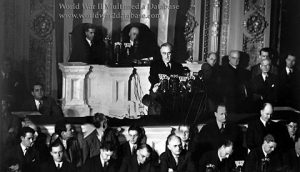 This day 77 years ago is a “day that will live in infamy”.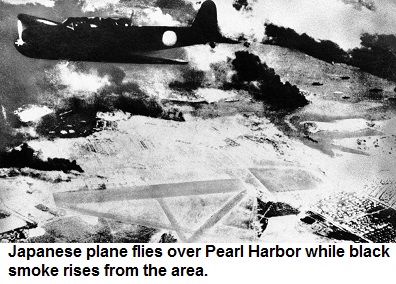
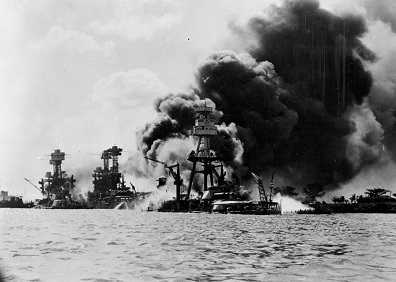
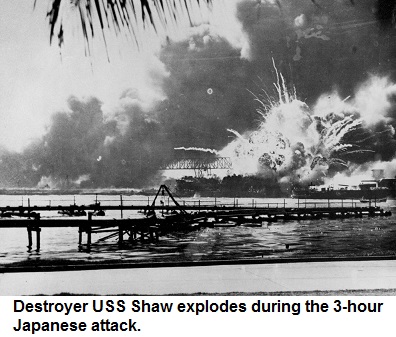

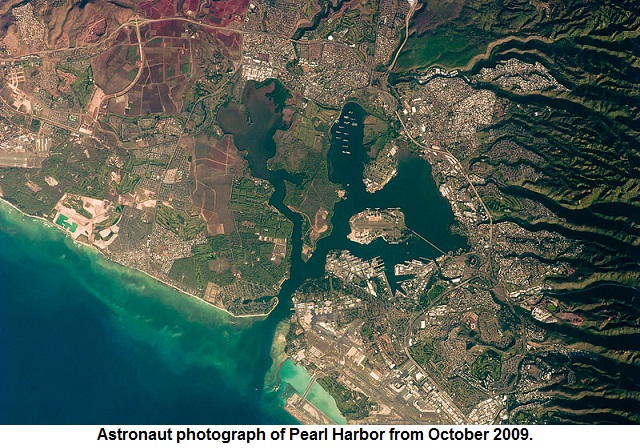
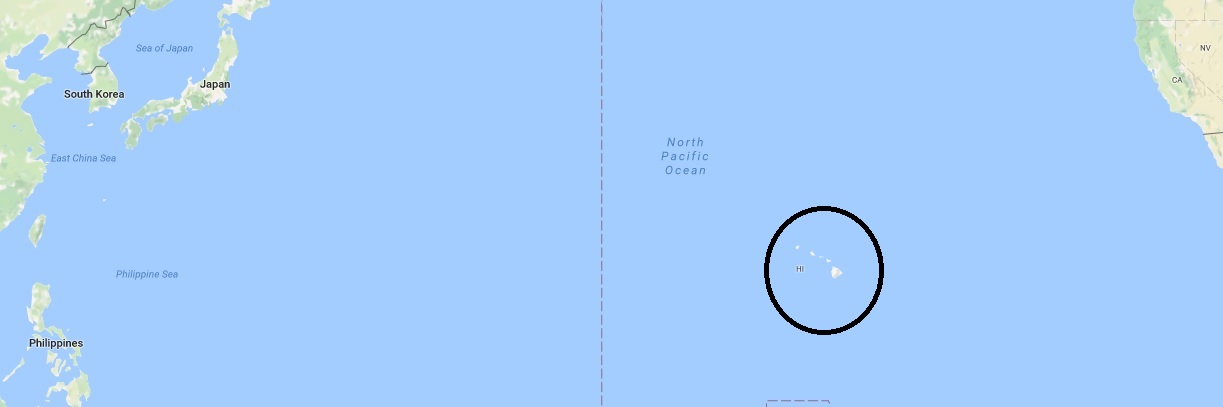

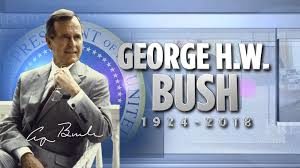 We are being reminded of this sad reality of aging by the life-and-death of the 41st President of United States of America. At the end of his life, this able-bodied man (former war hero) was bound to a wheelchair.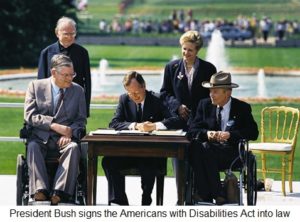
 As related above, American society is at the matured level now in their Social Contract deliveries. They now expect the standard to be “reasonable accommodations” so that Persons with Disabilities can participate in and contribute to society. This was not always the case, and then George H.W. Bush came along and forge change in American society. This is not the standard in the Caribbean member-states … yet. But part of this reboot effort – the quest of the Go Lean roadmap – is to reform and transform the societal engines to benefit all members of the community, able-bodied or not.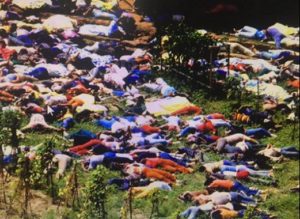
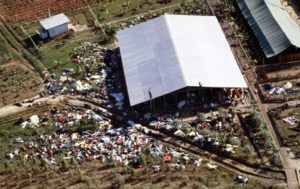
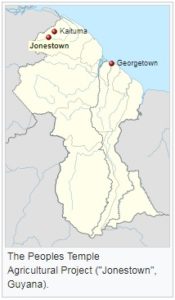 The Peoples Temple Agricultural Project, better known by its informal name “Jonestown“, was a remote settlement established by the
 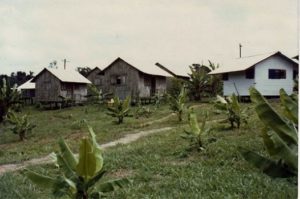 While some refer to the events in Jonestown as
 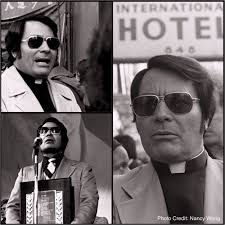 Surely, there were societal defects in place then; the Guyana
  Remember, remember the Fifth of November,
 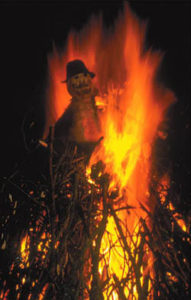 Sorry! The answer is No! Those Bad Old Days was … 5 days ago.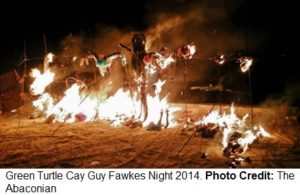

 It’s a BIG Day (November 6, 2018) in the US; it’s the Mid-Term Elections to choose the new Congress.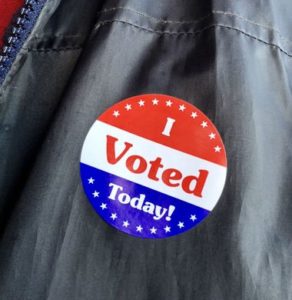
 That’s the message Rihanna sent to President Donald Trump Sunday night after learning that her 2007 single “Don’t Stop the Music” was played at one of his rallies.



 October 16, 2018 – Today marks the 50th Anniversary of a moment in history when two American athletes stood-up in protest at the 1968 Olympic Games, during the Medal-Award ceremony. Their “human rights salute” is regarded as one of the most overtly political statements ever in the history of the modern Olympic Games.

 The world’s leading climate scientists have warned there is only a dozen years for global warming to be kept to a maximum of 1.5C, beyond which even half a degree will significantly worsen the risks of drought, floods, extreme heat and poverty for hundreds of millions of people.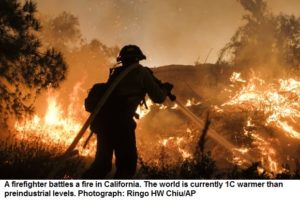

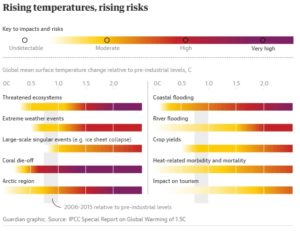
 “I hope this can change the world,” said Jiang Kejun of China’s semi-governmental Energy Research Institute, who is one of the authors. “Two years ago, even I didn’t believe 1.5C was possible but when I look at the options I have confidence it can be done. I want to use this report to do something big in China.”
 When it comes to media industry (movies, film, fashion modeling), there are some other relevant idioms; consider this list:
 ASPIRING international model Gabriella Bernard feels she deserves an apology from former Miss Universe and executive producer of the Caribbean Next Top Model competition, Wendy Fitzwilliam, after she was given an ultimatum on the television show- relax her natural hair or go home.