Category: Locations

California Secession? W.T.H.!!

Go Lean Commentary

What the Hell!?!? Are they for real?!

CU Blog - California Secession - W.T.H. - Photo 1

This is the disgust. The rule of the majority is not absolute. That would be Fascist! Pure majority rule declares that “we can win any vote, so we can do whatever we want”.

The contrast is a Constitutional Democracy. This is where constitutional protections (rights, privileges, entitlements, etc.) are guaranteed, despite majority or minority status. This is the governmental attribute of the United States and many countries in the Caribbean. So what is a minority to do if they are persecuted by the majority in the US?

  • Lawsuits – for court orders to enforce rights
  • Lobbying Legislatures – to enact statures that reflect constitutional rights
  • Protests – to demand rights

… and …

  • Secession

Secession? What the Hell (WTH)!?

That is a different option.

So is this real? Unfortunately, yes. See the full news article here:

Title: Backers of California Seceding From the U.S. Get a Go-Ahead
Sub-title: Group, energized by Donald Trump’s election, can start collecting signatures, but a ‘Calexit’ would require amending the nation’s Constitution

CU Blog - California Secession - W.T.H. - Photo 2

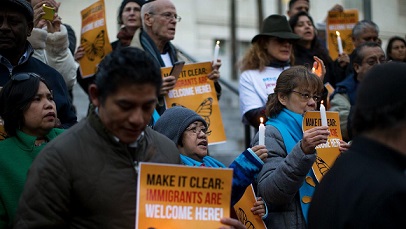
Demonstrators protest against President Donald Trump’s crackdown on ‘sanctuary cities’ outside the City Hall in Los Angeles on Jan. 25. Photo: Ringo Chiu/Zuma Press

By Alejandro Lazo

Jan. 28, 2017 12:58 p.m. ET

CU Blog - California Secession - W.T.H. - Photo 3SAN FRANCISCO—California secession dreamers can begin collecting signatures to place a  nationhood proposal on the November 2018 ballot, after language for the measure was approved this week by the state’s attorney general.

The notion of a “Calexit”—a highly improbable idea that would require an amendment to the U.S. Constitution—gained popularity on social media following President Donald Trump’s unexpected victory in November, mostly as a humorous expression of opposition to the new president, whose policies are at odds with the liberal state.

The measure would strike a line from the state Constitution describing California as “an inseparable part of the United States of America” and set up an election, on March 5, 2019, asking the question, “Should California become a free, sovereign and independent country?”

Proponents of the measure, a group called “Yes California“, have until July 25 to gather 585,407 signatures for the measure. Even if they manage that feat, which is usually accomplished by hiring an army of signature-gatherers, the effort faces larger hurdles.

A number of states have had individual secession movements in recent years, including Texas and Hawaii, but the Supreme Court has ruled the U.S. Constitution doesn’t have a process for states to exit from the union.

But that history hasn’t dissuaded some Californians from toying with the notion. The “Yes California” effort began in 2014 and the idea was discussed more widely on social media under the hashtag #Calexit following November’s election. The state voted overwhelmingly for Democrat Hillary Clinton against Mr. Trump.

“This idea was born a couple of years ago—it hasn’t been a response to Donald Trump, though we have found new support as a result of his election,” said “Yes California” cofounder Louis Marinelli, in a telephone interview from Yekaterinburg, Russia, where he lives and works teaching English as a second language. “We are really excited about the idea that this is starting to catch on.”

Mr. Marinelli was once a social conservative and activist with the anti-gay marriage group National Organization for Marriage, but said he had a change of heart, turning liberal. Mr. Marinelli said he voted for Mr. Trump in November because he felt a Trump victory would galvanize voters in the state and advance the cause for California independence.

Supporters such as Mr. Marinelli talk up the state’s large economy and independent political culture. The state has already set itself up as an adversary to Mr. Trump. State leaders have vowed to defend California’s policies on immigration, climate change and health care, often citing California’s powerful economy and status as the nation’s most populous state.

California had a gross domestic product of $2.5 trillion in 2015, which would make it the world’s sixth-largest economy if it were its own country, according to figures released last year by the California Department of Finance’s Economic Research Unit. Studies have found that California receives less in federal funding than it sends to the federal government in tax revenue, mostly because of its sizable population of high-income earners.

Even if Californians were to vote for independence, the effort would face enormous obstacles. Congress would have to approve a constitutional amendment, which requires a two-thirds vote by each chamber of Congress, or a vote by two-thirds of the states to call a constitutional convention, and then ratification by three-quarters of the states.

An analysis of the measure by California’s independent legislative analyst also found that the fiscal impact of the measure could be large. “Assuming that California actually became an independent nation, the state and its local governments would experience major, but unknown, budgetary impacts,” according to the analysis.

A separate California group that began in 2015 is seeking to register enough voters under the “California National Party” so that it can begin running candidates in local races who are supportive of a withdrawal. That group hopes to build support for secession over time, through elected leaders, and it isn’t supporting the ballot measure.

But leaders of both secession movements say their efforts are serious, and not simply a political statement. “It is a lot likelier than people think,” said Jay Rooney, a spokesman for the National party. “It’s certainly as likely as Donald Trump becoming president.”

Write to Alejandro Lazo at alejandro.lazo@wsj.com
Source: Wall Street Journal January 28, 2017 from: http://www.wsj.com/amp/articles/backers-of-california-seceding-from-the-u-s-get-a-go-ahead-1485626281

See the related story here:

Trump’s Threat to Take Federal Funding Away From Sanctuary Cities May Have Started Fight He Can’t Win
Posted January 27, 2017, By CNN WIRE
Source: http://ktla.com/2017/01/27/trumps-threat-to-take-federal-funding-away-from-sanctuary-cities-may-have-started-fight-he-cant-win/
Secession as a dissent strategy has not been deployed successfully since 1861, when the dissension over slavery was so polarizing that there was no hope for peaceful reconciliation.

The most significant and notable events related to secession of states, and the initiation of the American Civil War occurred between November 6, 1860 and April 15, 1861. On November 6, 1860, Abraham Lincoln wins the 1860 presidential election to become the 16th President on a platform that includes the prohibition of slavery in new states and territories.[233] Lincoln won all of the electoral votes in all of the free states (except in New Jersey where he won 4 votes and Stephen A. Douglas won 3). By the time Lincoln was inaugurated on March 4, 1861, 7 southern states had already seceded and the President of the Confederate States of America was already inaugurated. – Sourced from Wikipedia.

Can secession be used again to protest the mandates of the majority – California -vs- the full United States. If this is earnestly pursued in California, it will definitely get the attention of the rest of the country and also the world. (If constituted a separate country, California would be the 6th largest economy in the world – by GDP, just ahead of France).

All in all, it is apparent that the 45th President, Donald Trump, has to preside over a divided nation. The 16th President did not want a division in his day, so he  bargained, cajoled and proposed compromises to his opposition. Trump may have to ‘take a page out of that book’ from Lincoln.

This is perhaps what California is hoping for with the secession talk-action! See the VIDEO here debating the viability of this CalExit move:

VIDEO – Can California Actually Secede From The U.S.?https://youtu.be/gBWbfudLwtE

Published on Nov 18, 2016 – With the election of Donald Trump, calls for California to secede have grown strong. So how realistic is a Calexit?

Learn More:
CNN: What history says about ‘Calexit’
http://www.cnn.com/2016/11/11/opinion…

Yes California: The 2019 #Calexit Independence Referendum
http://www.yescalifornia.org/

New York Times: California Today: Secessionist Groups Seize the Moment
http://www.nytimes.com/2016/11/10/us/…

This is an American drama … worth watching in the next days, weeks, months and years. But reforming or transforming California or America is out of scope for the movement behind the book Go Lean…Caribbean; our focus is the Caribbean only.

The Go Lean book serves as a roadmap for the introduction and implementation of the Caribbean Union Trade Federation (CU), a technocratic federal government to administer and optimize the economic, security, and governing engines of the 30 Caribbean member-states. In fact the prime directives of the roadmap is identified with the following 3 statements:

  • Optimization of the economic engines in order to grow the regional economy to $800 Billion & create 2.2 million new jobs.
  • Establishment of a security apparatus to protect the resultant economic engines.
  • Improve Caribbean governance to support these engines.

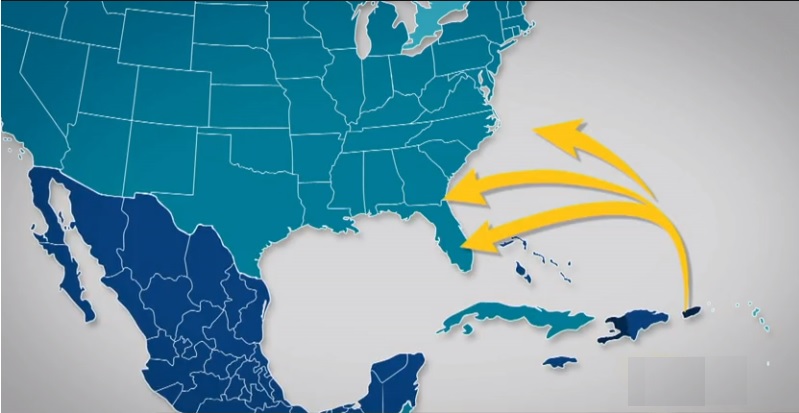
The book asserts that many of the Caribbean member-states are dysfunctional and as a result many citizens have fled their homelands – this is a secession of sorts. Consider Puerto Rico, the island’s population as of 2010 was 3,725,789, while the Diaspora population across the US totaled 4,623,716. That an entire nation in absentia.

In general, the Caribbean population is 42 million, with a large Diaspora (estimated up to 25 million); many who have pledged not to return (for permanent residency) until their homeland breaks from the legacy of ineffectual governing systems, failing economic engines and inadequate security provisions.

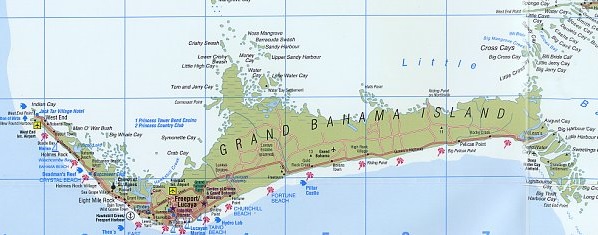
These failing member-states is the focus of the Go Lean book, but there is mention of one city, Freeport/Lucaya, the 2nd City in the Bahamas. This town is the epitome of a dysfunctional community . They can benefit from a parallel secession strategy as that of California in the foregoing. This was the recommendation to Freeport in a previous blog-commentary, to consider a public referendum to weigh different secession options from the national government in Nassau. Freeport needs more autonomy for any chance of success.

The Go Lean recommendation is the secession option of incorporating a municipal city – with an autonomous parliament – and then become a Self-Governing Entity (SGE) of the CU.

By petitioning for autonomy, California in the US and Freeport in the Bahamas gets more audience for its grievances.

This is how a minority group can get a bigger-better addressing of issues in a country, “leave”, threaten to leave or negotiate to avert leaving. Sometimes, leaving involves secession.

This was also the experience for Scotland in the United Kingdom, as related in a previous blog-commentary.

There are a lot of lessons – from the worldwide struggle – to reform and transform communities. The underlying spirit behind a secession movement should be to make life better for a minority group who do not have the votes to effect change through the election process. This is one way to “appoint new guards” for governance. This was specified in the opening Declaration of Interdependence at the outset of the Go Lean book (Page 12):

xi. Whereas all men are entitled to the benefits of good governance in a free society, “new guards” must be enacted to dissuade the emergence of incompetence, corruption, nepotism and cronyism at the peril of the people’s best interest. The Federation must guarantee the executions of a social contract between government and the governed.

xxxiii. Whereas lessons can be learned and applied from the study of the recent history of other societies, the Federation must formalize statutes and organizational dimensions to avoid the pitfalls of [failing] communities … On the other hand, the Federation must also implement the good examples learned from [successful] developments/communities …

Thank you for the lesson California … and Scotland.

The Go Lean roadmap posits that the challenges in the US may yield a lot more lessons for our Caribbean region. We will be watching. We will “observe and report” on their strengths and weaknesses. Then apply the models effectively here at home. This is the quest of the Go Lean roadmap: to make our Caribbean homeland a better place to live, work and play. 🙂
Share this post:
, , ,

Farewell to Obama and to ‘Wet Foot/Dry Foot’

Go Lean Commentary

This is a Red Letter Day in the affairs of the United States of America: it is the inauguration of the 45th President, Donald J. Trump. Out with the old, in with the new. The old, Barack Obama, bid farewell to the American Halls of Power; but he bid farewell too, to one of the most egregious immigration policies in the history of civilization: ‘Wet Foot / Dry Foot’ policy for Cuban migrants.

Good  riddance to a bad policy!

Many people have died trying to flee Cuba, (Haiti too); see the “Bad Old Days” in Appendix B VIDEO.

CU Blog - Farewell to Obama and to 'Wet Foot-Dry Foot' - Photo 1Obama disbanded this executive policy – instituted by the 42nd President Bill Clinton – as one of his final acts, before his term ended. Yippee, Mr. Obama. This ‘Wet Foot / Dry Foot’ was indefensible. It portrayed the impression that the American homeland was the panacea of Caribbean (and/or Cuban) ills, and if one was lucky enough to put their ‘Dry Foot’ down on American soil, they were blessed; if their ‘Wet Foot’ never touched American soil, then they’d be cursed to a substandard Caribbean existence. Plus, with the Cuban exclusivity, this policy put a wedge among Caribbean people in general: Yes to Cubans; no to Haitians, Dominicans, Jamaican or any other regional citizens.

Now, all of the Caribbean can be treated the same and as one, by the American legal-governmental institutions.

We are the same!

We could be one!

Caribbean leaders must do the heavy-lifting to reform and transform the Caribbean member-states to fix our eco-systems, to make our homeland a better place to live, win and play. This is the purpose of the book Go Lean…Caribbean, to serve as a roadmap for elevating Caribbean society, for all 30 member-states (Cuba et al). The book does not ignore the subject of immigration and refugees. In fact the roadmap provides perhaps the ultimate resolution to this perplexing problem, that of a regional entity providing a regional solution.

We must give Caribbean citizens every reason to want to stay, rather than the status quo, where they are willing to risk life-and-limb (for themselves and their children) to get out and get to the US. This is the sad-and-bad reality that is depicted in this news article here:

Title: Cubans amass at Mexico-Texas border after ‘wet foot/dry foot’ change
By: Rick Jervis, USA TODAY Daily Newspaper

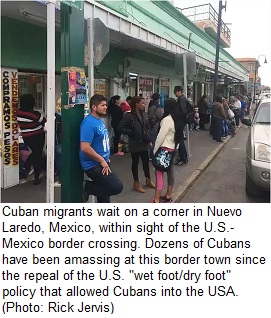
CU Blog - Farewell to Obama and to 'Wet Foot-Dry Foot' - Photo 2NUEVO LAREDO, Mexico — Joel Gonzalez was midway across the narrow pedestrian bridge connecting the U.S. and Mexico at this border crossing when U.S. border guards waved him back to Mexico.

A U.S. policy that for decades awarded Cubans like Gonzalez, 31, automatic amnesty was repealed the day before. His dream of a new life in America instantly vanished.

“You feel this weight in your chest,” he said, recalling that day last week. “You have these ideas about the future, all these thoughts in your head. To get so close and have your dream of freedom taken from you is very hard.”

Gonzalez and dozens of other Cubans have been amassing at this crossing since the Obama administration ended the so-called “wet foot/dry foot” policy on Jan. 12. The rule, created by President Clinton in 1995, allowed most Cubans who touched U.S. soil to stay in the country, while those intercepted at sea were returned to Cuba. Those who remained in the U.S. for one year were allowed to apply for legal permanent residence.

CU Blog - Farewell to Obama and to 'Wet Foot-Dry Foot' - Photo 3Cuban officials have long denounced the rule, saying it incentivizes Cubans to leave the communist island. Other critics say while the policy was put in place to help Cubans fleeing political persecution, many instead used it for economic betterment in recent years.

The new policy forces Cubans to apply for visas in their home country or face deportation if they enter illegally, just like migrants from other countries. About 20,000 U.S. visas are awarded in Cuba each year.

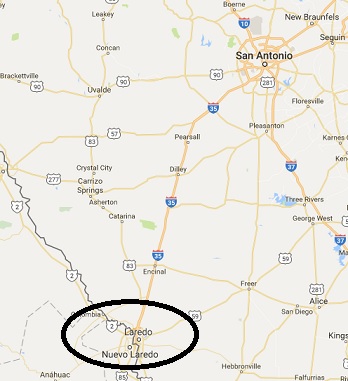
Despite the shift, Cubans continue to arrive at this border crossing, just across the Rio Grande from Laredo, Texas. Around 120 Cubans are now in this Mexican border town, according to local estimates, staying at churches or in migrant centers. Many, like Gonzalez, say they won’t leave.

“In Cuba, if you think differently from the system, you’re marked,” said Gonzalez, a systems engineer. “You don’t get jobs, you don’t get opportunity. If you’re against the system, there’s no way to survive.”

The repeal of wet foot/dry foot is the latest in a series of efforts by President Obama, beginning in late 2014, to end five decades of isolation with Cuba. President-elect Donald Trump, however, has said he may renegotiate the accords.

Sensing a change was imminent as relations warmed between Washington and Havana, thousands of Cubans rushed to enter the U.S. last year. Overall, 56,406 Cubans entered the U.S. via ports of entry in fiscal year 2016, more than double the number who arrived in 2014, according to a study by the Pew Research Center.

The change in U.S. policy will likely improve relations between the two countries and could force Cuban officials to focus on improving conditions, rather than simply allowing the disaffected to flee, said Ted Piccone, a senior fellow at the Brookings Institution who studies Cuba.

“The safety valve – of exporting unhappy Cubans who could cause trouble – just got smaller,” he said.

Some Cubans at Nuevo Laredo said they hoped Trump would reverse the repeal. But that may be wishful thinking, Piccone said, given Trump’s tough stance on illegal immigration.

Some arriving here now left the island months ago, well before the policy change. Each morning, they gather at the intersection of Avenida 15 de Julio and Avenida Vincente Guerrero, within sight of the U.S., sharing the latest news and debating the next move.

Idania Laurencio Fernandez, 44, left Cuba in mid-October for the small South American country of Guyana. From there, she traveled to Brazil, trekked through jungles, sailed up the Amazon River, traveled across nine countries in Central and South America and spent 12 days in an immigration detention center in Tapachula, Mexico, before being able to leave for Nuevo Laredo.

She arrived Jan. 13, the day after the policy was repealed. She said she planned to stay until something changes, fearing repercussions if she returned to Cuba. “We can’t go back,” Fernandez said. “I’m persona non grata in Cuba.”

Fernandez said she hopes her predicament sheds light on what she described as a worsening situation on the island, where the average worker earns $20 a month and dissension isn’t tolerated. “Obama doesn’t understand,” she said. “He let himself be fooled. The Cubans in Cuba know the reality.”

As a worker in the service industry in Varadero, one of Cuba’s most popular tourist beach destinations, Manuel Reyes, 37, said he was earning a decent living. But the island’s lack of basic rights and stagnant economic growth was suffocating, he said. He was denied visas to the U.S. and Canada and tried leaving Cuba three times on homemade rafts but was forced back each time due to mechanical failures.

Finally gaining a Mexico visa, he flew to Monterrey on Jan. 12 and arrived at the Nuevo Laredo border crossing early the next morning. Dreams of joining friends in Miami or Las Vegas came to an abrupt end when he learned of the changed policy.

Like most others gathered here, Reyes said he’s not leaving. He sleeps at a local church and prays each day for a reversal in U.S. policy.

“We’re going to stay firm. We have a lot of faith,” he said. “And there are many more Cubans coming.”

CU Blog - Farewell to Obama and to 'Wet Foot-Dry Foot' - Photo 4

Related stories:

Obama ends ‘wet foot, dry foot’ policy for Cubans

Cuban-Americans at odds over ‘wet foot, dry foot’ repeal

In final days, Obama administration signs law enforcement pact with Cuba

On 2nd anniversary, Cubans race to sign U.S. contracts to secure opening

Source: Posted Jan. 19, 2017; retrieved Jan 20, 2017 from: http://www.usatoday.com/story/news/nation/2017/01/19/cubans-texas-border-wet-foot-dry-foot/96770142/

One person can disrupt the lives of so many people … in the Caribbean.

The ‘Wet Foot / Dry Foot’ policy was initiated by Presidential Executive Order – by Clinton.

The ‘Wet Foot / Dry Foot’ policy was canceled by Presidential Executive Order – by Obama.

So the new president – Donald Trump – can readily re-institute a ‘Wet Foot / Dry Foot’ policy again.

Please, Mr. President Trump, do not do it!

We do not need to send the wrong message to people in the Caribbean that it is OK to take to the High Seas and endanger their lives, or their children lives. We also do not need to incite Smugglers and Human Traffickers – see Appendix A VIDEO – to entice Caribbean citizens to flee their homeland. The cancellation of the ‘Wet Foot / Dry Foot’ policy takes away the incentive, inducement and rationale for migrating in the first place.

Why do people want to leave their Caribbean homes?

Two factors: “Push” and “Pull”. These factors highlight reasons that people want to flee “home” and seek “refuge” in foreign countries. “Refuge” is an appropriate word; because of societal defects, many from the Caribbean must leave as refugees – think LGBTDisabilityDomestic-abuseMedically-challenged – for their life, liberty and pursuit of happiness. In addition, the lure of a more prosperous life in the US (and other destinations) drive the “pull” side of the equation, making most people emigrating economic refugees.

A key problem with this ‘Wet Foot / Dry Foot’ migration policy is that it echoes a bad and wrong message, that some Caribbean people are “Less Than“, and the rest of the people are worth even less than that.

The book Go Lean … Caribbean posits that the region should be “mad as hell and refuse” to accept the continuation of any image defying immigration policy. As a people, we must not tolerate just any standards; we must stand for something more and better. We must fight for change … with revolutionary fervor.

Another dire consequence of the ‘Wet Foot / Dry Foot’ policy is that it hardened the attitudes of other Caribbean countries in the middle of migrant source countries (like Cuba and Haiti) and their American destination. The Bahamas, in particular in the Caribbean, had been “in the way” and have thusly developed harsh attitudes and treatment of Cuban and Haitian refugees. This country have changed their constitution to tighten their immigration policy to end the automatic birthright citizenship for children of illegal immigrants; this is the provision:

The Bahamas no longer automatically grants citizenship to people born in its homeland, as was the case for all citizens born before Independence in 1973. There are now special provisos that applies when one parent is or is not a Bahamian citizen; many of these provisos are gender-biased.

Other countries that have been in the way” include Mexico and Guyana.

The Caribbean member-states are badly in need of remediation, to lower the “push and pull” factors that drive so many to risk their ‘life and limb’, and those of their children, to take flight to where “Wet Foot / Dry Foot” would matter. How can we reform and transform? While this is easier said than done, the Go Lean book and blogs posit that the effort is less to cure the Caribbean homeland than to thrive as an alien in a foreign land. So this is the quest of the Go Lean roadmap, to make the Caribbean homeland a better place to live, work and play for its 42 million residents across the 30 member-states. The Go Lean book serves as a roadmap for the introduction and implementation of the technocratic Caribbean Union Trade Federation (CU), which would apply best-practices for community empowerment. This roadmap has these 3 prime directives, proclaimed as follows:

  • Optimization of the economic engines in order to grow the regional economy to $800 Billion & create 2.2 million new jobs.
  • Establishment of a security apparatus to protect the resultant economic engines.
  • Improve Caribbean governance, with consideration for minority equalization, to support these engines.

How exactly can the CU impact Cuba and Haiti, the most troubled countries in the region and the primary sources of migrants? The book relates the strategy that was successful in the history of post-war Europe, the Marshall Plan. The Go Lean book details the Caribbean Marshall Plan (roadmap) for Cuba and Haiti, and other failing Caribbean communities.

The related subjects of rebooting European and Caribbean societal engines have been frequently blogged on by the Go Lean promoters, as sampled here:

https://goleancaribbean.com/blog/?p=9813 Fidel Castro Is Dead; Now What for Cuba?
https://goleancaribbean.com/blog/?p=9487 10 Things We Want from Europe and 10 Things We Do Not Want
https://goleancaribbean.com/blog/?p=6563 Lessons from Iceland – Model of Recovery
https://goleancaribbean.com/blog/?p=5733 Better than America? Yes, We Can!
https://goleancaribbean.com/blog/?p=3473 Haiti’s Caracol Industrial Park – a preview of a Self-Governing Entity
https://goleancaribbean.com/blog/?p=3455 Restoration of Diplomatic Relations with Cuba – Need for Re-boot Now
https://goleancaribbean.com/blog/?p=3090 Introduction to Europe – All Grown Up
https://goleancaribbean.com/blog/?p=2907 Local Miami Haitian leaders protest Bahamian ‘Bad’ immigration policy
https://goleancaribbean.com/blog/?p=2809 A Lesson in History: Economics of East Germany
https://goleancaribbean.com/blog/?p=2330 ‘Raul Castro reforms not enough’, Cuba’s bishops say
https://goleancaribbean.com/blog/?p=1531 A Lesson in History: 100 Years Ago Today – World War I
https://goleancaribbean.com/blog/?p=1433 Caribbean 70% brain drain to foreign shores
https://goleancaribbean.com/blog/?p=1014 All is not well in the sunny Caribbean
https://goleancaribbean.com/blog/?p=599 Ailing Puerto Rico open to radical economic fixes
https://goleancaribbean.com/blog/?p=273 10 Things We Want from the US and 10 Things We Do Not Want

The Go Lean book details a series of community ethos, strategies, tactics, implementations and advocacies to optimize the “push/pull” factors that send Caribbean citizens to the High Seas to flee their homeland:

Community Ethos – Economic Systems Influence Choices & Incentives Page 21
Community Ethos – Consequences of Choices Lie in the Future Page 21
Community Ethos – Anti-Bullying and Mitigation Page 23
Community Ethos – Minority Equalization Page 24
Community Ethos – Ways to Impact the Future Page 26
Community Ethos – Ways to Manage Reconciliations Page 34
Community Ethos – Ways to Impact the Greater Good Page 37
Strategy – Vision –  Integrate region into a Single Market Economy Page 45
Strategy – Agents of Change – Globalization Page 57
Tactical – Separation of Powers – Department of Homeland Security Page 75
Implementation – Ways to Foster International Aid Page 115
Planning – 10 Big Ideas … in the Caribbean Region – Haiti & Cuba Page 127
Planning – Ways to Ways to Model the EU – From Worst to First Page 130
Planning – Reasons Why the CU Will Succeed – Germany Reconciliation Model Page 132
Planning – Ways to Improve Failed-State Indices – Cuba & Haiti on the List Page 134
Planning – Lessons from East Germany – European post-war rebuilding Page 139
Planning – Lessons from the US Constitution Page 145
Planning – Lessons from Canada’s History Page 146
Advocacy – Ways to Grow the Economy Page 151
Advocacy – Ways to Create Jobs Page 152
Advocacy – Ways to Better Manage the Social Contract Page 172
Advocacy – Ways to Foster Empowering Immigration – Case Study of Indian Migrants Page 174
Advocacy – Ways to Impact Justice Page 178
Advocacy – Ways to Impact the Diaspora Page 217
Advocacy – Ways to Protect Human Rights Page 220
Advocacy – Ways to Re-boot Cuba Page 236
Advocacy – Ways to Impact the Dominican Republic Page 237
Advocacy – Ways to Re-boot Haiti Page 238
Advocacy – Ways to Re-boot Jamaica Page 239
Appendix – Puerto Rico Migrations to New York Page 303

All of the Caribbean needs to deal with our domestic issues … now! We do not need the good fortune of putting ‘Dry Foot’ on US soil. We need to just work to fix our home. This is the purpose of the Go Lean book, to show how … to minimize the push-pull factors leading to societal abandonment.

The Go Lean/CU roadmap has proposed the solutions: assembling of many regional organization and institutions to engage reboot strategies, tactics and implementations.

Now is the time for all of the Caribbean to learn the lessons from other societies. The Go Lean book posits that the Caribbean is in a serious crisis, but asserts that this crisis would be a terrible thing to waste. The people and governing institutions of Cuba, Haiti and the entire Caribbean region are hereby urged to lean-in for the empowerments described in the book Go Lean … Caribbean. The Caribbean should be the greatest address on the planet. People should be dying to get in, not dying to get out. It is time to reboot and turn-around our fortunes.

Let’s do this … right, just us, with no American interference – no ‘Wet Foot/Dry Foot’ – just Caribbean solutions.

Farewell Obama and farewell to ‘Wet Foot/Dry Foot’. 🙂

Download the book Go Lean … Caribbean – now!

—————

Appendix A VIDEO – U.S. Upgrades Cuba’s Ranking on Human Trafficking List https://youtu.be/JPkuw4ak9eM

Published on Jul 28, 2015 – The U.S. State Department government upgraded Cuba’s ranking in its Human Trafficking list. According to Washington, Cuba has made significant progress in combatting sex and human trafficking and now stands at midlevel in the annual list. teleSUR http://multimedia.telesurtv.net/v/us-…

  •  Category: News & Politics
  • License: Standard YouTube License

—————

Appendix B VIDEO – Bad Old Days: Cuban Human Traffickinghttps://youtu.be/CTwMouJKL38

Published on Oct 23, 2013 – Latest news across Belize; source: http://edition.channel5belize.com/

  • Category: News & Politics
  • License: Standard YouTube License


Share this post:
, ,
[Top]

Fidel Castro Is Dead; Now What? – ENCORE

The news is out; Fidel Castro died on Friday November 25, 2016 at age 90. This former Revolutionary Leader and President of Cuba was monumental and impactful. He made friends and enemies at home, in the region and around the world.

He accomplished some good; guaranteeing education – one of the highest literacy rates in the world – and advanced healthcare to all of his people.

He made many enemies; persecuting and executing his political enemies

… the United States imposed a Trade Embargo for his entire reign, up until now.

Now that he is dead, what future holds for his beloved country?

First, Fidel Castro turned over the presidency to his younger brother Raul in 2008; so oversight of the country’s affairs has been the direct concern of President Raul Castro. That is expected to continue. So the answer is more of the same.

Same?

This “same” was defined in an earlier blog-commentary on February 4, 2016. It is being encored here on the occasion of Fidel’s passing.

==============

Go Lean CommentaryThe Road to Restoring Cuba

CU Blog - The Road to Restoring Cuba - Photo 3In a visit to Jamaica and CariCom leaders in April 2015,  US President Barack Obama concluded that 55 years of indifference towards Cuba was long-enough and that as of December 17, 2014 he had “set the machinery in motion” to normalize relations with Cuba. This descriptor paints the picture of a journey, a marathon and not just a “100-yard dash”.

What is the status of that journey now?

Where are we in the process? How are the issues being addressed?

It turns out this is a weighty task (heavy-lifting), and while many of the issues are minor (i.e. Postal Mail), some are life-and-death (i.e. Human Trafficking).

Firstly, the current restoration of Cuban and American relations is strictly an act of Executive Orders – directives by the US President (currently of the Democratic Party) and not supported by his Republican legislature, the Congress. There is a definitive divide among these Democrats and Republicans in this regard. Here are some updates of those Executive Orders, since the December 2014 baseline:

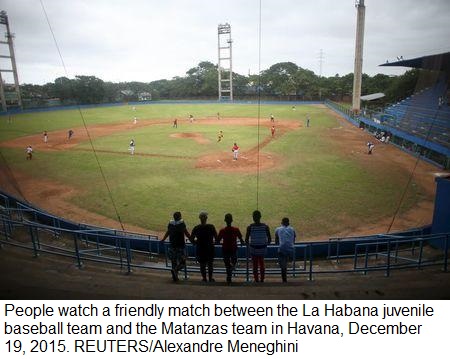
People watch a friendly match between the La Habana juvenile baseball team and the Matanzas team in Havana

People watch a friendly match between the La Habana juvenile baseball team and the Matanzas team in Havana

Cuba needs to have the American Trade Embargo officially lifted! This is a Congressional action and cannot be accomplished by Executive Orders alone.

The book Go Lean…Caribbean was designed with the intent of the eventual integration of Cuba in a Caribbean Single Market. This would allow for technocratic stewardship and oversight of the region’s economic, security and governing engines for all 30 Caribbean member-states. The book therefore serves as a roadmap for the introduction and implementation of the Caribbean Union Trade Federation (CU).

There is no minimizing of the risks and responsibility of Cuba in the Go Lean book. It is clearly recognized that integrating and restoring Cuba is a BIG deal; with heavy-lifting; and other reconciliation descriptors used to depict this monumental effort. See the relevant statement here from the opening Declaration of Interdependence (Page 12):

xiii. Whereas the legacy of dissensions in many member-states (for example: Haiti and Cuba) will require a concerted effort to integrate the exile community’s repatriation, the Federation must arrange for Reconciliation Commissions to satiate a demand for justice.

Though World War II was not directly waged in the Caribbean, the Go Lean/CU roadmap still prescribes a Marshall Plan strategy – a reference to the post-WWII European Rebuilding Plan – for re-building Cuba (and Haiti).

In truth, Cuba is the biggest market in the Caribbean. This one island has the largest landmass among the islands; (notwithstanding the landmasses of South America-situated CU member-states of Guyana and Suriname). They also have the largest population of 11,236,444 people (circa 2010) and the most agricultural output. Cuba needs the Caribbean; and the Caribbean needs Cuba. The entire region needs to act in unison as the challenges the region face are too big for any one country to tackle alone.

All in all, the book and accompanying blogs declare despite an absence of trade embargo in the other Caribbean member-states, that these countries have still failed to deliver to their citizens the standards assumed in any Social Contract. Some member-states are even flirting with Failed-State statuses. People in each Caribbean country are prone to flee the region, at every opportunity. The people of the region deserve better!

There is the need to re-boot … the entire region. This re-boot roadmap commences with the recognition that all the Caribbean is in crisis, and in the “same boat” despite the colonial heritage or language. All 30 geographical member-states need to confederate, collaborate, and convene for solutions. This is the purpose of the Go Lean/CU roadmap, as featured in this declaration of the Go Lean/CU prime directives:

  • Optimization of the economic engines in order to grow the regional economy to $800 Billion & create 2.2 million new jobs.
  • Establishment of a security apparatus to protect the resultant economic engines.
  • Improve Caribbean governance to support these engines.

Consider the start of the ill-fated Cuban-Communism Revolution in 1959, Cuba has lost 57 years in its maturation process. The Go Lean book’s opening Declaration of Interdependence (Page 11) also included this pronouncement that it is beyond time now for Caribbean success stories, rather than the continued Caribbean Failed-State stories:

While our rights to exercise good governance and promote a more perfect society are the natural assumptions among the powers of the earth, no one other than ourselves can be held accountable for our failure to succeed if we do not try to promote the opportunities that a democratic society fosters.

The Go Lean book therefore details the series of community ethos, strategies, tactics, implementations and advocacies to facilitate a re-boot in the region and to final manifest a quality delivery of a regional Social Contract:

Anecdote – Caribbean Single Market & Economy Page 15
Community Ethos – new Economic Principles Page 21
Community Ethos – new Security Principles Page 22
Community Ethos – new Governing Principles Page 24
Community Ethos – Ways to Impact the Future Page 26
Community Ethos – Ways to Manage Reconciliations – TRC Cuba Page 34
Community Ethos – Ways to Impact the Greater Good Page 37
Strategic – Vision – Integrated Region in a Single Market Page 45
Strategic – Vision – Core Competence – Specialty Agriculture Page 58
Tactical – Confederating a Non-sovereign Union Page 63
Tactical – Fostering a Technocracy Page 64
Tactical – CU Member-States   Facts & Figures Page 66
Tactical – Growing to $800 Billion Regional Economy – Marshall Plan Models Page 67
Tactical – Separation of Powers Page 71
Implementation – Ways to Pay for Change Page 101
Implementation – Foreign Policy Initiatives at Start-up Page 102
Implementation – Security Initiatives at Start-up Page 103
Implementation – Ways to Deliver Page 109
Implementation – Reasons to Repatriate Page 118
Planning – Big Ideas for the Caribbean Region – Marshall Plan for Cuba Page 127
Planning – Reasons Why the CU Will Succeed – Lessons from Unifying Germany Page 132
Planning – Ways to Improve Failed-State Indices Page 134
Planning – Lessons from East Germany – Post-Communism Integration Page 139
Planning – Ways to Model the EU – Immediate Integration after WWII Crisis Page 130
Advocacy – Ways to Grow the Economy Page 151
Advocacy – Ways to Improve Governance Page 168
Advocacy – Ways to Better Manage the Social Contract Page 176
Advocacy – Ways to Re-boot Cuba Page 236

The issue of Cuba’s eventual integration into the Caribbean brotherhood has previously been addressed in the following Go Lean commentary-blog entries:

https://goleancaribbean.com/blog/?p=6664 Cuba to Expand Internet Access
https://goleancaribbean.com/blog/?p=4506 Colorism in Cuba … and Beyond
https://goleancaribbean.com/blog/?p=3455 Restoration of Diplomatic Relations with Cuba
https://goleancaribbean.com/blog/?p=3354 CariCom Chairman calls for an end to US Embargo on Cuba
https://goleancaribbean.com/blog/?p=2330 ‘Raul Castro reforms not enough’, Cuba’s bishops say
https://goleancaribbean.com/blog/?p=1609 Cuba mulls economy in Parliament session
https://goleancaribbean.com/blog/?p=554 Cuban cancer medication registered in 28 countries
https://goleancaribbean.com/blog/?p=436 Cuba Approves New “Law on Foreign Investment”

For a long time people have hoped for a restored Cuba. This hope was shared by Cuban people on the island and in the Diaspora abroad. The hope is also shared by neighbors, tourists, trading-partners, and international stakeholders, alike. Maybe, just maybe with President Barack Obama’s Executive Orders, the journey down this road to restoration will be irreversible. (A new President of the US will be sworn-in on January 20, 2017; this one can reverse Obama’s Executive Orders).

The Go Lean roadmap for the CU strives to put the Command-and-Control of Caribbean affairs in the hands of Caribbean people. The book and accompanying blogs declare the desire for the Caribbean to no longer be a parasite of the US, but rather a protégé. This parasite status stems all the way back to the year 1898 – to the start of the Spanish – American War for Cuban Independence.

Enough already! Surely we have grown since 1898 or even since 1959.

The Go Lean…Caribbean movement turns the corner, and instead of an American dependence, or a nationalistic independence, it leads the region in a new direction: neighborly interdependence. The Go Lean…Caribbean book is a turn-by-turn guide (370 pages) for the region to dive deeper in an integrated Single Market.

Now is the time for all of the Caribbean, the people – residents and Diaspora – and governing institutions, to lean-in for this Caribbean and Cuban re-boot. Now is the time to make this region – all 30 countries – a better place to live, work and play.  🙂

Download the book Go Lean … Caribbean – now!

————

Appendix A VIDEO – US-Cuba direct mail services to resume – http://news.yahoo.com/video/us-cuba-direct-mail-services-155808360.html

Posted Dec 12, 2015 – Cuba and the United States are to resume direct postal services after half a century of having to send mail via a third country. Paul Chapman reports.

————

Appendix B – News Article: As MLB seeks legal entry to Cuba, Obama considers playing ball

By: Daniel Trotta, Reuters

HAVANA (Reuters) – Major League Baseball is asking the U.S. government for special permission to sign players in Cuba, handing the administration of U.S. President Barack Obama the opportunity to try some baseball diplomacy while dealing a setback to human traffickers.

The U.S. trade embargo generally bars MLB from any agreement directing money to the Cuban government, but the White House says baseball is one area where it can advance U.S. goals and the Treasury Department’s Office of Foreign Assets Control (OFAC) has authority to allow a deal.

MLB and Cuba are closer than at any time since the 1959 revolution, as evidenced by a goodwill tour last week in which big leaguers, including Cuban defectors, gave clinics to Cuban youth.

“Indeed, baseball has a unique cultural significance to both the United States and Cuba. It is therefore an area where we can further our goals of charting a new course in our relations with Cuba and further engaging and empowering the Cuban people,” a senior administration official told Reuters.

Since Obama and Cuban President Raul Castro broke with Cold War history and announced detente a year ago, Obama has asked Congress to repeal the embargo, but the Republican majority has resisted. Instead the administration has used other means to promote exchanges.

If MLB were able to sign players in Cuba, where baseball is the most popular sport, it could end a wave of defections in which Cuban ballplayers put themselves in the hands of human traffickers and risk their lives on illegal journeys at sea.

Some 130 ballplayers have defected this past year, according to Cuban journalists.

But the best players on the island remain off limits, and the Cuban government stops them from leaving without permission, leading those with big-league dreams to turn to smugglers. In some cases, organized crime rackets force players to sign over huge cuts of future earnings, threatening players and their families.

“It’s not an uncommon story,” said Paul Minoff, a lawyer who represents Leonys Martin, an outfielder now with the Seattle Mariners who earned $15.5 million over the past five seasons with the Texas Rangers.

After defecting, Martin was held by armed men in Mexico for months, and under duress agreed to pay his captors 35 percent of his salary, Minoff said. When Martin reached America, he fought back. The smugglers sued Martin but the suit was dismissed after U.S. prosecutors brought criminal charges against them.

Cuban players have mostly stuck to a code of silence about their defections, but some details emerge through court cases.

When Yasiel Puig of the Los Angeles Dodgers left Cuba in 2012, he soon found himself entangled with Mexico’s notorious Zetas crime organization, which threatened to chop off his arm if it failed to receive a promised $250,000 fee.

While Puig signed a $42 million contract, others are abandoned in foreign countries, never to hit paydirt.

SOLUTION SOUGHT

To normalize the transfer of players, Major League Baseball has asked the Treasury’s OFAC for a specific license. The office has wide latitude to grant such licenses and can issue regulations to approve activity otherwise proscribed by the embargo.

OFAC Acting Director John E. Smith said he could not comment on the baseball case, but in general his office “acts in consultation with the State Department and other relevant U.S. government agencies in determining whether (authorizing transactions) would be consistent with current policy.”

MLB applied for its OFAC license in early June, MLB Chief Legal Officer Dan Halem told Reuters. Halem declined to detail the request except to say it included signing players in Cuba, stressing that baseball’s priority was to provide a safe and legal path for Cuban players.

“There’s a willingness on the part of our government to end the trafficking. The White House has been very sympathetic to helping us end some of the abusive practices,” Halem said.

Legally, experts say, there is no impediment to granting MLB’s request. Politically, it may be tricky to explain a deal that provides revenue for the Cuban government while favoring MLB, a $10 billion industry. The administration’s stated preference is to support Cuba’s private sector.

RETURN OF THE DEFECTORS

Cuba made a significant gesture when it permitted once-shunned defectors to return for the goodwill tour, including Puig and Jose Abreu, who has a $68 million contract with the Chicago White Sox.

When they left Cuba, Puig and Abreu had little hope of returning soon. The trip allowed Abreu to reunite with his 5-year-old son and Puig with a half-brother.

“This demonstrates that Cuba is open to the world, that we are not closed, not even with our players who are playing in MLB,” Higinio Velez, president of the Cuban Baseball Federation, told Reuters.

Attempting to slow the defections, Cuba has increased pay and allowed more players to sign in Japan, Mexico and elsewhere. Those leagues pay Cuba a fee equivalent to 10 percent of the player’s salary, but Cuba is believed to want more from MLB.

“This is a vulnerable time. It’s a reality that the exodus has harmed the level of our baseball,” Heriberto Suarez, Cuba’s National Baseball Commissioner, told Reuters.

With an MLB deal, Cuba could regulate the egress of players and protect its professional league, the country’s greatest sporting attraction. Sixteen teams are the pride of each province, the games infused with a conga beat celebration.

Should legally emigrated stars begin playing in the United States, they would pay taxes to Cuba, which is also likely to seek compensation for player rights. Both measures would require OFAC permission and help preserve the Cuban league.

(Additional reporting by Jeff Mason in Washington)
Source: http://news.yahoo.com/mlb-seeks-legal-entry-cuba-obama-considers-playing-191751615–mlb.html; posted December 23, 2015; retrieved February 4, 2016.

Share this post:
, , , , ,
[Top]

GraceKennedy: Profile of a Caribbean Transnational Corporation

Go Lean Commentary

CU Blog - GraceKennedy - Caribbean Transnational Corporation - Photo 1A

The accusation is that the Caribbean – as a region, a people, and a culture – features a parasite status rather than the preferred protégé status. This would mean we only glean the economic activity left over from the other “host” countries; we would also consume the offerings and trends of these more advanced economy countries, rather than dictate our own trends.

This accusation … is mostly true!

But alas, there is a spark of hope in our Caribbean region. There are a number of corporate entities that do dictate trends in the region and throughout the world. The book Go Lean…Caribbean addressed this trend and identified one such company, Jamaica-based ATL Group, the owners of Sandals/Beaches Resorts, an Office Equipment business, Honda automobile dealerships and the media company behind The Jamaica Observer newspaper. But now, we consider another one, this time we focus on the transnational corporation, GraceKennedy Group of Companies who operate in the food and financial sectors.

But first, we must consider the definition of transnationalism:

Transnationalism as an economic process involves the global reorganization of the production process, in which various stages of the production of any product can occur in various countries, typically with the aim of minimizing costs. Economic transnationalism, commonly known as Globalization, was spurred in the latter half of the 20th century by the development of the internet and wireless communication, as well as the reduction in global transportation costs caused by containerization. Multinational corporations could be seen as a form of transnationalism, in that they seek to minimize costs, and hence maximize profits, by organizing their operations in the most efficient means possible irrespective of political boundaries.

multinational corporation is an organization that owns or controls production of goods or services in one or more countries other than their home country.[2]

What Drives Transnationalism?
Some argue that the main driver of transnationalism has been the development of technologies that have made transportation and communication more accessible and affordable, thus dramatically changing the relationship between people and places. It is now possible for immigrants to maintain closer and more frequent contact with their home societies than ever before. However, the integration of international migrations to the demographic future of many developed countries is another important driver for transnationalism. Beyond simply filling a demand for low-wage workers, migration also fills the demographic gaps created by declining natural populations in most industrialized countries. Today, migration accounts for 3/5 of population growth on western countries as a whole. And this trend shows no sign of slowing down. Moreover, global political transformations and new international legal regimes have weakened the state as the only legitimate source of rights. Decolonization, coupled with the fall of communism and the ascendance of human rights, have forced states to take account of persons qua persons, rather than persons qua citizens.

Immigrant Transnational Activities – When immigrants engage in transnational activities, they create “social fields” that link their original country with their new country or countries of residence. These social fields are the product of a series of interconnected and overlapping economic, political, and socio-cultural activities. As for economic transnational activities, these include business investments in home countries and monetary remittances from source countries. The Inter-American Development Bank (IDB) estimates that in 2006 immigrants living in developed countries sent home the equivalent of $300 billion in remittances, an amount more than double the level of international aid. This intense influx of resources may mean that for some nations development prospects become inextricably linked- if not dependent upon – the economic activities of their respective Diasporas.
Source: Retrieved September 5, 2016 from: https://en.wikipedia.org/wiki/Transnationalism

CU Blog - GraceKennedy - Caribbean Transnational Corporation - Photo 1

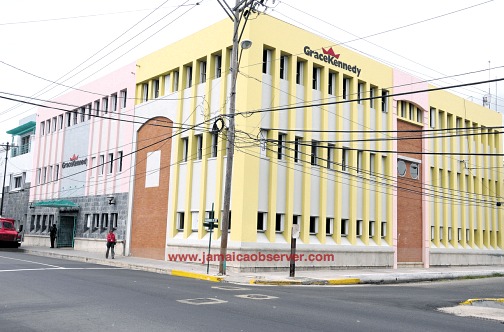
The GraceKennedy Group of Companies, started in 1922, is based in Kingston, Jamaica, but they are one of the Caribbean “largest and most dynamic corporate entities” in the region. Though they are based in Jamaica, they generate a lot of their global revenue – from food services and financial services – from the rest of the globe. They depend on globalization – economic transnationalism – in order to be an ongoing concern. Their marketing slogan is “Jamaican born; global bound”. They own 60 subsidiaries – see partial list in the Appendix below – and affiliated companies across the Caribbean, Africa, UK, North and Central America; they are a model of a transnational corporation. See VIDEO here:

VIDEO – GraceKennedy at 90 – https://youtu.be/okDBEAdC6LY

Published on Feb 10, 2012 – Jamaican conglomerate Grace Kennedy is celebrating 90 years of existence. The Gleaner recently toured its Harbour Street corporate office and learnt what drives the company’s success.

The history of this company traces a parallel arch of change in the Caribbean region for the 20th Century:

Regional Change Dynamics Year Company Dynamic Changes
European Colonialism 1922 Company formed to facilitate importation / local distribution
Decolonization 1952 Nation-building rather than mother-country dependence
Emigration from Homeland / Diaspora 1959 Export Caribbean home products to the world
Embrace of regionalism 1962 Incorporating in other Caribbean member-states
Shift to Service Economy 1990 Financial Services focus on Remittance

GraceKennedy has expanded and diversified over the years,[2] changing from a privately owned enterprise to a public company listed on the stock exchanges of Jamaica, Trinidad, Barbados and the Eastern Caribbean.

CU Blog - GraceKennedy - Caribbean Transnational Corporation - Photo 2

CU Blog - GraceKennedy - Caribbean Transnational Corporation - Photo 4

CU Blog - GraceKennedy - Caribbean Transnational Corporation - Photo 5

The company does not only appeal to the Jamaican community (domestic or Diaspora) or not only to the Anglo-speaking Caribbean; they also strategize for the Hispanic communities. In that vein, as reported in the foregoing VIDEO, in 2014 CU Blog - GraceKennedy - Caribbean Transnational Corporation - Photo 6GraceKennedy acquired La Fe Foods Inc., a top Hispanic consumer foods company – especially dominant in the frozen food category – in the US.

This transnational corporation aligns with the vision for societal elevation in the book Go Lean … Caribbean. These two visions actually parallel:

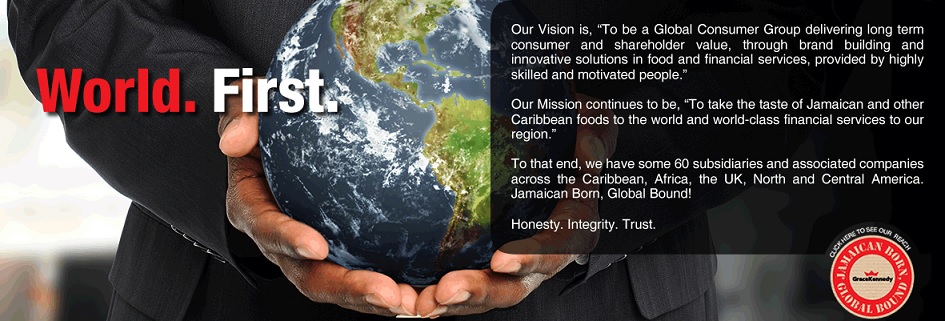
  • GraceKennedy – To be a Global Consumer Group delivering long term consumer and shareholder value, through brand building and innovative solutions in food and financial services, provided by highly skilled and motivated people.
  • Go Lean – To integrate and unify the Caribbean region into a Single Market Economy, enabling the homeland to be the best address on the planet, inviting our young people to participate in the effort to make our home the best place to live, work and play in the future. – Page 45.

The Go Lean book serves as a roadmap for the introduction and implementation of the technocratic Caribbean Union Trade Federation (CU). This is a call for confederating, collaborating and convening the 30 member-states of the region – despite the language or colonial legacy – into a Single Market; and for one federal governmental entity to optimize the economic, security and governing endeavors. This would also mean optimization of the food supply and financial services landscape. The Go Lean/CU roadmap creates the atmosphere for many more transnational corporations – homegrown and foreign – to emerge and thrive. This is part-and-parcel of the prime directives (3) of the CU/Go Lean roadmap:

  • Optimization of the economic engines – facilitating the growth in corporate citizens – in order to grow the regional economy to $800 Billion & create 2.2 million new jobs.
  • Establishment of a security apparatus to protect the resultant economic engines.
  • Improvement of Caribbean governance to support these economic engines, reflecting a separation-of-powers between CU agencies and member-state governments.

The CU seeks to facilitate better mastery of the advanced fields of economics by incentivizing, incubating and fostering entrepreneurial efforts, small-to-medium-businesses (SMB) and large multi-national corporations. This is how to create new jobs; jobs are not created by governments, but yet, the governmental administrations can implement the right climate to spur industrial and corporate growth. The job-creation solutions for the Caribbean, are not so much dependent on a specific government, but rather good corporate guidance.

A goal of the Go Lean/CU roadmap is to attract more transnational corporations, to establish a footprint in the Caribbean. How? Why? Why will they come to the Caribbean under the Go Lean/CU regime when they will not come now under the status quo? One answer is the structure of Self-Governing Entities (SGE), and Exclusive Economic Zones (EEZ). SGE refers to dedicated, bordered grounds that are ideal for corporate campuses, research laboratories, industrial bases (like shipyards, factory plants). The SGE structure will require a hybrid governance involving the CU federal agencies and local administrators influence– at the start-up.

The book Go Lean … Caribbean asserts that SGE’s and the EEZ can be strategic, tactical and operationally efficient for elevating Caribbean society – creating jobs. These points are pronounced early in the book with this Declaration of Interdependence (Pages 11 thru 14), with these statements:

v. Whereas the natural formation of our landmass and coastlines entail a large portion of waterscapes, the reality of management of our interior calls for extended oversight of the waterways between the islands. The internationally accepted 12-mile limits for national borders must be extended by International Tribunals to encompass the areas in between islands. The individual states must maintain their 12-mile borders while the sovereignty of this expanded area, the Exclusive Economic Zone, must be vested in the accedence of this Federation.

xxiv.  Whereas a free market economy can be induced and spurred for continuous progress, the Federation must install the controls to better manage aspects of the economy: jobs, inflation, savings rate, investments and other economic principles. Thereby attracting direct foreign investment because of the stability and vibrancy of our economy.

xxv.   Whereas the legacy of international democracies had been imperiled due to a global financial crisis, the structure of the Federation must allow for financial stability and assurance of the Federation’s institutions. To mandate the economic vibrancy of the region, monetary and fiscal controls and policies must be incorporated as proactive and reactive measures. These measures must address threats against the financial integrity of the Federation and of the member-states.

xxvi.  Whereas the Caribbean region must have new jobs to empower the engines of the economy and create the income sources for prosperity, and encourage the next generation to forge their dreams right at home, the Federation must therefore foster the development of new industries, like that of ship-building, automobile manufacturing, prefabricated housing, frozen foods, pipelines, call centers, and the prison industrial complex. In addition, the Federation must invigorate the enterprises related to existing industries tourism, fisheries and lotteries – impacting the region with more jobs.

xxx. Whereas the effects of globalization can be felt in every aspect of Caribbean life, from the acquisition of food and clothing, to the ubiquity of ICT, the region cannot only consume, it is imperative that our lands also produce and add to the international community, even if doing so requires some sacrifice and subsidy.

Though there is a need for more jobs, there is a legitimate fear to inviting more corporations. There are real-life experiences and stories of abuse in mono-industrial communities – Company Towns. Abuse by the “super-rich” is implied in the old adage: “golden rule is he who has the gold makes the rule”. But the Go Lean roadmap is designed to mitigate abuses of plutocracies. This is the advantage of the SGE structure; it allows for better promotion, oversight, and governance for transnational corporate expressions. These SGE’s would be regulated solely by the technocratic CU; there would be features like advanced monitoring (intelligence gathering) and embedded protections for whistleblowers.

CU Blog - GraceKennedy - Caribbean Transnational Corporation - Photo 3The Go Lean roadmap identifies 40,000 new direct jobs tied to SGE’s; plus more tied to industrial activities directly related to the business activities that aligns with GraceKennedy business model, such as 30,000 new direct jobs in the food supply industries and 2,000 direct jobs in the frozen foods industry. These job-creation empowerments will impact every aspect of Caribbean life throughout the Caribbean.

The Go Lean book details a series of community ethos, strategies, tactics, implementations and advocacies to foster industrial developments and SGE’s. The following list applies:

Community Ethos – Economic Principles – Economic Systems Influence Individual Choices Page 21
Community Ethos – Economic Principles – Voluntary Trade Creates Wealth Page 21
Community Ethos – Lean Operations Page 24
Community Ethos – Return on Investments Page 24
Community Ethos – Cooperatives Page 25
Community Ethos – Ways to Impact the Future Page 26
Community Ethos – Ways to Impact the Greater Good Page 32
Strategy – Vision – Confederate to form a Single Market Page 45
Strategy – Mission –  Build and foster local economic engines Page 45
Strategy – Mission –  Exploit the benefits and opportunities of globalization Page 46
Strategy – Mission –  Keep the next generation at home Page 46
Tactical – Fostering a Technocracy Page 64
Tactical – Separation of Powers – Commerce Department – Interstate Commerce Administration Page 79
Tactical – Separation of Powers – Department of Agriculture Page 88
Anecdote – “Lean” in Government Page 93
Implementation – Foreign Policy Initiatives at Start-up Page 102
Implementation – Start-up Benefits from the EEZ Page 104
Implementation – Steps to Implement Self-Governing Entities Page 105
Advocacy – 10 Big Ideas – Single Market Leverage Page 127
Advocacy – Ways to Improve Interstate Commerce Page 129
Advocacy – Ways to Better Manage Food Consumption – Export: Help Find Foreign Markets Page 156
Advocacy – Ways to Better Manage the Social Contract Page 170
Advocacy – Ways to Foster Cooperatives – Common for Agricultural Structures Page 176
Advocacy – Ways to Better Manage Natural Resources – Optimization of Pastoral Lands Page 183
Anecdote # 18 – Caribbean Industrialist: Sandals’ Butch Stewart Page 189
Advocacy – Reforms for Banking Regulations Page 199
Advocacy – Ways to Impact Wall Street – Expansion of local Securities markets Page 200
Advocacy – Ways to Impact Main Street Page 201
Advocacy – Ways to Develop a Frozen Foods Industry Page 208
Advocacy – Ways to Improve Fisheries – Canaries & Refrigerated Warehouse Cooperatives Page 210
Advocacy – Ways to Impact the Diaspora Page 217
Advocacy – Ways to Impact Rural Living – SGE Strategic Locations Page 235
Advocacy – Ways to Re-boot Jamaica Page 239

This commentary asserts that industrial development is hard-work. It is difficult now to get Direct Foreign Investors to consider individual Caribbean member-states, but with this new approach of a regional Single Market, a leveraged Caribbean – 42 million people – can be more attractive, appealing and inviting. Despite the appeal, executing this Go Lean/CU roadmap will still be hard; the book describes the effort as heavy-lifting.

Many of these heavy-lifting issues have been previously identified and detailed in prior Go Lean blog-commentaries. See this sample list:

https://goleancaribbean.com/blog/?p=8379 The Need for Technocratic Regulation of the SGE’s
https://goleancaribbean.com/blog/?p=5921 Socio-Economic Change: Impact Analysis of SGE’s
https://goleancaribbean.com/blog/?p=4037 How to Train Your ‘Dragon’ – Direct Foreign Investors
https://goleancaribbean.com/blog/?p=3473 Haiti’s Example of Success with an SGE: CaracolIndustrial Park
https://goleancaribbean.com/blog/?p=2750 Disney World – Role Model for Self-Governing Entities

This Go Lean movement, fostering a new Caribbean business climate, hereby applauds the corporate stakeholders at the GraceKennedy Group of Companies. We invite them to partner with us to make the Caribbean region a better place to live, work and play. But there is the need for a cautionary warning to them: the change that is coming has “plus & minus” ramifications for their business model.

There are aspects of the Go Lean roadmap that will not be good for some of GraceKennedy’s business model, remittances in particular. (While a GraceKennedy subsidiary is the regional partner representing Western Union in the Caribbean, the Go Lean book – Page 270 – introduces new electronic payment schemes that will lessen the need to pay for money transfers). It is clearly apparent in the Go Lean book, that change is not always good; sometimes it brings unintentional consequences. So if we know change is happening, it is best to get ahead of it. This point was stated poignantly at Page 252:

Opportunities abound; even if there is only little commerce to exploit now, there is opportunity enough in the preparation for the coming change. So act now! Get moving to that place, the “corner” of preparation and opportunity.

With the execution of this Go Lean roadmap, the Caribbean region sends a message to the business world: Change is afoot. There will be new partnerships and collaborations for corporate stakeholders. A message is sent to the Caribbean people as well: there are solutions to these complex problems befalling our society. Whereas the Caribbean may have been a parasite before, now we can function in the role of a protégé.

Like all parasites, their healthy disposition depends on a healthy disposition of the hosts. The Caribbean has been in crisis; therefore the parasitic people have fled – the Caribbean’s “brain drain” and Diaspora has grown as a result – not good. The successful execution of this roadmap will affect this disposition as well. We will and must do better! Optimizing the economic, security and governing engines in the region will lower the abandonment rate. This will also constitute change – good change – for the region.

The Caribbean homeland will then be a better place to compete globally and present more favorable options for our youth to stay home in the region.

Now is the time for all Caribbean stakeholders – corporate citizens included – to lean-in for the optimizations and empowerments described in the book Go Lean … Caribbean. This roadmap is conceivable, believable and achievable. 🙂

Download the free e-Book of Go Lean … Caribbean – now!

—————–

Appendix – List of Subsidiaries: GraceKennedy Group of Companies

  • Banking and Financial services
    • First Global Bank Limited
    • First Global Financial Services Limited
    • FG Funds Management (Cayman) Limited
    • First Global Trinidad & Tobago Limited (formerly One1 Financial Limited)
    • Signia Financial Group Incorporated
  • Remittances
    • GraceKennedy Remittance Services Limited
    • GraceKennedy Remittance Services (United States) Incorporated
    • GraceKennedy Remittance Services (Trinidad & Tobago) Limited
    • GraceKennedy Remittance Services (Guyana) Limited
  • Insurance Life and General
    • Allied Insurance Brokers Limited
    • EC Global Insurance Company Limited
    • First Global Insurance Brokers Limited
    • Jamaica International Insurance Company Limited
    • Trident Insurance Company Limited
  • Manufacturing, retail and distribution
    • Dairy Industries (Jamaica) Limited
    • Grace Foods and Services Company
    • GraceKennedy (Belize) Limited
    • Grace Food Processors Limited
    • Grace Food Processors (Canning) Limited
    • GraceKennedy (United States) Incorporated
    • Grace Foods International Limited
    • National Processors Division
    • World Brands Services Limited
    • Hi-Lo Food Stores (Jamaica) Limited
    • GK Foods (United Kingdom) Limited
    • GraceKennedy (Ontario) Incorporated
    • Hardware & Lumber Limited


Share this post:
, , ,
[Top]

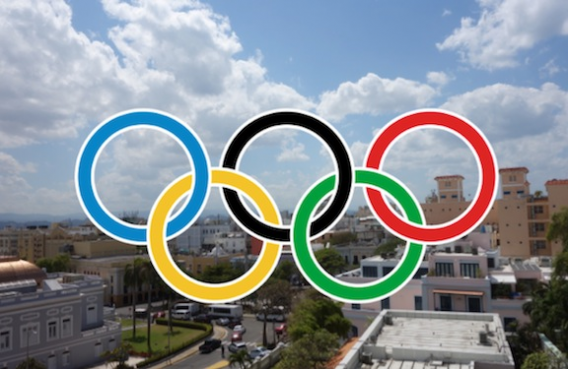
ENCORE: Caribbean’s Olympic Dreams

It’s time for the Olympics!

The Olympic Games are considered to be the world’s foremost sports competition.[2] These modern games are the leading international sporting events (featuring summer and winter sports competitions) in which thousands of athletes from around the world – more than 200 nations – participate in the variety of athletic feats.

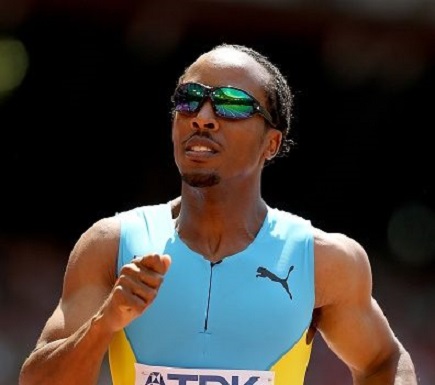
The Caribbean is duly represented, with a variety of athletes competing for their ancestral home countries – see photos in the Appendix below – and even some competing for adopted residential countries. This brings to mind a question of whether the Caribbean can someday, maybe, quite possibly consider the wild dream of hosting the games in one of its member-states. This proposition has been debated and dismissed; see this previous blog-commentary from March 12, 2014 regarding this laughable assertion. Ha ha ha …

This commentary is encored here today, August 5, 2016, on the occasion of the opening day of the XXXI Olympiad in Rio de Janiero, Brazil. See VIDEO here showcasing media coverage in the Caribbean member-state of the Cayman Islands:

VIDEOOlympics 2016 in Rio, Brazil – Flow brings Caribbean coverage – https://youtu.be/5LP9mje0bHo

Retrieved August 5, 2016 – Get ready for the action in Rio with Flow, Official broadcast partner of the 2016 Olympic Games for the Caribbean.

=================

Go Lean Commentary

Freedom of speech is great for the flow of information in a democracy. But freedom of speech has its limits, notwithstanding libel, slander and defamation possibilities. If a person yells out “FIRE, FIRE” in a crowded theater, knowing that there is no fire, the resultant panic and crush of people fleeing for the exits is actually criminally liable. In some jurisdiction, if death results, the culprit can be charged with statues against “depraved indifference”. Wow, that could be serious!

On the other hand, there is the practice of dreaming and acting on dreams. Some of the biggest accomplishments in world history, started as someone’s dreams. Once actuated, one step after another led to the eventual fulfillment of the dream. Once actuated, one step after another led to the eventual fulfillment of the dream. See this article here from Caribbean Journal Online News Site; retrieved 02/12/2014 from http://www.caribjournal.com/2014/02/13/caribbean-idea-could-the-caribbean-host-the-olympic-games/:

thumbWhile the Caribbean has become relatively accustomed to dominating at the Summer Olympics, this year’s crop of Caribbean winter athletes has us thinking. With all of the Caribbean’s continued success in international athletics, why couldn’t the region (or one of the countries in the region host the Summer Olympics? 

The Olympics has been held in the US, Asia, Australia, Europe and (soon) South America, but never in the Caribbean.  So we looked around the region to think about which countries could, at least hypothetically host the Games. The Games must be based in a single city; given much of the region’s size, the Games would likely need to be held across an entire island, though perhaps nominally based in a city.  

A potential Caribbean host country would also need several major qualities: a large enough territory to host the myriad events held in the Summer Games; a high enough level of infrastructural development; a big enough airport and a hotel stock large enough that it could expand without too much difficulty to meet the needs of the Games. We isolated several Caribbean islands: Jamaica, Hispaniola (Haiti and the Dominican Republic), Trinidad and Tobago, Guadeloupe, Puerto Rico.

Jamaica is large enough and its hotel stock is big enough, but its infrastructural development would need work; given Jamaica’s brand equity around the world (and its athletic dominance), this could be a natural choice, with Montego Bay being the best fit for a single city given its topography. Hispaniola would be the most provocative choice: could two neighbors that often have a stormy relationship bridge their divides and come together for international sport? Lack of infrastructure, particularly on the Haitian side, would be an issue, but adding that infrastructure would also enormously benefit the western half of the island.

Could the Games be held in Port-au-Prince and Santo Domingo together? Trinidad and Tobago has the infrastructural development, the territorial size, and the airport, but a small hotel stock. Could Port of Spain host the Games with many events held in Tobago? A system of fast ferries and increased flights would make for an entertaining twin-island Olympics.

 Guadeloupe would be a bit of a wild card; its roads and infrastructural development far outpace much of the region; it has enough undeveloped land and a relatively large size. Could the Games spread across each of the islands of the archipelago? Puerto Rico is large, with developed infrastructure, and it’s part of the United States, with a relatively robust hotel stock and strong existing sports infrastructure. Of course, its debt problems would pose a significant hindrance to hosting the Games in the next few decades.

Cuba is another option, although the continued embargo from the United States would likely be a significant stumbling block. Otherwise, the island has the size, infrastructure and level of development to be considered. There’s another option — what about a regionally-hosted Olympics? Would the IOC ever support something like that? Would the Caribbean grant temporary approval for foreign airlines to operate regional service? Would a fast-ferry company seize on the opportunity?

If the region could source the majority of the funding from sponsorship’s and other external sources, the benefits of new hotels, infrastructure, investment and prestige could be significant. But the Caribbean would need to ensure that the foreign money was enough that it didn’t put it any further into already-crippling debt. Ultimately, the question is this: instead of spending billions on developed countries hosting the Games, why not spend the same money for an Olympic Games that actually leads to development?

Imagine a Trinidad or a Jamaica or a Hispaniola with fresh, modern hotels, large stadia and, crucially, sparkling new roads (not to mention the vast tourism marketing potential of hosting the Games). Of course, there’s another major issue: the weather. Summer in the Caribbean means the risk of hurricanes. But with major storms popping up across the globe, is the Caribbean really alone in that risk anymore? And couldn’t Olympic development be done at a hurricane-proof standard?

What do you think? Could the Caribbean ever host an Olympic Games?

The Caribbean hosting the Olympics is just dreaming, not reporting. Most men and women standing on the podium receiving their winning medals can trace their origins back to some dream. A dream for the athlete, coach and/or parent. Sometimes, too the whole community is dreaming. Is the thought of the Caribbean hosting the Olympics some day just a dream now in 2014 or can the “dominoes” be put in place that once actuated can lead to an eventual successful bid to host some future Olympiad?

Tipping the “dominoes” to enable a better business environment is the mission of the book Go Lean … Caribbean; [it serves as a roadmap for the introduction and implementation of the technocratic Caribbean Union Trade Federation (CU)]. This even applies to sports. The books purports that sports can be a great economic driver for the region, and that the business model of the Olympics can be forged in the region on a minor scale. In fact the book proposes the CU Games as a bi-annual event that encompasses many Olympic-style events, more than just Track & Field. This approach would bring the necessary regional integration necessary to develop any long time plans for a big dream of the Olympics.

This commentary declares that the merits of the foregoing article is pure rubbish. No one Caribbean country possesses the population base and economic engine to make an Olympic bid viable. While comparisons can be made for Greece, the host country for the 2004 Summer Olympics, this example is a better argument for opposition of any Olympic hosting. Greece experienced much financial distress as a result of their Olympic hosting; the country was near insolvency during the European Sovereign Debt crisis of 2009 – 2012, if not for the bail-outs of the European Union.

To the contrary, the entire Caribbean region tallies 42 million people and the results of economic integration can yield a GDP of $800 Billion (2010). Greece on the other hand had a population count of 10.8 million and GDP of $250 for the same period.

Lastly, the Go Lean roadmap calls for the emergence of the Caribbean dollar unified currency. This structure would spur the elevation of the region’s capital markets for stocks and bonds. This approach would satisfy the liquidity needs to finance the construction of any and all sporting facilities required for sporting events.

Download the e-Book of Go Lean … Caribbean – free … now!

—————

Appendix – Caribbean Olympic Hopefuls …

… for example, this sample from Jamaica, Grenada, the Bahamas and Trinidad.

CU Blog - Caribbean's Olympic Dream - Photo 1

CU Blog - Caribbean's Olympic Dream - Photo 4

CU Blog - Caribbean's Olympic Dream - Photo 3

CU Blog - Caribbean's Olympic Dream - Photo 2

Share this post:
, , ,
[Top]

ENCORE: Tim Duncan Retires

CU Blog - Tim Duncan Retires - Photo 1The Champ is calling it quits…

… after 19 years in the NBA, contributing solidly to his team and league, while maintaining a low-key presence, Tim Duncan rides into the sunset on a career that has taken his team to the playoffs every year, won 2 League MVPs, 5 NBA championships, 3 NBA Finals MVP, 15 All Stars appearances and the 1997-98 Rookie of the Year Award.

Is he one of the greatest players of all time? … the greatest “Power Forward” perhaps?

In typical fashion, he downplays any talk of his greatness. This is consistent with his humble demeanor ever since he was the No. 1 overall pick out of Wake Forest in 1997. He said he never pays attention to comparisons between himself and other all-time greats:

“I don’t really care where the rankings go,” he said. ”I’m in the conversation. I’m OK with that. That’s above and beyond anything I ever thought I’d ever be. That in itself is an honor.”

VIDEO – Tim Duncan: Career High Performance (53 points)https://youtu.be/P9wOz1fBtmg


Uploaded on Jul 31, 2011 – 19-28 FG, 15-15 FT, 11 rebounds

As follows is the 2014 Go Lean Commentary when he decided to re-sign for the final 2 years of his career, entitled:

St Croix’s Tim Duncan to Return to Spurs For Another Season

Congratulations Tim Duncan. You deserve your champion’s accolades.

Tim Duncan Photo

This commentary has previously sided with Mr. Duncan’s opponent in the recent NBA Finals. Here below are the previous blogs citing a hope for the Miami Heat’s dominance in the NBA Playoff tournament.

https://goleancaribbean.com/blog/?p=1148 Sports Bubble – Franchise values in basketball
https://goleancaribbean.com/blog/?p=689 eMerge conference aims to jump-start Miami tech hub

But talent recognizes talent!

It is also good news, according to this foregoing news article, that Mr. Duncan will be returning for at least one more season.

By: The Caribbean Journal Staff

Tim Duncan isn’t going anywhere.

The St Croix native, who recently won his fifth NBA championship, will be returning to the San Antonio Spurs for his 18th NBA season.

The team announced Monday that the 38-year-old Duncan had exercised his player option for the 2014-2015 season, putting to rest any notion that he would be retiring.

Duncan helped the Spurs to a dominant 4-1 series win over the Miami Heat in this month’s NBA Finals.

The Christiansted native is one of five players in the history of the NBA to win five championships and five MVPs (either NBA Finals or regular season), along with Michael Jordan, Magic Johnson, Bill Russell and Kareem Abdul-Jabbar.

Duncan leads all active players in career wins, with 898.
Caribbean Journal Online News Source  (Posted 06-23-2014; retrieved 06-26-2014) –
http://www.caribjournal.com/2014/06/23/st-croixs-tim-duncan-to-return-to-spurs-for-another-season/

There is something bigger than sports alone at play here. As the foregoing news article depicts, Mr. Duncan is a member of the Caribbean Diaspora. He is recognized as one of the best in his field of endeavor; perhaps one of the best of all time. This is a claim of the book Go Lean … Caribbean, that sports require a genius qualifier and that genius  ability can be found in abundance in the Caribbean. Mr. Duncan makes us all proud: Christiansted, St. Croix, the US Virgin Islands and all of the Caribbean.

The Go Lean book serves as a roadmap for the introduction and implementation of the Caribbean Union Trade Federation (CU), a technocratic federal government to administer and optimize the economic/security/ governing engines of the region’s 30 member-states. At the outset, the roadmap recognizes the value of sports with these statements in the Declaration of Interdependence (Page 13 & 14):

xxvi.     Whereas the preparation of our labor force can foster opportunities and dictate economic progress for current and future generations, the Federation must ensure that educational and job training opportunities are fully optimized for all residents of all member-states, with no partiality towards any gender or ethnic group. The Federation must recognize and facilitate excellence in many different fields of endeavor, including sciences, languages, arts, music and sports. This responsibility should be executed without incurring the risks of further human flight, as has been the past history.

xxxi.     Whereas sports have been a source of great pride for the Caribbean region, the economic returns from these ventures have not been evenly distributed as in other societies. The Federation must therefore facilitate the eco-systems and vertical industries of sports as a business, recreation, national pastime and even sports tourism – modeling the Olympics.

The Go Lean roadmap calls for the market organizations to better explore the economic opportunities for sports. Sports can be big business! But even when money is not involved, other benefits abound. As such the CU will enhance the engines to elevate sports at all levels: amateur, intercollegiate and professional.

The other issue related to Tim Duncan is that of “image”. Mr. Duncan could be a proud ambassador of Caribbean character. Personally, he does not advocate any political or economic agenda, so others must do that for him. As a public figure, his story is free to relate to the listening world of how impactful a Caribbean heritage can be.

The subjects of sports and Caribbean image have been related in many previous Go Lean blogs; highlighted here in the following samples:

a. https://goleancaribbean.com/blog/?p=1446 Caribbean   Players in the 2014 World Cup
b. https://goleancaribbean.com/blog/?p=1341 College   World Series Time
c. https://goleancaribbean.com/blog/?p=1214 The Art &   Science of Temporary   Stadiums – No White Elephants
d. https://goleancaribbean.com/blog/?p=1148 Sports Bubble –   Franchise values in   basketball
e. https://goleancaribbean.com/blog/?p=1020 Sports Revolutionary: Advocate Jeffrey Webb
f. https://goleancaribbean.com/blog/?p=857 Caribbean Image: Dreadlocks
g. https://goleancaribbean.com/blog/?p=498 Book Review: ‘The Sports Gene’
h. https://goleancaribbean.com/blog/?p=334 Bahamians Make Presence Felt In Libyan   League
i. https://goleancaribbean.com/blog/?p=318 Collegiate Sports in the Caribbean
j. https://goleancaribbean.com/blog/?p=60 Could the Caribbean Host the Olympic Games?

The book Go Lean…Caribbean has an economic empowerment agenda, but there are still huge benefits for the region related to sports. The strategy is to consolidate the region’s 30 member-states / 4 languages into a Single Market of 42 million people – leverage for a viable sports landscape. The CU facilitation of applicable venues (stadia, arenas, fields, temporary structures) on CU-owned fairgrounds plus the negotiations for broadcast/streaming rights/licenses will elevate the art, science and genius of sports as an enterprise in the region.

Now is the time for all of the Caribbean to lean-in to the following community ethos, strategies, tactics, implementations and advocacies detailed in the book Go Lean … Caribbean to re-boot the delivery of the regional solutions to elevate the Caribbean region through sports:

Community Ethos – People Respond to Incentives in Predictable Ways Page 21
Community Ethos – Return on Investments Page 24
Community Ethos – Ways to Foster Genius Page 27
Community Ethos – Ways to Improve Negotiations Page 32
Community Ethos – Ways to Promote Happiness Page 36
Strategic – Vision – Integrating Region in to a Single Market Page 45
Strategic – Staffing – Sporting Events at Fairgrounds Page 55
Tactical – Fostering a Technocracy Page 64
Tactical – Separation of Powers – Sports & Culture Administration Page 81
Tactical – Separation of Powers – Fairgrounds Administration Page 83
Implementation – Steps to Implement Self-Governing Entities (Fairgrounds) Page 105
Implementation – Ways to Deliver Page 109
Planning – Ways to Make the Caribbean Better Page 131
Advocacy – Ways to Grow the Economy Page 151
Advocacy – Ways to Improve Local Government – Parks & Recreation Page 169
Advocacy – Ways to Impact Events Page 191
Advocacy – Ways to Promote Fairgrounds Page 192
Advocacy – Ways to Foster Technology Expositions Page 197
Advocacy – Ways to Improve Sports Page 229
Advocacy – Ways to Impact Urban Living – Sports Leagues Page 234

The foregoing article celebrates a Caribbean Champion. But there is more to celebrate with Caribbean life, culture and the homeland. With the Go Lean executions, we can all be champions, by making the Caribbean a better place to live, work and play.

Download the book Go Lean … Caribbean – now!


Share this post:
, , , ,
[Top]

‘Like a Good Neighbor’ – Being there for Puerto Rico

Go Lean Commentary

‘Just like a Good Neighbor, State Farm is there’ – Advertising tagline

What a nice thought: having a neighbor that is there for you in your times of need. State Farm is an insurance company that underwrites the risks of casualties (mishaps, disasters, man-made and acts of God). The people of the Caribbean needs Good Neighbors. We have many incidences and disasters to contend with, some times natural, some times man-made… some times, even economic.

The need for a Good Neighbor got special recognition in the book Go Lean … Caribbean. It opens with a quotation of the song lyrics “Lean On Me” by recording artist Bill Withers, with these words:

If there is a load you have to bear
That you can’t carry
I’m right up the road
I’ll share your load
If you just call me

- Being there - Photo 1

The US Territory of Puerto Rico needs a Good Neighbor right now. They do not need State Farm; they need the US Government – see Appendix – to change the laws to allow them to re-structure their heavy debt “load”. In effect, this community is in crisis, facing disaster and needs a helping hand. See the story in these VIDEOs here:

VIDEO 1: Hamilton star Lin-Manuel Miranda on his mission to help Puerto Rico – http://www.today.com/video/-hamilton-star-lin-manuel-miranda-on-his-mission-to-help-puerto-rico-680630339894 

NBC News – The Today Show – Posted May 6, 2016; retrieved May 8, 2016

——————

VIDEO 2: Last Week Tonight with John Oliver: Puerto Rico (HBO) – https://youtu.be/Tt-mpuR_QHQ

Published on Apr 24, 2016 – Puerto Rico is suffering a massive debt crisis. Lin-Manuel Miranda joins John Oliver to call for relief.
Pardon the Adult Language

This is serious…

The book Go Lean … Caribbean identified the grave disposition of Puerto Rico, calling them the “Greece of the Caribbean” (Page 18), a tongue-in-check swipe to this advertising tagline used for many islands in the region: “the Gem of the Caribbean“. The book’s motive is to elevate the entire Caribbean, by focusing on the societal engines of economics, security and governance. All of these facets are in peril in Puerto Rico today, even though the current disaster is an economic one. It would be a nice thought if Puerto Rico’s neighbors could come to it’s aid. This is the quest of the Go Lean movement: to consolidate, integrate and streamline Caribbean member-states so as to be prepared for disasters in the region, including the economic ones. The book declares that Puerto Rico – and all of the Caribbean – is in crisis, but that a “crisis is a terrible thing to waste”.

Puerto Rico’s crisis is $70 Billion in municipal debt! Holy Crap, the vultures are now circling!

This episode is an example of the incidents prepared for in the Go Lean book, especially within the subtitle, “Crap Happens”. The book was referring to situations where a ‘Clear and Present Danger’ can imperil everyday life for the everyday man. This is the case in the US Territory of Puerto Rico. Despite the economic nature of the $70 Billion debt-load, this crisis is affecting security and government deliveries. According to the foregoing VIDEOs, the communities on the island of Puerto Rico cannot deliver on their Social Contract obligations because they have inadequate resources and their legal first priority must be debt-servicing. The end result: people’s needs – in the Social Contract – are not met and so they … flee – see photo above.

Puerto Rico needs an intervention; a bail-out of some sort. They are specifically asking for provisions of the US Bankruptcy laws (Chapter 9) to apply to the Territory. (Normally Chapter 9 only refers to American municipal governments and not State governments nor Territories). There are proponents of this quest – like Lin-Manuel Miranda in the foregoing – and opponents, like the active creditors. The movement behind the Go Lean movement wants a resolution, but focuses more on the underlying societal foundation; like the flaws that have made this community a parasite of the US mainland, rather than a protégé.

This assertion in the Go Lean book is that bad things (and bad actors) will always emerge to disrupt the peace and harmony in communities. All Caribbean member-states, like US Territories Puerto Rico and the US Virgin Islands, need to be on guard and prepared for this possibility. The book (Page 23) prepares for many modes of “bad things/actors”. It defines them as industrial mishaps, natural disasters, “acts of God”, and yes, economic distress. The book relates that these happenings are historical facts – considering the 2008 Global Recession and the constant threats of hurricanes – that are bound to be repeated, again and again. The book’s goal is to prepare the region for the eventuality of bad things happening to the good people, so as to minimize the constant human flight and brain drain.

The Go Lean book posits that the Caribbean region is the “greatest address on the planet”, that people should be “beating down the doors” to get in, rather than the status quo of people “beating down the doors” to get out.

We must plan for all disasters, natural and man-made. “When we fail to plan, we plan to fail”. We need Good Neighbors, literally and figuratively. The book contends that the 30 member-states in the Caribbean region should prepare themselves as neighbors to aid themselves, primarily. This point is pronounced early in the book with these Declaration of Interdependence (Page 12):

i.     Whereas the earth’s climate has undeniably changed resulting in more severe tropical weather storms, it is necessary to prepare to insure the safety and security of life, property and systems of commerce in our geographical region. As nature recognizes no borders in the target of its destruction, we also must set aside border considerations in the preparation and response to these weather challenges.

ii.    Whereas the natural formation of the landmass for our lands constitutes some extreme seismic activity, it is our responsibility and ours alone to provide, protect and promote our society to coexist, prepare and recover from the realities of nature’s occurrences.

x.   Whereas we are surrounded and allied to nations of larger proportions in land mass, populations, and treasuries, elements in their societies may have ill-intent in their pursuits, at the expense of the safety and security of our citizens. We must therefore appoint “new guards” to ensure our public safety and threats against our society, both domestic and foreign. The Federation must employ the latest advances and best practices … to assuage continuous threats against public safety.

xii. Whereas the legacy in recent times in individual states may be that of ineffectual governance with no redress to higher authority, the accedence of this Federation will ensure accountability and escalation of the human and civil rights of the people for good governance, justice assurances, due process and the rule of law. As such, any threats of a “failed state” status for any member state must enact emergency measures on behalf of the Federation to protect the human, civil and property rights of the citizens, residents, allies, trading partners, and visitors of the affected member state and the Federation as a whole.

xvi. Whereas security of our homeland is inextricably linked to prosperity of the homeland, the economic and security interest of the region needs to be aligned under the same governance. Since economic crimes, including piracy and other forms of terrorism, can imperil the functioning of the wheels of commerce for all the citizenry, the accedence of this Federation must equip the security apparatus with the tools and techniques for predictive and proactive interdictions.

xxiii. Whereas many countries in our region are dependent OverseasTerritory of imperial powers, the systems of governance can be instituted on a regional and local basis, rather than requiring oversight or accountability from distant masters far removed from their subjects of administration. The Federation must facilitate success in autonomous rule by sharing tools, systems and teamwork within the geographical region.

xxv. Whereas the legacy of international democracies had been imperiled due to a global financial crisis, the structure of the Federation must allow for financial stability and assurance of the Federation’s institutions. To mandate the economic vibrancy of the region, monetary and fiscal controls and policies must be incorporated as proactive and reactive measures. These measures must address threats against the financial integrity of the Federation and of the member-states.

So the Go Lean book relates that the Caribbean must appoint “new guards” to ensure public safety and to include many strategies, tactics and implementations considered “best-practices” for economic stewardship and Emergency Management (Preparation and Response). We must be on a constant vigil against all “bad actors”, man-made or natural. This indicates being pro-active in monitoring, mitigating and managing risks. Then when “crap” does happen, as it always will, the region’s “new guards” must be prepared for any “Clear and Present” danger.

The Go Lean book serves as a roadmap for the introduction and implementation of the technocratic Caribbean Union Trade Federation (CU). The CU would structure the appropriate governmental and non-governmental agencies in the region into one initiative, providing a Unified Command and Control for Emergency operations to share, leverage and collaborate their practice across the whole region. The roadmap has a focus of optimizing Caribbean society through economics, homeland security and governance; as stated within the prime directives (3):

  • Optimization of the economic engines in order to grow the regional economy to $800 Billion & create 2.2 million new jobs.
  • Establishment of a security apparatus to protect the resultant economic engines and the Caribbean homeland.
  • Improvement of Caribbean governance to support these engines, including Bankruptcy processing at the regional level.

The Caribbean is the “greatest address on the planet”, but there are risks associated with living deep in this tropical zone. With the reality of natural disasters (perhaps even more due to Climate Change), we must not be caught unprepared if we do not want our citizens to continue to flee their homeland; we want them to prosper here, where they may be planted. So as a community, we must provide assurances that we can count on our Good Neighbors to provide aid for any of the region’s stakeholders.

The Go Lean book details the series of community ethos, strategies, tactics, implementations and advocacies to provide the proactive and reactive protections in the Caribbean region:

Community Ethos – Economic Systems Influence Individual Choices Page 21
Community Ethos – Consequences of Choices Lie in Future Page 21
Community Ethos – “Crap” Happens Page 23
Community Ethos – Cooperatives Page 25
Community Ethos – Ways to Impact the Future Page 26
Community Ethos – Ways to Impact the Greater Good Page 37
Strategy – Vision – Confederating to form a Single Market Economy Page 45
Strategy – Agents of Change – Globalization Page 57
Strategy – Agents of Change – Climate Change Page 57
Tactical – Fostering a Technocracy Page 64
Tactical – How to Grow the Economy – Economic Bubbles Recovery Page 69
Tactical – How to Grow the Economy – Recover from Disasters Page 70
Tactical – Separation of Powers – Securities Exchange Regulatory Agency Page 74
Tactical – Separation of Powers – Homeland Security Department Page 75
Tactical – Separation of Powers – Emergency Management Agency Page 76
Tactical – Separation of Powers – Meteorological and Geological Service Page 79
Tactical – Separation of Powers – Exclusive Federal Bankruptcy Courts Page 90
Implementation – Ways to Pay for Change Page 101
Implementation – Start-up Homeland Security Initiatives Page 103
Implementation – Ways to Better Manage Debt Page 114
Implementation – Ways to Foster International Aid Page 115
Planning – 10 Big Ideas – #3: Consolidated Homeland Security Pact Page 130
Planning – Ways to Make the Caribbean Better Page 131
Planning – Ways to Improve Failed-State Indices – Puerto Rico’s near Status Page 134
Advocacy – Ways to Grow the Economy – Disaster Recoveries Page 151
Advocacy – Ways to Create Jobs Page 152
Advocacy – Ways to Improve Governance Page 168
Advocacy – Ways to Better Manage the Social Contract Page 170
Advocacy – Ways to Improve Homeland Security Page 180
Advocacy – Ways to Improve for Natural Disasters Page 184
Advocacy – Ways to Improve for Emergency Management Page 196
Advocacy – Ways to Impact Wall Street – Optimize Security Markets Page 200
Advocacy – Ways to Impact US Territories – Puerto Rico and the Virgin Islands Page 244

Other subjects related to Good Neighbor responses to crises (Economic Disruptions, Emergency Management, and Homeland Security) in the region and the required governmental responses have been blogged in other Go Lean…Caribbean commentaries, as sampled here:

https://goleancaribbean.com/blog/?p=7327 Zika – An Epidemiology Crisis – Facing the Caribbean region
https://goleancaribbean.com/blog/?p=7235 Flint, Michigan – A Cautionary Tale
https://goleancaribbean.com/blog/?p=6893 A Meteorologist’s View On Climate Change
https://goleancaribbean.com/blog/?p=6563 Lessons from Iceland – Model of Recovery
https://goleancaribbean.com/blog/?p=6531 Economic Crisis: Learning from the Exigency of 2008
https://goleancaribbean.com/blog/?p=6189 A Lesson in History – Hurricane ‘Katrina’ is helping today’s crises
https://goleancaribbean.com/blog/?p=6103 Sum of All Fears – ‘On Guard’ Against Deadly Threats
https://goleancaribbean.com/blog/?p=5002 Managing a ‘Clear and Present Danger’
https://goleancaribbean.com/blog/?p=4741 Vanuatu and Tuvalu Cyclone – Inadequate response to human suffering
https://goleancaribbean.com/blog/?p=4360 Dreading the ‘Caribbean Basin Security Initiative’
https://goleancaribbean.com/blog/?p=2614 The ‘Great ShakeOut’ Earthquake Drill / Planning / Preparations
https://goleancaribbean.com/blog/?p=1817 Caribbean grapples with intense new cycles of flooding & drought

The island territory of Puerto Rico, and the Caribbean as a whole, has found itself on the losing side of the changes impacting the global economy; the Go Lean book identified one of the Agents of Change as globalization. According to the foregoing VIDEOs, they have been contending with a recession for nearly a decade. This has meant life-and-death for the community; death in terms of people abandoning the island. This commentary has frequently addressed these challenges – and solutions – for Puerto Rico; see sample list here:

https://goleancaribbean.com/blog/?p=6693 Ten Puerto Rico Police Accused of Criminal Network
https://goleancaribbean.com/blog/?p=6531 Economic Disaster: Learning from the Exigency of 2008
https://goleancaribbean.com/blog/?p=6260 Puerto Rico Bondholders Coalition Launches Ad Campaign
https://goleancaribbean.com/blog/?p=4551 US Territories – Between a ‘rock and a hard place’
https://goleancaribbean.com/blog/?p=1325 Puerto Rico Governor Signs Bill on SME’s
https://goleancaribbean.com/blog/?p=599 Ailing Puerto Rico open to radical economic fixes

These previous commentaries reflect the enduring crisis for the Caribbean; every member-state (island & mainland states) experience societal abandonment. The book Go Lean…Caribbean posits that this “Agent of Change” is too big for just any one member-state, like Puerto Rico, to tackle alone, that there must be a regional solution; and presents this roadmap as the salve.

The people and institutions of the region are hereby urged to lean-in to this Go Lean roadmap; this plan is conceivable, believable and achievable. We can make Puerto Rico, and the Caribbean as a whole, a better place to live, work and play.:-)

Download Go Lean … Caribbean – now!

————

Appendix – America’s Good Neighbor policy

The Good Neighbor policy was the foreign policy of the administration of United States President Franklin Roosevelt towards Latin America. Although the policy was implemented by the Roosevelt administration, 19th-century politician Henry Clay paved the way for it and coined the term “Good Neighbor”.

The policy’s main principle was that of non-intervention and non-interference in the domestic affairs of Latin America. It also reinforced the idea that the United States would be a “good neighbor” and engage in reciprocal exchanges with Latin American countries.[1] Overall, the Roosevelt administration expected that this new policy would create new economic opportunities in the form of reciprocal trade agreements and reassert the influence of the United States in Latin America; however, many Latin American governments were not convinced.[2]

- Being there - Photo 2

Carmen Miranda became the muse of the Good Neighbor policy.

Impact
The Good Neighbor Policy terminated the U.S. Marines occupation of Nicaragua in 1933 and occupation of Haiti in 1934, led to the annulment of the Platt Amendment by the Treaty of Relations with Cuba in 1934, and the negotiation of compensation for Mexico’s nationalization of foreign-owned oil assets in 1938.

Legacy
The era of the Good Neighbor Policy ended with the ramp-up of the Cold War in 1945, as the United States felt there was a greater need to protect the western hemisphere from Soviet influence. These changes conflicted with the Good Neighbor Policy’s fundamental principle of non-intervention and led to a new wave of US involvement in Latin American affairs.[2] Until the end of the Cold War the United States directly or indirectly attacked all suspected socialist or nationalist movements in the hope of ending the spread of Soviet influence. U.S. interventions in this era included the CIA overthrow of Guatemala’s President Jacobo Árbenz in 1954, the unsuccessful CIA-backed Bay of Pigs Invasion in Cuba in 1961, CIA subversion of Chilean President Salvador Allende in 1970–73, and CIA subversion of Nicaragua’s Sandinista government from about 1981 to 1990.[2]

After World War II, the US began to shift its focus to aid and rebuilding efforts in Europe and Japan. These U.S. efforts largely neglected the Latin American countries, though U.S. investors and business men did have some stake in the nations to the South.

See the entire encyclopedic reference here (retrieved May 9, 2016): https://en.wikipedia.org/wiki/Good_Neighbor_policy.

Share this post:
, , ,
[Top]

Switching Allegiances: Jamaican sprinters move on to represent other countries

Go Lean Commentary

“I’m going to take my talents to South Beach”.

CU Blog - Lebronomy - Economic Impact of the Return of the NBA GreatThese words – The Decision – proved to be among the most dramatic quotations in American Sports for the new 21st Century. These words were spoken by basketball superstar LeBron James in July 2010. He had been frustrated with the team management inefficiency in his hometown of Cleveland, Ohio where he played for the NBA’s Cleveland Cavaliers from 2003 to 2010. At the time of this utterance, he had elected to “opt-out” of his contract with the Cavaliers and become a free agent. After being aggressively recruited by a number of teams – including the incumbent club in Cleveland – he decided to join the NBA franchise in South Florida (South Beach), the Miami Heat.

For the fans in Cleveland, this was a betrayal! They asserted that he switched allegiances in taking his talents to South Beach.

This perceived act of betrayal is considered a “stab in the heart” for a community that loves its local athletes. While this foregoing anecdote is an American drama, the Caribbean island of Jamaica can relate and empathize with Cleveland. Or better stated, the community of Cleveland can empathize with Jamaica as the same anecdotes are being related there, again and again with their World-Class Track-and-Field athletes.

Consider these related news articles of events transpiring in the last year:

Title: Switching Allegiances: One More Jamaican Sprinter Moves On To Represent Another Country
By: Blogger – StephanieK
CU Blog - Switching Allegiances - Jamaican Sprinters - Photo 1Winston Barnes – in focus in the photo here – a former sprinter from Jamaica College, will now be representing Turkey in athletic competitions. Barnes, who will be known as Emre Zafer Barnes, joined three other Jamaican sprinters who decided to switch their allegiance to compete for various Arab countries. Former Wolmer’s Boys’ sprinter Jacques Harvey made the switch to Turkey earlier and is now known as Jak Ali Harvey. Following Jamaica’s Olympic Games, Shericka Williams, silver medalist, Andrew Fisher and Kemarley Brown all asked to move on to Bahrain, planning to represent that country at the 2016 Olympics in Brazil.

According to Commonwealth Games 100-metre champion Kemar Bailey-Cole, Jamaica could lose even more of its top athletes to countries who are willing to provide the financial support lacking from the Jamaica Athletics Administrative Association (JAAA), corporate Jamaica, and the government.
Source:  Jamaicans.com – Online Community – Retrieved 04-25-2016 from: http://jamaicans.com/one-more-jamaican-sprinter-moves-on/

——————————-

Title: Three Jamaican Athletes Plan to Represent Bahrain
July 22, 2015 – Three of Jamaica’s top athletes will be switching their allegiance from the island to the country of Bahrain, announced Dr. Warren Blake, the president of the Jamaica Athletics Administrative Association (JAAA). Shericka “Wire” Williams, 2008 Olympic 400-meter silver medallist, and sprinters Kemarley Brown and Andrew Fisher, submitted applications to the JAAA with the intention of competing for Bahrain.

The athletes said it has become difficult to represent Jamaica and want the chance to represent Bahrain as they consider moving to that country and becoming citizens. Williams received a silver medal for Jamaica at the Berlin world Championships in 2009, while Fisher is the latest Jamaican to run under the 10-second barrier. Brown also clocked below that mark with a personal best on July 20 of 9.93 seconds.
Source: Retrieved 04-25-2016 from: http://jamaicans.com/top-7-jamaican-caribbean-news-stories-for-the-week-ending-july-24th-2015/#ixzz46n7Z3doE

The decisions of these Jamaican athletes relate to the drama of Cleveland-Miami in 2010. The book Go Lean … Caribbean reported on these 2010 events, as follows (Page 42):

The National Basketball Association (NBA) franchise: Miami Heat is the league champion for the last 2 consecutive seasons; (composed November 2013). This is their 3rd championship, having won, in 2006, 2012, and 2013, to date. It is felt that this team can win many more. In fact, brewing some controversy when the team was assembled by the General Manager in 2010, one of the superstar players, LeBron James, pronounced that this team was built for multiple championships; the actual number: “not one, not, two, not three, not four, not five …”

Those words incited disgust from everyone…other than Miami Heat fans. But the team has lived up to its bragging and boasting, by succeeding to reach the Championship series (NBA Finals) all three years [to date] since the group was assembled.

The recent history of this Miami Heat drama does relate to the Caribbean and this roadmap for economic integration. First, with its base in Miami, Florida, it possesses the largest pocket of Caribbean Diaspora. So in many ways, the Miami Heat is the “home team” of the Caribbean.

This foregoing news articles also align with the Go Lean book in that it serves as a roadmap for the introduction and implementation of the Caribbean Union Trade Federation (CU). The Go Lean roadmap only has one interest in this subject of sports, fostering the economic opportunities that can be forged by professionalizing a regional sports eco-system. Dysfunction in this regards is exactly the issue in Jamaica today and why these athletes are “taking their talents to …” foreign shores.

This Go Lean roadmap assesses that not just Jamaica, but all of the Caribbean is in crisis. This is why athletes with any ability must seek refuge and opportunities in foreign lands. So this roadmap provides solutions to optimize the region’s economic, security and governing engines. The roadmap provides the facilitation to grow a professional, collegiate and amateur sports eco-system. Many times, the missing ingredients for organized sports are the facilities: stadia, arenas and playing fields. A previous blog-commentary reported that the sports eco-system void maybe considered as bigger than just sports, it is “life and death”. But the roadmap posits that sports, even though it is just “extra-curricular”, does bring benefits. In fact, Go Lean book (Page 229) quotes the Bible scripture at 1 Timothy 4:8 “For bodily exercise is profitable for a little …”.

Caribbean people are identified with excellence in sports; maybe even defined as geniuses. See the VIDEO here of a talented 10-year-old Jamaican football (soccer) sensation; his aspiration is to play professionally … in Europe in the future.

VIDEO – 10 year-old Jamaican Prodigy Brian Burketthttps://youtu.be/YJChu-Rwez0

Published on December 30, 2014 – Brian Burkett is a self motivated boy who has a dream to play football at the highest level in the world. His talent is immaculate for his age along with his love for the game. Brian started playing at age 3 and have grown in passion and discipline to learn more about the game.

While Caribbean athletic talent is recognized around the world, there is not enough economic rewards at home for these ones with genius abilities. These ones must leave their beloved homelands to maximize their talents and earn a living from them. (This also applies to matriculating college student-athletes).

Previous blogs established that sports genius alone will never yield the sought-after result of World-Class excellence, there is the need for skilled training, coaching with best-practices and an internal drive. In so many ways, this parallels the current effort to reboot the Caribbean economic engines: nature (birth-right) is critical, but training, experience, coaching and the technocratic application of best-practices are also needed to forge change. The most important though is the internal drive; first and foremost, this is identified in the roadmap as “community ethos”.

The Go Lean roadmap recognizes many different kinds of athletics, team sports and individual event. The unique “genius” qualifier is highlighted at the outset of the Go Lean book, in the Declaration of Interdependence (Pages 12 & 14), as follows:

xxi. Whereas the preparation of our labor force can foster opportunities and dictate economic progress for current and future generations, the Federation must ensure that educational and job training opportunities are fully optimized for all residents of all member-states, with no partiality towards any gender or ethnic group. The Federation must recognize and facilitate excellence in many different fields of endeavor, including sciences, languages, arts, music and sports. This responsibility should be executed without incurring the risks of further human flight, as has been the past history.

xxxi. Whereas sports have been a source of great pride for the Caribbean region, the economic returns from these ventures have not been evenly distributed as in other societies. The Federation must therefore facilitate the eco-systems and vertical industries of sports as a business, recreation, national pastime and even sports tourism – modeling the Olympics.

The book Go Lean … Caribbean highlights the community ethos, plus the strategies, tactics, implementation and advocacies to optimize the sports eco-system in the region; it posits that success is to be found at the intersection between opportunity and preparation. The following list shows samples from the book that detailed these points:

Community Ethos – People Respond to Incentives in Predictable Ways Page 21
Community Ethos – Consequences of Choices Lie in the Future Page 21
Community Ethos – Lean Operations Page 24
Community Ethos – Return on Investments Page 25
Community Ethos – Ways to Foster Genius Page 27
Community Ethos – Ways to Impact the Greater Good Page 37
Strategic – Staffing – Sporting Events at Fairgrounds Page 55
Tactical – Fostering a Technocracy Page 64
Tactical – Separation of Powers – Sports & Culture Administration Page 81
Tactical – Separation of Powers – Fairgrounds Administration Page 83
Implementation – Steps to Implement Self-Governing Entities (SGE) Page 105
Implementation – Ways to Deliver Page 109
Planning – Ways to Make the Caribbean Better Page 131
Advocacy – Ways to Grow the Economy Page 151
Advocacy – Ways to Create Jobs Page 152
Advocacy – Ways to Improve Local Government – Parks & Recreation Page 169
Advocacy – Ways to Impact Public Works Page 175
Advocacy – Ways to Impact Events Page 191
Advocacy – Ways to Promote Fairgrounds as Sporting Venues Page 192
Advocacy – Ways to Preserve Caribbean Heritage Page 218
Advocacy – Ways to Improve Sports Page 229
Advocacy – Ways to Impact Urban Living – Sports Leagues Page 234

The Go Lean book and accompanying blogs declare that the Caribbean needs to learn lessons from these Track-and-Field athletes taking their talents to other markets … elsewhere. This commentary is about the business of sports; and this subject is a familiar topic for the Go Lean movement, as was detailed in these previous blogs:

https://goleancaribbean.com/blog/?p=6464 WWE Network – Model for Caribbean
https://goleancaribbean.com/blog/?p=6202 ‘Concussions’ – The Movie; The Cause
https://goleancaribbean.com/blog/?p=5921 Socio-Economic Change: Impact Analysis of SGE’s
https://goleancaribbean.com/blog/?p=4879 Martinique – The New Caribbean Surfing Capital
https://goleancaribbean.com/blog/?p=4019 Melding of Sports & Technology; the Business of the Super Bowl
https://goleancaribbean.com/blog/?p=3414 Levi’s® Stadium: A Team Effort
https://goleancaribbean.com/blog/?p=3244 Sports Role Model – espnW
https://goleancaribbean.com/blog/?p=2222 Sports Role Model – Playing For Pride … And More
https://goleancaribbean.com/blog/?p=2171 Sports Role Model – Turn On the SEC Network
https://goleancaribbean.com/blog/?p=2152 Sports Role Model – US versus the World
https://goleancaribbean.com/blog/?p=1715 Lebronomy – Economic Impact of the Return of the NBA Great
https://goleancaribbean.com/blog/?p=1446 Caribbean Players in the 2014 World Cup
https://goleancaribbean.com/blog/?p=1341 College World Series Time – Lessons from Omaha
https://goleancaribbean.com/blog/?p=1214 Landlord of Temporary Stadiums
https://goleancaribbean.com/blog/?p=1148 Sports Bubble – Franchise values in basketball
https://goleancaribbean.com/blog/?p=1020 Sports Revolutionary: Advocate Jeffrey Webb
https://goleancaribbean.com/blog/?p=498 Book Review: ‘The Sports Gene’
https://goleancaribbean.com/blog/?p=318 Collegiate Sports in the Caribbean
https://goleancaribbean.com/blog/?p=60 Could the Caribbean Host the Olympic Games?

The end result for the Go Lean roadmap’s venture into regional sport professionalization is economic growth and “jobs” here at home. The Go Lean roadmap anticipates 21,000 direct jobs at sports enterprises throughout the region, not including the athletes.

CU Blog - Switching Allegiances - Jamaican Sprinters - Photo 2The benefits of the Go Lean roadmap are too alluring to ignore: emergence of an $800 Billion economy, 2.2. million new regional jobs, new industries, services and finally opportunities for the sports-playing youth of the Caribbean . The roadmap even extends an invitation to the Diaspora (and their legacies) to repatriate from North American, European and Middle-Eastern/Arab countries. This will help to preserve Caribbean culture here … in the Caribbean.

As for the latest developments of the opening anecdote of LeBron James and the Cleveland-Miami drama: after 4 years in Miami and 2 championships, he repatriated to Cleveland; (see photo above) … with a new resolve to bring a championship to Cleveland. In this vein, his quest – now fulfilled – serves as a role model for Caribbean athletes: excelling at home is “so much sweeter” than on the road. This is the precept to prosper where planted. 🙂

Download the book Go Lean … Caribbean – now!

Share this post:
, , , , , ,
[Top]

ENCORE: French Caribbean ready for the Martinique Surf Pro

This Go Lean blog-commentary from April 14, 2015 is re-distributed on this occasion of the Second Annual Martinique Surf Pro. Here is the announcement:

After a successful first edition in 2015, the Martinique Surf Pro, a men’s QS3,000 event, will return this season to the idyllic French West Indies island of Martinique from April 17-24, 2016.

The epic first installment unfolded last year in quality surf and brought surfers from all corners of the world. Ultimately, Hawaiian up-and-comer Joshua Moniz (HAW), 19, won the event.
Source: http://www.worldsurfleague.com/posts/181916/french-caribbean-readies-for-second-martinique-surf-pro

Consider the VIDEO highlights from Day 1 of this year’s event.

————–

Go Lean Commentary
Sports could be big business; culture is big business. Every now-and-then there is the opportunity to merge sports and culture into a single economic activity. One such expression is the sports/culture of surfing. This focus is a priority for the movement to elevate the Caribbean society, stemming from the book Go Lean…Caribbean.

The book serves as a roadmap for the introduction and implementation of the technocratic Caribbean Union Trade Federation (CU). While the CU is not intended as a sports promotion entity, it does promote the important role of sports in the quest to make the Caribbean a better place to live, work and play.

Though surfing activities originated with Polynesian culture (see Appendix below), the sport has assimilated well in other societies – the Caribbean included.

In terms of cultural expressions of surfing in the United States, the most iconic portrayal is the Rock-n-Roll group the Beach Boys; see VIDEO in the Appendix below of a milestone performance in Tokyo, Japan.

Yes surfing is global in it participation and appreciation.

Now a Caribbean community, the French-domain of Martinique is exploring the surfing sub-culture for sport, tourism and sports-tourism.

Cowabonga* Dude!

By: The Caribbean Journal staff

Long an under-the-radar surfing spot, the French Caribbean island will get its place in the spotlight when the surfing world gathers on the island later this month for the first-ever Martinique Surf Pro.

From April 21-26, the Caribbean’s only World Surf League Qualification Series event this year will take place along the shores of Basse-Pointe in Martinique.

The event, which is being organized by Martinique Surfing in partnership with the World Surf League, will bring together 100 world-class surfers from the United States, Japan, Europe, Brazil and the Caribbean.

“Martinique has been among the best-kept secrets in Caribbean surfing for some time now,” said Muriel Wiltord, director of the Americas for the Martinique Promotion Bureau. “Such a high-profile event as this cements the island’s position as a prime surfing destination. As one the top watersports competitions being held in the Caribbean in 2015, Martinique Surf Pro also shines a spotlight on the wide range of additional watersports options that Martinique has to offer.”

Martinique’s surfing season typically lasts between November and May along its northern and northeastern Atlantic coasts.

Source retrieved April 13, 2015: http://www.caribjournal.com/2015/04/13/is-martinique-the-next-caribbean-surfing-capital/

CU Blog - Is Martinique the next big Caribbean surfing capital - Photo 2

CU Blog - Is Martinique the next big Caribbean surfing capital - Photo 3

CU Blog - Is Martinique the next big Caribbean surfing capital - Photo 1

Not every coastline is ideal for surfing; thusly many Caribbean residents do not surf; it is not an indigenous activity to this region. But the past-time – and culture for that matter – is adaptable. Why is this? While the Caribbean has been blessed with many natural gifts, the physical conditions for surfing are not everywhere; (based on factual information retrieved from Wikipedia).

There must be a consistent swell. A swell is generated when wind blows consistently over a large area of open water, called the wind’s fetch. The size of a swell is determined by the strength of the wind and the length of its fetch and duration. Because of this, surf tends to be larger and more prevalent on coastlines exposed to large expanses of ocean traversed by intense low pressure systems.

Local wind conditions affect wave quality, since the surface of a wave can become choppy in blustery conditions. Ideal conditions include a light to moderate “offshore” wind, because it blows into the front of the wave, making it a “barrel” or “tube” wave. Waves are Left handed and Right Handed depending upon the breaking formation of the wave.

Waves are generally recognized by the surfaces over which they break.[7] For example, there are Beach breaks, Reef breaks and Point breaks.

The most important influence on wave shape is the topography of the seabed directly behind and immediately beneath the breaking wave. The contours of the reef or bar front becomes stretched by diffraction. Each break is different, since each location’s underwater topography is unique. At beach breaks, sandbanks change shape from week to week. Surf forecasting is aided by advances in information technology. Mathematical modeling graphically depicts the size and direction of swells around the globe.

So mastering the sport of surfing is now an art and a science.

Despite the fun and joy of surfing, there are a lot of dangers with this activity:

This activity is not for the faint of heart.

Not every market, especially in the Caribbean, can support the demands of surfing as a sport and as a cultural event. As depicted in the foregoing article, Martinique uniquely qualifies. This year’s professional tournament is the inaugural event. This Caribbean island makes a very short-list of all locations where this activity is practical. The following is a sample of the competitive/major surfing locations (Surf Cities) around the globe:

1. In Australia

2. In Asia

3. In the South Pacific

4. In South Africa

5. In North America

6. In Central America

7. In South America

8. In the USA

9. In Europe

The Martinique effort and initiative to satiate the thirst … and fascination of surfing aligns with the objects of the CU/Go Lean roadmap; especially the mission “to forge industries and economic drivers around the individual and group activities of sports and culture” (Page 81).

The Go Lean vision is a confederation of the 30 member-states of the Caribbean forming the CU as a proxy organization to do the heavy-lighting of building, funding, maintaining and promoting sports venues. The strategy is for the CU to be the landlord, and super-regional regulatory agency, for sports leagues, federations and associations (amateur, collegiate, and professional). The embrace and promotion of the sport and culture of surfing can contribute to the Greater Good for the Caribbean. This aligns with the prime directives of the CU/Go Lean roadmap; summarized in the book with these 3 statements:

  • Optimization of the economic engines in order to grow the regional economy to $800 Billion & create 2.2 million new jobs.
  • Establishment of a security apparatus to protect the resultant economic engines and the participants in activities like surfing.
  • Improvement of Caribbean governance to support these engines.

This roadmap commences with the recognition that genius qualifiers can be found in many fields of endeavor, including sports. The roadmap pronounces the need for the region to confederate in order to invest in elevation of the Caribbean eco-systems in which such athletic geniuses can soar. These pronouncements are made in the opening Declaration of Interdependence, (Pages 13 & 14) as follows:

xxi. Whereas the preparation of our labor force can foster opportunities and dictate economic progress for current and future generations, the Federation must ensure that educational and job training opportunities are fully optimized for all residents of all member-states, with no partiality towards any gender or ethnic group. The Federation must recognize and facilitate excellence in many different fields of endeavor, including sciences, languages, arts, music and sports. This responsibility should be executed without incurring the risks of further human flight, as has been the past history.

xxii. Whereas sports have been a source of great pride for the Caribbean region, the economic returns from these ventures have not been evenly distributed as in other societies. The Federation must therefore facilitate the eco-systems and vertical industries of sports as a business, recreation, national pastime and even sports tourism – modeling the Olympics.

The Go Lean book and accompanying blogs declare that the Caribbean needs to learn lessons from Surf City communities and other sporting venues/administrations. So thusly this subject of the “business of sports” is a familiar topic for Go Lean blogs. This cause was detailed in these previous blogs:

https://goleancaribbean.com/blog/?p=6464 NEW: WWE Network – Model for Caribbean
https://goleancaribbean.com/blog/?p=4019 Melding of Sports & Technology; the Business of the Super Bowl
https://goleancaribbean.com/blog/?p=3414 Levi’s® Stadium: A Team Effort
https://goleancaribbean.com/blog/?p=3244 Sports Role Model – espnW
https://goleancaribbean.com/blog/?p=2222 Sports Role Model – Playing For Pride … And More
https://goleancaribbean.com/blog/?p=2171 Sports Role Model – Turn On the SEC Network
https://goleancaribbean.com/blog/?p=2152 Sports Role Model – US versus the World
https://goleancaribbean.com/blog/?p=1715 Lebronomy – Economic Impact of the Return of the NBA Great
https://goleancaribbean.com/blog/?p=1446 Caribbean Players in the 2014 World Cup
https://goleancaribbean.com/blog/?p=1341 College World Series Time – Lessons from Omaha
https://goleancaribbean.com/blog/?p=1214 Landlord of Temporary Stadiums
https://goleancaribbean.com/blog/?p=1148 Sports Bubble – Franchise values in basketball
https://goleancaribbean.com/blog/?p=1020 Sports Revolutionary: Advocate Jeffrey Webb
https://goleancaribbean.com/blog/?p=498 Book Review: ‘The Sports Gene’
https://goleancaribbean.com/blog/?p=318 Collegiate Sports in the Caribbean
https://goleancaribbean.com/blog/?p=60 Could the Caribbean Host the Olympic Games?

This Go Lean roadmap is committed to availing the economic opportunities of all the Caribbean sports eco-system to respond to the world’s thirst for surfing. The book details the series of community ethos, strategies, tactics, implementations and advocacies to deliver the regional solutions to better harness economic benefits from sports and sports-tourism activities:

Community Ethos – People Respond to Incentives in Predictable Ways Page 21
Community Ethos – Consequences of Choices Lie in the Future Page 21
Community Ethos – Lean Operations Page 24
Community Ethos – Return on Investments Page 25
Community Ethos – Ways to Foster Genius Page 27
Community Ethos – Ways to Impact the Greater Good Page 37
Strategic – Staffing – Sporting Events at Fairgrounds Page 55
Tactical – Fostering a Technocracy Page 64
Tactical – Separation of Powers – Sports & Culture Administration Page 81
Tactical – Separation of Powers – Fairgrounds Administration Page 83
Implementation – Steps to Implement Self-Governing Entities Page 105
Implementation – Ways to Deliver Page 109
Planning – Ways to Make the Caribbean Better Page 131
Advocacy – Ways to Grow the Economy Page 151
Advocacy – Ways to Create Jobs Page 152
Advocacy – Ways to Improve Local Government – Parks & Recreation Page 169
Advocacy – Ways to Impact Public Works Page 175
Advocacy – Ways to Impact Events Page 191
Advocacy – Ways to Promote Fairgrounds as Sporting Venues Page 192
Advocacy – Ways to Preserve Caribbean Heritage Page 218
Advocacy – Ways to Improve Sports Page 229
Advocacy – Ways to Impact Urban Living – Sports Leagues Page 234

What could be the end result for the Go Lean roadmap’s venture into the sport of surfing and the business of sports? Economic growth and “jobs”. The Go Lean roadmap anticipates 21,000 direct jobs at sports enterprises throughout the region.

But surfing is also a leisure amenity, a “play” activity within the Go Lean roadmap. Many participate in this activity with no competitive motives. So the promotion of surfing in the Caribbean region can appeal to many enthusiasts far-and-wide to come visit and enjoy our Caribbean hospitality. This subject therefore relates back to the primary regional economic activity of tourism. This fits into the appeal of the Caribbean sun, sand and surf.

Overall, with these executions, the Caribbean region can be a better place to live, work and play. There is a lot of economic activity in the “play” aspects of society. Everyone, surfers, athletes and spectators alike, are hereby urged to lean-in to this Go Lean roadmap.

Cowabonga Dudes!

Download the book Go Lean … Caribbean – now!

———-

Appendix – *Cowabunga: (slang) an expression of surprise or amazement, often followed by “dude”. Popular among California surfers.

———-

Appendix – Encyclopedia of Surfing:

For centuries, surfing was a central part of ancient Polynesian culture. This activity was first observed by Europeans at Tahiti in 1767 by Samuel Wallis and the crew members of the Dolphin; they were the first Europeans to visit the island in June of that year.

Surfing is a surface water sport in which the wave rider, referred to as a surfer, rides on the forward or deep face of a moving wave, which is usually carrying the surfer toward the shore. Waves suitable for surfing are primarily found in the ocean, but can also be found in lakes or in rivers in the form of a standing wave or tidal bore. However, surfers can also utilize artificial waves such as those from boat wakes and the waves created in artificial wave pools.

The term surfing refers to the act of riding a wave, regardless of whether the wave is ridden with a board or without a board, and regardless of the stance used. The native peoples of the Pacific, for instance, surfed waves on alaia, paipo, and other such craft, and did so on their belly and knees. The modern-day definition of surfing, however, most often refers to a surfer riding a wave standing up on a surfboard; this is also referred to as stand-up surfing.

George Freeth (8 November 1883 – 7 April 1919) is often credited as being the “Father of Modern Surfing”.

In 1907, the eclectic interests of the land baron Henry Huntington (of whom the City of Huntington Beach is named after) brought the ancient art of surfing to the California coast. While on vacation, Huntington had seen Hawaiian boys surfing the island waves. Looking for a way to entice visitors to the area of Redondo Beach, where he had heavily invested in real estate, he hired the young Hawaiian George Freeth to come to California and ride surfboards to the delight of visitors; Mr. Freeth exhibited his surfing skills twice a day in front of the Hotel Redondo.

In 1975, professional contests started.[6]

Today, the Surfing Hall of Fame is located in the city of Huntington Beach, California. The city brands itself as Surf City USA.

(Source retrieved April 14 from: http://en.wikipedia.org/wiki/Surfing)

———-

AppendixVIDEO – The Beach Boys: Surfin’ Safari~Surf City~Surfin’ U.S.A – https://youtu.be/qpSwdQMn8xs

Uploaded on Jul 29, 2011 – Live at Budokan in Japan November 2, 1991

Share this post:
, , , , ,
[Top]

Blog # 400 – A Vision of Freeport as a Self-Governing Entity

Go Lean CommentaryBook Cover

This commentary addresses the needs and vision for just one city in the Caribbean, the Bahamian city of Freeport/Lucaya. But this commentary is also a milestone for the movement associated with the book Go Lean … Caribbean; this is Blog # 400.

400 is a lot of insight, analysis and wisdom. Yet, these all focused on the same goal: to make all of the Caribbean – the 30 member-states consisting of all islands and the coastal countries of Belize, Guyana and Suriname – a better place to live, work and play … by elevating the societal engines of economics, security and governance.  This is easier said than done, yet still conceivable, believable and achievable. The following are the totals for these blog categories:

Live 64
Work 73
Play 55
Economics 175
Security 91
Governance 169

The book serves as a roadmap for the introduction and implementation of the Caribbean Union Trade Federation (CU), a technocratic federal government to optimize the societal engines of the 30 Caribbean member-states. The book asserts that many of the member-states are failing … their citizens, and as a result many have fled their homelands in pursuit of refuge in foreign lands. The Caribbean population is 42 million, with a large Diaspora (estimated from 10 to 25 million); many who have pledged not to return (for permanent residency) until their homeland breaks from their ineffectual governing systems, failing economic engines and inadequate security provisions.

While the previous 399 blog-commentaries are promoting the Go Lean book, this one – # 400 – is different. This commentary is promoting the other blogs!

CU Blog - A Vision of Freeport as a SGE - Photo 2While the Go Lean book focuses primarily on the member-states, the only actual city with special mention – an actual advocacy; see photo – was Freeport/Lucaya, the 2nd City in the Bahamas.

Freeport is beautiful! “It has great potential” …

… unfortunately, this has been the descriptor for over 60 years: “Great Potential”. In actuality, this town is the epitome of a failing community as it has been “rocked” by one crisis after another: hurricanes, financial crisis, abandonment by Direct Foreign Investors, abandonment by residents, and the eventual manifestation of deficient planning; bringing the age-old lesson to the fore: “when you fail to plan, you plan to fail”.

The complaint there of the everyday man, everyday, is that the oversight of the city’s affairs by the central government in Nassau is deficient, flawed and shortsighted for Freeport. The critics are demanding a referendum to consider different secession options from Nassau. But the options being considered are not “all of nothing from Nassau”, but rather, Freeport is seeking some degree of autonomy and then becoming a Self-Governing Entity (SGE) of the CU.

There is a lot of history associated with the issues of SGE’s and Freeport.

The closest, most successful SGE is in the Orlando, Florida area: Walt Disney World Resort. This resort is administered as a SGE, empowered by the Reedy Creek Improvement District, a special government district created in 1965 that essentially gave the Walt Disney Company the standard powers and autonomy of an incorporated city. Today, the resort hosts 52.5 million visitors as the most popular vacation destination in the world. But early in the site selection process (1959), Walt Disney’s team toured Freeport for consideration for his planned resort[a]. Today tourism is the primary economic driver for Freeport, but declining, with only less than 280,000[b] annual visitors. (Freeport’s economic history has been likened to the Concorde Supersonic jet airplane; considered advanced for a time and then … the cutting-edge had an expiration date, so it became stagnant and stale in its appeal).

See VIDEO in the Appendix below from a visitor that first came to Freeport in 1971, then again in 2009; though not his intention, he chronicled the “delta”.

There are lessons for Freeport – and the whole Caribbean – to consider in this history and to learn from this SGE experience. Primary lesson: Things that are alive should grow!

CU Blog - Caribbean Ghost Towns - It Could Happen - Photo 11Freeport was planned as a Free Trade Zone, under the Hawksbill Creek Agreement – a “Free Port” – in 1955. This is one of the categories described in the Go Lean book as “Self Governing Entities”. (Other forms of SGE’s include: industrial parks, technology labs, medical campuses, industrial sites, research facilities, etc.). Orlando’s Reedy Creek Improvement District emerged 10 years later, it was a matruation of the SGE concept.

This commentary is advocating for Freeport to return to its root design – the city had envisioned a population of 250,000 people, but never exceeded 70,000 at its peak decades ago – and pursue some form of autonomous rule (not necessarily independence) that was always envisioned, and is so badly needed now. This has been a familiar call for decades. The options now are ideal for a public referendum by the people of Freeport/Lucaya, with the following choices:

Special Taxing District Allow for additional tax revenue, like a surcharge to VAT, for the autonomous administration.
Municipality Full autonomy as a city with Strong Mayor and/or separate Parliament with Prime Minister.
Semi-Autonomous Separation-of-Powers between central government and Freeport allowing some limited control.
Autonomous Expanded Separation-of-Powers between Nassau and Freeport allowing even more control.
Independence Create a separate country.

Freeport is not the only community contemplating these choices. Consider:

There are a lot of lessons – from the worldwide struggle – in this issue for the Caribbean in general and Freeport in particular. Despite Freeport’s demand for autonomous rule, the plan is not to “go at it alone, rather immediately confederate with the CU. This makes any referendum a demand for interdependence with the rest of the Caribbean. The people of Freeport should feel that aligning with the CU and submitting to the technocratic solutions (Security initiatives, Job creations, Caribbean Central Bank) would be preferred to the failed economic and monetary policies from Nassau. The underlying spirit behind this Freeport Re-boot movement would be a quest to learn lessons and “appoint new guards” to make their homeland a better place to live, work and play. This spirit was pronounced in the opening Declaration of Interdependence at the outset of the Go Lean book (Page 12 & 14); consider these statements:

xi. Whereas all men are entitled to the benefits of good governance in a free society, “new guards” must be enacted to dissuade the emergence of incompetence, corruption, nepotism and cronyism at the peril of the people’s best interest. The Federation must guarantee the executions of a social contract between government and the governed.

xxxiii. Whereas lessons can be learned and applied from the study of the recent history of other societies, the Federation must formalize statutes and organizational dimensions to avoid the pitfalls of communities like East Germany, Detroit

The Go Lean roadmap posits that the Climate Change crisis (with the accompanying hurricanes) continues, and that the global financial crisis lingers … to this day. But the roadmap trumpets that “a crisis is a terrible thing to waste”. The best hope to reform and transform Freeport in particular – and the Caribbean in general – is to confederate the CU. Then, real solutions can be forged: growing the regional economy to $800 Billion GDP and creating 2.2 million jobs … leveraging the region’s 42 million people.

How would this vision of Freeport, as a more autonomous city, affect the everyday man, everyday?

This transformational change comes with burdens and responsibilities; the people must therefore be cautious and reserved. There must be a comprehensive plan that considers all the advantages and disadvantages of an autonomous move. Some of the reservations would be:

Debt – The City of Freeport would have to assume all outstanding National Government debt that have been incurred specifically for Freeport’s consumption. Think schools, hospitals, public safety facilities. It would curtail negotiations with Nassau if the expectation is for Nassau to pay for Freeport’s debt.

Rent – Any status, short of independence, would require some separation-of-powers with Nassau. Therefore some degree of government revenue – rent – would have to be remitted to Nassau. It could easily be envisioned for Freeport to make “lease” payments to Nassau equal to, or in excess, annual Freeport contributions to the National Treasury, plus inflation.

How would such an autonomous move make Freeport a better place to live, work and play? How would this roadmap elevate the societal engines of economics, security and governance in this city? Consider here:

Live
  1. Open Borders: The city currently have open borders with the rest of the island. This change now would require for people the way bonded vehicles are managed. This operation – with transponder IDs – can be modeled after the NEXUS program between Detroit and Windsor, as demonstrated in this blog.
  2. Empowering Families: Unity of purpose from a handful of families can facilitate this vision for Freeport; these ones do not have to be rich, just united. This was demonstrated in this blog.
  3. The City should institute a National Service for its youth, and invest further in their future.
  4. Freeport’s flavor of Philadelphia Freedom; revolutionary spirit and freedom to soar …
  5. Intuitive transportation solution: Light Rail and Electric Cars. Fully embracing green energy options so as to use 100% renewables.
  6. Disaster Relief funding …
  7. Better human rights and civil rights compliance.
Work
  1. Empowering Immigration: The investment in time, talent and treasuries to facilitate Freeport’s future must embrace globalization. This was detailed in this blog. Under any plan, Freeport’s immigration policy would be autonomous.
  2. Inviting structure for Direct Foreign Investors; no submission to Nassau.
  3. Waterways ideal for Ship-building/breaking
Play
  1. Re-invest in its musical past and people.
  2. Embrace the business of sports.
Economics
  1. Robust middle-class job creation.
  2. Tertiary Education re-bootLocal supply, not just foreign consumption; thereby creating new jobs.
  3. Fertile ground for Research & Development in all STEM endeavors.
  4. Inviting alternative medical research and practices.
  5. Build-up of current Oil Refinery infrastructure.
  6. The need to micro-manage banking on the local basis with full embrace of electronic payments.
Security
  1. Local control of Police and public safety agencies.
  2. On guard against local and regional threats to protect economic engines.
  3. Overbuilding prisons and detention centers to embrace a Prison Industrial Complex and … new jobs.
  4. Community Ethos:  Priority on life, then property and privacy.
Governance
  1. A separation-of-powers and technocratic management of Common Pool Resources.
  2. VAT and Property Taxes for government income.
  3. Invite responsible and accountable NGO’s.

Freeport was envisioned for a population of 250,000; that can still happen. Positive steps in that direction would only grow the economy. It is an economic fact that more people = economic growth; less people = economic abatement.

Freeport can and must do better … than its status quo or its historical past.

This movement behind this Go Lean roadmap just wants to make our Caribbean homeland – and Freeport – a better place to live, work and play. 🙂
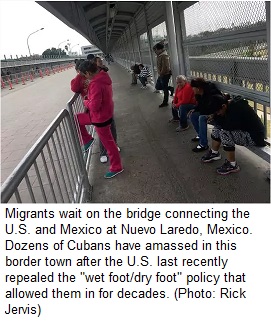
Download the book Go Lean … Caribbean – now!

————

Appendix VIDEO – Freeport VIDEO Tour; first time since 1971 – https://youtu.be/LVFIVbgwjTg

Uploaded on Sep 12, 2009 – Freeport is a city and free trade zone on the island of Grand Bahama, located approximately 100 mi (160 km) east-northeast of Fort Lauderdale, South Florida and gives its name to a district of the Bahamas. Freeport proper has 26,910 people. The city of Freeport has grown to be the second most populated city in The Bahamas (26,910 in 2000) after the capital, Nassau. The Grand Bahama Port Authority (GBPA) operates the free trade zone, under the Hawksbill Creek Agreement signed in August of 1955 whereby the Bahamian Government agreed that businesses in the Freeport area will pay no taxes before 2054. The area of the land grants has been increased to 138,000 acres (558 km²). Freeport Harbour is accessible by even the largest vessels, and has a cruise terminal, a container port, and both a private yacht and ship maintenance facility. Grand Bahama International Airport (IATA airport code: FPO, ICAO airport code: MYGF) [at one time] handled nearly 50,000 flights each year. Tourism complements trade as a revenue earner in Freeport, [at one time] with over a million visitors each year. Much of the tourist industry is displaced to the seaside suburb of Lucaya, owing its name (but little else) to the pre-Columbian Lucayan inhabitants of the island. The city is often promoted as ‘Freeport / Lucaya’.
  • Category: Travel & Events
    License: Standard YouTube License
    Music: “Variations On A Theme From Pachelbel’s Canon In D Major (Live Piano Solo)” by David Lanz

————

Appendix – Book Citations

a. Finnie, Shaun (2006). “Chapter 7 – The Mouse Moves East“; The Disneylands That Never Were. www.Lulu.com Online Publishers. Pages 94 – 96. ISBN 9781847285430

b. Oxford Business Group (2009). “A lot to offer; Grand Bahama Outlook”. The Report: The Bahamas 2009. www.OxfordBusinessGroup.com. Page 77. ISBN 9781902339221.

Share this post:
, , ,
[Top]