Go Lean Commentary
Hello, to those of you who live in and/or love the Caribbean, we have to make this urgent plea:
We need to talk …
 This is a familiar advocacy from the movement behind the book Go Lean…Caribbean – available to download for free. The book declares that the Caribbean is in crisis, and opens with this sad disposition (Page 3):
There is something wrong in the Caribbean. It is the greatest address in the world for its 4 language groups, but instead of the world “beating a path” to these doors, the people of the Caribbean have “beat down their doors” to get out. For some Caribbean countries, their population has declined or been flat for the last 3 decades. This is only possible if despite new births and the absence of war, people are fleeing. This scenario, human flight, is a constant threat to prosperity for all the Caribbean despite their colonial legacies. Our youth, the next generation, may not be inspired to participate in the future workings of their country; they may measure success only by their exodus from their Caribbean homeland.
Today is January 5, 2018, as the rest of North America dips into a deep freeze – Winter Storm Grayson – the expectation should have been that the Caribbean would be a refuge. But sadly, we have to conclude that “all is not well in the sunny Caribbean“.

No, our dire situation depicts our wonderful Caribbean cultures flirting with failure, abandonment and extinction. Consider these highlights of island communities that have had to contend with failure and extinction:
- Sad Puerto Rico, despite American power and prosperity, this US Territory is between a “rock and a hard-place” after Hurricane Maria this past season. More and more residents are now fleeing the island on a daily basis, justifiably so.
- There are no guarantees that communities, countries and nations will survive. Just this past year, the twin-island nation of Antigua and Barbuda evacuated Barbuda – it is a twin-island nation no more.
- The Pacific island nation of Kiribati has engaged a plan to evacuate the whole country and relocate to a foreign land – in a few generations Kiribati citizenship will cease to exist.
- A few years ago, a volcano eruption in Montserrat led to the near-evacuation – a ghost-town – of the whole island.
Once again, no guarantees exist for the future. We reap what we sow.
In order to secure a future, communities must do the heavy-lifting to reform and transform their societal engines. So to you Caribbean people, the entreaty is:
We need to talk …

We need to consider some solutions that can bring us from the precipice of extinction to forge a new future. We need to talk about the workable strategies, tactics and implementations to reach this goal.
There had been some plans in the past, that failed to launch viable solutions:
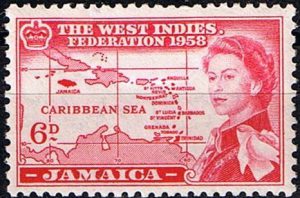
- There was the West Indies Federation among the Anglophone Caribbean. It failed after 4 years. (At one point there was talk of integrating the British Caribbean possessions into Canada as overseas territories, much like Hawaii is to the United States).
- There was the renewed attempt for integration with the formal Caribbean Community organization, but its failures are so evident that now there is even talk of the EU funding a study to consider CariCom’s dissolution.
No, we need to talk about a newer, better plan, a roadmap to finally elevate Caribbean communities, all Caribbean communities – all 30 member-states in the geographic region. This is the thrust of the Go Lean book …
The Go Lean book therefore serves as a roadmap for the introduction and implementation of the technocratic Caribbean Union Trade Federation (CU), for the elevation of Caribbean society; this is a Way Forward for all member-states. This CU/Go Lean roadmap has these 3 prime directives:
- Optimization of the economic engines in order to grow the regional economy to $800 Billion and create 2.2 million new jobs.
- Establishment of a security apparatus to ensure public safety and protect the resultant economic engines.
- Improve Caribbean governance to support these engines, with one stewardship among all Caribbean member-states despite the colonial heritage of American, British, Dutch, French or Spanish.
The book stresses that reforming and transforming the Caribbean societal engines must be a regional pursuit. This was an early motivation for the roadmap, as pronounced in the opening Declaration of Interdependence (Pages 12 – 13):
xi. Whereas all men are entitled to the benefits of good governance in a free society, “new guards” must be enacted to dissuade the emergence of incompetence, corruption, nepotism and cronyism at the peril of the people’s best interest. The Federation must guarantee the executions of a social contract between government and the governed.
xvi. Whereas security of our homeland is inextricably linked to prosperity of the homeland, the economic and security interest of the region needs to be aligned under the same governance. Since economic crimes … can imperil the functioning of the wheels of commerce for all the citizenry, the accedence of this Federation must equip the security apparatus with the tools and techniques for predictive and proactive interdictions.
xxiv. Whereas a free market economy can be induced and spurred for continuous progress, the Federation must install the controls to better manage aspects of the economy: jobs, inflation, savings rate, investments and other economic principles. Thereby attracting direct foreign investment because of the stability and vibrancy of our economy.
So the Caribbean needs to talk … about our current assessments and how we can move forward. The “talk” we need to have is really collaborative problem-solving. Just how do we conduct this “talk”?
A new book by radio-journalist Celeste Headlee gives us some suggestions. See the Book Review here and an accompanying Ted Talk VIDEO that follows:
Book Title: “WE NEED TO TALK” by Celeste Headlee
Sub-title: How to Have Conversations That Matter
In this urgent and insightful book, public radio journalist Celeste Headlee shows us how to bridge what divides us–by having real conversations. (BASED ON THE TED TALK WITH OVER 10 MILLION VIEWS)
NPR’s Best Books of 2017
“We Need to Talk is an important read for a conversationally-challenged, disconnected age. Headlee is a talented, honest storyteller, and her advice has helped me become a better spouse, friend, and mother.” (Jessica Lahey, author of New York Times bestseller The Gift of Failure)
Today most of us communicate from behind electronic screens, and studies show that Americans feel less connected and more divided than ever before. The blame for some of this disconnect can be attributed to our political landscape, but the erosion of our conversational skills as a society lies with us as individuals.
And the only way forward, says Headlee, is to start talking to each other. In We Need to Talk, she outlines the strategies that have made her a better conversationalist—and offers simple tools that can improve anyone’s communication. For example:
- BE THERE OR GO ELSEWHERE. Human beings are incapable of multitasking, and this is especially true of tasks that involve language. Think you can type up a few emails while on a business call, or hold a conversation with your child while texting your spouse? Think again.
- CHECK YOUR BIAS. The belief that your intelligence protects you from erroneous assumptions can end up making you more vulnerable to them. We all have blind spots that affect the way we view others. Check your bias before you judge someone else.
- HIDE YOUR PHONE. Don’t just put down your phone, put it away. New research suggests that the mere presence of a cell phone can negatively impact the quality of a conversation.
Whether you’re struggling to communicate with your kid’s teacher at school, an employee at work, or the people you love the most — Headlee offers smart strategies that can help us all have conversations that matter.
Source: Retrieved January 4, 2018 from: https://www.amazon.com/We-Need-Talk-Conversations-Matter/dp/0062669001/ref=sr_1_1?s=books&ie=UTF8&qid=1515111400&sr=1-1&keywords=we+need+to+talk
Biography
Celeste Headlee is the host of the daily news show On Second Thought on Georgia Public Broadcasting. She has spent more than a decade with National Public Radio and has been a host for Public Radio International since 2008. Celeste has appeared on CNN, the BBC, PBS, and MSNBC. She’s also a classically trained soprano who doesn’t get enough time to sing anymore. She has one son and one rescue dog, and lives in Atlanta, Georgia. <<< Photo 2 >>>
Source: Retrieved January 4, 2018 from: https://www.harpercollins.com/9780062669001/we-need-to-talk———–
VIDEO – 10 ways to have a better conversation | Celeste Headlee – https://youtu.be/R1vskiVDwl4
TED
Published on Mar 8, 2016 – When your job hinges on how well you talk to people, you learn a lot about how to have conversations — and that most of us don’t converse very well. Celeste Headlee has worked as a radio host for decades, and she knows the ingredients of a great conversation: Honesty, brevity, clarity and a healthy amount of listening. In this insightful talk, she shares 10 useful rules for having better conversations. “Go out, talk to people, listen to people,” she says. “And, most importantly, be prepared to be amazed.”
TEDTalks is a daily video podcast of the best talks and performances from the TED Conference, where the world’s leading thinkers and doers give the talk of their lives in 18 minutes (or less). Look for talks on Technology, Entertainment and Design — plus science, business, global issues, the arts and much more.Find closed captions and translated subtitles in many languages at http://www.ted.com/translate
Follow TED news on Twitter: http://www.twitter.com/tednews
Like TED on Facebook: https://www.facebook.com/TED
Subscribe to our channel: http://www.youtube.com/user/TEDtalksD…
- Category:
- People & Blogs License: Standard YouTube License
This foregoing Book Review describes this global deficiency of talking-and-listening from an American perspective. But the need for collaborative problem-solving is really location agnostic. This is because America has problems; the Caribbean has problems; the whole world has problems. We need to come together and work towards assuaging our problems, yet the only way forward, says Headlee, is to start talking to each other.
The Go Lean book provides a Way Forward, 370-pages of turn-by-turn instructions on “how” to adopt new community ethos, plus the strategies, tactics, implementations and advocacies to execute so as to reboot, reform and transform the societal engines of Caribbean society.
This is Blog # 700, a major milestone within this Go Lean movement for the Caribbean Union Trade Federation. Over the years, the concept of a Way Forward for the universal Caribbean has been explored in other previous Go Lean blog-commentaries; see sample here:
| https://goleancaribbean.com/blog/?p=12416 | Conscientizing – Talking about Solutions – on the Radio |
| https://goleancaribbean.com/blog/?p=12274 | State of the Union – Spanish Caribbean |
| https://goleancaribbean.com/blog/?p=11812 | State of the Union – Hope and Change |
| https://goleancaribbean.com/blog/?p=11544 | State of the Union – Need for Collective Bargaining |
| https://goleancaribbean.com/blog/?p=10554 | State of the Union – French Caribbean Seeking Integration |
| https://goleancaribbean.com/blog/?p=4551 | State of the Union – US Territories |
| https://goleancaribbean.com/blog/?p=4263 | State of the Union – Aruba and Dutch Territories |
| https://goleancaribbean.com/blog/?p=3956 | Art and Science of Collaboration |
Now is the time for all of the Caribbean – the people in all the islands and coastal states and those in the Diaspora – to lean-in for this collaborative effort, the integrated Caribbean Union Trade Federation.
We can do this. We can all talk … and collaborate and conceive solutions to our regional problems. We can make our Caribbean homeland a better place to live, work and play. 🙂
Download the free e-book of Go Lean … Caribbean – now!
Sign the petition to lean-in for this roadmap for the Caribbean Union Trade Federation.


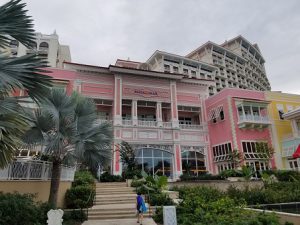
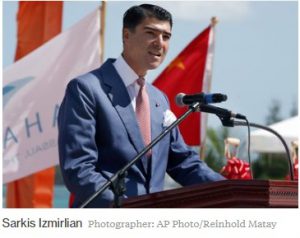 BML Properties Ltd




 The year 2017 is coming to a close. This was the first year of the federal administration of the 45th President of the United States, the non-politician, billionaire real estate developer Donald J. Trump. In retrospect, it has been a “year of Biblical proportions”, one to lament. While we thought



 Big iron is a slang word commonly used to describe a very large, expensive and extremely fast computer. It is often used to refer to oversized computers such as Cray’s supercomputer or IBM’s mainframe.
 The term is said to be a derivative of the term “iron”; when used as slang, this term refers to a handgun. Iron is also used to refer to something sturdy, strong and tough. The term big iron is frequently applied to highly effective computer ranches and servers that have resilient steel stands.
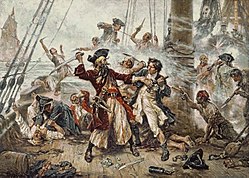 The Caribbean region has an eclectic history when it comes to security, think the bad actors of the Pirates of the Caribbean. Yet, those Pirates have since all been extinguished, thanks to a multilateral effort among European (and now American) imperial powers. Credit goes to the British, French and the Dutch military/naval powers of the past.

 … the book Go Lean…Caribbean prescribes a detailed, complex plan for effecting change in our society. The goal is to confederate under a unified entity made up of the region’s stakeholders to empower the economics and optimize Homeland Security. But Homeland Security for the Caribbean has a different meaning than for our North American or European counterparts. Though we too must be on defense against military intrusions like terrorism & piracy, we mostly have to contend with threats that may imperil the region’s economic engines, like our tourism products. This includes concerns like narco-terrorism and enterprise corruption, plus natural and man-made disasters like hurricanes, earthquakes, oil/chemical spills, etc..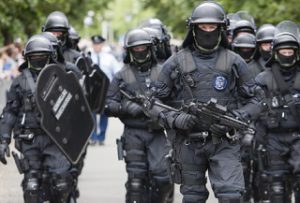
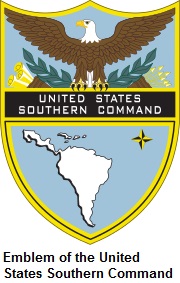 Under the leadership of a four-star Commander, USSOUTHCOM is organized into a headquarters with six main directorates, component commands and military groups that represent SOUTHCOM in the region. The current commander is Admiral Kurt W. Tidd, USN.
 The new Caribbean coast facilities will join an array of existing U.S. military establishments in the region dating back to 1903. Up to now, the official raison d’etre for a U.S. presence in the Caribbean was to combat drug trafficking. However, the proliferation of security threats, in particular developments possibly against the interests of Chávez’s Venezuela, has led some to argue that no matter how much Washington’s officials deny it, an unspoken reason for the U.S. deployment to Colombia is to keep Chavez under check. With the Washington-Bogotá decision, it is necessary to discuss the relationship between masking antinarcotics efforts as a cover for a variety of U.S. security concerns and aspirations throughout Latin America, especially in the coming trade war over commodities.
 Money is more important in society than people are willing to accept. Though some critics say that love, family, faith, country and other principles are more important. But an obscure Murphy’s Law states (and is quoted in the book Go Lean…Caribbean at Page 32) this ironic truth:


 Central Banks are required to …
 The Caricom [Caribbean Community]Multilateral Clearing Facility (1977–1983) introduced a centralized accounting system for all eligible payments institutions within the region. The original agreement establishing the CMCF was signed by the Central Bank of Barbados, the Monetary Authority of Belize, the East Caribbean Currency Authority, the Bank of Guyana, the Bank of Jamaica, and the Central Bank of Trinidad and Tobago.
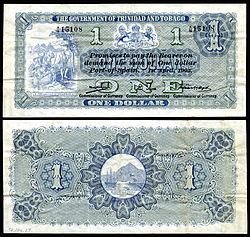 The Central Bank of Trinidad and Tobago (CBTT) acted as the agent bank for the CMCF. That is, the CBTT carried out the secretariat functions as well as being responsible for the accounting records and distribution of cash settlements.
 It has been that long!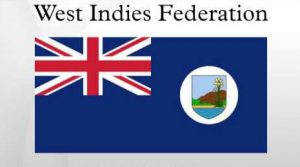
 It’s December … this is peak winter travel season.
 “The Caribbean is a perfect fit for LBGT travel; but our clients must be assured of safety and not be discriminated against, and not only by laws but by social practices,” Mr Paisley said.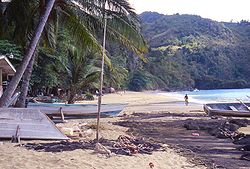
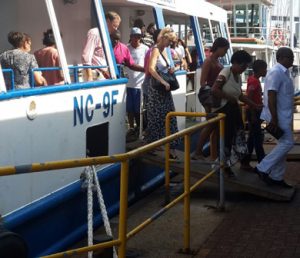 This is how the roadmap works: it identifies industries, dissects the inherent deficiencies, and proposes solution to reboot and optimize it, then it harvests the multiples of jobs resulting from the plan. Tourism is the current dominant industry; the goal is to “stand on the shoulders” of previous accomplishments, add infrastructure not possible by just one member-state alone and then reap the benefits. Imagine this manifestation in just this one new strategy: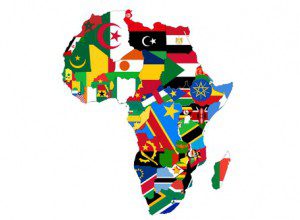

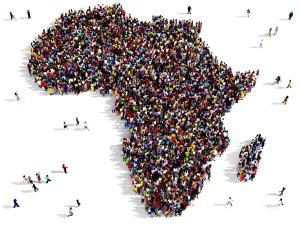 That “Dark Continent” may be the cradle of mankind and the Motherland for many people in the Caribbean, but “she” is playing catch-up in a lot of areas of modernity. For this reason, all embedded countries are considered “developing”. With 1.2 billion
 Ours is a continent rich in resources. From the coffee beans and cotton to mineral ores and oil wells, Africa is world-renowned for its raw materials.

 Amazon and its CEO Jeff Bezos are role models that we can copy in the Caribbean. It is our assessment that one person can make a difference in society. Look at the impact of this one man – Jeff Bezos – in the fast-time of 18 years, since 1999. These above Agents-of-Change have disrupted Caribbean life in the past; now we need to be our own Change Agents. We need to forge our own change in our society so that we can survive as a culture on the world stage.