“Just keep living” – Old Wives’ Tale by “my late Mother-in-law”
Those 3 words reflected the wisdom of an 80 year-old woman. It simply meant:
If you do not see the logic, common sense or best-practice of some advice, just keep living and life will eventually convince you.
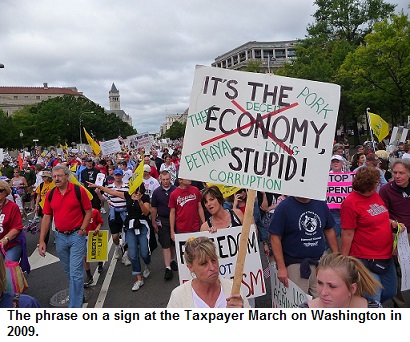
This sage advice is presented in contrast to the new President of the United States, Donald J. Trump, who in the first 100 days of his administration encountered a failure with trying to introduce new Health Care legislation. His response was:
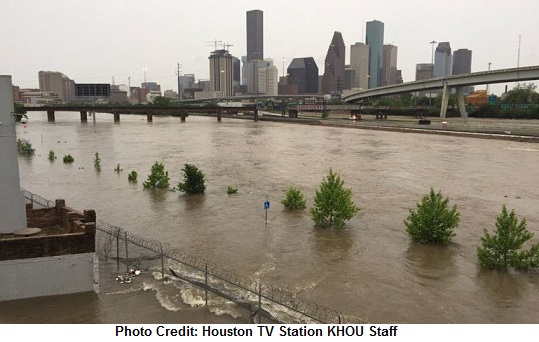
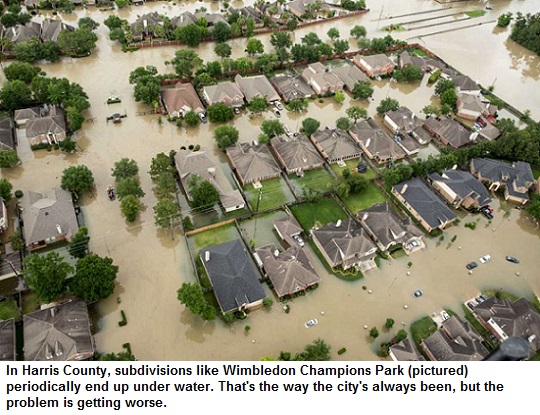
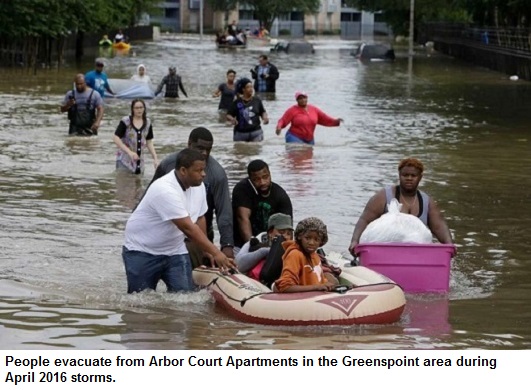
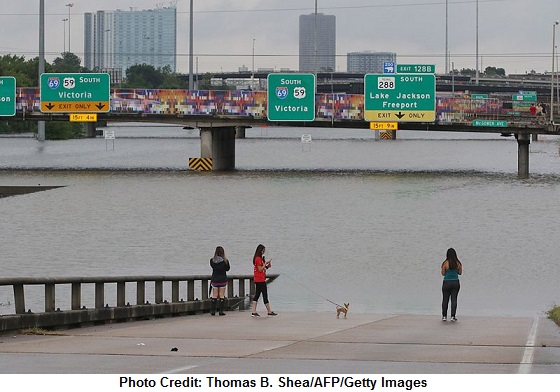
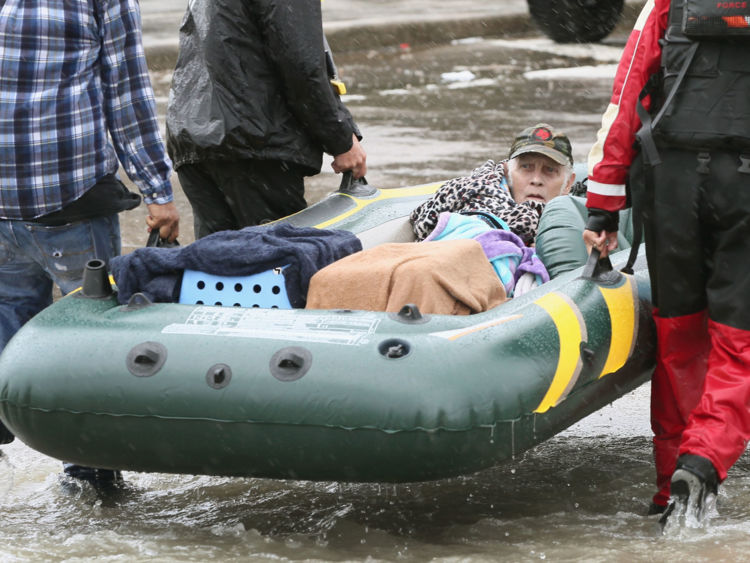
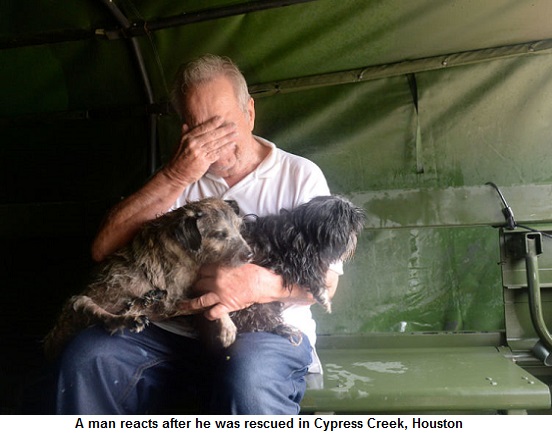
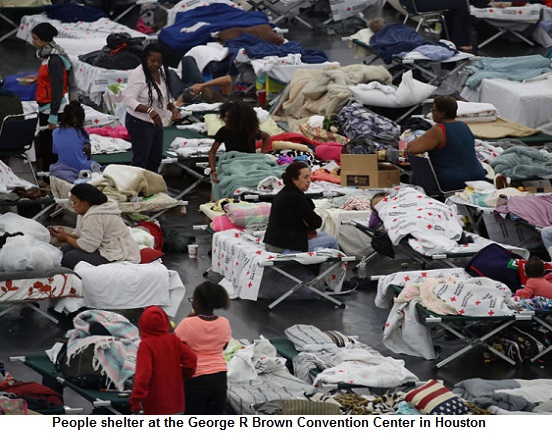
This is not a commentary about Health Care, but rather Hurricane Flooding preparation, response and mitigation. Once again, the American President has proven that he has not learned that wisdom exhibited by my now-deceased Mother-in-Law. On this occasion of a Category 4 storm – see photos and VIDEO’s of Hurricane Harvey in the Appendix below – drowning Southeast Texas with volumes and volumes of water (surge, rain and river flooding) – he exclaimed that this flooding was “unexpected”:
He told rescue organizers: “This was of epic proportion, nobody has ever seen anything like this.” – Sky News 29AUG17 19:23 GMT
With all due respect Mr. President, it is the same with “Hurricane Flooding” as it was with Health Care:
Who Knew? Everybody – paying attention – knew!
Yes, this is “throwing shade” at President Trump, but this is a fair judgement as he made a cardinal mistake when assessing the seriousness of hurricanes and tropical storms; he is a Climate Change denier. This commentary previously related how this President declared – on June 1: the start of Hurricane Season – that he is withdrawing the US from the one international effort designed to abate Climate Change: the Paris Accord. That blog-commentary warned:
This was the assertion of the book Go Lean…Caribbean; available to download for free. It serves as a roadmap for the introduction and implementation of the technocratic Caribbean Union Trade Federation (CU), for the elevation of Caribbean society – for all member-states. The quest is that the Caribbean region convenes, collaborates and confederates to take their own lead – collectively – for their own fate. This CU/Go Lean roadmap has these 3 prime directives:
Optimization of the economic engines in order to grow the regional economy to $800 Billion and create 2.2 million new jobs.
Improvement of Caribbean governance to support these engines.
The book stresses that American self-interest is not necessarily the Caribbean’s best interest, even though there are two American territories (Puerto Rico & the Virgin Islands) in the Caribbean region. No, we must reform and transform our societal engines on our own. But this charter is too big for any one Caribbean member-state alone; there must be a regional effort. This was an early motivation for the roadmap, as pronounced in the opening Declaration of Interdependence(Pages 12 – 13):
i. Whereas the earth’s climate has undeniably changed resulting in more severe tropical weather storms, it is necessary to prepare to insure the safety and security of life, property and systems of commerce in our geographical region. As nature recognizes no borders in the target of its destruction, we also must set aside border considerations in the preparation and response to these weather challenges.
xi. Whereas all men are entitled to the benefits of good governance in a free society, “new guards” must be enacted to dissuade the emergence of incompetence, corruption, nepotism and cronyism at the peril of the people’s best interest. The Federation must guarantee the executions of a social contract between government and the governed.
xvi. Whereas security of our homeland is inextricably linked to prosperity of the homeland, the economic and security interest of the region needs to be aligned under the same governance. Since economic crimes … can imperil the functioning of the wheels of commerce for all the citizenry, the accedence of this Federation must equip the security apparatus with the tools and techniques for predictive and proactive interdictions.
xxiv. Whereas a free market economy can be induced and spurred for continuous progress, the Federation must install the controls to better manage aspects of the economy: jobs, inflation, savings rate, investments and other economic principles. Thereby attracting direct foreign investment because of the stability and vibrancy of our economy.
The Go Lean book provides 370-pages of turn-by-turn instructions on “how” to adopt new community ethos, plus the strategies, tactics, implementations and advocacies to execute so as to reboot, reform and transform the societal engines of Caribbean society; to better respond, relieve and rebuild from devastating hurricanes in all the 30 member-states in the region.
That previous blog-commentary declared:
The issue of Hurricane Season 2017 is bigger than initial appearances – there are BIG issues afoot. …
The Go Lean book – and this commentary – calls on the region to master the art and science of water management.
We are saddened by all the death and destruction in Houston today; see Appendix. (Flooding is familiar in Houston, though more disastrous as of late). But believe it or not, there is a thesis that flooding could be prevented. Yes, indeed! This is the experience and historicity of the Dutch people, the European country of the Netherlands or Holland. See how their mitigations are portrayed in the news magazine here – an American news magazine:
Posted August 27, 2017 – Windmills are more than just a traditional part of the Dutch landscape; they have played a key role in the war the Dutch have been waging against the ocean for the past thousand years. Our Cover Story is reported by Martha Teichner. (This story was previously broadcast on May 21, 2017.)
Floods in Minnesota, Drought in California – Why Not Share?
The United States of America provides so many examples for the Caribbean: good, bad and ugly.
But we must make a separation between American power and American people.
To those of the American people languishing in the communities of Houston, Texas we send you our prayers and compassion and urge you to hold-on; it gets better.
To those American power brokers who continue to deny the obvious, we urge you to just keep living. You will soon realize the undeniable consequences of Climate Change:
Those who fail to plan; plan to fail!
In the Caribbean, we must be better and do better. This is our quest, to better serve the needs of our Caribbean people. Reforming and transforming America is out-of-scope for our efforts; we have our own storms to prepare and respond to. May we never “stick our head in the sand” and deny the obvious. No, rather, let’s always do the heavy-lifting to make our homelands better places to live, work and play. 🙂
Posted August 29, 2017 – Emergency responders in Houston have now rescued more than 6,000 people from Hurricane Harvey’s flooding. Harvey is still a tropical storm spinning off the Gulf Coast. It could make a second landfall Wednesday east of Houston. Mark Strassmann reports on rescue efforts.
Subscribe to the “CBS This Morning” Channel HERE: http://bit.ly/1Q0v2hE
Watch “CBS This Morning – hosted by Charlie Rose, Norah O’Donnell and Gayle King” HERE: http://bit.ly/1T88yAR
To visually depict this, imagine a “well of water”. In the Caribbean we take from that well with our voluminous tourism activities – many guests partake of our hospitality with stay-overs and cruises. And then, periodically, our Caribbean stakeholders “give back” by visiting other destinations.
This is the theme of this series of commentaries. There are lessons that have been learned from visiting a tourist destination that is foreign to the Caribbean. That destination is the US State of Colorado.
We have so much in common and so much in contrast. One commonality to consider is how Colorado structures its tourism around the natural terrain of its mountains: the Rocky Mountains range; see Appendix VIDEO. This is also true in the Caribbean, where we structure our tourism around our natural terrain: sun, sand and sea.
This commentary opens a 5-part series on the subject of Lessons from Colorado. There are so many lessons that we must consider from this land-locked US State; good ones and bad ones. In fact, the full list of 5 entries are detailed as follows:
Lessons from Colorado – Common Sense of Eco-Tourism
The book Go Lean…Caribbean calls for the elevation of Caribbean society, to re-focus, re-boot, and optimize all the engines of commerce so as to make the Caribbean a better place to live, work and play. The category of “play” covers the full scope of tourism, which is the primary economic driver for our Caribbean region – and a lot of American communities; see Appendix below – the book estimates 80 million visitors among the Caribbean member-states. (Since that number includes cruise passengers that may visit multiple Caribbean islands on one itinerary, each port is counted separately; without cruise passengers, a figure of 68 – 69 million is perhaps more accurate).
There are a number of specific categories of tourism. In the course of time, this commentary have considered these globally –accepted definitions:
Resort Tourism – Hospitality tied to destinations and attractions; think Disney World, Beaches.
Cruise Tourism – The destination is the ship (luxuries & amenities) and the ports-of-call.
Event Tourism – The focus is to attend cultural events; the capacity for accommodation can determine success.
Sports Tourism – Participants and spectators for sports tournaments.
Medical Tourism – Patients traveling for standard, alternative and experimental treatments.
Eco-Tourism – Structured around natural terrain and/or monuments, with minimal infrastructural enhancements (i.e. roads, docks, lifts, zip lines, etc.).
Our focus here is on eco-tourism.
ec·o·tour·ism noun 1. tourism directed toward exotic, often threatened, natural environments, especially to support conservation efforts and observe wildlife. – Oxford.
2. a form of tourism involving visiting fragile, pristine, and relatively undisturbed natural areas, intended as a low-impact and often small scale alternative to standard commercial mass tourism. – Wikipedia
In terms of give-and-take, this category is all “take”. Visitors consume the territory and take nothing away but memories. This business model is masterfully administered in the State of Colorado; they feature two “crown jewels”: Rocky Mountain National Park and the Garden of the Gods:
Rocky Mountain National Park is a United States national park located approximately 76 mi (122 km) northwest of Denver International Airport[4] in north-central Colorado, within the Front Range of the Rocky Mountains. The park is situated between the towns of Estes Park to the east and Grand Lake to the west. The eastern and westerns slopes of the Continental Divide run directly through the center of the park with the headwaters of the Colorado River located in the park’s northwestern region.[5] The main features of the park include mountains, alpine lakes and a wide variety of wildlife within various climates and environments, from wooded forests to mountain tundra.
The Rocky Mountain National Park Act was signed by then–President Woodrow Wilson on January 26, 1915, establishing the park boundaries and protecting the area for future generations.[2] The Civilian Conservation Corps built the main automobile route, named Trail Ridge Road, in the 1930s.[2] In 1976, UNESCO designated the park as one of the first World Biosphere Reserves.[6] In 2016, more than four and a half million recreational visitors entered the park, which is an increase of about nine percent from the prior year.[7] [The actual number is 4,517,585 (in 2016)[3]]
The park has a total of five visitor centers[8] with park headquarters… – Source: Wikipedia
To allow for the full consumption of this Rocky Mountain National Park, the authorities only had to invest in infrastructure for these visitor centers and roads. Ditto for the “Garden of the Gods” attraction; see details of this example here:
The Garden of the Gods Park is popular for hiking, technical rock climbing, road and mountain biking and horseback riding. It attracts more than two million visitors a year, making it the city’s most visited park. There are more than 15 miles of trails with a 1.5-mile trail running through the heart of the park that is paved and wheelchair accessible. Annual events including two summer running races, recreational bike rides and Pro Cycling Challenge Prologue also take place in this park.[9]
The main trail in the park, Perkins Central Garden Trail, is a paved, wheelchair-accessible 1.1-mile trail, “through the heart of the park’s largest and most scenic red rocks”. The trail begins at the North Parking lot, the main parking lot off of Juniper Way Loop.[10]
Because of the unusual and steep rock formations in the park, it is an attractive destination for rock climbers. Rock climbing is permitted, with annual permits obtained at the City of Colorado Springs’ website.
The Garden of the Gods Visitor and Nature Center is located at 1805 N. 30th Street and offers a view of the park. The center’s information center and 30 educational exhibits are staffed by Parks, Recreation and Culture employees of the City of Colorado Springs. – Source: Wikipedia
The common sense of it all!
The book Go Lean…Caribbean – available to download for free – serves as a roadmap for the introduction and implementation of the technocratic Caribbean Union Trade Federation (CU), for the elevation of Caribbean society – for all member-states. This CU/Go Lean roadmap has these 3 prime directives:
Optimization of the economic engines in order to grow the regional economy to $800 Billion and create 2.2 million new jobs.
Improve Caribbean governance to support these engines, including a separation-of-powers between the member-states and CU federal agencies.
The book stresses that reforming and transforming the Caribbean societal engines must be a regional pursuit. This was an early motivation for the roadmap, as pronounced in the opening Declaration of Interdependence (Pages 11 – 13):
iii. Whereas the natural formation of the landmass for our society is that of an archipelago of islands, inherent to this nature is the limitation of terrain and the natural resources there in. We must therefore provide “new guards” and protections to ensure the efficient and effective management of these resources.
iv. Whereas the natural formation of the landmass is in a tropical region, the flora and fauna allows for an inherent beauty that is enviable to peoples near and far. The structures must be strenuously guarded to protect and promote sustainable systems of commerce paramount to this reality.
xi. Whereas all men are entitled to the benefits of good governance in a free society, “new guards” must be enacted to dissuade the emergence of incompetence, corruption, nepotism and cronyism at the peril of the people’s best interest. The Federation must guarantee the executions of a social contract between government and the governed.
xvi. Whereas security of our homeland is inextricably linked to prosperity of the homeland, the economic and security interest of the region needs to be aligned under the same governance. Since economic crimes … can imperil the functioning of the wheels of commerce for all the citizenry, the accedence of this Federation must equip the security apparatus with the tools and techniques for predictive and proactive interdictions.
xxiv. Whereas a free market economy can be induced and spurred for continuous progress, the Federation must install the controls to better manage aspects of the economy: jobs, inflation, savings rate, investments and other economic principles. Thereby attracting direct foreign investment because of the stability and vibrancy of our economy.
The Go Lean book provides 370-pages of turn-by-turn instructions on “how” to adopt new community ethos, plus the strategies, tactics, implementations and advocacies to execute so as to reboot, reform and transform the societal engines of Caribbean society.
Eco-tourism is just common sense. We should not miss out on these benefits.
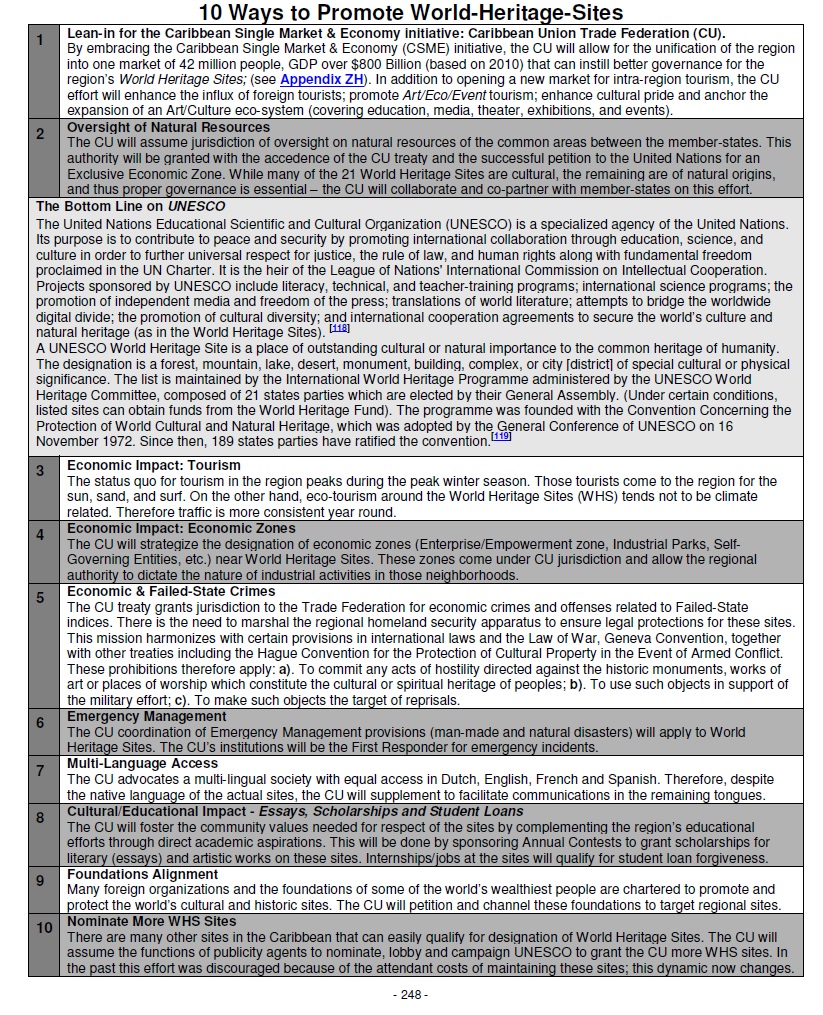
Yes, there is the need for some investment (roads, trails, lifts and visitor centers), but the returns are quantifiable, undeniable and irresistible. This is how Caribbean communities can grow their economic engines. This is the quest of the Go Lean movement. This was anticipated from the beginning of the Go Lean movement with the focus on UNESCO World Heritage Sites for the Caribbean region. See this Page (248) from the book:
Click on Photo to Enlarge
The Go Lean details that 1,000 additional jobs can be created by fostering the promotion and development of UNESCO World Heritage Sites in the region. This is just common sense.
Thank you Colorado, for your fine role model.
We can do the same; we can make our Caribbean homeland a better place to live, work and play. 🙂
Rocky Mountain National Park in Colorado is one of the most popular and scenic National Parks in the United States, famous for its high mountain peaks, alpine lakes, abundant wildlife. The main sightseeing road in the park, and some of the hiking trails cross over the 12,000 feet/3,600 m altitude line;
Locations in the video:
Sprague Lake (0:01), Nymph Lake (0:17), Dream Lake (0:38), Emerald Lake (0:59), Lake Haiyaha (1:12), The Loch (1:26), Timberline Falls (1:51), Sky Pond (2:24), Mills Lake (2:57), Alberta Falls (3:05), Multiple viewpoints along the Trail Ridge Road (3:10, 8:12), Chasm Lake Trail (4:03), Chasm Lake (4:54), Mt Ida Hike (6:39), Horseshoe Falls (8:58), Chasm Falls (9:26), Old Fall River Road (9:31).
Recorded August 2016 in 4K (Ultra HD) with Sony AX100.
If you enjoyed this video please like, share, comment, favorite, subscribe!
Visit my channel for more Amazing Places on Our Planet: https://www.youtube.com/milosh9k
That there – what you just did: reminiscing about your own back-to-school experiences – that is the problem. You see, we cannot project “our” back-to-school visuals on today’s students.
The world has changed;
Schools have to change;
Students have to change; and yes …
We – parents – must change too.
We have said it repeatedly in these commentaries: the Caribbean is “partying like it’s 1999” when in truth the world’s academic competition is clocking in at 2017.
Don’t believe it?
Look at all those high school students that graduated from their Caribbean high schools in 2017, 2016, 2015, etc.. Where are they now? For far too many Caribbean communities, a majority of those graduates have abandoned their Caribbean homes. Why? Our inability to compete.
So it should not be “Back to school” or “back to the status quo”, rather it should be …
“Back to the Future”.
The Caribbean must now transform to become a community that they have never been before; a community only envisioned for the future.
The future is now! Even textbooks are so “Old School”, while e-Textbooks are so new …
This is the debate right now: Should schools continue to distribute textbooks or deploy tablets or PC’s (personal computers) for students’ course work?
This is a debate … everywhere – even here in the Caribbean – see this news article here from the local St Lucia Times Daily Newspaper:
News Article: Textbooks or Tablets in School?
(By Marie Miguel) There is a huge debate going on in schools all across the country. It is not about violence, bullying, drugs, or similar issues. The debate is whether schools should continue using text books or switch to using computer tablets. There are many good arguments on both sides, but the fact is, schools are doing it anyway, regardless of what the parents want. Of course, you have the choice whether to sign the paper saying it is alright for your child to use a tablet and be on the internet. However, if you do not sign that paper, your child will not get the same education as the rest of the class. The world has gone digital and there isn’t a whole lot you can do about it.
The Pros and Cons of Tablets in School Here are some of the pros and cons of tablets in the classroom:
A tablet can hold hundreds of books on one device as well as homework, files, and communication with the teachers. This means no more heavy backpacks or lost books.
Tablets have interactive features that textbooks do not have such as a search function, highlighters, and a built-in dictionary and thesaurus.
Learning technology skills are important for their future.
Tablets can be automatically updated.
Students and schools save money on paper, pencils, and other items that tablets do not need.
Files on the tablet can be transferred to other electronic devices and portable data recorders. That means no more lost homework.
Students enjoy learning on tablets more than with textbooks so they learn more.
Cons
There are medical consequences with using tablets such as neck pain, back pain, carpal tunnel syndrome, dry eyes, blurred vision, headaches, and eye strain.
Tablets have a lot of distractions such as games, email, apps, and other websites the children can get onto instead of doing their work or listening to the teacher.
The brain is able to comprehend more when reading printed text rather than digital text. In fact, on average, people read digital text up to 30% slower than printed text.
Many students do not have (or cannot afford) sufficient internet service to use their tablets at home. That means homework is not going to get done.
Repairing a tablet costs a great deal more than fixing a book.
Textbooks do not get malware, spyware, freeze, crash, and cannot get hacked.
Tablets need to be charged and cannot last a whole school day.
Students are able to cheat or use shortcuts to do their schoolwork.
Some textbooks are still not available in digital format.
Time for a Solution Many parents just do not want their children to use the internet. Some have never had the opportunity to experience the technological advances that are available to their children or they just do not understand. These feelings of inadequacy can make parents angry and ill-equipped to make a good decision for their children. Other parents are computer savvy but do not think their child is ready for the internet. It is important for these parents to have someone to talk to that understands these issues and can help them realize the benefits of letting their children learn computer skills. There are licensed professionals that parents and their children can talk to or chat with online or over the phone. Together they may be able to come to some kind of compromise that works out well for everyone.
In a previousGo Lean commentary, it was detailed how a related issue, textbooks pricing, reflects American Capitalism – not free market economics – whereby the College Textbook industry is known for their abuses and classic Crony-Capitalism, (where public policy is set to benefit private parties). That commentary explained that since many college expenses are subsidized by governments (federal and state) by means of grants or low-interest, deferred student loans, the marketplace knows that governmental entities will pay…unconditionally, so textbook prices go up … and up.
So how do we move the community forward into the future while also being “on guard” for Crony-Capitalistic abuses?
As related in that commentary from August 25, 2014, the book Go Lean…Caribbean asserts that the Caribbean region must not allow the US to take the lead for our own nation-building, that American capitalistic interest tends to hijack policies intended for the Greater Good. The recommended strategy is to leverage the needs of all 30 countries (42 million people & 4 languages) with Group Purchasing and fully embrace e-Learning (e-Books and tablets).
This book, Go Lean… Caribbean – available to download for free – serves as a roadmap for the introduction and implementation of the Caribbean Union Trade Federation (CU), which represents change for the region. The CU/Go Lean roadmap has 3 future-focused prime directives:
Optimization of the economic engines – and the educational apparatus – in order to grow the regional economy and create 2.2 million new jobs.
Establishment of a security apparatus to protect the resultant economic engines.
Improve Caribbean governance – including primary, secondary and tertiary school administrations plus Group Purchasing Organizations – to support these engines.
The Go Lean roadmap provides turn-by-turn directions on how to leverageGroup Purchasing and to elevate the Caribbean’s tertiary education systems as a whole. This roadmap is presented as a planning tool, pronouncing the collaborative benefits of a unified educational agenda with these early statements in the opening Declaration of Interdependence(Page 12 & 14):
viii. Whereas the population size is too small to foster good negotiations for products and commodities from international vendors, the Federation must allow the unification of the region as one purchasing agent, thereby garnering better terms and discounts.
xi. Whereas all men are entitled to the benefits of good governance in a free society, “new guards” must be enacted to dissuade the emergence of incompetence, corruption, nepotism and cronyism at the peril of the people’s best interest. The Federation must guarantee the executions of a social contract between government and the governed.
xix. Whereas our legacy in recent times is one of societal abandonment, it is imperative that incentives and encouragement be put in place to first dissuade the human flight, and then entice and welcome the return of our Diaspora back to our shores …
xxi. Whereas the preparation of our labor force can foster opportunities and dictate economic progress for current and future generations, the Federation must ensure that educational and job training opportunities are fully optimized for all residents of all member-states, with no partiality towards any gender or ethnic group. The Federation must recognize and facilitate excellence in many different fields of endeavor, including sciences, languages, arts, music and sports. This responsibility should be executed without incurring the risks of further human flight, as has been the past history.
xxvii. Whereas the region has endured a spectator status during the Industrial Revolution, we cannot stand on the sidelines of this new economy, the Information Revolution. Rather, the Federation must embrace all the tenets of Internet Communications Technology (ICT) to serve as an equalizing element in competition with the rest of the world. The Federation must bridge the digital divide and promote the community ethos that research/development is valuable and must be promoted and incentivized for adoption.
The Go Lean book posits that even though education is a vital ingredient for Caribbean economic empowerment, there has been a lot of flawed decision-making in the past, both individually and community-wise. The vision in the Go Lean/CU roadmap is that of a confederation of the 30 Caribbean member-states doing the heavy-lifting of optimizing economic and education policies. The Go Lean book details those future-focused policies; and other ethos to adopt, plus the executions of the following strategies, tactics, implementations and advocacies to impact the tertiary education in the region:
Community Ethos – Deferred Gratification
Page 21
Community Ethos – People Respond to Incentives
Page 21
Community Ethos – Job Multiplier
Page 22
Community Ethos – Lean Operations – Group Purchase Organizations
Page 24
Community Ethos – Return on Investments (ROI)
Page 24
Community Ethos – Ways to Impact the Future
Page 26
Community Ethos – Ways to Foster Genius
Page 27
Community Ethos – Ways to Promote Intellectual Property
Page 29
Community Ethos – Ways to Close the Digital Divide
Page 31
Community Ethos – Ways to Improve Sharing – Purchasing Cooperatives
Page 35
Community Ethos – Ways to Impact the Greater Good
Page 37
Strategy – Agents of Change – Technology
Page 57
Strategy – Agents of Change – Globalization
Page 57
Tactical – Separation of Powers – Education Department
Page 85
Tactical – Separation of Powers – Labor Department – On Job Training
Page 89
Implementation – Ways to Benefit from Globalization
Page 119
Advocacy – Ways to Grow the Economy
Page 151
Advocacy – Ways to Create Jobs
Page 152
Advocacy – Ways to Improve Education
Page 159
Advocacy – Ways to Impact Student Loans
Page 160
Advocacy – Ways to Improve Governance
Page 169
Advocacy – Ways to Foster Cooperatives
Page 176
Advocacy – Ways to Improve Libraries
Page 187
Appendix – Education and Economic Growth
Page 258
Appendix – Measuring Education
Page 266
Appendix – New Student Loan Scandal – Bad American Example
Page 286
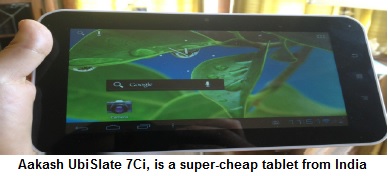
Appendix – India’s $35 Tablet– Good Model-Example
Page 296
This is the assertion of the Go Lean book (Page 31): if there is a choice or debate between Textbooks versus Tablets, choose Tablets. This quest should be pursued aggressively by Caribbean stakeholders, welcoming any help from global foundations:
The Bottom Line on One Laptop Per Child (OLPC) OLPC is a project supported by the Miami-based “One Laptop per Child Association” (OLPCA) and the Cambridge, MA-based OLPC Foundation (OLPCF), two U.S. non-profit organizations set up to oversee the creation of affordable educational devices for use in the developing world. The project was originally founded by MIT Professor Nicholas Negroponte and funded by member organizations like AMD, Chi Mei, eBay, Google, Marvell, News Corporation, Nortel, RedHat, & Quanta. In the first years of the project, the Association managed development and logistics, and the Foundation managed fundraising such as the Give One Get One campaign. In 2010 the Association set up a new office in Miami under Rodrigo Halaby, and currently oversees deployment and support for their XO-1.5 laptop and its successors, and country partnerships. The foundation, led by now Chairman Nicholas Negroponte, currently oversees development of future software and hardware, including the ARM based OLPC XO-1.75 laptop ($180) and the OLPC XO-3 tablet ($100).
Information on the official site of OLPC indicates that as of 2011 there were about over 2.4 million XO laptops delivered.
The Go Lean roadmap calls for bridging the Digital Divide and aligning with many not-for-profit foundations, of domestic and foreign sources. For example, the One Laptop Per Child movement – identified above – offers $200 laptops (or cheaper) for Third World countries. In addition, there are now $35 tablets emerging from India (Page 296 – Appendix OC). The plan is for the CU to steer foundations and philanthropic causes to impact this mission, to equip/train low-income Caribbean residents for computerized terminals and access.
Tablets and e-Books should be all the rage. See here for the 8 Best Tablets for Students for 2017:
Published on May 17, 2017
CLICK FOR WIKI ►► https://wiki.ezvid.com/best-tablets-f…
Please Note: Our choices for this wiki may have changed since we published this review video. Our most recent set of reviews in this category, including our selection for the year’s best tablet for students, is exclusively available on Ezvid Wiki.
Tablets for students included in this wiki include the dell venue 8 7000, amazon fire hd 8, lenovo tab 10, lg electronics g pad ii, microsoft surface pro 4, apple ipad pro, samsung galaxy tab s3, and asus zenpad z580c.
Most Recent Picks: https://wiki.ezvid.com/best-tablets-f…
The foregoing news article and VIDEO relate to topics that should be of serious concern for Caribbean planners. We want to foster an education agenda that propels the Caribbean’s best interest. We do not want to be parasites of the American hegemony; we want to be better. While the US is the world’s largest Single Market economy, we only want to model some of their examples.
Most importantly, we want our students to study at home, primarily, or at worst, remain in the region. This minimizes the risks of matriculating abroad and never returning – a frequent Caribbean dilemma.
All of these educational issues have been addressed in previous Go Lean blog-commentaries; consider this sample here:
CXC and UK textbook publisher hosting CCSLC workshops in Barbados
The book Go Lean…Caribbean posits that many problems of the region – education, a most prominent issue – are too big for any one member-state to solve alone, that there is the need for the leverage of a wider Caribbean confederacy. The purpose of this Go Lean/CU roadmap is to make the Caribbean homeland, a better place to live, work, learn and play. This effort is more than academic, more than just future scheming; no, this must be a plan for today.
We first employ e-Learning … and all of its related arts and sciences. And do it now!
We need to better compete with the world; education and e-learning could be the great equalizer. The book projects a Cyber Caribbean (Page 127):
Forge electronic commerce industries so that the internet communications technology (ICT) can be a great equalizer in economic battles of global trade. This includes e-Government (outsourcing and in-sourcing for member-states systems) and e-Delivery, Postal Electronic Last Leg mail, e-Learning and wireline/wireless/satellite initiatives.
Strategically, the Go Lean roadmap posits that to succeed in the global marketplace, the Caribbean region must not only consume but rather also create, produce, and distribute intellectual property. So subjects like tablets and e-books are germane for our considerations. Tactics like Group Purchasing (GPO) makes it efficient and effective to minimize the associated costs of educating the general population, and specific learning needs.
These are hallmarks of the CU technocracy: policies that reflect a future-focus.
Now is the time for all of the Caribbean, the people and school administrations, to lean-in for the changes described in the book Go Lean…Caribbean. 🙂
Sign the petition to lean-in for this roadmap for the Caribbean Union Trade Federation.
There are champions and there are challengers. When an old champion is surpassed by a young challenger, it is only a matter of time for the young to become old and another generation of challengers appears on the scene.
Just wait!
This scenario has happened again; this time in the world of consumed music: Rock-n-Roll is King … no more. The young upstart that took the throne in 1964 has now been supplanted by the new upstart Hip-Hop or Rap music; see story in Appendix below. Now the declaration can be:
… rap music is here to stay.
The qualitative evidence of this fact has been obvious to me for at least 20 of the last 40 years. But this study does more than just vindicate those of us who study rap music in the academy: it also validates the extraordinary cultural influence of what Bakari Kitwana has defined as the hip-hop generation: those of us born between the mid-1960s and the mid-1980s who have been wrestling with the rise of neoliberalism, the consequences of the prison-industrial complex and the withering effects of globalisation in the post-civil rights era. That struggle has, to some extent at least, has been articulated through rap music itself.
The key piece of information “discovered” by Mauch et al [(The Evolution of Popular Music: 1960-2010 by Matthias Mauch, Robert M. MacCallum, Mark Levy, Armand M. Leroi)] is that there were three major influential shifts in popular music in that 50-year period. One, in 1964, related to the decline of popular jazz/blues forms and the rise of rock music; one in 1983, reflected the emergence of pop/stadium rock; the final, most pronounced shift came in 1991, with the popular emergence of rap music. This final shift falls within the period known to scholars of hip-hop culture as the Golden Era; [where songs about fighting power structures could be as popular as songs that degrade women]. – The Guardian Newspaper posted May 8, 2015; retrieved July 25, 2017
This development is presented by the movement behind the book Go Lean…Caribbean. The book – available to download for free – tracks the Agents of Change that have impacted the Caribbean region and declares that:
Change is Good
Change is Bad
Change is Constant
The book urges a Caribbean audience – in the homeland and in the Diaspora – to better prepare for change, to act and move to the corner where opportunity meets preparation. This is how to generate “luck”; this is how to get to the conclusion: “Change is Good”, as opposed to the disposition of “Change is Bad”. Unfortunately for the Caribbean, we have only experienced the bad consequences of change.
We have not been ready. Going forward … let’s do better.
The intersection of music and change is familiar to this Go Lean movement; consider these previous blog-commentaries:
The Go Lean book provides turn-by-turn directions on “how” to do better in an atmosphere of intense change. It serves as a roadmap for the introduction and implementation of the technocratic Caribbean Union Trade Federation (CU), for the elevation of Caribbean society – for all member-states.
Over the past half century, the economic structures of many North American and Western European countries have changed dramatically, a mostly upward trajectory (growth) with occasional dips (recessions). During this same past half century, the economics of many Caribbean countries have also changed dramatically, but mostly towards poor or regressive conditions. This fact has forced a brain drain among many of the member-states’ professional classes.
…
As these changes took hold of society, the social effects on people, families, traditions, habits and values have been drastic; a lot has changed over the past decades.
So change has taken root! We see a parallel: Hip-Hop is now King, the reigning Champion in American music consumption (see sample in the VIDEO below) … while the Caribbean has been beset by these Agents of Change:
Globalization
Technology
Climate Change
Aging Diaspora
Music change; people change; values change; demographics change; society change!
This is the consistent theme in the Go Lean book and blogs; they describe the “push and pull” factors of societal change; these sources posit that life in North American communities (and Western European) serve as a “pull” factor for many Caribbean communities. Plus, the resultant failing economic conditions in the homeland further “push” many citizens away. Bad changes create repercussions of more bad changes.
To alleviate this crisis, there is the need to counteract with purposeful change. The Go Lean book serves as a roadmap to elevate the economics of the region; and it clearly describes the impact on other societal engines: security and governance. The Go Lean/CU roadmap therefore has these 3 prime directives:
Optimization of the economic engines in order to grow the regional economy to $800 Billion and create 2.2 million new jobs.
Improve Caribbean governance to support these engines, including a separation-of-powers between the member-states and CU federal agencies.
The Go Lean book stresses that reforming and transforming the Caribbean societal engines must be a regional pursuit. This goal was an early motivation for the roadmap, as pronounced in the opening Declaration of Interdependence (Pages 12 – 13):
xi. Whereas all men are entitled to the benefits of good governance in a free society, “new guards” must be enacted to dissuade the emergence of incompetence, corruption, nepotism and cronyism at the peril of the people’s best interest. The Federation must guarantee the executions of a social contract between government and the governed.
xvi. Whereas security of our homeland is inextricably linked to prosperity of the homeland, the economic and security interest of the region needs to be aligned under the same governance. Since economic crimes … can imperil the functioning of the wheels of commerce for all the citizenry, the accedence of this Federation must equip the security apparatus with the tools and techniques for predictive and proactive interdictions.
xxiv. Whereas a free market economy can be induced and spurred for continuous progress, the Federation must install the controls to better manage aspects of the economy: jobs, inflation, savings rate, investments and other economic principles. Thereby attracting direct foreign investment because of the stability and vibrancy of our economy.
Within these 370-pages of turn-by-turn instructions in the Go Lean book are the details of “how” to adopt new community ethos, plus “how” to execute new strategies, tactics, implementations and advocacies so as to reboot, reform and transform the societal engines of Caribbean communities. There is a parallel with the emergence of Hip-Hop and managing societal change:
Published on Jun 14, 2014 – I said a hip hop / Hippie to the hippie / The hip, hip a hop, and you don’t stop, a rock it out / Bubba to the bang bang boogie, boobie to the boogie…
While it was not the first single to includerapping, it is generally considered to be the song that introduced hip hop music to audiences in the United States and around the world (and the very first full-length rap song, which featured rapping parts throughout the entire song, unlike the first single). And for that reason, many refer to Rapper’s Delight as the first official rap song regardless. The song is ranked number 251 on the Rolling Stone magazine’s list of The 500 Greatest Songs of All Time and number 2 on VH1‘s 100 Greatest Hip-Hop Songs. It is also included in NPR‘s list of the 100 most important American musical works of the 20th century. It was preserved into the National Recording Registry by the Library of Congress in 2011.[2] Songs on the National Recording Registry are “culturally, historically, or aesthetically significant.”[3] –Source: Retrieved July 25, 2017 from: https://en.wikipedia.org/wiki/Rapper%27s_Delight
Change is like a bull; we have to “take the bull by the horn”. If Hip-Hop is not your favorite musical genre, it does not mean it will go away. This too is a constant! One generation never likes the music of the next generation:
“Turn off that noise”!
We can turn down, or turn off the music, but we cannot turn off Change. It’s a constant. We need to Rock with it! We must simply do the work – heavy-lifting as it might be – to adapt to change.
This Go Lean plan is conceivable, believable and achievable. We can transform … and make our homeland a better place to live, work and play. 🙂
For the first time ever, hip hop is the most consumed music genre in the U.S., Forbes reports, using numbers Nielsen Music recently released in a mid-year report.
While rock has long ruled, holding the top genre spot since Nielsen began to measure music consumption in the U.S. in 1991, the tables have turned, with R&B/hip hop now surpassing the popularity of rock and pop.
For the first six months of 2017, R&B/hip hop was responsible for 25.1% of all music consumption in the country, while rock claimed 23%. Hip hop also leads in digital song sales and on-demand streaming.
“It’s been an action-packed start to the year, with records broken, chart history made, and several categories growing quickly,” Nielsen stated.
Analysts at Forbes magazine believe the increasing popularity of R&B/hip hop is due to its influence on streaming services. The genre is as popular as rock and pop combined on Spotify and Apple Music.
Out of the 10 most consumed albums in the U.S. for the six-month period between January and June of this year, six were R&B/hip hop, according to Nielsen. Kendrick Lamar topped that list with his album, “DAMN.,” with nearly 1.8 million listeners. Drake’s record-breaking album, “More Life,” is the third most consumed album, with nearly 1.7 million listeners.
Hip hop was king of the song charts, too. Migos’ “Bad and Boujee” had the second-highest amount of streams in that six-month period, nearly 650 million. Seven other rap songs also made that list.
“I didn’t come to FAMU; I came to Dr. Mason” – Familiar experience of FAMU Computer Science students.
It is with a heavy heart that we report the passing of a great educator and STEM influencer, Dr. Thomas W. Mason. He was the founder and legendary professor of Mathematics, Data Processing and Computer Science at Florida Agriculture & Mechanical University. The University offering has now evolved to now being embedded in the FAMU-Florida State University College of Engineering – see VIDEO in the Appendix below.
See the published obituary here:
Title:Obituary of Dr. Thomas W. Mason
Dr. Thomas W. Mason, a retired professor of Computer Science and Math at Florida A & M University, passed away from a long struggle with heart disease on July 3, 2017. He taught at the university for 30 years.
Dr. Mason received his doctorate in Information and Computer Systems at the University of Illinois in 1973, where he met Dr. Sybil Mobley who encouraged him to join the faculty at FAMU School of Business & Industry in Tallahassee.
Tom was born in Kansas City, Kansas on June 14, 1940. He lost his father, Thomas, early and was raised along with his sister, Elizabeth by his devoted mother, Thelma, both are deceased. He also lost two maternal uncles, Harold and Wendall Robbins and a cousin, Barbara Robbins.
After graduating Cum Laude from Sumner High School, Tom earned a degree in math at the University of Kansas in 1961 and moved to Washington, DC to work as a computer programmer at IBM. This was done while completing a Masters degree in Engineering from George Washington University.
While in DC Tom met and married Yolande Clarke who survives him and their deceased son, Thomas James “Jimmy”. He is survived by a second son, Christopher, who is a FAMU graduate in Journalism. Dr. Mason is also survived by his cousin, Wendell Robbins, Jr. (wife) and their two children, Sheryl and Corky in Houston, Texas; a niece, Tiea of Kansas; his mother-in-law, Thelma Clarke; sisters-in-law, Charlene Hardy and Sheryl Clark along with many nieces, nephews and friends.
Services will be planned at a later date. In lieu of flowers, send donations to the American Heart Association.
Back in the 1970’s, the idea of priority on STEM students appeared to be NO BIG deal; just a bunch of nerds and techies passing time in the Computer Lab. Internet and Communications Technologies (ICT) was only just a lab project of university stakeholders.
Now, in 2017, Science, Technology, Engineering and Mathematics (STEM) students and ICT are all the rage. We recognize now, that we need more STEM students and educators in Black-and-Brown communities; but this was the vision of Dr. Mason all the while. When excessive focus was paid to FAMU’s esteemed Business School, led by Dr. Sybil Mobley – a fellow University of Illinois PhD cohort who recruited Dr. Mason to FAMU – he felt that the focus was overlooking STEM students …
… he was right!
According to a new study [(2014)] by Brookings Institution, there is a clear evidence of a skills gap in the US. The report stated that a high school graduate with a Science, Technology, Engineering, and Math (STEM) background seems to be in higher demand than a person with an undergraduate degree not in a STEM background. – Money Economics Magazine
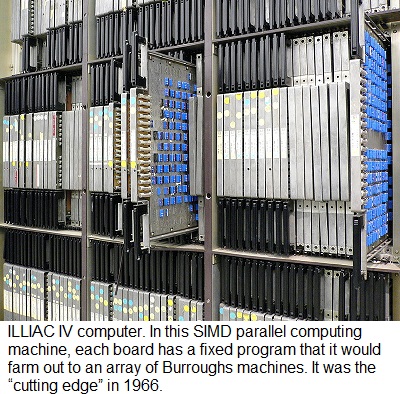
Considering the proud legacy of Historical Black Colleges and University (HBCU), Dr. Mason was agnostic to all of that; he was first and foremost a computer scientist, who happened to be Black, He matriculated for his PhD at the University of Illinois (completing in 1973); there he worked on the ILLIAC project, directly on the ILLIAC IV effort:
ILLIAC (Illinois Automatic Computer) was a series of supercomputers built at a variety of locations, some at the University of Illinois at Urbana-Champaign (UIUC). In all, five computers were built in this series between 1951 and 1974. Some more modern projects also use the name.
The architecture for the first two UIUC computers was taken from a technical report from a committee at the Institute for Advanced Study (IAS) at Princeton, First Draft of a Report on the EDVAC [1945], edited by John von Neumann (but with ideas from Eckert & Mauchley and many others.) The designs in this report were not tested at Princeton until a later machine, JOHNNIAC, was completed in 1953. However, the technical report was a major influence on computing in the 1950s, and was used as a blueprint for many other computers, including two at the University of Illinois, which were both completed before Princeton finished Johnniac. The University of Illinois was the only institution to build two instances of the IAS machine. In fairness, several of the other universities, including Princeton, invented new technology (new types of memory or I/O devices) during the construction of their computers, which delayed those projects. For ILLIAC I, II, and IV, students associated with IAS at Princeton (Abraham H. Taub, Donald B. Gillies, Daniel Slotnick) played a key role in the computer design(s).[1]
———
The ILLIAC IV was one of the first attempts to build a massively parallel computer. One of a series of research machines (the ILLIACsfrom the University of Illinois), the ILLIAC IV design featured fairly high parallelism with up to 256 processors, used to allow the machine to work on large data sets in what would later be known as vector processing. After several delays and redesigns, the computer was delivered to NASA’s Ames Research Center at Moffett Airfield in Mountain View, California in 1971. After thorough testing and four years of NASA use, ILLIAC IV was connected to the ARPANet for distributed use in November 1975, becoming the first network-available supercomputer, beating Cray’sCray-1 by nearly 12 months.
Notice the reference here to ARPA and ARPANet – ARPA, the Advanced Research Projects Agency, renamed the Defense Advanced Research Projects Agency (DARPA) in 1972 – this was the forerunner to today’s Internet. Dr. Mason was proud of this participation and accomplishments of this endeavor – he often embedded this history in his lectures. He sought to influence the next generation of students to look, listen, learn, lend-a-hand and lead in the development of these cutting-edge technologies. (By extension, his impact extended to the Caribbean as well).
For those who listened and learned, we are forever grateful for Dr. Mason contributions and tutelage.
The publishers of the book Go Lean…Caribbean recognize the life contributions of Dr. Mason as a STEM educator, visionary and influencer. The book – available to download for free – serves asa roadmap for the introduction and implementation of the Caribbean Union Trade Federation (CU) with the quest to elevate the region’s job-creating prowess. Any hope of creating more jobs requires more STEM … students, participants, entrepreneurs and educators. The Go Lean roadmap seeks to put Caribbean people in a place of better command-and-control of the STEM field for their region. We need contributions from people with the profile like Dr. Mason; he provided a role model for inspiration … for this writer, a former protégé.
Like Dr. Mason, the prime directive of the Go Lean book is also to elevate society, but instead of impacting America, this roadmap’s focus is the “Caribbean first”. In fact, the declarative statements are as follows:
Optimization of the economic engines in order to grow the regional economy to $800 Billion & create 2.2 million new jobs.
Establishment of a security apparatus to protect the resultant economic engines.
Improve Caribbean governance to support these engines.
Dr. Mason is hereby recognized as a role model and influencer that the entire Caribbean can emulate. He provided a successful track record of forging change, overcoming obstacles, influencing next generations, inspiring thought leaders and paying forward to benefit future stakeholders in technology education. While the Go Lean book posits that economics, security and governance are all important for the development of Caribbean society, the process starts with education. So we must honor the teachers, professors and researchers.
Though Dr. Mason was not of Caribbean heritage, planners for a new Caribbean posit that one person, despite their field of endeavor, can make a difference for the Caribbean, and its impact on the world; that there are many opportunities where one champion, one advocate, can elevate society. In this light, the book features 144 different advocacies, so there is inspiration for the “next” Dr. Thomas Mason to emerge, establish and excel right here at home in the Caribbean.
This Go Lean roadmap specifically encourages the region, to lean-in and foster this “next” generation of Dr. Mason’s with these specific community ethos, strategies, tactics, implementations and advocacies:
Community Ethos – Job Multiplier – STEM should be a Priority
Page 22
Community Ethos – Return on Investments – ROI
Page 24
Community Ethos – Ways to Impact the Future
Page 26
Community Ethos – Ways to Foster Genius
Page 27
Community Ethos – Ways to Help Entrepreneurship
Page 28
Strategy – Agent of Change – Technology
Page 57
Tactical – Separation of Powers – Education Department
Page 85
Tactical – Separation of Powers – Labor Department – Job Training
Page 89
Implementation – Ways to Impact Social Media
Page 111
Advocacy – Ways to Grow the Economy
Page 151
Advocacy – Ways to Create Jobs
Page 152
Advocacy – Ways to Improve Education
Page 159
Advocacy – Ways to Improve Governance
Page 169
Advocacy – Ways to Better Manage the Social Contract
Page 171
Advocacy – Ways to Foster Cooperatives
Page 176
Advocacy – Ways to Improve Libraries
Page 187
Advocacy – Ways to Foster Technology
Page 197
Advocacy – Ways to Foster e-Commerce
Page 198
Appendix – Education and Economic Growth
Page 258
This quest to elevate society through technology innovations is pronounced early in the Go Lean book in the Declaration of Interdependence at the outset, pronouncing this need for regional solutions (Pages 13 & 14) with these statements:
xxi. Whereas the preparation of our labor force can foster opportunities and dictate economic progress for current and future generations, the Federation must ensure that educational and job training opportunities are fully optimized for all residents of all member-states, with no partiality towards any gender or ethnic group. The Federation must recognize and facilitate excellence in many different fields of endeavor, including sciences, languages, arts, music and sports. This responsibility should be executed without incurring the risks of further human flight, as has been the past history.
xxvii. Whereas the region has endured a spectator status during the Industrial Revolution, we cannot stand on the sidelines of this new economy, the Information Revolution. Rather, the Federation must embrace all the tenets of Internet Communications Technology (ICT) to serve as an equalizing element in competition with the rest of the world. The Federation must bridge the digital divide and promote the community ethos that research/development is valuable and must be promoted and incentivized for adoption.
xxx. Whereas the effects of globalization can be felt in every aspect of Caribbean life, from the acquisition of food and clothing, to the ubiquity of ICT, the region cannot only consume, it is imperative that our lands also produce and add to the international community, even if doing so requires some sacrifice and subsidy.
If attention was paid in Dr. Mason’s classes, then it would have been obvious that the key to future growth in a society is to build-up the industrial infrastructure to explore the STEM and ICT eco-systems. This advocacy is consistent with the pledge for more STEM education here at home in the Caribbean. This is also a familiar advocacy for the Go Lean movement; consider these previous blog-commentaries:
Caribbean Communications Infrastructure Program Urges Innovation
With the participation of many advocates on many different paths for progress, the Caribbean can truly become a better place to live, work and play.
The Go Lean book focuses primarily on economic issues but it recognizes that computer technology is the future direction for industrial developments. So education in the fields of STEM and ICT is essential for the Caribbean community to invest in to be consequential for the future; no wait, for the present. The life and legacy of Dr. Thomas Mason, is that the computer-connected world he envisioned – and toiled for – manifested in his lifetime.
Rest in Peace Dr. Mason. Thank you for your contributions; thank you for the tutelage. You showed us a way, to help our region to be a better homeland to live, work, learn and play. 🙁
Sign the petition to lean-in for this roadmap for the Caribbean Union Trade Federation.
———–
Appendix VIDEO – FAMU-FSU Engineering Students Reap Benefits of Dept. of Defense Grant – https://youtu.be/plmu77iWYF0
Published on May 1, 2013 – A U.S. Department of Defense grant is paving the way for Florida A & M University students and faculty to work on four projects that could assist the military and average citizens.
Artificial Intelligence or A.I. … this is “where the jobs are”.
When you hear the phrase “where the jobs are”, it most certainly connotes addition: the industries, places or circumstances where new employment can be located – “where the jobs are … coming from”. However in this case, the phraseology connotes “where the jobs are … going to”.
It is that serious! This is the charter of the movement behind the book Go Lean … Caribbean. The book – available to download for free – serves as a roadmap for the introduction and implementation of the technocratic Caribbean Union Trade Federation (CU), to optimize the societal engines for all 30 member-states. The roadmap starts the focus with economics first – jobs, entrepreneurial opportunities, direct foreign investments, education and occupational training. The movement asserts:
Frankly, selling economic empowerment to the public is easy…
… just show up with a boat-load of jobs and people will “cow tail” and cooperate; (the heavy-lifting is involved in selling industry stakeholders). Security and governing changes on the other hand require much more heavy-lifting: consensus-building, convincing and compromise of existing institutions and officials.
Improve Caribbean governance to support these engines, including a separation-of-powers between the member-states and CU federal agencies.
So the CU presents a functionality to monitor the eco-system of job creation; this means considering where the jobs are “coming from” and “going to”. A.I. is all the rage, as it pronounces that it does affect jobs … by subtraction; think: 3.5 million truck drivers in the US.
This is not soon; this is now!
This is not tomorrow; this is today.
That is the topic in this AUDIO Podcast from NPR’s show “The 1A” (1A = First Amendment). Listen to the show here:
Did your email spam filter keep junk out of your inbox? Did you find this site through Google? Did you encounter a targeted ad on your way?
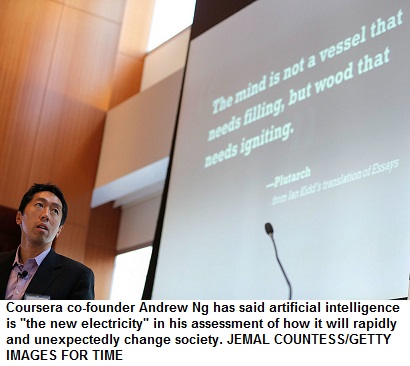
We constantly hear that we’re on the verge of an AI revolution, but the technology is already everywhere. And Coursera co-founder Andrew Ng predicts that smart technology will help humans do even more. It will drive our cars, read our X-rays and affect pretty much every job and industry. And this will happen soon.
As AI rises, concerns grow about the future of humans. So how can we make sure our economy and our society are ready for a technology that could soon dominate our lives?
So the CU/Go Lean roadmap calls for fostering job-creating developments, incentivizing many high-tech start-ups and incubating viable companies. These career options now proliferate:
Big Data Analysis
Search Engines
Online Advertising
Realtime Credit Decision Engines
Machine Learning
Interactive Voice Response (IVR)
Self-Driving Cars, etc.
Accepting that technology start-ups can be disruptive to legacy businesses means that we have to be prepared for subtractions and not just additions. This is “why“ the Go Lean plan to create 2.2 million new jobs is such heavy-lifting: we have to hit a moving target while our society is moving itself. Whew!
Welcome to transformational change!
The Go Lean roadmap also provides the “how”. The book presents a 370-page turn-by-turn guide on “how” to adopt new community ethos, plus the strategies, tactics, implementations and advocacies to execute so as to reboot, reform and transform the societal engines of Caribbean society.
The “why’s and how’s” were detailed in previous blog-commentaries; consider this sample:
The primary ingredient for the “job creation” roadmap for the Caribbean must be Caribbean people. The book therefore stresses the process to reform and transform the region’s societal engines. This was an early motivation for the roadmap, as pronounced in the opening Declaration of Interdependence (Pages 12 – 13):
xi. Whereas all men are entitled to the benefits of good governance in a free society, “new guards” must be enacted to dissuade the emergence of incompetence, corruption, nepotism and cronyism at the peril of the people’s best interest. The Federation must guarantee the executions of a social contract between government and the governed.
xvi. Whereas security of our homeland is inextricably linked to prosperity of the homeland, the economic and security interest of the region needs to be aligned under the same governance. Since economic crimes … can imperil the functioning of the wheels of commerce for all the citizenry, the accedence of this Federation must equip the security apparatus with the tools and techniques for predictive and proactive interdictions.
xxi. Whereas the preparation of our labor force can foster opportunities and dictate economic progress for current and future generations, the Federation must ensure that educational and job training opportunities are fully optimized for all residents of all member-states, with no partiality towards any gender or ethnic group. The Federation must recognize and facilitate excellence in many different fields of endeavor, including sciences, languages, arts, music and sports. This responsibility should be executed without incurring the risks of further human flight, as has been the past history.
xxiv. Whereas a free market economy can be induced and spurred for continuous progress, the Federation must install the controls to better manage aspects of the economy: jobs, inflation, savings rate, investments and other economic principles. Thereby attracting direct foreign investment because of the stability and vibrancy of our economy.
xxvii. Whereas the region has endured a spectator status during the Industrial Revolution, we cannot stand on the sidelines of this new economy, the Information Revolution. Rather, the Federation must embrace all the tenets of Internet Communications Technology (ICT) to serve as an equalizing element in competition with the rest of the world. The Federation must bridge the digital divide and promote the community ethos that research/development is valuable and must be promoted and incentivized for adoption.
The subject of automation is a familiar theme for the Go Lean movement. Consider this sample:
Heavy-lifting, yes! But still, this plan is conceivable, believable and achievable. This is the track record of technology-innovations emerging from many corners of the world. Where there’s a will – community ethos for fostering innovation – there is a way.
The Go Lean book details the special focus of this advocacy on Page 197:
10 Ways to Foster Technology
Yes, we can … make our homeland a better place to live, work and play. 🙂
… a duck swimming on a tranquil pond; calm and peaceful on the surface, but underneath the duck is paddling ferociously. Tranquility above; eruption below.
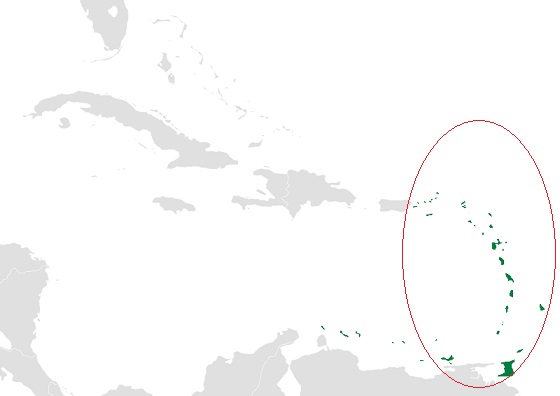
This visual also describes life in many Caribbean member-states – stable above; unstable below. Among the Lesser Antillean islands, the natural beauty is idyllic, while under the surface there are bubbling volcanoes, that periodically result in raging eruptions – see Appendix below.
These Lesser Antilles are the group of islands edging the Caribbean Sea. Most form a long, partly volcanicisland arc between the Greater Antilles to the north-west and the continent of South America.[1] The islands form the eastern boundary of the Caribbean Sea with the Atlantic Ocean. Together, the Lesser Antilles and the Greater Antilles compose the Antilles (or the Caribbean in its narrowest definition).
The Lesser Antilles region is a volcano zone – this is not just academic theory; this is a fact – most of the islands are of volcanic origins with extremely rich soil; this is the good history of the region’s volcanic past. There is bad history too; there have been devastating volcanic eruptions in the past – in modern times – and some volcanoes are active … now; think Montserrat where 2/3 of the island is now an Exclusion Zone.
There are volcanic activities on other islands as well; some are dormant; some are active, in particular on Martinique and St. Vincent. Will they erupt in the next few …?
The surety of an imminent volcano eruption is not known; but it is among the seismic threats – volcanoes, earthquakes and tsunamis – that must be accounted for. Economic engines can be disrupted with these seismic activities; even the threat of volcano can compromise economic security. This is the unstable reality; this is the State of the Union, for the following Caribbean islands; (click on any name for encyclopedic details of that island):
This discussion aligns with the book Go Lean…Caribbean. The book presents a roadmap to optimize the region’s security apparatus in conjunction with economic and governmental empowerments. This assertion – that regional stakeholders must be ready for any emergency – is introduced in the Go Lean book as follows under the title of “Crap Happens” (Page 23):
Economic security is tied to the community quest to reboot the Caribbean region to ensure a better place to live, work and play. To ensure economic security, the economic engines must be protected to ensure their continuous operations despite natural or man-made deterrents. Bad things do happen to good people, so we cannot be caught unprepared. We must institute the process and provisions to respond, react, restore and recover. Any and everyone may need to dial “911”.
The Caribbean community ethos is to consider the facts and realities:
climate change cannot be dismissed – tropical storms are now more common and more ferocious;
there are two geologic fault-lines that run through the Caribbean region;
there is an active volcano on Montserrat.
It is not a matter of “if” but “when” emergencies will strike. The security principle therefore is to be prepared for all incidents, big and small, that involve all aspects of society: islands, institutions, companies, families and individuals.
The subject of emergency management is analyzed in the Go Lean book; this is presented as a required function of a technocratic governmental administration. This book – available to download for free – serves as a roadmap for the introduction and implementation of the technocratic Caribbean Union Trade Federation (CU), for the elevation of Caribbean society – for all member-states. This CU/Go Lean roadmap endorses a system of better stewardship, with these 3 prime directives:
Optimization of economic engines in order to grow the regional economy to $800 Billion and create 2.2 million new jobs.
Improve Caribbean governance to support these engines, including a true separation-of-powers between the member-states and CU federal agencies. This dictates a regional response for natural disaster emergencies.
The book stresses that reforming and transforming the Caribbean societal engines must be a regional pursuit. This was an early motivation for the roadmap, as pronounced in the opening Declaration of Interdependence (Pages 11 – 13):
ii. Whereas the natural formation of the landmass for our lands constitutes some extreme seismic activity, it is our responsibility and ours alone to provide, protect and promote our society to coexist, prepare and recover from the realities of nature’s occurrences.
xi. Whereas all men are entitled to the benefits of good governance in a free society, “new guards” must be enacted to dissuade the emergence of incompetence, corruption, nepotism and cronyism at the peril of the people’s best interest. The Federation must guarantee the executions of a social contract between government and the governed.
xvi. Whereas security of our homeland is inextricably linked to prosperity of the homeland, the economic and security interest of the region needs to be aligned under the same governance. Since economic crimes … can imperil the functioning of the wheels of commerce for all the citizenry, the accedence of this Federation must equip the security apparatus with the tools and techniques for predictive and proactive interdictions.
xxiv. Whereas a free market economy can be induced and spurred for continuous progress, the Federation must install the controls to better manage aspects of the economy: jobs, inflation, savings rate, investments and other economic principles. Thereby attracting direct foreign investment because of the stability and vibrancy of our economy.
This commentary is 4 of 5 in an occasional series on the State of the Caribbean Union. Surely, a volcano subduction zone throughout the Lesser Antilles must have a common sense of urgency. This threat has been assessed in the Go Lean book and the technocratic solutions provided there-in. The full entries of all the blog-commentaries in this series is as follows:
State of the Caribbean Union – Unstable Volcano States
State of the Caribbean Union – Self-Interest of Americana
As related in the first submission in this series, the young people in the region need the vision of “something better” or Hope and Change in order to be inspired to participate in the future of this homeland. We cannot have a future without these young people, so these solutions – strategies, tactics and implementations – are not optional.
Remember Montserrat? It is hard to have “hope for the future” if you live there; (2/3 of the island is now an Exclusion Zone). The reality of threatening conditions is a consistent theme from the Go Lean movement. Consider these previous blog-commentaries chronicling the pain and suffering of natural disasters in the region:
The Go Lean book provides 370-pages of turn-by-turn instructions on “how” to adopt new community ethos, plus the strategies, tactics, implementations and advocacies to execute so as to reboot, reform and transform the societal engines of Caribbean society. For one, the recommendation is to reform and transform Caribbean governance, to better manage disaster-emergency situations – i.e. 10 Ways to Improve Emergency Management on Page 196 of the book.
Yes, there is the Caribbean Disaster Emergency Management Agency (CDEMA) already established in the region, and this organization represents a “good start” for a collaborative effort to monitor, mitigate and manage disaster situations. But CDEMA is undermanned, underfunded and under-appreciated. Embedding a security-disaster apparatus into a regional empowerment roadmap along with economic efforts allows the right people, right tools and right techniques for mitigating the threats of volcanoes … and earthquakes.
Many times, the same geological phenomena that fosters earthquakes – a constant threat in the Caribbean – also drives volcanoes. Considering that “art imitates life”, see the fictionalized account of volcanoes and emergency management response in this Movie Trailer, in this related VIDEO:
Published on Mar 8, 2008 – When a massive earthquake rocks the city of Los Angeles, Emergency Management department head Mike Roark (Tommy Lee Jones) returns from his vacation to help with the city’s response. After geologist Dr. Amy Barnes (Anne Heche) warns that a volcano may be forming in sewer tunnels, another severe earthquake unleashes the lava flowing underfoot, threatening to destroy the whole city. As the fiery molten rock runs through the streets, Roark and Barnes must figure out how to divert it.
In the Appendix below, within the encyclopedia “scientific” data, it was asserted that …
“… typically the islanders [of these volcanic member-states] do not have access to scientific journals and international meetings. The data included here is of value to them in understanding their islands and the volcanic hazards present on them.”
This assertion is true … and sad! The Go Lean movement declares “Enough already!” No more immature administration of our homeland! It is time; actually it is past time to grow-up and optimize the stewardship of these unstable islands.
For the Caribbean’s future, we must do better! Our youth deserves every opportunity to live at home in a technocratic society, in communities where we monitor, mitigate and manage the risks of known threats. We encourage all regional stakeholders to lean-in to this Go Lean roadmap – the strategies, tactics and implementation – to make the Caribbean homeland, even the Volcano States, better places to live, work and play. 🙂
Sign the petition to lean-in for this roadmap for the Caribbean Union Trade Federation.
—————
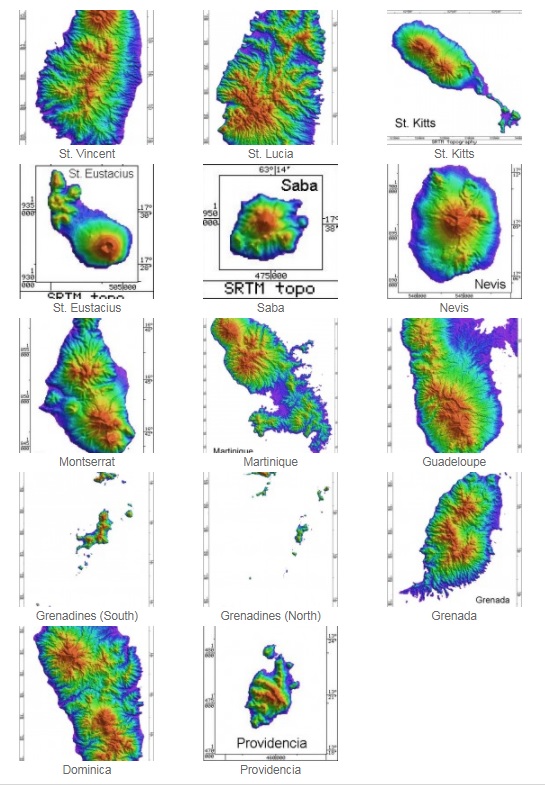
Appendix – A [Scientific] Study of the Volcanoes of the Caribbean
Radar Topography – In [the year] 2000 radar data was acquired by the space shuttle which enabled virtually complete mapping of the Earth’s topography to be achieved between latitudes 56 o S to 60 o N. A nominal 30 m grid was obtained at an absolute accuracy of 16m, although in flat non-vegetated areas the vertical accuracy may approach 3 m. While data at the full resolution is available in some regions, such as North America , elsewhere the Shuttle Radar Topography Mission (SRTM) data is only provided on an approximately 90m grid, obtained by averaging the 30 m grid data. The new data is a vast improvement in resolution and accuracy over previous global topographic models, such as ETOPO30, and provides a significant new amount of information of use in geological and other studies.
For the Caribbean islands the SRTM data which is available on a geographic grid at a nominal 90-m cell size was converted to a UTM grid in Zone 20, using the WGS84 spheroid. A grid interval of 50 m was used to retain as much detail as possible, and minor gaps in the data were filled in using special routines. The data were fenced using coastline data obtained from NOAA, and it should be noted that the coastline data set for each island was displaced by up to a kilometre from its location relative to the SRTM grid. This is a reflection on the accuracy of the original geographic information and resulting data sets rather than that of the SRTM data, which is extremely accurately located. Hence the coastline for each island was bulk shifted until it appeared to fit the SRTM data, and was then used to create the final outline shown in these plots. The positions of the coastlines are probably accurate to within about 100 m. The SRTM grids are shown as raster images, with artificial shading by illumination from the northeast, and both UTM and geographic coordinates are included. Non-linear colour scales are used for optimum colour stretch, where low values are purple and high values are red.
Green Volcanoes – Green tropical jungle-covered volcanoes standing out of warm blue seas in balmy Trade Winds, surrounded by palm-lined white coral sand beaches and reefs may be the ideal of the tourist trade and the eco-tourist seeking unspoiled tropical rain forest, but they can be a headache for the geologist looking for rocks. In a review of the geology and hazards of the Commonwealth of Dominica, in the center of the Lesser Antilles volcanic arc we encountered this problem. The two volcanoes that make up the northern end of the island – Morne aux Diables in the far north, and to its south Morne Diablotins (1421m the highest point on the island) – are both very green. Exposures in the sea cliffs and along the coastal roads show that both volcanoes are made up of older foundations (3.7 to 1.8 million years for Morne Diablotins and 2.0 to 1.7 million years for Morne aux Diables) that have been deeply dissected by erosion. Both are capped by very young deposits that were probably erupted in the past 100,000 years, which overlie the older deposits on the coasts. …
About Caribbean Volcanoes – This website on Caribbean volcanoes represents the cooperative work of the two authors over thirty years, [John Roobol and Alan Smith, two geologists both from South Wales in the UK who following Ph.D. studies at the Universities of London and California met on Mt. Pelee, Martinique in 1971 and have since worked together on most Caribbean volcanoes]. The views expressed and almost all of the photographs are those of the authors and do not necessarily agree with the views of other scientists. The site is aimed foremost at the populations and administrations of the volcanic islands. Typically the islanders do not have access to scientific journals and international meetings. The data included here is of value to them in understanding their islands and the volcanic hazards present on them. …
The issue of governance is very important to understanding the State of the Caribbean Union. In many countries, governance is just one of the factors that dictate success or failure for homeland’s societal engines. But in the Caribbean, it is “#1 … with a Bullet”. The government is normally the largest employer, largest educator, largest infrastructure builder and the only security option.
The most common form of governance in all of the Caribbean is the Westminster System. This is due to the many British legacies among the member-states (18 of 30 feature a British constitutional heritage, only Guyana has reformed). See details of Westminster here:
Title: Westminster System
The Westminster system is a parliamentary system of government modelled after that which developed in the United Kingdom. This term comes from the Palace of Westminster, the seat of the British parliament. The system is a series of procedures for operating a legislature. It is used, or was once used, in the national legislatures and subnational legislatures of most former British Empire colonies upon gaining responsible government,[1][2] beginning with the first of the Canadian provinces in 1848 and the six Australian colonies between 1855 and 1890.[3][4][5] However, some former colonies have since adopted either the presidential system (Nigeria for example) or a hybrid system (like South Africa) as their form of government.
Characteristics A Westminster system of government may include some of the following features:
A head of government (or head of the executive), known as the prime minister (PM), premier, or first minister. While the head of state appoints the head of government, constitutional convention suggests that a majority of elected Members of Parliament must support the person appointed.[6] If more than half of elected parliamentarians belong to the same political party, then the parliamentary leader of that party typically is appointed.[6] An exception to this was Israel, in which direct prime-ministerial elections were made in 1996, 1999 and 2001.
An executive branch led by the head of government usually made up of members of the legislature with the senior members of the executive in a cabinet adhering to the principle of cabinet collective responsibility; such members execute executive authority on behalf of the nominal or theoretical executive authority.
An independent, non-partisan civil service which advises on, and implements, decisions of those ministers. Civil servants hold permanent appointments and can expect merit-based selection processes and continuity of employment when governments change.[7]
Parliamentary privilege, which allows the legislature to discuss any issue it deems relevant, without fear of consequences stemming from defamatory statements or records thereof
Minutes of meetings, often known as Hansard, including an ability for the legislature to strike discussion from these minutes
The ability of courts to address silence or ambiguity in the parliament’s statutory law through the development of common law. Another parallel system of legal principles also exists known as equity. Exceptions to this include India, Quebec in Canada, and Scotland in the UK amongst others which mix common law with other legal systems.
However, uncodified conventions, practices, and precedents continue to play a significant role in most countries, as many constitutions do not specify important elements of procedure: for example, some older constitutions using the Westminster system do not mention the existence of the cabinet or the prime minister, because these offices were taken for granted by the authors of these constitutions. Sometimes these conventions, reserve powers, and other influences collide in times of crisis and in such times the weaknesses of the unwritten aspects of the Westminster system, as well as the strengths of the Westminster system’s flexibility, are put to the test. As an illustrative example, in the Australian constitutional crises of 1975 the Governor-General of Australia, Sir John Kerr, dismissed Prime Minister Gough Whitlam on his own reserve-power authority and replaced him with opposition leader Malcolm Fraser.
Operation The pattern of executive functions within a Westminster System is quite complex. In essence, the head of state, usually a monarch or president, is a ceremonial figurehead who is the theoretical, nominal or de jure source of executive power within the system. In practice, such a figure does not actively exercise executive powers, even though executive authority may be exercised in their name.
The head of government, usually called the Prime minister or Premier, will ideally have the support of a majority in the responsible house, and must in any case be able to ensure the existence of no absolute majority against the government. If the parliament passes a resolution of no confidence, or refuses to pass an important bill such as the budget, then the government must either resign so that a different government can be appointed or seek a parliamentary dissolution so that new general elections may be held in order to re-confirm or deny the government’s mandate.
Executive authority within a Westminster System is essentially exercised by the Cabinet, along with more junior ministers, although the head of government usually has the dominant role within the ministry. In the United Kingdom, the sovereign theoretically holds executive authority, even though the Prime Minister of the United Kingdom and the Cabinet effectively implement executive powers. In a parliamentary republic like India, the President is the de jure executive, even though executive powers are essentially instituted by the Prime Minister of India and the Council of Ministers. In Israel, however, executive power is vested de jure and de facto in the cabinet, and the President of Israel is de jure and de facto a ceremonial figurehead.
As an example, the Prime Minister and Cabinet (as the de facto executive body in the system) generally must seek the permission of the head of state when carrying out executive functions. If, for instance the British Prime Minister wished to dissolve parliament in order for a general election to take place, the Prime Minister is constitutionally bound to request permission from the sovereign in order to attain such a wish. This power (along with others such as appointing ministers in the government, appointing diplomats, declaring war, and signing treaties, for example) is known as the Royal Prerogative, which in modern times is exercised by the sovereign solely on the advice of the Prime Minister. Since the British sovereign is a constitutional monarch, he or she abides by the advice of his or her ministers, except when executing reserve powers in times of crisis.
The head of state will often hold meetings with the head of government and cabinet, as a means of keeping abreast of governmental policy and as a means of advising, consulting and warning ministers in their actions. Such a practice takes place in the United Kingdom and India. In the UK, the sovereign holds confidential weekly meetings with the Prime Minister to discuss governmental policy and to offer her opinions and advice on issues of the day. In India, the Prime Minister is constitutionally bound to hold regular sessions with the President, in a similar manner to the aforementioned British practice. In essence, the head of state, as the theoretical executive authority, “reigns but does not rule”. This phrase means that the head of state’s role in government is generally ceremonial and as a result does not directly institute executive powers. The reserve powers of the head of state are sufficient to ensure compliance with some of their wishes. However, the extent of such powers varies from one country to another and is often a matter of controversy.
Such an executive arrangement first emerged in the United Kingdom. Historically, the British sovereign held and directly exercised all executive authority. George I of Great Britain (reigned 1714 to 1727) was the first British monarch to delegate some executive powers to a Prime Minister and a cabinet of the ministers, largely because he was also the monarch of Hanover in Germany and did not speak English fluently. Over time, arrangement continued to exercise executive authority on the sovereign’s behalf. Such a concept was reinforced in The English Constitution (1876) by Walter Bagehot, who emphasised the “dignified” and “efficient” aspects of government. In this sense Bagehot was stating that the sovereign should be a focal point for the nation, while the PM and cabinet actually undertook executive decisions.
There are important rules and responsibilities associated with the “Role of the head of state”
Westminster is good … sometimes, but Westminster is mostly bad!
Westminster does not allow for the needed responsiveness; it does not feature a direct election of the Head of Government by the general population; but rather, it includes electing Members of Parliament (MP) from individual districts, and then the MP’s elect their leader. The party leader with the majority in Parliament is appointed Prime Minister, Premier, First or Chief Minister – First Among Equals; see Appendix A. This means less accountability and responsiveness to the citizens not in the constituency of the MP that is selected as Prime Minister.
Under this Westminster scheme, since this Head of Government is NOT elected by the majority of population, this one can be susceptible to a minority group – his/her constituents – over the Greater Good. Plus, this Head of Government can also reign in more than one branch of government. This one is the leader of the party with the majority of seats in Parliament, so this means that he/she leads the legislature; he/she forms the Cabinet, so he leads the Executive Branch. This leader holds sway on the candidates for the party and the selections of the elected ministers to the Cabinet. Lastly, this one appoints the Judges, so he/she wields power over the judiciary as well. The ideal separation-of-powers between government branches is deficient, defective and thus embeds failure on the countries societal engines.
Absolute power …
It is the assessment for the movement behind the book Go Lean…Caribbean that Westminster is dysfunctional … for the accountability and responsiveness for administering the Caribbean homeland. As a result of the deficiencies of Westminster, many countries have evolved and reformed their governance; they have abandoned Westminster; see list in Appendix B.
On the other hand, it is the assessment of this movement that since the Westminster System allows the concentration of power to only one person, the Prime Minister, it is easier to reform and transform a country. There is only the need to reach (influence, lobby and persuade) that one person. It is therefore easier for change and empowerment to take place, but still we recommend the member-states of the Caribbean region reform, transform and conform … to a new standard of governance.
This subject of governing systems is analyzed in the book Go Lean…Caribbean. This book provides an assessment of the Caribbean today, drawing reference to its historic past. From the origins of colonialism, the region traversed the historic curves of social revolution and evolution. The Go Lean book – available to download for free – serves as a roadmap for the introduction and implementation of the technocraticCaribbean Union Trade Federation (CU), for the elevation of Caribbean society – for all member-states. This CU/Go Lean roadmap endorses a system of better governance, with these 3 prime directives:
Optimization of the economic engines in order to grow the regional economy to $800 Billion and create 2.2 million new jobs.
Improve Caribbean governance to support these engines, including a true separation-of-powers between the member-states and CU federal agencies.
The book stresses that reforming and transforming the Caribbean societal engines must be a regional pursuit. This was an early motivation for the roadmap, as pronounced in the opening Declaration of Interdependence (Pages 12 – 13):
xi. Whereas all men are entitled to the benefits of good governance in a free society, “new guards” must be enacted to dissuade the emergence of incompetence, corruption, nepotism and cronyism at the peril of the people’s best interest. The Federation must guarantee the executions of a social contract between government and the governed.
xvi. Whereas security of our homeland is inextricably linked to prosperity of the homeland, the economic and security interest of the region needs to be aligned under the same governance. Since economic crimes … can imperil the functioning of the wheels of commerce for all the citizenry, the accedence of this Federation must equip the security apparatus with the tools and techniques for predictive and proactive interdictions.
xxiv. Whereas a free market economy can be induced and spurred for continuous progress, the Federation must install the controls to better manage aspects of the economy: jobs, inflation, savings rate, investments and other economic principles. Thereby attracting direct foreign investment because of the stability and vibrancy of our economy.
This commentary is 3 of 5 in an occasional series on the State of the Caribbean Union. Surely, a malfunctioning state of governance throughout the entire region must have some common traits. These have been assessed in the Go Lean book and the technocratic solutions provided there-in. The full entries of all the blog-commentaries in this series are as follows:
State of the Caribbean Union – Self-Interest of Americana
As related in the first submission in this series, the young people in the region need the vision of “something better” or Hope and Change in order to be inspired to participate in the future of this homeland. We cannot have a future without these young people, so these solutions – strategies, tactics and implementations – are not optional.
Hope for the future! This is a consistent theme from the Go Lean movement. Consider these previous blog-commentaries:
The Go Lean book provides 370-pages of turn-by-turn instructions on “how” to adopt new community ethos, plus the strategies, tactics, implementations and advocacies to execute so as to reboot, reform and transform the societal engines of Caribbean society. For one, the recommendation is to reform and transform Caribbean governance, to evolve from the dysfunctions of Westminster and adapt a more enlightened Strong Executive (Presidential) structure (Page 72).
See the contrast portrayed here in this related VIDEO:
At one point, the US used a version of Westminster – during the bad old days of the United States of America under the Articles of Confederation (1781–1789) – but this country evolved … and now feature one of the most responsive and accountable forms on government on the planet. In addition to the US, there are many other countries – consider Appendix B – that have evolved; some have rebooted and some have adapted a hybrid system of Westminster and the Presidential system.
In the Caribbean, we can do better! We do not have to be America; we can be better!
There is an aspect of the Westminster System that is embedded in the Go Lean roadmap, where the separation-of-powers provision parallels to the “Reserve Powers” of Westminster. These “Reserve Powers” ensure compliance with the tenants of state constitutions and treaties. These powers allow the CU to serve as a deputized entity for member-state governance; consider the justice scenarios requiring Commissions of Inquiries.
Yes, it is possible to reform and transform the Caribbean member-states that employ the deficient Westminster System. We can do better; we can make our homeland a better place to live, work and play. 🙂
Sign the petition to lean-in for this roadmap for the Caribbean Union Trade Federation.
———–
Appendix A – First Among Equals
The status of the Prime Minister has been described as primus inter pares: Latin for “first among equals.” This concept defines not only the prime minister’s relationship with Cabinet, but also, in a sense, his or her relationship with the public in our modern democratic society. Drawing on a wide variety of documents and artifacts, this site explores five main themes (see the menu at left) relating to Canada’s prime ministers. The site examines our leaders’ political careers as well as their private lives. It also sheds light on Canadians’ perceptions of our prime ministers.
From Macdonald to Harper, our political leaders are twenty-two individuals who have made a difference, shaping Canada’s identity, sometimes in profound ways.
The Westminster system was adopted by a number of countries which subsequently evolved or reformed their system of government departing from the original model. In some cases, certain aspects of the Westminster system were retained or codified in their constitutions. For instance South Africa and Botswana, unlike Commonwealth realms or parliamentary republics such as India, have a combined head of state and head of government but the President remains responsible to the lower house of parliament; it elects the President at the beginning of a new Parliament, or when there is a vacancy in the office, or when the sitting President is defeated on a vote of confidence. If the Parliament cannot elect a new President within a short period of time (a week to a month) the lower house is dissolved and new elections are called.
Newfoundland gave up self-government in 1934 and reverted to direct rule from London. Use of the Westminster system resumed in 1949 when Newfoundlandbecame a province of Canada.
Rhodesia between 1965 and 1979, and Zimbabwe between 1980 and 1987. The 1987 constitution abolished the Westminster system.
Nigeria following the end of British colonial rule in 1960, which resulted in the appointment of a Governor-General and then a President, Nnamdi Azikiwe. The system ended with the military coup of 1966.
Ceylon between 1948 and 1972, and Sri Lanka from 1972 until 1978 when the constitution was remodelled into an Executive presidential system.
Burma following independence in 1948 until the 1962 military coup d’état.
Its time to get the message out; to “say it from the roof-top and say it from the steeple”*.
But to be truly modern, the electronic media must also be engaged. This is the current effort of the movement behind the book Go Lean … Caribbean. The goal is to message to the Caribbean homeland, Caribbean Diaspora and the rest of the world. In other words, this goal is to conscientize …
Conscientize (verb) – to make somebody/yourself aware of important social or political issues. – Oxford Dictionary.
The message that this Go Lean movement wants to make people aware of is alarming:
There is something wrong in the Caribbean. It is the greatest address on the planet, but instead of the world “beating a path” to our doors, the people of the Caribbean have “beat down their doors” to get out. Our societal defects are so acute that our culture is in peril for future prospects.
This was the theme of the discussion on the Tampa Florida-based WMNF Radio Talk Show, The Sunday Forum, on July 9, 2017. The host, Walter Smith II#, invited a stakeholder from the Go Lean movement to conscientize the audience in their broadcast area about the perils of Caribbean life. The following AUDIO Podcast is the broadcast from that show:
Appendix AUDIO-VIDEO – “Go Lean … Caribbean” Movement: Conscientizing on the Radio on July 9, 2017 – https://youtu.be/9XCYbIIYZio
Published on July 12, 2017 – The term “conscientize” means to make aware of important social or political issues. This AUDIO-VIDEO features stakeholders of the Go Lean movement conscientizing to make people more aware of the alarming situation in the homeland:
“that while the Caribbean is the greatest address on the planet, its people are “beating down the doors” to get out”.
This was the theme of the interview on the Tampa Florida-based WMNF Radio Talk Show, The Sunday Forum, on July 9, 2017 with host Walter L. Smith II.
The AUDIO Podcast concludes with a reference to the Go Lean book, directing the audience to this 370-page guide that serves as a roadmap for the introduction and implementation of the Caribbean Union Trade Federation (CU). This entity is presented as a technocratic federal government to administer and optimize the economic-security-governing engines of all 30 member-states. The quest is to provide a better direct stewardship, applying lessons-learned from global best practices.
There is the need for our region to elevate these societal engines of our communities. This quest is presented with these prime directives:
Optimize the economic engines in order to grow the regional economy; there is a potential to create 2.2 million new jobs and to grow the regional GDP to $800 Billion. The deficiency of jobs is one of the reasons that Caribbean people have emigrated.
Improve Caribbean governance to support these above engines, including a separation-of-powers between member-state governments and CU federal agencies.
We – those who love the Caribbean – must do something and this roadmap for the CU – modeled after the European Union (EU) – has addressed the issues, strategies, tactics and implementations to reform and transform the region.
Many people love our tropical region – residents, Diaspora and visitors alike – and yet we understand why and how people have left. As related in the foregoing AUDIO Podcast, some Caribbean member-states now have a near-Failed-State status (Puerto Rico, Haiti, Jamaica, etc.). It is time now to work to elevate our communities, as our youth, the next generation for the Caribbean, may not be inspired to participate in the future workings of our communities.
The Go Lean movement – the book and all efforts to conscientize via traditional and electronic media – stresses that reforming and transforming the Caribbean societal engines must be a regional pursuit. This was an early motivation for the roadmap, as pronounced in the opening Declaration of Interdependence (Pages 12 – 13):
xi. Whereas all men are entitled to the benefits of good governance in a free society, “new guards” must be enacted to dissuade the emergence of incompetence, corruption, nepotism and cronyism at the peril of the people’s best interest. The Federation must guarantee the executions of a social contract between government and the governed.
xvi. Whereas security of our homeland is inextricably linked to prosperity of the homeland, the economic and security interest of the region needs to be aligned under the same governance. Since economic crimes … can imperil the functioning of the wheels of commerce for all the citizenry, the accedence of this Federation must equip the security apparatus with the tools and techniques for predictive and proactive interdictions.
xxiv. Whereas a free market economy can be induced and spurred for continuous progress, the Federation must install the controls to better manage aspects of the economy: jobs, inflation, savings rate, investments and other economic principles. Thereby attracting direct foreign investment because of the stability and vibrancy of our economy.
The Go Lean book provides 370-pages of turn-by-turn instructions on “how” to adopt new community ethos, plus the strategies, tactics, implementations and advocacies to execute so as to reboot, reform and transform the societal engines of Caribbean society.
The foregoing AUDIO Podcast stressed that these are desperate times in the Caribbean, calling for desperate measures. We hereby urge all Caribbean stakeholders to lean-in to this roadmap to introduce and implement the Caribbean Union Trade Federation (CU) among the 30 member-states of the region.
Our people – whether they are in the homeland or in the Diaspora – have a simple request, they simply want a better Caribbean; a better place to live, work and play. 🙂
Sign the petition to lean-in for this roadmap for the Caribbean Union Trade Federation.
————–
Appendix – Footnotes:
* – “Sing it from the roof-top and sing it from the steeple” – Lyrics from the 1976 Song “People to People” by Bahamian Artist Eddie Minnis.
# – Walter L Smith II is the host of the weekly radio show The Sunday Forum. Walter II stems from a legacy of great public service; he is the son of a former President of Florida A & M University, Walter L. Smith Sr.. Walter II has dedicated his time, talents and treasuries to this commitment to impact his community with progressive causes and advocacies. In 2016, he ran for the Democratic nomination for the Florida House of Representatives District 61 in the State Legislature.
The major problems in the Caribbean are not all due to external factors out of our control – i.e. global economy, international travel and tourism. No, we have some internal issues as well; for example, Crime.
Every Caribbean member-state has an atrocious crime problem that needs to be mitigated and remediated.
“We cannot control what other people do; but we can control how we react” – standard Common Sense wisdom.
This assessment was paramount in the motivation for the 2013 book Go Lean…Caribbean. There was/is a need to consider strategies, tactics and implementations to address the region’s crime problems. This goal is detailed in the book as it serves as a roadmap for the introduction of the technocratic Caribbean Union Trade Federation (CU). While the CU is set to optimize Caribbean society through economic empowerment, we must accept the established truth that the security dynamics of the region are inextricably linked to economic endeavors. Therefore the Go Lean roadmap has these 3 prime directives:
All in all, the book recognizes that the quest of these prime directives involves heavy-lifting; they are not easy.
The Go Lean roadmap details a goal to confederate a unified security apparatus for the region’s crime-fighting stakeholders; this will empower a regional Homeland Security technocracy. But Homeland Security for the Caribbean has a different meaning than for our North American or European counterparts. As disclosed in a recent blog-commentary, while the security apparatus must be on defense against military intrusions like terrorism & piracy, it must mostly contend with “bad actors” and threats that may imperil the region’s economic engines. This includes concerns like narco-terrorism and enterprise corruption, plus natural and man-made disasters like hurricanes, earthquakes, oil/chemical spills, etc..
So the Go Lean security goal is mostly for public safety!
If/when a “bad actor” is arrested, there needs to be the full force of the law in enforcing the tenants of the arrest across member-states; (many Caribbean islands are short distances apart, island hopping is a viable option for suspects to avoid justice institutions). This is the point of the Caribbean Arrest Treaty. See more information in this news article here:
News Title: Saint Lucia signs Caribbean arrest treaty ST. GEORGE’S, Grenada, July 7 – Saint Lucia is among five Caribbean Community (CARICOM) countries to have signed the Caribbean Arrest Treaty, one of the regional security instruments that was formulated to enhance cooperation between member states in the fight against crime.
Guyana, Dominica, Grenada, Guyana, St. Kitts-Nevis, and St. Lucia signed the accord at the 38th Heads of Government summit that ended here on Thursday night.
The objective of the treaty is to establish within the Caribbean Community a system of arrest and surrender of requested persons for the purposes of conducting a criminal prosecution for an applicable offence; or executing a custodial sentence where the requested persons have fled from justice after being sentenced for an applicable offence.
It was first presented in draft form in Guyana earlier this year when that country hosted the CARICOM Inter-Sessional summit in February.
The treaty is one of the regional security instruments that was formulated to enhance cooperation between member states in the fight against crime and to reduce the complexity, cost and delays in the existing extradition arrangements inherent in the region.
Published on Jul 8, 2016 – Member-states have agreed to work much closer in the area of security, as part of that effort by CARICOM to introduce a regional arrest treaty. Dominica’s Prime Minister, Roosevelt Skeritt, when asked how this treaty would work; explained the process.
Mr. Roosevelt Skeritt told a media briefing on Wednesday evening that the treaty would enhance cooperation between and among law enforcement authorities in the community. Suriname has serious problems constitutionally, where this arrest treaty is concerned. Dominica’s Prime Minister Roosevelt Skeritt explains.
Know that the arrest warrant treaty when it is set up would enhance law enforcement ability to address matters of cross – border crimes. The issue of security held much interest during the life of the Conference because of the important role it played in protecting the society from danger. Mr. Skeritt said…
This foregoing article and VIDEO describes a treaty that will take more than just words to accede regionally; there will also have to be action, heavy-lifting action that would require a full measure of devotion and commitment; it will require time, talent and treasuries of the member-states.
The book Go Lean…Caribbean – available to download for free – details this commitment. It stresses that reforming and transforming the Caribbean societal engines must be a regional pursuit. This was an early motivation for the roadmap, as pronounced in the opening Declaration of Interdependence (Pages 12 – 13):
x. Whereas we are surrounded and allied to nations of larger proportions in land mass, populations, and treasuries, elements in their societies may have ill-intent in their pursuits, at the expense of the safety and security of our citizens. We must therefore appoint “new guards” to ensure our public safety and threats against our society, both domestic and foreign. The Federation must employ the latest advances and best practices … to assuage continuous threats against public safety.
xi. Whereas all men are entitled to the benefits of good governance in a free society, “new guards” must be enacted to dissuade the emergence of incompetence, corruption, nepotism and cronyism at the peril of the people’s best interest. The Federation must guarantee the executions of a social contract between government and the governed.
xvi. Whereas security of our homeland is inextricably linked to prosperity of the homeland, the economic and security interest of the region needs to be aligned under the same governance. Since economic crimes … can imperil the functioning of the wheels of commerce for all the citizenry, the accedence of this Federation must equip the security apparatus with the tools and techniques for predictive and proactive interdictions.
The Go Lean book provides 370-pages of turn-by-turn instructions on “how” to adopt new community ethos, plus the strategies, tactics, implementations and advocacies to execute so as to reboot, reform and transform the societal engines of Caribbean society.
In addition to this regional treaty in the foregoing, there are these other treaties that are urged for promotion and accedence:
The Go Lean movement has previously described (in a commentary) the motivations for crime: 1. Need, 2. Greed and 3. Justice. That commentary related, as follows:
So the CU/Go Lean roadmap addresses the issue of more jobs; this will lower the “need” factor for crime; (there is no expectation that these efforts would fully eliminate violent crime; but this start will mitigate the risks). The book relates that with the emergence of new economic drivers, that “bad actors” will also emerge thereafter to exploit the opportunities, with good, bad and evil intent. The second factor, “greed” is tied to opportunities. The executions of the Go Lean roadmap (Page 23) are specifically designed to minimize opportunities for crime with these security mandates:
Adapt the Ethos: Public Protection over Privacy
Embrace Electronic Payment Systems – Carry less cash
Whistleblower Protection – Consider all allegation, anonymous and overt
Witness Security & Protection – Ensure Justice Process
Youth Crime Awareness & Prevention; Anti-Bullying and Mitigation – “Nip it in the bud”
Intelligence Gathering – Universal Video Surveillance
Light Up the Dark Places – Eliminate the figurative and literal “shadows”
Prison Industrial Complex – Engage to reduce recidivism
The third contributor, justice, is tied to street riots, civil unrest and other outbursts against perceived injustices. The marching call of many of these movements is “No Justice; No Peace”.
There is therefore the need to do heavy-lifting to mitigate and remediate the Caribbean’s high crime rate. This has been a consistent theme for the Go Lean movement; consider these previous blogs-commentaries:
A regional treaty to enforce and apprehend suspects – those who evade arrest – among a few Eastern Caribbean member-states is a good start …
… the next step must be expanding this to a comprehensive treaty for a regional security apparatus for all 30 member-states; (including the plan to pay for it). This has been identified as a:
Bingo! There it is! This is how it is done! This is the comprehensive plan for the Go Lean roadmap, integrating and consolidating the stewardship for economics, security and governance.
Yes, we can make our homeland a better, safer, place to live, work and play. 🙂