This commentary – from December 3, 2014 – was re-distributed on the occasion of the American Holiday Thanksgiving for 2015, as it is applicable for any Thanksgiving any year. Be thankful people; be festive and most important, be safe!
———
To understand American commerce, one must learn the BIG shopping “days of the week” – Friday, Saturday, Monday, Tuesday, as follows:
BlackFriday – This is the Friday following the Thanksgiving Day holiday in the US (the fourth Thursday of November). Since the early 2000’s, it has been regarded as the beginning of the Christmas shopping season, and most major retailers open very early and offer promotional sales. Black Friday is not a public holiday, but some states observe “The Day After Thanksgiving” as a holiday for state government employees, sometimes in lieu of another federal holiday such as Columbus Day.[5] Many non-retail employees and schools have both Thanksgiving and the day after off, followed by a weekend, thereby increasing the number of potential shoppers. In 2014, $50.9 billion was spent during the 4-day Black Friday weekend. While approximately 133 million U.S. consumers shopped during the same period.[6]
Small BusinessSaturday – This refers to the Saturday after Thanksgiving during one of the busiest shopping periods of the year. First observed in 2010, it is a counterpart to Black Friday and Cyber Monday, which feature big box retail and e-commerce stores respectively. By contrast, Small Business Saturday encourages holiday shoppers to patronize brick-and-mortar businesses that are small and local. Small Business Saturday is a registered trademark of American Express Corporation. Small Business Saturday UK began in the UK in 2013 after the success of Small Business Saturday in America.[7]
CyberMonday – This is a marketing term for the Monday after the Thanksgiving holiday. The term was created by marketing companies to persuade people to shop online. The term made its debut on November 28, 2005, in a Shop.org press release entitled “‘Cyber Monday Quickly Becoming One of the Biggest Online Shopping Days of the Year”.[2] According to the Shop.org/Bizrate Research 2005 eHoliday Mood Study, “77 percent of online retailers said that their sales increased substantially on the Monday after Thanksgiving, a trend that is driving serious online discounts and promotions on Cyber Monday this year (2005)”. In 2014, Cyber Monday online sales grew to a record $2.68 billion, compared with last year’s $2.29 billion. However, the average order value was $124, down slightly from 2013’s $128.[3] The deals on Cyber Monday are online-only and generally offered by smaller retailers that cannot compete with the big retailers. Black Friday generally offers better deals on technology; with nearly 85% more data storage deals than Cyber Monday. The past Black Fridays saw far more deals for small appliances, cutlery, and kitchen gadgets on average than Cyber Monday. Cyber Monday is larger for fashion retail. On the past two Cyber Mondays, there was an average of 45% more clothing deals than on Black Friday. There were also 50% more shoe deals on Cyber Monday than on Black Friday.[4] Cyber Monday has become an international marketing term used by online retailers in Argentina, Canada, Chile, China, Colombia, Denmark, Germany, Ireland, Uganda, Japan, Portugal, Sweden and the United Kingdom.
GivingTuesday – refers to the Tuesday after Thanksgiving. It is a movement to create a national day of giving at the beginning of the Christmas and holiday season. Giving Tuesday was started in 2012 by the “92nd Street Y” (Young Men’s and Young Women’s Hebrew Association in New York, NY) and the United Nations Foundation as a response to commercialization and consumerism in the post-Thanksgiving season (Black Friday and Cyber Monday).[8][9] This occasion is often stylized as #GivingTuesday for purposes of hashtag activism.
That’s a lot of commerce … and philanthropy too!
This encyclopedic discussion is necessary for the Caribbean to model the best-practices of American commerce. The focus of this commentary is the role of one company in the pantheon of Cyber Monday, Amazon. This firm has previously been featured in a Go Lean blog, and is identified as a model for Caribbean logistics, our means for delivering the mail; this is the vision for the Caribbean Postal Union (CPU).
The focus of the book Go Lean…Caribbean and the CPU is not just postal mail, but rather logistics. Mail requires logistics, but logistics encompasses so much more than just mail. So we would want to model a successful enterprise in this industry space, like Amazon, not just another postal operation, like the US Postal Service (Page 99).
Amazon provides a good example of lean technocratic efficiency. So Amazon is a good model, not just for the CPU but the entire Caribbean Union Trade Federation (CU). The Go Lean book, serves as a roadmap for the introduction and implementation of the technocratic CU.
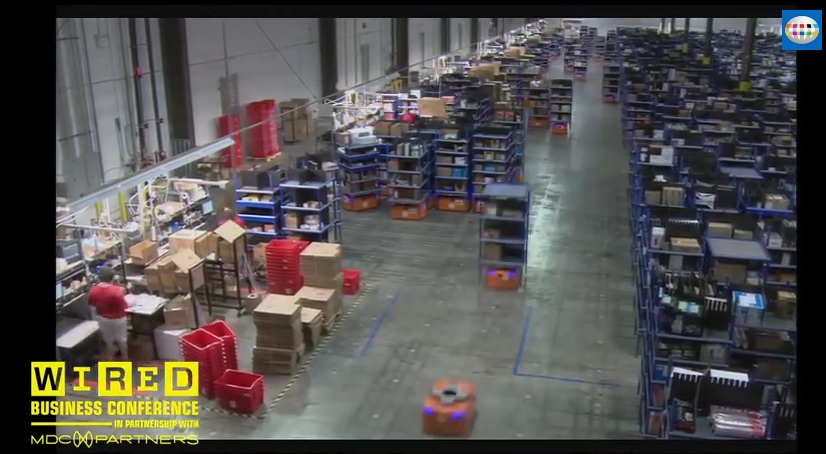
One reason why Amazon is modeled for their lean stature is their use of automation. This following VIDEO depicts the creative solution of using robots to facilitate logistics in a warehouse environment:
December 1, 2014 – Cyber Monday is the biggest sales day of the year for online retail giant, Amazon. Last year, Amazon customers ordered 426 items every second on Cyber Monday, and this year that number is expected to grow. In addition to the 80-thousand seasonal workers they employ to fulfill orders, thousands of robots also crawl the warehouse floors. CNET.com’s KaraTsuboi takes us inside an Amazon fulfillment center to watch the robots in action. (VIDEO plays best in Internet Explorer).
Lean, automation, robotics, technocratic …
… welcome to the new Caribbean.
This is the mission of Go Lean roadmap, to elevate the economic engines of Caribbean society; industrial policy plays a key role in this roadmap. The region needs the jobs, so we need job creators: companies. These companies, or better stated, Direct Foreign Investors, need a pro-innovation environment to deploy their automated solutions. The Go Lean roadmap allows the structure of Self-Governing Entities (SGE) to incentivize industrial developments in the region. It is the expectation that robots and automated systems will flourish. The independence of the SGE structure neutralizes conflicts with “labor”.
Related issues have previously been detailed in these Go Lean commentaries listed here:
In addition to the roadmap encouraging robotic automation, the CU will directly employ such technologically innovative products and services to impact its own prime directives; the CPU is such a reflection; more automation and less labor. The CU’s prime directives are identified with the following 3 statements:
Optimization of the economic engines in order to grow the regional economy to $800 Billion & create 2.2 million new jobs.
Establishment of a security apparatus to protect the resultant economic engines.
Improve Caribbean governance to support these engines.
The CPU features economic, security and governing concerns.
The Go Lean roadmap seeks to change the entire eco-system of Caribbean logistics and resulting commerce – the interaction with postal operations. This vision is defined early in the book (Page 12 & 14) in the following pronouncements in the Declaration of Interdependence:
xv. Whereas the business of the Federation and the commercial interest in the region cannot prosper without an efficient facilitation of postal services, the Caribbean Union must allow for the integration of the existing mail operations of the governments of the member-states into a consolidated Caribbean Postal Union, allowing for the adoption of best practices and technical advances to deliver foreign/domestic mail in the region.
xxvii. Whereas the region has endured a spectator status during the Industrial Revolution, we cannot stand on the sidelines of this new economy, the Information Revolution. Rather, the Federation must embrace all the tenets of Internet Communications Technology (ICT) to serve as an equalizing element in competition with the rest of the world. The Federation must bridge the digital divide and promote the community ethos that research/development is valuable and must be promoted and incentivized for adoption.
Amazon is not our only example. A previous blog/commentary identified Chinese company Alibaba as a fitting role model for Caribbean consideration. There are so many best-practices around the world for the region to study and glean insights and wisdom from. The successful application of this roadmap will foster such best-practices for the delivery of the CPU logistics in the Caribbean. The wisdom the Go Lean book gleans are presented as a series of community ethos, strategies, tactics, implementations and advocacies; a detailed sample is listed as follows:
Community Ethos – Deferred Gratification
Page 21
Community Ethos – People Respond to Incentives
Page 21
Community Ethos – Job Multiplier
Page 22
Community Ethos – Intelligence Gathering
Page 23
Community Ethos – Lean Operations
Page 24
Community Ethos – Ways to Impact the Future
Page 26
Community Ethos – Ways to Foster Genius
Page 27
Community Ethos – Ways to Help Entrepreneurship
Page 28
Community Ethos – Promote Intellectual Property
Page 29
Community Ethos – Ways to Bridge the Digital Divide
Page 31
Community Ethos – Ways to Improve Sharing
Page 35
Strategy – Customers – Citizens and Member-states Governmental
Page 47
Tactical – Separation of Powers – Postal Services
Page 78
Tactical – Separation of Powers – Interstate Commerce Administration
Page 79
Implementation – Year 1 / Assemble Phase – Establish CPU
Page 96
Anecdote – Implementation Plan – Mail Services – US Dilemma
Page 99
Implementation – Steps to Implement Self-Governing Entities
Page 105
Implementation – Improve Mail Services – Electronic Supplements
Page 108
Implementation – Ways to Deliver
Page 109
Planning – 10 Big Ideas for the Caribbean Region
Page 127
Advocacy – Ways to Improve Interstate Commerce
Page 129
Advocacy – Ways to Grow the Economy
Page 151
Advocacy – Ways to Create Jobs
Page 152
Advocacy –Ways to Improve Governance
Page 168
Advocacy – Ways to Foster Technology
Page 197
Advocacy – Ways to Foster e-Commerce
Page 198
Advocacy – Ways to Promote Call Centers
Page 212
Advocacy – Ways to Impact Urban Living
Page 234
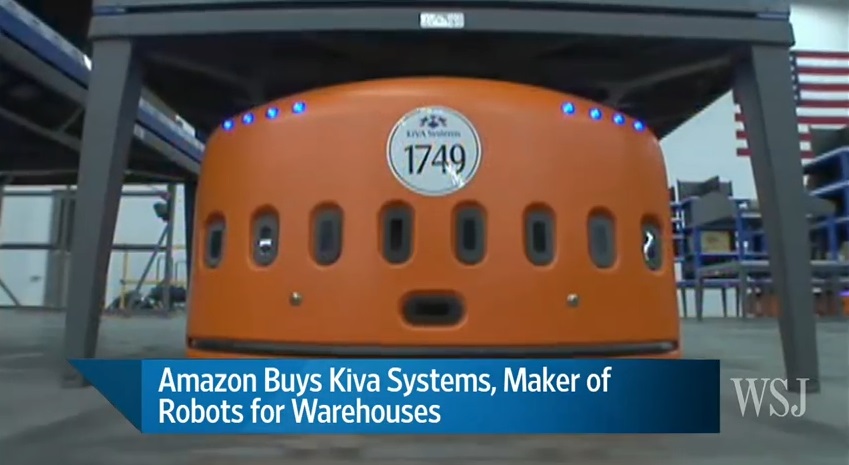
Following the Amazon’s example (and Alibaba’s example) will spur the Caribbean to embrace more robotic technologies. This field is new, fresh and ready for innovation. There is a level-playing-field for any innovator to earn market share. The underlying company in the foregoing VIDEO is Kiva Systems – a Massachusetts based company that manufactures mobile robotic fulfillment systems.[10][11] They rolled out a great product, then “Lo-and-behold”, they were acquired by a major e-Commerce company. Today, they are a subsidiary of Amazon, yet their material-handling systems are currently used by many other retailers including: The Gap, Walgreens, Staples, Gilt Groupe, Office Depot, Crate & Barrel, Saks 5th Avenue, and more.[12]
This commentary therefore features the subjects of commerce, logistics and entrepreneurship. The Caribbean can emulate this model from Amazon. The biggest ingredient missing in the region is the ‘will’. But the ‘will’ can be fostered anew in the Caribbean. This is the heavy-lifting for the CU, instituting such new community ethos.
Now is the time for all of the Caribbean, the people and governing institutions, to lean-in for the empowerments in the book Go Lean … Caribbean. This is a Big Idea for the region; that of a Cyber Caribbean, in which Cyber Mondays may become a big deal for our region – not only as consumers, but producers as well. Therefore, this roadmap is not just a plan for delivering the mail/packages, but rather a plan for delivering the future.
We must employ whatever tools and techniques, robotics included, to make the region a better homeland to live, work and play.
Does “play“include Robots? Yes, indeed. Consider this fun VIDEO here. 🙂
Supplemental VIDEO – The “Nutcracker” performed by Dancing Kiva Order Fulfillment Robots: http://youtu.be/Vdmtya8emMw
“You cannot miss something you never had” – Wise expression.
Not only is this expression thought-provoking, but also prophetic. The motives of the movement behind the book Go Lean…Caribbean is to forge change in the Caribbean. Plain and simple! The people, policies and processes from the book wants to elevate Caribbean life to a level that the people may not now appreciate, because they cannot “miss something that they never had”.
The book presents a plan to …
reboot economic engines (create 2.2 million new jobs, improved healthcare, facilitate new educational and entrepreneurial opportunities, stabilize a regional currency),
optimize the security apparatus (anti-crime and public safety), and
facilitate accountable governance for all citizens (including minority factions).
The region has never had this before, not even in the days of colonialism. With this acknowledgement, it is understandable that many may not “buy-in” to these Go Lean empowerments – they may not know what they are missing. But they do know what a better life would look like. They get such a view from these sources:
There is the media penetration in the Caribbean, portraying life in optimized societies abroad.
There are the tourists/visitors who interact with our citizens and describe their lives in their homelands.
There is the Diaspora that have left, many times as the only hope for work, and then repatriate monies to support their family.
Caribbean residents may not have had certain features, like the advanced societies in the US, Canada and Western Europe, but they do know how other people thrive in those other lands. They want that for themselves. This constitutes the “pull” factors that contribute to the high abandonment rate (drawn from “push-and-pull” references): life abroad on foreign shores may appeal to them more so than their homeland.
The book serves as a roadmap for the introduction and implementation of the technocratic Caribbean Union Trade Federation (CU) as a vehicle to make the region a better place to live, work and play. The vision is that of a Single Market of the 30 member-states, 4 language groups and 42 million people; this scope and leverage from this integration is such as has never actuated in the Caribbean before – the people cannot miss this vision because they have never seen it here.
So just how do we get the required buy-in? How do we get the populations to embrace, accept, commit and engage this vision of an elevated society that they may not have ever seen in their homeland before? How do we forge this change?
One approach to forging this change is to give thepeople something to lose.
This point was vocalized dramatically in the movie The Fast and the Furious Part Five with this dialogue:
Uploaded on Jan 15, 2012 – Joaquim de Almeida talks about the Portuguese discoveries in Brazil …
This is art imitating life and life imitating art.
There is nothing nefarious or malevolent about the Go Lean roadmap. The efforts to forge change in the region are not intended for any one person or organization to wrestle power or the elevation of any one leader. The roadmap features only one objective: the Greater Good. This is defined in the book (Page 37) by Jeremy Bentham (1748 – 1832) a British philosopher, jurist, and social reformer as …
… “the greatest good to the greatest number of people which is the measure of right and wrong”.
This vision sounds good! What is there to lose?
The fact is that this vision is only on paper. The reality in the region is far different; the member-states are in crisis. In addition to the constant lure of foreign “pulls”, there is the definitive societal “push”. So many deficiencies in the Caribbean are driving people to abandon their beloved homeland and live in the Diaspora; one report asserts 70% for the college-educated classes have already left. The opportunity costs of NOT engaging the Go Lean roadmap is too great!
If we leave well enough alone, we will not be well enough!
The book describes the CU as a hallmark of a technocracy. This relates to “doing the right things and getting things done”. The term technocracy was originally used to designate the application of the scientific method to solving social and economic problems. The CU will start as a technocratic confederation – a Trade Federation – rather than evolving to this eventuality.
The roadmap must bring benefits to the region … quickly: improved economics, improved healthcare, improved education, introduction of a stable currency, improved security, improved governance, etc.. This is a Big Deal. The book likens this quest to the American effort in the 1960’s to “put a man on the man” (Page 127). As explained by the then-President of the United States, John F. Kennedy:
“I believe that this nation should commit itself to achieving the goal, before this decade is out, of landing a man on the moon and returning him safely to the earth”. His justification for the Moon Race was both that it was vital to national security and that it would focus the nation’s energies in other scientific and social fields.
As depicted in the foregoing VIDEO, there must be something for the people of the Caribbean to lose; their hope must be on the continuation of the benefits flowing from the CU. The Go Lean book declares that before any permanent change can take root in the Caribbean that there must be an adoption of new community ethos, the national spirit that drives the character and identity of its people. We must therefore use effective and efficient drivers to forge this change.
The Go Lean book – published in November 2013 – presented a two-prong approach: Top-Down and Bottoms-Up. The Top-Down plan called for engaging the politicians and community leaders to capitulate to this roadmap; while the Bottoms-Up plan called for engaging the full universe of Caribbean people: residents (42 million), Diaspora (10 million), trading-partners and visitors (80 million) to demand the empowerments of the CU/Go Lean roadmap. The verb for all these stakeholders is to “lean-in”, that is to embrace the values, hopes and dreams of this optimization plan.
Over the years, the Go Lean blog-commentaries have previously identified a number of alternate strategies to effectively forge change in the region. These were presented as follows:
The book and accompanying blogs all accept that forging this change will be an up-hill battle. But this heavy-lifting will be worth it in the end, as the Caribbean empowerment roadmap has these 3 prime directives:
Optimization of the economic engines in order to grow the regional economy to $800 Billion & create 2.2 million new jobs.
Establishment of a security apparatus to protect the resultant economic engines and ensure better public safety for stakeholders of the Caribbean.
Improvement of Caribbean governance to support these engines.
The roadmap was constructed with these motivations in mind: the community ethos to foster, plus the execution of strategies, tactics, implementation and advocacies to forge the identified permanent change in the region. The following is a sample of these specific details from the book:
Community Ethos – Deferred Gratification
Page 21
Community Ethos – Economic Principles – People Choose
Page 21
Community Ethos – Economic Principles – People Respond to Incentives in Predictable Ways
Page 21
Community Ethos – Economic Principles – Economic Systems Influence Individual Choices
Page 21
Community Ethos – Economic Principles – The Consequences of Choices Lie in the Future
Page 21
Community Ethos – Governing Principles – Minority Equalization
Page 23
Community Ethos – Governing Principles – Lean Operations
Page 24
Community Ethos – Governing Principles – Cooperatives
Page 25
Community Ethos – Ways to Impact the Future
Page 26
Community Ethos – Ways to Help Entrepreneurship
Page 28
Community Ethos – Ways to Promote Intellectual Property
Page 29
Community Ethos – Ways to Impact Research & Development
Page 30
Community Ethos – Ways to Bridge the Digital Divide
Page 31
Community Ethos – Ways to Impact Turn-Arounds
Page 33
Community Ethos – Ways to Improve Sharing
Page 35
Community Ethos – Ways to Promote Happiness
Page 36
Community Ethos – Ways to Impact the Greater Good
Page 37
Strategy – Vision – Confederate 30 Member-States
Page 45
Strategy – Mission – Stabilize and Fortify the Currency of the Region
Page 46
Tactical – Confederating a Permanent Union
Page 63
Tactical – Fostering a Technocracy
Page 64
Implementation – Ways to Pay for Change
Page 101
Implementation – Ways to Deliver
Page 109
Planning – 10 Big Ideas for the Caribbean Region
Page 127
Planning – Ways to Make the Caribbean Better
Page 136
Planning – Reasons Why the CU Will Succeed
Page 137
Advocacy – Ways to Grow the Economy
Page 151
Advocacy – Ways to Create Jobs
Page 152
Advocacy – Ways to Improve Healthcare
Page 156
Advocacy – Ways to Improve Education
Page 159
Advocacy – Ways to Improve Governance
Page 168
Advocacy – Ways to Remediate and Mitigate Crime
Page 178
Advocacy – Improve Homeland Security
Page 180
Advocacy – Ways to Improve Communications – Community Messaging
Page 186
Advocacy – Ways to Preserve Caribbean Heritage
Page 218
The quest to change the Caribbean will require convincing people; they must get the message: there is much to lose for not enacting this roadmap, and even more to lose to discontinuing, once started. The empowerments in this commentary and in the Go Lean book, must be permanent changes.
This is heavy-lifting, but worth all the effort. The end-result should be a better homeland to live, work and play. 🙂
We encourage all of the Caribbean to lean-in now, to Go Lean. 🙂
It’s time to go back to school, advanced Business School that is, and glean some wisdom from the structured marketing strategy called Loyalty programs. These are designed to encourage customers to continue to shop at or use the services of establishments associated with each program.[1]
There are large numbers of such programs in existence covering most types of business, (airlines: frequent flyer, hotels: frequent guest, car rental: frequent renters, restaurants: frequent diners, etc.), each one having varying features, and reward schemes. See Appendix B for details on airlines’ frequent-flyer programs.
Taking a page from this retail marketing eco-system …
… there is a need for a frequent-flyer-style loyalty program in the Caribbean to incentivize repeat business-activity in almost all regional economic engines.
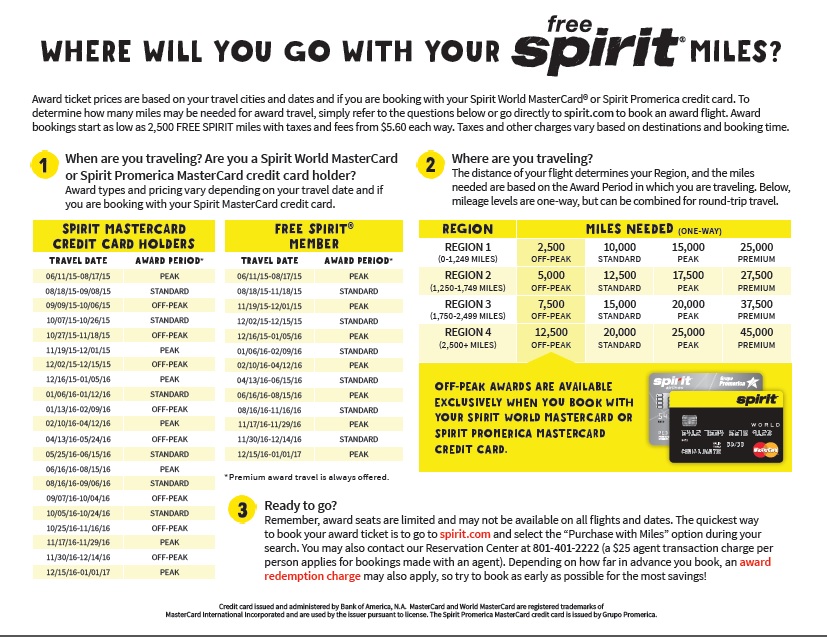
This commentary asserts that a frequent-flyer-miles-style program can be structured in the Caribbean to “spread the wealth” from peak to non-peak seasons. More points can be accumulated by consuming hospitality in the slow season and less points are accumulated for consuming hospitality in the peak/high season. (See Appendix C for Spirit Airlines Model).
This strategy can also be applied with locations …
… more points can be accumulated for hospitality in the lessor-known, lesser-frequented destinations. (See Appendix D for a glimpse of the Hotwire / HotDollars program).
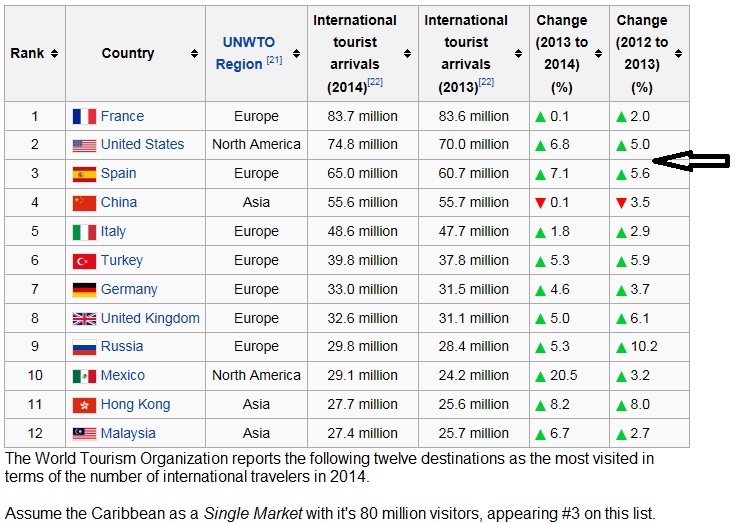
The book Go Lean…Caribbean calls for the elevation of Caribbean society; to re-focus, re-boot, and optimize all the engines of commerce so as to make the Caribbean a better place for these categories of vital activities: live, work and play. Loyalty programs can be used to incentivize all of these aspects of this roadmap. The tourism industry is categorized as “play”. The book posits that the region can experience even more growth than the estimated 80 million people that visit our shores annually. This can also apply to more spending from the visitors as well.
The Go Lean book is written to employ the best-practices of economic principles. Therefore, these fundamental principles – as related in the book (Page 21) are paramount:
People Respond to Incentives in Predictable Ways: Incentives are actions, awards, or rewards that determine the choices people make. Incentives can be positive or negative. When incentives change, people change their behaviors in predictable ways.
Economic Systems Influence Individual Choices and Incentives: People cooperate and govern their actions through both written and unwritten rules that determine methods of allocating scarce resources. These rules determine what is produced, how it is produced, and for whom it is produced. As the rules change, so do individual choices, incentives, and behavior.
The Go Lean book considers the Agent of Change (Page 57) of technology and its effect on the Caribbean’s biggest economic driver “tourism”. The end-results of loyalty program will have far-reaching effects on this travel/tourism industry.
Technology, the Internet-Communications-Technology (ICT), social media account management & marketing …
… the stewardship of Caribbean tourism must truly adapt, evolve and transform to lead and keep pace with this dynamic world; see sample VIDEO in Appendix A.
This commentary relates to more than just tourism and the visiting tourists. Considering applications for “live”, “work”, and “play”, we see that there are also many opportunities to apply incentives for Caribbean citizens who live in the homeland.
The Go Lean book identifies an Agent of Change in the vast field of technology. The technological advances with cutting-edge financial products allow loyalty programs to be forged to incentivize a lot of good behavior and to dissuade bad behavior. Consider these “live” and “work” examples:
“Live” – Tax Payments – This is not a welcome activity for anyone, thusly taxing authorities provide range of dates for tax obligations to be paid; (in the US, the Federal Income Tax deadline is April 15; payments/refunds can start on February 1st). A loyalty scheme can easily be introduced to award miles-points for early payers and refund recipients that purposefully claim their refunds later in the time window. This practice will maximize cash flow for the authorities while commending good behavior with preferable things they may want after completing obligation they must endure.
“Live” – Energy Efficiency – Positive activities like installing Green Energy alternatives (solar panels/water heaters, hybrid/electric automobiles, etc.) can be incentivized by awarding “double miles” or “eco-points”. Rather than acquiring some chattel goods, the rewards in this case could simply be privileges, like riding in carpool lanes alone.
“Live” – Education – e-Learning enrollment can result in immediate and deferred mileage credit for Caribbean students. (Thus discouraging further brain drain consequences).
“Work” – Taking jobs in rural/desolate communities or working from home is positive behavior that can be further incentivized with “double miles”-like promotions.
“Work” – Working or volunteering for Not-for-Profit agencies should also be encouraged, incentivized and rewarded.
“Work” – Take-Your-Daughter-To-Work Day is a good practice to instill career goals in young girls. Rewards should follow.
There are a lot of opportunities where loyalty program rules can transform society. Consider the practice of “gifting” miles. One person can earn the miles, but then share them with another party and even gift them to a charitable organization or a person directly. This strategy allows for a nimble, technocratic administration of loyalty programs to incentivize good behavior and dissuade bad practices.
Loyalty programs embedded in societal engines are transforming …
Could the current tourism administrations in the Caribbean master the complexities of this technology-bred strategy for elevating the region’s “play” economic engines? Hardly!
How about for regional administrators for the other activities, “live” and “work”? Again, hardly!
This “new-fangled” world requires “new-fangled” leaders. Visionaries. Technocrats.
The book Go Lean…Caribbean and the underlying movement seeks to re-boot the strategies and tactics of tourism marketing for the entire Caribbean region. The book asserts Caribbean member-states must expand and optimize their tourism outreach and use innovative products like excess inventory and loyalty rewards. However the requisite investment of the resources (time, talent, treasuries) for this goal may be too big for any one Caribbean member-state alone. So the Go Lean book campaigns to shift the responsibility to a region-wide, professionally-managed, deputized technocracy, the Caribbean Union Trade Federation (CU). The book serves as a roadmap for the introduction and implementation of the CU.
The goal of the CU is to bring the proper tools and techniques – electronic commerce, Internet Communications Technologies (ICT), visionary marketing, agile management – to the Caribbean region to optimize the stewardship of the economic, security and governing engines. The book posits that the economy can be induced and spurred for continuous progress, with technocratic management and stewardship of a Single Market. This would be better than the status quo. As conveyed here in this commentary, and in previous commentaries, the publishers of the book Go Lean…Caribbean convene the talents and skill-sets of movers-and-shakers in electronic commerce so as to forge the best tools and techniques for advanced product marketing like loyalty program.
Change has come to the region. This book Go Lean… Caribbean provides the needed details. Early in the book, the optimization and best-practices was highlighted as a reason the Caribbean region needed to unite, integrate and confederate to a Single Market. These pronouncements were included in the opening Declaration of Interdependence (Pages 11 – 14):
iv. Whereas the natural formation of the landmass is in a tropical region, the flora and fauna allows for an inherent beauty that is enviable to peoples near and far. The structures must be strenuously guarded to protect and promote sustainable systems of commerce paramount to this reality.
vi. Whereas the finite nature of the landmass of our lands limits the populations and markets of commerce, by extending the bonds of brotherhood to our geographic neighbors allows for extended opportunities and better execution of the kinetics of our economies through trade. This regional focus must foster and promote diverse economic stimuli.
xiv. Whereas a free market economy can be induced and spurred for continuous progress, the Federation must install the controls to better manage aspects of the economy: jobs, inflation, savings rate, investments and other economic principles. Thereby attracting direct foreign investment because of the stability and vibrancy of our economy.
xxvii. Whereas the region has endured a spectator status during the Industrial Revolution, we cannot stand on the sidelines of this new economy, the Information Revolution. Rather, the Federation must embrace all the tenets of Internet Communications Technology (ICT) to serve as an equalizing element in competition with the rest of the world. The Federation must bridge the digital divide and promote the community ethos that research/development is valuable and must be promoted and incentivized for adoption.
The Go Lean… Caribbean book wisely details the community ethos to adopt to proactively facilitate digital campaigns for the changed landscape; plus the executions of the following strategies, tactics, implementations and advocacies:
Community Ethos – Deferred Gratification
Page 21
Community Ethos – Economic Principle – People Respond to Incentives
Page 21
Community Ethos – Economic Principle – Economic Systems Influence Individual Choices & Incentives
Page 21
Community Ethos – Economic Principle – Consequences of Choices Lie in the Future
Page 21
Community Ethos – Lean Operations
Page 24
Community Ethos – Return on Investments (ROI)
Page 24
Community Ethos – Ways to Impact the Future
Page 26
Community Ethos – Ways to Foster Genius – Literary, Art and Music in Graphic Design
Page 27
Community Ethos – Impact Research & Development – Including ICT
Page 30
Community Ethos – Ways to Improve Sharing – Data / Social Network
Page 35
Community Ethos – Ways to Impact the Greater Good
Page 37
Strategy – Vision – Integrate Region in a Single Market
Page 45
Strategy – Mission – Build and Foster Local Economic Engines
Page 45
Strategy – Mission – Exploit the Benefits of Globalization in Trade-Tourism
Page 46
Tactical – Fostering a Technocracy
Page 64
Tactical – Growing the Economy to $800 Billion – Trade and Globalization
Page 70
Tactical – Website www.myCaribbean.gov for Caribbean stakeholders – Tourists
Page 74
Tactical – Separation of Powers – Tourism Promotions and Administration
Page 78
Implementation – Integrate All Caribbean Websites to www.myCaribbean.gov Portal
Page 97
Implementation – Ways to Pay for Change
Page 101
Implementation – Ways to Deliver
Page 109
Implementation – Ways to Impact Social Media – www.myCaribbean.gov Portal
Page 111
Planning – 10 Big Ideas – Cyber Caribbean
Page 127
Planning – Ways to Make the Caribbean Better
Page 131
Planning – Ways to Better Manage Image – Digital Media Presence
Page 133
Planning – Lessons Learned from 2008 – Tourism & Economy Went Bust
Page 136
Planning – Lessons Learned from Egypt – Lack of Tourism Stewardship
Page 143
Advocacy – Ways to Measure Progress – Mining www.myCaribbean.gov Portal Data
Page 147
Advocacy – Ways to Grow the Economy
Page 151
Advocacy – Ways to Foster Cooperatives
Page 176
Advocacy – Ways to Improve Communications – Internet & Social Media Marketing
Page 186
Advocacy – Ways to Enhance Tourism – Excess Inventory Marketing
Page 190
Advocacy – Ways to Impact Events – Sharing Economy
Page 191
Advocacy – Ways to Market Southern California
Page 194
Advocacy – Ways to Foster Technology
Page 197
Advocacy – Ways to Foster e-Commerce
Page 198
Advocacy – Ways to Preserve Caribbean Heritage – Cyber-Caribbean Image/Media
Page 218
Advocacy – Ways to Impact Urban Living
Page 234
Advocacy – Ways to Impact Rural Living
Page 235
The CU seeks to foster internet-communications-technologies (ICT) to aid-and-abet tourism and other economic activities. This includes all supporting functions before, during and after visitors come to our shores – accumulating reward miles-points creates an account-holder status – see Appendix D – with the need for monthly e-statements. This is a forceful example of how a technocratic effort by regional administrators can enhance the Caribbean product offerings online. This is heavy-lifting; but this hard-work is worth the effort. The Returns-on-Investment is assured!
In previous Go Lean blogs, related points of the Technology Agents of Change affecting the tourism product offering have been detailed; see sample here:
The Caribbean must lean-in to these new business models to incentivize good behavior, for tourism and other aspects of Caribbean affairs. People will respond with the proper inducements. So imagine the universe of 130 million people all tuned-in – to the www.myCaribbean.gov portal – and responding to the appropriate prodding.
This is referred to as “Unified Command-and-Control”. Caribbean benevolent stewards can “push a few buttons” and millions of people respond, for the Greater Good. This is an exciting perspective. Let’s do it!
This is the charge of the Go Lean roadmap: incentivize the people to do more of the right thing. With the empowerments and elevations portrayed in the roadmap we can succeed in making Caribbean region a better place for citizens and tourists alike to live, work, play and repeat. 🙂
Appendix A – VIDEO – Capital One Venture® – Jennifer Garner – Ticked Off Traveler – https://youtu.be/7uwYGXqPguU
Published on Sep 15, 2015 – Trying to use your airline credit card miles shouldn’t be frustrating! With the Capital One Venture card, you can fly on any airline any time, then use your miles to cover the cost. Learn more: http://www.capitalone.com/credit-card
————
Appendix B – Frequent-Flyer Programs
A Frequent-Flyer Program (FFP) is a loyalty program offered by an airline. Many airlines have frequent-flyer programs designed to encourage airline customers enrolled in the program to accumulate points (also called miles, kilometers or segments) which may then be redeemed for air travel or other rewards. Points earned under FFPs may be based on the class of fare, distance flown on that airline or its partners, or the amount paid. There are other ways to earn points. For example, in recent years, more points have been earned by using co-branded credit and debit cards than by air travel. Another way to earn points is spending money at associated retail outlets, car hire companies, hotels or other associated businesses. Points can be redeemed for air travel, other goods or services, or for increased benefits, such as travel class upgrades, airport lounge access, or priority bookings.
Frequent-flyer programs can be seen as a certain type of virtual currency, one with unidirectional flow of money to purchase points, but no exchange back into money.[1]
The very first modern frequent-flyer program was created in 1972 by Western Direct Marketing, for United Airlines. It gave plaques and promotional materials to members. In 1979, Texas International Airlines created the first frequent-flyer program that used mileage tracking to give ‘rewards’ to its passengers, while in 1980 Western Airlines created its Travel Bank, which ultimately became part of Delta Air Lines’ program upon their merger in 1987.[2][3] American Airlines’ AAdvantage program launched in 1981 as a modification of a never-realized concept from 1979 that would have given special fares to frequent customers. It was quickly followed later that year by programs from United Airlines (Mileage Plus) and Delta Air Lines (SkyMiles), and in 1982 from British Airways (Executive Club).[4]
Credit card purchases Many credit card companies partner with airlines to offer a co-branded credit card or the ability to transfer points in their loyalty program to an airline’s program. Large sign-up bonuses and other incentives have been common. Accruing points via credit cards bonuses and spending allows infrequent travelers to benefit from the frequent flyer program.
With a non-affiliated travel rewards credit card a card-member can buy a positive-space ticket considered “revenue” class, which can earn the passenger points with the airline flown.[11]
Redemption After accumulating a certain number of points, members then use these points to obtain airline tickets. However, points only pay for the base fare, with the member still responsible for the payment of mandatory taxes and fees.
What are HotDollars?
HotDollars can be used for any hotel, flight, or Hotwire Hot Rate rental car booking on Hotwire. Each HotDollar is equivalent to one U.S. dollar and is available for one year from the date of issuance. For more information, please see the HotDollars section of our Hotwire Travel Products Rules and Restrictions.
To use your HotDollars, simply sign in by clicking, “My Account.” Then, during checkout, choose HotDollars as your payment method.
Especially if those numbers are the balance statements of bank accounts. Either one has the money, or they don’t.
Increasingly in the casino/gaming industries, the money is not there.
Why?
Despite the fact that the “house” always wins, the number of gamblers have declined! It is what it is!
87% of Baby-Boomers gamble when visiting Las Vegas
78% of Generation X-ers gamble when visiting Las Vegas
63% of Millenials gamble when visiting Las Vegas
The following news article/VIDEO depicts that change is afoot. There are less and less gamblers participating in “games of chance” at casinos. These establishments can complain or change along with the demographics. This VIDEO portrays an attempt for Las Vegas casinos to change, to adapt to the indisputable societal factors. See VIDEO here:
October 7, 2015 – Casino revenue on the Las Vegas strip dropped nearly 5 percent in August [2015]. That’s the third straight month of declines. This comes as Sin City tries to lure the next generation of gamblers. While slot machines are still one of the world’s best moneymakers, casinos are having a tough time getting young people to sit down at them. Ben Tracy reports on what casinos have planned to appeal to millennials. (VIDEO plays best in Internet Explorer).
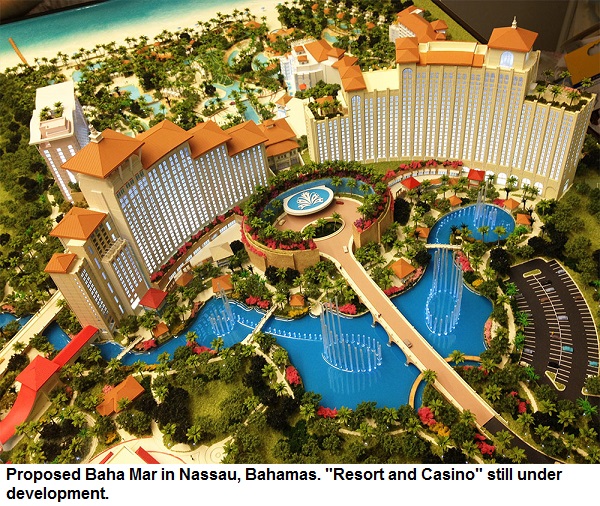
This is a very important issue for Caribbean consideration, as casino gambling has often been associated with Caribbean resorts. Even now there are new casino projects under development. In a previous blog, this commentary posited that “doubling down” the bet on casinos was a flawed strategy for the region’s governments and business institutions.
Alas, there is the potential for a lot of money to still be made in the casino/gaming industries if only the product can evolve to keep pace with the changing demographics of the marketplace.
Enter “technology-based” games.
This article aligns with the book Go Lean…Caribbean, which calls for the elevation of Caribbean economics and an embrace of more technology. This book serves as a roadmap for the introduction and implementation of the technocratic Caribbean Union Trade Federation (CU) to better manage change and emerging technology in the Caribbean region. This is a big deal for the Caribbean, as technology (internet and communications technologies) is being pitched in the Go Lean roadmap as an equalizing element for the Caribbean region in competition with the rest of the world. This hope was identified early in the Go Lean book (Page14) in the following pronouncements in the Declaration of Interdependence:
xxvii. Whereas the region has endured a spectator status during the Industrial Revolution, we cannot stand on the sidelines of this new economy, the Information Revolution. Rather, the Federation must embrace all the tenets of Internet Communications Technology (ICT) to serve as an equalizing element in competition with the rest of the world. The Federation must bridge the digital divide and promote the community ethos that research/development is valuable and must be promoted and incentivized for adoption.
The Go Lean book posits that there is a need to re-boot and optimize the engines of commerce so as to make the Caribbean a better place to live, work and play. The tourism product, the mainstay of Caribbean economy, used to depend on certain amenities (i.e. Golf) that have now come under attack by the social and demographic changes depicted in the foregoing VIDEO. It so appears that the future for Caribbean commerce in the hospitality and gaming industries will not only depend on factors like “sun, sand, surf and smiles”, but now also on “systems”.
The Go Lean book also addresses the realities of gambling, in that it advocates the adoption of a regional lottery for all 30 member-states of the Caribbean.
The Go Lean/CU roadmap seeks to elevate all of Caribbean society, including the “games people play” to remain competitive and consequential in the future. This is a matter of technology, education, marketing, planning, and econometrics. This is the heavy-lifting of shepherding a progressive region of 42 million people, 10 million Diaspora, 80 million tourists, and 4 language groups across 30 member-states. The CU’s charter is to effectuate progress in this region with these 3 prime directives:
Optimization of the economic engines in order to grow the regional economy to $800 Billion and create 2.2 million new jobs.
Establishment of a security apparatus to protect the resultant economic engines and marshal against economic crimes.
Improve Caribbean governance to support these engines.
The foregoing article-VIDEO helps us to appreciate that there will be sustained economic activity in the gambling-gaming industries; a tourism industry mainstay in the Caribbean. This means future jobs. The quest to create the jobs (and work force) for the near-future is paramount in the Go Lean roadmap. Early in the book, the responsibility to monitor, manage, and plan for new jobs were identified as an important function for the CU with this pronouncement in the same Declaration of Interdependence (Pages 13):
xxvi. Whereas the Caribbean region must have new jobs to empower the engines of the economy and create the income sources for prosperity, and encourage the next generation to forge their dreams right at home, the Federation must therefore foster the development of new industries… In addition, the Federation must invigorate the enterprises related to existing industries like tourism… – impacting the region with more jobs.
The Caribbean must contend with the challenges of demographic change. There are 3 kinds of people in the world:
Those who make things happen
Those who watch things happen
Those who wonder “what happened?”
Whereas, this latter description may have been our disposition in the past, we can no longer afford this status. Our situation is quite dire now, as we have lost vast numbers of our populations to societal abandonment because as a community, we have failed to keep pace of change. Our society is now in desperate need of reform and reboot to insulate from many demographic changes. On the one hand, we must diversify our economy and avail other high job-multiplier industries, away from tourism, but on the other hand, we must double down in the tourism product, as the economic principles of “supply and demand” just cannot be ignored. (During the winter months, our Caribbean destinations are the “best addresses on the planet”).
The Go Lean… Caribbean book details this quandary. It qualifies the community ethos to adopt to diversify our economy and proactively mitigate the dire effects of the changed demographic landscape; plus the executions of the following strategies, tactics, implementations and advocacies:
Community Ethos – Economic Principle – People Respond to Incentives
Page 21
Community Ethos – Economic Principle – Consequences of Choices Lie in the Future
Page 21
Community Ethos – Job Multiplier
Page 22
Community Ethos – Lean Operations
Page 24
Community Ethos – Return on Investments (ROI)
Page 24
Community Ethos – Ways to Impact the Future
Page 26
Community Ethos – Ways to Foster Genius – STEM Career Options
Page 27
Community Ethos – Ways to Help Entrepreneurship – Incubators Role
Page 28
Community Ethos – Ways to Promote Intellectual Property
Page 29
Community Ethos – Ways to Impact Research & Development
Page 30
Community Ethos – Ways to Bridge the Digital Divide
Page 31
Community Ethos – Ways to Impact the Greater Good
Page 37
Strategy – Vision – Best Address on the Planet
Page 45
Strategy – Vision – Integrate Region in a Single Market
Page 45
Strategy – Mission – Embrace the Advances of Technology & Incentivize Participation
Page 46
Tactical – Fostering a Technocracy
Page 64
Tactical – Tactics to Forge an $800 Billion Economy
Page 67
Tactical – Separation of Powers
Page 71
Implementation – Ways to Deliver
Page 109
Planning – Ways to Make the Caribbean Better
Page 131
Planning – Lessons Learned from 2008
Page 136
Advocacy – Ways to Grow the Economy
Page 151
Advocacy – Ways to Create Jobs
Page 152
Advocacy – Ways to Enhance Tourism
Page 190
Advocacy – Ways to Impact Events
Page 191
Advocacy – Ways to Foster Technology
Page 197
Advocacy – Ways to Foster e-Commerce
Page 198
Advocacy – Ways to Impact the Lottery – Regional Caribbean Option
Page 213
This commentary is not advocating betting on casino gambling, (this practice is considered a vice), but rather betting on technology.
The Go Lean/CU roadmap calls for fostering industrial developments to aid tourism, incorporating best practices and quality assurances to deliver the best experience in the world. This must also include creating technology products to make gaming more appealing for the millennial generations. The realities of technology is that these developments can be produced anywhere in the world. So why not here? We have a lot at stake already.
If we successfully incubate a gaming technology industry here at home, we would create jobs right here at home. If, on the other hand, if we incubate gaming technology and the world is not receptive to our creations, we would have still created a workforce with very marketable skills, looking for opportunities to ply their trade. This is win-win! The Caribbean “house” will only win.
This commentary has previously related details of the changing macro-economic factors that affect where and how jobs are created. The following are samples of earlier Go Lean blogs:
According to the foregoing VIDEO, there is new hope for casino gambling, based on technology. For a community, this is not a gamble; this is a sure bet; by embracing technology, the Caribbean region will surely win. This position is based on some reliable economic principles, the principles of money multipliers and job multipliers:
Casinos can create money “from thin air”, getting cash while giving nothing in return (Page 22). As for job multipliers, this principle explains how certain industries are better than others for generating multiple indirect jobs down the line for each direct job on a company’s payroll. (.i.e. The automotive manufacturing industry was a choice selection with a job-multiplier rate of 11 – Page 260).
So this advocacy to embrace gaming technology is more than a bet; it’s a sure formula for success. This is a “play” that the Caribbean must make and cannot lose. The “house” always wins.
The Caribbean can be the best destination on the planet, a better place to live, work and play. 🙂
News Flash: The Caribbean member-states are not as advanced as other North American locations (US & Canada) or many Western European countries.
Duh! Obvious, right?!
We (the Caribbean) have not all fully embraced all that is modern, like the internet in its many modes … broadband, Wi-Fi, satellite and mobile utilities. Some countries are worse than others in this regards. In some places, there may be no internet access at all.
The assertion in the book Go Lean…Caribbean, is that any plan to reboot Caribbean economics, security and governance must include promotion and regulation of Internet and Communications Technologies (ICT) as well. This Go Lean book serves as a roadmap for the introduction and implementation of the technocratic Caribbean Union Trade Federation (CU) to facilitate the growth, stewardship and oversight of ICT and electronic commerce in a regional Single Market.
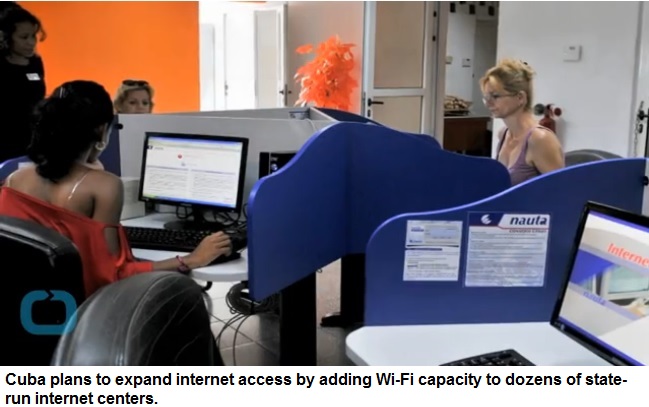
This ad-supported news VIDEO here reports on one of our worst cases, Cuba:
Posted on October 12, 2015 – Cuba has announced plans to expand internet access by adding Wi-Fi capacity to dozens of state-run internet centers and more than halving the cost that users pay for an hour online.
(Press || PAUSE || to STOP the continuous VIDEO).
Cuba’s lack of ICT infrastructure is understandable, considering the historicity of that island nation. (Though change is imminent!)
What’s frightening though is that ALL of the Caribbean is just a natural disaster away from also “going dark” on the internet. Imagine a hurricane, or an earthquake, or even a volcano! And yet different Caribbean member-states have been affected by these disasters … just recently.
This commentary is therefore a melding of ICT, economics, security and governance. This is a big deal for the Caribbean, as the internet is being pitched in the Go Lean roadmap as an equalizing element for the Caribbean region in competition with the rest of the world. So the internet is slated to deliver more than just email messages, but rather, to deliver the Caribbean’s future.
With the internet as the delivery vehicle, there must now be oversight and promotion for this information super-highway. Too much – as in the future for our children – is at stake.
This Go Lean roadmap calls for the heavy-lifting of building Caribbean communities, of shepherding important aspects of Caribbean life, including telecommunication policies across member-state borders. In fact, the roadmap has these 3 prime directives:
Optimization of the economic engines in order to grow the regional economy to $800 Billion & create 2.2 million new jobs.
Establishment of a security apparatus – including an emergency management apparatus – to protect the resultant economic engines.
Improvement of Caribbean governance to support these engines, utilizing a separation-of-powers with member-states.
These prime directives will elevate Caribbean society, above and beyond what any one member-state can do alone. This is the prospect of a unified effort, a leveraged Single Market. This reality was identified early in the Go Lean book (Pages 13 & 14) in the in the following pronouncements in the Declaration of Interdependence:
xvi. Whereas security of our homeland is inextricably linked to prosperity of the homeland, the economic and security interest of the region needs to be aligned under the same governance. … [The] accedence of this Federation must equip the security apparatus with the tools and techniques for predictive and proactive interdictions.
xxvii. Whereas the region has endured a spectator status during the Industrial Revolution, we cannot stand on the sidelines of this new economy, the Information Revolution. Rather, the Federation must embrace all the tenets of Internet Communications Technology (ICT) to serve as an equalizing element in competition with the rest of the world. The Federation must bridge the digital divide and promote the community ethos that research/development is valuable and must be promoted and incentivized for adoption.
So what exactly can be promoted here and now to elevate the Caribbean region’s ICT infrastructure above and beyond what the member-states can do themselves, independently? Or more so, what can be accomplished for ICT infrastructure during times of distress?
This following news article identifies an effort by the social media giant Facebook, to employ internet access by satellite when land-lines are unavailable, or not even installed. See the story here, considering that this solution would be perfect for the Caribbean:
Title: Facebook to launch satellite to expand Internet access in Africa
(Reuters) – Facebook Inc said it would launch a satellite in partnership with France’s Eutelsat Communications to bring Internet access to large parts of sub-Saharan Africa.
The satellite, part of Facebook’s Internet.org platform to expand internet access mainly via mobile phones, is under construction and will be launched in 2016, the companies said on Monday. (http://on.fb.me/1JPiTZC)
The satellite, called AMOS-6, will cover large parts of West, East and Southern Africa, Facebook Chief Executive Mark Zuckerberg said in a Facebook post.
“To connect people living in remote regions, traditional connectivity infrastructure is often difficult and inefficient, so we need to invent new technologies,” Zuckerberg said.
The Internet.org platform offers free access to pared-down web services, focused on job listings, agricultural information, healthcare and education, as well as Facebook’s own social network and messaging services.
Growth in the number of people with access to the Internet is slowing, and more than half the world’s population is still offline, the United Nations Broadband Commission said last month.
Facebook has nearly 20 million users in major African markets Nigeria and Kenya, statistics released by it showed last month, with a majority using mobile devices to access their profiles.
The company opened its first African office in Johannesburg in June.
Tech news website The Information reported in June that Facebook had abandoned plans to build a satellite to provide Internet service to continents such as Africa. (http://bit.ly/1JPiVkn)
(Reporting by Sai Sachin R in Bengaluru; Editing by Don Sebastian)
This issue of internet deployment and governance has been a frequent topic for Go Lean commentaries. Other blog-commentaries on this subject have detailed the full width-and-breath of preparing Caribbean society for the diverse economic, security and governing issues of managing ICT as a utility in this new century. See sample blogs here:
Caribbean Communications Infrastructure Program (CARCIP) and the Caribbean Telecommunications Union (CTU) urges greater innovation and protection.
These commentaries demonstrate that there is the need for a technocratic governing body to better facilitate and promote the internet in the Caribbean, for commerce, security and government applications. The CU is designed to provide that governance and promotion. Successful execution of the CU/Go Lean roadmap will result a surge in internet/online activity and transactions; as there is the plan to deploy schemes for e-Commerce (Central Bank adoption of Electronic Payment systems) and a Facebook-style social media network www.myCaribbean.gov; (administered by the regional Caribbean Postal Union).
The Go Lean book details the community ethos, plus the execution of related strategies, tactics, implementations and advocacies to facilitate this ICT vision. The following is a sample of these specific details from the book:
Community Ethos – Deferred Gratification
Page 21
Community Ethos – Economic Principles – People Choose
Page 21
Community Ethos – Economic Principles – People Respond to Incentives in Predictable Ways
Page 21
Community Ethos – Economic Principles – The Consequences of Choices Lie in the Future
Page 21
Community Ethos – Governing Principles – Lean Operations
Page 24
Community Ethos – Governing Principles – Return on Investments
Page 24
Community Ethos – Ways to Impact the Future
Page 26
Community Ethos – Ways to Foster Genius
Page 27
Community Ethos – Ways to Promote Intellectual Property
Page 29
Community Ethos – Ways to Impact Research & Development
Page 30
Community Ethos – Ways to Bridge the Digital Divide
Page 31
Community Ethos – Ways to Improve Sharing
Page 35
Community Ethos – Ways to Impact the Greater Good
Page 37
Strategy – Vision – Confederate 30 Member-States into a Single Market
Page 45
Strategy – Mission – Embrace the Advances of Technology
Page 46
Strategy – Agents of Change – Technology
Page 57
Strategy – Agents of Change – Climate Change
Page 57
Tactical – Fostering a Technocracy
Page 64
Tactical – Separation of Powers – Caribbean Central Bank
Page 73
Tactical – Separation of Powers – Caribbean Postal Union
Page 78
Tactical – Separation of Powers – Communications and Media Authority
Page 79
Implementation – Ways to Pay for Change
Page 101
Implementation – Ways to Deliver
Page 109
Implementation – Reasons to Repatriate to the Caribbean
Page 118
Planning – 10 Big Ideas for the Caribbean Region – Cyber-Caribbean
Page 127
Planning – Ways to Make the Caribbean Better
Page 136
Planning – Reasons Why the CU Will Succeed
Page 137
Advocacy – Ways to Grow the Economy
Page 151
Advocacy – Ways to Create Jobs
Page 152
Advocacy – Ways to Improve Education – Promotion of e-Learning
Advocacy – Ways to Impact Main Street – Wifi & Mobile Apps: Time and Place
Page 201
Advocacy – Ways to Improve Monopolies – Utilities to Oversee ICT/New Media
Page 202
Advocacy – Ways to Impact the Youth – Foster Work Ethic for ICT
Page 227
Advocacy – Ways to Impact Urban Living – Broadband for Work-at-Home
Page 234
Advocacy – Ways to Impact Rural Living – Ideal for Satellite Deployment
Page 235
While the Go Lean book focuses primarily on economic issues, it also recognizes that technology is paramount.
We must nurture growth in this industry space – Cyber Space – for the Caribbean’s present and future dispositions.
The returns on our investments will be garnered by our children.
For example:
Imagine no need to go abroad to college because access is enabled for any college/university of choice by logging on to the internet.
We must welcome this change!
The Go Lean book describes the effort to create this reality as heavy-lifting, and then urges all to lean-in to this roadmap.
This urging is repeated here again. All Caribbean stakeholders (people, organizations and governments) are urged to lean-in to this roadmap. This is conceivable, believable and achievable. We can do this … and make the region a better place to live, work and play. 🙂
While “Greed maybe good” for incentivizing innovation, it “sucks” to apply massive increases to existing products because … well just because.
This appears to be the scenario in the following news article and VIDEO; a former Hedge Fund Manager buys the rights (patents) to an older drug and then increases the price … 5500 percent. See the story here:
Title: Ex-hedge funder buys rights to AIDS drug and raises price from $13.50 to $750 per pill By: Tom Boggioni
A former hedge fund manager turned pharmaceutical businessman has purchased the rights to a 62-year-old drug used for treating life-threatening parasitic infections and raised the price overnight from $13.50 per tablet to $750.
According to the New York Times, Martin Shkreli, 32, the founder and chief executive of Turing Pharmaceuticals, purchased the rights to Daraprim for $55 million on the same day that Turing announced it had raised $90 million from Shkreli and other investors in its first round of financing.
Daraprim is used for treating toxoplasmosis — an opportunistic parasitic infection that can cause serious or even life-threatening problems in babies and for people with compromised immune systems like AIDS patients and certain cancer patients — that sold for slightly over $1 a tablet several years ago. Prices have increased as the rights to the drug have been passed from one pharmaceutical company to the next, but nothing like the almost 5,500 percent increase since Shkreli acquired it.
Worrying that the cost of treatment could devastate some patients, Dr. Judith Aberg, the chief of the division of infectious diseases at the Icahn School of Medicine at Mount Sinai asked, “What is it that they are doing differently that has led to this dramatic increase?”
According to Shkreli, Turing will use the money it earns to develop better treatments for toxoplasmosis, with fewer side effects.
“This isn’t the greedy drug company trying to gouge patients, it is us trying to stay in business,” Shkreli explained, saying that many patients use the drug for far less than a year and that the new price is similar to other drugs used for rare diseases.
Shrkeli also defended his small pharmaceutical company saying, “It really doesn’t make sense to get any criticism for this.”
This is not the first time the fledgling pharmaceutical executive has come under scrutiny.
He started the hedge fund MSMB Capital while in his 20’s and was accused of urging the FDA to not approve certain drugs made by companies whose stock he was shorting.
In 2011, Shkreli helped form Retrophin, which also acquired old drugs and immediately raised their prices. Retrophin’s board fired Shkreli a year ago and has filed a complaint in Federal District Court, accusing him of using Retrophin as a personal fund to pay back angry investors in his hedge fund.
As for Shrkeli’s claim that he will put the excess profits back into research, doctors say that isn’t needed in this case.
“I certainly don’t think this is one of those diseases where we have been clamoring for better therapies,” said Dr. Wendy Armstrong, professor of infectious diseases at EmoryUniversity in Atlanta.
——-
VIDEO Title: Ex-hedge funder who hiked AIDS pill cost by 5,500 percent says drug ‘still underpriced’ – https://youtu.be/bCIMUn_WNz0
According to the Person of Interest in the foregoing article and VIDEO, 32 year-old ex-Hedge Fund Manager Martin Shkreli, “Drugs need a profit motive to sponsor innovation”. He posits that the process of research and development for new drugs require the appeal of capitalism, where people invest hoping to get a BIG return later.
To argue with this business logic is to argue with the tenets of capitalism.
So be it! Let the argument begin!
“This is what happens when you turn over healthcare to the capitalist” – says one patient and sufferer of Multiple Sclerosis, Dionne Sarden, of Greater Detroit.
Drugs and healthcare should pursue the motives of the Greater Good, not the “greater profit”. If you do not agree with this statement, just re-visit the Hippocratic Oath, here, that every doctor is required to vow at the start of their medical career:
I swear to fulfill, to the best of my ability and judgment, this covenant:
I will respect the hard-won scientific gains of those physicians in whose steps I walk, and gladly share such knowledge as is mine with those who are to follow.
I will apply, for the benefit of the sick, all measures which are required, avoiding those twin traps of overtreatment and therapeutic nihilism.
I will remember that there is art to medicine as well as science, and that warmth, sympathy, and understanding may outweigh the surgeon’s knife or the chemist’s drug.
I will not be ashamed to say “I know not,” nor will I fail to call in my colleagues when the skills of another are needed for a patient’s recovery.
I will respect the privacy of my patients, for their problems are not disclosed to me that the world may know. Most especially must I tread with care in matters of life and death. If it is given me to save a life, all thanks. But it may also be within my power to take a life; this awesome responsibility must be faced with great humbleness and awareness of my own frailty. Above all, I must not play at God.
I will remember that I do not treat a fever chart, a cancerous growth, but a sick human being, whose illness may affect the person’s family and economic stability. My responsibility includes these related problems, if I am to care adequately for the sick.
I will prevent disease whenever I can, for prevention is preferable to cure.
I will remember that I remain a member of society, with special obligations to all my fellow human beings, those sound of mind and body as well as the infirm.
If I do not violate this oath, may I enjoy life and art, respected while I live and remembered with affection thereafter. May I always act so as to preserve the finest traditions of my calling and may I long experience the joy of healing those who seek my help.
Written in 1964 by Louis Lasagna, Academic Dean of the School of Medicine at Tufts University, and used in many medical schools today. Source: https://en.wikipedia.org/wiki/Hippocratic_Oath retrieved September 23, 2015.
Alas, the Person of Interest in this consideration is not a medical doctor, he is a Hedge Fund Manager. Some would consider his actions to be just “par for the course” … for a Crony-Capitalist. (Consider this sample of his “immature” Twitter messages).
This consideration is in conjunction with the book Go Lean…Caribbean which asserts that Crony-Capitalism is the scorn of American life that reaches into every fabric of society; in this case the life-and-death decisions for healthcare. The book urges the Caribbean region not to follow the American example in this regard. (Previously Go Lean blogs have cited the good non-profit-motive example of Cuba. While Cuba is a Failed-State in so many other areas, in this one case, drug-pricing, they get it right; “even a broken clock is right twice a day”).
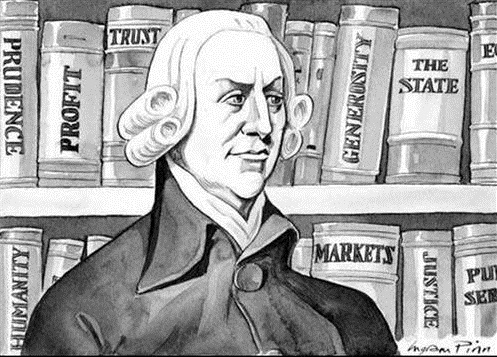
The Go Lean book is focused on economics primarily, but also considers the realities of security and governance. For the background on economics, the book relates the historicity of the father of modern macro-economics Adam Smith.
Adam Smith, the 18th century Scottish political economics pioneer, is best known for his classic work: “An Inquiry into the Nature and Causes of the Wealth of Nations (1776)“. Through reflection over the economics at the beginning of the Industrial Revolution the book touches upon broad topics as the division of labor, productivity, free markets and the division of incomes into profit, wage, and rent[4]. While Smith attacked most forms of government interference in the economic process, he advocated that government should remain active in certain sectors of society not suited for profit-seekers. These sectors included public education, mitigations for poor adults, the judiciary, a standing army, and healthcare. He posited that these institutional systems may/should never be directly profitable for private industries.
Hedge Funds and Crony-Capitalist obviously hold a dissenting view.
Beyond Adam Smith, the field of Economics features public choice theory – the application of economic thinking to political issues. This field asserts that “rent-seeking” is the more appropriate labeling for certain activities. This “rent” refers to seeking to increase one’s share of existing wealth without creating new wealth. The demonstrated effects of these efforts are reduced economic efficiency [in the community] through poor allocation of resources, reduced actual wealth creation, lost government revenue, and increased income inequality,[1] and, potentially, national decline. (The word “rent” does not refer here to payment on a lease but refers to gaining control of land or other natural resources).
So why is the cost of drugs so high in the US? Based on these experiences, it is not just the motivation for profit, but for rent!
This theory was detailed further in a recent Go Lean blog that related that Big Pharma, the Pharmaceutical industry, dictates standards of care in the field of medicine, more so than may be a best-practice. The blog painted a picture of a familiar scene where Pharmaceutical Sales “Reps” slip in the backdoor to visit doctors to showcase their latest product lines; but relates that there are commission kick-backs, rebates and “spiffs” in these arrangements, to incentivize the doctors to order these drugs for their patients. The Go Lean book posits that the Caribbean must take its own lead in the battle for health, wellness and pharmaceuticals because this US eco-system is motivated by such a bad ethos: profit and even worst, rent.
The Go Lean book strategizes a roadmap for economic empowerment in the Caribbean region, even including the indisputable need for healthcare and pharmaceutical drugs. Clearly any quest to elevate the region must detail a comprehensive plan for healthcare. The Go Lean book proves this; it goes beyond a plan and provides a roadmap … to make the Caribbean a better place to live, work, heal and play. At the outset of the Go Lean book, in the Declaration of Interdependence (Page 11), these points are pronounced:
viii. Whereas the population size is too small to foster good negotiations for products and commodities from international vendors, the Federation must allow the unification of the region as one purchasing agent, thereby garnering better terms and discounts.
ix. Whereas the realities of healthcare and an aging population cannot be ignored and cannot be afforded without some advanced mitigation, the Federation must arrange for health plans to consolidate premiums of both healthy and sickly people across the wider base of the entire Caribbean population. The mitigation should extend further to disease management, wellness, mental health, obesity and smoking cessation programs.
The Go Lean serves as a roadmap for the implementation and introduction of the technocratic Caribbean Union Trade Federation (CU). The CU‘s prime directives are identified with the following 3 statements:
Optimization of the economic engines in order to grow the regional economy to $800 Billion & create 2.2 million new jobs.
Establishment of a security apparatus to protect the resultant economic engines.
Improve Caribbean governance to support these engines.
Previous blog/commentaries addressed issues of capitalistic conflicts in American medical practices, compared to other countries, and the Caribbean. The following sample applies:
The foregoing news article and VIDEO provides an inside glimpse of American Crony-Capitalism as it touches on vital areas like healthcare. Obviously, the innovators and developers of drugs have the right to glean the economic returns of their research. The Go Lean roadmap posits that there is a better way, a scheme in which more innovations can emerge and investors can get their Return on Investment (ROI).
The Caribbean Union Trade Federation has the prime directive of optimizing the economic, security and governing engines of the region. The foregoing VIDEO depicts that research is very important to identify and qualify best practices in health management for the public. This is the manifestation and benefits of Research & Development (R&D). The roadmap describes this focus as a community ethos to promote R&D in the areas of science, technology, engineering and medicine (STEM).
The following list details additional ethos, strategies, tactics, implementations and advocacies to optimize the region’s health deliveries and R&D investments, especially on Caribbean campuses and educational institutions:
Community Ethos – Deferred Gratification
Page 21
Community Ethos – Economic Systems Influence Individual Choices and Incentives
Page 21
Community Ethos – The Consequences of Choices Lie in the Future
Page 21
Community Ethos – Governing Principles – Lean Operations – GPO’s; Ideal for Healthcare
Page 24
Community Ethos – Governing Principles – Return on Investments (ROI)
Page 24
Community Ethos – Governing Principles – Cooperatives
Page 25
Community Ethos – Non-Government Organizations
Page 25
Community Ethos – Ways to Impact Research & Development (R&D)
Page 30
Community Ethos – 10 Ways to Promote Happiness
Page 36
Community Ethos – Ways to Impact the Greater Good
Page 37
Strategy – Integrate and unify region in a Single Market
Page 45
Strategy – Agents of Change – Globalization
Page 57
Tactical – Fostering a Technocracy
Page 64
Tactical – Growing to a $800 Billion Economy – Case Study of Adam Smith
Page 67
Tactical – Separation of Powers – Health Department
Page 86
Tactical – Separation of Powers – Drug Administration
Page 87
Implementation – Ways to Pay for Change
Page 101
Implementation – Ways to Implement Self-Government Entities – R&D Campuses
Page 105
Implementation – Ways to Deliver
Page 109
Planning – Ways to Improve Trade
Page 128
Planning – Ways to Make the Caribbean Better
Page 131
Advocacy – Ways to Improve Healthcare
Page 156
Advocacy – Ways to Better Manage the Social Contract
Page 170
Advocacy – Ways Foster Cooperatives
Page 176
Advocacy – Ways to Improve Emergency Management
Page 196
Advocacy – Ways to Impact Foundations
Page 219
Advocacy – Ways to Impact Persons with Disabilities
Page 228
Appendix – Emergency Management – Medical Trauma Centers
Page 336
The Go Lean roadmap does not purport to be an authority on medical or pharmaceutical research best practices. This economic-security-governance empowerment plan should not direct the course of direction for medical research and/or treatment. But something is wrong here, as portrayed in the foregoing article and VIDEO. The pharmaceutical industry cannot claim any adherence to any “better nature” in their practices.
This is not economics, which extols principles like the “law of diminishing returns”, or “competition breathes lower prices and higher quality”. No, the American pharmaceutical industry, at this juncture, is just a pure evil version of Crony Capitalism. Just … rent!
This is not the role model we want to build Caribbean society on.
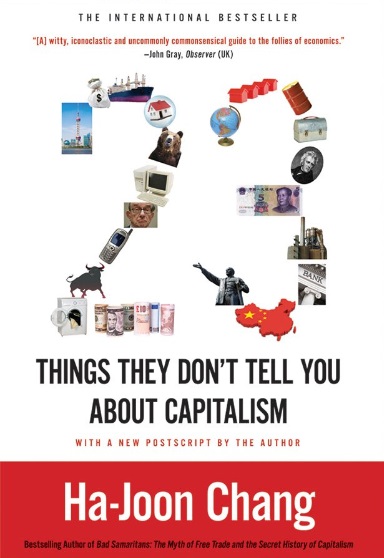
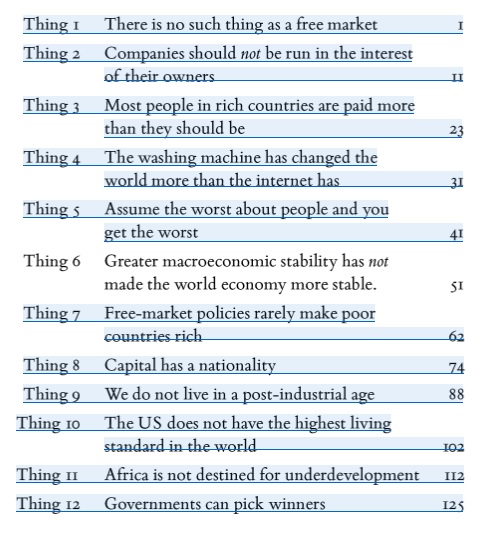
Capitalism versus Socialism … Many people feel this type of discussion in this commentary is really a clear indictment of the premise of the American Healthcare system, based on capitalism (right-leaning). Opponents of this status quo advocate for a more socialistic approach (left-leaning). Socialized medicine is the premise for Canada, the UK, and all the 27 EU countries. So the alternative to the American system is not so radical. Alas, even America’s capitalized healthcare schemes are not as far-right as in times past; with the implementation MediCare (in the 1960’s), VA hospitals, and Affordable Care Act (ObamaCare) Health Insurance mandates; these are now reflections of socialism in the US system.
How do we measure the effectiveness of success of left-leaning versus right-leaning healthcare schemes? While most “Well-being” measurements are obviously subjective, there is one exception: life expectancy. Life expectancy calculation is all binary, 1 versus 0, On versus Off, Life versus Death. The Organization of Economic Cooperation and Development maintains a Better Life Index that measures “Well-being” in the 34 OECD Countries. The following details apply:
There is more to life than the cold numbers of GDP and economic statistics – This Index allows you to compare well-being across countries, based on 11 topics the OECD has identified as essential, in the areas of material living conditions and quality of life.
One of the 11 topics measure “Health”, with considerations to the binary Life Expectancy and the subjective Self-Reported Health. On this chart related to Life Expectancy (based on when the average age for non-trauma deaths), the US appears on the list in position 27. See chart here.
The Go Lean movement asserts that the US should not be our model for healthcare. We can do better in the Caribbean; we have done better (Cuba), and must do better throughout the region. We can impact the Greater Good and still preserve economic realities. This means life-or-death. 🙂
Income Inequality = the rich becoming richer while the middle classes shrink.
A phrase like Income Inequality, on the surface, would appear to be just about economics. But truthfully this is more a subject about governance, but yes, in alignment with economic and security concerns.
The book Go Lean…Caribbean and accompanying blogs constantly focus on economics, security and governance in the Caribbean region. The book serves as a roadmap for the introduction and implementation of the technocratic Caribbean Union Trade Federation (CU). If this effort is successful then it could result in some abatement of Income Inequality.
The subject of Income Inequality has been influx more and more as of late, especially after the Great Recession of 2008 – a frequent topic for the Go Lean bookand accompanying blogs. The desire to eliminate or reduce Income Inequality is a practical argument for social cohesion and to reduce social unrest; as such eruptions can weaken society. Income Inequality has a slippery slope that can lead to down to Failed-State status. Now after waging global conflicts of World War I, World War II plus countless regional conflicts and sectarian violence, it is important for societies to be “on guard” for encroachments in this regard.
Thusly, Income Inequality is a “hot topic” … in many countries.
A 2011 OECD study investigated economic inequality in Argentina, Brazil, China, India, Indonesia, Russia and South Africa. It concluded that key sources of inequality in these countries include “a large, persistent informal sector (Black Markets), widespread regional divides (e.g. urban-rural), gaps in access to education, and barriers to employment and career progression for women.”[12] Here are some poignant tidbits on this subject from varied countries around the world (Wikipedia Online Encyclopedia; retrieved 09/16/2015 from: https://en.wikipedia.org/wiki/Economic_inequality):
Russia A report by Credit Suisse in 2013 states that: Russia has the highest level of wealth inequality in the world, apart from small Caribbean nations with resident billionaires. Worldwide, there is one billionaire for every US$170 billion in household wealth; Russia has one for every US$11 billion. Worldwide, billionaires collectively account for 1–2% of total household wealth; in Russia today 110 billionaires own 35% of all wealth.[9]
United States Bernie Sanders (I-VT) opined in a 2010 The Nation article that an “upper-crust of extremely wealthy families are hell-bent on destroying the democratic vision of a strong middle-class which has made the United States the envy of the world. In its place they are determined to create an oligarchy in which a small number of families control the economic and political life of our country.”[14] The top 1% in 2007 had a larger share of total income than at any time since 1928.[15] In 2011, according to PolitiFact and others, the top 400 wealthiest Americans “have more wealth than half of all Americans combined.”[16][17][18][19]
Economic researchers John Schmitt and Ben Zipperer (2006) of the CEPR (Center for Economic and Policy Research) point to economic liberalism and the reduction of business regulation along with the decline of union membership as one of the causes of economic inequality. In an analysis of the effects of intensive Anglo-American liberal policies in comparison to continental European liberalism, where unions have remained strong, they concluded “The U.S. economic and social model is associated with substantial levels of social exclusion, including high levels of income inequality, high relative and absolute poverty rates, poor and unequal educational outcomes, poor health outcomes, and high rates of crime and incarceration. At the same time, the available evidence provides little support for the view that U.S.-style labor-market flexibility dramatically improves labor-market outcomes. Despite popular prejudices to the contrary, the U.S. economy consistently affords a lower level of economic mobility than all the continental European countries for which data is available.”[68]
This lesson in economic history is presented in a consideration of the book Go Lean…Caribbean. In addition to the CU, the roadmap introduces the implementation of the technocratic Caribbean Central Bank (CCB). These two entities are designed to provide better economic stewardship (governance), to ensure that the economic failures of the past, in the Caribbean and other regions, do not re-occur here in the Caribbean homeland. The book posits that we must NOT fashion ourselves as parasites of these cited countries/regions, (US, Europe or Russia) but rather pursue a status as a protégé of these powers; benefiting from their lessons-learned but molding a better society.
Consider further the US model …
The Go Lean book cites the example of the Occupy Wall Street protests of 2011, with this quotation:
Ways to Impact Wall Street – Learn from Occupy Wall Street Protest Movement – Page 200 This protest movement began on September 17, 2011, in Zuccotti Park, located in New York City’s Wall Street financial district. The main issues raised by the protests were social and economic inequality, greed, corruption and the perceived undue influence of financial service firms on the Federal government. The slogan, “We are the 99%”, referred to income inequality and wealth distribution in the U.S. between the wealthiest 1% and the rest of the population. In hindsight and as a lesson for the CU, these underlying concerns were legitimate as the 2008 Great Recession had its root causes tied to the many issues of Wall Street abuses against Main Street.
Ways to Impact Student Loans – Lessons from Occupy Wall Street (OWS) – Page 160 The OWS protest movement highlighted some legitimate issues with the student loan industry. The US Federal government provides guarantees on student loans (direct and indirect), and the loans are non-dischargeable in any BK process, so private loan issuers were assured a profit. The issuers would therefore drive the industry to lend more and more to less capable students at high interest rates. As a result of the protest, the Obama Administration eliminated the indirect channel for student loan, taking the profit motive out of the process. The CU will [apply this lesson and] only direct lend.
For the most part, the people of the United States are good-natured and mean well. But there is a Shadow Influence in the US financial eco-system that undermines a lot of policies for the Greater Good. One theoretical framework of the field of Economics – neoclassical – has fully defined this. Neoclassical economics views inequalities in the distribution of income as arising from differences in value added by labor, capital and land. Within labor income distribution is due to differences in value added by different classifications of workers. In this perspective, wages and profits are determined by the marginal value added of each economic actor (worker, capitalist/business owner, landlord).[47] Thus rising inequalities are merely a reflection of the productivity gap between highly-paid professions and lower-paid professions.[48]
A prominent Neoclassical Economist, Cambridge University Professor Dr. Ha-Joon Chang, has emerged in recent years; he published this book 23 Things They Don’t Tell You About Capitalism. This publication addresses the width-and-breath of the subject of Income Inequality. Consider the related VIDEO and Book Reviews here:
Posted April 4, 2011 – Part 1: Introducing the book 23 Things They Don’t Tell You About Capitalism with a summary of the first chapter/”Thing”: “There is no such thing as a free market”.
Book Review: 23 Things They Don’t Tell You About Capitalism
Amazon Summary:
The acclaimed Ha-Joon Chang is a voice of sanity―and wit―in this lighthearted audiobook with a serious purpose: to question the assumptions behind the dogma and sheer hype that the dominant school of neoliberal economists have spun since the Age of Reagan. 23 Things They Don’t Tell You about Capitalism uses twenty-three short essays (a few great examples: “There Is No Such Thing as a Free Market,” “The Washing Machine Has Changed the World More than the Internet Has”) to equip listeners with an understanding of how global capitalism works, and doesn’t, while offering a vision of how we can shape capitalism to humane ends, instead of becoming slaves of the market.
Praise for the book 23 Things They Don’t Tell You about Capitalism:
“A lively, accessible and provocative book.” ―Sunday Times (UK)
“Chang, befitting his position as an economics professor at Cambridge University, is engagingly thoughtful and opinionated at a much lower decibel level. ‘The “truths” peddled by free-market ideologues are based on lazy assumptions and blinkered visions,’ he charges.” ―Time
Review Leading economist [Ha-Joon Chang] has likened the nation’s acceptance of free-market capitalism to that of the brainwashed characters in the film The Matrix, unwitting pawns in a fake reality. [Chang] debunks received wisdom on everything — Rachel Shields Independent A masterful debunking of some of the myths of capitalism … Witty, iconoclastic and uncommonly commonsensical … this book will be invaluable — John Gray Observer Lively and provocative book … Read this book — David Smith Sunday Times Incisive and entertaining … scathing about the conventional wisdom’ — Robert Skidelsky New Statesman Important .. persuasive … [an] engaging case for a more cautious and caring era of globalisation — James Crabtree Financial Times Myth-busting and nicely-written … the best economists are those who look around at our man-made world and ask themselves “why?”. Chang is one — Sean O’Grady Independent –This text refers to an out of print or unavailable edition of this title.
Sample Customer Review By:William Podmore on November 2, 2010
Format: Kindle Edition
Ha-Joon Chang, Reader in the Political Economy of Development at Cambridge University, has written a fascinating book on capitalism’s failings. He also wrote the brilliant Bad Samaritans. Martin Wolf of the Financial Times says he is `probably the world’s most effective critic of globalisation’.
Chang takes on the free-marketers’ dogmas and proposes ideas like – there is no such thing as a free market; the washing machine has changed the world more than the internet has; we do not live in a post-industrial age; globalisation isn’t making the world richer; governments can pick winners; some rules are good for business; US (and British) CEOs are overpaid; more education does not make a country richer; and equality of opportunity, on its own, is unfair.
He notes that the USA does not have the world’s highest living standard. Norway, Luxemburg, Switzerland, Denmark, Iceland, Ireland, Sweden and the USA, in that order, had the highest incomes per head. On income per hours worked, the USA comes eighth, after Luxemburg, Norway, France, Ireland, Belgium, Austria and the Netherlands. Japan, Switzerland, Singapore, Finland and Sweden have the highest industrial output per person.
Free-market politicians, economists and media have pushed policies of de-regulation and pursuit of short-term profits, causing less growth, more inequality, more job insecurity and more frequent crises. Britain’s growth rate in income per person per year was 2.4 per cent in the 1960s-70s and 1.7 per cent 1990-2009. Rich countries grew by 3 per cent in the 1960s-70s and 1.4 per cent 1980-2009. Developing countries grew by 3 per cent in the 1960s-70s and 2.6 per cent 1980-2009. Latin America grew by 3.1 per cent in the 1960s-70s and 1.1 per cent 1980-2009, and Sub-Saharan Africa by 1.6 per cent in the 1960s-70s and 0.2 per cent 1990-2009. The world economy grew by 3.2 per cent in the 1960s-70s and 1.4 per cent 1990-2009.
So, across the world, countries did far better before Thatcher and Reagan’s `free-market revolution’. Making the rich richer made the rest of us poorer, cutting economies’ growth rates, and investment as a share of national output, in all the G7 countries.
Chang shows how free trade is not the way to grow and points out that the USA was the world’s most protectionist country during its phase of ascendancy, from the 1830s to the 1940s, and that Britain was one of world’s the most protectionist countries during its rise, from the 1720s to the 1850s.
He shows how immigration controls keep First World wages up; they determine wages more than any other factor. Weakening those controls, as the EU demands, lowers wages.
He challenges the conventional wisdom that we must cut spending to cut the deficit. Instead, we need controls capital, on mergers and acquisitions, and on financial products. We need the welfare state, industrial policy, and huge investment in industry, infrastructure, worker training and R&D.
As Chang points out, “Even though financial investments can drive growth for a while, such growth cannot be sustained, as those investments have to be ultimately backed up by viable long-term investments in real sector activities, as so vividly shown by the 2008 financial crisis.”
This book is a common-sense, evidence-based approach to economic life, which we should urge all our friends and colleagues to read.
After presenting 23 bold statements about Things They Didn’t Tell Us About Capitalism, Professor Ha-Joon Chang, provides one more chapter, a conclusion, answering this exact question. Everyone is urged to buy his book and consume his solutions.
The book Go Lean … Caribbean, also answers a similar question: how do we mitigate Income Inequality in the Caribbean?
In summary, the Go Lean movement discourages the region from modeling the American brand of Free Market capitalism. The movement posits that America is plagued with Crony-Capitalism and institutional racism. It is therefore not the eco-system for the Caribbean to model.
On the other hand, we must give more priority to the Middle Class – as in creating 2.2 million new jobs – and less to the Rich – One Percent. (Though there is no plan to penalize their success or to forcibly redistribute any wealth).
In general, the CU will employ better strategies, tactics and implementations to impact its prime directives; identified with the following 3 statements:
Optimization of the economic engines in order to grow the regional economy to $800 Billion & create 2.2 million new jobs.
Establishment of a security apparatus to protect the resultant economic engines and mitigate internal and external threats.
Improvement of Caribbean governance to support these engines.
Early in the Go Lean book, this need for careful technocratic stewardship of the regional Caribbean economy was pronounced (Declaration of Interdependence –Page 12 – 13) with these acknowledgements and statements:
xi. Whereas all men are entitled to the benefits of good governance in a free society, “new guards” must be enacted to dissuade the emergence of incompetence, corruption, nepotism and cronyism at the peril of the people’s best interest. The Federation must guarantee the executions of a social contract between government and the governed.
xii. Whereas the legacy in recent times in individual states may be that of ineffectual governance with no redress to higher authority, the accedence of this Federation will ensure accountability and escalation of the human and civil rights of the people for good governance, justice assurances, due process and the rule of law. As such, any threats of a “failed state” status for any member state must enact emergency measures on behalf of the Federation to protect the human, civil and property rights of the citizens, residents, allies, trading partners, and visitors of the affected member state and the Federation as a whole.
xxiv. Whereas a free market economy can be induced and spurred for continuous progress, the Federation must install the controls to better manage aspects of the economy: jobs, inflation, savings rate, investments and other economic principles. Thereby attracting direct foreign investment because of the stability and vibrancy of our economy.
xxv. Whereas the legacy of international democracies had been imperiled due to a global financial crisis, the structure of the Federation must allow for financial stability and assurance of the Federation’s institutions. To mandate the economic vibrancy of the region, monetary and fiscal controls and policies must be incorporated as proactive and reactive measures. These measures must address threats against the financial integrity of the Federation and of the member-states.
The Go Lean book stressed the key community ethos, strategies, tactics, implementations and advocacies necessary to regulate and manage the regional economy and mitigate Income Inequality in the Caribbean. These points are detailed in the book, as in this sample list:
Community Ethos – Economic Principles – People Respond to Incentives
Page 21
Community Ethos – Economic Principles – Economic Systems Influence Individual Choices
Page 21
Community Ethos – Economic Principles – Voluntary Trade Creates Wealth
Page 21
Community Ethos – Economic Principles – Consequences of Choices Lie in the Future
Page 21
Community Ethos – Economic Principles – Money Multiplier
Page 23
Community Ethos – Governing Principles – Lean Operations
Page 24
Community Ethos – Ways to Impact the Future
Page 26
Community Ethos – Ways to Impact the Greater Good
Page 37
Strategy – Mission – Fortify the Stability of the Banking Institutions
Page 45
Strategy – Provide Proper Oversight and Support for the Depository Institutions
Page 46
Tactical – Ways to Foster a Technocracy
Page 64
Tactical – Growing the Economy – Minimizing Bubbles
Page 69
Tactical – Separation-of-Powers – Caribbean Central Bank
Book Review: ‘Wrong – Nine Economic Policy Disasters and What We Can Learn…’
The Go Lean book reports that the Caribbean is in crisis. There are movements on that “slippery slope”. Already the region is suffering a debilitating brain-drain estimated at 70% with some countries reporting up to 81%. This disposition is symptomatic of a Failed-State status. This roadmap attempts to reboot the Caribbean eco-systems, because we have this bad track record to contend with. The status quo must be assuaged.
It is time for change in the Caribbean! It is time to build a better society, for all: rich, poor and middle classes. Finally, the region is presented with a functional roadmap – the book Go Lean…Caribbean – where the strategies, tactics and implementations are conceivable, believable and achievable. Yes, we can make our homeland a better place to live, work and play.
Everyone in the Caribbean, the people, institutions and governments, are hereby urged to lean-in for this Go Lean roadmap. 🙂
The industry of travel agencies did not always exist … in modern times. It emerged as transportation options standardized (rail, steamships, and airplanes) and became more convenient. The transportation companies did not need travel agencies; they only acquiesced to the industry stakeholders as a matter of convenience. According to the short history of travel agency pioneer Thomas Cook in Appendix A …
[they] agreed to make a permanent arrangement with him provided he found the passengers.
The book Go Lean…Caribbean calls for the elevation of Caribbean society, to re-focus, re-boot, and optimize all the engines of commerce so as to make the Caribbean a better place to live, work and play. The category of “play” covers the full scope of tourism, which is the primary economic driver for our Caribbean region; the book estimates 80 million visitors among the region. (Since that number includes cruise passengers that may visit multiple Caribbean islands on one itinerary, each port is counted separately; without cruise passengers, a figure of 68 – 69 million is perhaps more accurate).
This commentary is a consideration of tourism, not travel. Tourism is a subset of the travel eco-system, so any Agent of Change in the world of travel must be carefully considered on tourism, on Caribbean tourism.
The World Tourism Organization defines tourists or tourism as people “traveling to and staying in places outside their usual environment for not more than one consecutive year for leisure, business and other purposes”.[1]
Tourism is now a popular global leisure activity. Tourism can be domestic or international, and international tourism has both incoming and outgoing implications on a country’s balance of payments. Today, tourism is a major source of income for many countries, and affects the economy of both the source and host countries, in some cases being of vital importance.
Tourism suffered as a result of a strong economic slowdown of the late-2000s recession, between the second half of 2008 and the end of 2009, and the outbreak of the H1N1 influenza virus,[2][3] but slowly recovered. International tourism receipts (the travel item in the balance of payments) grew to US$1.03 trillion in 2011, corresponding to an increase in real terms of 3.8% from 2010.[4] International tourist arrivals surpassed the milestone of 1 billion tourists globally for the first time in 2012,[5] the same year in which China became the largest spender in international tourism globally with US$102 billion, surpassing Germany and United States. China and emerging markets such as Russia and Brazil had significantly increased their spending over the previous decade.[6] Source:https://en.wikipedia.org/wiki/Tourism
The Go Lean book considers these Agents of Change (Page 57) that have dynamically affected the Caribbean economic eco-systems:
Technology
Globalization
Aging Diaspora
Climate Change
This first one, technology, has had a most shocking effect on this travel/tourism industry. We can conclude that the days of Thomas Cook are over. It is no longer convenient for tourism industry stakeholders (transportation lines, resort properties, etc.) to acquiesce to travel agents; they are no longer needed to find passengers-guests-travelers-tourists.
(The industry for travel agents have effectively disappeared).
Technology, the Internet-Communications-Technology (ICT) in particular has furnished alternative and better options for travel enterprises to find passengers-guests-travelers-tourists; see sample website, Booking.com, in the VIDEO in the Appendix C below. (These websites also provide better options/prices for consumers). Travel agents are now inconsequential.
The same too with politicians leading the Tourism stewardship!
The national stewards of Caribbean tourism must now transform for this Agent of Change. Instead of “schmoozing” travel agents to incentivize bookings, it is necessary to master Search Engine Optimizations (SEO), website design, social media outreach, etc..
The Caribbean member-states do not need “Ministers/Secretaries of Tourism” or Ambassadors of governments, they need Computer Programmers! More exactly, the region needs multi-lingual computer programmers, as the foregoing World Tourism Organization quote relates that much of the growth in tourism numbers are from the emerging markets of China, Russia, Brazil, etc. (In Economics, these countries are grouped B.R.I.C.S. for Brazil, Russia, India, China & South Africa).
Technology and Globalization! The stewardship of Caribbean tourism must truly adapt, evolve and transform to keep pace.
How is the Caribbean tourism industry doing in this regard? There is the case-in-point of Aruba. See the news article here:
Title: Why Aruba Tourism is Booming — And What’s Next Sub-title: The Dutch Caribbean’s tourism hub is growing. Quickly. By: Caribbean Journal staff
Plainly, tourism in Aruba is booming. The island saw a 16.2 percent increase in stayover visitor arrivals in the first half of 2015, making it the Caribbean’s fastest-growing destination in the first half of 2015, according to data from the Caribbean Tourism Organization. So what’s next for the island? To learn more, CJ caught up with Ronella Ronella Tjin Asjoe, CEO of the Aruba Tourism Authority.
What is the outlook for Aruba tourism and the forecast for the high season?
With each passing year, Aruba continues to see an increase in the number of stay-over visitors and visitor on-island spending. After receiving a record number of annual visitors in 2014 (1.07 million), ATA set an aggressive goal for an 11.5 percent increase in 2015, as well as a 4 percent increase in tourism receipts, and is on track to surpass those goals. The overall ADR is projected to grow by 5-10 percent in 2015, and RevPar is projected to grow by a similar rate. With increased airlift, island-wide hotel renovations and new projects in the works, coupled with ATA’s innovative digital marketing strategies, Aruba’s tourism product improves annually — resulting in improved performance results year over year.
What new initiatives are there for Aruba Tourism Authority?
Aruba Tourism Authority (ATA) has launched a new interactive experience allowing visitors to share their perfect Aruba vacation before ever stepping foot on our popular Caribbean island. The Happiness Builder is a content-rich planning experience where travelers can explore nearly 100 videos featuring adventure, relaxation, romance and cultural activities in Aruba. This dynamic and fully-immersive planning process — from choosing the video clips to picking an accompanying music track and personal message — results in a customized “Shortcut to Happiness” video that is easily sharable. As Aruba continues to evolve from both a product and marketing perspective, new and innovative tools like the Happiness Builder remain crucial to Aruba’s success as one of the most popular tourist destinations.
What are the largest challenges facing Aruba as a tourist destination?
The World Tourism Council (WTTC) reports Aruba’s GDP is more reliant on travel and tourism than any other nation, relative to size, in the world. Tourism currently accounts for 88 percent of the nation’s GDP and only continues to increase. As such, Aruba must remain creative and digital-savvy to inspire consumers to visit and fully experience our island. Our target audience visits more than 20 websites before booking their vacation, so it is essential for us to maintain a presence throughout that process with a timely, persuasive message at each stage. By engaging the best strategists and leveraging targeted technologies, we can ensure our marketing dollars are spent effectively against desired consumers in-market for vacation travel.
What sort of new investments are being made in the public sector of Aruba as it relates to tourism?
As part of Aruba’s ongoing, $1 billion+ island revitalization and beautification project, the destination recently invested more than $100 million in significant hotel updates to enhance visitors’ experiences, with an additional $50 million planned for next year. The Aruba Airport Authority also fully renovated the Reina Beatrix International Airport, introducing new amenities and services true to the One happy island brand. This includes an airport wide Wi-Fi upgrade, installation of APC and ABC Kiosks, three new F&B concepts and an additional 150 seats, and an update to the airport arrival hall and VIP lounges. Airport investments between $100-150 million are planned in the upcoming years, as traffic continues to reach new heights
Are there large renovations, new projects or new hotels are on the horizon?
In addition to the island-wide resort renovations, Aruba has new hotels in the works. The city of San Nicolas continues to be a large focus for ATA and the government, as it continues to evolve as a cultural center, with new museums slated in the coming years.
Tell us a little about upcoming Aruba events and festivals. Which of these can you recommend?
Fall is one of Aruba’s most eventful times of year, with countless culinary, cultural and musical festivals. Upcoming events include the Aruba International Film Festival, Caribbean Sea Jazz Festival and highly-anticipated, first annual Restaurant Week, Sept. 28-Oct. 9. Boasting 60 participating restaurants, Aruba is increasingly revered as the “Ultimate Sand Bar Island,” with 25+ bars/restaurants conveniently located on the water. Options range from casual decks overlooking the Caribbean sea to fine dining toes-in-the-sand establishments. Aruba’s new restaurant week offers food critics, wine connoisseurs, foodies and everyone in between the opportunity to explore Aruba’s culinary heritage.
Source: Caribbean Journal – Regional – News Site (Published September 13, 2015) – http://caribjournal.com/2015/09/13/why-aruba-tourism-is-booming-and-whats-next/
According to the foregoing news story/interview, the Tourism stewards in Aruba understand the significance of the technology/digital strategy for elevating this economic engine. Is this the case for the rest of the region? Hardly!
Even still, it is obvious that the expertise and reach of the officials in Aruba is still limited; see previous blog-commentary here on the State of Aruban society. The book Go Lean…Caribbean and the underlying movement seeks to re-boot the strategies and tactics of tourism marketing for the entire Caribbean region. The book asserts Caribbean member-states must expand and optimize their tourism outreach but that the requisite investment of the resources (time, talent, treasuries) for this goal may be too big for any one Caribbean member-state (like Aruba) alone. Rather, shifting the responsibility to a region-wide, professionally-managed, deputized technocracy will result in greater production and greater accountability. This deputized agency is the Caribbean Union Trade Federation (CU). The book thereafter introduces the CU and provides a roadmap for its implementation into a Single Market for the Caribbean economy … and tourism marketing.
The goal of the CU is to bring the proper tools and techniques to the Caribbean region to optimize the stewardship of the economic, security and governing engines. The book posits that the economy can be induced and spurred for continuous progress, with technocratic management and stewardship better than the status quo. While the goal of the roadmap is to pursue a diversification strategy, the reality is that tourism will continue to be the primary economic driver in the region for the foreseeable future. The publisher of the book Go Lean…Caribbean convenes the talents and skillsets of movers-and-shakers in electronic commerce so as to forge the best tools and techniques for this new ICT-based marketing.
According to the below Appendix B – Priceline and Appendix C – VIDEO, the world is operating under a different business model than previously familiar in the Caribbean. Truly the region needs programmers not politicians to shepherd tourism in the homeland.
Change has come to the travel industry. Just how do we optimize the marketing and management of our new products and services to elevate our economies?
This book Go Lean… Caribbean provides the needed details. Early in the book, the optimization and best-practices of regional tourism was highlighted as a reason the Caribbean region needed to unite, integrate and confederate. These pronouncements were included in the opening Declaration of Interdependence (Pages 11 – 14):
iv. Whereas the natural formation of the landmass is in a tropical region, the flora and fauna allows for an inherent beauty that is enviable to peoples near and far. The structures must be strenuously guarded to protect and promote sustainable systems of commerce paramount to this reality.
vi. Whereas the finite nature of the landmass of our lands limits the populations and markets of commerce, by extending the bonds of brotherhood to our geographic neighbors allows for extended opportunities and better execution of the kinetics of our economies through trade. This regional focus must foster and promote diverse economic stimuli.
viii. Whereas the population size is too small to foster good negotiations for products and commodities from international vendors, the Federation must allow the unification of the region as one purchasing agent, thereby garnering better terms and discounts.
xxiv. Whereas a free market economy can be induced and spurred for continuous progress, the Federation must install the controls to better manage aspects of the economy: jobs, inflation, savings rate, investments and other economic principles. Thereby attracting direct foreign investment because of the stability and vibrancy of our economy.
xxvi. Whereas the Caribbean region must have new jobs to empower the engines of the economy and create the income sources for prosperity, and encourage the next generation to forge their dreams right at home, the Federation must therefore foster the development of new industries… In addition, the Federation must invigorate the enterprises related to existing industries like tourism… – impacting the region with more jobs.
xxvii. Whereas the region has endured a spectator status during the Industrial Revolution, we cannot stand on the sidelines of this new economy, the Information Revolution. Rather, the Federation must embrace all the tenets of Internet Communications Technology (ICT) to serve as an equalizing element in competition with the rest of the world. The Federation must bridge the digital divide and promote the community ethos that research/development is valuable and must be promoted and incentivized for adoption.
The Go Lean… Caribbean book wisely details the community ethos to adopt to proactively facilitate the digital campaigns for the changed landscape of tourism marketing; plus the executions of the following strategies, tactics, implementations and advocacies:
Community Ethos – Deferred Gratification
Page 21
Community Ethos – Economic Principle – People Respond to Incentives
Page 21
Community Ethos – Economic Principle – Consequences of Choices Lie in the Future
Page 21
Community Ethos – Job Multiplier
Page 22
Community Ethos – Lean Operations
Page 24
Community Ethos – Return on Investments (ROI)
Page 24
Community Ethos – Ways to Impact the Future
Page 26
Community Ethos – Ways to Foster Genius – Literary, Art and Music in Graphic Design
Page 27
Community Ethos – Impact Research & Development – Including ICT
Page 30
Community Ethos – Ways to Improve Sharing – Data / Social Network
Page 35
Community Ethos – Ways to Impact the Greater Good
Page 37
Strategy – Vision – Integrate Region in a Single Market
Page 45
Strategy – Mission – Build and Foster Local Economic Engines
Page 45
Strategy – Mission – Exploit the Benefits of Globalization in Trade-Tourism
Page 46
Strategy – Agents of Change – Technology
Page 57
Strategy – Agents of Change – Globalization
Page 57
Tactical – Fostering a Technocracy
Page 64
Tactical – Growing the Economy to $800 Billion – Trade and Globalization
Page 70
Tactical – Website www.myCaribbean.gov for Caribbean stakeholders – Tourists
Page 74
Tactical – Separation of Powers – Tourism Promotions and Administration
Page 78
Implementation – Integrate All Caribbean Websites to www.myCaribbean.gov Portal
Page 97
Implementation – Ways to Pay for Change
Page 101
Implementation – Ways to Deliver
Page 109
Implementation – Ways to Impact Social Media – www.myCaribbean.gov Portal
Page 111
Planning – 10 Big Ideas – Cyber Caribbean
Page 127
Planning – Ways to Make the Caribbean Better
Page 131
Planning – Ways to Better Manage Image – Digital Media Presence
Page 133
Planning – Lessons Learned from 2008 – Tourism & Economy Went Bust
Page 136
Planning – Lessons Learned from Egypt – Lack of Tourism Stewardship
Page 143
Advocacy – Ways to Measure Progress – Mining www.myCaribbean.gov Portal Data
Page 147
Advocacy – Ways to Grow the Economy
Page 151
Advocacy – Ways to Create Jobs
Page 152
Advocacy – Ways to Foster Cooperatives
Page 176
Advocacy – Ways to Improve Communications – Internet & Social Media Marketing
Page 186
Advocacy – Ways to Enhance Tourism – Excess Inventory Marketing
Page 190
Advocacy – Ways to Impact Events – Sharing Economy
Page 191
Advocacy – Ways to Market Southern California
Page 194
Advocacy – Ways to Foster Technology
Page 197
Advocacy – Ways to Foster e-Commerce
Page 198
Advocacy – Ways to Preserve Caribbean Heritage – Cyber-Caribbean Image/Media
Page 218
The CU seeks to foster internet-communications-technologies to aid-and-abet tourism. This includes all supporting functions before, during and after visitors come to our shores. In fact the Go Lean roadmap considers the tourist, a stakeholder in this empowerment plan. These prime directives apply to them as well:
Optimization of the economic engines in order to grow the regional economy to $800 Billion and create 2.2 million new jobs.
Establishment of a security apparatus to protect the resultant economic engines, ensure public safety for stakeholders and marshal against economic crimes.
Improvement of Caribbean governance to support these engines.
Examine here how a technocratic effort can enhance the Caribbean tourism outreach online. See this How-To article:
Title: Template For Success: 5 Keys to Creating A Winning Social Media Plan
By:Stuart Leung, Guest Columnist from Salesforce.com
With social networks becoming more and more ingrained in everyday business communication and gaining widespread acceptance as a marketing channel, your company needs to know how to connect with your consumer base.
So, do you have a plan around social media?
With dozens of social networks that each offer unique benefits, the natural inclination is to jump on every platform, but unless you have multiple social media managers, the most effective way to communicate is to prioritize and create a business plan around social. With a strategy, you can target your time and effort to not only show up to the social party, but build real relationships with your connections.
There is a difference between using social media, utilizing it correctly, and leveraging it for the needs and goals of your business. Studies indicate that 33% of consumers use social networks as a way they discover new brands, products or services, and if you’re not doing social media the right way, it’s really easy for a consumer to be put off and move on.
Perhaps your business has a Facebook page, but it isn’t engaging with your fans. There’s the corporate Twitter account, but it’s produced only 14 tweets in the last year. And does it make sense for your small business to be invested in Pinterest if the account has been dormant? Businesses jumping in without a plan happens more often than not because it’s simple to register with an email, choose a handle, and go through the motions.
Successful social media players have more than just a presence. They’ve not only developed a strong social media plan, but they also allot real resources to engage and grow their user base on each network.
With Facebook, Twitter, LinkedIn, Google+, SlideShare, Pinterest, YouTube, Tumblr, and more, how do you choose which networks to plan around? It’s a common dilemma that faces thousands of business owners everyday.
Here are five important factors that will help not only develop a social media presence, but hopefully will open up new opportunities for business as well:
Realistic Metrics for Social Media Success
In order to achieve success, you first need to define what success will look like on social media.
Take a critical look at how you use social media now. Has it been working for you? Are you able to see any growth as a result? Do you know how to measure that growth?
Now, ask yourself what it is that you want to accomplish. Common social media goals can be enhancing customer awareness, promoting staff accomplishments, and sharing information about your company. Whatever your end goals may be, try to break them down into easily definable and measurable objectives. Be specific when you do this, so that you’ll be able to see definitively what is moving you towards completing these objectives.
As you get more of a feel for what social marketing can achieve, and what you need it to do for you, you’ll be able to refine your goals and make them more realistic. Also, this is a great time to review your overall marketing plan as you look for ways to increase your social media presence.
Active and Nurtured Community
Who is reaching out to you on social and is already, organically engaging with your brand? How can you nurture and grow that community in an authentic way that also supports your team’s overall marketing efforts?
What other methods could you use to connect with your audience, and how could you link your efforts to make them more effective? Define these personas and remember that they will determine your success or failure, so make sure that you know who they are, and how to best connect with them.
Content and Promotion
The Internet is a dynamic and evolving creature, which means that the content that you create for your social media has to be dynamic as well.
A common pitfall among many organizations is not having enough fresh and interesting content for social media. Strive for content that is relevant, current, and genuinely applicable to your audience today.
Plan ahead and dedicate resources for your social media efforts. It’s critical to have a content calendar to organize when you’re going to generate content and manage when the content will be pushed out.
Will you have employees who will write it, or do you plan to use freelancers? Decide who will be creating the assignments and monitoring the quality of the work, and ensure that your social media plan not only allows for regular updates and posts, but speaks the language of that particular social network.
Social Networks Relevant to Your Business
Focus on specific social media networks that will most help you attract and engage your audience.
This goes hand in hand with factor #2 above—the community you will be nurturing. How does your company want to connect with current and prospective customers. Is your brand voice personal or professional? Do you have resources for a two-way conversation, or will your strategy focus on broadcasting?
The demographics of your base are also important here. How old are they? What is their gender? Further defining your audience will greatly help you choose the social network that works best for your audience.
Open and Transparent Communication
The open-forum format of social media means your company will benefit from direct communication with your customers. In all interactions with customers on social, authenticity and transparency is key.
Allow customers to use social media to share their feedback—show appreciation for positive feedback with positive responses, and address negative feedback head-on. Don’t make the mistake of deleting negative posts. Instead, show your customers that they’ve been heard, apologize and accept responsibility, and when possible, use feedback to improve how you do business.
Make sure that whomever is in charge of social media knows how to respond, and is working closely with your internal PR team to manage these inevitable situations.
This foregoing article describes the heavy-lifting involved in optimizing the digital marketing efforts for the Caribbean touristic enterprises. This hard-work is worth the effort. The Returns-on-Investment is assured!
In previous Go Lean blogs, related points of the Agents of Change affecting tourism have been detailed; see sample here:
This commentary has related the world of Thomas Cook the person, and reported that the business model he established has now passed on into history, just like him. The new players include entities like the Priceline Group and their series of companies – see Appendix – Priceline below. The stewardship of the past just simply no longer applies today.
It is what it is!
The Caribbean must lean-in to this new tourism business model; we must embrace the future present. With the empowerments and elevations in the Go Lean roadmap we can succeed in making the Caribbean region a better place to live, work and play, for citizens and tourists alike. 🙂
A pioneer of the [leisure] travel agency business, Thomas Cook‘s idea to offer excursions came to him while waiting for the stagecoach on the London Road at Kibworth [England]. With the opening of the extended Midland Counties Railway, he arranged to take a group of 540 temperance campaigners from Leicester Campbell Street station to a rally in Loughborough, eleven miles away. On 5 July 1841, Thomas Cook arranged for the rail company to charge one “shilling” per person that included rail tickets and food for this train journey. Cook was paid a share of the fares actually charged to the passengers, as the railway tickets, being legal contracts between company and passenger, could not have been issued at his own price. This was the first privately chartered excursion train to be advertised to the general public; Cook himself acknowledging that there had been previous, unadvertised, private excursion trains.[34] During the following three summers he planned and conducted outings for temperance societies and Sunday-school children. In 1844 the Midland Counties Railway Company agreed to make a permanent arrangement with him provided he found the passengers. This success led him to start his own business running rail excursions for pleasure, taking a percentage of the railway tickets.
Four years later, he planned his first excursion abroad, when he took a group from Leicester to Calais [Northern France] to coincide with the Paris Exhibition in 1848. The following year he started his ‘grand circular tours’ of Europe. During the 1860s he took parties to Switzerland, Italy, Egypt and the United States. Cook established ‘inclusive independent travel’, whereby the traveller went independently but his agency charged for travel, food and accommodation for a fixed period over any chosen route. Such was his success that the Scottish railway companies withdrew their support between 1862 and 1863 to try the excursion business for themselves.
Appendix B – Priceline Group – A Giant in Electronic Travel Commerce
The Priceline Group [NASDAQ: PCLN], is a provider of online travel & related services to consumers and local partners in over 200 countries through six primary brands:
Booking.com – Hotel booking source, originating in Europe but now boasting 700,000 properties and 900,000 room nights/year.
Priceline.com – Online travel agency for Air, Hotel and Car Rentals products; originating in North America
Agoda.com – An Asian-based online hotel retailer.[5]
KAYAK – Meta travel search company; originating in North America
OpenTable – Online restaurant-reservation service for about 31,000 global restaurants, sitting 15 million diners a month.[2]
Collectively The Priceline Group operates in over 200 countries and territories in Europe, North America, South America, the Asia-Pacific region, the Middle East and Africa in over 40 languages.
Formerly known as Priceline.com LLC, the company was officially renamed in April 2014 to better to reflect its evolution as a company with multiple independently-operated brands.[1] In 2014, Darren Huston was named Chief Executive Officer of The Priceline Group, a role previously held by Jeff Boyd.[2]
Published on Jan 15, 2014 – What’s your hotel niche? Footwear? Eggs? Electric wind? If you’re into it, Booking.com knows where to “booking” find it. / “Planet Earth’s #1 Accommodation Site”.
So “who” does control the world? Or more exactly, who controls the world’s economy; how about the Caribbean economy? Are there entities trying to regulate and dictate the financial affairs of society?
The simple answer is Yes. Planners, forecasters, profit-seekers abound.
But, is there an all-benevolent power? Or worse, a malevolent one; a secret society trying to mold the world’s thoughts, feelings and actions into “its designs”. Conspiracy theories also abound, even for the limited Caribbean region. There is the historic fact that there are Special Interest Groups and Crony-Capitalists looking to exploit public resources for private gains; these “bad actors” are always there, always present. In addition, there are also bad government policies of rent-seeking, which are frequently manifested in the Caribbean region. (See recent news article here: http://freeport.nassauguardian.net/News/CCC–Lower-global-oil-costs-should-lower-power-bills).
It is the assertion of this commentary that the Caribbean market economy has often fallen prey to controlling forces – governments, industries, Direct Foreign Investors – looking to control the environment for their advantage. Many times though, these controlling forces have good intentions and altruistic motives seeking the Greater Good, but they may not have been equipped with the proper tools and techniques for effective oversight.
The book Go Lean…Caribbean and the underlying movement seeks to bring the proper tools and techniques to the Caribbean region to optimize the stewardship of the economic, security and governing engines. The book posits that the economy can be induced and spurred for continuous progress, with technocratic management – stewardship – better than the status quo.
Will these new economic stewards then become some secret society that fosters the power and control of Caribbean economy and society? While this is not the design, there is the need to examine the full width-and-breath of controlling institutions. There is a contrast in theories; on the one hand there is the theory of the unknown, as in the benign Invisible Hand of the Market, on the other hand, there is the reality of secret societies controlling the market, as in the historic Illuminati.
Brace yourself for the details.
Invisible Hand This consideration stems back to the Father of Macro-Economics, Adam Smith, the 18th century Scottish political economics pioneer, and his landmark book, An Inquiry into the Nature and Causes of the Wealth of Nations (1776). This publication is cited as a reference source in the book Go Lean…Caribbean – a roadmap for the introduction and implementation of Caribbean Union Trade Federation (CU) to elevate the economic, security and governing engines of the Caribbean region. A relevant quote from the Go Lean book follows (Page 67):
… The “Invisible Hand” is a frequently referenced theme from Smith’s book. He refers to “the support of domestic industry” and contrasts that support with the importation of goods. Neoclassical economic theory has expanded the metaphor beyond the domestic/foreign manufacture argument to encompass nearly all aspects of economics. The “invisible hand” of the market is a metaphor now to describe the self-regulating behavior of the marketplace. …
Published on Sep 5, 2012 – Economist, Adam Smith, used the term the Invisible Hand to describe the self-regulating nature of the market place – a core concept for so-called free-marketeers.
Illuminati The actual definition of the Illuminati is more vague and non-specific. Though it is rooted in history and fact, there is more fiction and fantasy associated with this concept. Consider the encyclopedic reference here:
Encyclopedic Reference: Illuminati The Illuminati (plural of Latin illuminatus, “enlightened”) is a name given to several groups, both real and fictitious. Historically, the name usually refers to the Bavarian Illuminati, an Enlightenment-era secret society founded on May 1, 1776. The society’s goals were to oppose superstition, obscurantism, religious influence over public life and abuses of state power. “The order of the day,” they wrote in their general statutes, “is to put an end to the machinations of the purveyors of injustice, to control them without dominating them.”[1] The Illuminati—along with Freemasonry and other secret societies—were outlawed through edict, by the Bavarian ruler, Charles Theodore, with the encouragement of the Roman Catholic Church, in 1784, 1785, 1787 and 1790.[2] In the several years following, the group was vilified by conservative and religious critics who claimed that they continued underground and were responsible for the French Revolution.
In subsequent use, “Illuminati” refers to various organizations which claim or are purported to have links to the original Bavarian Illuminati or similar secret societies, though these links are unsubstantiated. They are often alleged to conspire to control world affairs, by masterminding events and planting agents in government and corporations, in order to gain political power and influence and to establish a New World Order. Central to some of the most widely known and elaborate conspiracy theories, the Illuminati have been depicted as lurking in the shadows and pulling the strings and levers of power in dozens of novels, movies, television shows, comics, video games, and music videos.
Modern Illuminati Several recent and present-day fraternal organisations claim to be descended from the original Bavarian Illuminati and openly use the name “Illuminati”. Some of these groups use a variation on the name “The Illuminati Order” in the name of their own organizations,[27][28] while others, such as the Ordo Templi Orientis, have “Illuminati” as a level within their organization’s hierarchy. However, there is no evidence that these present-day groups have amassed significant political power or influence, and rather than trying to remain secret, they promote unsubstantiated links to the Bavarian Illuminati as a means of attracting membership.[19]
Popular culture – Modern conspiracy theory The Illuminati did not long survive their suppression in Bavaria, and their further mischief and plottings in the work of Barruel and Robison must be considered as the invention of the writers.[3] However, writers such as Mark Dice,[29] David Icke, Texe Marrs, Jüri Lina and Morgan Gricar have argued that the Bavarian Illuminati have survived, possibly to this day.
Many modern conspiracy theories propose that world events are being controlled and manipulated by a secret society calling itself the Illuminati.[30][31] Conspiracy theorists have claimed that many notable people were or are members of the Illuminati. Presidents of the United States are a common target for such claims.[32][33]
Other theorists contend that a variety of historical events were orchestrated by the Illuminati, from the Battle of Waterloo, the French Revolution and President John F. Kennedy’s assassination to an alleged communist plot to hasten the New World Order by infiltrating the Hollywood film industry.[34][35]
Some conspiracy theorists claim that the Illuminati observe Satanic rituals.[36][37] [See Samples & Examples in the Appendix-VIDEOs below.]
Criticism and satire of this theory has became so common that it is now a minor internet meme, with users identifying triangles in pieces of media, superimposing the Annuit cœptis over the triangle and then (usually in the form of an image macro) proclaiming that said work is a work of the Iluminati.[citation needed]
Novels The Illuminati, or fictitious modern groups called the Illuminati, play a central role in the plots of many novels, for example The Illuminatus! Trilogy by Robert Shea and Robert Anton Wilson. They also make an appearance in Foucault’s Pendulum by Umberto Eco and Angels and Demons by Dan Brown. A mixture of historical fact and established conspiracy theory, or pure fiction, is used to portray them. Source: Wikipedia – Online Encyclopedia (Retrieved 09/10/2015) – https://en.wikipedia.org/wiki/Illuminati
There is serious discussions around the subject of “controlling institutions”, from “pundits and peons” alike. A poignant reference for this consideration is the acclaimed Professor, Author, Scientist, and Social Justice Activist Noam Chomsky. See his VIDEO interview on this subject here:
The book Go Lean…Caribbean and the accompanying movement does not dwell in conspiracy theories, but it does identify and relate the damaging affects of Special Interest and Crony-Capitalists. This does not surmise that the whole world is being controlled by some secret society, but rather certain industries and government policies. (See reference to Wall Street’s Shadow Influences in this prior blog/commentary here: https://goleancaribbean.com/blog/?p=3397).
The Go Lean roadmap therefore seeks to neutralize all Crony-Capitalistic and plutocratic influence in Caribbean’s economic, security and governing engines. Further one previous blog/commentary, related how many entitlements were legacies stemming from Royal Charters and the resultant effects on powerful families, though not secret-based. This blog concluded with the remediation to assuage this bad legacy.
This book and subsequent 340+ blogs (as of this date) posit that the Caribbean can even do better than our American counterparts, that rather than being parasites, we can be protégés and maybe even provide American communities our model on how to build a progressive society to live, work and play.
The Go Lean book and accompanying blogs stress that the region can re-boot and turn-around by forging new societal institutions to empower the region with transparency. This point was vividly pronounced early in the book, in the opening Declaration of Interdependence (Pages 10 – 14) with these pronouncements:
Preamble: As the history of our region and the oppression, suppression and repression of its indigenous people is duly documented, there is no one alive who can be held accountable for the prior actions, and so we must put aside the shackles of systems of repression to instead formulate efficient and effective systems to steer our own destiny.
xi. Whereas all men are entitled to the benefits of good governance in a free society, “new guards” must be enacted to dissuade the emergence of incompetence, corruption, nepotism and cronyism at the peril of the people’s best interest. The Federation must guarantee the executions of a social contract between government and the governed.
xii. Whereas the legacy in recent times in individual states may be that of ineffectual governance with no redress to higher authority, the accedence of this Federation will ensure accountability and escalation of the human and civil rights of the people for good governance, justice assurances, due process and the rule of law. As such, any threats of a “failed state” status for any member state must enact emergency measures on behalf of the Federation to protect the human, civil and property rights of the citizens, residents, allies, trading partners, and visitors of the affected member state and the Federation as a whole.
xxiv. Whereas a free market economy can be induced and spurred for continuous progress, the Federation must install the controls to better manage aspects of the economy: jobs, inflation, savings rate, investments and other economic principles. Thereby attracting direct foreign investment because of the stability and vibrancy of our economy.
xxxiii. Whereas lessons can be learned and applied from the study of the recent history of other societies, the Federation must formalize statutes and organizational dimensions to avoid the pitfalls of [other] communities.
This is the quest of Go Lean…Caribbean, to impact the Caribbean, and make the homeland a better place in which to live, work and play. In general, the CU will employ better strategies, tactics and implementations to impact these 3 prime directives:
Optimization of the economic engines in order to grow the regional economy to $800 Billion & create 2.2 million new jobs.
Establishment of a security apparatus to protect the resultant economic engines and mitigate internal and external threats.
Improvement of Caribbean governance to support these engines.
The Go Lean book stresses key community ethos, strategies, tactics, implementations and advocacies necessary to transform and turn-around the eco-systems of Caribbean society. These points are detailed in the book as follows:
Community Ethos – Economic Principles – Economic Systems Influence Individual Choices
Page 21
Community Ethos – Economic Principles – Consequences of Choices Lie in the Future
Page 21
Community Ethos – Ways to Impact the Future
Page 26
Community Ethos – Ways to Manage Reconciliations
Page 34
Community Ethos – Ways to Impact the Greater Good
Page 37
Strategy – Vision – Confederate all 30 member-states / 4 languages into a Single Market
Page 45
Strategy – Mission – Build and foster local economic engines
Page 45
Strategy – Mission – Fortify the stability of our mediums of exchange (Currency)
Page 45
Tactical – Ways to Foster a Technocracy
Page 64
Tactical – Growing the Economy – Post WW II European Marshall Plan Model
Page 68
Tactical – Separation-of-Powers – CU Federal Government versus Member-State Governance
Page 71
Implementation – Assemble All Regionally-focus Organizations of All Caribbean Communities
Page 96
Implementation – Ways to Better Manage Debt
Page 114
Planning – 10 Big Ideas – Haiti Marshall Plan
Page 127
Planning – Ways to Make the Caribbean Better
Page 131
Planning – Ways to Improve Failed-State Indices – Local Government and the Social Contract
Page 134
Planning – Lessons Learned from the previousWest Indies Federation
Page 135
Planning – Lessons Learned from 2008 – Optimizing Economic-Financial-Monetary Engines
Page 136
Planning – Lessons Learned from Omaha – Human Flight Mitigations
Page 138
Planning – Lessons Learned from Detroit – Turn-around from Failure
Page 140
Advocacy – Ways to Grow the Economy
Page 151
Advocacy – Ways to Improve Governance
Page 168
Advocacy – Ways to Better Manage the Social Contract
Page 170
Advocacy – Ways to Improve Homeland Security
Page 180
Advocacy – Ways to Preserve Caribbean Heritage
Page 218
Advocacy – Ways to Re-boot Haiti
Page 238
Appendix – Failed-State Index for Uneven Economic Development
Page 272
Appendix – European Shuffling in the Guianas – Historic Timeline
There is a concept in the field of Econometrics and Statistics, that numbers can tell any lie. Proponents and opponents can look at the same numbers and draw different conclusions. Consider:
An 8-ouce glass with 4 ounces of water.
It is half full.
It is half empty.
So while numbers can be a source of great debate in the planning and forecasting process, there comes the time where the “rubber meets the road”, where there is no more planning or interpretation, it is just reality; it then becomes this scenario:
“It is what it is”.
This is the reality facing the Detroit Metro-area School District for Farmington, Michigan. This week was back-to-school, the start of a new academic school year, and the reality is:
There are not enough students and too many schools.
Detroit, MI – The Farmington Hills school district says it has too much space and too few students.
This news report aligns with the movement promoting the book Go Lean … Caribbean. The publication took an assessment of the Caribbean’s economic, security and governing engines and then declared … a crisis! The same as the Detroit-area is in crisis after decades of societal decline in their societal engines; to the point that there are now not enough students to fill the class rooms. The Caribbean is suffering a similar fate of dysfunction. The schools buildings in the Farmington District are still there; the teachers are still hired, (under labor contracts); the school buses still roam the city for pick-up and drop-off; food supplies still have to be delivered, prepared and served to the available students. But now there are less of them, and less monies accordingly. (The State of Michigan, like most US States, provides education grants to each school district based on the number of students).
This is the case in Metropolitan Detroit, Michigan USA. The publishers of the book Go Lean…Caribbean are here to “observe and report” the turn-around and rebirth of the once-great-but-now-distressed City of Detroit and its metropolitan area. The foregoing article/VIDEO relates to topics that are of serious concern, demographics of the community. The numbers cannot be ignored! Declining populations are a problem and the consequences are dire.
This latter point – education policy – is the focus of this commentary. (College education in particular).
This is a concern for Detroit and other American cities. To the extent that US President Barack Obama came to Detroit, yesterday (September 9, 2015) to advocate for a change in government policy for education. Mr. Obama recognizes that there is the need to re-boot the American tertiary education eco-system to better adapt to the changing workplace and job markets. Without the ability to supply the market with the labor force being demanded, communities will just continue to lose out on population growth and economic growth. The situation would go from good … to bad, to worse, to Detroit. 🙁
Detroit, MI – President Barack Obama touted retraining and reinvention in his speech at Macomb Community College.
We need to apply these lessons in the Caribbean. Education policy has been devastating for this region. Rather than the usual gains, we have experienced declines due to the implementation of education policy in the region. This point has been echoed in many previous Go Lean blog/commentaries. See sample here:
Is a Traditional 4-year Degree a Terrible Investment?
This commentary is a big proponent for the Caribbean of the type of education reform being touted by President Obama. But this commentary is a big opponent of Caribbean stakeholders leaving their homeland to matriculate in these American schools. Our track record cannot be ignored, for far too often, our Caribbean students have not returned, contributing further to our brain drain and societal abandonment problem. We need this Obama-promoted education reform, but we need it in the Caribbean, for the Caribbean.
Change has now come. The driver of this change is technology and globalization. Under the tenants of globalization, the conflict is a Trade War. There are offensive and defensive battles. Caribbean institutions must be able to attract foreign students to study in the region, not just have local students study abroad. Otherwise, we can never compete in this education trade wars. It will be all “give” and no “take” for us.
How do we re-boot the region’s education eco-systems for this Trade War?
The Go Lean roadmap provides turn-by-turn directions on reforming the Caribbean tertiary education systems, economy, governance and Caribbean society as a whole. The roadmap commences with a Declaration of Interdependence, pronouncing the approach of regional integration (Page 12 & 14) as a viable solution to elevate the region’s educational opportunities:
xix. Whereas our legacy in recent times is one of societal abandonment, it is imperative that incentives and encouragement be put in place to first dissuade the human flight, and then entice and welcome the return of our Diaspora back to our shores …
xxi. Whereas the preparation of our labor force can foster opportunities and dictate economic progress for current and future generations, the Federation must ensure that educational and job training opportunities are fully optimized for all residents of all member-states, with no partiality towards any gender or ethnic group. The Federation must recognize and facilitate excellence in many different fields of endeavor, including sciences, languages, arts, music and sports. This responsibility should be executed without incurring the risks of further human flight, as has been the past history.
xxvii. Whereas the region has endured a spectator status during the Industrial Revolution, we cannot stand on the sidelines of this new economy, the Information Revolution. Rather, the Federation must embrace all the tenets of Internet Communications Technology (ICT) to serve as an equalizing element in competition with the rest of the world. The Federation must bridge the digital divide and promote the community ethos that research/development is valuable and must be promoted and incentivized for adoption.
This book Go Lean… Caribbean, serves as a roadmap for the introduction and implementation of the Caribbean Union Trade Federation (CU). This represents change for the region. The CU/Go Lean roadmap has 3 prime directives:
Optimization of the economic engines in order to grow the regional economy to $800 Billion and create 2.2 million new jobs.
Establishment of a security apparatus to protect the resultant economic engines.
Improvement of Caribbean governance to support these engines.
The Go Lean book details how education is a vital consideration for Caribbean economic empowerment, but with lessons-learned from all the flawed decision-making by the Caribbean in the past and from other communities like Detroit. The vision of the CU is a confederation of the 30 member-states of the Caribbean to do the heavy-lifting of championing better educational policies. The book details those policies (like online learning; forgive-able student loans), the community ethos to adopt, plus the executions of the following strategies, tactics, implementations and advocacies to succeed in the education reform quest in the region:
Community Ethos – Deferred Gratification
Page 21
Community Ethos – People Respond to Incentives
Page 21
Community Ethos – Job Multiplier
Page 22
Community Ethos – Lean Operations
Page 24
Community Ethos – Return on Investments (ROI)
Page 24
Community Ethos – Ways to Impact the Future
Page 26
Community Ethos – Ways to Foster Genius
Page 27
Community Ethos – Ways to Help Entrepreneurship
Page 28
Strategy – Mission – Facilitate Education without Risk of Abandonment
Page 45
Strategy – Agents of Change – Technology
Page 57
Strategy – Agents of Change – Globalization
Page 57
Tactical – Separation of Powers – Education Department
Page 85
Tactical – Separation of Powers – Labor Department – Job Training
Page 89
Planning – Lessons Learned from 2008
Page 136
Planning – Lessons Learned from Detroit
Page 140
Advocacy – Ways to Grow the Economy
Page 151
Advocacy – Ways to Create Jobs
Page 152
Advocacy – Ways to Improve Education – Online Options
Page 159
Advocacy – Ways to Impact Student Loans – Forgive-able Options
Page 160
Advocacy – Ways to Improve Governance
Page 169
Advocacy – Ways to Better Managed the Social Contract – Education Optimizations
Page 169
Advocacy – Ways to Improve Libraries
Page 187
Appendix – Education and Economic Growth
Page 258
Appendix – Measuring Education
Page 266
The US is the world’s largest Single Market economy and yet they are failing in some communities, i.e. Detroit. Let’s learn from this… and do better.
We want to only model some of the American example. We want to foster a education climate to benefit the Greater Good of the Caribbean, and not repeat bad mistakes.
Those are the lessons from Detroit and the Caribbean past.
It is time now to graduate from this “school … of thought”. It is time to lean-in to the reform, re-boot and empowerments described in the book Go Lean … Caribbean. It is time to work to make the Caribbean homeland a better place to live, work, learn and play. 🙂