Category: Strategy

The Pope as a ‘Turnaround CEO’ – The Francis effect

Go Lean Commentary

Every Caribbean country elevates and respects the Christian celebration of Easter. On this occasion, we consider a review of the Roman Catholic leader, Pope Francis, and his management style in relation to a ‘Turnaround CEO’. (Technically, the Pope is a CEO, and a King; see VIDEO in the Appendix).

Pope Francis

The subject of religion is very important to the SFE Foundation, publishers of the book Go Lean … Caribbean. While the foundation is apolitical and religiously neutral, it does draw insight from the underlying guide that Pope Francis embraces, the Holy Bible. In fact, Go Lean features an advocacy applying the insight from the Bible on economic and governing matters:

10 Lessons from the Bible – Page 144.

As for this ‘Turnaround CEO’, Jorge Bergoglio of RC Global (RC = Roman Catholic), assumes this position at a time of crisis (of faith) for his organization, the Church. There are lessons and application here for the object of devotion for the SFE Foundation, turn-around for the Caribbean, since this region is also in crisis! (Also, a crisis of faith, in which people are quick to flee their beloved homelands for distant shores).

***About to take over a crisis-ridden company with a demoralised workforce? Turn to this Roman case study***
Business schools regularly teach their students about great “turnaround CEOs” who breathe new life into dying organisations: figures such as IBM’s Lou Gerstner, Fiat’s Sergio Marchionne and Apple’s Steve Jobs. Now Harvard Business School needs to add another case study: Jorge Bergoglio, the man who has rebranded RC Global in barely a year.

When Pope Francis celebrated his first Easter as CEO, just after being appointed, the world’s oldest multinational was in crisis. Pentecostal competitors were stealing market share in the emerging world, including in Latin America, where Francis ran the Argentine office. In its traditional markets, scandals were scaring off customers and demoralising the salesforce. Recruitment was difficult, despite the offer of lifetime employment in a tough economy. The firm’s finances were also a mess. Leaked documents revealed the Vatican bank as a vortex of corruption and incompetence. The board was divided and weak. Francis’s predecessor, Benedict XVI, was the first Pope to resign for 600 years, amid dark rumours that the founder and chairman, a rarely seen elderly bearded figure whose portrait adorns the Sistine boardroom, had intervened.

Operating Prophet
In just a year, the business has recovered a lot of its self-confidence. The CEO is popular: 85% of American Catholics—a tough audience—approve of him. Footfall in RC Global’s retail outlets is rising again. The salesforce now talks about a “Francis effect”. How has a [70 year old] Argentinian succeeded in galvanising one of the world’s stodgiest outfits? Essentially by grasping three management principles.

The first is a classic lesson in core competences. Francis has refocused his organisation on one mission: helping the poor. One of his first decisions was to forsake the papal apartments in favour of a boarding house which he shares with 50 other priests and sundry visitors. He took the name of a saint who is famous for looking after the poor and animals. He washed and kissed the feet of 12 inmates of a juvenile-detention centre. He got rid of the fur-trimmed velvet capes that Popes have worn since the Renaissance, swapped Benedict’s red shoes for plain black ones and ignored his fully loaded Mercedes in favour of a battered Ford.

This new focus has allowed the company to spend fewer resources on ancillary businesses, such as engaging in doctrinal disputes or staging elaborate ceremonies. The “poor-first strategy” is also aimed squarely at emerging markets, where the potential for growth is greatest but competition fiercest.

Along with the new strategic focus, the Pope is employing two management tools to good effect. One is a brand repositioning. He clearly continues to support traditional teaching on abortion and gay marriage, but in a less censorious way than his predecessors (“Who am I to judge?” he asked of homosexuals). The other is a restructuring. He has appointed a group of eight cardinals (“the C8”) to review the church’s organisation and brought in McKinsey and KPMG (“God’s consultants”) to look at the church’s administrative machinery and overhaul the Vatican bank.

Will it work? Established critics, notably the corporate raider Lou Siffer, maintain it is all incense-smoke and mirrors. Others insist that more sweeping change, including a bigger role for women, is needed. The chairman’s attitude is unknown. Some analysts interpret the absence of plagues of boils and frogs as approbation; others point out that He moves in mysterious ways, his wonders to perform.

The Economist Magazine – Retrieved Apr 19th 2014 from: http://www.economist.com/news/leaders/21600980-about-take-over-crisis-ridden-company-demoralised-workforce-turn-roman-case

The foregoing article identified the Pope’s 3 management principles:

  1. Re-focusing on Core Competence
  2. Brand Re-positioning
  3. Restructuring

The book Go Lean … Caribbean serves as a roadmap for change in the Caribbean, with the introduction and implementation of the Caribbean Union Trade Federation (CU). It identifies the same 3 management principles (and then more), for contending with the crises that befalls the Caribbean member-states. Specifically the above 3 principles are identified, qualified and proposed with these detailed pages from the book:

  1. Strategy – What are we best at doing? (Page 58)
  2. Ways to Better Manage Image (Page 133)
  3. Ways to Impact Turn-arounds (Page 33); Re-boot Freeport (Page 112); Re-boot Cuba (Page 236); Re-boot Haiti (Page 238); Re-boot Jamaica (Page 239)

What are the management training and influences of Pope Francis? Is he influenced by his successful accomplishment of other crisis?

In an earlier article on the accomplishments of Pope Francis, the same Economist magazine (March 8, 2014 edition) associated Pope Francis management style with Peronist philosophies:

The political landscape of Francis’s homeland, however, offers a more accurate, and nuanced, understanding of his views. For most of his life Argentina has plotted a kind of third way between Marxism and liberalism—albeit one with disastrous political and economic results. “[Francis] only knows one style of politics,” says a diplomat accredited to the Holy See. “And that is Peronism.”

The creed bequeathed by Argentina’s former dictator, General Juan Perón, with its “three flags” of social justice, economic independence and political sovereignty, has been endlessly reinterpreted since. Conservatives and revolutionaries alike have been proud to call themselves Peronist. But at its heart it is corporatist, assigning to the state the job of resolving conflicts between interest groups, including workers and employers. In that respect it resembles fascism and Nazism—and also Catholic social doctrine.

The Pope’s Peronist side shows in his use of a classic populist technique: going over the heads of the elite to the people with headline-grabbing gestures and comments. And it is visible in his view of political economy, which also has much in common with post-Marxist protest movements such as Occupy Wall Street, the Spanish indignados and Italy’s Five Star Movement.

“While the earnings of a minority are growing exponentially, so too is the gap separating the majority from the prosperity enjoyed by the happy few,” he has written. “This imbalance is the result of ideologies which defend the absolute autonomy of the marketplace and financial speculation. Consequently, they reject the right of states, charged with vigilance for the common good, to exercise any form of control.”

(http://www.economist.com/news/international/21598677-how-modest-canny-man-approaching-complex-task-leading-roman-catholic)

Conversely, consider the management influences of the architects of the Go Lean roadmap. Are they influenced by successful management of other crises?

The answer is a resounding Yes! At the outset of the book (Page 8), the publishers are identified and qualified with these statements:

The peak day of the recent global financial crisis was September 15, 2008. On this day, Wall Street giant Lehman Brothers filed for bankruptcy protection, and eventual dissolution, after succumbing to the weight of over-leverage in mortgage-backed securities. There is an old observation/expression that states that “there are 3 kinds of people in the world, those who make things happen, those who watch things happen and those who wonder ‘what happened?’“ Principals of SFE Foundation were there in 2008 … engaged with Lehman Brothers (and subsequently BearStearns and JPMorganChase); on the inside looking out, not the outside looking in. Understanding the anatomy of the modern macro economy, allows the dissection of the processes and the creation of viable solutions.

The Pope wants errant members of his flock, the Catholic Church, to return to worship in the pews and at the altars of local parishes. The same as he assumes an oversight position to turn-around “the fortunes” of RC Global – the Catholic Church, so too the CU, following the Go Lean roadmap, has to assume oversight of much of the Caribbean economic, security and governing functionality.

In summary, this plan’s execution will make the Caribbean, a better place to live, work and play.

Change has come to the Caribbean. There is a new vehicle for turning-around the region’s economic, security and governmental drivers. The people and institutions are urged to “lean-in” for this change. The benefits: emergence of an $800 Billion regional economy, 2.2 million new jobs and the lure for millions of Diaspora members to set their sights on a return to their homelands. 🙂

Download the book Go Lean … Caribbean – now!

———

Appendix – VIDEO: Vatican City Explained – https://youtu.be/OPHRIjI3hXs


Share this post:
, , ,

Cuban cancer medication registered in 28 countries

Go Lean Commentary

Medicine 2While the below news article is about great cancer and diabetes drugs developed in the Caribbean, this commentary has an underlying theme about “American Exceptionalism”.

American exceptionalism is the theory that the United States is qualitatively different from other nation states.[a] In this view, US exceptionalism stems from its emergence from a revolution, becoming what political scientist Seymour Martin Lipset called “the first new nation” and developing a uniquely American ideology, “Americanism”, based on liberty, egalitarianism, individualism, republicanism, populism and laissez-faire. This ideology itself is often referred to as “American exceptionalism.”[b]

Although the term does not necessarily imply superiority, many neoconservative and other American conservative writers have promoted its use in that sense. To them, the US is like the Biblical “City upon a Hill”[c][d]

This subject matter aligns with the publication Go Lean … Caribbean, which serves as a roadmap for the introduction and implementation of the Caribbean Union Trade Federation (CU). The Go Lean roadmap maintains that other peoples (nations) have dreams as well; the American Dream is not the only aspiration to hope for. This foregoing article presses the point about innovation in cancer and diabetes drugs – that emerged from Cuba.

Posted: March 29, 2014

HAVANA, Cuba – Nimotuzumab, a Cuban monoclonal antibody humanized to treat cancer, is registered in 28 countries, mainly in South America, Africa and Asia, in addition to Cuba.

Specialists at the Center of Molecular Immunology, an institution of the BioCubaFarma Business Group, said that the product has shown its effectiveness in various cases of malignant tumours.

Indicated for tumours in the head and neck in advanced stages, brain tumours and of the esophagus, Nimotuzumab is also used in other oncological ailments of the colon, rectum and liver, and in lung cancer among other locations.

The monoclonal antibody and its results will be the focus, on March 25-27, of the eighth global scientific meeting on Nimotuzumab – Nimomeeting 2014.

With Havana’s Convention Center as its venue, the forum will bring together over 200 experts from some 20 nations, as well as about 20 international biopharmaceutical companies interested in sharing experiences about the medication, the therapeutics of which are used in the medical specialties of oncology, oncopediatrics, radiotherapy, pediatrics and neurosurgery, among others.

Meanwhile, Cuba is trying to take its diabetic foot ulcer drug known as Heberprot-P into the European market.

Heberprot-P is a product based on human growth factor currently being administered in some 20 countries, mostly in Latin America.

According to the marketing director of the Havana-based Genetic Engineer and Biotechnology Center, Ernesto Lopez, the pre-clinical stage of the product, known in Europe as Epipropt, was carried out with good toxicological and safety results.

In Spain, with an estimate 40,000 patients needing the Cuban drug, tests were carried out with no negative toxic results. The product has been developed since 2012 for research studies in other European nations.

According to studies, amputation of lower limbs was reduced fourfold, with the surgical procedure in Europe currently costing over 50,000 Euros, and treatment of the condition some 20,000 Euros.

It is the amputation of lower limbs as a direct consequence of diabetic foot ulcer that the Cuban medication avoids with a period of treatment of only six to seven months.

Along with the therapeutic action on serious ulcers, the treatment has demonstrated a preventive nature in countries like Cuba, Venezuela, and Ecuador.

Source: Caribbean News Now Online Newspaper – Retrieved 04-13-2014 http://www.caribbeannewsnow.com/topstory-Cuban-cancer-medication-registered-in-28-countries-20429.html

While the Go Lean book strategizes a roadmap for economic empowerment, it clearly relates that healthcare, disease management, cancer treatments and medicines are germane to the Caribbean quest for health, wealth and happiness. At the outset of the Go Lean book, in the Declaration of Interdependence (Page 10 & 11 respectively), these points are pronounced:

Preamble: While our rights to exercise good governance and promote a more perfect society are the natural assumptions among the powers of the earth, no one other than ourselves can be held accountable for our failure to succeed if we do not try to promote the opportunities that a democratic society fosters.

ix. Whereas the realities of healthcare and an aging population cannot be ignored and cannot be afforded without some advanced mitigation, the Federation must arrange for health plans to consolidate premiums of both healthy and sickly people across the wider base of the entire Caribbean population. The mitigation should extend further to disease management, wellness, obesity and smoking cessation programs. The Federation must proactively anticipate the demand and supply of organ transplantation as developing countries are often exploited by richer neighbors for illicit organ trade.

Cuba is not on friendly terms with the United States. A trade embargo was implemented in 1962 as a temporary measure to dissuade the island’s socialist leanings. Now, after 52 years, the embargo continues. Generations of Cubans and generations of Americans have come and gone without witnessing a normalized relationship between Cuba and its largest neighbor, the US. Millions too have died of the scourge of cancer, estimated by one source as afflicting 1-out-of-3 Americans [e]

(Personal note: the primary author of the book Go Lean … Caribbean was inspired to write this roadmap, after his sister died after a 32-year battle with cancer – See Dedication Page 2).

MedicineThe scourge of cancer and the realities of diabetes were not the motivation for composing the book Go Lean … Caribbean. But rather, the bigger goal of elevating Caribbean society. The Caribbean Union Trade Federation has the prime directive of optimizing the economic, security and governing engines of the region. The foregoing article depicts the benefits that can emerge as a result of innovation in science, technology, engineering and medicine (STEM). Cuba will be able to trade these advance medicines globally to the markets needing their therapeutic benefits. This is a win-win!

Under the Go Lean roadmap, more such developments will emerge … from all corners of the Caribbean. There are also obvious tangential benefits to the people of the Caribbean regarding public health administration and wellness.

The following list details the strategies, tactics, implementations and advocacies to optimize the region’s health deliveries:

Community Ethos – Cooperatives Page 25
Community Ethos – Non-Government Organizations Page 25
10 Ways to Impact Research and Development Page 30
10 Ways to Impact the Greater Good Page 37
Separation of Powers – Patent, Standards, & Copyrights Office Page 78
Separation of Powers – Health Department Page 86
Separation of Powers – Drug Administration Page 87
10 Ways to Implement Self-Government Entities Page 105
10 Trade Mission Objectives Page 116
10 Ways to Benefit from Globalization Page 119
10 Ways to Improve Healthcare Page 156
10 Ways to Impact Cancer Page 157
10 Ways to Impact Entitlements Page 158
10 Ways to Better Manage the Social Contract Page 170
10 Ways Foster Cooperatives Page 176
10 Ways to Improve Organ Transplants Page 214
10 Ways to Improve Elder-Care Page 225
10 Ways to Impact Persons with Disabilities Page 228
10 Ways to Re-boot Cuba Page 236

The foregoing article establishes that many patients around the world will benefit from medical innovations fostered in the Caribbean, in Cuba. The Go Lean roadmap posits that there are a lot of benefits the Caribbean can/will make to facilitate a better life for populations throughout the world. Executing these plans, following the roadmap, will be better for the Caribbean population too.

The United States of America should take heed.

Download the book Go Lean … Caribbean – now!

———

Appendix – References

a. Winfried Fluck; Donald E. Pease; John Carlos Rowe (2011). Re-Framing the Transnational Turn in American Studies. UPNE. p. 207. Retrived 4/16/2014 from: http://books.google.com/books?id=ccz81DWudCAC&pg=PA207

b. American Exceptionalism: A Double-Edged Sword. Seymour Martin Lipset. New York, N.Y.: W.W. Norton & Co., Inc. 1996. Page 18. ISBN 0-393-03725-8.

c. Harold Koh, “America’s Jekyll-and-Hyde Exceptionalism”, in Michael Ignatieff, ed., American Exceptionalism and Human Rights, p. 112

d. A “City upon a Hill” is a phrase from the Bible parable of Salt and Light in Jesus’s Sermon on the Mount. In Matthew 5:14, he tells his listeners, “You are the light of the world. A city that is set on a hill cannot be hidden.” It has become popular with American politicians.

e. Website http://www.preventcancer.com/losing/ – Retrieved Nov. 2013 / Wikipedia.org general subject treatment for the War on Cancer – Retrieved Nov. 2013.


Share this post:
, , ,
[Top]

Florida’s Snowbirds Chilly Welcome

Go Lean Commentary

Florida's Snowbird Chilly Welcome - PhotoTo the Canadian Snowbirds, looking for warm climates and a warm welcome, we say:

“Be our guest”.

To the Caribbean Diaspora, living in Canada and other northern countries, we say:

“Come in from the cold”.

The book Go Lean…Caribbean aligns with the news story in the below article. While the US may be retracting the Welcome Mats from Canadian snowbirds, after 180 days, the islands of the Caribbean extend the invitation for them to pass the wintry months here. They are invited to bring their time, talent and treasuries; (according to the article: billions of dollars).

  • Need an extra month? No problem.
  • Need access to cutting-edge medical treatment? Got it.
  • Need protection from crime and harassment? Got you covered.
  • Need video communications to interact with Embassy and government officials? Sure thing.
  • Need access to your Canadian dollar bank accounts? No problem.

The source news article is embedded here as follows:

Title: “Congress protects America from Canadian pensioners”
Gulfport, Florida – A chore combining carpentry with diplomacy awaits Gordon Bennett, a retired Canadian soldier, after his move to a larger mobile home near Florida’s Gulf coast. As commander of an overseas post of the Royal Canadian Legion, he likes to fly his national flag from a handy palm tree. But as a respectful guest—one of about half a million Canadian “snowbirds” who own winter homes in Florida, using special visas good for a total of 180 days in any 12-month period—he knows to follow strict protocol when mounting his flags, or face complaints from American neighbours. His Canadian flag cannot be flown on its own but must be paired with the Stars and Stripes (though never on the same pole). The American flag may not be smaller or fly lower, and must be flown in the position of honour (the right, as you emerge from a doorway).

Mr. Bennett, a genial octogenarian, does not resent the fussing. In his winter home of Pinellas County—an unflashy region of mobile home parks, “senior living” complexes, golf courses and strip malls—the welcome is mostly warm for Canadian snowbirds, who pump billions of dollars into Florida’s economy each year. His post shares premises with the American Legion, and has introduced local veterans to Moose Milk, a lethal Canuck eggnog-variant involving maple syrup. He routinely brings 50 or 60 Canadians to ex-servicemen’s parades, picnics or dinner-dances.

But once issues of sovereignty are raised, America’s welcome can chill. Visa rules force Canadian pensioners to count each day after they cross the border, typically in late October. They are enforced ferociously: overstayers may be barred from re-entry for five years. Some members of Congress have been trying to ease the rules for Canadian pensioners since the late 1990s. A law allowing Canadians over 55 to spend up to eight months in America each year, as long as they can show leases for property down south and do not work, passed the Senate in 2013 as part of a comprehensive immigration bill, but like the bigger bill, it has now stalled. In the House of Representatives an extension for Canadian snowbirds has been tucked into the JOLT Act, a tourism-promotion law introduced by Joe Heck, a Nevada Republican.

Canadian pensioners are not an obviously threatening group—few Americans report being mugged by elderly Ottawans armed with ice-hockey sticks. They pay property and sales taxes in America. They must cover their own health-care costs while down south, through the Canadian public health-care system and private top-up policies. If allowed to stay for eight months, most would stay only seven, predicts Dann Oliver, president of the Canadian Club of the Gulf Coast (staying longer would complicate their health cover and their tax status). They just want a few more weeks in the sun.

Yet even something this easy is proving hard. Mr. Heck is willing to tweak his bill to focus on two reforms: the Canadian extension and visa interviews by video-conference for Chinese, Brazilian and Indian would-be visitors, who currently face long journeys to American consulates. But many members of the House “are reluctant to do anything with the word immigration in it,” says Mr. Heck. Optimists hope the bill might come up for a vote this year. For Mr. Bennett and his wife, Evelyn, Canadians whose “bones ache” in their homeland’s cold, it can’t come too soon.
Source: The Economist (Retrieved 03/08/2014) –http://www.economist.com/news/united-states/21598680-congress-protects-america-canadian-pensioners-chilly-welcome

Florida's Snowbird Chilly Welcome - Photo 2The book, Go Lean…Caribbean, serves as a roadmap for the implementation of the Caribbean Union Trade Federation (CU) over a 5 year period. The book posits that tourism products can be further extended to attract, accommodate and harvest the market of Snowbirds. These ones bring more than they take, and therefore should be viewed as low-hanging fruit for tourism’s economic harvest. While some CU member-states may target a High-Net-Worth clientele, there is room too for the hordes of retirees who may seek more modest accommodations. In the end, billions of dollars of economic output from the Snowbird market are still … billions of dollars.

From the outset, the book defined that the purpose of the CU is to optimize economic, security and governing engines to impact Caribbean society, for residents and visitors. This was pronounced in Verse IV (Page 11) of the opening Declaration of Interdependence:

Whereas the natural formation of the landmass is in a tropical region, the flora and fauna allows for an inherent beauty that is enviable to peoples near and far. The structures must be strenuously guarded to protect and promote sustainable systems of commerce paramount to this reality.

In line with the foregoing article, the Go Lean book details some applicable infrastructure enhancements and advocacies to facilitate more Snowbird traffic:

  • Ferries – Union Atlantic Turnpike (Page 205)
  • Self-Governing Entities/Fairgrounds (Pages 105, 192)
  • Optimized Medical Deliveries (Page 156)
  • Marshalling Economic Crimes (Page 178)
  • Improve Elder-Care (Page 239)

The purpose of this roadmap is to make the Caribbean, a better place to live, work and play; for snowbirds too! This way we can benefit from their presence.

Download the book Go Lean … Caribbean – now!

Share this post:
, , , , ,
[Top]

Barbados Central Bank records $3.7m loss in 2013

Go Lean Commentary

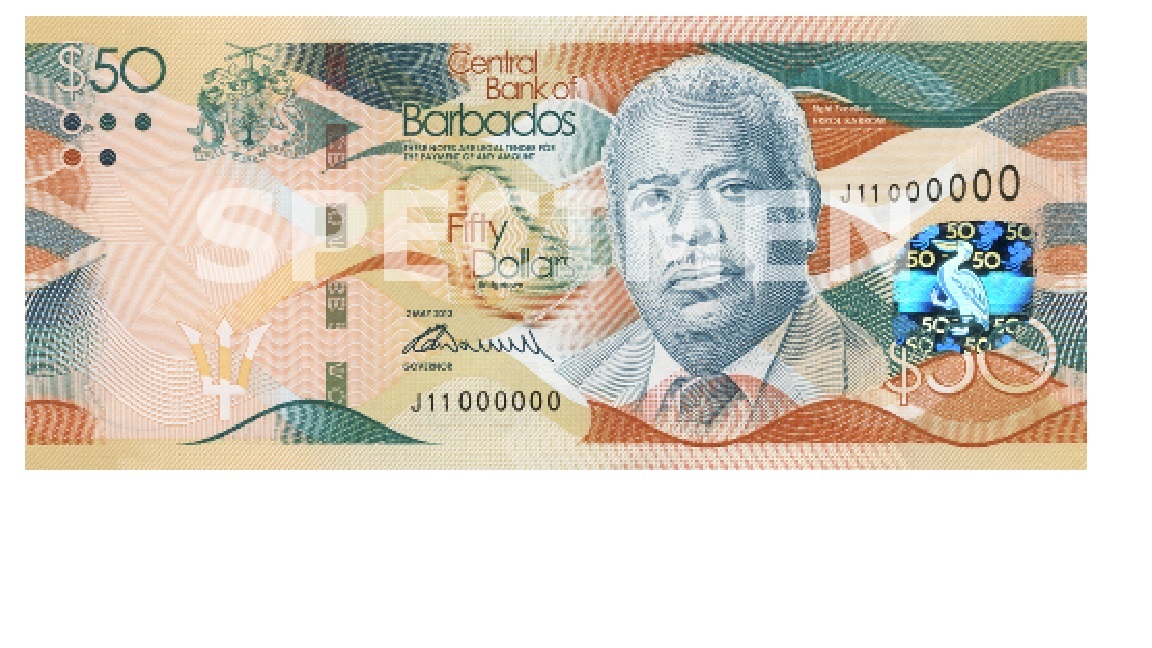
Barbados MoneyHow does a Central Bank lose money? This seems plausibly impossible.

Without detailing the anatomy of the banking system, here are a few facts that make this foregoing news article so inconceivable. A Central Bank compels a reserve requirement from all commercial banks within its jurisdiction. So for every $100 in deposits, a commercial bank would have to leave a secured amount, say $12 on hand at the Central Bank. The commercial bank can thusly only loan the residual $88 in this example. Control (raising/lowering) that reserve requirement percentage rate is how Central Banks control the money supply, interest rates and inflation – the economy.

So with no effort, a Central Bank gets a slice of every deposit in its jurisdiction, a country. This role/responsibility is so important that many view the Chairman of the US Central Bank, the Federal Reserve, as the most powerful man in the country; even more so than the President.

So despite all this power, how can a Central Bank possibly lose money?

A Central Bank also has the ability to create “money from thin air”, by buying and selling treasury bonds on the securities markets. This too is a method for Central Banks to control the money supply. An accounting entry on the ledger creates the liquidity to buy bonds (increase money supply) or sell bonds (contract the money supply).

With this system in place, a Central Bank prints and issues the hard currency for a country. For them to lose money gives the impression that their currency has no/little value.

Imagine, the Governors/Directors of the Central Bank of Barbados are to be considered the stewards of Barbados’s economy…and they posted a loss for fiscal 2013! (The Bible analogy of “the blind leading the blind” comes to mind!)

BRIDGETOWN, Barbados, Thursday April 3, 2014, CMC – The Central Bank of Barbados (CBB) says it recorded a loss of BDS$3.7 million (One BDS dollar = US$0.50 cents) last year as it focused on restoring macroeconomic stability to the domestic economy.

The CBB in its 2013 annual report submitted to the govern-ment on Monday said that while its operating costs were largely unchanged, “the continuing weak investment climate for the low-risk securities that the Bank is permitted to hold continued to depress income.

“The Bank is reviewing options to contain expenditure over the medium term,” it added.

In its report, the CBB said that it focused on restoring macro-economic stability to the domestic economy as a weak performance of the key export sectors together with significantly lower foreign capital inflows constrained economic growth prospects.

“These developments placed pressure on foreign reserves, triggering a major policy adjustment to contain the erosion of the reserves, sustain the exchange rate anchor, reduce the fiscal deficit and slow the growth of Government debt.”

The CBB said the primary tool of policy was fiscal consolidation, reflected in increased taxation and expenditure-reducing measures.

“At the same time, the Bank continued to encourage the revitalisation of economic activity through growth in the tourism, agro-processing, international business and financial services, and alternative energy industries. “

It said that given the challenges facing the economy, the CBB stepped up its engagement with its stakeholders through a number of initiatives including presentations by internationally renowned speakers.

The CBB said in 2013 it introduced a new interest rate policy framework, designed to rationalise the process for adjustment of domestic interest rates.

“The policy permits virtual liberalisation of the minimum deposit rate, apart from ordinary savings accounts of individuals and non-profit organisations. This allows financial institutions to now set other deposit rates, while continuing to set lending rates.

“The policy also provides for intervention of the Bank in the Treasury Bill market, with the Treasury Bill rate now being used as a basis for determining rates for long term securities, along a notional yield curve which the Central Bank publishes.“

The Central Bank of Barbados said that the financial system remained stable during 2013 with banks profitable and well- capitalised.

It said the Financial Services Commission, which oversees the regulation of non- bank financial institutions, signed a memorandum of understanding with the Central Bank aimed at strengthening the monitoring of the financial system.

The CBB said for the first time in its 40-year history it has completely overhauled the design of the Barbados’ bank notes.

“In the past, only minor modifications had been made to the original series. The new series issued on June 4, 2013 replaced old and worn-out notes and there are enhanced security features that will make the new notes difficult to counterfeit and easier for the public to authenticate.”

The foregoing news article aligns with the prime directive of the book Go Lean … Caribbean to re-boot the economic engines of the Caribbean. The book narrates, thru anecdotes and statistical abstracts, the pain and suffering of previous mis-management of Caribbean currencies. The book then asserts that any regional effort to optimize the economy must be partnered with technocratic management of monetary affairs. As such, the book serves as a roadmap for the introduction and implementation of both the Caribbean Union Trade Federation (CU) and the independent, Caribbean Central Bank (CCB).

Before addressing the technical issues, the CU assumes a sentinel position to cautiously protect and promote image and branding of Caribbean people, culture and systems of commerce. The foregoing headline is a “call to arms” for this mission.

Monetary and currency issues are intertwined with any discussion of elevating the Caribbean’s economy. This issue is explored in full details in the book, commencing with the roadmap focus of the Declaration of Interdependence, pronouncing the need for astute management of the money supply with these statements (Page 13 & 14) respectively:

xxi. Whereas the legacy of international democracies had been imperiled due to a global financial crisis, the structure of the Federation must allow for financial stability and assurance of the Federation’s institutions. To mandate the economic vibrancy of the region, monetary & fiscal controls and policies must be incorporated … [to] address threats against the financial integrity of the Federation and member-states.

xxix. Whereas all Caribbean democracies depend of the free flow of capital for municipal, public and private financing, the institutions of capital markets can be better organized around a regional monetary union. The Federation must institute the controls to insure transparency, accounting integrity and analysis independence of the securities markets, thereby shifting the primary source of capital away from foreign lenders to domestic investors, comprising institutions and individuals.

The roadmap is to confederate all the 30 member-states of the Caribbean, despite their language and legacy, into an integrated “single market”, with a unified currency, Caribbean Dollar (C$). This follows the model of the European Union and the European Central Bank with the world’s strongest currency, the Euro.

The book maintains that the security of the Caribbean is inextricably linked to the economy of the Caribbean; as such there is the need for federal oversight, monitoring and mitigations of threats, risks and casualties for the integrated market and the related systems of commerce.

These above comments address the “coulda-woulda-shoulda” aspects of the foregoing news article. The Go Lean roadmap also brings a sense of reality to the focus of economic empowerment in the Caribbean. This means that “it is what it is”. So why did the Central Bank of Barbados post a $3.7 Million loss for 2013?

This requires a sober assessment; the managers for the bank are duly qualified. Dr. DeLisle Worrell was appointed as Governor of the Central Bank on November 1, 2009. He is an acclaimed Economist, author and professor; he is a subject-matter-expert (SME) for small island economics, having authored a book entitled SMALL ISLAND ECONOMIES; he is a technocrat!

The foregoing article alludes that the loss was due to the volatility of foreign exchange (Fx) management. It is these kinds of issues that the Go Lean roadmap targets for mitigation and better management. The book posits that the problems of Caribbean currencies are too big for any one member-state to resolve, that the best solution is to confederate the 30 member-states, and their Central Banks, into a “single market” Central Bank for the unified C$ currency – a cooperative of banks. Since the Barbados dollar alone cannot garner the volumes for respect and participation in the international Fx markets, this SMALL ISLAND ECONOMY must “fend for its life” as best it can, buying and selling US dollars in the open market to control the amount/value of the Barbadian dollar. This process is “hit-and-miss”. For 2013, it was a “miss”!

The strategies, tactics, implementations for the Caribbean Union Trade Federation & Caribbean Central Bank management of the economy are detailed in the Go Lean roadmap. Here are sample selections from the book:

Separation-of-Powers: Central Bank – Currency Printing/Engraving Page 73
Separation-of-Powers: Depository Insurance & Regulatory Authority Page 73
Separation-of-Powers: Securities Exchange Regulatory Agency Page 74
Separation-of-Powers: Emergency Management Page 76
10 Ways to Better Manage Debt Page 114
10 Ways to Promote Independence Page 120
10 Ways to Model the EU Page 129
10 Lessons Learned from 2008 Page 135
10 Ways to Control Inflation Page 153
10 Ways to Better Manage Foreign Exchange Page 154
10 Ways to Mitigate Black Markets Page 165
10 Ways to Foster Cooperatives Page 176
10 Reforms for Banking Regulations Page 199
10 Ways to Impact Wall Street Page 200

Download the Book- Go Lean…Caribbean Now!!!


Share this post:
, , ,
[Top]

CARICOM Chairman to deliver address on reparations

Go Lean Commentary

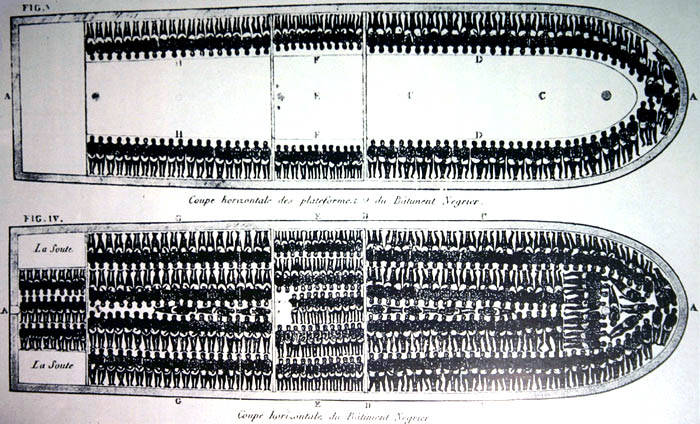
Slave ShipThe book Go Lean … Caribbean aligns with one objective depicted in the below news article: to reconcile the flawed economic policies of the past and lean-in for the optimization of the Caribbean future. Beyond this stance, the book deviates from these advocates calling for reparations from the colonial powers that participated in the slave trade, slavery or colonial suppression of the indigenous people.

Reparations stress at its root, a sense of entitlement to other people’s resources. The book, on the other hand, serves as a roadmap for the regional integration of the 42 million people and 30 member states of the Caribbean with the implementation of the Caribbean Union Trade Federation (CU). This roadmap advocates the reconciliation of the economic and security engines to grow the region’s economy from $378 Billion (2010) to $800 Billion in a 5 year time span.

NEW YORK, United States, Friday March 28, 2014, CMC – Chairman of the Caribbean Community (CARICOM) grouping, Prime Minister Dr. Ralph Gonsalves of St. Vincent and the Grenadines will address an international forum in reparations in the United States next month.

Gonsalves will deliver the feature address at the April 19 forum titled “Revitalizing the Reparations Movement,” organized by the New York-based Institute of the Black World 21st Century (IBW).

IBW described Gonsalves as “one of the leading voices in the Americas demanding that the former European colonial powers pay reparations to Caribbean and South American countries for centuries of African enslavement, native genocide and colonial exploitation”.

The forum will be held in collaboration with the Center for Inner City Studies and the Samuel DeWitt Proctor Conference.

IBW said among the specially invited guests will be Detroit’s congressman John Conyers, Sr., dean of the US Congressional Black Caucus, and sponsor of HR-40, the Reparations Study Bill and Louis Farrakhan, leader of the Nation of Islam.

“A primary goal of the forum is to revitalize the reparations movement in the USA by revisiting the Durban Resolution on the Trans-Atlantic Slave Trade, presenting an update on HR-40 and examining the status of CARICOM’s reparations initiative,” IBW said.

“We are delighted and honored to have Prime Minister Gonsalves keynote this critical forum on reparations, a subject of fundamental historical justice that is near and dear to the hearts of Black people around the world,” said IBW’s president Dr. Ron Daniels.

Director of Chicago’s Inner City Studies, Dr. Conrad Worrill, said “our ancestors will be pleased that the reparations movement is being re-energized from the Caribbean islands”.

“In demanding reparations, CARICOM is vindicating the vestiges of the Trans-Atlantic slave trade,” he added.

CARICOM leaders at their inter-sessional summit in St, Vincent and the Grenadines earlier this month discussed the reparation issue and hope to have a meeting with European leaders in June.

The leaders unanimously adopted a 10-point plan that would seek a formal apology for slavery; debt cancellation from former colonizers, such as Britain,

France, Spain and the Netherlands; and reparation payments to repair the persisting “psychological trauma” from the days of plantation slavery.

The Go Lean roadmap commences with this ideal embedded in the Declaration of Interdependence, pronouncing as follows, (Page 10):

As the colonial history of our region was initiated to create economic expansion opportunities for our previous imperial masters, the structures of government instituted in their wake have not fostered the best systems for prosperity of the indigenous people. Despite this past, we thrust our energies only to the future, in adapting the best practices and successes of the societies of these previous imperial masters and recognizing the positive spirit of their intent and vow to learn from their past accomplishments and mistakes so as to optimize the opportunities for our own citizenry to create a more perfect bond of union.

The subject matter of reparation is polarizing, based on assumptions that the Caribbean is comprised of mostly African or Ameri-Indian peoples. While many CARICOM states do possess a majority Black population, this is not so within the larger Caribbean, of whom the CU confederates. There are also large populations of European (White) ethnicities, Indian, and Chinese descendants that should also unite.

— UPDATE (Sep 30, 2015) – See VIDEO in the Appendix regarding the UK Prime Minister’s recent visit to Jamaica

There is a benefit, however, that can be garnered from compensatory talks with European nations, that of making “Aid” more empowering. The roadmap details an advocacy on the roles and responsibilities of fostering International Aid (Page 115). So while the political leaders of the CARICOM may be exerting energies to “guilt” these Europeans leaders to “pay up”, the CU Trade Federation will instead work to improve trade and re-boot the economic engines of the region.

It is a known fact that most of the resources of the European powers are tied to the strength of their economies, not the reserves gathered up from centuries of exploiting African slaves and their descendants. The country with the largest reserves is the USA; but their gold in Fort Knox is only estimated at $800 Billion, while their economy is $16 Trillion of GDP output … annually. So reparation is not a winning formula; it assumes some abundant stockpile of savings. This is a flawed logic and strategy. On the other hand, the Caribbean needs to create 2.2 million new jobs; this is only possible with the turn-around strategies as detailed in the roadmap of Go Lean … Caribbean.

So as a policy decision for the economic strategies of the region, the Go Lean book and movement recommends:

    Re-boot – Yes!
    Reparations – No!

Download the free e-Book of Go Lean … Caribbean – now!

———

Appendix VIDEO – Slavery Reparations Dominate David Cameron’s Jamaica Visit – https://youtu.be/al453a8rLy8

Published on Sep 30, 2015 – UK Prime Minister David Cameron’s visit to Jamaica was overshadowed by slavery reparation calls, which he rejected. The legacy of slavery is still ever-present for 14 Caribbean countries calling on their former colonial masters to pay billions in reparations.
Share this post:
, ,
[Top]

Low-cost Dominican surgeries spark warnings by US

Go Lean Commentary

CU Blog - Low-cost Dominican surgeries spark warnings by US - PhotoTo the family of Beverly Brignoni, according to the foregoing news article, the publishers of the book Go Lean … Caribbean, SFE Foundation, extend condolences for the loss of their dearly departed loved one. This article – as follows – shows the down-side of medical tourism, an accidental death from an apparent lax oversight in a cosmetic surgery clinic.

By: Ben Fox and Ezequiel Abiu Lopez
Beverly Brignoni was a young New Yorker seeking a less expensive way to enhance her appearance and she did what many other people are now doing: travel to the Dominican Republic for cosmetic surgery; (see undated “selfie” photo posted to her Instagram account, courtesy of the Brignoni family).

It went horribly wrong. The 28-year-old died Feb. 20 from what the doctor told her family was a massive pulmonary embolism while getting a tummy tuck and liposuction at a clinic in the Dominican capital recommended by friends. Family members want local authorities to investigate.

“We want to know exactly what happened,” said Bernadette Lamboy, Brignoni’s godmother. “We want to know if there was negligence.”

The district attorney’s office for Santo Domingo says it has not yet begun an investigation because it has not received a formal complaint from Brignoni’s relatives. Family members say they plan to make one.

Shortly after Brignoni’s death, the Health Ministry inspected the Vista del Jardin Medical Center where she was treated and ordered the operating room temporarily closed, citing the presence of bacteria and violations of bio-sanitary regulations. The doctor who performed the procedure and the clinic have not responded to requests for comment.

Brignoni’s death is unusual, but it is not isolated. Concerns about the booming cosmetic surgery business in the Dominican Republic are enough of an issue that the State Department has posted a warning on its page for travel to that country, noting that in several cases U.S. citizens have suffered serious complications or died.

The U.S. Centers for Disease Control issued an alert March 7 after health authorities in the United States reported that at least 19 women in five states had developed serious mycobacterial wound infections over the previous 12 months following cosmetic procedures in the Dominican Republic such as liposuction, tummy tucks and breast implants.

There were no reported deaths in those cases, but treatment for these types of infections, which have been caused in the past by contaminated medical equipment, tend to involve long courses of antibiotics and can require new surgery to remove infected tissue and drain fluid, said Dr. Douglas Esposito, a CDC medical officer.

“Some of these patients end up going through one or more surgeries and various travels through the medical system,” Esposito said. “They take a long time typically to get better.”

The Dominican Republic, like countries such as Mexico, Costa Rica and Thailand, has promoted itself as a destination for medical tourism, so-called because people will often tack on a few days at a resort after undergoing surgery. The main allure is much lower costs along with the promise that conditions will be on par with what a patient

would encounter at home.

In 2013, there were more than 1,000 cosmetic procedures performed in the Dominican Republic, 60 percent of them on foreigners, according to the country’s Plastic Surgery Society.

The Internet is flooded with advertisements and testimonials from people who say they have had successful procedures in the Dominican Republic, and an industry of “recovery houses” has sprung up to serve clients, along with promoters who canvass for clients in the United States. The price is often about a third of the cost in the United States.

Dr. Braun Graham, a plastic surgeon in Sarasota, Florida, says he done corrective surgery on people for what he says were inferior procedures abroad. He warns that even if a foreign doctor is talented, nurses and support staff may lack adequate training.

“Clearly, the cost savings is certainly not worth the increased risk of a fatal complication,” said Graham, past president for Florida Society of Plastic Surgeons.

Brignoni was referred to the Vista del Jardin Medical Center by several acquaintances in the New York borough of the Bronx where she lived, said Lamboy and Lenny Ulloa, the father of the 4-year-old daughter she left behind.

“Supposedly, it was a high-end clinic, one of the best in the city,” Ulloa said.

The doctor who performed Brignoni’s procedure, Guillermo Lorenzo, is certified by the Plastic Surgery Society, but there

are at least 300 surgeons performing cosmetic procedures who are not, said Dr. Severo Mercedes, the organization’s director. He said the government knows about the problem but has not taken any action. “We complain but we can’t go after anyone because we’re not law enforcement,” Mercedes said.

The number of people pursuing treatment in the Dominican Republic doesn’t seem to have been affected by negative reports, including a previous CDC warning about a cluster of 12 infections in 2003-04.

In one recent case, the Dominican government in February closed a widely advertised clinic known as “Efecto Brush,” for operating without a license. Prosecutors opened a criminal case after at least six women accused the clinic of fraud and negligence. The director, Franklin Polanco, is free while awaiting trial. He denies wrongdoing.

There was also the case of Dr. Hector Cabral. New York prosecutors accused him of conducting examinations of women in health spas and beauty parlors in that state in 2006-09 without a license, then operating on them in the Dominican Republic, leaving some disfigured. Cabral pleaded guilty to one count of unauthorized practice of medicine in October 2011 and returned to the Dominican Republic, where he still practices.

In 2009, Dominican authorities charged Dr. Johan Tapia Bueno with illegally practicing plastic surgery at his apartment after several women, including a local television personality, accused him of malpractice that left them with infections. Awaiting trial, he has pleaded innocent to charges that include fraud.

Juan Linares, a lawyer hired by Brignoni’s boyfriend, said he is still awaiting an autopsy report.

Because she arrived in the country late at night on a delayed flight and was on the operating table early the next morning, a main concern is whether she received an adequate medical evaluation before the procedure. Graham, the Florida surgeon, said sitting on a plane for several hours can cause blood to stagnate in the legs and increase the risk of an embolism.

Brignoni paid the Dominican clinic $6,300 for a combination of liposuction, tummy tuck and breast surgery. Lamboy said she had decided not to have the work done on her breasts and was expecting a partial refund. The woman, who worked as a property manager, had lost about 80 pounds about a year earlier after gastric bypass surgery.

Brignoni was clearly excited about the procedure. Her final post on Facebook was a photo she took of her hands holding her passport and boarding pass for the flight from New York to Santo Domingo.

“She wanted it so bad,” her godmother said. “It felt like she was going to have a better outlook on life, getting this done.”

Associated Press writer Ben Fox reported this story from Miami and Ezequiel Abiu Lopez reported in Santo Domingo.

Source: Associated Press (AP); retrieved 03/31/2014 from: http://news.yahoo.com/low-cost-dominican-surgeries-spark-warnings-us-042418398.html

This is a very important issue for the planning and execution of the new inter-governmental agency: Caribbean Union Trade Federation (CU). First of all, someone died – life is too precious to skim over this issue with indifference. The Go Lean book serves as a roadmap to introduce and implement the CU, so as to re-boot the region’s economic engines, including avenues of medical tourism.

There are also peripheral issues associated with this news story, many of which are examined, as missions, in great details in the Go Lean book. The issues/missions are:

  • Image: Confidence in the competence of service providers is sometimes based on reputation and branding. This is para-mount in medical fields. While the Caribbean is home to many excellent medical schools, facilities and practitioners, there is no regional “sentinel” role-player. The CU mandate is to zealously protect and promote the image and branding for industrial developments. So now when the media portrays “negative” depiction of Caribbean life, culture and people, there is no formal response mechanism. But with the CU’s implementation, there will be an entity to effectuate an anti-defamation response and better manage the region’s image.
  • Health Administration: The Go Lean roadmap recognizes healthcare as a basic need for the people of the Caribbean. As such, there is the acknowledgement that health delivery systems generate excessive costs and risks for a community. As a planning tool, the roadmap commences with a Declaration of Interdependence, pronouncing regional integration (Page 11) as the strategy for optimized benefits:
      IX.   Whereas the realities of healthcare and an aging population cannot be ignored and cannot be afforded without some advanced mitigation, the Federation must arrange for health plans to consolidate premiums of both healthy and sickly people across the wider base of the entire Caribbean population. The mitigation should extend further to disease management, wellness, obesity and smoking cessation programs. The Federation must proactively anticipate the demand and supply of organ transplantation as developing countries are often exploited by richer neighbors for illicit organ trade.
  • Self-Government Entities: The foregoing news story involves a clinic regulated by a Caribbean member-state, the Dominican Republic. The Go Lean roadmap institutes an arrangement for medical/research campuses as SGE’s (Self-Governing Entities) that are only regulated by the CU federal authorities. Had this tragedy occurred on such a facility, the response would have been immediate and comprehensive, employing best-practices of trauma medicine arts and sciences, thusly requiring a post-mortem lessons-learned process that would be fully transparent and accountable.
  • Lean Government: The Go Lean roadmap also extends optimizations to the member-states governments, requiring a separation-of-powers dictum to transfer oversight and administration of certain state functions to federal authorities. This includes standards, licensing and administration of healthcare facilities. The application of best-practices would most assuredly minimize the risk of medical negligence.
  • US Exceptionalism: The Go Lean roadmap maintains that other countries have their own version of the American Dream. The quest for life, liberty and the pursuit of happiness is not exclusively American. Whereas there are millions of negligent deaths in the US hospitals/clinics every year, one American dying in a Caribbean facility does not constitute an exceptional event; bad things do happen to good people … everywhere, in the US, in the Caribbean and in the Dominican Republic. Having a tourism-based regional economy means we always want to extend hospitality to our American guests, but embarking on medical tourism, also means assuming some degree of risks, for the facilities, the doctors and most importantly the patients.

The foregoing article crystalizes the need for the CU Trade Federation, a super-national administration to regulate, protect, promote and foster quality delivery of the most vital public services. The publishers of the Go Lean roadmap will hereby “sit back”, observe-and-report on the manifestations of this case, hoping for the quest for justice and accountability to be fulfilled. And remembering the unconscionable loss of the beautiful 28-year-old woman, Beverly Brignoni; RIP.

Download the book Go Lean … Caribbean – now!

Share this post:
, , , ,
[Top]

How to Create Money from Thin Air

money-magic-rival-logoGo Lean Commentary

“Money does not grow on trees”, according to the old adage.

If it did then the tree would be special, it would be producing a chattel good that is designated as monetary currency. Even still, this scenario would not be “thin air”, it will be trading goods for goods. This can be illustrated with a barter exchange of fruit for some other merchandise, say silver. If the silver is viewed as money, then the process of growing and harvesting the fruit will result in money (silver) being acquired based on the fruit from the tree. So money can grow on trees!

Something more amazing happens in our modern economic system, money is created out of “thin air” – no trees, no fruit, no silver. How is this possible? This is accomplished through the Commercial/Central Banking system.

First of all, banks are financial institutions that take in deposits from people and use their money to give out loans to others. The reason why banks provide this service [to the community] for free is because they earn a profit by letting people deposit their money. Banks charge higher interests rates on the money they lend out compared to the money deposited. All in all, banks are both borrowers and lenders. People trust banks to store their money. The deposits allow banks to lend out money with higher interest rates with the expectancy that the loans will be paid back.

Banks have something called a required reserve ratio, mandated by the Central Bank; (the “Fed” in the US). This is the ratio of reserves to total deposits that banks are supposed to keep as reserves. Banks also have the right to increase the reserve ratio. They lend out the remaining percentage. For example, the bank has a 10% reserve ratio meaning it reserves 10% of its total deposits. It will then lend out the remaining 90%. When a person deposits $100, the bank is able to lend out $90 and keeps $10 for reserves. The $10 does not count as money since it is used as a reserve and may not be used for lending. So far, the bank has $100 and $90 currency loaned out. This is a total of $190 created as opposed to $100 before. Currency held by the public is money.

Of course, the borrower doesn’t simply keep the $90 but he will spend it. For instance, he will spend his money for a pair of soccer cleats at the Nike store. Now the Nike store has $90 but it will then deposit it back into the bank. The cycle then repeats itself. If the bank has more borrowers, it will certainly make a profit. If it lends again, it will lend out $81 and keep $9 on reserves.

The way banks create money is a cycle and over time, the profit compounds on top of each other and the original $100 can be [extended] potentially [to as high as] $1,000.[a]

So the new $900, compared to the original $100, is created from “thin air”.

“To whomever much is given, of him will much be required” – Luke 12:48 (World English Bible)

This scripture is quoted in the book Go Lean … Caribbean, in the advocacy “10 Ways to Improve Leadership” (Page 171) showing the great responsibility and accountability of leaders managing monetary affairs; they can create money out of “thin air”. This power, however, has often been abused by Caribbean officials and has resulted in tragic cases of hyper-inflation, currency devaluation and ultimately: human flight – people’s money lost value overnight due to no fault of their own. The same as money can be created, it can also disappear into “thin air”– Anecdote (Page 149) & Appendices (Pages 315 – 7).

The Go Lean roadmap does not just state the problems but provides solutions as well. Those solutions are proposed in the implementation of the Caribbean Union Trade Federation (CU) and the adjoined technocratic Caribbean Central Bank (CCB), as an independent agency. The mandates in the Go Lean roadmap focus on inflation (Page 153), foreign exchange (Page 154), interest rates/credit ratings (Page 155) & debt management (Page 114). The CCB is to be led by professionals who are well trained to execute the leadership roles for a unified Caribbean currency. They will be “given much”; because the CU is modeled after the European Union and the European Central Bank (ECB) – see (Page 130). The CCB leaders will be schooled in the arts and sciences of monetary affairs by the ECB. In addition, the leaders of the existing Central Banks of each member-state will serve as Governors of the CCB with appointments for 14 years, thus insulating them from political influences and persuasions – see “10 Reforms for Banking Regulations” (Page 199). This is the hallmark of a technocracy!

The book Go Lean … Caribbean serves as a roadmap for Caribbean economic optimization. It posits that the creation of money will be enhanced when all Caribbean member-states integrate their currencies into a single currency, the Caribbean Dollar (C$), and also their economies into a “Single” Market. The economic initiatives will create new services, jobs, investments and opportunities.

Yes, the end result will be money created out of “thin air”, but more so because of a vibrant economy than just the deposit-loan-commercial banking paradigm.

The originating activity, as defined in the roadmap, is the stimulus for economic gains. The roadmap projects an $800 Billion economy (GDP) after the 5-year implementation, up from $278 Billion. These numbers will be manifested with the creation of 2.2 million new jobs, and a better place to live-work-play.

🙂

Download the book Go Lean … Caribbean – now!

——-

Appendix – Reference:

a. Wiki-Answers; retrieved on 03/19/2014 from http://wiki.answers.com/Q/How_are_banks_able_to_create_money.

Share this post:
, ,
[Top]

Book Review: ‘Wrong – Nine Economic Policy Disasters and What We Can Learn…’

Go Lean Commentary

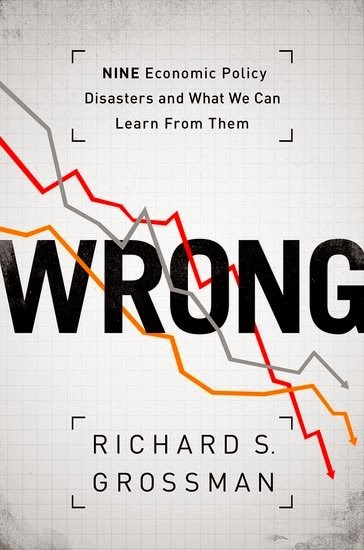
CU Blog-WrongThe forgoing news article is a Review of the above-cited book; it highlights many of the same approaches being used in the publication Go Lean … Caribbean for the introduction and implementation of the Caribbean Union Trade Federation (CU). This book declares that a “crisis is a terrible thing to waste” and that Caribbean member-states are still reeling from the crisis of the 2008 Economic Downturn. What’s more, the Go Lean … Caribbean book, serving as a roadmap, provides solutions to optimize the region’s economy and security apparatus.

The source book by Richard Grossman is not focused on the Caribbean; but the many economic policies do have direct effect on the region, especially with the reliance on tourism from North America and Europe as the primary economic drivers. This status makes the Caribbean a “parasite” economy; as parasites go, the health of the host directly affects the health of the symbiot. So we are very much affected by the economic policies implemented in the US, Canada, Europe, Japan, China and other countries. What is worse is the fact that we, as the Caribbean, have no voice into the policies of these host countries, (nothwithstanding the Dutch & French Caribbean countries having some small representation in European Parlianment and Puerto Rico/USVI having non-voting representation in the US Congress). So rather than drive these countries’ economic policies, the Go Lean strategy is to mitigate the negative consequences from “wrong” economic policies.

Book Review: Wrong: Nine Economic Policy Disasters and What We Can Learn from Them by Richard S. Grossman

By: Anna Grodecka

In recent years, the world has been rocked by major economic crises, most notably the collapse of Lehman Brothers, the largest bankruptcy in American history, which triggered the breathtakingly destructive sub-prime disaster. What sparks these vast economic calamities? Why do our economic policy makers fail to protect us from such upheavals? Anna Grodecka reviews Richard S. Grossman’s contribution to the literature, and finds this an insightful and accessible read, especially recommended for economics students.

“We should be (…) wary of accepting common opinions; we should judge them by the ways of reason not by popular vote.” These words of the French Renaissance writer and philosopher Michel de Montaigne could be a good summary of Richard Grossman’s newest book Wrong: Nine Economic Policy Disasters and What We Can Learn from Them. Grossman, a professor of economics at Wesleyan University, describes nine economic policy failures from the past (both distant and more recent) and concludes that the main sin of the policymakers is the commitment to outdated economic ideologies and so-called conventional wisdoms.

Although it tackles a serious issue, the book is an enjoyable read. Starting with a quote from famous economists, politicians, and even Shakespeare, each chapter focuses on one economic policy mistake. The historical outlook prevails, although the last two chapters are devoted to the description of the sub-prime and the euro/sovereign default crisis. Grossman is aware of the fact that his book suffers from the lack of counter-factual analysis. The problem is that observing that a given policy had certain consequence does not mean that in the absence of the policy the consequences would not have occurred. We cannot apply laws of logics and sentence negation to reality, especially complex political and economic reality depending not only on rational analysis but also on the animal instincts of human beings, because causal relationships are very difficult to establish. Conducting counter-factual analysis is even harder. This of course does not mean that we should give up analysing past policies widely known as mistaken.

Grossman first describes the British Navigation Acts fueled by the ideology of mercantilism that speeded up the process of revolution in the North American colonies. Then he discusses the history of the first two ‘central’ banks in the United States, whose charters were not renewed due to partisan divisions in the country which could have an impact on the evolution of several banking crises.

There is also a chapter on the Great Famine in Ireland at the end of the 19th century, and the impact of policies and British Corn Laws on it. Grossman covers the well-documented mistake on the amount of war reparations imposed by the Allies on Germany after the First World War, as well as the return to the Gold Standard at the pre-war (too high) parity by Britain in the inter-war period. Another example of wrong economic policy that is described in the book is the Smooth-Hawley Tariff, which was a protectionist measure applied by the US in 1930. Lastly, before turning to the most recent policy mistakes, the author devotes one chapter to the infamous Japanese Lost Decade. What sounds like an enumeration of well-known policy mistakes already described in other books turns out in fact to be a fascinating collection of accounts providing interesting details and new insights into the subject. This is a well-written book that puts the events into historical and economic context. It certainly has a chance at becoming a best-seller and not solely a publication read by experts.

As an example, we can take a closer look at the chapter on the Irish Famine, which took place from 1845-1852. Grossman not only describes what happened, but puts it into the perspective of other famines, starting from the BCE period. In terms of absolute numbers, the Great Hunger in Ireland was not the worst famine recorded but it did tragically lead to the death of twelve per cent of Irish population, forcing many others to emigrate. The author details how the potato – which originated in the Americas – arrived to a fertile Ireland, and that the poorest third of the Irish population consumed up to twelve pounds of potatoes per day (per capita). Only after this introduction the economic policy is mentioned. Grossman compares the responses of two Prime Ministers of the United Kingdom to the famine: Sir Robert Peel and Lord John Russell. Russell was so committed to the limited government intervention that he refused to buy food for the starving masses in order not to disturb the free formation of prices in the market. Similarly, he refused to increase the scale of public works that would give job to Irish workers so as not to disturb the free labour market. The paradox is that when the Great Famine occurred, Ireland was not a poor country. The Famine would not have been so ‘great’ if it were not for the free market ideology followed by the policymakers at that time. As it turns out, leaving things to the invisible hand of market is not always an optimal solution.

Another interesting chapter is devoted to the Lost Decade in Japan. Entitled Why Didn’t Anyone Pull the Andon Cord? The chapter begins with an explanation of the method of solving problems applied in the Toyota production system: when some potential problem is discovered, a worker may pull the andon cord that activates a signboard and starts the process of solving the problem. If the problem is not resolved within a specific time, the whole production is stopped until the issue is cleared. So, unlike the Toyota employees, Japanese authorities in the 1990’s did not pull the andon cord and continued “production” despite obvious economic problems in the country. Grossman focuses on the relationships between the Japanese Ministry of Finance and the banks’ personnel. Each bank had a clerk – mofutan – who stayed in daily contact with one employee of the ministry. Very often ex- ministry employees found work in the banks they were supervising before, once their ministerial duties were over. This sort of opaque relationship between the supervisory authority and banks in the end led to an inaccurate response to the crisis. Japanese officials did everything to maintain the status quo, refusing to introduce necessary changes or restructure the banking system for almost a decade. This chapter will be a treasure for economics students.

Of course, not all stories presented in Wrong are equally captivating. The two last chapters on the recent economic crisis seem to be the weakest, as they do not provide any new information from the perspective of a person that followed the news and other publications on the subject. But all in all, Grossman does an excellent job in picking up the most severe economic policy mistakes, providing a thorough description and analysis of them, and giving us anecdotes linked to the described events. Wrong is a very eloquently written book that leaves the reader with many new insights.

London School of Economics – Social Science Book Reviews – Retrieved 03-19-2014 –
http://blogs.lse.ac.uk/lsereviewofbooks/2014/03/18/book-review-wrong-nine-economic-policy-disasters/

The authors of this Go Lean publication represent stakeholders[d] who have been in key policy positions in those “host” countries, so the recommendations in the book, reflect sound economic policies and best-practices. This expertise is highlighted at the outset of the Go Lean book, in the Declaration of Interdependence, as follows:

xxi. Whereas the legacy of international democracies had been imperiled due to a global financial crisis, the structure of the Federation must allow for financial stability and assurance of the Federation’s institutions. To mandate the economic vibrancy of the region, monetary & fiscal controls and policies must be incorporated as proactive and reactive measures. These measures must address threats against the financial integrity of the Federation and of the member-states.

Similar to the publication by Richard Grossman, the Go Lean book highlights lessons that are learned from failed economic policies[a] and applies strategies, tactics and implementation to mitigate the wrong policies and set the region straight.[b][c]

Now is the time for the Caribbean region to lean-in for the changes described in the book Go Lean … Caribbean. The benefits of this roadmap are too alluring to ignore: emergence of an $800 Billion economy, 2.2. million new jobs, new industries, services and opportunities for the youth of the Caribbean and even an invitation to the Diaspora to repatriate from those North American and European countries that have been on the wrong side of the history featured in Richard Grossman’s book ”Wrong: Nine Economic Policy Disasters and What We Can Learn from Them”.

Anna Grodecka is a PhD student in macroeconomics at Bonn Graduate School of Economics and a visiting researcher at the LSE. She obtained her Master’s Degree in Finance from Warsaw School of Economics and Johannes Gutenberg University in Mainz. In her research, she focuses mainly on monetary policy, the financial and housing markets, and their role in the recent crisis.

Go Lean References

Page Number
[a] 10 Lessons Learned from 2008

136

[b] 10 Ways to Impact Wall Street

200

[c] 10 Reforms for Banking Regulations

199

[d] SFE Foundation

8

Download the Book- Go Lean…Caribbean Now!!!


Share this post:
, , , , , ,
[Top]

Connery says Scottish independence a chance ‘too good to miss’

Go Lean Commentary

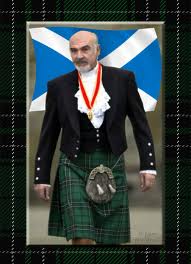
imgresA big star in the world of movies is asking for consideration in an area outside his sphere of influence: independence of his homeland. We have seen this movie before; same script, different cast!

Sir Sean Connery’s plea is similar to many other prominent people that had expatriated to a different country, awaiting more favorable conditions in their beloved homeland. (Charlize Theron from South America, Wyclif Jean from Haiti and Oscar De La Renta from the Dominican Republic). This is also the fate of so many of the Caribbean Diaspora. These ones love their country, but live abroad; they want conditions to be different (better) in their homelands to consider any repatriation.

London (AFP)

James Bond star Sean Connery urged his fellow Scots on Sunday to vote for independence in their referendum later this year, saying it was an opportunity “too good to miss”.

The 83-year-old actor, one of the most high-profile backers of the Scottish National Party’s campaign for a ‘yes’ vote in September, said independence would raise Scotland’s profile.

This could encourage more investment in the Scottish film sector and lead to the “international promotion of Scotland as an iconic location”, Connery wrote in the Sun on Sunday newspaper.

Connery, the star of 007 movies such as “Goldfinger” and “Dr No”, was born in Scotland but has not lived there for years, instead spending his time in Spain, the Bahamas and New York.

In 2003, he said he would not return until Scotland broke with the rest of the United Kingdom.

“I fully respect the choice facing Scotland in September is a matter for the people who choose to work and live there — that’s only right,” said the actor.

“But as a Scot with a lifelong love of Scotland and the arts, I believe the opportunity of independence is too good to miss.”

He added: “A Yes vote will capture the world’s attention. There will be a renewed focus on our culture and politics, giving us an unparalleled opportunity to promote our heritage and creative excellence.”

A YouGov poll published on Saturday found 53 percent of Scots want to stay part of the United Kingdom, compared to 35 percent who think Scotland should be an independent country.

http://news.yahoo.com/connery-says-scottish-independence-chance-too-good-miss-003358875.html

Yes, the plea of Sir Connery is parallel and similar to that of the Go Lean … Caribbean book, a roadmap for the introduction and implementation of the Caribbean Union Trade Federation (CU), a technocratic federal government to administer and optimize the economic, security, and governing engines of the 30 member Caribbean states. The same as Sir Connery pledged to not return until Scotland breaks with the UK, many Caribbean Diaspora have pledged not to return (for permanent residency) until their homeland breaks from their current ineffectual systems of governance, failing economic engines and inadequate security provisions.

There is a lot of history associated with both issues: Scotland and the CU. Sir Connery is advocating for Scotland’s independence. This has been a familiar call for centuries. This is life imitating art and art imitating life. The call for Scottish independence was the theme of the 1995 movie Braveheart, about Scottish Revolutionary William Wallace (played by Academiy Award winner Mel Gibson). In addition, the 2006 movie “The Last King of Scotland”, had that goal as a secondary theme. That despite the many failed attempts of Scotland to wrest independence from England, the country of Uganda under dictator Idi Amin (played by Academy Award winner Forrest Whitaker) was successful at gaining their independence from the same imperial masters. A line in that movie stated “maybe Amin should become King of Scotland because he knows how to wrestle independence from England”. Now, today, another Hollywood icon champions the same plea and revolutionary quest for his beloved Scotland.

Scotland has been “rocked” by the recent global financial crisis; they posit that London’s oversight of their economic interest has been flawed and shortsighted. But their demand today is different than for prior attempts in prior centuries. They now want a democratic solution, a referendum to secede Scotland from the United Kingdom. Then Scotland would join and become the 29th member-state of the European Union (EU) and 19th member of the Eurozone Monetary Union. Aligning with the success of the EU would make this petition feasible and logical. According to recent polling, so far the referendum is not favored.

There are a lot of lessons in this issue for the Caribbean. Despite Scotland’s demand for independence, their plan is not to “go at it alone, rather immediately confederate with the EU. This makes the referendum a demand for interdependence with the rest of Europe. The people of Scotland feel that aligning with the EU and submitting to the technocratic European Central Bank would be preferred to the failed economic and monetary policies from London. The underlying spirit behind this Scottish Independence movement is a quest to “appoint new guards” to make their homeland a better place to live, work and play.

The Caribbean’s quest for interdependence is similar; with this statement in the opening Declaration of Interdependence at the outset of the Go Lean book (Page 12):

xi. Whereas all men are entitled to the benefits of good governance in a free society, “new guards” must be enacted to dissuade the emergence of incompetence, corruption, nepotism and cronyism at the peril of the people’s best interest. The Federation must guarantee the executions of a social contract between government and the governed.

The Go Lean roadmap posits that the global financial crisis lingers to this day and trumpets that “a crisis is a terrible thing to waste”. Just like Sir Connery’s egging for Scotland, we in the Caribbean want our homeland to be a better place to live, work and play. The best hope for this outcome though is to confederate into the CU, an EU model, whereby real solutions can be forged, availing benefits like creating 2.2 million jobs across the integrated market of 42 million people and $800 Billion of GDP.

🙂

Download the book Go Lean … Caribbean – now!


Share this post:
,
[Top]

Collegiate Sports in the Caribbean

Go Lean Commentary

CampionExcelsiorK20120911IASports play a big role in Caribbean culture. Education plays a big role in the empowerment of communities. There is a junction between sports and academics; this is the sphere of college athletics.

Cuba has 37 universities…alone. In total, the Caribbean has 42 million people (2010 figures) in all 30 member-states. So surely there is enough of a student population to field sports teams.

More so, there is a fan base in the communities to complete the eco-system of sports spectators and community pride. Yet, there is very little college sports being facilitated in the region right now. Despite the breadth and talent base to form leagues and rivalries among the established universities within the Caribbean. Any system for college athletics is noticeably lacking.

This is the mission of the Caribbean Union Trade Federation (CU); to function as a Caribbean version of the National Collegiate Athletic Association (NCAA) in the US. We have much to learn from this organization’s history, successes & failures.

“The NCAA was founded in 1906 to protect young people from the dangerous and exploitive athletics practices of the time,” so states the NCAA on its official website.[a]

According to Dan Treadway, Associate Blog Editor for the Huffington Post online news magazine[b]:

The NCAA often likes to harp on tradition and the sanctity of the term “student-athlete,” but it fails to recognize its true roots.

The association in fact got its start because, at the time of its creation, football was in danger of being abolished as a result of being deemed too dangerous a sport. During the 1905 season alone, 18 college and amateur players died during games. In response to public outcry, Theodore Roosevelt, an unabashed fan of the sport, gathered 13 football representatives at the White House for two meetings at which those in attendance agreed on reforms to improve safety. What would later become known as the NCAA was formed shortly after on the heels of this unifying safety agreement.

Collegiate Sports is now big money; an economic eco-system onto itself. How much money does the NCAA make?

For the 2010-11 fiscal year, the NCAA revenue was $845.9 million, (not including College Football). Total rights (broadcast & licensing) payment for 2010-11 was $687 million, of all NCAA revenue. The remaining revenues are mostly event ticket sales.

How did the NCAA go from being an agreement to promote safety standards so as to prevent death on the playing field, to a multi-million dollar enterprise? Chalk that up to 100 years of social evolution.

The book Go Lean … Caribbean serves as a roadmap to advance to the end of the evolutionary process and establish the economic engines to empower the Caribbean region, even in areas like sports and culture.

So how to build sports franchises anew? How will colleges & universities create success from collegiate athletics? It’s a complex “art and science”, but first, it starts with facilities – the CU’s Fairground administration will fund, build and manage sports venues. The CU will be the landlord; the academic institutions, the tenants.

The Go Lean roadmap navigates the changed landscape of globalization and pronounces that change has come to the Caribbean but the region is not prepared. Despite the great appreciation for sports, and the excellent talent of its athletes, there is no business model for the consumption of Caribbean collegiate athletics.

Now, for much of the Caribbean, the population tunes in and pays for cable/satellite TV service to consume American collegiate athletic programming. But how many people in the region are watching Caribbean college sporting activities? None. Though there is a demand, undoubtedly, there is no supply process in place.

In the adjoining table in the Appendix, 36 schools are identified that are capable of fielding credible sports teams, if the appropriate facilitations were in place.

There is the demand. What’s missing is the organized market for consumption. The implementation of this Go Lean roadmap fills this void. This completes the supply!

Applying the model of the NCAA, much can be learned. We can copy their success, and learn from their pitfalls. The NCAA credits tremendous revenues for itself, but not necessarily for all of their members. Under NCAA supervision, the majority of athletic programs, in fact, lose money and are subsidized by funds from their respective university. While the NCAA is needed for academic integrity in college sports, many times, it fails at this responsibility. They lack the CU’s lean execution ethos.

After 100 years later, does the world still need the NCAA? Absolutely! For more than the collective bargaining/negotiations role for the business side of college athletics. They are also the governing body for college athletics, ensuring fairness and good sportsmanship. For the Caribbean Union, this role is to be assumed by the CU Sports Administration, to provide technocratic efficiencies. The resultant eco-system facilitates the CU mandate, to make the region a better place to live, work and play.

Download the book Go Lean … Caribbean – now!

———————-

APPENDIX A – References:
ahttp://www.ncaa.org/wps/wcm/connect/public/NCAA/About+the+NCAA/History
b – http://www.huffingtonpost.com/ daniel-treadway/johnny-manziel-ncaa-eligibility_b_3020985.html

———————-

APPENDIX B – Caribbean Regional Colleges & Universities

Member-state

Legacy

Name

Antigua and Barbuda

British

Antigua State College
Aruba

Dutch

University of Aruba
Bahamas

British

College of the Bahamas
Barbados

British

University of the West Indies – Cave Hill, American University
Belize

British

University of Belize
Galen University
Bermuda

British

Bermuda College (Community College)
Cuba

Spanish

University of Havana Universidad de Oriente, Polytechnic University José Antonio Echeverría
Dominican Republic

Spanish

Universidad Autónoma de Santo Domingo (UASD) – (English: Autonomous University of Santo Domingo)
French Caribbean

French

University of the French West Indies and Guiana Guadeloupe Campus, Martinique Campus, French Guiana Campus
Guyana

British

University of Guyana
Haiti

French

Caribbean University / Université Caraïbe, Université d’Haiti
Jamaica

British

University of the West Indies – Mona, University of Technology (U-Tech), Mico University College, Northern Caribbean University (NCU), University College of the Caribbean (UCC), International University of the Caribbean (IUC)
Netherlands Antilles

Dutch

University of Curaçao
Curaçao
Sint Maarten University of St. Martin
Puerto Rico

USA/

Spanish

Caribbean University, Metropolitan University, University of Puerto Rico, University of Turabo
Suriname

Dutch

University of Suriname Anton de Kom Universiteit van Suriname
Trinidad and Tobago

British

University of the West Indies – Saint Augustine University of Southern Caribbean (USC) University of Trinidad and Tobago (UTT)
US Virgin Islands

USA

University of the Virgin Islands

Share this post:
, ,
[Top]