Category: Strategy

Food Security – Big Chicken 101

Go Lean Commentary

We gotta eat!
So we should always have access to foods that are “delicious, nutritious and taste like Chicken”.

So many exotic foods taste like chicken: sea turtle, alligator, rattlesnake, frog legs, iguana, etc. These foods are viable sources of protein, and commonplace here in the New World (Western Hemisphere). Still, for the un-initiated, they may frown on the exotic nature of these foods – they would rather just “Eat Chicken”.

Everybody eats chicken or poultry; it is the staple protein of the Western global diet.

The chickens are simple and straight forward to cultivate; they are the most docile of domesticated animals:

  • The females – hens – give eggs every day.
  • It takes 8 to 12 weeks from hatching to slaughter.
  • In some Third World countries, there is the iconic imagery of chickens on buses, trains, and boats; people take their chickens with them alive for their journey, but they might slaughter and eat them during the course of the expedition.

Poultry varieties – chicken, turkey, Cornish hens, pheasant, quail, etc. – are universally prominent in diets around the globe. Plus, there tend to be few religious restrictions amongst meat-eaters:

i.e. compared to Muslims who do not eat pork; or Hindus who do not eat beef.

This is not new; chickens played a prominent role in ancient life, medieval iife and the recent colonial life. But “something” happened in the 20th Century and now chickens are omnipresent – 9 billion are raised in the US alone – in modern life. What was the “something” that happened?

Big Pharma: Antibiotics or Steroids … in the 1940’s.
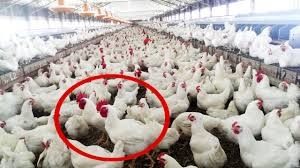
This is the science:

Too many fowls (chicken, turkey, etc.) together almost always causes sickness, disease and death. Something more is needed to bolster the fowl’s immune system to allow them to thrive despite the closed quarters, surrounded by thousands of other birds, and with minimal exercise/movement.

This pharmaceutical product offering – antibiotics – which emerged in the late 1940’s, allows for more chicken production at lower costs. Since the late 1940’s – early 1950’s – poultry (eggs and chicken meat) became plentiful for breakfast, lunch and dinner; daily if that is the desire.

Now, anybody, anywhere can deploy Chicken Farms, endure the 8 to 12 weeks growth stage, slaughter and eat chicken. (It is best suited for rural areas). See the “How To” in the Appendix VIDEO below.

Anybody, anywhere”? This sounds like a business model for rural agri-business, so that a community can “Feed Itself”.

“The Caribbean must be able to Feed Ourselves” – this is the theme of the teaching series for December 2019 from the movement behind the book Go Lean…Caribbean. This submission is the conclusion of the series; this is commentary 5 of 5 considering the Food Security and Bread Baskets for the Caribbean. The Go Lean movement (book and blogs) posits that regional stakeholders must have the priority for us to Feed Ourselves, rather than depending solely on trade. Other Food Supply considerations are presented in this series; see the full series catalog here:

  1. Food SecurityBread Baskets on Land and Sea
  2. Food SecurityTemperate Foods in the Tropics
  3. Food SecurityOpportunity: 1 American County in Iowa raises all Beef for a Cruise Line
  4. Food SecurityFTAA: A Lesson in History
  5. Food Security – Big Chicken

The Go Lean movement presents a roadmap for an Industrial Reboot of our agricultural footprint. This relates to the Caribbean Union Trade Federation (CU) and how we can ensure Food Security for all 30 member-states by collaborating, integrating and leveraging – one community can service another. This way we can Feed Ourselves by creating our own bread baskets. This strategy allows for consideration among the 30 participating member-states as to who is more suited to ramp-up an agri-business eco-system. While we should be deploying Chicken Farms everywhere – in every community, in truth this is not always possible locally. However, there is the opportunity for a regional solution – one community can be deputized for another community.
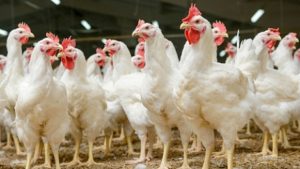
All in all, our society must be able to Feed Ourselves and antibiotics-steroids help. But don’t get it twisted, antibiotics and steroids are not the heroes in this story; in fact they could be villains. See their historicity depicted in the book Big Chicken – consider the Book Review in the Appendix below and the interview with the Author in this AUDIO-PODCAST  here:

AUDIO-PODCASTHow Antibiotics Changed The Way The World Eatshttps://the1a.org/audio/#/shows/2017-09-26/how-antibiotics-changed-the-way-the-world-eats/112128/@00:00

How Antibiotics Changed The Way The World Eats

Posted September 26, 2017 – The Poultry industry taught us to want chicken more. Before the 1940’s, chicken was rarely seen on the dinner table.

Chickens play a prominent role in domestic life – they are omnipresent – but there are dire consequences from the excessive use of antibiotics. This is the peril of Big Pharma. This is not new! In fact, this is typical in modern life, “we” tend to go “2 steps forward, 1 step backwards” or worse yet: “1 step forward, 2 steps backwards”. We have addressed the dangers of antibiotics before; consider this excerpt from a previous blog-commentary from October 2014:

Antibiotics Use Associated With Obesity Risk
Big Pharma, the Pharmaceutical industry, dictates standards of care in the field of medicine, more so than may be a best-practice. (Picture the scene of a Pharmaceutical Salesperson slipping in the backdoor to visit a doctor and showcase latest product lines).
This subject of damaging health effects deriving from capitalistic practices in medicine aligns with Go Lean … Caribbean (Page 157), as it posits that Cancer treatment (in the US) has been driven by the profit motive, more so than a quest for wellness and/or a cure.

This is not the model we want to effect the well-being of our young children.

The Go Lean roadmap specifies where we are as a region (minimal advanced medicine options), where we want to go (elevation of Caribbean society in the homeland for all citizens to optimize wellness) and how we plan to get there – confederating as a Single Market entity. While the Go Lean book strategizes a roadmap for economic empowerment, it clearly relates that healthcare, and pharmaceutical acquisitions are important in the quest to make the Caribbean a better place to live, work and play.

We need more food production – this includes Chicken – in our Caribbean homelands. We import too much. Apparently, chickens can be hatched, raised, slaughtered and processed with little effort. Ideal for rural areas, there should be few “barriers to entry” for community stewards to launch this aspect of agri-business.

What could possibly be the problem?

There is one:

Agricultural pollution/odors – Normally limited to rural areas, have the potential of disturbing the natural beauty of the area or detract from the tourism/resort look, feel and smell. See the Appendix AUDIO-PODCAST below.

In addition, when considering any changes, there are always the “powers that be” that provide opposition; they profit from the Status Quo. Caribbean communities are consuming chicken – imported chicken, acquired through trade. To reboot the agri-business eco-system and foster a local industry will entail empowering new people-processes, at the expense of the old people-processes. This is the reality of Crony-CapitalismSpecial Interests that defy the Greater Good for personal gain.

Come what may, we must reboot. Change will come … anyway. We need to regulate, modulate and stipulate positive changes that society makes to ensure the Greater Good. This commitment might mean ignoring the Classical Economists and their Theory of Comparative Advantage – where greater benefits are derived to the trading partners by allowing the partner with the most value to execute the functionality – for a while. This Theory has caused globalization to run amok.

We may need subsidies to compensate and prop up the local agri-business establishments. The reasoning is simple: we must promote farmers and protect the independence of our Food Supply. We must unconditionally be able to Feed Ourselves … finally.

We must always be On Guard for the corruption of Crony-Capitalism. In fact, the issues in reforming and transforming our society to mitigate Crony-Capitalism have been addressed in many previous blog-commentaries; consider this list of sample entries:

https://goleancaribbean.com/blog/?p=14087 Opioids and the FDA – ‘Fox guarding the Henhouse’
https://goleancaribbean.com/blog/?p=12645 Back to the Future: Textbooks or Tablets in School?
https://goleancaribbean.com/blog/?p=11520 Managing the ‘Strong versus the Weak’ – Lower Ed.
https://goleancaribbean.com/blog/?p=11269 Managing the ‘Strong versus the Weak’ – An American Sickness
https://goleancaribbean.com/blog/?p=11057 Managing the ‘Strong versus the Weak’ – Book Review: Sold-Out!
https://goleancaribbean.com/blog/?p=7430 Brazilian Shrunken Head Babies: Zika or Tdap (Vaccine Abuse)?
https://goleancaribbean.com/blog/?p=6819 The Downside & Crony-Capitalism of ‘Western’ Diets
https://goleancaribbean.com/blog/?p=6580 Crony-Capitalism of Drug Patents
https://goleancaribbean.com/blog/?p=5993 Carnival Cruise Onboard Monopoly – Ban carry-on bottled beverages
https://goleancaribbean.com/blog/?p=4673 Book Review: ‘Merchants of Doubt’ Documentary
https://goleancaribbean.com/blog/?p=2522 The Cost of Cancer Drugs – Pure Crony-Capitalism

As related in every submission of this Food Supply series, our intent – as communicated in the outset of the Go Lean book – is simple yet providential (Page 4):

The CU should better provide for the region’s basic needs (food, clothing, energy and shelter), and then be in position to help supply the rest of the world.

We gotta eat! Chicken is good! It would be a good business model – government policy – to provide subsidies to grow, harvest and distribute locally raised chickens – all foods for that matter – for the people of our communities. We would save on the “Foreign Currency” and minimize “Trade Deficits”. This would be a win-win all around.

We urge all Caribbean stakeholders to lean-in to this Go Lean roadmap … to Feed Ourselves … finally. This is how we can make our Caribbean homeland a better place to live, work and play. 🙂

About the Book
The book Go Lean…Caribbean serves as a roadmap for the introduction and implementation of the technocratic Caribbean Union Trade Federation (CU), for the elevation of Caribbean society – for all member-states. This CU/Go Lean roadmap has these 3 prime directives:

  • Optimization of the economic engines in order to grow the regional economy to $800 Billion & create 2.2 million new jobs.
  • Establishment of a security apparatus to ensure public safety and protect the resultant economic engines.
  • Improve Caribbean governance to support these engines, including a separation-of-powers between the member-states and CU federal agencies.

The Go Lean book provides 370-pages of turn-by-turn instructions on “how” to adopt new community ethos, plus the strategies, tactics, implementations and advocacies to execute so as to reboot, reform and transform the societal engines of Caribbean society.

Download the free e-Book of Go Lean … Caribbean – now!

Who We Are
The movement behind the Go Lean book – a non-partisan, apolitical, religiously-neutral Community Development Foundation chartered for the purpose of empowering and re-booting economic engines – stresses that reforming and transforming the Caribbean societal engines must be a regional pursuit. This was an early motivation for the roadmap, as pronounced in the opening Declaration of Interdependence (Pages 12 – 14):

xi. Whereas all men are entitled to the benefits of good governance in a free society, “new guards” must be enacted to dissuade the emergence of incompetence, corruption, nepotism and cronyism at the peril of the people’s best interest. The Federation must guarantee the executions of a social contract between government and the governed.

xvi. Whereas security of our homeland is inextricably linked to prosperity of the homeland, the economic and security interest of the region needs to be aligned under the same governance. Since economic crimes … can imperil the functioning of the wheels of commerce for all the citizenry, the accedence of this Federation must equip the security apparatus with the tools and techniques for predictive and proactive interdictions.

xxiv. Whereas a free market economy can be induced and spurred for continuous progress, the Federation must install the controls to better manage aspects of the economy: jobs, inflation, savings rate, investments and other economic principles. Thereby attracting direct foreign investment because of the stability and vibrancy of our economy.

xxx.  Whereas the effects of globalization can be felt in every aspect of Caribbean life, from the acquisition of food and clothing, to the ubiquity of ICT, the region cannot only consume, it is imperative that our lands also produce and add to the international community, even if doing so requires some sacrifice and subsidy.

Sign the petition to lean-in for this roadmap for the Caribbean Union Trade Federation.

————-

Book Review – Big Chicken: The Incredible Story of How Antibiotics Created Modern Agriculture and Changed the Way the World Eats
By:
McKenna, Maryn
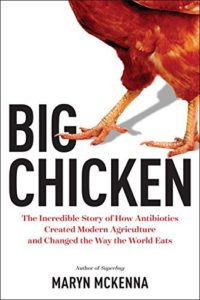
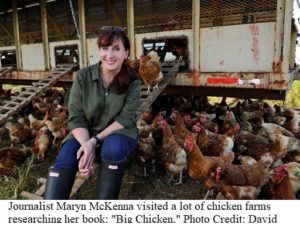
In this eye-opening exposé, acclaimed health journalist and National Geographic contributor Maryn McKenna documents how antibiotics transformed chicken from local delicacy to industrial commodity—and human health threat—uncovering the ways we can make America’s favorite meat safer again.

What you eat matters—for your health, for the environment, and for future generations. In this riveting investigative narrative, McKenna dives deep into the world of modern agriculture by way of chicken: from the farm where it’s raised directly to your dinner table. Consumed more than any other meat in the United States, chicken is emblematic of today’s mass food-processing practices and their profound influence on our lives and health. Tracing its meteoric rise from scarce treat to ubiquitous global commodity, McKenna reveals the astounding role of antibiotics in industrial farming, documenting how and why “wonder drugs” revolutionized the way the world eats—and not necessarily for the better. Rich with scientific, historical, and cultural insights, this spellbinding cautionary tale shines a light on one of America’s favorite foods—and shows us the way to safer, healthier eating for ourselves and our children.

In August 2019 this book will be published in paperback with the title Plucked: Chicken, Antibiotics, and How Big Business Changed the Way the World Eats.

Source: Retrieved December 29, 2019 from: https://www.amazon.com/Big-Chicken-Incredible-Antibiotics-Agriculture/dp/1426217668
————–

Appendix VIDEO – How to Start Chicken Farm Business – Organic Broiler Poultry Farming of Chickens & Goats – https://youtu.be/t8OGruo7DJs

Young Entrepreneurs Forum
Posted December 5, 2016 –
Full Process of How to Start Chicken Farm Business. Start Organic Broiler Poultry Farming of Chickens & Goats.

Chicken farming business is a very profitable business idea in 2016 & 2017. So, if you want to start chicken farm business then, must watch this video for starting organic broiler poultry farming business in your country. Start Chicken farming in India.

[Need 15 pieces of] Equipment of Organic Broiler Poultry Farming Business – Chicken Farm Business Equipment.

  1. Feeders
  2. Heaters or Brooders
  3. Incubator
  4. Chick box
  5. Fly Tray
  6. Poultry Plucker Rubber Finger
  7. Egg Tray
  8. Poultry Incubator Controller
  9. Ventilation Fan
  10. Laying Nest
  11. Egg Scale
  12. Egg Washer
  13. Water Pots and Drinkers
  14. Cages and Coops
  15. Dressing Machine

If you’ve any questions related to How to Start Chicken Farm Business – Organic Broiler Poultry Farming of Chickens & Goats then, feel free to leave it in comment box. Thanks for watching chicken farm business – organic broiler farming video.

————–

Appendix AUDIO-PODCAST – When A Chicken Farm Moves Next Door, Odor May Not Be The Only Problem – https://www.npr.org/sections/thesalt/2016/01/24/463976110/when-a-chicken-farm-moves-next-door-odor-may-not-be-the-only-problem

All Things Considered
Posted January 24, 2016 – As farms move closer to residential areas, neighbors are complaining that the waste generated is a potential health hazard.

Share this post:
, , ,

Food Security – Temperate Foods in the Tropics – Encore

So we want our own bread baskets to better Feed Ourselves here in the Caribbean.

This is normal and natural! According to this Bible scripture …
And God blessed them, and God said unto them, Be fruitful, and multiply, and replenish the earth, and subdue it: and have dominion over the fish of the sea, and over the fowl of the air, and over every living thing that moveth upon the earth. – The Bible – Genesis 1:28 KJV

… having dominion over the earth should mean being able to employ the arts and sciences of agriculture to harvest the food that we need, want and deserve.

While this is true, we still must contend with the reality of the seasons and weather. Or we do?

If it doesn’t rain, we can still water our crops through irrigation and plumbing.
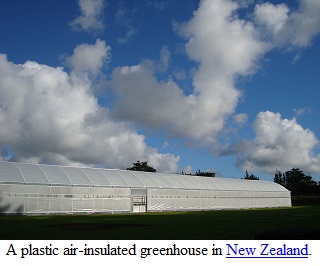
If it is too cold, we can warm up the crops – greenhouses – to guarantee a warmer temperature.

Surely, if its too warm, then we can cool our crops to dictate a colder climate.

Surely?! This reflects “dominion” over the earth.

This is the continuation of the teaching series for December 2019, from the movement behind the 2013 book Go Lean…Caribbean. This is entry 2 of 5 in this series considering Food Security and Bread Baskets for the Caribbean. Again, the goal here is not to just list the problems, but rather to focus on solutions for a better Food Supply for our region. The full catalog of this series is as follows:

  1. Food Security – Bread Baskets on Land and Sea
  2. Food Security – Temperate Foods in the Tropics
  3. Food Security – Opportunity: 1 County in Iowa raises all the Beef for a Cruise Line
  4. Food Security – FTAA: A Lesson in History
  5. Food Security – Big Chicken

This talk of bread baskets reminds us of the thought and thesis presented in a previous blog-commentary on February 8, 2017, from the movement behind this book Go Lean book. It is only apropos to Encore that previous submission here-now:

————-

Go Lean Commentary – Science of Sustenance – Temperate Foods

The “bread basket” of _________ …

CU Blog - Science of Sustenance - Temperate Foods - Photo 0You can fill in the blanks with difbferent regions around the world:

  • “Central Valley”, the bread basket of California
  • “Kansas”, the bread basket of America
  • “Alberta”, the bread basket of Canada
  • “Ukraine”, the bread basket of Eastern Europe

So who or where is the bread basket of the Caribbean?

Do we have an answer? Do we have a bread basket? Do we even have an organized region so as to collaborate on the responsibility of feeding our people?

No, No, and No!

This commentary is important for the Caribbean to contemplate. Every human in every land must arrange for the delivery of basic needs – “we gotta eat” and so food supply is paramount. Scientific developments have always been a major consideration for food supply, ever since the days of hunting-and gathering. Modern society is built on the premise that we would employ scientific best practices to harvest our food, or trade with people who employ these best practices.

The book Go Lean…Caribbean declares “enough already” with the trade; it is time to produce our own.

This was the original motivation for the publishing of this Go Lean book: to optimize the 30 Caribbean member-states into a Single Market so that we can be structured to do better in providing our basic needs. That structure would be the technocratic Caribbean Union Trade Federation (CU). The opening pages of the book feature this quotation (Page 3):

The CU should better provide for the region’s basic needs (food, clothing, energy and shelter), and then be in position to help supply the rest of the world. Previous Caribbean societies lived off the land and the sea; but today, the region depends extensively on imports, even acquiring large quantities of seafood, despite the 1,063,000 square miles of  the Caribbean Sea.

The CU Trade Federation is a technocracy, empowered to reboot the economic engines of the member-states, by fostering new industries (new “purse”) across the entire region and deploying solutions to better exploit the opportunities of the global trade market.

The Caribbean is in crisis for their dysfunctions in  delivering their own basic needs. This is the focus of this commentary; it is 2 of 4 in a series on the modern advances in science for delivering basic needs: energy, food, clothing and shelter. It is possible to deliver all these basic needs without science. But for our modern world, the advances of science make a positive impact on daily life. So the full series for our consideration follows this pattern:

  1.    Science of Sustenance: Energy
  2.    Science of Sustenance: Food
  3.    Science of Sustenance: Clothing
  4.    Science of Sustenance: Shelter

The book Go Lean…Caribbean asserts that “a crisis is a terrible thing to waste”. We must use our inadequate disposition to motivate stakeholders to forge change on our society; to implement the food supply solutions to do better at facilitating our own needs.

We are in the tropics…

… but science and technology allows us to deliver agricultural solutions for temperate produce (fruit and vegetables). Think:

  • Strawberries
  • Peaches
  • Apples
  • Spinach
  • Greens (Mustard, Collard, Kale, etc.)

Temperate produce need cooler temperatures to thrive. So the key is utilization of greenhouses, climate-controlled greenhouses. These allow for consistent temperatures of 20 to 30 degrees lower than the outside atmosphere. See a reference article on this subject here:

ARTICLE Grower 101: Using Evaporative Cooling, Part I
By John W. Bartok, Jr.
Find out what to use to keep your greenhouse ventilated and cool in the hot, humid summer.

On a bright, sunny summer day, a 30- x 100-foot greenhouse will gather about 32 million British Thermal Units (Btus) of heat. This is equivalent to burning 32 gallons of fuel oil or 320 therms of natural gas. If the greenhouse is full of plants, about one-half of this heat is used for transpiration and evaporation. The remainder of the cooling has to be conducted through ventilation. If the greenhouse is empty and closed, the temperature can exceed 150° F.

Understanding the basics
Shade on the outside of the greenhouse will keep some of the heat out. Shade on the inside, if it contains aluminum foil, will reflect some of the heat back out. Ventilation, either natural or fan, will remove a considerable amount of the heat that is collected. Still, on summer days, the temperature may exceed the desired level that promotes good plant growth by 10-20ºF. Excessive temperature results in delayed flowering and internode stretching. Evaporative cooling may be the best choice under these conditions.

Evaporative cooling, which uses the heat in the air to evaporate water from leaves and other wetted surfaces, can cool the greenhouse to 10-20° F below outside temperature. It takes one Btu of heat to raise the temperature of one pound of water 1° F, but it takes 1,060 Btus of heat to change the same amount of water to a vapor.

With an evaporated cooling system, humid air containing the heat that it picked up within the greenhouse is exhausted out through the vents or fans, and cooler, drier air is brought in. Evaporative cooling works best when the humidity of the outside air is low. For example, in Reno, Nev., the average summer dry bulb temperature is 96º F and the wet bulb is 61ºF. With an evaporative cooler having an efficiency of 80 percent, the temperature would be cooled to about 68° F. These conditions are most common in the dry Southwest, but even in the more humid sections of the United States, significant evaporative cooling can occur most days in the summer. In humid New Orleans, where the average summer dry bulb temperature is 93° F and the wet bulb is 78° F, the cooled air would be about 81° F, acceptable for the production of most plants.

Fan and pad system
Several evaporative cooling systems work well in commercial greenhouses. The most common is the fan and pad system. It contains a cellulose pad, overhead water supply pipe, gutter to collect excess water, a sump tank, pump, piping and control.

The 4- or 6-inch-thick pad is treated with anti-rot salts and stiffening and wetting agents. Pads are normally installed continuously along the side or end of the wall opposite the fans. The amount of pad area needed is calcuis the utillated by multiplying the floor area by 8 feet and dividing by 250 for a 4-inch pad or 400 for a 6-inch pad. For example, a 30- x 100-foot greenhouse with a 4-inch pad would require 96 sq. ft. of pads (30 x 100 x 8÷ 250 = 96 sq. ft.)

The overhead water supply pipe should distribute the water so the pad is wet uniformly. The minimum water flow rate is 0.5 gpm per sq. ft. for a 4-inch pad and 0.8 gpm per sq. ft. for a 6-inch pad.

Excess water is collected below the pad in a gutter and piped to a sump tank. Tank capacity needs to be 0.8 gallon per sq. ft. of pad for 4-inch pads and 1.0 gallon per sq. ft. for 6-inch pads. Water returning to the sump should be filtered to remove any debris. A make-up water supply and float valve keep the water level constant. In areas having water with a high mineral content, it is advisable to bleed 3-5 percent of the water to minimize salt buildup. Algae growth in the re-circulated water can be controlled with abiocide.

Modular pad systems of 5 and 6 feet are now available. These are self-contained and come completely assembled and ready to bolt to the wall. Installation time is reduced considerably. Only water and electrical connections have to be attached.

Next month, find out about swamp coolers, mist and fog systems and fan-generated fog and how they can work for you.

Source: Posted March 2003 from trade journal Greenhouse Product News; retrieved February 8, 2017 from: http://www.gpnmag.com/article/grower-101-using-evaporative-cooling-part-i/

CU Blog - Science of Sustenance - Temperate Foods - Photo 2

————-

VIDEO # 1 Best Thermal Cooled Greenhouse – https://youtu.be/HWXJ1ukEXa0

His Thermal Cooled Greenhouse in 1985 ran for 7 years, cooled itself day and night with 3 small Aquarium pumps, no fans or blowers; 14′ X 36′ ran on pennies a day – this worked!!! Now building a larger 24′ X 54′ Thermal Cooled Greenhouse. This works DAY OR NIGHT. Watch VIDEO !!!

  • Category – Science & Technology
  • License – Standard YouTube License

The science of greenhouses allows for temperate foods (fruit and vegetables) to be grown in a tropical zone – cold adds sweetness. This is what we want, what we need to fulfill our own basic needs. Other communities are doing this and we can as well. We have the role model of countries with colder climates supplying tropical fruit. Surely the reverse can be deployed as well, with strategic and tactical greenhouses.

Greenhouses allow for greater control over the growing environment of plants. Depending upon the technical specification of a greenhouse, key factors which may be controlled include temperature, levels of light and shade, irrigation, fertilizer application, and atmospheric humidity. Greenhouses may be used to overcome shortcomings in the growing qualities of a piece of land, such as a short growing season or poor light levels, and they can thereby improve food production in marginal environments. Greenhouses in hot, dry climates used specifically to provide shade are sometimes called “shadehouses”.[42][43]

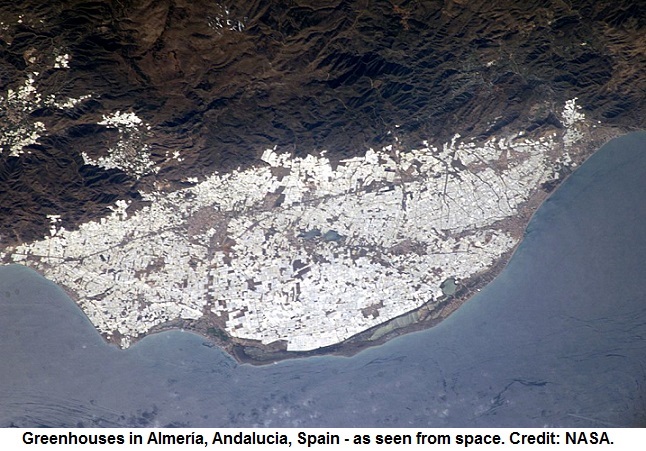
As they may enable certain crops to be grown throughout the year, greenhouses are increasingly important in the food supply of high-latitude countries. One of the largest complexes in the world is in Almería, Andalucía, Spain, where greenhouses cover almost 49,000 acres.
Source:
Retrieved February 8, 2017 from: https://en.wikipedia.org/wiki/Greenhouse
CU Blog - Science of Sustenance - Temperate Foods - Photo 3

The Caribbean is in crisis … we are not able to feed ourselves from the current food supply systems. We therefore have to expend foreign reserves to acquire food from foreign locations. This applies to food that, with the proper empowerments, can be grown locally in the Caribbean region.

This Go Lean book serves as a roadmap for the introduction and implementation of the technocratic Caribbean Union Trade Federation (CU). The goal is that the CU would adopt these food supply best practices to better delivery this basic need for the region. In fact, the prime directives of the CU are described as:

  • Optimize the economic engines – including food supply solutions – to elevate the regional economy to grow to $800 Billion and create 2.2 million new jobs.
  • Establish a security apparatus to protect the resultant economic engines.
  • Improve Caribbean governance to support these engines.

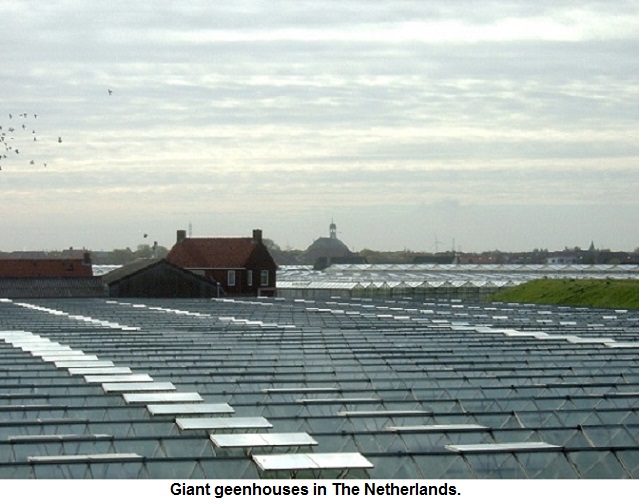
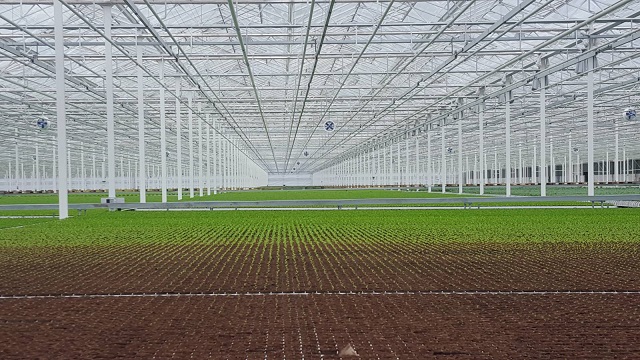
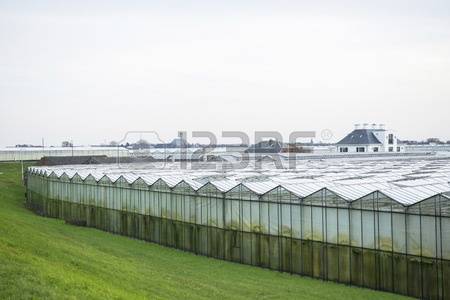
The Go Lean roadmap calls for the immediate adoption of best practices in food supply science (agriculture) and infrastructure. We do not have to re-invent the wheel in this quest; other communities are doing it already. Consider the photos here of giant greenhouses in The Netherlands:

CU Blog - Science of Sustenance - Temperate Foods - Photo 1

CU Blog - Science of Sustenance - Temperate Foods - Photo 1d

CU Blog - Science of Sustenance - Temperate Foods - Photo 1c

CU Blog - Science of Sustenance - Temperate Foods - Photo 1b

This vision of temperature controlled greenhouses in the Caribbean assumes a supply of energy for cooling and ventilation. See more here on ventilation:

Ventilation is one of the most important components in a successful greenhouse, specially in hot and humid tropical climate condition.[18] If there is no proper ventilation, greenhouses and their growing plants can become prone to problems. The main purposes of ventilation are to regulate the temperature, humidity and vapor pressure deficit [19] to the optimal level, and to ensure movement of air and thus prevent build-up of plant pathogens (such as Botrytis cinerea) that prefer still air conditions. Ventilation also ensures a supply of fresh air for photosynthesis and plant respiration, and may enable important pollinators to access the greenhouse crop.

Ventilation can be achieved via use of vents – often controlled automatically via a computer – and recirculation fans.
Source: Retrieved February 8, 2017 from: https://en.wikipedia.org/wiki/Greenhouse

All in all, the Go Lean book declares that “a crisis is a terrible thing to waste”. This siren call is for the establishment of a regional technocracy to facilitate the delivery of the region’s basic needs.  According to the foregoing articles/references, we can grow temperate foods in the tropical zone without exhausting foreign currency.

The vision here of climate-controlled greenhouses requires heavy-lifting on the part of Caribbean stakeholders (governments and business communities). We need this heavy-lifting. A lot is at stake: our ability to feed our populations. The Go Lean roadmap calls for a separation-of-powers between CU federal agencies and the member-state governments. The CU presents Cabinet departments for Agriculture, Fisheries and Health (Food/Nutrition). These departments will have to collaborate with parallel departments at the member-state level.

This was the original motivation of the Go Lean roadmap, an interdependence of the 30 member-states of the Caribbean to offset the effects of globalization. This was pronounced early in the book in the Declaration of Interdependence (Page 14), with this statement:

xxx. Whereas the effects of globalization can be felt in every aspect of Caribbean life, from the acquisition of food and clothing, to the ubiquity of ICT, the region cannot only consume, it is imperative that our lands also produce and add to the international community, even if doing so requires some sacrifice and subsidy.

The roadmap also calls for the installations of Exclusive Economic Zones (EEZ) and Self-Governing Entities (SGE) that operate in controlled bordered territories like campuses, industrial parks, research labs and industrial plants. These can be a target for the climate-controlled greenhouses.

The Go Lean book declares that we must adopt a community ethos, the appropriate attitude/spirit to forge change in our region; then details the executions of the following strategies, tactics, implementations and advocacies to better impact the region’s preparation for food resources. See this sample here:

Community Ethos – Deferred Gratification Page 21
Community Ethos – Economic Systems Influence Individual Choices / Incentives Page 21
Community Ethos – The Consequences of Choices Lie in the Future Page 21
Community Ethos – Lean Operations Page 24
Community Ethos – Cooperatives Page 24
Community Ethos – Non-Government Organizations Page 25
Community Ethos – Ways to Impact the Future Page 26
Community Ethos – Ways to Improve Sharing Page 35
Community Ethos – Impact the Greater Good Page 37
Strategy – Vision – Confederating 30 Member-States into a Single Market Page 45
Strategy – Vision – Foster Local Economic Engines Food, Clothing & Shelter Page 45
Strategy – Mission – Prepare for Natural Disasters Page 45
Strategy – Mission – Exploit the Benefits and Opportunities of Globalization Page 46
Strategy – Agents of Change – Climate Change Page 57
Strategy – Agents of Change – Globalization Page 57
Tactical – Confederating a Permanent Union Page 63
Tactical – Fostering a Technocracy Page 64
Separation of Powers – Food & Nutritional Administration Page 87
Separation of Powers – Agriculture and Fisheries Department Page 88
Implementation – Ways to Pay for Change Page 101
Implementation – Start-up Benefits from the EEZ Page 104
Implementation – Steps to Implement Self-Governing Entities Page 105
Implementation – Ways to Deliver Page 109
Implementation – Ways to Foster International Aid Page 115
Implementation – Ways to Benefit from Globalization Page 119
Planning – Ways to Make the Caribbean Better Page 131
Advocacy – Ways to Grow the Economy Page 151
Advocacy – Ways to Better Manage Food Page 162
Advocacy – Ways to Improve Governance Page 168
Advocacy – Ways to Better Manage the Social Contract Page 170
Advocacy – Ways to Foster Cooperatives Page 176
Advocacy – Ways to Improve for Natural Disasters Page 184
Advocacy – Ways to Improve Emergency Management Page 196
Advocacy – Ways to Improve Fisheries Page 210
Advocacy – Ways to Impact Rural Living – Agricultural eco-systems Page 235

There are a lot of models of agricultural and infrastructural delivery that the Caribbean can learn from foreign shores. Previous Go Lean blog-commentaries have cited these models, samples and examples:

https://goleancaribbean.com/blog/?p=8982 GraceKennedy: A Caribbean Transnational tackles Food Supply
https://goleancaribbean.com/blog/?p=6867 How to address high consumer prices
https://goleancaribbean.com/blog/?p=6819 Supplying Foods for ‘Western’ Diets – We can do better!
https://goleancaribbean.com/blog/?p=6016 Hotter than July – An Appeal for Cooperative Refrigeration
https://goleancaribbean.com/blog/?p=5098 Forging Change in Society Through Food
https://goleancaribbean.com/blog/?p=3594 Lessons Learned from Queen Conch – A Caribbean Food
https://goleancaribbean.com/blog/?p=2276 Climate Change May Affect Food Supply Within a Decade

Who or where will be the bread basket of the Caribbean? With the empowerments in this commentary, it could be all 30 member-states.

Change has come to the world of agricultural systems and sciences and change must come to the Caribbean region; we must be able to feed ourselves. We need to convene, collaborate and cooperate to satisfy our most basic needs. Yes, we can …

… come together to make the Caribbean a better homeland to live, work and play.

The people and institutions of the region are hereby urged to lean-in to this Go Lean roadmap, to embrace the empowerments to reboot and turn-around our region. 🙂

Download the book Go Lean … Caribbean – now!


Share this post:
,
[Top]

Food Security – Bread Basket 101

Go Lean Commentary

We gotta eat!

In fact, we probably ate 3 times yesterday; we will need to eat today; and our bellies will grumble if we do not eat tomorrow. Every culture around the world have to plan and deliver some solution for food. The art and science of this delivery is called:

Food Security
[This] is defined as the availability of food and one’s access to it. A household is considered food secure when its occupants do not live in hunger or fear of starvation. Stages of food insecurity range from food secure situations to full-scale famine. The World Food Summit of 1996 defined food security as existing “when all people at all times have access to sufficient, safe, nutritious food to maintain a healthy and active life”. – Source: https://www.disabled-world.com/fitness/nutrition/foodsecurity/

This is Christmas-time 2019; this season is known for its feasting, especially here in the Caribbean where all 30 member-states – that constitute the political Caribbean – boasts a Judeo-Christian heritage.

What did you have on your dinner table for Christmas?
Turkey, Ham, Roast Pork, Goat, Fish, Chicken, etc.?

I hope you enjoyed your festivities. Nevertheless, truth be told, we have some serious issues in the regional eco-system for our food supply. In summary:

We do NOT have Food Security.

In fact, for most of the 30 Caribbean member-states, that Christmas dinner you enjoyed was mostly imported food. So if the transportation networks are ever interrupted, the flow of the needed food stuff would be impeded.
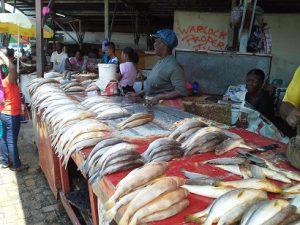
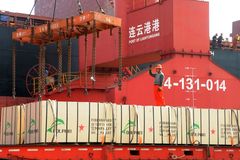
If … ever?

We have the constant threat of hurricanes and earthquakes in our region, so yes, this worrisome threat is not just theoretical; it has happened is happening in our homeland. (i.e. the NGO World Central Kitchen is feeding Hurricane Dorian survivors in the Northern Bahamas even now, 4 months after the devastation).

But wait?! We’ve got water: oceans and seas. Surely those resources will preserve our ability to provide a Food Supply to our people; surely we can feed ourselves from our fisheries? Sorry, No! Again in summary:

Our fish-stocks are in crisis. We are now importing more of our seafood, rather than locally sourcing for ourselves and others (minimal exports).

This is the subject of December 2019 teaching series for the movement behind the book Go Lean…Caribbean. (Every month we present a series). This commentary is 1 of 5 in a series considering Food Security for the Caribbean; the goal here is not to inventory the problems, but rather to define, discover, design and develop better Food Supply solutions for our region. The full series is as follows:

  1. Food Security – Bread Baskets on Land and Sea
  2. Food SecurityTemperate Foods in the Tropics
  3. Food SecurityOpportunity: 1 County in Iowa raises all the Beef for a Cruise Line
  4. Food SecurityFTAA: A Lesson in History
  5. Food SecurityBig Chicken

The 2013 Go Lean book presents a roadmap to introduce and implement a regional solution to ensure Food Security. It is a wise yet simple plan, to leverage the 42 million people in the 30 member-states to optimize the delivery systems for the region’s basic needs: food, clothing shelter and energy. The strategy of regional leverage is to confederate the technocratic Caribbean Union Trade Federation (CU). This would be a supra-national government entity to optimize the sourcing and provisioning of much of the agriculture and fishery needs for the people. The book posits that the challenge is too big for any one member-state alone to tackle and succeed. Therefore, there is the urgent need to formulate a Single Market to integrate all of these countries and territories in the geographical region, including the 1,063,000 square miles of the Caribbean Sea in an Exclusive Economic Zone. Imagine …

  • Food Cooperatives
  • Group Purchasing Organizations (GPO)
  • Refrigerated Warehouse Condominiums

These are just glimpses of the regional vision to grow the economy for all member-states. This was the urging of professional Economists when ask the question: “How do we, as the Caribbean, grow our economy? The answer: Feed Ourselves. See this excerpt from the Go Lean book (Page 153):

The industries of agri-business allow structured commercial systems to grow, harvest and trade in food supplies. Many of the Caribbean member states (Lesser Antilles) acquire all their food in trade, the agricultural footprint is very small, though some countries (Greater Antilles, Belize, Guyana & Suriname) have a low opportunity cost for producing food. But with the Trade Federation in force, intra-region trade will be the first priority. When the demand is qualified, quantified and assured, the supply and quality there in, will catch up.
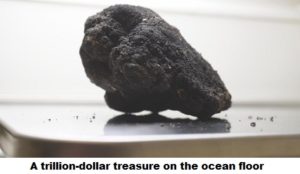
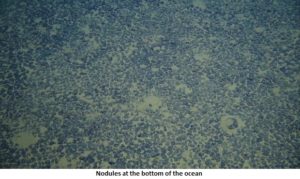
As related here, “the industries of agri-business …” is where our focus need to be. As prescribed as good economic policy, we need our own bread basket so as to Feed Ourselves.

Bread basket = a part of a region that produces cereals for the rest of it.

Recent examples of Breadbasket Economic discussions:

See a sample bread basket reference (Nigeria) in this VIDEO here:

VIDEO – Benue State – Nigeria’s Food Basket – https://youtu.be/GhyOAF1eo1k

The234project
Published Feb 1, 2017 – Enjoy an overview of this wonderful middle belt state in Nigeria. It was created in 1976.

According to a previous Go Lean commentary:

Who or where is the bread basket of the Caribbean?

Do we have an answer? Do we have a bread basket? Do we even have an organized region so as to collaborate on the responsibility of feeding our people?

No, No, and No!

This commentary is important for the Caribbean to contemplate. Every human in every land must arrange for the delivery of basic needs – “we gotta eat” and so food supply is paramount. Scientific developments have always been a major consideration for food supply, ever since the days of hunting-and gathering. Modern society is built on the premise that we would employ scientific best practices to harvest our food, or trade with people who employ these best practices.

The book Go Lean…Caribbean declares “enough already” with the trade; it is time to produce our own.

Truth be told, the limestone islands of the Caribbean – think: Bahamas, Cayman, Turks & Caicos Islands, etc. – cannot be used to implement sustainable agricultural system. We need to deputize the larger landmasses – Belize, Cuba, Guyana, Suriname, etc. – to serve the bread basket role for the rest of the region.

This is the plan … deploy the agricultural installations and developments to make all the appropriate member-states our bread basket.

This plan is presented throughout the 370 pages of the Go Lean book, provided as turn-by-turn directions on how to reform and transform the economic, security and governing engines for the Caribbean region and their member-states. This roadmap includes the new community ethos (attitudes and values) that must be adopted; plus the executions of new strategies, tactics, implementations and advocacies to deliver on the basic responsibility of Feeding Ourselves. In fact, this is the actual title of one advocacy in the Go Lean book. Consider the specific plans, excerpts and headlines here from Page 162, entitled:

10 Ways to Better Manage Food Consumption

1 Lean-in for the Caribbean Single Market Confederation Treaty The CU will allow for the unification of the region into one market, thereby creating a single economy of 30 member-states, 42 million people and a GDP of over $800 Billion – the CU will take the lead in facilitating the food supply and distribution systems to ensure the region can feed itself, more from local production and less from trade. Though the cost savings of imports should never be ignored, some CU countries (Greater Antilles, Belize, Guyana & Suriname) have a low opportunity cost for increasing food production for the regional market. Thus a mission of the CU is to streamline the systems, processes, logistics, funding, training, and market promotions so that the Caribbean can fulfill this basic need.
2 Public Health Dynamics – Produce Deserts & Farmers Market
3 “Nouvelle” Caribbean Cuisine
4 Agri-Business

Many of the member-states get 90% (or more) of their food supplies from imports; even fish is imported from Alaska, despite the 1,063,000 square miles of harvestable waters of the Caribbean Sea. The CU will implement agri-business (and aqua-culture) investments to generate more regional options for food production: cooperatives (co-ops), farm credit, common grazing lands, fisheries oversight, canaries, aqua-culture endeavors, etc.

5 Logistics for the Food Supply

[Quick Service Restaurants or] QSRs are so popular and growing in demand because they have mastered the “art and science” of logistics, to get their food to the consumer; and thus the low cost. When speed is not the goal, preservative strategies must be implemented. The technology of canning, “200 year old science”, will be advocated more for native products. (Most canned coconut water comes from Thailand). The CU will sponsor co-ops to manage canneries for different foods.

6 Fresh Frozen

Delivery of food products must be carefully managed. Meats and produce are perishable and have a limited time to get to their final markets. An additional logistical strategy is “flash freezing”. This 100-year old technology holds a lot of promise for the region. The CU will sponsor cooperatives and condominium associations to construct and maintain refrigerated warehouses, with power alternatives, to facilitate the logistics of frozen products – for trading partners.

7 Food Labeling
8 Export – Help Regional Businesses Find Foreign Markets
9 Media Industrial Complex
10 Food Tourism

This advocacy projects that there is hope that we can reform and transform our agricultural deliveries. That’s the land, what about the seas?

In a previous blog-commentaryLessons in Economic History: Commerce of the Seas – Book Review: ‘Sea Power’ – we learned how the oceans/seas can give a competitive advantage that can be exploited:

Around the world, countries that had access to the “Sea” have a distinct advantage economically versus countries that were land-locked; i.e. England versus Austria.

To help us Feed Ourselves, the Go Lean roadmap also advocates that we exploit the valuable resources of the seas, by reforming and transforming the fishery eco-system. In fact, this is the actual title of one advocacy in the Go Lean book. Consider the specific plans, excerpts and headlines here from Page 210, entitled:

10 Ways to Improve Fisheries

1 Lean-in for the Caribbean Union Trade Federation (CU).

The CU will allow for the unification of the region into one market, thereby creating a single economy of 30 member-states, 42 million people and a GDP of over $800 Billion (2010). One mission of the CU is to facilitate the food supply so that the region can feed itself, more from local production and less from trade; this includes yields from fisheries. The Caribbean Sea generates a large fishing industry for the surrounding countries, accounting for half a million metric tons (1.1 billion pounds) of fish per year. And yet, the region still imports fish from Alaska. (Alaska imports none from the Caribbean).

2 UN Petition – Effort initiated by the ACS [(Association of Caribbean States)]
3 Common Pool Resources (Lobster, Conch, Grouper, Flying Fish)

Though the waters between the islands may be uninhabited, their resources can still be depleted. The CU will govern the common pool resources to promote the sustainability of fish stock. Fishing for lobster, conch, grouper, “flying fish” and other species. [These] must be controlled, with limited harvesting seasons, otherwise there will be none for future generations.

4 Cooperatives

Fishery cooperatives allow fishermen and industry players to pool their resources in certain (non-competitive) areas of activity. This strategy is vital for sharing the cost and expense of installing piers/docks, locating systems (Loran-C & GPS), canaries, refrigerated warehouses and transportation solutions.

5 Aqua-culture and Mari-culture

The CU will foster the industry (and cooperatives) for aqua-culture, the controlled harvesting of fish, crustaceans,

mollusks and aquatic plants using farm-like conditions and practices. While commercial fishing can be likened to hunting-and-gathering, aquaculture is more akin to agriculture. Mari-culture, on the other hand, refers to aquaculture practiced in marine environments and underwater habitats. The CU will plant aquatic plants as needed to protect fish beds and reefs.

6 Fishing Tourism and Yachting Enthusiasts
7 Marine Financing
8 Coast Guard hand-off to CU Naval Authority
9 ICE Cooperation
10 Maritime Emergency Management

This Caribbean roadmap to improve our Surf & Turf  Food Supply should be welcomed and greatly appreciated. The end result will be less imports – this means we get to Feed Ourselves with lower costs and greater variety in our Food Supply.

The issues in reforming and transforming our agriculture and fishery eco-systems have been a frequent subject for previous blog-commentaries; consider this list of sample entries:

https://goleancaribbean.com/blog/?p=17697 Using Common Pool Resources to Better Source Our Food
https://goleancaribbean.com/blog/?p=15359 Industrial Reboot – Fisheries 101
https://goleancaribbean.com/blog/?p=13184 Industrial Reboot – Frozen Foods 101
https://goleancaribbean.com/blog/?p=10369 Science of Sustenance – Temperate Foods
https://goleancaribbean.com/blog/?p=3594 Better Fisheries Management for Queen Conch
https://goleancaribbean.com/blog/?p=2276 Climate Change May Affect Food Supply Within a Decade

All Caribbean member-states are urged to “eat, drink and be merry”, but let’s do it with local food that we source ourselves – harvested from our own bread basket. This was an original intent of the Go Lean book; see this except from the opening Page 3:

The CU should better provide for the region’s basic needs (food, clothing, energy and shelter), and then be in position to help supply the rest of the world. Previous Caribbean societies lived off the land and the sea; but today, the region depends extensively on imports, even acquiring large quantities of seafood, despite the 1,063,000 square miles of the Caribbean Sea.

“Living off the land; living off the Seas” – considering our historicity, it would be stupid for us to NOT try this effort. This is why this roadmap is conceivable, believable and achievable. We urge all Caribbean stakeholders to lean-in to this roadmap to empower our regional Food Supply – we must feed ourselves … and make the Caribbean homeland and home-seas better places to live, work and play. 🙂

About the Book
The book Go Lean…Caribbean serves as a roadmap for the introduction and implementation of the technocratic Caribbean Union Trade Federation (CU), for the elevation of Caribbean society – for all member-states. This CU/Go Lean roadmap has these 3 prime directives:

  • Optimization of the economic engines in order to grow the regional economy to $800 Billion & create 2.2 million new jobs.
  • Establishment of a security apparatus to ensure public safety and protect the resultant economic engines.
  • Improve Caribbean governance to support these engines, including a separation-of-powers between the member-states and CU federal agencies.

The Go Lean book provides 370-pages of turn-by-turn instructions on “how” to adopt new community ethos, plus the strategies, tactics, implementations and advocacies to execute so as to reboot, reform and transform the societal engines of Caribbean society.

Download the free e-Book of Go Lean … Caribbean – now!

Who We Are
The movement behind the Go Lean book – a non-partisan, apolitical, religiously-neutral Community Development Foundation chartered for the purpose of empowering and re-booting economic engines – stresses that reforming and transforming the Caribbean societal engines must be a regional pursuit. This was an early motivation for the roadmap, as pronounced in the opening Declaration of Interdependence (Pages 12 – 14):

xi. Whereas all men are entitled to the benefits of good governance in a free society, “new guards” must be enacted to dissuade the emergence of incompetence, corruption, nepotism and cronyism at the peril of the people’s best interest. The Federation must guarantee the executions of a social contract between government and the governed.

xvi. Whereas security of our homeland is inextricably linked to prosperity of the homeland, the economic and security interest of the region needs to be aligned under the same governance. Since economic crimes … can imperil the functioning of the wheels of commerce for all the citizenry, the accedence of this Federation must equip the security apparatus with the tools and techniques for predictive and proactive interdictions.

xxiv. Whereas a free market economy can be induced and spurred for continuous progress, the Federation must install the controls to better manage aspects of the economy: jobs, inflation, savings rate, investments and other economic principles. Thereby attracting direct foreign investment because of the stability and vibrancy of our economy.

xxx.  Whereas the effects of globalization can be felt in every aspect of Caribbean life, from the acquisition of food and clothing, to the ubiquity of ICT, the region cannot only consume, it is imperative that our lands also produce and add to the international community, even if doing so requires some sacrifice and subsidy.

Sign the petition to lean-in for this roadmap for the Caribbean Union Trade Federation.

Share this post:
,
[Top]

Missing Out on the ‘Rush’ – Encore

The United States is missing out!

This is the summary of the VIDEO here from the news magazine 60 Minutes, as broadcasted on November 17, 2019 about the missed opportunities in the ‘Rush’ to source Rare Earth elements by deep-sea mining activities. See this VIDEO here:

VIDEO – Why the U.S. is missing out on the race to mine trillions of dollars worth of metals from the ocean floor – https://www.cbsnews.com/news/rare-earth-elements-u-s-on-sidelines-in-race-for-metals-sitting-on-ocean-floor-60-minutes-60-minutes-2019-11-17/

Published on November 17, 2019 – Rare earth elements and metals used in cell phones, supercomputers and more are sitting on the ocean floor, ready to be mined by multiple countries. So why is the U.S. on the sidelines?

Used for entertainment [and educational] purposes only. The property and rights for this video/audio go to ©CBS.

Perhaps the US, as the richest Single Market economy in the world can afford to pass up these economic opportunities. Maybe …

For us in the Caribbean, we cannot miss out.

We need all the economic help we can get. This was the strong urging from a previous blog-commentary on Rare Earths from March 23, 2015 and the new “Rush” to source (mine or extract) them.

Why is the US sitting on the sidelines?

The foregoing VIDEO explains that “they refuse to cede any governing authority to” … the International Seabed Authority, a subset of the United Nations Convention for the Law of the Sea (UNCLOS).

Perhaps they have the luxury to maintain this arrogance. We do not! On the contrary, here in the Caribbean, we are doubling-down on the UNCLOS protocols.

Let’s get busy in this new Gold Rush – this was the mandate from the prior blog-commentary. It is only apropos to Encore that submission now. See the commentary here:

—————

Go Lean Commentary – Rare Earths: The new ‘Rush’

There’s “Gold in dem there hills” – Legendary exclamation of the discovery of gold in 1848/49 California – the “Forty-niners”.

Thus started the California Gold Rush. Now there is a new rush … or quest; this time for alternative minerals to be extracted from the earth – all over the planet – that are considered even more valuable than gold: Rare Earth.

CU Blog - Rare Earths - The new Rush - Photo 1

This class of minerals was recently depicted in an exposé  by the CBS News Magazine 60 Minutes:

Video Title: http://www.cbsnews.com/videos/modern-lifes-devices-under-chinas-grip – Modern life’s devices under China’s grip?


From smartphones to cars and defense missiles, modern U.S. life depends on rare earth elements but China dominates the industry. (VIDEO plays best in Internet Explorer).

The summary of the VIDEO portrays that the United States initially had the lead in this field of Rare Earth extraction and sourcing; but the US de-prioritized this substance, while China transcended it and now exploits the market to near-complete domination.

The urgency of Rare Earth is not so unfamiliar to this commentary. This point was declared emphatically in the book Go Lean … Caribbean in numerous references:

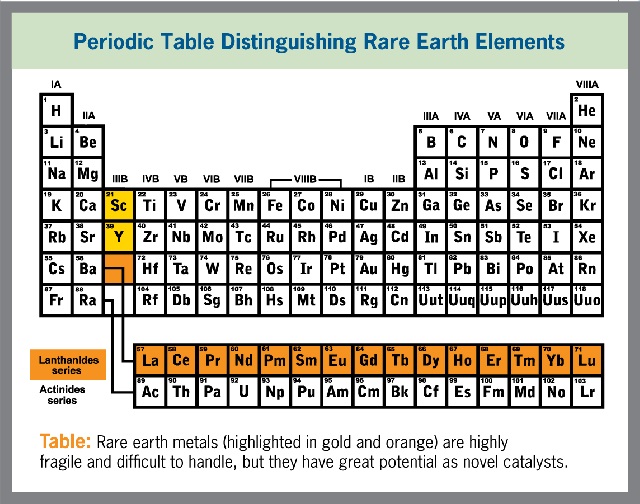
CU Blog - Rare Earths - The new Rush - Photo 2o Ways to Impact Extractions (Page 195) – There is a “rush”/quest to harvest rare earth elements. [159] These include lanthanide elements (fifteen metallic chemical elements with atomic numbers 57 through 71, from lanthanum through lutetium) for metals that are ferromagnetic, this means their magnetism only appear at low temperatures. Rare earth magnets are made from these compounds and are ideal in many high-tech products. The CU will foster the regional exploration and extraction of these pricey materials.

o Start-up Benefits from the EEZ (Page 104) – The new Exclusive Economic Zone (EEZ) powers allows for the administration of mineral extraction (mines) and oil/natural gas. Risk management and disaster mitigation plan must therefore be embedded into every drilling permit/license, as a CU mandate is to protect tourism product – a “bird in hand is better than two in the bush”. In addition, there is the harvest possibility of rare earth elements, like lanthanide and lutetium. Recently (2010), these minerals were priced even higher than gold at $2,200/kg.

o Reference footnote # 159 (Page 361) – The Economist Magazine. “The Difference Engine: More precious than gold”. Posted September 17, 2010; retrieved for the book in September 2013 from: http://www.economist.com/blogs/babbage/2010/09/rare-earth_metals. This news article stressed this point:

The foregoing VIDEO depicts the need for technocratic management of the extraction process for Rare Earths. There is now a great demand for these minerals; but the supply source is rather limited. Yet they are not so rare; they may even be found in the Caribbean region. Thus the need to explore these opportunities. The Go Lean book serves as a roadmap for the introduction and implementation of the technocratic Caribbean Union Trade Federation (CU), for the elevation of Caribbean society. This CU/Go Lean roadmap has these 3 prime directives:

  • Optimization of the economic engines in order to grow the regional economy to $800 Billion and create 2.2 million new jobs.
  • Establishment of a security apparatus to protect the resultant economic engines and the environment.
  • Improvement of Caribbean governance – including oversight of Self-Governing Entities and the Exclusive Economic Zone – to support these engines.

The Go Lean roadmap seeks to promote and oversee the effort for the exploration and extraction of these minerals, recognizing that modern life needs the efficiency that comes from science. The “brick-and-mortar” of a lot of today’s electronic equipment and computer components depend on the magnetic properties associated with Rare Earth minerals. The progress that the CU envisions in the fields of Science, Technology, Engineering and Medicine (STEM) will require engagements with the metallurgy of electronics. We need full exploration of the Caribbean homelands and waters for natural sources of these minerals. Plus with “prices higher than gold”, there is the economic incentive to push forth investments in this industry space.

Early in the book, the need is stressed to be on-the-look-out for opportunities to optimize the region’s economic-security-governing engines. These pronouncements are stated in the Declaration of Interdependence (Pages 11 & 13):

iv. Whereas the natural formation of the landmass is in a tropical region, the flora and fauna allows for an inherent beauty that is enviable to peoples near and far. The structures must be strenuously guarded to protect and promote sustainable systems of commerce paramount to this reality.

v. Whereas the natural formation of our landmass and coastlines entail a large portion of waterscapes, the reality of management of our interior calls for extended oversight of the waterways between the islands. The internationally accepted 12-mile limits for national borders must be extended by International Tribunals to encompass the areas in between islands. The individual states must maintain their 12-mile borders while the sovereignty of this expanded area, the Exclusive Economic Zone, must be vested in the accedence of this Federation.

xi. Whereas all men are entitled to the benefits of good governance in a free society, “new guards” must be enacted to dissuade the emergence of incompetence, corruption, nepotism and cronyism at the peril of the people’s best interest. The Federation must guarantee the executions of a social contract between government and the governed.

xxvii. Whereas the region has endured a spectator status during the Industrial Revolution, we cannot stand on the sidelines of this new economy, the Information Revolution. Rather, the Federation must embrace all the tenets of Internet Communications Technology (ICT) to serve as an equalizing element in competition with the rest of the world. The Federation must bridge the digital divide and promote the community ethos that research/development is valuable and must be promoted and incentivized for adoption.

This commentary previously discussed details of mineral/oil extractions in the Caribbean region. Here is a sample of earlier blogs:

https://goleancaribbean.com/blog/?p=4476 Lessons Learned from Big Salt mining
https://goleancaribbean.com/blog/?p=3743 Caribbean Oil Producer – Trinidad – cuts 2015 budget as oil prices tumble
https://goleancaribbean.com/blog/?p=3213 Gas Prices Drop Below $2 due to global extraction policy
https://goleancaribbean.com/blog/?p=2857 Recycling Rare Earths materials – Entrepreneurism in Junk

The Go Lean roadmap details a series of community ethos, strategies, tactics, implementations and advocacies to foster the progress in the wide fields of extractions for mining, materials and drilling administration. The following list applies:

Community Ethos – Lean Operations Page 24
Community Ethos – Return on Investments Page 24
Community Ethos – Cooperatives Page 25
Community Ethos – Ways to Impact the Future Page 26
Community Ethos – Ways to Improve Negotiations Page 32
Anecdote – Pipeline Transport – Strategies, Tactics & Implementations for minerals Page 43
Strategy – Mission – Regulatory powers mineral/oil exploration and extraction in the EEZ Page 45
Strategy – Competitive Analysis – Businesses – Emergency Planning –vs- Litigation Page 52
Tactical – Fostering a Technocracy Page 64
Tactical – Growing the Economy to $800 Billion – Industrial Extractions Driver Page 68
Tactical – Separation of Powers – Environmental Control & Regulatory Commission Page 83
Tactical – Separation of Powers – Extractions (Mining, Materials, Drilling) Administration Page 83
Tactical – Separation of Powers – Transportation – Turnpike Operations – Pipelines Page 84
Anecdote – “Lean” in Government Permitting Page 93
Anecdote – Caribbean Energy Grid Implementation Page 100
Implementation – Ways to Pay for Change Page 101
Implementation – Start-up Benefits from the EEZ Page 104
Implementation – Steps to Implement Self-Governing Entities – Ideal for mines Page 105
Implementation – Ways to Develop Pipeline Industry – For Rare Earth Transport Page 107
Advocacy – Ways to Impact Public Works Page 175
Advocacy – Ways to Foster Cooperatives Page 176
Advocacy – Ways to Impact Monopolies – Environmental concerns, systemic threats Page 202
Advocacy – Ways to Improve   Extractions – Mining, Materials, Drilling Optimization Page 205
Advocacy – Ways to Develop the Auto Industry Page 206
Appendix – North Dakota Extractions – Economic-Societal Effects of a Boom Page 334

This commentary asserts that the need is undeniable for mineral exploration and extraction. This can help to build-up the economy and command more respect in the world’s industrial landscape. Shepherding the Caribbean economy – for Rare Earths extractions – is the job for technocrats, trained and accomplished from the battles of globalization and trade wars.

Industrial policy is among the heavy-lifting tasks for the lean, agile operations of the CU technocracy. Everyone, the people, businesses and institutions are hereby urged to lean-in to this roadmap to make the Caribbean a better place to live, work and play. 🙂

Download the book Go Lean … Caribbean – now!

Share this post:
, , ,
[Top]

Internet Birthday – Still Growing Up after 50 Years

Go Lean Commentary

Today – October 29, 2019 – is the 50th birthday of the Internet.

No joke …

This is a Big Deal – or should be – for the world and for us in the Caribbean. The Internet has brought Good, Bad and Ugly to the world:

  • Think of the ease of communications with people around the world. Have you paid for long distance telephone calls lately?
  • When was the last time you touched an encyclopedia book or volume? … a dictionary?
  • Think of retail industries that have disappeared: record stores, book stores, travel agencies.

In this commentary, we have been consistent in our advocacy of Internet & Communications Technologies (ICT); see this previous post:

Technology has also pounced on the modern world, the Caribbean included; what started as a counter-culture revolution – nerds, geeks and techies – has become mainstream and normal. People today are walking around with a computer in their pockets (smart-phones) that far exceeds Big Mainframe systems (Big Iron) from 30 years ago; think 1 terabyte of memory-storage; 3.5 Giga-Hertz processor chips; global communication networks with interconnected devices around the world.

This change is not all bad! The whole world – the people, media and information – is now accessible at our finger tips!

It is our assertion that the entire Caribbean region – all 30 member-states, Cuba included – must adopt, compete and thrive in our ICT endeavors. This is one strategy for leveling the playing field in our competition with the rest of the world. But to adopt, compete and thrive, we cannot only consume; we must produce (research and develop) as well.

Why? Because the internet can also lead consumers astray; there are lanes on the information superhighway that goes into some dark-dangerous corners of society. See how this was pronounced by this college professor, who so happens to be one of the Participating Founders of the Internet 50 years ago … today:

Opinion: 50 years ago, I helped invent the internet. How did it go so wrong?
By: Leonard Kleinrock
When I was a young scientist working on the fledgling creation that came to be known as the internet, the ethos that defined the culture we were building was characterized by words such as ethical, open, trusted, free, shared. None of us knew where our research would lead, but these words and principles were our beacon.

We did not anticipate that the dark side of the internet would emerge with such ferocity. Or that we would feel an urgent need to fix it.

How did we get from there to here?

While studying for my doctorate at MIT in the early 1960s, I recognized the need to create a mathematical theory of networks that would allow disparate computers to communicate. Later that decade, the Advanced Research Projects Agency — a research funding arm of the Department of Defense created in response to Sputnik — determined they needed a network based on my theory so that their computer research centers could share work remotely.

My UCLA computer lab was selected to be the first node of this network. Fifty years ago — on Oct. 29, 1969 — a simple “Lo” became the first internet message, from UCLA to Stanford Research Institute. We had typed the first two letters of “login” when the network crashed.

This quiet little moment of transmission over that two-computer communication network is regarded as the founding moment of the internet.

During its first 25 years, the internet grew dramatically and organically with the user community seeming to follow the same positive principles the scientists did. We scientists sought neither patents nor private ownership of this networking technology. We were nerds in our element, busily answering the challenge to create new technology that would benefit the world.

Around 1994, the internet began to change quickly as dot-coms came online, the network channels escalated to gigabit speeds and the World Wide Web became a common household presence. That same year, Amazon was founded and Netscape, the first commercial web browser, was released.

And on April 12, 1994, a “small” moment with enormous meaning occurred: The transmission of the first widely circulated spam email message, a brazen advertisement. The collective response of our science community was “How dare they?” Our miraculous creation, a “research” network capable of boundless computing magnificence had been hijacked to sell … detergent?

By 1995, the internet had 50 million users worldwide. The commercial world had recognized something we had not foreseen: The internet could be used as a powerful shopping machine, a gossip chamber, an entertainment channel and a social club. The internet had suddenly become a money-making machine.
With the profit motive taking over the internet, the very nature of innovation changed. Averting risk dominated the direction of technical progress. We no longer pursued “moonshots.” Instead advancement came via baby steps — “design me a 5% faster Bluetooth connection” as opposed to “build me an internet.” An online community that had once been convivial transformed into one of competition, antagonism and extremism.

And then as the millennium ended, our revolution took a more disturbing turn that we continue to grapple with today.

By suddenly providing the power for anyone to immediately reach millions of people inexpensively and anonymously, we had inadvertently also created the perfect formula for the “dark” side to spread like a virus all over the world. Today more than 50% of email is spam, but far more troubling issues have emerged — including denial of service attacks that can immobilize critical financial institutions and malicious botnets that can cripple essential infrastructure sectors.

Other dangerous players, such as nation-states, started coming onto the scene around 2010, when Stuxnet malware appeared. Organized crime recognized the internet could be used for international money laundering, and extremists found the internet to be a convenient megaphone for their radical views. Artificial intelligence, machine learning, facial recognition, biometrics and other advanced technologies could be used by governments to weaken democratic institutions.

The balkanization of the internet is now conceivable as firewalls spring up around national networks.

We could try to push the internet back toward its ethical roots. However, it would be a complex challenge requiring a joint effort by interested parties — which means pretty much everyone.

We should pressure government officials and entities to more zealously monitor and adjudicate such internet abuses as cyber-attacks, data breaches and piracy. Governments also should provide a forum to bring interested parties together to problem-solve.

Citizen-users need to hold websites more accountable. When was the last time a website asked what privacy policy you would like applied to you? My guess is never. You should be able to clearly articulate your preferred privacy policy and reject websites that don’t meet your standards. This means websites should provide a privacy policy customized to you, something they should be able to do since they already customize the ads you see. Websites should also be required to take responsibility for any violations and abuses of privacy that result from their services.

Scientists need to create more advanced methods of encryption to protect individual privacy by preventing perpetrators from using stolen databases. We are working on technologies that would hide the origin and destination of data moving around the network, thereby diminishing the value of captured network traffic. Blockchain, the technology that underpins bitcoin and other digital currencies, also offers the promise of irrefutable, indisputable data ledgers.

If we work together to make these changes happen, it might be possible to return to the internet I knew.

Leonard Kleinrock is distinguished professor of computer science at the UCLA Samueli School of Engineering.

Source: Posted October 29, 2019; retrieved October 29, 2019 from: https://www.latimes.com/opinion/story/2019-10-29/internet-50th-anniversary-ucla-kleinrock

————–

VIDEO – The internet is turning 50 this year, here’s how it all started – https://youtu.be/U58HO1FyQ04

CGTN America
Posted April 2, 2019 –
The technology behind the very platform you’re reading these words on turns 50 years old on Oct. 29th. On this date in 1969, researchers sent the first message ever online.

CGTN’s Phil Lavelle reports on how it all started in room at UCLA back in 1969.

Watch CGTN LIVE on your computer, tablet or mobile http://america.cgtn.com/livenews

Subscribe to CGTN America on YouTube
Follow CGTN America:
Twitter: @cgtnamerica
Facebook: @cgtnamerica

The founding of the internet is not unfamiliar to this movement behind the book Go Lean…Caribbean; one of the book authors benefited from the tutelage of another one of the Participating Founders of the computer science that led to today’s internet; see the obituary excerpts of Dr. Thomas Mason in the Appendix below.

The Way Forward for the Caribbean now relies heavily on Internet & Communications Technologies. We cannot get from “here to there” without a robust participation in the art and science of ICT.

This theme – doubling-down on ICT – aligns with many previous Go Lean commentaries; see a sample list here:

https://goleancaribbean.com/blog/?p=18524 One Step Closer: e-Money Solutions in One Country After Another
https://goleancaribbean.com/blog/?p=17040 Uber: An ICT product that is a ‘Better Mousetrap’
https://goleancaribbean.com/blog/?p=16364 5 Years Later – Technology: Caribbean countries fully on board
https://goleancaribbean.com/blog/?p=15875 Internet Giant “Amazon”: ‘What I want to be when I grow up’
https://goleancaribbean.com/blog/?p=15858 New Media Model – Network Mandates for a New Caribbean
https://goleancaribbean.com/blog/?p=15075 New Governing Model: e-Government 3.0
https://goleancaribbean.com/blog/?p=13466 Future Focused – Personal Development and the Internet
https://goleancaribbean.com/blog/?p=11358 Retail Apocalypse – Preparing for the e-Commerce Inevitable
https://goleancaribbean.com/blog/?p=11184 JPMorganChase spent $10 billion on ‘FinTech’ for 1 year
https://goleancaribbean.com/blog/?p=6341 Tourism Stewardship – What’s Next? Internet Sales & Administration
https://goleancaribbean.com/blog/?p=5435 New Governing Model – China Internet Policing Lessons
https://goleancaribbean.com/blog/?p=2126 Where the Jobs Are – ICT Reshaping Global Job Market

The Internet is not fully grown – it continues to mature, despite fully-developed eco-systems.

What will be the end-result for Cable Television? Electioneering? E-Learning?

We have more questions than we have answers.

There is still opportunity for Caribbean stakeholders to mold the landscape for Internet Commerce in our region; i.e. imagine what the end result will be for 3D-Printing?

We urge all stakeholders to tune-in to the next 50 years by leaning-in to this Go Lean roadmap. We are preparing the region to not just consume, but also to foster and forge internet solutions for our homeland. This is how we will make our homeland a better place to live, work and play. 🙂

About the Book
The book Go Lean…Caribbean serves as a roadmap for the introduction and implementation of the technocratic Caribbean Union Trade Federation (CU), for the elevation of Caribbean society – for all member-states. This CU/Go Lean roadmap has these 3 prime directives:

  • Optimization of the economic engines in order to grow the regional economy to $800 Billion and create 2.2 million new jobs.
  • Establishment of a security apparatus to ensure public safety and protect the resultant economic engines.
  • Improve Caribbean governance to support these engines, including a separation-of-powers between the member-states and CU federal agencies.

The Go Lean book provides 370-pages of turn-by-turn instructions on “how” to adopt new community ethos, plus the strategies, tactics, implementations and advocacies to execute so as to reboot, reform and transform the societal engines of Caribbean society.

Download the free e-Book of Go Lean … Caribbean – now!

Who We Are
The movement behind the Go Lean book – a non-partisan, apolitical, religiously-neutral Community Development Foundation chartered for the purpose of empowering and re-booting economic engines – stresses that reforming and transforming the Caribbean societal engines must be a regional pursuit. This was an early motivation for the roadmap, as pronounced in the opening Declaration of Interdependence (Pages 12 – 14):

xi. Whereas all men are entitled to the benefits of good governance in a free society, “new guards” must be enacted to dissuade the emergence of incompetence, corruption, nepotism and cronyism at the peril of the people’s best interest. The Federation must guarantee the executions of a social contract between government and the governed.

xvi. Whereas security of our homeland is inextricably linked to prosperity of the homeland, the economic and security interest of the region needs to be aligned under the same governance. Since economic crimes … can imperil the functioning of the wheels of commerce for all the citizenry, the accedence of this Federation must equip the security apparatus with the tools and techniques for predictive and proactive interdictions.

xxiv. Whereas a free market economy can be induced and spurred for continuous progress, the Federation must install the controls to better manage aspects of the economy: jobs, inflation, savings rate, investments and other economic principles. Thereby attracting direct foreign investment because of the stability and vibrancy of our economy.

xxvii. Whereas the region has endured a spectator status during the Industrial Revolution, we cannot stand on the sidelines of this new economy, the Information Revolution. Rather, the Federation must embrace all the tenets of Internet Communications Technology (ICT) to serve as an equalizing element in competition with the rest of the world. The Federation must bridge the digital divide and promote the community ethos that research/development is valuable and must be promoted and incentivized for adoption.

xxx.   Whereas the effects of globalization can be felt in every aspect of Caribbean life, from the acquisition of food and clothing, to the ubiquity of ICT, the region cannot only consume, it is imperative that our lands also produce and add to the international community, even if doing so requires some sacrifice and subsidy.

Sign the petition to lean-in for this roadmap for the Caribbean Union Trade Federation.

—————

Appendix: Obituary of Dr. Thomas Mason

July 24, 2017 – It is with a heavy heart that we report the passing of a great educator and STEM influencer, Dr. Thomas W. Mason. He was the founder and legendary professor of Mathematics, Data Processing and Computer Science at Florida Agriculture & Mechanical University (FAMU). 

Considering the proud legacy of Historical Black Colleges and University (HBCU), Dr. Mason was agnostic to all of that; he was first and foremost a computer scientist, who happened to be Black, He matriculated for his PhD at the University of Illinois (completing in 1973); there he worked on the ILLIAC project, directly on the ILLIAC IV effort:

ILLIAC (Illinois Automatic Computer) was a series of supercomputers built at a variety of locations, some at the University of Illinois at Urbana-Champaign (UIUC). In all, five computers were built in this series between 1951 and 1974. Some more modern projects also use the name.

The architecture for the first two UIUC computers was taken from a technical report from a committee at the Institute for Advanced Study (IAS) at Princeton, First Draft of a Report on the EDVAC [1945], edited by John von Neumann (but with ideas from Eckert & Mauchley and many others.) The designs in this report were not tested at Princeton until a later machine, JOHNNIAC, was completed in 1953. However, the technical report was a major influence on computing in the 1950s, and was used as a blueprint for many other computers, including two at the University of Illinois, which were both completed before Princeton finished Johnniac. The University of Illinois was the only institution to build two instances of the IAS machine. In fairness, several of the other universities, including Princeton, invented new technology (new types of memory or I/O devices) during the construction of their computers, which delayed those projects. For ILLIAC I, II, and IV, students associated with IAS at Princeton (Abraham H. TaubDonald B. GilliesDaniel Slotnick) played a key role in the computer design(s).[1]

———
The ILLIAC IV was one of the first attempts to build a massively parallel computer. One of a series of research machines (the ILLIACsfrom the University of Illinois), the ILLIAC IV design featured fairly high parallelism with up to 256 processors, used to allow the machine to work on large data sets in what would later be known as vector processing. After several delays and redesigns, the computer was delivered to NASA’s Ames Research Center at Moffett Airfield in Mountain View, California in 1971. After thorough testing and four years of NASA use, ILLIAC IV was connected to the ARPANet for distributed use in November 1975, becoming the first network-available supercomputer, beating Cray’s Cray-1 by nearly 12 months. – Source: Wikipedia

Notice the reference here to ARPA and ARPANet – ARPA, the Advanced Research Projects Agency, renamed the Defense Advanced Research Projects Agency (DARPA) in 1972 – this was the forerunner to today’s Internet. He was proud of this participation and accomplishments of this endeavor – he often embedded this history in his lectures. He sought to influence the next generation of students to look, listen, learn, lend-a-hand and lead in the development of these cutting-edge technologies. (By extension, his impact extended to the Caribbean as well).

For those who listened and learned, we are forever grateful for Dr. Mason contributions and tutelage.

The publishers of the book Go Lean…Caribbean recognize the life contributions of Dr. Mason as a STEM educator, visionary and influencer. … Any hope of creating more jobs requires more STEM … students, participants, entrepreneurs and educators. The Go Lean roadmap seeks to put Caribbean people in a place of better command-and-control of the STEM field for their region. We need contributions from people with the profile like Dr. Mason; he provided a role model for inspiration … for this writer, a former protégé.

Share this post:
, , , ,
[Top]

Refuse to Lose – Canada’s Model of Ascent

Go Lean Commentary

10 Lessons from Canada’s History – #6 – Neighbor: Frienemy
What is a frienemy?
Frenemy” (also spelled “frienemy”) is an oxymoron and a portmanteau of “friend” and “enemy” that refers to “a person with whom one is friendly, despite a fundamental dislike or rivalry” or “a person who combines the characteristics of a friend and an enemy”. – Wikipedia.

In the last submission in this series, it was established that “Yes, we can” succeed in competition with the US despite the dominance of the American hegemony.

Canada does! 

They are the greatest example of a Frienemy, in their association with the US. They cooperate and they compete. The have beaten America in the past and continue to do so even today. Just look, at their recent victories here in the sporting world:

VIDEO – Canada beats USA in soccer for the first time in 34 years! – https://www.bttoronto.ca/videos/canada-beats-usa-in-soccer-for-the-first-time-in-34-years/

Canada wins 2-0 against USA in soccer and Kyle Lowry officially signs his contract extension with the Raptors.

In truth, all neighboring countries are in competition with the US, if only to retain their citizens from “taking their talents to South Beach“. So many of the Caribbean Diaspora have taken their talents to “South Beach, South Toronto or South London”. The economic impact of their absence has been duly noted in research and analysis and the conclusion is bad:

Caribbean loses over 70% of tertiary educated citizens to the brain drain

What more can we learn from Canada, from their turn-around of losing and ascent to a competitive super-power on their own?

Consider the history highlights here, (and the depictions in the Appendix VIDEO below):

While the United States of America got its start in 1776 – by declaring and fighting for freedom from Great Britain – Canada was not formed as a nation until 1867, almost 100 years later. During those “Bad Old Days”, they could only stand idly by and watch the US take … parts of Maine, Northwest Territory, Oregon Territory, etc.. The purpose of their 1867 Confederation was the uniform quest to: Stand its Ground against America.

They – Canada – got sick and tired of being “sick and tired” and finally developed the attitude to:

Refuse to lose – a commitment by a group or society to the values of quality, success and winning.

If we model Canada’s example and adopt this attitude then we too will believe that we can compete with the US and even be better. This is a theme in the 2013 book Go Lean…Caribbean; it serves as a roadmap for the Caribbean to be a better homeland to live, work and play. This commentary continues the series on the Refuse to Lose ethos; this is Part 5-of-6. The full series is cataloged as follows:

  1. Refuse to Lose: Lesson from Sports
  2. Refuse to Lose: Remediating ‘Columbus Day’
  3. Refuse to Lose: Introducing Formal Reconciliations
  4. Refuse to Lose: Despite American Expansionism
  5. Refuse to Lose: Canada’s Model of Ascent
  6. Refuse to Lose: Direct Foreign Investors Wind-Downs

It is the assertion of this series of commentaries that the Caribbean can win, despite American dominance. How can we win or “Refuse to Lose“? Among the many strategies, tactics and implementations embedded in the Go Lean roadmap is the goal to learn the lessons from Canada’s history.

Among the 370-pages of the Go Lean book are the turn-by-turn instructions on “how” … to adopt new community ethos. The book presents the strategies, tactics, implementations and advocacies to execute so as to lose less often and win more. The book presented one advocacy on Lessons from Canada – their 150-Plus-years of history – entitled: 10 Lessons from Canada’s History; (Page 146). Consider some specific plans, excerpts and headlines from that advocacy in the book, here:

1 Lean-in for the Caribbean Single Market
This treaty calls for the confederation of the Caribbean region into a single market of 30 member-states and 42 million people, similar to the original 1867 confederation for Canada. The history of Canada synchronizes with the aspirations of the CU Trade Federation. In this Canadian context, confederation generally describes the political process that united the colonies in the 1860s and related events, and the subsequent incorporation of other colonies and territories. Today, Canada is a “G8” advanced economy, made up of 10 provinces and 3 territories, ranking among the largest in the world, due its abundant natural resources and well-developed trade networks, including one with the US, a long and complex relationship. Canada has been a Northern Star, as a guide and refuge to Caribbean hopes and dreams.
2 Confederation for Defense – Strength in Numbers
The American Civil War caused security threats for Canada. The Union (US North) encouraged Irish immigration and sourced their Army (a million-man strong) with many Irish fighters. Since many Irish immigrants maintained animosity towards the British, there were documented cases of terroristic attacks against Canadian targets, i.e. the Fenian (an Irish Brotherhood) raids. This corresponded with the Little Englander philosophy, whereby Britain no longer wanted to maintain troops in its colonies.Confederation was therefore necessary to promote security for the related colonies of Ontario, Quebec, New Brunswick and Nova Scotia – amounting to a population of slightly over 2 million people
3 Multiple Cultural Legacies and Languages
4 Better than a Republic – (Civil War Lesson for a Technocracy)
5 Assuage Human Flight – Provide Alternative
6 Neighbor: Frienemy
Despite the cooperation needed for the St. Lawrence Waterway – (see Appendix UA) – the stated US desire, doctrine of Manifest Destiny, was to govern the entire North American continent. The US had fought wars against English-Canada interests and many believed that the US would annex the other colonies governed directly by England, as the US acquired the Oregon Territory. These reasons provided the motivation for the initial Canadian Confederation to expand from coast-to-coast, and serve as a role-model for the CU to target the entire region of the Caribbean Sea geography.
7 Aboriginal Relations Need Local Governance
8 Mastering Natural Resources
9 Federal / Provincial Outsourcing
10 Population Concerns – Not enough Natural Growth
Canada could not contend with the aging population (more retirees with fewer workers); they adapted a liberal immigration policy in the past decades and now their 2011 census counted 33,476,688, up over 6% in 5 years, and 20% over 20 years. The CU has the same challenge and needs its confederation to assuage the negative actuary equations.

Canada has ascended – now a “G8” advanced economy country – despite being in the shadows of the US. We, in the Caribbean can ascend too.

The subject of the Canada’s role model have been addressed in many previous commentaries; consider this sample list here:

https://goleancaribbean.com/blog/?p=15662 Manifesting High-Tech Neighborhoods in Toronto, Canada
https://goleancaribbean.com/blog/?p=14954 Overseas Workers – even to Canada – not an ideal solution
https://goleancaribbean.com/blog/?p=14541 Viola Desmond – One Canadian Woman Made a Difference
https://goleancaribbean.com/blog/?p=14174 Canada: “Follow Me” for Model on ‘Climate Change’ Action
https://goleancaribbean.com/blog/?p=13321 ‘Pluralistic Democracy’ – Canada’s Model of a Multilingual Society
https://goleancaribbean.com/blog/?p=12369 Canada @ 150 Years Old – Happy Canada Day 2017
https://goleancaribbean.com/blog/?p=12322 Canadian Model for Ferries: Economics, Security and Governance
https://goleancaribbean.com/blog/?p=9480 10 Things We Want from Canada and 10 Things We Do Not Want
https://goleancaribbean.com/blog/?p=6937 Women in Politics – Canada’s Model of Political Equality
https://goleancaribbean.com/blog/?p=3694 Jamaica-Canada employment program generate millions for economy
https://goleancaribbean.com/blog/?p=3582 For Canadian Banks that Invest Regionally: Caribbean is a ‘Bad Bet’
https://goleancaribbean.com/blog/?p=510 Florida’s Chilly Welcome for Canadian Snowbirds – Bad Model

In many ways, Canada has presented the ethos of Refuse to Lose to their American neighbors and have benefited as a result. They may not always win, but they Refuse to Lose and this makes them a better homeland in their pursuits of “life, liberty and happiness” and their overall goal to be a more harmonious society – a more perfect union.

We need that same Refuse to Lose ethos for the Caribbean Way Forward so that we can start winning. We have lose too much already. We hereby urge every Caribbean stakeholder to Refuse to Lose; this is how we will make our homeland a better place to live, work and play.  🙂

About the Book
The book Go Lean…Caribbean serves as a roadmap for the introduction and implementation of the technocratic Caribbean Union Trade Federation (CU), for the elevation of Caribbean society – for all member-states. This CU/Go Lean roadmap has these 3 prime directives:

  • Optimization of the economic engines in order to grow the regional economy to $800 Billion and create 2.2 million new jobs.
  • Establishment of a security apparatus to ensure public safety and protect the resultant economic engines.
  • Improve Caribbean governance to support these engines, including a separation-of-powers between the member-states and CU federal agencies.

The Go Lean book provides 370-pages of turn-by-turn instructions on “how” to adopt new community ethos, plus the strategies, tactics, implementations and advocacies to execute so as to reboot, reform and transform the societal engines of Caribbean society.

Download the free e-Book of Go Lean … Caribbean – now!

Who We Are
The movement behind the Go Lean book – a non-partisan, apolitical, religiously-neutral Community Development Foundation chartered for the purpose of empowering and re-booting economic engines – stresses that reforming and transforming the Caribbean societal engines must be a regional pursuit. This was an early motivation for the roadmap, as pronounced in the opening Declaration of Interdependence (Pages 12 – 13):

xi. Whereas all men are entitled to the benefits of good governance in a free society, “new guards” must be enacted to dissuade the emergence of incompetence, corruption, nepotism and cronyism at the peril of the people’s best interest. The Federation must guarantee the executions of a social contract between government and the governed.

xvi. Whereas security of our homeland is inextricably linked to prosperity of the homeland, the economic and security interest of the region needs to be aligned under the same governance. Since economic crimes … can imperil the functioning of the wheels of commerce for all the citizenry, the accedence of this Federation must equip the security apparatus with the tools and techniques for predictive and proactive interdictions.

xxiv.  Whereas a free market economy can be induced and spurred for continuous progress, the Federation must install the controls to better manage aspects of the economy: jobs, inflation, savings rate, investments and other economic principles. Thereby attracting direct foreign investment because of the stability and vibrancy of our economy.

Sign the petition to lean-in for this roadmap for the Caribbean Union Trade Federation.
————-

Appendix VIDEO – How the USA grew from 13 Colonies to 50 States – www.westgateschool.org/apps/video/watch.jsp?v=162718

Posted October 26, 2017 – Featuring archival footage and lively graphics, this informative, live-action program traces the expansion of the United States from 13 colonies to 50 states. Explores the stories behind the acquisitions of the different territories as well as the figures involved in each acquisition. The program covers the Louisiana Purchase, the Texas Annexation, the Gadsen Purchase and more, while helping to develop map-reading skills and an understanding of U.S. geography.

Share this post:
, , , ,
[Top]

Refuse to Lose – Despite American Expansionism

Go Lean Commentary

Never bet against America” – Warren Buffet, American Billionaire and Industrialist; see Appendix A below.

While it may not appear be a competition, in truth, there are competitive forces at work for foreign communities in the shadows of the great American eco-system. Yes, the Caribbean member-states have been parasites of the American “hegemony”.

Hegemony = the political, economic, or military predominance or control of one state over others. – Oxford University Press

Consider these facts, from a previous Go Lean commentary:

State of the Union: Self-Interest of ‘Americana’
The United States of America is the “800-pound gorilla” or the BIG DOG of the Western Hemisphere; (in fact, the US is the last Super Power in the world).

  • There are two US Territories in our Caribbean: Puerto Rico and the Virgin Islands.
  • The US is the Number 1 Single Marketeconomy in the world
  • The US is the Number 1 military (in terms of troop size, armament and defense spending).
  • The US is also the Number 1 destination for the Caribbean Diaspora.

We cannot avoid the influence of the American system – Americana – on our Caribbean region… “Resistance is futile!”

No society can survive with population losses; yet the status quo for the Caribbean is that we lose large fractions of our population to foreign shores, in the US. This was related in a previous blog-commentary in this series, Part 1-of-6:

So we are losing…

We need a turn-around; we need to win.

Is it possible to compete, to win, against the US?

(Or are we condemned to watching our best-and-brightest leave home and then we have to nation-build with the rest?)

Yes, we can win … with a new attitude – or community ethos. We can succeed; we can Do Well and Do Good – see this discussion elaborated on in the White Paper Summary in Appendix B below. We must …

Refuse to lose – a commitment by a group or society to the values of quality, success and winning.

If we adopt this attitude then we will believe that we can compete with the US; we can even be better. (America has active societal defects – i.e. institutional racism and Crony-Capitalism – that need not be an issue in our Caribbean homeland).

This is a mission of the roadmap embedded in the 2013 book Go Lean…Caribbean, to be a better homeland to live, work and play. This commentary is a continuation of this series on the Refuse to Lose ethos; this is Part 4-of-6. The full series is cataloged as follows:

  1. Refuse to Lose: Lesson from Sports
  2. Refuse to Lose: Remediating ‘Columbus Day’
  3. Refuse to Lose: Introducing Formal Reconciliations
  4. Refuse to Lose: Despite American Expansionism
  5. Refuse to Lose: Canada’s Model of Ascent
  6. Refuse to Lose: Direct Foreign Investors Wind-Downs

It is the assertion of this commentary that the Caribbean can win, despite American Expansionism – they inserted themselves in our affairs on multiple occasions: think Cuba and Haiti. The American hegemony shows their military might – the world’s strongest – plus these three areas:

  • Trade – America insists on dominating trade for the region; they want to export; even if it means importing the finished goods, then re-exporting it. (Think of how often we buy Japanese consumer products from America, rather than from Japan directly).
  • Currency – Many Caribbean territories use the US Dollar as their primary currency or co-currency; i.e. Turks & Caicos, British Virgin Islands, Curacao.
  • Media – American movies, television, music and other media products are ubiquitous even in the Caribbean region.

How can we win, despite this dominance? We can Do Well and Do Good – see the White Paper Summary in Appendix B below. Also, see the answers-solutions here, as addressed in previous commentaries:

Trade
America is willing to consume; so we should produce more. American manufacturers look for cheaper places to re-locate their plants.

Senate bill targets companies that move overseas – July 31, 2014
The Caribbean is the “best address in the world” and provides the best of certain products … and is the best at performing certain services. We can compete! There should not be the need to “run for the shadows”. The world should be soliciting us, not us begging for the “crumbs following from the table” of the world economy.

Currency
The Caribbean member-states are urged to adopt e-Payment schemes as soon as possible so as to leverage the money-multiplier principle for our economic benefit, not America’s.

Changing the Culture & Currency of Commerce – May 27, 2019
We want to change Caribbean commerce. We want to make it BiggerBetter and Faster.

  • Bigger – Yes, we want to go from local markets to a regional Single Market. Imagine all 30 Caribbean member-states with 42 million people and the potential to produce $800 Billion in GDP.
  • Better – Free Market would be better for Caribbean economics as opposed to the restricted controls of extreme socialism; think Cuba. Yet, many other member-states have policies and practices that are socialistic in their priorities; i.e. Antigua & Barbuda does NOT allow for private property ownership on Barbuda. (This smells like communism).
  • Faster – We want more and more electronic commerce options. This means a comprehensive Marketplace & Social Media (www.myCaribbean.gov) plus the delivery-logistics options of the optimized Caribbean Postal Union (CPU), a subset of the Caribbean Union Trade Federation (CU).

Media
Internet & Communications Technologies (ICT) allows equalization of Big Countries versus small countries. This equalizer effect will level the competition versus America; we can easily launch our own regional network.

Network Mandates for a New Caribbean – September 26, 2018
Change has come to the world and to the Caribbean region. The advent of Internet Communications Technologies (ICT) now has voluminous options for media to be delivered without the large footprint … or investment. Now anyone can easily publish VIDEO’s and Music files to the internet and sell them to the public – models abounds: i.e. pay-per-play, or subscription.

The failing-losing Caribbean member-states need societal progress; so we must adopt the new attitudes that reflect a Refuse to Lose mentality.

‘Yes We Can’ …

Refusing to Lose is a necessary new ethos for the Caribbean Way Forward . We must start winning, after so many years of losing.

We urge every Caribbean stakeholder to Refuse to Lose; this is how we will make our homeland a better place to live, work and play.  🙂

About the Book
The book Go Lean…Caribbean serves as a roadmap for the introduction and implementation of the technocratic Caribbean Union Trade Federation (CU), for the elevation of Caribbean society – for all member-states. This CU/Go Lean roadmap has these 3 prime directives:

  • Optimization of the economic engines in order to grow the regional economy to $800 Billion and create 2.2 million new jobs.
  • Establishment of a security apparatus to ensure public safety and protect the resultant economic engines.
  • Improve Caribbean governance to support these engines, including a separation-of-powers between the member-states and CU federal agencies.

The Go Lean book provides 370-pages of turn-by-turn instructions on “how” to adopt new community ethos, plus the strategies, tactics, implementations and advocacies to execute so as to reboot, reform and transform the societal engines of Caribbean society.

Download the free e-Book of Go Lean … Caribbean – now!

Who We Are
The movement behind the Go Lean book – a non-partisan, apolitical, religiously-neutral Community Development Foundation chartered for the purpose of empowering and re-booting economic engines – stresses that reforming and transforming the Caribbean societal engines must be a regional pursuit. This was an early motivation for the roadmap, as pronounced in the opening Declaration of Interdependence (Pages 12 – 14):

xi. Whereas all men are entitled to the benefits of good governance in a free society, “new guards” must be enacted to dissuade the emergence of incompetence, corruption, nepotism and cronyism at the peril of the people’s best interest. The Federation must guarantee the executions of a social contract between government and the governed.

xvi. Whereas security of our homeland is inextricably linked to prosperity of the homeland, the economic and security interest of the region needs to be aligned under the same governance. Since economic crimes … can imperil the functioning of the wheels of commerce for all the citizenry, the accedence of this Federation must equip the security apparatus with the tools and techniques for predictive and proactive interdictions.

xxiv.  Whereas a free market economy can be induced and spurred for continuous progress, the Federation must install the controls to better manage aspects of the economy: jobs, inflation, savings rate, investments and other economic principles. Thereby attracting direct foreign investment because of the stability and vibrancy of our economy.

xxvii. Whereas the region has endured a spectator status during the Industrial Revolution, we cannot stand on the sidelines of this new economy, the Information Revolution. Rather, the Federation must embrace all the tenets of Internet Communications Technology (ICT) to serve as an equalizing element in competition with the rest of the world. The Federation must bridge the digital divide and promote the community ethos that research/development is valuable and must be promoted and incentivized for adoption.

Sign the petition to lean-in for this roadmap for the Caribbean Union Trade Federation.

————–

Appendix A – Buffett: Never bet against America
By: Alex Crippen

A significant part of Warren Buffett’s enormous financial success is built on the money he’s put behind his unwavering belief that America’s brand of capitalism, from the earliest days of its founding, has fueled ever-growing prosperity for its businesses and its people, and that it will continue to do so far into the future.

[See this Timeline of his pronouncements]

    1. VIDEO – 1997: Why America will remain competitive – https://buffett.cnbc.com/video/1997/05/05/has-americas-industrial-age-passed.html


Posted May 1997 – At Berkshire’s Hathaway’s 1997 shareholder meeting, Buffett explains why he’s not worried the “age of classical industrial America has passed.”

    1. 2004: Despite challenges, optimism for America’s future

Despite a war in Iraq, increasing consumer debt, and declining job growth, Buffett remains positive, pointing out that the country has always recovered in the past, even when facing “an equally impressive number of negative factors.”

    1. 2004: “A country characterized by lots of immigration”

In response to a question about U.S. immigration law, Buffett talks about how he suspects America’s “incredible record” of economic growth over the decades has been helped by the people who came to the United States from other countries.

    1. 2009: Seeing past the “Great Recession”

Just months after a devastating credit crisis helps plunge the U.S. into its worst economic crisis since the 1930s, Buffett still believes “the opportunities will win in the end.”

    1. 2013: Born in the USA

At the 2013 Berkshire meeting, Buffett acknowledges that he’s benefited from luck, getting a “huge, huge, huge advantage” just from having been born in the United States. And he, says, he’s not the only lucky one.

    1. 2016: “This country works … it’s working now”

During a presidential campaign in which Donald Trump was promising to “Make America Great Again,” Buffett, a backer of Hillary Clinton’s candidacy, tells Becky Quick on CNBC’s “Squawk Box” why he takes issue with Trump’s premise.

    1. 2017: America will do fine no matter who is in the White House

On the eve of Donald Trump’s inauguration, after the Dow had rallied 7.6 percent since Election Day, Buffett is asked how he thinks the new president will affect the stock market in the months ahead.

Source: Posted July 2 2018; retrieved October 16, 2019 from: https://buffett.cnbc.com/2018/07/02/buffett-on-america.html

————–

Appendix B – How to Do Well and Do Good
Sub-title:
The key to achieving both of those goals together? Integrate societal benefits with company strategy.
By: Rosabeth Moss Kanter

Can companies do well by doing good? That question is asked frequently – but beware of false choices when considering it. In business, there is not a strict dichotomy between doing well and doing good; it is not an either-or proposition. Instead, social good and profitability are among the criteria by which companies make choices. In reality, any company is better off creating both bottom-line and societal benefits – and creating synergies between them.

That does not mean executives should lose sight of the goals and mission of the business, however. There is no reason certain kinds of good works – say, merely giving away money to areas unrelated to the business – should provide particular strategic advantage for a company. But if a company can integrate the benefits that it offers society more closely into its existing business, that integration can be very sensible and beneficial for the business. For example, people within the organization may recognize internal capabilities which they can build and develop to address a problem in society while simultaneously enlarging the company’s market.

As I describe in my book Supercorp, some smart companies are finding that including a focus on benefiting society in their mission can help yield competitive advantage. These companies, which are in the vanguard of creating a new business model, have discovered that a commitment to tackling societal problems can be one aspect of creating a corporate culture that leads to high performance and profits. (However, it is important to note that no company exemplifies this aspirational approach to management completely; all companies have flaws, and none live up to their ideals all of the time.)

There are a number of reasons why incorporating social good into strategy can help a company’s long-term performance. For one thing, it can help strengthen a company in the eyes of a number of important constituencies: its customer base, its employee base and the general public. In particular, a mission that includes serving society can help motivate employees – especially a younger generation of employees who seek meaning in work.

——

About the Author

Rosabeth Moss Kanter is the Ernest L. Arbuckle Professor of Business Administration at Harvard Business School. She is the author of numerous books, including Supercorp: How Vanguard Companies Create Innovation, Profits, Growth and Social Good (New York: Crown Business, 2009).

——-

Download/Buy the full Report at: https://sloanreview.mit.edu/article/how-to-do-well-and-do-good/ – Posted September 1, 2010; retrieved October 17, 2019.

Share this post:
, ,
[Top]

Refuse to Lose – Introducing Formal Reconciliations

Go Lean Commentary

So far this series on Refuse to Lose have established – (according to the previous blog-commentary):

“The practice of U.S. cities eschewing Columbus Day – because of the bad history associated with the Spanish Explorer’s atrocities – to celebrate Indigenous Peoples’ Day began in 1992 …”

See what we did there?

We warmed you up to the idea that “All Lives Matter, Yes, but oppressed groups need to be recognized and commiserated for the hurt that they have endured”.

And you bought it – “hook, line and sinker”.

We just accomplished an informal reconciliation. Now, it is time to pursue a formal reconciliation. (We have Indigenous People and oppressed people in the Caribbean too).

This is a mission of the roadmap embedded in the 2013 book Go Lean…Caribbean. The book introduces the strategy of impaneling Truth and Reconciliation Commissions (TRC) to address age-old (and modern) grievances.

This is part of the new attitude – community ethos – about winning-and-losing . The historicity of the Caribbean is that some demographics won – European Imperialists and loyalists – while others lost.

The human psyche is consistent; when we have been victimized, we want everyone to remember. But, when we have been the perpetrator – the bully – then we want everyone to forget. This applies to individuals and nations alike. – previous Go Lean commentary. 

To make progress in society, there must be a new attitude now. one is for the Greater Good; we want most people to win and few to lose. We want a …

Refusal to lose

That previous blog-commentary defined this community ethos as a commitment by a group or society to the values of quality, success and winning.

This commentary is a continuation of this series on the Refuse to Lose ethos; this is Part 3-of-6. The full series is cataloged as follows:

  1. Refuse to Lose: Lesson from Sports
  2. Refuse to Lose: Remediating ‘Columbus Day’
  3. Refuse to Lose: Introducing Formal Reconciliations
  4. Refuse to Lose: Despite American Expansionism
  5. Refuse to Lose: Canada’s Model of Ascent
  6. Refuse to Lose: Direct Foreign Investors Wind-Downs

This is not the first time this commentary have addressed ‘reconciliations’. These points have been detailed in many previous  Go Lean commentaries; see here:

European Reckoning – Christianity’s Indictment
The Church failed in its job to be the moral compass for the many European empires that have wielded absolute power on the planet. The bad result has been Slave Trade & Slavery, Colonialism and World Wars. These atrocities yielded millions and maybe even billions of victims. ‘White’ is NOT right. There is the need to reconcile that.
A Lesson in History: Jonestown, Guyana
40 years ago – 1978 – a religious atrocity transpired on Caribbean soil; this was the mass-murder/suicides in Jonestown, Guyana of almost 1000 people. Where were the societal stakeholders in this crisis, those charged with the duty to serve and protect. What have we learned? What reforms, if any, have we enacted?
Colonialism’s Bloody History Revisited
There has been a bloody history, tied to European and American colonialism. We must learn from this history; there must be a strenuous effort to dissuade societal defects and orthodoxy. Truth of the matter, colonialism is not dead with 18 Overseas Territories in Caribbean.
‘Loose Lips Sink Ships’ – Leaders Undermine Tourism
Political and religious leaders in Caribbean communities are projecting “a Climate of Hate” towards certain minority groups. This is so bad that it undermines the tourism products and community economics. Reconciling the pasts allows for better economics in the future.
Waging a Successful War on Orthodoxy
It takes a real battle to undo the standards and orthodoxy – many of them religious and colonial – introduced and implemented in society. Some good have come from these practices … and some bad. There needs to be a formal reconciliation of the Good, Bad and the Ugly.
Rwanda’s Catholic bishops apologize for genocide
The Church was not a force for moral good in modern society … in Africa or the Caribbean. The Bishops in Rwanda owned up and apologized for their complicity in their 1990’s genocide. This is an attempt to reconcile the failings of the past.
Repenting, Forgiving and Reconciling the Past
Christendom has a sullied past! For example, the historicity of the Spanish Inquisition is inexcusable. Yet there was a town in Spain that continued with the name “Castrillo Matajudios” — which means “Camp Kill Jews”, which they did. How was this community repent, forgive and reconcile from such a bad legacy? For one, change the name. The town has reverted back to its original name “Castrillo Mota de Judios” (“Jews’ Hill Camp”). This proves that reconciliation is more than just mental acknowledgement; many times heavy-lifting ust also be expended.
In Search Of The Red Cross’ $500 Million In Haiti Relief
The Red Cross is a Disaster Management organization; they abused their power by collecting $500 Million for Haiti’s Earthquake Relief/Recovery and misappropriating the funds. Where did the money go? Can we finally get an answer?

The Caribbean member-states need societal progress; so we must adopt new attitudes that shows that we recognize that old attitudes were bad. This is how we pursue the Greater Good. We want a Refusal to Lose, a Win-Win; we want most people to win and few to lose.
Whew! This is heavy, just thinking about it. How do we get started?

This Go Lean roadmap describes the Way Forward, the heavy-lifting for elevating Caribbean society in the future and to reconcile their past failings. Among the 370-pages of the Go Lean book are the turn-by-turn instructions on “how” to adopt the new community ethos of reconciliation. Consider the headlines, summaries and excerpts here on how the region can better Manage Reconciliations in the Caribbean eco-system, in the domestic homeland and in the Diaspora (Page 34):

10 Ways to Manage Reconciliations

1 Lean-in for the Caribbean Union Trade Federation (CU)
This treaty allows for the unification of the region into one market, expanding to an economy of 30 member-states of 42 million people. This accedence creates a “new” land of opportunity, so after so many decades of abandonment, the CU will “flash the signs” of “Welcome Home” to its far-flung Diaspora. But “old parties” returning can also open “old wounds” therefore it is a mission of the CU to facilitate reconciliations, much like the model in South Africa, so as to assuage these Failed-State indicators/threats: a). “Revenge seeking” groups and b). Group Grievances
2 TRC – Cuba
Cuba, the largest island in the Caribbean, had an armed revolution, conducted by leader Fidel Castro, that started in July 1953 and finally ended with the ouster of dictator Fulgencio Batista on 1 January 1959. Castro revolutionary government later reformed along communist lines, leading to a vast exodus in the subsequent years since. The Cuban Diaspora is estimated to amount to over 1.5 million people and $1.5 Billion in annual remittances to the island.

A goal of the CU is to invite many of the Cuban Diaspora and exiles back to the island. (Many of whom settled nearby in Miami and want to return). After the Castro Brothers, there will be the expectation of reparation and reconciliation. So the CU will convene a Truth & Reconciliation Commission to bring resolution to many issues from the revolution, socialist nationalization, previous coup attempts and the Batista dictatorship. There may be the expectation of reparations.

3 TRC Haiti and Neighbors
Haiti has the unique history of declaring independence since the 1790’s and ever since has had to contend with foreign invaders, internal dissension, domestic terrorism and conflict with its neighbor, the Dominican Republic ([see Page 306 for] Appendix TD). The memory and victimization of these contentions are long and has the potential for spontaneous conflict. Haiti has the highest indicators (#7 [see Page 271 for Appendix F]) on the Failed-State Index of any state in the entire region. In addition to the CU providing special status and protections for repatriates, the CU must convene a TRC to bring resolution to the grievances of the past.
4 International Tribunals – War Crimes – Human Rights Watchers
5 Caribbean Court of Justice
6 Government Debt Buybacks
The CU seeks to buyback (pay-off) many of the international debts incurred by the member states. This process, part of a financial reconciliation, will require a detailed forensic audit of the disbursements and accountabilities of monies.
7 International Grants / Loan Forgiveness
8 CU Foreign Policy/Trade Missions
9 International Court Judgments
Some foreign courts have ruled on cases involving Caribbean states, assessing judgments accordingly, (ie Cuba – $6 Billion in US courts). The CU will pursue negotiations for compromised settlements to clear the docket of these cases.
10 Repatriation After Abandonment

These aspirations are not just “pie in the sky”. This was done, successfully in South Africa. We have that model by which to follow. See the Appendix VIDEO below.

So it is conceivable, believable and achievable to think that we can reconcile our bad Caribbean historicity. Yes, while we cannot change the past, we can apply lessons-learned and change the future. We can move forward, upward, onward together …

… and we have some heavy-lifting to do; consider these examples (click on the links for the Way Forward for these issues):

So ‘Yes We Can’ …

Refusing to Lose is a necessary ethos for the Caribbean Way Forward to start winning, after so many centuries of losing. Let’s put the past behind and move forward.

Let’s all lean-in and foster reconciliations, so that we can all Refuse to Lose; this is the right community ethos to elevate our society to be a better homeland to live, work and play.  🙂

About the Book
The book Go Lean…Caribbean serves as a roadmap for the introduction and implementation of the technocratic Caribbean Union Trade Federation (CU), for the elevation of Caribbean society – for all member-states. This CU/Go Lean roadmap has these 3 prime directives:

  • Optimization of the economic engines in order to grow the regional economy to $800 Billion and create 2.2 million new jobs.
  • Establishment of a security apparatus to ensure public safety and protect the resultant economic engines.
  • Improve Caribbean governance to support these engines, including a separation-of-powers between the member-states and CU federal agencies.

The Go Lean book provides 370-pages of turn-by-turn instructions on “how” to adopt new community ethos, plus the strategies, tactics, implementations and advocacies to execute so as to reboot, reform and transform the societal engines of Caribbean society.

Download the free e-Book of Go Lean … Caribbean – now!

Who We Are
The movement behind the Go Lean book – a non-partisan, apolitical, religiously-neutral Community Development Foundation chartered for the purpose of empowering and re-booting economic engines – stresses that reforming and transforming the Caribbean societal engines must be a regional pursuit. This was an early motivation for the roadmap, as pronounced in the opening Declaration of Interdependence (Pages 12 – 13):

xi. Whereas all men are entitled to the benefits of good governance in a free society, “new guards” must be enacted to dissuade the emergence of incompetence, corruption, nepotism and cronyism at the peril of the people’s best interest. The Federation must guarantee the executions of a social contract between government and the governed.

xiii. Whereas the legacy of dissensions in many member-states (for example: Haiti and Cuba) will require a concerted effort to integrate the exile community’s repatriation, the Federation must arrange for Reconciliation Commissions to satiate a demand for justice.

xvi. Whereas security of our homeland is inextricably linked to prosperity of the homeland, the economic and security interest of the region needs to be aligned under the same governance. Since economic crimes … can imperil the functioning of the wheels of commerce for all the citizenry, the accedence of this Federation must equip the security apparatus with the tools and techniques for predictive and proactive interdictions.

xxiv.  Whereas a free market economy can be induced and spurred for continuous progress, the Federation must install the controls to better manage aspects of the economy: jobs, inflation, savings rate, investments and other economic principles. Thereby attracting direct foreign investment because of the stability and vibrancy of our economy.

Sign the petition to lean-in for this roadmap for the Caribbean Union Trade Federation.

—————–

Appendix VIDEO – Truth Justice Memory: South Africa’s Truth and Reconciliation Process [Introduction] – https://youtu.be/W3taLI3moaM

Justice Reconciliation
Posted Apr 4, 2014 – The TRC provided an opportunity for ordinary South Africans to take the centre stage, to share their stories of suffering and sacrifice. How can we, years later, use this legacy in the building of a generation of reconciling South Africans? This “first-of-its-kind” course aims to expose learners to the TRC event in a sensitive but forthright manner. Twelve DVD clips, each about 20 minutes in length, cover a series of important aspects of the TRC’s work. The accompanying teacher’s guide contains twelve corresponding chapters, complete with content summary, key questions, tasks for learners and teachers as well as additional sources.


Share this post:
, ,
[Top]

Refuse to Lose – Remediating ‘Columbus Day’

Go Lean Commentary

Today is the Monday closest to October 12 – Day of Discovery by Christopher Columbus – so it is a day set aside as a Holiday in many places. But alas, there have been many communities that have remediated their historical appreciation for Christopher Columbus.
His impact was not all good!

This is part of the new attitude – community ethos – about losing. The actuality of Columbus is that while some people won – European Imperialists – many others lost. Those that lost, are stakeholders too in today’s Caribbean. The new attitude about winning-losing is actually a …

Refusal to lose

This community ethos is defined as a commitment by a group or society to the values of quality, success and winning. This corresponds to this formal definition of “community ethos” in the 2013 book Go Lean … Caribbean (Page 20):

… the fundamental character or spirit of a culture; the underlying sentiment that informs the beliefs, customs, or practices of a group or society; dominant assumptions of a people or period.

Celebrating Columbus Day is choosing the victories of some people over the losses of others. This is not winning; not win-win. Adapting the ethos to Refuse to Lose is supposed to be different, better; we want the Greater Good to win, not just a fraction of the population.

See, here, the encyclopedic reference on Columbus Day and the efforts to remediate its celebrations:

Reference: Columbus Day
Columbus Day is a national holiday in many countries of the Americas and elsewhere which officially celebrates the anniversary of Christopher Columbus‘s arrival in the Americas on October 12, 1492. Christopher Columbus was an Italian explorer who set sail across the Atlantic Ocean in search of a faster route to the Far East only to land at the New World. His first voyage to the New World on the Spanish ships Santa MaríaNiña, and La Pinta took approximately three months. Columbus and his crew’s arrival to the New World initiated the Columbian Exchange which introduced the transfer of plants, animals, culture, human populations, and technology (but also invasive species, including communicable diseases) between the new world and the old.

The landing is celebrated as “Columbus Day” in the United States but the name varies on the international spectrum. In some Latin American countries, October 12 is known as “Día de la Raza” or (Day of the Race). This is the case for Mexico, which inspired Jose Vasconcelos’s book celebrating the Day of the Iberoamerican Race. Some countries such as Spain refer the holiday as “Día de la Hispanidad” and “Fiesta Nacional de España” where it is also the religious festivity of la Virgen del Pilar. Peru celebrates since 2009 the “Day of the original peoples and intercultural dialogue”. Belize and Uruguay celebrate it as Día de las Américas (Day of the Americas). Since Argentina’s former president Cristina Fernández de Kirchner officially adopted “Día del Respeto a la Diversidad Cultural” (Day of Respect for Cultural Diversity) November 3, 2010. “Giornata Nazionale di Cristoforo Colombo or Festa Nazionale di Cristoforo Colombo” is the formal name of Italy‘s celebration as well as in Little Italys around the world.[1][2]

Non-observance
The celebration of Columbus Day in the United States began to decline at the end of the 20th century, although many Italian-Americans, and others, continue to champion it.[31][32] The states of Florida,[33] Hawaii,[34][35] Alaska,[36][37] Vermont,[38] South Dakota,[39] New Mexico,[40] Maine,[41]Wisconsin[42] and parts of California including, for example, Los Angeles County[43] do not recognize it and have each replaced it with celebrations of Indigenous People’s Day (in Hawaii, “Discoverers’ Day”, in South Dakota, “Native American Day”[32]). A lack of recognition or a reduced level of observance for Columbus Day is not always due to concerns about honoring Native Americans. For example, a community of predominantly Scandinavian descent may observe Leif Erikson Day instead.[44] In the state of Oregon, Columbus Day is not an official holiday.[45] Columbus Day is not an official holiday in the state of Washington [46]

Iowa and Nevada do not celebrate Columbus Day as an official holiday, but the states’ respective governors are “authorized and requested” by statute to proclaim the day each year.[47] Several states have removed the day as a paid holiday for state government workers, while still maintaining it—either as a day of recognition, or as a legal holiday for other purposes, including California and Texas.[48][49][50][51][52]

The practice of U.S. cities eschewing Columbus Day to celebrate Indigenous Peoples’ Day began in 1992 with Berkeley, California. The list of cities which have followed suit as of 2018 includes AustinBoiseCincinnatiDenverLos AngelesMankato, MinnesotaPortland, OregonSan FranciscoSanta Fe, New MexicoSeattleSt. Paul, MinnesotaPhoenixTacoma, and “dozens of others.”[31][53][54][55][49][56][57][58][59][60][61] Columbus, Ohio has chosen to honor veterans instead of Christopher Columbus, and removed Columbus Day as a city holiday. Various tribal governments in Oklahoma designate the day as Native American Day, or name it after their own tribe.[62]

Source: Retrieved October 12, 2019 from: https://en.wikipedia.org/wiki/Columbus_Day

This commentary is a continuation of this series on the Refuse to Lose ethos; this is Part 2-of-6. The full series is cataloged as follows:

  1. Refuse to Lose: Lesson from Sports
  2. Refuse to Lose: Remediating ‘Columbus Day’
  3. Refuse to Lose: Introducing Formal Reconciliations
  4. Refuse to Lose: Despite American Expansionism
  5. Refuse to Lose: Canada’s Model of Ascent
  6. Refuse to Lose: Direct Foreign Investors Wind-Downs

This is not the first time this commentary have addressed ‘Columbus Day’. As related in a previous Go Lean commentary, the orthodoxy of the ‘Columbus Day’ celebration is now frown on in many communities. See this quotation:

The human psyche is consistent; when we have been victimized, we want everyone to remember. But, when we have been the perpetrator – the bully – then we want everyone to forget. This applies to individuals and nations alike.

This experience relates to the history of the New World. Upon the discovery of the Americas by the European powers – Christopher Columbus et al – the focus had always been on pursuing economic interests, many times at the expense of innocent victims. (This is why the celebration of Columbus Day is now out of favor). First, there was the pursuit of gold, other precious metals (silver, copper, etc.) and precious stones (emeralds, turquoise, etc.).  Later came the exploitation of profitable agricultural opportunities (cotton, tobacco, sugar cane, etc.), though these business models required extensive labor. So the experience in the New World (the Caribbean and North, South & Central America) saw the exploitation of the native indigenous people, and then as many of them died off, their replacements came from the African Slave Trade.

See this comedic VIDEO here that portrays this history and the trending to remediate the holiday – “How is it still a thing?”:

VIDEO – Columbus Day – How Is This Still A Thing: Last Week Tonight with John Oliver (HBO) – https://youtu.be/eKEwL-10s7E

LastWeekTonight
Posted October 13, 2014 –
Christopher Columbus did a lot of stuff that was way more terrible than “sailing the ocean blue,” but we don’t learn about that.

Columbus Day: How is it still a thing?

Connect with Last Week Tonight online…
Subscribe to the Last Week Tonight YouTube channel for more almost news as it almost happens: http://www.youtube.com/user/LastWeekTonight

Find Last Week Tonight on Facebook like your mom would: http://Facebook.com/LastWeekTonight

Follow us on Twitter for news about jokes and jokes about news: http://Twitter.com/LastWeekTonight

Visit our official site for all that other stuff at once: http://www.hbo.com/lastweektonight

This foregoing VIDEO uses humor and punditry to convey a valid point:

Christopher Columbus should not be viewed as a hero of all the people. His legacy has blood stains on the annals of history.

The United States of America had been a majority White (European) country for its entire history. The minority populations finally won its battle for Civil Rights and equal treatment, appealing to the “Better Nature” of its founding principle:

We hold these truths to be self-evident, that all men are created equal, that they are endowed by their Creator with certain unalienable rights, that among these are life, liberty and the pursuit of happiness – Declaration of Independence for the United States of America, July 4, 1776.

The end product of the Civil Rights movement is the equal protection under the law for all ethnic groups – majority or minority. After nearly 400 years of European-dominated power-brokers in the US, finally in 2008, the first person of minority heritage was elected to the American presidency – Barack Obama.

Remediating ‘Columbus Day’ is an accomplishment and achievement for the Civil Rights struggle of minority ethnic groups in America. Now the Refuse to Lose mantra must include everyone and not exclude anyone.

The subject of the American Civil Rights movement and momentum – leveling out the inequities – over the history of the New World have been addressed in many previous commentaries; consider this sample list here:

https://goleancaribbean.com/blog/?p=18321 Unequal Justice of American Sheriffs and How to Remediate
https://goleancaribbean.com/blog/?p=18100 Nature or Nurture – Cop-on-Black Shootings in America’s DNA
https://goleancaribbean.com/blog/?p=17820 ‘Pride’ Movement – “Can we all just get along”
https://goleancaribbean.com/blog/?p=16944 Women Empowerment – Accepting Black Women ‘As Is’
https://goleancaribbean.com/blog/?p=16534 European Reckoning – Leveling Christianity’s Bad Influence
https://goleancaribbean.com/blog/?p=15123 Blacks get longer sentences from ‘Republican’ Judges
https://goleancaribbean.com/blog/?p=14633 Nature or Nurture: Women Have Nurtured Change to Level Society
https://goleancaribbean.com/blog/?p=14541 One Woman – Viola Desmond – Making a Difference for Canada
https://goleancaribbean.com/blog/?p=13063 Achieving Gender & Other Equity without the ‘Battle’
https://goleancaribbean.com/blog/?p=12722 How the West Was Won? Thru Pluralism and Ethnic Normalization
https://goleancaribbean.com/blog/?p=11870 The Journey From ‘Indian Termination Policy’ to Modern Pluralism
https://goleancaribbean.com/blog/?p=9974 Lessons Learned from Pearl Harbor and Civil Rights Remediated
https://goleancaribbean.com/blog/?p=8038 Transformations: Civil Disobedience … Very Effective
https://goleancaribbean.com/blog/?p=1020 The Advocacy to Rid Sports of Blatant Racism
https://goleancaribbean.com/blog/?p=546 ‘The Divide’ Book Review describing the unequal justice practice
https://goleancaribbean.com/blog/?p=209 The Case of Muhammad Ali – Equal Protection Under the Law

The Refuse to Lose mantra now includes everyone in America and should not exclude anyone. This is why ‘Columbus Day’ is “no longer a thing”.

(Most communities do not want to lose the paid-holiday on the books, so they have substituted ‘Columbus Day’ for some other worthy cause).

This is a good model …

May we apply this lesson throughout the Caribbean – this means you Puerto Rico; (they have 2 holidays: October 12 & November 19).

Using Puerto Rico as a microcosm of the rest of the New World, the demographic on that island is a vast majority of Black-and-Brown people. The Taino people and culture that Columbus discovered and encountered on the island is now gone and extinct. Columbus should not be viewed as a hero due to the course of events he set in motion.

The European people – remnant on the island – would elevate Columbus as a winner, while the indigenous people would have to be deemed the losers. This is not Win-Win!

We now need to Refuse to Lose – for every demographic in our society – not just one group at the expense of another.

This is the lesson learned from ‘Columbus Day’.

Let’s all lean-in and foster this Refuse to Lose attitude; this is the right community ethos to elevate our society to be a better homeland to live, work and play.  🙂

About the Book
The book Go Lean…Caribbean serves as a roadmap for the introduction and implementation of the technocratic Caribbean Union Trade Federation (CU), for the elevation of Caribbean society – for all member-states. This CU/Go Lean roadmap has these 3 prime directives:

  • Optimization of the economic engines in order to grow the regional economy to $800 Billion and create 2.2 million new jobs.
  • Establishment of a security apparatus to ensure public safety and protect the resultant economic engines.
  • Improve Caribbean governance to support these engines, including a separation-of-powers between the member-states and CU federal agencies.

The Go Lean book provides 370-pages of turn-by-turn instructions on “how” to adopt new community ethos, plus the strategies, tactics, implementations and advocacies to execute so as to reboot, reform and transform the societal engines of Caribbean society.

Download the free e-Book of Go Lean … Caribbean – now!

Who We Are
The movement behind the Go Lean book – a non-partisan, apolitical, religiously-neutral Community Development Foundation chartered for the purpose of empowering and re-booting economic engines – stresses that reforming and transforming the Caribbean societal engines must be a regional pursuit. This was an early motivation for the roadmap, as pronounced in the opening Declaration of Interdependence (Pages 12 – 14):

xi. Whereas all men are entitled to the benefits of good governance in a free society, “new guards” must be enacted to dissuade the emergence of incompetence, corruption, nepotism and cronyism at the peril of the people’s best interest. The Federation must guarantee the executions of a social contract between government and the governed.

xvi. Whereas security of our homeland is inextricably linked to prosperity of the homeland, the economic and security interest of the region needs to be aligned under the same governance. Since economic crimes … can imperil the functioning of the wheels of commerce for all the citizenry, the accedence of this Federation must equip the security apparatus with the tools and techniques for predictive and proactive interdictions.

xxiv.  Whereas a free market economy can be induced and spurred for continuous progress, the Federation must install the controls to better manage aspects of the economy: jobs, inflation, savings rate, investments and other economic principles. Thereby attracting direct foreign investment because of the stability and vibrancy of our economy.

xxxiii. Whereas lessons can be learned and applied from the study of the recent history of other societies, the Federation must formalize statutes and organizational dimensions to avoid the pitfalls of [negative] communities … . On the other hand, the Federation must also implement the good examples learned from [positive] developments/communities… .

Sign the petition to lean-in for this roadmap for the Caribbean Union Trade Federation.

Share this post:
, , ,
[Top]

Refuse to Lose – A Lesson from Sports

Go Lean Commentary

‘Winning and Losing’ is a reality in life …
… especially true for us in the Caribbean, where losing is a constant feature in our lives; consider:

It does not have to be this way; there is an attitude – about losing – that seems to be missing here in the Caribbean:

Refuse to lose

This is more that just “3 words strung together”; this is a commitment to quality, success and winning. This is referred to as “community ethos” in the 2013 book Go Lean … Caribbean; see the definition here from Page 20:

The fundamental character or spirit of a culture; the underlying sentiment that informs the beliefs, customs, or practices of a group or society; dominant assumptions of a people or period.

How do we go about fostering this ethos to “refuse to lose”?

One approach is through sports. The field of sports can help to foster the good community ethos to “refuse to lose“. Refuse to Lose is also the title of a book by one of the winningest coaches in College Basketball, John Calipari. See here:

Book Review: Refuse to Lose – Hardcover by John Calipari  (Author) – September 17, 1996

“Realistic people place roadblocks in front of themselves,” says John Calipari, “I’m unrealistic in a positive way.” And he gets results. As one of the hottest coaches in college basketball, John Calipari transformed the once-dispirited UMass Minutemen into a #1-ranked force to be reckoned with–taking them to the Final Four for the first time in history. Calipari did more than develop a phenomenal team. He built an outstanding program for success.

What is Calipari’s winning philosophy?

Develop a “Refuse to Lose” attitude.
Though you play to win whatever the score, how you play the game counts. True, you will lose some games, but the way you deal with those losses is part of the attitude of refusing to lose. Calipari’s rules: Stay within the rules. Don’t blame others, take responsibility yourself. Review the tape and learn from it. These are the life skills he taught his players–and they resulted in both professional and personal victory. If you love your kids, Calipari believes, they’ll go through walls for you. Now you can apply these winning strategies to your own life–with your family, your co-workers, and yourself–to any endeavor in which there’s a goal to achieve.

The formula works. A man driven by competition and the desire to excel, John Calipari plays to win, rather than playing not to lose. In Refuse to Lose, he insists you step out of your comfort zone. When you’re comfortable, you’re not doing your best. But when you raise the bar above your comfort level, you can accomplish things you never thought possible. He will show you how mistakes can be powerful learning tools and how adversity can become opportunity.

In the bestselling tradition Rick Pitino’s Full Court Pressure and Pat Riley’s The Winner Within, John Calipari tells an amazing story of triumph and grit that is both universal and unique. Powerful, optimistic, and spirited, Refuse to Lose offers a dynamic philosophy that is contagious. Catch it and win!

Source: Retrieved October 12, 2019 from: https://www.amazon.com/Refuse-Lose-John-Calipari/dp/0345408012

——————

Reference: Coach John Calipari
John Vincent Calipari (born February 10, 1959) is an American basketball coach. Since 2009, he has been the head coach of the University of Kentucky men’s team, with whom he won the NCAA Championship in 2012. He has been named Naismith College Coach of the Year three times (in 1996, 2008 and 2015), and was inducted into the Basketball Hall of Fame in 2015.

He was previously the head coach at the University of Massachusetts from 1988 to 1996, the NBA‘s New Jersey Nets from 1996 to 1999 and the University of Memphis from 2000 to 2009, and was the head coach of the Dominican Republic national team in 2011 and 2012.

Calipari has coached Kentucky to four Final Fours, in 2011, 2012, 2014 and 2015. He also led UMass and Memphis to the Final Four in 1996 and 2008 respectively …  As a college coach, Calipari has twenty-four 20-win seasons, nine 30-win seasons, and three 35-win seasons.

Source: Wikipedia Online encyclopedia; retrieved October 13, 2019 from: https://en.wikipedia.org/wiki/John_Calipari

We need more of this Refuse to Lose ethos in the Caribbean. We are already committed to sports as our Caribbean communities, participate and excel in many sporting endeavors. Plus, most of the Caribbean member-states boast Judeo-Christian principles; alas there is an apropos Bible scripture that adds insight to this discussion (Go Lean book Page 229):

For bodily exercise is profitable for a little … – 1 Timothy 4: 8 (American Standard Version)

We have published a number of previous commentaries reviewing the actuality and historicity of Sports in our region; see a sample list here:

https://goleancaribbean.com/blog/?p=15664 Naomi Osaka’s recipe for success: Caribbean Meld
https://goleancaribbean.com/blog/?p=14527 Learning from March Madness (2018)
https://goleancaribbean.com/blog/?p=10351 Lessons from a Winning Team – ‘Culture Eats Strategy For Breakfast’
https://goleancaribbean.com/blog/?p=8272 The effect of ‘Winning in Sports’ on a Losing Homeland
https://goleancaribbean.com/blog/?p=4019 Learning from the Super Bowl … and its Commercials
https://goleancaribbean.com/blog/?p=1341 Learning from Omaha and the College World Series Time
https://goleancaribbean.com/blog/?p=498 Learning from the ‘Sports Gene’ – Book Review:
https://goleancaribbean.com/blog/?p=318 The urgent need for a Collegiate Sports Eco-system in the Caribbean

Refusing to Lose is a similar good ethos to the heroic “whatever it takes” attitude. This was detailed in a previous blog-commentary from April 24, 2019:

Way Forward – Whatever it Takes
So for the Caribbean, we need to adopt the required community ethos, drop the bad ethos, execute the strategies, tactics and implementations … to elevate our society. We need to do the heavy-lifting,  ‘whatever it takes’; we must succeed.

Lives, livelihoods, identities and cultures are at stake.

Refusing to Lose is the opposite of the bad ethos that had been the observed practice for the National Airlines in the Bahamas and other Caribbean member-states. This was detailed in a previous blog-commentary from December 29, 2014:

No Fear of Failure – Case Study: Bahamasair
The story being related in the following [embedded] article is a far cry from a pursuit of quality, in fact the overriding theme is “no fear of failure” on the part of the airline’s stakeholders; “if we succeed or fail, it doesn’t really matter”.

This negative community ethos is even enshrined in the regulatory filing for the airline as an international carrier. Appendix B [Industry Quality Standards: Warsaw Convention] highlights the accepted quality standard in aviation known as the Warsaw Convention. Appendix C [Warsaw Convention Exemptions for International Carriers in the US] on the other hand, demonstrates how Bahamasair, and other Caribbean carriers, have petitioned for waivers so as not to abide by these high standards.

This writer got a glimpse of the good “Refuse to Lose” community ethos, just recently, at the 2019 Homecoming Football Game for Florida A & M University (FAMU). Homecoming games, per its namesake, is where the alumni flock back to the Tallahassee campus to celebrate the FAMU experience, culture and societal contributions – addressed in a previous Go Lean commentary. (See the Appendix VIDEO below of a glimpse of the Homecoming Parade).

With the increased attendance and priority, there is no toleration for a lost in the featured football game. The players, coaches and staff … must refuse to lose every year. For 2019, the FAMU Rattlers won; see the news story here:

Title: Rattlers clip the Eagles 28-21 on Homecoming day
By:
Rory Sharrock, Tallahassee Democrat

Xavier Smith is the hometown hero for the second consecutive contest at Bragg Memorial Stadium.

The wide receiver followed up his game-winning catch versus Southern on Sept. 21 with a scoring run with 32 seconds remaining to give FAMU a 28-21 triumph over North Carolina Central Saturday on homecoming day.

With the victory, the Rattlers improve to 4-1 and 2-0 in the MEAC. The Eagles fall to 2-4 and 1-1 in league play.

The team’s march to victory began on its 35-yard line with 4:16 on the clock. They picked through the Eagles’ defense with outlet passes and sideline routes.

FAMU quarterback Ryan Stanley tossed three touchdowns to three different receivers.

David Manigo, Marcus Williams and Smith were the recipients of Stanley’s scoring throws.

See the full article here: https://www.tallahassee.com/story/sports/college/famu/2019/10/05/quarterly-updates-famu-takes-7-0-lead-over-n-c-central/3879051002/ Posted October 6, 2019; retrieved October 13, 2019.

FAMU Homecoming 2019 was a manifestation of the ethos of Refuse to Lose.

This is why the fostering of sports is so vital for elevating Caribbean society. This is part-and-parcel of the strategies, tactics, implementations and advocacies introduced by the book Go Lean … Caribbean. In fact, “fostering sports” is just 1 of 144 different advocacies presented in the book as a roadmap for the introduction and implementation of the Caribbean Union Trade Federation (CU).

Why is this roadmap so important? It might be the best hope for our Caribbean homeland’s constant ‘losing’.

This roadmap describes the Way Forward, the heavy-lifting for elevating Caribbean society – to turn from losing to winning. Among the 370-pages of the Go Lean book are the turn-by-turn instructions on “how” to adopt many new community ethos. Consider the headlines, summaries and excerpts here on how the region can better foster the Sports eco-system in the Caribbean (Page 229):

10 Ways to Improve Sports

1 Lean-in for the Caribbean Single Market
Embrace the advent of the Caribbean Single Market & Economy initiative of the Caribbean Union Trade Federation. This will allow for the unification of the region of 30 member-states into a single market of 42 million people and a GDP exceeding $800 Billion (per 2010). This market size and multi-lingual realities allows for broadcasting rights with SAP-style language options for English, Spanish, French and Dutch. This makes the region attractive for media contracts for broadcast rights, spectrum auctions and sports marketing. The Olympics have demonstrated that sports can be profitable “big business”, and a great source of jobs and economic activity. The CU will copy the Olympic model, and harness the potential in many other sporting endeavors, so as to make the region a better place to live, work and play.
2 CU Games

Promote the CU Games, every 2 years, as the ascension of the CARIFTA Games for Amateur and now Professional Athletes. The CU Games Administration will also partner with all National Olympic Committees. This administration applies to feeder games, trials and qualification events. The ultimate goal is to field a world-class competitive Olympic Team representing the entire Caribbean. While the CARIFTA Games are for track-and-field events only, the CU Games will resemble a mini-Olympics with multi-sports (boxing, football/soccer, tennis, volleyball, sailing, baseball/softball, etc.).

3 Fairgrounds as Sport Venues
4 Regulate Amateur, Professional & Academically-Aligned Leagues
5 Establish Sports Academies
6 “Super” Amateur Sport Association

Promote All-Star tournaments (pre-season and post-season) for Amateur (School and Junior) Athletics Associations winners. This includes team sports (soccer, basketball), school sports (track/field) and individual sports (tennis, golf, etc.).

7 Regulator/Registrar of Scholar-Athletes – Assuage Abandonment
8 Sports Tourism
The CU will promote tournaments and clinics to encourage advancement in certain sports. These tournaments are aimed at the foreign markets (US, Canada, Europe, Central and South America) so as to generate sports-tourism traffic.
9 Professional Agents and Player Management Oversight (a la Bar/Lawyer Associations)
10 Impanel the CU Anti-Doping Agency

So ‘Yes We Can’ …

… Refusing to Lose is a necessary ethos for the Caribbean Way Forward to start winning. We have experienced far too much losing. We can foster the attitudes and opportunities for winning at sports, in life and in society, as individuals and communities..

Let’s all engage, get off the bench and get into the game. We need to win! But first, we need to Refuse to Lose.

This commentary is the start of this series on the Refuse to Lose ethos; this is Part 1-of-6. The full series is cataloged as follows:

  1. Refuse to Lose: Lesson from Sports
  2. Refuse to Lose: Remediating ‘Columbus Day’
  3. Refuse to Lose: Introducing Formal Reconciliations
  4. Refuse to Lose: Despite American Expansionism
  5. Refuse to Lose: Canada’s Model of Ascent
  6. Refuse to Lose: Direct Foreign Investors Wind-Downs

We urged everyone in the Caribbean – leaders and residents, athletic participants and spectators alike – to lean-in to this Go Lean roadmap; to win … at all costs, to make our homeland a better place to live, work and play.

This is not a game for us; this is life.  🙂

About the Book
The book Go Lean…Caribbean serves as a roadmap for the introduction and implementation of the technocratic Caribbean Union Trade Federation (CU), for the elevation of Caribbean society – for all member-states. This CU/Go Lean roadmap has these 3 prime directives:

  • Optimization of the economic engines in order to grow the regional economy to $800 Billion and create 2.2 million new jobs.
  • Establishment of a security apparatus to ensure public safety and protect the resultant economic engines.
  • Improve Caribbean governance to support these engines, including a separation-of-powers between the member-states and CU federal agencies.

The Go Lean book provides 370-pages of turn-by-turn instructions on “how” to adopt new community ethos, plus the strategies, tactics, implementations and advocacies to execute so as to reboot, reform and transform the societal engines of Caribbean society.

Download the free e-Book of Go Lean … Caribbean – now!

Who We Are
The movement behind the Go Lean book – a non-partisan, apolitical, religiously-neutral Community Development Foundation chartered for the purpose of empowering and re-booting economic engines – stresses that reforming and transforming the Caribbean societal engines must be a regional pursuit. This was an early motivation for the roadmap, as pronounced in the opening Declaration of Interdependence (Pages 12 – 14):

xi. Whereas all men are entitled to the benefits of good governance in a free society, “new guards” must be enacted to dissuade the emergence of incompetence, corruption, nepotism and cronyism at the peril of the people’s best interest. The Federation must guarantee the executions of a social contract between government and the governed.

xvi. Whereas security of our homeland is inextricably linked to prosperity of the homeland, the economic and security interest of the region needs to be aligned under the same governance. Since economic crimes … can imperil the functioning of the wheels of commerce for all the citizenry, the accedence of this Federation must equip the security apparatus with the tools and techniques for predictive and proactive interdictions.

xxiv.  Whereas a free market economy can be induced and spurred for continuous progress, the Federation must install the controls to better manage aspects of the economy: jobs, inflation, savings rate, investments and other economic principles. Thereby attracting direct foreign investment because of the stability and vibrancy of our economy.

xxxi. Whereas sports have been a source of great pride for the Caribbean region, the economic returns from these ventures have not been evenly distributed as in other societies. The Federation must therefore facilitate the eco-systems and vertical industries of sports as a business, recreation, national pastime and even sports tourism ….

Sign the petition to lean-in for this roadmap for the Caribbean Union Trade Federation.

————–

Appendix VIDEO – Marching 100 perform in Homecoming Parade – https://www.tallahassee.com/videos/news/2019/10/05/watch-marching-100-perform-homecoming-parade/3879408002/

Posted October 5, 2019 – The Marching 100 perform in the 2019 FAMU homecoming parade. By photographer Alicia Devine, Tallahassee Democrat.

Share this post:
, , ,
[Top]