Category: Implementation

Greece: From Bad to Worse

Go Lean Commentary

Here a prediction for Greece: Things will get worse before they get worse!

This commentary has previously asserted that there are 3 kinds of people in the world:

1. Those who make things happen
2. Those who watch things happen
3. Those who wonder “What happened?”

Many people are now waking up to the harsh realities that a Failed-State – Greece – is emerging, right in front of their eyes. Unfortunately, this applies to people in the Caribbean as well.

On Sunday (July 5, 2015), a referendum was put to the Greek people to vote whether to accept further bail-out monies with harsh austerity measures from the international community … or go at it alone. They chose the latter!

Now they are waking up to the reality that the “cupboards are bare”; and many international trading partners will not trade with them. Many people are now wondering “What happened?”
-

See the news article here (and a related VIDEO from just before the referendum) conveying the harsh realities that many in Greece are now faced with:

Title: The economic consequences of Syriza
By: C.R. and S.N. | London And Athens

AFTER the party in Syntagma Square celebrating the landslide victory for the “no” campaign in Sunday’s referendum comes the hangover. They went wild “because we are tired of everything, from all the lies, from paying for the rich, and from years of austerity, especially for young”, as one partying Athenian told us. To be fair, with youth unemployment rates of over 50%, many have had little to celebrate for a long time. Young Greeks support the aggressive stance taken towards the country’s lenders by Syriza and its leader, the Greek prime minister Alexis Tspiras, whose position in domestic politics has been strengthened as a result of the referendum.

But two days after the close of the polls the fact remains that Greece’s real economy is in a mess. Capital controls imposed after Mr Tsipras called the referendum on June 26th have kept banks closed. Ordinary Greeks have been limited to cash withdrawals from ATMs of just €60 ($67) a day (which is now in effect down to €50 as smaller notes have disappeared from circulation). Many cash machines in Athens have run completely out of money.

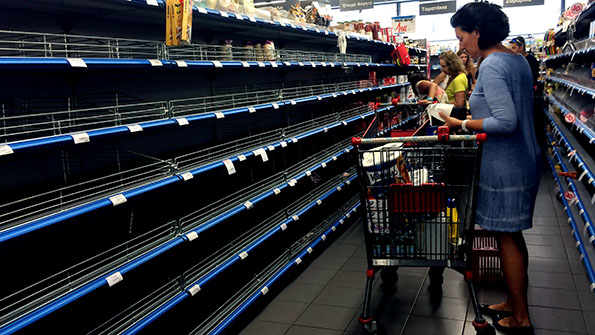
Firms have also been hit particularly hard. Foreign bank transfers have been banned by the Greek government, with few exceptions. Greek credit is no longer accepted outside the country. That has hit firms that rely on foreign credit to import goods, as well as the Greek tourists who found themselves stranded when their credit cards stopped working. Supplies of food and some medicines are running short (see picture); a black market for cancer drugs has even emerged. As we reported on Sunday:

Greece relies almost entirely on foreign imports for its pharmaceutical supplies. But since capital controls imposed last Sunday brought the country’s banking system to a sudden halt, some suppliers have stopped delivering key medication because they cannot get paid…As things stand, she has another week’s worth of insulin in stock for diabetics but will then have to start turning her patients away. “Do you know what that means?” she asks, trying to keep a proud face, “Do you know what insulin does?”

Unsurprisingly, as a result, Greek economic growth—which began to falter shortly after Syriza came to power in January—has collapsed. Consumption has slumped by 70% since capital controls were imposed, according to the National Confederation of Hellenic Commerce, a business group. Individuals and firms are hoarding cash at the same time that essential goods are becoming unavailable—a toxic mix for any economy. The decision taken yesterday by the European Central Bank—to keep in place the cap on emergency lending to Greek banks, and to increase the discount applied on Greek bonds accepted as collateral—will tighten the short-run financial crunch.

Greece is running short of time; in the next few days either a new deal will be done that allows the ECB to reopen the liquidity spigots or bank failures will lead to Grexit. In either case, the damage done by this period of uncertainty and financial drought will be severe.

Economic history suggests that economies can be surprisingly resilient when hit by shocks, such as the temporary imposition of capital controls or a reduction in the supply capacity of the economy. The Cypriot economy, for instance, started to grow again just one year after it imposed capital controls in 2013. And as Britain’s experience of general strikes indicates, temporary one- or two-week supply disruptions do not tend to have much impact on output after about a year. Leaving a single currency may also not be a complete disaster; countries such as Ireland (which left the British pound in 1928) have managed it before. And many countries ditching fixed-exchange rates—such as Britain in 1931 and 1992—exited long recessions almost immediately after they bit the bullet.

But there are three main reasons why economists think that the Greek economy will be wounded for far longer than other unfortunates. First, current uncertainty is probably damaging future demand as well as current demand; future tourist bookings have fallen by around a third since capital controls were imposed, for instance, which matters greatly given that the sector produces almost one-sixth of the country’s GDP. And with summer bookings so vital, the likely conclusion of the crisis in early July could not have been timed worse. Second, most countries that experience fast recoveries from supply-side shocks and fixed-exchange rate exits are able to count on a solvent and liquid banking system, which is needed in order to fund investment and growth through loans.

But Greece’s, which is about to collapse because of capital controls and deposit flight, is in a less comfortable position. The speedy introduction of new economic reforms post-Grexit, combined with capable macroeconomic management, could nonetheless cushion the Greek economy against the worst effects of exit and lead to a rapid bounceback. Yet few outside Greece reckon that the Syriza government has the inclination or competence to execute the transition smoothly and responsibly. Whatever Greece’s political fate, its economy is bound to get much worse before it gets better.
Source: The Economist Magazine – Online Edition – July 6, 2015
http://www.economist.com/blogs/freeexchange/2015/07/greeces-economy

—————–

VIDEO – Yes or No? Greece Again on the Brink: Greek Debt Crisis – https://youtu.be/reU7wWgFmDU

Published on Jul 3, 2015 – For the past five years, Greece has been struggling with a financial crisis that has led the country to the brink of an exit from the euro and an economic collapse.

Add this word to your vocabulary: Grexit; meaning a Greek Exit from the European Union.

This experience in Greece is a cautionary tale for the Caribbean, as so many aspects of Greek life parallel those of the Caribbean:

The harsh reality of Greece is a reminder of another crisis, the Great Recession of 2008. The events this week – with the referendum – mirrors September 15, 2008 when the American Investment Bank Lehman Brothers filed for bankruptcy, thus bringing the US (and the world’s economy) to the brink of disaster. This 2008 consideration is part-and-parcel of the book Go Lean…Caribbean which serves as a roadmap for the introduction of the technocratic Caribbean Union Trade Federation (CU) to provide new oversight for the Caribbean region’s economic, security and governing engines. The book was conceived as a result of this 2008 crisis, by stakeholders intimate with the anatomy of the 2008 crisis – People who make things happen – and composed from a position of strength, while in the location of one of the most successful communities to endure the Great Recession crisis: Omaha, Nebraska.

The pretext of the Go Lean roadmap is simple, and applies equally to Greece and the Caribbean:

Only at the precipice do they change!

The lessons learned, and codified, in the pages of the Go Lean book can now be enhanced with the examination of the realities of Greece. This examination must consider the reality of the economic, security and governing aspects of Greek society.
CU Blog - Greece - From Bad to Worse - Photo 3 CU Blog - Greece - From Bad to Worse - Photo 2

This country now has new leadership – the political party Syriza was swept into office on 25 January 2015 – trying to forge change in a dysfunctional environment. Until recently, the Minister of Finance for this sovereign nation was Yanis Varoufakis. (He resigned on July 5th, after the passage of the Referendum). To project transparency, Mr. Varoufakis presented the arguments in favor of their request for more compromise from the European Central Bank, the IMF, and other creditors demanding more austerity from Greece; he vocalized the following:

Our political mandate is to find an honourable, workable compromise. Is it so difficult to do so? We do not think so. A few days ago Olivier Blanchard, the IMF’s Chief Economist published a piece entitled ‘Greece: A Credible Deal Will Require Difficult Decisions by All Sides.’ He is right, the three operative words being ‘by all sides’. Dr Blanchard added that: “At the core of the negotiations is a simple question. How much of an adjustment has to be made by Greece, how much has to be made by its official creditors?”

That Greece needs to adjust there is no doubt. The question, however, is not how much adjustment Greece needs to make. It is, rather, what kind of adjustment. If by ‘adjustment’ we mean fiscal consolidation, wage and pension cuts, and tax rate increases, it is clear we [Greece] have done more of that than any other country in peacetime.

  • The public sector’s structural, or cyclically adjusted, fiscal deficit turned into a surplus on the back of a ‘world record beating’ 20% adjustment
  • Wages fell by 37%
  • Pensions were reduced by up to 48%
  • State employment diminished by 30%
  • Consumer spending was curtailed by 33%
  • Even the nation’s chronic current account deficit dropped by 16%.

No one can say that Greece has not adjusted to its new, post-2008, circumstances. But what we can say is that gigantic adjustment, whether necessary or not, has produced more problems than it solved:

  • Aggregate real GDP fell by 27% while nominal GDP continued to fall quarter-in-quarter-out for 18 quarters non-stop to this day
  • Unemployment skyrocketed to 27%
  • Undeclared labour reached 34%
  • Banks are labouring under non-performing loans that exceed 40% in value
  • Public debt has exceeded 180% of GDP
  • Young well-qualified people are abandoning Greece in droves
  • Poverty, hunger and energy deprivation have registered increases usually associated with a state at war
  • Investment in productive capacity has evaporated.

Source: http://www.businessinsider.com/full-greece-proposal-leaked-by-yanis-varoufakis-2015-6

Mr. Varoufakis’ appeal has been rejected. Greece is now at the precipice. They are willing to change and correct many inequities. But maybe, this is too little, too late? They want to work to build up their communities, not necessarily build up their neighboring countries. They are willing to accept the Grexit.

In this status quo is the primary lesson for the Caribbean. Are we now willing to change and correct the inequities in our society?

The Go Lean book declares: “A crisis is a terrible thing to waste” – quoting noted Economist Paul Romer. The opportunity exists now to forge change in the economic, security and governing engines of the Caribbean, as this cautionary guidance is gleaned from the Greek crisis.

The roadmap calls for a confederation of the 30 member-states of the Caribbean into a Single Market of 42 million people; thereby allow an adequate size to absorb economic shocks and downward trends. The Go Lean roadmap provides the details for the creation of 2.2 million new jobs and GDP growth to accumulate to $800 Billion. This vision is at the root of the Go Lean roadmap, embedded in the opening Declaration of Interdependence (Page 13):

xxiv. Whereas a free market economy can be induced and spurred for continuous progress, the Federation must install the controls to better manage aspects of the economy: jobs, inflation, savings rate, investments and other economic principles. Thereby attracting direct foreign investment because of the stability and vibrancy of our economy.

xxv.  Whereas the legacy of international democracies had been imperiled due to a global financial crisis, the structure of the Federation must allow for financial stability and assurance of the Federation’s institutions. To mandate the economic vibrancy of the region, monetary and fiscal controls and policies must be incorporated as proactive and reactive measures. These measures must address threats against the financial integrity of the Federation and of the member-states.

The following details from the book Go Lean … Caribbean are the community ethos, strategies, tactics, implementations and advocacies necessary to effect the turn-around of the Caribbean societal engines – to learn from Greece:

Who We Are – SFE Foundation and 2008 Role Page 8
Anecdote: Puerto Rico – The Greece of the Caribbean Page 18
Community Ethos – Economic Systems Influence Individual Choices Page 21
Community Ethos – Economic Principles – Money Multiplier Page 21
Community Ethos – Governing Principles – Lean Operations Page 24
Community Ethos – Ways to Impact the Future Page 26
Community Ethos – Ways to Impact Turn-Arounds Page 33
Community Ethos – Ways to Impact the Greater Good Page 37
Strategy – Vision – Confederate all 30 Member-States into a Single Market Page 47
Strategy –   Mission – Build and foster local economic engines Page 45
Strategy –   Mission – Fortify the stability of our mediums of exchange Page 45
Strategy –   Mission – Dissuade further Brain Drain Page 46
Tactical –   Confederating a Permanent Union Page 63
Tactical – Fostering a Technocracy Page 64
Implementation – Assemble all Member-States Page 96
Implementation – Ways   to Pay for Change Page 101
Implementation – Foreign Policy Initiatives at Start-up Page 102
Implementation – Ways to Better Manage Debt Page 114
Planning – Ways to Model the European Union (EU) Page 130
Planning – Ways to Improve Failed-State Indices Page 134
Planning – Lessons Learned from 2008 Page 136
Planning – Lessons Learned from Omaha Page 138
Advocacy – Ways to Grow the Economy Page 151
Advocacy – Ways to Create Jobs Page 152
Advocacy – Better Manage the Social Contract Page 170
Advocacy – Ways to Preserve Caribbean Heritage Page 218
Advocacy – Ways to Protect Human Rights Page 218
Advocacy – Ways to Help the Middle Class Page 223
Advocacy – Ways to Re-boot Cuba Page 236
Advocacy – Ways to Re-boot Haiti Page 238
Appendix – Caribbean Failed-State Indicators and Definitions Page 271

Greece will become a Failed-State before it is all said-and-done. We hope that this country, and their European neighbors, can secure their society to assure peace and the protection of human rights.

Greece will recover…eventually! Their disposition will go from bad to worse – see Appendix VIDEO – but then they can reboot, much like Cyprus did just recently, as detailed in the foregoing news article. Take their tourism for example:

Travel and tourism contributed a total of €28.3 billion ($31.3 billion) to the economy in 2013—or 16.3% of GDP. But after one to two years, after the country returns to local drachma currency and it stabilizes after devaluation, destinations in Greece will be cheaper than its competitors. This will eventually be an advantage. – http://www.economist.com/node/21657058

Greece will be a European Failed-State … and will “bounce-back” … eventually.

We also have Failed-States in the Caribbean: Think: Haiti, Dominican Republic and Cuba; plus a host of countries just slightly behind them. We have to foster our own turn-around strategies for our region.

The Go Lean roadmap declares that the responsibility for fixing the Caribbean though must fall first-and-foremost on the Caribbean, its people and institutions.

The Caribbean must also reboot and “bounce back”; to “step back from the precipice”. The effort is not easy; the Go Lean book describes it as heavy-lifting. But the returns will be worth the investment. This is true for Greece … and the Caribbean.

This is the goal of the Go Lean roadmap: not to wonder what happened, or watch things happen, but rather to make the things happen … that make the Caribbean a better place to live, work and play. 🙂

Download the book Go Lean … Caribbean – now!

—————–

Appendix VIDEO – The Economic Collapse of Greece. Whiteboard Animation by Angelow – https://youtu.be/dt6w4eE_tg0

Published on Mar 17, 2013VIDEO on the previous need for Greek bail-outs. Greece is bankrupt!
Share this post:
, , , , ,

In Search Of The Red Cross’ $500 Million In Haiti Relief

Go Lean Commentary

“A crisis is a terrible thing to waste” – familiar expression coined by American Economist Paul Romer.

This expression is prominent in the introduction of the book Go Lean…Caribbean. The motives of the book publishers are to exploit the post-2008 economic crises to forge change in the Caribbean region. But in this case, it appears that another party has utilized a Caribbean crisis to exploit the public for monies for their own coffers; that party is the American Red Cross.

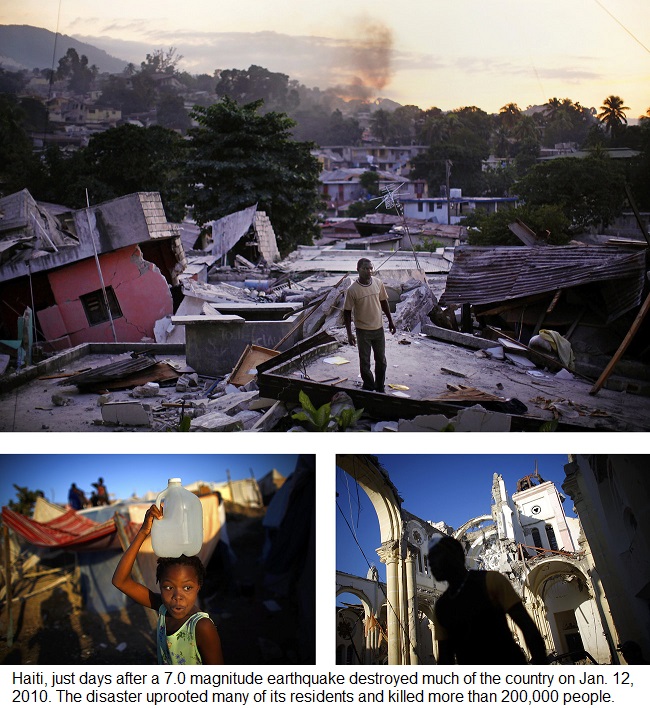
Immediately after the earthquake in Haiti on January 12, 2010 many Non-Government Organizations (NGO), including the American Red Cross, embarked on fundraising campaigns to raise money for the response, relief and rebuilding of Haiti. The Red Cross held a Telethon, complete with text message fundraising:

Text [the word] Haiti to 90999

… and boom, $10 would be billed to the respondent’s mobile phone account and encumbered for the American Red Cross’s Aid to Haiti. (Note: this writer contributed via text message in 2010).

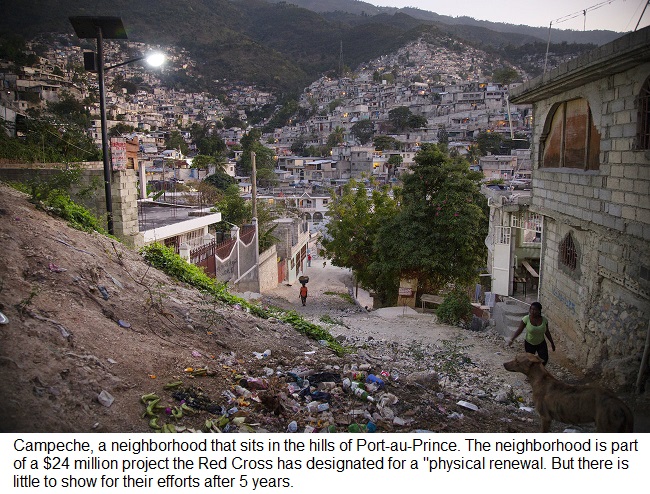
$500 Million In Haiti Relief - Photo 1

How successful was this fundraising campaign? US$500 million! How successful was the relief and rebuilding of Haiti campaign? Still waiting…

VIDEO – Report highlights Red Cross aid failures in Haiti  https://youtu.be/cSAZ8cScwro

Published on Jun 3, 2015 – Following the devastating 2010 earthquake in Haiti, the American Red Cross raised close to 500 million dollars and promised to help rebuild the country’s communities. A new report by ProPublica and NPR unearth a number of confidential memos and insider accounts that stand in sharp contrast to the public picture painted by the organization. CBSN spoke to co-author of the report, Justin Elliott.

This consideration aligns with the strategies, tactics, implementations and advocacies of the book Go Lean…Caribbean. The declaration is that the Caribbean must be front-and-center in providing for our own solutions. The alternative, someone else taking the lead for our solution seems to be lacking…every time!

For us in the Caribbean, we need to grow up and more responsible ourselves! We need to stand up and be counted!

The Go Lean book declares (Page 115):

“Haiti should not be a perennial beggar; the Caribbean should not be perennial beggars, but we do need capital/money, especially to get started”.

There was the opportunity to raise $500 million to get started. We lost out!

Instead the American Red Cross provided the “adult supervision” and what do we have to show for it? According to the following AUDIO Podcast, next to nothing; (6 houses):

Appendix AUDIO Podcast: NPR’s ‘All Things Considered’ –  http://www.npr.org/player/v2/mediaPlayer.html?action=1&t=1&islist=false&id=411524156&m=411812821

By Laura Sullivan – When a devastating earthquake leveled Haiti in 2010, millions of people donated to the American Red Cross. The charity raised almost half a billion dollars. It was one of its most successful fundraising efforts ever.
The American Red Cross vowed to help Haitians rebuild, but after five years the Red Cross’ legacy in Haiti is not new roads, or schools, or hundreds of new homes. It’s difficult to know where all the money went.
Source: National Public Radio (NPR) – Radio Podcast for Fresh Air; posted 06/03/2015; retrieved from: http://www.npr.org/2015/06/03/411524156/in-search-of-the-red-cross-500-million-in-haiti-relief

This is just another example of Crony-Capitalism.

This is not only the Go Lean commentary, but rather many of the general public voiced this same concern on the cited NPR website; see sample here:

Public Comment by “TheUnPossible” on June 3, 2015: Perhaps they should do what they do best. Serve coffee, give-out blankets and draw blood. This reminds me of a lot of the other high-profile charities like Susan G. Komen and United Way that just become a black-hole for donations. They’re like a church. They get people to give them tons of cash and promise salvation if people just believe in them.

Public Comment by “Unpartisan” on June 3, 2015: They’re like a church. They get people to give them tons of cash and promise salvation if people just believe in them.” Sounds like many politicians and government agencies as well, good analogy.

Public Comment by “James Hulsey” on June 3, 2015: I haven’t trusted the American Red Cross since 9/11, when they were fundraising for 9/11 relief efforts and then shunted the extra money into their general fund.

Public Comment by “TravelingOne” on June 4, 2015: No – the Red Cross: http://www.huffingtonpost.com/… And one of the reasons they no longer get any money from me; nor does United Way (UW) however.

Public Comment by “DCRich” on June 4, 2015: Local UW chapters often are worse. They coerce poorly paid employees of agencies they support to contribute with the implication that support to the agency is influenced by this. They try to engage new agencies with the same kind of appeal. Most of their money goes to orgs that have no trouble fundraising on their own like the Y and Scouts. Basically, they’re a middleman that allows the business community to interfere with and take credit or the work of “charity”. Giving money directly to some org[anization] you actually know something about is better than giving a cut to UW or CFC [(Combined Federal Campaign) for federal government employees].

The book and subsequent blogs posit that the Caribbean must not be vulnerable to American Crony-Capitalistic forces.

“We can do bad all by ourselves”.

The dread of Crony-Capitalism was highlighted and detailed in many previous blog commentaries; see Appendix below. Now we have to add the reality of Big Charity to the landscape; referring to the big organizations that fleece the public under the guise of charities but retain vast majorities of the funding as administrative costs, thusly benefiting mostly the charities’ executives and staff rather than the intended benefactors.

The Caribbean must do better! We need a Truth & Reconciliation Commission (TRC) on this issue.

The book Go Lean…Caribbean pursues the quest to elevate the Caribbean region through economic, security and governance empowerments. This includes oversight and guidance for NGO’s in the region. The book serves as a roadmap for the introduction and implementation of the technocratic Caribbean Union Trade Federation (CU) to provide better stewardship for the Caribbean homeland. The book describes that NGO’s are Caribbean stakeholders. Even though many of the 30 member-states may be considered independent nations, the premise of the book is that there must be an ethos of interdependence, rather than just independence. This all relates to governance, the need for technocratic – and better – stewardship of regional Caribbean society. This point was also pronounced in the opening Declaration of Interdependence (Pages 11 & 14) with these acknowledgements and statements:

xi. Whereas all men are entitled to the benefits of good governance in a free society, “new guards” must be enacted to dissuade the emergence of incompetence, corruption, nepotism and cronyism at the peril of the people’s best interest. The Federation must guarantee the executions of a social contract between government and the governed.

xii. Whereas the legacy in recent times in individual states may be that of ineffectual governance with no redress to higher authority, the accedence of this Federation will ensure accountability and escalation of the human and civil rights of the people for good governance, justice assurances, due process and the rule of law. As such, any threats of a “failed state” status for any member state must enact emergency measures on behalf of the Federation to protect the human, civil and property rights of the citizens, residents, allies, trading partners, and visitors of the affected member state and the Federation as a whole.

xxxiii. Whereas lessons can be learned and applied from the study of the recent history of other societies, the Federation must formalize statutes and organizational dimensions to avoid the pitfalls of [other] communities.

$500 Million In Haiti Relief - Photo 2This is the quest of CU/Go Lean roadmap: to provide new guards for a more competent Caribbean administration … by governmental organizations and non-governmental organizations. (NGO would be promoted, audited and overseen by CU administrators).

This crisis should not be wasted!

In general, the CU will employ better strategies, tactics and implementations to impact its prime directives; identified with the following 3 statements:

  • Optimization of the economic engines in order to grow the regional economy to $800 Billion & create 2.2 million new jobs.
  • Establishment of a security apparatus to protect the resultant engines and mitigate internal and external “bad actors”.
  • Improvement of Caribbean governance to support these engines.

The Go Lean book stresses key community ethos, strategies, tactics, implementations and advocacies necessary to turn-around the eco-systems of Caribbean governance. These points are detailed in the book as follows:

Community Ethos – Deferred Gratification Page 21
Community Ethos – Economic Principles – Respond to Incentives in   Predictable Ways Page 21
Community Ethos – Economic Principles – Economic Systems Influence   Individual Choices Page 21
Community Ethos – Economic Principles – Consequences of Choices Lie in   the Future Page 21
Community Ethos – Security Principles – Whistleblower Protection Page 23
Community Ethos – Security Principles – Intelligence Gathering Page 23
Community Ethos – Security Principles – “Crap” Happens Page 23
Community Ethos – Governing Principles – Lean Operations Page 24
Community Ethos – Governing Principles – Return on Investments Page 24
Community Ethos – Governing Principles – Cooperatives Page 25
Community Ethos – Ways to Impact the Future Page 26
Community Ethos – Ways to Impact Turn-Arounds Page 33
Community Ethos – Ways to Manage Reconciliations – South Africa TRC Model Page 34
Community Ethos – Ways to Improve Sharing – Emergency Response Page 35
Community Ethos – Ways to Impact the Greater Good Page 37
Strategy – Vision – Confederate all 30 member-states/ 4 languages into a Single Market Page 45
Strategy – Mission – Prepare for the eventuality of natural disasters Page 45
Strategy – Agents of Change – Climate Change Page 57
Tactical – Ways to Foster a Technocracy Page 64
Tactical – Growing the Economy – Post WW II European Marshall Plan/Recovery Model Page 68
Tactical – Separation-of-Powers – CU Federal Government versus Member-State Governance Page 71
Tactical – Separation-of-Powers – Treasury Department – Shared Property Recording Systems Page 74
Tactical – Separation-of-Powers – State Department – Liaison/Oversight for NGO’s Page 80
Tactical – Separation-of-Powers – Interior Department – Housing & Urban Authority Page 83
Tactical – Separation-of-Powers – Federal Courts – Truth & Reconciliation Commissions Page 90
Implementation – Assemble All Regionally-focus Organizations of All Caribbean Communities Page 96
Implementation – Ways to Pay for Change Page 101
Implementation – Ways to Foster International Aid Page 115
Planning – 10 Big Ideas – Homeland   Security Pact Page 127
Planning – Ways to Make the Caribbean Better Page 131
Planning – Ways to Improve Failed-State Indices – Governance and the Social Contract Page 134
Advocacy – Ways to Grow the Economy Page 151
Advocacy – Ways to Create Jobs Page 152
Advocacy – Ways to Improve Housing – Optimizing Property Registration Process Page 152
Advocacy – Ways to Improve Governance Page 168
Advocacy – Ways to Better Manage the Social Contract Page 170
Advocacy – Ways to Improve Homeland Security Page 180
Advocacy – Ways to Improve for Natural Disasters Page 184
Advocacy – Ways to Improve Technology Page 197
Advocacy – Ways to Develop a Pre-Fab Housing Industry – One solution ideal for Haiti Page 207
Advocacy – Ways to Impact Foundations – NGO’s can help deliver Social Contract Page 219
Advocacy – Ways to Re-boot Haiti Page 238
Appendix – Philanthropy Pledge Signatories – Billionaires willing to “give” to an optimized  technocracy Page 292

The Go Lean roadmap seeks to empower and elevate Caribbean societal engines. While it is out-of-scope to impact America, we do not want American institutions (or European or Asian for that matter) exploiting our crisis for their gain.

Charity begins at home. (And should be managed at home). Online crowd-sourcing may be a better tool.

The Go Lean book calls on the Caribbean region to be collectively self-reliant, both proactively and reactively. Natural disasters (i.e. earthquakes and hurricanes) will occur again. Considering our efforts in our disaster response, relief and rebuilding – there will be many opportunities to get it right. Once we do … get it right – with an optimized technocracy – there will be more philanthropic funds and charitable donations to help our Caribbean causes. NGO’s, billionaires and their well-funded foundations are attracted to efficiently managed entities:

Take care of the pennies and the dollars will take care of themselves – Old Adage.

Our quest is simple, a regional effort to make the Caribbean homeland a better place to live, work and play. 🙂

Download the book Go Lean … Caribbean – now!

————

Appendix – Models of American Crony-Capitalism

Big Defense Many theorists indicate that the “follow the money” approach reveals the Military Industrial Complex work to undermine peace, so as to increase defense spending for military equipment, systems and weapons.
Big Media Cable companies conspire to keep rates high; kill net neutrality; textbook publishers practice price gouging; Hollywood insists on big tax breaks/ subsidies for on-location shooting.
Big Oil While lobbying for continuous tax subsidies, the industry have colluded to artificially keep prices high and garner rocket profits ($38+ Billion every quarter).
Big Box Retail chains impoverish small merchants on Main Street with Antitrust-like tactics, thusly impacting community jobs. e-Commerce, an area of many future prospects, is the best hope of countering these bad business tactics.
Big Pharma Chemo-therapy cost $20,000+/month; and the War against Cancer is imperiled due to industry profit insistence.
Big Tobacco Cigarettes are not natural tobacco but rather latent with chemicals to spruce addiction.
Big Agra Agribusiness concerns bully family farmers and crowd out the market; plus fight common sense food labeling efforts.
Big Data Brokers for internet and demographic data clearly have no regards to privacy concerns.
Big Banks Wall Street’s damage to housing and student loans are incontrovertible.
Big Weather Overblown hype of “Weather Forecasts” to dictate commercial transactions.
Big Real Estate Preserving MLS for Real Estate brokers only, forcing 6% commission rates, when the buyers and sellers can meet without them.
Big Salt Despite the corrosiveness of salt on roads and the environment, it is the only tactic   used to de-ice roads. Immediately after the weather warms, the roads must be re-constructed, thus ensuring a continuous economic cycle.
Big Energy The For-Profit utility companies always lobby against regulations to “clean-up” fossil-fuel (coal) power plants or block small “Green” start-ups from sending excess power to the National Grid. Their motive is to preserve their century-long monopoly and their profits.
Big Legal Even though it is evident that the promotion of Intellectual Property can help   grow economies, the emergence of Patent Trolling parties (mostly lawyers) is squashing innovation. These ones are not focused on future innovations, rather just litigation. They go out and buy patents, then look for anyone that may consume any concepts close to those patents, then sue for settlements, quick gains.
Big Cruise Cruise ships are the last bastion of segregation with descriptors like “modern-day-slavery” and “sweat-ships”. Working conditions are poor and wages are far below anyone’s standards of minimum. Many ship-domestic staff are “tip earners”, paid only about US$50 a month and expected to survive on the generosity of the passengers’ gratuity. The industry staff with personnel from Third World countries, exploiting those with desperate demands. Nowhere else in the modern world is this kind of job discrimination encouraged, accepted or tolerated.
Big Jails The private prison industry seem motivated more by profit than by public safety. They attempt to sue state governments when their occupancy levels go too low; a reduction in crime is bad for business.
Big Housing The American legacy is one of the institutional segregation in American cities. The practice was administered by real estate agents and housing officials executing policies to elevate property values and generational wealth for White families at the expense of a life of squalor for Non-Whites.
Share this post:
, , , ,
[Top]

‘Significant’ oil deposit found offshore Guyana

Go Lean Commentary

Oil is up and down.

Just recently the price per barrel was so low that it was traded on the commodities market for the rock-bottom price of $48. But in 2008, (a familiar year for this commentary), the price was as high as $144 per barrel. That’s wholesale for crude. At the retail level, the price at the low was below $2 per gallon in some US cities; (as reported in this previous blog, a Oklahoma gas station posted a price at $1.99). At the 2008 high, the retail price was over $5.00 in some American cities, like in California.

It could be a dizzying ride, up and down, complete with exhilaration and anxiety, especially for communities with mono-industrial economic engines. Trinidad is one such community. Now Guyana wants to be added to the fray.

This news article speaks of the success of the oil exploration activities undergoing in the waters off the coast of Guyana. This is not just off-shore, but rather within the 200-mile region called the Exclusive Economic Zone. The news article relates as follows:

Title: ‘Significant’ oil deposit found offshore Guyana 
oil deposit found offshore Guyana - Photo 1

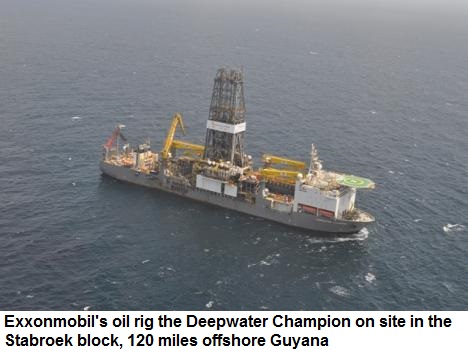
GEORGETOWN, Guyana (GINA) — Guyana looks to be set to join the group of oil producing nations, as news was made public by ExxonMobil that it has found a deposit of a ‘significant’ amount of oil in the Stabroek Block, some 120 nautical miles offshore Guyana.

It was discovered in one of the two wells it drilled in the Liza-1 site, which realised more than 295 feet of high-quality oil-bearing sandstone. The well was started or “spudded” on March 5, 2015, and the data will be analysed in the coming months to determine the full resource potential.

oil deposit found offshore Guyana - Photo 2It was drilled to 17,825 feet (5,433 metres) in 5,719 feet (1,743 metres) of water in the Stabroek Block, which is 6.6 million acres (26,800 square kilometers), the statement noted.

In the released statement, president of ExxonMobil Exploration Company, Stephen Greenlee, said, “I am encouraged by the results of the first well on the Stabroek Block… over the coming months we will work to determine the commercial viability of the discovered resource, as well as evaluate other resource potential on the block.”

Guyana has been identified by several surveying companies as one of the world’s greatest untapped potential sources for hydrocarbons.
Source: Caribbean News Now – Regional Online News Site – Posted May 22, 2015; retrieved from: http://www.caribbeannewsnow.com/topstory-%27Significant%27-oil-deposit-found-offshore-Guyana-26217.html

Congratulations to Guyana!

There are other countries in the region hoping for similar success. This is just a sample list:

What feature about these aspiring countries, and the existing oil-producing countries, makes oil exploration possible?

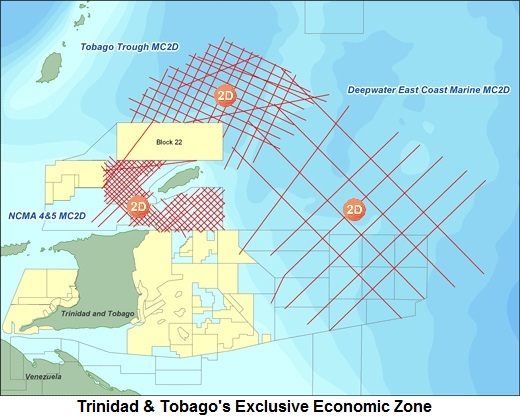
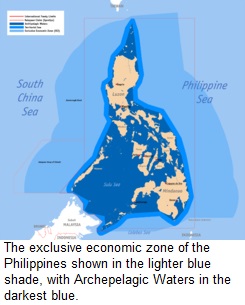
The answer is the Exclusive Economic Zone (EEZ), which constitutes additional territory to explore and exploit. Every Caribbean nation, with no immediate neighbor within 200 miles, has this EEZ territory for their benefit; see Appendix A.

How does this process work?

It is simple and it is complicated. This duplicity is part of the heavy-lifting for elevating the region.

This is the guidance from the book Go Lean … Caribbean. It serves as a roadmap – turn by turn directions – for the introduction and implementation of the Caribbean Union Trade Federation (CU). This federation is designed to employ best practices for economics, security and governance. The CU/Go Lean roadmap posits that “Extractions” (Oil and Rare Earths) must be a significant strategy for the Caribbean region to elevate its society. In fact, the roadmap has these 3 prime directives:

  • Optimization of the economic engines in order to grow the regional economy to $800 Billion & create 2.2 million new jobs.
  • Establishment of a security apparatus, including emergency management, to protect the resultant economic engines.
  • Improvement of Caribbean governance to support these engines, including a separation-of-powers between member-state governments and the CU.

The implementation of the CU allows for the designation of more Exclusive Economic Zones, the consolidation of existing EEZ’s and the technocratic-cooperative administration of “Extractions” within these geographic spaces.

The process of benefiting from the EEZ starts with exploration. This is what Guyana has just concluded. They embarked on a scanning / diagnostic process to map out a geological survey of the subterranean formations under the seabed within their  EEZ. First they found ideal indicators, then they drilled wells and “lo and behold” the announcement in the foregoing news article.

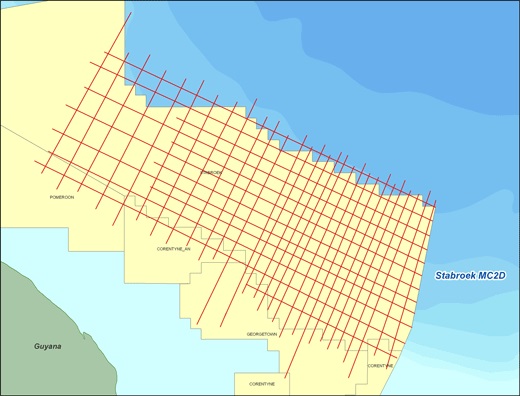
Guianan officials are not trained oil explorers. They hired and out-sourced to technocrats or Subject Matter Experts (SME), for both the drilling and the earlier step of geologic scanning. The foregoing article reveals that the drilling was performed by the drilling SME ExxonMobil. But the scanning was done by a different SME, a company branded Petroleum Geo-Services (PGS); see Appendix B & VIDEO.

PGS also works with Trinidad & Tobago, helping to map out the geological surveys for that country’s Ministry of Energy and Energy Industries for further exploration in their EEZ. Trinidad is already an oil-exporting country.

oil deposit found offshore Guyana - Photo 3

Within the exploration process, there is a step for public bidding. This allows a drilling SME to make financial commitments (and immediate down payments) to the host country for a split of any resultant revenues derived from successful drilling expeditions. Once bids have been accepted by the host country and permits issued, then the exploring entity proceeds to drill test wells, after more detailed analysis and diagnostic mapping. The results are “hit and miss”.

The foregoing news article reports that the exploratory effort in the Guianan EEZ has been made a “hit”.

The Go Lean/CU roadmap designates an enlarged Exclusive Economic Zone for the integrated Caribbean region, for the geographic area of the Caribbean Sea.

An EEZ can have non-standard dimensions (beyond the 200 miles of the coastline) only with approval of the United Nations Convention on the Law of the Seas. (Consider the examples of Denmark, Philippines and Portugal in Appendix A). The confederation of the 30 member-states, the CU, will be the administrator of this EEZ. Step One / Day One of the roadmap calls for awarding contracts for oil exploration and other extractions in the EEZ – this is what the Go Lean book describes as one of  the methods for financing the CU start-up; this is how to Pay For Change (Page 101).

The Go Lean roadmap details a series of community ethos, strategies, tactics, implementations and advocacies to foster development, administration and protections in the Caribbean EEZ. The following list applies:

Community Ethos – Deferred Gratification Page 21
Community Ethos – Economic Principles – All Choices Involve Costs Page 21
Community Ethos – Economic Principles – Economic   Systems Influence Individual Choices Page 21
Community Ethos – Economic Principles – Voluntary Trade Creates Wealth Page 21
Community Ethos – Economic Principles – Consequences of Choices Lie in the Future Page 21
Community Ethos – Economic Principles – Job Multiplier Page 22
Community Ethos – Security Principles – Whistleblower Protection Page 23
Community Ethos – Security Principles – Intelligence Gathering Page 23
Community Ethos – Security Principles – “Crap” Happens Page 23
Community Ethos – Governing Principles – Lean Operations Page 24
Community Ethos – Governing Principles – Return on Investments Page 24
Community Ethos – Governing Principles – Cooperatives Page 25
Community Ethos – Ways to Impact the Future Page 26
Community Ethos – Ways to Impact Research & Development Page 30
Anecdote – Pipeline Transport – Strategies, Tactics & Implementations Page 43
Strategy – Alternative Energy: Harness the power of the sun, winds and tides in the EEZ Page 46
Strategy – Agents of Change – Technology Page 57
Tactical – Fostering a Technocracy Page 82
Tactical – Separation of Powers – Extractions (Mining, Materials & Drilling) Administration Page 83
Anecdote – “Lean” in Government – Environment Regulations & Permits Page 93
Anecdote – Caribbean Energy Grid Implementation Page 100
Implementation – Ways to Pay for Change Page 101
Implementation – Start-up Benefits from the EEZ Page 104
Implementation – Ways to Develop Pipeline Industry Page 107
Implementation – Ways to Improve Energy Usage – Deploy Wind Turbines in EEZ Page 113
Advocacy – Ways to Foster Cooperatives Page 176
Advocacy – Ways to Impact Extractions – Oil Mitigation Plan Page 195
Advocacy – Ways to Improve Emergency Management Page 196
Advocacy – Ways to Foster Technology Page 197
Advocacy – Ways to Improve Fisheries – Model of Alaska EEZ Page 210
Advocacy – Ways Impact Trinidad & Tobago – Oil Boom to Expire without new Exploration   Page 240
Advocacy – Ways Impact The Guianas – Guyana’s Societal Challenges Page 241
Appendix – North Dakota Oil Boom Economic-Societal Effects Page 334
Appendix – Cape Cod Wind Farm – Model for Caribbean EEZ Page 335

Oil is good; oil is bad! The Go Lean roadmap asserts that the world’s energy needs are undeniable – constant demand – and that the oil-producing economies do have prospects of prosperity (Trinidad & Tobago is no longer considered developing / Third World). The Caribbean sorely needs the empowerments in this roadmap to explore and exploit “oil” in the modern economy. The region also needs mitigations and security measures in the roadmap to guarantee environmental protection.

Oil prices are cyclical – constantly up and down. It is difficult to manage certainties in governance without certainties in revenues. Thusly, the Go Lean roadmap calls for economic diversifications; this is apropos for tourism-service economies as well. There is much at stake when communities “miss the mark” on the diversity quest: fight and flight. The “fight” has been consistent in oil-producing Trinidad with security incidents big and small; big as in Martial Law declaration and terrorist threats; small as in constant crime and employment insecurities. The flight consequence has been consistent in Trinidad; they have experienced one of the highest societal abandonment rates in the region where 70% of the college-educated population have fled.

Guyana is encouraged to take heed from Trinidad.

The CU/Go Lean roadmap is designed to bring the long-awaited economic diversity and efficiency to the Caribbean. The goal is to optimize Caribbean society, allowing us to better compete globally and present more favorable options for our youth to prosper here in their homeland.

Oil exploration and production requires heavy-lifting to derive full benefits for the community; and mitigate accompanying risks. Welcome to the CU technocracy.

Now is the time for all of the Caribbean, the people, business, institutions and governments, to lean-in for the efficiencies and diversities described in the book Go Lean … Caribbean. 🙂

Download the free e-Book of Go Lean … Caribbean – now!

————-

Appendix A – Exclusive Economic Zone

An Exclusive Economic Zone (EEZ) is a sea zone prescribed by the United Nations Convention on the Law of the Sea over which a state has special rights regarding the exploration and use of marine resources, including energy production from water and wind.[1] It stretches from the baseline out to 200 nautical miles (nmi) from its coast. In colloquial usage, the term may include the continental shelf. The term does not include either the territorial sea or the continental shelf beyond the 200 nmi limit. The difference between the territorial sea and the exclusive economic zone is that the first confers full sovereignty over the waters, whereas the second is merely a “sovereign right” which refers to the coastal state’s rights below the surface of the sea. The surface waters, as can be seen in the map, are international waters.[2]

Generally, a state’s EEZ extends to a distance of 200 nautical miles (370 km) out from its coastal baseline. The exception to this rule occurs when EEZs would overlap; that is, state coastal baselines are less than 400 nautical miles (740 km) apart. When an overlap occurs, it is up to the states to delineate the actual maritime boundary.[3] Generally, any point within an overlapping area defaults to the nearest state.[4]

A state’s Exclusive Economic Zone starts at the landward edge of its territorial sea and extends outward to a distance of 200 nautical miles (370.4 km) from the baseline. The Exclusive Economic Zone stretches much further into sea than the territorial waters, which end at 12 nmi (22 km) from the coastal baseline (if following the rules set out in the UN Convention on the Law of the Sea).[5] Thus, the EEZ includes the contiguous zone. States also have rights to the seabed of what is called the continental shelf up to 350 nautical miles (648 km) from the coastal baseline, beyond the EEZ, but such areas are not part of their EEZ. The legal definition of the continental shelf does not directly correspond to the geological meaning of the term, as it also includes the continental rise and slope, and the entire seabed within the EEZ.

The following is a list of the largest Exclusive Economic Zones; by country with a few noticeable deviations:

Country EEZ Kilometers2 Additional Details
United States 11,351,000 The American EEZ – the world’s largest – includes the Caribbean overseas territories of Puerto Rico and the US Virgin Islands.
France 11,035,000 The   French EEZ includes the Caribbean overseas territories of Guadeloupe, Martinique, Saint Martin, Saint Barthélemy and French Guiana.
Australia 8,505,348 Australia has the third largest exclusive economic zone, behind the United States and   France, with the total area actually exceeding that of its land territory. Per the UN   convention, Australia’s EEZ generally extends 200 nautical miles (370 km) from the coastline of Australia and its external territories, except where a maritime delimitation agreement exists with another state.[15]The United Nations Commission on the Limits of the Continental Shelf confirmed, in April 2008, Australia’s rights over an additional 2.5 million square kilometres of seabed beyond the limits of Australia’s   EEZ.[16][17] Australia also claimed, in its submission to the UN Commission on the Limits of the Continental Shelf, additional Continental Shelf past its EEZ from the Australian Antarctic Territory,[18] but these claims were deferred on Australia’s request. However, Australia’s EEZ from its Antarctic Territory is approximately 2 million square kilometres.[17]
Russia 7,566,673
United Kingdom 6,805,586 The UK includes the Caribbean territories of Anguilla, Bermuda, Cayman Islands,   Montserrat, Turks & Caicos and the British Virgin Islands.
Indonesia 6,159,032
Canada 5,599,077 Canada is unusual in that its EEZ, covering 2,755,564 km2, is slightly smaller than its territorial waters.[20] The latter generally extend only 12 nautical miles from the shore, but also include inland marine waters such as Hudson Bay (about 300 nautical miles (560 km; 350 mi) across), the Gulf of Saint Lawrence and the internal waters of the Arctic archipelago.
Japan 4,479,388 In addition to Japan’s recognized EEZ, it also has a joint regime with Republic of (South) Korea and has disputes over other territories it claims but are in dispute with all its Asian neighbors (Russia, Republic of Korea and China).
New Zealand 4,083,744
Chile 3,681,989
Brazil 3,660,955 In 2004, the country submitted its claims to the United Nations Commission on the Limits of the Continental Shelf (CLCS) to extend its maritime continental margin.[19]
Mexico 3,269,386 Mexico’s EEZ comprises half of the Gulf of Mexico, with the other half claimed by the US.[32]
Micronesia 2,996,419 The Federated States of Micronesia comprise around 607 islands (a combined land area of approximately 702 km2 or 271 sq mi) that cover a longitudinal distance of almost   2,700 km (1,678 mi) just north of the equator. They lie northeast of New Guinea, south of Guam and the Marianas, west of Nauru and the Marshall Islands, east of Palau and the Philippines, about 2,900 km (1,802 mi) north of eastern Australia and some 4,000 km (2,485 mi) southwest of the main islands of Hawaii. While the FSM’s total   land area is quite small, its EEZ occupies more than 2,900,000 km2 (1,000,000   sq mi) of the Pacific Ocean.
Denmark 2,551,238 The Kingdom of Denmark includes the autonomous province of Greenland and the self-governing province of the Faroe Islands. The EEZs of the latter two do not form part of the EEZ of the European Union.
oil deposit found offshore Guyana - Photo 4
Papua New Guinea 2,402,288
China 2,287,969
Marshall Islands 1,990,530 The Republic of the Marshall Islands is an island country located near the equator in the Pacific Ocean, slightly west of the International Date Line. Geographically, the country is part of the larger island group of Micronesia. The country’s population of 68,480 people is spread out over 24 coral atolls, comprising 1,156 individual islands and islets. The land mass amounts to 181 km2 (70 sq mi) but the EEZ is 1,990,000 km2, one of the   world’s largest.
Portugal 1,727,408 Portugal has the 10th largest EEZ in the world. Presently, it is divided in three non-contiguous sub-zones:

Portugal submitted a claim to extend its jurisdiction over additional 2.15 million square kilometers of the neighboring continental shelf in May 2009,[44] resulting in an area with a total of more than 3,877,408 km2. The submission, as well as a detailed map, can be found in the Task Group for the extension of the Continental Shelf website.

Spain disputes the EEZ’s southern border, maintaining that it should be drawn halfway between Madeira and the Canary  Islands. But Portugal exercises sovereignty over the Savage    Islands, a small   archipelago north of the Canaries, claiming an EEZ border further south. Spain objects, arguing that the SavageIslands do not have a separate   continental shelf,[45] citing article 121 of the United Nations Convention on the Law of the Sea.[46]
oil deposit found offshore Guyana - Photo 6

Philippines 1,590,780 The Philippines’ EEZ covers 2,265,684 (135,783) km2[41].
oil deposit found offshore Guyana - Photo 5
Solomon Islands 1,589,477
South Africa 1,535,538
Fiji 1,282,978 Fiji is an   archipelago of more than 332 islands, of which 110 are permanently inhabited, and more than 500 islets, amounting to a total land area of about 18,300   square kilometres (7,100 sq mi).
Argentina 1,159,063
Spain 1,039,233
Bahamas 654,715
Cuba 350,751
Jamaica 258,137
Dominican Republic 255,898
Barbados 186,898
Netherlands 154,011 The Kingdom of the Netherlands include the Antilles islands of Aruba, Bonaire, Curacao, Saba, Sint Maarten and Sint Eustatius
Guyana 137,765
Suriname 127,772
Haiti 126,760
Antigua and Barbuda 110,089
Trinidad and Tobago 74,199
St Vincent and the Grenadines 36,302
Belize 35,351
Dominica 28,985
Grenada 27,426
Saint Lucia 15,617
Saint Kitts and Nevis 9,974

(Source: http://en.wikipedia.org/wiki/Exclusive_economic_zone)

————-

Appendix B – Guyana Stabroek MC2D Description

Petroleum Geo-Services (PGS), in conjunction with the Guyana Geology and Mines Commission (GGMC), is pleased to announce the availability of the MultiClient 2D survey acquired over the Stabroek concession. The survey consists of approximately 7,603 km of seismic that has been acquired and processed over the block and tie lines to existing well information with the objective of providing for the first time detailed imaging and geological understanding of this as yet undrilled concession. PGS acquired the data using its GeoStreamer® technology which is a solid streamer with the combination of two different sensors which provide data that exhibits a wider bandwidth and better penetration than conventional data. This MC2D survey provides the GGMC with a state of the art data set that assists industry in their evaluation of this frontier area.

SURVEY AREA
7,603 km

ACQUISITION DETAILS:
2008 – M/V Aquila Explorer
2D Acquisition Mode
GeoStreamer®

ACQUISITION PARAMETERS:
2 ms sample rate
Record Length 14000 ms
Shot Interval 37.5 m
Streamer Length 12000 m
Nominal fold 160

PROCESSING PARAMETERS:
Wavefield summation
SRME
Radon Demultiple
Pre-Stack Time Migration

AVAILABLE DATASETS:
TAPSTM Gathers
Raw PSTM Stack SEGY
Final PSTM Stack SEGY
Near, Mid and Far Angle Stack SEGY
Navigation UKOOA
Velocity Data in ASCII format
Gravity data

About PGS
Petroleum Geo-Services (PGS) offers a broad range of products including seismic and electromagnetic services, data acquisition, processing, reservoir analysis/interpretation and multi-client library data. We help oil companies to find oil and gas reserves offshore worldwide.

PGS was founded in Norway in 1991, with two seismic ships and some highly innovative ideas on how to reshape the industry. Today we share the same drive to innovate as inspired our founders, though the team is bigger:

  • 12 offshore seismic vessels
  • 30 offices worldwide, employing over 70 nationalities

PGS has a presence in 21 countries with regional centers in London, Houston and Singapore. Our headquarters is in Oslo, Norway and the PGS share is listed on the Oslo stock exchange (OSE:PGS).

VIDEOPGS Seismic Principleshttps://youtu.be/q4PqkV0SBe0

Published on Mar 21, 2014A short video explaining the seismic principles.

Share this post:
, , , ,
[Top]

Drones to be used for Insurance Damage Claims

Go Lean Commentary

CU Blog - Drones to be used for Insurance Damage Claims - Photo 1What have you done for “me” lately?

So now that we’ve been awed and entertained with drones, frankly we need something more. We need to put them to work. What can drones do for us … in our quest to elevate Caribbean societal engines?

The answer is “Plenty”!

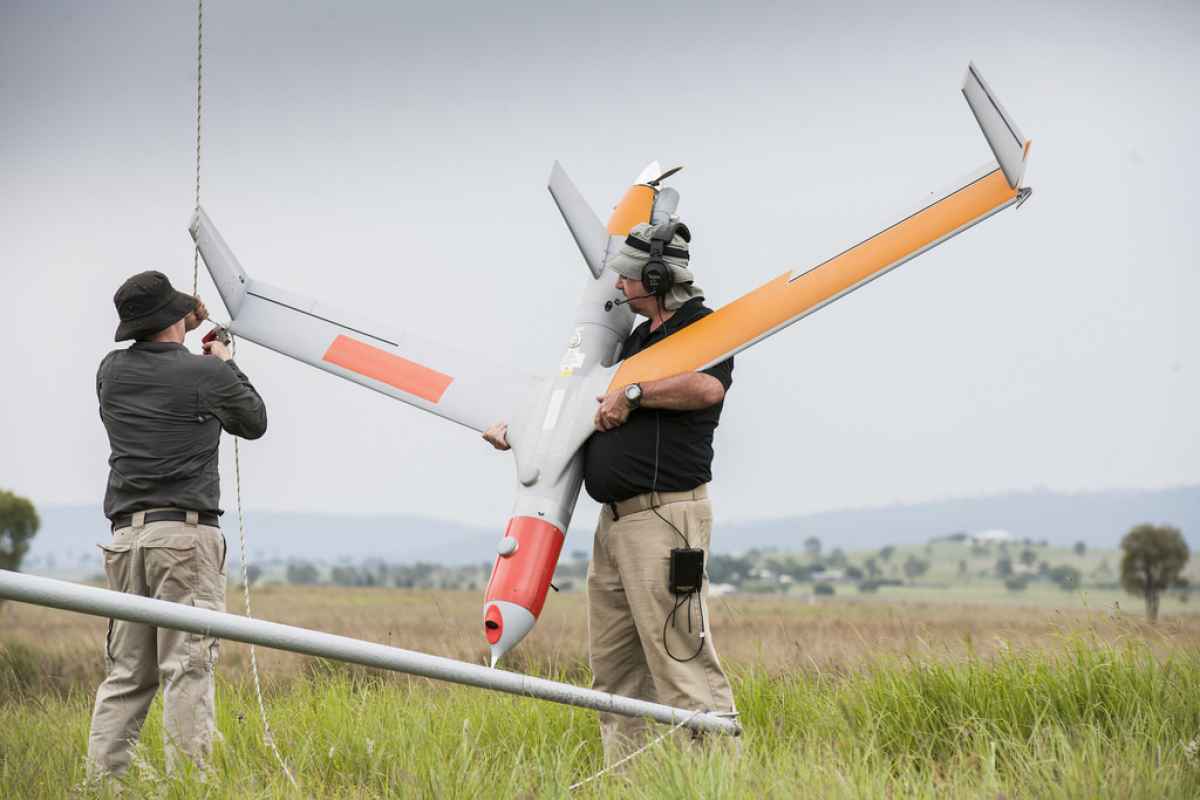
For starters, an insurance company had sought and is now approved to use drones for disaster claims processing.

This is BIG!

In a few days, the annual hurricane season will begin … in earnest; (this year was an aberration with the first Tropical Depression – Ana – making landfall early on May 10 in South Carolina, USA).

“Ana” is the first of what is forecasted to be a busy season. The names for the 2015 season are already pre-determined as:

Ana, Bill, Claudette, Danny, Erika, Fred, Grace, Henri, Ida, Joaquin, Kate, Larry, Mindy, Nicholas, Odette, Peter, Rose, Sam, Teresa, Victor and Wanda.

The source news article follows:

Title: FAA Gives USAA The A-OKAY To Test Damage Claims Drones
By:
Kelsey D. Atherton

Source: Popular Science Magazine posted April 7, 2015; retrieved 05-21-2015 from:
http://www.popsci.com/faa-gives-usaa-okay-drone

After the disaster come the accountants. Major tornadoes, earthquakes, tsunamis, and the like do dollar amounts of damage, sometimes in the billions. That number comes from the nitty-gritty of insurance valuations and payouts, a wholly human assessment of the ruins from natural forces. Now, thanks to FAA approval, robots may start to get in on the action.

Yesterday, insurance giant USAA announced, as follows, that the FAA approved their request to test drones as a way to more quickly process insurance claims after disasters:

FAA Approves USAA Request for Drone Research

April 6, 2015 –The Federal Aviation Administration has approved USAA’s request to test how unmanned aircraft systems, also known as drones, could help speed review of insurance claims from its members following natural disasters. USAA is one of the first insurers to be granted the approval for such testing.

“Our members have grown accustomed to seeing us pave the way for innovative solutions that streamline the claims process,” said Alan Krapf, president, USAA Property and Casualty Insurance Group.

In October 2014, USAA filed for an exemption under Section 333 of the FAA Modernization and Reform Act of 2012 to enable more efficient testing of small drones. Exempt from select FAA regulations, USAA can now fly drones, made by U.S.-based PrecisionHawk, during the day within line-of-sight of a trained pilot and air crew. Prior to the approval, USAA test flights could only take place at FAA-approved sites. No aircraft will exceed an altitude of 400 feet, and all flights will continue to be reported to the FAA prior to takeoff.

With FAA approval, USAA will work with PrecisionHawk [(see VIDEO here)] to efficiently research and develop best practices, safety and privacy protocols and procedures as it further develops plans for operational use.

USAA also filed for an additional FAA exemption in November that will enhance USAA’s ability to use drones in catastrophes. That exemption petition is pending approval, and a decision is expected soon.

“We’re proud to be among the first insurers approved to test this technology,” Krapf said. “It’s our responsibility to explore every option to improve our members’ experience.”

About USAA
The USAA family of companies provides insurance, banking, investments, retirement products and advice to 10.7 million current and former members of the U.S. military and their families. Known for its legendary commitment to its members, USAA is consistently recognized for outstanding service, employee well-being and financial strength. USAA membership is open to all who are serving our nation in the U.S. military or have received a discharge type of Honorable – and their eligible family members. Founded in 1922, USAA is headquartered in San Antonio. For more information about USAA, follow us on Facebook or Twitter (@USAA), or visit usaa.com.
(Source: https://communities.usaa.com/t5/Press-Releases/FAA-Approves-USAA-Request-for-Drone-Research/ba-p/62019)

USAA applied for the exemption in October. In their application, they noted that USAA employees were invited to Oso, Washington, after a mudslide to assist local officials with aerial surveys.

Drones are a great tool for examining natural disasters, because they can safely fly over areas where the ground may still be hazardous for humans. Visual assessment and mapping tools give rescue workers a way to understand the newly-changed terrain, and they can also let insurance agents see which claims are justified.

In the best case scenario, using drones to evaluate claims means that victims of disasters will get the resources they need to get back on their feet faster. All told, that’s pretty great. There are certainly far worse things that could happen when a robot shows up after a disaster.

CU Blog - Drones to be used for Insurance Damage Claims - Photo 4

CU Blog - Drones to be used for Insurance Damage Claims - Photo 5

The subject of unmanned aircrafts are just another area of autonomous vehicles that the Go Lean … Caribbean movement (book and aligning blogs) has highlighted as being a focused subject for the region. This subject will impact jobs and security measures. Consider these previous blog/commentaries:

https://goleancaribbean.com/blog/?p=1487 Here come the Drones … and the Concerns
https://goleancaribbean.com/blog/?p=1277 The need for highway safety innovations – here comes Google
https://goleancaribbean.com/blog/?p=673 Ghost ships – Autonomous cargo vessels without a crew

A lot of activity with autonomous aircrafts have been the product of Radio Controlled craft hobbyists; see Appendix C VIDEO. But now, practical applications are being promoted, especially for commercial photographers. This is science, not science fiction; see VIDEO in Appendix B. There is the need for high-end photography solutions to process claims after natural disasters. According to the foregoing news article, the US regulators are now allowing the testing of drones for post-hurricane (and other natural disasters) claims processing. This aligns with the Go Lean book, to optimize natural disaster response AND to provide oversight for the regional aviation space. This book serves as a roadmap for the introduction and implementation of the technocratic Caribbean Union Trade Federation (CU). The CU/Go Lean roadmap describes CU agencies in the role of the Federal Aviation Administration (FAA) performs for the US in the foregoing article. So the parallel is strong, as there is the need to plan for natural disasters in the Caribbean – more and more – in partnership with the CU‘s Emergency Management agencies.

CU Blog - Drones to be used for Insurance Damage Claims - Photo 3

CU Blog - Drones to be used for Insurance Damage Claims - Photo 2

The Go Lean book purports that this type of industrial revolutions emerging with drones are more and more critical for Caribbean society. The risks and threats from storms will only intensify. In the previous blog about the rise of drones, this commentary asserted that “our region must participate in these developments, not just spectate on them”. These points are  also pronounced early in the book in the opening Declaration of Interdependence (Page 14), with these statements:

i.   Whereas the earth’s climate has undeniably changed resulting in more severe tropical weather storms, it is necessary to prepare to insure the safety and security of life, property and systems of commerce in our geographical region. As nature recognizes no borders in the target of its destruction, we also must set aside border considerations in the preparation and response to these weather challenges.

xxvi.  Whereas theCaribbean region must have new jobs to empower the engines of the economy and create the income sources for prosperity, and encourage the next generation to forge their dreams right at home, the Federation must therefore foster the development of new industries… In addition, the Federation must invigorate the enterprises related to existing industries like tourism…– impacting the region with more jobs.

xxvii.  Whereas the region has endured a spectator status during the Industrial Revolution, we cannot stand on the sidelines of this new economy, the Information Revolution. Rather, the Federation must embrace all the tenets of Internet Communications Technology (ICT) to serve as an equalizing element in competition with the rest of the world. The Federation must bridge the digital divide and promote the community ethos that research/development is valuable and must be promoted and incentivized for adoption.

This Go Lean book and accompanying blogs champion the cause of deploying technology to make the Caribbean a better homeland to live, work and play. The assertion is that innovative developments like camera-mounted unmanned aerial vehicles (drones) should be readily deployed after emergencies and disasters – from hurricanes to industrial accidents – to quickly assess the damage: life and property; see Appendix A VIDEO. There is the need to gather intelligence for where to direct First Responders (as in 911 emergencies); and even before people in the affected areas may call out for help.

While the focus of the Go Lean movement is primarily towards economics, it is the premise of this roadmap that security efforts must be coupled with the region’s economic empowerments. The premise is simple! The economic engines must be protected and preserved; this subject of “Insurance Company Disaster-Claim Assessing Drones” is therefore within scope for the Trade Federation. In fact, the CU/Go Lean roadmap has defined these 3 prime directives:

  • Optimization of the economic engines in order to grow the regional economy to $800 Billion and create 2.2 million jobs.
  • Establishment of a security apparatus to protect the resultant economic engines.
  • Improvement of Caribbean governance to support these engines.

While there may be proponents and opponents (privacy advocates) of unmanned aviation, no one would object to aggressive efforts to locate people in danger or quickly restore communities to normal operations after a storm. There is an overriding need, as many times tourist-based industries need to project the confidence to the watching world that Caribbean winter destinations will be ready, willing and able to extend hospitality to visitors … in short order.

The message and image must be consistent for the region’s primary economic driver, even after a natural disaster: Be our guest!

The Go Lean strategy is to confederate the 30 member-states of the Caribbean region to form the technocratic CU Trade Federation. Tactically, the roadmap calls for a separation-of-powers, allowing the Caribbean member-states to deputize authority of the Caribbean airspace to the one unified CU agency. Operationally, there is the need for these drones in critical times and also for everyday scenarios. (Many times, watercrafts become imperiled in the region’s waters; the scanning & diagnostic capabilities on drones would far-exceed human-eye capability for search-and-rescue).

The book details community ethos to adopt, plus the executions of the following strategies, tactics, implementations and advocacies to foster innovative solutions in Caribbean communities, so as to positively impact the societal economic, security and governing engines:

Community Ethos – Deferred Gratification Page 21
Community Ethos – All Choices Involve Costs Page 21
Community Ethos – Job   Multiplier Page 22
Community Ethos – Public Protection Over Privacy Concerns Page 23
Community Ethos – “Crap” Happens Page 23
Community Ethos – Lean Operations Page 24
Community Ethos – Return on Investments (ROI) Page 24
Community Ethos – Ways to Impact the Future Page 26
Community Ethos – Ways to Help Entrepreneurship Page 28
Community Ethos – Ways to Impact Research & Development Page 30
Community Ethos – Impact the Greater Good Page 37
Strategy – Vision – Confederating 30 Member-states in a Union Page 45
Strategy – Agents of Change – Technology Page 57
Strategy – Agents of Change – Aging Diaspora Page 57
Strategy – Agents of Change – Globalization Page 57
Strategy – Agents of Change – Climate Change Page 57
Tactical – Fostering a Technocracy Page 64
Tactical – Growing Economy – New High Multiplier Industries Page 68
Separation of Powers – Self Governing Entities Page 80
Separation of Powers – Aviation Administration and Promotion Page 84
Implementation – Ways to Pay for Change – Hurricane Reinsurance Funds Page 101
Implementation – Benefits from the Exclusive Economic Zone Page 104
Implementation – Steps to Implement Self-Governing Entities Page 105
Implementation – Ways to Deliver Page 109
Planning – 10 Big Ideas – Homeland Security Innovations Page 127
Advocacy – Ways to Grow the Economy Page 151
Advocacy – Ways to Create Jobs Page 152
Advocacy – Ways to Improve Housing – Hurricane Risk Reinsurance Funds Page 161
Advocacy – Revenues Sources for Caribbean Administration – Reinsurance Funds Page 172
Advocacy – Ways to Improve Homeland Security Page 180
Advocacy – Ways to Improve Intelligence Gathering & Analysis Page 182
Advocacy – Ways to Improve for Natural Disasters Page 184
Advocacy – Ways to Improve Emergency Management Page 196
Advocacy – Ways to Foster Technology Page 197
Advocacy – Ways to Impact Wall Street – Adopt Advanced Products: “Reinsurance” Page 197
Advocacy – Ways to Improve Transportation – Aviation Oversight Page 205
Advocacy – Ways to Improve Fisheries – Search & Rescue Page 210
Advocacy – Ways to Impact Urban Living Page 238
Advocacy – Ways to Impact Rural Living Page 239

The foregoing news story relates to threats and consequences of hurricanes. While hurricanes present a Clear and Present Danger to “life and limb”, the focus of this commentary is on property. While the sense of urgency may appear to be lower, there is still the need to impact the region’s Greater Good. The advocacy in this case is to be an early adopter of technology to optimize the administration of Caribbean economic engines.

This is heavy-lifting. The buy-in from community stakeholders will not be easy; there will be the need for collaboration, compromise and consensus-building for the full adoption of unmanned aviation.

The insights from the foregoing articles and embedded videos help us to appreciate that the future for unmanned aviation is now! We must therefore lean-in for these empowerments now.

In fact the region is urged to lean-in for the entire roadmap of Go Lean … Caribbean. The benefits are too alluring. Protection of people, properties and processes. This is the Greater Good. This roadmap allows for that quest: to make the Caribbean a better homeland to live, work and play. 🙂

Download the book Go Lean…Caribbean now!

————

Appendix A VIDEODrone Footage from Inside Corvette Museum Sinkholehttps://youtu.be/vkEDwOidW_Q


Published on Feb 12, 2014 – University of Western Kentucky’s Engineering Department sent a drone helicopter into the sinkhole at the National Corvette Museum that swallowed eight vintage Corvettes.

————

Appendix B VIDEO – Sprite Unmanned Aerial Vehicle –  https://youtu.be/-w9YTJjGaEg


Published on May 13, 2015 – Meet Sprite, the most portable, most durable small unmanned aerial vehicle in the world. Powerful, yet simple to fly. Visit us at www.ascentaerosystems.com for more information! Pre-order at https://www.kickstarter.com/projects/…

————

Appendix C VIDEO – Top 10 Drones 2015 – https://youtu.be/sq2n4TMC1XU


Published on Nov 14, 2014 – More Info & Pics: https://ezvid.com/top-ten-drones


Share this post:
, , , , ,
[Top]

POTUS and the Internet

Go Lean Commentary

What is the requirement for the Office of the President of the United States; and why is this important to the Caribbean?

A candidate must be at least 35 years old; natural born citizen of the country (could not have been naturalized); must win the majority of votes (270) of the 538 total in the American Electoral College.

One more requirement: the candidate must have a “thick skin” and the uncanny ability to choose his/her battles. The President cannot pick a fight with just anyone that lobs unkind words, no matter how denigrating the insult.

This is not easy! Considering the free-for-all that is the internet; freedom of speech … is not free!

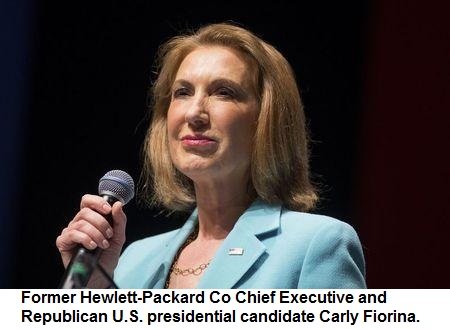
This actuality was dynamically illustrated in the past week; first with a number of 2016 potential candidates (Carly Fiorina, Ted Cruz, Jeb Bush and Hillary Clinton) in their quest to secure their own web domains (xxxxxxxxxx.com, xxxxxxxxxx.net, xxxxxxxxxx.org, etc.) and lastly with the current president’s first foray with the social media site Twitter. See stories here:

Title #1: U.S. presidential candidate Fiorina spins web around interviewer
By: Bill Trott, Reuters, May 10, 2015

WASHINGTON (Reuters) – Republican presidential candidate Carly Fiorina apparently has learned something about registering website domain names.

Former Hewlett-Packard Co Chief Executive and Republican U.S. presidential candidate Carly Fiorina speaks during the Freedom Summit in GreenvilleShortly after the former Hewlett-Packard chief executive announced her campaign last week, she found out that a cybersquatter had bought the rights to carlyfiorina.org and was using it to criticize her record.

Chuck Todd of NBC News brought up the issue while interviewing Fiorina on “Meet the Press” and showed the website, which features row after row of frowny-face emoticons representing 30,000 people laid off during her Hewlett-Packard tenure from 1999 to 2005.

Fiorina defended her record and after the interview sent a tweet thanking Todd for having her on the show and saying, “Btw, checkout chucktodd.org.” Her campaign had registered that domain and clicking on the link redirected traffic to her official campaign site, carlyforpresident.com.

Fiorina had done the same thing last week with sethmeyers.org when she appeared on NBC’s “The Late Show with Seth Meyers.”

Fiorina has acknowledged she made a mistake in not registering carlyfiorina.org first, but she is not the only 2016 presidential candidate bedeviled by cybersquatters.

Republican Ted Cruz must endure a rogue tedcruz.com site that says only “Support President Obama. Immigration Reform now”, while jebbushforpresident.com is being used by supporters of gay rights, not Jeb Bush.

The site hillaryclinton.org is not the work of Democratic candidate Hillary Clinton’s campaign and cyber security experts say it contains malicious software.

—————-

Title # 2: VIDEOPresident Obama @POTUShttp://wapo.st/1FkwKrX

May 19, 2015 (Reuters) – President Obama started his own Twitter account on Monday. Within 45 minutes of sending his first tweet, Obama gained more than 217,000 followers.

—————-

Title #3: ‘Welcome To Twitter, N*gger’: Righties Go FULL RACIST On POTUS Twitter Account (TWEETS)

Well, President Obama finally has his own twitter account, and conservatives didn’t waste any time showing just how racist they really are.

CU Blog - POTUS and the Internet - Photo 1

While the president was having fun posting about how his tweets would be his own words to the American people, righties were busy hurling racial slurs in @replies at the POTUS twitter account. For your viewing disgust, here are just a few of the so-called “welcome” messages President Obama received on his newly-created personal account (yes, these are screenshots and not actual tweets, in the event these trolls decide to delete their words like the cowards they are):

CU Blog - POTUS and the Internet - Photo 2

CU Blog - POTUS and the Internet - Photo 3

CU Blog - POTUS and the Internet - Photo 4

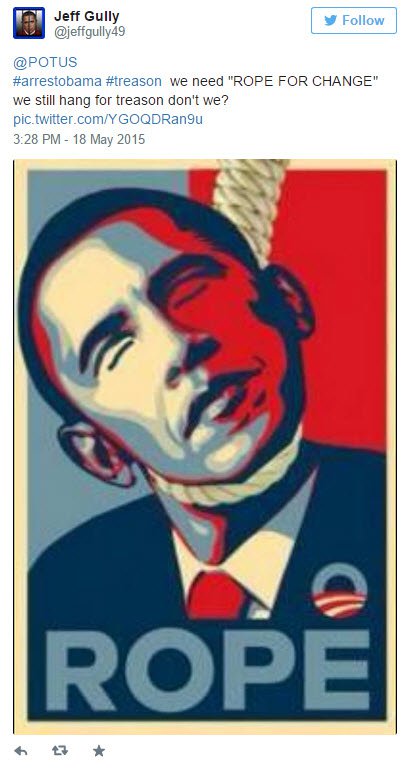
As if those initial messages weren’t bad enough, one person tweeted to the sitting President that he should be lynched, completed with image:

CU Blog - POTUS and the Internet - Photo 5

… I could go on, but you get the idea. If this doesn’t tell you that Barack Obama has handled the unprecedented disrespect and outright hatred directed at him from right-wing racists with the utmost grace and dignity, I don’t know what will.

The entire article is here: http://www.addictinginfo.org/2015/05/18/welcome-to-twitter-ngger-righties-go-full-racist-potus-twitter-account-tweets/; retrieved May 19, 2015.

—————-

Title #4: Uh, you probably don’t want to tweet to @POTUS, actually
By: Caitlin Dewey

Twitter, at first glance, is a magical fantasy land — a utopia where any old egg can freely converse with presidents, pop stars and kings. It is the great democratizer; the global water cooler; the one place where you can say anything to anyone and know it’ll be okay.

Consider this your monthly reminder that this is actually NOT the case: On the modern Internet, impressions of anonymity and ephemerality are, well … usually fake.

But the joke’s actually on them: Not only does the Secret Service already monitor Twitter for threats, but the White House is archiving each and every thing @POTUS tweeters say. Ashley Feinberg flagged this relevant piece of the White House Online Privacy Policy

when you tweet “leave Michelle for me @POTUS,” or something even more inappropriate/creepy, that lives in an official White House Archive for eternity (slash, for potential future scrutiny).

To be clear, this isn’t just a White House thing: The principle applies, in one form or another, to most types of social networking

Find the whole article at the Washington Post Online site – The Capital’s Daily Newspaper (Posted 05-19-2015) –

http://www.washingtonpost.com/news/the-intersect/wp/2015/05/19/uh-you-probably-dont-want-to-tweet-to-potus-actually/

The President of the United States (POTUS) is considered the most powerful Commander-in-Chief in the world; this is due to the fact that the US is the only remaining Super Power with the world’s largest Single Market economy and world’s largest military establishment. This country is the Caribbean largest trading partner. POTUS also has direct oversight over the US Federal Government functionalities in the 2 US Territories in the Caribbean (Puerto Rico and the US Virgin Islands).

This subject is a pivotal theme in the book Go Lean…Caribbean, which asserts that Internet & Communications Technologies (ICT) are critical for elevating Caribbean society. The art and science of this field is slated to impact the economic, security and governing engines. The internet makes things easy; it makes benevolent endeavors easier and malevolent endeavors easier. There must be the constant oversight.

The challenges of politicians and the Internet clearly demonstrate the need for technocratic oversight for the Caribbean’s foray into garnering more respect and benefits for intellectual property. There is the need for “Grievance Officers” to settle disputes related to cyber-squatting for Caribbean domains and the proposed Caribbean Cloud branded: www.myCaribbean.gov.

Change has come to the world of politicking and elections. The ubiquity of the internet cannot be ignored.

This book, Go Lean… Caribbean, serves as a roadmap for the introduction and implementation of the technocratic Caribbean Union Trade Federation (CU). The CU/Go Lean roadmap has 3 prime directives:

  • Optimization of the economic engines in order to grow the regional economy to $800 Billion GDP and create 2.2 million new jobs.
  • Establishment of a security apparatus to protect the societal engines and marshal against human and civil rights abuses.
  • Improvement of Caribbean governance to support these engines, plus facilitate a smooth transparent election process.

Early in the book, the benefits of optimizing governance through technology empowerments are pronounced in the opening Declaration of Interdependence (Pages 12 & 14), with these statements:

xi.  Whereas all men are entitled to the benefits of good governance in a free society, “new guards” must be enacted to dissuade the emergence of incompetence, corruption, nepotism and cronyism at the peril of the people’s best interest. The Federation must guarantee the executions of a social contract between government and the governed.

xii.  Whereas the legacy in recent times in individual states may be that of ineffectual governance with no redress to higher authority, the accedence of this Federation will ensure accountability and escalation of the human and civil rights of the people for good governance, justice assurances, due process and the rule of law…

xxvi.  Whereas the region has endured a spectator status during the Industrial Revolution, we cannot stand on the sidelines of this new economy, the Information Revolution. Rather, the Federation must embrace all the tenets of Internet Communications Technology (ICT) to serve as an equalizing element in competition with the rest of the world. The Federation must bridge the digital divide and promote the community ethos that research/development is valuable and must be promoted and incentivized for adoption.

xxvii.  Whereas intellectual property can easily traverse national borders, the rights and privileges of intellectual property must be respected at home and abroad. The Federation must install protections to ensure that no abuse of these rights go with impunity, and to ensure that foreign authorities enforce the rights of the intellectual property registered in our region.

The Go Lean book details the community ethos to adapt to the changed ICT landscape, plus the executions of the following strategies, tactics, implementations and advocacies:

Community Ethos – Economic Principle – People Respond to Incentives Page 21
Community Ethos – Job Multiplier Page 22
Community Ethos – Lean Operations Page 24
Community Ethos – Return on Investments (ROI) Page 24
Community Ethos – Ways to Impact the Future Page 26
Community Ethos – Promote Intellectual Property Page 29
Community Ethos – Impact Research & Development Page 30
Community Ethos – Bridge the Digital Divide Page 31
Strategy – Vision – Integrate 30 Caribbean member-states into a Single Market Economy Page 45
Strategy – Mission – Fix the broken systems of governance in our region Page 46
Tactical – Fostering a Technocracy Page 64
Tactical – Growing the Economy – Book: Nature and Causes of the Wealth of Nations by Adam Smith (1776) Page 70
Separation of Powers – Department of State – Federal Elections Administrators Page 70
Separation of Powers – Federal/Caribbean Police – Elections/Candidate Security Page 77
Separation of Powers – Film Promotion and Administration Page 78
Separation of Powers – Intellectual Property (Copyrights & Domains) Administration Page 78
Separation of Powers – Communications and Media Authority Page 79
Separation of Powers – Federal Legislature & Electoral Seats Page 91
Implementation – Ways to Impact Social Media Page 111
Implementation – Ways to Impact Elections Page 116
Advocacy – Ways to Grow the Economy Page 151
Advocacy – Ways to Create Jobs Page 152
Advocacy – Ways to Improve Communications Page 186
Advocacy – Ways to Foster Technology Page 197
Advocacy – Ways to Foster e-Commerce Page 198
Advocacy – Ways to Impact Hollywood Page 203
Advocacy – Ways to Promote Contact Centers – Ideal for Pre-Election Polling Page 212
Advocacy – Ways to Impact the Diaspora Page 217
Appendix – Puerto Rico Diaspora distribution in the mainland United States Page 304

This commentary is about the Caribbean, not about the United States. It is important for leaders in the US to be concerned with the Caribbean’s well-being. This point has been explicitly acknowledged by Caribbean stakeholders and relevant subjects have recently been extolled in these previous Go Lean…Caribbean blog/commentaries:

https://goleancaribbean.com/blog/?p=5183 Mexico Model – May 5th – US too occupied during Civil War to defend neighbor
https://goleancaribbean.com/blog/?p=5088 Caribbean Migrants among the accounting of 1 in 11 Black population in USA
https://goleancaribbean.com/blog/?p=4935 A Lesson in History – Grand Old Party – the Republicans – must be cuddled
https://goleancaribbean.com/blog/?p=4897 US Backs LNG Distribution Base in Jamaica as Caribbean Regional Hub
https://goleancaribbean.com/blog/?p=4793 Yelp.com Review Site – Model of CU Social Media Grievance Regulators
https://goleancaribbean.com/blog/?p=4551 US Territories – currently Between a ‘rock and a hard place’
https://goleancaribbean.com/blog/?p=4360 Dreading the American ‘Caribbean Basin Security Initiative’
https://goleancaribbean.com/blog/?p=4294 US Ambassadors to Caribbean push US Energy and Security Policies
https://goleancaribbean.com/blog/?p=3834 State of Caribbean Union compared to the State of the American Union
https://goleancaribbean.com/blog/?p=3662 Caribbean Migrants desperate to get to US as Promised Land destination
https://goleancaribbean.com/blog/?p=1965 America’s Navy – Protector for Caribbean waters and the World’s

Other interactions related to US government-to-Caribbean population have also been blogged in Go Lean commentaries, as sampled here:

https://goleancaribbean.com/blog/?p=4058 New York Times Maledictions on The Bahamas
https://goleancaribbean.com/blog/?p=3473 Haiti to Get $70 Million from US-AID to Expand Caracol  Industrial Park
https://goleancaribbean.com/blog/?p=3455 Restoration of US Diplomatic Relations with Cuba
https://goleancaribbean.com/blog/?p=2907 Miami Haitian-American leaders protest Bahamian immigration policy
https://goleancaribbean.com/blog/?p=341 US slams human rights practices among Caribbean nations

The CU seeks to re-boot the relationship with the US to an elevated “protégé” status, as opposed to the parasite status currently being maintained. For the Caribbean member-states, the CU will oversee the radio spectrum used for internet, radio, television and satellite communications in the region. (This radio spectrum must be regulated “by us and for us” … on a regional level due to the close-proximity of member-states). So the CU‘s coordination must be arranged in the manner of a Common Pool Resource, as the radio spectrum is limited. This oversight must also extend to internet broadband (wireless & wire-line) governance.

Also, the CU must conduct its own federal elections for all 30 member-states. This CU election process, detailed in the Go Lean roadmap, is a direct parallel to the election process in the US, alluded to at the start of this commentary. The US system defines 538 “electors”. This corresponds to the 435 members of the House of Representatives, 100 senators, and the three additional electors for the nation’s non-State capital city, Washington, DC. The same Electoral College design is proposed for the CU – so as to not trivialize the region’s Small Island States – where 250 House seats, and 60 Senate seats, amounts to a total 310 (Page 91). With the requirement of 156 electoral votes to win the CU presidency, no candidate can be elected without the inclusion of some Small Island States. This is logical; an effective application for the CU legal structure bred from the US model.

For the CU, ICT must also come into play more and more to facilitate efficient federal campaigns. We can do this!

We can apply best-practices – as communicated in the foregoing articles – so as to mitigate election-campaign abuses and remediate slanderous communication from “bad actors” who try to bully elected officials; these ones  will become more active as election passions intensify.

“Out with the old; in with the new” – the US President Obama has less than 2 years remaining in his constitutionally-mandated  term-limit. The candidates vying for Mr. Obama’s job for 2016 will have to feature many of the same qualifications as Mr. Obama; these ones, in particular, must be thick-skinned in tolerating scathing insults and cyber-bullying. They would do best to remember that there will always be a loud minority … and quiet majority. 🙂

Download the free e-Book of Go Lean … Caribbean – now!

Share this post:
, , , ,
[Top]

Mitigating the Eventual ‘Abuse of Power’

Go Lean Commentary

Power corrupts. Absolute power corrupts absolutely – Familiar secular prophesy.

The book Go Lean…Caribbean serves as a roadmap for the introduction and implementation of the technocratic Caribbean Union Trade Federation (CU) to elevate the region’s economic, security and governing engines. The roadmap covers 5 years. Once the roadmap succeed in its execution, there will be a lot of opportunities for stakeholders to acquire and wield power. The roadmap fully expects the eventual corrupting effects of that power, and thusly embed the required checks-and-balances from the outset.

The Go Lean roadmap covers so many aspects of Caribbean life that every one, in every nook-and-cranny, will sense the presence of the CU. The CU/Go Lean roadmap commences with these 3 prime directives:

  • Optimization of the economic engines in order to grow the regional economy to $800 Billion & create 2.2 million new jobs.
  • Establishment of a security apparatus to protect the resultant economic engines.
  • Improvement of Caribbean governance to support these engines.

During the course of these executions, there will be a constant focus on the exercise of power.

The assertion of the Go Lean book is that the Caribbean region must prepare for its own success, and its own eventual security threats. The book relates (Page 23) the historic references where the emergence of new economic engines were immediately followed by the emergence of “bad actors” to exploit the opportunities, with good, bad and evil intent. So we must proactively and reactively address crime, whether it is street crime, “White Collar” crime and/or also public corruption allegations. But doing so judiciously and with proper regard for human and civil rights.

Accordingly, the opening Declaration of Interdependence (Page 12) pronounced that we must take our own lead for our own security solutions; we must appoint our own “guardians” with our self-interest in mind; prioritizing the community ethos for the Greater Good. The actual declaration is pronounced as follows:

x.   Whereas we are surrounded and allied to nations of larger proportions in land mass, populations, and treasuries, elements in their societies may have ill-intent in their pursuits, at the expense of the safety and security of our citizens. We must therefore appoint “new guards” to ensure our public safety and threats against our society, both domestic and foreign. The Federation must employ the latest advances and best practices … to assuage continuous threats against public safety.

xvi. Whereas security of our homeland is inextricably linked to prosperity of the homeland, the economic and security interest of the region needs to be aligned under the same governance. Since economic crimes, including piracy and other forms of terrorism, can imperil the functioning of the wheels of commerce for all the citizenry, the accedence of this Federation must equip the security apparatus with the tools and techniques for predictive and proactive interdictions.

CU Blog - Mitigating the Eventual Abuse of Power - Photo 1The Caribbean appointing “new guards” or a security pact to ensure public safety, will call for permanent justice institutions, sanctioned by all 30 CU member-states. The CU Federation or federal justice’s institutions will operate under a separation-of-powers edict – between the member-states and CU agencies. This is radically different than other federal government scenarios – like the United States – because of the reality of sovereignty. The CU is only a trade and security bloc, so the sovereignty of member-states remains with its current possessors. Therefore the Go Lean roadmap requires CU agencies to be deputized by the duly authorities in the member-states. Then with CU funding comes CU “strings attached” to ensure compliance of governance mandates. (These strings include fair and equitable treatment of all citizens).

A previous commentary related how the citizens of the City of Ferguson, Missouri-USA – African-American more so than any other ethnic group – were abused and repressed by law enforcement and judicial officials in that community. The injustice and abuse-of-power was so blatant that the town burst into protest – (literally burst into flames) – when one of their unarmed citizens, Michael Brown, was killed by a police officer. Then the whole country burst into protest – in solidarity – when the subsequent Grand Jury decided not to indict the offending police officer. The constant outcry was: “No Justice; No Peace” and “Black Lives Matter”.

The events of this small Midwest American town – a suburb of St. Louis – can easily be joined in chorus with countless Caribbean anecdotes. Any elevation of Caribbean society must therefore include the optimization of Caribbean justice institutions. The Go Lean roadmap assumes the heavy-lifting for the CU Trade federation to transform Caribbean society. The CU will be empowered for its security role – deputized for law enforcement in all Caribbean member-states – by a Status of Forces Agreement (SOFA) embedded with the initial confederation treaty. (This effort also includes the US Territories as well, under the legal guise of an Interstate Compact). This point was strongly urged in the same opening Declaration of Interdependence (Page 12), as follows:

xii. Whereas the legacy in recent times in individual states may be that of ineffectual governance with no redress to higher authority, the accedence of this Federation will ensure accountability and escalation of the human and civil rights of the people for good governance, justice assurances, due process and the rule of law. As such, any threats of a “failed state” status for any member state must enact emergency measures on behalf of the Federation to protect the human, civil and property rights of the citizens, residents, allies, trading partners, and visitors of the affected member state and the Federation as a whole.

CU Blog - Mitigating the Eventual Abuse of Power - Photo 2The Go Lean roadmap identifies gangs, organized crime, narcotics trafficking, human trafficking, guns/explosive interdiction, piracy, and terrorism as threats to the law-and-order fabric of Caribbean society. But the community ethos for Go Lean roadmap must be based on the Greater Good, ensuring both the letter and the spirit of laws to serve-and-protect the community. So the relevant CU agencies must also police the Police. Just how does the roadmap propose this; (Page 177)?

  • The strings-attached in funding national police forces would force Internal Affairs compliance and reporting up-line to CU agencies.
  • Military justice institution, Judge Advocacy Generals, will also follow a reporting up-line to CU agencies.
  • The CU funding to member-states will required separate accounting ledgers – no deposit into General Treasury Funds. The CU therefore retains the rights to “audit the books”. Any malfeasance, misfeasance  or nonfeasance constitute federal crimes, criminal prosecution and federal prison sentences.
  • The CU will provide grants for equipment and investigative tools, like dashboard cameras and body cameras. The SOFA would legally grant authority to the CU to review police activity.
  • Every security-involved death (police, soldier, sailor, marine) will automatically initiate a federal investigative review.

In the Caribbean, “All Lives Matter”!

The Go Lean book details all the community ethos to ensure the right attitudes to serve and protect Caribbean communities; plus strategies, tactics, implementations and advocacies to provide increased public safety & security in the Caribbean region:

Economic Principle – Economic Systems Influence Individual Choices Page 21
Economic Principle – Consequences of Choices Lie in Future Page 21
Community Ethos – Security Principle – Privacy –vs- Public Protection Page 23
Community Ethos – Security Principle – Witness Security & Protection Page 23
Community Ethos – Security Principle – Anti-Bullying and Mitigation Page 23
Community Ethos – Security Principle – Intelligence Gathering Page 23
Community Ethos – Security Principle – Light Up the Dark Places Page 23
Community Ethos – Security Principle – “Crap” Happens Page 23
Community Ethos – Governing Principle – Minority Equalization Page 24
Community Ethos – Governing Principle – Cooperatives Page 25
Community Ethos – Ways to Improve Sharing Page 35
Community Ethos – Ways to Impact the Greater Good Page 37
Tactical – Confederating a non-sovereign union Page 63
Tactical – Fostering a Technocracy Page 64
Tactical – Separation of Powers – Homeland Security Page 75
Tactical – Separation of Powers – Justice Department – District Attorneys Page 77
Tactical – Separation of Powers – Justice Department – CariPol Page 77
Tactical – Separation of Powers – Labor Department – Regional   Relations Page 89
Tactical – Separation of Powers – Federal Courts – Court   of Justice Page 90
Implementation – Assemble “Organs” into a Security Apparatus Page 96
Implementation – Start-up Security Initiatives Page 103
Planning – Ways to Make the Caribbean Better Page 131
Planning – Ways to Improve Failed-State Indices Page 134
Planning – Lessons from the American West – Model   for Law-and-Order Page 142
Advocacy – Ways to Grow the Economy Page 151
Advocacy – Ways to Improve Governance Page 168
Advocacy – Ways to Better Manage the Social Contract Page 170
Advocacy – Ways to Impact Justice Page 177
Advocacy – Ways to Reduce Crime Page 178
Advocacy – Ways to Improve for Gun Control Page 179
Advocacy – Ways to Improve Homeland Security Page 180
Advocacy – Ways to Mitigate Terrorism Page 181
Advocacy – Ways to Improve Intelligence Gathering/Analysis Page 182
Advocacy – Ways to Impact the Prison Industrial Complex Page 211
Advocacy – Ways to Protect Human Rights Page 220
Appendix – CariCom Organs: IMPACS & Court of Justice Page 244

Other subjects related to crime remediation empowerments for the region have been blogged in other Go Lean…Caribbean commentary, as sampled here:

https://goleancaribbean.com/blog/?p=4809 Americans arrested for aiding ISIS
https://goleancaribbean.com/blog/?p=4447 Probe of Ferguson-Missouri finds bias from cops, courts
https://goleancaribbean.com/blog/?p=4360 Dreading the American ‘Caribbean Basin Security Initiative’
https://goleancaribbean.com/blog/?p=4308 911 – Emergency Response: System for First Responders in Crisis
https://goleancaribbean.com/blog/?p=3881 Intelligence Agencies to Up Cyber Security Cooperation
https://goleancaribbean.com/blog/?p=3662 Migrant flow / Border incursions / Threats from Caribbean into US spikes
https://goleancaribbean.com/blog/?p=2994 Justice Strategy: Special Prosecutors and Commissions of Inquiry
https://goleancaribbean.com/blog/?p=2782 Red Light Traffic Cameras, other CCTV Deployments can Impact Crime
https://goleancaribbean.com/blog/?p=2684 Role Model for Justice, Anti-Crime & Security: The Pinkertons
https://goleancaribbean.com/blog/?p=1674 Obama’s $3.7 Billion Immigration Crisis Funds – A Homeland Security Fix
https://goleancaribbean.com/blog/?p=1554 Status of Forces Agreement = Security Pact
https://goleancaribbean.com/blog/?p=1487 Here come the Drones … and the Concerns
https://goleancaribbean.com/blog/?p=960 NSA records all phone calls in Bahamas, according to Snowden
https://goleancaribbean.com/blog/?p=535 Remembering and learning from Boston
https://goleancaribbean.com/blog/?p=392 Jamaica to receive World Bank funds to help in crime fight
https://goleancaribbean.com/blog/?p=341 American Hypocritical Human Rights Leadership Slams Caribbean Poor Record

CU Blog - Mitigating the Eventual Abuse of Power - Photo 3The vision of the Go Lean roadmap is to make the Caribbean homeland, a better place to live, work and play. One, of many missions, is to lower the “push” factors (from “push-and-pull” reference) so that our citizens are not led to flee their homeland for foreign (North American and European) shores. Among the many reasons people emigrate, many times, there is a fear of life-and-limb. We must allow for “Justice”; and for “Peace”. All lives must matter!

We must do better!

We know that “bad actors” will emerge, from internal and external origins. We must be prepared and on-guard to defend our homeland against all threats, foreign and domestic. Yet we must maintain transparency, accountability, and constant commitment to due-process and the rule-of-law.

We do not want a Sheriff John Brown – see Appendix & VIDEO – emerging in the Caribbean region. Sheriff John Brown is a classic example of an Authority figure that abused his power at the peril of a common citizen:

John Brown always hated me, For what, I don’t know: Every time I plant a seed,  He said kill it before it grow.

Everyone, the people (residents and visitors), institutions and government officials are hereby encouraged to lean-in to this roadmap. 🙂

Download the free e-book of Go Lean … Caribbean – now!

—————-

Appendix – Relevant News Story: Amnesty International Calls for Accountability in Bahamas Police Abuses

http://bahamasnational.com/?q=node/2365

—————-

Appendix VIDEO – Bob Marley – I Shot The Sheriff – https://youtu.be/2XiYUYcpsT4

Uploaded on Aug 7, 2008 – Bob Marley- I shot the sheriff Music: (Google PlayiTunesAmazonMP3)

—————-

Appendix – I Shot the Sheriff – Lyrics by Bob Marley

Chorus:
(I shot the sheriff
But I didn’t shoot no deputy, oh no! Oh!
I shot the sheriff
But I didn’t shoot no deputy, ooh, ooh, oo-ooh.)

Yeah! All around in my home town,
They’re tryin’ to track me down;
They say they want to bring me in guilty
For the killing of a deputy,
For the life of a deputy.
But I say:

Oh, now, now. Oh!
(I shot the sheriff.) – the sheriff.
(But I swear it was in self-defence.)
Oh, no! (Ooh, ooh, oo-oh) Yeah!
I say: I shot the sheriff – Oh, Lord! –
(And they say it is a capital offence.)
Yeah! (Ooh, ooh, oo-oh) Yeah!

Sheriff John Brown always hated me,
For what, I don’t know:
Every time I plant a seed,
He said kill it before it grow –
He said kill them before they grow.
And so:

Read it in the news:
(I shot the sheriff.) Oh, Lord!
(But I swear it was in self-defence.)
Where was the deputy? (Oo-oo-oh)
I say: I shot the sheriff,
But I swear it was in selfdefence. (Oo-oh) Yeah!

Freedom came my way one day
And I started out of town, yeah!
All of a sudden I saw sheriff John Brown
Aiming to shoot me down,
So I shot – I shot – I shot him down and I say:
If I am guilty I will pay.

(I shot the sheriff,)
But I say (But I didn’t shoot no deputy),
I didn’t shoot no deputy (oh, no-oh), oh no!
(I shot the sheriff.) I did!
But I didn’t shoot no deputy. Oh! (Oo-oo-ooh)

Reflexes had got the better of me
And what is to be must be:
Every day the bucket a-go a well,
One day the bottom a-go drop out,
One day the bottom a-go drop out.
I say:

I – I – I – I shot the sheriff.
Lord, I didn’t shot the deputy. Yeah!
I – I (shot the sheriff) –
But I didn’t shoot no deputy, yeah! No, yeah!


Share this post:
, ,
[Top]

Forging Change: ‘Food’ for Thought

Go Lean Commentary

“The way to a man’s heart is through his stomach” – Old Adage.

Could it be that simple? Have we been laboring all the while, trying to forge change in the Caribbean region while missing out on the easiest driver: Food?

Seriously! We “gotta” eat!

While the publishers of the book Go Lean…Caribbean wants to forge change in the Caribbean, we recognize that it is a heavy-lifting task. There are so many societal defects in the region and we need effective strategies, tactics and implementation to effect turn-around. Despite all the advance research and academic exercises, we seem to have left off this simple yet effective model: Food.

This is the impression gleaned from this University of Pittsburgh (USA) study and VIDEO here:

Video: Study: Changing Diet May Affect Colon Cancer Risk – http://www.today.com/video/study-changing-diet-may-affect-colon-cancer-risk-436297283693

As the foregoing VIDEO depicts, change can be forged in as soon as 2 weeks. That simple! This is impactful enough for us to all lean-in to this guidance.

Cancer – this is the underlying threat being mitigated in the foregoing VIDEO. While this is a complicated medical issue – where many people have lost their lives – it is not oversimplifying to say that our food choices can endanger our overall health. While everything is not known about cancer – there is no actual cure, only treatments – it is the accepted wisdom that diet and exercise minimize the risk of affliction.

The subject of cancer is a community health crisis. But if we can forge change in this threatening area by our food choices, then we need to pay heed.

The book Go Lean…Caribbean serves as a roadmap for the introduction and implementation of the Caribbean Union Trade Federation (CU), a confederation of all 30 member-states in the region. This effort is an initiative to bring change and empowerment to the Caribbean region, to make the region a better place to live, work, heal and play. From the outset, the book recognized the significance of our culture, how food and diet plays a significant role in the Caribbean eco-system with these statements in the opening Declaration of Interdependence (Page 14):

xxvi.     Whereas the Caribbean region must have new jobs to empower the engines of the economy and create the income sources for prosperity, and encourage the next generation to forge their dreams right at home, the Federation must therefore foster the development of new industries, like that of … frozen foods … impacting the region with more jobs.

xxx.     Whereas the effects of globalization can be felt in every aspect of Caribbean life, from the acquisition of food and clothing, to the ubiquity of ICT, the region cannot only consume, it is imperative that our lands also produce and add to the international community, even if doing so requires some sacrifice and subsidy.

xxxii.    Whereas the cultural arts … of the region are germane to the quality of Caribbean life, and the international appreciation of Caribbean life, the Federation must implement the support systems to teach, encourage, incentivize, monetize and promote the related industries … These endeavors will make the Caribbean a better place to live, work and play.

The purpose of the Go Lean roadmap is societal change, not food; yet there is this acknowledgement that food can help forge change. This is against the backdrop that there are many threats to Caribbean life, liberty and the pursuit of happiness. Food choices affect these executions. Think: obesity, health care, cancer, poverty and jobs.

This Go Lean roadmap calls for the heavy-lifting in shepherding many important aspects of Caribbean life; these food-related issues included. This is not so simple anymore. For one, the book reports (Page 157) that in the United States “Cancer strikes nearly 1 in every 2 men and more than 1 in every 3 women” and then sounds the alarm that the Caribbean cannot be far behind. This may be considered a “Clear and Present Danger”. So there is the need for change in this important area.

The Go Lean book, as an empowerment roadmap, must therefore examine the reality and consequences of food, under the guise of this regional effort. This roadmap has 3 prime directives:

  • Optimization of the economic engines in order to grow the regional economy to $800 Billion GDP and create 2.2 million new jobs, many of which are projected for food-related and allied health industries (30,000 in direct agriculture; 20,000 in direct Health Care; 4000 in direct Fisheries; and 2000 related to Frozen Foods).
  • Establishment of a security apparatus to protect the resultant economic engines.
  • Improvement of Caribbean governance, including a separation-of-powers with the member-states, to support these engines.

The book is not a public health instruction manual. Nor is it is a book on science and nutrition. But it does describe the CU as a hallmark of a technocracy, a commitment to efficiency and effectiveness, but still with a commitment to concepts of culture, food, and fun – overall happiness. The Go Lean book declares that before any real change takes root in the Caribbean that we must reach the heart, that there must be an adoption of new community ethos, the national spirit that drives the character and identity of its people. We must therefore use effective and efficient drivers to touch the heart and forge this change. How? We know there is truth to the opening quotation: “through the stomach”.

The Go Lean roadmap was constructed with the community ethos in mind to forge change, plus the execution of related strategies, tactics, implementations and advocacies to make the change permanent. The following is a sample of these specific details from the book:

Community Ethos – Deferred Gratification Page 21
Community Ethos – Economic Principles – People Choose Page 21
Community Ethos – Economic Principles – People Respond to Incentives in Predictable Ways Page 21
Community Ethos – Economic Principles – The Consequences of Choices Lie in the Future Page 21
Community Ethos – Governing Principles – Lean Operations Page 24
Community Ethos – Ways to Impact the Future Page 26
Community Ethos – Ways to Impact Research & Development – Nouvelle Caribbean Cuisine Page 30
Community Ethos – Ways to Impact Turn-Around Page 33
Community Ethos – Ways to Promote Happiness – Promotion of Domestic Cultural Institutions Page 36
Community Ethos – Ways to Impact the Greater Good Page 37
Strategy – Mission – Build and foster local economic engines to satiate food   needs Page 45
Strategy – Mission – Celebrate the Culture and Cuisine of the Caribbean Page 46
Strategy – Customers – Outreach to Caribbean Diaspora Page 47
Strategy – Agents of Change – Globalization Page 57
Tactical – Confederating a Permanent Union Page 63
Tactical – Fostering a Technocracy Page 64
Tactical – Creating $800 Billion Economy – New High Multiplier Industries – Frozen Foods Page 70
Tactical – Separation of Powers – Department of State – Culture   Administration Page 81
Tactical – Separation of Powers – Food / Nutritional Administrations Page 87
Tactical – Separation of Powers – Agriculture & Fisheries Licensing – Inspections Page 88
Tactical – Separation of Powers – Farm & Marine Credit – Economic Influence Page 88
Implementation – Ways to Pay for Change Page 101
Implementation – Ways to Deliver Page 109
Implementation – Ways to Benefit from Globalization – Dynamics of Food Supply Page 119
Implementation – Ways to Promote Independence – Food Interdependence Page 119
Planning – 10 Big Ideas for the Caribbean Region – 4 Languages & Culture in Unison Page 127
Planning – Ways to Improve Trade – Diaspora Marketing Page 128
Planning – Ways to Make the Caribbean Better Page 136
Advocacy – Ways to Grow the Economy Page 151
Advocacy – Ways to Create Jobs Page 152
Advocacy – Ways to Impact  Cancer – Promote Wellness – Better Diets Page 157
Advocacy – Ways to Better Manage Food Consumption Page 162
Advocacy – Ways to Improve Communications – Public Broadcasting of “Sound-bites” Page 186
Advocacy – Ways to Impact Events – Food Festivals Page 191
Advocacy – Ways to Develop Frozen Foods Page 208
Advocacy – Ways to Improve Fisheries Page 210
Advocacy – Ways to Preserve Caribbean Heritage – Promote Culture Page 218
Advocacy – Ways to Improve the Arts Page 230
Advocacy – Ways to Impact Urban Living – Promotion of Farmers Markets Page 234
Advocacy – Ways to Impact Rural Living – Agricultural Co-existence Mandate Page 235

This roadmap wants to change the Caribbean diet plan, branded Nouvelle Caribbean Cuisine: more fiber, less fats; more green vegetables, less processed food; no more S.A.D., meaning Standard American Diet.

As depicted by the S.A.D. references, there is the expectation not to allow the American eco-system to lead in this sphere of influence. There was a time when much of the Caribbean food supply originated locally. That is not a difficult message to convey. Lesser developed countries, (think Africa), are more successful with local food production and consumption, the Caribbean can succeed. While this plan is optimistic, it is realistic too. People can and do change.

There is the acknowledgement that the business of food has changed in the light of modern dynamics, particularly due to globalization. To spur more local agricultural development, the economic engines of the food supply must be secured. This point was previously detailed in these Go Lean blog/commentaries:

https://goleancaribbean.com/blog/?p=3276 Role Model Shaking Up the World of Cancer
https://goleancaribbean.com/blog/?p=2522 The Cost of Cancer Drugs
https://goleancaribbean.com/blog/?p=2276 Climate Change May Affect Food Supply Within a Decade
https://goleancaribbean.com/blog/?p=1847 Cuban All Natural – Declared “the best in the world”
https://goleancaribbean.com/blog/?p=658 Wellness Advocates push for junk-food tax
https://goleancaribbean.com/blog/?p=554 Cuban cancer medication registered in 28 countries
https://goleancaribbean.com/blog/?p=286 PR’s Comprehensive Cancer Center Project Breaks Ground

“Do what you have always done, get what you’ve always got” – Old Adage.

The effort to forge change has also been stressed in previous Go Lean blog/commentaries, as detailed here:

https://goleancaribbean.com/blog/?p=3568 Forging Change: Music Moves People
https://goleancaribbean.com/blog/?p=3512 Forging Change: The Sales Process
https://goleancaribbean.com/blog/?p=2291 Forging Change: The Fun Theory
https://goleancaribbean.com/blog/?p=623 Only at the precipice, do they change

In the Caribbean, we need better food consumption habits. According to the foregoing VIDEO, it does not take a lot to change habits in this regard. We must simply push hard (messaging) on the needed changes, and then labor to get the community ethos to take hold. All the earnest effort will be a waste unless people are moved to change. So we must use all effective tools to forge the required change; food or the “stomach” is one of the best ways … to reach people.

Food - Photo 1

Food - Photo 4

Food - Photo 5

Food - Photo 2

Food - Photo 6

Food - Photo 3

This is serious; this is life-and-death.

The quest to change the Caribbean is more complex than just feeding people. But their food options can signal their willingness to change and assimilate the empowerments being advocated for the region. This is the mandate of the Go Lean roadmap: making the Caribbean a better place to live, work, heal and play.

We “gotta” eat …

So everyone is encouraged to lean-in for this change and the full Go Lean roadmap. 🙂

Download the book Go Lean … Caribbean – now!

Share this post:
, , , ,
[Top]

Americans arrested for aiding ISIS

Go Lean Commentary

CU Blog - Americans arrested for aiding ISIS - Photo 3It’s only been 14 years, but how easily we can forget: the events of 9/11 – September 11, 2001 – and the economic/security implications on North America … and the rest of the world, the Caribbean included. The economic effects arising from the September 11 attacks were an initial shock causing global recessions and dropping the world’s stock markets sharply; (see photo here).

Unfortunately, the entire Caribbean eco-system functions as a parasite to the American host. In Biology, when the host ails, the parasite “dies”; this poetically describes the Caribbean socio-economic dispositions, post-9/11. All in all, the consequences to the Caribbean were dire!

What have we learned? Can we do better going forward?

There is now a new plan to impact the Caribbean economy, in a positive way! We are now counting on this success. The assertion in the book Go Lean … Caribbean (Page 23) is that with the emergence of new economic engines, “bad actors” will also emerge thereafter to exploit the opportunities, with good, bad and evil intent. The book relates that this is a historical fact, that is bound to be repeated again and again.

When one group prospers, especially if some perceive that there is some exploitation of others in the process, the resultant animosity creates threats to homeland security. This is the reality in the United States and is expected to materialize in the Caribbean, as a direct product of elevation of this region’s societal engines.

This point is pronounced early in the book with the Declaration of Interdependence (Page 12) that claims:

x.   Whereas we are surrounded and allied to nations of larger proportions in land mass, populations, and treasuries, elements in their societies may have ill-intent in their pursuits, at the expense of the safety and security of our citizens. We must therefore appoint “new guards” to ensure our public safety and threats against our society, both domestic and foreign. The Federation must employ the latest advances and best practices … to assuage continuous threats against public safety.

xvi. Whereas security of our homeland is inextricably linked to prosperity of the homeland, the economic and security interest of the region needs to be aligned under the same governance. Since economic crimes, including piracy and other forms of terrorism, can imperil the functioning of the wheels of commerce for all the citizenry, the accedence of this Federation must equip the security apparatus with the tools and techniques for predictive and proactive interdictions.

The US has experienced a long list of terrorist attacks from both foreign and domestic sources. As a result, the country’s homeland security forces have to always be “on guard”, on alert for real or perceived threats.

CU Blog - Americans arrested for aiding ISIS - Photo 1

Being “on guard” to protect the American homeland means proactively seeking out those with bad intent, by “hook or by crook”:

VIDEO: FBI: U.S. National Guard soldier tried to join ISIS – http://www.cbsnews.com/videos/fbi-u-s-national-guard-soldier-tried-to-join-isis/

March 26, 2015 – Hasan Edmonds, a member of the Illinois National Guard, and his cousin, Jonas, are charged with supporting the Islamic State in Iraq and Syria (ISIS). The two were arrested after their alleged plot for a massacre was uncovered. David Martin reports. (VIDEO plays best in Internet Explorer).

It is important to reflect that the US has been consistently under attack.

CU Blog - Americans arrested for aiding ISIS - Photo 2

We all know of the World Trade Center attacks on September 11, 2001, but terrorist attacks are actually more common in the US than one might think, or remember. Consider here, these recorded terrorist attacks in the US for this decade alone, since 2010:

Date City/State Enemy Category Encyclopedic Details
December 4,   2014 Kansas City, Missouri Anti-Muslim Killing of Abdisamad Sheikh Hussein
October 30,   2014 Pike County, PA Anti-government Pennsylvania’s Eric Frein Attack & Flight
October 23, 2014 Queens, New York Muslim Extremist 2014 Queens Hatchet Attack
June 8, 2014 Las Vegas, Nevada Anti-government 2014 Las Vegas Shootings
April 13, 2014 Overland Park, Kansas Neo-Nazi Overland Park Jewish Community Center Shooting
December 13, 2013 Wichita, Kansas Muslim Extremist 2013 Wichita Bomb Plot
November 1, 2013 Los Angeles, CA Anti-government 2013 Los Angeles International Airport Shooting
April 16, 2013 Washington, DC Bio-Terrorism April 2013 Ricin-laced Letters
April 15, 2013 Boston, Massachusetts Muslim Extremist Boston Marathon Bombings
November 29, 2012 Casa Grande, Arizona Muslim Extremist Casa Grande Bombing
August 5, 2012 Oak Creek, Wisconsin Neo-Nazi Wisconsin Sikh Temple Shooting
May 11, 2011 Manhattan, New York, NY Muslim Extremist 2011 Manhattan Terrorism Plot
January 24, 2011 Dearborn, Michigan Anti-Muslim 2011 Dearborn Mosque Bombing Plot
November 26, 2010 Portland, Oregon Muslim Extremist 2010 Portland Car Bomb Plot
October 27, 2010 Washington, DC Muslim Extremist Farooque Ahmed Pentagon-Area Plot
May 1, 2010 Manhattan, New York, NY Muslim Extremist 2010 Times Square Car Bombing Attempt
February 18, 2010 Austin, Texas Anti-government 2010 Austin Suicide Attack

The United States Homeland Security Forces have their hands full. They obviously have real threats to mitigate and remediate. For most of the Caribbean, we are allied with the US. So their enemies might very well become our enemies. Therefore the book Go Lean…Caribbean posits that the region must prepare its own security apparatus for its own security needs. So the request is that all Caribbean member-states form and empower a security force to execute a limited scope on their sovereign territories.

The Go Lean…Caribbean vision is to confederate under a unified entity made up of the Caribbean to provide homeland security to the Caribbean. But Homeland Security for the Caribbean has a different meaning than for our American counterparts. Yes, we must be on defense against military intrusions like terrorism and piracy, we mostly have to contend with threats that may imperil the region’s economic engines, and crime remediation and mitigation. The CU security goal is for public safety! This goal is detailed in the book as it serves as a roadmap for the introduction of the technocratic Caribbean Union Trade Federation (CU). The CU is set to optimize Caribbean society through economic empowerment, and also the security dynamics of the region, since these are inextricably linked to this same endeavor. Therefore the Go Lean roadmap has 3 prime directives:

  • Optimization of the economic engines in order to grow the regional economy to $800 Billion & create 2.2 million new jobs.
  • Establishment of a security apparatus to protect the resultant economic engines.
  • Improvement of Caribbean governance to support these engines.

The Caribbean appointing “new guards”, or a security pact to ensure public safety includes many of the same strategies, tactics and implementations employed by US forces in the foregoing VIDEO. We too must use “hook and crook”, plus advanced Intelligence Gathering & Analysis, to draw out and interdict “bad actors” that emerge in the Caribbean region. The Go Lean roadmap calls for the designated  Intelligence Agency to provide Unified Command and Control for the Caribbean anti-crime and defense efforts. This will include a permanent professional military force with naval and ground (Marine) forces.

This security pact would be sanctioned by all 30 CU member-states as a Status of Forces Agreement (SOFA). The CU Trade Federation will lead, fund and facilitate the security forces, encapsulating all the existing armed forces (full-time or part-time/reserves) in the region. This CU Homeland Security Force would get its legal authorization from a SOFA embedded at the CU treaty initiation.

This Security Apparatus is “Step One, Day One” in the Go Lean roadmap, covering the approach for adequate funding, accountability and control. The Go Lean book details a series of community ethos, strategies, tactics, implementations and advocacies to provide increased public safety & security in the Caribbean region:

Community Ethos – Economic Systems Influence Individual Choices Page 21
Community Ethos – Consequences of Choices Lie in Future Page 21
Community Ethos – Privacy –vs- Public Protection Page 23
Community Ethos – Intelligence Gathering Page 23
Community Ethos – “Crap” Happens Page 23
Community Ethos – Minority Equalization Page 24
Community Ethos – Cooperatives Page 25
Community Ethos – Ways to Manage Reconciliations Page 34
Community Ethos – Ways to Improve Sharing Page 35
Community Ethos – Ways to Impact the Greater Good Page 37
Tactical – Confederating a non-sovereign union Page 63
Tactical – Fostering a Technocracy Page 64
Tactical – Separation of Powers – Homeland Security Page 75
Tactical – Separation of Powers – CariPol: Marshals & Investigations Page 75
Implementation – Ways to Pay for Change Page 101
Implementation – Start-up Foreign Policy Initiatives Page 102
Implementation – Start-up Security Initiatives Page 103
Implementation – Ways to Foster   International Aid Page 115
Implementation – Reasons to Repatriate Page 118
Planning – Ways to Model the EU Page 130
Planning – Ways to Make the Caribbean Better Page 131
Planning – Ways to Improve Failed-State Indices Page 134
Planning – Lessons Learned from the West Indies Federation Page 135
Planning – Lessons from East Germany – Border Issues Page 139
Planning – Lessons from the American West – Law & Order Page 142
Planning – Lessons from Egypt Page 143
Advocacy – Ways to Grow the Economy Page 151
Advocacy – Ways to Improve Governance Page 168
Advocacy – Ways to Better Manage the Social Contract Page 170
Advocacy – Ways to Improve Leadership Page 171
Advocacy – Ways   to Impact Justice – Military Police Role Page 177
Advocacy – Ways   to Reduce Crime Page 178
Advocacy – Ways to Improve for Gun Control Page 179
Advocacy – Ways to Improve Homeland Security Page 180
Advocacy – Ways to Mitigate Terrorism Page 181
Advocacy – Ways to Improve Intelligence Gathering/Analysis Page 182
Advocacy – Ways to Impact the Prison Industrial Complex Page 211
Advocacy – Ways to Protect Human Rights Page 220
Appendix – Prison Industrial Complex: Nauru Detention Center Page 290

Other subjects related to security and governing empowerments for the region have been blogged in other Go Lean…Caribbean commentary, as sampled here:

https://goleancaribbean.com/blog/?p=4360 Dreading the ‘CaribbeanBasin Security Initiative’
https://goleancaribbean.com/blog/?p=3881 Intelligence Agencies to Up Cyber Security Cooperation
https://goleancaribbean.com/blog/?p=2684 Role Model for Justice: The Pinkertons
https://goleancaribbean.com/blog/?p=1965 America’s Navy – 100 Percent – Model for the Caribbean
https://goleancaribbean.com/blog/?p=1487 Here come the Drones … and the Concerns
https://goleancaribbean.com/blog/?p=1143 White Collar crime in America; criminals take $272 billion a year in healthcare fraud
https://goleancaribbean.com/blog/?p=1076 Trinidad Muslims travel to Venezuela for jihadist training
https://goleancaribbean.com/blog/?p=960 NSA records all phone calls in Bahamas, according to Snowden
https://goleancaribbean.com/blog/?p=809 Muslim officials condemn abductions of Nigerian girls
https://goleancaribbean.com/blog/?p=535 Remembering and learning from Boston
https://goleancaribbean.com/blog/?p=392 Jamaica to receive World Bank funds to help in crime fight
https://goleancaribbean.com/blog/?p=341 US slams Caribbean human rights practices
https://goleancaribbean.com/blog/?p=273 10 Things We Want from the US – #4: Pax Americana

The foregoing VIDEO relates to a Military Reservist; this population is especially troublesome for community peace assurances as these ones are trained killers. Plus with disorders like Post Traumatic Stress Disorder (PTSD), the afflicted may be dealing with mental and emotional crises.

Underlying to the prime directive of elevating the economic, security and governing engines of the Caribbean, is the desire to make the Caribbean homeland safer, a better place to live, work and play. We must be prepared for the “bad actors”, to dissuade their disrupting the peace of all Caribbean residents (42 million people) or the 80 million tourists that visit the region annually.

All of the Caribbean people and institutions are hereby urged to lean-in to this roadmap. Yes, we can – we must – do better!   🙂

Download the book Go Lean … Caribbean – now!

Share this post:
, , ,
[Top]

A Lesson in History – SARS in Hong Kong

Go Lean Commentary

Sadly, we report – though it is only a reminder – that there is no cure for the common cold; nor its more debilitating “Big Brother”, influenza or “the flu”.

Sometimes the flu is just the flu. Symptoms may include cough, sore throat, fever, myalgia (muscle pain), and lethargy (fatigue or drowsiness, or prolonged sleep patterns). Unfortunately this normal start for influenza may morph into more serious concerns. For example, consider the SARS epidemic of 2003; see Appendix A.  The same symptoms, above, were the applicable descriptors at the start of the SARS outbreak.

Why would anyone think of anything more than the common/annual flu? How can a community – the Caribbean region in this case – manage such an epidemiological crisis?

For this, we have a well-documented lesson from Hong Kong in 2003. There is much for us to learn from this lesson in history.

The people, institutions and governance of the Caribbean need to pay more than the usual attention to the lessons of SARS in Hong Kong, not just from the medical perspective (see Appendix B), but also from an economic viewpoint.

During the “heyday” of the SARS crisis, travel and transport to Hong Kong virtually came to a grinding halt! Hong Kong had previously enjoyed up to 14 million visitors annually; they were a gateway to the world. The SARS epidemic became a pandemic because of this status. Within weeks of the outbreak, SARS had spread from Hong Kong to infect individuals in 37 countries in early 2003.[3]

Can we afford this disposition in any Caribbean community? Consider this VIDEO:

VIDEO: SARS on Hong Kong’s Economy – BiA Fall 2013 – https://youtu.be/l0rSJhUaCU8

Published on Dec 5, 2013 – Documentary of the impact of the 2003 SARS period in Hong Kong and on its economy. (Business in Asia presentation clip)

Consider how this history may impact the Caribbean region. SARS in Hong Kong was 12 years ago. But last year the world was rocked with an Ebola crisis originating from West Africa. An additional example local to the Caribbean is the Chikungunya virus that emerged in Spring 2014. The presentation of these facts evinces that we cannot allow mis-management of any public health crisis; this disposition would not extend the welcoming hospitality that the tourism product depends on. Our domestic engines cannot sustain an outbreak of a virus like SARS (nor Ebola nor Chikungunya). Less than an outbreak, our tourism economic engines, on the other hand, cannot even withstand a rumor. We must act fast, with inter-state efficiency, against any virus.

This is the goal as detailed in the book Go Lean … Caribbean as it serves as a roadmap for the introduction of the technocratic Caribbean Union Trade Federation (CU). The vision of the CU is to ensure that the Caribbean is a protégé of communities like the US and EU states, not a parasite. This roadmap is an anti-parasite campaign. A virus, like SARS, is a parasite! This commentary is the factual lesson:

Medically, there are effective remedies for SARS; (thank you Hong Kong for teaching this lesson); see Appendix B.

Antibiotics are ineffective, as SARS is a viral disease. Treatment of SARS is largely supportive with antipyretics (fever reducers), supplemental oxygen and mechanical ventilation as needed.

Suspected cases of SARS must be isolated, preferably in negative pressure rooms, with complete “barrier nursing” precautions taken for any necessary contact with these patients; (protective gear: masks, gloves, etc).

The full details of the Hong Kong experience is provided here:

Title: SARS legacy still felt in Hong Kong, 10 years on
By Katie Hunt, BBC News; posted 20 March 2013

Hong Kong – Bathed in low evening light, Amoy Gardens is a hive of activity. People duck in and out of noodle joints, fast food chains and convenience stores before heading home to the warren of apartments nestled in the estate’s nineteen tower blocks.

But 10 years ago, this densely populated Hong Kong apartment complex, home to 19,000 people, was an eerie ghost town.

Two hundred residents had contracted a deadly respiratory disease, now known as SARS, within a week and no-one knew how it was spreading.

Rats and cockroaches were touted by the press as possible culprits.

“Taxi drivers refused to come here,” Yip Hing Kwok, a long-time resident and now a local councillor, recalls of the deadly 2003 outbreak.

Alarm turned to panic on March 31 when residents of block E, which experienced the densest concentration of cases, woke up to find that they were unable to leave their building as police and medical staff clad in protective suits enforced an emergency quarantine order.

Police were ordered to chase down those who had already left and residents were later moved to two holiday camps.

“We tried to improve the cleaning of the estate but the number of cases kept increasing,” says Mr Yip, who did not live in the blighted block. “The situation was uncontrollable.”

Starring role
Amoy Gardens played an unwanted starring role in the 2003 SARS epidemic that infected 8,096 worldwide, and killed 744. The disease, from the same family of viruses as the common cold, emerged in southern China at the end of 2002. CU Blog - A Lesson in History - SARS in Hong Kong - Photo 2

It was carried to Hong Kong by a doctor, whose one-night stay in the Metropole Hotel resulted in seven other guests being infected. These guests then jumped on planes, spreading SARS around the world.

While the disease appeared to spread fast, the number of people killed by the virus was relatively small, especially compared with the half a million people who died of influenza in the same year.

But these facts were not known until the disease had come under control in the summer. In March and early April of 2003, as the epidemic seemed to spiral out of control, Hong Kong was a city gripped by fear.

CU Blog - A Lesson in History - SARS in Hong Kong - Photo 1Surgical masks became hot commodities and the city’s usually crowded shopping malls, restaurants and mass transport emptied. Expats fled, schools closed and those who could worked from home.

Back then, working as a reporter in the city, I recall being urged by a contact to head straight for the airport as Hong Kong was to be declared an infectious port and sealed from the outside world. A teenager was later arrested in what turned out to be an April Fool’s Day stunt.

On the same day, a hugely popular singer and actor, Leslie Cheung, committed suicide by jumping from the 24th floor of the Mandarin Oriental hotel in the middle of the financial district, plunging an already anxious Hong Kong into mourning.

Of course, Hong Kong was not the only place to suffer during the epidemic.

Singapore, Taipei, Beijing and Toronto were hard hit and China’s citizens were kept in the dark about the outbreak as the country’s leaders initially refused to acknowledge the extent and severity of the disease.

But it is perhaps in Hong Kong, the city that suffered the greatest number of casualties, that its legacy is felt most keenly.

Praise and criticism
Hong Kong earned praise for its transparency in reporting the spread of the disease, in sharp contrast to the cover-up in China.

Like the rest of the city, I was glued to the daily 4.30pm televised press conference during the outbreak that detailed the latest death toll and new cases.

However, the government was criticised for its early handling of the outbreak, particularly at Amoy Gardens, where 42 died and 329 were infected.

Hong Kong has taken the lessons to heart, both in its approach to managing new diseases and maintaining hygiene.

Ten years after the outbreak, apartment and office blocks still boast of how many times daily they sanitise lift buttons, hand rails, door knobs and almost all public surfaces. Masks are de rigueur if you have a cold, and a sneezing or coughing fit on public transport meets with disapproving glances.

Kindergartens, like the one my daughter attends, require parents to record their child’s body temperature in a special notebook each morning. If we forget, a note comes back admonishing us.

The threat of a new outbreak is taken extremely seriously and measures are taken that might seem excessive elsewhere. In 2009, the city quarantined 286 guests staying at a downtown hotel for seven days after a Mexican traveller was confirmed as contracting swine flu.

And the city is closely monitoring the emergence of a new SARS-like illness after rumours, later proved unfounded, of a case in Hong Kong in February. The disease has infected 12 and killed six people worldwide.

Bounced back?
Amoy Gardens, like the rest of Hong Kong, has recovered from the SARS outbreak and the economic downturn it triggered with the panache typical of this fast-paced city.

The apartment complex and shopping plaza has since had a HK$60 million (5.1m; $7.7m) facelift, including changes to the drainage and sewage system that was ultimately found to have played a role in the quick spread of the disease at the estate.

Two-bedroom apartments that once struggled to find buyers in the outbreak’s aftermath now fetch HK$3.9m (0.33m; $0.5m) – beneficiaries of a recent property boom.

On a tour of the infamous block E, Mr Yip proudly points out the air purifiers in the marbled lobby, where a cleaning lady stands with detergent and a grey cloth poised to wipe away any germs left by visitors.

But the memories are harder to erase.

Mr Yip said many residents, fed up with the stigma attached to their address, left after the outbreak, and those that remained have asked him to deflect the media attention the 10-year anniversary has attracted.

In the residents’ committee office, Mr Yip flips through a binder of old newspaper clippings and stops on a picture of a young quarantined boy peering from a window at the armed policemen encircling the entrance to his home – a photograph he says made a particular impression on him at the time.

“l felt so helpless,” he tells me. “We want to forget our unhappy image.”
BBC News Website (Posted 20 March 2013; Retrieved 24 March 2015) –
http://www.bbc.com/news/world-asia-china-21680682

Prior to this SARS outbreak, the WHO had developed a Pandemic War Plan, reserved for the worst situations; see Appendix C. This features strategies and tasks to identify, isolate and eradicate a major virus outbreak … at the start. But the War Plan presents a cautionary warning: should the disease ever escape the isolation attempts, the result could be socio-economic disaster, with millions dead.

The possibility of this warning is the motivation of this commentary and the Go Lean movement.

In general, the CU will employ its own “War Plan”; its strategies, tactics and implementations to impact its prime directives. These prime directives are defined with the following 3 statements:

  • Optimization of the economic engines in order to grow the regional economy to $800 Billion & create 2.2 million new jobs.
  • Establishment of a security apparatus to protect the resultant economic engines and mitigate internal and external threats.
  • Improve Caribbean governance to support these engines.

The issue in this commentary relates to economics, security and economic security; in effect this is a governance issue. This is an issue of business continuity for the region. Early in the Go Lean book, this need for careful technocratic stewardship of the regional Caribbean economy was pronounced (Declaration of Interdependence; Page 12 – 13) with these acknowledgements and statements:

xi.   Whereas all men are entitled to the benefits of good governance in a free society, “new guards” must be enacted to dissuade the emergence of incompetence, corruption, nepotism and cronyism at the peril of the people’s best interest. The Federation must guarantee the executions of a social contract between government and the governed.

xii.   Whereas the legacy in recent times in individual states may be that of ineffectual governance with no redress to higher authority, the accedence of this Federation will ensure accountability and escalation of the human and civil rights of the people for good governance, justice assurances, due process and the rule of law. As such, any threats of a “failed state” status for any member state must enact emergency measures on behalf of the Federation to protect the human, civil and property rights of the citizens, residents, allies, trading partners, and visitors of the affected member state and the Federation as a whole.

xvi.  Whereas security of our homeland is inextricably linked to prosperity of the homeland, the economic and security interest of the region needs to be aligned under the same governance. Since economic crimes, including piracy and other forms of terrorism, can imperil the functioning of the wheels of commerce for all the citizenry, the accedence of this Federation must equip the security apparatus with the tools and techniques for predictive and proactive interdictions.

xxiv.  Whereas the legacy of international democracies had been imperiled due to a global financial crisis, the structure of the Federation must allow for financial stability and assurance of the Federation’s institutions. To mandate the economic vibrancy of the region, monetary and fiscal controls and policies must be incorporated as proactive and reactive measures. These measures must address threats against the financial integrity of the Federation and of the member-states.

The Go Lean book, and previous blog/commentaries, stressed the key community ethos, strategies, tactics, implementations and advocacies necessary to regulate and manage regional threats and emergencies. These points are detailed in the book as follows:

Community Ethos – Privacy versus Public Protection Page 23
Community Ethos – “Crap” Happens Page 23
Community Ethos – Lean Operations Page 24
Community Ethos – Cooperatives Page 24
Community Ethos – Non-Government Organizations Page 25
Community Ethos – Ways to Improve Sharing Page 35
Community Ethos – Impact the Greater Good Page 37
Strategy – Vision – Non-Sovereign “Unified” Proxy Entity Page 45
Strategy – Customers – Residents & Visitors Page 47
Strategy – Agents of Change – Globalization Page 57
Tactical – Confederating a Permanent Union Page 63
Tactical – Fostering a Technocracy Page 64
Separation of Powers – Emergency Management Page 76
Separation of Powers – Disease Control & Management Page 86
Implementation – Ways to Pay for Change Page 101
Implementation – Security Initiatives at Start-up Page 103
Implementation – Ways to Deliver Page 109
Implementation – Ways to Foster International Aid Page 115
Implementation – Ways to Benefit from Globalization Page 119
Planning – Ways to Improve Failed-State Indices Page 134
Planning – Ways to Measure Progress Page 148
Advocacy – Ways to Grow the Economy Page 151
Advocacy – Ways to Improve Healthcare Page 156
Advocacy – Ways to Improve Governance Page 168
Advocacy – Ways to Better Manage the Social Contract Page 170
Advocacy – Ways to Foster Cooperatives Page 176
Advocacy – Ways to Impact Justice Page 177
Advocacy – Ways to Improve Homeland Security Page 180
Advocacy – Ways to Mitigate Terrorism Page 181
Advocacy – Ways to Improve for Natural Disasters Page 184
Advocacy – Ways to Improve Emergency Management Page 196

The Go Lean movement posits that wisdom, prudence and best practices can be adopted by careful study of complex matters. This is defined in the Go Lean book and subsequent blogs as a hallmark of a technocracy. The points of effective, technocratic stewardship gleaned from facts in history were further elaborated upon in these previous blog/commentaries:

https://goleancaribbean.com/blog/?p=4166 A Lesson in History: Panamanian Balboa
https://goleancaribbean.com/blog/?p=2809 A Lesson in History: Economics of East    Berlin
https://goleancaribbean.com/blog/?p=2670 A Lesson in History: Rockefeller’s Pipeline
https://goleancaribbean.com/blog/?p=2585 A Lesson in History: Concorde SST
https://goleancaribbean.com/blog/?p=2480 A Lesson in History: Community Ethos of WW II
https://goleancaribbean.com/blog/?p=2297 A Lesson in History: Booker T versus Du Bois
https://goleancaribbean.com/blog/?p=1531 A Lesson in History: 100 Years Ago – World War I
https://goleancaribbean.com/blog/?p=798 Lessons Learned from the American Airlines merger

The Go Lean book reports that previous Caribbean administrations have failed miserably in managing regional crises. There is no structure for cooperation, collaboration and coordination across borders. This is the charge of the Go Lean/CU roadmap. To effectuate change in the region by convening all 30 Caribbean member-states, despite their historical legacies or governmental hierarchy.

The CU is not designed to just be in some advisory role when it comes to pandemic crises, but rather to possess the authority to act as a Security Apparatus for the region’s Greater Good. This is the mandate as pronounced in the opening Declaration of Interdependence (Page 11) related to climate change, but it applies equally to pandemics, to …

“protect the entire region it is necessary to prepare to insure the safety and security of life, property and systems of commerce in our geographical region. As nature recognizes no borders in the target of its destruction, we also must set aside border considerations in the preparation and response to these … challenges”.

Legally, each Caribbean member-state would ratify a Status of Forces Agreement that would authorize this role for the CU agencies (Emergency Management and Disease Control & Management) to serve as a proxy and deputy of the Public Health administrations for each member-state. This would thusly empower these CU agencies to quarantine and detain citizens with probable cause of an infectious disease. The transparency, accountability and chain-of-command would be intact with the appropriate checks-and-balances of the CU’s legislative and judicial oversight. This is a lesson learned from Hong Kong 2003 with China’s belligerence.

SARS was eradicated by January 2004 and no cases have been reported since. [4] We must have this “happy-ending”, but from the beginning. This is the lesson we can learn and apply in the Caribbean. This exercise makes our Caribbean elevation quest conceivable, believable and achievable.

Yes, we can make our homeland a better place to live, work and play.  🙂

Download the free e-Book of Go Lean … Caribbean – now!

———

Appendix A – SARS Definition / Timeline

CU Blog - A Lesson in History - SARS in Hong Kong - Photo 3What is SARS? SARS stands for Severe Acute Respiratory Syndrome and was the name given to the respiratory disease by the World Health Organization on March 15, 2003. Like the common cold, it belongs to the coronavirus family.

Scientists think the disease jumped from civet cats, a delicacy in southern China, to humans. It has also been linked to bats.

Timeline – SARS Outbreak 2003:

  • January 23 – Health authorities in China’s Guangdong province produce a report on cases of atypical pneumonia occurring in the province. The report is not shared with the WHO or Hong Kong government
  • Feb 21 – A medical professor from Guangzhou checks into the Metropole Hotel in Hong Kong for one night, bringing the virus to Hong Kong. He infects other guests, who spread the virus to Vietnam, Singapore and Toronto
  • March 12 – Hong Kong reports 23 cases of the disease at one hospital.
  • March 15 – WHO names the new disease as Severe Acute Respiratory Syndrome (SARS) and says cases have been found in China, Hong Kong, Indonesia, Philippines, Singapore, Thailand, and Vietnam
  • March 31 – Amoy Gardens Block E isolated and residents quarantined
  • April 5 – China apologises for its slow response to the SARS outbreak amid allegations that officials have covered up the true extent of the spread of the disease
  • April 16 – WHO announces that a new pathogen, a member of the coronavirus family never before seen in humans, is the cause of SARS
  • May 23 – Research teams in Hong Kong and Shenzhen, China detect several coronaviruses closely related to SARS in masked palm civet and raccoon-dog at a market in southern China selling wild animals for human consumption
  • June 4- WHO says the outbreak is in decline
  • June 11 – Hong Kong’s last SARS case reported

——–

Appendix B – Referenced Citation

The SARS epidemic in Hong Kong: what lessons have we learned [medically]? Journal of the Royal Society of Medicine; August 2003; retrieved March 24, 2015 from: http://www.ncbi.nlm.nih.gov/pmc/articles/PMC539564/

———

Appendix C – VIDEO: Additional homework – BBC Horizon: SARS, The True Story (2003)

Link: https://youtu.be/MXPaee0uEQM

(This VIDEO length is 45 minutes)

Share this post:
, , , ,
[Top]

Burlington, Vermont: First city to be powered 100% by renewables

Go Lean Commentary

The idea of transforming to 100% renewable energy has been a dream for the Caribbean. It would accomplish 2 important objectives: environmental protection and economic efficiency.

Instead of dreaming, the following VIDEO demonstrates that it is no dream, but rather …

… energy based on 100% renewables sources is being done … now!

Title: Running on renewable energy, Burlington, Vermont powers green movement forward – http://video.pbs.org/viralplayer/2365415796

“Burlington, Vermont, the state’s largest city, recently became the first in the country to use 100 percent renewable energy for its residents’ electricity needs. In a state known for socially conscious policies, the feat represents a milestone in the growing green energy movement. NewsHour’s William Brangham reports on the implications for the country’s green movement.”

This is the energy-mix summary from this VIDEO:

  •  35% – from Bio Mass – Burning renewable wood pulp
  • 20% – Wind
  • 5% – Solar
  • 40% – Hydro-electric … from dams on 2 area rivers

Burlington - Photo 1

No doubt, these renewables bring many benefits in arresting “Climate Change”, but the economic benefits cannot be ignored. The City of Burlington, Vermont is expected to save $20 million over the next few years. But the biggest economic benefit is on the household level: no power price increases since 2009.

The environmental focus may be considered the primary focus of the Green movement. So be it!

This Green movement is a concept, a commitment and a cause that needs some assimilation in the Caribbean. The abundance of carbon dioxide in the earth’s atmosphere has been attributed to the devastating effects of Climate Change. The book Go Lean…Caribbean initiates with the pronouncement that our region is in crisis, one reason being Climate Change. The pressing need to be aware of this phenomena is pronounced early in the book in the Declaration of Interdependence (Page 11), with these words, (the first of many “causes of complaints”):

i.    Whereas the earth’s climate has undeniably changed resulting in more severe tropical weather storms, it is necessary to prepare to insure the safety and security of life, property and systems of commerce in our geographical region. As nature recognizes no borders in the target of its destruction, we also must set aside border considerations in the preparation and response to these weather challenges.

The motivation behind the Go Lean book is to serve as a roadmap for the introduction and implementation of the technocratic Caribbean Union Trade Federation (CU). This Go Lean roadmap has 3 prime directives that are above and beyond combating Climate Change. They are defined as follows:

  • Optimization of the economic engines in order to grow the regional economy.
  • Establishment of a security apparatus, including energy security, to protect the resultant economic engines.
  • Improvement of Caribbean governance to support these engines.

This is where the ‘Lean’ comes into play for this roadmap. According to the foregoing VIDEO, the strategy for renewables improves all the other societal engines: economic, [energy] security and governance. For the purpose of this Caribbean empowerment effort, ‘lean’ is more than just a description, it’s a noun, a verb, an adjective and an adverb. It is also a concept, commitment and cause in which the entire Caribbean region is urged to embrace and ‘lean in’.

The Caribbean is struggling with the costs and reality of energy. The Go Lean book relates (Page 100) that this region pays one of the highest rates in the world; averaging US$0.35 /kWh. The motivation of the Go Lean energy is to optimize energy options. The book posits that the average energy costs can come down to US$0.088/kWh with just a better mix of fossil-fuels and renewables.

The member-states in the Caribbean are not the only communities envisioning a 100% renewable strategy; consider Denmark here. This is en vogue right now, despite the different geographies.

Imagine 100% renewable; as it has happened in this US City of Burlington.

Burlington - Photo 2

Burlington - Photo 4There is so much to benefit from a consideration of Burlington. Demographics-wise, it is so similar to many Caribbean towns. It is the largest city in the State of Vermont. It is international and regional, situated on the eastern shore of Lake Champlain, north of Shelburne Bay. It lies 45 miles south of the U.S.-Canadian (Vermont-Quebec) border and 94 miles south of Montreal. The City has a direct population of 42,417 (2010), but as the hub of the metropolitan area, consisting of the three northwestern Vermont counties has an effectual population of 213,701, approximately one third of Vermont’s total.[7]

If this city can get to 100% renewables, despite harsh winters for 3 months every year, imagine how much more so the Caribbean communities can with their near-365 days of sunshine. The mix for the Caribbean renewables will actually be different than Burlington, (or Denmark). Instead of wood pulp and hydro-electric, the Caribbean can consider tidal and geothermal (“Geyser”) steam-turbine energy (see Appendix below), in addition to the classic renewables of solar and wind.

These initiatives will take some strenuous effort on the part of Caribbean communities and governmental institutions. This heavy-lifting is part-and-parcel of the Go Lean roadmap. The roadmap details a series of community ethos, strategies, tactics, implementations and advocacies to foster the progress in the pursuits of green energy generation. The following list applies:

Community Ethos – Economic Systems Influence Individual Choices Page 21
Community Ethos – The Consequences of Choices Lie in the Future Page 21
Community Ethos – Lean Operations Page 24
Community Ethos – Return on Investments Page 24
Community Ethos – Cooperatives Page 25
Community Ethos – Regional Taxi Commissions – to push renewables Page 25
Community Ethos – Non-Government Organizations Page 25
Community Ethos – Ways to Impact the Future Page 26
Community Ethos – Ways to Improve Negotiations Page 32
Anecdote – Pipeline Transport – Strategies, Tactics & Implementations Page 43
Strategy – Harness the power of the sun/winds/tides Page 46
Tactical – Fostering a Technocracy Page 82
Tactical – Separation of Powers – Energy Commission Page 82
Anecdote – “Lean” in Government – Energy Permits Page 93
Anecdote – Caribbean Energy Grid Implementation Page 100
Implementation – Ways to Develop Pipeline Industry Page 107
Implementation – Ways to Improve Energy Usage Page 113
Advocacy – Ways to Impact Public Works Page 175
Advocacy – Ways to Foster Cooperatives Page 176
Advocacy – Ways to Impact Monopolies Page 202

The Caribbean energy needs are undeniable. The effects of fossil-fueled-driven Climate Change are undeniable. The Caribbean energy options are vast. There is simply the need for the commitment. The Go Lean roadmap shows that commitment. It is the quest to make this region a better place to live, work and play. This has been a constant theme of many other Go Lean commentaries; see this sample:

https://goleancaribbean.com/blog/?p=4294 The US trying to lead the Caribbean to energy security and energy independence; but rather their self-interest is pronounced.
https://goleancaribbean.com/blog/?p=3743 The need for Trinidad to diversify from an oil-based mono-industrial economy; change is coming.
https://goleancaribbean.com/blog/?p=3326 M-1 Rail: Alternative Green Motion in the Motor City
https://goleancaribbean.com/blog/?p=3213 Gas prices drop below $2.00 – The world tire of gasoline price cycles
https://goleancaribbean.com/blog/?p=2769 DC Streetcars – Green Manifestation and Model For Caribbean Re-development
https://goleancaribbean.com/blog/?p=2585 A Lesson in History: Concorde SST inefficient fuel reality doomed innovative project
https://goleancaribbean.com/blog/?p=2465 Book Review: ‘This Changes Everything: Capitalism vs. the Climate’
https://goleancaribbean.com/blog/?p=2276 The need for renewable – Climate Change may affect food supply within a decade
https://goleancaribbean.com/blog/?p=2119 Cooling Effect – Oceans and the Climate
https://goleancaribbean.com/blog/?p=1883 Climate Change May Bring More Kidney Stones
https://goleancaribbean.com/blog/?p=1817 Caribbean grapples with intense new cycles of flooding & drought
https://goleancaribbean.com/blog/?p=926 Conservative heavyweights have solar industry in their sights
https://goleancaribbean.com/blog/?p=915 Go Green Caribbean – Renewable energy pursuits in the region
https://goleancaribbean.com/blog/?p=623 Only at the precipice, do they change

The Go Lean book opened (Page 3) with the job description for the CU technocracy to make better provisions for the region’s basic needs (food, clothing, energy and shelter), and then be in position to supply the rest of the world. There are energy (oil) exporting countries in the Caribbean (Trinidad & Tobago, Belize). Despite this reality, petroleum (gasoline and diesel) is very expensive in the region. Plus with the world’s fixation to graduate from fossil fuels – green movement – there is the need now to fully embrace renewable energy options, maybe even for 100%.

Now is the time for all of the Caribbean, the people, businesses, institutions and governments, to lean-in for the optimizations and opportunities described in the book Go Lean … Caribbean.

This is now more than just a dream. 🙂

Download the free e-Book of Go Lean … Caribbean – now!

————

APPENDIX – The Geysers – 50 Year Anniversary – https://player.vimeo.com/video/58388803

The Special Properties of Geothermal Sites – Drill deep enough and the earth is hot everywhere, but converting that heat to power is a challenge. Sites such as The Geysers in Northern California USA, where the heat is close to the surface and deep rock layers are fractured to allow water to percolate through, are quite rare.

Share this post:
, ,
[Top]