Category: Implementation

Study: Homes Marketed via the MLS Sell for More

Go Lean Commentary

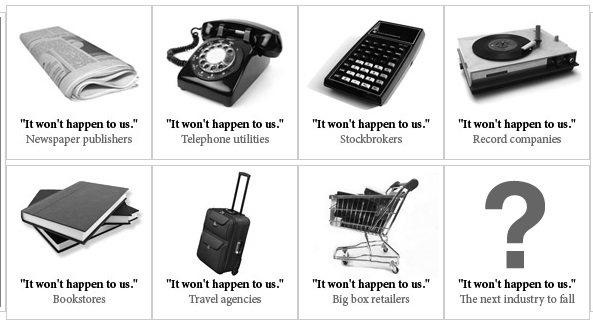
Change has come to the world of real estate. According to many sources, the real estate brokerage industry will be one of the next industries to become obsolete due to the ubiquity of the internet. If you doubt this statement, just think of travel agents, record stores, book retailers, video rental, etc. Enough said…
CU Blog - Aereo Founder and CEO Chet Kanojia on the future of TV - Photo 1

This subject is pivotal in the roadmap for elevation of the Caribbean economy, which maintains that internet/electronic commerce business models are critical in creating jobs and growing the region’s GDP. The publishers of the book Go Lean…Caribbean project that 2.2 million new jobs hang in the balance.

This commentary is also about managing change!

CU Blog - Study - Homes Marketed via the MLS Sell for More - Photo 3At the heart of a real estate transaction is a buyer and a seller, looking for each other. This is a perfect application for social media networks; think online dating. But instead of social media, the industry has MLS or Multiple Listing Services (see Appendix* below). Now come the internet and all the application developers. Here’s the problem, for the MLS world: the buyer or seller is not the end consumer, but rather the buyer’s agent and the seller’s agent. The commission money involved, normally 6% of selling price, is split between the two agents. This applies on small transactions (think: $50,000) and large $million transactions. Yet now, the internet allows buyers and sellers to get together without the brokerage agents; one major player in this online race is Zillow (see Appendix# below); an online real estate database that was founded in 2005 by former Microsoft executives.

Change is afoot…
If the internet option continues to gain more and more market share, this will neutralize the role of agents, and their industry-exclusive MLS options. Zillow reported more than 24 million unique visitors in September 2011, representing year-over-year growth of 103 percent.[23][24] (Zillow has data on 110 million homes across the United States, not just those homes currently for sale).

VIDEO – Zillow: “Lake House” Commercial – http://youtu.be/WZk__l8yCHo

Published on February 20, 2015 – “Lake House” is Zillow’s fifth TV spot, the latest in the company’s highly successful first-ever national advertising campaign, “Find Your Way Home.” The spot was produced by Deutsch LA and features the single “Atlas Hands” by Benjamin Francis Leftwich. See all of Zillow’s TV spots at http://www.zillow.com/tv/.

Most MLS systems restrict membership and access to real estate brokers (and their agents) who are appropriately licensed by the state/province, and are members of industry association (e.g., NAR or CREA). But access is becoming more open as Internet sites offer the public the ability to view portions of MLS listings. (There still remains some limitation to access to information within MLS’s; generally, only agents who are compensated proportional to the value of the sale have uninhibited access to the MLS database). Many public Web forums have a limited ability in terms of reviewing comparable properties, past sales prices or monthly supply statistics.

A person selling his/her own property – acting as a For Sale By Owner (or FSBO) seller – cannot generally put a listing for the home directly into an MLS. (An example of an exception to this general practice is the national MLS for Spain, AMLASpain, where FSBO listings are allowed.[3] Similarly, a licensed broker who chooses to neither join the trade association nor operate a business within the association’s rules, cannot join most MLS’s.) However, there are brokers and many online services which offer FSBO sellers the option of listing their property in their local MLS database by paying a flat fee or another non-traditional compensation method.[4]

In Canada, CREA has come under scrutiny and investigation by the Competition Bureau and litigation by former CREA member and real estate brokerage Realtysellers (Ontario) Ltd., for the organization’s control over the Canadian MLS system.[5] In 2001, Realtysellers (Ontario) Ltd., a discount real-estate firm was launched that reduced the role of agents and the commissions they collect from home buyers and sellers. The brokerage later shut down and launched a $100 million lawsuit against CREA and TREB, alleging that they breached an earlier out-of-court settlement that the parties entered into in 2003.

The Empire Strikes Back…
In January (2015), Zillow and ListHub, a subsidiary of Move, Inc. the operator of Realtor.com, ended their agreement for Zillow to receive listings through ListHub. This will take effect on April 6, 2015. Earlier this month (February 16), Zillow closed on its acquisition of Trulia, forming the new Zillow Group. As a result, ListHub announced that it ended its relationship with Trulia; giving a 5 day transition period before it stops sending listings to Trulia.

The actions and conflicts between the online real estate portals and MLS’s are continuing to escalate. One of the major industry players TREND, the exclusive MLS for the Greater Philadelphia-area (Pennsylvania) sent out a communications to their broker clients on February 20, openingly acknowledging the jockeying taking place; with their commitment to stay engaged:

TREND has been in discussions to determine how we can best help our members protect their interests and easily distribute their listings to portals they choose. We plan to continue these discussions.

The issues presented in this commentary is the cornerstone of several ongoing arguments about the current health of the real-estate market, which are centered on free and open information being necessary for both the buying and selling parties to ensure fair prices are negotiated during closing, ultimately allowing a stable and less volatile market.

No doubt, there is some collusion between MLS’s and the brokerage industry to maintain the status quo. But the industry claims to still bring added-value. According to this article, the MLS systems hold sway over the industry, impacting its customers (real estate brokers and agents) with optimized sales and profits; they claim that the homes they market sell for more money. See story here:

Title: Study Finds Homes Marketed via the Cooperative Brokerage Community on the MLS Sell for More
Posted: December 5, 2014, Philadelphia, Pennsylvania; retrieved February 24, 2015 from: http://www.trendmls.com/Guest/News/ShowDoc.aspx?id=7425#.VoybLp0o673

CU Blog - Study - Homes Marketed via the MLS Sell for More - Photo 1Earlier this year, TREND, the Multiple Listing Service (MLS) for the Philadelphia Metropolitan Area, studied the percent of sales marketed on the MLS. The study found that in the last 3 years more than 80% of sales were marketed on the MLS, and that properties marketed on the MLS had a higher median sold price compared to properties that were marketed off the MLS.

To perform this study, TREND examined 13 years of MLS and Public Records data, comparing each Public Records sale record to MLS sale records to determine which sales were marketed on the MLS.

“Our goal with this study was to see how many sales that would typically involve a real estate professional were listed on the MLS. Knowing there are various ways and reasons real estate is transacted in the market, we wanted to focus the study on the ‘bread and butter’ market segment of the brokerage community. To do this we honed in on residential, single-family resale properties over 50 thousand dollars,” Vice President of Product Management, Ken Schneider said.

Due to the quantity of data accessible, as an MLS and Public Records provider, TREND was able to determine that the percent of sales marketed on the MLS across the Philadelphia Metropolitan Area has grown over the last 13 years. It also remains strong, with an average of 82% of sales in 2013 marketed on the MLS, and many communities posting even higher numbers.

CU Blog - Study - Homes Marketed via the MLS Sell for More - Photo 2The study also uncovered a quantifiable benefit to marketing a property on the MLS: higher sold prices. For example, in 2013, properties marketed on the MLS had a 21% higher median sold price compared to properties marketed off the MLS.

“These numbers showed that over the years and through various market conditions, it is in a consumer’s best interest to work with a real estate professional that will expose their property to the cooperative brokerage community,” Vice President of Product Management, Ken Schneider said.

Ultimately, the study showed when properties are advertised in a competitive marketplace to the cooperative brokerage community on the MLS, they command the highest prices.

“The results of this study are a testament to the historical and ongoing integrity, commitment, cooperation and collaboration of the brokers and brokerages in the Philadelphia Metropolitan Area, which ultimately benefits their clients”, Vice President of Product Management, Ken Schneider said.

For more information on this study, view the complete report. View the Full Report.

About TREND
The TREND community encompasses approximately 27,000 real estate brokers and agents in Delaware, New Jersey and Pennsylvania. As partners in the business of real estate information and technology, TREND members guide the evolution of our MLS and Public Records systems, and contribute to the MLS database of approximately 2.9 million listings. TREND also provides member access to public records for over 5.1 million properties, appointment management tools, valuable industry and market information, and personalized customer service. Together, the TREND community facilitates the sale of more than 70,000 properties a year at a value of over 18 billion dollars. For more information, visit www.trendmls.com.

The issues of MLS versus online portals affect the Caribbean as well. The book Go Lean… Caribbean, serves as a roadmap for the introduction and implementation of the Caribbean Union Trade Federation (CU). The CU/Go Lean roadmap has 3 prime directives:

  • Optimization of the economic engines to grow the regional economy to $800 Billion GDP & create 2.2 million new jobs.
  • Establishment of a security apparatus to protect the resultant economic engines and marshal against economic crimes.
  • Improvement of Caribbean governance to support these engines.

The roadmap envisions a robust social media network, www.myCaribbean.gov, and e-Government insourcing of property registrations in the region. Early in the book, the benefits of technology empowerment is pronounced in the Declaration of Interdependence (Page 14), with these opening statements:

xxvi.     Whereas the Caribbean region must have new jobs to empower the engines of the economy and create the income sources for prosperity, and encourage the next generation to forge their dreams right at home, the Federation must therefore foster the development of new industries… In addition, the Federation must invigorate the enterprises related to existing industries … impacting the region with more jobs.

xxvii.   Whereas the region has endured a spectator status during the Industrial Revolution, we cannot stand on the sidelines of this new economy, the Information Revolution. Rather, the Federation must embrace all the tenets of Internet Communications Technology (ICT) to serve as an equalizing element in competition with the rest of the world. The Federation must bridge the digital divide and promote the community ethos that research/development is valuable and must be promoted and incentivized for adoption.

xxviii.  Whereas intellectual property can easily traverse national borders, the rights and privileges of intellectual property must be respected at home and abroad. The Federation must install protections to ensure that no abuse of these rights go with impunity, and to ensure that foreign authorities enforce the rights of the intellectual property registered in our region.

CU Blog - Study - Homes Marketed via the MLS Sell for More - Photo 4The Caribbean has the eco-system of Multiple Listing Services, and real estate brokers and agents. But where there are buyers and sellers, the marketplace will always find a way to complete transactions. In the US, change has come, the stakeholders will simply adapt. With Zillow’s 24 million unique website visitors, individual brokerage firms will have to negotiate direct feeds to Zillow – a trend already started – and agents will simply upload their listings directly. The status quo now is for selling-agents to promote properties on up to 160 different websites. The photo here and foregoing VIDEO of Zillow Advertising – designed to generate even more consumer traffic to designated web site – demonstrate the changing landscape for the real estate brokerage industry.

There is much for the Caribbean to glean from observing the developments of this American industry. The Go Lean book already details best-practices for the full embrace of Internet Communications Technologies (ICT). Imagine the www.myCaribbean.gov site with 150 million unique profiles (residents, visitors, Diaspora, businesses, trading partners, etc.). Then add new profiles, a single property site with property address as the URL, for every house that is “For Sale”.

Electronic introduction: buyers meet sellers; sellers meet buyers. That opening “prophecy” manifested: real estate brokerage – a next industry to become obsolete due to the ubiquity of the internet.

The book details the community ethos to adapt to the changed ICT landscape, plus the executions of the following strategies, tactics, implementations and advocacies to forge best practices:

Community Ethos – Economic Principle – People Respond to Incentives Page 21
Community Ethos – Job   Multiplier Page 22
Community Ethos – Lean Operations Page 24
Community Ethos – Return on Investments (ROI) Page 24
Community Ethos – Ways to Impact the Future Page 26
Community Ethos – Ways to Help Entrepreneurship Page 28
Community Ethos – Promote Intellectual Property Page 29
Community Ethos – Impact Research & Development Page 30
Community Ethos – Bridge the Digital Divide Page 31
Strategy – Integrate Region in a Single Market Page 45
Strategy – Agents of Change – Technology Page 57
Tactical – Fostering a Technocracy Page 64
Tactical – Minimizing Bubble – Countering 2008 Housing Crisis Page 69
Tactical – Growing to $800 Billion Economy – New High Multiplier Industries Page 70
Separation of Powers – Patent, Standards, and Copyrights Office Page 78
Separation of Powers – Communications and Media Authority Page 79
Separation of Powers –Housing and Urban   Authority Page 83
Implementation – Integrate – Deploy www.myCaribbean.gov Portal Page 97
Implementation – Ways to Deliver Page 109
Implementation – Ways to Impact Social Media Page 111
Planning – 10 Big Ideas – #8: Caribbean Cloud Page 127
Planning – Lessons Learned from 2008 – Housing-born Crisis; Lax Oversight Page 136
Advocacy – Ways to Grow the Economy Page 151
Advocacy – Ways to Create Jobs Page 152
Advocacy – Ways to Improve Housing – e-Government for Registrations Page 161
Advocacy – Ways to Improve Communications Page 186
Advocacy – Ways to Foster Technology Page 197
Advocacy – Ways to Foster e-Commerce Page 198
Advocacy – Ways to Impact Main Street Page 201
Advocacy – Ways to Develop a Pre-Fab Housing Industry & eco-System Page 207
Advocacy – Ways to Impact Urban Living Page 234

This subject of managing the changing ICT landscape has been detailed in previous Go Lean blogs/commentaries, as sampled here:

https://goleancaribbean.com/blog/?p=3974 Google and Mobile Phones – Here comes Change
https://goleancaribbean.com/blog/?p=3915 ‘Change the way you see the world; you change the world you see’
https://goleancaribbean.com/blog/?p=3490 How One Internet Entrepreneur Can Rally a Whole Community
https://goleancaribbean.com/blog/?p=2953 Funding Caribbean Entrepreneurs – The ‘Crowdfunding’ Way
https://goleancaribbean.com/blog/?p=1634 ICT Book Review: ‘Chasing Youth Culture and Getting It Right’
https://goleancaribbean.com/blog/?p=1416 Amazon’s new FIRE Smartphone – Transforming e-Commerce
https://goleancaribbean.com/blog/?p=528 Social Media Model – Facebook planning to provide mobile payments
https://goleancaribbean.com/blog/?p=308 CARCIP Urges Greater ICT Innovation

The CU implementation is necessary to regulate and oversee many of the developments that are occurring because of our changing world. The world will continue to change whether we want it to or not. The smart move is to exploit the changes. The Go Lean book concludes in exhortation to the region:

Get moving … now is the time. Opportunities abound; even if there is only little commerce to exploit now, there is opportunity enough in the preparation for the coming change. So act now! Get moving to that place, the “corner” of preparation and opportunity.

Now is the time to lean-in for the changes and empowerments in the Go Lean roadmap. Now is the time to make the Caribbean a better homeland to live, work and play.  🙂
———–

APPENDIX * – MLS or Multiple Listing Service/System

A MLS is a suite of services that enables real estate brokers to establish contractual offers of compensation (among brokers), facilitates cooperation with other broker participants, accumulates and disseminates information to enable appraisals, and is a facility for the orderly correlation and dissemination of listing information to better serve broker’s clients, customers and the public. A multiple listing service’s database and software is used by real estate brokers in real estate, representing sellers under a listing contract to widely share information about properties with other brokers who may represent potential buyers or wish to cooperate with a seller’s broker in finding a buyer for the property or asset. The listing data stored in a multiple listing service’s database is the proprietary information of the broker who has obtained a listing agreement with a property’s seller. (Source: http://en.wikipedia.org/wiki/Multiple_listing_service)

———–

APPENDIX #: Additional “home” work – July 28, 2014 News Report: Zillow Buying Trulia

Video Direct Link: http://abcnews.go.com/Business/video/zillow-buying-trulia-35-billion-24748326

 

Share this post:
, , , , , ,

911 – Emergency Response: System in Crisis

Go Lean Commentary

Emergency management, as defined in the book Go Lean…Caribbean, is an art and a science.

The Go Lean book embarks on the strategy to consolidate the Emergency Management (preparation and response) for the entire Caribbean region. Therefore the issue of Emergency Telephone Numbers is of serious concern; sometimes it’s a life-or-death matter.

Despite all the attendant issues – technology, standards, geography, legacy, and language – this is first-and-foremost an issue of life-and-death. Failure in this area is not an option. Consider here this example of short-comings in the US system:

VIDEO Title: Some 911 systems can’t find you in an emergency due to dated technology – http://www.today.com/video/today/57011057#57011057

Published on Feb 23, 2015 – Some 911 systems can’t find you in an emergency

Many 911 centers around the country still rely on dated cell tower technology instead of something as widely used as Google Maps, which means dispatchers may not be able to locate you in an emergency – and the consequences can be tragic. TODAY’s national investigative correspondent Jeff Rossen reports; (see transcript in the Appendix below).

CU Blog - 911 System Crisis - Photo 3There is no one world standard for Emergency Telephone Numbers. But the number is always intuitive; normally just a 3-digit code and applicable on a land-line or a mobile phone – this is an issue of technology. Normally neighboring countries share the same number, even if a dual overlap applies; so as to assuage any confusion for people when they absolutely have an emergency.

In the Caribbean region, like most places, everyone expects to pick up a phone and dial a 3-digit code – like 911 – and within short order be able to talk with an Emergency Management First-Responder for Police, Ambulance and Fire incidences.

Unfortunately for the Caribbean, we have 5 different legacies that rule the standards of day-to-day life:  American, British, Dutch, French and the Spanish Caribbean. But geographically, since the region is physically located among all these cultures; all territories must comply with a consistent structure; that consistency is identified as the North American Numbering Plan.

So 911 rules…

But for countries with active European oversight, they normally go further and allow their European Emergency Phone Number configurations to also apply while in the Caribbean member-states. So the 3-digit code in the European Union – 112 – will also work in the Dutch and French member-states.

This issue reflects the regional oversight the book Go Lean…Caribbean envisions for the Caribbean region. The book serves as a roadmap for the introduction and implementation of the technocratic Caribbean Union Trade Federation (CU). This CU roadmap is designed to elevate Caribbean society by these prime directives:

  • Optimization of the economic engines; growing the regional economy.
  • Establishment of a security apparatus to protect the resultant economic engines.
  • Improvement of Caribbean governance to support these engines.

All 3 of these features of the Go Lean roadmap relate to this topic of Emergency Telephone Numbers. There is the need for effectiveness and efficiency so as to protect the life and property of all Caribbean stakeholders: residents and visitors alike. The book posits that some issues are too big for any one member-state to manage alone – especially with such close proximities – there are times when there must be cross-border, multilateral coordination. This vision is defined early in the book (Pages 12 – 14) with these statements in the  opening Declaration of Interdependence:

xi. Whereas all men are entitled to the benefits of good governance in a free society, “new guards” must be enacted to dissuade the emergence of incompetence, corruption, nepotism and cronyism at the peril of the people’s best interest. The Federation must guarantee the executions of a social contract between government and the governed.

xii. Whereas the legacy in recent times in individual states may be that of ineffectual governance with no redress to higher authority, the accedence of this Federation will ensure accountability and escalation of the human and civil rights of the people for good governance, justice assurances, due process and the rule of law. As such, any threats of a “failed state” status for any member state must enact emergency measures on behalf of the Federation to protect the human, civil and property rights of the citizens, residents, allies, trading partners, and visitors of the affected member state and the Federation as a whole.

xvi. Whereas security of our homeland is inextricably linked to prosperity of the homeland, the economic and security interest of the region needs to be aligned under the same governance. Since economic crimes … can imperil the functioning of the wheels of commerce for all the citizenry, the accedence of this Federation must equip the security apparatus with the tools and techniques for predictive and proactive interdictions.

xviii. Whereas all citizens in the Federation member-states may not have the same physical abilities, reasonable accommodations must be made so that individuals with physical and mental disabilities can still access public and governmental services so as to foster a satisfactory pursuit of life’s liberties and opportunities for happiness.

xxiii. Whereas many countries in our region are dependent Overseas Territory of imperial powers, the systems of governance can be instituted on a regional and local basis, rather than requiring oversight or accountability from distant masters far removed from their subjects of administration. The Federation must facilitate success in autonomous rule by sharing tools, systems and teamwork within the geographical region.

xxvii. Whereas the region has endured a spectator status during the Industrial Revolution, we cannot stand on the sidelines of this new economy, the Information Revolution. Rather, the Federation must embrace all the tenets of Internet Communications Technology (ICT) to serve as an equalizing element in competition with the rest of the world. The Federation must bridge the digital divide and promote the community ethos that research/development is valuable and must be promoted and incentivized for adoption.

Though the issue of “911” is primarily associated with the North American Numbering Plan; this discussion of emergency contacts is not just the focus for North America.

The following information is retrieved from Wikipedia regarding the universality of Emergency Telephone Numbers; (source: http://en.wikipedia.org/wiki/Emergency_telephone_number):

CU Blog - 911 System Crisis - Photo 2In many countries the public telephone network has a single emergency telephone number (sometimes known as the universal emergency telephone number or the emergency services number) that allows a caller to contact local emergency services for assistance. The emergency number differs from country to country; it is typically a three-digit number so that it can be easily remembered and dialed quickly. Some countries have a different emergency number for each of the different emergency services; these often differ only by the last digit. In the European Union, Russia, Turkey, Ukraine and others “112” was introduced as a common emergency call number during the 1990s, and as the GSM standard it is now a well known mobile telephone emergency number around the globe[1] alongside the North American “911“.

Mobile Telephones
Mobile phones can be used in countries with different emergency numbers. This means that a traveller visiting a foreign country does not have to know the local emergency numbers. The mobile phone and the SIM card have a preprogrammed list of emergency numbers. When the user tries to set up a call using an emergency number known by a GSM or 3G phone, the special emergency call setup takes place. The actual number is not even transmitted into the network, but the network redirects the emergency call to the local emergency desk. Most GSM mobile phones can dial emergency numbers even when the phone keyboard is locked, the phone is without a SIM card, emergency number is entered instead of the PIN or there isn’t a network signal (busy network).

Most GSM mobile phones have 112, 999 and 911 as pre-programmed emergency numbers that are always available.[15] The SIM card issued by the operator can contain additional country-specific emergency numbers that can be used even when roaming abroad. The GSM network can also update the list of well-known emergency numbers when the phone registers to it.

Some notable exceptions in the Caribbean neighborhood include:

Country

Police

Ambulance

Fire

Mexico

066

065

068

Bahamas

919 or 911

Haiti

114

118

115

Jamaica

119

110

Trinidad and Tobago

999

990

Guyana

911

913

912

Suriname

112

Considering the experiences from the foregoing VIDEO, the US needs better coordination with their Communications Regulator and Emergency Management Agencies. While it is out-of-scope for the Go Lean roadmap to change America, we can do better in the Caribbean. The CU is formed from a pledge for efficient, agile regional coordination. The Go Lean book describes this oversight as “lean”. The concept of “lean” is very prominent in the Go Lean book (and movement), even adopting the title, Go Lean, for this quest for excellence in Caribbean economic empowerment, security coordination and governing efforts. The label “lean” is therefore indicative of this quest; the word is used in the book as a noun, a verb and an adjective. This point is pronounced early in the book (Page 4) with these statements:

The CU will lean on, lean in, lean over backwards, and then lean towards…
The CU will embrace lean, agile, efficient organization structures – more virtual, less physical, more systems, less payroll.

This commitment to “lean” lends confidence to the coordination of the CU federal authorities. The Go Lean book hypothesizes that the Caribbean region can succeed in transforming our society in short order; the roadmap is a 5 year plan. Previous blogs/commentaries also exclaimed societal benefits from pursuits in regional coordination; consider this sample of previous blogs:

https://goleancaribbean.com/blog/?p=3881 Regional Coordination: Cyber Security Cooperation
https://goleancaribbean.com/blog/?p=3834 State of the Caribbean Union’s Regional Society
https://goleancaribbean.com/blog/?p=3760 Regional Proxy for Citizenship Programs
https://goleancaribbean.com/blog/?p=3713 NEXUS – Model of Regional Border Control
https://goleancaribbean.com/blog/?p=3594 Lessons for Regional Coordination for Queen Conch
https://goleancaribbean.com/blog/?p=3582 Better Coordination for Regional Banks
https://goleancaribbean.com/blog/?p=3432 Mitigating Regional Preponderance to Beg for Development Aid
https://goleancaribbean.com/blog/?p=3354 Regional Call to End the US Embargo on Cuba
https://goleancaribbean.com/blog/?p=3090 Model of Regionalism: Europe – All Grown Up
https://goleancaribbean.com/blog/?p=2887 Caribbean Region Must Work Together to Address Rum Subsidies
https://goleancaribbean.com/blog/?p=2614 The ‘Great ShakeOut’ Earthquake Drill for the Region’s Seismic Areas
https://goleancaribbean.com/blog/?p=2435 Role Model for Caribbean Economy: Korea
https://goleancaribbean.com/blog/?p=2359 Regional calls for innovative ideas to finance Small Island Development
https://goleancaribbean.com/blog/?p=2171 SEC Network – Role Model for Regional Sports Broadcast Networks
https://goleancaribbean.com/blog/?p=1965 America’s Navy – 100 Percent – Model for Caribbean Regional Security
https://goleancaribbean.com/blog/?p=1554 Status of Forces Agreement for a Regional Security Pact
https://goleancaribbean.com/blog/?p=833 One currency, divergent economies – Model for the Caribbean
https://goleancaribbean.com/blog/?p=479 PetroCaribe press ahead with plan to eradicate hunger & poverty in the region
https://goleancaribbean.com/blog/?p=318 Collegiate Sports Eco-System for the Caribbean Region
https://goleancaribbean.com/blog/?p=308 CARCIP – Regional Effort Can Foster Technology Innovations

The Go Lean book posits that communication technologies must be regulated at the regional level for the Greater Good of the Caribbean. There are too many instances with overlapping spectrum from one member-state to another. Citizens should not need to worry about border considerations during emergency incidences. There should be a smartphone mobile app for the Caribbean region from Step One/Day One of the CU implementation. In the present tense, this regional coordination is managed by bilateral treaties. A unitary confederation treaty – for all 30 member-states – would be better.

The Go Lean book details a series of community ethos, strategies, tactics, implementations and advocacies to foster better regional coordination within the Caribbean neighborhood. This list provides a sample, as follows:

Community Ethos – People Respond to Incentives Page 21
Community Ethos – Economic Systems Influence Individual Choices Page 21
Community Ethos – Security Principle – Privacy versus Public Protection Page 23
Community Ethos – Governing Principle – Lean Operations Page 24
Community Ethos – Ways to Bridge the Digital Divide Page 31
Community Ethos – Ways to Improve Sharing Page 35
Community Ethos – Ways to Impact the Greater Good Page 37
Strategy – Provide Emergency Management Arts and Sciences for Disasters Page 45
Strategy – Mission – Embrace the Advances of Technology Page 46
Strategy – Agents of Change – Technology Page 57
Strategy – Agents of Change – Climate Change Page 57
Tactical – Fostering a Technocracy Page 64
Tactical – Separation of Powers – Homeland Security – Emergency Management Page 76
Tactical – Separation of Powers – Communications and Media Authority Page 79
Implementation – Assemble Regional Organs Under Umbrella Confederation Page 96
Implementation – Security Initiatives at Start-up – Intelligence Collaboration Page 103
Implementation – Ways to Deliver Page 109
Implementation – Ways to Foster International Aid – Natural Disaster Relief Page 115
Planning – Big Ideas – Homeland Security Pact Page 127
Planning – Ways to Make the Caribbean Better Page 131
Advocacy – Ways to Grow the Economy Page 151
Advocacy – Ways to Create Jobs Page 152
Advocacy – Ways to Improve Governance Page 168
Advocacy – Ways to Better Manage the Social Contract Page 170
Advocacy – Ways to Improve for Natural Disasters Page 184
Advocacy – Ways to Improve Communications Page 186
Advocacy – Ways to Improve Emergency Management – Trauma Medicine Page 196
Advocacy – Ways to Foster Technology Page 197
Advocacy – Ways to Impact Main Street – Mobile Apps: Time and Place Page 201
Advocacy – Ways to Protect Human Rights Page 220
Advocacy – Ways to Impact Urban Living – Proximity to First Responders Page 234
Appendix – Interstate Compacts – Model: Great Lakes Compact Page 278
Appendix – Emergency Management – Service Continuity Management Page 338
Appendix – Emergency Management – Trauma Medicine Principles Page 339

The foregoing VIDEO and news article identifies the Federal Communications Commission (FCC) as the regulator for US land-line and mobile telephone systems. Who assumes this role for the Caribbean? While the same FCC has jurisdiction over 2 Caribbean member-states (Puerto Rico & US Virgin Islands), there is the need for a deputized agency for the other 28 Caribbean member-states. The Go Lean roadmap calls for an Interstate Compact among the US Territories that is also ratified as an international treaty for all the other member-states. This constitutes the Caribbean Union treaty. Also, as many Interstate Compacts create independent agencies to administer the tenants of the multi-party agreements – think the New York/New Jersey Port Authority – the CU treaty will be administered by the region-wide, deputized technocracy, that is the Trade Federation, specifically the Commerce Department’s Communications and Media Authority.

The CU – with an agency within the Homeland Security Department – also doubles as the regional Emergency Management Agency.

This allows for better coordination of Emergency Telephone Numbers – 911, 919, 112, etc. – for the region. The Communications regulator and Emergency Management under the same “umbrella”: a better pairing!

The region needs this delivery; it makes the Caribbean a better place for emergencies. Now is the time to lean-in to this Go Lean roadmap; now is the time to deliver the Caribbean as a better place to live, work and play… for today and for the future. 🙂

Download the book Go Lean … Caribbean – now!

———–

Appendix: 911 System Crisis – VIDEO Transcript
Jeff Rossen and Charlie McLravy TODAY – February 23, 2015

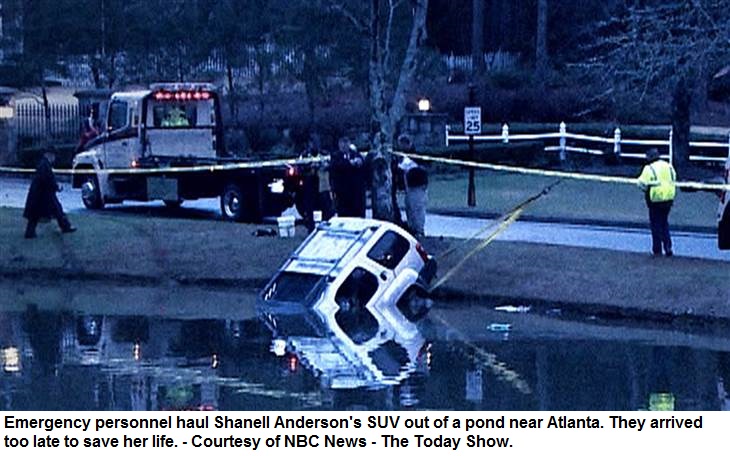
It was shortly after 4 a.m. on the foggy morning of December 29 when Shanell Anderson took a wrong turn in the dark in a suburban Atlanta neighborhood.

The 31-year-old supervisor for a newspaper delivery service was substituting for an employee who had called in sick when she accidentally drove her SUV into a large pond. Her Nissan Xterra began filling with water, its doors held shut by hundreds of pounds of water pressure.

Anderson had nothing to break the windows with, but she did have a cellphone. She dialed 911.

“911, what is the address of your emergency?” the dispatcher answered. “Where’s your emergency?”

“I’m in a car in a lake,” Anderson replied.

“Where?” said the dispatcher. “Where are you?”

“The Fairway!” Anderson answered.

“Give me the address again, make sure I have it right.”

“The Fairway and Batesville.”

“Batesville and what?” the dispatcher asked.

“The Fairway is a street, ma’am.”

“The Fairway?” the dispatcher repeated. “I don’t have that.”

“Ma’am, I’m losing air very quickly,” Anderson said.

“Give me the address one more time, it’s not working,” the dispatcher asked.

“The Fairway!” Anderson yelled, and spelled the name. “F-A-I-R-W-A-Y!”

The 911 recording captured the dispatcher saying “I lost her” before the line went dead.

It took first responders nearly 20 minutes to get to the location and almost another nine minutes to find Anderson’s car 8 feet underwater. By the time they dove into the lake, broke into the completely submerged SUV and removed her from it, she was unresponsive.

Paramedics were able to restart Anderson’s heart. She was taken to the hospital, where she clung to life in a coma for a week and a half before her organs failed and she died.

CU Blog - 911 System Crisis - Photo 1The reason it took responders so long to find Anderson is because she was sinking into a pond in the next county. Her desperate call to 911 was picked up by a cell tower in Fulton County, but the pond she was trapped in was actually in Cherokee County. The 911 dispatcher who took her call couldn’t find Anderson’s location because the map on her system only showed Fulton County, where she worked — not nearby Cherokee County, where Anderson was.

The 911 center Anderson’s call was routed to is one of many around the country that still rely on dated cell tower technology instead of something as widely used as Google Maps. Wireless 911 calls get routed to the wrong call centers so often that many dispatchers have dedicated buttons to transfer callers to neighboring departments.

Brendan Keefe, chief investigative reporter for NBC Atlanta affiliate WXIA, was the first to report on the problem with the 911 system there. His report prompted NBC News and Gannett-owned news outlets across the country to launch their own investigations into the issue.

“It has one fatal flaw; it stops at the city line,” Keefe said of Atlanta’s 911 system. “If you hit a cell tower outside their jurisdiction, they don’t know where you are.”

“If the phone had automatically routed to the correct jurisdiction, this very well may have had a different outcome,” Carl Hall, chief of technology at the Public Safety Department in Alpharetta, Georgia (in Fulton County), told Keefe in an recent interview. Hall oversees one of the most advanced 911 centers in the nation, accredited in the top 2 percent and equipped with the latest gear.

“The address of that tower determines which 911 center that call goes to,” Hall told Keefe. “It’s not based on the location of the telephone; it’s the physical address of the tower, not the physical address of the phone.”

Adding to the delay, Fulton County’s 911 follows the industry standard of using proprietary maps instead of technology like Google Maps, which most of us have installed on our cellphones.

“That’s the whole point of 911— finding you quickly,” said Anderson’s mother, Jacquene Curlee. “But when it matters, when someone’s life is in danger, they can’t find you. That is absolutely absurd.”

To demonstrate the problem, TODAY national investigative correspondent Jeff Rossen visited a 911 center in Fairfax, Virginia, with Steve Souder, director of the Fairfax County Department of Public Safety Communications. Rossen dialed 911 from inside the center and asked the responding dispatcher to identify his location.

Consulting a computer, the dispatcher replied: “Showing 4610 West Ox Road.”

“Absolutely not,” Souder said. “That’s about a quarter of a mile from where we are.”

“And we’re inside a 911 center,” Rossen said. “And they still can’t find us.”

Responsibility for fixing the problem falls to the Federal Communications Commission. “We need to concentrate on the technologies that make cellphone information and location available to 911 centers instantly,” said Jamie Barnett, a former FCC official who now represents a coalition of emergency responders and 911 dispatchers who are pushing the commission and Congress to improve 911 systems. “The technology exists that can provide it within seconds.”

“It is unacceptable that I can make a wireless call and people can’t find me,” FCC chairman Tom Wheeler acknowledged to Rossen. “Local government controls what happens with 911; the wireless carriers have the technology, and we have the oversight, with jurisdiction over the carriers, but not over local government.

“And so our job is: How do we keep pushing?” Wheeler continued. “And what we’ve recently done is to come up with a new set of rules that have pushed further.”

The new rules “demand 40 percent accuracy within the next two years,” Rossen pointed out. “How bad is it right now, if in two years the goal is 40 percent accuracy? Which I think we can agree is not a great number.”

“We have to push to make sure that both the wireless carriers and the local 911 folks are prepared to be able to exceed that and to give the kind of expectation that you and I have a right to have when we call 911,” Wheeler replied.

Wheeler also revealed that the FCC is developing a 911 app — like Uber for 911. He said that there is no timetable yet for when the app will be ready.

But that is not good enough or fast enough for Shanell Anderson’s mother.

“Her death was so senseless,” Jacquene Curlee said. “Our 911 system doesn’t work.”

Source: NBC News – The Today Show – Retrieved February 23, 2015 from:
http://www.today.com/news/some-911-systems-cant-find-you-emergency-2D80503362


Share this post:
, , ,
[Top]

Bahamas VAT Regime Barreling Towards Informal Economy

Go Lean Commentary

Those who refuse to learn from history are condemned to repeat it – Dire warning from all High School History Teachers.

The purpose of this commentary is not a lesson in history but rather a navigational guide for managing the change process. Other lands in the Caribbean have previously introduced Value Added Taxes (VAT) and/or Sales Taxes and learned bitter lessons; that the public shifts to the Informal Economy or Black Market. In particular, this was a hard lesson learned in Puerto Rico…

The Bahamas now attempts a VAT implemetation; it is feared that this country too, may barrel towards the Informal Economy/Black Market. See article here:

Title: PM says ‘We were right on VAT’ (Excerpt Only)
Subtitle: Christie Addressed nation on VAT, crime, immigration and economy
By: Royston Jones, Jr., Staff Reporter

CU Blog - VAT Regime Barreling Towards Informal Economy - Photo 2Prime Minister Perry Christie yesterday assured Bahamians that despite what will be “the inevitable growing pains that always attend the early days of important changes, the Bahamian people will see that we were right to introduce VAT (value-added tax) and do it when we did”.

Calling the controversial implementation of VAT on January 1 the “single most fundamental change to our public revenue system in the modern history of The Bahamas”, the prime minister used his New Year’s Day address to the nation to point out that while crime, unemployment and underemployment remain pressing challenges for The Bahamas, his administration has made what he termed “commendable progress in tackling a number of pressing issues”.

Focusing primarily on VAT, Christie said he viewed the new tax as a “necessary improvement”.

“It may not be the most popular move for a government to make but it is an absolutely necessary one,” Christie said. “We were right because VAT is going to expand the revenue base in a way that will enable the government to better meet the social and infrastructural needs of the Bahamian people, now and well into the future.

“Our obligations to build hospitals and clinics; to build schools and community development facilities; to provide critical funding support for our electricity, water and sewerage infrastructure; to provide relief to the elderly and indigent in our communities; to meet the costs of Family Island development; and to meet the costs of our public service bureaucracy – these obligations could simply not be met out of our traditional sources of public revenue any longer.

“VAT, therefore, is a necessary improvement and one that is destined, I am convinced, to bring brighter skies and clearer days for our country and its finances.”

The prime minister also focused on immigration reform

Christie also promised a renewed focus on crime in the New Year

With regard to the economy, Christie said 2015 will see major advances. “The multi-billion dollar Baha Mar project

———-

CU Blog - VAT Regime Barreling Towards Informal Economy - Photo 1

Other related local news articles reporting the challenges of VAT in this country:

VAT Price Hikes Fears Heightened

Mixed Reviews from Shoppers after VAT Implementation

Pain, confusion on VAT roll-out; Not yet applied on Gasoline

VAT Registration Process Simplified

No VAT On Tourism-specific transactions

Hotels Brace For 150% Vat Tax Burden Rise

White Paper: The Economic Consequences of the Value-Added – Market Response

White Paper: A Valued Add Tax Within A Reformed Tax System – Official Government Publication

Bahamas Official VAT Website: VAT Bahamas

CU Blog - VAT Regime Barreling Towards Informal Economy - Photo 3There are advanced lessons here for the Bahamas and all the Caribbean to learn.

The book Go Lean … Caribbean made an assessment of Puerto Rico and reported that much of that country’s spending is conducted in the Informal Economy/Black Market (Page 18). This is bad! There is a Social Contract between governments and their constituents. People need their government and governments need people … and their legitimate spending. With an informal economy (i.e. “under the table” retail transactions and bartering) much of the government’s deliverables are handicapped as governmental agencies do not get the needed revenues.

This issue is among the primary focus of the book, serving as a roadmap for the introduction and implementation of the technocratic Caribbean Union Trade Federation (CU). The following 3 prime directives are explored in full details:

  • Optimization of the economic engines in order to grow the regional economy to $800 Billion & create 2.2 million new jobs.
  • Establishment of a security apparatus to protect the resultant economic engines.
  • Improve Caribbean governance to support these engines.

As a planning tool, the Go Lean roadmap accepts the challenge to adapt for societal empowerments, such as tax regime changes. This point was pronounced in the opening Declaration of Interdependence (Page 12), with this statement as follows:

xiv. Whereas government services cannot be delivered without the appropriate funding mechanisms, “new guards” must be incorporated to assess, accrue, calculate and collect revenues, fees and other income sources for the Federation and member-states. The Federation can spur government revenues directly through cross-border services and indirectly by fostering industries and economic activities not possible without this Union.

The foregoing news articles highlight the issue of VAT implementation in the Bahamas. This government, and the people, are struggling with this roll-out – this change is hard and everyone is affected; see VIDEOs below. This issue had previously been addressed in Go Lean blogs:

CARICOM calls for innovative ideas to finance SIDS development
Bahamas Planning to Introduce 7.5 Percent VAT in 2015

The issues of government revenue reform, operational processing, and best practices for delivery are critical for the Caribbean region and for the CU to master. VAT is very much related, as it already applies in Barbados (17.5 percent), Guyana (16 percent) Saint Kitts & Nevis (17 percent) and Trinidad & Tobago (15 percent).

The Go Lean strategy is to confederate all the 30 member-states of the Caribbean, despite their language and legacy, into an integrated “single market”. Tactically, this will allow a separation-of-powers between the member-states governments and federal agencies, allowing for efficient economies-of-scale for revenue collection systems, processes and people. In total, the Go Lean book details a series of community ethos, plus strategies, tactics, implementations and advocacies to deliver better revenue solutions:

Anecdote Puerto Rico – The Greece of the Caribbean Page 18
Community Ethos – All Choices Involve Costs Page 21
Community Ethos – People Respond to Incentives in Predictable Ways Page 21
Community Ethos – Economic Systems Influence Individual Choices Page 21
Community Ethos – The Consequences of Choices Lie in the Future Page 21
Community Ethos – Lean Operations Page 24
Community Ethos – Cooperatives Page 25
Community Ethos – Ways to Improve Sharing Page 35
Strategic – Vision – Integrated region in a Single Market Page 45
Strategic – Vision – Agents of Change – Globalization Page 57
Tactical – Confederating a Non-sovereign Union Page 63
Tactical – Fostering a Technocracy Page 64
Tactical – Growing to $800 Billion – Trade & Globalization Page 70
Tactical – Separation of Powers – Union Revenue Administration Page 74
Anecdote – “Lean” in Government Page 93
Implementation – Ways to Pay for Change Page 101
Implementation – Ways to Deliver Page 109
Implementation – Ways to Better Manage Debt Page 114
Implementation – Ways to Benefit from Globalization – Reform Tax Systems Page 119
Advocacy – Ways to Grow the Economy Page 151
Advocacy – Ways to Ways to Mitigate Black Markets Page 165
Advocacy – Ways to Improve Governance Page 168
Advocacy – Ways to Improve Local Governments Page 169
Advocacy – Ways to Better Manage the Social Contract Page 170
Advocacy – Revenue Sources for Administration Page 172
Advocacy – Ways to Foster Cooperatives Page 176
Advocacy – Ways to Foster e-Commerce Page 198

The introduction of new taxes is a heavy-lifting activity. For every action, there will be reaction, consequences and repercussions. This commentary hereby warns the Bahamas tax planners regarding the emergence of Black Markets, as was experienced in other states, like Puerto Rico. The Go Lean book provides the remediation and mitigation plans for Black Markets (Page 165).

This process of implementing a new tax regime is a complex one. There are a lot of fears associated with the implementation, as this strategy can be counter-productive – one step forward, two steps backwards; (one Economic Impact Study predicts VAT adoption will lead to a $165 million decline in government revenues). An identified frightened scenario stems from a competition analysis with other tourism-based economies in the Caribbean that do not charge VAT taxes on the revenue of the wholesale tour operators/industrial-players. This is bad! This point was echoed by Mr. Stuart Bowe, the Bahamas Hotel and Tourism Association’s (BHTA) president with these words: ”… [tax regime] change “would have resulted in overseas wholesalers, tour operators, travel agencies and online travel agencies steering business away from the Bahamas“. The current VAT-assessing countries trail the Bahamas in tourism numbers – by far.

The publishers of the Go Lean book calls on the Government of the Bahamas to engage a Plan-Do-Review approach for VAT implementation:

1. Apply best-practices.
2. Be nimble and technocratic so as to adapt to new realities bred from this new tax regime.
3. Your goal should be a net gain of 15% more revenues (in the first year) compared to the old tax regime.
4. Be prepared to disband strategies and tactics that do not work as hoped.
5. Immediately adopt e-Government and e-Payment schemes.
6. Look out for the Black Market encroachment.

CU Blog - VAT Regime Barreling Towards Informal Economy - Photo 4

VAT should be more about the future than it is about the present. So the most important consideration should be that something better is on the way! This is also the thrust of the  Go Lean/CU roadmap.

Now is the time for the Bahamas, and all of the Caribbean – the people and governing institutions – to lean-in for the empowerments described in the book Go Lean … Caribbean. The local governments need this comprehensive roadmap; they need their revenues. They are part of the eco-system to elevate Caribbean life, culture and systems of commerce.

Download the free e-Book of Go Lean … Caribbean – now!

————-

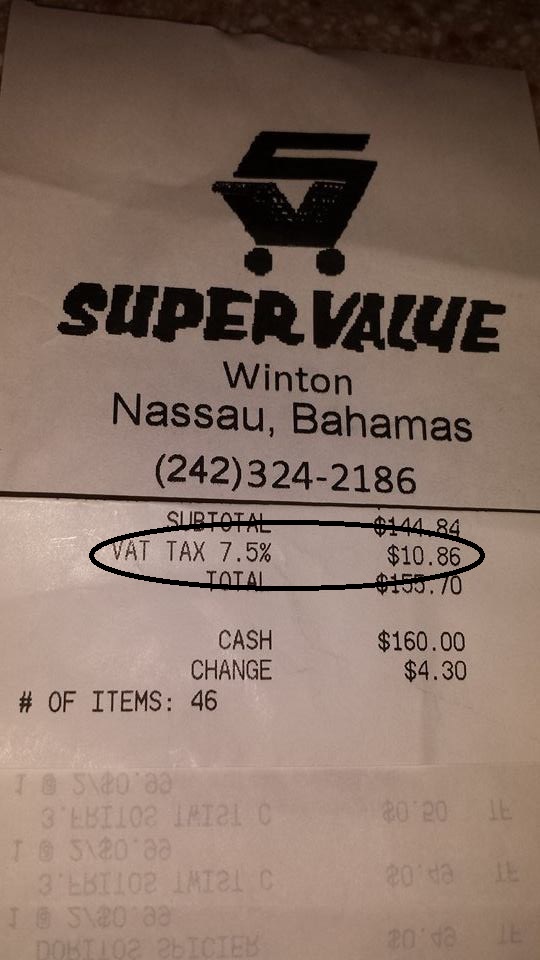
Photo: Sample Receipt with VAT applied
CU Blog - VAT Regime Barreling Towards Informal Economy - Photo 5 Rotated

VIDEO # 1: http://youtu.be/SsgKkp2Dpxg – One Bahamian Man’s Random Thoughts on VAT

VIDEO # 2 – http://youtu.be/Qzzxq1mBbF4 – Economist – Is VAT Good for The Bahamas?

Published on Apr 1, 2014 – Royal Fidelity “Face Time” with CEO Tyler Cowen.
At Fidelity Bank’s Cayman Economic Outlook, Feb 2014, with author, economist, and professor at George Mason University, Tyler Cowen.
Share this post:
, ,
[Top]

Forging Change: Music Moves People

Go Lean Commentary

CU Blog - Forging Change - Music Moves People - Photo 1“I write the songs that make the whole world sing; I write the songs of love and special things; I write the songs that make the young girls cry; … I am music and I write the songs”. – Barry Manilow (see Appendix A below).

The publishers of the book Go Lean…Caribbean want to forge change in the Caribbean. How do we go about doing that?

The book identifies music as one of the viable approaches.

Consider what happened in 2014, with this song (Happy by Pharrell Williams) and related experiences:

Video: “Happy” Makes Pharrell Williams Cry – http://youtu.be/IYFKnXu623s

As the foregoing VIDEO depicts, the song moved us all. In this writer’s opinion, one of the promoters of the Go Lean book and movement, this is the song of the year (2014).

The book Go Lean…Caribbean serves as a roadmap for the introduction and implementation of the Caribbean Union Trade Federation (CU), an initiative to bring change and empowerment to the Caribbean region, to make the region a better place to live, work and play. From the outset, the book recognized the significance of music in the Caribbean change/empowering plan with these statements in the opening Declaration of Interdependence (Page 12 & 14):

xxi.    Whereas the preparation of our labor force can foster opportunities and dictate economic progress for current and future generations, the Federation must ensure that educational and job training opportunities are fully optimized for all residents of all member-states, with no partiality towards any gender or ethnic group. The Federation must recognize and facilitate excellence in many different fields of endeavor, including sciences, languages, arts, music and sports. This responsibility should be executed without incurring the risks of further human flight, as has been the past history.

xxxii.    Whereas the cultural arts and music of the region are germane to the quality of Caribbean life, and the international appreciation of Caribbean life, the Federation must implement the support systems to teach, encourage, incentivize, monetize and promote the related industries for arts and music in domestic and foreign markets. These endeavors will make the Caribbean a better place to live, work and play.

The purpose of the Go Lean roadmap is not specifically on music, but rather change, and yet there is the acknowledgement that music can help forge change.

This Go Lean roadmap calls for the heavy-lifting in shepherding important aspects of Caribbean life. In fact, the empowerment roadmap has these 3 prime directives:

  • Optimization of the economic engines in order to grow the regional economy to $800 Billion & create 2.2 million new jobs.
  • Establishment of a security apparatus to protect the resultant economic engines.
  • Improve Caribbean governance to support these engines.

The book describes the CU as a hallmark of a technocracy, a commitment to efficiency and effectiveness, and also includes a commitment to concepts of fun, such as music, arts, sports, film/media (Hollywood-related), heritage and overall happiness. In fact, there are a total of 144 different missions for the CU. While much focus is on “live and work” activities, many others are targeting the areas of “play”‘; music is definitely a play-time activity … for young and old.

As depicted in the foregoing VIDEO, “music” can be used to forge change. The Go Lean book declares that before any real change takes root in the Caribbean that we must reach the heart, that there must be an adoption of new community ethos – the national spirit that drives the character and identity of its people. We must therefore use effective and efficient drivers to touch the heart and forge this change. How? Here’s one suggestion, (from Appendix A):

Oh, my music makes you dance and gives you spirit to take a chance
And I wrote some rock ‘n roll so you can move
Music fills your heart, well that’s a real fine place to start

The Go Lean roadmap was constructed with the community ethos in mind to forge change, plus the execution of related strategies, tactics, implementations and advocacies to make the change permanent. The following is a sample of these specific details from the book:

Community Ethos – Deferred Gratification Page 21
Community Ethos – Economic Principles – People Choose Page 21
Community Ethos – Economic Principles – People Respond to Incentives in Predictable Ways Page 21
Community Ethos – Economic Principles – The Consequences of Choices Lie in the Future Page 21
Community Ethos – Governing Principles – Lean Operations Page 24
Community Ethos – Ways to Impact the Future Page 26
Community Ethos – Ways to Foster Genius Page 27
Community Ethos – Ways to Promote Intellectual Property Page 29
Community Ethos – Ways to Impact Research & Development Page 30
Community Ethos – Ways to Bridge the Digital Divide Page 31
Community Ethos – Ways to Impact Turn-Around Page 33
Community Ethos – Ways to Promote Happiness Page 36
Community Ethos – Ways to Impact the Greater Good Page 37
Strategy – Vision – Confederate 30 Member-States Page 45
Strategy – Mission – Celebrate the Music, Sports, Art, People and Culture of the Caribbean Page 46
Tactical – Confederating a Permanent Union Page 63
Tactical – Fostering a Technocracy Page 64
Implementation – Ways to Pay for Change Page 101
Implementation – Ways to Deliver Page 109
Implementation – Ways to Impact Social Media Page 111
Planning – 10 Big Ideas for the Caribbean Region – Cyber-Caribbean Page 127
Planning – Ways to Make the Caribbean Better Page 136
Planning – Reasons Why the CU Will Succeed Page 137
Advocacy – Ways to Grow the Economy Page 151
Advocacy – Ways to Create Jobs Page 152
Advocacy – Ways to Improve Communications Page 186
Advocacy – Ways to Foster e-Commerce Page 198
Advocacy – Ways to Impact Hollywood Page 202
Advocacy – Ways to Impact Beauty Pageants Page 203
Advocacy – Ways to Preserve Caribbean Heritage Page 218
Advocacy – Ways to Improve the Arts Page 230
Advocacy – Ways to Promote Music Page 231

While the roadmap is optimistic; it is realistic too. There is the acknowledgement that the business of music (Show Business in general) has changed in the light of modern dynamics, particularly due to Internet & Communications Technologies. To spur more development in music, the economic engines of the music/show business must be secured. This point was previously detailed in these Go Lean blog/commentaries:

https://goleancaribbean.com/blog/?p=2415 How ‘The Lion King’ roared into history
https://goleancaribbean.com/blog/?p=2291 Forging Change: The Fun Theory
https://goleancaribbean.com/blog/?p=1909 Music Role Model Berry Gordy – No Town Like Motown
https://goleancaribbean.com/blog/?p=866 Music Man Bob Marley: The legend lives on!
https://goleancaribbean.com/blog/?p=676 Introduction of a Bahamian ‘Carnival’; Big Change for Country

“Do what you have always done, get what you’ve always got” – Old Adage.

The quest to change the Caribbean is more complex than just playing or listening to music. This is serious, this is heavy-lifting; but all the earnest effort will be a waste unless people are moved to change. So we must use all effective tools to forge the required change; music is one of the best.

Even if we fail, at least we would have had fun trying to execute the plan. As depicted in the underlying video (Appendix B): “Because I’m happy”.

This is the mandate of the Go Lean roadmap: making the Caribbean a better place to live, work and play; and having fun while doing it. Everyone is encouraged to lean-in to this roadmap:

Clap along if you feel like happiness is the truth
Because I’m happy
Clap along if you know what happiness is to you
Because I’m happy
Clap along if you feel like that’s what you wanna do
Because I’m happy

🙂

Download the book Go Lean … Caribbean – now!

————

Appendix A – Song: “I Write The Songs”; written, produced and performed by Barry Manilow:

I’ve been alive forever
And I wrote the very first song
I put the words and the melodies together
I am music
And I write the songs

I write the songs that make the whole world sing
I write the songs of love and special things
I write the songs that make the young girls cry
I write the songs, I write the songs

My home lies deep within you
And I’ve got my own place in your soul
Now when I look out through your eyes
I’m young again, even tho’ I’m very old

I write the songs that make the whole world sing
I write the songs of love and special things
I write the songs that make the young girls cry
I write the songs, I write the songs

Oh, my music makes you dance and gives you spirit to take a chance
And I wrote some rock ‘n roll so you can move
Music fills your heart, well that’s a real fine place to start
It’s from me, it’s for you
It’s from you, it’s for me
It’s a worldwide symphony

I write the songs that make the whole world sing
I write the songs of love and special things
I write the songs that make the young girls cry
I write the songs, I write the songs

I write the songs that make the whole world sing
I write the songs of love and special things
I write the songs that make the young girls cry
I write the songs, I write the songs

I am music and I write the songs

———

Appendix B: Pharrell Williams – Happy (Official Music Video) – http://youtu.be/y6Sxv-sUYtM

Share this post:
, , ,
[Top]

Forging Change: The Sales Process

Go Lean Commentary

CU Blog - Forging Change - The Sales Process - Photo 1

Now starts the quest to change the Caribbean, to empower its economic, security and governing engines so as to elevate society. The book Go Lean…Caribbean posits that for any permanent change to take root, an accompanying community ethos – the fundamental character/spirit that informs the beliefs, customs, or practices – must first be adopted. How do we go about doing that?

Change is not easy! It can come about in two ways: revolution or evolution. The Go Lean book is asserting for evolutionary change. The book describes (Page 20) that change begins in the “heart”. This figurative body part is associated with feelings, values and commitments. This is why the heart is considered the “seat of motivation”. The people of the Caribbean must change their feelings about elements of their society – elements that are in place and elements missing.

The book identifies a number of best-practices for forging change or adopting new community ethos. According to a previous blog/commentary that was a review of the book ‘Chasing Youth Culture and Getting It Right’, it was established that forging change in the region requires selling to the Caribbean youth. In the past, this audience has been quick to abandon the region and set the destination of their hopes and dreams on to foreign shores. But the Go Lean roadmap requires youth participation and their engagement in the homeland. So this audience must be sold on this vision to make the region a better place to live, work and play.

What process do we use to sell to the Caribbean youth, our target market? (And by extension to the entire Caribbean).

The book Go Lean…Caribbean serves as a roadmap for the introduction and implementation – a Sales Process – of the technocratic Caribbean Union Trade Federation (CU). This initiative to bring change and empowerment to the Caribbean region will require the application of best-practices in Delivery arts and sciences. This Go Lean roadmap is set to deliver, with these 3 prime directives:

  • Optimization of the economic engines in order to grow the regional economy to $800 Billion & create 2.2 million new jobs.
  • Establishment of a security apparatus to protect the resultant economic engines.
  • Improve Caribbean governance to support these engines.

Frankly, selling economic empowerment to the public is easy…
… just show up with a boat-load of jobs and people will “cow tail” and cooperate; (the heavy-lifting is involved in selling industry stakeholders). Security and governing changes on the other hand require much more heavy-lifting: consensus-building, convincing and compromise of existing institutions and officials. This is the charter of the CU, to employ a Sales Process to persuade these different stakeholders. Persuasion equals selling.

The Go Lean roadmap includes the steps for this goal; to apply a technocratic Sales Process. Consider the details of this source/article; (references here to “company” would relate to the CU while “customer” relate to Caribbean stakeholders):

Title: What is your Sales Process?

…for achieving the sales edge? Do you have one? Is it working? Do you need one?

CU Blog - Forging Change - The Sales Process - Photo 3
Our answer to this last question is a loud YES. Not all sales people are rainmakers. In fact only 20% of the sales population possess the intuition and luck to make things just happen. And with these sales personalities, your best bet is to let them “do their thing” with some management to make sure your goals are met and your image maintained. The remaining 80% of sales people, however, are most successful when they follow a specific sales process that details steps along the way and the tools to use at each step.

You should define and standardize your company’s sales process based on best-practices within your team, your industry, and the sales field in general. Here are some guidelines for creating a sales process workflow to get you started:

LEVEL 1—Contact Type. First start by defining your contact types. One of the mistakes we frequently see is confusion (and therefore a lack of appropriate prioritization) around whether a contact type is a Suspect, Prospect, or Lead.

  • Suspect. A suspect is a name and a name only. In fact, it may only be the company name. You may not know the contact name of the buyer most likely to purchase your products and services. Or, if you have a name, it may be a reader of a publication, a listener to a radio station, or an attendee at a trade show, and you don’t know if this person is the appropriate buyer. You only suspect this “entity” is a target for your products or services.
  • Prospect. A prospect is a suspect that has engaged with you in some way, whether it is an action taken on a web visit, a phone inquiry, etc. Your goal in this stage is to qualify this prospect to the point that you know the decision-maker and you’ve identified an interest level in your products and/or services.
  • Lead. A prospect becomes a lead when you’ve established a future (maybe not immediate) need. The more immediate the need, the more hot the lead. Before you can move the lead to the assess phase, you must determine what information you most need to know. For example, what is their decision-making process/timeline, do they understand your offering and value proposition, does your solution align with their business problem, etc?
  • Customer. A customer is someone who bought, or has contracted to buy, your product and/or service.

LEVEL 2—Process Milestones. The process for converting suspects into prospects, prospects into leads, leads into customers is much like playing a baseball game. You’d love to hit a home run every time you step to the plate, but the game is really won on first and second base hits. This is where your focus should be. And like baseball, where you don’t get to skip second base to speed your journey to home plate, you must also make sure you touch every milestone within your sales process. Not doing so can result in wasted time quoting or selling to unqualified opportunities. Build out the second level of your sales process to include the milestones in your standard sales process, including:

  • Engage. This is the first milestone in the sales process and usually happens during the Suspect to Prospect conversion phase. Engaging a suspect can include their inquiry into you or your inquiry into them, but does require that you have interacted with the contact (either through marketing or sales efforts) to introduce yourselves, your company, your offering, and uncover their general need.
  • Qualify. Once you’ve engaged the suspect and determined they fit your overall target profile, you need to qualify the lead further to make sure it’s a “fit” with your company and what you offer. We recommend creating a Lead Qualification Checklist to help define what makes a good lead and to ensure it’s fully qualified before moving the lead to the next milestone.
  • Assess. Once you have qualified the lead using the criteria you defined, you must assess the opportunity before expending the resources to develop a quote or proposal. You want to make sure you understand the key factors driving the lead’s buying criteria. Such as, what are the specifics of their need, what is the main decision-making factor, what is their budget, do they understand your value proposition, and are they looking at competition?
  • Propose. You’ve assessed the opportunity to the level you required during the assess stage, and now it’s time to move into the proposal stage. Make sure your proposal process is appropriate for the buying cycle. You want your proposal created with the right amount of detail and speed to meet the decision-maker’s needs. Consider including all terms, as well as credit, inside the proposal to avoid slowing the approval, and therefore the sales process, down.
  • Close. At this phase of the pipeline, you must follow-up to uncover and combat any possible objections, negotiate terms, and close the deal. Too many deals are lost at this phase due to neglect. In the sales and marketing industry we call this “dying on the vine.” Define what activities, and how often, you must implement during this phase to stay on top of the closing process.
  • SALE! Hopefully at this point, you’ve done such a good job of managing your sales process and pipeline that you have moved your lead to a sale. Congratulations! In the event you lose a deal at any phase of the process, make sure to track why.

LEVEL 3—Tools. Finally, you must determine what sales tools you have or need to help move your potential customer through the sales process from milestone to milestone. For instance at the Engagement stage you will need Lead Generation Tools and at the Qualify Stage you will need marketing materials, lead qualification checklists, etc.
Go-To-Market Strategy – Sales   & Marketing Resource Center (Retrieved 12/21/2014) –
http://www.gtms-inc.com/What-is-your-Sales-Process_ep_123.html

Contact types, process milestones and tools…
… these three elements from the foregoing article require detailed instructions, turn-by-turn directions to apply the best-practices.

So the CU has to “Win Friends and Influence People“. How do we go about doing this? Answer: using the Sales Process in the foregoing article.

The Caribbean is not the first entity required to execute a monumental task of forging change. There are lessons to learn and apply from other successful (and parallel) endeavors. One role model for successfully executing this art was Dale Carnegie; see Appendix below. Insights from Dale Carnegie’s teachings can be gleaned and applied as best-practices for the region’s people and institutions to emulate.

The Go Lean book describes the CU as a hallmark of technocracy, a commitment to efficiency and effectiveness in the Sales Process. As depicted in the foregoing article, selling change is a Big Deal and requires some sales tools and persuasion. But the Go Lean roadmap is not exclusive to a “Sales Cycle”; there is a parallel effort, a “Lean-in Cycle”. There are some differences, as depicted here:


Sales Cycle Go Lean/Lean-in Cycle

1

Engage Engage

2

Qualify Qualify

3

Assess Assess

4

Propose Messaging

5

Close Execute/Implement

6

Sale Assimilate

CU Blog - Forging Change - The Sales Process - Photo 2While the Go Lean roadmap advocates for evolutionary change, not revolutionary, there is still some benefit to formal protests. This relates back to community ethos – there are certain issues that must simply not be tolerated – people must get “mad as hell and refuse to take it anymore”. This attitude was the motivation for the Go Lean book (Page 3); where it relates that despite the world’s greatest address, the people of the Caribbean have “beaten down their doors” to get out. This status quo is not to be tolerated. This demands protesting… through messaging!

The roadmap lists multiple approaches for messaging: a benign protest movement and the arts (music, festivals, visual and performance arts, sports, film, media and literature). This paints the picture of both overt and subliminal messaging. Yes! All tried-and-true tools are to be employed. The Sales Process/Messaging plan was constructed with the following community ethos in mind. The roadmap also details the execution of these strategies, tactics, implementation and advocacies to forge the identified permanent change in the region. The following is a sample of these specific details from the book:

Community Ethos – Deferred Gratification Page 21
Community Ethos – Economic Principles – People Choose Page 21
Community Ethos – Economic Principles – People Respond to Incentives in Predictable Ways Page 21
Community Ethos – Economic Principles – The Consequences of Choices Lie in the Future Page 21
Community Ethos – Governing Principles – Minority Equalization Page 23
Community Ethos – Governing Principles – Lean Operations Page 24
Community Ethos – Governing Principles – Cooperatives Page 25
Community Ethos – Ways to Impact the Future Page 26
Community Ethos – Ways to Foster Genius Page 27
Community Ethos – Ways to Promote Intellectual Property Page 29
Community Ethos – Ways to Impact Research & Development Page 30
Community Ethos – Ways to Bridge the Digital Divide Page 31
Community Ethos – Ways to Impact Turn-Arounds Page 33
Community Ethos – Ways to Promote Happiness Page 36
Community Ethos – Ways to Impact the Greater Good Page 37
Strategy – Vision – Confederate 30 Member-States Page 45
Strategy – Mission – Celebrate the Music, Sports, Art, People and Culture of the Caribbean Page 46
Strategy – Competitive Analysis – How does the Caribbean stack up? Page 49
Strategy – Managing Agents of Change (Understand the Market and Plan the Business) Page 57
Tactical – Confederating a Permanent Union Page 63
Tactical – Fostering a Technocracy Page 64
Tactical – Separating Powers between the CU and   Member-states Page 71
Implementation – Ways to Pay for Change Page 101
Implementation – Ways to Deliver Page 109
Planning – 10 Big Ideas for the Caribbean Region Page 127
Planning – Ways to Make the Caribbean Better Page 136
Planning – Reasons Why the CU Will Succeed Page 137
Planning – Ways to Measure Progress Page 147
Advocacy – Ways to Grow the Economy Page 151
Advocacy – Ways to Create Jobs Page 152
Advocacy – Ways to Improve Communications Page 186
Advocacy – Ways to Improve Libraries – Portals for Digital Access Page 187
Advocacy – Ways to Impact Events Page 191
Advocacy – Ways to Foster Technology Page 197
Advocacy – Ways to Preserve Caribbean Heritage Page 218
Advocacy – Ways to Improve Sports Page 229
Advocacy – Ways to Improve the Arts Page 230
Advocacy – Ways to Promote Music Page 231

Previously Go Lean blog/commentaries have stressed impacting the community, forging change, through overt and subliminal protests (like fun-and-games). The following sample applies:

https://goleancaribbean.com/blog/?p=2907 Local Miami Haitian leaders protest Bahamian immigration policy
https://goleancaribbean.com/blog/?p=2633 Book Review: ‘The Protest Psychosis’
https://goleancaribbean.com/blog/?p=2291 Forging Change – The Fun Theory
https://goleancaribbean.com/blog/?p=2222 Sports Role Model – Playing For Pride … And More
https://goleancaribbean.com/blog/?p=2171 Sports Role Model – Turn On the SEC Network
https://goleancaribbean.com/blog/?p=1634 Book Review: ‘Chasing Youth Culture and Getting It Right’
https://goleancaribbean.com/blog/?p=1909 Music Role Model Berry Gordy – No Town Like Motown
https://goleancaribbean.com/blog/?p=623 Only at the precipice, do they change
https://goleancaribbean.com/blog/?p=318 Collegiate Sports in the Caribbean

The quest to change the Caribbean will require some protests, but this alone will not inspire all to engage. The strategy of fun-and-games is also effective, for some, especially the youth, but still not all elements of society will respond. These facts posit that “change” is serious business, maybe even life-and-death. So different theories will have to be tested, engaged and measured; (plan, do & review).

We must reach our audience – our communities – then grab their attention to send a message of the need for change and to lean-in to this roadmap to elevate Caribbean society. This is heavy-lifting but in the end, the result is a better homeland, a better place to live, work and play.

We encourage all of the Caribbean to lean-in now, to Go Lean. 🙂

Download the book Go Lean … Caribbean – now!

————-

APPENDIX – How to Win Friends and Influence People – Dale Carnegie

Dale Carnegie (1888 – 1955) was an American writer and lecturer and the developer of famous courses in self-improvement, salesmanship, corporate training, public speaking, and interpersonal skills. Born into poverty on a farm in Missouri, he was the author of How to Win Friends and Influence People (1936), a massive bestseller that remains popular today. He also wrote several other books. One of the core ideas in his books is that it is possible to change other people’s behavior by changing one’s behavior toward them. (Source: http://en.wikipedia.org/wiki/Dale_Carnegie)

Video: How to Be More Social – A take on “How to Win Friends and Influence People by Dale Carnegie” – http://youtu.be/kuYBNuEs6sA

Published on Oct 11, 2014 – How to Be More Social – How to Win Friends and Influence People by Dale Carnegie (summary, review). How to Win Friends and Influence People was one of the first books I read that really increased my social IQ. It has always stayed as one of my most favorite books and I definitely recommend reading it.

Summary of the VIDEO:
Big Concept 1: Become genuinely interested in other people.
Big Concept 2: Show respect for the other man’s opinions. Never tell a man he is wrong.
Big Concept 3: Talk in terms of the other man’s interest.


Share this post:
,
[Top]

Role Model Shaking Up the World of Cancer

Go Lean Commentary:

The book Go Lean…Caribbean relates the statement that “if 1-in-3 Americans are at risk for cancer, Caribbean citizens cannot be far behind”. (Page 157). Though well qualified, this statement does not need to be verified; everyone knows people that have battled or is battling cancer; (more frequently that we would care to admit). The disease often wins.

The book does not posit to be a roadmap for curing cancer, but rather a roadmap for elevating Caribbean society by optimizing the economic, security and governing engines in the region. Yet, within this roadmap is the strategy to incentivize cancer research and facilitate treatment centers and workable solutions. In fact this roadmap invites role models like medical researcher, bio-technology entrepreneur and billionaire Dr. Patrick Soon-Shiong, featured here in the following VIDEO and article:

VIDEO Title: Disrupting Cancer
Sub-Title: Billionaire Dr. Patrick Soon-Shiong is turning heads with unconventional ways of treating the deadly disease

CBS News Magazine 60 MinutesPosted 12-07-2014 –
http://www.cbsnews.com/videos/disrupting-cancer

In this week’s 60 Minutes story, CNN’s Dr. Sanjay Gupta — on assignment for 60 Minutes — profiles Dr. Patrick Soon-Shiong, who has invested nearly a billion dollars of his own money to help find a better way to treat cancer. (VIDEO).


———————————–

Article Title: The Billionaire shaking up the world of cancer
Sub-title: Patrick Soon-Shiong: An owner of the L.A. Lakers, friend of Kobe Bryant, and a doctor who’s shaking up the world of cancer

CU Blog - Disrupting Cancer - Photo 1

60 Minutes producer Draggan Mihailovich tells 60 Minutes Overtime that the most challenging aspect of this profile was to give viewers a sense of what goes on in Dr. Pat’s brain.

The following is a script of the video produced for 60 Minutes Overtime by Magalie Laguerre-Wilkinson and Lisa Orlando.

[Dr. Patrick Soon-Shiong: We now have patients with pancreatic cancer that are free of metatheses for five years. How many people know of that?]

That’s Dr. Patrick Soon-Shiong. This week on 60 Minutes Dr. Sanjay Gupta profiles the renowned doctor and entrepreneur who is shaking up the cancer world with a revolutionary approach to treatment. Dr. Soon-Shiong, also known as Dr. Pat, is not just the wealthiest man in Los Angeles; he’s a partial owner of the Lakers. And a familiar face [at court-side and] in the team’s training room.

Draggan Mihailovich: You’re talking about a city that thrives on celebrity and status.

Magalie Laguerre-Wilkinson: He’s neither.

Draggan Mihailovich: He’s neither. You know, most people have no idea. They think it’s somebody involved in the entertainment industry. Or, you know, a movie producer or, you know, even an actor. And it’s Dr. Patrick Soon-Shiong.
Sanjay Gupta: I think Dr. Soon-Shiong is one of these guys who is probably used to having been the smartest guy in the room probably from a very young age.

One of the biggest challenges for Gupta and Mihailovich was how to give viewers a sense of what goes on in the mind of a medical genius.

They began by asking him about his ground-breaking cancer drug Abraxane.

Draggan Mihailovich: There was a white board there. He takes a marker and he starts, you know, as you saw at the beginning of the piece, and off he went. And this goes on for 45 minutes. I mean, it was as if your kid took, like, a bowl of spaghetti and threw it up against a white wall.

Sanjay Gupta: It was this idea that cancer patients lose weight. But why do they lose weight? Even if they eat the same number of calories or even double the calories that they used to eat, they could still be losing weight. Why? What Dr. Patrick Soon-Shiong was sort of thinking about was it’s the protein in the blood that is just sucked up by these cancers. So if the cancers love proteins so much, here’s an idea. Let’s stick the chemotherapy in the protein, and the protein’s now a Trojan horse around the chemo. So the cancer is happy. It’s being fed. It’s getting all this protein. Boom. Chemo goes off on the tumor. And all of a sudden, you got a very, very effective, potentially, therapy.

[Dr. Patrick Soon-Shiong: We have it approved in breast cancer, we have it approved in lung cancer and were talking about patients in pancreatic cancer, and melanoma.]

Sanjay Gupta: That’s Dr. Patrick’s mind.

Dr. Soon-Shiong believes that the conventional approach to classifying cancer according to its location in the body is short-sighted. He says it’s the mutation of the gene, what made it go haywire, that matters.

[Dr. Patrick Soon-Shiong: We need to reclassify cancers now to its molecular fingerprints.]

Magalie Laguerre-Wilkinson: He’s not just thinking out of the box. I mean, he’s creating a revolution.

Sanjay Gupta: He’s absolutely creating a revolution, and it involves so many different facets that are not just medicine. Quick example, when you’re talking about sequencing genomes of many, many patients — around the United States and around the world, that is a lot of data, you’re talking about 6 billion pieces of information for each patient. Right now, we move things through the Information Superhighway at about megabytes per second. He’s talking about wanting to do that in petabytes per second.

Magalie Laguerre-Wilkinson: Never heard of that.

Sanjay Gupta: You got megabytes. 1,000 megabytes is a gigabyte. 1,000 gigabytes is a terabyte. 1,000 terabytes is a petabyte. So you’re talking, you know, exponentially, more data per second. And he’s basically figured out ways and funded ways to make that happen. That’s part of what a revolution looks like.

[Dr. Patrick Soon-Shiong: Here we have the world’s fastest video camera, what we’ve done is to take the power of optics or the sun and created a rainbow from laser light.]

Draggan Mihailovich: He’s involved in the technology. He’s involved in immunotherapy.

[Sanjay Gupta: So you’re literally watching cancer cells die here?]

[Dr. Patrick Soon-Shiong: Correct.]

Draggan Mihailovich: He’s involved in circulating tumor cells. You know, he’s involved in metastatic cancers. He’s still involved in some respect with his original drug, Abraxane, and how that’s used in combination therapies. And the brain is always working with Patrick.

[Sanjay Gupta: Is there anything like this right now? I mean, is anyone doing this sort of.]

[Dr. Patrick Soon-Shiong: No, it’s in our lab. This is what you call the clinical translation world where 21st century exists today.]

Magalie Laguerre-Wilkinson: He comes across as incredibly confident and, if one has cancer, is he the only game in town?

Sanjay Gupta: I don’t think Doctor Pat is the only game in town, by any means. I think he’s someone who’s looking at trying to disrupt the whole system. I think there are a lot of great oncologists out there, and frankly, there are a lot of oncologists who not only believe what he’s doing is the right thing to do, but they’re doing it themselves. They’re doing it; it’s just its smaller scales. Patrick’s, sort of, belief is, “Look, I already think that this is what’s going to work.”

Magalie Laguerre-Wilkinson: He’s screaming it from the rooftops.

Sanjay Gupta: Screaming it from the rooftops, spending his own money.

[Dr. Patrick Soon-Shiong: Well, I haven’t really counted, but it’s close to a billion dollars.]

[Sanjay Gupta: A billion dollars?]

[Dr. Patrick Soon-Shiong: Billion dollars.]

[Sanjay Gupta: Where’s the government in all of this?]

[Dr. Patrick Soon-Shiong: Trust me, we tried. You know, since 2008, 2009, 2010, 2011, I was in Washington, I was at the White House, I was at Congress, I was everywhere. We have not received one penny of funding.]

Magalie Laguerre-Wilkinson: Is he an easily accessible physician?

Sanjay Gupta: There were times when I’d be riding along with him, his phone would ring and, it would be somebody who had been, sort of, referred to him by somebody, you know, one of those situations. And he’d be on the phone with them for 15-20 minutes. “Here’s what I think you need to do.”

Magalie Laguerre-Wilkinson: For the hundreds of thousands of people on chemotherapy, Dr. Soon-Shiong is not saying, “Stop what you’re doing.” But he’s pretty much on the edge of that.

Draggan Mihailovich: What he’s saying is, “Ask questions.” You know, is this the right thing to do. Because more and more what scientists and oncologists will tell you is that perhaps in some cancers, and I’m gonna qualify this. In some cancers, a heavy blast of chemotherapy may not necessarily be, you know, the long-term answer.
Source: http://www.cbsnews.com/news/the-billionaire-shaking-up-the-world-of-cancer/

The Go Lean book serves as a roadmap for the implementation and introduction of the technocratic Caribbean Union Trade Federation (CU). The CU‘s prime directives are identified with the following 3 statements:

  • Optimization of the economic engines in order to grow the regional economy to $800 Billion & create 2.2 million new jobs.
  • Establishment of a security apparatus to protect the resultant economic engines.
  • Improve Caribbean governance to support these engines.

The Go Lean book asserts that one person can make a difference and maybe even change the world. The innovations and passions of Dr. Patrick Soon-Shiong may very well fit this advocacy. He is a role model for Caribbean innovators and scientists. We invite him; and others of his ilk, to impact the world from a Caribbean domicile. How?

One feature of the Go Lean roadmap is the adoption of Self-Governing Entities (SGE). These dedicated, bordered grounds are ideal for medical research and treatment campuses for resources like Dr. Soon-Shiong. We hereby extend the invitation to him … and all like-minded individuals looking for cooperative and supportive governing structures to facilitate their impact on the world.

The Go Lean book strategizes a roadmap for economic empowerment in the region, clearly relating that healthcare, and pharmaceuticals/cancer drugs research are important in the quest to make the Caribbean a better place to live, work, heal and play. At the outset of the Go Lean book, in the Declaration of Interdependence (Pages 11 & 14), these points are pronounced:

 ix.  Whereas the realities of healthcare and an aging population cannot be ignored and cannot be afforded without some advanced mitigation, the Federation must arrange for health plans to consolidate premiums of both healthy and sickly people across the wider base of the entire Caribbean population. The mitigation should extend further to disease management, wellness, obesity and smoking cessation programs.

xxvii.  Whereas the region has endured a spectator status during the Industrial Revolution, we cannot stand on the sidelines of this new economy, the Information Revolution. Rather, the Federation must embrace all the tenets of Internet Communications Technology (ICT) to serve as an equalizing element in competition with the rest of the world. The Federation must bridge the digital divide and promote the community ethos that research/development is valuable and must be promoted and incentivized for adoption.

xxviii.  Whereas intellectual property can easily traverse national borders, the rights and privileges of intellectual property must be respected at home and abroad. The Federation must install protections to ensure that no abuse of these rights go with impunity, and to ensure that foreign authorities enforce the rights of the intellectual property registered in our region.

Previous blog/commentaries addressed issues of cancer and other medical research and practices, sampled here:

The Cost of Cancer Drugs
Antibiotics Misuse Linked to Obesity in the US
CHOP Research: Climate Change May Bring More Kidney Stones
Welcoming Innovators and Entrepreneurs under an SGE Structure
Big Pharma & Criminalization of American Business
Medical Research Associates Kidney Stones and Climate Change – Innovative!
New Research and New Hope in the Fight against Alzheimer’s Disease
Research in Diabetes Detection – Novartis and Google develop ‘smart’ contact lens
Health-care fraud in America; criminals take $272 billion a year
New Cuban Cancer medication registered in 28 countries
Puerto Rico’s Comprehensive Cancer Center Project Breaks Ground – Model of Medical SGE

Cancer is a crisis, and a “crisis would be a terrible thing to waste”.

This premise is loud-and-clear from the foregoing VIDEO. Dr. Soon-Shiong is already a billionaire from his development (and returns) of other cancer drugs (like Abraxane). This demonstrates that there is money to be made in this industry-space. Most importantly, however, there are lives to be saved.

The foregoing news article and VIDEO provides an inside glimpse into the cancer research discipline. Obviously, the innovators and developers of drugs have the right to glean the economic returns of their research. The Go Lean roadmap posits that more innovations will emerge in the region as a direct result of the CU prioritization on science, technology, engineering and medical (STEM) activities on Caribbean R&D campuses and educational institutions. This is based on the assumption that intellectual properties (IP) registered in the Caribbean region will be duly respected around the world.

This IP protection mandate, on behalf of all 30 member-states, is a heavy-lifting task for the Caribbean Union Trade Federation. (Cuban cancer drugs do enjoy this recognition at this time, despite the country’s irrelevance in American commerce).

This is an issue of economic, security and governance.

The CU has the prime directive of optimizing the economic, security and governing engines of the Caribbean region. The foregoing article and VIDEO depicts that research is very important to new medical innovations and break-throughs. This is the manifestation and benefits of Research & Development (R&D). The roadmap describes this focus as a community ethos and promotes R&D as valuable for the region. The following list details additional ethos, strategies, tactics, implementations and advocacies to optimize the region’s health deliveries and R&D investments:

Community Ethos – Deferred Gratification Page 21
Community Ethos – Economic Systems Influence Individual Choices and Incentives Page 21
Community Ethos – The Consequences of Choices Lie in the Future Page 21
Community Ethos – Governing Principles – Return on Investments Page 24
Community Ethos – Governing Principles – Cooperatives Page 25
Community Ethos – Non-Government Organizations Page 25
Community Ethos – Ways to Impact the Future Page 26
Community Ethos – Ways to Foster Genius Page 27
Community Ethos – Ways to Help Entrepreneurship Page 28
Community Ethos – Ways to Promote Intellectual Property Page 29
Community Ethos – Ways to Impact Research & Development (R&D) Page 30
Community Ethos – Ways to Promote Happiness Page 36
Community Ethos – Ways to Impact the Greater Good Page 37
Strategy – Integrate and unify region in a Single Market Page 45
Strategy – Agents of Change – Globalization Page 57
Tactical – Fostering a Technocracy Page 64
Tactical – Separation of Powers – Health Department Page 86
Tactical – Separation of Powers – Drug Administration Page 87
Implementation – Ways to Pay for Change Page 101
Implementation – Ways to Implement Self-Government Entities – R&D Campuses Page 105
Implementation – Ways to Deliver Page 109
Planning – Ways to Improve Trade Page 128
Planning – Ways to Make the Caribbean Better Page 131
Advocacy – Ways to Improve Healthcare Page 156
Advocacy – Ways to Impact Cancer Page 157
Advocacy – Ways to Better Manage the Social Contract Page 170
Advocacy – Ways Foster Cooperatives Page 176
Advocacy – Ways to Improve Emergency Management – Trauma Medicine Page 196
Advocacy – Ways to Impact Foundations Page 219
Advocacy – Ways to Impact Persons with Disabilities Page 228
Appendix – Emergency Management – Medical Trauma Centers Page 336

The Go Lean roadmap does not purport to be an authority on medical or cancer research best practices. The economic-security-governance empowerment plan should not direct the course of direction for cancer research and/or treatment. But the war on cancer has been stagnant for far too long; yet more can be done. As depicted in the foregoing article, the solutions are not coming from the governments, so the needed innovation must be incentivized from private enterprises. The SGE structure invites innovations like that of Dr. Soon-Shiong and many others with his passion…and genius.

Now is the time for all of the Caribbean, the people and governing institutions, to lean-in for the empowerments in the book Go Lean … Caribbean. This is a Big Idea for the region, that of Self-Government Entities (Page 127), in which R&D and Genius can take hold, and thrive. We can make the Caribbean a better place to live, work, heal and play. 🙂

Download the book Go Lean … Caribbean – now!

Share this post:
, , , , ,
[Top]

Suit Over Red Light Traffic Cameras Could Impact Millions

Go Lean Commentary

Change is coming to the Caribbean … and economic prosperity will undoubtedly follow:

“Happy Days Are Here Again” – familiar feel-good song during American political conventions.

CU Blog - Suit Over Red Light Traffic Cameras Could Impact Millions - Photo 1The book Go Lean…Caribbean posits that “bad actors” will always emerge in times of economic prosperity to exploit opportunities, with bad or evil intent. The book therefore serves as a roadmap for the introduction and implementation of the technocratic Caribbean Union Trade Federation (CU) as a regional entity projected to forge security and public safety solutions for the entire Caribbean region.

The heavy-lifting activities to ensure security by this CU technocracy include deploying a wide network of closed-circuit and traffic cameras. This could be beneficial and advantageous, but it appears that there are some perils too. Considering the lessons learned from the US in this following VIDEO, there is the need to protect citizens and their “Due Process” rights:

VIDEO – NBC News TODAY Show – November 5, 2014 – A new lawsuit is challenging the popular cameras at intersections, and could lead to millions of busted drivers across the U.S. getting their money back. NBC’s Kerry Sanders reports.

http://www.today.com/video/today/56366199

The book Go Lean … Caribbean underpins the movement for traffic cameras throughout the Caribbean region, copying the model of the 3rd party company in the foregoing VIDEO, Arizona-based American Traffic Solutions, Inc. (see Appendix below). But rather than a profit motive, the CU‘s motive is the optimization of Caribbean society. Just imagine, receiving a traffic ticket “in the mail” for running a traffic light in some Caribbean member-state.

“In the mail” – This phrase in itself reflects the reform needed for the Caribbean governmental eco-system.

The CU would be set to optimize all aspects of Caribbean society through economic empowerment, and the aligning security dynamics. In fact, the Go Lean roadmap has these 3 prime directives:

  • Optimization of the economic engines in order to grow the regional economy to $800 Billion & create 2.2 million new jobs.
  • Establishment of a security apparatus to protect the resultant economic engines, including road traffic stakeholders like motorists and pedestrians.
  • Improve Caribbean governance, with a separation-of-powers between member-state administrations and the CU federal government (Executive facilitations, Legislative oversight and Judicial prudence) to support these economic/security engines.

Closed-circuit and traffic cameras are designed to impact society in the same above 3 areas: they can generate revenues/jobs, provide public safety / homeland security protections and streamline governmental processes. At the outset of the book (Page 12), these public safeguards are identified as prime directives in the Declaration of Interdependence:

x.      Whereas we are surrounded and allied to nations of larger proportions in land mass, populations, and treasuries, elements in their societies may have ill-intent in their pursuits, at the expense of the safety and security of our citizens. We must therefore appoint “new guards” to ensure our public safety and threats against our society, both domestic and foreign. The Federation must employ the latest advances and best practices of criminology and penology to assuage continuous threats against public safety.

xvi.      Whereas security of our homeland is inextricably linked to prosperity of the homeland, the economic and security interest of the region needs to be aligned under the same governance. Since economic crimes … can imperil the functioning of the wheels of commerce for all the citizenry, the accedence of this Federation must equip the security apparatus with the tools and techniques for predictive and proactive interdictions.

CU Blog - Suit Over Red Light Traffic Cameras Could Impact Millions - Photo 2Unified command-and-control is identified as a major function of the CU security / law enforcement apparatus. This includes all intelligence gathering and analysis activities for overt and covert purposes. The effectiveness of these tactics (advanced monitoring, satellite surveillance, electronic eavesdropping, closed-circuit, and traffic cameras) has been proven for crime remediation and investigations. In addition to crime, the Go Lean roadmap targets delivery of government services, identifying best practices in agile methodologies to guarantee fewer defects and more efficiency; (Pages 109 & 147). In fact, the name Go Lean refers to the commitment to lean project management methodologies in the structure of the CU (Page 4).

All of this technocratic efficiency should at least allow for direct home mail delivery. Also at the outset of the book (Page 12), the need to reboot postal operations is detailed in the Declaration of Interdependence:

xv.  Whereas the business of the Federation and the commercial interest in the region cannot prosper without an efficient facilitation of postal services, the Caribbean Union must allow for the integration of the existing mail operations of the governments of the member-states into a consolidated Caribbean Postal Union, allowing for the adoption of best practices and technical advances to deliver foreign/domestic mail in the region.

The installation of the unified command-and-control security structure would be “Step One, Day One” in the Go Lean roadmap. Secondarily, the roadmap must enhance the postal operations in the region to ensure that government mail can be efficiently delivered to citizens, car drivers and registered car owners – the roadmap proposes a Caribbean Postal Union (CPU). The Go Lean book therefore details a series of community ethos, strategies, tactics, implementations and advocacies to provide increased public safety, mail operations and government services in the Caribbean region:

Economic Principle – Consequences of Choices Lie in Future Page 21
Community Ethos – Privacy –vs- Public Protection Page 23
Community Ethos – Intelligence Gathering Page 23
Community Ethos – “Crap” Happens Page 23
Community Ethos – Cooperatives Page 25
Community Ethos – Ways to Improve Sharing Page 35
Community Ethos – Ways to Impact the Greater Good Page 37
Tactical – Confederating a Non-sovereign Union Page 63
Tactical – Fostering a Technocracy Page 64
Tactical – Separation of Powers – Homeland Security Page 75
Tactical – Separation of Powers – CariPol: Marshals and Investigations Page 77
Implementation – Assemble Regional Mail Operations into a CPU Page 96
Anecdote – Implementation Plan – US Failing Mail Services Page 99
Implementation – Ways to Pay for Change Page 101
Implementation – Start-up Security Initiatives Page 103
Implementation – Ways to Improve Mail Service Page 108
Implementation – Ways to Deliver Page 109
Planning – Ways to Make the Caribbean Better Page 131
Planning – Ways to Improve Failed-State Indices Page 134
Advocacy – Ways to Grow the Economy Page 151
Advocacy – Ways to Improve Governance Page 168
Advocacy – Ways to Better Manage the Social Contract Page 170
Advocacy – Ways to Improve Leadership Page 171
Advocacy – Ways to Impact   Justice Page 177
Advocacy – Ways to Reduce Crime Page 178
Advocacy – Ways to Improve for Gun Control Page 179
Advocacy – Ways to Improve Homeland Security Page 180
Advocacy – Ways to Mitigate Terrorism Page 181
Advocacy – Ways to Improve Intelligence Gathering/Analysis Page 182
Advocacy – Ways to Impact Events – Mitigating Security Threats Page 191
Advocacy – Ways to Impact the Prison Industrial Complex – Tracking Felons Page 211
Advocacy – Ways to Protect Human Rights Page 220
Appendix – Prison Industrial Complex – Nauru DetentionCenter Page 327

Other subjects related to public safety empowerments for the region have been blogged in other Go Lean…Caribbean commentaries, as sampled here:

https://goleancaribbean.com/blog/?p=1554 Security Pact from the Status of Forces Agreement
https://goleancaribbean.com/blog/?p=1487 Here come the Surveillance Drones … and the Concerns
https://goleancaribbean.com/blog/?p=960 NSA records all phone calls in Bahamas, according to Snowden
https://goleancaribbean.com/blog/?p=392 Jamaica to receive World Bank funds to help in crime fight

Bad actors will always emerge…

Accepting this premise means preparing the necessary counter-measures. The model of the company American Traffic Solutions gives the Caribbean a template of “how, what, when and why” for traffic cameras. Individual “Due Process” rights do not have to be trampled on in the course of this roadmap. The policing authorities in the region can simply deputize CU resources for law-and-order enforcements in member-states. This deputization strategy/process of member-states authority being vested to CU agencies is front-and-center in the Go Lean roadmap.

Public safety is necessary to make the Caribbean homeland, a better place to live, work and play. Caribbean people need these assurances.

Download the book Go Lean … Caribbean – now!

————–

Appendix – American Traffic Solutions, Inc. (ATS) – http://www.atsol.com/

ATS is the leading provider of traffic safety, mobility and compliance solutions for state & local governments, commercial fleets and rental car companies. With nearly 300 customers and more than 3,500 Road Safety Camera Systems installed and operating throughout the United States  and Canada (yellow in the below map), ATS is the market leader for Red-Light, Speed and School Bus Stop-Arm Safety Cameras.

CU Blog - Suit Over Red Light Traffic Cameras Could Impact Millions - Photo 3

ATS is also the industry leader in toll and violation management for fleets and rental companies.  PlatePass® coverage blankets all major toll regions in North America, complying with in-vehicle transponder and license-plate (video) toll recognition systems throughout the United States and Canada.

Share this post:
, , , ,
[Top]

Disney World – Role Model for Self-Governing Entities

Go Lean Commentary

The Caribbean enjoys 80 million annual visitors, among its 30 member-states and vast cruise line industry. Impressive!

But one destination in Florida, Walt Disney World, hosted 47.5 million visitors (2009) … alone.[b]

There are lessons for the Caribbean to learn from this experience.

The book Go Lean…Caribbean serves as a roadmap for the introduction and implementation of the Caribbean Union Trade Federation (CU) to glean insight from the Walt Disney World history and experience. This is a huge subject in itself and is an appropriate topic for academic research, dissertations and business improvement books. But for this blog/commentary, there is a narrow focus, the special consideration of the “Self Governing Entity” that emerged from the Reedy Creek Improvement District that facilitated the construction and administration of the landmass that became the Walt Disney World Resort. The following encyclopedic details apply to this study:

CU Blog - Disney World - Role Model for a Self Governing Entity - Photo 1The Walt Disney World Resort, informally known as Walt Disney World or simply Disney World, is an entertainment complex in Bay Lake, Florida (mailing address is Lake Buena Vista, Florida), near Orlando, Florida and is the flagship of Disney’s worldwide theme park empire. The resort opened on October 7, 1971 and, according to Forbes Magazine, is the most visited vacation resort in the world, with an attendance of 52.5 million annually. It is owned and operated by Walt Disney Parks and Resorts, a division of The Walt Disney Company. The property covers 27,258 acres (11,031 ha; 43 sq mi), in which it houses 27 themed resort hotels, four theme parks, two water parks, four golf courses, one camping resort, one residential area and additional recreational and entertainment venues. MagicKingdom was the first and original theme park to open in the complex followed by EPCOT, Disney’s Hollywood Studios, and Disney’s Animal Kingdom which opened later throughout the 1980s and 1990s.

CU Blog - Disney World - Role Model for a Self Governing Entity - Photo 2Designed to supplement Disneyland in Anaheim, California, which had opened in 1955, the complex was developed by Walt Disney in the 1960s, though he died in 1966 before construction on “The Florida Project” began. After extensive lobbying, the Government of Florida created the Reedy Creek Improvement District, a special government district that essentially gave The Walt Disney Company the standard powers and autonomy of an incorporated city. Original plans called for the inclusion of an “Experimental Prototype Community of Tomorrow” (EPCOT), a planned city that would serve as a test bed for new innovations for city living.

The Reedy Creek Improvement District (RCID) is the immediate governing jurisdiction for the land of the Walt Disney World Resort. As of the late 1990s, it comprised an area of 38.6 sq mi (100 km2) within the outer limits of Orange and Osceola counties in Florida. The RCID includes the cities of BayLake and LakeBuena Vista, and unincorporated RCID land.CU Blog - Disney World - Role Model for a Self Governing Entity - Photo 3

After the success of Disneyland in California, Walt Disney began planning a second park on the East Coast. He disliked the businesses that had sprung up around Disneyland, and therefore wanted control of a much larger area of land for the new project. Walt Disney knew that his plans for the land would be easier to carry out with more independence. Among his ideas for his Florida project was his proposed EPCOT which was to be a futuristic planned city. He envisioned a real working city with both commercial and residential areas, but one that also continued to showcase and test new ideas and concepts for urban living.

Therefore, the Disney Company petitioned the Florida State Legislature for the creation of the Reedy Creek Improvement District, which would have almost total autonomy within its borders.
Wikipedia Online Encyclopedia  (Retrieved November 2, 2014) –
http://en.wikipedia.org/wiki/Walt_Disney_World

50 Year Historic Timeline:

1965

Walt Disney announces Florida Project

1966

Walt Disney dies of lung cancer at age 65

1967

Construction of Walt Disney World Resort begins

1971

MagicKingdom
Palm and Magnolia Golf Courses
Disney’s Contemporary Resort
Disney’s Polynesian Resort
Disney’s Fort    Wilderness Resort &   Campground
Roy O. Disney dies at age 78

1972

Disney’s Village Resort

1973

The Golf Resort

1974

DiscoveryIsland

1975

Walt Disney Village Marketplace

1976

Disney’s River Country

1980

Walt Disney World  ConferenceCenter

1982

Epcot

1986

The Disney Inn

1988

Disney’s Grand Floridian Resort & Spa
Disney’s Caribbean  Beach Resort

1989

Disney-MGM Studios
Disney’s Typhoon Lagoon
PleasureIsland

1990

Disney’s Yacht and Beach Club Resort
Walt Disney World Swan
Walt Disney World Dolphin

1991

Disney’s Port Orleans Resort French Quarter
Disney Vacation Club
Disney’s Old Key West Resort

1992

Disney’s Port Orleans Resort Riverside (Dixie Landings)
Bonnet Creek Golf Club

1994

Disney’s All-Star Sports Resort
Disney’s Wilderness Lodge
Shades of Green

1995

Disney’s All-Star Music Resort
Disney’s Blizzard Beach
Disney’s Fairy Tale Wedding Pavilion
Walt Disney World Speedway

1996

Disney Institute
Disney’s BoardWalk Inn and BoardWalk Villas

1997

Disney’s Coronado Springs Resort
Disney’s Wide World of Sports Complex
Downtown Disney West Side

1998

Disney’s Animal Kingdom
DisneyQuest

1999

Disney’s All-Star Movies Resort

2000

The Villas at Disney’s Wilderness Lodge

2001

Disney’s Animal Kingdom Lodge

2002

Disney’s Beach Club Villas

2003

Disney’s Pop Century Resort

2004

Disney’s Saratoga Springs Resort & Spa

2007

Disney’s Animal Kingdom Villas

2008

Disney-MGM Studios is renamed Disney’s Hollywood Studios

2009

Bay Lake Tower at Disney’s Contemporary Resort
Treehouse Villas

2011

Golden Oak at Walt Disney World Resort

2012

Disney’s Art of Animation Resort
Phase 1 of New Fantasyland

2013

The Villas at Disney’s Grand Floridian Resort & Spa

2014

Phase 2 of New Fantasyland

Wikipedia Online Encyclopedia (Retrieved November 2, 2014) –
http://en.wikipedia.org/wiki/Walt_Disney_World

The economic impact of Walt Disney World as a Self-Governing Entity (SGE) is undeniable. The resort is responsible for $18.2 billion in annual economic activity in Florida, said a study released by the theme park giant. The study found that Disney paid out nearly $1.8 billion in compensation to more than 59,000 workers in 2009.[a]

The Go Lean roadmap seek to emulate some of the strategies, tactics and implementation successes of the Walt Disney World as a SGE. This roadmap seeks to elevate the 30 Caribbean member-states with economic engines (direct and indirect spin-off activities), by assuming jurisdiction for Self-Governing Entities in the region and the Exclusive Economic Zone (EEZ) of the 1,063,000 square miles of the Caribbean Sea. This approach allows for initiation, cooperation and coordination of SGE’s (and the EEZ) to effectuate change in the region, allowing these 3 prime directives:

  • Optimization of the economic engines in order to grow the regional economy to $800 Billion GDP and create 2.2 million new jobs.
  • Establishment of a security apparatus to protect the resultant economic engines, specifically in SGE’s and the EEZ.
  • Improve Caribbean governance to support these engines.

Imagine many Disney World-style industrial developments, (not necessarily as touristic resorts), throughout the Caribbean region.

Wow! This is a game-changer.

The individual Walter Elias Disney (1901 – 1966) proved to be a game-changer. The Go Lean book posits that one person can make a difference and positively impact society; so the book advocates for a community ethos of investment in the “gifts” that individuals “bring to the table”. The book identifies the quality of geniuses and relates worthwhile returns from their investments. This mode of study allows us to consider this example of contributions from Walt Disney and his corporate/artistic creations:

 Video: The History of Walt Disney World – http://youtu.be/_6Kesbfg-Ok

The book Go Lean … Caribbean asserts that SGE’s and the EEZ can be strategic, tactical and operationally efficient for elevating Caribbean society. These points are pronounced early in the book with this Declaration of Interdependence (Pages 11 and 14), with these statements:

v.        Whereas the natural formation of our landmass and coastlines entail a large portion of waterscapes, the reality of management of our interior calls for extended oversight of the waterways between the islands. The internationally accepted 12-mile limits for national borders must be extended by International Tribunals to encompass the areas in between islands. The individual states must maintain their 12-mile borders while the sovereignty of this expanded area, the Exclusive Economic Zone, must be vested in the accedence of this Federation.

xxvi.      Whereas the Caribbean region must have new jobs to empower the engines of the economy and create the income sources for prosperity, and encourage the next generation to forge their dreams right at home, the Federation must therefore foster the development of new industries… In addition, the Federation must invigorate the enterprises related to existing industries like tourism … impacting the region with more jobs.

The subject of SGE’s has been directly addressed and further elaborated upon in these previous blog/commentaries:

https://goleancaribbean.com/blog/?p=2338 Using SGE’s to Welcome the Dreaded ‘Plutocracy’
https://goleancaribbean.com/blog/?p=2003 Where the Jobs Are – Ship-breaking under SGE Structure
https://goleancaribbean.com/blog/?p=1214 Fairgrounds as SGE and Landlords for Sports Leagues
https://goleancaribbean.com/blog/?p=286 Puerto Rico’s Comprehensive Cancer Center Project Breaks Ground – Model of Medical SGE

The Go Lean book itself details the economic principles and community ethos to adopt, plus the executions of strategies, tactics, implementations and advocacies to forge Self-Governing Entities and industrial growth in the Caribbean:

Economic Principles – People Choose because Resources are Limited Page 21
Economic Principles – All Choices Involve Costs Page 21
Economic Principles – People Respond to Incentives Page 21
Economic Principles – Economic Systems Influence Individual Choices Page 21
Economic Principles – Voluntary Trade Creates Wealth Page 21
Economic Principles – Consequences of Choices Lie in the Future Page 21
Community Ethos – Job Multiplier Page 22
Community Ethos – “Crap” Happens Page 23
Community Ethos – Lean Operations Page 24
Community Ethos – Return on Investments (ROI) Page 24
Community Ethos – Cooperatives Page 25
Community Ethos – Ways to Impact the Future Page 26
Community Ethos – Ways to Help Entrepreneurship Page 28
Community Ethos – Ways to Impact Research & Development Page 30
Community Ethos – Ways to Improve Negotiations Page 32
Community Ethos – Impact the Greater Good Page 37
Strategy – Vision – Confederating 30 Member-states in a Union Page 45
Strategy – Mission – Build   and Foster Local Economic Engines Page 45
Tactical – Fostering a Technocracy Page 64
Tactical – Growing Economy – New High Multiplier Industries Page 68
Separation of Powers – Department of State – Self-Governing Entities Page 80
Separation of Powers – Interior Department – Exclusive Economic Zone Page 82
Implementation – Ways to Pay for Change – SGE Licenses Page 101
Implementation – Steps to Implement Self-Governing Entities Page 103
Anecdote – French Guiana Space Agency – Example of a SGE Page 103
Implementation   – Benefits from the Exclusive Economic Zone Page 104
Planning – 10 Big Ideas – Self-Governing Entities Page 127
Planning – Ways to Improve Interstate Commerce Page 129
Planning – Lessons from New York City Page 137
Planning – Lessons from Omaha Page 138
Advocacy – Ways to Grow the Economy Page 151
Advocacy – Ways to Create Jobs Page 152
Advocacy – Ways to Better Manage Natural Resources – EEZ and SGE’s Page 183
Anecdote – Caribbean Industrialist & Entrepreneur Role Model Page 189
Advocacy – Ways to Promote Fairgrounds Page 192
Advocacy – Ways to Develop Ship-Building as SGE’s Page 209
Advocacy – Ways to Impact the Prison Industrial Complex as SGE’s Page 211
Advocacy – Ways to Impact the One Percent – Job Creators Inducements Page 224
Advocacy – Ways to Impact Urban Living – Self-Governing Entities Page 234
Advocacy – Ways to Impact Rural Living – Self-Governing Entities Page 235
Advocacy – Ways to Promote World-Heritage-Sites as SGE’s Page 248
Appendix – Airport Cities – Models for Self Governing Entities Page 287

There is a role for the contributions of one impactful person, or one impactful company, in this vision for the elevation and empowerment of the Caribbean homeland. The Go Lean … Caribbean roadmap invites these contributions. However, the roadmap also mitigates the threats of corporate abuse of a plutocracy. With the right applications from people, tools and techniques many SGE initiatives can have a positive impact in changing society, with minimal risks and threats of negative consequences. Walt Disney and the Reedy Creek Improvement District have demonstrated how successful SGE’s can be.

Thank you Walt Disney. Thanks for showing us the way, for providing a role model that we can emulate for our own success.

Change has come to the Caribbean. Everyone is hereby urged to lean-in to this roadmap to make the Caribbean a better place to live, work and play. 🙂

Download the book Go Lean … Caribbean – now!

——————

Appendix – Source References:

a. Retrieved November 3, 2014 from: http://www.bizjournals.com/orlando/news/2011/04/14/disneys-annual-economic-impact-182b.html

b. 2009 Attendance Walt Disney World’s 1. Magic Kingdom: 17.2 million 2. Epcot: 11.0 million 3. Disney’s Hollywood Studios: 9.7 million 4. Disney’s Animal Kingdom: 9.6 million. Retrieved November 3, 2014 from: http://www.themeparkinsider.com/flume/201004/1895/


Share this post:
, , , ,
[Top]

DC Streetcars – Model For Caribbean Re-development

Go Lean Commentary

CU Blog - DC Streetcars - Model For Caribbean Re-development - Photo 1

The US capital city of Washington D.C. is now embarking on the deployment of a streetcar system … again. Between 1862 and 1962, streetcars in Washington, D.C., were a common mode of transportation, but the system was dismantled in the early 1960s as part of a switch to bus service.

One step forward, two steps backwards!

The District now embarks on a re-deployment, pivotal to a re-development of blighted urban areas. See story here:

August 4, 2014 – The Washington D.C. Department of Transportation will begin training streetcar operators in traffic for the first time this week along H Street and Benning Road in Northeast Washington. [The full system implementation is planned for late 2014].

The DC Streetcar is a surface light rail and streetcar network under construction in Washington, D.C. The streetcars will be the first to run in the District of   Columbia since the dismantling of the previous streetcar system in 1962. The District   of Columbia began laying track in 2009 for two lines whose locations in Anacostia and Benning were chosen to revitalize blighted commercial corridors. Initially, the system will be funded and owned by the District’s Department of Transportation (DDOT).

The D.C. government owns three Czech-built Inekon streetcars (destined for the Anacostia Line) that will serve the system; as of December 2009, they were in storage at Metro’s Greenbelt Rail Yard; [but now fully engaged in test runs]. Each car is eight ft (2.438 meters) wide and 66 feet (20.12 m) long, and each train consists of three car connected sections.

The City’s hope is that now with all the new bars and restaurants opening on H Street, this streetcar line will encourage people (residents, business commuters and tourists) to visit here. Mayor Vincent Gray states “what we’re trying to do is encourage people as a part of our sustainability plan to find other ways of moving around. Eventually, this will be a 37-mile system that will get people to every ward in the District of Columbia.”
WJLA Local ABC 7 TV News
http://www.wjla.com/articles/2014/08/d-c-streetcar-operator-training-begins-this-week-105726.html
Wikipedia
Online Encyclopedia  (Retrieved November 3, 2014) –
http://en.wikipedia.org/wiki/DC_Streetcar

WJLA TV News Video: http://youtu.be/EY0d8E3304M

Why is there a need to re-start the streetcar system? Why did the streetcars end? Conspiracy theories abound. The following VIDEO portrays the story, and admittedly, there is a ring of truth:

In this excerpt from Stephen Talbot’s “Heartbeat of America” (1993), Christopher Snell explains how GM conspired with oil & tire companies to kill streetcars in cities all across America in order to create an inferior bus system that would guarantee the sale of tires, gas, and bus parts for an eternity.
VIDEO – Who Killed The Electric Street Car? – http://youtu.be/wFhsrbtQObI

The fact that Washington DC, and other cities (see VIDEO below of Portland’s effort), are re-deploying streetcars is proof-positive of the economic and logistical benefits of streetcars. Instead of gasoline or diesel vehicles, streetcars use energy-efficient electrified lines to power the vehicle up-and-down city streets. This is a win-win for all stakeholders!

Are streetcars being considered for Caribbean deployment, especially as these member-states report very high fuel costs and feature old-narrow streets?

Absolutely, yes! The book Go Lean … Caribbean asserts transportation solutions that include streetcars, light-rail, natural-gas powered vehicles and toll roads to empower the region through mass transit (Page 205).

Why not autonomous (driver-less) streetcars? This vision is one of intensive remote monitoring, plus unified command-and-control to mitigate security/safety concerns. (Think Disney World’s Mono-Rail). This is the future that is being planned, developed and tested now. The experience of the last 100 years is that those doing the planning, developing and testing for futuristic technologies are the ones that profit most from the economic gains.

The book, Go Lean … Caribbean, therefore extols the principle that R&D (research and development) activities are necessary to profit from advantages in technology. We want to do R&D here in the Caribbean. This is a mandate for the Caribbean Union Trade Federation (CU). This book serves as a roadmap for the introduction and implementation of the CU. This technocracy will assume oversight to optimize the region in the areas of:

(1) economics
(2) security
(3) lean government

This vision of an autonomous streetcar aligns with the scope of Self-Governing Entities (SGEs) throughout the Caribbean region. On these bordered grounds (technology bases, industrial parks, research campuses, theater districts, medical centers, etc), only CU federal regulation and jurisdiction apply. This allows for the nimble environment to develop, test and deploy autonomous vehicles. This is the benefit of lean governmental coordination, so that a launch of these initiatives becomes possible and probable.

Though not written with this particular initiative in mind, the Go Lean roadmap anticipates such opportunities, as pronounced in the Declaration of Interdependence, (Pages 12 & 14):

xvi.    Whereas security of our homeland is inextricably linked to prosperity of the homeland, the economic and security interest of the region needs to be aligned under the same governance. Since economic crimes … can imperil the functioning of the wheels of commerce for all the citizenry, the accedence of this Federation must equip the security apparatus with the tools and techniques for predictive and proactive interdictions.

xxvii. Whereas the region has endured a spectator status during the Industrial Revolution, we cannot stand on the sidelines of this new economy, the Information Revolution. Rather, the Federation must embrace all the tenets of Internet Communications Technology (ICT) to serve as an equalizing element in competition with the rest of the world. The Federation must bridge the digital divide and promote the community ethos that research/development is valuable and must be promoted and incentivized for adoption.

xxx.   Whereas the effects of globalization can be felt in every aspect of Caribbean life, from the acquisition of food and clothing, to the ubiquity of ICT, the region cannot only consume, it is imperative that our lands also produce and add to the international community, even if doing so requires some sacrifice and subsidy.

The CU mission is to implement the complete eco-system to deliver on market opportunities of streetcars, autonomous or driver- operated as sampled in the foregoing article. There are many strategies, tactics, implementations and advocacies that will facilitate this readiness; a sample is detailed here:

Economic Principles – Economic Systems Influence Individual Choices Page 21
Economic Principles – People Choose because Resources are Limited Page 21
Economic Principles – All Choices Involve Costs Page 21
Economic Principles – People Respond to Incentives Page 21
Economic Principles – Economic Systems Influence Individual Choices Page 21
Community Ethos – Money Multiplier Page 22
Community Ethos – Job Multiplier Page 22
Community Ethos – Lean Operations Page 24
Community Ethos – Return on Investments Page 24
Community Ethos – Ways to Impact the Future Page 26
Community Ethos – Ways to Help Entrepreneurship Page 28
Community Ethos – Ways to Promote Intellectual Property Page 29
Community Ethos – Ways to Impact Research and Development Page 30
Community Ethos – Ways to Ways to Improve Negotiations Page 32
Tactical – Separation of Powers – Emergency Management Page 76
Tactical – Separation of Powers – Department of State – SGE’s Page 80
Implementation – Security Initiatives at Start-up – Command-and-Control Page 103
Implementation – Start-up Benefits from the EEZ Page 104
Implementation – Steps to Implement Self-Governing Entities Page 105
Implementation – Ways to Improve Energy Usage – Electrified Buses/Trains Page 113
Implementation – Ways to Benefit from Globalization Page 119
Advocacy – Ways to Improve Trade Page 128
Advocacy – Ways to Create Jobs Page 152
Advocacy – Ways to Improve Governance Page 168
Advocacy – Ways to Foster Cooperatives Page 176
Advocacy – Ways to Improve Homeland Security Page 180
Advocacy – Ways to Improve Intelligence Gathering & Analysis Page 182
Advocacy – Ways to Better Manage Natural Resources Page 183
Advocacy – Ways to Foster Technology Page 197
Advocacy – Ways to Improve Transportation Page 205
Advocacy – Ways to Develop the Auto Industry Page 206
Advocacy – Ways to Impact Urban Living – Transit Options Page 234

The world is preparing for the change for more efficient mass transit options and also to deploy more autonomous systems to do the heavy-lifting of industrial engagements. A new ethos to prepare for this change has now come to the Caribbean.

This blog/commentary touches on many related issues and subjects that affect planning for Caribbean empowerment in this transportation industry-space. Many of these issues were also elaborated upon in these previous blog/commentaries:

https://goleancaribbean.com/blog/?p=2750 Walt Disney World’s example of an SGE – Their Florida Resort features autonomous “monorails”
https://goleancaribbean.com/blog/?p=2338 Mitigating the Dreaded ‘Plutocracy’, as GM practiced in the US in the past to quash the thriving Streetcar enterprises throughout the country
https://goleancaribbean.com/blog/?p=2259 The Criminalization/Abuses of American Business – Applying the many Lessons Learned
https://goleancaribbean.com/blog/?p=2126 Where the Jobs Are – Computers Reshaping the Global Job Market
https://goleancaribbean.com/blog/?p=1487 Here come the Autonomous Aircrafts/Drones … and the Concerns
https://goleancaribbean.com/blog/?p=1277 Google Self-Driving cars to mitigate highway safety concerns
https://goleancaribbean.com/blog/?p=1214 Fairgrounds as SGEs and the CU as Landlord for Sports Leagues – Great need to move masses (thousands) to stadia/arenas in short time
https://goleancaribbean.com/blog/?p=915 Go Green Caribbean – Streetcars are electric, less carbon footprint
https://goleancaribbean.com/blog/?p=829 Trains and Trucks play well together
https://goleancaribbean.com/blog/?p=673 Ghost ships – Autonomous cargo vessels without a crew

Re-deploy, re-develop, and re-boot…

All of these verbs are germane for this Go Lean roadmap. The Caribbean needs help…with transportation solutions, jobs, growing the economy, and motivating our youth to impact their future here at home… in the Caribbean.

Therefore the people of the region are urged to “lean-in” for the changes/empowerments as described in the book Go Lean … Caribbean. The benefits of this roadmap are too alluring to miss out: emergence of an $800 Billion single market economy, 2.2 million new jobs and relevance on the world scene for R&D. 🙂

Let’s all Go Lean!

Download the e-Book of Go Lean … Caribbean – free … now!

———–

VIDEO – Portland’s Streetcar revival – Federal aid has helped spur the construction of modern U.S. streetcars for the first time in 58 years. http://youtu.be/BIcVlCB0er0


Share this post:
, ,
[Top]

Role Model for Justice – The Pinkertons

Go Lean Commentary

How do we learn from other people? By their precepts and by their examples.

Sometimes the lessons are from good, sometimes from bad and yes, sometimes from ugly examples. This commentary on the legendary Private Security firm “The Pinkertons” demonstrates the need to ensure economic engines have a security apparatus. This commentary also provides a cautionary tale of how excessive force can lead to abuse.

No Justice – No Peace!

This discussion harmonizes with the book Go Lean…Caribbean which posits that “bad actors” will always emerge to exploit opportunities in times of economic prosperity, with bad or evil intent. The book relates a number of related episodes from world history, such as the Pirates of the Caribbean (Page 181) and the Old American West (Page 142).

If only life could be so simple and we all “just get along”. However there is the reality! When the primary economic driver is tourism, the strategy is to market an image of “pleasure and paradise”. Pirates and Old West Outlaws do not fit into that image. Mitigation efforts must be exerted to ensure that chaos does not reign supreme.

This is where we learn so much from The Pinkertons, of old (though the company continues today). The historic details are as follows:

 CU Blog - Role Model for Justice - The Pinkertons - Photo 1

“We Never Sleep” – Company Motto

Pinkerton, founded as the Pinkerton National Detective Agency, is a private security guard and detective agency established in the United States by Allan Pinkerton in 1850 and currently a subsidiary of Securitas AB.[1]

Pinkerton became famous when he claimed to have foiled a plot to assassinate president-elect Abraham Lincoln, who later hired Pinkerton agents for his personal security during the Civil War.[2] Pinkerton’s agents performed services ranging from security guarding to private military contracting work. Pinkerton was the largest private law enforcement organization in the world at the height of its power.[3] By the early 1890s, the Pinkerton National Detective Agency employed more agents than there were members of the standing army of the United States of America.

During the labor strikes of the late 19th and early 20th centuries, businessmen hired the Pinkerton Agency to infiltrate unions, supply guards, keep strikers and suspected unionists out of factories, as well as recruiting “goon squads” to intimidate workers. One such confrontation was the Homestead Strike of 1892, in which Pinkerton agents were called in to reinforce the strikebreaking measures of industrialist Henry Clay Frick, acting on behalf of Andrew Carnegie. The ensuing battle between Pinkerton agents and striking workers led to the deaths of seven Pinkerton agents and nine steelworkers.[4]

The Pinkertons were also used as guards in coal, iron, and lumber disputes in Illinois, Michigan, New York, Pennsylvania, and West Virginia as well as the Great Railroad Strike of 1877 and the Battle of Blair Mountain in 1921. The organization was pejoratively called the “Pinks” by its opponents.

CU Blog - Role Model for Justice - The Pinkertons - Photo 3

The company now operates as “Pinkerton Consulting & Investigations, Inc. d.b.a. Pinkerton Corporate Risk Management”, a division of the Swedish security company SecuritasAB. The former Government Services division, PGS, now operates as Securitas Critical Infrastructure Services, Inc.[5]

At one point, the good, bad and ugly track record of The Pinkertons heightened to the point that the US Federal Government passed a landmark legislation called the Anti-Pinkerton Act in 1893. The following details apply:

The Anti-Pinkerton Act was a law passed by the U.S. Congress in 1893 to limit the government’s ability to hire strikebreakers. It is contained within 5 U.S.C. 3108 and specifically restricts the government (and Federal Territories) from hiring employees of The Pinkerton Agency or similar organizations.

So much of American history and media productions reference The Pinkertons:

  • The Pinkertons have been mentioned in season 1 and featured in seasons 2 and 3 of the HBO series “Deadwood“, and also the 1980 movie “The Long Riders,” where Pinkerton agents are depicted investigating criminal activity of the James brothers.
  • In the fourth season episode “Havre de Grace” of “Boardwalk Empire“, the character Roy Phillips is revealed to be a detective working for the agency.
  • The protagonist of the video game BioShock Infinite, Booker DeWitt, is an ex-Pinkerton, known for his violent methods in controlling strikes.
  • The character Captain Homer Jackson in the BBC series Ripper Street is also revealed as an ex-Pinkerton agent in series one.
  • Two Pinkerton Agents were featured in the movie “Legend Of Zorro”.
  • The Pinkertons are featured in the “3:10 to Yuma” remake featuring Russel Crowe and Christian Bale.
  • In Ian Fleming’s James Bond 007 Novels Felix Leiter worked for Pinkertons.
  • Three Pinkerton Agents were featured in the first season episode “Husbands & Fathers”, of the BBC America show Copper (TV series).
  • In 1966 Irwin Allen series The Time Tunnel on episode 12 “The Death Trap”, Mr. Pinkerton, with the help of the two main characters, saved President Lincoln.
  • In the Sherlock Holmes novel The Valley of Fear, Birdy Edwards is a Pinkerton agent.
  • In Cable TV network Showtime’s Penny Dreadful Season 1-Episode 8 “Grand Guignol” Ethan Chandler is confronted by 2 Pinkerton agents in a bar as his past catches up with him.
  • The song “Book, Saddle, And Go” on the 2013 album Earth Rocker from musical group “Clutch” references ‘Pinkerton Man’ – “Pinkerton man, murdering bastard, I’m gonna get even, get even with you, Get even with you”.
  • The Pinkertons, a scripted one-hour syndicated show starring Angus MacFadyen as Allan Pinkerton, debuted in 2014.[22][23]
    Actor Angus MacFadyen is set for one of the lead roles in The Pinkertons, Canadian companies Rosetta Media and Buffalo Gal Pictures’ upcoming 22-episode action-adventure detective series that is set to premiere in first-run syndication in the U.S. this fall. It has been cleared in more than 85% of the country by Rohrs Media Group on station groups including Tribune, Weigel, Hearst, LIN, Meredith, Cox and the CW PLUS. Drawing on the real cases of The Pinkerton Detective Agency, The Pinkertons follows founder Allan Pinkerton (MacFadyen), his son, William, and America’s first female detective, Kate Warne, as they solve crimes throughout the “Wild West” of the 1860s (Pinkerton is known for revolutionizing detective work by developing use of surveillance, undercover work and the mug shot). In part because of his commitment to AMC drama Turn, on which he is a regular, MacFadyen is will be a recurring guest star on The Pinkertons, not appearing in all episodes.[23]

CU Blog - Role Model for Justice - The Pinkertons - Photo 2
Promotional Video for the TV Series: The Pinkertons  https://www.youtube.com/watch?v=5Nhl9A5smo0

The security goal of Go Lean…Caribbean is for public safety! This is not the first (newly integrated) society needing public safety mitigations. The role model and history of The Pinkertons provides great insight. In 1871, Congress appropriated $50,000 to the new Department of Justice (DOJ) to form a sub-organization devoted to “the detection and prosecution of those guilty of violating federal law”. The amount was insufficient for the DOJ to fashion an integral investigating unit, so the DOJ contracted out the services to The Pinkerton National Detective Agency.[10] This is the biggest lesson for the Caribbean role model. The Pinkerton Agency had a nation-wide footprint and expedience in protecting economic engines – the US Federal government needed that expertise.

The Go Lean book calls for the establishment of “Justice Institutions” within the Caribbean at the outset of the roadmap. These institutions, similar to The Pinkertons, will have the broad scope for jurisdiction and prosecution of economic crimes throughout the entire region. In addition to economic crimes, there is the need for a military establishment in the region. Execution of the roadmap integrates and consolidates a regional naval force, escalated expeditionary forces, unified command-and-control and an intelligence gathering & analysis apparatus. But unlike The Pinkerton agency, the Caribbean’s public safety entities (law enforcement and security forces) will not be accountable to private or corporate interest, but rather accountable to a technocratic Caribbean governance.

This goal is detailed in the Go Lean book as it serves as a roadmap for the introduction and implementation of the technocratic Caribbean Union Trade Federation (CU). The CU would be set to optimize Caribbean society through economic empowerment, and the aligning security dynamics. In fact, the Go Lean roadmap has 3 prime directives:

  • Optimization of the economic engines in order to grow the regional economy to $800 Billion & create 2.2 million new jobs.
  • Establishment of a security apparatus to protect the resultant economic engines.
  • Improve Caribbean governance, (with Executive, Legislative and Judicial branches) to support these engines.

The security apparatus within this Go Lean roadmap asserts that the region (and member-states) must prepare for its own security needs. So the vision is that all Caribbean member-states authorize regional “Justice Institutions” and delegate jurisdiction to marshal and prosecute economic crimes. This delegation, or separation-of-powers, will cover law enforcement and regional defense, all encompassed in the book’s Homeland Security roadmap.

There is the need to ensure law-and-order in all 30 Caribbean member-states and the Exclusive Economic Zone (EEZ) of the Caribbean Sea. This point is pronounced early in the book with the Declaration of Interdependence (Page 12) that claims:

x.   Whereas we are surrounded and allied to nations of larger proportions in land mass, populations, and treasuries, elements in their societies may have ill-intent in their pursuits, at the expense of the safety and security of our citizens. We must therefore appoint “new guards” to ensure our public safety and threats against our society, both domestic and foreign. The Federation must employ the latest advances and best practices … to assuage continuous threats against public safety.

xvi. Whereas security of our homeland is inextricably linked to prosperity of the homeland, the economic and security interest of the region needs to be aligned under the same governance. Since economic crimes, including piracy and other forms of terrorism, can imperil the functioning of the wheels of commerce for all the citizenry, the accedence of this Federation must equip the security apparatus with the tools and techniques for predictive and proactive interdictions.

The Caribbean appointing “new guards”, or a security pact to ensure public safety has been previously detailed in these blogs/ commentaries:

https://goleancaribbean.com/blog/?p=2259 Economic Crime Enforcement – The Criminalization of American Business
https://goleancaribbean.com/blog/?p=1965 America’s Navy – 100 Percent – Model for Caribbean
https://goleancaribbean.com/blog/?p=1531 A Lesson in History: 100 Years Ago – World War I
https://goleancaribbean.com/blog/?p=1487 Here come the Drones … and the Concerns
https://goleancaribbean.com/blog/?p=1076 Caribbean “Terrorists” travel   to Venezuela for jihadist training
https://goleancaribbean.com/blog/?p=392 Jamaica to receive World Bank funds to help in crime fight
https://goleancaribbean.com/blog/?p=341 US slams Caribbean human rights practices
https://goleancaribbean.com/blog/?p=273 10 Things We Want from the US and 10 Things We Don’t Want …

The treaty to establish the “new guards”, the Homeland Security Force and Federal Justice Department within the Caribbean Union Trade Federation gets legal authorization from a Status of Forces Agreement with the initiation of the confederation. This process would be “Step One, Day One” in the Go Lean roadmap. The Go Lean book also details a series of community ethos, strategies, tactics, implementations and advocacies to provide increased public safety & security in the Caribbean region:

Community Ethos – Economic Principle – Consequences of Choices Lie in Future Page 21
Community Ethos – Security Principle – Privacy –vs- Public Protection Page 23
Community Ethos – Security Principle – Intelligence Gathering Page 23
Community Ethos – Security Principle – Crap” Happens Page 23
Community Ethos – Governing Principle – Lean Operations Page 24
Community Ethos – Governing Principle – Cooperatives Page 25
Community Ethos – Ways to Improve Sharing Page 35
Community Ethos – Ways to Impact the Greater Good Page 37
Strategy – Vision – Trade Federation with Proxy Powers of a Confederacy Page 45
Strategy – Vision – Defense Pact to Defend Against Systemic Threats Page 45
Tactical – Confederating a Non-Sovereign Union Page 63
Tactical – Fostering a Technocracy Page 64
Tactical – Separation of Powers – Homeland Security Page 75
Tactical – Separation of Powers – Justice Department – CariPol: Marshals and Investigations Page 77
Tactical – Separation of Powers – Justice Department – Witness Protection Page 77
Implementation – Ways to Pay for Change Page 101
Implementation – Start-up Security Initiatives Page 103
Implementation – Start-up Benefits from the EEZ – Security – Interdictions & Piracy Page 104
Implementation – Steps to Implement Self-Governing Entities – Security and Justice Page 105
Implementation – Ways to Foster International Aid – Military Aid Page 115
Planning – Ways to Make the Caribbean Better Page 131
Planning – Ways to Improve Failed-State Indices – Law Enforcement Oversight Page 134
Planning – Lessons Learned from the West Indies (WI) Federation – WI Regiment Page 135
Planning – Lessons from the American West – Law & Order Page 139
Advocacy – Ways to Grow the Economy Page 151
Advocacy – Ways to Improve Governance Page 168
Advocacy – Ways to Better Manage the Social Contract Page 170
Advocacy – Ways to Improve Leadership – Art of War Applications Page 171
Advocacy – Ways to Impact Justice Page 177
Advocacy – Ways to Reduce Crime Page 178
Advocacy – Ways to Improve for Gun Control Page 179
Advocacy – Ways to Improve Homeland Security Page 180
Advocacy – Ways to Mitigate Terrorism Page 181
Advocacy – Ways to Improve Intelligence Gathering & Analysis Page 182
Advocacy – Ways to Protect Human Rights Page 220
Appendix – Art of War Chapters – Chapter 7 – Engaging The Security Force Page 327

The history of The Pinkertons depicts honorable men (and women) engaging an honorable cause (law and order), but not always in an honorable manner. Their motto was “we never sleep” but their ethos appeared to be “by any means necessary”. Yes, bad actors will always emerge, but people of goodwill do not need to use bad behavior to stop bad things from happening – two wrongs don’t make a right.

The Go Lean roadmap calls for justice institutions of the CU to execute their role in a just manner, to impact the Greater Good. This does not happen accidently, this must be the output of a technocratic system bent on efficiency and effectiveness. The Go Lean roadmap ensures accountability, transparency, checks-and-balances in the execution of the rule-of-law. This is the change for the Caribbean. Public Safety, Law Enforcement and Homeland Security is necessary to make the Caribbean a better place to live, work and play. Everyone in the Caribbean, the people and institutions, are hereby urged to lean-in to this elevation of society.

Download the e-Book of Go Lean … Caribbean – free … now!

————————————

Source References:
1. “Pinkerton Government Services, Inc.: Private Company Information – Businessweek”. investing.businessweek.com. Retrieved 24 September 2012.
2. Green, James (2006). Death in the Haymarket: A Story of Chicago, the First Labor Movement, and the Bombing that Divided Gilded Age America. Pantheon Books.  Page 43
3. TM Becker (1974). “The place of private police in society: An area of research for the Social Sciences”. Social Problems (Social Problems) 21 (3): 438–453. doi:10.1525/sp.1974.21.3.03a00110. JSTOR 799910.
4. Krause, Paul (1992). The Battle for Homestead, 1890-1892: Politics, Culture, and Steel. University of Pittsburgh Press.  Page 20-21
5. http://www.linkedin.com/company/pinkerton-government-services
10. Churchill, Ward (Spring 2004). “From the Pinkertons to the PATRIOT Act: The Trajectory of Political Policing in the United States, 1870 to the Present”. The New Centennial Review 4 (1): 1–72. doi:10.1353/ncr.2004.0016. Archived from the original on 2009-07-29.
22. “The Pinkertons TV Series”. Rosetta Media and Buffalo Gal Pictures. Retrieved 2014-10-11.
23. Andreeva, Nellie (July 23, 2014). “Angus MacFadyen Set To Play Allan Pinkerton In Syndicated Drama Series ‘The Pinkertons’”. Deadline Hollywood (Penske Business Media, LLC). Retrieved 2014-10-11.

Share this post:
, , , ,
[Top]