Category: Planning

Bad Tweet: Dutch airline angers Mexico soccer fans

Go Lean Commentary

“In 2 minutes a computer can make as many mistakes as 20 men in 20 years” – Murphy’s Law on Technology.

“Once posted, you can’t take it back” – Social Media Harsh Reality.

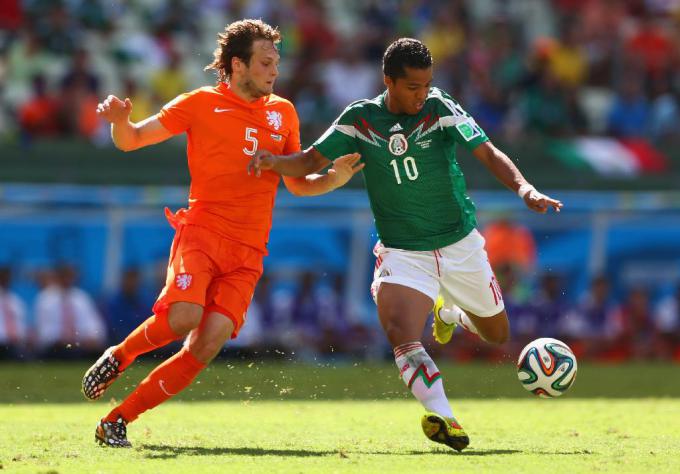
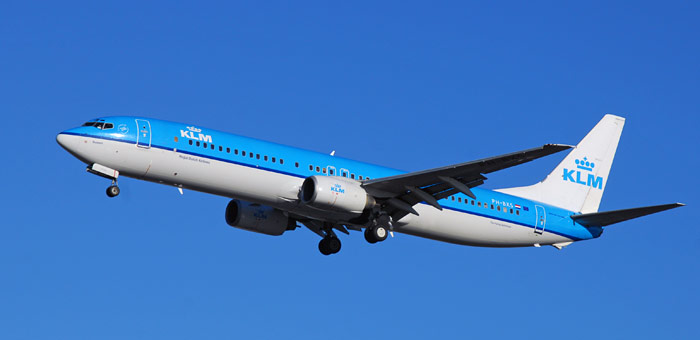
These two expressions are the new normal. Social media can be an effective communication tool to reach the general public and/or a dedicated controlled group. This can be a blessing and a curse. This fact was demonstrated after the recent World Cup Elimination Game between Mexico and The Netherlands. Mexico lost! In its haste to capitalize on all the fanfare, representatives at Dutch airline KLM committed this PR blunder of denigrating Mexican fans:

By: AP Writer Alan Clendenning
RIO DE JANEIRO (AP) — What was meant to be a joke has turned into a PR blunder for Dutch airline KLM after it angered Mexican soccer fans by taking to Twitter to celebrate the Netherlands’ dramatic comeback victory in the World Cup.

Netherlands v MexicoWithin minutes of the Netherlands’ 2-1 victory over the Tri, KLM let loose on its Twitter feed a picture of an airport departures sign under the heading “Adios Amigos!” Next to the word “Departures” is the image of a man with a mustache wearing a sombrero.

The post immediately went viral, with A-list Mexican actor Gael Garcia Bernal using not one but two expletives in a 140-character Tweet to tell his 2 million-plus followers that he’ll never fly the carrier again. Amid the widespread protest online, the post was pulled a half-hour later without an explanation.

“It was meant to be a joke,” KLM spokeswoman Lisette Ebeling Koning told The Associated Press, adding that the airline never intended to offend Mexicans, which it serves via a daily direct flight between Mexico City and Amsterdam. “But there was too much negative reaction.”

KLM issued a formal apology late Sunday.

“In the best of sportsmanship, we offer our heartfelt apologies to those who have been offended by the comment,” said Marnix Fruitema, director general of KLM in North America.

For its part, Mexican national carrier AeroMexico is also getting in on the fun, broadcasting on Twitter its support for the country’s soccer team under an arrivals sign.

“Thank you for this great championship,” AeroMexico said. “You’ve made us proud and we’re waiting for you at home.”
Associated Press (AP) News Wire Service (Retrieved 06/30/2014) –
http://news.yahoo.com/bad-tweet-dutch-airline-angers-mexico-soccer-fans-205929269.html
The expression “the post immediately went viral” could be a good thing or a bad thing. The book Go Lean…Caribbean posits that the power of social media must be harnessed strategically and tactically in order to explore all the benefits of Internet Communications Technologies. The book further asserts that the internet can be a great equalizer between large and small economy states, that talent and value can readily be searched and discovered.

The foregoing article depicts a Bad Tweet; then proceeds to describe how impactful response tweets can be, especially when wielded by an “Influencer” – a person with at least 100,000 followers – such as A-list Mexican celebrity Gael Garcia Bernal.

The book serves as a roadmap for the introduction and implementation of the technocratic Caribbean Union Trade Federation (CU). This effort will launch the Caribbean Postal Union to facilitate the region’s “mail” functionality. In 2014, the mail delivery cannot be seriously mentioned without considering electronic messaging options. Social media is an electronic messaging scheme. The CPU will administer the domain for www.myCaribbean.gov. The universe for this domain is scoped at 130 million unique users.

This strategy will elevate Caribbean society, and image. There is the need for a sentinel role for Caribbean image, as there are a lot of times that Caribbean life and people are denigrated in works of media arts: film, TV, books, magazines. Consider the example of Jamaican “Yardies”, or Dominican Cartels. The Go Lean roadmap calls for the CU to assume that role.

The CU, using cutting edge delivery of best practices, will employ strategies, tactics and implementations to impact its prime directives; identified with the following 3 statements:

  • Optimization of the economic engines in order to grow the regional economy to $800 Billion & create 2.2 million new jobs.
  • Establishment of a security apparatus to protect the resultant economic engines.
  • Improve Caribbean governance to support these engines.
Dutch KLM Photo

AeroMexico Photo

The Go Lean book speaks of a Caribbean crisis and posits that this crisis can be averted, the same way the non-malevolent jest on social media by KLM was quickly averted using stronger social media tactics. Considering the events in the foregoing article, an undeniable credo is reiterated that “a crisis is a terrible thing to waste”. The Go Lean roadmap seeks to optimize the entire Caribbean economic/security/governance eco-system. This vision is defined early in the book (Page 12 & 14) in the following pronouncements in the Declaration of Interdependence:

xv. Whereas the business of the Federation and the commercial interest in the region cannot prosper without an efficient facilitation of postal services, the Caribbean Union must allow for the integration of the existing mail operations of the governments of the member-states into a consolidated Caribbean Postal Union, allowing for the adoption of best practices and technical advances to deliver foreign/domestic mail in the region.

xxvii. Whereas the region has endured a spectator status during the Industrial Revolution, we cannot stand on the sidelines of this new economy, the Information Revolution. Rather, the Federation must embrace all the tenets of Internet Communications Technology (ICT) to serve as an equalizing element in competition with the rest of the world. The Federation must bridge the digital divide and promote the community ethos that research/development is valuable and must be promoted and incentivized for adoption.

xxx. Whereas the effects of globalization can be felt in every aspect of Caribbean life, from the acquisition of food and clothing, to the ubiquity of ICT, the region cannot only consume, it is imperative that our lands also produce and add to the international community, even if doing so requires some sacrifice and subsidy.

The Go Lean book details a lot more, a series of assessments, community ethos, strategies, tactics, implementations and advocacies to garner the benefits of ICT in the Caribbean region:

Community Ethos – Economic Systems Influence Choices & Incentives Page 21
Community Ethos – People Respond to Incentives Page 21
Community Ethos – Consequences of Choices Lie in the Future Page 21
Community Ethos – Return on Investments Page 24
Community Ethos – Ways to Impact the Future Page 26
Community Ethos – Ways to Foster Genius Page 27
Community Ethos – Ways to Impact Research & Development Page 30
Community Ethos – Ways to Bridge the Digital Divide Page 31
Community Ethos – Ways to Impact the Greater Good Page 37
Strategy – Vision – Confederating a Non-Sovereign Union Page 45
Tactical – Separation of Powers – Caribbean Postal Union Page 78
Implementation – Ways to Pay for Change Page 101
Implementation – Ways to Improve Mail   Services Page 108
Implementation – Ways to Deliver Page 109
Implementation – Ways to Impact Social   Media Page 111
Planning – Ways to Improve Image Page 133
Advocacy – Ways to Grow the Economy Page 151
Advocacy – Ways to Create Jobs Page 152
Advocacy – Ways to Foster Technology Page 197
Advocacy – Ways to Foster e-Commerce Page 198
Appendix – Measuring Media   Consumption Page 265

Now is the time for all of the Caribbean, the people and governing institutions, to lean-in for the empowerments described in the book Go Lean…Caribbean. There is reason to believe that these empowerment efforts can be successful. The Go Lean roadmap conveys how single causes/advocacies have successfully been forged throughout the world (Page 122 – Anatomy of Advocacies). With social media deployments, millions of people can be advocates. No defamation of Caribbean image will go unchallenged. We, in the Caribbean, can do the same as the Mexican power brokers when bad sportsmanship was displayed by the KLM airline.

The Caribbean can succeed in the advocacy to improve the Caribbean image and deployments of social media in the region. There are previous blog commentaries that delve into aspects of these same issues:

https://goleancaribbean.com/blog/?p=1416 Amazon’s new FIRE Smartphone
https://goleancaribbean.com/blog/?p=1404 Facebook goes down across multiple countries
https://goleancaribbean.com/blog/?p=857 Caribbean Image:   Dreadlocks

Congratulation to the Netherlands football/soccer national team in their pursuits of the FIFA World Cup. There is room for good sportsmanship for all.

Download the book Go Lean … Caribbean – now!

Share this post:
, , , , , ,

Status of Forces Agreement = Security Pact

  Go Lean Commentary

The following is typical of the kind of news headlines in the last few weeks:

Crisis In Iraq Escalates As Militants Seize Major Cities

Iraq again! Didn’t we just go through this in the last decade? Did we not settle this a few years ago, and now we’re here again? Deja Vu all over again. Not a repeat of the Iraqi drama, but rather a repeat of modern history in total. In a recent blog submission, the commentary (https://goleancaribbean.com/blog/?p=1531) cited the lessons learned from World War I; or better stated, the lack of learned-lessons, as the result was World War II. An actual news article on Iraq that parallels this lesson, is excerpted as follows:

By: Olivia Marshall

Media [outlets] have claimed that the current violence in Iraq is the result of the 2011 withdrawal of U.S. troops in Iraq and President Obama’s willful failure to secure a Status of Forces Agreement (SOFA) with Iraq’s Prime Minister Nouri al-Maliki. In reality, Iraq refused the terms of a SOFA with the U.S. despite Obama’s efforts to maintain a military presence there.

Time Magazine: Iraq’s Second Largest City Falls To Militants – Time reported on June 10 that Mosul, Iraq’s second largest city, fell to the Sunni militant group Islamic State in Iraq and al-Sham (ISIS):

The fall of Iraq’s second largest city to Islamist extremists Tuesday sends an alarming message about the deterioration of a country where the U.S. spent eight years, 4,500 lives and $1.7 trillion. Mosul, a city of 1.8 million located in the far north of the country, long cultivated a reputation as a military town. But Iraqi soldiers threw down their guns and stripped off their uniforms as the insurgents approached on Tuesday, according to officials stunned by the collapse of its defenses.
Media Matters (Posted June 16, 2014; retrieved 06/29/2014) –
http://mediamatters.org/research/2014/06/16/right-wing-media-ignore-iraqi-resistance-to-sta/199742

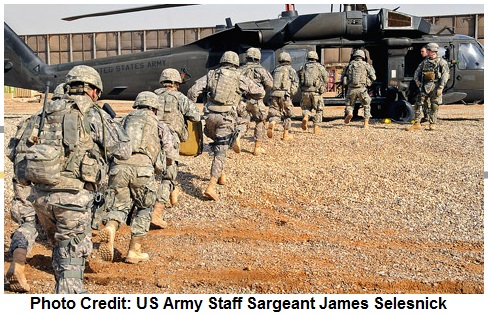
Iraq Surge - 2007Iraq Draw Down - 2011

The overriding theme of the foregoing news article is the Status of Forces Agreement [a]. Under international law, in order for a military presence to not be viewed as an occupation or ‘act of war”, there must be a SOFA of mutual consent between both the host and occupying powers. This lack of a SOFA is why the US is drawn back into Iraq.

This American experience is relevant for the Caribbean to consider; not only for the fact that two Caribbean member-states, Puerto Rico and the US Virgin Islands, had committed human capital to that Iraq War effort, and have thusly sacrificed “blood, sweat and tears” there, but also because there is a parallel need for a SOFA in the Caribbean region.

The book Go Lean…Caribbean posits that the region must prepare its own security apparatus for its own security needs. So the request is that all Caribbean member-states welcome a visiting security force to execute a limited scope on their sovereign territories. That visiting force: themselves!

Yes, the goal is to confederate under a unified entity made up of the Caribbean to provide homeland security to the Caribbean. But Homeland Security for the Caribbean has a different meaning than for our American counterparts. Though we must be on defense against military intrusions like terrorism & piracy, we mostly have to contend with threats that may imperil the region’s economic engines, like tourism. This includes natural and man-made concerns like hurricanes, earthquakes, oil/chemical spills, pandemic, enterprise corruption and narco-terrorism. The CU security goal is for public safety! This goal is detailed in the book as it serves as a roadmap for the introduction of the technocratic Caribbean Union Trade Federation (CU). So while the CU is set to optimize Caribbean society through economic empowerment, the truth of the matter is that the security dynamics of the region are inextricably linked to this same endeavor. Therefore the Go Lean roadmap has 3 prime directives:

  • Optimization of the economic engines in order to grow the regional economy to $800 Billion & create 2.2 million new jobs.
  • Establishment of a security apparatus to protect the resultant economic engines.
  • Improve Caribbean governance to support these engines.

The book contends that bad actors will emerge just as a result of economic successes in the region. This point is pronounced early in the book with the Declaration of Interdependence (Page 12) that claims:

x.   Whereas we are surrounded and allied to nations of larger proportions in land mass, populations, and treasuries, elements in their societies may have ill-intent in their pursuits, at the expense of the safety and security of our citizens. We must therefore appoint “new guards” to ensure our public safety and threats against our society, both domestic and foreign. The Federation must employ the latest advances and best practices … to assuage continuous threats against public safety.

xvi. Whereas security of our homeland is inextricably linked to prosperity of the homeland, the economic and security interest of the region needs to be aligned under the same governance. Since economic crimes, including piracy and other forms of terrorism, can imperil the functioning of the wheels of commerce for all the citizenry, the accedence of this Federation must equip the security apparatus with the tools and techniques for predictive and proactive interdictions.

The Caribbean appointing “new guards”, or a security pact to ensure public safety is not so new an endeavor. There are prior instances of this type of engagement in the region. There is currently a security pact; shared by 5 Eastern Caribbean member-states that was first consummated in 1982 – this was discussed in full depth in a previous commentary regarding the Regional Security System (https://goleancaribbean.com/blog/?p=1076). The Go Lean roadmap however calls for a permanent professional force with naval and ground (Marine) forces, plus an Intelligence agency. This security pact would be sanctioned by all 30 CU member-states, not just the current 5; (there is even a plan for the eventual inclusion of Cuba). The CU Trade Federation will lead, fund and facilitate the security force, encapsulating (full-time or part-time) all the existing armed forces in the region. This CU Homeland Security Force would get its legal authorization from a Status of Forces Agreement signed with the CU treaty enhancements.

This SOFA is “Step One, Day One” in the Go Lean roadmap, covering the approach for adequate funding, accountability and control. In step with the foregoing news article, there is the absolute need for the CU SOFA to be ratified as soon as possible.

The Go Lean book details a series of community ethos, strategies, tactics, implementations and advocacies to provide increased public safety & security in the Caribbean region:

Economic Principle – Consequences of Choices Lie in Future Page 21
Community Ethos – Privacy –vs- Public Protection Page 23
Community Ethos – “Crap” Happens Page 23
Community Ethos – Cooperatives Page 25
Community Ethos – Ways to Improve Sharing Page 35
Community Ethos – Ways to Impact the Greater Good Page 37
Tactical – Confederating a non-sovereign union Page 63
Tactical – Separation of Powers – Homeland Security Page 75
Implementation – Ways to Pay for Change Page 101
Implementation – Start-up Foreign Policy Initiatives Page 102
Implementation – Start-up Security Initiatives Page 103
Planning – Ways to Make the Caribbean Better Page 131
Planning – Ways to Improve Failed-State Indices Page 134
Advocacy – Ways to Grow the Economy Page 151
Advocacy – Ways to Improve Governance Page 168
Advocacy – Ways to Better Manage the Social Contract Page 170
Advocacy – Ways   to Impact Justice Page 177
Advocacy – Ways   to Reduce Crime Page 178
Advocacy – Ways to Improve Homeland Security Page 180
Advocacy – Ways to Mitigate Terrorism Page 181
Advocacy – Ways to Improve Intelligence Gathering/Analysis Page 182
Advocacy – Ways to Improve for Natural Disasters Page 184
Advocacy – Ways to Protect Human Rights Page 220
Advocacy – Ways to Re-boot Cuba Page 236

Other subjects related to security and governing empowerments for the region have been blogged in other Go Lean…Caribbean commentary, as sampled here:

https://goleancaribbean.com/blog/?p=1531 A Lesson in History: 100   Years Ago – World War I
https://goleancaribbean.com/blog/?p=1076 Trinidad Muslims travel to   Venezuela for jihadist training
https://goleancaribbean.com/blog/?p=960 NSA records all phone   calls in Bahamas, according to Snowden
https://goleancaribbean.com/blog/?p=789 America’s War on the Caribbean
https://goleancaribbean.com/blog/?p=546 Book Review:   ‘The Divide’ – … Injustice in the Age of the Wealth Gap
https://goleancaribbean.com/blog/?p=535 Remembering and learning   from Boston
https://goleancaribbean.com/blog/?p=392 Jamaica to receive World Bank funds to help in crime fight
https://goleancaribbean.com/blog/?p=341 US slams Caribbean human   rights practices
https://goleancaribbean.com/blog/?p=87 6.5M Earthquake Shakes   Eastern Caribbean

Underlying to the prime directive of elevating the economics, security and governing engines of the Caribbean, is the desire to make the Caribbean homeland, a better place to live, work and play. We do not want a few “bad actors” disrupting the peace of all Caribbean residents (42 million people), or the 10 million Diaspora as they frequent their tropical homeland or even the 80 million tourists that visit the region annually. The Go Lean roadmap states it most succinctly with the quotation: “the needs of the many outweigh the needs of the few” (Page 37).

All of the Caribbean are hereby urged to lean-in to this roadmap.

Download the book Go Lean … Caribbean – now!

——

Appendix: a – Status of Forces Agreement

A Status of Forces Agreement (SOFA) is an agreement between a host country and a foreign nation stationing military forces in that country. SOFAs are often included, along with other types of military agreements, as part of a comprehensive security arrangement. A SOFA does not constitute a security arrangement; it establishes the rights and privileges of foreign personnel present in a host country in support of the larger security arrangement. [1] Under international law a status of forces agreement differs from military occupation.

Agreements

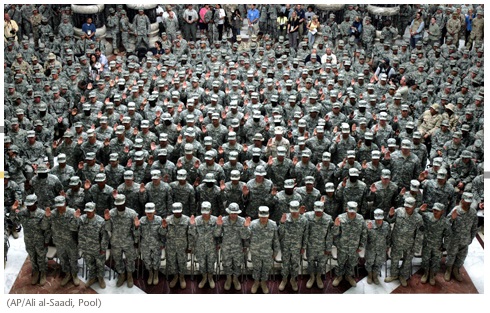
SOFA - Photo 1While the United States military has the largest foreign presence and therefore accounts for most SOFAs, the United Kingdom, France, Australia, Germany, Italy, Russia, South Korea, and many other nations also station military forces abroad and negotiate SOFAs with their host countries. NATO (North Atlantic Treaty Organization) is a SOFA. In the past, the Soviet Union had SOFAs with most of its satellite states (See Go Lean…Caribbean Page 139). While most of the United States’ SOFAs are public, some remain classified. [2]

Terms of operation – The SOFA is intended to clarify the terms under which the foreign military is allowed to operate. Typically, purely military operational issues such as the locations of bases and access to facilities are covered by separate agreements. The SOFA is more concerned with the legal issues associated with military individuals and property. This may include issues like entry and exit into the country, tax liabilities, postal services, or employment terms for host-country nationals, but the most contentious issues are civil and criminal jurisdiction over bases and personnel. For civil matters, SOFAs provide for how civil damages caused by the forces will be determined and paid. Criminal issues vary, but the typical provision in U.S. SOFAs is that U.S. courts will have jurisdiction over crimes committed either by a service-member against another service-member or by a service-member as part of his or her military duty, but the host nation retains jurisdiction over other crimes.[3]

Host nation concerns – In many host nations, especially those with a large foreign presence such as South Korea and Japan, the SOFA can become a major political issue following crimes allegedly committed by service-members. This is especially true when the incidents involve crimes such as robbery, murder, manslaughter or sex crimes, especially when the charge is defined differently in the two nations. For example, in 2002 in South Korea, a U.S. military AVLB bridge-laying vehicle on the way to the base camp after a training exercise accidentally killed two girls. Under the SOFA, A U.S. military court martial panel tried the soldiers involved, The panel found the act to be an accident and acquitted the service members of negligent homicide, citing no criminal intent or negligence. The U.S. military accepted responsibility for the incident and paid civil damages. This resulted in widespread outrage in South Korea, demands that the soldiers be retried in a South Korean court, the airing of a wide variety of conspiracy theories, and a backlash against the local expatriate community.[4] As of 2011 American military authorities are allowing South Korea to charge and prosecute American soldiers in South Korean courts.[5][6]

(Retrieved 06/29/2014 from: http://en.wikipedia.org/wiki/Status_of_forces_agreement)

 Sources References:

1.  R. Chuck Mason (March 15, 2012). “Status of Forces Agreement (SOFA): What Is It, and How Might One Be Utilized In Iraq?” Congressional Research Service. Retrieved from: http://www.fas.org/sgp/crs/natsec/RL34531.pdf

2.  Bruno, Greg (October 2, 2008), U.S. Security Agreements and Iraq, Council on Foreign Relations. Retrieved from: http://www.cfr.org/publication/16448/us_security_agreements_and_iraq.html

3.  Pike, John (2005). “Status of Forces Agreement”. GlobalSecurity.org, 2005. Retrieved from: http://www.globalsecurity.org/military/facility/sofa.htm

4.  Ibiblio.org (2002). News articles on South Korean teenagers run over US military vehicle. Posted 22 August 2008; retrieved from http://www.ibiblio.org/ahkitj/wscfap/arms1974/HRS/2002/Stop%20US%20Military%20dossier/4.htm

5.  Stars and Stripes Newspaper (2011). “US soldier confesses during trial to rape of South Korean girl”. Retrieved http://www.stripes.com/u-s-soldier-confesses-during-trial-to-rape-of-south-korean-girl-1.161419

6.  Stars and Stripes Newspaper (2012). “Korea-based US soldier get 3 years in prison for rape conviction”. Posted 12 February 2012; retrieved from: http://www.stripes.com/news/pacific/korea/korea-based-u-s-soldier-gets-3-years-in-prison-for-rape-conviction-1.168182


Share this post:
, , , , ,
[Top]

A Lesson in History – 100 Years Ago Today – World War I

 Go Lean Commentary

The dominoes began to fall 100 years ago today.

Going backwards: The Caribbean is at the precipice of dysfunction due to a global financial crisis; the crisis is a by-product of an inter-connected world; the global unified economic systems (Bretton-Woods Accords [b]) and disbanding of the colonies of the Great Powers emerged for the rebuilding after World War II. Consequently, Word War II was a direct response to the unsatisfactory settlements from World War I and economic dysfunctions during the period between the World Wars. The first domino was therefore June 28, 1914.

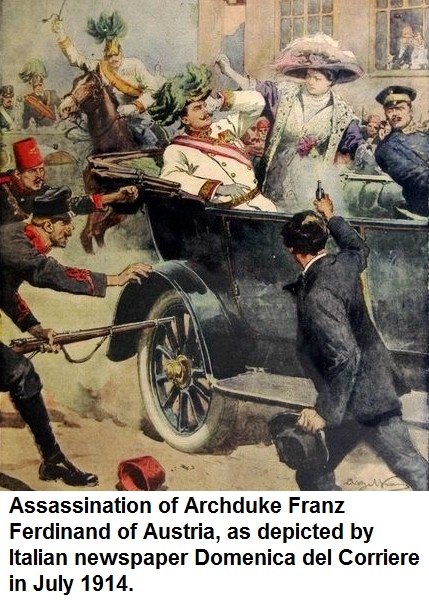
1914 Photo 1On this date 100 years ago, Archduke Franz Ferdinand of Austria, heir presumptive to the Austro-Hungarian throne, and his wife, Sophie, Duchess of Hohenberg, were shot dead in Sarajevo by Serbian assassins. The political objective of the assassination was to break off Austria-Hungary’s south-Slav provinces so they could be combined into a Yugoslavia. The assassination led directly to the First World War when Austria-Hungary subsequently issued an ultimatum against Serbia, which was partially rejected. Austria-Hungary then declared war, marking the outbreak of the war. [a]

Multilateral military alliances abounded in that day among the Great Powers: Austria-Hungary with Germany (Triple Alliance of 1882) and Serbia with Russia and France (Triple Entente of 1907) and Britain. When war ensued later in August 1914, these were the sides. Many other military treaties were triggered thereby engaging empires/countries like Ottoman-Turks, Portugal, Japan and Italy, (The United States joined in 1917 allied with Britain). The resulting conflict was dubbed the Great War until subsequently rebranded World War I.

The review of the historic events of this day 100 years ago is more than just an academic discussion, the book Go Lean…Caribbean aspires to economic principles that dictate that “consequences of choices lie in the future”. The book serves as a roadmap for the introduction and implementation of the technocratic Caribbean Union Trade Federation (CU). This confederation effort aligns many former colonies of the same Great Powers that waged WW I; like Great Britain or the United Kingdom (UK) for example. The British Dominion experienced dire consequences and suffered greatly as a result of this war. In 1914 The British Dominion controlled over 25% of the world’s population; today the UK wields little political, military or economic power, including that of the Caribbean.

The people of the Caribbean understand societal decline and dysfunction all too well.
What have we learned in the 100 years since the events of June 28, 1914? How will these lessons help us today?

  • Minority Equalization – Bullying and terrorism must be mitigated at the earliest possible opportunity – the foregoing photo depicts the oppression the minority Balkan communities perceived in the Austria-Hungarian Empire. As a minority group they felt bullied in their own country; their Slavic culture and language set them apart, and their religious adherence led to even more dissension (Austria-Hungary: Catholic/Lutheran; Serbia: Eastern Orthodox and Bosnia- Herzegovina: Muslim) There were terrorist activities for decades before in the quest for independence. In the past 100 years, this same modus operandi has been repeated in countless locales around the world. The CU security pact must defend against regional threats, including domestic terrorism. This includes gangs and their junior counterparts, bullies. The CU plans for community messaging in the campaign to  mitigate bullying.

1914 Photo 2

  • Reconciliation of issues are not optional, more conflict will emerge otherwise – The issues that wedged the people of the Balkans were not resolved in World War I. More dissensions continued leading to World War II, and continued during the Cold War while most of the Balkans were under Soviets control. When the Soviet Union collapsed in 1991, civil war and ethnic cleansings proceeded in the Balkans. Their issues/differences had not been reconciled. A common practice after WW I & WW II was the prosecution of war crimes. But in South Africa an alternative justice approach was adopted, that of Truth & Reconciliation Commissions (TRC). These have become more successful as the emphasis is less on revenge and more on justice normalization. Many other countries have instituted similar TRC models. The CU plans for the TRC model for dealing with a lot of latent issues in the last Caribbean century (i.e. Cuba, Haiti, Dominican Republic, etc).
  • Self-determination of local currencies – in planning for postwar reconstruction, U.S. representatives with their British counterparts studied what had been lacking between the two world wars: a system of international payments that would allow trade to be conducted without fear of sudden currency depreciation or wild fluctuations in exchange rates—ailments that had nearly paralyzed world capitalism during the Great Depression. There is a multiplier associated with the currency in the money supply. Therefore the communities of the Caribbean must embrace its own currency, the Caribbean Dollar (managed by a technocratic Caribbean Central Bank), thereby bringing local benefits from local multipliers.
  • Security assurances must be enabled to complement economics objectives – A lot of dissension has resulted when economic engines become imperiled due to security conflicts. The instability then causes more economic dysfunction, which results in even more security threats – a downward spiral. The CU/Go Lean posits that security apparatus must be aligned with all economic empowerments. This is weaved throughout the roadmap.
  • Negotiate as partners not competitors – The end of World War I immediately set-up ripe conditions for WW II, because of the harsh terms in the Peace Treaties. The CU maintains that, negotiation is an art and a science. More can be accomplished by treating a negotiating counterpart as a partner, rather than not an adversary. (See VIDEO below).
  • Cooperatives and sharing schemes lighten burdens among neighbors – The Balkan conflict of 1914 resulted in a World War because of cooperative treaties with aligning nations. Despite this bad outcome, the practice of cooperatives and sharing still has more upside than downside. The CU will employ cooperatives and sharing schemes for limited scopes within the prime directives of optimizing the economic, security and governing engines.
  • Promote opportunities for the Pursuit of Happiness – A lot of terrorist activities are executed by “suicide” agents (i.e. suicide bombers). The Go Lean roadmap posits the when the following three fundamentals are in place, the risks of suicide is minimal: 1. something to do, 2. someone to love, 3. something to hope for. These are the things a man (or woman) needs to be happy.
  • Consider the Greater Good – Complying with this principle would have prevented a lot of conflict in the past century. The philosophy is directly quoted as: “It is the greatest good to the greatest number of people which is the measure of right and wrong”. The CU/Go Lean roadmap calls for a number of measures that strike directly at the Greater Good mandate: accountable justice institutions, economic empowerment for rich and poor, strategic education initiatives, proactive health/wellness, etc.

The related subjects of economic, security and governing dysfunction have been a frequent topic for blogging by the Go Lean promoters, as sampled here:

https://goleancaribbean.com/blog/?p=1433 Caribbean loses over 70% of tertiary educated citizens to the brain drain
https://goleancaribbean.com/blog/?p=1309 5 Steps of a Bubble
https://goleancaribbean.com/blog/?p=1014 All is not well in the sunny Caribbean
https://goleancaribbean.com/blog/?p=816 The Future of Caribbean Integration and CariCom
https://goleancaribbean.com/blog/?p=789 America’s War on the Caribbean
https://goleancaribbean.com/blog/?p=782 Open the Time Capsule: The Great Recession of 2008
https://goleancaribbean.com/blog/?p=623 Only at the precipice, do they change
https://goleancaribbean.com/blog/?p=599 Ailing Puerto Rico open to radical economic fixes
https://goleancaribbean.com/blog/?p=467 Barbados Central Bank records $3.7m loss in 2013
https://goleancaribbean.com/blog/?p=451 CariCom Chairman to deliver address on slavery/colonization reparations
https://goleancaribbean.com/blog/?p=353 Book Review: ‘Wrong – Nine Economic Policy Disasters and What We Can Learn…’

The purpose of the Go Lean roadmap is to turn-around the downward trends in the Caribbean today, to reverse course and elevate Caribbean society. The CU, applying lessons from the last 100 years, has prime directives proclaimed as follows:

  • Optimization of the economic engines in order to grow the regional economy to $800 Billion & create 2.2 million new jobs.
  • Establishment of a security apparatus to protect the resultant economic engines.
  • Improve Caribbean governance to support these engines.

The Go Lean book details a series of assessments, community ethos, strategies, tactics, implementations and advocacies to empower all the factions in the Caribbean region:

Community Ethos – Economic Systems Influence Choices & Incentives Page 21
Community Ethos – Consequences of Choices Lie in the Future Page 21
Community Ethos – Money Multiplier – Control of Local/Regional   Currency Page 22
Community Ethos – Anti-Bullying and Mitigation Page 23
Community Ethos – Intelligence Gathering Page 23
Community Ethos – “Crap” Happens Page 23
Community Ethos – Minority Equalization Page 24
Community Ethos – Ways to Impact the Future Page 26
Community Ethos – Ways to Improve Negotiations Page 32
Community Ethos – Ways to Manage Reconciliations Page 34
Community Ethos – Ways to Improve Sharing Page 35
Community Ethos – Ways to Promote Happiness Page 36
Community Ethos – Ways to Impact the Greater Good Page 37
Strategy – Vision –  Integrate Region into a Single Market Economy Page 45
Strategy – Agents of Change – Globalization Page 57
Tactical – Separation of Powers – Department of Homeland   Security Page 75
Tactical – Separation of Powers – Department of   Justice Page 77
Implementation – Assemble Existing Super-national Institutions Page 96
Implementation – Caribbean Central Bank (CCB) Cooperative Page 96
Implementation – Ways to Pay for Change Page 101
Implementation – Foreign Policy Initiatives   at Start-up Page 102
Implementation – Security Initiatives at   Start-up Page 103
Implementation – Ways to Deliver Page 109
Implementation – Ways to Promote Independence Page 120
Planning – Ways to Ways to Model the EU Page 130
Planning – Ways to Make the Caribbean Better Page 131
Planning – Ways to Improve Failed-State Indices Page 134
Planning – Lessons from East Germany Page 139
Advocacy – Ways to Grow the Economy Page 151
Advocacy – Ways to Create Jobs Page 152
Advocacy – Ways to Better Manage the Social Contract Page 170
Advocacy – Ways to Foster Cooperatives Page 176
Advocacy – Ways to Impact Justice Page 177
Advocacy – Ways to Improve Homeland Security Page 180
Advocacy – Ways to Mitigate Terrorism Page 181
Advocacy – Ways to Improve Intelligence Page 182
Advocacy – Banking Reforms – Caribbean Dollar Page 199
Advocacy – Ways to Protect Human Rights Page 220
Advocacy – Battles in the War on Poverty Page 222
Advocacy – Ways to Impact British Territories Page 245

The year 1914 is identified as a watershed year in the history of mankind. (There are even religious teachings that identify this year as the beginning of the Bible’s prophesied Last Days). No doubt there was a crisis, and it was wasted, even after losing 19 million people in the ensuing military conflict. The result was a 2nd World War that slaughtered 60 million more. Still all the divisions and animosities created during those conflicts forged even more conflicts (think: Middle East, Korea and Vietnam). In total, about 100 million people died in wars of the 20th Century.

See Comedian Bill Maher Commentary in the following VIDEO:

VIDEO – Real Time With Bill Maher: Sunni and Share (HBO) – 
https://youtu.be/Jz0YWIfBLa4


Real Time with Bill Maher
Published on Jul 1, 2014 – Bill Maher delivers his “New Rules” editorial on June 27, 2014.

  • Category: Entertainment

Now is the time for all of the Caribbean to learn the lessons from the last 100 years, and not waste our current crises. The book Go Lean … Caribbean posits that the Caribbean is in a serious crisis, but asserts that this crisis would be a terrible thing to waste. The people and governing institutions of the region are hereby urged to lean-in for the empowerments described in the book Go Lean … Caribbean.

This is a big deal for the region, the same way 1914 was a big year for our planet. While the planet is out-of-scope for this roadmap, a Caribbean neighborhood optimization is realistic and plausible. We can all work to make our homeland a better place to live, work, and play.

Download the free e-Book of Go Lean … Caribbean – now!

—————–

Referenced Sources:
a.     http://en.wikipedia.org/wiki/Assassination_of_Archduke_Franz_Ferdinand_of_Austria; retrieved June 28, 2014

b.     http://en.wikipedia.org/wiki/Bretton_Woods_system; retrieved June 28, 2014

Share this post:
, ,
[Top]

Floods in Minnesota, Drought in California – Why Not Share?

 Go Lean Commentary

Millions across Minnesota are in the middle of a flooding disaster as a severe storm system moves over the central U.S.. See this VIDEO:

VIDEO – CBS News; posted June 23, 2014; retrieved June 27 from: http://www.cbsnews.com/videos/minnesota-communities-face-weeks-of-flooding/
Title: Minnesota communities face weeks of flooding

(VIDEO plays best in Internet Explorer).

At the same time, California continues to endure serious drought conditions. Many feel, though not supported by the facts, that this may be the worst drought in California history. See the aligning VIDEO here:

VIDEO – Win Rosenfeld, NBC News; posted June 2, 2014; retrieved June 27 from: https://www.youtube.com/watch?v=Gx7vFqU8iGY
Title: California’s Drought History | Debunker

So on the one hand, part of the United States is experiencing too much water and in other parts of the country, too little water. This is Climate Change 101. If only, there would be some equalizing between “the feast and the famine” with water.

This was the point/comment of one viewer of the CBS News Video:

Why are we not building a WATER PIPELINE from these flood prone areas to the parched West and South?!?!? If we can afford an OIL pipeline all the way to the southern gulf, we can definitely build a desperately needed pipeline for water! – By: uberengineer – June 24, 2014

This comment was spot on! According to the book Go Lean … Caribbean, pipelines can be strategic, tactical and operationally efficient. They can mitigate challenges of Mother Nature, create jobs and grow the economy at the same time.

The Go Lean book identifies that there are “agents-of-change” that our world have to now contend with. Proactively managing the cause-and-effect of these agents can yield great benefits and alleviate much suffering. The agents-of-change for the Caribbean are identified as follows:

Technology
Aging Diaspora
Climate Change
Globalization

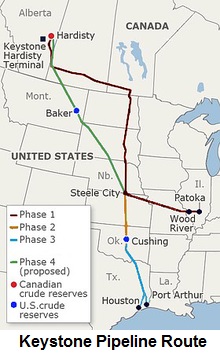
If the suggestion of above commentator Uber Engineer is to be seriously considered in the US, this would fall under the scope of the US federal government as two states California and Minnesota are involved – neither state has jurisdiction over the other. Plus, the many states in between (Iowa, Nebraska, Colorado, Utah and Nevada) where a pipeline would traverse would also have to be factored into the equation. Under US law this approach is called an Interstate Compact. Uber Engineer is right! This pipeline strategy is already being deployed for oil in the US with the TransCanada Keystone [a] Pipeline project, running from southern Canada down to the Gulf of Mexico; (see route map in the photo).

The question is: who can contemplate such a solution for the Caribbean marketplace? The Go Lean book posits that Climate Change is wreaking havoc on Caribbean life as well and that Caribbean stakeholders must proactively consider the benefits of pipeline deployments in the region. This book purports that a new technology-enhanced industrial revolution is emerging, in which there is more efficiency gleaned from installing, monitoring and maintaining pipelines. Caribbean society must participate, not just spectate the developments in this revolution. This point is pronounced early in the book with this Declaration of Interdependence (Page 11 &14), with the opening and subsequent statements:

i.     Whereas the earth’s climate has undeniably changed resulting in more severe tropical weather storms, it is necessary to prepare to insure the safety and security of life, property and systems of commerce in our geographical region. As nature recognizes no borders in the target of its destruction, we also must set aside border considerations in the preparation and response to these weather challenges.

xxvi.       Whereas the Caribbean region must have new jobs to empower the engines of the economy and create the income sources for prosperity, and encourage the next generation to forge their dreams right at home, the Federation must therefore foster the development of new industries, like that of … pipelines …

xxvii.     Whereas the region has endured a spectator status during the Industrial Revolution, we cannot stand on the sidelines of this new economy, the Information Revolution. Rather, the Federation must embrace all the tenets of Internet Communications Technology (ICT) to serve as an equalizing element in competition with the rest of the world. The Federation must bridge the digital divide and promote the community ethos that research/development is valuable and must be promoted and incentivized for adoption.

This book Go Lean… Caribbean, serves as a roadmap for the introduction and implementation of the technocratic Caribbean Union Trade Federation (CU) to elevate society of the 30 Caribbean member-states. This agency will assume jurisdiction for the Caribbean Sea, the 1,063,000 square-mile international waters under the guise of an Exclusive Economic Zone. This approach allows for cooperation and equalization between the feast-and-famine conditions in the region. This is a real solution to real problems! In fact the CU/Go Lean roadmap has these 3 prime directives:

  • Optimization of the economic engines in order to grow the regional economy.
  • Establishment of a security apparatus to protect the resultant economic engines.
  • Improve Caribbean governance to support these engines.

The Go Lean book details the economic principles and community ethos to adopt, plus the executions of strategies, tactics, implementations and advocacies to forge Research & Development with pipelines and industrial growth in Caribbean communities:

Economic Principles – People Choose because Resources are Limited Page 21
Economic Principles – All Choices Involve Costs Page 21
Economic Principles – People Respond to Incentives Page 21
Economic Principles – Economic Systems Influence Individual Choices Page 21
Economic Principles – Voluntary Trade Creates Wealth Page 21
Economic Principles – Consequences of Choices Lie in the Future Page 21
Community Ethos – Job   Multiplier Page 22
Community Ethos – “Crap” Happens Page 23
Community Ethos – Lean Operations Page 24
Community Ethos – Return on Investments (ROI) Page 24
Community Ethos – Cooperatives Page 25
Community Ethos – Ways to Impact the Future Page 26
Community Ethos – Ways to Help Entrepreneurship Page 28
Community Ethos – Ways to Impact Research & Development Page 30
Community Ethos – Ways to Improve Negotiations Page 32
Community Ethos – Ways to Improve Sharing Page 35
Community Ethos – Impact the Greater Good Page 37
Anecdote – Pipeline Transport – Strategies, Tactics &   Implementations Page 43
Strategy – Vision – Confederating 30 Member-states in a Union Page 45
Strategy – Agents of Change – Technology Page 57
Strategy – Agents of Change – Aging Diaspora Page 57
Strategy – Agents of Change – Globalization Page 57
Strategy – Agents of Change – Climate Change Page 57
Tactical – Fostering a Technocracy Page 64
Tactical – Growing Economy – New High Multiplier Industries Page 68
Separation of Powers – Interstate   Commerce Administration Page 79
Separation of Powers – Interior Department – Exclusive Economic Zone Page 82
Implementation – Assemble – Pipeline as a Focused   Activity Page 96
Implementation – Ways to Pay for Change Page 101
Implementation – Benefits from the Exclusive Economic Zone Page 104
Implementation – Ways to Develop a Pipeline Industry Page 107
Implementation – Ways to Deliver Page 109
Planning – 10 Big Ideas – Pipeline Projects Page 127
Advocacy – Ways to Grow the Economy Page 151
Advocacy – Ways to Create Jobs Page 152
Advocacy – Ways to Better Manage the Social Contract – Infrastructure Page 170
Advocacy – Ways to Ways to Impact Public Works – Ideal for Pipelines Page 175
Advocacy – Ways to Foster Cooperatives Page 176
Advocacy – Ways to Better Manage Natural Resources – Water   Resources Page 183
Advocacy – Ways to Impact Extractions – Pipeline Strategy   Alignment Page 195
Advocacy – Ways to Improve Emergency Management Page 196
Advocacy – Ways to Foster Technology Page 197
Advocacy – Ways to Ways to Improve Monopolies – Foster   Cooperatives Page 202
Advocacy – Ways to Improve Transportation – Pipeline Options Page 205
Advocacy – Ways to Impact Rural Living – Minimize Irrigation   Downsides Page 235
Appendix – Interstate Compacts Page 278
Appendix – Pipeline Maintenance Robots Page 283
Appendix – North Dakota Example – Oil Drilling Economic-Societal   Effects Page 334

Historically, pipelines are cheaper than alternative modes of transport for liquid materials like oil, natural gas and water. Plus the cost of water in all aspects of modern society is no longer negligible. Just conduct an acid test at a friendly neighborhood Gas Station; while a gallon of gas may be high, the equivalent pricing for cool drinking water is within the same range.

Water is only free in our society when it is raining; for all other times, there are costs associated with storage and distribution.

Thusly, the economic principles of pipelines are sound.

CU Blog - Floods in Minnesota, Drought in California - Why Not Share - Photo 2

Pipelines can be above ground, underground and/or underwater. (See Trans-Alaska Pipeline photo). There is a role for many schemes of pipeline deployments in the vision for the reboot of the Caribbean homeland. The roadmap Go Lean … Caribbean identifies pipelines as strategic, tactical and operationally mandatory for any chance at success in making the Caribbean a better place to live, work and play.

Download the book Go Lean … Caribbean – now!

——–

Appendix – Referenced Source:

a.     Keystone Pipeline (Retrieved June 27, 2014 from: http://en.wikipedia.org/wiki/Keystone_Pipeline):

The Keystone Pipeline System is an oil pipeline system in Canada and the United States. It runs from the Western Canadian Sedimentary Basin in Alberta, Canada, to refineries in the United States in Steele City, Nebraska; Wood River and Patoka, Illinois; and the Gulf Coast of Texas. In addition to the synthetic crude oil (syncrude) and diluted bitumen (dilbit) from the oil sands of Canada, it also carries light crude oil from the Williston Basin (Bakken) region in Montana and North Dakota.

CU Blog - Floods in Minnesota, Drought in California - Why Not Share - Photo 1Three phases of the project are in operation, and the fourth is awaiting U.S. government approval. Upon completion, the Keystone Pipeline System would consist of the completed 2,151-mile (3,462 km) Keystone Pipeline (Phases I and II), Keystone Gulf Coast Expansion (Phase III), and the proposed Keystone XL Pipeline Project (Phase IV). Phase I, delivering oil from Hardisty, Alberta, to Steele City, Wood River, and Patoka, was completed in the summer of 2010. Phase II, the Keystone-Cushing extension, was completed in February 2011 with the pipeline from Steele City to storage and distribution facilities at Cushing, Oklahoma. These two phases have the capacity to deliver up to 590,000 barrels per day (94,000 m3/d) of oil into the Mid-West refineries. Phase III, the Gulf Coast Extension, which was opened in January 2014, has capacity up to 700,000 barrels per day (110,000 m3/d). The proposed Phase IV, would begin in Hardisty, Alberta, and extend to Steele City, essentially replacing the existing phase I pipeline.

The Keystone XL proposal faced criticism from environmentalists and some members of the United States Congress. In January 2012, President Barack Obama rejected the application amid protests about the pipeline’s impact on Nebraska’s environmentally sensitive Sand Hills region. TransCanada Corporation changed the original proposed route of Keystone XL to minimize “disturbance of land, water resources and special areas”; the new route was approved by Nebraska Governor Dave Heineman in January 2013. On April 18, 2014 the Obama administration announced that the review of the controversial Keystone XL oil pipeline has been extended indefinitely, until at least after the November 4, 2014 mid-term United States elections.


Share this post:
, , , ,
[Top]

COB Master Plan 2025 – Reach for the Lamp-Post

Go Lean Commentary

“Keep your feet on the ground and keep reaching for the stars” – Casey Kasem (1932 – 2014).

The world lost another icon of Rock-n-Roll last week with news of the passing of renowned DJ and Media Host Casey Kasem. He was well known for his closing salutation quoted above.

“Reaching for the stars” should be more than a radio catch phrase; it should be a community ethos. This is noticeably missing in the 2025 Master Plan for the University of the Bahamas. They appear to be striving for the cutting edge of 1985; they are not reaching for the stars, they are reaching for the lamp-post.

Title: College of The Bahamas Master Plan 2014-2024
The College’s plan to accommodate growth in programs and to improve campus life through the creation of a more beautiful and cohesive campus.

“Twenty-five percent growth in student enrollment is what the Master Plan for the University of the Bahamas seeks to accommodate”. Visit the link… to view this newly produced infomercial on the blueprint for the physical growth that will undergird the impending University.
Vimeo – Video Sharing Site (Retrieved 06/23/2014) – http://vimeo.com/98270213

College of The Bahamas Master Plan 2014-2024 from The College of The Bahamas on Vimeo.

Make no mistake; it is a good thing that the College of the Bahamas (COB) is graduating to the University of the Bahamas (in 2015). It is also incontrovertible that COB is inadequate in meeting tertiary education needs of Bahamians, not to think of the rest of the world. Don’t agree? Consider how many Bahamian students matriculate abroad; now consider how many foreign students matriculate at COB.

Debate over!

This is more than just an academic discussion, as the subject of Caribbean students abandoning their homeland for foreign shores is a motivator for the book Go Lean…Caribbean. The book serves as a roadmap for the introduction and implementation of the technocratic Caribbean Union Trade Federation (CU). This effort mitigates published reports that the Caribbean loses over 70% of tertiary educated citizens due to brain drain; (https://goleancaribbean.com/blog/?p=1433).

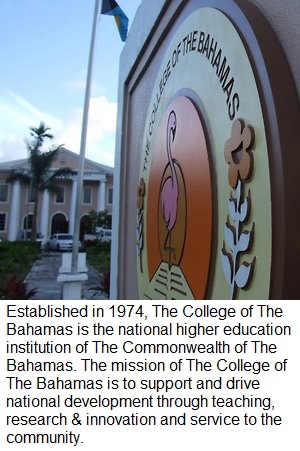
COB PhotoSo as the sole tertiary education institution in the Bahamas, it would be expected that a Master Plan would “dream a little dream” and strive to counter the negative realities of students matriculating abroad. Instead COB delivered a plan that only inches forward – only reaching for the lamp-post. The inadequacy in the Master Plan highlights the need for the Go Lean roadmap for elevating Caribbean society. The CU, using cutting edge delivery of best practices, will employ strategies, tactics and implementations to impact its prime directives; identified with the following 3 statements:

  • Optimization of the economic engines in order to grow the regional economy to $800 Billion & create 2.2 million new jobs.
  • Establishment of a security apparatus to protect the resultant economic engines.
  • Improvement of Caribbean governance to support these engines.

The Go Lean book posits that the Caribbean is in crisis, with the debilitating brain drain/societal abandonment rate, but that this crisis can be a useful because a “crisis is a terrible thing to waste”. Therefore the roadmap seeks to change the entire eco-system of Caribbean education and learning solutions. This vision is defined early in the book (Page 13 & 14) in the following pronouncements in the Declaration of Interdependence:

xix.   Whereas our legacy in recent times is one of societal abandonment, it is imperative that incentives and encouragement be put in place to first dissuade the human flight, and then entice and welcome the return of our Diaspora back to our shores…

xxi.   Whereas the preparation of our labor force can foster opportunities and dictate economic progress for current and future generations, the Federation must ensure that educational and job training opportunities are fully optimized for all residents of all member-states, with no partiality towards any gender or ethnic group. The Federation must recognize and facilitate excellence in many different fields of endeavor, including sciences, languages, arts, music and sports. This responsibility should be executed without incurring the risks of further human flight, as has been the past history.

xxvii.   Whereas the region has endured a spectator status during the Industrial Revolution, we cannot stand on the sidelines of this new economy, the Information Revolution. Rather, the Federation must embrace all the tenets of Internet Communications Technology (ICT) to serve as an equalizing element in competition with the rest of the world. The Federation must bridge the digital divide and promote the community ethos that research/development is valuable and must be promoted and incentivized for adoption.

So what (also how/when) should be featured in a Master Plan/roadmap for effectuating change in the tertiary education landscape for the Bahamas and the rest of the Caribbean?

The answer is not as simple as A-B-C-1-2-3. The answer requires heavy-lifting, a long reach, and a consideration of the economic realities of the region. Thus the Casey Kasem axiom is so applicable:

“Keep your feet on the ground and keep reaching for the stars”.

“Reaching for the stars” would include fostering Research & Development (R&D) on our college campuses. Also, the deployment of cutting-edge technologies to avail the benefits of e-Learning would deter the trend (and necessity) of young students studying abroad; thus minimizing the temptations to remain abroad or to subsequently emigrate. This would mean staying grounded!

The Go Lean book details a lot more, a series of assessments, community ethos, strategies, tactics, implementations and advocacies to foster the elevation of college education in the Caribbean region:

Community Ethos – Economic Systems Influence Choices & Incentives Page 21
Community Ethos – People Respond to Incentives Page 21
Community Ethos – Consequences of Choices Lie in the Future Page 21
Community Ethos – Return on Investments Page 24
Community Ethos – Ways to Impact the Future Page 26
Community Ethos – Ways to Foster Genius Page 27
Community Ethos – Ways to Impact Research & Development Page 30
Community Ethos – Ways to Bridge the Digital Divide Page 31
Community Ethos – Ways to Impact the Greater Good Page 37
Anecdote – Valedictorian Now Diaspora Member Page 38
Strategy – Vision – Realistic, Achievable, Demanding, & Inspirational Goal Page 45
Strategy – Mission – Local Education to Compete with the Best in the World Page 46
Tactical – Separation of Powers – Education Department – University Admin Page 85
Tactical – Separation of Powers – Labor Department – On-the-Job Training Page 89
Implementation – Ways to Pay for Change Page 101
Implementation – Steps to Implement Campuses   as Self-Governing Entities Page 105
Implementation – Ways to Deliver Page 109
Advocacy – Ways to Grow the Economy Page 151
Advocacy – Ways to Create Jobs Page 152
Advocacy – Ways to Improve Education Page 159
Advocacy – Ways to Impact Student Loans Page 160
Advocacy – Ways to Improve Libraries Page 187
Advocacy – Ways to Foster Technology Page 197
Advocacy – Ways to Impact Youth Page 227
Appendix – Education & Economic Growth Page 258
Appendix – Measuring Education Page 266

Now is the time for all of the Caribbean, the people and governing institutions, to lean-in for the empowerments described in the book Go Lean … Caribbean. This is a big deal for the region. This book is not just a Master Plan; it is roadmap with turn-by-turn directions of how to get from Point A, where we can only hope to dream of reaching the lamp-post, to Point B, where we can finally dream about reaching the stars.

The Bahamas in particular, and the Caribbean region as a whole needs the deliveries of Go Lean … Caribbean. Otherwise, we have no hope to incite/retain our young people to work towards promoting a better future for the Caribbean, and making it a better place to live, work, learn and play.

Thank you Casey Kasem, for reminding us, (with song, great-story-telling and a heartfelt out-reach), what it means to keep our feet on the ground while continuing to reach for the stars. Rest in Peace!

Download the book Go Lean … Caribbean – now!

Share this post:
, , , , , ,
[Top]

5 Steps of a Bubble

Go Lean Commentary

What have we learned?

LB 1The Great Recession of 2008 – 2009 has come and gone – though many Caribbean member-states are still reeling from this crisis. The book Go Lean…Caribbean serves as a roadmap for the introduction and implementation of the technocratic Caribbean Union Trade Federation (CU); it declares that a crisis is a terrible thing to waste – quoting famed American Economist Paul Romer.

A popular leadership principle dictates a methodical progression as follows, identified as the 5-L’s:

Look
Listen
Learn
Lend-a-hand
Lead

The CU will assume the leadership role of exploring the opportunities presented as a result of this recent crisis. This leadership starts with the need to study/learn from the 2008 financial crisis, with the goal of minimizing future crisis or at least mitigating their effects. But 2008 is not the only crisis for Caribbean consideration, we also contend with an annual hurricane season. This subject is not an academic pursuit, but rather turn-by-turn directions to elevate Caribbean life and culture. In fact, the following 3 prime directives are explored in the roadmap:

  • Optimization of the economic engines in order to grow the regional economy to $800 Billion.
  • Establishment of a security apparatus (including disaster management) to protect the resultant economic engines.
  • Improve Caribbean governance to support these engines.

All in all, the roadmap commences with the recognition that since 2008 all the Caribbean is in crisis. This acknowledgement is pronounced in the Declaration of Interdependence (Page 13) with these statements:

xxiv.   Whereas a free market economy can be induced and spurred for continuous progress, the Federation must install the controls to better manage aspects of the economy: jobs, inflation, savings rate, investments and other economic principles. Thereby attracting direct foreign investment because of the stability and vibrancy of our economy.

 xxv.   Whereas the legacy of international democracies had been imperiled due to a global financial crisis, the structure of the Federation must allow for financial stability and assurance of the Federation’s institutions. To mandate the economic vibrancy of the region, monetary and fiscal controls and policies must be incorporated as proactive and reactive measures. These measures must address threats against the financial integrity of the Federation and of the member-states.

This issue of learning from the 2008 crisis has been a consistent theme of the Go Lean blogs entries as sampled here:

a. https://goleancaribbean.com/blog/?p=841 – Post 2008: Having Less Babies is Bad for the Economy

b. https://goleancaribbean.com/blog/?p=782 – Open the Time Capsule: The Great Recession of 2008

c. https://goleancaribbean.com/blog/?p=709 – Post 2008 Student Debt Holds Back Many Would-be Home Buyers

d. https://goleancaribbean.com/blog/?p=528 – Facebook plans to provide mobile payment services and remittances

e. https://goleancaribbean.com/blog/?p=378 – US Federal Reserve Releases Transcripts from 2008 Meetings

f. https://goleancaribbean.com/blog/?p=353 – Book Review: ‘Wrong – Nine Economic Policy Disasters and What We Can Learn…’

g. https://goleancaribbean.com/blog/?p=235 – Post 2008 Tourism’s changing profile

The main lesson learned about the cause of the 2008 Great Recession is a poignant one: it spurned from a housing bubble.

Change has come to the Caribbean; the driver of this change is technology, globalization and climate change. From these 3 drivers, bubbles can easily inflate and deflate (burst). The Caribbean region must be astute to recognize the formation of such bubbles. Most importantly, we must apply technocratic skills to mitigate the risk of these bubbles and their eventual deflation.

The term “bubble,” in the financial context, generally refers to a situation in which the price of an asset exceeds its fundamental value by a large margin. During a bubble, prices for a financial asset or asset class are highly inflated, bearing little relation to the intrinsic value of the asset. The terms “asset price bubble,” “financial bubble” or “speculative bubble” are interchangeable, and are often shortened simply to “bubble.”

A basic characteristic of a bubble is the suspension of disbelief by most participants during the “bubble phase.” There is a failure to recognize that regular market participants and other forms of traders are engaged in a speculative exercise that is not supported by previous valuation techniques. Also, bubbles are usually identified only in retrospect, after the bubble has burst. Economist Hyman Minsky identified five stages in a typical credit cycle – displacement, boom, euphoria, profit taking and panic. Although there are various interpretations of the cycle, the general pattern of bubble activity remains fairly consistent.

1.       Displacement
A displacement occurs when investors get enamored by a new paradigm, such as an innovative new technology or interest rates that are historically low. A classic example of displacement is the decline in the federal funds rate from 6.5% in May, 2000, to 1% in June, 2003. Over this three-year period, the interest rate on 30-year fixed-rate mortgages fell by 2.5 percentage points to a historic lows of 5.21%, sowing the seeds for the housing bubble.

2.       Boom
Prices rise slowly at first, following a displacement, but then gain momentum as more and more participants enter the market, setting the stage for the boom phase. During this phase, the asset in question attracts widespread media coverage. Fear of missing out on what could be a once-in-a-lifetime opportunity spurs more speculation, drawing an increasing number of participants into the fold.

3.       Euphoria
During this phase, caution is thrown to the wind, as asset prices skyrocket. The “greater fool” theory plays out everywhere. Valuations reach extreme levels during this phase. For example, at the peak of the Japanese real estate bubble in 1989, land in Tokyo sold for as much as $139,000 per square foot, or more than 350-times the value of Manhattan property. After the bubble burst, real estate lost approximately 80% of its inflated value, while stock prices declined by 70%. Similarly, at the height of the internet bubble in March, 2000, the combined value of all technology stocks on the Nasdaq was higher than the GDP of most nations.

4.       Profit Taking
By this time, the smart money – heeding the warning signs – is generally selling out positions and taking profits. But estimating the exact time when a bubble is due to collapse can be a difficult exercise and extremely hazardous to one’s financial health because, as John Maynard Keynes put it, “the markets can stay irrational longer than you can stay solvent.” Note that it only takes a relatively minor event to prick a bubble, but once it is pricked, the bubble cannot “inflate” again.

5.       Panic
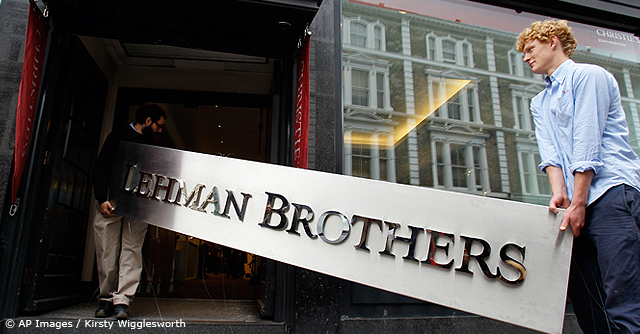
In the panic stage, asset prices reverse course and descend as rapidly as they had ascended. Investors and speculators, faced with margin calls and plunging values of their holdings, now want to liquidate them at any price. As supply overwhelms demand, asset prices slide sharply. One of the most vivid examples of global panic in financial markets occurred in October 2008, weeks after Lehman Brothers declared bankruptcy and Fannie Mae, Freddie Mac and AIG almost collapsed. The S&P 500 plunged almost 17% that month, its ninth-worst monthly performance. In that single month, global equity markets lost a staggering $9.3 trillion of 22% of their combined market capitalization.

Investopedia Online Investing Trade Journal (Retrieved June 12, 2014) http://www.investopedia.com/slide-show/5-steps-of-a-bubble/

LB 2

LB 3

The Caribbean region felt the brunt of the Panic of this 2008/2009 crisis. See this news article posted on Jan 18, 2009 in USA Today, describing the full economic devastation with this title: “Caribbean islands slammed with double financial hit” – http://abcnews.go.com/Business/story?id=6677886&page=1&singlePage=true

For the Caribbean, the lessons of the above 5 Steps of a Bubble was not academic, it was real-life, affecting every man, woman and child. But still, bubbles continue to be impactful; in addition to housing market bubbles, the Caribbean must contend with post-hurricane recoveries.

The Go Lean book envisions the CU as a confederation of the 30 member-states of the Caribbean to do the heavy-lifting of empowering and elevating the Caribbean economy by creating a “single market” for the region. Many benefits are due to abound, but there must be caution not to create bubbles.

The book details the community ethos to adopt to monitor, manage and mitigate risks and the emergence of bubbles. The roadmap also details the executions of the following strategies, tactics, implementations and advocacies to guide progress in the region; (a bubble can result in “1 step forward but 2 steps backwards”):

Anecdote – Puerto Rico – The Greece of the Caribbean Page 18
Community Ethos – Consequences of Choices Lie in the Future Page 21
Community Ethos – Money Multiplier Page 22
Community Ethos – Lean Operations Page 24
Community Ethos – Return on Investments (ROI) Page 24
Community Ethos – Ways to Impact the Future Page 26
Community Ethos – Ways to Impact the Greater Good Page 37
Strategy – Agents of Change – Technology Page 57
Strategy – Agents of Change – Globalization Page 57
Strategy – Agents of Change – Climate Change Page 57
Tactical – Confederating a Non-Sovereign Union Page 63
Tactical – Fostering a Technocracy Page 64
Tactical – Growing Economy – Avoid Economic Bubbles Page 69
Tactical – Growing Economy – Trade and Globalization Page 70
Tactical – Separation of Powers – Central Bank Page 73
Tactical – Separation of Powers – Securities Regulatory Agency Page 74
Tactical – Separation of Powers – Housing and Urban Authority Page 83
Implementation – Ways to Deliver Page 109
Implementation – Ways to Better Manage Debt Page 114
Implementation – Ways to Benefit from Globalization Page 119
Planning – 10 Big Ideas Page 127
Advocacy – Ways to Grow the Economy Page 151
Advocacy – Ways to Control Inflation – Post Natural Disasters Page 153
Advocacy – Ways to Improve Housing Page 161
Advocacy – Ways to Improve for Natural Disasters Page 184
Advocacy – Ways to Foster Technology Page 197
Advocacy – Reforms for Banking Regulations Page 199
Advocacy – Ways to Impact Wall Street Page 200
Advocacy – Ways to Impact Main Street Page 201
Appendix – Controlling Inflation – Technical Details – Quick Recovery Page 320

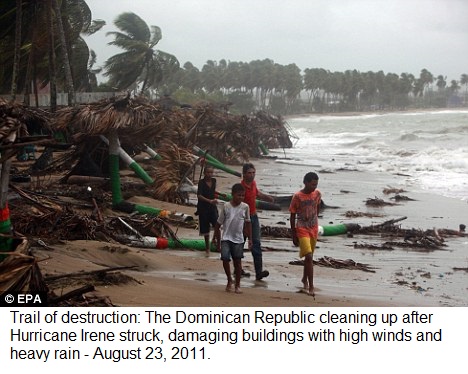
Now is the time for all of the Caribbean, the people and governing institutions, to lean-in for the empowerments described in the book Go Lean … Caribbean. We start by understanding “bubbles”. While the 2008 Great Recession crisis originated as an American bubble, the rest of the world felt its devastating effects. This case-in-point sets the model for the CU to emulate for the Caribbean region; we need a resilient economy that can grow in “ripe” conditions, but avoid any bubble effects. Every year the region is threatened by tropical storms and hurricanes; the spending for recovery, repair and rebuilding can always create a bubble-effect. LB 4

LB 5

This has been the legacy in the past, but now the CU administration is proposed as “new guards” to shepherd the economy to avoid such pitfalls.

The CU/Go Lean roadmap is a complete solution for Caribbean elevation. Despite threats – natural disasters and economic bubbles – the region can be led to a better destination, a better place to live, work and play.

Download the book Go Lean … Caribbean – now!

Share this post:
, ,
[Top]

Remittances to Caribbean Increased By 3 Percent in 2013

Go Lean Commentary

Participation in Caribbean national elections seems to have an additional candidate to vote for: None of the Above.

This is the assertion of the book Go Lean…Caribbean, and many aligned blog submissions, that Caribbean citizens are voting with their “feet and wallet” and leaving their tropical homelands for life in foreign countries. In fact, the book posits that the Caribbean Diaspora amount to 10 million people, compared to 42 million residents in the homeland. A great measurement of the economic activity of this diasporic population is their remittance activity. (Though not all migrants remit back to their homelands).

This book Go Lean…Caribbean serves as a roadmap for the introduction and implementation of the technocratic Caribbean Union Trade Federation (CU). The CU will assume the role and responsibility of empowering the regional economy and measuring trade/financial/remittance activity. The following 3 prime directives are explored in full details in the roadmap:

  • Optimization of the economic engines in order to grow the regional economy to $800 Billion & create 2.2 million new jobs.
  • Establishment of a security apparatus to protect the resultant economic engines.
  • Improve Caribbean governance to support these engines.

A mission of the CU is to minimize the need for Caribbean labor force to migrate to foreign lands for work; and also to invite the Diaspora to repatriate. We need to expand the labor pool at home. But the reality of the Go Lean roadmap is the methodical implementation over a 5 year period, so in the interim, there may still be more prosperous opportunities abroad.

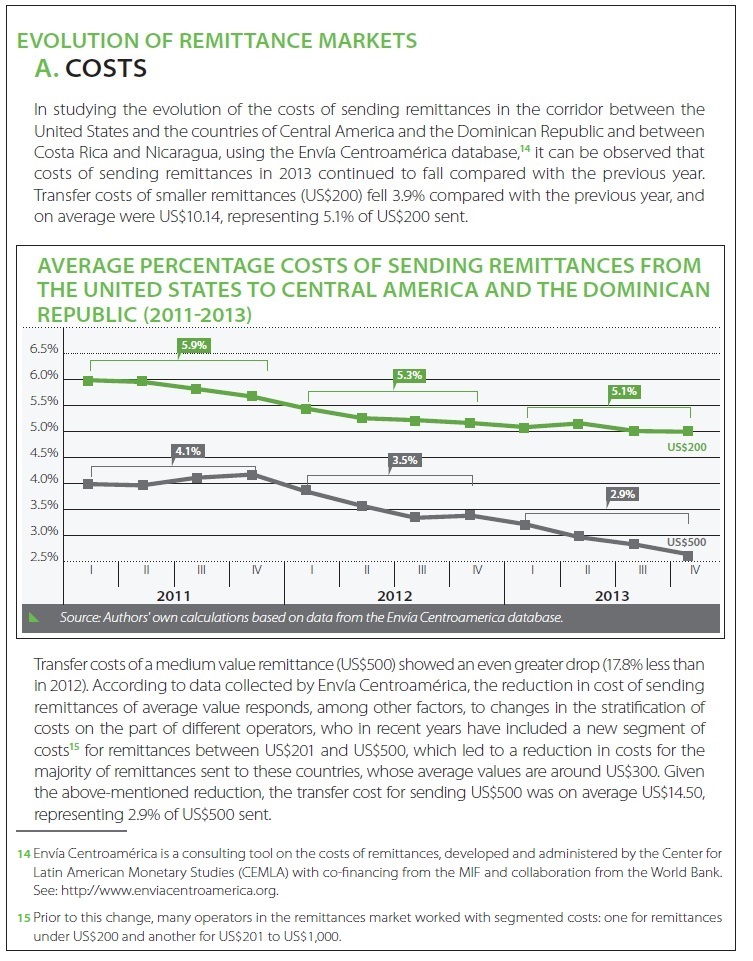
It is what it is! The CU/Go Lean plan then is to optimize the remittance process where possible: lowering the costs of transfers and managing the accompanying foreign currency and economic crime risks.

The reference source for the foregoing article came from the MIF (Multilateral Investment Fund), a member of the Inter-American Development Bank (IDB) Group; the MIF is funded by 39 donors and supports private sector-led development benefitting low-income populations and the poor –-their businesses, their farms, and their households. A core MIF mission is to act as a development laboratory in order to build and support successful micro and SME (Small-Medium-sized Enterprises) business models. [a]

By the Caribbean Journal staff

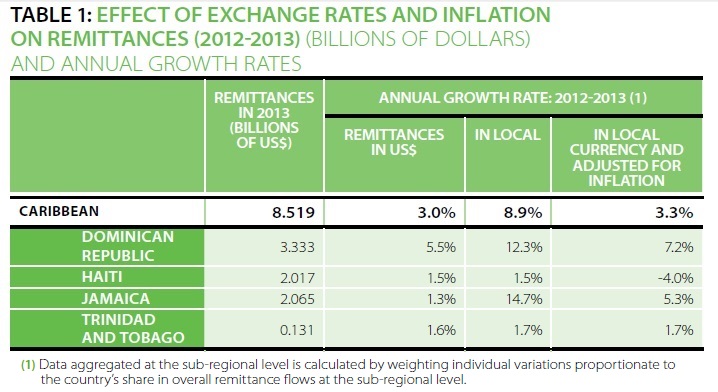
Table 1Remittances to the Caribbean region increased by 3 percent in 2013, according to a new report from the Inter-American Development Bank’s Multilateral Investment Fund.

Remittances to the region totaled $8.519 billion, a 3 percent improvement in US dollar terms, an 8.9 percent increase in local currency and a 3.3 percent improvement in local currency and adjusted for inflation.

“Remittance flows to Latin America and the Caribbean (LAC) remain an important source of income for millions of poor and vulnerable families,” said MIF General Manager Nancy Lee. “Remittance recipients need more access to financial tools that will help them use remittances to save and make investments for their future in areas like education, housing, and starting and growing businesses.”

The Dominican Republic received $3.333 billion USD in 2013, a 5.5 percent improvement, followed by Jamaica, which received $2.065 billion and Haiti, which received $2.017 billion.

Trinidad and Tobago was next with $131 million in remittances.

Of the group, the Dominican Republic saw the largest increase.

The Latin America and Caribbean region received a total of $61.251 billion last year, with the United States the source of about 75 percent of remittances to the region.

See the Table 1 (photo on this page) from the IDB for full details.

Caribbean Journal – Regional News Source (Retrieved 06/11/2014) –http://www.caribjournal.com/2014/06/10/remittances-to-caribbean-increased-by-3-percent-in-2013-report/

The reference source for the foregoing article came from the MIF (Multilateral Investment Fund), a member of the Inter-American Development Bank (IDB) Group; the MIF is funded by 39 donors and supports private sector-led development benefitting low-income populations and the poor –-their businesses, their farms, and their households. A core MIF mission is to act as a development laboratory in order to build and support successful micro and SME (Small-Medium-sized Enterprises) business models. [a]

Another mission of the CU/Go Lean roadmap is to apply lessons from the 2008 Great Recession financial crisis.

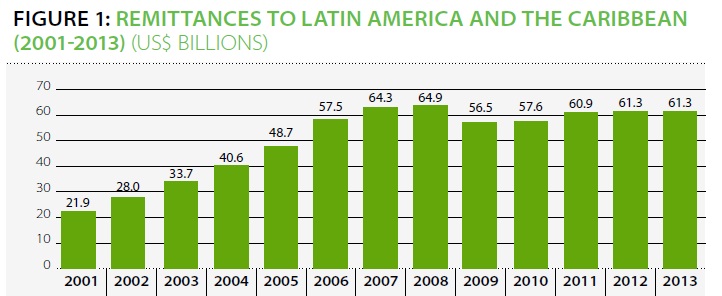
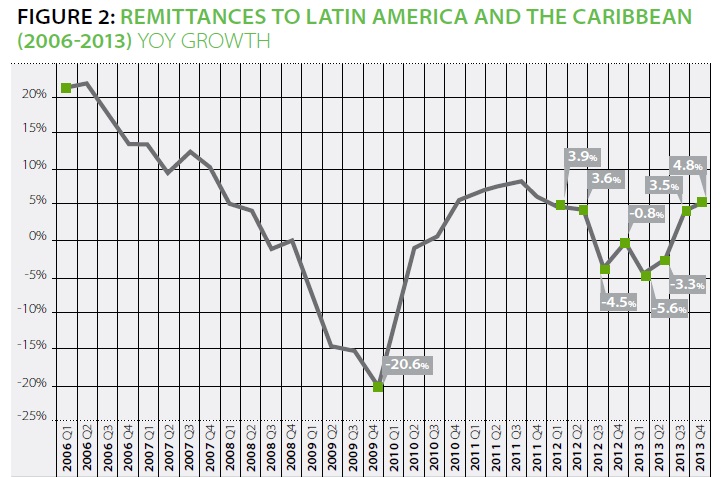
The MIF reports that in the years before the financial crisis of 2008-2009, remittances to the region as a whole experienced average annual growth of 17 percent. After a record high in 2008 of $64.9 billion, there was a sharp drop in 2009 of over 10 percent, followed by an increase in 2011 of 6 percent, and subsequent stagnation that continued up to 2013.

Figure 1

Figure 2

Figure 5

Figure 14

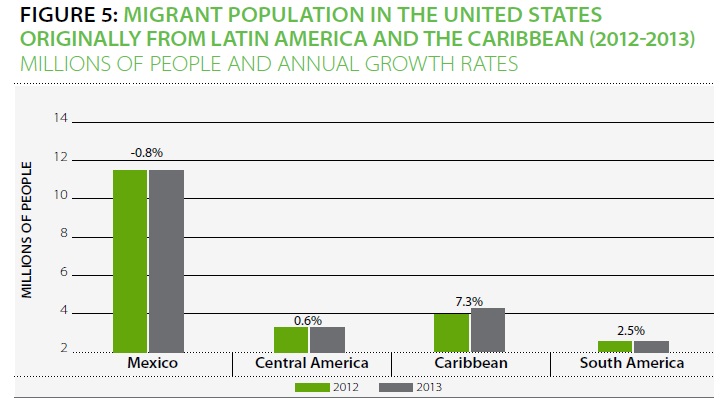
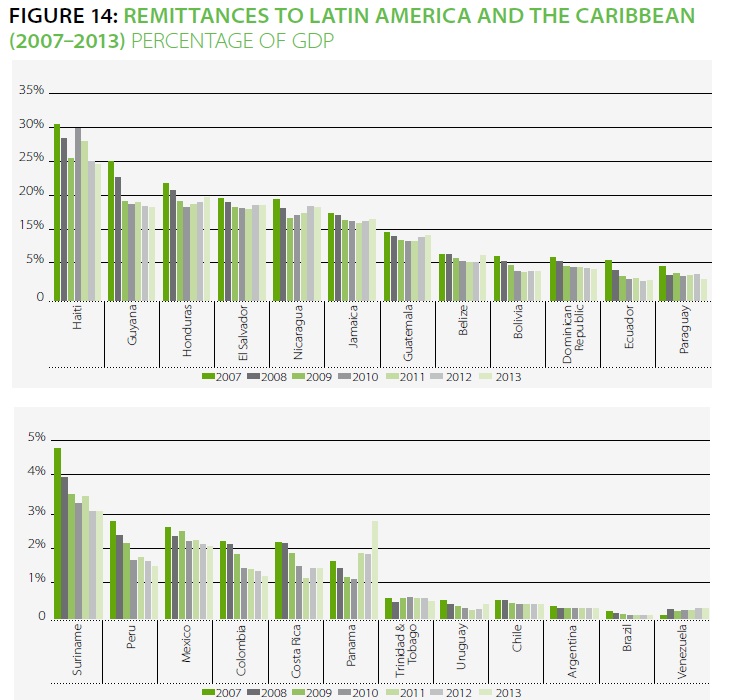
For 2014, macroeconomic projections show an encouraging landscape at the global level; it is predicted that the US economy will continue its path to recovery, as will EU countries, although at a slower pace. Employment data on LAC migrants, in both the United States and Spain, also show a recovery process enabling the prediction of growth in remittances sent from both countries. (See the accompanying charts, figures and tables on this page; sourced from the MIF/IDB report [b]).

This issue of continued fallout from the Great Recession has been a consistent theme of the Go Lean blogs entries as sampled here:

a. https://goleancaribbean.com/blog/?p=841 – Post 2008: Having Less Babies is Bad for the Economy

b. https://goleancaribbean.com/blog/?p=782 – Open the Time Capsule: The Great Recession of 2008

c. https://goleancaribbean.com/blog/?p=709 – Post 2008 Student Debt Holds Back Many Would-be Home Buyers

d. https://goleancaribbean.com/blog/?p=528 – Facebook plans to provide mobile payment services and remittances

e. https://goleancaribbean.com/blog/?p=378 – US Federal Reserve Releases Transcripts from 2008 Meetings

f. https://goleancaribbean.com/blog/?p=353 – Book Review: ‘Wrong – Nine Economic Policy Disasters and What We Can Learn…’

g. https://goleancaribbean.com/blog/?p=235 – Post 2008 Tourism’s changing profile

All in all, the roadmap commences with the recognition that all the Caribbean is in crisis, exacerbated after 2008, with defective business models, underemployment, globalization, and aging demographics. These acknowledgements are pronounced in the Declaration of Interdependence, (Page 13 & 14). The statements are included as follows:

xix.   Whereas our legacy in recent times is one of societal abandonment, it is imperative that incentives and encouragement be put in place to first dissuade the human flight, and then entice and welcome the return of our Diaspora back to our shores. This repatriation should be effected with the appropriate guards so as not to imperil the lives and securities of the repatriated citizens or the communities they inhabit. The right of repatriation is to be extended to any natural born citizens despite any previous naturalization to foreign sovereignties.  

xx.   Whereas the results of our decades of migration created a vibrant Diaspora in foreign lands, the Federation must organize interactions with this population into structured markets. Thus allowing foreign consumption of domestic products, services and media, which is a positive trade impact. These economic activities must not be exploited by others’ profiteering but rather harnessed by Federation resources for efficient repatriations.

xxi.   Whereas the preparation of our labor force can foster opportunities and dictate economic progress for current and future generations, the Federation must ensure that educational and job training opportunities are fully optimized for all residents of all member-states, with no partiality towards any gender or ethnic group. The Federation must recognize and facilitate excellence in many different fields of endeavor, including sciences, languages, arts, music and sports. This responsibility should be executed without incurring the risks of further human flight, as has been the past history.

 xxiv.   Whereas a free market economy can be induced and spurred for continuous progress, the Federation must install the controls to better manage aspects of the economy: jobs, inflation, savings rate, investments and other economic principles. Thereby attracting direct foreign investment because of the stability and vibrancy of our economy.

xxv.   Whereas the legacy of international democracies had been imperiled due to a global financial crisis, the structure of the Federation must allow for financial stability and assurance of the Federation’s institutions. To mandate the economic vibrancy of the region, monetary and fiscal controls and policies must be incorporated as proactive and reactive measures. These measures must address threats against the financial integrity of the Federation and of the member-states.

xxvi.   Whereas the Caribbean region must have new jobs to empower the engines of the economy and create the income sources for prosperity, and encourage the next generation to forge their dreams right at home, the Federation must therefore foster the development of new industries… In addition, the Federation must invigorate the enterprises related to existing … – impacting the region with more jobs.

The vision of the CU is a confederation of the 30 member-states of the Caribbean into an integrated “single market”, thereby fostering economic growth to grow the regional economy to $800 Billion (from the 2010 base of $378 Billion). This growth would be the cause-and-effect of 2.2 million new jobs. No more migrant culture! Tactically, the CU allows for a separation-of-powers between the member-state governments and the new federal agencies, so as to allow a technocratic management approach to simply “deliver” on the Go Lean roadmap, devoid of partisan politics! The following list details the series of community ethos, strategies, tactics, implementations and advocacies necessary to effectuate the change in the region to graduate from this migrant culture, described in the foregoing article and accompanying charts:

Community Ethos – Economic Systems Influence Individual Choices Page 21
Community Ethos – Job Multiplier Page 22
Community Ethos – Lean Operations Page 24
Community Ethos – Return on Investments Page 24
Community Ethos – Ways to Impact the Future Page 26
Community Ethos – Ways to Help Entrepreneurship Page 28
Strategic – Vision – Integrated Region in a Single Market Page 45
Strategic – Vision – Agents of Change Page 57
Tactical – Fostering a Technocracy Page 64
Tactical – Growing to $800 Billion Regional Economy Page 67
Tactical – Separation of Powers Page 71
Tactical – Interstate Commerce Admin – Econometrics Data Analysis Page 79
Implementation – Ways to Pay for Change Page 101
Implementation – Ways to Deliver Page 109
Planning – Big Ideas for the Caribbean Region Page 127
Planning – Lessons Learned from 2008 Page 136
Planning – Ways to Measure Progress Page 147
Advocacy – Ways to Grow the Economy Page 151
Advocacy – Ways to Create Jobs Page 152
Advocacy – Ways to Better Manage Foreign Exchange Page 154
Advocacy – Ways to Impact the Diaspora Page 217
Appendix – Job Multipliers Page 259
Appendix – Trade SHIELD – “Harvest“ Comprehensive Data Analysis Page 264
Appendix – Alternate (Cheaper & More Efficient) Remittance Modes Page 270

The Go Lean roadmap for the CU stresses the importance of a solid data foundation to analyze and measure progress. Since this is a 5-year roadmap, there must be milestones along the way, opportunities to plan-do-review. This approach allows for the proper adjustments to strategies, tactics and operations. The people of the Caribbean deserve every opportunity to deliver success. We need to be able to capture the traffic/data of remittances to all CU countries – only the large member-states were measured in these accompanying charts – and glean intelligence from the analysis. This approach reflects a true technocracy; this reflects the change that is coming to the region. Figure 15

Now is the time for all of the Caribbean, the people and governing institutions, to lean-in for the change that is the Caribbean Union Trade Federation. Now is the time for a viable plan for the millions abroad, and the next generation of young people, to work here at home … to make this region a better place to live, work and play.

Referenced Citations:

a. http://www.iadb.org/en/news/news-releases/2014-06-10/mif-2013-remittances-report,10838.html

b. http://idbdocs.iadb.org/wsdocs/getDocument.aspx?DOCNUM=38842219

Download the Book- Go Lean…Caribbean Now!!!


Share this post:
, ,
[Top]

The need for highway safety innovations – here comes Google

Go Lean Commentary

Don’t text and drive!

TM BlogNo serious, don’t text and drive.

In addition, don’t drink and drive. In fact, don’t subject yourself to any influences while driving: drugs (legal/illegal), distractions and even sleep deprivation. The public service announcements can go on and on. Perhaps what is needed is some tool, some technology that can assist weary drivers. Here comes Google…

… and Mercedes Benz, Nissan, GM, Ford, etc..

Bet your bottom dollar that other automakers will step up and forge a “space race” for progress in this industry sector. NBC’s Craig Melvin contributed this story – see VIDEO – on the Today Show on Tuesday June 10; (http://www.today.com/video/today/55372906), as a supplement to the foregoing news article fron the CNET trade journal.

To the victor goes the spoil.

By: Steven Musil
Title: Google unveils self-driving car

Google has built a self-driving car from scratch — a vehicle that has no steering wheel or accelerator or brake pedals.

A two-seater prototype of the vehicle was unveiled Tuesday by Google CEO Sergey Brin during an onstage interview at the Recode Code Conference in Palos Verdes, Calif. Instead of the car controls indispensable to today’s drivers, Google’s prototype relies on built-in sensors and a software system to safely maneuver the vehicle.

“We took a look from the ground up of what a self-driving car would look like,” Brin said.

The goal of the project is for self-driving cars to be “significantly” safer than human-driven cars in a few years, Brin said. He said that that the project has experienced no crashes during testing, but the cars only operate at speeds of around 25 miles per hour, which gives them more time to react to obstacles.

Google’s self-driving car is an ambitious project that hopes to end human error behind the wheel with a very Google-y solution: software. The tech titan’s robo-cars have logged more than 700,000 miles since it began working on the vehicles in 2009. Google expects to have them ready for public use between 2017 and 2020.

A demonstration earlier this month by Google’s Self-Driving Car Project team shows how the vehicle depends on a Google-made topographical map to get a sense of what it should expect. The map includes the height of the traffic signals above the street, the placement of stop signs and crosswalks, the depth of the sidewalk curb, the width of the lanes, and can differentiate lane markings from white and dashed to double-yellow.

The company announced major progress last month in improving how the system responds to objects not on a map. In a YouTube video, the Web giant demonstrated some of the circumstances its self-driving cars now handle, such as bicyclists signaling to move across a lane of traffic, railroad crossings, and parked cars protruding into the lane of traffic.

While Google has been at the forefront of developing and testing self-driving technologies, it’s not alone in its driverless vision for the future. Nissan, General Motors, and automotive supplier Continental expect self-driving cars on the road by 2020. Ford Motor Co. has unveiled a self-driving prototype car. Telsa Motors wants its system to handle 90 percent of driving duties by 2016 — a more aggressive schedule and one that’s more like what Google has said is attainable.

CNET – Tech Industry trade Magazine (Posted 05-27-2014; retrieved 06-10-2014) –
http://www.cnet.com/news/google-unveils-self-driving-car-sans-steering-wheel/

Visit NBCNews.com for breaking news, world news, and news about the economy

TM Blog 2Highway safety in the US is in crisis. Every state has banned texting-&-driving. Additionally, some states (i.e. California) even banned talking … on a mobile phone without a hands-free device. Just this past week, famed comedian Tracy Morgan was seriously injured in a car accident with a semi-trailer (18-wheeler) truck. The initial reports indicate that the truck driver may have worked/driven a 24-hour shift … with unavoidable fatigue factors. See related article at: http://www.foxnews.com/entertainment/2014/06/10/tracy-morgan-crash-walmart-truck-driver-center-accident-investigation/

This constitutes a crisis in highway safety; and a crisis, any crisis is a terrible thing to waste!

This is the premise of the book Go Lean…Caribbean, that a crisis can always be exploited to sieze opportunities. This race to create technological solutions is in response to dealing with the highway safety crisis – the resultant innovations will spurn new economic activity. This book purports that a new industrial revolution is emerging and the Caribbean people and society must engage. This is pronounced in the Declaration of Interdependence (Page 14), with this opening statement:

xxvii.  Whereas the region has endured a spectator status during the Industrial Revolution, we cannot stand on the sidelines of this new economy, the Information Revolution. Rather, the Federation must embrace all the tenets of Internet Communications Technology (ICT) to serve as an equalizing element in competition with the rest of the world. The Federation must bridge the digital divide and promote the community ethos that research/development is valuable and must be promoted and incentivized for adoption.

This book Go Lean… Caribbean, serves as a roadmap for the introduction and implementation of the Caribbean Union Trade Federation (CU). This effort will marshal the region to avail the opportunities associated with technology and automobiles – there is a plan to foster a local automotive industry. In fact The CU/Go Lean roadmap has these 3 prime directives:

  • Optimization of the economic engines in order to grow the regional economy.
  • Establishment of a security apparatus to protect the resultant economic engines.
  • Improve Caribbean governance to support these engines.

There is a lot at stake for the Caribbean in considering this subject area. According to the foregoing article and VIDEO, research-and-development (identified as a community ethos) has begun to deploy workable solutions. There is the need for a Caribbean solution. Engaging this process early can result in many new jobs, and most importantly, many new opportunities to save lives and impact the Greater Good.

The book details other ethos to adopt, plus the executions of the following strategies, tactics, implementations and advocacies to forge research-and-development and industrial growth in Caribbean communities:

Community Ethos – Deferred Gratification Page 21
Community Ethos – People Respond to Incentives Page 21
Community Ethos – Job Multiplier Page 22
Community Ethos – “Crap” Happens Page 23
Community Ethos – Lean Operations Page 24
Community Ethos – Return on Investments (ROI) Page 24
Community Ethos – Ways to Impact the Future Page 26
Community Ethos – Ways to Help Entrepreneurship Page 28
Community Ethos – Ways to Impact Research & Development Page 30
Community Ethos – Impact the Greater Good Page 37
Strategy – Agents of Change – Technology Page 48
Tactical – Fostering a Technocracy Page 64
Tactical – Growing Economy – New High Multiplier Industries Page 68
Separation of Powers – Public Works & Infrastructure Page 82
Separation of Powers – Department of Transportation Page 84
Implementation – Ways to Pay for Change Page 101
Implementation – Ways to Deliver Page 109
Planning – 10 Big Ideas Page 127
Planning – Lessons from Detroit Page 140
Advocacy – Ways to Grow the Economy Page 151
Advocacy – Ways to Create Jobs Page 152
Advocacy – Ways to Foster Technology Page 197
Advocacy – Ways to Improve Transportation Page 205
Advocacy – Ways to Develop the Auto Industry Page 206

Historically, forging change in the automotive sphere of the Caribbean has been a “tall order”. The region was very slow to adopt common sense provisions like mandatory seatbelts and unleaded gasoline. So managing change for the region must be viewed as both an art and a science. For change is something the region must adapt to; and managing this change is something the CU will spearhead.

The insights from the foregoing article and embedded VIDEO help us to appreciate that the future is now! (Though, there is no talk of flying cars). We must engage, empower and equip the people of the Caribbean if we want to make our home a better place to live, work and play. And we must do it now. Everyone in the Caribbean is urged to lean-in to this roadmap.

Download the book Go Lean … Caribbean – now!

Share this post:
, , , , , ,
[Top]

Is a Traditional 4-year Degree a Terrible Investment?

Go Lean Commentary

This respected resource, Howard Tullman[a], asserts that 4-year Liberal Arts college degrees are bad investments for students. (Play VIDEO here).

VIDEO – Why a Traditional 4-Year Degree is a Terrible Investment | Inc. Magazine – https://youtu.be/ch4D5-9jdbk


Published on Jun 6, 2014 – Howard Tullman, CEO of 1871, explains exactly how over valued, and ripe for disruption, traditional higher education has become.

The book Go Lean…Caribbean stakes the claim even deeper, that traditional college education abroad have been an even more disastrous policy for the Caribbean in whole, and each specific country in particular.

This assertion requires a differentiation of the macro, versus the micro.

From a strictly micro perspective, college education is great for the individual; research by Economists have established the dogma that each additional year of schooling increase an individual’s earnings by about 10%. (Go Lean quotes these economic studies at Page 270). This should be viewed as a very impressive rate of return on an education investment (ROI). But from the macro perspective, (for the community), the ROI is different for the Caribbean; its not a gain, but rather a loss due to the incontrovertible brain drain.

Previous blog-commentaries on this same subject matter have quoted the Jamaican proverb of “fattening frogs for snake” – (see https://goleancaribbean.com/blog/?p=459). This is because more and more of the Caribbean college educated citizens abandon their tropical homes for foreign shores in the US, Canada and Europe. What’s worst, they take their Caribbean-funded education and skill-sets with them – sometimes taking any hope for collectability for student loans as well, thereby imperiling future generation of scholars from the benefits of a college education.

This broken system has many challenges and must be addressed.

Change has now come. The driver of this change is technology and globalization. Under the tenants of globalization, the Caribbean labor pool is a commodity; their talents are subject to the economic realities of supply-and-demand. So if there is greater reward for these Caribbean citizens to “take their talents to South Beach … or South Toronto, or South London”, it is hard to argue a contrarian stance. The Go Lean book posits therefore that the governmental administrations of the region should invest in higher education options with as much technological advances (e-Learning) as possible, for its citizens. The bottom-line motive should be the Greater Good.

The Go Lean roadmap provides turn-by-turn directions on how to reform the Caribbean tertiary education systems, economy, governance and Caribbean society as a whole. This roadmap asserts that the Caribbean is in crisis, and that this “crisis would be a terrible thing to waste”. As a planning tool, the roadmap commences with a Declaration of Interdependence, pronouncing the approach of regional integration (Page 12 & 14) as a viable solution to elevate the region’s educational opportunities.

xix. Whereas our legacy in recent times is one of societal abandonment, it is imperative that incentives and encouragement be put in place to first dissuade the human flight, and then entice and welcome the return of our Diaspora back to our shores

xxi. Whereas the preparation of our labor force can foster opportunities and dictate economic progress for current and future generations, the Federation must ensure that educational and job training opportunities are fully optimized for all residents of all member-states, with no partiality towards any gender or ethnic group. The Federation must recognize and facilitate excellence in many different fields of endeavor, including sciences, languages, arts, music and sports. This responsibility should be executed without incurring the risks of further human flight, as has been the past history.

xxvii. Whereas the region has endured a spectator status during the Industrial Revolution, we cannot stand on the sidelines of this new economy, the Information Revolution. Rather, the Federation must embrace all the tenets of Internet Communications Technology (ICT) to serve as an equalizing element in competition with the rest of the world. The Federation must bridge the digital divide and promote the community ethos that research/development is valuable and must be promoted and incentivized for adoption.

This book Go Lean… Caribbean, serves as a roadmap for the introduction and implementation of the Caribbean Union Trade Federation (CU). This represents change for the region. The CU/Go Lean roadmap has 3 prime directives:

  • Optimization of the economic engines in order to grow the regional economy.
  • Establishment of a security apparatus to protect the resultant economic engines.
  • Improve Caribbean governance to support these engines.

The Go Lean book posits that education is a vital consideration for Caribbean economic empowerment, but there have been a lot of flawed decision-making in the past, both individually and community-wise. The vision of the CU is a confederation of the 30 member-states of the Caribbean to do the heavy-lifting of championing better educational policies. The book details those policies; and other ethos to adopt, plus the executions of the following strategies, tactics, implementations and advocacies to impact the tertiary education in the region:

Community Ethos – Deferred Gratification Page 21
Community Ethos – People Respond to Incentives Page 21
Community Ethos – Job Multiplier Page 22
Community Ethos – Lean Operations Page 24
Community Ethos – Return on Investments (ROI) Page 24
Community Ethos – Ways to Impact the Future Page 26
Community Ethos – Ways to Foster Genius Page 27
Community Ethos – Ways to Help Entrepreneurship Page 28
Tactical – Separation of Powers – Education Department Page 85
Tactical – Separation of Powers – Labor Department Page 89
Advocacy – Ways to Grow the Economy Page 151
Advocacy – Ways to Create Jobs Page 152
Advocacy – Ways to Improve Education Page 159
Advocacy – Ways to Improve Governance Page 169
Advocacy – Ways to Improve Libraries Page 187
Appendix – Education and Economic Growth Page 258
Appendix – Measuring Education Page 266

Now is the time for all of the Caribbean, the people and governing institutions, to lean-in for the changes described in the book Go Lean … Caribbean. We welcome the efforts of entrepreneur Howard Tullman, and his desire to empower other entrepreneurs. This is due to another fact certified by Economists, that the majority of new jobs come from small-medium-sized enterprises (SMEs). So when there is the need for specific job training or business development skills, prudence dictates some facilitation for these skills. Education reform for the Caribbean should therefore be in vogue. This need for reform synchronizes with the CU/Go Lean effort.

The Go Lean roadmap is a complete solution for Caribbean elevation, thus helping the region to be a better place to live, work, learn and play.

🙂

Download the book Go Lean … Caribbean – now!

***************
a.   Appendix – Howard A. Tullman:

Howard A. TullmanAn American serial entrepreneur, venture capitalist, educator, writer, lecturer, and art collector. He currently serves as Chairman of Tribeca Flashpoint Media Arts Academy and of HYDR>BOX, LLC., CEO of 1871[e] (Chicago’s entrepreneurial hub for digital startups), and the Managing Partner of Chicago High Tech Investment Partners, LLC.

Entrepreneurial career
Tullman’s entrepreneurial career spans four decades and a broad swath of industries. As of May 2011, Tullman has started 12 companies, including Tribeca Flashpoint Media Arts Academy, CCC Information Services, Tunes.com, the Rolling Stone Network, Imagination Pilots, Experiencia, and others.[b] Tullman has also been tapped for senior executive positions at established companies such as Kendall College, where his expertise in turn-arounds saved the school from going into bankruptcy in 2003.[b]

Disruptive Innovation in education
Throughout his career in higher education, Tullman has been a proponent of revolutionizing the industry through disruptive innovation which is Clayton M. Christensen’s term to describe new, rapidly-iterated innovations that start from the bottom of traditional industries by providing small-scale and relatively inexpensive solutions (which quickly expand and improve) and which disrupt those existing marketplaces by displacing earlier, out-of-date programs with less expensive, faster and more effective solutions typically based on emerging new technologies.

As an early adopter of this philosophy, Tullman was among the first to bring disruptive innovation to for-profit education as evidenced in his work at Kendall College, Experiencia, and Tribeca Flashpoint Media Arts Academy.[c] In each of these education ventures, Tullman sought to create educational environments that fed creativity while providing skill sets for future successful employment in the new digital world:

At Kendall College, Tullman transformed a 75 year old failing college into a new entity and moved the campus from its home in Evanston to Chicago in a brand-new, purpose-built facility in order to put students closer to the real-world opportunities available in their fields (especially culinary and hospitality) and to provide them with the newest tools, technologies and equipment available.

At Experiencia (the parent of ExchangeCity and Earth Works), Tullman developed hands-on, learning experiences for children that reinforced the lessons learned in the classroom in a simulated city environment. Innovative partnerships with dozens of major businesses provided resources and access for the students to experience the real world of work.

At Tribeca Flashpoint Academy, Tullman and his partners designed and developed a hands-on, team-based, cross-disciplinary, fast-track approach to digital media arts training, allowing students to learn digital technologies faster and more economically than at traditional four-year competitors.

Tullman is also an outspoken opponent of tenure in education and the turf wars and lack of interdepartmental collaboration among faculty.[d]

Tullman’s innovations in education have been consistent with the high-end vocational education visions shared by Sir Ken Robinson, David Brooks, and Thomas Friedman, but have the additional benefit of being actually implemented and in use today.

Citations:
b.   Black, Johnathan (May 2011). “Howard Tullman’s Flashpoint Academy: A Digital-Arts Alternative to the Four-Year College Degree”. Chicago Magazine. Retrieved November 27, 2012
c.    Meyer, Ann (January 14, 2008). “Howard Tullman provides business lesson in running for-profit schools”. Chicago Tribune
d.   Tullman, Howard. “Why the Chicago Teachers’ Strike Will Help Education Entrepreneurs”. Inc.com. Inc. Retrieved April 22, 2013.
e.    1871 = Year of the Great Chicago Fire


Share this post:
, , ,
[Top]

The Art & Science of Temporary Stadiums – No White Elephants

Go Lean Commentary

Learn from Greece – Why build expensive permanent stadiums for temporary (sports/cultural) events, when there is such an effective art and science with temporary stadiums?! This important lesson was ignored in Brazil for the FIFA World Cup 2014.

The book Go Lean…Caribbean, serving as a roadmap for the introduction and implementation of the technocratic Caribbean Union Trade Federation (CU), advocates this lesson and declares that “a mission of the CU is to forge industries and economic drivers around the individual and group activities of sports and culture”. There is the need for temporary stadiums for events and festivals; (see Temporary Structures Models & Systems Appendix below).

This temporary stadium was erected in Germany for the 2006 FIFA World Cup championship game.

This temporary stadium was erected in Germany for the 2006 FIFA World Cup championship game.

The need to optimize sports/cultural events & festivals have previously been addressed in the following Go Lean blogs entries:

a. https://goleancaribbean.com/blog/?p=1148 Sports Bubble – Franchise values in basketball
b. https://goleancaribbean.com/blog/?p=1020 Sports Revolutionary: Advocate Jeffrey Webb
c. https://goleancaribbean.com/blog/?p=676 PM Christie responds to critics of Bahamian ‘Carnival’
d. https://goleancaribbean.com/blog/?p=498 Book Review: ‘The Sports Gene’
e. https://goleancaribbean.com/blog/?p=334 Bahamians Make Presence Felt In Libyan League
f. https://goleancaribbean.com/blog/?p=318 Collegiate Sports in the Caribbean
g. https://goleancaribbean.com/blog/?p=60 Could the Caribbean Host the Olympic Games?

All in all, the book and accompanying blogs declare that the region needs to learn lessons from other sporting venues like Athens-Greece, South Africa and Brazil. The people of the Caribbean cannot afford such monumental mis-steps – see VIDEO below. So this Go Lean… Caribbean roadmap applies the lessons learned and details the following 3 prime directives:

  • Optimization of the economic engines in order to grow the regional economy to $800 Billion & create 2.2 million new jobs.
  • Establishment of a security apparatus to protect the resultant economic engines.
  • Improve Caribbean governance to support these engines.

This roadmap commences with the recognition that genius qualifiers can be found in many fields of endeavor, including music, sports and the performing arts. To exploit the economic benefits of these fields require some facilitation, like stadia, arenas and theaters. The roadmap pronounces the need for the region to confederate in order to invest in the facilitations for the Caribbean genius to soar. These pronouncements are made in the Declaration of Interdependence, (Pages 13 & 14) as follows:

xxi.      Whereas the preparation of our labor force can foster opportunities and dictate economic progress for current and future generations, the Federation must ensure that educational and job training opportunities are fully optimized for all residents of all member-states, with no partiality towards any gender or ethnic group. The Federation must recognize and facilitate excellence in many different fields of endeavor, including sciences, languages, arts, music and sports. This responsibility should be executed without incurring the risks of further human flight, as has been the past history.

xxii.      Whereas sports have been a source of great pride for the Caribbean region, the economic returns from these ventures have not been evenly distributed as in other societies. The Federation must therefore facilitate the eco-systems and vertical industries of sports as a business, recreation, national pastime and even sports tourism – modeling the Olympics.

The Go Lean vision is a confederation of the 30 member-states of the Caribbean forming a proxy organization to do the heavy- lighting of building, funding and maintaining sports/event venues. The strategy is to deploy temporary structures where appropriate on CU fairgrounds, as some events may require specific configurations, but only for a few days every year. Tactically, the Go Lean roadmap calls for a separation-of-powers between the member-state governments and the new federal agencies; so the CU will serve as the landlord for local, national and regional events.

The subsequent article and VIDEO (from the cable channel HBO’s documentary Real Sports) describes the folly for expensive permanent stadiums for short-term events; especially while the art and science of temporary stadiums is so effective.

Title: HBO’s Real Sports tackles the white elephants of the World Cup and Olympics
Posted by Joe Lucia on May 20, 2014 10:31
(http://awfulannouncing.com/2014/hbos-real-sports-tackles-the-white-elephants-of-the-world-cup-and-olympics.html)

The lead story of May’s episode of Real Sports on HBO tackles the World Cup, but in a different way

Next month’s World Cup in Brazil (starting June 12, 2014) has resulted in numerous brand new soccer stadiums being built all across the country. Once the World Cup ends, the stadiums will more than likely remain dormant – which is where the “white elephants” title of the segment comes into play. In South Africa four years ago, ten stadiums were built at the cost of billions of dollars. Nine of those stadiums stand relatively unused today.

The same thing happens when countries host the Olympics – it doesn’t take too much effort to find evidence of stadiums or arenas being built solely to hold events and then be used for nothing or razed years later. The 2004 Olympics in Athens are a stark example of the waste that goes into holding events like the Olympics and the World Cup, as many of the arenas and stadiums built for the events stand empty.

Perhaps even more shocking – the organizers of these events in those host countries openly admit to having no plan for the future of the venues. The Greek economy collapsed in large part to the massive amount of waste that went into the Olympics a decade ago, with the crumbling stadiums as reminders of that waste.

Today, Brazil is preparing by the World Cup by spending more money than any country in history. A brand new, $270 million stadium was built in the remote town of Manaus for just four games this World Cup. Manaus is so remote that many Brazilians can’t even drive there. Materials to build the stadium were shipped from Portugal, across the Atlantic Ocean and transported down the Amazon River. All that for four games in a town that HBO described as “a weigh station.”

The organizers are oblivious to this. The designer of the stadium in Manaus claims that when people watch the games on television, they will become aware of the city, and tourism and investment opportunities will increase. Apparently, eight hours of soccer over the month of June will create all of that goodwill.

For a country like Brazil, bathed in poverty, to burn away billions of dollars on stadiums and arenas for the World Cup and the 2016 Olympics is shameful. Once the World Cup ends and Olympics preparation begins, homes in Rio de Janeiro will be razed to make room for the venues, sending many Brazilian citizens into homelessness for the sake of a two week sporting event.

in a country like Brazil that is teetering on the edge of financial chaos, dumping billions of dollars into sports while a bulk of your citizens are poor, starving, and lacking healthcare seems like a recipe for a disaster, with nothing but empty stadiums and a page on Wikipedia to show for it when all is said and done.

VIDEO: Real Sports with Bryant Gumbel: Episode #206 Web Clip – White Elephants (HBO Sports) – http://youtu.be/lHUiyxKgg1s

Jon Frankel travels to Athens, Greece plus Manaus and Rio de Janeiro in Brazil and looks for answers to the question of: Are billions being wasted on World Cup and Olympic venues?

The Go Lean book details these series of community ethos, strategies, tactics, implementations and advocacies designed to re-boot the delivery of the regional solutions, so badly needed and hoped for:

Community Ethos – Ways to Foster Genius Page 27
Community Ethos – Ways to Promote Happiness Page 36
Strategic – Visitors – Snow Birds at RV Campgrounds Page 55
Strategic – Staffing – Events at Fairgrounds Page 55
Tactical – Fostering a Technocracy Page 64
Tactical – Separation of Powers – Sports & Culture Administration Page 81
Tactical – Separation of Powers – Fairgrounds Administration Page 83
Implementation – Steps to Implement Self-Governing Entities Page 105
Implementation – Ways to Deliver Page 109
Planning – Ways to Make the Caribbean Better Page 131
Advocacy – Ways to Grow the Economy Page 151
Advocacy – Ways to Improve Local Government – Parks & Recreation Page 169
Advocacy – Ways to Impact Events Page 191
Advocacy – Ways to Promote Fairgrounds Page 192
Advocacy – Ways to Foster Technology Expositions Page 197
Anecdote – Model of Miami-DadeCounty Youth Fair Page 227
Advocacy – Ways to Improve Sports Page 229
Advocacy – Ways to Improve the Arts Page 230
Advocacy – Ways to Promote Music Page 231
Advocacy – Ways to Impact Urban Living – Sports Leagues Page 234
Temporary Stadiums - Golf

This stadium is the Pakar Seating Grandstand system. It is so versatile that it’s suitable for any type of Golf Competition event.

The foregoing article discourages investment in permanent venues unless there is a solid long-term business plan. The Go Lean roadmap concurs – Greece did not recover from the flawed Olympic build-out for facilities that were never used again after the 2004 Games. On the other hand, here is the encouragement and recommendation to develop fairgrounds and deploy temporary stadia, arenas and theaters. Imagine a golf tournament; no one would expect bleachers and grandstands at the putting greens to be permanent structures. No, there is a place for temporary structures in the world of sports.

Temporary Stadiums - Beach Volleyball

The Bondi Beach Volleyball Stadium was constructed for the Sydney 2000 Olympic Games and stood for just six weeks. The temporary stadium was constructed on the world-famous Bondi Beach and had over 10,000 seats.

There is one sport, Beach Volleyball, which only uses temporary bleachers/grandstands – 100 percent.
So there is a place for the arts & sciences of temporary structures. There is the need for their economic impact.

The Go Lean roadmap anticipates 21,000 direct jobs at fairgrounds and sports enterprises throughout the region.

Now is the time for all of the Caribbean, the people and governing institutions, to lean-in for the empowerments of the Caribbean Union Trade Federation. Now is the time to make this region a better place to live, work and play. 🙂

Download the free e-Book of Go Lean … Caribbean – now!

========================

*** APPENDICES ***

Appendix A – Sample New Stadiums for Brazil
The permanent structures call for more elaborate construction schedules and risks. Some delays have been unavoidable – see this article (photos) on the Sao Paulo stadium slated for the opening game on June 12, 2014; posted and retrieved 06/04/2014:

http://www.businessinsider.com/bleachers-at-sao-paulo-world-cup-stadiums-2014-6#ixzz33iMAwtEf

Brazil prepares…
When Brazil drafted plans to host the upcoming World Cup, Natal, the Atlantic beach destination was exactly the type of city it wanted to show off. Five years later, and four weeks before kickoff, little besides the arena and a remote, untested airport are complete.

Almost half the more than $1.3 billion in promised developments [in Natal] never began. What did [begin] has languished, including ongoing road work that has rendered the stadium’s outskirts a raw sprawl of rebar, dust and concrete. (Reuters)

An aerial view of the Arena Pantanal soccer stadium in Cuiaba, April 25, 2014. Cuiaba is one of the host cities for the 2014 World Cup in Brazil. See photos here (REUTERS/Joel Marcos):

Temporary Stadiums - Natal

An Aerial view of the Arena das Dumas from January 22, 2014; this stadium will host matches for the 2014 soccer World Cup.

Temporary Stadiums - Cuiaba

This is the incomplete stadium in Natal; with 4 weeks before the first event, the infrastructural improvements for the surrounding areas have still not been completed.

Temporary Stadiums - Sao Paulo

People stand in the bleachers during an infrastructure test at Arena de Sao Paulo Stadium, one of the venues for the 2014 World Cup, in the Sao Paulo district of Itaquera April 26, 2014.

Appendix B – Temporary Structures Models & Systems
Many examples of successful temporary stadia, arenas and theaters abound – see photos here.

Here are 2 reputable vendors for providing these products and services.

1. PAKAR Grandstand is extremely versatile, therefore, it can be installed either as a PERMANENT or REMOVABLE Grandstand. It can be displaced and re-installed at any location quickly and easily. The system of frames is pre-assembled with an interlocking system, ties, braces, beams and deck units that locks together for fast assembly. Our Grandstand can be installed on any type of surface i.e. concrete, grass and sand (Desert). It can be installed on a slope depending on soil condition. Our system can be used both Outdoor and Indoor. For Outdoor use, it can be equipped with a roof system (Complete roofing or Semi-roofing). Source: http://www.pakar-seating.com/

Temporary Stadiums - Padel

Padel is a relatively new racquet sport that is extremely popular in Spain. The logistics of this platform accommodates each individual sports event and is 600 square meters in size and has 3,000 seats around it.

Temporary Stadiums - Soccer

This stadium is a modular stadium built by NUSSLI who has developed flexible and sustainable concepts for popular global sports and cultural events

Temporary Stadiums - Theater

This stadium is not only for sporting events, but it is ideal for cultural activities as well.

Grandstand bleachers for a drag racing configuration

2. Temporary Stadium, Modular Stadium Construction, Stadia Expansion.

NUSSLI provides complete modular stadiums and arenas or additional grandstands – with or without roofing. We offer our stadium construction solutions for rental (temporary) or sale (permanent).

The experience gained from multifaceted stadium projects around the world makes NUSSLI a reliable partner in modular stadia construction and in stadium expansion. NUSSLI‘s mobile stadia fulfill the highest demands in regard to safety, functionality, and architecture.

The modular stadium® can be adapted to meet changing requirements and individual customer needs over and over again. The stadium can be installed in virtually no time and removed just as quickly after use.

The NUSSLI service range in stadium construction:
•Stadia and arenas (modular, temporary, permanent, mobile)
•Stadium expansion (modular, temporary, permanent)
•Additional grandstand, roofing
•Steel tube grandstand
•Service buildings

Modular Stadium® – a Convincing System.
Those who modularly build or expand stadiums and arenas enjoy considerable advantages over those using the traditional building method. The key factors of modular stadium construction are savings in cost and time.

Cost advantage: The use of modules can be temporally limited, therefore avoiding costs for possible surplus capacities. The standardization shortens planning and construction processes.

Fast and flexible: modular stadium constructions or expansions by NUSSLI beat any other system in regard to installation speed.
Source: http://www.nussli.us/services/stadium-construction.html

 Temporary Stadiums - Photo 1Temporary Stadiums - Grandstands Temporary Stadiums - Slopings 1 Temporary Stadiums - Slopings 2 Temporary Stadiums - Slopings 3

Share this post:
, , , , ,
[Top]