Category: Planning

Self-employment on the rise in the Caribbean – World Bank

Go Lean Commentary

Photo - Caribbean Commercial FishermenThere is the desire to make the Caribbean a better place to live, work and play. At the root, any serious attempt at this objective must start with the creation of new jobs. The book Go Lean … Caribbean is one such attempt. It presents the roadmap to implement the Caribbean Union Trade Federation (CU), and with this effort, create 2.2 million new jobs over a 5 year period. That is the summary of the roadmap. But the “devil is in the details”. How to create so many jobs in such a short interval?

In considering the lessons from other societies, it can be seen that one key is entrepreneurship.

The experiences of North America and Europe indicate that small firms are primary sources for new employment. While entrepreneurship is not new for the Caribbean, the CU strategy of focused incubators is new. This requires support services to ignite and spur start-up companies. The exact details of the commission to help entrepreneurship are spelled out on Page 28 of the book. The book relates that successful entrepreneurship requires a new community ethos; the most crucial help coming from government authorities in protecting property rights.

MIAMI, United States – The World Bank says while self-employment is on the rise in the Caribbean, quality jobs remain elusive.

The Washington-based financial institution, which launched a new report here, said almost 70 per cent of employees in the Caribbean work for businesses with five or fewer employees, compared to 60 per cent in Latin America.

But while entrepreneurship is often considered to be a driver of development, the World Bank said the resulting companies grow at a much slower rate than in other middle-income regions.

Furthermore, the high percentage of small businesses reflects a lack of quality jobs in the region’s larger or multinational businesses, the bank said.

Declaring that “this should ring warning bells,” the report notes that, in the Caribbean, almost 70 per cent of business owners have opened a business out of fear of losing their job or because jobs were not available.

The report notes that, in the past 10 years, Latin America and the Caribbean have “benefited significantly from favourable economic tailwinds”.

But it said, as these tailwinds die “growth has to come from within” adding that innovation was “key if the Caribbean is to build upon the social gains of recent years”.

The report notes that Caribbean firms develop new products less frequently than their counterparts in other developing regions.

It said in Jamaica, for example, the rate of product development is less than half than that of Thailand or Macedonia, adding that while Grenada topped the region for new product development, six of the “worst offenders” also hailed from the Caribbean.

The report did not identify these “worst offenders” but cites four possible reasons for the less frequent development of new products in the Caribbean – Human capital, intellectual property, risk taking and logistics.

It said while science, technology and engineering graduates are at a premium, it’s a scarcity that has a direct effect on innovation.

Closely related to the quality of education the report recognises this will be a major challenge for the region.

The report notes that with separate laws govern-ing copyright in every country “the complicated panorama lends less protection to the product creators, deterring much-needed investment for new product research and development”.

It said a “deep cultural shame of failure is hindering innovation by dissuading entrepreneurs from taking risks”.

The report states that this was evident as much in “individual reticence at a business level as in the low levels of investment in research and development, especially from the private sector” and that modernising ports, transport and customs can add a competitive edge to products from the region.

Currently, it said poor public services, communication links and transport infrastructure are hindering efforts to boost production capacity in the region.

The report states younger firms “far outshone” more established ones in terms of job creation.

“The key is identifying and supporting those startups, which have the most potential through start up programmes, subsidies or policy.”

Patricia Ferreira from getAbstract, a company which provides training to those looking to start their own business, told the World Bank that “everyone has identified that innovation is definitely the way to move forward. Now, how to take this concept of innovation, break it down into microlearning moments so they can move this innovation train forward”.

It pointed to a young Barbadian entrepreneur Justin Quinlan, who is the chief executive officer of a successful start-up, “but that wasn’t always the case”.

Encouraged to focus on an existing career path like law or medicine, the World Bank said he “frequently came up against obstacles to his entrepreneurial dream”.

Quinlan said he remembered pitching to one of the bigger lending firms in Barbados, which was geared to finding innovation for youth.

“So I walk into this boardroom, and everyone there is about 50 bordering on 60 plus. When people don’t understand ideas or comprehend ideas, they are afraid.

“Investment is all about leveraging risk, so why would you try and invest in something that you don’t know or understand,” he added.

Source: Caribbean360.com – Caribbean Online Magazine (Retrieved 03/25/2014) –http://www.caribbean360.com/index.php/news/1090246.html#ixzz2x0N1aQii

DMSThe Go Lean roadmap asserts that entrepreneurship needs stimuli to be successful. That in addition to incubators, the book further calls for help to entrepreneurs with venture capital funds, angel investors, small business loans, Self-Governing Entities, cloud computing, and coaching.

Though “necessity is the mother of invention”, the Go Lean roadmap does not limit its job creation functionality to the realm of the small business. There are stimuli and growth strategies for large multi-national corporations and even government civil services. But perhaps the greatest impetus for growth will be in the fostering of intellectual property, as the book describes Internet Communications Technologies (ICT) as the great equalizer between big economy states (US, Japan, Germany, etc.) and small states, like in the Caribbean – See 10 Ways to Promote Intellectual Property (Page 29).

Considering the mathematics for creating 2.2 million new jobs, there needs to be the focus on additions and subtractions. Human flight or brain drains have depleted a lot of the Caribbean workforce in the past. So the effort to grow the number of new jobs must keep an eye on expatriation rates among the Caribbean youth. In this vein, education options would prioritize local institutions and online “e-Learning” as opposed to the previous model of studying abroad – where far too often the students never returned. This directive is embedded in the opening Declaration of Interdependence at the start of the book (Page 13) as:

xxi. Whereas the preparation of our labor force can foster opportunities and dictate economic progress for current and future generations, the Federation must ensure that educational and job training opportunities are fully optimized for all residents of all member-states, with no partiality towards any gender or ethnic group. The Federation must recognize and facilitate excellence in many different fields of endeavor, including sciences, languages, arts, music and sports. This responsibility should be executed without incurring the risks of further human flight, as has been the past history.

All in all, the roadmap Go Lean … Caribbean proposes rebooting the entire economic eco-system of the region. This is the only way to usher in the change the Caribbean desperately needs. The book posits that the problems of the Caribbean homeland are too big for any one state to solve, but rather a regional solution, the Caribbean Union Trade Federation, is the most viable option to fulfill the hope for a vibrant future for the 30 member-states and 42 million people of the region.

Download the Book- Go Lean Caribbean Now!!!

Share this post:
,

Fed Releases Transcripts from 2008 Meetings

Go Lean Commentary

Photo - US Federal reserve Bank Building (1)This foregoing article is part of the process of post-mortem analysis, sometimes referred as “Monday Morning Quarterbacking” or “Armchair Quarterbacking”. This can be a helpful process as it allows for lessons-learned of previous episodes and the mitigation of future risk. This is the premise of the book Go Lean … Caribbean. This book, serving as a roadmap for change in the Caribbean region, posits that the effects of the 2008 Great Recession continue to linger. Therefore the book advocates lessons from 2008 and the implementation of reforms, re-boots and turn-arounds to steer the region to a better outcome.

The book is inspired by the words of famed American Economist Paul Romer, who coined the phrase: “A crisis is a terrible thing to waste”. The above article shows that this philosophy was also incorporated in the undertakings of many of the stakeholders battling the challenges of 2008 – they did not waste the crisis. Many things that were blatantly wrong in the macro economy before 2008 were corrected by this crisis. The “easy money” policies and NINJA (No Income No Job or Assets) loans of the 2000’s decade were abated. The financial industries have now moved back to more sound, fundamental lending principles.

By Dunstan Prial:

Transcripts from 2008 Fed meetings divulge publicly, for the first time, details of decisions made by the central bank during the height of the financial crisis. [US Federal Reserve Chairman Ben] Bernanke proposed two options: an emergency term securities lending facility and to expand and extend the currency swap lines with struggling European banks.

By late October, after the collapse of Lehman Brothers and the fire sales of several other large banks on the brink of collapse, the Fed had dropped interest rates to about 1% and introduced a host of other emergency measures. And Fed policy members were apparently quarreling over whether those measures and how they were communicated to the public were helping or harming.

At the Fed’s Oct. 28-29 meetings, Timothy Geithner, then president of the New York Fed, scolded some colleagues for suggesting the Fed’s bold moves were hurting broader confidence in the economy: “Now, a lot of things happened over the last three months and the last year, and a lot of things happened in terms of policy over the last six weeks. There is no doubt that communication about policy by all the arms of the U.S. government and the uncertainty created by the actions by all the arms of the U.S. government contributed in ways to uncertainty about the policy response going forward,” Geithner said.

“There is also no doubt that inevitably in a crisis like this, when policy moves forcefully, it is scary because a lot of people are not yet at the point of assessing or understanding the forces driving our decisions. But I think it’s just unfair to suggest that the actions by the Chairman and this Committee were a substantial contributor to the erosion in confidence and to uncertainty about further policy actions, even though it’s true that when we move with force and drama it has the risk of adding to uncertainty.”

Geithner was a key supporter of the activist measures taken by the Fed before being named Treasury Secretary after Barack Obama was elected in November 2008. The transcripts, which run into the hundreds of pages, reveal that this was the beginning a series of unprecedented measures taken by the Fed in an effort to stave off another Depression.

The 14 transcripts are from eight scheduled meetings and six emergency meetings of the policy setting Federal Open Market Committee, which sets the central bank’s monetary policy, including the level of short-term rates.

The transcripts do not include other meetings at which smaller groups of Fed officials, working with the Treasury Department, arranged the bailouts of bankrupt Bear Stearns, the American International Group (NYSE: AIG), and housing service entities Fannie Mae and Freddie Mac.

Nor do the transcripts include notes from the meetings at which policy makers decided to let investment bank Lehman Brothers fall, which occurred in September 2008 and proved a key event at the outset of the crisis.

Fox Business News Online (Retrieved 02/21/2014) –http://www.foxbusiness.com/economy-policy/2014/02/21/fed-releases-transcripts-from-2008-meetings/

How about the Caribbean? Has the lessons been learned in and for this region? Have the blatantly wrong policies been abated? Has the markets returned to fundamentally sound policies?

Unfortunately, with the ever-expanding brain drain/human flight crisis in the Caribbean, the economic problems persist. Is it fair to conclude that when people move from the Caribbean to the US mainland, Canada or EU member-states, that there is some failure on behalf of Caribbean society? The Go Lean roadmap so declares, identifying “push-and-pull” underlying factors.

What qualifies the writers of this book to make these assessments?

Simple! They have lived the issues depicted in this foregoing news article and the Go Lean roadmap. The book is published by the SFE Foundation, a Community Development Corporation constituted by members of the Caribbean Diaspora. These are people who love their homeland, and would rather live, work and play there, but instead, find themselves toiling as alien residents in foreign lands. Principals of this foundation were also there in 2008, engaged with major stakeholders of the Global Financial crisis: Lehman Brothers, BearStearns. JPMorganChase, CitiGroup, etc. They were on the inside looking out, not the outside looking in. They were movers-and-shakers of the macro economy, not just armchair quarterbacks.


Share this post:
, , ,
[Top]

Time Value of Money

The time value of money is a fundamental concept in finance – and it influences every financial decision a person makes, whether they realize it or not. Learn the basics here, from this video:

httpwww.investopedia.comvideoplayunderstanding-time-value-of-money

The book Go Lean … Caribbean serves as a roadmap for the introduction and implementation of the Caribbean Union Trade Federation (CU). This CU is proffered to provide economic, security and economic security solutions for the 30 member Caribbean states. This mandate is detailed early on in the book’s Declaration of Interdependence, as follows (Page 13):

xxiv. Whereas a free market economy can be induced and spurred for continuous progress, the Federation must install the controls to better manage aspects of the economy: jobs, inflation, savings rate, investments and other economic principles. Thereby attracting direct foreign investment because of the stability and vibrancy of our economy.

The roadmap posits that retirement is a community issue, and that the mandate for the CU to manage economic security issues must encompass retirement planning as well.

Currently in the region there are no Capital/Security markets that offer the liquidity options of Wall Street. However the book describes an optimization of the existing financial markets that can still take place with the introduction of the Caribbean Dollar – managed by a technocratic Caribbean Central Bank – and elevation of the current 9 Stock Exchanges.

Further the Go Lean roadmap portrays the need for public messaging to encourage savings/investments, describing deferred gratification as a community ethos that is required to forge permanent change in the Caribbean homeland. (Of course, administratively, failed policies like hyper-inflation and currency devaluation can undermine any positive savings habits; and thus the Go Lean roadmap starts first with rebooting the governing engines).

Investopedia Online Magazine (Retrieved 03/06/2014) –
http://www.investopedia.com/video/play/understanding-time-value-of-money/


The following advocacies in the book speak towards this Go Lean mission of optimizing financial/retirement planning:

10 Ways to Impact Retirement- Page 231

10 Ways to Impact the Future- Page 26

10 Ways to Impact Wall Street- Page 200

10 Ways to Control Inflation- Page 153

10 Ways to Better Manage Foreign Exchange- Page 154

10 Reforms for Banking Regulations- Page 199

10 Ways to Better Manage Debt- Page 114

10 Reasons to Repatriate- Page 118

10 Lessons from 2008- Page 136

10 Ways to Improve Elder-Care- Page 225


Share this post:
, , ,
[Top]

How to Create Money from Thin Air

money-magic-rival-logoGo Lean Commentary

“Money does not grow on trees”, according to the old adage.

If it did then the tree would be special, it would be producing a chattel good that is designated as monetary currency. Even still, this scenario would not be “thin air”, it will be trading goods for goods. This can be illustrated with a barter exchange of fruit for some other merchandise, say silver. If the silver is viewed as money, then the process of growing and harvesting the fruit will result in money (silver) being acquired based on the fruit from the tree. So money can grow on trees!

Something more amazing happens in our modern economic system, money is created out of “thin air” – no trees, no fruit, no silver. How is this possible? This is accomplished through the Commercial/Central Banking system.

First of all, banks are financial institutions that take in deposits from people and use their money to give out loans to others. The reason why banks provide this service [to the community] for free is because they earn a profit by letting people deposit their money. Banks charge higher interests rates on the money they lend out compared to the money deposited. All in all, banks are both borrowers and lenders. People trust banks to store their money. The deposits allow banks to lend out money with higher interest rates with the expectancy that the loans will be paid back.

Banks have something called a required reserve ratio, mandated by the Central Bank; (the “Fed” in the US). This is the ratio of reserves to total deposits that banks are supposed to keep as reserves. Banks also have the right to increase the reserve ratio. They lend out the remaining percentage. For example, the bank has a 10% reserve ratio meaning it reserves 10% of its total deposits. It will then lend out the remaining 90%. When a person deposits $100, the bank is able to lend out $90 and keeps $10 for reserves. The $10 does not count as money since it is used as a reserve and may not be used for lending. So far, the bank has $100 and $90 currency loaned out. This is a total of $190 created as opposed to $100 before. Currency held by the public is money.

Of course, the borrower doesn’t simply keep the $90 but he will spend it. For instance, he will spend his money for a pair of soccer cleats at the Nike store. Now the Nike store has $90 but it will then deposit it back into the bank. The cycle then repeats itself. If the bank has more borrowers, it will certainly make a profit. If it lends again, it will lend out $81 and keep $9 on reserves.

The way banks create money is a cycle and over time, the profit compounds on top of each other and the original $100 can be [extended] potentially [to as high as] $1,000.[a]

So the new $900, compared to the original $100, is created from “thin air”.

“To whomever much is given, of him will much be required” – Luke 12:48 (World English Bible)

This scripture is quoted in the book Go Lean … Caribbean, in the advocacy “10 Ways to Improve Leadership” (Page 171) showing the great responsibility and accountability of leaders managing monetary affairs; they can create money out of “thin air”. This power, however, has often been abused by Caribbean officials and has resulted in tragic cases of hyper-inflation, currency devaluation and ultimately: human flight – people’s money lost value overnight due to no fault of their own. The same as money can be created, it can also disappear into “thin air”– Anecdote (Page 149) & Appendices (Pages 315 – 7).

The Go Lean roadmap does not just state the problems but provides solutions as well. Those solutions are proposed in the implementation of the Caribbean Union Trade Federation (CU) and the adjoined technocratic Caribbean Central Bank (CCB), as an independent agency. The mandates in the Go Lean roadmap focus on inflation (Page 153), foreign exchange (Page 154), interest rates/credit ratings (Page 155) & debt management (Page 114). The CCB is to be led by professionals who are well trained to execute the leadership roles for a unified Caribbean currency. They will be “given much”; because the CU is modeled after the European Union and the European Central Bank (ECB) – see (Page 130). The CCB leaders will be schooled in the arts and sciences of monetary affairs by the ECB. In addition, the leaders of the existing Central Banks of each member-state will serve as Governors of the CCB with appointments for 14 years, thus insulating them from political influences and persuasions – see “10 Reforms for Banking Regulations” (Page 199). This is the hallmark of a technocracy!

The book Go Lean … Caribbean serves as a roadmap for Caribbean economic optimization. It posits that the creation of money will be enhanced when all Caribbean member-states integrate their currencies into a single currency, the Caribbean Dollar (C$), and also their economies into a “Single” Market. The economic initiatives will create new services, jobs, investments and opportunities.

Yes, the end result will be money created out of “thin air”, but more so because of a vibrant economy than just the deposit-loan-commercial banking paradigm.

The originating activity, as defined in the roadmap, is the stimulus for economic gains. The roadmap projects an $800 Billion economy (GDP) after the 5-year implementation, up from $278 Billion. These numbers will be manifested with the creation of 2.2 million new jobs, and a better place to live-work-play.

🙂

Download the book Go Lean … Caribbean – now!

——-

Appendix – Reference:

a. Wiki-Answers; retrieved on 03/19/2014 from http://wiki.answers.com/Q/How_are_banks_able_to_create_money.

Share this post:
, ,
[Top]

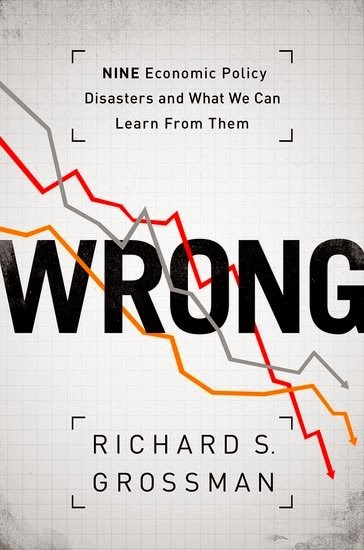
Book Review: ‘Wrong – Nine Economic Policy Disasters and What We Can Learn…’

Go Lean Commentary

CU Blog-WrongThe forgoing news article is a Review of the above-cited book; it highlights many of the same approaches being used in the publication Go Lean … Caribbean for the introduction and implementation of the Caribbean Union Trade Federation (CU). This book declares that a “crisis is a terrible thing to waste” and that Caribbean member-states are still reeling from the crisis of the 2008 Economic Downturn. What’s more, the Go Lean … Caribbean book, serving as a roadmap, provides solutions to optimize the region’s economy and security apparatus.

The source book by Richard Grossman is not focused on the Caribbean; but the many economic policies do have direct effect on the region, especially with the reliance on tourism from North America and Europe as the primary economic drivers. This status makes the Caribbean a “parasite” economy; as parasites go, the health of the host directly affects the health of the symbiot. So we are very much affected by the economic policies implemented in the US, Canada, Europe, Japan, China and other countries. What is worse is the fact that we, as the Caribbean, have no voice into the policies of these host countries, (nothwithstanding the Dutch & French Caribbean countries having some small representation in European Parlianment and Puerto Rico/USVI having non-voting representation in the US Congress). So rather than drive these countries’ economic policies, the Go Lean strategy is to mitigate the negative consequences from “wrong” economic policies.

Book Review: Wrong: Nine Economic Policy Disasters and What We Can Learn from Them by Richard S. Grossman

By: Anna Grodecka

In recent years, the world has been rocked by major economic crises, most notably the collapse of Lehman Brothers, the largest bankruptcy in American history, which triggered the breathtakingly destructive sub-prime disaster. What sparks these vast economic calamities? Why do our economic policy makers fail to protect us from such upheavals? Anna Grodecka reviews Richard S. Grossman’s contribution to the literature, and finds this an insightful and accessible read, especially recommended for economics students.

“We should be (…) wary of accepting common opinions; we should judge them by the ways of reason not by popular vote.” These words of the French Renaissance writer and philosopher Michel de Montaigne could be a good summary of Richard Grossman’s newest book Wrong: Nine Economic Policy Disasters and What We Can Learn from Them. Grossman, a professor of economics at Wesleyan University, describes nine economic policy failures from the past (both distant and more recent) and concludes that the main sin of the policymakers is the commitment to outdated economic ideologies and so-called conventional wisdoms.

Although it tackles a serious issue, the book is an enjoyable read. Starting with a quote from famous economists, politicians, and even Shakespeare, each chapter focuses on one economic policy mistake. The historical outlook prevails, although the last two chapters are devoted to the description of the sub-prime and the euro/sovereign default crisis. Grossman is aware of the fact that his book suffers from the lack of counter-factual analysis. The problem is that observing that a given policy had certain consequence does not mean that in the absence of the policy the consequences would not have occurred. We cannot apply laws of logics and sentence negation to reality, especially complex political and economic reality depending not only on rational analysis but also on the animal instincts of human beings, because causal relationships are very difficult to establish. Conducting counter-factual analysis is even harder. This of course does not mean that we should give up analysing past policies widely known as mistaken.

Grossman first describes the British Navigation Acts fueled by the ideology of mercantilism that speeded up the process of revolution in the North American colonies. Then he discusses the history of the first two ‘central’ banks in the United States, whose charters were not renewed due to partisan divisions in the country which could have an impact on the evolution of several banking crises.

There is also a chapter on the Great Famine in Ireland at the end of the 19th century, and the impact of policies and British Corn Laws on it. Grossman covers the well-documented mistake on the amount of war reparations imposed by the Allies on Germany after the First World War, as well as the return to the Gold Standard at the pre-war (too high) parity by Britain in the inter-war period. Another example of wrong economic policy that is described in the book is the Smooth-Hawley Tariff, which was a protectionist measure applied by the US in 1930. Lastly, before turning to the most recent policy mistakes, the author devotes one chapter to the infamous Japanese Lost Decade. What sounds like an enumeration of well-known policy mistakes already described in other books turns out in fact to be a fascinating collection of accounts providing interesting details and new insights into the subject. This is a well-written book that puts the events into historical and economic context. It certainly has a chance at becoming a best-seller and not solely a publication read by experts.

As an example, we can take a closer look at the chapter on the Irish Famine, which took place from 1845-1852. Grossman not only describes what happened, but puts it into the perspective of other famines, starting from the BCE period. In terms of absolute numbers, the Great Hunger in Ireland was not the worst famine recorded but it did tragically lead to the death of twelve per cent of Irish population, forcing many others to emigrate. The author details how the potato – which originated in the Americas – arrived to a fertile Ireland, and that the poorest third of the Irish population consumed up to twelve pounds of potatoes per day (per capita). Only after this introduction the economic policy is mentioned. Grossman compares the responses of two Prime Ministers of the United Kingdom to the famine: Sir Robert Peel and Lord John Russell. Russell was so committed to the limited government intervention that he refused to buy food for the starving masses in order not to disturb the free formation of prices in the market. Similarly, he refused to increase the scale of public works that would give job to Irish workers so as not to disturb the free labour market. The paradox is that when the Great Famine occurred, Ireland was not a poor country. The Famine would not have been so ‘great’ if it were not for the free market ideology followed by the policymakers at that time. As it turns out, leaving things to the invisible hand of market is not always an optimal solution.

Another interesting chapter is devoted to the Lost Decade in Japan. Entitled Why Didn’t Anyone Pull the Andon Cord? The chapter begins with an explanation of the method of solving problems applied in the Toyota production system: when some potential problem is discovered, a worker may pull the andon cord that activates a signboard and starts the process of solving the problem. If the problem is not resolved within a specific time, the whole production is stopped until the issue is cleared. So, unlike the Toyota employees, Japanese authorities in the 1990’s did not pull the andon cord and continued “production” despite obvious economic problems in the country. Grossman focuses on the relationships between the Japanese Ministry of Finance and the banks’ personnel. Each bank had a clerk – mofutan – who stayed in daily contact with one employee of the ministry. Very often ex- ministry employees found work in the banks they were supervising before, once their ministerial duties were over. This sort of opaque relationship between the supervisory authority and banks in the end led to an inaccurate response to the crisis. Japanese officials did everything to maintain the status quo, refusing to introduce necessary changes or restructure the banking system for almost a decade. This chapter will be a treasure for economics students.

Of course, not all stories presented in Wrong are equally captivating. The two last chapters on the recent economic crisis seem to be the weakest, as they do not provide any new information from the perspective of a person that followed the news and other publications on the subject. But all in all, Grossman does an excellent job in picking up the most severe economic policy mistakes, providing a thorough description and analysis of them, and giving us anecdotes linked to the described events. Wrong is a very eloquently written book that leaves the reader with many new insights.

London School of Economics – Social Science Book Reviews – Retrieved 03-19-2014 –
http://blogs.lse.ac.uk/lsereviewofbooks/2014/03/18/book-review-wrong-nine-economic-policy-disasters/

The authors of this Go Lean publication represent stakeholders[d] who have been in key policy positions in those “host” countries, so the recommendations in the book, reflect sound economic policies and best-practices. This expertise is highlighted at the outset of the Go Lean book, in the Declaration of Interdependence, as follows:

xxi. Whereas the legacy of international democracies had been imperiled due to a global financial crisis, the structure of the Federation must allow for financial stability and assurance of the Federation’s institutions. To mandate the economic vibrancy of the region, monetary & fiscal controls and policies must be incorporated as proactive and reactive measures. These measures must address threats against the financial integrity of the Federation and of the member-states.

Similar to the publication by Richard Grossman, the Go Lean book highlights lessons that are learned from failed economic policies[a] and applies strategies, tactics and implementation to mitigate the wrong policies and set the region straight.[b][c]

Now is the time for the Caribbean region to lean-in for the changes described in the book Go Lean … Caribbean. The benefits of this roadmap are too alluring to ignore: emergence of an $800 Billion economy, 2.2. million new jobs, new industries, services and opportunities for the youth of the Caribbean and even an invitation to the Diaspora to repatriate from those North American and European countries that have been on the wrong side of the history featured in Richard Grossman’s book ”Wrong: Nine Economic Policy Disasters and What We Can Learn from Them”.

Anna Grodecka is a PhD student in macroeconomics at Bonn Graduate School of Economics and a visiting researcher at the LSE. She obtained her Master’s Degree in Finance from Warsaw School of Economics and Johannes Gutenberg University in Mainz. In her research, she focuses mainly on monetary policy, the financial and housing markets, and their role in the recent crisis.

Go Lean References

Page Number
[a] 10 Lessons Learned from 2008

136

[b] 10 Ways to Impact Wall Street

200

[c] 10 Reforms for Banking Regulations

199

[d] SFE Foundation

8

Download the Book- Go Lean…Caribbean Now!!!


Share this post:
, , , , , ,
[Top]

US slams Caribbean human rights practices

Go Lean Commentary

shame-on-youThe below news article synchronizes with the book Go Lean … Caribbean in that it depicts the “hot topic” of human rights monitoring in the Caribbean region. The book declares that the people of the Caribbean have the right to good governance and the fulfillment of a presumed social contract to ensure due process, and the rule of law.

This book serves as a roadmap for the implementation of the Caribbean Union Trade Federation (CU), a technocratic federal government to administer and optimize the economic, security, and governing engines of the region’s 30 member-states. At the outset, the roadmap identified this urgent need for human rights protection, stating this clause in the Declaration of Interdependence (Page 12):

xxi. Whereas the legacy in recent times in individual states may be that of ineffectual governance with no redress to higher authority, the accedence of this Federation will ensure accountability and escalation of the human and civil rights of the people for good governance, justice assurances, due process and the rule of law. As such, any threats of a “failed state” status for any member state must enact emergency measures on behalf of the Federation to protect the human, civil and property rights of the citizens, residents, allies, trading partners, and visitors of the affected member state and the Federation as a whole.

The Go Lean roadmap projects that the CU will facilitate monitoring and accountability of the justice institutions to ensure compliance and mitigate abuses – all Police Internal Affairs and Military Justice institutions will have a federal up-line reporting – Pages 117 & 220. Consider this related article:

By: Nelson A. King
WASHINGTON DC, March 3, 2014 – While noting that governments that protect human rights and are accountable to their citizens are more secure, bolster international peace and security, and enjoy shared prosperity with stable democratic countries around the world, the United States continues to assail human rights practices in the Caribbean.

In its “Country Reports on Human Rights Practices for 2013,” released here earlier this week, Washington was particularly scathing in its criticism of Haiti, Jamaica, Guyana, Suriname, Trinidad and Tobago, and the Bahamas.

The US Department of State said the most serious impediments to human rights in Haiti involved weak democratic governance in the earthquake-ravaged, French-speaking Caribbean country; “insufficient respect for the rule of law, exacerbated by a deficient judicial system; and chronic corruption in all branches of government.”

It said basic human rights problems included “isolated allegations of arbitrary and unlawful killings by government officials; allegations of use of force against suspects and protesters; overcrowding and poor sanitation in prisons; prolonged pre-trial detention; an inefficient, unreliable, and inconsistent judiciary; rape, other violence, and societal discrimination against women; child abuse; allegations of social marginalization of vulnerable populations, including persons with disabilities and lesbian, gay, bisexual, and transgender (LGBT) persons; and trafficking in persons.”

The report also said that allegations “persisted of sexual exploitation and abuse by members of the UN Peacekeeping Force in Haiti (MINUSTAH).”

In addition, it said violence, crime and forced evictions within the remaining internally displaced persons (IDP) camps in Haiti, which contained about 172,000 IDPs as of November, “remained a problem.”

Although the Michel Martelly administration took some steps to prosecute or punish government and law enforcement officials accused of committing abuses, the State Department said “credible reports persisted of officials engaging in corrupt practices,” and that civil society groups allege that impunity was a problem.

The report said there were isolated allegations of police and other government officials’ involvement in arbitrary or unlawful killings, some of which resulted in arrests. However, none resulted in convictions, it said.

Washington said prisoners at times were subject to “degrading treatment, in large part due to overcrowded facilities”, adding that correction officers used physical punishment and psychological abuse to mistreat prisoners.

The State Department said prisons and detention centres throughout Haiti remained overcrowded, poorly maintained and unsanitary.

In Jamaica, the most serious human rights issues were alleged unlawful security force killings; cases involving the violation of rights that were not resolved in a timely way; and poor prison and jail conditions, including abuse of detainees and prisoners and severe overcrowding. The report said other human rights issues included an “overburdened, under resourced, and ineffective judicial system, and frequent lengthy delays in trials, violence against and sexual abuse of children, violence and discrimination against women, trafficking in persons, violence against persons based on their suspected sexual orientation or gender identity, and mob violence.

“The government took steps to investigate and punish members of the security forces who committed abuses, but in many instances a lack of witnesses and insufficient forensics equipment precluded arrests or prosecutions, thus providing the appearance of impunity for police who committed crimes.

“While the government or its agents did not commit politically motivated killings, there were numerous occurrences where citizens accused the government’s security forces or its agents of committing arbitrary or unlawful killings,” the State Department said.

The report said there were 211 killings involving Jamaican police through October, and that six police officers also were killed in the line of duty during that time.

It said human rights monitors indicated that some killings by police went unreported, with police allegedly meting out the justice they believed was unavailable through the judicial system.

The State Department said violent crime remained a “serious concern” in Jamaica, adding that, on many occasions, the Jamaica Constabulary Force (JCF) “employed lethal force in apprehending criminal suspects”.

Prisons and detention centres were also “severely overcrowded and presented serious threats to life and health,” the report said.

In Guyana, it said the most serious human rights abuses involved suspects and detainees’ complaints of mistreatment by security forces, unlawful killings by police, and poor prison and jail conditions.

Other human rights problems included lengthy pre-trial detention; allegations of government corruption, including among police officials; excessive government influence over the content of the national television network and continued restrictions on radio licensing; sexual and domestic violence against women; abuse of minors; and laws that discriminate against LGBT persons.

The report said there were no independent and transparent procedures for handling allegations of killings and other abuses by security force members.

“Prosecutions when pursued were extremely lengthy, and convictions were rare, leading to a widespread perception that security force members and government officials enjoyed impunity,” it said.

The State Department said there were alleged mistreatment of inmates by prison officials, as well as allegations of police abuse of suspects and detainees.

It said prison and jail conditions were “poor and deteriorating, particularly in police holding cells,” and that overcrowding was a “severe problem”.

The report said lengthy pre-trial detention, “due primarily to judicial inefficiency, staff shortages, and cumbersome legal procedures, remained a problem,” adding that “delays and inefficiencies undermined judicial due process.”

While the law provides for criminal penalties for corruption by officials, the State Department said the Guyana government did not implement the law effectively.

“There remained a widespread public perception of corruption involving officials at all levels, including the police and the judiciary,” it said, pointing to the World Bank’s Worldwide Governance Indicators that assessed that government corruption was “a serious problem”.

The most serious human rights problems in Suriname, according to the State Department, were “widespread government corruption, reports of press intimidation, and lengthy pre-trial detention”.

Other human rights problems, it said, included self-censorship by some media organizations and journalists; societal discrimination against women, Maroons, descendants of escaped slaves who fled to the interior of the country to avoid recapture, Amerindians, and other minorities; domestic violence against women; trafficking in persons; and child labour in the informal sector.

The report said while the government continued to take steps to prosecute abusers in the security forces, in certain cases, “there was a perception of impunity among the public”.

It said human rights groups, defence attorneys and the media continued to report various instances of mistreatment by police including unnecessary use of gun violence at time of arrest and beatings while in detention, as well as isolated incidents of abuse of prisoners by prison officials.The report said prisoners continued to express concern over conditions in Santo Boma Prison, where they complained of inadequate food provisions, mistreatment by prison guards, and limited ventilation?

The State Department identified police killings during apprehension or while in custody, and poor treatment of suspects, detainees and prisoners as the most serious human rights problems in Trinidad and Tobago.

It said other human rights problems involved inmate illnesses and injuries due to poor prison conditions, a slow judicial system, high-profile cases of alleged bribery, violence and discrimination against women, and inadequate services for vulnerable children.

The report noted that, while the Kamla Persad-Bissessar administration took some steps to punish security force members and other officials charged with killings or other abuse, “there continued to be a perception of impunity based on the open-ended nature of many investigations and the generally slow pace of criminal judicial proceedings”.

It said the People’s Partnership government or its agents did not commit any politically-motivated killings; but, according to official figures, police shot and killed 21 persons through November 1, compared with 21 in all of 2012.

The State Department said there were “credible reports” that police officers and prison guards mistreated individuals under arrest or in detention, stating that, from 2005 through 2012, “the government paid or was found liable to pay more than 10 million Trinidad and Tobago dollars (One TT dollar = US$0.16 cents) in compensation to prisoners on claims of excessive use of force by prison officers”.

The report said conditions in some of the prison system’s eight facilities continued to be harsh.

Police abuse, detainee abuse, compounded by problems in processing them, a poorly functioning judicial system leading to delays in trial, and witness intimidation, were the most serious human rights problems in the Bahamas, according to the report.

It said other human rights problems included poor detention conditions; corruption; violence and discrimination against women; sexual abuse of children; and discrimination based on ethnic descent, sexual orientation, or HIV status.

The State Department said prison and detention centre conditions “generally failed to meet international standards,” noting that conditions at the Fox Hill Prison, the country’s only prison, “remained harsh and unsanitary for many prisoners”.

The report said Bahamian authorities detained irregular immigrants, primarily Haitians, until arrangements could be made for them to leave the country or they obtained legal status.

It said the average length of detention varied significantly by nationality, willingness of governments to accept their nationals back in a timely manner, and availability of funds to pay for repatriation.

The report said authorities usually repatriated Haitians within one to two weeks, while they held Cubans for much longer periods.

It said the Bahamian government has “not effectively implemented laws and policies to provide certain habitual residents the opportunity to gain nationality in a timely manner and on a non-discriminatory basis,” adding that some commentators believed that these restrictions particularly targeted Haitians resident in the country.

In an immediate response, Nassau said that the report was now being reviewed by the Ministry of Foreign Affairs.

“From what has been seen so far, there is no need for any alarm or undue concern. In a free and open society like ours, anyone is free to comment and investigate the human rights record of our country and we do not fear such an examination,” the government said in a statement.

It said it would “take note of any errors or overreaches in the report and it will have to be determined to what extent we address those issues”.

In St Lucia, the State Department said the most serious human rights problems included long delays in investigating reports of unlawful police killings, abuse of suspects and prisoners by the police, and continued postponements of trials and sentencing.

Other human rights problems included violence against women, child abuse, and discrimination against persons based on their real or perceived sexual orientation or gender identity.

“Although the government took some steps to prosecute officials and employees who committed abuses, the procedure for investigating police officers was lengthy, cumbersome, and often inconclusive,” the State Department said.

“When the rare cases reached trial years later, juries often acquitted, leaving an appearance of de facto impunity,” it added.

The State Department said the Dean Barrow administration in Belize “failed at times to maintain effective control over the security forces,” stating that security forces allegedly committed human rights abuses.

It said the most important human rights abuses included the use of excessive force by security forces, lengthy pre-trial detention, and harassment and threats based on sexual orientation or gender identity.

Other human rights problems comprised domestic violence, discrimination against women, sexual abuse of children, trafficking in persons, and child labour.

In Antigua and Barbuda, the State Department said the most serious human rights problems involved poor prison conditions and violence against women.

Other human rights problems included trial delays resulting from court backlogs and reports of mental, physical, and sexual abuse of children. There were also laws that discriminate against LGBT persons.

The report said the Baldwin Spencer administration took steps to prosecute and punish those who committed human rights abuses, and that impunity was not a widespread problem.

Poor prison conditions, politicization of the police force, discrimination and violence against women, and child abuse topped the list for human rights abuses in St. Kitts and Nevis, according to the report.

Discrimination against the LGBT community was the other human rights problem, it claimed.

Occasional police use of excessive force and gender- based violence were the most serious human rights problems in St Vincent and the Grenadines, according to the State Department.

It said other human rights problems included official corruption, lack of government transparency, discrimination, and child abuse.

“The government took steps to punish officials who committed abuses, and there was not a widespread perception of impunity for security force members,” the report said.

The most serious human rights problems in Barbados were “unprofessional conduct” by police, violence against women, and discrimination against LGBT individuals, according to the report, adding that other human rights problems included child abuse.

The State Department said domestic violence against women and children were the most serious human rights problem in Dominica.

It said other human rights problems included adverse conditions experienced by the indigenous Kalinago (Carib) population and laws that discriminate against LGBT persons.

Human rights problems in Grenada included poor prison conditions, violence against women, instances of child abuse, and laws that discriminate against LGBT persons, the report said.
Source: Caribbean360.com – Caribbean Online Magazine (Retrieved 03/10/2014) – http://www.caribbean360.com/index.php/news/1107173.html#axzz2vZjwuO

The foregoing article highlights another example of the United States meddling/voicing opinions about issues in other countries, while they themselves have less than a stellar human rights record on this subject. Consider that the State Department’s report many times cited prison conditions in the Caribbean states. This is classic “pot calling kettle black” – the US has the highest incarceration rate in the world[a]. What’s worse is the fact that 60% of the US prison population is Black or Hispanic[b]; even though non-whites only committed 30.7% of the crimes[c]. Obviously justice in the US is dependent on the access to money. Where is the Human Rights outcries there?!

But it is what it is! Despite the hyprocrisy of the messenger, the message still has legitimacy; we do have issues in the Caribbean that need addressing. Basic Human Rights are being violated in the region, arbitrary and unlawful killings by government officials, poor sanitation in prisons and prolonged pre-trial detention. The Go Lean roadmap posits that any economic optimization effort must be accompanied by a strenuous security agenda, or “bad actors” will emerge. As such, the book presents the CU solution of marshaling economic crimes, and deploying a Prison Industrial complex to build over-sized facilities to house the region’s inmates and capitalize on opportunities to service shortcomings of foreign countries, like the US.

The CU solutions are designed to make the Caribbean a better place to live, work and play. Though the roadmap starts with an economic focus, it also facilitates the Human Rights protections for all members of our society: good or bad; as pilloried in the nursery rhyme: “rich man, poor man, beggar man, thief; doctor, lawyer, Indian Chief”.

Download the book Go Lean … Caribbean – now!

———-

Appendix – References:

a. International Centre for Prison Studies (18 Mar 2010). “Prison Brief – Highest to Lowest Rates”. World Prison Brief. London: King’s College London School of Law. Archived from (http://www.kcl.ac.uk/depsta/law/research/icps/worldbrief/wpb_stats.php?area=all&category=wb_poprate) on 25 March 2011. Retrieved 25 March 2011.

b. Office of Justice Programs – US Department of Justice – Prison Inmates at Midyear 2009 – Statistical Tables – Retrieved on March 11, 2013 from: http://www.bjs.gov/content/pub/pdf/pim09st.pdf

c. US Federal Bureau of Investigations – Crime in the United States, 2012 Arrests by Race”. Table 43– Retrieved on March 11, 2014 from: http://www.fbi.gov/about-us/cjis/ucr/crime-in-the-u.s/2012/crime-in-the-u.s.-2012/tables/43tabledatadecoverviewpdf

 

Share this post:
, , ,
[Top]

What’s Holding Back Jamaica’s Reforms

Go Lean Commentary

IMF_4“The issues and solutions in the book Go Lean … Caribbean are spot on!” This can easily be the conclusion after considering the subsequent news article and contribution from local Jamaica-based blogger Dennis Chung. Go Lean serves as a roadmap for the implementation of the Caribbean Union Trade Federation (CU), a technocratic federal government to administer and optimize the economic/security/ governing engines of the region’s 30 member-states. Mr. Chung’s blog screams: “Now is the time to reboot!”

Jamaica had always been “on the radar scene” for this roadmap, as the country has always sought solutions from super-national schemes. The country was prominent in the now defunct West Indies Federation (1958 – 1962), Caribbean Free Trade Associations (CARIFTA) and its many subsequent iterations (CariCom and CSME – Caribbean Single Market & Economy), Organization of American States (OAS), Association of Caribbean States (ACS) and other multi-lateral agencies and entities. Jamaica has always depended on the “kindness of strangers”, conjuring images of a Depression-era “soup kitchen” scene; in fact, the “soup (agency) du jour” is the International Monetary Fund (IMF) and their reform agenda (of funding and technical consultancy).

Gathering research from a Jamaica Gleaner newspaper article (“IMF says Yes – US$1.27B loan for Jamaica approved – US$950M fund for financial sector” – Jamaica-gleaner.com – 5 February 2010), this is proof that for some time, rebooting the economic engines has been high on the agenda for Jamaica’s government and business leaders. That news article, and the Go Lean roadmap (10 Ways to Re-boot Jamaica – Page 239) reports that the global economic downturn has had a significant impact on the Jamaican economy for the years 2007 to 2009, resulting in negative economic growth. “The government implemented a new Debt Management Initiative, the Jamaica Debt Exchange (JDX) on 14 January 2010. The initiative saw holders of Government of Jamaica (GOJ) bonds returning the high interest earning instruments for bonds with lower yields and longer maturities. The offer was taken up by over 95% of local financial institutions and was deemed a success by the government. Owing to the success of the JDX program, the Government was successful in entering into a borrowing arrangement with the IMF in February 2010 for US$1.27 billion.”

See the actual news article here:

By Dennis Chung, CJ Contributor
Anyone who has been reading or listening to my recent commentaries would realize that I am fully in support of the reform agenda otherwise known as the IMF programme in Jamaica.

Similarly, anyone who has been listening to my commentaries in the past will also realize that I was not in favour of the prior IMF programmes, because I never thought they would have worked.

The reason why I think this current programme stands a better chance than the prior ones, is that I think that the approach this time is a fundamental shift.

The previous programmes focused on providing funding support to prop up the balance of payments and fiscal accounts, without undertaking any structural changes to the economic and social order.

In fact, the main theory under those programmes is that if we just devalued the dollar then everything would be OK after that. What occurred in those cases is that one had significant knee damage and got some steroid injections to keep running.

Under this current programme, before we get the steroid injections, we have done the corrective knee surgery to address the damaged ligaments and put a graft in to ensure that the damage is fixed.

The IMF has said after you surgically fix the knee, then we will provide you with the steroid shots you need (funding), so that you can not only run but outperform the competition.

So I think we stand a very good chance at recovery, but there are some significant risks we face.

So while we are better prepared to face the competition and finish the race, the fact is that our productivity is low because our muscles have been at rest for too long, and the shoes that we have are way past their useful life, so unless we change the shoes (support structures) we will only start the process of damaging our knee again, and maybe not finishing the programme successfully.

I have mentioned before that the significant risks to not realizing our goals are no longer with the fiscal side, but rest outside of the Ministry of Finance (the only other monetary situation that was causing significant challenge is the liquidity problem which the BOJ has sought to address). The main challenges we face today rest in three main areas.

These are:

(1) Energy costs. Here, a lot rests on the 360 MW project, and therefore, the management of it by the OUR [(Office of Utility Regulations)]. Energy is a significant challenge for manufacturers, and is certainly one of the reasons why we have seen growth in agriculture, construction, mining, and tourism and a decline in manufacturing in the last quarter. High energy costs inhibit Jamaica from moving from a producer of primary to secondary products.

(2) Crime. Indiscipline is the major contributor to our fundamental problem and hinders productivity. Crime and indiscipline lead to low productivity of labour and capital, otherwise called total factor productivity (TFP). Jamaica’s TFP has declined at a rate of approximately 1.5 percent annually on average since 1972. An example of indiscipline can be seen in an article I wrote about a few weeks ago concerning Jamaican timekeeping and meetings, road indiscipline and night noise. Unless we get serious about this, then productivity will not be positively affected. Our current attitude sees us unable to successfully compete and everyone grows at a faster rate than Jamaica. I want to also mention in particular the demise of societal values and the failure to protect our children from abuse. This all leads to an even more unproductive work force.

(3) Bureaucracy. This is probably the biggest challenge facing businesses and results in low productivity. I recently had an example, which illustrates that while the Government is trying to pull in one direction (to move the economy forward) its functionaries of government are pulling in the other direction. In the past week I have had two instances that remind me of this. The first is being stopped by a policeman to say he was carrying out a spot check (no reason other than that) and then proceeding to seek to extract something from me, which I refused to do because I told him it was not right.

The second instance, however, is a situation where I had to go to the rent board to resolve a matter, even though the tedious process already set me back two months as that is the time period they gave to me to deal with the matter. So if you are unable to afford to be without the income for two months, then you will lose your property before the rent board deals with it.

After waiting for the two months, though (trying to follow the rules) I get a call the day before the matter is to be dealt with, saying it has to be delayed because the person handling the matter was unavailable, and I would be advised to select another date. After a few days I called to complain about the situation and eventually had to report it to the parent ministry (Transport). I then received a call the day after for a hearing to be set, which date was inconvenient, but then again I had to seek a remedy outside of the rent board, as I might have grown too old waiting on them.

The question, therefore, is what is the purpose of the rent board, as they were supposed to have made the process easier, but only succeeded in supporting the violation of the rights of a property owner, ensured that the Government loses tax revenue because no income is collected during the period, and maybe their delay has caused others to lose their property, and has caused rental costs to be more expensive for future renters as one will now have to demand enough security deposit to compensate for the delay of the rent board.

So, while the government is pressing ahead with the reform agenda in many respects, there are other forces pulling in the other direction.

Caribbean Journal Online News Site (Retrieved 02/28/2014) –
http://www.caribjournal.com/2014/02/28/whats-holding-back-jamaicas-reforms/

The Go Lean roadmap posits that the Great Recession crisis lingers to this day and trumpets that “a crisis is a terrible thing to waste”. Now is the time for Jamaica and all of the Caribbean to forge permanent change by implementing the Five Year roadmap advocated in Go Lean … Caribbean. The book directly addresses the economic engines, security concerns and the governing optimizations needed to assuage these inadequacies identified so vividly in the foregoing blog:

Energy – Implementation of a Regional Power Grid to lower cost

Crime – CU jurisdiction for economic and cross-border racketeering

Bureaucracy – Deployment of lean processes/systems for efficiency

Plus, the book advocates to lean-in on the community ethos that would address the deficiency in societal progress/growth. Now finally, with the Go Lean implementations, the Caribbean region in general, and Jamaica in particular, can emerge and finally become a better place for all citizens to live, work and play.

Dennis Chung is a chartered accountant and is currently Vice President of the Institute of Chartered Accountants of Jamaica. He has written two books: Charting Jamaica’s Economic and Social Development – 2009; and Achieving Life’s Equilibrium – balancing health, wealth, and happiness for optimal living – 2012. Both books are available at Amazon in both digital and paperback format. His blog is dcjottings.blogspot.com. He can be reached at drachung@gmail.com.

Download the Book – Go Lean … Caribbean now!!!

Share this post:
, , ,
[Top]

CARCIP Urges Greater Innovation

Go Lean Commentary

3d-Imagen-Concept-Of-Vision-In-Business-by-David-Castillo-Dominici-FreeDigitalPhotos.net_The forgoing article touches on a critical mission and motivation of the Caribbean Union Trade Federation (CU): to forge change and avail the benefits of advanced technologies in the region. The book, Go Lean … Caribbean, which serves as a roadmap for implementing the Caribbean Union Trade Federation (CU) commences with a Declaration of Interdependence. In Verse XXVII (Page 14) it pronounces:

Whereas the region has endured a spectator status during the Industrial Revolution, we cannot stand on the sidelines of this new economy, the Information Revolution. Rather, the Federation must embrace all the tenets of Internet Communications Technology (ICT) to serve as an equalizing element in competition with the rest of the world. The Federation must bridge the digital divide and promote the community ethos that research/development is valuable and must be promoted and incentivized for adoption.

There is a business mantra that declares “build a better mouse trap and the world will beat a path to your door”. This is even more true in this internet age. Websites and internet applications can be hosted and serviced from anywhere on the planet. “Size does not matter” in this internet age; insight, intelligence, innovation and ingenuity matter more. See related story here:

By the Caribbean Journal Staff

Three Eastern Caribbean countries are benefiting from an infrastructure development thrust that could usher in a new era of technology-based innovation and entrepreneurship for the region.

The initiative is part of the World Bank-funded Caribbean Communications Infrastructure Program (CARCIP), coordinated by the Caribbean Telecommunications Union (CTU).

A series of workshops rolling out in St Lucia, St Vincent and Grenada are intended to ensure that citizens can take full advantage of the telecommunications infrastructure upgrades.

The series aims to encourage greater innovation in the public and private sector across the Caribbean.

The inaugural workshop, which took place Feb. 10-11 at Gros Islet, St Lucia, brought together some of the region’s leading minds in the fields of entrepreneurship, information and communications technology, leadership development and innovation.

Hosted by the St Lucian Ministry of the Public Service, Information and Broadcasting, the workshop set out to stimulate new approaches to national [nation building] through the application of modern technology and new ways of thinking.

“In reality, the potential exists today to overcome the many challenges in the region,” said technology expert Bevil Wooding, the event’s keynote speaker. “What we face is more a challenge of leadership paradigm than of technical possibility.”

Wooding, who is an Internet strategist with US-based Packet Clearing House, said the challenge was “to define and articulate a clear set of actionable priorities. These must be based on our native strengths and shaped to match a properly resourced vision for development.”

The CARCIP Innovation series rolls into Saint Vincent on February 26th and 27th, with a third installment scheduled for Grenada at the end of March 2014.
Source: Caribbean Journal Online News Source (Retrieved 02/26/2014 from http://www.caribjournal.com/2014/02/26/caribbean-connectivity-carcip-urges-greater-regional-innovation/)

The Go Lean roadmap posits that we, in the Caribbean, must also contribute to the world-wide progress of the world-wide web. As such, there are direct advocacies in the book to foster technology (Page 197), bridge the digital divide (Page 31), promote intellectual property (Page 29), foster electronic commerce (Page 198), implement data centers (Page 106), impact social media (Page 111), and promote call centers (Page 212). (Notice the job creation leanings).

In Year 1 of the Five Year roadmap, the CU will “assemble” (consolidate) the organs and agencies of the CariCom, including the CTU (see Appendix), into the Trade Federation’s cabinet structure. Thus allowing the necessary funding and focus to fulfill this agency’s charter. Under the Go Lean roadmap, this charter is more than just a series of workshops, but also these deliverables:

The CU mission is to protect the prospects for our youth, assuage more brain drain & human flight, and promote opportunities here in the region. Education is a big part of this mission. A previous strategy of study-aboard has failed the region – students have not always returned – see Anecdote # 5 (Page 38). The CU must therefore expand educational opportunities locally at home, impact the secondary (charter) & tertiary institutions, and facilitate e-Learning modes & schemes. The telecommunication infra-structure upgrade, described in the foregoing article, allows the Go Lean roadmap to be fully implemented, thus impacting education and entrepreneurism. The CU will foster incubators and cooperatives to forge business opportunities from the elevation of society’s consumption of ICT.

The efforts depicted in the foregoing article regarding the CTU, and the manifesto proclaimed in the book, dovetails with the dreams of the youth of the Caribbean, to facilitate a climate for future possibilities. As a region, we have lost too many young people. What we need now is growth: growth in the economic engines, cultural institutions, security apparatuses and governing provisions. Without this growth, we lose the future contributions of these young people; we would only have developed them to make an impact to some foreign society – we would have “fattened frogs for snake”.

Download the Book- Go Lean…Caribbean Now!!!

————–

Appendix – Caribbean Telecommunications Union

An intergovernmental organization dedicated to facilitating the development of the regional telecommunications sector. On 28 April 1989, the Governments of the member-states of the Caribbean Community (CariCom) established by Treaty of the Caribbean Telecommunications Union (CTU) to rationalize the telecommunications policy framework for the region and to address the problems of regional spectrum frequency incompatibilities.


Share this post:
,
[Top]

Bahamas and China’s New Visa Agreement

Go Lean Commentary

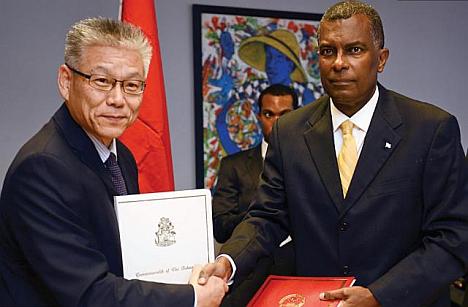
china_bahamas_visasSo the Bahamas has signed a new mutual visa exemption with China. At the SFE Foundation, we applaud the foreign policy initiative of the Bahamas Government and immediately ask some follow-up questions, as follows:

  • When Chinese tourists come to the Bahamas, will we be expecting them to bring currency in Yuan, Euros, Dollars, etc.?
  • Will there ever be a need for Chinese tourists to speak with the Bahamian population and are there any sorts of translation services available?
  • Why just the Bahamas? Why not the whole Caribbean region?
  • Why only China? There are other countries (Asian, Middle Eastern, European) where these types of agreements can benefit the region.

These questions show that opening new markets to different parts of the world are froth with challenges. But these are challenges that we must take on. In general, growth within the Caribbean for our traditional tourism target market, North America, has been flat or only slightly up; notwithstanding the years of decline during the Great Recession. We are only now approaching the type of numbers from before the 2008 financial crisis. This crisis taught us, or should have taught us, that we have to be more proactive and creative in managing our economic drivers. If we do what we’ve always done, then we would have learned nothing from the crisis. Perish that thought! So hooray for the efforts discussed in the foregoing article, but let’s not stop there!

By: The Caribbean Journal Staff

The new mutual visa exemption agreement between the Bahamas and China has officially taken effect.

The agreement, which was signed in December 2013, allows Bahamian and Chinese citizens to travel to one another’s country visa-free for up to 30 days. It does not allow the holder to engage in gainful employment, to study or reside in that country, however.

The move could be a boost for Chinese tourism to the Bahamas, particularly in light of the imminent opening of the China-funded Baha Mar resort project in New Providence at the end of this year [(2014)].

“While this Agreement will allow visa-free travel, visitors are still expected to meet general entry requirements when being processed by immigration authorities,” the Bahamian government said in a release. “Travelers are required to present a passport with valid relevant visas for transit States, and a round-trip ticket for entry and exit. Those that do not meet general entry requirements will be denied entry at any immigration check point.”

Those who wish to remain in the Bahamas for more than 30 days will still need a visa.

Source: http://www.caribjournal.com/2014/02/15/bahamas-china-visa-exemption-agreement-officially-begins/

This commentary harmonizes with the missions of the Caribbean Union Trade Federation as described in the book Go Lean … Caribbean. The book declares that “a crisis is a terrible thing to waste”, quoting American Economist Paul Romer. The book provides strategic, tactical and operational plans to expand and exploit the tourism outreach for Asia, specifically and the whole world in general. The book emphatically details 10-Step advocacies to enhance regional tourism, impact events, promote fairgrounds, improve for cruise tourism and to better market the specific location of Southern California. For regional economics, the book details how to better manage Foreign Exchange and to foster empowering immigration.

Lastly, the Go Lean roadmap calls for the establishment of Trade Mission Offices in far-flung power cities in the world so as to enable trade expansion with different countries, including the Far East. The end result of this roadmap is growth in regional GDP to $800 Billion, creation of 2.2 million new jobs (30,000 specifically in tourism-related industries) and the manifestation of a plan to make the Caribbean a better place to live, work and play.

Download the book Go Lean … Caribbean – Now!

Share this post:
,
[Top]

Tim Armstrong, the CEO of AOL – Health-care Concerns

Go Lean Commentary

Medical Management Services_AOL InsuranceIn the forgoing article, Tim Armstrong, the comments of the CEO of America Online (AOL) resulted in outcry around the country! There were allegations of scapegoats, privacy violations and various sins in making this announcement. What gives this CEO the right to highlight these families’ struggles? Well, can you say two million dollars? This man is not a Director of a Hospital refusing care. No, he is the CEO of the company paying the bills. Two million dollars taken out of the budget and the CEO cannot comment on it? Why are his actions being chastised?

By: Michael F. Cannon, Contributor

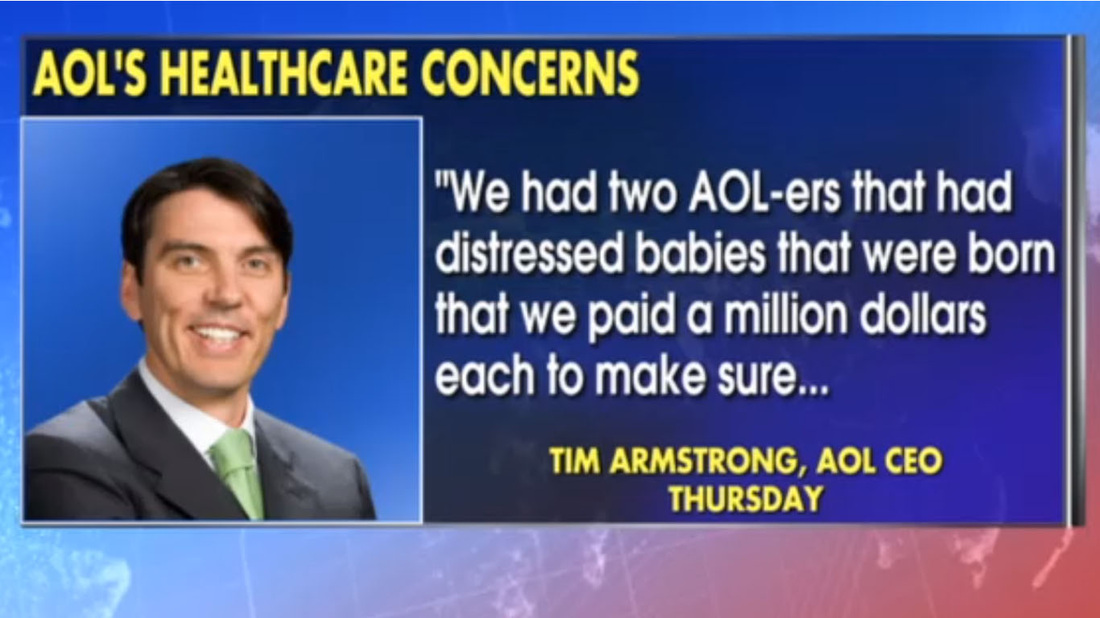
Unless you’ve been living under a rock, you’ve heard about AOL CEO Tim Armstrong’s strikingly insensitive comments about why the company is cutting its retirement benefits:

“As a C.E.O. and as a management team, we had to decide, do we pass the $7.1 million of Obamacare costs to our employees? Or do we try to eat as much of that as possible and cut other benefits?…”

“Two things that happened in 2012”, he continued, “we had two AOL-ers that had distressed babies that were born that we paid a million dollars each to make sure those babies were OK in general. And those are the things that add up into our benefits cost. So when we had the final decision about what benefits to cut because of the increased healthcare costs, we made the decision, and I made the decision, to basically change the 401(k) plan”.

Perhaps Armstrong felt commendations were in order. After all, the company’s health plan did pay a ton of money to keep those kids alive. Not as much as his annual salary, but still. And though you could be forgiven for missing it, he was actually announcing he had decided not to drop AOL’s “distressed babies” benefit.

But it’s hard to muster an “Attaboy!” when Armstrong is effectively blaming extremely premature infants, who are clinging desperately to life, for the cuts he chose to make in his employees’ retirement benefits. We’re still paying to keep these precious little angels alive, he assured his employees. But if any of you are mad about your pay cut, you know who to blame.

One of those babies has a mommy who wasn’t about to take that lying down.

In October 2012, only five months pregnant, Deanna Fei went into labor. Her daughter arrived via caesarian section weighing only 1 pound, 9 ounces, and spent the next three months in a neo-natal intensive care unit. Fei, a novelist, wrote at Slate about the anguish she and her family endured.

She also had choice words for her husband’s boss.

“Let’s set aside the fact that Armstrong—who took home $12 million in pay in 2012—felt the need to announce a cut in employee benefits on the very day that he touted the best quarterly earnings in years,” she wrote. It was “a cruel violation” to make her child “a scapegoat for cutting benefits.”

There was “the whiff of judgment in Armstrong’s statement, as if we selfishly gobbled up an obscenely large slice of the collective health care pie” when in fact “we experienced exactly the kind of unforeseeable, unpreventable medical crisis that any health plan is supposed to cover. Isn’t that the whole point of health insurance?”

“While he’s at it, why not call out the women who got cancer? The parents of kids with asthma?”

I’m totally with Fei. I still remember the panic I felt when our first child (41 weeks) took about one minute to start breathing on his own and our second (37.5 weeks) was born a little too pale. I cannot imagine visiting my child every day in a NICU for three months, much less the added trauma that mommies suffer in those cases. And I would be just as outraged by the indignity of having my spouse’s employer use our experience as a scapegoat, or claim that we are indirectly responsible for someone else’s pay cut.

Fei and her family owe no one an apology. Full stop. They paid their premiums. They used their coverage for its intended purpose. Their situation is exactly why health insurance exists.

It is also possible to sympathize with Armstrong. He has a duty to AOL shareholders to keep the company profitable. Part of that responsibility is to decide how much to pay AOL employees – and how to divide that sum among salary, health benefits, retirement benefits, and other forms of compensation. Someone’s going to be angry at him no matter what he decides. And in this case, he decided not to let those cuts fall on health benefits. Assuming he’s doing right by AOL’s shareholders, who probably include many AOL employees, he owes no one an apology for his $12 million salary. To be sure, he owes Fei and her family an apology – which he has issued and she has accepted.

How did we get to this point, where Fei’s husband’s boss knows how much it cost to save their baby’s life and can telegraph that figure to his coworkers and the world? Where an offhand comment by your employer can add to your grief by exposing your family’s medical history to your coworkers, and possibly make you a target of resentment?

The answer is that even before ObamaCare, America has had a health care sector dominated by government involvement. Yes, this capitalist’s insensitive comments are an example of government failure.

Ninety percent of Americans with private health insurance get that coverage through an employer. This state of affairs wasn’t brought to you by the free market. In a market where we all get to make our own choices, what responsible parent in their right mind would voluntarily choose for their family a type of health insurance that disappears when you get sick and cannot work anymore? Or when the factory closes? A type of health insurance where, if you have a high-cost condition, you are more likely to end up uninsured than if you bought coverage directly from an insurance carrier?

The reason more than 100 million Americans make the otherwise irrational decision to enroll in an employer-sponsored plan is that around 70 years ago, the federal government created an enormous tax preference for those plans that is not available if you buy more secure coverage directly from an insurer on the “individual” market. The upshot of that tax preference is that if consumers purchase health insurance themselves, they can spend up to twice as much for the same coverage. Economists have chronicled how the tax exclusion for employer-sponsored health insurance increases health care spending and thus the cost of health insurance, as well as how it reduces consumers’ health insurance choices. Yet the federal government makes it economically rational for 90 percent of consumers to purchase an inferior product that creates so many harmful effects.

Another harmful effect of this government policy is that the Tim Armstrongs of the world have far too much (read: any) influence over your family’s health insurance and medical decisions. (What if Armstrong had chosen to pare back AOL’s distressed-baby benefit?) They also end up knowing far too much (read: anything) about your family’s most emotionally difficult moments.

I won’t pretend private health insurance companies aren’t also obligated to serve shareholders or always have their customers’ best interests at heart. But how often do you hear the CEOs of insurance companies publicly say the sort of boneheaded thing Armstrong did? Not very. Even though they have to make comparable tradeoffs between covered benefits, affordable premiums, and profits, they don’t do what Armstrong did. They’re in the business, so they know better. When insurance companies say boneheaded things about their high-cost customers, they tend to do so quietly. You know, in internal memoranda. If I’m overlooking instances of insurance company executives doing what Armstrong did, please let me know in the comments.

Even if the CEO of, say, Aetna mentions they had a couple of million dollar babies last year, it wouldn’t expose those families the way it does when CEOs say it about their company-sponsored health plans. If everyone were making their own coverage choices, your coworkers would have no idea where you buy your health insurance unless you wanted them to know. And that’s as it should be. You would also have the option of leaving Aetna for another carrier that wasn’t so boneheaded, or if only because you don’t like the tradeoffs they are making between benefits, premiums, and profitability. Switching health plans is much harder when it might require switching jobs.

The federal government has let this boneheaded tax preference for employer-sponsored health insurance sit undisturbed for seven decades, even as it led to privacy violations and fueled the problem of pre-existing conditions. That should make us even more wary of the government’s latest brilliant health care idea.

How long will it take Congress to fix the more boneheaded elements of ObamaCare? Seventy years? More?

Source: http://www.forbes.com/sites/michaelcannon/2014/02/10/aol-chief-tim-armstrongs-insensitivity-argues-against-obamacare-not-for-it/

As the chief executive of the company, it was his job to pursue what he thought was in the best interest of the company. Would it have been preferred that instead, he simply laid-off some employees?

Many people were upset over his choice of the word “distressed babies”. Was he wrong? These babies were born early (pre-mature), with a $2 million price tag. And those bills were paid.

Had this been Joe-the-Plumber complaining that he lost his job because two distressed babies cost the company two million dollars, he would have gotten national sympathy and the news would have been about the failure of health care or Obama Care more exactly. Instead, this discussion is about the CEO of America Online. This is a BIG company, BIG business, BIG money – and so, this is a BIG deal.

From the perspective of the roadmap for this implementation of the Caribbean Union Trade Federation, this issue of Tim Armstrong-AOL-Health-Plan is also a BIG opportunity.

Something is wrong in this whole scenario!

It is “off-whack & off-kilter” that it costs families and communities so much for healthcare. There is no way we can afford this kind of price dynamics in the Caribbean. Nor do we want to leave our pregnant mothers and premature babies completely abandoned. No one wants to have a society like that. If so, there will be no opportunity to invite the Diaspora back home, nor dissuade families from abandoning their Caribbean homeland for foreign shores – the “push-and-pull” factors would be too great.

So where emotions may trump economics, economics are not eliminated just because we have emotional leanings. The article portrays the economic truths: “the tradeoffs … between benefits, premiums, and profitability.”

The Go Lean…Caribbean roadmap posits that the member-states need a larger pool for health insurance benefits, premiums, and profitability. The market size of 42 million is a viable solution. Plus new financial products like re-insurance sidecars in an energized securities/capital market, thanks to the Caribbean Dollar and a technocratic Caribbean Central Bank.

The roadmap also calls for strategic and tactical solutions for big money treatments, like cancer, by facilitating medical research campuses and medical tourism under the guise of Self-Governing Entities.

Lastly, the Go Lean roadmap promotes the practice of predictive wellness programs and disease management schemes, tackling head-on the root causes of so many medical distress and costs enablers.

Download the book, Go Lean … Caribbean and add your commentary.

Share this post:
,
[Top]