Category: Planning

Rise from the Ashes – Natural Disasters: The Price of Paradise – Encore

Living in California for 10 years, there was a lamentable joke:

“Shake-and-Bake” – There is a Karma Tax for living in that beautiful locale: Earthquakes, Forest Fires and Mud-Slides.

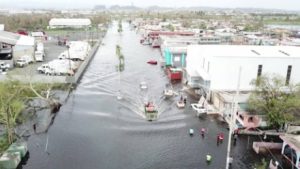
This reality is magnified, not just in California but in the Caribbean too. Here we have the best address on the planet and so the Karma Tax is even more expensive. We have to pay this high price of tropical living … with the actuality of these natural disasters:

“Land of the Free; Home of the Brave”. Rather than for the US, this should be the regional branding for our 30 Caribbean member-states. Imagine enduring all these natural disasters …

… constant beauty; constant threats.

This is not just a problem today. No, for hundreds of years, the Caribbean region has had to contend with this Karma Price. But there was compensation and allowances, like a life of leisure in the slavery eco-system. But alas, as soon as the ease/leisure of Caribbean life lessened, then it was better to leave from here. Consider this historicity in our region, starting with the quick tendency for European colonizing citizens to leave these territories – it was never their home:

1804 Independence of Haiti – French citizens fled back to France, as prosperity and property in the island were taken away.

1833 Abolish of Slavery – British citizens fled back to Britain, as prosperity lessened and property (slaves) were bought out.

1848 Abolish of Slavery – French & Dutch citizens fled back to Europe, as prosperity lessened and property lost value.

1898 Spanish-American War – Spanish citizens fled back to Spain, as Empire (Cuba & Puerto Rico) ceased in the region.

1917 World War I, Denmark withdrawal from Caribbean; Danish citizens fled back to Denmark.

1948 World War II, UNHRC – End of War, start of decolonization; Whites lose power, returned to Europe.

1948 Societal Abandonment Began – Caribbean citizens now fled the homeland for less threatening life in Europe.

This thesis was presented in a previous blog-commentary by the movement behind the 2013 book Go Lean…Caribbean. That commentary asserted that the Enriquillo Faultline in the Greater Antilles makes it hard to ignore what some declare as a Curse in the region. This dictates a constant cycle of death and rebirth or destruction and re-building.

What a cycle?!

This is so similar to the mythical imagery of the Phoenix Bird – which depicts that – rather than trying to repair – at times we just need to let it burn … and then re-build from the ashes. This Phoenix mythology is no fiction; this is our reality because of the prevalence of hurricanes, earthquakes and believe it or not, volcanoes in our region.

It is what it is.

This is the continuation of the June 2020 Teaching Series from the movement behind the 2013 book Go Lean…Caribbean; this is entry 3 of 6. This movement presents a Teaching Series every month on a subject that is germane to Caribbean life. Our focus this month is on Rising from the Ashes. The constant threat of destruction and re-birth is our reality. We need to have the eco-systems for turn-arounds and reboots ready at all times.

The full catalog for this month’s series is listed as follows:

  1. Rising from the Ashes – The Phoenix rises from the Pandemic
  2. Rising from the Ashes – One person – Dead or Alive – can make a difference
  3. Rising from the Ashes – Natural Disasters – The Price of Paradise – ENCORE
  4. Rising from the Ashes – Political Revolutions – Calling Balls and Strikes
  5. Rising from the Ashes – War – “What is it good for?”
  6. Rising from the Ashes – Wrong Ethos could also rise – Cautionary tale of patriotic German Jews

The theme of the constant threat to our society have been published in many previous Go Lean blog-commentaries; in fact that prior commentary related this title: the Curse of the Enriquillo Faultline. It is only apropos to Encore that one, from January 29, here and now:

—————-

Go Lean Commentary – Cursed in Paradise – ‘Enriquillo’ Fault-line

The Caribbean is the “greatest address on the planet … “
We have said this repeatedly; the Creator has blessed this region with such beauty.

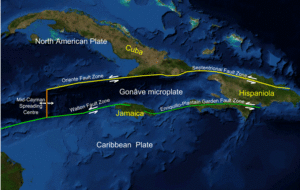
Yet, we must confess, considering a religious argument: “The Gods must be crazy” … putting such a beautiful place in the middle of a dangerous Earthquake Fault-line. This refers to the Enriquillo Fault-line across the Greater Antilles in the Caribbean archipelago – see Photo here:
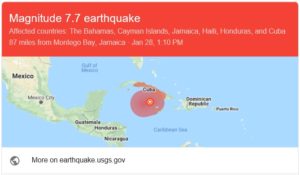
This is not just a theory; this is actuality. We have this news headline now: “7.7 Earthquake north of Jamaica”. So, crediting Godly devotion again, maybe the earthquake activity is some kind of Divine Retribution?

Retribution of what?

Well, just like the Curse of Montezuma or Curse of the Bambino, there were some egregious atrocities that maybe had to be prosecuted-reconciled-remediated for justice from some higher authority (God). Therefore, the thesis is that there is a “curse on this landmass for retribution against the ‘powers that be’ for the inflictions against the indigenous people and their leader Enriquillo”. See those details here on the Enriquillo namesake and the encyclopedic reference of the Fault-line in the Appendix below:

Reference: Enriquillo
Good relations between Christopher Columbus and the indigenous Taíno of the large island Columbus called Hispaniola did not last more than a few days. The Taínos were forced into terrible conditions as laborers in gold mining operations, badly housed in the mountains, poorly fed, extremely overworked, and forced to live in close quarters with the Spaniards.[5] Additionally, due to taking men away from the villages, the cycle of food production was disrupted, causing widespread malnutrition.[5] This malnutrition further aided the Taínos’ vulnerability to deadly new types of diseases introduced by the foreigners.[5] After Columbus tortured and killed many in his quest for gold, he turned to slavery and sugar cane plantations as a way to profit from his voyages.

Several revolts followed in the first half of the 16th century, the most famous began in 1519. Enriquillo, one of the few remaining caciques, or indigenous chiefs, started the revolt with a large number of Taínos from the mountain range of Bahoruco. The Tainos were able to continue the rebellion because of their better knowledge of the region.[6] As the Spaniards were not able to control the rebellion, a treaty was signed granting to the Native population among others the right of Freedom and of Possession. It had little consequences, however, as by this time the Native population was rapidly declining due to European diseases.

Enriquillo, also known as “Enrique” by the Spaniards, was a Taíno cacique [(Tribal Chief)] who rebelled against the Spaniards between 1519 and 1533. Enriquillo’s rebellion is the best known rebellion of the early Caribbean period. He is also considered a hero in the modern day Dominican Republic and Haiti for his resistance in favor of the indigenous peoples.[1] Dominican friar Bartolome de Las Casas, who documented and rallied against Spanish abuse of the indigenous, wrote sympathetically of Enriquillo.[2]

His father, his aunt Anacaona, and eighty other regional chieftains were killed by Nicolás de Ovando while attending supposed “peace talks” with the Spanish in Jaragua. During the talks, Spanish soldiers ambushed the chieftains, also known as caciques, set the meeting house on fire, and then proceeded to kill anyone who fled the flames (causing his father’s death). Enriquillo, an orphan, was later raised in a Santo Domingo monastery and given the name of “Enrico” [3]. One of his mentors was Bartolomé de Las Casas. De Las Casas was a Spanish Roman Catholic Priest focused on the rights of Native Americans. [4]

Enriquillo also had a wife, called Mencía, later with the noble title Doña due to Enriquillo’s high standing and relations with the Spaniards. She was raped by a Spaniard named Valenzuela. When Enriquillo tried to take the issue to the Spanish courts, nothing could be done, since it was Doña Mencia’s word against the Spaniard’s word. This, according to some writers, was the tipping point for Enriquillo which led to his revolt in the Bahoruco mountains.
Source: Retrieved January 29, 2020 from: https://en.wikipedia.org/wiki/Enriquillo

Theory, thesis, religious inference – Yada Yada!

It is what it is – these earthquakes are real! We must simply prepare. This is quest of the movement behind the 2013 book Go Lean…Caribbean; the book stated (Page 23):

c-7. “Crap” Happens
Economic security is tied to the community quest to reboot the Caribbean region to ensure a better place to live, work and play. To ensure economic security, the economic engines must be protected to ensure their continuous operations despite natural or man-made deterrents. Bad things do happen to good people, so we cannot be caught unprepared. We must institute the process and provisions to respond, react, restore and recover. Any and everyone may need to dial “911”.

The Caribbean community ethos is to consider the facts and realities:

  1. climate change cannot be dismissed – tropical storms are now more common and more ferocious;
  2. there are two geologic fault-lines that run through the Caribbean region;
  3. there is an active volcano on Montserrat.

It is not a matter of “if” but “when” emergencies will strike. The security principle therefore is to be prepared for all incidents, big and small, that involve all aspects of society: islands, institutions, companies, families and individuals.

As related in the foregoing headline – 7.7 Earthquake north of Jamaica – this is of serious concern. This seismic activity had its epicenter in the middle of the Caribbean Sea, away from land, but spurring the threat of a tsunami in one place after another. Everyone is On Alert. See this actuality depicted in this news story here:

Title: Mag 7.7 quake hits between Cuba and Jamaica, but no injuries
Sub-title:
A powerful magnitude 7.7 earthquake has struck in the Caribbean Sea between Jamaica and eastern Cuba
By: Michael Weissenstein, Associated Press
HAVANA – A powerful magnitude 7.7 earthquake struck in the Caribbean Sea between Jamaica and eastern Cuba on Tuesday, shaking a vast area from Mexico to Florida and beyond, but there were no reports of casualties or heavy damage.

The quake was centered 139 kilometers (86 miles) northwest of Montego Bay, Jamaica, and 140 kilometers (87 miles) west-southwest of Niquero, Cuba, according to the U.S. Geological Survey. It hit at 2:10 p.m. (1910 GMT) and the epicenter was a relatively shallow 10 kilometers (6 miles) beneath the surface.

Dr. Enrique Arango Arias, head of Cuba’s National Seismological Service, told state media that there had been no serious damage or injuries reported.

Gov. Carlos Joaquín González of Mexico’s Quintana Roo, which is home to Cancun, Tulum and other popular beach resorts, said the earthquake was felt in multiple parts of the low-lying Caribbean state but there were no early reports of damage or injuries.

The Pacific Tsunami Warning Center initially warned that the quake could generate waves 1 to 3 feet above normal in Cuba, Jamaica, the Cayman Islands, Honduras, Mexico and Belize, but issued a later message saying the danger had passed.

The initial tremor was followed by a series of strong aftershocks, including one measured at magnitude 6.1.

The quake was felt strongly in Santiago, the largest city in eastern Cuba, said Belkis Guerrero, who works in a Roman Catholic cultural center in the center of Santiago

“We were all sitting and we felt the chairs move,” she said. “We heard the noise of everything moving around.”

She said there was no apparent damage in the heart of the colonial city.

“It felt very strong but it doesn’t look like anything happened,’’ she told The Associated Press.

It was also felt a little farther east at the U.S. Navy base at Guantanamo Bay, Cuba, on the southeastern coast of the island. There were no immediate reports of injuries or damages, said J. Overton, a spokesman for the installation, which has a total population of about 6,000 people.

Several South Florida buildings were evacuated as a precaution, according to city of Miami and Miami-Dade County officials. No injuries or road closures were reported. No shaking was felt at the Hard Rock stadium in Miami Gardens, which will host the Super Bowl on Sunday.

The quake also hit the Cayman Islands, leaving cracked roads and what appeared to be sewage spilling from cracked mains. There were no immediate reports of deaths, injuries or more severe damage, said Kevin Morales, editor-in-chief of the Cayman Compass newspaper.

The islands experience so few earthquakes that newsroom staff were puzzled when it hit, he said.

“It was just like a big dump truck was rolling past,” Morales said. “Then it continued and got more intense.”

Dr. Stenette Davis, a psychiatrist at a Cayman Islands hospital, said she saw manhole covers blown off by the force of the quake, and sewage exploding into the street, but no more serious damage.

Claude Diedrick, 71, who owns a fencing business in Montego Bay, said he was sitting in his vehicle reading when the earth began to sway.

“It felt to me like I was on a bridge and like there were two or three heavy trucks and the bridge was rocking but there were no trucks,” he said.

He said he had seen no damage around his home in northern Jamaica.

Mexico’s National Seismological Service reported that the quake was felt in five states including as far away as Veracruz, on the country’s Gulf Coast.

————— Associated Press writer Kate Chappell in Kingston, Jamaica, contributed to this report.

Source: Posted & Retrieved January 28, 2020 from: https://abcnews.go.com/International/wireStory/powerful-earthquake-hits-cuba-jamaica-68592066

Considering the geological science of earthquakes, we know there are main shocks and after-shocks. Some geologists also credit pre-shocks, where minor seismic activities come as a prelude to main shocks. See more on the “Science of Earthquakes” in this VIDEO here:

VIDEOWhat is an earthquake? https://abcn.ws/2M4FtKM

An earthquake is caused when two blocks of earth slip past each other on a fault plane, according to the US Geological Survey.

The Richter Scale is exponential between the numbers 3 and 8, so 7.7 is very strong … and dangerous.

There truly have been pre-shocks leading up to this “7.7 Earthquake north of Jamaica”; consider this related story:

2020 Puerto Rico Earthquakes
At the end of December 2019 and in early January 2020, the southwestern part of the island of Puerto Rico was struck by an earthquake swarm,[1] including six that were of magnitude 5 or greater.[2] The largest and most damaging of this sequence occurred on January 7 at 04:24 AST (08:24 UTC) and had a magnitude of 6.4 Mw and a maximum felt intensity of VII (Very strong) on the Modified Mercalli intensity scale.[3] At least one person was killed and several others were injured.[4][5]

A 5.8 Mw  earthquake the previous day caused the destruction of a natural arch, a tourist attraction at Punta Ventana in Guayanilla.[6] A 5.9 Mw  aftershock on Saturday, January 11, damaged many structures, including several historical buildings as well as modern high-rises in the city of Ponce.[7]

Power was lost Island-wide immediately after the quake, and was increasingly restored over a period of a week. Damage to homes was extensive and, by 14 January, more than 8,000 people were homeless and camping outdoors in various types of shelters, with 40,000 others camping outside their homes, just in the city of Ponce alone.[8]

Needless to say, the Enriquillo Fault-line has been very active in these recent days. To all Caribbean stakeholders, we urge:

Be afraid; be very afraid.

This is the same fault-line that devastated Haiti in January 2010 – almost 10 years exactly – plus many other times in the past. The Go Lean movement and organization originated in response to that unmitigated disaster. See this salient reference to it in the Go Lean book (Page 115):

The Bottom Line on the Haiti’s Earthquakes

As of 2010, the following major earthquakes have been recorded in Haiti, along the Enriquillo or Septentrional-Oriente faults:

  • 1564: Quake destroyed Concepción de la Vega and Santiago de los Caballeros.
  • 1701: On November 9, severe destruction occurred and “part of the area along the north shore of the Tiburon Peninsula from Logane to Petit Goave sank into the sea”.
  • 1751 Port-au-Prince earthquake (18 October): According to French historian Moreau de Saint-Méry, “only one masonry building had not collapsed” in Port-au-Prince, Haiti’s capital city.
  • 1770 Port-au-Prince earthquake (3 June): The city was leveled in this magnitude 7.5 quake, killing over 200 people.
  • 1783: A strong quake partially destroyed the church in Santiago.
  • 1842 Cap-Haitien earthquake (7 May): An earthquake destroyed the city of Cap-Haïtien and other towns in the north of Haiti and the Dominican Republic; this earthquake also destroyed the Sans-Souci Palace. 10,000 people were killed. It has been estimated that its magnitude was 8.1.
  • 1946 Dominican Republic earthquake (4 August): This 8.0-magnitude quake in Samaná also shook Haiti horrifically, producing a tsunami that killed 1,600 people.
  • 2010 Haiti earthquake (12 January):. The epicenter of this magnitude 7.0 Mw earthquake was near Léogâne, approximately 16 miles west of Port-au-Prince at a depth of 8.1 miles. The United States Geological Survey recorded a series of at least 33 aftershocks, 14 of which were between magnitudes 5.0 and 5.9. The International Red Cross estimated that about three million people were affected by the quake; the Haitian Government reports that over 316,000 people had been identified as dead, an estimated 300,000 injured, and an estimated 1,000,000 homeless.

Based on this observation, one can hypothesize the theory of: “An accursed land, indeed”!

Yet still, the Go Lean promoters assert – in a previous blog-commentary – that we do not want our people abandoning home, seeking refuge elsewhere. We can reform and transform the homeland to better prepare for the eventualities of Mother Nature. See that message here:

The movement behind the book Go Lean…Caribbean is standing up, stepping up and speaking up:

  • “… Here I am, send me” – The Bible; Isaiah 6:8 (New International Version: Then I heard the voice of the Lord saying, “Whom shall I send? And who will go for us?” And I said, “Here am I. Send me!”)

The basic premise of the economic analysis in the Go Lean book is that we need our population to stay, remain and return to the Caribbean; the more people we have in the market the better.

What is it that we can do to reform and transform for earthquakes? The Go Lean book relates (Page 76), in introducing the Caribbean Union Trade Federation (CU) as a technocracy to plan and respond to natural disasters. See this excerpt here:

B4 – Emergency Management
This area is perhaps one of the most important functions of the CU. The Emergency Management Department will coordinate the planning, response, rebuilding and recovery before, during and after natural disasters and other emergency events. This is the risk management arm of the CU Trade Federation. As such, the scope of Emergency Management will also include education, mentoring, monitoring, mitigation, licensing and coordination of all volunteer activities.

The scope of this department also includes a number of proactive initiatives: (1). establishing and administering volunteer fire/rescue departments for sparsely populated areas; and (2). installing/maintaining emergency notification systems. In ancient cultures there is the practice of ringing a bell, a church bell or one at the town square, to alert the community of an imminent threat. A lot of western democracies embrace the same tactic with more modern technologies, such as audible alarms/sirens.

The imminent threat includes tornado landfall warning, tsunami, mudslide, volcano eruption, etc. The CU will extend this practice further by installing a standard audible siren system for any/all emergency events. A great lesson learned from the US Midwestern city of Omaha-Nebraska is the schedule for siren testing, the first Wednesday every month at 11:00am.

A best practice for Emergency Management is electronic notification. This includes an Emergency Broadcasting/Alert system for TV and radio. Plus now the latest advance is the use of telephone/internet and contact center technologies, allowing features like Reverse 911 – automated/robo calls to every active phone in a location – and text message blasting to every cell phone. With the embrace of www.myCaribbean.gov, the CU can target an alert message to any & every email address, social media screen names, or provide Pop-up Screens for internet browsing sessions for all IP addresses in the strike area.

As such, the scope of natural emergencies covered by this agency will cover more than hurricanes. As such, earthquakes, tsunamis, volcanoes, flooding, forest fires, and droughts will also be monitored, managed and responded to. (These have all been experienced recently in the Caribbean).

Emergencies also include the man-made variety as in industrial (oil spills, factory accidents, chemical spills), explosions, terroristic attacks and prison riots. The purpose of the Trade Federation is to enhance the economic engines of the region. While the #1 economic driver in the region is tourism, any poorly managed episode of “man-made” emergencies will have devastating effects on tourist bookings. Therefore, the CU must respond quickly, forcefully and professionally to contain the physical and image damage that can occur from these incidents.

Though not exclusive, this agency will coordinate its specialized services, skill-sets and occupations like Paramedic, EMT, Search-and-Rescue, Canine (K-9) with other governing (law enforcement) entities. Regional training will therefore be coordinated, licensed, and certified by this CU Emergency Management Department.

This Emergency Management agency will also coordinate the training and management of animal responders, in conjunction with the other federal agencies of Justice, Agriculture, Interior (Parks). The animals will include bomb sniffing dogs, cadaver dogs, drug dogs and mounted police horses.

There is also an economic/financial scope for this department. As the effort for a comprehensive property-casualty fund to cover the entire Caribbean region will also be coordinated by this agency. The classic solution is a large pool of premium payers and claims filed by the affected area. Beyond this model, there are also advanced products like re-issuance side-cars for market assimilation. The public can then invest and profit from the threat/realization of regional risks. This derivative product is a bet, a gamble, but in the end, the result is an insurance fund of last resort, much like the Joint Underwriters Agency (JUA) in Florida.

The Go Lean movement has addressed the subject of Earthquakes and Emergency Management on many occasions. See this sample of the many previous blog-commentaries here:

https://goleancaribbean.com/blog/?p=18182 Disaster Relief: Helping, Not Hurting
https://goleancaribbean.com/blog/?p=17373 A Marshall Plan for Haiti – Finally
https://goleancaribbean.com/blog/?p=15996 Good Governance: Stepping Up in an Emergency
https://goleancaribbean.com/blog/?p=15267 Industrial Reboot – Prefab (Earthquake Tolerant) Housing 101
https://goleancaribbean.com/blog/?p=13974 The Spoken and Unspoken on Haiti
https://goleancaribbean.com/blog/?p=2614 Modeling the ‘Great ShakeOut’ Earthquake Drill
https://goleancaribbean.com/blog/?p=87 6.5M Earthquake Shakes Eastern Caribbean

“Here I am send me”? That sounds similar to the mantra “To Change the World, Start With Me”!

While not subscribing to any religious dogma, “it is what it is”, the End of Days Prophecies in the Bible seem to have validity – Matthew 24: 3, 7:

3 What will be the sign … of the Last Days?
7 Nation will rise against nation, and kingdom against kingdom. There will be famines and earthquakes in various places.

So we must simply be more resilient and responsive to earthquakes – and tsunamis. There is no reason to expect any less activity.

So let’s get busy …  let’s prepare our homes, families, communities, nations and region for the eventuality of this Enriquillo Fault-line (and other geologic weak-points that are undeniable in our homeland).

Most importantly, let’s lean-in to this Go Lean roadmap – this is the Way Forward for Caribbean Disaster Preparation and Response – and finally make our region, each of the 30 Caribbean member-states, a better place to live, work and play. 🙂

About the Book
The book Go Lean…Caribbean serves as a roadmap for the introduction and implementation of the technocratic Caribbean Union Trade Federation (CU), for the elevation of Caribbean society – for all member-states. This CU/Go Lean roadmap has these 3 prime directives:

  • Optimization of the economic engines in order to grow the regional economy to $800 Billion & create 2.2 million new jobs.
  • Establishment of a security apparatus to ensure public safety and protect the resultant economic engines.
  • Improve Caribbean governance to support these engines, including a separation-of-powers between the member-states and CU federal agencies.

The Go Lean book provides 370-pages of turn-by-turn instructions on “how” to adopt new community ethos, plus the strategies, tactics, implementations and advocacies to execute so as to reboot, reform and transform the societal engines of Caribbean society.

Download the free e-Book of Go Lean … Caribbean – now!

Who We Are
The movement behind the Go Lean book – a non-partisan, apolitical, religiously-neutral Community Development Foundation chartered for the purpose of empowering and re-booting economic engines – stresses that reforming and transforming the Caribbean societal engines must be a regional pursuit. This was an early motivation for the roadmap, as pronounced in the opening Declaration of Interdependence (Pages 11 – 13):

ii. Whereas the natural formation of the landmass for our lands constitutes some extreme seismic activity, it is our responsibility and ours alone to provide, protect and promote our society to coexist, prepare and recover from the realities of nature’s occurrences.

xi. Whereas all men are entitled to the benefits of good governance in a free society, “new guards” must be enacted to dissuade the emergence of incompetence, corruption, nepotism and cronyism at the peril of the people’s best interest. The Federation must guarantee the executions of a social contract between government and the governed.

xvi. Whereas security of our homeland is inextricably linked to prosperity of the homeland, the economic and security interest of the region needs to be aligned under the same governance. Since economic crimes … can imperil the functioning of the wheels of commerce for all the citizenry, the ccidence of this Federation must equip the security apparatus with the tools and techniques for predictive and proactive interdictions.

xix. Whereas our legacy in recent times is one of societal abandonment, it is imperative that incentives and encouragement be put in place to first dissuade the human flight, and then entice and welcome the return of our Diaspora back to our shores. This repatriation should be effected with the appropriate guards so as not to imperil the lives and securities of the repatriated citizens or the communities they inhabit. …

xxiv. Whereas a free market economy can be induced and spurred for continuous progress, the Federation must install the controls to better manage aspects of the economy: jobs, inflation, savings rate, investments and other economic principles. Thereby attracting direct foreign investment because of the stability and vibrancy of our economy.

Sign the petition to lean-in for this roadmap for the Caribbean Union Trade Federation. 

——————

Appendix – Enriquillo–Plantain Garden Fault Zone

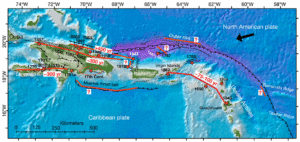
The Enriquillo–Plantain Garden fault zone (EPGFZ or EPGZ) is a system of active coaxial left lateral-moving strike slip faults which runs along the southern side of the island of Hispaniola, where Haiti and the Dominican Republic are located.[1] The EPGFZ is named for Lake Enriquillo in the Dominican Republic where the fault zone emerges, and extends across the southern portion of Hispaniola through the Caribbean to the region of the Plantain Garden River in Jamaica.
Geology
The EPGFZ shares approximately half of the relative motion between the North American and Caribbean tectonic plates with the Septentrional-Oriente fault zone which runs along the northern side of Hispaniola. Both faults merge into the Cayman Trench to the west. The fault accommodates about 20.6±1.66 millimeters of lateral motion per year (mm/yr).[2] Additionally, a component of compression is present as the North American Plate pushes toward the southwest. This results in vertical deformation manifest in the mountainous terrain of Hispaniola. Some researchers believe that the EPGFZ and the Septentrional-Orient fault zone bound a microplate, dubbed the Gonâve Microplate, a 190,000 km2 (73,000 sq mi) area of the northern Caribbean Plate that is in the process of shearing off the Caribbean Plate and accreting to the North America Plate.[3]

[Prominent] Earthquakes

Other historical large earthquakes in 1860, 1761, 1684, 1673, and 1618 are also likely attributed to the EPGFZ, though none of these have been confirmed in the field as associated with this fault.[7]

Source: Retrieved January 29, 2020 from: https://en.wikipedia.org/wiki/Enriquillo%E2%80%93Plantain_Garden_fault_zone

Share this post:
, ,

Rise from the Ashes – Phoenix Mythology

Go Lean Commentary

Creating a new society on the ashes of the old.

It is that simple …

… this is what “we” are trying to do.

This reminds us of the Phoenix mythology; which many ancient cultures depicted – Egyptian, Greek, Roman, Oriental, etc.:

Reference Title:  Phoenix (mythology)
In Ancient Greek folklore, a phoenix is a long-lived bird that cyclically regenerates or is otherwise born again. Associated with the sun, a phoenix obtains new life by arising from the ashes of its predecessor. Some legends say it dies in a show of flames and combustion, others that it simply dies and decomposes before being born again.[1] Most accounts say that it lived for 500 years before rebirth.[2] HerodotusLucanPliny the ElderPope Clement ILactantiusOvid, and Isidore of Seville are among those who have contributed to the retelling and transmission of the phoenix motif. The phoenix symbolized renewal in general, as well as entities and concepts such as the Sun, time, the Roman EmpireChristMary, and virginity.[3]

Analogues
Scholars have observed analogues to the phoenix in a variety of cultures. These analogues include the Hindu garuda and bherunda, the Russian firebird, the Persian simorgh, the Georgian paskunji, the Arabian anqa, the Turkic Konrul, also called Zümrüdü Anka (“emerald anqa”), the Tibetan Me byi karmo, the Chinese Fenghuang and zhu que, and the Japanese hō-ō.[23]

Source: Retrieved June 21, 2020 from: https://en.wikipedia.org/wiki/Phoenix_(mythology)

Rather than trying to repair, sometimes we just need to just let it burn … and then re-build from the ashes.

Art Imitating Life # 1 – Song: “The roof, the roof, the roof is on fire; we don’t need no water, let the mo****-fu**** burn”.

Art Imitating Life # 2 – TV Series: “Little Fires Everywhere” – See Appendix VIDEO below for a summary.

Though the word Phoenix is not used in the 2013 book Go Lean…Caribbean – a roadmap to introduce and implement the technocratic Caribbean Union Trade Federation (CU) – the descriptive concept is definitely presented. Early on, the book urges Caribbean stakeholders to … “do away with the Old and start anew”. See this excerpt from Page 10:

… whenever any form of government becomes destructive to these ends, it is the right of the people to alter or to abolish it, and to institute new government, laying its foundation on such principles and organizing its powers in such form, as to them shall seem most likely to effect their safety and happiness. … When a long train of abuses and usurpations, pursuing invariably the same object evinces a design to reduce them under absolute despotism, it is their right, it is their duty, to throw off such government, and to provide new guards for their future security.

There is demand and there is supply. Just because a market does a poor job of delivering the supply does not mean that the demand has altered. No, for the 30 member-states of the political Caribbean, we still have the same demand:

A more perfect bond of union. We need a better fulfillment of the implied Social Contract. That is where …
… citizens surrender some of their freedoms and submit to the authority of the State in exchange for protection of remaining natural and legal rights.

The Caribbean has a demand for a better eco-system for all the societal engines: economics, security and governance. We need to “rise up from the ashes” of the failed-and-failing eco-systems and build a new system from scratch.

This is not just theoretical! Consider how the world is enduring the Coronavirus COVID-19 crisis right now; people are dying and economies are being wrecked. The expectation is that global travel will re-emerge only slowly; so our tourist-based economies will soon suffer dire consequences. Thus, the clarion call to “rise from the ashes” is hard to ignore.

There is a lot of the Caribbean status quo that needs to “die” or “burn down”, to allow for a re-birth, re-generation and re-creation of a better version. These are the “ashes” … as related in this example from the Go Lean book (Page 33):

The economics of housing can be impacted with the over-supply of abandoned buildings, as it brings the value down for other properties, and sends out the false vision, like Detroit’s abandoned structures, that just a “little rehab” and their new manifestations will be readily available. Learning from Detroit, it is more beneficial to raze abandoned buildings and build anew – turn-around, rather than considering restoration or preservation.

Here too, is another example of the “ashes” in our societal economic engine:

The vision of the CU entails re-booting the economic engines of the region and the member-states; this cannot be accomplished without addressing the monetary issues, and the history of inflation and currency devaluation of the past. Many times a country’s failing currency moves it closer to Failed State status. A prime directive of the CU roadmap is to facilitate repatriation of the far-flung Diaspora. Many times the Currency crisis of the past directly contributed to major exodus of the country’s professional and middle classes. This was the case for Jamaica, Dominican Republic, Guyana, Trinidad and others. – Go Lean book Page 73.

The Go Lean book invited the stakeholders in the Caribbean to (1) reboot and (2) turn-around; positing that it is essential now if there is to be any hope for a future for our society. The book asserted that the CU must elevate the priority on these two important action-verbs; doing so this many times:

  • Reboot – 90 times
  • Turn-around – 17 times

These urgings need to be heeded for our region to “rise from the ashes”.

Every month, the Go Lean movement presents a Teaching Series on a subject germane to Caribbean life. For this June 2020, our focus is on Rising from the Ashes. This is timely, as the whole world have been on Shutdown these past months due to the Coronavirus-COVID-19 pandemic and only now starting to re-open – Ashes abound. This is entry 1 of 6 for this series, which details the path and process of a Phoenix concept – rebooting and turning-around – so as to foster a new society.

The full catalog for this month’s series is listed as follows:

  1. Rising from the Ashes – The Phoenix rises from the Pandemic
  2. Rising from the Ashes – One person can make a difference – Dead or Alive
  3. Rising from the AshesNatural Disasters – The Price of Paradise
  4. Rising from the Ashes – Political Revolutions – Calling Balls and Strikes
  5. Rising from the Ashes – War – “What is it good for?”
  6. Rising from the Ashes – Wrong Ethos could also rise – Cautionary tale of patriotic German Jews

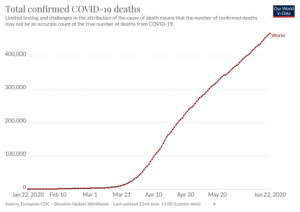
There are no Ands, Ifs or Buts; we need to turn-around and reboot to mitigate this COVID-19 pandemic. Nearly a half-a-million lives have died; so this is not just an academic discussion.

The Go Lean book presents an actual advocacy that addresses the Art, the Science of formal Turn-arounds. See here some of the specific plans, excerpts and headlines from Page 33, entitled:

10 Ways to Impact Turn-Arounds

1 Lean-in for the Caribbean Union Trade Federation (CU).
The CU treaty facilitates a reboot of the region’s economic engines, security apparatus and emergency management (preparation/response) for the 30 member-states, 42 million people and $800 Billion GDP. The treaty allows for the establishment of Self Governing Entities where the CU will be the municipal administrator – this allows for civic planning, zoning, demolitions and imminent domain decision-making separate from the member-states. While too, dispositions of abandoned buildings in the member-states still relate to CU missions, as in the protection of image (“psychological trauma” is inflicted daily on neighbors of abandoned structures) and the quest for beauty. While beauty, aesthetics and preservation may be paramount for communities, these should only be a concern after basic needs are satisfied – housing is a basic need. The economics of housing can be impacted with the over-supply of abandoned buildings, as it brings the value down for other properties, and sends out the false vision, like Detroit’s abandoned structures, that just a “little rehab” and their new manifestations will be readily available. Learning from Detroit, it is more beneficial to raze abandoned buildings and build anew – turn-around, rather than considering restoration or preservation.
2 Bankruptcy Processing
3 Homeland Security Concerns
4 Property Tax Revenue and Services
5 Clean Slate / Blank Canvas
By razing abandoned buildings, the community can truly engage a turn-around strategy. The property now becomes a clean slate / blank canvas, ready for any new development or a return to a natural disposition of Caribbean flora/fauna.
6 Explosives Use – Art & Science
7 Demolition Jobs
It takes real talent and skill to raze abandoned buildings – that translates into jobs, demolition jobs. So the CU mission to create regional jobs can be enhanced with this community ethos to turn-around the property of abandoned buildings.
8 Recycling Materials
9 Community Gardens and Fruit Trees – by Non-Government Organizations (NGO)
10 Common Grazing Rights
Intercity agriculture has emerged as a community advocacy to reclaim abandoned properties – a handful of grazing goats or cattle can easily co-exist in a community without featuring a full agricultural atmosphere – no odors.

The points of fostering the best-practices in Turn-arounds and Reboots have been elaborated upon in many other previous blog-commentaries; consider this sample:

https://goleancaribbean.com/blog/?p=19741 Rebooting from the Mono-Industrial Economic Landscape in the Region
https://goleancaribbean.com/blog/?p=19725 Rebooting to be ‘Basic’ about providing Basic Needs
https://goleancaribbean.com/blog/?p=19669 Rebooting the Eco-System to ‘Work From Home’
https://goleancaribbean.com/blog/?p=19452 Rebooting the Regional Currencies for a Single Market
https://goleancaribbean.com/blog/?p=18566 Lessons Learned – JPMorganChase Rebooting to make ‘Change’ happen
https://goleancaribbean.com/blog/?p=18475 Way Forward for Direct Foreign Investors ‘Wind-Downs’ (Bankruptcies)
https://goleancaribbean.com/blog/?p=18243 After Dorian, Regionalism – Need to Reboot Regionalism
https://goleancaribbean.com/blog/?p=17515 Turn-around: Changing the Culture & Currency of Commerce
https://goleancaribbean.com/blog/?p=17358 Marshall Plan – A Lesson in History for Turn-Arounds
https://goleancaribbean.com/blog/?p=17337 Industrial Reboots – Amusement Parks & 17 other industries

It is past time now for a Caribbean Phoenix.

But we do not need a mythical bird – this is not fantasy nor fiction – we need the heavy-lifting to actually reboot our communities. The Caribbean region is the best address on the planet, so we have a lot already to work with. We must simply lead, or follow (others who are trying to reboot) or lead-by-following – to make other people’s plans successful.

Yes, we can …

We can also learn much by studying other societies; those that have managed the crisis poorly and those who have rebooted and “turned it around” well. Take France for example …

They were also on a COVID-19 shutdown; their economy came to a halt; their bustling cultural center, Paris – which enjoys 25 million annual visitors – was locked down. They now have to rise from those ashes. Their plan is to do the heavy-lifting needed to thrive in a COVID-19 changed world. They plan to employ all the best-practices for Public Health management:

  • Test
  • Trace
  • Isolate

See this portrayed in the following news article:

Title: France rolls out tracing app, further eases anti-virus restrictions
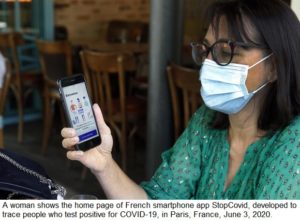
Paris — France has rolled out its “StopCovid” contact tracing app as it continues easing restrictions on normal life aimed at curtailing the coronavirus disease in the country. Within a few hours of its release on Tuesday, the new app had been downloaded to smartphones more than 600,000 times, according to official figures.

The controversial app relies on Bluetooth to identify and build a list of other users that one comes in contact with. If any of them have identified themselves as having tested positive, the app will alert others that they may have been exposed to a risk, without ever identifying users to each other.

After initial privacy concerns, the government has stressed that using the app is entirely voluntary; data can be deleted from the server by the user at any point; and it can also be de-activated by the user.

“It’s simple, it’s easy, it complies with GDPR (European data protection law) etc., and you activate it only after you’ve gone through all the setup,” said Wendy Ann Smith, a psychologist in Paris who had COVID-19 symptoms in March but never got tested. She said she was comfortable using the app: “I have no worries, and I know this isn’t about me personally — it helps society as a whole.”

Fewer restrictions, with caveats
The tracing app was released the same day that another layer of restrictions was lifted across France. Restaurants and cafés across most of the country can now serve diners at well-spaced tables.

In the Paris region, where the virus is still circulating, tables are only allowed outdoors. To facilitate outdoor dining, the city has given blanket permission to bars and eateries to set up tables on sidewalks and public squares, as long as they don’t block pedestrian traffic. Many restaurants continue to offer takeout.

All elementary schools across the country are now open, but classroom sizes are limited and attendance is still voluntary.

Schools spent weeks leading up to Tuesday re-organizing desks, putting tape markers along hallways and planning how to combine online with in-class learning. All school cafeterias remain closed, and students’ lockers are off limits so children have to bring lunches and snacks in with them, and their schoolbooks home every day.

Middle schools are open across most of the country, but only partially in the Paris region. High schools have re-opened in two safer “green zones,” where there are fewer infections. Paris is still labelled orange, with some risk, so only vocational schools have been allowed to re-open in and around the capital.

Tuesday also saw museums and monuments permitted to re-open across the country, but many, including the Louvre museum, have opted to wait while they work out how to incorporate social distancing. Some tourist accommodation outside the Paris region has also been allowed to re-open.

Source: Posted June 3, 2020; retrieved June 21, 2020 from: https://www.cbsnews.com/news/france-coronavirus-restrictions-ease-restaurants-schools-covid-19-contract-tracing-app-rolled-out/?fbclid=IwAR3pl8xZ7VPh-EGNvRVYPasn9UiABqaqYBnU901jz078YkZKo1XQ3Zx8nb4

In summary, our Caribbean region needs to reboot and turn-around. We do not need to just put the fires out; no, we need to let it burn and start all over again with new (better) community ethos, strategies, tactics, implementations and advocacies. Some 7 years ago, the Go Lean book identified these 4 Caribbean communities that need to completely reboot their societies:

  • 10 Ways to Reboot Freeport – Page 112
  • 10 Ways to Reboot Cuba – Page 236
  • 10 Ways to Reboot Haiti – Page 238
  • 10 Ways to Reboot Jamaica – Page 239

This was before this Coronavirus-COVID-19 crisis; that need to reboot is even more acute now.

We hereby urge all Caribbean stakeholders – government, citizens and trading partners – to lean-in to this Go Lean roadmap to reboot and turn-around the Caribbean homeland. We must simply ‘burn it down”, get rid of the old-bad, and then “rise up from the ashes” by starting anew: better, stronger, richer, healthier and wiser.

This is heavy-lifting, yes, but worth the effort. This is how we will make our homeland a better place to live, work and play. 🙂

About the Book
The book Go Lean…Caribbean serves as a roadmap for the introduction and implementation of the technocratic Caribbean Union Trade Federation (CU), for the elevation of Caribbean society – for all member-states. This CU/Go Lean roadmap has these 3 prime directives:

  • Optimization of the economic engines in order to grow the regional economy to $800 Billion & create 2.2 million new jobs.
  • Establishment of a security apparatus to ensure public safety and protect the resultant economic engines.
  • Improve Caribbean governance to support these engines, including a separation-of-powers between the member-states and CU federal agencies.

The Go Lean book provides 370-pages of turn-by-turn instructions on “how” to adopt new community ethos, plus the strategies, tactics, implementations and advocacies to execute so as to reboot, reform and transform the societal engines of Caribbean society.

Download the free e-Book of Go Lean … Caribbean – now!

Who We Are
The movement behind the Go Lean book – a non-partisan, apolitical, religiously-neutral Community Development Foundation chartered for the purpose of empowering and re-booting economic engines – stresses that reforming and transforming the Caribbean societal engines must be a regional pursuit. This was an early motivation for the roadmap, as pronounced in the opening Declaration of Interdependence (Pages 11 – 13):

xi. Whereas all men are entitled to the benefits of good governance in a free society, “new guards” must be enacted to dissuade the emergence of incompetence, corruption, nepotism and cronyism at the peril of the people’s best interest. The Federation must guarantee the executions of a social contract between government and the governed.

xvi. Whereas security of our homeland is inextricably linked to prosperity of the homeland, the economic and security interest of the region needs to be aligned under the same governance. Since economic crimes … can imperil the functioning of the wheels of commerce for all the citizenry, the accedence of this Federation must equip the security apparatus with the tools and techniques for predictive and proactive interdictions.

xxiv.  Whereas a free market economy can be induced and spurred for continuous progress, the Federation must install the controls to better manage aspects of the economy: jobs, inflation, savings rate, investments and other economic principles. Thereby attracting direct foreign investment because of the stability and vibrancy of our economy.

Sign the petition to lean-in for this roadmap for the Caribbean Union Trade Federation.

——————

Appendix VIDEO Little Fires Everywhere – Trailer (Official) • A Hulu Original – https://youtu.be/JWGkX8ClhBI

Hulu
One spark is all it takes. 🔥 #LittleFiresEverywhere is now streaming, only on Hulu.

ABOUT LITTLE FIRES EVERYWHERE: Based on Celeste Ng’s 2017 bestseller, Little Fires Everywhere follows the intertwined fates of the picture-perfect Richardson family and an enigmatic mother and daughter who upend their lives. The story explores the weight of secrets, the nature of art and identity, the ferocious pull of motherhood – and the danger in believing that following the rules can avert disaster.

SUBSCRIBE TO HULU’S YOUTUBE CHANNEL

Click the link to subscribe to our channel for the latest shows & updates: http://www.youtube.com/hulu?sub_confi

START YOUR FREE TRIAL http://hulu.com/start

FOLLOW US ON SOCIAL

Instagram: https://www.instagram.com/hulu/

Hulu on Twitter: https://twitter.com/hulu

Facebook: https://www.facebook.com/hulu

#Trailer


Share this post:
, ,
[Top]

Keep the Change: Being ‘Basic’ about Basic Needs

Go Lean Commentary

The strong urging to the Caribbean today is to:


Be more Basic.

What exactly does this mean?

Sometimes the reference is good, sometimes bad, and sometimes ugly.

What does Basic Mean? – www.dictionary.com
In slang, basic characterizes someone or something as unoriginal, unexceptional, and mainstream. A basic girl—or basic bitch as she is often insulted—is said to like pumpkin spice lattes, UGG boots, and taking lots of selfies, for instance.

WHERE DOES BASIC COME FROM?

According to Green’s Dictionary of Slang, basic emerges as slang for someone or something as being “unexciting, unexceptional, or uneventful” in the 1970s. This is an outgrowth of the negative sense of basic as “plain and simple”.

The slang especially stuck to women. In their 1984 song “Meeting in the Ladies Room,” the R&B girl group Klymaxx call a woman basic for making moves on another’s boyfriend. [(See Appendix A below)].

The 2000s saw the rise of the term basic bitch, or a woman who is uninteresting and mainstream in her tastes, interests, style, or personality. Comedian Lil Duval had a 2009 video about the Basic Bitch. [(See Appendix B below)]. The 2011 song “Gucci Gucci” by Kreayshawn features the hook: “And we stunting like / Gucci Gucci, Louis Louis, Fendi Fendi, Prada / Basic bitches wear that shit so I don’t even bother.”

Basic has since become associated with unlikeable, predictable, and ordinary things, especially associated with young white women.

WHO USES BASIC?

While basic can describe anyone or anything considered disagreeably mainstream, it especially insults, as noted, young white women. As basic and basic bitch spread in popular culture, some women aren’t oblivious to their supposed basic-ness but ironically embrace it. But men, be very careful about calling a woman basic, let alone basic bitch. We don’t recommend it.

NOTE:
This is not meant to be a formal definition of basic like most terms we define on Dictionary.com, but is rather an informal word summary that hopefully touches upon the key aspects of the meaning and usage of basic that will help our users expand their word mastery.

The take-away from this foregoing “ugly” definition is that “basic is ‘plain and simple’”.

The plain and simple requirement is that the 30 member-states of the political Caribbean need to do a better job of fulfilling its basic needs: food, clothing, shelter and energy. Globalization has failed us – we must do the Basic ourselves. We do not necessarily need – though we might want – all the fancy solutions.

  • Hungry? Go Fish … or go outside and pluck from a family garden or a family farm. How about plucking eggs or tree-ripen selections from fruit trees (think tomatoes) or a fattened bull for slaughter?
  • Naked? Pull out the sewing machine and make a garment; sweatshops in low-wage countries are the breeding grounds for this virus. How about Personal Protection Equipment (PPE) garments; i.e. mask, gowns, tunics, jackets?
  • Homeless? Gather the building materials and construct a house. Zoning and HOA rules must be agile and flexible. How about allowing family gardens and/or community gardens in urban areas? Barn-houses in rural areas?
  • Stranded? Use the wind to move a turbine and/or move a vehicle (boat) from Point A to Point B. How about generating electricity from alternative sources (wind, sun, thermal and tidal), then powering electric cars?

Thanks to the Coronavirus – COVID-19 crisis, the world is re-thinking the fulfillment of these basic needs. Believe it or not, in every jurisdiction Food Service workers are now regarded as Essential Workers. This is a fundamental change – a shift in values – for jobs that had previously been valued as inconsequential or unworthy for most, except the lowest in society; think  the new immigrants (Migrant Workers) toiling in the fields and the packing houses.
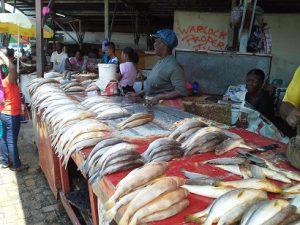
Are these ones now “essential” or sacrificial?

Or are they now … simply Basic?

It’s time to acknowledge the change … and Keep the Change to our value systems. It is time to acknowledge that fulfilling our basic needs is a basic requirement for survival as a people and a collective society.

So often, the basic needs for Caribbean survival were just delegated to others, only fulfilled through imports. But now that it is April 2020 and the world is locked-down, sheltering-in-place, the majority of people have had to avoid gathering for all but essential interactions in order to “flatten the curve”. Those who gather and distribute our food are now more valued and more expensive.

Have you noticed the increase in prices for our necessities? We can no longer be “cute”, only desiring the fancy brands. No, we now have to be basic. We need to Keep this Change.

The 2013 book Go Lean…Caribbean had originally asserted that doubling-down on Basic Needs was the key to reforming and transforming the societal engines in our Caribbean homeland. The book stated that the best way to reboot the economy and recover from the Global Crisis – that time it was the Great Recession of 2007 to 2009 – was to double-down on the Basics. There is an actual advocacy of this purpose in the Go Lean book; see here some of the specific plans, excerpts and headlines from Page 152, entitled:

10 Ways to Create Jobs … in the Caribbean Region

1 Lean-in for the Caribbean Single Market Confederation Treaty: Caribbean Union Trade Federation (CU)
The CU will allow for the unification of the region into one market, thereby creating a single economy of 30 member- states, 42 million people and a GDP of over $800 Billion. The CU’s mission is to create high-paying jobs for the region, beyond the minimum wage (defined below). Many high-wage industries would be promoted, incentivized and regulated at the federal level, even new industries created. Jobs come from trade; the CU goal is to improve trade. The CU will thus institute Enterprise Zones and Empowerment Zones – SGE’s – with tax benefits: rebates, abatements – as job creation pockets. The CU will capture data, micro and macro economic metrics, to measure the success/failure of these initiatives.
2 Feed Ourselves
The industries of agri-business allow structured commercial systems to grow, harvest and trade in food supplies. Many of the Caribbean member states (Lesser Antilles) acquire all their food in trade, the agricultural footprint is very small, though some countries (Greater Antilles, Belize, Guyana & Suriname) have a low opportunity cost for producing food. But with the Trade Federation in force, intra-region trade will be the first priority. When the demand is qualified, quantified and assured, the supply and quality there in, will catch up.
3 Clothe Ourselves
With textiles manufacturing; fashion merchandising and logistical industries, jobs can be created in the supply of apparel, shoes and accessories. Today, 90 – 99% of the supply is foreign trade. But once the CU regional demand is qualified, quantified and assured, the local supply will catch up further. 4
4 House Ourselves
In the US, it’s a truism of the National Association of Realtors® that “housing creates jobs” [239]. With the repatriation of the Caribbean Diaspora, local building supplies and new “housing starts” will emerge in the Caribbean. Plus, the CU will facilitate mortgage secondary market and pre-fabulous construction thereby fostering new housing sub-industries.
5 Update Our Own Infrastructure and the Industries They Spun
6 Help Regional Businesses Find Foreign Markets
7 Steer More People to S.T.E.M. Education and Careers
8 Welcome Home Emigrants [ or Repatriates]
9 Welcome “Empowering” Immigrants
10 Draw More Tourists

Every month, the movement behind the 2013 book Go Lean…Caribbean present a Teaching Series on a subject germane to Caribbean life. For this April 2020, our focus is on the impact of the Coronavirus on the Globe, region, each member-state (national), community and each family. There is the need to re-focus on the changes this crisis has ushered in and to Keep the Changes that were always needed for implementation. This is entry 4 of 5 for this series, which details that there is the need to double-down on Basic Needs (food, clothing, shelter and energy.

The full catalog for this month’s series is listed as follows:

  1. Keep the Change – Lower Carbon Consumption abating Climate Change
  2. Keep the Change – Working From Home & the Call Center Model
  3. Keep the Change Schools – Primary to Tertiary – making e-Learning work
  4. Keep the Change – Basic Needs: Cannot just consume; we must produce as well
  5. Keep the Change – Mono-Industrial Economy: ‘All eggs in 1 basket’

Don’t get it twisted, this Coronavirus-COVID-19 threat means death and devastation for many people and it has devastated the economic engines of most countries – our Caribbean homelands included. There are no Ands, Ifs or Buts; changes are afoot. Some good, some bad and some ugly.

Yes, we can … Keep the Change for the good benefits. We have always needed to do a better job for Food Security. In fact this was the subject of a whole series in December 2019 where we identified these issues, challenges and solutions:

  1. Food Security – Bread Baskets on Land and Sea
  2. Food Security – Temperate Foods in the Tropics
  3. Food Security – Opportunity: 1 County in Iowa raises all the Beef for a Caribbean Cruise Line
  4. Food Security – FTAA: A Lesson in History for servicing Local Foods
  5. Food Security – Big Chicken – Low-hanging fruit for all Poultry needs

The points of reforming and transforming the Caribbean eco-systems for other basic needs – think clothing, housing and energy – were also elaborated upon in many previous blog-commentaries; consider this sample:

https://goleancaribbean.com/blog/?p=19327 ‘Missing Solar’ – Inadequacies Exposed to the World
https://goleancaribbean.com/blog/?p=18287 The Housing Industry can save us – in Good Times and Bad
 https://goleancaribbean.com/blog/?p=17280 Way Forward – For Energy: ‘Trade’ Winds
https://goleancaribbean.com/blog/?p=13985 EU Assists Barbados in Renewable Energy Self-Sufficiency
https://goleancaribbean.com/blog/?p=14250 Leading with Money Matters – As Goes Housing, Goes the Market
https://goleancaribbean.com/blog/?p=11737 Robots Building Houses – More than Fiction
https://goleancaribbean.com/blog/?p=10373 Science of Sustenance: CLT Housing
https://goleancaribbean.com/blog/?p=10371 Science of Sustenance: e-Clothing
https://goleancaribbean.com/blog/? p=10367 Science of Sustenance: Energy
https://goleancaribbean.com/blog/?p=5155 Tesla unveils super-battery to enable Alternative Energy for homes
https://goleancaribbean.com/blog/?p=2726 Caribbean People have thrived in Fashion industry – Oscar De La Renta
https://goleancaribbean.com/blog/?p=665 Real Estate Investment Trusts – Solution for financing Housing industry

Call us Basic … I dare you.

Rather than an insult, we need to be proud to be more technocratic in the fulfillment of our basic needs. “Plain and simple”, we need to:
  • Feed Ourselves
  • Clothe Ourselves
  • House Ourselves

We should be insulted that we are NOT Basic.

This is why we must Keep the Change.

Coronavirus COVID-19 is not a good happenstance – people are dying.

However, if we can use this crisis to forge change in our society, force changes to our “community ethos” (the Will to Change) and to the societal engines for economics, security and governance, then those sacrifices would not have been in vain.

A crisis is a terrible thing to waste!

We hereby urge all Caribbean stakeholders to work to reform and transform our homeland. How? The strategies, tactics and implementations are all identified, qualified and proposed in the pages of the Go Lean book. It’s a full roadmap for change. A complete roadmap to make our homelands better places to live, work and play. 🙂

About the Book

The book Go Lean…Caribbean serves as a roadmap for the introduction and implementation of the technocratic Caribbean Union Trade Federation (CU), for the elevation of Caribbean society – for all member-states. This CU/Go Lean roadmap has these 3 prime directives:

  • Optimization of the economic engines in order to grow the regional economy to $800 Billion & create 2.2 million new jobs.
  • Establishment of a security apparatus to ensure public safety and protect the resultant economic engines.
  • Improve Caribbean governance to support these engines, including a separation-of-powers between the member-states and CU federal agencies.

The Go Lean book provides 370-pages of turn-by-turn instructions on “how” to adopt new community ethos, plus the strategies, tactics, implementations and advocacies to execute so as to reboot, reform and transform the societal engines of Caribbean society.

Download the free e-Book of Go Lean … Caribbean – now!

Who We Are

The movement behind the Go Lean book – a non-partisan, apolitical, religiously-neutral Community Development Foundation chartered for the purpose of empowering and re-booting economic engines – stresses that reforming and transforming the Caribbean societal engines must be a regional pursuit. This was an early motivation for the roadmap, as pronounced in the opening Declaration of Interdependence (Pages 11 – 14):

xi. Whereas all men are entitled to the benefits of good governance in a free society, “new guards” must be enacted to dissuade the emergence of incompetence, corruption, nepotism and cronyism at the peril of the people’s best interest. The Federation must guarantee the executions of a social contract between government and the governed.

xvi. Whereas security of our homeland is inextricably linked to prosperity of the homeland, the economic and security interest of the region needs to be aligned under the same governance. Since economic crimes … can imperil the functioning of the wheels of commerce for all the citizenry, the accedence of this Federation must equip the security apparatus with the tools and techniques for predictive and proactive interdictions.

xxiv.  Whereas a free market economy can be induced and spurred for continuous progress, the Federation must install the controls to better manage aspects of the economy: jobs, inflation, savings rate, investments and other economic principles. Thereby attracting direct foreign investment because of the stability and vibrancy of our economy.

xxx. Whereas the effects of globalization can be felt in every aspect of Caribbean life, from the acquisition of food and clothing, to the ubiquity of ICT, the region cannot only consume, it is imperative that our lands also produce and add to the international community, even if doing so requires some sacrifice and subsidy.

Sign the petition to lean-in for this roadmap for the Caribbean Union Trade Federation.

——————

Appendix A VIDEO – Klymaxx – Meeting In The Ladies Room (Official Video)  – https://youtu.be/_odTlZaoLCA

Klymaxx

Posted Dec 25, 2009 – Best of Klymaxx: https://goo.gl/QEYkmT

Subscribe here: https://goo.gl/2vDd9j

Music video by Klymaxx performing Meeting In The Ladies Room. (C) 1985 Geffen Records

#Klymaxx #MeetingInTheLadiesRoom #Vevo

Music in this video

Learn more

Listen ad-free with YouTube Premium

  • Song: Meeting In The Ladies Room (Radio Edit)
  • Artist: Klymaxx 
  • Licensed to YouTube by: UMG (on behalf of Geffen*); ARESA, UNIAO BRASILEIRA DE EDITORAS DE MUSICA – UBEM, BMG Rights Management (US), LLC, Sony ATV Publishing, CMRRA, Abramus Digital, EMI Music Publishing, LatinAutor – PeerMusic, LatinAutor, Audiam (Publishing), LatinAutor – SonyATV, BMI – Broadcast Music Inc., SOLAR Music Rights Management, and 4 Music Rights Societies

——————

Appendix B VIDEO – @LilDuval BASIC BITCH! – https://youtu.be/PUXt7N_TmdI

[This content of this VIDEO is profane, misogynistic and racist; highly inappropriate, but still considered art.]

Posted Aug 3, 2009

LILDUVAL TV SPOKENREASONS BASIC BITCH CALLING A WOMAN A BITCH YOUR A BITCH NO OFFENSE DRAMA FOR YO MAMA FUNNY COMEDY TWITTER LIL DUVAL NECOLE BITCHIE SKYPE BRAVE JB DA POET FUNNIEST BOY ALIVE FUNNIEST MAN ALIVE FUNNIEST YOUTUBER ALIVE STAND UP COMEDY DEF POETRY JAM BEST POET ALIVE TWITTER ME I LOVE TWITTER

Music in this video

Learn more

Listen ad-free with YouTube Premium


Share this post:
, , ,
[Top]

BHAG – Outreach to the World: Why Not a Profit Center – Encore

The plan to reform and transform the Caribbean member-states does not ignore the rest of the world. No, it recognizes that there must be a lot of “coming and going” with other people in other places.

We honestly admit that many of our own citizens have abandoned the homeland, yet these ones still want to be engaged with Caribbean institutions and can truly still have a positive impact on our societal engines. If only we can “profit” from this engagement.

Yes, we can …

How about a plan for the Caribbean member-states to build-out their “Outreach to the World” – Embassies, Consulates and Trade Mission Offices – in such a way so as to generate traffic from consumer and commercial stakeholders – think: retail, dining, entertainment and amusements.

Generate traffic and generate profits!

This is a Big Hairy Audacious Goal (BHAG), but this can be done; this is being done; this could be expanded upon to a heightened extent.

Every month, the movement behind the 2013 book Go Lean…Caribbean presents a Teaching Series on a subject germane to Caribbean life, either at home or abroad. For this March 2020, our focus is on BHAG efforts that are too big for any one member-state alone. This is entry 5-of-6 for this series, which embraces the reality of the Caribbean Outreach to the World.

The full catalog of the series for this month – under the BHAG theme – is listed as follows:

  1. BHAG – The Audacity of Hope – Yes, we can!
  2. BHAG Regional Currency – In God We Trust
  3. BHAG – Infrastructure Spending … finally funding Toll Roads
  4. BHAG – One Voice – Foreign Policy and Diplomatic Stance
  5. BHAG – Outreach to the World – Why Not a Profit Center
  6. BHAG – Netflix, Hulu, CBS, Peacock ==> Caribbean Media

In addition to the 42 million people in the Caribbean member-states, there is also the Diaspora, estimated in some circles to be 10 to 26 million people; (the disparity is due to the status of first generation “legacies”; only “some” identify with the homeland). So the subject of Caribbean Outreach to the World is familiar for this movement behind the Go Lean book. In addition to the direct references to Diaspora and Trade Mission Offices in the 2013 book, there have been a number of previous Go Lean commentaries that elaborated on this theme of Outreach to this population; consider this sample list here:

https://goleancaribbean.com/blog/?p=19134 Caribbean Diaspora – All Member-states – Not the Panacea
https://goleancaribbean.com/blog/?p=17992 The ‘Best of the Caribbean’ … now live abroad
https://goleancaribbean.com/blog/?p=16532 Diaspora Reckoning – Settlers -vs- Immigrants – ‘We’ never catch-up
https://goleancaribbean.com/blog/?p=16395 The Caribbean – A People or A Place?
https://goleancaribbean.com/blog/?p=16208 Caribbean Trade and Outreach Can Transform Society
https://goleancaribbean.com/blog/?p=15858 Opportunities for a New Media Network to reach the Diaspora
https://goleancaribbean.com/blog/?p=15658 Realities and Dangers of American Immigrant Life – We need to protect our Diaspora
https://goleancaribbean.com/blog/?p=14746 Calls for Repatriation Strategy
https://goleancaribbean.com/blog/?p=13604 Outreach Goal: We Want Diaspora to Retire ‘Back at Home’
https://goleancaribbean.com/blog/?p=7151 The Caribbean is Looking For Heroes … to Return

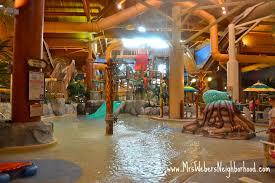
In fact, this exact concept of Outreach to the World – Why Not A Profit Center has been addressed specifically in this prior Go Lean blog-commentary from May 3, 2014. It is only appropriate to Encore that 6-year old commentary now. But imagine how much progress has been made since then. For example, consider this establishment in Berlin Germany where developers have captured a Tropical Island experience indoors, open 365 days a year. Consider this VIDEO here:

VIDEO – Tropical Islans Water Park! – https://youtu.be/MRywPptaOrA


Posted March 12, 2017 – Tropical Islands is a tropical water park built in an old air ship hanger that protected air ships in bad weather. It is located about 45 minutes south of Berlin, Germany and is set in the largest freestanding hall in the world.
Category: Film & Animation

This is not the only one – there are many more “Indoor Water Parks” throughout the world; consider this list:

30 Top Indoor Water Parks around the World
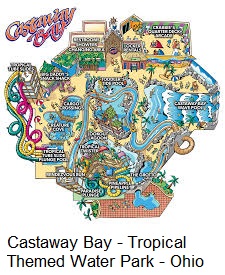
i.e. #21: Castaway Bay, Cedars Point, Sandusky, Ohio, USA

Why can’t we do the same in other locations – especially our Trade Mission sites – in our Outreach to the World?!

“Can’t bring the people to the Caribbean? Then bring the Caribbean to the people.” – Yes, this is a BHAG.

See the Encore of the May 3, 2014 commentary here-now:

———————–

Go Lean CommentaryWhy not … a Profit Center?

Most Caribbean countries have Embassies, Consular Offices and/or Trade Mission Offices in world capitals. These are normally cost centers, where the governments have to maintain the cost burden for these facilities. But why do they have to be cost centers, why not profit centers?

Why not … a profit center? As in one integrated, consolidated center on behalf of all the Caribbean member-states – a classic “cooperative” model. This strategy meets a basic requirement of retail design: traffic. All the embassy, consular and trade mission activities would create impactful retail traffic demands.

This vision comes into focus as a result of the emergence of the Caribbean Union Trade Federation (CU), and the news article[c] below. The book Go Lean…Caribbean serves as a roadmap for the introduction and implementation of the CU. The roadmap fully anticipated integrating and consolidating Trade Mission Offices (Page 116) to advance the causes of the Caribbean people in foreign countries; eight (8) cities are specified in details.

The resultant facility, and accompanying eco-system, would fulfill a CU mandate, global outreach to expand Caribbean trade within the source country, city and regional area.

From the outset of the roadmap, the intent to leverage Trade Mission Offices was pronounced in the Declaration of Interdependence (Page 13), as follows:

xix. Whereas our legacy in recent times is one of societal abandonment, it is imperative that incentives and encouragement be put in place to first dissuade the human flight, and then entice and welcome the return of our Diaspora back to our shores. … The right of repatriation is to be extended to any natural born citizens despite any previous naturalization to foreign sovereignties.

xx. Whereas the results of our decades of migration created a vibrant Diaspora in foreign lands, the Federation must organize interactions with this population into structured markets. Thus allowing foreign consumption of domestic products, services and media, which is a positive trade impact. These economic activities must not be exploited by others’ profiteering but rather harnessed by Federation resources for efficient repatriations.

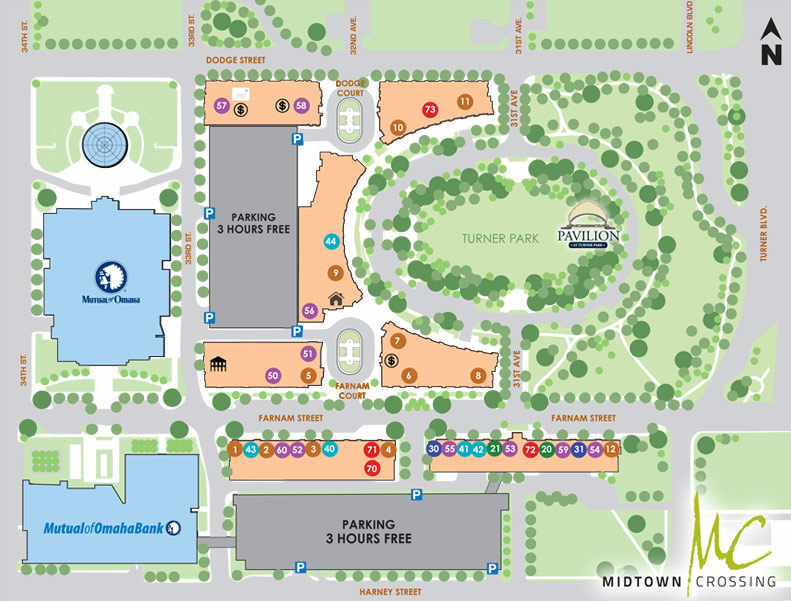
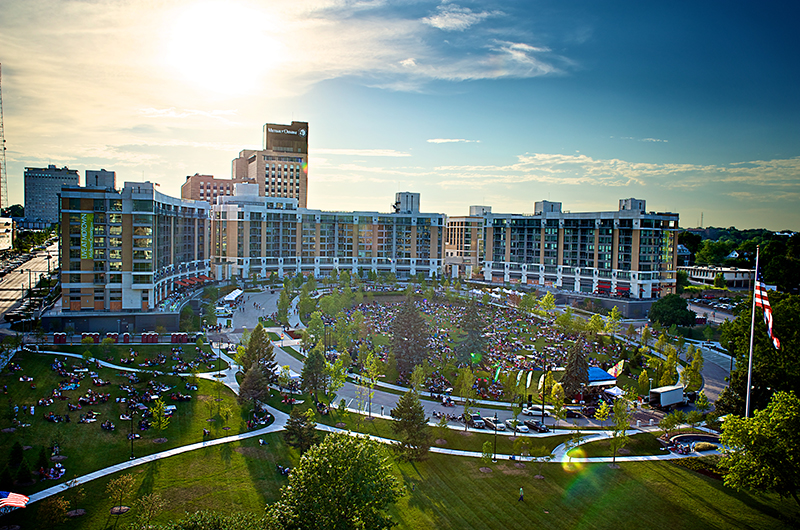
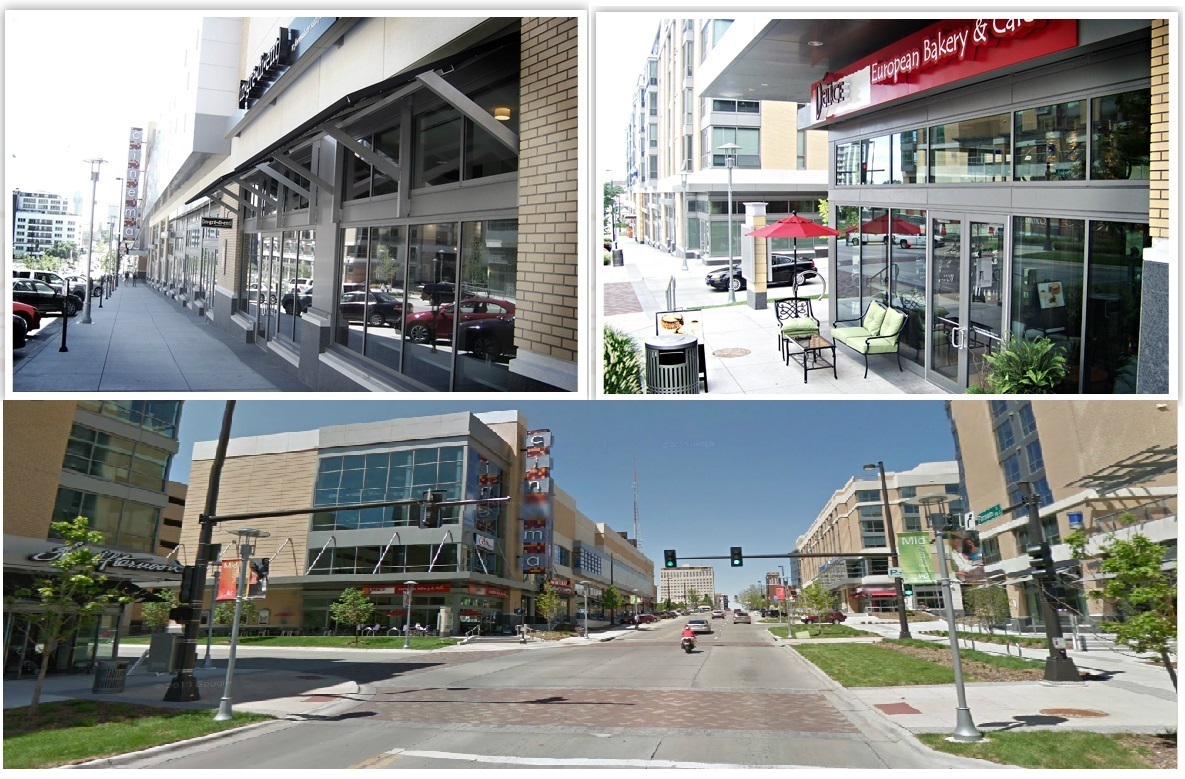
The roadmap also urges the urban design approach for mixed-use developments; (Page 234). This dictates a structure designed as retail (ground floor), mezzanine for offices, and higher levels/floors for residences (apartments, condominiums, and hotels). See a sample site in a US Midwestern city here – Photos & VIDEO:

Why Not ... a profit center - Photo 1 (2)

Why Not ... a profit center - Photo 2

Why Not ... a profit center - Photo SPECIAL

VIDEO Midtown Crossing Commercial – https://youtu.be/3Ua3FjWLfKk

A model of a successful mixed-use development is the Omaha-Nebraska Midtown Crossing[a].

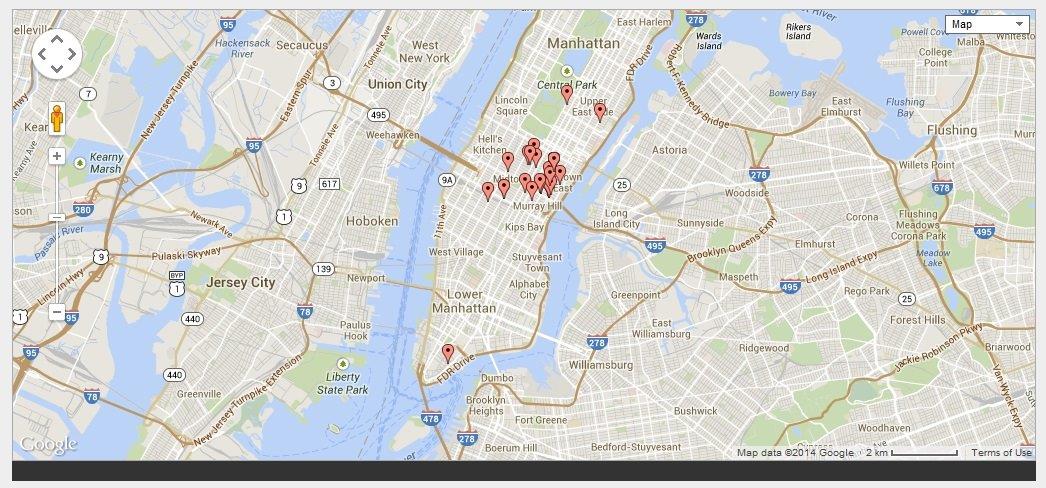
Consider New York City; it is one of 8 mission cities envisioned. This  map below and the Appendix Table lists all the addresses of the Caribbean embassies, consulates, and outreach offices in New York City[b] – all within a 5 mile radius. Imagine if all those facilities were in one property – a mixed-use development.

Why Not ... a profit center - Photo 4 (3)

Imagine too, a climate-controlled atrium with Caribbean fauna & flora; a food court showcasing cuisines from all the participating Caribbean countries, (up to 30); art galleries, convention/banquet facilities, exhibit halls, night clubs, performing arts theaters and maybe even an indoor entertainment center (for instance, modeling the legacy of Caribbean Pirates). This vision would generate multiple streams of revenue – a profit center as opposed to 30 cost centers.

This vision would benefit a lot of Caribbean stakeholders with support and outreach services – those desiring to live, work, learn, heal and play in the Caribbean. These stakeholders include:

  • Visitors
  • Caribbean Citizens (travelling abroad)
  • Diaspora
  • Foreign Direct Investors
  • Students

There is the need for this manifestation right now in London, England (another designated Trade Mission Office – Page 116 ); as depicted in this referenced news story[c]:

LONDON, England (May 1, 2014) — Overseas Territory representatives from the British Virgin Islands, Bermuda, Montserrat, the Cayman Islands and Anguilla met with United Kingdom business networking specialists, CaribDirect International Business Network (CIBN) in London last week, as the first networking session focusing on trade and investment gathers momentum.

These discussions, held at the offices of the Bermuda representative, focused on introducing the CaribDirect International Business Network (CIBN) concept; outlining its broad scope; revealing the economic and political opportunities available for the Caribbean Overseas Territories (OTs); and examining practical ways to work together for the benefit of the dependent territories of the Caribbean.

CIBN is an agency designed to facilitate and connect entrepreneurs and business people in the UK with Caribbean government and business representatives for trade and investment.

Representatives attending the meeting were Cayman Islands’ deputy director Charles Parchment, Montserrat director Janice Panton, BVI London Office director Kedrick Malone, Bermuda director Kimberley Durrant, CaribDirect director of policy Ron Belgrave and CaribDirect multi-media CEO David Roberts.

If only this profit center concept existed now … in London … and in New York.

The CU roadmap is designed to bring change to the Caribbean region. This commentary demonstrates that a lean, nimble organization structure can also be “at the corner of preparation and opportunity” and that opportunity can be made in turning a cost center into a profit center. This structure can optimize the Caribbean’s economic, security and governing engines – no matter the location. If the Trade Mission Offices were constituted as profit centers, the following details from the book Go Lean…Caribbean would manifest, with impacted community ethos, strategies, tactics, implementations and advocates; listed as follows:

Community Ethos – Lean Operations Page 24
Community Ethos – Cooperatives Page 25
Community Ethos – Ways to Improve Sharing Page 37
Strategy – Repatriating Caribbean Diaspora Page 47
Strategy – Inviting Foreign Direct Investments Page 48
Tactical – Separation of Powers – State Department Page 80
Tactical – Design Requirements for the Capital District Page 110
Implementation – Trade Mission Objectives Page 116
Implementation – Reasons to Repatriate Page 118
Implementation – Ways to Benefit from Globalization Page 119
Advocacy – Ways to Improve Trade Page 128
Advocacy – Lessons from New York City Page 137
Advocacy – Ways to Enhance Tourism Page 190
Advocacy – Impact the Diaspora Page 217
Advocacy – Ways to Impact Urban Living Page 234

The Go Lean roadmap will make the outreach, and foreign support, for Caribbean stakeholders more efficient and effective. This plan would impact and change the Caribbean and the foreign world we reach out to.

All Caribbean stakeholders – citizens, businesses and governments alike – are urged to lean-in to this Go Lean roadmap.

Download the free e-Book of Go Lean … Caribbean – now!

———————

Appendix – References

a. http://www.midtowncrossing.com/about/default.aspx
b. http://michaelbenjamin2012.com/2012/06/21/caribbean-region-consulates-in-nyc/
c. http://www.caribbeannewsnow.com/topstory-Caribbean-overseas-territories-meet-with-UK-networking-specialists-20934.html

———————

Appendix – TABLE – Caribbean States Mission Offices – New York City

Member-State

Address

Anguilla 845 Third Avenue, New York, NY 10022  Phone: 212-745-0277
Antigua & Barbuda 610 Fifth Avenue, Ste 311, New York, NY 10020  Phone: 212-541-4117
Aruba 666 Third Avenue, 19th floor, New York, NY 10017 Phone 877-388-2443
Bahamas 231 East 46th Street, New York, NY 10017  Phone: 212-421-6420
Barbados 820 Second Avenue, 5th Fl, New York, NY 10017  Phone: 212-551-4325
Belize 675 Third Avenue, Ste 1911, New York, NY 10017  Phone: 212-593-0999
Bermuda 845 Third Avenue, New York, NY 10022 Phone: 212-745-8272
British Virgin Islands 845 Third Avenue, New York, NY 10022 Phone: 212-745-8272
Cayman Islands 845 Third Avenue, New York, NY 10022 Phone: 212-745-8272
Cuba 315 Lexington Ave 38th Street New York, NY 10016 Ph. 212-689-7215
Dominica 800 Second Ave, Ste 400H, New York, NY 10017 Phone: 212-949-0853
Dominican Republic 1500 Broadway, Ste 410, New York, NY 10036  Phone: 212-768-2480
Grenada 800 Second Ave, Ste 400K, New York, NY 10017 Phone 212-599-0301
Guadeloupe 45 W 34th Street, Suite 703, New York, NY 10001 Phone  877-203-2551
Guyana 370 Seventh Avenue, 4th Fl, New York, NY 10001  Phone: 212-947-5110
Haiti 271 Madison Avenue, 17th Fl, New York, NY 10016 Phone: 212-967-9767
Jamaica 767 Third Avenue, New York, NY 10017  Phone: 212-935-9000
Martinique 444 Madison Avenue, 16th Fl, New York, NY 10022 Phone: 212-838-6887
Monserrat 845 Third Avenue, New York, NY 10022  Phone: 212-745-0200
Netherland Antilles:Bonaire, Curaçao, Sint Eustatius, Saba 1 Rockefeller Plaza 11th Floor, New York, NY 10020 212-246-1429
Puerto Rico 666 5th Avenue # 15l, New York, NY, 10103-1599. Phone: 212-333-0300
St. Barthelemy 934 Fifth Ave, New York, NY 10021 Phone: 212-606-3601
St. Kitts & Nevis 414 East 75th Street, New York, NY 10103 – 212-535-5521
St. Lucia 800 Second Avenue, 9th Fl, New York, NY 10017 – 212-697-9360
St. Maarten 675 Third Avenue, Ste 1807, New York, NY 10017 – 800-786-2278
St. Vincent & The Grenadines 801 Second Avenue, 21st Fl, New York, NY – 212-687-4490
Suriname 1 UN Plaza, 26th Fl, New York, NY 10017 – 212-826-0660
Trinidad & Tobago 125 Maiden Lane, Unit 4A, 4th Fl, New York, NY 10038 Ph. 212-682-7272
Turks & Caicos Island 845 Third Avenue, New York, NY 10022 Phone: 212-745-8272
US Virgin Islands 45 W 34th Street, Suite 703, New York, NY 10001 Phone 877-203-2551
Share this post:
, , ,
[Top]

BHAG – One Voice: Foreign Policy and Diplomatic Stance

Go Lean Commentary

Face the truth, the “little one” is often invisible and ignored …

… but a Bible prophecy gives hope that the small inconsequential one can someday become significant and actually have a voice that is heard by the “powers that be”. Here is that prophecy from the Bible, from the Hebrew Scriptures (Old Testament); it is a great inspiration:

A little one shall become a thousand, And a small one a strong nation.- Isaiah 60:22 New King James Version

Here is another great directive from The Bible – this time from the Christian Greek Scriptures (New Testament), from  Act 8:6:

And the people with one accord G3661 gave heed unto those things which Philip spake, hearing and seeing the miracles which he did.

One Accord”, in this case, does not refer to the vehicle from the Japanese Auto Company Honda

… rather, it refers to the Art & Science of speaking in unison. This harmonizes with the source Greek word that is used in the above scripture: Homothumadon, which means “with one mind, with one accord, with one passion”.
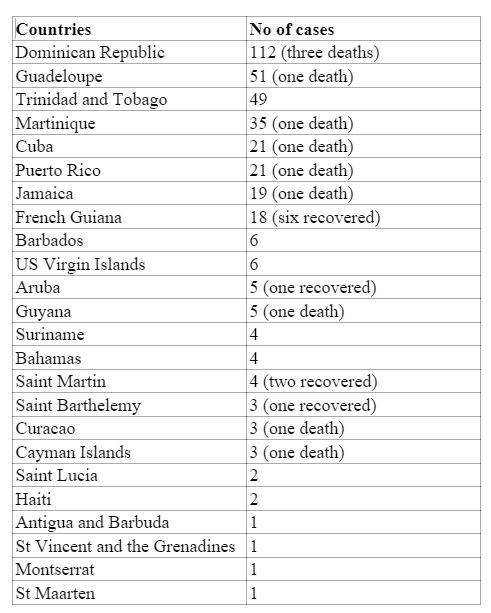
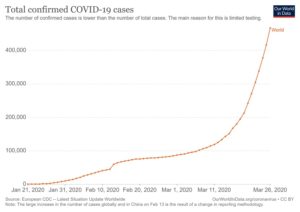
This is a Big Hairy Audacious Goal (BHAG) of the planners for a new Caribbean. This was enunciated in the 2013 book Go Lean…Caribbean as a necessary engagement for the 30 member-states of the Caribbean region. Now more than ever, we – all 42 million people in the region – need to speak with one accord, one voice and one passion.

The average population for these territories is not the arithmetic formula of 1.4 million people or (42,198,874 divided by 30). No, the truth is, there are 4 Big Islands, the Greater Antilles of Cuba, Hispaniola (Haiti & Dominican Republic), Puerto Rico and Jamaica that have the majority of the population (11.2, 9.0 + 9.5, 4.0 and 2.8 million respectively). While the remaining 26 member-states only total 10 million people; some member-states (15) are so small that they only have 100,000 people or less. (All these figures are as of 2010 and published in the Go Lean book, Page 66).

So the small one can become a strong nation by speaking in unison, with One Voice One Accord.

This is entry 4-of-6 for the March 2020 monthly series from the movement behind the Go Lean book. This submission asserts that there is the need to reform the Foreign Policy of the Caribbean member-states, and further that the voices emanating from 30 different member-states now only sounds like noise. What we need instead is one melodious sound. This is why it is important for the region to speak with One Voice One Accord.

How is this possible, considering that there are 4 different languages and 5 different colonial legacies? The answer is heavy-lifting; but alas, we have the sample-example of a successful execution by the European Union with 28 countries and 15 languages. See how the Go Lean book related this:

The Bottom Line on EU Foreign & Security Policy
The European Union (EU) has its own foreign and security policy, which has developed gradually over many years and which enables it to speak – and act – as one in world affairs. Acting together the 28 member countries have greater weight and influence than if they act individually, following 28 different policies. The EU’s common foreign and security policy has been further strengthened by the 2009 Lisbon Treaty, which created the post of EU High Representative for Foreign Affairs and Security Policy. At the same time, it created a European Diplomatic Service – the European External Action Service (EEAS).

How about a Caribbean Diplomatic Service? Yes, we can.

Where as the Europeans developed their unified voice “gradually over many years”, our Caribbean must have our unified voice immediately. We must not settle for the luxury of “gradually over many years”. No, we have an urgent-emergent situation transpiring in the region where we need to be One Voice One Accord now. This urgency-emergency relates to the Coronavirus that is rocking our region and the whole world. See this chart of Coronavirus incidences in the region:

Title – Coronavirus cases in the Caribbean as of March 21 at 1 pm

Confirmed Caribbean coronavirus cases as of today, March 21:

 Source: Retrieved March 23, 2020 from: http://www.loopnewsbarbados.com/content/coronavirus-cases-caribbean-date-11

China, South Korea, Iran, Italy have individually engaged in unifying their voice for consistent leadership in this Coronavirus battle. Now, we have many Caribbean nations that have been afflicted – people have died – but we need the rest of the world to respect our policies and decision-making. There need not be any guessing as to whether Caribbean nations are open or closed. We need the full region to “shelter-in-place” everywhere and close our borders. We need to allow this crisis to pass, with minimal contagions, so that we can quickly re-open to a disease free environment.
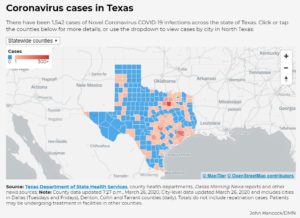
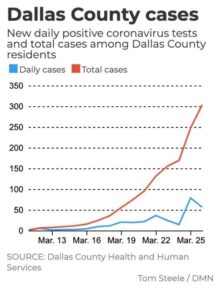
Remember, the Cruise ships in our waters as well.

There is much for us to learn by studying the success and failure of other peoples. Right now today, there is a lesson for us to contemplate from the American metropolitan area of Dallas-Fort Worth, Texas, where the population is 7,690,420 (according to the U.S. Census Bureau‘s 2018 population estimates,[4]) across a 13-county region. The 10 urban-suburban counties, despite having their own economic, security and governing engines, now need One Voice One Accord, in their management of the Coronavirus crisis; see this news article here:

Title: Dallas County judge to Collin County: Keep people at home
Sub-title:
Clay Jenkins’ admonition comes on a day when North Texas tallies 100 more coronavirus cases. Dallas County had a seventh death, and Denton County recorded its first fatality.

On a day when more than 100 coronavirus cases were reported in North Texas, Dallas County Judge Clay Jenkins gave a blunt message Thursday night to counties that haven’t enacted shelter-in-place orders, singling out Collin County, which has told residents to stay home but told businesses to stay open.

“We need those in our region who have not moved to heed the scientific advice to do it now,” Jenkins said. “Every day we wait costs lives.”

Dallas County was the first in the state to announce a shelter-in-place order, which went into effect Monday night.
Jenkins said he and his counterparts in the 10-county area took part in a call Thursday with Jim Hinton, the chief executive of Baylor Scott & White Health System. Collin County was the only county that didn’t participate, he said.

Hinton told the county judges that “the only way we can keep people safe and not overrun our hospitals is [to] shelter in place,” Jenkins said at a news conference Thursday evening.

Jenkins said he’s taking on the issue of regional cooperation more bluntly “because every day gets us closer to that day when we don’t have enough hospital beds.”

“I don’t want us to get there,” he said.

Asked about the call with the hospital executive, Hill said it was accurate that he didn’t participate but that he had participated in two other calls with county judges Thursday that Jenkins didn’t take part in.

“We need regional cooperation right now in North Texas,” Hill said. “And I urge Judge Clay Jenkins to reconsider his position.”

See the full news article here: https://www.dallasnews.com/news/public-health/2020/03/26/dallas-county-reports-56-new-coronavirus-cases-7th-death/ retrieved March 26, 2020.

This commentary details the Big Hairy Audacious Goal (BHAG) for the Caribbean, that of having a unified voice on the world scene. This is only possible if we were a unified Single Market; then we will have the size – 42 million people – and leverage the whole region as a single entity; this is much better than any one small member-state “making noise alone”. There is an actual advocacy for this purpose in the Go Lean book; see here some of the specific plans, excerpts and headlines from Page 102, entitled:

10 Foreign Policy Initiatives at Start-up

1 Lean-in for the Caribbean Single Market Confederation Treaty: Caribbean Union Trade Federation (CU)
The CU is modeled after the EU and will allow for the unification of the Caribbean region into one market of 42 million people across 30 member-states, thereby creating an economic zone to promote and protect the interest of the participant trading partners. The CU’s Office of Trade Negotiation currently liaisons with foreign entities to secure better trade deals for the region; under the CU the first goal is to secure the Exclusive Economic Zone status, from the United Nations, for the territory between the islands. In addition, the CU treaty will allow for a collective security agreement of the Caribbean nations so as to ensure homeland security and negotiate better foreign relations with neighboring powers.
2 Speaking with one voice Acting together as the CU, the 30 member countries will have far greater weight and influence than if they act individually, following 30 different policies. The CU, in speaking for 42 million people, brings huge cost savings to the member-states by providing economies-of-scale for representative personnel and offices in foreign countries. The CU will not only perform diplomatic services, but economic ones as well. There is the need for collective bargaining with the Cruise Line industry. Then extending beyond the Office of Trade Negotiations (OTN), the CU will function as a Group Purchasing Organization (GPO) to garner savings for the member-states; and also create a revenue stream for the CU.
3 CU Security Pact
4 US Relationship
The CU’s biggest neighbor is the United States, plus two member-states are US Territories. Plus, many of the Caribbean Diaspora live in the US. Therefore any serious foreign policy initiative must start with Washington, DC. The CU will staff an office in Washington to act as its legislative liaison (lobbyist) arm. The US also grants foreign aid to many CU member-states. The goal is to aggregate and streamline US aid to the region through the CU.
5 US Immigration Policy and ICE
Policy-wise, the CU advocates repatriation and “drying up the brain drain”. But there are factions in the US that want to liberalize immigration and allow more foreigners to relocate to the US. On the other hand, there are factions that want to tighten US policy and secure the borders. The US agency Immigration and Customs Enforcement (ICE) do exert some efforts to patrol the Caribbean region, as many illegal immigrants to the US use Caribbean pathways. The CU will advocate for more collaboration and intelligence sharing with ICE and embed CU personnel in tactical engagements.
6 Canada Relationship
7 EU Relationship
8 Mexico Relationship
9 South American Relationship
10 Intelligence Gathering and Analysis

This quest for One Voice One Accord for the 30 Caribbean member-states is one of our Big Hairy Audacious Goals (BHAG). The full catalog of the series for this month – under the BHAG theme – is listed as follows:

  1. BHAG – The Audacity of Hope – Yes, we can!
  2. BHAG Regional Currency – In God We Trust
  3. BHAG – Infrastructure Spending … finally funding Toll Roads
  4. BHAG – One Voice – Foreign Policy and Diplomatic stance
  5. BHAG – Outreach to the World – Why Not a Profit Center
  6. BHAG – Netflix, Hulu, CBS, Peacock ==> Caribbean Media

The subject of One Voice One Accord is familiar for this movement behind the Go Lean book. In addition to the direct references in the 2013 book, there have a number of previous Go Lean commentaries that elaborated on this theme; consider this sample list here:

https://goleancaribbean.com/blog/?p=18243 After Hurricane Dorian, “Regionalism” new appreciation
https://goleancaribbean.com/blog/?p=17250 Way Forward – Caribbean ‘Single Market’ for Voice & Media
https://goleancaribbean.com/blog/?p=15858 Network Mandates – One Voice – for a New Caribbean
https://goleancaribbean.com/blog/?p=15521 A Plan for Caribbean Unity – Finally for Tourism
https://goleancaribbean.com/blog/?p=15245 Righting a Wrong: Re-thinking CSME
https://goleancaribbean.com/blog/?p=14718 ‘At the Table’ or ‘On the Menu’
https://goleancaribbean.com/blog/?p=3090 Introduction to Europe – All Grown Up and Unified

The goal of this Go Lean roadmap is to reform and transform the 30 member-states of the Caribbean, individually and collectively as One Single MarketOne Voice One Accord. This is a Big Hairy Audacious Goal, but this is conceivable, believable and achievable.

The Coronavirus crisis is not the first challenge to the global, regional, national or local well-being. We guarantee you that this will not be the last; we must simply be prepared or On Guard for any threats to our society. This is the quest of the Go Lean roadmap; this CU effort may be our best solution for protecting and promoting our society. We therefore urge all Caribbean stakeholders to lean-in to this roadmap. The CU Trade Federation is not the first attempt to unify the Caribbean region for a regional Public Health stance; no, there is CariCom and their related agencies; see the Appendix VIDEO below. The Go Lean movement have always maintained that CariCom is inadequate for Caribbean integration; it does not even include Cuba, Dominican Republic, Puerto Rico, US Virgin Island, the French or Dutch Caribbean territories. In fact, CariCom only includes 15 million of the 42 million in the region; this is truly inadequate, so we recognize it only as a First Step for regional integration.

The Go Lean roadmap for the CU Trade Federation and all its embedded agencies is better … and timely for what we need right now and for the future.

Despite the challenges to our status quo, due to this COVID-19 Coronavirus crisis, this 2013 published plan is the Way Forward for Caribbean society. This is how we will make our homeland a better place to live, work, heal and play. 🙂

About the Book
The book Go Lean…Caribbean serves as a roadmap for the introduction and implementation of the technocratic Caribbean Union Trade Federation (CU), for the elevation of Caribbean society – for all member-states. This CU/Go Lean roadmap has these 3 prime directives:

  • Optimization of the economic engines in order to grow the regional economy to $800 Billion & create 2.2 million new jobs.
  • Establishment of a security apparatus to ensure public safety and protect the resultant economic engines.
  • Improve Caribbean governance to support these engines, including a separation-of-powers between the member-states and CU federal agencies.

The Go Lean book provides 370-pages of turn-by-turn instructions on “how” to adopt new community ethos, plus the strategies, tactics, implementations and advocacies to execute so as to reboot, reform and transform the societal engines of Caribbean society.

Download the free e-Book of Go Lean … Caribbean – now!

Who We Are
The movement behind the Go Lean book – a non-partisan, apolitical, religiously-neutral Community Development Foundation chartered for the purpose of empowering and re-booting economic engines – stresses that reforming and transforming the Caribbean societal engines must be a regional pursuit. This was an early motivation for the roadmap, as pronounced in the opening Declaration of Interdependence (Pages 12 – 13):

ix. Whereas the realities of healthcare and an aging population cannot be ignored and cannot be afforded without some advanced mitigation, the Federation must arrange for health plans to consolidate premiums of both healthy and sickly people across the wider base of the entire Caribbean population. The mitigation should extend further to disease management, wellness, mental health, obesity and smoking cessation programs. The Federation must proactively anticipate the demand and supply of organ transplantation as developing countries are often exploited by richer neighbors for illicit organ trade.

xi. Whereas all men are entitled to the benefits of good governance in a free society, “new guards” must be enacted to dissuade the emergence of incompetence, corruption, nepotism and cronyism at the peril of the people’s best interest. The Federation must guarantee the executions of a social contract between government and the governed.

xvi. Whereas security of our homeland is inextricably linked to prosperity of the homeland, the economic and security interest of the region needs to be aligned under the same governance. Since economic crimes … can imperil the functioning of the wheels of commerce for all the citizenry, the accidence of this Federation must equip the security apparatus with the tools and techniques for predictive and proactive interdictions.

 xxiv. Whereas a free market economy can be induced and spurred for continuous progress, the Federation must install the controls to better manage aspects of the economy: jobs, inflation, savings rate, investments and other economic principles. Thereby attracting direct foreign investment because of the stability and vibrancy of our economy.

Sign the petition to lean-in for this roadmap for the Caribbean Union Trade Federation.

————————–

Appendix VIDEO – CARICOM One on One – Interview with CARPHA’s Dr James Hospedales – https://youtu.be/865DWo7OKp0

CARICOM: Caribbean Community

Dr James Hospedales of the Caribbean Public Health Agency (CARPHA) speaks with the CARICOM Secretariat’s Jascene Dunkley-Malcolm on Measles and Immunization

Share this post:
, , ,
[Top]

BHAG – Infrastructure Spending … finally funding Toll Roads

Go Lean Commentary

I have a dream …
… that one day people can easily get from Point A to Point B here in their Caribbean homelands.

Is that so fanciful?

Is it so “pie in the sky” to think that our Caribbean communities can organize, plan and execute infrastructure projects so that people can safely travel by road, mitigating traffic congestion, and get to their destinations to live, work and play?

“Pie in the sky” or just “sky” is the key reference here. This commentary asserts that some of the congested streets in the Caribbean member-states can find relief by building “skyways” and overpasses; and they can be Toll Roads. (Considers  these samples-examples)

This vision was always part of the roadmap, as described in the 2013 book Go Lean…Caribbean. This roadmap introduces the technocratic Caribbean Union Trade Federation (CU) as a super-national entity with Port Authority functionalities, to build highways, bridges, tunnels, docks and other Public Works (infrastructure) to facilitate the societal engines (economics, security and governance) of the Caribbean region. The book describes that transportation solutions must be embedded into any plan to elevate Caribbean society. See this reference to Turnpike-Toll Roads in the book (Page 205) in this advocacy:

10 Ways to Improve Transportation
#4 – Turnpike:
Land Highways
The CU will fund and build limited-access “toll ways” to expedite transportation of people and goods. The tolls will be rebated as incentives for carpools, ride-share and zero-emissions promotion. “Build it and they will come” is the mantra for putting in the highways away from the current population centers. Overall, every densely populated community should have one North-South and one East-West artery.

Imagine existing roads, but with additional lanes that are elevated above the existing roads. This would indeed provide solutions and relief to the current traffic congestion.

Questions: What is missing today? Why is it that the local Caribbean governments (and other Third World countries) are not doing this now?

Answer: Money!

This is the focus of this commentary: Funding Toll Roads.

How do we fund the construction of such Toll Roads?

The book’s excerpt states that “the CU will fund and build”; but the focus is on raising the money, not “swinging the hammer”. This is the dream, or Big Hairy Audacious Goal (BHAG), to be able to generate capital for Public Works projects. Another excerpt from the Go Lean book details the Art and Science of municipal financing; see these summaries here (Page 175):

10 Ways to Impact Public Works
# 2 – Union Atlantic Turnpike
The Union Atlantic Turnpike is a big initiative of the CU to logistically connect all member-states for easier transport of goods and passengers. There are many transportation arteries and facilities envisioned for the Turnpike: Toll Roads, Railroads, Ferry Piers, and Navy Piers. The CU plan calls for underwater tunnels, causeways and bridges in narrow straits where the economics dictate. While some CU states already have railroad installations, there is no uniform management, oversight or standards. The CU will regulate the railroad industry to complement the other transportation modes to offer integrated solutions. This approach will allow the conformity and logistics so that passengers/cargo can efficiently move to trains, ferries, pipeline (cargo only) to highway-bound buses/trucks… and vice-versa.

# 10 – Capital Markets
A Single Market and Currency Union will allow for the emergence of viable capital markets for stocks and bonds (public and private), thereby creating the economic engine to fuel growth and development. This forges financial products for “pre” disaster project funding (drainage, levies, dykes, sea walls) and post disaster recovery (reinsurance sidecars).

There are role models for us to emulate. Here is one example; we have been to New York City; we have studied the history and the progress of their transportation-focused Public Works. We have even published previous commentaries on the Port Authority of New York – New Jersey and on the Metropolitan Transit Authority’s MetroCard payment system; (also see VIDEO’s – one factual and one satirical – in the Appendices below). So the lesson-learned is to have the organizational structure so as to fund the construction and management of transportation projects, such as Toll Roads; consider the case of the George Washington Bridge (picture above) that connects New York and New Jersey. See this historic milestone in the timeline:
The New York City Planning Commission approved the George Washington Bridge improvement in June 1957,[147] and the Port Authority allocated funds to the improvement that July.[148][149] – Source:Wikipedia.

Just like that! One group of experts made the plan and another group of experts arranged the funding – this is an example of a technocracy, and a role model for us to emulate here in the Caribbean region.

This is entry 3-of-6 for the March 2020 monthly series from the movement behind the Go Lean book. This submission considers the mechanics of funding Public Works projects. The strategy is simple: each transportation project will apply tolls, to generate ongoing revenues. When there are thousands and millions of journeys, and a toll is charged every time, then the economics finally make sense.

The full catalog of the series for this month – under the BHAG theme – is listed as follows:

  1. BHAG – The Audacity of Hope – Yes, we can!
  2. BHAG Regional Currency – In God We Trust
  3. BHAG – Infrastructure Spending … finally funding Toll Roads
  4. BHAG – One Voice – Foreign Policy and Diplomatic Stance
  5. BHAG – Outreach to the World – Why Not a Profit Center
  6. BHAG – Netflix, Hulu, CBS, Peacock ==> Caribbean Media

The subject of Infrastructure is a Big Deal for the consideration of reforming or transforming the Caribbean region. The premise of the Go Lean roadmap is that the leverage of the 30 member-states and 42 million people will allow for Public Works initiatives that are bigger and better than any single (one) member-state alone. “Toll Roads” is one such example, though only a subset of the planned Union Atlantic Turnpike. The plan is for the Turnpike Authority to design and facilitate one North-South and one East-West highway as applicable in each island or coastal-state.

Yes, the highways will be Toll Roads; that charges fees for each ride. The “small pennies add up to millions” over time. This funding mechanism of the Turnpike Authority allows present infrastructure investments based on those future revenues; think bonds and loans. Look again at the New York-New jersey Port Authority example; see their gross revenues here from a recent year (2012), as reported in a previous blog-commentaries – ‘Cannot Break Up the Port Authority from August 20, 2014:

PANYNJ Revenues / Profits

TOTAL AVIATION: +$2.5 BILLION

Airport

Profit

JFK

+$990 million

LaGuardia

+$273 million

Newark

+$1.3 million

Teterboro, Stewart, heliports

-$65 million

TOTAL BRIDGE AND TUNNEL: -$537 MILLION*

Bridge/Tunnel

Profit

GW Bridge

+$1.3 billion

Lincoln Tunnel

+167 million

Holland Tunnel

+$141 million

Port Authority Bus Terminal

-$479 million

PATH

-$2.3 billion

TOTAL PORT COMMERCE: -$755 MILLION*

Port

Profit

Port Newark

-$317 million

Port Jersey

-$184 million

Howland Hook

-$160 million

Brooklyn Marine   Terminal

-$27 million

TOTAL WORLD TRADE CENTER: -$3.1 BILLION
GRAND TOTAL: -$2.5 BILLION

The total shows the authority doesn’t generate enough from tolls, fees and grants to cover its costs. It borrows to cover the shortfall.
*Total includes other entities not listed here.

Source: Phase II Report to the special committee of Port Authority’s board, prepared by consulting firm Navigant in September 2012. 

All these revenues for the PANYNJ are used to “Service Debt”, make loan payments or pay-off bonds that funded these projects over the decades. The purpose of the Port Authority is “not to make a profit per se”, but rather to facilitate the infrastructure for the regional communities, so that the people (citizens) can successfully live, work and play. This is a Good model for us!

This theme of Caribbean infrastructure projects have been elaborated in many other previous Go Lean commentaries; see a sample list here:

https://goleancaribbean.com/blog/?p=19327 ‘Missing Solar’ – Inadequacies Infrastructure Exposed to the World
https://goleancaribbean.com/blog/?p=18828 Big Infrastructure to Better Feed Ourselves – Temperate Foods
https://goleancaribbean.com/blog/?p=18266 After Dorian, Still no Flood Prevention – ‘Fool Me Twice’ on Flooding
https://goleancaribbean.com/blog/?p=18228 After Dorian, The Need for the Science of Power Restoration
https://goleancaribbean.com/blog/?p=17925 What Went Wrong? Failing the Lessons from ‘Infrastructure 101’
https://goleancaribbean.com/blog/?p=17434 Moving Forward with Transportation Solutions
https://goleancaribbean.com/blog/?p=17377 Marshall Plans – Funding: How to Pay for Change
https://goleancaribbean.com/blog/?p=17337 Industrial Reboot – Amusement Parks
https://goleancaribbean.com/blog/?p=15662 Build It and They Will Come – Manifesting High-Tech Neighborhoods
https://goleancaribbean.com/blog/?p=13856 Lesson Learned – Big Projects Designed for Failure
https://goleancaribbean.com/blog/?p=8590 Build It and They Will Come – Politics of Infrastructure

The goal of these projects are not just to alleviate traffic congestion. No, it is bigger than that. The goal is to connect the people and places of the Caribbean region, better. This is a Big Hairy Audacious Goal, but this is conceivable, believable and achievable.

To recap, there is reform: mitigate traffic congestions by building bigger, better roads, maybe even adding skyways and overpasses …

… and there is transform: deploying alternative transit options: light rail, unmanned people-movers, busways, and even bicycle lanes and safe-ways.

This is the Way Forward for Caribbean society. This is how we will make our homeland a better place to live, work and play. 🙂

About the Book
The book Go Lean…Caribbean serves as a roadmap for the introduction and implementation of the technocratic Caribbean Union Trade Federation (CU), for the elevation of Caribbean society – for all member-states. This CU/Go Lean roadmap has these 3 prime directives:

  • Optimization of the economic engines in order to grow the regional economy to $800 Billion & create 2.2 million new jobs.
  • Establishment of a security apparatus to ensure public safety and protect the resultant economic engines.
  • Improve Caribbean governance to support these engines, including a separation-of-powers between the member-states and CU federal agencies.

The Go Lean book provides 370-pages of turn-by-turn instructions on “how” to adopt new community ethos, plus the strategies, tactics, implementations and advocacies to execute so as to reboot, reform and transform the societal engines of Caribbean society.

Download the free e-Book of Go Lean … Caribbean – now!

Who We Are
The movement behind the Go Lean book – a non-partisan, apolitical, religiously-neutral Community Development Foundation chartered for the purpose of empowering and re-booting economic engines – stresses that reforming and transforming the Caribbean societal engines must be a regional pursuit. This was an early motivation for the roadmap, as pronounced in the opening Declaration of Interdependence (Pages 12 – 13):

xi. Whereas all men are entitled to the benefits of good governance in a free society, “new guards” must be enacted to dissuade the emergence of incompetence, corruption, nepotism and cronyism at the peril of the people’s best interest. The Federation must guarantee the executions of a social contract between government and the governed.

xvi. Whereas security of our homeland is inextricably linked to prosperity of the homeland, the economic and security interest of the region needs to be aligned under the same governance. Since economic crimes … can imperil the functioning of the wheels of commerce for all the citizenry, the accidence of this Federation must equip the security apparatus with the tools and techniques for predictive and proactive interdictions.

 xxiv. Whereas a free market economy can be induced and spurred for continuous progress, the Federation must install the controls to better manage aspects of the economy: jobs, inflation, savings rate, investments and other economic principles. Thereby attracting direct foreign investment because of the stability and vibrancy of our economy.

  xxv. Whereas the legacy of international democracies had been imperiled due to a global financial crisis, the structure of the Federation must allow for financial stability and assurance of the Federation’s institutions. To mandate the economic vibrancy of the region, monetary and fiscal controls and policies must be incorporated as proactive and reactive measures. These measures must address threats against the financial integrity of the Federation and of the member-states.

Sign the petition to lean-in for this roadmap for the Caribbean Union Trade Federation.

——————-

Appendix VIDEO – The Port of New York and New Jersey – https://youtu.be/7XTi2oyPs2k

Port Authority New York & New Jersey
Posted February 20, 2019 –
The Port of New York & New Jersey is the largest port on the U.S. East Coast and the third largest in the U.S. The Port plays an important role in getting goods to the region and to key inland markets while also contributing to the local communities we inhabit and our region.

http://www.portnynj.com

——————-

Appendix VIDEO – New York’s Port Authority: Last Week Tonight with John Oliver (HBO) – https://youtu.be/44fCfJQV7yQ


LastWeekTonight

Posted August 3, 2014 – Locked in a dispute with Fishs Eddy, New York’s Port Authority wants to regain control of its own image. John Oliver wants to help them make it happen.

Share this post:
, ,
[Top]

BHAG – Regional Currency – ‘In God We Trust’

Go Lean Commentary

Got any money? Got any American coins or notes (US Dollars). Notice the engraving: ‘In God We Trust’. What does it mean?

The capitalized form “IN GOD WE TRUST” first appeared on the two-cent piece in 1864[5] and has appeared on paper currency since 1957. The 84th Congress passed legislation (P.L. 84–851), also signed by President Eisenhower on July 30, 1956, declaring the phrase to be the national motto.[6][7][8]

With the separation of “Church and State” mantra, isn’t this intended to imply that God backs this money? As such “In God We Trust” as a national motto and on U.S. currency has been the subject of numerous unsuccessful lawsuits by many individuals.[72] But the legal defense has been validated repeatedly – see how this encyclopedic source details this historicity:

Some groups and people have objected to its use, contending that its religious reference violates the Establishment Clause of the First Amendment.[9] These groups believe the phrase should be removed from currency and public property. In lawsuits, this argument has not overcome the interpretational doctrine of accommodationism, which allows government to endorse religious establishments as long as [one religion is not favored over another].[10] According to a 2003 joint poll by USA Today, CNN, and Gallup, 90% of Americans support the inscription “In God We Trust” on U.S. coins.[11]

Don’t get it twisted: American money having a reference to “trusting in God” does not make it divine, or backed by God. There is nothing sacred about American currency, and thusly, it can be replaced or supplanted. This is our dream!


For the 30 member-states of the political Caribbean, there are a number of different currencies that represent our monetary efforts: local currencies (i.e. Jamaican, Caymanian, Bahamian, etc.) AND reserve currencies like US Dollar or the Euro. This is the dream that there would be just one Single Currency, not the US Dollar, to represent all of the Caribbean.

What a dream! In fact, this is considered a Big Hairy Audacious Goal (BHAG).

This is entry 2-of-6 for the March 2020 version of the monthly series from the movement behind the book Go Lean…Caribbean. This submission considers the BHAG of the Caribbean Dollar or C$ – yes, we even have a brand name. Our one currency with coins and notes for all monetary exchanges in the Caribbean region.

Yes, we can!

Every month, we submit a Teaching Series on a subject germane to Caribbean life. The full series for this month – under the BHAG theme – is cataloged as follows:

  1. BHAG – The Audacity of Hope – Yes, we can!
  2. BHAG – Regional Currency – ‘In God We Trust’
  3. BHAG – Infrastructure Spending … finally funding Toll Roads
  4. BHAG – One Voice – Foreign Policy and Diplomatic Stance
  5. BHAG – Outreach to the World – Why Not a Profit Center
  6. BHAG – Netflix, Hulu, CBS, Peacock ==> Caribbean Media

The subject of a regional currency is a weighty responsibility, as it underpins the economic engines for the 42 million people in the region. This quest for the Caribbean Dollar, managed by a technocratic Caribbean Central Bank (CCB) was presented in the Go Lean book as a paramount strategy for elevating the societal engines. Next to the confederation of the Caribbean Union Trade Federation (CU) itself, the establishment of the CCB is presented as the next highest priority.

In fact, the advocacy (Page 127) of 10 Big Ideas listed this detail as the #2 entry:

Currency Union / Single Currency
Apolitical technocratic monetary control, by the Caribbean Central Bank (CCB), and foreign trade with a globally respected currency allows for the methodical growth of the Caribbean economy without the risk of hyper-inflation and/or currency devaluations. The CU/CCB trades in Caribbean Dollars (C$) of which the currency’s reserves are a mixed-basket of strong foreign currencies: US Dollars, Euro, British Pound and Japanese Yen.

In addition to traditional monetary benefits – discussed below – there is the need to mitigate upheavals in the international financial markets; we have that reality today, on the heels of the Coronavirus pandemic – a global recession is surely coming.

The points of a BIG Hairy Audacious Goal of a Caribbean Dollar to optimize our economic engines have been addressed in previous Go Lean blog-commentaries; consider this one from December 11, 2018 addressing the need to leverage against upheavals in the international financial markets. See an excerpt here:

The strategy in this Go Lean book is to optimize money issues: consolidate monetary reserves for the region into a Single Currency, the Caribbean Dollar (C$), managed by the technocratic Caribbean Central Bank (CCB). The C$ will be based on a mixed-basket of foreign reserves (US dollars, Euros, British pounds & Yens).

This is a simple but effective plan – a best practice: introduce the Caribbean Central Bank (CCB) and Caribbean Dollar as a Single Currency for the region’s 30 member-states.

Huge benefits abound! And so this economic initiative is important for Caribbean elevation. The rationale is that this strategy “enables economies to be more resilient to exogenous shocks”.

  • exogenous shocks – In economics, a shock is an unexpected or unpredictable event that affects an economy, either positively or negatively. Technically, it refers to an unpredictable change in exogenous factors — that is, factors unexplained by economics — which may influence endogenous economic variables. – Wikipedia.

This benefit is so obvious that others have thought of this before …

Yet there has consistently been a Failure to Launch this economic initiative; or to do so successfully. Consider the historicity of the CariCom Multilateral Clearing Facility (CMCF) in Appendix A [of that previous commentary] – a normal functionality of regional Central Banks.

Currently, the Caribbean has no regional Central Bank, so safety-net, no shock absorption, and no integration. This is the quest of the book Go Lean…Caribbean; it urges the introduction and implementation of the Caribbean Union Trade Federation (CU) and the Caribbean Central Bank (CCB). The book serves as a roadmap for this goal, with turn-by-turn directions to integrate the 30 member-states of the region and forge an $800 Billion economy.

One traditional charter for the monetary responsibilities of a Central Bank is the minting of coins. This charter is now perilous for small units of currency, think the Penny.

One Caribbean member-state, the Bahamas, is embarking on the effort to eliminate the penny from national circulation; see article in the Appendix below and the Appendix VIDEO that relates the American Penny Drama. Yet, this Go Lean roadmap is advocating for a regional currency instead of just a national one. Question: What are our plans for the “Penny”?

Answer: Make it moot!

The Go Lean roadmap calls for doubling-down on electronic money and payments systems. That same previous December 2017 blog-commentary asserted:

Central Banks are required to …

  1. facilitate monetary and currency policies,
  2. oversee bank regulations, and
  3. execute inter-bank financial transactions (like payment settlements …).

(Note: The strategy to including the US Territories of Puerto Rico and the US Virgin Islands in the Caribbean Monetary Union is for Electronic Financial Transactions only).
This is how the Go Lean roadmap seeks to transform the Caribbean region, with legitimate, structured and technocratic schemes for electronic money, payments systems, and even crypto-currency. See this declaration here:

The world of electronic payment systems is here! This is a good thing. The benefits of these new schemes are too enticing to ignore: fostering more e-Commerce, increasing regional money supply, mitigating Black Markets, more cruise tourism spending, growing the economy, creating jobs, enhancing security and optimizing governance.

A successful digital money / electronic payment scheme is very important in the strategy for elevating the Caribbean economy, for reforming and transforming. Any “risky” image of technology-backed payments will be nullified with the image of a bleeding-edge technocracy, the CCB, deploying these regimes efficiently and effectively.

This theme of Caribbean monetary and currency solutions have been elaborated in previous Go Lean commentaries; see a sample list here:

https://goleancaribbean.com/blog/?p=16836 Crypto-currency: Here comes ‘Trouble’
https://goleancaribbean.com/blog/?p=14248 Leading with Money Matters – New Almighty Caribbean Dollar
https://goleancaribbean.com/blog/?p=13744 Failure to Launch: The Quest for a Caribbean ‘Single Currency’
https://goleancaribbean.com/blog/?p=8381 Case Study on Central Banking for Puerto Rico
https://goleancaribbean.com/blog/?p=7034 The Future of Money – For the Caribbean and Beyond
https://goleancaribbean.com/blog/?p=906 Bitcoin needs regulatory framework to change ‘risky’ image
https://goleancaribbean.com/blog/?p=467 Barbados Central Bank records $3.7m loss in 2013
https://goleancaribbean.com/blog/?p=360 Central Banks Can Create Money from ‘Thin Air’ – Here’s How

To recap, there is reform: mitigate upheavals in the international financial markets …

… and there is transform: deploying electronic money regimes.

This is the Way Forward for Caribbean society. This is our Big Hairy Audacious Goal. Let’s get started!

This is how we will make our homeland a better place to live, work and play. 🙂

About the Book
The book Go Lean…Caribbean serves as a roadmap for the introduction and implementation of the technocratic Caribbean Union Trade Federation (CU), for the elevation of Caribbean society – for all member-states. This CU/Go Lean roadmap has these 3 prime directives:

  • Optimization of the economic engines in order to grow the regional economy to $800 Billion & create 2.2 million new jobs.
  • Establishment of a security apparatus to ensure public safety and protect the resultant economic engines.
  • Improve Caribbean governance to support these engines, including a separation-of-powers between the member-states and CU federal agencies.

The Go Lean book provides 370-pages of turn-by-turn instructions on “how” to adopt new community ethos, plus the strategies, tactics, implementations and advocacies to execute so as to reboot, reform and transform the societal engines of Caribbean society.

Download the free e-Book of Go Lean … Caribbean – now!

Who We Are
The movement behind the Go Lean book – a non-partisan, apolitical, religiously-neutral Community Development Foundation chartered for the purpose of empowering and re-booting economic engines – stresses that reforming and transforming the Caribbean societal engines must be a regional pursuit. This was an early motivation for the roadmap, as pronounced in the opening Declaration of Interdependence (Pages 12 – 13):

xi. Whereas all men are entitled to the benefits of good governance in a free society, “new guards” must be enacted to dissuade the emergence of incompetence, corruption, nepotism and cronyism at the peril of the people’s best interest. The Federation must guarantee the executions of a social contract between government and the governed.

xvi. Whereas security of our homeland is inextricably linked to prosperity of the homeland, the economic and security interest of the region needs to be aligned under the same governance. Since economic crimes … can imperil the functioning of the wheels of commerce for all the citizenry, the accedence of this Federation must equip the security apparatus with the tools and techniques for predictive and proactive interdictions.

xxiv. Whereas a free market economy can be induced and spurred for continuous progress, the Federation must install the controls to better manage aspects of the economy: jobs, inflation, savings rate, investments and other economic principles. Thereby attracting direct foreign investment because of the stability and vibrancy of our economy.

xxv. Whereas the legacy of international democracies had been imperiled due to a global financial crisis, the structure of the Federation must allow for financial stability and assurance of the Federation’s institutions. To mandate the economic vibrancy of the region, monetary and fiscal controls and policies must be incorporated as proactive and reactive measures. These measures must address threats against the financial integrity of the Federation and of the member-states.

Sign the petition to lean-in for this roadmap for the Caribbean Union Trade Federation.

——————

Appendix – Bahamas one cent coin to be discontinued
By: Chester Robards

The Central Bank of The Bahamas (CBOB) officially announced yesterday that The Bahamas’ one cent coins as legal currency will be relegated to the annals of history.

Central Bank Governor John Rolle announced during a press conference at the central bank that by the end of 2020, the Bahamian penny will no longer be accepted at the register. By June of 2021, banks will no longer cash in pennies.

This change will have no effect on the overall cost of goods and services, Rolle said.

CBOB made the decision after studying the cost of producing the penny versus its actual value. The bank found that it cost $443,000 to distribute the one cent coin and it could save $7 million over ten years by eliminating the penny.

The Central Bank has already stopped manufacturing the penny. The last time pennies were manufactured was in 2015, Rolle said.

In January CBOB will stop issuing the coin to commercial banks and will begin withdrawing the coin from circulation.

“There are lots of reasons why this process is being embarked upon. The key one is that it is not financially or economically viable to produce the penny,” Rolle said.

“Today we are spending four percent above the face value to produce them. In the past we used to spend 50 percent above the value to get them produced.

“The penny is not widely used in cash transactions and as many as 60 percent that we have produced over the years we estimate are lost permanently.”

Rolle said the central bank will place coin counting machines in high traffic areas where people with pennies can redeem them for a token that can be deposited to their bank accounts.

The bank explained in a previous press release that the removal of the coin will not have an effect on electronic payments, while cash payments will be rounded off to the nearest five cents.

CBOB outlines its rounding rules as such:

  • One and two would be rounded down to zero (e.g. $4.21 becomes $4.20).
  • Three and four would be rounded up to five (e.g. $7.23 becomes $7.25).
  • Six and seven would be rounded down to five (e.g. $15.67 becomes $15.65).
  • Eight and nine would be rounded up to 10 (e.g. $27.89 becomes $27.90).

The bank explained that rounding off should only take place on the total bill and individual item prices should not be adjusted.

Rolle explained yesterday that U.S. pennies will also not be accepted at the register after 2020.

He said CBOB will likely recycle the pennies it recovers from the public.

Rolle said of the 700 million pennies that have been circulated since the start of the Central Bank, half of those can no longer be found.

Source: Posted October 11, 2019; retrieved March 13, 2020 from: https://thenassauguardian.com/2019/10/11/bahamas-one-cent-coin-to-be-discontinued/

——————

Appendix VIDEO – Pennies: Last Week Tonight with John Oliver (HBO) – https://youtu.be/_tyszHg96KI

LastWeekTonight
Posted November 23, 2015
– Pennies are not even worth what they’re worth. So why do we still make them?

Connect with Last Week Tonight online…

Subscribe to the Last Week Tonight YouTube channel for more almost news as it almost happens: www.youtube.com/user/LastWeekTonight

Find Last Week Tonight on Facebook like your mom would: http://Facebook.com/LastWeekTonight

Follow us on Twitter for news about jokes and jokes about news: http://Twitter.com/LastWeekTonight

Visit our official site for all that other stuff at once: http://www.hbo.com/lastweektonight

Share this post:
, ,
[Top]

BHAG (Big Hairy Audacious Goals) Actuality

Go Lean Commentary

There are times when your leaders need to go BIG, projecting hope, assurance and confidence. History is littered with such examples, think of these prominent ones (in chronological order):

  • Abraham Lincoln – Gettysburg Address
    1863: One of the greatest and most influential statements on American national purpose; despite the Civil War, there is “hope that government of the people, by the people, for the people, shall not perish from the earth”.
  • Winston Churchill – Identifying the Nazi’s ‘Dark Cloud over the Continent’
    1940: In preparation, Churchill marshalled the nation (United Kingdom) for war: “Let us therefore brace ourselves to our duties, and so bear ourselves, that if the British Empire and its Commonwealth last for a thousand years, men will still say, ‘This was their finest hour‘”.[422]
  • Franklin D Roosevelt – Pearl Harbor Attack Response
    1941: A positive statement – of ‘A Day that will live in infamy’ – on behalf of the entire American people in the face of a great collective trauma. “In proclaiming the indelibility of the attack, and expressing outrage at its “dastardly” nature, the speech worked to crystallize and channel the response of the nation into a collective response and resolve”.[9]
  • John F Kennedy – Announcing the Moonshot
    1961: President Kennedy announced his support for the American Space program’s “Apollo” missions and redefined the ultimate goal of the Space Race in an address to a special joint session of Congress: “I believe that this nation should commit itself to achieving the goal, before this decade is out, of landing a man on the moon and returning him safely to the earth”. His justification for the Moonshot was both that it was vital to national security and that it would focus the nation’s energies in other scientific and social fields.
  • Ronald Reagan – Soviet’s Evil Empire
    1983: Reagan referred to the Soviet Union as an “evil empire” and as “the focus of evil in the modern world”. He explicitly rejected the notion that the United States and the Soviet Union were equally responsible for the ongoing nuclear arms race between the two nations; rather, he asserted that the conflict was a battle between good and evil.
  • George H Bush – Declaring a New World Order
    1990: President Bush’s speech presented the notion of world governance in a sense of new collective efforts to address worldwide problems that go beyond the capacity of individual nation-states to solve. After the end of the Cold War, he assured the nation (and the world) of the new unipolar status of the US; his vision was realistic in saying that “there is no substitute for American leadership”.[1] The Gulf War of 1991 was regarded as the first test of the new world order: “Now, we can see a new world coming into view. A world in which there is the very real prospect of a new world order”.[2][3]
  • George W Bush – Post 9-11 Response
    2001: President G.W. Bush prepared the nation for a different kind of war, one with sustained battle against terrorist groups responsible for the 9/11 attacks on America. The President cast the terrorists as “evil” and awakened the country to their danger and the need to defend freedom. “Our grief has turned to anger, and anger to resolution. Whether we bring our enemies to justice, or bring justice to our enemies, justice will be done.
  • Barack Obama – Election Day Victory Speech – Yes, We Can
    2008: “Because of what we did on this day, in this election, at this defining moment, change has come to America. … The road ahead will be long, our climb will be steep. We may not get there in one year, or even in one term—but America, I have never been more hopeful than I am tonight that we will get there.”[1] … “To all those who have wondered if America’s beacon still burns as bright: Tonight we proved once more that the true strength of our nation comes not from the might of our arms or the scale of our wealth, but from the enduring power of our ideals: democracy, liberty, opportunity and unyielding hope”.

Yes, the need to project hope is a Big Hairy Audacious Goal (BHAG); a leader has to transform despair to promise, darkness to light and pessimism to optimism.

This need is heighten right now today! Last night, the current President of the US (POTUS), Donald J. Trump, gave an Oval Office speech on the catastrophic imminence of the Coronavirus – COVID-I9. The consequence of the speech: “Rather than hope today, the people feel despair”. See this summary, from The Atlantic Magazine here:

There was one something in the speech: a ban on travel from Europe, but not the United Kingdom. It’s a classic Trump formulation. It seeks to protect America by erecting a wall against the world, without thinking very hard how or whether the wall can work. The disease is already here. … The travel ban is an act of panic. Financial futures began crashing even as Trump was talking, perhaps shocked by his lack of an economic plan, perhaps aghast at his latest attack on world trade.

The next day, today (March 12, 2020), the Stock Market or the New York Stock Exchange, had to be halted within minutes after the start of the trading day, a “pressure-release” valve to prevent drastic selling, had been triggered. – Consider this New York Post source:

The S&P 500 plunged 7 percent within minutes of the opening bell, triggering a New York Stock Exchange circuit-breaker that was last tripped on Monday. The drop put the index into bear market territory: It stopped trading at 2,549.05 points, down 24.8 percent from the 52-week high reached last month.

After trading was lifted 15 minutes later, the S&P 500 plunged even further — as much as 8.4 percent to an new intraday low of 2,508.93. … (See this actuality in the Appendix VIDEO).

This transcript on POTUS Donald Trump’s impact is in direct contrast to the transcript of POTUS Barack Obama. Plus, one president presented policies more conducive to the Caribbean compared to the other one. Which one?

Obama.

Why the parallel? Considering that 29 of the 30 Caribbean member-states possess a majority Black population, Obama is a Black Man who won the presidency of the US, despite the deficient racial history and actuality of  that country.

In fact, the historicity of Obama, when he was only a US Senator, was started as a “Big Hairy Audacious Goal” – he published a pre-campaign book, a best-seller, with a similar title; (“audacity” is the noun for the adjective “audacious”):

Title: The Audacity of Hope : Thoughts on Reclaiming the American Dream (2006)
Amazon Review: The Audacity of Hope is Barack Obama’s call for a new kind of politics—a politics that builds upon those shared understandings that pull us together as Americans. Lucid in his vision of America’s place in the world, refreshingly candid about his family life and his time in the Senate, Obama here sets out his political convictions and inspires us to trust in the dogged optimism that has long defined us and that is our best hope going forward. Source: Retrieved March 12, 2020 from: https://www.amazon.com/Audacity-Hope-Thoughts-Reclaiming-American/dp/0307455874

Reader Review By: Thriftbooks.com User:
I read this book out of pure curiosity. It was written in 2006. I am an octogenarian and a registered Independent. What impressed me was that it was written by the author and not a “ghost.” He expresses himself very well. The portions dealing with his background while growing up were fascinating. His grasp of what the general public can do to unite this country is quite provocative. I have listened to many politicians who impressed me negatively with subjects of hate and one liners. It is my concept that this man is a healer and a deep thinker. What’s more he is able to think on his feet. Most of the politicians I have heard all my life were so dependent upon a tele-prompter that I found them, to say the least, boring. This man excites this old man as never before. I applaud his writings. I recommend this book to any thinking person who wants to know this man a little more personally. Source: Posted October 20, 2008; retrieved March 12, 2020 from: https://www.thriftbooks.com/w/the-audacity-of-hope-thoughts-on-reclaiming-the-american-dream_barack-obama/246072/item/545627/#isbn=0307237702&idiq=6376425


The foregoing refer to historic and current characters of the United States and the United Kingdom; though we have a lot of Caribbean Diaspora in those countries, the drama of their BHAG is all their drama. We can look, listen and learn from their experiences but it is not our actuality to embrace.

But can’t we have goals right here – in the Caribbean and for the Caribbean? Do we have our own aspirational goals?

Big Goals?
Big Hairy, Audacious Goals?

Yes, we can. Yes, we do!

Every month, the movement behind the 2013 book Go Lean…Caribbean present a Teaching Series on a subject germane to Caribbean life. For this March 2020, our focus is on the Big Hairy Audacious Goals for the Caribbean. This is entry 1-of-6 for this series, which details that there are BHAG’s for the Caribbean, as a whole region, and the individual member-states. The world BHAG was not used in the 2013 book, rather there was a Chapter with a similar theme: “Big Ideas”. There is an actual advocacy for this purpose in the Go Lean book; see here some of the specific plans, excerpts and headlines from Page 127, entitled:

10 Big Ideas … in the Caribbean Region

1 Lean-in for the Caribbean Single Market Confederation Treaty: Caribbean Union Trade Federation (CU)
The CU is a big idea for the Caribbean, our parallel of the American “moon quest”, allowing for the unification of the region into one market of 42 million people. This creates the world’s 29th largest economy, based on 2010 figures. The pre-ascension GDP figures are actually less than $800 Billion, but the aggregation into a single market will manifest the economic “catch-up” principle [180], in 5 years. Further, after 10 years the CU’s GDP should double and rank among the Top 20 or G20 nations.
2 Currency Union / Single Currency
3 Defense / Homeland Security Pact
The political reality is that the economics of the region is tied to the security of the region, This treaty teams-up to implement anti-crime, anti-terrorism measures, both proactive and reactionary, to insure the economic engines. This will be in supplement with the US Defense initiatives but our role will increase while the US role decreases, we must assume the security needs for our own commerce.
4 Confederation Without Sovereignty
5 Four Languages in Unison
6 Self-Governing Entities (SGE)
7 Virtual “Turnpike” Operations
Ferries, Causeways/Bridges, Pipelines, Tunnels, Railways and limited access highways will function as “blood vessels to connect all the organs” within the region, thus allowing easier transport of goods and people among the islands and the mainland states (Belize, Guyana or Suriname) – See Appendix IC (Page 280) Alaska Marine Highway.
8 Cyber Caribbean
9 e-Learning – Versus – Studying Abroad
The Caribbean has tried the Study Abroad model, the result: a “brain drain” where our best students leave and may never return for residence, employment or investments, (only family visits). The new approach is to keep the talent here in the Caribbean, educate them here and notice the positive efforts on societal institutions.
10 Cuba & Haiti
Cuba has suffered under the US Trade Embargo for 50-plus years. Now the paradigm shift is that the CU will trade with the rest of the world on behalf of Cuba. The CU will be a reboot for Cuba. Haiti is the poorest nation in the hemisphere. But what they have is impassioned human capital as opposed to financial capital or valuable minerals. The CU is an economic reboot for this country, one that involves developing internally and not thru emigration. The economic principle is “every year of education raises a country’s GDP”. Haiti will exploit the opportunities of the rest of the Caribbean by employing “leap-frog” methodologies; there is no need for gradual advances, rather just jump to where technological infrastructure is moving to, not coming from.

These 10 Big Ideas is just the introduction on our discussion on BHAG’s. The other entries in this month’s series are cataloged as follows:

  1. BHAG – The Audacity of Hope – Yes, we can!
  2. BHAG Regional Currency – In God We Trust
  3. BHAG – Infrastructure Spending … finally funding Toll Roads
  4. BHAG – One Voice – Foreign Policy and Diplomatic Stance
  5. BHAG – Outreach to the World – Why Not a Profit Center
  6. BHAG – Netflix, Hulu, CBS, Peacock ==> Caribbean Media

The points of BIG Hairy Audacious technocratic projects and initiatives have been further elaborated upon in these previous blog-commentaries:

https://goleancaribbean.com/blog/?p=19347 Missing Solar (Panel) Systems – One Caribbean Country Goes Green … finally
https://goleancaribbean.com/blog/?p=19097 Forging Big Changes – Public-Private Partnerships
https://goleancaribbean.com/blog/?p=18831 Food Security – Opportunity: Supplies Beef for Cruise Lines
https://goleancaribbean.com/blog/?p=18301 After Hurricane Dorian, Rebuilding Partners: China Versus America
https://goleancaribbean.com/blog/?p=17358 Marshall Plans: Past and Future Strategy for Big Change
https://goleancaribbean.com/blog/?p=17337 Industrial Reboot – Big Amusement Parks
https://goleancaribbean.com/blog/?p=15346 Industrial Reboot – Shipbuilding … for Big Cruise Ships
https://goleancaribbean.com/blog/?p=15331 Industrial Reboot – Introducing Auto-making to the Region
https://goleancaribbean.com/blog/?p=15075 e-Government 3.0 – This is how to do ‘More’ with ‘Less’
https://goleancaribbean.com/blog/?p=8590 Build It and They Will Come – Politics of Infrastructure

This is how change is forged; first it starts as a vision, a goal. We must plan the plan; then work the plan; then … after a lot of heavy-lifting, the vision is materialized. This is how we make our homeland a better place to live, work and play.  🙂

About the Book
The book Go Lean…Caribbean serves as a roadmap for the introduction and implementation of the technocratic Caribbean Union Trade Federation (CU), for the elevation of Caribbean society – for all member-states. This CU/Go Lean roadmap has these 3 prime directives:

  • Optimization of the economic engines in order to grow the regional economy to $800 Billion & create 2.2 million new jobs.
  • Establishment of a security apparatus to ensure public safety and protect the resultant economic engines.
  • Improve Caribbean governance to support these engines, including a separation-of-powers between the member-states and CU federal agencies.

The Go Lean book provides 370-pages of turn-by-turn instructions on “how” to adopt new community ethos, plus the strategies, tactics, implementations and advocacies to execute so as to reboot, reform and transform the societal engines of Caribbean society.

Download the free e-Book of Go Lean … Caribbean – now!

Who We Are
The movement behind the Go Lean book – a non-partisan, apolitical, religiously-neutral Community Development Foundation chartered for the purpose of empowering and re-booting economic engines – stresses that reforming and transforming the Caribbean societal engines must be a regional pursuit. This was an early motivation for the roadmap, as pronounced in the opening Declaration of Interdependence (Pages 12 – 13):

xi. Whereas all men are entitled to the benefits of good governance in a free society, “new guards” must be enacted to dissuade the emergence of incompetence, corruption, nepotism and cronyism at the peril of the people’s best interest. The Federation must guarantee the executions of a social contract between government and the governed.

xvi. Whereas security of our homeland is inextricably linked to prosperity of the homeland, the economic and security interest of the region needs to be aligned under the same governance. Since economic crimes … can imperil the functioning of the wheels of commerce for all the citizenry, the accedence of this Federation must equip the security apparatus with the tools and techniques for predictive and proactive interdictions.

xxiv.  Whereas a free market economy can be induced and spurred for continuous progress, the Federation must install the controls to better manage aspects of the economy: jobs, inflation, savings rate, investments and other economic principles. Thereby attracting direct foreign investment because of the stability and vibrancy of our economy.

Sign the petition to lean-in for this roadmap for the Caribbean Union Trade Federation.

——————-

Appendix VIDEO – Stock trading halted as markets plunge after Trump’s coronavirus travel ban – https://nypost.com/2020/03/12/stock-trading-halted-as-markets-plunge-after-trumps-coronavirus-travel-ban/

Big Think
Posted March 12, 2020 – US stocks fell fast enough Thursday to halt trading for the second time in a week after President Trump’s efforts to address the coronavirus outbreak further panicked global markets instead of relieving them.

Share this post:
, , ,
[Top]

Coronavirus: ‘Clear and Present’ Threat to Economic Security

Go Lean Commentary

There is a Clear and Present Danger threatening the world’s economic establishments – Coronavirus. Everyone will be affected! If you catch this flu, you are affected. If you do not catch this flu, you are still affected!

Travel, transport and systems of commerce are preparing for the worst-case scenario. This is the …

Sum of All Our Fears.

Things will get worse before it gets worst. Expect a global recession!

For the 30 Caribbean member-states, the dangers are starting to materialize in this region and among the Diaspora:

All in all, there is impact on the Caribbean region, and the whole world for that matter. These are not our words alone; these are the words of the cover story of this week’s edition of the globally iconic journal The Economist Magazine (March 7, 2020). This story looked at how governments should prepare for the spread of this virus, COVID-19. In truth, the pandemic threatens an economic crisis as well as a health crisis and both will need fixing. So far, as of this publication date, the disease is in 85 countries and territories, up from 50 a week earlier. More than 95,000 cases and 3,200 deaths have been recorded. See the full “The Economist” article here and a related VIDEO:

Title: COVID-19 – The right medicine for the world economy
Sub-Title: Coping with the pandemic involves all of government, not just the health system

It is not a fair fight, but it is a fight that many countries will face all the same. Left to itself, the COVID-19 pandemic doubles every five to six days. When you get your next issue of The Economist the outbreak could in theory have infected twice as many people as today. Governments can slow that ferocious pace, but bureaucratic time is not the same as virus time. And at the moment governments across the world are being left flat-footed.

The disease is in 85 countries and territories, up from 50 a week earlier. Over 95,000 cases and 3,200 deaths have been recorded. Yet our own analysis, based on patterns of travel to and from China, suggests that many countries which have spotted tens of cases have hundreds more circulating undetected (see Graphic detail). Iran, South Korea and Italy are exporting the virus. America has registered 159 cases in 14 states but as of March 1st it had, indefensibly, tested just 472 people when South Korea was testing 10,000 a day. Now that America is looking, it is sure to find scores of infections—and possibly unearth a runaway epidemic.

Wherever the virus takes hold, containing it and mitigating its effects will involve more than doctors and paramedics. The World Health Organisation has distilled lessons from China for how health-care systems should cope (see Briefing). The same thinking is needed across the government, especially over how to protect people and companies as supply chains fracture and the worried and the ill shut themselves away.

The first task is to get manpower and money to hospitals. China drafted in 40,000 health workers to Hubei province. Britain may bring medics out of retirement. This week the World Bank made $12bn and the IMF $50bn available for COVID-19. The Global Fund, which fights diseases like malaria and tb, said countries can switch grants. In America Congress is allocating $8.3bn of funding. The country has some of the world’s most advanced hospitals, but its fragmented health system has little spare capacity. Much more money will be needed.

Just as important is to slow the spread of the disease by getting patients to come forward for testing when outbreaks are small and possible to contain. They may be deterred in many countries, including much of America, where 28 [million] people are without health coverage and many more have to pay for a large slug of their own treatment. People also need to isolate themselves if they have mild symptoms, as about 80% of them will. Here sick pay matters, because many people cannot afford to miss work. In America a quarter of employees have no access to paid sick leave and only scattered states and cities offer sickness benefits. Often the self-employed, a fifth of Italy’s workforce, do not qualify. One study found that, in epidemics, guaranteed sick pay cuts the spread of flu in America by 40%.

Sick pay also helps soften the blow to demand which, along with a supply shock and a general panic, is hitting economies. These three factors, as China shows, can have a dramatic effect on output. Manufacturing activity there sank in February to its lowest level since managers were first surveyed in 2004. In the quarter to March the economy as a whole could shrink for the first time since the death of Mao Zedong. The OECD expects global growth this year to be its slowest since 2009. Modelling by academics at the Australian National University suggests that GDP in America and Europe would be 2% lower than it would have been in the absence of a pandemic and perhaps as much as 8% lower if the rate of deaths is many times higher than expected. Financial markets are pricing in fear. The S&P 500 has fallen by 8% from its peak on February 19th. Issuance of corporate debt on Wall Street has more or less stopped. The yield on ten-year Treasuries dipped below 1% for the first time ever.

In rich countries, most of the economic effort has been directed towards calming financial markets. On March 3rd America’s Federal Reserve cut rates a fortnight before its monetary-policy meeting, and by an unusually large half-a-percentage point (see article). The central banks of Australia, Canada and Indonesia have also acted. The Bank of England and the European Central Bank are both expected to loosen policy, too.

Yet this slowdown is not a textbook downturn. Lower rates will ease borrowing costs and shore up sentiment, but no amount of cheap credit can stop people falling ill. Monetary policy cannot repair broken supply chains or tempt anxious people into venturing out. These obvious limitations help explain why stockmarkets failed to revive after the Fed’s cut.

Better to support the economy directly, by helping affected people and firms pay bills and borrow money if they need it. For individuals, the priority should be paying for health care and providing paid sick leave. The Trump administration is considering paying some hospital bills for those with the virus. Japan’s government will cover the wages of parents who stay at home to care for children or sick relatives; Singapore’s will help cab drivers and bosses whose employees are struck down. More such ideas will be needed.

For companies the big challenge will be liquidity. And although this shock is unlike the financial crisis, when the poison spread from within, that period did show how to cope with a liquidity crunch. Firms that lose revenues will still face tax, wage and interest bills. Easing that burden, for as long as the epidemic lasts, can avoid needless bankruptcies and lay-offs. Temporary relief on tax and wage costs can help. Employers can be encouraged to choose shorter hours for all their staff over lay-offs for some of them. Authorities could fund banks to lend to firms that are suffering, as they did during the financial crisis and as China is doing today. China is also ordering banks to go easy on delinquent borrowers. Western governments cannot do that, but it is in the interest of lenders everywhere to show forbearance towards borrowers facing a cash squeeze, much as banks did to public-sector employees during America’s government shutdown in 2018-19.

There is a tension. Health policy aims to spare hospitals by lowering the epidemic’s peak so that it is less intense, if longer-lasting. Economic policy, by contrast, aims to minimise how long factories are shut and staff absent. Eventually governments will have to strike a balance. Today, however, they are so far behind the epidemic that the priority must be to slow its spread. ■

This article appeared in the Leaders section of the print edition under the headline “The right medicine for the world economy”

Source: Retrieved March 5, 2020 from: https://www.economist.com/leaders/2020/03/05/the-right-medicine-for-the-world-economy?cid1=cust/ednew/n/bl/n/2020/03/5n/owned/n/n/nwl/n/n/NA/420030/n

————–

VIDEO – Coronavirus | Plunging stocks on Wall Street over COVID-19 outbreak anxiety –  https://youtu.be/Boof8NfPQRI

SABC Digital News
Mar 10, 2020 – A chaotic trading day on Wall Street ended with plunging stocks coupled with collapsing crude oil prices as the global anxiety from the Coronavirus continues to take hold. The Dow Jones industrial average ended over 2000 points lower while other indexes also followed suit. The stock deluge was intensified after a dispute between OPEC members and Saudi Arabia’s decision to slash its oil prices while boosting output in an angry response to Russia’s refusal to reduce production due to a fall in Chinese demand. For more news, visit sabcnews.com and also #SABCNews on Social Media.

The present Caribbean region is short-handed for the kind of cross-border coordination that is needed to manage this pandemic – and others like it. This is truly the Sum of All Our Fears. This is a crisis …

… alas, according to the noted Nobel-prized winning Economist Paul Romer, a crisis is a terrible thing to waste.

Now, more than ever, we need a super-national organizational structure, a technocracy, to shepherd the protection for the people and trading partners in the region.

Economists …
Economist Magazine

You see the trend, right? The Coronavirus is appearing on the radar screens for the world’s community of Economists. The world in general, and the Caribbean in particular, is about to “get hammered with the surge and tides of an economic tsunami”. Be afraid; be very afraid. (See the related experiences in the Appendix VIDEO below).

We have been here before …

This is very similar to the events of 2008, the exigency of the Great Recession and International Financial Crisis. This actuality inspired the composition of the 2013 book Go Lean…Caribbean. The book traced that crisis, and availed the opportunity to propose strategies, tactics and implementations to mitigate against future crises. The premise was that the Caribbean status quo was not equipped to contend with trans-border crises alone; that not one of the 30 member-states that constituted the political Caribbean is fortified for any serious economic upheavals or threats to homeland security.

This is our actuality today!

We need those mitigations, those strategies, tactics and implementations. We need “them” now!

The book presents a roadmap to introduce the Caribbean Union Trade Federation (CU), to empower the economic, security and governing engines of the region for when there is a “Clear and Present Danger”. We are there now!

We must not delay in confederating this regional technocracy.

This will not be the last. We must prepare for global, regional and national crises as the New Normal.

This was the assertion in many previous Go Lean blog/commentaries, that highlighted the theme of a “Clear and Present Danger”; see this sample list here:

https://goleancaribbean.com/blog/?p=18195 Disaster Planning – Rinse and Repeat
https://goleancaribbean.com/blog/?p=16836 Crypto-currency: Here comes ‘Trouble’ – Clear and Present Danger?
https://goleancaribbean.com/blog/?p=15796 Lessons Learned from 2008: Righting The Wrong
https://goleancaribbean.com/blog/?p=12348 Caribbean Economists: ‘Region is in Trauma’
https://goleancaribbean.com/blog/?p=8132 Venezuela: Watching a ‘Train Wreck in Slow Motion’
https://goleancaribbean.com/blog/?p=7345 The Urgency of ISIS reached the Caribbean Region
https://goleancaribbean.com/blog/?p=7327 The Exigency of Zika – Lessons Learned on Threat Management
https://goleancaribbean.com/blog/?p=7119 The Need for a Standby Force for Threats to the Homeland
https://goleancaribbean.com/blog/?p=6531 A Lesson in History – ‘Exigency of 2008’
https://goleancaribbean.com/blog/?p=5002 Managing a ‘Clear and Present Danger’
https://goleancaribbean.com/blog/?p=2397 Stopping the Clear and Present Danger from ‘Ebola’
https://goleancaribbean.com/blog/?p=1003 Painful and rapid spread of Chikungunya virus in the Caribbean
https://goleancaribbean.com/blog/?p=623 Harsh Reality: ‘Only at the precipice, do they change’

This Coronavirus threat will not subside anytime soon. We must prepare!

We are not the only entities around the world with this concern; States and governments everywhere have the same urgency. This is the whole premise of the standard Social Contract:

Citizens surrender some of their freedoms and submit to the authority of the State in exchange for protection of remaining natural and legal rights.

The Caribbean member-states are not equipped on the national level; they need a super-national solution. The CU ascension creates another layer of government hierarchy for the region. This is the long awaited Way Forward for Caribbean survival.

Let’s get to work.

This is very much so the theme of the 1970 song “Lean On Me” by Singer-Songwriter Bill Withers; this became the clarion call for the Go Lean moment. Be reminded of these lyrics, as quoted in the Go Lean book (Page 5):

Sometimes in our lives
We all have pain
We all have sorrow
But if we are wise
We know that there’s always tomorrow

Lean on me, when you’re not strong
And I’ll be your friend
I’ll help you carry on
For it won’t be long
‘Til I’m gonna need
Somebody to lean on

Please swallow your pride
If I have things you need to borrow
For no one can fill those of your needs
That you won’t let show
You just call on me brother, when you need a hand

(Chorus)

We all need somebody to lean on
I just might have a problem that you’d understand
We all need somebody to lean on

Second Verse

If there is a load you have to bear
That you can’t carry
I’m right up the road
I’ll share your load
If you just call me

Today’s reality is the manifestation of this song (lyrics). It is time for the Caribbean neighborhood to “lean on” each other, for the mitigation of this Coronavirus. This is how we make our regional homeland a better place to live, work, heal and play. 🙂

About the Book
The book Go Lean…Caribbean serves as a roadmap for the introduction and implementation of the technocratic Caribbean Union Trade Federation (CU), for the elevation of Caribbean society – for all member-states. This CU/Go Lean roadmap has these 3 prime directives:

  • Optimization of the economic engines in order to grow the regional economy to $800 Billion & create 2.2 million new jobs.
  • Establishment of a security apparatus to ensure public safety and protect the resultant economic engines.
  • Improve Caribbean governance to support these engines, including a separation-of-powers between the member-states and CU federal agencies.

The Go Lean book provides 370-pages of turn-by-turn instructions on “how” to adopt new community ethos, plus the strategies, tactics, implementations and advocacies to execute so as to reboot, reform and transform the societal engines of Caribbean society.

Download the free e-Book of Go Lean … Caribbean – now!

Who We Are
The movement behind the Go Lean book – a non-partisan, apolitical, religiously-neutral Community Development Foundation chartered for the purpose of empowering and re-booting economic engines – stresses that reforming and transforming the Caribbean societal engines must be a regional pursuit. This was an early motivation for the roadmap, as pronounced in the opening Declaration of Interdependence (Pages 12 – 13):

ix. Whereas the realities of healthcare and an aging population cannot be ignored and cannot be afforded without some advanced mitigation, the Federation must arrange for health plans to consolidate premiums of both healthy and sickly people across the wider base of the entire Caribbean population. The mitigation should extend further to disease management, wellness, mental health, obesity and smoking cessation programs. …

x. Whereas we are surrounded and allied to nations of larger proportions in land mass, populations, and treasuries, elements in their societies may have ill-intent in their pursuits, at the expense of the safety and security of our citizens. We must therefore appoint “new guards” to ensure our public safety and threats against our society, both domestic and foreign. The Federation must employ the latest advances and best practices of criminology and penology to assuage continuous threats against public safety. …

xi. Whereas all men are entitled to the benefits of good governance in a free society, “new guards” must be enacted to dissuade the emergence of incompetence, corruption, nepotism and cronyism at the peril of the people’s best interest. The Federation must guarantee the executions of a social contract between government and the governed.

xvi. Whereas security of our homeland is inextricably linked to prosperity of the homeland, the economic and security interest of the region needs to be aligned under the same governance. Since economic crimes … can imperil the functioning of the wheels of commerce for all the citizenry, the accedence of this Federation must equip the security apparatus with the tools and techniques for predictive and proactive interdictions.

xxiv.  Whereas a free market economy can be induced and spurred for continuous progress, the Federation must install the controls to better manage aspects of the economy: jobs, inflation, savings rate, investments and other economic principles. Thereby attracting direct foreign investment because of the stability and vibrancy of our economy.

Sign the petition to lean-in for this roadmap for the Caribbean Union Trade Federation.

———————-

Appendix VIDEO – The Impact of Coronavirus on Tourism Industry – https://www.nbcmiami.com/on-air/as-seen-on/coronavirus-impact-on-the-tourism-industry/2202976/

March 10, 2020 – NBC 6 Investigator Tony Pipitone reports on the Coronavirus’ impact on the cruise industry.

Share this post:
, ,
[Top]

Cursed in Paradise – ‘Enriquillo’ Fault-line

Go Lean Commentary

The Caribbean is the “greatest address on the planet … “

We have said this repeatedly; the Creator has blessed this region with such beauty.

Yet, we must confess, considering a religious argument: “The Gods must be crazy” … putting such a beautiful place in the middle of a dangerous Earthquake Fault-line. This refers to the Enriquillo Fault-line across the Greater Antilles in the Caribbean archipelago – see Photo here:

This is not just a theory; this is actuality. We have this news headline now: “7.7 Earthquake north of Jamaica”. So, crediting Godly devotion again, maybe the earthquake activity is some kind of Divine Retribution?

Retribution of what?

Well, just like the Curse of Montezuma or Curse of the Bambino, there were some egregious atrocities that maybe had to be prosecuted-reconciled-remediated for justice from some higher authority (God). Therefore, the thesis is that there is a “curse on this landmass for retribution against the ‘powers that be’ for the inflictions against the indigenous people and their leader Enriquillo”. See those details here on the Enriquillo namesake and the encyclopedic reference of the Fault-line in the Appendix below:

Reference: Enriquillo
Good relations between Christopher Columbus and the indigenous Taíno of the large island Columbus called Hispaniola did not last more than a few days. The Taínos were forced into terrible conditions as laborers in gold mining operations, badly housed in the mountains, poorly fed, extremely overworked, and forced to live in close quarters with the Spaniards.[5] Additionally, due to taking men away from the villages, the cycle of food production was disrupted, causing widespread malnutrition.[5] This malnutrition further aided the Taínos’ vulnerability to deadly new types of diseases introduced by the foreigners.[5] After Columbus tortured and killed many in his quest for gold, he turned to slavery and sugar cane plantations as a way to profit from his voyages.

Several revolts followed in the first half of the 16th century, the most famous began in 1519. Enriquillo, one of the few remaining caciques, or indigenous chiefs, started the revolt with a large number of Taínos from the mountain range of Bahoruco. The Tainos were able to continue the rebellion because of their better knowledge of the region.[6] As the Spaniards were not able to control the rebellion, a treaty was signed granting to the Native population among others the right of Freedom and of Possession. It had little consequences, however, as by this time the Native population was rapidly declining due to European diseases.

Enriquillo, also known as “Enrique” by the Spaniards, was a Taíno cacique [(Tribal Chief)] who rebelled against the Spaniards between 1519 and 1533. Enriquillo’s rebellion is the best known rebellion of the early Caribbean period. He is also considered a hero in the modern day Dominican Republic and Haiti for his resistance in favor of the indigenous peoples.[1] Dominican friar Bartolome de Las Casas, who documented and rallied against Spanish abuse of the indigenous, wrote sympathetically of Enriquillo.[2]

His father, his aunt Anacaona, and eighty other regional chieftains were killed by Nicolás de Ovando while attending supposed “peace talks” with the Spanish in Jaragua. During the talks, Spanish soldiers ambushed the chieftains, also known as caciques, set the meeting house on fire, and then proceeded to kill anyone who fled the flames (causing his father’s death). Enriquillo, an orphan, was later raised in a Santo Domingo monastery and given the name of “Enrico” [3]. One of his mentors was Bartolomé de Las Casas. De Las Casas was a Spanish Roman Catholic Priest focused on the rights of Native Americans. [4]

Enriquillo also had a wife, called Mencía, later with the noble title Doña due to Enriquillo’s high standing and relations with the Spaniards. She was raped by a Spaniard named Valenzuela. When Enriquillo tried to take the issue to the Spanish courts, nothing could be done, since it was Doña Mencia’s word against the Spaniard’s word. This, according to some writers, was the tipping point for Enriquillo which led to his revolt in the Bahoruco mountains.
Source: Retrieved January 29, 2020 from: https://en.wikipedia.org/wiki/Enriquillo

Theory, thesis, religious inference – Yada Yada!

It is what it is – these earthquakes are real! We must simply prepare. This is quest of the movement behind the 2013 book Go Lean…Caribbean; the book stated (Page 23):

c-7. “Crap” Happens
Economic security is tied to the community quest to reboot the Caribbean region to ensure a better place to live, work and play. To ensure economic security, the economic engines must be protected to ensure their continuous operations despite natural or man-made deterrents. Bad things do happen to good people, so we cannot be caught unprepared. We must institute the process and provisions to respond, react, restore and recover. Any and everyone may need to dial “911”.

The Caribbean community ethos is to consider the facts and realities:

  1. climate change cannot be dismissed – tropical storms are now more common and more ferocious;
  2. there are two geologic fault-lines that run through the Caribbean region;
  3. there is an active volcano on Montserrat.

It is not a matter of “if” but “when” emergencies will strike. The security principle therefore is to be prepared for all incidents, big and small, that involve all aspects of society: islands, institutions, companies, families and individuals.

As related in the foregoing headline – 7.7 Earthquake north of Jamaica – this is of serious concern. This seismic activity had its epicenter in the middle of the Caribbean Sea, away from land, but spurring the threat of a tsunami in one place after another. Everyone is On Alert. See this actuality depicted in this news story here:

Title: Mag 7.7 quake hits between Cuba and Jamaica, but no injuries
Sub-title:
A powerful magnitude 7.7 earthquake has struck in the Caribbean Sea between Jamaica and eastern Cuba
By: Michael Weissenstein, Associated Press
HAVANA – A powerful magnitude 7.7 earthquake struck in the Caribbean Sea between Jamaica and eastern Cuba on Tuesday, shaking a vast area from Mexico to Florida and beyond, but there were no reports of casualties or heavy damage.

The quake was centered 139 kilometers (86 miles) northwest of Montego Bay, Jamaica, and 140 kilometers (87 miles) west-southwest of Niquero, Cuba, according to the U.S. Geological Survey. It hit at 2:10 p.m. (1910 GMT) and the epicenter was a relatively shallow 10 kilometers (6 miles) beneath the surface.

Dr. Enrique Arango Arias, head of Cuba’s National Seismological Service, told state media that there had been no serious damage or injuries reported.

Gov. Carlos Joaquín González of Mexico’s Quintana Roo, which is home to Cancun, Tulum and other popular beach resorts, said the earthquake was felt in multiple parts of the low-lying Caribbean state but there were no early reports of damage or injuries.

The Pacific Tsunami Warning Center initially warned that the quake could generate waves 1 to 3 feet above normal in Cuba, Jamaica, the Cayman Islands, Honduras, Mexico and Belize, but issued a later message saying the danger had passed.

The initial tremor was followed by a series of strong aftershocks, including one measured at magnitude 6.1.

The quake was felt strongly in Santiago, the largest city in eastern Cuba, said Belkis Guerrero, who works in a Roman Catholic cultural center in the center of Santiago

“We were all sitting and we felt the chairs move,” she said. “We heard the noise of everything moving around.”

She said there was no apparent damage in the heart of the colonial city.

“It felt very strong but it doesn’t look like anything happened,’’ she told The Associated Press.

It was also felt a little farther east at the U.S. Navy base at Guantanamo Bay, Cuba, on the southeastern coast of the island. There were no immediate reports of injuries or damages, said J. Overton, a spokesman for the installation, which has a total population of about 6,000 people.

Several South Florida buildings were evacuated as a precaution, according to city of Miami and Miami-Dade County officials. No injuries or road closures were reported. No shaking was felt at the Hard Rock stadium in Miami Gardens, which will host the Super Bowl on Sunday.

The quake also hit the Cayman Islands, leaving cracked roads and what appeared to be sewage spilling from cracked mains. There were no immediate reports of deaths, injuries or more severe damage, said Kevin Morales, editor-in-chief of the Cayman Compass newspaper.

The islands experience so few earthquakes that newsroom staff were puzzled when it hit, he said.

“It was just like a big dump truck was rolling past,” Morales said. “Then it continued and got more intense.”

Dr. Stenette Davis, a psychiatrist at a Cayman Islands hospital, said she saw manhole covers blown off by the force of the quake, and sewage exploding into the street, but no more serious damage.

Claude Diedrick, 71, who owns a fencing business in Montego Bay, said he was sitting in his vehicle reading when the earth began to sway.

“It felt to me like I was on a bridge and like there were two or three heavy trucks and the bridge was rocking but there were no trucks,” he said.

He said he had seen no damage around his home in northern Jamaica.

Mexico’s National Seismological Service reported that the quake was felt in five states including as far away as Veracruz, on the country’s Gulf Coast.

————— Associated Press writer Kate Chappell in Kingston, Jamaica, contributed to this report.

Source: Posted & Retrieved January 28, 2020 from: https://abcnews.go.com/International/wireStory/powerful-earthquake-hits-cuba-jamaica-68592066

Considering the geological science of earthquakes, we know there are main shocks and after-shocks. Some geologists also credit pre-shocks, where minor seismic activities come as a prelude to main shocks. See more on the “Science of Earthquakes” in this VIDEO here:

VIDEOWhat is an earthquake? https://abcn.ws/2M4FtKM

An earthquake is caused when two blocks of earth slip past each other on a fault plane, according to the US Geological Survey.

The Richter Scale is exponential between the numbers 3 and 8, so 7.7 is very strong … and dangerous.

There truly have been pre-shocks leading up to this “7.7 Earthquake north of Jamaica”; consider this related story:

2020 Puerto Rico Earthquakes
At the end of December 2019 and in early January 2020, the southwestern part of the island of Puerto Rico was struck by an earthquake swarm,[1] including six that were of magnitude 5 or greater.[2] The largest and most damaging of this sequence occurred on January 7 at 04:24 AST (08:24 UTC) and had a magnitude of 6.4 Mw and a maximum felt intensity of VII (Very strong) on the Modified Mercalli intensity scale.[3] At least one person was killed and several others were injured.[4][5]

A 5.8 Mw  earthquake the previous day caused the destruction of a natural arch, a tourist attraction at Punta Ventana in Guayanilla.[6] A 5.9 Mw  aftershock on Saturday, January 11, damaged many structures, including several historical buildings as well as modern high-rises in the city of Ponce.[7]

Power was lost Island-wide immediately after the quake, and was increasingly restored over a period of a week. Damage to homes was extensive and, by 14 January, more than 8,000 people were homeless and camping outdoors in various types of shelters, with 40,000 others camping outside their homes, just in the city of Ponce alone.[8]

Needless to say, the Enriquillo Fault-line has been very active in these recent days. To all Caribbean stakeholders, we urge:

Be afraid; be very afraid.

This is the same fault-line that devastated Haiti in January 2010 – almost 10 years exactly – plus many other times in the past. The Go Lean movement and organization originated in response to that unmitigated disaster. See this salient reference to it in the Go Lean book (Page 115):

The Bottom Line on the Haiti’s Earthquakes

As of 2010, the following major earthquakes have been recorded in Haiti, along the Enriquillo or Septentrional-Oriente faults:

  • 1564: Quake destroyed Concepción de la Vega and Santiago de los Caballeros.
  • 1701: On November 9, severe destruction occurred and “part of the area along the north shore of the Tiburon Peninsula from Logane to Petit Goave sank into the sea”.
  • 1751 Port-au-Prince earthquake (18 October): According to French historian Moreau de Saint-Méry, “only one masonry building had not collapsed” in Port-au-Prince, Haiti’s capital city.
  • 1770 Port-au-Prince earthquake (3 June): The city was leveled in this magnitude 7.5 quake, killing over 200 people.
  • 1783: A strong quake partially destroyed the church in Santiago.
  • 1842 Cap-Haitien earthquake (7 May): An earthquake destroyed the city of Cap-Haïtien and other towns in the north of Haiti and the Dominican Republic; this earthquake also destroyed the Sans-Souci Palace. 10,000 people were killed. It has been estimated that its magnitude was 8.1.
  • 1946 Dominican Republic earthquake (4 August): This 8.0-magnitude quake in Samaná also shook Haiti horrifically, producing a tsunami that killed 1,600 people.
  • 2010 Haiti earthquake (12 January):. The epicenter of this magnitude 7.0 Mw earthquake was near Léogâne, approximately 16 miles west of Port-au-Prince at a depth of 8.1 miles. The United States Geological Survey recorded a series of at least 33 aftershocks, 14 of which were between magnitudes 5.0 and 5.9. The International Red Cross estimated that about three million people were affected by the quake; the Haitian Government reports that over 316,000 people had been identified as dead, an estimated 300,000 injured, and an estimated 1,000,000 homeless.

Based on this observation, one can hypothesize the theory of: “An accursed land, indeed”!

Yet still, the Go Lean promoters assert – in a previous blog-commentary – that we do not want our people abandoning home, seeking refuge elsewhere. We can reform and transform the homeland to better prepare for the eventualities of Mother Nature. See that message here:

The movement behind the book Go Lean…Caribbean is standing up, stepping up and speaking up:

  • “… Here I am, send me” – The Bible; Isaiah 6:8 (New International Version: Then I heard the voice of the Lord saying, “Whom shall I send? And who will go for us?” And I said, “Here am I. Send me!”)

The basic premise of the economic analysis in the Go Lean book is that we need our population to stay, remain and return to the Caribbean; the more people we have in the market the better.

What is it that we can do to reform and transform for earthquakes? The Go Lean book relates (Page 76), in introducing the Caribbean Union Trade Federation (CU) as a technocracy to plan and respond to natural disasters. See this excerpt here:

B4 – Emergency Management
This area is perhaps one of the most important functions of the CU. The Emergency Management Department will coordinate the planning, response, rebuilding and recovery before, during and after natural disasters and other emergency events. This is the risk management arm of the CU Trade Federation. As such, the scope of Emergency Management will also include education, mentoring, monitoring, mitigation, licensing and coordination of all volunteer activities.

The scope of this department also includes a number of proactive initiatives: (1). establishing and administering volunteer fire/rescue departments for sparsely populated areas; and (2). installing/maintaining emergency notification systems. In ancient cultures there is the practice of ringing a bell, a church bell or one at the town square, to alert the community of an imminent threat. A lot of western democracies embrace the same tactic with more modern technologies, such as audible alarms/sirens.

The imminent threat includes tornado landfall warning, tsunami, mudslide, volcano eruption, etc. The CU will extend this practice further by installing a standard audible siren system for any/all emergency events. A great lesson learned from the US Midwestern city of Omaha-Nebraska is the schedule for siren testing, the first Wednesday every month at 11:00am.

A best practice for Emergency Management is electronic notification. This includes an Emergency Broadcasting/Alert system for TV and radio. Plus now the latest advance is the use of telephone/internet and contact center technologies, allowing features like Reverse 911 – automated/robo calls to every active phone in a location – and text message blasting to every cell phone. With the embrace of www.myCaribbean.gov, the CU can target an alert message to any & every email address, social media screen names, or provide Pop-up Screens for internet browsing sessions for all IP addresses in the strike area.

As such, the scope of natural emergencies covered by this agency will cover more than hurricanes. As such, earthquakes, tsunamis, volcanoes, flooding, forest fires, and droughts will also be monitored, managed and responded to. (These have all been experienced recently in the Caribbean).

Emergencies also include the man-made variety as in industrial (oil spills, factory accidents, chemical spills), explosions, terroristic attacks and prison riots. The purpose of the Trade Federation is to enhance the economic engines of the region. While the #1 economic driver in the region is tourism, any poorly managed episode of “man-made” emergencies will have devastating effects on tourist bookings. Therefore, the CU must respond quickly, forcefully and professionally to contain the physical and image damage that can occur from these incidents.

Though not exclusive, this agency will coordinate its specialized services, skill-sets and occupations like Paramedic, EMT, Search-and-Rescue, Canine (K-9) with other governing (law enforcement) entities. Regional training will therefore be coordinated, licensed, and certified by this CU Emergency Management Department.

This Emergency Management agency will also coordinate the training and management of animal responders, in conjunction with the other federal agencies of Justice, Agriculture, Interior (Parks). The animals will include bomb sniffing dogs, cadaver dogs, drug dogs and mounted police horses.

There is also an economic/financial scope for this department. As the effort for a comprehensive property-casualty fund to cover the entire Caribbean region will also be coordinated by this agency. The classic solution is a large pool of premium payers and claims filed by the affected area. Beyond this model, there are also advanced products like re-issuance side-cars for market assimilation. The public can then invest and profit from the threat/realization of regional risks. This derivative product is a bet, a gamble, but in the end, the result is an insurance fund of last resort, much like the Joint Underwriters Agency (JUA) in Florida.

The Go Lean movement has addressed the subject of Earthquakes and Emergency Management on many occasions. See this sample of the many previous blog-commentaries here:

https://goleancaribbean.com/blog/?p=18182 Disaster Relief: Helping, Not Hurting
https://goleancaribbean.com/blog/?p=17373 A Marshall Plan for Haiti – Finally
https://goleancaribbean.com/blog/?p=15996 Good Governance: Stepping Up in an Emergency
https://goleancaribbean.com/blog/?p=15267 Industrial Reboot – Prefab (Earthquake Tolerant) Housing 101
https://goleancaribbean.com/blog/?p=13974 The Spoken and Unspoken on Haiti
https://goleancaribbean.com/blog/?p=2614 Modeling the ‘Great ShakeOut’ Earthquake Drill
https://goleancaribbean.com/blog/?p=87 6.5M Earthquake Shakes Eastern Caribbean

“Here I am send me”? That sounds similar to the mantra “To Change the World, Start With Me”!

While not subscribing to any religious dogma, “it is what it is”, the End of Days Prophecies in the Bible seem to have validity – Matthew 24: 3, 7:

3 What will be the sign … of the Last Days?
7 Nation will rise against nation, and kingdom against kingdom. There will be famines and earthquakes in various places.

So we must simply be more resilient and responsive to earthquakes – and tsunamis. There is no reason to expect any less activity.

So let’s get busy …  let’s prepare our homes, families, communities, nations and region for the eventuality of this Enriquillo Fault-line (and other geologic weak-points that are undeniable in our homeland).

Most importantly, let’s lean-in to this Go Lean roadmap – this is the Way Forward for Caribbean Disaster Preparation and Response – and finally make our region, each of the 30 Caribbean member-states, a better place to live, work and play. 🙂

About the Book
The book Go Lean…Caribbean serves as a roadmap for the introduction and implementation of the technocratic Caribbean Union Trade Federation (CU), for the elevation of Caribbean society – for all member-states. This CU/Go Lean roadmap has these 3 prime directives:

  • Optimization of the economic engines in order to grow the regional economy to $800 Billion & create 2.2 million new jobs.
  • Establishment of a security apparatus to ensure public safety and protect the resultant economic engines.
  • Improve Caribbean governance to support these engines, including a separation-of-powers between the member-states and CU federal agencies.

The Go Lean book provides 370-pages of turn-by-turn instructions on “how” to adopt new community ethos, plus the strategies, tactics, implementations and advocacies to execute so as to reboot, reform and transform the societal engines of Caribbean society.

Download the free e-Book of Go Lean … Caribbean – now!

Who We Are
The movement behind the Go Lean book – a non-partisan, apolitical, religiously-neutral Community Development Foundation chartered for the purpose of empowering and re-booting economic engines – stresses that reforming and transforming the Caribbean societal engines must be a regional pursuit. This was an early motivation for the roadmap, as pronounced in the opening Declaration of Interdependence (Pages 11 – 13):

ii. Whereas the natural formation of the landmass for our lands constitutes some extreme seismic activity, it is our responsibility and ours alone to provide, protect and promote our society to coexist, prepare and recover from the realities of nature’s occurrences.

xi. Whereas all men are entitled to the benefits of good governance in a free society, “new guards” must be enacted to dissuade the emergence of incompetence, corruption, nepotism and cronyism at the peril of the people’s best interest. The Federation must guarantee the executions of a social contract between government and the governed.

xvi. Whereas security of our homeland is inextricably linked to prosperity of the homeland, the economic and security interest of the region needs to be aligned under the same governance. Since economic crimes … can imperil the functioning of the wheels of commerce for all the citizenry, the ccidence of this Federation must equip the security apparatus with the tools and techniques for predictive and proactive interdictions.

xix. Whereas our legacy in recent times is one of societal abandonment, it is imperative that incentives and encouragement be put in place to first dissuade the human flight, and then entice and welcome the return of our Diaspora back to our shores. This repatriation should be effected with the appropriate guards so as not to imperil the lives and securities of the repatriated citizens or the communities they inhabit. …

xxiv. Whereas a free market economy can be induced and spurred for continuous progress, the Federation must install the controls to better manage aspects of the economy: jobs, inflation, savings rate, investments and other economic principles. Thereby attracting direct foreign investment because of the stability and vibrancy of our economy.

Sign the petition to lean-in for this roadmap for the Caribbean Union Trade Federation. 

——————

Appendix – Enriquillo–Plantain Garden Fault Zone

The Enriquillo–Plantain Garden fault zone (EPGFZ or EPGZ) is a system of active coaxial left lateral-moving strike slip faults which runs along the southern side of the island of Hispaniola, where Haiti and the Dominican Republic are located.[1] The EPGFZ is named for Lake Enriquillo in the Dominican Republic where the fault zone emerges, and extends across the southern portion of Hispaniola through the Caribbean to the region of the Plantain Garden River in Jamaica.

Geology
The EPGFZ shares approximately half of the relative motion between the North American and Caribbean tectonic plates with the Septentrional-Oriente fault zone which runs along the northern side of Hispaniola. Both faults merge into the Cayman Trench to the west. The fault accommodates about 20.6±1.66 millimeters of lateral motion per year (mm/yr).[2] Additionally, a component of compression is present as the North American Plate pushes toward the southwest. This results in vertical deformation manifest in the mountainous terrain of Hispaniola. Some researchers believe that the EPGFZ and the Septentrional-Orient fault zone bound a microplate, dubbed the Gonâve Microplate, a 190,000 km2 (73,000 sq mi) area of the northern Caribbean Plate that is in the process of shearing off the Caribbean Plate and accreting to the North America Plate.[3]

[Prominent] Earthquakes

Other historical large earthquakes in 1860, 1761, 1684, 1673, and 1618 are also likely attributed to the EPGFZ, though none of these have been confirmed in the field as associated with this fault.[7]

Source: Retrieved January 29, 2020 from: https://en.wikipedia.org/wiki/Enriquillo%E2%80%93Plantain_Garden_fault_zone

Share this post:
, , , ,
[Top]