Category: Planning

Christian Journal Urges: ‘Remove Trump’

Go Lean Commentary

Even a broken clock is right “twice a day”.

We have frequently criticized Christian religious leaders for failing to live up to their claim, namesake or any moral high-ground; see samples here:

But this time, “they” – Christian religious leaders – seem to have gotten it right, in their judgement that the 45th President of the United States, Donald J. Trump, should be removed from office. See this excerpt statement here and the full story in the Appendix below:

… a near perfect example of a human being who is morally lost and confused.

So we applaud this religious journal, Christianity Today, for getting it right, and showing the courage to say it!

Truth be told, they will get “a lot of flak for this” – they are getting it now – see this News VIDEO here:

VIDEO – Christianity Today editor responds to Trump’s attack – https://youtu.be/ioCDIiaaifE

CNN
A leading Christian magazine founded by late evangelist Billy Graham published an op-ed calling for President Donald Trump to be removed from office and urging evangelicals not to support him. The magazine’s editor-in-chief Mark Galli joins CNN. #CNN #News

Welcome Mr. Galli, to the assessment that we provided on Donald Trump’s presidency from the first year of his administration (2017). We identified and qualified the lack of any Christian moral high-ground then. Look again, at this list of moral failings and leadership mis-steps from that year – as reported in this previous blog-commentary summarizing 2017 (in chronological order – from January to December, 2017):

Religious Intolerance – Ban on 6 Muslim countries

Fostering Discord – California wants out!

Collaboration Flaws – Disinterest in Others (Non-Americans)

Disparaging Messaging to Tourists/Visitors

Rejection of Evidence – Climate Change Denial – Paris Accords Withdrawal

Climate of Hate – White Supremacists / Disdain of Immigrants

America First – Prioritization as World Leader downplayed.

Selective Law-and-Order Enforcement

Claim to Ignorance on Natural Disasters – Who Knew?

Disdain of Female Empowerment

Hurricane Response and Competence – Puerto Rico versus Texas

Societal Defects of Gun Culture

Aversion to Trade Agreements

Compassion Exhaustion – Ending ‘Temporary Protection Status’ to Haitian Refugees

Sexual Harassment Complicity

Take from the Poor; Give to the Rich – Trump’s Tax Reform law

Obviously, this is an American drama, and we – the movement behind the book Go Lean…Caribbean – represent a Caribbean perspective. But this is still relevant to us, as we observe-and-report on the American eco-system due to:

  • The large number of Diaspora living there
  • Number 1 destination for our students matriculating abroad
  • Number 1 Trading Partner
  • American Hegemony in terms of economic, military and media dominance
  • Many Caribbean people long for the opportunity to migrate to the US. These are the “Push and Pull” factors that we must contend. Hopefully now, the truth of American Defects at the top of their leadership will lower the “Pull” factors a little.

We can do better here in our Caribbean home. We do not want to be like America, we want to be better.

The Go Lean book does not just complain about American Defects, but also prescribes a Way Forward for us in the Caribbean:

Way Forward – an action, plan etc. that seems a good idea because it is likely to lead to success;
Source: Retrieved December 22, 2016 from: http://www.ldoceonline.com/dictionary/a-the-way-forward

The Go Lean movement (book and accompanying blogs) does not look to President Donald Trump to lead for the Caribbean; we look to lead ourselves.

For the Caribbean, we must succeed in our Way Forward – so as to dissuade our own people from abandoning their Caribbean homelands and fleeing to places like the United States. No society is perfect; but we can do better than having a leader that is …

… a near perfect example of a human being who is morally lost and confused.

Yes, we can …

We have submitted details on the Caribbean Way Forward in many previous blog-commentaries; consider this sample:

https://goleancaribbean.com/blog/?p=18392 Learning and Committing to ‘Refuse to Lose’
https://goleancaribbean.com/blog/?p=17693 Way Forward: ‘Free Market’ & Cooperatives – Simple Solution
https://goleancaribbean.com/blog/?p=17358 Way Forward is a Marshall Plan – A Lesson in History
https://goleancaribbean.com/blog/?p=17284 Way Forward: “Whatever it takes” – Life Imitating Art
https://goleancaribbean.com/blog/?p=17282 Way Forward: Territory Realities Need for Interdependence
https://goleancaribbean.com/blog/?p=17280 Way Forward: Strategy for Energy – ‘Trade’ Winds
https://goleancaribbean.com/blog/?p=17267 Way Forward: Strategy for Justice: Special Prosecutors et al
https://goleancaribbean.com/blog/?p=17250 Way Forward: Caribbean Media Strategy & Deliveries
https://goleancaribbean.com/blog/?p=17232 Way Forward: Jamaica – The need to reconcile the Past
https://goleancaribbean.com/blog/?p=17135 Way Forward: Series targeting Puerto Rico, Virgin Islands and Bahamas
https://goleancaribbean.com/blog/?p=16848 ‘Two Pies’ for a New Caribbean – Federal vs Member-State
https://goleancaribbean.com/blog/?p=13251 Way Forward: Funding Caribbean Risk
https://goleancaribbean.com/blog/?p=13105 Way Forward for Haiti

Yes, we can succeed in being Better Than America; but it is not easy; it involves some heavy-lifting. We are ready for that work.

Let’s get busy…

Let’s lean-in to this Go Lean roadmap, our Way Forward, then truly we can make our region better places to live, work and play. 🙂

About the Book
The book Go Lean…Caribbean serves as a roadmap for the introduction and implementation of the technocratic Caribbean Union Trade Federation (CU), for the elevation of Caribbean society – for all member-states. This CU/Go Lean roadmap has these 3 prime directives:

  • Optimization of the economic engines in order to grow the regional economy to $800 Billion & create 2.2 million new jobs.
  • Establishment of a security apparatus to ensure public safety and protect the resultant economic engines.
  • Improve Caribbean governance to support these engines, including a separation-of-powers between the member-states and CU federal agencies.

The Go Lean book provides 370-pages of turn-by-turn instructions on “how” to adopt new community ethos, plus the strategies, tactics, implementations and advocacies to execute so as to reboot, reform and transform the societal engines of Caribbean society.

Download the free e-Book of Go Lean … Caribbean – now!

Who We Are
The movement behind the Go Lean book – a non-partisan, apolitical, religiously-neutral Community Development Foundation chartered for the purpose of empowering and re-booting economic engines – stresses that reforming and transforming the Caribbean societal engines must be a regional pursuit. This was an early motivation for the roadmap, as pronounced in the opening Declaration of Interdependence (Pages 12 – 13):

xi. Whereas all men are entitled to the benefits of good governance in a free society, “new guards” must be enacted to dissuade the emergence of incompetence, corruption, nepotism and cronyism at the peril of the people’s best interest. The Federation must guarantee the executions of a social contract between government and the governed.

xvi. Whereas security of our homeland is inextricably linked to prosperity of the homeland, the economic and security interest of the region needs to be aligned under the same governance. Since economic crimes … can imperil the functioning of the wheels of commerce for all the citizenry, the ccidence of this Federation must equip the security apparatus with the tools and techniques for predictive and proactive interdictions.

xxiv. Whereas a free market economy can be induced and spurred for continuous progress, the Federation must install the controls to better manage aspects of the economy: jobs, inflation, savings rate, investments and other economic principles. Thereby attracting direct foreign investment because of the stability and vibrancy of our economy.

Sign the petition to lean-in for this roadmap for the Caribbean Union Trade Federation.

—————-

Appendix – Title: Trump Should Be Removed from Office
Sub-title
: It’s time to say what we said 20 years ago when a president’s character was revealed for what it was.
By: Mark Galli
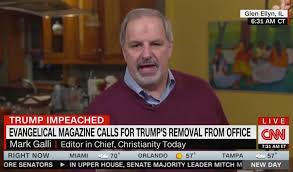
In our founding documents, Billy Graham explains that Christianity Today will help evangelical Christians interpret the news in a manner that reflects their faith. The impeachment of Donald Trump is a significant event in the story of our republic. It requires comment.

The typical CT approach is to stay above the fray and allow Christians with different political convictions to make their arguments in the public square, to encourage all to pursue justice according to their convictions and treat their political opposition as charitably as possible. We want CT to be a place that welcomes Christians from across the political spectrum, and reminds everyone that politics is not the end and purpose of our being. We take pride in the fact, for instance, that politics does not dominate our homepage.

That said, we do feel it necessary from time to time to make our own opinions on political matters clear—always, as Graham encouraged us, doing so with both conviction and love. We love and pray for our president, as we love and pray for leaders (as well as ordinary citizens) on both sides of the political aisle.

Let’s grant this to the president: The Democrats have had it out for him from day one, and therefore nearly everything they do is under a cloud of partisan suspicion. This has led many to suspect not only motives but facts in these recent impeachment hearings. And, no, Mr. Trump did not have a serious opportunity to offer his side of the story in the House hearings on impeachment.

But the facts in this instance are unambiguous: The president of the United States attempted to use his political power to coerce a foreign leader to harass and discredit one of the president’s political opponents. That is not only a violation of the Constitution; more importantly, it is profoundly immoral.

The reason many are not shocked about this is that this president has dumbed down the idea of morality in his administration. He has hired and fired a number of people who are now convicted criminals. He himself has admitted to immoral actions in business and his relationship with women, about which he remains proud. His Twitter feed alone—with its habitual string of mischaracterizations, lies, and slanders—is a near perfect example of a human being who is morally lost and confused.

Trump’s evangelical supporters have pointed to his Supreme Court nominees, his defense of religious liberty, and his stewardship of the economy, among other things, as achievements that justify their support of the president. We believe the impeachment hearings have made it absolutely clear, in a way the Mueller investigation did not, that President Trump has abused his authority for personal gain and betrayed his constitutional oath. The impeachment hearings have illuminated the president’s moral deficiencies for all to see. This damages the institution of the presidency, damages the reputation of our country, and damages both the spirit and the future of our people. None of the president’s positives can balance the moral and political danger we face under a leader of such grossly immoral character.

This concern for the character of our national leader is not new in CT. In 1998, we wrote this:

The President’s failure to tell the truth—even when cornered—rips at the fabric of the nation. This is not a private affair. For above all, social intercourse is built on a presumption of trust: trust that the milk your grocer sells you is wholesome and pure; trust that the money you put in your bank can be taken out of the bank; trust that your babysitter, firefighters, clergy, and ambulance drivers will all do their best. And while politicians are notorious for breaking campaign promises, while in office they have a fundamental obligation to uphold our trust in them and to live by the law.

And this:

Unsavory dealings and immoral acts by the President and those close to him have rendered this administration morally unable to lead.

Unfortunately, the words that we applied to Mr. Clinton 20 years ago apply almost perfectly to our current president. Whether Mr. Trump should be removed from office by the Senate or by popular vote next election—that is a matter of prudential judgment. That he should be removed, we believe, is not a matter of partisan loyalties but loyalty to the Creator of the Ten Commandments.

To the many evangelicals who continue to support Mr. Trump in spite of his blackened moral record, we might say this: Remember who you are and whom you serve. Consider how your justification of Mr. Trump influences your witness to your Lord and Savior. Consider what an unbelieving world will say if you continue to brush off Mr. Trump’s immoral words and behavior in the cause of political expediency. If we don’t reverse course now, will anyone take anything we say about justice and righteousness with any seriousness for decades to come? Can we say with a straight face that abortion is a great evil that cannot be tolerated and, with the same straight face, say that the bent and broken character of our nation’s leader doesn’t really matter in the end?

We have reserved judgment on Mr. Trump for years now. Some have criticized us for our reserve. But when it comes to condemning the behavior of another, patient charity must come first. So we have done our best to give evangelical Trump supporters their due, to try to understand their point of view, to see the prudential nature of so many political decisions they have made regarding Mr. Trump. To use an old cliché, it’s time to call a spade a spade, to say that no matter how many hands we win in this political poker game, we are playing with a stacked deck of gross immorality and ethical incompetence. And just when we think it’s time to push all our chips to the center of the table, that’s when the whole game will come crashing down. It will crash down on the reputation of evangelical religion and on the world’s understanding of the gospel. And it will come crashing down on a nation of men and women whose welfare is also our concern.

Mark Galli is editor in chief of Christianity Today.

Source: Posted December 19, 2019; retrieved December 20, 2019 from: https://www.christianitytoday.com/ct/2019/december-web-only/trump-should-be-removed-from-office.html

Share this post:
,

Learning from Another ‘Great Place to Work’: Mercedes-Benz – Encore

A lot of companies formed 133 years ago are no longer around.

  • Time takes its toll
  • Business models change
  • Technology improves
  • Values are reformed

For the companies that have survived the “Win or Go Home” tournaments, it is important to study them and learn lessons of their successes … and failures.

One such company is the international automotive conglomerate Mercedes-Benz or DaimlerBenz:

Mercedes-Benz is a German global automobile marque and a division of Daimler AG. Mercedes-Benz is known for luxury vehicles, buses, coaches, ambulances and trucks. The headquarters is in Stuttgart, Baden-Württemberg. The name first appeared in 1926 under Daimler-Benz. In 2018, Mercedes-Benz was the biggest selling premium vehicle brand in the world, having sold 2.31 million passenger cars.[4]
Mercedes-Benz traces its origins to Daimler-Motoren-Gesellschaft‘s 1901 Mercedes and Karl Benz‘s 1886 Benz Patent-Motorwagen, which is widely regarded as the first gasoline-powered automobile. – Source: Wikipedia.

This “Old Dog” has learned a lot of “New Tricks”.

They are considered one of the Great Places to Work, by the formal Great Place to Work® Institute; they are in the Top Ten on the 2018 List.

VIDEO – World’s Best Workplaces 2018 | Daimler Financial Services – https://youtu.be/HG2nGLaEj9w

Published on Oct 17, 2018

One such Value Reformation that Mercedes-Benz has completed that other companies, institutions and regions – this mean YOU Caribbean stakeholders – can learn from is the emphasis on Diversity and Inclusion. See this ethos featured in the internal company newsletter here from December 9, 2019:

Title: How we shape Diversity & Inclusion
Daimler employs more than 298,000 people from around 160 nations. And that is just one aspect of our company’s diversity. We shape Diversity & Inclusion with appropriate offers and measures for our employees in five dimensions.

  • We work in international teams: Our workforce from around 160 nations offers us first-hand insights into our different markets and customer groups. Daimler employs people from different countries and cultures to combine their different perspectives in projects and produce the most optimal results.
  • We bring people from different generations together: Daimler employs people from five generations. Experience is combined with fresh ideas in intergenerational teams in order to create new approaches. Our employees can develop further and unfold, regardless of age. For this we offer a great variety of learning possibilities.
  • We promote equal opportunity for all genders: A balanced relationship between women and men benefits companies and society equally. Be it as developers, location managers, assembly workers or members of the Board of Management: Women work at all levels at Daimler. The share of women in senior management positions is to increase to at least 20 percent by 2020.
  • We defend the rights of the LGBTI+ Community: We would like our employees to feel that they can speak openly about their sexual orientation and identity. This applies to gays, lesbians and bisexuals as well as to trans* persons or intersexual people. And we also take to the streets for this: With the Daimler Pride Tour [Link] we are sending a clear signal for diversity, respect and appreciation – worldwide.
  • We include people with disabilities on an equal footing: The participation of severely disabled people in working life is more than an obligation for us. On the basis of our inclusion agreement, we create jobs for people with disabilities and promote their further qualification. Our action plan for severely disabled trainees opens up a wide range of commercial and technical professions for young people.

Source: Posted December 9, 2019; retrieved December 19, 2019 from https://www.daimler.com/sustainability/basics/employees/how-we-shape-diversity-inclusion.html

For the movement behind the book Go Lean…Caribbean – the movement to reform and transform the Caribbean – this is not our first time focusing on the classification of Great Places to Work. In fact, we published a previous blog-commentary on December 2, 2014; it is only apropos to Encore that submission here-now:

—————–
Go Lean Commentary – Making a Great Place to Work®

The book Go Lean…Caribbean represents a quest to make the Caribbean a better place to live, work and play. The focus on this commentary is on work. There is actually a formula to making an organization a Great Place to Work®; that formula is so regimented that it is copyrighted and patented, and thus the ® symbol. This effort is pursued by the Great Place to Work® Institute. Below is their corporate information and accompanying VIDEO:

Video: The Great Place to Work Institute Model – http://youtu.be/IneDx950xRA

Great Place to Work Institute co-founder Robert Levering discusses the history of the Institute and how after 25 years of researching the best companies to work for around the world, that high levels of trust between employees and managers is the main element found in great workplaces. – Uploaded on Nov 7, 2011

————————

CU Blog - Making a Great Place To Work - Photo 1For over 25 years we’ve studied and identified great workplaces around the world.

Your company can be a great workplace, and you have the power to make it happen. It begins with an investment in building trust throughout your organization. The return will be a more vibrant enterprise, more innovative products and more satisfying relationships. Employees who trust their managers give their best work freely, and their extra effort goes right to the company’s bottom line. Managers who trust their employees allow innovative ideas to bubble up from all levels of the company. Employees who trust each other report a sense of camaraderie and even the feeling of being part of a family. Together they deliver far more than the sum of their individual efforts.

We’ve built the Great Place to Work® Model on 25 years of research and surveys of millions of employees.

Many of the best performing companies have followed this insight and seen tremendous results. At the Great Place to Work® Institute, we’ve spent 25 years tracking these leaders and learning from their successes. By surveying millions of employees and studying thousands of businesses, we’ve created a model for building performance based on trust. It’s our contribution to a global shift in businesses that is changing the way the world works.

We know that trust is the single most important ingredient in making a workplace great.

Our data show that building workplace trust is the best investment your company can make, leading to better recruitment, lower turnover, greater innovation, higher productivity, more loyal customers and higher profits. Our model provides specific, actionable steps to get you there. While you’ll be the one to lead your company on this journey, we can provide steady guidance from one of our 40 offices around the world.

We know that great workplaces are better financial performers.

Companies of all sizes look to us for our assessment tools, trainings, advisory services, conferences and workshops. The world looks to us to identify the best workplaces through our renowned lists. It’s all part of our passion to create a better world by helping you create a great workplace. Wherever you are on your journey, we invite you to join us and create yours.

Our clients are those companies and organizations that wish to maintain Best Company environments, those that are ready to dramatically improve the culture within their workplaces, and those in between the two. We know that organizations that build trust and create a rewarding cycle of personal contribution and appreciation create workplace cultures that deliver outstanding business performance.
Great Place to Work® – Corporate Website (Retrieved 12/01/2014)http://www.greatplacetowork.com/about-us

CU Blog - Making a Great Place To Work - Photo 2

The Go Lean book stresses the need to create great work places. It serves as a roadmap for the introduction and implementation for the technocratic Caribbean Union Trade Federation (CU). As a federation or federal government, there will be the need to employ (and empower) a Civil Service workforce; this labor pool is projected to be only 30,000 people, thusly embracing lean (or agile) delivery methodologies.

Lean relates to management, the Great Place to Work® concept, on the other hand, relates more to character and organizational culture. In fact the foregoing source material highlights one attribute more so than any other: Trust. They relate that from the employee’s perspective, a great workplace is one where they:

  • TRUST the people they work for;
  • Have PRIDE in what they do; and
  • ENJOY the people they work with.

So “Trust” is the defining principle of great workplaces. Consider the example of one company, in the Detroit Metro area, Credit Acceptance Corporation in the Appendix below.

While federal employees, civil servants, are among the stakeholders for Caribbean empowerment, they are not the only stakeholders the CU must cater to; there are other stakeholders that cover other aspects of Caribbean life. In fact, the prime directives of the CU covers these 3 focus areas:

  • Optimization of the economic engines in order to grow the regional economy to $800 Billion & create 2.2 million new jobs.
  • Establishment of a security apparatus to protect the resultant economic engines.
  • Improve Caribbean governance to support these engines.

The roadmap identifies, qualifies and proposes the establishment of a technocratic civil service throughout the region (Page 173). The book posits that an empowered, effective labor force, coupled with advanced technology tools and processes can adequately meet the needs of the region’s super-national government. Imagine kiosks, websites, call centers and mobile applications (Page 197) as opposed to big-bulky edifices with bureaucratic staffers working a queue (think “permits/licensing” in any typical US state – see Page 93 for the example of Nebraska’s “lean” conversion with the Department of Environmental Quality). This technology-led vision is fully detailed in the book (Page 168), encompassing the tactical approach of a “separation-of-powers” with the member-states for specific governmental functionality that will be assumed under CU jurisdiction (Page 71).

In addition to these public sector employees, the Go Lean roadmap also focuses on private enterprises. While there is no plan to micro-manage private companies in the free market, there is the plan to rate/rank companies that are effective and efficient. Imagine: 10 Great Places to Work – Bahamas, 10 Great Places to Work – Dominican Republic, 10 Great Places to Work – Jamaica, so on and so on.

Previously, Go Lean blogs commented on job developments, in the public sector and also with industrial and entrepreneurial endeavors. These points were depicted in the following sample:

Funding Caribbean Entrepreneurs – The ‘Crowdfunding’ Way
Where the Jobs Are – Entrepreneurial Jobs
Jamaica’s Public Pension Under-funded
The Criminalization of American Business – Bad Examples
STEM Jobs Are Filling Slowly
British public sector workers strike over ‘poverty pay’
Puerto Rico Governor Signs Bill on Small-Medium-Enterprises
Self-employment on the rise in the Caribbean – World Bank

Now is the time for all Caribbean stakeholders, employees in the public and private sectors, to lean-in to this regional solution for Caribbean empowerment. The end result, a better workplace and a better homeland; in total, a better place to live, work and play.

Download the book Go Lean … Caribbean – now!

————

APPENDIX: Culture Without Compromise – One Case / One Company:

http://www.greatplacetowork.com/publications-and-events/blogs-and-news/2435-culture-without-compromise

This year, Credit Acceptance, a Michigan-based indirect finance company, secured one of the coveted spots on the FORTUNE 100 Best Companies to Work For list for the first time—a goal the company has actively been working toward since 2001 under the leadership of CEO Brett Roberts. While related efforts were numerous and spanned a 13-year period, there are 3 key takeaways to be learned from Credit Acceptance’s journey to greatness from our case study: Culture Without Compromise.

CU Blog - Making a Great Place To Work - Photo 3

Share this post:
,
[Top]

Better Than … the ‘Bill of Rights’ – Fifth & Sixth Amendments

Go Lean Commentary

“Plead the Fifth!”

We all know what that means: an arrested person elects to remain silent so as not to incriminate himself.

This is the public perception of the Fifth Amendment of the US Constitution – the Bill of Rights. This legal premise is quite ingenious – it is the mark of freedom. It would be tyranny for entities of the State to force people to testify … against themselves. The fact of the matter though is that the US is not the only country with these protections; consider this reference:

Whether arising from their constitutions, common law, or statute, many nations recognize a defendant’s right to silence.[124] Those rights may be considerably more limited than those available to U.S. criminal defendants under the Miranda ruling.[125]

So many countries allow a suspect to “Plead the Fifth”, without some of the compromises to justice when there is some failure with the perfect delivery of Criminal Proceedings by police officials. How do other countries manage it?

Some better …
Some worse…

There is an opportunity for a new Caribbean administration to do better than the American experience of “Pleading the Fifth” and still not jeopardize justice.

Can we have both?
Can we just have sanctions against the offending police personnel rather than setting a guilty person free … in the interest of justice?

Yes, we can …

It is conceivable, believable and achievable to maintain laws for Criminal Procedures and not compromise the interest of justice. Demanding justice does not mean allowing tyranny; but it is not black-or-white; there are shades of grey. This is why legal systems employ Judges, to make those case-by-case decisions.

This introduction allows us to define the Fifth and Sixth Amendments of the US Constitution – subsets of the Bill of Rights, as follows:

Fifth Amendment to the United States Constitution
No person shall be held to answer for a capital, or otherwise infamous crime, unless on a presentment or indictment of a Grand Jury, except in cases arising in the land or naval forces, or in the Militia, when in actual service in time of War or public danger; nor shall any person be subject for the same offence to be twice put in jeopardy of life or limb; nor shall be compelled in any criminal case to be a witness against himself, nor be deprived of life, liberty, or property, without due process of law; nor shall private property be taken for public use, without just compensation.[93]

The Fifth Amendment protects against double jeopardy and self-incrimination and guarantees the rights to due processgrand jury screening of criminal indictments, and compensation for the seizure of private property under eminent domain. The amendment was the basis for the court’s decision in Miranda v. Arizona (1966), which established that defendants must be informed of their rights to an attorney and against self-incrimination prior to interrogation by police.[109]

Sixth Amendment to the United States Constitution
In all criminal prosecutions, the accused shall enjoy the right to a speedy and public trial, by an impartial jury of the State and district wherein the crime shall have been committed, which district shall have been previously ascertained by law, and to be informed of the nature and cause of the accusation; to be confronted with the witnesses against him; to have compulsory process for obtaining witnesses in his favor, and to have the Assistance of Counsel for his defense.[93]

The Sixth Amendment establishes a number of rights of the defendant in a criminal trial:

In Gideon v. Wainwright (1963), the Court ruled that the amendment guaranteed the right to legal representation in all felony prosecutions in both state and federal courts.[110]
Source: Retrieved November 24, 2019 from https://en.wikipedia.org/wiki/United_States_Bill_of_Rights

As a result of these two Amendments, the wording of the Miranda Warning emerged (after 1963):

You have the right to remain silent. Anything you say can be used against you in court. You have the right to talk to a lawyer for advice before we ask you any questions. You have the right to have a lawyer with you during questioning. If you cannot afford a lawyer, one will be appointed for you before any questioning if you wish. If you decide to answer questions now without a lawyer present, you have the right to stop answering at any time.

See Appendix VIDEO below for a fuller definition. This is why this commentary considers these two amendments in tandem.

As related, Constitutional Law scholars refer to these two amendments as Criminal Proceedings provisions. These are not Rocket Science or Brain Surgery; the cause for justice should not be this complicated.


Planners for a new Caribbean governance must also consider these Criminal Proceedings provisions from the onset (accession) of the Caribbean Union Trade Federation (CU). These provisions should be embedded in the initial confederation treaty – and then codified in the subsequent Constitution.

This is the continuation – 4 of 6 – of the November 2019 series from the movement behind the book Go Lean…Caribbean. We publish this series as a supplement to the 2013 book, to support the thesis that we, in the Caribbean, can be Better Than America, in words (law) and in action. The full catalog of this series on the Bill of Rights is detailed as follows:

  1. Better than the Bill of Rights: First Amendment – We can do better
  2. Better than the Bill of Rights: Second Amendment – No slavery legacy
  3. Better than the Bill of Rights: Third & Fourth Amendments – Remember, Justice First
  4. Better than the Bill of Rights: Fifth & Sixth Amendments
  5. Better than the Bill of Rights: Seventh & Eighth Amendments
  6. Better than the Bill of Rights: Ninth & Tenth Amendments

As this series refers to the need for a comprehensive roadmap for elevating the societal engines – economics, security and governance – of the 30 Caribbean member-states, this entry focuses more on the need for security and justice optimizations. People are more inclined to abandon their homeland due to public safety deficiencies. This is why we must consider the actuality of the American Criminal Justice system as a competitive assessment. We want to compete better with America.

The Go Lean book provides 370 pages of roadmap details to prioritize security needs along with economics ones. This is a Big Idea for the Caribbean to reform and transform its societal engines. This requires adopting new community ethos (attitudes and values), plus the executions of new strategies, tactics, implementations and advocacies to better secure our homeland. We can better remediate and mitigate crime in the region as a result. This is the actual title of one advocacy in the Go Lean book. Consider the specific plans, excerpts and headlines here from Page 178, entitled:

10 Ways to Remediate and Mitigate Crime

1 Lean-in for the Caribbean Single Market This will allow for the unification of the region into one market of 42 million people across 30 member-states, thereby creating an economic zone to promote and protect the interest of the member-states. (The GDP of the region will amount to $800 Billion according to 2010 figures). In addition, the treaty calls for a collective security agreement of the Caribbean nations so as to implement provisions to serve and protect the citizenry against systemic threats. The CU’s law enforcement agencies will enforce, investigate and prosecute economic crimes, including Racketeering, and Organized Crime Enterprises (RECO), plus any cross border gang activity. In addition, the CU will also provide funding, grants, training, technical consultancy, and support services for member-states law enforcement, including crime labs.
2 Deploy the Caribbean Police (CariPol)

The CU Treaty will compel local police to have accountability and respect for the jurisdiction of the Caribbean Police. CariPol will be modeled after Interpol and the US FBI, with Inspectors for investigations and Marshalls for protection and interdiction. When the local Police call for escalation, CariPol responds. CariPol also “polices” the Police, with audit and compliance oversight for “use of force” reviews and Internal Affairs. The appeal to engage CariPol does not have to come from local police, but rather any constitutional institution (i.e. state governments, courts, or legislative bodies).

3 Regional Security Intelligence Bureau

The CU law enforcement apparatus will deploy sophisticated intelligence gathering and analysis systems, processes and personnel. This includes terrestrial and satellite surveillance (CATV, ankle monitoring) systems, eavesdropping, data mining and predictive modeling. Local and regional Police institutions would have access to these findings and results. The CU’s intelligence agency will also monitor police actions for public integrity assurance (corruption threats).

4 Prison Industrial Complex
5 Equip local police with advanced technologies
6 Witness Protection

The CU will administer Witness Security (WitSec) for trustees before and after trials. There should be no safety consequences for doing the right thing. But since most of the “homelands” are islands, there is the need to relocate witness to other parts of the region. A regional solution far exceeds any state-wide attempts.

7 Enable the Private Industry of First Responders and Bounty Hunters
8 Hate Crime Qualifiers
9 Youth Crime Awareness and Prevention
10 Death Penalty Reform Change to Lethal Injection – this lowers the objections and vigorous criminal defense strategies. Resulting in more

frequent executions; (this is the model of the State of Texas in the US). Death Row must not resemble “life in prison”.

People have left their beloved Caribbean homes – societal abandonment – over the issue of public safety – crime and the proper response. This threat is also cited as a Failed-State indicator. So we must reduce crime … at all cost. This is a mandate of the Go Lean movement, to do “whatever it takes” to lower the Push and Pull factors that cause people to abandon our Caribbean homeland. We want them to “prosper where we are planted” here.

There have been a number of blog-commentaries by the Go Lean movement over the years that highlighted the approaches to remediate and mitigate crime; see a sample list here; (though the list is exhaustive, it is still only a sample; crime abatement has been a priority focus for more than 5 years of this commentary):

https://goleancaribbean.com/blog/?p=18321 Unequal Justice: Lessons Learned from the American Sheriffs Eco-system
https://goleancaribbean.com/blog/?p=16408 Home Violence leads to Street Violence
https://goleancaribbean.com/blog/?p=14424 Repairing the Breach: Crime – Need, Greed, Justice & Honor
https://goleancaribbean.com/blog/?p=13476 Future Focused – Policing the Police
https://goleancaribbean.com/blog/?p=13126 The Requirement for Better Security – ‘Must Love Dogs’
https://goleancaribbean.com/blog/?p=12400 Accede the Caribbean Arrest Treaty
https://goleancaribbean.com/blog/?p=11054 Managing the ‘Strong versus the Weak’ – Bullying in Schools
https://goleancaribbean.com/blog/?p=10959 See Something, Say Something … Do Something
https://goleancaribbean.com/blog/?p=9072 Securing the Homeland – On the Ground
https://goleancaribbean.com/blog/?p=7490 A Lesson in the History of Interpersonal Violence – Domestic
https://goleancaribbean.com/blog/?p=7179 Crime Specialist Urging: ‘Change Leaders in Crime Fight’
https://goleancaribbean.com/blog/?p=6693 Ten Puerto Rico Police Accused of Organized Criminal Network
https://goleancaribbean.com/blog/?p=6385 Protecting Tourists from Electronic (ICT) Crimes
https://goleancaribbean.com/blog/?p=5435 China Internet Policing – Lessons/Model for the Caribbean
https://goleancaribbean.com/blog/?p=5307 8th Violent Crime Warning to Bahamas Tourists – We must improve!
https://goleancaribbean.com/blog/?p=5304 Mitigating the Eventual ‘Abuse of Power’
https://goleancaribbean.com/blog/?p=4863 Crime Surveillance Videos/Photos – Gleaning benefits
https://goleancaribbean.com/blog/?p=4308 Improving the Crime-fighting Eco-system – Better 911 Systems
https://goleancaribbean.com/blog/?p=2684 Role Model for Justice – The Pinkertons
https://goleancaribbean.com/blog/?p=2259 The Criminalization of American Business – Lessons Learned
https://goleancaribbean.com/blog/?p=1143 Health-care fraud in America; criminals take $272 billion a year
https://goleancaribbean.com/blog/?p=392 Jamaica to receive World Bank funds to help in crime fight

As previously related, the American Bill of Rights was designed to be embedded in the country’s legal foundation in such a way so as to prevent subsequent majorities from violating the rights of minorities. While this is good, it is also near-impossible to change the Constitution. We can do better in our Caribbean homeland than the American destinations. We have always maintained that we can more easily reform our homeland than some foreign country. There is no Bill of Rights for us – we have no excuse not to change and improve!

Yes, we can be Better Than America; we can do better than the Bill of Rights. We can be safer, yet still just; we can ensure justice without allowing tyranny. This is the heavy-lifting that we must commit to. We urge all Caribbean stakeholders to lean-in to this roadmap to make our homeland a better place to live, work and play. 🙂

About the Book
The book Go Lean…Caribbean serves as a roadmap for the introduction and implementation of the technocratic Caribbean Union Trade Federation (CU), for the elevation of Caribbean society – for all member-states. This CU/Go Lean roadmap has these 3 prime directives:

  • Optimization of the economic engines in order to grow the regional economy to $800 Billion & create 2.2 million new jobs.
  • Establishment of a security apparatus to ensure public safety and protect the resultant economic engines.
  • Improve Caribbean governance to support these engines, including a separation-of-powers between the member-states and CU federal agencies.

The Go Lean book provides 370-pages of turn-by-turn instructions on “how” to adopt new community ethos, plus the strategies, tactics, implementations and advocacies to execute so as to reboot, reform and transform the societal engines of Caribbean society.

Download the free e-Book of Go Lean … Caribbean – now!

Who We Are
The movement behind the Go Lean book – a non-partisan, apolitical, religiously-neutral Community Development Foundation chartered for the purpose of empowering and re-booting economic engines – stresses that reforming and transforming the Caribbean societal engines must be a regional pursuit. This was an early motivation for the roadmap, as pronounced in the opening Declaration of Interdependence (Pages 12 – 13):

x. Whereas we are surrounded and allied to nations of larger proportions in land mass, populations, and treasuries, elements in their societies may have ill-intent in their pursuits, at the expense of the safety and security of our citizens. We must therefore appoint “new guards” to ensure our public safety and threats against our society, both domestic and foreign. The Federation must employ the latest advances and best practices of criminology and penology to assuage continuous threats against public safety. The Federation must allow for facilitations of detention for convicted felons of federal crimes, and should over-build prisons to house trustees from other jurisdictions.

xi. Whereas all men are entitled to the benefits of good governance in a free society, “new guards” must be enacted to dissuade the emergence of incompetence, corruption, nepotism and cronyism at the peril of the people’s best interest. The Federation must guarantee the executions of a social contract between government and the governed.

xii. Whereas the legacy in recent times in individual states may be that of ineffectual governance with no redress to higher authority, the accedence of this Federation will ensure accountability and escalation of the human and civil rights of the people for good governance, justice assurances, due process and the rule of law. As such, any threats of a “failed state” status for any member state must enact emergency measures on behalf of the Federation to protect the human, civil and property rights of the citizens, residents, allies, trading partners, and visitors of the affected member state and the Federation as a whole.

xvi. Whereas security of our homeland is inextricably linked to prosperity of the homeland, the economic and security interest of the region needs to be aligned under the same governance. Since economic crimes … can imperil the functioning of the wheels of commerce for all the citizenry, the accedence of this Federation must equip the security apparatus with the tools and techniques for predictive and proactive interdictions.

xxiv. Whereas a free market economy can be induced and spurred for continuous progress, the Federation must install the controls to better manage aspects of the economy: jobs, inflation, savings rate, investments and other economic principles. Thereby attracting direct foreign investment because of the stability and vibrancy of our economy.

Sign the petition to lean-in for this roadmap for the Caribbean Union Trade Federation.

—————

APPENDIX C VIDEO – Due Process of Law: Crash Course Government and Politics #28 – https://youtu.be/UyHWRXAAgmQ  

CrashCourse Published Aug 21, 2015 – This week Craig is going to continue our discussion of due process. Technically, we started last week with the 4th Amendment and Search and Seizure, but this week we’re going to look at the 5th and 6th Amendments and how they ensure a fair trial. We’ll talk about some stuff you tend to hear a lot on TV, like your right to an attorney and a jury of your peers and also terms like “double jeopardy” and “pleading the Fifth”. Now, this stuff can get pretty complicated, which is where lawyers come in handy, but it’s important to know your liberties to keep the police and other judicial officers in check.

Produced in collaboration with PBS Digital Studios: http://youtube.com/pbsdigitalstudios

Support is provided by Voqal: http://www.voqal.org

All attributed images are licensed under Creative Commons by Attribution 2.0 https://creativecommons.org/licenses/

Share this post:
, , , ,
[Top]

Better Than … the ‘Bill of Rights’ – ‘Third & Fourth Amendments’: Justice First

Go Lean Commentary

Providing the stewardship for a federal government is hard work, with a lot of heavy-lifting tasks and responsibilities.  No short cuts!

So many times, governmental institutions – think security forces – abuse their position/strength and exploit the rights and property of ordinary citizens. Good governance mandates that we be On Guard for such abuses. When strong individuals abuse weaker ones in society, we call it bullying. When governmental institutions do it, we call it:

Tyranny

The subject of tyranny was front-and-center in the debates during the Constitutional Conventions in the 1780’s, at the dawn of the United States of America. Today’s Caribbean stakeholders can benefit greatly from studying this American History and gleaning the wisdom afforded.  Most importantly, we can stand on the shoulders of those American Founding Fathers and reach even greater heights. We get to do this exercise now without the flawed orthodoxy of those days: no racial and gender discrimination – notice the reference to Founding Fathers and not Founding Mothers.

This introduction allows us to define the Third and Fourth Amendments of the US Constitution – subsets of the Bill of Rights.

Third Amendment to the United States Constitution
No Soldier shall, in time of peace be quartered in any house, without the consent of the Owner, nor in time of war, but in a manner to be prescribed by law.[93]

Fourth Amendment to the United States Constitution
The right of the people to be secure in their persons, houses, papers, and effects, against unreasonable searches and seizures, shall not be violated, and no Warrants shall issue, but upon probable cause, supported by Oath or affirmation, and particularly describing the place to be searched, and the persons or things to be seized.[93]

Constitutional scholars refer to these two amendments as Anti-Tyranny provisions. Imagine the tyranny of armed soldiers commandeering houses and work places, demanding access to and hospitality on a private citizen’s property. Also imagine the tyranny of security personnel (armed checkpoints or police forces) invading private spaces without probable cause. (See Appendix C VIDEO below for a fuller definition). This is why this commentary considers these two amendments in tandem.

Planners for a new Caribbean governance must consider these Constitutional provisions from the onset (accession) of the Caribbean Union Trade Federation (CU). This is the charter of the movement behind the book Go Lean…Caribbean, to present a roadmap for the introduction of the CU and to spell out the details for the confederation treaty – and subsequent Constitution. The CU/Go Lean roadmap presents these 3 goals:

  1. Optimize of the economic engines;
  2. Establish a security apparatus and justice institutions to serve and protect the people and resultant economic engines;
  3. Improve Caribbean governance with the deployment of this federal authority and streamlining the member-state administrations.

There are so many opportunities for abuse.

The Third Amendment is straightforward and rarely comes under dispute – requiring Supreme Court interpretations. There is an opportunity for the new Caribbean to be better. In contrast, the Caribbean reality can sustain a No Quatering provision.

The Fourth Amendment however has been a constant source of challenges and interpretation expansions. See a legal reference here:

The Fourth Amendment guards against unreasonable searches and seizures, along with requiring any warrant to be judicially sanctioned and supported by probable cause. It was adopted as a response to the abuse of the writ of assistance, which is a type of general search warrant, in the American Revolution. Search and seizure (including arrest) must be limited in scope according to specific information supplied to the issuing court, usually by a law enforcement officer who has sworn by it. The amendment is the basis for the exclusionary rule, which mandates that evidence obtained illegally cannot be introduced into a criminal trial.[107] The amendment’s interpretation has varied over time; its protections expanded under left-leaning courts such as that headed by Earl Warren and contracted under right-leaning courts such as that of William Rehnquist.[108]

As for this Fourth Amendment comparison, there is the opportunity to prioritize justice over law-and-order in regards to the “Exclusionary Rules”. Consider the reality of unlawful “search and seizures”, where the evidence is then disqualified. This may lead to miscarriages of justice, where guilty parties continue unabated and innocent victims never get their just relief. Such a system, as is the case in the US, is truly broken, and encourages extra-judicial retaliations, which exacerbates criminal activity in society; think street justice.

We can do better! (See more on the impact of the Fourth Amendment on the modern challenges of Internet & Communications Technologies (ICT) activities in Appendix D).

We can allow for sanctions and retributions against security forces/justice institutions for procedural violations while still pursuing justice. This approach works in civil proceeding, international peace-keeping and political cases (think impeachment); so there could be some “Solomonic” approach in criminal proceedings – especially when no death penalty is attached. (Ancient Israel King Solomon threatened death to a child in order to ascertain the true identity of the real mother – this proved to be indisputable wisdom).
Other countries have such a system. In fact only the US, and a few other countries, have absolute “Exclusionary Rules”. As is evidenced in Appendices A & B, many other countries try to adapt a case-by-case approach where the probative value of evidence can still be factored in when considering judgment, in the interest of justice. It is obvious that there are no perfect lines between Criminal Proceedings, Exclusionary Rules and Justice. (Life is not black-and-white; there are many shades of grey).

This is the continuation – 3 of 6 – of the November 2019 series from the movement behind the book Go Lean…Caribbean. Since we publish a series of teaching commentaries every month – as a supplement to the 2013 book – this series examines the thesis that we, in the Caribbean, can be Better Than America, in words (law) and in action. As we analyze the American Bill of Rights and the Third & Fourth Amendments, we realize that tyranny must always be monitored and mitigated in any society concerned with justice. The full catalog of this series is detailed as follows:

  1. Better than the Bill of Rights: First Amendment – We can do better
  2. Better than the Bill of Rights: Second Amendment – No slavery legacy
  3. Better than the Bill of Rights: Third  & Fourth Amendments – Remember, Justice First
  4. Better than the Bill of Rights: Fifth & Sixth Amendments
  5. Better than the Bill of Rights: Seventh & Eighth Amendments
  6. Better than the Bill of Rights: Ninth & Tenth Amendments

As this series refers to the need for a comprehensive roadmap for elevating the societal engines – economics, security and governance – of the 30 Caribbean member-states. This effort must include the justice institutions. People are more inclined to abandon their homeland if there are no justice assurances; privacy is rarely a determination. This is why we must consider the actuality of American jurisprudence in our competitive assessment. Especially considering modern challenges of Internet & Communications Technologies (ICT).

The Go Lean book provides 370 pages of roadmap details on the security and justice mandates to elevate our society; this includes the community ethos (attitudes and values) that we need to adopt, plus the executions of strategies, tactics, implementations and advocacies to better secure the Caribbean homeland. The roadmap stresses that in addition to economic reforms, we must equally reform/transform our security-justice eco-systems. Consider this excerpt on security principles from Page 23:

Book Excerpt: c. Security Principles

… This roadmap for Caribbean integration declares that peace, security and public safety is tantamount to economic prosperity. This is why an advocacy for the Greater Good must be championed as a community ethos. A prime precept is that it is “better to know than to not know” – this implies that privacy is secondary to security. A secondary precept is that bad things will happen to good people and so the community needs to be prepared to contend with the risks that can imperil the homeland.

c-1. Privacy versus Public Protection
The institutions and agencies of the CU must respect the privacy of Caribbean residents in their homes, vehicles and offices. But when a person goes out into the public, there cannot be any expectation of privacy, it is then the community ethos that public protection is paramount to individual privacy rights. Therefore the community will work with law enforcement agencies to identify, warn and report any terroristic threats or suspicious activities.

Imagine a suicide bomber attending Carnival and detonating a bomb and killing hundreds. Far-fetched? Yet incidences like this are not uncommon, not just in failed-states like Iraq, Afghanistan or Palestine, but also recently in the UK, Spain and in Boston USA during their annual marathon in April 2013. Would such an event happen in some CU member-state? We hope not. But hope alone cannot be our only defense; we must prepare, plan, monitor and mitigate – we must police our communities. We have a number of population groups that have been cited as high risk: Muslim fundamentalists, Black Nationalists, White Supremacists, and especially narco-terrorists/gang participants. This roadmap therefore posits that intelligence gathering must commence at the outset of this federation, and public protection must “trump” personal privacy.

c-2. Whistleblower Protection
The CU must allow for anonymous reporting of potential threats. If a report (whistleblower) is harassed as a result, the community must come to his/her aid and protection. For starters, the CU will offer toll free numbers and mobile-apps and web-interfaces to allow anonymous reporting of suspicious activities.

“If you see something, say something”.

c-3. Witness Security & Protection
Beyond initial reporting, the CU will allow for Witness Security (WitSec) and Protection so that there will be no bad consequences for doing the right thing. Since most of the “homeland” are islands, there are not a lot of places whistleblowers and eye-witnesses can go to seek refuge. Therefore, all communities in the region must come together to provide a joint solution. This responsibility, WitSec, therefore becomes an exclusive federal (a la “Federation”) deliverable.

c-4. Anti-Bullying and Mitigation
The CU security pact must defend against regional threats, including domestic terrorism. This includes gangs and their junior counterparts, bullies. The community must accept that young ones will go astray, so Juvenile Justice programs should be centered on the goal to rehabilitate them into good citizens, before it’s too late. So community messaging (life-coaching and school-mentoring programs) must be part of the campaign for anti-bullying and mitigations.
Source: Book Go Lean…Caribbean Page 23

To do better than our American counterpart would mean doing “whatever it takes” to ensure justice in our society. This is among the mandates of the Social Contract, “where citizens surrender some of their freedoms and submit to the authority of the State in exchange for protection of remaining natural and legal rights”.

Remember Edward Snowden? See summary here:

Title: NSA records all phone calls in the Bahamas, according to Snowden
According to the below [a] news article, the US National Security Agency is gathering and analyzing mobile phone calls on Bahamians talking to Bahamians. This article raises so many questions for a Caribbean consideration:

  • Is this OK with the political/social leaders of the Bahamas?
  • Is this OK with the people of the Bahamas?
  • Why is this effort exerted by the US and not the Bahamas?
  • Could the local obstacle be the costs of the ICT investment?
  • Is there any value to this intelligence gathering? Have crimes and terroristic attacks been mitigated?

The book Go Lean…Caribbean identifies that intelligence gathering & analysis can be advantageous for the security of the member-states in the Caribbean region. Whatever your politics, you want a measure of peace-and-security in the region. Based on the foregoing article, there is some value to a cross-border, regional intelligence/security apparatus.

There have been a number of blog-commentaries by the Go Lean movement that highlighted the need and provisions for optimizing justice institutions in the region; see a sample list here:

https://goleancaribbean.com/blog/?p=18371 Unequal Justice: Student Loans Could Dictate Justice
https://goleancaribbean.com/blog/?p=18351 Unequal Justice: Envy and the Seven Deadly Sins
https://goleancaribbean.com/blog/?p=18337 Unequal Justice: Bullying Magnified to Disrupt Commerce
https://goleancaribbean.com/blog/?p=18321 Unequal Justice: Sheriffs and the need for ‘soft’ Tyrannicide
https://goleancaribbean.com/blog/?p=17267 Way Forward – For Justice: Special Prosecutors
https://goleancaribbean.com/blog/?p=16668 Justice and Economics – Need to Optimize Bankruptcies
https://goleancaribbean.com/blog/?p=5238 #ManifestJustice Activism – Optimizing Prisoners for Profit
https://goleancaribbean.com/blog/?p=2684 Role Model for Justice – The Pinkertons

In the opening submission of this series, it was articulated how the American Bill of Rights was designed to be embedded in the country’s legal foundation in 1791 so that subsequent majorities could not readily violate the rights of minorities. This is a good premise … on paper. But the reality is that the legal foundation is equally hard to reform even if it is discovered to be harmful for the overall society in subsequent years, decades and centuries. Think:

  • First Amendment protections for Fake News or …
  • Second Amendment protections for Assault Weapons.

Fixing America is not so easy; many people echo the feeling of “God-damned Bill of Rights“; think of the passions of the young people at the “March For Our Lives” in March 2018.

We can do better here at home in the Caribbean – where the American Bill of Rights do not apply – We have no excuse!

Yes, we can be Better Than America; we can do better than the Bill of Rights. This is a tall order and Big Deal for the stewards of a new Caribbean. But this Big Deal is still conceivable, believable and achievable with a coordinated regional effort – “many hands make a big job, small”. This is how we can make our homeland a better place to live, work and play. 🙂

About the Book
The book Go Lean…Caribbean serves as a roadmap for the introduction and implementation of the technocratic Caribbean Union Trade Federation (CU), for the elevation of Caribbean society – for all member-states. This CU/Go Lean roadmap has these 3 prime directives:

  • Optimization of the economic engines in order to grow the regional economy to $800 Billion & create 2.2 million new jobs.
  • Establishment of a security apparatus to ensure public safety and protect the resultant economic engines.
  • Improve Caribbean governance to support these engines, including a separation-of-powers between the member-states and CU federal agencies.

The Go Lean book provides 370-pages of turn-by-turn instructions on “how” to adopt new community ethos, plus the strategies, tactics, implementations and advocacies to execute so as to reboot, reform and transform the societal engines of Caribbean society.

Download the free e-Book of Go Lean … Caribbean – now!

Who We Are
The movement behind the Go Lean book – a non-partisan, apolitical, religiously-neutral Community Development Foundation chartered for the purpose of empowering and re-booting economic engines – stresses that reforming and transforming the Caribbean societal engines must be a regional pursuit. This was an early motivation for the roadmap, as pronounced in the opening Declaration of Interdependence (Pages 12 – 13):

xi. Whereas all men are entitled to the benefits of good governance in a free society, “new guards” must be enacted to dissuade the emergence of incompetence, corruption, nepotism and cronyism at the peril of the people’s best interest. The Federation must guarantee the executions of a social contract between government and the governed.

xvi. Whereas security of our homeland is inextricably linked to prosperity of the homeland, the economic and security interest of the region needs to be aligned under the same governance. Since economic crimes … can imperil the functioning of the wheels of commerce for all the citizenry, the accedence of this Federation must equip the security apparatus with the tools and techniques for predictive and proactive interdictions.

xxiv. Whereas a free market economy can be induced and spurred for continuous progress, the Federation must install the controls to better manage aspects of the economy: jobs, inflation, savings rate, investments and other economic principles. Thereby attracting direct foreign investment because of the stability and vibrancy of our economy.

Sign the petition to lean-in for this roadmap for the Caribbean Union Trade Federation. 

—————–

Appendix A – Comparative analysis of exclusionary rules in the United States, England, France, Germany, and Italy

By: Yue Ma
Policing: An International Journal – ISSN: 1363-951X
Publication Date: 1 September 1999
Abstract
The exclusionary rule remains one of the most controversial doctrines in America’s constitutionalized criminal procedure. Jurists and commentators criticize the American exclusionary rule as a rule unique to American jurisprudence. Though   American jurists and commentators’ criticism focuses on the Fourth Amendment exclusionary rule, the criticism of the American exclusionary rule with reference to practices in foreign countries serves to create and maintain the misconception that the United States is the only country that has the exclusionary rule. The belief that the exclusionary rule exists only in the United States is far from accurate. This article examines the historical development and the current status of exclusionary rules in the United States, England, France, Germany, and Italy. Attentions are especially devoted to analyzing the characteristics of the American exclusionary rule with reference to exclusionary rules in other countries.

Source: Ma, Y. (1999), “Comparative analysis of exclusionary rules in the United States, England, France, Germany, and Italy”, Policing: An International Journal, Vol. 22 No. 3, pp. 280-303. https://doi.org/10.1108/13639519910285053

—————–

Appendix B – The Exclusionary Rule: A Comparative Analysis

Source: Shellie Labell (2014). Leonard Birdsong Legal Blog Site; Published January 28, 2014 retrieved from: http://birdsongslaw.com/2014/01/28/comparative-approach-exclusionary-rule/

—————–

APPENDIX C VIDEO – Search and Seizure: Crash Course Government and Politics #27 – https://youtu.be/_4O1OlGyTuU

CrashCourse
Published Aug 15, 2015 –
This week Craig talks about police searches and seizures. Now, the fourth amendment says that you have the right to be protected against “unreasonable searches and seizures” but what exactly does this mean? Well, it’s complicated. The police often need warrants issued with proof of probable cause, but this isn’t always the case – such as when you’re pulled over for a moving violation. We’ll finish up with the limitations of these protections and discuss one group of people in particular that aren’t protected equally – students.

Produced in collaboration with PBS Digital Studios: http://youtube.com/pbsdigitalstudios

Support is provided by Voqal: http://www.voqal.org

All attributed images are licensed under Creative Commons by Attribution 2.0 https://creativecommons.org/licenses/

—————–

APPENDIX D VIDEO – Beyond Search & Seizure | Jeffrey Rosen | TEDxPhiladelphia – https://youtu.be/iV4q4nRPyoY

TEDx Talks 

Published Feb 9, 2016 – Ubiquitous surveillance is threatening American values of privacy and equal justice in ways the founders of the Constitution never could’ve imagined when they penned the Fourth Amendment that protects us from unreasonable searches and seizures. In this spellbinding talk, Jeffrey Rosen, President and CEO of the National Constitution Center, describes how the use of public surveillance systems, brain scans, DNA collection and consumer profiling calls for new translations of the amendment so that it protects privacies in the 21st century that the Constitution’s framers took for granted in the 18th. Recognizing that ubiquitous surveillance is akin to the general warrants that sparked the American Revolution, we must all demand zones of immunity that protect privacy and equality in the digital age.

Jeffrey Rosen is president and CEO of the National Constitution Center, a museum and civic-education headquarters dedicated to non-partisan Constitutional discussion and debate. Well-versed in American freedoms and rights, he is a law professor at George Washington University and a contributing editor to The Atlantic, and has been referred to as “the nation’s most widely read and influential legal commentator.” Among many other works, he is the author of The Supreme Court: The Personalities and Rivalries That Defined America, and co-editor of Constitution 3.0: Freedom and Technological Change.

This talk was given at a TEDx event using the TED conference format but independently organized by a local community. Learn more at http://ted.com/tedx

Share this post:
, , , ,
[Top]

Better Than … the ‘Bill of Rights’ – Second Amendment: No Slavery Legacy

Go Lean Commentary

We – the movement behind the book Go Lean…Caribbean, a roadmap for the introduction of the Caribbean Union Trade Federation (CU) – said we were going to break-down the BIG FAT LIE and ascertain the truth of the “masterpiece” of the American Bill of Rights. Here we go:

The “Land of the Free and Home of the Brave” with its laissez-fare attitudes towards gun ownership and stockpiling of lethal weapons is not a positive attribute.

It is Bad … for America, and the its role-modeling for the rest of the world.

“Abandon Hope, All Ye Who Enter”. This was the clear warning from a previous blog-commentary from June 23, 2018:

Title: ‘Time to Go’ – Mandatory Guns: “Say it Ain’t So”
For our American counterparts, this [statement] is apropos: “Live by the Gun; Die by the Gun”.

Consider the recent school shootings and mass shootings, is there any doubt to the fulfillment of these words: America and guns go hand in hand.

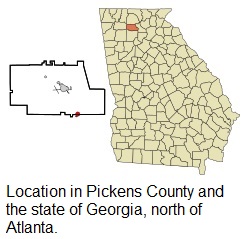
Here’s proof! [There is] this town in Georgia [that] tried to mandate that every home own a gun. …

    Say it Ain’t So! Is this the life that Caribbean people want? It should not be!

Yet, we are losing so many of our people to this eventuality. Our people leave due to “Push and Pull” reasons. “Push” refers to the societal defects in the Caribbean that moves people to want to get way; and “pull” factors refer to the impressions and perceptions that America is better. Surely a mandatory gun culture is not better!

The purpose of this commentary is to relate two strong points of contention:

  • We need to dissuade the high emigration rates of Caribbean citizens to the American homeland.
  • We need to encourage the Caribbean Diaspora to repatriate back to their ancestral homeland.

… Despite all the efforts to change this disposition, America’s consistency with guns continue, even now to the point that some communities want to mandate that every household have a gun. This is not the case in the Caribbean … if only, we can “prosper where planted” there.

Yes, we can!

… underlying the Second Amendment (of the US Constitution) is the white supremacy defect. This ignominious Second Amendment is a product of the previous Slave Culture, as one original motivation in 1791 was to suppress insurrection, allegedly including slave revolts [60][61][62]. A previous blog-commentary entitled 10 Things We Want from the US and 10 Things We Don’t Want from the US detailed this rationale:

  1. The “right to bear arms” has a personal application beyond the country’s entitlement to maintain a militia. This “right” has been interpreted in a manner in which any normal “man” can get possession of guns and other armament. This proliferation of guns in society results in the highest rate of gun violence in the world, even an unconscionable rate of school shootings.The Go Lean roadmap purports that this status has also caused discord – a gross abuse and availability of illegal guns – in bordering communities of Mexico, and Caribbean states of the Bahamas, and the DR. This propels our gun-related crime.

The US still has some societal defects – racism and Crony-Capitalism for example – that are so imbrued that they are tied to the country’s DNA. This is why the Go Lean movement posits that it is easier to effect change at home in the Caribbean, than in the foreign country of the US.

The Bill of Rights sounds so altruistic, but when we break it down, we find that it was perpetuating some of darkest motives of the human experience: like Slavery and the African experience in the New World.

The US Constitution made this possible – how else could a small number of slave masters dominate a large population of slaves on a plantation – it permitted it; normalized it and glorified it. Surely any fruit from such a rotten tree must itself be:

Rotten.

Do you still think that US Constitution and/or Bill of Rights is a masterpiece?

This is the continuation – 2 of 6 – of the November 2019 series from the movement behind the book Go Lean…Caribbean. Each month, we publish a series of teaching commentaries – as a supplement to the 2013 book. This month, we are examining the thesis that we, in the Caribbean, can be Better Than America, in words (law) and in action. As we analyze the American Bill of Rights and the Second Amendment, we realize that any jurisprudence without a motivation to maintain an evil institution like slavery already stands above the flaws of the US Constitution. The Judeo-Christion origins of the US Constitution belies the teachings of its founder – Jesus Christ – who taught that institutions must be built on solid moral foundations. This was clearly absent in the US historicity. The full catalog of this series is detailed as follows:

  1. Better than the Bill of Rights: First Amendment
  2. Better than the Bill of Rights: Second Amendment
  3. Better than the Bill of Rights: Third & Fourth Amendments
  4. Better than the Bill of Rights: Fifth & Sixth Amendments
  5. Better than the Bill of Rights: Seventh & Eighth Amendments
  6. Better than the Bill of Rights: Ninth & Tenth Amendments

As this series refers to the need for a comprehensive roadmap for elevating the societal engines – economics, security and governance – of the 30 Caribbean member-states, we are reminded that we can easily implement common-sense gun-controls and restrict the availability of lethal weapons and our citizens access to them. We can do better than America’s experiences – we do not have the Slavery legacy to protect. We can codify our own Constitutional provisions with better than this faulty language:

A well regulated Militia, being necessary to the security of a free State, the right of the people to keep and bear Arms, shall not be infringed.[93]

To do better than our American counterpart would encompass doing “whatever it takes” to keep our people safe; to monitor and mitigate against any and all perceived threats, foreign or domestic. We need common sense gun regulations. This is the epitome of the Social Contract, “where citizens surrender some of their freedoms and submit to the authority of the State in exchange for protection of remaining natural and legal rights”.

The Go Lean book provides 370 pages of roadmap details on the security and justice mandates to elevate our society; this includes the community ethos (attitudes and values) that we need to adopt, plus the executions of strategies, tactics, implementations and advocacies to better secure the Caribbean homeland. Yes, the roadmap details “how” our region’s reboot can reform and transform the societal engines to provide better protections and gun control. This is the actual title of one advocacy in the Go Lean book. Consider the specific plans, excerpts and headlines here from Page 179, entitled:

10 Ways to Improve Gun Control

1 Lean-in for the Caribbean Single Market
The [CU] treaty allows for the unification of the region into one market of 42 million people across 30 member-states, thereby creating an economic zone to promote and protect the interest of the member-states. In addition, the treaty calls for a collective security pact to ensure homeland security and assuage against systemic threats. The CU will elevate and consolidate the registration, gun-permitting process to regional oversight. The goal is to apply learned-lessons from the US example. For Third World countries, as most of the CU apply, undisciplined gun use affect the Failed-State indicator: Criminalization / De-Legitimization of the State. The CU’s mandate is to manage the image and reality of Failed-States.
2 Background Checks
It’s a best practice to restrain certain aspects of the population access to guns (felons, defendants on bail, targets of restraining orders). This includes gun purchasing and ownership. So the CU Gun Registration regulation (within CariPol) will enforce strict background checks for ALL purchases: retail, wholesale and private-party. This regulation will also be post-reactive in the event a CU resident becomes a subject of legal/police action so as to suspend their gun rights.
3 Ballistics Testing
The CU will extend gun registration/regulation beyond our American neighbors. To facilitate subsequent investigation of gun crimes, every registered gun must complete ballistic tests and the results must be on (computer) file at CariPol.
4 Mental Illness Data
It is a public safety best practice to restrict gun ownership to anyone with documented mental illness. Again, the CU will extend the regulation beyond the American model and include mental health treatments and psychotropic prescriptions.
5 Intelligence Gathering and Big Data Analysis
6 United States (FBI / ATF) Coordination
7 Private Security Bodyguards
8 Private First Responders / Bounty Hunters
9 Gun Buybacks
The CU will maintain a constant program for anonymous gun “buybacks”. These endeavors will be funded with CU funds and coordinated with not-for-profit foundations. The acquired guns will all be registered, for serial numbers and ballistic testing results, and then destroyed; unless needed for legal prosecutions.
10 Public Relations / Anti-Bullying Campaign

There have been a number of blog-commentaries by the Go Lean movement that highlighted the eco-system of common sense gun control and regulations; see a sample list here:

https://goleancaribbean.com/blog/?p=15658 Sad: Caribbean Diaspora Tragedy with the American Gun Culture
https://goleancaribbean.com/blog/?p=14556 Observing the Change … with Guns
https://goleancaribbean.com/blog/?p=14114 School Shootings ‘R’ Us – 11 in 23 Days
https://goleancaribbean.com/blog/?p=13213 ‘Pulled’ – Despite American Guns
https://goleancaribbean.com/blog/?p=13126 “Must Love Dogs”  – Providing K9 Solutions for Better Gun Security
https://goleancaribbean.com/blog/?p=12400 Accede the Caribbean Arrest Treaty
https://goleancaribbean.com/blog/?p=11332 Boston Bombing Anniversary – Learning Lessons
https://goleancaribbean.com/blog/?p=9072 Model: Shots-Fired Monitoring – Securing the Homeland

Many Caribbean people have fled their homeland seeking refuge in the “Land of the Free and Home of the Brave”; some of them have lost their life as a tragic consequence.

This reasoning is why the Go Lean movement have repeatedly urged Caribbean people to Stay Home and/or Return Home. Our motivation is logical, practical and methodical; (also see Appendix VIDEO below as it relates the currency of “Guns and Race” in America still):

We can more effectively effect change here in the homeland, than trying to reform or transform a foreign destination … that was specifically designed for the suppression of Black-and-Brown people.

Yes, we can be Better Than America by building up our Caribbean homeland. It is conceivable, believable and achievable that we can make our homeland a better place to live, work and play. 🙂

About the Book
The book Go Lean…Caribbean serves as a roadmap for the introduction and implementation of the technocratic Caribbean Union Trade Federation (CU), for the elevation of Caribbean society – for all member-states. This CU/Go Lean roadmap has these 3 prime directives:

  • Optimization of the economic engines in order to grow the regional economy to $800 Billion & create 2.2 million new jobs.
  • Establishment of a security apparatus to ensure public safety and protect the resultant economic engines.
  • Improve Caribbean governance to support these engines, including a separation-of-powers between the member-states and CU federal agencies.

The Go Lean book provides 370-pages of turn-by-turn instructions on “how” to adopt new community ethos, plus the strategies, tactics, implementations and advocacies to execute so as to reboot, reform and transform the societal engines of Caribbean society.

Download the free e-Book of Go Lean … Caribbean – now!

Who We Are
The movement behind the Go Lean book – a non-partisan, apolitical, religiously-neutral Community Development Foundation chartered for the purpose of empowering and re-booting economic engines – stresses that reforming and transforming the Caribbean societal engines must be a regional pursuit. This was an early motivation for the roadmap, as pronounced in the opening Declaration of Interdependence (Pages 12 – 13):

xi. Whereas all men are entitled to the benefits of good governance in a free society, “new guards” must be enacted to dissuade the emergence of incompetence, corruption, nepotism and cronyism at the peril of the people’s best interest. The Federation must guarantee the executions of a social contract between government and the governed.

xvi. Whereas security of our homeland is inextricably linked to prosperity of the homeland, the economic and security interest of the region needs to be aligned under the same governance. Since economic crimes … can imperil the functioning of the wheels of commerce for all the citizenry, the accedence of this Federation must equip the security apparatus with the tools and techniques for predictive and proactive interdictions.

xxiv. Whereas a free market economy can be induced and spurred for continuous progress, the Federation must install the controls to better manage aspects of the economy: jobs, inflation, savings rate, investments and other economic principles. Thereby attracting direct foreign investment because of the stability and vibrancy of our economy.

Sign the petition to lean-in for this roadmap for the Caribbean Union Trade Federation. 

—————–

APPENDIX VIDEO – Reassessing the Same Old Debate on Gun Control: The Daily Show – https://youtu.be/U0UUrMmoPME

The Daily Show with Trevor Noah
Published on Oct 9, 2017 – In the aftermath of a mass shooting in Las Vegas, Neal Brennan explains why the debate over gun control in the U.S. needs to change.

The Daily Show with Trevor Noah airs weeknights at 11/10c on Comedy Central.

  • Category: Comedy
  • License: Standard YouTube License
Share this post:
, ,
[Top]

Better Than … the ‘Bill of Rights’ – We can do better!

Go Lean Commentary

What makes America better?
Our freedom …
… our Constitution is a masterpiece;
… but other countries have freedom too. – Dialogue from TV Show Newsroom (See Appendix VIDEO below).

Many people still believe that America is the “greatest” because of its Constitution. It is time now to break-down this BIG FAT LIE of a thesis and then ascertain the truth. Remember this assertion:

When I was a boy, heaven was up here – [pointing in a gesture] – and America was here [only a little lower in the gesturing]. – See previous Go Lean blog-commentary with this portrayal.

Is America just a product of good advertising or is there any truth to this “masterpiece” assessment of the Constitution?

Firstly, that “masterpiece” Constitution was ratified in 1789 and then immediately engaged in an Amendment process to add-more and make it better. There was the pronounced need to ensure protection against any emergence of tyranny by the new government. These protections were codified in the First 10 Amendments, better known as the Bill of Rights; this is the feature that valued the new Constitution as a masterpiece.

Let’s examine these closer …

American History presents the case of an overarching need to rebel against the tyranny of imperial power. This was the motivation for the country’s Founding Fathers and the originators of the American Declaration of Independence in 1776. That document codified this motivation with these words:

We hold these truths to be self-evident, that all men are created equal, that they are endowed by their Creator with certain unalienable rights, that among these are life, liberty and the pursuit of happiness; that to secure these rights, governments are instituted among men, deriving their just powers from the consent of the governed. That whenever any form of government becomes destructive to these ends, it is the right of the people to alter or to abolish it, and to institute new government, laying its foundation on such principles and organizing its powers in such form, as to them shall seem most likely to effect their safety and happiness. Prudence, indeed, will dictate that governments long established should not be changed for light and transient causes; and accordingly all experience hath shown that mankind are more disposed to suffer, while evils are sufferable, than to right themselves by abolishing the forms to which they are accustomed. But when a long train of abuses and usurpations, pursuing invariably the same object evinces a design to reduce them under absolute despotism, it is their right, it is their duty, to throw off such government, and to provide new guards for their future security.

Why is this American Constitutional History important from a Caribbean perspective?

Today we have to compete with America, but now they are economic tyrants due to their size, strength and wealth; they are “eating our lunch”. We have a critical brain drain problem in which we lose so many of our citizens, who have abandoned their homelands … for American shores. When they do this and naturalize as American citizens, they are required to take an oath and vow to defend this same Constitution; with these sentiments:

… that I will support and defend the Constitution and laws of the United States of America against all enemies, foreign and domestic; that I will bear true faith and allegiance to the same;

Let’s keep it real! Those in the Caribbean, where 29-of-the-30 member-states reflect a Majority Black-and-Brown ethnic reality, that 1789 Constitution allowed you to be enslaved and only valued you at 3/5th the value of a man. So perhaps that Constitution needs to be “taken down a notch” in its glorification. (Note: the 13th Amendment abolished slavery, but after nearly 100 years later in 1865).

The effort in this commentary is part of the quest to make the Caribbean a better place to live, work and play, even Better Than America. Therefore, we too need a masterpiece quality in our laws and statues. How do we compare? How should we compare? In addition, with our effort to appoint New Guard for our regional governance, how can we apply the lessons from America’s Constitutional History?

Here’s the encyclopedic reference to those Bill of Rights … that supposedly made the US Constitution such a masterpiece:

Reference: United States Bill of Rights
The United States Bill of Rights comprises the first ten amendments to the United States Constitution. Proposed following the often bitter 1787–88 debate over the ratification of the Constitution, and written to address the objections raised by Anti-Federalists, the Bill of Rights amendments add to the Constitution specific guarantees of personal freedoms and rights, clear limitations on the government’s power in judicial and other proceedings, and explicit declarations that all powers not specifically granted to the U.S. Congress by the Constitution are reserved for the states or the people. The concepts codified in these amendments are built upon those found in earlier documents, especially the Virginia Declaration of Rights (1776), as well as the English Bill of Rights (1689) and the Magna Carta (1215).[1]
The Supreme Court … concluded … that the founders intended the Bill of Rights to put some rights out of reach from majorities, ensuring that some liberties would endure beyond political majorities.[88][89][90][91]

  • First Amendment – Freedom of speech, or of the press; or the right of the people peaceably to assemble/petition
  • Second Amendment – The right of the people to keep and bear Arms
  • Third Amendment – Restricting the quartering of soldiers in a private house
  • Fourth Amendment – Restrictions against unreasonable searches and seizures
  • Fifth Amendment – Protects against double jeopardy and self-incrimination and guarantees the rights to due process, grand jury screening of criminal indictments, and compensation for the seizure of private property under eminent domain.
  • Sixth Amendment – Grants the right to a speedy and public trial, by an impartial jury in the jurisdiction where the crime have been committed.
  • Seventh Amendment – Guarantees jury trials in federal civil cases
  • Eighth Amendment – Restricts against excessive bail and cruel-and-unusual punishments
  • Ninth Amendment – Reserves the privilege that “other” rights not enumerated in the Constitution are retained by the people
  • Tenth Amendment – Reinforces that powers not delegated to the Federal Government as being reserved to the States or the people.

Source: Retrieved November 21, 2019 from: https://en.wikipedia.org/wiki/United_States_Bill_of_Rights

For the new Caribbean, we want to compete better with America. We do not want “them eating our lunch”; we want to appeal to our people that they can better succeed in their quest for life, liberty and the pursuit of happiness right here at home.

Yes, we can “prosper where we are planted”. However, this quest must be more than just a vision (dream); we must have the legal structure to ensure societal success. We must conceive, believe and achieve!

This is the charter and the roadmap for the movement behind the book Go Lean…Caribbean. Every month, we publish a series of teaching commentaries – as a supplement to the 2013 book; for November 2019, we are presenting the thesis that we can be Better Than America, in words (law) and in action. We are presenting this thesis by analyzing the American Bill of Rights and how our proposed treaty – to confederate a new Caribbean regional administration – is founded on even better principles than  theirs.  The full catalog of this series is detailed as follows:

  1. Better than the Bill of Rights: First Amendment – We can do better
  2. Better than the Bill of Rights: Second Amendment – No slavery legacy
  3. Better than the Bill of Rights: Third  & Fourth Amendments
  4. Better than the Bill of Rights: Fifth & Sixth Amendments
  5. Better than the Bill of Rights: Seventh & Eighth Amendments
  6. Better than the Bill of Rights: Ninth & Tenth Amendments

In this series, a reference is made to the need for a comprehensive roadmap for elevating the societal engines of the 30 Caribbean member-states for the Greater Good. We need to ensure that governmental institutions never abuse Human Rights or become tyrannical in their execution of the implied Social Contract (where citizens surrender some of their freedoms and submit to the authority of the State in exchange for protection of remaining natural and legal rights).

When Human Rights are abused,  we fail to guarantee “justice for all”, and our people seize upon the opportunity to leave, and then our critical plight of societal abandonment worsens even more. people seek refuge on foreign shores, like America. So the need to optimize our governance and justice institutions is ever-present; and it transcends borders, politics, class, language and race. It is a Human Right for people to feel justified to pursue justice – even heightened as a religious devotion – for themselves and for their children.

This need for justice, free of tyranny, have been elaborated upon in many previous Go Lean commentaries; consider this sample here:

https://goleancaribbean.com/blog/?p=18321 Unequal Justice – A series on the Tyranny of American Sheriffs
https://goleancaribbean.com/blog/?p=18100 Cop-on-Black Shootings in America’s DNA
https://goleancaribbean.com/blog/?p=17667 Is the US a ‘Just’ Society? Hardly!
https://goleancaribbean.com/blog/?p=14413 Repairing the Breach: ‘Hurt People Hurt People’
https://goleancaribbean.com/blog/?p=13476 Future Focused – Policing the Police
https://goleancaribbean.com/blog/?p=10222 Waging a Successful War on ‘Terrorism’ and Bullying
https://goleancaribbean.com/blog/?p=5238 Prisoners for Profit – Abuses in the Prison Industrial Complex
https://goleancaribbean.com/blog/?p=5304 Mitigating the Eventual ‘Abuse of Power’

The First Amendment was also first in importance; it stressed freedom of speech and free flow of knowledge. This freedom was presented as a mitigation to ignorance, orthodoxy and dogma – which many times stemmed from religious practices.  The American experience, therefore, called for a Separation of Church and State so as to not elevate one group of religious practitioners over another group. The thinking – derived from the European Enlightenment movement – assessed that religious orthodoxy had a dysfunctional past. The Enlightened strategy was to divest all religions from State Power, therefore de-clawing the fangs that had tyrannized previous societies. During those Bad Old Days, the religious tyranny was so unjust that historians dubbed European civilization as in the Dark Ages. The mitigation from the Enlightened Movements brought a new progression in liberalism.

The First Amendment was designed to continue that progression in American society.

This is also the design for the Go Lean roadmap.

The Caribbean member-states need progress and more liberalism. The imperial forces that tyrannized American society also afflicted the history of the Caribbean but we never rebelled; no revolutionary change; only evolutionary change. There is therefore the need to weed out many of the bad practices of our orthodox society. This quest – battling against orthodoxy – aligns with many previous Go Lean commentaries; see a sample list here:

https://goleancaribbean.com/blog/?p=17915 What Went Wrong – We never had our War
https://goleancaribbean.com/blog/?p=18421 Introducing Formal Reconciliations to now ‘Refuse to Lose’
https://goleancaribbean.com/blog/?p=16534 European Reckoning – Christianity’s Indictment
https://goleancaribbean.com/blog/?p=13579 Colonialism’s Bloody History Revisited
https://goleancaribbean.com/blog/?p=11812 State of Caribbean Union: Hope and Change from Orthodoxy
https://goleancaribbean.com/blog/?p=10532 Learning from Stereotypes – Good and Bad
https://goleancaribbean.com/blog/?p=10216 Waging a Successful War on Orthodoxy
https://goleancaribbean.com/blog/?p=9595 Vision and Values for a ‘New’ Caribbean

The Go Lean book provides 370-pages of turn-by-turn instructions on “how” to adopt new community ethos, plus the strategies, tactics, implementations and advocacies to execute so as to reboot, reform and transform the societal engines of Caribbean society, for better protection of Human Rights. One advocacy provides lessons that we learn by considering history of the US Constitution. See excerpts and headlines from this advocacy from Page 145 entitled:

10 Lessons from the US Constitution

1 Lean-in for the Caribbean Single Market & Economy initiative: Caribbean Union Trade Federation (CU).
This treaty calls for the unification of the region into a single market, thereby expanding to an economy of 30 member-states and 42 million people. The mission of the CU is to provide economic empowerment, homeland security and emergency management (disaster recovery). The CU is a neo-governmental entity, modeled after the European Union (EU). The EU attempted to codify a Constitution, though not ratified by the national legislatures of France and the Netherlands. So the EU Parliament accomplished the same objectives by amending the original treaties with the provisions from the proposed Constitution. The lesson is that the legal protections must be codified in the CU Treaty.
2 Articles of Confederation
The 1789 US Constitution was preceded by the Articles of Confederation and Perpetual Union, an agreement among the 13founding states that established the United States of America as a confederation of sovereign states and served as its first constitution. Its drafting by the Continental Congress began in mid-1776, and an approved version was sent to the states for ratification in late 1777. The formal ratification by all 13 states was completed in early 1781. Even when not yet ratified, the Articles provided domestic and international legitimacy for the Continental Congress to direct the American Revolutionary War, conduct diplomacy with Europe and deal with territorial issues and Indian relations. Nevertheless, the weak government created by the Articles became a matter of concern for key Nationalists. On March 4, 1789, the Articles were replaced with the new US Constitution. This new Constitution provided for a much stronger national government with a chief executive (the President), courts, and taxing powers.
3 Amendments – Living Document
The US Constitution can be changed through the amendment process. Constitutional amendments are added to it, altering its effect. Changing the “fundamental law” is a two-part process: amendments are proposed then they must be ratified by the states. The Constitution has been amended 17 additional times (for a total of 27 amendments).
4 Bill of Rights – Immediately Proposed
The first ten amendments, ratified by 3/4 of the states in 1791, are known as the Bill of Rights. These 10 Amendments, limitations to protect the natural rights of liberty/property, were proposed almost immediately after the Constitution was ratified (adopted by the First Congress in August 21, 1789), recognizing an important fact that the public (average man) may have to be gradually conditioned to acknowledge and accept the rights of other people in a progressive society.
5 Values -vs- Verbiage
The US Constitution was written, followed by its amendments, to use broad language – a model for the CU – so that the principles primarily can be applied in statues for everyday laws. This indicates that constitutions should be strategic, depicting the values and vision of a society, while the legislative products (statues) should be tactical and specific.
6 US Court Interpretations ==> Model for CU
7 Ratifying – High Burden
8 Repeal and Secession
9 Slavery!
10 International Treaties

The Caribbean must foster a better society that mitigates the tyranny of religious orthodoxy. We can benefit from the American example of how they weeded out uncanny religious influences; they made a constitutional provision – First Amendment to the United States Constitution – that separated religious influences from federal governance (and later adopted for state governments):

Congress shall make no law respecting an establishment of religion, or prohibiting the free exercise thereof; or abridging the freedom of speech, or of the press; or the right of the people peaceably to assemble, and to petition the Government for a redress of grievances.[93]

The Go Lean roadmap calls for Freedom of Religion,  Freedom of Press and Freedom of Assembly, but we can do better than the American experience:

  • Freedom of Religion – Despite the 1789 start, America didn’t show respect for the “non-Christian” faiths of its indigenous people until the 1960’s. The Go Lean roadmap calls for respect of all people in all 30 member-states and respect for all of their religious devotions: Christians, Muslims, Hindus, and others including Indigenous or Animists.
  • Freedom of Press – Fake News is a modern pang of distress; the Social Contract must allow for a quest for truth and protection against erroneous information. We can do better!.
  • Freedom of Assembly – The actuality of Self-Governing Entities may allow for a declaration of Private Property. This would differ from the American standard in that economic interest can be shielded from demanding local governance.

We hereby urge all Caribbean stakeholders – governments and citizens – to lean-in to this comprehensive Go Lean roadmap to elevate Caribbean society. Our Caribbean can be even better than America as a better place to live, work and play. 🙂

About the Book
The book Go Lean…Caribbean serves as a roadmap for the introduction and implementation of the technocratic Caribbean Union Trade Federation (CU), for the elevation of Caribbean society – for all member-states. This CU/Go Lean roadmap has these 3 prime directives:

  • Optimization of the economic engines in order to grow the regional economy to $800 Billion & create 2.2 million new jobs.
  • Establishment of a security apparatus to ensure public safety and protect the resultant economic engines.
  • Improve Caribbean governance to support these engines, including a separation-of-powers between the member-states and CU federal agencies.

The Go Lean book provides 370-pages of turn-by-turn instructions on “how” to adopt new community ethos, plus the strategies, tactics, implementations and advocacies to execute so as to reboot, reform and transform the societal engines of Caribbean society.

Download the free e-Book of Go Lean … Caribbean – now!

Who We Are
The movement behind the Go Lean book – a non-partisan, apolitical, religiously-neutral Community Development Foundation chartered for the purpose of empowering and re-booting economic engines – stresses that reforming and transforming the Caribbean societal engines must be a regional pursuit. This was an early motivation for the roadmap, as pronounced in the opening Declaration of Interdependence (Pages 12 – 14):

xi. Whereas all men are entitled to the benefits of good governance in a free society, “new guards” must be enacted to dissuade the emergence of incompetence, corruption, nepotism and cronyism at the peril of the people’s best interest. The Federation must guarantee the executions of a social contract between government and the governed.

xvi. Whereas security of our homeland is inextricably linked to prosperity of the homeland, the economic and security interest of the region needs to be aligned under the same governance. Since economic crimes … can imperil the functioning of the wheels of commerce for all the citizenry, the accedence of this Federation must equip the security apparatus with the tools and techniques for predictive and proactive interdictions.

xxiv. Whereas a free market economy can be induced and spurred for continuous progress, the Federation must install the controls to better manage aspects of the economy: jobs, inflation, savings rate, investments and other economic principles. Thereby attracting direct foreign investment because of the stability and vibrancy of our economy.

xxxiii. Whereas lessons can be learned and applied from the study of the recent history of other societies, the Federation must formalize statutes and organizational dimensions to avoid the pitfalls of [failed communities] … . On the other hand, the Federation must also implement the good examples learned from developments like … the tenants of the US Constitution.

Sign the petition to lean-in for this roadmap for the Caribbean Union Trade Federation.

—————-

Appendix VIDEO – The Newsroom – America is not the greatest country in the world anymore…(Restricted language)  – https://youtu.be/wTjMqda19wk

Published on Jul 21, 2012 – Will McAvoy (Jeff Daniels) hits the nail straight on the head in the opening minutes on HBO’s new series ‘The Newsroom’. He is asked by a college student a simple question during a campus debate. ‘What makes America the greatest country in the world?’. Daniels initially goes the politically correct route then at the last minute goes with a honest, bold, straight forward answer that sums up a lot of the world’s problems that so many are afraid to accept because we all want to believe in our system and that it is our system that works. The evidence that is out there today is to the contrary and he discloses such information in his argument. We used to be the world’s best of the best and now we are just pretending. The first step to solving a problem is to admit there is one.

Share this post:
, , ,
[Top]

What Went Wrong? ‘We’ never had our war!

Go Lean Commentary

War … what is it good for?
Absolutely nothing! – Song: Edwin Starr – Motown 1969; see Appendix below.

Well, not so fast.

This started just as a “catch phrase”, but now it has emerged as a fact in Economic History:

A crisis is a terrible thing to waste.

So what is war good for? Providing a crisis that can be exploited to reform and transform society.

That’s it; wrap it up; we can now summarize so many changes in world history as they manifested as a result of war. Consider these examples:

War Conflict Take-a-way
Napoleonic Wars | 1803 – 1815
Spanish New World assumed independence from Spain. This was true in North America (Mexico), Central America and South America. But the Caribbean territories did not abdicate from “Mama Espana” at that time.
Latin America Independence
American Civil War | 1860 – 1865
The New World was premised on Slavery, exploiting the African race as a free labor source in all the Americas. This abhorrent institution would have definitely ended, one way or another. “The arc of history leans towards justice”. After the US Civil War – 625,000 dead White Men – no other wars were necessary in the New World; all Euro-influenced governments whittled slavery into extinction, one way or another.
Abolition & Emancipation
Great War / World War I 1914 – 1919
This war addressed the boiling point of class-ism in Europe – the Haves versus the Have-Nots – the Nobility System (Dukes, Counts, Bourgeoisie, etc.) did not survive the reconciliation that led to the cessation of conflicts. Communism emerged as a manifestation of the demand for equality.
Gender Equality; Worker Rights; Egalitarianism
World War II / Cold War | 1939 – 1955
This war was a sequel to WW I; whatever remaining issues that were deferred in the WW I reconciliations were pushed forward for reckoning; think: Colonialism (in Africa, Asia and the Americas), Racial Supremacy, Human Rights assurances.
Human Rights; Decolonization; Majority Rule / Universal Suffrage
End of Cold War | 1991 – 2016
The return to Nationalism in Europe did not provide governing solutions or the needed multi-racial reconciliations. That bill came due, as demonstrated with the Balkans Conflict (Bosnia, Serbia, etc.). A Migrant Crisis emerged for all States that refused to transform: think Middle East Islamic Fundamentalism, Sovereign Debt Crisis (Greece, etc.), and Brexit.
Economic Liberalization; Free Trade; Free Movement

In no shape or form are we rationalizing, justifying or excusing war. But, it is what it is!

Where there is conflict – blood on the streets – people tend to finally be motivated to remediate and mitigate the risks and threats for the conflict to ever rekindle. So this premise is true:

It is only at the precipice that people change.

This is why we can declare with such confidence that one of the things that went wrong in the Caribbean, is “we never had our war“. From the foregoing examples, all the reform and transformation that took place from these crises, did NOT benefit the Caribbean as we had “No War” here. (The Cuban Revolution ushered in Communism, but all the stewards of the Cuban people – culture, politics and commerce – simply fled; they left the island to the rebels, so the needed reform on societal values never took place – Cuba is still in “Freeze-Frame” from 1959).

This commentary continues the July series from the movement behind the book Go Lean…Caribbean. This submission, 2-of-6 on the theme “What Went Wrong?” focuses on Caribbean history and why we still have many of the same defects that other societies – think North America and Europe yes, but even India and China – have already remediated. The full catalog:

  1. What Went Wrong? Asking ‘Why’ is Important
  2. What Went Wrong? ‘We’ never had our war!
  3. What Went Wrong? ‘7 to 1’ – Caribbean ‘Less Than’
  4. What Went Wrong? ‘Be our Guest’ – The Rules of Hospitality
  5. What Went Wrong? Failing the Lessons from Infrastructure 101
  6. What Went Wrong? Losing the Best; Nation-building with the Rest

In this series, reference is made to the need for a comprehensive roadmap for elevating the societal engines of the Caribbean member-states. We do not want war! But we want to make the progress that is possible when society reforms and transforms. And we want to do this without a war. The movement behind the Go Lean book asserts that this progress is possible. See how this theme was developed in many previous Go Lean commentaries; see a sample list here:

https://goleancaribbean.com/blog/?p=16477 Transforming Hindus versus Women – What it means for us?
https://goleancaribbean.com/blog/?p=15580 The Cause of Caribbean Disunity: Religion’s Role – False Friend
https://goleancaribbean.com/blog/?p=14633 Despite Embedded ‘Bad Nature’, Women Have Nurtured Change
https://goleancaribbean.com/blog/?p=14378 Legislating Morality – Yes, We Can
https://goleancaribbean.com/blog/?p=13063 Gender Equity without a ‘Battle of the Sexes’
https://goleancaribbean.com/blog/?p=13882 Managing ‘Change’ in California – Calm and Smooth Evolutions
https://goleancaribbean.com/blog/?p=5695 Repenting, Forgiving and Reconciling the Past
https://goleancaribbean.com/blog/?p=3090 Learning from Modern Europe – Evolution without Revolution

Most of the Caribbean profess the religious affiliation with Christianity. The Founder of the Church, Jesus Christ, taught his followers an important lesson about manifestation versus faith. See here relating the story of Doubting Thomas:

doubting Thomas is a skeptic who refuses to believe without direct personal experience—a reference to the Apostle Thomas, who refused to believe that the resurrected Jesus had appeared to the ten other apostles, until he could see and feel the wounds received by Jesus on the torture stake.

The Holy Scriptures relates, from the Gospel account of John 20: 24 – 29 NWT:

24  But Thomas,+ one of the Twelve, who was called the Twin, was not with them when Jesus came. 25  So the other disciples were telling him: “We have seen the Lord!” But he said to them: “Unless I see in his hands the print* of the nails and stick my finger into the print of the nails and stick my hand into his side,+ I will never believe it.”
26  Well, eight days later his disciples were again indoors, and [this time] Thomas was with them. Jesus came, although the doors were locked, and he stood in their midst and said: “May you have peace.”+ 27  Next he said to Thomas: “Put your finger here, and see my hands, and take your hand and stick it into my side, and stop doubting* but believe.” 28  In answer Thomas said to him: “My Lord and my God!” 29  Jesus said to him: “Because you have seen me, have you believed? Happy are those who have not seen and yet believe.”

Happy are those who have not seen and yet believe. While it is only at the precipice that people change, how much better it would be for Caribbean society to change (reform and transform) without being at the precipice, without enduring the pangs of war. It is the assertion here that despite the heavy-lifting, “we” can succeed in optimizing Caribbean society … without war.

Is this possible? Can we reboot our society? Can we ‘weed out’ the bad ethos – i.e. rent-seeking and domestic violence – in our communities and adopt new more positive ethos? Can we implement the strategies and tactics we need to optimize our society, without first going to the brink of self-destruction?

Yes, we can!

This is the urging of the book Go Lean…Caribbean and the resultant roadmap. We hereby urge all Caribbean stakeholders to lean-in to this roadmap. Let’s get busy and go to work. This roadmap is conceivable, believe and achievable. We can make our homeland a better place to live, work and play. 🙂

About the Book
The book Go Lean…Caribbean serves as a roadmap for the introduction and implementation of the technocratic Caribbean Union Trade Federation (CU), for the elevation of Caribbean society – for all member-states. This CU/Go Lean roadmap has these 3 prime directives:

  • Optimization of the economic engines in order to grow the regional economy to $800 Billion and create 2.2 million new jobs.
  • Establishment of a security apparatus to ensure public safety and protect the resultant economic engines.
  • Improve Caribbean governance to support these engines, including a separation-of-powers between the member-states and CU federal agencies.

The Go Lean book provides 370-pages of turn-by-turn instructions on “how” to adopt new community ethos, plus the strategies, tactics, implementations and advocacies to execute so as to reboot, reform and transform the societal engines of Caribbean society.

Download the free e-Book of Go Lean … Caribbean – now!

Who We Are
The movement behind the Go Lean book – a non-partisan, apolitical, religiously-neutral Community Development Foundation chartered for the purpose of empowering and re-booting economic engines – stresses that reforming and transforming the Caribbean societal engines must be a regional pursuit. This was an early motivation for the roadmap, as pronounced in the opening Declaration of Interdependence (Pages 12 – 13):

xi. Whereas all men are entitled to the benefits of good governance in a free society, “new guards” must be enacted to dissuade the emergence of incompetence, corruption, nepotism and cronyism at the peril of the people’s best interest. The Federation must guarantee the executions of a social contract between government and the governed.

xvi. Whereas security of our homeland is inextricably linked to prosperity of the homeland, the economic and security interest of the region needs to be aligned under the same governance. Since economic crimes … can imperil the functioning of the wheels of commerce for all the citizenry, the accedence of this Federation must equip the security apparatus with the tools and techniques for predictive and proactive interdictions.

xxiv. Whereas a free market economy can be induced and spurred for continuous progress, the Federation must install the controls to better manage aspects of the economy: jobs, inflation, savings rate, investments and other economic principles. Thereby attracting direct foreign investment because of the stability and vibrancy of our economy.

Sign the petition to lean-in for this roadmap for the Caribbean Union Trade Federation.

————-

Appendix VIDEO – Edwin Starr – War (What is it good for) – https://youtu.be/ztZI2aLQ9Sw

Matze 1987
Published on Aug 4, 2011 – Edwin Star – War

Lyrics:
War…huh…yeah
What is it good for?
Absolutely nothing
Uh ha haa ha
War…huh…yeah
What is it good for?
Absolutley nothing…say it again y’all
War..huh…look out…
What is it good for?
Absolutely nothing…listen to me ohhhhh

WAR! I despise, ‘cos it means destruction of innocent lives,
War means tears to thousands of mother’s eyes,
When their sons gone to fight and lose their lives.

I said WAR!…huh…good God y’all,
What is it good for?
Absolutely nothing…say it again
War! Huh…What is it good for
Absolutely nothing…listen to me

WAR! It ain’t nothing but a heartbreaker,
War. Friend only to the undertaker. Ohhh!
War is an enemy to all mankind,
The thought of war blows my mind.
War has caused unrest within the younger generation
Induction then destruction…who wants to die? Ohhh

WAR! good God y’all huh
What is it good for?
Absolutely nothing…say it say it SAY IT!
WAR!…uh huh yeah huh
What is it good for?
Absolutely nothing…listen to me

WAR! It ain’t nothing but a heartbreaker,
War! It’s got one friend that’s the undertaker.
Ohhhh! War has shattered many a young man’s dream,
Made him disabled, bitter and mean,
Life is much too short and precious to spend fighting wars these days.
War can’t give life, it can only take it away!

Ohhh WAR! huh…good God y’all What is it good for?
Absolutely nothing…say it again War!…huh…woh oh oh Lord
What is it good for? Absolutely nothing…listen to me

War! It ain’t nothing but a heartbreaker,
War. Friend only to the undertaker…woo
Peace lovin’ understand then tell me,
Is there no place for them today?
They say we must fight to keep our freedom,
But Lord knows there’s got to be a better way.

Ohhhhhhh WAR! huh…good God y’all…
What is it good for?…you tell me!
Say it say it say it saaaay it!
War! good God now…huh
What is it good for?
Stand up and shout it…NOTHING

Music in this video – Listen ad-free with YouTube Premium

  • Song: War
  • Artist: Edwin Starr
  • Album: Can You Dig It? The 70’s Soul Experience
  • Licensed to YouTube by: UMG (on behalf of Rhino); UMPI, AMRA, CMRRA, Sony ATV Publishing, UNIAO BRASILEIRA DE EDITORAS DE MUSICA – UBEM, SOLAR Music Rights Management, LatinAutor – SonyATV, LatinAutor, EMI Music Publishing, UMPG Publishing, Kobalt Music Publishing, and 13 Music Rights Societies
Share this post:
, ,
[Top]

Moonshots! Here We Go Again

Go Lean Commentary

Yes, this is a thing; “Moonshots” that is. This is defined as follows:


A moonshot, in a technology context, is an ambitious, exploratory and ground-breaking project undertaken without any expectation of near-term profitability or benefit and also, perhaps, without a full investigation of potential risks and benefits.

Google has adopted the term moonshot for its most innovative projects, many of which come out of the Google X, the company’s semi-secret lab. Google moonshots include Google Glass, Project Loon (a balloon-based Internet service project), the driverless car, augmented reality glasses, a neural network, robots for the manufacturing industry and Project Calico, a life extension project.

Here’s Google’s definition of a moonshot:

A project or proposal that:

  1. Addresses a huge problem
  2. Proposes a radical solution
  3. Uses breakthrough technology

The term “moonshot” derives from the Apollo 11 spaceflight project, which landed the first human on the moon in [July] 1969. “Moonshot” may also reference the earlier phrase “shoot for the moon” meaning aim for a lofty target.
Source: Retrieved July 17, 2019 from: https://whatis.techtarget.com/definition/moonshot

See this related VIDEO’s about “Moonshot thinking” in the Appendices below.

It is appropriate to discuss Moonshots this week; this is the 50th anniversary of the Apollo 11 blast-off and journey to the moon – July 16 to 20 – when the first man – Neil Armstrong – walked on the surface of that extra-terrestrial body. See VIDEO of a newscast from Miami, Florida here:

50th Anniversary Of Apollo 11’s Blast Off From Florida On Mission To The Moon

VIDEO – CBS4 July 16, 2019 5:15 Newscasthttps://cbsloc.al/2lHIAwK

CAPE CANAVERAL (CBS4/CNN/AP) – On July 16th, fifty years ago, the Apollo 11 astronauts launched from the Kennedy Space Center on a historic mission to become the first people in history to walk on the moon.

The effort to pursue this Moonshot did not start that week (50 years ago); no, this was only when the quest was finally fulfilled. That quest began 8 years earlier, as envisioned by then-President John F. Kennedy at a speech in 1961. This historical event – and a lesson learned – is provided in the 2013 book Go Lean … Caribbean on Page 127 where this excerpt is detailed:

The Bottom Line on Kennedy’s Quest for the Moon
On 25 May 1961, US President John F. Kennedy announced his support for the American Space program’s “Apollo” missions and redefined the ultimate goal of the Space Race in an address to a special joint session of Congress: “I believe that this nation should commit itself to achieving the goal, before this decade is out, of landing a man on the moon and returning him safely to the earth”. His justification for the Moon Race was both that it was vital to national security and that it would focus the nation’s energies in other scientific and social fields. This quest was succeeded. At 10:56 pm EDT, on 20 July 1969, the first human (American Astronaut Neil Armstrong) ventured out of the Apollo 11 landing craft and set foot on the Moon declaring: “one small step for man, one giant leap for mankind“.

The Caribbean – regionally and the 30 member-states individually – need its own Moonshot collectively. The Go Lean book asserts that these highlights and headlines, entitled “10 Big Ideas … in the Caribbean Region” (Page 127), must be pursued as a regional “Moonshot”:

1 Lean-in for the Caribbean Single Market & Economy Initiative: Caribbean Union Trade Federation (CU).
2 Currency Union / Single Currency – Introducing the Caribbean Dollar (C$)
3 Defense / Homeland Security Pact – To provide anti-crime, anti-terrorism, emergency & disaster management
4 Confederation Without Sovereignty – No need for full independence of member-states
5 Four Languages in Unison – Dutch, English, French & Spanish
6 Self-Governing Entities (SGE) – These centers of Economic Activities will be primary job creators
7 Virtual “Turnpike” Operations – Transit options to interconnect all lands like blood vessels in an organ
8 Cyber Caribbean – Internet Communications Technology can be a great equalizer
9 e-Learning – Versus – Studying Abroad – The status quo have resulted in a “brain drain” – time for a change
10 Cuba & Haiti – There are Marshall Plans that consider the reality of these states and the strategies to reform them

This theme – modeling the nationwide commitment to pursue a grandiose accomplishment – aligns with many previous Go Lean commentaries; see a sample list here:

https://goleancaribbean.com/blog/?p=10513 Transforming ‘Money’ Countrywide
India launched a massive project to provide a digital identity to 1.1 billion people. Then they provided a pseudo-bank account for everyone and disbursed governments benefits there, followed by an e-Money product for each citizen to facilitate transfers & payments.
https://goleancaribbean.com/blog/?p=6563 Lessons from Iceland – Model of Recovery
While at the precipice of economic disaster, this country deviated from the easy path and did the heavy lifting to reform and transform their economy. While not popular by foreign watchers, it worked; they now enjoy far greater success than their peer countries. Good job!
https://goleancaribbean.com/blog/?p=2480 A Lesson in History – Community Ethos of WW II
The real history of the US during World War II was that the entire country postponed immediate gratification, endured hard sacrifices, and became convinced that their future (after the war) would be better than their past (before the war). Yes, we can as well.
https://goleancaribbean.com/blog/?p=3490 How One Entrepreneur Can Rally a Whole Community
One person, a role model, can make a difference in transforming a whole community, so a “Moonshot” is viable anywhere with the proper leadership and messaging.
https://goleancaribbean.com/blog/?p=833 One currency, divergent economies
The “EuroSingle Currency took heavy-lifting to launch – everything monetary-wise had to change for every member-states, but now they have the strongest, soundest currency in the world.

The US did it – they fulfilled the vision  of their slain President. This is proof-positive that with the proper motivation and messaging, the whole community can engage a national goal and work to get it done, despite obstacles, challenges and doubts. Societies can be reformed and transformed.

Yes, we can … in the Caribbean conceive, believe and achieve our own “Moonshots”. What is it that we want? Not much … just everything that should be accomplished and pursued by a matured democratic society; think:
  • Economic progress – jobs, entrepreneurial opportunities, increased capital availability
  • Security assurances – safer homeland and more optimized justice institutions
  • Governing improvements – better delivery – including e-Government – of the implied Social Contract (where citizens surrender some of their freedoms and submit to the authority of the State in exchange for protection of remaining natural and legal rights) for basic services from the cradle to the grave.

We must compete better to keep our citizens here at home, rather than watch them flee the homeland for foreign shores. This has been our reality, but now we have a new vision.

Let’s lean-in to this vision, and our own “Moonshot”, this Go Lean roadmap. This is how-why-what-and-when we can make progress. This is how we can make our homeland a better place to live, work and play. 🙂

About the Book
The book Go Lean…Caribbean serves as a roadmap for the introduction and implementation of the technocratic Caribbean Union Trade Federation (CU), for the elevation of Caribbean society – for all member-states. This CU/Go Lean roadmap has these 3 prime directives:

  • Optimization of the economic engines in order to grow the regional economy to $800 Billion and create 2.2 million new jobs.
  • Establishment of a security apparatus to ensure public safety and protect the resultant economic engines.
  • Improve Caribbean governance to support these engines, including a separation-of-powers between the member-states and CU federal agencies.

The Go Lean book provides 370-pages of turn-by-turn instructions on “how” to adopt new community ethos, plus the strategies, tactics, implementations and advocacies to execute so as to reboot, reform and transform the societal engines of Caribbean society.

Download the free e-Book of Go Lean … Caribbean – now!

Who We Are
The movement behind the Go Lean book – a non-partisan, apolitical, religiously-neutral Community Development Foundation chartered for the purpose of empowering and re-booting economic engines – stresses that reforming and transforming the Caribbean societal engines must be a regional pursuit. This was an early motivation for the roadmap, as pronounced in the opening Declaration of Interdependence (Pages 12 – 13):

xi. Whereas all men are entitled to the benefits of good governance in a free society, “new guards” must be enacted to dissuade the emergence of incompetence, corruption, nepotism and cronyism at the peril of the people’s best interest. The Federation must guarantee the executions of a social contract between government and the governed.

xvi. Whereas security of our homeland is inextricably linked to prosperity of the homeland, the economic and security interest of the region needs to be aligned under the same governance. Since economic crimes … can imperil the functioning of the wheels of commerce for all the citizenry, the accedence of this Federation must equip the security apparatus with the tools and techniques for predictive and proactive interdictions.

xxiv. Whereas a free market economy can be induced and spurred for continuous progress, the Federation must install the controls to better manage aspects of the economy: jobs, inflation, savings rate, investments and other economic principles. Thereby attracting direct foreign investment because of the stability and vibrancy of our economy.

Sign the petition to lean-in for this roadmap for the Caribbean Union Trade Federation. 

————–

Appendix VIDEO A – What is Moonshot Thinking? By X, the Moonshot Factory – https://youtu.be/DeKZxd6_Hsk

dvlpr
Published on Feb 12, 2017

————–

Appendix VIDEO B – What goes on inside Google’s so-called Moonshot Factory? – https://youtu.be/uCCVaEMN8To

CBS This Morning
Published on Oct 14, 2017 –
Self-driving cars, delivery drones and internet service delivered through floating balloons are just some of the projects that have come out of X, the secretive Google lab tasked with imagining and developing futuristic technologies. Atlantic magazine senior editor Derek Thompson went inside the lab and joins “CBS This Morning: Saturday” to discuss what else the company’s exceptional minds are envisioning.

Share this post:
, ,
[Top]

Blog # 900 – 2020: Where Vision is Perfected

Go Lean Commentary

Do “you” have 20/20 vision?

20/20 vision is a term used to express normal visual acuity (the clarity or sharpness of vision) measured at a distance of 20 feet. If you have 20/20 vision, you can see clearly at 20 feet what should normally be seen at that distance. If you have 20/100 vision, it means that you must be as close as 20 feet to see what a person with normal vision can see at 100 feet.

So do “you”?

I am not talking to you the reader, rather “you” the community; (with a focus on the Caribbean). Do we have clarity and sharpness in the execution of our societal deliveries? Unfortunately, for the 30 member-states of the Caribbean, the answer is an undisputed “No”. We have the greatest address on the planet and yet our societal engines (economics, security and governance) are so dysfunctional that our people are “beating down the doors” to get out. In a recent blog-commentary from the movement behind the 2013 book Go Lean…Caribbean, this historic fact was enunciated:

“The Caribbean region has exported more of its people than any other region of the world since the abolition of slavery in 1834. While the largest Caribbean immigrant sources to the U.S. are Cuba, the Dominican Republic, Jamaica and Haiti, U.S. citizen migrants also come from Puerto Rico and the U.S. Virgin Islands.”

The same as vision can be corrected with glasses and lenses, community vision or planning can also be perfected with reboots and turn-around activities. Our current vision is bad, we need correction. We cannot see (nor seem to care about) all of our citizens that are fleeing the homeland and looking for refuge elsewhere. Yes, we need to correct our vision; we need to get back to 20/20 …

… we need to see clearly. See this quest as messaged by a Caribbean musical artist in the VIDEO here:

VIDEO – Jimmy Cliff – I Can See Clearly Now (Video Version) – https://youtu.be/MrHxhQPOO2c

JimmyCliffVEVO
Published on May 3, 2014 – Watch the official music video for “I Can See Clearly Now” performed by Jimmy Cliff Music video by Jimmy Cliff performing I Can See Clearly Now. (C) 1993 Sony BMG Music Entertainment #JimmyCliff#ICanSeeClearlyNow#Vevo#Reggae#OfficialMusicVideo

  • Category: Music
  • Writers: Johnny Nash
  • Licensed to YouTube by: SME; PEDL, LatinAutor, LatinAutor – Warner Chappell, ASCAP, IMPEL, UBEM, Warner Chappell, Wixen Music Publishing, and 11 Music Rights Societies

2020 is not just a reference to vision; it is also the next year on our calendar. This intersection allows us to use the actuality of 2020 to perfect our vision for Caribbean planning. Perfecting our vision to 20/20 would mean executing better on the 3 C’s – conceiving, communicating and compelling – the plans, strategies, tactics and implementations.

We are already pursuing these activities! While we are planning for the new year – 2020 – we have already published this Go Lean book and distributed it widely in the Caribbean region for the quest of forging change-correction in the Caribbean vision. We have also promoted the book aggressively by publishing related blog-commentaries. While the book was published in November 2013, the commentaries started in February 2014. Now we are up to a new milestone:

This submission is blog-commentary # 900.

These prior entries are all categorized and tagged for different subject areas. A “Vision 2020” presentation is all associated with Planning activities. Of these 900 blogs, the number tagged with a Planning category is (as of this publication date): 125

The Go Lean movement, introducing the Caribbean Union Trade Federation (CU), is bent on planning or presenting a new Vision for the year 2020. 2020 is a milestone in a lot of ways: new decade, new generation, even a new census (from an American perspective).

Many others are thinking New Vision for 2020.

Do a quick search for “2020 Vision Plan “on Google, and you will get some amazing results; see this sample here (retrieved June 6, 2019):

https://www1.nyc.gov/site/planning/plans/vision-2020-cwp/vision-2030-cwp.page NYC Comprehensive Waterfront Plan: Vision 2020 – NYC.gov
The NYC Comprehensive Waterfront Plan aims at making New York City’s 520 miles of waterfront accessible, active, and resilient. This plan provides a vision for the city’s waterfront for the next decade and beyond. The plan will be released  by the end of 2020.
https://www.njit.edu/2020vision/plan-success/ 2020 Vision: A Plan for Success
New Jersey Institute of Technology strategic plan studies the college’s potential to achieve important goals for students, learning, & research.
https://www.charlottecentercity.org/center-city-initiatives-2/plans/2020-vision-plan/ Center City 2020 Vision Plan – Charlotte Center City Partners
Center City 2020 Vision Plan Charlotte’s Center City has undergone dramatic growth and change over the past decade. From the development of new cultural ..
http://www.buffalo.edu/ub2020.html UB 2020: University at Buffalo’s strategic plan
UB 2020 is UB’s far-reaching vision for our continued growth as a world-class public research university.
https://www.sandiegounified.org/vision-2020-and-mission-statement Vision 2020 & Mission Statement – San Diego Unified School District
A community-based school reform plan that engages all parents, staff, students and community members. It will result in a high level of confidence in public schools to develop a world-class school system for all of students. It culminates with graduation of the Class of 2020.
https://www.who.int/blindness/partnerships/vision2020/en/ VISION 2020 for World Health Organization
VISION 2020 is a global initiative that aims to eliminate avoidable blindness as a public health issue by the year 2020. VISION 2020 is a partnership that provides guidance, technical and resource support to countries that have formally adopted its agenda.

Reform and transform …

… seems to be a consistent theme among these preceding samples.

For this effort to reform and transform the Caribbean, we are in good company, for the act of planning is a noble pursuit; it is both an art and a science. See how the Go Lean book presented these 21 Advocacies under the category of Planning for a new Caribbean (Page 124):

  1. 10 Big Ideas for the Caribbean Region
  2. 10 Ways to Improve Trade
  3. 10 Ways to Improve Interstate Commerce
  4. 10 Ways to Model the EU
  5. 10 Ways to Make the Caribbean Better
  6. 10 Reasons Why the CU Will Succeed
  7. 10 Ways to Better Manage Image
  8. 10 Ways to Improve Failed-State Indices
  9. 10 Lessons Learned from the W.I. Federation
  10. 10 Lessons Learned from 2008
  11. 10 Lessons from New York City
  12. 10 Lessons from Omaha
  13. 10 Lessons from East Germany
  14. 10 Lessons from Detroit
  15. 10 Lessons from Indian Reservations
  16. 10 Lessons from the American West
  17. 10 Lessons from Egypt
  18. 10 Lessons from the Bible
  19. 10 Lessons from the US Constitution
  20. 10 Lessons from Canada’s History
  21. 10 Ways to Measure Progress

This is what planning is all about: learning from the past and preparing for the future; perfecting the vision. The Go Lean book opens the Planning section with the Biblical quotation from Proverbs 29:18:

“Where there is no vision, the people perish…”.

This theme – perfecting the planning process – aligns with many previous Go Lean commentaries; see a sample list here:

https://goleancaribbean.com/blog/?p=17358 Marshall Plan 4-Part Series – Ideal for Caribbean Application
https://goleancaribbean.com/blog/?p=17135 Way Forward 6-Part Series – Hope for Change in the Homeland
https://goleancaribbean.com/blog/?p=13952 Welcoming a Caribbean Intelligentsia for Planning the Plan
https://goleancaribbean.com/blog/?p=10043 Integration Plan for Greater Caribbean Prosperity
https://goleancaribbean.com/blog/?p=1470 COB Master Plan 2025 – Reach for the Lamp-Post

“Reach for the stars” – Old Saying reflecting a grandiose vision-plan.

Surely, planning is something that keeps us striving to be better. We want to do more for 2020.

But we do not have to wait until the Year 2020. We can do more now! We urge everyone to lean-in to this Go Lean roadmap … now.

Vision is where it begins. This depicts a journey, which is appropriate for our consideration, because the destination of our roadmap is simple: a better place to live, work and play. 🙂

About the Book
The book Go Lean…Caribbean serves as a roadmap for the introduction and implementation of the technocratic Caribbean Union Trade Federation (CU), for the elevation of Caribbean society – for all member-states. This CU/Go Lean roadmap has these 3 prime directives:

  • Optimization of the economic engines in order to grow the regional economy to $800 Billion & create 2.2 million new jobs.
  • Establishment of a security apparatus to ensure public safety and protect the resultant economic engines.
  • Improve Caribbean governance to support these engines, including a separation-of-powers between the member-states and CU federal agencies.

The Go Lean book provides 370-pages of turn-by-turn instructions on “how” to adopt new community ethos, plus the strategies, tactics, implementations and advocacies to execute so as to reboot, reform and transform the societal engines of Caribbean society.

Download the free e-Book of Go Lean … Caribbean – now!

Who We Are
The movement behind the Go Lean book – a non-partisan, apolitical, religiously-neutral Community Development Foundation chartered for the purpose of empowering and re-booting economic engines – stresses that reforming and transforming the Caribbean societal engines must be a regional pursuit. This was an early motivation for the roadmap, as pronounced in the opening Declaration of Interdependence (Pages 12 – 14):

xi. Whereas all men are entitled to the benefits of good governance in a free society, “new guards” must be enacted to dissuade the emergence of incompetence, corruption, nepotism and cronyism at the peril of the people’s best interest. The Federation must guarantee the executions of a social contract between government and the governed.

xvi. Whereas security of our homeland is inextricably linked to prosperity of the homeland, the economic and security interest of the region needs to be aligned under the same governance. Since economic crimes … can imperil the functioning of the wheels of commerce for all the citizenry, the accedence of this Federation must equip the security apparatus with the tools and techniques for predictive and proactive interdictions.

xxiv. Whereas a free market economy can be induced and spurred for continuous progress, the Federation must install the controls to better manage aspects of the economy: jobs, inflation, savings rate, investments and other economic principles. Thereby attracting direct foreign investment because of the stability and vibrancy of our economy.

xxxiii. Whereas lessons can be learned and applied from the study of the recent history of other societies, the Federation must formalize statutes and organizational dimensions to avoid the pitfalls of [bad] communities … [and to] implement the good examples learned from [good] developments/
communities … .

Sign the petition to lean-in for this roadmap for the Caribbean Union Trade Federation.

Share this post:
, ,
[Top]

Dealing with Hurricane Season 2019 … and beyond

Go Lean Commentary

Welcome to Hurricane Season 2019.

I wish I could say it will be uneventful. I can’t …

Just the opposite, scientists have told us that as the earth’s atmosphere heats more and more, that Climate Change-fueled events will only worsen and worsen. So far, Spring 2019 has been proof positive. We have seen floods, tornadoes, unusual wintry weather, etc. As reported in a previous blog-commentary, the planet must prepare to “rinse and repeat“.

June 1st is the official start of the Atlantic Hurricane Season, so every year at this time we have to start dealing with the realities of hurricanes and Caribbean life. The 2013 book Go Lean…Caribbean (Page 10) declares that we need “to provide new guards for our future security”. This is not our first year planning for and dealing with Hurricane Season; nor will it be our last. “This” is our new reality. The book relates on Page 11:

Whereas the earth’s climate has undeniably changed resulting in more severe tropical weather storms, it is necessary to prepare to insure the safety and security of life, property and systems of commerce in our geographical region. As nature recognizes no borders in the target of its destruction, we also must set aside border considerations in the preparation and response to these weather challenges.

This theme – planning for and dealing with Hurricane Season – aligns with many previous Go Lean commentaries; see here, this consideration from recent years:

https://goleancaribbean.com/blog/?p=15012 Hurricane Season 2018 and Puerto Rico continued sufferings
https://goleancaribbean.com/blog/?p=12068 Hurricane Season 2017 and ‘Climate Change’ Abatement

Dealing with Hurricane Seasons must include more than just naming hurricanes or responding to the storms’ devastation; we must also mitigate the threat of Climate Change and do our share to reduce global warming. Yes, we must!

Why?

Because we are responsible for the causes of Climate Change; so says this recent report; consider the story here:

Title: 99.9999% chance humans are causing global warming, and other science-based facts on Climate Change for Earth Day
By: Doyle Rice and Elizabeth Weise

Climate change is real and increasingly a part of our daily lives. New research and studies out in just the past six months highlight the latest facts about the human-caused shift to our global weather systems and its effects on our planet.

First among them, there’s no longer any question that rising temperatures and increasingly chaotic weather are the work of humanity. There’s a 99.9999% chance that humans are the cause of global warming, a February study reported. That means we’ve reached the “gold standard” for certainty, a statistical measure typically used in particle physics.

The mechanism is well understood and has been for decades. Humans burn fossil fuels such as oil, coal and gas, which release carbon dioxide (CO2), methane and other gases into the Earth’s atmosphere and oceans. CO2 is the greenhouse gas that’s most responsible for warming.

Study lead author Benjamin Santer of the Lawrence Livermore National Laboratory in Livermore, California, told Reuters that “the narrative out there that scientists don’t know the cause of climate change is wrong.”

Hottest on record
The past five years have been the five warmest since record-keeping began in the late 1800s. The Earth has experienced 42 straight years (since 1977) with an above-average global temperature, according to the National Oceanic and Atmospheric Administration.

Based on five separate data sets that keep track of the Earth’s climate, the global average temperature for the first 10 months of 2018 was about 1.8 degrees above what it was in the late 1800s. That was when industry started to emit large amounts of greenhouse gases into the atmosphere.
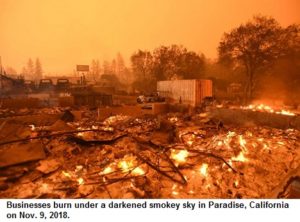
Australia experienced record summer heat in January of this year. The town of Port Augusta reached the hottest day since record-keeping began in 1962 with a temperature of 121, according to the Guardian.

The heat was so intense it caused bats to fall from trees, according to the Australian Broadcasting Corporation.

Carbon dioxide up 46%
Increasing amounts of carbon dioxide and other gases being released into the atmosphere by industry, transportation and energy production from burning fossil fuels are enhancing what’s known as the planet’s natural greenhouse effect.

Carbon dioxide is the most prevalent among all greenhouse gases produced by human activities, attributed to the burning of fossil fuels.

The atmospheric carbon dioxide level for March was 411.97 parts per million and continue to rise. It has now reached levels in the atmosphere not seen in 3 million years.

That’s an increase of 46% from just before the Industrial Revolution in the 1800s, when CO2 levels were around 280 parts per million. Levels began to rise when humans began to burn large amounts of fossil fuels to run factories and heat homes, releasing CO2 and other greenhouse gasses into the atmosphere.

Scientists say to keep a livable planet, we need to cut the level to 350 parts per million.

Rising seas
A consequence of higher temperatures is the melting of the polar ice caps, which is causing sea levels to rise. The world’s oceans have risen about an inch in the past 50 years due to melting glaciers alone, a study published this month in the journal Nature found.

The Earth’s glaciers are now losing up to 390 billion tons of ice and snow per year, the study suggests.

Global warming has caused over 3 trillion tons of ice to melt from Antarctica in the past quarter-century and tripled ice loss there in the past decade, another study, released in June, said.

More: Life after solving climate change: Not mud huts and gruel but clean air and warm homes

Source: Posted for “Earth Day 2019” on April 22, 2019; retrieved June 1, 2019 from: https://www.yahoo.com/now/earth-day-2019-high-temperatures-131301815.html

99.9999% is a special number! It is near to Six Sigma – process which 99.9999998% of products manufactured are statistically expected to be free of defects (3.4 defects per million). So this near sign of operational perfection means that it is “on us”. If we accept that us humans are the cause of Climate Change, then that means that us humans can stop the bad actions and do good ones. As reported here previously, we only have until 2030 as a fix window to try to effect change; (after that, there is no hope for a turn-around):

[A report from the] UN Intergovernmental Panel on Climate Change (IPCC) … asserts that if there are no mitigations [by 2030], then the catastrophic future that we all dread will be unavoidable. Life may continue on the planet, but the status quo would be no more. …

After [2030], there may not be any turning back from a Greenhouse planet. Once we accept this fact – the eventuality of the Climate Change Catastrophe – only then can we start to make efforts to address the truth: our “house is on fire”. …

Fixing Climate Change in the US or Canada is out-of-scope for this Go Lean movement; but we still need them to act. We also need Europe, China, India – all Big Polluters – and all countries of the world to act. We must stand on soap boxes, podiums and stages and tell the world – everyone must listen; we must make them listen. This is now everyone’s job, everyone’s responsibility. …

There is … a roadmap [for] reforming and transforming the Caribbean’s societal engines to abate Climate Change; [it] is possible; it is conceivable, believable and achievable.

The current US President, Donald Trump, is not a partner in the effort to abate Climate Change. He is a denier! He is also undermining legitimate scientific efforts – see Appendix VIDEO.

The start of Hurricane Season 2019 reminds us to recommit to the urgency to mitigate and remediate Climate Change. While we must Go Green here in the Caribbean, we must do more too. We must urge the rest of the world to Go Green. Otherwise, our small tropical islands will be the first to become extinct. It is that serious!

Let’s lean-in to this Go Lean roadmap to effect change here in the homeland and then lets urge the rest of the world to also do more. Yes, we can make a difference here in the homeland and around the world. 🙂

About the Book
The book Go Lean…Caribbean serves as a roadmap for the introduction and implementation of the technocratic Caribbean Union Trade Federation (CU), for the elevation of Caribbean society – for all member-states. This CU/Go Lean roadmap has these 3 prime directives:

  • Optimization of the economic engines in order to grow the regional economy to $800 Billion & create 2.2 million new jobs.
  • Establishment of a security apparatus to ensure public safety and protect the resultant economic engines.
  • Improve Caribbean governance to support these engines, including a separation-of-powers between the member-states and CU federal agencies.

The Go Lean book provides 370-pages of turn-by-turn instructions on “how” to adopt new community ethos, plus the strategies, tactics, implementations and advocacies to execute so as to reboot, reform and transform the societal engines of Caribbean society.

Download the free e-Book of Go Lean … Caribbean – now!

Who We Are
The movement behind the Go Lean book – a non-partisan, apolitical, religiously-neutral Community Development Foundation chartered for the purpose of empowering and re-booting economic engines – stresses that reforming and transforming the Caribbean societal engines must be a regional pursuit. This was an early motivation for the roadmap, as pronounced in the opening Declaration of Interdependence (Pages 12 – 13):

xi. Whereas all men are entitled to the benefits of good governance in a free society, “new guards” must be enacted to dissuade the emergence of incompetence, corruption, nepotism and cronyism at the peril of the people’s best interest. The Federation must guarantee the executions of a social contract between government and the governed.

xvi. Whereas security of our homeland is inextricably linked to prosperity of the homeland, the economic and security interest of the region needs to be aligned under the same governance. Since economic crimes … can imperil the functioning of the wheels of commerce for all the citizenry, the accedence of this Federation must equip the security apparatus with the tools and techniques for predictive and proactive interdictions.

xxiv. Whereas a free market economy can be induced and spurred for continuous progress, the Federation must install the controls to better manage aspects of the economy: jobs, inflation, savings rate, investments and other economic principles. Thereby attracting direct foreign investment because of the stability and vibrancy of our economy.

Sign the petition to lean-in for this roadmap for the Caribbean Union Trade Federation.

—————-

Appendix VIDEO – Climate Change: Why Trump’s panel on climate science is controversial – https://www.usatoday.com/videos/news/2019/02/27/climate-change-why-trumps-panel-climate-science-controversial/2998078002/

Posted February 26, 2019 – President Trump’s pick for leading a climate change panel is notorious for denying the science behind human-caused global warming. We dive into the counter-arguments on climate change. USA TODAY.

Share this post:
, ,
[Top]