Category: Economics

Lessons from Colorado: Legalized Marijuana – Heavy-lifting!

Go Lean Commentary

“Rocky Mountain High … Colorado” – Song verbiage from John Denver’s Rocky Mountain High – see Appendix A

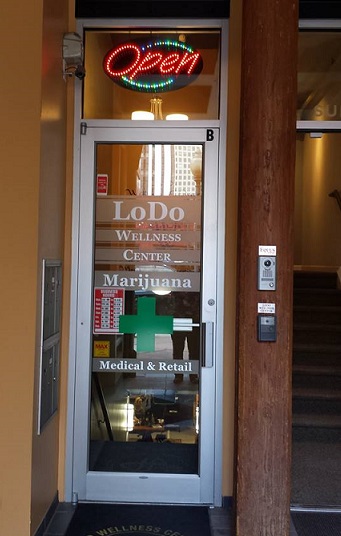
CU Blog - Lesson from Colorado - Legalized Marijuana - Photo 1

This is a familiar refrain from a familiar song; a folk rock song written by John Denver and Mike Taylor about Colorado, and is one of the two official state songs of Colorado;[1] recorded by Denver in 1972, it went to #9 on the US Hot 100 in 1973; (source: Wikipedia). The song also made #3 on the Easy Listening chart …

But in 2017, the phrase “Rocky Mountain High” has a total different meaning, because the State of Colorado has since legalized recreational use of marijuana.

This is not an easy topic; this is heavy …

There are so many lessons we can learn from the debate, legalization, implementation, regulation and societal repercussions of this product in this State. All in all, it is heavy-lifting. This is the theme of this series of commentaries of lessons that have been learned by Caribbean stakeholders visiting, observing and reporting on the US State of Colorado. (All non-encyclopedic photos in this commentary were snapped in Colorado by Bahamian student Camille Lorraine).

We have so much in common and so much in contrast. One commonality to consider is how Colorado is now associated with marijuana consumption. See Appendix B VIDEO below.

“Welcome to our club”! This has always been the image of Caribbean people and culture – think: Rasta Man smoking Ganja; (marijuana is called ganja in Sanskrit and other modern Indo-Aryan languages.[173]).

Don’t like the imagery, reputation or sullied practice? Then welcome to societal development 2017; welcome to heavy-lifting.

This commentary continues the 5-part series on the subject of Lessons from Colorado. There are so many lessons that we must consider from this land-locked US State; good ones and bad ones. In fact, the full list of 5 entries are detailed as follows:

  1. Lessons from Colorado – Common Sense of Eco-Tourism
  2. Lessons from Colorado – Legalized Marijuana: Heavy-lifting!
  3. Lessons from Colorado – How the West Was Won
  4. Lessons from Colorado – Water Management Art & Science
  5. Lessons from Colorado – Black Ghost Towns – “Booker T. turning in his grave”

The book Go Lean…Caribbean calls for the elevation of Caribbean society, to re-focus, re-boot, and optimize all the societal engines so as to make the Caribbean a better place to live, work and play.  The movement behind this book wants to do the heavy-lifting to reform and transform Caribbean society. So we must tackle these “heavy” issues that others may just want to brush aside. As goes Colorado, soon the rest of the US – 4 states currently support recreational use of marijuana; many others support medical marijuana; in total 28 states will have some kind of legalization on the books).

“Marijuana legalization is now the norm for 40 percent of the American population.”

It is only a matter of time – considering American tourism, trade and Caribbean students matriculating in the US – when this debate comes to our door in the Caribbean.

Oops, too late!

According to social media sites, there is already an outcry for regional leaders to consider some form of legalization or decriminalization in the Caribbean.

CU Blog - Lesson from Colorado - Legalized Marijuana - Photo 0

This issue has previously been addressed by planners of a new Caribbean stewardship – see here:

https://goleancaribbean.com/blog/?p=9646 ‘Time to Go’ – American Vices, i.e. Marijuana. Don’t Follow!
https://goleancaribbean.com/blog/?p=1386 Puff Peace – The Debate  for Marijuana in Jamaica

The book Go Lean…Caribbean – available to download for free – serves as a roadmap for the introduction and implementation of the technocratic Caribbean Union Trade Federation (CU), for the elevation of Caribbean society – for all member-states. This CU/Go Lean roadmap has these 3 prime directives:

  • Optimization of the economic engines in order to grow the regional economy to $800 Billion and create 2.2 million new jobs.
  • Establishment of a security apparatus to ensure public safety and protect the resultant economic engines.
  • Improve Caribbean governance to support these engines, including a separation-of-powers between the member-states and CU federal agencies.

The book stresses that reforming and transforming the Caribbean societal engines must be a regional pursuit. This was an early motivation for the roadmap, as pronounced in the opening Declaration of Interdependence (Pages 12 – 13):

xi. Whereas all men are entitled to the benefits of good governance in a free society, “new guards” must be enacted to dissuade the emergence of incompetence, corruption, nepotism and cronyism at the peril of the people’s best interest. The Federation must guarantee the executions of a social contract between government and the governed.

xvi. Whereas security of our homeland is inextricably linked to prosperity of the homeland, the economic and security interest of the region needs to be aligned under the same governance. Since economic crimes … can imperil the functioning of the wheels of commerce for all the citizenry, the accedence of this Federation must equip the security apparatus with the tools and techniques for predictive and proactive interdictions.

xxiv. Whereas a free market economy can be induced and spurred for continuous progress, the Federation must install the controls to better manage aspects of the economy: jobs, inflation, savings rate, investments and other economic principles. Thereby attracting direct foreign investment because of the stability and vibrancy of our economy.

The Go Lean book provides 370-pages of turn-by-turn instructions on “how” to adopt new community ethos, plus the strategies, tactics, implementations and advocacies to execute so as to reboot, reform and transform the societal engines of Caribbean society. According to that previous blog-commentary:

There are moral, religious, legal and psychological (treatment) issues associated with this topic; and there is history – good and bad. Any jurisdiction decriminalizing the use of marijuana has to contend with the previous messaging to the community of: “Just say no to drugs”.

The [Go Lean] book asserts that before the strategies, tactics, implementations and advocacies of a roadmap to elevate a society can be deployed, the affected society must first embrace a progressive community ethos. The book defines this “community ethos” as the fundamental character or spirit of a culture; the underlying sentiment that informs the beliefs, customs, or practices of society; dominant assumptions of a people or period. Think of the derivative term: “work ethic”.

Marijuana is a mood-altering drug; it has negative effects, one being preponderance for apathy, to tune out of any active engagement. In the US, even in the states where marijuana is legal, most firms/governments still screen staffers (new hires and veterans) and ban consumption of the drug. The reason is simple: Apathy does not make for industriousness. So this issue/drug presents a conundrum for the CU. The mission to grow the economy, promote industriousness, foster new jobs and new industries is pronounced early in the roadmap, detailed in the Declaration of Interdependence (Page 14) with this statement:

    xxvi. Whereas the Caribbean region must have new jobs to empower the engines of the economy and create the income sources for prosperity, and encourage the next generation to forge their dreams right at home, the Federation must therefore foster the development of new industries … In addition, the Federation must invigorate the enterprises related to existing industries … impacting the region with more jobs.

So to all you Caribbean stakeholders clamoring to follow Colorado’s lead … into the heavy-lifting of legalized marijuana use, we ask this one question:

Are you ready for this?

CU Blog - Lesson from Colorado - Legalized Marijuana - Photo 2

CU Blog - Lesson from Colorado - Legalized Marijuana - Photo 3

Thank you Colorado, for your fine role model. You have provided guidelines and learned-lessons that we can apply in our own jurisdictions. We learn that there are “pros” and “cons” to this controversial issue. Colorado authorities report that for 2016, they transacted over $1.1 Billion in marijuana sales for recreational and medicinal purposes; the State have collected $141 million in taxes, licenses and fees. The repercussions and consequences of legalized marijuana have not just been economic benefits, there have been public safety (security) incidents as well. Consider these headlines:

The Go Lean movement, as stewards of a new Caribbean, must answer the same question:

Are we ready?

No, our communities and societal engines (economics, security and governance) are NOT ready!

Yes, we accept the challenge; we hereby urge all Caribbean stakeholders – governments, law enforcement agencies, social and civic agencies – to lean-in to this Go Lean roadmap for how to make our Caribbean homeland a better place to live, work and play.

Our judgment now is that the Caribbean is not ready to sanction recreational marijuana use, but still …

… it is what it is.

We must be prepared and “on guard” for “bad actors” (and foreigners) to exploit the demand for this activity in our community. We are not trying to be Colorado, or to be America; no, we are trying to be better. 🙂

Download the free e-Book of Go Lean … Caribbean – now!

Sign the petition to lean-in for this roadmap for the Caribbean Union Trade Federation.

—————–

Appendix A – John Denver – Rocky Mountain High – https://youtu.be/eOB4VdlkzO4


Published on Apr 5, 2013 – John Denver’s official audio for ‘Rocky Mountain High’. Click to listen to John Denver on Spotify: http://smarturl.it/JohnDenverSpotify?…

As featured on The Essential John Denver. Click to buy the track or album via iTunes: http://smarturl.it/EssentialJD?IQid=J…
Google Play: http://smarturl.it/RMHGPlay?IQid=John…
Amazon: http://smarturl.it/EJDAmazon?IQid=Joh…

More from John Denver
Take Me Home, Country Roads: https://youtu.be/1vrEljMfXYo
Leaving On A Jet Plane: https://youtu.be/SneCkM0bJq0
Sunshine On My Shoulders: https://youtu.be/diwuu_r6GJE

More great 70s videos here: http://smarturl.it/Ultimate70?IQid=Jo…

Follow John Denver
Website: http://johndenver.com/
Facebook: https://www.facebook.com/JohnDenver
Twitter: https://twitter.com/johndenvermusic
Subscribe to John Denver on YouTube: http://smarturl.it/JohnDenverSub?IQid…
———
Lyrics:
He was born in the summer of his 27th year, coming home to a place he’d never been before.
He left yesterday behind him, you might say he was born again,
you might say he found a key for every door.
When he first came to the mountains, his life was far away on the road and hanging by a song.
But the string’s already broken and he doesn’t really care,
it keeps changing fast, and it don’t last for long.

And the Colorado Rocky Mountain high, I’ve seen it raining fire in the sky.
The shadows from the starlight are softer than a lullaby.
Rocky Mountain high, Colorado. Rocky Mountain high.

  • Category: Music
  • License: Standard YouTube License

—————–

Appendix B – Legalized: A Year In The Life Of Colorado’s Legal Weed Experiment | NBC News – https://youtu.be/B1cyfObqehI

Published on Nov 9, 2016 – Election night 2016 was a big night for the marijuana legalization movement as multiple states passed measures including recreations initiatives in California and Massachusetts. This piece documented the first year of Colorado’s legal weed experiment.

» Subscribe to NBC News: http://nbcnews.to/SubscribeToNBC
» Watch more NBC video: http://bit.ly/MoreNBCNews

NBC News is a leading source of global news and information. Here you will find clips from NBC Nightly News, Meet The Press, and our original series Debunker, Flashback, Nerdwatch, and Show Me. Subscribe to our channel for news stories, technology, politics, health, entertainment, science, business, and exclusive NBC investigations.

Connect with NBC News Online!
Visit NBCNews.Com: http://nbcnews.to/ReadNBC
Find NBC News on Facebook: http://nbcnews.to/LikeNBC
Follow NBC News on Twitter: http://nbcnews.to/FollowNBC
Follow NBC News on Google+: http://nbcnews.to/PlusNBC
Follow NBC News on Instagram: http://nbcnews.to/InstaNBC
Follow NBC News on Pinterest: http://nbcnews.to/PinNBC

Legalized: A Year In The Life Of Colorado’s Legal Weed Experiment | NBC News

Share this post:
, ,

Lessons from Colorado: Common Sense of Eco-Tourism

Go Lean Commentary

Tourism is both give and take!

To visually depict this, imagine a “well of water”. In the Caribbean we take from that well with our voluminous tourism activities – many guests partake of our hospitality with stay-overs and cruises. And then, periodically, our Caribbean stakeholders “give back” by visiting other destinations.

This is the theme of this series of commentaries. There are lessons that have been learned from visiting a tourist destination that is foreign to the Caribbean. That destination is the US State of Colorado.

CU Blog - Lessons from Colorado - Common Sense of Eco-Tourism - Photo 0a

We have so much in common and so much in contrast. One commonality to consider is how Colorado structures its tourism around the natural terrain of its mountains: the Rocky Mountains range; see Appendix VIDEO. This is also true in the Caribbean, where we structure our tourism around our natural terrain: sun, sand and sea.

This commentary opens a 5-part series on the subject of Lessons from Colorado. There are so many lessons that we must consider from this land-locked US State; good ones and bad ones. In fact, the full list of 5 entries are detailed as follows:

  1. Lessons from Colorado – Common Sense of Eco-Tourism
  2. Lessons from Colorado – Legalized Marijuana: Heavy-lifting!
  3. Lessons from Colorado – How the West Was Won
  4. Lessons from Colorado – Water Management Art & Science
  5. Lessons from Colorado – Black Ghost Towns – “Booker T. turning in his grave”

The book Go Lean…Caribbean calls for the elevation of Caribbean society, to re-focus, re-boot, and optimize all the engines of commerce so as to make the Caribbean a better place to live, work and play.  The category of “play” covers the full scope of tourism, which is the primary economic driver for our Caribbean region – and a lot of American communities; see Appendix below – the book estimates 80 million visitors among the Caribbean member-states. (Since that number includes cruise passengers that may visit multiple Caribbean islands on one itinerary, each port is counted separately; without cruise passengers, a figure of 68 – 69 million is perhaps more accurate).

There are a number of specific categories of tourism. In the course of time, this commentary have considered these globally –accepted definitions:

  • Resort Tourism – Hospitality tied to destinations and attractions; think Disney World, Beaches.
  • Cruise Tourism – The destination is the ship (luxuries & amenities) and the ports-of-call.
  • Event Tourism – The focus is to attend cultural events; the capacity for accommodation can determine success.
  • Sports Tourism – Participants and spectators for sports tournaments.
  • Medical Tourism – Patients traveling for standard, alternative and experimental treatments.
  • Eco-Tourism – Structured around natural terrain and/or monuments, with minimal infrastructural enhancements (i.e. roads, docks, lifts, zip lines, etc.).

Our focus here is on eco-tourism.

ec·o·tour·ism
noun
1. tourism directed toward exotic, often threatened, natural environments, especially to support conservation efforts and observe wildlife. – Oxford.

2. a form of tourism involving visiting fragile, pristine, and relatively undisturbed natural areas, intended as a low-impact and often small scale alternative to standard commercial mass tourism. – Wikipedia

In terms of give-and-take, this category is all “take”. Visitors consume the territory and take nothing away but memories. This business model is masterfully administered in the State of Colorado; they feature two “crown jewels”: Rocky Mountain National Park and the Garden of the Gods:

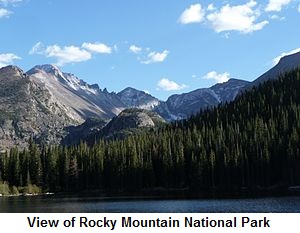
Rocky Mountain National Park is a United States national park located approximately 76 mi (122 km) northwest of Denver International Airport[4] in north-central Colorado, within the Front Range of the Rocky Mountains. The park is situated between the towns of Estes Park to the east and Grand Lake to the west. The eastern and westerns slopes of the Continental Divide run directly through the center of the park with the headwaters of the Colorado River located in the park’s northwestern region.[5] The main features of the park include mountains, alpine lakes and a wide variety of wildlife within various climates and environments, from wooded forests to mountain tundra.

The Rocky Mountain National Park Act was signed by then–President Woodrow Wilson on January 26, 1915, establishing the park boundaries and protecting the area for future generations.[2] The Civilian Conservation Corps built the main automobile route, named Trail Ridge Road, in the 1930s.[2] In 1976, UNESCO designated the park as one of the first World Biosphere Reserves.[6] In 2016, more than four and a half million recreational visitors entered the park, which is an increase of about nine percent from the prior year.[7] [The actual number is 4,517,585 (in 2016)[3]]

CU Blog - Lessons from Colorado - Common Sense of Eco-Tourism - Photo 0

CU Blog - Lesson from Colorado - Common Sense of Eco-Tourism - Photo 0f

CU Blog - Lesson from Colorado - Common Sense of Eco-Tourism - Photo 0g

CU Blog - Lesson from Colorado - Common Sense of Eco-Tourism - Photo 0i

(Photo Credit: Camille Lorraine, vacationing Bahamian student)

The park has a total of five visitor centers[8] with park headquarters…  – Source: Wikipedia

To allow for the full consumption of this Rocky Mountain National Park, the authorities only had to invest in infrastructure for these visitor centers and roads. Ditto for the “Garden of the Gods” attraction; see details of this example here:

Garden of the Gods is a public park located in Colorado Springs, Colorado, US. It was designated a National Natural Landmark in 1971.[1]

CU Blog - Lesson from Colorado - Common Sense of Eco-Tourism - Photo 0b

CU Blog - Lesson from Colorado - Common Sense of Eco-Tourism - Photo 0c

CU Blog - Lesson from Colorado - Common Sense of Eco-Tourism - Photo 0d

CU Blog - Lesson from Colorado - Common Sense of Eco-Tourism - Photo 0e

(Photo Credit: Camille Lorraine, vacationing Bahamian student)

The Garden of the Gods Park is popular for hiking, technical rock climbing, road and mountain biking and horseback riding. It attracts more than two million visitors a year, making it the city’s most visited park. There are more than 15 miles of trails with a 1.5-mile trail running through the heart of the park that is paved and wheelchair accessible. Annual events including two summer running races, recreational bike rides and Pro Cycling Challenge Prologue also take place in this park.[9]

The main trail in the park, Perkins Central Garden Trail, is a paved, wheelchair-accessible 1.1-mile trail, “through the heart of the park’s largest and most scenic red rocks”. The trail begins at the North Parking lot, the main parking lot off of Juniper Way Loop.[10]

Because of the unusual and steep rock formations in the park, it is an attractive destination for rock climbers. Rock climbing is permitted, with annual permits obtained at the City of Colorado Springs’ website.

The Garden of the Gods Visitor and Nature Center is located at 1805 N. 30th Street and offers a view of the park. The center’s information center and 30 educational exhibits are staffed by Parks, Recreation and Culture employees of the City of Colorado Springs.  – Source: Wikipedia

The common sense of it all!

The book Go Lean…Caribbean – available to download for free – serves as a roadmap for the introduction and implementation of the technocratic Caribbean Union Trade Federation (CU), for the elevation of Caribbean society – for all member-states. This CU/Go Lean roadmap has these 3 prime directives:

  • Optimization of the economic engines in order to grow the regional economy to $800 Billion and create 2.2 million new jobs.
  • Establishment of a security apparatus to ensure public safety and protect the resultant economic engines.
  • Improve Caribbean governance to support these engines, including a separation-of-powers between the member-states and CU federal agencies.

The book stresses that reforming and transforming the Caribbean societal engines must be a regional pursuit. This was an early motivation for the roadmap, as pronounced in the opening Declaration of Interdependence (Pages 11 – 13):

iii. Whereas the natural formation of the landmass for our society is that of an archipelago of islands, inherent to this nature is the limitation of terrain and the natural resources there in. We must therefore provide “new guards” and protections to ensure the efficient and effective management of these resources.

iv. Whereas the natural formation of the landmass is in a tropical region, the flora and fauna allows for an inherent beauty that is enviable to peoples near and far. The structures must be strenuously guarded to protect and promote sustainable systems of commerce paramount to this reality.

xi. Whereas all men are entitled to the benefits of good governance in a free society, “new guards” must be enacted to dissuade the emergence of incompetence, corruption, nepotism and cronyism at the peril of the people’s best interest. The Federation must guarantee the executions of a social contract between government and the governed.

xvi. Whereas security of our homeland is inextricably linked to prosperity of the homeland, the economic and security interest of the region needs to be aligned under the same governance. Since economic crimes … can imperil the functioning of the wheels of commerce for all the citizenry, the accedence of this Federation must equip the security apparatus with the tools and techniques for predictive and proactive interdictions.

xxiv. Whereas a free market economy can be induced and spurred for continuous progress, the Federation must install the controls to better manage aspects of the economy: jobs, inflation, savings rate, investments and other economic principles. Thereby attracting direct foreign investment because of the stability and vibrancy of our economy.

The Go Lean book provides 370-pages of turn-by-turn instructions on “how” to adopt new community ethos, plus the strategies, tactics, implementations and advocacies to execute so as to reboot, reform and transform the societal engines of Caribbean society.

Eco-tourism is just common sense. We should not miss out on these benefits.

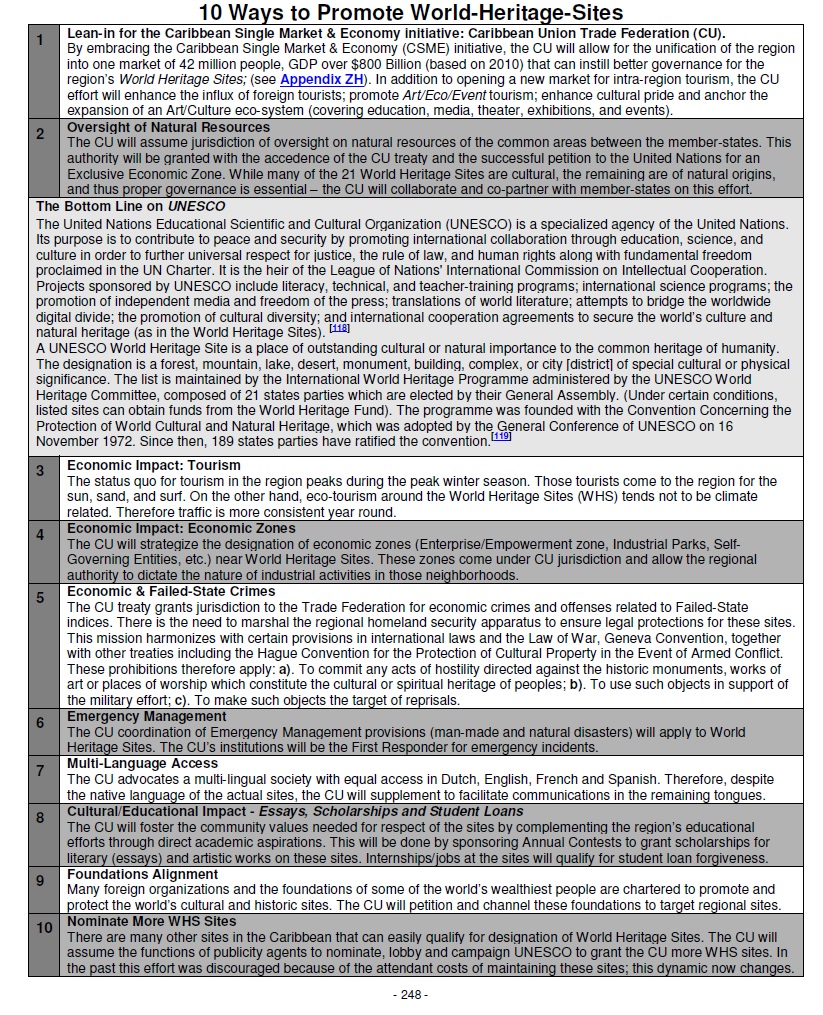
Yes, there is the need for some investment (roads, trails, lifts and visitor centers), but the returns are quantifiable, undeniable and irresistible. This is how Caribbean communities can grow their economic engines. This is the quest of the Go Lean movement. This was anticipated from the beginning of the Go Lean movement with the focus on UNESCO World Heritage Sites for the Caribbean region. See this Page (248) from the book:

CU Blog - Lessons from Colorado - Common Sense of Eco-Tourism - Photo 3

Click on Photo to Enlarge

The Go Lean details that 1,000 additional jobs can be created by fostering the promotion and development of UNESCO World Heritage Sites in the region. This is just common sense.

Thank you Colorado, for your fine role model.

We can do the same; we can make our Caribbean homeland a better place to live, work and play. 🙂

Download the free e-Book of Go Lean … Caribbean – now!

Sign the petition to lean-in for this roadmap for the Caribbean Union Trade Federation. 

———-

Appendix VIDEO – Rocky Mountain National Park, Colorado, USA in 4K (Ultra HD) – https://youtu.be/tdWV2xEyOfE

Published on Sep 23, 2016 – 

Rocky Mountain National Park in Colorado is one of the most popular and scenic National Parks in the United States, famous for its high mountain peaks, alpine lakes, abundant wildlife. The main sightseeing road in the park, and some of the hiking trails cross over the 12,000 feet/3,600 m altitude line;

Locations in the video:
Sprague Lake (0:01), Nymph Lake (0:17), Dream Lake (0:38), Emerald Lake (0:59), Lake Haiyaha (1:12), The Loch (1:26), Timberline Falls (1:51), Sky Pond (2:24), Mills Lake (2:57), Alberta Falls (3:05), Multiple viewpoints along the Trail Ridge Road (3:108:12), Chasm Lake Trail (4:03), Chasm Lake (4:54), Mt Ida Hike (6:39), Horseshoe Falls (8:58), Chasm Falls (9:26), Old Fall River Road (9:31).

Recorded August 2016 in 4K (Ultra HD) with Sony AX100.

Music:
Mystic Crock – Difference – The Difference (Part II)
http://mysticcrock.bandcamp.com
Licensed via ilicensemusic.com

If you enjoyed this video please like, share, comment, favorite, subscribe!
Visit my channel for more Amazing Places on Our Planet:
https://www.youtube.com/milosh9k

———-

APPENDIX – American Tourism Statistics

CU Blog - Lessons from Colorado - Common Sense of Eco-Tourism - Photo 1

(Click on Photo to Enlarge)


Share this post:
, , , ,
[Top]

Back to the Future: Textbooks or Tablets in School?

Go Lean Commentary

CU Blog - Textbooks or Tablets in School - Photo 1Its back-to-school time … again.

That there – what you just did: reminiscing about your own back-to-school experiences – that is the problem. You see, we cannot project “our” back-to-school visuals on today’s students.

  • The world has changed;
  • Schools have to change;
  • Students have to change; and yes …
  • We – parents – must change too.

We have said it repeatedly in these commentaries: the Caribbean is “partying like it’s 1999” when in truth the world’s academic competition is clocking in at 2017.

Don’t believe it?

Look at all those high school students that graduated from their Caribbean high schools in 2017, 2016, 2015, etc.. Where are they now? For far too many Caribbean communities, a majority of those graduates have abandoned their Caribbean homes. Why? Our inability to compete.

So it should not be “Back to school” or “back to the status quo”, rather it should be …

“Back to the Future”.

The Caribbean must now transform to become a community that they have never been before; a community only envisioned for the future.

The future is now! Even textbooks are so “Old School”, while e-Textbooks are so new …

CU Blog - Textbooks or Tablets in School - Photo 2

This is the debate right now: Should schools continue to distribute textbooks or deploy tablets or PC’s (personal computers) for students’ course work?

This is a debate … everywhere – even here in the Caribbean – see this news article here from the local St Lucia Times Daily Newspaper:

News Article: Textbooks or Tablets in School?

(By Marie Miguel) There is a huge debate going on in schools all across the country. It is not about violence, bullying, drugs, or similar issues. The debate is whether schools should continue using text books or switch to using computer tablets. There are many good arguments on both sides, but the fact is, schools are doing it anyway, regardless of what the parents want. Of course, you have the choice whether to sign the paper saying it is alright for your child to use a tablet and be on the internet. However, if you do not sign that paper, your child will not get the same education as the rest of the class. The world has gone digital and there isn’t a whole lot you can do about it.

The Pros and Cons of Tablets in School
Here are some of the pros and cons of tablets in the classroom:

Pros

  • According to the United States Department of Education, students learn 30-80% faster with tablets.
  • A tablet can hold hundreds of books on one device as well as homework, files, and communication with the teachers. This means no more heavy backpacks or lost books.
  • E-books are up to 60% cheaper than printed books.
  • Children scored 30% higher on tests using a tablet rather than a textbook.
  • Tablets have interactive features that textbooks do not have such as a search function, highlighters, and a built-in dictionary and thesaurus.
  • Learning technology skills are important for their future.
  • Tablets can be automatically updated.
  • Students and schools save money on paper, pencils, and other items that tablets do not need.
  • Files on the tablet can be transferred to other electronic devices and portable data recorders. That means no more lost homework.
  • Students enjoy learning on tablets more than with textbooks so they learn more.

Cons

  • There are medical consequences with using tablets such as neck pain, back pain, carpal tunnel syndrome, dry eyes, blurred vision, headaches, and eye strain.
  • Textbooks are five times cheaper than tablets, including training teachers and buying software.
  • Tablets have a lot of distractions such as games, email, apps, and other websites the children can get onto instead of doing their work or listening to the teacher.
  • The brain is able to comprehend more when reading printed text rather than digital text. In fact, on average, people read digital text up to 30% slower than printed text.
  • Many students do not have (or cannot afford) sufficient internet service to use their tablets at home. That means homework is not going to get done.
  • Repairing a tablet costs a great deal more than fixing a book.
  • Textbooks do not get malware, spyware, freeze, crash, and cannot get hacked.
  • Tablets need to be charged and cannot last a whole school day.
  • Students are able to cheat or use shortcuts to do their schoolwork.
  • Some textbooks are still not available in digital format.

Time for a Solution
Many parents just do not want their children to use the internet. Some have never had the opportunity to experience the technological advances that are available to their children or they just do not understand. These feelings of inadequacy can make parents angry and ill-equipped to make a good decision for their children. Other parents are computer savvy but do not think their child is ready for the internet. It is important for these parents to have someone to talk to that understands these issues and can help them realize the benefits of letting their children learn computer skills. There are licensed professionals that parents and their children can talk to or chat with online or over the phone. Together they may be able to come to some kind of compromise that works out well for everyone.

Source: St Lucia Times – Daily Newspaper (Posted 08-03-2014) from:  https://stluciatimes.com/2017/08/03/textbooks-tablets-school

In a previous Go Lean commentary, it was detailed how a related issue, textbooks pricing, reflects American Capitalism – not free market economics – whereby the College Textbook industry is known for their abuses and classic Crony-Capitalism, (where public policy is set to benefit private parties). That commentary explained that since many college expenses are subsidized by governments (federal and state) by means of grants or low-interest, deferred student loans, the marketplace knows that governmental entities will pay…unconditionally, so textbook prices go up … and up.

So how do we move the community forward into the future while also being “on guard” for Crony-Capitalistic abuses?

As related in that commentary from August 25, 2014, the book Go Lean…Caribbean asserts that the Caribbean region must not allow the US to take the lead for our own nation-building, that American capitalistic interest tends to hijack policies intended for the Greater Good. The recommended strategy is to leverage the needs of all 30 countries (42 million people & 4 languages) with Group Purchasing and fully embrace e-Learning (e-Books and tablets).

This book, Go Lean… Caribbean – available to download for free – serves as a roadmap for the introduction and implementation of the Caribbean Union Trade Federation (CU), which represents change for the region. The CU/Go Lean roadmap has 3 future-focused prime directives:

  • Optimization of the economic engines – and the educational apparatus – in order to grow the regional economy and create 2.2 million new jobs.
  • Establishment of a security apparatus to protect the resultant economic engines.
  • Improve Caribbean governance – including primary, secondary and tertiary school administrations plus Group Purchasing Organizations – to support these engines.

The Go Lean roadmap provides turn-by-turn directions on how to leverage Group Purchasing and to elevate the Caribbean’s tertiary education systems as a whole. This roadmap is presented as a planning tool, pronouncing the collaborative benefits of a unified educational agenda with these early statements in the opening Declaration of Interdependence (Page 12 & 14):

viii. Whereas the population size is too small to foster good negotiations for products and commodities from international vendors, the Federation must allow the unification of the region as one purchasing agent, thereby garnering better terms and discounts.

xi. Whereas all men are entitled to the benefits of good governance in a free society, “new guards” must be enacted to dissuade the emergence of incompetence, corruption, nepotism and cronyism at the peril of the people’s best interest. The Federation must guarantee the executions of a social contract between government and the governed.

xix. Whereas our legacy in recent times is one of societal abandonment, it is imperative that incentives and encouragement be put in place to first dissuade the human flight, and then entice and welcome the return of our Diaspora back to our shores

xxi.  Whereas the preparation of our labor force can foster opportunities and dictate economic progress for current and future generations, the Federation must ensure that educational and job training opportunities are fully optimized for all residents of all member-states, with no partiality towards any gender or ethnic group. The Federation must recognize and facilitate excellence in many different fields of endeavor, including sciences, languages, arts, music and sports. This responsibility should be executed without incurring the risks of further human flight, as has been the past history.

xxvii.  Whereas the region has endured a spectator status during the Industrial Revolution, we cannot stand on the sidelines of this new economy, the Information Revolution. Rather, the Federation must embrace all the tenets of Internet Communications Technology (ICT) to serve as an equalizing element in competition with the rest of the world. The Federation must bridge the digital divide and promote the community ethos that research/development is valuable and must be promoted and incentivized for adoption.

The Go Lean book posits that even though education is a vital ingredient for Caribbean economic empowerment, there has been a lot of flawed decision-making in the past, both individually and community-wise. The vision in the Go Lean/CU roadmap is that of a confederation of the 30 Caribbean member-states doing the heavy-lifting of optimizing economic and education policies. The Go Lean book details those future-focused policies; and other ethos to adopt, plus the executions of the following strategies, tactics, implementations and advocacies to impact the tertiary education in the region:

Community Ethos – Deferred Gratification Page 21
Community Ethos – People Respond to Incentives Page 21
Community Ethos – Job Multiplier Page 22
Community Ethos – Lean Operations – Group Purchase Organizations Page 24
Community Ethos – Return on Investments (ROI) Page 24
Community Ethos – Ways to Impact the Future Page 26
Community Ethos – Ways to Foster Genius Page 27
Community Ethos – Ways to Promote Intellectual Property Page 29
Community Ethos – Ways to Close the Digital Divide Page 31
Community Ethos – Ways to Improve Sharing – Purchasing Cooperatives Page 35
Community Ethos – Ways to Impact the Greater Good Page 37
Strategy – Agents of Change – Technology Page 57
Strategy – Agents of Change – Globalization Page 57
Tactical – Separation of Powers – Education Department Page 85
Tactical – Separation of Powers – Labor Department – On Job Training Page 89
Implementation – Ways to Benefit from Globalization Page 119
Advocacy – Ways to Grow the Economy Page 151
Advocacy – Ways to Create Jobs Page 152
Advocacy – Ways to Improve Education Page 159
Advocacy – Ways to Impact Student Loans Page 160
Advocacy – Ways to Improve Governance Page 169
Advocacy – Ways to Foster Cooperatives Page 176
Advocacy – Ways to Improve Libraries Page 187
Appendix – Education and Economic Growth Page 258
Appendix – Measuring Education Page 266
Appendix – New Student Loan Scandal – Bad American Example Page 286
Appendix – India’s $35 Tablet– Good Model-Example Page 296

This is the assertion of the Go Lean book (Page 31): if there is a choice or debate between Textbooks versus Tablets, choose Tablets. This quest should be pursued aggressively by Caribbean stakeholders, welcoming any help from global foundations:

The Bottom Line on One Laptop Per Child (OLPC)
OLPC is a project supported by the Miami-based “One Laptop per Child Association” (OLPCA) and the Cambridge, MA-based OLPC Foundation (OLPCF), two U.S. non-profit organizations set up to oversee the creation of affordable educational devices for use in the developing world. The project was originally founded by MIT Professor Nicholas Negroponte and funded by member organizations like AMD, Chi Mei, eBay, Google, Marvell, News Corporation, Nortel, RedHat, & Quanta. In the first years of the project, the Association managed development and logistics, and the Foundation managed fundraising such as the Give One Get One campaign. In 2010 the Association set up a new office in Miami under Rodrigo Halaby, and currently oversees deployment and support for their XO-1.5 laptop and its successors, and country partnerships. The foundation, led by now Chairman Nicholas Negroponte, currently oversees development of future software and hardware, including the ARM based OLPC XO-1.75 laptop ($180) and the OLPC XO-3 tablet ($100).

Information on the official site of OLPC indicates that as of 2011 there were about over 2.4 million XO laptops delivered.

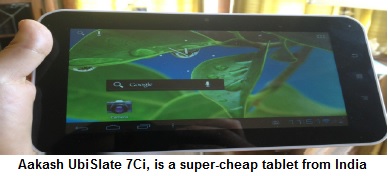
The Go Lean roadmap calls for bridging the Digital Divide and aligning with many not-for-profit foundations, of domestic and foreign sources. For example, the One Laptop Per Child movement – identified above – offers $200 laptops (or cheaper) for Third World countries. In addition, there are now $35 tablets emerging from India (Page 296Appendix OC). The plan is for the CU to steer foundations and philanthropic causes to impact this mission, to equip/train low-income Caribbean residents for computerized terminals and access.

CU Blog - Textbooks or Tablets in School - Photo 3

Tablets and e-Books should be all the rage. See here for the 8 Best Tablets for Students for 2017:

VIDEO – 8 Best Tablets For Students 2017 – https://youtu.be/7XqZIeDC-lU

Published on May 17, 2017
CLICK FOR WIKI ►► https://wiki.ezvid.com/best-tablets-f…
Please Note: Our choices for this wiki may have changed since we published this review video. Our most recent set of reviews in this category, including our selection for the year’s best tablet for students, is exclusively available on Ezvid Wiki.
Tablets for students included in this wiki include the dell venue 8 7000, amazon fire hd 8, lenovo tab 10, lg electronics g pad ii, microsoft surface pro 4, apple ipad pro, samsung galaxy tab s3, and asus zenpad z580c.
Most Recent Picks: https://wiki.ezvid.com/best-tablets-f…

The foregoing news article and VIDEO relate to topics that should be of serious concern for Caribbean planners. We want to foster an education agenda that propels the Caribbean’s best interest. We do not want to be parasites of the American hegemony; we want to be better. While the US is the world’s largest Single Market economy, we only want to model some of their examples.

Most importantly, we want our students to study at home, primarily, or at worst, remain in the region. This minimizes the risks of matriculating abroad and never returning – a frequent Caribbean dilemma.

All of these educational issues have been addressed in previous Go Lean blog-commentaries; consider this sample here:

https://goleancaribbean.com/blog/?p=11054 American Bad Model: Lower Ed!
https://goleancaribbean.com/blog/?p=10845 American Good Example: College Sports
https://goleancaribbean.com/blog/?p=10733 American Experiences: 150 Years of HBCU’s
https://goleancaribbean.com/blog/?p=9751 Where the Jobs Are – Animation and Game Design
https://goleancaribbean.com/blog/?p=8669 Detroit makes Community College free
https://goleancaribbean.com/blog/?p=2126 Where the Jobs Are – Computers Reshaping Global Job Market
https://goleancaribbean.com/blog/?p=9724 Bahamas Welcomes the New University
https://goleancaribbean.com/blog/?p=1698 STEM Jobs Are Filling Slowly
https://goleancaribbean.com/blog/?p=1470 College of the Bahamas Master Plan 2025 – Reach for the Lamp-Post
https://goleancaribbean.com/blog/?p=1433 Caribbean loses more than 70 percent of tertiary educated to brain drain
https://goleancaribbean.com/blog/?p=459 CXC and UK textbook publisher hosting CCSLC workshops in Barbados

The book Go Lean…Caribbean posits that many problems of the region – education, a most prominent issue – are too big for any one member-state to solve alone, that there is the need for the leverage of a wider Caribbean confederacy. The purpose of this Go Lean/CU roadmap is to make the Caribbean homeland, a better place to live, work, learn and play. This effort is more than academic, more than just future scheming; no, this must be a plan for today.

We first employ e-Learning … and all of its related arts and sciences. And do it now!

We need to better compete with the world; education and e-learning could be the great equalizer. The book projects a Cyber Caribbean (Page 127):

Forge electronic commerce industries so that the internet communications technology (ICT) can be a great equalizer in economic battles of global trade. This includes e-Government (outsourcing and in-sourcing for member-states systems) and e-Delivery, Postal Electronic Last Leg mail, e-Learning and wireline/wireless/satellite initiatives.

Strategically, the Go Lean roadmap posits that to succeed in the global marketplace, the Caribbean region must not only consume but rather also create, produce, and distribute intellectual property. So subjects like tablets and e-books are germane for our considerations. Tactics like Group Purchasing (GPO) makes it efficient and effective to minimize the associated costs of educating the general population, and specific learning needs.

These are hallmarks of the CU technocracy: policies that reflect a future-focus.

Now is the time for all of the Caribbean, the people and school administrations, to lean-in for the changes described in the book Go Lean…Caribbean. 🙂

Sign the petition to lean-in for this roadmap for the Caribbean Union Trade Federation.

Download the book Go Lean … Caribbean – now!

Share this post:
, , ,
[Top]

Dr. Thomas W. Mason – FAMU Professor & STEM Influencer – RIP

Go Lean Commentary

“I didn’t come to FAMU; I came to Dr. Mason” – Familiar experience of FAMU Computer Science students.

It is with a heavy heart that we report the passing of a great educator and STEM influencer, Dr. Thomas W. Mason. He was the founder and legendary professor of Mathematics, Data Processing and Computer Science at Florida Agriculture & Mechanical University. The University offering has now evolved to now being embedded in the FAMU-Florida State University College of Engineering – see VIDEO in the Appendix below.

See the published obituary here:

CU Blog - Dr. Thomas W. Mason - FAMU Professor - STEM Influencer - RIP - Photo 1

Title: Obituary of Dr. Thomas W. Mason

Dr. Thomas W. Mason, a retired professor of Computer Science and Math at Florida A & M University, passed away from a long struggle with heart disease on July 3, 2017. He taught at the university for 30 years.

Dr. Mason received his doctorate in Information and Computer Systems at the University of Illinois in 1973, where he met Dr. Sybil Mobley who encouraged him to join the faculty at FAMU School of Business & Industry in Tallahassee.

Tom was born in Kansas City, Kansas on June 14, 1940. He lost his father, Thomas, early and was raised along with his sister, Elizabeth by his devoted mother, Thelma, both are deceased. He also lost two maternal uncles, Harold and Wendall Robbins and a cousin, Barbara Robbins.

After graduating Cum Laude from Sumner High School, Tom earned a degree in math at the University of Kansas in 1961 and moved to Washington, DC to work as a computer programmer at IBM. This was done while completing a Masters degree in Engineering from George Washington University.

While in DC Tom met and married Yolande Clarke who survives him and their deceased son, Thomas James “Jimmy”. He is survived by a second son, Christopher, who is a FAMU graduate in Journalism. Dr. Mason is also survived by his cousin, Wendell Robbins, Jr. (wife) and their two children, Sheryl and Corky in Houston, Texas; a niece, Tiea of Kansas; his mother-in-law, Thelma Clarke; sisters-in-law, Charlene Hardy and Sheryl Clark along with many nieces, nephews and friends.
Services will be planned at a later date. In lieu of flowers, send donations to the American Heart Association.

Published in the Tallahassee Democrat [Newspaper] on July 13, 2017; retrieved July 24, 2017: http://www.legacy.com/obituaries/tallahassee/obituary.aspx?page=lifestory&pid=186032969

CU Blog - FAMU is No. 3 for Facilitating Economic Opportunity - Photo 1

Back in the 1970’s, the idea of priority on STEM students appeared to be NO BIG deal; just a bunch of nerds and techies passing time in the Computer Lab. Internet and Communications Technologies (ICT) was only just a lab project of university stakeholders.

Now, in 2017, Science, Technology, Engineering and Mathematics (STEM) students and ICT are all the rage. We recognize now, that we need more STEM students and educators in Black-and-Brown communities; but this was the vision of Dr. Mason all the while. When excessive focus was paid to FAMU’s esteemed Business School, led by Dr. Sybil Mobley – a fellow University of Illinois PhD cohort who recruited Dr. Mason to FAMU – he felt that the focus was overlooking STEM students …

… he was right!

According to a new study [(2014)] by Brookings Institution, there is a clear evidence of a skills gap in the US. The report stated that a high school graduate with a Science, Technology, Engineering, and Math (STEM) background seems to be in higher demand than a person with an undergraduate degree not in a STEM background. – Money Economics Magazine

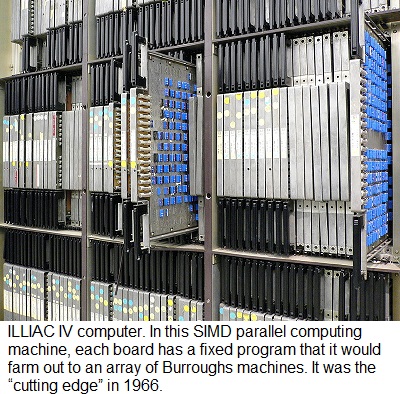
Considering the proud legacy of Historical Black Colleges and University (HBCU), Dr. Mason was agnostic to all of that; he was first and foremost a computer scientist, who happened to be Black, He matriculated for his PhD at the University of Illinois (completing in 1973); there he worked on the ILLIAC project, directly on the ILLIAC IV effort:

ILLIAC (Illinois Automatic Computer) was a series of supercomputers built at a variety of locations, some at the University of Illinois at Urbana-Champaign (UIUC). In all, five computers were built in this series between 1951 and 1974. Some more modern projects also use the name.

The architecture for the first two UIUC computers was taken from a technical report from a committee at the Institute for Advanced Study (IAS) at PrincetonFirst Draft of a Report on the EDVAC [1945], edited by John von Neumann (but with ideas from Eckert & Mauchley and many others.) The designs in this report were not tested at Princeton until a later machine, JOHNNIAC, was completed in 1953. However, the technical report was a major influence on computing in the 1950s, and was used as a blueprint for many other computers, including two at the University of Illinois, which were both completed before Princeton finished Johnniac. The University of Illinois was the only institution to build two instances of the IAS machine. In fairness, several of the other universities, including Princeton, invented new technology (new types of memory or I/O devices) during the construction of their computers, which delayed those projects. For ILLIAC I, II, and IV, students associated with IAS at Princeton (Abraham H. TaubDonald B. GilliesDaniel Slotnick) played a key role in the computer design(s).[1]

———
The ILLIAC IV was one of the first attempts to build a massively parallel computer. One of a series of research machines (the ILLIACsfrom the University of Illinois), the ILLIAC IV design featured fairly high parallelism with up to 256 processors, used to allow the machine to work on large data sets in what would later be known as vector processing. After several delays and redesigns, the computer was delivered to NASA’s Ames Research Center at Moffett Airfield in Mountain View, California in 1971. After thorough testing and four years of NASA use, ILLIAC IV was connected to the ARPANet for distributed use in November 1975, becoming the first network-available supercomputer, beating Cray’s Cray-1 by nearly 12 months.

CU Blog - Dr. Thomas W. Mason - FAMU Professor - STEM Influencer - RIP - Photo 2

Notice the reference here to ARPA and ARPANet – ARPA, the Advanced Research Projects Agency, renamed the Defense Advanced Research Projects Agency (DARPA) in 1972 – this was the forerunner to today’s Internet. Dr. Mason was proud of this participation and accomplishments of this endeavor – he often embedded this history in his lectures. He sought to influence the next generation of students to look, listen, learn, lend-a-hand and lead in the development of these cutting-edge technologies. (By extension, his impact extended to the Caribbean as well).

For those who listened and learned, we are forever grateful for Dr. Mason contributions and tutelage.

The publishers of the book Go Lean…Caribbean recognize the life contributions of Dr. Mason as a STEM educator, visionary and influencer. The book – available to download for free – serves as a roadmap for the introduction and implementation of the Caribbean Union Trade Federation (CU) with the quest to elevate the region’s job-creating prowess. Any hope of creating more jobs requires more STEM … students, participants, entrepreneurs and educators. The Go Lean roadmap seeks to put Caribbean people in a place of better command-and-control of the STEM field for their region. We need contributions from people with the profile like Dr. Mason; he provided a role model for inspiration … for this writer, a former protégé.

Like Dr. Mason, the prime directive of the Go Lean book is also to elevate society, but instead of impacting America, this roadmap’s focus is the “Caribbean first”. In fact, the declarative statements are as follows:

  • Optimization of the economic engines in order to grow the regional economy to $800 Billion & create 2.2 million new jobs.
  • Establishment of a security apparatus to protect the resultant economic engines.
  • Improve Caribbean governance to support these engines.

Dr. Mason  is hereby recognized as a role model and influencer that the entire Caribbean can emulate. He provided a successful track record of forging change, overcoming obstacles, influencing next generations, inspiring thought leaders and paying forward to benefit future stakeholders in technology education. While the Go Lean book posits that economics, security and governance are all important for the development of Caribbean society, the process starts with education. So we must honor the teachers, professors and researchers.

Though Dr. Mason was not of Caribbean heritage, planners for a new Caribbean posit that one person, despite their field of endeavor, can make a difference for the Caribbean, and its impact on the world; that there are many opportunities where one champion, one advocate, can elevate society. In this light, the book features 144 different advocacies, so there is inspiration for the “next” Dr. Thomas Mason to emerge, establish and excel right here at home in the Caribbean.

This Go Lean roadmap specifically encourages the region, to lean-in and foster this “next” generation of Dr. Mason’s with these specific community ethos, strategies, tactics, implementations and advocacies:

Community Ethos – Job Multiplier – STEM should be a Priority Page 22
Community Ethos – Return on Investments – ROI Page 24
Community Ethos – Ways to Impact the Future Page 26
Community Ethos – Ways to Foster Genius Page 27
Community Ethos – Ways to Help Entrepreneurship Page 28
Strategy – Agent of Change – Technology Page 57
Tactical – Separation of Powers – Education Department Page 85
Tactical – Separation of Powers – Labor Department – Job Training Page 89
Implementation – Ways to Impact Social Media Page 111
Advocacy – Ways to Grow the Economy Page 151
Advocacy – Ways to Create Jobs Page 152
Advocacy – Ways to Improve Education Page 159
Advocacy – Ways to Improve Governance Page 169
Advocacy – Ways to Better Manage the Social Contract Page 171
Advocacy – Ways to Foster Cooperatives Page 176
Advocacy – Ways to Improve Libraries Page 187
Advocacy – Ways to Foster Technology Page 197
Advocacy – Ways to Foster e-Commerce Page 198
Appendix – Education and Economic Growth Page 258

This quest to elevate society through technology innovations is pronounced early in the Go Lean book in the Declaration of Interdependence at the outset, pronouncing this need for regional solutions (Pages 13 & 14) with these statements:

xxi. Whereas the preparation of our labor force can foster opportunities and dictate economic progress for current and future generations, the Federation must ensure that educational and job training opportunities are fully optimized for all residents of all member-states, with no partiality towards any gender or ethnic group. The Federation must recognize and facilitate excellence in many different fields of endeavor, including sciences, languages, arts, music and sports. This responsibility should be executed without incurring the risks of further human flight, as has been the past history.

xxvii. Whereas the region has endured a spectator status during the Industrial Revolution, we cannot stand on the sidelines of this new economy, the Information Revolution. Rather, the Federation must embrace all the tenets of Internet Communications Technology (ICT) to serve as an equalizing element in competition with the rest of the world. The Federation must bridge the digital divide and promote the community ethos that research/development is valuable and must be promoted and incentivized for adoption.

xxx. Whereas the effects of globalization can be felt in every aspect of Caribbean life, from the acquisition of food and clothing, to the ubiquity of ICT, the region cannot only consume, it is imperative that our lands also produce and add to the international community, even if doing so requires some sacrifice and subsidy.

If attention was paid in Dr. Mason’s classes, then it would have been obvious that the key to future growth in a society is to build-up the industrial infrastructure to explore the STEM and ICT eco-systems. This advocacy is consistent with the pledge for more STEM education here at home in the Caribbean. This is also a familiar advocacy for the Go Lean movement; consider these previous blog-commentaries:

https://goleancaribbean.com/blog/?p=12532 Where the Jobs Are – A.I.: Subtraction, not Addition
https://goleancaribbean.com/blog/?p=11184 JPMorganChase spent $10 billion on ‘Fintech’ for 1 year
https://goleancaribbean.com/blog/?p=9751 Where the Jobs Are – Animation and Game Design
https://goleancaribbean.com/blog/?p=6341 Tourism Digital Marketing & Stewardship — What’s Next?
https://goleancaribbean.com/blog/?p=6269 Education & Economics: Lessons from Detroit
https://goleancaribbean.com/blog/?p=6151 3D Printing: This Changes … Everything
https://goleancaribbean.com/blog/?p=3915 ‘Change the way you see the world; you change the world you see’
https://goleancaribbean.com/blog/?p=3490 How One Internet Entrepreneur Can Rally a Whole Community
https://goleancaribbean.com/blog/?p=2126 Computers Reshaping Global Job Market
https://goleancaribbean.com/blog/?p=1698 STEM Jobs Are Filling Slowly
https://goleancaribbean.com/blog/?p=1416 Amazon – A Role Model for Caribbean Logistics
https://goleancaribbean.com/blog/?p=476 CARICOM Urged on ICT
https://goleancaribbean.com/blog/?p=308 Caribbean Communications Infrastructure Program Urges Innovation

With the participation of many advocates on many different paths for progress, the Caribbean can truly become a better place to live, work and play.

The Go Lean book focuses primarily on economic issues but it recognizes that computer technology is the future direction for industrial developments. So education in the fields of STEM and ICT is essential for the Caribbean community to invest in to be consequential for the future; no wait, for the present. The life and legacy of Dr. Thomas Mason, is that the computer-connected world he envisioned – and toiled for – manifested in his lifetime.

Rest in Peace Dr. Mason. Thank you for your contributions; thank you for the tutelage. You showed us a way, to help our region to be a better homeland to live, work, learn and play. 🙁

Download the free e-book of Go Lean … Caribbean – now!

Sign the petition to lean-in for this roadmap for the Caribbean Union Trade Federation.

———–

Appendix VIDEOFAMU-FSU Engineering Students Reap Benefits of Dept. of Defense Grant‏ https://youtu.be/plmu77iWYF0

Published on May 1, 2013 – A U.S. Department of Defense grant is paving the way for Florida A & M University students and faculty to work on four projects that could assist the military and average citizens.

  • Category: Education
  • License: Standard YouTube License
Share this post:
, , , ,
[Top]

Where the Jobs Are – A.I.: Subtraction, not Addition

Go Lean Commentary

Artificial Intelligence or A.I. … this is “where the jobs are”.

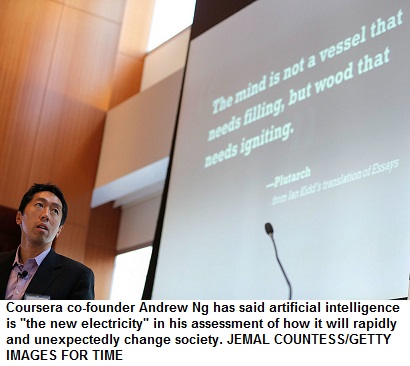
TIME Summit On Higher Education

When you hear the phrase “where the jobs are”, it most certainly connotes addition: the industries, places or circumstances where new employment can be located – “where the jobs are … coming from”. However in this case, the phraseology connotes “where the jobs are … going to”.

It is that serious! This is the charter of the movement behind the book Go Lean … Caribbean. The book – available to download for free – serves as a roadmap for the introduction and implementation of the technocratic Caribbean Union Trade Federation (CU), to optimize the societal engines for all 30 member-states. The roadmap starts the focus with economics first – jobs, entrepreneurial opportunities, direct foreign investments, education and occupational training. The movement asserts:

Frankly, selling economic empowerment to the public is easy…

… just show up with a boat-load of jobs and people will “cow tail” and cooperate; (the heavy-lifting is involved in selling industry stakeholders). Security and governing changes on the other hand require much more heavy-lifting: consensus-building, convincing and compromise of existing institutions and officials.

So this Go Lean/CU roadmap joins in chorus in declaring:

“It’s the economy, Stupid” – James Carville coined this phrase as a campaign strategist of Bill Clinton‘s successful 1992 presidential campaign against sitting president George H. W. Bush.
CU Blog - Where the Jobs Are - A.I. - Subtraction, not Addition - Photo 2

The Go Lean/CU roadmap complies with this strategy by adhering to these 3 prime directives:

  • Optimization of the economic engines in order to grow the regional economy to $800 Billion and create 2.2 million new jobs.
  • Establishment of a security apparatus to ensure public safety and protect the resultant economic engines.
  • Improve Caribbean governance to support these engines, including a separation-of-powers between the member-states and CU federal agencies.

So the CU presents a functionality to monitor the eco-system of job creation; this means considering where the jobs are “coming from” and “going to”. A.I. is all the rage, as it pronounces that it does affect jobs … by subtraction; think: 3.5 million truck drivers in the US.

  • This is not soon; this is now!
  • This is not tomorrow; this is today.

That is the topic in this AUDIO Podcast from NPR’s show “The 1A” (1A = First Amendment). Listen to the show here:

AUDIO Podcast – Getting Really Smart About Artificial Intelligence – https://the1a.org/segments/2017-07-19-getting-real-smart-about-artificial-intelligence/

 Getting Really Smart About Artificial Intelligence

Chances are, you’ve already encountered artificial intelligence today.

Did your email spam filter keep junk out of your inbox? Did you find this site through Google? Did you encounter a targeted ad on your way?

We constantly hear that we’re on the verge of an AI revolution, but the technology is already everywhere. And Coursera co-founder Andrew Ng predicts that smart technology will help humans do even more. It will drive our cars, read our X-rays and affect pretty much every job and industry. And this will happen soon.

As AI rises, concerns grow about the future of humans. So how can we make sure our economy and our society are ready for a technology that could soon dominate our lives?

So the CU/Go Lean roadmap calls for fostering job-creating developments, incentivizing many high-tech start-ups and incubating viable companies. These career options now proliferate:

  • Big Data Analysis
  • Search Engines
  • Online Advertising
  • Realtime Credit Decision Engines
  • Machine Learning
  • Interactive Voice Response (IVR)
  • Self-Driving Cars, etc.

Accepting that technology start-ups can be disruptive to legacy businesses means that we have to be prepared for subtractions and not just additions. This is “why“ the Go Lean plan to create 2.2 million new jobs is such heavy-lifting: we have to hit a moving target while our society is moving itself. Whew!

Welcome to transformational change!

The Go Lean roadmap also provides the “how”. The book presents a 370-page turn-by-turn guide on “how” to adopt new community ethos, plus the strategies, tactics, implementations and advocacies to execute so as to reboot, reform and transform the societal engines of Caribbean society.

The “why’s and how’s” were detailed in previous blog-commentaries; consider this sample:

https://goleancaribbean.com/blog/?p=9751 Where the Jobs Are – Animation and Game Design
https://goleancaribbean.com/blog/?p=9203 Where the Jobs Are – Employer Models in the United States
https://goleancaribbean.com/blog/?p=6089 Where the Jobs Are – Futility of Minimum Wage
https://goleancaribbean.com/blog/?p=2857 Where the Jobs Are – Entrepreneurism in Junk
https://goleancaribbean.com/blog/?p=2126 Where the Jobs Are – Computers Reshaping Global Job Market
https://goleancaribbean.com/blog/?p=2025 Where the Jobs Are – Attitudes & Images of the Diaspora
https://goleancaribbean.com/blog/?p=2003 Where the Jobs Are – One Scenario: Ship-breaking
https://goleancaribbean.com/blog/?p=1698 Where the Jobs Are – STEM Jobs Are Filling Slowly

The primary ingredient for the “job creation” roadmap for the Caribbean must be Caribbean people. The book therefore stresses the process to reform and transform the region’s societal engines. This was an early motivation for the roadmap, as pronounced in the opening Declaration of Interdependence (Pages 12 – 13):

xi. Whereas all men are entitled to the benefits of good governance in a free society, “new guards” must be enacted to dissuade the emergence of incompetence, corruption, nepotism and cronyism at the peril of the people’s best interest. The Federation must guarantee the executions of a social contract between government and the governed.

xvi. Whereas security of our homeland is inextricably linked to prosperity of the homeland, the economic and security interest of the region needs to be aligned under the same governance. Since economic crimes … can imperil the functioning of the wheels of commerce for all the citizenry, the accedence of this Federation must equip the security apparatus with the tools and techniques for predictive and proactive interdictions.

xxi.  Whereas the preparation of our labor force can foster opportunities and dictate economic progress for current and future generations, the Federation must ensure that educational and job training opportunities are fully optimized for all residents of all member-states, with no partiality towards any gender or ethnic group. The Federation must recognize and facilitate excellence in many different fields of endeavor, including sciences, languages, arts, music and sports. This responsibility should be executed without incurring the risks of further human flight, as has been the past history.

xxiv. Whereas a free market economy can be induced and spurred for continuous progress, the Federation must install the controls to better manage aspects of the economy: jobs, inflation, savings rate, investments and other economic principles. Thereby attracting direct foreign investment because of the stability and vibrancy of our economy.

xxvii. Whereas the region has endured a spectator status during the Industrial Revolution, we cannot stand on the sidelines of this new economy, the Information Revolution. Rather, the Federation must embrace all the tenets of Internet Communications Technology (ICT) to serve as an equalizing element in competition with the rest of the world. The Federation must bridge the digital divide and promote the community ethos that research/development is valuable and must be promoted and incentivized for adoption.

The subject of automation is a familiar theme for the Go Lean movement. Consider this sample:

Robots Building Houses – More than Fiction
Bill Gates: ‘Tax the Robots’
‘Olli’ – The Self-Driving Public Transit Vehicle
Drones to be used for Insurance Damage Claims
Here come the Drones … and the Concerns
The need for Google’s highway safety innovations
Autonomous Ghost Ships

Heavy-lifting, yes! But still, this plan is conceivable, believable and achievable. This is the track record of technology-innovations emerging from many corners of the world. Where there’s a will – community ethos for fostering innovation – there is a way.

The Go Lean book details the special focus of this advocacy on Page 197:

10 Ways to Foster Technology

Yes, we can … make our homeland a better place to live, work and play. 🙂

Download the free e-Book of Go Lean … Caribbean – now!

Sign the petition to lean-in for this roadmap for the Caribbean Union Trade Federation.

Share this post:
, , , ,
[Top]

Economy Doctor: ‘The Patient is Terminal’

Go Lean Commentary

If you need a new roof on your house – a traumatic event when it starts to rain – do you go to your doctor to do the work?

He might know something about roofing and he might be able to help; surely he can lift shingles up to the roof; spread hot tar; hammer in nails and tacks. As a homeowner, you may get some relief from the elements because of your new doctor-installed roof, but frankly, it is not best-practice. The service provided may not be the most efficient nor most effective.

A professional roofer may have better tools and techniques.

How about an economy?

Is there a professional for economic “roof jobs”? Yes, indeed! They are called Economists! Many times, they too are doctors; they may have a PhD in Economics.

A Doctor (Economist) in the Caribbean is looking at the regional economics as if a medical trauma and declaring:

The patient is “terminal” … dying, unless remediated in some way.

Welcome to the Caribbean 2017. This is the assessment: the Caribbean economy is moribund, due to defects in the region’s governing engines, with its mono-industrial service economy! See the full story of the Doctor’s assessment-diagnosis in the news article here:

Title: Saint Lucian Economist warns: “We are in trouble!”
CU Blog - Economy Doctor - 'The Patient is Terminal' - Photo 1
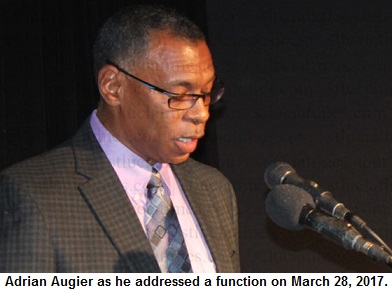
Saint Lucian Economist, Doctor Adrian Augier, has sounded a grim warning that this country is in trouble economically.

Delivering a lecture on Tuesday to the 39th annual general meeting of the Elks Credit Union, Augier compared the national economy to an old farm that is under-fertilised, over exploited, ruined by bad farming and yielding smaller harvests every year.

He was speaking on the theme: “Time to Call a Spade – Why the Caribbean is digging its own economic grave.”

“ I want to frighten you; I want to shock you; I want  to jolt you to the realization that we are in trouble – that you are in trouble along with your job, your family your savings your home and your sanity,”  the Saint Lucian Economist told his audience at the National Cultural Centre.

He said he wanted to cause  the kind of discomfort that prevents his listeners from sleeping at night and rise up,  not only to demand that better be done to prevent development disaster, but to be part of a revolution in thought and action which causes this country to dramatically change its course.

“When I say the country I am not speaking about Mr. Chastanet or Doctor Antony,  I am speaking of us – every one of us here who believes that the sun will rise tomorrow as it did today,” Augier said.

He disclosed that growth rates have been declining for the past three decades, with just a bit of growth in the past year or so.

“The world has changed and so must we,” Augier observed.

According to him, the return to normalcy will not be easy.

He said that many banks in the region have lent out money that was not theirs to people who cannot now pay.

Augier said they cannot pay not because they do not want to, but because jobs have disappeared, markets have shrunk and real property values have fallen.

He explained that in certain areas, crime and instability have diminished the value of properties.

Augier said the economic situation is not only true of Saint Lucia, but across the Caribbean as well.

“We have to look at these issues and not pretend that they are going to go away or suddenly improve because they are not,” the Economist said.

He noted that the social and economic structure of these Islands have changed.

“It is not only true of Saint Lucia but it is a problem across the Caribbean,” he told the Elks AGM.

Augier asserted that there are some things that can happen in the market such as a change of legislation so that banks and credit unions can dispose of assets.

By way of explanation, he spoke of a house with a mortgage that is not being serviced.

“You need to turn it over quickly, reduce the price, put it on the market and get it sold.  That’s not nice when you have to put families out of their homes, but it’s your savings in the credit union underwriting the mortgage and if you don’t return the asset to the market you are going to hold an asset that is deteriorating,” Augier explained.

“We have to take some of the hard knocks and do what we have to do,” he declared, adding that banks have been unable to dump their bad loans which have stayed and corroded the balance sheets.

He explained that people save money in banks and credit unions in the hope of getting their investment back with some interest.

Augier, who is a Director of the First National Bank, said he is worried that the ability to bail out is dwindling.

“We wait and we hope and what is actually happening is that foreign interests are coming into the country and buying up things that we should be able to buy, investing in areas that we should be able to invest in,” he said.

According to him, it is a source of worry that Saint Lucia has a government apparatus designed to ‘help people to buy us out.’

“Foreign investment does not come here because they love us, foreign investment comes here because they see an opportunity which we cannot access or we have not begun to access or we are not positioned to access,” Augier observed.

He said the investors are looking for a return.

“If they are coming here to develop some brand new thing that we are not able to do for ourselves and they want to come in and help us do it or start it up with a possibility of Saint Lucians participating in that venture at some point in time, then that’s another matter,” Augier told his audience.

But  the Saint Lucian Economist said when industries  that are ‘exploitative’ are coming in to use unsustainable cheap labour and exploiting high unemployment by providing menial jobs, it is not good for this country.

Augier said there was need to contemplate what kind of investment is being encouraged here.
Source: Posted March 30, 2017; retrieved June 28, 2017 from: https://stluciatimes.com/2017/03/30/saint-lucian-economist-warns-trouble#comment-114747

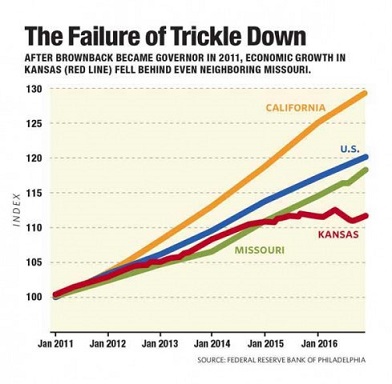
The foregoing news article quotes an Economist – Dr. Adrian Augier – in St. Lucia; speaking of the sad state of affairs for that country and all of the Caribbean. This is not a unique assessment-diagnosis; other countries and states are also suffering economic trauma, dire consequences from dysfunctional economic and governing stewardship. Nor is this assessment only to be found in the Third World (developing countries). No, even the First World or advanced economies have this disposition. Take for example the US State of Kansas. We have a fitting example of economic trauma and dysfunction, brewing there …

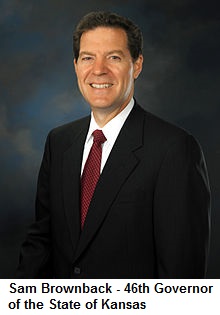
Kansas, Sam Brownback, and the Trickle-Down Implosion

The Kansas governor’s attempt to create Supply-side nirvana in Middle America not only failed to grow the economy — it created a crippling crisis of government that led to a statewide rejection of his politics.

See the excerpt of the news article in the Appendix below or the full article here: http://prospect.org/article/kansas-sam-brownback-and-trickle-down-implosion-0. The summary of the article in the Appendix, is that the State of Kansas experimented with a Supply-side Economic Model and the end-result is traumatic. See these headlines here:

“Brownback’s Kansas has produced one of the worst-performing state economies in the country”.

“The severely imbalanced budget led Moody’s to downgrade Kansas’s bond rating; three months later, Standard & Poor’s followed suit.”

“The failure to restore pre-recession funding has disproportionately impacted urban school districts like Kansas City’s and Wichita’s.”

“Throughout all this, Brownback’s trickle-down obsessions have continued to play out.”

“Many moderate Republicans were fed up with Brownback’s intransigence and eager to get something done.”

Consider also the rendition of this Kansas trauma-drama in this AUDIO-PODCAST from NPR’s All Things Considered show:

AUDIO-Podcast – Kansas Lawmakers Reverse Governor’s Massive Tax Cuts – http://www.npr.org/2017/06/07/531945495/kansas-lawmakers-reverse-governors-massive-tax-cuts

Posted June 7, 2017 As Heard on All Things ConsideredKansas lawmakers charted a major change of course Tuesday night when it comes to tax policy. Both the House and Senate voted to override a veto from Gov. Sam Brownback and roll back many of the 2012 tax cuts that were a model for conservatives across the country.

So Economy Doctors have assessed-diagnosed these 2 dysfunctional communities – lessons abound.  The Caribbean economy (‘patient’) is terminal … and the ‘patient’ that is the State of Kansas is terminal.

This Governor Sam Brownback is now a tarnished brand in American politics. At one time he was a “Star on the Rise” of the national stage, even running for President in 2008. But his now-failed experiment in Tickle-down economics has shifted his reputation from fiscal conservatism to fiscal irresponsibility. This trauma and drama in Kansas should be a cautionary tale for other government leaders in the US and in the Caribbean – economic engines must be optimized; continuation of failed economic policies should not be tolerated. When a patient is in trauma – dying – drastic measures must be taken or the patient dies. This is true for medical trauma and economic trauma. This is the lesson from Kansas and the caution from the Economist – Dr. Adrian Augier – in St. Lucia.

“The world has changed and so must we,” Augier observed.

There is the need for change! Drastic measures must be pursued to reform and transform Caribbean society. But these changes must be planned, implemented (based on best-practices), reviewed and measured against success metrics. This is the methodology of Plan, Do and Review urged in the book Go Lean…Caribbean (Page 147). The book – available to download for free – serves as a roadmap for the introduction and implementation of the technocratic Caribbean Union Trade Federation (CU), for the elevation of Caribbean economy – for all member-states. This CU/Go Lean roadmap has these 3 prime directives:

  • Optimization of the economic engines in order to grow the regional economy to $800 Billion and create 2.2 million new jobs.
  • Establishment of a security apparatus to ensure public safety and protect the resultant economic engines.
  • Improvement of Caribbean governance to support these engines, including a separation-of-powers between the member-states and CU federal agencies.

The mono-industrial service economy in the Caribbean and the failed Supply-side experiment in Kansas  are 2 bad examples. But our scope for reforming communities is the Caribbean only!

The book stresses that reforming and transforming the Caribbean societal engines must be a regional pursuit. This was an early motivation for the roadmap, as pronounced in the opening Declaration of Interdependence (Pages 12 – 13):

xi. Whereas all men are entitled to the benefits of good governance in a free society, “new guards” must be enacted to dissuade the emergence of incompetence, corruption, nepotism and cronyism at the peril of the people’s best interest. The Federation must guarantee the executions of a social contract between government and the governed.

xvi. Whereas security of our homeland is inextricably linked to prosperity of the homeland, the economic and security interest of the region needs to be aligned under the same governance. Since economic crimes … can imperil the functioning of the wheels of commerce for all the citizenry, the accedence of this Federation must equip the security apparatus with the tools and techniques for predictive and proactive interdictions.

xxiv. Whereas a free market economy can be induced and spurred for continuous progress, the Federation must install the controls to better manage aspects of the economy: jobs, inflation, savings rate, investments and other economic principles. Thereby attracting direct foreign investment because of the stability and vibrancy of our economy.

xxxiii. Whereas lessons can be learned and applied from the study of the recent history of other societies, the Federation must formalize statutes and organizational dimensions to avoid the pitfalls of communities …

The Go Lean book provides 370-pages of turn-by-turn instructions on “how” to adopt new community ethos, plus the strategies, tactics, implementations and advocacies to execute so as to reboot, reform and transform the societal engines of Caribbean society. Our reform approach is not some Supply-side / Trickle-down experiment, whereby we exploit the working-classes to benefit the rich.

We can do better! We can deploy industrial solutions with no plutocratic abuses.

In response, the Go Lean roadmap presents a strategy of Self-Governing Entities (SGE’s). This scheme was fully detailed in the Go Lean book; see  some headlines from this sample advocacy on Page 105:

10 Steps to Implement Self-Governing Entities

1 Lean-in for the Caribbean Single Market
The CU treaty unifies the Caribbean region into one single market of 42 million people across 30 member-states, there-by empowering the economic engines in and on behalf of the region. Many times, these engines will be independent, self-governing entities (SGE) that are only physically located in a member state, but not administered by the states. SGE’s are necessary features of the CU roadmap, allowing for industrial parks, technology labs, medical campuses, agricultural ventures, airport cities (see Appendix IJ) and even the Capital District. All aspects of their administration are managed by the CU, including monetary issues managed by the Caribbean Central Bank-CCB.
2 CU Constitution; SGE’s Bylaws
3 Negotiate With Local Municipalities for Resources
The need for local resources is what makes SGE’s such an economic engine. They may have to acquire their basic needs (food, clothing, shelter, energy) from trade with their neighbors. The spirit of negotiations should reflect a partnering relationship as opposed to adversarial, but SGE’s have rights to supply every need internally or from abroad. With free market conditions the norm, price and quality is the determination; the neighbors must compete.
4 Ease-ways
When the SGE physical plant is land-locked, there is a need for an ease-way to convey utilities and supplies in and out. When member-states accede to the CU treaty, they in effect declare that they are ready, willing and able to accommodate the needs of SGE’s. The rights-duty duality is at play, but financial-jobs benefits will be worth the effort. Ease-ways must be inclusive to the municipal negotiations, and may include above-ground and subterranean (pipeline) options.
5 Technology & Infrastructure
The nature of a SGE means monopolies outside the perimeter do not apply inside the perimeter. It is the choice of the SGE whether or not to avail some monopolistic utility or “go solo”. This applies to energy, telecoms, water-sewage, and logistical technologies (transportation, pipeline, pneumatic tubes, etc) as long as the good neighbor status remains.
6 Housing Options
7 Security and JusticeThe CU accedence grants authority for homeland security in the SGE’s to CU institutions. There are Rangers that have direct patrol duties; CariPol that has the investigation responsibility and District Attorneys for federal prosecutions.
8 EmergenciesThough the SGE tenant has near-sovereign rights, there are special provisions for CU intrusions, limited to declared  emergencies. This declaration can come from responsible parties internal to the SGE (as simple as dialing 911, or exigent circumstances) or external declarations from federal court orders or CU constitutional officers.
9 Jurisdictional Liaisons with CU State Department
10 Measuring Results

The business models of SGE’s have been further elaborated upon in previous blog-commentaries. Consider this sample:

https://goleancaribbean.com/blog/?p=12148 Perfect SGE Application: Ship-breaking Model
https://goleancaribbean.com/blog/?p=12146 Perfect SGE Application: Shipbuilding Model
https://goleancaribbean.com/blog/?p=8379 Stewardship for Centers of Economic Activity
https://goleancaribbean.com/blog/?p=5921 Socio-Economic Change: Impact Analysis of SGE’s
https://goleancaribbean.com/blog/?p=2750 Disney World – Role Model for Self-Governing Entities
https://goleancaribbean.com/blog/?p=2338 Using SGE’s to Welcome the Dreaded ‘Plutocracy’
https://goleancaribbean.com/blog/?p=2003 Ship-breaking under SGE Structure
https://goleancaribbean.com/blog/?p=1214 Fairgrounds as SGE and Landlords for Sports Leagues

SGE’s can bring new economic opportunities, and these opportunities must abound in the Caribbean … if we want to avert our terminal condition. The existing economic engines are not sustainable; the mono-industrial strategy – based on a service industry (i.e. tourism) – has led to a dying economy. Everyone is hereby urged to lean-in to this regional change.

The Go Lean roadmap advocates for a pluralistic democracy where all Caribbean stakeholders get a chance for life, liberty and the pursuit of happiness. This is an American ideal, but we can learn lessons from their failure – as in Kansas – to execute on these principles. In a previous blog-commentary, the role model of Hammurabi was disclosed as a missing functionality in the New World. This is where the “weak is protected from abuse from the strong in society” – this is truly missing in Kansas.

The purpose of this roadmap is not to fix the defects in Kansas nor the America political system, but rather to reform and transform the Caribbean, without engaging any unjust schemes, like the Supply-side economics depicted in this commentary.

Yes, we can make our homeland a better place to live, work and play. Let’s do this! 🙂

Download the free e-Book of Go Lean … Caribbean – now!

Sign the petition to lean-in for this roadmap for the Caribbean Union Trade Federation.

————

Appendix – Article Except: Kansas , Sam Brownback, and the Trickle-Down Implosion

Sub-title: The Kansas governor’s attempt to create supply-side nirvana in Middle America not only failed to grow the economy — it created a crippling crisis of government that led to a statewide rejection of his politics.
By: Justin Miller

CU Blog - Economy Doctor - 'The Patient is Terminal' - Photo 2Near midnight on Tuesday, June 6, a number of Republicans in the Kansas legislature did something that few other elected Republicans had done in years: They acted responsibly. Joining with Democrats, they voted to roll back the huge tax cuts that Republican Governor Sam Brownback had inflicted on the state, which had devastated schools and other essential services while also depressing the state’s economy. But after five years of this exercise in trickle-down, the damage had been done.

THE ROBERT B. DOCKING State Office Building looms large amid the sparse downtown Topeka landscape. …

The decaying, hollowed-out building stands as a grim testament to the blunt-force trauma that Brownback’s 2012 tax cuts visited on his state, and to the ensuing budgetary crises that led lawmakers to cut government services to the bone.

For years, Brownback has called for Docking to be demolished rather than renovated. It’s an apt metaphor for his approach to government.

The state’s health-care system teeters on the verge of catastrophe, as Brownback’s privatization of state Medicaid services and further refusal to expand Medicaid has squeezed low-income Kansans and health-care providers alike. Dozens of struggling hospitals across the state are on the verge of closing. “We have to make decisions every day, on which bills to pay. I mean that literally,” one small-town hospital CEO says. Brownback’s decision to cut taxes rather than restore K–12 public education funding has strained both urban and rural school districts, compelling two districts to end the school year early. Meanwhile, he’s ushered in drastic cuts to social services and placed strict work requirements and other limits on welfare programs.

By last year, even Republicans in this heavily Republican state (which Donald Trump carried last November by 21.5 percentage points) had had it with their governor’s insistence on turning the SunflowerState into a Petri dish for radical conservative economics. A number of Republican candidates ousted Brownback supporters in legislative primaries, and this year they teamed up with the minority Democrats in the legislature (whose numbers increased after last year’s elections) to begin rolling back the Brownback catastrophe. Overturning the governor’s vetoes, which required a two-thirds majority in each house, legislators this June voted to repeal the tax cuts enacted by Brownback and a Tea Party–dominated legislature in 2012.

But the devastation has been profound.

IN 2010, SAM BROWNBACK rode the Tea Party wave into the Kansas governorship, pledging to turn the state into a bulwark against President Barack Obama’s big-government liberalism. By 2012, through aggressive backroom politicking, he pressured hesitant moderate Republicans in the legislature to join conservatives in passing a radical tax plan that eliminated the state’s top income tax bracket, drastically slashed rates, and instituted an outright income tax exemption for limited liability companies—a huge tax break for a tiny segment of the population. Conversely, in a nod to “fiscal responsibility,” the plan did away with a number of tax credits that benefited low- and middle-income Kansans. Moderate Republicans in the Senate had thought they’d be able to engineer a less-extreme version of the cuts while in a conference committee with the House. They didn’t, and days later, Brownback signed into law perhaps the most radical version of trickle-down economics any state had ever embraced.

Brownback’s promise that the cuts—particularly the LLC exemption—would be “a shot of adrenaline” for the Kansas economy will be written on his political headstone.

The LLC exemption, the crown jewel of the governor’s tax policy, has allowed some 330,000 independent business owners—almost double the original estimates—to avoid state tax on most, if not all, their income, costing the state roughly $500 million in revenue in 2015 alone. A recent report from a team of researchers who scoured Kansans’ income tax returns concludes that the exemption has fueled more tax evasion than job creation.

Though Brownback argued that exempting owner-operated businesses from taxes would increase investment and jobs in the state, the report found no such results. “We can’t, to the best of our ability, find support for real responses in terms of economic activity because of the tax cuts,” report co-author and University of South Carolina economics professor Jason DeBacker says. Instead, the policy drove more people to simply reclassify their income as a pass-through to avoid taxation.

The small-business owners who were the intended beneficiaries suddenly had no tax liabilities each year. But with average savings of about $1,000 a month, according to one estimate, it was hardly enough to hire more workers or expand operations. One lawyer in suburban JohnsonCounty told a Kansas City Star columnist in 2014 that he was saving as much as $10,000 a year—as were the 15 other partners in his practice—while the paralegals and other staffers with no ownership stake were still stuck paying income tax. He told the columnist that he planned to use his tax savings for a family vacation to Cancún. “I’m making out like a bandit, and it’s completely unfair,” he said.

Perhaps the most enlightening example of how the exemption worked came when a public radio station discovered in May 2016 that Bill Self, the head coach of the storied University of Kansas Jayhawks men’s basketball team, was not paying taxes on about 90 percent of his annual $3 million compensation.

WHAT BROWNBACK’S TAX CUTS have accomplished is to have created a crisis of catastrophic proportions for state residents. The tax cuts blew an immediate hole in the $6 billion state budget, as revenue levels fell an astounding $713 million from fiscal years 2013 to 2014. Those revenue shortfalls have not abated in the years since. To help plug the hole, Brownback has run through all the state’s reserve funds and has increased borrowing, adding $1.3 billion to the state’s debt. “We are essentially the poorest state by now, with no rainy day fund—nothing in the bank,” says Duane Goossen, the former Kansas budget director for both Democratic and Republican governors.

The severely imbalanced budget led Moody’s to downgrade Kansas’s bond rating; three months later, Standard & Poor’s followed suit. The hit to the credit rating, though, was an inadequate measure of the damage to Kansans’ lives.

BY PRIORITIZING HIS trickle-down tax cuts over all else, Brownback has also allowed a long-standing public school funding shortage to metastasize into a full-blown constitutional crisis.

The failure to restore pre-recession funding has disproportionately impacted urban school districts like Kansas City’s and Wichita’s. The state funding formula includes an “equalization” provision that helps even out funding between wealthy school districts that can rely more on a large base of property tax revenue and poorer districts that can’t. When the school cuts took effect, however, the poorer districts couldn’t take up the slack with higher property taxes.

Throughout all this, Brownback’s trickle-down obsessions have continued to play out. He has called for regressive increases to the sales tax and higher taxes on alcohol and cigarettes. At the same time, he continued his war on progressivity, asking the legislature to institute a flat tax—a proposal that garnered just three votes in a clearly fed-up state Senate earlier this year.

That vote reflected a sea change in Kansas politics. Last August, Kansan Republican primary voters across the state supported a group of moderate challengers to more than a dozen ultra-conservative incumbents in legislative elections. Last November, even as Trump took the state with 57 percent of the vote, Democrats managed a pick-up of 12 seats in the state’s House and one in the Senate. Heading into the January session, there was a new legislature with a class of freshmen determined to undo Brownback’s damage.

The budgetary implications of that damage were very clear. When the new legislators took their seats at the start of this year, they confronted a proposed budget with close to a $1 billion shortfall over the next two years. Soon after the session began, the state Supreme Court announced its ruling that mandated adequate school funding, which required the appropriation of an additional $750 million over the next several years.

The legislatures of the preceding six years had been complicit in creating these shortfalls, but those legislatures were gone. “The [new] legislature looks a lot like it did before 2010,” when there was a stronger bloc of moderates, says Burdett Loomis, a political science professor at the University of Kansas. “People understand that in order to get things done, you have to run through this moderate [Republican]-Democratic coalition.”

Passing a budget that accomplished these goals was anything but easy, since overcoming a Brownback veto requires two-thirds support in each house, and the House speaker and Senate president were both staunchly opposed to tax hikes. The moderates’ and Democrats’ task was eased, however, by a collapse in Brownback’s popular support. In 2016, a Morning Consult poll found him to be the least-popular governor in the country, with only 26 percent of the surveyed Kansans approving of his job performance. This year, the only governor less popular with his constituents was New Jersey Governor Chris Christie, bogged down in Bridgegate and the anti-Trump backlash.

Legislators still needed to pass a budget, and they needed to pass a school-financing bill that would meet the state Supreme Court’s call for adequate funding. To fund both the budget shortfall and the public school system, they were faced with the necessity of passing a tax reform plan even more far-reaching than the one Brownback had already vetoed. Many wanted to undo Brownback’s rate cuts by reinstituting a third bracket, raising rates closer to pre-2012 levels, and most of all, eliminating the LLC loophole. The challenge they faced was how to align enough Democrats and Republicans to vote for a package that was substantial enough to satisfy the former and frugal enough not to dissuade the latter.

Still, the political gymnastics required to cobble a veto-proof majority were daunting. …

As the session spilled into June, the legislature was approaching the record for longest legislative session in the state’s history. In the very early hours of June 5, the legislature passed a tax plan that rolled back Brownback’s tax policy and would raise about $1.2 billion over the next two years by doing away with the LLC exemption, ending the March to Zero, and reinstituting a third tax bracket with higher rates across the board. One factor that brought Ward and the Democrats on board was that the bill reinstated a number of tax credits benefiting poor and middle-income Kansans (including a child tax credit), which Brownback had scrapped. The legislature also passed a school-financing plan that would direct nearly $300 million more to schools over the next two years while tethering future aid to the rate of inflation.

In a matter of hours, Brownback announced that he would veto the tax rollback.

Later that night, the Senate approved a veto override by a one-vote margin. …

The lessons of Sam Brownback’s disastrous experiment have become all the more important nationally as President Trump, whose economic doctrine is cut from the same cloth napkin on which Arthur Laffer first sketched his supply-side curve more than 40 years ago, tries to advance a similarly radical series of tax cuts in Washington. (Indeed, Brownback flew Laffer out to Kansas in 2012, where he was paid $75,000 to advise the legislature on the wisdom of slashing taxes, promising astounding dividends of economic growth in exchange.) Trump’s proposed budget echoes the Kansas experiment, slashing income tax rates for the wealthiest few and calling for a drastic rate cut for pass-through entities—a move that would inflict Brownback’s LLC debacle on the nation.

Brownback’s should be a cautionary tale, of course, for the Republicans in Congress and the White House. Should they slash the provision of affordable health coverage to cut taxes for the rich, should they decimate government services while eliminating taxes on the wealthiest Americans, all their invocations of trickle-down economics—that the rich will invest their tax savings in job-creating enterprises, a theory disproved again, again, and again—ultimately won’t win them popular support. The fate of Sam Brownback—scorned by his state, overridden by his legislature, rejected by his party—should make that crystal clear.

CU Blog - Economy Doctor - 'The Patient is Terminal' - Photo 3

Tax Cuts for the rich. Deregulation for the powerful. Wage suppression for everyone else. These are the tenets of trickle-down economics, the conservatives’ age-old strategy for advantaging the interests of the rich and powerful over those of the middle class and poor. The articles in Trickle-Downers are devoted, first, to exposing and refuting these lies, but equally, to reminding Americans that these claims aren’t made because they are true. Rather, they are made because they are the most effective way elites have found to bully, confuse and intimidate middle- and working-class voters. Trickle-down claims are not real economics. They are negotiating strategies. Here at the Prospect, we hope to help you win that negotiation.

Source: Posted in “The American Prospect” on June 28, 2017; retrieved June 28, 2017 from: http://prospect.org/article/kansas-sam-brownback-and-trickle-down-implosion-0

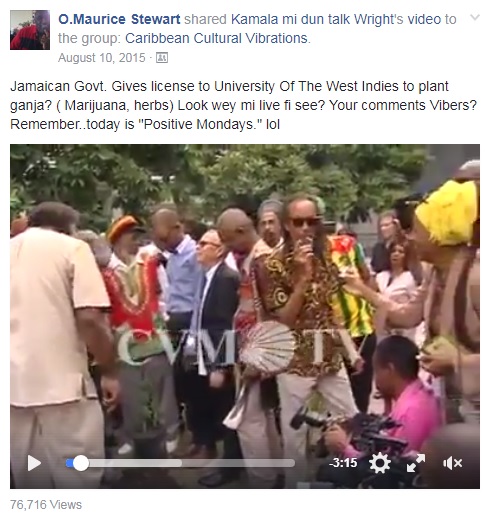
 

Share this post:
, , , ,
[Top]

Ferries 101: Economics, Security and Governance

Go Lean Commentary

The absolute best way to get from Point A to Point B is a straight line. If those two points are separated by water then the best way is a causeway or a bridge.

That is the ideal. Then there is island life, where we have to accept the Less Than ideal. Many times the best way to get from Point A to Point B across a body of water is a boat, or more specifically a Ferry.

CU Blog - Ferries - Economics, Security and Governance - Photo 0Welcome to a discussion of “Ferries 101”. Also, welcome to British Colombia, Canada. They provide the Caribbean such good role models and lessons of how to facilitate modern life with the realities of coastal and island living.

May we pay more than the usual attention to this Canadian model and these lessons.

The book Go Lean…Caribbean – available to download for free – proposed a plan to better unite the 30 Caribbean member-states – all islands and coastal territories – that incorporated a full deployment of a network of ferries. This would be so transformative for the Caribbean region that we had to study a successful deployment of such a scheme. The best role model was the Pacific North American coast – the Salish Sea; this is the intricate network of coastal waterways that includes the southwestern portion of the Canadian province of British Columbia (Vancouver) and the northwestern portion of the U.S. state of Washington (Seattle). Its major bodies of water are the Strait of Georgia, the Strait of Juan de Fuca, and Puget Sound. This inland waterway features international borders, constant trade and travel to facilitate year-round tourism and commerce. (See VIDEO in the Appendix below).

Copying such a model is a Big Deal for the Caribbean – too big for any one member-state alone. The Go Lean book thusly serves as a roadmap for the introduction and implementation of the technocratic Caribbean Union Trade Federation (CU), an inter-governmental entity for all 30 member-states. The purpose is to better facilitate the societal engines (economics, security & governance) of the region that would lead to the elevation of Caribbean society – for all member-states. The book states this vision emphatically with this quotation:

The CU envisions a similar – [to North America’s Salish Sea] – water-based highway system of ferries and docks to facilitate passenger, cargo and vehicle travel connecting the islands of the Caribbean region to the mainland ports. This ferry system will be a component of the Union Atlantic Turnpike. – Page 280.
CU Blog - Ferries - Economics, Security and Governance - Photo 1a

CU Blog - Ferries - Economics, Security and Governance - Photo 1e

CU Blog - Ferries - Economics, Security and Governance - Photo 1d

CU Blog - Ferries - Economics, Security and Governance - Photo 1c 

This CU/Go Lean roadmap has these 3 prime directives:

  • Optimization of the economic engines in order to grow the regional economy to $800 Billion and create 2.2 million new jobs.
  • Establishment of a security apparatus to ensure public safety and protect the homeland; and the seas.
  • Improve Caribbean governance to support these engines, including a separation-of-powers between the member-states and CU federal agencies.

The book stresses that reforming and transforming the Caribbean societal engines must be a regional pursuit. This was an early motivation for the roadmap, as pronounced in the opening Declaration of Interdependence (Pages 12 – 13):

xi. Whereas all men are entitled to the benefits of good governance in a free society, “new guards” must be enacted to dissuade the emergence of incompetence, corruption, nepotism and cronyism at the peril of the people’s best interest. The Federation must guarantee the executions of a social contract between government and the governed.

xvi. Whereas security of our homeland is inextricably linked to prosperity of the homeland, the economic and security interest of the region needs to be aligned under the same governance. Since economic crimes … can imperil the functioning of the wheels of commerce for all the citizenry, the accedence of this Federation must equip the security apparatus with the tools and techniques for predictive and proactive interdictions.

xxiv. Whereas a free market economy can be induced and spurred for continuous progress, the Federation must install the controls to better manage aspects of the economy: jobs, inflation, savings rate, investments and other economic principles. Thereby attracting direct foreign investment because of the stability and vibrancy of our economy.

The Go Lean book provides 370-pages of turn-by-turn instructions on “how” to adopt new community ethos, plus the strategies, tactics, implementations and advocacies to execute so as to reboot, reform and transform the societal engines of Caribbean society. The deployment of ferries is integral to the Go Lean roadmap for a “Union Atlantic Turnpike” – this is defined in the book as …

“a big initiative of the CU to logistically connect all CU member-states for easier transport of goods and passengers. The Turnpike is virtual … made up of many physical transportation modes envisioned for the region: Pipeline, Ferries, Highways, and Railroad”. – Page 205

Here is a sample of references to the ferry eco-system through-out the Go Lean book:

Community Ethos – Group Purchase organizations (GPO) – Big Ferry purchases Page 24
Strategy – Competitive Analysis – Buy foreign or buy local – Ferries could neutralize transportation challenges and high costs Page 51
Strategy – Stakeholders – Visitors – Snowbirds can bring RV’s on ferries Page 55
Strategy – Agents of Change – Technology – Industrial efficiencies for transportation options like “Fast Ferry” Page 57
Tactical – Separation of Powers – Department of Transportation – Turnpike Operations: Integrated Ferries Page 84
Tactical – Separation of Powers – Department of Transportation – Marine Administration to include Ferry Operations Page 84
Implementation – Ways to Develop a Pipeline Industry – “Pneumatic Capsule Pipeline” as an advanced ferry system for cargo Page 107
Implementation – Ways to Re-boot [Sample City] Freeport – Shipbuilding options to build/maintain ferries Page 112
Planning – 10 Big Ideas for the Caribbean – Ferries create Virtual “Turnpike” Operations Page 127
Planning – Ways to Improve Interstate Commerce – Ferries operate as transportation arteries Page 129
Planning – Ways to Improve Interstate Commerce – State License Plates Online Registration Access as Ferries allows cars to “island hop” Page 129
Planning – Lessons from New York City – Many transport options including ferries Page 137
Planning – Lessons from the American West – Railroads and Highways opened the West for better commerce, the same as ferries will do for the CU. Page 142
Planning – Lessons from Canada’s History – well-developed trade networks made for Advanced Economy. Page 146
Advocacy – Ways to Create Jobs – New Jobs for Infrastructural Build-out (Ferry docks) Page 152
Advocacy – Ways to Improve Housing – Pre-fab Industry/Jobs depend on Ferry deployment for logistics Page 161
Advocacy – Ways to Impact Public Works – Union Atlantic Turnpike requires Ferry Piers Page 175
Advocacy – Ways to Improve Homeland Security – Naval Authority: to ensure and protect the waterscapes and vessels of the region to mitigate against “bad actions and bad actors”. Page 180
Advocacy – Ways to Enhance Tourism – New Winter Season Product: Snowbirds can transport RV’s with Ferries Page 190
Advocacy – Ways to Enhance Tourism – Dynamic Sea-lifts: Consider Fast Ferries boats and Spring Break traffic Page 190
Advocacy – Ways to Impact Events – Sea lifts for Passengers and Freight Page 191
Advocacy – Ways to Promote Fairgrounds – Ferries can transport “real” fairs Page 192
Advocacy – Ways to Impact Extractions – Ferries Schedule for Transport to Offshore Rigs Page 195
Advocacy – Ways to Foster e-Commerce – Logistics & Delivery options improve Page 198
Advocacy – Ways to Improve Transportation – Islands and Coastal areas demand more seafaring options i.e. ferries Page 205
Advocacy – Ways to Develop Ship-Building – Ferry Operations – Fleet Demand & Supply Page 209
Advocacy – Ways to Impact Rural Living – Ferries can optimize rural transportation options Page 235
Advocacy – Ways to Impact US Territories – Puerto Rico could be Transportation Hub Page 244
Appendix – New Transportation Jobs: Building/maintaining/administering toll roads, electric lines, and ferries: 15,000 Page 257
Appendix – Model of Alaska Marine Highway – Facilitated by ferries Page 280
Appendix – Model of Eurotunnel – The Ferry Link Page 281

This Go Lean book projects the roll-out of this Union Atlantic Turnpike as Day One / Step One of the Go Lean/CU roadmap. Over the 5-year implementation more and more of the features of the Turnpike will be deployed and their effect on the region will be undeniable: they will help to make the Caribbean a better place to live, work and play.

This Go Lean roadmap seeks to foster best-practices in the administration of a “ferry eco-system”. We will have a lot of coordinate – “many balls in the air”: shipbuilding, border protection, customs, events facilitation, trade and tourism promotion. These topics are just a sample of subjects previously addressed in many Go Lean commentaries; see a relevant list here:

https://goleancaribbean.com/blog/?p=12304 Caribbean Festival of the Arts – Transport Options for Events
https://goleancaribbean.com/blog/?p=12146 Commerce of the Seas – Shipbuilding Model of Ingalls
https://goleancaribbean.com/blog/?p=12144 Commerce of the Seas – Book Review: ‘Sea Power’
https://goleancaribbean.com/blog/?p=12126 Commerce of the Seas – Stupidity of the Jones Act
https://goleancaribbean.com/blog/?p=9179 Snowbirds Tourism – First Day of Autumn – Time to Head South
https://goleancaribbean.com/blog/?p=9070 Securing the Homeland – From the Seas
https://goleancaribbean.com/blog/?p=6867 How to address high consumer prices: Welcoming ferries
https://goleancaribbean.com/blog/?p=3713 Lesson from Canada: NEXUS – Facilitating Detroit-Windsor Commerce
https://goleancaribbean.com/blog/?p=673 Future Tech – Autonomous cargo vessels without a crew

The subject of ferries could be strategic and tactical for the Caribbean. They can create new lines of business for our region and help to optimize existing economic activities. Traditionally, building roads and building bridges have always been good for society and good for a local economy. Building ferries should be even easier than building a road or building a bridge.

While national-building is heavy-lifting, the administration of ferries need not be. We have so many good examples and role models to consider. For example, this weekend (June 30 / July 1, 2007) is a Big Deal in North America; Canada is celebrating Canada Day on July 1 and the US is celebrating its 4th of July Holiday. We see an example of the best-practices of governance in the news article in the Appendix below. The experience shows how good governance works; due to mechanical problems the ferry operations in this one British Colombian island had to be suspended and a recovery plan executed: free reservations. That is sure to go a long way in forging goodwill among Western Canadian “ferry” stakeholders. This provides a good example for our Caribbean planners, who are observing-and-reporting on Canadian efficiencies. See photos here and the VIDEO in the Appendix below:

CU Blog - Ferries - Economics, Security and Governance - Photo 4

CU Blog - Ferries - Economics, Security and Governance - Photo 3

CU Blog - Ferries - Economics, Security and Governance - Photo 2

Yes, Ferries 101 could exacerbate nation-building 101. These activities can have a positive impact on a nation’s economy, security and governance. The industry of ferries is just one of the basic functionalities that must be embraced for an Industrial Reboot; in fact, this can be catalogued as an Industrial Reboot 101. This commentary is 1 of 4 in an occasional series considering Industrial Reboots. The full series is as follows:

  1. Industrial Reboot – Ferries 101
  2. Industrial RebootPrisons 101
  3. Industrial RebootPipeline 101
  4. Industrial RebootFrozen Foods 101

Yes, we can … reboot our industrial landscape, for our waterways. Past generations of Caribbean people lived off the sea; it is now past-time to do that again. This plan – the roadmap to deploy a regional network of ferries – is conceivable, believable and achievable. We urge all Caribbean stakeholders to lean-in to this roadmap for economic empowerment. We can make the Caribbean homeland – with better interconnectivity between the islands and the “mainlands” – better places to live, work and play. 🙂

Download the free e-Book of Go Lean … Caribbean – now!

Sign the petition to lean-in for this roadmap for the Caribbean Union Trade Federation.

————

Appendix – News Article: Free B.C. Ferries reservations to help Mayne Island travellers
By: Louise Dickson

CU Blog - Ferries - Economics, Security and Governance - Photo 1bB.C. Ferries is offering free reservations on the Tsawwassen-Swartz Bay route for people travelling to Mayne Island in the next few days after hundreds of weekend travellers were caught in a massive traffic jam as they tried to leave the island on Sunday.

All sailings of Queen of Nanaimo between the Lower Mainland and the Gulf Islands were cancelled on Friday due to propeller problems. The Queen of Nanaimo, which has room for 160 cars and 900 passengers, is still out of service and won’t be operating until at least Thursday.

The smaller Salish Eagle, which holds 140 cars and 600 passengers, is running between Tsawwassen and Vancouver Island. B.C. Ferries is adding 12 sailing for the smaller ferry. The sailings will be on Tuesday, Wednesday and Thursday.

B.C. Ferries is working on getting Queen of Nanaimo back into service on Friday, in time for the long weekend, said corporation spokesman Darin Guenette.

If Queen of Nanaimo does not return to service, B.C. Ferries will put another ship on the route, if possible, he said.

The corporation is encouraging Lower Mainland customers to travel through Swartz Bay to the southern Gulf Islands. People interested in travelling through Swartz Bay to the southern Gulf Islands can contact the customer care centre at 1-888-223-3779.

Source: The Times-Colonist – Western Canada’s Oldest Daily Newspaper – Posted & Retrieved June 26, 2017 from: http://www.timescolonist.com/news/local/free-b-c-ferries-reservations-to-help-mayne-island-travellers-1.20780665

————

Appendix VIDEO – Passage ferry QUEEN OF NANAIMO, Tsawwassen – Sturdies Bay (BC Ferries) – https://youtu.be/4c0U6qq2238

Published on Jul 6, 2016 – BC Ferries (06/2016)

Share this post:
, , ,
[Top]

Big Tech’s Amazon – The Retailers’ Enemy

Go Lean Commentary

The retail industry now has a “name for its pain”; they know who-what is undermining their business model. It is not just the Internet; it is …

Amazon.
Amazon 2

In a previous blog-commentary by the movement behind the book Go Lean … Caribbean, it was asserted that the industry is being threatened by the Retail Apocalypse. That was just generalizing the threat as “all things internet”, but now we see that Amazon is attempting to emerge from cyber-space and dominate the retail space.

To the victor go the spoils.

A lot is being spoiled, as shopping malls have suffered a dire disposition. See the full story here:

Title: What venture will Amazon tackle next?

People were shocked by Amazon’s announcement to buy Whole Foods Market for $13.7 billion, prompting many to wonder what the future of grocery and clothes shopping might look like as the online retailer attempts to dominate. NBC’s Jo Ling Kent has the report for TODAY.

VIDEO – American Giant Shopping Shift – http://www.today.com/video/what-venture-will-amazon-tackle-next-972676675883

This is the reality of Big Tech. There are 4 anchor companies in the Internet & Communications Technologies (ICT) industry that continue to impact the modern world and disrupt the legacies of commercial enterprises:

These companies have the treasuries, talent and temperament (culture, values and commitment) to change the world, for good and for bad. Amazon and its Founder-CEO Jeff Bezos are “talking the talk and walking the walk”; they put their “money where the mouth is”. They’ve just agreed to spend $13.7 Billion to acquire brick-and-mortar grocery store chain Whole Foods. This is a big deal!

It’s not just Amazon and Whole Foods: Here’s the enormous Jeff Bezos empire, in one chart – June 21, 2017
CU Blog - Retail Enemy - Amazon - Photo 1

Amazon and Bezos are disruptive role-players. They have disrupted the business model of so many industries and companies. This is the Retail Apocalypse … personified.

Amazon and this Retail Apocalypse are germane issues for the movement behind the book Go Lean…Caribbean. The book posits that there are “Agents of Change” that are impacting the economic, security and governing engines in Caribbean society; these “Agents of Change” include:

  • Technology
  • Globalization

Monitoring these “Agents of Change” is part-and-parcel of the roadmap this book presents for the introduction and implementation of the technocratic Caribbean Union Trade Federation (CU). The quest of this Go Lean/CU roadmap is to elevate the Caribbean’s societal engines starting first with economics (jobs, industrial development and entrepreneurial opportunities). In fact, the following 3 statements are identified as the prime directives of the CU:

  • Optimization of the economic engines in order to grow the regional economy to $800 Billion & create 2.2 million new jobs.
  • Establishment of a security apparatus to protect the resultant economic.
  • Improve Caribbean governance – as e-Commerce alters sales & border taxes – to support these engines.

According to the foregoing VIDEO, Amazon and Internet & Communications Technologies disrupting retail commerce is not all good and not all bad:

  • Good: Prices with internet commerce are cheaper than at retail stores.
  • Bad: Retail stores and jobs are endangered.
  • Good: Greater variety and product options.
  • Bad: Mall closures undermines local communities (tax base of neighboring properties).
  • Good: Technological innovations create economic opportunities in the ICT industry space.
  • Bad: State government revenue reductions based on prohibitions on internet taxes.
  • Good: Delivery options create logistical jobs.
  • Bad: Family businesses/Main Streets cannot compete.

The future matches forward.

Whether its Amazon or no Amazon, Jeff Bezos or someone else, change will come to the Retail Economy. This applies in the US or in the Caribbean. The point is to prepare for the change, to position regional institutions to explore all the opportunities that change brings. According to the Go Lean book …

‘Luck is the destination where opportunity meets preparation’ – Page 252.

What are Main Streets to do?

This question was fully analyzed in the Go Lean book in its 370-pages of turn-by-turn instructions on “how” to adopt new community ethos, and the the strategies, tactics, implementations and advocacies to execute so as to reboot, reform and transform the societal engines of Caribbean society. Consider  this sample advocacy on Page 201:

10 Ways to Impact Main Street

1 Lean-in for the Caribbean Single Market
This treaty allows for the unification of the region into one market, thereby expanding to an economy of 30 countries, 42 million people and a GDP of over $800 Billion. The mission of the CU is to enhance the economic engines of the region, fostering institutions like capital markets and secondary mortgage funds to facilitate local governments and town-planning efforts for downtown developments and enhancements. The CU’s adoption of electronic funds transfer modes will allow for more card-based transactions in the region. This facilitates Mail-Order / Telephone Order (MOTO), internet and mobile commerce modes – this is the future of retailing, and allows Mom-and-Pops to compete with “Big-Box”.
2 Repatriated Diaspora – Shopping Habits
3 Big-Box Competition: Cooperatives
4 Big-Box Competition: e-Commerce
Electronic commerce holds the promise of “leveling the playing field” so that small merchants can compete against larger merchants. To facilitate e-Commerce, purchased merchandise must get to their destinations as efficiently as possible.
The CU’s implementation of the Caribbean Postal Union allows for better logistics for package delivery.
5 Downtown Wi-Fi – Time and Place
The CU will foster the implementation of more technology solutions, including Wi-Fi for internet connectivity, especially in downtown areas. The emergence of mobile applications allows for the coordination of “time and place” to convert internet browsing to real-time purchasing. This communications service can be advertising based or subscription based.
6 Theater Districts
7 Downtown Development Authorities
8 Magnate and Charter Schools
9 The Arts in Public Places
10 Cruise Industry Port-side Merchants
In this [Caribbean] region, many tourist destinations for cruise ships are centered on Main Streets and downtowns, i.e. Bay Street in Nassau-Bahamas. The CU will foster more cruise passenger spending at the port-side merchants by facilitating e-Payments and settlement for the proprietary cruise passenger smart cards in Caribbean Dollars (not US$ or Euros).

Though not directly mentioned in the book, Amazon and the Retail Apocalypse is planned for in the Go Lean roadmap. A comprehensive view of  the technocratic stewardship for the region’s economic engines is presented early in the book with these opening pronouncements in the Declaration of Interdependence (Page 13 and 14):

xxiv. Whereas a free market economy can be induced and spurred for continuous progress, the Federation must install the controls to better manage aspects of the economy: jobs, inflation, savings rate, investments and other economic principles. Thereby attracting direct foreign investment because of the stability and vibrancy of our economy.

xxvii. Whereas the region has endured a spectator status during the Industrial Revolution, we cannot stand on the sidelines of this new economy, the Information Revolution. Rather, the Federation must embrace all the tenets of Internet Communications Technology (ICT) to serve as an equalizing element in competition with the rest of the world. The Federation must bridge the digital divide and promote the community ethos that research/development is valuable and must be promoted and incentivized for adoption.

The business models of Amazon and similar companies – and competitors – have been further elaborated upon in previous blog/commentaries. Consider this sample:

https://goleancaribbean.com/blog/?p=11453 Location Matters, Even in a Virtual World
https://goleancaribbean.com/blog/?p=9839 Alibaba Cloud stretches global reach with four new facilities
https://goleancaribbean.com/blog/?p=9800 Model of the Macy’s Thanksgiving Day Parade – By The Numbers
https://goleancaribbean.com/blog/?p=7297 Death of the ‘Department Store’: Exaggerated or Eventual
https://goleancaribbean.com/blog/?p=7023 Thanksgiving and American Commerce – Past, Present and Amazon
https://goleancaribbean.com/blog/?p=2488 Model of an E-Commerce Fulfillment Company: Alibaba
https://goleancaribbean.com/blog/?p=1416 Model of an E-Commerce Fulfillment Company: Amazon

Notice to all retail stakeholders: Amazon is not just your enemy; they are your “Pace Car”, the “target rabbit in a Greyhound race”.

CU Blog - Amazon - Retailers' Enemy - Photo 2

CU Blog - Amazon - Retailers' Enemy - Photo 3

Know your enemy!

Notice to all Caribbean stakeholders: Lean-in for the empowerments for e-Commerce described in the book Go Lean … Caribbean. We can do this; we can elevate our communities and our own retail eco-systems. We can be a better place to live, work and play; and a better place to shop.

🙂

Download the free e-Book of Go Lean … Caribbean – now!

Sign the petition to lean-in for the roadmap for the Caribbean Union Trade Federation.


Share this post:
, , , ,
[Top]

ENCORE: It’s College World Series Time … 2017

This is an ENCORE presentation of a previous blog-commentary from June 15, 2014, commemorating the College World Series in Omaha, Nebraska USA. This commentary is being re-distributed for the 2017 tournament (June 16 – 27/28). The following 8 teams were successful and rewarded for their achievement to this pinnacle of their sport:

California-Fullerton Florida
Florida State Louisiana State Univ.
Louisville Oregon State
Texas A & M Texas Christian Univ.

VIDEO Cinderella isn’t invited to the Omaha ball this year – http://www.espn.com/video/clip?id=19655041


Published on June 16, 2017 – Omaha, Nebraska is welcoming eight teams that have worked hard to earn their way into this year’s College World Series. – Source: ESPN

The original blog is re-presented here as follows:

============

Go Lean Commentary – Blog # 100 – College World Series Time

The sports world is all abuzz this weekend: World Cup in Brazil, NBA Finals, US Open Golf tournament, and the NCAA College World Series (CWS) baseball championship tournament.

History happens here!

History happens here!

This last event, CWS, is the subject of this blog, a milestone, the 100th in the series promoting the book Go Lean…Caribbean. This book serves as a roadmap for the introduction and implementation of the technocratic Caribbean Union Trade Federation (CU). While the CU is NOT a sports promotion entity, it does present an important role for sports in the vision to make the Caribbean a better place to live, work and play. As an expression of this vision Page 81 states:

“a mission of the CU is to forge industries and economic drivers around the individual and group activities of sports and culture”.

The Go Lean vision is a confederation of the 30 member-states of the Caribbean forming a proxy organization to do the heavy-lighting of building, funding and maintaining sports venues. The strategy is for the CU to be the landlord, and super-regional regulatory agency, for sports leagues, federations and associations (amateur, collegiate, and professional). This strategy relates to the College World Series model. The CWS tournament opened this weekend (June 14/15) in Omaha, Nebraska USA; this is the 65th straight tournament in the same city. This is an anomaly for American sports, as every year most big sporting events (Super Bowl, US Open Golf, NCAA Final Four, BCS Football Championship) rotate/move to different cities. Consider 2014 thus far:

Sport 2014 Host 2013 Host 2012 Host
Super Bowl New York City New Orleans, Louisiana Indianapolis, Indiana
US Open Golf Pinehurst, North Carolina Ardmore (Philadelphia), Pennsylvania San Francisco, California
NCAA Basketball Final Four Dallas, Texas Atlanta, Georgia New Orleans, Louisiana
BCS College Football Pasadena, California Miami, Florida New Orleans, Louisiana

But since 1950, the 12-day College World Series, college baseball championship, has been held in the City of Omaha. It was held at Rosenblatt Stadium from 1950 through 2010; starting in 2011, it has been moved to the new ultra-modern TD Ameritrade Park downtown. The 2013 attendance of 341,483 belies the economic benefits.

CWS Photo 2

CWS Photo 3

These facts reinforce the marketing tag line of CWS Omaha, Inc., (a Nebraska technocracy):

History Happens Here.

The prime directives of the CU/Go Lean roadmap are described with these 3 statements:

  • Optimization of the economic engines in order to grow the regional economy to $800 Billion & create 2.2 million new jobs.
  • Establishment of a security apparatus to protect the resultant economic engines.
  • Improve Caribbean governance to support these engines.

This roadmap commences with the recognition that genius qualifiers can be found in many fields of endeavor, including sports. The roadmap pronounces the need for the region to confederate in order to invest in the facilitations for the Caribbean sports genius to soar. These pronouncements are made in the Declaration of Interdependence, (Pages 13 & 14) as follows:

xxi. Whereas the preparation of our labor force can foster opportunities and dictate economic progress for current and future generations, the Federation must ensure that educational and job training opportunities are fully optimized for all residents of all member-states, with no partiality towards any gender or ethnic group. The Federation must recognize and facilitate excellence in many different fields of endeavor, including … sports. This responsibility should be executed without incurring the risks of further human flight, as has been the past history.

xxii. Whereas sports have been a source of great pride for the Caribbean region, the economic returns from these ventures have not been evenly distributed as in other societies. The Federation must therefore facilitate the eco-systems and vertical industries of sports as a business, recreation, national pastime and even sports tourism – modeling the Olympics.

All in all, the Go Lean book and accompanying blogs declare that the Caribbean needs to learn lessons from CWS-Omaha and other sporting venues/administrations. And thus this subject of the “business of sports” is a familiar topic for Go Lean blogs. The previous blogs as follows, and this one, constitutes 8 of the first 100 entries:

a. https://goleancaribbean.com/blog/?p=1214 The Art & Science of Temporary Stadiums – No White Elephants
b. https://goleancaribbean.com/blog/?p=1148 Sports Bubble – Franchise values in basketball
c. https://goleancaribbean.com/blog/?p=1020 Sports Revolutionary: Advocate Jeffrey Webb
d. https://goleancaribbean.com/blog/?p=498 Book Review: ‘The Sports Gene’
e. https://goleancaribbean.com/blog/?p=334 Bahamians Make Presence Felt In Libyan League
f. https://goleancaribbean.com/blog/?p=318 Collegiate Sports in the Caribbean
g. https://goleancaribbean.com/blog/?p=60 Could the Caribbean Host the Olympic Games?

This Go Lean roadmap is committed to availing the economic opportunities of all the Caribbean athletic abilities. The book details these series of community ethos, strategies, tactics, implementations and advocacies designed to deliver regional solutions:

Community Ethos – Return on Investments Page 24
Community Ethos – Ways to Foster Genius Page 27
Community Ethos – Ways to Impact the Greater Good Page 37
Strategic – Staffing – Sporting Events at Fairgrounds Page 55
Tactical – Fostering a Technocracy Page 64
Tactical – Separation of Powers – Sports & Culture Administration Page 81
Tactical – Separation of Powers – Fairgrounds Administration Page 83
Implementation – Steps to Implement   Self-Governing Entities Page 105
Implementation – Ways to Deliver Page 109
Planning – Ways to Make the Caribbean   Better Page 131
Advocacy – Ways to Grow the Economy Page 151
Advocacy – Ways to Improve Local Government – Parks & Recreation Page 169
Advocacy – Ways to Impact Events Page 191
Advocacy – Ways to Promote Fairgrounds Page 192
Advocacy – Ways to Improve Sports Page 229
Advocacy – Ways to Impact Urban Living – Sports Leagues Page 234

The Go Lean roadmap encourages solid business plans to develop sports stadia and arenas at CU-owned fairgrounds. Where appropriate, there should be the deployment of temporary bleacher seats/grandstands and structures (think: golf tournaments and Beach Volleyball). There is an obvious economic impact from deployments of Sports Tourism in areas like jobs, ticket sales, hotel bookings and other community spin-off spending.

The following 8 teams in this year’s tournament are indicative of the need for hospitality as they are from cities all around the country:

UC Irvine Texas Tech
Texas TCU
Louisville Ole Miss
Vanderbilt Virginia

There are obvious community benefits from this business model. In fact, the Go Lean roadmap anticipates 21,000 direct jobs at fairgrounds and sports enterprises throughout the region. This is not bad for lessons learned from the College World Series in Omaha.

Now is the time for all of the Caribbean, the people and governing institutions, to lean-in for the empowerments of the Caribbean Union Trade Federation, as prescribed by the Go Lean…Caribbean roadmap. 🙂

Download the free e-book of Go Lean … Caribbean – now!

Sign the petition to lean-in for this roadmap for the Caribbean Union Trade Federation.


Share this post:
, , ,
[Top]

Commerce of the Seas – Extraction Realities

Go Lean Commentary

According to the book Go Lean…Caribbean, ‘Luck is the destination where opportunity meets preparation’ – Page 252.

Well, opportunity is awaiting the Caribbean … for mineral extraction and oil exploration.

CU Blog - Commerce of the Seas - Extraction Realities - Photo 1The book also alerts the Caribbean region that Climate Change is raging forward, with a lot of repercussions in its wake. Global warming is resulting in higher sea levels, due to the melting of the polar ice craps/icebergs. A repercussion is:

Beach erosion.

Beaches are gravely important for the American East Coast. (They are important to Caribbean communities as well). So many communities depend on beach vacation and traffic during the spring/summer months (think Spring Break and the commercial summer season of Memorial Day to Labor Day). So when oil spills or predictable storms endanger beach sand, it becomes an urgent imperative for communities to assuage the crisis, even replace the sand; consider these recent News Articles/Summaries here:

Title: Beach Erosion on the US East Coast

Extraction - Photo 2

Extraction - Photo 5

Extraction - Photo 4

1.  http://www.sun-sentinel.com/news/florida/sfl-us-has-ok-to-study-bringing-bahamas-sand-to-florida-beaches-20170102-story.html

    January 2, 2017: A possible solution for replacing sand on South Florida beaches is buying it from the Bahamas. The US federal government has now loosened rules to make this possible.

2.  https://www.scientificamerican.com/article/what-causes-beach-erosion/

    The Art-and-Science of beach management is now being challenged – “Unfortunately for beach lovers and owners of high-priced beach-front homes, coastal erosion in any form is usually a one-way trip. Man-made techniques such as beach nourishment—whereby sand is dredged from off-shore sources and deposited along otherwise vanishing beaches—may slow the process, but nothing short of global cooling or some other major geomorphic change will stop it altogether.”

3.  http://abcnews.go.com/US/deepdive/disappearing-beaches-sea-level-rise-39427567

    DISAPPEARING BEACHES – A Line in the Sand – A tragic story of a family that buys a beach house in 1982, but today, they have to abandon it because of the eroding sands, and bedrock under the house.

4.  AUDIO: http://www.npr.org/2014/09/18/348985568/a-coastal-paradise-confronts-its-watery-future

    September 18, 2014 – There is ‘Trouble in Paradise’. Beachfront communities are finding the waters rising more and more due to global warming.


——–

Title: Oil Exploration and Drilling

http://www.npr.org/2015/03/12/392383373/plans-to-explore-for-oil-offshore-worry-east-coast-residents
March 12, 2015

    March 12, 2015 – As the [US federal government] administration opens the door to offshore drilling, the oil industry is promising more jobs and less reliance on foreign oil. … Coastal towns and cities in several states are formally opposing offshore drilling and oil exploration.

——–

Everyone has a price! So if the price goes up high enough, there may be interested parties among Caribbean member-states to take the money for allowing mineral/oil extraction in their offshore vicinity. There is a need to be alarmed at such proposals, as dredging sand or drilling for oil may endanger protected reefs or other underwater marine features.

With greater demand – imagine post hurricanes – the Laws of Supply-and-Demand will mandate that the prices for extracted minerals will only increase.

It will get more and more tempting!

The movement behind the book Go Lean…Caribbean wants to add other types of economic activities to the Caribbean landscape; we urgently want to use the sea as an industrial zone. This is because the Caribbean region is badly in need of jobs. The book urges communities to empower the economic engines of the Caribbean Sea, as in mineral & oil extraction.

The region’s economic driver is tourism. Tourism and “mineral extraction or oil exploration” are incompatible activities. Thus there is the need for the cautions in this commentary. The challenge is to embrace the commerce of mineral extraction for the positives, while avoiding the negatives.

Challenge accepted!

The book Go Lean…Caribbean serves as a roadmap for the introduction and implementation of the Caribbean Union Trade Federation (CU). This would be the governmental entity for a regional Single Market that covers the land territories of the 30 member-states, and their aligning seas; (including the 1,063,000 square miles of the Caribbean Sea). The Go Lean/CU roadmap features this prime directive, as defined by these 3 statements:

  • Optimization of the economic engines to grow the regional economy to $800 Billion & create 2.2 million new jobs.
  • Establishment of a security apparatus to protect public safety and ensure the economic engines of the region, including the seas.
  • Improvement of Caribbean governance to support these engines in local governments and in the Exclusive Economic Zone, including a separation-of-powers between the member-states and CU federal agencies.

This commentary posits that there are opportunities for the Caribbean to better explore the “Commerce of the Seas”, to deploy International Maritime Organisation-compliant offshore mineral/oil extraction and dredging operations. There are so many lessons that we can learn from the Economic History of other communities and their exploitation of extraction on the high seas. This commentary previously identified a series of 4 commentaries considering the Lessons in Economic History related to “Commerce of the Seas”; this entry is a 5th entry. The full series is as follows:

  1. Commerce of the Seas – Stupidity of the Jones Act
  2. Commerce of the Seas – Book Review: ‘Sea Power’
  3. Commerce of the Seas – Shipbuilding Model of Ingalls
  4. Commerce of the Seas – Lessons from Alang (India)
  5. Commerce of the Seas – Extraction Reality

The reference to “Commerce” refers to the economic interest of the 30 member-states in the Caribbean region. There is the need for more commercial opportunities that would impact the community with job and entrepreneurial empowerments.

Mineral extraction and oil exploration could be providential! Consider these foregoing source references.

In a previous blog, Guyana prioritized oil exploration and drilling as an economic activity in their Exclusive Economic Zone…

… the oil industry/eco-system could be a dizzying ride, up and down, complete with exhilaration and anxiety, especially for communities with mono-industrial economic engines. Trinidad is once such community. Now Guyana is entering that fray.

There are other countries seeking to join these ranks: Haiti, Jamaica, and the Bahamas.

A key consideration in this commentary is the concept of Exclusive Economic Zones (EEZ). Every Caribbean nation with no immediate neighbor within the 200 miles has this exclusive territory to exploit; the previously identified blog-commentary from May 25, 2015 detailed the encyclopedic details, shown here again in Appendix A.

The EEZ is factored in for mineral extraction and oil exploration. This is both a simple and a complicated issue. There is a lot of heavy-lifting involved to balance the needs of commerce and environmental protection.

This is the guidance from the book Go Lean … Caribbean. The CU federation is designed to employ best practices for economics, security and governance. The CU/Go Lean roadmap posits that “Extractions” (Oil and minerals like Rare Earths) must be a significant tactic for the Caribbean region to elevate its society.

The implementation of the CU allows for the designation of an enlarged Exclusive Economic Zones – requiring special approval from an United Nations Tribunal – consolidating existing EEZ’s and the technocratic cooperative-administration of Extractions within that space. This vision was embedded in the Go Lean’s book’s opening Declaration of Interdependence. See the need for regional coordination and integration pronounced these sample stanzas (Page 11 – 13):

i. Whereas the earth’s climate has undeniably changed resulting in more severe tropical weather storms, it is necessary to prepare to insure the safety and security of life, property and systems of commerce in our geographical region. As nature recognizes no borders in the target of its destruction, we also must set aside border considerations in the preparation and response to these weather challenges.

v. Whereas the natural formation of our landmass and coastlines entail a large portion of waterscapes, the reality of management of our interior calls for extended oversight of the waterways between the islands. The internationally accepted 12-mile limits for national borders must be extended by International Tribunals to encompass the areas in between islands. The individual states must maintain their 12-mile borders while the sovereignty of this expanded area, the Exclusive Economic Zone, must be vested in the accedence of this Federation.

xi. Whereas all men are entitled to the benefits of good governance in a free society, “new guards” must be enacted to dissuade the emergence of incompetence, corruption, nepotism and cronyism at the peril of the people’s best interest. The Federation must guarantee the executions of a social contract between government and the governed.

xxvi. Whereas the Caribbean region must have new jobs to empower the engines of the economy and create the income sources for prosperity, and encourage the next generation to forge their dreams right at home, the Federation must therefore foster the development of new industries, like that of ship-building…. In addition, the Federation must invigorate the enterprises related to existing industries like … fisheries … – impacting the region with more jobs.

The Go Lean book provides a 370-page guide on “how” to optimize the eco-system for mineral extraction and oil exploration in an integrated Caribbean region, for the geographic area of the Caribbean Sea. This is the “Commerce of the Seas”.

The Go Lean/CU roadmap asserts that as the confederation for the region’s 30 member-states, the CU, will be the administrator of this EEZ. Step One / Day One of the roadmap calls for awarding contracts for oil exploration and other extractions in the EEZ – this is one of  the methods for financing the CU; this is how to Pay For Change.

The Go Lean roadmap details a series of community ethos, strategies, tactics, implementations and advocacies to foster development, administration and protections in the Caribbean EEZ. Consider this sample except (headlines) from the book’s Page 195:

10 Ways to Impact Extractions

Case Study: The Bottom Line on the Deepwater Horizon Oil Spill
The disaster (also referred to as the BP Oil spill or the Macondo blowout) was an oil spill in the Gulf of Mexico on the BP operated Macondo Prospect, considered the largest accidental marine oil spill in the history of the petroleum industry. Following the explosion and sinking of the Deepwater Horizon oil rig, which claimed 11 lives, a sea-floor oil gusher flowed for 87 days, until it was finally capped on 15 July 2010. The total discharge is estimated at 4.9 million barrels (210 million gallons), resulting in a massive response ensued to protect beaches, wetlands and estuaries from the spreading oil utilizing skimmer ships, floating booms, controlled burns and 1.84 million gallons of Corexit (a chemical oil dispersant). After several failed efforts to contain the flow, the well was declared sealed on 19 September 2010. Due to the months-long spill, along with adverse effects from the response and cleanup activities, extensive damage to marine and wildlife habitats, fishing and tourism industries, and human health problems have continued through this day, 2013. Three years after the spill, tar balls could still be found on the Mississippi coast. …

[See Trailer of the resultant 2016 Movie-Storytelling in the Appendix B VIDEO below.]

1

Lean-in for Caribbean Integration
The CU treaty unifies the Caribbean region into one single market of 42 million people across 30 member-states, thereby empowering the economic engines in and on behalf of the region, including many public works projects and the emergence of many new industries. The new regional jurisdiction allows for mineral extraction (mines), oil/natural gas exploration in the Exclusive Economic Zone and some federal oversight for domestic mining/drilling/extraction operations, especially where systemic threats or cross-border administration are concerned. One CU mandate is to protect tourism. This is just one of the negative side-effects to be on guard for, see Appendix ZK (Page 334) for other concerns.

2

Oil – Mitigation Plan
The concept of oil exploration is very strategic for the CU, as there are member-states that are oil producers. With energy prices so high, this is a lucrative endeavor. But there is risk, tied to the reward equation; the CU cannot endure a Deepwater Horizon-style disaster. Risk management and disaster mitigation plan must therefore be embedded into every drilling permit. The CU will oversee this governance and provide transparent oversight, accountability & reporting.

3

“Rare Earth” Rush – Minerals Priced higher than Gold (Year 2010: $1,000 a pound; $2,200 per kilogram)
There is a “rush”/quest to harvest rare earth elements. These include lanthanide elements (fifteen metallic chemical elements with atomic numbers 57 through 71, from lanthanum through lutetium) for metals that are ferromagnetic, this means their magnetism only appear at low temperatures. Rare earth magnets are made from these compounds and are ideal in many high-tech products. The CU will foster the regional exploration and extraction of these pricey materials.

4

Pipeline Strategy/Tactical Alignment

5

Emergency Response / Trauma Center
The CU accedence grants authority for federal jurisdiction on oil exploration/drilling projects. This is due to the environmental concerns, systemic threats and the strategic implications for energy security. So CU Emergency (Risk, Disaster, and Medical Trauma) Managers will audit and test shutdown, mitigation and emergency procedures annually.

6

Exclusive Economic Zone Oversight / Research and Exploration

7

State Regulated Mining – Peer Review

8

Precious Metals – Exclusive to Caribbean Dollar

9

Treasure Hunting in EEZ – CU must grant Excavation “Permits”

10

Ferries Schedule for Transport to Offshore Rigs

The CU will foster “Extractions” as an industrial alternative to tourism. We have the natural resources (in the waterscapes), the skills and the passionate work-force. We only need the Commerce of the Seas. The Caribbean people are now ready for this industrial empowerment as mineral/oil extraction is both good … and bad!

The Go Lean roadmap asserts that economic needs are undeniable and tempting. While the region sorely needs the economic empowerments, this roadmap also details the mitigations and security measures to guarantee environmental protection.

There is much at stake when communities get the Art-and-Science of mineral extraction wrong!

This commentary ends this deep, long review of the Commerce of the Seas discussion. We have considered many different industries: Tourism, Cruise Lines, Shipping-Trade, Shipbuilding, Ship-breaking and now, Extractions. That is a lot of details to get right! The optimizations of these areas are the hallmarks of a technocracy. Yes, we can … get this right!

Now is the time for all of the Caribbean, the people, business, institutions and governments, to lean-in for the technocratic deliveries of the Go Lean/CU roadmap. 🙂

Download the free e-book of Go Lean … Caribbean – now!

Sign the petition to lean-in for this roadmap for the Caribbean Union Trade Federation.

———–

Appendix A – Exclusive Economic Zone

An Exclusive Economic Zone (EEZ) is a sea zone prescribed by the United Nations Convention on the Law of the Sea over which a state has special rights regarding the exploration and use of marine resources, including energy production from water and wind.[1] It stretches from the baseline out to 200 nautical miles (nmi) from its coast. In colloquial usage, the term may include the continental shelf. The term does not include either the territorial sea or the continental shelf beyond the 200 nmi limit. The difference between the territorial sea and the exclusive economic zone is that the first confers full sovereignty over the waters, whereas the second is merely a “sovereign right” which refers to the coastal state’s rights below the surface of the sea. The surface waters, as can be seen in the map, are international waters.[2]

Generally, a state’s EEZ extends to a distance of 200 nautical miles (370 km) out from its coastal baseline. The exception to this rule occurs when EEZs would overlap; that is, state coastal baselines are less than 400 nautical miles (740 km) apart. When an overlap occurs, it is up to the states to delineate the actual maritime boundary.[3] Generally, any point within an overlapping area defaults to the nearest state.[4]

A state’s Exclusive Economic Zone starts at the landward edge of its territorial sea and extends outward to a distance of 200 nautical miles (370.4 km) from the baseline. The Exclusive Economic Zone stretches much further into sea than the territorial waters, which end at 12 nmi (22 km) from the coastal baseline (if following the rules set out in the UN Convention on the Law of the Sea).[5] Thus, the EEZ includes the contiguous zone. States also have rights to the seabed of what is called the continental shelf up to 350 nautical miles (648 km) from the coastal baseline, beyond the EEZ, but such areas are not part of their EEZ. The legal definition of the continental shelf does not directly correspond to the geological meaning of the term, as it also includes the continental rise and slope, and the entire seabed within the EEZ.

The following is a list of the largest Exclusive Economic Zones; by country with a few noticeable deviations:

Country EEZ Kilometers2 Additional Details
United States 11,351,000 The American EEZ – the world’s largest – includes the Caribbean overseas territories of Puerto Rico and the US Virgin Islands.
France 11,035,000 The French EEZ includes the Caribbean overseas territories of Guadeloupe, Martinique, Saint Martin, Saint Barthélemy and French Guiana.
Australia 8,505,348 Australia has the third largest exclusive economic zone, behind the United States and France, with the total area actually exceeding that of its land territory. Per the UN convention, Australia’s EEZ generally extends 200 nautical miles (370 km) from the coastline of Australia and its external territories, except where a maritime delimitation agreement exists with another state.[15]The United Nations Commission on the Limits of the Continental Shelf confirmed, in April 2008, Australia’s rights over an additional 2.5 million square kilometres of seabed beyond the limits of Australia’s EEZ.[16][17] Australia also claimed, in its submission to the UN Commission on the Limits of the Continental Shelf, additional Continental Shelf past its EEZ from the Australian Antarctic Territory,[18] but these claims were deferred on Australia’s request. However, Australia’s EEZ from its Antarctic Territory is approximately 2 million square kilometres.[17]
Russia 7,566,673
United Kingdom 6,805,586 The UK includes the Caribbean territories of Anguilla, Bermuda, Cayman Islands, Montserrat, Turks & Caicos and the British Virgin Islands.
Indonesia 6,159,032
Canada 5,599,077 Canada is unusual in that its EEZ, covering 2,755,564 km2, is slightly smaller than its territorial waters.[20] The latter generally extend only 12 nautical miles from the shore, but also include inland marine waters such as Hudson Bay (about 300 nautical miles (560 km; 350 mi) across), the Gulf of Saint Lawrence and the internal waters of the Arctic archipelago.
Japan 4,479,388 In addition to Japan’s recognized EEZ, it also has a joint regime with Republic of (South) Korea and has disputes over other territories it claims but are in dispute with all its Asian neighbors (Russia, Republic of Korea and China).
New Zealand 4,083,744
Chile 3,681,989
Brazil 3,660,955 In 2004, the country submitted its claims to the United Nations Commission on the Limits of the Continental Shelf (CLCS) to extend its maritime continental margin.[19]
Mexico 3,269,386 Mexico’s EEZ comprises half of the Gulf of Mexico, with the other half claimed by the US.[32]
Micronesia 2,996,419 The Federated States of Micronesia comprise around 607 islands (a combined land area of approximately 702 km2 or 271 sq mi) that cover a longitudinal distance of almost 2,700 km (1,678 mi) just north of the equator. They lie northeast of New Guinea, south of Guam and the Marianas, west of Nauru and the Marshall Islands, east of Palau and the Philippines, about 2,900 km (1,802 mi) north of eastern Australia and some 4,000 km (2,485 mi) southwest of the main islands of Hawaii. While the FSM’s total land area is quite small, its EEZ occupies more than 2,900,000 km2 (1,000,000 sq mi) of the Pacific Ocean.
Denmark 2,551,238 The Kingdom of Denmark includes the autonomous province of Greenland and the self-governing province of the Faroe Islands. The EEZs of the latter two do not form part of the EEZ of the European Union. See Photo 4.
Papua New Guinea 2,402,288
China 2,287,969
Marshall Islands 1,990,530 The Republic of the Marshall Islands is an island country located near the equator in the Pacific Ocean, slightly west of the International Date Line. Geographically, the country is part of the larger island group of Micronesia. The country’s population of 68,480 people is spread out over 24 coral atolls, comprising 1,156 individual islands and islets. The land mass amounts to 181 km2 (70 sq mi) but the EEZ is 1,990,000 km2, one of the world’s largest.
Portugal 1,727,408 Portugal has the 10th largest EEZ in the world. Presently, it is divided in three non-contiguous sub-zones:

Portugal submitted a claim to extend its jurisdiction over additional 2.15 million square kilometers of the neighboring continental shelf in May 2009,[44] resulting in an area with a total of more than 3,877,408 km2. The submission, as well as a detailed map, can be found in the Task Group for the extension of the Continental Shelf website.

Spain disputes the EEZ’s southern border, maintaining that it should be drawn halfway between Madeira and the Canary Islands. But Portugal exercises sovereignty over the SavageIslands, a small archipelago north of the Canaries, claiming an EEZ border further south. Spain objects, arguing that the SavageIslands do not have a separate continental shelf,[45] citing article 121 of the United Nations Convention on the Law of the Sea.[46] <<< See Photo 6 >>>

Philippines 1,590,780 The Philippines’ EEZ covers 2,265,684 (135,783) km2[41]. See Photo 5.
Solomon Islands 1,589,477
South Africa 1,535,538
Fiji 1,282,978 Fiji is an archipelago of more than 332 islands, of which 110 are permanently inhabited, and more than 500 islets, amounting to a total land area of about 18,300 square kilometres (7,100 sq mi).
Argentina 1,159,063
Spain 1,039,233
Bahamas 654,715
Cuba 350,751
Jamaica 258,137
Dominican Republic 255,898
Barbados 186,898
Netherlands 154,011 The Kingdom of the Netherlands include the Antilles islands of Aruba. Bonaire, Curacao, Saba, Sint Maarten and Sint Eustatius
Guyana 137,765
Suriname 127,772
Haiti 126,760
Antigua and Barbuda 110,089
Trinidad and Tobago 74,199
St Vincent and the Grenadines 36,302
Belize 35,351
Dominica 28,985
Grenada 27,426
Saint Lucia 15,617
Saint Kitts and Nevis 9,974

(Source: Retrieved May 25, 2017 from: http://en.wikipedia.org/wiki/Exclusive_economic_zone)

———–

Appendix B VIDEO – Deepwater Horizon (2016) Official Movie Trailer – ‘Heroes’ – https://youtu.be/S-UPJyEHmM0

Published on May 26, 2016 – Deepwater Horizon – Now Playing.
#DeepwaterHorizonMovie

CU Blog - Commerce of the Seas - Extraction Realities - Photo 6

Share this post:
, ,
[Top]