Category: Economics

Puerto Rico Governor Signs Bill on SME’s

PR SME - Photo 1Go Lean Commentary

This sentence in the news article below about small & medium-sized enterprises (SME’s) speaks volumes for Puerto Rico’s economy and all the Caribbean:

According to government data, 95 percent of companies in Puerto Rico are SMEs with 50 or fewer employees, and they employ around 25 percent of the jobs on the island.

So if there is a plan to grow jobs in Puerto Rico and the Caribbean, that plan must look to impact small businesses or SME’s.

By: The Caribbean Journal staff

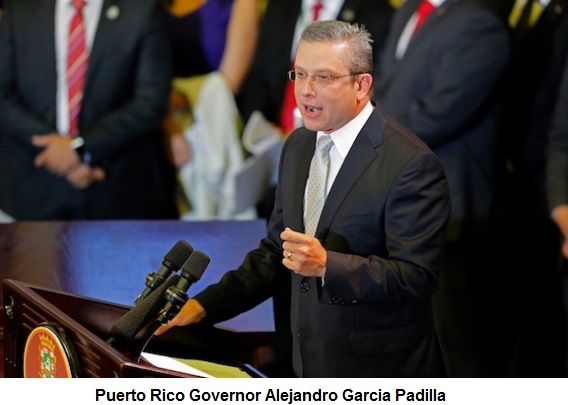
Puerto Rico Governor Alejandro Garcia Padilla has signed a bill aiming to boost small and medium-sized enterprises on the island.

The new law has several provisions: it reserves part of government purchases for local businesses, encourages the integration of professional and new entrepreneurs and gives priority to SMEs “in discretionary public funds to subsidize payroll for new jobs or existing ones,” Garcia Padilla’s office said in a statement.

The bill, called the “Support for Microenterprise, Small and Medium Merchant Act” amends the island’s Procurement Reserve Act to 20 percent, and establishes a reserve of 60 percent for SMEs when granting subsidies under the Law of Security in Employment.

“This bill is for SMEs what the Law of Incentives for Economic Development and previous industrial incentive laws were for manufacturing in Puerto Rico. That’s how important it is,” the Governor said in a statement. “The country is undergoing the biggest transformation in its recent history.”

According to government data, 95 percent of companies in Puerto Rico are SMEs with 50 or fewer employees, and they employ around 25 percent of the jobs on the island.

“The path to sustainable economic development will necessarily have to include SMEs,” he said. “Encouraging SMEs is to boost local production and wealth creation that circulates and remains in the country.”

The government said the law also creates a board to support small retailers, among other aspects, and amends the country’s permitting act to grant permits for conditional or temporary activities that “pose no risk to health, the environment or security and conforms to the zoning requirements.”
Caribbean Journal– Caribbean Online News Source (Retrieved 06/13/2014) –
http://www.caribjournal.com/2014/06/12/puerto-rico-governor-signs-bill-on-small-medium-sized-enterprises/

The book Go Lean … Caribbean fulfills that requirement. The book serves as a roadmap to implement the Caribbean Union Trade Federation (CU), and with this effort, create 2.2 million new jobs over a 5 year period. Major consideration is given to entrepreneurship, small businesses (Main Street) and even optimizing existing industries. But Go Lean differs from government efforts, such as Puerto Rico’s as described in the foregoing article, in that it looks to provide complete incubation for SME’s. This includes fund development, technical assistance, coaching, management training and introductions to new global markets; a true public-private partnership.

This directive is embedded in the opening Declaration of Interdependence at the start of the book (Page 13/14), with these statements:

xxi.  Whereas the preparation of our labor force can foster opportunities and dictate economic progress for current and future generations, the Federation must ensure that educational and job training opportunities are fully optimized for all residents of all member-states, with no partiality towards any gender or ethnic group. The Federation must recognize and facilitate excellence in many different fields of endeavor, including sciences, languages, arts, music and sports. This responsibility should be executed without incurring the risks of further human flight, as has been the past history.

xxiv.   Whereas a free market economy can be induced and spurred for continuous progress, the Federation must install the controls to better manage aspects of the economy: jobs, inflation, savings rate, investments and other economic principles. Thereby attracting direct foreign investment because of the stability and vibrancy of our economy.

Whereas the Caribbean region must have new jobs to empower the engines of the economy and create the income sources for prosperity, and encourage the next generation to forge their dreams right at home, the Federation must therefore foster the development of new industries… In addition, the Federation must invigorate the enterprises related to existing industries … – impacting the region with more jobs.

This subject of entrepreneurship has been previously covered in these Go Lean blogs, highlighted here in the following samples:

a.   https://goleancaribbean.com/blog/?p=486 – Incubator firm backs Southeast Asia cab booking app

b.   https://goleancaribbean.com/blog/?p=398 – Self-employment on the rise in the Caribbean – World Bank

c.   https://goleancaribbean.com/blog/?p=214  – LCD versus an Entrepreneurial Ethos

As also depicted in the foregoing article, governments have employed strategies to promote small businesses like set-aside programs. While this is a good start, more is needed for true success. Go Lean relates that progress in entrepreneurship requires a new community ethos, an acceptance that intellectual property is just as essential as any real property requiring protection by government authorities and respect by the general public. This is key, as the book posits that new information-centric economy activities can be equally exploited from an address in the Caribbean or any address in North America or Europe. ICT (Internet & Communication Technologies) has emerged as the great equalizer!

PR SME - Photo 2The vision of the CU is a confederation of the 30 member-states of the Caribbean, including all 4 language groups, into an integrated “single market”, thereby fostering economic growth to raise the regional economy to $800 Billion GDP (from the 2010 base of $378 Billion). This growth would be the cause-and-effect of 2.2 million new jobs projected in the Go Lean roadmap. The following list details the series of community ethos, strategies, tactics, implementations and advocacies necessary to effectuate the change in the region to foster the small business environment:

Community Ethos – Job Multiplier Page 22
Community Ethos – Lean Operations Page 24
Community Ethos – Return on Investments Page 24
Community Ethos – Ways to Impact the Future Page 26
Community Ethos – Ways to Help Entrepreneurship Page 28
Community Ethos – Ways to Promote Intellectual Property Page 29
Strategic – Vision – Integrated Region in a   Single Market Page 45
Strategic – Vision – Agents of Change – Globalization Page 57
Tactical – Fostering a Technocracy Page 64
Tactical – Growing to $800 Billion Regional Economy Page 67
Tactical – Separation of Powers – Homeland Security Page 75
Tactical – Separation of Powers – Interstate Commerce Page 79
Tactical – Separation of Powers – Department of Labor Page 89
Implementation – Ways to Pay for Change Page 101
Implementation – Steps for Self-Governing   Entities Page 105
Implementation – Ways to Deliver Page 109
Implementation – Ways to Benefit from   Globalization Page 119
Planning – Big Ideas for the Caribbean Region Page 127
Planning – Ways to Improve Trade Page 128
Planning – Ways to Improve Interstate Commerce Page 129
Advocacy – Ways to Grow the Economy Page 151
Advocacy – Ways to Create Jobs Page 152
Advocacy – Ways to Foster Technology Page 197
Advocacy – Ways to Impact Main Street Page 201
Appendix – Job Multipliers Page 259

While the Go Lean roadmap is focused on small and medium-sized businesses, it also stresses the importance of protecting the economic engines against crime and emergency scenarios. The roadmap asserts that the economy of the region must be aligned with the security of the region; otherwise “bad actors” will emerge. The CU/Go Lean roadmap calls for “new guards for their future security”, so as to ensure that the regions hard-fought investments are not easily undermined. We must have return on our investments; we must have forward progress.

We do not want “to sow and have someone else reap” – The Bible.

All in all, the Go Lean … Caribbean roadmap posits that the problems of the Caribbean homeland are too big for any one member-state to solve, empowerments in Puerto Rico alone is too-little-too-late, but rather a regional solution is needed. The street-wise expression is so valid at this time: “You don’t bring a knife to a gun fight”. The Caribbean Union Trade Federation is a regional answer – the scope is bigger than just entrepreneurship, small businesses or jobs. While the effort will be fully exerted to promote and optimize SME’s, create jobs and forge every opportunity for success at home, a lot more is riding on these efforts. In addition to economic progress, we also have the whole future “hanging in the balance”, that of the Caribbean youth and their presence in the Caribbean. For this reason, the roadmap considers even more, that of making the Caribbean a better place to live, work and play.

Download the book Go Lean…Caribbean – now!

Share this post:
, , ,

5 Steps of a Bubble

Go Lean Commentary

What have we learned?

LB 1The Great Recession of 2008 – 2009 has come and gone – though many Caribbean member-states are still reeling from this crisis. The book Go Lean…Caribbean serves as a roadmap for the introduction and implementation of the technocratic Caribbean Union Trade Federation (CU); it declares that a crisis is a terrible thing to waste – quoting famed American Economist Paul Romer.

A popular leadership principle dictates a methodical progression as follows, identified as the 5-L’s:

Look
Listen
Learn
Lend-a-hand
Lead

The CU will assume the leadership role of exploring the opportunities presented as a result of this recent crisis. This leadership starts with the need to study/learn from the 2008 financial crisis, with the goal of minimizing future crisis or at least mitigating their effects. But 2008 is not the only crisis for Caribbean consideration, we also contend with an annual hurricane season. This subject is not an academic pursuit, but rather turn-by-turn directions to elevate Caribbean life and culture. In fact, the following 3 prime directives are explored in the roadmap:

  • Optimization of the economic engines in order to grow the regional economy to $800 Billion.
  • Establishment of a security apparatus (including disaster management) to protect the resultant economic engines.
  • Improve Caribbean governance to support these engines.

All in all, the roadmap commences with the recognition that since 2008 all the Caribbean is in crisis. This acknowledgement is pronounced in the Declaration of Interdependence (Page 13) with these statements:

xxiv.   Whereas a free market economy can be induced and spurred for continuous progress, the Federation must install the controls to better manage aspects of the economy: jobs, inflation, savings rate, investments and other economic principles. Thereby attracting direct foreign investment because of the stability and vibrancy of our economy.

 xxv.   Whereas the legacy of international democracies had been imperiled due to a global financial crisis, the structure of the Federation must allow for financial stability and assurance of the Federation’s institutions. To mandate the economic vibrancy of the region, monetary and fiscal controls and policies must be incorporated as proactive and reactive measures. These measures must address threats against the financial integrity of the Federation and of the member-states.

This issue of learning from the 2008 crisis has been a consistent theme of the Go Lean blogs entries as sampled here:

a. https://goleancaribbean.com/blog/?p=841 – Post 2008: Having Less Babies is Bad for the Economy

b. https://goleancaribbean.com/blog/?p=782 – Open the Time Capsule: The Great Recession of 2008

c. https://goleancaribbean.com/blog/?p=709 – Post 2008 Student Debt Holds Back Many Would-be Home Buyers

d. https://goleancaribbean.com/blog/?p=528 – Facebook plans to provide mobile payment services and remittances

e. https://goleancaribbean.com/blog/?p=378 – US Federal Reserve Releases Transcripts from 2008 Meetings

f. https://goleancaribbean.com/blog/?p=353 – Book Review: ‘Wrong – Nine Economic Policy Disasters and What We Can Learn…’

g. https://goleancaribbean.com/blog/?p=235 – Post 2008 Tourism’s changing profile

The main lesson learned about the cause of the 2008 Great Recession is a poignant one: it spurned from a housing bubble.

Change has come to the Caribbean; the driver of this change is technology, globalization and climate change. From these 3 drivers, bubbles can easily inflate and deflate (burst). The Caribbean region must be astute to recognize the formation of such bubbles. Most importantly, we must apply technocratic skills to mitigate the risk of these bubbles and their eventual deflation.

The term “bubble,” in the financial context, generally refers to a situation in which the price of an asset exceeds its fundamental value by a large margin. During a bubble, prices for a financial asset or asset class are highly inflated, bearing little relation to the intrinsic value of the asset. The terms “asset price bubble,” “financial bubble” or “speculative bubble” are interchangeable, and are often shortened simply to “bubble.”

A basic characteristic of a bubble is the suspension of disbelief by most participants during the “bubble phase.” There is a failure to recognize that regular market participants and other forms of traders are engaged in a speculative exercise that is not supported by previous valuation techniques. Also, bubbles are usually identified only in retrospect, after the bubble has burst. Economist Hyman Minsky identified five stages in a typical credit cycle – displacement, boom, euphoria, profit taking and panic. Although there are various interpretations of the cycle, the general pattern of bubble activity remains fairly consistent.

1.       Displacement
A displacement occurs when investors get enamored by a new paradigm, such as an innovative new technology or interest rates that are historically low. A classic example of displacement is the decline in the federal funds rate from 6.5% in May, 2000, to 1% in June, 2003. Over this three-year period, the interest rate on 30-year fixed-rate mortgages fell by 2.5 percentage points to a historic lows of 5.21%, sowing the seeds for the housing bubble.

2.       Boom
Prices rise slowly at first, following a displacement, but then gain momentum as more and more participants enter the market, setting the stage for the boom phase. During this phase, the asset in question attracts widespread media coverage. Fear of missing out on what could be a once-in-a-lifetime opportunity spurs more speculation, drawing an increasing number of participants into the fold.

3.       Euphoria
During this phase, caution is thrown to the wind, as asset prices skyrocket. The “greater fool” theory plays out everywhere. Valuations reach extreme levels during this phase. For example, at the peak of the Japanese real estate bubble in 1989, land in Tokyo sold for as much as $139,000 per square foot, or more than 350-times the value of Manhattan property. After the bubble burst, real estate lost approximately 80% of its inflated value, while stock prices declined by 70%. Similarly, at the height of the internet bubble in March, 2000, the combined value of all technology stocks on the Nasdaq was higher than the GDP of most nations.

4.       Profit Taking
By this time, the smart money – heeding the warning signs – is generally selling out positions and taking profits. But estimating the exact time when a bubble is due to collapse can be a difficult exercise and extremely hazardous to one’s financial health because, as John Maynard Keynes put it, “the markets can stay irrational longer than you can stay solvent.” Note that it only takes a relatively minor event to prick a bubble, but once it is pricked, the bubble cannot “inflate” again.

5.       Panic
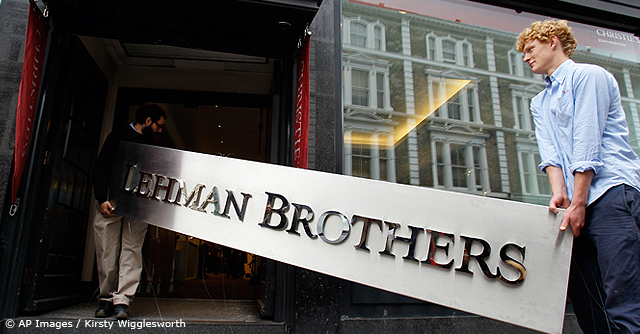
In the panic stage, asset prices reverse course and descend as rapidly as they had ascended. Investors and speculators, faced with margin calls and plunging values of their holdings, now want to liquidate them at any price. As supply overwhelms demand, asset prices slide sharply. One of the most vivid examples of global panic in financial markets occurred in October 2008, weeks after Lehman Brothers declared bankruptcy and Fannie Mae, Freddie Mac and AIG almost collapsed. The S&P 500 plunged almost 17% that month, its ninth-worst monthly performance. In that single month, global equity markets lost a staggering $9.3 trillion of 22% of their combined market capitalization.

Investopedia Online Investing Trade Journal (Retrieved June 12, 2014) http://www.investopedia.com/slide-show/5-steps-of-a-bubble/

LB 2

LB 3

The Caribbean region felt the brunt of the Panic of this 2008/2009 crisis. See this news article posted on Jan 18, 2009 in USA Today, describing the full economic devastation with this title: “Caribbean islands slammed with double financial hit” – http://abcnews.go.com/Business/story?id=6677886&page=1&singlePage=true

For the Caribbean, the lessons of the above 5 Steps of a Bubble was not academic, it was real-life, affecting every man, woman and child. But still, bubbles continue to be impactful; in addition to housing market bubbles, the Caribbean must contend with post-hurricane recoveries.

The Go Lean book envisions the CU as a confederation of the 30 member-states of the Caribbean to do the heavy-lifting of empowering and elevating the Caribbean economy by creating a “single market” for the region. Many benefits are due to abound, but there must be caution not to create bubbles.

The book details the community ethos to adopt to monitor, manage and mitigate risks and the emergence of bubbles. The roadmap also details the executions of the following strategies, tactics, implementations and advocacies to guide progress in the region; (a bubble can result in “1 step forward but 2 steps backwards”):

Anecdote – Puerto Rico – The Greece of the Caribbean Page 18
Community Ethos – Consequences of Choices Lie in the Future Page 21
Community Ethos – Money Multiplier Page 22
Community Ethos – Lean Operations Page 24
Community Ethos – Return on Investments (ROI) Page 24
Community Ethos – Ways to Impact the Future Page 26
Community Ethos – Ways to Impact the Greater Good Page 37
Strategy – Agents of Change – Technology Page 57
Strategy – Agents of Change – Globalization Page 57
Strategy – Agents of Change – Climate Change Page 57
Tactical – Confederating a Non-Sovereign Union Page 63
Tactical – Fostering a Technocracy Page 64
Tactical – Growing Economy – Avoid Economic Bubbles Page 69
Tactical – Growing Economy – Trade and Globalization Page 70
Tactical – Separation of Powers – Central Bank Page 73
Tactical – Separation of Powers – Securities Regulatory Agency Page 74
Tactical – Separation of Powers – Housing and Urban Authority Page 83
Implementation – Ways to Deliver Page 109
Implementation – Ways to Better Manage Debt Page 114
Implementation – Ways to Benefit from Globalization Page 119
Planning – 10 Big Ideas Page 127
Advocacy – Ways to Grow the Economy Page 151
Advocacy – Ways to Control Inflation – Post Natural Disasters Page 153
Advocacy – Ways to Improve Housing Page 161
Advocacy – Ways to Improve for Natural Disasters Page 184
Advocacy – Ways to Foster Technology Page 197
Advocacy – Reforms for Banking Regulations Page 199
Advocacy – Ways to Impact Wall Street Page 200
Advocacy – Ways to Impact Main Street Page 201
Appendix – Controlling Inflation – Technical Details – Quick Recovery Page 320

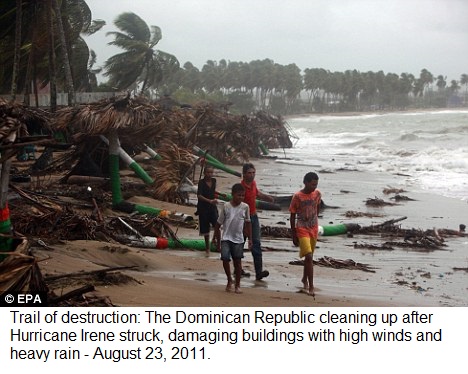
Now is the time for all of the Caribbean, the people and governing institutions, to lean-in for the empowerments described in the book Go Lean … Caribbean. We start by understanding “bubbles”. While the 2008 Great Recession crisis originated as an American bubble, the rest of the world felt its devastating effects. This case-in-point sets the model for the CU to emulate for the Caribbean region; we need a resilient economy that can grow in “ripe” conditions, but avoid any bubble effects. Every year the region is threatened by tropical storms and hurricanes; the spending for recovery, repair and rebuilding can always create a bubble-effect. LB 4

LB 5

This has been the legacy in the past, but now the CU administration is proposed as “new guards” to shepherd the economy to avoid such pitfalls.

The CU/Go Lean roadmap is a complete solution for Caribbean elevation. Despite threats – natural disasters and economic bubbles – the region can be led to a better destination, a better place to live, work and play.

Download the book Go Lean … Caribbean – now!

Share this post:
, ,
[Top]

Is a Traditional 4-year Degree a Terrible Investment?

Go Lean Commentary

This respected resource, Howard Tullman[a], asserts that 4-year Liberal Arts college degrees are bad investments for students. (Play VIDEO here).

VIDEO – Why a Traditional 4-Year Degree is a Terrible Investment | Inc. Magazine – https://youtu.be/ch4D5-9jdbk


Published on Jun 6, 2014 – Howard Tullman, CEO of 1871, explains exactly how over valued, and ripe for disruption, traditional higher education has become.

The book Go Lean…Caribbean stakes the claim even deeper, that traditional college education abroad have been an even more disastrous policy for the Caribbean in whole, and each specific country in particular.

This assertion requires a differentiation of the macro, versus the micro.

From a strictly micro perspective, college education is great for the individual; research by Economists have established the dogma that each additional year of schooling increase an individual’s earnings by about 10%. (Go Lean quotes these economic studies at Page 270). This should be viewed as a very impressive rate of return on an education investment (ROI). But from the macro perspective, (for the community), the ROI is different for the Caribbean; its not a gain, but rather a loss due to the incontrovertible brain drain.

Previous blog-commentaries on this same subject matter have quoted the Jamaican proverb of “fattening frogs for snake” – (see https://goleancaribbean.com/blog/?p=459). This is because more and more of the Caribbean college educated citizens abandon their tropical homes for foreign shores in the US, Canada and Europe. What’s worst, they take their Caribbean-funded education and skill-sets with them – sometimes taking any hope for collectability for student loans as well, thereby imperiling future generation of scholars from the benefits of a college education.

This broken system has many challenges and must be addressed.

Change has now come. The driver of this change is technology and globalization. Under the tenants of globalization, the Caribbean labor pool is a commodity; their talents are subject to the economic realities of supply-and-demand. So if there is greater reward for these Caribbean citizens to “take their talents to South Beach … or South Toronto, or South London”, it is hard to argue a contrarian stance. The Go Lean book posits therefore that the governmental administrations of the region should invest in higher education options with as much technological advances (e-Learning) as possible, for its citizens. The bottom-line motive should be the Greater Good.

The Go Lean roadmap provides turn-by-turn directions on how to reform the Caribbean tertiary education systems, economy, governance and Caribbean society as a whole. This roadmap asserts that the Caribbean is in crisis, and that this “crisis would be a terrible thing to waste”. As a planning tool, the roadmap commences with a Declaration of Interdependence, pronouncing the approach of regional integration (Page 12 & 14) as a viable solution to elevate the region’s educational opportunities.

xix. Whereas our legacy in recent times is one of societal abandonment, it is imperative that incentives and encouragement be put in place to first dissuade the human flight, and then entice and welcome the return of our Diaspora back to our shores

xxi. Whereas the preparation of our labor force can foster opportunities and dictate economic progress for current and future generations, the Federation must ensure that educational and job training opportunities are fully optimized for all residents of all member-states, with no partiality towards any gender or ethnic group. The Federation must recognize and facilitate excellence in many different fields of endeavor, including sciences, languages, arts, music and sports. This responsibility should be executed without incurring the risks of further human flight, as has been the past history.

xxvii. Whereas the region has endured a spectator status during the Industrial Revolution, we cannot stand on the sidelines of this new economy, the Information Revolution. Rather, the Federation must embrace all the tenets of Internet Communications Technology (ICT) to serve as an equalizing element in competition with the rest of the world. The Federation must bridge the digital divide and promote the community ethos that research/development is valuable and must be promoted and incentivized for adoption.

This book Go Lean… Caribbean, serves as a roadmap for the introduction and implementation of the Caribbean Union Trade Federation (CU). This represents change for the region. The CU/Go Lean roadmap has 3 prime directives:

  • Optimization of the economic engines in order to grow the regional economy.
  • Establishment of a security apparatus to protect the resultant economic engines.
  • Improve Caribbean governance to support these engines.

The Go Lean book posits that education is a vital consideration for Caribbean economic empowerment, but there have been a lot of flawed decision-making in the past, both individually and community-wise. The vision of the CU is a confederation of the 30 member-states of the Caribbean to do the heavy-lifting of championing better educational policies. The book details those policies; and other ethos to adopt, plus the executions of the following strategies, tactics, implementations and advocacies to impact the tertiary education in the region:

Community Ethos – Deferred Gratification Page 21
Community Ethos – People Respond to Incentives Page 21
Community Ethos – Job Multiplier Page 22
Community Ethos – Lean Operations Page 24
Community Ethos – Return on Investments (ROI) Page 24
Community Ethos – Ways to Impact the Future Page 26
Community Ethos – Ways to Foster Genius Page 27
Community Ethos – Ways to Help Entrepreneurship Page 28
Tactical – Separation of Powers – Education Department Page 85
Tactical – Separation of Powers – Labor Department Page 89
Advocacy – Ways to Grow the Economy Page 151
Advocacy – Ways to Create Jobs Page 152
Advocacy – Ways to Improve Education Page 159
Advocacy – Ways to Improve Governance Page 169
Advocacy – Ways to Improve Libraries Page 187
Appendix – Education and Economic Growth Page 258
Appendix – Measuring Education Page 266

Now is the time for all of the Caribbean, the people and governing institutions, to lean-in for the changes described in the book Go Lean … Caribbean. We welcome the efforts of entrepreneur Howard Tullman, and his desire to empower other entrepreneurs. This is due to another fact certified by Economists, that the majority of new jobs come from small-medium-sized enterprises (SMEs). So when there is the need for specific job training or business development skills, prudence dictates some facilitation for these skills. Education reform for the Caribbean should therefore be in vogue. This need for reform synchronizes with the CU/Go Lean effort.

The Go Lean roadmap is a complete solution for Caribbean elevation, thus helping the region to be a better place to live, work, learn and play.

🙂

Download the book Go Lean … Caribbean – now!

***************
a.   Appendix – Howard A. Tullman:

Howard A. TullmanAn American serial entrepreneur, venture capitalist, educator, writer, lecturer, and art collector. He currently serves as Chairman of Tribeca Flashpoint Media Arts Academy and of HYDR>BOX, LLC., CEO of 1871[e] (Chicago’s entrepreneurial hub for digital startups), and the Managing Partner of Chicago High Tech Investment Partners, LLC.

Entrepreneurial career
Tullman’s entrepreneurial career spans four decades and a broad swath of industries. As of May 2011, Tullman has started 12 companies, including Tribeca Flashpoint Media Arts Academy, CCC Information Services, Tunes.com, the Rolling Stone Network, Imagination Pilots, Experiencia, and others.[b] Tullman has also been tapped for senior executive positions at established companies such as Kendall College, where his expertise in turn-arounds saved the school from going into bankruptcy in 2003.[b]

Disruptive Innovation in education
Throughout his career in higher education, Tullman has been a proponent of revolutionizing the industry through disruptive innovation which is Clayton M. Christensen’s term to describe new, rapidly-iterated innovations that start from the bottom of traditional industries by providing small-scale and relatively inexpensive solutions (which quickly expand and improve) and which disrupt those existing marketplaces by displacing earlier, out-of-date programs with less expensive, faster and more effective solutions typically based on emerging new technologies.

As an early adopter of this philosophy, Tullman was among the first to bring disruptive innovation to for-profit education as evidenced in his work at Kendall College, Experiencia, and Tribeca Flashpoint Media Arts Academy.[c] In each of these education ventures, Tullman sought to create educational environments that fed creativity while providing skill sets for future successful employment in the new digital world:

At Kendall College, Tullman transformed a 75 year old failing college into a new entity and moved the campus from its home in Evanston to Chicago in a brand-new, purpose-built facility in order to put students closer to the real-world opportunities available in their fields (especially culinary and hospitality) and to provide them with the newest tools, technologies and equipment available.

At Experiencia (the parent of ExchangeCity and Earth Works), Tullman developed hands-on, learning experiences for children that reinforced the lessons learned in the classroom in a simulated city environment. Innovative partnerships with dozens of major businesses provided resources and access for the students to experience the real world of work.

At Tribeca Flashpoint Academy, Tullman and his partners designed and developed a hands-on, team-based, cross-disciplinary, fast-track approach to digital media arts training, allowing students to learn digital technologies faster and more economically than at traditional four-year competitors.

Tullman is also an outspoken opponent of tenure in education and the turf wars and lack of interdepartmental collaboration among faculty.[d]

Tullman’s innovations in education have been consistent with the high-end vocational education visions shared by Sir Ken Robinson, David Brooks, and Thomas Friedman, but have the additional benefit of being actually implemented and in use today.

Citations:
b.   Black, Johnathan (May 2011). “Howard Tullman’s Flashpoint Academy: A Digital-Arts Alternative to the Four-Year College Degree”. Chicago Magazine. Retrieved November 27, 2012
c.    Meyer, Ann (January 14, 2008). “Howard Tullman provides business lesson in running for-profit schools”. Chicago Tribune
d.   Tullman, Howard. “Why the Chicago Teachers’ Strike Will Help Education Entrepreneurs”. Inc.com. Inc. Retrieved April 22, 2013.
e.    1871 = Year of the Great Chicago Fire


Share this post:
, , ,
[Top]

Bahamas Planning to Introduce 7.5 Percent VAT in 2015

Go Lean Commentary

BahamasGovernments need revenue in order to fulfill their role in the Social Contract.

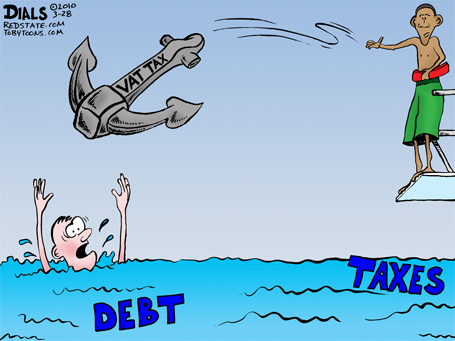
Change has come to the Caribbean! The driver for this change is globalization. One agent of change is the World Trade Organization (WTO); their quest to liberalize international trade calls for the elimination of tariffs (Customs duties). Since this is the primary revenue source for most Caribbean governments, there is the need for new revenue options.

The below article highlights the “Value Added Tax” option, and its introduction in the Bahamas. This government is struggling with the implementation – change is hard! This issue had previously been addressed in Go Lean blogs:

The issues of government revenue reform, operational processing, and best practices for delivery are stressed in the book Go Lean… Caribbean. These issues are among the primary focus of the book, serving as a roadmap for the introduction and implementation of the technocratic Caribbean Union Trade Federation (CU). The following 3 prime directives are explored in full details:

  • Optimization of the economic engines in order to grow the regional economy to $800 Billion & create 2.2 million new jobs.
  • Establishment of a security apparatus to protect the resultant economic engines.
  • Improve Caribbean governance to support these engines.

See the underlying news story here:

By: The Caribbean Journal staff

The Bahamas is planning to introduce a new 7.5 percent value added tax, the government announced this week.

The tax will be a single VAT rate across the board, although that is lower than an initially proposed 15 percent tax.

The country’s Ministry of Finance said the lower rate would also mean fewer exemptions.

The ultimate plan is for the tax to come into effect on Jan. 1, 2015, after what the government said would be an “in-depth public education campaign and private sector preparation.”

The Ministry of Finance also said it was proposing “VAT-inclusive” pricing rather than VAT exclusive, with the aim to “simplify price comparisons by consumers, especially when navigating between VAT registrants and non-registrants.”

“The price consumers see will always be the price they pay,”

The move will also mean that the hotel occupancy tax will be eliminated.

Bahamas 2Government estimates predicted that the new VAT along with a basket of other fiscal provisions would increase the revenue yield of the Bahamas’ revenue system to 19.8 percent of GDP, up from 17.1 percent in the current fiscal year.

Christie said the goal with the mix of fiscal measures was to eliminate the “untenable structural imbalance between recurrent expenditure and revenue” by the 2015/2016 fiscal year, sharply reduce the GFS deficit by 2016/2017 and “arrest the growth in the government debt burden and move it onto a steady downward path to more sustainable levels.”

“I want to emphasize, at this point, that we are in no way engaged in unrealistic, pie-in-the-sky, wishful thinking on the score of fiscal redress,” Christie said. “With a keen eye on the state of our economy and mindful of the need to maintain and support its upward, forward momentum, we are embarked on a mutually-reinforcing plan of national development and fiscal consolidation that is balanced and measured. As such, our aim is set on gradual, though assured, progress on the fiscal front.”

The Bahamas would be the latest in a line of Caribbean countries to introduce a VAT; St Lucia was the most recent country to do so.

A value-added tax proposal by the United Kingdom government in Turks and Caicos was shelved last year after opposition from businesses.

Caribbean Journal Online News Source (Retrieved 05/30/2014) – http://www.caribjournal.com/2014/05/30/bahamas-planning-to-introduce-7-5-percent-value-added-tax-in-2015/

This roadmap commences with the assessment that the Caribbean is in crisis, and that this “crisis would be a terrible thing to waste”. Coupled with the external pressures for revenue reform, is the internal realities of societal abandonment – more and more of the labor pool has migrated to foreign lands in search of better economic opportunities – lowering the tax-paying base in the country. The book describes the sad state of affairs in Caribbean locales like Puerto Rico (Page 303) and the Bahamas 2nd city of Freeport (Page 112). As a planning tool, the roadmap accepts the challenge to adapt for the changes with a Declaration of Interdependence, pronouncing the need for regional solutions (Page 12). The statement is included as follows:

Whereas government services cannot be delivered without the appropriate funding mechanisms, “new guards” must be incorporated to assess, accrue, calculate and collect revenues, fees and other income sources for the Federation and member-states. The Federation can spur government revenues directly through cross-border services and indirectly by fostering industries and economic activities not possible without this Union.

The strategy is to confederate all the 30 member-states of the Caribbean, despite their language and legacy, into an integrated “single market”. Tactically, this will allow a separation-of-powers between the member-states governments and federal agencies, allowing for efficient economies-of-scale for revenue collection systems, processes and people. Yes, astute application of technology is cited as a key solution. In total, the Go Lean book details series of community ethos, strategies, tactics, implementations and advocacies to deliver new solutions:

Anecdote Puerto Rico – The Greece of the Caribbean Page 18
Community Ethos – Money Multiplier Page 22
Community Ethos – “Crap” Happens Page 23
Community Ethos – Lean Operations Page 24
Community Ethos – Return on Investments (ROI) Page 24
Community Ethos – Cooperatives Page 25
Community Ethos – Ways to Improve Sharing Page 35
Strategic – Vision – Integrated region in a Single Market Page 45
Strategic – Vision – Agents of Change – Technology Page 57
Strategic – Vision – Agents of Change – Globalization Page 57
Tactical – Confederating a Non-sovereign Union Page 63
Tactical – Fostering a Technocracy Page 64
Tactical – Growing to $800 Billion – Trade & Globalization Page 70
Tactical – Separation of Powers – Union Revenue Admin. Page 74
Anecdote – “Lean” in Government Page 93
Implementation – Ways to Pay for Change Page 101
Implementation – Deploying Data Centers Page 106
Implementation – Ways to Deliver Page 109
Implementation – Ways to Better Manage Debt Page 114
Advocacy – Ways to Grow the Economy Page 151
Advocacy – Ways to Mitigate Black Markets Page 165
Advocacy – Ways to Improve Governance Page 168
Advocacy – Ways to Improve Local Governments Page 169
Advocacy – Ways to Better Manage the Social Contract Page 170
Advocacy – Revenue Sources for Administration Page 172
Advocacy – Ways to Foster Cooperatives Page 176

All in all, the CU/Go Lean supports all governments’ efforts to collect legitimately authorized taxes.

Pay Caesar’s things to Caesar” – so declares the Go Lean book (Page 144), quoting Jesus Christ from the Bible at Mark 12:17. While Jesus Christ teachings are not portended to be economic lessons, this rendering in the roadmap posits that this and other bible teachings are economically sound. The Bahamas, the Caribbean country in the foregoing news article, lays claim to a Christian heritage. It is time for this country, and all the Caribbean, to “put their money where their mouth is”.

Now is the time for all of the Caribbean, the people and governing institutions, to lean-in for the changes described in the book Go Lean … Caribbean. The local governments need their revenues. They are part of the eco-system to elevate Caribbean life, culture and systems of commerce.

Download the book Go Lean … Caribbean – now!

Share this post:
, ,
[Top]

Sports Bubble – Franchise values in basketball

Go Lean Commentary

BBall2The foregoing news article highlights a topical issue in the world of sports, basketball in particular: the blatant racism of basketball team owner by octogenarian Donald Sterling. The sports league, the NBA, expelled him from the league and has announced that it is moving forward with the forced sale of the Los Angeles Clippers to former Microsoft CEO Steve Ballmer for $2 Billion.

There are many lessons to learn/apply from this Donald Sterling / LA Clippers drama. Lessons such as:

  • There are more important things than money – the sports world rallied in support of the campaign to divorce the antagonist, Donald Sterling, from his team ownership.
  • Money covers a multitude of sins – the indication is that Mr. Sterling’s conduct was unbecoming for a long time before this episode.
  • Sports are immune to economic cycles – team values continue to rise despite depressed asset values during the Great Recession.
  • Sports are not immune to economic realities – there is a real possibility of a bubble due to the absence of economic fundamentals of some teams; there is still the need for technocratic efficiency.
  • Technology in broadcasting is transforming the sports industry – since DVR programming neutralizes the exposure to advertising, live sports broadcasts stand out as an exception: reliable audience. This thereby increases league/team values.
  • Institutional racism is real – the generation that practiced segregation is still alive and wields power, like 80-year-old Donald Sterling.
  • Attitudes in sports can mold society – the public sympathized with Black personnel having to work for an owner with racist views towards Black people; the NBA was forced to act quickly to expel Sterling from the league, with national concurrence.
  • The business of sports can shape a community’s economic landscape – the new value assessment of the Clippers has now elevated all the sport franchises in Los Angeles and related cities; now all connected properties and neighborhoods have appreciated in value as well.

The book, Go Lean … Caribbean, serves as a roadmap for the introduction and implementation of the Caribbean Union Trade Federation (CU). This subject of blatant racism in sports ownership is in scope for the CU as this technocratic agency will assume responsibility for regional sports administration. The roadmap has the prime directives to elevate the Caribbean’s:

(1) economy,

(2) security apparatus, and

(3) governing engines.

The Economist Magazine (Posted & Retrieved 05/31/2014) –
FOR all Donald Sterling’s well-known faults—the owner of the Los Angeles Clippers basketball team seems to have comfortably secured a role as the face of racism in America—no one has ever accused him of being a bad businessman. Although most of his fortune came from real estate, he is now on the brink of closing out what is probably the most profitable investment in the history of professional sports. The other 29 team owners of the National Basketball Association (NBA) are set to hold a vote on June 3rd to terminate his control of the Clippers, in response to a tape of his offensive remarks about blacks that was leaked to the media. But the league’s commissioner, Adam Silver, had let it be known that he would prefer a voluntary sale to happen first—managed by Mr. Sterling’s estranged wife Rochelle, since Mr. Silver had already banned Mr. Sterling for life and thus prevented him from exercising control over the team.

On May 29th the commissioner’s wish was granted, when Ms. Sterling announced that Steve Ballmer the former head of Microsoft, had agreed to buy the Clippers for the eye-popping sum of $2 billion. Although the Los Angeles Dodgers baseball team went for a slightly higher $2.15 billion in 2012, that deal included valuable real-estate assets as well, whereas the Clippers are essentially being sold on their own. The previous record price for an NBA club was just $550m, set by the Milwaukee Bucks earlier this year, and Forbes magazine valued the Clippers at a mere $575m in January. Mr. Ballmer’s bid comfortably exceeded the reported $1.6 billion offered by a group led by David Geffen, a media executive.

BBall1Mr. Sterling has not yet announced whether he will try to block the sale. Since he bought the team for a piddling $12.5m in 1981 and lives in the high-tax state of California, the deal would cost him an estimated $662m in capital-gains taxes. Moreover, his lawyer has demanded that the league retract its accusations against Mr. Sterling, though an after-tax profit of $1.326 billion might help him to swallow his pride. It is not yet clear whether Mr. Sterling could hold up the deal if he wants to. His representatives insist that no sale can proceed without his signature. But the family trust that formally owns the club has declared the 80-year-old Mr Sterling mentally incapacitated—an opinion shared by many viewers of his ill-advised interview with Anderson Cooper on CNN—in order to give his wife sole authority over the franchise. Mr Sterling has a well-earned reputation for litigiousness, and would surely challenge any sale by Ms Sterling against his will in court. However, that would cause the league to re-initiate termination proceedings against him.

The NBA will also still have to approve Mr. Ballmer, but that is expected to be a mere formality. Paul Allen, another Microsoft billionaire, already owns the Portland Trail Blazers, and the league vetted Mr. Ballmer when he made a failed bid for the Sacramento Kings. Mr. Silver will be eager to remove a pariah from the league as quickly and quietly as possible, and to avoid the prospect of a long court battle with Mr. Sterling. And the commissioner surely wants to lock in the lofty sale price, which sets a new valuation bar for every other franchise.

Mr Ballmer is yet to speak publicly about his financial calculus, except to assure the NBA that he would not seek to move the Clippers to Seattle, as he hoped to do with the Kings. (He told the Wall Street Journal that relocating the club out of America’s second-biggest market would be “value destructive”.) Microsoft shareholders who despaired at his string of high-priced acquisitions for the company can at least take solace that he is no thriftier with his own money: the Clippers will cost an estimated 10% of his net worth.

To be sure, there are strong arguments for a ten-figure price for the team. Sports franchise values have been soaring in recent years, thanks to record-setting rights deals from television networks desperate for DVR-proof programming. Both the NBA’s national contract and the Clippers’ local one are set to expire in the coming years, leaving the team doubly well-positioned to cash in. And following an acrimonious lockout in 2011, the league’s current collective-bargaining agreement sharply cut the share of its revenues that gets paid out in salaries, which made clubs far more profitable. Low interest rates are driving up prices for all assets, and the combination of rising inequality and greater international interest in basketball has increased the number of billionaires willing to splurge on an NBA team.

Moreover, the Clippers currently find themselves in an unfamiliar spot as the best basketball team in Los Angeles, and indeed all of California. The Lakers, their far better-loved crosstown rivals, are suffering through a difficult rebuilding phase, whereas the Clippers finished with the league’s third-best record this year. No one would blink an eye if the Lakers sold for $2 billion, and in theory there’s no reason why the team’s electrifying “Lob City” offence featuring Chris Paul and Blake Griffin could not supplant the slumping Lakers for Angelenos’ affections.

On the other hand, brand loyalty matters as much or more in sports as the on-field product. In 2009 the Chicago Cubs, baseball’s iconic lovable losers, sold for $845m despite putrid overall economic conditions, because they were the more popular club in a big two-team market. As measured by Facebook likes, there is not a single postal code in which the Clippers are even one-fifth as popular as the Lakers, and the Lakers are the preferred club in pretty much every part of the United States that lacks a nearby team save the Southeast. The Lakers’ local television deal pays them $180m a year; the Clippers are expected to fetch 60% less for their next contract. Mr. Sterling’s 33 years of penny-pinching mismanagement have left a stain on the franchise that no number of Paul-to-Griffin windmill alley-oops can erase. When Jack Nicholson attends a Clippers game, it’s news; when he goes to see the Lakers, it’s just normal.

The great unknown is whether the going rate for televised sports rates is sustainable. Cable carriers like Time Warner have already begun offering cheaper packages that exclude expensive sports channels, and John McCain, a senator from Arizona and former presidential candidate, has introduced a bill that would “unbundle” cable television and let viewers choose the channels they want a la carte. Both approaches would reduce the “sports tax” that non-fans currently pay to subsidise fans via their cable bills. Technological advances or piracy could also disrupt the current lucrative delivery model, as they have with so many other types of media.

Buying a team for a billion or two is essentially a bet on the sports-media status quo continuing for at least another decade. It may well be a bubble. But it has already lasted for far longer than the naysayers ever thought possible.
http://www.economist.com/news/leaders/21603026-how-hand-over-272-billion-year-criminals-thats-where-money?fsrc=nlw%7Chig%7C30-05-2014%7C53552127899249e1cc9ea210%7CNA

The Go Lean … Caribbean roadmap commences with a Declaration of Interdependence. In Verse XXXI (Page 14) it pronounces specific dynamics of sports:

Whereas sports have been a source of great pride for the Caribbean region, the economic returns from these ventures have not been evenly distributed as in other societies. The Federation must therefore facilitate the eco-systems and vertical industries of sports as a business, recreation, national pastime and even sports tourism.

The foregoing news article is sourced from the Economist Magazine. Therefore this perspective is from a macro-economic vantage point, which is apropos for this roadmap, as this book posits that the right economic, financial and investment landscape can impact Caribbean society, forging sport franchises and facilitating growth in value and appreciation. The CU envisions being the landlord of sports leagues at CU fairgrounds – operating as Self-Governing Entities. Today in the Caribbean however, there is not much of a sports eco-system beyond the High School level. This roadmap envisions collegiate and professional sports manifestations, as a tool/technique to empower society.

The roadmap specifically elevates the region through a series of community ethos, strategies, tactics, implementations and advocacies to foster the business of sports in the Caribbean region:

Economic Systems Influence Choices and Incentives Page 21
Community Ethos – Anti-Bullying and Mitigation Page 23
Anecdote – Hail, Hail, the Champs: Miami Heat! Page 42
Tactical – Confederating a non-sovereign union Page 63
Tactical – Separation of Powers–Sports Administration Page 81
Implementation – Assemble Existing Regional Entities Page 96
Implementation – Consolidating Regional Spectrum Page 101
Implementation – Steps for Self-Governing Entities Page 105
Implementation – Reasons to Repatriate Page 118
Planning – Ways to Make the Caribbean   Better to Play Page 151
Advocacy – Ways to Improve Communications Page 156
Advocacy –   Ways to Promote Fairgrounds Page 193
Advocacy –   Impact Media/Broadcast/Hollywood Roles Page 201
Advocacy –   Ways to Improve Sports Page 218

Now is the time for all of the Caribbean, athletes and non-athletes alike to lean-in for the empowerments described in the book Go Lean … Caribbean. The benefits are too alluring, an improved, economically viable sports world; and a better place to live, work and play.

The Go Lean roadmap is not about basketball. But basketball is among the games people play; and play can be a great source of leisure and economics. The world is now watching the tropical region for basketball dominance. This is because the Miami Heat will now play for the NBA championship, starting this week Thursday (June 5, 2014) in their 4th straight NBA Finals. The roadmap posits that the Miami Heat relates to the Caribbean since its base is in Miami, Florida; a metropolitan area that possesses the largest pocket of Caribbean Diaspora. So in many ways, the Miami Heat is the “home team” of the Caribbean. Go Heat!

Download Go Lean … Caribbean – now!


Share this post:
, ,
[Top]

Health-care fraud in America; criminals take $272 billion a year

Go Lean Commentary

Healthcare2Wherever there is vibrant economic activity, bad actors will emerge.

This is the claim of the book Go Lean…Caribbean, that the result of successful regional integration would be an elevated Caribbean economy, which consequently could result in increased felonious activities.

There is a lot of economic activity around health-care. According to a US News and World Report story, the US lacks health efficiencies, spending 20, 30, even 100 times as much on medical products and devices as what it would cost, at a typical big-box retailer like Wal-Mart. In a sample year (2012), the country spent over $2.8 trillion on health care, more than twice as much on a per-capita basis as other high-income countries such as England and France. [a]

The Caribbean wants to be a high-income country/region, but not in the model of the United States. We must be better; we must be lean!

The book, Go Lean … Caribbean, serves as a roadmap for the introduction and implementation of the Caribbean Union Trade Federation (CU), the next generation of integration for the region. This roadmap posits the eventual economic success will be quickly followed with the emergence of bad actors seeking to exploit the successes. So security/crime deterrents will not be an after-thought; no, rather the full crime-and-punishment eco-system (investigation, persecution, penology) is in scope for the CU as this technocratic agency will assume responsibility for economic crimes in the region. In effect, this roadmap has the prime directives to elevate the Caribbean’s:

(1) economy,

(2) security apparatus, and

(3) governing engines.

The Economist Magazine (Posted & Retrieved 05/31/2014) –
MEDICAL science is hazy about many things, but doctors agree that if a patient is losing pints of blood all over the carpet, it is a good idea to stanch his wounds. The same is true of a health-care system. If crooks are bleeding it of vast quantities of cash, it is time to tighten the safeguards.

In America the scale of medical embezzlement is extraordinary. According to Donald Berwick, the ex-boss of Medicare and Medicaid (the public health schemes for the old and poor), America lost between $82 billion and $272 billion in 2011 to medical fraud and abuse (see article). The higher figure is 10% of medical spending and a whopping 1.7% of GDP – as if robbers had made off with the entire output of Tennessee or nearly twice the budget of Britain’s National Health Service (NHS).

Crooks love American health care for two reasons. First, as Willie Sutton said of banks, it’s where the money is – no other country spends nearly as much on pills and procedures. Second, unlike a bank, it is barely guarded.

Some scams are simple. Patients claim benefits to which they are not entitled; suppliers charge Medicaid for non-existent services. One doctor was recently accused of fraudulently billing for 1,000 powered wheelchairs, for example. Fancier schemes involve syndicates of health workers and patients. Scammers scour nursing homes for old people willing, for a few hundred dollars, to let pharmacists supply their pills but bill Medicare for much costlier ones. Criminal gangs are switching from cocaine to prescription drugs – the rewards are as juicy, but with less risk of being shot or arrested. One clinic in New York allegedly wrote bogus prescriptions for more than 5m painkillers, which were then sold on the street for $30-90 each. Identity thieves have realised that medical records are more valuable than credit-card numbers. Steal a credit card and the victim quickly notices; photocopy a Medicare card and you can bill Uncle Sam for ages, undetected.

Healthcare1It is hard to make such a vast system secure: Medicare’s contractors process 4.5 [million] claims a day. But pointless complexity makes it even harder. Does Medicare really need 140,000 billing codes, as it will have next year, including ten for injuries that take place in mobile homes and nine for attacks by turtles? A toxic mix of incompetence and political gridlock has made matters worse. Medicare does not check new suppliers for links to firms that have previously been caught embezzling (though a new bill aims to fix this). Fraud experts have long begged the government to remove Social Security numbers from Medicare cards to deter identity thieves – to no avail.

Start by closing the safe door
One piece of the solution is obvious: crack down on the criminals. Obamacare, for all its flaws, includes some useful measures. Suppliers are better screened. And when Medicaid blackballs a dodgy provider, it now shares that information with Medicare – which previously it did not. For every dollar spent on probing health-care fraud, taxpayers recover eight. So the sleuths’ budgets should be boosted, not squeezed, as now.

But the broader point is that American health care needs to be simplified. Whatever its defects, Britain’s single-payer National Health Service is much simpler, much cheaper and relatively difficult to defraud. Doctors are paid to keep people well, not for every extra thing they do, so they don’t make more money by recommending unnecessary tests and operations – let alone billing for non-existent ones.

Too socialist for America? Then simplify what is left, scale back the health tax-perks for the rich and give people health accounts so they watch the dollars that are spent on their treatment. After all, Dr. Berwick’s study found that administrative complexity and unnecessary treatment waste even more health dollars than fraud does. Perhaps that is the real crime.
http://www.economist.com/news/leaders/21603026-how-hand-over-272-billion-year-criminals-thats-where-money?fsrc=nlw%7Chig%7C30-05-2014%7C53552127899249e1cc9ea210%7CNA

The Go Lean … Caribbean roadmap commences with the statement that the Caribbean is in crisis, and that this “crisis is a terrible thing to waste”. Later generations of Caribbean parents have had fewer children than their predecessors, 2.1 children per household, as opposed to the previous average of 5 – 6 children. Now, that older generation is aging, and the numbers do not lie, there are fewer children to care for their aging parents. What’s worse, many of the Caribbean labor pool had fled the region and emigrated to the US, Canada and Europe. Actuarially, we have a financial tsunami building and targeting the region. This crisis is identified early in the book, in the opening Declaration of Interdependence (Page 12), with this pronouncement:

ix.  Whereas the realities of healthcare and an aging population cannot be ignored and cannot be afforded without some advanced mitigation, the Federation must arrange for health plans to consolidate premiums of both healthy and sickly people across the wider base of the entire Caribbean population. The mitigation should extend further to disease management, wellness, obesity and smoking cessation programs. The Federation must proactively anticipate the demand and supply of organ transplantation as developing countries are often exploited by richer neighbors for illicit organ trade.

Creating the solution to mitigate health-care fraud (and other economic crimes) is “Step One, Day One” in the Go Lean roadmap. Implementing the appropriate regulatory framework, to marshal against the scenarios depicted in the foregoing news article, will allow for a “value exchange” for the vital investments the CU must make in the delivery of health-care solutions.

Health-care solutions also entail the astute application of information technology (IT). Agile IT systems, mobile and web applications can foster good value to health-care institutions and government payers. The book considers the Healthways model.

The Go Lean roadmap maintains that efficiency in health services delivery is not automatic, but rather must be forged and bred from experience, expertise, attitudes, training, and the quality application of delivery arts and sciences. The book details a series of community ethos, strategies, tactics, implementations and advocacies to foster the proper controls for health-care efficiency in the Caribbean region:

Community   Ethos – Economic Choices Involve Costs Page 21
Community   Ethos – Whistleblower Protection Page 23
Community   Ethos – Intelligence Gathering Page 23
Community   Ethos – Lean Operations Page 24
Community   Ethos – Impacting   Research & Development Page 30
Community   Ethos – Pursue the Greater Good Page 37
Strategic   – Agents of Change – Aging Diaspora Page 57
Tactical –   Fostering a Technocracy Page 64
Tactical –   Repatriation to Grow to a $800 Billion GDP Page 70
Tactical –   Separation of Powers – Medicare Admin. Page 86
Tactical –   Separation of Powers – Licensing/Standards Page 86
Anecdote – “Lean” in Government – Improve Process Page 93
Implementation – Ways to Pay for Change Page 101
Implementation – Security Initiatives at Start-up Page 103
Implementation – Ways to Deliver Page 109
Implementation – Reasons to Repatriate Page 118
Advocacy – Ways to Grow the Economy Page 151
Advocacy – Ways to Improve Healthcare Page 156
Advocacy –   Ways to Impact Entitlements Page 158
Advocacy –   Better Manage the Social Contract Page 170
Advocacy –   Ways to Remediate and Mitigate Crime Page 178
Advocacy –   Ways to Improve Emergency Management Page 196
Advocacy –   Ways to Foster Technology Page 197
Appendix –   Disease Management – Healthways   Model Page 300
Appendix –   Controlling Inflation – Healthcare Realities Page 320
Appendix –   TraumaCenter Realities Page 336

Change has come to the Caribbean. Costs dynamics are unavoidable with this impending change.

Now is the time for all of the Caribbean, the people and governing institutions, to lean-in for the changes described in the book Go Lean … Caribbean. The benefits are too alluring, a better place to live, work, heal and play.

Download the free e-Book of Go Lean … Caribbean – now!

Source Reference:

a. US News & World Report. “The High Cost of Staying Well – the U.S. gets poor bang for its medical buck”. Retrieved May 31, 2014 from: http://www.usnews.com/opinion/mzuckerman/articles/2013/10/22/why-health-care-costs-so-much-and-how-to-fix-it

Share this post:
, ,
[Top]

Zuckerberg’s $100 Million for Newark’s Schools was a waste

Go Lean Commentary

Throwing money at a problem does not, in itself, solve it!

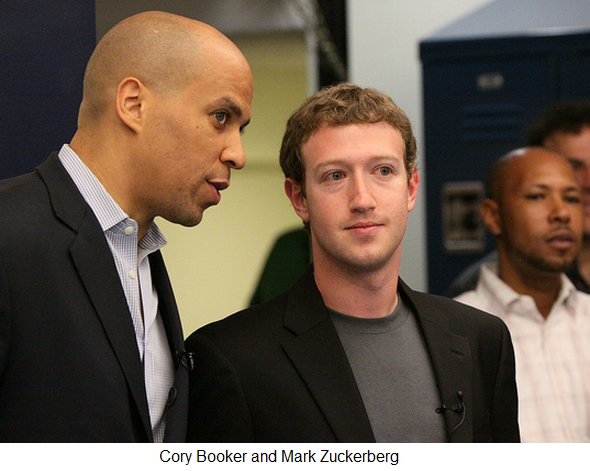
Mark Z 2The foregoing article helps us appreciate this point more succinctly. It was 2010. There was Newark’s Mayor Cory Booker (now New Jersey Senator), Facebook founder and philanthropist Mark Zuckerberg and the Governor of the State of New Jersey (and possible 2016 Presidential candidate) Chris Christie – all men of goodwill. Their goal: fix a failing school system in the City of Newark. On paper, the plan seemed credible, they had the power, they had the money – $100 million dollars. The result? After four years – “a waste”.

The issues of education reform, best practices, and funding options are stressed in the book Go Lean…Caribbean, even though these are not the primary focus of the book. Rather this book serves as a roadmap for the introduction and implementation of the Caribbean Union Trade Federation (CU), with the focus being on these following 3 prime directives:

  • Optimization of the economic engines in order to grow the regional economy to $800 Billion & create 2.2 million new jobs.
  • Establishment of a security apparatus to protect the resultant economic engines.
  • Improve Caribbean governance to support these engines.

Yet, the book posits that education is a vital consideration for economic empowerment; so too are non-government organizations, like Zuckerberg’s foundation. The book specifically highlights an important role that foundations execute in the sphere of foreign aid, sometimes even better than national governments (Page 219):

One major argument against federally funded foreign aid is that the money is often lost to governmental corruption in the countries it was supposed to help. In 2003, a top university in Bangladesh claimed that at least 75% of all foreign aid given to that government was lost because of corruption. Since faith-based foreign aid focuses on churches or organizations operating independently of the government, funding has a better chance of being used effectively.

The below news article though, highlights an onshore example, in the US, with multi-level governmental support, plenty of money, and yet still: failure!

Title: Mark Zuckerberg Gave New Jersey $100 Million To Fix Newark’s Schools, And It Looks Like It Was A Waste
By: Caroline Moss
In the fall of 2010, Mark Zuckerberg announced on Oprah that he’d be making a generous gift to Newark, New Jersey.

 As Oprah said in her Oprah way, “one … hundred … million … dollars” would be given to Newark Mayor Cory Booker and New Jersey Gov. Chris Christie as the three began the Startup:Education foundation.

The plan was to turn Newark into what Zuckerberg called “a symbol of educational excellence for the whole nation,” spent on retaining the best teachers, and creating environments that would produce successful students and, one day, graduates.

Newark is a city wrought with crime. Its graduation rate is about 67%. It needed the help, and Booker’s vision sounded promising.

Between 2010 and 2012, The New Yorker reports that “more than twenty million dollars of Zuckerberg’s gift and matching donations went to consulting firms with various specialties: public relations, human resources, communications, data analysis, [and] teacher evaluation.” Many of the consultants were being paid upwards of $1,000 a day.

“Everybody’s getting paid but Raheem still can’t read,” Vivian Cox Fraser, president of the Urban League of Essex County, was quoted saying.

Today, the money is pretty much gone, and Newark has hardly become that symbol of excellence.

The New Yorker has the full 12-page story today, and we’ve dug into it to find some of the main timeline points you need to know.

In 2010, Mayor Booker found a loophole in getting money to help fund Newark’s educational reform. It came in the form of philanthropic donations, which, unlike government funding, required no public review of priorities or spending. Gov. Christie approved the plan, and Booker’s job was to find the donors.

Meanwhile, in Silicon Valley, Zuckerberg (like many other tech billionaires) had pledged to donate half of his fortune, but as The New Yorker reports, he knew very little about urban education or philanthropy.

Booker and Zuckerberg met to discuss a vision for Newark’s future. Booker wanted to significantly reward Newark teachers who improved student performance rather than focus on seniority and tenure. Teachers would be challenged and rewarded to do their jobs well, and students would benefit.

 Zuckerberg was confident Newark and Booker were the right recipients for this huge gift (given over five years), and agreed to gift $100 million dollars with a few stipulations:

  • Booker would also have to raise $100 million dollars. Zuckerberg’s money would be released to Newark as matching dollars rolled in.
  • Booker would have to replace the current superintendent with a “transformational leader.

”The reform ended up looking like this: taking low-performing public schools and closing them, turning them into charter schools and “themed” high schools. But there was no easy way to expand charters without destabilizing traditional public schools.

In the months following the gift announcement, Booker and Christie still had no superstar superintendent and no reform plan.

 Zuckerberg was concerned and urged Booker to find the superintendent, even sending Booker a poster widely seen around the Facebook campus that read, “Done is better than perfect.”

Mark ZImmediately, Booker appointed Cami Anderson for the job. She implemented ways to help students and improve schools (all which The New Yorker detailed), but there were roadblocks along the way, like how the students brought the issues going on in their homes with them to the classroom.

 Anderson wanted to give schools more support to help students on emotional and social levels, but Newark had already been spending more money per student than most districts in the entire country, none of which was reaching the children it existed to help.

 New contracts were being created, money was being hemorrhaged, and the district was going broke. But interviews — like this one in Forbes — regarding the money and the future of Newark’s schools were always positive, highlighting, of course, only the good aspects of the huge monetary donation.

Then, in January of this year, The Washington Post reported on “dozens of emails between the Zuckerberg camp (including Zuckerberg himself) and the Booker camp (including Booker himself),” which ended up revealing that state education officials were going above and beyond to get money from big private donors to remake public schools in the way they want to.

Anderson came up with another plan called One Newark, which sounded like it could work. Families would choose which charter or public schools they would want to send their children to. Children from the lowest-income families would get first pick. So would kids with special needs.

It all sounded great until parents and teachers realized it was only on paper. Solutions hadn’t been figured out fully. Programs hadn’t been developed. Issues like transportation had not yet been tackled. Things that were promised didn’t come to fruition.

 According to The New Yorker, Anderson, Booker, Zuckerberg, and Christie, “despite millions of dollars spent on community engagement—have yet to hold tough, open conversations with the people of Newark about exactly how much money the district has, where it is going, and what students aren’t getting as a result.”
Business Insider Vertical e-Zine (Posted 05/13/2014; retrieved 05/30/2014) –
http://www.businessinsider.com/mark-zuckerbergs-newark-grant-2014-5#ixzz33DsBvaIw

The people and institutions of the Caribbean understand this plight of Newark, New Jersey all too well. There is a long record of failure with the Caribbean education initiatives. Then where there is success, the quality students have a propensity to abandon the region and emigrate to the US, Canada or Europe. So with the best of the Caribbean’s talents gone, we find that we’ve “fatten frog for snake”; then with the rest, we muddle along as best we can; hoping to nation-build with the remnants of a broken educational system.

It’s time for a change!

The proposed change is detailed in the Go Lean roadmap. It provides turn-by-turn directions on how to reform the Caribbean education systems, governance and Caribbean society in general. This roadmap commences with the assessment that the Caribbean is in crisis, and that this “crisis would be a terrible thing to waste”. As a planning tool, the roadmap commences with a Declaration of Interdependence, pronouncing the approach of regional integration (Page 12) as a viable solution to elevate the region’s educational opportunities. The statement is included as follows:

xxi. Whereas the preparation of our labor force can foster opportunities and dictate economic progress for current and future generations, the Federation must ensure that educational and job training opportunities are fully optimized for all residents of all member-states, with no partiality towards any gender or ethnic group. The Federation must recognize and facilitate excellence in many different fields of endeavor, including sciences, languages, arts, music and sports. This responsibility should be executed without incurring the risks of further human flight, as has been the past history.

The strategy is to confederate all the 30 member-states of the Caribbean, despite their language and legacy, into an integrated “single market”. Tactically, this will allow a separation-of-powers between the member-states governments (including their education proxies) and federal agencies, allowing an open role for benevolent foundations to fulfill their charters on the region. The roadmap recognizes the need to lead, or to follow best-practices, as formulated by other entities. This then becomes a process of leading-by-following. The CU will facilitate the eco-systems, metering and measuring the effect of so many educational options. Think Champion-Challenger; allowing for alternate methodologies to be explored for effectiveness, and then measuring the success criteria.

The Go Lean book details series of community ethos, strategies, tactics, implementations and advocacies to foster good educational progress, and the agile methodologies to adjust/adapt dynamically:

Anecdote – Lean On Me – New Jersey School Lesson Page 5
Community Ethos – Lean Operations Page 24
Community Ethos – Cooperatives Page 25
Community Ethos – Non-Government Organizations Page 25
Community Ethos – Ways to Foster Genius Page 27
Tactical – Separation of Powers – Education Dept. Page 85
Implementation – Ways to Pay for Change Page 101
Implementation – Ways to Deliver Page 109
Advocacy – Ways to Grow the Economy Page 151
Advocacy – Ways to Create Jobs Page 152
Advocacy – Ways to Improve Education Page 159
Advocacy – Ways to Improve Governance Page 169
Advocacy – Ways to Foster Cooperatives Page 176
Advocacy – Ways to Improve Libraries Page 187
Advocacy – Ways to Impact Foundations Page 219
Advocacy – Ways to Impact the One Percent Page 224
Appendix – The Giving Pledge Signatories Page 292

Now is the time for all of the Caribbean, the people and governing institutions, to lean-in for the changes described in the book Go Lean … Caribbean. We welcome the “Mark Zuckerberg”’s of the world … and their money. We entreat them to help us to make the Caribbean a better place to live, work, learn and play.

Download the free e-Book of Go Lean … Caribbean – now!

Share this post:
, , , ,
[Top]

Jack M. Mintz: ‘All is not well in the sunny Caribbean’

Go Lean Commentary

Jack Mintz 1“All that glitters is not gold” – Old adage.

This is a similar expression as the title of the below commentary by Canadian Public Policy Professor Dr. Jack Mintz:

“All is not well in the sunny Caribbean”.

The opinions of Canadian stakeholders are and have always been important from a Caribbean perspective. “Look to the Northern Star!” – the book Go Lean…Caribbean relates the hope and refuge that Canada always provided to this region (Page 146).

This book purports that an examination of the history of Canada can be productive for the Caribbean. Despite the different geographic address, Canada has had to contend with a lot of challenges similar to the Caribbean; Canada has succeeded while the Caribbean has failed. Early in the book, the point of lessons from Canada is pronounced in the Declaration of Interdependence (Page 14), with these opening statements:

xxxiii.   Whereas lessons can be learned and applied from the study of the recent history of other societies, the Federation must formalize statutes and organizational dimensions … to implement the good examples learned from developments/ communities like … Canada.

Canada recognizes that the Caribbean is in crisis; and despite billions and billions ($$$) in Canadian investments, the region is still in crisis.

Commentary By: Dr. Jack M. Mintz
Economic problems in the Caribbean should be a wake-up call for governments and businesses operating there.

As a middling power, Canada has limited influence in most areas of the world — save for the Caribbean countries. To escape the winter, three million Canadians trek annually to one of the islands to enjoy the sun and relaxation. Roughly 600,000 Caribbean [expatriates] have migrated over the years to Canada, with the largest contingents coming from Jamaica, Guyana, Haiti and Trinidad.

Canada has also invested over $140-billion in capital in the Caribbean islands, especially in Bahamas, Barbados, Bermuda and Cayman Islands. Capital stock held in Barbados alone is over $60-billion, more than any other country except for the United States.  The money does not stay there but moves on to other countries so that Canadian multi-national companies can take advantage of the Canada-Barbados tax treaty to achieve lower global effective corporate tax rates through tax-efficient financial structures.

Jack Mintz 3So when Canadian Imperial Bank of Commerce announced a $420-million write-down in goodwill invested in CIBC FirstCaribbean, it should attract attention, given our deep ties to the region. All is not well in the Caribbean region with its bloated, over-indebted governments operating in slow-growth environments. The economic and fiscal problems in the region raise critical economic and security concerns for Canada.

Many Caribbean governments face financial instability. Gross public debt has risen to over 80% of GDP in 2013 for Antigua, Barbados, Grenada, Jamaica, St. Kitts and Nevis, and St. Lucia. Many of these countries are also heavily exposed to global markets with the current account deficit over 20% of GDP in the Caribbean region. Foreign direct investment inflows are more than 8% of GDP for Antigua, Bahamas, Barbados, Grenada, Guyana, St. Kitts and Nevis, St. Lucia and Trinidad-Tobago.

At a flick of the switch, international lenders could turn off the spigots, resulting in a financial crisis and hefty devaluation of currencies. The implications of a severe economic contraction in the region would put the Caribbean countries in limbo and have important consequences to Canada, given our relationships in the region.

The outlook for the Caribbean countries is not exactly cheerful. Overall, economic growth has been poor, about 1.5% for the region, and close to stagnant for Bahamas, Barbados, Grenada and Jamaica. Many of the Caribbean countries face competitiveness problems with some of the highest electricity rates in the world, unionized wage costs and high real interest costs. The business climate is weak with poor regulatory practices, enforcement of contracts and crime.

With the global economic slowdown, tourism has been relatively flat, lagging most regions of the world in 2013. Tourism, after all, is not a necessity and more money is spent on it only when people are better off. The outlook is not looking much better in the near future with little income growth in North America and Europe. Should there ever be reconciliation between the United States and Cuba, U.S. tourism could significantly shift from other islands.

Nor are commodity prices expected to be booming as China and the rest of Asia slow down, with little take up from the rest of the world. Only oil and gas prices seem to be firm, which is good news for Trinidad and Tobago.

With the G20 and OECD countries focused on curbing tax evasion and avoidance, several Caribbean countries – Bermuda, Barbados and Cayman Islands – would be subject to a tightening tax noose. These countries could face a deceleration in economic activity if international tax structures are to be dismantled.

Thus, economic and fiscal problems in the Caribbean should be a wake-up call for governments and businesses operating there. The CIBC write-down is just the tip of the iceberg.

A financial crisis will heavily impact many Canadian businesses that have turned to the Caribbean islands to set up financing and insurance structures. A major economic slowdown in the Caribbean islands would also raise security issues for Canada as crime, including drug trade, could become more problematical to control.

The Canadian government should therefore work with other major countries and international organizations to stabilize Caribbean economies. Attempts to build capacity for good governance in the past years have not been easy but it cannot be abandoned. Some new initiatives should be considered that would help the Caribbean islands improve their fortunes.

Certainly, trying to harmonize policies and merge certain institutions to achieve economies-of-scale across the region would be a useful step. This includes post-secondary education, financial markets and transportation. A shift by Caribbean countries away from oil to natural gas from Trinidad-Tobago and North America would reduce their cost of oil imports.

At the same time, Canada and other Western countries should invest in improving the judiciary and security forces in the [Caribbean] region. The reduction in crime would also benefit our economies by reducing risks faced by tourists and investors. Drug trade with Canada would be curbed.

Debt relief for some of the countries would be appropriate so long as certain commitments are made to reform governance and economic policy. This has been the role of the IMF over the years but Canada should itself pay more attention to the region.

For Canadians looking to bask in the sun and escape harsh winters here, a stronger Caribbean region will be welcome.

Jack M. Mintz is the Palmer Chair, School of Public Policy, University of Calgary. Contact: policy@ucalgary.ca

Source: Financial Post – Canadian Daily; retrieved 05-23-2014 from: http://business.financialpost.com/2014/05/22/jack-m-mintz-all-is-not-well-in-the-sunny-caribbean/

Jack Mintz 2The underlying theme of Jack Mintz commentary is that Caribbean society needs a reboot. The book Go Lean… Caribbean serves as a roadmap for the introduction and implementation of Caribbean Union Trade Federation (CU), a reboot for Caribbean society with these 3 prime directives:

  • Optimize the economic engines of the Caribbean to grow the economy to $800 Billion and create 2.2 million new jobs.
  • Establish a security apparatus to protect the resultant economic engines and stakeholders.
  • Improve Caribbean governance with technocratic excellence.

The foregoing article highlights the mis-management of credit/debt of the governments of the region. The commentary specifically warns:

At a flick of the switch, international lenders could turn off the spigots, resulting in a financial crisis and hefty devaluation of currencies.

Why such poor financial planning? It is obvious that there is a lot of success missing in terms of fiscal expedience. It is not reasonable to expect that current administrations can solve Caribbean fiscal problems with the same tools and techniques of the present. The Go Lean roadmap calls for a different toolbox and different techniques.

If beauty is in the eye of the beholder, then perhaps this commentary is just one person’s assessment of ugly – just a perception. But unfortunately, the facts are the facts. Dr. Mintz relates ugly examples, such as the fact the region has the “highest electricity rates in the world”. There is no denying the “Amount Due” figures on actual electric utility bills.

This is the present, as perceived by Dr. Mintz. Plus, his assessment of the near future is even more “gloom-and-doom”.

True, there is work to be done. But not the job of a Calgary professor, or any other Canadian stakeholder, to do the heavy-lifting. No, this is the job of the Caribbean for the Caribbean. Who is up to the task?

The Caribbean Union Trade Federation hereby “reports for duty” for the job to forge this change.

The Go Lean book details that solutions must come from all aspects of society. There are community values/attitudes that must be in place to ensure that any quest for permanent change would have some measure of success. Those attitudes are referred to as community ethos. There must first be the adoption of many such ethos, followed by the executions of strategies, tactics, implementations and advocacies to impact the region’s prospects, as detailed here:

Community Ethos – Lean Operations Page 24
Community Ethos – Ways to Impact the Future Page 26
Community Ethos – Ways to Help Entrepreneurship Page 28
Anecdote – Entrepreneur’s Best Place To Live? Canada Page 39
Strategy – Vision – Integrate Region into Single Market Page 45
Strategy – Agents of Change – Globalization Page 57
Tactical – Confederating a Permanent Union Page 63
Tactical – Fostering a Technocracy Page 64
Separation of Powers – Banking Regulatory Authority Page 73
Separation of Powers – Justice Institutions Page 77
Implementation – Foreign Policy Initiatives at Start-up Page 102
Implementation – Security Initiatives at Start-up Page 103
Implementation – Ways to Deliver Page 109
Implementation – Ways to Improve Energy Usage Page 113
Implementation – Ways to Better Manage Debt Page 114
Implementation – Ways to Foster International Aid Page 115
Implementation – Ways to Benefit from Globalization Page 119
Planning – Lessons from Canada’s History Page 146
Advocacy – Ways to Grow the Economy Page 151
Advocacy – Ways to Better Manage ForEx Page 154
Advocacy – Ways to Improve Governance Page 168
Advocacy – Ways to Enhance Tourism Page 190
Advocacy – Reforms for Banking Regulations Page 199
Advocacy – Ways to Impact the Diaspora Page 217
Advocacy – Ways to Preserve Caribbean Heritage Page 218
Appendix – Offshore Tax & Financial Services Industry Developments Page 321

The Go Lean roadmap calls for a different entrepreneurial approach than some of the tax avoidance industries promoted in the past. These strategies have actually failed. Most offshore financial centers have modernized their lax laws to mitigate terrorism financing, thus lowering their attraction to tax evaders. The hold-outs, (Bermuda, Barbados and the Cayman Islands), are now being forced to cow-tail to the New World Order. The people of the Caribbean deserve better than waiting for “illicit bread to fall from the table” of rich nations (G-20). We have the world’s best address, for goodness sake, people should be beating a path to our doors (like the 3 million Canadians annually), not the 600,000 Caribbean citizens who have beaten down our doors to get out.

Time for change! The Go Lean roadmap is hereby presented.

The region is hereby urged to lean-in to this Go Lean roadmap, to fulfill the vision of making the Caribbean region a better place to live, work and play. 🙂

Download the book Go Lean … Caribbean – now!

Share this post:
, , , , ,
[Top]

Painful and rapid spread of new virus in Caribbean

Go Lean Commentary

“Crap happens”, declares the book Go Lean…Caribbean (Page 23).

Virus 1The Chikungunya virus scare in the foregoing news article represents the sum of all fears for the Caribbean in terms of tourism and public health threats. This emphatically highlights the need for a regional security pact for Caribbean assurances.

The virus in this article has been identified in the Dominican Republic, Dominica, Saint Martin, and French Guiana; therefore, this is a cross-border threat. This re-enforces that there is a need for a super-national disease-medical sentinel in this security pact.

While other security pacts (for example NATO – North Atlantic Treaty Organization) may be based on defense against military aggression, the Caribbean security pact must focus more on public safety measures. This is one of the prime directives of the proposed Caribbean Union Trade Federation (CU). Naturally, the focus starts with economics, but the resultant engines can be seriously impacted by public safety/health threats. The book Go Lean… Caribbean, serves as a roadmap for the introduction and implementation of that regional sentinel, the CU. The complete prime directives are described as:

  • Optimize the economic engines of the Caribbean to elevate the regional economy.
  • Establish a security apparatus to protect the resultant economic engines.
  • Improve Caribbean governance to support these engines.

The Go Lean roadmap immediately calls for the establishment of a Homeland Security Department, with an agency to practice the arts and sciences of Emergency Management. The emergencies include natural disasters like hurricanes, earthquakes, tsunamis, volcanoes, flooding, forest fires, and droughts. Emergencies also include the man-made variety as in industrial accidents (oil spills, factory accidents and chemical spills), explosions, terroristic attacks and prison riots. The type of emergency described in the foregoing article requires a hybrid response of the Emergency Management agency and the CU’s Department of Health Disease Control & Management agency. Medical expertise would be required to contend with systemic threats of epidemic illness and infectious diseases.

The CU does not possess sovereignty for Caribbean member-states; so CU participation must be invited. This is why the CU is described as a deputized proxy organization. This invitation is equivalent to dialing “911”, a declaration of an emergency – thus granting a timed lease of limited authority to the CU agency, terminating with an “all clear” determination.

By: Ben Fox, AP

SAN CRISTOBAL, Dominican Republic (AP) — They suffer searing headaches, a burning fever and so much pain in their joints they can barely walk or use their hands. It’s like having a terrible flu combined with an abrupt case of arthritis.

Hospitals and clinics throughout the Caribbean are seeing thousands of people with the same symptoms, victims of a virus with a long and unfamiliar name that has been spread rapidly by mosquitoes across the islands after the first locally transmitted case was confirmed in December.

“You feel it in your bones, your fingers and your hands. It’s like everything is coming apart,” said 34-year-old Sahira Francisco as she and her daughter waited for treatment at a hospital in San Cristobal, a town in the southern Dominican Republic that has seen a surge of the cases in recent days.

The virus is chikungunya, derived from an African word that loosely translates as “contorted with pain.” People encountering it in the Caribbean for the first time say the description is fitting. While the virus is rarely fatal it is extremely debilitating.

“It is terrible, I have never in my life gotten such an illness,” said Maria Norde, a 66-year-old woman confined to bed at her home on the lush eastern Caribbean island of Dominica. “All my joints are in pain.”

Outbreaks of the virus have long made people miserable in Africa and Asia. But it is new to the Caribbean, with the first locally transmitted case documented in December in French St. Martin, likely brought in by an infected air traveler. Health officials are now working feverishly to educate the public about the illness, knock down the mosquito population, and deal with an onslaught of cases.

Authorities are attempting to control mosquitoes throughout the Caribbean, from dense urban neighborhoods to beach resorts. There have been no confirmed cases of local transmission of chikungunya on the U.S. mainland, but experts say the high number of travelers to the region means that could change as early as this summer.

So far, there are no signs the virus is keeping visitors away though some Caribbean officials warn it might if it is not controlled. “We need to come together and deal with this disease,” said Dominica Tourism Minister Ian Douglas.

One thing is certain: The virus has found fertile ground in the Caribbean. The Pan American Health Organization reports more than 55,000 suspected and confirmed cases since December throughout the islands. It has also reached French Guiana, the first confirmed transmission on the South American mainland.

The Pan American Health Organization says seven people in the Caribbean with chikungunya have died during the outbreak but they had underlying health issues that likely contributed to their death.

“It’s building up like a snowball because of the constant movement of people,” said Jacqueline Medina, a specialist at the Instituto Technologico university in the Dominican Republic, where some hospitals report more than 100 new cases per day.

Virus 3Chikungunya was identified in Africa in 1953 and is found throughout the tropics of the Eastern Hemisphere. It is spread by two species of mosquitoes, aedes aegypti and aedes albopictus. It’s also a traveler-borne virus under the right circumstances.

It can spread to a new area if someone has it circulating in their system during a relatively short period of time, roughly 2-3 days before the onset of symptoms to 5 days after, and then arrives to an area with the right kind of mosquitoes.

For years, there have been sporadic cases of travelers diagnosed with chikungunya but without local transmission. In 2007, there was an outbreak in northern Italy, so health authorities figured it was just a matter of time before it spread to the Western Hemisphere, said Dr. Roger Nasci, of the U.S. Centers for Disease Control and Prevention.

“With the increase in travelers the likelihood that something like this would happen goes up and eventually it did,” said Nasci, chief of a CDC branch that tracks insect-borne diseases. “We ended up with somebody at the right time and the right place infecting mosquitoes.”

The two species of mosquitoes that spread chikungunya are found in the southern and eastern United States and the first local transmissions could occur this summer given the large number of U.S. travelers to the Caribbean, Nasci said. Already, the Florida Department of Health has reported at least four imported cases from travelers to Haiti, the Dominican Republic and Dominica.

“What we’re seeing now is an increase in the number of infected travelers coming from the Caribbean, which is expected because there’s a lot of U.S. travel, a lot of vacation travel, a lot of work travel,” he said.

Around the Caribbean, local authorities have been spraying fogs of pesticides and urging people to remove standing pools of water where mosquitoes breed.

An estimated 60-90 percent of those infected show symptoms, compared to around 20 percent for dengue, which is common in the region. There is no vaccine and the only cure is treatment for the pain and fluid loss.

One consolation for those suffering from the illness is that unlike dengue, which has several variants, people only seem to get chikungunya once.

“The evidence suggests that once you get it and recover, once your immune system clears the virus you are immune for life,” Nasci said.

Associated Press writers Ben Fox in Miami; P. Solomon Banda in Fort Collins, Colorado; David McFadden in Kingston, Jamaica; and Carlisle Jno Baptiste in Roseau, Dominica, contributed to this report.

Associated Press News Wire (Retrieved 05-22-2014) –          http://news.yahoo.com/painful-rapid-spread-virus-caribbean-040106421.html

The Go Lean roadmap immediately calls for the coordination of security monitoring and mitigation in the Caribbean; referring to viruses as well. This point is declared early in the Go Lean book, commencing with this opening pronouncement in the Declaration of Interdependence (Page 12), as follows:

xvi. Whereas security of our homeland is inextricably linked to prosperity of the homeland, the economic and security interest of the region needs to be aligned under the same governance. …[to ensure] the functioning of the wheels of commerce for all the citizenry, the accedence of this Federation must equip the security apparatus with the tools and techniques for predictive and proactive interdictions.

Go Lean … Caribbean therefore constitutes a change for the Caribbean. This is a roadmap to consolidate 30 member-states of 4 different languages and 5 colonial legacies (American, British, Dutch, French, Spanish) into a Trade Federation with the tools/techniques to bring immediate change to the region to benefit one and all member-states. This includes the monitoring/tracking/studying the origins of common and emerging viruses. This empowered CU agency will liaison with foreign entities with the same scope, like the Pan American Health Organization, US’s Center for Disease Control (CDC) and the World Health Organization (WHO).

Virus 2A lot is at stake!

Tourism is the primary economic driver in the region. The realization, or even the unsubstantiated rumor, of viral outbreaks can imperil the tourism product. We must therefore take proactive steps to protect our economic engines. But, we must not curtail freedom of movement among our visitors. We are, in effect, extending an “Open House” to the world to come enjoy our hospitality. Come… they will. So there are additional responsibilities for the stewards of the Caribbean economy, to impact the Greater Good. The CU invites this role, to promote this community ethos.

The book details that there must first be adoption of such a community ethos, the appropriate attitude/spirit to forge change in the region. Go Lean details this and other ethos; plus the executions of the following strategies, tactics, implementations and advocacies to impact the region’s public health:

Community Ethos – Privacy versus Public Protection Page 23
Community Ethos – “Crap” Happens Page 23
Community Ethos – Lean Operations Page 24
Community Ethos – Cooperatives Page 24
Community Ethos – Non-Government Organizations Page 25
Community Ethos – Ways to Improve Sharing Page 35
Community Ethos – Impact the Greater Good Page 37
Strategy – Vision – Non-Sovereign “Unified” Proxy Entity Page 45
Strategy – Customers – Residents & Visitors Page 47
Strategy – Agents of Change – Globalization Page 57
Tactical – Confederating a Permanent Union Page 63
Tactical – Fostering a Technocracy Page 64
Separation of Powers – Emergency Management Page 76
Separation of Powers – Disease Control & Management Page 86
Implementation – Ways to Pay for Change Page 101
Implementation – Security Initiatives at Start-up Page 103
Implementation – Ways to Deliver Page 109
Implementation – Ways to Foster International Aid Page 115
Implementation – Ways to Benefit from Globalization Page 119
Planning – Ways to Improve Failed-State Indices Page 134
Planning – Ways to Measure Progress Page 148
Advocacy – Ways to Grow the Economy Page 151
Advocacy – Ways to Improve Healthcare Page 156
Advocacy – Ways to Improve Governance Page 168
Advocacy – Ways to Better Manage the Social Contract Page 170
Advocacy – Ways to Foster Cooperatives Page 176
Advocacy – Ways to Improve for Natural Disasters Page 184
Advocacy – Ways to Improve Emergency Management Page 196

The foregoing news article introduces the threats of the Chikungunya virus. This is today’s issue. New issues will emerge tomorrow and the days after. This establishes that there is need for a permanent union – a sentinel – to provide efficient stewardship for Caribbean economy, security and governing engine. Change has come to the region.

How would the region pay for this change, these elevations? The Caribbean Union Trade Federation hereby submits for this job, no payment necessary! The region is hereby urged to lean-in to this Go Lean roadmap, to fulfill the vision of making the Caribbean region a better place to live, work and play.

Download the Book- Go Lean…Caribbean Now!!!

Share this post:
, , , ,
[Top]

Bahamas rejects US trade demand

Go Lean Commentary

Q: Where does an 800-pound gorilla sleep? A: Anywhere it wants to.

Trade 1There is no doubt the United States is the 800 pound gorilla for trade in the Caribbean region. From a sheer negotiation tactic, there is no basis for respect and consideration for the needs and aspirations of the small Bahamas island nation. A lion share of trade in the Bahamas comes from the US. Also, a lion share of the Bahamas Government revenue comes from Customs duties. So in any stretch of the imagination, eliminating Customs duties from American imports would devastate the Bahamas Government’s treasuries.

Is this an over-simplification of the logical argument in the foregoing news article? No!

Rather, this is a consistent theme in the book Go Lean…Caribbean. The book posits that the objectives of American foreign, trade and security policy may not align with the priorities of the Caribbean. Even more, no Caribbean member-state has voting powers in the US Capitol where those policies might be codified. It is what it is!

The Bahamas is so small compared to the US that the ranting from Nassau would be inconsequential to the decision makers in Washington. The Bahamas and the US are not “brothers”; at best, the Bahamas can expect a “good neighbor” relationship with the US. But since “blood is thicker than water”, it is only to be expected that the US would prioritize the needs of its people ahead of Bahamians.

By: Alison Lowe, Nassau Guardian Business Editor

NASSAU, Bahamas — The United States has called for The Bahamas to immediately drop all of its duties on US products coming into this country on “day one” of The Bahamas’ accession to the World Trade Organization (WTO) – a request which the government has rejected on the basis that it could wipe out the domestic economy, according to the [Bahamas] Minister of Financial Services.

Disclosing some of the background to The Bahamas’ bilateral negotiations over the terms of its bid to join the WTO, [Minister] Ryan Pinder said that the US government has not been “amenable” to The Bahamas’ phasing in tariff reductions on US goods. “Phasing in” refers to the ability to reduce the duty rate levels over a number of years.

However, he suggested that the government has struck back on the issue, suggesting that a phased-in reduction of tariffs on US goods – the vast majority of all imported goods coming into The Bahamas – would be more appropriate.

He was speaking at a meeting on Wednesday between members of the Bahamas Chamber of Commerce and Employers Confederation and David Shark, deputy director general of the WTO, who is in the country to engage with stakeholders over The Bahamas’ accession process.

Among the requirements of joining the WTO is that The Bahamas lowers its duty rates on goods imported into the country. It is this requirement that contributes in part to the decision by the government to push ahead with introducing a new form of revenue collection in the form of value added tax (VAT), although the WTO deputy director said the WTO itself has no preference about what form of tax the government chooses to replace former duty taxes with.

In a question and answer session, Pinder said that how quickly and how low The Bahamas would have to reduce its duties is not a decision of the WTO, but one which is determined in bilateral negotiations with other WTO members.

Pinder said, “The EPA (Economic Partnership Agreement trade deal with Europe) is phased, and they phase to zero, so at some point in time there will be no duty paid on items sourced out of the EU, but it’s not a huge deal because I think there’s $8 million of revenue a year to the government on EU products.

“Now the US: day one that’s what they want. Imagine if they said let’s phase it to zero like the EPA, because that’s what they’ll use as a precedent: You negotiated the EPA, you phased, you phased to zero. So imagine if we phase to zero (on goods coming from the US – you would not have a domestic economy because you would not have 35 percent on readymade items anymore, you’d have zero. So you have to be careful what you push for at times.”

Trade 2He added: “Right now the US is taking the posture that they want on-day-one reductions. They’ve taken the posture they want cuts straight across the board. We’ve taken the position we’re not going to negotiate on that basis but we will negotiate trying to protect domestic industry.

“I think they got the point but there’ll be further negotiations on that. So they haven’t been too amenable to phasing. We anticipate that in some time in the future we will have to re-negotiate the Caribbean Basin Initiative on a bilateral basis which is a whole other issue with respect to the US and their trading regime,” said Pinder.

In terms of how the government would make up the lost revenue, the government has a plan of sorts in place in the form of the implementation of value added tax (VAT), or – if the private sector has its way — some other form of alternative taxation.

However, replacing the revenue lost to the government when duties are reduced under WTO accession does not address the challenge of how the reduction in duties would impact local manufacturers, who rely on the fact that the goods they produce have high rates of duty applied when they cross the border.

In this regard, seven months on from when he announced that the government would be undertaking a study to examine the “vulnerabilities and opportunities” that would arise for Bahamian businesses from joining the WTO, Pinder said on Wednesday that the government is now moving to shortlist who will conduct this study so the government will have a clearer picture of the impact on industry of acceding to the WTO.

At present, Pinder has stated a goal of December 2014 for The Bahamas to complete its lengthy accession process, but has also indicated that the process could well continue into 2015.

In an interview with Guardian Business on Wednesday, Shark touted the benefits of WTO accession. He said that WTO members have been seen to have recovered more quickly following the global economic downturn, as a result of having a more certain environment for investment.

“The Bahamas is already heavily integrated into the international trading system, so for a country that’s as deeply enmeshed in international trade as the Bahamas the better question is ‘Why not (join)?’

“As a member of the WTO, you get to level the playing field with some of your neighbours. You’re the only CARICOM member who’s not a member of the WTO, and when companies are trying to decide where to invest, being a member of the WTO provides assurances to investors of the conditions of their investment… and all of that matters a lot in terms of being a part of global supply chains.

“The rules of international trade, whether you are a member of the WTO or not, affect you, so why wouldn’t you want to be at the table in negotiating those rules?

“It’s protection against protectionism; if someone does something that causes you harm you can challenge them whether you are a large or small country, under the WTO system,” he added.

Caribbean News Now / Nassau Guardian (Posted 04-11-2014; retrieved 05-22-2014) –http://www.caribbeannewsnow.com/topstory-Bahamas-rejects-US-trade-demand-20677.html

Trade 3How to counteract and mitigate this undesirable negotiating quagmire? The answer is to join a bigger family! This requires lowering the volume on the cries of independence and then lean-in for interdependence: regional and WTO solutions. The book Go Lean… Caribbean, serves as a roadmap for the introduction and implementation of the Caribbean Union Trade Federation (CU). This represents a confederation, a brotherhood, of the 30 member-states of the Caribbean region, including Puerto Rico and the US Virgin Islands.  This CU/Go Lean roadmap extolls these 3 prime directives:

  • Optimize the economic engines of the Caribbean to grow the regional economy.
  • Establish a security apparatus to protect the resultant economic engines.
  • Improve Caribbean governance to support these engines.

Imagine the force of a single market of 42 million people as opposed to the minimal 320,000. Imagine too … the purchasing power of an $800 Billion economy as opposed to $9.2 Billion (2010). The roadmap immediately calls for the consolidation of trade negotiation of the Bahamas with the rest of the Caribbean. This point is echoed early, and often, in the Go Lean book, commencing with these opening pronouncements in the Declaration of Interdependence (Page 11/12), as follows:

 viii.   Whereas the population size is too small to foster good negotiations for products and commodities from international vendors, the Federation must allow the unification of the region as one purchasing agent, thereby garnering better terms and discounts.

 x.         Whereas we are surrounded and allied to nations of larger proportions in land mass, populations, and treasuries, elements in their societies may have ill-intent in their pursuits, at the expense of … our citizens. We must therefore appoint “new guards” to ensure … our society, both domestic and foreign.

The roadmap recognizes that this request to forge a confederated technocracy is atypical in Caribbean pursuits. Despite previous integration efforts, the most that has been accomplished is the recognition of the benefits of consolidation, but no real manifestation of an integrated society.

Go Lean … Caribbean therefore constitutes a change for the Caribbean. This is a roadmap to consolidate 30 member-states of 4 different languages and 5 colonial legacies (American, British, Dutch, French, Spanish) into a Trade Federation with the tools/techniques (but without sovereignty) to bring immediate change to the region to benefit one and all member-states. While this is an integration of region’s economic interest, there is no expectation of re-distributing existing wealth among the member-states.

Just how is this accomplished?

The book details that there must first be adoption of community ethos to forge such a change; plus the executions of the following strategies, tactics, implementations and advocacies to impact the regions prospects in negotiations and fulfilling the needs of Caribbean stakeholders:

Community Ethos – Deferred Gratification Page 21
Community Ethos – Minority Equalization Page 24
Community Ethos – Lean Operations Page 24
Community Ethos – Return on Investments Page 24
Community Ethos – Cooperatives Page 24
Community Ethos – Ways to Improve Negotiations Page 30
Community Ethos – Impact the Greater Good Page 37
Strategy – Unified Region in a Single Market Economy Page 45
Strategy – Customers – Foreign Direct Investors Page 48
Strategy – Agents of Change – Globalization Page 57
Tactical – Confederating a Permanent Union Page 63
Tactical – Fostering a Technocracy Page 64
Tactical – Growth Approach – Trade and Globalization Page 70
Separation of Powers – Interstate Commerce Admin Page 79
Separation of Powers – Office of Trade Negotiations Page 80
Implementation – Ways to Pay for Change Page 101
Implementation – Foreign Policy Initiatives at Start-up Page 102
Implementation – Ways to Deliver Page 109
Implementation – Trade Mission Office Objectives Page 116
Implementation – Ways to Benefit from Globalization Page 119
Planning – Ways to Improve Trade Page 128
Planning – Ways to Improve Interstate Commerce Page 129
Planning – Ways to Model the EU Page 130
Planning – Lessons from the West Indies Federation Page 135
Advocacy – Ways to Grow the Economy Page 151
Advocacy – Ways to Improve Governance Page 168
Advocacy – Ways to Better Manage the Social Contract Page 170
Advocacy – Ways to Improve Government Revenue Page 172
Advocacy – Ways to Foster Cooperatives Page 176
Advocacy – Ways to Impact Main Street Page 201

The foregoing news article uses language like “day one”, in that it reports that there are expectations for the immediate adjustments in the US-Bahamas trade dynamics with the inauguration of the WTO regime. This type of development is impractical and destructive for Bahamian society. The Go Lean roadmap therefore proposes an alternative implementation, with accelerations of progressive changes over a methodical 5 year period. This is thusly proposed to minimize the disruption to government revenue schemes.

The WTO has a Trade First mantra. While this is an advantageous goal, this book posits that trade must not be implemented at the expense of the societal safety nets that bind Bahamian society together. Go Lean … Caribbean is therefore a detailed turn-by-turn roadmap for how-when-why-where to apply the best-practices of trade-economic-security-government delivery options.

The Go Lean roadmap is therefore a complete solution for Caribbean elevation, considering the needs of all stakeholders: residents, trading partners, Diaspora and visitors. The region is hereby urged to lean-in to this roadmap, to fulfill the vision of making the Caribbean region a better place to live, work and play.

Download the Book- Go Lean…Caribbean Now!!!

Share this post:
, , , ,
[Top]