Category: Government

First Steps – Deputize ‘Me’!

Go Lean Commentary

If we want to effect change in the Caribbean region, we could “touch” every Caribbean member-state by going through CariCom, British Overseas Territories, US Territories and the EU. Yes, we would “touch” every country … except Cuba.

Of the 30 member-states that constitute the Caribbean region, Cuba does not align with any of these previously identified structures, but still the book Go Lean … Caribbean declares that they are not alone. There is the offer of collaboration, confederacy and comradery with the rest of the neighborhood in the Caribbean region. The book declares (Page 5) … to Cuba and the rest of the region (based on the 1972 song “Lean On Me” by Bill Withers):

If there is a load you have to bear
That you can’t carry
I’m right up the road
I’ll share your load
If you just call me

The “load” being referred here is what the Go Lean book – and other leadership experts – refers to as the Social Contract, this is the assumption that citizens surrender some of their freedoms and submit to the authority of the State in exchange for protection of remaining natural and legal rights. One way of sharing the load is to deputize others to execute. So this movement behind the Go Lean book declares: Deputize me!

This commentary about leadership is Part 5 of a 6-part series from the movement behind the book Go Lean … Caribbean in consideration of the First Steps for instituting a new regime in governance for the Caribbean homeland. The other commentaries in the series are cataloged as follows:

  1. First Steps: EU: Free European Money – To Start at Top
  2. First Steps: UK: Dignified and Efficient
  3. First Steps: US: Congressional Interstate Compact – No Vote; No Voice 
  4. First Steps: CariCom: One Man One Vote Defects 
  5. First Steps: Deputize ‘Me’! 
  6. First Steps: A Powerful C.P.U.

All of these commentaries relate to “how” the Caribbean can finally get started with adapting the organizational structures to optimize the region’s societal engines. This is the consideration of leading from the Top. This would apply to the all member-states in the geographical area. We do not want to ignore Cuba and do not want the Cubans to ignore us. They are the biggest country in the middle of the region and must be included. Most importantly, the leverage of all 42 million people in the region extends greater benefits to everyone in the region. The quest of the Go Lean movement is to implement an economic Single Market and then let the benefits flow: a better region to live, work and play.

A better economic landscape is what the Caribbean region needs to assuage a lot of its problems. The book opens (Page 3) with this sad assessment:

Many people love their homelands and yet still begrudgingly leave; this is due mainly to the lack of economic opportunities. The Caribbean has tried, strenuously, over the decades, to diversify their economy …. The requisite investment of the resources (time, talent, treasuries) for this goal may be too big for any one Caribbean member-state. Rather, shifting the responsibility to a region-wide, professionally-managed, deputized technocracy will result in greater production and greater accountability. This deputized agency is the Caribbean Union Trade Federation.

The book Go Lean…Caribbean – available to download for free – serves as a roadmap for the introduction and implementation of the technocratic Caribbean Union Trade Federation (CU), to do the heavy-lifting for the elevation of Caribbean society – for all 30 member-states. This CU/Go Lean roadmap has these 3 prime directives:

  • Optimization of the economic engines in order to grow the regional economy to $800 Billion and create 2.2 million new jobs.
  • Establishment of a security apparatus to ensure public safety and protect the resultant economic engines.
  • Improve Caribbean governance to support these engines, including a separation-of-powers between the member-states and CU federal agencies. The plan is for the CU to be deputized by member-states to execute certain governing functions.

The book stresses that reforming and transforming the Caribbean societal engines must be a regional pursuit. This was an early motivation for the roadmap, as pronounced in the opening Declaration of Interdependence (Pages 12 – 13):

xi. Whereas all men are entitled to the benefits of good governance in a free society, “new guards” must be enacted to dissuade the emergence of incompetence, corruption, nepotism and cronyism at the peril of the people’s best interest. The Federation must guarantee the executions of a social contract between government and the governed.

xvi. Whereas security of our homeland is inextricably linked to prosperity of the homeland, the economic and security interest of the region needs to be aligned under the same governance. Since economic crimes … can imperil the functioning of the wheels of commerce for all the citizenry, the accedence of this Federation must equip the security apparatus with the tools and techniques for predictive and proactive interdictions.

xxiv. Whereas a free market economy can be induced and spurred for continuous progress, the Federation must install the controls to better manage aspects of the economy: jobs, inflation, savings rate, investments and other economic principles. Thereby attracting direct foreign investment because of the stability and vibrancy of our economy.
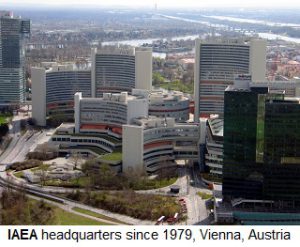
Deputize me!these are the words of the CU Trade Federation to the Caribbean member-states governments. Deputizing an external agency is pretty standard in our modern day. In addition, there are many treaties that create an organizational structure to administer the tenants of a multilateral agreement. Let’s consider one example that has a lot of relevance within the Caribbean region, the International Atomic Energy Agency (IAEA). While the impression of nuclear-atomic energy may not be Caribbean tropical, there are in fact 4 member-states that have ratified the IAEA treaty (Cuba, Haiti, Jamaica and the Dominican Republic; plus 2 more pending: St Lucia & Grenada).

See IAEA details in the Appendix below. As related there, the United States functions as the depositary government for the IAEA Statute; they are the deputized agent. This is the model for the CU/Go Lean roadmap, as the Caribbean Union is a Treaty, and the Trade Federation is the deputized administrator.

The Go Lean book provides 370-pages of turn-by-turn instructions on “how” to adopt new community ethos, plus the strategies, tactics, implementations and advocacies to execute so as to reboot, reform and transform the societal engines of Caribbean society. One advocacy in the book is entitled “10 Ways to Foster a Technocracy“; this allows for the delivery of best practices in the introduction of the new CU regime. As a deputized administrator, the CU is expected to function with higher accountability compared to traditional governmental agencies. See how this advocacy related this further on Page 64:

# 9 – Service Level Agreements
The CU is a proxy organization, chartered to execute deputized functions on behalf of member-states; this means a task-oriented philosophy with “Service Level Agreements” in place; i.e. 80% of all phone calls answered within 20 seconds.

Another example of the CU/Go Lean deputized functionality is the embrace of the Group Purchasing Organization concept – see VIDEO here. The book explains (Page 24):

d-2. Lean Operations
This roadmap posits that a lean technocratic organization should be felt, more so than seen. The focus should not be on edifices or “fat” bureaucratic structures, but rather the region should feel the presence of their federal government more so than seeing it.

A bureaucratic model requires comprehensive funding formulas to cover the expenses of the bureaucracy. A lean structure, on the other hand, can subsist mostly from the new revenues it creates. The CU must therefore generate its own income sources from new revenue streams, or from costs savings it affords it stakeholders (member-states). For example, as a Group Purchasing Organization (GPO), the CU entity can garner fee-based revenue for facilitating shipping-handling, or as a Performance Rights Organization (PRO), the CU entity can assess an administrative fee for petitioning/managing royalties from content users. A last example of lean operations would be deploying shared computer systems. This extends the operating costs across a wider user base than individual systems alone. This is the experience followed in the US, with 80% of the Fortune 500 firms using payroll processor ADP to perform this necessary back-office function. (A subset of the cost savings are used as CU income in this model).

So “sharing” is the governing principle that will be pursued for this community ethos to minimize the governing overhead burden on the governed. This principle will be felt in the region through the deployment of shared data centers, multi-purpose Post Office buildings, multi-functional libraries, mobile applications and the www.myCaribbean.gov portal.

———-

VIDEO – Everything You Wanted to Know About Group Purchasing but were afraid to ask! – https://youtu.be/WSq8LiscHOg

NatServAll

Published on Jul 17, 2014 – Let the National Service Alliance (NSA) leverage your purchasing power to tackle stiff competition, squeezed margins and rising prices. NSA works for companies at $3mil and over, to do just that. .. and no need to change your current distributor/supplier.

  • Category: Education
  • License: Standard YouTube License

Yes, a strategy where member-state governments can deputize a more efficient and effective administrator allows the stewards of the Caribbean (political leaders) to better lead with a lean technocracy. This has been a familiar theme to this Go Lean movement. Consider this sample of previous blog-commentaries that have expanded on this concept:

https://goleancaribbean.com/blog/?p=13749 New Caribbean Regime: Assembling the Region’s Organizations
https://goleancaribbean.com/blog/?p=13524 e-Government Portals 101
https://goleancaribbean.com/blog/?p=13365 A Model for Launching a Single Market Currency
https://goleancaribbean.com/blog/?p=13251 A Better Way to Manage Hurricane Risks
https://goleancaribbean.com/blog/?p=12949 Being Mature to Handle Charity Management
https://goleancaribbean.com/blog/?p=12930 Managing Dangers, Disasters and Emergencies
https://goleancaribbean.com/blog/?p=12400 A Better Way to Administer a Caribbean Arrest Treaty

We urge all member-states to lean-in to this Go Lean roadmap to deputize the Caribbean Union Trade Federation to better deliver on their Social Contract responsibilities. Despite the fact that the CU creates another layer of government, the roadmap makes delivering stewardship over the societal engines cheaper, faster and smarter. Yes, this is how the Caribbean member-state governments can make our homelands better places to live, work and play. 🙂

Download the free e-book of Go Lean … Caribbean – now!

Sign the petition to lean-in for this roadmap for the Caribbean Union Trade Federation.

———-

Appendix Reference: International Atomic Energy Agency

The International Atomic Energy Agency (IAEA) is an international organization that seeks to promote the peaceful use of nuclear energy, and to inhibit its use for any military purpose, including nuclear weapons. The IAEA was established as an autonomous organisation on 29 July 1957. Though established independently of the United Nations through its own international treaty, the IAEA Statute,[1] the IAEA reports to both the United Nations General Assembly and Security Council.

The IAEA has its headquarters in Vienna. The IAEA has two “Regional Safeguards Offices” which are located in Toronto, Canada, and in Tokyo, Japan. The IAEA also has two liaison offices which are located in New York City, United States, and in Geneva, Switzerland. In addition, the IAEA has three laboratories located in Vienna and Seibersdorf, Austria, and in Monaco.

The IAEA serves as an intergovernmental forum for scientific and technical co-operation in the peaceful use of nuclear technology and nuclear powerworldwide. The programs of the IAEA encourage the development of the peaceful applications of nuclear energy, science and technology, provide international safeguards against misuse of nuclear technology and nuclear materials, and promote nuclear safety (including radiation protection) and nuclear security standards and their implementation.

The IAEA and its former Director General, Mohamed El Baradei, were jointly awarded the Nobel Peace Prize on 7 October 2005. The IAEA’s current Director General is Yukiya Amano.

Membership

The process of joining the IAEA is fairly simple.[32] Normally, a State would notify the Director General of its desire to join, and the Director would submit the application to the Board for consideration. If the Board recommends approval, and the General Conference approves the application for membership, the State must then submit its instrument of acceptance of the IAEA Statute to the United States, which functions as the depositary Government for the IAEA Statute. The State is considered a member when its acceptance letter is deposited. The United States then informs the IAEA, which notifies other IAEA Member States. Signature and ratification of the Nuclear Non-Proliferation Treaty (NPT) are not preconditions for membership in the IAEA.

The IAEA has 169 member states.[33] Most UN members and the Holy See are Member States of the IAEA. Non-member states Cape Verde (2007), Tonga (2011), Comoros (2014), Gambia (2016), Saint Lucia (2016) and Grenada (2017) have been approved for membership and will become a Member State if they deposit the necessary legal instruments.[33]

Regional Cooperative Agreements

There are four regional cooperative areas within IAEA, that share information, and organize conferences within their regions:

  1. AFRA – The African Regional Cooperative Agreement for Research, Development and Training Related to Nuclear Science and Technology
  2. ARASIA – Cooperative Agreement for Arab States in Asia for Research, Development and Training related to Nuclear Science and Technology
  3. RCA – Regional Cooperative Agreement for Research, Development and Training Related to Nuclear Science and Technology for Asia and the Pacific
  4. ARCAL – Cooperation Agreement for the Promotion of Nuclear Science and Technology in Latin America and the Caribbean (ARCAL):[44]
    • Cuba
    • Haiti
    • Jamaica
    • Dominican Republic

See the full reference article here, retrieved January 21, 2018:

https://en.wikipedia.org/wiki/International_Atomic_Energy_Agency
Share this post:
, , , ,

First Steps – CariCom: One-Man-One-Vote Defects

Go Lean Commentary

Despite all the legal jargon, the concept of precedence* simply means that someone else has already dealt with an issue.

Think of big issues:

There is no need to open a new debate on these; there is already a well-documented, well-established precedence. Wrong is wrong!

There is need to re-establish precedence once again, in terms of government representation.

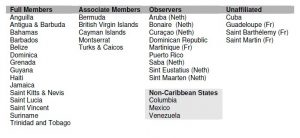
There is also a proposed new regime for the 30 member-states that constitute the Caribbean; 15 of these member are Full Members of the Caribbean Community (CariCom). While 5 states are Associate Members and 9 are Observers. The CariCom construct is therefore the best starting point for any regional integration.
This is the best First Step

… but there is a defect with this structure in terms of government representation, CariCom is structured for One-Man/State-One-Vote. In the past such a structure has been found wanting! We need to learn from those experiences, discussions, debates, disagreements and resolutions; we need to consider the precedence. This precedent consideration comes from the early days of the United States of America.

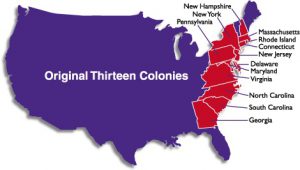
After the Declaration of Independence in 1776 and until the enactment of the Constitution in 1789, there was a temporary period of 13 years under the Articles of Confederacy. During that structure, each state (former colony) was afforded 1 vote in Congress. So the BIG state of Virginia yielded the same political power as the small state of Delaware. This was a defect! The correction came with the adoption of the Connecticut Compromise into the Constitution; this called for the adoption of a bicameral legislature (2 chambers): Upper House & Lower House. See the full details in the Appendix Reference below.
There are lessons from this precedence for the Caribbean to learn and apply today. There are BIG population states – think Cuba or Haiti with more that 10 million people – and small member-states, think St Barthélemy, St Kitts and St Martin, all with less than 45,000 people. There is no way that all 30 member states can be expected to wield the same political power with One-Man-One-Vote suffrage. This is a clear-and-present defect!

This commentary is Part 4 of a 6-part series from the movement behind the book Go Lean … Caribbean in consideration of the First Steps for instituting a new regime in governance for the Caribbean homeland. The other commentaries in the series are cataloged as follows:

  1. First Steps: EU – Free European Money – To Start at Top
  2. First Steps: UK – Dignified and Efficient
  3. First Steps: US – Congressional Interstate Compacts – No Vote; No Voice 
  4. First Steps: CariCom – One-Man-One-Vote Defects
  5. First Steps: Deputize ‘Me’! 
  6. First Steps: A Powerful C.P.U.

All of these commentaries relate to “how” the Caribbean can finally get started with adapting the organizational structures to optimize the region’s societal engines. The Caribbean has the 30 member-states, 4 languages and 5 different colonial legacies; there are many different systems of governance. Any consideration for leadership in the region must weigh the different schemes in the balance and choose an optimal structure. Forging change involves starting from the Top (leaders) and starting from the Bottom (citizens) to assimilate Caribbean society. This is how to make the region better places to live, work and play.

The book Go Lean…Caribbean – available to download for free – serves as a roadmap for the introduction and implementation of the technocratic Caribbean Union Trade Federation (CU), for the elevation of Caribbean society – for all 30 member-states. This CU/Go Lean roadmap has these 3 prime directives:

  • Optimization of the economic engines in order to grow the regional economy and create new jobs; (planning 2.2 million).
  • Establishment of a security apparatus to ensure public safety and protect the resultant economic engines.
  • Improve Caribbean governance to support these engines, including a separation-of-powers between the member-states and CU federal agencies.

The book stresses that reforming and transforming the Caribbean societal engines must be a regional pursuit. This was an early motivation for the roadmap, as pronounced in the opening Declaration of Interdependence (Pages 12 – 13):

xi. Whereas all men are entitled to the benefits of good governance in a free society, “new guards” must be enacted to dissuade the emergence of incompetence, corruption, nepotism and cronyism at the peril of the people’s best interest. The Federation must guarantee the executions of a social contract between government and the governed.

xvi. Whereas security of our homeland is inextricably linked to prosperity of the homeland, the economic and security interest of the region needs to be aligned under the same governance. Since economic crimes … can imperil the functioning of the wheels of commerce for all the citizenry, the accedence of this Federation must equip the security apparatus with the tools and techniques for predictive and proactive interdictions.

xxiv. Whereas a free market economy can be induced and spurred for continuous progress, the Federation must install the controls to better manage aspects of the economy: jobs, inflation, savings rate, investments and other economic principles. Thereby attracting direct foreign investment because of the stability and vibrancy of our economy.

The Go Lean book provides 370-pages of turn-by-turn instructions for a Way Forward, a guide on “how” to adopt new community ethos, plus the strategies, tactics, implementations and advocacies to execute so as to reboot, reform and transform the societal engines of Caribbean society. One implementation of the roadmap is the CU Legislature, with a design to neutralize the defects of a suffrage scheme. See this point here from the book Page 91:

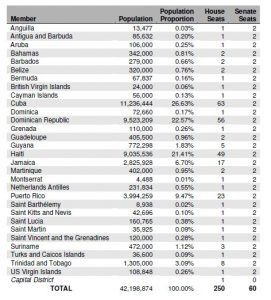
The CU Legislative Branch represents the Caribbean Parliament; it is divided between two chambers: Upper House (Senate) and Lower House (House of Assembly). Despite their title, both houses have equal power.

Why is there the need for 2 houses? Simple; this mitigates the reasons for failure from previous Caribbean integration efforts. The West Indies Federation of 1958 – 1962 was criticized for imbalanced representation: the larger states had just as much representation in the Federation as the smaller state. For the CU, size does matter. But minority rights must be protected as well. The Senate allows for a 1-man-1-vote structure (actually 2 seats per state), while the House is represented proportionally by population. This model follows the best practices of many other successful democracies.

There will undoubtedly be differences in legislation originated from both chambers. So the constitution should allow for differences to be settled in a Compromise Conference; then the final law re-validated by the respective chambers.

In addition, there is the advocacy in the book (Page 135) entitled “10 Lessons Learned from the West Indies Federation“, where it details the many defects of the before-CariCom regional construct. Yes, the Caribbean has its own precedence to consider … and learn from. See this chart here of the bicameral distribution:

Forging change in the Caribbean territories means starting at the Top (leaders) and starting at the Bottom (citizens). But there must be an equitable distribution among the leaders from the member-state – size does matter.

The Action Plan in this new Caribbean regime, the Way Forward, is that Caribbean people would determine the Caribbean destiny. See how this governance theme has been detailed in other blog-commentaries over the years; see sample here:

https://goleancaribbean.com/blog/?p=13749 New Caribbean Regime: Assembling the Region’s Organizations
https://goleancaribbean.com/blog/?p=13736 Past Failures for Caribbean Governing Integration
https://goleancaribbean.com/blog/?p=13251 Funding Caribbean Risk
https://goleancaribbean.com/blog/?p=10309 Not Satisfied with Representation? Then Consider Secession!
https://goleancaribbean.com/blog/?p=10043 Integration Plan for Greater Caribbean Prosperity
https://goleancaribbean.com/blog/?p=8813 Lessons from China – Size Does Matter
https://goleancaribbean.com/blog/?p=8351 A Lesson in Economic Fallacies – Independence: Hype or Hope
https://goleancaribbean.com/blog/?p=326 Model of Scottish Independence Pursuit – Self-Determination

The current regional construct – CariCom – has this suffrage defect of One-Man/State-One-Vote; this is not a design for governing efficiency or popular acceptance. The opening of the Go Lean book stressed that the plan is to avoid the defects of the Caribbean past and be better, do better:

This [Go Lean] movement is not an attempt to re-boot the CariCom, but rather a plan to re-boot the Caribbean. – Page 8

We cannot ignore the past, as it defines who we are, but we do not wish to be shackled to the past either, for then, we miss the future. So we must learn from the past, our experiences and that of other states in similar situations, mount our feet solidly to the ground and then lean-in, to reach for new heights; forward, upward and onward. – Page 3

We urge all member-states – large and small – to lean-in to this Go Lean roadmap – in fact all Caribbean stakeholders should lean-in – in order to be better, here in the Caribbean, to make our homeland better places to live, work and play. 🙂

Download the free e-book of Go Lean … Caribbean – now!

Sign the petition to lean-in for this roadmap for the Caribbean Union Trade Federation.

———–

Footnote * – Precedent

In legal systems based on common law, a precedent, or authority, is a principle or rule established in a previous legal case that is either binding on or persuasive for a court or other tribunal when deciding subsequent cases with similar issues or facts.

———–

Appendix Reference – Connecticut Compromise

The Connecticut Compromise (also known as the Great Compromise of 1787 or Sherman Compromise) was an agreement that large and small states reached during the Constitutional Convention of 1787 that in part defined the legislative structure and representation that each state would have under the United States Constitution. It retained the bicameral legislature as proposed by Roger Sherman, along with proportional representation of the states in the lower house, but required the upper house to be weighted equally between the states. Each state would have two representatives in the Upper House.

Context
On May 29, 1787, Edmund Randolph of the Virginia delegation proposed the creation of a bicameral legislature. Under his proposal, membership in both houses would be allocated to each state proportional to its population; however, candidates for the lower house would be nominated and elected by the people of each state. This proposal allowed fairness and equality to the people. Candidates for the upper house would be nominated by the state legislatures of each state and then elected by the members of the lower house. This proposal was known as the Virginia Plan.

Less populous states like Delaware were afraid that such an arrangement would result in their voices and interests being drowned out by the larger states. Many delegates also felt that the Convention did not have the authority to completely scrap the Articles of Confederation,[1] as the Virginia Plan would have.[2] In response, on June 15, 1787, William Paterson of the New Jersey delegation proposed a legislature consisting of a single house. Each state was to have equal representation in this body, regardless of population. The New Jersey Plan, as it was called, would have left the Articles of Confederation in place, but would have amended them to somewhat increase Congress’s powers.[3]

At the time of the convention, the South was growing more quickly than the North, and Southern states had the most extensive Western claims. South Carolina, North Carolina, and the State of Georgia were small in the 1780s, but they expected growth, and thus favored proportional representation. New York State was one of the largest states at the time, but two of its three representatives (Alexander Hamilton being the exception) supported an equal representation per state, as part of their desire to see maximum autonomy for the states. (The two representatives other than Hamilton had left the convention before the representation issue was resolved, leaving Hamilton, and New York State, without a vote.)

James Madison and Hamilton were two of the leaders of the proportional representation group. Madison argued that a conspiracy of large states against the small states was unrealistic as the large states were so different from each other. Hamilton argued that the states were artificial entities made up of individuals, and accused small state representatives of wanting power, not liberty (see History of the United States Senate).

For their part, the small state representatives argued that the states were, in fact, of a legally equal status, and that proportional representation would be unfair to their states. Gunning Bedford, Jr. of Delaware notoriously threatened on behalf of the small states, “the small ones w[ould] find some foreign ally of more honor and good faith, who will take them by the hand and do them justice.”

Elbridge Gerry ridiculed the small states’ claim of sovereignty, saying “that we never were independent States, were not such now, & never could be even on the principles of the Confederation. The States & the advocates for them were intoxicated with the idea of their sovereignty.”[4]

The Compromise
On June 14, when the Convention was ready to consider the report on the Virginia plan, William Paterson of New Jersey requested an adjournment to allow certain delegations more time to prepare a substitute plan. The request was granted, and, on the next day, Paterson submitted nine resolutions embodying necessary amendments to the Articles of Confederation, which was followed by a vigorous debate. On June 19, the delegates rejected the New Jersey Plan and voted to proceed with a discussion of the Virginia Plan. The small States became increasingly discontented, and some threatened to withdraw. On July 2, the Convention was deadlocked over giving each State an equal vote in the upper house, with five States in the affirmative, five in the negative, and one divided.

The problem was referred to a committee consisting of one delegate from each State to reach a compromise. On July 5, the committee submitted its report, which became the basis for the “Great Compromise” of the Convention. The report recommended that in the upper house each State should have an equal vote and in the lower house, each State should have one representative for every 40,000 inhabitants,[5] counting slaves as three-fifths of an inhabitant,[5] and that money bills should originate in the lower house (not subject to amendment by the upper chamber).

After six weeks of turmoil, North Carolina switched its vote to equal representation per state and Massachusetts abstained, and a compromise was reached, being called the “Great Compromise.” In the “Great Compromise,” every state was given equal representation, previously known as the New Jersey Plan, in one house of Congress, and proportional representation, known before as the Virginia Plan, in the other. Because it was considered more responsive to majority sentiment, the House of Representatives was given the power to originate all legislation dealing with the federal budget and revenues/taxation, per the Origination Clause.

Roger Sherman and Oliver Ellsworth, both of the Connecticut delegation, created a compromise that, in a sense, blended the Virginia (large-state) and New Jersey (small-state) proposals regarding congressional apportionment. Ultimately, however, its main contribution was in determining the apportionment of the Senate. Sherman sided with the two-house national legislature of the Virginia Plan but proposed “That the proportion of suffrage in the 1st. Branch [house] should be according to the respective numbers of free inhabitants; and that in the second branch or Senate, each State should have one vote and no more.”[6] Although Sherman was well liked and respected among the delegates, his plan failed at first. It was not until July 23 that representation was finally settled.[6]

What was ultimately included in the constitution was a modified form of this plan, partly because the larger states disliked it. In committee, Benjamin Franklin modified Sherman’s proposal to make it more acceptable to the larger states. He added the requirement that revenue bills originate in the house.

The final vote on the Connecticut Compromise on July 16th left the Senate looking to the Confederation Congress. In the preceding weeks of debate, James Madison of Virginia, Rufus King of New York, and Gouverneur Morris of New York each vigorously opposed the compromise for this reason.[7] For the nationalists, the Convention’s vote for the compromise was a stunning defeat. However, on July 23, they found a way to salvage their vision of an elite, independent Senate. Just before most of the convention’s work was referred to the Committee of Detail, Gouverneur Morris and Rufus King moved that state’s members in the Senate be given individual votes, rather than voting en bloc, as they had in the Confederation Congress. Then Oliver Ellsworth, a leading proponent of the Connecticut Compromise, supported their motion, and the Convention adopted the Compromise.[8]Since the Convention had early acquiesced in the Virginia Plan’s proposal that senators have long terms, restoring that Plan’s vision of individually powerful senators stopped the Senate from becoming a strong safeguard of federalism. State governments lost their direct say in Congress’s decisions to make national laws. As the personally influential senators received terms much longer than the state legislators who elected them, they became substantially independent. The compromise continued to serve the self-interests of small-state political leaders, who were assured of access to more seats in the Senate than they might otherwise have obtained.[9]

Aftermath
Senate representation was explicitly protected in Article Five of the United States Constitution:

…no state, without its consent, shall be deprived of its equal suffrage in the Senate.[10]

Source: Wikipedia Online Encyclopedia – retrieved January 21, 2018 from: https://en.wikipedia.org/wiki/Connecticut_Compromise

Share this post:
, ,
[Top]

First Steps – Congressional Interstate Compacts – No Vote; No Voice

Go Lean Commentary

The United States of America is the richest, most powerful nation on the planet and yet …

… [for] the US Territories of Puerto Rico and the Virgin Islands, … American economic prosperity does not always extend to the islands. The emigration (brain & capital drain) for these islands has been acute for over 100 years and continues, unchecked today. The pattern of the US Territories is what the rest of the [Caribbean] region does not want: half abandoned; where the emigrated population exceeds the on-island population. These islands are paradise – there should be no reason to leave. – Book Go Lean…Caribbean Page 244

Of the 30 member-states that constitute the Caribbean, only these two – Puerto Rico (PR) and the US Virgin Islands (USVI) – gets American culture, commerce and systems of governance. So any plan to elevate the Caribbean region must also consider the legal and constitutional mandates of the US. The First Steps for these US Territories would be an Interstate Compact.

This is not good; these lands find themselves between a rock and a hard place! See VIDEO here:

AM JOY Posted 10/14/17 – Puerto Rico and U.S. Virgin Islands: Part of U.S.
As Puerto Rico and the U.S. Virgin Islands struggle to recover, Joy Reid speaks with residents and political leaders about why hurricane relief has been slower in these American territories.

What is really sad is that these territories have no vote and therefore no voice in the process to find solutions. (Territories have no vote in Congress, only formal States).

This commentary is Part 3 of a 6-part series from the movement behind the book Go Lean … Caribbean in consideration of the First Steps for instituting a new regime in governance for the Caribbean homeland. The other commentaries in the series are cataloged as follows:

  1. First Steps: EU – Free European Money – To Start at Top
  2. First Steps: UK – Dignified and Efficient
  3. First Steps: US – Congressional Interstate Compacts – No Vote; No Voice
  4. First Steps: CariCom – One-Man-One-Vote Defects
  5. First Steps: Deputize ‘Me’! 
  6. First Steps: A Powerful C.P.U.

All of these commentaries relate to “how” the Caribbean can finally get started with adapting the organizational structures to optimize the region’s societal engines. The Caribbean is in North America and the US is the Big Dog of the region. So any consideration for leading from the Top must partner with American stakeholders. Though these considerations only apply to the 2 US territories, there are lessons for all the Caribbean, as we can glean wisdom and insight on how a roadmap can reform and transform the Caribbean member-states so that they can be better places to live, work and play.

The book Go Lean…Caribbean – available to download for free – serves as a roadmap for the introduction and implementation of the technocratic Caribbean Union Trade Federation (CU), for the elevation of Caribbean society – for all 30 member-states, including the US Territories. This CU/Go Lean roadmap has these 3 prime directives:

  • Optimization of the economic engines in order to grow the regional economy and create new jobs; (how about 2.2 million).
  • Establishment of a security apparatus to ensure public safety and protect the resultant economic engines.
  • Improve Caribbean governance to support these engines, including a separation-of-powers between the member-states and CU federal agencies. (CU federal is not to be confused with US federal; these are different entities).

The book stresses that reforming and transforming the Caribbean societal engines must be a regional pursuit. This was an early motivation for the roadmap, as pronounced in the opening Declaration of Interdependence (Pages 12 – 13):

xi. Whereas all men are entitled to the benefits of good governance in a free society, “new guards” must be enacted to dissuade the emergence of incompetence, corruption, nepotism and cronyism at the peril of the people’s best interest. The Federation must guarantee the executions of a social contract between government and the governed.

xvi. Whereas security of our homeland is inextricably linked to prosperity of the homeland, the economic and security interest of the region needs to be aligned under the same governance. Since economic crimes … can imperil the functioning of the wheels of commerce for all the citizenry, the accedence of this Federation must equip the security apparatus with the tools and techniques for predictive and proactive interdictions.

xxiii.  Whereas many countries in our region are dependent Overseas Territory of imperial powers, the systems of governance can be instituted on a regional and local basis, rather than requiring oversight or accountability from distant masters far removed from their subjects of administration. The Federation must facilitate success in autonomous rule by sharing tools, systems and teamwork within the geographical region.

xxiv. Whereas a free market economy can be induced and spurred for continuous progress, the Federation must install the controls to better manage aspects of the economy: jobs, inflation, savings rate, investments and other economic principles. Thereby attracting direct foreign investment because of the stability and vibrancy of our economy.

The Go Lean book provides 370-pages of turn-by-turn instructions for a Way Forward, a guide on “how” to adopt new community ethos, plus the strategies, tactics, implementations and advocacies to execute so as to reboot, reform and transform the societal engines of Caribbean society. One advocacy in the book (Page 244) is entitled “10 Ways to Impact US Territories“; this allows for the delivery of best practices to introduce the new CU regime. Washington would be considered an “overseas master” for Caribbean stewardship. Though they do not need the CU to impact the US – notwithstanding the Diaspora living there – there is the need for this CU treaty to impact the efficiency of these American territories.

St Johns, US Virgin Islands

Forging change in the American Caribbean territories means starting at the Top (leaders) and starting at the Bottom (citizens). But the leaders in Puerto Rico and the USVI cannot engage any cross-border initiatives without the US Congress; this is the premise of Interstate Compacts; these are necessary to partner with American stakeholders across borders and State-lines. See the full details on these Compacts in the Appendix Reference below.

Imagine the irony …
The people of the American Caribbean cannot even vote on the empowerments necessary to assuage their own crises; they have no self-determination. Yes, each territories have a non-voting member in House of Representatives of the US Congress, but because the representative is non-voting makes him/her inconsequential to other voting representatives; their voice is muted. In addition, there is no representation at all in the US Senate; truly no voice.

The Action Plan in this new Caribbean regime, this Way Forward, wants to put the Caribbean destiny in the hands of Caribbean stakeholders. This is only fair … and just. This is not our opinion alone; none other than the United Nations have made this declaration. In a previous Go Lean blog-commentary, this fact was revealed, as follows:

Many others – including the United Nations, who have declared PR technically “a colony” – feel that the Puerto Rico-Washington relationship is dysfunctional, that there should be a friendly divorce.

Other blog-commentaries detailed the challenges and crises of life in Puerto Rico and the US Virgin Islands; see sample here:

https://goleancaribbean.com/blog/?p=13391 After Maria, Destruction and Defection for Puerto Rico
https://goleancaribbean.com/blog/?p=12959 After Irma, America Should Scrap the ‘Jones Act’
https://goleancaribbean.com/blog/?p=12274 State of the Union – Spanish Caribbean
https://goleancaribbean.com/blog/?p=12126 Commerce of the Seas – Stupidity of the Jones Act
https://goleancaribbean.com/blog/?p=11963 Oscar López Rivera: The ‘Nelson Mandela’ of the Caribbean? Not!
https://goleancaribbean.com/blog/?p=11647 Righting a Wrong: Puerto Rico’s Bankruptcy
https://goleancaribbean.com/blog/?p=10771 Logical Addresses – ‘Life or Death’ Consequences
https://goleancaribbean.com/blog/?p=6867 How to address high consumer prices
https://goleancaribbean.com/blog/?p=6693 Ten Puerto Rico Police Accused of Criminal Network
https://goleancaribbean.com/blog/?p=4551 US Territories – Between a ‘rock and a hard place’
https://goleancaribbean.com/blog/?p=599 Ailing Puerto Rico open to radical economic fixes

The US Territories of PR and the USVI should lean-in to this Go Lean roadmap – in fact all Caribbean stakeholders should lean-in – in order to be better, here in the Caribbean, to make our homeland better places to live, work and play. 🙂

Download the free e-book of Go Lean … Caribbean – now!

Sign the petition to lean-in for this roadmap for the Caribbean Union Trade Federation.

============

Appendix: Congressional Consent and the Permission for States to Enter into Interstate Compacts
By: Steven Blevins

When our Founding Fathers wrote the Constitution, they included language that grants states the authority to enter into interstate agreements to achieve a common purpose. This directive, found in Article I, Section 10, Clause 3 of the Constitution, is known as the Compacts Clause. In it, the founders asserted, in part, that “no state shall, without the consent of Congress enter into any agreement or compact with another state, or with a foreign power.”1 This often-overlooked clause of the Constitution also grants Congress the power to approve or deny the validity of a compact—a concept called congressional consent.

The founders included the compact clause in the Constitution to protect the dual-sovereign nature of the democratic government structure, while also promoting the ability of the states to cooperatively solve problems. While the Founding Fathers believed interstate cooperation was an important and necessary feature of American democracy, they feared states would use this authority to enter into agreements that would alter the federal balance of power. To avoid such an event, the compact clause instructs states entering into interstate compacts to obtain congressional consent for the agreement to be valid.

Types of Compacts Requiring Congressional Approval
A literal interpretation of the compact clause would conclude all interstate agreements must obtain the approval of Congress before they take effect and carry the weight of law. The Supreme Court, however, has ruled that “any” does not mean “all” in the context of interstate compacts and congressional consent. To clear up the ambiguity of the compact clause, the U.S. Supreme Court in Virginia v. Tennessee held that Congress must approve only two types of compacts:

  • Those compacts that alter the balance of political power between the state and federal government; or
  • Those compacts that intrude on a power reserved to Congress.

Thus, when a compact does not touch on either of those two items, the courts have ruled the federal government does not have a direct interest in the compact and congressional consent is not technically required.2 Essentially, if federal supremacy is threatened, then congressional consent is required for the compact to be valid. On the other hand, if federal supremacy is not threatened, then an absence of congressional consent will not render the compact invalid.

Categories of Congressional Consent
Noticeably absent from the compact clause are specific procedures the states must follow to obtain consent and Congress must follow when granting it. Although the text of the Constitution is void of any specific direction, it is generally understood that Congress specifies consent in one of three ways:

  1. Explicitly
    Most frequently seen in compacts that resolve boundary disputes, this type of consent is granted after the compact has been adopted by the requisite number of state legislatures and is submitted by the member states to Congress for approval. In these instances, Congress is able to review, amend and/or revise the agreement and, as a result, is able to provide a clear determination of approval or disapproval. Therefore, explicit congressional consent is sometimes considered desirable, even if it is not strictly required at the time the compact is created.
  2. Implicitly
    Most notably seen in the form of border compacts, which establish or alter the boundaries of a state as result of conflicting territorial claims, congressional consent may be implied when actions by the states and federal government demonstrate approval of the compact.3Such actions usually include federal legislation supporting the terms of a compact or legislation that strengthens the objective of a specific compact. Given its uncertain nature, implied consent should not be assumed by compacting states.
  3. Pre-emptively
    Congress may give its approval in advance by adopting legislation encouraging states to enter into an interstate compact for a specific purpose.4In these instances, Congress grants consent before the compact reaches critical mass, meaning that once the required number of states adopts the compact, it becomes enforceable. While pre-emptive consent deprives Congress the opportunity to review the compact and its objectives once it is drafted, it often encourages states to cooperatively resolve a policy challenge they otherwise might not have addressed.
    There are also several recent examples of Congress pre-emptively granting states consent to explore the use of interstate compacts. Notable examples include the Environmental Protection Act of 2005, which granted three or more contiguous states the right to enter into an electric transmission line siting compact, and the Nonadmitted Insurance and Reinsurance Act contained in the Dodd-Frank Wall Street Reform and Consumer Protection Act of 2010, which encouraged states to explore the use of interstate compacts to create uniformity in the surplus lines insurance industry. The Council of State Governments, through its National Center for Interstate Compacts, has assisted states in exploring the appropriateness of an interstate compact to address each of the challenges highlighted above.

The process of congressional approval mirrors that of the legislative approval process of any other federal statute. The House or Senate introduces compact bills, but both congressional bodies must approve it, and the president must sign the compact into law.

Withholding Consent
Congressional consent is a political judgment rather than a legal judgment —essentially a gratuitous action by Congress.5 With this notion in mind, Congress may withhold consent when it feels approval may lead to “imprudent combinations, dangerous joint action or intrusion on traditional federal matters” or “has the potential to alter the balance of power between the states and federal government.”6 Congress faces essentially no limitations in its authority to grant or withhold consent.

When presented with a compact seeking adoption, Congress has the authority to either deny approval or alter the compact as presented by the states by imposing various limitations and conditions on the compact or the member states. If Congress does amend the compact, however, member states are not required to adopt the revised compact. If the member states choose to adopt the amended legislation, they concede to Congress’ changes to the compact.7

Congress’ Ability to Amend, Withdraw or Repeal Congressional Consent
If Congress so chooses, it may amend or “change the landscape” of a compact via legislation.8 In fact, “the granting of congressional consent in no way limits Congress’s right to exercise its legislative prerogatives, even to the extent that such an exercise significantly impacts or impairs the workings of an interstate compact.”9 Additionally, the binding authority of interstate compacts approved by Congress is important. Once Congress grants consent, all compacting states are bound to the terms of the agreement. “While congressional consent may transform an interstate compact into federal law, consent does not transform a compact into a binding agreement between the states and Congress.”10

Two federal court decisions provide guidance about whether Congress may withdraw consent. In Tobin v. United States11 and Mineo v. Port Authority of New York-New Jersey,12 the court held that once congressional consent was given, Congress could not withdraw consent nor place additional stipulations on the compact. Congress can, however, work around this legal requirement by amending the proposed compact in a way that specifically enables it to withdraw consent at a future date. The judiciary has not made any declaration on whether such a maneuver is legal.13 The courts have, however, noted that withdrawing consent after the fact “would be damaging to the very concept of interstate compacts.”14

Federalization of Interstate Compacts
Once Congress grants consent, a compact then becomes federal law. In the case of Cuyler v. Adams,15 the court articulated congressional consent “transforms the States’ agreement into federal law under the Compact Clause.”16 Thus, “once Congress gives consent, the compact is presumptively transformed into the law of the United States absent compelling evidence that consent was not required.”17

This transformation from state-created agreement into federal law is unique. In no other context does a state law become “federalized” with such miniscule influence by the federal government than in the congressional approval of interstate compacts. This “transformation” effect also places the compact within the scope of federal jurisdiction while insulating the compact from constitutional attack.18

———–

For more information about congressional consent of interstate compacts, when it is appropriate and how to go about seeking it, please visit NCIC’s website at www.csg.org/compacts.

References:

1 U.S. Constitution, Art. I, Sec. 10, Cl. 3.

U.S. Steel Corp. v. Multistate Tax Commission, 434 U.S. 452 (1978).

3 See , e.g., Georgia v. South Carolina, 4 97 U.S. 376 (1990), wherein Georgia brought suit against South Carolina over the location of their boundary along the Savannah River; Michigan v. Wisconsin, 270 U.S. 295, 308 (1926), wherein suit was brought to determine the boundary between Michigan and Wisconsin from the mouth of the Montreal river at Lake Superior to this ship channel entrance from Lake Michigan into Green Bay; Vermont v. New Hampshire, 289 U.S. 593 (1933), wherein Vermont brought suit against New Hampshire over the determination of the boundary line with involving the Connecticut River.

Petty v. Tennessee-Missouri Bridge Commission, 359 U.S. 275, 281-82 (1959).

College Savings Bank v. Florida Prepaid Postsecondary Education Expense Board, 527 U.S. 666 (1999) “Granting of consent is a gratuity on the part of Congress not a right that the states possess under the Constitution.”

6 Broun, Caroline N., Buenger, Michael L., McCabe, Michael H., & Masters, Richard L. (2006) p. 41. “The Evolving Use and the Changing Role of Interstate Compacts: A Practitioner’s Guide.” Chicago: American Bar Association.

7 Broun, et al. p. 43-7. Also see Arizona v. California, 373 U.S. 546 (1963).

8 Broun, et al. p. 43. Also see Arizona v. California, 373 U.S. 546 (1963). Also see Merrion v. Jicarilla Apache Tribe, 455 U.S. 130, 148 (1982) “Contractual arrangements remain subject to subsequent legislation by the presiding sovereign.”

9 Broun, et al. p. 43. Also see, Arizona v. California, 373 U.S. 546 (1963) wherein the Supreme Court held Congress acted within its realm of authority when it created a plan to manage and operate the Colorado River even though it had previously granted consent to the Colorado River Compact whose purpose was to assist in the management and operation of the body of water.

10 Broun, et al. p. 44.

11 Tobin v. United States, 306 F.2d 270, 273 (D.C. Cir. 1962).

12 Mineo v. Port Authority of New York-New Jersey, 779 F.2d 939 (3d Cir. 1985).

13 Broun, et al. p. 43.

14 Tobin v. United States, 306 F.2d 270, 273 (D.C. Cir. 1962).

15 Cuyler v. Adams, 449 U.S. 433 (1981).

16 Ibid.

17 Broun, et al. p. 43. Also see Old Town Trolley Tours of Wash. V. Wash. Metro. Area Transit Commission,129 F.3d 201, 204 (D.C. Cir.1997); Reed v. Farley, 512 U.S. 339 (1994).

18 Broun, et al. p. 56.

Source: The Council of State Governments; posted July 5, 2011; retrieved January 20, 2018 from: http://knowledgecenter.csg.org/kc/content/congressional-consent-and-permission-states-enter-interstate-compacts

Share this post:
, , ,
[Top]

First Steps – Following the ‘Dignified and Efficient’ British Model

Go Lean Commentary

Of the 30 member-states that constitute the Caribbean, the highest count of the 4 language groups is English – 18 territories. The British eco-system assimilated these 18 lands with the English language, culture, commerce and systems of governance.

This commentary is Part 2 of a 6-part series from the movement behind the book Go Lean … Caribbean in consideration of the First Steps for instituting a new regime in governance for the Caribbean homeland. The other commentaries in the series are cataloged as follows:

  1.  First Steps: EU – Free European Money – To Start at Top
  2.  First Steps: UK – Dignified and Efficient
  3.  First Steps: US – Congressional Interstate Compacts – No Vote; No Voice 
  4.  First Steps: CariCom – One-Man-One-Vote Defects 
  5.  First Steps: Deputize ‘Me’! 
  6.  First Steps: A Powerful C.P.U.

All of these commentaries relate to “how” the Caribbean can finally get started with adapting the organizational structures to optimize the region’s societal engines. This is the consideration of leading from the Top. This would apply to the Anglophone Caribbean, who all operate on constitutional structures based on the English Constitution or Westminster. But there are lessons for all the Caribbean, as we can glean how the Go Lean roadmap can reform and transform the Caribbean member-states so that they can be better places to live, work and play.

So looking at the British model for governance – where Queen Elizabeth II is the Head of State – means considering the concepts of “the Dignified and the Efficient”, as defined in the book The English Constitution by Walter Bagehot:

What was crucial, he [(Bagehot)] insisted, was to understand the difference between the ‘dignified parts’ of the constitution and the ‘efficient parts’ (admitting that they were not ‘separable with microscopic accuracy’). The former ‘excite and preserve the reverence of the population’, the latter are ‘those by which it, in fact, works and rules’.

England had a ‘double set’ of institutions – the dignified ones ‘impress the many’ while the efficient ones ‘govern the many’. The dignified or ‘theatrical’ parts of the system played the essential role of winning and sustaining the loyalty and confidence of the mass of ordinary people whose political capacities were minimal or non-existent they helped the state to gain authority and legitimacy, which the efficient institutions could then use. Bagehot was an unashamed elitist who believed bleakly that the ‘lower orders’ and the ‘middle orders’ were ‘narrow-minded, unintelligent, incurious’. Throughout The English Constitution, there are references to ‘the coarse, dull, contracted multitude’, ‘the poor and stupid’, ‘the vacant many’, ‘the clownish mass’.
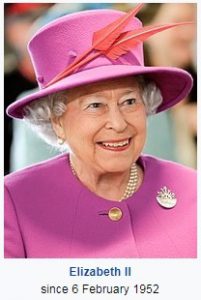
The dignified parts of the constitution were complicated, imposing, old and venerable; but the efficient parts were simple and modern. The ‘efficient secret’ at the heart of it all was ‘the close union’ and ‘nearly complete fusion’ of executive and legislative powers in the Cabinet – the ‘board of control’ which rules the nation. ‘The use of the Queen, in a dignified capacity, is incalculable’, opened the chapters of the book dealing with the monarchy. It acted as a ‘disguise’ and strengthened the government through its combination of mystique and pageantry. He famously summed up the monarch’s role as involving ‘the right to be consulted, the right to encourage, the right to warn’. – Source.

Under the British system, there is a lot of pomp-and-pageantry – theatrics. This is the sphere of the monarchy, as the Royal Family performs all the ceremonial functionality – think: launching ships, grand openings, receiving ambassadors, etc.. The government – Cabinet, Prime Minister’s Office, etc. – on the other hand perform the governing efficiency – there is a separation-of-powers between “the Dignified and the Efficient”. There is advantage to a structure of delivery specialization; it allows for laser-focus and minimal distractions. This is the beauty of a technocracy.

The book Go Lean…Caribbean – available to download for free – serves as a roadmap for the introduction and implementation of the technocratic Caribbean Union Trade Federation (CU), for the elevation of Caribbean society – for all member-states. The book (Page 64) cited the model of monarchies in the design of this Trade Federation:

Model of Constitutional Monarchy
Despite hundreds of years of government evolutions with the Republic system, there are still many modern democracies that maintain constitutional monarchies (i.e. UK, Netherlands, Spain & Canada). Their preference is justified in the logic where a President may only be respected by his party. Rather, a technocratic monarch (King or Queen) must transcend party politics and rule for the betterment of all subjects. (Queen Elizabeth II has ruled for 60 years out of a sense of duty).

A political climate is simply inescapable, with classic democracies – see the VIDEO on the Queen wielding apolitical power in the Appendix below. The goal of the Go Lean/CU roadmap is simply to govern better, to be …

Apolitical – Loved by All
Partisan politics can lead to scenarios where politicians refuse to execute their constitutional mandates; just out of spite of each other …. Even worst, when political sides are so polarized, dreaded consequences can ensue, like civil wars (think: US conflict over slavery in 1860). A technocracy seeks a better governing system, one in which the administration is apolitical and therefore the potential to be loved by all; or equally despised by all (think: Greek Austerity in 2012). Thus, technocracies are more patriotic than political.

Considering “Dignified” versus “Efficient”, there is no “dignified” role with the CU structure, just apolitical efficiency. The pomp-and-pageantry remains with the member-states. Overall, this Go Lean/CU roadmap seeks to deliver on just one efficient charter, to elevate Caribbean society; this is expressed as a prime directives, with these 3 statements:

  • Optimization of the economic engines in order to grow the regional economy to $800 Billion and create 2.2 million new jobs.
  • Establishment of a security apparatus to ensure public safety and protect the resultant economic engines.
  • Improvement of Caribbean governance to support these engines, including our own separation-of-powers between the member-states and CU federal agencies. Any existence of Dignified would be found at member-states; the CU is only efficient.

The book stresses that reforming and transforming the Caribbean societal engines must be a regional pursuit. This was an early motivation for the roadmap, as pronounced in the opening Declaration of Interdependence (Pages 12 – 13):

xi. Whereas all men are entitled to the benefits of good governance in a free society, “new guards” must be enacted to dissuade the emergence of incompetence, corruption, nepotism and cronyism at the peril of the people’s best interest. The Federation must guarantee the executions of a social contract between government and the governed.

xvi. Whereas security of our homeland is inextricably linked to prosperity of the homeland, the economic and security interest of the region needs to be aligned under the same governance. Since economic crimes … can imperil the functioning of the wheels of commerce for all the citizenry, the accedence of this Federation must equip the security apparatus with the tools and techniques for predictive and proactive interdictions.

xxiii.  Whereas many countries in our region are dependent Overseas Territory of imperial powers, the systems of governance can be instituted on a regional and local basis, rather than requiring oversight or accountability from distant masters far removed from their subjects of administration. The Federation must facilitate success in autonomous rule by sharing tools, systems and teamwork within the geographical region.

xxiv.  Whereas a free market economy can be induced and spurred for continuous progress, the Federation must install the controls to better manage aspects of the economy: jobs, inflation, savings rate, investments and other economic principles. Thereby attracting direct foreign investment because of the stability and vibrancy of our economy.

Reforming and transforming the Caribbean member-states means including the governing stakeholders for all Anglophone territories. Of the 18, 17 require some interaction with the UK Foreign & Commonwealth Office – see Appendix below – to enact new laws; (Trinidad & Tobago is now a Republic). Imagine the challenge of this UK Commonwealth Office … now … and over the last 5 decades. They have had to manage both the “Dignified” and the “Efficient” for all the British territories in the Caribbean and watch one territory after another pursue independence.

Note: Governor Generals in the independent countries, despite the official job descriptions of representing the Head of State – The Queen – do not actually report directly to the Queen, but rather to this UK Commonwealth Office. See this functionality of the UK Commonwealth outreach in this Press Release here:

Press Release: PM to call for revitalised Commonwealth at reception ahead of 2018 Heads of Government Meeting

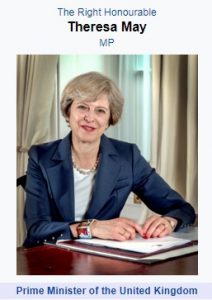
Posted 19 September 2017 – From: Prime Minister’s Office, 10 Downing Street and The Rt Hon Theresa May MP

The Prime Minister will co-host a reception for Commonwealth leaders tonight in the margins of the UN General Assembly in New York where she will set out the need for a wholesale revitalisation of the Commonwealth if it is to thrive and serve its 2.4 billion citizens into the 21st century.

She will also launch the theme for the 2018 Commonwealth Heads of Government Meeting – Towards a Common Future – and set out the four main goals for the summit, due to be held in the UK next spring:

  • prosperity: boosting intra-Commonwealth trade and investment
  • security: increasing cooperation across security challenges including global terrorism, organised crime and cyber attacks
  • fairness: promoting democracy, fundamental freedoms and good governance across the Commonwealth
  • sustainability: building the resilience of small and vulnerable states to deal with the effects of climate change and other global crises

The biggest meeting of Heads of Government the UK has ever hosted, the summit will take place in iconic venues in London and Windsor including Buckingham Palace, St James’s Palace and Windsor Castle from 16-20 April 2018. It will bring together up to 52 Commonwealth leaders, up to 52 Foreign Ministers and thousands of people from across business and civil society, representing the Commonwealth’s vibrant and diverse global network.

Also speaking at the reception will be co-host Prime Minister Muscat of Malta as the current Commonwealth chair, the Commonwealth Secretary-General, and youth representatives drawn from across the Commonwealth who will help to deliver the Commonwealth Youth Forum at next year’s summit.

In her speech, the Prime Minister will outline the need for the Commonwealth to have a clearer purpose, and be better able to address the global challenges we face. With 60% of its population under 30, she will also talk about the need for the Commonwealth to respond to the concerns and priorities of its young people.

Speaking ahead of the reception, the Prime Minister said:

    As the world changes, so must the Commonwealth if it is to rise to the new challenges that the 21st century presents. It is the responsibility of all members to ensure we are working together towards a common future that will meet the needs of all our peoples, particularly our youth. I look forward to this unique organisation coming together at next year’s Heads of Government Meeting to pursue an ambitious agenda for a more prosperous, secure, fair and sustainable future for everyone.

Source: Retrieved January 18, 2018 from: https://www.gov.uk/government/news/pm-to-call-for-revitalised-commonwealth-at-reception-ahead-of-2018-heads-of-government-meeting

While we appreciate London’s efforts, the Caribbean is proposing its own Way Forward with the CU as part of a new regime.

The Go Lean book provides 370-pages of turn-by-turn instructions for a Way Forward, a guide on “how” to adopt new community ethos, plus the strategies, tactics, implementations and advocacies to execute so as to reboot, reform and transform the societal engines of Caribbean society. One advocacy in the book is entitled “10 Ways to Impact British Territories“; this allows for the delivery of best practices to introduce the new CU regime. London would be considered an “overseas master” for Caribbean stewardship. While the UK is one of the biggest (richest) economies in the world, British economic prosperity has not always extended to these islands. Though they do not need the CU to impact the United Kingdom – notwithstanding the Diaspora living there – there is the need for this CU treaty to impact efficiency of all the Anglophone nations and Overseas Territories.

The Go Lean/CU roadmap does not override the sovereignty of the 30 member-states. So this foregoing Dignified role continues. The CU is simply a deputized agency for delivering the apolitical efficiency of the Social Contract.

According to the Go Lean book (Page 96), the roadmap calls for the functionality of “assembling” all the regional stakeholders in the Caribbean into the Trade Federation, including the “overseas masters” during the first year of the confederation plan. We cannot just consider Europe as a singularity. No, for the United Kingdom has voted to divorce themselves from the European Union construct.

So we want to make our homeland a better place to live, work and play, and our “overseas masters” want our Caribbean nations to be elevated, all we need now is the “will and the way”. We urge all to lean-in to this roadmap for change and empowerment. 🙂

Download the free e-Book of Go Lean … Caribbean – now!

Sign the petition to lean-in for this roadmap for the Caribbean Union Trade Federation.

————

Appendix – UK Foreign and Commonwealth Office

The Foreign and Commonwealth Office (FCO), commonly called the Foreign Office, is a department – [agency to exercise executive authority] – of the Government of the United Kingdom. It is responsible for protecting and promoting British interests worldwide. It was created in 1968 by merging the Foreign Office and the Commonwealth Office.

The head of the FCO is the Secretary of State for Foreign and Commonwealth Affairs, commonly abbreviated to “Foreign Secretary” (currently Boris Johnson, who took office on 13 July 2016). This is regarded as one of the four most prestigious positions in the Cabinet– the Great Offices of State – alongside those of Prime MinisterChancellor of the Exchequer and Home Secretary.

The FCO is managed from day to day by a civil servant, the Permanent Under-Secretary of State for Foreign Affairs, who also acts as the Head of Her Majesty’s Diplomatic Service. This position is held by Sir Simon McDonald, who took office on 1 September 2015.

Source: Wikipedia Online Reference retrieved January 18, 2018 from: https://en.wikipedia.org/wiki/British_government_departments


————

Appendix VIDEO – What Powers Does the Queen of England Actually Have? – https://youtu.be/wiDCwqpupj8

Today I Found Out

Published on Jul 21, 2017 – A short while ago we wrote about the fact Queen Elizabeth II needs neither a passport nor driving license thanks to a quirk of British law. But what other powers does the Queen of many titles have and what could she theoretically do if she decided to flex the full might of the authority she wields? As it turns out, thanks to the Royal Prerogative, a terrifying amount if she really felt like it, or, at least, assuming parliament went by the letter of the law and they and the people didn’t decide to stage a little revolt.

  • Category: Education
  • License: Standard YouTube License
Share this post:
, ,
[Top]

First Steps – Free European Money – To Start at Top

Go Lean Commentary

Do I look like I have a plan? – Sarcasm by ‘The Joker’, the villain advocating for anarchy in the 2008 movie Batman: The Dark Knight

Most definitely, yes we do!

Despite the reality of a regional crisis, there is a plan to stop the bad trend of Caribbean people abandoning their homeland and emigrating away to North American and European destinations. Consider these thoughts:

  1. Do you know the Golden Rule; it’s he who has the gold that makes the rules.
  2. In the best control conditions of time, temperature and pressure, people will do … as they damn well please.

This is the conundrum of forging change in Caribbean society; where do we start, the Top (leaders) or the Bottom (people)?

The book Go Lean…Caribbean – available to download for free – declares: Both!

The fact that both approaches must be engaged at the same time depicts both a Top-Down plan plus a Bottoms-Up plan. The quest is that Caribbean society must change – if it is to survive – so either and both approaches are pursued.

Yes, we can …

The book serves as a roadmap for the introduction and implementation of the technocratic Caribbean Union Trade Federation (CU), for the elevation of Caribbean society – for all member-states. This CU/Go Lean roadmap has these 3 prime directives:

  • Optimization of the economic engines in order to grow the regional economy to $800 Billion and create 2.2 million new jobs.
  • Establishment of a security apparatus to ensure public safety and protect the resultant economic engines.
  • Improve Caribbean governance to support these engines, including a separation-of-powers between the member-states and CU federal agencies.

This commentary is the first of a 6-part series from the movement behind the book Go Lean … Caribbean in consideration of the First Steps for instituting this new regime for the Caribbean homeland. The other commentaries in the series are cataloged as follows:

  1.     First Steps: EU – Free European Money – To Start at Top
  2.     First Steps: UK – Dignified and Efficient
  3.     First Steps: US – Congressional Interstate Compacts – No Vote; No Voice
  4.     First Steps: CariCom – One-Man-One-Vote Defects
  5.     First Steps: Deputize ‘Me’!
  6.     First Steps: A Powerful C.P.U.

All of these commentaries relate to “how” the Caribbean can finally get started with adapting the organizational structures to optimize the region’s societal engines. This is the consideration of leading from the Top. This conforms with the Go Lean quest to reform and transform the Caribbean member-states so that they can be better places to live, work and play. Then, only then, can we stop the bad trend of our people emigrating away to North American and European destinations.

Where there is no vision, the people perish. – The Bible Proverbs 29:18.

In a previous Go Lean commentary, it related:

Yes, the societal defects of the Caribbean can be fixed – remediated and mitigated – but “if it is going to be, it starts with me”; it is necessary for all stakeholders to engage in the effort to turn-around the Caribbean. To forge change, the region must consider top-down and bottoms-up approaches, so we need the multitude of Caribbean people (bottoms-up) and politicians and community leaders (top-down) to lean-in to this quest to turn-around the community. Yes, it starts with “me”, as in everyone.

The people of the Caribbean are more ordinary than they are extraordinary, they just want what everyone else wants: opportunities, peace & security, good stewardship, and the fulfillment of the Social Contract (implication that people will surrender their natural rights to the State in exchange for protection of other human and civil rights).

People deserve this and demand this – they will petition their leaders, cry-and-complain, and even take to streets if necessary. But once these Social Contract deliverables are delivered, Caribbean people will do what people everywhere do: comply with any new regime. This is the plan to lead from the Bottom – demand change – this is the easy part, leading from the Top on the other hand is the mystery.
This is easier said than done…

The Go Lean book stresses that reforming and transforming the Caribbean societal engines must be a regional pursuit. This was an early motivation for the roadmap, as pronounced in the opening Declaration of Interdependence (Pages 12 – 13):

xi. Whereas all men are entitled to the benefits of good governance in a free society, “new guards” must be enacted to dissuade the emergence of incompetence, corruption, nepotism and cronyism at the peril of the people’s best interest. The Federation must guarantee the executions of a social contract between government and the governed.

xvi. Whereas security of our homeland is inextricably linked to prosperity of the homeland, the economic and security interest of the region needs to be aligned under the same governance. Since economic crimes … can imperil the functioning of the wheels of commerce for all the citizenry, the accedence of this Federation must equip the security apparatus with the tools and techniques for predictive and proactive interdictions.

xxiv. Whereas a free market economy can be induced and spurred for continuous progress, the Federation must install the controls to better manage aspects of the economy: jobs, inflation, savings rate, investments and other economic principles. Thereby attracting direct foreign investment because of the stability and vibrancy of our economy.

The Go Lean book provides 370-pages of turn-by-turn instructions on “how” to adopt new community ethos, plus the strategies, tactics, implementations and advocacies to execute so as to reboot, reform and transform the societal engines of Caribbean society. (One implementation is the assembly of all regional organizations and “overseas masters”: French, Dutch and British authorities, separately and in concert with the European Union).

This all sounds good, but what do “we” do next … or first, since the CU Trade Federation is not currently in force?

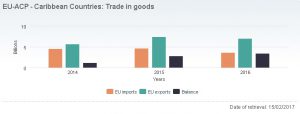
Accordingly, the strong urging here is to “follow the money”! There are available grants from organizations like the EU to conform, comply and “confederate as a regional entity to bring about change”. Yes, the EU provides Aid for Trade between the Caribbean and the EU. To strengthen the competitiveness of economic operators as well as the integration process of our countries in the global economy, the EU provides development cooperation in the region.

Note: The Caribbean region following the EU’s lead automatically includes the EU’s Caribbean jurisdictions: Dutch and French sovereign territories (17 lands). CARIFORUM – see below – includes 15 other nations. So these efforts are intended to be Caribbean-universal.

See a sample reference here, with excerpts from the European Union Commission website – and a related Pro-Con discussion VIDEO:

Title: European Commission Trade Policy for the Caribbean
The EU’s trade and development partnership with the Caribbean stretches back over more than 30 years. In October 2008 Antigua and Barbuda, The Bahamas, Barbados, Belize, Dominica, Grenada, Guyana, Jamaica, Saint Lucia, Saint Vincent and the Grenadines, Saint Kitts and Nevis, Surinam, Trinidad, Tobago, and the Dominican Republic signed with the EU the CARIFORUM-EU Economic Partnership Agreement. Haiti signed the agreement in December 2009, but is not yet applying it pending ratification.

The agreement also comes with substantial EU aid for trade.

The purpose of the agreement is to make it easier for people and businesses from the two regions to invest in and trade with each other and thus to help Caribbean countries grow their economies and create jobs.

The EU-CARIFORUM Economic Partnership in Practice

Trade picture
The EU is CARIFORUM’s second largest trading partner, after the US. CARIFORUM runs a trade deficit with the EU. In other words, CARIFORUM countries export less in goods and services to the EU than they import from the EU.

The main exports from the Caribbean to the EU are in:

  • fuel and mining products, notably petroleum gas and oils;
  • bananas, sugar and rum;
  • minerals, notably gold, corundum, aluminium oxide and hydroxide, and iron ore products;
  • fertilisers.

The main imports into the Caribbean from the EU are in:

  • boats and ships, cars, constructions vehicles and engine parts;
  • phone equipment;
  • milk and cream;
  • spirit drinks.

EU and Caribbean
Economic Partnership Agreements set out to help African Caribbean and Pacific (ACP) countries to improve their trade. The Economic Partnership Agreement between the EU and the 15 Caribbean countries provides predictability in the market access into the EU for these countries. The agreement will lead to a general opening of the EU market beyond WTO commitments in the services sectors, including creative and entertainment industries. It ensures duty-free-quota-free market access into the EU for all products. With regard to EU exports to the region, EU exports of sensitive products will gradually be liberalised over a period of 25 years. The Economic Partnership Agreement with the EU will make it possible for CARIFORUM companies to set up a commercial presence in the EU.

The Economic Partnership Agreement between the EU and the 15 Caribbean countries  is in part a free trade agreement, or FTA. And like any FTA, it opens up trade in goods between the two regions. But unlike other FTAs, the EU-Caribbean Economic Partnership Agreement goes further. In fact, it’s a wide-ranging partnership putting trade at the service of development.

That is because the agreement:

  • also opens up trade in services and investment;
  • makes it easier to do business in the Caribbean – governments there have made commitments in many areas directly affecting trade, like rules to ensure fair competition;
  • comes with financial support from the EU to help Caribbean:
    • governments implement the accord; and
    • businesses to use the EPA to export more and attract more outside investment.

In recent years CARIFORUM countries have been integrating more closely with each other. This is part of their strategy to play a fuller role in global trade, and to offer the economies of scale and simpler rules which are vital to attract more foreign investment.

The EU-Caribbean Economic Partnership Agreement helps to consolidate this process, by making it easier to export goods and services between:

  • the fourteen countries of the Caribbean Community, or CARICOM, and the Dominican Republic, which together make up CARIFORUM;
  • these fifteen CARIFORUM countries (CARICOM plus the Dominican Republic) and seventeen territories in the Caribbean with direct links to EU countries (four French ‘outermost regions’ and thirteen ‘overseas territories’ – six British, six Dutch and one French)


Trading with Caribbean

This can include support for building new transport, energy or telecommunications infrastructure, investments in agriculture, fisheries and services.

  • Help for exporters from developing countries
    • The EU’s Trade Helpdesk supports small traders in developing countries by helping them access the EU market, and provides information on EU rules and regulations.
    • The International Trade Center (ITC) supports several development projects across the world.
    • The ITC’s Standards Map provides information on standards, codes of conduct and audit protocols for international trade.
    • The Small Traders Capacity Building program supports developing countries in administration, training, and information on tariffs, trade flows, standards, etc.

Source: Retrieved January 16, 2018 from: http://ec.europa.eu/trade/policy/countries-and-regions/regions/caribbean/</a

——–

VIDEO – DISCUSSION | E.U – A.C.P Economic Partnership Agreement – https://youtu.be/la-ZQRfnUrY

Strong Body and Mind

Published on Jun 7, 2016 – E.U – A.C.P Economic Partnership Agreement Economic Partnership Agreements (EPAs) are trade and development agreements negotiated between the EU and African, Caribbean and Pacific (ACP) partners engaged in regional economic integration processes. Take a look at the various arguments, do some research then let me know your thoughts on the subject. European Commission – Economic partnerships: http://ec.europa.eu/trade/policy/coun…

This foregoing reference is not just a document of talking points; it is an actual Action Plan. In fact, the Actions have already manifested in the region, as related in this previous Go Lean blog-commentary describing the EU’s sponsor of Green Energy initiatives in the country of Barbados; they gave 1.12 million Euros (US$1.37 million) towards the advancement of energy self-sufficiency from renewable resources. This is the first payment of a total contribution of 3 million Euros.

Needless to say, EU money comes with strings attached – see the foregoing VIDEO. They are leading the leaders of the Caribbean. This constitutes a Top-Down approach for forging change in society.

Top-Down and Bottoms-Up – this is the First Step! The Go Lean roadmap (Page 96) calls for this functionality – “assembling” all the regional stakeholders in the Caribbean, including the “overseas masters” – for the first year of the confederacy plan. (Since this book was published in 2013, the United Kingdom has divorced themselves from the EU).

Forging change is a common theme by this Go Lean movement. Consider these previous 10 blog-commentaries that detailed approaches for forging change, in reverse chronological order:

  1. Forging Change – Collective Bargaining (April 28, 2017)
  2. Forging Change – Addicted to Home (April 14, 2017)
  3. Forging Change – Arts & Artists (December 1, 2016)
  4. Forging Change – Panem et Circenses (November 15, 2016)
  5. Forging Change – Herd Mentality (October 11, 2016)
  6. Forging Change – ‘Something To Lose’ (November 18, 2015)
  7. Forging Change – ‘Food’ for Thought (April 29, 2015)
  8. Forging Change – Music Moves People (December 30, 2014)
  9. Forging Change – The Sales Process (December 22, 2014)
  10. Forging Change – The Fun Theory (September 9, 2014)

As related in these commentaries, forging change is how the Go Lean roadmap will make our Caribbean homeland a better place to live, work and play. We urge every Caribbean stakeholder to lean-in to this roadmap to elevate the societal engines of the region. 🙂

Download the free e-book of Go Lean … Caribbean – now!

Sign the petition to lean-in for this roadmap for the Caribbean Union Trade Federation.

Share this post:
,
[Top]

EU Assists Barbados in Renewable Energy Self-Sufficiency

Go Lean Commentary

The dream of transforming to 100% renewable energy in the Caribbean can be realized. There is hope for this reality.

If only we can get the people behind it.

Our people …

So far other people are doing it for us. Thank you, European Union (EU), for talking the talk for us, and opening your wallets and walking the walk.

If only now we can step-in, step-up and step out ourselves … to do a better job of delivering basic needs, including energy.

This is the actuality of the latest developments taking place in the Caribbean. See this story here of a Green Energy initiative in Barbados:

Title: EU Assists Barbados in renewable Energy Self-Sufficiency

PRESS RELEASE – Barbados has received 1.12 million Euros (BBD$2.7M) from the European Union towards the advancement of energy self-sufficiency from renewable resources. This is the first payment of a total contribution of 3 million Euros. This activity is in line with the country’s commitment to the United Nations Framework Convention on Climate Change of reducing its total and per capita greenhouse gas emissions.

A major objective of the EU’s support is the engagement of the private sector in renewable energy power generation and should result in consumers making increasing use of energy efficiency measures during the 36 month duration of the programme and after.

Some of the guidelines which will be used for performance assessment of the programme include the introduction of a favourable licence regime for independent power producers with generation systems larger than 1 megawatt, by March 2019. Another requirement is that by 2019 at least 30 megawatt of renewable energy will be installed by public and private entities. In addition, it is expected that there will be the establishment and implementation of a renewable energy roadmap according to defined milestones.

EU Ambassador Daniela Tramacere said: “This is another effort by the EU to assist Barbados in transforming its economy which is heavily dependent on fossil fuels, which result in annual drain on its foreign reserves.”

The Barbados government is also expected to adopt and implement energy sector reform measures that are expected to prepare the country for the transition towards renewable energy and energy efficiency on the basis of the national energy policy.
Source: St Lucia Times Daily Newspaper; posted 01/05/2018; retrieved 01/12/2018 from:
https://stluciatimes.com/2018/01/05/eu-assists-barbados-renewable-energy-self-sufficiency/

This is the reality of Caribbean life. We have deliverables that must be delivered and yet we do not. We wait for other people to deliver for us. Time to Grow Up, you people of the Caribbean! It’s time to put on your “Big Boy pants and walk like a man”!

This is the call of the movement behind the book Go Lean…Caribbean – available to download for free. The book serves as a roadmap for the introduction and implementation of the technocratic Caribbean Union Trade Federation (CU), for the elevation of all Caribbean society – for all 30 member-. The book explains that the Caribbean is in crisis, people are fleeing day-in and day-out. Their people are “pushed and pulled” to other lands that do a better job of managing basic needs. Energy costs in the Caribbean are among the highest in the world. Therefore the CU/Go Lean roadmap has these 3 prime directives:

  • Optimization of the economic engines in order to grow the regional economy to $800 Billion and create 2.2 million jobs.
  • Establishment of a security apparatus to ensure public safety and protect the resultant economic engines.
  • Improve Caribbean governance to support these engines, including a separation-of-powers between the member-states and CU federal agencies.

Notwithstanding, Barbados is doing more for regional integration and problem-solving …

… the [CARICOM] Secretary-General lauded the significant role Barbados continues to play in the Community with its Prime Minister having responsibility for the regional flagship initiative, the CARICOM Single Market and Economy (CSME). – Report

The technology, systems and processes are available right now for Caribbean communities to fulfill the dream of a society consuming renewable energy sources 100%.

We must work harder ourselves to fulfill this dream here in our region. Doing so is win-win as it accomplishes 2 important objectives: environmental (no fossil fuels) and economic (affording conveniences of modern life):

  • Solar – The sun always shines in the Caribbean and its free.
  • Wind – The wind always blows in the Caribbean – i.e. Trade Winds – and its free.
  • Tidal – The tides always rise and fall in the Caribbean and its free – see Appendix VIDEO below.

No doubt, these renewable options bring many benefits in arresting “Climate Change” – there is no scientific doubt that burning fossil fuels contribute to greenhouse houses. (The only doubt is political , not scientific). The Caribbean is in peril because of the actuality of greenhouse gases, think hurricane activities. Consider these recent blog-commentaries:

https://goleancaribbean.com/blog/?p=13391 After Maria: Destruction and Defection for Puerto Rico
https://goleancaribbean.com/blog/?p=12996 After Irma, Failed State Indicators: Destruction and Defection
https://goleancaribbean.com/blog/?p=12977 After Irma, Barbuda Becomes a ‘Ghost Town’
https://goleancaribbean.com/blog/?p=12879 Remembering Harvey, Disaster Preparation: ‘Rinse and Repeat’
https://goleancaribbean.com/blog/?p=12856 Remembering Harvey, Hurricane Flooding – ‘Who Knew?’
https://goleancaribbean.com/blog/?p=9334 Hurricane Categories – The Science
https://goleancaribbean.com/blog/?p=6189 A Lesson in History – ‘Katrina’ is helping today’s crises
https://goleancaribbean.com/blog/?p=2119 Cooling Effect – Oceans and the Climate
https://goleancaribbean.com/blog/?p=1817 Caribbean grapples with intense new cycles of flooding & drought

In addition to science (meteorology), there are economic benefits as well. These too cannot be ignored. There is the example of the US City of Burlington, Vermont where they saved over $20 million in a few years by migrating to renewable energy sources. This meant their local households have not experienced energy costs increases since before the year 2009.

With economics, comes the consideration of “standard of care”. There is a reality to living in the Caribbean heat where air-conditioning is essential otherwise life is unbearable – think: Hotter than July’ – yet most people are not able to afford the excessive costs of this modern comfort.

So the environmental and economic issues must be the primary focus for any Green Energy consideration! The Go Lean book initiates with the pronouncement that our region is in crisis and struggling with these issues. The pressing needs are pronounced early in the book in the Declaration of Interdependence (Page 11), with these opening statements:

i. Whereas the earth’s climate has undeniably changed resulting in more severe tropical weather storms, it is necessary to prepare to insure the safety and security of life, property and systems of commerce in our geographical region. As nature recognizes no borders in the target of its destruction, we also must set aside border considerations in the preparation and response to these weather challenges.

xi. Whereas all men are entitled to the benefits of good governance in a free society, “new guards” must be enacted to dissuade the emergence of incompetence, corruption, nepotism and cronyism at the peril of the people’s best interest. The Federation must guarantee the executions of a social contract between government and the governed.

xii. Whereas the legacy in recent times in individual states may be that of ineffectual governance with no redress to higher authority, the accedence of this Federation will ensure accountability and escalation of the human and civil rights of the people for good governance, justice assurances, due process and the rule of law. …

xxiv. Whereas a free market economy can be induced and spurred for continuous progress, the Federation must install the controls to better manage aspects of the economy: jobs, inflation, savings rate, investments and other economic principles. Thereby attracting direct foreign investment because of the stability and vibrancy of our economy.

Combating Climate Change should be important for Caribbean stakeholders. Deploying more efficient and cost-effective power generation options should also be of paramount importance in this region. But the motivation behind the Go Lean book is even bigger still; it is to elevate all of Caribbean society – above and beyond just combating Climate Change or just lowering costs.

With the unmistakable benefits of Green Energy systems, it should not matter who leads, Caribbean stakeholders or the EU, as long as the Caribbean region proceeds down this path. Well, according to the foregoing news article, the EU has stepped up. We now need all Caribbean stakeholders to lean-in to this focused effort.

The Caribbean is struggling with the costs and reality of energy. The Go Lean book related (Page 100) in 2013 that this region pays one of the highest rates in the world; averaging US$0.35 /kWh. The book, in presenting more optimized solutions, posits that the average energy costs can come down to US$0.088/kWh with just a better mix of fossil-fuels and renewables.

Other communities are doing this – lower energy costs due to 100% renewable energy – now, as the model of City of Burlington, Vermont referred to previously. If this city can get to 100% renewables, despite harsh winters for 3 months every year, imagine how much more so the Caribbean communities with their near-365 days of sunshine. Even some European communities are successful at this quest. This is en vogue right now, despite the different geographies and climates.

The Go Lean book provides 370-pages of turn-by-turn instructions on “how” to adopt new community ethos, plus the strategies, tactics, implementations and advocacies to execute so as to reboot, reform and transform the societal engines of Caribbean society and to foster the progress in the pursuits of green energy generation.

The Caribbean energy needs are undeniable. The effects of fossil-fueled-driven Climate Change are also undeniable. The need to lower the costs of living in the Caribbean is therefore undeniable as well. The Caribbean region must therefore move forward – we do not have the luxury of standing still – alternative energy options are now vast and available. There is simply the need for the commitment. The Go Lean roadmap portrays that we must engage these alternatives if we want to make this region a better homeland to live, work and play.

The Go Lean book opened (Page 3) with the job description for the CU technocracy to make better provisions for the region’s basic needs: food, clothing, shelter and energy. There is the need now to fully embrace renewable energy options, maybe even for 100%. There are even grants – i.e. from the EU – to pursue this course of action.

We have no further excuse!

Now is the time for all of the Caribbean – the people, businesses, institutions and governments – to lean-in for the optimizations and opportunities of Green Energy options; and to lean-in to this Go Lean roadmap.

The vision of 100% renewable energy is now more than just a dream. 🙂

Download the free e-Book of Go Lean … Caribbean – now!

Sign the petition to lean-in for this roadmap for the Caribbean Union Trade Federation.

———–

Appendix VIDEO – Tidal Power 101 – https://youtu.be/VkTRcTyDSyk

Student Energy

Published on May 17, 2015 – Tidal power converts the energy from the natural rise and fall of the tides into electricity. Learn more about Tidal Power and all types of energy at www.studentenergy.org

  • Category: Education
  •  License: Standard YouTube License
Share this post:
, , ,
[Top]

Managing ‘Change’ in California

Go Lean Commentary

This is a Big Deal

California, the biggest state in the Union (USA) – #6 GDP if ranked as an independent country – has enacted legislation to legitimize recreational marijuana use. Wow, what a ‘change’ to manage! That’s 37 million people, millions of cars and billions of dollars. The implementation of this New Order will surely be heavy-lifting.

For the Caribbean, let’s pay more than the usual attention for lessons learned for our own Big Deal implementation. See the VIDEO on California’s challenge here:

VIDEO – California residents line up to buy recreational marijuana – https://www.today.com/video/california-residents-line-up-to-buy-recreational-marijuana-1127548995762


Posted January 2, 2018 – Vendors in The Golden State began selling recreational marijuana legally on Monday, a milestone moment in the push to legalize marijuana across the country. NBC’s Jacob Soboroff has the report for TODAY from Los Angeles.

Again, California is managing the ‘change’ of implementing the legalization of recreational marijuana use, while the Caribbean needs to implement a roadmap to forge change in its societal engines (economics, security and governance) for the 30 member-states of our region.

The book Go Lean…Caribbean – available to download for free – serves as a roadmap for the introduction and implementation of the technocratic Caribbean Union Trade Federation (CU), for the elevation of Caribbean society – for all member-states. This CU/Go Lean roadmap has these 3 prime directives:

  • Optimization of the economic engines in order to grow the regional economy to $800 Billion and create 2.2 million new jobs.
  • Establishment of a security apparatus to ensure public safety and protect the resultant economic engines.
  • Improve Caribbean governance to support these engines, including a separation-of-powers between the member-states and CU federal agencies.

The State of California is taking on the heavy-lifting of this marijuana legalization while the US federal government continues to consider the drug as illegal. But California is NOT the first state; that distinction belongs to Colorado. The movement behind the Go Lean book has explored Colorado and observed-and-reported on the societal developments there. Notice these main points from a previous blog-commentary entitled – Lessons from Colorado: Legalized Marijuana: Heavy-lifting! – from August 17, 2017:

… in 2017, the phrase “Rocky Mountain High” has a total different meaning, because the State of Colorado has since legalized recreational use of marijuana.

This is not an easy topic; this is heavy …

There are so many lessons we can learn from the debate, legalization, implementation and regulation of this product in this State. All in all, it is heavy-lifting. This is the theme of this series of commentaries of lessons that have been learned by Caribbean stakeholders visiting, observing and reporting on the US State of Colorado.

We have so much in common and so much in contrast. One commonality to consider is how Colorado is now associated with marijuana consumption. …

“Welcome to our club”! This has always been the image of Caribbean people and culture – think: Rasta Man smoking Ganja.

California … Colorado … other states to follow, according to another previous blog-commentary after the last American General Election on November 8, 2016. That submission was entitled – Time to Go: American Vices; Don’t Follow and quoted:

Marijuana legalization is now the norm for 40 percent of the American population. …
Voter measures [passed] in Massachusetts and Nevada. Maine’s referendum was still being counted early Wednesday morning, and Arizona’s was poised to lose. Three other states passed medical marijuana reforms, and a fourth appeared likely to do so. This means that in eight states (plus Washington, D.C.) weed will be legal for recreational purposes, and in sum, 28 will have some kind of legalization on the books.

There will be a lot of security and governing dynamics that these states – like California – will now have to manage, since the process will decriminalize marijuana use, after a long history of criminalization. This is a BIG DEAL considering that many people may be in a penal status – active or parole – for marijuana use or trafficking. Wow, indeed; this is a BIG transformation!

This point too, was addressed in a previous blog-commentary entitled – Marijuana in Jamaica – ‘Puff Peace’:

There are moral, religious, legal and psychological (treatment) issues associated with this topic; and there is history – good and bad. Any jurisdiction decriminalizing the use of marijuana has to contend with the previous messaging to the community of: “Just say no to drugs”.

The [Go Lean] book asserts that before the strategies, tactics, implementations and advocacies of a roadmap to elevate a society can be deployed, the affected society must first embrace a progressive community ethos. The book defines this “community ethos” as the fundamental character or spirit of a culture; the underlying sentiment that informs the beliefs, customs, or practices of society; dominant assumptions of a people or period. Think of the derivative term: “work ethic”.

Marijuana is a mood-altering drug; it has negative effects, one being preponderance for apathy, to tune out of any active engagement. In the US, even in the states where marijuana is legal, most firms/governments still screen staffers (new hires and veterans) and ban consumption of the drug. The reason is simple: Apathy does not make for industriousness.

The Go Lean book provides 370-pages of turn-by-turn instructions on “how” to adopt new community ethos, plus the strategies, tactics, implementations and advocacies to execute so as to transform the societal engines of Caribbean society, regarding the whole drug eco-system. The Go Lean book asserts that every community has bad actors, and with a more liberal-progressive attitude towards a once-illegal drug, community attitudes must be paramount. There must be “new guards” to assuage any threats from this practice on society. This point is pronounced early in the book with the Declaration of Interdependence (Pages 12 – 13) that claims:

x. Whereas we are surrounded and allied to nations of larger proportions in land mass, populations, and treasuries, elements in their societies may have ill-intent in their pursuits, at the expense of the safety and security of our citizens. We must therefore appoint new guards to ensure our public safety and threats against our society, both domestic and foreign. The Federation must employ the latest advances and best practices of criminology and penology to assuage continuous threats against public safety. The Federation must allow for facilitations of detention for [domestic and foreign] convicted felons of federal crimes, and should over-build prisons to house trustees from other jurisdictions.

xi. Whereas all men are entitled to the benefits of good governance in a free society, “new guards” must be enacted to dissuade the emergence of incompetence, corruption, nepotism and cronyism at the peril of the people’s best interest. The Federation must guarantee the executions of a social contract between government and the governed.

xvi. Whereas security of our homeland is inextricably linked to prosperity of the homeland, the economic and security interest of the region needs to be aligned under the same governance. Since economic crimes, including piracy and other forms of terrorism, can imperil the functioning of the wheels of commerce for all the citizenry, the accedence of this Federation must equip the security apparatus with the tools and techniques for predictive and proactive interdictions.

So legalizing marijuana in the BIG market of California will be about more than just managing change, it will also be about managing risks. The Go Lean book relates that managing risk is more than just “One Act”, there is lengthy, engaged process (Page 76):

  • Education
  • Mentoring
  • Monitoring
  • Mitigation
  • Licensing
  • Coordination

Let’s see how this process goes for California. While this state’s independent streak has made it a “maverick” among the other American states – see Independence Movement detailed in this previous blog – this effort with marijuana may be “biting off more than they can chew”. This is truly a BIG DEAL!

We need to pay attention, as there are parallels for California compared to the full Caribbean:

This writer, having lived in California for 10 years, can conclude that California wants the same thing that the Caribbean wants (or should want): to be an elevated society; to be a better homeland, a better place to live, work and play. 🙂

Let’s observe-and-report on these California’s developments and manifestations, their successes and failures.

Download the free e-Book of Go Lean … Caribbean – now!

Sign the petition to lean-in for this roadmap for the Caribbean Union Trade Federation.

Share this post:
, ,
[Top]

2017 Review – Mr. Trump shows the ‘Wrong Way’

Go Lean Commentary

The year 2017 is coming to a close. This was the first year of the federal administration of the 45th President of the United States, the non-politician, billionaire real estate developer Donald J. Trump. In retrospect, it has been a “year of Biblical proportions”, one to lament. While we thought 2016 was bad, and it was, its “wow oh wow” for 2017 …

… if the summary of 2017 was named after one of the 66 books of the Bible, it would not be Revelations, nor Exodus. No, it would be:

Lamentations
The Bible book of Lamentations reveals how God viewed the ancient City of Jerusalem and the land of Judah after their enemy, the Kingdom of Babylon under Nebuchadnezzar, burned the city and laid the land desolate in the year 607 BC. The expressions of acknowledgment of sin recorded therein make it clear that from God’s standpoint, the reason for the calamity was the error of the people. – Source.

We can now look back and lament the happenings of 2017.

While this year 2017 has been a cliffhanger, it has been perfect for the stewards of a new Caribbean. The new President – Donald Trump – proved the “perfect example of what NOT to do” to elevate society – economics, security and governing engines. Yet, this is the country that so many Caribbean people have fled to. We can learn a lot from America’s accomplishments, and even more from their failures. See the satirical recaps in these VIDEO’s, here and the Appendix. 🙂

We can now look back, lament and laugh at the happenings of 2017, see here:

VIDEO – Stephen’s Greetings: 2017 Late Show Year In Review – https://youtu.be/E9VkweYGTwU


The Late Show with Stephen Colbert

Published on Dec 4, 2017 – 2017 was rough for a lot of people, but here’s proof that it wasn’t a total wash. See some of Stephen Colbert’s best moments from The Late Show this year.

Subscribe To “The Late Show” Channel HERE: http://bit.ly/ColbertYouTube

For more content from “The Late Show with Stephen Colbert”, click HERE: http://bit.ly/1AKISnR 

This commentary is presented by the movement behind the book Go Lean…Caribbean. The movement – book and accompanying blog-commentaries – relates that the United States of America should be lamented and not considered a refuge for the people of the Caribbean – the “grass is not greener on the other side”. The book laments the fact that despite residing in the best address on the planet, many of our people “beat down their doors” to get out (Page 3), and emigrate to the US and other countries.

Why do people leave such an idyllic place? The book identifies a series of reasons, classified as “push and pull” factors:

“Pull”, on the one hand refers to the lure of a more prosperous life abroad; many times our people are emigrating for economics solely.

“Push” refers to people who feel compelled to leave, to seek refuge in a foreign land. “Refuge” is an appropriate word; because of societal defects, many from the Caribbean must leave as refugees – think LGBTDisabilityDomestic-abuseMedically-challenged – for their life, liberty and pursuit of happiness.

Surely, fleeing to the US must be likened to “jumping out of the frying pan into the fire”. Remember, this country was not built for the Caribbean’s Black-and-Brown. They continue to experience racial discriminations, despite a recent Black President.

Here are some snippets from this 2017 Caribbean Yearbook against the backdrop of Trump’s exhortations; (this is just a sample in chronological order – from January 2017 to today):

Religious Intolerance – Trump banned travel from 6 Muslim countries

Fostering Discord – California wants out!  They have started a petition to secede from Tump’s America

Collaboration Flaws – Disinterest in Others  (Non-Americans) – Trumps yawns at the Caribbean’s priorities

Disparaging Messaging to Tourists/Visitors – Arrivals and Revenues down from some countries

Rejection of Evidence – Climate Change Denial – Paris Accords Withdrawal

Climate of Hate fostered by Trump – White Supremacists / Disdain of Immigrants

America First – Prioritization as World Leader downplayed – Other countries lose respect

Supply-side Economics Failures manifested in Kansas

Selective Law-and-Order Enforcement – Under Trump, Civil Rights cases downplayed

Claim to Ignorance on Natural Disasters – Who Knew?

Disdain of Female Empowerment – Female dissidents “diss-ed” by Trump; think Hillary, Pocahontas, etc.

Hurricane Response and Competence – Puerto Rico versus Texas – Black-and-Brown gets less

Societal Defects of Gun Culture – Trumps calls Black-and-Brown Shooters Terrorist, but silent on Whites

Aversion to Trade Agreements – Trump undermined TPP, NAFTA and others

Trump’s Compassion Exhaustion – Ending ‘Temporary Protection Status’ to Haitian Refugees

Sexual Harassment Complicity – Trump’s accusers re-emerged

Take from the Poor; Give to the Rich – Trump’s Tax Reform law

Surely, it is the conclusion of most people that 2017 has proven that America is not working for Caribbean priorities …

… they are not even working for their own priorities, as the country under Trump seems more and more divided with the President only supported by 33 percent of the people, the other 67% are outraged – see VIDEO in the Appendix below – i.e. the majority of the population are middle class, yet yesterday’s passage of the Tax Reform bill only benefits the rich.

Proudly, we say that for our societal elevation efforts, the quest of the Go Lean … Caribbean movement: we do not want to be America, we want to be better.

The Go Lean book – available for free download – does not only complain or lament America, but also prescribes a Way Forward for the Caribbean:

Way Forward – an action, plan etc. that seems a good idea because it is likely to lead to success; i.e.:

  • A way forward lies in developing more economic links.
  • This treatment may be the way forward for many inherited disorders.

Source: Retrieved December 22, 2016 from: http://www.ldoceonline.com/dictionary/a-the-way-forward

The Go Lean book serves as a roadmap for the introduction and implementation of the technocratic Caribbean Union Trade Federation (CU), for the elevation of Caribbean society. This CU/Go Lean roadmap has these 3 prime directives:

This Go Lean movement (book and accompanying blogs) does not look to President Donald Trump to lead for the Caribbean; we look to lead ourselves. To our chagrin, so many of our citizens have previously fled the homeland for American shores. But now …

we want them back!

The Go Lean book does not ignore these “push and pull” factors that cause our Caribbean people to leave in the first place. No, the book stresses (early at Page 13) the need to be on-guard for “push” factors in these Declaration of Interdependence statements:

xix. Whereas our legacy in recent times is one of societal abandonment, it is imperative that incentives and encouragement be put in place to first dissuade the human flight, and then entice and welcome the return of our Diaspora back to our shores. This repatriation should be effected with the appropriate guards so as not to imperil the lives and securities of the repatriated citizens or the communities they inhabit. The right of repatriation is to be extended to any natural born citizens despite any previous naturalization to foreign sovereignties.

xxi. Whereas the preparation of our labor force can foster opportunities and dictate economic progress for current and future generations, the Federation must ensure that educational and job training opportunities are fully optimized for all residents of all member-states, with no partiality towards any gender or ethnic group. The Federation must recognize and facilitate excellence in many different fields of endeavor, including sciences, languages, arts, music and sports. This responsibility should be executed without incurring the risks of further human flight, as has been the past history.

xxvi. Whereas the Caribbean region must have new jobs to empower the engines of the economy and create the income sources for prosperity, and encourage the next generation to forge their dreams right at home, the Federation must therefore foster the development of new industries, like that of ship-building, automobile manufacturing, prefabricated housing, frozen foods, pipelines, call centers, and the prison industrial complex. In addition, the Federation must invigorate the enterprises related to existing industries like tourism, fisheries and lotteries – impacting the region with more jobs.

For the Caribbean, we must succeed in our Way Forward / Go Lean roadmap, so as to dissuade our own people from giving up and abandoning their native homelands. While no society is perfect nor fully-optimized, some countries have been better than others; notwithstanding the US under Donald Trump. Many countries in North America and Western Europe have become lands of refuge for our Caribbean Diaspora.

Surely, we can do better in lowering the Push and Pull factors now. We should be able to dissuade Caribbean people from the lamentable decision of going to Trump’s America.

Yes, we can …

… if we do the heavy-lifting to convince all Caribbean stakeholders to lean-in to this Go Lean roadmap, then truly we can make our region better places to live, work and play. 🙂

Download the book Go Lean … Caribbean – now!

Sign the petition to lean-in for this roadmap for the Caribbean Union Trade Federation.

—————

Appendix VIDEO – The Politics of Branding, Meeting Obama & Trump’s First Year: The Daily Show – https://youtu.be/bjKr2ltVKII

The Daily Show with Trevor Noah

Published on Dec 18, 2017

Trevor Noah explains why Republicans are better than Democrats at political branding, talks about meeting Barack Obama and reflects on the first year of the Trump administration.

Watch full episodes of The Daily Show for free: http://www.cc.com/shows/the-daily-sho…

The Daily Show with Trevor Noah airs weeknights at 11/10c on Comedy Central.

  • Category: Comedy 
  • License: Standard YouTube License


Share this post:
, , ,
[Top]

Taking from the Poor to Give to the Rich – ENCORE

The US Congress and White House have done it, they have successfully passed their Tax Reform bill that effectively “takes from the poor and gives to the rich”. See full story here:

Washington (CNN) – Republican lawmakers joined President Donald Trump [today] on Wednesday afternoon to celebrate their largest legislative achievement of 2017, in a public ceremony spotlighting the most sweeping overhaul of the US tax system in more than 30 years.

“It’s always a lot of fun when you win,” Trump said at the ceremony on the White House lawn, after thanking congressional leaders including Senate Majority Leader Mitch McConnell and House Speaker Paul Ryan.

Hailing passage of the GOP’s tax plan and surrounded by dozens of prominent Republicans in Congress, Trump said the package would fulfill his core campaign promise. … 
Source: CNN retrieved December 20, 2017 from: http://www.cnn.com/2017/12/20/politics/house-senate-trump-tax-bill/index.html

This is Payback!

The Tax Reform strategy here double-downs on the concept of Supply-side economics. The hope is that corporate entities and wealthy people will receive tax breaks and then use the “wind fall” to re-invest in the community, thereafter creating jobs and economic growth. The Republicans in Washington (Congress and the White House) are betting on the success of this strategy even though there has been utter failures with this approach; for example just recently in the US State of Kansas.

Whether that re-investment occurs or not is the unknown. What is known is that the Rich will undoubtedly get the tax breaks. The Rich will win, at the expense of the Poor. This is why that foregoing article also relates:

While Republicans [leaders] cheer the bill’s passage, however, 55% of Americans oppose the plan, according to a new CNN poll. Just 33% say they favor the GOP’s proposals to reform the nation’s tax code.

This is a great opportunity to Encore a previous blog-commentary from December 16, 2014 when the same group – Washington Republicans – maneuvered to pass a law to repeal many post-2008 restrictions to guarantee higher profits for the nation’s banks. While this is an American drama, this is an opportunity for the Caribbean to learn lessons on managing governance for the Greater Good; which this foregoing law violates. See that Encore here:

——————–

Go Lean Commentary – A Christmas Present for the Banks from the Omnibus Bill

What do you get for $5.3 Billion? There must be some return on that investment.

The book Go Lean … Caribbean asserts that the US Federal Election-Campaign system is not the model that the Caribbean should want to emulate.  This book relates that $5.3 Billion was spent for the 2008 Federal Elections (Page 116), a lot of it contributed by corporations, resulting in a lot of influence peddling. This drama was vividly demonstrated this Saturday evening when the “lame-duck” Congress (the Senate in particular), delayed the required Omnibus Spending Bill – just in time – to extort favorable legislation that would roll back some of the federal regulations enacted after the Great Recession of 2008 to protect against banking systemic risks.

Senate Minority Leader Mitch McConnell speaks to reporters on upcoming budget battle in Washington

The Shadow Influences spearheading these changes are known to adhere to the principle that “a crisis is a terrible thing to waste” – a quotation credited to famed American Economist Paul Romer. While others will think that this drama was just politics as usual, the following article depicts the more strategic nature of the new legislation, to foster the environment and industry for financial derivative trading – this is too specific for any life-long politician (the US Senate) to advocate on the sly. No, this has the fingerprints of Wall Street Shadow Influences all over it. (See Appendix below for encyclopedic references on derivatives and swaps). See the news article here:

Title: A Christmas Present For The Banks From The Omnibus Bill
Forbes Magazine Investing Online Blog (Posted 12/13/2014; retrieved 12/15/2014) –
http://www.forbes.com/sites/robertlenzner/2014/12/13/wall-street-reverses-ban-on-trading-derivatives-backed-by-uncle-sam/
By: Robert Lenzner, Contributor

Wall Street banks like Citigroup and JP Morgan Chase have flexed the power of their influence to pressure Congress and the White House into a key change in the law that will allow the trading of risky financial derivatives in bank operations that are insured by the Federal Deposit Insurance Corp. This means the nation’s largest banks used the deadline for passing the Omnibus spending bill as pressure to reverse a key section of the Dodd-Frank bill of 2010 that was meant to prohibit a federal government bailout of swaps entities.

It was the existence of over $500 billion of Credit Default Swaps on the balance sheet of AIG in 2008 that threatened to bankrupt the largest insurance company in the world. So, in effect, six years later, the same Wall Street banks that were bailed out by federal largesse, are being given a legislative gift that will enable them to freely trade the securities that brought Lehman Bros down in 2008 — and obtain access to the benefit of insurance and loans from the federal government.

Behind the scenes, unbenownst to the media or the public, the nation’s Too Big To Fail banks used the Omnibus spending bill that is necessary to finance federal spending in 2015 to undo this little-known Dodd Frank provision that might have restricted the volume of trading in financial derivatives that have been a major source of profits as well as controversy since the 2008 financial crisis. Most financial derivatives will be able to be traded in entities holding deposits guaranteed by the Federal Deposit Insurance Corp. and subject to borrowing at the Federal Reserve’s discount window. This is a key advantage for the banks that will enable them to increase their activity in these securities.

Former Rep. Barney Frank, who was a key sponsor of the Wall Street reform legislation, attacked the change in Dodd-Frank as “a road map for further attacks on our protection against financial instability.” Frank was incensed that the last-minute procedure was “inserted with no hearings, no chance for further modification, and no chance for debate into a mammoth bill in the last days of a lame-duck Congress.”

If President Obama signs the Omnibus spending bill, he will have effectively rewarded Wall Street by reversing a provision that prohibits any federal assistance from being provided to “swaps entities,” including registered swaps dealers, security-based swap dealers, major swap participants and major security-based swap participants, according to information obtained by Forbes. This measure required banks to remove their swaps dealing from the bank itself and do its trading in non-bank affiliates not eligible for deposit insurance. Access to the Fed’s discount window would also be denied in case of a financial crisis in the markets.

The net effect of the changes in the Omnibus spending bill would be to expand permissible swaps activities within a bank and to only exclude swaps based on asset-backed securities that are unregulated and not of a credit quality.

All very technical, but the net result is to allow Citigroup, JP Morgan Chase and others to use the Fed’s discount window to borrow money in case of a crisis that roiled the derivative market for credit swaps again as took place in September 2008. In effect, it means the major banks need not limit their trading of financial derivatives to non-bank operations that the market will never be fooled into thinking some future risk of danger has just been avoided. It is a complex holiday present for Wall Street. And it is a warning sign that other sections of the Dodd-Frank Wall Street reform may also be vulnerable to political rollback.

An additionally relevant blog by Robert Lenzer: http://www.forbes.com/sites/robertlenzner/2014/12/08/the-ten-reasons-why-there-will-be-another-systemic-financial-crisis/

The crisis of the 2008 Great Recession was the lynchpin for the Go Lean movement, (book and blogs). This book, serving as a roadmap for the introduction and implementation of the Caribbean Union Trade Federation (CU), posits that the effects of the 2008 Great Recession continue to linger in the Caribbean. Therefore the book advocates learning lessons from 2008 and to turn-around, reform, and reboot the region’s economic, security and governing engines to ensure that “never again” will our society be so vulnerable to the financial misgivings of our American neighbors; or the “plutocratic” elements there-in.

The field of economics is not always solutions-oriented; sometimes, they have been responsible for the problem. Consider this VIDEO snippet here:

Documentary Film “Inside Job” – http://youtu.be/CaXNqGgIc-g

Published on Apr 19, 2012 – Since the repeal of Glass-Steagall in 1999, the total notional value of derivatives has grown by over 700% for holdings companies and 674% for commercial banks. Even more alarming, since the third quarter of 2008 when the cracks in the financial system were clearly evident, derivatives at the commercial banks have grown from $175 TRILLION to $234 TRILLION ” a $59 TRILLION increase. To put this in perspective, the cumulative Gross Domestic Product in the United States over that same time frame (Q3 2008 through Q3 2010) was approximately $32 TRILLION.

Despite our region’s small size (42 million people in 30 member-states), we do have some control over our own destiny. We want to be a protégé, not a parasite.

The CU’s prime directives, elevating the Caribbean’s economic-security-governing engines, recognize that the changes the region needs must start first with the adoption of new community ethos and controls. Early in the book, the need for this shift is pronounced (Declaration of Interdependence – Page 13) with these statements:

xxiv.      Whereas a free market economy can be induced and spurred for continuous progress, the Federation must install the controls to better manage aspects of the economy: jobs, inflation, savings rate, investments and other economic principles. Thereby attracting direct foreign investment because of the stability and vibrancy of our economy.

xxv.      Whereas the legacy of international democracies had been imperiled due to a global financial crisis, the structure of the Federation must allow for financial stability and assurance of the Federation’s institutions. To mandate the economic vibrancy of the region, monetary and fiscal controls and policies must be incorporated as proactive and reactive measures. These measures must address threats against the financial integrity of the Federation and of the member-states.

The Go Lean book, and previous blog/commentaries, stressed the key community ethos, strategies, tactics, implementation and advocacies necessary to effect change in the region ourselves, to improve the stewardship over the economy. They are detailed as follows:

Who We Are – 2008 Internal Experiences Page 8
Community Ethos – Economic Principles Page 21
Community Ethos – Security Principles – Private Interest –vs- Public Protection Page 23
Community Ethos – Security Principles – “Light Up Dark Place” Page 23
Community Ethos – Governing Principles – Lean Operations Page 24
Community Ethos – Ways to Impact the Future Page 26
Community Ethos – Impact Research and Development Page 30
Community Ethos – Ways to Improve Negotiations Page 32
Community Ethos – Ways to Impact Turn-around – 2008 Crisis Page 33
Community Ethos – Ways to Impact the Greater Good Page 37
Strategy – Mission – Fortify   the Stability of the Securities Markets Page 47
Strategy – CU Stakeholders to Protect – Banks & Depositors Page 47
Tactical – Growing the Economy – Minimizing Bubbles Page 69
Tactical – Separation-of-Powers – Depository Insurance & Regulatory Agency Page 73
Anecdote – Turning Around CARICOM – Effects of 2008 Financial Crisis Page 92
Implementation – Assemble Caribbean Central Bank as Cooperative Page 96
Implementation – Assemble Constitutional Convention Page 97
Implementation – Ways to Better Manage Debt – Optimizing Wall Street Role Page 114
Implementation – Ways to Impact Elections Page 116
Planning – 10 Big Ideas – Single Market / Currency Union Page 127
Planning – Lessons Learned from 2008 Page 136
Planning – Ways to Measure Progress Page 147
Advocacy – Ways to Grow the Economy – Case Study of $5.3 Billion Influence Page 151
Advocacy – Ways to Improve Credit Ratings – 2008 Lessons Page 155
Advocacy – Ways to Improve Housing – 2008 Mortgage Crisis Lessons Page 161
Advocacy – Ways to Impact Labor Unions – 2008 Effects on Main Street Jobs Page 164
Anecdote – Caribbean Industrialist – Growing without Shadow Influence Page 189
Advocacy – Reforms for Banking Regulations Page 199
Advocacy – Ways to Impact Wall Street Page 200
Appendix – Whitepaper: The 2008 Financial Crisis and Its Aftermath Page 276
Appendix – Currency Capital Controls Page 325

The points of effective, technocratic regional stewardship, especially in response to the 2008 Great Recession / Financial Crisis, were further elaborated upon in these previous blog/commentaries:

https://goleancaribbean.com/blog/?p=3311 Detroit to exit historic bankruptcy – Finally recovering from 2008
https://goleancaribbean.com/blog/?p=3164 Michigan Unemployment – Then (2008/2009) and Now
https://goleancaribbean.com/blog/?p=3090 Lessons Learned – Europe Sovereign Debt Crisis of 2009
https://goleancaribbean.com/blog/?p=3028 Why India is doing better than most emerging markets since the crisis
https://goleancaribbean.com/blog/?p=2930 ‘Too Big To Fail’ – Caribbean Version
https://goleancaribbean.com/blog/?p=2448 ‘Consumer Reports’ Survey Finds the American Consumer is Back
https://goleancaribbean.com/blog/?p=2435 Korea’s Protégé Model – A Dream for Latin America / Caribbean
https://goleancaribbean.com/blog/?p=2338 Lesson Learned – How Best to Welcome the Dreaded ‘Plutocracy’
https://goleancaribbean.com/blog/?p=2259 The Criminalization of American Business – Big Banks Let Loose
https://goleancaribbean.com/blog/?p=2105 Recessions and Public Health – Lessons from the 2008 Crisis
https://goleancaribbean.com/blog/?p=2090 The Depth & Breadth of Remediating 2008
https://goleancaribbean.com/blog/?p=1896 The Crisis in Black Homeownership since 2008
https://goleancaribbean.com/blog/?p=1309 5 Steps of a Bubble
https://goleancaribbean.com/blog/?p=841 Post 2008 – Having Less Babies is Bad for the Economy?
https://goleancaribbean.com/blog/?p=782 Open/Review the Time Capsule: The Great Recession of 2008
https://goleancaribbean.com/blog/?p=709 Post 2008 – Student debt holds back home buyers
https://goleancaribbean.com/blog/?p=522 Financial Crisis Jokes – Reflecting the cultural impact on society
https://goleancaribbean.com/blog/?p=518 Post 2008 – What Banks learn about financial risks
https://goleancaribbean.com/blog/?p=378 Fed Releases Transcripts from 2008 Meetings
https://goleancaribbean.com/blog/?p=242 Post 2008 – The Erosion of the Middle Class

The 2008 Great Recession brought major upheaval to American and Caribbean societies, plus the rest of the world. Much of the world is interconnected; this is even more acute in our region. Our economy is structured as parasites on the US economy. According to the foregoing news article, our parasitic host is not worthy of our devotion. What qualifies the Go Lean promoters to make these assessments? Principals of this publishing foundation were also there in 2008, engaged with major stakeholders of the Global Financial crisis: Lehman Brothers, JPMorganChase, Citigroup, etc. They were on the inside looking out, not the outside looking in. They were equipped to discern the Shadow Influence.

The Go Lean movement advocates the role of protégé, not parasite. We must diversify our economy and additionally cater to other markets, other countries and other industries. This is the purpose of the Go Lean roadmap, to provide a turn-by-turn direction to accomplish this diversification.

If we want to make our homeland a better place to live, work and play then we cannot depend on the stewards of the US economy to shepherd the Caribbean. Look! Despite the cruel and harsh lessons from 2008, it appears – from the foregoing article and the Appendix below – that the Wall Street Shadow Influence wants to repeat the “Bubble” that lead up to 2008. When they succeed, they profit; but when they fail, the “low man” on Main Street – and parasite economies like the Caribbean – has to endure the pain, not Wall Street.

The Go Lean roadmap does not seek to change America, (though we lobby against these arbitrary “Derivative” rule changes in the Omnibus Budget Bill); only teach the lessons to the Caribbean. We can do so much better.

Download the free e-Book of Go Lean … Caribbean – now!

——————–

Appendix – Derivatives:
(Source: http://en.wikipedia.org/wiki/Derivative_(finance) )

In finance, a derivative is a contract that derives its value from the performance of an underlying entity. This underlying entity can be an asset, index, or interest rate, and is often called the “underlying”.[1][2] Derivatives can be used for a number of purposes – including insuring against price movements (hedging), increasing exposure to price movements for speculation or getting access to otherwise hard to trade assets or markets.[3]

Some of the more common derivatives include forwards, futures, options, swaps, and variations of these such as collateralized debt obligations, credit default swaps, and mortgage backed securities. Most derivatives are traded over-the-counter (off-exchange) or on an exchange such as the Chicago Mercantile Exchange, while most insurance contracts have developed into a separate industry. Derivatives are one of the three main categories of financial instruments, the other two being equities (i.e. stocks or shares) and debt (i.e. bonds and mortgages).

Speculation
Derivatives can be used to acquire risk, rather than to hedge against risk. Thus, some individuals and institutions will enter into a derivative contract to speculate on the value of the underlying asset, betting that the party seeking insurance will be wrong about the future value of the underlying asset. Speculators look to buy an asset in the future at a low price according to a derivative contract when the future market price is high, or to sell an asset in the future at a high price according to a derivative contract when the future market price is less.

Risks
The use of derivatives can result in large losses because of the use of leverage, or borrowing; (see VIDEO below). Derivatives allow investors to earn large returns from small movements in the underlying asset’s price. However, investors could lose large amounts if the price of the underlying moves against them significantly. There have been several instances of massive losses in derivative markets, such as the following:

  • American International Group (AIG) lost more than US$18 billion through a subsidiary over the preceding three quarters on credit default swaps (CDSs).[42] The United States Federal Reserve Bank announced the creation of a secured credit facility of up to US$85 billion, to prevent the company’s collapse by enabling AIG to meet its obligations to deliver additional collateral to its credit default swap trading partners.[43]
  • The loss of US$7.2 Billion by Société Générale in January 2008 through mis-use of futures contracts.
  • The loss of US$6.4 billion in the failed fund Amaranth Advisors, which was long natural gas in September 2006 when the price plummeted.
  • The loss of US$4.6 billion in the failed fund Long-Term Capital Management in 1998.
  • The loss of US$1.3 billion equivalent in oil derivatives in 1993 and 1994 by Metallgesellschaft AG.[44]
  • The loss of US$1.2 billion equivalent in equity derivatives in 1995 by Barings Bank.[45]
  • UBS AG, Switzerland’s biggest bank, suffered a $2 billion loss through unauthorized trading discovered in September 2011.[46]

This comes to a staggering $39.5 billion; the majority in the last decade after the Commodity Futures Modernization Act of 2000 was passed.

Financial Reform and Government Regulation
Under US law and the laws of most other developed countries, derivatives have special legal exemptions that make them a particularly attractive legal form to extend credit.[47] The strong creditor protections afforded to derivatives counterparties, in combination with their complexity and lack of transparency however, can cause capital markets to underprice credit risk. This can contribute to credit booms, and increase systemic risks.[47] Indeed, the use of derivatives to conceal credit risk from third parties while protecting derivative counterparties contributed to the financial crisis of 2008 in the United States.[47][48]

CU Blog - A Christmas Present for The Banks From The Omnibus Bill - Photo 2

In November 2012, the SEC and regulators from Australia, Brazil, the European Union, Hong Kong, Japan, Ontario, Quebec, Singapore, and Switzerland met to discuss reforming the OTC derivatives market, as had been agreed by leaders at the 2009 G-20 Pittsburgh summit (see Photo) in September 2009.[54] In December 2012, they released a joint statement to the effect that they recognized that the market is a global one and “firmly support the adoption and enforcement of robust and consistent standards in and across jurisdictions”, with the goals of mitigating risk, improving transparency, protecting against market abuse, preventing regulatory gaps, reducing the potential for arbitrage opportunities, and fostering a level playing field for market participants.[54] They also agreed on the need to reduce regulatory uncertainty and provide market participants with sufficient clarity on laws and regulations by avoiding, to the extent possible, the application of conflicting rules to the same entities and transactions, and minimizing the application of inconsistent and duplicative rules.[54] At the same time, they noted that “complete harmonization – perfect alignment of rules across jurisdictions” would be difficult, because of jurisdictions’ differences in law, policy, markets, implementation timing, and legislative and regulatory processes.[54]

VIDEO: Leverage Explained – http://youtu.be/6YEnkkznGTg
When things turn out good, big risk means big return; but if it turns out bad, you lose everything and left with a debt.

Source References:
1.       Derivatives (Report). Office of the Comptroller of the Currency, U.S. Department of Treasury. http://www.occ.gov/topics/capital-markets/financial-markets/trading/derivatives/index-derivatives.html. Retrieved February 2013. “A derivative is a financial contract whose value is derived from the performance of some underlying market factors, such as interest rates, currency exchange rates, and commodity, credit, or equity prices. Derivative transactions include an assortment of financial contracts, including structured debt obligations and deposits, swaps, futures, options, caps, floors, collars, forwards, and various combinations thereof.”
2.       Derivative Definition Investopedia
3.       Koehler, Christian. “The Relationship between the Complexity of Financial Derivatives and Systemic Risk”. Working Paper: 10–11.
——
42.   Kelleher, James B. (September 18, 2008). “”Buffett’s Time Bomb Goes Off on Wall Street” by James B. Kelleher of Reuters”. Reuters.com. Retrieved August 29, 2010.
43.   “Fed’s $85 billion Loan Rescues Insurer”
44.   Edwards, Franklin (1995). “Derivatives Can Be Hazardous To Your Health: The Case of Metallgesellschaft”. Derivatives Quarterly (Spring 1995): 8–17
45.   Whaley, Robert (2006). Derivatives: markets, valuation, and risk management. John Wiley and Sons. p. 506. ISBN 0-471-78632-2.
46.   “UBS Loss Shows Banks Fail to Learn From Kerviel, Leeson”. Businessweek. September 15, 2011. Retrieved March 5, 2013.
47.   “Michael Simkovic, Secret Liens and the Financial Crisis of 2008.”. American Bankruptcy Law Journal, Vol. 83, p. 253. 2009. Retrieved March 5, 2013.
48.   Michael Simkovic (January 11, 2011). “Bankruptcy Immunities, Transparency, and Capital Structure, Presentation at the World Bank”. Ssrn.com. doi:10.2139/ssrn.1738539. Retrieved March 5, 2013.
——
54.   “Joint Press Statement of Leaders on Operating Principles and Areas of Exploration in the Regulation of the Cross-Border OTC Derivatives Market; 2012-251”. Sec.gov. December 4, 2012. Retrieved March 5, 2013.

Share this post:
, ,
[Top]

Failure to Launch – Governance: Assembling the Region’s Organizations

Go Lean Commentary

“Speak softly, and carry a big stick.” – Theodore Roosevelt, 26th US President

This is such illustrative language: Imagining a “stick”. It denotes the idea of negotiating peacefully, simultaneously threatening with the “big stick”, or the strength of the military. Now there is another imagery of building material and governing efficiency:

Iron, or “Big Iron” to be exact. Iron is also used to refer to something sturdy, strong and tough. But since the ancient Western Days – see Appendix VIDEO below – the term is said to be a slang, referring to a handgun. This Big Iron term has now come into fashion to apply to very large, expensive and extremely fast computers, or more so effective computer server farms that have resilient steel stands. – Technopedia. See full reference in Appendix below.

There is the need to transform the societal engines – economics, security and governance – of the Caribbean. The approach of “speaking softly and carrying a Big Stick” would be effective in forcing compliance among the regional stakeholders. The President Roosevelt application – in the foregoing photo – was clearly addressing security dynamics, but the same approach can apply to the other societal engines:

  • EconomicsImagine a big corporate entity with the need for a large work force, the decision-making of where to locate a plant would cause a lot of bidding among different communities. That company would be wielding a Big Stick.
  • Governance – There is also an application in governance; having a Big Stick or Big Iron can force compliance among the governing entities. Imagine large computer systems for e-Government applications …

This consideration is in harmony with the book Go Lean…Caribbean. The book serves as a roadmap for change in the region, affecting the economics, security and governing engines. It presents new measures and new empowerments as it introduces the Caribbean Union Trade Federation (CU) for the 30 Caribbean member-states to benefit from a super-national federal government with a lot of integrated solutions. This commentary is 4th of 4 parts, completing the series on the Caribbean’s Failure to Launch integrated solutions to elevate the societal engines in the region. The full series is catalogued as follows:

There are many Alphabet Organizations – listed here and from Page 256 of the Go Lean book – that transcend services to one Caribbean country after another. The Go Lean roadmap (book and accompanying blog-commentaries) calls for assembling them under the same government umbrella – the Trade Federation – and process their operations on the CU e-government systems, the CU‘s Big Iron.

Page 96: This roadmap constitutes the assessment required to forge change in the region. Upon understanding the needs of the Caribbean people and the current organization structures available, this roadmap pursues an assembly of these different institutions and then to supplement them with the creation of new super-national organizations. This approach allows the CU to “stand on the shoulders” of previous efforts and then reach greater heights.

This initial phase entails incorporating all the existing regional organizations (ACS and CariCom) into the umbrella organizations of the Caribbean Union Trade Federation. These organizations include, (but are not limited to) the identified Alphabet Organization this this photo here:

The foregoing disclosed the quest to “stand on the shoulders” of previous efforts; this includes efforts to integrate. This is what the Go Lean book presents, a workable roadmap to integrate efforts from the region and leverage the economies-of-scale of the 30 member-states so as to effect change in all societal engines, and to do so using as much technology as possible. In fact, the roadmap features Launching integrated solutions following these 3 prime directives:

  • Optimization of the economic engines in order to grow the regional economy to $800 Billion & create 2.2 million new jobs.
  • Establishment of a security apparatus to ensure public safety and protect the resultant economic engines.
  • Improve Caribbean governance to support these engines, including a separation-of-powers between the member-states and CU federal agencies.

The CU seeks to “speak softly and carry a Big Iron” by providing the e-Government processing for all of these Alphabet Organizations. There are some basics to this plan to elevate Caribbean society:

  • Leverage …
  • Economies-of-scale …
  • Integration …

These are important consideration for efficient and effective governance; and since in each Caribbean member-state, the government there is the largest employer, better efficiencies – as in computer systems – can improve Caribbean governance and bring real change to society.

With Internet and Communications Technologies, it is easy to link governmental systems from one country to another. (Big companies – i.e. airlines reservation systems – do this all the time).

  • Why have we fail to even consider this type of integration for our governmental entities in the past?
  • Too expensive?
  • So why have we Failed to Launch shared computer systems?

This Failure to Launch integrated e-Government systems across a shared network is now inexcusable!

The subject of e-Government has been a consistent subject for this movement behind the book Go Lean…Caribbean – available to download for free. In a previous commentary, the role and functionality of this Big Iron (unstated) was related:
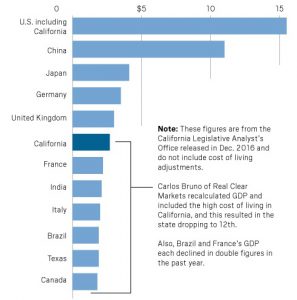
Among the strategies, tactics and implementations in the Go Lean roadmap, is the deployment of e-Government services, systems and solutions. The Go Lean book explains how this implementation can streamline operations – lean, no heavy bureaucracy – for every level of government: municipal, state and the CU federal level. A type of computing implementation can leverage productivity against a very small level of staffing.

See how a lean structure is portrayed in the book (Page 51):

    A lot of office automation and data processing can be provided in-house for member-state governments by [the CU] simply installing / supporting computer mainframe/midrange systems, servers, and client workstations; plus supplementing infrastructural needs like power and mobile communications. The CU’s delivery of ICT [(Internet & Communications Technologies)] systems, e-Government, contact center and in-source services (i.e. property tax systems [and “www.myCaribbean.gov”]) can put the burden on systems continuity at the federal level and not the member-states. (This is the model of Canada with the federal delivery of provincial systems and services – some Provincial / Territorial presence / governance is completely “virtual”).

The Go Lean book presents the plan to deploy many e-Government provisions. There must therefore be an advanced structure of computer systems for Data Processing. This means Data Centers, our Big Iron for the Caribbean. The Go Lean book provides 370-pages of turn-by-turn instructions on “how” to adopt new community ethos, plus the strategies, tactics, implementations and advocacies to execute so as to reboot, reform and transform the societal engines of Caribbean society. One advocacy is optimizing the deployment of 6 strategically-located Data Centers. Consider some specific details, excerpts and headlines from the book on Page 106 entitled:

10 Trends in Implementing Data Centers

1 Lean-in for the Caribbean Single Market
The CU treaty unifies the Caribbean region into one single market of 42 million people across 30 member-states, thereby empowering the economic engines in and on behalf of the region. The CU embraces the cutting, “bleeding” edge concepts, systems and methodologies for data centers and computer server farms, as in high density computing, facilitating the maximum computing power with the least amount of space and power. The prerequisite for any serious data center deployment is power…stable, reliable electricity, with primary, secondary and tertiary solutions. The CU roadmap calls for deployment of a regional power grid, with above ground, underground & underwater cabling. Though data centers must launch now, power costs will be expected to decline with the grid. …
2 Fiber-Optics / Pipeline

Optical fibers are widely used in fiber-optic communications, which permits transmission over longer distances and at higher bandwidths (data rates) than other forms of communication. Fibers are used instead of metal wires because signals travel along them with less loss and are also immune to electromagnetic interference. The transparent fiber are made of high quality extruded glass, silica or plastic. The CU as a new Federation can apply a leap-frog approach to implement communication networks without having to contend with older methods or investments. Further the CU will embrace the strategy of installing elaborate pipelines thru out the region, enabling fiber-optics to traverse the network.

3 IP Convergence

Internet Protocol (IP) is now ubiquitous for data, voice, and video communications – they all operate on the same type of fiber. This indicates that data centers also function as telecom hubs – central switching offices are now bygones.

4 Cloud Computing

The CU will embrace cloud computing for many operational systems, thereby requiring optimal continuous processing.

The roadmap calls for citizens to interact with their federal government via web portals, kiosks or phone contact centers.

5 High Availability (HA)
6 Colocation Data Centers

A colocation center (colo, or coloc) is a type of data center where equipment space and bandwidth are available for rental to retail customers. Colocation facilities provide space, power, cooling, and physical security for the server, storage, and networking equipment of other firms—and connect them to a variety of telecommunications and network service providers—with a minimum of cost and complexity. Colocation has become a popular option for companies as it allows the company to focus its IT staff on the actual work being done, instead of the logistical. Significant benefits of scale (large power and mechanical systems) result in large colocation facilities, typically 50,000 to 100,000 square feet. The CU will assume a role of coloc landlord for member-states, municipalities and NGO’s for their data center needs.

7 [Limestone] Caves as Data Centers
8 Storage Solutions – No need for humans
9 Security Issues

Modern data centers require minimal human interaction, therefore physical security tend to be very restrictive. In some firms, even the CEO is not allowed access. The CU will implement biometric systems like fingerprints and iris scanning.

10 Unified Command & Control

The data center may be void of humans, but there is still the need for many professional analysis, programmers and engineers. These are normally stationed in command centers to facilitate monitoring and cyber-security functions.

The technology to leverage the governmental administrations of the Caribbean will be available Step One / Day One of the Go Lean roadmap. Though there would be some need for customization and specialty programming. This development effort can be leveraged across the entire region.

Under the Go Lean plan, the expressions of the Caribbean Big Iron would be manifested by systems in government offices, self-serve kiosks, various websites (i.e. www.myCaribbean.gov), Social Media channels and smart phone applications.

These types of e-Government manifestations have been discussed in previous blog-commentaries; consider this sample:

https://goleancaribbean.com/blog/?p=13524 The Future Focus of e-Government Portals
https://goleancaribbean.com/blog/?p=13466 The Future Focus of e-Learning in the Caribbean
https://goleancaribbean.com/blog/?p=11453 Location Matters, Even in a Virtual World
https://goleancaribbean.com/blog/?p=8823 Lessons from China – WeChat: Model for Caribbean Social Media
https://goleancaribbean.com/blog/?p=7991 Transformations: Caribbean Postal Union – Delivering the Future
https://goleancaribbean.com/blog/?p=6341 e-Commerce Strategies for Tourism Stewardship
https://goleancaribbean.com/blog/?p=5435 China Internet Policing – Model for Caribbean
https://goleancaribbean.com/blog/?p=888 How to Re-invent Government in a Digital Image – Book Review
https://goleancaribbean.com/blog/?p=459 Plan to Integrate CXC into the CU Trade Federation for e-Learning

Let’s do this Big Iron – deploying advanced computer systems – to facilitate the e-Governmental transformation of our CU Federal government agencies – the Alphabet Orgaanizations, member-state agencies and even Non-Government Organizations!

We can no longer Fail to Launch

We can “speak softly and carry a Big Iron“.

Our governing efficiencies depend on it.

Also, our economic and security engines can also benefit.

These efficiencies can help to reform and transform Caribbean governments and society in general. We urge all stakeholders to lean-in to this CU/Go Lean roadmap to make the Caribbean a better place to live, work and play. 🙂

Download the free e-Book of Go Lean … Caribbean – now!

Sign the petition to lean-in for this roadmap for the Caribbean Union Trade Federation.

———–

Appendix – Big Iron

Definition – What does Big Iron mean?

Big iron is a slang word commonly used to describe a very large, expensive and extremely fast computer. It is often used to refer to oversized computers such as Cray’s supercomputer or IBM’s mainframe.

The term big iron originated in the 1970s, when smaller computers known as minicomputers were introduced. To describe larger computers compared to the small minicomputers, the term big iron was coined by users and the industry.

Big iron computers are primarily used by large companies to process massive amounts of data such as bank transactions. They are designed with considerable internal memory, a high aptitude for external storage, top-quality internal engineering, superior technical support, fast throughput input/output and reliability.

Techopedia explains Big Iron

The term is said to be a derivative of the term “iron”; when used as slang, this term refers to a handgun. Iron is also used to refer to something sturdy, strong and tough. The term big iron is frequently applied to highly effective computer ranches and servers that have resilient steel stands.

In the 1960s and 1970s, the market for mainframes, or big iron, was mainly through IBM and companies like General Electric, RCA Corp., Honeywell International Inc., Burroughs Corporation, Control Data Corp., NCR Corp. and UNIVAC. Later servers based on the microcomputer design, or “dumb terminals”, were developed to cut costs and create greater availability for users. The dumb terminal was eventually replaced by the personal computer (PC). Subsequently, big iron was restricted to mostly government and financial institutions.

Source: Retrieved December 17, 2017 from Technopedia: https://www.techopedia.com/definition/2157/big-iron

———–

VIDEO –  Big Iron- Marty Robbins  –  https://youtu.be/999RqGZatPs

Published on Mar 28, 2011

All rights belong to their respective owners

Lyrics:

To the town of Agua Fria rode a stranger one fine day
Hardly spoke to folks around him, didn’t have too much to say,
No one dared to ask his business, no one dared to make a slip
The stranger there among them had a big iron on his hip,
Big iron on his hip …

Lyrics retrieved December 17, 2017 from: https://genius.com/Marty-robbins-big-iron-lyrics


Share this post:
, ,
[Top]