Category: Government

Making a ‘Pluralistic Democracy’ – Multilingual Realities

Go Lean Commentary

So, what has happened in our Caribbean region of 42 million people and 5 colonial legacies (American, British, France, Netherlands, Spain) was inevitable:

Multilingual society!

There is no getting around it. If the planners for a new Caribbean want to form a unified, integrated community, they will have to select one of these language options:

  1. Dutch
  2. English
  3. French
  4. Spanish
  5. All of the Above

The answer must be #5. This is because the Caribbean is not a singularity; not in language, ethnicities nor culture.

In fact, the planners, the movement behind the book Go Lean … Caribbean has presented that quest: to first make the Caribbean’s member-states a “Pluralistic Democracy”; and form a Single Market economy.

This “Pluralistic Democracy” would mean a society where the many different ethnic groups (and languages) have consideration, equal rights, equal privileges and equal protections under the law; where there are no superior rights to any majority and no special deprivations to any minority. The expectation of this Pluralism is for any one person to be treated like everyone else. The legal definition of Pluralism as a political philosophy is as follows …

… the recognition and affirmation of diversity within a political body, which permits the peaceful coexistence of different interests, convictions and lifestyles.[1] While not all political pluralists advocate for a pluralist democracy, this is most common as democracy is often viewed as the most fair and effective way to moderate between the discrete values.[2]Wikipedia

This vision of a Caribbean “Pluralistic Democracy” should be more than words, but action too. The truth of the matter is that while this writer is English-speaking, the majority of the Caribbean’s population is not. Notice the correct Population and Language Distribution summary here and the full details in the Appendix below (based on 2010):

  Population: Dutch English French Spanish
Totals 42,198,874 809,834 6,747,229 9,887,899 24,753,912
Percentage 100.00% 1.92% 15.99% 23.43% 58.66%

The movement behind the book Go Lean…Caribbean has repeatedly related that there is a need for new stewardship of the Caribbean societal engines (economics, security and governance). Our region – collectively and individually – is in crisis due to our many societal defects and dysfunctions. The book opened with this declaration:

There is something wrong in the Caribbean. It is the greatest address in the world for its 4 language groups, but instead of the world “beating a path” to these doors, the people of the Caribbean have “beat down their doors” to get out.

The Go Lean book posits that the best-practice for reforming and transforming our society will come from confederating and collaborating a regional response to our local inadequacies; that the problems in Caribbean society are too dire for any one member-state to assuage on its own; there is the need for a regional technocracy. Further, the book explains that an integrated collective is the only way to contend with the Agents of Change (Page 57) that have dynamically affected the Caribbean eco-systems. These Agents of Change include:

  • Technology
  • Globalization
  • Aging Diaspora
  • Climate Change

The Agent of Change of Globalization implies trade of goods, services and capital with stakeholders in any location around the world. It goes without saying that the natural language of Globalization will be …

… it is what it is!

Here in the Caribbean, we must contend with the above 4 primary languages, plus a number of Creole spin-offs (think: Haitian Creole French and Papiamentu in the Dutch Caribbean). So we are not able to declare any one language standard. And this is OK, as we are ready for this Brave New World! We have spanned the globe and identified the best tools and techniques for managing a multilingual society.
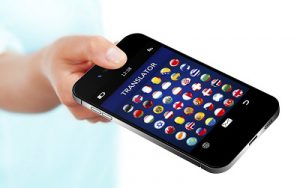
In terms of tools, notice below this innovative technology being introduced in the North American marketplace, this year:

VIDEO 1 – Google Pixel Buds are wireless headphones that translate in real time – https://youtu.be/KE_DtGgovjc

Tech Insider

Published on Oct 4, 2017 – Google Pixel Buds are $160 wireless earbuds introduced during their October Pixel event. Designed to wrap around the back of a user’s neck, the headphones can use Google Assistant to answer questions and translate languages in real-time.

——–

VIDEO 2  – See how Pixel Buds translate languages on the fly – https://youtu.be/B_BQjRs94ec

CNET

Published on Oct 5, 2017 – Read the CNET review article here – http://cnet.co/2yJA95f
CNET’s Lexy Savvides and Sean Hollister try out the real-time translation feature for Google’s new Pixel Buds.

In terms of techniques, since our Caribbean territory is not the first region to contend with a multilingual population – and we will not be the last – we have great role models to consider.

The book Go Lean…Caribbean presents … Canada as such; a great role model that provides lessons-learned for a multilingual society. The Go Lean book – available to download for free – serves as a roadmap for the introduction and implementation of the technocratic Caribbean Union Trade Federation (CU), for the elevation of Caribbean society – for all 30 member-states – to foster a “Pluralistic Democracy”. The reference to Canada’s role-model continues further:

  • 10 Lessons from Canada’s History (Page 146)
    #3 – Multiple Cultural Legacies and Languages
    Canada is officially bilingual (English/French) & multicultural at the federal level. The need to structure legal frameworks for diversity was a compelling motivation for confederation, (and an example for the CU to model). The[ir] constitution allows for individual provinces to reflect realities of their populations & cultural differences.

VIDEO 3 – O Canada in 11 different languages – https://youtu.be/1jROsqdrLdk

Published on Jul 1, 2017 – Canada’s national anthem sung in 11 different languages

»»»»»»»»»»»»»»»»»»

For more than 75 years, CBC News has been the source Canadians turn to, to keep them informed about their communities, their country and their world. Through regional and national programming on multiple platforms, including CBC Television, CBC News Network, CBC Radio, CBCNews.ca, mobile and on-demand, CBC News and its internationally recognized team of award-winning journalists deliver the breaking stories, the issues, the analyses and the personalities that matter to Canadians.

This vision is very though-provoking for the Caribbean. It asserts that if we want to elevate our societal engines then we must do the heavy-lifting of reforming our value systems or our community ethos – the spirit that informs our beliefs, customs and practices –  to embrace all people in the region – despite the language – into an integrated brotherhood. This is the charter of the CU/Go Lean roadmap; it has these 3 prime directives:

  • Optimization of the economic engines in order to grow the regional economy to $800 Billion and create 2.2 million new jobs.
  • Establishment of a security apparatus to ensure public safety and protect the resultant economic engines.
  • Improve Caribbean governance to support these engines, including a separation-of-powers between the member-states and CU federal agencies.

The Go Lean book provides 370-pages of turn-by-turn instructions on “how” to adopt new community ethos, plus the strategies, tactics, implementations and advocacies to execute so as to reboot, reform and transform the societal engines of Caribbean society. There is a lot of consideration in the book for optimizing communications to the masses. Consider the Chapter excerpts and headlines from this sample on Page 186 entitled:

10 Ways to Improve Communications

1 Lean-in for the Caribbean Single Market & Economy (CSME) Initiative: Caribbean Union Trade Federation (CU).
2 CU Defense Pact: State Militias & Naval Operations
The collective security agreement of the CU will allow the creation of a Homeland Security Department, to defend the member states against all enemies, foreign and domestic. The size of the CU market will allow it to afford cutting edge equipment, systems and training …
3 Media Industrial Complex

The CU will oversee the radio spectrum used for radio, television and satellite communications. The radio spectrum must be regulated on a regional level, because the islands are so close to each other and foreign states, that there must be coordination of the common resource pool – the spectrum is limited. This FCC-style (USA) oversight will also extend to internet broadband (wireless & wire-line) governance. With the CU’s financial reforms, the emergence of card-based and e-payment systems will allow for the full exploitation of the media business models. Also, the CU, through licensing, can mandate a certain amount of programming of the educational, inspirational and public service variety.

4 4 Simultaneous Languages – SAP-type Channels

The technology used for SAP (Secondary Audio Programming) channels will be deployed extensively to cover all four languages (Dutch, English, French and Spanish) in broadcasts to multi-state markets. Official websites, by the CU administration will be published in the four languages and this practice encouraged for private websites.

5 Public Broadcasting
6 Press Secretary / Public Relations Officers
7 Journalism Industry Certifications
8 Libel and Slander Due Process
9 Internet & Social Media
10 Libraries and Archives

The CU will build and maintain libraries throughout the region, in a hub-and-spoke fashion. The central library, in the CU’s capital seat, will maintain the domain for all the official archives for the governmental administration, and then further provide intranet access to all the satellite library branches. The libraries are also pivotal for e-Learning in the CU.

In order to ensure success for the Caribbean’s future, the region must foster a better landscape for communicating to all people everywhere. (This includes sign-language for the hearing-impaired as well). Imagine hurricane and tsunami warnings, lives could be at stake!

Yes, this Go Lean roadmap considers the heavy-lifting of structuring Caribbean society to be a “Pluralistic Democracy”. This is far better than the unsustainable status quo. “Unsustainable” is an understatement; we have a crisis; we are bleeding our populations front-and-center. Communicating with our citizens in their Mother Tongue does feel more welcoming. There are direct references to jobs as well, with this multilingual advocacy.

The Go Lean book describes (Page 212) the Call/Contact Center industry that can be fostered in the Caribbean. Wherever there are people speaking the same language, local Caribbean Call Centers can be utilized to communicate with these people. The book specifically identifies 12,000 new …

Direct and indirect jobs at physical and virtual call centers

Imagine telemarketing, collections and customer service calls to Dutch-speaking people in Amsterdam … from Aruba. Or calls to French Canadians … from Martinique. This multilingual-based industry helps the people in the Caribbean to prosper where planted.

This – a “Pluralistic Democracy” – is indeed a Brave New World.

  • Welkom – Dutch
  • We welcome it – English
  • Bienvenue – French
  • Bienvenido – Spanish

Now is the time for all stakeholders in the Caribbean – in all language groups – to lean-in to this Go Lean roadmap. We can  just be ourselves, speaking our Mother Tongue. This is pivotal for our quest for a “Pluralistic Democracy”; this commentary is the final Part 3 of the 3-part series on this subject. The full collection is as follows:

  1. Making a “Pluralistic Democracy” – Respect for Diwali
  2. Making a “Pluralistic Democracy” – Freedom of Movement
  3. Making a “Pluralistic Democracy” – Multilingual Realities

Yes. this “Pluralistic Democracy” vision is a BIG deal, yet it is conceivable, believable and achievable for making the Caribbean homeland better to live, work and play. 🙂

Download the free e-Book of Go Lean … Caribbean – now!

Sign the petition to lean-in for the roadmap for the Caribbean Union Trade Federation.

———–

Appendix – Caribbean Population and Language Distribution

Member Language Population Dutch English French Spanish
Anguilla English 13,477 13,477
Antigua and Barbuda English 85,632 85,632
Aruba Dutch 106,000 106,000
Bahamas English 342,000 342,000
Barbados English 279,000 279,000
Belize English 320,000 320,000
Bermuda English 67,837 67,837
British Virgin Islands English 24,000 24,000
Cayman Islands English 56,000 56,000
Cuba Spanish 11,236,444 11,236,444
Dominica English 72,660 72,660
Dominican Republic Spanish 9,523,209 9,523,209
Grenada English 110,000 110,000
Guadeloupe French 405,500 405,500
Guyana English 772,298 772,298
Haiti French 9,035,536 9,035,536
Jamaica English 2,825,928 2,825,928
Martinique French 402,000 402,000
Montserrat English 4,488 4,488
Netherlands Antilles
(Bonaire, Curaçao, Saba, St. Eust, St Maarten)
Dutch 231,834 231,834
Puerto Rico Spanish 3,994,259 3,994,259
Saint Barthélemy French 8,938 8,938
Saint Kitts and Nevis English 42,696 42,696
Saint Lucia English 160,765 160,765
Saint Martin French 35,925 35,925
Saint Vincent and the Grenadines English 120,000 120,000
Suriname Dutch 472,000 472,000
Trinidad and Tobago English 1,305,000 1,305,000
Turks and Caicos Islands English 36,600 36,600
US Virgin Islands English 108,848 108,848
Totals 42,198,874 809,834 6,747,229 9,887,899 24,753,912
Percentage 100.00% 1.92% 15.99% 23.43% 58.66%

 Source: Page 66 of book Go Lean … Caribbean; Published November, 2013.

Share this post:
, , , ,

Dominica Diaspora – Not the Panacea

Go Lean Commentary

If only it was that simple!

You love your homeland, but you live abroad. You simply create a not-for-profit organization, execute a development plan to relieve, restore, recover, rebuild and boom: Instant success … back in the homeland.

If only?! It doesn’t work that way.

CU Blog - Dominica Diaspora - Not the Panacea - Photo 2Yet still, this is what is transpiring on behalf of the Caribbean island of Dominica; see the profile of one such organization here (and more on the island nation in the Appendix below):

Rebuild Dominica, Inc. is a registered 501(c)(3) non-profit relief organisation based in the Washington, D.C. metro area. We were founded by humanitarians determined to help rebuild Dominica in the wake of the devastation wrought by Tropical Storm Erika. This effort continues in support of disaster relief post-Hurricane Maria — the most horrendous assault Dominica has ever experienced.
URL: https://rebuilddominica.org/

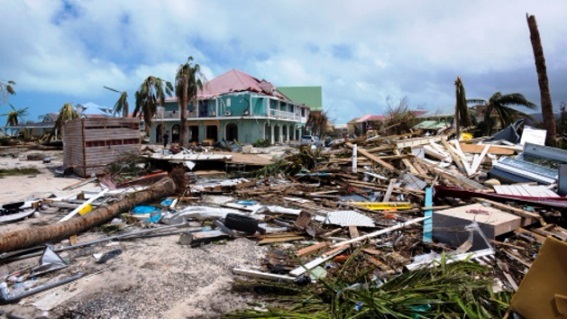
Make no mistake; Dominica needs all the help it can get, especially right now after the near total devastation from Category 5 Hurricane Maria; they must relieve, restore, recover and rebuild. See this reality manifested in this VIDEO here:

VIDEO – Small island of Dominica hit hardest by Hurricane Maria – https://youtu.be/FWbzgn3nHaU

Al Jazeera English

Published on Sep 25, 2017 – Hurricane Maria has killed at least 33 people so far, with the bulk of those deaths happening on the tiny island of Dominica. At least 80 percent of the buildings there have been damaged and most communication lines cut. Al Jazeera’s Gabriel Elizondo reports from Dominica.

– Subscribe to our channel: http://aje.io/AJSubscribe
– Follow us on Twitter: https://twitter.com/AJEnglish
– Find us on Facebook: https://www.facebook.com/aljazeera
– Check our website: http://www.aljazeera.com/

Thank you Diaspora, for this fine start; yet still, the problems that Dominica have – with this storm recovery here and even larger issues above and beyond – can not be fixed by this island’s Diaspora alone. No, there is the need for a more comprehensive solution.

Above and Beyond – Yes, looking at the horizon and longing for a solution from above and beyond is the concern of this commentary. In fact, this is the theme of a series of commentaries from the movement behind the book Go Lean … Caribbean. It has been consistent in urging the stakeholders (governments and citizen groups) of the Caribbean member-states to NOT put their hope and faith in their Diaspora to look back to their homelands and be the panacea – cure-all solution – that their societies need. There is preponderance for governments to pursue this strategy. Just recently we published commentaries on this Caribbean pre-occupation, with these entries relating these homelands:

The premise for the criticism of this Diaspora strategy is that the ones that have fled the region have done so for a reason; they have been “pushed” or “pulled” away from their homeland. They may still love their country, but can only do so much from abroad. While one person can change their community, it is near impossible for that one person if they are not in the community; there may be trust, accountability and transparency issues. Thusly, the Diaspora is less inclined to invest back in their country; and the historicity is that they have not! Thusly, all efforts to outreach the Diaspora are usually futile. All of these prior commentaries relate this basic truth about catering to the Diaspora:

The subtle [Diaspora outreach] message to the Caribbean population is that they need to leave their homeland, go get success and then please remember to invest in us afterwards.

… It is so unfortunate that the people in the Caribbean are beating down the doors to get out of their Caribbean homeland, to seek refuge in these places like the US, Canada and Western Europe. … As a result, we have such a sad state of affairs for our Caribbean eco-system as we are suffering from a bad record of societal abandonment.

Yes, the problem of this Diaspora-outreach strategy is that it double-downs on the failure of why the Diaspora left in the first place. When we look at Dominica and see the many failures of that country, we realize that the Dominicans on the island and the Dominicans in the Diaspora cannot, single-handedly or collectively, solve the problems on that homeland. No, something bigger and better is needed.

They are trying now, for that something better …

They are engaging help and support of different not-for-profits, foundations and non-government organization (NGO). See a related news article here:

Title: Rebuild Dominica Partners with Project C.U.R.E. & Other Global Allies Post-Hurricane Maria
Sub-title: Washington, D.C. Based Nonprofit Collaborates To Deliver Hurricane Relief Supplies to the Island Of Dominica
By: The Caribbean Current

CU Blog - Dominica Diaspora - Not the Panacea - Photo 3Bowie, MD (October 8, 2017) – Since its inception in August of 2015, in direct response to Tropical Erika devastating The Commonwealth of Dominica, Rebuild Dominica holds steadfast to its mission of forming and sustaining long-term partnerships to address the unmet needs of communities in Dominica.

Dr. Sam Christian, Rebuild Dominica’s Coordinator of Medical Operations on-island, submitted reports to pronounce the discovery of three residents of Pointe Michel — whom he respectively met dead in a ravine, on the beach, and under debris of a porch. Hours after Hurricane Maria, Dr. Christian, a former U.S. Army Major, and combat surgeon was the only surgeon working with police and a search and rescue team in the south of Dominica. This continued for days, during the difficult hours post-Maria, before outside help came to the area of Point Michel and Soufriere.

These reports were used to secure medical supplies valued at approximately $400,000 USD as donated by Project C.U.R.E.: the largest provider of donated medical supplies and equipment to developing countries around the world. The relief supplies will ship this week to Dominica, while Dr. Sam Christian continues to provide free medical treatment in anticipation of the delivery.

The cost of shipment of the medical supplies was funded under the direction of Rebuild Dominica and the nonprofit’s global supporters. A primary donation of $10,000 USD was received from Ethiopian financier and Advisor to Ethiopian Crown Council, Mel Tewahade. Additional assistance totaling $5,000 USD was pledged by from Saad Wakas and Omar Fisher: Rebuild Dominica allies based in Dubai. The President of Rebuild Dominica, Mr. Gabriel Christian, donated an additional $10,000 underwritten by his law firm in Maryland. The combined mobilization for the Project C.U.R.E. shipment is $20,000 – the sum directed to Project C.U.R.E. on behalf of Rebuild Dominica.

Founding member of Rebuild Dominica, Pastor St. Clair Mitchell of Evangel Assembly, along with Pastor Bell convened with the nonprofit on the evening of September 19, 2017, to mobilize the D.C. community. Carib Nation TV Director, Larry Sindass, and host Derrice Deane brought the Rebuild Dominica relief appeal to a global audience.

John Green, Delvin Walters, John Riviere, Colonel Koreen Parry, Captain Delvin Walters, Loema Sealey, Loughton Sargeant and Monique Joseph — all leaders of the Caribbean Disaster Relief and Recovery Alliance (CDRRA) — rushed to aid Rebuild Dominica; an early member of the CDRRA Diaspora disaster response collaborative. Caribbean Cargo DC again proved itself a solid community ally by reducing its shipping rates and donating storage space for relief supplies.

While facilitating the arrival and news coverage in Dominica by Al Jazeera TV and the Israeli Search and Rescue Team, Rebuild Dominica communicated with Dominica’s Prime Minister, Roosevelt Skerrit. A national medical services assessment, with guidance from Dr. Dale Dangleben and Dr. Sam Christian, is currently in progress for additional donations in the medical sphere.

Another shipment totaling three tons of food and medicine await shipment from Caribbean CargoDC and ATAS Roofing USA has committed to assist with supplies for roofing needs in Dominica. Greek-Ethiopian, Captain Demetrius Apokremiotis, has secured a short-term donation of a Convair 340 cargo plane on behalf of Rebuild Dominica to airlift 7,000 pounds of aid supplies from Miami to Dominica.

As of as of September 25, Rebuild Dominica is an official PayPal nonprofit partner. This status puts the nonprofit on par with all major US nonprofits dedicated to disaster relief.

A fundraiser is currently underway to secure monies needed to fuel and deliver the aid that awaits the displaced and starving citizens of Dominica. To that end, Rebuild Dominica has partnered with CDRRA for the upcoming ‘One Caribbean Hurricane Relief Concert’ slated for Sunday, October 8, 2017, in Bowie, Maryland. Proceeds will benefit the Caribbean islands devastated by Hurricane Irma and Hurricane Maria.

To volunteer, share resources, or make a financial contribution to this nonprofit, please visit www.RebuildDominica.org.

Source: Posted October 11, 2017 from: https://www.thecaribbeancurrent.com/rebuild-dominica-partners-project-c-u-r-e-global-allies-post-hurricane-maria/

To relieve, restore, recover and rebuild Dominica after Hurricane Maria, we need these NGO’s, and the Diaspora, and the island’s government; and … something more …

… enter the Caribbean Union Trade Federation (CU). This is presented as the organizational solution for Dominica; this is the panacea that Dominica and the rest of the Caribbean needs. But first, we need people to stay in their Caribbean homelands, not flee. We need them to prosper where planted here at home. Democratic governments – of the people; by the people; for the people – cannot expect to promote the best of their people, if the best people keep leaving – and joining the Diaspora.

The book Go Lean…Caribbean – available to download for free – serves as a roadmap for the introduction and implementation of the technocratic CU, for the elevation of Caribbean societal engines – economic, security and governance for all member-states. The book asserts that the region must work together – in a formal regional integration – to hold on to its populations – especially the highly educated ones – not see them leave for foreign shores. To accomplish this objective, this CU/Go Lean roadmap presents these 3 prime directives:

The Go Lean book – and many previous blog-commentaries – asserts that while conditions may be bad for Caribbean residents (i.e. Dominican) in their homeland, Black-and-Brown immigrants to far-away countries (think: North America and Western Europe) often have to contend with less than welcoming conditions in those countries. It is only with the Second Generation that prosperity is achieved, but by then, the children of the Caribbean Diaspora are not considered “Caribbean” anymore; they assume their residential citizenship. As conveyed in the foregoing VIDEO, it is not these Second Generation types – legacies – that are overcoming the obstacles to venture back to their ancestral homeland in the wake of hurricanes.

So it is the summation that it is better for Dominican people, and people of all the Caribbean for that matter, to work to remediate and mitigate the risks of Failed-State status in their homeland, but such work is heavy-lifting. It requires a reboot of the entire Dominican eco-system. The Go Lean roadmap calls for a technocratic reboot, to reform and transform regional society. Many people may argue – and they would be correct – that the reformation and transformation of Caribbean communities should come from Caribbean people first. But with such a high societal abandonment rate, the population of many Caribbean member-states – as in Dominica – is approaching a distribution where half of the citizens live on the islands and the other half live abroad – in the Diaspora. For some other countries, it is a vast majority of the educated populations that have fled; one report presents that abandonment rate of 70 percent. See the data references here:

According to the preliminary 2011 census results Dominica has a population of 71,293.[1] The population growth rate is very low, due primarily to emigration to more prosperous Caribbean Islands, the United Kingdom, the United States, and Canada. The estimated mid-year population of 2016 is 73,543 (the 2017 revision of the World Population Prospects[2]).- Wikipedia.

CU Blog - Dominica Diaspora - Not the Panacea - Photo 0

When Caribbean people in general, and Dominicans in particular, emigrate and become aliens in a foreign land, life is not necessarily better in those countries. As related in a previous blog-commentary, those who live in the Diaspora know “both sides of the coin”, as most of them have lived in the ancestral lands at one point. But on the other half, those who still live in the homeland may have never lived abroad.

They do not know what they do not know!

Being a visitor to some North American or European city is different than being a resident, as visitors do not have the interactions of applying for jobs, housing, government benefits, paying taxes, co-existing with neighbors, etc.. These ones in the homeland may naturally assume that the “grass is greener on the other side”. Here’s the truth:

    It is not! (The grass in the northern cities may not even be green at all; it may be covered with autumn foliage or snow).

The Go Lean roadmap is not for the Diaspora to come to the rescue, but rather a Caribbean confederacy, constituted by all 30 member-states. This position leverages the Caribbean as a Single Market (42 million people); it asserts that this is better than just catering to the Diaspora of just one country. This is to be the panacea that Caribbean needs to assuage its defects and dysfunctions. Plus, it also includes the Diaspora, but for all the Caribbean nations combined – estimated at 10 to 25 million. This is a plan for interdependence! This was the motivation for the CU/Go Lean roadmap, as pronounced in the opening Declaration of Interdependence (Pages 12 – 13) of the book:

xi. Whereas all men are entitled to the benefits of good governance in a free society, “new guards” must be enacted to dissuade the emergence of incompetence, corruption, nepotism and cronyism at the peril of the people’s best interest. The Federation must guarantee the executions of a social contract between government and the governed.

xix. Whereas our legacy in recent times is one of societal abandonment, it is imperative that incentives and encouragement be put in place to first dissuade the human flight, and then entice and welcome the return of our Diaspora back to our shores. This repatriation should be effected with the appropriate guards so as not to imperil the lives and securities of the repatriated citizens or the communities they inhabit. The right of repatriation is to be extended to any natural born citizens despite any previous naturalization to foreign sovereignties.

xx.  Whereas the results of our decades of migration created a vibrant Diaspora in foreign lands, the Federation must organize interactions with this population into structured markets. Thus allowing foreign consumption of domestic  products, services and media, which is a positive trade impact. These economic activities must not be exploited by others’ profiteering but rather harnessed by Federation resources for efficient repatriations.

xxiv.  Whereas a free market economy can be induced and spurred for continuous progress, the Federation must install the controls to better manage aspects of the economy: jobs, inflation, savings rate, investments and other economic principles. Thereby attracting direct foreign investment because of the stability and vibrancy of our economy.

The goal of the Go Lean roadmap is for Caribbean people to prosper where planted; the book therefore provides 370-pages of turn-by-turn instructions on “how” to adopt new community ethos, plus the strategies, tactics, implementations and advocacies to execute so as to reboot the region’s societal engines, for Dominica and other member-states. One advocacy for a Way Forward is the plan to optimize the roles and responsibilities of non-government organizations (Page 219):

10 Ways to Impact Foundations

1

Lean-in for the Caribbean Single Market
This treaty allows for the unification of the region into one market, thereby expanding to an economy of 30 countries, 42 million people and GDP of over $800 Billion (circa 2010). With the scale of this Single Market, the CU serves as a proxy to facilitate the economic engines, regional security initiatives and emergency management needs of the Caribbean. While the CU is not an advocacy for human rights or civil rights, there are many social causes that the CU will impact in a tangential manner (women, disabled, poverty, middle class, others). The CU allows for the regional oversight and promotion of Not-For-Profit foundations to execute their campaigns to impact the socio-economic causes of the region.

2

NGOs to Deliver CU Social AgendaThe CU will facilitate the eco-system for not-for-profit foundations and non-government organizations. The CU’s Department of State will not just facilitate incorporations on the regional level, no need to repeat in every member-state, but also provide much of the NGO administration and oversight to satisfy the local governments and other stakeholders.

3

Domestic ChartersOne of the missions of the CU is for the Diaspora to repatriate their time, talents and treasuries to make the Caribbean a better place to live, work and play. The CU will encourage the creation of micro-focused foundations and not-for-profit NGOs. This is a natural way for others to give back. Those desiring to contribute (and incentivized) can enable their causes and passions through local foundations, or petition the CU to discern new gaps needing fulfillment.

4

“One Percent” AlignmentThere is a new spirit of philanthropy imbrued in the population of the world’s billionaires and millionaires (One Percent), many of them have signed a Giving Pledge to donate half of their estate to global charitable causes. Many of this group – see Appendix N on Page 292 – facilitates charitable contributions by means of their personal or otherwise aligned foundations.

5

Foreign ChartersFoundations incorporated in foreign lands will find a “welcome mat” in the Caribbean. The CU will identify opportunities for these foundations to engage within this region. The CU will maintain a Special Interest Group to liaison with the “One Percent” of the world’s richest people. The CU will therefore solicit them for philanthropic manifestations in the CU.

6

CU Reporting

7

e-Delivery

8

Education via e-Learning

9

Intelligence Gathering and Big-Data AnalysisThe CU Intelligence Gathering and Analysis mechanism will track the progress of their activities, plus mitigate threats and risks for foundations and NGOs. The CU’s satellite and terrestrial surveillance systems, and predictive modeling/Big Data Analysis will help guide the focus of foundations – this way their investments and roles will be greatly enhanced.

10

Failed-State Status – Monitoring and MitigationsThere are a few social factors (refugee, family reunification, brain drain) that are so pivotal that they are considered indicators for Failed-State status. The CU’s mission to improve these indices can be dovetailed with the foundations.

There have been a number of blog-commentaries by the Go Lean promoters that have detailed the functionalities of NGO’s and foundations as part of the Way-Forward – the best hope for a new eco-system for Dominica, and the whole Caribbean. See a sample list here:

https://goleancaribbean.com/blog/?p=12949 Charity Management for the Caribbean – Grow Up Already
https://goleancaribbean.com/blog/?p=11598 Plea to Philanthropists: Give us your Time, Talent and Treasuries
https://goleancaribbean.com/blog/?p=8243 Zuckerberg’s Philanthropy Project Makes First Major Investment
https://goleancaribbean.com/blog/?p=5462 Charity Dysfunction: The Red Cross’ $500 Million In Haiti Relief
https://goleancaribbean.com/blog/?p=1763 Gates Foundation: Changing the World

Confederating a regional response is by all means the best-practice for Dominica and other Caribbean hurricane victims. Good results are evident from the limited multilateral efforts that have been exerted thus far. See here:

… the response shows that in a region separated by language and geography, culture remains a strong tie.

“Caribbean culture understands that when a cousin or godson is hurting down the street, everyone puts in their little bit to make a pot of food,” said Marlon Hill, a Jamaican-born Miami attorney, who with the help of The Miami Foundation, is spearheading the U.S. Caribbean Strong Relief Fund with other South Florida Caribbean leaders. “Today it’s Dominica, but tomorrow it can be Saint Lucia, next week it can be Barbados and next year it can be Grenada.”

… whether the new spirit of cooperation will lead to deeper integration among Caribbean nations remains to be seen.

Anthony Bryan, a Caribbean expert now with the Washington-based Center for Strategic and International Studies said that while the recent hurricanes represent a “common disaster” that has pulled nations together, he isn’t optimistic that it will lead to anything beyond the current functional cooperation among many countries on matters such as a common high school exit exam or health initiatives.

    “I think we tend to come together when there are either disaster responses or security measures and to coordinate foreign policies,” Bryan said. “Regional integration has been the hope for many years, but it takes political will. … Functional cooperation has always existed. But to carry it further to political integration? Not in my lifetime.”

Still, [Ronald] Jackson, the head of the regional disaster response – [Caribbean Disaster Emergency Management] – Agency, remains hopeful.

    “We have shown that it is possible,” he said.

Source: Posted September 26, 2017 by the Miami Herald

In summary, regional integration: Good; societal abandonment: Bad!

Any country growing their Diaspora is bad for that country and bad for the Diaspora members. Dominica – and every other country – needs its sons and daughters right now; actually this island needs “all hands on deck” for the Way-Forward. Any official policy to encourage emigration and living-working-abroad – on a permanent basis – is a flawed policy. Rather, it is better to have our citizens in the homeland. They can better help to relieve, restore, recover and rebuild the country.

So any policy that double-downs on the Diaspora is actually doubling-down on failure. We should never want people to have to leave then hope they remember us in our times of distress. No, we want and need them here at home at all times: good, bad and hurricane. We want and need them to “plant” … and prosper where planted.

We strongly urge every stakeholder of Dominica and all of the Caribbean to lean-in to this roadmap to make our homeland, Dominica and the remaining of the 30 member-states, better places to live, work and play. 🙂

Download the free e-book of Go Lean … Caribbean – now!

Sign the petition to lean-in for this roadmap for the Caribbean Union Trade Federation.

———–

Appendix – Dominica Today

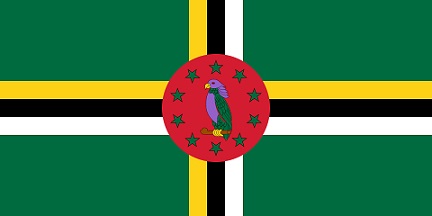
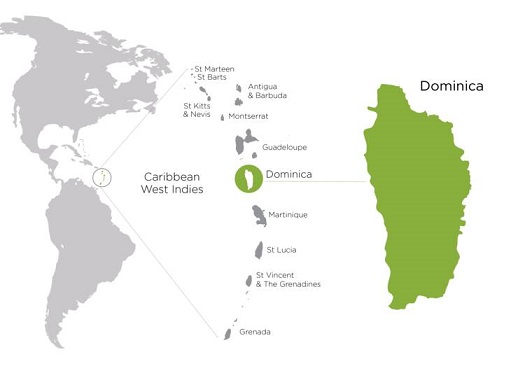
Dominica, officially the Commonwealth of Dominica, is a sovereign island country.[8] The capital, Roseau, is located on the leeward side of the island. It is part of the Windward Islands in the Lesser Antilles archipelago in the Caribbean Sea. The island lies south-southeast of Guadeloupe and northwest of Martinique. Its area is 750 km2 (290 sq mi), and the highest point is Morne Diablotins, at 1,447 m (4,747 ft) in elevation. The population was 71,293 at the 2011 census.[5]

Source: Retrieved October 17, 2017 from: https://en.wikipedia.org/wiki/Dominica

CU Blog - Dominica Diaspora - Not the Panacea - Photo 1

——–

Dominica is a member-state in the Organization of Eastern Caribbean States (OECS), along with the sovereign territories of: Antigua and Barbuda, St Kitts and Nevis, St Lucia, St Vincent and the Grenadines and Grenada. (These British Overseas Territories are also associate members of OECS: Anguilla, Montserrat, and the British Virgin Islands).

All of these countries are opening their borders to welcome Dominican citizens to their shores during this hurricane recovery crisis.

“Citizens of Dominica have a right of entry into Antigua and other OECS countries and an automatic six-month stay and must present their passport, driver’s license or voter’s identification card to allow entry”. – St Lucia Times

——–

Dominica is also a member-state of CariCom or the Caribbean Community, in concert with the other 12 Anglophone sovereign countries, plus Haiti and Suriname.

Many of these countries – in a pledge of regional brotherhood – are opening their borders to welcome Dominican citizens to their shores during this hurricane recovery crisis.

Share this post:
, ,
[Top]

ENCORE: It’s a FAMUly Affair

It’s Homecoming 2017 at Florida Agriculture & Mechanical University (FAMU). Time to reflect …

CU Blog - It's a FAMUly Affair - Photo 1

There have been many considerations of the FAMU eco-system, the FAMU Family or FAMUly. The university is a fine model for what the Caribbean needs to do to elevate our society, to facilitate social mobility. This is an ENCORE of a previous blog-commentary from March 6, 2015 highlighting the school’s contribution to American society.

FAMU was established as an educational institution in 1887, so this Homecoming is the 130th anniversary for the school. Over the years, there have been some excellent individual contributors; consider the following 2 obituaries of impactful influencers:

https://goleancaribbean.com/blog/?p=12542 Dr. Thomas W. Mason – FAMU Professor & STEM Influencer – RIPA computer scientist, who happened to be Black, he worked on the networking efforts that became today’s Internet. He passed on this vision and his passion to his students and the whole FAMUly.
https://goleancaribbean.com/blog/?p=6593 Dr. Sybil Mobley – FAMU’s Business School Dean – RIPThis Dean’s impact was that societal elevation with her mission to embed Black Americans in the conference rooms and board rooms of major corporations. She molded, prepared, energized and guided the best-of-the-best of Black America (many of Caribbean heritage as well; this writer included) and sent them off to impact the corporate world.

CU Blog - Its a FAMUly Affair - Photo 2

With the participation of these FAMU advocates – and others – the university has assumed it position at the pinnacle of Historically Black Colleges & Universities (HBCU). But the university  considers itself more than just an educational institution, but rather a family, the FAMUly. Keep in mind that the FAMU life is not only hard work, it is fun too. See the VIDEO here depicting the commitment, dedication, love and joyality of the FAMUly:

VIDEO – A FAMUly Reunion – Homecoming 2017 – https://youtu.be/J32plKqmqK8

Published on October 3, 2017


The FAMU experience is demonstrative to the Caribbean on how to optimize the effort to live, work, learn and play. Our Caribbean needs this role model example. See this portrayed in the ENCORE of the original blog-commentary here:

———–

Go Lean Commentary – FAMU is No. 3 for Facilitating Economic Opportunity

This commentary is a big proponent of a college education for Caribbean citizens.

This commentary is a big opponent of a college education for Caribbean citizens in American colleges and universities. The reason for the ambivalence on college education is consistent: the benefit of social mobility; facilitating new economic opportunities. We need this upward mobility for Caribbean citizens but in the Caribbean.

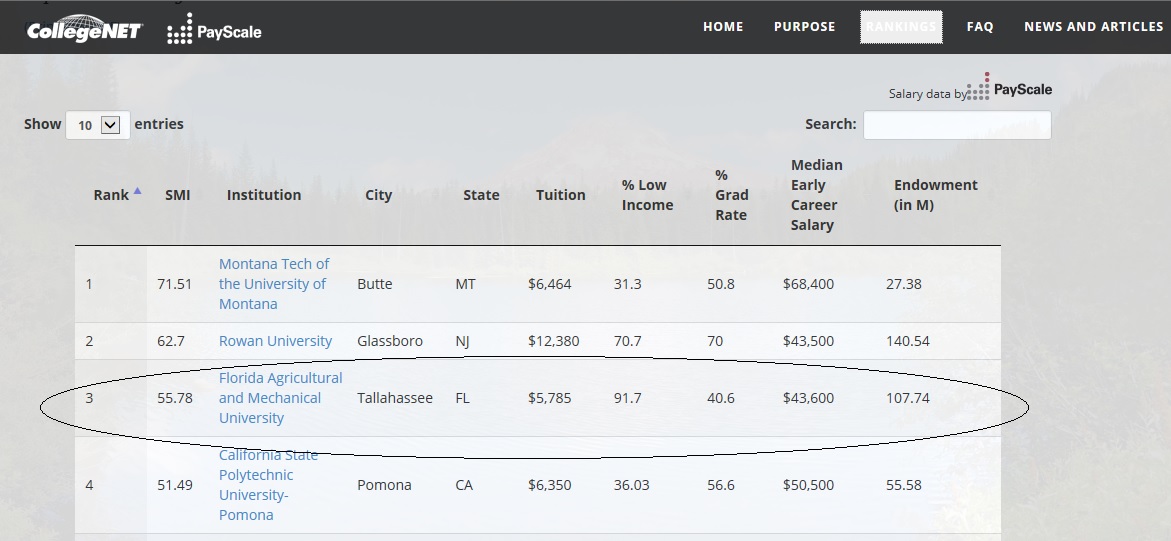
CU Blog - FAMU is No. 3 for Facilitating Economic Opportunity - Photo 1Some institutions are better at facilitating social mobility than others. On the National List of institutions, Florida Agriculture and Mechanical University (FAMU) stands out. It is #3 on the list.

In the interest of full disclosure, this writer is a Rattler, an alumnus of FAMU. (The mascot for FAMU athletics is ‘Rattlers’).

The chief goal of the Social Mobility Index (SMI), according to their website, is to stimulate policy changes within US higher education to help arrest the dangerous and growing economic divergence between rich and poor in the country. The gap in the US between rich and poor grew since the Great Recession, reaching proportions not seen since the period leading to and contributing to the onset of the Great Depression and two world wars. The common attributes include crumbling infrastructure, destroying asset values, and forcing high taxation to pay for war efforts.

If we learned anything from the global fallout of the Great Recession (in 2008 and beyond), it was that getting economic policy right in the US may be necessary for long-term world stability. So while the much publicized student debt overhang, now in excess of $1 trillion, imposes distress and financial burden on millions of students and families, it is a symptom of the much greater problem of economic and social divergence in the country. The good news is that colleges and universities carry great potential to powerfully address this problem.

Economist Thomas Piketty stated: “the principal force for convergence [reduction of inequality] – the diffusion of knowledge – …depends in large part on educational policies, access to training and to the acquisition of appropriate skills, and associated institutions.” – Capital in the 21st Century, pp. 21-2. The SMI asserts that if colleges can begin aggressively shifting policy towards increasing access to higher education, particularly for economically disadvantaged students and families, they will establish themselves as a key force for economic and social convergence.

FAMU has accomplished this feat; placing #3 on a ranking of universities pursuing this endeavor.

The full article of the recognition of FAMU’s SMI  is provided here:

Title: Social Mobility Index Ranks FAMU as No. 3 Institution in the Nation for Facilitating Economic Opportunity for Underserved Students
(Source: FAMU News and Events Site – Official Communications – Posted 11-01-2014; retrieved 03-05-2015 from http://www.famunews.com/?p=2153)
CU Blog - FAMU is No. 3 for Facilitating Economic Opportunity - Photo 3TALLAHASSEE, Fla. – The Social Mobility Index (SMI) has ranked Florida Agricultural and Mechanical University (FAMU) the No. 3 institution in the nation for facilitating economic opportunity for underserved students. The University outpaced the nation’s leading Ivy League institutions such as Princeton, Harvard and Yale, which placed 360th, 438th and 440th, respectively, on the rankings list.

The SMI is a new, data-driven ranking system, focused on the problem of economic mobility in the United   States. Rankings are based upon an institution’s tuition rate, student economic profile, graduation rate, average early career salary, and endowment.

According to SMI data analyses, FAMU ranks high in its contributions toward narrowing  socio-economic gaps by admitting and graduating more low-income students at lower tuition rates, yet with better economic outcomes following graduation. The University is noted on the SMI as having one of the lowest annual tuition rates in the nation.

“We are excited about the SMI recognition,” said President Elmira Mangum, Ph.D. “This new ranking speaks to FAMU’s 127-year legacy of providing access and opportunity to low-wealth citizens across the nation.”

“This ranking also speaks to our strong and unwavering commitment to economic empowerment. Many of our students come to FAMU with the odds stacked against them; however, they leave our institution with a high-quality education, a promising future, and the ability to be effective contributors to society, and, more specifically, to their families,” Dr. Mangum added.

Nearly 92 percent of FAMU students are considered low-income, according to SMI data. However, graduates are leaving the University earning an average salary of nearly $45,000 a year.

CU Blog - FAMU is No. 3 for Facilitating Economic Opportunity - Photo 2

For more information on the SMI ranking, visit: www.socialmobilityindex.org.

The book Go Lean…Caribbean posits, along with most economists, that education elevates individuals and entire communities. The book quotes that every year of additional community education raises GDP by 1 percent. Go Lean stakes the claim further that traditional college educated career paths have been disastrous policies for the Caribbean in whole, and for each specific country in particular, for the primary reason that so many students do not return home; or expatriate after returning for a short period. In fact, the World Bank has reported that the Caribbean has a 70% abandonment rate.

In line with the SMI ranking, the Go Lean book promotes education among the strategies to elevate Caribbean society. But this commentary previously asserted that college education has been a bad investment for the Caribbean.

From a strictly micro perspective, college education is great for the individual. The Go Lean book quotes proven economic studies showing the impact that every year of college education improves an individual’s earning power (Page 258). But from the macro perspective – the community – is different for the Caribbean; the region loses out because of an incontrovertible brain drain. Previously, the proverb was introduced of “fattening frogs for snake” referring to the preponderance for Caribbean college educated citizens to abandon their tropical homelands for foreign shores in the US, Canada and Europe, and take their Caribbean-funded education and skill-sets with them.

Change has now come. The driver of this change is technology and globalization. Under the tenants of globalization, institutions like FAMU are competing globally, and can rightly provide e-Learning and Distant Learning schemes. This ties to the other agent of change of technology. The internet allows for deliveries of education services anywhere around the world. The Go Lean book posits that small institutions and big institutions can complete equally on a global basis. If the regional education administrations could invest in more technological deliveries, it would be a win-win for all stakeholders. This type of impact would be more for the Greater Good.

The Go Lean roadmap provides turn-by-turn directions on how to reform the Caribbean tertiary education systems, economy, governance and Caribbean society as a whole. The roadmap commences with a Declaration of Interdependence, pronouncing the approach of regional integration (Page 12 & 14) as a viable solution to elevate the region’s educational opportunities:

xix. Whereas our legacy in recent times is one of societal abandonment, it is imperative that incentives and encouragement be put in place to first dissuade the human flight, and then entice and welcome the return of our Diaspora back to our shores

xxi. Whereas the preparation of our labor force can foster opportunities and dictate economic progress for current and future generations, the Federation must ensure that educational and job training opportunities are fully optimized for all residents of all member-states, with no partiality towards any gender or ethnic group. The Federation must recognize and facilitate excellence in many different fields of endeavor, including sciences, languages, arts, music and sports. This responsibility should be executed without incurring the risks of further human flight, as has been the past history.

xxvii. Whereas the region has endured a spectator status during the Industrial Revolution, we cannot stand on the sidelines of this new economy, the Information Revolution. Rather, the Federation must embrace all the tenets of Internet Communications Technology (ICT) to serve as an equalizing element in competition with the rest of the world. The Federation must bridge the digital divide and promote the community ethos that research/development is valuable and must be promoted and incentivized for adoption.

This book Go Lean… Caribbean, serves as a roadmap for the introduction and implementation of the Caribbean Union Trade Federation (CU). This represents change for the region. The CU/Go Lean roadmap has 3 prime directives:

  • Optimization of the economic engines in order to grow the regional economy.
  • Establishment of a security apparatus to protect the resultant economic engines.
  • Improve Caribbean governance to support these engines.

The Go Lean book details how education is a vital consideration for Caribbean economic empowerment, but with lessons-learned from all the flawed decision-making in the past, both individually and community-wise. The vision of the CU is a confederation of the 30 member-states of the Caribbean to do the heavy-lifting of championing better educational policies. No more government scholarships; forgive-able loans only from now on. The book details the policies; and other ethos to adopt, plus the executions of the following strategies, tactics, implementations and advocacies to deploy online education in the region:

Community Ethos – Deferred Gratification Page 21
Community Ethos – People Respond to Incentives Page 21
Community Ethos – Job Multiplier Page 22
Community Ethos – Lean Operations Page 24
Community Ethos – Return on Investments (ROI) Page 24
Community Ethos – Ways to Impact the Future Page 26
Community Ethos – Ways to Foster Genius Page 27
Community Ethos – Ways to Help Entrepreneurship Page 28
Strategy – Mission –   Facilitate Education without Risk of Abandonment Page 45
Tactical – Separation of Powers – Education Department Page 85
Tactical – Separation of Powers – Labor Department – Job   Training Page 89
Planning – Lessons Learned from 2008 Page 136
Advocacy – Ways to Grow the Economy Page 151
Advocacy – Ways to Create Jobs Page 152
Advocacy – Ways to Improve Education Page 159
Advocacy – Ways to Impact Student Loans Page 160
Advocacy – Ways to Improve Governance Page 168
Advocacy – Ways to Better Managed the Social Contract – Education Optimizations Page 170
Advocacy – Ways to Improve Libraries Page 187
Appendix – Education and Economic Growth Page 258
Appendix – Measuring Education Page 266
Appendix – Student Loan Crisis – Ripping Off America Page 286

FAMU is a model for the Caribbean tertiary educational endeavors.

FAMU has quite a reputation for other accomplishments as well – they are a great destination to live, work, learn and play. Their world famous band, the Marching 100 has been recognized as the “playingest band in the land”. They even shared the field with Prince as the Halftime performance for Super Bowl XLI in 2007 in Miami, Florida. See NewsVIDEO of their renown here; and also their 2011 Florida Classic Football Game Halftime Show in Orlando, Florida in the Appendix below.

VIDEOFAMU 2008 Segment on “CBS Evening News” – https://youtu.be/XqGvUg_rLNs


Posted November 27, 2008 – 2008 edition of the Marching 100… interview on Thanksgiving Night 2008 on CBS News… 11/27/08

Now is the time for all of the Caribbean, the people and governing institutions, to lean-in for the changes described in the book Go Lean … Caribbean. We welcome universities like FAMU in their desire to empower minorities in society; we only want that to be done in the Caribbean so as to mitigate societal abandonment. Suggestion: FAMU should develop a global campus presence, with satellite campuses and online matriculations.

Go Rattlers!!!

With the tune set by the Marching 100 band: “I’m so glad, I’m from FAMU”.

This is the win-win the Go Lean roadmap campaigns for. But it’s more than just talk; this is action too. The body part to focus on is not just the mouth; it is the heart – the seat of motivation. Without a doubt, the complete delivery for the Caribbean educational options would help to make the homeland a better place to live, work, learn and play. 🙂

Download the book Go Lean … Caribbean – now!

Appendix VIDEO – FAMU Marching 100 Halftime Show @ Florida Classic 2011 – http://youtu.be/FrviGJ1Dvvk

Uploaded on Nov 21, 2011 – The FAMU Marching 100 Halftime Performance at The 2011 Florida Classic. Definitely the best band in the land.

Share this post:
, , ,
[Top]

Funding Caribbean Risk

Go Lean Commentary

A penny saved is … a penny.

This is not exactly how the expression goes. It is supposed to refer to the good habit of “saving money”, which is a positive community ethos – underlying sentiment that informs the beliefs, customs, or practices. “Saving money” is a practice that the stewards of any society should advocate for its people. It’s a simple formula: Earn money; spend some; save some!

CU Blog - Funding Caribbean Risk - Photo 0This is easier said than done. A practice of saving money – for a rainy day or any catastrophe – takes discipline, the discipline not to spend. One tactic is to pay yourself first! Before paying other overhead expenses, the priority would be to set aside monies in a savings program or some insurance program. Yes, an insurance strategy could be even smarter for rainy days or catastrophes; it allows the hedging of risks by leveraging across a wider pool; more people – savers – put-in and only a few … or just one withdraws. This is also the approach of the thoughtful Caribbean Catastrophe Risk Insurance Fund (CCRIF).

It is very sad when communities are not able to save or insure a “Rainy Day” fund for when it rains, especially in the tropical region where it doesn’t just rain, but pours and storms.

What is sadder is when the heavy-lifting of “savings” or insurance is done, but the dollar amount is not enough; because a “penny saved is only just a penny”.

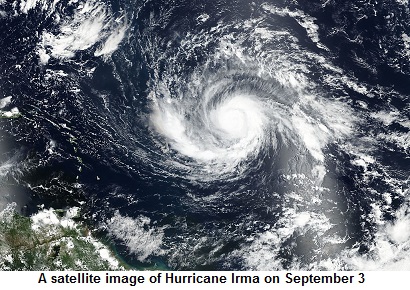
This is the Caribbean dilemma, today. We have just experienced 2 devastating hurricanes – Irma and Maria – that have wreaked havoc on our region. We now need to tap the “Rainy Day” fund and frankly, it is simply not enough!

See the actuality of this dilemma in the news article here and the related VIDEO on CCRIF:

Title: CCRIF to make payouts to countries affected by Hurricane Irma

The Caribbean Catastrophe Risk Insurance Facility (CCRIF SPC) will be making payouts totaling over US$15 million to three Caribbean countries affected by Hurricane Irma earlier this week.

“The CCRIF board and team offer condolences for the loss of life and hope these funds will provide some assistance. We stand ready to support the Government and people of these CCRIF countries as they recover from the effects of this devastating hurricane,” said CCRIF chief executive officer, Isaac Anthony.

Payments totaling US$15.2 million
The CCRIF plans to pay US$6.7 million to Antigua and Barbuda, US$6.5 million to Anguilla and US$2.2 million to St. Kitts-Nevis.

The storm has been blamed for at least 10 deaths and millions of dollars in property damages as it made its way through the Lesser Antilles this week.

In the case of Barbuda, Prime Minister Gaston Browne has ordered an immediate evacuation of some 1,800 people on the island. The government has also announced a state of emergency.

“Nothing is functional in Barbuda,” Browne said, adding that he has given instructions that ‘every single soul must be taken out of Barbuda”.

Verifying payouts
The CCRIF is verifying the payout calculations and is in discussion with the three governments about arrangements for the transfer of these funds. The transfer will be completed within 14 days after the storm, as mandated by CCRIF’s operational guidelines.

“Anguilla and St. Kitts & Nevis also have Excess Rainfall (XSR) policies and CCRIF is assessing if these policies were triggered by the rains from Hurricane Irma, which may possibly result in a second payout under those policies. The assessment under the XSR policies will be determined in the next few days,” the CCRIF added.

Segregated portfolio company
The CCRIF SPC is a segregated portfolio company, owned, operated and registered in the Caribbean. It limits the financial impact of catastrophic hurricanes, earthquakes and excess rainfall in the Caribbean and, since 2015, Central American governments by quickly providing short-term liquidity when a parametric insurance policy is triggered.

Since its inception in 2007, the facility has made 22 payouts for hurricanes, earthquakes and excess rainfall to 10-member governments totaling approximately US$69 million.

It said the new payments will bring the total payouts to approximately US$85 million. Last year CCRIF made payouts totaling US$29 million to four countries after Hurricane Matthew.

Source: Posted September 9, 2017; retrieved October 13, 2017 from: https://www.caribbeannationalweekly.com/caribbean-breaking-news-featured/ccrif-make-payouts-countries-affected-hurricane-irma/

———–

VIDEO – WorldBank CCRIF Caribbean Gold – https://youtu.be/IlZ56ON9KnI

CCRIF SPC

Published on Feb 28, 2017 – Working towards sovereign risk protection in the Caribbean and Central America.

We now know what CCRIF is; how it works; and who can engage this program in terms of investors and beneficiaries; see more encyclopedic details in the Appendix A below. But …

… it is the assessment of this commentary that CCRIF is flawed and inadequate for the Caribbean’s needs.

  • The CCRIF is designed for 1-in-15 year hurricane (Source: http://www.ccrif.org/content/rtfs-faqs). Truth be told, thanks to Climate Change we are seeing storms yearly.
  • There is a catastrophic trigger – complicated formula – which generates a “measly” payout for a hurricane or earthquake.
  • This is a sovereign fund only and the trigger level is dependent on the coverage purchased by individual countries.
  • The pool is too small. Member governments may purchase coverage which triggers for a ‘one-in-15-year’ hurricane and a ‘one-in-20-year’ earthquake, with maximum coverage of US$100M available for each peril. The cost of coverage is a direct function of the amount of risk being transferred, ensuring no cross-subsidisation of premiums and a level playing field for all participants.

This fund is “too little, too late” for what the region needs. But like all other Caribbean integration (CariCom) efforts, it is a good start! Still after 50 years of autonomous rule, the expectation is not just for a start, it is for solutions.

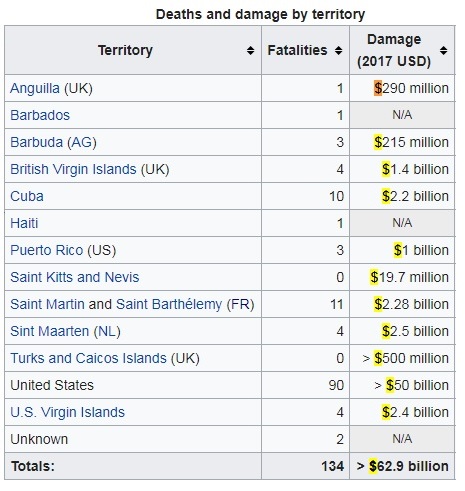
While the habit of “saving” or paying for insurance is a best-practice, the financial amount is important for the subjective assessment of success. The foregoing news article relates that $15.2 million will be paid-out to the affected countries. But this amount is so small, too small! Consider just for Hurricane Irma alone, the estimated damage amount has been tabulated at $62.87 billion. While $50 Billion of that amount relates to the US Mainland, the rest is the Caribbean. So the Caribbean’s share is $12.9 Billion; – see Chart here:

CU Blog - Funding Caribbean Risk - Photo 1

CU Blog - Funding Caribbean Risk - Photo 3

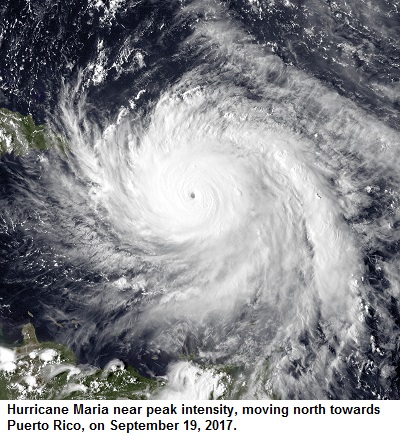
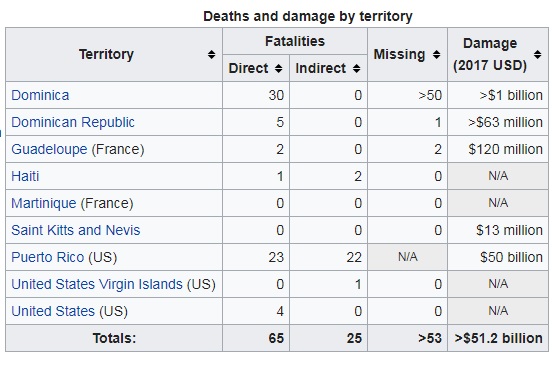
On the other hand. Hurricane Maria, has estimates for damages at $51.2 billion. None of that amount relates to the US Mainland, the amount is all Caribbean, considering Puerto Rico and the US Virgin Islands; see Chart here:

CU Blog - Funding Caribbean Risk - Photo 2

CU Blog - Funding Caribbean Risk - Photo 4

An immediate result of these storms on the Caribbean will probably be the defection of masses of people from the region. As of this date – October 12, 2017 – Puerto Rico is still not relieved nor recovered from Hurricane Maria. In fact 84% of the island still does not have power. Since Puerto Ricans are American citizens, they have freedom of movement from the island to the US Mainland. In addition, many of the other Caribbean islands will also suffer abandonment as the Diaspora is large in North America and Europe; so bonafide family connections will allow for their emigration. Expect more societal abandonment in the region!

The quest of the movement behind the book Go Lean…Caribbean – available to download for free – is to lower the abandonment rates of our Caribbean citizens fleeing the homeland. Our quest is conceivable, believable and achievable. But the status quo of the Caribbean Catastrophe Insurance Funds is inadequate; it must improve. It must reform and transform.

The Go Lean book describes a Way Forward. The book serves as a roadmap for the introduction and implementation of the technocratic Caribbean Union Trade Federation (CU), for the elevation of Caribbean society – for all member-states. This CU/Go Lean roadmap has these 3 prime directives:

  • Optimization of the economic engines in order to grow the regional economy to $800 Billion and create 2.2 million new jobs.
  • Establishment of a Homeland Security and Emergency Management apparatus to ensure public safety and protect the resultant economic engines.
  • Improve Caribbean governance to support these engines, including a separation-of-powers between the member-states and CU federal agencies.

The book stresses that reforming and transforming the Caribbean societal engines must be a regional pursuit. This was an early motivation for the roadmap, as pronounced in the opening Declaration of Interdependence (Pages 12 – 13):

xi. Whereas all men are entitled to the benefits of good governance in a free society, “new guards” must be enacted to dissuade the emergence of incompetence, corruption, nepotism and cronyism at the peril of the people’s best interest. The Federation must guarantee the executions of a social contract between government and the governed.

xvi. Whereas security of our homeland is inextricably linked to prosperity of the homeland, the economic and security interest of the region needs to be aligned under the same governance. Since economic crimes … can imperil the functioning of the wheels of commerce for all the citizenry, the accedence of this Federation must equip the security apparatus with the tools and techniques for predictive and proactive interdictions.

xxiv. Whereas a free market economy can be induced and spurred for continuous progress, the Federation must install the controls to better manage aspects of the economy: jobs, inflation, savings rate, investments and other economic principles. Thereby attracting direct foreign investment because of the stability and vibrancy of our economy.

Way Forward
The Go Lean book provides 370-pages of turn-by-turn instructions on “how” to adopt new community ethos, plus the strategies, tactics, implementations and advocacies to execute so as to reboot, reform and transform the societal engines of Caribbean society, despite the reality and risks of natural disasters. Accepting that the CCRIF is a government-member-state solution, the Go Lean book proposes a supplement of private solutions, instruments facilitated by the region’s Capital Markets – think the Caribbean version of Wall Street. The Go Lean book proposal is for region-wide (all 30 member-states; 4 language groups) private insurance companies and Re-insurance Side-cars traded on the Capital Markets.

Re-insurance Side-cars is a derivative product – see Appendix B below.

Consider these sample references to Re-insurance Side-cars in the book:

Tactical – Separation of Powers – Emergency Management Agency
There is also an economic/financial scope for this department. As the effort for a comprehensive property-casualty fund to cover the entire Caribbean region will also be coordinated by this agency. The classic solution is a large pool of premium payers and claims filed by the affected area. Beyond this model, there are also advanced products like re-issuance side-cars for market assimilation. The public can then invest and profit from the threat/realization of regional risks. This derivative product is a bet, a gamble, but in the end, the result is an insurance fund of last resort, much like the Joint Underwriters Agency (JUA) in Florida.
Page 76
Implementation – 10 Ways to Pay for Change
#8 Homeland Security – Hurricane Insurance Fund
The risk pool for a 42-million population is so much lower than each member-state’s sole mitigation efforts. The CU will establish (contract with a service provider) reinsurance funds (& sidecars) from Day One, and glean the excess premiums-over-claims as profit.
Page 101
Advocacy – Ways to Improve Housing
#7 Hurricane Risk Reinsurance Fund
This fund fits the Emergency Management objectives of rebuilding and restoring after disasters. This is similar to Florida’s Joint Underwriters Association but instead regulated at the CU so as to maximize the premium pool.
Page 161
Advocacy – 10 Revenue Sources
#9 Natural Disaster Insurance Fund
The CU’s Emergency Management Agency will maintain a regional reinsurance fund to offset the casualty coverage for insurance carriers in the region. The difference between premiums and claims constitute revenues for the CU.
Page 172
Advocacy – 10 Ways to Impact Public Works
#10 Capital Markets
A Single Market and currency union will allow for the emergence of viable capital markets for stocks and bonds (public and private), thereby creating the economic engine to fuel growth and development. This forges financial products for “pre” disaster project funding (drainage, levies, dykes, sea walls) and post disaster recovery (reinsurance sidecars).
Page 175
Advocacy – 10 Ways to Improve for Natural Disasters
#7 JUA-style Insurance Fund
The fiduciary management of premiums and claims to allow the immediate response for reconstruction after disasters. These financial services, sidecars traded in markets can be direct or indirect as in reinsurance or insurer-of-last-resort.
Page 184
Advocacy – 10 Ways to Improve for Emergency Management
#8 Casualty Insurance Plans – Reinsurance “Sidecars”
There is also a financial battlefield for Emergency Management. Reinsurance “sidecars” allow investment bonds to be issued in the financial marketplaces to raise casualty insurance capital. The differences between premiums and claims (plus reserves) equal the profit to be shared with investors. The end result should be an insurance fund of last resort.
Page 196
Advocacy – 10 Ways to Develop a Pre-Fab Housing Industry
#10 Homeowners Casualty Insurance
Pre-Fab-ulous houses will be built with the structural integrity to withstand typical tropical storms/hurricanes. The CU will facilitate the Property Casualty insurance industry by offering Reinsurance sidecar options on the capital markets.
Page 207
Advocacy – 10 Ways to Improve Fisheries
#7 Marine Financing
There is also a financial element to facilitating the Fisheries industry. Most fishing vessels require financing and insurance products. These areas have gotten more challenging with “climate change” and the higher propensity of hurricanes. The CU will adopt advanced financial products for the region’s capital-securities markets (i.e. Reinsurance sidecars), to offer the prospects of risk-and-reward to investors, thus inviting more capital to the fisheries marketplace.
Page 210
Advocacy – 10 Ways to Help the Middle Class
Prepare for Healthcare Realities
While a Middle Class family may obtain a degree of financial security, just one catastrophic illness or injury can wipe out a family’s fortunes overnight. This is the proper place for insurance programs, and reinsurance to hedge the risk for carriers. The CU will proactively institute the measures (industry) to protect Middle Class prospects from this real threat.
Page 223
Advocacy – 10 Ways to Impact The Guianas
#4 Disaster Planning, Preparation & Response
Hurricanes are not as dire a threat for The Guianas as the Caribbean islands, yet still there are many natural disasters for this region to contend with, namely floods and earthquakes. The CU will better plan-prepare-respond, with Public Works initiatives (dams, reservoirs) and a professional Emergency Management Agency to recover with elite financial products (i.e. reinsurance sidecars) powered by regional capital markets to restore economic engines in these Guiana states.
Page 241
Advocacy – 10 Ways to Impact Belize
#7 Disaster Planning, Preparation & Response
Mother Nature, and the reality of hurricanes, has been a source of contention in Belize’s history. The CU will better plan-prepare-respond with a professional Emergency Management Agency and recover with elite financial products (i.e. reinsurance sidecars) powered by capital markets so as to restore economic engines in Belize.
Page 243
Advocacy – 10 Ways to Impact US Territories
Advocacy – 10 Ways to Impact British Territories
Advocacy – 10 Ways to Impact Dutch Territories
Advocacy – 10 Ways to Impact French Territories
#4 Disaster Preparation & Response
Mother Nature, and the reality of hurricanes, plays no favorites for one island versus another due to political alliance. The CU will better plan-prepare-respond, with a professional Emergency Management Agency and recover with elite financial products (i.e. reinsurance sidecars) powered by regional capital markets to quickly restore economic engines in the islands.
Page 244
Page 245
Page 246
Page 247 

As an individual or community, to devote a lot of time, talent and treasury to the practice of saving for a rainy-day fund is a positive ethos. To only get a measly payoff – after all that effort – is a negative. The manifestation of this measly scenario calls into question the whole viability of the Caribbean “pooled” risk strategy.

We must do better! Solutions abound!

Engaging a bigger-better regional risk pool, makes our quest realistic: a better homeland to live, work and play.  We urge all Caribbean stakeholders – governments and citizens alike – to lean-in for the empowerments described here in the book Go Lean…Caribbean. 🙂

Download the free e-Book of Go Lean … Caribbean – now!

Sign the petition to lean-in for this roadmap for the Caribbean Union Trade Federation.

———

Appendix A – Caribbean Catastrophe Risk Insurance Facility Segregated Portfolio Company (CCRIF SPC)

[This CCRIF SPC] is an insurance company headquartered in the Cayman Islands.[1] The sixteen original member-countries of CCRIF included participants in CARICOM, and the membership of the Board of Directors is selected by CARICOM and by the Caribbean Development Bank.[2]

Founded in 2007,[3] CCRIF is the first multi-country risk pool in the world, and was the first insurance instrument to successfully develop parametric policies backed by both traditional and capital markets.[4] These parametric polices release funds based upon factors of a calamity such as rainfall or wind speed, which can speed up the payout of policies rather than after damages are assessed. Unused funds are kept as reserves for the CCRIF. The fund can also draw upon $140 million in funds underwritten by reinsurance.[5]

Other regions have since setup similar government disaster instance including in the African Union and the Pacific Islands Forum.[5]

Source: Retrieved October 13, 2017 from:  https://en.wikipedia.org/wiki/Caribbean_Catastrophe_Risk_Insurance_Facility_Segregated_Portfolio_Company

———

Appendix B – Reinsurance sidecars

Reinsurance sidecars, conventionally referred to as “sidecars”, are financial structures that are created to allow investors to take on the risk and return of a group of insurance policies (a “book of business”) written by an insurer or reinsurer (henceforth re/insurer) and earn the risk and return that arises from that business. A re/insurer will only pay (“cede”) the premiums associated with a book of business to such an entity if the investors place sufficient funds in the vehicle to ensure that it can meet claims if they arise. Typically, the liability of investors is limited to these funds. These structures have become quite prominent in the aftermath of Hurricane Katrina as a vehicle for re/insurers to add risk-bearing capacity, and for investors to participate in the potential profits resulting from sharp price increases in re/insurance over the four quarters following Katrina. An earlier and smaller generation of sidecars were created after 9/11 for the same purpose.

Market growth following 9-11 and Hurricane Katrina
In the years following 9-11, the idea of raising funds from capital markets investors in addition to re/insurers to support quota-shares arose and a handful of such ventures were consummated (Olympus, DaVinci, Rockridge). These were the first true sidecars, and were a natural outgrowth of the development of re/insurance as an asset class in the form of catastrophe bonds.

Following Hurricane Katrina, the sidecar idea became very prominent among investors because it was seen as a way to participate in the risk/return of the higher-priced (“hard”) reinsurance market without investing in either existing reinsurers (who might have liabilities from the past that would undermine returns) or new reinsurers (“newcos” that would have a lengthy and expensive “ramp up” period).

Source: Retrieved October 13, 2017 from: https://en.wikipedia.org/wiki/Reinsurance_sidecar


Share this post:
, ,
[Top]

Caribbean proposes new US-Caribbean trade initiative

Go Lean Commentary

The problem with socialism is that you eventually run out of other peoples’ money. – Margaret Thatcher CU Blog - Caribbean Island proposes new US-Caribbean trade initiative - Photo 1

Many Caribbean member-states feature a governmental structure of democratic socialism; (see Appendix below).

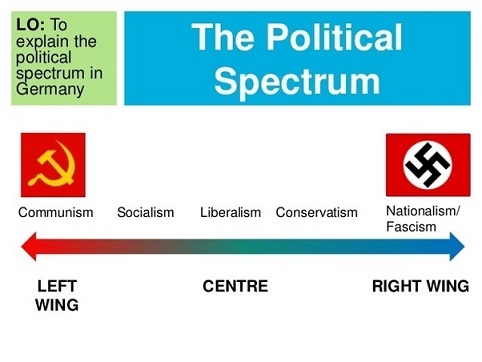
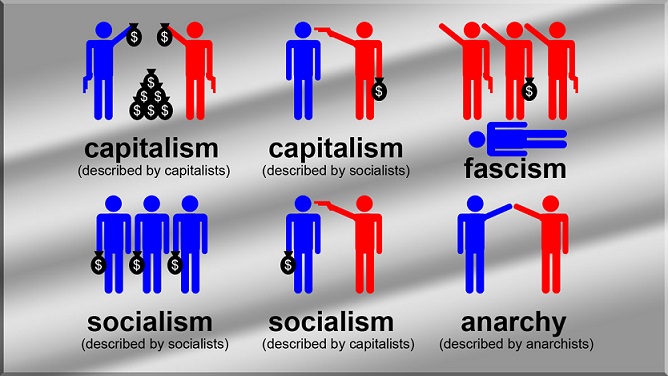
In some places, socialism is a bad word – think Venezuela – but other states feature an advanced prosperous country despite the socialism tag – think Canada. In general, socialism can be depicted as a scale with leftist communism on one end and right-wing capitalism on the other end. The observation and analysis of these varying states during good times and bad times is that the left-leaning socialism countries tend to suffer from a lot of societal abandonment, especially when things go bad, for the reason as described by Margaret Thatcher above. (Consider for example, the Caribbean island of Barbuda, before their recent disaster, there was no private land-ownership).

So many Caribbean member-states have “run out of other people’s money”, thus ensuring a crisis. Alas, this …

… crisis is a terrible thing  to waste – American Economist Paul Romer

The crisis in the Caribbean region right now is in response to Hurricanes Irma and Maria in September 2017 that have devastated many islands – think Puerto Rico, Barbuda and Dominica. It is a good time to re-think the affinity for democratic socialism. These natural disasters are forcing our region to re-think one of the hallmarks of capitalism; our policies on …

… Trade; American Trade to be exact.

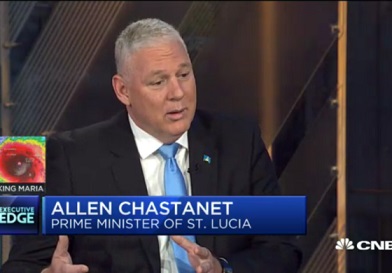
Yet still, it becomes obvious what the problem is for so many Caribbean member-states, they seem to “just” want to spend other people’s money rather than do the heavy-lifting – Big Deal – of growing their own economy/wealth. Notice this theme in the news article here from the St. Lucia Times daily newspaper regarding the urgings of their Prime Minister Allen Chastanet:

Title: Prime Minister Chastanet proposes new US-Caribbean trade initiative

CU Blog - Caribbean Island proposes new US-Caribbean trade initiative - Photo 2On the side-lines of the UN General Assembly in New York, Prime Minister Allen Chastanet has been speaking to the American business network CNBC.

Prime Minister Chastanet discussed the recent hurricanes that have devastated parts of the Caribbean, rebuilding the Caribbean and Caribbean – US relations.

He said recent events have showed that the Caribbean needs to diversify in terms of its sources of food, pointing to a shutdown of the American hub for several days.

“The support has had to come from the south because while we were going through this, you had two hurricanes heading up north. And literally Miami was on a shutdown. So unfortunately the American hub got shutdown almost for ten days out of Miami.  And so it really has shown us that we need to diversify ourselves a bit and maybe look a bit more to Panama in terms of supplies of food,” Chastanet.

Chastanet said the resilience of the Caribbean is very strong and the region will band together to recover from the disasters.

Chastanet proposed the establishment of a new private sector led initiative what would allow US companies to invest in St Lucia tax free and have their resources sent back home without facing heavy US government taxes.

He said there are great investment opportunities in the Caribbean for American companies.

“Can we not get an incentive, and that’s what we’re in discussions with the US about, that if US companies invest into the Caribbean, that those investments in our books are always tax free that the US allow those funds to be repatriated back into the US tax-free, only on those investments. So 1, it accomplishes getting the funds back into the United States of America. It creates an avenue for the private sector to participate in this growth and brings a lot of money to the table, Chastanet said.

Prime Minister Chastanet is expected to address the UN General Assembly today.

Source: Posted September 21, 2017; retrieved October 11, 2017 from: https://stluciatimes.com/2017/09/21/prime-minister-chastanet-proposes-new-us-caribbean-trade-initiative

As related, the Prime Minister of St. Lucia – also Chairman of the Organization of Eastern Caribbean States and a governing stakeholder of CariCom – wants to “count America’s money”! He is lobbying for a law – in the US – in which American investors will have tax concessions on their tax obligations to the US Treasury. (There would be no benefit to the US in this scheme).

He is the Chief Executive of a Caribbean member-state urging the US government to skip on their revenue collections so as to benefit the Caribbean; in effect he is “counting” America’s government revenues. See the full interview in the Appendix VIDEO below.

It should be noted that there is no such bill in the US Congress proposing these measures; so this is not lobbying. Rather the imagery of this whole appeal is just that of a foreign Head of Government begging for money with a sign that reads:

“Will NOT work for food”.

CU Blog - OECS diplomat has dire warning for Caribbean countries - Photo 3

No, this is not the branding or image we should want to project to the watching world. But rather, the Honorable Prime Minister’s earlier words reflect the ethos we really need to portray:

Chastanet said the resilience of the Caribbean is very strong and the region will band together to recover from the disasters.

Rather than looking to the US to solve our problems, we want to band together – an interdependence – and work for our own remediation. This is the theme of the book Go Lean…Caribbean and the accompanying blog-commentaries. “Band together” should have been the only appeal at the United Nations. These words should have been echoed in public forums and private discussions with other Caribbean leaders. The Go Lean movement describes this “banding” as a confederation of the 30 Caribbean member-states, including the 2 US Territories of Puerto Rico and the US Virgin Islands. This formation of a Single Market and accompanying Security Pact would usher in the economic empowerments and security/emergency optimization that the region needs.

The book Go Lean…Caribbean – available to download for free – serves as a roadmap for the introduction and implementation of this confederation, the technocratic Caribbean Union Trade Federation (CU). This complex organization structure is designed for the elevation of Caribbean society – for all member-states. This CU/Go Lean roadmap has these 3 prime directives:

  • Optimization of the economic engines in order to grow the regional economy to $800 Billion and create 2.2 million new jobs.
  • Establishment of a security apparatus to ensure public safety and protect the resultant economic engines.
  • Improve Caribbean governance to support these engines, including a separation-of-powers between the member-states and CU federal agencies. This includes Self-Governing Entities, bordered campuses that practice pure capitalism.

The book stresses that reforming and transforming the Caribbean societal engines can be successful, but only if it is a regional pursuit – all the member-states band together. This was an early motivation for the roadmap, as pronounced in the opening Declaration of Interdependence (Pages 12 – 13):

i.   Whereas the earth’s climate has undeniably changed resulting in more severe tropical weather storms, it is necessary to prepare to insure the safety and security of life, property and systems of commerce in our geographical region. As nature recognizes no borders in the target of its destruction, we also must set aside border considerations in the preparation and response to these weather challenges.

xi. Whereas all men are entitled to the benefits of good governance in a free society, “new guards” must be enacted to dissuade the emergence of incompetence, corruption, nepotism and cronyism at the peril of the people’s best interest. The Federation must guarantee the executions of a social contract between government and the governed.

xvi. Whereas security of our homeland is inextricably linked to prosperity of the homeland, the economic and security interest of the region needs to be aligned under the same governance. Since economic crimes … can imperil the functioning of the wheels of commerce for all the citizenry, the accedence of this Federation must equip the security apparatus with the tools and techniques for predictive and proactive interdictions.

xxiv. Whereas a free market economy can be induced and spurred for continuous progress, the Federation must install the controls to better manage aspects of the economy: jobs, inflation, savings rate, investments and other economic principles. Thereby attracting direct foreign investment because of the stability and vibrancy of our economy.

Our appeal to the PM of St. Lucia and to the leaders of all the other member-states:

This is not our first hurricane nor will it be our last. We must recover from these ones and be prepared for others, a lot more of them. “Begging” should not be our recovery plan!

On the other hand, the Go Lean book provides 370-pages of turn-by-turn instructions on “how” to adopt new community ethos, plus the strategies, tactics, implementations and advocacies to execute so as to reboot, reform and transform the societal engines of Caribbean society.

The branding of the CU is a Trade federation, so there is emphasis for optimizing trade for the Caribbean region. Yes, there is tactical plan to establish trade routes beyond Miami-to-the-Caribbean. The Go Lean roadmap posits that with the close proximity of Trinidad to the South American country of Venezuela (7 miles), there could be an elaborate network of transportation options to facilitate the shipment of goods (and passengers) into the Singe Market.

This roadmap is a Big Deal / Big Idea for the Caribbean region; in many ways, the community commitment for the Caribbean may be similar to the American commitment in the 1960’s to Go to the Moon. The Go Lean book relates this on Page 127:

The Bottom Line on Kennedy’s Quest for the MoonOn 25 May 1961, US President John F. Kennedy announced his support for the American Space program’s “Apollo” missions and redefined the ultimate goal of the Space Race in an address to a special joint session of Congress:

  • “I believe that this nation should commit itself to achieving the goal, before this decade is out, of landing a man on the moon and returning him safely to the earth”.

His justification for the Moon Race was both that it was vital to national security and that it would focus the nation’s energies in other scientific and social fields.

This quest was succeeded. At 10:56 pm EDT, on 20 July 1969, the first human (American Astronaut Neil Armstrong) ventured out of the Apollo 11 landing craft and set foot on the Moon declaring: “one small step for man, one giant leap for mankind“.

Other countries have had subsequent moon landings.

Can we get the support of the Prime Minister of St. Lucia and the other Heads of Government throughout the whole region for our “Moon Shot” equivalent, our Big Deal / Big Idea? This is the actual title of one advocacy in the Go Lean book. Consider the specific plans, excerpts and headlines here from Page 127, entitled:

10 Big Ideas … in the Caribbean Region

1

Lean-in for the Caribbean Single Market
The CU is a big idea for the Caribbean, our parallel of the American “moon quest”, allowing for the unification of theregion into one market of 42 million people. This creates the world’s 29th largest economy, based on 2010 figures.The pre-ascension GDP figures are actually less that $800 Billion, but the aggregation into a Single Market willmanifest the economic “catch-up” principle, in 5 years. Further, after 10 years the CU’s GDP should double andrank among the Top 20 or G20 nations.

2

Currency Union / Single Currency

3

Defense / Homeland Security Pact

4

Confederation Without Sovereignty

5

Four Languages in Unison

6

Self-Governing Entities (SGE)

7

Virtual “Union Atlantic Turnpike” Operations
Ferries, Causeways/Bridges, Pipelines, Tunnels, Railways and limited access highways will function as “blood vessels to connect all the organs” within the region, thus allowing easier transport of goods and people among the islands and the mainland states (Belize, Guyana or Suriname) – See Appendix IC Alaska Marine Highway [on Page 280].

8

Cyber Caribbean
Forge electronic commerce industries so that the Internet Communications Technology (ICT) can be a great equalizer in economic battles of global trade. This includes e-Government (outsourcing and in-sourcing for member-states systems) and e-Delivery, Postal Electronic Last Leg mail, e-Learning and wireline/wireless/satellite initiatives.

9

e-Learning – Versus – Studying Abroad

10

Cuba & Haiti

There have been a number of blog-commentaries by the Go Lean movement that highlighted the art and science of optimizing our eco-system for “Trade and Transport”. See a sample list here:

https://goleancaribbean.com/blog/?p=13140 Region-wide Industrial Reboot of Caribbean Pipelines
https://goleancaribbean.com/blog/?p=12322 Ferries 101 – Launch of a Region-wide Inter-Island Ferry System
https://goleancaribbean.com/blog/?p=9179 The Vision of Ferries for Snowbirds to Head South
https://goleancaribbean.com/blog/?p=4897 Plan for Natural Gas Distribution for Caribbean Consumption
https://goleancaribbean.com/blog/?p=3225 Caribbean is Less Competitive Due to Increasing Aviation Taxes
https://goleancaribbean.com/blog/?p=829 Facilitating Trade with Trucks and Trains
https://goleancaribbean.com/blog/?p=673 Future Model: Ghost Ships – Autonomous Cargo Vessels

In summary, it is only logical to expect any stewards of society to “corral” the resources, assets and people of the community to effect change, to elevate. On the other hand, it is not logical to expect others to do it for us. This is a child’s expectation for his/her parents. This is inappropriate for independent Caribbean member-states. The aforementioned Economist, Paul Romer, asserted the appropriate strategic plan:

“Economic growth occurs whenever people take resources and re-arrange them in ways that are more valuable”.

Obviously, this economist was advocating a capitalist agenda, in contrast to the democratic socialism practice in the region.

There is only a 7-mile strait between the Caribbean island Trinidad of and its southern neighbor. It is only logical to consider that trade route when the northern route – Miami – is impeded. Such a tactical plan will allow for resiliency for post-disaster scenarios. A potpourri of transportation options – Union Atlantic Turnpike – to facilitate interstate commerce among the islands and coastal states is a better plan than begging for other people’s money.

To all you Caribbean leaders: Do not be surprised when a hurricane hits. Count on it! There will be more … such scenario’s. Climate Change is undeniable! Destructive storms will manifest! Bad actors will emerge. There is a need for security empowerments along with economic empowerments. The economic solution for the Caribbean cannot be: Counting other people’s money.

Now is the time for all of the Caribbean – the leaders and the people – to lean-in for the empowerments described here in the book Go Lean…Caribbean. It is conceivable, believable and achievable to prosper ourselves where planted here in the region; to reform and transform and make our own homeland a better place to live, work and play. 🙂

Download the free e-Book of Go Lean … Caribbean – now!

Sign the petition to lean-in for this roadmap for the Caribbean Union Trade Federation.

———–

Appendix VIDEO – Saint Lucia PM Allen Chastanet: Caribbean Needs To Diversify Search For Relief | CNBC – https://youtu.be/asg87s29c4E

Published on Sep 20, 2017 – Allen Chastanet, Prime Minister of Saint Lucia, talks about rebuilding the hard-hit Caribbean after recent storms left the islands devastated. Also Prime Minister Chastanet addresses insurance coverage.

———–

Appendix – Democratic Socialism

Democratic socialism is a political ideology that advocates political democracy alongside social ownership of the means of production, often with an emphasis on democratic management of enterprises within a socialist economic system.

Democratic socialists see capitalism as inherently incompatible with the democratic values of liberty, equality and solidarity; and believe that the issues inherent to capitalism can only be solved by superseding private ownership with some form of social ownership. Ultimately, democratic socialists believe that reforms aimed at addressing the economic contradictions of capitalism will only cause more problems to emerge elsewhere in the economy, that capitalism can never be sufficiently “humanized” and that it must therefore ultimately be replaced with socialism.[1][2]

Democratic socialism is distinguished from both the Soviet model of centralized socialism and from social democracy, where “social democracy” refers to support for political democracy; the nationalization and public ownership of key industries but otherwise preserving and strongly regulating, private ownership of the means of production; regulated markets in a mixed economy; and a robust welfare state.[3] The distinction with the former is made on the basis of the authoritarian form of government and centralized economic system that emerged in the Soviet Union during the 20th century,[4] while the distinction with the latter is made on the basis that democratic socialism is committed to systemic transformation of the economy while social democracy is not.[5]

The term “democratic socialism” is sometimes used synonymously with “socialism” and the adjective “democratic” is often added to distinguish it from the LeninistStalinist and Maoist types of socialism, which are widely viewed as being non-democratic in practice.[6]

Democratic socialism is not specifically revolutionary or reformist, as many types of democratic socialism can fall into either category, with some forms overlapping with social democracy, supporting reforms within capitalism as a prelude to the establishment of socialism.[7] Some forms of democratic socialism accept social democratic reformism to gradually convert the capitalist economy to a socialist one using pre-existing democratic institutions, while other forms are revolutionary in their political orientation and advocate for the overthrow of the bourgeoisie and the transformation of the capitalist economy to a socialist economy.[8]

Relation to economics

Democratic socialists have espoused a variety of different socialist economic models. Some democratic socialists advocate forms of market socialism where socially-owned enterprises operate in competitive markets and in some cases are self-managed by their workforce. On the other hand, other democratic socialists advocate for a non-market participatory economy based on decentralized economic planning.[38]

Democratic socialism has historically been committed to a decentralized form of economic planning opposed to Stalinist-style command planning, where productive units are integrated into a single organization and organized on the basis of self-management.[39]

Contemporary proponents of market socialism have argued that the major reasons for the failure (economic shortcomings) of Soviet-type planned economies was the totalitarian nature of the political systems they were combined with, lack of democracy and their failure to create rules for the efficient operation of state enterprises.[40]

Source: Retrieved October 11, 2017 from: https://en.wikipedia.org/wiki/Democratic_socialism

CU Blog - Caribbean Island proposes new US-Caribbean trade initiative - Photo 3

CU Blog - Caribbean Island proposes new US-Caribbean trade initiative - Photo 4


Share this post:
, , ,
[Top]

‘Pulled’ – Despite American Guns

Go Lean Commentary

“Can’t see the forest for the trees” – Famous Quotation
This is an expression used for someone who is too involved in the details of a problem to look at the situation as a whole: “The congressman became so involved in the wording of his bill that he couldn’t see the forest for the trees; he did not realize that the bill could never pass.”

CU Blog - 'Pulled' to American Guns - Photo 1This concept is true for communities too!

The United States of America presents itself as the “City on the Hill“, the richest, most powerful model democracy in the history of the world. But this country has some societal defects – i.e. Institutional Racism & Crony-Capitalism – that are so acute that they distort the American reality as a Great Society. One defect in particular is the American gun culture, gun deaths and mass shootings.

Still, America draws – or pulls – a lot of immigrants from around the world, including the Caribbean, despite the voluminous deaths. Just how many deaths are there?

First, the US has far more gun deaths than most other advanced economy countries.

Title: Visualizing gun deaths: Comparing the U.S. to the rest of the world
Whenever a mass shooting occurs, a debate about gun violence ensues. An often-cited counter to the point about the United States’ high rates of gun homicides is that people in other countries kill one another at the same rate using different types of weapons. It’s not true.

Compared to other countries with similar levels of development or socioeconomic status, the United States has exceptional homicide rates, and it’s driven by gun violence.

Here is the data:

CU Blog - 'To Live and Die in L.A.' - Photo 3

Source: Posted June 12, 2016; retrieved October 9, 2017 from: Global Burden of Disease Study. Access the data visualization here: http://ihmeuw.org/3oi4

Just how many mass shootings are there?

See this encyclopedic reference:

Title: Mass shootings in the United States by year

These are the number of shootings (incidents) that transpired during the applicable year. For the last 2 years (2017-to-date & 2016), the actual shooting events are detailed.

Year Incidents Details
2017 13 Partial Year – As of October 1, 2017
    Bronx-Lebanon Hospital attack
    Burnette Chapel shooting
    Clovis library shooting
    Congressional baseball shooting
    Fort Lauderdale airport shooting
    Freeman High School shooting
    Las Vegas Strip shooting
    Little Rock nightclub shooting
    Mississippi shootings
    Orlando shooting
    Plano shooting
    UPS shooting in San Francisco
    Weis Markets shooting
2016 14  
    Baton Rouge shooting of police officers
    Cascade Mall shooting
    Citronelle homicides
    shooting of Dallas police officers
    FreightCar America shooting
    Hesston shooting
    Kalamazoo shootings
    Madison High School shooting
    Mukilteo shooting
    Orlando nightclub shooting
    Pike County, Ohio, shootings
    Pablo Antonio Serrano-Vitorino
    St. Joseph courthouse shooting
    Wilkinsburg shooting
2015 9  
2014 5  
2013 6  
2012 11  
2011 7  
2010 5  
2009 8  

Source: Retrieved October 9, 2017:  https://en.wikipedia.org/wiki/Category:Mass_shootings_in_the_United_States_by_year

In a previous blog-commentary, the thesis was presented that for Caribbean citizens, it is NOT better to live “fast & furious” in the US, but rather it is better to prosper where planted in the Caribbean homeland. Life in the US may experience a shorter mortality due to the risky gun culture.

And yet, our Caribbean communities are losing people more and more with our atrocious societal abandonment rates – estimated by one report at 70 percent of the professional classes –  to destinations like the United States. Why are they leaving? Two reasons:

  • “Push” refers to people who feel compelled to leave, to seek refuge in a foreign land. “Refuge” is an appropriate word; because of societal defects, many from the Caribbean must leave as refugees – think LGBTDisabilityDomestic-abuseMedically-challenged – for their life, liberty and pursuit of happiness.
  • “Pull”, on the other hand refers to the lure of a more prosperous life abroad; many times our people are emigrating for economics solely.

Is life really so prosperous in the US with such a track record of gun violence?

CU Blog - Must Love Dogs ENCORE - Photo 1

CU Blog - 'Pulled' to American Guns - Photo 2

On October 1, 2017 a shooter – Stephen Paddock – used 23 guns (mostly automatic rifles) perched in a 32nd floor hotel room rained down bullets on a Country Music concert in an adjacent park. He killed 58 innocent people and injured more than 500.

The repeated incidences of mass shooters – with no gun control remediation – makes American life defective; see VIDEO in the Appendix below.

This commentary aligns with the charter of the book Go Lean … Caribbean to make the countries of the Caribbean region better places to live, work and play. The goal is to be Better Than America; to be a protégé without the ignominious Second Amendment; to exercise better governance. A previous blog-commentary entitled 10 Things We Want from the US and 10 Things We Don’t Want from the US detailed:

The “right to bear arms” has a personal application beyond the country’s entitlement to maintain a militia. This “right” has been interpreted in a manner in which any normal “man” can get possession of guns and other armament. This proliferation of guns in society results in the highest rate of gun violence in the world, even an unconscionable rate of school shootings.

The Go Lean roadmap purports that this status has also caused discord – a gross abuse and availability of illegal guns – in bordering communities of Mexico, and Caribbean states of the Bahamas, and the DR. This propels our gun-related crime.

The Go Lean book serves as a roadmap for the introduction and implementation of the technocratic Caribbean Union Trade Federation (CU) to elevate the region’s societal engines – economics, homeland security and governance – for all 30 Caribbean member-states in the region. In fact, the prime directives of the roadmap includes the following 3 statements:

  • Optimization of the economic engines in order to grow the regional economy to $800 Billion & create 2.2 million new jobs.
  • Establishment of a security apparatus to ensure public safety and protect the resultant economic engines with proactive and reactive measures.
  • Improvement of Caribbean governance to support these engines, including a separation-of-powers between the member-states and CU federal agencies.

The quest is to minimize the paradox of future-planning/decision-making for Caribbean citizens. We want to make the Caribbean region better places to live, work and play; this way our citizens would not have to leave … for American shores. Above and beyond mass shootings, the truth of the matter is people die more readily in America due to gun-violence than they die in the Caribbean, or anywhere else.

The planners for a new Caribbean should be able to lower the “pull” factors for Caribbean citizens. Caribbean life is in competition with American life and we should be able to sell the lower risk of being killed by American guns.

The Go Lean book contends that bad actors will always emerge just as a result of economic successes in society. Once the prospects of guns are factored it, the inevitable “bad guy with a gun” can do more damage than ordinary. There must be remediation and mitigation. This point is pronounced early in the book with the Declaration of Interdependence (Page 12) that claims:

x. Whereas we are surrounded and allied to nations of larger proportions in land mass, populations, and treasuries, elements in their societies may have ill-intent in their pursuits, at the expense of the safety and security of our citizens. We must therefore appoint “new guards” to ensure our public safety and threats against our society, both domestic and foreign. The Federation must employ the latest advances and best practices … to assuage continuous threats against public safety.

xi. Whereas all men are entitled to the benefits of good governance in a free society, “new guards” must be enacted to dissuade the emergence of incompetence, corruption, nepotism and cronyism at the peril of the people’s best interest. The Federation must guarantee the executions of a social contract between government and the governed.

xvi. Whereas security of our homeland is inextricably linked to prosperity of the homeland, the economic and security interest of the region needs to be aligned under the same governance. Since economic crimes, including piracy and other forms of terrorism, can imperil the functioning of the wheels of commerce for all the citizenry, the accedence of this Federation must equip the security apparatus with the tools and techniques for predictive and proactive interdictions.

The Go Lean book provides 370 pages of details on the economic principles and community ethos to adopt, plus the executions of strategies, tactics, implementations and advocacies to better secure the Caribbean homeland. Just “how” can the Caribbean region reboot, reform and transform their societal engines to provide better protections and gun control. This is the actual title of one advocacy in the Go Lean book. Consider the specific plans, excerpts and headlines here from Page 179, entitled:

10 Ways to Improve Gun Control

1

Lean-in for the Caribbean Single Market
The [CU] treaty allows for the unification of the region into one market of 42 million people across 30 member-states, thereby creating an economic zone to promote and protect the interest of the member-states. In addition, the treaty calls for a collective security pact to ensure homeland security and assuage against systemic threats. The CU will elevate and consolidate the registration, gun-permitting process to regional oversight. The goal is to apply learned-lessons from the US example. For Third World countries, as most of the CU apply, undisciplined gun use affect the Failed-State indicator: Criminalization / De-Legitimization of the State. The CU’s mandate is to manage the image and reality of Failed-States.

2

Background Checks
It’s a best practice to restrain certain aspects of the population access to guns (felons, defendants on bail, targets of restraining orders). This includes gun purchasing and ownership. So the CU Gun Registration regulation (within CariPol) will enforce strict background checks for ALL purchases: retail, wholesale and private-party. This regulation will also be post-reactive in the event a CU resident becomes a subject of legal/police action so as to suspend their gun rights.

3

Ballistics Testing
The CU will extend gun registration/regulation beyond our American neighbors. To facilitate subsequent investigation of gun crimes, every registered gun must complete ballistic tests and the results must be on (computer) file at CariPol.

4

Mental Illness Data

5

Intelligence Gathering and Big Data Analysis

6

United States (FBI / ATF) Coordination

7

Private Security Bodyguards

8

Private First Responders / Bounty Hunters

9

Gun BuybacksThe CU will maintain a constant program for anonymous gun “buybacks”. These endeavors will be funded with CU funds and coordinated with not-for-profit foundations. The acquired guns will all be registered, for serial numbers and ballistic testing results, and then destroyed; unless needed for legal prosecutions.

10

Public Relations / Anti-Bullying Campaign

There have been a number of blog-commentaries by the Go Lean movement that highlighted the eco-system of crime-domestic terrorism; this is part-and-parcel of the regional homeland security initiatives. See a sample list here:

https://goleancaribbean.com/blog/?p=13126 “Must Love Dogs”  – Providing K9 Solutions for Better Security
https://goleancaribbean.com/blog/?p=12400 Accede the Caribbean Arrest Treaty
https://goleancaribbean.com/blog/?p=11332 Boston Bombing Anniversary – Learning Lessons
https://goleancaribbean.com/blog/?p=11048 Managing the ‘Strong versus the Weak’ Series – Model of Hammurabi
https://goleancaribbean.com/blog/?p=9072 Model: Shots-Fired Monitoring – Securing the Homeland on the Ground
https://goleancaribbean.com/blog/?p=7485 Mitigating Interpersonal Violence Series – Street Crimes
https://goleancaribbean.com/blog/?p=2684 Role Model for Law, Order and Justice – The Pinkertons

In summary, it is only logical that any stewards of society to remediate any known risks and threats; yet this is not the case for guns in America.

This is stupid … for this to continue unimpeded … for so long. (The American rationale is the 2nd Amendment of the US Constitution; one original motivation in 1791 was to suppress insurrection, allegedly including slave revolts [60][61][62]).

In a previous blog-commentary, it was related that when stupidity persists in society it is because someone is getting paid. Who are the financial benefactors in the case of guns in America: The Firearms Manufacturers!

Stock prices of firearms manufacturers rose the day after the shooting, as has happened after similar incidents. Investors expect gun sales will increase over concerns that such an event could lead to more stringent gun-control legislation and a rush of customers wishing to defend themselves against future attacks. – MarketWatch[83]  / Bloomberg[84]

In fact, the National Rifle Association (NRA) now has the reputation of being a Chamber of Commerce-like organization rather than a consumer protection/advocacy group as was its original charter.

Enough already! Too many innocent lives have been lost; see the VIDEO in the Appendix belowSurely, we can be better here in the Caribbean … going forward. Surely we can convince our Caribbean people to Stay Home and not be lured to this madness in the first place.

And for those of the Diaspora in the US: you are in harm’s way, just living an ordinary life. It is Time to Go … back home!

Now is the time for all of the Caribbean – the leaders and the people – to lean-in for the empowerments described here in the book Go Lean…Caribbean. It is conceivable, believable and achievable to prosper where planted here in the region; to make the Caribbean a better place to live, work and play. 🙂

Download the free e-book of Go Lean … Caribbean – now!

Sign the petition to lean-in for the roadmap for the Caribbean Union Trade Federation.

————-

APPENDIX VIDEO – Reassessing the Same Old Debate on Gun Control: The Daily Show – https://youtu.be/U0UUrMmoPME

The Daily Show with Trevor Noah

Published on Oct 9, 2017 – In the aftermath of a mass shooting in Las Vegas, Neal Brennan explains why the debate over gun control in the U.S. needs to change.

The Daily Show with Trevor Noah airs weeknights at 11/10c on Comedy Central.

  • Category: Comedy
  • License: Standard YouTube License
Share this post:
, ,
[Top]

Industrial Reboot – Pipelines 101

Go Lean Commentary 

CU Blog - Industrial Reboot - Pipelines 101 - Photo 0There is the need to create jobs in the Caribbean. Where and how do we proceed?

First, we must reboot our industrial landscape; and the “art and science” of pipelines can be pivotal, especially in light of the recent eruptions in natural disasters. There were 2 major hurricanes in September 2017 – Irma and Maria – and the devastation in some member-states has been almost complete – i.e. remember Barbuda. A great benefit of over-ground, underground and underwater pipelines is that they can be sustained during hurricanes…and can help to quickly restore power and the systems of commerce.

The movement behind the book Go Lean … Caribbean posits that it is possible to create the required jobs that we need and has presented a roadmap for 2.2 million jobs. But the book warns that for this task to be successful, it is heavy-lifting. The entire industrial landscape must be rebooted. There is now a full catalog for this Industrial Reboot 101 effort and this commentary is 3 of 4 in this occasional series. The full series is as follows:

  1. Industrial Reboot – Ferries 101
  2. Industrial Reboot – Prisons 101
  3. Industrial Reboot – Pipelines 101
  4. Industrial Reboot – Frozen Foods 101

Continuing with pipelines, a recent blog-commentary detailed how diverse pipeline technologies can help restore post-storm normality in quick order:

  • Flood Control drainage pipelines
    CU Blog - Industrial Reboot - Pipelines 101 - Photo 3b
    CU Blog - Industrial Reboot - Pipelines 101 - Photo 3a
    CU Blog - Industrial Reboot - Pipelines 101 - Photo 3c
  • Underground-piped and underwater-piped electrical cables – see specifications sample in Appendix A
    CU Blog - After Irma, the Science of Power Restoration - Photo 1

CU Blog - Industrial Reboot - Pipelines 101 - Photo 4The book Go Lean … Caribbean details more; it asserts that pipelines can be strategic, tactical and operationally efficient for building community wealth in the Caribbean region. Yes, they can mitigate challenges from Mother Nature, create jobs and grow the economy at the same time. The book purports that a new technology-enhanced industrial revolution is emerging, in which there is more efficiency for installing-monitoring-maintaining pipelines. Caribbean society must participate in these developments, in order to “survive with the fittest”. This point is pronounced early in the book with this Declaration of Interdependence (Page 14), with these statements:

xxvi. Whereas the Caribbean region must have new jobs to empower the engines of the economy and create the income sources for prosperity, and encourage the next generation to forge their dreams right at home, the Federation must therefore foster the development of new industries, like that of … pipelines

xxvii. Whereas the region has endured a spectator status during the Industrial Revolution, we cannot stand on the sidelines of this new economy, the Information Revolution. Rather, the Federation must embrace all the tenets of Internet Communications Technology (ICT) to serve as an equalizing element in competition with the rest of the world. The Federation must bridge the digital divide and promote the community ethos that research/development is valuable and must be promoted and incentivized for adoption.

This Go Lean book serves as a roadmap for the introduction and implementation of the technocratic Caribbean Union Trade Federation (CU) to elevate the 30 Caribbean member-states. This Federation will assume jurisdiction for the 1,063,000 square-mile Caribbean Sea, in an Exclusive Economic Zone (EEZ). This approach allows for cooperation and coordination for pipelines among the member-states, The Go Lean book specifically identifies that pipelines can impact these societal engines (Page 96):

  • Economics – Pipelines bring resources from the source to the destination in a steady consistency, thereby fulfilling the economic supply-demand conundrum. This is vital for resources like water, energy elements (oil, gas, & minerals) – see Appendix B –  electricity, and telecommunications lines. There are newer innovations planned for pipelines, like Pneumatic Capsules, to allow for the transport of cargo, and even the far-reaching testing for high-speed passenger travel.
  • Governance – Administration to include a separation-of-powers between the member-states and CU federal agencies.
  • Security – This category does not refer to some military application, but rather public safety/security provisions. Pipelines can be erected in web design formations to allow transport from source to destination via alternate routes if ever extraordinary conditions (storms) impact normal flow – see model in Appendix C – this is modeled after the internet’s worldwide-web. There is also an element of economic security with the emergence of pipeline maintenance jobs to engineer, maintain and monitor installations.
    • Emergency – Tourism is the region’s primary industry driver so pipeline spills/accidents may have a major impact on the fauna/flora of the islands. But there are “best practices” to apply to mitigate the risks associated with pipelines. The web design approach also facilitates a recovery plan for emergencies. So when a Hurricane Watch is declared anywhere in the region, (normal 3 days from landfall), the mandate is that all pipeline flow must cease.

The subject of pipelines has also been addressed and further elaborated upon in these previous blog/commentaries:

https://goleancaribbean.com/blog/?p=6867 Pipelines can address high consumer prices
https://goleancaribbean.com/blog/?p=2670 A Lesson in History – Rockefeller’s Pipeline
https://goleancaribbean.com/blog/?p=1817 Caribbean grapples with intense new cycles of flooding & drought
https://goleancaribbean.com/blog/?p=1516 Floods in Minnesota, Drought in California – Why Not Share?

The Go Lean book provides 370 pages of details on the economic principles and community ethos to adopt, plus the executions of strategies, tactics, implementations and advocacies to forge pipelines and industrial growth in the Caribbean:

Economic Principles – Economic Systems Influence Individual Choices Page 21
Community Ethos – Job Multiplier Page 22
Community Ethos – “Crap” Happens – So we must be prepared Page 23
Community Ethos – Lean Operations Page 24
Community Ethos – Return on Investments (ROI) Page 24
Community Ethos – Cooperatives Page 25
Community Ethos – Ways to Impact the Future Page 26
Community Ethos – Ways to Help Entrepreneurship Page 28
Community Ethos – Ways to Promote Intellectual Property Page 29
Community Ethos – Ways to Impact Research & Development Page 30
Community Ethos – Ways to Improve Sharing Page 35
Community Ethos – Impact the Greater Good Page 37
Anecdote – Pipeline Transport – Strategies, Tactics & Implementations Page 43
Strategy – Agents of Change – Technology Page 57
Tactical – Fostering a Technocracy Page 64
Tactical – Growing Economy – New High Multiplier Industries Page 68
Separation of Powers – Interstate Commerce Administration Page 79
Separation of Powers – Interior Department – Exclusive Economic Zone Page 82
Implementation – Assemble – Pipeline as a Focused Activity Page 96
Implementation – Ways to Pay for Change Page 101
Implementation – Benefits from the Exclusive Economic Zone Page 104
Implementation – Ways to Develop a Pipeline Industry Page 107
Implementation – Ways to Deliver Page 109
Planning – 10 Big Ideas – Pipeline Projects Page 127
Planning – Ways to Improve Interstate Commerce Page 129
Planning – Lessons from New York City Page 137
Planning – Lessons from Omaha Page 138
Advocacy – Ways to Grow the Economy Page 151
Advocacy – Ways to Create Jobs Page 152
Advocacy – Ways to Better Manage the Social Contract – Infrastructure Page 170
Advocacy – Ways to Ways to Impact Public Works – Ideal for Pipelines Page 175
Advocacy – Ways to Foster Cooperatives Page 176
Advocacy – Ways to Better Manage Natural Resources – Water Resources Page 183
Anecdote – Caribbean Industrialist & Entrepreneur Role Model Page 189
Advocacy – Ways to Impact Extractions – Pipeline Strategy Alignment Page 195
Advocacy – Ways to Improve Emergency Management Page 196
Advocacy – Ways to Foster Technology Page 197
Advocacy – Ways to Improve Monopolies – Foster Cooperatives Page 202
Advocacy – Ways to Improve Transportation – Pipeline Options Page 205
Appendix – Interstate Compacts – Needed for Pipelines in US Territories Page 278
Appendix – Pipeline Maintenance Robots Page 283
Appendix – North Dakota Example – Oil Drilling Economic-Societal Effects Page 334

The economic principles of pipelines are sound.

The Go Lean book details that the Caribbean can create …

2,000 direct jobs building/maintaining pipelines, tunnels, and the regional power grid

These are direct jobs; there is also the reality of indirect jobs – unrelated service and attendant functions – at a 3.75 multiplier rate would add another 7,500 jobs. That makes a total of 9,500 jobs.

Hurricanes are so dire and disruptive that they need to be mitigated. We need pipelines and we need them NOW!

How” would the Caribbean region reboot, reform and transform their societal engines to develop a Pipeline industry. This is the actual title of one advocacy in the Go Lean book. Consider the specific plans, excerpts and headlines here from Page 107, entitled:

10 Ways to Develop a Pipeline Industry

1

Lean-in for the Caribbean Single Market
The CU will allow for the unification of the region into one market, thereby creating a single economy of 30 member-states, 42 million people and a GDP of over $800 Billion. The CU envisions applications to connect the member states with a network of pipelines/tunnels/cables; facilitated at the federal level due to cross-border implications and oversight of the region’s energy/environment missions. Another dimension that aligns with the CU is fostering hi-technology jobs.

2

Pneumatic Cargo TubesThe CU is ideal for the implementation of PCP systems to handle containers and trailers through underwater, underground and above-ground pipelines powered by magnetic levitation systems (ILM). There are some pre-defined sites well-fitted for PCP: 7 miles between Venezuela & Trinidad; Nassau’s cruise/cargo port to an intermodal exchange site, etc..

3

Underwater Tunnels

4

Underwater Pipes and CablesThe CU will employ the best practices, arts and sciences to install underwater pipelines and underwater cables. (Cables are flexible and can be inserted in/out of pipes). All pipes can be treated with an epoxy to withstand salt-water erosion.

5

Fresh WaterSome CU islands have water resource challenges (i.e. Antigua). They installed desalination as a solution. An alternate solution is now water pipelines. The CU will install the infrastructure to transport water from source to target via pipelines.

6

Oil-to-Oil RefineryThere are oil-producing states with the CU. (Plus, a lot of oil explorations engagements). There are also a number of oil refineries. The CU envisions above-ground/undersea pipelines to connect refineries to oil sources/shipping terminals.

7

High Intensity Power LinesThe CU will deploy a regional power grid, which is now feasible with the unified market. With the reality of island chains, and the reality of new technologies (like HVDC), the high intensity power lines can be mounted underground or underwater, (see Appendix below), in a solo fashion or in other CU built/maintained tunnels/pipelines.

8

Natural Gas on Land

9

Emergency ManagementThe CU treaty grants jurisdiction of strategic pipelines to federal governing authorities. The CU will apply the world’s best-in-breed tools, best-practice techniques and systems for ensuring the viability and integrity of pipelines:

  • Maintenance – The CU will engage pipe crawlers (robots) for inspections to assuage pipeline risks (Appendix IF).
  • Incidents – Every incident must be rated for severity: Stratification 1 (leakage); “Strat” 2 (shutdown). While all incidents will be reported and published on the CU portal, Strat 3 (property damage) and 4 (loss of life) must have public hearings.
  • Disasters – The CU region have seasonal threats of hurricanes, and these dictate extraordinary measures and disaster recovery plans for Emergency Managers. The CU will mandate remediation & pipeline shutdown during storm warnings.

10

Tourism / Eco ImpactThe primary economic engine for the Caribbean is tourism. The CU will always promote and protect this industry. But pipelines can co-exist, and the natural/pristine environs can be protected! The CU envisions underground pipeline in urban/suburban areas, above ground pipelines in rural areas and underwater pipeline to connect the islands.

In summary, we need jobs; our Caribbean job creation dysfunction is acute. Jobs in the Pipeline industry are stable, reliable and providential to facilitate growth in other industries and to assure business continuity. These infrastructural enhancements would help us to make our homeland a better place to live, work and play.

Pipeline = Infrastructure! A region-wide pipeline deployment = Industrial Reboot!

CU Blog - Industrial Reboot - Pipelines 101 - Photo 1

Yes, we can … reboot our industrial landscape and deploy our own web of pipelines; consider the US model in Appendix C. We can create new jobs – and other economic opportunities – that the Caribbean region needs. We urge all Caribbean stakeholders – governments and citizens – to lean-in to this roadmap for economic empowerment. We can make all of the Caribbean homeland better places to live, work and play. 🙂

Download the free e-Book of Go Lean … Caribbean – now!

Sign the petition to lean-in for this roadmap for the Caribbean Union Trade Federation.

———–

Appendix A Title: Underwater High Intensity Power Lines

High-Voltage Direct Current (HVDC) Light technology is designed to transmit power over long distances in both underground and under-water settings. HVDC Light technology, offered by ABB – the German Industrial powerhouse, leading in the development and implementation of HVDC technology.

Buried HVDC is a feasible technology for the Caribbean Union Regional Power Grid. Its feasibility is based upon several factors that include it being a time-tested technology, having suitable cable capacity, utilizing efficient and small footprint converter stations.

A classical HVDC transmission has a power of more than 100 Megawatts (MW) and many are in the 1,000 – 3,000 MW range. There are classical HVDC transmissions that use overhead lines (OHL) and some that use undersea (and underground) cables (or combinations of cables and lines). ABB’s HVDC Light technology uses underground or submarine cables with an economical upper power range now reaching 1,200 MW and ±500 kV.

HVDC can be used to span OHL routes with a length of 1,000 km (about 600 miles) or more and undersea routes (submarine cables) from a length of 60 km (about 40 miles) upwards more economically than with alternating current (AC). Direct current has the advantage over alternating current that it does not cause eddy currents and can thus make use of the full cross section of the cable. Heat losses are lower because of the lower resistance for the same cross-section. Incidentally: Power losses with AC voltage are higher under water than in the air or underground because with deep sea cables it is not possible to use compensating elements (coils, capacitors) against inductive and capacitive losses.

The modern form of HVDC transmission uses technology developed extensively in the 1930s in Sweden at ASEA (a founding company of ABB). More specific to this document, buried HVDC has been employed in land and submarine transmission settings for many decades. This technology has been used most extensively in Europe, and is now being proposed for long distance high-voltage transmission lines in the northeast and eastern areas of the USA. The Champlain Hudson Power Express, a 333 mile-long transmission line from the U.S. – Canadian border to New York City, is currently in the EIS preparation stage. The transmission system will consist of two 5 inch diameter cables to be laid under water and on land. The proposed route will start at the U.S. – Canadian border, travel south through Lake Champlain and along railroad right of ways, and then enter the Hudson River south of Albany. The power will ultimately go to a converter station in Astoria Queens.

Working examples of HVDC buried land and underwater lines include: Cross Sound, across 42 kilometers of the Long Island Sound (New York); the Trans-Bay HVDC cable project under construction in California connecting Pittsburg in East Bay to San Francisco; a large number of working HVDC submarine cables transporting power between Europe and Scandinavia, between the UK and France, between the islands of New Zealand, and between Italy and Greece.

HVDC requires terminals, or converter stations, at the line ends. A significant feature of the HVDC Light transmission system is that an HVDC Light converter station has a much smaller size than even a classical HVDC converter station, and certainly is much smaller in size than an AC substation. A significant characteristic of HVDC Light cable is its excellent ability to stabilize AC voltage at the terminals. This is especially important for wind parks, where the variation in wind speed can cause severe voltage fluctuations. Additional technical aspects of this cable include: 1) if the cable is damaged, HVDC protection reduces the current and voltage to zero in a fraction of a second so there is no possibility of damage to persons and infrastructure, 2) the HVDC transmission system uses underwater and underground cables that are solid, are made from non-flammable materials, are well insulated, and contain no liquids or gels.

The burial of HVDC Light cable is similar to that of fiber-optic cables because the equipment used for trenching and the depths at which the cables are laid are comparable (1 to 1.5 m below the surface). In some relevant projects, underground cables are installed using modified pipeline installation equipment. The strength and flexibility of HVDC Light cables make them suitable for submarine use. They can be laid in deeper waters and on rough bottoms.

CU Blog - Industrial Reboot - Pipelines 101 - Photo 2

Source: ABB Technical Specification documents

———–

Appendix B VIDEO – Key US gasoline pipeline now ready to carry more fuel, just days after Harvey – https://youtu.be/NOG4j6PHv10

CBS North Carolina
Published on Aug 31, 2017 – Key US gasoline pipeline aims to carry more fuel by Sunday; Cooper urges caution.

———–

Appendix C VIDEO – Animated map of the major oil and gas pipelines in the US – https://youtu.be/MEIerHQ9IAw

Business Insider
Published on Dec 31, 2015 – The United States is the world’s largest consumer of oil, using over 19 million barrels a day in 2014. This high level of consumption wouldn’t be possible without the 2.5 million mile network of pipeline used to transport the fuel from its source to the market.

Business Insider is the fastest growing business news site in the US. Our mission: to tell you all you need to know about the big world around you. The BI Video team focuses on technology, strategy and science with an emphasis on unique storytelling and data that appeals to the next generation of leaders – the digital generation.

See a related VIDEO here at https://youtu.be/JXRFIqtCMzM that showcases pipeline safety, disaster and recovery dimensions.


Share this post:
, , ,
[Top]

ENCORE: The Requirement for Better Security – ‘Must Love Dogs’

One Minute Las Vegas Was Rocking; the Next It Was ‘World War III’ – Report of October 1, 2017 attack at a Country Music Festival
CU Blog - Must Love Dogs ENCORE - Photo 1

It is obvious that tourism and terrorism do not “make good dance partners”. Las Vegas enjoys 47 million tourists year, but with last night’s terrorist attack, there may be the need for some security enhancements at tourist and festival venues.

This is the similar awareness after the May 2017 attack at the Ariana Grande concert in Manchester, England

… and the June 2016 Pulse Night Club shooting in Orlando, Florida.

The advocacy from the lessons-learned from all of these events is “Want Better Security? Must Love Dogs“. There are opportunities for bomb-sniffing and gun-sniffing dogs at venues and surrounding areas. This is the exact theme of a previous blog-commentary. Here is an ENCORE of that commentary:

———————

Go Lean Commentary – Want Better Security? Must Love Dogs

So you want to secure your homeland against terror and other threats? Here’s a key requirement:

‘Must Love Dogs’

This is so true; man’s best friend can also be our best partner for mitigating threats of terroristic acts in public places. This is common sense … now that we have seen how devious the terrorists can be, exploiting soft targets right outside any hard target zones.

This is a fresh concern as there was a terrorist attack at the Manchester Arena in Manchester, England last night (May 22, 2017). The attacker was an ISIS-backed suicide bomber who positioned himself among the exiting concert-goers for a show at the Arena. (The artist is American teen pop-sensation Ariana Grande, a fan-favorite among teenage girls and boys). He detonated his “Improvised Explosive Device” (IED) right outside the security zone while people were exiting to leave. So far, the death toll is 22, with 59 injuries. See full details on the story, aftermath and investigation here:

ISIS Claims Responsibility for Manchester Concert Attack; 22 Dead

Manchester Arena – Situation Normal
CU Blog - 'Must Love Dogs' - Photo 4

CU Blog - 'Must Love Dogs' - Photo 3

CU Blog - 'Must Love Dogs' - Photo 2

Manchester Arena – Monday Night May 22, 2017

CU Blog - 'Must Love Dogs' - Photo 1

CU Blog - 'Must Love Dogs' - Photo 5

Expect more revelations of the motives and bitter consequences of this attack against “innocence”.

This is a matter of serious concern for planners of a new Caribbean. This is Terrorism 101; this is affecting the whole world and our world. Though this attack was far away from the Caribbean islands, it was not far away from Caribbean people, as related in a previous blog-commentary from the promoters of the book Go Lean…Caribbean, there is a large Caribbean Diaspora in Manchester.

The book Go Lean…Caribbean – available to download for free – serves as a roadmap for the introduction and implementation of the technocratic Caribbean Union Trade Federation (CU), for the elevation of Caribbean society – for all member-states. The book asserts that the needed security apparatus to better defend against the modern threats of terrorism is too much for any one Caribbean member-state alone. There must be a regional integrated and confederated solution. This CU/Go Lean roadmap has these 3 prime directives:

  • Optimization of the economic engines in order to grow the regional economy and create new jobs.
  • Establishment of a security apparatus to ensure public safety and protect the resultant economic engines.
  • Improve Caribbean governance to support these engines, including a separation-of-powers between the member-states and CU federal agencies.

The book stresses that reforming and transforming the Caribbean societal engines must be a regional pursuit. This was an early motivation for the roadmap, as pronounced in the opening Declaration of Interdependence (Pages 12 – 13):

x. Whereas we are surrounded and allied to nations of larger proportions in land mass, populations, and treasuries, elements in their societies may have ill-intent in their pursuits, at the expense of the safety and security of our citizens. We must therefore appoint “new guards” to ensure our public safety and threats against our society, both domestic and foreign. The Federation must employ the latest advances and best practices of criminology and penology to assuage continuous threats against public safety. …

xi. Whereas all men are entitled to the benefits of good governance in a free society, “new guards” must be enacted to dissuade the emergence of incompetence, corruption, nepotism and cronyism at the peril of the people’s best interest. The Federation must guarantee the executions of a social contract between government and the governed.

xvi. Whereas security of our homeland is inextricably linked to prosperity of the homeland, the economic and security interest of the region needs to be aligned under the same governance. Since economic crimes … can imperil the functioning of the wheels of commerce for all the citizenry, the accedence of this Federation must equip the security apparatus with the tools and techniques for predictive and proactive interdictions.

Is there anything more that could have been done to prevent this Manchester Terrorist Attack? Let the post-trauma analysis begin! For one, the planners of the new Caribbean security apparatus have always presented this ingredient to the recipe for security success:

Must love dogs!

- Photo 6

In a previous blog-commentary, it was related how specially-trained canines can help to better secure the Caribbean homeland. Consider this quotation:

The subject of animals and animal companionship is also pivotal in the roadmap for elevating Caribbean society, especially for the security engines. The Go Lean book posits (Page 185) that better command of Animal Husbandry can facilitate better security around the region’s economic engines. Dogs feel a lot less intrusive and less intimidating than formal security screening, or personnel patrolling with AK47 automatic rifles.  Imagine a beautiful Caribbean beach scene with a plain clothes “officer” walking along with specialty dogs, or more exactly:

  • Drug Sniffing Dogs
  • Bomb [and Gun] Sniffing Dogs
  • Service/Therapy Dogs

This is one implementation that could have been deployed to mitigate the terrorism threat in Manchester … and everyday here in the Caribbean. Yes, this is in hindsight; this is “Monday Morning Quarterbacking“. This is not fair to the 22 lives lost in Manchester, but this is most importantly a pledge, not to let those lives die in vain. Let’s apply the lessons-learned.

This implementation with service dogs is just one “how”. The Go Lean book provides 370-pages of turn-by-turn instructions on “how” to adopt new community ethos, plus the strategies, tactics, implementations and advocacies to execute so as to better ensure homeland security in the Caribbean region.

Consider this one chapter (and Case Study) … where the Go Lean book fully detailed the advocacy of Animal Husbandry; see  these headlines from Page 185:

Case Study: Trikos K9 Warriors
When the bombs went off at the Boston Marathon [in April 2013], highly trained dogs were rushed to the scene to search for more explosives. Boston Police have said dogs swept the streets in the morning and a second time just an hour before the first marathoners crossed the finish line. It’s considered likely that the bombers planted their devices well after the dogs finished sweeping the area. Since 9/11, dogs have been used more than ever because nothing has proven more effective against hidden bombs than the nose of a working dog. The best of them serve with U.S. Special Operations, so much of what they do is classified, but by looking at the trainers, Trikos K9 Warriors (www.trikos.com) – on a 20-acre ranch in rural Cooper, Texas – one gets a rare glimpse inside the secretive world of these elite dogs. Most of them are from one breed, Belgian Malinois.
Dogs and their handlers work as a team, train as a team, and they go through so much together their bond is as strong as a band of brothers. In Afghanistan, they led their units and protected them in battlefields littered with hidden bombs. Per former Navy SEAL and Trikos Founder Mike Ritland: “same thing that they do for [the troops] overseas, detect explosives, they can do on American streets; plus they can run faster than 30 miles an hour so they can help take down suspects”.
See Appendix below for VIDEO from CBS News Magazine “60 Minutes”.


10 Ways to Improve Animal Husbandry

1 Lean-in for Caribbean Integration
The CU treaty allows for the unification of the region into one market, thereby impaneling a federal layer for oversight of the economy and security of the 30 member-states and 42 million people. One CU mission is to facilitate better security around the region’s economic engines. Another mission is to make the Caribbean a better place to live, work and play. In considering the needs of the 42-million population, there must be some consideration for their animals. Beyond the CU overseeing food-supply regulations and spearheading the security benefits of employing specially trained service animals, the CU will spur philanthropy for more animal husbandry efforts, such as foundations advocating Spay/Neuter goals for dogs/cats. Lastly, the CU will coalesce with local authorities to ensure “dog parks” in urban/suburban areas.
2 Plantations for Bomb Sniffing Dogs
The CU assumes the responsibility to assuage systemic risks and economic crimes. This includes marshaling defensive support for events/festivals, against terrorism and cross border gangs. The US model of Trikos K9 Warriors will be adopted with Belgian Malinois dogs, to breed them on plantations and train them to detect and interdict explosives.
3 Cadaver Dogs / Drug Sniffing Dogs / Drug Sniffing Pigs
The CU will install plantations for dogs and pigs (Vietnamese Potbellies are especially acute) to train them to detect drugs/contraband and cadavers. The CU will maintain animals on-the-ready for acquisition by local and federal police.
4 Police K9 Units
Each member-state may currently have a platoon of K9 police dogs, but their average service life is less than 10 years. So there is always a constant need for service animals. These needs will henceforth be fulfilled locally within the region.
5 Horses for Mounted Police
Many polices forces have a Mounted Police Squad. These are especially critical for patrols at events and crowded locales. The CU will facilitate the acquisition and training of horses for the region’s Mounted Police units. These breeding and training plantations are ideal for rural area development, thus spurning an economic benefit.
6 Water Focus – Seals and Dolphins
Service animals are not only the land variety. There are aquatic mammals as well: seals and dolphins. These species are excellent for securing maritime and naval operations – the CU are all islands and coastal states. The best practice is to mount mobile cameras on these mammals and have them patrol a specified grid. The economies of scale of the CU will allow for the deployment of these creative solutions while any one member-state alone cannot justify the investment.
These deployments should not be secretive, but rather exposed to local/foreign media for image promotion.
7 Service Dogs for the Blind / Disabled – Domestic and Tourists
8 Comfort Animals for Therapies and Treatment
9 Bio-Medical Farms (Pigs, Baboons)
10 Agricultural Considerations – Animals for Foods

The Go Lean movement (book and preceding blog-commentaries) relate that security is not automatic, innate nor natural – Freedom is not Free. There is heavy-lifting involved in protecting the homeland for Caribbean stakeholders: residents and visitors. This point was detailed in these previous blog-commentaries:

https://goleancaribbean.com/blog/?p=11332 Boston Bombing Anniversary – Learning Lessons
https://goleancaribbean.com/blog/?p=10959 See Something, Say Something … Do Something
https://goleancaribbean.com/blog/?p=10566 Funding the Caribbean Security Pact
https://goleancaribbean.com/blog/?p=10222 Waging a Successful War on Terrorism
https://goleancaribbean.com/blog/?p=9072 Securing the Homeland – On the Ground
https://goleancaribbean.com/blog/?p=6103 Sum of All Fears – ‘On Guard’ Against Deadly Threats
https://goleancaribbean.com/blog/?p=5307 8th Violent Crime Warning to Bahamas Tourists
https://goleancaribbean.com/blog/?p=5002 Managing a ‘Clear and Present Danger’
https://goleancaribbean.com/blog/?p=1965 America’s Navy – 100 Percent – Model for Caribbean Regional Security
https://goleancaribbean.com/blog/?p=1832 American Drug-arrested inmates to be deported – Look-out Caribbean
https://goleancaribbean.com/blog/?p=1554 Status of Forces Agreement for Regional Security Pact
https://goleancaribbean.com/blog/?p=1487 Here come the Drones … and the Concerns
https://goleancaribbean.com/blog/?p=392 Jamaica received World Bank funds to help in crime fight

The quest of the Go Lean roadmap is to make the Caribbean homeland, a better place to live, work and play. This means measurable reduction (mitigating and remediation) of crime, interpersonal violence and systemic threats in the region. The Go Lean book presents a regional solution to remediate and mitigate crime and terrorism in the Caribbean, featuring details of strategies, tactics and implementations designed based on best-practices from around the world. The book’s vision is quite simple:

If we fail to plan, then we plan to fail.

The premise in the Go Lean book is that “bad actors” will always emerge, from internal and external origins. We must be prepared and on-guard to defend our homeland against all threats, foreign and domestic, including terrorism and interpersonal violence. Plus, we must accomplish this goal with maximum transparency, accountability, and commitment to due-process and the rule-of-law. Thusly, there is a place for many tools and techniques, think: closed-circuit TV (CCTV), dashboard and body cameras.

The title on this commentary – ‘Must Love Dogs’ – puns the title of the 2005 Movie of the same name. That movie was not about Terrorism nor about dogs. (It was about a couple who met through an internet dating site that matched their dog-loving profiles).

See a review of the movie here: http://www.rogerebert.com/reviews/must-love-dogs-2005.
CU Blog - 'Must Love Dogs' - Photo 0

Yes, we can – with our “love for dogs” – make our homeland a better-safer place to live, work and play. 🙂

Download the free e-Book of Go Lean … Caribbean – now!

Sign the petition to lean-in for this roadmap for the Caribbean Union Trade Federation.

—————

Appendix VIDEO – Sniffing Out Bombs: America’s most elite dogs – https://youtu.be/FsnPAQ137fY

Published on Apr 21, 2013 – Lara Logan gets a rare look into the secretive world of working dogs — some of whose capabilities are military secrets — and their handlers.

Share this post:
, , , ,
[Top]

Fixing Haiti – Can the Diaspora be the Answer?

Go Lean Commentary

Make no mistake; Haiti needs all the help it can get. At this moment, there are many initiatives hoping to impact this country:

CU Blog - Haitian Diaspora - Not the Panacea - Photo 1Despite all of these efforts, Haiti continues to be the poorest country in the Western Hemisphere. They boast bad dysfunction!

Many people may argue – and they would be correct – that the reformation and transformation of Haiti should come from Haiti and Haitians first.

Do what you have always done; get what you have always got.

But can Haiti’s Diaspora be their “panacea” – the cure-all for all its societal ills?

Haiti’s problems have been too tumultuous for Haitians on the island to assuage on their own. Consider the news article in  Appendix A below; as a poor country with a far-flung Diaspora, there is some hope for Diaspora financing. So the people within this community continue to hope that their panacea – solution, cure-all for their ills – may come from their Diaspora.

Here we go again. We have seen how one Caribbean country after another put their hope and faith in their young people that they send off to the “mainland”. This precept was communicated brilliantly in the Broadway musical “Hamilton“ with this featured Hip-Hop song What’s Your Name? Alexander Hamilton; consider these lyrics:

When the word got around, they said “this kid is insane, man”
Took up a collection just to send “him” to the mainland
“Get your education, don’t forget from whence you came”
And the world gonna know your name …
———-
VIDEO – Lin-Manuel Miranda Performs at the White House Poetry Jam – https://youtu.be/WNFf7nMIGnE

The Obama White House
Published on Nov 2, 2009Writer and star of the Broadway musical In the Heights, Lin-Manuel Miranda performs “The Hamilton Mixtape” at the White House Evening of Poetry, Music, and the Spoken Word on May 12, 2009. Accompanied by Alex Lacamoire. (public domain)

This song/VIDEO is relevant to this discussion. Alexander Hamilton was born and raised among the Caribbean islands of Nevis and St. Croix; then he emigrated to colonial New York and became a “Founding Father” of the United States of America, along-side George Washington et al. But one legacy of Hamilton is that he never returned his attention to the Caribbean.

When will “our” Caribbean people learn? A trip (relocation) from the Caribbean to the mainland, tends to be One-Way.

In many of the Caribbean homelands, there is such a high societal abandonment rate that the population of the citizenry is approaching a distribution where half of the citizens live in the homeland and the other half live abroad – in the Diaspora. When this is not the case – as in Haiti – then a majority of the educated population have fled. One report presents that abandonment rate of 70 percent.

As related in a previous blog-commentary, those who live in the Diaspora know “both sides of the coin”, as most of them have lived in the ancestral lands at one point. But the other half, those who still live in the homeland may have never lived abroad.

They do not know what they do not know!

Being a visitor to some North American or European city is different than being a resident, as visitors do not have the interactions of applying for jobs, housing, government benefits, paying taxes, co-existing with neighbors, etc.. These ones in the homeland may naturally assume that the “grass is greener on the other side”. Here’s the truth:

    It is not! (The grass in the northern cities may not even be green at all; it may be covered with autumn foliage or snow).

The movement behind the book Go Lean … Caribbean has been consistent in urging the governments of the Caribbean member-states to NOT put their hope and faith in their Diaspora to look back to their homelands and be the panacea that their societies need. There is preponderance for one government administrations after another to pursue this strategy. This movement has been consistent in this theme. Just recently we published commentaries on this Caribbean pre-occupation, with these entries relating these homelands:

The premise for the criticism of this Diaspora strategy is that these ones have fled the region for a reason; they have been “pushed” or “pulled” away from their homeland. They would be less inclined to invest back in their country; and the historicity is that they have not! All of these previous commentaries relate this basic message about catering to the Diaspora:

The subtle message to the Caribbean population is that they need to leave their homeland, go get success and then please remember to invest in us afterwards.

… It is so unfortunate that the people in the Caribbean are beating down the doors to get out of their Caribbean homeland, to seek refuge in these places like the US, Canada and Western Europe. And yet it seems like the Chief Executive of this Caribbean country is encouraging more of it – there is a similar sentiment in the rest of the Caribbean member-states. As a result, we have such a sad state of affairs for our Caribbean eco-system as we are suffering from a bad record of societal abandonment.

Yes, the problem of this Diaspora-outreach strategy is that it double-downs on the failure of why the Diaspora left in the first place. When we look at Haiti and see the many failures of that country, we realize that the Haitians on the island and the Haitians in the Diaspora cannot, single-handedly or collectively, solve the problems on that homeland. No, something bigger and better is needed.

Enter the Caribbean Union Trade Federation (CU). This is presented as the organizational solution for Haiti; this is the panacea. We need people to stay in their Caribbean homelands, not flee. We need them to prosper where planted. Governments cannot expect to derive revenues from the emigrated Diaspora; this is equivalent to demanding alimony after a divorce. This is unrealistic and impractical as a government policy. There needs to be a better system of governance.

The book Go Lean…Caribbean – available to download for free – serves as a roadmap for the introduction and implementation of the technocratic CU, for the elevation of Caribbean societal engines – economic, security and governance for all member-states. The book asserts that the region must work to hold on to its populations – especially the professional classes – not see them leave for foreign shores. To accomplish this objective, this CU/Go Lean roadmap presents these 3 prime directives:

  • Optimization of the economic engines in order to grow the regional economy to $800 Billion and create 2.2 million new jobs.
  • Establishment of a security apparatus to ensure public safety and protect the resultant economic engines.
  • Improvement of Caribbean governance to support these engines, including a separation-of-powers between the member-states and CU federal agencies. Improved governance allows for better revenue options for member-states; in fact there are the options for Two Pies – revenues for the federal government – see Appendix B – and revenues for the member-states.

The Go Lean book – and many previous blog-commentary – asserts that while conditions may be bad for Caribbean (i.e. Haitian) residents in their homeland, Black-and-Brown immigrants to other countries often have to contend with less than welcoming conditions in those countries. It is only with the second generation that prosperity is achieved, but by then, the children of the Caribbean Diaspora is not considered Caribbean anymore; they assume their residential citizenship. (Previously we related how Afro-Caribbean people in the UK preferred to be identified as “Black British“).

It would be better for Haitian people, and people of all the Caribbean for that matter, to work to remediate the problems in their homeland, rather than emigrate and become aliens in a foreign land. But there is no doubt that such work would be heavy-lifting; it requires a reboot of the entire Haitian eco-system. The Go Lean roadmap calls for a technocratic reboot, to do things differently.

This roadmap is not for the Diaspora to come to the rescue, but rather a Caribbean confederacy, constituted by all 30 member-states. This position leverages the Caribbean as a Single Market (42 million people); it asserts that this is better than catering to the Diaspora of just one country; (Haiti’s Diaspora is estimated at 1 million). This is the panacea that the Caribbean needs to assuage its defects and dysfunction. Plus, it also includes the Diaspora, but of all the Caribbean nations combined – estimated at 10 to 25 million. This is a plan for interdependence! This was the motivation for the CU/Go Lean roadmap, as pronounced in the opening Declaration of Interdependence (Pages 12 – 13) of the book:

xi. Whereas all men are entitled to the benefits of good governance in a free society, “new guards” must be enacted to dissuade the emergence of incompetence, corruption, nepotism and cronyism at the peril of the people’s best interest. The Federation must guarantee the executions of a social contract between government and the governed.

xix. Whereas our legacy in recent times is one of societal abandonment, it is imperative that incentives and encouragement be put in place to first dissuade the human flight, and then entice and welcome the return of our Diaspora back to our shores. This repatriation should be effected with the appropriate guards so as not to imperil the lives and securities of the repatriated citizens or the communities they inhabit. The right of repatriation is to be extended to any natural born citizens despite any previous naturalization to foreign sovereignties.

xx.  Whereas the results of our decades of migration created a vibrant Diaspora in foreign lands, the Federation must organize interactions with this population into structured markets. Thus allowing foreign consumption of domestic  products, services and media, which is a positive trade impact. These economic activities must not be exploited by others’ profiteering but rather harnessed by Federation resources for efficient repatriations.

xxiv. Whereas a free market economy can be induced and spurred for continuous progress, the Federation must install the controls to better manage aspects of the economy: jobs, inflation, savings rate, investments and other economic principles. Thereby attracting direct foreign investment because of the stability and vibrancy of our economy.

The goal of the Go Lean roadmap is for Caribbean people to prosper where planted; the book therefore provides 370-pages of turn-by-turn instructions on “how” to adopt new community ethos, plus the strategies, tactics, implementations and advocacies to execute so as to reboot Haiti (and the rest of the Caribbean). One advocacy for a Way Forward is the plan to optimize government revenues collections (Page 172): 10 Revenues Sources for Caribbean Administration; see Appendix B below.

In addition, there is a specific plan in the roadmap to impact Haiti. Consider the Chapter excerpts and headlines here from this sample on Page 238 entitled: 10 Ways to Reboot Haiti. But first, understand the concept of the Marshall Plan:

The Bottom Line on the Marshall Plan
By the end of World War II much of Europe was devastated. The Marshall Plan, (officially the European Recovery Program, ERP), named after the then Secretary of State and retired general George Marshall, was the American program to aid Europe where the United States gave monetary support to help rebuild European economies after the end of the war. During the four years (1948 – 1952) that the plan was operational, US $13 billion in economic and technical assistance was given to help the recovery of the European countries. The plan looked to the future, and did not focus on the destruction caused by the war. Much more important were efforts to modernize European industrial and business practices using high-efficiency American models, reduce artificial trade barriers, and instill a sense of hope and self-reliance.By 1952 as the funding ended, the economy of every participant state had surpassed pre-war levels; for all Marshall Plan recipients, output in 1951 was at least 35% higher than in 1938. Over the next two decades, Western Europe enjoyed unprecedented growth and prosperity. Generally, economists agree that the Marshall Plan was one of the first elements of European integration, as it erased trade barriers and set up institutions to coordinate the economy on a continental level – that is, it stimulated the total political reconstruction of Western Europe. Today, the European Union, the latest successor of the integration effort, is the world largest integrated economy.

CU Blog - A Lesson in History - Haiti 1804 - Photo 3

10 Ways to Reboot Haiti

1

Lean-in for the Caribbean Single Market
This regional re-boot will allow for the unification of the region into one market, thereby creating a single economy of 30 member-states, 42 million people and a GDP of over $800 Billion. Following the model of  European integration, the CU will be the representative and negotiating body for Haiti and the entire region for all trade and security issues.

2

Marshall Plan for Haiti
Haiti is the poorest nation in the Western Hemisphere. But what they have is impassioned human capital as opposed to financial capital or valuable minerals. The CU is a total economic reboot for this country, one that involves developing internally and not thru emigration. To reboot Haiti will require a mini-Marshall Plan. The infrastructure, for the most part, is archaic compared to modern societies. The engines of the CU will enable a rapid upgrade of the infra-structure and some “low hanging fruit” for returns on the investment.

3

Leap Frog Philosophy
There is no need to move Haiti’s technology infrastructure baseline from the 1960’s, then to the 1970’s, and so on. Rather, the CU’s vision is to move Haiti to where technology is going, not coming from. This includes advanced urban planning concepts like electrified light-rail, prefab house constructions, alternative energies and e-delivery of governmental services and payment systems.

4

Repatriation and Reconciliation of the Haitian Diaspora
The goal will be to extend the “Welcome Mat” to people that may have left Haiti over the decades and want to return. The return the CU advocates is for the Diaspora’s time, talents and treasuries. In terms of time, the encouragement will be to have ex-patriots at least have a vacation home on the island. The CU will provide the re-patriots with special status to assuage any victimization. In addition, the CU will convene a Truth and Reconciliation Commission to bring resolution to many issues from previous coup d’état, coup attempts and the Duvalier dictatorship days.

5

Access to Capital Markets
Rebooting Haiti will require access to capital. The CU capital markets will allow for municipal and corporate financial options. The Caribbean Central Bank will manage Haiti’s monetary affairs with the global currency of Caribbean dollars.

6

National Historic Places

7

World Heritage Sites

8

Labor, Immigration and Movement of People
The recovery plan for Haiti would discourage the emigration of the population. Haiti has a population base (10 million) that can imperil other islands if too many Haitians relocate within the Caribbean. As a result, the CU will expend the resources and facilitate the campaign to dissuade relocation for the first 10 years of the ascension of the CU. During these first 10 years, Haitians visiting other CU member states, with Visa’s, will careful monitoring to ensure compliance.

9

Educational Mandates
Whereas the CU educational facilitation is satisfied at the secondary level, there will be a greater need for Adult Education in Haiti. Because of the decades of poverty, illiteracy is more dire in Haiti than in other CU state. There will be no age limitation for the educational opportunities. The macro-economic principle is “every year of education raises a country’s GDP”; this will allow for easy pickings of the economic “low hanging fruit”.

10

Language Neutrality of the Union

There have been a number of blog-commentaries by the Go Lean promoters that have detailed Haiti’s historicity and the Way-Forward – the best hope for a new eco-system for Haiti. See a sample list here:

https://goleancaribbean.com/blog/?p=10336 A Lesson in History: Haiti’s Reasonable Doubt
https://goleancaribbean.com/blog/?p=8767 A Lesson in History – Haiti 1804
https://goleancaribbean.com/blog/?p=8508 Support sought for kids left behind by UN troops in Haiti
https://goleancaribbean.com/blog/?p=7896 Lesson Learned from Haiti’s Disaster: The Logistics of Relief
https://goleancaribbean.com/blog/?p=5462 Charity Dysfunction: The Red Cross’ $500 Million In Haiti Relief
https://goleancaribbean.com/blog/?p=3473 Way Forward: Expansion of CaracolIndustrial Park

In summary, growing Haiti’s Diaspora is bad for Haiti and bad for their Diaspora. Haiti needs more revenue sources and the Go Lean roadmap details the Way-Forward for state finances. Any official policy to extract revenue from people who have fled a homeland is a flawed policy. There is no divorce clause in the citizenship arrangement. There can be no expectations of any kind of “alimony payments” from expatriates.

It is better to have citizens in the homeland. They can help to build up the country and they can be taxed.

So any policy that double-downs on the Diaspora, double-downs on failure. We should never want people to have to leave then hope they remember us so that our communities can have some chance of success. No, we want and need opportunities for success right at home. We need to be able to prosper where planted.

We strongly urge everyone to lean-in to this roadmap to make our homeland – Haiti et al – a better place to live, work and play. 🙂

Download the free e-book of Go Lean … Caribbean – now!

Sign the petition to lean-in for this roadmap for the Caribbean Union Trade Federation.

————

Appendix A Title: Haiti denies reports of plans to tax returning nationals

Government minister says reports are false

Haiti has denied reports that it intends to impose a tax on nationals returning to the country.

On Tuesday, Minister of Haitians Living Abroad (MHAVE), Stéphanie Auguste, told reporters there was no truth to the reports circulating in the diaspora that all Haitians abroad would be required to pay US$86 and a flat-rate income tax of 10,000 gourdes.

Auguste also dismissed suggestions that the new fiscal measures were included in the draft budget for 2017-2018.

Speaking in the presence of Economy and Finance Minister, Jude Alix Patrick, Auguste said “there is no question of paying $86  on arrival in Haiti, neither to the Consulates nor to the Embassies of Haiti for the request of a public service.

“The question of the income tax does not refer particularly to the diaspora, it concerns all Haitian or any national of other countries undertaking transactions in Haiti that involve income, importing goods, selling land, buying / selling a vehicle, or claiming the issuance of a passport…”

The authorities said that citizens whose annual income is less than 60,000 gourdes are not subjected to the payment of the tax.

However, they said it is necessary to present the certificate of filing of final declaration to conclude certain transactions.

They warned that any citizen not in a position to present it, at the time of a transaction or a public service which requires this document, will have to pay the lump sum of 10,000 gourdes, as provided for in the draft budget for 2017-2018.

“It would, therefore, be in the interest of citizens to make their final tax return annually at the prescribed time,” the minister said.

Source: Posted August 31, 2017 and retrieved September 28, 2017 from: https://www.caribbeannationalweekly.com/news/caribbean-news/haiti-news/haiti-denies-reports-plans-tax-returning-nationals/

————

Appendix B Title: 10 Revenue Sources … for Caribbean Administration

1.   CU Services and Infrastructural Returns – Think toll roads, tunnels and bridges

2.   e-Payment Settlements

3.   e-Government Services

4.   Property Tax Surcharges

5.   Income / Sales Tax Add-Ons

6.   Industry Licensing

7.   Regional Services i.e. Radio Spectrum Auctions

8.   Prison Industrial Complex

9.   Natural Disaster Insurance Fund

10. Capital Markets for Treasury Bonds

Source: Book: Go Lean … Caribbean Page 172

Share this post:
, ,
[Top]

Amazon Opens Search for HQ2

Go Lean Commentary

Amazon 2Amazon is not just a giant on the internet, in the areas of electronic commerce. No they are emerging as a giant in the real world as well. The company has over 380,000 employees worldwide and 40,000+ at their Seattle, Washington USA headquarters. That is a BIG corporate presence. In fact, economic analysts had tabulated Amazon’s Gross Domestic Product (GDP) contribution to Seattle at $US 38 Billion. Wow!

Now, the company has decided to open a new supplemental headquarters facility – with the promise of another 50,000 job opportunities. Where will they place this second HQ facility – HQ2? They are open to offers.

Let the bidding begin …

See the Press Release in the Appendix below and the related VIDEO here:

VIDEO – American cities vie to be site of Amazon’s second headquarters – https://www.today.com/video/american-cities-vie-to-be-site-of-amazon-s-second-headquarters-1055053379904

Many U.S cities are competing fiercely to show Amazon why they should become home to the online giant’s second headquarters. NBC business correspondent Jo Ling Kent reports for TODAY from one of them: Los Angeles.

As related in this VIDEO, Amazon HQ2 would be a “serious jolt to any local economy”. Consider these prospective cities that are lining up:

Atlanta El Paso, TX Nashville, TN
Baltimore Gary, Indiana Pittsburgh, PA
Birmingham, AL Houston, TX Phoenix, AZ
Boston, MA Las Vegas, NV Portland, OR
Chicago Los Angeles St Louis, MO
Cincinnati, OH Miami, FL Toronto, Canada
Denver, CO Minneapolis, MN Tucson, AZ

The Caribbean is not represented on that list; notwithstanding the frontier city of Miami. (Miami thrives due to the presence of the Caribbean Diaspora).

But that’s OK…this time. We have our own plans.

CU Blog - Amazon Opens Search for for HQ2 - Photo 1As related in previous blog-commentaries by the movement behind the book Go Lean … Caribbean, Amazon is a model for the Caribbean’s own venture into electronic commerce. We have the design for www.myCaribbean.gov web-portal and the Caribbean Postal Union to perform a lot of the same functionality that Amazon does in the USA.

The book Go Lean…Caribbean serves as a roadmap for the introduction and implementation of the technocratic Caribbean Union Trade Federation (CU) and the Caribbean Postal Union (CPU). These entities are designed to address the “Agents of Change“ in modern society, but for a Caribbean scope only.  The “Agents of Change” at play in the foregoing news source are as follows:

  • Technology
  • Globalization

As related in the foregoing VIDEO, the business dynamics of Amazon will have a huge impact on some local community. That American city that lands HQ2 will have a lot to celebrate, as their societal engines will be elevated. An enterprise that can create that many high-paying direct jobs – 50,000 – will have a stimulating effect on the rest of the economy. This too is a feature of Amazon that “we” want to model in the Caribbean. The Go Lean/CU roadmap is designed to elevate the Caribbean’s societal engines starting first with economics (jobs, industrial development and entrepreneurial opportunities). In fact, the following 3 statements are identified as the prime directives of the CU:

  • Optimization of the economic engines in order to grow the regional economy to $800 Billion & create 2.2 million new jobs.
  • Establishment of a security apparatus to protect the resultant economic engines.
  • Improve Caribbean governance to support these other engines. Governance will not grow the economy, commerce will.

One addition feature of Amazon that bears disclosing is their effect on stimulating other businesses. According to these words from the Press Release below, the home community of Amazon’s current headquarters – Seattle, Washington – has incubated many other Fortune 500 companies in the wake of Amazon’s rise and dominance:

Increase in Fortune 500 companies with engineering/R&D centers in Seattle: From 7 in 2010 to 31 in 2017

Incubation is a primary tactic addressed in the Go Lean book. It is explained (Page 28) as follows:

The Bottom Line on Incubators
Business incubators are programs designed to support the successful development of entrepreneurial companies through an array of business support resources and services, developed and orchestrated by incubator management. Incubators vary in the way they deliver their services, in their organizational structure, and in the types of clients they serve. Successful completion of a business incubation program increases the likelihood that a startup company will stay in business for the long term: studies found 87% of incubator graduates stayed in business, in contrast to 44% of all firms. [Incubators are common in the US, Canada and Europe]. In 2005 alone, North American incubation programs assisted more than 27,000 firms that provided employment for more than 100,000 workers and generated annual revenues of $17 billion.

Incubators differ from research and technology parks in their dedication to startup and early-stage companies. Incubators also differ from the U.S. Small Business Administration’s Small Business Development Centers in that they serve only selected clients. Most common incubators provide these services:

1. Help with business basics

2. Networking activities

3. Marketing assistance

4. Help with accounting/financial management

5. Access to bank loans, loan funds and guarantee programs

6. Help with presentation skills

7. Links to higher education resources

8. Links to strategic partners

9. Access to angel investors or venture capital

10. Advisory boards and mentors

11. Technology commercialization assistance

12. Help with regulatory compliance

13. Intellectual property management.

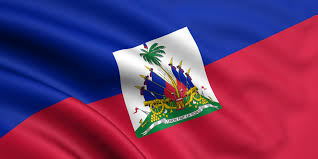
CU Blog - Retail Enemy - Amazon - Photo 1Amazon’s modus operandi is not to be an incubator, though they have invested in many other tech-related companies. No, the Seattle incubation resulted from more community synergy than direct planning. This is what is defined in the Go Lean book as “community ethos”:

1. The fundamental character or spirit of a culture; the underlying sentiment that informs the beliefs, customs, or practices of a group or society; dominant assumptions of a people or period.

2. The character or disposition of a community, group, person, etc.

We need this community ethos in the Caribbean!

Overall, in its 370-pages, the Go Lean book stresses the community ethos, strategies, tactics, implementations and advocacies to reform and transform the economic engines of Caribbean society. The required technocratic stewardship for the region’s economic engines was presented early in the book with these opening pronouncements in the Declaration of Interdependence (Page 13 and 14):

xxiv. Whereas a free market economy can be induced and spurred for continuous progress, the Federation must install the controls to better manage aspects of the economy: jobs, inflation, savings rate, investments and other economic principles. Thereby attracting direct foreign investment because of the stability and vibrancy of our economy.

xxvii. Whereas the region has endured a spectator status during the Industrial Revolution, we cannot stand on the sidelines of this new economy, the Information Revolution. Rather, the Federation must embrace all the tenets of Internet Communications Technology (ICT) to serve as an equalizing element in competition with the rest of the world. The Federation must bridge the digital divide and promote the community ethos that research/development is valuable and must be promoted and incentivized for adoption.

The points of effective, technocratic stewardship were further elaborated upon in previous blog-commentaries. Consider this sample:

https://goleancaribbean.com/blog/?p=12291 Amazon – The Retailers’ Enemy
https://goleancaribbean.com/blog/?p=8823 Lessons from China – WeChat: Model for Caribbean Social Media
https://goleancaribbean.com/blog/?p=7991 Transformations: Caribbean Postal Union – Delivering the Future
https://goleancaribbean.com/blog/?p=3187 Robots help Amazon tackle Cyber Monday
https://goleancaribbean.com/blog/?p=2488 Model of an E-Commerce Fulfillment Company: Alibaba
https://goleancaribbean.com/blog/?p=1416 Model of an E-Commerce Fulfillment Company: Amazon
https://goleancaribbean.com/blog/?p=528 Facebook’s advances for e-Commerce payments

Congratulation to the selected city – whoever is selected – for Amazon’s HQ2.

For the Caribbean, let’s pay attention to this bidding process. Let’s lean-in and learn how the economic incentives were structured by the winning city to attract this “whale” of a corporate investor – Amazon commits to spending $5 Billion to enhance local infrastructure in the selected city. This chosen city will make great progress in their attempts to elevate their city … to live, work and play.

The lessons learned can help the Caribbean in our solicitations of Direct Foreign Investors. We can learn so much from this process, since it is also our desire to make our homelands better places to live, work and play. 🙂

Download the free e-book of Go Lean … Caribbean – now!

Sign the petition to lean-in for the roadmap for the Caribbean Union Trade Federation.

————-

Appendix Title: Amazon Opens Search for Amazon HQ2 A Second Headquarters City in North America

New headquarters will be a full equal to Amazon’s headquarters in Seattle, and is expected to grow to 50,000 employees as part of the company’s ongoing job creation

Amazon plans to invest over $5 billion in construction and operation of Amazon HQ2

In addition to Amazon’s direct hiring and investment, construction and operation of Amazon HQ2 is expected to create tens of thousands of jobs in construction and related industries, and generate tens of billions of dollars in additional investment in the city where Amazon HQ2 is located

SEATTLE — (BUSINESS WIRE)

(NASDAQ: AMZN) — Amazon today announced plans to open Amazon HQ2, a second company headquarters in North America. Amazon expects to invest over $5 billion in construction and grow this second headquarters to include as many as 50,000 high-paying jobs. In addition to Amazon’s direct hiring and investment, construction and ongoing operation of Amazon HQ2 is expected to create tens of thousands of additional jobs and tens of billions of dollars in additional investment in the surrounding community. Amazon is opening the Amazon HQ2 Request for Proposal (“RFP”) now, and local and state government leaders interested in learning more about how they can bring Amazon to their community can visit www.amazon.com/amazonHQ2.

Amazon estimates its investments in Seattle from 2010 through 2016 resulted in an additional $38 billion to the city’s economy – every dollar invested by Amazon in Seattle generated an additional 1.4 dollars for the city’s economy overall.

Details of Amazon’s Seattle Headquarters:

Direct1 Number of buildings 33
Square feet 8.1 million
Local retail within Amazon headquarters 24 restaurants/cafes + 8 other services
Amazon employees 40,000+
Capital investment (buildings & infrastructure) $3.7 billion
Operational expenditures (utilities & maintenance) $1.4 billion
Compensation to employees $25.7 billion
Number of annual hotel nights by visiting Amazonians and guests 233,000 (2016)
Amount paid into the city’s public transportation system as employees’ transportation benefit $43 million
Indirect2 Additional jobs created in the city as a result of Amazon’s direct investments 53,000
Additional investments in the local economy as a result of Amazon’s direct investments $38 billion
Increase in personal income by non-Amazon employees as a result of Amazon’s direct investments $17 billion
Other Increase in Fortune 500 companies with engineering/R&D centers in Seattle From 7 in 2010 to 31 in 2017

1 From 2010 (when Amazon moved its headquarters to downtown Seattle) to June 2017.

2 From 2010-2016. Calculated using Input-Output methodology and multipliers developed by the U.S. Bureau of Economic Analysis.

With more than 380,000 employees worldwide, Amazon ranks #1 on Fast Company’s Most Innovative Companies, #2 on Fortune’s World’s Most Admired Companies, #1 on The Harris Poll’s Corporate Reputation survey, and #2 on LinkedIn’s U.S. most desirable companies list. Amazon was also recently included in the Military Times’ Best for Vets list of companies committed to providing opportunities for military veterans.

“We expect HQ2 to be a full equal to our Seattle headquarters,” said Jeff Bezos, Amazon founder and CEO. “Amazon HQ2 will bring billions of dollars in up-front and ongoing investments, and tens of thousands of high-paying jobs. We’re excited to find a second home.”

In choosing the location for HQ2, Amazon has a preference for:

  • Metropolitan areas with more than one million people
  • A stable and business-friendly environment
  • Urban or suburban locations with the potential to attract and retain strong technical talent
  • Communities that think big and creatively when considering locations and real estate options

HQ2 could be, but does not have to be:

  • An urban or downtown campus
  • A similar layout to Amazon’s Seattle campus
  • A development-prepped site. We want to encourage states and communities to think creatively for viable real estate options, while not negatively affecting our preferred timeline.

Amazon HQ2 will be a complete headquarters for Amazon – not a satellite office. Amazon expects to hire new teams and executives in HQ2, and will also let existing senior leaders across the company decide whether to locate their teams in HQ1, HQ2 or both. The company expects that employees who are currently working in HQ1 can choose to continue working there, or they could have an opportunity to move if they would prefer to be located in HQ2.

To learn more about Amazon’s current Seattle headquarters, plans for Amazon HQ2, and to submit a proposal, visit www.amazon.com/amazonHQ2.

———-

About Amazon

Amazon is guided by four principles: customer obsession rather than competitor focus, passion for invention, commitment to operational excellence, and long-term thinking. Customer reviews, 1-Click shopping, personalized recommendations, Prime, Fulfillment by Amazon, AWS, Kindle Direct Publishing, Kindle, Fire tablets, Fire TV, Amazon Echo, and Alexa are some of the products and services pioneered by Amazon. For more information, visit www.amazon.com/about and follow @AmazonNews.

Forward-Looking Statements

This press release contains forward-looking statements that are inherently difficult to predict. Actual results could differ materially for a variety of reasons, including, in addition to the factors discussed above, the amount that Amazon.com invests in new business opportunities and the timing of those investments, the mix of products and services sold to customers, the mix of net sales derived from products as compared with services, the extent to which we owe income taxes, competition, management of growth, potential fluctuations in operating results, international growth and expansion, the outcomes of legal proceedings and claims, fulfillment, sortation, delivery, and data center optimization, risks of inventory management, seasonality, the degree to which the Company enters into, maintains, and develops commercial agreements, acquisitions and strategic transactions, payments risks, and risks of fulfillment throughput and productivity. Other risks and uncertainties include, among others, risks related to new products, services, and technologies, system interruptions, government regulation and taxation, and fraud. In addition, the current global economic climate amplifies many of these risks. More information about factors that potentially could affect Amazon.com’s financial results is included in Amazon.com’s filings with the Securities and Exchange Commission (“SEC”), including its most recent Annual Report on Form 10-K and subsequent filings.

———-

View source version on businesswire.com: http://www.businesswire.com/news/home/20170907005717/en/

Amazon.com, Inc.
Media Hotline
Amazon-pr@amazon.com
www.amazon.com/pr

Copyright Business Wire 2017

———-

Source: Posted September 7, 2017; retrieved September 26, 2017 from: http://www.nbc-2.com/story/36308962/amazon-opens-search-for-amazon-hq2-a-second-headquarters-city-in-north-america

Share this post:
, , , , ,
[Top]