Category: Government

Venezuela sues black market currency website in US

Go Lean Commentary

Circa 1983*, American banks came to grips with the new reality: the old days of 3-6-9 were over, it was now a 24-7-365 world.

3-6-9 refers to the only numbers bankers were required to know: Borrow at 3%; lend at 6%; open the doors at 9am; close the doors at 3pm.

These banks were then faced with these new agents-of-change: Technology, Competition and Deregulation.

Thus started the perilous slide of banking down the path of instability. Two crisis would present themselves in the next 25 years: Savings & Loans Crisis of 1980s/1990s and the Great Recession of 2008. The world is still reeling from these events; this applies to American and International markets; Wall Street and Main Street.

(* In Winter 1983, this writer was an MBA-Commercial Bank Administration student studying the unfurling of these events).

The book Go Lean…Caribbean,  and the underlying movement by the publishers SFE Foundation, was forged as a direct result of the 2008 crisis. The purpose was to apply lessons learned from this American experience in the quest to empower the Caribbean. The book identified additional agents-of-change (i.e. Globalization, Climate Change, Aging Diaspora, etc.) and the battle plan to contend with them all.

Now comes a crisis for Venezuela, but the opportunity is still the same: apply the lessons learned.

The Central Bank of Venezuela has filed a lawsuit in US courts against Miami-based entity DolarToday, alleging that this website undermines the Venezuelan bank, currency and economy by falsifying the country’s exchange rates.

CU Blog - Venezuela sues black market currency website in US - Photo 2

This is a serious issue! See the news article here and the Appendices below for detailed definitions:

Title: Venezuela sues black market currency website in United States
By: Andrew Cawthorne

CARACAS (Reuters) – Venezuela’s Central Bank filed a lawsuit on Friday with allegations of “cyber-terrorism” against a U.S.-based website that tracks the OPEC member’s currency black market.

The DolarToday site has enraged President Nicolas Maduro’s government by publishing a rate in Venezuelan bolivars for the greenback far higher than the three official levels under Venezuela’s 12-year-long currency controls.

The rate has become an unofficial marker in the crisis-ridden economy, with some Venezuelans using it in private transactions or to fix prices of imported goods.

The lawsuit, in the U.S. District Court for the District of Delaware, named three Venezuelans in the United States as being behind the site: Gustavo Diaz, Ivan Lozada and Jose Altuve.

A representative of DolarToday could not immediately be reached by email or telephone for comment.

The Central Bank requested both an injunction and damages, accusing the three of fanning inflation in Venezuela, the world’s highest, and enriching themselves by illegal trading.

“Defendants conspired to use a form of cyber-terrorism to wreak, and in fact they have wreaked, economic and reputational harm on the Central Bank by impeding its ability to manage the Republic’s economy and foreign exchange system,” the lawsuit said.

DolarToday, which takes an aggressively anti-Maduro stance in its publications and says it calculates its rate based on trades on the Venezuela-Colombia border, quoted the dollar at 820 bolivars on Friday.

That is 130 times the strongest official rate of 6.3 bolivars and four times the government’s weakest rate of 200.

Maduro, a former bus driver and foreign minister who won election to replace Hugo Chavez in 2013, frequently lambastes DolarToday as part of an international capitalist conspiracy to sabotage the economy and undermine socialism in Venezuela.

“Arbitrarily manufacturing currency exchange rates creates further turmoil in a country that is working to overcome the obstacles it already faces,” said Adam Fox, a lawyer for U.S. law firm Squire Patton Boggs, which represents the bank.

Critics say Venezuela’s economic mess, with Gross Domestic Product shrinking and shortages widespread, is the result of hardline state policies such as currency controls.

The Central Bank estimated a million people visit the DolarToday site daily. Its Twitter account has 1.93 million followers. “Defendants have been playing ‘a cyber cat-and-mouse game’,” to circumvent government blocks, it said.

Central Bank officials in Caracas had no immediate comment.

(Additional reporting by Corina Pons in Caracas and Diane Bartz in Washington; editing by Grant McCool)
Source: Reuters News Wire – (Posted 10/23/2015; retrieved 10/26/2015) – http://news.yahoo.com/venezuela-sues-black-market-currency-website-united-states-215856233–business.html

This article is in consideration of the book Go Lean…Caribbean; it serves as a roadmap for the introduction and implementation of the technocratic Caribbean Union Trade Federation (CU) and Caribbean Central Bank (CCB) to provide better stewardship, to ensure that the economic and currency failures of the past, in the Caribbean and other regions (like Venezuela), do not re-occur here … again in the homeland.

There is now interconnectivity of the financial systems; see VIDEO in the Appendix below. Troubles for any bank or any currency in foreign countries easily become trouble for the Caribbean region. Plus, Venezuela is a trading partner with most of the Caribbean with the PetroCaribe initiative. The assumption embedded in the Go Lean roadmap is that there could be elasticity from foreign financial structures, but that the Caribbean is big enough – when integrated into a Single Market of 42 million people in the 30 member-states – and can thusly streamline its own viable currency/financial/securities market.

There are many issues (and lessons) in play with the foregoing news story:

o   Cyber-terrorism – from distant corners of the world, a “bad actor” can wreak havoc on a society’s economic engines with the aid of Information & Internet Communication Technologies (ICT). This is a serious allegation the officials of Venezuela is leveling against this website; they have used the term cyber-terrorism, so as to avail themselves of prosecutorial resources in the US and other countries who are conducting a “War on Terrorism”.

o   Capital Controls – the Go Lean book dives deeply into the discussion for Capital Controls; consider this direct quotation from Page 315 of the book:

    Capital controls are residency-based measures such as transaction taxes, other limits, or outright prohibitions that a nation’s government can use to regulate flows from capital markets into and out of the country’s capital account. Types of capital control include exchange controls that prevent or limit the buying and selling of a national currency at the market rate, caps on the allowed volume for the international sale or purchase of various financial assets, transaction taxes, minimum stay requirements, requirements for mandatory approval, or even limits on the amount of money a private citizen is allowed to remove from the country.

o   Currency Manipulations – bad actors emerges in many different scenarios. While not assigning blame nor casting judgement on the case in the foregoing article, it is fully acknowledged that currency manipulators can inflict harm on a country’s resources and perceived brand or image … for their own financial gain.

o   Black Markets – the quest for economic command-and-control runs counter to Black Markets. But electronic payment systems are effective at mitigating these Black Markets.

o   Human & Capital Flight – when a country’s currency is in distress, there is the threat that citizens may flee with their capital so as to secure the value of their savings and investments. The Caribbean has been plagued with this occurrence again and again. Even now, the region has an alarming 70% brain drain rate among the college-educated populations of Caribbean heritage.

The lessons from this consideration must be applied in the technocratic administration of the Caribbean Union Trade Federation, and the Caribbean Central Bank’s (CCB) oversight of the Caribbean Dollar (C$). The Go Lean roadmap calls for a cooperative entity of the existing Central Banks in the region; this will foster interdependence from the political entities allowing only the motivation of the regional Greater Good.

The planners of the new Caribbean sympathizes with the Central Bank of Venezuela. We have learned hard lessons on the issue of currency, as many CU member-states have had to endure painful devaluations over the past decades – on more than one occasion. So we understand that any attempt to reboot the Caribbean economic landscape must first start with a strenuous oversight of the proposed C$ currency – as a mostly electronic currency. Early in the book, this need for regional stewardship of Caribbean currencies was pronounced (Declaration of Interdependence – Page 13) with these statements:

xxiv. Whereas a free market economy can be induced and spurred for continuous progress, the Federation must install the controls to better manage aspects of the economy: jobs, inflation, savings rate, investments and other economic principles. Thereby attracting direct foreign investment because of the stability and vibrancy of our economy.

xxv.  Whereas the legacy of international democracies had been imperiled due to a global financial crisis, the structure of the Federation must allow for financial stability and assurance of the Federation’s institutions. To mandate the economic vibrancy of the region, monetary and fiscal controls and policies must be incorporated as proactive and reactive measures. These measures must address threats against the financial integrity of the Federation and of the member-states.

The Go Lean book, and previous blog/commentaries, stressed the key community ethos, strategies, tactics, implementations and advocacies necessary to establish a strong Caribbean financial eco-system and strong currency; plus mitigate Black Markets. These points are detailed in the book as follows:

Community Ethos – Economic Principles – Economic Systems Influence Individual Choices Page 21
Community Ethos – Economic Principles – Voluntary Trade Creates Wealth Page 21
Community Ethos – Economic Principles – Consequences of Choices Lie in the Future Page 21
Community Ethos – Economic Principles – Money Multiplier Page 23
Community Ethos – Governing Principles – Lean Operations Page 24
Community Ethos – Governing Principles – Return on Investments Page 24
Community Ethos – Ways to Impact the Future – Count on the Greedy to be Greedy Page 26
Community Ethos – Ways to Impact the Greater Good Page 37
Strategy – Mission – Fortify the Stability of the Currency and Securities markets Page 45
Strategy – Provide Proper Oversight and Support for the Depository Institutions Page 46
Strategy – e-Payments and Card-based Transactions Page 49
Tactical – Summary of Confederation Models Page 63
Tactical – Growing the Economy – Minimizing Bubbles Page 69
Tactical – Separation-of-Powers – Depository Insurance & Regulatory Agency Page 73
Anecdote – Turning Around CARICOM – Effects of 2008 Financial Crisis Page 92
Implementation – Assemble Caribbean Central Bank as a Cooperative Page 96
Implementation – Ways to Better Manage Debt – Optimizing Wall Street Role Page 114
Planning – 10 Big Ideas – Single Market / Currency Union Page 127
Planning – Lessons Learned from 2008 Page 136
Planning – Lessons Learned from New York City – Wall Street Page 137
Planning – Ways to Measure Progress Page 147
Anecdote – Caribbean Currencies Page 149
Advocacy – Ways to Grow the Economy Page 151
Advocacy – Ways to Control Inflation Page 153
Advocacy – Ways to Better Manage Foreign Exchange Page 154
Advocacy – Ways to Mitigate Black Markets Page 165
Advocacy – Ways to Foster Electronic Commerce Page 198
Advocacy – Reforms for Banking Regulations Page 199
Advocacy – Ways to Impact Wall Street Page 200
Advocacy – Ways to Impact Main Street Page 201
Appendix – Tool-kits for Capital Controls Page 315
Appendix – Lessons Learned from Floating the Trinidad & Tobago Dollar Page 316
Appendix – Controlling Inflation – Technical Details Page 318
Appendix – e-Government and e-Payments Example: EBT mitigates Black Markets Page 353

A careful study of national economies – a task of the Go Lean book – relates that there is an ebb-and-flow associated with economic stewardship. This stewardship constitutes the prime directives of the CU:

  • Optimization of the economic engines in order to grow the regional economy and create 2.2 million new jobs.
  • Establishment of a security apparatus to protect the resultant economic engines.
  • Improvement of Caribbean governance/administration/oversight to support these engines.

The best practice for effective stewardship of an economy’s ebb-and-flow is the recovery; managing the ability to “bounce back” quickly. The points of effective, technocratic banking/economic stewardship, were further elaborated upon in these previous blog/commentaries:

https://goleancaribbean.com/blog/?p=6635 New Security Chip in Credit Cards Unveiled to Mitigate Fraud/Abuse
https://goleancaribbean.com/blog/?p=6563 Lessons from Iceland – Model of Recovery
https://goleancaribbean.com/blog/?p=4166 A Lesson in History – Panamanian Balboa
https://goleancaribbean.com/blog/?p=3858 European Central Banks unveils 1 trillion stimulus program
https://goleancaribbean.com/blog/?p=3814 Lessons from the Swiss unpegging the franc
https://goleancaribbean.com/blog/?p=3582 For Canadian Banks: Caribbean is a ‘Bad Bet’
https://goleancaribbean.com/blog/?p=3397 A Christmas Present for the Banks from the Omnibus Bill
https://goleancaribbean.com/blog/?p=3028 Why India is doing better than most emerging markets
https://goleancaribbean.com/blog/?p=2930 ‘Too Big To Fail’ – Caribbean Version
https://goleancaribbean.com/blog/?p=2090 The Depth & Breadth of Remediating 2008
https://goleancaribbean.com/blog/?p=1014 Canadian View: All is not well in the sunny Caribbean
https://goleancaribbean.com/blog/?p=833 One currency, divergent economies
https://goleancaribbean.com/blog/?p=518 Analyzing the Data – What Banks learn about financial risks

The Go Lean quest is the coveted role of protégé to our North American, South American and European trading partners, not the parasite role we have thus far assumed. Though this is heavy-lifting, this is conceivable, believable and achievable.

We have so many lessons to learn from the Venezuelan Central Bank crisis. Let’s pay more than the usual attention to this bank’s effort to harness command-and-control of their currency and economic success. Let’s see how this lawsuit develops.

Class is now in session!

The Caribbean’s 30 member-states are urged to lean-in to this Go Lean roadmap for the CU, CCB and C$. This is the turn-by-turn directions, the heavy-lifting, to move the region to its new destination: a better homeland to live, work and play. 🙂

Download the book Go Lean … Caribbean – now!

————

Appendix A – VIDEO – Currency Exchange Rates and You – https://youtu.be/IYdt-16FoC4


Published on Apr 16, 2015 – You might not be an international banker, but you have more involvement in foreign currency exchange than you might realize. Kristen Fanarakis from the Center for Financial Policy at the University of Maryland’s Robert H. Smith School of Business explains how.

————

Appendix B – Venezuelan bolívar

The bolívar fuerte (sign: Bs.F.[3] or Bs.;[4] plural: bolívares fuertes; ISO 4217 code: VEF) has been the currency of Venezuela since 1 January 2008. It is subdivided into 100 céntimos[5] and replaced the original bolívar (sign: Bs.;[3] plural: bolívares; ISO 4217 code: VEB) at the rate of Bs.F. 1 = Bs. 1,000 because of inflation.

History
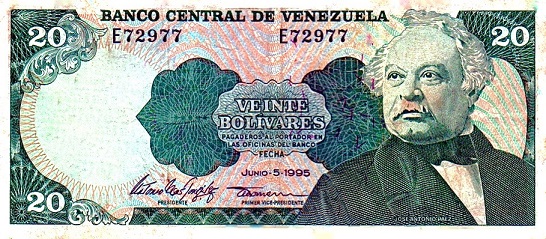
CU Blog - Venezuela sues black market currency website in US - Photo 1The bolívar was adopted by the monetary law of 1879, replacing the short-lived venezolano at a rate of five bolívares to one venezolano. Initially, the bolívar was defined on the silver standard, equal to 4.5g fine silver, following the principles of the Latin Monetary Union. The monetary law of 1887 made the gold bolívar unlimited legal tender, and the gold standard came into full operation in 1910. Venezuela went off gold in 1930, and in 1934 the bolívar exchange rate was fixed in terms of the U.S. dollar at a rate of 3.914 bolívares = 1 U.S. dollar, revalued to 3.18 bolívares = 1 U.S. dollar in 1937, a rate which lasted until 1941. Until 18 February 1983 (now called Black Friday (Viernes Negro) by many Venezuelans [6]), the bolívar had been the region’s most stable and internationally accepted currency. It then fell prey to high devaluation. Exchange controls were imposed on February 5, 2003 to limit capital flight.[7] The rate was pegged to the U.S. dollar at a fixed exchange rate of 1600 VEB to the dollar.

Bolívar fuerte
The government announced on 7 March 2007 that the bolívar would be revalued at a ratio of 1 to 1000 on 1 January 2008 and renamed the bolívar fuerte in an effort to facilitate the ease of transaction and accounting.[8] The new name is literally translated as “strong bolívar”,[9][10] but also references an old coin called the Peso fuerte worth 10 Spanish reales.[11]. (Fuerte = Spanish Strong)

The name “bolívar fuerte” was only used temporarily to distinguish it from the older currency that was being used along with the bolívar fuerte.[12]

The Central Bank of Venezuela promoted the new currency with an ad campaign and the slogan: “Una economía fuerte, un bolívar fuerte, un país fuerte” (lit. “a strong economy, a strong bolívar, a strong country”).

Some estimations suggest that the government spent more than US$320 million to introduce the new currency.

On 8 January 2010, the value was changed by the government from the fixed exchange rate of 2.15 bolívares fuertes to 2.60 bolívares for some imports (certain foods and healthcare goods) and 4.30 bolívares for other imports like cars, petrochemicals, and electronics.[13]

On 4 January 2011, the fixed exchange rate became 4.30 bolívares for 1.00 USD for both sides of the economy.

It should be noted that the official exchange rate is restricted to individuals by National Center for Foreign Commerce (CADIVI), which imposes an annual limit on the amount available for travel (up to $3000 annually depending on the location and duration of travel) and $400 for electronic purchases.

Since the government of Hugo Chavez established strict currency controls in 2003, there have been a series of five currency devaluations, disrupting the economy.[14] The last devaluation was on 13 February 2013 (to 6.30 bolivars per dollar), in an attempt to counter budget deficits.[15]

Currency black market
The black market value of the bolívar fuerte has been significantly lower than the fixed exchange rate. In November 2013, it was almost 10 times lower than the official fixed exchange rate of 6.3 bolívares per U.S. dollar.[16] In September 2014, the currency black market rate for the Bolivar Fuerte reached 100 VEF/USD;[17] on 25 February 2015, it went over 200 VEF/USD.[18] on 07 May, 2015, it was over 275 VEF/USD and on 22 September, 2015, it was over 730 VEF/USD.[19] Venezuela still had the highest inflation rate in the world, As of July 2015[update].[20]

It is illegal to publish the “parallel exchange rate” in Venezuela.[2] One company that publishes parallel exchange rates is DolarToday, which has also been critical of the Maduro government.[21]

Source: https://en.wikipedia.org/wiki/Venezuelan_bol%C3%ADvar retrieved October 26, 2015.

————

Appendix C – DolarToday

DolarToday is an American website that focuses on Latin American politics and finance. The company is more known for being an exchange rate reference to the Venezuelan bolívar, a currency which is not freely convertible;[2] it also known for the company’s focus in monitoring the Venezuelan economy.[3]

Background
DolarToday was founded on May 18, 2010. It is headquartered in Miami, Florida, United States. Prior to the election of Nicolás Maduro in 2013, DolarToday was the second most popular exchange rate reference in Venezuela, behind of Lechuga Verde. However, when a scandal had caused the demise of the Lechuga Verde,[4] DolarToday became the most popular exchange rate reference.[2]

According to BBC Mundo, DolarToday was founded as “a form of protest against a dictatorship increasingly committed to silence and intimidate the media in Venezuela.”[5] Up until today, the company’s website publishes criticisms about the Maduro administration which the founder states “are selected by the site’s writers based in Venezuela”.[2][1]

Exchange rates
Since its inception, DolarToday has provided black market exchange rates that are updated daily for Venezuelans who cannot exchange currencies with the Venezuelan government for the dwindling supply of the US dollar.[1] The company based its computed exchange rates of the Venezuelan bolívar to the United States dollar from the fees on trades in Cúcuta, Colombia, a city near the border of Venezuela.[6] Currently, with no other reliable source other than the black market exchange rates, these rates are used by Reuters, CNBC, and several media news agencies and networks.[7][8] The Economist states that the rates calculated by DolarToday are “erratic”, but that they are “more realistic than the three official rates” released by the Venezuelan government.[9] The website maintains that the rates are not manipulated in order to undercut the Venezuelan government.[2]

Today the exchange rate of Venezuelan currency, monitored and governed by the Central Bank of Venezuela, is prohibited by the Venezuelan government from being accessed by its citizens. Thus, the exchange rates posted by DolarToday are only accessible outside Venezuela.[10]

Censorship
According to DolarToday, the Venezuelan government had been attempting to censor the website since November 2013.[1] In March 2015, in a televised appearance, Maduro told the nation that he will ask United States [President] Barack Obama for the capture of the owners of the company.[13] In a press statement published in the government’s website, Maduro’s government said that it will exert all legal means against the company in response for defaming the Venezuelan economy.[14] That month, the Venezuelan government attempted to censor the website and brought down websites Amazon, Snapchat, and Pinterest in the process.[15]

Since President Maduro made such comments, DolarToday began to face blockages of their website almost every hour in Venezuela.[1] DolarToday then began using mirror sites on content distribution networks, placing cryptic links on their social media pages to such sites since foreign social media sites are difficult for the Venezuelan government to censor.[1] Each time a mirror site is blocked by the Venezuelan government, DolarToday begins to use a new one, with website engineers finding “ways to automatically create a new mirror site every 20 minutes”. [1]

Source: https://en.wikipedia.org/wiki/DolarToday retrieved October 26, 2015.
Share this post:
, , , , ,

A Lesson in ‘Garbage’

Go Lean Commentary

“I’ve recently been placed in charge of garbage … so when you think of garbage, think of me”. – Dialogue from 1988 Movie “Coming to America“; see Appendix VIDEO below.

- Photo 4Garbage has often played a role in movements and revolutions for societal change. For example, Martin Luther King had gone to Memphis, Tennessee in support of African-American Garbage Workers protesting for higher wages and better working conditions when he was gunned down on April 4, 1968. That action transformed America and modern society throughout the world. See the story relating this here: http://www.atu900.org/memphis-sanitation-workers/.

Perhaps the business of ‘garbage’ can transform society … once again. This time in the Caribbean.

“One man’s trash is another man’s treasure”.

The book Go Lean…Caribbean posits that there is a need to re-focus, re-boot, and optimize the engines of commerce, security and governance so as to make the Caribbean a better place to live, work and play for all. The art-and-science of garbage (solid waste) collection affects all 3 areas.

The Go Lean book calls for the optimization of these 3 engines (economic, security and governing) for the Caribbean region:

  • Economics – Jobs, business models, industrial neighborhoods constitute the economic dimensions of this industry. Overall the roadmap calls for the optimization of the economic engines in order to grow the regional economy to $800 Billion GDP and create 2.2 million new jobs. The art-and-science of garbage collection have often involved a substantial labor force. Due to the undesirable nature of the work (outdoor, odor, unclean conditions), these jobs have often paid a premium compared to other manual labor jobs. Now there is the chance to employ more automation.
  • Security – Public Health issues are involved in the disposal of garbage in any community; there is the need for technocratic deliveries of this feature of the Social Contract. Historically the garbage collection industry have attracted organized crime figures; bullies abound. There is therefore the constant need to monitor and mitigate these risks and threats on the community and public safety.
  • Governance – Garbage collection is always in the sphere of government, even though many municipalities may outsource to service providers with contracts of different length and dimensions. Corruption (briberies, kickbacks, etc.) have often been associated with such contracts. There is therefore the need to optimize governmental engines in the execution of this required municipal service.

This commentary therefore recommends the adoption of more automated garbage collection systems in the Caribbean region. This does not refer to a complete robotic, cybernetic or cyborg system, but rather systematic tools to aid productivity for a minimal staff – do more with less. See the recommended “systems” here:

Encyclopedic Reference: Garbage trucks
Garbage truck or dustcart refers to a truck specially designed to collect municipal solid waste and haul the collected waste to a solid waste treatment facility such as a landfill. Other common names for this type of truck include trash truck in the United States, and rubbish truck, bin wagon, dustbin lorry, bin lorry or bin van elsewhere. Technical names include waste collection vehicle and refuse collection vehicle. These trucks are a common sight in most urban areas.

There are 3 primary types of waste collection vehicles:

Secondarily, these types of trucks are also deployed: Pneumatic collection, Grapple trucks, and Roll-offs. [Our focus is on the Side Loaders:]

Side loaders
Side loaders are loaded from the side, either manually, or with the assistance of a joystick-controlled robotic arm with a claw, used to automatically lift and tip wheeled bins into the truck’s hopper. Lift-equipped trucks are referred to as automated side loaders, or ASL’s. Similar to a front-end loader, the waste is compacted by an oscillating packer plate at the front of the loading hopper which forces the waste through an aperture into the main body and is therefore compacted towards the rear of the truck.[6] An Automated Side Loader only needs one operator, where a traditional rear load garbage truck may require two or three people,[7] and has the additional advantage of reducing on the job injuries due to repetitive heavy lifting. Due to these advantages, ASL’s have become more popular than traditional manual collection. Typically an Automated Side Loader uses standardized wheeled carts compatible with the truck’s automated lift.[8]

Source:Wikipedia Online Encyclopedia – Retrieved 10-22-2015 from: https://en.wikipedia.org/wiki/Garbage_truck#Side_loaders

[Automated garbage collection require that residents ([the public)] collaborate by lining up domestic garbage bins at the road side – on the correct day. Collaboration (sharing) is therefore a required community ethos.]

- Photo 1- Photo 2- Photo 3
<<< Sample-Example Photos from Miami-Dade County, Florida >>>>

This is such a big deal that the term “heavy-lifting” would even be appropriate.

This is a matter of community ethos, defined as the fundamental character or spirit of a culture; the underlying sentiment that informs the beliefs, customs, or practices; dominant assumptions of a people. The key community ethos in this case is the new [professional] practice of turn-around strategies. The Go Lean book (Page 33) defines “turn-around” as including recycling and demolitions. Recycling revenues can thus offset garbage collection costs; as metals (and other materials) can be salvaged as “scrap”; even rubber and plastic have prospects for recycling, resulting in minimal garbage/waste to be buried in landfills. (This business model of Automated Side Loading – or ASL – systems specifies a larger staff at solid waste processing/sorting centers).

With the current community ethos, and politics, there is no way that such systems, as depicted in the foregoing source, can be introduced in the Caribbean region. But if given a chance, these deployments can facilitate a big “turn-around” – identified as a new community ethos. This new focus on the “turn-around” community ethos appears on the surface to be a win-win for all involved, but a more careful examination highlights some serious economic, security and governing obstacles/issues; such as:

  1. Jobs will be loss – traditionally only one driver/operator is assigned to a truck.
  2. Residents may not cooperate – the garbage canisters have to be moved out to the street edge.
  3. Unorganized Addresses/routing – Trucks must work in routes; canisters must be labeled by address.

The book Go Lean…Caribbean, serves as a roadmap for the introduction and implementation of the technocratic Caribbean Union Trade Federation (CU) with the charter to facilitate jobs in the region and to optimize security and governing engines. Addressing these above 3 issues, the Go Lean/CU roadmap provides these solutions:

Jobs
Early in the Go Lean book, the responsibility to create jobs was identified as an important function for the CU with this pronouncement in the Declaration of Interdependence (Pages 14):

xxvi.  Whereas the Caribbean region must have new jobs to empower the engines of the economy and create the income sources for prosperity, and encourage the next generation to forge their dreams right at home, the Federation must therefore foster the development of new industries… In addition, the Federation must invigorate the enterprises related to existing industries … – impacting the region with more jobs.

The Go Lean book also details the principle of job multipliers, how certain industries are better than others for generating multiple indirect jobs down the line for each direct job on a company’s payroll. The Go Lean… Caribbean book details the creation of 2.2 million direct/indirect jobs in the region during the 5-year roadmap, including income from entrepreneurial hustles. (This business model from ASL systems specifies a larger staff at solid waste processing/sorting centers).

The subject of job creation – not an easy topic as governmental administrations always pursue this goal – has been directly addressed and further elaborated upon in these previous blog/commentaries:

https://goleancaribbean.com/blog/?p=6680 Vegas Casinos Create New Jobs By Betting on Video Games
https://goleancaribbean.com/blog/?p=6089 Where the Jobs Are – Futility of Minimum Wage
https://goleancaribbean.com/blog/?p=4240 Immigration Policy Exacerbates Worker Productivity Crisis
https://goleancaribbean.com/blog/?p=3694 Jamaica-Canada employment program pumps millions into local economy
https://goleancaribbean.com/blog/?p=3050 Obama’s immigration tweaks leave Big Tech wanting more
https://goleancaribbean.com/blog/?p=2857 Where the Jobs Are – Entrepreneurism in Junk
https://goleancaribbean.com/blog/?p=2800 The Geography of Joblessness
https://goleancaribbean.com/blog/?p=2126 Where the Jobs Are – Computers Reshaping Global Job Market
https://goleancaribbean.com/blog/?p=2003 Where the Jobs Are – One Scenario (Ship-breaking)
https://goleancaribbean.com/blog/?p=1698 Where the Jobs Are – STEM Jobs Are Filling Slowly
https://goleancaribbean.com/blog/?p=1596 Book Review: ‘Prosper Where You Are Planted’

Residential Assimilation
How to sell an idea to the whole population, to get them to assimilate new directives and mandates? This need was addressed even in the theme of this roadmap to elevate Caribbean society, with the word: “lean“. The word is presented as a noun, a verb and an adjective. For this commentary, we consider the definition as a verb. The people and institutions are urged to lean-in (incline in opinion, taste, or desire) and embrace the values, hopes and dreams of this roadmap, this integrated brotherhood of neighbors.

This urging is a methodical process. The CU will expand the Media Industrial Complex (broadcast, internet streaming, print, school/youth indoctrination, etc.) in the region so as to communicate, induce, influence and incentivize good behavior, preferred habits and best-practices. Consider for example, how mobile phones have easily been assimilated in the region. This is not just a product of good marketing and advertising, but the obvious appreciation of better products; better “mousetraps”.

The subject of forging change in the region has been directly addressed and further elaborated upon in these previous blog / commentaries:

https://goleancaribbean.com/blog/?p=5964 Forging Change: ‘Feed the right wolf’
https://goleancaribbean.com/blog/?p=5098 Forging Change: ‘Food’ for Thought
https://goleancaribbean.com/blog/?p=3974 Forging Change: Case Study of Google and Mobile Phones
https://goleancaribbean.com/blog/?p=3915 Forging Change: ‘Changing the way you see the world’
https://goleancaribbean.com/blog/?p=3568 Forging Change: Music Moves People
https://goleancaribbean.com/blog/?p=3512 Forging Change: The Sales Process
https://goleancaribbean.com/blog/?p=2291 Forging Change: The Fun Theory
https://goleancaribbean.com/blog/?p=623 Only at the precipice, do they change

Address Organization
As depicted in the foregoing photos, there is a basic infrastructure that must be in place for the societal change that is being advocated in this commentary, that of employing Automated Side Loading (ASL) garbage trucks/collection. The change is: street names and house numbers.

Despite how simple this might appear, this standard is not normal for all of the Caribbean. While Puerto Rico and the US Virgin Island utilize the US Postal Service (USPS) and their addressing standards (think Zip Codes), this is not the case for the other 28 Caribbean member-states.

The quest of the Go Lean is therefore simple in this regards: to re-boot mail operations for the region by introducing and implementing the Caribbean Postal Union (CPU). This agency will NOT be modeled after the USPS, but rather the CPU will embrace the better models in logistics (Amazon, Alibaba, etc.). Mail delivery and garbage collection all require optimized address organization and route logistics.

The subject of optimizing Caribbean logistics has been directly addressed and further elaborated upon in these previous blog / commentaries:

https://goleancaribbean.com/blog/?p=3187 Robots help Amazon tackle Cyber Monday
https://goleancaribbean.com/blog/?p=2488 Role Model Jack Ma brings Alibaba to America
https://goleancaribbean.com/blog/?p=1416 Amazon’s new FIRE Smartphone

While the book was not written with garbage collection in mind, the principles there in applies to most industries and domestic endeavors. As such, the adoption of these new community ethos, plus the executions of the following strategies, tactics, implementations and advocacies will foster the elevation of Caribbean society in general; and the “turn-around” industries specifically:

Community Ethos – Deferred Gratification Page 21
Economic Principles – People Choose because Resources are Limited Page 21
Economic Principles – All Choices Involve Costs Page 21
Economic Principles – People Respond to Incentives Page 21
Economic Principles – Economic Systems Influence Choices & Incentives Page 21
Economic Principles – Voluntary Trade Creates Wealth Page 21
Community Ethos – Job Multiplier Page 22
Community Ethos – Lean Operations Page 24
Community Ethos – Return on Investments (ROI) Page 24
Community Ethos – Cooperatives Page 25
Community Ethos – Ways to Impact   the Future Page 26
Community Ethos – Ways to Help Entrepreneurship Page 28
Community Ethos – Ways to Impact   Research & Development (R&D) Page 30
Community Ethos – Ways to Impact   Turn-Around: Recycling and Demolition Industries Page 33
Community Ethos – Ways to Improve Sharing Page 35
Community Ethos – Ways to Impact the Greater Good Page 37
Strategy – Mission – Foster Local Economic Engines. Page 45
Tactical – Fostering a Technocracy Page 64
Tactical – Tactics   to Forge an $800 Billion Economy – High Multiplier Industries Page 70
Tactical – Separation of Powers – Depart of Justice – CariPol Investigations Page 77
Tactical – Separation of Powers – Caribbean Postal Union Page 78
Tactical – Separation of Powers – Self-Governing Entities Page 80
Implementation – Ways to Pay for Change – SGE Licenses Page 101
Implementation – Steps to Implement Self-Governing Entities Page 105
Implementation – Ways to Deliver Page 109
Planning – 10 Big Ideas – Self-Governing Entities Page 127
Planning – Ways to Improve Trade Page 128
Planning – Ways to Make the Caribbean Better Page 131
Advocacy – Ways to Grow the Economy Page 151
Advocacy – Ways to Create Jobs Page 152
Advocacy – Ways to Improve Governance – More e-Government and e-Delivery Options Page 168
Advocacy – Ways to Improve Local   Government Page 169
Advocacy – Ways to Better Manage the Social Contract Page 170
Advocacy – Ways to Foster Cooperatives Page 176
Advocacy – Ways to Impact Main Street Page 201
Advocacy – Ways to Impact Urban Living – Ideal for City Grid-routes Page 234
Advocacy – Ways to Impact Rural Living – Ideal for Land-fills Page 235
Appendix – Job Multipliers Page 259

The CU will foster industrial developments in support of local economies. This is part of the art-and-science of “turn-around” industries. These efforts are ideal for the Go Lean roadmap’s plan for Self-Governing Entities, which are bordered grounds set aside from local municipal authorities and governed at the federal level only. While these industrial developments may more preferably feature sites like high-tech R&D campuses, medical parks, and technology bases, they can also include low-tech options like recycling facilities, scrap-metal junkyards and landfills. So the Go Lean roadmap covers high-tech jobs in the STEM (Science, Technology, Engineering and Mathematics) fields and also Blue Collar dirty jobs. There is room for all in the new Caribbean.

Everyone in the Caribbean is hereby urged to lean-in to this roadmap for change, residents and governments alike. The Go Lean/CU promoters will push hard (messaging) for the needed changes, employing both bottoms-up and top-down strategies. This commentary also advocates working to get the community ethos to take hold; all this earnest effort will be a waste unless people are moved to change … permanently. So we must use all effective tools – best-practices – to forge the required change.

This serious role of garbage collection is therefore an example of heavy-lifting for the Go Lean movement.

The quest to change the Caribbean is more complex than just picking up the trash. But our communities’ willingness to adapt to these changes, is indicative of the willingness to adapt to other societal changes. This is how to re-boot the Caribbean. This is the mandate of the Go Lean roadmap: to elevate the region, to make our homelands a better place to live, work and play. 🙂

Download the free e-Book of Go Lean … Caribbean – now!

———-

Appendix VIDEO: Coming To America Garbage  – https://youtu.be/RVVhvr_PXG4

Published on Sep 12, 2014 – Movie: Coming to America; Category: People & Blogs; License: Standard YouTube License. See trailer of the movie here: https://youtu.be/PWMJRzg8Smc

Share this post:
, , , ,
[Top]

A Lesson in History – After the Civil War: Birthright Mandates

Go Lean Commentary

The subject of nationality is dominant in the news right now. This is due to many illegal migrants fleeing their homelands seeking a better life abroad, for themselves and/or their children, many times at great risk to their lives. The issue of “children of illegal immigrants” is where this simple desire becomes complicated politics, and draws on a complicated history.

Do children of illegal immigrants have the right to stay in their new country of birth or be deported back to the homelands of their parents? What if one parent is a citizen of the host country, should gender of the parent matter?

These questions so strongly parallel a different time and place: the Antebellum times (before the Civil War) of the United States of America.

CU Blog - A Lesson in History - After the Civil War - Birthrights - Photo 2The US confronted these issues in a comprehensive way, giving a full measure, and a complete lesson to a watching world. The country had a bad legacy with the issues of racism, racial supremacy and discrimination. Even the Supreme Court’s decision in Dred Scott v. Sandford (1857), asserted that Americans descended from African slaves could not be citizens of the United States. American society never accepted a common definition of human rights. As a result, African-Americans suffered in this country, first slavery, then even after the abolition of slavery the oppression, suppression and repression continued with a Peonage system, Jim Crow and blatant discrimination practices. This dread was manifested in the impassioned chant:

Injustice anywhere is injustice everywhere!

Since the early colonial period in America, slavery had been a part of the socio-economic system of British North America and was recognized in the Thirteen Colonies at the time of the United StatesDeclaration of Independence (1776). Since then, events and statements by politicians and others brought forth differences, tensions and divisions between the people of the slave states of the Southern United States and the people of the free states of the Northern United States (including Western states) over the topics of slavery. The issue and divisions of slavery became so irreconcilable and contentious [1] that only a violent clash – a war – would resolve. The war was a “Come to Jesus!” A Big Day of Reckoning!

Without a doubt, the Civil War was conclusive! The conflict transpired between 1861 and 1865; 625,000[5] Americans died…on both sides (365,000 total dead [4] on the Union side; 260,000 total dead on the Confederacy side). This blood should not be forgotten.

The LORD said, “What have you done? Listen! Your brother’s blood cries out to me from the ground. – Genesis 4:10 New International Version

This backdrop was the basis for the 14th Amendment of the Constitution. Consider the encyclopedic details here:

Title: Fourteenth Amendment to the United States Constitution
Source: Wikipedia – Online Encyclopedia (Retrieved 10/14/2015) retrieved from: https://en.wikipedia.org/wiki/Fourteenth_Amendment_to_the_United_States_Constitution

CU Blog - A Lesson in History - After the Civil War - Birthrights - Photo 1The Fourteenth Amendment (Amendment XIV) to the United States Constitution was adopted on July 9, 1868, as one of the Reconstruction Amendments. The amendment addresses citizenship rights and equal protection of the laws, and was proposed in response to issues related to former slaves following the American Civil War. The amendment was bitterly contested, particularly by Southern states, which were forced to ratify it in order for them to regain representation in Congress. The Fourteenth Amendment, particularly its first section, is one of the most litigated parts of the Constitution, forming the basis for landmark decisions such as Roe v. Wade (1973) regarding abortion, Bush v. Gore (2000) regarding the 2000 presidential election, and Obergefell v. Hodges (2015) regarding same-sex marriage. The amendment limits the actions of all state and local officials, including those acting on behalf of such an official.

The amendment’s first section includes several clauses: the Citizenship Clause, Privileges or Immunities Clause, Due Process Clause, and Equal Protection Clause. The Citizenship Clause provides a broad definition of citizenship, overruling the Supreme Court’s decision in Dred Scott v. Sandford (1857), which had held that Americans descended from African slaves could not be citizens of the United States. The Privileges or Immunities Clause has been interpreted in such a way that it does very little.

The Due Process Clause prohibits state and local government officials from depriving persons of life, liberty, or property without legislative authorization. This clause has also been used by the federal judiciary to make most of the Bill of Rights applicable to the states, as well as to recognize substantive and procedural requirements that state laws must satisfy.

The Equal Protection Clause requires each state to provide equal protection under the law to all people within its jurisdiction. This clause was the basis for Brown v. Board of Education (1954), the Supreme Court decision that precipitated the dismantling of racial segregation, and for many other decisions rejecting irrational or unnecessary discrimination against people belonging to various groups.

The second, third, and fourth sections of the amendment are seldom litigated. However, the second section’s reference to “rebellion and other crime” has been invoked as a constitutional ground for felony disenfranchisement. The fifth section gives Congress the power to enforce the amendment’s provisions by “appropriate legislation”. However, under City of Boerne v. Flores (1997), Congress’s enforcement power may not be used to contradict a Supreme Court interpretation of the amendment.

There are lessons from this history to be learned and applied in the Caribbean relating to nationality and immigration.

This commentary is 3 of 3 considering lessons that are especially apropos for application in the Caribbean region of 2015. The lessons are cataloged as follows:

  1. Before the War: Human Rights Cannot Be Compromised
  2. During the War: Principle over Principal – Boycott Over a Difference in Pay
  3. After the War: Birth Right – Assigning Same Value to All Life

The Civil War is being commemorated now, at the 150th Anniversary of its conclusion. But there is no need for “pomp and circumstance” in acknowledging these events in the “rear view” mirror – this was an American crisis. There is only the need to look and learn, as there is such an important lesson for Caribbean nationality consideration.

The book Go Lean…Caribbean serves as a roadmap for elevating Caribbean society, for all 30 member-states, with the introduction and implementation of the Caribbean Union Trade Federation (CU). The book does not ignore the subject of citizenship and nationality. In fact the roadmap provides perhaps the ultimate resolution to this perplexing problem, that of a regional entity providing a regional solution.

According to the foregoing encyclopedic reference, the Fourteenth Amendment changed the American standard of citizenship and nationality. The US “Super Power” status now influences the “normalized” view for many people in the Caribbean neighborhood for what is right and what is wrong with nationality recognition. The 14th Amendment to the United States Constitution addressed citizenship rights and equal protection of the laws, and was proposed in response to issues related to former slaves following the Civil War. This lesson was harvested from the sowing in blood.

Can other communities benefit from this now simple definition of citizenship?

“all persons born or naturalized in the United States, and subject to the jurisdiction thereof, are citizens of the United States and of the State wherein they reside”[24]

This is in effect, a citizenship rendition of the acclaimed Declaration of Independence (1776):

“All men are created equal”.

Early in the Go Lean book, this need for careful review of history was acknowledged and then placed into perspective with this pronouncement in a similar Declaration of Interdependence (Page 10):

As the history of our region and the oppression, suppression and repression of its indigenous people is duly documented, there is no one alive who can be held accountable for the prior actions, and so we must put aside the shackles of systems of repression to instead formulate efficient and effective systems to steer our own destiny.

As the colonial history of our region was initiated to create economic expansion opportunities for our previous imperial masters, the structures of government instituted in their wake have not fostered the best systems for prosperity of the indigenous people.

The sensitivities of the issue of migration is so heightened now because countries in the Caribbean neighborhood have been harsh in their treatment of Cuban and Haitian refugees, many even considering changes to their constitutions in an effort to tighten immigration policies so as to end the automatic birthright citizenship for children of illegal immigrants.[12]

The Latin phrases, jus soli (‘right of the soil’) and jus sanguinis (‘right of blood’), explain the applicable legal concepts in our region. But Latin does not describe the pain and suffering the African Diaspora experienced over the centuries in the Americas. We need more than language.

To apply lessons from the painful Civil War, this commentary urges the jus soli standard for the Caribbean Union Trade Federation.

Caribbean member-states are badly in need of remediation, to lower the “push and pull” factors that drive so many to risk their ‘life and limb’, and those of their children, to take flight under dangerous circumstances to seek a better life.

This is not a problem just for Cuba, Haiti and the countries in the migrants’ path (Bahamas, Dominican Republic, Puerto Rico) to get to better living conditions. This is a problem for all the Caribbean. There is always someone doing better and someone doing worse.

The Go Lean book – and blogs – posits that the effort is less to cure the Caribbean homeland than to thrive as an alien in a foreign land. This is easier said than done! But this is the quest of the Go Lean roadmap, to make the Caribbean homeland a better place to live, work and play for its 42 million residents and 80 visitors, across the 30 member-states. The CU, applying best-practices for community empowerment has these 3 prime directives, proclaimed as follows:

  • Optimization of the economic engines in order to grow the regional economy to $800 Billion & create 2.2 million new jobs.
  • Establishment of a security apparatus to protect the resultant economic engines and ensure the respect of human rights and public safety.
  • Improve Caribbean governance to support these engines.

How exactly can the CU impact the most troubled countries that are the source of so many illegal migrants: Cuba and Haiti? The book relates the history of post-war Europe, where the Marshall Plan was instrumental in rebooting that continent, and also the Reconstruction Years for rebuilding the Southern US after the Civil War. The book Go Lean…Caribbean details a Marshall Plan-like / Reconstruction-like roadmap for Cuba and Haiti, and other failing Caribbean institutions.

The related subjects of economic, security and governing dysfunction among American, European and Caribbean communities have been a frequent topic for Go Lean blogs, as sampled below. These represent other lessons for the Caribbean to learn from considering history:

https://goleancaribbean.com/blog/?p=6531 A Lesson in History – Book Review of the ‘Exigency of 2008’
https://goleancaribbean.com/blog/?p=6189 A Lesson in History – ‘Katrina’ is helping today’s crises
https://goleancaribbean.com/blog/?p=5183 A Lesson in History – Cinco De Mayo
https://goleancaribbean.com/blog/?p=5123 A Lesson in History – Royal Charter: Zimbabwe -vs- South Africa
https://goleancaribbean.com/blog/?p=5055 A Lesson in History – Empowering Families
https://goleancaribbean.com/blog/?p=4971 A Lesson in History – Royal Charter: Truth & Consequence
https://goleancaribbean.com/blog/?p=4935 A Lesson in History – The ‘Grand Old Party’ of American Politics
https://goleancaribbean.com/blog/?p=4720 A Lesson in History – SARS in Hong Kong
https://goleancaribbean.com/blog/?p=4166 A Lesson in History – Panamanian Balboa
https://goleancaribbean.com/blog/?p=2809 A Lesson in History – Economics of East Berlin
https://goleancaribbean.com/blog/?p=2670 A Lesson in History – Rockefeller’s Pipeline
https://goleancaribbean.com/blog/?p=2585 A Lesson in History – Concorde SST
https://goleancaribbean.com/blog/?p=2480 A Lesson in History – Community Ethos of WW II Detroit
https://goleancaribbean.com/blog/?p=2297 A Lesson in History – Booker T versus Du Bois
https://goleancaribbean.com/blog/?p=1531 A Lesson in History – 100 Years Ago Today – World War I
https://goleancaribbean.com/blog/?p=789 A Lesson in History – America’s War on the Caribbean

The Go Lean book details a series of community ethos, strategies, tactics, implementations and advocacies to elevate Caribbean society so as to optimize the “push/pull” factors that currently send Caribbean citizens to the High Seas to flee their homeland. See this sample list of details from the book:

Community Ethos – Economic Systems Influence Choices & Incentives Page 21
Community Ethos – Consequences of Choices Lie in the Future Page 21
Community Ethos – Anti-Bullying and Mitigation Page 23
Community Ethos – Minority Equalization Page 24
Community Ethos – Ways to Impact the Future Page 26
Community Ethos – Ways to Manage Reconciliations Page 34
Community Ethos – Ways to Impact the Greater Good Page 37
Strategy – Vision – Integrate region into a Single Market Economy Page 45
Strategy – Agents of Change – Globalization Page 57
Tactical – Separation of Powers – Department of Homeland Security Page 75
Implementation – Security Initiatives at Start-up – Border, Immigration & Emigration Page 103
Planning – 10 Big Ideas … in the Caribbean Region – # 10 Cuba & Haiti Page 127
Planning – Ways to Ways to Model the EU – From Worst to First Page 130
Planning – Reasons Why the CU Will Succeed – Germany Reconciliation Model Page 132
Planning – Ways to Improve Failed-State Indices – Cuba & Haiti on the List Page 134
Planning – Lessons from East Germany – European post-war rebuilding Page 139
Planning – Lessons from the Detroit – Best Practices for Turn-Around Page 140
Planning – Lessons from the Bible Page 144
Planning – Lessons from the US Constitution Page 145
Advocacy – Ways to Grow the Economy Page 151
Advocacy – Ways to Create Jobs Page 152
Advocacy – Ways to Foster Empowering Immigration – Case Study of Indian Migrants Page 174
Advocacy – Ways to Impact Justice Page 178
Advocacy – Ways to Impact the Diaspora Page 217
Advocacy – Ways to Protect Human Rights Page 220
Advocacy – Ways to Impact Youth – Citizenship Clarity Page 227
Advocacy – Ways to Re-boot Cuba Page 236
Advocacy – Ways to Impact the Dominican Republic Page 237
Advocacy – Ways to Re-boot Haiti Page 238
Advocacy – Ways to Impact Trinidad & Tobago – Indo versus Afro Page 240
Advocacy – Ways to Impact Guyana – Indo versus Afro Page 241
Advocacy – Ways to Impact US Territories – All is not well Page 244
Appendix – Puerto Rico Migrations to New York Page 303

All of the Caribbean needs to learn from the experiences of our neighbor, the United States during the Civil War. Too much blood – brother on brother – has been shed to ignore. As depicted in the Go Lean book, there is the need to minimize the push-pull factors that lead to our societal abandonment. Our citizens are dying in the waters trying to flee our homelands. The US learned its lessons from a Civil War (Page 145). As depicted in the foregoing encyclopedic reference, Reconstruction provisions can help to forge a New Society; see Appendix-VIDEO below.

Birth rights clarification is crucial for future progress.

If all in a community sacrifice, then all in the community should have the same rights and privileges. That is the very definition of birthrights.

When will we (in the Caribbean) learn? When is enough, enough?

The Go Lean/CU roadmap has proposed solutions: CU citizenship; and facilitating the Lex soli process at the CU level – thereby removing the subjectivity and bias to the nationality process. As depicting in a previous blog, fragments of this proposed system is already in place with the issuance of CariCom passports. The Go Lean roadmap calls for the assembling of CariCom organs into the CU Trade Federation, the Caribbean passport practice would therefore continue.

Now is the time for all of the Caribbean to learn the lessons from history of the American Civil War. Though not directly our homeland, we can still benefit from their bloodshed. We can hear the blood crying out to God for reckoning and reconciliation.

The Go Lean book posits that the Caribbean is in a serious crisis of its own, but asserts that this crisis would be a terrible thing to waste. The same as the blood of 625,000 Americans (Civil War dead) would have been a terrible thing to waste, we too can harvest progress from sacrifice. The people and governing institutions of the Caribbean region are hereby urged to lean-in for the empowerments described in this Go Lean roadmap.

This quest is conceivable, believable and achievable … without a war, nor bloodshed!

🙂

Download the book Go Lean … Caribbean – now!

————-

Appendix – VIDEO: US 13th,14th, and 15th Amendments – https://youtu.be/89fU1HvZLfA

Published on Sep 9, 2013 – Category: People & Blogs

Share this post:
, , , ,
[Top]

A Lesson in History – During the Civil War: Principle over Principal

Go Lean Commentary

Where do you consider to be home? How far are you willing to go to protect/defend that home?

Dating back to the Magna Carta, a concept emerged in jurisprudence in which a man’s home was considered his castle, and should thusly be vigorously defended – Stand Your Ground. For this reason foreign occupying armies have always encountered vicious insurgencies from citizens of a homeland.

The movement and underlying book Go Lean … Caribbean posits that it is better to “prosper where planted“, that natives of a land are willing to shed blood, sweat and tears to sustain their homelands. This is one additional reason to discourage emigration, brain drain and societal abandonment.

Even the Bible speaks of this paradigm in the Gospel account by John in Chapter 10, verses 11 – 13 as follows:

11“I am the good shepherd; the good shepherd lays down His life for the sheep. 12“He who is a hired hand, and not a shepherd, who is not the owner of the sheep, sees the wolf coming, and leaves the sheep and flees, and the wolf snatches them and scatters them. 13“He flees because he is a hired hand and is not concerned about the sheep.…

There is an important lesson to learn in considering the history of the American Civil War. The war was fought over the issue of slavery. This was an ugly institution for those condemned as slaves. In the United States, that ugly disposition extended beyond the slaves themselves to the entire Black race. Though individuals could be set free, laws in the country could push them back into slavery without any due process. This was the case with the “Fugitive Slave Act of 1850”. Any Black person could be detained as a runaway slave and returned to any alleged Slave Master in the South; no matter any proof or the truth, or lack there of. In many jurisdictions, a Black man could not even testify against white people. (This was the basis for the autobiographical book – by Solomon Northup – and movie “12 Years A Slave” – see trailer in the Appendix-VIDEO A below).

To be Black in the America of those days, one “could not win, could not break-even and could not get out of the game”. There was no neutral destination in America. The optimal option was the only option, to work towards the end of slavery.

For this reason many Blacks joined the war effort, at great sacrifice to themselves and their community. This was a matter of principle! There is an important lesson for the Caribbean from this history:

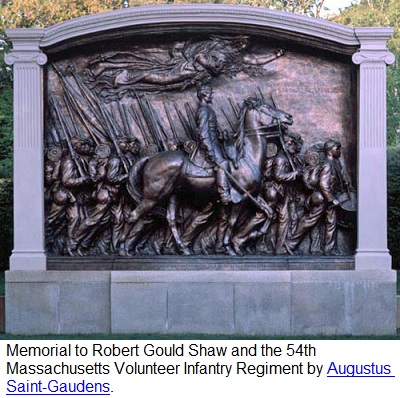
CU Blog - A Lesson in History - During the Civil War - Principle not Principal - Photo 2The 54th Regiment Massachusetts Volunteer Infantry was an infantry regiment that saw extensive service in the Union Army during the American Civil War. The regiment was one of the first official African-American units in the United States during the Civil War.[1] The regiment was authorized in March 1863 by the Governor of Massachusetts, John A. Andrew. Commanded by Colonel Robert Gould Shaw, it was commissioned after the passage of the Emancipation Proclamation.[2] Secretary of War Edwin M. Stanton decided white officers would be in charge of all “colored” units.[3] Andrew selected Robert Gould Shaw to be the regiment’s colonel and Norwood Penrose Hallowell to be its lieutenant colonel.[2] https://en.wikipedia.org/wiki/54th_Massachusetts_Infantry_Regiment retrieved October 14, 2015.

The Civil War was fought between 1861 and 1865; 625,000[5] Americans died…on both sides (365,000 total dead [4] on the Union side; 260,000 total dead on the Confederacy side). This spilled blood was a great sacrifice and should not be forgotten or undervalued. The vast majority of the deaths were White people. As many died, their surviving family members assigned blame to those of the Black community, as depicted here:

In July 13 – 16, 1863, African Americans on the New York City’s waterfront and Lower East Side were beaten, tortured, and lynched by white mobs angered over conscription for the Union war effort. [20] These mobs directed their animosity toward blacks because they felt the Civil War was caused by them. However, the bravery of the 54th would help to assuage anger of this kind…

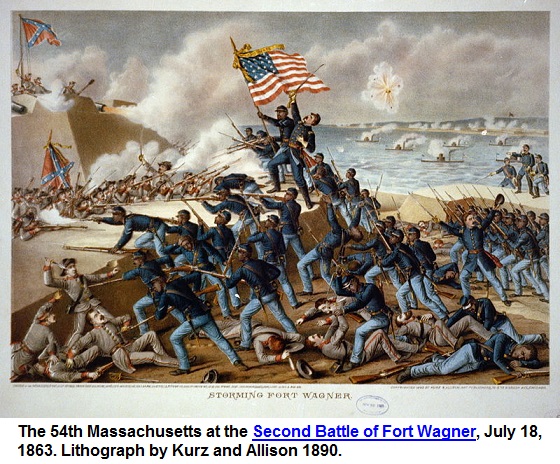
CU Blog - A Lesson in History - During the Civil War - Principle not Principal - Photo 1The regiment gained recognition on July 18, 1863, when it spearheaded an assault on Fort Wagner near Charleston, South Carolina. 272 of the 600 men who charged Fort Wagner were “killed, wounded or captured.”[18] At this battle Colonel Shaw was killed, along with 29 of his men; 24 more later died of wounds, 15 were captured, 52 were missing in action and never accounted for, and 149 were wounded. The total regimental casualties of 272 would be the highest total for the 54th in a single engagement during the war. Although Union forces were not able to take and hold the fort (despite taking a portion of the walls in the initial assault), the 54th was widely acclaimed for its valor during the battle, and the event helped encourage the further enlistment and mobilization of African-American troops, a key development that President Abraham Lincoln once noted as helping to secure the final victory. This drama was portrayed in the 1989 Motion Picture “Glory“; see 2-minute clip in the VIDEO B below.

The Civil War is being commemorated now, at the 150th Anniversary of its conclusion. But there is no need for “pomp and circumstance” in acknowledging these events in the “rear view” mirror of history. There is only the need to look and learn, as there are lessons for the Caribbean to consider in its application of daily life. This commentary is 2 of 3 considering lessons that are especially apropos for application in the Caribbean region of 2015. The lessons are cataloged as follows:

  1. Before the War: Human Rights Cannot Be Compromised
  2. During the War: Principle over Principal – Boycott Over a Difference in Pay
  3. After the War: Birth Right – Assigning Same Value to All Life

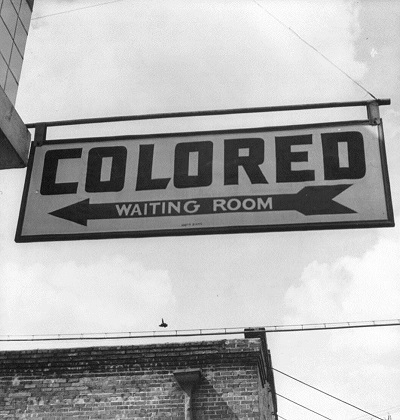
During the Civil War, as in any war, soldiers get paid. But the societal defects of racism was so acute in the US that even this administrative action was fraught with dysfunction; the encyclopedic reference continues:

The enlisted men of the 54th were recruited on the promise of pay and allowances equal to their white counterparts. This was supposed to amount to subsistence and $14 a month.[22] Instead, they were informed upon arriving in South Carolina, the Department of the South would pay them only $7 per month ($10 with $3 withheld for clothing, while white soldiers did not pay for clothing at all).[23] Colonel Shaw and many others immediately began protesting the measure.[24] Although the state of Massachusetts offered to make up the difference in pay, on principle, a regiment-wide boycott of the pay tables on paydays became the norm.[25]

CU Blog - A Lesson in History - During the Civil War - Principle not Principal - Photo 3After Shaw’s death at Fort Wagner, Colonel Edward Needles Hallowell – his lieutenant and brother of the first Lieutenant Colonel Hallowell – took up the fight to get back full pay for the troops.[26]

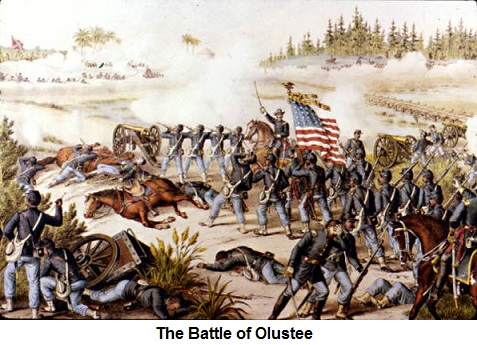
Refusing their reduced pay became a point of honor [(principle)] for the men of the 54th. In fact, at the Battle of Olustee, when ordered forward to protect the retreat of the Union forces, the men moved forward shouting, “Massachusetts and Seven Dollars a Month!”[2]

The Congressional bill, enacted on June 16, 1864, authorized equal and full pay to those enlisted troops who had been free men as of April 19, 1861. Of course not all the troops qualified. Colonel Hallowell, a Quaker, rationalized that because he did not believe in slavery he could therefore have all the troops swear that they were free men on April 19, 1861. Before being given their back pay the entire regiment was administered what became known as “the Quaker oath.”[26] Colonel Hallowell skillfully crafted the oath to say: “You do solemnly swear that you owed no man unrequited labor on or before the 19th day of April 1861. So help you God.”[26][28]

The book Go Lean…Caribbean and accompanying blogs provide lessons from history in considering the American Civil War. The Caribbean region has a debilitating societal abandonment rate; (70 percent of college educated had fled for foreign shores). The region needs a National Sacrifice ethos, where their own citizens sacrifice blood, sweat and tears on behalf of their homelands. Only then will people be less prone to abandon their homes; they will stake claim to principle over principal (money).

Early in the Go Lean book, this need for careful review of the history of slavery was acknowledged and then placed into perspective with this pronouncement (Declaration of Interdependence – Page 10):

As the history of our region and the oppression, suppression and repression of its indigenous people is duly documented, there is no one alive who can be held accountable for the prior actions, and so we must put aside the shackles of systems of repression to instead formulate efficient and effective systems to steer our own destiny.

As the colonial history of our region was initiated to create economic expansion opportunities for our previous imperial masters, the structures of government instituted in their wake have not fostered the best systems for prosperity of the indigenous people.

So the consideration of the Go Lean book, is to identify and correct any bad community ethos (fundamental spirit of our culture) and to foster positive community ethos (such as National Sacrifice and “Principle over Principal”). This point was also pronounced in the opening Declaration of Interdependence (Page 12 – 13) with these statements:

xvi. Whereas security of our homeland is inextricably linked to prosperity of the homeland, the economic and security interest of the region needs to be aligned under the same governance. Since economic crimes, including piracy and other forms of terrorism, can imperil the functioning of the wheels of commerce for all the citizenry, the accedence of this Federation must equip the security apparatus with the tools and techniques for predictive and proactive interdictions.

xix. Whereas our legacy in recent times is one of societal abandonment, it is imperative that incentives and encouragement be put in place to first dissuade the human flight, and then entice and welcome the return of our Diaspora back to our shores. This repatriation should be effected with the appropriate guards so as not to imperil the lives and securities of the repatriated citizens or the communities they inhabit. The right of repatriation is to be extended to any natural born citizens despite any previous naturalization to foreign sovereignties.

This Declaration of Interdependence opens the Go Lean…Caribbean book. The book serves as a roadmap for the introduction and implementation of the technocratic Caribbean Union Trade Federation (CU) to spearhead the elevation of Caribbean society. The book advocates learning lessons from many events and concepts in history, from as far back as the patriarchal Bible times, to as recent as the Great Recession of 2008. The roadmap seeks to reboot the region’s economic, security and governing engines to ensure that all Caribbean stakeholders have the opportunity for life, liberty and the pursuit of happiness with no abusive exploitation of any ethnic group. There is room for all people in the region to elevate and be elevated.

In this vein, the Go Lean roadmap seeks to employ “best-practices” with entitlements, labor, human rights and social safety nets to impact the CU prime directives; identified with the following 3 statements:

  • Optimization of the economic engines in order to grow the regional economy to $800 Billion & create 2.2 million new jobs.
  • Establishment of a security apparatus to protect the resultant economic engines and ensure the respect of human rights and public safety.
  • Improve Caribbean governance to support these engines.

The Caribbean is in crisis!

Alas, the Go Lean book asserts that a “crisis is a terrible thing to waste” and thereafter stresses the community ethos, strategies, tactics, implementations and advocacies to reboot, transform and turn-around the eco-systems of Caribbean society. These points are detailed in the book as follows:

Community Ethos – Deferred Gratification Page 21
Community Ethos – Economic Principles – People Choose Page 21
Community Ethos – Economic Principles – People Respond to Incentives in Predictable Ways Page 21
Community Ethos – Economic Principles – The Consequences of Choices Lie in the Future Page 21
Community Ethos – Governing Principles – Lean Operations Page 24
Community Ethos – Governing Principles – Cooperatives Page 25
Community Ethos – Ways to Impact the Future Page 26
Community Ethos – Ways to Impact a Turn-Around Page 33
Community Ethos – Ways to Improve Sharing Page 35
Community Ethos – Ways to Promote Happiness Page 36
Community Ethos – Ways to Impact the Greater Good Page 37
Strategy – Vision – Confederate 30 Member-States Page 45
Strategy – Mission – Enact a Defense Pact to Defend the Homeland Page 45
Strategy – Mission – Keep the next generation at home Page 46
Tactical – Confederating a Permanent Union Page 63
Tactical – Fostering a Technocracy Page 64
Implementation – Assemble – Incorporating all the existing regional organizations Page 96
Implementation – Ways to Pay for Change Page 101
Implementation – Security Initiatives at Start-up Page 103
Implementation – Ways to Deliver Page 109
Implementation – Reasons to Repatriate to the Caribbean Page 118
Planning – 10 Big   Ideas for the Caribbean – Confederation Without Sovereignty Page 127
Planning – Ways to Make the Caribbean Better Page 131
Advocacy – Ways to Grow the Economy Page 151
Advocacy – Ways to Create Jobs Page 152
Advocacy – Ways to Better Manage the Social Contract Page 170
Advocacy – Ways to Manage Federal Civil Service – Guaranteed Fair Treatment Page 173
Advocacy – Ways to Improve Homeland Security Page 181
Advocacy – Ways to Impact the Diaspora Page 217
Advocacy – Ways to Preserve Caribbean Heritage Page 218
Advocacy – Ways to Protect Human Rights Page 220
Advocacy – Ways to Impact Youth – Incentivize Prosperity at Home Page 227

There are other lessons for the Caribbean to learn from considering history; the following previous blog/commentaries have been detailed and considered:

https://goleancaribbean.com/blog/?p=6531 A Lesson in History – Book Review of the ‘Exigency of 2008’
https://goleancaribbean.com/blog/?p=6189 A Lesson in History – ‘Katrina’ is helping today’s crises
https://goleancaribbean.com/blog/?p=5183 A Lesson in History – Cinco De Mayo
https://goleancaribbean.com/blog/?p=5123 A Lesson in History – Royal Charter: Zimbabwe -vs- South Africa
https://goleancaribbean.com/blog/?p=5055 A Lesson in History – Empowering Families
https://goleancaribbean.com/blog/?p=4971 A Lesson in History – Royal Charter: Truth & Consequence
https://goleancaribbean.com/blog/?p=4935 A Lesson in History – The ‘Grand Old Party’ of American Politics
https://goleancaribbean.com/blog/?p=4720 A Lesson in History – SARS in Hong Kong
https://goleancaribbean.com/blog/?p=4166 A Lesson in History – Panamanian Balboa
https://goleancaribbean.com/blog/?p=2809 A Lesson in History – Economics of East Berlin
https://goleancaribbean.com/blog/?p=2670 A Lesson in History – Rockefeller’s Pipeline
https://goleancaribbean.com/blog/?p=2585 A Lesson in History – Concorde SST
https://goleancaribbean.com/blog/?p=2480 A Lesson in History – Community Ethos of WW II Detroit
https://goleancaribbean.com/blog/?p=2297 A Lesson in History – Booker T versus Du Bois
https://goleancaribbean.com/blog/?p=1531 A Lesson in History – 100 Years Ago Today – World War I
https://goleancaribbean.com/blog/?p=789 A Lesson in History – America’s War on the Caribbean

The Go Lean roadmap seeks to empower and elevate Caribbean societal engines, identifying the required community ethos. The ethos associated with populations that have endured change – National Sacrifice – is an expression of deferred gratification, choosing to focus more on the future than on the present, or the past. We should show proper application for the sacrifices these ones have endured. Such gratitude makes our community better, more resilient and more long-suffering.

We need more of this Principle over Principal!

No appreciation, no sacrifice; no sacrifice, no victory. It is that simple!

Now is the time to lean-in to this roadmap for Caribbean change, as depicted in the book Go Lean…Caribbean. All the mitigations and empowerments in this roadmap require people to fight for their homeland. This ethos will help forge change for the Greater Good. We need sacrifice; we need victories!

(This commentary is not advocating sacrificing the  Caribbean’s young men – and women – on the altar of some God of War. Nor is this a call for a revolt against the governments, agencies or institutions of the Caribbean region, but rather a petition to fight for change through the peaceful optimization of the economic, security and governing engines in the region).

Our quest is simple, learn from history and work to make the Caribbean region a better place to live, work and play. 🙂

Download the book Go Lean … Caribbean – now!

———–

Appendix VIDEO A – Movie Trailer: 12 Years A Slavehttp://www.imdb.com/video/imdb/vi302032921/

Retrieved October 14, 2015 – In the antebellum United States, Solomon Northup, a free black man from upstate New York, is abducted and sold into slavery.

———–

Appendix VIDEO B – Movie Clip Gloryhttps://youtu.be/q7qwqVbZSqE

Retrieved October 14, 2015 – Robert Gould Shaw leads the US Civil War’s first all-black volunteer company, fighting prejudices of both his own Union army and the Confederates.

Share this post:
, , , ,
[Top]

A Lesson in History – Before the Civil War: Compromising Human Rights

Go Lean Commentary

Despite the fact that there are historic events, many times “deniers” of the facts emerge. For example, the Nazi Holocaust: deniers exist even today of the actuality of the events or the 6 million Jews slaughtered in German Concentration Camps. Another major event before this was the American Civil War. Deniers abounded to the point that in many schools in the Jim Crow South, that event was taught as the “War of Northern Aggression” and the cause of “slavery” was supplanted for States’ Rights.

The pain of this academic dishonesty is not just the de-valuing of all the human sacrifices, but most importantly, the failure to learn and apply good lessons.

When someone denies an event, they cannot learn from the experiences.

Without a doubt, a Civil War was fought in the United States of America between 1861 and 1865; 625,000[5] Americans died…on both sides (365,000 total dead [4] on the Union side; 260,000 total dead on the Confederacy side). This blood should not be forgotten. There are lessons to learn from this history. This commentary is 1 of 3 considering lessons that are especially apropos for application in the Caribbean region of 2015. The lessons are cataloged as follows:

  1. Before the War: Human Rights Cannot Be Compromised
  2. During the War: Principle over Principal – Boycott Over a Difference in Pay
  3. After the War: Birth Right – Assigning Same Value to All Life

Since the early colonial period in America, slavery had been a part of the socio-economic system of British North America and was recognized in the Thirteen Colonies at the time of the United StatesDeclaration of Independence (1776). Since then, events and statements by politicians and others brought forth differences, tensions and divisions between the people of the slave states of the Southern United States and the people of the free states of the Northern United States (including Western states) over the topics of slavery. The large underlying issue from which other issues developed was whether slavery should be retained and even expanded to other areas or whether it should be contained and eventually abolished. Over many decades, these issues and divisions became increasingly irreconcilable and contentious.[1] But that last decade was pivotal; see encyclopedia reference here and VIDEO below:

CU Blog - A Lesson in History - Before the Civil War - Human Right Not Compromise - Photo 3Events in the 1850s culminated with the election of the anti-slavery-expansion Republican Abraham Lincoln as President on November 6, 1860. This provoked the first round of state secessions as leaders of the Deep South cotton states were unwilling to remain in a second class political status with their way of life threatened by the President himself. Initially, the seven Deep South states seceded, with economies based on cotton (then in heavy European demand with rising prices). They were Alabama, Florida, Georgia, Louisiana, Mississippi, South Carolina and Texas. After the Confederates attacked and captured Fort Sumter, President Lincoln called for volunteers to march south and suppress the rebellion. This pushed the four other Upper South States (Virginia, North Carolina, Tennessee, and Arkansas) also to secede. These states completed the formation of the Confederate States of America. Their addition to the Confederacy insured a war would be prolonged and bloody because they contributed territory and soldiers. – https://en.wikipedia.org/wiki/Timeline_of_events_leading_to_the_American_Civil_War retrieved October 14, 2015.

The Civil War is being commemorated now, at the 150th Anniversary of its conclusion. But there is no need for “pomp and circumstance” in acknowledging these events in the “rear view” mirror; as this was an American crisis. There is only the need to look and learn, as there is this one poignant lesson for Caribbean consideration:

    With a roaring institution of slavery, there was no premise for a concept of human rights. Without a commonality on the understanding and acceptance of human rights, differences will always be irreconcilable and contentious.

Before the Civil War, both sides continued to propagate one compromise after another. While neither side wanted the bloodshed of war, the compromises were just exercises in futility because at the root, there was no commonality on human rights. Notice this application in considering this one episode of Pre-War deliberation:

The Kansas–Nebraska Act of 1854 created the territories of Kansas and Nebraska, opening new lands for settlement, and had the effect of repealing the Missouri Compromise of 1820 by allowing white male settlers in those territories to determine through popular sovereignty whether they would allow slavery within each territory. The act was designed by Democratic Senator Stephen A. Douglas of Illinois. The initial purpose of the Kansas–Nebraska Act was to open up many thousands of new farms and make feasible a Midwestern Transcontinental Railroad. The popular sovereignty clause of the law led pro- and anti-slavery elements to flood into Kansas with the goal of voting slavery up or down, leading to Bloody Kansas[1]; (a series of violent political confrontations involving anti-slavery Free-Staters and pro-slavery “Border Ruffians”, taking place in the Kansas Territory and neighboring towns in the state of Missouri between 1854 and 1861). This Kansas–Nebraska Act used popular sovereignty so as to ignore the failures of the previous compromises. The Kansas–Nebraska Act divided the nation and pointed it toward civil war.[41] The turmoil over the act split both the Democratic and Whig parties and gave rise to the Republican Party, which split the United States into two major political camps, North (Republican) and South (Democratic). – Source: https://en.wikipedia.org/wiki/Kansas%E2%80%93Nebraska_Act retrieved October 14, 2015.
CU Blog - A Lesson in History - Before the Civil War - Human Right Not Compromise - Photo 2

The book Go Lean…Caribbean and accompanying blogs provide lessons from history in considering the American Civil War. The Caribbean has had Civil Wars and Revolutions; (think Haitian Revolution of 1791 and the Cuban Revolution of 1959). The book assessed the economic disposition of the region and then strategized how to elevate the societal engines. Among its many missions, the book advocates one simple way to grow the economy: concentrate on the basic needs of food, clothing and shelter. When analyzing clothing options, the book leans on the lessons from the pre-Civil War American South, where Cotton was King. This point was detailed in the book on Page 163:

The Bottom Line on King Cotton
The Southern United States had ideal conditions to grow cotton; the prospects where so successful, 60% of US exports, that they sought to have a world monopoly. They devoted the most valuable land and slave labor to this cause, even in place of necessities like food. They had the supply system optimized and they were willing to go to war to preserve the status quo. On the demand side, the Industrial Revolution brought innovations like mechanized spinning/weaving to Europe. This forged a vibrant apparel industry and revolutionized the world economy. Cotton was King. The term King Cotton was a slogan around 1860–61 to support secession from the United States, arguing that cotton exports would make an independent Confederate States of America economically prosperous, and – more importantly – force Great Britain and France to support the Confederacy in a Civil War. But the Union blockaded the South’s ports and harbors and shut down over 95% of cotton exports. Since the Europeans had hoarded large stockpiles of cotton, they were not injured by the boycott — the value of their stockpiles went up. So cotton production shifted to other locations in the world, like India (up 700%), Egypt and Argentina. King Cotton failed to save the South, their economy nor Confederacy.
CU Blog - A Lesson in History - Before the Civil War - Human Right Not Compromise - Photo 1

Early in the Go Lean book, this need for careful review of history was acknowledged and then placed into perspective with this pronouncement (Declaration of Interdependence – Page 10):

As the history of our region and the oppression, suppression and repression of its indigenous people is duly documented, there is no one alive who can be held accountable for the prior actions, and so we must put aside the shackles of systems of repression to instead formulate efficient and effective systems to steer our own destiny.

As the colonial history of our region was initiated to create economic expansion opportunities for our previous imperial masters, the structures of government instituted in their wake have not fostered the best systems for prosperity of the indigenous people.

So the consideration of the Go Lean book, as related to this subject is one of community ethos, defined in the book (Page 20) as the fundamental character or spirit of our culture; our underlying sentiment that informs our beliefs, customs, or practices; dominant assumptions of us, the Caribbean as a people.

    Do we now have a common premise, a concept of human rights?

This commentary, and the underlying Go Lean book asserts the answer is “No“! As a region, the Caribbean is doing particularly bad.

This point was pronounced in the opening Declaration of Interdependence (Page 12) with these acknowledgements and statements:

xii. Whereas the legacy in recent times in individual states may be that of ineffectual governance with no redress to higher authority, the accedence of this Federation will ensure accountability and escalation of the human and civil rights of the people for good governance, justice assurances, due process and the rule of law. As such, any threats of a “failed state” status for any member state must enact emergency measures on behalf of the Federation to protect the human, civil and property rights of the citizens, residents, allies, trading partners, and visitors of the affected member state and the Federation as a whole.

xiii. Whereas the legacy of dissensions in many member-states (for example: Haiti and Cuba) will require a concerted effort to integrate the exile community’s repatriation, the Federation must arrange for Reconciliation Commissions to satiate a demand for justice.

Continuing with the lessons from the American Civil War, we see that the US never accepted a common definition of human rights until … the United Nations was established (1945) and eventually codified a Human Rights Declaration for them … and the rest of the world in 1948. In the meanwhile, Blacks in the US continued to suffer – despite the abolition of slavery – with pains associated with a Peonage system, Jim Crow and blatant discriminatory practices. The oppression, suppression and oppression of Blacks (and other minorities) in the US meant that America was not a welcoming land for people of color.

Considering the Caribbean homeland, to apply lessons learned from the build-up of the American Civil War we must first accept as common: the basics of human rights.

The Go Lean book asserts the UN Declaration of Human Rights (Page 220) which provides this definition:

… standards of human behavior that are protected as legal rights in municipal and international law.[2] They are commonly understood as inalienable[3] fundamental rights “to which a person is inherently entitled simply because she or he is a human being.”[4]

This declaration aligns with the quest of the Go Lean…Caribbean book. The book serves as a roadmap for the introduction and implementation of the technocratic Caribbean Union Trade Federation (CU) to spearhead the elevation of Caribbean society. The book advocates learning lessons from many events and concepts in history, from as far back as the patriarchal Bible times, to as recent as the Great Recession of 2008. The roadmap simply seeks to reboot the region’s economic, security and governing engines to ensure that Caribbean stakeholders (citizens, guest-workers and visitors) have the opportunity for life, liberty and the pursuit of happiness. As gleaned from this lesson in history, without that common acceptance of human rights, this quest is easier said than done.

The planners of the new Caribbean, the promoters of the Go Lean book, hereby urge all in the Caribbean to make this declaration.

Just say it!

In general, the Go Lean roadmap posits that the hope for any permanent change in the Caribbean must start with this declaration and the underlying community ethos that promotes it: the Greater Good. With that in place, other progress – the needed societal elevation – can begin. The Go Lean roadmap seeks to employ “best-practices” with better strategies, tactics and implementations to impact the CU prime directives; identified with the following 3 statements:

  • Optimization of the economic engines in order to grow the regional economy to $800 Billion & create 2.2 million new jobs.
  • Establishment of a security apparatus to protect the resultant economic engines and ensure the respect of human rights and public safety in all member-states.
  • Improve Caribbean governance to support these engines.

The Go Lean book stresses key community ethos, strategies, tactics, implementations and advocacies necessary to transform and turn-around the eco-systems of Caribbean society. These points are detailed in the book as follows:

Community Ethos – Economic Principles – Economic Systems Influence   Individual Choices Page 21
Community Ethos – Economic Principles – Consequences of Choices Lie in   the Future Page 21
Community Ethos – Governing Principles – Lean Operations Page 24
Community Ethos – Ways to Impact the Future Page 26
Community Ethos – Ways to Manage   Reconciliations Page 34
Community Ethos – Ways to Impact the Greater Good Page 37
Strategy – Vision – Confederate all 30   member-states/ 4 languages into a Single   Market Page 45
Strategy – Mission – Build and foster local economic engines Page 45
Tactical – Ways to Foster a Technocracy Page 64
Tactical – Growing the Economy – Post   WW II European Marshall Plan Model Page 68
Tactical – Separation-of-Powers – CU Federal Government versus Member-State Governance Page 71
Implementation – Assemble All Regionally-focus Organizations of All Caribbean Communities Page 96
Implementation – Ways to Better Manage Debt Page 114
Planning – 10 Big Ideas – Single Market / Currency Union Page 127
Planning – Ways to Model the new European Union Page 130
Planning – Ways to Make the Caribbean Better Page 131
Planning – Ways to Improve Failed-State Indices – Minority and Human Rights Page 134
Planning – Lessons Learned from the previousWest Indies Federation Page 135
Planning – Lessons Learned from 2008 – Optimizing Economic-Financial-Monetary Engines Page 136
Planning – Lessons Learned New York City – Managing   as a “Frienemy” Page 137
Planning – Lessons Learned from Omaha – Human Flight Mitigations Page 138
Planning – Lessons Learned from East Germany – Bad Examples for Trade & Security Page 139
Planning – Lessons Learned from Detroit – Turn-around from Failure Page 140
Planning – Lessons Learned from Indian Reservations – See Photo Page 141
Planning – Lessons Learned from the American West – How to Win the Peace Page 142
Advocacy – Ways to Grow the Economy Page 151
Advocacy – Ways to Create Jobs Page 152
Advocacy – Ways to Improve Governance Page 168
Advocacy – Ways to Better Manage the Social Contract Page 170
Advocacy – Ways to Improve Homeland Security Page 180
Advocacy – Ways to Better Manage Natural Resources Page 183
Advocacy – Ways to Preserve Caribbean   Heritage Page 218
Appendix – Failed-State Index for Uneven Economic Development Page 272
Appendix – European Shuffling in the Guianas – Historic Timeline Page 307

There are other lessons for the Caribbean to learn from considering history; the following previous blog/commentaries have been detailed and considered:

https://goleancaribbean.com/blog/?p=6531 A Lesson in History – Book Review of the ‘Exigency of 2008’
https://goleancaribbean.com/blog/?p=6189 A Lesson in History – ‘Katrina’ is helping today’s crises
https://goleancaribbean.com/blog/?p=5183 A Lesson in History – Cinco De Mayo
https://goleancaribbean.com/blog/?p=5123 A Lesson in History – Royal Charter: Zimbabwe -vs- South Africa
https://goleancaribbean.com/blog/?p=5055 A Lesson in History – Empowering Families
https://goleancaribbean.com/blog/?p=4971 A Lesson in History – Royal Charter: Truth & Consequence
https://goleancaribbean.com/blog/?p=4935 A Lesson in History – The ‘Grand Old Party’ of American Politics
https://goleancaribbean.com/blog/?p=4720 A Lesson in History – SARS in Hong Kong
https://goleancaribbean.com/blog/?p=4166 A Lesson in History – Panamanian Balboa
https://goleancaribbean.com/blog/?p=2809 A Lesson in History – Economics of East Berlin
https://goleancaribbean.com/blog/?p=2670 A Lesson in History – Rockefeller’s Pipeline
https://goleancaribbean.com/blog/?p=2585 A Lesson in History – Concorde SST
https://goleancaribbean.com/blog/?p=2480 A Lesson in History – Community Ethos of WW II in Detroit
https://goleancaribbean.com/blog/?p=2297 A Lesson in History – Booker T versus Du Bois
https://goleancaribbean.com/blog/?p=1531 A Lesson in History – 100 Years Ago Today – World War I
https://goleancaribbean.com/blog/?p=789 A Lesson in History – America’s War on the Caribbean

The Go Lean roadmap seeks to empower and elevate Caribbean societal engines. It is out-of-scope to impact America (beyond the Diaspora living there); our focus is only here at home.

A lot of the pain related in this history stem from the flawed structure of colonialism. Though there is a movement to extract reparations from former colonizers, that effort is not supported by the Go Lean movement for the Caribbean.

It is NOT for the Greater Good.

It is what it is! The current assessment of the Caribbean region is dire, but yet remediation, reboot and turn-around is possible.

Our quest is simple, learn from history and work to make the Caribbean region a better place to live, work and play.  🙂

Download the book Go Lean … Caribbean – now!

———–

Appendix VIDEO – The Path to Civil War – http://www.history.com/topics/american-civil-war/american-civil-war-history/videos/us-inches-closer-to-war

The election of Abraham Lincoln was a tipping point on the path to Civil War. In the wake of Southern secession, would the new president defend the U.S. forts in rebel territory?

Share this post:
, , , ,
[Top]

Ten Puerto Rico Police Accused of Criminal Network

Go Lean Commentary

“Indeed, everyone to whom much was given, much will be demanded of him” – The Bible (Luke 12:48 – New World Translation)

When it comes to police officers, we (the community) do give them a lot (guns, authority to detain and punish), and we demand much in return (“serve and protect”). When that formula gets distorted, it is bad for the community and difficult to make progress.

The book Go Lean … Caribbean asserts that to elevate Caribbean society – to make progress – there must be a focus on the region’s economic, security and governing engines. While the book primarily targets strategies, tactics and implementations for economic empowerment (jobs, investments, education, entrepreneurship, etc.), it posits that security remediation must be front-and-center along with these other empowerment efforts.

The book directly relates (Page 23) that with the emergence of new economic drivers that “bad actors” – even within law enforcement – will also emerge thereafter to exploit the opportunities, with good, bad and evil intent. This is a historical fact, and is bound to repeat again and again. The below news article and VIDEO concurs this point.

The following news article reports on corruption by police officials that have undermined Puerto Rico’s justice institutions; a surprising discovery as Puerto Rico is expected to already be an elevated society due to their US territorial status. This is far from the reality, as the stories here relate:

CU Blog - Ten Puerto Rico Police Accused of Criminal Network - Photo 2

Title: Ten Puerto Rico police accused of criminal network activity
Retrieved October 13, 2015 from: http://news.yahoo.com/ten-puerto-rico-police-accused-criminal-network-activity-193240325.html

Miami (AFP) September 29, 2015 – Ten Puerto Rico officers have been charged with belonging to a criminal network within the police force, abusing their power to commit a long list of crimes, authorities said Tuesday.

The police used “their affiliation with law enforcement to make money through robbery, extortion, manipulating court records and selling illegal narcotics,” Rosa Emilia Rodriguez-Velez, a US attorney for the American territory, said in a statement.

CU Blog - Ten Puerto Rico Police Accused of Criminal Network - Photo 1The agents collaborated to conduct traffic stops and enter the homes of suspected criminals to steal money, property and drugs, according to the statement.

The officers also allegedly planted evidence and extorted weapons and drugs from individuals in exchange for their release.

In addition, they are accused of having manipulated court records and selling drugs outright.

“The criminal action today dismantles a network of officers who, we allege, used their badges and their guns not to uphold the law, but to break it,” said Rodriguez-Velez.

———-

This story represents a perennial threat in Puerto Rico. This has happened before, again and again; see here:

VIDEO1,700 Cops arrested in Puerto Rico!https://youtu.be/aOVF8oy9PZ0

Published on Jul 11, 2012 – Read the New York Times article in the link below. Be sure to pay extra attention to paragraphs 3, 4 and 5. I urge all police officers to ask yourselves if you really believe Raymond Kelly and Michael Bloomberg are going to defend you when the FBI comes to arrest you for Constitutional rights violations and discrimination.

This Puerto Rico experience is not an exception to American historicity, but rather this is “par for the course”. There have always been threats to US law-and-order (homeland security) from foreign and domestic “actors”; think the Old West. This is the reality in the United States mainland and in the Caribbean territories (Puerto Rico and US Virgin Islands). These threats are also expected to materialize more in the Caribbean, as a direct product of success in elevating the region’s societal engines.

The book Go Lean…Caribbean serves as a roadmap for the introduction and implementation of the technocratic Caribbean Union Trade Federation (CU) to elevate the region’s economic, securing and governing engines. The roadmap expects to raise the region to a $800 Billion Single Market economy after a 5 year period; (from $278 Billion according to 2010 assessments). This roadmap fully expects the eventual corruption activities from those in power. The roadmap thusly embeds checks-and-balances from the outset of the plan.

This point is pronounced early in the book with the Declaration of Interdependence (Page 12) that claims:

x.   Whereas we are surrounded and allied to nations of larger proportions in land mass, populations, and treasuries, elements in their societies may have ill-intent in their pursuits, at the expense of the safety and security of our citizens. We must therefore appoint “new guards” to ensure our public safety and threats against our society, both domestic and foreign. The Federation must employ the latest advances and best practices … to assuage continuous threats against public safety.

xii.  Whereas the legacy in recent times in individual states may be that of ineffectual governance with no redress to higher authority, the accedence of this Federation will ensure accountability and escalation of the human and civil rights of the people for good governance, justice assurances, due process and the rule of law. As such, any threats of a “failed state” status for any member state must enact emergency measures on behalf of the Federation to protect the human, civil and property rights of the citizens, residents, allies, trading partners, and visitors of the affected member state and the Federation as a whole.

xvi. Whereas security of our homeland is inextricably linked to prosperity of the homeland, the economic and security interest of the region needs to be aligned under the same governance. Since economic crimes, including piracy and other forms of terrorism, can imperil the functioning of the wheels of commerce for all the citizenry, the accedence of this Federation must equip the security apparatus with the tools and techniques for predictive and proactive interdictions.

Why is the report of police corruption in Puerto Rico such a concern for the CU/Go Lean planners? The book asserts that with the close proximity of the islands, a security threat in any one island will be a threat to all islands.

But the US is the most powerful and richest Single Market economy in the world, surely they have the means by which to mitigate these threats on their own? This is true! And yet, the US does cooperate with other multilateral law enforcement agencies; think Interpol.

Despite the access to American justice institutions, this Go Lean book posits that Puerto Rico and the Caribbean region must prepare its own security apparatus for its own security needs. So the request is that all Caribbean member-states form and empower a security force and related justice institutions – CariPol – to execute a limited scope on these sovereign territories. Under US law, this arrangement will be instituted with an Interstate Compact, enacted in Congress. These compacts require an administering agency. This allows for the employment of the CU Trade Federation with  scope for Puerto Rico (and the US Virgin Islands).

Puerto Rico needs a societal turn-around. They are even open to radical economic fixes.

The goal of the CU/Go Lean roadmap is to confederate all of the Caribbean – all 30 member-states – under a unified entity to provide homeland security to the local region. But Homeland Security for the Caribbean has a different meaning than for our American counterparts. Yes, we must be on defense against military intrusions like terrorism and piracy, we mostly have to contend with threats that may imperil the region’s economic engines, and crime remediation and mitigation; this includes organized crime. The CU security goal is for public safety! The goal of the CU is set to optimize Caribbean society through economic empowerment, and also the security dynamics of the region, since these are inextricably linked to this same endeavor. Therefore the Go Lean roadmap has 3 prime directives:

  • Optimization of the economic engines in order to grow the regional economy to $800 Billion & create 2.2 million new jobs.
  • Establishment of a Security Apparatus to protect the resultant economic engines from economic crimes and cross-border threats.
  • Improvement of Caribbean governance to support these engines, including a separation-of-powers with member-states to mitigate regional threats and allowing for anti-corruption measures.

The Caribbean appointing “new guards”, or a security pact to ensure justice and public safety will include many strategies, tactics and implementations deemed “best-practice” over the years, including an advanced Intelligence Gathering & Analysis effort to draw out and interdict corruption that might emerge in the region. This Security Apparatus is “Step One, Day One” in the Go Lean roadmap, covering the approach for adequate funding, accountability and control. The Go Lean book details the series of community ethos, strategies, tactics, implementations and advocacies to provide increased public safety & security in the Caribbean region:

Assessment – Puerto Rico – The Greece of the Caribbean Page 18
Community Ethos – Economic Systems Influence Individual Choices Page 21
Community Ethos – Consequences of Choices Lie in Future Page 21
Community Ethos – Privacy –vs- Public Protection Page 23
Community Ethos – Intelligence Gathering Page 23
Community Ethos – “Crap” Happens Page 23
Community Ethos – Minority Equalization Page 24
Community Ethos – Cooperatives Page 25
Community Ethos – Ways to Manage Reconciliations Page 34
Community Ethos – Ways to Improve Sharing Page 35
Community Ethos – Ways to Impact the Greater Good Page 37
Tactical – Vision – Forge a Single Market   economy Page 45
Tactical – Confederating a non-sovereign union Page 63
Tactical – Fostering a Technocracy Page 64
Tactical – Separation of Powers – Homeland Security Page 75
Tactical – Separation of Powers – CariPol: Marshals & Investigations Page 77
Implementation – Ways to Pay for Change Page 101
Implementation – Start-up Foreign Policy Initiatives – With   the US Page 102
Implementation – Start-up Security Initiatives Page 103
Implementation – Ways to Foster International Aid Page 115
Implementation – Reasons to Repatriate Page 118
Planning – Ways to Make the Caribbean Better Page 131
Planning – Ways to Improve Failed-State Indices – Mitigate Organized Crime Page 134
Planning – Lessons from the American West – Law & Order Page 142
Planning – Lessons from Egypt – Lackluster Law & Order affects   Economy Page 143
Advocacy – Ways to Grow the Economy Page 151
Advocacy – Ways to Improve Governance Page 168
Advocacy – Ways to Better Manage the Social Contract Page 170
Advocacy – Ways to Improve Leadership Page 171
Advocacy – Ways to Impact Justice – Military Police Role Page 177
Advocacy – Ways to Reduce Crime – Case Study on Organized Crime Page 178
Advocacy – Ways to Improve for Gun Control Page 179
Advocacy – Ways to Improve Homeland Security Page 180
Advocacy – Ways to Mitigate Terrorism Page 181
Advocacy – Ways to Improve Intelligence Gathering and Analysis Page 182
Advocacy – Ways to Protect Human Rights Page 220
Appendix – Trade SHIELD – E = Enforcement: Modeling Interpol Page 264
Appendix – Interstate Compacts Page 278

Other subjects related to justice and security empowerments for the region have been blogged in other Go Lean…Caribbean commentaries, as sampled here:

https://goleancaribbean.com/blog/?p=6103 Sum of All Fears – ‘On Guard’ Against Regional Deadly Threats
https://goleancaribbean.com/blog/?p=5307 8th Violent Crime Warning to Bahamas Tourists – A concern for the whole region
https://goleancaribbean.com/blog/?p=5304 Mitigating the Eventual ‘Abuse of Power’
https://goleancaribbean.com/blog/?p=4863 A Picture is worth a thousand words; a video … a million to expose corruption
https://goleancaribbean.com/blog/?p=4809 Americans arrested for aiding ISIS
https://goleancaribbean.com/blog/?p=4447 Probe of Ferguson-Missouri finds bias and corruption from cops, courts
https://goleancaribbean.com/blog/?p=4360 Dreading the ‘Caribbean Basin Security Initiative’
https://goleancaribbean.com/blog/?p=2994 Justice Strategy: Special Prosecutors and Commissions of Inquiry
https://goleancaribbean.com/blog/?p=2684 Role Model for Justice, Anti-Crime & Security: The ancient Pinkertons
https://goleancaribbean.com/blog/?p=1143 White Collar fraud in America; criminals take $272 billion a year in healthcare
https://goleancaribbean.com/blog/?p=960 NSA records all phone calls in Bahamas, according to Snowden
https://goleancaribbean.com/blog/?p=392 Jamaica to receive World Bank funds to help in crime fight
https://goleancaribbean.com/blog/?p=341 US slams Caribbean human rights practices
https://goleancaribbean.com/blog/?p=273 10 Things We Don’t Want from the US – #6: Criminal Organizations

The vision of the Go Lean roadmap is to make the Caribbean homeland, a better place to live, work and play. One of many missions, is to lower the “push” factors (from “push-and-pull” reference) so that our citizens are not led to flee their homeland for foreign (North American and European) shores. Among the many reasons people emigrate, are fear of corruption from police and political authority figures; these ones may be able to abuse power with impunity. There may be no sense of justice; “No Justice”, so “No Peace”.

Puerto Rico is an American tragedy, as it is near-Failed State status.

We must provide a roadmap to do better!

We know that “bad actors” will emerge, from internal and external origins. We must be prepared and on-guard to defend our homeland against all threats, foreign and domestic. Yet we must maintain transparency, accountability, and constant commitment to due-process and the rule-of-law.

Everyone in the Caribbean, the people and institutions, are hereby urged to lean-in to this Go Lean roadmap for elevation of Caribbean society. The roadmap calls for the heavy-lifting so that the justice institutions of the CU can execute their role in a just manner, thus impacting the Greater Good. This produces the output of a technocratic system bent on efficiency and effectiveness. In practice, this would mean accountability, transparency, and checks-and-balances in the execution of the rule-of-law.

This roadmap allows us to truly do better. 🙂

Download the book Go Lean … Caribbean – now!

Share this post:
, ,
[Top]

Cuba to Expand Internet Access

Go Lean Commentary

News Flash: The Caribbean member-states are not as advanced as other North American locations (US & Canada) or many Western European countries.

Duh! Obvious, right?!

We (the Caribbean) have not all fully embraced all that is modern, like the internet in its many modes … broadband, Wi-Fi, satellite and mobile utilities. Some countries are worse than others in this regards. In some places, there may be no internet access at all.

The assertion in the book Go Lean…Caribbean, is that any plan to reboot Caribbean economics, security and governance must include promotion and regulation of Internet and Communications Technologies (ICT) as well. This Go Lean book serves as a roadmap for the introduction and implementation of the technocratic Caribbean Union Trade Federation (CU) to facilitate the growth, stewardship and oversight of ICT and electronic commerce in a regional Single Market.

CU Blog - Cuba to Expand Internet Access - Photo 1

This ad-supported news VIDEO here reports on one of our worst cases, Cuba:

VIDEOhttps://screen.yahoo.com/cuba-expand-internet-access-112000709.html

Posted on October 12, 2015 – Cuba has announced plans to expand internet access by adding Wi-Fi capacity to dozens of state-run internet centers and more than halving the cost that users pay for an hour online.

(Press || PAUSE || to STOP the continuous VIDEO).

Cuba’s lack of ICT infrastructure is understandable, considering the historicity of that island nation. (Though change is imminent!)

What’s frightening though is that ALL of the Caribbean is just a natural disaster away from also “going dark” on the internet. Imagine a hurricane, or an earthquake, or even a volcano! And yet different Caribbean member-states have been affected by these disasters … just recently.

This commentary is therefore a melding of ICT, economics, security and governance. This is a big deal for the Caribbean, as the internet is being pitched in the Go Lean roadmap as an equalizing element for the Caribbean region in competition with the rest of the world. So the internet is slated to deliver more than just email messages, but rather, to deliver the Caribbean’s future.

With the internet as the delivery vehicle, there must now be oversight and promotion for this information super-highway. Too much – as in the future for our children – is at stake.

This Go Lean roadmap calls for the heavy-lifting of building Caribbean communities, of shepherding important aspects of Caribbean life, including telecommunication policies across member-state borders. In fact, the roadmap has these 3 prime directives:

  • Optimization of the economic engines in order to grow the regional economy to $800 Billion & create 2.2 million new jobs.
  • Establishment of a security apparatus – including an emergency management apparatus – to protect the resultant economic engines.
  • Improvement of Caribbean governance to support these engines, utilizing a separation-of-powers with member-states.

These prime directives will elevate Caribbean society, above and beyond what any one member-state can do alone. This is the prospect of a unified effort, a leveraged Single Market. This reality was identified early in the Go Lean book (Pages 13 & 14) in the in the following pronouncements in the Declaration of Interdependence:

xvi.    Whereas security of our homeland is inextricably linked to prosperity of the homeland, the economic and security interest of the region needs to be aligned under the same governance. … [The] accedence of this Federation must equip the security apparatus with the tools and techniques for predictive and proactive interdictions.

xxvii. Whereas the region has endured a spectator status during the Industrial Revolution, we cannot stand on the sidelines of this new economy, the Information Revolution. Rather, the Federation must embrace all the tenets of Internet Communications Technology (ICT) to serve as an equalizing element in competition with the rest of the world. The Federation must bridge the digital divide and promote the community ethos that research/development is valuable and must be promoted and incentivized for adoption.

So what exactly can be promoted here and now to elevate the Caribbean region’s ICT infrastructure above and beyond what the member-states can do themselves, independently? Or more so, what can be accomplished for ICT infrastructure during times of distress?

This following news article identifies an effort by the social media giant Facebook, to employ internet access by satellite when land-lines are unavailable, or not even installed. See the story here, considering that this solution would be perfect for the Caribbean:

Title: Facebook to launch satellite to expand Internet access in Africa

(Source retrieved October 12, 2015 from: http://news.yahoo.com/facebook-launch-satellite-expand-internet-access-africa-224718015–finance.html)

(Reuters) – Facebook Inc said it would launch a satellite in partnership with France’s Eutelsat Communications to bring Internet access to large parts of sub-Saharan Africa.

A Facebook logo is displayed on the side of a tour bus in New York's financial districtThe satellite, part of Facebook’s Internet.org platform to expand internet access mainly via mobile phones, is under construction and will be launched in 2016, the companies said on Monday. (http://on.fb.me/1JPiTZC)

The satellite, called AMOS-6, will cover large parts of West, East and Southern Africa, Facebook Chief Executive Mark Zuckerberg said in a Facebook post.

“To connect people living in remote regions, traditional connectivity infrastructure is often difficult and inefficient, so we need to invent new technologies,” Zuckerberg said.

The Internet.org platform offers free access to pared-down web services, focused on job listings, agricultural information, healthcare and education, as well as Facebook’s own social network and messaging services.

Growth in the number of people with access to the Internet is slowing, and more than half the world’s population is still offline, the United Nations Broadband Commission said last month.

Facebook has nearly 20 million users in major African markets Nigeria and Kenya, statistics released by it showed last month, with a majority using mobile devices to access their profiles.

The company opened its first African office in Johannesburg in June.

Tech news website The Information reported in June that Facebook had abandoned plans to build a satellite to provide Internet service to continents such as Africa. (http://bit.ly/1JPiVkn)

(Reporting by Sai Sachin R in Bengaluru; Editing by Don Sebastian)

Related: Facebook Will Help To Bring Internet Access To U.N. Refugee Camps, Mark Zuckerberg Says

This issue of internet deployment and governance has been a frequent topic for Go Lean commentaries. Other blog-commentaries on this subject have detailed the full width-and-breath of preparing Caribbean society for the diverse economic, security and governing issues of managing ICT as a utility in this new century. See sample blogs here:

https://goleancaribbean.com/blog/?p=6385 Wi-Fi Hot Spots Run By Hackers Are Targeting Tourists
https://goleancaribbean.com/blog/?p=6341 The Need for Online Tourism Marketing Stewardship
https://goleancaribbean.com/blog/?p=5435 China Internet Policing – Model for Caribbean
https://goleancaribbean.com/blog/?p=5353 US Presidential Politics and the Internet
https://goleancaribbean.com/blog/?p=4793 Online reviews – like Yelp and Angie’s List – can wield great power for services marketed, solicited and contracted online.
https://goleancaribbean.com/blog/?p=4381 Net Neutrality – The need for Caribbean Administration of the Issue.
https://goleancaribbean.com/blog/?p=4337 Crony-Capitalism Among the Online Real Estate Industry
https://goleancaribbean.com/blog/?p=3881 European and North American Intelligence Agencies to Ramp-up Cyber Security Cooperation
https://goleancaribbean.com/blog/?p=906 Bitcoin e-Payments needs regulatory framework to manage ‘risky’ image
https://goleancaribbean.com/blog/?p=308 Caribbean Communications Infrastructure Program (CARCIP) and the Caribbean Telecommunications Union (CTU) urges greater innovation and protection.

These commentaries demonstrate that there is the need for a technocratic governing body to better facilitate and promote the internet in the Caribbean, for commerce, security and government applications. The CU is designed to provide that governance and promotion. Successful execution of the CU/Go Lean roadmap will result a surge in internet/online activity and transactions; as there is the plan to deploy schemes for e-Commerce (Central Bank adoption of Electronic Payment systems) and a Facebook-style social media network www.myCaribbean.gov; (administered by the regional Caribbean Postal Union).

The Go Lean book details the community ethos, plus the execution of related strategies, tactics, implementations and advocacies to facilitate this ICT vision. The following is a sample of these specific details from the book:

Community Ethos – Deferred Gratification Page 21
Community Ethos – Economic Principles – People Choose Page 21
Community Ethos – Economic Principles – People Respond to Incentives in Predictable Ways Page 21
Community Ethos – Economic Principles – The Consequences of Choices Lie in the Future Page 21
Community Ethos – Governing Principles – Lean Operations Page 24
Community Ethos – Governing Principles – Return on Investments Page 24
Community Ethos – Ways to Impact the Future Page 26
Community Ethos – Ways to Foster Genius Page 27
Community Ethos – Ways to Promote Intellectual Property Page 29
Community Ethos – Ways to Impact Research & Development Page 30
Community Ethos – Ways to Bridge the Digital Divide Page 31
Community Ethos – Ways to Improve Sharing Page 35
Community Ethos – Ways to Impact the Greater Good Page 37
Strategy – Vision – Confederate 30 Member-States into a Single Market Page 45
Strategy – Mission – Embrace the Advances of Technology Page 46
Strategy – Agents of Change – Technology Page 57
Strategy – Agents of Change – Climate Change Page 57
Tactical – Fostering a Technocracy Page 64
Tactical – Separation of Powers – Caribbean Central Bank Page 73
Tactical – Separation of Powers – Caribbean Postal Union Page 78
Tactical – Separation of Powers – Communications and Media Authority Page 79
Implementation – Ways to Pay for Change Page 101
Implementation – Ways to Deliver Page 109
Implementation – Reasons to Repatriate to the Caribbean Page 118
Planning – 10 Big Ideas for the Caribbean Region – Cyber-Caribbean Page 127
Planning – Ways to Make the Caribbean Better Page 136
Planning – Reasons Why the CU Will Succeed Page 137
Advocacy – Ways to Grow the Economy Page 151
Advocacy – Ways to Create Jobs Page 152
Advocacy – Ways to Improve Education – Promotion of   e-Learning Page 159
Advocacy – Ways to Improve Governance – e-Government & e-Delivery Deployments Page 168
Advocacy – Ways to Better Manage the Social Contract – Technology/Efficiencies Page 170
Advocacy – Ways to Improve Communications – Regulate Cross-Border Broadband and WiFi Modes Page 186
Advocacy – Ways to Foster Technology – Intellectual Property Protections Page 197
Advocacy – Ways to Foster e-Commerce – e-Payments & Wifi Facilitations Page 198
Advocacy – Ways to Impact Main Street – Wifi & Mobile Apps: Time and Place Page 201
Advocacy – Ways to Improve Monopolies – Utilities to Oversee ICT/New Media Page 202
Advocacy – Ways to Impact the Youth – Foster Work Ethic for ICT Page 227
Advocacy – Ways to Impact Urban Living – Broadband for Work-at-Home Page 234
Advocacy – Ways to Impact Rural Living – Ideal for Satellite Deployment Page 235

While the Go Lean book focuses primarily on economic issues, it also recognizes that technology is paramount.

We must nurture growth in this industry space – Cyber Space – for the Caribbean’s present and future dispositions.

The returns on our investments will be garnered by our children.

For example:

Imagine no need to go abroad to college because access is enabled for any college/university of choice by logging on to the internet.

We must welcome this change!

The Go Lean book describes the effort to create this reality as heavy-lifting, and then urges all to lean-in to this roadmap.

This urging is repeated here again. All Caribbean stakeholders (people, organizations and governments) are urged to lean-in to this roadmap. This is conceivable, believable and achievable. We can do this … and make the region a better place to live, work and play.  🙂

Download the book Go Lean…Caribbean now!

Share this post:
, , , ,
[Top]

Lessons from Iceland – Model of Recovery

Go Lean Commentary

There are so many lessons the Caribbean region can learn from the island Republic of Iceland.

CU Blog - Lessons from Iceland - Model of Recovery - Photo 1First, it’s an island, Duh!!!

Just like with the Caribbean, logistics of trade is more difficult as it must be based on naval and aeronautical solutions.

They have natural disasters … volcanoes as opposed to hurricanes or earthquakes.

The population is 320,000 … the range of many Caribbean countries; (i.e. Bahamas, Barbados, Belize, Guadeloupe (Fr.), Martinique (Fr.) and Suriname). Yet, it is not grouped with the formal Small Island Developing States (SIDS) as is all the sovereign Caribbean territories. The following defines the common traits:

Small Island Developing States are low-lying coastal [sovereign] countries that tend to share similar sustainable development challenges, including small but growing populations, limited resources, remoteness, susceptibility to natural disasters, vulnerability to external shocks, excessive dependence on international trade, and fragile environments. Their growth and development is also held back by high communication, energy and transportation costs, irregular international transport volumes, disproportionately expensive public administration and infrastructure due to their small size, and little to no opportunity to create economies-of-scale. – Source: https://en.wikipedia.org/wiki/Small_Island_Developing_States

Iceland has done many things well so that everyone in the Caribbean, all SIDS countries for that matter, need to take notice.

During the bad days of the Great Recession – at the precipice of disaster – the country deviated from other troubled regions …

Iceland let its banks fail in 2008 because they proved too big to save.

How does it relate to the Caribbean? The Caribbean is at the precipice … now; many of the member-states are near Failed-State status, while others are still hoping to recover from the devastating Great Recession of 2008. Turn-around should not take this long – 7 years. Strategies, tactics and implementations of best-practices to effect a turn-around must be pursued now.

Iceland has now recovered, and complaining about a 2% unemployment rate. What did they do that was so radically different than other locations? For one, they changed course regarding economics, security and governing policies. An ultra-capitalist movement had taken hold of the country and business communities; they pursued an aggressive “boom-or-bust” strategy, that ultimately “busted”, rather than continue on that road, the country – all aspects of society – altered course and returned to a path of sound fundamentals.

They rebooted and turned-around! Iceland embraced all aspects of turn-around strategies, mandating bankruptcies and “wind-downs” so that the economy – and society in general – could start anew.

This article is in consideration of the book Go Lean…Caribbean; it serves as a roadmap for the introduction and implementation of the technocratic Caribbean Union Trade Federation (CU) and Caribbean Central Bank (CCB) to provide better stewardship, to ensure that the economic/currency failures of the past, in the Caribbean and other regions, do not re-occur here in the homeland.

We can learn so much from this episode in Icelandic history, the good, the bad and the ugly. See the encyclopedic details here:

Reference Title: Iceland’s Economy and Recovery
CU Blog - Lessons from Iceland - Model of Recovery - Photo 2In 2007, Iceland was the seventh most productive country in the world per capita (US$54,858), and the fifth most productive by GDP at purchasing power parity ($40,112). About 85 percent of total primary energy supply in Iceland is derived from domestically produced renewable energy sources.[93] Utilization of abundant hydroelectric and geothermal power has made Iceland the world’s largest electricity producer per capita.[94] … Historically, Iceland’s economy depended heavily on fishing, which still provides 40% of export earnings and employs 7% of the work force.[49] The economy is vulnerable to declining fish stocks and drops in world prices for its main material exports: fish and fish products, aluminum, and ferrosilicon.

Iceland had been hit especially hard by the Great Recession that began in December 2007, because of the failure of its banking system and a subsequent economic crisis. Before the crash of the country’s three largest banks, Glitnir, Landsbanki and Kaupthing, their combined debt exceeded approximately six times the nation’s gross domestic product of €14 billion ($19 billion).[116][117] In October 2008, the Icelandic parliament passed emergency legislation to minimize the impact of the Financial crisis. The Financial Supervisory Authority of Iceland used permission granted by the emergency legislation to take over the domestic operations of the three largest banks.[118] Icelandic officials, including central bank governor Davíð Oddsson, stated that the state did not intend to take over any of the banks’ foreign debts or assets. Instead, new banks were established to take on the domestic operations of the banks, and the old banks will be run into bankruptcy.

On 28 October 2008, the Icelandic government raised interest rates to 18% (as of August 2010, it was 7%), a move which was forced in part by the terms of acquiring a loan from International Monetary Fund (IMF). After the rate hike, trading on the Icelandic króna finally resumed on the open market, with valuation at around 250 ISK per Euro, less than one-third the value of the 1:70 exchange rate during most of 2008, and a significant drop from the 1:150 exchange ratio of the week before.

CU Blog - Lessons from Iceland - Model of Recovery - Photo 3On 20 November 2008, in an effort to stabilize the situation, the Icelandic government stated that all domestic deposits in Icelandic banks would be guaranteed, imposed strict capital controls to stabilize the value of the Icelandic króna, and secured a US$5.1bn sovereign debt package from the IMF and the Nordic countries – Denmark, Finland, Norway, and Sweden agreed to lend $2.5 billion. [119] – in order to finance a budget deficit and the restoration of the banking system. (The international bailout support program led by IMF officially ended on August 31, 2011, while the capital controls which were imposed in November 2008 are still in place only recently ended in the last few weeks).

On 26 January 2009, the coalition government collapsed due to the public dissent over the handling of the financial crisis. A new left-wing government was formed a week later and immediately set about removing Central Bank governor Davíð Oddsson and his aides from the bank through changes in law. Davíð was removed on 26 February 2009 in the wake of protests outside the Central Bank.[120]

The financial crisis had a serious negative impact on the Icelandic economy. The national currency fell sharply in value, foreign currency transactions were virtually suspended for weeks, and the market capitalization of the Icelandic stock exchange fell by more than 90%. As a result of the crisis, Iceland underwent a severe economic depression; the country’s gross domestic product dropped by 10% in real terms between the third quarter of 2007 and the third quarter of 2010.[6] A new era with positive GDP growth started in 2011, and has helped foster a gradually declining trend for the unemployment rate. The government budget deficit has declined from 9.7% of GDP in 2009 and 2010 to 0.2% of GDP in 2014;[7] the central government gross debt-to-GDP ratio is expected to decline to less than 60% in 2018 from a maximum of 85% in 2011.[8]

[A post-mortem analysis helped to put the blame for Iceland’s crisis on a bad community ethos that had encapsulated the whole country related to debt]:

[Disregarding their] small domestic market, Iceland’s banks had financed their expansion with loans on the interbank lending market and, more recently, by deposits from outside Iceland (which are also a form of external debt). Households also took on a large amount of debt, equivalent to 213% of disposable income, which led to inflation.[117] This inflation was exacerbated by the practice of the Central Bank of Iceland issuing liquidity loans to banks on the basis of newly issued, uncovered bonds[118] – effectively, printing money on demand.

[Then the turn-around took hold …]

By mid-2012 Iceland was regarded as one of Europe’s recovery success stories. It has had two years of economic growth. Unemployment was down to 6.3% and Iceland was attracting immigrants to fill jobs. Currency devaluation effectively reduced wages by 50% making exports more competitive and imports more expensive. Ten-year government bonds were issued below 6%, lower than some of the PIIGS nations in the EU (Portugal, Italy, Ireland, Greece, and Spain). Tryggvi Thor Herbertsson, a member of parliament, noted that adjustments via currency devaluations are less painful than government labor policies and negotiations.

By June 2012, Landsbanki managed to repay about half of the Icesave debt.[124]

According to Bloomberg, Iceland was on the trajectory of 2% unemployment as a result of crisis-management decisions made back in 2008, including allowing the banks to fail.[125]. [Here are the highlighted bullets of this story posted January 27, 2014:]

    Iceland let its banks fail in 2008 because they proved too big to save.
    Now, the island is finding crisis-management decisions made half a decade ago have put it on a trajectory that’s turned 2 percent unemployment into a realistic goal.
    While the Euro area grapples with record joblessness, led by more than 25 percent in Greece and Spain …

[Iceland is NOT a member of the EU], nevertheless, while EU fervor has cooled [due to the crisis] the government continues to pursue membership.[246]
Source: Wikipedia Online Encyclopedia – Retrieved 09/23/2015 from: https://en.wikipedia.org/wiki/2008%E2%80%9311_Icelandic_financial_crisis

—–

VIDEO – What Can Greece (and the Caribbean) Learn From Iceland? – http://www.bloomberg.com/news/videos/2015-08-28/what-can-greece-learn-from-iceland-

Published on Aug 28, 2015 – Central Bank of Iceland Governor Mar Gudmundsson talks with Brendan Greeley about Iceland’s capital controls and what Greece can learn from Iceland in handling its credit crisis. He speaks on “Bloomberg Markets.”

The lessons from Iceland really magnify in reflection of the Caribbean considering the community ethos or attitudes regarding “debt”. The book described community ethos as:

“the fundamental character or spirit of a culture; the underlying sentiment that informs the beliefs, customs, or practices of a group or society; dominant assumptions of a people or period; practices of a group or society; dominant assumptions of a people or period” – Go Lean…Caribbean Page 20.

While Iceland featured a negative community ethos in this case, their model demonstrates that the spirit-beliefs-customs-practices of a community can be altered.

Yes, Iceland fixed their heart … first; then the recovery of the community’s economic, security and governing engines took root. It is very important that the Caribbean learn this lesson and apply the corrections to our community ethos, and then to our systems of commerce and governance. The Go Lean book opened with this pronouncement (Page 10), gleaning insight from the US Declaration of Independence:

We hold these truths to be self-evident, that all men are created equal, that they are endowed by their Creator with certain unalienable rights, that among these are life, liberty and the pursuit of happiness; that to secure these rights, governments are instituted among men, deriving their just powers from the consent of the governed. That whenever any form of government becomes destructive to these ends, it is the right of the people to alter or to abolish it, and to institute new government, laying its foundation on such principles and organizing its powers in such form, as to them shall seem most likely to effect their safety and happiness.

The Go Lean roadmap calls for instituting the CU Trade Federation and the Caribbean Central Bank (CCB) to take the lead in forging the needed changes to the region’s economic and financial eco-systems. Firstly, there is the need to foster the best practices in the region regarding debt. The roadmap calls for a cooperative among Central Banks to form the CCB to foster interdependence, sharing, economies-of-scale and collaboration across the region despite the divergent politics, culture and languages. The premise is simple: while we are all different, we are all “in the same boat”. So the underlying principle of this motivation is the regional Greater Good.

The realities of the Great Recession, and Iceland’s troubles in the foregoing reference source, prove the interconnectivity of the financial systems; bank/currency troubles in one country easily become trouble for another country. A larger Single Market (42 million people in 30 member-states) for the Caribbean would provide less elasticity and more shock-absorption here from eruptions in the global financial markets. The Caribbean is never spared; in fact we are directly affected as tourism – our primary economic driver – depends on the disposable income from our trading partners, mostly North American and Western European countries. This is why our region was so devastated with the events, repercussions and consequences of 2008.

Considering the past, the Caribbean has had to learn hard lessons on economic booms … and busts. Any attempt to reboot Caribbean economic landscape must first start with a strenuous oversight of regional currencies. Thusly, the strategy is to integrate to the single currency, the Caribbean Dollar (C$). The tactical approach is to provide technocratic oversight with the CCB pursuing only the Greater Good, and no special group’s special interest.

Also in the opening of the Go Lean book, this need for regional stewardship of Caribbean currencies was pronounced in the Declaration of Interdependence (Page 12 & 13) with these statements:

xi.    Whereas all men are entitled to the benefits of good governance in a free society, “new guards” must be enacted to dissuade the emergence of incompetence, corruption, nepotism and cronyism at the peril of the people’s best interest. The Federation must guarantee the executions of a social contract between government and the governed.

xii.   Whereas the legacy in recent times in individual states may be that of ineffectual governance with no redress to higher authority, the accedence of this Federation will ensure accountability and escalation of the human and civil rights of the people for good governance, justice assurances, due process and the rule of law. As such, any threats of a “failed state” status for any member state must enact emergency measures on behalf of the Federation to protect the human, civil and property rights of the citizens, residents, allies, trading partners, and visitors of the affected member state and the Federation as a whole.

xxiv.    Whereas a free market economy can be induced and spurred for continuous progress, the Federation must install the controls to better manage aspects of the economy: jobs, inflation, savings rate, investments and other economic principles. Thereby attracting direct foreign investment because of the stability and vibrancy of our economy.

xxv.    Whereas the legacy of international democracies had been imperiled due to a global financial crisis, the structure of the Federation must allow for financial stability and assurance of the Federation’s institutions. To mandate the economic vibrancy of the region, monetary and fiscal controls and policies must be incorporated as proactive and reactive measures. These measures must address threats against the financial integrity of the Federation and of the member-states.

The Go Lean book, and previous blog/commentaries, stressed the key community ethos, strategies, tactics, implementations and advocacies necessary to appoint new stewards for the regional financial eco-system. These points are detailed in the book as follows:

Community Assessment – Puerto – The Greece of the Caribbean Page 18
Community Ethos – Economic Principles – All Choices Involve Costs Page 21
Community Ethos – Economic Principles – Economic Systems Influence Individual Choices Page 21
Community Ethos – Economic Principles – Consequences of Choices Lie in the Future Page 21
Community Ethos – Economic Principles – Money Multiplier Page 23
Community Ethos – Governing Principles – Lean Operations Page 24
Community Ethos – Governing Principles – Return on Investments Page 24
Community Ethos – Governing Principles – Cooperatives Page 25
Community Ethos – Ways to Impact the Future – Count on the Greedy to be Greedy Page 26
Community Ethos – Ways to Impact Turn-Arounds – Bankruptcy Processing Page 33
Community Ethos – Ways to Improve Sharing Page 35
Community Ethos – Ways to Impact the Greater Good Page 37
Strategy – Vision – Confederate the region into a Single Market Page 45
Strategy – Mission – Fortify the Stability of the Securities Markets Page 45
Strategy – Provide Proper Oversight and Support for the Depository Institutions Page 46
Strategy – e-Payments and Card-based Transactions Page 49
Tactical – Confederating a Permanent Union Page 63
Tactical – Growing the Economy – Minimizing Bubbles Page 69
Tactical – Separation-of-Powers – Depository Insurance & Regulatory Agency Page 73
Anecdote – Turning Around CARICOM – Effects of 2008 Financial Crisis Page 92
Implementation – Assemble Caribbean Central Bank as a Cooperative Page 96
Implementation – Ways to Better Manage Debt Page 114
Planning – 10 Big Ideas – Single Market / Currency Union Page 127
Planning – Lessons Learned from 2008 Page 136
Planning – Lessons Learned from New York City – Wall Street Page 137
Planning – Ways to Measure Progress Page 147
Anecdote – Caribbean Currencies Page 149
Advocacy – Ways to Grow the Economy Page 151
Advocacy – Ways to Control Inflation Page 153
Advocacy – Ways to Better Manage Foreign Exchange Page 154
Advocacy – Ways to Improve Governance Page 168
Advocacy – Ways to Better Manage the Social Contract Page 170
Advocacy – Ways to Foster Cooperatives Page 176
Advocacy – Ways to Foster Electronic Commerce Page 198
Advocacy – Reforms for Banking Regulations Page 199
Advocacy – Ways to Impact Wall Street Page 200
Advocacy – Ways to Impact Main Street Page 201
Appendix – Tool-kits for Capital Controls Page 315

There is a lot to learn from the analysis of economic stewardship of other communities. The successes and failures of banking/economic stewardship were further elaborated upon in these previous blog-commentaries:

https://goleancaribbean.com/blog/?p=6531 A Lesson in History – Book Review of the ‘Exigency of 2008’
https://goleancaribbean.com/blog/?p=5818 Greece: From Bad to Worse
https://goleancaribbean.com/blog/?p=4166 A Lesson in History – Panamanian Balboa
https://goleancaribbean.com/blog/?p=3858 ECB unveils 1 trillion Euro stimulus program
https://goleancaribbean.com/blog/?p=3814 Lessons from the Swiss unpegging the franc
https://goleancaribbean.com/blog/?p=3582 For Canadian Banks: Caribbean is a ‘Bad Bet’
https://goleancaribbean.com/blog/?p=3397 A Christmas Present for the Banks from the Omnibus Bill
https://goleancaribbean.com/blog/?p=3090 Lessons Learned – Europe Sovereign Debt Crisis of 2009
https://goleancaribbean.com/blog/?p=3028 Why India is doing better than most emerging markets
https://goleancaribbean.com/blog/?p=2930 ‘Too Big To Fail’ – Caribbean Version
https://goleancaribbean.com/blog/?p=2090 The Depth & Breadth of Remediating 2008
https://goleancaribbean.com/blog/?p=1014 Canadian View: All is not well in the sunny Caribbean
https://goleancaribbean.com/blog/?p=833 One currency, divergent economies
https://goleancaribbean.com/blog/?p=518 Analyzing the Data – What Banks learn about financial risks

According to the foregoing article, and VIDEO, the origin of Iceland’s crisis was greed; the banks assuming more risk, to garner more profit, and consumers borrowing more credit so as to … consume more.

Greed – it is what it is.

The Go Lean book declares to “count on greedy people to be greedy” (Page 26). This situation is manifested time and again, all over the world. The Go Lean book provides the roadmap to anticipate greed, monitor and mitigate it. The book declares (Page 23):

… “bad actors” will also emerge thereafter to exploit the opportunities, with good, bad and evil intent. A Bible verse declares: “What has been will be again, what has been done will be done again; there is nothing new under the sun” – Ecclesiastes 1:9 New International Version.

We have so many lessons to learn from the Great Recession, and the disposition of Iceland.

Only at the precipice do they change!

Lesson learned!

The Caribbean is hereby urged to lean-in to this Go Lean confederation roadmap. Everyone – people, businesses, banks and governments – can benefit from the consideration of this roadmap. As this roadmap is the “turn-by-turn directions”, the heavy-lifting, to move the region to its new destination: a better homeland to live, work and play.  🙂

Download the book Go Lean … Caribbean – now!

Share this post:
, , , , , , ,
[Top]

A Lesson in History – Book Review of the ‘Exigency of 2008’

Go Lean Commentary

“Exigent circumstances” call for extraordinary measures.

The textbook definition is a situation that demands prompt action or remedy; an emergency. On the other hand, the actual legal definition:

An exigent circumstance, in the criminal procedure law of the United States, allows law enforcement, under certain circumstances, to enter a structure without a search warrant or, if they have a “knock and announce” warrant, without knocking and waiting for refusal. It must be a situation where people are in imminent danger, evidence faces imminent destruction, or a suspect’s imminent escape.  (Source: https://en.wikipedia.org/wiki/Exigent_circumstance)

What would constitute an “exigent circumstance” requiring national attention?

War (or any threat to national defense), of course …
… high-crime incidents and natural disasters.

CU Blog - Exigency of 2008 - Photo 2These are all physicals circumstances. In American jurisprudence, physical threats are categorized as a ‘Clear and Present Danger’ where a potential danger must be assuaged otherwise it will likely cause a catastrophe. (This point was detailed in a previous blog-commentary).

But as for economic exigent circumstances, these can also be catastrophic!

The prominent economic exigent circumstance of recent history is the Great Recession of 2008 – see VIDEO here. (The whole world has been shaped by the events of 2008).

The US Secretary of the Treasury at that time, Henry Paulson, recognized the urgency and emergency of the financial crisis early in 2008 and asked the President (George W. Bush) for a War Powers Declaration; (Appendix A). This refers to the federal law intended to allow the US Congress to declare war, while the President executes the war as Commander-in-Chief.

In 2008 historicity, Congress did approve legislation to declare and fund a defense against the financial crisis; and the President did command a Bail-out strategy to restore the integrity of the economy.

This was economic war! Not just some normal market correction.

But were the actions legal?

This was the premise for the new book by Philip Wallach “To the Edge: Legality, Legitimacy, and the Responses to the 2008 Financial Crisis“. The Amazon summary follows:

CU Blog - Exigency of 2008 - Photo 1Were the radical steps taken by the Treasury Department and Federal Reserve to avert the financial crisis legal? When and why did political elites and the general public question the legitimacy of the government’s responses to the crisis?

In [the book] To The Edge: Legality, Legitimacy, and the Responses to the 2008 Financial Crisis, Philip Wallach chronicles and examines the legal and political controversies surrounding the government’s responses to the recent financial crisis. The economic devastation left behind is well-known, but some allege that even more lasting harm was inflicted on America’s rule of law tradition and government legitimacy by the ambitious attempts to limit the fallout. In probing these claims, Wallach offers a searching inquiry into the meaning of the rule of law during crises.

The book provides a detailed analysis of the policies undertaken – from the rescue of Bear Stearns in March 2008 through the tumultuous events of September 2008, the passage of the TARP and its broad usage, the alphabet soup of emergency Federal Reserve programs, the bankruptcies of Chrysler and GM, and the extended public ownership of AIG, Fannie Mae, and Freddie Mac. Throughout, Wallach probes the legal bases of the government’s actions and explores why concerns about the legitimacy of government actions were only sporadically grounded in concerns about legality – and sometimes ran directly against them.

The public’s sense that government officials operated through ad hoc responses that favored powerful interests has helped bring the legitimacy of American governmental institutions to historic lows. Wallach’s book recommends constructive and sensible reforms policymakers should take to ensure accountability and legitimacy before the government faces another crisis.

Product Details

  • Paperback: 319 pages
  • Publisher: Brookings Institution Press (April 21, 2015)
  • Language: English
  • ISBN-10: 0815726236
  • ISBN-13: 978-0815726234

Source: http://www.amazon.com/dp/0815726236/ref=rdr_ext_tmb

The book Go Lean…Caribbean was written in the wake of this same 2008 Financial Crisis, but for the limited perspective for the Caribbean. Many lessons-learned from 2008 are considered and applied in appropriate strategies, tactics and implementations to re-boot the Caribbean region from the catastrophe of this crisis; many member-states of the region are still suffering; i.e. Puerto Rico. The foregoing Book Review highlights a publication that is a study of the depth-and-width of the legal maneuvering for the 2008 crisis; now the same writer, Philip Wallach, has composed a supplemental essay asserting a new label to the crisis “lawfare”; see Appendix B for definition and the essay in Appendix C below.

This lawfare consideration is presented in conjunction to mitigations and remediation for protecting the Caribbean homeland. The assertion in the book Go Lean … Caribbean (Page 23) is that with the emergence of new economic engines, “bad actors” will also emerge thereafter to exploit the opportunities, with good, bad and evil intent. But the book warns against more than just people, rather “bad or exigent circumstances”; thusly referring to corporate entities, natural disasters and other cross-border threats; 2008 would have fit this definition. The book relates that “bad actors” is a historical fact that will be repeated again and again.

This point is pronounced early in the book with the Declaration of Interdependence (Page 12) that claims:

i.       Whereas the earth’s climate has undeniably changed resulting in more severe tropical weather storms, it is necessary to prepare to insure the safety and security of life, property and systems of commerce in our geographical region. As nature recognizes no borders in the target of its destruction, we also must set aside border considerations in the preparation and response to these weather challenges.

ii.      Whereas the natural formation of the landmass for our lands constitutes some extreme seismic activity, it is our responsibility and ours alone to provide, protect and promote our society to coexist, prepare and recover from the realities of nature’s occurrences.

x.      Whereas we are surrounded and allied to nations of larger proportions in land mass, populations, and treasuries, elements in their societies may have ill-intent in their pursuits, at the expense of the safety and security of our citizens. We must therefore appoint new guards to ensure our public safety and threats against our society, both domestic and foreign. The Federation must employ the latest advances and best practices … to assuage continuous threats against public safety.

xii.    Whereas the legacy in recent times in individual states may be that of ineffectual governance with no redress to higher authority, the accedence of this Federation will ensure accountability and escalation of the human and civil rights of the people for good governance, justice assurances, due process and the rule of law…

xxv.  Whereas the legacy of international democracies had been imperiled due to a global financial crisis, the structure of the Federation must allow for financial stability and assurance of the Federation’s institutions. To mandate the economic vibrancy of the region, monetary and fiscal controls and policies must be incorporated as proactive and reactive measures. These measures must address threats against the financial integrity of the Federation and of the member-states.

The Caribbean appointing new guards (security pact) to ensure public safety must include many strategies, tactics and implementations considered “best-practices” for economic crimes and systemic threats. We must be on a constant vigil against “exigence”, man-made, natural and economic. This indicates being pro-active in monitoring, mitigating and managing risks. Then when “crap” happens – economic crises – the new guards will be prepared for “exigent circumstances”.

The Go Lean book is a petition for change, serving as a roadmap for the introduction and implementation of the technocratic Caribbean Union Trade Federation (CU). The CU is set to optimize Caribbean society through economic empowerment, and also homeland security in the region, since these are inextricably linked to this same endeavor.

Therefore the Go Lean roadmap has 3 prime directives:

  • Optimization of the economic engines in order to grow the regional economy to $800 Billion & create 2.2 million new jobs.
  • Establishment of a security apparatus to protect the resultant economic engines and the Caribbean homeland.
  • Improvement of Caribbean governance to support these engines.

This is not just academic, as in the case of the foregoing Book Review and supplemental essay in Appendix C. Principals among Go Lean planners were there in 2008, engaged with major stakeholders of the Global Financial crisis: Lehman Brothers, BearStearns, JPMorganChase, CitiGroup, etc. This is real experience from the real crisis; see documentary VIDEO here:

VIDEO – Meltdown – The Men Who Crashed the World – Part 1 – https://youtu.be/JYTyluv4Gws  

This 1st of 4 parts documentary elapses 2 and half hours in total. It is recommended that this be consumed at some point as extra-credit to this discussion.
Uploaded on Oct 13, 2011- In the first episode of Meltdown, we hear about four men who brought down the global economy: a billionaire mortgage-seller who fooled millions; a high-rolling banker with a fatal weakness; a ferocious Wall Street predator; and the power behind the throne.
The crash of September 2008 brought the largest bankruptcies in world history, pushing more than 30 million people into unemployment and bringing many countries to the edge of insolvency. Wall Street turned back the clock to 1929. But how did it all go so wrong?
Lack of government regulation; easy lending in the US housing market meant anyone could qualify for a home loan with no government regulations in place.
Also, London was competing with New York as the banking capital of the world. Gordon Brown, the British finance minister at the time, introduced ‘light touch regulation’ – giving bankers a free hand in the marketplace.
All this, and with key players making the wrong financial decisions, saw the world’s biggest financial collapse.

Part 2: https://youtu.be/Bp7c2Wo9YDc
Part 3: https://youtu.be/L20DhfgPugE
Part 4: https://youtu.be/osAYMnqZyZc

Planners of the Go Lean movement were there, on the inside looking out, not the outside looking in. They were among the movers-and-shakers of the macro economy, not just armchair “Monday-morning” quarterbacks.

Thusly the CU Trade Federation is set to be “on guard”, on alert for real or perceived economic threats. The legal concept is one of being deputized by the sovereign authority for a role/responsibility in the member-state. As a security apparatus, the CU must always be a sentinel to monitor known threats; this includes man-made, natural and economic threats. Many of these exigent circumstances would be designated as primarily assigned to the CU to assuage. And then the related CU agencies will be expected to aid, assist, and support local resources in the member-states.

This is more and better than the region’s prior response in 2008. “Step One, Day One” in the Go Lean roadmap is to assume this stewardship of the regional economy. The CU organizational structure must be empowered for proactive and reactive management of economic threats and exigent circumstances. The Go Lean book details this series of community ethos, strategies, tactics, implementations and advocacies to provide this better stewardship of the economic engines of the Caribbean region:

Who We Are – SFE Foundation – 2008 History Page 8
Assessment – Puerto Rico – ‘The Greece of the Caribbean’ Page 18
Community Ethos – Economic Principles – People Respond to Incentives Page 21
Community Ethos – Economic Principles – Economic Systems Influence Individual Choices Page 21
Community Ethos – Economic Principles – Voluntary Trade Creates Wealth Page 21
Community Ethos – Economic Principles – Consequences of Choices Lie in the Future Page 21
Community Ethos – Economic Principles – Money Multiplier Page 23
Community Ethos – Governing Principles – Lean Operations Page 24
Community Ethos – Ways to Impact Turn-arounds Page 33
Community Ethos – Ways to Improve Sharing Page 35
Community Ethos – Ways to Impact the Greater Good Page 37
Strategy – Mission – Fortify the Stability of the Banking Institutions Page 45
Strategy – Provide Proper Oversight and Support for the Depository Institutions Page 46
Strategy – Agents of Change – Globalization Page 57
Tactical – Confederating a permanent union Page 63
Tactical – Ways to Foster a Technocracy Page 64
Tactical – Growing the Economy – Minimizing Bubbles Page 69
Tactical – Separation-of-Powers – Caribbean Central Bank Page 73
Tactical – Separation-of-Powers – Depository Institutions Regulatory Agency Page 73
Anecdote – Turning Around CARICOM – Effects of 2008 Financial Crisis Page 92
Implementation – Assemble Caribbean Central Bank as a Cooperative Page 96
Implementation – Ways to Pay for Change Page 101
Implementation – Ways to Better Manage Debt Page 114
Implementation – Ways to Benefit from Globalization Page 119
Planning – 10 Big Ideas – #1: Single Market / Currency Union Page 127
Planning – Ways to Improve Trade Page 128
Planning – Lessons Learned from 2008 Page 136
Advocacy – Ways to Grow the Economy Page 151
Advocacy – Ways to Create Jobs Page 152
Advocacy – Ways to Control Inflation Page 153
Advocacy – Ways to Better Manage ForEx Page 154
Advocacy – Reforms for Banking Regulations Page 199
Advocacy – Ways to Impact Wall Street Page 200
Advocacy – Ways to Impact Main Street Page 201
Advocacy – Battles in the War on Poverty Page 222
Advocacy – Ways to Help the Middle Class Page 223
Advocacy – Ways to Impact the One Percent Page 224

This commentary has frequently focused on the lessons-learned from 2008. Some other blogs related to the challenge to Caribbean economic security and governance as a result of 2008 are listed here:

https://goleancaribbean.com/blog/?p=6399 Book Review on ‘Mitigating Income Inequality’
https://goleancaribbean.com/blog/?p=6260 Puerto Rico Bondholders Coalition Launches Ad Campaign
https://goleancaribbean.com/blog/?p=5482 For-Profit Education rise Post-2008: Plenty of Profit; Little Education
https://goleancaribbean.com/blog/?p=3858 ECB unveils 1 trillion Euro stimulus program
https://goleancaribbean.com/blog/?p=3582 For Canadian Banks: Caribbean has become a ‘Bad Bet’ Post-2008
https://goleancaribbean.com/blog/?p=3397 A Christmas Present for the Banks to Return to Pre-2008 Standards
https://goleancaribbean.com/blog/?p=3311 Detroit to exit historic bankruptcy – Finally recovering from 2008
https://goleancaribbean.com/blog/?p=3164 Michigan Unemployment – Then (2008) and Now
https://goleancaribbean.com/blog/?p=2930 ‘Too Big To Fail’ – Caribbean Version
https://goleancaribbean.com/blog/?p=2090 Why So Long? Can’t We Just… – Lesson from 2008
https://goleancaribbean.com/blog/?p=1309 5 Steps of the 2008 Mortgage-Bubble-Crisis
https://goleancaribbean.com/blog/?p=1296 Remittances to Caribbean Increasing since 2008
https://goleancaribbean.com/blog/?p=798 Lessons Learned from the American Airlines 2008 Recession Debacle
https://goleancaribbean.com/blog/?p=782 Open the Time Capsule: The Great Recession of 2008
https://goleancaribbean.com/blog/?p=623 ‘Only at the precipice, do they change’
https://goleancaribbean.com/blog/?p=599 Ailing Puerto Rico – from 2008 crisis – open to radical economic fixes
https://goleancaribbean.com/blog/?p=518 What Usain Bolt can teach banks about 2008 financial risk
https://goleancaribbean.com/blog/?p=378 Fed Releases Transcripts from 2008 Meetings
https://goleancaribbean.com/blog/?p=353 Book Review: ‘Wrong – Nine Economic Policy Disasters and What We Can Learn…’
https://goleancaribbean.com/blog/?p=273 10 Things We Don’t Want from the US – #3: Americanized World Economy

According to the foregoing blog references, the Caribbean parasitic regional economy has not being gracious to its citizens, and other stakeholders (visitors, lenders, Direct Foreign Investors). We need the empowerments of the Go Lean roadmap for so many reasons; one strong motivation is to turn-around this status quo; another reason is to diversify our economy. All of this will fortify our economic security and improve our governance. Considering the history of these North American and Western European powers, we do not want to be their parasites, rather their protégé.

This is the purpose of the Go Lean roadmap, to provide a turn-by-turn direction to move the region to that destination. The advocacy here is to adopt the structure of an economic technocracy. The term technocracy is used to designate the application of the scientific method to solving social and economic problems. The CU must start off as such a technocracy, not grow into being a technocracy – too much is at stake.

All of the Caribbean is hereby urged to lean-in to this roadmap for a technocracy, to make the Caribbean a better place to live, work and play. 🙂

Download the book Go Lean…Caribbean now!

———

Appendix A: War Powers Declaration

Article I, Section 8, Clause 11 of the United States Constitution, sometimes referred to as the War Powers Clause, vests in the Congress the power to declare war, in the following wording:

[The Congress shall have Power…] To declare War, grant Letters of Marque and Reprisal, and make Rules concerning Captures on Land and Water;

A number of wars have been declared under the United States Constitution, although there is some controversy as to the exact number, as the Constitution does not specify the form of such a declaration.
(Source: https://en.wikipedia.org/wiki/War_Powers_Clause; retrieved September 22, 2015)

———

Appendix B: Lawfareblog.com

Law + Warfae = Lawfare

This name Lawfare refers both to the use of law as a weapon of conflict and, perhaps more importantly, to the depressing reality that America remains at war with itself over the law governing its warfare with others. (It could apply equally to any other country). This blog by Benjamin Wittes, Robert Chesney, and Jack Goldsmith is devoted to that nebulous zone in which actions taken or contemplated to protect a nation interact with the nation’s laws and legal institutions. In addition, this term refers to a nation’s use of legalized international institutions to achieve strategic ends, so in effect the “use of law as a weapon of war”. – Source: https://www.lawfareblog.com/about-lawfare-brief-history-term-and-site

According to Wikipedia, Lawfare is asserted by some to be the illegitimate use of domestic or international law with the intention of damaging an opponent, winning a public relations victory, financially crippling an opponent, or tying up the opponent’s time so that they cannot pursue other ventures such as running for public office,[1][2] similar to a SLAPP (strategic lawsuit against public participation) lawsuit.

———

Appendix C – Essay Title: Hard Financial Crisis Choices    

By: Philip Wallach

Providing physical security to its citizens is undoubtedly the core function of the state. As readers of Lawfare well know, it is hard work to figure out how that security function should be reconciled with sometimes-conflicting imperatives of legal process, constitutional separation of powers, and transparent and accountable government. Especially challenging is the question of how much, and for how long, exigent circumstances should expand the sphere of legitimate government activities.

Not far behind physical security as a core function of the state is providing some baseline of financial stability and economic security, especially through the protection of a functional banking system and financial markets. Once again, it is hard to discern the appropriate relationship between this financial stability function and other mission-critical governmental activities. Because financial stability in a dynamic market economy includes the expectation that downturns are a healthy part of the process, it is often difficult to distinguish between a developing crisis and normal market corrections, making the balancing act between expedient action and a commitment to act through deliberate processes all the more difficult.

But while there are volumes enough on the question of why economies experience financial crises, and torrid debates on which responses are most effective, there is a striking absence of commentary about “hard financial crisis choices,” and especially their legal aspects. Applicable judicial precedents are few and far between, the Federal Reserve’s emergency decision-making processes are shrouded in mystery (in contrast to its monetary policy decisions), and the Treasury Department is accustomed to extraordinary deference. This vacuum has had some very unfortunate practical consequences for those who fashioned the responses to our financial crisis response, which I explain in my new book, To the Edge: Legality, Legitimacy, and the Responses to the 2008 Financial Crisis (Brookings Institution Press, 2015).

Why on earth should Lawfare readers care?

Treating national security as sui generis, while obviously appropriate in some contexts, unhelpfully narrows thinking in many others. If the question is how emergencies change the scope for government action, how legitimacy is achieved by crisis responders, or what the rule of law means in times of crisis, then adding financial crises to national security crises expands the material available for analysis. Doing so may also help clarify exactly what makes national security distinctive.

Some of my book’s analysis was directly inspired by Jack Goldsmith’s Power and Constraint. The latter explains how the government is actually empowered by various watchdogs and legal requirements that seem to constrain it, because they give it credibility and validation in a way that it could not otherwise produce. In the language of my book, such things provide legitimacy, which is often a necessary precondition for effective government action. If citizens had profound trust in their government (or a quasi-religious reverence for their leaders), legitimation might require very little other than some modicum of competence. But in the world of Snowden and Enron, Abu Ghraib and revolving doors, that trust is missing. Like Jack, I argue that accountability mechanisms provide at least a partial substitute by making citizens feel confident that leaders will be held to standards of reasonableness and propriety, if not immediately in the heat of a crisis response then at least afterwards, once the dust has settled.

American leaders once took this principle to its logical conclusion by openly acting extralegally and then seeking retroactive validation, either through a congressional indemnity or by appealing to a jury. The classic examples are antiques: Thomas Jefferson’s spending without appropriations in response to the HMS Leopard naval incident; General Andrew Jackson’s maintenance of martial law in New Orleans (vividly described in a classic article all Lawfare readers would enjoy); or Abraham Lincoln’s famous resort to constitutional dictatorship from March to July of 1861.

From the beginning of the twentieth century onward, Presidents and other crisis responders have unfailingly offered legal hooks for their emergency actions. Some academic theorists’ ambitions notwithstanding, openly extralegal declarations of prerogatives seem to have no place in our thoroughly legalized modern world (as Jack argues in a rather trenchant essay in this edited volume).

Instead of asking whether law will be the tool of legitimation, the question now becomes: just how reliable a check and a legitimator is the now-universally-obligatory exercise of legal justification? If justification is based on law that itself possesses no legitimacy, or if it misuses existing law, then it cannot provide much legitimacy. On the other hand, even in the era of ubiquitous legal justification, actions with poor legal pedigrees can be accepted as legitimate if they are acceptable to the public on other grounds. We can draw some useful analogies between national security and financial crises for both of these situations in which legality and legitimacy diverge.

Woodrow Wilson’s leadership during World War I provides an interesting instance in which poor legal justifications led to legitimacy problems. Congress gave Wilson’s administration unprecedented delegated powers through a number of enabling acts (the National Defense Act, Army Appropriations Act, Lever Act, and Overman Act), thus furnishing an easy way to legally justify most of his policies. But even in that context Wilson managed to push the envelope quite aggressively, both by using the vaguely defined powers as justifications for decisions that Congress refused to support (e.g., arming merchantmen, creating the Committee on Public Information—which was effectively a propaganda ministry—and censoring telegraphs) and by sustaining his wartime institutions past the end of the war against the desires of Congress. This willingness to aggressively wield emergency powers contributed to the public’s desire for a “return to normalcy” and Democrats’ resounding defeat in 1920.

Similarly, having the backing of an expansive enabling act—namely the Emergency Economic Stabilization Act of 2008, better known as TARP—proved no guarantee of legitimacy in recent years. The Act itself was bitterly contested, with bipartisan congressional leaders failing to persuade populist backbenchers of either party.  (This made TARP different from most enabling acts; the September 2001 AUMF, passed nearly unanimously, is far more typical.) There was also a sense that TARP was dangerously free of actual guidance for the executive branch, providing only a panicked sanction for whatever the Treasury Department found necessary. Such criticisms were well-founded: TARP was used in ways that wildly diverged from its original stated purpose of purchasing troubled assets, eventually including loans to GM and Chrysler when Congress failed to provide a separate pot of money for them in December 2008. Of course bank bailouts will tend to be unpopular in ways that defending the homeland will not, but even so the sense that the executive branch was doing as it pleased—even after Congress had belatedly acted—contributed to the crisis responses’ legitimacy problems. Neither in Wilson’s case nor in TARP’s were qualms about improper legal justifications the driving force behind dissatisfaction, but they served to intensify existing concerns. (Coincidentally, TARP’s most fervent opponents also yearned for a return to the normalcy of federal government circa 1921…)

Conversely, legal flaws don’t always entail legitimacy problems. Franklin Roosevelt’s Destroyer Deal in 1940 was supported by an at-best tendentious memorandum from Attorney General Robert Jackson, but it was widely popular and never caused Roosevelt any real political problems. In the boldest maneuver of the 2008 Financial Crisis, the Treasury Department used the Exchange Stabilization Fund to guarantee money market funds in September of that year—with only a paper-thin legal justification and absolutely no precedent to support such a strange use of an authority nominally dedicated to stabilizing international currency markets. But it was a striking success, so much so that the program it supported actually brought fees into the Treasury without ever paying any money out. The weakness of its legal justification is already nearly forgotten, of interest only to the very small handful of people interested Lawfare-like subjects.

A similarity between the Destroyer Deal and the money market rescue is worth noting: both involved the federal government giving rather than taking, which limits popular opposition and also the pool of potential litigants who might have standing to challenge the action. Acting so as to only cost taxpayers generally, rather than rights-holders specifically, offers a way to avoid the determined pryings of lawyers and the unpredictable rulings of judges—harder to pull off in the national security realm, but not impossible. It is worth considering how this desire to push policymaking into less heavily lawyered areas might shape the evolution of security policy in years to come.

One last musing here (if you’re eager for more, please get yourself the book!) in the form of a question, which I’d be eager to get the Lawfare community’s thoughts on. Early on during the crisis, the well-known economist and blogger Mark Thoma suggested that economists thinking about the balance between facilitating timely responses to emergencies and the need to honor the democratic process should learn from the compromise embedded in the War Powers Resolution, in which expedient action is allowed but time-limited. Sounds like a good idea…except for the whole history of the War Powers Resolution, which as I understand it is none too encouraging.

Financial crisis responders also sometimes figured out ways to circumvent rather clear time limits. Support for Fannie Mae and Freddie Mac under the Housing and Economic Recovery Act of 2008 was supposed to be cut off at the end of 2009, but the Treasury interpreted that to mean nothing more than that its maximum level of support had to be specified by that time. As they understood them, the commitments put in place by then were effectively unlimited and indefinite guarantees of the two firms.

What is it that makes putting hard time limits on executive branch unilateral actions so difficult? The obvious generic answer is enforceability. An enforcer must be both willing and able to meet violations with serious consequences, and it is hard to find institutional actors who are both. Courts may sometimes be willing—their tendency to defer to the executive in troubled times has limits, as Lawfare’s contributors have explored many times—but with neither purse nor sword judges’ ability to stand in the way of a determined executive branch is quite modest. With its power to withdraw funding, Congress is potent enough to enforce the limits put in force by its previous incarnations, but it seems generally unwilling to exercise that power, as doing so offers no political gain and considerable political risks. Are there other possible enforcers for time limits built into grants of extraordinary executive power? Are there ways to make limits genuinely self-enforcing, such that inaction will not render the limits nugatory? Thoughts about the War Powers Resolution or about the problem more generally would be greatly appreciated, as these questions are not rhetorical.
Phil Wallach is a Fellow in the Brookings Institution’s Governance Studies Program.
Source: LawFare Legal Analysis Online Community; posted May 21, 2015; retrieved September 22, 2015  from: https://www.lawfareblog.com/hard-financial-crisis-choices

Share this post:
, , , , ,
[Top]

Private Airplanes For All

Go Lean Commentary

Private Airplanes 1The airplane is not a new invention. It goes back to the days of the Wright Brothers of Dayton, Ohio – Orville and Wilbur – and their Kitty Hawk, North Carolina test flight on December 17, 1903. Yet, after 112 years, there is still room for a lot of invention and innovation in the field of aerospace. As the old adage relates “Necessity, is the ‘mother’ of invention”.

This commentary asserts that while the United States of America was front-and-center with the initial developments in man-flights, the Caribbean region now needs to be more prominent with the innovations of flight for this new century in aviation. Why?

Necessity, is STILL the ‘mother’ of invention.

There is the need for a lot more innovative airplane transportation solutions for any region featuring an archipelago – a chain of islands. This new product here – the ICON A5* – is perhaps an ideal solution for Caribbean deployment, as it can better reach the masses and become ubiquitous for private owners-operators; see the following VIDEO:

VIDEO Title: Private airplanes for all? One company hopes so

Private planes have long been the domain of the very rich, but now one company wants to change that. ICON wants to do for air travel what Apple did for computers – demystify and make them approachable. They see a future where lots of people like me and you are soaring through the sky in a plane like this. TODAY’s Craig Melvin reports.

Private Airplanes 2This vision of ubiquitous owners-operators of amphibious airplanes – that can touchdown on land or water – portray a more efficient aviation environment for island-hoping; these vehicles would make island living more appealing to live, work and play. This commentary asserted that “our region must participate in these developments, not just spectate on them”. This aligns with the mandate for a more nimble environment to develop, test and deploy cutting-edge transportation solutions. This is the benefit of lean governmental coordination, to be able to launch initiatives like this as portrayed in the foregoing VIDEO.

Canada is a good model for the Caribbean to emulate in this regards. They have vast rural territories, not easily accessible by roads. In these far-out territories, seaplanes, floatplanes and bush planes proliferate. In addition, this ubiquity in Canada is not necessarily affiliated with the wealthy, but rather ordinary citizens; sometimes, these transportation options even become a small business opportunity.

Needless to say, a proliferation of small aircrafts raises a lot of security issues; think September 11, 2011 Terror Attacks on New York City. The aircraft in the above VIDEO, also feature the additional safety mitigation of a built-in parachute, to allow for an easy landing of any aircraft that may go into distress. (This safety feature is ingenious!).

The book, Go Lean … Caribbean, extols the principle that R&D (research and development) activities are necessary to profit from advantages in technology. We want to do R&D here in the Caribbean; manufacturing/assembly too. Since we have the demand; we should facilitate supply as well!  This is a mandate for the Caribbean Union Trade Federation (CU). This book serves as a roadmap for the introduction and implementation of the CU. This technocracy will assume oversight to optimize the region in the areas of:

      (1) economics
      (2) security
      (3) lean government

This ethos of adapting to change has now come to the Caribbean.

The status quo of the Caribbean’s transportation eco-systems is badly flawed. The region boasts transportation and fuel costs (including taxes) that are among the highest in the world.

Private Airplanes 4The Go Lean strategy is to confederate the 30 member-states of the Caribbean region to form the technocratic CU Trade Federation. Tactically, the roadmap calls for a separation-of-powers, allowing the Caribbean member-states to deputize authority of the Caribbean airspace to the one unified CU agency. Operationally, there is the need to regulate these aircrafts and the owners-operators, for their monitoring, training, licensing, maintenance compliance, search-and-rescue, incident management and everyday functionality. (Consider the risk mitigation example in the Appendix VIDEO below).

Things will go wrong! Bad things do happen to good people.

This blog-commentary touches on many related issues and subjects that affect planning for Caribbean empowerment in the aviation and  transportation industry-spaces. Many of these issues were elaborated upon in these previous blog-commentaries:

https://goleancaribbean.com/blog/?p=5376 Drones to be used for Insurance Damage Claims
https://goleancaribbean.com/blog/?p=3533 No Fear of Failure – Case Study: Bahamasair
https://goleancaribbean.com/blog/?p=3326 M-1 Rail: Alternative Motion in the Motor City
https://goleancaribbean.com/blog/?p=3225 Caribbean less competitive due to increasing aviation taxes
https://goleancaribbean.com/blog/?p=2769 DC Streetcars/Rail – Model For Caribbean Re-development
https://goleancaribbean.com/blog/?p=798 Lessons Learned from the American Airlines merger
https://goleancaribbean.com/blog/?p=673 Ghost ships – Autonomous cargo vessels without a crew
https://goleancaribbean.com/blog/?p=254 Air Antilles Launches St. Maarten Service

Though not written with this particular initiative in mind, the Go Lean roadmap anticipates the foregoing VIDEO‘s opportunities and challenges, as pronounced in the Declaration of Interdependence, (Pages 12 & 14):

xvi.    Whereas security of our homeland is inextricably linked to prosperity of the homeland, the economic and security interest of the region needs to be aligned under the same governance. Since economic crimes … can imperil the functioning of the wheels of commerce for all the citizenry, the accedence of this Federation must equip the security apparatus with the tools and techniques for predictive and proactive interdictions.

xxvii. Whereas the region has endured a spectator status during the Industrial Revolution, we cannot stand on the sidelines of this new economy, the Information Revolution. Rather, the Federation must embrace all the tenets of Internet Communications Technology (ICT) to serve as an equalizing element in competition with the rest of the world. The Federation must bridge the digital divide and promote the community ethos that research/development is valuable and must be promoted and incentivized for adoption.

xxx.   Whereas the effects of globalization can be felt in every aspect of Caribbean life, from the acquisition of food and clothing, to the ubiquity of ICT, the region cannot only consume, it is imperative that our lands also produce and add to the international community, even if doing so requires some sacrifice and subsidy.

The Go Lean book was written with the future of the Caribbean in mind. There was a certain anticipated future – with a proliferation of private aircraft owners-operators – that hasn’t really materialized … yet. But maybe now, finally, that future view is coming into focus. This is the direct quotation from the book (Page 26):

The Bottom Line on the Millennium
In the words of Yogi Berra – iconic American Baseball Hall-of-Famer: “The future ain’t what it used to be”.

This is according to a 2007 news analysis by Michael Fitzpatrick, Science Writer for The Guardian (UK) newspaper:

    No flying cars, no dinners in a pill, and certainly no cool rocketing off to space cities in the required outfit of the future. We seem to have failed the expectations of the most wild-eyed seers from the past – futurologists who were for the most part in love with a supercharged, technologically sexy future where science would free us from the daily grind, for holidays on the moon or underseas. But here we remain, plodding along … in a familiar world that is neither utopia nor dystopia. What the futurologists did get right were some of the more prosaic details such as mobile phones and digital technologies.

Private Airplanes 3The aircraft depicted in the foregoing VIDEO (see Appendix below),  feature functionality where every single-family home could have a plane in their garage – this is the ubiquity in the earlier references. North American society could now be that close to this future view. Better still, the Caribbean should be that close to this reality:

… planes being towed from home garages to boat ramps to launch flight. Then while in flight the aircraft cruises below 15,000 feet and operate at good speed, but slower than 150 miles an hour.

The CU mission is to implement the complete eco-system to deliver on market opportunities for these ubiquitous aircraft owners-operators. There are many strategies, tactics, implementations and advocacies in the book that will facilitate this readiness; a sample is detailed here:

Economic Principles – Economic Systems Influence Individual Choices Page 21
Economic Principles – People Choose because Resources are Limited Page 21
Economic Principles – All Choices Involve Costs Page 21
Economic Principles – People Respond to Incentives Page 21
Economic Principles – Economic Systems Influence Individual Choices Page 21
Economic Principles – Consequences of Choices Lie in the Future Page 21
Community Ethos – Money Multiplier Page 22
Community Ethos – Job Multiplier Page 22
Community Ethos – Lean Operations Page 24
Community Ethos – Return on Investments Page 24
Community Ethos – Ways to Impact the   Future Page 26
Community Ethos – Ways to Help   Entrepreneurship Page 28
Community Ethos – Ways to Promote   Intellectual Property Page 29
Community Ethos – Ways to Impact Research   and Development Page 30
Community Ethos – Ways to Ways to Improve   Negotiations Page 32
Tactical – Separation of Powers – Emergency Management Page 76
Tactical – Separation of Powers – Department of Transportation – Aviation Regulator Page 84
Implementation – Security Initiatives at   Start-up – Command-and-Control Page 103
Implementation – Start-up Benefits from the EEZ Page 104
Implementation – Steps to Implement Self-Governing Entities Page 105
Implementation – Ways to Improve Energy Usage – Electrified Buses/Trains Page 113
Implementation – Ways to Benefit from Globalization Page 119
Planning – Ways to Improve Trade Page 128
Planning – Lessons Learned from Canada’s History Page 146
Advocacy – Ways to Grow the Economy Page 151
Advocacy – Ways to Create Jobs Page 152
Advocacy – Ways to Improve Governance Page 168
Advocacy – Ways to Better Manage the Social Contract – Technology and Efficiency Page 170
Advocacy – Ways to Foster Empowering Immigration Page 174
Advocacy – Ways to Improve Homeland Security Page 180
Advocacy – Ways to Mitigate Terrorism Page 181
Advocacy – Ways to Foster Technology Page 197
Advocacy – Ways to Improve Transportation Page 205
Advocacy – Ways to Impact Urban Living – Transit Options Page 234
Advocacy – Ways to Impact Rural Living – Optimizing Transportation Options Page 235

As described in the Go Lean book, change is imminent, for the world and for the Caribbean. The world is preparing for the change for more efficient transit options and also to deploy more autonomous systems to help owner-operators auto-pilot and navigate around the Caribbean region. This commentary calls for a new ethos … to prepare for change. This ethos has now come to the Caribbean, among the Go Lean/CU planners. The people of the region are urged to also “lean-in” to this empowerment. The benefits of this roadmap are very alluring: emergence of an $800 Billion single market economy and 2.2 million new jobs.

These developments are taking place … elsewhere. We need “in” on this.

We need this here, these types of innovative products, systems, companies and specialists to help us in our quest to make the Caribbean a better place to live, work and play.  🙂

————

Appendix * ICON A5

ICON Aircraft is a privately held American aircraft design and production company.[2] It is currently working on the production of the ICON A5, an amphibious light sport aircraft[3] that began customer deliveries in July 2015.[4][5] The company was founded in response to the 2004 Federal Aviation Administration establishment of the light-sport aircraft (LSA) class of aircraft and Sport Pilot certificate class of pilot.[6][7][8]

This first ICON Aircraft’s  model, the ICON A5, is an amphibious two-seat, light-sport aircraft to be priced at approximately $189,000. Its folding wings facilitate transportation and storage,[8] and it will have a range of approximately 300 nautical miles (560 km) and a top speed of 105 knots (120 mph).[18]

ICON Aircraft positions the A5 with a recreational focus, stating that the aircraft competes with powersports vehicles such as ATVs, motorcycles, watercraft, and snowmobiles, rather than other airplanes.

The company’s headquarters are located in Vacaville, California where all manufacturing, engineering, design, training, sales, and service functions are consolidated.[21]
Source:
https://en.wikipedia.org/wiki/ICON_Aircraft; retrieved September 21, 2015.

————

Appendix – VIDEO – Sea Plane Takes Off from Truck Trailer –  https://youtu.be/-JDogTLtels

Title: Creative Sea Plane Pilot Displays Incredible Take Off Technique From a Moving Truck Trailer – Published on May 8, 2013 – For licensing/usage please contact: licensing@liveleak.com.
Though not as widely used as they once were, seaplanes still serve a few key purposes today including providing access to roadless areas. But the downside of a seaplane is that it can’t land or take off on solid ground. Or can it? This video proves that only one of those disadvantages holds true (landing). As you will see in the video, with a truck moving fast enough, a seaplane can actually take off from an attached trailer.

Share this post:
, , , ,
[Top]