Category: Government

America’s Navy – 100 Percent – Model for Caribbean

Go Lean Commentary

“Can’t we all just get along”. – Rodney King 1993

If only life could be that simple. Unfortunately, we do not “just all get along”. There is often conflict in the world and if we do not do something positive to aid in this process, then chaos results.

This subsequent VIDEO harmonizes with the book Go Lean…Caribbean which posits that “bad actors” will always emerge in times of economic prosperity to exploit opportunities, with bad or evil intent (Page 23).

It is what it is!

VIDEO – Always defending, always on watch, protecting our freedoms whenever and wherever they are needed. America’s Navy – A Global Force For Good – https://youtu.be/TiQODFm3IFg

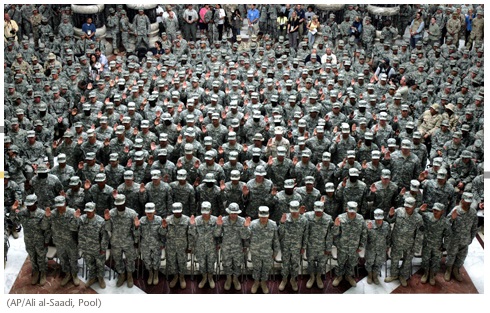
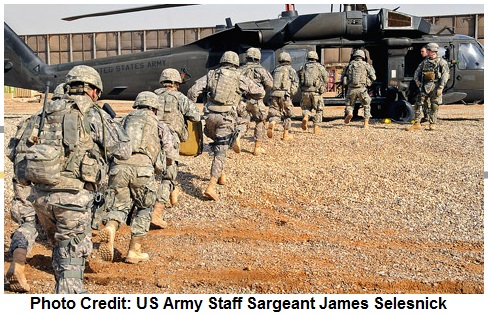
This commercial/VIDEO speaks of the “call to serve”; this is extremely important that someone “answers that call”; and be On Guard to protect the homeland and home seas. In an alternate commercial/VIDEO, it magnified how the US Navy also boasted these 4 percentage numbers:

70% – of the Earth covered by water
80% – of all people that live near the water
90% – of trade that travels by water
100% – percentage of time to be On The Watch and On Guard

(For the Caribbean, all of these above metrics are near 100%).

The US Navy does ensure the Greater Good in a lot of situations. For example, the Navy ensures secure passage of oil tankers through such threatening places as the Suez Canal and the Strait of Hormuz. The threat? For one, Iran has mined the Strait of Hormus (through which a majority of the world’s oil passes) and has threatened to blockade it, but its the US Navy preventing such action.

This US Navy consideration is relevant for the Caribbean to consider; not only for the fact that two Caribbean member-states, Puerto Rico and the US Virgin Islands, commits human capital to the American Armed Forces, but also because there is a parallel need for a powerful naval “force for good” in the region. The overriding theme of the foregoing VIDEO is that “freedom is not free” and that security forces must be put in place to ensure security. The security forces for the Caribbean must therefore be from … the Caribbean. We do not want to be parasites, but rather protégés of the US Navy, and those of other territorial powers: British, Dutch, France.

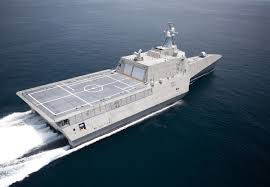
CU Blog - America's Navy - 100 Percent - Model for Caribbean - Photo 3

CU Blog - America's Navy - 100 Percent - Model for Caribbean - Photo 4

CU Blog - America's Navy - 100 Percent - Model for Caribbean - Photo 1

CU Blog - America's Navy - 100 Percent - Model for Caribbean - Photo 2

The book Go Lean…Caribbean posits that the region must prepare its own security apparatus for its own security needs. So the request is that all Caribbean member-states authorize a regional naval force to execute the security scope on the sovereign waters and territories in the region and for the Exclusive Economic Zone (EEZ) of the Caribbean Sea. This would be part and parcel of a Status of Forces Agreement (SOFA) signed with the 30 Caribbean member-states. The security goal is for public safety! This goal is detailed in the Go Lean book as it serves as a roadmap for the introduction and implementation of the technocratic Caribbean Union Trade Federation (CU). So the CU would be set to optimize Caribbean society through economic empowerment, and the aligning security dynamics. In fact, the Go Lean roadmap has these 3 prime directives:

  • Optimization of the economic engines in order to grow the regional economy to $800 Billion & create 2.2 million new jobs.
  • Establishment of a security apparatus to protect the resultant economic engines.
  • Improve Caribbean governance to support these engines.

Security/Defense policy for the Caribbean must be vastly different than that of the US Navy. There is no quest for world peace, or domination. Though we must be on guard against military intrusions like terrorism and piracy, we mostly have to contend with threats that may imperil the region’s economic engines, like tourism and fisheries. This includes man-made and natural concerns like narco-terrorism, enterprise corruption (human trafficking), oil/chemical spills, hurricanes, and earthquakes/tsunamis. For this purpose, the Go Lean roadmap calls for the establishment of the Caribbean Navy. While the US Coast Guard has a scope and agenda for all the US waterscapes/waterways, the CU Navy focus will only be the Caribbean, so the US Coast Guard will be able to shift its attention and resources else where.

So if there is the US Navy and the US Coast Guard already, why is their also a need for the Caribbean Navy? Simple! The US Navy and US Coast Guard report to American authorities. The CU Navy, on the other hand, will report to a Caribbean Commander-in-Chief and be held accountable to the Caribbean people. This point is pronounced early in the book with the Declaration of Interdependence (Page 12) that claims:

x.   Whereas we are surrounded and allied to nations of larger proportions in land mass, populations, and treasuries, elements in their societies may have ill-intent in their pursuits, at the expense of the safety and security of our citizens. We must therefore appoint “new guards” to ensure our public safety and threats against our society, both domestic and foreign. The Federation must employ the latest advances and best practices … to assuage continuous threats against public safety.

xvi. Whereas security of our homeland is inextricably linked to prosperity of the homeland, the economic and security interest of the region needs to be aligned under the same governance. Since economic crimes, including piracy and other forms of terrorism, can imperil the functioning of the wheels of commerce for all the citizenry, the accedence of this Federation must equip the security apparatus with the tools and techniques for predictive and proactive interdictions.

The Caribbean appointing “new guards”, or a security pact to ensure public safety is not so new an endeavor, as there are prior instances of this type of engagement in the region. There is an existing security pact, Regional Security System (RSS), for 5 Eastern Caribbean countries; but they have no ships – or any other naval/aviation resources for that matter. In effect, this RSS security pact would “bring a knife to a gun figh'”. The Go Lean roadmap however calls for a permanent professional Navy with the necessary Air Force, ground/Marine troops, intelligence gathering & analysis agency, and unified command-and-control for efficient coordination – even for all visiting allies. This CU Homeland Security Force would get its legal authorization from the Status of Forces Agreement instituted within the CU treaty enhancements.
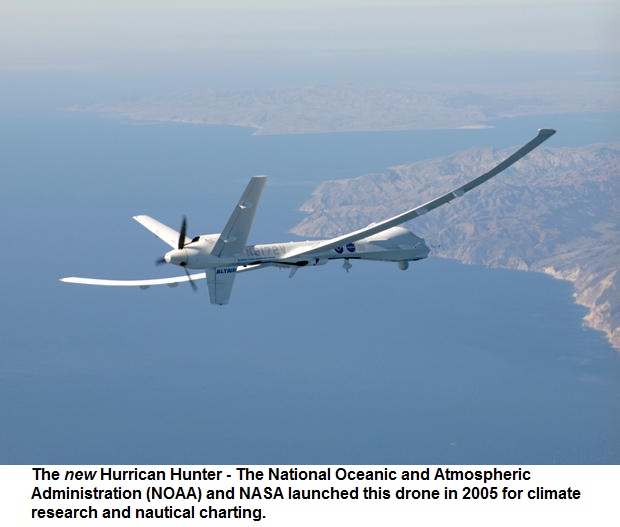
Drones - Weather

CU Blog - America's Navy - 100 Percent - Model for Caribbean - Photo 5

CU Blog - America's Navy - 100 Percent - Model for Caribbean - Photo 7

CU Blog - America's Navy - 100 Percent - Model for Caribbean - Photo 6

This Status of Forces Agreement would be “Step One, Day One” in the Go Lean roadmap. The Go Lean book also details a series of community ethos, strategies, tactics, implementations and advocacies to provide increased public safety & security in the Caribbean region:

Economic Principle – Consequences of Choices Lie in Future Page 21
Community Ethos – Privacy –vs- Public Protection Page 23
Community Ethos – Intelligence Gathering Page 23
Community Ethos – “Crap” Happens Page 23
Community Ethos – Minority Equalization Page 24
Community Ethos – Cooperatives Page 25
Community Ethos – Ways to Manage Reconciliations Page 34
Community Ethos – Ways to Improve Sharing Page 35
Community Ethos – Ways to Impact the Greater Good Page 37
Tactical – Confederating a non-sovereign union Page 63
Tactical – Fostering a Technocracy Page 64
Tactical – Separation of Powers – Homeland Security Page 75
Implementation – Ways to Pay for Change Page 101
Implementation – Start-up Foreign Policy Initiatives Page 102
Implementation – Start-up Security Initiatives Page 103
Implementation – Start-up Benefits from the Exclusive Economic Zone (EEZ) Page 104
Implementation – Ways to Foster International Aid Page 115
Planning – Ways to Make the Caribbean Better Page 131
Planning – Ways to Improve Failed-State Indices Page 134
Planning – Lessons Learned from the West Indies (WI) Federation – WI Regiment Page 135
Planning – Lessons from East Germany Page 139
Advocacy – Ways to Grow the Economy Page 151
Advocacy – Ways to Improve Governance Page 168
Advocacy – Ways to Better Manage the Social Contract Page 170
Advocacy – Ways to Improve Leadership Page 171
Advocacy – Ways to Impact   Justice Page 177
Advocacy – Ways to Reduce Crime Page 178
Advocacy – Ways to Improve for Gun Control Page 179
Advocacy – Ways to Improve Homeland Security Page 180
Advocacy – Ways to Mitigate Terrorism Page 181
Advocacy – Ways to Improve Intelligence Gathering/Analysis Page 182
Advocacy – Ways to Improve for Natural Disasters Page 184
Advocacy – Ways to Impact Extractions Page 196
Advocacy – Ways to Improve Fisheries Page 210
Advocacy – Ways to Protect Human Rights Page 220
Appendix – Analysis/Chapters of the Book The Art of War Page 327

Other subjects related to security empowerments for the region have been blogged in other Go Lean…Caribbean commentary, as sampled here:

https://goleancaribbean.com/blog/?p=1554 Status of Forces Agreement = Security Pact
https://goleancaribbean.com/blog/?p=1531 A Lesson in History: 100 Years Ago – World War I
https://goleancaribbean.com/blog/?p=1487 Here come the Drones … and the Concerns
https://goleancaribbean.com/blog/?p=1076 Trinidad Muslims travel to Venezuela for jihadist training
https://goleancaribbean.com/blog/?p=960 NSA records all phone calls in Bahamas, according to Snowden
https://goleancaribbean.com/blog/?p=809 Muslim officials condemn abductions of Nigerian girls
https://goleancaribbean.com/blog/?p=789 America’s War on the Caribbean
https://goleancaribbean.com/blog/?p=392 Jamaica to receive World Bank funds to help in crime fight
https://goleancaribbean.com/blog/?p=341 US slams Caribbean human rights practices
https://goleancaribbean.com/blog/?p=273 10 Things We Want from the US and 10 Things We Don’t Want …

Bad actors will always emerge…

Accepting this premise means preparing the necessary counter-measures. The model of the American Navy gives the Caribbean a template of how, what, when and why. We must stand-up and be counted in the defense and security of our own homeland.

Protégés, not parasites!

This security is necessary to make the Caribbean homeland, a better place to live, work and play. The stakeholders of the region need these assurances. The stakeholders? 42 million residents, 10 million itinerant Diaspora, and 80 million tourists, (with 10 million on cruise ships). All of these stakeholders deserve someone, some force, watching and dedicated to the Caribbean … 100 percent.

Download the book Go Lean … Caribbean – now!

Share this post:
, , , , , ,

STEM Jobs Are Filling Slowly

Go Lean Commentary

Here comes more “pull pressure” on the Caribbean work force.

According to the foregoing article, there is a greater demand for STEM (Science, Technology, Engineering and Mathematics) workers in the United States. According to US Government immigration policies, employers can search outside the borders to find job applicants to fill roles that are hard to place. This constitutes additional demand for individuals in the Caribbean work force with this skill-set to avail themselves of opportunities in the US. This article depicted here, constitutes an additional “pull” factor:

By: Justin Kim
Money Economics – Finance e-Zine (Posted 07/01/2014; Retrieved 07/11/2014 from:
http://www.moneyeconomics.com/headlines/stem-jobs-are-filling-slowly/

CU Blog - STEM Jobs Are Filling Slowly - Photo 1According to a new study by Brookings Institution, there is a clear evidence of a skills gap in the US. The report stated that a high school graduate with a Science, Technology, Engineering, and Math (STEM) background seems to be in higher demand than a person with an undergraduate degree not in a STEM background. The study looked at all job openings which were advertised on the companies’ websites totaling 52,000 companies in Q1 2013. Jobs in healthcare sector that require technical skills such as positions for doctors, nurses, and radiologists, filled at the slowest rate. To fill those jobs, the advertisement lasted an average of 47 days with the next being architectural and engineering openings that took an average of 41 days to fill. Computer and math jobs did relatively better in 39 days. On the other hand, jobs that do necessarily require higher education—installation, maintenance and repair—were filled more rapidly as the opening averaged 33 days of advertisement. Some of the fastest-filling jobs were office and administrative support, manufacturing, and construction type of jobs that took about 24 to 28 days to fill up. The study also breaks down the rate into different geographic regions and showed that jobs in San Francisco and San Jose, right in the vicinity of Silicon Valley, were the hardest to fill.

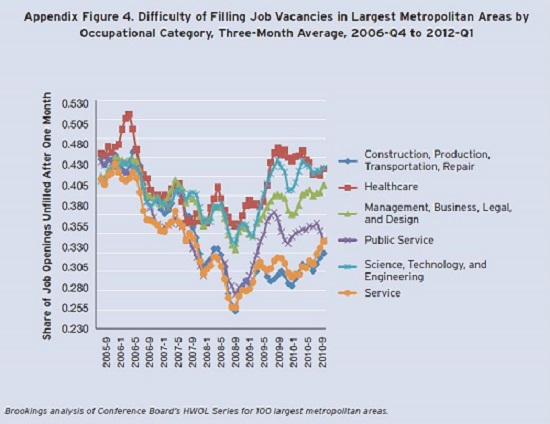
CU Blog - STEM Jobs Are Filling Slowly - Photo 2This graph depicts the percentage of jobs that remain unfilled after a month of advertising in the major sectors. It displays the skill gap in which healthcare and STEM sectors have a much harder time filling their positions than construction, production, transport, repair as well as public service sectors. Some analysts have argued in the past that due to the skill gap, the unemployment rate will be slow to fall. The author states that such gap will increase as this survey results show earnings and unemployment rate for STEM and non-STEM workers will be enlarged.

The book Go Lean…Caribbean posits that the reasons why the Caribbean brain drain is so acute, reported at exceeding 70%, are “push and pull” factors. That North American, and European countries can appeal to Caribbean educated workers more enticingly that their homeland. This is the pull factor. In addition the economic, security and governing deficiencies in the Caribbean “push” the native workers to consider expatriating. This can be likened to casting a ballot. The well-educated, skilled STEM worker in the Caribbean can simply choose to vote for “none of the above”; they vote with their feet and their wallet and simply flee the region. Today, that pace is 70%. Since the Caribbean has its own needs for the STEM work force, these numbers cannot be ignored.

The Caribbean is in crisis. The book Go Lean…Caribbean serves as a roadmap for the introduction and implementation of the technocratic Caribbean Union Trade Federation (CU). The roadmap declares that a crisis is a terrible thing to waste, and thus will respond to minimize “push” factors while also creating more competitive environments to dampen the pull factors.

The roadmap, in total will elevate Caribbean society. The prime directives of the CU are presented as the following 3 statements:

  • Optimization of the economic engines in order to grow the regional economy to $800 Billion & create 2.2 million new jobs.
  • Establishment of a security apparatus to protect the resultant economic engines.
  • Improve Caribbean governance to support these engines.

The book posits that all of the Caribbean is in crisis with this brain drain problem, while at the same time we have the same urgent need for STEM talent. This point is stressed early in the book (Page 13) in the following pronouncements in the Declaration of Interdependence:

xix.   Whereas our legacy in recent times is one of societal abandonment, it is imperative that incentives and encouragement be put in place to first dissuade the human flight, and then entice and welcome the return of our Diaspora back to our shores. This repatriation should be effected with the appropriate guards so as not to imperil the lives and securities of the repatriated citizens or the communities they inhabit. The right of repatriation is to be extended to any natural born citizens despite any previous naturalization to foreign sovereignties.

xxi.   Whereas the preparation of our labor force can foster opportunities and dictate economic progress for current and future generations, the Federation must ensure that educational and job training opportunities are fully optimized for all residents of all member-states, with no partiality towards any gender or ethnic group. The Federation must recognize and facilitate excellence in many different fields of endeavor, including sciences, languages, arts, music and sports. This responsibility should be executed without incurring the risks of further human flight, as has been the past history.

This blog relates to the challenge of mitigating the brain drain. This has been a frequent topic for these Go Lean blogs, highlighted here in the following samples:

a. https://goleancaribbean.com/blog/?p=1683 Caribbean Diaspora subject to ‘poverty pay’ in Britain
b. https://goleancaribbean.com/blog/?p=1674 Obama’s Plans for $3.7 Billion Immigration Crisis Funds, stressing the need for reform in the US.
c. https://goleancaribbean.com/blog/?p=1596 Book Review: ‘Prosper Where You Are Planted’ – the antithesis of emigration
d. https://goleancaribbean.com/blog/?p=1470 College of the Bahamas Master Plan 2025 – Lacking response for brain drain
e. https://goleancaribbean.com/blog/?p=1433 Caribbean loses more than 70 percent of tertiary educated to brain drain
f. https://goleancaribbean.com/blog/?p=1296 Remittances from Diaspora to Caribbean Increased By 3 Percent in 2013
g. https://goleancaribbean.com/blog/?p=1256 Is a Traditional 4-year College Degree a Terrible Investment? Yes, for Caribbean students studying abroad.

The Go Lean roadmap is based on sound economic principles, of which a basic concept is supply-and-demand. For the US, according to the foregoing article, there are more demand than supply for STEM workers, In the past, demand-supply gaps have been filled with a liberal immigration policy, but there is no stomach for that in today’s political climate. So the family re-unification approach is the likely strategy to be employed imminently – ethnicities with larger immigrant populations already in the US will have an advantage but their homelands will have more brain drain.

This is the premise for this commentary, that more pressure will be created for Caribbean citizens with STEM skill-sets to consider relocation, by connecting with their vibrant diaspora and family members for applying for entry into the US.

This means war.

Actually, war has already ensued; this issue is just the latest battle in this trade war.

To assuage these fears, and counteract the Caribbean losing dispositions in this trade war, the Go Lean book details a series of community ethos, strategies, tactics, implementations and advocacies to foster the best practices to mitigate further brain drain for the Caribbean region:

Community Ethos – Deferred Gratification Page 21
Community Ethos – Economic Systems Influence Choices & Incentives Page 21
Community Ethos – Job Multiplier Page 22
Community Ethos – Anti-Bullying and Mitigation Page 23
Community Ethos – Minority Equalization Page 24
Community Ethos – Return on Investments Page 24
Community Ethos – Ways to Impact the Future Page 27
Community Ethos – Ways to Foster Genius Page 26
Community Ethos – Ways to Help Entrepreneurship Page 28
Community Ethos – Promote Intellectual Property Page 29
Community Ethos – Ways to Impact Research & Development Page 30
Community Ethos – Ways to Close the Digital Divide Page 31
Community Ethos – Ways to Impact the Greater Good Page 37
Anecdote – Valedictorian and Caribbean Diaspora Member Page 38
Strategy – Customers – Citizens, Business   Community & Diaspora Page 47
Strategy – Meeting Region’s Needs Today, Preparing For Future Page 58
Tactical – Separation of Powers – Patent,   Standards, & Copyrights Page 78
Tactical – Separation of Powers – Education   Department Page 85
Implementation – Assemble all   Super-Regional Governing Entities Page 96
Implementation – Trends in Implementing   Data Centers Page 106
Implementation – Ways to Deliver Page 109
Implementation – Better Manage Debt –   Better Student Loans Dynamics Page 114
Planning – Ways to Improve Trade Page 128
Planning – Ways to Make the Caribbean Better Page 131
Advocacy – Ways to Grow the Economy Page 151
Advocacy – Ways to Create Jobs Page 152
Advocacy – Ways to Improve Education Page 159
Advocacy – Ways to Impact Student Loans – Forgivable Provisions Page 160
Advocacy – Ways to Foster Empowering Immigration – STEM Professionals Page 174
Advocacy – Ways to Foster Technology Page 197
Advocacy – Ways to Impact the Diaspora Page 217

Now is the time for all of the Caribbean, the people and governing (education) institutions, to lean-in for the elevations described in the book Go Lean … Caribbean. This is a big deal for the region. This roadmap is not just a plan; it is also the delivery of the hopes and dreams of generations of Caribbean residents to finally assuage the brain drain.

The region needs the deliveries, described in the Go Lean roadmap. Otherwise, we have no hope to incite and retain our young people, especially those with STEM skill-sets. As a region, we would be condemned to a future of the status quo, or worse, simply “fattening frogs for snakes”. This roadmap therefore is vital in the quest to make the Caribbean a better place to live, work, learn and play.

Download the book Go Lean … Caribbean – now!

Share this post:
, , ,
[Top]

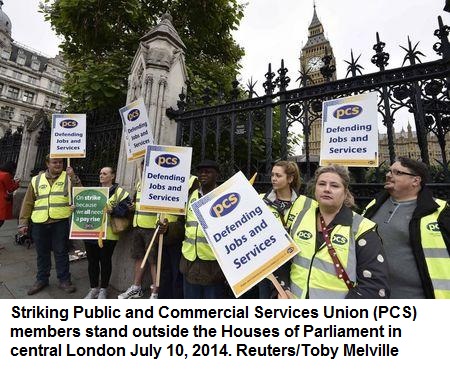
British public sector workers strike over ‘poverty pay’

Go Lean Commentary

The grass is not greener on the other side.

Go from being a big fish in small pond, to small fish in big pond.

These expressions are relevant in considering the fate of so many Caribbean Diaspora that had fled their Caribbean homelands over the past decades to take residence in Great Britain. Many of them sought refuge as career civil servants; (one reason [a] was the acute racism and intolerance encountered in private enterprises). These ones are faced with the harsh reality that pay scales in the public sector have not kept pace with inflation; they are now at poverty level. See the news article here:

By: Tess Little (Editing by Stephen Addison)

British strike 1LONDON (Reuters) – Hundreds of thousands of public sector workers including teachers, council workers and firefighters staged a 24-hour pay strike on Thursday in a stoppage that has prompted Prime Minister David Cameron to pledge a crackdown on union powers.

Protesters marched through the streets of many of Britain’s main cities in one of the biggest co-ordinated labour stoppages for three years.

Denouncing what they called “poverty pay,” they demanded an end to restrictions on wage rises that have been imposed by the government over the past four years in an effort to help reduce Britain’s huge budget deficit.

In London, demonstrators marched towards Trafalgar Square at midday, chanting “Low pay, no way, no slave labour” to the beat of a drum. A giant pair of inflatable scissors, carried by members of the National Union of Teachers (NUT), read “Education cuts never heal.”

Firefighter Simon Amos, 47, marched wearing his uniform behind a flashing fire engine parading members of the Fire Brigades Union (FBU). “The government [is] making us pay more for our pension for it to be worth the same, and making us work longer,” he said.

British strike 2The biggest public sector union involved, Unison, said early reports showed the strike had led to 3,225 school closures with more than 1,000 others partially closed.

Refuse collectors, school support staff, cleaners, street sweepers, care workers, nursery assistants and social workers were joining the strike, it added.

Hot spots, it said, included the North East, Wales and East Midlands where most council offices had closed, while more than 60 picket lines have closed most services in Newcastle.

“It is a massive decision by local government and school support workers to sacrifice a day’s pay by going on strike, but today they are saying enough is enough,” said Unison General Secretary, Dave Prentis in a statement.

Britain’s coalition government has enforced a policy of pay restraint for public sector workers since coming to power in 2010, imposing a pay freeze until 2012 and then a one percent pay rise cap, resulting in a fall in income in real terms [compared to inflation].

The Cabinet Office played down the impact of the strike, saying that most schools in England and Wales were open and that fire services were operating throughout the country.

British strike 3On Wednesday, Cameron told parliament he planned to limit unions’ powers to call strikes.

“How can it possibly be right for our children’s education to be disrupted by trade unions acting in this way” he said.

Tough new laws would be proposed in the Conservative manifesto for next year’s general election, he added.

These would include the introduction of a minimum threshold in the number of union members who need to take part in a strike ballot for it to be legal.

The manifesto could also back the introduction of a time limit on how long a vote in favour of industrial action would remain valid.

The NUT mandate for Thursday’s strike, for example, came from a 2012 strike ballot based on a turnout of just 27 percent, Cameron said.

The issue of minimum voting thresholds last arose three months ago when a strike by London Underground train drivers caused huge disruption in the capital, prompting Mayor Boris Johnson to demand that at least half of a union’s members should vote in favour for a strike to go ahead.
Source: Reuters News Service; retrieved 07/10/2014 from: http://news.yahoo.com/public-sector-workers-strike-over-poverty-pay-105040672.html

Frankly, the Caribbean Diaspora employed in the British public sector can now do better at home … in the Caribbean.

This is the assertion of the book Go Lean…Caribbean. That once the proposed empowerments are put in place, the Caribbean Diaspora should consider repatriating to their ancestral homelands.

Unfortunately for the Caribbean, this societal abandonment has continued, since the early days of the “Windrush Generation”[a] right up to now. In a recent blog post, this commentary related analysis by the Inter-American Development Bank that the Caribbean endures a brain drain of 70% among the college educated population; (https://goleancaribbean.com/blog/?p=1433).

Change has now come to the Caribbean.

The book Go Lean…Caribbean serves as a roadmap for the introduction and implementation of the technocratic Caribbean Union Trade Federation (CU). This roadmap will spearhead the elevation of Caribbean society. The prime directives of the CU are presented as the following 3 statements:

  • Optimization of the economic engines in order to grow the regional economy & create 2.2 million new jobs at home.
  • Establishment of a security apparatus to protect the resultant economic engines.
  • Improve Caribbean governance to support these engines.

The book posits that the improved conditions projected over the 5 years of the roadmap will neutralize the impetus for Caribbean citizens to flee, identified as “push and pull” factors. This point is stressed early in the book (Page 13) in the following pronouncements in the opening Declaration of Interdependence:

xix.   Whereas our legacy in recent times is one of societal abandonment, it is imperative that incentives and encouragement be put in place to first dissuade the human flight, and then entice and welcome the return of our Diaspora back to our shores. This repatriation should be effected with the appropriate guards so as not to imperil the lives and securities of the repatriated citizens or the communities they inhabit. The right of repatriation is to be extended to any natural born citizens despite any previous naturalization to foreign sovereignties.

xx.   Whereas the results of our decades of migration created a vibrant Diaspora in foreign lands, the Federation must organize interactions with this population into structured markets. Thus allowing foreign consumption of domestic products, services and media, which is a positive trade impact. These economic activities must not be exploited by others’ profiteering but rather harnessed by Federation resources for efficient repatriations.

This foregoing article highlights other issues that have been prominently addressed in the Go Lean book, namely that of the Civil Service and Labor Relations. There is the need for a professional staff in the Federal Civil Service. They require marketable benefits and compensation. There is also a role for Labor Unions to play in the elevation of Caribbean society. The Go Lean roadmap envisions an inclusionary attitude towards unions. The Go Lean community ethos is that of being partners with unions, not competitors. The book features specific tools and techniques that can enhance management-labor relationships.

These issues constitute heavy-lifting for the regional administration of the Caribbean:

  • fostering best practices for federal civil service and labor unions,
  • minimizing the brain drain, and
  • facilitating repatriation to the homeland.

These issues cannot be glossed over or handled lightly; this is why the Go Lean book contains 370 pages of finite details for managing change in the region. The book contains the following sample of community ethos, strategies, tactics, implementations and advocacies to impact the Caribbean homeland:

Community Ethos – Economic Systems Influence Choices & Incentives Page 21
Community Ethos – The Consequences of Choices Lie in the Future Page 21
Community Ethos – Job Multiplier Page 22
Community Ethos – Lean Operations Page 24
Community Ethos – Return on Investments Page 24
Community Ethos – Ways to Impact the Future Page 26
Community Ethos – Ways to Improve Negotiations Page 32
Strategy – Competition – Remain home   –vs- Emigrate Page 49
Strategy – Agents of Change – Aging Diaspora Page 57
Tactical – Separation of Powers – Versus Member-States Governments Page 71
Implementation – Year 1 / Assemble Phase – Establish Civil Service Page 96
Implementation – Ways to Deliver Page 109
Implementation – Trade Mission Objectives Page 116
Implementation – Reasons to Repatriate Page 118
Anecdote – Experiences of a Repatriated Resident Page 126
Planning  – 10 Big Ideas for the Caribbean Region Page 127
Advocacy – Ways to Create Jobs Page 152
Advocacy – Ways to Impact Labor Unions Page 164
Advocacy – Ways to Manage Federal Civil Service Page 173
Anecdote – Experiences of Diaspora Member Living Abroad Page 216
Advocacy – Ways to Impact the Diaspora Page 217

The Go Lean roadmap has simple motives: fix the problems in the homeland to make the Caribbean a better place to live, work, learn and play. There should be no need to go abroad and try to foster an existence in a foreign land. So for those of Caribbean heritage working in the British Civil Service, we hear your pleas. Our response: Come home; come in from the cold.

Now is the time for all of the Caribbean, the people residing in the homeland and those of the Diaspora, to lean-in for the empowerments described in the book Go Lean … Caribbean. This Big Idea for the region is a dramatic change; one that is overdue. The policies & practices of the past have failed Caribbean society. Too many people left, yet have little to show for it.

Caribbean music icon Bob Marley advocated this same charter for the Caribbean Diaspora. He sang to “come in from the cold” in the opening song of his last album Uprisings in 1980. How “spot-on’ were his words in the following music/video:

Download the free e-Book of Go Lean … Caribbean – now!

———————

Appendix – Cited Reference
a: “There was plenty of work in post-war Britain and industries such as British Rail, the National Health Service and public transport recruited almost exclusively from Jamaica and Barbados”. Retrieved July 10, 2014 from: http://en.wikipedia.org/wiki/British_African-Caribbean_people#The_.22Windrush_generation.22

Share this post:
, , ,
[Top]

Blue is the New Green

Go Lean Commentary

First we said to “Go Green!”

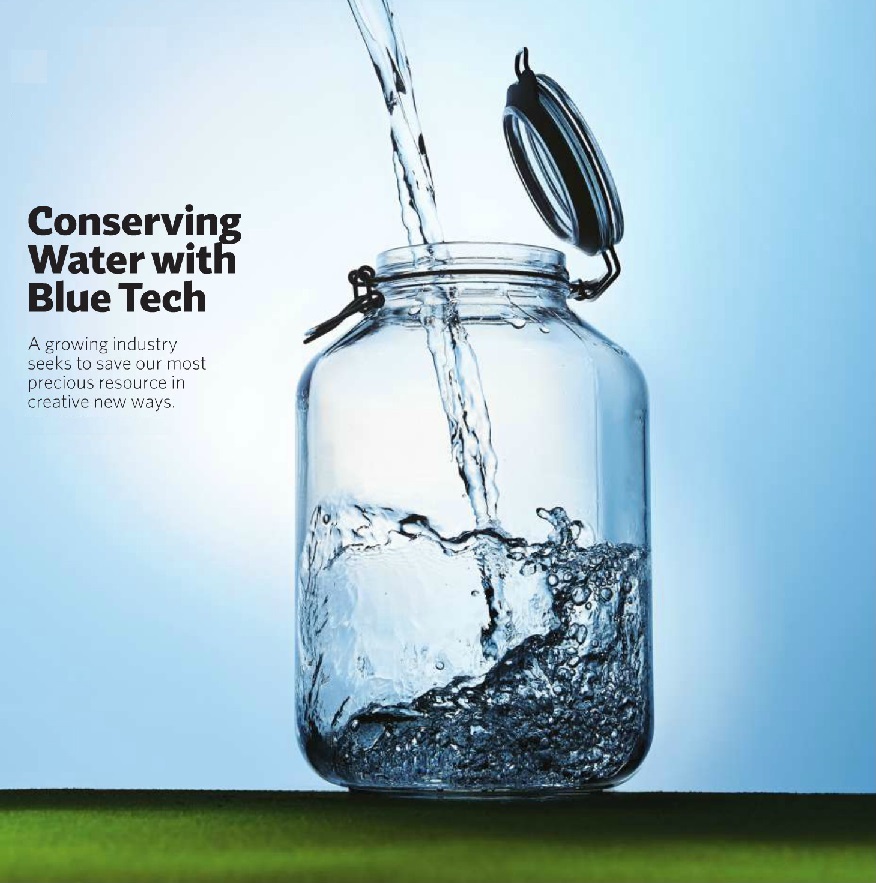
Now we are saying to “Go Blue”, because Blue is the new Green. While ‘Green’ is indicative for all-things-environmental, ‘Blue’ refers specifically to Water.

There is money in Green; there is money in Blue too! The references to Blue waters apply equally to fCU Blog - Blue is the New Green - Photoresh water and seawater. When we consider all the waterscapes in the Caribbean, (1,063,000 square-miles of the Caribbean seas and thousands of islands in the archipelago – The Bahamas has over 700 alone), we realize how much opportunity exists.

This is the time to be proactive; and to facilitate the intersection of preparation and opportunity. (This is one definition of luck. This is how to create one’s own luck).

Considering all the opportunities, how can the Caribbean prepare its economic engines to harvest all the fruitage from these Blue market conditions? This is the theme of the book Go Lean…Caribbean, that the world is struggling to contend with monumental changes related to technology, globalization and most importantly Climate Change.

Early in the book, the pressing need to be aware and to adapt to Climate Change is pronounced in the Declaration of Interdependence (Page 11), with these words:

i. Whereas the earth’s climate has undeniably changed resulting in more severe tropical weather storms, it is necessary to prepare to insure the safety and security of life, property and systems of commerce in our geographical region. As nature recognizes no borders in the target of its destruction, we also must set aside border considerations in the preparation and response to these weather challenges.

The Caribbean needs Blue Technology solutions to sustain our own lives, liberties and systems of commerce. But the Go Lean book posits that we cannot just consume, we must also create, produce, and foster. So we must foster industrial solutions for the rest of the world. This subsequent magazine-article-summary highlights the progression in this new Blue Technology industry-space in these areas:
Sourcing
Treating
Storing
Conserving
Keeping it Clean
————-

VIDEO – The Blue Economy – https://youtu.be/7NqhVbCtqNk

Published on Jul 3, 2012 – The oceans have long been the centre of economic activity. People have been living near the sea, feeding themselves by fishing and making their livelihoods on the coast for thousands of years. The challenge today is harnessing the potential of this Blue Economy.

————-

Excerpts of Article by: Adam Bluestein

Forget for a moment about carbon emissions. The world is facing a more immediate crisis — it is running out of clean water. The prospect of widespread shortages is creating a new kind of new economy. Featured here are a number of entrepreneurial firms who are ahead of the curve, finding opportunity in the largest emerging market the world has seen in some time.

Analysts estimate that the world will need to invest as much as $1 trillion a year on [water] conservation technologies, infrastructure, and sanitation to meet demand through 2030. As in the past, most of the large capital-intensive projects will be done by the usual multinational corporations and engineering firms. But the extent of the problem and the demand for new technology to address it present — pardon the metaphor — a kind of perfect storm for entrepreneurs. “Small companies with intellectual property, significant know-how, and a product that’s scalable can stake out a niche below the radar of the large companies,” says Laura Shenkar, a water expert and consultant in San Francisco. “This is an opportunity that will generate Googles.”

There are a number of business roles that emerge from seizing the opportunities to develop solutions to water challenges:

Sourcing – Increasing the Supply

The well-documented experience around the world is that poverty comes from inadequate access to fundamental resources, like water. To assuage this threat, there are solutions in place now to deliver added fresh water by many means: irrigation canals, pipelines and tanker trucks/tanker ships (i.e. tanker ships between France and Algeria; Turkey and Israel). An emerging solution operated in the Middle East and India is small-scale barge-based desalination systems. These systems play an important role in increasing the supply of freshwater, especially after a natural disaster (storm or earthquake) when normal infrastructure may be crippled.

In general, desalination is an expensive option. Desalination, of course, is well-and-good for communities close to the ocean/seas and that can afford relatively expensive water. For everyone else, exploring inland pumping solutions is essential. An innovation comes from Deerfield Beach, Florida-based company Moving Water Industries. They produce SolarPedalFlo, a solar and pedal-powered pump that can singly provide filtered and chlorinated water for thousands of people every day.

Treating It

As the gold standard of disinfection for more than 100 years, chlorine kills bacteria, viruses, and other pathogens, and it has played a key role in eliminating diseases such as typhoid and cholera in the U.S. Chlorine’s benefits in water are twofold: it not only disinfects but also remains at a residual level in the water, preventing reinfection by viruses or bacteria during transport, storage, and distribution.

Water treatment is just a basic fact. While moving water is very power intensive, a huge energy user that it doesn’t make sense to continue to treat it one place, pump it, live with “losses and degradation”, and move it someplace else to dispose of it. This is depicted with a swimming pool. One would not fill it up and dump it out every time it is used. This defies logic.

But safety and security issues abound with Chlorine solutions, as it is a hazardous material to transport. An emerging solution is a compact generator, by MIOX, an Albuquerque, New Mexico-based outfit founded in 1994. Their equipment allows water treatment facilities to produce liquid chlorine on site. This solution uses only water, salt, and electricity, thus eliminating the need to store or transport hazardous chemicals.

In a developing country, the ability to treat one’s own water at home can be a matter of life and death. Those with limited means often purify water by boiling it or mixing it with iodine tablets. Those who can afford it use home water-purification systems. One of the companies capitalizing on demand for such systems is Eureka Forbes, India’s largest manufacturer of home water-purification systems. They have profited from their effort to make home water-purification systems much more affordable.

Storing It

It’s nice to imagine that water flows magically from a pristine reservoir or spring to your home faucet, but that’s simply not the case. As we have seen, it is disinfected and pumped along through a sprawling network of water mains and pipes. The U.S. water network (including Puerto Rico and the US Virgin Islands), much of it built in the 1950s and ’60s, will require some $277 billion worth of construction, upgrades, and replacement in the next 20 years, according to EPA (Environmental Protection Agency) estimates. With scarcity driving water agencies to fix leaks — by some estimates, about six billion gallons per day in the U.S. are lost through literal cracks in the system — companies making high-tech metering and leak-detection technologies are doing well for themselves.

Water Storage Tanks – After being treated, drinking water can spend as long as 100 days in the distribution system before reaching an end user. That’s not necessarily a bad thing, but when water sits in a tank too long, it begins to stagnate and settle into layers of different temperatures, as in a lake. In warmer layers at the top, the disinfectants used in treatment are burned off, which increases the potential for contamination. Even when the water is being used, poor tank design can create an uneven distribution of disinfectant and encourage uneven aging, allowing water at the bottom of a tank to be replenished more quickly than water at the top.

The traditional solution is to dump more disinfecting chemicals into the holding system, leading to the formation of chemical byproducts. Another solution is to use energy-intensive “operational cycling” – basically pumping moving water around from tank to tank.

An energy-efficient, inexpensive, and elegant solution is called the Lily Impeller (by San Rafael, California-based PAX Water Technologies, founded in 2006). It’s a spiral propeller that’s installed on the bottom of a storage tank; it can mix up to seven million gallons of water while drawing the same amount of energy as three 100-watt light bulbs.

Another solution is a floating solar-powered impeller, which could improve surface water to be treated for drinking or even provide basic wastewater remediation.

Conserving It

A basic example of water conservation is a water recycling system that would take used water from the bathroom sink, disinfect it, and reroute it to the toilet tank for flushing.

One option: The AQUS System uses standard plumbing parts and can be installed by a professional plumber in about two hours. Priced at $395 (before rebates), it can save up to 6,000 gallons of water a year in a two-person household.

Another option: water-free urinals – biodegradable liquid with a specific gravity lighter than water.

Utilities have found that offering customers rebates for things such as low-flow showerheads and toilets and efficient front-loading clothes washers has been a reliable and cost-effective way to curb water use, and the cost of energy to supply and treat water.

A final option: WeatherTRAK irrigation controllers – a (software-based) system that uses live weather data, rather than preset timers, to tell sprinklers when and how much to water crops, lawns, and commercial landscapes.

Keeping It Clean

Though drought is one of the more obvious consequences of Climate Change, water experts are equally worried about the problems caused by extreme storms and flooding that many, if not most, scientists believe are another consequence of global warming. Storm-water runoff has become a concern for its effect on surface and ground water, as well as the additional burden that it puts on already creaky wastewater treatment facilities.

One solution: Scottsdale, Arizona-based AbTech Industries, first used their Smart Sponges — made from a synthetic polymer — in 1997 to clean up oil spills from tankers at sea. In 1999, when they turned their attention to storm water, most regulation was focused on runoff from new construction. But billions of gallons of rain that come down on the roads and go into our flood-control devices could be contaminated on the way through. This company molds their sponge material into different shapes that would fit into street-level storm drains and catch basins, soaking up oil and debris and letting clean water pass through. They also developed a way to coat the sponges with an antimicrobial agent so they would disinfect water as well. Their next iteration, add the ability to capture heavy metals, herbicides, and pesticides.

Another solution for eliminating challenging pollutants from water, compared to the traditional approach using mechanical filters or chemicals, researchers have experimented with using genetically modified organisms to degrade water pollutants. This new technological solution, being commercialized by companies like Overland Park, Kansas-based Microvi Biotech (founded in 2004), is literally eating these pollutants up. Their company verbiage explains: “The idea of using biotechnology — using concepts from nature — to clean up water has proven very appealing”.

—-

Adam Bluestein is a Burlington, Vermont-based freelance writer.
INC Magazine for Entrepreneurs (Article posted November 1 2008; retrieved 07/07/2014) – http://www.inc.com/magazine/20081101/blue-is-the-new-green.html

The topics in this commentary are relevant and familiar. Prudent water management is vital for Caribbean life, our public safety and commerce systems. Tourism continues to be the primary economic driver in the region. While the motivation behind the Caribbean “Lean” is to diversify the economy, prudence dictates that we do not undermine current successful tourism engines. Since tourists come to the region for sand, surf and sun, there must be a “quality” sentinel for Caribbean water works, waterscapes and water eco-systems.

This point is detailed in the book Go Lean…Caribbean, a roadmap for the introduction and implementation of the technocratic Caribbean Union Trade Federation (CU). This roadmap has 3 prime directives:

  • Optimization of the economic engines in order to grow the regional economy.
  • Establishment of a security apparatus to protect the homeland and related economic engines.
  • Improve Caribbean governance to support these engines.

This Go Lean commentary delved into related subjects in these previous blogs:

https://goleancaribbean.com/blog/?p=1516 Floods in Minnesota, Drought in California – Why Not Share?
https://goleancaribbean.com/blog/?p=915 Go ‘Green’… Caribbean

Water is not cheap. It is only free when it rains. The effort to source, treat, store, conserve and keep water clean takes a big investment on the part of community and governmental institutions. While we commend and applaud the regional executions thus far, the Go Lean book recognizing that there is more heavy-lifting to do. Help is on the way! The Go Lean roadmap details a series of community ethos, strategies, tactics, implementations and advocacies to foster the progress in the wide field of Blue technology. The following list applies:

Community Ethos – Lean Operations Page 24
Community Ethos – Return on Investments Page 24
Community Ethos – Cooperatives Page 25
Community Ethos – Non-Government Organizations Page 25
Community Ethos – Ways to Impact the Future Page 26
Community Ethos – Impact the Greater Good Page 37
Anecdote – Pipeline Transport – Strategies, Tactics &   Implementations Page 43
Strategy – Build and foster local economic engines Page 45
Tactical – Fostering a Technocracy Page 82
Tactical – Separation of Powers – Public Works Page 82
Anecdote – “Lean” Environmental Quality Process Page 93
Implementation – Ways to Develop Pipeline Industry Page 107
Advocacy – Ways to Impact Public Works Page 175
Advocacy – Ways to Foster Cooperatives Page 176
Advocacy – Ways to Better Manage Natural Resources – Water   Resources Page 182
Advocacy – Ways to   Foster Technology Page 197
Advocacy – Ways to Impact Monopolies Page 202
Advocacy – Ways to Impact   Rural Living – Minimize Irrigation Downsides Page   235
Appendix – Pipeline   Maintenance Robots Page   283

Water needs are undeniable.

Fulfilling those needs is a great target for lean, agile operations, perfect for the CU technocracy. While its “good to be green”, being “blue” is not an option we can choose to ignore, as the Caribbean is mostly made up of islands – surrounded by water.

Go Blue. Go Green. Go Lean.

Now is the time for all of the Caribbean, the people, entrepreneurs, institutions and governments, to lean-in for the optimizations and opportunities described in the book Go Lean … Caribbean.

Download the book Go Lean … Caribbean – now!


Share this post:
, , , , ,
[Top]

Cuba mulls economy in Parliament session

Go Lean Commentary

Cuba is the largest population base in the Caribbean, with 11,236,444 people as of 2010. So any empowerment effort for the region cannot ignore this big landmass in the middle of the Caribbean and not this many people; (more than 26% of the region’s 42 million).

The book Go Lean…Caribbean does not ignore the island, but rather declares an interdependence with Cuba.

The book serves as a roadmap for the introduction and implementation of the Caribbean Union Trade Federation (CU), a technocratic federal government to administer and optimize the economic/security/ governing engines of the region’s 30 member-states – including Cuba. The premise for this inclusion is the pronouncement as reported here, in the foregoing article, of Cuba’s desire to be included in the international community:

Castro and other officials say they are not embracing capitalism but rather updating Cuba’s socialist model to survive in the 21st century global economy.

The entire article is listed as follows:

Cuba's President Raul Castro greets members of Parliament at the opening of the third regular session of the eighth legislature, at the National Assembly in Havana, Cuba, Saturday, July 5, 2014. (AP Photo/Ismael Francisco, Cubadebate)

Cuba’s President Raul Castro greets members of Parliament at the opening of the third regular session of the eighth legislature, at the National Assembly in Havana, Cuba, Saturday, July 5, 2014. (AP Photo/Ismael Francisco, Cubadebate)

HAVANA (AP)annual sessions, with the country’s limping economy and the 2014 budget foremost on the agenda.Government-run website Cubadebate published pictures of President Raul Castro presiding over the assembly with Vice President Miguel Diaz-Canel at his side.
Foreign journalists were not allowed access to the gathering at a convention center in western Havana.
Cuba recently downgraded its 2014 economic growth forecast to 1.4 percent, nearly a point lower than previous projections of 2.2 percent.
The government reported 2.7 GDP expansion the previous year.
Castro’s government is in the middle of a package of reforms that officials hope will improve economic performance.
Cuba has decentralized state-owned enterprises, legalized home and used car sales, and let hundreds of thousands of people open or work for small businesses in the private sector.
Castro and other officials say they are not embracing capitalism but rather updating Cuba’s socialist model to survive in the 21st century global economy.
Parliament was also expected to consider a report from the comptroller’s office on its attempts to root out corruption.
Lawmakers met earlier this week in committee to discuss matters including the biotechnology and agriculture.
Official media reported that Agriculture Minister Gustavo Rodriguez said Cuba’s food imports have reached $2 billion a year, but the country believes it could produce 60 percent of that domestically.
Associated Press Online News Source (Posted 07-05.2014) – http://news.yahoo.com/cuba-mulls-economy-graft-parliament-session-150935232.html

Go Lean…Caribbean is not a dream; it clearly recognizes the historicity of Cuba in the North American lexicon. There is a current trade embargo with the US and there are US$ 6 Billion of unsettled civil judgments against the Cuban government. The book posits that confederating with Cuba is a “Big Idea” for the Caribbean. This roadmap therefore, is a detailed, turn-by-turn plan for reconciling the 55 year-old rift in US-Cuban relations.

Cuban President Raul Castro has announced that he will retire in 2017 and now there is this declared intent above for Cuba to compete in the global economy, so now is the time to execute this Go Lean plan.

This commentary previously featured articles on the subjects of Cuba’s eventual integration into the Caribbean brotherhood, as sampled here:

https://goleancaribbean.com/blog/?p=789 America’s War on the Caribbean
https://goleancaribbean.com/blog/?p=554 Cuban cancer medication registered in 28 countries
https://goleancaribbean.com/blog/?p=436 Cuba Approves New “Law on Foreign Investment”

At the outset, the Go Lean roadmap recognizes the value of significance of Cuban reconciliation into any Caribbean integration with this statement in the Declaration of Interdependence (Page 12):

xiii. Whereas the legacy of dissensions in many member-states (for example: Haiti and Cuba) will require a concerted effort to integrate the exile community’s repatriation, the Federation must arrange for Reconciliation Commissions to satiate a demand for justice.

The Go Lean roadmap is not all “give” with no “take” for Cuba. There is heavy-lifting on their part in submitting to regional authority in matters of the CU scope: economic engines, security apparatus and governing support. This intent was also pronounced early in the same Declaration of Interdependence (Page 12):

xii. Whereas the legacy in recent times in individual states may be that of ineffectual governance with no redress to higher authority, the accedence of this Federation will ensure accountability and escalation of the human and civil rights of the people for good governance, justice assurances, due process and the rule of law. As such, any threats of a “failed state” status for any member state must enact emergency measures on behalf of the Federation to protect the human, civil and property rights of the citizens, residents, allies, trading partners, and visitors of the affected member state and the Federation as a whole.

It is commonly accepted that just the presence of anyone named “Castro” in administering Cuba would be a guaranteed deterrent for success in confederating Cuba with the rest of the Caribbean. But 2017 is not far away. So the planning must start now. The Caribbean is hereby urged to lean-in to the following community ethos, strategies, tactics, implementations and advocacies to re-boot Cuba; as detailed in the book Go Lean…Caribbean sampled here:

Community Ethos – Economic Systems Influence Individual Choices & Incentives Page 21
Community Ethos – Voluntary Trade Creates Wealth Page 21
Community Ethos – Lean Operations Page 24
Community Ethos – Return on Investments Page 24
Community Ethos – Ways to Manage Reconciliations Page 34
Community Ethos – Ways to Impact the Greater Good Page 37
Strategic – Vision – Integrating Region in to a Single Market Page 45
Strategic – Core Competence – Specialty Agriculture Page 58
Tactical – Fostering a Technocracy Page 64
Tactical – Separation of Powers – Office of Trade Negotiations Page 80
Tactical – Separation of Powers – Federal Courts – Truth & Reconciliation Commissions Page 90
Implementation – Assemble & Create Super-Regional Organs to represent all Caribbean Page 96
Implementation – Ways to Pay for Change Page 101
Implementation – Foreign Policy Initiatives at Start-up Page 102
Implementation – Ways to Deliver Page 109
Implementation – Ways to Benefit from Globalization Page 119
Planning – 10 Big Ideas for the Caribbean – Cuba Page 127
Advocacy – Ways to Grow the Economy Page 151
Advocacy – Ways to Re-boot Cuba Page 236

The foregoing article addresses the issue of economic expansion strategies, tactics and implementations, but the book focuses on much more than just money issues; it features the more important issue of societal elevation. The Go Lean roadmap addresses cultural issues such as music, sports, art, education, repatriation and heritage. The book declares how unfortunate that most of Cuba’s history has been neutralized due to the 1959 revolution, expansion of communism, trade embargo and 50 years of isolation.

But this is a new day! It’s time now for change; not just change for change sake, but the elevations that were identified, qualified and proposed in the book Go Lean…Caribbean.

Cuba será libre!

Cuba can … and must become a better place to live, work and play.

Download the free e-Book Go Lean … Caribbean – now!

Share this post:
, ,
[Top]

Status of Forces Agreement = Security Pact

  Go Lean Commentary

The following is typical of the kind of news headlines in the last few weeks:

Crisis In Iraq Escalates As Militants Seize Major Cities

Iraq again! Didn’t we just go through this in the last decade? Did we not settle this a few years ago, and now we’re here again? Deja Vu all over again. Not a repeat of the Iraqi drama, but rather a repeat of modern history in total. In a recent blog submission, the commentary (https://goleancaribbean.com/blog/?p=1531) cited the lessons learned from World War I; or better stated, the lack of learned-lessons, as the result was World War II. An actual news article on Iraq that parallels this lesson, is excerpted as follows:

By: Olivia Marshall

Media [outlets] have claimed that the current violence in Iraq is the result of the 2011 withdrawal of U.S. troops in Iraq and President Obama’s willful failure to secure a Status of Forces Agreement (SOFA) with Iraq’s Prime Minister Nouri al-Maliki. In reality, Iraq refused the terms of a SOFA with the U.S. despite Obama’s efforts to maintain a military presence there.

Time Magazine: Iraq’s Second Largest City Falls To Militants – Time reported on June 10 that Mosul, Iraq’s second largest city, fell to the Sunni militant group Islamic State in Iraq and al-Sham (ISIS):

The fall of Iraq’s second largest city to Islamist extremists Tuesday sends an alarming message about the deterioration of a country where the U.S. spent eight years, 4,500 lives and $1.7 trillion. Mosul, a city of 1.8 million located in the far north of the country, long cultivated a reputation as a military town. But Iraqi soldiers threw down their guns and stripped off their uniforms as the insurgents approached on Tuesday, according to officials stunned by the collapse of its defenses.
Media Matters (Posted June 16, 2014; retrieved 06/29/2014) –
http://mediamatters.org/research/2014/06/16/right-wing-media-ignore-iraqi-resistance-to-sta/199742

Iraq Surge - 2007Iraq Draw Down - 2011

The overriding theme of the foregoing news article is the Status of Forces Agreement [a]. Under international law, in order for a military presence to not be viewed as an occupation or ‘act of war”, there must be a SOFA of mutual consent between both the host and occupying powers. This lack of a SOFA is why the US is drawn back into Iraq.

This American experience is relevant for the Caribbean to consider; not only for the fact that two Caribbean member-states, Puerto Rico and the US Virgin Islands, had committed human capital to that Iraq War effort, and have thusly sacrificed “blood, sweat and tears” there, but also because there is a parallel need for a SOFA in the Caribbean region.

The book Go Lean…Caribbean posits that the region must prepare its own security apparatus for its own security needs. So the request is that all Caribbean member-states welcome a visiting security force to execute a limited scope on their sovereign territories. That visiting force: themselves!

Yes, the goal is to confederate under a unified entity made up of the Caribbean to provide homeland security to the Caribbean. But Homeland Security for the Caribbean has a different meaning than for our American counterparts. Though we must be on defense against military intrusions like terrorism & piracy, we mostly have to contend with threats that may imperil the region’s economic engines, like tourism. This includes natural and man-made concerns like hurricanes, earthquakes, oil/chemical spills, pandemic, enterprise corruption and narco-terrorism. The CU security goal is for public safety! This goal is detailed in the book as it serves as a roadmap for the introduction of the technocratic Caribbean Union Trade Federation (CU). So while the CU is set to optimize Caribbean society through economic empowerment, the truth of the matter is that the security dynamics of the region are inextricably linked to this same endeavor. Therefore the Go Lean roadmap has 3 prime directives:

  • Optimization of the economic engines in order to grow the regional economy to $800 Billion & create 2.2 million new jobs.
  • Establishment of a security apparatus to protect the resultant economic engines.
  • Improve Caribbean governance to support these engines.

The book contends that bad actors will emerge just as a result of economic successes in the region. This point is pronounced early in the book with the Declaration of Interdependence (Page 12) that claims:

x.   Whereas we are surrounded and allied to nations of larger proportions in land mass, populations, and treasuries, elements in their societies may have ill-intent in their pursuits, at the expense of the safety and security of our citizens. We must therefore appoint “new guards” to ensure our public safety and threats against our society, both domestic and foreign. The Federation must employ the latest advances and best practices … to assuage continuous threats against public safety.

xvi. Whereas security of our homeland is inextricably linked to prosperity of the homeland, the economic and security interest of the region needs to be aligned under the same governance. Since economic crimes, including piracy and other forms of terrorism, can imperil the functioning of the wheels of commerce for all the citizenry, the accedence of this Federation must equip the security apparatus with the tools and techniques for predictive and proactive interdictions.

The Caribbean appointing “new guards”, or a security pact to ensure public safety is not so new an endeavor. There are prior instances of this type of engagement in the region. There is currently a security pact; shared by 5 Eastern Caribbean member-states that was first consummated in 1982 – this was discussed in full depth in a previous commentary regarding the Regional Security System (https://goleancaribbean.com/blog/?p=1076). The Go Lean roadmap however calls for a permanent professional force with naval and ground (Marine) forces, plus an Intelligence agency. This security pact would be sanctioned by all 30 CU member-states, not just the current 5; (there is even a plan for the eventual inclusion of Cuba). The CU Trade Federation will lead, fund and facilitate the security force, encapsulating (full-time or part-time) all the existing armed forces in the region. This CU Homeland Security Force would get its legal authorization from a Status of Forces Agreement signed with the CU treaty enhancements.

This SOFA is “Step One, Day One” in the Go Lean roadmap, covering the approach for adequate funding, accountability and control. In step with the foregoing news article, there is the absolute need for the CU SOFA to be ratified as soon as possible.

The Go Lean book details a series of community ethos, strategies, tactics, implementations and advocacies to provide increased public safety & security in the Caribbean region:

Economic Principle – Consequences of Choices Lie in Future Page 21
Community Ethos – Privacy –vs- Public Protection Page 23
Community Ethos – “Crap” Happens Page 23
Community Ethos – Cooperatives Page 25
Community Ethos – Ways to Improve Sharing Page 35
Community Ethos – Ways to Impact the Greater Good Page 37
Tactical – Confederating a non-sovereign union Page 63
Tactical – Separation of Powers – Homeland Security Page 75
Implementation – Ways to Pay for Change Page 101
Implementation – Start-up Foreign Policy Initiatives Page 102
Implementation – Start-up Security Initiatives Page 103
Planning – Ways to Make the Caribbean Better Page 131
Planning – Ways to Improve Failed-State Indices Page 134
Advocacy – Ways to Grow the Economy Page 151
Advocacy – Ways to Improve Governance Page 168
Advocacy – Ways to Better Manage the Social Contract Page 170
Advocacy – Ways   to Impact Justice Page 177
Advocacy – Ways   to Reduce Crime Page 178
Advocacy – Ways to Improve Homeland Security Page 180
Advocacy – Ways to Mitigate Terrorism Page 181
Advocacy – Ways to Improve Intelligence Gathering/Analysis Page 182
Advocacy – Ways to Improve for Natural Disasters Page 184
Advocacy – Ways to Protect Human Rights Page 220
Advocacy – Ways to Re-boot Cuba Page 236

Other subjects related to security and governing empowerments for the region have been blogged in other Go Lean…Caribbean commentary, as sampled here:

https://goleancaribbean.com/blog/?p=1531 A Lesson in History: 100   Years Ago – World War I
https://goleancaribbean.com/blog/?p=1076 Trinidad Muslims travel to   Venezuela for jihadist training
https://goleancaribbean.com/blog/?p=960 NSA records all phone   calls in Bahamas, according to Snowden
https://goleancaribbean.com/blog/?p=789 America’s War on the Caribbean
https://goleancaribbean.com/blog/?p=546 Book Review:   ‘The Divide’ – … Injustice in the Age of the Wealth Gap
https://goleancaribbean.com/blog/?p=535 Remembering and learning   from Boston
https://goleancaribbean.com/blog/?p=392 Jamaica to receive World Bank funds to help in crime fight
https://goleancaribbean.com/blog/?p=341 US slams Caribbean human   rights practices
https://goleancaribbean.com/blog/?p=87 6.5M Earthquake Shakes   Eastern Caribbean

Underlying to the prime directive of elevating the economics, security and governing engines of the Caribbean, is the desire to make the Caribbean homeland, a better place to live, work and play. We do not want a few “bad actors” disrupting the peace of all Caribbean residents (42 million people), or the 10 million Diaspora as they frequent their tropical homeland or even the 80 million tourists that visit the region annually. The Go Lean roadmap states it most succinctly with the quotation: “the needs of the many outweigh the needs of the few” (Page 37).

All of the Caribbean are hereby urged to lean-in to this roadmap.

Download the book Go Lean … Caribbean – now!

——

Appendix: a – Status of Forces Agreement

A Status of Forces Agreement (SOFA) is an agreement between a host country and a foreign nation stationing military forces in that country. SOFAs are often included, along with other types of military agreements, as part of a comprehensive security arrangement. A SOFA does not constitute a security arrangement; it establishes the rights and privileges of foreign personnel present in a host country in support of the larger security arrangement. [1] Under international law a status of forces agreement differs from military occupation.

Agreements

SOFA - Photo 1While the United States military has the largest foreign presence and therefore accounts for most SOFAs, the United Kingdom, France, Australia, Germany, Italy, Russia, South Korea, and many other nations also station military forces abroad and negotiate SOFAs with their host countries. NATO (North Atlantic Treaty Organization) is a SOFA. In the past, the Soviet Union had SOFAs with most of its satellite states (See Go Lean…Caribbean Page 139). While most of the United States’ SOFAs are public, some remain classified. [2]

Terms of operation – The SOFA is intended to clarify the terms under which the foreign military is allowed to operate. Typically, purely military operational issues such as the locations of bases and access to facilities are covered by separate agreements. The SOFA is more concerned with the legal issues associated with military individuals and property. This may include issues like entry and exit into the country, tax liabilities, postal services, or employment terms for host-country nationals, but the most contentious issues are civil and criminal jurisdiction over bases and personnel. For civil matters, SOFAs provide for how civil damages caused by the forces will be determined and paid. Criminal issues vary, but the typical provision in U.S. SOFAs is that U.S. courts will have jurisdiction over crimes committed either by a service-member against another service-member or by a service-member as part of his or her military duty, but the host nation retains jurisdiction over other crimes.[3]

Host nation concerns – In many host nations, especially those with a large foreign presence such as South Korea and Japan, the SOFA can become a major political issue following crimes allegedly committed by service-members. This is especially true when the incidents involve crimes such as robbery, murder, manslaughter or sex crimes, especially when the charge is defined differently in the two nations. For example, in 2002 in South Korea, a U.S. military AVLB bridge-laying vehicle on the way to the base camp after a training exercise accidentally killed two girls. Under the SOFA, A U.S. military court martial panel tried the soldiers involved, The panel found the act to be an accident and acquitted the service members of negligent homicide, citing no criminal intent or negligence. The U.S. military accepted responsibility for the incident and paid civil damages. This resulted in widespread outrage in South Korea, demands that the soldiers be retried in a South Korean court, the airing of a wide variety of conspiracy theories, and a backlash against the local expatriate community.[4] As of 2011 American military authorities are allowing South Korea to charge and prosecute American soldiers in South Korean courts.[5][6]

(Retrieved 06/29/2014 from: http://en.wikipedia.org/wiki/Status_of_forces_agreement)

 Sources References:

1.  R. Chuck Mason (March 15, 2012). “Status of Forces Agreement (SOFA): What Is It, and How Might One Be Utilized In Iraq?” Congressional Research Service. Retrieved from: http://www.fas.org/sgp/crs/natsec/RL34531.pdf

2.  Bruno, Greg (October 2, 2008), U.S. Security Agreements and Iraq, Council on Foreign Relations. Retrieved from: http://www.cfr.org/publication/16448/us_security_agreements_and_iraq.html

3.  Pike, John (2005). “Status of Forces Agreement”. GlobalSecurity.org, 2005. Retrieved from: http://www.globalsecurity.org/military/facility/sofa.htm

4.  Ibiblio.org (2002). News articles on South Korean teenagers run over US military vehicle. Posted 22 August 2008; retrieved from http://www.ibiblio.org/ahkitj/wscfap/arms1974/HRS/2002/Stop%20US%20Military%20dossier/4.htm

5.  Stars and Stripes Newspaper (2011). “US soldier confesses during trial to rape of South Korean girl”. Retrieved http://www.stripes.com/u-s-soldier-confesses-during-trial-to-rape-of-south-korean-girl-1.161419

6.  Stars and Stripes Newspaper (2012). “Korea-based US soldier get 3 years in prison for rape conviction”. Posted 12 February 2012; retrieved from: http://www.stripes.com/news/pacific/korea/korea-based-u-s-soldier-gets-3-years-in-prison-for-rape-conviction-1.168182


Share this post:
, , , , ,
[Top]

Here come the Drones … and the Concerns

Go Lean Commentary

Drones - SurveillanceThe Gee-Whiz days are over … for drones.

The initial excitement and fascination period seems to have ended. Now people are trying to curb, protect and run from all-things-drone.

This point is evident from the two foregoing articles & VIDEOS. Here come the drones, and here come troubles.

Despite the foregoing articles, the old adage still applies: “The early bird gets the worm”.

Story 1 – By: CBS News & The Associated Press

http://www.cbsnews.com/news/government-moves-to-ban-drones-in-400-national-parks/

Title: Government moves to ban drones in 400 national parks

WASHINGTON — The National Park Service is taking steps to ban drones from 84 million acres of public lands and waterways, saying the unmanned aircraft annoy visitors, harass wildlife and threaten safety.

Jonathan Jarvis, the park service’s director, told The Associated Press he doesn’t want drones flushing birds from their nests, hovering over rock climbers as they cling to the sides of cliffs or buzzing across the face of Mount Rushmore.

Jarvis said he would sign a policy memorandum on Friday directing superintendents of the service’s 401 parks to write rules prohibiting the launching, landing or operation of unmanned aircraft in their parks.

Two large national parks, Grand Canyon in Arizona and Zion in Utah, have already changed their rules to ban drones. Some other parks have interpreted existing regulations to permit them to ban drone flights, but Jarvis said each park must change its “compendium” – a set of regulations unique to that park – if a ban is to be enforceable.

At Yosemite National Park in California, where officials announced last month they would adopt a policy prohibiting drone flights, hobbyists have been using unmanned aircraft to film the park’s famous waterfalls and capture close-up shots of climbers on its granite cliffs. Zion officials were spurred to take action after an incident in which an unmanned aircraft was seen harassing bighorn sheep and causing youngsters to become separated from their herd.

At Mount Rushmore in South Dakota, park rangers last September confiscated an unmanned aircraft after it flew above 1,500 visitors seated in an amphitheater and then over the heads of the four presidents carved into the mountain.

Drones - HoverFlowImagine you’re a big wall climber in Yosemite working on a four-day climb up El Capitan, and you’re hanging off a bolt ready to make a (difficult) move, and an unmanned aircraft flies up beside you and is hovering a few feet from your head with its GoPro camera running,” Jarvis said in an interview. “Think about what that does to your experience and your safety,”

Some drone operators have complained that a ban favors some park users over others. They also say many unmanned aircraft flights are made without incident and with respect for other park users and wildlife.

Unmanned aircraft range from no bigger than a hummingbird to the size of an airliner, and their capabilities are improving rapidly. Use is growing as their price tags decline. The park service wants to get out in front of that by putting rules in place now, Jarvis said.

“This is a different kind of aircraft, and it is being used in different ways than what we have seen from the (model aircraft) hobbyists,” he said. “We want to have some control over it now before it proliferates.”

The memorandum directs superintendents to continue to allow model aircraft hobbyists and clubs that already have approval to operate in some parks. Also, parks can continue to grant permits for drone flights for other purposes like research, search and rescue, and firefighting, he said. Commercial operators like moviemakers can also apply for a permit to operate a drone, he said.

“We would have to hear why they would necessarily need this type of equipment in order to accomplish their goals,” Jarvis said.

Brendan Schulman, a New York attorney representing several commercial drone operators, said the park service appears to be “overreaching its authority with respect to the existing regulations, which only address the use of passenger aircraft.”

“A penalty imposed on a personal drone operator could certainly be challenged on the basis that there does not appear to be a regulation addressing that activity,” he said.

While parks are changing their individual rules, the park service will be drafting its own rule to ban drone flights in parks nationwide, Jarvis said. He said he hopes to have a proposal ready in about 18 months.

The ban only affects what Jarvis described as “operations inside parks,” and not high altitude flights over parks.

The park service has been working closely with the Federal Aviation Administration, although the service’s action is separate from the FAA’s ban on commercial drone flights, he said.

The FAA ban is being challenged by drone operators represented by Schulman.

Two years ago, Congress directed the FAA to put regulations in place to provide for the safe integration of commercial drones into the national airspace. The regulations were supposed to be finished by September 2015, but the agency isn’t expected to make that deadline.

Last week, the FAA said it had granted the first permission for commercial drone flights over land.

Earlier this month, CBS News transportation correspondent Jeff Pegues reported that some Hollywood production companies are trying to win an exemption from the FAA to use drones in the U.S.

YouTube Video Sharing Site (Retrieved 06-25-2014) from: www.youtube.com/embed/kTZ94RujpEg

Story 2 – By: Miguel Almaguer, NBC News

Title: Police investigate claims of peeping drones

Seattle police responded to an apartment complex after a woman said a drone was spying on her. The complaint raises interesting questions about drones and privacy.

Even though owning and flying drones is legal, the police will respond to privacy violations and other concerns. This drone is owned by Skyris Imaging, which owns an entire fleet, to photograph property, farm land and real estate. No laws appear to have been broken.

Visit NBCNews.com for breaking news, world news, and news about the economy

http://www.today.com/video/today/55502613#55502613 (Retrieved 06-25-2014)

Unmanned aircrafts are just another area of autonomous vehicles that the book Go Lean … Caribbean and aligning blogs have highlighted as being a source of future growth and jobs; 2 examples are listed here:

https://goleancaribbean.com/blog/?p=1277 The need for highway safety innovations – here comes Google
https://goleancaribbean.com/blog/?p=673 Ghost ships – Autonomous cargo vessels without a crew

Autonomous vehicles are a subset of the field of robotics – this is science, not science fiction. This is the future direction for so many industrial endeavors. The Go Lean book identifies the returns on investment for communities that prepare and foster development in impending technology fields. The book asserts that there is a race to create solutions to ease the challenges associated with the agents of change (Technology, Aging Diaspora, Climate Change, Globalization). The question is: who will create the solutions for this marketplace? The book posits that Caribbean stakeholders cannot only consume, but must also create, produce, develop and help construct the “vehicles” to get its people to the future. This applies whether the vehicle is a physical or figurative application.

“Don’t be a ‘stock on the shelf’” – Caribbean music icon Bob Marley in the song: Pimpers’ Paradise (Uprising Album, 1980).

This book purports that a new industrial revolution is emerging and the Caribbean society must participate, not just spectate. This point is  pronounced early in the Declaration of Interdependence (Page 14), with these opening statements:

xxvi. Whereas the Caribbean region must have new jobs to empower the engines of the economy and create the income sources for prosperity, and encourage the next generation to forge their dreams right at home, the Federation must therefore foster the development of new industries… In addition, the Federation must invigorate the enterprises related to existing industries like tourism…– impacting the region with more jobs.

xxvii. Whereas the region has endured a spectator status during the Industrial Revolution, we cannot stand on the sidelines of this new economy, the Information Revolution. Rather, the Federation must embrace all the tenets of Internet Communications Technology (ICT) to serve as an equalizing element in competition with the rest of the world. The Federation must bridge the digital divide and promote the community ethos that research/development is valuable and must be promoted and incentivized for adoption.

The book Go Lean… Caribbean, serves as a roadmap for the introduction and implementation of the Caribbean Union Trade Federation (CU). This agency will assume jurisdiction for the Caribbean skies (airspace), much like the Federal Aviation Administration (FAA) performs for the US. This role is not intended as just a regulatory arm, but a promotional agency as well. We must be partners with the aviation industry; and we want to be on the cutting-edge of unmanned aviation. We cannot be just a “stock on the shelf”. The failure to advocate in the aviation industry has already devastated Caribbean commerce, as dysfunction in regional air carriers has negatively affected tourism and the transport of tourists to their island resorts. This is happening now; this is real!

These issues were highlighted in previous blogs as follows:

https://goleancaribbean.com/blog/?p=798 Lessons Learned from the American Airlines merger
https://goleancaribbean.com/blog/?p=254 Air Antilles Launches St. Maarten Service

So this blog, and the undergirding book, is pinning for more than just “Gee-Whiz” avionics; this is championing a bigger cause, that of empowering Caribbean society. In fact the CU/Go Lean roadmap has these 3 prime directives:

  • Optimization of the economic engines in order to grow the regional economy.
  • Establishment of a security apparatus to protect the resultant economic engines.
  • Improve Caribbean governance to support these engines.

There is a lot at stake for the Caribbean in considering this subject area. According to the foregoing articles and VIDEOS, research-and-development (R&D identified in Go Lean as a community ethos) has started to deploy economic and security solutions with drones as effective tools. While there are still many growing pains to work through, the early adopters have gotten benefits … and profits.

Drones - WeatherThere are proponents and opponents of unmanned aviation, as depicted in the foregoing articles and VIDEOS.  One thing for sure, those “sweating the details”, resolving the issues are sowing the field for the many harvest seasons due to come from this industry space. The Go Lean book and blogs are hereby urging the Caribbean region to lean-in to this discussion, development and industry. The “harvest is great, while the workers are few” – The Bible (Matthew 9:37).

In the US, there is a 25-pound limit for “unmanned aerial systems”. This is regulated by the Federal Aviation Administration. The FAA has no jurisdiction in the Caribbean. Perhaps, the CU as the FAA counterpart can advocate a 30-pound limit, or some other rule changes that would be more industry-friendly. Also, testing-proving grounds abound in the Caribbean, with many remote islands and the 1,063,000 square-mile territory of the Caribbean Sea, which according to the roadmap would come under CU jurisdiction.

The Go Lean strategy is to confederate the 30 member-states of the Caribbean region to form the technocratic CU Trade Federation. The issues associated in this blog entry are too big for any one member-state, but a consolidated market of 42 million people allow for more economies-of-scale for generating returns on technological investments. Tactically, the Go Lean plan for a separation-of-powers allows the member-states to deputize authority of the Caribbean airspace to the one unified agency, with the mandate to promote, not just regulate. Operationally, there is no place with a greater need for unmanned aerial reconnaissance than the Caribbean. Every year, countless watercrafts become imperiled; the scanning & diagnostic capabilities on drones exceed human-eye capability for search-and-rescue. Other applications include pipelines, sea-bound wind farms, fairgrounds, isolated residents and Self-Governing Entities.

Drones - ShadowHawkIn general, there is the need for rules and public protection with evasive technologies like drones, but it is the assertion of the Go Lean book and subsequent blog entries that a protection mandate does not have to stifle technological innovation. A spirit of partnership in negotiations can foster a more productive business climate for R&D and a win-win for all stakeholders.

The book details community ethos to adopt, plus the executions of the following strategies, tactics, implementations and advocacies to forge R&D and industrial growth in Caribbean communities:

Community Ethos – Deferred Gratification Page 21
Community Ethos – All Choices Involve Costs Page 21
Community Ethos – Job   Multiplier Page 22
Community Ethos – Public Protection Over Privacy Concerns Page 23
Community Ethos – “Crap” Happens Page 23
Community Ethos – Lean Operations Page 24
Community Ethos – Return on Investments (ROI) Page 24
Community Ethos – Ways to Impact the Future Page 26
Community Ethos – Ways to Help Entrepreneurship Page 28
Community Ethos – Ways to Impact Research & Development Page 30
Community Ethos – Ways to Improve Negotiations Page 32
Community Ethos – Impact the Greater Good Page 37
Strategy – Vision – Confederating 30 Member-states in a Union Page 45
Strategy – Agents of Change – Technology Page 57
Strategy – Agents of Change – Aging Diaspora Page 57
Strategy – Agents of Change – Globalization Page 57
Strategy – Agents of Change – Climate Change Page 57
Tactical – Fostering a Technocracy Page 64
Tactical – Growing Economy – New High Multiplier Industries Page 68
Separation of Powers – Self Governing Entities Page 80
Separation of Powers – Interior Department Page 82
Separation of Powers – Regional Aviation Administration and Promotion Page 84
Implementation – Ways to Pay for Change Page 101
Implementation – Benefits from the Exclusive Economic Zone Page 104
Implementation – Steps to Implement Self-Governing Entities Page 105
Implementation – Ways to Deliver Page 109
Planning – 10 Big Ideas Page 127
Advocacy – Ways to Grow the Economy Page 151
Advocacy – Ways to Create Jobs Page 152
Advocacy – Ways to Improve Homeland Security Page 180
Advocacy – Ways to Improve Intelligence Gathering &   Analysis Page 182
Advocacy – Ways to Foster Technology Page 197
Advocacy – Ways to Improve Transportation Page 205
Advocacy – Ways to Improve Fisheries Page 210
Advocacy – Ways to Impact Urban Living Page 238
Advocacy – Ways to Impact Rural Living Page 239
Appendix – Industrial Sites at Sea-bound Wind Farms Page 335

Historically, forging change in the transportation sphere in the Caribbean has been burdensome – early adopters we are not. The region was very slow to adopt many provisions (seat belts, fast ferry, smoking on planes) that may be considered common sense by today’s standard. Managing change for the region must therefore be viewed as both an art and a science. The CU approach is different for spearheading this change of unmanned aviation – more technocracy, less democracy; (no need for consensus building).

The insights from the foregoing articles and embedded videos help us to appreciate that the future for unmanned aviation is now! We must therefore lean-in for the empowerments described in Go Lean … Caribbean. This roadmap allows us to build a better community and a better homeland to live, work and play. 🙂

Download the book Go Lean … Caribbean – now!

Share this post:
, , , , , ,
[Top]

Amazon’s new FIRE Smartphone

Go Lean Commentary

Amazon 1The American company Amazon is the model for the Caribbean Postal Union (CPU): our means for delivering the mail.

This is surprising! One would think the American model would be the US Postal Service (USPS). No, the book Go Lean…Caribbean posits that the USPS is a failing enterprise, as of late; they lose money every year, have excessively high overhead expense base and an under-funded pension (Page 99). Why would anyone want to model that?

The focus of the CPU is not postal mail, but rather logistics. So we would want to model a successful enterprise in this industry space, like Amazon, not just another postal operation.

But Amazon does so much more than just sell books online. They are the epitome of an electronic commerce company. They operate a number of business operations online and off-line; and they run these companies well. They provide a good example of lean technocratic efficiency. So Amazon is a good model, not just for the CPU but the entire Caribbean Union Trade Federation (CU). The book Go Lean…Caribbean, serves as a roadmap for the introduction and implementation of the technocratic CU.

This concept of “lean” is very prominent in the book, even adapting the title, Go Lean, for the quest for excellence in Caribbean economic empowerment and governing efforts. The label “lean” is indicative of this quest; the word is used as a noun, a verb and an adjective. This point is pronounced early in the book (Page 4) with these statements:

The CU will lean on, lean in, lean over backwards, and then lean towards…The CU will embrace lean, agile, efficient organization structures – more virtual, less physical, more systems, less payroll.

The foregoing news article and VIDEO demonstrate Amazon’s commitment to a lean business model with their deployment of a proprietary smartphone.

By: Keith Wagstaff, Technology Reporter
The long-rumored Amazon smartphone was officially unveiled Wednesday and, yes, it has a 3-D screen. Well, technically Amazon CEO Jeff Bezos called it “dynamic perspective,” but it gives the new Fire Phone the illusion of depth with no glasses required thanks to four face-tracking cameras built into the front of the phone. While it features a 4.7-inch Gorilla Glass screen, users don’t necessarily have to touch the screen, thanks to controls that let people scroll through pages by tilting the phone. It also unveiled a service called Firefly, which makes it easier to buy items on Amazon by scanning and recognizing more “100 million different items” including books, movies and other products. The Fire Phone (32 GB), which ships July 25, is available now for pre-order for $199 with a two-year AT&T contract.

NBC News / CNBC – Cable News Channel (Posted 06-18-2014; retrieved 06/19/2014) –http://www.nbcnews.com/tech/gadgets/amazon-unveils-new-3-d-fire-smartphone-n134561

Visit NBCNews.com for breaking news, world news, and news about the economy

From the first glance, a benefit of the Fire smartphone is obvious for Amazon’s core business [a]. A consumer can scan “more than 100 million different items” and process a direct purchase directly from the phone – any electronic media would be delivered instantly to the phone, while a chattel good would be delivered within days, using Amazon’s already matured logistics network. Evidently, the execution of this business model requires hardware (smartphone) and not just some software (app).

This is win-win.

This entire model demonstrates the advantage of leading with technological innovations, even for non-technical endeavors.

This synchronizes with the Go Lean roadmap for elevating Caribbean society. The CU will employ technologically innovative products and services to impact its prime directives; identified with the following 3 statements:

  • Optimization of the economic engines in order to grow the regional economy to $800 Billion & create 2.2 million new jobs.
  • Establishment of a security apparatus to protect the resultant economic engines.
  • Improve Caribbean governance to support these engines.

The book posits that the Caribbean is in crisis, but that this crisis can be a good thing because a “crisis is a terrible thing to waste”. Therefore the roadmap seeks to change the entire eco-system of Caribbean commerce and the interaction with postal operations. This vision is defined early in the book (Page 12 & 14) in the following pronouncements in the Declaration of Interdependence:

xv. Whereas the business of the Federation and the commercial interest in the region cannot prosper without an efficient facilitation of postal services, the Caribbean Union must allow for the integration of the existing mail operations of the governments of the member-states into a consolidated Caribbean Postal Union, allowing for the adoption of best practices and technical advances to deliver foreign/domestic mail in the region.

xxvii. Whereas the region has endured a spectator status during the Industrial Revolution, we cannot stand on the sidelines of this new economy, the Information Revolution. Rather, the Federation must embrace all the tenets of Internet Communications Technology (ICT) to serve as an equalizing element in competition with the rest of the world. The Federation must bridge the digital divide and promote the community ethos that research/development is valuable and must be promoted and incentivized for adoption.

This roadmap changes everything … in the Caribbean:

  • The CPU will be the owner/operator of the Caribbean Cloud web-site dubbed as myCaribbean.gov.
  • The CPU will operate a marketplace (like EBay or Amazon.com) to facilitate business transactions for Caribbean-based businesses and consumers (in the homeland or the Diaspora).
  • The CPU will provide mobile apps to facilitate contact & commerce within the region, modeling this Amazon FIRE feature.
  • The CPU will provide logistics to deliver products (“wet and dry”) to every Caribbean address.
  • The CPU will be the owner/operator of the cutting-edge network planned for pneumatic capsule pipelines in the region.
  • The CPU will own/operate refrigerated warehouses throughout the region, to distribute “wet” merchandise to destinations.
  • The CPU will be the Number One client for the Union Atlantic Turnpike, providing the cargo/parcels on the vessels (ferries, etc.) and thoroughways/tollways/railways built to inter-connect the islands of the homeland and the coastal states.

Creating the CPU and the Caribbean Cloud is “Step One, Day One” in the Go Lean roadmap. This is the by-product of assembling regional organs with multilateral cooperation and a separation-of-powers. The roadmap identifies Service Level Agreements (SLA) that the CPU will adhere to in fulfilling the obligations to its stakeholders: residents and member-state governments. There will be financial penalties for failures to deliver “absolutely, positive” at the agreed-upon schedule. This is how technocracies are structured. The guarantee forms the community ethos that success is not optional!

The Go Lean book details a series of community ethos, strategies, tactics, implementations and advocacies to foster the best practices for the delivery of CPU logistics in the Caribbean region:

Community Ethos – Deferred Gratification Page 21
Community Ethos – People Respond to Incentives Page 21
Community Ethos – Job Multiplier Page 22
Community Ethos – Intelligence Gathering Page 23
Community Ethos – Lean Operations Page 24
Community Ethos – Cooperatives Page 25
Community Ethos – Ways to Impact the Future Page 26
Community Ethos – Ways to Help Entrepreneurship Page 28
Community Ethos – Promote Intellectual Property Page 29
Community Ethos – Ways to Bridge the Digital Divide Page 31
Community Ethos – Ways to Improve Sharing Page 35
Strategy – Customers – Citizens and Member-states Governmental Page 47
Tactical – Separation of Powers – Postal Services Page 78
Tactical – Separation of Powers – Interstate Commerce Administration Page 79
Implementation – Year 1 / Assemble Phase – Establish CPU Page 96
Anecdote – Implementation Plan – Mail Services – US Dilemma Page 99
Implementation – Ways to Develop a Pipeline Industry Page 107
Implementation – Improve Mail Services – Electronic Supplements Page 108
Implementation – Ways to Deliver Page 109
Advocacy – Ways to Improve Interstate Commerce Page 129
Advocacy – Ways to Grow the Economy Page 151
Advocacy – Ways to Create Jobs Page 152
Advocacy – Ways to Foster Technology Page 197
Advocacy – Ways to Foster e-Commerce Page 198
Advocacy – Ways to Promote Call Centers Page 212
Advocacy – Ways to Impact the Diaspora Page 217
Advocacy – Ways to Impact Urban Living Page 234
Advocacy – Ways to Impact Rural Living Page 235
Appendix – Alternative Remittance Modes Page 270
Appendix – Interstate Compacts Page 278

Now is the time for all of the Caribbean, the people and governing institutions, to lean-in for the changes in the book Go Lean … Caribbean. This is a big deal for the region. This roadmap is not just a plan; it is also the delivery of the hopes and dreams of generations of Caribbean residents…and their Diaspora.

The region needs this delivery. Otherwise, we have no hope to incite and retain our young people. This roadmap therefore is more than just delivering the mail; it is about delivering the future: a better place to live, work and play.

Download the book Go Lean … Caribbean – now!

———–

a. Appendix – Amazon.com
Amazon.com, Inc. is an American international electronic commerce company with headquarters in Seattle, Washington, United States. It is the world’s largest online retailer. Amazon.com started as an online bookstore, but soon diversified, selling DVDs, VHSs, CDs, video and MP3 downloads/streaming, software, video games, electronics, apparel, furniture, food, toys, and jewelry. The company also produces consumer electronics—notably the Fire Phone, Amazon Kindle e-book reader and the Kindle Fire tablet computer—and is a major provider of cloud computing services.

Amazon 2Jeff Bezos, the founder and CEO, incorporated the company (as Cadabra) in July 1994 and the site went online as Amazon.com in 1995. Bezos changed the name cadabra.com to amazon.com because it sounded too much like cadaver. Additionally, a name beginning with “A” was preferential due to the probability it would occur at the top of any list that was alphabetized.
Amazon has separate retail websites for United States, United Kingdom, France, Canada, Germany, Italy, Spain, Sri Lanka, Australia, Brazil, Japan, China, India and Mexico soon coming soon, other South East Asian countries, with international shipping to certain other countries for some of its products. In 2011, it had professed an intention to launch its websites in Poland, Netherlands, and Sweden, as well. An Austrian website operates as part of the German website. As of June 2014, it still does not service Australia or New Zealand.
According to 2008 data, the domain amazon.com attracted at least 615 million visitors annually, twice the number of competitor Walmart. Amazon attracts approximately 65 million customers to its US website per month. The company has also invested heavily on a massive amount of server capacity for its website, especially to handle the excessive traffic during the December Christmas holiday season.
For 2013, Amazon posted revenues of US$ 74.45 Billion; profit of US$ 745 million (before taxes) and US$ 274.0 million after taxes. They have 117,300 employees, as of January 2014.
Multi-level sales strategy – Amazon employs a multi-level e-commerce strategy. Amazon started off by focusing on Business-to-Consumer relationships between itself and its customers, and Business-to-Business relationships between itself and its suppliers but it then moved to incorporate Customer-to-Business transactions as it realized the value of customer reviews as part of the product descriptions. It now also facilitates customer to customer with the provision of the Amazon marketplace which act as an intermediary to facilitate consumer to consumer transactions. The company lets almost anyone sell almost anything using its platform. In addition to affiliate program that lets anybody post Amazon links and earn a commission on click through sales, there is now a program which let those affiliates builds entire websites based on Amazon’s platform.
Some other large e-commerce sellers use Amazon to sell their products in addition to selling them through their own websites. The sales are processed through Amazon.com and end up at individual sellers for processing and order fulfillment and Amazon leases space for these retailers. Small sellers of used and new goods go to Amazon Marketplace to offer goods at a fixed price. Amazon also employs the use of drop shippers or meta sellers. These are members or entities that advertise goods on Amazon who order these goods direct from other competing websites but usually from other Amazon members. These meta sellers may have millions of products listed, have large transaction numbers and are grouped alongside other less prolific members giving them credibility as just someone who has been in business for a long time. Markup is anywhere from 50% to 100% and sometimes more. [A disadvantage is that] these sellers maintain that items are in stock when the opposite may be true. As Amazon has increased their dominance in the marketplace these drop shippers have become more and more commonplace in recent years. [There is a fear that this practice will result in] damage to a supply and demand marketplace, but this remains to be seen, as advertising contracts with large search engines have eliminated smaller websites from overall exposure. So these practices have not had a negative effect on the industry as a whole.
Revenue model – Over the last decade, Amazon has developed a customer base of around 30 million people. Amazon.com is primarily a retail site with a sales revenue model. Amazon makes its money by taking a small percentage of the sale price of each item that is sold through its website. Amazon also allows companies to advertise their products by paying to be listed as featured products.
(Source: Retrieved 06/19/2014 from: http://en.wikipedia.org/wiki/Amazon.com)
Share this post:
, , , , , , ,
[Top]

Marijuana in Jamaica – Puff Peace

Go Lean Commentary

Weed 1Come to Jamaica and feel alright! – Advertising tag line sampling Bob Marley’s song: One Love.

Marijuana decriminalization is not a Jamaican issue… alone. Other countries have already addressed this debate; like Latin America[a] and Europe; legal in The Netherlands & Portugal, and decriminalized in Norway. In the US, Colorado is about to be joined by the State of Washington in allowing recreational use of the cannabis plant.

While medical marijuana originated in Jamaica (1970’s), many jurisdictions now allow marijuana to be legally distributed by medical professionals, with a prescription. Life imitates art, art imitates life. Hollywood has lampooned this practice many times in movies, TV shows and commentary. In the State of California, it is common-place to get a prescription for marijuana for “dubious” ailments like insomnia, appetite abatement, non-clinical depression, even sneezing. Without a doubt in California, the whole process is a farce! (See Comedian Bill Maher’s tongue-in-cheek commentary in Referenced VIDEO below[c]).

The world has changed; the acceptance of marijuana is changing.

The following news article addresses the issue of Marijuana decriminalization, (more so than legalization):

Port of Spain, Trinidad & Tobago – It would have seemed a lot more revolutionary just two years ago but for Jamaica, it is still a welcome whiff of sense. The island’s energy minister, Philip Paulwell, who also leads government business in parliament, has said he will find time this year to decriminalise possession of small amounts of marijuana. At a stroke, the move will cut the number of illicit smokes by as many as a million a week. It will also make a Jamaican break somewhat less nervy for ganja-puffing tourists.

Reform proposals have been knocking around for some time: a National Commission on Ganja recommended decriminalisation in 2001. But helped by moves towards legalisation in Uruguay and decriminalisation in the United States, momentum has been growing. A Cannabis Future Growers and Producers Association was launched last month, and a commercial company to support medical marijuana in December.

Selling for less than five dollars an ounce, ganja has a long history in Jamaica, going all the way back to 19th-century Indian immigrants. Cultivation and import have been illegal since 1913, but everyone’s granny remembers when the herb was quite openly on sale as a cure-all. Some of the early work on medicinal uses for marijuana was done in Jamaica in the 1970s and 1980s.

In practice, most small-time ganja users are not arrested or prosecuted. But for those who are, the consequences can be dire. A criminal record makes it hard to get a coveted American visa or to land jobs in Jamaica itself. For that reason alone, reform looks like a surefire vote-winner.

Decriminalisation will also unclog the courts and free up police time. But it won’t change the big picture. It will remain illegal to grow and trade marijuana in large quantities, something that suits the big players just fine. Full legalisation would knock the bottom out of the market, hurting the island’s powerful criminal gangs. It would also curtail the potential for extortion; seven police officers appeared in court this month to face allegations that they took a $2,750 bribe from a businessman in return for overlooking a ganja find on his premises.

Jamaicans are prone to waves of moral panic, but the proposal to decriminalise ganja has caused barely any waves. The foreign minister AJ Nicholson and the opposition leader, Andrew Holness, have expressed mild reservations; the vocal church lobby has been silent. Says a well-educated and dreadlocked Jamaican: “Most of them accept that there are people who do this, just like there are people who drink.” Such tolerant sentiments only go so far, however. The “abominable crime of buggery” carries a prison sentence of up to ten years, and the government has no plans to right that injustice.
The Economist Magazine; posted 06/13/2014; retrieved 06/18/2014 from: http://www.economist.com/blogs/americasview/2014/06/marijuana-jamaica?spc=scode&spv=xm&ah=9d7f7ab945510a56fa6d37c30b6f1709

Marijuana tourism or “ganja-puffing tourists” …
…these words jump off the page of this foregoing news article.

The book Go Lean…Caribbean anticipates the compelling issues associated with economic engines. The book serves as a roadmap for the introduction and implementation of the technocratic Caribbean Union Trade Federation (CU). This effort calls for the focus of the following 3 prime directives related to Trade:

  • Optimization of the economic engines in order to grow the regional economy to $800 Billion and create 2.2 million jobs.
  • Establishment of a security apparatus (including law enforcement enhancements) to protect the resultant economic engines.
  • Improve Caribbean governance to support these engines.

Weed 2But the subject of marijuana is bigger than Trade. There are moral, religious, legal and psychological (treatment) issues associated with this topic; and there is history – good and bad. Any jurisdiction decriminalizing the use of marijuana has to contend with the previous messaging to the community of: “Just say no to drugs”.

The book asserts that before the strategies, tactics, implementations and advocacies of a roadmap to elevate a society can be deployed, the affected society must first embrace a progressive community ethos. The book defines this “community ethos” as the fundamental character or spirit of a culture; the underlying sentiment that informs the beliefs, customs, or practices of society; dominant assumptions of a people or period. Think of the derivative term: “work ethic”.

Marijuana is a mood-altering drug; it has negative effects, one being preponderance for apathy, to tune out of any active engagement. In the US, even in the states where marijuana is legal, most firms/governments still screen staffers (new hires and veterans) and ban consumption of the drug. The reason is simple: Apathy does not make for industriousness. So this issue/drug presents a conundrum for the CU. The mission to grow the economy, promote industriousness, foster new jobs and new industries is pronounced early in the roadmap, detailed in the Declaration of Interdependence (Page 14) with this statement:

 xxvi.   Whereas the Caribbean region must have new jobs to empower the engines of the economy and create the income sources for prosperity, and encourage the next generation to forge their dreams right at home, the Federation must therefore foster the development of new industries … In addition, the Federation must invigorate the enterprises related to existing industries … impacting the region with more jobs.

According to the foregoing article, reconciling the history of marijuana/ganja will be a “tall order”:

ganja has a long history in Jamaica, going all the way back to 19th-century Indian immigrants.

The history of marijuana/ganja in the Caribbean in general and Jamaica in particular has generated a lot of proponents and opponents. Despite outlawing “the weed” for over 100 years, there is a vibrant black market economy associated with the drug. This reality challenges the security apparatus of the Caribbean’s legitimate governing entities. The Go Lean roadmap therefore features the necessary homeland security/law enforcement mitigations. This need was pronounced at the outset of the book (Page 12), recognizing that the problem of drug enforcement/interdiction may be too big for any one member-state alone:

xvi.   Whereas security of our homeland is inextricably linked to prosperity of the homeland, the economic and security interest of the region needs to be aligned under the same governance. Since economic crimes … can imperil the functioning of the wheels of commerce for all the citizenry, the accedence of this Federation must equip the security apparatus with the tools and techniques for predictive and proactive interdictions.

This issue of decriminalizing marijuana must now reconcile with the long history of criminal prosecutions, prison terms and probation/parole eco-system. Management of these attendant functions of criminology has been a consistent theme of the Go Lean roadmap, commencing with this statement in the same Declaration of Interdependence (Page 12):

x.   Whereas we are surrounded and allied to nations of larger proportions in land mass, populations, and treasuries, elements in their societies may have ill-intent in their pursuits, at the expense of the safety and security of our citizens. We must therefore appoint “new guards” to ensure our public safety and threats against our society, both domestic and foreign. The Federation must employ the latest advances and best practices of criminology and penology to assuage continuous threats against public safety. The Federation must allow for facilitations of detention for convicted felons of federal crimes, and should over-build prisons to house trustees from other jurisdictions.

The Go Lean book envisions the CU as a confederation of the 30 member-states of the Caribbean to do the heavy-lifting of empowering and elevating the Caribbean society by creating a “single market” for the region. Among the many benefits of this roadmap is the economies-of-scale for leveraging regional security solutions, like the upheavals of marijuana decriminalization.

Despite the many economic benefits researched for decriminalizing drugs, as measured in the mature market of the US [b], this roadmap and supporting blogs are NOT proposing this measure for the Caribbean … per se. This is presented here as a political issue; the CU strives to maintain an apolitical stance.

There is security risk on both sides of this issue. The book details the community ethos, strategies, tactics, implementations and advocacies to monitor, manage and mitigate the security risks to Caribbean society. The following is a sample list:

Community Ethos – Deferred Gratification Page 21
Community Ethos – Job Multiplier Page 22
Community Ethos – Privacy versus Public Protection Page 23
Community Ethos – Light Up the Dark Places Page 23
Community Ethos – Ways to Impact Research & Development Page 30
Community Ethos – Ways to Impact the Greater Good Page 37
Strategy – Vision – Integration of Single Market Economy Page 45
Strategy – Agents of Change – Globalization Page 57
Tactical – Fostering a Technocracy Page 64
Tactical – Separation of Powers – Homeland Security Page 75
Tactical – Separation of Powers – Justice Department Page 77
Implementation – Security Initiatives at Start-up Page 103
Advocacy – Ways to Grow the Economy Page 151
Advocacy – Ways to Ways to Mitigate Black Markets Page 165
Advocacy – Ways to Improve Governance Page 168
Advocacy – Ways to Better Manage the Social Contract Page 170
Advocacy – Ways to Impact Justice Page 177
Advocacy – Ways to Remediate and Mitigate Crime Page 178
Advocacy – Ways to Improve Homeland Security Page 180
Advocacy – Ways to Impact the Prison Industrial Complex Page 211

Now is the time for all of the Caribbean, the people and governing institutions, to lean-in for the empowerments described in the book Go Lean … Caribbean. For us to send the invitation to the wide-world to ”come to Caribbean and feel alright”, but we must first put “our house” in order.

The world’s acceptance of marijuana has changed. While this is true, this change has created opportunities and also challenges. There is plenty of work yet to be done; heavy-lifting.

Download the book Go Lean … Caribbean – now!

————————-

Referenced Citations:

a.  Marijuana is legal to some degree in 8 Latin America countries (Argentina, Brazil, Columbia, Costa Rica, Ecuador, Honduras, Mexico and Uruguay).

b.  A Harvard economist, Jeffery Miron, estimated that ending the war on drugs would inject 76.8 billion dollars into the US economy in 2010 alone.[1] He estimates that the government would save $41.3 billion for law enforcement and the government would gain up to $46.7 billion in tax revenue.[2] Since President Nixon began the war on drugs, the federal drug-fighting budget has increased from $100 million in 1970 to $15.1 billion in 2010, with a total cost estimated near 1 trillion dollars over 40 years.[3] In the same time period an estimated 37 million nonviolent drug offenders have been incarcerated. $121 billion was spent to arrest these offenders and $450 billion to incarcerate them.[3]

1.       Debusmann, Bernd (12/03/2008). “Einstein, Insanity and the War on Drugs”. Reuter. Retrieved 04/01/2012 from: http://blogs.reuters.com/great-debate/2008/12/03/einstein-insanity-and-the-war-on-drugs/.

2.       Miron, Jeffrey A.; Katherine Waldock. “The Budgetary Impact of Ending Drug Prohibition”. The Cato Institute.  Retrieved 05/03/2010 from: http://www.cato.org/publications/white-paper/budgetary-impact-ending-drug-prohibition

3.       The Associated Press (05/13/2010). “After 40 years, $1 trillion, US War on Drugs Has Failed to Meet Any of its Goals”. The Associated Press. Retrieved 04/01/2012 from: http://www.foxnews.com/world/2010/05/13/ap-impact-years-trillion-war-drugs-failed-meet-goals/.

c.  Referenced VIDEO:


On Friday night’s episode of “Real Time,” Bill Maher offered some advice to viewers and to the state of Colorado about how to use marijuana safely and effectively, which we need to do, he said, because “after all, we’re pretending it’s medicine…


Share this post:
, , , , , , ,
[Top]

PayPal expands payment services to 10 markets

PayPal PhotoGo Lean Commentary

PayPal [a], the subject of the below news article, is an electronic payment company and this industry of electronic payments has become very important in the strategy for elevating the Caribbean economy. This is digital currency and not “hard money”, so there are no paper stock or coinage issues to be managed with this approach, but there are numerous risk and fraud issues. PayPal is starting to do business in some of the world’s most challenging markets, like Nigeria; this is a good resume for the Caribbean deployment of electronic payment systems.

By: Eric Auchard and Jason Neely

LONDON (Reuters) – PayPal is entering 10 new countries this week, including Nigeria, providing online payment alternatives for consumers via mobile phones or PCs in markets often blighted by financial fraud.

Rupert Keeley, the executive in charge of the EMEA region of PayPal, the payments unit of eBay Inc., said in an interview on Monday the expansion would bring the number of countries it serves to 203.

Starting on Tuesday, consumers in Nigeria, which has 60 million users and has Africa’s largest population, along with nine other markets in sub-Saharan Africa, Eastern Europe and Latin America will be able to make payments through PayPal.

“PayPal has been going through a period of reinvention, refreshing many of its services to make them easier to use on mobile (phones), allowing us to expand into fast-developing markets,” Keeley said.

Once the services go live, customers in the 10 countries with access to the Web and a bank card authorized for Internet transactions will be able to register for a PayPal account and make payments to millions of sites worldwide.

Initially, PayPal is only offering “send money” services for consumers to pay for goods and services at PayPal-enabled merchant sites while safeguarding their financial details. This is free to consumers and covered by fees it charges merchants.

“We think we can give our sellers selling into this market a great deal of reassurance,” said Keeley, a former regional banking executive with Standard Chartered Plc and senior executive with payment card company Visa Inc .

PayPal does not yet cover peer-to-peer transactions, which allow consumers to send money to other consumers. It has not yet enabled local merchants in the new markets to receive payments, nor is it offering other forms of banking services, he said.

A 2013 survey of 200 UK ecommerce sites by Visa’s CyberSource unit estimated that 1.26 percent of online orders are fraudulent and that 85 percent of merchants expected fraud to increase or remain static last year.

CyberSource also estimated that suspicion of fraudulent transactions result in 8.2 percent of online orders in Latin America being rejected by merchants, compared with 5.5 percent in Europe and 2.7 percent in the United States and Canada.

Such fraud can include ID theft, social engineering, phishing and automated harvesting of customer financial data via botnets, or networks of computers controlled by hackers.

A total of 80 million Internet users stand to gain access to PayPal global services this week, including those in five European markets – Belarus, Macedonia, Moldova, Monaco and Montenegro, four in the African nations of Nigeria, Cameroon, Ivory Coast, and Zimbabwe, as well as Paraguay. Internet usage figures are based on research by Euromonitor International.

PayPal counts 148 million active accounts worldwide.

Last week, MasterCard Inc , the world’s second-largest debit and credit card company, and a PayPal rival in payment processing, said it was working with the Nigerian government on a pilot to overlay payment technology on a new national identity card.

PayPal has operated in 190 markets since 2007 and added three countries – Egypt, Georgia and Serbia last year. Roughly a quarter of the $52 billion in payment volumes PayPal reported in the first quarter of 2014 were for cross-border transactions. PayPal reported $1.8 billion in revenue during the period.
Reuters News Service (Retrieved 06/16/2014) –
http://news.yahoo.com/paypal-expands-payment-services-nigeria-9-other-markets-141457269–sector.html

Central Banks print currency notes and determine the quantity, measured as M0. But there is no need for that activity with digital money, yet still, there is a big role for a Central Bank with command-and-control of the economy. This relates to M1 monetary supply. M1 refers to the measurement of the total of currency/money in circulation (M0) plus overnight bank deposits (like demand deposits, travelers’ checks & other checkable deposits). So when digital currencies are factored in, though there is no M0, there is still an increase in M1 nonetheless. As M1 values increase, there is a dynamic to create money “from thin-air”, called the money multiplier. The more money in the system, the more liquidity for investment and development opportunities.

Digital currencies are “reaping” the benefits of monetary supply without “sowing” the hard work of actual money/stock/coinage management!

This subject is detailed in the book Go Lean…Caribbean, which serves as a roadmap for the introduction of the Caribbean Union Trade Federation (CU) and the Caribbean Central Bank (CCB). This Go Lean roadmap has 3 prime directives:

  • Optimization of the economic engines in order to grow the regional economy to $800 Billion & create 2.2 million new jobs.
  • Establishment of a security apparatus to protect the resultant economic engines.
  • Improve Caribbean governance to support these engines.

This subject of electronic payment systems has been previously covered in these Go Lean blogs, highlighted here in the following samples:

a.     https://goleancaribbean.com/blog/?p=906 – Bitcoin needs regulatory framework to change ‘risky’ image
b.     https://goleancaribbean.com/blog/?p=528 – Facebook plans to provide mobile payment services
c.      https://goleancaribbean.com/blog/?p=360 – How to Create Money from Thin Air

This Go Lean/CU/CCB roadmap looks to employ electronic/digital currency schemes to impact the growth of the regional economy. This is defined early in the book in Verse XXIV (Page 13) of the Declaration of Interdependence, with these words:

Whereas a free market economy can be induced and spurred for continuous progress, the Federation must install the controls to better manage aspects of the economy: jobs, inflation, savings rate, investments and other economic principles…

Creating the CU/CCB governance is “Step One, Day One” in the Go Lean roadmap. Implementing this framework for electronic payments allows for emergence of the regional currency of the Caribbean Dollar. This currency emergence allows for the foundation, so that the regional society can be elevated, economically and governmentally.

The Go Lean posits that the business model of PayPal can be fully deployed in the region. Even though PayPal transacts in every CU member-state, except Cuba and Haiti [b], they have provided an example of how to develop an online electronic payment scheme. There is also the need to model other electronic schemes like Visa/MasterCard and Smart Cards (for Cruise Tourism).

The Go Lean book details a series of community ethos, strategies, tactics, implementations and advocacies to foster the proper controls for electronic payments in the Caribbean region:

Community Ethos – Money Multiplier Principle Page 22
Community Ethos – Lean Operations Page 24
Community Ethos – Cooperatives Page 25
Community Ethos – Promote Intellectual Property Page 29
Community Ethos – Ways to Bridge the Digital Divide Page 31
Strategy – Vision of Caribbean Single Market Page 45
Tactical – Separation of Powers – Central Banking Page 73
Implementation – Assemble Central Bank   Cooperative Page 93
Implementation – Ways to Deliver Page 109
Implementation – Ways to Impact Social   Media Page 111
Planning – Ways to Better Manage Image Page 129
Anecdote – Caribbean Currencies Page 149
Advocacy – Ways to Mitigate Black Markets Page 165
Advocacy – Ways to Foster Cooperatives Page 176
Advocacy – Ways to Impact Cruise Tourism Page 193
Advocacy – Ways to Foster Technology Page 197
Advocacy – Ways to Foster e-Commerce Page 198
Advocacy – Reforms for Banking Regulations Page 199
Appendix – Alternative Remittance Modes Page 270

Now is the time for all of the Caribbean, the people and governing institutions, to lean-in for the empowerments described in the book Go Lean … Caribbean. This is the basis for the CU vision, a better place to live, work and play.

Download the book Go Lean … Caribbean – now!

————————-

Appendix – Cited References:

a.   PayPal

PayPal is an international e-commerce business allowing payments and money transfers to be made through the Internet. Online money transfers serve as electronic alternatives to paying with traditional paper methods, such as checks and money orders. It is subject to the US economic sanction list and subject to other rules and interventions required by US laws or government.

PayPal is an acquirer, performing payment processing for online vendors, auction sites, and other commercial users, for which it charges a fee. The fee depends on what currency or payments the seller is using. In addition, eBay purchases made by credit card through PayPal may incur extra fees if the buyer and seller use different currencies.

On October 3, 2002, PayPal became a wholly owned subsidiary of eBay. Its corporate headquarters are in San Jose, California, United States at eBay’s North First Street satellite office campus. The company also has significant operations in Omaha, Scottsdale, Charlotte, Boston, Baltimore and Austin in the United States; Chennai and Bangalore in India; Dublin and Dundalk in Ireland; Kleinmachnow in Germany; and Tel Aviv in Israel. Since July 2007, PayPal has operated across the European Union as a Luxembourg-based bank.

Source: Retrieved June 16, 2014 from: http://en.wikipedia.org/wiki/PayPal

b.   PayPal Countries

PayPal’s tagline: We get where you’re coming from. We are available in 193 markets and 26 currencies. Spend and receive safely over borders and language barriers. We’re here for you, wherever you are.

Anguilla Haiti
Antigua and Barbuda Jamaica
Aruba Martinique
Bahamas Montserrat
Barbados Netherlands Antilles
Belize Puerto Rico (USA)
Bermuda Saint Barthélemy (France)
British Virgin Islands Saint Kitts and Nevis
Cayman Islands Saint Lucia
Dominica Saint Martin (France / The Netherlands)
Dominican Republic Saint Vincent and the Grenadines
French Guiana Suriname
Grenada Trinidad and Tobago
Guadeloupe Turks and Caicos
Guyana Virgin Islands (USA)


Share this post:
, , , ,
[Top]