Category: Industries

Industrial Reboot – Shipbuilding 101 – ENCORE

Rebooting the industrial landscape means understanding the macro-economic factors affecting a community and then applying changes to assuage negative developments and to exploit the positives.

Understanding the macro factors means embracing the Laws of Economics 101: Supply-and-Demand.

As related in a previous blog-commentary by the movement behind the book Go Lean…Caribbean:

The ‘Law of Supply-and-Demand’ is almost as natural as the ‘Law of Gravity’. Leave it alone and it will pre-determine what will happen in the marketplace. But just like Gravity could be defied – consider airplanes & rockets – so too the Law of Supply-and-Demand could be defied supplemented and exacerbated – consider Crony-Capitalism and protectionism – with the industrial prodding of shipbuilding.
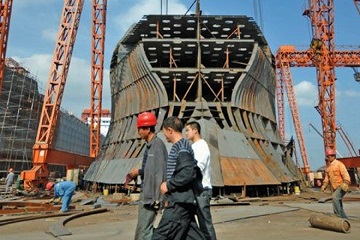
The shipbuilding industry has become a favorite for government leaders to manipulate the supply and demand dynamics for – consider the Jones Act in the US – because this industry creates so many …

Jobs

The book Go Lean…Caribbean asserts that the business model of shipbuilding can harness a lot of jobs. This book presents a roadmap to elevate the economic engines in Caribbean society and projects that 15,000 new direct jobs can be created with strategic endeavors for the shipbuilding industry. (Even more indirect jobs – 3.75-to-1 multiplier rate – can be created).  This is how the industrial landscape of the Caribbean region can be rebooted, by doubling-down on the effort to foster a shipbuilding industry.

We need a new economic landscape in our region. The current one is in shambles! This is due to the primary driver in the region – Tourism – being under assault; more and more visitors shift from stay-overs to cruise arrivals. So this means less economic impact to the local markets. As a region, we must reboot our industrial landscape and add more job-creating options.

How?

This commentary has previously identified a number of different industries that can be rebooted under this Go Lean roadmap. See the list of previous submissions on Industrial Reboots here:

  1. Industrial RebootsFerries 101 – Published June 27, 2017
  2. Industrial RebootsPrisons 101 – Published October 4, 2017
  3. Industrial RebootsPipeline 101 – Published October 5, 2017
  4. Industrial RebootsFrozen Foods 101 – Published October 6, 2017
  5. Industrial RebootsCall Centers 101 – Published July 2, 2018
  6. Industrial RebootsPrefab Housing 101 – Published July 14, 2018
  7. Industrial RebootsTrauma 101 – Published July 18, 2018
  8. Industrial RebootsAuto-making 101 – Published July 19, 2018
  9. Industrial Reboots – Shipbuilding 101 – Published Today – July 20, 2018

This commentary considers the basics of the shipbuilding industry and how it can harness many jobs if we reboot our industrial landscape to foster the industry. There is no need for a new commentary; this subject had already been elaborated upon in that previous Go Lean commentary. That submission is hereby Encored here:

——————–

Go Lean Commentary Commerce of the Seas – Shipbuilding Model of Ingalls

The ‘Law of Supply-and-Demand’ is almost as natural as the ‘Law of Gravity’; leave it alone and it will pre-determine what will happen … in the marketplace. But just like the ‘Law of Gravity’ can bend and be defied (think airplanes and rockets), so too the ‘Law of Supply-and-Demand’ can bend and be defied. A great example of defying ‘Supply-and-Demand’ is the Crony-Capitalism (subsidies and protectionist schemes) in the highly-protected Ship-Building industry. (See the Appendix below regarding OECD Ship-Building Industry monitoring efforts).
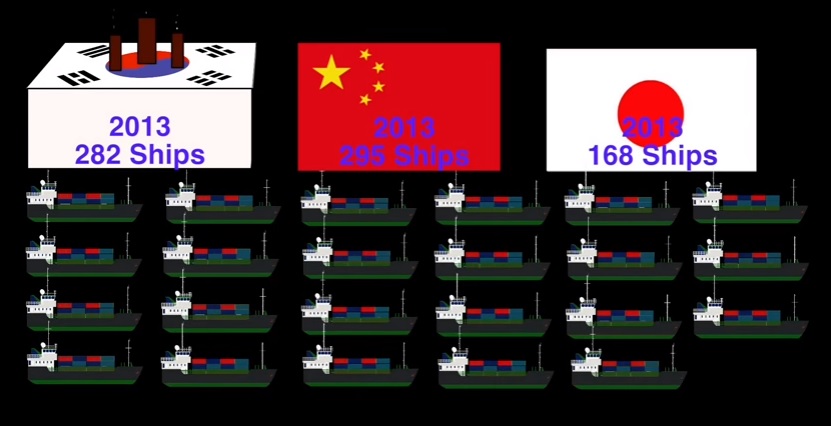
CU Blog - Commerce of the Seas - Model of Ingalls - Photo 1

CU Blog - Commerce of the Seas - Model of Ingalls - Photo 2

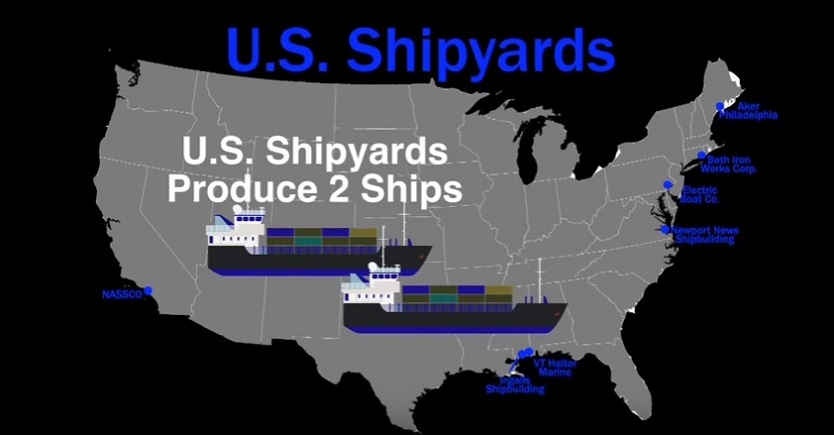
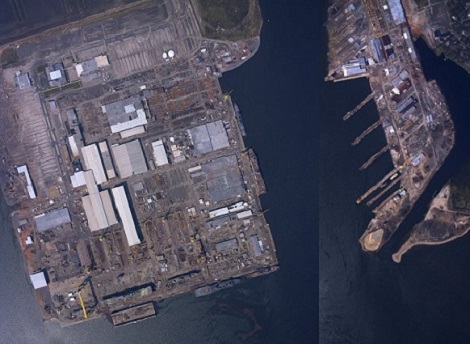
Look at the numbers in the 2 photos above. It is apparent that the US distorts the Supply-and-Demand factors for Ship-Building in its market; their protectionist laws prevent the international market from supplying domestic shipping needs. This is bad! Though there is the need for some government-aid, to protect jobs and defense options,  the US model of Crony-Capitalism is a blatant distortion – Source: https://youtu.be/GpwzoDGDGAQ.

Ship-Building can be a strategic industry! The book Go Lean…Caribbean asserts that 15,000 new direct jobs can be created with strategic endeavors for the Ship-Building industry in the region. (Even more indirect jobs applies – multiplier rate of 3-to-1).  The Go Lean book calls for the elevation of Caribbean economics, positing that governmental entities must stimulate and incubate this industry. The book surveyed the world looking for industrial opportunities that could be fully explored in the Caribbean region where the natural resources of the region could be considered; the region is known for sun, sand and sea.

Tourism is a natural assumption for utilizing these “sun, sand and sea“ resources, but with the recent inadequacies of this industry, there needs to be more diversity in our commercial offerings; ship-building – which needs the sea – was identified as an ideal supplement and alternative for regional commerce. This reference to “regional commerce” refers to the economic interest that the 30 member-states in the Caribbean have to consider to provide job and entrepreneurial opportunities for its people. So this Ship-Building focus prioritizes the “Commerce of the Seas” concept. This commentary is 3 of 4 in a series considering the Lessons in Economic History related to “Commerce of the Seas”, the Crony-Capitalism in laws and practices around the maritime eco-system in the United States … and other countries. The full series is as follows:

  1. Commerce of the Seas – Stupidity of the Jones Act
  2. Commerce of the Seas – Book Review: ‘Sea Power’
  3. Commerce of the Seas – Shipbuilding Model of Ingalls
  4. Commerce of the Seas – Lessons from Alang (India)

There are many Lessons in Economic History for the Caribbean to glean by considering the actuality of this industry. Let’s consider the role model of just one American shipbuilding entity: Ingalls Shipbuilding Company in Pascagoula, Mississippi. See the reference source here, describing the business model for building ships to ‘Supply’ any open ‘Demand’ in the commercial market:

Title: Ingalls Shipbuilding 

Ingalls Shipbuilding is a shipyard located in Pascagoula, Mississippi, United States, originally established in 1938, and is now part of Huntington Ingalls Industries. It is a leading producer of ships for the United States Navy, and at 12,500 employees, the largest private employer in Mississippi.

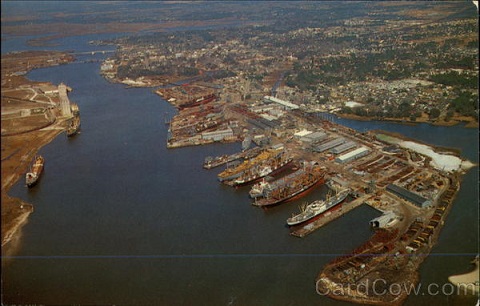
CU Blog - Commerce of the Seas - Model of Ingalls - Photo 3

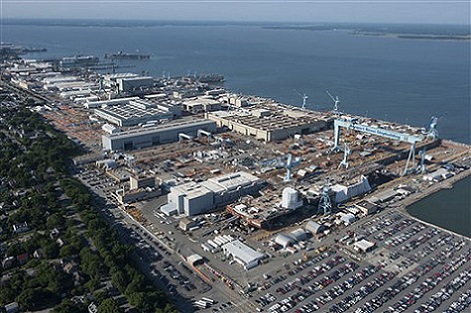
Pascagoula River and Ingalls Shipyard

CU Blog - Commerce of the Seas - Model of Ingalls - Photo 5

History

In 1938, Ingalls Shipbuilding Corporation was founded by Robert Ingersoll Ingalls, Sr. (1882–1951) of Birmingham, Alabama, on the East Bank of the PascagoulaRiver in Mississippi.[1] Ingalls was located where the Pascagoula River runs into the Gulf of Mexico. It started out building commercial ships including the USS George Clymer (APA-27), which took part in Liberty Fleet Day 27 September 1941. In the 1950s Ingalls started bidding on Navy work, winning a contract in 1957 to build 12 nuclear-powered attack submarines.

Litton Industries acquired Ingalls in 1961, and in 1968 expanded its facilities to the other side of the river. Ingalls reached a high point of employment in 1977, with 27,280 workers. In April 2001, Litton was acquired by the Northrop Grumman Corporation.[2]

On August 29, 2005, Ingalls facilities were damaged by Hurricane Katrina; most of the ships in dock and construction escaped serious harm. While shipbuilding was halted for a while due to the destruction of many buildings, most vehicles, and the large overhead cranes, the facility continues to operate today.

On March 31, 2011, Northrop Grumman spun off its shipbuilding sector (including Ingalls Shipbuilding) into a new corporation, Huntington Ingalls Industries.

In 2015, Ingalls Shipbuilding Company signed a contract with US Navy for new destroyers, littoral combat ships and new landing craft. USS John Finn (DDG-113) was one of the first destroyers was launched on March 28. Company also is building Ralph Johnson (DDG 114), Paul Ignatius (DDG 117) and Delbert D. Black (DDG 119).

On March 21, 2015, the new San Antonio LPD 17-class amphibious ship John P. Murtha (LPD 26) was ceremonially christened. The vessel having been launched on October 30 and scheduled to be delivered in 2016.

On March 27, 2015, the shipyard received construction contracts for their next destroyers. Ingalls Shipbuilding Company was awarded a $604.3 million contract modification to build the yet-to-be-named DDG 121.

On March 31, 2015, the shipyard also received another contract with a $500 million fixed price to build the eighth National Security Cutter (NSC) for the US Coast Guard. Most of them will be under construction until 2019. The cutters are the most advanced ships ever built for the Coast Guard. [3]

On June 30, 2016, Ingalls Shipbuilding signed a contract with US Navy to build the U.S. Navy’s next large-deck amphibious assault warship. The contract included planning, advanced engineering and procurement of long-lead material, is just over $272 million. If options are exercised, the cumulative value of the contract would be $3.1 billion.[4]

Ships built

Source: Retrieved 06-11-2017 from Wikipedia: https://en.wikipedia.org/wiki/Ingalls_Shipbuilding

———–

VIDEO – Ingalls Shipbuilding Promotional Video – https://youtu.be/EFl8Tl0ImJo

Published on Jan 10, 2017 – Ingalls Shipbuilding is located in Pascagoula, Mississippi on 800 acres of the most important real estate in America. With 11,000 employees, Ingalls is the largest manufacturing employer in Mississippi and a major contributor to the economic growth of both Mississippi and Alabama. Our 77-year legacy has continuously proven we have the talent, experience and facilities to simultaneously build more classes of ships than any other shipyard in America.

We are the builder-of-record for 35 Aegis DDG 51 class guided missile destroyers, LHA 6 class large deck amphibious ships, National Security Cutters for the U.S. Coast Guard and the sole builder of the Navy’s fleet of San Antonio (LPD 17) class amphibious assault ships. Ingalls Shipbuilding has what it takes to build the capital ships that keep America and our allies safe.

Additional VIDEO consideration: https://youtu.be/0pak_gKglqo – Ingalls shows ‘Shipyard of the Future’.
Considering that 90% of all trade transports by water, there is natural demand for shipbuilding. There is a lot of supply as well.

Ingalls Shipbuilding Company is a definite beneficiary of government-aided commerce in the US; most of their shipbuilding engagements are government contracts. They are a leading producer of ships for the US Navy or Coast Guard, and at 12,500 employees, the largest private employer in Mississippi. As related in the first commentary in this series, the Jones Act has protected maritime commerce and shipbuilding for American stakeholders like Ingalls.

It is ‘high tide’ for the Caribbean to engage some protectionism strategies. Considering that the Caribbean region is the #1 market for the Cruise Line industry, collective bargaining should be prioritized to direct some shipbuilding business to local entities in this industry. The book Go Lean… Caribbean posits that as a unified region – a Single Market – the power of collective bargaining is possible. The book serves as a roadmap for the introduction and implementation of the technocratic Caribbean Union Trade Federation (CU) with the charter to facilitate jobs in the region. We should explore the benefits of the shipbuilding (and ship-breaking) industry. This aligns with the CU charter; as defined by these 3 prime directives:

  • Optimization of economic engines in order to grow the regional economy to $800 Billion and create 2.2 million new jobs.
  • Establishment of a security apparatus to protect the resultant economic.
  • Improve Caribbean governance to support these engines.

Early in the Go Lean book, this responsibility to create jobs was identified as an important function for the CU with this pronouncement in the Declaration of Interdependence (Pages 14):

xxiv.  Whereas a free market economy can be induced and spurred for continuous progress, the Federation must install the controls to better manage aspects of the economy: jobs, inflation, savings rate, investments and other economic principles. Thereby attracting direct foreign investment because of the stability and vibrancy of our economy.

xxvi.  Whereas the Caribbean region must have new jobs to empower the engines of the economy and create the income sources for prosperity, and encourage the next generation to forge their dreams right at home, the Federation must therefore foster the development of new industries, like that of ship-building…. In addition, the Federation must invigorate the enterprises related to existing industries tourism, fisheries and lotteries – impacting the region with more jobs.

Accordingly, the CU will facilitate the eco-system for Self-Governing Entities (SGE), an ideal concept for shipyards, with its exclusive federal regulation/promotion activities.

The Go Lean movement (book and blogs) also details the principle of job multipliers, how certain industries are better than others for generating multiple indirect jobs down the line for each direct job on a company’s payroll. In a previous blog-commentary, it was related that the shipbuilding industry has a job-multiplier rate of 3.0. So once the job-multiplier rate is applied to the 15,000 direct shipbuilding jobs, generating 45,000 indirect jobs, the full economic impact is 60,000. This is transforming!

The Go Lean book provides 370-pages of turn-by-turn instructions on “how” to reform and transform the Caribbean, starting first with how to adopt new community ethos, plus the strategies, tactics, implementations and advocacies to execute so as to transform the maritime commerce to benefit Caribbean society. Consider the Chapter excerpts and headlines from this sample on Page 209 related to Ship-Building:

10 Ways to Develop Ship-Building

1

Lean-in for Caribbean Integration
The CU will allow for the unification of the region into one market, creating an economy of 30 member-states, 42 million people and 2010 GDP over $800 Billion. All of the member-states are either islands or coastal, therefore there are lots of coastline and harbors. Boats, yachts and ships are therefore plentiful in the region. Consistent with the CU’s mission for globalization, the region cannot just consume these vessels; we must create and build as well. There is a history of boat-building in the islands (slopes, schooners, clippers), but what had been missing to forge a formidable industry is the capital and the community “will”. The CU will now fill those gaps. The CU will tap the capital markets to secure long-term funding (stocks/bonds), prepare the labor force for advanced skill-sets, and negotiate treaties with “mature” EU states (i.e. Holland, Ireland) for master-apprentice labor-coaching. Boats, yachts and ships are considered durable goods, the opposite of planned obsolescence. …

2

Cooperatives Movement – “Many hands make heavy job light

3

Ferry Operations – Demand & Supply
The CU envisions a fleet of ferries, to service the individual islands, in a scheme dubbed “Union Atlantic Turnpike”. The proliferation of scheduled ferries, synchronized with trains and trucks will depict a continuous logistic network. This constitutes the demand for ferries. The CU will henceforth award the contracts for building and maintaining the ferries to local industry players – this constitutes the supply. The CU will therefore foster a ship-building “incubator”.

4

Spin-off Strategy – Low-risk Contracts
The CU vision is to deploy a “spin-off” strategy for ship-owning patrons. The CU region needs ships. Therefore, the CU will incentivize patrons to “go local” with their ship-building/maintenance needs. A domestic ship-building industry is a great source of skilled/high-wage jobs. So there are many ways to exploit the cost-benefit equation for a win-win.

5

Cruise Ship Dry-Dock – Let’s Make-A-Deal
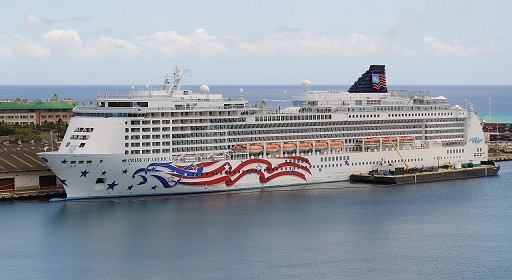
The Caribbean region is the Number One market for the Cruise Line industry. Big expenses for Cruise Lines are port charges and landing fees. The CU will offer rebates and incentives for the Cruise Lines to use local dry-docks for retro-fittings and refurbishing.

6

Yacht Development – Catering to a Special Market

7

Sailboats – For Every Man
The history of Caribbean boat building is rich with sailing crafts; cruise ships evolved from local Banana-Boats. The CU will channel that history, passion and ethos for the region to design/develop best-inbred sailboats, big and small.

8

Boat Shows and Open Houses – Show and Tell

9

Regattas – More than Just Winning a Race
The history of the region has highlighted ships, boats and boat building. There is the tradition of Regattas, used to showcase the islands boat building prowess. [199] The CU now intends to feature Regattas in the same manner that automakers feature auto racing (NASCAR, IndyCar, Formula-One), as a demonstration platform for their art and science.

10

Maritime Emergencies – Professional Response
The CU will deploy the necessary equipment and training for the ship-building industry to respond to maritime emergencies in the region. Therefore a disabled cruise ship will have the rapid response of “support-barges”, tug boats, dredging equipment, portable generators. This effort will be marshaled by the CU Emergency Management Agency.

The CU will foster shipbuilding as an industrial supplement and alternative to tourism. We have the resources (waterscapes, ports and harbors), the skills and the passionate work-force. We only need the Commerce of the Seas. The Caribbean people are now ready for this industrial empowerment. But we need to be cautious as to which role model we emulate. The US does provide material support and subsidies to their shipbuilding industry, but their protection laws – i.e. the Jones Act – have nullifies the positive effects of a Free Market. While other countries build and launch hundreds of ships every year, the US model only produce 2. That’s a lot of missing jobs, and artificially induced high prices.

In the Caribbean, we must do better. Fortunately, we do not have the Crony-Capitalism of the Jones Act to deter us. We can follow other – better – models to progress our societal investments in this industry. This is the assertion of the Go Lean roadmap.

We hereby urge all Caribbean stakeholders – governments and citizens – to lean-in to this Go Lean roadmap to foster this industrial development, so that our region can be a better homeland and seas to live, work and play. 🙂

Download the free e-book of Go Lean … Caribbean – now!

Sign the petition to lean-in for this roadmap for the Caribbean Union Trade Federation.

———–
Appendix – The OECD Council Working Party on Shipbuilding

(OECD = Organization of Economic Cooperation and Development)

The OECD Council Working Party on Shipbuilding (WP6) seeks to progressively establish normal competitive conditions in the industry. It encourages transparency through data collection and analysis, and seeks to expand policy dialogue with non-OECD economies that have significant shipbuilding industries. WP6 is the only international body that can influence and guide government policies by identifying and, where possible, eliminating factors that distort the shipbuilding market.

The Working Party is chaired by Ambassador Elin Østebø Johansen, Permanent Representative of Norway to the OECD. Participating OECD members are: Denmark, Finland, Germany, Italy, Japan, Korea, Netherlands, Norway, Poland, Portugal, Sweden and Turkey. Croatia and Romania are full participants in the Working Party, and the Russian Federation participates as an observer. The European Commission, representing the European Union, also participates in WP6 meetings.

What does the Working Party on Shipbuilding do?
The WP6 has placed a high priority on encouraging policy dialogues, and on establishing close working relationships with non-OECD economies. In particular, these economies were invited to participate on an equal footing with OECD members in the negotiations on a shipbuilding agreement that ran from 2002 until 2005, and Brazil, China, Croatia, the Philippines, Romania, the Russian Federation, Chinese Taipei and Ukraine participated in those negotiations. Although the negotiations were eventually halted, a close working relationship has continued with all of these economies.

The WP6 organizes regular workshops aimed at facilitating the exchange of information on policy and industry developments, and as well as the economies already mentioned, other participants have come from India, and Indonesia, amongst others.

The WP6 has also worked closely with industry groups representing shipbuilders, ship owners, ship operators and trade union interests, so that a wide range of perspectives can be taken into account by WP6 members during their formulation of policy responses to address issues and challenges faced by the global shipbuilding sector.

What is the relevance of the Working Party to non-OECD economies and industry?

While the world’s shipbuilding industry has been through a period of record production, it was severely affected by the 2008 global financial crisis, and recent years have seen very low levels of new orders received by virtually all shipyards. The global industry now faces a number of challenges, most notably global excess capacity, which will place the economic viability of the industry under pressure in some parts of the world.

Persistent worldwide overcapacity may encourage governments to provide support through subsidies and other measures, as well as spur other market distorting practices, which can create major structural problems even in the most efficient shipbuilding industries. But potential market distortions can be addressed through close co-operation among economies with significant shipbuilding sectors and the active involvement of industry.

———-

INVENTORY OF GOVERNMENT SUPPORT MEASURES

The Inventory of Government Subsidies and Other Support Measures is a regular exercise for the WP6. The main aim of this exercise is to provide transparency and continuity of data on support measures for the shipbuilding industry. As well as WP6 participants, the Inventory provides some information on the support measures in Partner economies.

Share this post:
, , ,

Industrial Reboot – Auto-making 101

Go Lean Commentary

Allow me to introduce this concept of planned obsolescence. This is the policy in industrial design and economics that calls for …

… designing a product with an artificially limited useful life, so it will become obsolete (that is, unfashionable or no longer functional) after a certain period of time. [1] The rationale behind the strategy is to generate long-term sales volume by reducing the time between repeat purchases (referred to as “shortening the replacement cycle”).[2]Wikipedia.

Let’s understand this better: you are a stock on the shelf!

There are planners out there that are designing products that you need that can last longer, but purposely choose to give it a short life so as to force you to “come again” and “buy again”. Considering all the stakeholders in such a transaction: buyers -vs- seller; consumers -vs- producers, who do you think benefits the most? No doubt:

The producer-seller!

So if you have to build an economy from scratch, you should try to forge a producer economy, rather than a consumer economy. Likewise, if you are to reboot an economy, this logic dictates that you should revisit all the consumer industries and ascertain as to whether they can be converted into producing industries. This is especially true of the auto industry.

The book Go Lean … Caribbean asserts that the Caribbean industrial landscape can be transformed so that many basic needs can be provisioned domestically, rather than imported. This is even true of the auto industry. This is the Go Lean quest!

The basic needs in focus of course include food, clothing and shelter. But the Caribbean reality has a supplemental list, consider energy, telecommunications, medical trauma and transportation. Every Caribbean community have a proliferation of automobiles, but despite the 42 million people in the 30 member-states, there are no auto manufacturers in the region at all. Our status is worse than initial appearances, not only do we not have any assembly plants, but no parts suppliers either. We are completely inconsequential on the automotive supply-chain.

The planners in the global automotive industry simply consider the Caribbean region as consumers, and not producers by any stretch of the imagination. This is sad, because many jobs are at stake in the automotive manufacturing industry.

“Somebody, throw us a bone!”

This is the urging of the movement behind the Go Lean book; the book asserts (Page 257) that many jobs can be forged, if we adopt a different community ethos – spirit of a culture that informs the beliefs, customs and practices – and seek to produce, not just consume. The book details this count:

Direct jobs in the design, fabrication and logistics for new autos: 12,000  

There is an Old Adage: “Divide and Conquer”. This is the reality of the Caribbean disposition; there are 30 different and separate countries-territories. If we are able to “buck this trend”, a consolidated-integrated Single Market would amount to 42 million people.

If only …

The Go Lean book prepares the business model for transportation solutions in the Caribbean region. The book ask the question: “Why can’t we contemplate our own auto manufacturing business model?” Yes, business model refers to jobs, entrepreneurial opportunities, trade transactions, etc. In addition to these industry jobs; there is also the reality of indirect jobs – unrelated service and attendant functions – at a 3.75 multiplier rate would add another 45,000 jobs.

This constitutes an industrial reboot. We have successful role models to consider … and lessons to learn.

Consider the Republic of Iran. When their society was sanctioned in 1979, their easy access to American, Japanese and European automobiles were curtailed; their solution:

    They developed a domestic auto manufacturing industry for their 82 million people. See this encyclopedic reference:

Iran’s automotive industry is the third most active industry of the country, after its oil and gas industry, accounting for 10% of Iran’s GDP and 4% of the workforce (700,000 persons).[1][2][3][4]

Iran developed a significant automotive industry with annual production of up to 200,000 units under the Mohammad Reza Shah Pahlavi‘s regime. But after the Iranian Revolution of 1979 production drastically decreased due to Iran–Iraq War and international sanctions. Since the early 2000s, automobile production in Iran has grown exponentially. Iran’s automobile production crossed the 1 million mark in 2007/2008. Today, Iran is the 18th largest automaker in the world and one of the largest in Asia, with annual production of more than 1.6 million.[5] In 2009 Iran ranked fifth in car production growth standing next to China, Taiwan, Romania and India.[6]

The Iranian manufacturers currently produce six different types of vehicle, including passenger cars, 4WD, trucks, buses, minibuses, and pickup trucks. … About 75% of local output is passenger cars, with pick-ups the next largest category, accounting for around 15%.[9]Source: Wikipedia.

We have no sanctions in the Caribbean (notwithstanding Cuba). We should, must be able to foster our own automotive productions. Iran did … with both hands tied behind it’s back – see Appendix VIDEO. Hopefully, in the Caribbean, we can at least try.

The book Go Lean…Caribbean – available to download for free – serves as a roadmap for the introduction and implementation of the technocratic Caribbean Union Trade Federation (CU); this is a confederation of all 30 member-states to execute a reboot of the Caribbean economic eco-system. This CU/Go Lean roadmap has these 3 prime directives:

  • Optimization of the economic engines in order to grow the regional economy to $800 Billion & create 2.2 million new jobs.
  • Establishment of a security apparatus to ensure public safety and protect the resultant economic engines.
  • Improvement of Caribbean governance to support these engines, including a separation-of-powers between the member-states and CU federal agencies.

The Caribbean economic landscape is in shambles! This is due to the primary driver in the region – Tourism – being under assault; more and more visitors shift from stay-overs to cruise arrivals. So this means less economic impact to the local markets. As a region, we must reboot our industrial landscape and add more job-creating options.

This commentary has previously identified a number of different industries that can be rebooted under this Go Lean roadmap. See the list of previous submissions on Industrial Reboots here:

  1. Industrial RebootsFerries 101 – Published June 27, 2017
  2. Industrial RebootsPrisons 101 – Published October 4, 2017
  3. Industrial RebootsPipeline 101 – Published October 5, 2017
  4. Industrial RebootsFrozen Foods 101 – Published October 6, 2017
  5. Industrial RebootsCall Centers 101 – Published July 2, 2018
  6. Industrial RebootsPrefab Housing 101 – Published July 14, 2018
  7. Industrial RebootsTrauma 101 – Published July 18, 2018
  8. Industrial Reboots – Auto-making 101 – Published Today – July 19, 2018

The Go Lean book stresses that reforming and transforming the Caribbean economic engines must be a regional pursuit. This was an early motivation for the roadmap, as pronounced in the opening Declaration of Interdependence (Pages 12 – 13):

xxiv.  Whereas a free market economy can be induced and spurred for continuous progress, the Federation must install the controls to better manage aspects of the economy: jobs, inflation, savings rate, investments and other economic principles. Thereby attracting direct foreign investment because of the stability and vibrancy of our economy.

xxvi.  Whereas the Caribbean region must have new jobs to empower the engines of the economy and create the income sources for prosperity, and encourage the next generation to forge their dreams right at home, the Federation must therefore foster the development of new industries, like that of ship-building, automobile manufacturing, prefabricated housing, frozen foods, pipelines, call centers, and the prison industrial complex … impacting the region with more jobs.

xxvii. Whereas the region has endured a spectator status during the Industrial Revolution, we cannot stand on the sidelines of this new economy, the Information Revolution. Rather, the Federation must embrace all the tenets of Internet Communications Technology (ICT) to serve as an equalizing element in competition with the rest of the world. The Federation must bridge the digital divide and promote the community ethos that research/development is valuable and must be promoted and incentivized for adoption.

Accordingly, the CU will facilitate the eco-system for Self-Governing Entities (SGE), an ideal concept for auto manufacturing with its exclusive federal regulation/promotion activities. Imagine bordered campuses – with R&D Concept Cars, test tracks, railroad lines, shipping docks and backup power generations. The focus for the Go Lean roadmap is locally provisioning for basic needs – being a protégé of advanced democracy countries and not just a parasite, thrown hither-and-thither to the winds of change. This is the fallout of the Planned Obsolescence strategy, as further elaborated on in the book (Page 206), with this addition to the definition here:

The Bottom Line on Planned Obsolescence
… Planned obsolescence has potential benefits for a producer because the consumer is under pressure to purchase again, whether from the same manufacturer (a replacement part or a newer model), or from a competitor which might also rely on planned obsolescence. Firms that pursue this strategy believe that the additional sales revenue it creates more than offsets the additional costs of research and development. Critics of this policy claim the process wastes and exploits customers, uses up resources in making changes that at times may only be cosmetic. Supporters, on the other hand, claim planned obsolescence drives technological advances and contributes to material well-being. They claim that a market structure of planned obsolescence and rapid innovation may be preferred to long-lasting products and slow innovation; that market success requires a perpetual innovation cycle. Planned obsolescence works best when a producer has at least an oligopoly. When a market becomes more competitive, product life-spans tend to increase. When Japanese vehicles with longer life-spans entered the American market in the 1960s and 1970s, American carmakers were forced to respond by building more durable products.

As a community, we would want to be on the driving end – pun intended – of Planned Obsolescence, not the receiving end – we do not just want to be a “stock on the shelf”.

The Go Lean movement (book and blogs) details the principles of SGE’s and job multipliers, how certain industries are better than others for generating multiple indirect jobs down the line (or off-campus) for each direct job on the SGE’s payroll.
This is the vision of an industrial reboot! This transformation is where and how new jobs are to be created in the Caribbean.

The Go Lean book provides 370-pages of turn-by-turn instructions on “how” to adopt new community ethos, plus the strategies, tactics, implementations and advocacies to execute so as to reboot, reform and transform the societal engines of Caribbean society. One advocacy in rebooting the industrial landscape is to develop some sort of automotive manufacturing industry; consider the  specific plans, excerpts and headlines from the book on Page 206 entitled:

10 Ways to Develop the Auto Industry

1 Lean-in for the Caribbean Single Market
The CU will allow for the unification of the region into one market, thereby creating a single economy of 30 member-states, 42 million people and a GDP of over $800 Billion. The people of the region have cars, and will continue to need cars. There is no demand shortages for the region; in addition, the CU as the regional Taxi Commission will also furnish demand for a fleet customized as taxi cabs; modeling the NYC model – see Appendix ZG. The CU will take the lead in facilitating the vertical industries to supply the needs of a domestic auto industry. The CU’s economic engines allows for investment capital to finance the supply mechanisms and a media complex to forge a constant demand.
2 Do It Yourself – Domestic Manufacturer
A domestic auto industry is a great source for jobs for a skilled and high-wage labor force. Fulfilling the automotive needs of the CU market will create a lot of economic spin-off activity. In the US, the Detroit 3 maintains 240,000 jobs, but impact an additional 3 million jobs in related communities; see Appendix C3. By continuing to buy cars from the US, then Detroit gets the multiplier benefits of CU auto purchases rather than the CU; the same for Germany, Japan, etc. The CU will foster the local manifestation of the global auto industry to grow the domestic economy and deduct from the trade deficit. Invitations will be made to entities like Ford, GM, Volkswagen, Fiat, Toyota, Nissan, etc to deploy a local assembly plant in a CU member-state. After one company thrives from this foothold, other firms will definitely follow.
3 Bring on the future – “Lego” – Modular Platforms
Auto manufacturing disciplines are changing. Companies, like Volkswagen (VW) have adopted a modular platform approach that allows multiple brands and models (VW: includes Audi, Citroen, Bentley, Lamborghini, etc.) to share base components: engines, transmissions, ventilation systems, etc. [185] This allows for the global distribution of plug compatible parts to be assembled for models servicing different markets. Assembly plants can be erected anywhere.
4 Embrace Alternative Energy & Hybrids
5 Optimize the Logistics Industry
Automobiles are assembled at factories, but the ensemble parts are made at supplier plants all over the world. The assembly factories have to receive the parts, just in time, so as to not impede production. [184] The CU will optimize the transportation modes to ensure that doing business in the region is not a deterrent to success. Once the autos are completed, they then need to get to the marketplace, as automakers do not sell directly to the consumers, they distribute through dealerships. So vertical industries are promoted to ship, and relocate completed vehicles.
6 Exploit Service and Maintenance
7 Don’t forget “After-Market” Parts
8 Help Regional Businesses Find Foreign Markets – Export
9 Promote Auto Shows
10 Re-capture Recycled Materials

Automobile transportation solutions are not new for this Go Lean roadmap; there have been a number of previous blog-commentaries by the Go Lean movement that referenced the economic opportunities embedded in the industrial footprint of cars. See a sample list here:

https://goleancaribbean.com/blog/?p=11649 Righting a Wrong: Volkswagen Emissions Crisis
https://goleancaribbean.com/blog/?p=8650 Now it’s Detroit’s turn to rescue Silicon Valley
https://goleancaribbean.com/blog/?p=7056 Electric Cars: ‘Necessity is the Mother of Invention’
https://goleancaribbean.com/blog/?p=1277 The need for highway safety innovations – here comes Google

In summary, our Caribbean region need jobs. A better job-creation ability would help us to make our homeland a better place to live, work and play. In fact, one of the reasons why so many Caribbean citizens have emigrated away from the homeland is the job-creation dysfunction. Creating a new economic landscape will require rebooting the industrial landscape.

Yes, we can … reboot our industrial landscape, and create new jobs – and other economic opportunities.

We urge all Caribbean stakeholders to lean-in to this roadmap for economic empowerment. Other countries with less partnerships have exploited the market opportunities of auto-making; so can we; this Go Lean roadmap is viable. J

Sign the petition to lean-in for this roadmap for the Caribbean Union Trade Federation.

—————

Appendix VIDEO – Iran Automotive Industry – https://youtu.be/mB8buctuO3w

PressTV

Published on Oct 26, 2014 – Iran’s leading auto manufacturer, Iran Khodro, has presented five new products at the 2014 Tabriz Auto Expo. This only days after it started the mass production of TU3 engines for type 2, Peugeot 206 cars. IKCO has experienced a boom in production since October 2013. The 2014 production target is 600,000 sets of car and IKCO is already 2% ahead of planning. Meanwhile, the 2014 Tabriz Auto Expo itself is quite intriguing with nearly 450 Iranian and foreign companies taking part. A great chance to see current automobile models, debuts, and the latest spare parts to pimp your ride!

Share this post:
, , ,
[Top]

Industrial Reboot – Trauma 101

Go Lean Commentary

Define basic needs …

… no doubt this includes food, clothing and shelter. These are the age-old means of sustenance that every generation of mankind have had to contend with.

But in modern times, that list is expanded; add: energy, transportation, telecommunications and …

medical.

Can these be considered luxuries as opposed to basic needs?

An argument can be made of this point; many times even medical necessities are de-prioritized – think immunizations – until absolute emergencies. This latter scenario – medical emergencies – is the subject of Trauma medicine, an absolute necessity, vital service, and essential offering. Trauma becomes a basic need and not an optional luxury. So there will always be a demand for Trauma medicine; how will it be supplied?

This commentary – from the movement behind the book Go Lean … Caribbean (available to download for free) – continues the discussion on the economic principles of supply and demand; it focuses on fostering Industrial Reboots for the Caribbean homeland since the region is in dire straits economically. This Industrial Reboot is badly needed as our current economic landscape – based on Tourism – is in shambles! Our Supply-Demand dynamics are not optimized.

The Go Lean book serves as a roadmap for the introduction and implementation of the technocratic Caribbean Union Trade Federation (CU). It explains that Tourism is a service product that depends heavily on Supply-Demand dynamics. In Economics, higher demand and consistent supply results in higher prices; so in a normalized scenario, revenues should grow and grow. The Caribbean tourism is under assault in every member-state due to the fact that many visitors to the region have shifted from stay-overs to cruise arrivals. The Caribbean demand continues, but the supply is different. Cruises mean less economic impact to the local markets than stay-overs. So as a region, we must reboot our industrial landscape so as to create more jobs … from alternate sources. What options do we have?

The Go Lean book urges the region to reform and transform the economic engines around the delivery of basic needs, so we need to better prepare for medical-trauma emergencies. (There is the industrial sub-group of medical tourism). Medical-trauma needs are currently being supplied by other service providers … in foreign destinations. See the news article here portraying how the Joe DiMaggio Children Hospital in Ft. Lauderdale promotes its Neo-Natal and Pediatric treatments:

Title: World renowned Doctors convene in Saint Lucia
Press Release:–  Dr. Kak-Chen Chan, Pediatric Cardiologist and specialist in Adult Congenital Heart Disease and Dr. Steven Bibevski, Cardiothoracic surgeon who specializes in Pediatric and Congenital Heart Surgery, as well as heart transplantation and artificial heart support, will participate as speakers at the 33th Caribbean Cardiac Society in St. Lucia, from July 18th to July 21st, that will take place in the Royalton- Saint Lucia Resort and Spa.


The doctors will share with their colleagues the knowledge, cutting edge procedures, and experiences performed at Joe DiMaggio Children’s Hospital, part of Memorial Healthcare System.

Since 1988, the Caribbean Cardiac Society has been a non-profit organization proud to be one of the most important gatherings of cardiac specialists from around the world, who are committed to providing services to cardiac patients in the Caribbean region, by sharing their experiences and exchange knowledge. This year’s theme is “Meeting the Challenges of Cardiac Care in an Ever-Changing Caribbean.”

One of the most common Congenital Heart Defects is Patent Ductus Arteriosus (PDA) defined when the two major blood vessels leading from the heart remain open after birth. PDA accounts for 5%-10% of all Congenital Heart Defects. To share more insight Dr. Kak-Chen Chan will present his lecture on Extreme Prematurity, chronic lung disease, persistent ductus arteriosus and pulmonary hypertension: The potentially deadly Quartet tamed.

Extreme premature infants are often affected by chronic lung disease, patent ductus arteriosus and pulmonary hypertension.  As medical science improves, more of these babies are surviving past their early infancy.  However, these disease process continues to be important causes of morbidity and mortality.

Dr. Steven Bibevski will be presenting a talk, showing data of survival rate on 10 years of surgical experience with patients from the Caribbean at Joe DiMaggio Children’s Hospital.

“I am very excited and honored to speak at this year’s CCS meeting. As physicians, our focus is on the health, well-being, and healing in of all patients. We are very fortunate to have an experienced team of doctors who work together to provide innovative treatments while delivering compassionate care to our patients,” stated Dr. Bibevski.
Source: St. Lucia News Daily Newspaper; posted & retrieved July 17, 2017 from: https://stluciatimes.com/2018/07/17/world-renowned-doctors-for-congress-in-saint-lucia/

There is the opportunity for a business model in the field of medical Trauma. Others are making money, why not Caribbean stakeholders. (Still, our motive must not just be profit, it must be the Greater Good). This is how and where jobs are to be forged for a new Caribbean economy.

There are other business models too, that the new Caribbean economy can deploy to grow the regional economy; we can, and must, reboot our industrial landscape. This commentary has previously identified a number of different industries that can be rebooted under this Go Lean roadmap. See this list of previous submissions under the title Industrial Reboots:

  1. Industrial RebootsFerries 101 – Published June 27, 2017
  2. Industrial RebootsPrisons 101 – Published October 4, 2017
  3. Industrial RebootsPipeline 101 – Published October 6, 2017
  4. Industrial RebootsFrozen Foods 101 – Published October 6, 2017
  5. Industrial RebootsCall Centers 101 – Published July 2, 2018
  6. Industrial RebootsPrefab Housing 101 – Published July 14, 2018
  7. Industrial Reboots – Trauma 101 – Published Today – July 18, 2018

The Go Lean book stresses that reforming and transforming the Caribbean economic engines and medical deliveries must be a regional pursuit. This was an early motivation for the roadmap, as pronounced in the opening Declaration of Interdependence (Pages 11 – 13):

ix. Whereas the realities of healthcare and an aging population cannot be ignored and cannot be afforded without some advanced mitigation, the Federation must arrange for health plans to consolidate premiums of both healthy and sickly people across the wider base of the entire Caribbean population. The mitigation should extend further to disease management, wellness, mental health, obesity and smoking cessation programs. The Federation must proactively anticipate the demand and supply of organ transplantation as developing countries are often exploited by richer neighbors for illicit organ trade.

xxiv.  Whereas a free market economy can be induced and spurred for continuous progress, the Federation must install the controls to better manage aspects of the economy: jobs, inflation, savings rate, investments and other economic principles. Thereby attracting direct foreign investment because of the stability and vibrancy of our economy.

xxvi.  Whereas the Caribbean region must have new jobs to empower the engines of the economy and create the income sources for prosperity, and encourage the next generation to forge their dreams right at home, the Federation must therefore foster the development of new industries, like that of ship-building, automobile manufacturing, prefabricated housing, frozen foods, pipelines, call centers … – impacting the region with more jobs.

Accordingly, a regional medical trauma eco-system can help to make the Caribbean a better place to live, work, heal and play. Many jobs could derive from these medical deliveries.

In addition, the CU will facilitate the eco-system for Self-Governing Entities (SGE), an ideal concept for Trauma Centers with its exclusive federal regulation/promotion activities. Imagine bordered campuses – with backup power generations, autonomy for professional standards, and autonomous air/sea transportation modes. The Go Lean movement (book and blogs) details the principles of SGE’s and job multipliers, how certain industries are better than others for generating multiple indirect jobs down the line (or off-campus) for each direct job on the SGE’s payroll.

According to the Go Lean book (Page 257) , there could be many jobs in the related fields of Trauma & Emergency Management – separate and apart from general health-care deliveries. The book quotes these figures:

Jobs from Trauma Centers, Emergency Managers, Volunteer Fire/Rescue: 4,000

The Go Lean book prepares the business model of Trauma Centers for consumption among Caribbean people. The book describes a scheme with 6 different Level I Trauma Centers – see Appendix below – throughout the region. This scheme will save lives, and also launch the new business model. Yes, business model refers to jobs, entrepreneurial opportunities, trade transactions, etc. In addition to these industry jobs; there is also the reality of indirect jobs – unrelated service and attendant functions – at a 3.75 multiplier rate would add another 15000 jobs.

This truly constitutes an Industrial Reboot. The Go Lean book details this business model, as such – see this quotation here from Page 196:

The Bottom Line on Trauma Medicine
A trauma center is a hospital facility equipped to provide comprehensive emergency medicine to victims suffering traumatic injuries. Trauma centers grew into existence out of the realization that traumatic injury is a disease process unto itself requiring specialized and experienced multidisciplinary treatment and specialized resources. According to the US Center for Disease Control (CDC), injuries are the leading cause of death for children and adults ages 1–44. The leading causes of trauma are motor vehicle accidents, falls, and assaults.

Trauma centers vary in their specific capabilities and are identified by “Level” designation: Level-1 being the highest, to Level-3 being the lowest (though some states have five designated levels, in which case Level-5 is the lowest). Higher levels of trauma centers will have trauma surgeons available; those trained in such specialties as Neurosurgery and Orthopedic surgery as well as highly sophisticated medical diagnostic equipment. Lower levels of trauma centers may only be able to provide initial care and stabilization of a traumatic injury and arrange for transfer of the victim to a higher level center.

The operation of a trauma center is extremely expensive. Some areas – especially rural regions – are under-served by trauma centers because of this expense. A variety of different methods have been developed for dealing with this. For example, many trauma centers have helipads for receiving patients that have been airlifted. The trauma level certification can directly affect the patient’s outcome and determine if the patient needs to be sent to a higher level center.

The strong point from this quotation is that “the operation of a trauma center is extremely expensive“; this allows for jobs.

According to the Go Lean book, societal engines refer to economics, security and governance. The industrial strategy of Trauma Centers relate to economics and security provisions. This CU/Go Lean roadmap has these 3 prime directives:

  • Optimization of the economic engines in order to grow the regional economy to $800 Billion & create 2.2 million new jobs.
  • Establishment of a security apparatus to ensure public safety and protect the homeland; and the economic engines.
  • Improve Caribbean governance to support these engines, including a separation-of-powers between the member-states and CU federal agencies.

The Go Lean book provides 370-pages of turn-by-turn instructions on “how” to adopt new community ethos, plus the strategies, tactics, implementations and advocacies to execute so as to reboot, reform and transform the societal engines of Caribbean society. One advocacy in rebooting the industrial landscape is to foster better Emergency Management, of which Trauma Centers are a subset. Consider the specific plans, excerpts and headlines from the book on Page 196 entitled:

10 Ways to Improve Emergency Management

1 Lean-in for the Caribbean Single Market
This treaty allows for the unification of the region into one market, thereby expanding to an economy of 30 countries, 42 million people and a GDP of over $800 Billion (according to 2010 metrics). This treaty calls for a collective security agreement for the Caribbean member-states so as to prepare-respond to natural disasters, emergency incidents and assuage against systemic threats against the homeland. The CU employs the professional arts and sciences of Emergency Management to spread the costs, risks and premium base across the entire region and refers to more  than  just medical scenarios, but rather any field of discipline that can impact the continuity of a community or an individual. The CU also has the direct responsibility for emergencies in the Exclusive Economic Zone and Self Governing Entities.
2 Trauma Centers

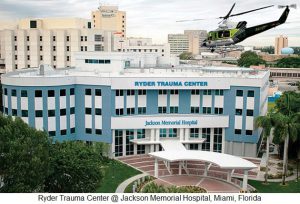
The CU envisions 6 strategically placed Level-1 trauma centers, and a series or lower level centers, placed throughout the region to service the entire population. The goal will be to ensure that every citizen is within a 1 hour transport from the closest trauma center. The trauma center may be physically located within a hospital campus, or stand-alone, but will be governed (and funded) by the CU and not the member-state’s public health system. (See Appendix ZM on Page 336).

3 Airlift / Sealift – Getting there by Helicopters, Airplanes and Boats

In addition to Air Ambulances (helicopters & airplanes), the CU will deploy Water Ambulances to quickly convey the injured to trauma centers among the islands. The vessels will all be equipped with certified and trauma-trained EMTs.

4 Mobile Surgical Centers and Tele-Medicine
5 Epidemiology – Viral & Bacterial Rapid Response
6 Mobile Command Centers
7 Intelligence Gathering & Analysis
8 Casualty Insurance Plans – Reinsurance “Sidecars”
9 Volunteer Fire – Rescue Brigades
10 ITIL – Information Technology Infrastructure Library

This formal discipline of ITIL is the art and science that describes processes, procedures, tasks and checklists used by organizations for managing risks associated with information technology deployments. This includes “focus areas” for Change Control, … Disaster Recovery, Problem and Access Management. (See Appendix ZN on Page 338).

This Go Lean book projects the roll-out of the 6 Trauma Centers as Day One / Step One of the Go Lean/CU roadmap. Over the 5-year implementation more and more of the features of the roadmap will be deployed and their effect on the region will be magnified and undeniable – think R&D. These will help to make the Caribbean a better place to live, work, heal and play.

This Go Lean roadmap seeks to foster best-practices in the administration of a Trauma Centers and Emergency Management. There is a lot of coordinate; there have been many issues detailed in previous Go Lean commentaries; see a sample here:

https://goleancaribbean.com/blog/?p=15012 Puerto Rico’s Trauma-Emergency Failings – A Lesson Learned
https://goleancaribbean.com/blog/?p=8815 Lessons from China – Managing Trauma & Organs Transplantation
https://goleancaribbean.com/blog/?p=7449 ‘Crap Happens’ – So What Now?
https://goleancaribbean.com/blog/?p=6103 Sum of All Fears – ‘On Guard’ Against Deadly Threats
https://goleancaribbean.com/blog/?p=5002 Managing a ‘Clear and Present Danger’
https://goleancaribbean.com/blog/?p=4308 911 – Emergency Response: Systems in Crisis

According to the foregoing news article, the Caribbean Cardiac Society (CCS) is meeting today through Saturday (July 18 – 21). They do meet annually. This year’s conference or congress – 33rd annual – is meeting in St. Lucia; last year (2017) was Trinidad, 2016 was Barbados, 2015 was Jamaica, 2014 was in the Bahamas and the 2013 conference was held in Curacao. So this organization already has a footprint in all the key destinations of the Caribbean. The CU formally launching 6 Trauma Centers can easily utilize the CCS’s infrastructure.

The subject of Trauma Centers is not a luxury; assuaging trauma is a basic need for the region. We are spending the money now – many times raising money through Bake Sales, Car Washes and Raffles – and enriching foreign entities. Making provisions to provide our own basic needs is just … mature. This is to be expected of emerging societies. This is the type of development that sends the message to Caribbean citizens, at home and in the Diaspora, that “one” can now prosper where planted in the Caribbean.

This plan – the roadmap to deploy a regional network of Trauma Centers – is conceivable, believable and achievable. We can deploy our own brand of Pediatric Hospitals in the Caribbean, much like the Joe DiMaggio one in the VIDEO here:

VIDEO – A Look At What We Like About Joe DiMaggio Children’s Hospital https://youtu.be/9r3pYZZ3UTE

Joe DiMaggio Children’s Hospital
Published on Jul 14, 2015
Joe DiMaggio Children’s Hospital is one of the region’s leading pediatric hospitals, offering a comprehensive scope of healthcare services and programs in a child-friendly atmosphere. A full-service hospital, we treat minor illnesses, trauma-related accidents and some of the most complex medical conditions.

Established in 1992, Joe DiMaggio Children’s Hospital combines advanced technology and the expertise of the largest, most diverse group of board-certified pediatric specialists in the region. With its summer 2011 expansion, Joe DiMaggio Children’s Hospital now has 204 beds and is South Florida’s newest freestanding children’s hospital.

In its first year of operation, Joe DiMaggio Children’s Hospital’s medical staff included 90 physicians and patient admissions numbered 2,000. Through the years, the hospital has enhanced and expanded its services and programs to help meet the growing and diverse needs of the community.

The hospital is staffed 24 hours a day by world-class pediatricians, pediatric specialists, specialty-trained nurses and ancillary support staff. Today, more than 650 physicians are on the medical staff, and during the 2014 fiscal year our team recorded:

  • 8,707 admissions and observations
  • 6,039 pediatric surgeries
  • 53,450 outpatient visits
  • 110,322 visits at three Joe DiMaggio Children’s Hospital Emergency Department locations

Uniquely inspired by and designed for kids and families, the freestanding building offers many amenities. The vibrant colors, whimsical décor and larger-than-life murals welcome children to an upbeat environment where the “Power of Play” is a healing force. Each floor reflects an individual theme of sports, arts, games or dreams. All patient rooms are private and are wired for movies, video games, the Internet and educational programs, and room-service meals are available any time of the day.

This four-story, 180,000-square-foot, environmentally friendly facility features six pediatric operating rooms, dedicated medical/surgical units, family resource centers, ambulatory services, imaging services that feature a CT scanner disguised as a pirate ship, and an entire floor dedicated to inpatient and outpatient pediatric oncology treatment.

A glass pedestrian skywalk connects to the Wasie Neonatal Intensive Care Unit, Pediatric Intensive/Cardiac Care Unit, and Level 1 Trauma Center and Children’s Emergency Department.

Conveniently located on the campus, Conine Clubhouse provides a special home away from home for families of hospitalized children. Accommodations are based on availability.

The team at Joe DiMaggio Children’s Hospital embraces a patient- and family-centered approach to care, working with families in the effort to best meet the needs of the child.

We should not just be “running to Florida” for any/every medical emergency; how long should the expectation be for our young nations to grow-up. The Go Lean roadmap declares that it is high time and past time for the region, to stand-up and step-up to satisfy the needs of our people. While this delivery may be too big for any one Caribbean member-state alone, surely together-united-integrated we can leverage the kinetics of a 42 million Single Market economy.

We urge all Caribbean stakeholders to lean-in to this roadmap for economic empowerment and medical delivery. We can make the Caribbean homeland better places to live, work, heal and play. 🙂

Download the free e-Book of Go Lean … Caribbean – now!

Sign the petition to lean-in for this roadmap for the Caribbean Union Trade Federation.

—————

Appendix ZM – Trauma Center Definitions

A trauma center is a hospital that is designated by a state or local authority or is verified by the American College of Surgeons (ACS) [a]. The details of these trauma levels are as follows:

Level I

A Level I Trauma Center provides the highest level of surgical care to trauma patients. Being treated at a Level I Trauma Center increases a seriously injured patient’s chances of survival by an estimated 20 to 25 percent. This has a full range of specialists and equipment available 24 hours a day and admits a minimum required annual volume of severely injured patients. A Level I trauma center is required to have a certain number of surgeons, emergency physicians and anesthesiologists on duty 24 hours a day at the hospital, an education program, and preventive and outreach programs. Key elements include 24-hour in-house coverage by general surgeons and prompt availability of care in varying specialties—such as orthopedic surgery, neurosurgery, plastic surgery (plastic surgeons often take calls for hand injuries),anesthesiology, emergency medicine, radiology, internal medicine, oral and maxillofacial surgery (trained to treat injuries of the facial skin, muscles, bones), and critical care—which are needed to adequately respond and care for various forms of trauma that a patient may suffer. Additionally, a Level I center has a program of research, is a leader in trauma education and injury prevention, and is a referral resource for communities in nearby regions.

Level II

A Level II trauma center works in collaboration with a Level I center. It provides comprehensive trauma care and supplements the clinical expertise of a Level I institution. It provides 24-hour availability of all essential specialties, personnel, and equipment. Minimum volume requirements may depend on local conditions. These institutions are not required to have an ongoing program of research or a surgical residency program.

Level III

A Level III trauma center does not have the full availability of specialists, but does have resources for emergency resuscitation, surgery, and intensive care of most trauma patients. A Level III center has transfer agreements with Level I or Level II trauma centers that provide back-up resources for the care of exceptionally severe injuries, Example: Rural or Community hospitals.

Level IV

A Level IV trauma center exists in some states where the resources do not exist for a Level III trauma center. It provides initial evaluation, stabilization, diagnostic capabilities, and transfer to a higher level of care. It may also provide surgery and critical-care services, as defined in the scope of services for trauma care. A trauma-trained nurse is immediately available, and physicians are available upon the patient’s arrival to the Emergency Department. Transfer agreements exist with other trauma centers of higher levels, for use when conditions warrant a transfer.

Level V

A Level V trauma center provides initial evaluation, stabilization, diagnostic capabilities, and transfer to a higher level of care. This type of center may provide surgical and critical-care services, as defined in the service’s scope of trauma-care services. A trauma-trained nurse is immediately available, and physicians are available upon patient arrival in the Emergency Department. If not open 24 hours daily, the facility must have an after-hours trauma response protocol.

Pediatric Trauma Centers

A facility can be designated an adult Trauma Center, a pediatric Trauma Center, or an adult & pediatric Trauma Center. If a hospital provides trauma care to both adult and pediatric patients, the Level designation may not be the same for each group. For example, a Level 1 adult Trauma Center may also be a Level 2 pediatric Trauma Center. This is because pediatric trauma surgery is a specialty unto itself. Adult trauma surgeons are not generally specialized in providing surgical trauma care to children, and vice versa, and the difference in practice is significant.

Cited Reference:

a. American College of Surgeons. “ACS Verification Site Visit Outcomes”. Retrieved April 2013 from: http://www.facs.org/trauma/verificationhosp.html


Share this post:
, , ,
[Top]

Industrial Reboot – Prefab Housing 101

Go Lean Commentary

Is housing just a commodity, available to the highest bidder, or a basic right that everyone is entitled to?

The answer to this question should be obvious: no matter the income level, there is the need for housing – basic needs are cataloged as food, clothing and shelter – so there must be housing solutions for all in society, the rich, middle class and the poor.

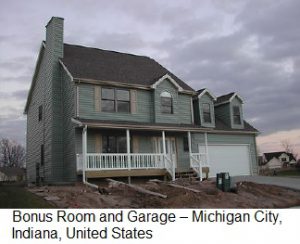
Here’s the disclosure: All housing types can benefit from pre-fabricated housing methods – see Photos below.

Prefabricated buildings consist of several factory-built components or units that are assembled on-site to complete the unit. The economic beauty of this method is the requirement for labor in the fabrication site and the assembly site. Fostering that labor means jobs and allows for an Industrial Reboot based on familiar techniques. Already, a popular prefabrication technique is utilized widely in the construction industry with Roof Trusses.

The book Go Lean … Caribbean – available to download for free – focuses on fostering Industrial Reboots for the Caribbean region. The book serves as a roadmap for the introduction and implementation of the technocratic Caribbean Union Trade Federation (CU). It identifies the strategic and tactical genius of Roof Trusses (Page 207):

The Bottom Line on Roof Trusses
In architecture a truss is a structure comprising one or more triangular units constructed with straight members whose ends are connected at joints referred to as nodes. Simple trusses are composed entirely of triangles because of the stability of this shape and the methods of analysis used to calculate the forces within them. The planar truss, pitched truss, or common truss is used primarily for roofs.Prefabrication is the practice of assembling components of a structure in a factory or other manufacturing site, and transporting complete assemblies or sub-assemblies to the construction site. Roof trusses are most commonly prefabricated. A prefabricated roof truss system is an engineered shop fabricated wood frame system that is installed on the building at the job site. It is installed on the typical timber or concrete belt beam and typically spans from one load bearing wall to another load bearing wall. Prefabricated roofs are used on almost any type of roof and are preferred when resistance to high wind speed is required because it can be quickly engineered, or when rapid site installation is required.This is the winning formula for acceptance of prefab homes. Despite objections to prefabrication strategies/concepts, no one objects to prefabricated roof trusses; the market acceptance for homes should “build-up” from this “juncture”.

The Go Lean book opened with a focus on basic needs. At the very beginning – Page 3 – the role for the CU was defined:

The CU should better provide for the region’s basic needs (food, clothing, energy and shelter), and then be in position to help supply the rest of the world. Previous Caribbean societies lived off the land and the sea; but today, the region depends extensively on imports …

For industries that depend on providing basic needs, there is an opportunity to reboot the industrial landscape and business model. There is the opportunity to launch a Prefab Housing industry.

Jobs are at stake.

According to the book Go Lean … Caribbean (Page 257) , there could be this many jobs:

Direct jobs in the design, fabrication and logistics for new pre-fab homes: 8,000

The Go Lean book prepares the business model of Prefab Housing for consumption in the Caribbean. Yes, business model refers to jobs, entrepreneurial opportunities, trade transactions, etc. In addition to these industry jobs; there is also the reality of indirect jobs – unrelated service and attendant functions – at a 3.75 multiplier rate would add another 30,000 jobs.

This constitutes an Industrial Reboot.

There is the need to supplement the housing deliveries in the Caribbean region; so factory-built homes should have a place. But, we are not talking manufactured homes, as in mobile homes or trailers. No, we are talking previously-made and fabulous, or pre-fab. Thus these homes can supply the demand for rich and middle class residents. See the samples from Appendix K; of the Go Lean book on Page 289. In addition, there are vast options for prefab homes from recycled shipping containers. These are ideal for affordable housing solutions, or even replacements for  “Shanty Towns”; see Appendix Commentary.

Providing quality housing for “pennies on the dollar” is an ideal objective for the Go Lean movement, or those pursuing the Greater Good. This Industrial Reboot pursues the Greater Good mandate; it is wise to try to please residents, advocates, entrepreneurs, bankers and governmental officials. This is in addition to the roadmap’s prime directive, defined as follows:

  • Optimization of the economic engines in order to grow the regional economy to $800 Billion & create 2.2 million new jobs.
  • Establishment of a security apparatus to ensure public safety and protect the resultant economic engines.
  • Improvement of Caribbean governance to support these engines, including a separation-of-powers between the member-states and CU federal agencies.

This Industrial Reboot is badly needed in the Caribbean region as our current economic landscape – based on Tourism – is in shambles!

Tourism is under assault in every Caribbean member-state due to the fact that many visitors shift from stay-overs to cruise arrivals. This means less economic impact to the local markets. So as a region, we must reboot our industrial landscape so as to create more jobs … from alternate sources. What options do we have?

This commentary has previously identified a number of different industries that can be rebooted under this Go Lean roadmap. See this list of previous submissions under the title Industrial Reboots:

  1. Industrial RebootsFerries 101 – Published June 27, 2017
  2. Industrial RebootsPrisons 101 – Published October 4, 2017
  3. Industrial RebootsPipeline 101 – Published October 6, 2017
  4. Industrial RebootsFrozen Foods 101 – Published October 6, 2017
  5. Industrial RebootsCall Centers 101 – Published July 2, 2018
  6. Industrial Reboots – Prefab Housing 101 – Published Today – July 14, 2018

The Go Lean book stresses that reforming and transforming the Caribbean economic engines must be a regional pursuit. This was an early motivation for the roadmap, as pronounced in the opening Declaration of Interdependence (Pages 12 – 13):

xxiv.  Whereas a free market economy can be induced and spurred for continuous progress, the Federation must install the controls to better manage aspects of the economy: jobs, inflation, savings rate, investments and other economic principles. Thereby attracting direct foreign investment because of the stability and vibrancy of our economy.

xxvi.  Whereas the Caribbean region must have new jobs to empower the engines of the economy and create the income sources for prosperity, and encourage the next generation to forge their dreams right at home, the Federation must therefore foster the development of new industries, like that of ship-building, automobile manufacturing, prefabricated housing, frozen foods, pipelines, call centers … – impacting the region with more jobs.

Accordingly, the CU will facilitate the eco-system for Self-Governing Entities (SGE), an ideal concept for Prefab Housing with its exclusive federal regulation/promotion activities. Imagine bordered campuses – with backup power generations, extra wide roads, railroad lines and shipping docks. The Go Lean movement (book and blogs) details the principles of SGE’s and job multipliers, how certain industries are better than others for generating multiple indirect jobs down the line (or off-campus) for each direct job on the SGE’s payroll.

This is the vision of an industrial reboot! This transformation is where and how the jobs are to be created.

The Go Lean book provides 370-pages of turn-by-turn instructions on “how” to adopt new community ethos, plus the strategies, tactics, implementations and advocacies to execute so as to reboot, reform and transform the societal engines of Caribbean society. One advocacy in rebooting the industrial landscape is to foster a Prefab Housing industry; consider the  specific plans, excerpts and headlines from the book on Page 207 entitled:

10 Ways to Develop a Prefab Housing Industry

1 Lean-in for the Caribbean Single Market
This treaty allows for the unification of the region into one market, thereby expanding to an economy of 30 countries, 42 million people and GDP of over $800 Billion (circa 2010). One mission of the CU is to enable the region to facilitate its own shelter (plus food & clothing). A successful campaign to repatriate the Diaspora, and attract Retirement/Medical Tourists creates a new demand level for housing. The supply of housing will be met with different solutions, including Prefabricated options. In terms of demand, Pre-Fab homes are becoming popular in the EU and North America as they are cheaper compared to many existing homes on the market. The 2007-2009 Global Financial crisis, however, deflated the cost of regular houses in North America and Europe, so the “cheaper” benefits was not so valued during/after this crisis period. But the CU is a different market than the North America or Europe, resembling the Third World more so than the developed world, so a lot of the current housing is sub-standard and need to be replaced anyway.
2 Fashionable Design
3 Energy Optimizations

To minimize the cost of energy, the CU will encourage design inclusions of solar panels, solar-water-heater, Energy-Star appliance in the Pre-fab-ulous homes. The CU region is also ideal for home “wind” turbines. The design of well air circulated ceilings, so that ceiling fans and the trade-winds alone, can satisfy artificial cooling needs (most of the times).

4 Raw Materials
5 Assembly Plants
6 Supply Chain Solutions (Contractors)
7 Transport/Logistics
8 Showrooms and Marketing
9 Mortgages – Retail and Secondary Markets

Traditionally, manufactured homes do not qualify for mortgages; they are treated as auto loans, not home mortgages. The CU will provide a secondary industry as an inducement for the retail mortgage firms to supply the direct demand.

10 Homeowners Casualty Insurance

Pre-Fab-ulous houses will be built with the structural integrity to withstand typical tropical storms/hurricanes. The CU will facilitate the Property Casualty insurance industry by offering Reinsurance sidecar options on the capital markets.

The subject of housing needs and deliveries is not new for this Go Lean roadmap; there have been a number of previous blog-commentaries by the Go Lean movement that referenced economic opportunities embedded in the housing industry. See a sample list here:

https://goleancaribbean.com/blog/?p=14250 Leading with Money Matters – As Goes Housing, Goes the Market
https://goleancaribbean.com/blog/?p=11737 Robots Building Houses – More than Fiction
https://goleancaribbean.com/blog/?p=11638 Righting a Wrong: The 2008 Housing Crisis
https://goleancaribbean.com/blog/?p=10373 Science of Sustenance – CLT Housing
https://goleancaribbean.com/blog/?p=7659 Pre-Fab Housing and Elder-Care Conjunction
https://goleancaribbean.com/blog/?p=1896 The Crisis in Black Homeownership

Prefab housing is a subset of the general housing industry; but there is a different kind of art and science for this economic endeavor! See the best practice and prospects for prefab manufacturing described in the Appendix VIDEO below.

The Caribbean has a lot of dysfunction when it comes to housing; this is indicative of our near-Failed-State status. We need all the help we can get! We have a constant risk of natural disasters (think: hurricanes and earthquakes) that consistently impact the homes in the region. There is always a need to build and rebuild. This creates the demand for Prefab Housing.

Even successful communities need creative housing solutions. Consider the sad experience of the working class in Silicon Valley, in Northern California (San Francisco Bay Area). People there cannot afford local homes on minimum wage jobs, even two or three jobs. So imagine some of the Prefab homes, discussed here-in, being offered in the Silicon Valley area. While this seems viable, the scope of the Go Lean movement is limited to the Caribbean, not San Francisco. This is just a lesson-learned for us. See more on the Silicon Valley problem in this Youtube VIDEO here: https://youtu.be/6dLo8ES4Bac.

The demand is there. We now need to be a part of the supply solution.

In summary, our Caribbean region need a better job-creation ability than is reflected in the regional status quo. If we are successful in creating more jobs, then boom, just like that, our homeland is a better place to live, work and play. With this success, we should be able to retain more of our Caribbean citizens, as one of the reasons why so many Caribbean citizens have emigrated away from the homeland is the job-creation dysfunction. Prefab Housing can also be a part of the housing solution for inviting the Diaspora to repatriate to the Caribbean homeland.

So rebooting the industrial landscape is necessary and wise; we can contribute to a reality where we can prosper where planted in the Caribbean homeland.

Yes, we can … do this: reboot our industrial landscape, and create new jobs – and provide better housing solutions, for our people, the rich, the poor and all classes in between.

We urge all Caribbean stakeholders to lean-in to this roadmap for economic empowerment. 🙂

Download the free e-Book of Go Lean … Caribbean – now!

Sign the petition to lean-in for this roadmap for the Caribbean Union Trade Federation.

—————-

APPENDIX Commentary – Bahamas Blogger Monte A. Pratt

AN ALTERNATE SOLUTION TO SHANTYTOWN HOUSING DILEMMA – Part 1

The Government has issued a July 31st deadline for all Shantytown persons to vacate their illegally built homes. However, there seems to be no planned relocation program to assist these persons. They are pretty much on their own.

These Shantytowns are a disaster just waiting to happen… they have been very lucky so far that many persons have not been killed in any of these Shantytown fires. Not to mention the health hazard these places are to the many surrounding residences.

Considering all of the above ‘negative’ factors, as a solution to this unwanted ‘vexing problem’, Government should seriously consider allowing the development ‘Container Home Parks’ to relocate and properly re-house these persons.

Container Homes (pictured below) are built from discarded (old) shipping containers is fast becoming a housing solution around the world… even in America. Not only as a clear solution to this problem, they can be a ‘quick solution that is ‘cost-effective’. These houses will be highly fire rated and they can withstand hurricanes.

In fact, once they are properly cleared, the government can give the same Shantytown ‘landowners’ to properly plan, install proper utility infrastructure and erect such ‘low cost’ container homes on these same site locations. Renting the same.

In fact, once they are properly cleared, the government can give the same Shantytown ‘landowners’ (and others) permission to properly plan, install proper utility infrastructure and erect such ‘low cost’ container homes on these same site locations. Renting the same.

This offered solution is by far better than the current situation. This move by Government is the first attempt by any administration to deal with this ‘decades’ old plaguing Shantytown problem throughout the country. (Click on photo to enlarge).

Source: Posted July 7, 2018; retrieved July 13, 2018 from: https://www.facebook.com/monte.a.pratt/posts/10156627694904059:27 )

—————

AN ALTERNATE SOLUTION TO SHANTYTOWN HOUSING DILEMMA – Part 2

It is interesting to see the many ‘negative responses’ from so many Bahamians to my Part-1 proposition for the building of Container Home Parks to replace Haitian Shantytowns. We, Bahamians are too ’emotional’ and that is why we are so easily ‘politically manipulated’. We are not analytic in our thoughts.

That being said, we should also look at the BIG PICTURE of the immigration dilemma that we are now confronted with. That is the ECONOMIC IMPACT of this ‘vexing’ immigration situation. The old saying: ‘When life gives a ‘lemon’ make lemonade. Can we turn this problem ‘lemon’ into ‘lemonade’?
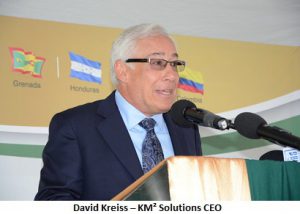
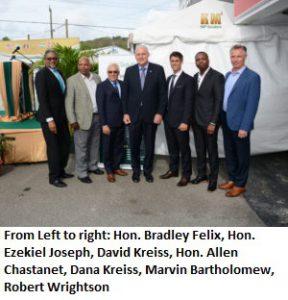
The fact is, many of these (illegal or not) persons are essential to the development of our economy. Don’t be fooled, the fact is, our already fragile construction and agricultural industries will collapse without these KEY WORKERS … that’s because they are more reliable and are also willing to work hard.

Many of these persons are taking the jobs that Bahamians are NOT prepared to do – working in the ‘hot sun’ – especially in construction, agriculture and the landscaping business. Some are making more money than many Bahamians.

By taking on these jobs, they too are making money and many can afford to pay the rents charged. Many live in Shantytowns for economic reasons. That is to SAVE their money to send it home. Estimates are, Haitians send annually some $15 million dollars back home to Haiti from The Bahamas.

Haitian Shantytowns are a ‘fixture housing lifestyle’ that they are accustom to! Shantytowns will not change unless these persons, the residents are forced to change this LIFESTYLE… and/or they are educated about the dangers (fire and health hazard conditions – see pictures below) that they are now living in these clustered and poorly built ‘housing shacks’.

These folks ain’t going nowhere, the Government December 31st deadline has come and gone, and no one has left the country… Since government[s] seem not to have the inability to get them to leave the country, then we should regularize them and properly integrate them into civil society. As there are properly integrated into civic society – make them adhere to the ‘LAW’ of the land.

As most of these folks are already working, once regularized, they can now have ‘bank accounts’ and do business in a right and proper way. By letting them work legally, they can contribute by paying work permits, national insurance and other taxes – that which not now happens – just like everyone else, and the country’s economy will be positively impacted. It will grow to the benefit of the government and the country.

So based on my proposition concept, the creation of Container Home Parks is beyond JUST HOUSING these persons, it is far more. And that why it is more important to resolve this vexing problem in eliminating these Shantytowns and thereby improving these persons lifestyle, at the same time growing the economy via their too; also making their tax contributions.

The TRUTH is, any such ‘massive deportation’ loss will most certainly hurt the country’s economy. More importantly, these people are already a burden on our Medical and Education Systems. So why not regularize them and properly integrate them into the civil society and make them ‘Tax Payers’ too?

Footnote: In qualifying the above, I am not including those ‘illegal persons’ that just came in the last 5 years or so – they should be sent back home. But rather those persons that have been living in The Bahamas for decades, and persons that were born here and only know The Bahamas.

Source: Posted July 8, 2018; retrieved July 13, 2018 from: https://www.facebook.com/monte.a.pratt/posts/10156636669644059

—————-

Appendix VIDEO –  BBC News at 10 – 17.11.16 Prefab houses could solve housing crisis – https://youtu.be/ixMEUWQNFTU

Kieran Simmonds

Published on Nov 17, 2016

Share this post:
, , ,
[Top]

Industrial Reboot – Call Centers 101

Go Lean Commentary

There used to be a time … when you called a place:

Call me at home, at work, or the private club.

Now, with mobile and smartphones, you call a person, not a place.

Everything has changed, and with it the business models of organizations that depend on the telephony activity.

Need to ‘Call a cab’?!
Nope, use an app!

For industries that depended on phone calls; they now have to reboot their industrial landscape and business model. This is bad! This is good! As it opens the opportunity for jobs in the Call Center industry.

With modern Internet Communications Technology (ICT) – think Voice-over-IP – a phone call can originate or terminate around the globe, but feel/sound like it is next door. The premise of this business model for the Caribbean is simple: Why not make those calls / answer the phone here in the Caribbean?

Jobs are at stake.

According to the book Go Lean … Caribbean (Page 257) , there could be this many jobs:

Direct and indirect jobs at physical and virtual call centers: 12,000

The Go Lean book prepares the business model of Call Centers for consumption in the Caribbean. Yes, business model refers to jobs, entrepreneurial opportunities, trade transactions, etc. In addition to these industry jobs; there is also the reality of indirect jobs – unrelated service and attendant functions – at a 3.75 multiplier rate would add another 45,000 jobs.

This constitutes an industrial reboot.

There are a number of call center installations currently in the region – see Appendix; but this Industrial Reboot measure is doubling-down on this business model. This is a wise strategy!

Notice the fine experiences being enjoyed right now in the Caribbean country of St. Lucia, with this news article here about one company – KM2 Solutions – that has expanded their Call Center footprint in this island, adding an additional 400 jobs:

Title: KM2 Solutions opens second call center in St Lucia, plans to add 400 new jobs

(PRESS RELEASE VIA SNO) – KM2 Solutions, a leading US-based, contact center services provider has opened a new facility in St. Lucia, expanding their footprint of service locations to 9 centers in 6 countries.

The 12,000 square feet Massade facility opened officially on June 19 in a ceremony graced by the Honourable Prime Minister.

Site Director Marvin Bartholomew said the company’s expansion here is an “exciting one that creates significant opportunities for an additional 400 brilliant and talented Saint Lucians. The spillover effect that the increased employment has on the economy is tremendous, and we are thrilled to be able to contribute to the island’s economic growth”.

KM2 Solutions first introduced its services to Saint Lucia in 2004 and has since continuously operated from its 20,000 square-foot office space, with capacity for 500 agents. Its new facility is about 25 minutes from the original center and is located firmly within the island’s tourism belt and population centre, providing the double positive of being able to attract excellent talent in large numbers while also hosting clients in an area known for beautiful beaches and wonderful hospitality.

Prime Minister of Saint Lucia the Honourable Allen Chastanet, who was present at Tuesday’s ceremony, lauded the investment of KM2 and thanked its principals for having confidence in the island’s economic standing and its talent.

Speaking at the official opening on Tuesday, KM2 President & CEO David Kreiss, said, “This is truly a tremendous occasion and opportunity. Our productivity and quality here is excellent, our clients love the island and are always impressed with our operations and the wonderful agents and management team. To be able to create capacity to do more of that is something we’ve always wanted to do. Naturally we’re thrilled to be able accomplish our goal of exceeding our clients’ expectations while providing an engaging and rewarding career to so many.

KM2 Solutions continues to provide clients with support in the areas of customer service and care, sales, retention, technical support, loan processing (pre-funding, originations, verifications, welcome calls), loan servicing and first-party collections, back-office services, and other functions for clients in a wide range of vertical markets.

The opening ceremony was held in at the new location on Tuesday, June 19th.

Source: Posted June 22, 2018; retrieved July 2, 2018 from: https://www.stlucianewsonline.com/km2-solutions-opens-second-call-center-in-st-lucia-plans-to-add-400-new-jobs/

The book Go Lean…Caribbean – available to download for free – serves as a roadmap for the introduction and implementation of the technocratic Caribbean Union Trade Federation (CU); this is a confederation of all 30 member-states to execute a reboot of the Caribbean economic eco-system. This CU/Go Lean roadmap has these 3 prime directives:

  • Optimization of the economic engines in order to grow the regional economy to $800 Billion & create 2.2 million new jobs.
  • Establishment of a security apparatus to ensure public safety and protect the resultant economic engines.
  • Improvement of Caribbean governance to support these engines, including a separation-of-powers between the member-states and CU federal agencies.

The Caribbean economic landscape is in shambles!

The primary driver in the region – Tourism – is under assault; more and more visitors shift from stay-overs to cruise arrivals. This means less economic impact to the local markets. As a region, we must reboot our industrial landscape and add more job-creating options.

This commentary has previously identified a number of different industries that can be rebooted under this Go Lean roadmap. See the list of previous submissions on Industrial Reboots here:

  1. Industrial RebootsFerries 101 – Published June 27, 2017
  2. Industrial RebootsPrisons 101 – Published October 4, 2017
  3. Industrial RebootsPipeline 101 – Published October 6, 2017
  4. Industrial RebootsFrozen Foods 101 – Published October 6, 2017
  5. Industrial Reboots – Call Centers 101– Published Today – July 2, 2018

The Go Lean book stresses that reforming and transforming the Caribbean economic engines must be a regional pursuit. This was an early motivation for the roadmap, as pronounced in the opening Declaration of Interdependence (Pages 12 – 13):

xxiv.  Whereas a free market economy can be induced and spurred for continuous progress, the Federation must install the controls to better manage aspects of the economy: jobs, inflation, savings rate, investments and other economic principles. Thereby attracting direct foreign investment because of the stability and vibrancy of our economy.

xxvi.  Whereas the Caribbean region must have new jobs to empower the engines of the economy and create the income sources for prosperity, and encourage the next generation to forge their dreams right at home, the Federation must therefore foster the development of new industries, like that of … the prison industrial complex. In addition, the Federation must invigorate the enterprises related to existing industries like tourism, fisheries and lotteries – impacting the region with more jobs.

xxvii. Whereas the region has endured a spectator status during the Industrial Revolution, we cannot stand on the sidelines of this new economy, the Information Revolution. Rather, the Federation must embrace all the tenets of Internet Communications Technology (ICT) to serve as an equalizing element in competition with the rest of the world. The Federation must bridge the digital divide and promote the community ethos that research/development is valuable and must be promoted and incentivized for adoption.

Accordingly, the CU will facilitate the eco-system for Self-Governing Entities (SGE), an ideal concept for Call Centers with its exclusive federal regulation/promotion activities. Imagine bordered campuses – with Internet Pop Hubs and backup power generations. The focus for the Go Lean roadmap is on Contact Center, not just Call Center. See the difference definition here:

The Bottom Line on Contact Centers
Contact Center refers to the next step in the evolution of Call Centers. With the advances in Internet and Communications Technologies (ICT), a service provider of tele-services functions can be located anywhere in the world. This is the case with the proliferation of this industry in the Philippines – employing 350,000 people in 2011, and India with 330,000 jobs.  (Jamaica and Antigua have a nascent industry). Contact Centers today do more than just phone calls, but rather business process outsourcing (BPO), including email, IM, web chat, social media and work flow processing on behalf of 3rd party clients.

Contact Centers require art and science! See the best practice described in the Appendix VIDEO below. (Though humorous, the strong point is made: there is an art to “blending in”).

The Go Lean movement (book and blogs) details the principles of SGE’s and job multipliers, how certain industries are better than others for generating multiple indirect jobs down the line (or off-campus) for each direct job on the SGE’s payroll.

This is the vision of an industrial reboot! This transformation is where and how the jobs are to be created.

The Go Lean book provides 370-pages of turn-by-turn instructions on “how” to adopt new community ethos, plus the strategies, tactics, implementations and advocacies to execute so as to reboot, reform and transform the societal engines of Caribbean society. One advocacy in rebooting the industrial landscape is to foster the Contact Center industry; consider the  specific plans, excerpts and headlines from the book on Page 212 entitled:

10 Ways to Promote Contact Centers

1 Lean-in for the Caribbean Single Market
Lean-in for the Caribbean Single Market & Economy and the Caribbean Union Trade Federation (CU). This will allow for the unification of the region of 30 member-states into one market of 42 million people, thereby creating the economies-of-scale to deploy technological infrastructure like fiber optics wire-line networks, broadband, wireless (WiMax), and satellite capability to generate a recognizable return on investment; this roadmap projects 12,000 new jobs. The CU will embrace e-Delivery for government services thereby becoming one of the Contact Center industry’s biggest clients.
2 Laissez-fare Utility Regulations – in SGE’s
3 Enterprise and Empowerment Zones
The CU will promote Self Governing Entities (SGE) as specific limited geographical areas (Industrial Parks, Corporate Campuses) as Enterprise and Empowerment Zones for this contact center industry. Traditionally, Enterprise Zones allow for certain tax rebates and access to grant monies or low interest loans. (Empowerment Zones go a step further in promoting revitalization of under-privileged and/or blighted areas). A concentration of multiple players in defined and controlled areas will allow for communications bandwidth, secondary power supply systems, parking and commuter express options as viable solutions. There is a realistic consequence of thousands of jobs at the same place/same time.
4 Underwater Cables
5 Outreach
The CU will send trade missions to foreign markets to solicit clients for this industry, in fact the implementation of the federation specifies create Trade Mission Offices in key international cities. This outreach includes participation in Trade Shows and industry events around the world; (similar to “Thailand-branded goods and services” global promotions).
6 Capitalize on Multi-lingual Society
7 Consumer Rights
8 Promote Work-at-Home Options
9 Big Data – Analysis and Business Intelligence
The practice of data analysis must be promoted as a fine art in the region. Certifications and accreditations at the CU level will add value and financial benefits to this skill set for industry participants. Economic incentives (grants, forgive-able loans, tax rebates) will be in place to promote the related industries and spin the wheels of commerce in this area.
10 Presidential Medal of Recognition

Contact Centers are not new for this Go Lean roadmap; there have been a number of previous blog-commentaries by the Go Lean movement that referenced economic opportunities embedded in the Contact Center industry. See a sample list here:

https://goleancaribbean.com/blog/?p=15075 e-Government 3.0 – Call Centers to engage citizens
https://goleancaribbean.com/blog/?p=14191 Scheduling for Call Centers & ‘Gigs’
https://goleancaribbean.com/blog/?p=13524 Future Focused – e-Government Portals and Call Centers
https://goleancaribbean.com/blog/?p=13321 Making a ‘Pluralistic Democracy’ – Multilingual Realities
https://goleancaribbean.com/blog/?p=11184 JPMorganChase spent $10 billion on ‘Fintech’ for 1 year
https://goleancaribbean.com/blog/?p=8262 Role Model: UberEverything in Africa

In summary, our Caribbean region need jobs. A better job-creation ability would help us to make our homeland a better place to live, work and play. In fact, one of the reasons why so many Caribbean citizens have emigrated away from the homeland is the job-creation dysfunction. Creating a new economic landscape will require rebooting the industrial landscape.

Yes, we can … reboot our industrial landscape, and create new jobs – and other economic opportunities.

We urge all Caribbean stakeholders to lean-in to this roadmap for economic empowerment. The fact that Call Centers currently exists amplifies the fact that this Go Lean roadmap is viable. Make that conceivable, believable and achievable. 🙂

Download the free e-Book of Go Lean … Caribbean – now!

Sign the petition to lean-in for this roadmap for the Caribbean Union Trade Federation.

—————

APPENDIX – Company Profile: KM2 Solutions

Company KM² Solutions was founded on the idea that world-class outsourcing services could be conducted close to home.

KM2 Solutions was founded by David Kreiss (K) and Gary Meyers (M) in 2004 with its original facility in St. Lucia.

At the time, few companies were able to offer the diversified services at the competitive rates that KM2 was offering.  New business was quick to follow. By 2007 KM2 had opened facilities in Barbados and Grenada, utilizing the same model that had been so effective in St. Lucia.  As a small but growing company, KM2 Solutions was able to take on outsourcing ventures that the major players dismissed as too small or overly complicated.  The ability to adapt to client-specific needs while still delivering outstanding, industry-leading performance has been the cornerstone of the company’s success.

The Honduras and Dominican Republic sites were added in recent years to provide clients with technically adept, fully bilingual agents.  Today, KM2’s global footprint reaches 6 countries with over 3,000 employees, and continued plans for expansion into new geographic locations and business segments.

KM2 Solutions is privately held, thus eliminating the pressures of meeting shareholder and analyst expectations.  The company’s focus will always be on the client and developing long-term relationships through unparalleled service and attention to detail.

Source: Retrieved July 2, 2018 from: http://www.km2solutions.com/company/

—————

VIDEO – KM2 Solutions – Exceeding Your Expectations – https://youtu.be/k_7lBshw8IQ

Published on Jun 17, 2015 – About KM² Solutions KM² Solutions is a leading provider of nearshore business process outsourcing (BPO) services, specializing in the finance, telecom, media, and technology industries. With contact centers throughout the Caribbean and Central America (St. Lucia, Barbados, Grenada, Dominican Republic, and Honduras), KM² provides clients with cost-effective, bilingual solutions for customer care, sales and retention, collections, customer support, and back office processing, through voice, chat, mobile, and email.

For further information, please contact: Joe Wester VP Sales at (262) 790-2656 www.km2solutions.com

—————–

Appendix VIDEO – White Voice – https://www.imdb.com/title/tt5688932/videoplayer/vi184531737

Scene from the 2018 movie Sorry to Bother You.
In an alternate present-day version of Oakland (California), telemarketer Cassius Green discovers a magical key to professional success – White Voice – propelling him into a macabre universe.

Share this post:
, ,
[Top]

Regional Tourism Coordination – No Longer Optional

Go Lean Commentary

No one can hide anymore!

There are 30 different member-states, with 5 different colonial legacies and 4 different languages, and yet people around the world only considers our region as One Caribbean:

Event Consequence to Perception
Devastating hurricane Oops, the Caribbean is unable to function commercially
Devastating earthquake Oops, the Caribbean is unable to function commercially
Emergence of a pandemic Oops, the Caribbean is unable to function commercially

All of the Caribbean member-states are in this “same boat”, so this is a matter of image and geographic misconceptions, more so than it is about disasters.

So, good or bad, the fate of one Caribbean member-state is tied to the other member-states, when it comes to tourism. See this point conveyed in this news article here:

Title: Geographic misconceptions hurting Caribbean economies
By Sarah Peter

Nassau, Bahamas – The mistaken perception among many travelers of the complete devastation of the Caribbean in the wake of the 2017 hurricane season caused further economic destruction to the region’s economy.
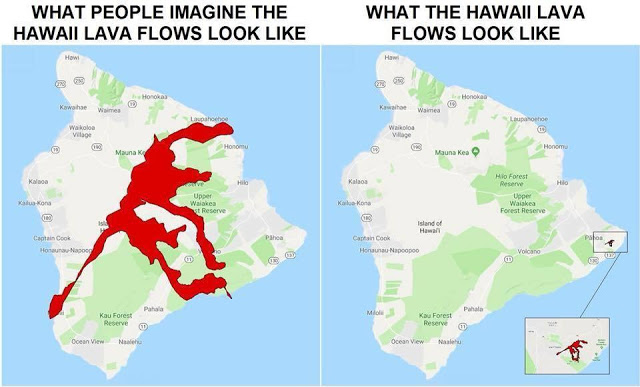
That’s according to the Chair of the Caribbean Tourism Organization (CTO), Joy Jibrilu. She raised the concern amid staggering losses among countries which were not impacted by the 2017 Hurricane season.

Jibrilu says following the devastation caused by hurricanes Irma and Maria to some islands in the region, many travelers called and canceled for countries who were not impacted by the storm.

This resulted in a significant drop in hotel room demand across the entire Caribbean. In light of that another disaster, an economic storm, was created which resulted in great losses in tourism revenue and a challenge for tourism officials.

“All our travel partners, all of them without exception called and said that we have heard the Caribbean  is closed.”

She further added that  Caribbean islands irrespective of if they were not actually impacted by the storm were economically  affected.

We all lost when people were not sure if or when to book if they canceled. You saw a dip in bookings because people thought that the islands which were not impacted were. We must quantify the figures of lost business so we can share the story with the world to tell them how serious it is. “

The chair of the CTO says that over one billion US dollars in tourism revenue was lost in the wake of last year’s hurricane season, the costliest hurricane season on record.

Jibrilu, who is also the Director of Tourism for the island of Barbados says the region’s reconstruction and recovery effort has been estimated at close to  6 billion dollars.

“Tourism is the region’s greatest driver of foreign exchange tax revenue and reliable vehicle of poverty reduction and human capital development for the region’s small island developing states. The tragedy is that the dampening of demand occurred even among islands that were not in the path of the storm.  This contributes to  an economic disaster as tourism visitation dropped of resulting in significant losses in revenue.”

Jilbrilu blamed the international media for the problem. She says their reports describes the region as if it was one country as opposed to several different islands. The chairman of the CTO says this inaccurate reporting is costing a region millions and negatively impacting lives in the region.

“First of all if we look at international news reporters when they talk about a hurricane they say the “Caribbean” has been impacted. They generalize and say the entire Caribbean. As a result, people look at the Caribbean as a whole unit as oppose to all these different countries, thousands of miles away from each other. To put it in context the Bahamas alone from north to south covers one hundred thousand square miles that is further than the distance of  Toronto to New York.  So if a storm happens in New York no one would say I am not going to Toronto. They just would not, it just does not make sense but when people lump the Caribbean  together as just one region ( as if it was just one country ) it  is negative.”

Jilbrilu says the region’s economy and people lives depend on accurate reporting and think making the international media more aware of this matter is a matter of economic prosperity or suffering for the region’s people.

“What we have done is to educate people of the geography of the Caribbean, that the same time it takes to travel from the Bahamas to Barbados is the same as traveling from London in the UK to Rome, Italy. So what happens to the Bahamas does not impact Barbados and vice versa.  We really  want to get that message out.”

Jilbrilu made the disclosure at the 2018 annual Caribbean Aviation Meetup in the Bahamas. Dubbed as the Caribbean region’s largest aviation conference the annual event brings together major players from the aviation and tourism industries aimed at tackling problems faced by the  World and the Caribbean’s Tourism and Aviation industries.
Source: Posted and retrieved June 15, 2018 from: https://stluciatimes.com/2018/06/15/geographic-misconceptions-hurting-caribbean-economies/

As related in the foregoing, the whole world knew of the 2017 devastation from Hurricanes Irma and Maria. But the affected (wiped-out) islands were only Barbuda, Grenada and Puerto Rico. And yet:

… following the devastation caused by hurricanes Irma and Maria to some islands in the region, many travelers called and canceled for countries who were not impacted.

Again, this is a matter of image and geographic misconceptions, more so than it is about disasters or even tourism. The world is telling the Caribbean: Better band together to assuage your challenges. We are united in affliction, we might as well be united in solutions. Yes, it is no longer optional for our region to confederate as a Single Market. This, we must do!

Confederation is not a bad thing! In a previous blog-commentary, it was asserted that our Caribbean member-states all suffer from the same inadequate image, and thusly we can all benefit from a regional elevation. Yes, the effect of regional integration could be an Increased Caribbean Tourism Market Share. That commentary quoted:

It’s time to take inventory of Caribbean tourism:

It has been weighed in the balance; it has been measured …
It has been found wanting!

Tourism is the current dominant industry; the goal is to “stand on the shoulders” of previous accomplishments, add infrastructure not possible by just one member-state alone and then reap the benefits. Imagine this manifestation in just this one new strategy: inter-island ferries that connect all islands for people, cars and goods.

The movement behind the book Go Lean … Caribbean seeks to reboot the economic engines of the Caribbean member-states. So while tourism is the region’s primary economic driver, it is inadequate for providing the needs of the people in the region, and inadequate for dealing with the crisis of natural disasters. We must do better!

The Go Lean book serves as a roadmap for the introduction and implementation of the Caribbean Union Trade Federation (CU). The CU is designed to be a technocratic intergovernmental entity that shepherds economic growth for the Caribbean region and mitigate against all security-disaster challenges. The goal is to reboot and optimize the region’s economic, security and governing engines with a regional focus.

The Go Lean/CU roadmap will employ strategies, tactics and implementations to impact its prime directives; identified with the following 3 statements:

  • Optimization of the economic engines in order to grow the regional economy to $800 Billion & create 2.2 million new jobs.
  • Establishment of a security apparatus to ensure public safety and protect the resultant economic engines. This includes a professional disaster planning and response organization.
  • Improvement of Caribbean governance to support these engines, including a separation-of-powers between the member-states and CU federal agencies, as in Self-Governing Entities.

The Go Lean book provides 370-pages of turn-by-turn instructions on “how” to adopt new community ethos, plus the strategies, tactics, implementations and advocacies to execute so as to elevate Caribbean image in good times and bad. One advocacy seeks to optimize the Caribbean tourism brand throughout the world; consider some specific plans, excerpts and headlines from the book on Page 133 entitled:

10 Ways to Better Manage Image

1 Lean-in for the Caribbean Single Market
This will allow for the unification of the region into one market of 42 million people across 30 member-states, with a GDP of $800 Billion (according to 2010 figures). In addition, the treaty calls for collective bargaining with foreign countries and industry representatives for causes of significance to the Caribbean community. There are many times when the media portray a “negative” depiction of Caribbean life, culture and people. The CU will have the scale to effectuate negotiations to better manage the region’s image, and the means by which to enforce the tenets.
2 Media Industrial Complex
The Caribbean Central Bank will settle electronic payments transactions; this will allow electronic commerce to flourish in the region. With the payment mechanisms in place, music, movies, TV shows and other media (domestic and foreign) can be paid for and downloaded legally. For a population base of 42 million, this brings a huge economic clout.
3 Respect for Intellectual Property
4 Sentinel in Hollywood
5 Anti-Defamation League
This Pro-Jewish organization provides a great model for marshalling against negative stereotypes that can belittle a race. The CU will study, copy, and model a lot of the successes of the Anti-Defamation League. This organization can also be consulted with to coach the CU’s efforts. (Consider the example of Uptown Yardies Rasta Gang in the game Grand Theft Auto [206]).
6 Power of the Boycott
The CU is an economic negotiating bloc. The power to ban, boycott and censure trade in intellectual property is a powerful deterrent for producers to be balanced in their media portrayals. A CU federal agency will assume the role to rate pending moves, as performed by MPAA in the US. While the content may not be banned outright, placing a Rated R, NC-17 or X label to a film will affect the economic results from the box office. This is the “power of the purse”.
7 Freedom of the Press
8 Libel and Slander Litigation and Enforcement
9 Public Relations and Press Releases
To facilitate effective communications, the CU’s agencies will embrace the role of “Press Secretaries” to disseminateaccurate records, news and portrayals of Caribbean life. This role is Offensive rather than the above Defensive tactics.
10 Image Award Medals and Recognition
Following the model of the NAACP Image Awards, the CU will recognize and give accolades for individual and institutions that portray a positive “image” of Caribbean life and CU initiatives. This would be similar to the Presidential Medal of … / Congressional Medal of …

The likelihood of more hurricanes in the Caribbean is undeniable. This is further exacerbated with the reality of Climate Change. Our Caribbean region must be prepared to Rinse & Repeat. It is no longer an option to maybe manage our image on a regional level. The world must know that we are bigger than just whatever island has been recently impacted by a natural disaster. This challenge is heavy-lifting because, as a region, we rarely muster an adequate response to our natural disasters.

The Go Lean book explains further that the Caribbean region must install a security apparatus with the directive to prepare and respond to natural disasters. The efficiency and effectiveness of a Caribbean Emergency Management Agency must be streamlined to ensure the world of the business continuity of our systems of commerce. This quotation is derived from the book at Page 184:

Modeled after FEMA in the US, this agency will be charged with the preparation, response and reconstruction for the regions for the eventual manifestations of hurricanes, earthquakes, tsunamis, flooding and other declared disasters, natural and man-made like medical epidemic, drought, pollution, oil spills, terrorism, etc.

This is what it means to be a technocracy, to promote the best delivery arts and sciences, in this case for Professional Emergency Management; as explained further at Page 64:

The CU treaty calls for a collective security agreement for the Caribbean member-states to prepare-respond to natural disasters, emergency incidents and assuage against systemic threats against the homeland. The CU employs the professional arts and sciences of Emergency Management to spread the costs and risks across the entire region. Outside of hurricanes or earthquakes, the emergency scope includes medical trauma, pandemic incidents and industrial accidents (i.e. oil or chemical spills) – any scenario that can impact the continuity of the economic engines and/or community.

This above scenario describes the dynamics of regional tourism promotion and protection. Yes, managing regional tourism means optimizing the planning and response for natural disasters. This is no longer optional for this homeland. We are compelled to invest in this integration and collaboration. We must have the leverage to spread the costs, risks and premium base across the entire region. Only then will the rest of the world know that any hurricane in the Caribbean does not mean a shutdown of the entire Caribbean region. Our image will then be:

Be our guests … in rain and shine.

Consider this Hawaiian example; yes this problem of promoting tourism while contending with natural disasters is not just an issue for the Caribbean. Rather, the US State of Hawaii is contending with the same thing right now, with the active Kīlauea volcano. See related news VIDEO in the Appendix below.

There is the need for better stewardship of the economic engines on touristic islands, be it Hawaii or the Caribbean. It is what it is! And our situations will worsen; things will get worse before they get worst. This is due to the reality and eventuality of Climate Change. This need to assuage against the threats and realities of Climate Change was an original intent of the Go Lean roadmap. The opening Declaration of Interdependence stresses this (Page 11) in the first of many pronouncements:

i. Whereas the earth’s climate has undeniably changed resulting in more severe tropical weather storms, it is necessary to prepare to insure the safety and security of life, property and systems of commerce in our geographical region. As nature recognizes no borders in the target of its destruction, we also must set aside border considerations in the preparation and response to these weather challenges.

The Go Lean movement has previously detailed many related issues and advocacies for disaster awareness and abatement. Consider this sample of previous blog-commentaries:

https://goleancaribbean.com/blog/?p=15012 In Life or Death: No Love for Puerto Rico
https://goleancaribbean.com/blog/?p=14925 ‘Climate Change’ Reality!? Numbers Don’t Lie
https://goleancaribbean.com/blog/?p=14832 Example of Manifesting Environmental Change
https://goleancaribbean.com/blog/?p=13391 After Maria, Failed-State Indicators: Destruction and Defection for Puerto Rico
https://goleancaribbean.com/blog/?p=12996 After Irma, Failed State Indicators: Destruction and Defection
https://goleancaribbean.com/blog/?p=12977 After Irma, Barbuda Becomes a ‘Ghost Town’
https://goleancaribbean.com/blog/?p=12900 The Logistics of Disaster Relief
https://goleancaribbean.com/blog/?p=12879 Disaster Preparation: ‘Rinse and Repeat’
https://goleancaribbean.com/blog/?p=11858 Looking and Learning from the Cautionary Tale of Kiribati
https://goleancaribbean.com/blog/?p=9455 Fix ‘Climate Change’ – Yes, We Can
https://goleancaribbean.com/blog/?p=7103 COP21 – ‘Climate Change’ Acknowledged
https://goleancaribbean.com/blog/?p=6893 A Meteorologist’s View On Climate Change
https://goleancaribbean.com/blog/?p=4673 Climate Change‘ Merchants of Doubt … to Preserve Profits!!
https://goleancaribbean.com/blog/?p=2465 Book: ‘This Changes Everything: Capitalism vs. the Climate’
https://goleancaribbean.com/blog/?p=2276 Climate Change May Affect Food Supply Within a Decade
https://goleancaribbean.com/blog/?p=1883 Climate Change May Bring More Kidney Stones
https://goleancaribbean.com/blog/?p=1817 Caribbean grapples with intense cycles of flooding & drought

In summary, the issues in this commentary relate more to image and geographic misconceptions than they do tourism and natural disasters. Do we have the global reputation to “take a punch and stand back up”.

Unfortunately, no!

So we must reform and transform the Caribbean’s societal engines so as to assuage the dangers of Climate Change and natural disasters; pandemics too. This is the quest of the Go Lean roadmap, and this is not just a pipe dream; it is conceivable, believable and achievable for our regional stakeholders to do better and be better.

All Caribbean stakeholders – residents and tourists alike – are urged to lean-in to this roadmap for change … and empowerment. Yes, we can make the region a better place to live work and play. 🙂

Sign the petition to lean-in for this roadmap for the Caribbean Union Trade Federation.

—————-

Appendix VIDEO – Hawaii tourism hit hard by Kilauea volcano eruption – https://youtu.be/89ppKLS5ufI

CBS Evening News
Published on Jun 2, 2018 – As molten lava destroys more homes in Hawaii, police have been ordered to arrest people who refuse to evacuate. Thousands have already been forced to flee to safety. Now, dramatic images broadcast around the world are having another impact — on tourism. CBS News correspondent Carter Evans reports.

Share this post:
, , ,
[Top]

“Profiting” from Hurricanes – ENCORE

If only there was a way to make money on the hurricane season …

… there is.

Its called reinsurance sidecars – where investors buy-in to the risks and returns of insurance premiums.

Yes, we can …

This was detailed in a previous blog-commentary from the movement behind the book Go Lean…Caribbean. As we embark on the Hurricane Season 2018, it is important to remember that there is a better way – a Way Forward – to optimize Caribbean life. Let’s Encore that blog from October 13, 2017 here-now:

——————

Go Lean Commentary – Funding Caribbean Risk

A penny saved is … a penny.

This is not exactly how the expression goes. It is supposed to refer to the good habit of “saving money”, which is a positive community ethos – underlying sentiment that informs the beliefs, customs, or practices. “Saving money” is a practice that the stewards of any society should advocate for its people. It’s a simple formula: Earn money; spend some; save some!

CU Blog - Funding Caribbean Risk - Photo 0This is easier said than done. A practice of saving money – for a rainy day or any catastrophe – takes discipline, the discipline not to spend. One tactic is to pay yourself first! Before paying other overhead expenses, the priority would be to set aside monies in a savings program or some insurance program. Yes, an insurance strategy could be even smarter for rainy days or catastrophes; it allows the hedging of risks by leveraging across a wider pool; more people – savers – put-in and only a few … or just one withdraws. This is also the approach of the thoughtful Caribbean Catastrophe Risk Insurance Fund (CCRIF).

It is very sad when communities are not able to save or insure a “Rainy Day” fund for when it rains, especially in the tropical region where it doesn’t just rain, but pours and storms.

What is sadder is when the heavy-lifting of “savings” or insurance is done, but the dollar amount is not enough; because a “penny saved is only just a penny”.

This is the Caribbean dilemma, today. We have just experienced 2 devastating hurricanes – Irma and Maria – that have wreaked havoc on our region. We now need to tap the “Rainy Day” fund and frankly, it is simply not enough!

See the actuality of this dilemma in the news article here and the related VIDEO on CCRIF:

Title: CCRIF to make payouts to countries affected by Hurricane Irma

The Caribbean Catastrophe Risk Insurance Facility (CCRIF SPC) will be making payouts totaling over US$15 million to three Caribbean countries affected by Hurricane Irma earlier this week.

“The CCRIF board and team offer condolences for the loss of life and hope these funds will provide some assistance. We stand ready to support the Government and people of these CCRIF countries as they recover from the effects of this devastating hurricane,” said CCRIF chief executive officer, Isaac Anthony.

Payments totaling US$15.2 million
The CCRIF plans to pay US$6.7 million to Antigua and Barbuda, US$6.5 million to Anguilla and US$2.2 million to St. Kitts-Nevis.

The storm has been blamed for at least 10 deaths and millions of dollars in property damages as it made its way through the Lesser Antilles this week.

In the case of Barbuda, Prime Minister Gaston Browne has ordered an immediate evacuation of some 1,800 people on the island. The government has also announced a state of emergency.

“Nothing is functional in Barbuda,” Browne said, adding that he has given instructions that ‘every single soul must be taken out of Barbuda”.

Verifying payouts
The CCRIF is verifying the payout calculations and is in discussion with the three governments about arrangements for the transfer of these funds. The transfer will be completed within 14 days after the storm, as mandated by CCRIF’s operational guidelines.

“Anguilla and St. Kitts & Nevis also have Excess Rainfall (XSR) policies and CCRIF is assessing if these policies were triggered by the rains from Hurricane Irma, which may possibly result in a second payout under those policies. The assessment under the XSR policies will be determined in the next few days,” the CCRIF added.

Segregated portfolio company
The CCRIF SPC is a segregated portfolio company, owned, operated and registered in the Caribbean. It limits the financial impact of catastrophic hurricanes, earthquakes and excess rainfall in the Caribbean and, since 2015, Central American governments by quickly providing short-term liquidity when a parametric insurance policy is triggered.

Since its inception in 2007, the facility has made 22 payouts for hurricanes, earthquakes and excess rainfall to 10-member governments totaling approximately US$69 million.

It said the new payments will bring the total payouts to approximately US$85 million. Last year CCRIF made payouts totaling US$29 million to four countries after Hurricane Matthew.

Source: Posted September 9, 2017; retrieved October 13, 2017 from: https://www.caribbeannationalweekly.com/caribbean-breaking-news-featured/ccrif-make-payouts-countries-affected-hurricane-irma/

———–

VIDEO – WorldBank CCRIF Caribbean Gold – https://youtu.be/IlZ56ON9KnI

CCRIF SPC

Published on Feb 28, 2017 – Working towards sovereign risk protection in the Caribbean and Central America.

We now know what CCRIF is; how it works; and who can engage this program in terms of investors and beneficiaries; see more encyclopedic details in the Appendix A below. But …

… it is the assessment of this commentary that CCRIF is flawed and inadequate for the Caribbean’s needs.

  • The CCRIF is designed for 1-in-15 year hurricane (Source: http://www.ccrif.org/content/rtfs-faqs). Truth be told, thanks to Climate Change we are seeing storms yearly.
  • There is a catastrophic trigger – complicated formula – which generates a “measly” payout for a hurricane or earthquake.
  • This is a sovereign fund only and the trigger level is dependent on the coverage purchased by individual countries.
  • The pool is too small. Member governments may purchase coverage which triggers for a ‘one-in-15-year’ hurricane and a ‘one-in-20-year’ earthquake, with maximum coverage of US$100M available for each peril. The cost of coverage is a direct function of the amount of risk being transferred, ensuring no cross-subsidisation of premiums and a level playing field for all participants.

This fund is “too little, too late” for what the region needs. But like all other Caribbean integration (CariCom) efforts, it is a good start! Still after 50 years of autonomous rule, the expectation is not just for a start, it is for solutions.

While the habit of “saving” or paying for insurance is a best-practice, the financial amount is important for the subjective assessment of success. The foregoing news article relates that $15.2 million will be paid-out to the affected countries. But this amount is so small, too small! Consider just for Hurricane Irma alone, the estimated damage amount has been tabulated at $62.87 billion. While $50 Billion of that amount relates to the US Mainland, the rest is the Caribbean. So the Caribbean’s share is $12.9 Billion; – see Chart here:

CU Blog - Funding Caribbean Risk - Photo 1

CU Blog - Funding Caribbean Risk - Photo 3

On the other hand. Hurricane Maria, has estimates for damages at $51.2 billion. None of that amount relates to the US Mainland, the amount is all Caribbean, considering Puerto Rico and the US Virgin Islands; see Chart here:

CU Blog - Funding Caribbean Risk - Photo 2

CU Blog - Funding Caribbean Risk - Photo 4

An immediate result of these storms on the Caribbean will probably be the defection of masses of people from the region. As of this date – October 12, 2017 – Puerto Rico is still not relieved nor recovered from Hurricane Maria. In fact 84% of the island still does not have power. Since Puerto Ricans are American citizens, they have freedom of movement from the island to the US Mainland. In addition, many of the other Caribbean islands will also suffer abandonment as the Diaspora is large in North America and Europe; so bonafide family connections will allow for their emigration. Expect more societal abandonment in the region!

The quest of the movement behind the book Go Lean…Caribbean – available to download for free – is to lower the abandonment rates of our Caribbean citizens fleeing the homeland. Our quest is conceivable, believable and achievable. But the status quo of the Caribbean Catastrophe Insurance Funds is inadequate; it must improve. It must reform and transform.

The Go Lean book describes a Way Forward. The book serves as a roadmap for the introduction and implementation of the technocratic Caribbean Union Trade Federation (CU), for the elevation of Caribbean society – for all member-states. This CU/Go Lean roadmap has these 3 prime directives:

  • Optimization of the economic engines in order to grow the regional economy to $800 Billion and create 2.2 million new jobs.
  • Establishment of a Homeland Security and Emergency Management apparatus to ensure public safety and protect the resultant economic engines.
  • Improve Caribbean governance to support these engines, including a separation-of-powers between the member-states and CU federal agencies.

The book stresses that reforming and transforming the Caribbean societal engines must be a regional pursuit. This was an early motivation for the roadmap, as pronounced in the opening Declaration of Interdependence (Pages 12 – 13):

xi. Whereas all men are entitled to the benefits of good governance in a free society, “new guards” must be enacted to dissuade the emergence of incompetence, corruption, nepotism and cronyism at the peril of the people’s best interest. The Federation must guarantee the executions of a social contract between government and the governed.

xvi. Whereas security of our homeland is inextricably linked to prosperity of the homeland, the economic and security interest of the region needs to be aligned under the same governance. Since economic crimes … can imperil the functioning of the wheels of commerce for all the citizenry, the accedence of this Federation must equip the security apparatus with the tools and techniques for predictive and proactive interdictions.

xxiv. Whereas a free market economy can be induced and spurred for continuous progress, the Federation must install the controls to better manage aspects of the economy: jobs, inflation, savings rate, investments and other economic principles. Thereby attracting direct foreign investment because of the stability and vibrancy of our economy.

Way Forward
The Go Lean book provides 370-pages of turn-by-turn instructions on “how” to adopt new community ethos, plus the strategies, tactics, implementations and advocacies to execute so as to reboot, reform and transform the societal engines of Caribbean society, despite the reality and risks of natural disasters. Accepting that the CCRIF is a government-member-state solution, the Go Lean book proposes a supplement of private solutions, instruments facilitated by the region’s Capital Markets – think the Caribbean version of Wall Street. The Go Lean book proposal is for region-wide (all 30 member-states; 4 language groups) private insurance companies and Re-insurance Side-cars traded on the Capital Markets.

Re-insurance Side-cars is a derivative product – see Appendix B below.

Consider these sample references to Re-insurance Side-cars in the book:

Tactical – Separation of Powers – Emergency Management Agency
There is also an economic/financial scope for this department. As the effort for a comprehensive property-casualty fund to cover the entire Caribbean region will also be coordinated by this agency. The classic solution is a large pool of premium payers and claims filed by the affected area. Beyond this model, there are also advanced products like re-issuance side-cars for market assimilation. The public can then invest and profit from the threat/realization of regional risks. This derivative product is a bet, a gamble, but in the end, the result is an insurance fund of last resort, much like the Joint Underwriters Agency (JUA) in Florida.
Page 76
Implementation – 10 Ways to Pay for Change
#8 Homeland Security – Hurricane Insurance Fund
The risk pool for a 42-million population is so much lower than each member-state’s sole mitigation efforts. The CU will establish (contract with a service provider) reinsurance funds (& sidecars) from Day One, and glean the excess premiums-over-claims as profit.
Page 101
Advocacy – Ways to Improve Housing
#7 Hurricane Risk Reinsurance Fund
This fund fits the Emergency Management objectives of rebuilding and restoring after disasters. This is similar to Florida’s Joint Underwriters Association but instead regulated at the CU so as to maximize the premium pool.
Page 161
Advocacy – 10 Revenue Sources
#9 Natural Disaster Insurance Fund
The CU’s Emergency Management Agency will maintain a regional reinsurance fund to offset the casualty coverage for insurance carriers in the region. The difference between premiums and claims constitute revenues for the CU.
Page 172
Advocacy – 10 Ways to Impact Public Works
#10 Capital Markets
A Single Market and currency union will allow for the emergence of viable capital markets for stocks and bonds (public and private), thereby creating the economic engine to fuel growth and development. This forges financial products for “pre” disaster project funding (drainage, levies, dykes, sea walls) and post disaster recovery (reinsurance sidecars).
Page 175
Advocacy – 10 Ways to Improve for Natural Disasters
#7 JUA-style Insurance Fund
The fiduciary management of premiums and claims to allow the immediate response for reconstruction after disasters. These financial services, sidecars traded in markets can be direct or indirect as in reinsurance or insurer-of-last-resort.
Page 184
Advocacy – 10 Ways to Improve for Emergency Management
#8 Casualty Insurance Plans – Reinsurance “Sidecars”
There is also a financial battlefield for Emergency Management. Reinsurance “sidecars” allow investment bonds to be issued in the financial marketplaces to raise casualty insurance capital. The differences between premiums and claims (plus reserves) equal the profit to be shared with investors. The end result should be an insurance fund of last resort.
Page 196
Advocacy – 10 Ways to Develop a Pre-Fab Housing Industry
#10 Homeowners Casualty Insurance
Pre-Fab-ulous houses will be built with the structural integrity to withstand typical tropical storms/hurricanes. The CU will facilitate the Property Casualty insurance industry by offering Reinsurance sidecar options on the capital markets.
Page 207
Advocacy – 10 Ways to Improve Fisheries
#7 Marine Financing
There is also a financial element to facilitating the Fisheries industry. Most fishing vessels require financing and insurance products. These areas have gotten more challenging with “climate change” and the higher propensity of hurricanes. The CU will adopt advanced financial products for the region’s capital-securities markets (i.e. Reinsurance sidecars), to offer the prospects of risk-and-reward to investors, thus inviting more capital to the fisheries marketplace.
Page 210
Advocacy – 10 Ways to Help the Middle Class
Prepare for Healthcare Realities
While a Middle Class family may obtain a degree of financial security, just one catastrophic illness or injury can wipe out a family’s fortunes overnight. This is the proper place for insurance programs, and reinsurance to hedge the risk for carriers. The CU will proactively institute the measures (industry) to protect Middle Class prospects from this real threat.
Page 223
Advocacy – 10 Ways to Impact The Guianas
#4 Disaster Planning, Preparation & Response
Hurricanes are not as dire a threat for The Guianas as the Caribbean islands, yet still there are many natural disasters for this region to contend with, namely floods and earthquakes. The CU will better plan-prepare-respond, with Public Works initiatives (dams, reservoirs) and a professional Emergency Management Agency to recover with elite financial products (i.e. reinsurance sidecars) powered by regional capital markets to restore economic engines in these Guiana states.
Page 241
Advocacy – 10 Ways to Impact Belize
#7 Disaster Planning, Preparation & Response
Mother Nature, and the reality of hurricanes, has been a source of contention in Belize’s history. The CU will better plan-prepare-respond with a professional Emergency Management Agency and recover with elite financial products (i.e. reinsurance sidecars) powered by capital markets so as to restore economic engines in Belize.
Page 243
Advocacy – 10 Ways to Impact US Territories
Advocacy – 10 Ways to Impact British Territories
Advocacy – 10 Ways to Impact Dutch Territories
Advocacy – 10 Ways to Impact French Territories
#4 Disaster Preparation & Response
Mother Nature, and the reality of hurricanes, plays no favorites for one island versus another due to political alliance. The CU will better plan-prepare-respond, with a professional Emergency Management Agency and recover with elite financial products (i.e. reinsurance sidecars) powered by regional capital markets to quickly restore economic engines in the islands.
Page 244
Page 245
Page 246
Page 247 

As an individual or community, to devote a lot of time, talent and treasury to the practice of saving for a rainy-day fund is a positive ethos. To only get a measly payoff – after all that effort – is a negative. The manifestation of this measly scenario calls into question the whole viability of the Caribbean “pooled” risk strategy.

We must do better! Solutions abound!

Engaging a bigger-better regional risk pool, makes our quest realistic: a better homeland to live, work and play.  We urge all Caribbean stakeholders – governments and citizens alike – to lean-in for the empowerments described here in the book Go Lean…Caribbean. 🙂

Download the free e-Book of Go Lean … Caribbean – now!

Sign the petition to lean-in for this roadmap for the Caribbean Union Trade Federation.

———

Appendix A – Caribbean Catastrophe Risk Insurance Facility Segregated Portfolio Company (CCRIF SPC)

[This CCRIF SPC] is an insurance company headquartered in the Cayman Islands.[1] The sixteen original member-countries of CCRIF included participants in CARICOM, and the membership of the Board of Directors is selected by CARICOM and by the Caribbean Development Bank.[2]

Founded in 2007,[3] CCRIF is the first multi-country risk pool in the world, and was the first insurance instrument to successfully develop parametric policies backed by both traditional and capital markets.[4] These parametric polices release funds based upon factors of a calamity such as rainfall or wind speed, which can speed up the payout of policies rather than after damages are assessed. Unused funds are kept as reserves for the CCRIF. The fund can also draw upon $140 million in funds underwritten by reinsurance.[5]

Other regions have since setup similar government disaster instance including in the African Union and the Pacific Islands Forum.[5]

Source: Retrieved October 13, 2017 from:  https://en.wikipedia.org/wiki/Caribbean_Catastrophe_Risk_Insurance_Facility_Segregated_Portfolio_Company

———

Appendix B – Reinsurance sidecars

Reinsurance sidecars, conventionally referred to as “sidecars”, are financial structures that are created to allow investors to take on the risk and return of a group of insurance policies (a “book of business”) written by an insurer or reinsurer (henceforth re/insurer) and earn the risk and return that arises from that business. A re/insurer will only pay (“cede”) the premiums associated with a book of business to such an entity if the investors place sufficient funds in the vehicle to ensure that it can meet claims if they arise. Typically, the liability of investors is limited to these funds. These structures have become quite prominent in the aftermath of Hurricane Katrina as a vehicle for re/insurers to add risk-bearing capacity, and for investors to participate in the potential profits resulting from sharp price increases in re/insurance over the four quarters following Katrina. An earlier and smaller generation of sidecars were created after 9/11 for the same purpose.

Market growth following 9-11 and Hurricane Katrina
In the years following 9-11, the idea of raising funds from capital markets investors in addition to re/insurers to support quota-shares arose and a handful of such ventures were consummated (Olympus, DaVinci, Rockridge). These were the first true sidecars, and were a natural outgrowth of the development of re/insurance as an asset class in the form of catastrophe bonds.

Following Hurricane Katrina, the sidecar idea became very prominent among investors because it was seen as a way to participate in the risk/return of the higher-priced (“hard”) reinsurance market without investing in either existing reinsurers (who might have liabilities from the past that would undermine returns) or new reinsurers (“newcos” that would have a lengthy and expensive “ramp up” period).

Source: Retrieved October 13, 2017 from: https://en.wikipedia.org/wiki/Reinsurance_sidecar


Share this post:
, ,
[Top]

Overseas Workers – Not the Panacea

Go Lean Commentary

What do you want to be when you grow up?

This question is usually asked of young ones while they are still fostering their development. This question normally reflects the role models that the young ones perceive.

A similar exercise can be applied to developing countries. So we ask the question of the developing Caribbean nations:

  • What do you want to be when you grow up?
  • Who is your role model?
  • Which country’s template do you want to consider?

The easy answers could be the US, the EU or Canada, but our practices belie a different role model. Our region seems to be copying North Korea. There is a jobs program that exists in our region that is 100% modeled on North Korea; it is their Overseas Worker program. See more details on the North Korean program here:

Estimates of the number of North Koreans overseas vary considerably. Some researchers, as well as a 2015 report by the UN Special Rapporteur on North Korean Human Rights, cite roughly 50,000 overseas workers. Other analysts have given larger estimates, ranging as high as 120,000 overseas workers. A fact sheet published by the U.S. Mission to the UN in 2017 cites 100,000 overseas workers, bringing in revenue of over $500 million annually.

The reason for this variation hinges mostly on the difficulty of estimating the number of North Korean workers in China. The number of North Koreans legally entering China has increased significantly in recent years, with over 188,000 reported entrants in 2015, including 94,000 entrants identified as “workers and crew”. This may be connected to a reported2012 informal agreement between Beijing and Pyongyang allowing for an increased number of North Koreans to work in China. However, data on the number of reported entrants does not necessarily reflect the total number of North Korean workers in China. On the one hand, some North Korean workers may have been placed in entry categories other than “workers and crew,” and workers might stay longer than one-year periods. One the other hand, it is not clear whether the “worker and crew” category includes transportation workers who may enter China on a routine basis for very short terms, or how often North Korean workers (particularly those stationed in the border area) travel back and forth across the border — in either case, any given worker would be counted as an “entrant” multiple times in a single year.

Successive UN Security Council resolutions have imposed progressively stronger sanctions on the employment of North Korean overseas laborers. The most recent, Resolution 2397 adopted in December 2017, requires member states to repatriate all DPRK nationals earning income in their territory within 24 months.

North Korea’s overseas workers are typically closely managed by DPRK state-run enterprises, which contract with foreign partners to provide labor. While conditions may vary from place to place, human rights advocates note that North Korean overseas workers often labor under intense conditions, face restrictions on their movements, and keep little of their wages. Other analysts argue that work abroad nonetheless provides North Koreans with the opportunity to earn more money than they could at home, and that foreign work is often seen as desirable within North Korea.

While it appears that the majority of state-organized North Korean overseas workers are men, women comprise a majority of the undocumented North Koreans living in China. Due to their vulnerable status, undocumented North Korean women are often subject to sex trafficking or forced marriage.

Source: Retrieved May 23, 2018 from: https://www.northkoreaintheworld.org/economic/north-korean-overseas-workers

Overseas Workers?! There are so many dangers; so many threats; and so many downsides that no government should be encouraging this role model – the North Korean model – for any country. India – see Appendix B – had bad experiences with this practice and have now added new empowerments to better protect its people from the dangers of overseas employment. Yet, our Caribbean member-states seem to be “cruising for a bruising” by inviting their own overseas workers programme. Is this who we want to be when we grow up?

Sad!

Now see this news article here, reflecting the demand for overseas employment in one Caribbean member-state. The demand is so high that the abuse has begun; see the article here:

Title: St Lucia warns of false advertisements for Canadian farm worker programme

CASTRIESThe St Lucia government has warned of “false advertisements” in circulation on the social media and other platforms indicating that the Labour Department here is now accepting applications from nationals for work under the Canadian Farm Worker Programme.
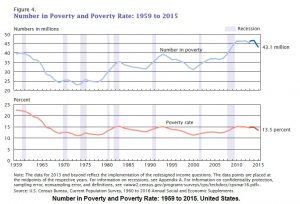

In a statement, the Labour Department said that it has “been swamped with scores of citizens in recent days seeking to register in response to the false notice”.

“Citizens are informed that the Department of Labour is currently not in the process of accepting new applicants to the programme. The department currently has a database of over five hundred citizens registered for the programme. This database is the first point for consideration in the event new opportunities become available,” the Ministry of Labour said in the statement.

St Lucia is among a number of Caribbean countries whose nationals participate in the annual work programme in Canada and the statement quoted Labour Minister Stephenson King as saying that he is “working feverishly with existing and prospective employers for additional opportunities for St Lucians”.

The Department said it also wanted to take the opportunity “to thank employers and all citizens for continuous support,” adding “rest assured we will continue working for you”. (CMC)
Source: Posted May 20, 2018; retrieved May 23, 2018 from: http://www.nationnews.com/nationnews/news/159035/st-lucia-warns-false-advertisements-canadian-farm-worker-programme

So according to the foregoing – “St Lucia is among a number of Caribbean countries whose nationals participate in the annual work programme in Canada” – when the question is asked: Where are the jobs in the Caribbean? The answer in St. Lucia and these other Caribbean countries is:

Overseas!

Commentators conclude that North Korea is Hell on Earth! See the related story in the Appendix VIDEO. We must do better than copying their economic model!

The book Go Lean…Caribbean – available to download for free – serves as a roadmap for the introduction and implementation of the technocratic Caribbean Union Trade Federation (CU), for the elevation of Caribbean society – for all member-states. Our quest is to do better for Caribbean jobs; in fact the CU/Go Lean roadmap has these 3 prime directives:

  • Optimization of the economic engines in order to grow the regional economy to $800 Billion and create 2.2 million new jobs.
  • Establishment of a security apparatus to ensure public safety and protect the resultant economic engines.
  • Improve Caribbean governance to support these engines, including a separation-of-powers between the member-states and CU federal agencies.

Overseas jobs in Canada is not the panacea for what ails the Caribbean economically. Rather than look to Canada, we must look inwardly at our region so as to fix our broken local economic engines, not just look “across the waters” for others to solve our problems for us.

The book stresses that reforming and transforming the Caribbean economic engines must be a regional pursuit. This was an early motivation for the roadmap, as pronounced in the opening Declaration of Interdependence (Pages 12 – 14):

xi. Whereas all men are entitled to the benefits of good governance in a free society, “new guards” must be enacted to dissuade the emergence of incompetence, corruption, nepotism and cronyism at the peril of the people’s best interest. The Federation must guarantee the executions of a social contract between government and the governed.

xvi. Whereas security of our homeland is inextricably linked to prosperity of the homeland, the economic and security interest of the region needs to be aligned under the same governance. Since economic crimes … can imperil the functioning of the wheels of commerce for all the citizenry, the accedence of this Federation must equip the security apparatus with the tools and techniques for predictive and proactive interdictions.

xxiv. Whereas a free market economy can be induced and spurred for continuous progress, the Federation must install the controls to better manage aspects of the economy: jobs, inflation, savings rate, investments and other economic principles. Thereby attracting direct foreign investment because of the stability and vibrancy of our economy.

xxvi. Whereas the Caribbean region must have new jobs to empower the engines of the economy and create the income sources for prosperity, and encourage the next generation to forge their dreams right at home, the Federation must therefore foster the development of new industries, like that of ship-building, automobile manufacturing, prefabricated housing, frozen foods, pipelines, call centers, and the prison industrial complex. In addition, the Federation must invigorate the enterprises related to existing industries like tourism, fisheries and lotteries – impacting the region with more jobs.

The Go Lean book provides 370-pages of turn-by-turn instructions on “how” to adopt new community ethos, plus the strategies, tactics, implementations and advocacies to execute so as to reboot, reform and transform the economic engines of Caribbean society. Just “how” can the stewards for a new Caribbean create local “innovative” jobs in our region? This is the actual title of one advocacy in the Go Lean book. Consider the specific plans, excerpts and headlines here from Page 152, entitled:

10 Ways to Create Jobs … in the Caribbean Region

1 Lean-in for the Caribbean Single Market and Economy
The CU will allow for the unification of the region into one market, thereby creating a single economy of 30 member- states, 42 million people and a GDP of over $800 Billion. The CU’s mission is to create high-paying jobs for the region, beyond the minimum wage (defined below). Many high-wage industries would be promoted, incentivized and regulated at the federal level, even new industries created. Jobs come from trade; the CU goal is to improve trade. The CU will thus institute Enterprise Zones and Empowerment Zones – SGE’s – with tax benefits: rebates, abatements – as job creation pockets. The CU will capture data, micro and macro-economic metrics, to measure the success/failure of these initiatives.
2 Feed Ourselves
The industries of agri-business allow structured commercial systems to grow, harvest and trade in food supplies. Many of the Caribbean member states (Lesser Antilles) acquire all their food in trade, the agricultural footprint is very small, though some countries (Greater Antilles, Belize, Guyana & Suriname) have a low opportunity cost for producing food. But with the Trade Federation in force, intra-region trade will be the first priority. When the demand is qualified, quantified and assured, the supply and quality there in, will catch up.
3 Clothe Ourselves
4 House Ourselves
In the US, it’s a truism of the National Association of Realtors® that “housing creates jobs”. With the repatriation of the Caribbean Diaspora, local building supplies and new “housing starts” will emerge in the Caribbean. Plus, the CU will facilitate mortgage secondary market and pre-fabulous construction thereby fostering new housing sub-industries.
5 Update Our Own Infrastructure and the Industries They Spun

Roads, bridges, ports, ship-building dry-docks, utilities and media outlets create companies and jobs for implementation and maintenance. Many of the infrastructure projects will cover the transportation sector; with improvements here, the result will be more traffic (passenger & cargo). This opens new modes for travelers/visitors/tourists to come to their favorite resort destination. (Consider Fast Ferries boats and Spring Break). Also, the CU will correct the void of no auto manufacturing industry in the Caribbean region, despite a market of 42 million people.

6 Steer More People to S.T.E.M. Education and Careers
7 Help Regional Businesses Find Foreign Markets
8 Welcome Home Emigrants
9 Welcome “Empowering” Immigrants
10 Draw More Tourists
The North American upper-middle-class market should not be the only target, better infrastructure and promotion can channel more tourists to the region. There can be a year round improvement in tourist arrivals, rather than just the “high” season. The CU will promote events with wide appeal to attract more tourists from around the world, year-round. The facilitation, support and promotion of the events will create multitudes of jobs, if only temporary.

Once these new “innovative” local direct jobs are created, then the job multiplier factor is engaged. The Go Lean book (Page 259) describes this factor and effect as follows:

… not only do innovative industries bring “good jobs” and high salaries to the communities where they cluster but that their impact is “much deeper” than their direct effect. … A healthy traded sector benefits the local economy directly, as it generates well-paid jobs, and indirectly as it creates additional jobs in the non-traded sector. What is truly remarkable is that this indirect effect to the local economy is much larger than the direct effect.

The subject of overseas jobs in Canada have been visited before. There was a previous blog-commentary from January 8, 2015 that detailed the experience for Jamaica; this previous study is one reason why we are able to conclude that this type of employment program, overseas, is not the panacea:

Jamaica has one of the highest rates of societal abandonment in the Caribbean. In a previous blog-commentary, it was revealed that the Caribbean loses more than 70 percent of tertiary educated to brain drain, but Jamaica’s rate is at 85%; (plus 35% of the secondary educated population leaves). This Foreign Guest Worker program, in the foregoing article, seems to be a “double down” on the itinerant Jamaican strategy. Imagine the analogy of a teenage runaway leaving his family behind; then when the parents finally discover that prodigal’s son’s whereabouts, they send another child to join them, rather than encourage a return home and a plea to prosper and be planted at home.

The people of Jamaica deserves better.

The people of the Caribbean deserves better. We do not have to repeat the same mistakes as India, North Korea or other Caribbean states; we can … and must do better. We must create local jobs. This is conceivable, believable and achievable. Yes, we can make our homeland a better place to live, work and play. 🙂

Download the free e-Book of Go Lean … Caribbean – now!

Sign the petition to lean-in for this roadmap for the Caribbean Union Trade Federation.

————–

Appendix A VIDEO – North Korea Literal Hell On Earth – https://youtu.be/DGA0_4pyOrw

Paulraj P.

Published on Mar 15, 2017 – Must Read:  WEIRD AND BIZARRE FACTS ABOUT NORTH KOREA, THE MOST REPRESSIVE AUTHORITARIAN COUNTRY IN THE WORLD, A LITERAL HELL ON EARTH

Listen to Yeonmi Park , escaped from North Korea and now a human right activist, who like any other North Koreans  was once forced to  collect  human and animal poo for the government ,  knew about love for the first time, only after watching “Titanic”,  speaking  in One Young World Summit in Dublin. Keep tissues.

————–

Appendix B – India’s Overseas Workers Passport – Emigration Act, 1983

The Emigration Act, 1983 is an Act passed by the Government of India to regulate emigration of people from India, with the stated goal of reducing fraud or exploitation of Indian workers recruited to work overseas. The Act imposed a requirement of obtaining emigration clearance (also called POE clearance) from the office of Protector of Emigrants (POE), Ministry of Overseas Indian Affairs for people emigrating from India for work. As of 2017, this requirement applies only for people going to one of 18 listed countries.[1][2][3][4]

Background

Indians emigrated, both temporarily and permanently, to a number of countries, including the United States, United Kingdom, Germany, Canada, Australia, and the economies of south-east Asia. The bulk of emigration from the 1970s onward was to the Arab states of the Persian Gulf.[3] Recruiting agents played a role in connecting workers to foreign jobs and charged the workers or the employers some share of the revenue. The Emigration Act, 1983 was passed to address concerns related to defrauding and exploitation of workers by the recruiting agents and other problems they might face upon going abroad.[3]

Provisions

Creation of the Office of Protector of Emigrants (Chapter II)

Chapter II, Section 3 of the Act provided that the Central Government may appoint a Protector General of Emigrants and as many Protectors of Emigrants (POE) as it sees fit, as well as their respective areas of operation. Later Sections of Chapter II defined the duties of Protectors of Emigrants in more detail, provided for emigration check-points, and provided for other emigration officers.[2][3]

Registration of recruiting agents (Chapter III)

The Act made the Protector General of Emigrants and other Protectors of Emigrants the authorities who could register recruiting agents. A person could operate as a recruiting agent for emigrants only if registered. The Act also provided details on the application, terms and conditions, renewal, and cancellation of registration.[2][3]

Permits for recruitment by employers (Chapter IV)

All employers were required to recruit either through a recruiting agent with a valid registration, or obtain a permit for recruitment. The procedure for obtaining, validity period, and cancellation of permits was detailed in the law.[2]

Emigration clearance (Chapter V)

Any citizen of India seeking to emigrate was required to have emigration clearance from the Protectorate of Emigrants (POE). The application process for emigration clearance, and potential grounds for rejection, were detailed.[2]

As of 2017, passport holders could either have ECR status (emigration check required) in which case they need to obtain emigration clearance, or have ECNR status (emigration check not required) in which case they do not need to obtain emigration clearance.[3] The ECR/ECNR distinction does not appear to have been stated in the original language of the Emigration Act, 1983, which seems to suggest that anybody emigrating for work is required to obtain emigration clearance.[2] The requirements for getting to ECNR status have been progressively relaxed over time, starting from being restricted to people such as graduates and income tax payers and now applying to a much wider set of people including those who have completed matriculation (class 10 of school).[5][6]

Source: Retrieved May 23, 2018 from: https://en.wikipedia.org/wiki/Emigration_Act,_1983

Share this post:
, , , ,
[Top]

Art Imitating Life – Was ‘Thanos’ Right?

Go Lean Commentary

The supposition is simple; if a society suffers from famine and poverty, then eliminate half of the population and there will be plenty of resources for all the remaining people.

But this is a fallacy, devoid of logic! This is not how economic systems work. The truth is: the more people, the better!

Consider the facts: the landmass of the United States has not changed since 1959; Alaska became the 49th state of the U.S. on January 3, 1959 and Hawaii received statehood on August 21, 1959. The US population in 1960 was 179,323,175; today the estimated US population is 325,719,178. Yet the 1960 poverty rate (19%) was atrocious; conditions are better today; though some poverty/hunger persists; due more to individual abuses; listen to the AUDIO-PODCAST in Appendix A below.

Why … was poverty alleviated? It’s the community education, science and technology, not the size of the population. “These ones” won the ‘War on Poverty’; see the formal details of the US Government’s War on Poverty in Appendix B.

This truly is logical!

Imagine the increased yields from “factory farms” and industrialized agriculture. The plains on the American continent are now considered the “bread basket” of the world.

Yet, believe it or not, that fallacious logic – also practiced by the Supervillain Thanos in the Marvel Cinematic Universe – is common thinking in the Caribbean.

Wait, who?

Thanos is the fictitious character in Marvel Comic books and related movies. He is a Supervillain in that he has ultimate abilities:

  • Superhuman strength, agility, durability, and longevity
  • Superhuman physiology of Eternals
  • Plasma energy projection

Thanos is all the rage right now in 2018. The current Number 1 movie at the box office is Avengers: Infinity War; this movie was the fastest film to ever reach $ 1 Billion in gross receipts. Wow!

Though the heroes of the film are the Avengers, the plotline of this movie really belongs to Thanos. The verbiage on the movie poster reveals:

The Avengers and their allies must be willing to sacrifice all in an attempt to defeat the powerful Thanos before his blitz of devastation and ruin puts an end to the universe.

The main character Thanos is portrayed by the actor Josh Brolin. In the film, according to one summary, he seeks the six notorious Infinity Stones because he believes the Universe is overpopulated and wants to cull it by half so that those who remain may have a better quality of life.

The fallacy of Thanos’s reasoning is obvious, if a community loses half of the population – through death or abandonment – we lose the producers and consumers, so that means the nation builders, professional classes would be diminished as well.

This is not just a question for this movie, but for Caribbean life as well.

Through their words and actions (policies & procedures) the stakeholders of the Caribbean are behaving as if the countries in the region would be “better off” if there were less people; i.e. Puerto Rico is already at 50 percent of baseline numbers.

Could our society do a better job feeding (and other provisions) ourselves with only half of the population?

So the supposition in the Caribbean is that more and more people need to leave the islands so that there would finally be  just enough resources to provide for the remaining people; think fish stock. This is wrong thinking.

So sad! This commentary asserts that the answer to this supposition is: No!

A trusted source – The Bible – declares in Matthew 26:11 of the English Standard Version: “For you always have the poor with you …”. So poverty abounded in the past, now, and will most assuredly continue in the future.

The problem is not any excessive population, but rather the failure to embrace the art and science of sustenance. In fact, the quest of the movement behind the book Go Lean … Caribbean, is to urge the increase of the Caribbean population, not the decline. A better practice to balance the supply-demand  equation is to smartly grow the industrial landscape, to elevate the economic engines in the region. This will alleviate hunger; see this theme conveyed in these previous blog-commentaries:

https://goleancaribbean.com/blog/?p=13184 Industrial Reboot – Frozen Foods 101
https://goleancaribbean.com/blog/?p=10369 Science of Sustenance – Temperate Foods
https://goleancaribbean.com/blog/?p=5098 Forging Change: ‘Food’ for Thought
https://goleancaribbean.com/blog/?p=2276 Managing Climate Change Effect on the Food Supply

Though the US performs far better with hunger abatement among its population now than it did when the population was half, some degree of poverty and hunger still exists. The solution cannot be the numbers; it is the methods, the systems of sustenance. This is the theme in the reference article in Appendix B.

Yet still, so many in the Caribbean reflect the theme of Thanos. It seems that they would rather lose half of their population – with policies that encourage abandonment – than try to adopt the best practices for food acquisition and distribution. This commentary have consistently detailed the “push and pull” factors that lead to the human flight in this region. Consider this sample of previous blog-commentaries:

https://goleancaribbean.com/blog/?p=12879 Disaster Vulnerability: ‘Rinse and Repeat’
https://goleancaribbean.com/blog/?p=11048 Allowing the ‘Strong to Abuse the Weak’ – Lesson from Hammurabi
https://goleancaribbean.com/blog/?p=10367 The Lack of Systems to Sustain Caribbean Living
https://goleancaribbean.com/blog/?p=10220 Bad Habit of Rent-seeking
https://goleancaribbean.com/blog/?p=10216 Caribbean Orthodoxy Pushing Good People Away
https://goleancaribbean.com/blog/?p=8155 Gender Inequities lead to Brain Drain
https://goleancaribbean.com/blog/?p=5784 Blatant Human Rights Violations
https://goleancaribbean.com/blog/?p=915 Excessive Energy Costs – The Need To Go ‘Green

Though there may be no malicious intent, the absence of malice does not excuse the societal incompetence!

We must do better in our Caribbean homeland.

The political leaders in the Caribbean would rather have their Diaspora “dead to them” rather than invite their participation in the outworking of the Caribbean member-states. In proof, they do not allow their Diaspora to vote or participate in the democratic process.

While Thanos is not real … his persona is a work of art! His model can help us. So this is art imitating life.

The edict of “life imitating art and art imitating life” provides a lot of teaching moments for the world in general and the Caribbean in particular. There is a lot of influence to be gathered from the Avengers: Infinity War movie; this movie is successful and fulfilling. See here for the effect on the box office in the related VIDEO here:

VIDEO – Weekend Box Office May 11 – 13, 2018 – https://www.imdb.com/list/ls025720609/videoplayer/vi3098786585

There are so many points of consideration from this movie. This demonstrates the power of this art form. In a previous blog/commentary regarding Caribbean Diaspora member and Hollywood great, Sidney Poitier, it was declared that …

“Movies are an amazing business model. People give money to spend a couple of hours watching someone else’s creation and then leave the theater with nothing to show for the investment; except perhaps a different perspective”.

The quest of the Go Lean roadmap is to elevate the societal engines so that Caribbean people can prosper where planted here in the Caribbean. The fact that people are abandoning their Caribbean homeland is proof-positive that little prospering happens here – one report list 70 percent of the professional classes are gone.

Another lesson we glean from the fiction of Thanos, is that we need heroes. There is the need to impact our Caribbean society with new empowerments. We do not need a brand of Super Heroes, just people in the homeland, who would work together, like the Avengers. This level of commitment will help us to accomplish our goals.

The Go Lean movement seeks to engage Caribbean heroes; the book serves as a roadmap to introduce the technocratic Caribbean Union Trade Federation (CU) to elevate the region’s societal engines – economics, homeland security and governance – of the 30 Caribbean member-states. In fact, the prime directives of the roadmap includes the following 3 statements:

  • Optimize the economic engines in order to grow the regional economy to $800 Billion & create 2.2 million new jobs.
  • Establish a security apparatus to ensure public safety and protect the resultant economic.
  • Improve Caribbean governance to support these engines, including a separation-of-powers between the member-states and CU federal agencies.

The Go Lean book makes the point of the need for heroics early in a Declaration of Interdependence (Page 12) that claims:

x. Whereas we are surrounded and allied to nations of larger proportions in land mass, populations, and treasuries, elements in their societies may have ill-intent in their pursuits, at the expense of the safety and security of our citizens. We must therefore appoint “new guards” to ensure our public safety and threats against our society, both domestic and foreign. The Federation must employ the latest advances and best practices … to assuage continuous threats against public safety.

xi. Whereas all men are entitled to the benefits of good governance in a free society, “new guards” must be enacted to dissuade the emergence of incompetence, corruption, nepotism and cronyism at the peril of the people’s best interest. The Federation must guarantee the executions of a social contract between government and the governed.

xii. Whereas the legacy in recent times in individual states may be that of ineffectual governance with no redress to higher authority, the accedence of this Federation will ensure accountability and escalation of the human and civil rights of the people for good governance, justice assurances, due process and the rule of law. As such, any threats of a “failed state” status for any member state must enact emergency measures on behalf of the Federation to protect the human, civil and property rights of the citizens … of the affected member state and the Federation as a whole.

xvi. Whereas security of our homeland is inextricably linked to prosperity of the homeland, the economic and security interest of the region needs to be aligned under the same governance. Since economic crimes, including piracy and other forms of terrorism, can imperil the functioning of the wheels of commerce for all the citizenry, the accedence of this Federation must equip the security apparatus with the tools and techniques for predictive and proactive interdictions.

Let’s defeat the “Thanos” in our communities. (They are out there!)

Having fewer mouths to feed is not the strategy for the Caribbean success. In fact, having fewer mouths to feed is actually bad for the economy. People do more than just eat; they also work, build up their communities and help with nation-building. A lot of economic activity can be created just by living and being; this is true with all aspects of food provisioning; think agriculture and fisheries. Imagine a family garden, what is the practice with excess vegetables? Sell, trade, barter or gift them, right?! All these activities would be beneficial for society.

The Go Lean book provides 370 pages of details on the economic principles and community ethos to adopt, plus the executions of strategies, tactics, implementations and advocacies to better secure the Caribbean homeland. Just “how” can the Caribbean reboot, reform and transform their societal engines to help alleviate poverty. This is the actual title of one advocacy in the Go Lean book. Consider the specific plans, excerpts and headlines here from Page 222, entitled:

10 Battles in the War on Poverty

1 Lean-in for the Caribbean Single Market and Economy
This regional re-boot will allow for the unification of the region into one market, thereby creating a single economy of 30 member-states, 42 million people and a GDP of over $800 Billion. Following the model of the European Union, the CU will seek to streamline economic engines so as to increase jobs, standards of living and opportunities – increasing GDP. The CU will work to make the Caribbean a better place to live, work and play for all socio-economic classes.
2 Minimize Political Bureaucracy
3 Welfare versus “Work-fare”
Many economists have argued that the US “War Against Poverty” – Welfare first – policies, actually had a negative impact on the economy because of their interventionist nature. This school of thought is that the best way to fight poverty is not through government spending but through economic growth, thus “Work-fare” is a better solution. In 1996 the US implemented a Welfare-to-Work program that had almost immediate results – welfare and poverty rates both declined during the late-1990s, leading many commentators to declare that the legislation was a success. The CU takes a similar stance: lead with jobs!
4 Entrepreneurial Values
Job creators would be valued, promoted and heralded under the CU economic schemes. Venture Capitalists, small business loans and access to capital markets are measures designed to spur growth and attitudes in entrepreneurship.
5 Repatriation of Time, Talent and Treasuries
The CU will incentivize the Diaspora to repatriate to the Caribbean region, and protect them from victimization upon return. Where a physical return is not possible, other avenues of support will be promoted for an economic leap from this remote population: vacation homes, labor certification priority, and ease of funds transfer.
6 Family Planning
Third World countries usually have higher birth rates than Developed countries. While not discouraging individual rights, the CU will facilitate better education, women’s health resources and access to prenatal healthcare.
7 Education Goals in Balance
Education is considered a panacea to raise standard of living, but tertiary education in the CU region has resulted in a higher emigration pattern than should be tolerated. The CU will facilitate e-Learning solutions to retain the talent.
8 Proactive about Healthcare Realities
9 Aging Population

The CU will facilitate for the Caribbean Region to be the world’s best address for senior citizens. This will send the invitation to retirees (Caribbean Diaspora and foreign) to welcome their participation and contributions to CU society. The increase in the pool of participants and beneficiaries will extend added benefits to domestic seniors.

10 Raise Retirement Age

Abandoning wrong thinking about poverty in society and engaging a more positive approach may be considered heroic.

The Caribbean needs heroes, to make this difference. The Go Lean book describes the need for the Caribbean to appoint “new guards” to effect the necessary empowerments in the Caribbean. We need the “new guards” or a regional security pact to engage to better protect our homeland from threats and risks, foreign and domestic. So the purpose of the published strategies, tactics and implementations of this security pact is to ensure public safety as a comprehensive endeavor, encapsulating the needs of all Caribbean stakeholders: residents and institutions alike.

The edict of “life imitating art and art imitating life” can be applied in our everyday Caribbean life. Let’s lean-in for our own heroic cause. Yes, we can … collectively if not individually, be heroes and defeat the “Thanos” villainy in our midst. Let’s start by leaning-in for the empowerments described here in the book Go Lean…Caribbean.

Let’s do it! This plan, to make the Caribbean a better place to live, work and play is conceivable, believable and achievable. 🙂

Download the free e-book of Go Lean … Caribbean – now!

Sign the petition to lean-in for the roadmap for the Caribbean Union Trade Federation.

————

Appendix A AUDIO-PODCASTCity Limits: Why Reducing Poverty is Such an Elusive Goal – https://cpa.ds.npr.org/waer/audio/2018/01/city_limits-_what_is_poverty.mp3

Real Estate Investment

Posted December 13, 2017 – The statistics regarding the poverty rate in [the American city of] Syracuse are staggering. But what is poverty? And what can be done about it? [Public Radio station] WAER’s Chris Bolt talks with some of those living in poverty, to tackle these questions.

————

Appendix B – War on Poverty

The War on Poverty is the unofficial name for legislation first introduced by United States President Lyndon B. Johnson during his State of the Union address on Wednesday, January 8, 1964. This legislation was proposed by Johnson in response to a national poverty rate of around nineteen percent. The speech led the United States Congress to pass the Economic Opportunity Act, which established the Office of Economic Opportunity (OEO) to administer the local application of federal funds targeted against poverty.

As a part of the Great Society, Johnson believed in expanding the federal government’s roles in education and health care as poverty reduction strategies.[1]

… 

The legacy of the War on Poverty policy initiative remains in the continued existence of such federal programs as Head StartVolunteers in Service to America (VISTA), TRiO, and Job Corps.

The popularity of a war on poverty waned after the 1960s. Deregulation, growing criticism of the welfare state, and an ideological shift to reducing federal aid to impoverished people in the 1980s and 1990s culminated in the Personal Responsibility and Work Opportunity Act of 1996, which President Bill Clinton claimed, “ended welfare as we know it.”

Major Initiatives

Source: Retrieved May 15, 2018 from: https://en.wikipedia.org/wiki/War_on_Poverty


Share this post:
, ,
[Top]

May Day! May Day! We Need Help With Jobs! – ENCORE

Today is May Day!

In many countries, this day is equivalent to Labor Day, a date set aside to honor and celebrate workers, or the movement to empower workers in society. Many of the historicity of these movements were tied to labor unions.

More than 80 countries celebrate International Workers’ Day on May 1 – the ancient European holiday of May Day.

All Caribbean member-states need help with our job-labor eco-system. Our societal engines are so dysfunctional that our people flee … abandoning the homeland in search of jobs.

There is this prospect for help. This previous blog-commentary from June 18, 2015, discussed the trends in the labor markets, which depict a decline in collective bargaining. This Encore of that commentary is presented here with a plan to assuage this bad trend and create 2.2 million new jobs:

==================

Title: Economic Principle: Wage-Seeking – Market Forces -vs- Collective Bargaining

Go Lean Commentary

The field of Economics is unique! We all practice it every day, no matter the level of skill or competence. There is even the subject area in basic education branded Home Economics, teaching the students the fundamentals of maintaining, supporting and optimizing a home environment. Most assuredly, economics is an art and a science, albeit a social science.

In a previous blog/commentary, Scotman’s Adam Smith was identified as the father of modern macro-economics. Though he lived from 1723 to 1790, his writings defined advanced economic concepts even in this 21st Century. His landmark book An Inquiry into the Nature and Causes of the Wealth of Nations qualified the divisions of income into these following categories: profit, wage, and rent.[4] We have previously explored profit-seeking (a positive ethos that needs to be fostered in the Caribbean region) and rent-seeking (a negative effort that proliferates in the Caribbean but needs to be mitigated), so now the focus of this commentary is on the activity of wage-seeking, and the concepts of governance and public choice theory to allow for maximum employment.

This is hard! Change has come to the world of wage-seekers – the middle classes are under attack; the labor-pool of most industrialized nations have endured decline, not in the numbers, but rather in prosperity. While wage-earners have not kept pace with inflation, top-earners (bonuses, commissions and business profits) have soared; (see Photo).

CU Blog - Economic Principles - Wage-Seeking - Market forces -vs- Collective Bargaining - Photo 2As a direct result, every Caribbean member-state struggles with employment issues in their homeland. In fact, this was an initial motivation for the book Go Lean…Caribbean, stemming from the fall-out of the 2008 Great Recession, this publication was presented as a roadmap for the introduction and implementation of the Caribbean Union Trade Federation (CU) to elevate the economic, security and governing engines of the Caribbean region to create 2.2 million new jobs, despite global challenges.

Needless to say, the global challenge is far more complex than Home Economics. The Go Lean book describes the effort as heavy-lifting; then proceeds to detail the turn-by-turn directions of a roadmap to remediate and mitigate wage-seeking.

The roadmap channels the Economic Principles and best-practices of technocrats like Adam Smith and 11 other named economists, many of them Nobel Laureates. A review of the work of these great men and woman constitute “Lessons in Economic Principles”. Why would these lessons matter in the oversight of Caribbean administration? Cause-and-effect!

Profit 4The root of the current challenge for wage-seekers is income equality; and this is bigger than just the Caribbean. It is tied to the global adoption of globalization and technology/ automation – a product of global Market Forces as opposed to previous Collective Bargaining factors. This relates back to the fundamental Economic Principle of “supply-and-demand”; but now the “supply” is global. This photo/”process flow” here depicts the ingredients of Market Forces. When there is the need for labor, the principle of comparative analysis is employed, and most times the conclusion is to “off-shore” the labor efforts, and then import the finished products. This is reversed of the colonialism that was advocated by Adam Smith; instead of the developed country providing factory labor for Third World consumption, the developed nation (i.e. United States) is now in the consumer-only role, with less and less production activities, for products fabricated in the Third World. This reality is not sustainable for providing prosperity to the middle classes, to the wage-seekers.

As a community, we may not like the laws of Economics, but we cannot ignore them. The Go Lean book explains the roles and significance of Economic Principles … with this excerpt (Page 21):

While money is not the most important factor in society, the lack of money and the struggle to acquire money creates challenges that cannot be ignored. The primary reason why the Caribbean has suffered so much human flight in the recent decades is the performance of the Caribbean economy. Though this book is not a study in economics, it recommends, applies and embraces these 6 core Economic Principles as sound and relevant to this roadmap:

  1. People Choose: We always want more than we can get and productive resources (human, natural, capital) are always limited. Therefore, because of this major economic problem of scarcity, we usually choose the alternative that provides the most benefits with the least cost.
  2. All Choices Involve Costs: The opportunity cost is the next best alternative you give up when you make a choice. When we choose one thing, we refuse something else at the same time.
  3. People Respond to Incentives in Predictable   Ways: Incentives are actions, awards, or rewards that determine the choices people make. Incentives can be positive or negative. When incentives change, people change their behaviors in predictable ways.
  4. Economic Systems Influence Individual Choices and Incentives: People cooperate and govern their actions through both written and unwritten rules that determine methods of allocating scarce resources. These rules determine what is produced, how it is produced, and for whom it is produced. As the rules change, so do individual choices, incentives, and behavior.
  5. Voluntary Trade Creates Wealth: People specialize in the production of certain goods and services because they expect to gain from it. People trade what they produce with other people when they think they can gain something from the exchange. Some benefits of voluntary trade include higher standards of living and broader choices of goods and services.
  6. The Consequences of Choices Lie in the Future: Economists believe that the cost and benefits of decision making appear in the future, since it is only the future that we can influence. Sometimes our choices can lead to unintended consequences.

Source: Handy Dandy Guide (HDC) by the National Council on Economic Education (2000)

The Go Lean book describes the end result of the application of best-practices in this field of economics over the course of a 5-year roadmap: the CU … as a hallmark of technocracy. But the purpose is not the edification of the region’s economists, rather to make the Caribbean homeland “better places to live, work and play” for its citizens. This branding therefore puts emphasis on the verb “work”; the nouns “jobs” and “wages” must thusly be a constant focus of the roadmap.

Brain Drain 70 percent ChartThis Go Lean book declares that the Caribbean eco-system for job-creation is in crisis … due to the same global dilemma. The roadmap describes the crisis as losing a war, the battle of globalization and technology. The consequence of the defeat is 2 undesirable conditions: income inequality and societal abandonment, citizens driven away to a life in the Diaspora. This assessment currently applies in all 30 Caribbean member-states, as every community has lost human capital to emigration. Some communities, like Puerto Rico and the US Virgin Islands have suffered with an abandonment rate of more than 50% and others have watched more than 70% of college-educated citizens flee their community for foreign shores. Even education is presented as failed investments as those educated in the region and leave to find work do not even return remittances in proportion to their costs of development. (See Table 4.1 in the Photo)

The Go Lean book therefore posits that there is a need to re-focus, re-boot, and optimize the labor/wage-seeking engines so as to create more jobs with livable wages. Alas, this is not just a Caribbean issue, but a global (i.e. American) one as well. See the following encyclopedic references for wage-seeking and Collective Bargaining to fully understand the complexities of these global issues:

Encyclopedia Reference #1: Wage-Seeking
(Source: https://en.wikipedia.org/wiki/Wage)

A wage is monetary compensation paid by an employer to an employee in exchange for work done. Payment may be calculated as a fixed amount for each task completed (a task wage or piece rate), or at an hourly or daily rate, or based on an easily measured quantity of work done.

Wages are an example of expenses that are involved in running a business.

Payment by wage contrasts with salaried work, in which the employer pays an arranged amount at steady intervals (such as a week or month) regardless of hours worked, with commission which conditions pay on individual performance, and with compensation based on the performance of the company as a whole. Waged employees may also receive tips or gratuity paid directly by clients and employee benefits which are non-monetary forms of compensation. Since wage labour is the predominant form of work, the term “wage” sometimes refers to all forms (or all monetary forms) of employee compensation.

Determinants of wage rates
Depending on the structure and traditions of different economies around the world, wage rates will be influenced by market forces (supply and demand), legislation, and tradition. Market forces are perhaps more dominant in the United States, while tradition, social structure and seniority, perhaps play a greater role in Japan.[6]

Wage Differences
Even in countries where market forces primarily set wage rates, studies show that there are still differences in remuneration for work based on sex and race. For example, according to the U.S. Bureau of Labor Statistics, in 2007 women of all races made approximately 80% of the median wage of their male counterparts. This is likely due to the supply and demand for women in the market because of family obligations. [7] Similarly, white men made about 84% the wage of Asian men, and black men 64%.[8] These are overall averages and are not adjusted for the type, amount, and quality of work done.

Real Wage
The term real wages refers to wages that have been adjusted for inflation, or, equivalently, wages in terms of the amount of goods and services that can be bought. This term is used in contrast to nominal wages or unadjusted wages. Because it has been adjusted to account for changes in the prices of goods and services, real wages provide a clearer representation of an individual’s wages in terms of what they can afford to buy with those wages – specifically, in terms of the amount of goods and services that can be bought.

See Table of European Model in the Appendix below. (The European Union is the model for the Caribbean Union).

———-

Encyclopedia Reference #2: Collective Bargaining
(Source: https://en.wikipedia.org/wiki/Collective_bargaining)

WPR: Marches & PicketsCollective Bargaining is a process of negotiation between employers and a group of employees aimed at reaching agreements to regulate working conditions. The interests of the employees are commonly presented by representatives of a trade union to which the employees belong. The collective agreements reached by these negotiations usually set out wage scales, working hours, training, health and safety, overtime, grievance mechanisms, and rights to participate in workplace or company affairs.[1]

The union may negotiate with a single employer (who is typically representing a company’s shareholders) or may negotiate with a group of businesses, depending on the country, to reach an industry wide agreement. A collective agreement functions as a labor contract between an employer and one or more unions.

The industrial revolution brought a swell of labor-organizing in [to many industrialized countries, like] the US. The American Federation of Labor (AFL) was formed in 1886, providing unprecedented bargaining powers for a variety of workers.[11] The Railway Labor Act (1926) required employers to bargain collectively with unions. While globally, International Labour Organization Conventions (ILO) were ratified in parallel to the United Nations efforts (i.e. Declaration of Human Rights, etc.). There were a total of eight ILO fundamental conventions [3] all ascending between 1930 and 1973, i.e. the Freedom of Association and Protection of the Right to Organise Convention (1949).

The Go Lean book presents a roadmap on how to benefit from the above Economic Principles – and how to empower communities anew – in the midst of tumultuous global challenges. This roadmap addresses more than economics, as there are other areas of societal concern. This is expressed in the CU charter; as defined by these 3 prime directives:

  • Optimization of economic engines in order to grow the regional economy to $800 Billion and create 2.2 million new jobs.
  • Establishment of a security apparatus to protect the resultant economic.
  • Improvement of Caribbean governance to support these engines.

Early in the Go Lean book, the responsibility to create jobs was identified as an important function for the CU with these pronouncements in the Declaration of Interdependence (Pages 14):

xix.  Whereas our legacy in recent times is one of societal abandonment, it is imperative that incentives and encouragement be put in place to first dissuade the human flight, and then entice and welcome the return of our Diaspora back to our shores.

xxi.  Whereas the preparation of our labor force can foster opportunities and dictate economic progress for current and future generations, the Federation must ensure that educational and job training opportunities are fully optimized for all residents of all member-states, with no partiality towards any gender or ethnic group. The Federation must recognize and facilitate excellence in many different fields of endeavor, including sciences, languages, arts, music and sports. This responsibility should be executed without incurring the risks of further human flight, as has been the past history.

xxiv. Whereas a free market economy can be induced and spurred for continuous progress, the Federation must install the controls to better manage aspects of the economy: jobs, inflation, savings rate, investments and other economic principles. Thereby attracting direct foreign investment because of the stability and vibrancy of our economy.

xxvi.  Whereas the Caribbean region must have new jobs to empower the engines of the economy and create the income sources for prosperity, and encourage the next generation to forge their dreams right at home, the Federation must therefore foster the development of new industries, like that of ship-building, automobile manufacturing, prefabricated housing, frozen foods, pipelines, call centers, and the prison industrial complex. In addition, the Federation must invigorate the enterprises related to existing industries tourism, fisheries and lotteries – impacting the region with more jobs.

According to an article from the Economic Policy Institute, entitled The Decline of Collective Bargaining and the Erosion of Middle-class Incomes in Michigan by Lawrence Mishel (September 25, 2012), the challenges to middle class income are indisputable, and the previous solution – Collective Bargaining – is no longer as effective as in the past. (The industrial landscape of Michigan had previously been identified as a model for the Caribbean to consider). See a summary of the article here (italics added) and VIDEO in the Appendix:

In Michigan between 1979 and 2007, the last year before the Great Recession, the state’s economy experienced substantial growth and incomes rose for high-income households. But middle-class incomes did not grow. The Michigan experience is slightly worse than but parallels that of the United States as a whole, where middle-class income gains were modest but still far less than the income gains at the top. What the experience of Michiganders and other Americans makes clear is that income inequality is rising, and it has prevented middle-class incomes from growing adequately in either Michigan or the nation.

The key dynamic driving this income disparity has been the divergence between the growth of productivity—the improvement in the output of goods and services produced per hour worked—and the growth of wages and benefits (compensation) for the typical worker. It has been amply documented that productivity and hourly compensation grew in tandem between the late 1940s and the late 1970s, but split apart radically after 1979. Nationwide, productivity grew by 69.1 percent between 1979 and 2011, but the hourly compensation of the median worker (who makes more than half the workforce but less than the other half) grew by just 9.6 percent (Mishel and Gee 2012; Mishel et al. 2012). In other words, since 1979 the typical worker has hardly benefited from improvements in the economy’s ability to raise living standards and, consequently, middle-class families’ living standards have barely budged since then. This phenomenon has occurred across the nation, including in Michigan.

This divergence between pay and productivity and the corresponding failure of middle-class incomes to grow is strongly related to the erosion of collective bargaining. And collective bargaining has eroded more in Michigan than in the rest of the nation, helping to explain Michigan’s more disappointing outcomes.

Research three decades ago by economist Richard Freeman (1980) showed that collective bargaining reduces wage inequality, and all the research since then (see Freeman 2005) has confirmed his finding. Collective bargaining reduces wage inequality for three reasons. The first is that wage setting in collective bargaining focuses on establishing “standard rates” for comparable work across business establishments and for particular occupations within establishments. The outcome is less differentiation of wages among workers and, correspondingly, less discrimination against women and minorities. A second reason is that wage gaps between occupations tend to be lower where there is collective bargaining, and so the wages in occupations that are typically low-paid tend to be higher under collective bargaining. A third reason is that collective bargaining has been most prevalent among middle-class workers, so it reduces the wage gaps between middle-class workers and high earners (who have tended not to benefit from collective bargaining).

Collective bargaining also reduces wage inequality in a less-direct way. Wage and benefit standards set by collective bargaining are often followed in workplaces not covered by collective bargaining, at least where there is extensive coverage by collective bargaining in particular occupations and industries. This spillover effect means that the impact of collective bargaining on the wages and benefits of middle-class workers extends far beyond those workers directly covered by an agreement.

Source: http://www.epi.org/publication/bp347-collective-bargaining/

The siren call went out 20 years ago, of the emergence of an “Apartheid” economy, a distinct separation between the classes: labor and management. Former US Secretary of Labor Robert Reich (1993 – 1997 during the Clinton Administration’s First Term) identified vividly, in this 1996 Harvard Business Review paper, that something was wrong with the U.S. economy then; (it is worst now):

CU Blog - Economic Principles - Wage-Seeking - Market forces -vs- Collective Bargaining - Photo 3That something is not the country’s productivity, technological leadership, or rate of economic growth, though there is room for improvement in all those areas. That something is an issue normally on the back burner in U.S. public discourse: the distribution of the fruits of economic progress. For many, the rise in AT&T’s stock after it announced plans [on January 3, 1996] to lay off 40,000 employees crystallized the picture of an economy gone haywire, with shareholders gaining and employees losing as a result of innovation and advances in productivity.

Has the distribution of the benefits of economic growth in the United States in fact gone awry? Is the nation heading toward an apartheid economy—one in which the wealthy and powerful prosper while the less well-off struggle? What are the facts? What do they mean? Are there real problems—and can they be solved?

Deploying solutions for the problem of income equality in the Caribbean is the quest of the Go Lean/CU roadmap. The book identified Agents of Change (Page 57) that is confronting the region, (America as well); they include: Globalization and Technology. A lot of the jobs that paid a “living wage” are now being shipped overseas to countries with lower wage levels, or neutralized by the advancement of technology. Yes, computers are reshaping the global job market, so even Collective Bargaining may fail to counter any eventual obsolescence of wage-earners, their valuation and appreciation; (see Encyclopedic Article # 2). The Go Lean book, and previous blog/commentaries, therefore detailed the campaign to not just consume technology, but to also innovate, produce and distribute the computer-enabled end-products. Therefore industries relating to STEM (Science, Technology, Engineering and Mathematics/Medicine) are critical in the roadmap. Not only do these careers yield good-paying direct jobs, but also factor in the indirect job market, and the job-multiplier rate (3.0 to 4.1) for down-the-line employment (Page 260) opportunities.

The Go Lean… Caribbean book details the creation of 2.2 million new jobs for the Caribbean region, many embracing ICT/STEM skill-sets. This is easier said than done, so how does Go Lean purpose to deliver on this quest? By the adoption of certain community ethos, plus the executions of key strategies, tactics, implementations and advocacies. The following is a sample from the book:

Assessment – Puerto Rico – Extreme Unemployment – The Greece of the Caribbean Page 18
Community Ethos – Deferred Gratification Page 21
Community Ethos – Job Multiplier Page 22
Community Ethos – Anti-Bullying and Mitigation Page 23
Community Ethos – Lean Operations Page 24
Community Ethos – Return on Investments Page 24
Community Ethos – Ways to Impact the Future Page 26
Community Ethos – Ways to Foster Genius Page 27
Community Ethos – Ways to Help Entrepreneurship Page 28
Community Ethos – Ways to Promote Intellectual Property – Key to ICT Careers Page 29
Community Ethos – Ways to Impact Research and Development – Germaine for STEM jobs Page 30
Community Ethos – Ways to Close the Digital Divide – Vital for fostering ICT careers Page 31
Strategy – Mission – Education Without Further Brain Drain Page 46
Strategy – Agents of Change – Technology Page 57
Strategy – Agents of Change – Globalization Page 57
Tactical – Fostering a Technocracy Page 64
Tactical – Tactics to Forge an $800 Billion Economy – East Asian Tigers Model Page 69
Tactical – Tactics to Forge an $800 Billion Economy – High Multiplier Industries Page 70
Tactical – Tactics to Forge an $800 Billion Economy – Trade and Globalization Page 70
Tactical – Separation of Powers – Commerce Department – Patents & Copyrights Page 78
Implementation – Steps to Implement Self-Governing Entities – As Job-creating Engines Page 105
Implementation – Ways to Benefit from Globalization – Technology: The Great Equalizer Page 119
Planning – Ways to Improve Trade Page 128
Planning – Ways to Model the EU Page 130
Planning – Lessons Learned from 2008 – Income Equality Now More Pronounced Page 136
Advocacy – Ways to Grow the Economy Page 151
Advocacy – Ways to Create Jobs Page 152
Advocacy – Ways to Improve Education – e-Learning Options Page 159
Advocacy – Ways to Impact Labor Markets and Unions – Collective Bargaining Best-Practices Page 164
Advocacy – Ways to Foster Empowering Immigration – STEM Resources Page 174
Advocacy – Ways to Foster Technology – Credits, Incentives and Investments Page 197
Advocacy – Ways to Foster e-Commerce – Optimize Remittance Methods Page 198
Advocacy – Ways to Help the Middle Class – Exploit Globalization Page 223
Appendix – Growing 2.2 Million Jobs in 5 Years Page 257
Appendix – Job Multipliers – Direct & Indirect Job Correlations Page 259
Appendix – Emigration Bad Example – Puerto Rican Population in the US Mainland Page 304

The CU will foster job-creating developments, incentivizing many high-tech start-ups and incubating viable companies. The primary ingredient for CU success will be Caribbean people, so we must foster and incite participation of many young people into fields currently sharing higher job demands, like ICT and STEM, so as to better impact their communities. A second ingredient will be the support of the community – the Go Lean movement recognizes the limitation that not everyone in the community can embrace the opportunity to lead in these endeavors. An apathetic disposition is fine-and-well; we simply must not allow that to be a hindrance to those wanting to progress – there are both direct jobs and indirect jobs connected with the embrace of ICT/STEM disciplines. The community ethos or national spirit, must encourage and spur “achievers” into roles where “they can be all they can be”. Go Lean asserts that one person can make a difference … to a community (Page 122).

Other subjects related to job empowerments for wage-seekers in the region have been blogged in other Go Lean…Caribbean commentaries, as sampled here:

https://goleancaribbean.com/blog/?p=4240 Immigration Policy Exacerbates Worker Productivity Crisis
https://goleancaribbean.com/blog/?p=3694 Jamaica-Canada employment programme pumps millions into local economy
https://goleancaribbean.com/blog/?p=3473 Haiti to Receive $70 Million Grant to Expand Caracol Industrial Park to Create Jobs and Benefit from Globalization
https://goleancaribbean.com/blog/?p=3446 Forecast for higher unemployment in Caribbean in 2015
https://goleancaribbean.com/blog/?p=3164 Michigan Unemployment Model – Then and Now
https://goleancaribbean.com/blog/?p=2857 Where the Jobs Are – Entrepreneurism in Junk
https://goleancaribbean.com/blog/?p=2800 The Geography of Joblessness
https://goleancaribbean.com/blog/?p=2750 Disney World’s example of Self Governing Entities and Economic Impacts of 70,000 jobs; 847,000+ Puerto Ricans now live in the vicinity.
https://goleancaribbean.com/blog/?p=2126 Where the Jobs Are – Computers Reshaping Global Job Market
https://goleancaribbean.com/blog/?p=2025 Where the Jobs Are – Attitudes & Images of the Caribbean Diaspora in US
https://goleancaribbean.com/blog/?p=2003 Where the Jobs Are – Ship-breaking under the SGE Structure
https://goleancaribbean.com/blog/?p=1698 Where the Jobs Are – STEM Jobs Are Filling Slowly
https://goleancaribbean.com/blog/?p=1683 Where the Jobs Were – British public sector now strike over ‘poverty pay’
https://goleancaribbean.com/blog/?p=1214 Where the Jobs Are – Fairgrounds as SGE & Landlords for Sports Leagues
https://goleancaribbean.com/blog/?p=273 10 Things We Don’t Want from the US – Job Discrimination of Immigrations

The Caribbean is arguably the best address on the planet, but “man cannot live on beauty alone”, there is the need for a livelihood as well. This is the challenge, considering the reality of unemployment in the region; the jobless rate among the youth is even higher.

The crisis of income inequality for the US is a direct result of free trade agreements, like NAFTA, and China’s Preferential Trading Status. Despite this status, we can benefit from the realities of globalization; jobs are being moved to conducive locations with lower labor costs.  We should invite these investors to look for cheaper labor options, here in the Caribbean region (Haiti, Dominican Republic, Jamaica, etc.). This is the same reality as in Europe with different wage levels for the different countries (see Appendix below); the Caribbean also has these wage differences.

The Go Lean roadmap seeks to foster higher-paying job options: Call Centers, Offshore Software Development Centers, R&D Medical campuses, light-manufacturing and assembly plants for “basic needs” products (food, clothing shelter, energy, and transportation) for Caribbean consumption. This is the successful model of Japan, China and the “East Asia Tigers” economies; these are manifestations of effective Economic Principles.

The Go Lean book therefore digs deeper, providing turn-by-turn directions to get to the desired Caribbean results: a better place to live, work and play. 🙂

Download the free e-Book of Go Lean … Caribbean – now!

————-

Appendix – List of European countries by average wage (USA & Japan added for comparison)

(Source: https://en.wikipedia.org/wiki/List_of_European_countries_by_average_wage)

2014 Annual values (in national currency) for a family with two children with one average salary, including tax credits and allowances.[1] Net amount is computed after Taxes, Social Security and Family Allowances; the result is provided in both the National Currency and the Euro, if different. The table, sorted from highest Net amount to the lowest, is presented as follows:

State Gross Net (Natl. Curr) Net (Euro)
Switzerland 90,521.98 86,731.20 71,407.21
Luxembourg 54,560.39 52,041.36 52,041.36
Norway 542,385.96 415,557.87 49.,741.20
Denmark 397,483.78 289,292.48 38,806.20
Iceland 6,856,099.69 5,872.114.66 37,865.07
UNITED STATES 56,067 45,582 37,671
Sweden 407,974.45 335,501.45 36,874.37
Netherlands 48,855.70 36,648.71 36,648.71
United Kingdom 35,632.64 28,960.38 35,925.65
Belgium 46,464.41 35,810.55 35,810.55
Italy 41,462.67 24,539.93 35,539.93
Germany 45,952.05 36,269.23 35,269.23
France 38,427.35 30,776.75 34,776.75
Ireland 34,465.85 34,382.63 34,382.63
Austria 42,573.25 33,666.04 33,666.04
Finland 42,909.72 32,386.59 32,386.59
JAPAN 4,881,994.24 4,132.432.02 29,452.16
Spain 26,161.81 22,129.78 22,129.78
Greece 24,201.50 17,250.24 17,250.24
Slovenia 17,851.28 15,882.53 15,882.53
Portugal 17,435.71 15,140.25 15,140.25
Estonia 12,435.95 11,176.87 11,176.87
Czech Republic 312,083.83 306,153.76 11,118.31
Slovakia 10,342.10 9,778.16 9,778.16
Poland 42,360.01 34,638.77 8,278.27
Hungary 3,009,283.93 2,530.280.97 8,196.30
Turkey 28,370.00 21,072.12 7,250.00

————-

Appendix VideoCollective Bargaining and Shared Prosperity: Michigan, 1979 – 2009 http://youtu.be/PcT4jK89JmE

Published on September 27, 2012 – This VIDEO depicts the positive effects of Collective Bargaining on the quest for income equality in the US State of Michigan; and the sad consequence of the widening income inequality when Collective Bargaining is less pervasive.
This reflect the “Observe and Report” functionality of the Go Lean…Caribbean promoters in the Greater Detroit-Michigan area.

Share this post:
, , , ,
[Top]