Category: Industries

ENCORE: Concussion – The Movie; The Cause

Nassau, Bahamas – This is a re-distribution of the blog-commentary published on August 31, 2015, now that the movie has been released on Christmas Day. The movie is in fact all that it purported to be.

Go Lean Commentary

“Are you ready for some football?” – Promotional song by Hank Williams, Jr. for Monday Night Football on ABC & ESPN networks for 22 years (1989 – 2011).

This iconic song (see Appendix) and catch-phrase is reflective of exactly how popular the National Football League (NFL) is in the US:

“They own an entire day of the week”.

- The Movie; The Cause - Photo 2So says the new movie ‘Concussions’, starring Will Smith, referring to the media domination of NFL Football on Sundays during the Autumn season. The movie’s script is along a line that resonates well in Hollywood’s Academy Award balloting: “David versus Goliath”; “a small man speaking truth to power”.

In the case of the NFL, it is not just about power, it is about money, prestige and protecting the status quo; the NFL is responsible for the livelihood of so many people. The book Go Lean … Caribbean recognized the importance of the NFL in the American lexicon of “live, work and play”; it featured a case study (Page 32) of the NFL and it’s collective bargaining successes (and failures) in 2011. An excerpt from the book is quoted as follows:

Football is big business in the US, $9 billion in revenue, and more than a business; emotions – civic pride, rivalries, and fanaticism – run high on both sides.

Previous Go Lean commentaries presents the socio-economic realities of much of the American football eco-system. Consider a sample here:

Socio-Economic Impact Analysis of [Football] Sports Stadiums
Watch the Super Bowl … Commercials
Levi’s® NFL Stadium: A Team Effort
Sports Role Model – College Football – Playing For Pride … And More
Sports Role Model – Turn On the SEC Network
Collegiate Sports in the Caribbean – Model of NCAA
10 Things We Want from the US: #10 – Sports Professionalism
10 Things We Don’t Want from the US: #10 – ‘Win At All Costs’ Ethos

While football plays a big role in American life, so do movies. Their role is more unique; they are able to change society. In a previous blog / commentary regarding Caribbean Diaspora member and Hollywood great, Sidney Poitier, it was declared that …

“Movies are an amazing business model. People give money to spend a couple of hours watching someone else’s creation and then leave the theater with nothing to show for the investment; except perhaps a different perspective”.

Yes, movies help us to glean a better view of ourselves … and our failings; and many times, show us a way-forward.

These descriptors actually describe the latest production from Hollywood icon Will Smith (the former Fresh Prince of Bel-Air). This movie, the film “Concussion”, in the following news article, relates the real life drama of one man, Dr. Bennet Omalu, a Nigerian-born medical doctor – a pathologist – who prepared autopsies of former players that suffered from football-related concussions. He did not buckle under the acute pressure to maintain the status quo, and now, he is celebrated for forging change in his adopted homeland. This one man made a difference. (The NFL is now credited for a Concussion awareness and prevention protocol so advanced that other levels of the sport – college, high schools and Youth – are being urged to emulate).

See news article here on the release of the movie:

Title: ‘Concussion’: 5 Take-a-ways From Will Smith’s New Film

Will Smith, 46, is definitely going to get a ton of Oscar buzz portraying Dr. Bennet Omalu in the new film “Concussion.” NFL columnist Peter King of Sports Illustrated got an exclusive first peek at the trailer and it has been widely shared on social media since. And it’s very chilling.

- The Movie; The Cause - Photo 1

Here are five take-aways and background you need to know before checking out the clip:

1 – It’s Based on a True Story

Omalu is the forensic pathologist and neuropathologist who discovered chronic traumatic encephalopathy in football players who got hit in the head over and over again, according to the Washington Post.

In the clip, he says repetitive “head trauma chokes the brain.”

Omalu was one of the founding members of the Brain Injury Research Institute in 2002. He conducted the autopsy of Pittsburgh Steelers center Mike Webster, played by David Morse in the film, which led to this discovery.

2 – Smith’s Version of Omalu’s Accent Is Spot On

Omalu is from Nigeria and Smith has been known to transform completely for a role. He was nominated for an Oscar for 2011’s “Ali,” playing the legendary Muhammad Ali.

For comparison, here’s Omalu’s PBS interview from 2013.

3 – Smith Is a Reluctant Hero

“If you don’t speak for them, who will,” Gugu Mbatha-Raw, who plays Prema Mutiso in the film, tells Smith’s character.

He admits he idolized America growing up and “was the wrong person to have discovered this.”

4 – Alec Baldwin and Luke Wilson

“Concussion” brought in some heavyweights for this movie. Baldwin plays Dr. Julian Bailes, who advises Omalu, and Wilson, who will reportedly play NFL Commissioner Roger Goodell, according to IMDB. There’s no official word on this. He’s seen at a podium in the trailer, but doesn’t speak.

5 – “Tell the Truth”

Smith captures Omalu’s passion to have the truth told about this injury and disease.

“I was afraid of letting Mike [Webster] down. I was afraid. I don’t know. I was afraid I was going to fail,” Omalu told PBS a couple years back.

———-

VIDEO Link: http://www.imdb.com/title/tt3322364/?ref_=nv_sr_1


Will Smith stars in the incredible true David vs. Goliath story of Dr. Bennet Omalu, the brilliant forensic neuropathologist who made the first discovery of CTE, a football-related brain trauma, in a pro player.

The subject of concussions is serious – life and death. Just a few weeks ago (August 8), an NFL Hall-of-Fame inductee was honored for his play on the field during his 20-year professional career, but his family, his daughter in particular, is the one that made his acceptance / induction speech. He had died, in 2012; he committed suicide after apparently suffering from a brain disorder – chronic traumatic encephalopathy (CTE), a type of chronic brain damage that has also been found in other deceased former NFL players[4] – sustained from his years of brutal head contacts in organized football in high school, college and in his NFL career. This player was Junior Seau.

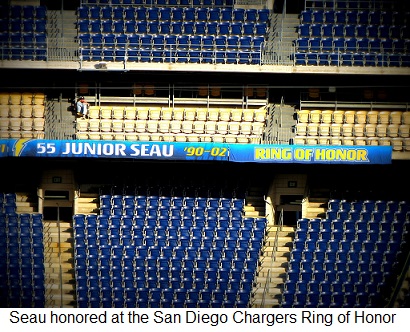
- The Movie; The Cause - Photo 3a

- The Movie; The Cause - Photo 3b

Why would there be a need for “David versus Goliath”; “a small man speaking truth to power”? Is not the actuality of an acclaimed football player committing suicide in this manner – he shot himself in the chest so as to preserve his brain for research – telling enough to drive home the message for reform?

No. Hardly. As previously discussed, there is too much money at stake.

These stakes bring out the Crony-capitalism in American society.

The book Go Lean…Caribbean (and subsequent blog/commentaries) relates many examples of cronyism in the American eco-system. There is a lot of money at stake. Those who want to preserve the status quo or not invest in the required mitigations to remediate concussions will fight back against any Advocate promoting the Greater Good. The profit motive is powerful. There are doubters and those who want to spurn doubt. “Concussions in Football” is not the first issue these “actors” have promoted doubt on. The efforts to downplay concussion alarmists are from a familiar playbook, used previously by Climate Change deniers, Big Tobacco, Toxic Waste, Acid Rain, and other dangerous chemicals.

This Go Lean book serves as a roadmap for the introduction and implementation of the technocratic Caribbean Union Trade Federation (CU). Sports are integral to the Go Lean/CU roadmap. While sports can be good and promote positives in society, even economically, the safety issues must be addressed upfront. This is a matter of community security. Thusly, the prime directives of the CU are described as:

  • Optimize the economic engines of the Caribbean to elevate the regional economy to grow to $800 Billion and create 2.2 million new jobs, including sports-related industries with a projection of 21,000 direct jobs at Fairgrounds and sports enterprises.
  • Establish a security apparatus to protect the people and economic engines.
  • Improvement of Caribbean governance to support these economic and security engines.

The CU/Go Lean sports mission is to harness the individual abilities of athletes to not just elevate their performance, but also to harness the economic impact for their communities. So modern sports endeavors cannot be analyzed without considering the impact on “dollars and cents” for stakeholders. This is a fact and should never be ignored. There is therefore the need to carefully assess and be on guard for crony-capitalistic influences entering the decision-making of sports stakeholders. The Go Lean book posits that with the emergence of new economic engines, “bad actors” will also emerge thereafter to exploit the opportunities, with good, bad and evil intent”. These points were pronounced early in the opening Declaration of Interdependence (Page 12 &14):

x. Whereas we are surrounded and allied to nations of larger proportions in land mass, populations, and treasuries, elements in their societies may have ill-intent in their pursuits, at the expense of the safety and security of our citizens. We must therefore appoint “new guards” to ensure our public safety and threats against our society, both domestic and foreign. The Federation must employ the latest advances and best practices of criminology and penology to assuage continuous threats against public safety.

xi. Whereas all men are entitled to the benefits of good governance in a free society, “new guards” must be enacted to dissuade the emergence of incompetence, corruption, nepotism and cronyism at the peril of the people’s best interest. The Federation must guarantee the executions of a social contract between government and the governed.

xvi. Whereas security of our homeland is inextricably linked to prosperity of the homeland, the economic and security interests of the region needs to be aligned under the same governance. Since economic crimes … can imperil the functioning of the wheels of commerce for all the citizenry, the accedence of this Federation must equip the security apparatus with the tools and techniques for predictive and proactive interdictions.

xxxi. Whereas sports have been a source of great pride for the Caribbean region, the economic returns from these ventures have not been evenly distributed as in other societies. The Federation must therefore facilitate the eco-systems and vertical industries of sports as a business, recreation, national pastime and even sports tourism …

The Go Lean book envisions the CU – a confederation of the 30 member-states of the Caribbean chartered to do the heavy-lifting of empowering and elevating the Caribbean economy – as the landlord of many sports facilities (within the Self-Governing Entities design), and the regulator for inter-state sport federations. The book details the economic principles and community ethos to adopt, plus the executions of strategies, tactics, implementations and advocacies to optimize sports enterprises in the Caribbean:

Community Ethos – Deferred Gratification Page 21
Economic Principles – People Respond to Incentives in Predictable Ways Page 21
Economic Principles – Economic Systems Influence Individual Choices / Incentives Page 21
Economic Principles – The Consequences of Choices Lie in the Future Page 21
Economic Principles – Job Multiplier Page 22
Community Ethos – Security Principles – Whistleblower Protection Page 23
Community Ethos – Security Principles – Light-Up the Dark Places Page 23
Community Ethos – Security Principles – “Crap” Happens Page 23
Community Ethos – Governing Principles – Lean Operations Page 24
Community Ethos – Ways to Impact the Future Page 26
Community Ethos – Ways to Promote Happiness – Mitigate Suicide Threats Page 36
Community Ethos – Impact the Greater Good Page 37
Strategy – Vision – Confederating 30 Member-States into a Single Market Page 45
Strategy – Vision – Foster Local Economic Engines for Basic Needs Page 45
Strategy – Mission – Prepare for Natural Disasters Page 45
Strategic – Staffing – Sporting Events at Fairgrounds Page 55
Strategy – Agents of Change – Climate Change Page 57
Strategy – Agents of Change – Globalization Page 57
Tactical – Confederating a Permanent Union Page 63
Tactical – Fostering a Technocracy Page 64
Tactical – Separation of Powers – Sports & Culture Administration Page 81
Tactical – Separation of Powers – Fairgrounds Administration Page 83
Tactical – Separation of Powers – Health Department – Disease Management Page 86
Implementation – Assemble Regional Organs into a Single Market Economy Page 96
Implementation – Steps to Implement Self-Governing Entities – Sports Stadia Page 105
Implementation – Security Initiatives at Start-up – Unified Command & Control Page 103
Implementation – Industrial Policy for CU Self Governing Entities Page 103
Implementation – Ways to Deliver – Project Management/Accountabilities Page 109
Anatomy of Advocacies – Examples of Individuals Who Made Impact Page 122
Planning – Ways to Make the Caribbean Better Page 131
Advocacy – Ways to Grow the Economy Page 151
Advocacy – Ways to Create Jobs Page 152
Advocacy – Ways to Improve Governance Page 168
Advocacy – Ways to Better Manage the Social Contract Page 170
Advocacy – Ways to Promote Fairgrounds Page 192
Advocacy – Ways to Improve Emergency Management – Trauma Arts & Sciences Page 196
Advocacy – Ways to Improve Sports Page 229
Advocacy – Ways to Impact Urban Living – Sports Leagues Page 234

The Go Lean book and accompanying blogs declare that the Caribbean needs to learn lessons from other communities, especially when big money is involved in pursuits like sports. These activities should be beneficial to health, not detrimental. So the admonition is to be “on guard” against the “cronies”; they will always try to sacrifice public policy – the Greater Good – for private gain: profit.

Let’s do better. Yes, the Caribbean can be better than the American experiences.

The design of Self-Governing Entities allow for greater protections from Crony-Capitalistic abuses. While this roadmap is committed to availing the economic opportunities of sports and accompanying infrastructure, as demonstrated in the foregoing movie trailer, sport teams and owners can be plutocratic “animals” in their greed. We must learn to mitigate plutocratic abuses. While an optimized eco-system is good, there is always the need for an Advocate, one person to step up, blow the whistle and transform society. The Go Lean roadmap encourages these role models.

Bravo Dr. Bennet Omalu. Thank you for this example … and for being a role model for all of the Caribbean.

RIP Junior Seau.

Now is the time for all of the Caribbean, the people and governing institutions, to lean-in for the empowerments described in the book Go Lean … Caribbean. This roadmap will result in more positive socio-economic changes throughout the region; it will make the Caribbean a better place to live, work and play. 🙂

Download the free e-Book of Go Lean … Caribbean – now!

——-

Appendix VIDEO: Hank Williams Jr. – Are You Ready for Some Footballhttps://youtu.be/K8LLKO0-PAE

Uploaded on May 28, 2011 – Official Music Video
 

Share this post:
, , , , , ,

Electric Cars: ‘Necessity is the Mother of Invention’

Go Lean Commentary

Today, gas prices have remained consistently low in the US for the past year; even dropping below $2 per gallon in many places.

This was not always the case. Just recently, in 2008, many of these same places – like California – featured gas prices near $5 per gallon. How amazing? What a change! How did the prices drop so low and what effect did those prior high prices have on the American, or more specifically, the Californian psyche?

“A crisis is a terrible thing to waste” …

… so says the book Go Lean… Caribbean quoting noted Economist Paul Romer (Page 8). A crisis brings an opportunity to forge change in the economic, security and governing engines of communities. An industry did this in the US, in response to the 2008 crisis. This is the industry of Electric Cars (Vehicles) or EV.

EV = No Gas … at all.

Overall, gas prices dropped due to macro-economic factors in both supply and demand. But on the micro-level, the need to mitigate the acute rise in gas prices truly proved to be the ‘mother of invention’. This is well documented in the historicity of one company NRG Energy and their eVgo® electric car charging initiative – see here the encyclopedic information on this enterprise:

NRG Energy and eVgo®

CU Blog - Electric Cars - Necessity is the Mother of Invention - Photo 1

NRG Energy, Inc. is a large American energy company – focusing primarily on power generation. They are dually headquartered in West Windsor Township, New Jersey,[3][4] and Houston, Texas.[1][5][6] It was formerly the wholesale arm of Xcel Energy, and was spun off in bankruptcy in 2004.[7]

Beginning in 2009, NRG began a major initiative to become the leading green energy producer in the United States and started investing very large amounts of money in clean energy projects.[18][19] They include onshore and offshore wind power, solar thermal energy, photovoltaic, and distributed solar power facilities, and repowering of some of their traditional coal plants with biomass.[18]

In late 2010, NRG made news by launching the “eVgo” network, the first completely private public car charging station network for electric power vehicles.[20]Source: https://en.wikipedia.org/wiki/NRG_Energy

… and now in 2015 …

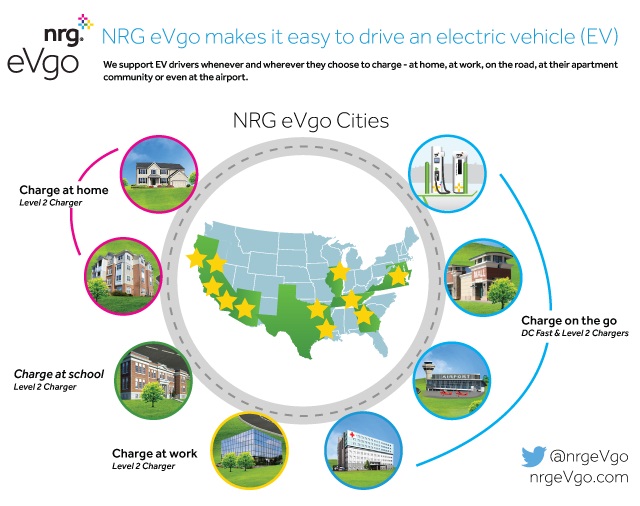
eVgo® leads America’s electric vehicle (EV) revolution.

eVgo® provides charging solutions and stations directly to electric car owners as well as businesses looking to serve the EV charging needs of their residents, tenants, employees, or customers.

Combining desired tier of service with home, multi-family, and workplace charging solutions in conjunction with the largest number of DC fast charging stations across the nation, EVgo provides EV drivers a truly unique level of freedom—and a whole new world of possible destinations.

The eVgo® network is the largest public DC fast charging network in the nation. From April 2014 to October 2015 their chargers provided enough kWh of electricity to power 12,323,090 EV miles. EVgo’s forward-looking infrastructure is invested across the country right now in more than 25 markets with a target of 40 by the end of 2016. EVgo drivers can access more than 1,000 fast charging locations, along with individual charging stations at homes, schools, offices, multi-family communities and hospitals across our growing network. – Source: https://www.nrgevgo.com/about/

NRG Energy and their eVgo® subsidiary is therefore a role model for the Caribbean to emulate. This enterprise has proven to be a technocratic organization that has championed the cause of providing the societal structures for EV’s. They do not manufacture the cars – that is the sphere of the giant car makers like General Motors, Ford, Nissan, BMW, Tesla, SMART and others – but they facilitate all the attendant functions to charge the vehicles and keep them powered. This structure aligns with the book Go Lean… Caribbean, a roadmap for the introduction and implementation of the Caribbean Union Trade Federation (CU). This calls for the confederation, collaboration and convention of 30 member-states into one intergovernmental organization. The same as NRG Energy/eVgo® facilitates EV’s in the US, the CU seeks to facilitate EV’s in the Caribbean region. This is part-and-parcel of the prime directives (3) of the CU/Go Lean roadmap:

  • Optimization of the economic engines – accepting that energy is as basic a need as food, clothing and shelter – in order to grow the regional economy to $800 Billion & create 2.2 million new jobs.
  • Establishment of a security apparatus, including energy security, to protect the resultant economic engines.
  • Improve Caribbean governance to support these engines.

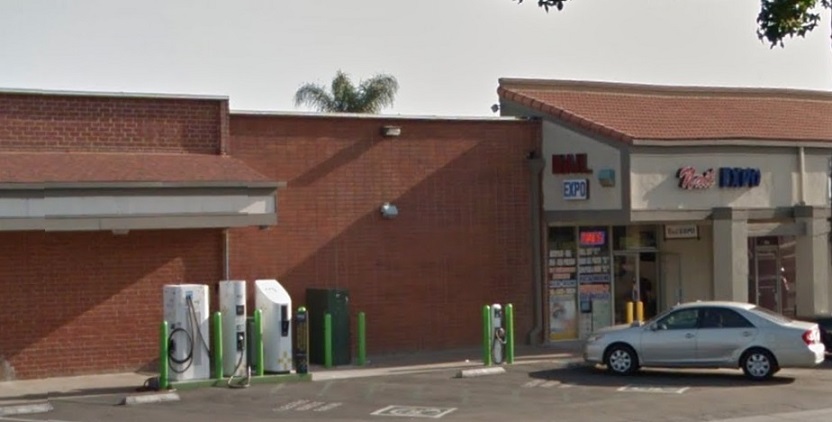
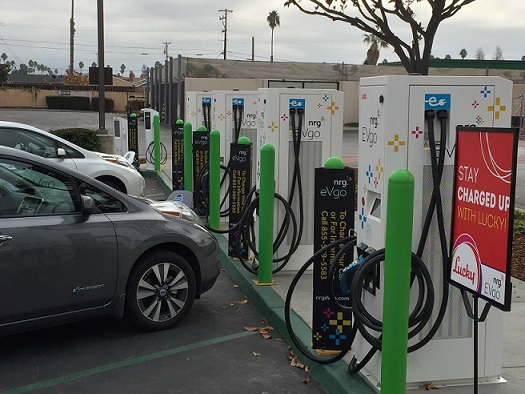
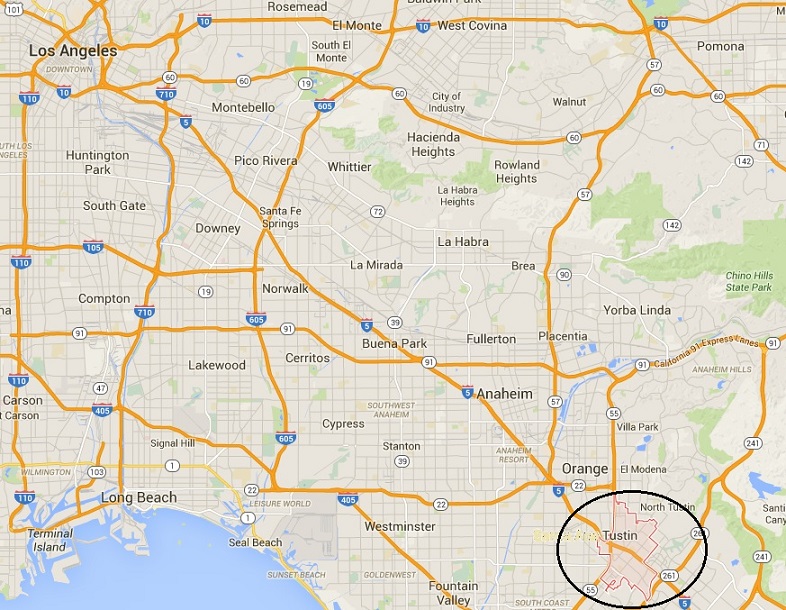
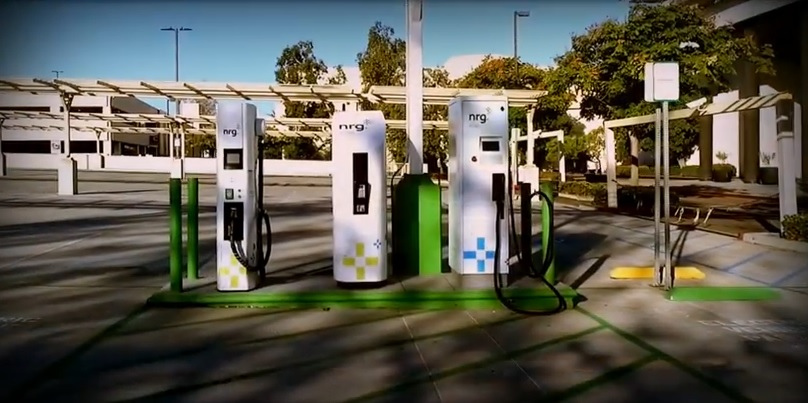
This writer lived in California in 2008 … and paid $5 prices for gas. But now just visited the old residential neighborhoods of Tustin in Orange County – see Appendix B – and noticed something different:

CU Blog - Electric Cars - Necessity is the Mother of Invention - Photo 2

Wow, change, innovation, necessity = the ‘mother of invention’.

 CU Blog - Electric Cars - Necessity is the Mother of Invention - Photo 4

CU Blog - Electric Cars - Necessity is the Mother of Invention - Photo 5

CU Blog - Electric Cars - Necessity is the Mother of Invention - Photo 6

See Appendix A for Charging locations/options in Tustin California today.

The goal of the CU is to optimize Caribbean society in kind. We need to foster innovation at home as well. We need to change in response to our own crises and not waste them. In many Caribbean locales, gas is still priced near $5.00 per gallon.

See the VIDEO here relating the story of an Uber driver and glean the comment of the Jamaican visitor longing for this solution in his Caribbean homeland:

VIDEO:  EVs and Uber- Sasha’s Story of Charging and Driving his Electric Car –  https://youtu.be/dj6NyUv_WkQ

Published on Nov 12, 2015 – Category: Autos & Vehicles; License: Standard YouTube License

This is also a matter of competition. The Caribbean homeland must better compete globally and hopefully present more favorable options for our youth to want to stay here in the homeland, and not copy the model of their previous generations who sought refuge abroad. We are failing miserably at this now!

We are also failing to create innovative energy options. There is the need to optimize our energy policies – from top to bottom. The Go Lean book directs this energy policy directive: the Caribbean region must lower crude oil demands. Success in this area will result in lower fuel and retail gasoline prices. The economic principles are sound: lower the demand, as the supply increases and prices will drop.

Thusly the book proposes many solutions for the region to optimize energy generation, distribution and consumption. No “stone is left unturned”. Go Lean posits that the average costs of energy can be decreased from an average of US$0.35/kWh to US$0.088/kWh in the course of the 5-year term of this roadmap. (Page 100).

Primarily in this strategy in lowering the demand for crude oil is increasing options with alternative energy sources: natural gas, solar, wind and tidal. Thereby lowering the demand on crude oil. As for the supply, the roadmap advocates for Electric Vehicles (EV’s) – just like in Tustin California – and hybrids and other energy mixes like natural gas and hydrogen. In fact, the roadmap calls for the development of a homegrown Automotive Industry in the Caribbean (Page 206). The overriding need for cheaper energy options would be the ‘Mother of Invention’ for these solutions.

The Go Lean book details a series of community ethos, strategies, tactics, implementations and advocacies to foster the progress in the wide fields of energy generation, distribution, consumption and automobile efficiencies. The following list applies:

Community Ethos – Lean Operations Page 24
Community Ethos – Return on Investments Page 24
Community Ethos – Cooperatives Page 25
Community Ethos – Regional Taxi Commissions Page 25
Community Ethos – Non-Government Organizations Page 25
Community Ethos – Ways to Impact the Future Page 26
Community Ethos – Ways to Improve Negotiations Page 32
Anecdote – Pipeline Transport – Strategies, Tactics & Implementations Page 43
Strategy – Harness the power of the sun/winds Page 46
Tactical – Fostering a Technocracy Page 82
Tactical – Separation of Powers – Energy Commission Page 82
Anecdote – “Lean” in Government – Energy Permits Page 93
Anecdote – Caribbean Energy Grid Implementation Page 100
Implementation – Ways to Develop Pipeline   Industry Page 107
Implementation – Ways to Improve Energy Usage Page 113
Planning – Lessons Learned from 2008 Page 136
Advocacy – Ways to Impact Public Works Page 175
Advocacy – Ways to Foster Cooperatives Page 176
Advocacy – Ways to Impact Monopolies Page 202
Advocacy – Ways to Improve Transportation Page 205
Advocacy – Ways to Develop the Auto Industry Page 206

This commentary asserts that energy needs are undeniable. Options abound; the biggest ingredient is the “community will”. Here comes the “will”! If the old adage is true: “where there’s a will, there’s a way”, then the CU/Go Lean roadmap is the way. This is the “heavy-lifting” for the lean, agile operations of the CU technocracy.

There are many Go Lean blog commentaries that have echoed this point, addressing the need to mitigate high prices in energy and the overall cost-of-living in the Caribbean. See sample here:

https://goleancaribbean.com/blog/?p=6867 How to address high consumer prices
https://goleancaribbean.com/blog/?p=5396 ‘Significant’ oil deposit found offshore Guyana
https://goleancaribbean.com/blog/?p=5155 Tesla unveils super-battery to power homes
https://goleancaribbean.com/blog/?p=4587 Burlington, Vermont: First city to be powered 100% by renewables
https://goleancaribbean.com/blog/?p=3743 Trinidad cuts 2015 budget as oil prices tumble
https://goleancaribbean.com/blog/?p=3213 Gas Prices Drop Below $2; due to “Supply and Demand” Factors
https://goleancaribbean.com/blog/?p=915 Go Green Caribbean – Renewable energy pursuits in the region
https://goleancaribbean.com/blog/?p=273 10 Things We Want from the US – American Innovation

So the message to the people of the Caribbean region is straight-forward: Help is on the way!

Now is the time for all of the Caribbean, the people and governments, to lean-in for the optimizations and opportunities described in the book Go Lean … Caribbean.  🙂

Download the book Go Lean … Caribbean – now!

———

Appendix A – EV Charging Locations

The Ultimate Guide to Electric Car Charging Networks In Tustin California

Source: http://evcharging.xyz/free-electric-car-charging-stations-in-tustin-ca-looking-for-a-free-ev-charge-station-in-california.html

When it comes to refueling a car, drivers of gas- and diesel-powered vehicles have it easy. They roll up to any one of about 100,000-plus gas stations in CA, pump in liquid fuel in a matter of minutes, and pay either in cash or with a credit card. Unfortunately, it is a little more complicated with public charging for electric vehicles although remember that almost all EV charging takes place at home, which usually requires about 30 seconds to plug in each night.

For EV drivers who want to regularly charge in public, it is important to know about the handful of charging networks offering access to electric fuel on the go. Each network works a little differently. It is a good idea for EV owners to have a basic understanding of how they compare with one another. That is why we put together this basic guide on EV charging networks.

Cost Considerations

The three primary approaches are:

(1) pay-as-you-go,

(2) monthly subscriptions

(3) free.

Obviously, if given the opportunity, it makes sense to grab a free charge, even for a relatively short period of time. But the pay models, depending on the cost for a charge, need to be studied to determine which network makes the most sense for you; if it is best to collect a wallet-full of membership cards; or if proper planning will allow you to avoid public charging unless you are running very low on charge.

There are a few gotchas. Keep in mind that the amount of range you add per hour depends on the power capabilities of your cars onboard charger. As Marc Geller, a director at Plug In America, an EV advocacy organization, told me: If the car comes with a smaller charger, the cost is relatively higher than if you have a faster charger. It is a weird fact. Other oddities include credit card transactions and costs associated with leaving a car plugged in, even if the battery if fully charged and the electrons have stopped flowing.

Networks, such as eVgo, operated by NRG Energy, avoid some of these issues by using an all-encompassing all-you-can-charge subscription service. That brings clarity, but usually at a higher overall cost. As of July 2014, the majority of public chargers are still available for free (although not every system makes it absolutely clear how much EV drivers are paying to charge).

High-Level Recommendations

  • First, think about your regular routes and favorite destinations in Tustin CA. Then use PlugShare or another station finding tool to see which charging networks are along the way. Be prepared to use any of them.
  • ChargePoint is the biggest charging network, so it is a must for nearly all EV drivers.
  • If you live in Pacific Northwest, get a key fob from Aerovironment for its AV Subscription Network.
  • In Texas, it’s generally better to pay as you go with ChargePoint and Blink, rather than opting for multi-year expensive contracts with eVgo unless you want to splurge for the convenience of an all-you-can-charge plan and, at this time, the ability to access DC fast charging.
  • On the east coast, SemaConnect is the best backup to ChargePoint.
  • Who doesn’t like free? There are about 2,000 stations, mostly free, not associated with any of the networks listed below. Use PlugShare or other tools to find these stations.

One last caveat: The terminology of ”station” can be confusing and misleading. Some services call each individual charger a station, when the term station usually refers to a single public site with the capability to charge more than one car at a time.

List of Top EV Charging Networks In Tustin 92780

AEROVIRONMENT

Background: Aerovironment, known as AV, is a pioneer in the development of electric vehicle charging technologies. The company sells a range of Level 2 and Quick Charge equipment, but also operates its own network of chargers.

Approximate Number of Sites: 60

Coverage: AV chargers, many of which are DC Quick Chargers, are primarily located in Oregon, and to a lesser extent, in Washington State as part of the West Coast Electric Highway. AV also has a handful of charging locations in California.

Access: Unlimited monthly access is provided for $19.99 per month. Subscribing to the AV network starts with calling 888-833-2148 or filling out a form on the AV website. The company will send a key fob that activates the chargers. If you are a current subscriber there is no activation fee. If you are a new subscriber, there will be a one-time activation fee of $15.

Cost per charge: As an alternative to the flat monthly access fee, there is the option of paying per session: $7.50/session for DC Fast Charger; and $4.00/session for a Level 2 charging station.

Website: http://evsolutions.avinc.com/services/subscriber_network

——-

BLINK NETWORK

Background: The assets of Blink Network were purchased by CarCharging Group in October 2013. Ecotality had received a $114.8 million federal stimulus grant to oversee The EV Project. The goal of The EV Project is to deploy 8,300 private and public chargers. There have been several reported problems associated with Blink chargers, and the Blink Network, such as insufficient customer support, and incompatibility of the equipment with certain vehicles.

Approximate Number of Sites: 1,680

Coverage: Blink Network chargers are located in approximately 25 states, with the largest concentration in California, California, Arizona, Oregon, Texas, Tennessee and Washington.

Access: Start by registering a credit card with a Blink account. There are no required annual or monthly membership fees, or minimum credit card balance. Members who register will receive an InCard and can initiate a charge using the card. Guests can initiate a charge with Blinks mobile application.

Cost Per Charge: In the states that permit kilowatt-hour pricing, fees for Level 2 EV charging stations owned by Blink and operated on the Blink Network range from $0.39 to $0.79 per kWh, depending on the state and individuals membership status. Blink is a proponent of kWh pricing because it is usage-based and EV drivers pay fees based on the actual amount of power consumed during the charging session rather than the amount of time that the car is plugged into the station.Fees for DCFC chargers owned by Blink and operated on the Blink Network in kWh eligible state range from $0.49 to $0.69 per kWh, depending on the state and individuals membership status.

These states currently permit fees by the kilowatt-hour: California, Colorado, Florida, Hawaii, Illinois, Maryland, Minnesota, New York, Oregon, Utah, Virginia, and Washington, as well as the District of Columbia.

In states where pricing by kWh is not permitted, time-based charging fees for Level 2 charging stations owned by Blink and operated on the Blink Network range from $0.04 to $0.06 per minute, depending on membership status. Time-based charging fees are rounded up to the nearest 30-second interval. Fees for DCFC chargers owned by Blink and operated on the Blink Network in non-kWh eligible states will range from $6.99 – $9.99 per session, depending on membership status.

Website: http://www.blinknetwork.com .

——-

CHARGEPOINT

Background: Chargepoint, previously Coulomb Technologies, describes itself as the largest online network of independently owned EV charging stations operating in 14 countries. The company provides a turnkey EV charging solutions for property owners who can determine the terms for offering charging to EV drivers.

Approximate Number of Sites: 3,084

Coverage: While one-quarter of ChargePoint stations are in California, the network is the most widely distributed with at least one station in California.

Access: There is no cost to sign up and receive a ChargePoint card. After submitting your credit card information as part of the sign-up, you will be charged an initial deposit of $25 only when you first visit a charging station that requires a fee. (Many stations on the network are free.) Your account provides access to all public stations on ChargePoint. Charging stations are activated with the ChargePoint card, or a contactless credit card. The stations can also be activated by calling a toll-free customer service number on the ChargePoint station, or by using the associated mobile app. Account balances automatically replenish when the balance gets low. Cost Per Charge: Prices are determined by the property owner. Many ChargePoint stations are currently free.

Website: http://www.chargepoint.com.

——-

EVGO

Background: eVgo is subsidiary of NRG, a Fortune 300 and S&P 500 company. It Is one of the countrys largest power generation and retail electricity businesses, with power plants producing about 47,000 megawatts of generation capacity. eVgo is part of NRGs clean energy portfolio, which includes solar, thermal, and carbon capture technology.

Approximate Number of Stations: Approximately 150, each with Level 2 and DC quick charging options.

Coverage: Currently, eVgo operates stations in Tustin CA, Texas, in the Houston and Dallas-Fort Worth markets, as well as Tennessee, California and the greater Washington, DC area.

Access: NRG network is only available to its monthly subscribers using an eVgo card, but as its website states, the company will always take care of an EV driver in need of a charge.

Cost Per Charge: eVgo offers various plans based on the needs of an EV driver and the electric vehicle they have chosen. This is an overview of their three most popular all-you-can-charge plans. Starting at $30 a month, with a one-year service agreement, EV drivers have access to unlimited charging at the companys so-called Freedom Station sites, which includes Level 2 and DC fast charging. The $40 a month Home plan, with a three-year service agreement, adds installation of your own home charging equipment but not the cost of electricity that is separately metered. The Workplace plan is $30 a month. See the pricing structure, which is unique to each region.

Website: http://www.evgonetwork.com/

——-

GE WATTSTATIONS

Approximate Number of Sites: 270

Coverage: 32 states, California, DC and Puerto Rico.

Access: WattStations require an RFID card, even when non-networked and free.

Cost Per Charge: Prices vary, as established by owners.

——-

GREENLOTS

Background: Greenlots is not formally a network, but rather a provider of open standards-based technology solutions for various stations and other networks. Designed to answer the needs of site hosts offering workplace, utility and public charging applications, Greenlots SKY platform utilizes Open Charge Point Protocol (OCPP), the largest open standard for charger-to-network communications.

Access: Users have many access options, including: (1) Download the free Greenlots app from iTunes or Google Play. Next, enter your credit card information. Once your information is saved, select “Charge” from the menu and enter the Station ID or scan the QR code displayed on the front of the station; (2) Swipe your Greenlots RFID card; (3) Call the customer care number listed on the station to have the charge session started remotely; and (4) Some stations have a credit card swiper. Users can also create a driver account at www.charge.greenlots.com to track electricity usage, update information, or order an RFID card.

Coverage: No specific region. Charging stations in Midwest, Northeast, Northwest, South, and Southwest, as well as Hawaii, Canada and Singapore.

Cost Per Charge: Site hosts determine the fee for use. Greenlots does not charge a membership fee.

Website: http://greenlots.com/

——-

SEMACONNECT

Background: Maryland-based SemaConnect offers Level 2 commercial grade EV charging station equipment and management software called SemaCharge. Their focus is on making charging as easy as possible for EV drivers and station owners. The company says it is the fastest growing network on the east coast. SemaConnect is the third largest supplier of commercial grade Level 2 charging stations based on number of stations deployed.

Approximate Number of Sites: 450

Coverage: SemaConnect stations are located in about 20 states, with the greatest concentration in California, Maryland, Virginia, Washington, DC, Georgia, California and the Pacific Northwest. It also has a presence in Puerto Rico.

Access: To sign up, log on to the SemaConnect website, and open a new account with a $20 balance charged to a major credit card. You will receive a SemaCharge RFID card that can be used to initiate charging at any SemaConnect location. If the balance drops below $0.00, the associated credit card will add another $20 to your account. SemaConnect also offers mobile payments via its smartphone application, toll-free number, or via a QR code scan.

Cost per charge: The cost varies, as determined by the property owner.

Website: http://www.semaconnect.com

——-

SHOREPOWER CONNECT

Background: Shorepower Technologies manufactures, sells and operates equipment for truck stop electricity services, as well as electric vehicle charging equipment. Most of the truck stop sites have standard charging outlets (e.g., NEMA 5-20, NEMA 14-30 and NEMA TT-30), accessible to EV drivers with the appropriated adapter cords. Relatively few of the locations also have charging stations with standard J1772 connectors.

Approximate Number of Sites: Shorepower has about 425 locations, with more than 2,000 individual connection points.

Coverage: Charging locations, mostly at truck stops, are spread widely across the U.S. in approximately 30 states and can be found in Tustin CA.

Access: Use the toll-free hotline, kiosk or web browser to activate service via a credit card. There is a $1 activation fee. Cost per charge: For paid stations at Level and Level 2, the fee is $1 per hour. Locations with J1772 equipment, mostly on west coast, are free.

Website: www.shorepowerconnect.com

——-

TESLA SUPERCHARGERS

Background: In fall 2012, Tesla Motors, the makers of the Model S sedan, rolled out its first so-called Superchargers, in order to make road trips available for free to owners of its sporty luxury sedan.

Approximate Number of Sites: As of August 2015, there are 502 Supercharger stations with 2,832 Superchargers.

Coverage: Supercharger stations are situated throughout the United States and can be found in Tustin 92780.

Access: Tesla Superchargers do not require a card to initiate. Model S owners simply drive up and plug in. The chargers are available to owners of Model S models with the 85 kWh battery pack, or cars with the 60 kWh pack that have been configured to use Superchargers.

Cost Per Charge: Free. No sign up and no cost for electricity.

Website: http://www.teslamotors.com/supercharger

——-

Appendix B – Tustin Information

CU Blog - Electric Cars - Necessity is the Mother of Invention - Photo 7

Share this post:
, , , ,
[Top]

The Future of Money

Go Lean Commentary

CU Blog - The Future of Money - Photo 3Surely the Caribbean can offer more than the African country of Kenya does. Surely?!

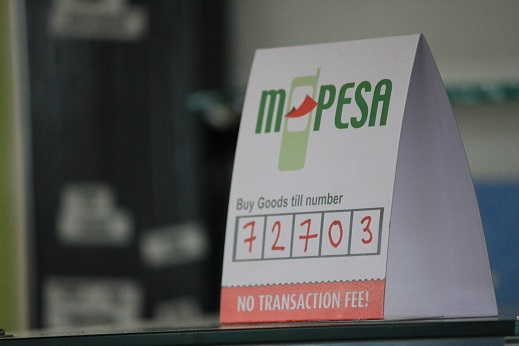
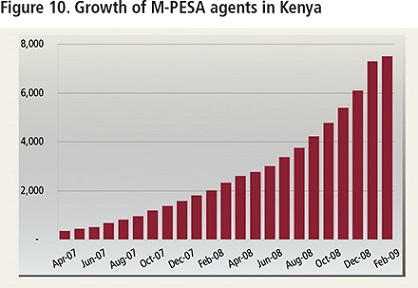
… and yet Kenya is providing a role model for the Caribbean to emulate, that of mobile money payment systems.

Let’s play catch-up.

Benefits await the Caribbean, more so than just playing catch-up. We can empower and elevate our economy and society. Notice here how this elevation benefits Kenya – an iconic and typical Third World country – in these news VIDEOs here:

VIDEO 1 – CBS 60 Minutes Story: The Future of Money – http://www.cbsnews.com/videos/the-future-of-money

  • … requires CBS All Access Subscription…

VIDEO 2 – Financial Times: Mobile money keeps Kenya economy moving – https://youtu.be/ayo-rgayDJE

Published on Mar 11, 2013 – Kenya has led Africa’s innovative and revolutionary embrace of mobile telephones, and the country’s technology sector has grown faster than all others in east Africa’s regional economic hub. Bob Collymore, chief executive of Safaricom, parent company of the mobile payment system M-Pesa, talks to Katrina Manson, east Africa correspondent.

This is a familiar advocacy for these Go Lean commentaries. The full width and breadth of electronic payments schemes have been examined, dissected and debated. The benefits are undeniable:

  • Instant access
  • Safer transactions
  • Expanded networks
  • Mitigating fees
  • Expanded money supply
  • Availing credit

CU Blog - The Future of Money - Photo 1
CU Blog - The Future of Money - Photo 4-newB
CU Blog - The Future of Money - Photo 5
CU Blog - The Future of Money - Photo 6-new

Previous blog-commentaries have promoted the following as advocacies integrating technology and money:

https://goleancaribbean.com/blog/?p=6635 New Security Chip in Credit Cards Unveiled
https://goleancaribbean.com/blog/?p=5668 Move over Mastercard/Visa… here comes a Caribbean Solution
https://goleancaribbean.com/blog/?p=4425 Cash, Credit or iPhone …
https://goleancaribbean.com/blog/?p=3889 Caribbean regional banks are ready to accept electronic payments transactions
https://goleancaribbean.com/blog/?p=2074 MetroCard – Model for the Caribbean Dollar
https://goleancaribbean.com/blog/?p=1350 PayPal expands payment services to 10 markets
https://goleancaribbean.com/blog/?p=906 Bitcoin needs regulatory framework to change ‘risky’ image of payments
https://goleancaribbean.com/blog/?p=528 Facebook plans to provide mobile payment services

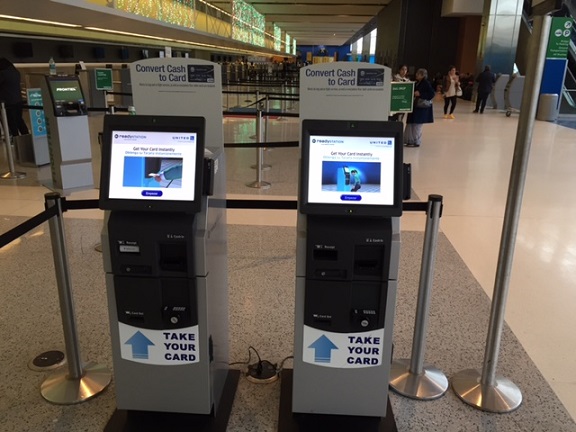
CU Blog - The Future of Money - Photo 2-newThe world is moving forward with electronic payment systems; the standard of cash registers with cash drawers have passed. Many times, establishments do not even want to accept “cash”. They want the money, but only want it electronically. Consider this photo here, it demonstrates how United Airlines – the 3rd largest airline in the world – will not even accept “cash” for travelling passengers to pay for baggage when they check-in for their flights. They want electronic money only (credit and debit cards). This photo depicts a cash-accepting kiosk to load the cash onto a pre-paid credit card … on the spot at the terminal … at the Metropolitan Detroit International Airport (DTW) in November 2015.

Those involved in tourism commerce must now adapt or perish.

What’s more, even the standard of magnetic stripe credit cards and debit cards have passed. As depicted in the foregoing VIDEO and previously Go Lean blog-commentaries, those involved in retail commerce – in general – must now adapt (or perish) to credit and debit cards … without the card!

This means you, Caribbean merchants (hotels, restaurants, tour operators, retailers, and business establishments). The environment must now change for tourism commerce and ordinary domestic commerce. The stewardship of Caribbean economics must improve to adapt to this changing world. This is a consistent advocacy of these Go Lean blogs: to “lean-in” to better economic stewardship as detailed in the book Go Lean … Caribbean.

The book serves as a roadmap for the introduction and implementation of the Caribbean Union Trade Federation (CU) and the Caribbean Central Bank (CCB). This Go Lean roadmap depicts that these entities will drive change in payment systems, to includes options depicted in the foregoing VIDEO and beyond. Their role will include facilitating and settling transactions for new payment systems: new cards and telephony apps. The Go Lean roadmap calls for a regional currency for the Caribbean Single Market, the Caribbean Dollar (C$), to be used primarily as an electronic currency. These schemes will impact the growth of the regional economy in both the domestic and tourist markets. Consider the real scenario of Cruise Ship passenger-commerce; the solutions must be delivered here and now.

The CU/CCB roadmap anticipates these electronic payment systems from the outset of the Go Lean book; covering more than commerce, but the security and governing issues as well. In fact, the Go Lean roadmap has these 3 prime directives:

  • Optimization of the economic engines in order to grow the regional economy to $800 Billion & create 2.2 million new jobs.
  • Establishment of a security apparatus to protect the resultant economic engines.
  • Improvement of Caribbean governance to support these engines.

As depicted in the foregoing VIDEO, there abound many security benefits with electronic payment schemes, mobile money in this case. In the field of Economics, the “cash currency” is referred to as M0. No doubt, changes for electronic payment system will reduce M0. The greatest benefit though of deploying these electronic payment scheme is the acceleration of M1 in the regional economy. While M0 refers to “cash: paper & coins”, M1 refers to the measurement of “cash” in circulation (the M0) plus overnight bank deposits. As depicted in the Go Lean book, and subsequent blog-commentaries, M1 increases allow central banks – in this case, the CCB – to create money “from thin-air”; referring to the money multiplier principle.

A final feature of M1 is that it normally does not include any Black Market activities. But with electronic payment systems, M0 reduces and M1 increases, thusly nullifying the Black Markets.

The Go Lean book posits that to adapt and thrive in the new global marketplace there must be more strenuous management and technocratic oversight of the region’s currencies. This is the quest of the Go Lean roadmap; it opened with these pronouncements in the Declaration of Interdependence (Page 13 and 14):

xxiv.   Whereas a free market economy can be induced and spurred for continuous progress, the Federation must install the controls to better manage aspects of the economy: jobs, inflation, savings rate, investments and other economic principles. Thereby attracting direct foreign investment because of the stability and vibrancy of our economy.

xxv.    Whereas the legacy of international democracies had been imperiled due to a global financial crisis, the structure of the Federation must allow for financial stability and assurance of the Federation’s institutions. To mandate the economic vibrancy of the region, monetary and fiscal controls and policies must be incorporated as proactive and reactive measures. These measures must address threats against the financial integrity of the Federation and of the member-states.

xxvii. Whereas the region has endured a spectator status during the Industrial Revolution, we cannot stand on the sidelines of this new economy, the Information Revolution. Rather, the Federation must embrace all the tenets of Internet Communications Technology (ICT) to serve as an equalizing element in competition with the rest of the world. The Federation must bridge the digital divide and promote the community ethos that research/development is valuable and must be promoted and incentivized for adoption.

The Go Lean book details a series of community ethos, strategies, tactics, implementations and advocacies to foster the proper controls for electronic/mobile payments in the Caribbean region:

Community Ethos – Economic Principles Page 21
Community Ethos – Money Multiplier Principle Page 22
Community Ethos – Security Principles – Privacy versus Public Protection Page 23
Community Ethos – Governing Principles – Lean Operations Page 24
Community Ethos – Governing Principles – Cooperatives Page 25
Community Ethos – Promote Intellectual Property Page 29
Community Ethos – Ways to Bridge the Digital Divide Page 31
Community Ethos – Ways to Improve Sharing Page 35
Community Ethos – Ways to Impact the Greater Good Page 37
Strategy – Mission – Fortify the monetary needs through a Currency Union Page 45
Tactical – Separation of Powers – Central Banking Page 73
Implementation – Assemble Central Bank Cooperative Page 96
Implementation – Assemble Caribbean Regional Organs Page 96
Implementation – Ways to Deliver Page 109
Planning – 10 Big Ideas – #2: Currency Union / Single Currency Page 127
Anecdote – Caribbean Currencies Page 149
Advocacy – Ways to Grow the Economy Page 151
Advocacy – Ways to Create Jobs Page 152
Advocacy – Ways to Mitigate Black Markets Page 165
Advocacy – Ways to Foster Cooperatives Page 176
Advocacy – Ways to Impact Cruise Tourism – Smartcard scheme Page 193
Advocacy – Ways to Foster Technology Page 197
Advocacy – Ways to Foster e-Commerce Page 198
Advocacy – Reforms for Banking Regulations – Central Banking Efficiencies Page 199
Advocacy – Ways to Impact Main Street – Downtown Wi-Fi – Time and Place Page 201
Appendix – Assembling the Caribbean Telecommunications Union Page 256

The world of electronic payment systems now includes smart cards, mobile payments (like “M-Pesa” in the foregoing VIDEO and apps on Google’s Android and Apple’s iPhone devices). To those in the Caribbean, we admonish you:

Try and keep up!

The benefits of this new “regime” are too enticing to ignore: fostering more e-Commerce, increasing regional M1, mitigation of Black Markets, more cruise tourism spending, growing the economy, creating jobs, enhancing security and optimizing governance.

Now is the time for all stakeholders of the Caribbean, (residents, visitors, merchants, vendors, bankers, and governing institutions), to lean-in for the empowerments described in the book Go Lean … Caribbean. These empowerments can help to make the Caribbean a better place to live, work and play.  🙂

Download the free e-Book for Go Lean … Caribbean – now!

Share this post:
, , , , ,
[Top]

ENCORE: Thanksgiving and American Commerce – Past, Present and Amazon

Go Lean Commentary

This commentary – from December 3, 2014 – was re-distributed on the occasion of the American Holiday Thanksgiving for 2015, as it is applicable for any Thanksgiving any year. Be thankful people; be festive and most important, be safe!

———

To understand American commerce, one must learn the BIG shopping “days of the week” – Friday, Saturday, Monday, Tuesday, as follows:

    • Black Friday – This is the Friday following the Thanksgiving Day holiday in the US (the fourth Thursday of November). Since the early 2000’s, it has been regarded as the beginning of the Christmas shopping season, and most major retailers open very early and offer promotional sales. Black Friday is not a public holiday, but some states observe “The Day After Thanksgiving” as a holiday for state government employees, sometimes in lieu of another federal holiday such as Columbus Day.[5] Many non-retail employees and schools have both Thanksgiving and the day after off, followed by a weekend, thereby increasing the number of potential shoppers. In 2014, $50.9 billion was spent during the 4-day Black Friday weekend. While approximately 133 million U.S. consumers shopped during the same period.[6]
    • Small Business Saturday – This refers to the Saturday after Thanksgiving during one of the busiest shopping periods of the year. First observed in 2010, it is a counterpart to Black Friday and Cyber Monday, which feature big box retail and e-commerce stores respectively. By contrast, Small Business Saturday encourages holiday shoppers to patronize brick-and-mortar businesses that are small and local. Small Business Saturday is a registered trademark of American Express Corporation. Small Business Saturday UK began in the UK in 2013 after the success of Small Business Saturday in America.[7]
    • Cyber Monday – This is a marketing term for the Monday after the Thanksgiving holiday. The term was created by marketing companies to persuade people to shop online. The term made its debut on November 28, 2005, in a Shop.org press release entitled “‘Cyber Monday Quickly Becoming One of the Biggest Online Shopping Days of the Year”.[2] According to the Shop.org/Bizrate Research 2005 eHoliday Mood Study, “77 percent of online retailers said that their sales increased substantially on the Monday after Thanksgiving, a trend that is driving serious online discounts and promotions on Cyber Monday this year (2005)”. In 2014, Cyber Monday online sales grew to a record $2.68 billion, compared with last year’s $2.29 billion. However, the average order value was $124, down slightly from 2013’s $128.[3] The deals on Cyber Monday are online-only and generally offered by smaller retailers that cannot compete with the big retailers. Black Friday generally offers better deals on technology; with nearly 85% more data storage deals than Cyber Monday. The past Black Fridays saw far more deals for small appliances, cutlery, and kitchen gadgets on average than Cyber Monday. Cyber Monday is larger for fashion retail. On the past two Cyber Mondays, there was an average of 45% more clothing deals than on Black Friday. There were also 50% more shoe deals on Cyber Monday than on Black Friday.[4] Cyber Monday has become an international marketing term used by online retailers in Argentina, Canada, Chile, China, Colombia, Denmark, Germany, Ireland, Uganda, Japan, Portugal, Sweden and the United Kingdom.
    • Giving Tuesday – refers to the Tuesday after Thanksgiving. It is a movement to create a national day of giving at the beginning of the Christmas and holiday season. Giving Tuesday was started in 2012 by the “92nd Street Y” (Young Men’s and Young Women’s Hebrew Association in New York, NY) and the United Nations Foundation as a response to commercialization and consumerism in the post-Thanksgiving season (Black Friday and Cyber Monday).[8][9] This occasion is often stylized as #GivingTuesday for purposes of hashtag activism.

That’s a lot of commerce … and philanthropy too!

This encyclopedic discussion is necessary for the Caribbean to model the best-practices of American commerce. The focus of this commentary is the role of one company in the pantheon of Cyber Monday, Amazon. This firm has previously been featured in a Go Lean blog, and is identified as a model for Caribbean logistics, our means for delivering the mail; this is the vision for the Caribbean Postal Union (CPU).

The focus of the book Go Lean…Caribbean and the CPU is not just postal mail, but rather logistics. Mail requires logistics, but logistics encompasses so much more than just mail. So we would want to model a successful enterprise in this industry space, like Amazon, not just another postal operation, like the US Postal Service (Page 99).

Amazon provides a good example of lean technocratic efficiency. So Amazon is a good model, not just for the CPU but the entire Caribbean Union Trade Federation (CU). The Go Lean book, serves as a roadmap for the introduction and implementation of the technocratic CU.

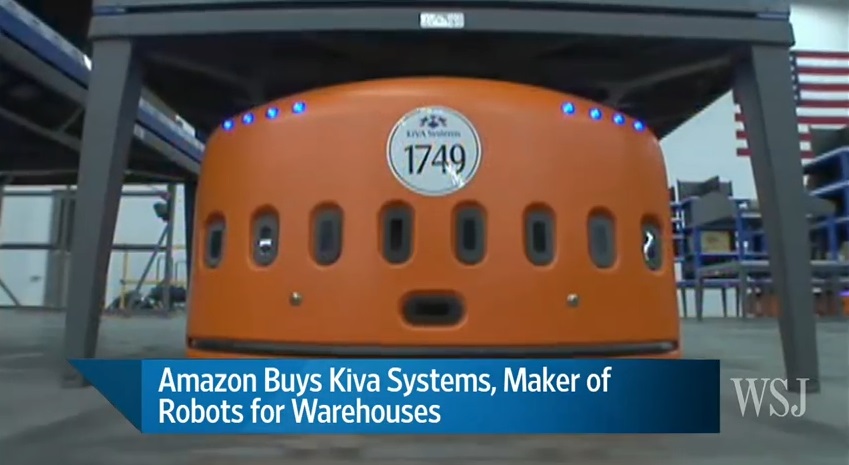
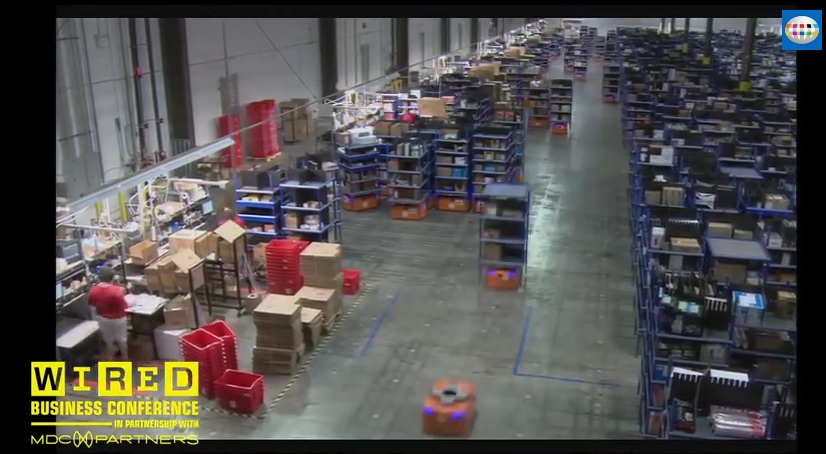
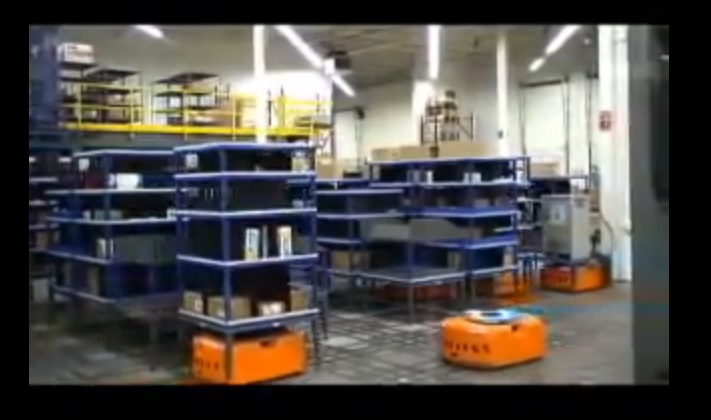
One reason why Amazon is modeled for their lean stature is their use of automation. This following VIDEO depicts the creative solution of using robots to facilitate logistics in a warehouse environment:

VIDEO: Robots help Amazon tackle Cyber Monday – http://www.cbsnews.com/videos/robots-help-amazon-tackle-cyber-monday/

December 1, 2014 – Cyber Monday is the biggest sales day of the year for online retail giant, Amazon. Last year, Amazon customers ordered 426 items every second on Cyber Monday, and this year that number is expected to grow. In addition to the 80-thousand seasonal workers they employ to fulfill orders, thousands of robots also crawl the warehouse floors. CNET.com’s KaraTsuboi takes us inside an Amazon fulfillment center to watch the robots in action. (VIDEO plays best in Internet Explorer).

Lean, automation, robotics, technocratic …

… welcome to the new Caribbean.

This is the mission of Go Lean roadmap, to elevate the economic engines of Caribbean society; industrial policy plays a key role in this roadmap. The region needs the jobs, so we need job creators: companies. These companies, or better stated, Direct Foreign Investors, need a pro-innovation environment to deploy their automated solutions. The Go Lean roadmap allows the structure of Self-Governing Entities (SGE) to incentivize industrial developments in the region. It is the expectation that robots and automated systems will flourish. The independence of the SGE structure neutralizes conflicts with “labor”.

Related issues have previously been detailed in these Go Lean commentaries listed here:

Disney World – Successful Role Model of a SGE
Using SGE’s to Welcome the Dreaded ‘Plutocracy’
Where the Jobs Are – Ship-breaking under SGE Structure
Fairgrounds as SGE and Landlords for Sports Leagues
Puerto Rico’s Comprehensive Cancer Center Project Breaks Ground – Model of Medical SGE

In addition to the roadmap encouraging robotic automation, the CU will directly employ such technologically innovative products and services to impact its own prime directives; the CPU is such a reflection; more automation and less labor. The CU’s prime directives are identified with the following 3 statements:

  • Optimization of the economic engines in order to grow the regional economy to $800 Billion & create 2.2 million new jobs.
  • Establishment of a security apparatus to protect the resultant economic engines.
  • Improve Caribbean governance to support these engines.

The CPU features economic, security and governing concerns.

The Go Lean roadmap seeks to change the entire eco-system of Caribbean logistics and resulting commerce – the interaction with postal operations. This vision is defined early in the book (Page 12 & 14) in the following pronouncements in the Declaration of Interdependence:

xv. Whereas the business of the Federation and the commercial interest in the region cannot prosper without an efficient facilitation of postal services, the Caribbean Union must allow for the integration of the existing mail operations of the governments of the member-states into a consolidated Caribbean Postal Union, allowing for the adoption of best practices and technical advances to deliver foreign/domestic mail in the region.

xxvii. Whereas the region has endured a spectator status during the Industrial Revolution, we cannot stand on the sidelines of this new economy, the Information Revolution. Rather, the Federation must embrace all the tenets of Internet Communications Technology (ICT) to serve as an equalizing element in competition with the rest of the world. The Federation must bridge the digital divide and promote the community ethos that research/development is valuable and must be promoted and incentivized for adoption.

Amazon is not our only example. A previous blog/commentary identified Chinese company Alibaba as a fitting role model for Caribbean consideration. There are so many best-practices around the world for the region to study and glean insights and wisdom from. The successful application of this roadmap will foster such best-practices for the delivery of the CPU logistics in the Caribbean. The wisdom the Go Lean book gleans are presented as a series of community ethos, strategies, tactics, implementations and advocacies; a detailed sample is listed as follows:

Community Ethos – Deferred Gratification Page 21
Community Ethos – People Respond to Incentives Page 21
Community Ethos – Job Multiplier Page 22
Community Ethos – Intelligence Gathering Page 23
Community Ethos – Lean Operations Page 24
Community Ethos – Ways to Impact the Future Page 26
Community Ethos – Ways to Foster Genius Page 27
Community Ethos – Ways to Help Entrepreneurship Page 28
Community Ethos – Promote Intellectual Property Page 29
Community Ethos – Ways to Bridge the Digital Divide Page 31
Community Ethos – Ways to Improve Sharing Page 35
Strategy – Customers – Citizens and Member-states Governmental Page 47
Tactical – Separation of Powers – Postal Services Page 78
Tactical – Separation of Powers – Interstate Commerce Administration Page 79
Implementation – Year 1 / Assemble Phase – Establish CPU Page 96
Anecdote – Implementation Plan – Mail Services – US Dilemma Page 99
Implementation – Steps to Implement Self-Governing Entities Page 105
Implementation – Improve Mail Services – Electronic Supplements Page 108
Implementation – Ways to Deliver Page 109
Planning – 10 Big Ideas for the Caribbean Region Page 127
Advocacy – Ways to Improve Interstate Commerce Page 129
Advocacy – Ways to Grow the Economy Page 151
Advocacy – Ways to Create Jobs Page 152
Advocacy –Ways to Improve Governance Page 168
Advocacy – Ways to Foster Technology Page 197
Advocacy – Ways to Foster e-Commerce Page 198
Advocacy – Ways to Promote Call Centers Page 212
Advocacy – Ways to Impact Urban Living Page 234

Following the Amazon’s example (and Alibaba’s example) will spur the Caribbean to embrace more robotic technologies. This field is new, fresh and ready for innovation. There is a level-playing-field for any innovator to earn market share. The underlying company in the foregoing VIDEO is Kiva Systems – a Massachusetts based company that manufactures mobile robotic fulfillment systems.[10][11] They rolled out a great product, then “Lo-and-behold”, they were acquired by a major e-Commerce company. Today, they are a subsidiary of Amazon, yet their material-handling systems are currently used by many other retailers including: The Gap, Walgreens, Staples, Gilt Groupe, Office Depot, Crate & Barrel, Saks 5th Avenue, and more.[12]

CU Blog - Robots help Amazon tackle Cyber Monday - Photo 3

CU Blog - Robots help Amazon tackle Cyber Monday - Photo 2

CU Blog - Robots help Amazon tackle Cyber Monday - Photo 1

CU Blog - Robots help Amazon tackle Cyber Monday - Photo 4

This commentary therefore features the subjects of commerce, logistics and entrepreneurship. The Caribbean can emulate this model from Amazon. The biggest ingredient missing in the region is the ‘will’. But the ‘will’ can be fostered anew in the Caribbean. This is the heavy-lifting for the CU, instituting such new community ethos.

Now is the time for all of the Caribbean, the people and governing institutions, to lean-in for the empowerments in the book Go Lean … Caribbean. This is a Big Idea for the region; that of a Cyber Caribbean, in which Cyber Mondays may become a big deal for our region – not only as consumers, but producers as well. Therefore, this roadmap is not just a plan for delivering the mail/packages, but rather a plan for delivering the future.

We must employ whatever tools and techniques, robotics included, to make the region a better homeland to live, work and play.

Does “play“include Robots? Yes, indeed. Consider this fun VIDEO here. 🙂

Supplemental VIDEO – The “Nutcracker” performed by Dancing Kiva Order Fulfillment Robots: http://youtu.be/Vdmtya8emMw

Download the book Go Lean … Caribbean – now!

————

AppendixSource References:

2. “‘Cyber Monday’ Quickly Becoming One of the Biggest Online Shopping Days of the Year”. Shop.org.
3. “Fundivo – Cyber Monday Statistics”. Fundivo.
4. “What’s the difference between Black Friday and Cyber Monday?”. Mirror.co.uk. Mirror.co.uk. Nov 28, 2013. Retrieved 2014-11-25.
5. “Pima County in Arizona Replaces Columbus Day with Black Friday”. BestBlackFriday.com. 2013-08-07.
6. “”Fundivo – Black Friday Statistics””. Fundivo.
7. Small Business Saturday Hailed as Success. The Telegraph. 8 December 2013″. Telegraph.co.uk. 8 December 2013. Retrieved 2 December 2014.
8. Fox, Zoe (October 23, 2012). “6 Inspiring Organizations Joining in #GivingTuesday”. Retrieved February 15, 2014.
9. “#GivingTuesday: About”. Giving Tuesday. Retrieved February 15, 2014.
10. http://www.kivasystems.com/about-us-the-kiva-approach/
11. http://www.boston.com/business/technology/innoeco/2012/03/amazon_buys_warehouse_robotics.html
12. http://www.kivasystems.com/about-us-the-kiva-approach/history/

Share this post:
, , , , , ,
[Top]

Live. Work. Play. Repeat.

Go Lean Commentary

CU Blog - Live. Work. Play. Repeat - Photo 3It’s time to go back to school, advanced Business School that is, and glean some wisdom from the structured marketing strategy called Loyalty programs. These are designed to encourage customers to continue to shop at or use the services of establishments associated with each program.[1]

There are large numbers of such programs in existence covering most types of business, (airlines: frequent flyer, hotels: frequent guest, car rental: frequent renters, restaurants: frequent diners, etc.), each one having varying features, and reward schemes. See Appendix B for details on airlines’ frequent-flyer programs.

Taking a page from this retail marketing eco-system …

… there is a need for a frequent-flyer-style loyalty program in the Caribbean to incentivize repeat business-activity in almost all regional economic engines.

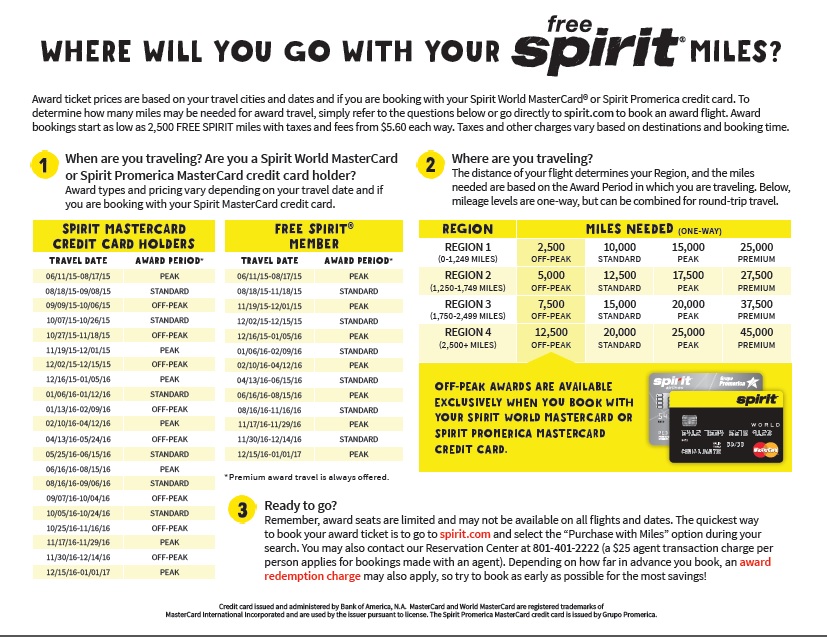
This commentary asserts that a frequent-flyer-miles-style program can be structured in the Caribbean to “spread the wealth” from peak to non-peak seasons. More points can be accumulated by consuming hospitality in the slow season and less points are accumulated for consuming hospitality in the peak/high season. (See Appendix C for Spirit Airlines Model).

This strategy can also be applied with locations …

… more points can be accumulated for hospitality in the lessor-known, lesser-frequented destinations. (See Appendix D for a glimpse of the Hotwire / HotDollars program).

The book Go Lean…Caribbean calls for the elevation of Caribbean society; to re-focus, re-boot, and optimize all the engines of commerce so as to make the Caribbean a better place for these categories of vital activities: live, work and play.  Loyalty programs can be used to incentivize all of these aspects of this roadmap. The tourism industry is categorized as “play”. The book posits that the region can experience even more growth than the estimated 80 million people that visit our shores annually. This can also apply to more spending from the visitors as well.

The Go Lean book is written to employ the best-practices of economic principles. Therefore, these fundamental principles – as related in the book (Page 21) are paramount:

People Respond to Incentives in Predictable Ways: Incentives are actions, awards, or rewards that determine the choices people make. Incentives can be positive or negative. When incentives change, people change their behaviors in predictable ways.

Economic Systems Influence Individual Choices and Incentives: People cooperate and govern their actions through both written and unwritten rules that determine methods of allocating scarce resources. These rules determine what is produced, how it is produced, and for whom it is produced. As the rules change, so do individual choices, incentives, and behavior.

The Go Lean book considers the Agent of Change (Page 57) of technology and its effect on the Caribbean’s biggest economic driver “tourism”. The end-results of loyalty program will have far-reaching effects on this travel/tourism industry.

Technology, the Internet-Communications-Technology (ICT), social media account management & marketing …

… the stewardship of Caribbean tourism must truly adapt, evolve and transform to lead and keep pace with this dynamic world; see sample VIDEO in Appendix A.

This commentary relates to more than just tourism and the visiting tourists. Considering applications for “live”, “work”, and “play”, we see that there are also many opportunities to apply incentives for Caribbean citizens who live in the homeland.

The Go Lean book identifies an Agent of Change in the vast field of technology. The technological advances with cutting-edge financial products allow loyalty programs to be forged to incentivize a lot of good behavior and to dissuade bad behavior. Consider these “live” and “work” examples:

CU Blog - Live. Work. Play. Repeat - Photo 1“Live” – Tax Payments – This is not a welcome activity for anyone, thusly taxing authorities provide range of dates for tax obligations to be paid; (in the US, the Federal Income Tax deadline is April 15; payments/refunds can start on February 1st). A loyalty scheme can easily be introduced to award miles-points for early payers and refund recipients that purposefully claim their refunds later in the time window. This practice will maximize cash flow for the authorities while commending good behavior with preferable things they may want after completing obligation they must endure.

“Live” – Energy Efficiency – Positive activities like installing Green Energy alternatives (solar panels/water heaters, hybrid/electric automobiles, etc.) can be incentivized by awarding “double miles” or “eco-points”. Rather than acquiring some chattel goods, the rewards in this case could simply be privileges, like riding in carpool lanes alone.

“Live” – Education – e-Learning enrollment can result in immediate and deferred mileage credit for Caribbean students. (Thus discouraging further brain drain consequences).

“Work” – Taking jobs in rural/desolate communities or working from home is positive behavior that can be further incentivized with “double miles”-like promotions.

“Work” – Working or volunteering for Not-for-Profit agencies should also be encouraged, incentivized and rewarded.

“Work” – Take-Your-Daughter-To-Work Day is a good practice to instill career goals in young girls. Rewards should follow.

There are a lot of opportunities where loyalty program rules can transform society. Consider the practice of “gifting” miles. One person can earn the miles, but then share them with another party and even gift them to a charitable organization or a person directly. This strategy allows for a nimble, technocratic administration of loyalty programs to incentivize good behavior and dissuade bad practices.

Loyalty programs embedded in societal engines are transforming …

Could the current tourism administrations in the Caribbean master the complexities of this technology-bred strategy for elevating the region’s “play” economic engines? Hardly!

How about for regional administrators for the other activities, “live” and “work”? Again, hardly!

This “new-fangled” world requires “new-fangled” leaders. Visionaries. Technocrats.

The book Go Lean…Caribbean and the underlying movement seeks to re-boot the strategies and tactics of tourism marketing for the entire Caribbean region. The book asserts Caribbean member-states must expand and optimize their tourism outreach and use innovative products like excess inventory and loyalty rewards. However the requisite investment of the resources (time, talent, treasuries) for this goal may be too big for any one Caribbean member-state alone. So the Go Lean book campaigns to shift the responsibility to a region-wide, professionally-managed, deputized technocracy, the Caribbean Union Trade Federation (CU). The book serves as a roadmap for the introduction and implementation of the CU.

The goal of the CU is to bring the proper tools and techniques – electronic commerce, Internet Communications Technologies (ICT), visionary marketing, agile management – to the Caribbean region to optimize the stewardship of the economic, security and governing engines.  The book posits that the economy can be induced and spurred for continuous progress, with technocratic management and stewardship of a Single Market. This would be better than the status quo. As conveyed here in this commentary, and in previous commentaries, the publishers of the book Go Lean…Caribbean convene the talents and skill-sets of movers-and-shakers in electronic commerce so as to forge the best tools and techniques for advanced product marketing like loyalty program.

Change has come to the region. This book Go Lean… Caribbean provides the needed details. Early in the book, the optimization and best-practices was highlighted as a reason the Caribbean region needed to unite, integrate and confederate to a Single Market. These pronouncements were included in the opening Declaration of Interdependence (Pages 11 – 14):

iv.  Whereas the natural formation of the landmass is in a tropical region, the flora and fauna allows for an inherent beauty that is enviable to peoples near and far. The structures must be strenuously guarded to protect and promote sustainable systems of commerce paramount to this reality.

vi.  Whereas the finite nature of the landmass of our lands limits the populations and markets of commerce, by extending the bonds of brotherhood to our geographic neighbors allows for extended opportunities and better execution of the kinetics of our economies through trade. This regional focus must foster and promote diverse economic stimuli.

xiv.  Whereas a free market economy can be induced and spurred for continuous progress, the Federation must install the controls to better manage aspects of the economy: jobs, inflation, savings rate, investments and other economic principles. Thereby attracting direct foreign investment because of the stability and vibrancy of our economy.

xxvii. Whereas the region has endured a spectator status during the Industrial Revolution, we cannot stand on the sidelines of this new economy, the Information Revolution. Rather, the Federation must embrace all the tenets of Internet Communications Technology (ICT) to serve as an equalizing element in competition with the rest of the world. The Federation must bridge the digital divide and promote the community ethos that research/development is valuable and must be promoted and incentivized for adoption.

The Go Lean… Caribbean book wisely details the community ethos to adopt to proactively facilitate digital campaigns for the changed landscape; plus the executions of the following strategies, tactics, implementations and advocacies:

Community Ethos – Deferred Gratification Page 21
Community Ethos – Economic Principle – People Respond to Incentives Page 21
Community Ethos – Economic Principle – Economic Systems Influence Individual Choices & Incentives Page 21
Community Ethos – Economic Principle – Consequences of Choices Lie in the Future Page 21
Community Ethos – Lean Operations Page 24
Community Ethos – Return on Investments (ROI) Page 24
Community Ethos – Ways to Impact the Future Page 26
Community Ethos – Ways to Foster Genius – Literary, Art and Music in Graphic Design Page 27
Community Ethos – Impact Research & Development – Including ICT Page 30
Community Ethos – Ways to Improve Sharing – Data / Social Network Page 35
Community Ethos – Ways to Impact the Greater Good Page 37
Strategy – Vision – Integrate Region in a Single Market Page 45
Strategy – Mission – Build   and Foster Local Economic Engines Page 45
Strategy – Mission – Exploit   the Benefits of Globalization in Trade-Tourism Page 46
Tactical – Fostering a Technocracy Page 64
Tactical – Growing the Economy to $800 Billion – Trade and Globalization Page 70
Tactical – Website www.myCaribbean.gov for Caribbean stakeholders – Tourists Page 74
Tactical – Separation of Powers – Tourism Promotions and Administration Page 78
Implementation – Integrate All Caribbean Websites to www.myCaribbean.gov Portal Page 97
Implementation – Ways to Pay for Change Page 101
Implementation – Ways to Deliver Page 109
Implementation – Ways to Impact Social Media – www.myCaribbean.gov Portal Page 111
Planning – 10 Big Ideas – Cyber Caribbean Page 127
Planning – Ways to Make the Caribbean Better Page 131
Planning – Ways to Better Manage Image – Digital Media Presence Page 133
Planning – Lessons Learned from 2008 – Tourism & Economy Went Bust Page 136
Planning – Lessons Learned from Egypt – Lack of Tourism Stewardship Page 143
Advocacy – Ways to Measure Progress – Mining www.myCaribbean.gov Portal Data Page 147
Advocacy – Ways to Grow the Economy Page 151
Advocacy – Ways to Foster Cooperatives Page 176
Advocacy – Ways to Improve Communications – Internet & Social Media Marketing Page 186
Advocacy – Ways to Enhance Tourism – Excess Inventory Marketing Page 190
Advocacy – Ways to Impact Events – Sharing Economy Page 191
Advocacy – Ways to Market Southern California Page 194
Advocacy – Ways to Foster Technology Page 197
Advocacy – Ways to Foster e-Commerce Page 198
Advocacy – Ways to Preserve Caribbean Heritage – Cyber-Caribbean Image/Media Page 218
Advocacy – Ways to Impact Urban Living Page 234
Advocacy – Ways to Impact Rural Living Page 235

The CU seeks to foster internet-communications-technologies (ICT) to aid-and-abet tourism and other economic activities. This includes all supporting functions before, during and after visitors come to our shores – accumulating reward miles-points creates an account-holder status – see Appendix D – with the need for monthly e-statements. This is a forceful example of how a technocratic effort by regional administrators can enhance the Caribbean product offerings online. This is heavy-lifting; but this hard-work is worth the effort. The Returns-on-Investment is assured!

In previous Go Lean blogs, related points of the Technology Agents of Change affecting the tourism product offering have been detailed; see sample here:

https://goleancaribbean.com/blog/?p=6385 Wi-Fi Hot Spots Run By Hackers Are Targeting Tourists
https://goleancaribbean.com/blog/?p=6341 Tourism Stewardship — What’s Next?
https://goleancaribbean.com/blog/?p=6016 Hotter than July – Mitigating Excessive Heat with Systems
https://goleancaribbean.com/blog/?p=5840 Computer Glitches Disrupt Business For United Airlines & Others
https://goleancaribbean.com/blog/?p=5210 Cruise Ship Commerce – Getting Ready for Change
https://goleancaribbean.com/blog/?p=4793 Truth in Electronic Commerce – Learning from Yelp
https://goleancaribbean.com/blog/?p=4639 Tobago: A Model for Cruise Tourism
https://goleancaribbean.com/blog/?p=3225 The need to optimize Caribbean aviation policies
https://goleancaribbean.com/blog/?p=2571 Internet Commerce meets Sharing Economy: Airbnb
https://goleancaribbean.com/blog/?p=1364 Uber’s Emergence Transforming Cities
https://goleancaribbean.com/blog/?p=273 10 Things We Want from the US – # 2: Tourists
https://goleancaribbean.com/blog/?p=235 Tourism’s changing profile

The Caribbean must lean-in to these new business models to incentivize good behavior, for tourism and other aspects of Caribbean affairs. People will respond with the proper inducements. So imagine the universe of 130 million people all tuned-in – to the www.myCaribbean.gov portal – and responding to the appropriate prodding.

This is referred to as “Unified Command-and-Control”. Caribbean benevolent stewards can “push a few buttons” and millions of people respond, for the Greater Good. This is an exciting perspective. Let’s do it!

This is the charge of the Go Lean roadmap: incentivize the people to do more of the right thing. With the empowerments and elevations portrayed in the roadmap we can succeed in making Caribbean region a better place for citizens and tourists alike to live, work, play and repeat.  🙂

Download the book Go Lean … Caribbean – now!

———–

Appendix A – VIDEO – Capital One Venture® – Jennifer Garner – Ticked Off Traveler – https://youtu.be/7uwYGXqPguU

Published on Sep 15, 2015 – Trying to use your airline credit card miles shouldn’t be frustrating! With the Capital One Venture card, you can fly on any airline any time, then use your miles to cover the cost. Learn more: http://www.capitalone.com/credit-card

————

Appendix B – Frequent-Flyer Programs

A Frequent-Flyer Program (FFP) is a loyalty program offered by an airline. Many airlines have frequent-flyer programs designed to encourage airline customers enrolled in the program to accumulate points (also called miles, kilometers or segments) which may then be redeemed for air travel or other rewards. Points earned under FFPs may be based on the class of fare, distance flown on that airline or its partners, or the amount paid. There are other ways to earn points. For example, in recent years, more points have been earned by using co-branded credit and debit cards than by air travel. Another way to earn points is spending money at associated retail outlets, car hire companies, hotels or other associated businesses. Points can be redeemed for air travel, other goods or services, or for increased benefits, such as travel class upgrades, airport lounge access, or priority bookings.

Frequent-flyer programs can be seen as a certain type of virtual currency, one with unidirectional flow of money to purchase points, but no exchange back into money.[1]

The very first modern frequent-flyer program was created in 1972 by Western Direct Marketing, for United Airlines. It gave plaques and promotional materials to members. In 1979, Texas International Airlines created the first frequent-flyer program that used mileage tracking to give ‘rewards’ to its passengers, while in 1980 Western Airlines created its Travel Bank, which ultimately became part of Delta Air Lines’ program upon their merger in 1987.[2][3] American Airlines’ AAdvantage program launched in 1981 as a modification of a never-realized concept from 1979 that would have given special fares to frequent customers. It was quickly followed later that year by programs from United Airlines (Mileage Plus) and Delta Air Lines (SkyMiles), and in 1982 from British Airways (Executive Club).[4]

Credit card purchases
Many credit card companies partner with airlines to offer a co-branded credit card or the ability to transfer points in their loyalty program to an airline’s program. Large sign-up bonuses and other incentives have been common. Accruing points via credit cards bonuses and spending allows infrequent travelers to benefit from the frequent flyer program.

With a non-affiliated travel rewards credit card a card-member can buy a positive-space ticket considered “revenue” class, which can earn the passenger points with the airline flown.[11]

Redemption
After accumulating a certain number of points, members then use these points to obtain airline tickets. However, points only pay for the base fare, with the member still responsible for the payment of mandatory taxes and fees.

Source: https://en.wikipedia.org/wiki/Frequent-flyer_program retrieved November 11, 2015.

———–

Appendix C – Spirit Airlines

CU Blog - Live. Work. Play. Repeat - Photo 2

———–

Appendix D – Hotwire / HotDollars

What are HotDollars?
HotDollars can be used for any hotel, flight, or Hotwire Hot Rate rental car booking on Hotwire. Each HotDollar is equivalent to one U.S. dollar and is available for one year from the date of issuance. For more information, please see the HotDollars section of our Hotwire Travel Products Rules and Restrictions.

To use your HotDollars, simply sign in by clicking, “My Account.” Then, during checkout, choose HotDollars as your payment method.

Share this post:
, , , ,
[Top]

A Meteorologist’s View On Climate Change

Go Lean Commentary

s View On Climate Change - Photo 1The Americans “got it bad!” They appear to be willing to ignore facts and deny science to continue their environmental unsound way of life, their eco-system. While Americans may have the right to their own opinions, they do not have the right to their own facts.

This is the summary from the below AUDIO PODCAST, that even the weather scientists, the meteorologists, are pressured to ignore the science or not sound the warning. This is their rationale for their non-stance:

  • The political climate is too heated.
  • Corporate ownership of TV stations don’t want to deal with Climate Change.

This is a bad model … for the rest of the world. According to the PODCAST, other countries – i.e. France – are not yielding to this American pressure; they recognize the need to sound a more accurate alarm. Listen to the PODCAST here/now (or read the transcript in the Appendix below):

Share this post:
, , , ,
[Top]

How to address high consumer prices

Go Lean Commentary

The Caribbean is arguably the best address on the planet, but a lot is missing. There are certain aspects of Caribbean life that is hard … and expensive.

Is it only the actuality of islands that make Caribbean life so expensive or are there other dynamics? These issues apply:

  • The need to import consumer products is a constant feature of island life.
  • An island is usually more limited with landmass, (sans Australia).
  • Opportunities for agricultural exploitations may be limited.
  • Transportation cost is the biggest hurdle, everything must be flown in or shipped in. The low-cost logistics of rail or trucks are irrelevant because of the reality of being surrounded by water.

This high cost of island living is not just a Caribbean issue; the American State of Hawaii has the same issues. Consider the news article in the Appendix below – from September 2013 – describing Hawaii’s plight.

Drawing from that experience, we are able to identify the following challenges consistent with island life … everywhere in the modern world:

  • Energy Costs – Unless the source of energy is homegrown (think Geo-Thermal Geysers in Iceland) the logistical costs of getting energy to an island is higher than mainland options.
  • Limited Land – There is competition for the available land on small tropical islands. The laws of supply-and-demand therefore implies that the price would rise with the demand. A higher demand for real estate puts upward pressure on home prices and rentals.
  • Consumer Prices – The consumer products to satisfy the day-to-day needs of island residence tend to be more expensive due to importation and an increase in transportation costs.
  • Heightened Corrosion – Islands are surrounded by salt water. There are also consistent trade winds. This is a bad combination for metal fixtures, appliances and equipment. Cars tend to suffer more wear-and-tear on islands compared to the mainlands due to this exposure to salt water on a daily basis.
  • Healthcare Realities – Healthcare costs are higher in island locales. The infrastructure needed to minimize costs (energy, product pricing) are less optimized on islands. Plus the lower populations affect the actuarial numbers for insurance pools.

This above summary applies equally to life in … the Caribbean. 27 of the 30 Caribbean member-states are islands (sans Belize, Guyana and Suriname) and the residents there have to contend with these hard realities.

One of the Caribbean member-states is the US Virgin Islands territory. Their government officials have been monitoring the foregoing societal factors for higher-than-mainland costs, and have become enraged over one factor: the price of oil/petroleum products. The assertion in this territory is that all that “glitters may not be gold”, something is afoul in the economic equations that result in oil/petroleum pricing. There may be some other factors at play.

See the article here:

Title: USVI to address high consumer prices

CU Blog - How to address high consumer prices - Photo 1ST THOMAS, USVI — The Department of Licensing and Consumer Affairs has announced an initiative with the attorney general’s office to take action to bring relief to the consumers of the US Virgin Islands.

“The Department of Licensing and Consumer continues to be concerned with the high prices consumers are paying for essential commodities in the Virgin Islands, especially food and gas,” said Commissioner Devin Carrington.

The commissioner stated that this concern is exacerbated by the fact that, in the past, retailers have justified the prices charged consumers, in part, on the cost of fuel on the world market that affects shipping and transportation costs paid by importers of consumer goods.

“If this is the case, periodic surveys conducted by the department for food and gas prices reflect no appreciable change in the prices paid by consumers for these essential commodities. This is so even though the price of oil per barrel is currently at the lowest it has been in a ten-year period. If fuel costs are lower, prices at the pump and on the shelf should be lower as well,” Carrington said.

Having observed the continuing trend in prices in the US Virgin Islands, despite lower fuel costs, the department has decided to take a more aggressive posture in order to bring relief to the consumers.

“After examination of survey data that may suggest fraudulent manipulation of prices, the department made the decision to enlist the attorney general’s office to launch an investigation into the causes of high consumer prices,” Carrington noted.
Source: Caribbean News Now – Online Magazine – Posted 10/29/2015 from: http://www.caribbeannewsnow.com/topstory-USVI-to-address-high-consumer-prices-28102.html

Welcome to the Caribbean, arguably the best address on the planet; in terms of physical beauty, absolutely yes; but in terms of a home to live, work and play – not so much.

VIDEOhttps://youtu.be/q6NKdMjdzpk – Guadeloupe’s sky high prices spoil tropical paradise

playbutton-300x300

Uploaded on Feb 25, 2009 – This report was posted during the impactful 2009 general strike on the French Caribbean island Guadeloupe. One of the protester demands was more help to cope with the high cost of living. This report specifically addresses the outlying island of Marie-Galante where prices are particularly high.

The book Go Lean…Caribbean addresses the issues that makes life in the Caribbean difficult and expensive. Identifying all the challenges of island life above, the book serves as a roadmap for the introduction of the technocratic Caribbean Union Trade Federation (CU) with the strategies, tactics and implementations to optimize Caribbean life. The book details how the CU is chartered with these prime directives to elevate life in the islands:

  • Optimization of the economic engines in order to grow the regional economy to $800 Billion & create 2.2 million new jobs.
  • Establishment of a security apparatus to protect the resultant economic engines.
  • Improvement of Caribbean governance to support these engines.

So specifically, why does the US Virgin Islands suffer from higher consumer prices with gasoline? Or generally, why is the Caribbean region expected to pay higher prices?

The answer is the same for us as for Hawaii (as depicted in the below Appendix) …

… plus the added burdens of rent-seeking!

In a previous blog/commentary, this bad community ethos of rent-seeking was identified as running contrary to the goal of optimizing the economy. Unfortunately, in the Caribbean the “free market” is not always “free” nor a “market”; sometimes, there are Crony-Capitalistic and monopolistic forces at play.

The purpose of the Go Lean roadmap is not just to report on Caribbean failures, but also to project solutions. The book details these 3 initiatives which will be used to impact the high costs of living:

  • Caribbean Postal Union
  • Regional Energy Grid
  • Union Atlantic Turnpike & Pipelines

CPU
To lower the eco-systems for higher costs of living, the Go Lean roadmap introduces the Caribbean Postal Union (CPU). This vision is identified as a model for Caribbean logistics, our means for delivering the mail. But the focus of the book Go Lean…Caribbean and the CPU is not just postal mail, but rather logistics for packages and chattel goods. So the Go Lean/CU/CPU does not model other Postal operations (like the US Postal Service debunked in the book at Page 99), but rather successful enterprise in the logistics industry, like Amazon and Alibaba.

The Go Lean roadmap seeks to change the entire eco-system of Caribbean commerce and logistics, with the interaction with postal operations. Part-and-parcel to this CPU effort is the launch of the social media website www.myCaribbean.gov to bring much of the general public interactions and marketing online. Now island residents can easily order consumer goods online from any merchant (foreign and domestic) and have them delivered… via the CPU. This creates a “great equalizer” for Caribbean life; it brings downward pressure on consumer prices. This vision is defined early in the book (Pages 12 & 14) in the following pronouncements in the Declaration of Interdependence:

xv.     Whereas the business of the Federation and the commercial interest in the region cannot prosper without an efficient facilitation of postal services, the Caribbean Union must allow for the integration of the existing mail operations of the governments of the member-states into a consolidated Caribbean Postal Union, allowing for the adoption of best practices and technical advances to deliver foreign/domestic mail in the region.

xxvii. Whereas the region has endured a spectator status during the Industrial Revolution, we cannot stand on the sidelines of this new economy, the Information Revolution. Rather, the Federation must embrace all the tenets of Internet Communications Technology (ICT) to serve as an equalizing element in competition with the rest of the world. The Federation must bridge the digital divide and promote the community ethos that research/development is valuable and must be promoted and incentivized for adoption.

Regional Energy Grid
Fulfilling energy needs is a great target for lean, agile operations, perfect for the CU technocracy. A more technocratic solution would equate to lower energy costs.

This Go Lean/CU roadmap recognizes that modern life has now expanded to include food, clothing, shelter and energy as a basic need. And thusly the book proposes many solutions for the region to optimize energy …

  • generation – Green options (solar, wind turbines, tidal and natural gas)
  • distribution – Underwater cables to connect individual islands
  • consumption – efficient battery back-ups for home deployments.

No “stone is left unturned”. Go Lean posits that the average costs of energy can be decreased from an average of US$0.35/kWh to US$0.088/kWh in the course of the 5-year term of this roadmap; (Page 100). That’s a 75% savings!

Union Atlantic Turnpike & Pipelines
The “Union Atlantic” Turnpike, (modeled after the Union Pacific efforts in the US back in 1862), is a big initiative of the CU to logistically connect all CU member-states for easier transport of goods and passengers. There are many transportation arteries envisioned for the Turnpike: Pipeline, Ferry, Highways, and Railroad. (Imagine a sophisticated network of ferry boats on schedule service to every island).

The book Go Lean … Caribbean asserts that pipelines can be strategic, tactical and operationally efficient for lowering the cost of delivery in the Caribbean region, for energy communities like oil, gas and water. They can also mitigate challenges from Mother Nature, create jobs and grow the economy at the same time. The book purports that a new technology-enhanced industrial revolution is emerging, in which there is more efficiency for installing-monitoring-maintaining pipelines. Caribbean society must participate in these developments, in order to optimize its costs of living. This point is pronounced early in the book with this Declaration of Interdependence (Page 14), with these statements:

xxvi. Whereas the Caribbean region must have new jobs to empower the engines of the economy and create the income sources for prosperity, and encourage the next generation to forge their dreams right at home, the Federation must therefore foster the development of new industries, like that of … pipelines …

There are many best practices around the world for the region to study and from which to glean insight and wisdom. The successful application of this roadmap will foster such best practices to optimize living in the Caribbean and lowering the costs of doing so. The wisdom the Go Lean book gleans are presented as a series of community ethos, strategies, tactics, implementations and advocacies; a detailed sample is listed as follows:

Community Assessment – French Caribbean: Organization and Discord Page 17
Community Ethos – Deferred Gratification Page 21
Community Ethos – Economic Systems Influence Individual Choices Page 21
Community Ethos – Consequences of Choices Lie in the Future Page 22
Community Ethos – Intelligence Gathering – Pricing Analysis Page 23
Community Ethos – Lean Operations Page 24
Community Ethos – Ways to Impact the Future Page 26
Community Ethos – Ways to Help Entrepreneurship Page 28
Community Ethos – Ways to Close the Digital Divide Page 31
Community Ethos – Ways to Impact the Greater Good Page 37
Strategy – Mission – Embrace the advances of technology Page 46
Strategy – Mission – Re-boot and Optimize Postal Operations Page 46
Tactical – Fostering a Technocracy Page 64
Tactical – Separation of Powers – Postal Services Page 78
Tactical – Separation of Powers – Interstate Commerce Administration Page 79
Implementation – Year 1 / Assemble Phase – Establish CPU Page 96
Anecdote – Implementation Plan – Mail Services – US Dilemma Page 99
Implementation – Ways to Pay for Change Page 101
Implementation – Ways to Develop a Pipeline Industry Page 107
Implementation – Improve Mail Services – Electronic Supplements Page 108
Implementation – Ways to Deliver Page 109
Implementation – Ways to Improve Energy Usage Page 113
Planning – 10 Big Ideas for the Caribbean Region – Cyber Caribbean Page 127
Advocacy – Ways to Improve Interstate Commerce Page 129
Advocacy – Ways to Make the Caribbean Better Page 131
Advocacy – Ways to Grow the Economy Page 151
Advocacy – Ways to Create Jobs Page 152
Advocacy – Ways to Improve Governance Page 168
Advocacy – Ways to Better Manage the Social Contract Page 170
Advocacy – Ways to Foster Technology Page 197
Advocacy – Ways to Foster e-Commerce Page 198
Advocacy – Ways to Impact Main Street Page 201
Advocacy – Ways to Improve Transportation – Ferries & Pipelines Page 205
Appendix – Alaska Marine Highway Page 280
Appendix – Eurotunnel Model – English Channel Tunnel Page 281

This commentary therefore features the subjects of commerce, logistics and energy. Yet the Go Lean book asserts that the problems of the Caribbean are too big for any one member-state to assuage alone, that rather the requisite investment of the resources (time, talent, treasuries) will require an integrated region-wide, professionally-managed, deputized technocracy to effect greater production and greater accountability.

The Caribbean can do better, even better than the US State of Hawaii. (While Hawaii is 2500 miles from the US mainland, Trinidad is 7 miles from the South American mainland; the Bahama island of Bimini is 50 miles away from Miami, Florida). This new improved infrastructure – described above – awaits deployment. The biggest ingredient missing in the region is the “will” of the people. We hereby urge all in the region to lean-in to this Go Lean roadmap.

This is the take-away of this consideration: Ferries, pipelines, tunnels and railways functioning as “blood vessels to connect all the organs” within the region, thus allowing easier transport of goods (ordered online) and people among the islands and the mainland states (Belize, Guyana or Suriname) – at cheaper costs.

Now is the time for all of the Caribbean, the people and governing institutions, to work to make their homeland a better and more affordable place to live, work and play. 🙂

Download the free e-Book of Go Lean … Caribbean – now!

———-

Appendix: Living Hawaii – Why Is the Price of Paradise So High?

By: Kery Murakami

Source: http://www.civilbeat.com/2013/09/19815-living-hawaii-why-is-the-price-of-paradise-so-high/; posted September 4, 2013; retrieved October 30, 2015

So this is paradise. Palm trees sway in the trade winds that take the edge off the late-summer sun. Nearby, tanned bodies glisten on the sand.

Cabbie Lam Lu sits at the entrance of the parking garage at the AlaMoanaCenter shopping mall, overworked and stressed out as he awaits a fare. Lu is parked outside Foodland. Inside the supermarket, an advertisement shows two smiling girls eating hamburgers. Maybe they shouldn’t be so happy. The store’s pack of hamburger buns goes for $5.59, almost $3 more than it costs at a similar market in Washington, D.C. Do the kids want to wash it down with some milk? That’s another $3.69 per quart, which is nearly double the $1.88 it costs in the nation’s capital.

Yes, we know it is pricey here. Cars run on the most expensive gas in the nation, at $4.35 a gallon on a recent day. Our shopping centers and our homes use electricity that’s twice as expensive per kilowatt hour as the next costliest state, Alaska. We have to earn more per hour than Californians and New Yorkers to afford a two-bedroom home. Hawaii actually has the ninth highest median income in the nation, at $59,605. That sounds great to many people on the mainland, but when the cost of living is factored in, Hawaii slides down to the 21st highest median income. And we pay more for goods and services than residents of any other state.

And, as we all know, the list goes on. It is why we work so hard, skimp so much.

All of which is why Lu looks so glum. He doesn’t surf. He doesn’t hang out at the beach. To make ends meet, he drives his cab 12 hours per day, seven days a week. For every $100 he makes in fares, $15 of it goes for gas.

“No time for paradise,” he said.

Does It Have to be This Way?

In an ongoing series, Civil Beat will examine the reasons behind the high cost of living and how it affects Hawaii’s submerged middle class. How come life is so expensive here? Why is food — including our beloved Spam — so pricey? Should rentals and real estate around the islands really compare with world-class cities like San Francisco and New York City? And why do we pay so much just to sit at home with the lights on?

It all adds up to the price of paradise, the phrase coined by University of Hawaii law professor Randy Roth in two best-selling books by that name that he edited and co-authored in the early 1990s. And it affects every aspect of our lives, at every stage from childhood to parenthood and beyond, to our final days in some of the costliest nursing homes in the country.

We’ve heard the explanations. Many people accept it because we are on our archipelago in the middle of the Pacific Ocean 2,500 miles from the West Coast ports that so much of our stuff ships through. There is a set amount of real estate on the islands, and there is competition for how it is used, which puts intense pressure on farmers, home renters and buyers. Some locals blame tourist-generated inflation. Others wonder who is getting rich — and maybe profiteering — off of our vulnerabilities. Others point at unions, a lack of competition, our small consumer market, high taxes.

Goods and Services

So, what can be done to bring down the cost of living here? What are the actual costs — of shipping, of transportation, of labor, of regulation. We look forward to breaking them down.

We’ll also look at what political and economic interests are standing in the way of making Hawaii more affordable and how the islands might remake themselves politically and economically to improve residents’ quality of life.

As part of this, we want to hear from you about your experiences. What sorts of things do you question the cost of? What everyday products have inexplicably high price tags? What do you want to know about, what have you sacrificed to live here and what do you Print

In the meantime, here are some facts of life in our islands:

— Hawaii has the highest cost of living in the nation, according to a U.S. Commerce Department Bureau of Economic Analysis report in June. The cost of living is 16 percent higher than the national average. (Second place goes to New York.)

— A single person can earn as much as $54,850 and qualify for housing assistance on Oahu. For a family of four, the cut-off is $78,300, according to the Hawaii Public Housing Authority. In most of the country, those would be comfortably middle-class incomes.

— We spend more on housing. Based on U.S. Department of Housing and Urban Development data, the National Low Income Housing Coalition says the median cost of renting a two-bedroom apartment in Hawaii is $1,671 a month. That’s not just the highest nationally, it is about 71 percent more than the national average of $977.

Based on the HUD standard that families shouldn’t spend more than a third of their income on housing, the coalition calculated what hourly wage people around the country would have to earn to afford such an apartment. Hawaii again earned the dubious rank of No. 1. A resident here would have to earn the most: $32.14, compared with a national average of $25.25 per hour.

Print 

— A 2013 report by the Center for Housing Policy found that Honolulu was the fifth most expensive city for home buyers. The average income necessary to own one, according to the center, is $115,949.

— Similarly, the people of Hawaii pay the highest electricity rates at 37 cents per kilowatt hour, triple the national average of 12 cents per kilowatt hour, according to the the US. Energy Information Agency. That translates into bills that are two, three or even four times those in other states. While rates can fluctuate quickly around the country, Hawaii residents are currently spending $60 per month more than people in Alabama, the state with the next highest monthly bill (even though Alabamans pay much lower per-kilowatt rates than residents of some states).

Print

— The cost of having a car (insurance, gas, maintenance, depreciation, etc.) is the eighth highest in the nation here in Hawaii. A study last year by Edmunds.com, a car pricing website, estimated that Hawaii drivers will have to spend $52,683 on their cars over the next five years, which is about $3,000 more than the national average. Hawaii cars also depreciate the fastest in the nation, by $16,809 over a five-year period. We also pay the most interest to finance a vehicle, $4,084, and the gas bill for those five years, $15,822, is also the highest in the nation.

— Food costs more. The U.S. Department of Agriculture calculates the differences in cost around the country to determine the size of food stamp benefits, and has found that food prices in Hawaii are 70 percent more than the national average. According to the USDA’s calculations, a family of four with young children nationally should be able to eat on a “thrifty” food budget of $373 per month. In Hawaii, it would cost the same family $632 for the same meals.

— We have to work more. According to the Bureau of Labor Statistics, 6.2 percent of Hawaii workers have more than one job, compared to only 4.9 percent nationally.

Print

An Age-Old Problem

There are those who say don’t worry. Be happy. Lucky you live Hawaii. But others note there are real impacts. Even for a middle-class that manages to scrape by, the cost of paradise often catches up to us late in life.

Bruce Bottorff, spokesman for the Hawaii chapter of the AARP, says that high prices have made it hard for most people to save for the day when they need help to live. “Most adult families have mortgages and rent, transportation, food and beverage costs, health care. And when you have all these costs, it makes it difficult to set aside an additional sum of money for an eventuality down the road. People take care of their immediate needs,” he said.

As a result, the AARP’s annual survey of Hawaii residents over 50 years old last year found that three in four said they did not want to rely on families and friends to take care of them in their old age, but more than half said they had no real plan for how they’d afford elderly care when they need it. (They acknowledged that they probably would have to rely on their families and friends.)

No wonder Tony Lenzer and his family have been feeling plenty of pressure. Lenzer, 83, said he had to put his wife, Joan, in a care home this year because she suffers from a variety of health problems, including dementia. Their children had taken turns helping Tony take care of his wife at home. But they couldn’t anymore. “We couldn’t keep her safe. She’s too frail,” he said.

They were among the (relatively) lucky ones because they bought long-term care health insurance that covers most of the nearly $9,500-a-month cost, Lenzer explained.

If they hadn’t, she would not have been able to afford the care home, Lenzer said. “I think it would be a very difficult situation. We would have to rely on family members, possibly friends, possibly neighbors to help out with the care. And even then we wouldn’t have been available for her 24/7.”

Old, with dementia, and needing your neighbor to bathe you.

Paradise.

Share this post:
, , , ,
[Top]

A Lesson in ‘Garbage’

Go Lean Commentary

“I’ve recently been placed in charge of garbage … so when you think of garbage, think of me”. – Dialogue from 1988 Movie “Coming to America“; see Appendix VIDEO below.

- Photo 4Garbage has often played a role in movements and revolutions for societal change. For example, Martin Luther King had gone to Memphis, Tennessee in support of African-American Garbage Workers protesting for higher wages and better working conditions when he was gunned down on April 4, 1968. That action transformed America and modern society throughout the world. See the story relating this here: http://www.atu900.org/memphis-sanitation-workers/.

Perhaps the business of ‘garbage’ can transform society … once again. This time in the Caribbean.

“One man’s trash is another man’s treasure”.

The book Go Lean…Caribbean posits that there is a need to re-focus, re-boot, and optimize the engines of commerce, security and governance so as to make the Caribbean a better place to live, work and play for all. The art-and-science of garbage (solid waste) collection affects all 3 areas.

The Go Lean book calls for the optimization of these 3 engines (economic, security and governing) for the Caribbean region:

  • Economics – Jobs, business models, industrial neighborhoods constitute the economic dimensions of this industry. Overall the roadmap calls for the optimization of the economic engines in order to grow the regional economy to $800 Billion GDP and create 2.2 million new jobs. The art-and-science of garbage collection have often involved a substantial labor force. Due to the undesirable nature of the work (outdoor, odor, unclean conditions), these jobs have often paid a premium compared to other manual labor jobs. Now there is the chance to employ more automation.
  • Security – Public Health issues are involved in the disposal of garbage in any community; there is the need for technocratic deliveries of this feature of the Social Contract. Historically the garbage collection industry have attracted organized crime figures; bullies abound. There is therefore the constant need to monitor and mitigate these risks and threats on the community and public safety.
  • Governance – Garbage collection is always in the sphere of government, even though many municipalities may outsource to service providers with contracts of different length and dimensions. Corruption (briberies, kickbacks, etc.) have often been associated with such contracts. There is therefore the need to optimize governmental engines in the execution of this required municipal service.

This commentary therefore recommends the adoption of more automated garbage collection systems in the Caribbean region. This does not refer to a complete robotic, cybernetic or cyborg system, but rather systematic tools to aid productivity for a minimal staff – do more with less. See the recommended “systems” here:

Encyclopedic Reference: Garbage trucks
Garbage truck or dustcart refers to a truck specially designed to collect municipal solid waste and haul the collected waste to a solid waste treatment facility such as a landfill. Other common names for this type of truck include trash truck in the United States, and rubbish truck, bin wagon, dustbin lorry, bin lorry or bin van elsewhere. Technical names include waste collection vehicle and refuse collection vehicle. These trucks are a common sight in most urban areas.

There are 3 primary types of waste collection vehicles:

Secondarily, these types of trucks are also deployed: Pneumatic collection, Grapple trucks, and Roll-offs. [Our focus is on the Side Loaders:]

Side loaders
Side loaders are loaded from the side, either manually, or with the assistance of a joystick-controlled robotic arm with a claw, used to automatically lift and tip wheeled bins into the truck’s hopper. Lift-equipped trucks are referred to as automated side loaders, or ASL’s. Similar to a front-end loader, the waste is compacted by an oscillating packer plate at the front of the loading hopper which forces the waste through an aperture into the main body and is therefore compacted towards the rear of the truck.[6] An Automated Side Loader only needs one operator, where a traditional rear load garbage truck may require two or three people,[7] and has the additional advantage of reducing on the job injuries due to repetitive heavy lifting. Due to these advantages, ASL’s have become more popular than traditional manual collection. Typically an Automated Side Loader uses standardized wheeled carts compatible with the truck’s automated lift.[8]

Source:Wikipedia Online Encyclopedia – Retrieved 10-22-2015 from: https://en.wikipedia.org/wiki/Garbage_truck#Side_loaders

[Automated garbage collection require that residents ([the public)] collaborate by lining up domestic garbage bins at the road side – on the correct day. Collaboration (sharing) is therefore a required community ethos.]

- Photo 1- Photo 2- Photo 3
<<< Sample-Example Photos from Miami-Dade County, Florida >>>>

This is such a big deal that the term “heavy-lifting” would even be appropriate.

This is a matter of community ethos, defined as the fundamental character or spirit of a culture; the underlying sentiment that informs the beliefs, customs, or practices; dominant assumptions of a people. The key community ethos in this case is the new [professional] practice of turn-around strategies. The Go Lean book (Page 33) defines “turn-around” as including recycling and demolitions. Recycling revenues can thus offset garbage collection costs; as metals (and other materials) can be salvaged as “scrap”; even rubber and plastic have prospects for recycling, resulting in minimal garbage/waste to be buried in landfills. (This business model of Automated Side Loading – or ASL – systems specifies a larger staff at solid waste processing/sorting centers).

With the current community ethos, and politics, there is no way that such systems, as depicted in the foregoing source, can be introduced in the Caribbean region. But if given a chance, these deployments can facilitate a big “turn-around” – identified as a new community ethos. This new focus on the “turn-around” community ethos appears on the surface to be a win-win for all involved, but a more careful examination highlights some serious economic, security and governing obstacles/issues; such as:

  1. Jobs will be loss – traditionally only one driver/operator is assigned to a truck.
  2. Residents may not cooperate – the garbage canisters have to be moved out to the street edge.
  3. Unorganized Addresses/routing – Trucks must work in routes; canisters must be labeled by address.

The book Go Lean…Caribbean, serves as a roadmap for the introduction and implementation of the technocratic Caribbean Union Trade Federation (CU) with the charter to facilitate jobs in the region and to optimize security and governing engines. Addressing these above 3 issues, the Go Lean/CU roadmap provides these solutions:

Jobs
Early in the Go Lean book, the responsibility to create jobs was identified as an important function for the CU with this pronouncement in the Declaration of Interdependence (Pages 14):

xxvi.  Whereas the Caribbean region must have new jobs to empower the engines of the economy and create the income sources for prosperity, and encourage the next generation to forge their dreams right at home, the Federation must therefore foster the development of new industries… In addition, the Federation must invigorate the enterprises related to existing industries … – impacting the region with more jobs.

The Go Lean book also details the principle of job multipliers, how certain industries are better than others for generating multiple indirect jobs down the line for each direct job on a company’s payroll. The Go Lean… Caribbean book details the creation of 2.2 million direct/indirect jobs in the region during the 5-year roadmap, including income from entrepreneurial hustles. (This business model from ASL systems specifies a larger staff at solid waste processing/sorting centers).

The subject of job creation – not an easy topic as governmental administrations always pursue this goal – has been directly addressed and further elaborated upon in these previous blog/commentaries:

https://goleancaribbean.com/blog/?p=6680 Vegas Casinos Create New Jobs By Betting on Video Games

https://goleancaribbean.com/blog/?p=6089 Where the Jobs Are – Futility of Minimum Wage
https://goleancaribbean.com/blog/?p=4240 Immigration Policy Exacerbates Worker Productivity Crisis
https://goleancaribbean.com/blog/?p=3694 Jamaica-Canada employment program pumps millions into local economy
https://goleancaribbean.com/blog/?p=3050 Obama’s immigration tweaks leave Big Tech wanting more
https://goleancaribbean.com/blog/?p=2857 Where the Jobs Are – Entrepreneurism in Junk
https://goleancaribbean.com/blog/?p=2800 The Geography of Joblessness
https://goleancaribbean.com/blog/?p=2126 Where the Jobs Are – Computers Reshaping Global Job Market
https://goleancaribbean.com/blog/?p=2003 Where the Jobs Are – One Scenario (Ship-breaking)
https://goleancaribbean.com/blog/?p=1698 Where the Jobs Are – STEM Jobs Are Filling Slowly
https://goleancaribbean.com/blog/?p=1596 Book Review: ‘Prosper Where You Are Planted’

Residential Assimilation
How to sell an idea to the whole population, to get them to assimilate new directives and mandates? This need was addressed even in the theme of this roadmap to elevate Caribbean society, with the word: “lean“. The word is presented as a noun, a verb and an adjective. For this commentary, we consider the definition as a verb. The people and institutions are urged to lean-in (incline in opinion, taste, or desire) and embrace the values, hopes and dreams of this roadmap, this integrated brotherhood of neighbors.

This urging is a methodical process. The CU will expand the Media Industrial Complex (broadcast, internet streaming, print, school/youth indoctrination, etc.) in the region so as to communicate, induce, influence and incentivize good behavior, preferred habits and best-practices. Consider for example, how mobile phones have easily been assimilated in the region. This is not just a product of good marketing and advertising, but the obvious appreciation of better products; better “mousetraps”.

The subject of forging change in the region has been directly addressed and further elaborated upon in these previous blog / commentaries:

https://goleancaribbean.com/blog/?p=5964 Forging Change: ‘Feed the right wolf’
https://goleancaribbean.com/blog/?p=5098 Forging Change: ‘Food’ for Thought
https://goleancaribbean.com/blog/?p=3974 Forging Change: Case Study of Google and Mobile Phones
https://goleancaribbean.com/blog/?p=3915 Forging Change: ‘Changing the way you see the world’
https://goleancaribbean.com/blog/?p=3568 Forging Change: Music Moves People
https://goleancaribbean.com/blog/?p=3512 Forging Change: The Sales Process
https://goleancaribbean.com/blog/?p=2291 Forging Change: The Fun Theory
https://goleancaribbean.com/blog/?p=623 Only at the precipice, do they change

Address Organization
As depicted in the foregoing photos, there is a basic infrastructure that must be in place for the societal change that is being advocated in this commentary, that of employing Automated Side Loading (ASL) garbage trucks/collection. The change is: street names and house numbers.

Despite how simple this might appear, this standard is not normal for all of the Caribbean. While Puerto Rico and the US Virgin Island utilize the US Postal Service (USPS) and their addressing standards (think Zip Codes), this is not the case for the other 28 Caribbean member-states.

The quest of the Go Lean is therefore simple in this regards: to re-boot mail operations for the region by introducing and implementing the Caribbean Postal Union (CPU). This agency will NOT be modeled after the USPS, but rather the CPU will embrace the better models in logistics (Amazon, Alibaba, etc.). Mail delivery and garbage collection all require optimized address organization and route logistics.

The subject of optimizing Caribbean logistics has been directly addressed and further elaborated upon in these previous blog / commentaries:

https://goleancaribbean.com/blog/?p=3187 Robots help Amazon tackle Cyber Monday
https://goleancaribbean.com/blog/?p=2488 Role Model Jack Ma brings Alibaba to America
https://goleancaribbean.com/blog/?p=1416 Amazon’s new FIRE Smartphone

While the book was not written with garbage collection in mind, the principles there in applies to most industries and domestic endeavors. As such, the adoption of these new community ethos, plus the executions of the following strategies, tactics, implementations and advocacies will foster the elevation of Caribbean society in general; and the “turn-around” industries specifically:

Community Ethos – Deferred Gratification Page 21
Economic Principles – People Choose because Resources are Limited Page 21
Economic Principles – All Choices Involve Costs Page 21
Economic Principles – People Respond to Incentives Page 21
Economic Principles – Economic Systems Influence Choices & Incentives Page 21
Economic Principles – Voluntary Trade Creates Wealth Page 21
Community Ethos – Job Multiplier Page 22
Community Ethos – Lean Operations Page 24
Community Ethos – Return on Investments (ROI) Page 24
Community Ethos – Cooperatives Page 25
Community Ethos – Ways to Impact   the Future Page 26
Community Ethos – Ways to Help Entrepreneurship Page 28
Community Ethos – Ways to Impact   Research & Development (R&D) Page 30
Community Ethos – Ways to Impact   Turn-Around: Recycling and Demolition Industries Page 33
Community Ethos – Ways to Improve Sharing Page 35
Community Ethos – Ways to Impact the Greater Good Page 37
Strategy – Mission – Foster Local Economic Engines. Page 45
Tactical – Fostering a Technocracy Page 64
Tactical – Tactics   to Forge an $800 Billion Economy – High Multiplier Industries Page 70
Tactical – Separation of Powers – Depart of Justice – CariPol Investigations Page 77
Tactical – Separation of Powers – Caribbean Postal Union Page 78
Tactical – Separation of Powers – Self-Governing Entities Page 80
Implementation – Ways to Pay for Change – SGE Licenses Page 101
Implementation – Steps to Implement Self-Governing Entities Page 105
Implementation – Ways to Deliver Page 109
Planning – 10 Big Ideas – Self-Governing Entities Page 127
Planning – Ways to Improve Trade Page 128
Planning – Ways to Make the Caribbean Better Page 131
Advocacy – Ways to Grow the Economy Page 151
Advocacy – Ways to Create Jobs Page 152
Advocacy – Ways to Improve Governance – More e-Government and e-Delivery Options Page 168
Advocacy – Ways to Improve Local   Government Page 169
Advocacy – Ways to Better Manage the Social Contract Page 170
Advocacy – Ways to Foster Cooperatives Page 176
Advocacy – Ways to Impact Main Street Page 201
Advocacy – Ways to Impact Urban Living – Ideal for City Grid-routes Page 234
Advocacy – Ways to Impact Rural Living – Ideal for Land-fills Page 235
Appendix – Job Multipliers Page 259

The CU will foster industrial developments in support of local economies. This is part of the art-and-science of “turn-around” industries. These efforts are ideal for the Go Lean roadmap’s plan for Self-Governing Entities, which are bordered grounds set aside from local municipal authorities and governed at the federal level only. While these industrial developments may more preferably feature sites like high-tech R&D campuses, medical parks, and technology bases, they can also include low-tech options like recycling facilities, scrap-metal junkyards and landfills. So the Go Lean roadmap covers high-tech jobs in the STEM (Science, Technology, Engineering and Mathematics) fields and also Blue Collar dirty jobs. There is room for all in the new Caribbean.

Everyone in the Caribbean is hereby urged to lean-in to this roadmap for change, residents and governments alike. The Go Lean/CU promoters will push hard (messaging) for the needed changes, employing both bottoms-up and top-down strategies. This commentary also advocates working to get the community ethos to take hold; all this earnest effort will be a waste unless people are moved to change … permanently. So we must use all effective tools – best-practices – to forge the required change.

This serious role of garbage collection is therefore an example of heavy-lifting for the Go Lean movement.

The quest to change the Caribbean is more complex than just picking up the trash. But our communities’ willingness to adapt to these changes, is indicative of the willingness to adapt to other societal changes. This is how to re-boot the Caribbean. This is the mandate of the Go Lean roadmap: to elevate the region, to make our homelands a better place to live, work and play. 🙂

Download the free e-Book of Go Lean … Caribbean – now!

———-

Appendix VIDEO: Coming To America Garbage  – https://youtu.be/RVVhvr_PXG4

Published on Sep 12, 2014 – Movie: Coming to America; Category: People & Blogs; License: Standard YouTube License. See trailer of the movie here: https://youtu.be/PWMJRzg8Smc

Share this post:
, , , ,
[Top]

Vegas Casinos Place Bets on Video Games
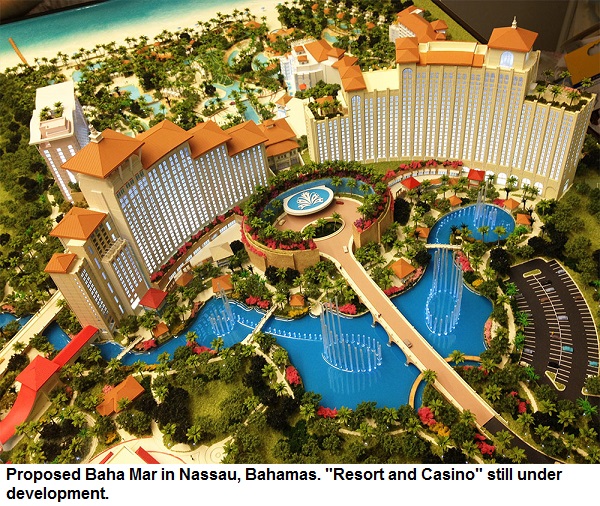
Go Lean Commentary

Numbers don’t lie!

Especially if those numbers are the balance statements of bank accounts. Either one has the money, or they don’t.

Increasingly in the casino/gaming industries, the money is not there.

Why?

Despite the fact that the “house” always wins, the number of gamblers have declined! It is what it is!

  • 87% of Baby-Boomers gamble when visiting Las Vegas
  • 78% of Generation X-ers gamble when visiting Las Vegas
  • 63% of Millenials gamble when visiting Las Vegas

The following news article/VIDEO depicts that change is afoot. There are less and less gamblers participating in “games of chance” at casinos. These establishments can complain or change along with the demographics. This VIDEO portrays an attempt for Las Vegas casinos to change, to adapt to the indisputable societal factors. See VIDEO here:

VIDEO Title: Vegas casinos place bets on video game gambling http://www.cbsnews.com/videos/vegas-casinos-place-bets-on-video-game-gambling/

October 7, 2015 – Casino revenue on the Las Vegas strip dropped nearly 5 percent in August [2015]. That’s the third straight month of declines. This comes as Sin City tries to lure the next generation of gamblers. While slot machines are still one of the world’s best moneymakers, casinos are having a tough time getting young people to sit down at them. Ben Tracy reports on what casinos have planned to appeal to millennials. (VIDEO plays best in Internet Explorer).
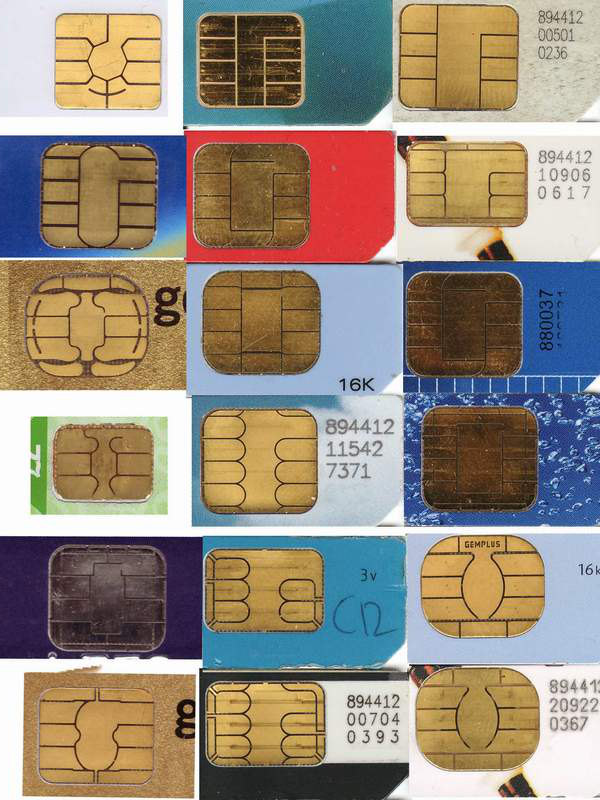
Vegas Casino 1

Vegas Casino 2This is a very important issue for Caribbean consideration, as casino gambling has often been associated with Caribbean resorts. Even now there are new casino projects under development. In a previous blog, this commentary posited that “doubling down” the bet on casinos was a flawed strategy for the region’s governments and business institutions.

Alas, there is the potential for a lot of money to still be made in the casino/gaming industries if only the product can evolve to keep pace with the changing demographics of the marketplace.

Enter “technology-based” games.

This article aligns with the book Go Lean…Caribbean, which calls for the elevation of Caribbean economics and an embrace of more technology. This book serves as a roadmap for the introduction and implementation of the technocratic Caribbean Union Trade Federation (CU) to better manage change and emerging technology in the Caribbean region. This is a big deal for the Caribbean, as technology (internet and communications technologies) is being pitched in the Go Lean roadmap as an equalizing element for the Caribbean region in competition with the rest of the world. This hope was identified early in the Go Lean book (Page14) in the following pronouncements in the Declaration of Interdependence:

xxvii. Whereas the region has endured a spectator status during the Industrial Revolution, we cannot stand on the sidelines of this new economy, the Information Revolution. Rather, the Federation must embrace all the tenets of Internet Communications Technology (ICT) to serve as an equalizing element in competition with the rest of the world. The Federation must bridge the digital divide and promote the community ethos that research/development is valuable and must be promoted and incentivized for adoption.

The Go Lean book posits that there is a need to re-boot and optimize the engines of commerce so as to make the Caribbean a better place to live, work and play. The tourism product, the mainstay of Caribbean economy, used to depend on certain amenities (i.e. Golf) that have now come under attack by the social and demographic changes depicted in the foregoing VIDEO. It so appears that the future for Caribbean commerce in the hospitality and gaming industries will not only depend on factors like “sun, sand, surf and smiles”, but now also on “systems”.

This is a changed world and changed marketplace. Likewise, our communities must change to keep pace … and get ahead!

The Go Lean book also addresses the realities of gambling, in that it advocates the adoption of a regional lottery for all 30 member-states of the Caribbean.

The Go Lean/CU roadmap seeks to elevate all of Caribbean society, including the “games people play” to remain competitive and consequential in the future. This is a matter of technology, education, marketing, planning, and econometrics. This is the heavy-lifting of shepherding a progressive region of 42 million people, 10 million Diaspora, 80 million tourists, and 4 language groups across 30 member-states. The CU’s charter is to effectuate progress in this region with these 3 prime directives:

  • Optimization of the economic engines in order to grow the regional economy to $800 Billion and create 2.2 million new jobs.
  • Establishment of a security apparatus to protect the resultant economic engines and marshal against economic crimes.
  • Improve Caribbean governance to support these engines.

The foregoing article-VIDEO helps us to appreciate that there will be sustained economic activity in the gambling-gaming industries; a tourism industry mainstay in the Caribbean. This means future jobs. The quest to create the jobs (and work force) for the near-future is paramount in the Go Lean roadmap. Early in the book, the responsibility to monitor, manage, and plan for new jobs were identified as an important function for the CU with this pronouncement in the same Declaration of Interdependence (Pages 13):

xxvi. Whereas the Caribbean region must have new jobs to empower the engines of the economy and create the income sources for prosperity, and encourage the next generation to forge their dreams right at home, the Federation must therefore foster the development of new industries… In addition, the Federation must invigorate the enterprises related to existing industries like tourism… – impacting the region with more jobs.

The Caribbean must contend with the challenges of demographic change. There are 3 kinds of people in the world:

  • Those who make things happen
  • Those who watch things happen
  • Those who wonder “what happened?”

Whereas, this latter description may have been our disposition in the past, we can no longer afford this status. Our situation is quite dire now, as we have lost vast numbers of our populations to societal abandonment because as a community, we have failed to keep pace of change. Our society is now in desperate need of reform and reboot to insulate from many demographic changes. On the one hand, we must diversify our economy and avail other high job-multiplier industries, away from tourism, but on the other hand, we must double down in the tourism product, as the economic principles of “supply and demand” just cannot be ignored. (During the winter months, our Caribbean destinations are the “best addresses on the planet”).

The Go Lean… Caribbean book details this quandary. It qualifies the community ethos to adopt to diversify our economy and proactively mitigate the dire effects of the changed demographic landscape; plus the executions of the following strategies, tactics, implementations and advocacies:

Community Ethos – Economic Principle – People Respond to Incentives Page 21
Community Ethos – Economic Principle – Consequences of Choices Lie in   the Future Page 21
Community Ethos – Job   Multiplier Page 22
Community Ethos – Lean Operations Page 24
Community Ethos – Return on Investments (ROI) Page 24
Community Ethos – Ways to Impact the Future Page 26
Community Ethos – Ways to Foster Genius – STEM Career Options Page 27
Community Ethos – Ways to Help Entrepreneurship – Incubators Role Page 28
Community Ethos – Ways to Promote Intellectual Property Page 29
Community Ethos – Ways to Impact Research & Development Page 30
Community Ethos – Ways to Bridge the   Digital Divide Page 31
Community Ethos – Ways to Impact the Greater Good Page 37
Strategy – Vision – Best Address on the Planet Page 45
Strategy – Vision – Integrate Region in a Single Market Page 45
Strategy – Mission – Embrace the Advances of Technology & Incentivize Participation Page 46
Tactical – Fostering a Technocracy Page 64
Tactical – Tactics to Forge an $800 Billion Economy Page 67
Tactical – Separation of Powers Page 71
Implementation – Ways to Deliver Page 109
Planning – Ways to Make the Caribbean Better Page 131
Planning – Lessons Learned from 2008 Page 136
Advocacy – Ways to Grow the Economy Page 151
Advocacy – Ways to Create Jobs Page 152
Advocacy – Ways to Enhance Tourism Page 190
Advocacy – Ways to Impact Events Page 191
Advocacy – Ways to Foster Technology Page 197
Advocacy – Ways to Foster e-Commerce Page 198
Advocacy – Ways to Impact the Lottery – Regional Caribbean Option Page 213

This commentary is not advocating betting on casino gambling, (this practice is considered a vice), but rather betting on technology.

The Go Lean/CU roadmap calls for fostering industrial developments to aid tourism, incorporating best practices and quality assurances to deliver the best experience in the world. This must also include creating technology products to make gaming more appealing for the millennial generations. The realities of technology is that these developments can be produced anywhere in the world. So why not here? We have a lot at stake already.

If we successfully incubate a gaming technology industry here at home, we would create jobs right here at home. If, on the other hand, if we incubate gaming technology and the world is not receptive to our creations, we would have still created a workforce with very marketable skills, looking for opportunities to ply their trade. This is win-win! The Caribbean “house” will only win.

This commentary has previously related details of the changing macro-economic factors that affect where and how jobs are created. The following are samples of earlier Go Lean blogs:

https://goleancaribbean.com/blog/?p=6089 Where the Jobs Are – Futility of Minimum Wage
https://goleancaribbean.com/blog/?p=4240 Immigration Policy Exacerbates Worker Productivity Crisis
https://goleancaribbean.com/blog/?p=3694 Jamaica-Canada employment program pumps millions into local economy
https://goleancaribbean.com/blog/?p=3050 Obama’s immigration tweaks leave Big Tech wanting more
https://goleancaribbean.com/blog/?p=2857 Where the Jobs Are – Entrepreneurism in Junk
https://goleancaribbean.com/blog/?p=2800 Where the Jobs Are Not – The Geography of Joblessness
https://goleancaribbean.com/blog/?p=2126 Where the Jobs Are – Computers Reshaping Global Job Market
https://goleancaribbean.com/blog/?p=2003 Where the Jobs Are – One Scenario (Shipbreaking)
https://goleancaribbean.com/blog/?p=1698 Where the Jobs Are – STEM Jobs Are Filling Slowly
https://goleancaribbean.com/blog/?p=1596 Book Review: ‘Prosper Where You Are Planted’

According to the foregoing VIDEO, there is new hope for casino gambling, based on technology. For a community, this is not a gamble; this is a sure bet; by embracing technology, the Caribbean region will surely win. This position is based on some reliable economic principles, the principles of money multipliers and job multipliers:

Casinos can create money “from thin air”, getting cash while giving nothing in return (Page 22). As for job multipliers, this principle explains how certain industries are better than others for generating multiple indirect jobs down the line for each direct job on a company’s payroll. (.i.e. The automotive manufacturing industry was a choice selection with a job-multiplier rate of 11 – Page 260).

So this advocacy to embrace gaming technology is more than a bet; it’s a sure formula for success. This is a “play” that the Caribbean must make and cannot lose. The “house” always wins.

The Caribbean can be the best destination on the planet, a better place to live, work and play. 🙂

Download the free e-book of Go Lean … Caribbean – now!

Share this post:
, , , ,
[Top]

New Security Chip in Credit Cards Unveiled

Go Lean Commentary

CU Blog - New Security Chip in Credit Cards Unveiled - Photo 1Big changes are coming to credit cards, as of today, Thursday, October 1, 2015.

The credit card industry is advancing, moving forward. The Caribbean should likewise be advancing, moving forward.

A previous blog-commentary demonstrated that the region’s banks are ready to accept electronic payment transactions, that their deployment of credit card terminals allow the introduction of the Caribbean Dollar (C$) as a regional currency. Well now, those terminals need to be upgraded …

… or the merchants will suffer the resultant risks.

CU Blog - New Security Chip in Credit Cards Unveiled - Photo 2The world has already moved forward from the standard of magnetic stripe cards. The present is now smart cards…or no card at all; (payment apps on Google’s Android and Apple’s iPhone devices proliferate). The future of the credit, debit and payment card is more than a card, it’s a “computer science laboratory” in a pocket or purse!

Yes, payment systems in the Caribbean region must be ready for this new world of electronic commerce.

Getting the region ready was the mission of the book Go Lean … Caribbean, a roadmap for the introduction and implementation of the Caribbean Union Trade Federation (CU) and the Caribbean Central Bank (CCB). This Go Lean roadmap depicts these entities as hallmarks of technocratic efficiency; agile to not just keep pace of technology and market changes but also to drive change as well. This ability is necessary for new payment systems, new cards and new settlement schemes. The Go Lean roadmap calls for a regional currency for the Caribbean Single Market, the Caribbean Dollar (C$), to be used primarily as an electronic currency. These schemes will impact the growth of the regional economy in both the domestic and tourist markets. Consider this one CU scheme to incentivize more spending among cruise line passengers:

CU Blog - New Security Chip in Credit Cards Unveiled - Photo 3The cruise industry needs the Caribbean more than the Caribbean needs the industry. But the cruise lines have embedded rules/regulations designed to maximize their revenues at the expense of the port-side establishments. The CU solution is to deploy a scheme for smartcards (or smart-phone applications) that function on the ships and at the port cities. This scheme will also employ NFC technology – (Near Field Communications; defined fully at Page 192 – so as to glean the additional security benefits of shielding private financial data of the guest and passengers.

This is an example of an electronic payment system facilitating more commerce (e-Commerce). So the CCB will settle all C$ electronic transactions – cashless or accounting currency – in a MasterCard-Visa-style interchange / clearinghouse system.

As of October 1, 2015 bankcards must possess a smartchip, or assume the risk of fraud transactions; see VIDEO below. The CU/CCB roadmap anticipated smartchips from the outset of the Go Lean book, as this covers more than just commerce, but addresses security as well. Commerce, security and (bank) governance – these are all societal engines that must be optimized for societal progress. In  fact, the Go Lean roadmap has these 3 prime directives:

  • Optimization of the economic engines in order to grow the regional economy to $800 Billion & create 2.2 million new jobs.
  • Establishment of a security apparatus to protect the resultant economic engines.
  • Improvement of Caribbean governance to support these engines.

So the electronic payments schemes being considered by the rest of the world in the following article, are already envisioned for deployment in the Caribbean region:

VIDEO – New Security Chip in Credit Cards Unveiled – http://abcnews.go.com/WNT/video/security-chip-credit-cards-unveiled-34114798

Posted September 28, 2015 – New law required each card to be outfitted with a credit card chip that makes it harder to steal personal information.

The benefits of these technologies, as related in the foregoing VIDEO, cannot be ignored for their security features. Previously this commentary explored the issues associate with cyber-security and data breaches. With tourism as the primary economic driver, the Caribbean region cannot invite millions of visitors to our homeland and then ignore their need for protection; the kind of protection that has become standard in this new world of heightened information security.

The Go Lean roadmap calls for the CU to regulate the region’s Communications and Media affairs – federal Department of Commerce – under a separation-of-power mandate with the member-states. This authority must be super-national and have purview for cross-border environments.

With the CCB taking the lead for this deployment, the effort is not meant to be technical, but rather economic. The greatest benefit of deploying these electronic payment scheme is the acceleration of M1 in the regional economy; this is the measurement of currency/money in circulation (M0) plus overnight bank deposits. As depicted in the Go Lean book, and subsequent blog-commentaries, M1 increases allow central banks to create money “from thin-air”; referring to the money multiplier.

The Caribbean region needs this benefit. The more money in the system, the more liquidity for investment and industrial expansion opportunities. Plus, the nullifying effects on Black Market spurns more benefits.

The Go Lean book posits that to adapt and thrive in the new global marketplace there must be more strenuous management and technocratic oversight of the region’s currencies, guests-tourists-ship-passenger payment cards and cyber security. This is the charge – economics, security and governance – of the Go Lean roadmap, opening with these pronouncements; Declaration of Interdependence (Page 13 and 14):

xxiv. Whereas a free market economy can be induced and spurred for continuous progress, the Federation must install the controls to better manage aspects of the economy: jobs, inflation, savings rate, investments and other economic principles. Thereby attracting direct foreign investment because of the stability and vibrancy of our economy.

xxv.  Whereas the legacy of international democracies had been imperiled due to a global financial crisis, the structure of the Federation must allow for financial stability and assurance of the Federation’s institutions. To mandate the economic vibrancy of the region, monetary and fiscal controls and policies must be incorporated as proactive and reactive measures. These measures must address threats against the financial integrity of the Federation and of the member-states.

xxvii. Whereas the region has endured a spectator status during the Industrial Revolution, we cannot stand on the sidelines of this new economy, the Information Revolution. Rather, the Federation must embrace all the tenets of Internet Communications Technology (ICT) to serve as an equalizing element in competition with the rest of the world. The Federation must bridge the digital divide and promote the community ethos that research/development is valuable and must be promoted and incentivized for adoption.

The Go Lean book details a series of community ethos, strategies, tactics, implementations and advocacies to foster the proper controls for electronic/mobile payments in the Caribbean region:

Community Ethos – Economic Principles Page 21
Community Ethos – Money Multiplier Principle Page 22
Community Ethos – Security Principles – Privacy versus Public Protection Page 23
Community Ethos – Governing Principles – Lean Operations Page 24
Community Ethos – Governing Principles – Cooperatives Page 25
Community Ethos – Promote Intellectual Property Page 29
Community Ethos – Ways to Bridge the Digital Divide Page 31
Community Ethos – Ways to Improve Sharing Page 25
Strategy – Mission – Fortify the monetary needs through a Currency Union Page 45
Tactical – Separation of Powers – Central Banking Page 73
Tactical – Separation of Powers – Department of Commerce – Communications and Media Authority Page 79
Implementation – Assemble Central Bank Cooperative Page 96
Implementation – Assemble Caribbean Regional Regulatory Organs – like CTU Page 96
Implementation – Ways to Deliver Page 109
Planning – 10 Big Ideas – #2: Currency Union / Single Currency Page 127
Anecdote – Caribbean Currencies Page 149
Advocacy – Ways to Grow the Economy Page 151
Advocacy – Ways to Create Jobs Page 152
Advocacy – Ways to Mitigate Black Markets Page 165
Advocacy – Ways to Foster Cooperatives Page 176
Advocacy – Ways to Enhance Tourism Page 190
Advocacy – Ways to Impact Cruise Tourism – Smartcard scheme Page 193
Advocacy – Ways to Foster Technology Page 197
Advocacy – Ways to Foster e-Commerce Page 198
Advocacy – Reforms for Banking Regulations – Central Banking Efficiencies Page 199
Advocacy – Ways   to Impact Main Street – Facilitating e-Commerce Page 201
Appendix – Assembling the Caribbean Telecommunications Union (CTU) Page 256

The points of effective, technocratic banking/currency stewardship and dynamic change in the mobile communications space were further elaborated upon in these previous blog/commentaries:

https://goleancaribbean.com/blog/?p=5668 Move over Mastercard/Visa
https://goleancaribbean.com/blog/?p=4425 Cash, Credit or iPhone …
https://goleancaribbean.com/blog/?p=3889 RBC EZPay – Ready for Change
https://goleancaribbean.com/blog/?p=3881 The Need for Regional Cooperation to Up Cyber-Security
https://goleancaribbean.com/blog/?p=3617 Bahamas roll-out of VAT leading more to Black Markets
https://goleancaribbean.com/blog/?p=2074 MetroCard – Model for the Caribbean Dollar
https://goleancaribbean.com/blog/?p=1350 PayPal expands payment services to 10 markets
https://goleancaribbean.com/blog/?p=906 Bitcoin virtual currency needs regulatory framework to change image
https://goleancaribbean.com/blog/?p=476 CARICOM urged on ICT, e-Commerce and e-Payments

CU Blog - New Security Chip in Credit Cards Unveiled - Photo 4The Caribbean need to not play catch-up with this new smartchip/smartcard requirement. We need to adjust and adapt to the changing world.

This is no longer the future. This is here and now.

This is good! The benefits of this new requirements are too enticing to resist this change: incentivizing more cruise-tourism spending, fostering more e-Commerce, enhancing security, increasing regional M1, mitigating Black Markets, regional oversight of this technology, growing the economy, creating jobs and optimizing governance.

Now is the time for all stakeholders of the Caribbean, (residents, visitors, merchants, vendors, bankers, and governing institutions), to lean-in for the empowerments described in the book Go Lean … Caribbean. This change can help to make the Caribbean a better place to live, work and play. 🙂

Download the book Go Lean … Caribbean – now!

Share this post:
, , , , ,
[Top]