Category: Industries

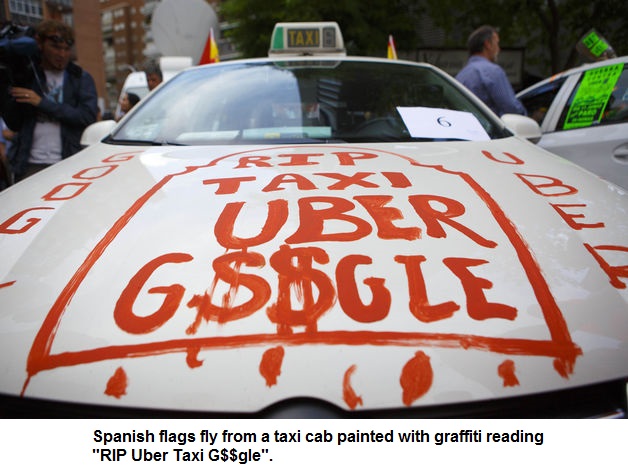
Uber Demonstrations Snarl Traffic from London to Berlin

Go Lean Commentary

Uber 1Old World [economy] meets New World [economy].

Taxi cabs go back to the days of horses and carriages; yet the industry has slowly adapted to all the evolutionary changes in technology and modernization. Today, in some jurisdictions, a taxi cab is a moving economic engine: a passenger sitting in the back gets access to streaming video, online browsing and advertising/booking options. While in the front, the driver gets access to advanced dispatch & logistical tools, security surveillance, credit card processing, traffic alerts, and more.

But the challenge with technology, for taxi cabs and many other areas of life, is one-step forward, two-steps backwards.

According to the below article, there is a new technological innovation that has rankled cabbies in the US, Europe and other global cities – 128 in total. This is the practice of car-sharing. The company featured in the foregoing article and VIDEO is Uber, but it could easily be any of the other entities in this emerging industry (ZipCar, Getaround, RelayRides, etc.):

By: Amy Thomson, Cornelius Rahn & Angelina Rascouet

Uber Technologies Inc., the car-sharing service that’s rankling cabbies across the U.S., is fighting its biggest protest from European drivers who say the smartphone application threatens their livelihoods.

Traffic snarled in cities from London to Madrid and Berlin to Paris as strikes and gatherings by more than 30,000 taxi and limo drivers blocked tourist centers and shopping districts. They are asking regulators to apply tougher rules on San Francisco-based Uber, whose software allows customers to order a ride from drivers who don’t need licenses that can cost 200,000 euros ($270,000) apiece.

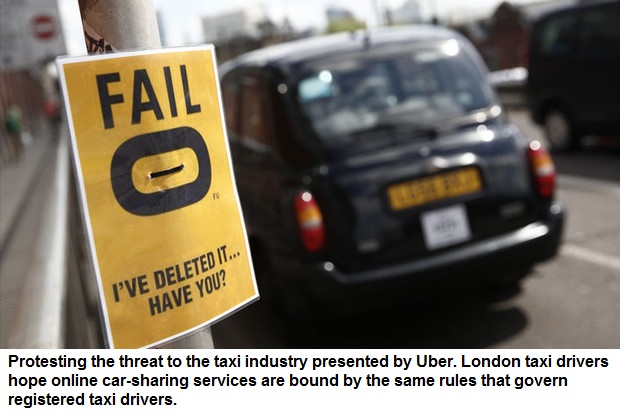
The biggest city-center protest was in London, where black-cab drivers were joined by private car services and trainees to protest what they saw as the government’s failure to hold Uber to the same standards as other car services and taxis. While similar demonstrations this year have led to smashed windshields and traffic chaos in Paris, a united front in Europe highlights the challenges for Uber’s expansion.

“A strike won’t work,” European Commission Vice President Neelie Kroes said in a statement today. “What we need is real dialogue where we talk about these disruptions caused by technology.”

A funding round last week values the company at $17 billion, almost five times the figure in an earlier round. Out of some 128 cities it serves, 20 are in Europe, including Manchester, Lyon and Zurich.

Tourist Hubs

In London, thousands of black cabs and private hire cars descended on the tourist hubs of Trafalgar Square and Parliament Square, blocking some of the city’s busiest streets. Scooter and motorbike riders studying for the cab-driver exam joined in, honking their horns as the police tried to regulate traffic.

London taxi drivers have said that the app’s fare calculator amounts to a meter, which aren’t allowed in hired cars that aren’t registered taxis. Last month, TFL asked the High Court to rule on whether the fare system was legal.

“We have to have a license to own a cab, we have to have a driver’s license, a cab driver’s license,” said Mark Haslam, a 58-year-old black-cab driver, who took part in the protest. “For some reason they seem to be outside the law.”

Another driver, John Maloney, 64, was standing on top of a black cab on the corner of Whitehall and Trafalgar Square with a sign saying “enforce the law.” He was dressed as a judge, wearing a white wig and black cape.

Arrest Warning

No major accidents or clashes were reported. The London police, saying organizers hadn’t asked for proper permission to assemble, had threatened to arrest protesters if they arrived before 2 p.m. and didn’t leave by 3 p.m.

London organizers had called on drivers to join the demonstrations with posters mimicking a World War I recruiting campaign, featuring military commander Horatio Kitchener and his characteristic handlebar mustache.

In Paris, drivers blocked the Charles de Gaulle and Orly airports this morning and prevented private-car services from picking up passengers, said Nadine Annet, vice president at the FNAT taxi association. Cabbies also slowed down traffic the A1 highway that circles Paris, leading to a 200-kilometer (120-mile) jam, local TV reported. The vast majority of France’s 55,000 professional taxis and Paris’s 15,000 cabs are on strike today, Annet said.

Kader Djielouli, a 44-year-old protester who’s been driving taxis in Paris for 15 years, said he’s lost 40 percent of his revenue since 2009 because of services like Uber.

Paris, Madrid

Private-car services “are taxis without being taxis,” he said at a cab stand near the Opera metro station in Paris. “We are against them. There need to be the same rules for all.”

In Madrid, thousands of drivers marched to block the Paseo de la Castellana, one of the city’s main avenues, as police escorted the demonstration by cars, a helicopter and officers on foot. Protesters chanted insults targeted at Uber and chased taxis that weren’t taking part in the rally.

In Berlin, more than 500 taxis lined up in columns of 20 in the plaza stretching out from the Olympic stadium. Four youth chanting “friends of Uber” were escorted away by security under shouts of a few enraged drivers.

Berlin cabs earlier packed airports and the upscale Kurfuerstendamm shopping district. At the Tegel airport, one of the three starting locations for the Berlin demonstration, taxi driver Kubilay Sarikaya said this morning he was skeptical about the protests. While he’d been working since 3 a.m., he said he’ll go along if his friends do.

“While we are demonstrating, the other guys are hauling people around,” said Sarikaya, 33. “There have to be other ways. Ultimately I think folks know that they can always count on the good old cab to get them where they need to be.”

Berlin, Milan

Uber 2In Milan, no taxi was to be seen after about 5,000 drivers this morning went on a strike that is set to last until 10 p.m.

Uber took the demonstrations as an opportunity to promote its service, saying in a statement its teams across Europe will keep the cities moving today.

“While the taxi protests may seek to bring Europe to a standstill, we’ll be on hand to get our riders from A to B.”

Uber also chose this morning to open its service in London to black-cab drivers, describing its 5 percent commission as the lowest of all booking systems in the city. Uber has thus far offered luxury cars and cheaper rides in London, while excluding licensed black cabs. Later in the day, Uber said signups in London to its service today were 850 percent higher than last Wednesday, declining to give the actual number.

Internet Backlash

The protests have a deeper significance beyond the taxi industry. They underscore the growing backlash against the likes of room-booking service Airbnb Inc. and video-streaming provider Aereo Inc. as they clash with traditional industries arguing the competitors should be subject to the same regulations.

“European cities have tended to regulate taxi drivers much more than the U.S.,” said Charles Lichfield, an analyst at Eurasia Group in London. “I do think the protests have a better chance of succeeding.”

In the U.S., local taxi groups have also lobbied against Uber and similar services in cities such as Seattle. In Europe, regulators and courts are struggling with the disconnect between the desire to protect a regulated industry and the need for more technological innovation.

“For years the government has slapped new fees onto taxis and imposed more constraints — everything from car colors to, now, GPS tracking,” FNAT’s Annet said. “The least we’re asking for is that our competitors get the same tough love.”

French Court

Following complaints by Paris cab drivers, France this year imposed a rule on private services, requiring a minimum 15-minute wait between the time a car is booked and the passenger is picked up. The decree was later struck down by the country’s constitutional court.

Hamburg’s economy ministry on June 6 issued an order preventing Wundercar, a German peer of Uber, from operating in the city, saying that transporting people for profit and without a license is against the law. Berlin administrators are probing a similar move against Uber, spokeswoman Petra Rohland said. A Berlin court banned the Uber Black chauffeur service in April, although the injunction hasn’t been enforced.

The Spanish region of Catalonia said yesterday it will ask Uber — which is available in Barcelona — to immediately stop its activities in the area. The regional government is also telling security forces to increase control and detection of illegal taxi services.

European Regulation

“Consumers want to have these services. I’ve personally never sat in a run-down Uber car, but I’ve definitely experienced a lot of run-down taxis,” said Arndt Ellinghorst, head of automotive research at ISI Group in London. “It is a bit scary how protectionist Europe can be.”

Uber raised $1.2 billion in new financing led by Fidelity Investments last week, valuing the company at about $17 billion, before added investments. The company had earlier raised $307.5 million from investors including Google Ventures, TPG Capital and Menlo Ventures.

The company’s assets may be worth just $5.9 billion, Aswath Damodaran, a finance professor at New York University, wrote on his blog this week. He said the figure was based on optimistic assumptions about the taxi industry’s growth and Uber’s market share and profitability.

Lower Prices

Chief Executive Officer Travis Kalanick — who started Uber in 2009 after he and partner Garrett Camp couldn’t find a cab in Paris — has pushed the company into 37 countries. He said the low prices and ease of use that their drivers can offer will lead to a base of support from consumers that regulators won’t be able to ignore.

Uber 3A typical journey from Finsbury Square, near London’s financial district, and Paddington Station takes between 20 and 30 minutes by car to travel approximately four miles. Uber estimates that that journey would cost between 14 pounds ($24) and 16 pounds. London’s transportation authority estimates that the trip could cost between 15 pounds and 22 pounds.

The German market for taxis and rental cars was 4.3 billion euros last year, said Michael Mueller, the president of the German Association of Taxis and Rental Cars. It would shrink by 1 billion euros at the price levels Uber advocates, he said.

Job Creation

Uber said in its blog it’s responsible for 20,000 new jobs per month. The median income for drivers using the UberX platform, Uber’s low-cost service, is $90,000 per year in New York and more than $74,000 in San Francisco, the company said.

Uber advertises itself to prospective drivers as a way to start your own business, drawing users who aren’t professional chauffeurs. That’s different from apps such as Hailo, which recruit from the industry. Uber customers can tap the app on their smartphone and see the locations of taxis in real time, pay via a stored credit card and rate their driver.

“Citizens of these cities are getting around the cities much more cheaply,” Kalanick told Bloomberg TV in an interview this week. “How does a regulator or city official take that away from the population? Say that inexpensive transportation that’s high quality, you shouldn’t have?”

Bloomberg Business News Service (Posted 06/11/2014; retrieved 06/17/2014) –http://www.bloomberg.com/news/2014-06-10/uber-protests-spread-across-europe-as-taxi-app-backlash-grows.html

The book Go Lean…Caribbean anticipates the compelling issues associated with taxi cabs in the emerging new economy. The book serves as a roadmap for the introduction and implementation of the technocratic Caribbean Union Trade Federation (CU). This effort calls for the elevation of the Taxi & Limousine Commission to the regional/CU level. The roadmap posits that many issues and challenges for this industry can only be managed with feasible economies-of-scale. The CU market size of 42 million will allow for the leverage to consolidate, collaborate and confederate the organizational dynamics to tackle these issues.

The book presents solutions, but asserts that before the new strategies, tactics and implementations can be deployed, the affected communities must first embrace a progressive community ethos. The book defines this “community ethos” as the fundamental character or spirit of a culture; the underlying sentiment that informs the beliefs, customs, or practices of society; dominant assumptions of a people or period.

Progress cannot be accomplished by simply picketing at the airport that a new technological advance is impacting the taxi industry. Technological change can be likened to a charging bull; if someone gets in the way, they can be run over!

The foregoing news article, about car-sharing company Uber provides a glimpse of the inner-workings of these “business models” for these two industries:

  • Regional Taxi Administration – The Go Lean roadmap defines that taxis are the frontline of Caribbean hospitality; there is the need to compel the stakeholders to adapt  innovative products & services that impact the passenger and driver experience alike, such as mobile apps (Page 25).
  • Mobile Applications – The Go Lean roadmap defines the mastery of time-&-space as strategic for succeeding in mobile apps development and deployment for the region (Page 35). If products like Uber master mobile apps, then competitors, including old-guard taxi-cabs should also be able to master this field. Already apps like GrabTaxi have excelled at providing taxi cabs with viable solutions

The Go Lean book stresses that the current community ethos must change and the best way to motivate people to adapt their values and priorities is in response to a crisis. The roadmap recognizes this fact with the pronouncement that the Caribbean is in crisis, and that “a crisis is a terrible thing to waste”. The region is devastated from external factors: global economic recession, globalization and rapid technological advances. The book then asserts that to adapt, there must be a new internal optimization of the region’s strengths. This is defined in Verse XXVII (Page 14) of the Declaration of Interdependence:

Whereas the region has endured a spectator status during the Industrial Revolution, we cannot stand on the sidelines of this new economy, the Information Revolution. Rather, the Federation must embrace all the tenets of Internet Communications Technology (ICT) to serve as an equalizing element in competition with the rest of the world. The Federation must bridge the digital divide and promote the community ethos that research/development is valuable and must be promoted and incentivized for adoption.

This subject of taxi cab administration and promotion has been previously covered in these Go Lean blogs, highlighted here in the following samples:

a.       https://goleancaribbean.com/blog/?p=486 – Incubator firm (Temasek) backs Southeast Asia cab booking app GrabTaxi
b.      https://goleancaribbean.com/blog/?p=214 – Entrepreneur battling Least Common Denominator (LCD) Ethos

In line with the foregoing article, the Go Lean book details some applicable community ethos, and provides a roadmap to better foster these qualities and their resulting benefits:

  • Help for Entrepreneurship (Page 28)
  • Promotion of Intellectual Property (Page 29)
  • Impacting Research & Developments (Page 30)
  • Bridging the Digital Divide (Page 31)
  • Improve Sharing (Page 35)

The roadmap posits that the CU will incubate a Mobile Apps industry, forge entrepreneurial incentives and facilitate the infrastructure upgrades so that innovations can thrive. As related in the foregoing article, these efforts can mitigate against competitive/alternative pressures.

The world has changed!

Yet, still, success is within reach. We can, and must, make the the Caribbean a better place to live, work and play.


Share this post:
, , , , ,

Blog # 100 – College World Series Time

Go Lean Commentary

The sports world is all abuzz this weekend: World Cup in Brazil, NBA Finals, US Open Golf tournament, and the NCAA College World Series (CWS) baseball championship tournament.

History happens here!

History happens here!

This last event, CWS, is the subject of this blog, a milestone, the 100th in the series promoting the book Go Lean…Caribbean. This book serves as a roadmap for the introduction and implementation of the technocratic Caribbean Union Trade Federation (CU). While the CU is NOT a sports promotion entity, it does present an important role for sports in the vision to make the Caribbean a better place to live, work and play. As an expression of this vision Page 81 states:

“a mission of the CU is to forge industries and economic drivers around the individual and group activities of sports and culture”.

The Go Lean vision is a confederation of the 30 member-states of the Caribbean forming a proxy organization to do the heavy-lighting of building, funding and maintaining sports venues. The strategy is for the CU to be the landlord, and super-regional regulatory agency, for sports leagues, federations and associations (amateur, collegiate, and professional). This strategy relates to the College World Series model. The CWS tournament opened this weekend (June 14/15) in Omaha, Nebraska USA; this is the 65th straight tournament in the same city. This is an anomaly for American sports, as every year most big sporting events (Super Bowl, US Open Golf, NCAA Final Four, BCS Football Championship) rotate/move to different cities. Consider 2014 thus far:

Sport 2014 Host 2013 Host 2012 Host
Super Bowl New York City New Orleans, Louisiana Indianapolis, Indiana
US Open Golf Pinehurst, North Carolina Ardmore (Philadelphia), Pennsylvania San Francisco, California
NCAA Basketball Final Four Dallas, Texas Atlanta, Georgia New Orleans, Louisiana
BCS College Football Pasadena, California Miami, Florida New Orleans, Louisiana

But since 1950, the 12-day College World Series, college baseball championship, has been held in the City of Omaha. It was held at Rosenblatt Stadium from 1950 through 2010; starting in 2011, it has been moved to the new ultra-modern TD Ameritrade Park downtown. The 2013 attendance of 341,483 belies the economic benefits.

CWS Photo 2

CWS Photo 3

These facts reinforce the marketing tag line of CWS Omaha, Inc., (a Nebraska technocracy):

History Happens Here.

The prime directives of the CU/Go Lean roadmap are described with these 3 statements:

  • Optimization of the economic engines in order to grow the regional economy to $800 Billion & create 2.2 million new jobs.
  • Establishment of a security apparatus to protect the resultant economic engines.
  • Improve Caribbean governance to support these engines.

This roadmap commences with the recognition that genius qualifiers can be found in many fields of endeavor, including sports. The roadmap pronounces the need for the region to confederate in order to invest in the facilitations for the Caribbean sports genius to soar. These pronouncements are made in the Declaration of Interdependence, (Pages 13 & 14) as follows:

xxi. Whereas the preparation of our labor force can foster opportunities and dictate economic progress for current and future generations, the Federation must ensure that educational and job training opportunities are fully optimized for all residents of all member-states, with no partiality towards any gender or ethnic group. The Federation must recognize and facilitate excellence in many different fields of endeavor, including … sports. This responsibility should be executed without incurring the risks of further human flight, as has been the past history.

xxii. Whereas sports have been a source of great pride for the Caribbean region, the economic returns from these ventures have not been evenly distributed as in other societies. The Federation must therefore facilitate the eco-systems and vertical industries of sports as a business, recreation, national pastime and even sports tourism – modeling the Olympics.

All in all, the Go Lean book and accompanying blogs declare that the Caribbean needs to learn lessons from CWS-Omaha and other sporting venues/administrations. And thus this subject of the “business of sports” is a familiar topic for Go Lean blogs. The previous blogs as follows, and this one, constitutes 8 of the first 100 entries:

a. https://goleancaribbean.com/blog/?p=1214 The Art & Science of Temporary Stadiums – No White Elephants
b. https://goleancaribbean.com/blog/?p=1148 Sports Bubble – Franchise values in basketball
c. https://goleancaribbean.com/blog/?p=1020 Sports Revolutionary: Advocate Jeffrey Webb
d. https://goleancaribbean.com/blog/?p=498 Book Review: ‘The Sports Gene’
e. https://goleancaribbean.com/blog/?p=334 Bahamians Make Presence Felt In Libyan League
f. https://goleancaribbean.com/blog/?p=318 Collegiate Sports in the Caribbean
g. https://goleancaribbean.com/blog/?p=60 Could the Caribbean Host the Olympic Games?

This Go Lean roadmap is committed to availing the economic opportunities of all the Caribbean athletic abilities. The book details these series of community ethos, strategies, tactics, implementations and advocacies designed to deliver regional solutions:

Community Ethos – Return on Investments Page 24
Community Ethos – Ways to Foster Genius Page 27
Community Ethos – Ways to Impact the Greater Good Page 37
Strategic – Staffing – Sporting Events at Fairgrounds Page 55
Tactical – Fostering a Technocracy Page 64
Tactical – Separation of Powers – Sports & Culture Administration Page 81
Tactical – Separation of Powers – Fairgrounds Administration Page 83
Implementation – Steps to Implement   Self-Governing Entities Page 105
Implementation – Ways to Deliver Page 109
Planning – Ways to Make the Caribbean   Better Page 131
Advocacy – Ways to Grow the Economy Page 151
Advocacy – Ways to Improve Local Government – Parks & Recreation Page 169
Advocacy – Ways to Impact Events Page 191
Advocacy – Ways to Promote Fairgrounds Page 192
Advocacy – Ways to Improve Sports Page 229
Advocacy – Ways to Impact Urban Living – Sports Leagues Page 234

The Go Lean roadmap encourages solid business plans to develop sports stadia and arenas at CU-owned fairgrounds. Where appropriate, there should be the deployment of temporary bleacher seats/grandstands and structures (think: golf tournaments and Beach Volleyball). There is an obvious economic impact from deployments of Sports Tourism in areas like jobs, ticket sales, hotel bookings and other community spin-off spending.

The following 8 teams in this year’s tournament are indicative of the need for hospitality as they are from cities all around the country:

UC Irvine Texas Tech
Texas TCU
Louisville Ole Miss
Vanderbilt Virginia

There are obvious community benefits from this business model. In fact, the Go Lean roadmap anticipates 21,000 direct jobs at fairgrounds and sports enterprises throughout the region. This is not bad for lessons learned from the College World Series in Omaha.

Now is the time for all of the Caribbean, the people and governing institutions, to lean-in for the empowerments of the Caribbean Union Trade Federation, as prescribed by the Go Lean…Caribbean roadmap.

Share this post:
, , , ,
[Top]

Puerto Rico Governor Signs Bill on SME’s

PR SME - Photo 1Go Lean Commentary

This sentence in the news article below about small & medium-sized enterprises (SME’s) speaks volumes for Puerto Rico’s economy and all the Caribbean:

According to government data, 95 percent of companies in Puerto Rico are SMEs with 50 or fewer employees, and they employ around 25 percent of the jobs on the island.

So if there is a plan to grow jobs in Puerto Rico and the Caribbean, that plan must look to impact small businesses or SME’s.

By: The Caribbean Journal staff

Puerto Rico Governor Alejandro Garcia Padilla has signed a bill aiming to boost small and medium-sized enterprises on the island.

The new law has several provisions: it reserves part of government purchases for local businesses, encourages the integration of professional and new entrepreneurs and gives priority to SMEs “in discretionary public funds to subsidize payroll for new jobs or existing ones,” Garcia Padilla’s office said in a statement.

The bill, called the “Support for Microenterprise, Small and Medium Merchant Act” amends the island’s Procurement Reserve Act to 20 percent, and establishes a reserve of 60 percent for SMEs when granting subsidies under the Law of Security in Employment.

“This bill is for SMEs what the Law of Incentives for Economic Development and previous industrial incentive laws were for manufacturing in Puerto Rico. That’s how important it is,” the Governor said in a statement. “The country is undergoing the biggest transformation in its recent history.”

According to government data, 95 percent of companies in Puerto Rico are SMEs with 50 or fewer employees, and they employ around 25 percent of the jobs on the island.

“The path to sustainable economic development will necessarily have to include SMEs,” he said. “Encouraging SMEs is to boost local production and wealth creation that circulates and remains in the country.”

The government said the law also creates a board to support small retailers, among other aspects, and amends the country’s permitting act to grant permits for conditional or temporary activities that “pose no risk to health, the environment or security and conforms to the zoning requirements.”
Caribbean Journal– Caribbean Online News Source (Retrieved 06/13/2014) –
http://www.caribjournal.com/2014/06/12/puerto-rico-governor-signs-bill-on-small-medium-sized-enterprises/

The book Go Lean … Caribbean fulfills that requirement. The book serves as a roadmap to implement the Caribbean Union Trade Federation (CU), and with this effort, create 2.2 million new jobs over a 5 year period. Major consideration is given to entrepreneurship, small businesses (Main Street) and even optimizing existing industries. But Go Lean differs from government efforts, such as Puerto Rico’s as described in the foregoing article, in that it looks to provide complete incubation for SME’s. This includes fund development, technical assistance, coaching, management training and introductions to new global markets; a true public-private partnership.

This directive is embedded in the opening Declaration of Interdependence at the start of the book (Page 13/14), with these statements:

xxi.  Whereas the preparation of our labor force can foster opportunities and dictate economic progress for current and future generations, the Federation must ensure that educational and job training opportunities are fully optimized for all residents of all member-states, with no partiality towards any gender or ethnic group. The Federation must recognize and facilitate excellence in many different fields of endeavor, including sciences, languages, arts, music and sports. This responsibility should be executed without incurring the risks of further human flight, as has been the past history.

xxiv.   Whereas a free market economy can be induced and spurred for continuous progress, the Federation must install the controls to better manage aspects of the economy: jobs, inflation, savings rate, investments and other economic principles. Thereby attracting direct foreign investment because of the stability and vibrancy of our economy.

Whereas the Caribbean region must have new jobs to empower the engines of the economy and create the income sources for prosperity, and encourage the next generation to forge their dreams right at home, the Federation must therefore foster the development of new industries… In addition, the Federation must invigorate the enterprises related to existing industries … – impacting the region with more jobs.

This subject of entrepreneurship has been previously covered in these Go Lean blogs, highlighted here in the following samples:

a.   https://goleancaribbean.com/blog/?p=486 – Incubator firm backs Southeast Asia cab booking app

b.   https://goleancaribbean.com/blog/?p=398 – Self-employment on the rise in the Caribbean – World Bank

c.   https://goleancaribbean.com/blog/?p=214  – LCD versus an Entrepreneurial Ethos

As also depicted in the foregoing article, governments have employed strategies to promote small businesses like set-aside programs. While this is a good start, more is needed for true success. Go Lean relates that progress in entrepreneurship requires a new community ethos, an acceptance that intellectual property is just as essential as any real property requiring protection by government authorities and respect by the general public. This is key, as the book posits that new information-centric economy activities can be equally exploited from an address in the Caribbean or any address in North America or Europe. ICT (Internet & Communication Technologies) has emerged as the great equalizer!

PR SME - Photo 2The vision of the CU is a confederation of the 30 member-states of the Caribbean, including all 4 language groups, into an integrated “single market”, thereby fostering economic growth to raise the regional economy to $800 Billion GDP (from the 2010 base of $378 Billion). This growth would be the cause-and-effect of 2.2 million new jobs projected in the Go Lean roadmap. The following list details the series of community ethos, strategies, tactics, implementations and advocacies necessary to effectuate the change in the region to foster the small business environment:

Community Ethos – Job Multiplier Page 22
Community Ethos – Lean Operations Page 24
Community Ethos – Return on Investments Page 24
Community Ethos – Ways to Impact the Future Page 26
Community Ethos – Ways to Help Entrepreneurship Page 28
Community Ethos – Ways to Promote Intellectual Property Page 29
Strategic – Vision – Integrated Region in a   Single Market Page 45
Strategic – Vision – Agents of Change – Globalization Page 57
Tactical – Fostering a Technocracy Page 64
Tactical – Growing to $800 Billion Regional Economy Page 67
Tactical – Separation of Powers – Homeland Security Page 75
Tactical – Separation of Powers – Interstate Commerce Page 79
Tactical – Separation of Powers – Department of Labor Page 89
Implementation – Ways to Pay for Change Page 101
Implementation – Steps for Self-Governing   Entities Page 105
Implementation – Ways to Deliver Page 109
Implementation – Ways to Benefit from   Globalization Page 119
Planning – Big Ideas for the Caribbean Region Page 127
Planning – Ways to Improve Trade Page 128
Planning – Ways to Improve Interstate Commerce Page 129
Advocacy – Ways to Grow the Economy Page 151
Advocacy – Ways to Create Jobs Page 152
Advocacy – Ways to Foster Technology Page 197
Advocacy – Ways to Impact Main Street Page 201
Appendix – Job Multipliers Page 259

While the Go Lean roadmap is focused on small and medium-sized businesses, it also stresses the importance of protecting the economic engines against crime and emergency scenarios. The roadmap asserts that the economy of the region must be aligned with the security of the region; otherwise “bad actors” will emerge. The CU/Go Lean roadmap calls for “new guards for their future security”, so as to ensure that the regions hard-fought investments are not easily undermined. We must have return on our investments; we must have forward progress.

We do not want “to sow and have someone else reap” – The Bible.

All in all, the Go Lean … Caribbean roadmap posits that the problems of the Caribbean homeland are too big for any one member-state to solve, empowerments in Puerto Rico alone is too-little-too-late, but rather a regional solution is needed. The street-wise expression is so valid at this time: “You don’t bring a knife to a gun fight”. The Caribbean Union Trade Federation is a regional answer – the scope is bigger than just entrepreneurship, small businesses or jobs. While the effort will be fully exerted to promote and optimize SME’s, create jobs and forge every opportunity for success at home, a lot more is riding on these efforts. In addition to economic progress, we also have the whole future “hanging in the balance”, that of the Caribbean youth and their presence in the Caribbean. For this reason, the roadmap considers even more, that of making the Caribbean a better place to live, work and play.

Download the book Go Lean…Caribbean – now!

Share this post:
, , ,
[Top]

Future Bahamian Astronaut – Not so improbable

Go Lean Commentary

The first response in looking at this photo is usually: ”Oh, so cute!”

Astro 1

But a more careful analysis of the future forecast from the book Go Lean…Caribbean, helps us to appreciate that having a true Bahamian astronaut is highly probable, in the not so distant future. The book Go Lean…Caribbean serves as a 5-year roadmap for the introduction and implementation of the Caribbean Union Trade Federation (CU). In Year 5, the roadmap calls for expansion/annexation; this will allow for the invitation/inclusion of French Guiana (neighbor of Suriname). This country is home to the European Space Agency (ESA). Under the Go Lean roadmap, this technology base would fit/continue under the plan for a Self-Governing Entity (SGE), ideal for this type of installation to thrive and foster regional impact. In truth, the roadmap features 3 prime directives, including:

  • Optimization of the economic engines in order to grow the regional economy.
  • Establishment of a security apparatus to protect the resultant economic engines.
  • Improve Caribbean governance to support these engines.

The Go Lean roadmap posits that occupations and education in science, technology, engineering and mathematics (STEM) fields are vital for the Caribbean to have economic empowerment – the US model was one of vigorous job creation during the Mercury/Apollo space programs of the 1960’s/70’s. With due progress in these STEM fields, no imagination is needed to envision a Bahamian/Caribbean astronaut jetting off into space. It would just be a matter of time, as the ESA already has an Astronaut corps, and have put men in space (see photo) – the assumption is that the CU would join the ESA, much like the EU has done.

Astro 2

The young astronaut photo, though, was an advertisement for a financial services company. Their contention is that financial/ economic fundamentals are essential for individual and societal progress. From the perspective of the Go Lean…Caribbean roadmap for the entire region, the publishers of this book/blog concurs with this exclamation: Ditto!

The Go Lean roadmap provides turn-by-turn directions on how to elevate the Caribbean economy and STEM education eco-systems. As a planning tool, the roadmap commences with a Declaration of Interdependence, pronouncing the need for regional integration (Page 13 & 14) to foster the foundation to forge a better future. The declarative statements are as follows:

xxi.      Whereas the preparation of our labor force can foster opportunities and dictate economic progress for current and future generations, the Federation must ensure that educational and job training opportunities are fully optimized for all residents of all member-states, with no partiality towards any gender or ethnic group. The Federation must recognize and facilitate excellence in many different fields of endeavor, including sciences, languages, arts, music and sports. This responsibility should be executed without incurring the risks of further human flight, as has been the past history.

xxvi.      Whereas the Caribbean region must have new jobs to empower the engines of the economy and create the income sources for prosperity, and encourage the next generation to forge their dreams right at home, the Federation must therefore foster the development of new industries… In addition, the Federation must invigorate the enterprises related to existing industries … – impacting the region with more jobs.

xxvii.      Whereas the region has endured a spectator status during the Industrial Revolution, we cannot stand on the sidelines of this new economy, the Information Revolution. Rather, the Federation must embrace all the tenets of Internet Communications Technology (ICT) to serve as an equalizing element in competition with the rest of the world. The Federation must bridge the digital divide and promote the community ethos that research/development is valuable and must be promoted and incentivized for adoption.

Change has now come to the Caribbean. The driver of this change is technology and globalization. The Caribbean region cannot just watch a man walk on the moon; we must put our men on the moon. This effort should not be pursued for some nationalistic pride, but rather the bottom-line motive should be the Greater Good.

The Go Lean book envisions the CU as a confederation of the 30 member-states of the Caribbean to do the heavy-lifting of empowering and elevating the Caribbean economy.

The book details the community ethos to adopt so that all the people would lean-in to this dream of our young men (and women) exploring space. The roadmap also details the executions of the following strategies, tactics, implementations and advocacies to forge this progress in the region:

Community Ethos – Deferred Gratification Page 21
Community Ethos – Consequences of Choices Lie in the Future Page 21
Community Ethos – Job Multiplier Page 22
Community Ethos – Lean Operations Page 24
Community Ethos – Return on Investments (ROI) Page 24
Community Ethos – Cooperatives Page 25
Community Ethos – Ways to Impact the Future Page 26
Community Ethos – Ways to Foster Genius Page 27
Community Ethos – Ways to Impact Research & Development Page 30
Community Ethos – Ways to Impact the Greater Good Page 37
Strategy – Agents of Change – Technology Page 48
Tactical – Confederating a Non-Sovereign Union Page 63
Tactical – Fostering a Technocracy Page 64
Tactical – Growing Economy – New High Multiplier Industries Page 68
Tactical – Separation of Powers – Self-Governing Entities – i.e. ESA Page 80
Tactical – Separation of Powers – Education Department Page 85
Implementation – Annexation of French Guiana Page 98
Implementation – Steps to Implement Self-Governing Entities Page 105
Planning – 10 Big Ideas Page 127
Advocacy – Ways to Grow the Economy Page 151
Advocacy – Ways to Create Jobs Page 152
Advocacy – Ways to Improve Education Page 159
Advocacy – Ways to Foster Technology Page 197

Now is the time for all of the Caribbean, the people and governing institutions, to lean-in for the changes described in the book Go Lean … Caribbean. To the young model in the foregoing photo, posing as a Bahamian Astronaut, and to all young Caribbean dreamers, the publishers of the book Go Lean…Caribbean entreat you: study hard, pursue your dreams. We will have the infrastructure in place for you in the not so distant future.

The Go Lean roadmap is a complete solution for Caribbean elevation – elevating right into space – thus helping the region to be better place to live, work, learn and play.

Blast-off! Let’s soar…

Astro 3

 
Download the free e-Book of Go Lean … Caribbean – now!

Share this post:
, , ,
[Top]

The Art & Science of Temporary Stadiums – No White Elephants

Go Lean Commentary

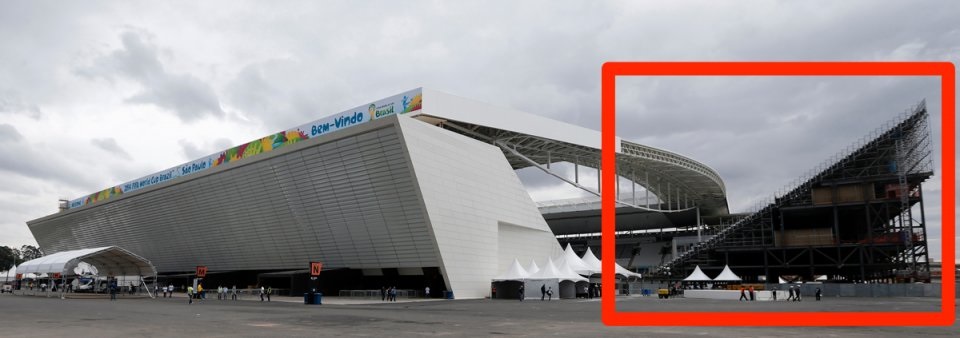
Learn from Greece – Why build expensive permanent stadiums for temporary (sports/cultural) events, when there is such an effective art and science with temporary stadiums?! This important lesson was ignored in Brazil for the FIFA World Cup 2014.

The book Go Lean…Caribbean, serving as a roadmap for the introduction and implementation of the technocratic Caribbean Union Trade Federation (CU), advocates this lesson and declares that “a mission of the CU is to forge industries and economic drivers around the individual and group activities of sports and culture”. There is the need for temporary stadiums for events and festivals; (see Temporary Structures Models & Systems Appendix below).

This temporary stadium was erected in Germany for the 2006 FIFA World Cup championship game.

This temporary stadium was erected in Germany for the 2006 FIFA World Cup championship game.

The need to optimize sports/cultural events & festivals have previously been addressed in the following Go Lean blogs entries:

a. https://goleancaribbean.com/blog/?p=1148 Sports Bubble – Franchise values in basketball
b. https://goleancaribbean.com/blog/?p=1020 Sports Revolutionary: Advocate Jeffrey Webb
c. https://goleancaribbean.com/blog/?p=676 PM Christie responds to critics of Bahamian ‘Carnival’
d. https://goleancaribbean.com/blog/?p=498 Book Review: ‘The Sports Gene’
e. https://goleancaribbean.com/blog/?p=334 Bahamians Make Presence Felt In Libyan League
f. https://goleancaribbean.com/blog/?p=318 Collegiate Sports in the Caribbean
g. https://goleancaribbean.com/blog/?p=60 Could the Caribbean Host the Olympic Games?

All in all, the book and accompanying blogs declare that the region needs to learn lessons from other sporting venues like Athens-Greece, South Africa and Brazil. The people of the Caribbean cannot afford such monumental mis-steps – see VIDEO below. So this Go Lean… Caribbean roadmap applies the lessons learned and details the following 3 prime directives:

  • Optimization of the economic engines in order to grow the regional economy to $800 Billion & create 2.2 million new jobs.
  • Establishment of a security apparatus to protect the resultant economic engines.
  • Improve Caribbean governance to support these engines.

This roadmap commences with the recognition that genius qualifiers can be found in many fields of endeavor, including music, sports and the performing arts. To exploit the economic benefits of these fields require some facilitation, like stadia, arenas and theaters. The roadmap pronounces the need for the region to confederate in order to invest in the facilitations for the Caribbean genius to soar. These pronouncements are made in the Declaration of Interdependence, (Pages 13 & 14) as follows:

xxi.      Whereas the preparation of our labor force can foster opportunities and dictate economic progress for current and future generations, the Federation must ensure that educational and job training opportunities are fully optimized for all residents of all member-states, with no partiality towards any gender or ethnic group. The Federation must recognize and facilitate excellence in many different fields of endeavor, including sciences, languages, arts, music and sports. This responsibility should be executed without incurring the risks of further human flight, as has been the past history.

xxii.      Whereas sports have been a source of great pride for the Caribbean region, the economic returns from these ventures have not been evenly distributed as in other societies. The Federation must therefore facilitate the eco-systems and vertical industries of sports as a business, recreation, national pastime and even sports tourism – modeling the Olympics.

The Go Lean vision is a confederation of the 30 member-states of the Caribbean forming a proxy organization to do the heavy- lighting of building, funding and maintaining sports/event venues. The strategy is to deploy temporary structures where appropriate on CU fairgrounds, as some events may require specific configurations, but only for a few days every year. Tactically, the Go Lean roadmap calls for a separation-of-powers between the member-state governments and the new federal agencies; so the CU will serve as the landlord for local, national and regional events.

The subsequent article and VIDEO (from the cable channel HBO’s documentary Real Sports) describes the folly for expensive permanent stadiums for short-term events; especially while the art and science of temporary stadiums is so effective.

Title: HBO’s Real Sports tackles the white elephants of the World Cup and Olympics
Posted by Joe Lucia on May 20, 2014 10:31
(http://awfulannouncing.com/2014/hbos-real-sports-tackles-the-white-elephants-of-the-world-cup-and-olympics.html)

The lead story of May’s episode of Real Sports on HBO tackles the World Cup, but in a different way

Next month’s World Cup in Brazil (starting June 12, 2014) has resulted in numerous brand new soccer stadiums being built all across the country. Once the World Cup ends, the stadiums will more than likely remain dormant – which is where the “white elephants” title of the segment comes into play. In South Africa four years ago, ten stadiums were built at the cost of billions of dollars. Nine of those stadiums stand relatively unused today.

The same thing happens when countries host the Olympics – it doesn’t take too much effort to find evidence of stadiums or arenas being built solely to hold events and then be used for nothing or razed years later. The 2004 Olympics in Athens are a stark example of the waste that goes into holding events like the Olympics and the World Cup, as many of the arenas and stadiums built for the events stand empty.

Perhaps even more shocking – the organizers of these events in those host countries openly admit to having no plan for the future of the venues. The Greek economy collapsed in large part to the massive amount of waste that went into the Olympics a decade ago, with the crumbling stadiums as reminders of that waste.

Today, Brazil is preparing by the World Cup by spending more money than any country in history. A brand new, $270 million stadium was built in the remote town of Manaus for just four games this World Cup. Manaus is so remote that many Brazilians can’t even drive there. Materials to build the stadium were shipped from Portugal, across the Atlantic Ocean and transported down the Amazon River. All that for four games in a town that HBO described as “a weigh station.”

The organizers are oblivious to this. The designer of the stadium in Manaus claims that when people watch the games on television, they will become aware of the city, and tourism and investment opportunities will increase. Apparently, eight hours of soccer over the month of June will create all of that goodwill.

For a country like Brazil, bathed in poverty, to burn away billions of dollars on stadiums and arenas for the World Cup and the 2016 Olympics is shameful. Once the World Cup ends and Olympics preparation begins, homes in Rio de Janeiro will be razed to make room for the venues, sending many Brazilian citizens into homelessness for the sake of a two week sporting event.

in a country like Brazil that is teetering on the edge of financial chaos, dumping billions of dollars into sports while a bulk of your citizens are poor, starving, and lacking healthcare seems like a recipe for a disaster, with nothing but empty stadiums and a page on Wikipedia to show for it when all is said and done.

VIDEO: Real Sports with Bryant Gumbel: Episode #206 Web Clip – White Elephants (HBO Sports) – http://youtu.be/lHUiyxKgg1s

Jon Frankel travels to Athens, Greece plus Manaus and Rio de Janeiro in Brazil and looks for answers to the question of: Are billions being wasted on World Cup and Olympic venues?

The Go Lean book details these series of community ethos, strategies, tactics, implementations and advocacies designed to re-boot the delivery of the regional solutions, so badly needed and hoped for:

Community Ethos – Ways to Foster Genius Page 27
Community Ethos – Ways to Promote Happiness Page 36
Strategic – Visitors – Snow Birds at RV Campgrounds Page 55
Strategic – Staffing – Events at Fairgrounds Page 55
Tactical – Fostering a Technocracy Page 64
Tactical – Separation of Powers – Sports & Culture Administration Page 81
Tactical – Separation of Powers – Fairgrounds Administration Page 83
Implementation – Steps to Implement Self-Governing Entities Page 105
Implementation – Ways to Deliver Page 109
Planning – Ways to Make the Caribbean Better Page 131
Advocacy – Ways to Grow the Economy Page 151
Advocacy – Ways to Improve Local Government – Parks & Recreation Page 169
Advocacy – Ways to Impact Events Page 191
Advocacy – Ways to Promote Fairgrounds Page 192
Advocacy – Ways to Foster Technology Expositions Page 197
Anecdote – Model of Miami-DadeCounty Youth Fair Page 227
Advocacy – Ways to Improve Sports Page 229
Advocacy – Ways to Improve the Arts Page 230
Advocacy – Ways to Promote Music Page 231
Advocacy – Ways to Impact Urban Living – Sports Leagues Page 234
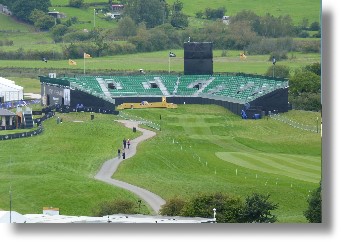
Temporary Stadiums - Golf

This stadium is the Pakar Seating Grandstand system. It is so versatile that it’s suitable for any type of Golf Competition event.

The foregoing article discourages investment in permanent venues unless there is a solid long-term business plan. The Go Lean roadmap concurs – Greece did not recover from the flawed Olympic build-out for facilities that were never used again after the 2004 Games. On the other hand, here is the encouragement and recommendation to develop fairgrounds and deploy temporary stadia, arenas and theaters. Imagine a golf tournament; no one would expect bleachers and grandstands at the putting greens to be permanent structures. No, there is a place for temporary structures in the world of sports.

Temporary Stadiums - Beach Volleyball

The Bondi Beach Volleyball Stadium was constructed for the Sydney 2000 Olympic Games and stood for just six weeks. The temporary stadium was constructed on the world-famous Bondi Beach and had over 10,000 seats.

There is one sport, Beach Volleyball, which only uses temporary bleachers/grandstands – 100 percent.
So there is a place for the arts & sciences of temporary structures. There is the need for their economic impact.

The Go Lean roadmap anticipates 21,000 direct jobs at fairgrounds and sports enterprises throughout the region.

Now is the time for all of the Caribbean, the people and governing institutions, to lean-in for the empowerments of the Caribbean Union Trade Federation. Now is the time to make this region a better place to live, work and play. 🙂

Download the free e-Book of Go Lean … Caribbean – now!

========================

*** APPENDICES ***

Appendix A – Sample New Stadiums for Brazil
The permanent structures call for more elaborate construction schedules and risks. Some delays have been unavoidable – see this article (photos) on the Sao Paulo stadium slated for the opening game on June 12, 2014; posted and retrieved 06/04/2014:

http://www.businessinsider.com/bleachers-at-sao-paulo-world-cup-stadiums-2014-6#ixzz33iMAwtEf

Brazil prepares…
When Brazil drafted plans to host the upcoming World Cup, Natal, the Atlantic beach destination was exactly the type of city it wanted to show off. Five years later, and four weeks before kickoff, little besides the arena and a remote, untested airport are complete.

Almost half the more than $1.3 billion in promised developments [in Natal] never began. What did [begin] has languished, including ongoing road work that has rendered the stadium’s outskirts a raw sprawl of rebar, dust and concrete. (Reuters)

An aerial view of the Arena Pantanal soccer stadium in Cuiaba, April 25, 2014. Cuiaba is one of the host cities for the 2014 World Cup in Brazil. See photos here (REUTERS/Joel Marcos):

Temporary Stadiums - Natal

An Aerial view of the Arena das Dumas from January 22, 2014; this stadium will host matches for the 2014 soccer World Cup.

Temporary Stadiums - Cuiaba

This is the incomplete stadium in Natal; with 4 weeks before the first event, the infrastructural improvements for the surrounding areas have still not been completed.

Temporary Stadiums - Sao Paulo

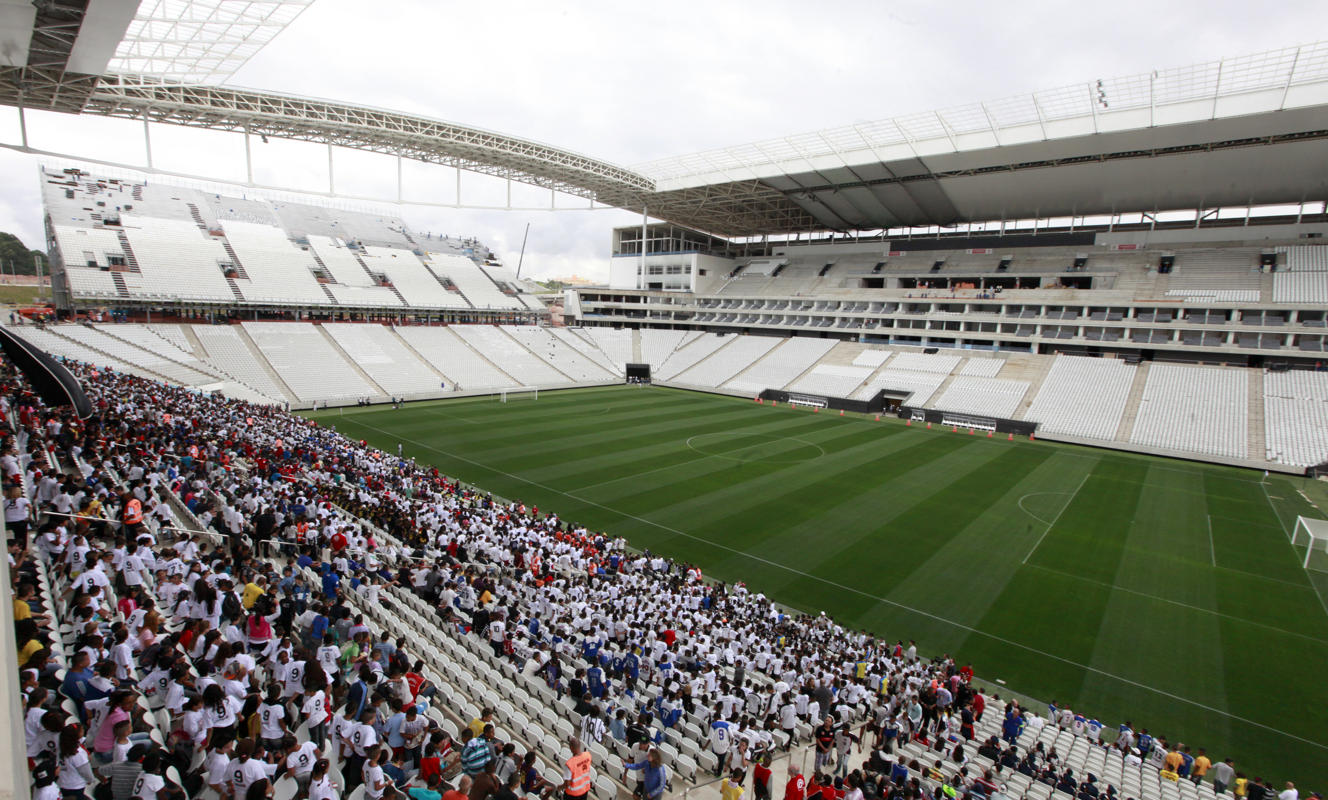
People stand in the bleachers during an infrastructure test at Arena de Sao Paulo Stadium, one of the venues for the 2014 World Cup, in the Sao Paulo district of Itaquera April 26, 2014.

Appendix B – Temporary Structures Models & Systems
Many examples of successful temporary stadia, arenas and theaters abound – see photos here.

Here are 2 reputable vendors for providing these products and services.

1. PAKAR Grandstand is extremely versatile, therefore, it can be installed either as a PERMANENT or REMOVABLE Grandstand. It can be displaced and re-installed at any location quickly and easily. The system of frames is pre-assembled with an interlocking system, ties, braces, beams and deck units that locks together for fast assembly. Our Grandstand can be installed on any type of surface i.e. concrete, grass and sand (Desert). It can be installed on a slope depending on soil condition. Our system can be used both Outdoor and Indoor. For Outdoor use, it can be equipped with a roof system (Complete roofing or Semi-roofing). Source: http://www.pakar-seating.com/

Temporary Stadiums - Padel

Padel is a relatively new racquet sport that is extremely popular in Spain. The logistics of this platform accommodates each individual sports event and is 600 square meters in size and has 3,000 seats around it.

Temporary Stadiums - Soccer

This stadium is a modular stadium built by NUSSLI who has developed flexible and sustainable concepts for popular global sports and cultural events

Temporary Stadiums - Theater

This stadium is not only for sporting events, but it is ideal for cultural activities as well.

Grandstand bleachers for a drag racing configuration

2. Temporary Stadium, Modular Stadium Construction, Stadia Expansion.

NUSSLI provides complete modular stadiums and arenas or additional grandstands – with or without roofing. We offer our stadium construction solutions for rental (temporary) or sale (permanent).

The experience gained from multifaceted stadium projects around the world makes NUSSLI a reliable partner in modular stadia construction and in stadium expansion. NUSSLI‘s mobile stadia fulfill the highest demands in regard to safety, functionality, and architecture.

The modular stadium® can be adapted to meet changing requirements and individual customer needs over and over again. The stadium can be installed in virtually no time and removed just as quickly after use.

The NUSSLI service range in stadium construction:
•Stadia and arenas (modular, temporary, permanent, mobile)
•Stadium expansion (modular, temporary, permanent)
•Additional grandstand, roofing
•Steel tube grandstand
•Service buildings

Modular Stadium® – a Convincing System.
Those who modularly build or expand stadiums and arenas enjoy considerable advantages over those using the traditional building method. The key factors of modular stadium construction are savings in cost and time.

Cost advantage: The use of modules can be temporally limited, therefore avoiding costs for possible surplus capacities. The standardization shortens planning and construction processes.

Fast and flexible: modular stadium constructions or expansions by NUSSLI beat any other system in regard to installation speed.
Source: http://www.nussli.us/services/stadium-construction.html

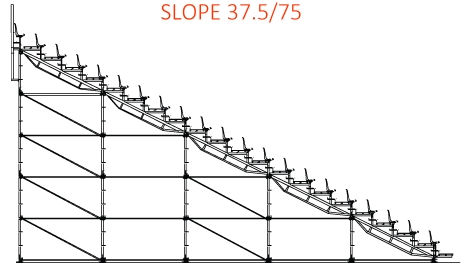
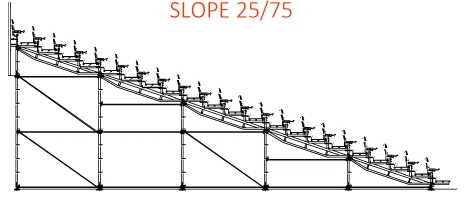
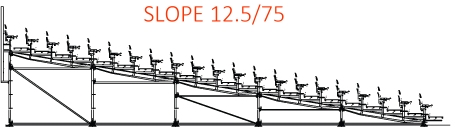
 Temporary Stadiums - Photo 1Temporary Stadiums - Grandstands Temporary Stadiums - Slopings 1 Temporary Stadiums - Slopings 2 Temporary Stadiums - Slopings 3

Share this post:
, , , , ,
[Top]

Aereo’s Founder on the future of TV

Go Lean Commentary

“Aereo is…not infringing on their copyrights” – Founder and CEO Chet Kanojia.

This subject is pivotal in the roadmap for elevation of the Caribbean economy, which maintains that internet/electronic commerce business models are critical in creating jobs and growing the region’s GDP. The publisher of the book Go Lean… Caribbean projects that 2.2 million new jobs hang in the balance. These new jobs will result from entrepreneurial endeavors and opportunities from the many new industries spun from different expressions of internet & communications technologies (ICT).

Also important in the foregoing article is the respect for intellectual property. The Go Lean roadmap campaigns that the creators of intellectual property are entitled to due compensation; this ethos is at the bedrock of the economic empowerment quest for the region.

According to the foregoing article and VIDEO, there are major issues associated with this technology development, to the point that the US Supreme Court is called upon to set legal precedence.

CU Blog - Aereo Founder and CEO Chet Kanojia on the future of TV - Photo 1Change has come to the world of television. According to Futurists [a], the television industry is the next industry to become obsolete due to the ubiquity of the internet; (think travel agents, record & book stores, video rental, etc.).

This book Go Lean… Caribbean, serves as a roadmap for the introduction and implementation of the Caribbean Union Trade Federation (CU). The CU/Go Lean roadmap has 3 prime directives:

  • Optimization of the economic engines in order to grow the regional economy.
  • Establishment of a security apparatus to protect the resultant economic engines and marshal against economic crimes.
  • Improve Caribbean governance to support these engines.

Early in the book, the benefits of technology empowerment is pronounced in the Declaration of Interdependence (Page 14), with these opening statements:

 xxvi. Whereas the Caribbean region must have new jobs to empower the engines of the economy and create the income sources for prosperity, and encourage the next generation to forge their dreams right at home, the Federation must therefore foster the development of new industries… In addition, the Federation must invigorate the enterprises related to existing industries … impacting the region with more jobs.

xxvii. Whereas the region has endured a spectator status during the Industrial Revolution, we cannot stand on the sidelines of this new economy, the Information Revolution. Rather, the Federation must embrace all the tenets of Internet Communications Technology (ICT) to serve as an equalizing element in competition with the rest of the world. The Federation must bridge the digital divide and promote the community ethos that research/development is valuable and must be promoted and incentivized for adoption.

xxviii. Whereas intellectual property can easily traverse national borders, the rights and privileges of intellectual property must be respected at home and abroad. The Federation must install protections to ensure that no abuse of these rights go with impunity, and to ensure that foreign authorities enforce the rights of the intellectual property registered in our region.

The Caribbean has the eco-system of free broadcast television, and the infrastructure for internet streaming. So the issues raised in the US Supreme Court will have bearing in the execution of this roadmap.

By: Katie Couric

As the Supreme Court hears oral arguments in the case that will determine the fate of his streaming video service, Aereo founder and CEO Chet Kanojia sat down for a wide-ranging interview with Yahoo Global News Anchor Katie Couric.

The New York-based startup — backed by billionaire investor Barry Diller, among others — is at the center of a legal battle that has been raging since the company’s inception in 2012. Aereo currently operates in 13 cities.

The heart of the case involves Aereo’s practice of assigning subscribers mini remote antennas so that they can stream over-the-air broadcast signals directly to their tablets and other mobile devices. The antennas function in the same manner as old-fashioned “bunny ears.” Aereo also uses cloud technology, which lets subscribers watch the programming live or store it for a later time.
Yahoo’s Global News Anchor Katie Couric (Posted and retrieved 05-29-2014) –
https://news.yahoo.com/katie-couric-aereo-tv-supreme-court-212342689.html


Abbreviation of Interview – 3 minutes:

Full Interview – 20 minutes:

The book details the community ethos to adapt to the changed media landscape, plus the executions of the following strategies, tactics, implementations and advocacies:

Community Ethos – Economic Principle – People Respond to Incentives Page 21
Community Ethos – Job Multiplier Page 22
Community Ethos – Lean Operations Page 24
Community Ethos – Return on Investments (ROI) Page 24
Community Ethos – Ways to Impact the Future Page 26
Community Ethos – Ways to Help Entrepreneurship Page 28
Community Ethos – Promote Intellectual Property Page 29
Community Ethos – Impact Research & Development Page 30
Community Ethos – Bridge the Digital Divide Page 31
Strategy – Integrate Region in a Single Market Page 45
Tactical – Fostering a Technocracy Page 64
Tactical – New High Multiplier Industries Page 70
Tactical – Trade and Globalization Page 70
Separation of Powers – Film Promotion and Administration Page 78
Separation of Powers – Patent, Standards, and Copyrights Office Page 78
Separation of Powers – Communications and Media Authority Page 79
Separation of Powers – Federal Supreme Court Page 90
Implementation – Assemble existing regional organizations Page 96
Implementation – Ways to Deliver Page 109
Implementation – Ways to Impact Social Media Page 111
Implementation – Ways to Benefit from Globalization Page 119
Advocacy – Ways to Grow the Economy Page 151
Advocacy – Ways to Create Jobs Page 152
Advocacy – Ways to Improve Communications Page 186
Advocacy – Ways to Foster Technology Page 197
Advocacy – Ways to Foster e-Commerce Page 198
Advocacy – Ways to Impact Hollywood Page 203
Advocacy – Ways to Impact the Diaspora Page 217

The CU will oversee the radio spectrum used for radio, television and satellite communications. The radio spectrum must be regulated on a regional level; the CU coordination will be as managing a common pool resource, as the spectrum is limited. This oversight will also extend to internet broadband (wireless & wire-line) governance.

This is a direct parallel to the US debate.

———

Citation source:
a-1. Retrieved 05-29-2013 from: http://corp.iprodoos.com/2014/01/18/television-2-0-the-2-2-trillion-war-for-your-living-room-begins-now/
a-2. Photo Credit: Motley Fool Investment Advisors
 

Share this post:
, , ,
[Top]

Conservative heavyweights have solar industry in their sights

Go Lean Commentary solar panels

The song, Colors of the Wind, featured in the Disney animated movie Pocahontas (sung by Vanessa Williams), heightened the awareness and arguments of conserving the Earth’s resources. This key verse stands out:

You can own the earth and still All you’ll own is [dirt] until You can paint with all the colors of the wind

These words describe the folly of acquiring properties at the expense of ruining the natural resources around it. No one wants to ruin the planet, but yet many feel that the conservation movement is unnecessary, over-hyped or fear-mongering; that weather extremes are just natural cycles. The book Go Lean…Caribbean is not a call for conservation; it is a call for economic optimization. Whatever your politics, whether you believe that climate change is real or imagined, this book is not trying to convince you one way. It is what it is! This book Go Lean… Caribbean, serves as a roadmap for the introduction and implementation of the Caribbean Union Trade Federation (CU). This Go Lean roadmap has 3 prime directives:

  • Optimization of the economic engines in order to grow the regional economy.
  • Establishment of a security apparatus to protect the resultant economic engines.
  • Improve Caribbean governance to support these engines.

This book is written with the approach that we hope for the best, but plan for the worst. Unfortunately, for much of the Caribbean, they have been impacted with the worst-case scenario, time and again (See Page 112). Early in the book, the pressing need to be prepared for the ravages of climate change is pronounced in the Declaration of Interdependence (Page 11), with these opening words:

Whereas the earth’s climate has undeniably changed resulting in more severe tropical weather storms, it is necessary to prepare to insure the safety and security of life, property and systems of commerce in our geographical region. As nature recognizes no borders in the target of its destruction, we also must set aside border considerations in the preparation and response to these weather challenges.

The assessment and curative measures for the Caribbean is different than the approaches of the United States. The Caribbean does not have the landmass, population, treasuries, or economics of the US, so we cannot look for the US to take the lead for Caribbean problems. We must lead ourselves. The CU is a proxy of that leadership.

By: Evan Halper

WASHINGTON — The political attack ad that ran recently in Arizona had some familiar hallmarks of the genre, including a greedy villain who hogged sweets for himself and made children cry.

But the bad guy, in this case, wasn’t a fat-cat lobbyist or someone’s political opponent.

He was a solar-energy consumer.

Solar, once almost universally regarded as a virtuous, if perhaps over-hyped, energy alternative, has now grown big enough to have enemies.

The Koch brothers, anti-tax activist Grover Norquist and some of the nation’s largest power companies have backed efforts in recent months to roll back state policies that favor green energy. The conservative luminaries have pushed campaigns in Kansas, North Carolina and Arizona, with the battle rapidly spreading to other states.

Alarmed environmentalists and their allies in the solar industry have fought back, battling the other side to a draw so far. Both sides say the fight is growing more intense as new states, including Ohio, South Carolina and Washington, enter the fray.

At the nub of the dispute are two policies found in dozens of states. One requires utilities to get a certain share of power from renewable sources. The other, known as net metering, guarantees homeowners or businesses with solar panels on their roofs the right to sell any excess electricity back into the power grid at attractive rates.

Net metering forms the linchpin of the solar-energy business model. Without it, firms say, solar power would be prohibitively expensive.

The power industry argues that net metering provides an unfair advantage to solar consumers, who don’t pay to maintain the power grid although they draw money from it and rely on it for backup on cloudy days. The more people produce their own electricity through solar, the fewer are left being billed for the transmission lines, substations and computer systems that make up the grid, industry officials say.

“If you are using the grid and benefiting from the grid, you should pay for it,” said David Owens, executive vice president of the Edison Electric Institute, the advocacy arm for the industry. “If you don’t, other customers have to absorb those costs.”

The institute has warned power companies that profits could erode catastrophically if current policies and market trends continue. If electricity companies delay in taking political action, the group warned in a report, “it may be too late to repair the utility business model.”

The American Legislative Exchange Council, or ALEC, a membership group for conservative state lawmakers, recently drafted model legislation that targeted net metering. The group also helped launch efforts by conservative lawmakers in more than half a dozen states to repeal green energy mandates.

“State governments are starting to wake up,” Christine Harbin Hanson, a spokeswoman for Americans for Prosperity, the advocacy group backed by billionaire industrialists Charles and David Koch, said in an email. The organization has led the effort to overturn the mandate in Kansas, which requires that 20% of the state’s electricity come from renewable sources.

“These green energy mandates are bad policy,” said Hanson, adding that the group was hopeful Kansas would be the first of many dominoes to fall.

The group’s campaign in that state compared the green energy mandate to Obamacare, featuring ominous images of Kathleen Sebelius, the outgoing secretary of Health and Human Services, who was Kansas’ governor when the state adopted the requirement.

The Kansas Senate voted late last month to repeal the mandate, but solar industry allies in the state House blocked the move.

Environmentalists were unnerved. “They want to roll it back here so they can start picking off other states,” said Dorothy Barnett, director of the Climate and Energy Project, a Kansas advocacy group.

The arguments over who benefits from net metering, meanwhile, are hotly disputed. Some studies, including one

published recently by regulators in Vermont, conclude that solar customers bring enough benefits to a regional power supply to fully defray the cost of the incentive.

Utilities deny that and are spending large sums to greatly scale back the policy.

In Arizona, a major utility and a tangle of secret donors and operatives with ties to ALEC and the Kochs invested millions to persuade state regulators to impose a monthly fee of $50 to $100 on net-metering customers.

Two pro-business groups, at least one of which had previously reported receiving millions of dollars from the Koch brothers, formed the campaign’s public face. Their activities were coordinated by GOP consultant Sean Noble and former Arizona House Speaker Kirk Adams, two early architects of the Koch network of nonprofits.

In October, California ethics officials levied a $1-million fine after accusing groups the two men ran during the 2012 election of violating state campaign finance laws in an effort to hide the identities of donors.

The Arizona Public Service Co., the state’s utility, also had Noble on its payroll. As a key vote at the Arizona Corporation Commission approached late last year, one of the commissioners expressed frustration that anonymous donors had bankrolled the heated campaign. He demanded APS reveal its involvement. The utility reported it had spent $3.7 million.

“Politically oriented nonprofits are a fact of life today and provide a vehicle for individuals and organizations with a common point of view to express themselves,” company officials said in a statement in response to questions about their campaign.

The solar companies, seeking to sway the corporation commission, an elected panel made up entirely of Republicans, formed an organization aimed at building support among conservatives. The group, Tell Utilities Solar won’t be Killed, is led by former California congressman Barry Goldwater Jr., a Republican Party stalwart.

“These solar companies are becoming popular, and utilities don’t like competition,” Goldwater said. “I believe people ought to have a choice.”

The commission ultimately voted to impose a monthly fee on solar consumers — of $5.

The solar firms declared victory. But utility industry officials and activists at ALEC and Americans for Prosperity say the battles are just getting underway. They note the Kansas legislation will soon be up for reconsideration, and fights elsewhere have barely begun.

In North Carolina, executives at Duke Energy, the country’s largest electric utility, have made clear the state’s net metering law is in their sights. The company’s lobbying effort is just beginning. But already, Goldwater’s group has begun working in the state, launching a social media and video campaign accusing Duke of deceit.

“The intention of these proposals is to eliminate the rooftop solar industry,” said Bryan Miller, president of the Alliance for Solar Choice, an industry group.

“They have picked some of the most conservative states in the country,” he added. “But rooftop solar customers are voters, and policymakers ultimately have to listen to the public.”

LA Times.com (Article posted 04-20-2014; retrieved 05/15/2014) –http://www.latimes.com /nation/la-na-solar-kochs-20140420,0,7412286.story#axzz2zU4qRP15

The foregoing article highlights opposition to some implementations of some green initiatives, the solar industry.

While the oppositional arguments have merit, the principles of the above-cited song lingers: “we can own the earth and only own dirt, if we do not paint with the colors of the wind”.

We must therefore consider the lessons learned from these lyrics and the foregoing news article. We must insure that financial subsidies are strategically assigned to prioritize one energy source over others only for the Greater Good.

The Go Lean roadmap posits that people respond to economic incentives (Page 21). So if green conservation projects (like solar panels or wind turbines) are important for the Greater Good (Page 37), then there must be incentives to encourage their adoption. The roadmap specifics call for the implementation of a regional power grid (Page 113), utilizing underwater cables, to connect the many islands. The plan therefore advocates the adoption of green power generation modes: solar, wind, and tidal, but not with the legislative mandates that are the source of debates, as in the foregoing articles. The regional grid will allow for economies-of-scale to justify this type of infrastructure.

As for existing infrastructure, oil/coal power generation, Go Lean proposes improvements with modernizations, clean burning natural gas and a heightened focus on quality delivery. The big hurdle of funding is mitigated with this plan.

The ravages of climate change are real for the Caribbean region. So too are the solutions proffered in this roadmap for the CU. “It is what it is”, but we will be prepared for the changes and the opportunities to make our homeland a better place to live, work and play. 🙂

Download the free e-Book of Go Lean … Caribbean – now!

Share this post:
, , ,
[Top]

Go ‘Green’ … Caribbean

Go Lean Commentary

Go Green 1Go ‘Green’ …

Get it? A simple play on words; Green instead of Lean. The word Green is more than just a color; it is a concept, a commitment and a cause. This is the same with ‘Lean’; for the purpose of this effort, ‘lean’ is more than just a description, it’s a noun, a verb, an adjective and an adverb. It is also a concept, commitment and cause in which the entire Caribbean region is urged to embrace; or better stated: “lean in”.

What is the motivation behind the ‘Green’ movement? Love for the Planet; many proponents feel that man’s industrial footprint has damaged the planet and the atmosphere, causing climate change, due to the abundance of carbon dioxide in the atmosphere.

Early in the book, Go Lean…Caribbean, the pressing need to be aware of climate change is pronounced in the Declaration of Interdependence (Page 11), with these words, (the first of many “causes of complaints”):

Whereas the earth’s climate has undeniably changed resulting in more severe tropical weather storms, it is necessary to prepare to insure the safety and security of life, property and systems of commerce in our geographical region. As nature recognizes no borders in the target of its destruction, we also must set aside border considerations in the preparation and response to these weather challenges.

Stop yawning!

For many, an advocacy to save the planet is a bore. But if we are not mindful of these issues we could face serious consequences.

Now a new motivation has emerged: saving money. Since energy costs has skyrocketed beyond the rate of inflation, adapting to more clean/green energy options has proven to be more cost effective.

Power generation from the sun or wind (free & renewable sources) is far cheaper than generation based on fossil fuels. (Even the fossil fuel of natural gas is cheaper than oil or coal).

The motivation behind the Caribbean “Lean” movement is also love, love of the homeland. This point is detailed in the book Go Lean… Caribbean, a roadmap for the introduction and implementation of the Caribbean Union Trade Federation (CU). This Go Lean roadmap has 3 prime directives:

  • Optimization of the economic engines in order to grow the regional economy.
  • Establishment of a security apparatus to protect the resultant economic engines.
  • Improve Caribbean governance to support these engines.

The following two news stories relate to this effort to optimize “green” energy options in the region:

1. Op-Ed Title: Green Energy Solutions Could Save the Caribbean $200 Million

By: Jun Zhang, Op-Ed Contributor
(04/11/2014) HIGH ENERGY costs are the Achilles heel of the Caribbean.
More than 97 percent of this region’s electricity is generated from fossil fuels and many islands devote a hefty portion of their GDP to fuel imports.

On some Caribbean islands, electricity bills can soar up to six times higher than in the United States, which creates a burden for many local businesses. At the same time, these islands are vulnerable to the environmental impacts associated with fossil-fuels, including air pollution, rising sea levels, and coral bleaching.

Reducing the reliance on fossil fuels and supporting cleaner, more efficient energy production is critical to helping island economies grow sustainably. But many companies face hurdles in accessing credit to invest in clean energy.

That’s where the banking sector can play an important role.

The International Finance Corporation, a member of the World Bank Group and the largest global development institution focused exclusively on the private sector, is developing a regional programme to help local financial institutions provide the credit needed for companies to adopt more energy efficient practices and utilize cleaner energy sources.

This in turn can help reduce costs – and environmental footprints -for Caribbean hotels and other businesses.

At a recent seminar in Kingston, IFC presented a market analysis of sustainable energy finance opportunities in Barbados, Belize, Jamaica, Grenada, and St. Lucia.

It found that energy demands in the Caribbean are expected to double by 2027. Continued dependence on fossil fuels is likely to exacerbate pollution and other environmental impacts, while diverting significant resources from these economies. But there are upsides as well.

According to the analysis, incorporating energy efficiency measures across these five countries over the next few years could save approximately US$200 million. For example, solar water heaters offer a ready solution to water heating in the Caribbean. Barbados has already installed more than 50,000 solar water heaters, saving the country some US$6.5 million a year on oil imports.

Caribbean countries could also benefit from water efficiency measures. Right now, anywhere from 25 to 65 percent of clean water is lost in inefficient water distribution systems, which also results in lost energy due to unnecessary pumping.

Some entrepreneurs say the tide is beginning to turn, but the financial sector needs to catch up.

“Businesses are already starting to shift to more energy efficient technologies,” said Andre Escalante, founder of Energy Dynamics, a Trinidad based company that helps hotels and other businesses adopt new energy-saving technologies. “However, financial institutions in the region are still reluctant to provide credits to implement new technologies that they may not be familiar with.”

IFC intends to close this knowledge gap by advising local financial institutions to help them meet the financing needs of sustainable energy projects. IFC also plans to work with energy service companies and equipment vendors to help them understand how to best structure projects for financing.

In the Dominican Republic, IFC helped Banco BHD become the first financial institution in the country to offer a credit line to finance sustainable energy projects. Over two years, BHD provided US$24 million in financing for projects that are bringing more cost-efficient energy solutions to the Dominican Republic, from natural gas conversion to solar energy.

“We’ve seen first-hand how sustainability adds value, be it by helping hotels cut their energy costs or by financing solar energy solutions for businesses,” said Steven Puig, General Manager of Banco BHD. “In fact, BHD intends to implement energy efficiency measures and install solar panels on each of its 43 stand-alone bank branches. So far, with IFC’s support, four offices have done this, which resulted in US$43,000 in savings each year as well as reductions in greenhouse gas emissions.”

Sustainability presents challenges for businesses, but also wide-ranging, evolving opportunities — especially as the cost of renewable energy technologies goes down.  The private sector is well suited to innovate and leverage new technologies to turn challenges into opportunities.

(Jun Zhang is IFC’s Senior Manager for the Caribbean. IFC, a member of the World Bank Group, is the largest global development institution focused exclusively on the private sector).

————

2. Title: Solar Car-Charging Station Opens in Grand Cayman

By: Alexander Britell
(05/05/2014) It may be the Caribbean’s most abundant resource, but in a region where energy costs are oppressive, solar energy isn’t used nearly enough.

That’s starting to change, though, and it got a significant boost last week with the opening of the Caribbean’s first-ever solar-powered car charging station.

The station is viewed to be one of the first standalone, public solar car-charging stations in the Caribbean, a place for electric-powered cars to come and top off their energy supplies.

“We started about a year ago and now it’s finally up and operational,” said John Felder, CEO of Cayman Automotive, which partnered with Philadelphia-based U-Go Stations on the project. “I don’t know of any solar panel charge stations for electric cars.”

While the stations won’t be used for complete charges, an hour spent charging at the station will provide about 20 percent of an electric car’s power supply.

Go Green 2Felder, who is the leading distributor of electric cars in the Caribbean, said the region’s electric car movement was already expanding.

“I’m now in the Bahamas, in Jamaica, in Bermuda,” he said. “The Aruban government called me last week and they want me to move to start doing electric cars there.”

Indeed, Aruba has been at the forefront of the regional green energy movement, with plans to have 100 percent renewable energy by the year 2020.

Barbados opened its first solar car-charging station in 2013 at the Wildey Business Park.

The new Cayman station, which is located at Governors Square, is one of six electric charging stations on the island.

“I can see in the next 10 years that 30 to 40 percent of the cars on the roads will be electric vehicles,” Felder said.

Something that could help that measure regional is the lowering of import duties on 100 percent electric cars, Felder said.

Cayman’s government lowered its duty from 42 percent to 10 percent, which is now the third-lowest in the region, although many islands lag behind in that regard.

“The government is promoting [electric] and that’s why they reduced the duty to 10 percent,” he said.

The electric movement on Cayman got an similarly big boost earlier this year when Grand Cayman’s Budget Rent-a-Car announced plans to offer 100 percent EV vehicles on the island.

Caribbean Journal News Source (Articles retrieved 05/14/2014)        a. http://www.caribjournal.com/2014/04/11/op-ed-green-energy-solutions-could-save-the-caribbean-200-million/  b. http://www.caribjournal.com/2014/05/05/solar-car-charging-station-opens-in-grand-cayman/ 

Photo Credits:
a. Jennifer Hicks, Forbes.com Technology Contributor: Field with six 850 kW turbines in Cuba’s Holguín Province
b. Cayman Automotive: The first ever public, commercial solar car charging station in Grand Cayman

This Go Lean/CU roadmap recognizes that modern life has expanded the definition of basic needs to now include food, clothing, shelter and energy. And thusly the book proposes many solutions for the region to optimize energy …

  • generation
  • distribution
  • consumption

No “stone is left unturned”. Go Lean posits that the average costs of energy can be decreased from an average of US$0.35/kWh to US$0.088/kWh in the course of the 5-year term of this roadmap; (Page 100). A 75% savings is not a yawn, this should keep you alert!

The two foregoing articles relate to new ‘green’ power generation initiatives in different Caribbean member-states.

These initiatives took some effort on the part of the community and governmental institutions. We commend and applaud their success and executions thus far. But there is more heavy-lifting to do. Help is on the way! The Go Lean roadmap details a series of community ethos, strategies, tactics, implementations and advocacies to foster the progress in the wide fields of energy generation, distribution and consumption. The following list applies:

Community Ethos – Lean Operations Page 24
Community Ethos – Return on Investments Page 24
Community Ethos – Cooperatives Page 25
Community Ethos – Regional Taxi Commissions Page 25
Community Ethos – Non-Government Organizations Page 25
Community Ethos – Ways to Impact the Future Page 26
Community Ethos – Ways to Improve Negotiations Page 32
Anecdote – Pipeline Transport – Strategies, Tactics & Implementations Page 43
Strategy – Harness the power of the sun/winds Page 46
Tactical – Fostering a Technocracy Page 82
Tactical – Separation of Powers – Energy Commission Page 82
Anecdote – “Lean” in Government – Energy Permits Page 93
Anecdote – Caribbean Energy Grid Implementation Page 100
Implementation – Ways to Develop Pipeline Industry Page 107
Implementation – Ways to Improve Energy Usage Page 113
Advocacy – Ways to Impact Public Works Page 175
Advocacy – Ways to Foster Cooperatives Page 176
Advocacy – Ways to Impact Monopolies Page 202

Energy needs are undeniable. The world is struggling with this issue.

Fulfilling those needs is easier said than done; and thus a great opportunity for the lean, agile operations envisioned for the CU technocracy. “It’s good to be green!”

Now is the time for all of the Caribbean, the people, business, institutions and governments, to lean-in for the optimizations and opportunities described in the book Go Lean … Caribbean.

Download the book Go Lean … Caribbean – now!

Share this post:
, ,
[Top]

Bitcoin needs regulatory framework to change ‘risky’ image

Go Lean Commentary

Bitcoin PhotoElectronic Payments / Virtual Money schemes are very important in the strategy for elevating the Caribbean economy.

Bitcoin can be good for the Caribbean, but we need the regulatory framework in place to change any “risky” image of such schemes.

This point is detailed in the book Go Lean…Caribbean, a roadmap for the introduction of the Caribbean Union Trade Federation (CU) and the Caribbean Central Bank (CCB). This Go Lean roadmap has 3 prime directives:

  • Optimization of the economic engines in order to grow the regional economy to $800 Billion & create 2.2 million new jobs.
  • Establishment of a security apparatus to protect the resultant economic engines.
  • Improve Caribbean governance to support these engines.

This Go Lean/CU/CCB roadmap looks to employ electronic payments / virtual money schemes to impact the growth of the regional economy. Similar to Bitcoin, there are two CU schemes that relate to this foregoing news story:

  • Cruise Passenger Smartcards – The Go Lean roadmap posits that the cruise industry needs the Caribbean more than the Caribbean needs the industry. But the cruise lines have embedded rules/ regulations designed to maximize their revenues at the expense of the port-side establishments. The CU solution is to deploy a scheme for smartcards that function on the ships and at the port cities (Page 193).
  • e-Commerce Facilitation – The Go Lean roadmap defines that the Caribbean Dollar (C$) will be mostly cashless, an accounting currency. So the Caribbean Central Bank (CCB) will settle all C$ electronic transactions (MasterCard-Visa style or ACH style) and charge interchange/clearance fees (Page 198). This scheme allows for the emergence of full-throttle e-Commerce activities.

These electronic payments provides the impetus for M1, the measurement of currency/money in circulation (M0) plus overnight bank deposits (like demand deposits, travelers’ checks & other checkable deposits). As M1 values increase, there is a dynamic to create money “from thin-air”, called the money multiplier. The more money in the system, the more liquidity for investment and industrial expansion opportunities.

By: Clare Hutchison

LONDON (Reuters) – Regulators should create a framework of rules to help to make virtual currencies such as bitcoin more attractive to ordinary consumers, a lawyer from the Bitcoin Foundation said on Tuesday.

Bitcoin made headlines earlier this year when Tokyo-based bitcoin exchange Mt. Gox filed for bankruptcy after saying it might have lost some 750,000 bitcoins in hacking attack.

Patrick Murck, general counsel at the Bitcoin Foundation, said cooperation was needed between authorities to create rules that would support those using the digital currency responsibly.

“There’s an opportunity to work together to stop people saying it’s scary and risky,” he said. “The challenge is just to get a framework out there that makes sense for people,” said Murck, speaking at an event on the state of digital economy.

Launched in 2009, bitcoin offers a way for people to conduct transactions over the Internet. Supporters say the anonymity that bitcoin offers lowers the risk of fraud, while critics say that same anonymity and lack of central oversight make it easier to commit crimes.

The Bitcoin Foundation aims to standardise the currency, protect it from theft or counterfeiting and provide education.

Some companies involved in bitcoin, including investment firms and those providing services for the currency’s users, have also called for regulation to ensure their customers feel more comfortable about virtual money.

A number of regulators, including the U.S. Securities and Exchange Commission, have warned investors about the risks of scams related to virtual currencies.

Murck said there were a handful of well-funded companies working towards making bitcoin more attractive and safer for ordinary consumers by trying to insure bitcoin holdings and to reduce the currency’s volatility.

Those companies have learned from the collapse of Mt. Gox and have more knowledge about how the industry works that was not available before, he said.

Bitcoin could be ready for the mass market by the end of the year, Murck added. “I feel much more confident today than I did 12 months ago. The wind is definitely blowing at our backs.”

The banking industry also has a role to play in opening the bitcoin market up, Murck said, by providing finance to companies involved in bitcoin or integrating bitcoin services into its own products.

Reuters News Source (Retrieved 05/13/2014) –http://news.yahoo.com/bitcoin-needs-regulatory-framework-change-risky-image-163727371–sector.html

Cruise shipOverall, the Bitcoin concept is in crisis; the dissolution of the Mt. Gox exchange dealt this industry a near-fatal blow. With virtual money, there is no association with hard currency, commodity or chattel goods. It is just the “good faith” and credit of the currency – eWallet – issuer. A bankruptcy filing undermines that “faith”.

The people and institutions of the Caribbean understand this plight all too well. There is little faith in Caribbean monetary institutions either. All interstate trade in the region must take place in US dollars, British pounds or Euros. There is no faith in indigenous Caribbean currencies. The roadmap commences with the statement that the Caribbean also is in crisis, and that this “crisis is a terrible thing to waste”. The region is devastated from external factors: global economic recession, globalization and rapid technology changes. The book then posits that to adapt, there must be a new internal optimization of the region’s strengths. This is defined in Verse XXIV (Page 13) of the Declaration of Interdependence, with these words:

Whereas a free market economy can be induced and spurred for continuous progress, the Federation must install the controls to better manage aspects of the economy: jobs, inflation, savings rate, investments and other economic principles…

Creating the CU/CCB governance is “Step One, Day One” in the Go Lean roadmap. Implementing this, the appropriate regulatory framework, as requested in the foregoing news article, allows rock-solid monetarily integrity for the local financial systems. This would provide the foundation, so that the regional society can be elevated, economically and governmentally.

The Go Lean book details a series of community ethos, strategies, tactics, implementations and advocacies to foster the proper controls for electronic payments/virtual money in the Caribbean region:

Community Ethos – Money Multiplier Principle Page 22
Community Ethos – “Light Up the Dark Places” Page 23
Community Ethos – Lean Operations Page 24
Community Ethos – Cooperatives Page 25
Community Ethos – Promote Intellectual Property Page 29
Community Ethos – Ways to Bridge the Digital Divide Page 31
Tactical – Separation of Powers – Central Banking Page 73
Implementation – Assemble Central Bank Cooperative Page 96
Implementation – Ways to Deliver Page 109
Implementation – Ways to Impact Social Media Page 111
Planning – Ways to Better Manage Image Page 129
Anecdote – Caribbean Currencies Page 149
Advocacy – Ways to Mitigate Black Markets Page 165
Advocacy – Ways to Foster Cooperatives Page 176
Advocacy – Ways to Foster Technology Page 197
Advocacy – Ways to Foster e-Commerce Page 198
Advocacy – Reforms for Banking Regulations Page 199
Appendix – Alternative Remittance Modes Page 270

Now is the time for all of the Caribbean, the people and governing institutions, to lean-in for the changes described in the book Go Lean … Caribbean. The benefits are too alluring, a better place to live, work and play.
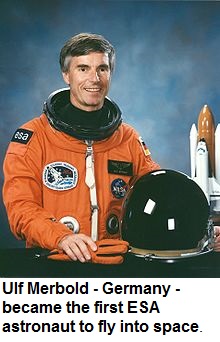
Download the free e-book of Go Lean … Caribbean – now!

Share this post:
, ,
[Top]

Trucks and Trains Play Well Together

Go Lean Commentary

Trucks 1Not In My Back Yard (NIMBY) – this refers to the dichotomy of modern living. Many people want all the convenience that modern industrial development brings to their communities, but they do not want it … in their back yards. The point is alluded to in the foregoing news article, as a strategic success for forging business opportunities while neutralizing the NIMBY opposition. In this case the strategy is to locate multiple industrial infrastructural projects (rail-yard-truck intermodal) – normally noise pollutants to neighbors – at the airport, the Charlotte Douglas International Airport (CLT) – 1 – rail, 2 – trucks and 3 – air all in the same vicinity, This proved to be a smart move, neutralizing oppositions.

This strategic development corresponds with the book Go Lean … Caribbean. This publication serves as a roadmap for the introduction and implementation of the Caribbean Union Trade Federation (CU), another smart move. There is no doubt that Trade and Transport goes hand-in-hand, so this issue is of utmost importance to this roadmap. Since, most of the CU is comprised of islands (and 3 coastal states), there is the need to add a 4th mode to the CU intermodal consideration: sea.

The prime directive of the CU is to optimize the economic engines of the Caribbean region. In the roadmap, this directive aligns with the Union Atlantic Turnpike, a virtual consolidation of all the above transportation modes, and the investments to build and optimize them. The biggest change of the CU transportation approach is the deployment of multi-functional ferry-boats. Now imagine one destination (one backyard) with intermodal exchange for air, rail, ferry, and trucks. Imagine too, the amount of cargo (including mail), passengers, jobs, and economic activity on the move. Now multiply that imagination for all 30 member-states, serving a Caribbean single market of 42 million people. The resultant growth to the region is undeniable.

By: Gina Carroll Howard

Trucks, trains, and planes mean hours of fun for children. But for Charlotte USA, they mean business.

Norfolk Southern Corporation is betting that road and rail cargo transport will play an increasing role in the Charlotte region’s economy.

Since intermodal facilities can take a decade or more to build, the railroad looks for cities that are ripe for significant growth. Charlotte fits that profile, thanks to its progressive nature and pro-business culture — not to mention its prime location in the middle of the railroad’s Crescent Corridor.

Norfolk Southern recently relocated its local intermodal operation from a landlocked 40-acre site with encroaching residential growth to 200 acres at Charlotte Douglas International Airport (CLT). With its main line running right past the airport and easy highway access for trucks, the location in the world’s second-largest hub is ideal. As planes taxi, take off, and land nearby, about 200,000 cargo containers will transfer annually between trucks and trains. And that’s just the beginning.

“From Charlotte, we can move domestic and international traffic from anywhere in the U.S.,” says Jeff Heller, Norfolk Southern vice president of intermodal and automotive marketing.

“The Charlotte region has a huge consumer base. It’s a magnet that pulls trade into the area. This new facility is a showcase and can be front and center in business development. It’s modern and has access to both coasts and all major manufacturing and distribution centers in the country. It helps reinforce Charlotte’s reputation as a viable manufacturing and distribution center.”

It also helps the Charlotte airport retain its low-cost status.

“Norfolk Southern’s lease provides the airport with a secondary revenue source that directly offsets airport operating costs,” says Brent Cagle, interim aviation director. “This is a tremendous benefit to our airline partners and ultimately to the passengers they serve.”

Trucks 2Cagle believes that complementary companies will locate distribution centers on surrounding properties that the airport has acquired. These leases would provide the airport with another secondary revenue source.

The airport/railroad relationship is a symbiotic one that benefits CLT, Norfolk Southern, and Charlotte USA. Both Cagle and Heller agree that the two operations are highly compatible.

“With the airport site, we’re not creating any more noise or lights than already are there,” Heller notes.

And Cagle predicts that Norfolk Southern’s intermodal facility and Charlotte Douglas International Airport “will be great neighbors.” It sounds like they’ll play well together.

US Airways Inflight Magazine – April 2014 http://charlotteusa.com/news-media/blog/trucks-and-trains-play-well-together-/

The Go Lean roadmap quantifies the economic growth, from this and other industrial initiatives, and counts 2.2 million new jobs and the elevation to an $800 Billion regional economy.

As the foregoing article highlights, as children play with trucks, trains, and airplanes, the CU treats these (and ships/boats) as serious business. This commitment is codified in the roadmap, with details of community ethos, strategies, tactics, implementations and advocates; as follows:

Community Ethos – Job Multiplier Page 22
Community Ethos – Return on Investments Page 24
Strategy – Agents of Change – Globalization Page 57
Separation of Powers – Transportation Dept. Page 84
Implementation –  Consolidating Mail Service Page 108
Implementation –  Benefit from Globalization Page 119
Planning – Ways to Improve Trade Page 128
Planning – Ways to Improve Interstate Commerce Page 129
Government – Impact Public Works & the Turnpike Page 175
Industries – Ways to Improve Transportation Page 205
Appendix – Model of a Marine Highway System Page 280

Welcome to a new Caribbean, that’s on the move. Go Lean!

Download the Book- Go Lean…Caribbean Now!!!

Share this post:
, , ,
[Top]