Category: Industries

Temasek firm backs Southeast Asia cab booking app

Go Lean Commentary

CU Blog - Temasek firm backs Southeast Asia cab booking app - Photo - CopySingapore has a public-private initiative to foster innovation, entrepreneurship and jobs. They use public monies to invest in private businesses that can generate future returns. This constitutes a progressive stewardship of a country’s economy; and a fine model for Caribbean empowerment objectives.

The book Go Lean…Caribbean makes similar claims as the news article below, that innovation and economic growth can result from a progressive community ethos. The book defines this “community ethos” as the fundamental character or spirit of a culture; the underlying sentiment that informs the beliefs, customs, or practices of society; dominant assumptions of a people or period.

By Andrew Toh

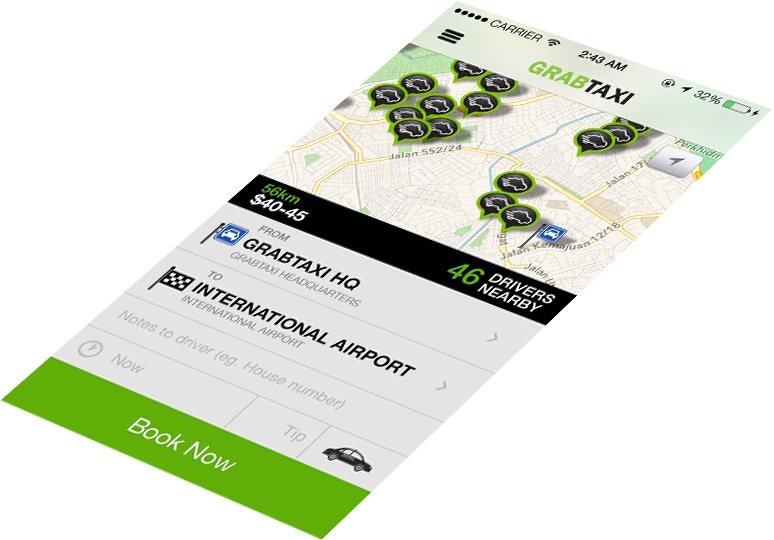
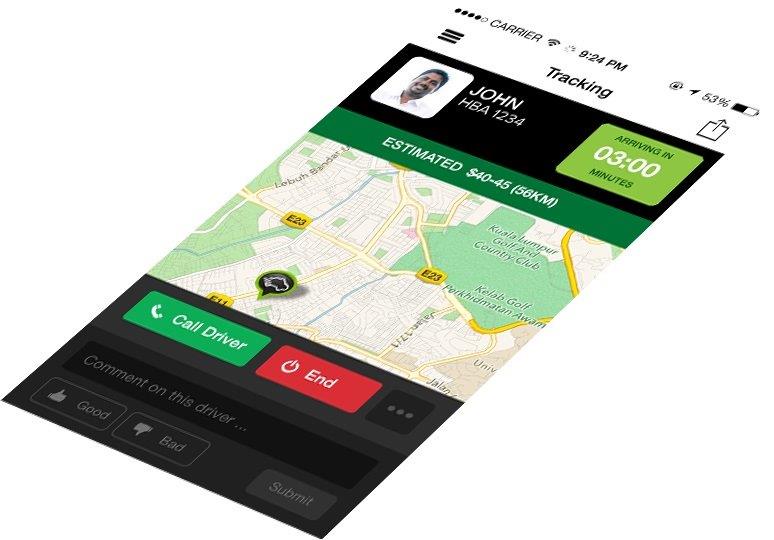
SINGAPORE (Reuters) – A unit of Singapore state investor Temasek Holdings is putting its substantial clout behind an app that eases the pain of booking taxis in Singapore and Malaysia, aiming to expand the service in other busy Southeast Asian cities.

Vertex Venture Holdings, a $1.2 billion venture capital firm that focuses on emerging companies and funds in Asia and the United States, said on Tuesday it was leading a group of mostly Malaysian investors putting an unspecified “eight-figure sum” into smartphone app company GrabTaxi.

The app, developed by two Harvard Business School graduates, was launched in Malaysia in 2012 as MyTeksi, and then expanded to Singapore a year later. It also operates in Thailand, Vietnam and the Philippines.

“We invest in potential champions which have developed new technology platforms or business models,” Vertex Venture CEO Chua Kee Lock told reporters. “We clearly see GrabTaxi as one such champion in the making.”

Booking a taxi is often an arduous task in Singapore, a city state with a population of around 5.4 million and just 28,000 cabs. Many people rely on taxis and public transport, as Singapore is one of the most expensive places in the world to own a private car, but finding a cab during peak hours, and the frequent tropical downpours, is often frustrating.

In other Southeast Asian cities like Manila and Kuala Lumpur, heavy traffic makes finding taxis equally difficult.

GrabTaxi competes in the region with an app from Hong-Kong based company Taxi Hero and Rocket Internet’s Easy Taxi app.

In Singapore, it is up against market leader Comfortdelgro Corp, which has its own booking app. GrabTaxi, however, offers commuters a choice from all the taxis that are closest to their location, regardless of which company operates them.

GrabTaxi founder and Chief Executive Anthony Tan said the app was the second most popular in Singapore after Comfortdelgro, and that it had been downloaded on to more than one million mobile devices in Southeast Asia.

He said the company was keen to expand outside Malaysia, because that is where he believed the biggest growth was happening.

“These markets have much bigger population sizes. They’re chewing up smart phones like no tomorrow,” he said. “I think jumping on this type of wave makes all the difference.”

The Vertex Venture-led investment will go into product innovation and building larger local teams to develop and market the app, Tan said. The app would rely on built-in traffic algorithms and feedback from users, he added.

Reuters News Source (Retrieved 04/08/2014) –http://news.yahoo.com/taxi-temasek-firm-backs-southeast-asia-cab-booking-102723508–sector.html

The foregoing news article, about Temasek & GrabTaxi, provides a number of other “fine models” for the Caribbean ethos:

  • Regional Taxi Administration – The Go Lean roadmap defines that taxis are the frontline of Caribbean hospitality; there is the need to compel the stakeholders to adapt innovative products & services like the mobile apps in this news article (Page 25).
  • Mobile Applications – The Go Lean roadmap defines the mastery of time-&-space as strategic for succeeding in mobile apps development and deployment for the region (Page 35).
CU Blog - Temasek 2nd PicThe book, Go Lean…Caribbean, serves as a roadmap for the introduction and implementation of the Caribbean Union Trade Federation (CU) over a 5 year period. The book stresses that the current community spirit/ethos must change. What can motivate people to change their values and priorities? Compelling external and internal drivers! The roadmap commences with the statement that the Caribbean is in crisis, and that “a crisis is a terrible thing to waste”. The region is devastated from external factors: global economic recession, globalization and rapid technology changes. The book then posits that to adapt, there must be a new internal optimization of the region’s strengths. This is defined in Verse XXVII (Page 14) of the Declaration of Interdependence:

Whereas the region has endured a spectator status during the Industrial Revolution, we cannot stand on the sidelines of this new economy, the Information Revolution. Rather, the Federation must embrace all the tenets of Internet Communications Technology (ICT) to serve as an equalizing element in competition with the rest of the world. The Federation must bridge the digital divide and promote the community ethos that research/development is valuable and must be promoted and incentivized for adoption.

In line with the foregoing article, the Go Lean book details some applicable community ethos, and provides a roadmap to better foster these qualities and their resulting benefits:

• Deferred Gratification (Page 21)

• Governing Principles – Return of Investments (Page 24)

• Help for Entrepreneurship (Page 28)

• Promotion of Intellectual Property (Page 29)

• Impacting Research & Developments (Page 30)

• Bridging the Digital Divide (Page 31)

The roadmap posits that the CU must incubate a Mobile Apps industry, forge entrepreneurial incentives and facilitate the infrastructure upgrades so that innovations can thrive. As related in the foregoing article, these efforts can help a region, in this case the Caribbean, to be a better place to live, work and play. 🙂

Download the free e-Book of Go Lean … Caribbean – now!

Share this post:
, , , , ,

PetroCaribe press ahead with plan to eradicate hunger & poverty

Go Lean Commentary

Venezuela Oil“He who has the gold makes the rules”; this is considered the golden rule. Today, oil is considered Black Gold. This succinctly describes the status of PetroCaribe and its regional campaign.

The foregoing news article speaks of PetroCaribe and ALBA, two economic integration initiatives by Hugo Chavez (1954-2013), the late President of Venezuela. He proved to be impactful, yet polarizing. His advocacy of socialism often brought him at odds with other western democracies, especially the US. But still, Chavez and Venezuela as a whole wield great power in Latin America and the Caribbean due to their abundance of resources and oil reserves.

The publisher of the book Go Lean…Caribbean, SFE Foundation, is a Community Development Foundation, constituted with members of the Caribbean Diaspora. The book’s first chapter defines the character and objective:

The SFE Foundation is not a person; it’s an apolitical, religiously-neutral, economic-focused movement, initiated at the grass-root level to bring change back to the Caribbean homeland – no one Caribbean State is favored over another. The SFE Foundation is not affiliated with the CariCom or any of its agencies or institutions. This movement is not an attempt to re-boot the CariCom, but rather a plan to re-boot the Caribbean

The same as is said about CariCom, in the above text, can be applied to PetroCaribe and ALBA.

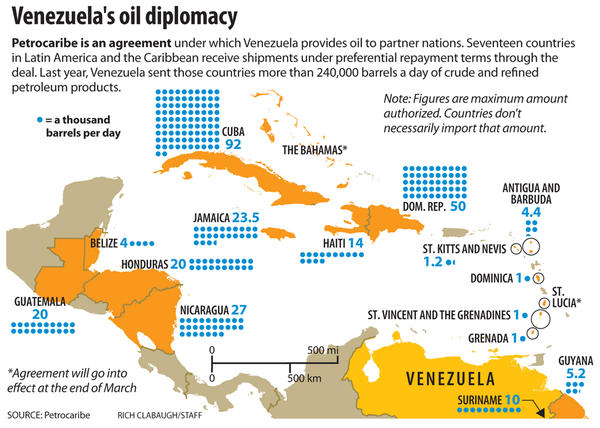
CARACAS, Venezuela — The action plan for the eradication of hunger and poverty in the economic zone of PetroCaribe is showing significant progress. In order to define the specific intervention initiatives for each country, representatives from 17 Caribbean and Central American nations met in Caracas, Venezuela on 3 and 4 April 2014.

The meeting was opened by the vice-president for social areas of Venezuela, Hector Rodriguez, who emphasized on the importance of PetroCaribe for the region, noting that “this is a proposal that seeks equality based on diversity”.

Referring to the results of the action plan for the eradication of hunger and poverty, he stated, “We have the strategic goal of making the Caribbean a hunger free region.”

On this occasion, countries presented their concrete initiatives to eradicate hunger and poverty locally. The Executive Secretariat of PetroCaribe, with technical assistance from Food and Agriculture Organization (FAO) of the United Nations, will evaluate the proposals based on the guidelines set out in the action plan, which were approved by all the countries in the region. Selected projects will receive implementation funding from PetroCaribe.

At the meeting, the president of PDV Caribe and ALBA executive secretary, Bernardo Alvarez, emphasized the efficient implementation of the action plan: “We must congratulate ourselves on the important progress we have made in implementing the action plan for the eradication of hunger and poverty.”

Alvarez highlighted the leadership of FAO director general, José Graziano da Silva, in the creation of this regional initiative to end hunger: “This would not be possible without the inspiration of the director general of FAO, who was the creator of the Zero Hunger program in Brazil during the government of President Lula.”

The FAO regional representative for Latin America and the Caribbean, Raúl Benítez, noted, “The action plan to eradicate hunger and poverty is an example for everyone. This initiative is a concrete response to the 47 million people who still suffer hunger in Latin America and the Caribbean.”

Benitez acknowledged the commitment of the countries of the region, and Venezuela in particular, in the fight against hunger: “Venezuela is not only an example of a country that managed to defeat undernourishment in its territory, but it is an example of solidarity with an entire region.”

Meanwhile, executive secretary of PetroCaribe, Asdrubal Chavez, expressed optimism about the results of the action plan. “We could even reach our goals sooner than planned,” Chavez said.

The action plan is part of the priorities of the Community of Latin American and Caribbean States (CELAC), and the Hunger-Free Latin America and the Caribbean Initiative, a commitment of 33 countries of the region to eradicate malnutrition by 2025. Its aim is to strengthen food and nutrition security of member states of the PetroCaribe and ALBA economic zone through national and regional hunger eradication projects.

The book Go Lean…Caribbean, serves as a roadmap for the introduction and implementation of the Caribbean Union Trade Federation (CU). This will serve as an integrated entity among Caribbean member-states; many of which are also members of PetroCaribe and ALBA; see Appendices below. So the advantageous characteristics of the SFE Foundation and the Caribbean Union as apolitical entities are manifested in this Go Lean effort.

According to the foregoing article, hunger and poverty are still major concerns in the Caribbean. The underlying motivation of the Go Lean book is brotherly love. Therefore who so ever, brings a solution to feed our hungry, poor brothers and sisters should be welcomed and embraced, despite their political affiliation. The roadmap is not “pro” or “con” American, but rather pro solutions; in fact the CU is described as a technocracy with a focus on delivery and merit, rather than ideologue or politics.

The Go Lean roadmap does align with many of the objectives of PetroCaribe as detailed in the foregoing article. The CU’s goal is to integrate the Caribbean member-states for permanent economic empowerment. As a result, many social benefits will flow. For example, the roadmap defines 10 [successful] Battles in the War Against Poverty (Page 222) and 10 Ways to Help the Middle Class (Page 223).

A basic economic principle is that education lifts people out of poverty. So the roadmap prioritizes education along with food, clothing, shelter, healthcare and energy as basic needs. The CU is to foster the eco-system to better deliver these basic needs of life for Caribbean people. In all, to make the Caribbean a better place to live work and play.

Download the book – Go Lean … Caribbean now!!!

———–

Appendix – PetroCaribe
PetroCaribe is an oil alliance with Venezuela which allows the purchase of oil on conditions of preferential payment. The alliance was launched on 29 June 2005 in Puerto La Cruz, Venezuela. In 2013 PetroCaribe agreed to links with the Bolivarian Alliance for the Americas (ALBA), and to go beyond oil and promote economic cooperation. It is now considered an “economic zone”.

The PetroCaribe agreement was initiated with the aim of having solidarity with other countries in accordance with ALBA. The payment system allows for purchase of oil on market value for 5%-50% up front with a grace period of one to two years; the remainder can be paid through a 17-25 year financing agreement with 1% interest if oil prices are above US$40 per barrel. The agreement builds on payment terms from the San Jose Agreement and the Caracas Energy Accord. Energy and Petroleum Minister and President of PDVSA Rafael Ramírez said of the deal that it seeks to cut out the middleman in such transactions: “We’re not talking about discounts…We’re talking about financial facilities, direct deliveries of products, [and] infrastructure.”

There are a total of 17 members, plus Venezuela; 12 of the members are from the 15 member CariCom (excluding, Barbados, Montserrat and Trinidad and Tobago). At the first summit, 14 countries joined the alliance. These were: Antigua and Barbuda, the Bahamas, Belize, Cuba, Dominica, Dominican Republic, Grenada, Guyana, Jamaica, St Lucia, St Kitts and Nevis, Saint Vincent and the Grenadines, Suriname and Venezuela. At the third summit, Haití and Nicaragua joined the union. Guatemala joined in July 2008 but left the organization in November 2013 stating that Venezuela had not provided them with the ultra-low financing rates that they had been promised.

Haiti finally joined the alliance in April 2006. Honduras became the 17th member of the alliance in December 2007, under President Manuel Zelaya. Belize set up the Belize Petroleum Energy Company to coordinate for the project.

Appendix – ALBA
The Bolivarian Alliance for the Americas (Spanish – ALBA: Alianza Bolivariana para los Pueblos de Nuestra América) is an intergovernmental organization based on the idea of the social, political and economic integration of the countries of Latin America and the Caribbean. The name “Bolivarian” refers to the ideology of Simón Bolívar, the 19th-century South American independence leader born in Caracas who wanted the continent to unite as a single “Great Nation.”

ALBA is associated with socialist and social democratic governments wishing to consolidate regional economic integration based on a vision of social welfare, bartering and mutual economic aid. ALBA nations may conduct trade using a virtual regional currency known as the SUCRE. Venezuela and Ecuador made the first bilateral trade deal using the Sucre, instead of the US dollar, on July 6, 2010.

ALBA members include Antigua & Barbuda, Bolivia, Cuba, Dominica, Ecuador, Nicaragua, Saint Vincent & the Grenadines, Venezuela, Saint Lucia, and Suriname.

Appendix – SUCRE
A regional currency to be used in commercial exchanges between members of the regional ALBA trade bloc, which was created as an alternative to the [proposed-but-never-ratified] Free Trade Agreement of the Americas (FTAA). The SUCRE is intended to replace the US dollar as a medium of exchange in order to decrease US control of Latin American economies and to increase stability of regional markets.

The acronym is in Spanish, as: Sistema Único de Compensación Regional. In English, this means: Unified System for Regional Compensation

International trade between member states in SUCRE exceeded $850 million in 2013.

Eventually, the plan is for the SUCRE to become a hard currency.

Appendix – Referenced Sources:

• “PetroCaribe Meets in Venezuela, Links with ALBA”. Retrieved 6 April 2013 from: http://venezuelanalysis.com/news/9087.

• “ALBA Summit Ratifies Regional Currency, Prepares for Trinidad”. Michael Fox, Venezuela Analysis. Retrieved 17 April 2009 from: http://venezuelanalysis.com/news/4373

• Wikipedia treatment for subject PetroCaribe. Retrieved April 7, 2014 from: http://en.wikipedia.org/wiki/Petrocaribe

• Wikipedia treatment for subject ALBA. Retrieved April 7, 2014 from: http://en.wikipedia.org/wiki/ALBA

• Wikipedia treatment for subject SUCRE. Retrieved April 7, 2014 from: http://en.wikipedia.org/wiki/SUCRE

Share this post:
, , , , , ,
[Top]

Grenada PM Urges CARICOM on ICT

Go Lean Commentary

CU Blog - Grenada PM Urges CARICOM on ICT - PhotoIt’s “Better in the Bahamas” – Tagline. But don’t bring your mobile phone!

The publisher of the book Go Lean…Caribbean, SFE Foundation, is a Think Tank/Community Development Foundation, constituted with members of the Caribbean Diaspora. They frequently travel throughout the region. The dilemma cited in the below news article, mobile roaming fees, has personal application for the SFE Foundation, (and all those who live, work and play in the Caribbean).

One director, while visiting the Bahamas, incurred mobile roaming charges in excess of $650 for doing … nothing; no phone calls, no text messages, no internet browsing. The reason was later explained by his US-based mobile carrier that the smart-phone was on! The pinging/synchronizing to the cellular towers generated those charges. So the subscriber got no benefit, but still incurred an exorbitant bill. This experience is not isolated; it has been reported time and again, especially by cruise ship passengers.

How’s that for extending hospitality to our guests and visitors?!

A mobile phone is ubiquitous in North America and Europe, the source of most Caribbean tourists. In addition, many people use their mobile devices for non-connected functions: camera, calendar, address book and even as a watch, to tell time. Imagine the shock and bad “after taste” for visiting the Caribbean and receiving a $600 phone bill for doing … nothing. See article here:

By: The Caribbean Journal Staff
Continuing his push for information and communication technology (ICT) development in the region, Grenada Prime Minister Dr. Keith Mitchell urged CARICOM heads of government to enhance the region’s ability to compete on the “global stage.”

Mitchell, addressing the CARICOM Heads of Government meeting at the Buccament Bay hotel in St Vincent, outlined a five-pronged plan for ICT development.

The Prime Minister’s five priority areas for ICT development included a single CARICOM ICT space; “bringing technology for the people,” cyber security, mobilization of resources and “developing the CARICOM digital agenda 2025.”

Mitchell holds the responsibility for ICT in CARICOM.

“Of course at the lowest denominator this must translate to job creation for a significant larger percentage of our citizens which ultimately will lead to a prosperous society with corresponding consequences of crime reduction and allow our citizens to live meaningful lives,” Mitchell said. “At the member state level, this requirement is well understood and there is sufficient evidence to support that leaders have positioned ICT as a development priority for their country.”

It’s the latest call for technological development in the region. Mitchell made headlines last year for urging the elimination of mobile roaming fees in the region, a call which was soon followed by Digicel’s announcement that it would be abolishing them.

“We observe that there exist intrinsic barriers to ICT infusion and adoption in countries referred to as Small Island Developing States (SIDS),” Mitchell said. “It would be terribly remiss if we do not amplify the ICT barriers as having equal, if not more urgency, than the environmental, economic and social vulnerabilities already identified and articulated for discussion.”
Source: Caribbean Journal – Regional Online News Source; retrieved 03/10/2014 from: http://www.caribjournal.com/2014/03/10/grenada-pm-urges-caricom-on-ict/

Regional coordination and promotion of Internet and Communications Technologies (ICT) is a critical mission and motivation of the Caribbean Union Trade Federation (CU). The book, Go Lean…Caribbean, serves as a roadmap for a methodical implementation of the CU over a 5 year time-span. The roadmap commences with a Declaration of Interdependence. In Verse XXVII (Page 14) it pronounces:

Whereas the region has endured a spectator status during the Industrial Revolution, we cannot stand on the sidelines of this new economy, the Information Revolution. Rather, the Federation must embrace all the tenets of Internet Communications Technology (ICT) to serve as an equalizing element in competition with the rest of the world. The Federation must bridge the digital divide and promote the community ethos that research/development is valuable and must be promoted and incentivized for adoption.

In line with the foregoing article, the Go Lean roadmap details many of the precepts of the Single ICT Space and the vision of the Grenada Prime Minister, the Committee Head for CARICOM Technology matters. The book features direct advocacies to:

• Help Entrepreneurship (Page 28)

• Promote Intellectual Property (Page 29)

• Bridge the Digital Divide (Page 31)

• Impact Social Media (Page 111)

• Foster Technology (Page 197)

• Foster Electronic Commerce (Page 198)

All in all, the roadmap posits that this plan can create 2.2 million new jobs.

How? When? “Go Lean…Caribbean” provides the turn-by-turn directions!

Single ICT Space

The initiative of a single ICT space for CARICOM calls the Caribbean member-states “to figure out how to leverage ICT as a platform for regional development” and that “the key recommendation of the Regional Digital Development Strategy is that we seek to transform ourselves from 15 sovereign states to a Single ICT Space.” – Grenada Prime Minister Dr. Keith Mitchell.

The Single ICT space initiative will aim to complement the flagship regional programme, the CARICOM Single Market and economy (CSME). Suggested characteristics of the Single ICT Space include: consistent rules across the Region, a single mobile numbering plan and consequent removal of roaming charges for intra-regional calls, and CARICOM Copyrights which could foster renewed entrepreneurship and innovation.

Considerable benefits are expected to be realised if a single ICT space can be established. In addition to improved economies of scale and scope, a single ICT space can lead to a more coherent approach in addressing a broad range of ICT-related issues in the region, which is urgently needed. More importantly, if done correctly, increased competitiveness and growth in the individual countries and the region as a whole could also eventuate.

At this 25th Inter-Sessional Meeting of the Conference in St. Vincent & the Grenadines, Dr. Ralph Gonsalves, Prime Minister of St. Vincent said that a Roadmap towards unveiling the Single Information Communication Technology ICT Space as the digital layer of the CARICOM Single Market and Economy (CSME) over the next two years would be developed and presented to the Heads of Government Meeting in July 2015. This roadmap would include elements such as spectrum management, bringing technology to the people and transforming them to digital citizens, diaspora re-engagement, cyber security and public-private partnerships. Developing a Single CARICOM ICT Space to enhance the environment for investment and production was identified as one of the key areas that the Community should undertake in the short-term to become competitive. As envisioned by its framers, the Single ICT Space will encompass the management of Regional information, human resources, legislation and infrastructure in the sector to elicit maximum benefit for the Region’s populace.

The Single ICT space and the Region’s Digital Agenda 2025 will be constructed on the foundation of the Regional Digital Development Strategy (RDDS) which was approved in 2013, and will also have inputs from the Commission on the Economy and the Post-2015 Agenda.

Download the book Go Lean … Caribbean now!

=================

Appendix – References:

• Caribbean Community Secretariat Press Release: http://www.caricom.org/jsp/pressreleases/press_releases_2014/pres49_14.jsp

• Wikipedia treatment for subject CariCom Single ICT space. Retrieved April 7, 2014 from: http://en.wikipedia.org/wiki/Caribbean_Community#Single_ICT_Space

Download the Book- Go Lean…Caribbean Now!!!


Share this post:
, ,
[Top]

Low-cost Dominican surgeries spark warnings by US

Go Lean Commentary

CU Blog - Low-cost Dominican surgeries spark warnings by US - PhotoTo the family of Beverly Brignoni, according to the foregoing news article, the publishers of the book Go Lean … Caribbean, SFE Foundation, extend condolences for the loss of their dearly departed loved one. This article – as follows – shows the down-side of medical tourism, an accidental death from an apparent lax oversight in a cosmetic surgery clinic.

By: Ben Fox and Ezequiel Abiu Lopez
Beverly Brignoni was a young New Yorker seeking a less expensive way to enhance her appearance and she did what many other people are now doing: travel to the Dominican Republic for cosmetic surgery; (see undated “selfie” photo posted to her Instagram account, courtesy of the Brignoni family).

It went horribly wrong. The 28-year-old died Feb. 20 from what the doctor told her family was a massive pulmonary embolism while getting a tummy tuck and liposuction at a clinic in the Dominican capital recommended by friends. Family members want local authorities to investigate.

“We want to know exactly what happened,” said Bernadette Lamboy, Brignoni’s godmother. “We want to know if there was negligence.”

The district attorney’s office for Santo Domingo says it has not yet begun an investigation because it has not received a formal complaint from Brignoni’s relatives. Family members say they plan to make one.

Shortly after Brignoni’s death, the Health Ministry inspected the Vista del Jardin Medical Center where she was treated and ordered the operating room temporarily closed, citing the presence of bacteria and violations of bio-sanitary regulations. The doctor who performed the procedure and the clinic have not responded to requests for comment.

Brignoni’s death is unusual, but it is not isolated. Concerns about the booming cosmetic surgery business in the Dominican Republic are enough of an issue that the State Department has posted a warning on its page for travel to that country, noting that in several cases U.S. citizens have suffered serious complications or died.

The U.S. Centers for Disease Control issued an alert March 7 after health authorities in the United States reported that at least 19 women in five states had developed serious mycobacterial wound infections over the previous 12 months following cosmetic procedures in the Dominican Republic such as liposuction, tummy tucks and breast implants.

There were no reported deaths in those cases, but treatment for these types of infections, which have been caused in the past by contaminated medical equipment, tend to involve long courses of antibiotics and can require new surgery to remove infected tissue and drain fluid, said Dr. Douglas Esposito, a CDC medical officer.

“Some of these patients end up going through one or more surgeries and various travels through the medical system,” Esposito said. “They take a long time typically to get better.”

The Dominican Republic, like countries such as Mexico, Costa Rica and Thailand, has promoted itself as a destination for medical tourism, so-called because people will often tack on a few days at a resort after undergoing surgery. The main allure is much lower costs along with the promise that conditions will be on par with what a patient

would encounter at home.

In 2013, there were more than 1,000 cosmetic procedures performed in the Dominican Republic, 60 percent of them on foreigners, according to the country’s Plastic Surgery Society.

The Internet is flooded with advertisements and testimonials from people who say they have had successful procedures in the Dominican Republic, and an industry of “recovery houses” has sprung up to serve clients, along with promoters who canvass for clients in the United States. The price is often about a third of the cost in the United States.

Dr. Braun Graham, a plastic surgeon in Sarasota, Florida, says he done corrective surgery on people for what he says were inferior procedures abroad. He warns that even if a foreign doctor is talented, nurses and support staff may lack adequate training.

“Clearly, the cost savings is certainly not worth the increased risk of a fatal complication,” said Graham, past president for Florida Society of Plastic Surgeons.

Brignoni was referred to the Vista del Jardin Medical Center by several acquaintances in the New York borough of the Bronx where she lived, said Lamboy and Lenny Ulloa, the father of the 4-year-old daughter she left behind.

“Supposedly, it was a high-end clinic, one of the best in the city,” Ulloa said.

The doctor who performed Brignoni’s procedure, Guillermo Lorenzo, is certified by the Plastic Surgery Society, but there

are at least 300 surgeons performing cosmetic procedures who are not, said Dr. Severo Mercedes, the organization’s director. He said the government knows about the problem but has not taken any action. “We complain but we can’t go after anyone because we’re not law enforcement,” Mercedes said.

The number of people pursuing treatment in the Dominican Republic doesn’t seem to have been affected by negative reports, including a previous CDC warning about a cluster of 12 infections in 2003-04.

In one recent case, the Dominican government in February closed a widely advertised clinic known as “Efecto Brush,” for operating without a license. Prosecutors opened a criminal case after at least six women accused the clinic of fraud and negligence. The director, Franklin Polanco, is free while awaiting trial. He denies wrongdoing.

There was also the case of Dr. Hector Cabral. New York prosecutors accused him of conducting examinations of women in health spas and beauty parlors in that state in 2006-09 without a license, then operating on them in the Dominican Republic, leaving some disfigured. Cabral pleaded guilty to one count of unauthorized practice of medicine in October 2011 and returned to the Dominican Republic, where he still practices.

In 2009, Dominican authorities charged Dr. Johan Tapia Bueno with illegally practicing plastic surgery at his apartment after several women, including a local television personality, accused him of malpractice that left them with infections. Awaiting trial, he has pleaded innocent to charges that include fraud.

Juan Linares, a lawyer hired by Brignoni’s boyfriend, said he is still awaiting an autopsy report.

Because she arrived in the country late at night on a delayed flight and was on the operating table early the next morning, a main concern is whether she received an adequate medical evaluation before the procedure. Graham, the Florida surgeon, said sitting on a plane for several hours can cause blood to stagnate in the legs and increase the risk of an embolism.

Brignoni paid the Dominican clinic $6,300 for a combination of liposuction, tummy tuck and breast surgery. Lamboy said she had decided not to have the work done on her breasts and was expecting a partial refund. The woman, who worked as a property manager, had lost about 80 pounds about a year earlier after gastric bypass surgery.

Brignoni was clearly excited about the procedure. Her final post on Facebook was a photo she took of her hands holding her passport and boarding pass for the flight from New York to Santo Domingo.

“She wanted it so bad,” her godmother said. “It felt like she was going to have a better outlook on life, getting this done.”

Associated Press writer Ben Fox reported this story from Miami and Ezequiel Abiu Lopez reported in Santo Domingo.

Source: Associated Press (AP); retrieved 03/31/2014 from: http://news.yahoo.com/low-cost-dominican-surgeries-spark-warnings-us-042418398.html

This is a very important issue for the planning and execution of the new inter-governmental agency: Caribbean Union Trade Federation (CU). First of all, someone died – life is too precious to skim over this issue with indifference. The Go Lean book serves as a roadmap to introduce and implement the CU, so as to re-boot the region’s economic engines, including avenues of medical tourism.

There are also peripheral issues associated with this news story, many of which are examined, as missions, in great details in the Go Lean book. The issues/missions are:

  • Image: Confidence in the competence of service providers is sometimes based on reputation and branding. This is para-mount in medical fields. While the Caribbean is home to many excellent medical schools, facilities and practitioners, there is no regional “sentinel” role-player. The CU mandate is to zealously protect and promote the image and branding for industrial developments. So now when the media portrays “negative” depiction of Caribbean life, culture and people, there is no formal response mechanism. But with the CU’s implementation, there will be an entity to effectuate an anti-defamation response and better manage the region’s image.
  • Health Administration: The Go Lean roadmap recognizes healthcare as a basic need for the people of the Caribbean. As such, there is the acknowledgement that health delivery systems generate excessive costs and risks for a community. As a planning tool, the roadmap commences with a Declaration of Interdependence, pronouncing regional integration (Page 11) as the strategy for optimized benefits:
      IX.   Whereas the realities of healthcare and an aging population cannot be ignored and cannot be afforded without some advanced mitigation, the Federation must arrange for health plans to consolidate premiums of both healthy and sickly people across the wider base of the entire Caribbean population. The mitigation should extend further to disease management, wellness, obesity and smoking cessation programs. The Federation must proactively anticipate the demand and supply of organ transplantation as developing countries are often exploited by richer neighbors for illicit organ trade.
  • Self-Government Entities: The foregoing news story involves a clinic regulated by a Caribbean member-state, the Dominican Republic. The Go Lean roadmap institutes an arrangement for medical/research campuses as SGE’s (Self-Governing Entities) that are only regulated by the CU federal authorities. Had this tragedy occurred on such a facility, the response would have been immediate and comprehensive, employing best-practices of trauma medicine arts and sciences, thusly requiring a post-mortem lessons-learned process that would be fully transparent and accountable.
  • Lean Government: The Go Lean roadmap also extends optimizations to the member-states governments, requiring a separation-of-powers dictum to transfer oversight and administration of certain state functions to federal authorities. This includes standards, licensing and administration of healthcare facilities. The application of best-practices would most assuredly minimize the risk of medical negligence.
  • US Exceptionalism: The Go Lean roadmap maintains that other countries have their own version of the American Dream. The quest for life, liberty and the pursuit of happiness is not exclusively American. Whereas there are millions of negligent deaths in the US hospitals/clinics every year, one American dying in a Caribbean facility does not constitute an exceptional event; bad things do happen to good people … everywhere, in the US, in the Caribbean and in the Dominican Republic. Having a tourism-based regional economy means we always want to extend hospitality to our American guests, but embarking on medical tourism, also means assuming some degree of risks, for the facilities, the doctors and most importantly the patients.

The foregoing article crystalizes the need for the CU Trade Federation, a super-national administration to regulate, protect, promote and foster quality delivery of the most vital public services. The publishers of the Go Lean roadmap will hereby “sit back”, observe-and-report on the manifestations of this case, hoping for the quest for justice and accountability to be fulfilled. And remembering the unconscionable loss of the beautiful 28-year-old woman, Beverly Brignoni; RIP.

Download the book Go Lean … Caribbean – now!

Share this post:
, , , ,
[Top]

How to Create Money from Thin Air

money-magic-rival-logoGo Lean Commentary

“Money does not grow on trees”, according to the old adage.

If it did then the tree would be special, it would be producing a chattel good that is designated as monetary currency. Even still, this scenario would not be “thin air”, it will be trading goods for goods. This can be illustrated with a barter exchange of fruit for some other merchandise, say silver. If the silver is viewed as money, then the process of growing and harvesting the fruit will result in money (silver) being acquired based on the fruit from the tree. So money can grow on trees!

Something more amazing happens in our modern economic system, money is created out of “thin air” – no trees, no fruit, no silver. How is this possible? This is accomplished through the Commercial/Central Banking system.

First of all, banks are financial institutions that take in deposits from people and use their money to give out loans to others. The reason why banks provide this service [to the community] for free is because they earn a profit by letting people deposit their money. Banks charge higher interests rates on the money they lend out compared to the money deposited. All in all, banks are both borrowers and lenders. People trust banks to store their money. The deposits allow banks to lend out money with higher interest rates with the expectancy that the loans will be paid back.

Banks have something called a required reserve ratio, mandated by the Central Bank; (the “Fed” in the US). This is the ratio of reserves to total deposits that banks are supposed to keep as reserves. Banks also have the right to increase the reserve ratio. They lend out the remaining percentage. For example, the bank has a 10% reserve ratio meaning it reserves 10% of its total deposits. It will then lend out the remaining 90%. When a person deposits $100, the bank is able to lend out $90 and keeps $10 for reserves. The $10 does not count as money since it is used as a reserve and may not be used for lending. So far, the bank has $100 and $90 currency loaned out. This is a total of $190 created as opposed to $100 before. Currency held by the public is money.

Of course, the borrower doesn’t simply keep the $90 but he will spend it. For instance, he will spend his money for a pair of soccer cleats at the Nike store. Now the Nike store has $90 but it will then deposit it back into the bank. The cycle then repeats itself. If the bank has more borrowers, it will certainly make a profit. If it lends again, it will lend out $81 and keep $9 on reserves.

The way banks create money is a cycle and over time, the profit compounds on top of each other and the original $100 can be [extended] potentially [to as high as] $1,000.[a]

So the new $900, compared to the original $100, is created from “thin air”.

“To whomever much is given, of him will much be required” – Luke 12:48 (World English Bible)

This scripture is quoted in the book Go Lean … Caribbean, in the advocacy “10 Ways to Improve Leadership” (Page 171) showing the great responsibility and accountability of leaders managing monetary affairs; they can create money out of “thin air”. This power, however, has often been abused by Caribbean officials and has resulted in tragic cases of hyper-inflation, currency devaluation and ultimately: human flight – people’s money lost value overnight due to no fault of their own. The same as money can be created, it can also disappear into “thin air”– Anecdote (Page 149) & Appendices (Pages 315 – 7).

The Go Lean roadmap does not just state the problems but provides solutions as well. Those solutions are proposed in the implementation of the Caribbean Union Trade Federation (CU) and the adjoined technocratic Caribbean Central Bank (CCB), as an independent agency. The mandates in the Go Lean roadmap focus on inflation (Page 153), foreign exchange (Page 154), interest rates/credit ratings (Page 155) & debt management (Page 114). The CCB is to be led by professionals who are well trained to execute the leadership roles for a unified Caribbean currency. They will be “given much”; because the CU is modeled after the European Union and the European Central Bank (ECB) – see (Page 130). The CCB leaders will be schooled in the arts and sciences of monetary affairs by the ECB. In addition, the leaders of the existing Central Banks of each member-state will serve as Governors of the CCB with appointments for 14 years, thus insulating them from political influences and persuasions – see “10 Reforms for Banking Regulations” (Page 199). This is the hallmark of a technocracy!

The book Go Lean … Caribbean serves as a roadmap for Caribbean economic optimization. It posits that the creation of money will be enhanced when all Caribbean member-states integrate their currencies into a single currency, the Caribbean Dollar (C$), and also their economies into a “Single” Market. The economic initiatives will create new services, jobs, investments and opportunities.

Yes, the end result will be money created out of “thin air”, but more so because of a vibrant economy than just the deposit-loan-commercial banking paradigm.

The originating activity, as defined in the roadmap, is the stimulus for economic gains. The roadmap projects an $800 Billion economy (GDP) after the 5-year implementation, up from $278 Billion. These numbers will be manifested with the creation of 2.2 million new jobs, and a better place to live-work-play.

🙂

Download the book Go Lean … Caribbean – now!

——-

Appendix – Reference:

a. Wiki-Answers; retrieved on 03/19/2014 from http://wiki.answers.com/Q/How_are_banks_able_to_create_money.

Share this post:
, ,
[Top]

Bahamians Make Presence Felt In Libyan League

Go Lean Commentary

Basketball_HoopsThe news story in the following news article synchronizes with the book Go Lean … Caribbean in that it depicts the realities of how sports can impact the economics of a community.

Go Lean serves as a roadmap for the implementation of the Caribbean Union Trade Federation (CU), a technocratic federal government to administer and optimize the economic/security/ governing engines of the region’s 30 member-states. At the outset, the roadmap features these statements in the Declaration of Interdependence (Page 13 & 14):

xxi. Whereas the preparation of our labor force can foster opportunities and dictate economic progress for current and future generations, the Federation must ensure that educational and job training opportunities are fully optimized for all residents of all member-states, with no partiality towards any gender or ethnic group. The Federation must recognize and facilitate excellence in many different fields of endeavor, including sciences, languages, arts, music and sports. This responsibility should be executed without incurring the risks of further human flight, as has been the past history.

xxxi. Whereas sports have been a source of great pride for the Caribbean region, the economic returns from these ventures have not been evenly distributed as in other societies. The Federation must therefore facilitate the eco-systems and vertical industries of sports as a business, recreation, national pastime and even sports tourism – modeling the Olympics.

The actual news article was posted as follows:

By RENALDO DORSETT, Sports Reporter (rdorsett@tribunemedia.net)
You can find Bahamians playing basketball on just about every continent but it’s rare to find former high school teammates reunited on the same roster at the professional level.

In the Libyan D1 basketball league, Scottie Farrington and Tehran Cox are two of the top players with the Al Madina Tripoli club.

They are two of three Bahamians competing in the Libya-D1 league along with Torrington Cox who plays with Al Ahly Benghazi.

Farrington, a 6’8” forward and University of Louisiana Lafayette graduate, is currently averaging 21 points, 14 rebounds and four blocks per game while Cox, formerly of High Point University, is averaging a team high 24 points, six assists and four rebounds per game.

The duo first teamed up in 2002 to win the Government Secondary School Sports Association junior boys basketball championship at SC McPherson Junior High under coach Ulric Sands and Chevy Simmons.

They also represented The Bahamas together in 2005 at the Caribbean Basketball Championships in Trinidad and Tobago where they helped lead the Bahamas to an upset over regional powerhouse Puerto Rico en route to the gold medal.

Both players are in their first season with Madina. However, Farrington has previously played in Saudi Arabia, Dubai and Thailand, while Cox, in his first professional stint, began the year in Kuwait.

Farrington said having a familiar face in the starting lineup far away from home has been a benefit both on and off the court, particularly since the country continues to rebuild following the 2011 revolution which ousted Muammar al-Gaddafi.

“It’s an experience of a lifetime. Especially being here with these people who are trying to rebuild

their country after the revolution. Playing here with Tehran and knowing makes this a more comfortable situation,” he said. “We talked about it because we have the same agent but we didn’t think it was going to actually happen.”

The club is currently ranked fifth in the East Group at 3-5, however their individual play has already garnered opportunities for the next possible step in their professional careers.

“I wouldn’t say it’s the best fit but the competition here is better than I expected. A few guys here have played or attended training camp for NBA teams so that means a lot to compete against these guys,” Farrington said. “This is just our first season here with Madina. We signed here in November and after our performance here we have already been contacted by clubs in Spain and in Serbia for next season, but we will save that for later and focus on finishing off this season strong.”

Farrington played under Godfrey McQuay with the St Anne’s Blue Waves before completing his high school career at the Christian Life Centre in Houston, Texas.

He spent his freshman year at Rogers State and his sophomore year at Odessa before he played at the NCAA D1 level with Louisiana Lafayette.

In his senior year at Louisiana, he also teammed with Bahamians Kentwan Smith and Kadeem Coleby.

Cox, a 6’1” point guard, was dominant in the backcourt for the CI Gibson Rattlers before he finished his high school career at Fayetteville Christian School in Fayetteville, Arkansas.

He spent two seasons at Arkansas Fort-Smith before he transferred to High Point for his junior and senior seasons.

Cox has helped Al Ahly Benghazi to second place in the West Group at 5-2, on a roster that also features former Boston Celtics draft pick Orien Greene.

Torrington Cox, a 6’7” forward, is in his seventh professional season and is currently averaging 25 points, 12 rebounds and two blocks per game. He previously played in Mexico, Chile, Saudi Arabia , Egypt, Kuwait, Dubai and was also selected by the Utah Flash in the 2008 NBA D-League draft.

Source:  The Tribune – Bahamas Daily Newspaper Online Site (Retrieved 03/04/2014) –http://www.tribune242.com/news/2014/mar/03/bahamians-make-presence-felt-in-libyan-league/

The Go Lean roadmap posits that genius qualifiers are found through out Caribbean society, and that this may be identified with excellence in sports. With the proper market organizations, sporting events can be lucrative for a community and participants. But that market organization does not currently exist in the Caribbean. An objective of this roadmap is to develop the organized markets.

This objective aligns with the CU’s prime directives to elevate the region’s economy, create future prospects for the Caribbean’s youth and invite the far-flung Diaspora to return to their island homelands. Consider the experiences of the 3 Bahamian athletes in Libya (a country in the North Africa’s Sahara desert region), would they rather be in Libya or the Bahamas, or any other Caribbean destination? The tagline in the Go Lean book is that the Caribbean is the world’s greatest address; there are not too many claims of Libya competing for that title.

Now is the time for all of the Caribbean to forge permanent change by implementing the Five Year roadmap advocated in Go Lean … Caribbean. The benefits of this plan as it relates to sports is the optimization of local opportunities at all levels, youth all-stars & regional tournaments, an intercollegiate eco-system and professional leagues. The CU will facilitate the applicable venues (stadia, arenas, fields, temporary structures and broadcast/streaming capabilities). The roadmap calls for the creation of 2,000 new direct jobs within the region.

Now finally, with the Go Lean implementations, the Caribbean can become a better place for all citizens to live, work and play.

Share this post:
, ,
[Top]

Collegiate Sports in the Caribbean

Go Lean Commentary

CampionExcelsiorK20120911IASports play a big role in Caribbean culture. Education plays a big role in the empowerment of communities. There is a junction between sports and academics; this is the sphere of college athletics.

Cuba has 37 universities…alone. In total, the Caribbean has 42 million people (2010 figures) in all 30 member-states. So surely there is enough of a student population to field sports teams.

More so, there is a fan base in the communities to complete the eco-system of sports spectators and community pride. Yet, there is very little college sports being facilitated in the region right now. Despite the breadth and talent base to form leagues and rivalries among the established universities within the Caribbean. Any system for college athletics is noticeably lacking.

This is the mission of the Caribbean Union Trade Federation (CU); to function as a Caribbean version of the National Collegiate Athletic Association (NCAA) in the US. We have much to learn from this organization’s history, successes & failures.

“The NCAA was founded in 1906 to protect young people from the dangerous and exploitive athletics practices of the time,” so states the NCAA on its official website.[a]

According to Dan Treadway, Associate Blog Editor for the Huffington Post online news magazine[b]:

The NCAA often likes to harp on tradition and the sanctity of the term “student-athlete,” but it fails to recognize its true roots.

The association in fact got its start because, at the time of its creation, football was in danger of being abolished as a result of being deemed too dangerous a sport. During the 1905 season alone, 18 college and amateur players died during games. In response to public outcry, Theodore Roosevelt, an unabashed fan of the sport, gathered 13 football representatives at the White House for two meetings at which those in attendance agreed on reforms to improve safety. What would later become known as the NCAA was formed shortly after on the heels of this unifying safety agreement.

Collegiate Sports is now big money; an economic eco-system onto itself. How much money does the NCAA make?

For the 2010-11 fiscal year, the NCAA revenue was $845.9 million, (not including College Football). Total rights (broadcast & licensing) payment for 2010-11 was $687 million, of all NCAA revenue. The remaining revenues are mostly event ticket sales.

How did the NCAA go from being an agreement to promote safety standards so as to prevent death on the playing field, to a multi-million dollar enterprise? Chalk that up to 100 years of social evolution.

The book Go Lean … Caribbean serves as a roadmap to advance to the end of the evolutionary process and establish the economic engines to empower the Caribbean region, even in areas like sports and culture.

So how to build sports franchises anew? How will colleges & universities create success from collegiate athletics? It’s a complex “art and science”, but first, it starts with facilities – the CU’s Fairground administration will fund, build and manage sports venues. The CU will be the landlord; the academic institutions, the tenants.

The Go Lean roadmap navigates the changed landscape of globalization and pronounces that change has come to the Caribbean but the region is not prepared. Despite the great appreciation for sports, and the excellent talent of its athletes, there is no business model for the consumption of Caribbean collegiate athletics.

Now, for much of the Caribbean, the population tunes in and pays for cable/satellite TV service to consume American collegiate athletic programming. But how many people in the region are watching Caribbean college sporting activities? None. Though there is a demand, undoubtedly, there is no supply process in place.

In the adjoining table in the Appendix, 36 schools are identified that are capable of fielding credible sports teams, if the appropriate facilitations were in place.

There is the demand. What’s missing is the organized market for consumption. The implementation of this Go Lean roadmap fills this void. This completes the supply!

Applying the model of the NCAA, much can be learned. We can copy their success, and learn from their pitfalls. The NCAA credits tremendous revenues for itself, but not necessarily for all of their members. Under NCAA supervision, the majority of athletic programs, in fact, lose money and are subsidized by funds from their respective university. While the NCAA is needed for academic integrity in college sports, many times, it fails at this responsibility. They lack the CU’s lean execution ethos.

After 100 years later, does the world still need the NCAA? Absolutely! For more than the collective bargaining/negotiations role for the business side of college athletics. They are also the governing body for college athletics, ensuring fairness and good sportsmanship. For the Caribbean Union, this role is to be assumed by the CU Sports Administration, to provide technocratic efficiencies. The resultant eco-system facilitates the CU mandate, to make the region a better place to live, work and play.

Download the book Go Lean … Caribbean – now!

———————-

APPENDIX A – References:
ahttp://www.ncaa.org/wps/wcm/connect/public/NCAA/About+the+NCAA/History
b – http://www.huffingtonpost.com/ daniel-treadway/johnny-manziel-ncaa-eligibility_b_3020985.html

———————-

APPENDIX B – Caribbean Regional Colleges & Universities

Member-state

Legacy

Name

Antigua and Barbuda

British

Antigua State College
Aruba

Dutch

University of Aruba
Bahamas

British

College of the Bahamas
Barbados

British

University of the West Indies – Cave Hill, American University
Belize

British

University of Belize
Galen University
Bermuda

British

Bermuda College (Community College)
Cuba

Spanish

University of Havana Universidad de Oriente, Polytechnic University José Antonio Echeverría
Dominican Republic

Spanish

Universidad Autónoma de Santo Domingo (UASD) – (English: Autonomous University of Santo Domingo)
French Caribbean

French

University of the French West Indies and Guiana Guadeloupe Campus, Martinique Campus, French Guiana Campus
Guyana

British

University of Guyana
Haiti

French

Caribbean University / Université Caraïbe, Université d’Haiti
Jamaica

British

University of the West Indies – Mona, University of Technology (U-Tech), Mico University College, Northern Caribbean University (NCU), University College of the Caribbean (UCC), International University of the Caribbean (IUC)
Netherlands Antilles

Dutch

University of Curaçao
Curaçao
Sint Maarten University of St. Martin
Puerto Rico

USA/

Spanish

Caribbean University, Metropolitan University, University of Puerto Rico, University of Turabo
Suriname

Dutch

University of Suriname Anton de Kom Universiteit van Suriname
Trinidad and Tobago

British

University of the West Indies – Saint Augustine University of Southern Caribbean (USC) University of Trinidad and Tobago (UTT)
US Virgin Islands

USA

University of the Virgin Islands

Share this post:
, ,
[Top]

‘10,000 Bahamians Living in Darkness in Grand Bahama’

Go Lean Commentary

Cruise Powe Outage(1)“10,000 in the dark” … is probably a hyperbole.

But there is something wrong in Freeport, the 2nd city in the Bahamas, on the island of Grand Bahama. This foregoing article is just the “tip of the iceberg”. There are some major issues being endured there that warranted the attention of the publishers of the book Go Lean … Caribbean, a roadmap to implement the Caribbean Union Trade Federation (CU). The book focuses on re-booting the economics of the Caribbean, a region of 42 million people in 30 member-states; and yet there is a special advocacy in the book just for re-booting Freeport (10 Ways to Re-boot Freeport; Page 112).

The underlying issues in Freeport stems from the Hawksbill Creek Agreement, the 1955 landmark legislation that created the City of Freeport under the guise of a private company, the Grand Bahama Port Authority. This agreement makes Freeport unique compared to all the other Bahamian communities. But some tax-free provisions of that agreement expire after 60 years in 2015; industrial development in Freeport depended on those provisions. Today, companies, developers, and investors do not know if there will be an extension of those provisions. Alas, a lot of industrial activity has come to a stand-still; the resultant unemployment is undeniably debilitating the community. One observer, a noted local Chartered Accountant Kevin Seymour, likens this state to a ‘Damocles Sword’ hanging over the city – an imagery from Greek mythology.

See this news story here:

By: Denise Maycock, Tribune Freeport Reporter; (with some re-formatting by the Go Lean promoters)

Families For Justice President Rev Glenroy Bethel says it is inhumane that over 10,000 families in Grand Bahama are living without power, and are unable to feed their children a hot meal.

He is calling on Grand Bahama Minister Dr Michael Darville to launch an investigation to determine just how many families have been disconnected by the Grand Bahama Power Company.

In a press statement issued on Wednesday [February 26, 2014], Rev Bethel said: ‘Families for Justice Organisation’ sent a letter to the Minister for Grand Bahama, Dr Michael Darville concerning the inhumane treatment the Grand Bahama Power Company have imposed on thousands of Bahamians in Grand Bahama. [His direct statement:]

“It has been reported from reliable sources that there is over 10,000 family members, throughout the community of Grand Bahama, living in their homes in the dark for months, and in some cases for over one to two years without power – some with newborn babies and small children.”

Rev Bethel claims that many families are unable to feed their children and themselves because they have no power in their homes. [He continued:]

“This is inhumane and we call on the Minister for Grand Bahama to take some action against the Grand Bahama Port Authority, which is the regulators for the Power Company in our community.”

The civic leader said that while researching the Hawksbill Creek Agreement, their legal team discovered that the Power Company in Grand Bahama was never supposed to be a profit-making company. He said, [about] the Power Company is making high profits and putting a great burden on families in Grand Bahama:

“We make this plea to the Minister of Grand Bahama on behalf of the thousands of family members who are finding it difficult to cook a meal for their families, to intervene on those families’ behalf.”

Source: http://www.tribune242.com/news/2014/feb/27/10000-bahamians-living-in-darkness-in-grand-bahama/

The book Go Lean … Caribbean advocates for change in the Caribbean in general, but also specifically for Freeport. It posits that the private company, the Grand Bahama Port Authority should go! That the interest of the private shareholders should be divested (bought at market prices) and sold to a democratic municipality, the City of Freeport. The roadmap states further that the City should then assume the rights and benefits of the Hawksbill Creek Agreement, and then the tax-free provisions should be extended. With the 1955 law expiring, the power in this negotiation is with the people of the Commonwealth of the Bahamas.

The functionality of the CU would then impact the model of Freeport better than anywhere else in the Bahamas. The roadmap describes the integration of a regional power grid (Page 113) with underwater pipelines and cabling (Page 107), allowing lower energy costs, ranking/ monitoring of monopolies (Page 202), establishment of Self Governing Entities (Page 105), and incubating a ship-building industry (Page 209). The book further introduces the Union Atlantic Turnpike (Page 205) for efficient transportation and logistics options to empower the economic engines of the region. Freeport would be on the frontline of these endeavors, due to its infrastructure and proximity to US trading centers.

How to pay for all of this change? The roadmap details initial funding options (Page 101), escalation of the economic money supply/M1 factors (Page 198), and the consolidation of the region’s capital markets (Page 200), in a manner that would provide liquidity for the community investments activities.

This Go Lean roadmap projects the creation of 2.2 million new jobs (Page 151). How many of those jobs will be in Freeport? This is open to debate; but this constitutes a better debate compared to this headline of how many thousands are left in the dark, due to the failures of the Freeport society.

Download the free e-book of Go Lean … Caribbean – now!


Share this post:
, ,
[Top]

PR’s Comprehensive Cancer Center Project Breaks Ground

Go Lean Commentary

imgresThe forgoing article touches on a critical mission and motivation of the Caribbean Union Trade Federation (CU): to impact the battle against cancer. The roadmap for the implementation of the CU, Go Lean … Caribbean highlights that 1 in every 3 Americans are at risk of cancer, so surely the Caribbean rate of affliction cannot be far behind. Therefore the Caribbean region must prepare. Cancer treatments are expensive! Some treatments can cost $20,000 – $30,000 each month for 4 – 6 month stretches. Our population, like many other societies, continues to age, get sick and battle cancer, so we cannot be ill-prepared. Lives are at stake!

The CU mission is to prepare in advance for cancer: to install the mechanisms to garner as much cost-savings as possible while delivering the highest quality of care and health-related services for our people. And while we are making efforts to save lives of Caribbean citizens, Diaspora and visitors, we also want to exploit any economic opportunities.

By: The Caribbean Journal staff

A major new hospital project has broken ground in Puerto Rico, Governor Alejandro Garcia Padilla announced.

The new Comprehensive Cancer Center Hospital project is being built with an investment of $196 million. The 12-floor facility will include eight operating rooms and 72 beds.

Construction on the project, which is located in Rio Piedras, is projected to last around 30 months, with a completion date set for April 2016.

The government said the project could create more than 1,300 direct and indirect jobs during construction and 750 once the hospital is up and running.

“These types of centers are characterized by scientific excellence and the capacity to integrate a diversity of research approaches to investigating the problem,” Garcia Padilla said in a statement. “They have a key role in advancing the cause of reducing deaths from cancer.”

The Governor said the hospital is aiming to be a “primary source for discoveries about the nature of cancer and the development of new approaches to prevention, diagnosis and therapy.”

Construction of the hospital had initially been slated to begin in 2010.

“The ultimate recovery of Puerto Rico depends on economic development and the jobs we create,” the Governor said.

Source: http://www.caribjournal.com/2014/02/19/puerto-rico-comprehensive-cancer-center-project-breaks-ground/

The Go Lean roadmap takes a strategic approach. There is the need for cancer and medical research, so the CU promotes and invites the establishment of medical research parks, laboratories and campuses as Self-Governing Entities (SGE). These bordered facilitates, similar to the PR project depicted above in the artist rendition, would only submit to CU jurisdiction and authorities – no FDA regulations! This freedom allows for more latitude and creativity in the pursuit of cancer cures and treatments.

Without a doubt, this strategy of SGE’s fulfills many CU objectives. In addition to the life-saving potential of local cancer research, the CU seeks to improve the environment for academic and occupational endeavors for STEM (Science, Technology, Engineering & Medical) professionals. The region would now offer an alternative to the debilitating brain drain. In fact, the opposite would occur: the region invites empowering immigrants to help facilitate this vision. The Go Lean … Caribbean roadmap describes that the Diaspora and their legacies (foreign-born children), would see a Welcome Mat to “come in from the cold” – welcome home – to a better place to live, work, learn, heal and play.

Download the Book- Go Lean…Caribbean Now!!!

Share this post:
, , ,
[Top]

Tim Armstrong, the CEO of AOL – Health-care Concerns

Go Lean Commentary

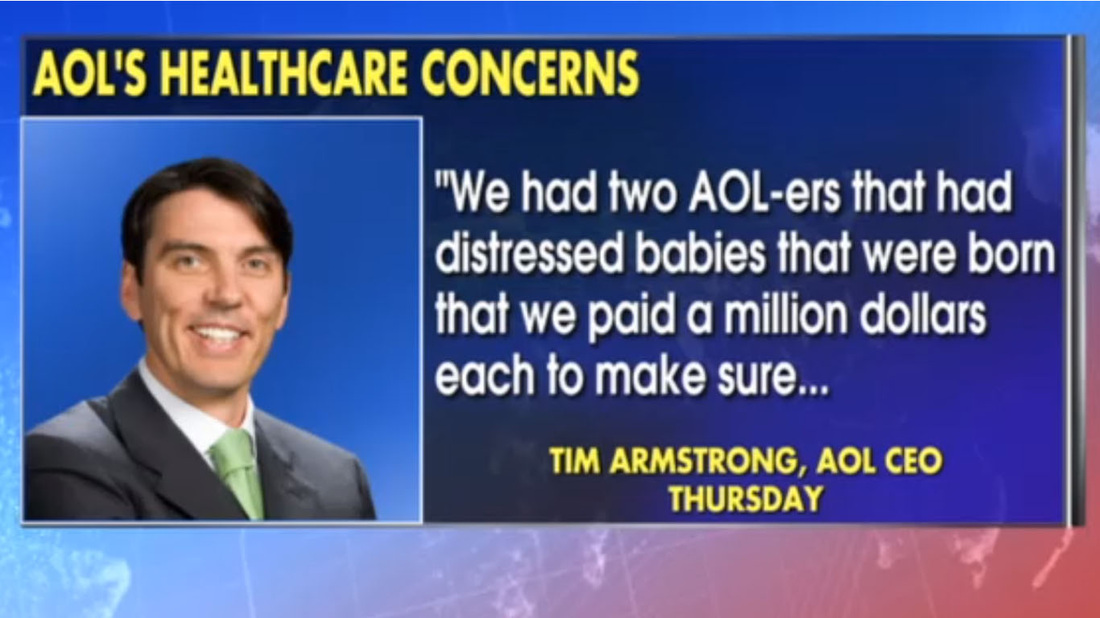
Medical Management Services_AOL InsuranceIn the forgoing article, Tim Armstrong, the comments of the CEO of America Online (AOL) resulted in outcry around the country! There were allegations of scapegoats, privacy violations and various sins in making this announcement. What gives this CEO the right to highlight these families’ struggles? Well, can you say two million dollars? This man is not a Director of a Hospital refusing care. No, he is the CEO of the company paying the bills. Two million dollars taken out of the budget and the CEO cannot comment on it? Why are his actions being chastised?

By: Michael F. Cannon, Contributor

Unless you’ve been living under a rock, you’ve heard about AOL CEO Tim Armstrong’s strikingly insensitive comments about why the company is cutting its retirement benefits:

“As a C.E.O. and as a management team, we had to decide, do we pass the $7.1 million of Obamacare costs to our employees? Or do we try to eat as much of that as possible and cut other benefits?…”

“Two things that happened in 2012”, he continued, “we had two AOL-ers that had distressed babies that were born that we paid a million dollars each to make sure those babies were OK in general. And those are the things that add up into our benefits cost. So when we had the final decision about what benefits to cut because of the increased healthcare costs, we made the decision, and I made the decision, to basically change the 401(k) plan”.

Perhaps Armstrong felt commendations were in order. After all, the company’s health plan did pay a ton of money to keep those kids alive. Not as much as his annual salary, but still. And though you could be forgiven for missing it, he was actually announcing he had decided not to drop AOL’s “distressed babies” benefit.

But it’s hard to muster an “Attaboy!” when Armstrong is effectively blaming extremely premature infants, who are clinging desperately to life, for the cuts he chose to make in his employees’ retirement benefits. We’re still paying to keep these precious little angels alive, he assured his employees. But if any of you are mad about your pay cut, you know who to blame.

One of those babies has a mommy who wasn’t about to take that lying down.

In October 2012, only five months pregnant, Deanna Fei went into labor. Her daughter arrived via caesarian section weighing only 1 pound, 9 ounces, and spent the next three months in a neo-natal intensive care unit. Fei, a novelist, wrote at Slate about the anguish she and her family endured.

She also had choice words for her husband’s boss.

“Let’s set aside the fact that Armstrong—who took home $12 million in pay in 2012—felt the need to announce a cut in employee benefits on the very day that he touted the best quarterly earnings in years,” she wrote. It was “a cruel violation” to make her child “a scapegoat for cutting benefits.”

There was “the whiff of judgment in Armstrong’s statement, as if we selfishly gobbled up an obscenely large slice of the collective health care pie” when in fact “we experienced exactly the kind of unforeseeable, unpreventable medical crisis that any health plan is supposed to cover. Isn’t that the whole point of health insurance?”

“While he’s at it, why not call out the women who got cancer? The parents of kids with asthma?”

I’m totally with Fei. I still remember the panic I felt when our first child (41 weeks) took about one minute to start breathing on his own and our second (37.5 weeks) was born a little too pale. I cannot imagine visiting my child every day in a NICU for three months, much less the added trauma that mommies suffer in those cases. And I would be just as outraged by the indignity of having my spouse’s employer use our experience as a scapegoat, or claim that we are indirectly responsible for someone else’s pay cut.

Fei and her family owe no one an apology. Full stop. They paid their premiums. They used their coverage for its intended purpose. Their situation is exactly why health insurance exists.

It is also possible to sympathize with Armstrong. He has a duty to AOL shareholders to keep the company profitable. Part of that responsibility is to decide how much to pay AOL employees – and how to divide that sum among salary, health benefits, retirement benefits, and other forms of compensation. Someone’s going to be angry at him no matter what he decides. And in this case, he decided not to let those cuts fall on health benefits. Assuming he’s doing right by AOL’s shareholders, who probably include many AOL employees, he owes no one an apology for his $12 million salary. To be sure, he owes Fei and her family an apology – which he has issued and she has accepted.

How did we get to this point, where Fei’s husband’s boss knows how much it cost to save their baby’s life and can telegraph that figure to his coworkers and the world? Where an offhand comment by your employer can add to your grief by exposing your family’s medical history to your coworkers, and possibly make you a target of resentment?

The answer is that even before ObamaCare, America has had a health care sector dominated by government involvement. Yes, this capitalist’s insensitive comments are an example of government failure.

Ninety percent of Americans with private health insurance get that coverage through an employer. This state of affairs wasn’t brought to you by the free market. In a market where we all get to make our own choices, what responsible parent in their right mind would voluntarily choose for their family a type of health insurance that disappears when you get sick and cannot work anymore? Or when the factory closes? A type of health insurance where, if you have a high-cost condition, you are more likely to end up uninsured than if you bought coverage directly from an insurance carrier?

The reason more than 100 million Americans make the otherwise irrational decision to enroll in an employer-sponsored plan is that around 70 years ago, the federal government created an enormous tax preference for those plans that is not available if you buy more secure coverage directly from an insurer on the “individual” market. The upshot of that tax preference is that if consumers purchase health insurance themselves, they can spend up to twice as much for the same coverage. Economists have chronicled how the tax exclusion for employer-sponsored health insurance increases health care spending and thus the cost of health insurance, as well as how it reduces consumers’ health insurance choices. Yet the federal government makes it economically rational for 90 percent of consumers to purchase an inferior product that creates so many harmful effects.

Another harmful effect of this government policy is that the Tim Armstrongs of the world have far too much (read: any) influence over your family’s health insurance and medical decisions. (What if Armstrong had chosen to pare back AOL’s distressed-baby benefit?) They also end up knowing far too much (read: anything) about your family’s most emotionally difficult moments.

I won’t pretend private health insurance companies aren’t also obligated to serve shareholders or always have their customers’ best interests at heart. But how often do you hear the CEOs of insurance companies publicly say the sort of boneheaded thing Armstrong did? Not very. Even though they have to make comparable tradeoffs between covered benefits, affordable premiums, and profits, they don’t do what Armstrong did. They’re in the business, so they know better. When insurance companies say boneheaded things about their high-cost customers, they tend to do so quietly. You know, in internal memoranda. If I’m overlooking instances of insurance company executives doing what Armstrong did, please let me know in the comments.

Even if the CEO of, say, Aetna mentions they had a couple of million dollar babies last year, it wouldn’t expose those families the way it does when CEOs say it about their company-sponsored health plans. If everyone were making their own coverage choices, your coworkers would have no idea where you buy your health insurance unless you wanted them to know. And that’s as it should be. You would also have the option of leaving Aetna for another carrier that wasn’t so boneheaded, or if only because you don’t like the tradeoffs they are making between benefits, premiums, and profitability. Switching health plans is much harder when it might require switching jobs.

The federal government has let this boneheaded tax preference for employer-sponsored health insurance sit undisturbed for seven decades, even as it led to privacy violations and fueled the problem of pre-existing conditions. That should make us even more wary of the government’s latest brilliant health care idea.

How long will it take Congress to fix the more boneheaded elements of ObamaCare? Seventy years? More?

Source: http://www.forbes.com/sites/michaelcannon/2014/02/10/aol-chief-tim-armstrongs-insensitivity-argues-against-obamacare-not-for-it/

As the chief executive of the company, it was his job to pursue what he thought was in the best interest of the company. Would it have been preferred that instead, he simply laid-off some employees?

Many people were upset over his choice of the word “distressed babies”. Was he wrong? These babies were born early (pre-mature), with a $2 million price tag. And those bills were paid.

Had this been Joe-the-Plumber complaining that he lost his job because two distressed babies cost the company two million dollars, he would have gotten national sympathy and the news would have been about the failure of health care or Obama Care more exactly. Instead, this discussion is about the CEO of America Online. This is a BIG company, BIG business, BIG money – and so, this is a BIG deal.

From the perspective of the roadmap for this implementation of the Caribbean Union Trade Federation, this issue of Tim Armstrong-AOL-Health-Plan is also a BIG opportunity.

Something is wrong in this whole scenario!

It is “off-whack & off-kilter” that it costs families and communities so much for healthcare. There is no way we can afford this kind of price dynamics in the Caribbean. Nor do we want to leave our pregnant mothers and premature babies completely abandoned. No one wants to have a society like that. If so, there will be no opportunity to invite the Diaspora back home, nor dissuade families from abandoning their Caribbean homeland for foreign shores – the “push-and-pull” factors would be too great.

So where emotions may trump economics, economics are not eliminated just because we have emotional leanings. The article portrays the economic truths: “the tradeoffs … between benefits, premiums, and profitability.”

The Go Lean…Caribbean roadmap posits that the member-states need a larger pool for health insurance benefits, premiums, and profitability. The market size of 42 million is a viable solution. Plus new financial products like re-insurance sidecars in an energized securities/capital market, thanks to the Caribbean Dollar and a technocratic Caribbean Central Bank.

The roadmap also calls for strategic and tactical solutions for big money treatments, like cancer, by facilitating medical research campuses and medical tourism under the guise of Self-Governing Entities.

Lastly, the Go Lean roadmap promotes the practice of predictive wellness programs and disease management schemes, tackling head-on the root causes of so many medical distress and costs enablers.

Download the book, Go Lean … Caribbean and add your commentary.

Share this post:
,
[Top]